Montreal, June 22 – 25, 2015
An Integrated View where Science, Technology,
Art and Communication Converge
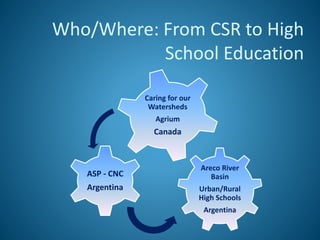
Who/Where: From CSR to High
School Education
Areco River
Basin
Urban/Rural
High Schools
Argentina
ASP - CNC
Argentina
Caring for our
Watersheds
Agrium
Canada
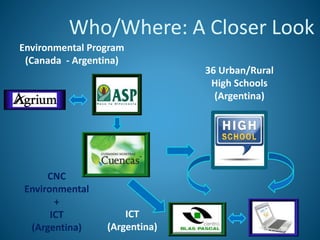
Who/Where: A Closer Look
36 Urban/Rural
High Schools
(Argentina)
Environmental Program
(Canada - Argentina)
ICT
(Argentina)
CNC
Environmental
+
ICT
(Argentina)
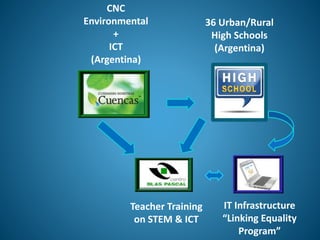
36 Urban/Rural
High Schools
(Argentina)
CNC
Environmental
+
ICT
(Argentina)
Teacher Training
on STEM & ICT
IT Infrastructure
“Linking Equality
Program”
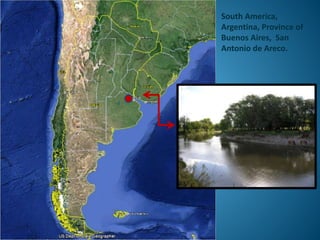
South America,
Argentina, Province of
Buenos Aires, San
Antonio de Areco.
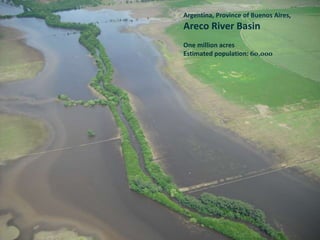
Argentina, Province of Buenos Aires,
Areco River Basin
One million acres
Estimated population: 60,000
How can we take care of our watersheds?
How can we convert this engaging contest in a
matter of educational improvement focused
on ICT & STEM knowledge?
 2012
 Our main concern: environmental issues in order to start
working on the school projects.
 Lecture and workshop. “Education for the Environment:
Challenge and Opportunity”.
 The actual work with teachers and students started.
Awareness and Training Plan
2012 Results
 36 works were submitted to be evaluated by two juries.
 10 finalists ranked from 1 to 10.
 CNC drew up an implementation plan.
 2013
 Work demands: environmental education and
sustainable construction from the labour perspective.
 Workshop: “Caring for the Environment and the Future
of Employment for Young Workers”.
Awareness and Training Plan
2013 Results
 55 works were submitted to be evaluated by two juries.
 10 finalists ranked from 1 to 10.
 CNC drew up an implementation plan.
 2014
 The Blas Pascal Center was incorporated to the CNC
Program.
 The training main topic: “ICT & LKT. Time to learn, Time
to know”.
 Research blog: “Areco River Basin. An Interdisciplinary
Approach”.
Awareness and Training Plan
 2014
 Participants asked for a more comprehensive training.
 A three-month intensive training course through b-
learning started.
 Contents: Research blogging, authoring hypermedia
to develop “born-to-the-Web” materials, online
hypermedia conceptual maps design, hypermedia
interactive boards.
Awareness and Training Plan
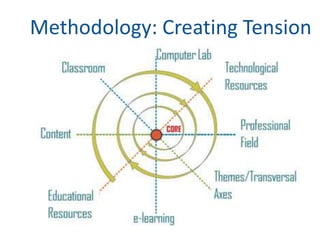
Methodology: Creating Tension
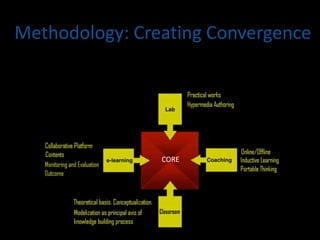
Methodology: Creating Convergence
CORE
2014 Results
 51 works were submitted to be evaluated by two juries.
 10 finalists ranked from 1 to 10.
 CNC drew up an implementation plan.
 2015
 All projects are revised.
 Our challenging task: to improve the way information,
ideas and concepts are expressed. “Better thinking
resulting in better projects”.
 Workshop Feb. 2015: “ICT & LKT at Areco II. What Have
We Done for Doing it Better?”.
Awareness and Training Plan
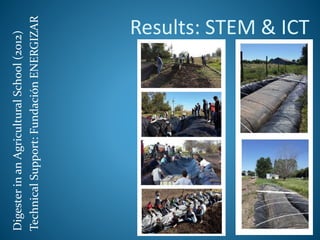
Results: STEM & ICT
DigesterinanAgriculturalSchool(2012)
TechnicalSupport:FundaciónENERGIZAR
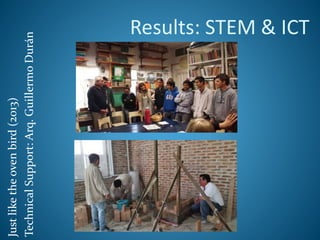
Justliketheovenbird(2013)
TechnicalSupport:Arq.GuillermoDurán Results: STEM & ICT
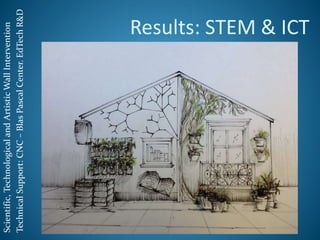
Scientific,TechnologicalandArtisticWallIntervention
TechnicalSupport:CNC–BlasPascalCenter.EdTechR&D
Results: STEM & ICT
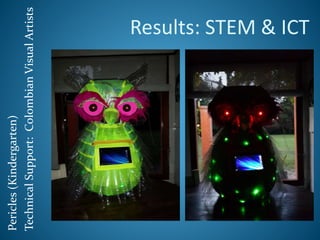
Pericles(Kindergarten)
TechnicalSupport:ColombianVisualArtists Results: STEM & ICT
First Conclusions
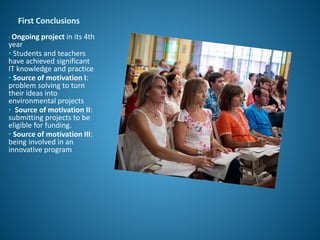
• Ongoing project in its 4th
year
• Students and teachers
have achieved significant
IT knowledge and practice
• Source of motivation I:
problem solving to turn
their ideas into
environmental projects
• Source of motivation II:
submitting projects to be
eligible for funding.
• Source of motivation III:
being involved in an
innovative program
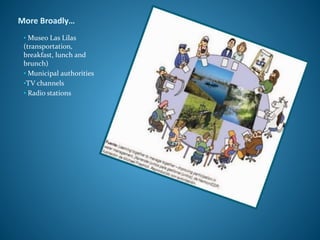
• Museo Las Lilas
(transportation,
breakfast, lunch and
brunch)
• Municipal authorities
•TV channels
• Radio stations
More Broadly…
• On the STEM Paradigm, emphasizing knowledge
acquisition of communication tools, platforms and
strategies mainly based on S & T as well as on
communication and art convergence.
• Beyond technological and social aspects, all stakeholders
(CNC staff, teachers, students, administrators) involved in
this program feel that by working together we are
building a better world.
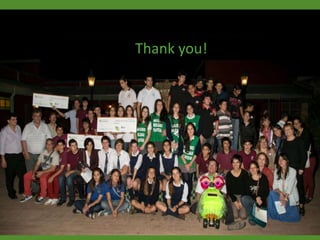
Thank you!

An International Program where STEM & ICT Converge

  • 1.
    Montreal, June 22– 25, 2015
  • 2.
    An Integrated Viewwhere Science, Technology, Art and Communication Converge
  • 3.
    Who/Where: From CSRto High School Education Areco River Basin Urban/Rural High Schools Argentina ASP - CNC Argentina Caring for our Watersheds Agrium Canada
  • 4.
    Who/Where: A CloserLook 36 Urban/Rural High Schools (Argentina) Environmental Program (Canada - Argentina) ICT (Argentina) CNC Environmental + ICT (Argentina)
  • 5.
    36 Urban/Rural High Schools (Argentina) CNC Environmental + ICT (Argentina) TeacherTraining on STEM & ICT IT Infrastructure “Linking Equality Program”
  • 6.
    South America, Argentina, Provinceof Buenos Aires, San Antonio de Areco.
  • 7.
    Argentina, Province ofBuenos Aires, Areco River Basin One million acres Estimated population: 60,000
  • 8.
    How can wetake care of our watersheds? How can we convert this engaging contest in a matter of educational improvement focused on ICT & STEM knowledge?
  • 9.
     2012  Ourmain concern: environmental issues in order to start working on the school projects.  Lecture and workshop. “Education for the Environment: Challenge and Opportunity”.  The actual work with teachers and students started. Awareness and Training Plan
  • 10.
    2012 Results  36works were submitted to be evaluated by two juries.  10 finalists ranked from 1 to 10.  CNC drew up an implementation plan.
  • 11.
     2013  Workdemands: environmental education and sustainable construction from the labour perspective.  Workshop: “Caring for the Environment and the Future of Employment for Young Workers”. Awareness and Training Plan
  • 12.
    2013 Results  55works were submitted to be evaluated by two juries.  10 finalists ranked from 1 to 10.  CNC drew up an implementation plan.
  • 13.
     2014  TheBlas Pascal Center was incorporated to the CNC Program.  The training main topic: “ICT & LKT. Time to learn, Time to know”.  Research blog: “Areco River Basin. An Interdisciplinary Approach”. Awareness and Training Plan
  • 14.
     2014  Participantsasked for a more comprehensive training.  A three-month intensive training course through b- learning started.  Contents: Research blogging, authoring hypermedia to develop “born-to-the-Web” materials, online hypermedia conceptual maps design, hypermedia interactive boards. Awareness and Training Plan
  • 15.
  • 16.
  • 17.
    2014 Results  51works were submitted to be evaluated by two juries.  10 finalists ranked from 1 to 10.  CNC drew up an implementation plan.
  • 18.
     2015  Allprojects are revised.  Our challenging task: to improve the way information, ideas and concepts are expressed. “Better thinking resulting in better projects”.  Workshop Feb. 2015: “ICT & LKT at Areco II. What Have We Done for Doing it Better?”. Awareness and Training Plan
  • 19.
    Results: STEM &ICT DigesterinanAgriculturalSchool(2012) TechnicalSupport:FundaciónENERGIZAR
  • 20.
  • 21.
  • 22.
  • 23.
    First Conclusions • Ongoingproject in its 4th year • Students and teachers have achieved significant IT knowledge and practice • Source of motivation I: problem solving to turn their ideas into environmental projects • Source of motivation II: submitting projects to be eligible for funding. • Source of motivation III: being involved in an innovative program
  • 24.
    • Museo LasLilas (transportation, breakfast, lunch and brunch) • Municipal authorities •TV channels • Radio stations More Broadly…
  • 25.
    • On theSTEM Paradigm, emphasizing knowledge acquisition of communication tools, platforms and strategies mainly based on S & T as well as on communication and art convergence.
  • 26.
    • Beyond technologicaland social aspects, all stakeholders (CNC staff, teachers, students, administrators) involved in this program feel that by working together we are building a better world.
  • 27.