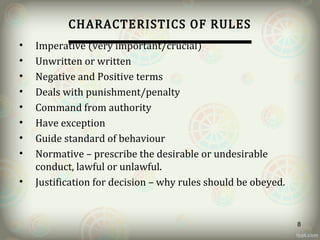
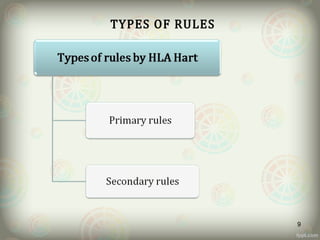
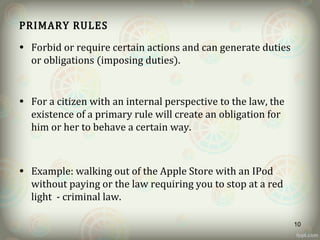
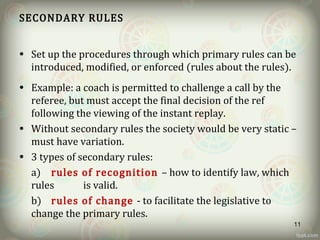
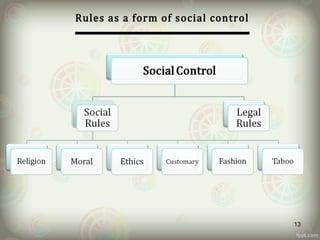
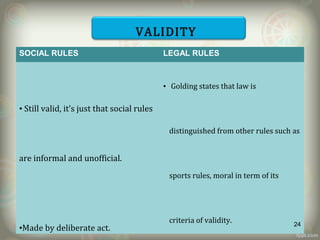
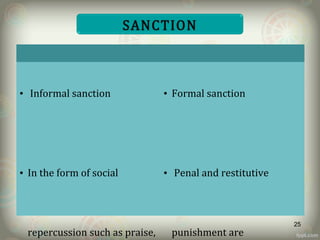
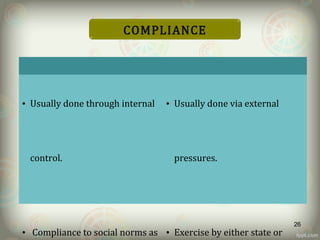
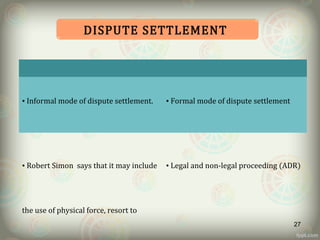
Rules serve several important functions in society. They provide standards of conduct, protect individuals and resources, and allow for order and predictability. There are two main types of rules: primary rules that impose obligations on citizens, and secondary rules that govern how primary rules are created, changed, and enforced. While legal rules are formally enforced through institutions like courts, social rules like customs, ethics and morality also shape behavior through informal social pressures. Both legal and social rules aim to control conduct, but they differ in their validity, enforcement, compliance, dispute resolution, and sanctions for violations.