







Collaboration in Sustainability
David E Hawkins
ICW Chief Operating Officer
& Knowledge Architect
The Next Evolution of Collaborative Working
“Collaborative working to create sustainable value in business relationships”
Evergreen House North, Euston, London NW1 2DX | Email: enquiries@icw.uk.com | Tel: 0203 691 1530
© Copyright ICW | Version 1_2021_ICW
ICW Purpose and Vision
Purpose
To support people, organisations and business to understand the value of
collaboration and the benefits achieved through collaborative working
Our Vision
To be the home of collaboration where good practice is shared and supported with
research, experience and training, building a global community that recognises the
development of skills and knowledge of collaborative working practices.
Through our community we will enhance the professional relationships of business,
public sector and wider society to produce greater value in the outcomes for all.
Background to ICW
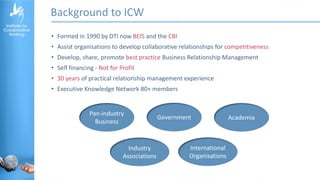
• Formed in 1990 by DTI now BEIS and the CBI
• Assist organisations to develop collaborative relationships for competitiveness
• Develop, share, promote best practice Business Relationship Management
• Self financing - Not for Profit
• 30 years of practical relationship management experience
• Executive Knowledge Network 80+ members
Government
Pan-industry
Business
Academia
International
Organisations
Industry
Associations
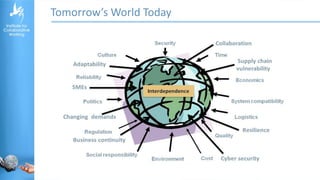
Tomorrow’s World Today
Can we ignore reality?
The Global Goals
Unintended consequences
September 2021 ICW Awards Submission 8
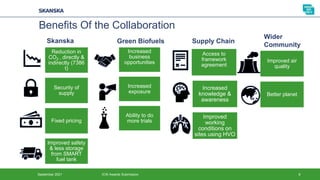
Benefits Of the Collaboration
Reduction in
CO2 – directly &
indirectly (7386
t)
Security of
supply
Fixed pricing
Improved safety
& less storage
from SMART
fuel tank
Increased
business
opportunities
Increased
exposure
Ability to do
more trials
Access to
framework
agreement
Increased
knowledge &
awareness
Improved
working
conditions on
sites using HVO
Improved air
quality
Better planet
Skanska Green Biofuels Supply Chain
Wider
Community
Self interest or work together
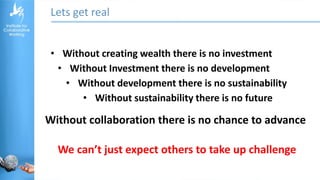
Lets get real
• Without creating wealth there is no investment
• Without Investment there is no development
• Without development there is no sustainability
• Without sustainability there is no future
Without collaboration there is no chance to advance
We can’t just expect others to take up challenge
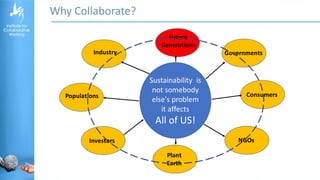
Why Collaborate?
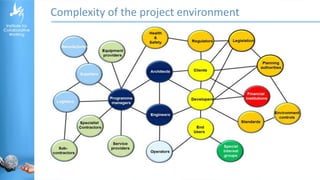
Complexity of the project environment
Perceptions of Collaboration
Team hug
Synchronised swimming with sharks
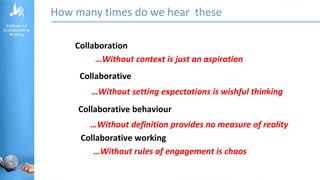
How many times do we hear these
Collaboration
…Without context is just an aspiration
Collaborative
…Without setting expectations is wishful thinking
Collaborative working
…Without rules of engagement is chaos
Collaborative behaviour
…Without definition provides no measure of reality
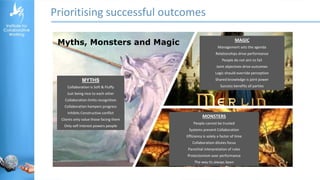
Prioritising successful outcomes
© copyright ICW – Revision 5 - 2020
Myths, Monsters and Magic
MYTHS
Collaboration is Soft & Fluffy
Just being nice to each other
Collaboration limits recognition
Collaboration hampers progress
Inhibits Constructive conflict
Clients only value those facing them
Only self interest powers people
MONSTERS
People cannot be trusted
Systems prevent Collaboration
Efficiency is solely a factor of time
Collaboration dilutes focus
Parochial interpretation of rules
Protectionism over performance
The way its always been
MAGIC
Management sets the agenda
Relationships drive performance
People do not aim to fail
Joint objectives drive outcomes
Logic should override perception
Shared knowledge is joint power
Success benefits all parties
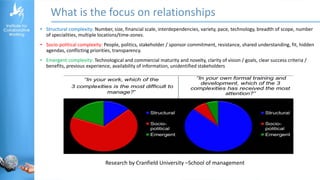
What is the focus on relationships
• Structural complexity: Number, size, financial scale, interdependencies, variety, pace, technology, breadth of scope, number
of specialities, multiple locations/time-zones.
• Socio-political complexity: People, politics, stakeholder / sponsor commitment, resistance, shared understanding, fit, hidden
agendas, conflicting priorities, transparency.
• Emergent complexity: Technological and commercial maturity and novelty, clarity of vision / goals, clear success criteria /
benefits, previous experience, availability of information, unidentified stakeholders
Research by Cranfield University –School of management
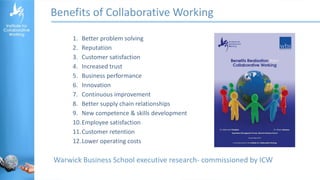
Benefits of Collaborative Working
1. Better problem solving
2. Reputation
3. Customer satisfaction
4. Increased trust
5. Business performance
6. Innovation
7. Continuous improvement
8. Better supply chain relationships
9. New competence & skills development
10.Employee satisfaction
11.Customer retention
12.Lower operating costs
Warwick Business School executive research- commissioned by ICW
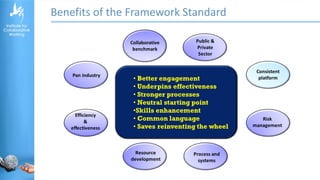
Benefits of the Framework Standard
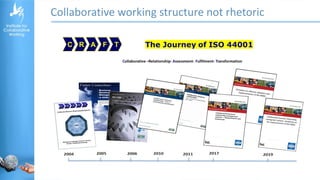
Collaborative working structure not rhetoric
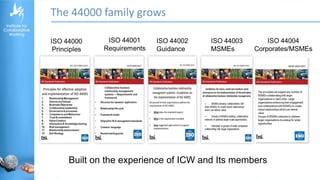
The 44000 family grows
Built on the experience of ICW and Its members
ISO 44003 pilot programme
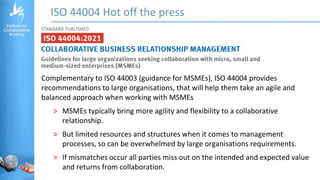
ISO 44004 Hot off the press
Complementary to ISO 44003 (guidance for MSMEs), ISO 44004 provides
recommendations to large organisations, that will help them take an agile and
balanced approach when working with MSMEs
˃ MSMEs typically bring more agility and flexibility to a collaborative
relationship.
˃ But limited resources and structures when it comes to management
processes, so can be overwhelmed by large organisations requirements.
˃ If mismatches occur all parties miss out on the intended and expected value
and returns from collaboration.
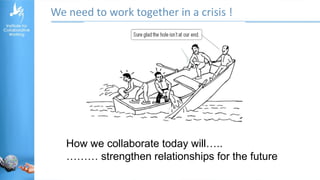
We need to work together in a crisis !
How we collaborate today will…..
……… strengthen relationships for the future
Prioritising successful outcomes
Questions

How Collaborative working can help deliver successful projects webinar

  • 1.
    Collaboration in Sustainability DavidE Hawkins ICW Chief Operating Officer & Knowledge Architect The Next Evolution of Collaborative Working “Collaborative working to create sustainable value in business relationships” Evergreen House North, Euston, London NW1 2DX | Email: enquiries@icw.uk.com | Tel: 0203 691 1530 © Copyright ICW | Version 1_2021_ICW
  • 2.
    ICW Purpose andVision Purpose To support people, organisations and business to understand the value of collaboration and the benefits achieved through collaborative working Our Vision To be the home of collaboration where good practice is shared and supported with research, experience and training, building a global community that recognises the development of skills and knowledge of collaborative working practices. Through our community we will enhance the professional relationships of business, public sector and wider society to produce greater value in the outcomes for all.
  • 3.
    Background to ICW •Formed in 1990 by DTI now BEIS and the CBI • Assist organisations to develop collaborative relationships for competitiveness • Develop, share, promote best practice Business Relationship Management • Self financing - Not for Profit • 30 years of practical relationship management experience • Executive Knowledge Network 80+ members Government Pan-industry Business Academia International Organisations Industry Associations
  • 4.
  • 5.
    Can we ignorereality?
  • 6.
  • 7.
  • 8.
    September 2021 ICWAwards Submission 8 Benefits Of the Collaboration Reduction in CO2 – directly & indirectly (7386 t) Security of supply Fixed pricing Improved safety & less storage from SMART fuel tank Increased business opportunities Increased exposure Ability to do more trials Access to framework agreement Increased knowledge & awareness Improved working conditions on sites using HVO Improved air quality Better planet Skanska Green Biofuels Supply Chain Wider Community
  • 9.
    Self interest orwork together
  • 10.
    Lets get real •Without creating wealth there is no investment • Without Investment there is no development • Without development there is no sustainability • Without sustainability there is no future Without collaboration there is no chance to advance We can’t just expect others to take up challenge
  • 11.
  • 12.
    Complexity of theproject environment
  • 13.
    Perceptions of Collaboration Teamhug Synchronised swimming with sharks
  • 14.
    How many timesdo we hear these Collaboration …Without context is just an aspiration Collaborative …Without setting expectations is wishful thinking Collaborative working …Without rules of engagement is chaos Collaborative behaviour …Without definition provides no measure of reality
  • 15.
    Prioritising successful outcomes ©copyright ICW – Revision 5 - 2020 Myths, Monsters and Magic MYTHS Collaboration is Soft & Fluffy Just being nice to each other Collaboration limits recognition Collaboration hampers progress Inhibits Constructive conflict Clients only value those facing them Only self interest powers people MONSTERS People cannot be trusted Systems prevent Collaboration Efficiency is solely a factor of time Collaboration dilutes focus Parochial interpretation of rules Protectionism over performance The way its always been MAGIC Management sets the agenda Relationships drive performance People do not aim to fail Joint objectives drive outcomes Logic should override perception Shared knowledge is joint power Success benefits all parties
  • 16.
    What is thefocus on relationships • Structural complexity: Number, size, financial scale, interdependencies, variety, pace, technology, breadth of scope, number of specialities, multiple locations/time-zones. • Socio-political complexity: People, politics, stakeholder / sponsor commitment, resistance, shared understanding, fit, hidden agendas, conflicting priorities, transparency. • Emergent complexity: Technological and commercial maturity and novelty, clarity of vision / goals, clear success criteria / benefits, previous experience, availability of information, unidentified stakeholders Research by Cranfield University –School of management
  • 17.
    Benefits of CollaborativeWorking 1. Better problem solving 2. Reputation 3. Customer satisfaction 4. Increased trust 5. Business performance 6. Innovation 7. Continuous improvement 8. Better supply chain relationships 9. New competence & skills development 10.Employee satisfaction 11.Customer retention 12.Lower operating costs Warwick Business School executive research- commissioned by ICW
  • 18.
    Benefits of theFramework Standard
  • 19.
  • 20.
    The 44000 familygrows Built on the experience of ICW and Its members
  • 21.
    ISO 44003 pilotprogramme
  • 22.
    ISO 44004 Hotoff the press Complementary to ISO 44003 (guidance for MSMEs), ISO 44004 provides recommendations to large organisations, that will help them take an agile and balanced approach when working with MSMEs ˃ MSMEs typically bring more agility and flexibility to a collaborative relationship. ˃ But limited resources and structures when it comes to management processes, so can be overwhelmed by large organisations requirements. ˃ If mismatches occur all parties miss out on the intended and expected value and returns from collaboration.
  • 23.
    We need towork together in a crisis ! How we collaborate today will….. ……… strengthen relationships for the future
  • 24.