3D Printing @ 
Maynooth University Library
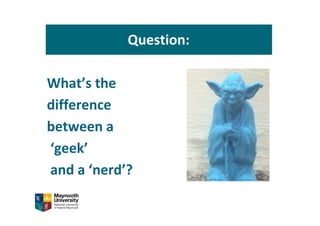
Question:
Ge
What’s the 
difference
between a
‘geek’
and a ‘nerd’?
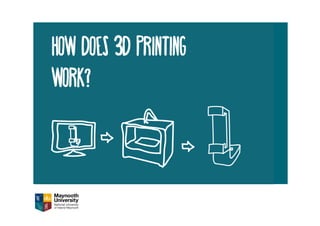
What is 3D printing?
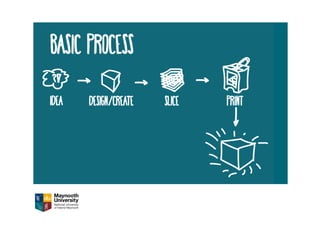
3D printing, also known as “additive manufacturing,” is a method for
creating physical objects from digital designs. 3D printers build
objects out of many very thin layers of material; the type of material
objects are made from and how the layers are bonded depends on
the type of printer.
3D Printing: Making Things at the Library
Matthew B. Hoy
Medical Reference Services Quarterly
Vol. 32, Iss. 1, 2013
Why should libraries get involved?
“For more than a decade now, higher education has
been undergoing a major paradigm shift, moving
from teaching to learning as its primary focus. In
response, academic libraries have been shifting
from an emphasis on housing and archiving print
resources to one of directly supporting knowledge
production”
Colegrove, educase review, 2014
What is happening…?
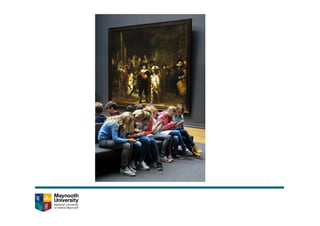
“…the cognitive gain that occurs when we create
something new rather than simply repeat knowledge
that has already been acquired. They create strong
mental models of their world by engaging directly in
the process of construction. Learners who produce
more than they consume are generally more aware
of their own learning processes and can adapt more
quickly to changing environments and demands on
their skills”
http://steve-wheeler.blogspot.co.uk/2014/12/maker-pedagogy.html
Broader applicability
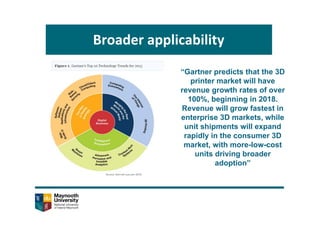
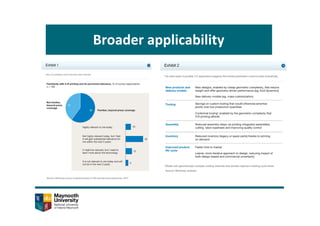
“Gartner predicts that the 3D
printer market will have
revenue growth rates of over
100%, beginning in 2018.
Revenue will grow fastest in
enterprise 3D markets, while
unit shipments will expand
rapidly in the consumer 3D
market, with more-low-cost
units driving broader
adoption”
Broader applicability
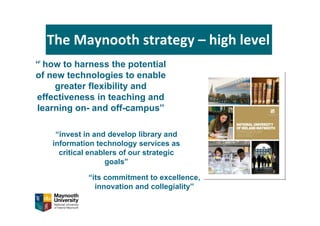
The Maynooth strategy – high level
“̍ how to harness the potential
of new technologies to enable
greater flexibility and
effectiveness in teaching and
learning on- and off-campus”
“its commitment to excellence,
innovation and collegiality”
“invest in and develop library and
information technology services as
critical enablers of our strategic
goals”
The Maynooth strategy –
library level
• Importance of our service
• Innovation in our service (proactive)
• 3D printing is just another service
• Focus on creativity
• “Innovation is our new service”
What’s the benefit?
• Give users what [we think] they want
• Broadens service provision
• Not all users want books (print or ‘e’)
• Increased traction with academic departments
• Staff views on technology opened up 
and challenged
• Library seen as innovative
• Library as ‘centre for everything’ on campus
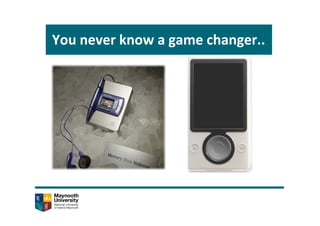
You never know a game changer..
http://www.watch.impress.co.jp/pc/docs/article/990917/sony_m10.jpg
http://img.gawkerassets.com/img/17m6fje3utekkjpg/original.jpg
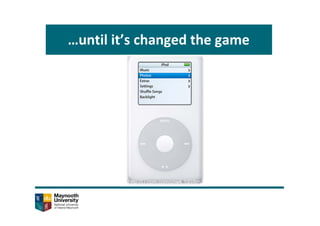
…until it’s changed the game
http://i.i.com.com/cnwk.1d/i/tim/2011/04/09/ipod.png
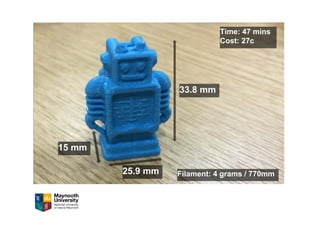
Time: 47 mins
Cost: 27c
33.8 mm
15 mm
25.9 mm Filament: 4 grams / 770mm
Jet Parts
RAF Tornado Fighter
Arms for Children
16‐year‐old Daniel Omar of Sudan with his prosthetic arm
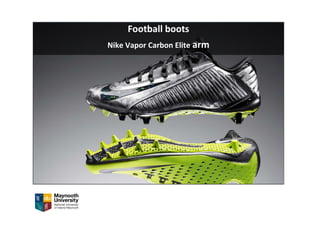
Football boots
Nike Vapor Carbon Elite arm
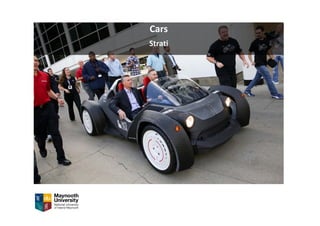
Cars
Strati 
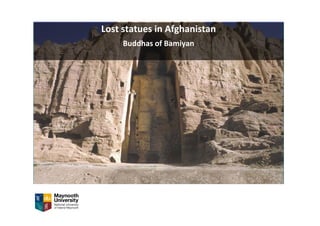
Lost statues in Afghanistan
Buddhas of Bamiyan
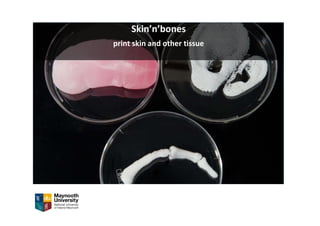
Skin’n’bones
print skin and other tissue
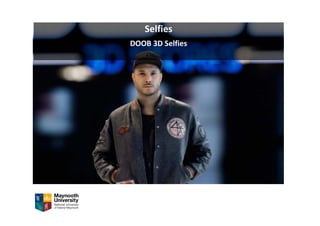
Selfies
DOOB 3D Selfies
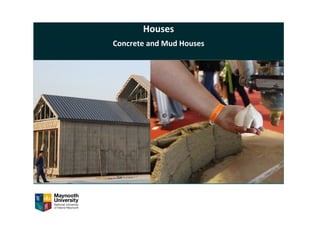
Houses
Concrete and Mud Houses
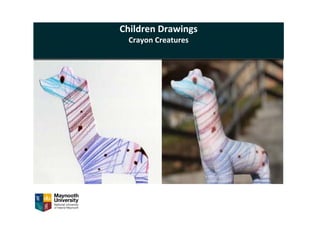
Children Drawings
Crayon Creatures
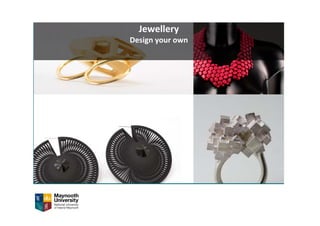
Jewellery
Design your own
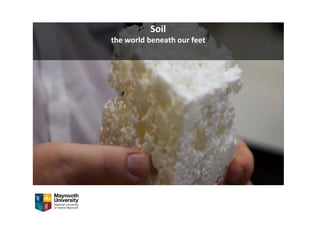
Soil
the world beneath our feet
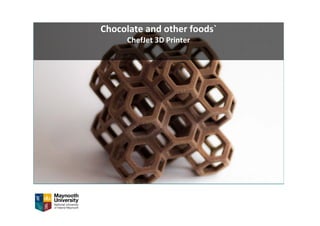
Chocolate and other foods`
ChefJet 3D Printer
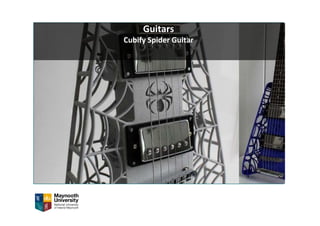
Guitars
Cubify Spider Guitar
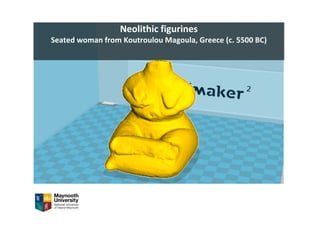
Neolithic figurines
Seated woman from Koutroulou Magoula, Greece (c. 5500 BC)
“3D printing revolutionises our traditional 
relationship with cultural heritage. The museum 
visitor and the researcher are both facing unlimited 
possibilities: Artefacts that could only be seen behind 
a glass display case can now be touched and felt. At 
the same time, exact replicas can travel out of the 
country of origin and thus become accessible to 
researchers across the globe!”
Dr Konstantinos Papadopoulos
Postdoctoral Researcher in Digital Humanities
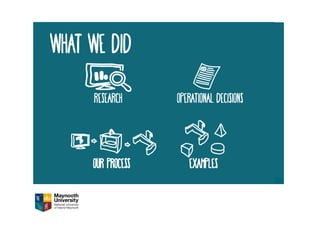
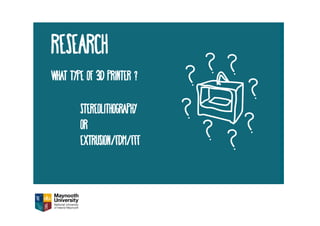
Research
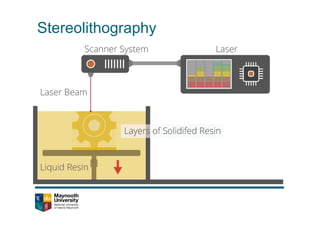
Stereolithography
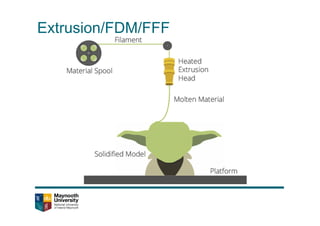
Extrusion/FDM/FFF
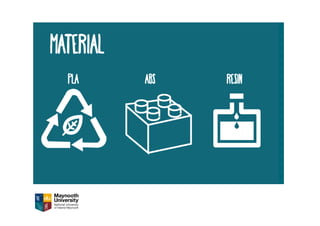
Material
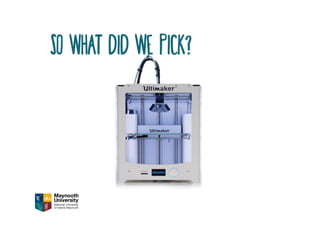
Decision
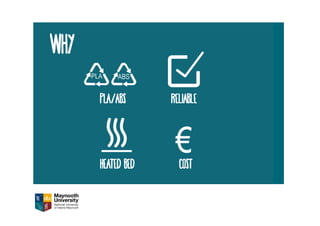
Decision
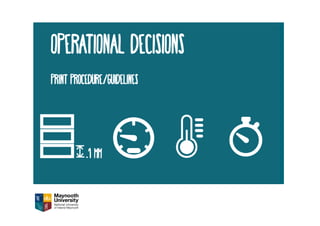
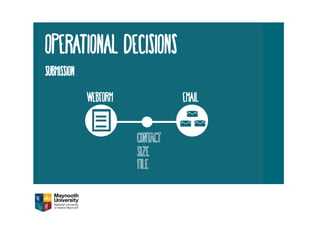
Print Policy
Print Policy
“In the Design Innovation course, we currently have access to a 
3d printer and the benefits are becoming more and more 
apparent to me as I progress through each module. Having the 
ability to quickly and cost effectively create a prototype of a 
concept which clearly communicates ideas to colleagues or 
end users is a great advantage throughout the innovation 
process. Others now having access to the 3d printer within the 
library, facilitates an open collaboration between a diversity of 
people who don't already have access to the technology within 
their respective departments.“
Stephen Cullen 
Msc student in Design Innovation 
OPPORTUNITY
The future outlooks for managing 3D printing services in 
university libraries appear very positive. With careful 
planning and execution, implementation of a library 3D 
printing studio can be fantastic opportunity for academic 
libraries worldwide.
A model for managing 3D printing services in academic libraries
by Scalfani, Vincent F; Sahib, Josh
Issues in Science and Technology Librarianship, 2013, Volume 72

Hugh Murphy & Michael Leigh '3d Printing @Maynooth Library'