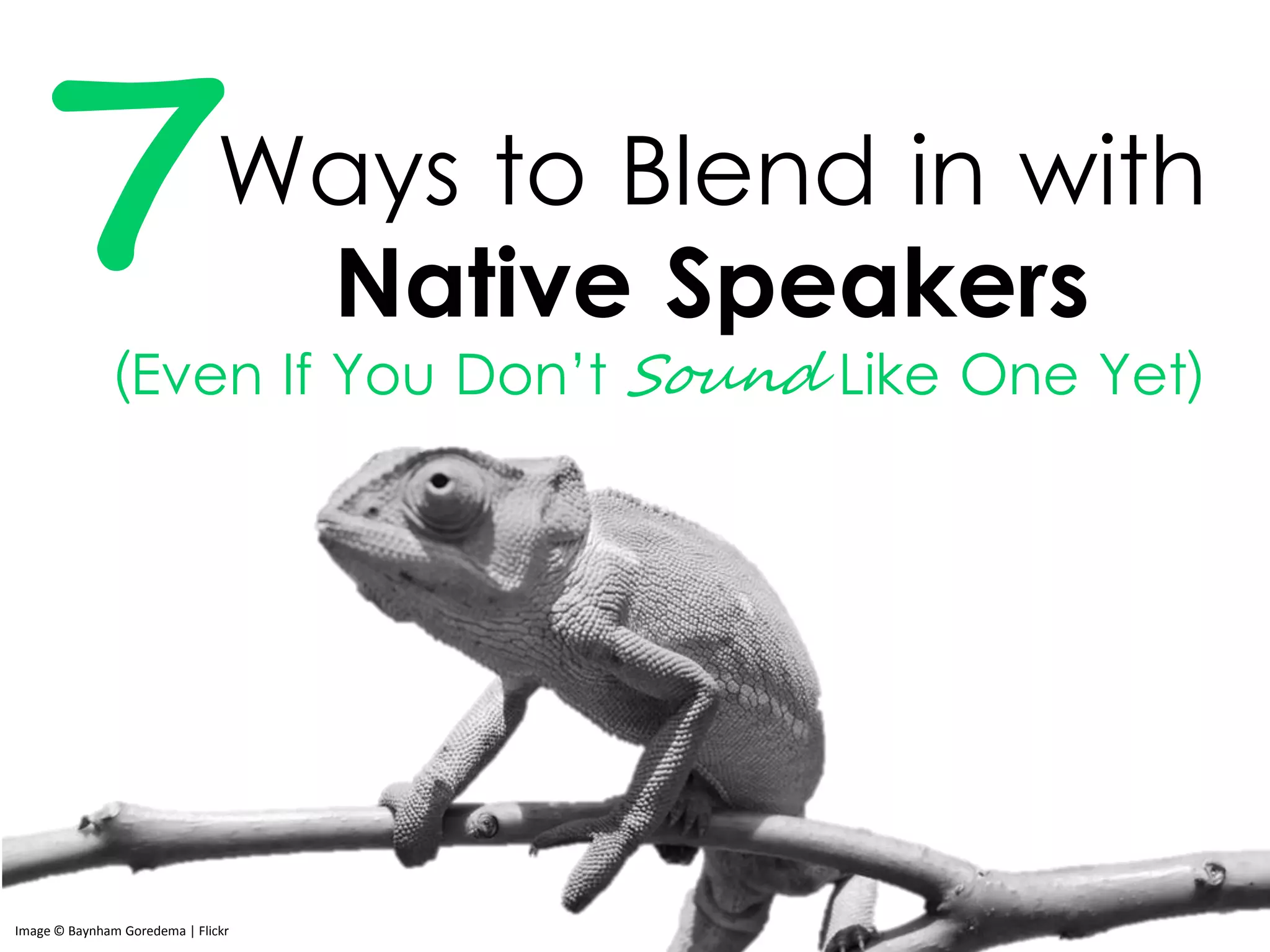
Ways to Blend in with
Native Speakers
(Even If You Don’t Sound Like One Yet)
7
Image © Baynham Goredema | Flickr
It is the goal of many-a-language-
learner to sound “like a native speaker”.
That is a very respectable goal,
of course. But…
That is a very respectable goal,
of course. But…
That is a very respectable goal, of
course. But…
Sounding like a native speaker
means mastering pronunciation,
which takes a lot of
time and practice.
“Perfect” pronunciation is not
the end-all-be-all of language
learning. Accented speech can
be perfectly intelligible.
The good news is that there are plenty
of ways to improve your language skills
and blend in with native speakers, even
if you don’t quite sound like one.
1Dig in to idioms
Next time you hit the books to
study a language, take some time
to learn commonly used idioms.
Image © snow0810 | flickr
Without learning these expressions,
you’ll have barely scratched the
surface of a language.
Idioms are ever-changing, and not
easily learned from a textbook.
Employing them in daily conversations is
sure-fire way to give your language skills
an edge.
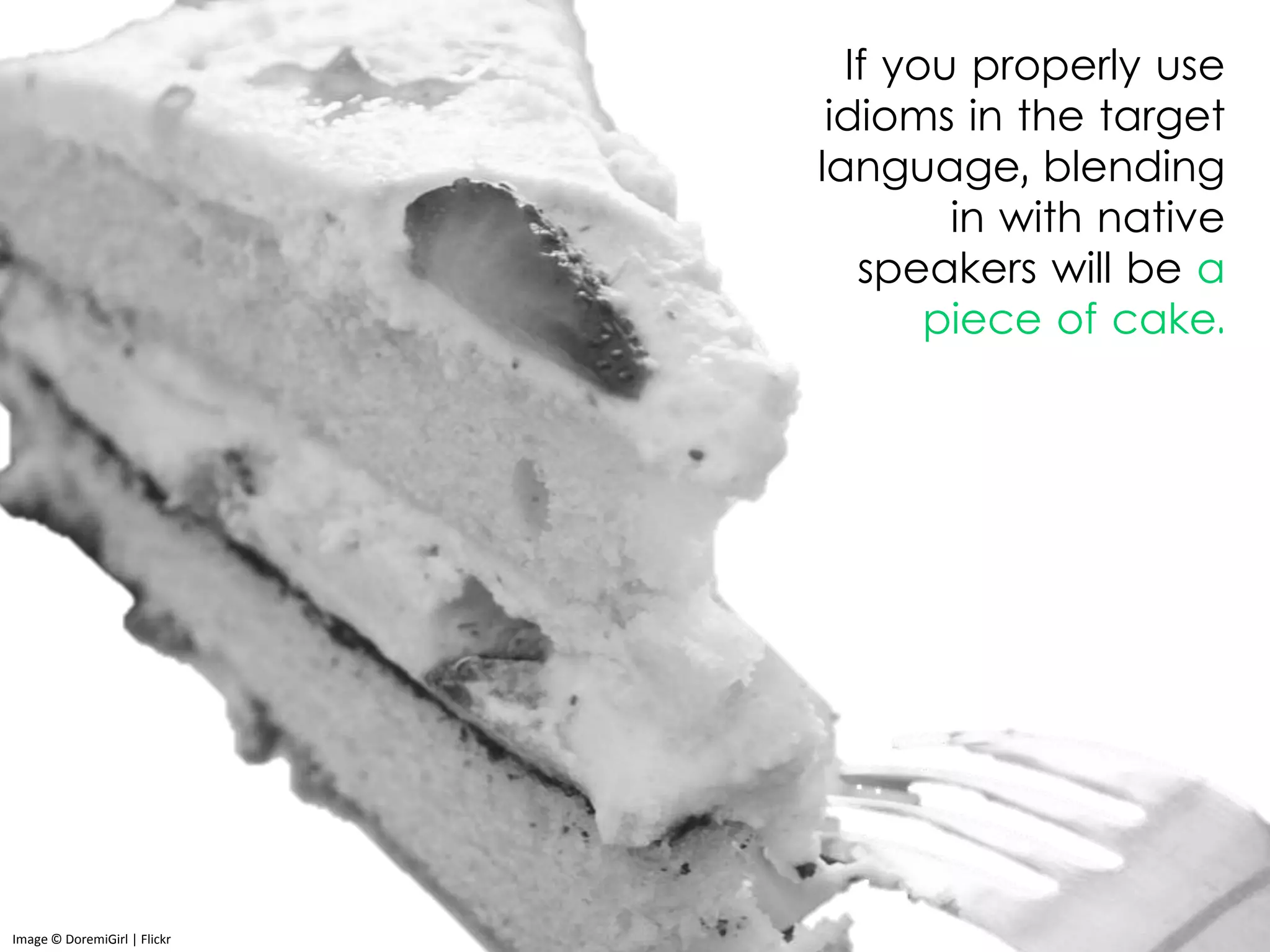
If you properly use
idioms in the target
language, blending
in with native
speakers will be a
piece of cake.
Image © DoremiGirl | Flickr
2Get the hang of slang
Studying formal language use, such as
proper verb conjugations or case marking,
is important to reach an advanced level
of proficiency.
But, without a
working knowledge
of slang, your daily
interactions with
natives will often
leave you confused.
Image © Jonny Wilkins | Flickr
If you’re abroad, simply listening to
conversations around you is a great way
to pick up on the current slang.
If you’re not in-country, take to social
media to find the current slang. Follow
native speakers on Twitter and observe
unfamiliar terms or expressions they use.
Learner, beware! Slang terms come
and go, so be careful not to pick up
outdated expressions. That would be
way uncool, man.
Slang is unavoidable, no
matter the language, so it’s
best to get with it.
3Study synonyms
An easy way to beef
up your language
skills? Build your
vocabulary by
studying synonyms!
Image © Ian Britton | Flickr
You can only describe
something as “good” or
“nice” so many times.
Synonyms add color to what
you’re saying. Instead of “good”,
you could describe something as…
great
amazing
fantastic
breath-taking
unbelievable
wonderful
…and so on!
Invest in a thesaurus (or find one
online) and get to memorizing!
4Use modifiers
So, you’re tired. But are you really tired,
sort of tired, wicked tired, or maybe just
a bit tired?
Image © Jared Wong | Flickr
Modifiers allow your language to
take on a more nuanced form,
letting you express yourself more
specifically and clearly.
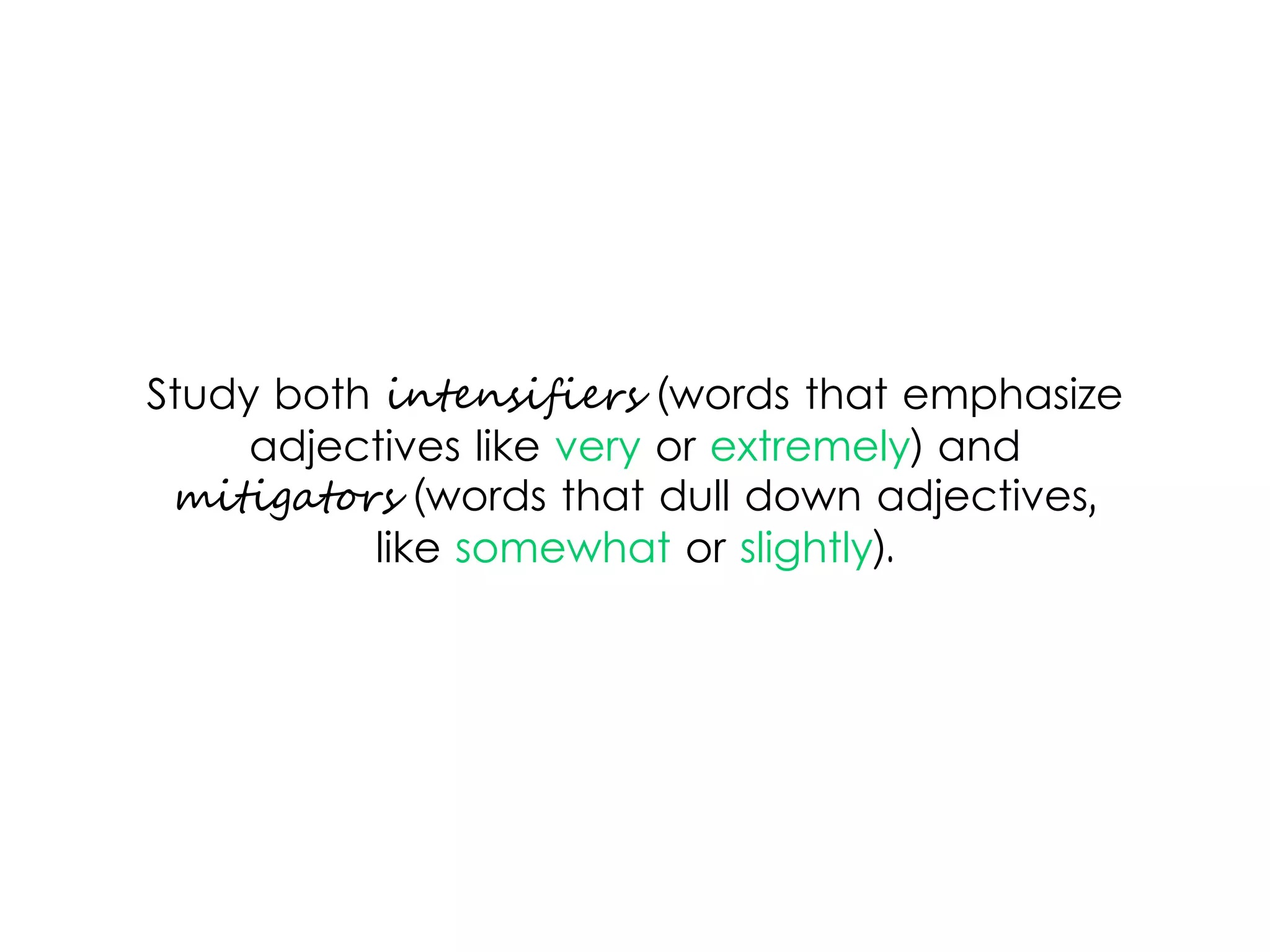
Study both intensifiers (words that emphasize
adjectives like very or extremely) and
mitigators (words that dull down adjectives,
like somewhat or slightly).
Modifiers will take your language skills
from good to unbelievably good, and
native speakers will take notice.
Modifiers will take your language skills
from good to unbelievably good, and
native speakers will take notice.
5Brush up on linking words
And then… and then…
and then… and then...
Tell a story like that and then
everyone will know you’re not a
native speaker.
Image © Ruby Gold | Flickr
Study linking words to help the flow
of your speech in the target language.
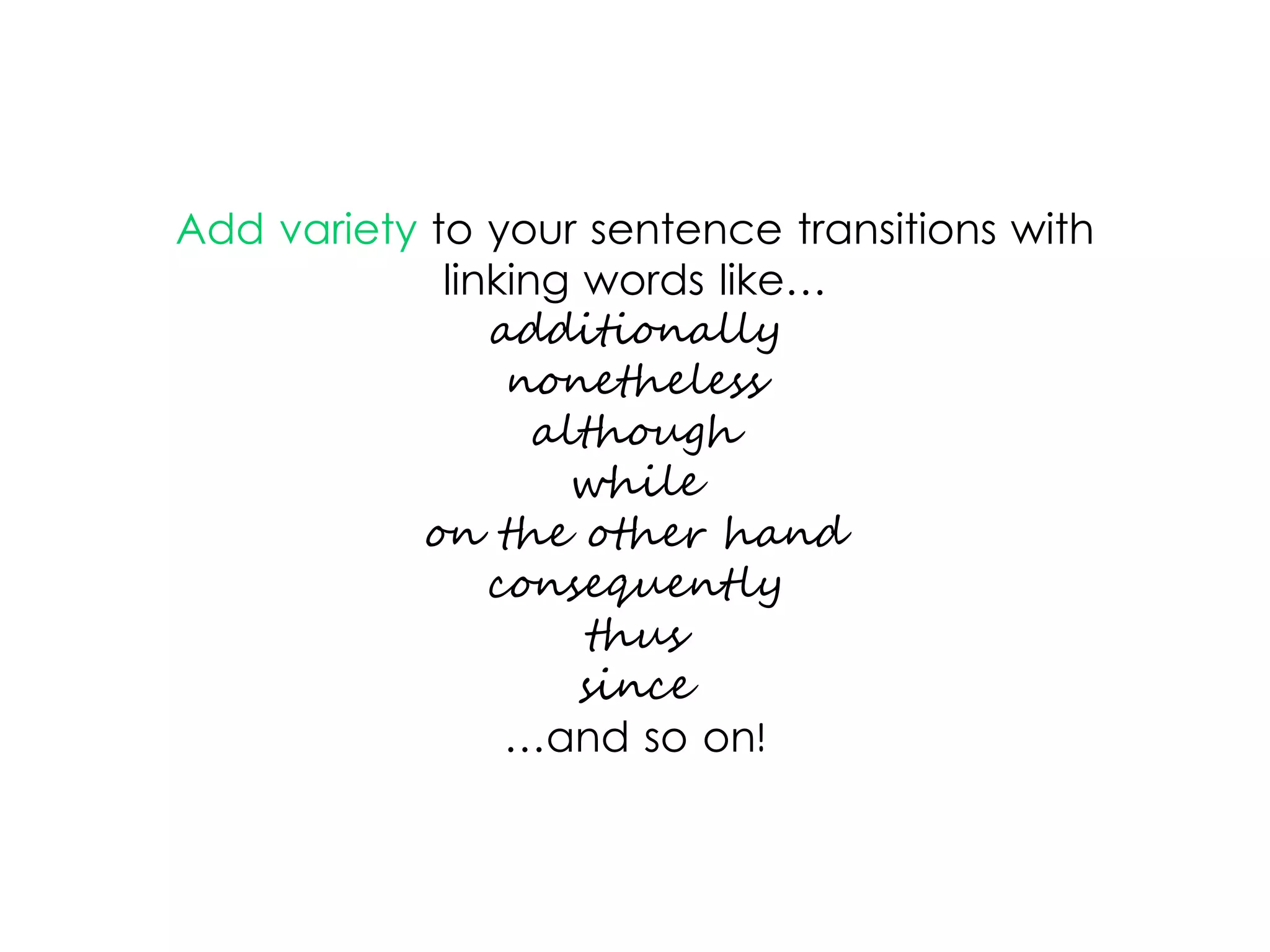
Add variety to your sentence transitions with
linking words like…
additionally
nonetheless
although
while
on the other hand
consequently
thus
since
…and so on!
6Keep up with pop culture
Pop culture references dominate
casual speech.
No American can say
the phrase “I’ll be
back.” without at least
being tempted to bust
out their best Arnold
accent.
Image © Zero Emission Resource Organisation | Flickr
Keeping up with movies, music, TV
shows, and so on will not only help
you pick up on references, but also
give you something to talk about
with native speakers!
7Observe body language
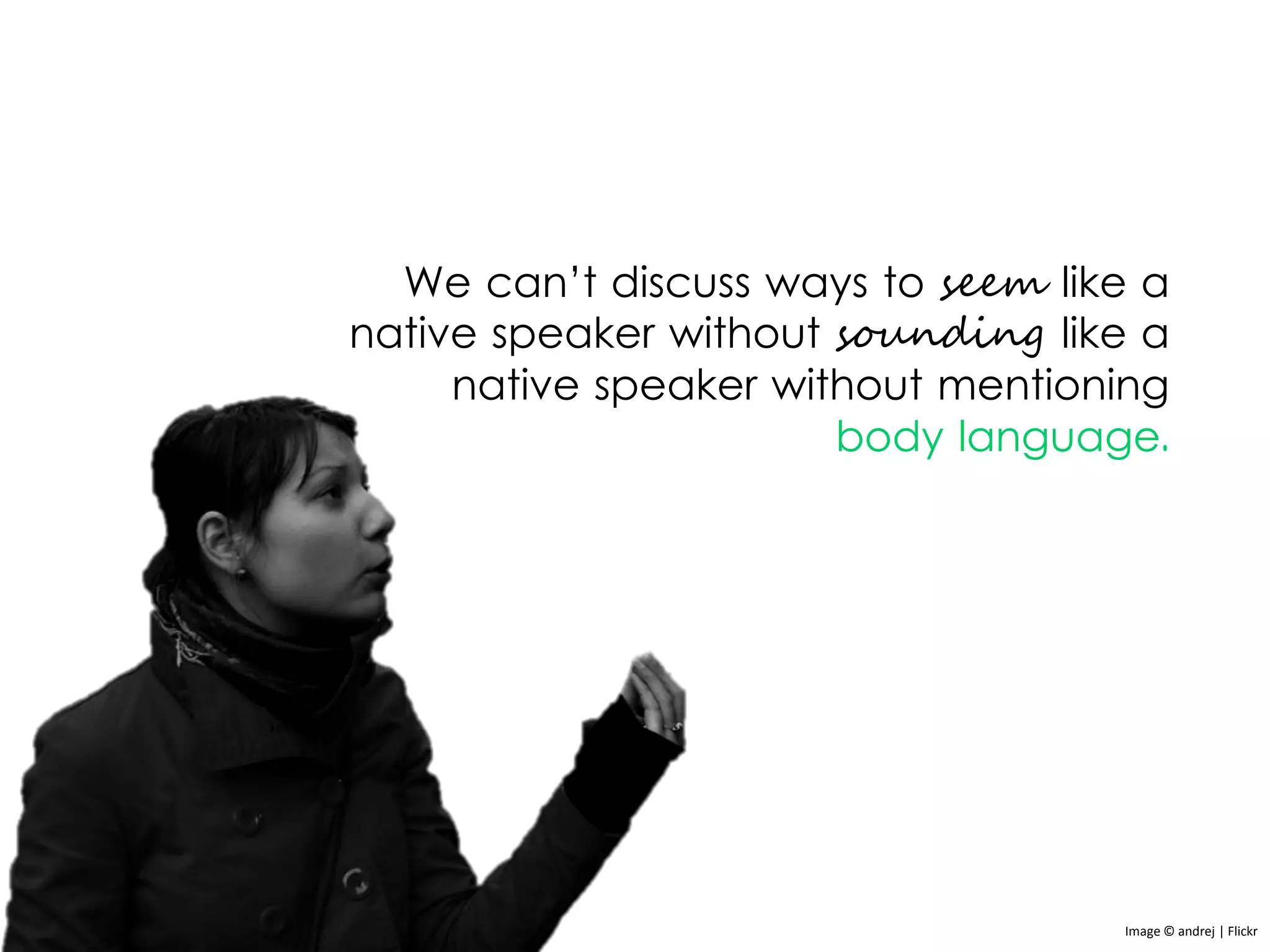
We can’t discuss ways to seem like a
native speaker without sounding like a
native speaker without mentioning
body language.
Image © andrej | Flickr
The ability to use and react to
visual cues will separate a serious
language learner from an amateur.
Pay careful attention to how people
interact with each other in different
situations, including their posture,
hand gestures, and facial expressions.
But beware! Gestures and signals are
NOT universal. A thumbs up in the
United States is a-okay, but abroad,
that may not be the case!
Image © Sarah Reid | Flickr
So there you have it. There are
other facets to mastering a
language beyond achieving
the coveted native-like accent.
Ready to sound more like a native speaker?
Practice your pronunciation in 100+ languages
with Transparent Language Online.
FREE TRIAL

7 Ways to Blend in with Native Speakers (Even if You Don't Sound Like One Yet)

  • 1.
    Ways to Blendin with Native Speakers (Even If You Don’t Sound Like One Yet) 7 Image © Baynham Goredema | Flickr
  • 2.
    It is thegoal of many-a-language- learner to sound “like a native speaker”.
  • 3.
    That is avery respectable goal, of course. But…
  • 4.
    That is avery respectable goal, of course. But…
  • 5.
    That is avery respectable goal, of course. But… Sounding like a native speaker means mastering pronunciation, which takes a lot of time and practice.
  • 6.
    “Perfect” pronunciation isnot the end-all-be-all of language learning. Accented speech can be perfectly intelligible.
  • 7.
    The good newsis that there are plenty of ways to improve your language skills and blend in with native speakers, even if you don’t quite sound like one.
  • 8.
    1Dig in toidioms
  • 9.
    Next time youhit the books to study a language, take some time to learn commonly used idioms. Image © snow0810 | flickr
  • 10.
    Without learning theseexpressions, you’ll have barely scratched the surface of a language.
  • 11.
    Idioms are ever-changing,and not easily learned from a textbook. Employing them in daily conversations is sure-fire way to give your language skills an edge.
  • 12.
    If you properlyuse idioms in the target language, blending in with native speakers will be a piece of cake. Image © DoremiGirl | Flickr
  • 13.
    2Get the hangof slang
  • 14.
    Studying formal languageuse, such as proper verb conjugations or case marking, is important to reach an advanced level of proficiency.
  • 15.
    But, without a workingknowledge of slang, your daily interactions with natives will often leave you confused. Image © Jonny Wilkins | Flickr
  • 16.
    If you’re abroad,simply listening to conversations around you is a great way to pick up on the current slang.
  • 17.
    If you’re notin-country, take to social media to find the current slang. Follow native speakers on Twitter and observe unfamiliar terms or expressions they use.
  • 18.
    Learner, beware! Slangterms come and go, so be careful not to pick up outdated expressions. That would be way uncool, man.
  • 19.
    Slang is unavoidable,no matter the language, so it’s best to get with it.
  • 20.
  • 21.
    An easy wayto beef up your language skills? Build your vocabulary by studying synonyms! Image © Ian Britton | Flickr
  • 22.
    You can onlydescribe something as “good” or “nice” so many times.
  • 23.
    Synonyms add colorto what you’re saying. Instead of “good”, you could describe something as… great amazing fantastic breath-taking unbelievable wonderful …and so on!
  • 24.
    Invest in athesaurus (or find one online) and get to memorizing!
  • 25.
  • 26.
    So, you’re tired.But are you really tired, sort of tired, wicked tired, or maybe just a bit tired? Image © Jared Wong | Flickr
  • 27.
    Modifiers allow yourlanguage to take on a more nuanced form, letting you express yourself more specifically and clearly.
  • 28.
    Study both intensifiers(words that emphasize adjectives like very or extremely) and mitigators (words that dull down adjectives, like somewhat or slightly).
  • 29.
    Modifiers will takeyour language skills from good to unbelievably good, and native speakers will take notice.
  • 30.
    Modifiers will takeyour language skills from good to unbelievably good, and native speakers will take notice.
  • 31.
    5Brush up onlinking words
  • 32.
    And then… andthen… and then… and then...
  • 33.
    Tell a storylike that and then everyone will know you’re not a native speaker.
  • 34.
    Image © RubyGold | Flickr Study linking words to help the flow of your speech in the target language.
  • 35.
    Add variety toyour sentence transitions with linking words like… additionally nonetheless although while on the other hand consequently thus since …and so on!
  • 36.
    6Keep up withpop culture
  • 37.
    Pop culture referencesdominate casual speech.
  • 38.
    No American cansay the phrase “I’ll be back.” without at least being tempted to bust out their best Arnold accent. Image © Zero Emission Resource Organisation | Flickr
  • 39.
    Keeping up withmovies, music, TV shows, and so on will not only help you pick up on references, but also give you something to talk about with native speakers!
  • 40.
  • 41.
    We can’t discussways to seem like a native speaker without sounding like a native speaker without mentioning body language. Image © andrej | Flickr
  • 42.
    The ability touse and react to visual cues will separate a serious language learner from an amateur.
  • 43.
    Pay careful attentionto how people interact with each other in different situations, including their posture, hand gestures, and facial expressions.
  • 44.
    But beware! Gesturesand signals are NOT universal. A thumbs up in the United States is a-okay, but abroad, that may not be the case! Image © Sarah Reid | Flickr
  • 45.
    So there youhave it. There are other facets to mastering a language beyond achieving the coveted native-like accent.
  • 46.
    Ready to soundmore like a native speaker? Practice your pronunciation in 100+ languages with Transparent Language Online. FREE TRIAL