By :- TARESH R. KHANDEKAR
INTRODUCTION
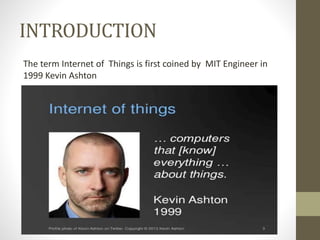
The term Internet of Things is first coined by MIT Engineer in
1999 Kevin Ashton
What Is IoT?
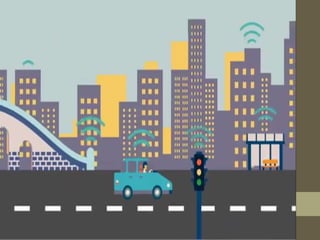
• The internet of things (or as it’s also
known, IoT) is a system of interrelated
computing devices, mechanical and digital
machines, objects, animals or people that
are provided with unique identifiers and
the ability to transfer data over a network
without requiring human-to-human or
human-to-computer interaction.
The IoT Effect On Business ?
This all depends on your industry:
manufacturing is perhaps the furthest
ahead in terms of IoT, as it’s useful for
organizing tools, machines and people, and
tracking where they are.
On the flip side, a smart tea maker that
knows just when you need a cup of tea
could be very handy indeed.
WHY SHOULD YOU TAKE
COGNIZENSE?
To understand your product, make a deeper
connection with customers, create a new
business model, increase revenue or even
build a new revenue stream. Perhaps you’d
like to find out what your products are
doing after you sell them and figure out
which features to include or remove from
your next iteration.
• It’s estimated that by 2020, more than 50
billion devices will be connected to the
Internet—from toasters to heart monitors
to cows in their pastures.
• In the next 5 years 4.5 trillion dollars is the
projected amount that will be spent
worldwide on the Internet of Things.
• IoT will once again challenge Extension’s
ability to adapt, but in a way that vastly
overshadows any other innovative
disruption to date.
• The intersection of IoT and the Maker
Movement will usher in radically new
demands for skillsets in building Internet
connected devices using tiny powerful
computers like the Arduino and Raspberry
Pi
CHALLENGES
• Firstly, there is the challenge around managing
the lifecycle of data collected from the IoT
device, from creation to acquisition to analysis
to disposal. Insufficient control over this data, or
unclear scope of data retention increases the
risk of managing and handling this data.
• Next, there is the risk of vulnerabilities that would
cause a malicious user to hack into the devices and
coordinate a physical attack or impersonate a user
or introduce malware into the system.
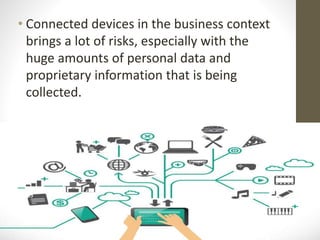
• Connected devices in the business context
brings a lot of risks, especially with the
huge amounts of personal data and
proprietary information that is being
collected.
Better strategies for a safe
connected future
• Lack of strategies in managing the above
risks around IoT could result in
consequences around regulatory and legal
damages and fines, and ultimately the loss
of reputation with the businesses and
consumers
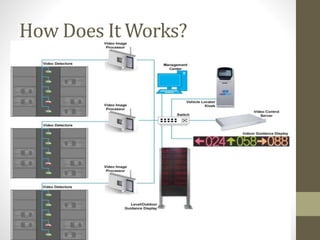
How Does It Works?
• Object Human, Mechanical , Electrical are
assigned with static IP address. IoT refers to the
ability of objects to connect and share data over
the Internet, With each passing day, the number
of devices that get on board IoT is steadily on the
rise.
• IPv6’s huge increase in address space is an
important factor in the development of the
Internet of Things.
• “assign an IPV6 address to every atom on
the surface of the earth, and still have
enough addresses left to do another 100+
earths.”
• A thing, in the Internet of Things, can be a
person with a heart monitor implant, a
farm animal with a biochip transponder,
an automobile that has built-in sensors to
alert the driver when tire pressure is low --
or any other natural or man-made object
that can be assigned an IP address and
provided with the ability to transfer data
over a network.
FINISH
THANK YOU

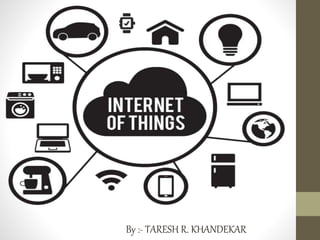
WHAT IS IoT

  • 1.
    By :- TARESHR. KHANDEKAR
  • 2.
    INTRODUCTION The term Internetof Things is first coined by MIT Engineer in 1999 Kevin Ashton
  • 3.
    What Is IoT? •The internet of things (or as it’s also known, IoT) is a system of interrelated computing devices, mechanical and digital machines, objects, animals or people that are provided with unique identifiers and the ability to transfer data over a network without requiring human-to-human or human-to-computer interaction.
  • 4.
    The IoT EffectOn Business ? This all depends on your industry: manufacturing is perhaps the furthest ahead in terms of IoT, as it’s useful for organizing tools, machines and people, and tracking where they are. On the flip side, a smart tea maker that knows just when you need a cup of tea could be very handy indeed.
  • 5.
    WHY SHOULD YOUTAKE COGNIZENSE? To understand your product, make a deeper connection with customers, create a new business model, increase revenue or even build a new revenue stream. Perhaps you’d like to find out what your products are doing after you sell them and figure out which features to include or remove from your next iteration.
  • 6.
    • It’s estimatedthat by 2020, more than 50 billion devices will be connected to the Internet—from toasters to heart monitors to cows in their pastures. • In the next 5 years 4.5 trillion dollars is the projected amount that will be spent worldwide on the Internet of Things. • IoT will once again challenge Extension’s ability to adapt, but in a way that vastly overshadows any other innovative disruption to date.
  • 7.
    • The intersectionof IoT and the Maker Movement will usher in radically new demands for skillsets in building Internet connected devices using tiny powerful computers like the Arduino and Raspberry Pi
  • 8.
    CHALLENGES • Firstly, thereis the challenge around managing the lifecycle of data collected from the IoT device, from creation to acquisition to analysis to disposal. Insufficient control over this data, or unclear scope of data retention increases the risk of managing and handling this data. • Next, there is the risk of vulnerabilities that would cause a malicious user to hack into the devices and coordinate a physical attack or impersonate a user or introduce malware into the system.
  • 9.
    • Connected devicesin the business context brings a lot of risks, especially with the huge amounts of personal data and proprietary information that is being collected.
  • 10.
    Better strategies fora safe connected future • Lack of strategies in managing the above risks around IoT could result in consequences around regulatory and legal damages and fines, and ultimately the loss of reputation with the businesses and consumers
  • 11.
  • 12.
    • Object Human,Mechanical , Electrical are assigned with static IP address. IoT refers to the ability of objects to connect and share data over the Internet, With each passing day, the number of devices that get on board IoT is steadily on the rise. • IPv6’s huge increase in address space is an important factor in the development of the Internet of Things. • “assign an IPV6 address to every atom on the surface of the earth, and still have enough addresses left to do another 100+ earths.”
  • 14.
    • A thing,in the Internet of Things, can be a person with a heart monitor implant, a farm animal with a biochip transponder, an automobile that has built-in sensors to alert the driver when tire pressure is low -- or any other natural or man-made object that can be assigned an IP address and provided with the ability to transfer data over a network.
  • 15.
  • 16.