Lecture 5:
Today’s Contents: CSR and Supply
Chain Management
 Social Responsibility in Supply Chain
 Sustainable Supply Chain Management
 Process of Supply Chain Management
Social Responsibility in SC
 Internal and external transportation management
 Warehouse management
 Inventory management
 Acquisition management
 Logistics service providers management
 Resources management
 Packaging and assembly management
 Customer Service management
Main areas of Social Responsibility
 Organizational Practices
 Ethical Practices
 Environmental Practices
 Practices of human Rights and working
conditions
 Practices of occupational health and safely
 Practices of established relationship with
society
Question: How would you apply all of the above into
Supply Chain Management?
Organizational Practices
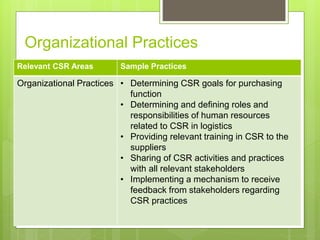
Relevant CSR Areas Sample Practices
Organizational Practices • Determining CSR goals for purchasing
function
• Determining and defining roles and
responsibilities of human resources
related to CSR in logistics
• Providing relevant training in CSR to the
suppliers
• Sharing of CSR activities and practices
with all relevant stakeholders
• Implementing a mechanism to receive
feedback from stakeholders regarding
CSR practices
Environmental Practices
Relevant CSR
Areas
Sample Practices
Environmental
Practices
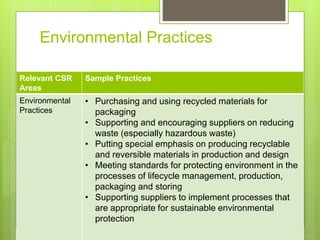
• Purchasing and using recycled materials for
packaging
• Supporting and encouraging suppliers on reducing
waste (especially hazardous waste)
• Putting special emphasis on producing recyclable
and reversible materials in production and design
• Meeting standards for protecting environment in the
processes of lifecycle management, production,
packaging and storing
• Supporting suppliers to implement processes that
are appropriate for sustainable environmental
protection
Practices of Human
Rights and working conditions
Relevant CSR
Areas
Sample Practices
Practices of
human rights
and working
conditions
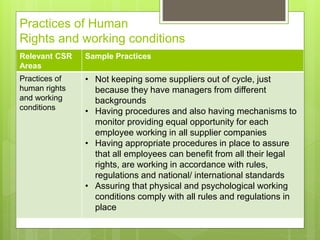
• Not keeping some suppliers out of cycle, just
because they have managers from different
backgrounds
• Having procedures and also having mechanisms to
monitor providing equal opportunity for each
employee working in all supplier companies
• Having appropriate procedures in place to assure
that all employees can benefit from all their legal
rights, are working in accordance with rules,
regulations and national/ international standards
• Assuring that physical and psychological working
conditions comply with all rules and regulations in
place
Practices of Human
Rights and working conditions
Relevant CSR
Areas
Sample Practices
Practices of
occupational
health and
safety
• Having appropriate procedures in place to assure
that working conditions do not jeopardize human
health and safety
• Assuring that all safety, security and protection
measures are in place for all activities
• Having procedures in place to assure that sensitive
and delicate products are stored under appropriate
conditions
Practices to establish relationship with society
Relevant CSR
Areas
Sample Practices
Practices to
establish
relationship with
society
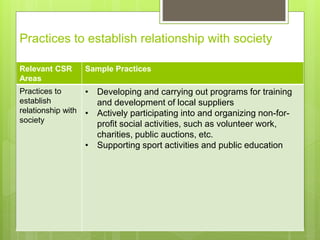
• Developing and carrying out programs for training
and development of local suppliers
• Actively participating into and organizing non-for-
profit social activities, such as volunteer work,
charities, public auctions, etc.
• Supporting sport activities and public education
Sustainable Supply Chain
Management (SSCM)
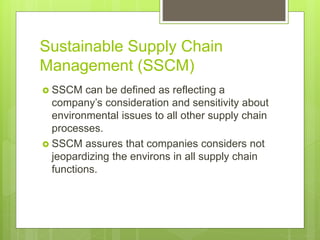
 SSCM can be defined as reflecting a
company’s consideration and sensitivity about
environmental issues to all other supply chain
processes.
 SSCM assures that companies considers not
jeopardizing the environs in all supply chain
functions.
Goal of SSCM
 Is to assure that environmental practices are
applied in all phases of the process from:
 Procurement of raw material to the
 Delivery to the consumers.
 Purchasing, production, packaging, warehousing,
distribution, assembly.
Goal of SSCM– Long-term
 Is to keep under control all the process,
 Reduce the chemical waste, lessen the gas
emissions and eliminate all the activities that
may be hazardous to the nature.
Scope of SSCM-- approaches
 Reactive approach– comply with rules
 Proactive approach– prevent possible harms
 Value seeking approach– integrate policies
SSCM- Environmental
Indicators and success factors
 Amount of energy and raw material spent
 Amount of waste produced and exposed to the nature
 Amount of hazardous material uses in the production
process of goods and products
 Amount of fuel usage and gas emission in the
production, storage and transportation
 Amount of recycled material through the processes
 Number of partnerships with suppliers on the
environmental awareness
 Level of reputation of environmental sensibility
SR in the process of SCM
 Triple Bottom Line Practices in:
procurement
purchasing
Production
distribution and transportation
Packaging
Warehousing

Lecture 5 CSR Supply Chain.pptx

  • 1.
    Lecture 5: Today’s Contents:CSR and Supply Chain Management  Social Responsibility in Supply Chain  Sustainable Supply Chain Management  Process of Supply Chain Management
  • 2.
    Social Responsibility inSC  Internal and external transportation management  Warehouse management  Inventory management  Acquisition management  Logistics service providers management  Resources management  Packaging and assembly management  Customer Service management
  • 3.
    Main areas ofSocial Responsibility  Organizational Practices  Ethical Practices  Environmental Practices  Practices of human Rights and working conditions  Practices of occupational health and safely  Practices of established relationship with society Question: How would you apply all of the above into Supply Chain Management?
  • 4.
    Organizational Practices Relevant CSRAreas Sample Practices Organizational Practices • Determining CSR goals for purchasing function • Determining and defining roles and responsibilities of human resources related to CSR in logistics • Providing relevant training in CSR to the suppliers • Sharing of CSR activities and practices with all relevant stakeholders • Implementing a mechanism to receive feedback from stakeholders regarding CSR practices
  • 5.
    Environmental Practices Relevant CSR Areas SamplePractices Environmental Practices • Purchasing and using recycled materials for packaging • Supporting and encouraging suppliers on reducing waste (especially hazardous waste) • Putting special emphasis on producing recyclable and reversible materials in production and design • Meeting standards for protecting environment in the processes of lifecycle management, production, packaging and storing • Supporting suppliers to implement processes that are appropriate for sustainable environmental protection
  • 6.
    Practices of Human Rightsand working conditions Relevant CSR Areas Sample Practices Practices of human rights and working conditions • Not keeping some suppliers out of cycle, just because they have managers from different backgrounds • Having procedures and also having mechanisms to monitor providing equal opportunity for each employee working in all supplier companies • Having appropriate procedures in place to assure that all employees can benefit from all their legal rights, are working in accordance with rules, regulations and national/ international standards • Assuring that physical and psychological working conditions comply with all rules and regulations in place
  • 7.
    Practices of Human Rightsand working conditions Relevant CSR Areas Sample Practices Practices of occupational health and safety • Having appropriate procedures in place to assure that working conditions do not jeopardize human health and safety • Assuring that all safety, security and protection measures are in place for all activities • Having procedures in place to assure that sensitive and delicate products are stored under appropriate conditions
  • 8.
    Practices to establishrelationship with society Relevant CSR Areas Sample Practices Practices to establish relationship with society • Developing and carrying out programs for training and development of local suppliers • Actively participating into and organizing non-for- profit social activities, such as volunteer work, charities, public auctions, etc. • Supporting sport activities and public education
  • 9.
    Sustainable Supply Chain Management(SSCM)  SSCM can be defined as reflecting a company’s consideration and sensitivity about environmental issues to all other supply chain processes.  SSCM assures that companies considers not jeopardizing the environs in all supply chain functions.
  • 10.
    Goal of SSCM Is to assure that environmental practices are applied in all phases of the process from:  Procurement of raw material to the  Delivery to the consumers.  Purchasing, production, packaging, warehousing, distribution, assembly.
  • 11.
    Goal of SSCM–Long-term  Is to keep under control all the process,  Reduce the chemical waste, lessen the gas emissions and eliminate all the activities that may be hazardous to the nature.
  • 12.
    Scope of SSCM--approaches  Reactive approach– comply with rules  Proactive approach– prevent possible harms  Value seeking approach– integrate policies
  • 13.
    SSCM- Environmental Indicators andsuccess factors  Amount of energy and raw material spent  Amount of waste produced and exposed to the nature  Amount of hazardous material uses in the production process of goods and products  Amount of fuel usage and gas emission in the production, storage and transportation  Amount of recycled material through the processes  Number of partnerships with suppliers on the environmental awareness  Level of reputation of environmental sensibility
  • 14.
    SR in theprocess of SCM  Triple Bottom Line Practices in: procurement purchasing Production distribution and transportation Packaging Warehousing