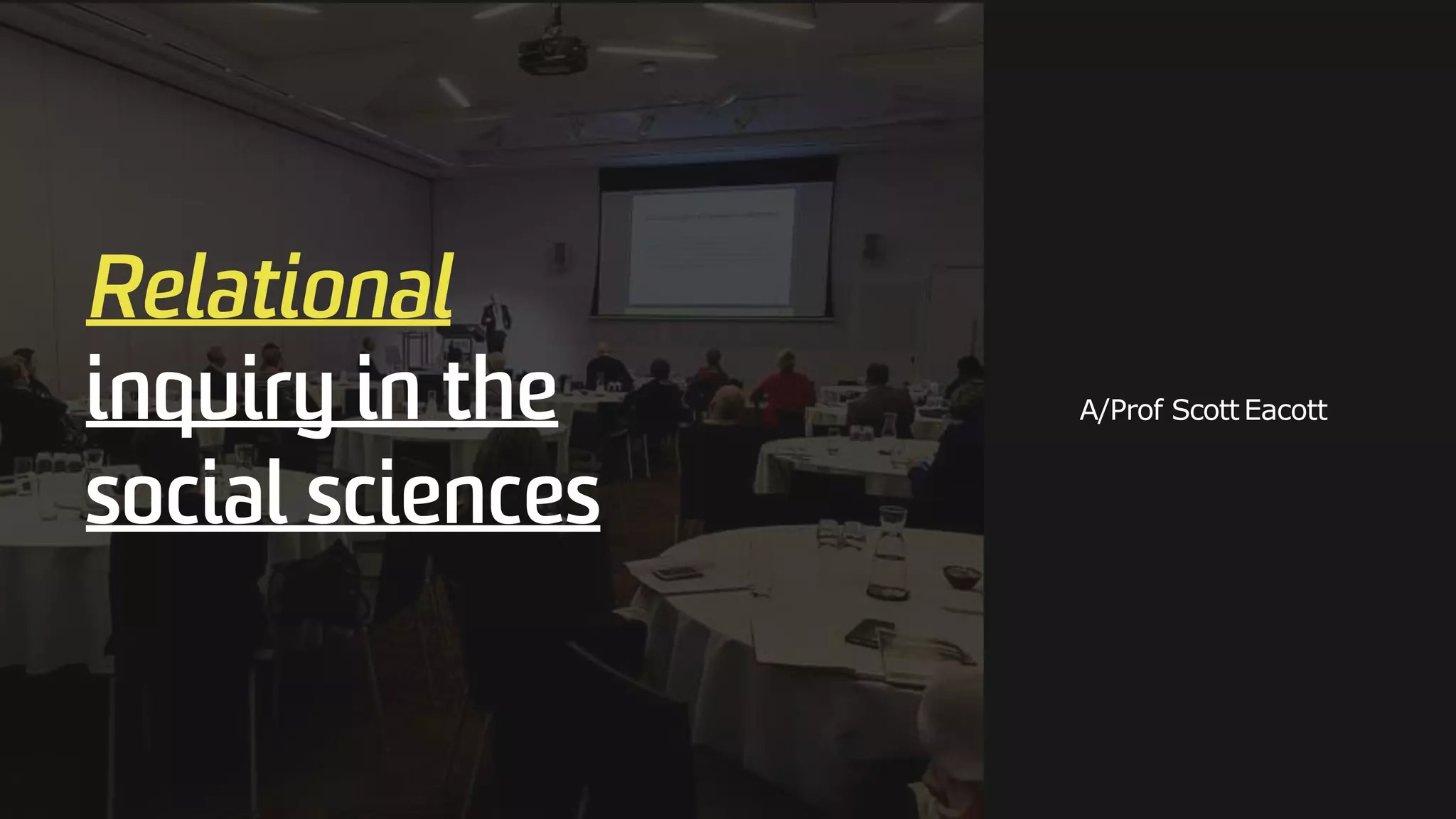
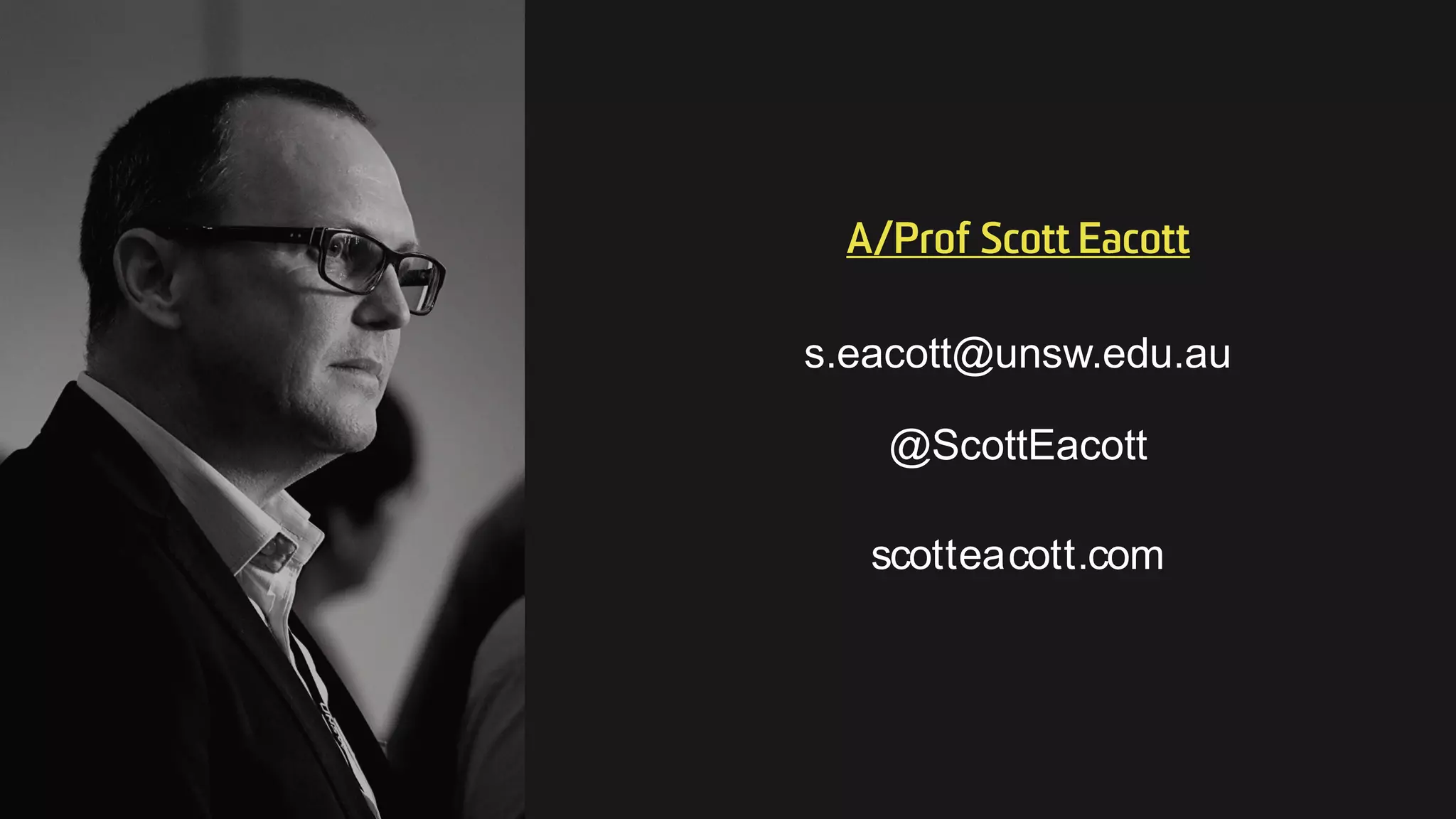
A/Prof ScottEacott
A sophisticated analytical lens
for in-depth epistemological
and methodological inquiry.
Taeyeon Kim(2018)
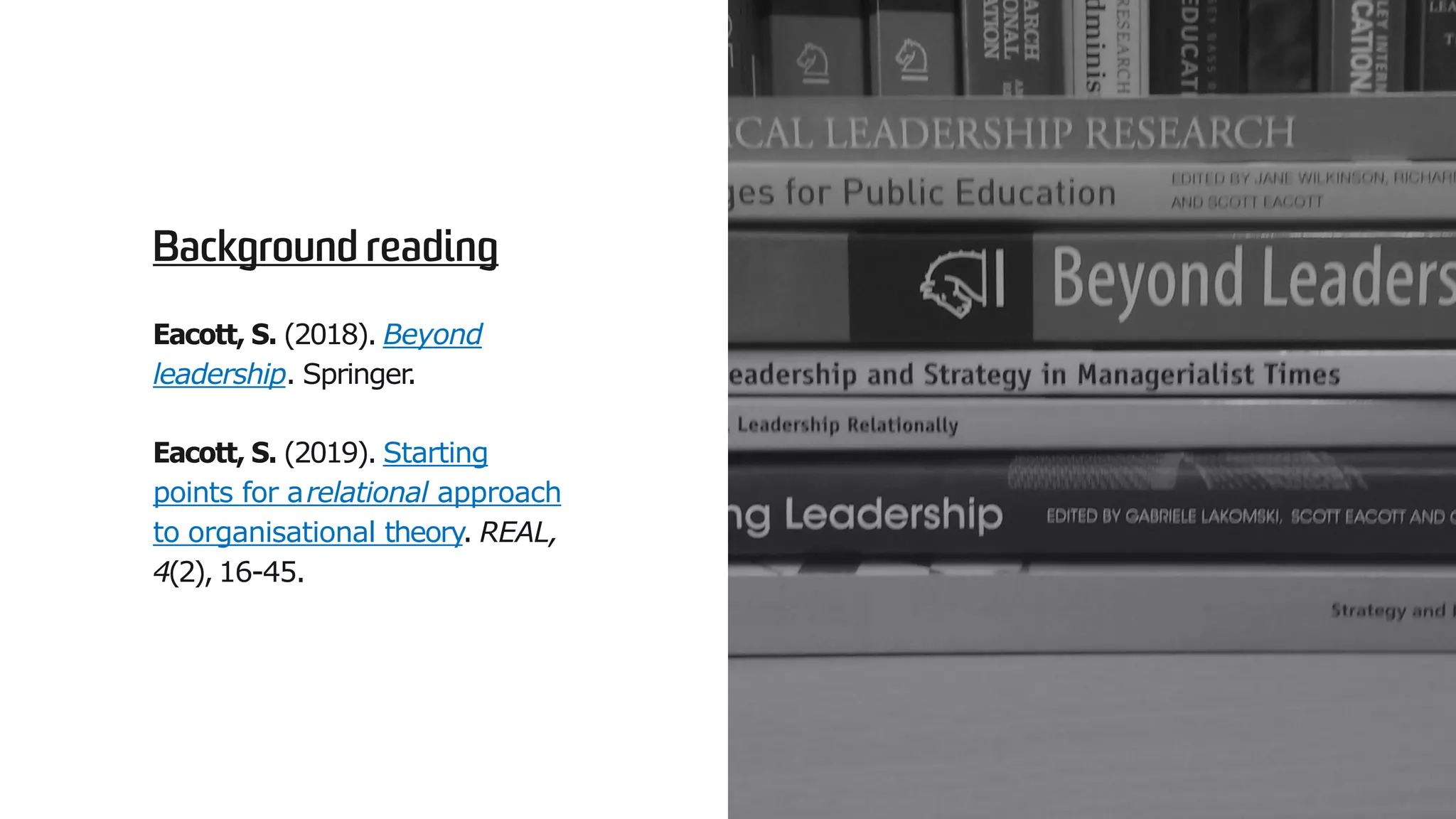
Eacott, S. (2018). Beyond
leadership. Springer.
Eacott, S. (2019). Starting
points for arelational approach
to organisational theory. REAL,
4(2), 16-45.
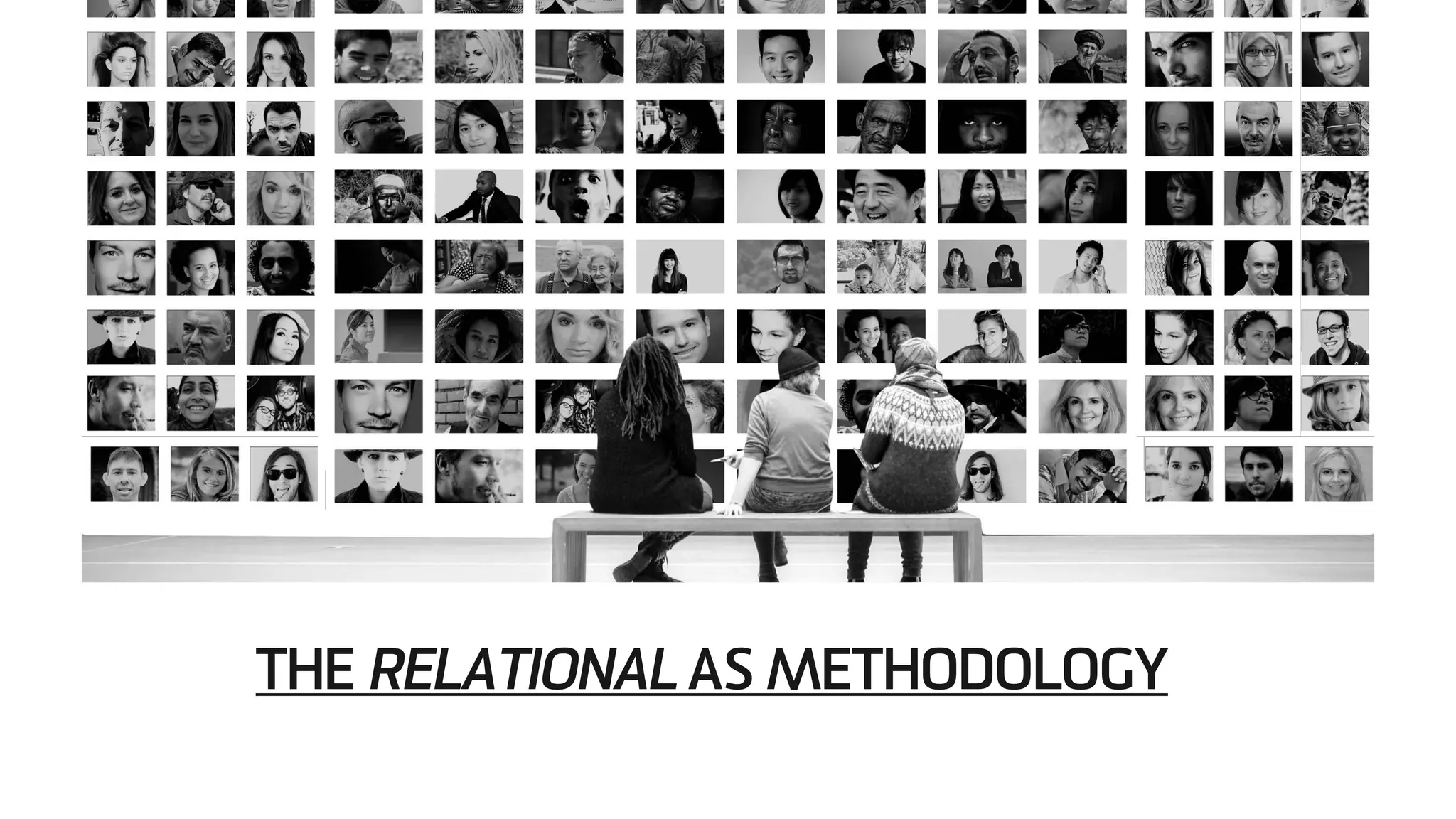
The relational approach is
both a methodology and
theoretical resources.
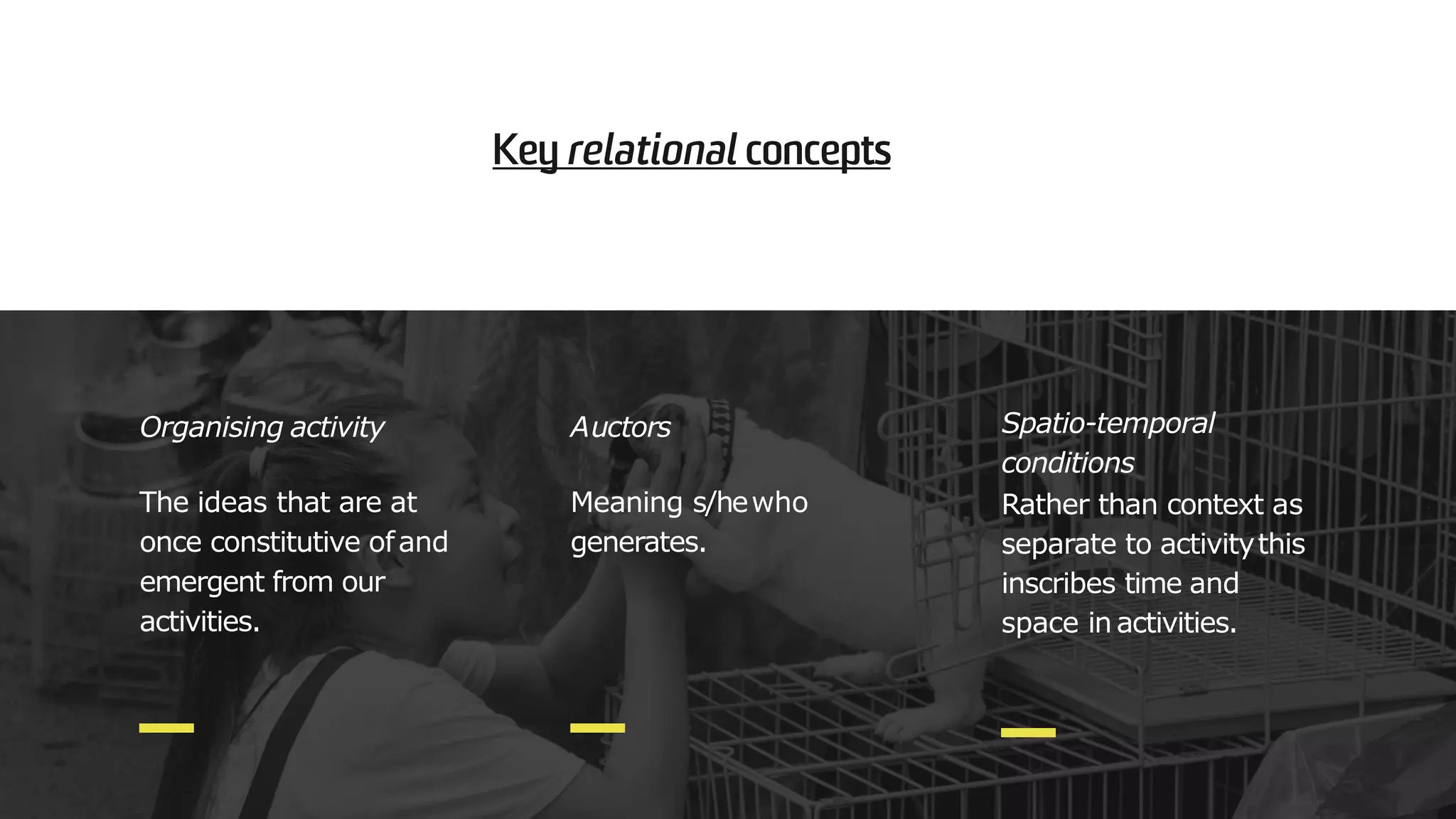
Organising activity
The ideas that are at
once constitutive ofand
emergent from our
activities.
Auctors
Meaning s/hewho
generates.
Spatio-temporal
conditions
Rather than context as
separate to activitythis
inscribes time and
space in activities.
Auctors generatespatio-temporal
conditions through organising
activity.
The centrality of 'organising' in the social world
creates an ontological complicity in researchers (and
others) that makes it difficult to epistemtologically
break from the ordinary language of the everyday.
Rigorous and robust social
science calls into questionthe
foundation of popularlabels.
Spatio-temporal conditions
The contemporary condition is simultaneously
constitutive of and emergent from the image of
organising.
Foregrounding relations overcome
enduring analytical dualism of universal /
particular; structure /agency; and
individualism /holism
More than a critique of status quo, but an alternative
Weekly Lab meetings, aterm
long introductory course,
resources for working with
the relational approach and
links with a global network of
scholars.
Small towns have always been at the
front line of environmental, economic,
social and cultural change. This
project is exploring these relations
through small townsschools.
Context is considered important for
school leadership but the nature of
this relation is under explored. This
project explores what is meant and
the implications ofcontext.
We are constantly seeking outstanding researchers (Interns –
Hons - MRes - EdD - PhD - Visiting Scholars) to join the team and
advance the relational researchprogram.
s.eacott@unsw.edu.au
@ScottEacott
scotteacott.com

Relational Inquiry in the Social Sciences

  • 1.
  • 2.
    A sophisticated analyticallens for in-depth epistemological and methodological inquiry. Taeyeon Kim(2018)
  • 3.
    Eacott, S. (2018).Beyond leadership. Springer. Eacott, S. (2019). Starting points for arelational approach to organisational theory. REAL, 4(2), 16-45.
  • 4.
    The relational approachis both a methodology and theoretical resources.
  • 5.
    Organising activity The ideasthat are at once constitutive ofand emergent from our activities. Auctors Meaning s/hewho generates. Spatio-temporal conditions Rather than context as separate to activitythis inscribes time and space in activities.
  • 6.
  • 8.
    The centrality of'organising' in the social world creates an ontological complicity in researchers (and others) that makes it difficult to epistemtologically break from the ordinary language of the everyday.
  • 9.
    Rigorous and robustsocial science calls into questionthe foundation of popularlabels.
  • 10.
    Spatio-temporal conditions The contemporarycondition is simultaneously constitutive of and emergent from the image of organising.
  • 11.
    Foregrounding relations overcome enduringanalytical dualism of universal / particular; structure /agency; and individualism /holism
  • 12.
    More than acritique of status quo, but an alternative
  • 13.
    Weekly Lab meetings,aterm long introductory course, resources for working with the relational approach and links with a global network of scholars.
  • 14.
    Small towns havealways been at the front line of environmental, economic, social and cultural change. This project is exploring these relations through small townsschools. Context is considered important for school leadership but the nature of this relation is under explored. This project explores what is meant and the implications ofcontext. We are constantly seeking outstanding researchers (Interns – Hons - MRes - EdD - PhD - Visiting Scholars) to join the team and advance the relational researchprogram.
  • 15.