Technology
By Samuel J Hooper
The case study I will be referring
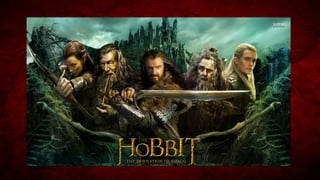
to is The Hobbit: The Desolation
of Smaug
Production
• Jackson is using three significant technological innovations to bring
The Hobbit to life on screen, each has been seen in other movies to
one degree or another but the their combination adds up to what
should be a unique movie-going experience for audiences.
• The first is 3D – something which we’ve become very used to in
theatres over the last couple of years. Jackson has stated openly that
he would have shot the original LOTR with the extra dimension if
possible and his immediate, often hand held, style seems perfectly
suited to being presented in 3D.
• With the use of the latest Red Epic digital cameras and special
lightweight rigs, as well as several years of experience with the
pleasures and pitfalls of the system, we’re hoping that The Hobbit will
help to revitalise 3D at a time when audiences are becoming more
and more jaded by it.
• The second innovation is tied to the cameras provided by the
American Red Digital Cinema Camera Company. They’ve been making
great strides towards making truly high definition digital filmmaking
compete with legacy film systems, starting with the revolutionary Red
One in 2007. In fact, Jackson’s been an advocate of the system since
then, completing a 12 minute short called Crossing the Line.
• The move to the Red Epic has given Jackson the chance to shoot The
Hobbit at 5K resolution. For reference, that’s means each still frame is
5120 pixels wide and 2700 pixels high. The high definition videos that
you marvel at online or through your Blu-ray player today measure, at
best, just 1920x1080. The result means much greater detail onscreen
and an assurance that later releases will be absolutely pin sharp.
Distribution
• Warner Bros. had secured a deal with MGM that will allow the former
to handle worldwide theatrical and video distribution of The Hobbit –
while the latter retains international television rights.
• They used both above and below the line distribution.
• Above the line- promotions use mass media methods. This type of
promotion focuses on advertising to a large audience. It includes
print, online media, television and cinema advertising. As the fourth
largest car company in the world, Kia is a big brand.
• Below the line- advertising is an advertising strategy in which a
product is promoted in mediums other than radio, television,
billboards, print and film. Types of below-the-line advertising
commonly include direct mail campaigns, trade shows and catalogs,
and targeted search engine marketing.
Exhibition
• The hobbit was released worldwide in a variety of mainstream
theatres and similarly independent cinemas.
• Overall worldwide the Hobbit: The Desolation of Smaug made a gross
profit of $272,605,500.

Technology

  • 1.
  • 2.
    The case studyI will be referring to is The Hobbit: The Desolation of Smaug
  • 3.
    Production • Jackson isusing three significant technological innovations to bring The Hobbit to life on screen, each has been seen in other movies to one degree or another but the their combination adds up to what should be a unique movie-going experience for audiences. • The first is 3D – something which we’ve become very used to in theatres over the last couple of years. Jackson has stated openly that he would have shot the original LOTR with the extra dimension if possible and his immediate, often hand held, style seems perfectly suited to being presented in 3D.
  • 4.
    • With theuse of the latest Red Epic digital cameras and special lightweight rigs, as well as several years of experience with the pleasures and pitfalls of the system, we’re hoping that The Hobbit will help to revitalise 3D at a time when audiences are becoming more and more jaded by it. • The second innovation is tied to the cameras provided by the American Red Digital Cinema Camera Company. They’ve been making great strides towards making truly high definition digital filmmaking compete with legacy film systems, starting with the revolutionary Red One in 2007. In fact, Jackson’s been an advocate of the system since then, completing a 12 minute short called Crossing the Line.
  • 5.
    • The moveto the Red Epic has given Jackson the chance to shoot The Hobbit at 5K resolution. For reference, that’s means each still frame is 5120 pixels wide and 2700 pixels high. The high definition videos that you marvel at online or through your Blu-ray player today measure, at best, just 1920x1080. The result means much greater detail onscreen and an assurance that later releases will be absolutely pin sharp.
  • 7.
    Distribution • Warner Bros.had secured a deal with MGM that will allow the former to handle worldwide theatrical and video distribution of The Hobbit – while the latter retains international television rights. • They used both above and below the line distribution. • Above the line- promotions use mass media methods. This type of promotion focuses on advertising to a large audience. It includes print, online media, television and cinema advertising. As the fourth largest car company in the world, Kia is a big brand.
  • 8.
    • Below theline- advertising is an advertising strategy in which a product is promoted in mediums other than radio, television, billboards, print and film. Types of below-the-line advertising commonly include direct mail campaigns, trade shows and catalogs, and targeted search engine marketing.
  • 10.
    Exhibition • The hobbitwas released worldwide in a variety of mainstream theatres and similarly independent cinemas. • Overall worldwide the Hobbit: The Desolation of Smaug made a gross profit of $272,605,500.