Enterprise Transformation
Models: Their Utility,
Common Pitfalls and
Adaptive IT
Stephen Thair
CTO & Co-Founder, DevOpsGroup
Nigel Kersten
Field CTO, Puppet
Your hosts
Nigel Kersten,
Field CTO,
Puppet
Stephen Thair,
CTO and co-founder,
DevOpsGroup
Agenda
● Models vs Frameworks vs
Methodologies
● Benefits of models/frameworks
● Pitfalls and misuse
● Guidelines for model adoption
● The DevOpsGroup’s Adaptive IT
Framework
● Q & A
3
Models and
Frameworks are
useful conceptual
tools
4
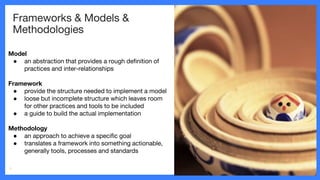
Frameworks & Models &
Methodologies
5
Model
● an abstraction that provides a rough definition of
practices and inter-relationships
Framework
● provide the structure needed to implement a model
● loose but incomplete structure which leaves room
for other practices and tools to be included
● a guide to build the actual implementation
Methodology
● an approach to achieve a specific goal
● translates a framework into something actionable,
generally tools, processes and standards
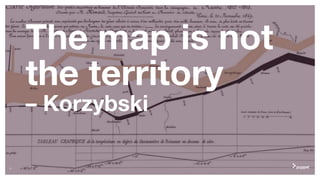
The map is not
the territory
– Korzybski
6
Model &
Framework
Benefits
● Communication and Alignment
○ Communication at scale is difficult
○ A well understood taxonomy
increases comms effectiveness
● Autonomy
○ Implemented well, a good model
enables autonomy across the org
● Avoid reinventing the wheel
○ “stand on the shoulders of giants”
○ your org is not a special snowflake
8
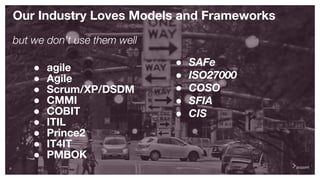
Our Industry Loves Models and Frameworks
but we don’t use them well
● agile
● Agile
● Scrum/XP/DSDM
● CMMI
● COBIT
● ITIL
● Prince2
● IT4IT
● PMBOK
● SAFe
● ISO27000
● COSO
● SFIA
● CIS
The model is
not the goal
9
Do you need to know
exactly where you are to
start moving in the right
direction… if you can see
the mountain already?
10
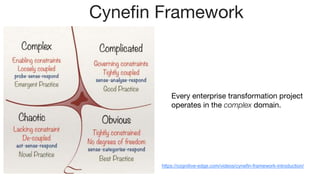
Cynefin Framework
11
Every enterprise transformation project
operates in the complex domain.
https://cognitive-edge.com/videos/cynefin-framework-introduction/
Common
Mistakes and
Pitfalls
● Lack of clarity over goals
○ “Start with Why...”
● Over-investing in initial assessment
● Rigid adherence in the face of new
information
● Lack of clarity around
model/framework/methodology
● Focusing on methodology too early
● Top down methodology mandates
● Missing feedback loops
● Considering the destination final
○ Maturity isn’t “done”
Our stance
● Model alignment early is critical
● Frameworks must enable and guide the
actual implementation
● Methodologies must have room to evolve
● The map is not the territory
● The model is not the goal
● The ability to experiment and adjust is
paramount
14
Introducing the
Adaptive IT
Framework
15
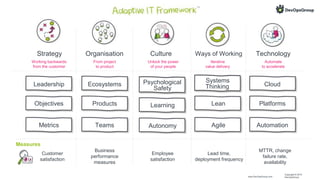
Measures
Customer
satisfaction
Strategy
Leadership
Objectives
Metrics
Working backwards
from the customer
Business
performance
measures
Ecosystems
Products
Teams
From project
to product
Organisation
Employee
satisfaction
Learning
Autonomy
Psychological
Safety
Unlock the power
of your people
Culture
Lead time,
deployment frequency
Lean
Agile
Systems
Thinking
Iterative
value delivery
Ways of Working
MTTR, change
failure rate,
availability
Cloud
Platforms
Automation
Automate
to accelerate
Technology
Copyright © 2019
DevOpsGroupwww.DevOpsGroup.com
Customer
satisfaction
Strategy
Leadership
Objectives
Metrics
Working backwards
from the customer
Measures
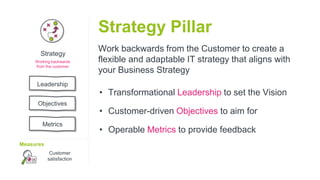
Work backwards from the Customer to create a
flexible and adaptable IT strategy that aligns with
your Business Strategy
Strategy Pillar
• Transformational Leadership to set the Vision
• Customer-driven Objectives to aim for
• Operable Metrics to provide feedback
Measures
Business
performance
measures
Ecosystems
Products
Teams
From project
to product
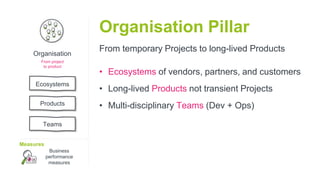
Organisation
From temporary Projects to long-lived Products
Organisation Pillar
• Ecosystems of vendors, partners, and customers
• Long-lived Products not transient Projects
• Multi-disciplinary Teams (Dev + Ops)
Measures
Employee
satisfaction
Learning
Autonomy
Psychological
Safety
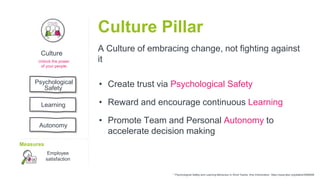
Unlock the power
of your people
Culture
A Culture of embracing change, not fighting against
it
Culture Pillar
• Create trust via Psychological Safety
• Reward and encourage continuous Learning
• Promote Team and Personal Autonomy to
accelerate decision making
* Psychological Safety and Learning Behaviour in Work Teams, Amy Edmondson, https://www.jstor.org/stable/2666999
Ways of Working
Measures
Lead time,
deployment
frequency
Lean
Agile
Systems
Thinking
Iterative
value delivery
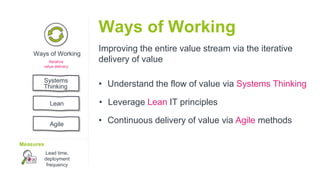
Ways of Working
Improving the entire value stream via the iterative
delivery of value
• Understand the flow of value via Systems Thinking
• Leverage Lean IT principles
• Continuous delivery of value via Agile methods
Measures
MTTR, change
failure rate,
availability
Cloud
Platforms
Automation
Automate
to accelerate
Technology
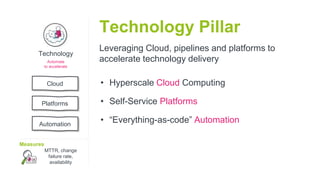
Leveraging Cloud, pipelines and platforms to
accelerate technology delivery
Technology Pillar
• Hyperscale Cloud Computing
• Self-Service Platforms
• “Everything-as-code” Automation
22@DevOpsGroup© DevOpsGroup DOGPublic
If you want to read more about AdaptiveIT please go to
https://bit.ly/AdaptiveIT-Framework
Q&A
23
How we can
help
Advisory and Implementation services
● DevOps Readiness Assessment
● Custom Consulting & Implementation Services
● Education Services
nigel.k@puppet.com
2019 State of DevOps Report -
puppet.com/resources/report/state-of-devops-report

Enterprise transformation models their utility, common pitfalls and adaptive IT

  • 1.
    Enterprise Transformation Models: TheirUtility, Common Pitfalls and Adaptive IT Stephen Thair CTO & Co-Founder, DevOpsGroup Nigel Kersten Field CTO, Puppet
  • 2.
    Your hosts Nigel Kersten, FieldCTO, Puppet Stephen Thair, CTO and co-founder, DevOpsGroup
  • 3.
    Agenda ● Models vsFrameworks vs Methodologies ● Benefits of models/frameworks ● Pitfalls and misuse ● Guidelines for model adoption ● The DevOpsGroup’s Adaptive IT Framework ● Q & A 3
  • 4.
  • 5.
    Frameworks & Models& Methodologies 5 Model ● an abstraction that provides a rough definition of practices and inter-relationships Framework ● provide the structure needed to implement a model ● loose but incomplete structure which leaves room for other practices and tools to be included ● a guide to build the actual implementation Methodology ● an approach to achieve a specific goal ● translates a framework into something actionable, generally tools, processes and standards
  • 6.
    The map isnot the territory – Korzybski 6
  • 7.
    Model & Framework Benefits ● Communicationand Alignment ○ Communication at scale is difficult ○ A well understood taxonomy increases comms effectiveness ● Autonomy ○ Implemented well, a good model enables autonomy across the org ● Avoid reinventing the wheel ○ “stand on the shoulders of giants” ○ your org is not a special snowflake
  • 8.
    8 Our Industry LovesModels and Frameworks but we don’t use them well ● agile ● Agile ● Scrum/XP/DSDM ● CMMI ● COBIT ● ITIL ● Prince2 ● IT4IT ● PMBOK ● SAFe ● ISO27000 ● COSO ● SFIA ● CIS
  • 9.
    The model is notthe goal 9
  • 10.
    Do you needto know exactly where you are to start moving in the right direction… if you can see the mountain already? 10
  • 11.
    Cynefin Framework 11 Every enterprisetransformation project operates in the complex domain. https://cognitive-edge.com/videos/cynefin-framework-introduction/
  • 12.
    Common Mistakes and Pitfalls ● Lackof clarity over goals ○ “Start with Why...” ● Over-investing in initial assessment ● Rigid adherence in the face of new information ● Lack of clarity around model/framework/methodology ● Focusing on methodology too early ● Top down methodology mandates ● Missing feedback loops ● Considering the destination final ○ Maturity isn’t “done”
  • 13.
    Our stance ● Modelalignment early is critical ● Frameworks must enable and guide the actual implementation ● Methodologies must have room to evolve ● The map is not the territory ● The model is not the goal ● The ability to experiment and adjust is paramount
  • 14.
  • 15.
  • 16.
    Measures Customer satisfaction Strategy Leadership Objectives Metrics Working backwards from thecustomer Business performance measures Ecosystems Products Teams From project to product Organisation Employee satisfaction Learning Autonomy Psychological Safety Unlock the power of your people Culture Lead time, deployment frequency Lean Agile Systems Thinking Iterative value delivery Ways of Working MTTR, change failure rate, availability Cloud Platforms Automation Automate to accelerate Technology Copyright © 2019 DevOpsGroupwww.DevOpsGroup.com
  • 17.
    Customer satisfaction Strategy Leadership Objectives Metrics Working backwards from thecustomer Measures Work backwards from the Customer to create a flexible and adaptable IT strategy that aligns with your Business Strategy Strategy Pillar • Transformational Leadership to set the Vision • Customer-driven Objectives to aim for • Operable Metrics to provide feedback
  • 18.
    Measures Business performance measures Ecosystems Products Teams From project to product Organisation Fromtemporary Projects to long-lived Products Organisation Pillar • Ecosystems of vendors, partners, and customers • Long-lived Products not transient Projects • Multi-disciplinary Teams (Dev + Ops)
  • 19.
    Measures Employee satisfaction Learning Autonomy Psychological Safety Unlock the power ofyour people Culture A Culture of embracing change, not fighting against it Culture Pillar • Create trust via Psychological Safety • Reward and encourage continuous Learning • Promote Team and Personal Autonomy to accelerate decision making * Psychological Safety and Learning Behaviour in Work Teams, Amy Edmondson, https://www.jstor.org/stable/2666999
  • 20.
    Ways of Working Measures Leadtime, deployment frequency Lean Agile Systems Thinking Iterative value delivery Ways of Working Improving the entire value stream via the iterative delivery of value • Understand the flow of value via Systems Thinking • Leverage Lean IT principles • Continuous delivery of value via Agile methods
  • 21.
    Measures MTTR, change failure rate, availability Cloud Platforms Automation Automate toaccelerate Technology Leveraging Cloud, pipelines and platforms to accelerate technology delivery Technology Pillar • Hyperscale Cloud Computing • Self-Service Platforms • “Everything-as-code” Automation
  • 22.
    22@DevOpsGroup© DevOpsGroup DOGPublic Ifyou want to read more about AdaptiveIT please go to https://bit.ly/AdaptiveIT-Framework
  • 23.
  • 24.
    How we can help Advisoryand Implementation services ● DevOps Readiness Assessment ● Custom Consulting & Implementation Services ● Education Services nigel.k@puppet.com 2019 State of DevOps Report - puppet.com/resources/report/state-of-devops-report