Critical Considerations for
Continuous Delivery
April 9, 2018
Welcome & introductions
Rahul Singh
VP Engineering
Puppet
Michael Olson
Principal Product Marketing Manager
Puppet
Agenda
Moving to continuous delivery
Critical considerations:
Adopt an agile way of working
Automate and standardize your entire software delivery practice
Improve visibility across the software delivery lifecycle
Where to start
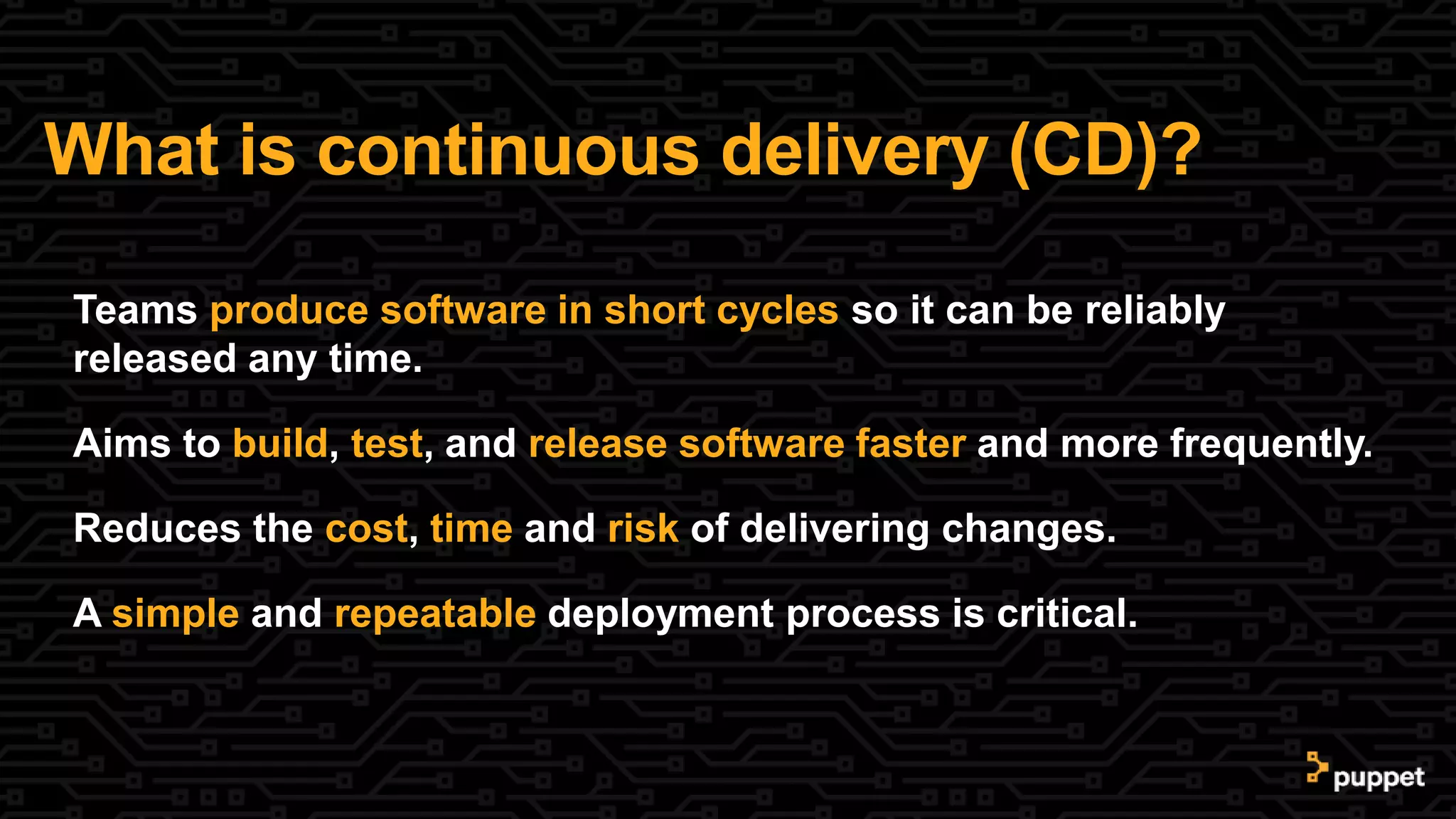
What is continuous delivery (CD)?
Teams produce software in short cycles so it can be reliably
released any time.
Aims to build, test, and release software faster and more frequently.
Reduces the cost, time and risk of delivering changes.
A simple and repeatable deployment process is critical.
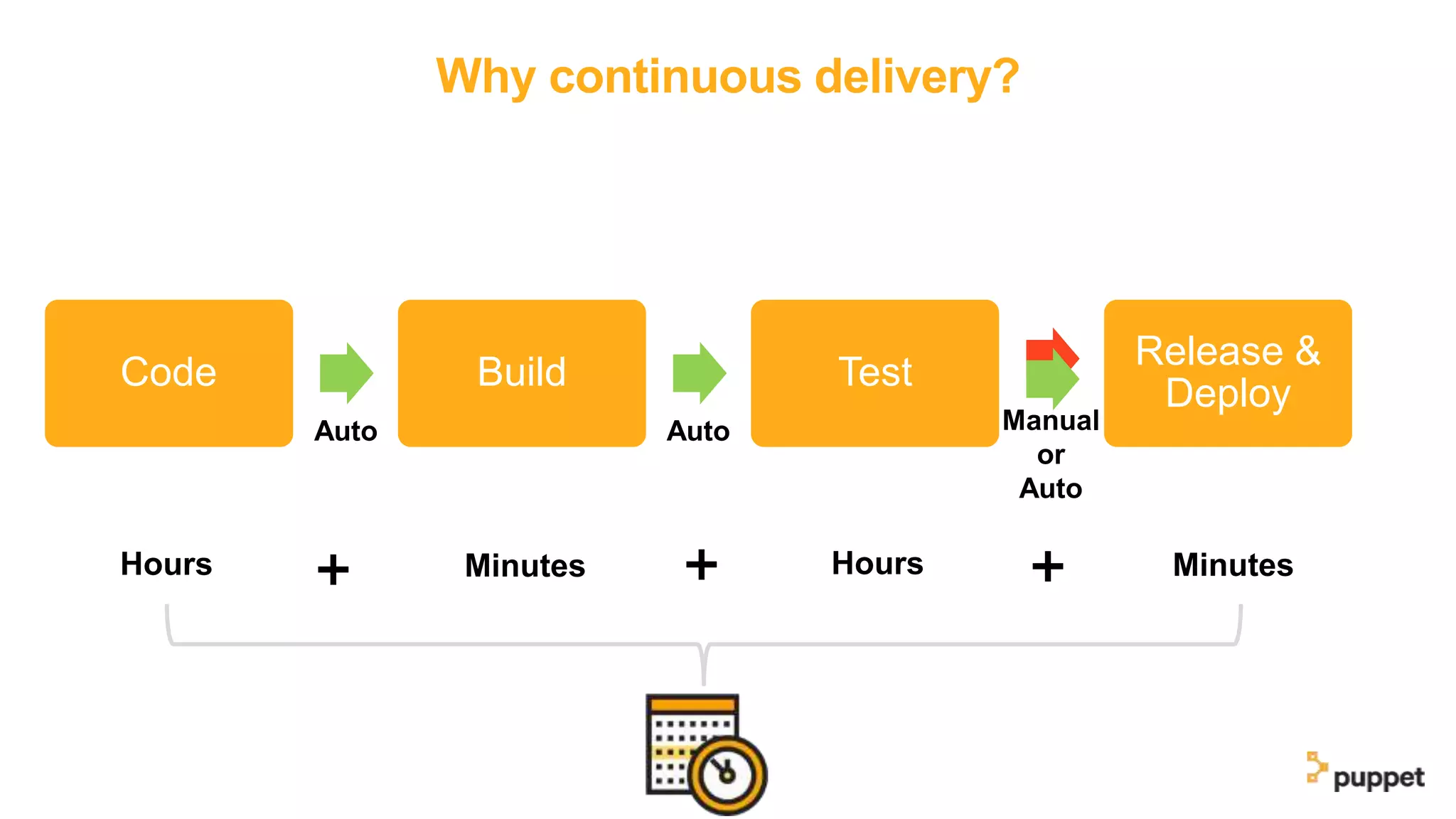
Why continuous delivery?
Code Build Test
Release &
Deploy
Auto Auto Manual
or
Auto
Hours Minutes Hours Minutes➕ ➕ ➕
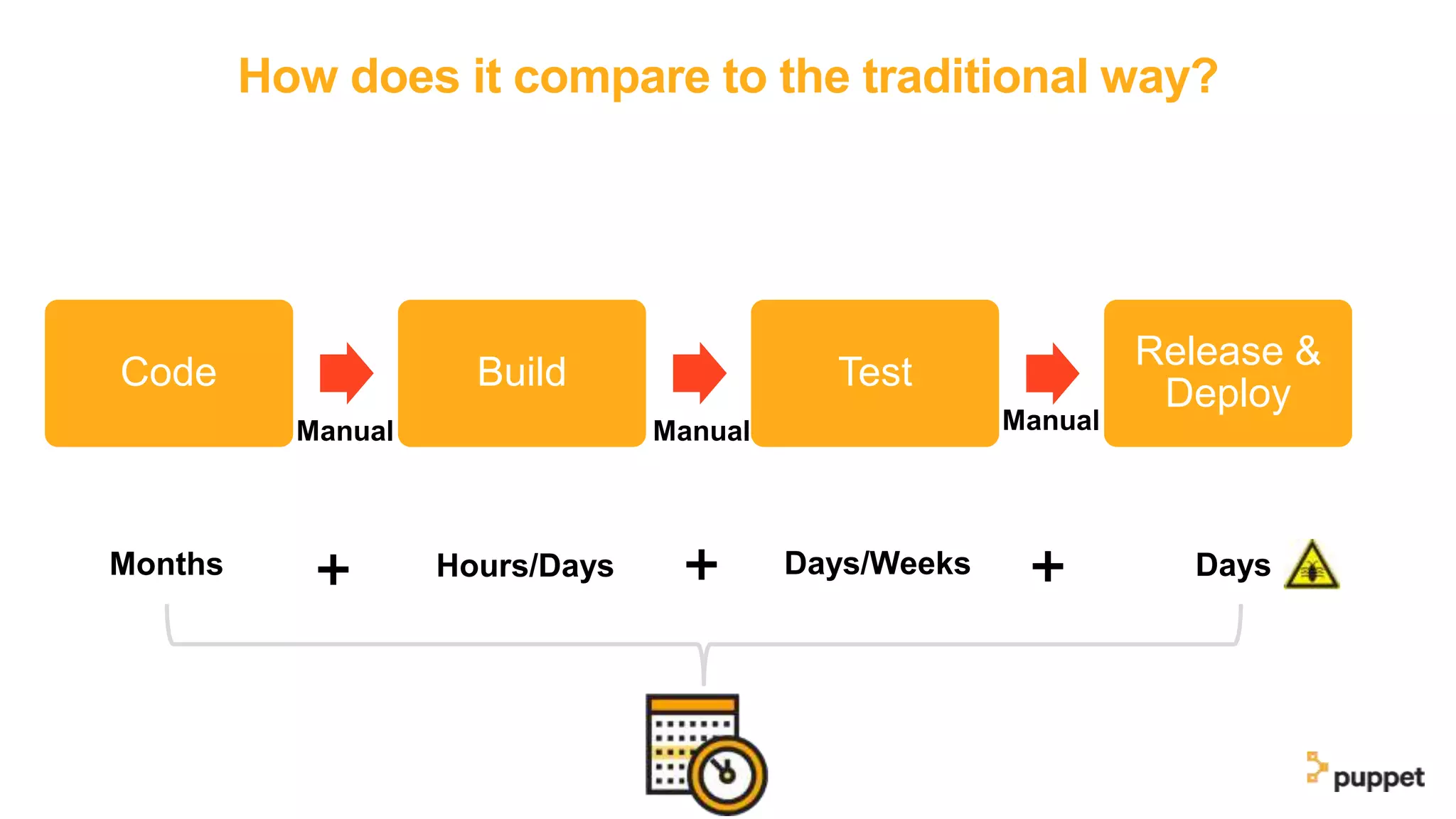
How does it compare to the traditional way?
Code Build Test
Release &
Deploy
Manual Manual Manual
Months Hours/Days Days/Weeks Days➕ ➕ ➕
Born-in-cloud software firms
have set a high bar.
Continuous delivery is
key for everyone.
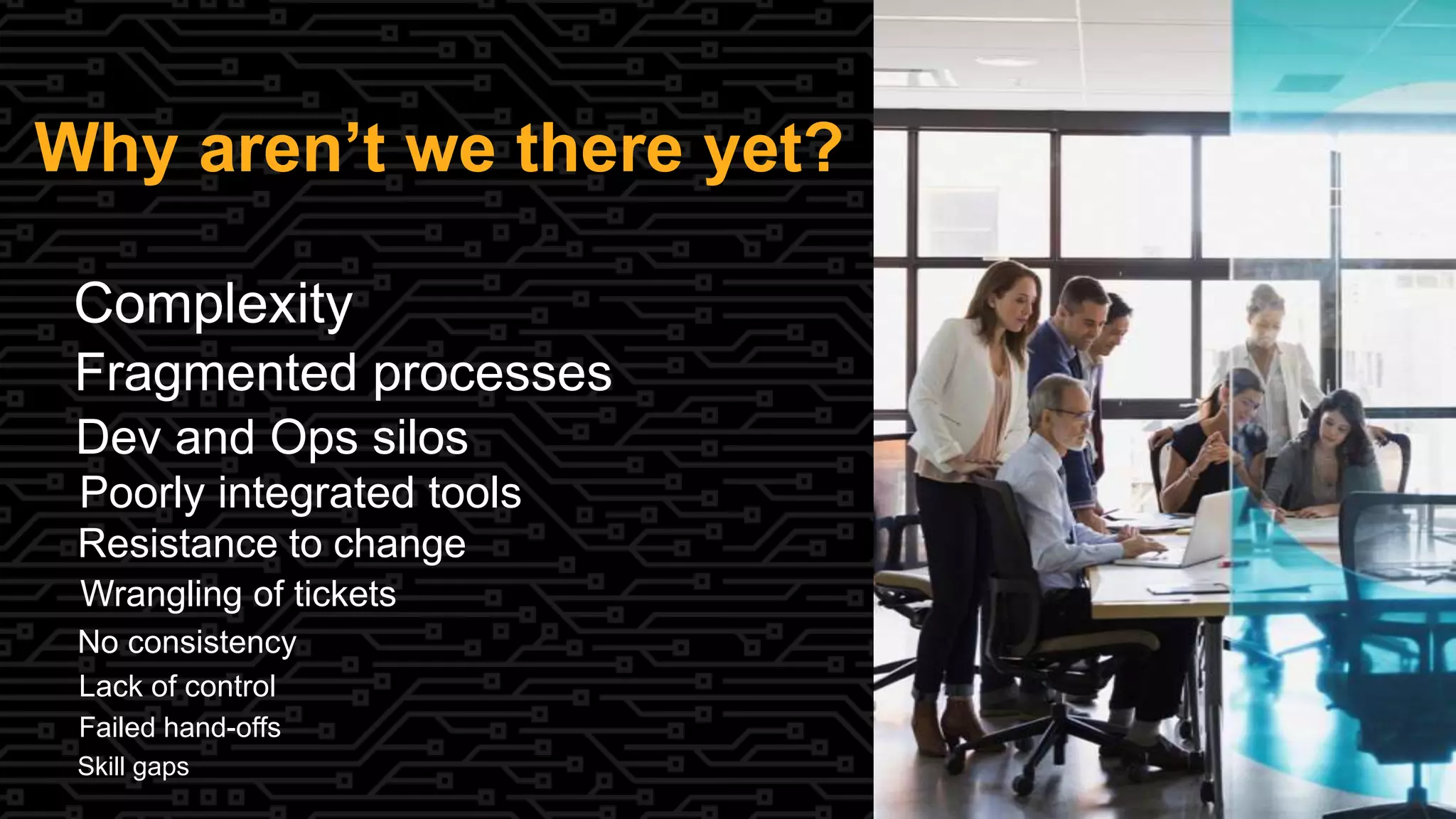
Complexity
Fragmented processes
Dev and Ops silos
Resistance to change
Wrangling of tickets
No consistency
Poorly integrated tools
Lack of control
Failed hand-offs
Skill gaps
Why aren’t we there yet?
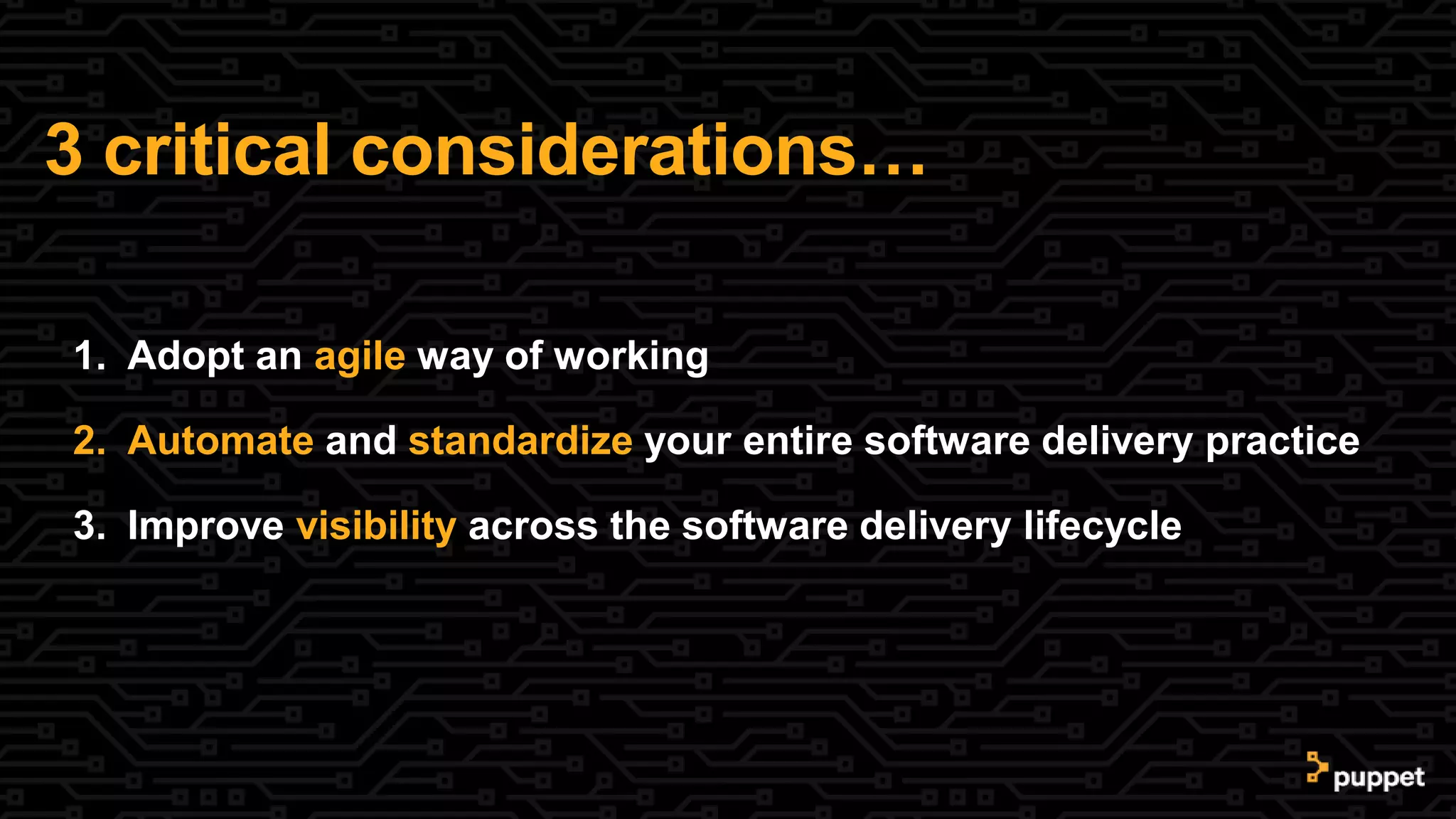
3 critical considerations…
1. Adopt an agile way of working
2. Automate and standardize your entire software delivery practice
3. Improve visibility across the software delivery lifecycle
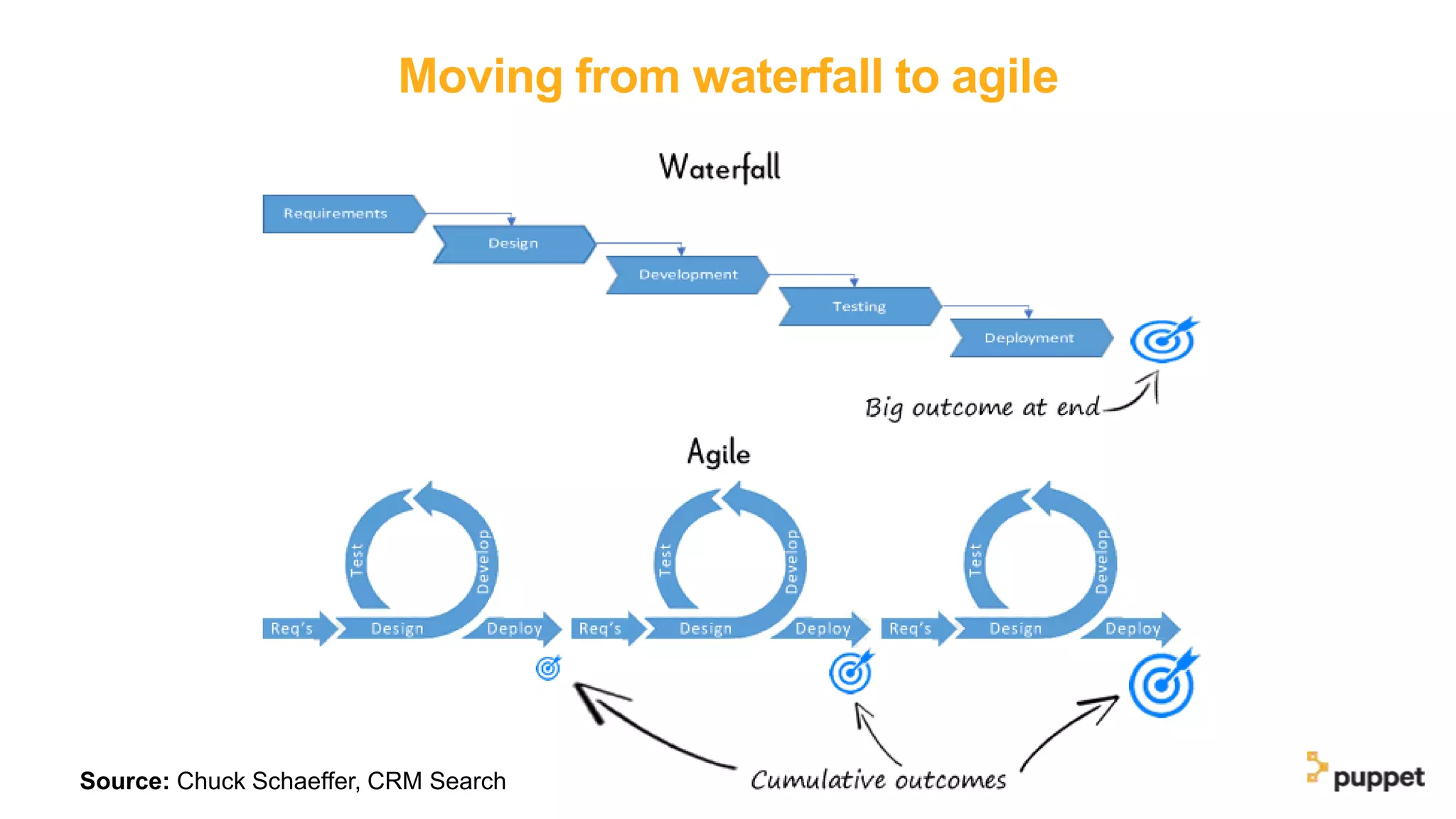
Moving from waterfall to agile
Source: Chuck Schaeffer, CRM Search
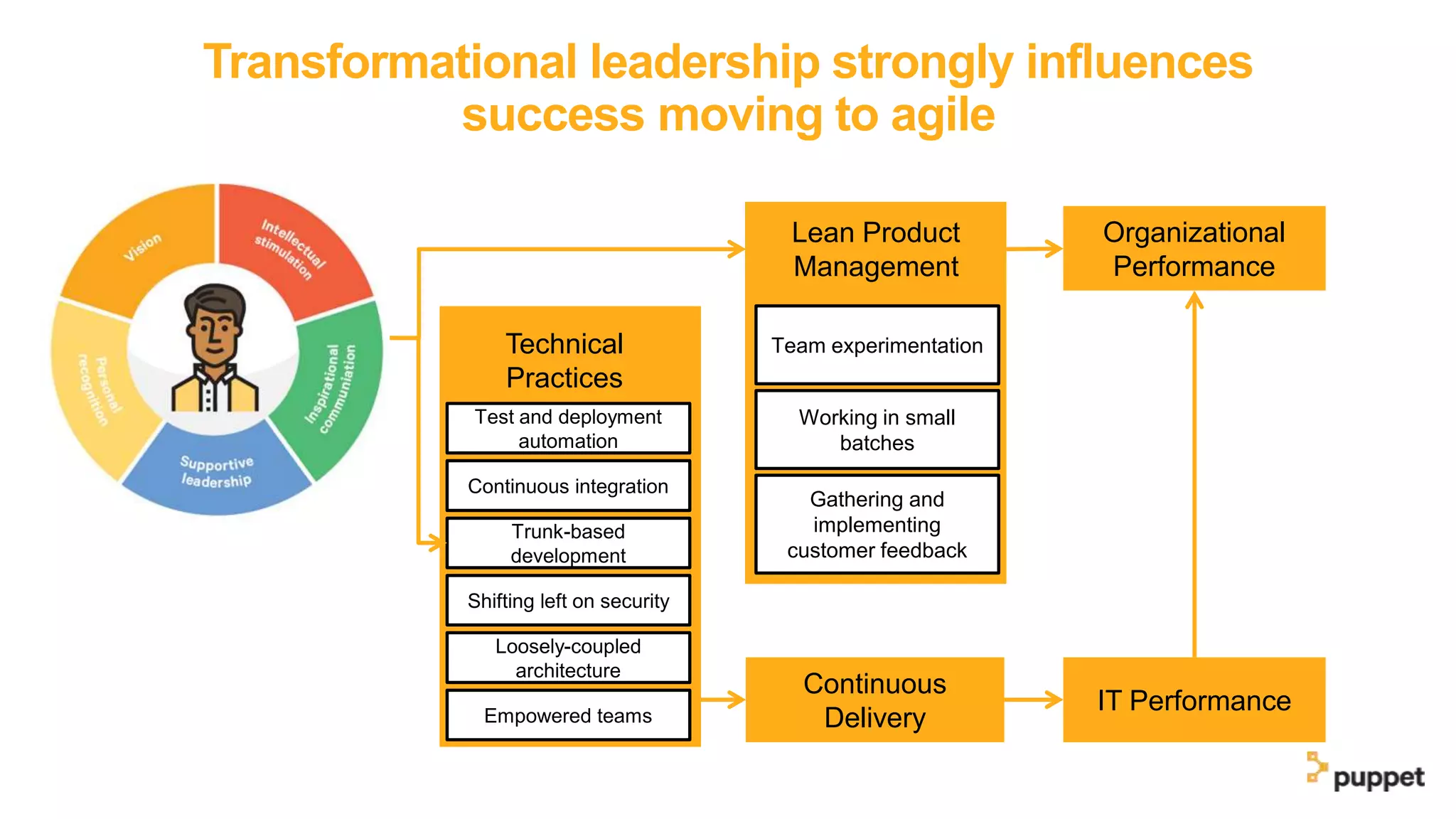
Transformational leadership strongly influences
success moving to agile
IT Performance
Organizational
Performance
Lean Product
Management
Team experimentation
Working in small
batches
Gathering and
implementing
customer feedback
Technical
Practices
Test and deployment
automation
Continuous integration
Trunk-based
development
Shifting left on security
Loosely-coupled
architecture
Empowered teams
Continuous
Delivery
to agilefrom waterfall
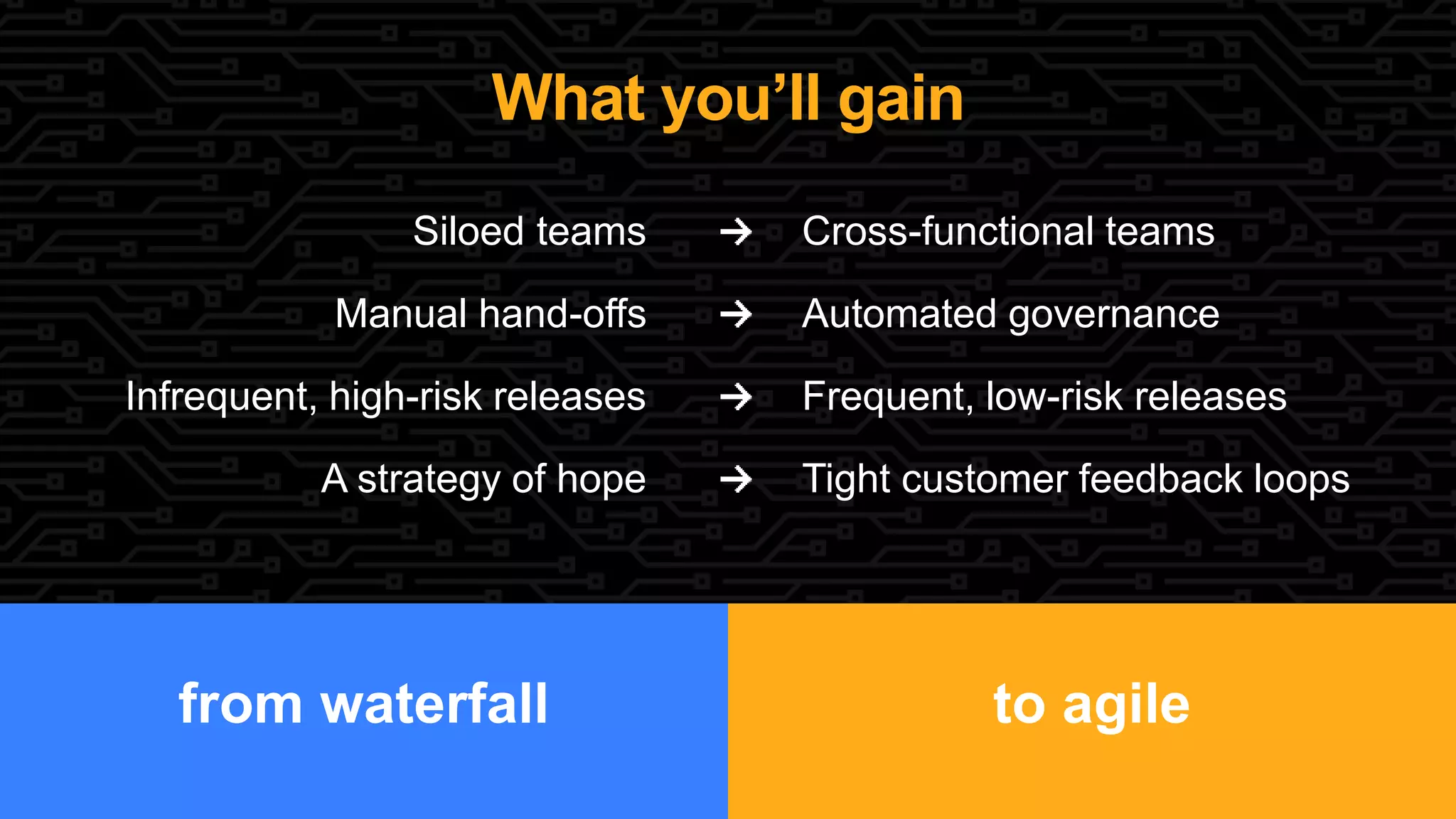
What you’ll gain
Cross-functional teams
Automated governance
Frequent, low-risk releases
Tight customer feedback loops
Siloed teams
Manual hand-offs
Infrequent, high-risk releases
A strategy of hope
“Most current use of automation involves
scripting. What you end up with is
disconnected islands of automation, with
spaghetti code throughout the organization
when what you need is a systematic,
enterprise-wide lasagne.”
- Milind Govekar, research vice president at Gartner
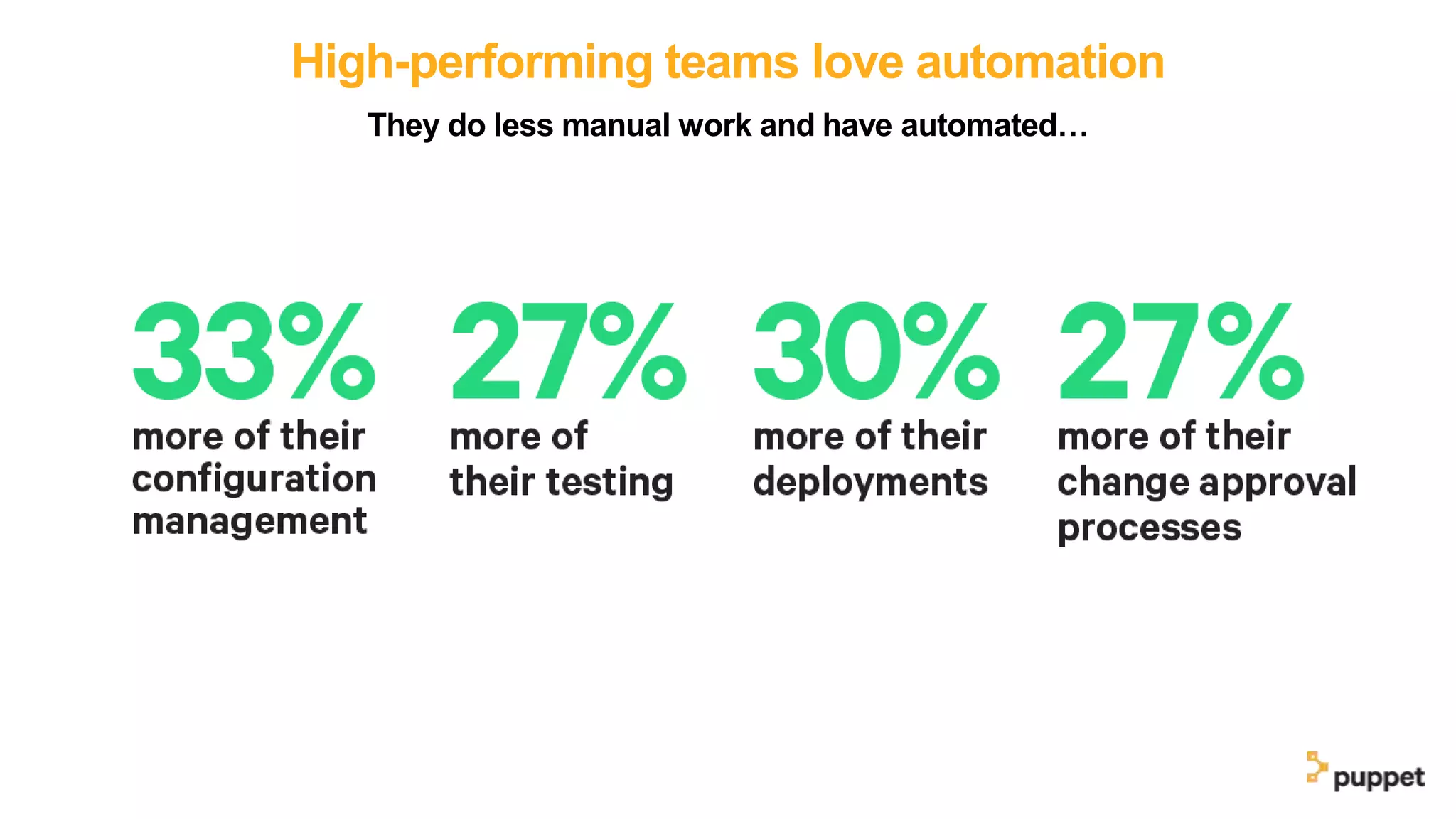
High-performing teams love automation
They do less manual work and have automated…
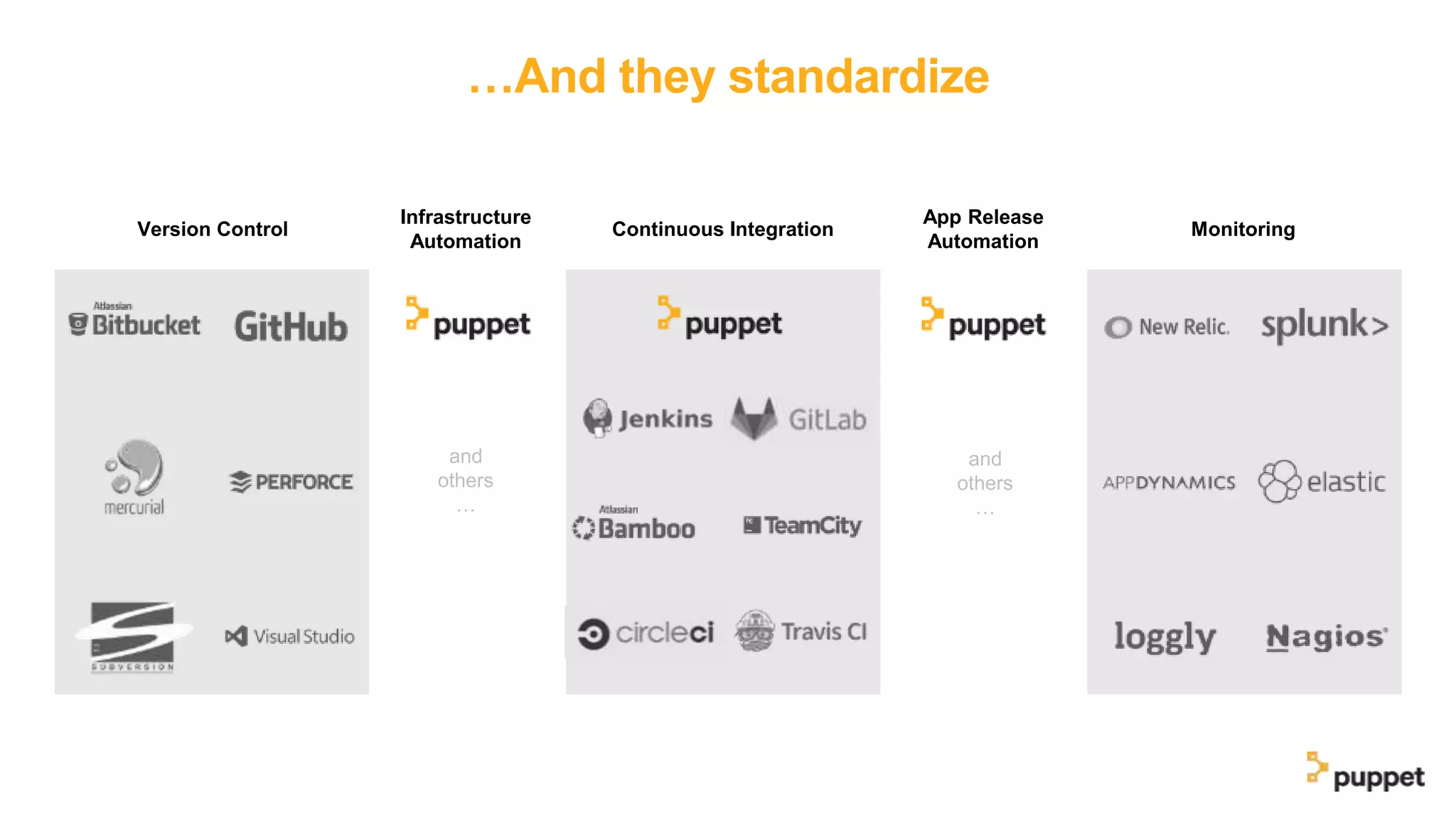
Version Control
Infrastructure
Automation
Continuous Integration
App Release
Automation
Monitoring
…And they standardize
and
others
…
and
others
…
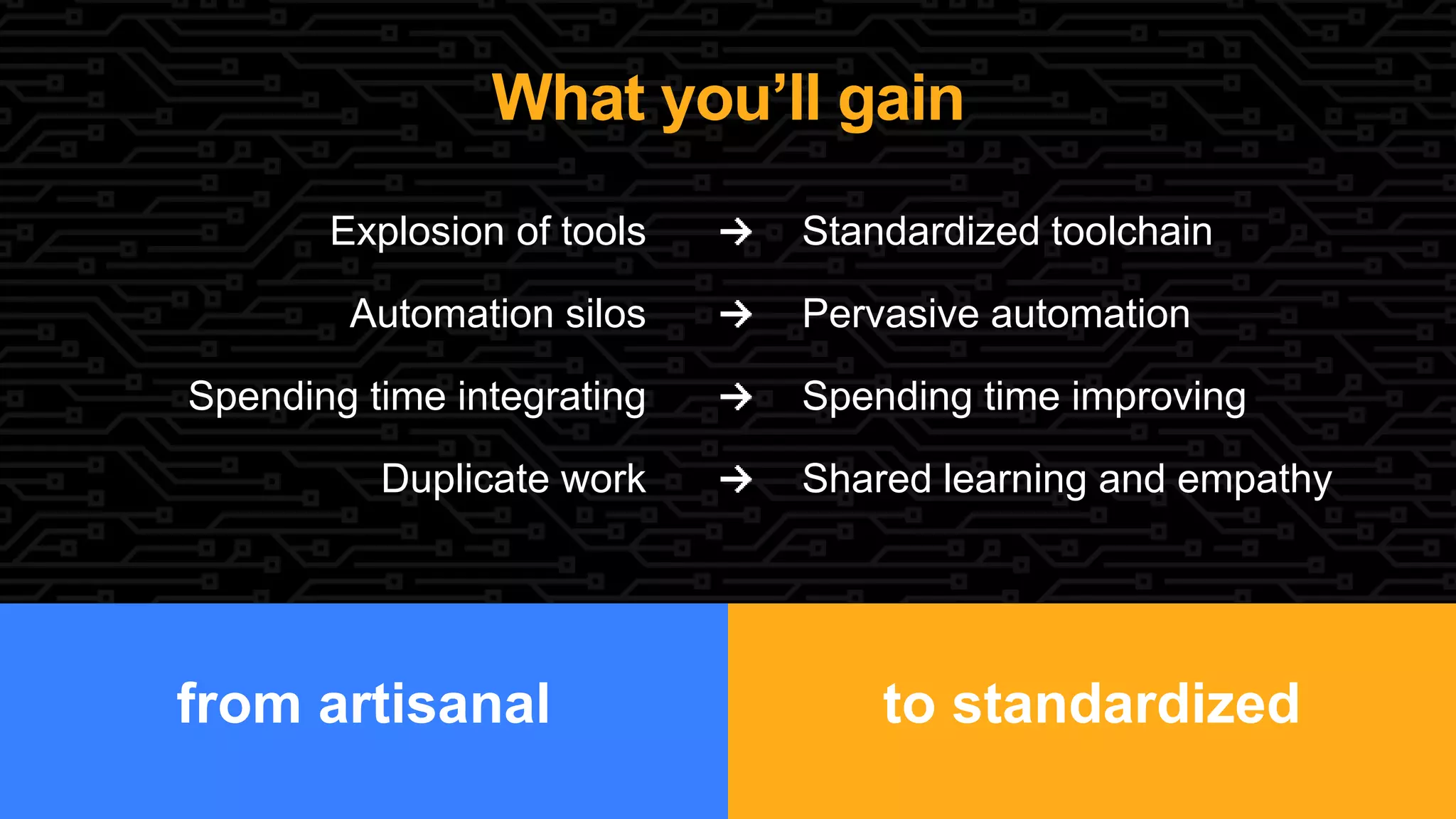
to standardizedfrom artisanal
What you’ll gain
Standardized toolchain
Pervasive automation
Spending time improving
Shared learning and empathy
Explosion of tools
Automation silos
Spending time integrating
Duplicate work
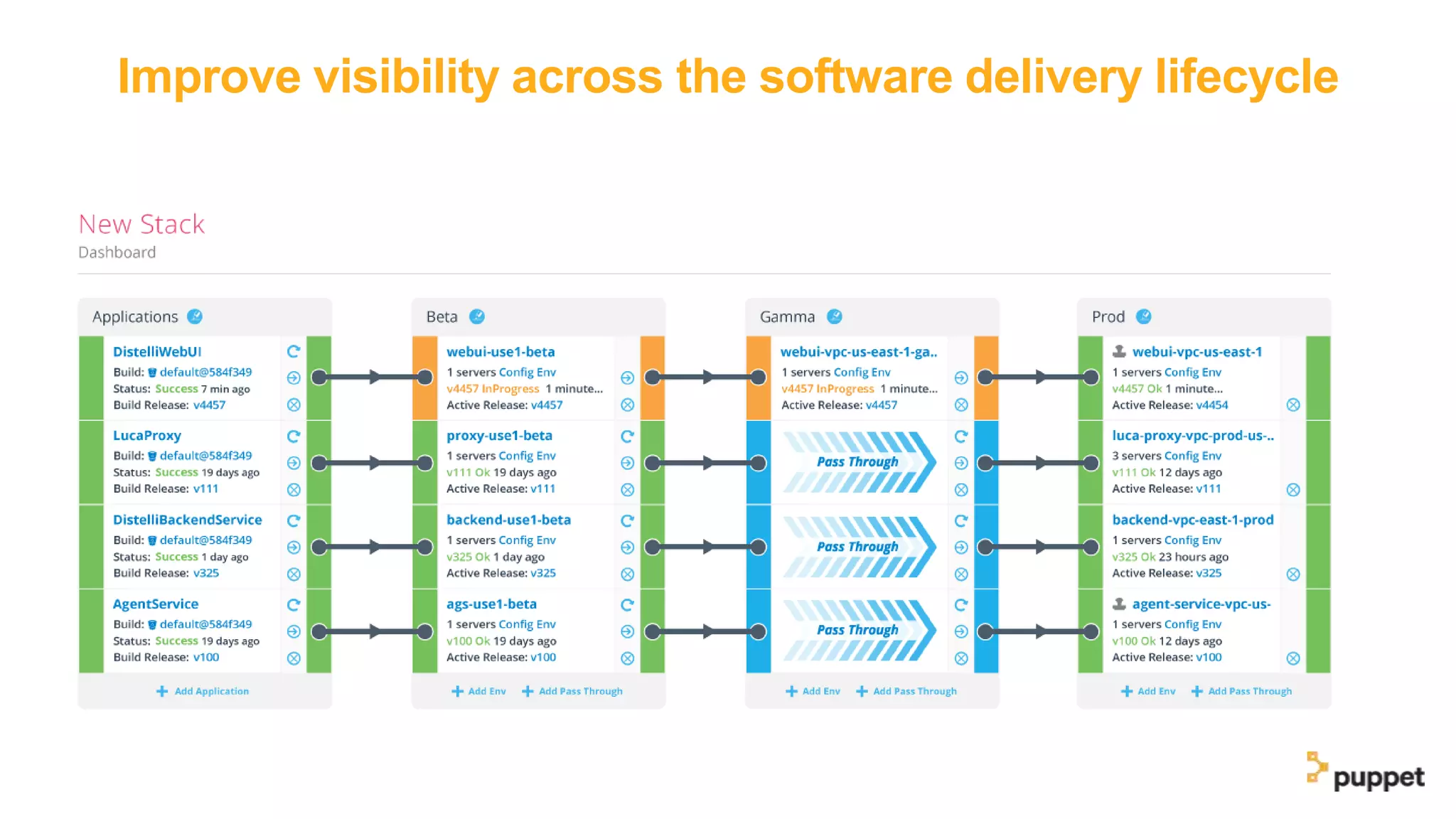
Improve visibility across the software delivery lifecycle
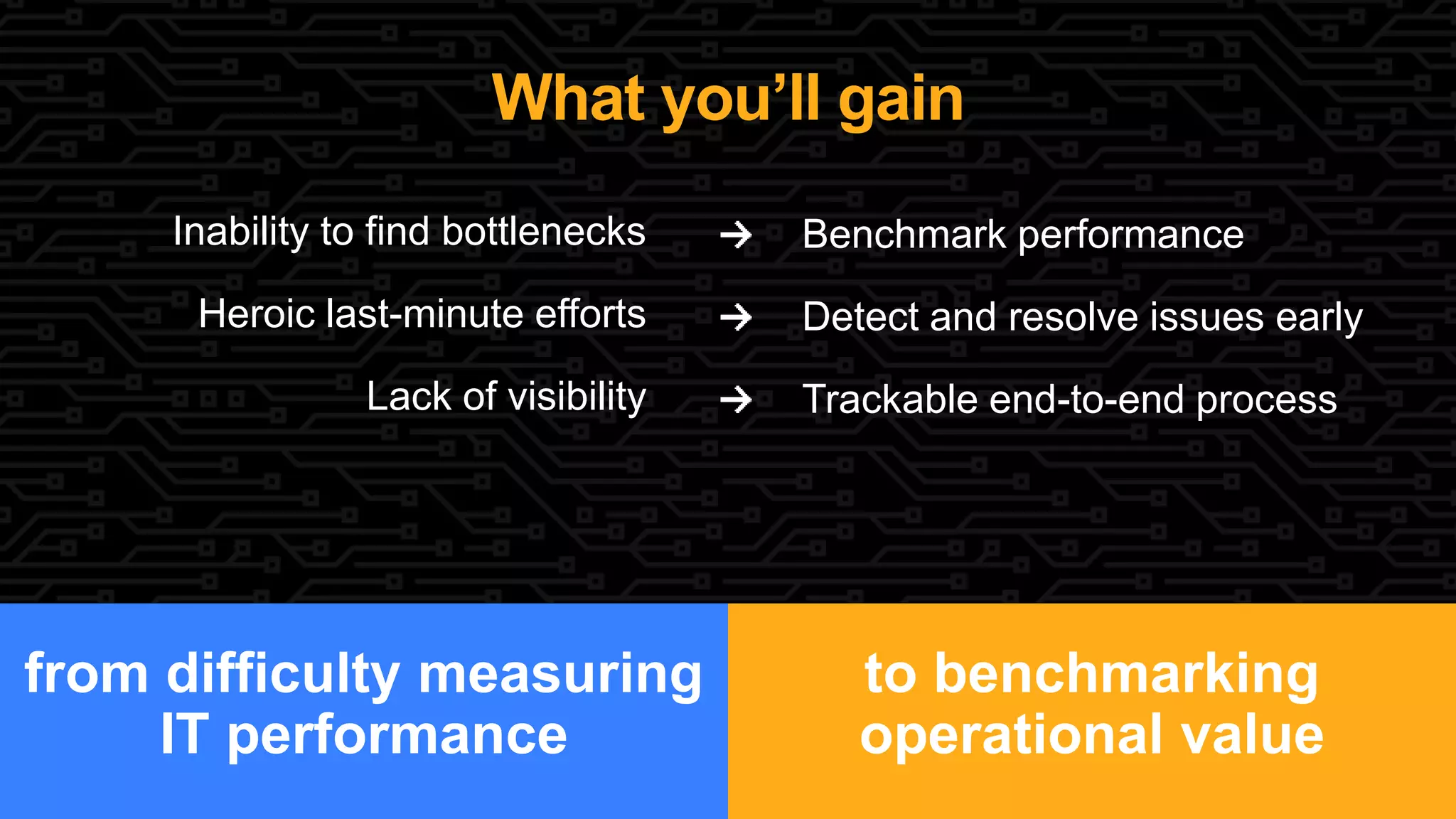
to benchmarking
operational value
from difficulty measuring
IT performance
What you’ll gain
Benchmark performance
Detect and resolve issues early
Trackable end-to-end process
Inability to find bottlenecks
Heroic last-minute efforts
Lack of visibility
Confidential - do not
distribute
20
Where to start your journey
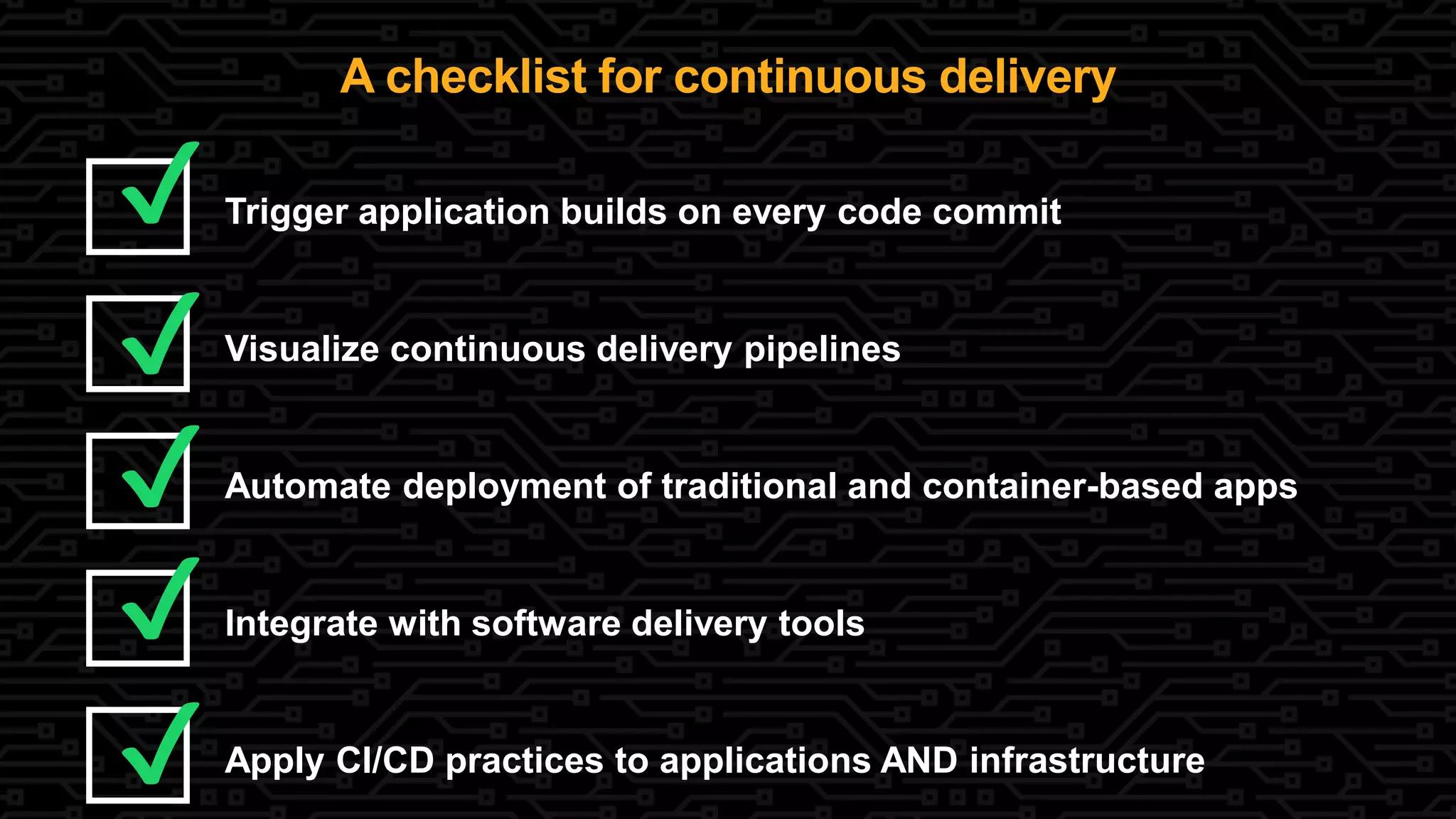
Apply CI/CD practices to applications AND infrastructure
Integrate with software delivery tools
Automate deployment of traditional and container-based apps
Visualize continuous delivery pipelines
Trigger application builds on every code commit
✔
✔
A checklist for continuous delivery
✔
✔
✔
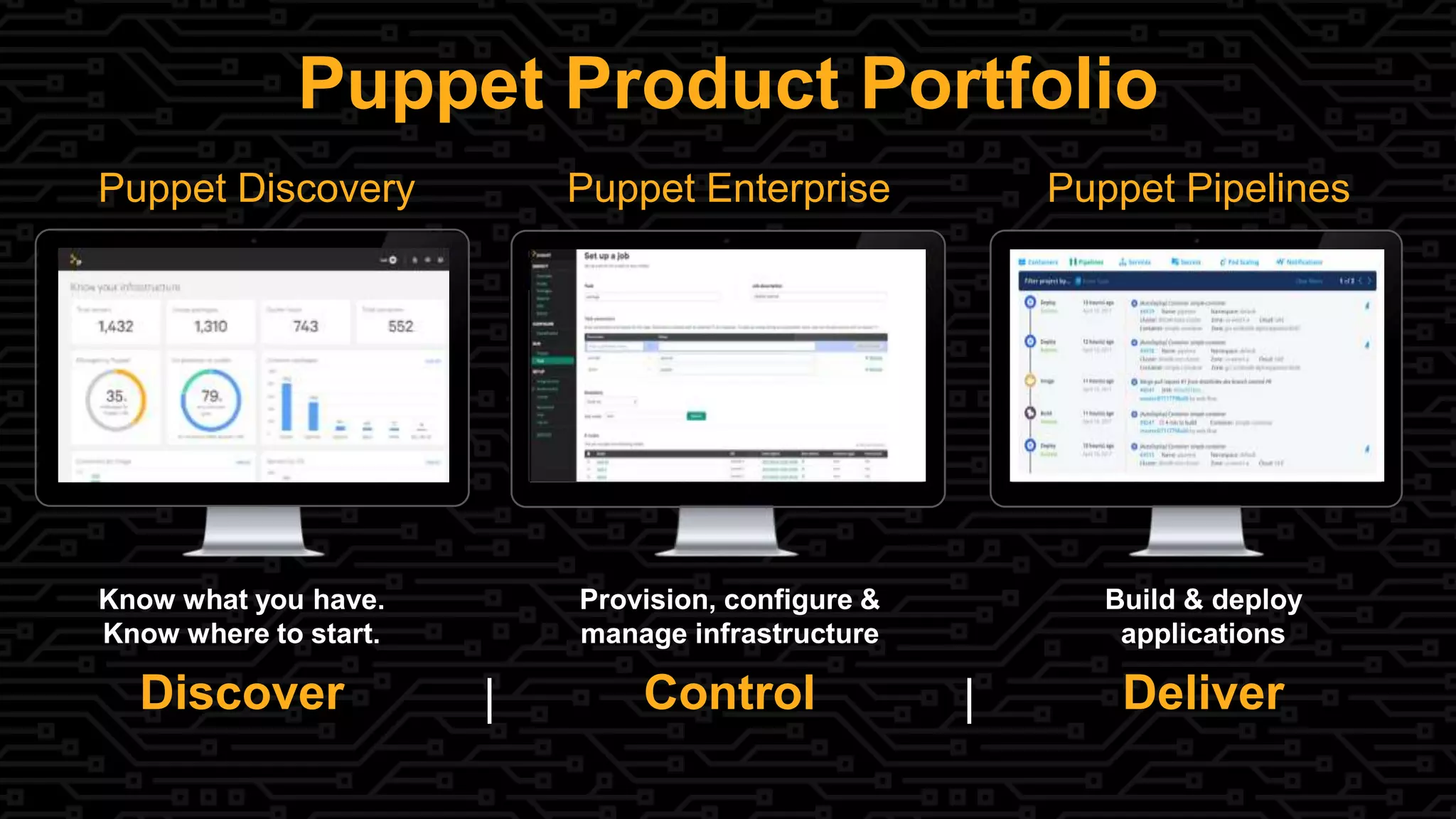
Puppet Product Portfolio
Puppet Enterprise Puppet PipelinesPuppet Discovery
Know what you have.
Know where to start.
Discover
Build & deploy
applications
Deliver
Provision, configure &
manage infrastructure
Control| |
Learn more about Puppet Pipelines
or request a demo
You can also check out our on-demand
webinar Introduction to Puppet Pipelines
or read our solution brief
Next steps
Critical Considerations for Continuous Delivery 04.09.2018

Critical Considerations for Continuous Delivery 04.09.2018

  • 1.
  • 2.
    Welcome & introductions RahulSingh VP Engineering Puppet Michael Olson Principal Product Marketing Manager Puppet
  • 3.
    Agenda Moving to continuousdelivery Critical considerations: Adopt an agile way of working Automate and standardize your entire software delivery practice Improve visibility across the software delivery lifecycle Where to start
  • 4.
    What is continuousdelivery (CD)? Teams produce software in short cycles so it can be reliably released any time. Aims to build, test, and release software faster and more frequently. Reduces the cost, time and risk of delivering changes. A simple and repeatable deployment process is critical.
  • 5.
    Why continuous delivery? CodeBuild Test Release & Deploy Auto Auto Manual or Auto Hours Minutes Hours Minutes➕ ➕ ➕
  • 6.
    How does itcompare to the traditional way? Code Build Test Release & Deploy Manual Manual Manual Months Hours/Days Days/Weeks Days➕ ➕ ➕
  • 7.
  • 8.
  • 9.
    Complexity Fragmented processes Dev andOps silos Resistance to change Wrangling of tickets No consistency Poorly integrated tools Lack of control Failed hand-offs Skill gaps Why aren’t we there yet?
  • 10.
    3 critical considerations… 1.Adopt an agile way of working 2. Automate and standardize your entire software delivery practice 3. Improve visibility across the software delivery lifecycle
  • 11.
    Moving from waterfallto agile Source: Chuck Schaeffer, CRM Search
  • 12.
    Transformational leadership stronglyinfluences success moving to agile IT Performance Organizational Performance Lean Product Management Team experimentation Working in small batches Gathering and implementing customer feedback Technical Practices Test and deployment automation Continuous integration Trunk-based development Shifting left on security Loosely-coupled architecture Empowered teams Continuous Delivery
  • 13.
    to agilefrom waterfall Whatyou’ll gain Cross-functional teams Automated governance Frequent, low-risk releases Tight customer feedback loops Siloed teams Manual hand-offs Infrequent, high-risk releases A strategy of hope
  • 14.
    “Most current useof automation involves scripting. What you end up with is disconnected islands of automation, with spaghetti code throughout the organization when what you need is a systematic, enterprise-wide lasagne.” - Milind Govekar, research vice president at Gartner
  • 15.
    High-performing teams loveautomation They do less manual work and have automated…
  • 16.
    Version Control Infrastructure Automation Continuous Integration AppRelease Automation Monitoring …And they standardize and others … and others …
  • 17.
    to standardizedfrom artisanal Whatyou’ll gain Standardized toolchain Pervasive automation Spending time improving Shared learning and empathy Explosion of tools Automation silos Spending time integrating Duplicate work
  • 18.
    Improve visibility acrossthe software delivery lifecycle
  • 19.
    to benchmarking operational value fromdifficulty measuring IT performance What you’ll gain Benchmark performance Detect and resolve issues early Trackable end-to-end process Inability to find bottlenecks Heroic last-minute efforts Lack of visibility
  • 20.
    Confidential - donot distribute 20 Where to start your journey
  • 22.
    Apply CI/CD practicesto applications AND infrastructure Integrate with software delivery tools Automate deployment of traditional and container-based apps Visualize continuous delivery pipelines Trigger application builds on every code commit ✔ ✔ A checklist for continuous delivery ✔ ✔ ✔
  • 23.
    Puppet Product Portfolio PuppetEnterprise Puppet PipelinesPuppet Discovery Know what you have. Know where to start. Discover Build & deploy applications Deliver Provision, configure & manage infrastructure Control| |
  • 24.
    Learn more aboutPuppet Pipelines or request a demo You can also check out our on-demand webinar Introduction to Puppet Pipelines or read our solution brief Next steps