GURU’S
POONAM MUDALIAR
GEOGRAPHY
Class 7
Part -2
In previous class
 ATMOSPHERE
 COMPOSITION OF THE ATMOSPHERE
 STRUCTURE OF THE ATMOSPHERE
In This Class
 Weather and Climate
 Temperature
 Air Pressure
 Wind
 Moisture and type of Rainfall
WEATHER AND CLIMATE
Weather is this hour-to-hour, day to
day condition of the atmosphere.
The average weather condition
of a place for a longer period
of time represents the climate
of a place.
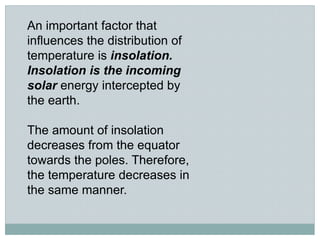
Temperature
The degree of hotness and coldness
of the air is known as temperature.
The temperature of the atmosphere
changes not only between day and
night but also from season to season.
Summers are hotter than winters.
An important factor that
influences the distribution of
temperature is insolation.
Insolation is the incoming
solar energy intercepted by
the earth.
The amount of insolation
decreases from the equator
towards the poles. Therefore,
the temperature decreases in
the same manner.
Air Pressure
Air pressure is defined as the pressure exerted
by the weight of air on the earth’s surface. As we
go up the layers of atmosphere, the pressure
falls rapidly. The air pressure is highest at sea
level and decreases with height.
Horizontally the distribution of air pressure is
influenced by temperature of air at a given place.
In areas where temperature is high the air gets
heated and rises. This creates a low-pressure
area. Low pressure is associated with cloudy
skies and wet weather.
In areas having lower temperature,
the air is cold. It is therefore heavy.
Heavy air sinks and creates a high
pressure area. High pressure is
associated with clear and sunny
skies.
The air always moves from high
pressure areas to low
pressure areas.
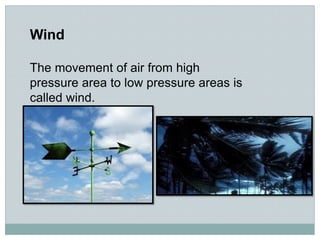
Wind
The movement of air from high
pressure area to low pressure areas is
called wind.
Winds can be broadly divided into three types.
Local winds
Permanent winds
Seasonal winds
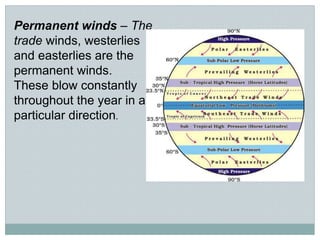
Permanent winds – The
trade winds, westerlies
and easterlies are the
permanent winds.
These blow constantly
throughout the year in a
particular direction.
2. Seasonal winds – These
winds change their direction
in different seasons. For
example monsoons in India.
3. Local winds – These blow only during a
particular period of the day or year in a
small area. For example, land and sea
breeze.
Moisture
When water evaporates from land
and different water bodies, it becomes
water vapour. Moisture in the air at
any time, is known as humidity.
When the air is full of water vapour
we call it a humid day. As the air gets
warmer, its capacity to hold the water
vapour increases and so it
becomes more and more humid.
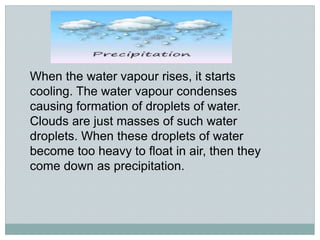
When the water vapour rises, it starts
cooling. The water vapour condenses
causing formation of droplets of water.
Clouds are just masses of such water
droplets. When these droplets of water
become too heavy to float in air, then they
come down as precipitation.
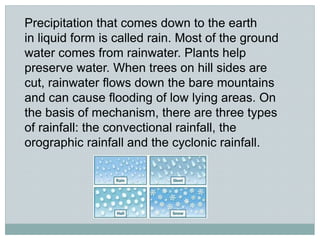
Precipitation that comes down to the earth
in liquid form is called rain. Most of the ground
water comes from rainwater. Plants help
preserve water. When trees on hill sides are
cut, rainwater flows down the bare mountains
and can cause flooding of low lying areas. On
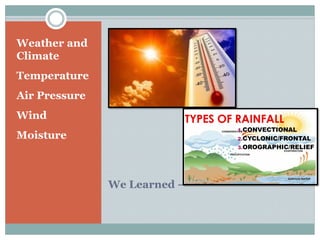
the basis of mechanism, there are three types
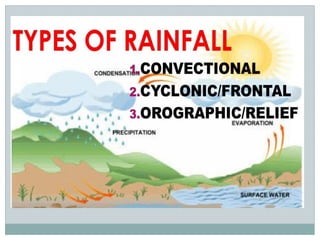
of rainfall: the convectional rainfall, the
orographic rainfall and the cyclonic rainfall.
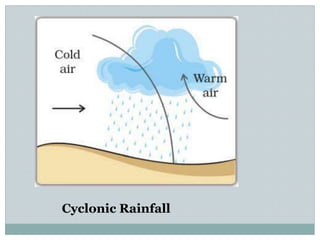
Cyclonic Rainfall
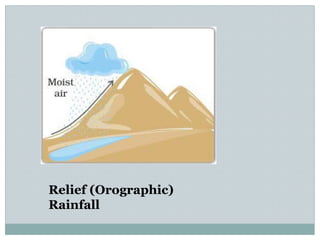
Relief (Orographic)
Rainfall
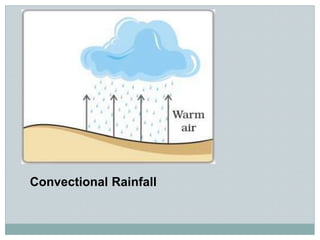
Convectional Rainfall
Rainfall is very important for the
survival of plants and animals. It
brings fresh water to the earth’s
surface. If rainfall is less – water
scacity and drought occur. On the
other hand if it is more, floods take
place.
We Learned –
Weather and
Climate
Temperature
Air Pressure
Wind
Moisture
Class 7,lesson 4 air geog part 2

Class 7,lesson 4 air geog part 2

  • 1.
  • 2.
  • 3.
  • 4.
    In previous class ATMOSPHERE  COMPOSITION OF THE ATMOSPHERE  STRUCTURE OF THE ATMOSPHERE
  • 5.
    In This Class Weather and Climate  Temperature  Air Pressure  Wind  Moisture and type of Rainfall
  • 6.
    WEATHER AND CLIMATE Weatheris this hour-to-hour, day to day condition of the atmosphere. The average weather condition of a place for a longer period of time represents the climate of a place.
  • 7.
    Temperature The degree ofhotness and coldness of the air is known as temperature. The temperature of the atmosphere changes not only between day and night but also from season to season. Summers are hotter than winters.
  • 8.
    An important factorthat influences the distribution of temperature is insolation. Insolation is the incoming solar energy intercepted by the earth. The amount of insolation decreases from the equator towards the poles. Therefore, the temperature decreases in the same manner.
  • 9.
    Air Pressure Air pressureis defined as the pressure exerted by the weight of air on the earth’s surface. As we go up the layers of atmosphere, the pressure falls rapidly. The air pressure is highest at sea level and decreases with height. Horizontally the distribution of air pressure is influenced by temperature of air at a given place. In areas where temperature is high the air gets heated and rises. This creates a low-pressure area. Low pressure is associated with cloudy skies and wet weather.
  • 10.
    In areas havinglower temperature, the air is cold. It is therefore heavy. Heavy air sinks and creates a high pressure area. High pressure is associated with clear and sunny skies. The air always moves from high pressure areas to low pressure areas.
  • 11.
    Wind The movement ofair from high pressure area to low pressure areas is called wind.
  • 12.
    Winds can bebroadly divided into three types. Local winds Permanent winds Seasonal winds
  • 13.
    Permanent winds –The trade winds, westerlies and easterlies are the permanent winds. These blow constantly throughout the year in a particular direction.
  • 14.
    2. Seasonal winds– These winds change their direction in different seasons. For example monsoons in India. 3. Local winds – These blow only during a particular period of the day or year in a small area. For example, land and sea breeze.
  • 15.
    Moisture When water evaporatesfrom land and different water bodies, it becomes water vapour. Moisture in the air at any time, is known as humidity. When the air is full of water vapour we call it a humid day. As the air gets warmer, its capacity to hold the water vapour increases and so it becomes more and more humid.
  • 16.
    When the watervapour rises, it starts cooling. The water vapour condenses causing formation of droplets of water. Clouds are just masses of such water droplets. When these droplets of water become too heavy to float in air, then they come down as precipitation.
  • 17.
    Precipitation that comesdown to the earth in liquid form is called rain. Most of the ground water comes from rainwater. Plants help preserve water. When trees on hill sides are cut, rainwater flows down the bare mountains and can cause flooding of low lying areas. On the basis of mechanism, there are three types of rainfall: the convectional rainfall, the orographic rainfall and the cyclonic rainfall.
  • 19.
  • 20.
  • 21.
  • 22.
    Rainfall is veryimportant for the survival of plants and animals. It brings fresh water to the earth’s surface. If rainfall is less – water scacity and drought occur. On the other hand if it is more, floods take place.
  • 23.
    We Learned – Weatherand Climate Temperature Air Pressure Wind Moisture