Atlas of Pediatric
EEG
NOTICE
Medicine is an ever-changing science. As new research and clinical experience broaden our
knowledge, changes in treatment and drug therapy are required. The authors and the publisher of
this work have checked with sources believed to be reliable in their efforts to provide information
that is complete and generally in accord with the standards accepted at the time of publication.
However, in view of the possibility of human error or changes in medical sciences, neither the authors
nor the publisher nor any other party who has been involved in the preparation or publication of
this work warrants that the information contained herein is in every respect accurate or complete,
and they disclaim all responsibility for any errors or omissions or for the results obtained from use
of the information contained in this work. Readers are encouraged to confirm the information
contained herein with other sources. For example and in particular, readers are advised to check
the product information sheet included in the package of each drug they plan to administer to be
certain that the information contained in this work is accurate and that changes have not been made
in the recommended dose or in the contraindications for administration. This recommendation is of
particular importance in connection with new or infrequently used drugs.
Atlas of Pediatric
EEG
Pramote Laoprasert, MD
Assistant Professor
University of Colorado School of Medicine
Director of Surgical Epilepsy Program and Epilepsy Monitoring Unit
Department of Pediatric Neurology
The Children’s Hospital of Denver
Aurora, Colorado
New York Chicago San Francisco Lisbon London Madrid Mexico City
Milan New Delhi San Juan Seoul Singapore Sydney Toronto
Copyright © 2011 by The McGraw-Hill Companies, Inc. All rights reserved. Except as permitted under the United States Copyright Act of 1976, no part of this publication may be reproduced or distributed in any form or by
any means, or stored in a database or retrieval system, without the prior written permission of the publisher.
ISBN: 978-0-07-163246-1
MHID: 0-07-163246-8
The material in this eBook also appears in the print version of this title: ISBN: 978-0-07-162332-2,
MHID: 0-07-162332-9.
All trademarks are trademarks of their respective owners. Rather than put a trademark symbol after every occurrence of a trademarked name, we use names in an editorial fashion only, and to the benefit of the trademark owner,
with no intention of infringement of the trademark. Where such designations appear in this book, they have been printed with initial caps.
McGraw-Hill eBooks are available at special quantity discounts to use as premiums and sales promotions, or for use in corporate training programs. To contact a representative please e-mail us at bulksales@mcgraw-hill.com.
TERMS OF USE
This is a copyrighted work and The McGraw-Hill Companies, Inc. (“McGrawHill”) and its licensors reserve all rights in and to the work. Use of this work is subject to these terms. Except as permitted under the Copyright Act
of 1976 and the right to store and retrieve one copy of the work, you may not decompile, disassemble, reverse engineer, reproduce, modify, create derivative works based upon, transmit, distribute, disseminate, sell, publish or
sublicense the work or any part of it without McGraw-Hill’s prior consent. You may use the work for your own noncommercial and personal use; any other use of the work is strictly prohibited. Your right to use the work may
be terminated if you fail to comply with these terms.
THE WORK IS PROVIDED “AS IS.” McGRAW-HILL AND ITS LICENSORS MAKE NO GUARANTEES OR WARRANTIES AS TO THE ACCURACY, ADEQUACY OR COMPLETENESS OF OR RESULTS TO
BE OBTAINED FROM USING THE WORK, INCLUDING ANY INFORMATION THAT CAN BE ACCESSED THROUGH THE WORK VIA HYPERLINK OR OTHERWISE, AND EXPRESSLY DISCLAIM ANY
WARRANTY, EXPRESS OR IMPLIED, INCLUDING BUT NOT LIMITED TO IMPLIED WARRANTIES OF MERCHANTABILITY OR FITNESS FOR A PARTICULAR PURPOSE. McGraw-Hill and its licensors do not
warrant or guarantee that the functions contained in the work will meet your requirements or that its operation will be uninterrupted or error free. Neither McGraw-Hill nor its licensors shall be liable to you or anyone else for any
inaccuracy, error or omission, regardless of cause, in the work or for any damages resulting therefrom. McGraw-Hill has no responsibility for the content of any information accessed through the work. Under no circumstances
shall McGraw-Hill and/or its licensors be liable for any indirect, incidental, special, punitive, consequential or similar damages that result from the use of or inability to use the work, even if any of them has been advised of the
possibility of such damages. This limitation of liability shall apply to any claim or cause whatsoever whether such claim or cause arises in contract, tort or otherwise.
Dedicated to my wife Nan, my children Maddy and Rick, and my parents Saman and Vilai
For their unconditional love, enthusiastic support, encouragement,
and long-suffering tolerance during preparation of this book.
And to my patients and their families. Without them, this book would be impossible.
This page intentionally left blank
vii
CONTENTS
Foreword . . . . . . . . . . . . . . . . . . . . . . . . . . . . . . . . . . . . . . . . . ix
Preface . . . . . . . . . . . . . . . . . . . . . . . . . . . . . . . . . . . . . . . . . . . xi
Acknowledgments . . . . . . . . . . . . . . . . . . . . . . . . . . . . . . . xii
1 Normal and Benign Variants . . . . . . . . . . . . . . . . . . . 1
2 Artifacts . . . . . . . . . . . . . . . . . . . . . . . . . . . . . . . . . . . . 125
3 Newborn . . . . . . . . . . . . . . . . . . . . . . . . . . . . . . . . . . . 201
4 Focal Nonepileptoform Activity. . . . . . . . . . . . . . 275
5 Generalized Nonepileptiform Activity. . . . . . . . 389
6 ICU. . . . . . . . . . . . . . . . . . . . . . . . . . . . . . . . . . . . . . . . . 471
7 Epileptic Encephalopathy . . . . . . . . . . . . . . . . . . . 529
8 Generalized Epilepsy . . . . . . . . . . . . . . . . . . . . . . . . 613
9 Focal Epilepsy. . . . . . . . . . . . . . . . . . . . . . . . . . . . . . . 675
Index . . . . . . . . . . . . . . . . . . . . . . . . . . . . . . . . . . . . . . . . . . . 861
This page intentionally left blank
ix
FOREWORD
Epilepsy is a common and frequently disabling
disorder in children. Linking its clinical manifestations
to electrographic and imaging changes is essential to
correct diagnosis and management. This multimedia
work provides an accessible, comprehensive, and
timely tool for the child neurologist or epileptologist
in training or in practice to become familiar with the
extraordinary richness of the clinical and electrographic
manifestations of childhood epilepsy.
The text represents the distillation of an extraordinary
body of clinical experience and painstaking attention to
detail, which is characteristic of Dr. Laoprasert. I first had
the privilege of making his acquaintance two decades
ago, when he began his child neurology training at
Mayo Clinic. Since that time, he has established himself
as a first-class pediatric epileptologist and scholar. This
fine work is an appropriate testament to his diligence
and skill.
The text is laid out in a systematic and thoughtful
fashion, beginning with common and not-so-common
patterns and variants in the electroencephalogram,
which can be a source of confusion and diagnostic error
to the novice. Subsequently, pathological conditions
are explored in a similarly logical and comprehensive
fashion. Since most of us learn from our patients, I
predict that this case-based approach will be extremely
effective. I commend this work to anyone who wishes
to improve his or her grasp of epilepsy in childhood. It
will be essential reading for pediatric epilepsy trainees
but will also be a frequently consulted resource for
residents in training. By the same token, the child
neurologist who is not an expert in epilepsy, and even
experienced pediatric epileptologists, will find a great
deal of valuable material to enhance the care of their
patients. Whether read cover-to-cover, used to review
specific problems, or dipped into at random, this text
makes learning about epilepsy in children a pleasure
and will ultimately enhance the quality of their lives
and those of their families.
Marc C. Patterson, MD, FRACP, FAAN
Professor of Neurology, Pediatrics
and Medical Genetics
Chair, Division of Child and
Adolescent Neurology
Mayo Clinic
Rochester, Minnesota
This page intentionally left blank
xi
PREFACE
EEG presents a tremendous challenge to the neurologist.
Although EEG has been used for almost a century, it is
still and will continue to be one of the most important
diagnostic tools in neurology, especially in pediatric
neurology and epilepsy. The rapid advances in digital
and prolonged video-EEG as well as in epilepsy surgery
enhance the usage of the EEG to the higher level.
Atlas of Pediatric EEG presents both common and
uncommon EEG diagnoses in a case-study-oriented
manner. Unlike other EEG atlases that catalog only
the EEG patterns, this book stresses the viewpoint of
the practicing neurologists and neurophysiologists.
Integration of the EEG, clinical information, and
neuroimaging is the heart of this book and is
consistently presented throughout. Cited references for
further study are extensive and up to date. This will help
the readers to have a better understanding of the EEG
and its applications.
Atlas of Pediatric EEG is designed for the
electroencephalographer, child neurologist, EEG/
epilepsy fellow, neurology resident, pediatrician, and
EEG technologist with an interest in pediatric EEG. Other
healthcare providers, such as nurse practitioners and
physician assistants who care for children with neurologic
conditions, as well as medical students during the
pediatric neurology clerkship who want to learn about
the EEG in children, will also find this atlas valuable.
xii
ACKNOWLEDGMENTS
I would like to acknowledge Dr. Marc Patterson for
his extraordinary mentoring and for a very kind and
thoughtful foreword. I thank Dr. Paul Moe and Dr. Andy
White for their critical review and proofreading. I also
thank my colleagues, epilepsy fellows, and neurology
residents at the Denver Children’s Hospital in the
preparation of this book.
I am also deeply grateful to the editorial staff at
McGraw-Hill, especially to Anne Sydor, Christine
Diedrich, Sherri Souffrance and Priscilla Beer, as well as
Sandeep Pannu and Aakriti Kathuria of Thomson Digital,
for their generous support and competent assistance.
1
Normal and
BenignVariants
Alpha rhythm or posterior dominant
rhythm (Figures 1-1 to 1-5, 1-11, and 1-16)
Monomorphic either sinusoidal or having sharp
䡲
points at the top or bottom, 8–13 Hz in older children
and adults during relaxed wakefulness with eyes
closed.
Eye opening attenuates alpha rhythm (AR) and eye
䡲
closure accentuates AR.
AR also attenuates with:
䡲
Drowsiness
䊳
Concentration
䊳
Stimulation
䊳
Visual fixation
䊳
Anxiety
䊳
Eye closure with mental calculation
䊳
AR responsive to eye opening occurs in 75% of infants
䡲
between 3rd and 4th months.
Frequency
Mean AR frequency:
䡲
4 months – 4 Hz
䊳
12 months – 6 Hz
䊳
36 months – 8 Hz
䊳
9 years – 9 Hz
䊳
10 years – 10 Hz
䊳
Elderly – above 9 Hz
䊳
Abnormal AR:
䡲
1 year: <5 Hz
䊳
4 year: <6 Hz
䊳
5 year: <7 Hz
䊳
≥ 8 year: < 8 Hz (8.5 Hz by some authors)
䊳
Incidence of AR as slow as 8 Hz in adult is <1%;
䊳
therefore, consistent 8 Hz of AR is considered mild
abnormality by some authors.
Frequency of AR is constant throughout adult life, a
䊳
decline of ≥1 Hz is abnormal even if their absolute
frequency remains in the range ≥8 Hz.
Difference of AR frequency >1 Hz in the two
䊳
hemispheres.
Good AR is seen during crying and passive eye
䡲
closure.
Drowsiness must be considered if muscle artifact is
䡲
seen less than usual.
Fever and hypermetabolic states, including
䡲
hyperthyroidism and amphetamine intoxication, may
increase the AR’s frequency. High fever in children can
either increase or decrease the AR’s frequency.
Extreme upward gaze or lateral eye deviations may
䡲
facilitate AR frequency.
Voltage
Most adults have AR voltages of 15–45 μV; Children
䡲
(3–15 years) 50–60 μV; Children (6–9 years) 100 μV or
more.
6–7% of adults have voltage less than 15 μV.
䡲
Only 1.3% of children >12 years have AR voltage less
䡲
than 30 μV.
Low voltage (< 20 μV) EEG (electroencephalography)
䡲
is abnormal in children.
Low voltage (< 10 μV) EEG is more likely to be
䡲
abnormal in adult.
Very low voltage ≤ 2 μV EEG is seen in electrocerebral
䡲
inactivity and marked subdural fluid collection.
High-voltage AR alone should never be considered
䡲
abnormal.
Reduced voltage AR with advancing age is more
䡲
likely due to increased bone density and electrical
impedance of the intervening tissue rather than
decreased electrical brain activity.
Regulation
Sustained rhythm, in which the mean frequency does
䡲
not vary more than ± 0.5 Hz, and the smoothness of
the envelope of the waxing and waning of voltage.
Best regulation between 6 months and 3 years.
䡲
Poor regulation between 3 and 4 years (low voltage).
䡲
Affected by mental activity and anxiety.
䡲
1
1
2 Normal and Benign Variants
Distribution
AR is in occipital region in 65% of adults and 95% of
䡲
children.
Variant: central and temporal regions and widely
䡲
distributed AR.
Although slight AR in the frontal regions is occasionally
䡲
seen, prominent anterior alpha frequency rhythm is
considered abnormal.
Alpha frequency activity restricted to the frontopolar
䡲
electrodes is eyelid flutter until proven otherwise.
AR may be prominent in frontocentral region during
䡲
drowsiness.
Asymmetry
60% of adults and 95% of children, AR is higher
䡲
voltage in the right side with asymmetry less than
20%, regardless of handedness.
Most likely due to difference in skull thickness.
䡲
Asymmetry >20% is seen in 17% and >50% is seen
䡲
in 1.5% in all ages.
Voltage asymmetry >20% is seen in 5% of normal
䡲
children.
Persistent asymmetry of 50% or more is considered
䡲
abnormal.
Persistent asymmetry of 35–50% is considered
䡲
suspect if the lower voltage AR is on the right side.
Symmetry is best
䡲 measured in referential montage
to avoid phase cancellation.
The same rule is applied to mu and temporal theta
䡲
activity.
Squeak effect
Immediately after eye closure, alpha frequency may be
䡲
accelerated for 0.5–1 sec. Therefore, alpha frequency
assessment should not be done during this period.
Paradoxical AR
AR presents with eye opening if the environment
䡲
is devoid of light as the result of partial alerting.
Paradoxical AR is seen in drowsiness and sedation.
Beating or waxing and waning of the AR
Effect of two separate alpha frequencies.
䡲
Bancaud phenomenon
When unilateral cerebral lesions or transient
䡲
cerebral dysfunction (such as migraine or TIA) are
present in the occipital or, less commonly, parietal or
temporal lobes, the side of defective reactivity (eye
opening and alerting) occurs ipsilateral to the side of
the lesion. When both phenomena exist, the same
side of the brain is affected.
Beta activity
≥ 13 Hz; most common 18–25 Hz; less common
䡲
14–16 Hz; rare 35–40 Hz.
First develops between 6 months and 2 years
䡲
Distribution: frontocentral >widespread>posterior.
䡲
Voltage <20 μV in 98% and <10 in 70%
䡲
Voltage of >30 μV is rare but should generally not
䡲
be considered abnormal, although generalized but
anterior-predominant fast activity called“extreme
spindles”can be seen in mental retardation or
cerebral palsy as well as lissencephaly.
Drugs including barbiturates, benzodiazepine, and
䡲
chloral hydrate increase amplitude and amount of
beta activity.
Increase in amount and amplitude during drowsiness,
䡲
stage 2 sleep and rapid eye movement (REM);
decrease during deeper stages of sleep.
Consistently low voltage on one side >35% is
䡲
indicative of:
Cortical injury
䊳
Transient conditions such as postictal state
䊳
Subdural or epidural fluid collection
䊳
More sensitive than focal polymorphic delta
䊳
activity (PDA)
Amplitude asymmetry of >35% is considered
䡲
abnormal.
Focal
䡲 increased amplitude is seen in:
Skull defect (breach rhythm)
䊳
Focal structural abnormality, especially focal
䊳
cortical dysplasia
Presence of beta activity is almost always a good
䡲
prognostic sign.
Slow alpha variant (Figures 1-6 to 1-7)
A rare physiologic variant of AR (less than 1% of
䡲
normal adults), seen during relaxed wakefulness,
has a harmonic relationship and interspersed with
the normal AR, and shows similar distribution and
reactivity as a normal AR.
Usually alternates with AR.
䡲
Rhythmic sinusoidal, notched theta, or delta
䡲
activities that have a harmonic relationship with
the AR (one-third or, more commonly, one-half the
frequency).
Should not be misinterpreted as occipital
䡲
intermittent rhythmic delta (OIRDA) or theta
activity activities, and pathologic findings seen
in children and adults.
Slow alpha variant may be differentiated from
䡲
pathologic slow waves by:
Morphology (notched appearance)
䊳
Frequency (subharmonic of normal AR)
䊳
Reactivity to eye opening
䊳
Disappearance with sleep
䊳
Sometimes mimics rhythmic temporal theta bursts
䡲
of drowsiness (RTTD), except that it occurs only
over the posterior head regions.
Fast alpha variant pattern
(Figures 1-8 to 1-10)
Harmonic of the AR that has a frequency approximately
䡲
twice that of AR, usually within the range of 16–20 Hz,
with a voltage of 20–40 μV.
Usually intermingled with AR and shows reactivity
䡲
and a distribution similar to AR.
1 Normal and Benign Variants 3
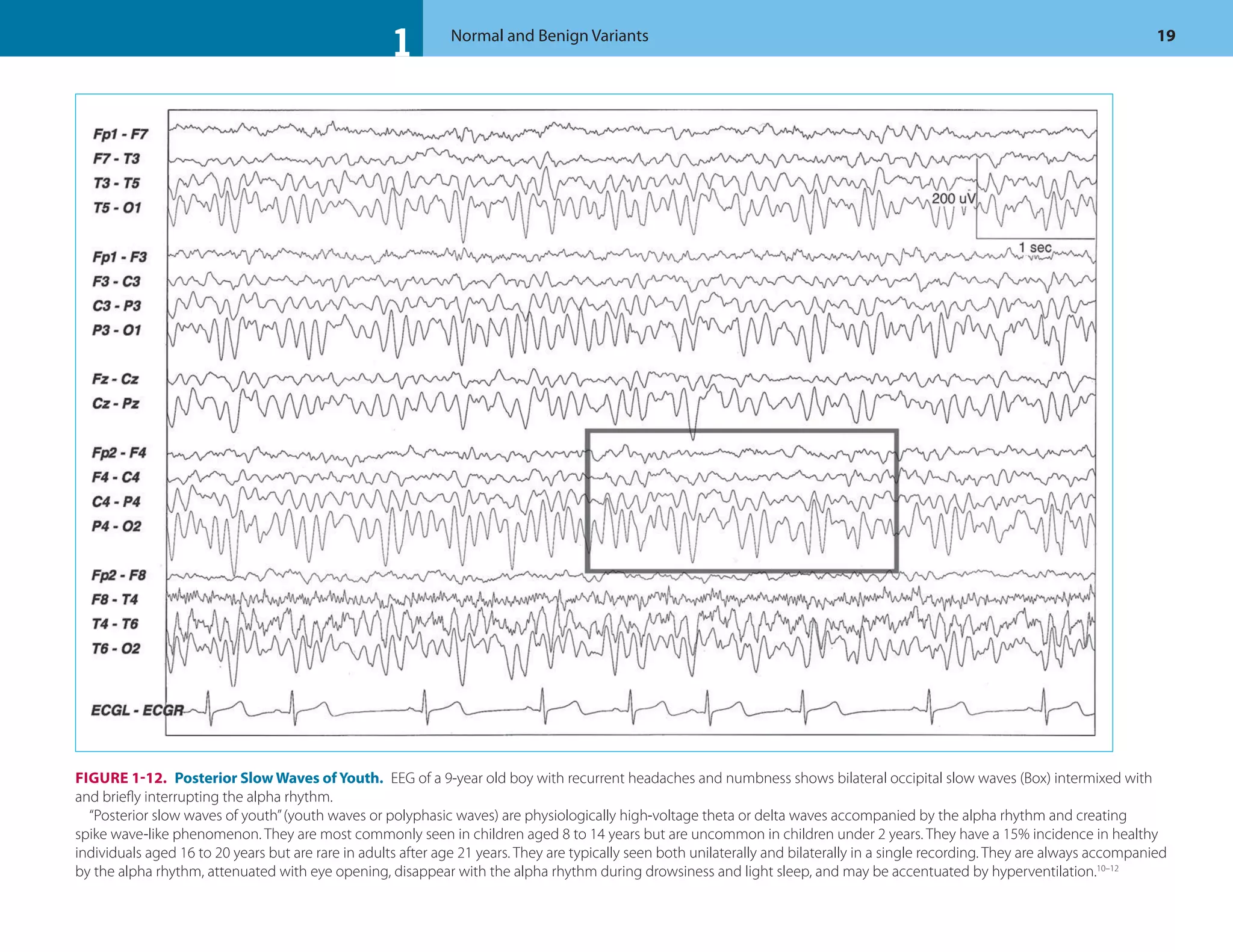
Posterior slow waves of youth
(youth waves or polyphasic waves)
(Figures 1-12 to 1-15)
Physiologically high-voltage theta or delta waves
䡲
accompanied by the AR and creating spike wave-like
phenomenon
Most commonly seen in children aged 8–14 years
䡲
and are uncommon in children under 2 years.
A 15% incidence in healthy
䡲 individuals aged 16–20
years but rare in adults above 21 years of age.
Typically seen both unilaterally and bilaterally in a
䡲
single recording. They are always accompanied by
the AR, attenuated with eye opening, disappear with
the AR during drowsiness and light sleep, and may be
accentuated by hyperventilation and stress.
Characteristic findings:
䡲
Monorhythmic occipital rhythm attenuates with
䊳
eye opening
Normal slower waveforms rarely >1.5 times the
䊳
amplitude of AR.
Normal slower waveforms attenuate with AR
䊳
during alerting.
Slower
䊳 waveforms has the same asymmetry in the
ongoing AR
Index of abnormality of theta/delta slowing.
䡲
Complexity and variability of waveforms
䊳
Incidence (how often slow waves occur)
䊳
Voltage ratio (normal slow waves rarely >1.5 times
䊳
the amplitude of AR)
Persistence with eye opening
䊳
Symmetry (consistently predominant on one side).
䊳
Lambda waves (Figures 1-17 to 1-19)
Sharp transients of sawtooth shape (biphasic or
䡲
triphasic) occurring over the occipital region of
waking subjects during visual exploration (scanning
complex picture), mainly positive relative to other
areas and time locked to saccadic eye movements.
Amplitude varies, but is generally below 50 μV.
䡲
Duration is 100–250 msec except in 1–3 years that
can be up to 400 msec.
Resemble positive occipital sharp transients of sleep
䡲
(POSTS) and visual evoked potential. Subjects with
prominent lambda waves also have prominent
POSTS.
In children, highest amplitude and sharpest
䡲
component is surface negative in the occipital region.
Random and isolated waveforms but may be recur at
䡲
intervals of 200–500 msec.
Visual evoked
䡲 potentials occur in association with
saccadic eye movement.
Do not occur before 1 year of age.
䡲
Most common during the middle years of childhood.
䡲
The prevalence of lambda waves between 3 and 12
years of age is about 80%.
Lambda waves have been described as biphasic or
䡲
triphasic; their predominant positive component is
preceded and followed by a negative component.
Strictly bilateral synchronous although may be
䡲
asymmetrical on the two sides. Rarely present only
on one side.
Marked asymmetry indicates an abnormality on the
䡲
side of lower amplitude.
The most important precipitating factor is voluntary
䡲
scanning eye movements.
Lambda wave is attenuated by:
䡲
Darkening room
䊳
Staring at a blank card
䊳
Eye closure
䊳
Lambda waves usually occur as random and isolated
䡲
waveforms but may recur at intervals of 200–500 msec.
Accompanied by eye movement and eyeblink
䡲
artifacts.
Sometimes, especially when present unilaterally,
䡲
they may be mistaken for focal abnormalities, but the
distinction can be made by replacing the geometric
image with a blank surface.
Marked and persistent asymmetry indicates an
䡲
abnormality on the side of lower amplitude.
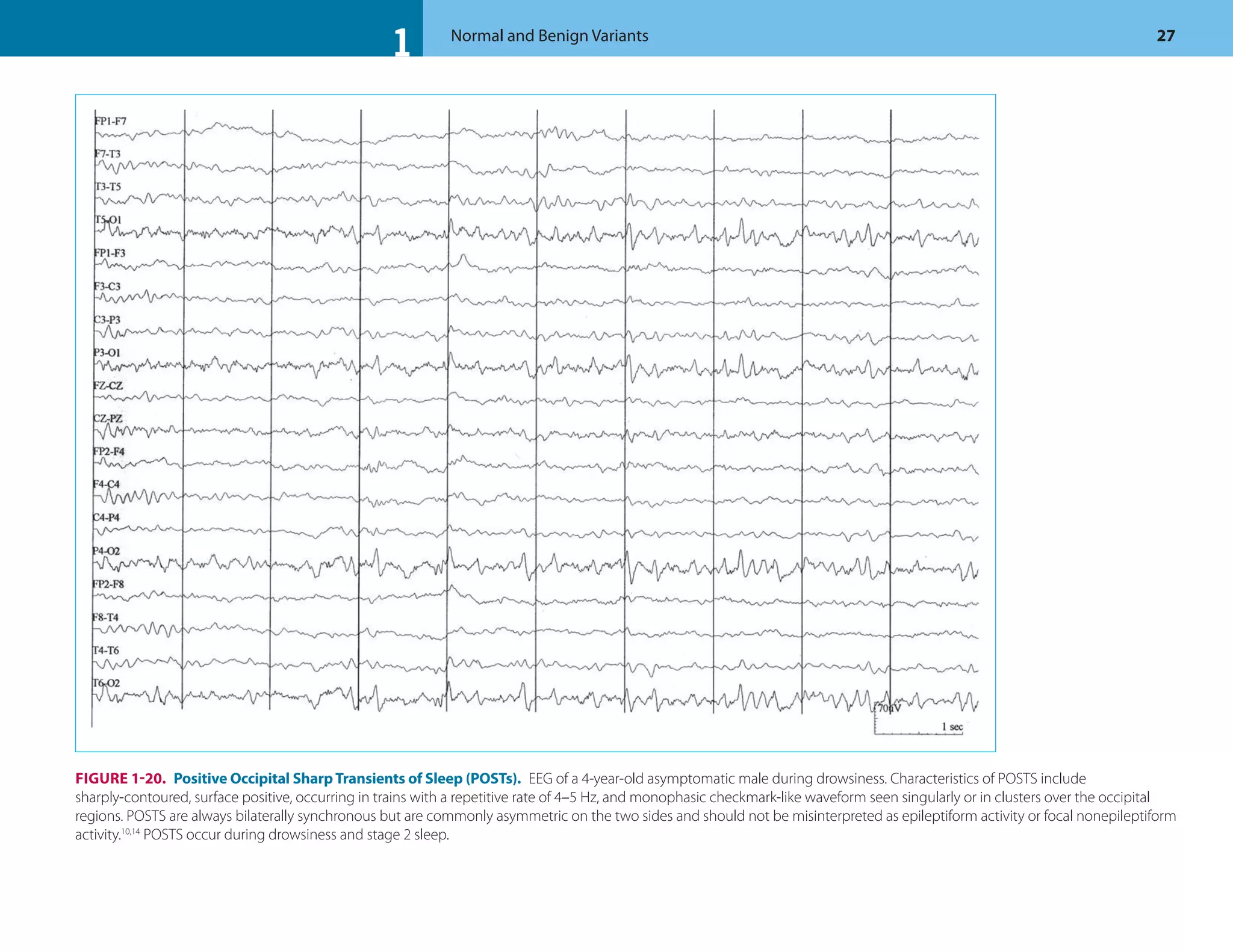
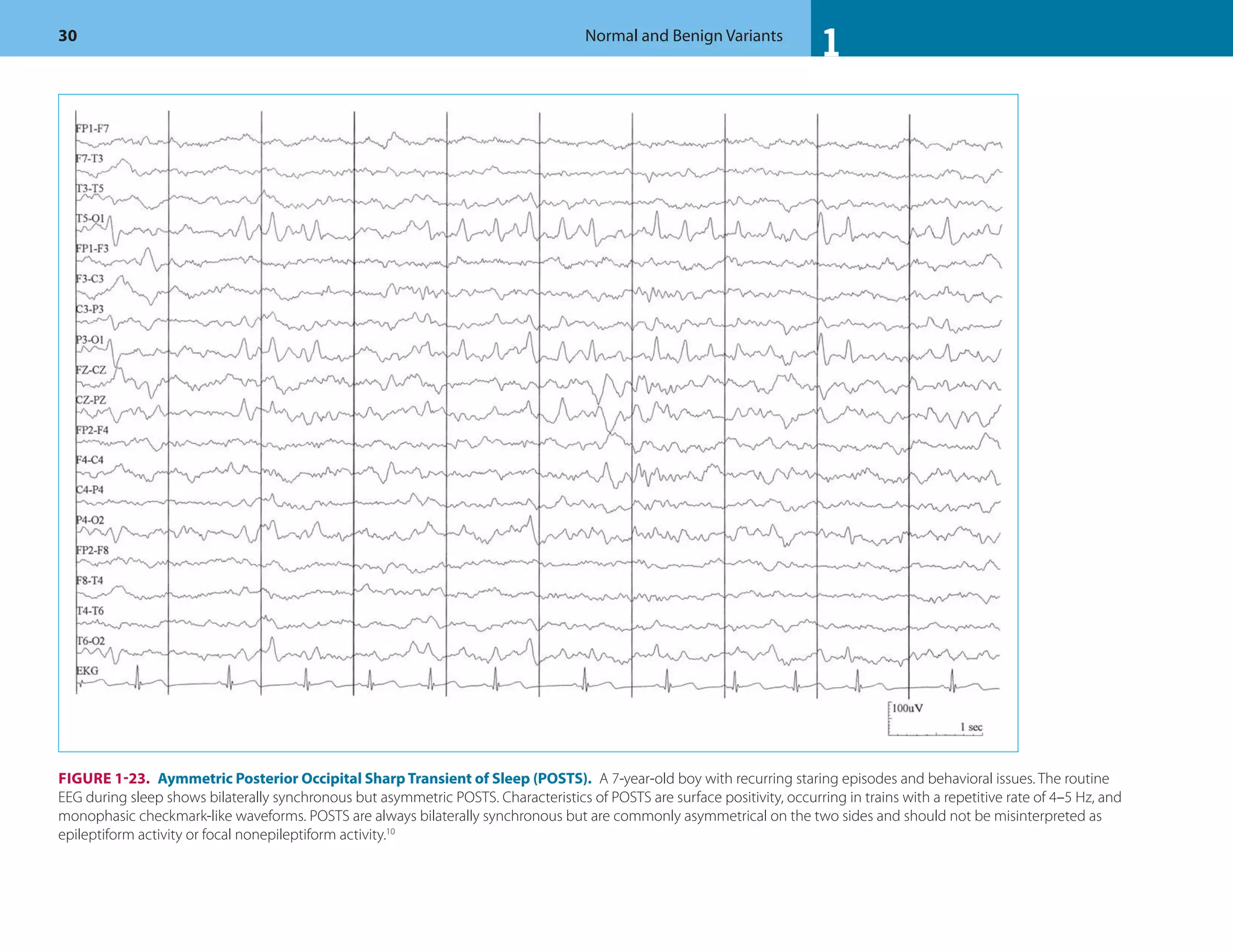
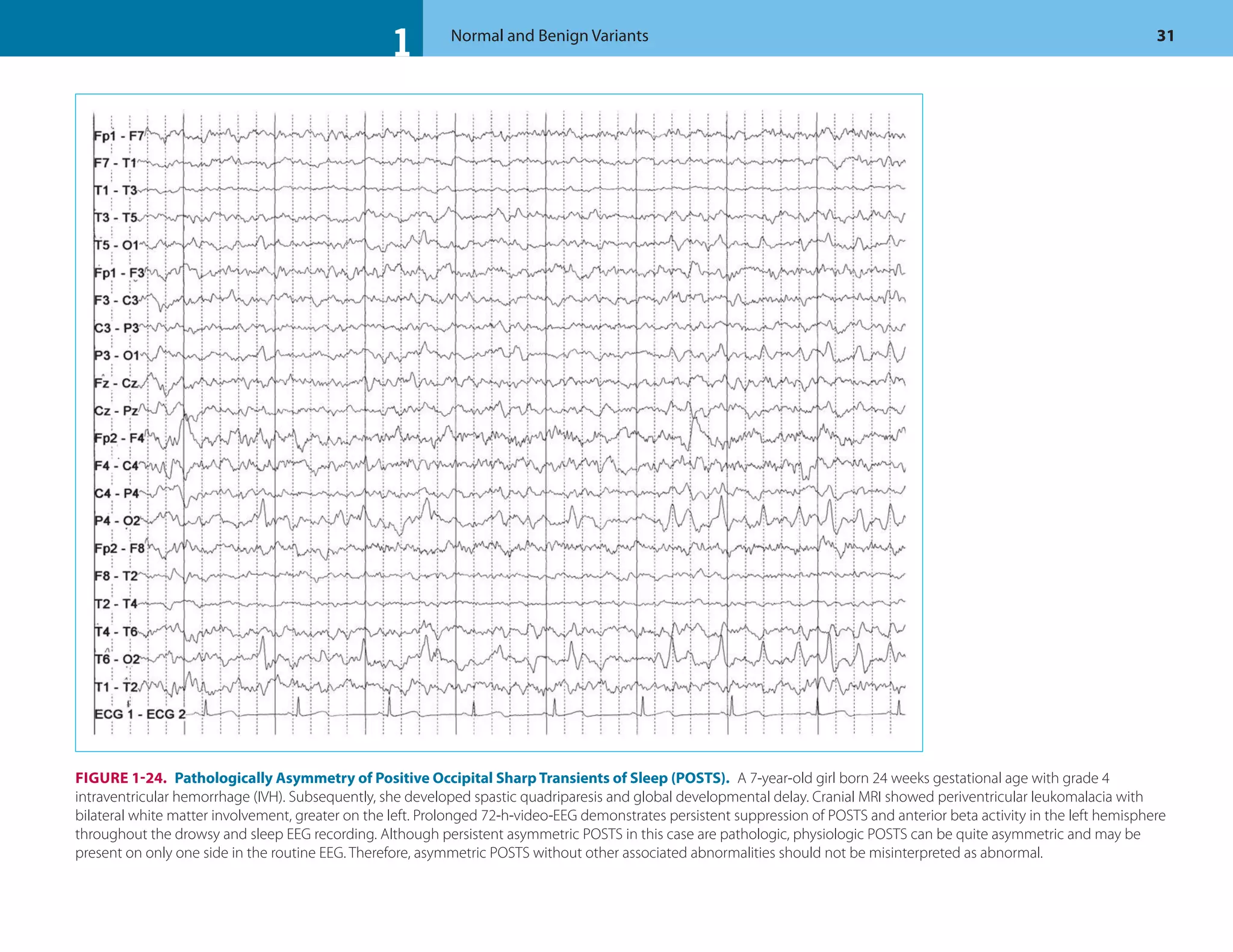
Positive occipital sharp transients
of Sleep (Figures 1-20 to 1-24)
Best seen at the age of 15–35 years and rarely
䡲
<3 years.
Seen in 50–80% of healthy adults.
䡲
Amplitude 20–75 μV; duration 80–200 msec.
䡲
Absent in individuals with poor
䡲 central vision.
Sharply-contoured
䡲 , surface positivity, occurring
in trains with a repetitive rate of 4–5 Hz, and
monophasic checkmark-like waveform seen
singularly or in clusters over the occipital regions.
Always bilaterally synchronous but are commonly
䡲
asymmetric on the two sides. Asymmetry of 50% is
normal.
POSTS occur during deep drowsiness and stage
䡲
2 sleep. Rare in REM sleep.
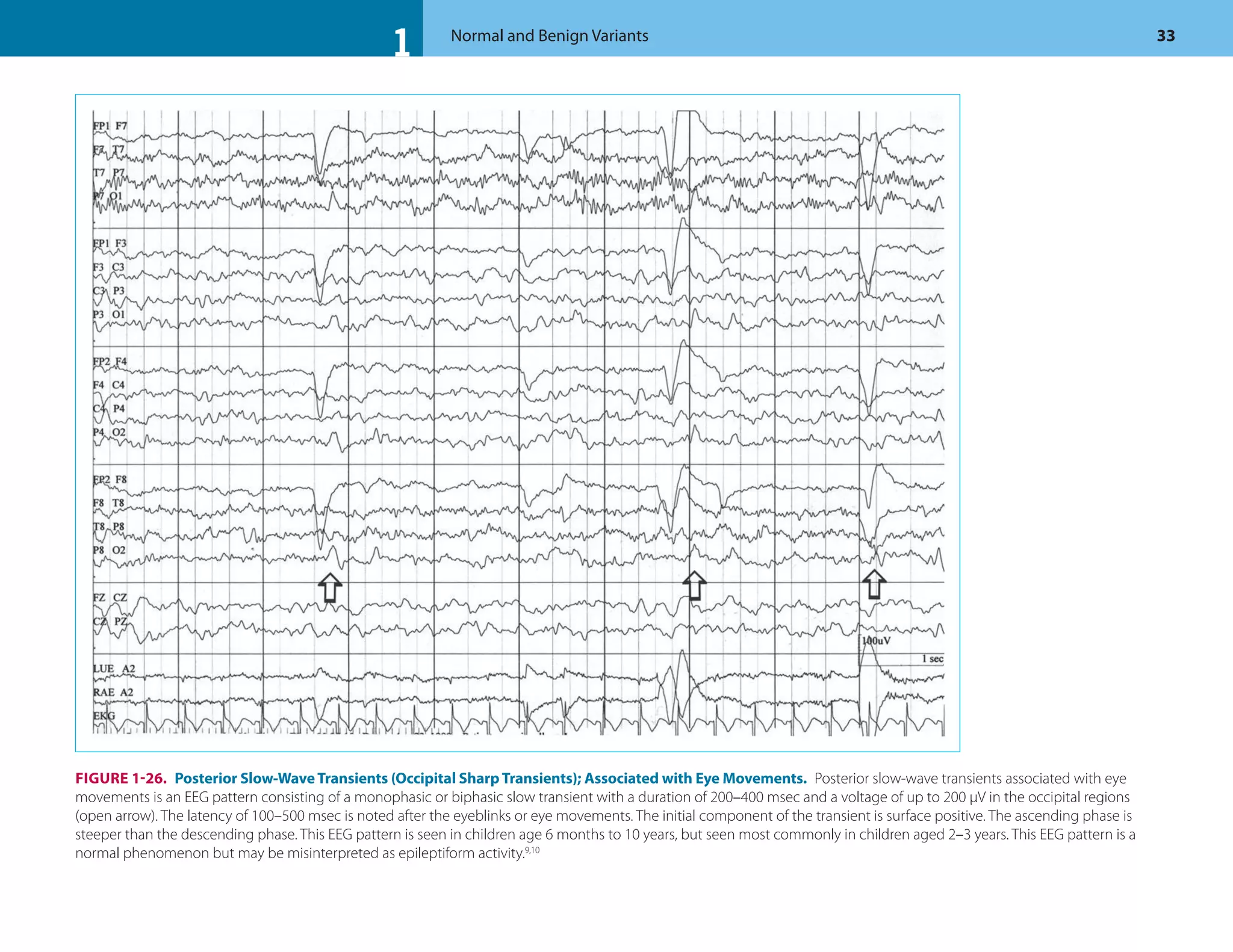
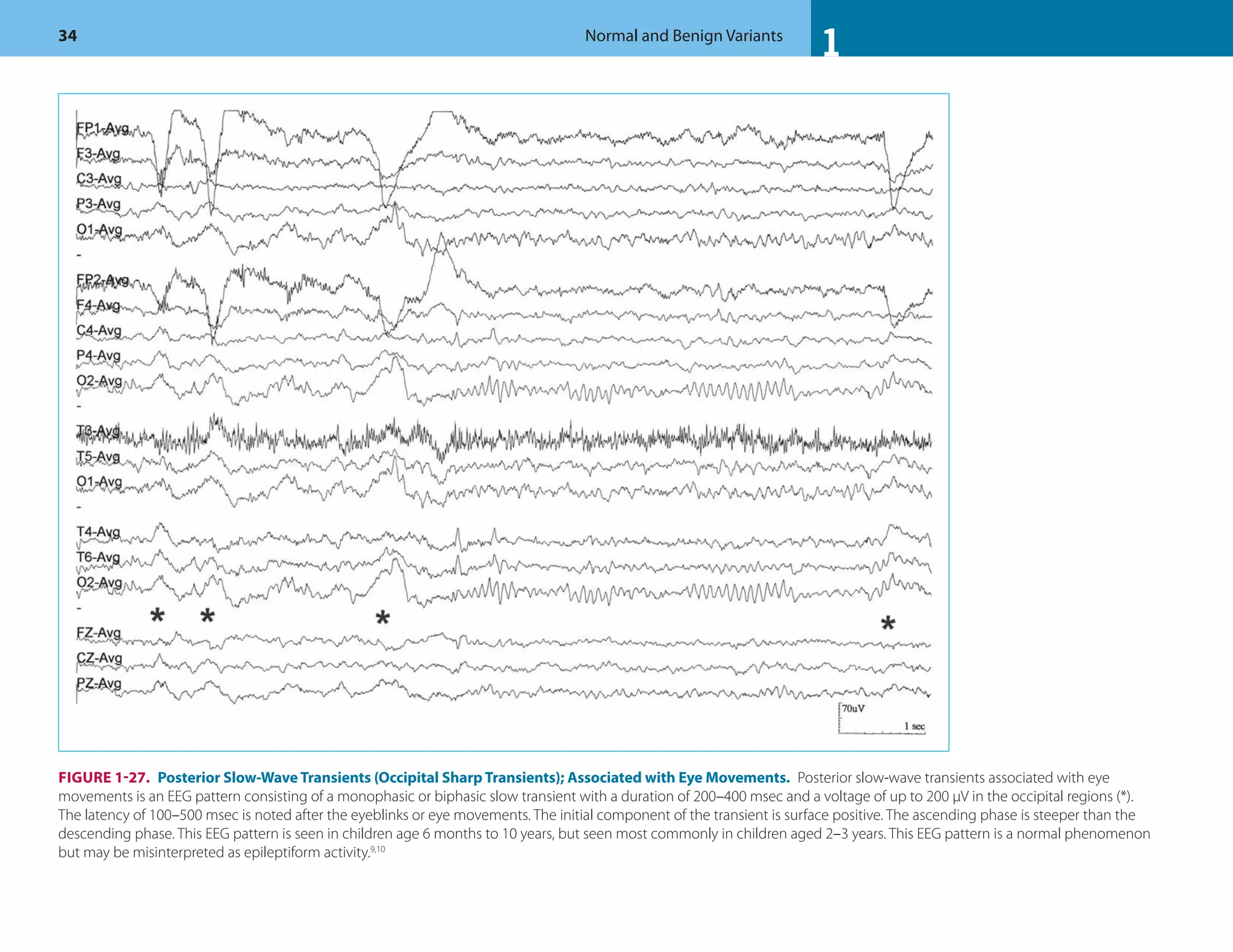
Posterior slow-wave transients
associated with eye movements
(Figures 1-25 to 1-28)
Seen in children age 6 months to 10 years, but most
䡲
commonly in children aged 2–3 years.
Consisting of a monophasic or biphasic slow transient
䡲
with a duration of 200–400 msec and a voltage of up
to 200 μV in the occipital regions.
A
䡲 latency of 100–500 msec is noted after the
eyeblinks or eye movements.
The initial component of the transient is surface
䡲
positive. The ascending phase is steeper than the
descending phase.
Occipital slow transients
(Figures 1-29 to 1-31)
Physiologic waves presenting during non-REM sleep,
䡲
especially a transition from light to deep sleep in
infancy until 5 years of age
1
4 Normal and Benign Variants
Bilateral, isolated, medium- to high-amplitude,
䡲
monomorphic, triangular-shaped, delta waves with a
typical duration greater than 250 msec in the occipital
regions.
These waves vary from a
䡲 cone-shaped configuration
(cone waves or “O” waves) to a biphasic slow transient.
These transients occur every 3–6sec during light
sleep and more frequently during deeper stages
of sleep.
H-Response (Figures 1-32 to 1-34)
Prominent photic driving response at flash rates
䡲
beyond 20 Hz.
Sensitivity varied from 25% to 100%, and specificity
䡲
from 80% to 91%.
Although
䡲 there are relatively high sensitivities and
specificities of the H-response in distinguishing
migraine patients from controls and tension
headache, H-response is not more effective than the
history and examination in diagnosing headaches
and not recommended for use in clinical practice.
May be useful for clinical diagnosis in complicated
䡲
headache and help to monitor therapeutic response.
Needle-like spikes of the blind
(occipital spikes of blindness)
(Figures 1-35 to 1-37)
Occipital or parietal regions in most patients with
䡲
congenital blindness and retinopathy during early
infancy.
Prevalence of 75% in retrolental fibroplasia age
䡲
3–14 years and 35% in all causes of blindness.
Amplitude 50–250 μV.
䡲
Isolation or burst.
䡲
Activated by sleep.
䡲
Low amplitude at 10 months; typical features at
䡲
2.5 years; after-going slow waves in mid-childhood;
disappear by the end of adolescence.
Functional deafferentation of the visual cortex gives
䡲
rise to an increase in its irritability (denervation
hypersensitivity).
Not an epileptiform activity.
䡲
Seen more commonly in patients with mental
䡲
retardation and epilepsy.
Disappear during childhood or adolescence.
䡲
Sleep stages
Drowsiness (Figures 1-38 to 1-39)
Alpha dropout (earliest sign)
䡲
Increased beta activity over the frontocentral regions
䡲
Diffuse rhythmic theta activity with anterior
䡲
predominance
Slow eye movement
䡲
Mu rhythm, wicket wave, and 14 and 6 Hz positive
䡲
spikes can be seen.
Deep drowsiness is marked by the vertex waves
䡲
and POSTS that persist during light sleep and
deep sleep
Hypnagogic hypersynchrony in 3 months to 8 years.
䡲
Stage 2 sleep (Figures 1-40 to 1-41)
Symmetric, synchronous theta rhythms with posterior
䡲
predominance, 12–15/sec spindles, vertex sharp
waves, K-complexes, and POSTS.
Sleep spindles in the 12–15/sec range
䡲 are hallmark of
sleep onset.
Stage 3 sleep (Figure 1-42)
Delta frequencies in the 0.75–3/sec range are
䡲
prominent over the anterior regions.
Sleep spindle in the 10–12/sec and even in the 12–
䡲
14/sec ranges are still present but gradually become
less prominent.
Rhythmic activity of 5–9/sec is common.
䡲
Rhythmic and symmetrical delta activity is noted
䡲
between 20% and 50% of the recording
Stage 4 sleep (Figure 1-43)
Over 50% of the recording is delta rhythm.
䡲
Spindles are rare.
䡲
Arousal at this stage can be correlated with sleep
䡲
disorders (somnambulism, nocturnal terror, or
enuresis), and can cause confusion.
Occasionally, spikes in temporal lobe epilepsy will
䡲
only appear in stage 3 and 4 sleep.
REM sleep (Figure 1-44 and 2-1)
Low-voltage activity, polyrhythmic waves, and slower
䡲
alpha waves.
Short bursts of“saw-tooth waves”over the frontal or
䡲
vertex leads and quick lateral eye movements.
Appearance of REM sleep in routine EEG is seen in
䡲
narcolepsy and in patients who are withdrawn from
CNS depressants such as alcohol or phenobarbital.
K-Complex (Figures 1-45 to 1-48)
Contain 3 components including sharp, slow, and fast.
䡲
Seen in stage 2 sleep and arousal.
䡲
Largest in older children and adolescence. With
䡲
advanced age, the K-complexes show the decline in
voltage with tiny superimposed spindle-like waves.
First appears at 4 months of age. They have high
䡲
amplitude but their rise is not as abrupt and the
configuration is not as sharp as seen in older
children.
Sleep spindles (Figures 1-49 to 1-58)
Arise from synchronized activity in neuronal networks
䡲
linking the thalamus and the cortex. Spindles result
from rhythmic spike bursts in inhibitory (GABAergic)
thalamic reticular neurons that induce rhythmic
rebound bursting in cortical neurons resulting in
effective deafferentiation of the cerebral cortex. Cortical
neurons show enhanced synaptic plasticity that might
have a role in memory and learning processes.
First seen at 1.5–2 months with a frequency of 14/sec.
䡲
Throughout infancy, they are maximal over the
䡲
central and parietal areas with shifting asymmetry.
They usually are electronegative with rounded positive
component that is a typical hallmark of sleep spindles
in infancy. These surface-negative spindles with
1 Normal and Benign Variants 5
wicket or comb-like shape can be erroneously
interpreted as 14/sec positive spikes
Between the ages of 3 and 6 months, sleep spindles
䡲
appear to be biphasic and as prolonged runs, up to 10–
15 sec. The prolonged run of spindles is a very useful
developmental marker and is rarely seen beyond this
age range.
Subharmonic or harmonic of sleep spindles with a
䡲
frequency approximately half or double that of sleep
spindles and notched appearance can be seen.
In the second half of the first year of life, the
䡲
spindles appear to be monophasic and are often
asynchronous between the two sides. The frequency
of spindles also changes, with 12/sec components
becoming more prominent.
Asynchronous spindles
䡲 may occasionally continue
from 1 to 2 year of age but rarely are seen after the age
of 2 years when interhemispheric synchrony of the
spindles appears.
Mitten patterns (Figures 1-59 to 1-62)
Consist of a sharp-contoured waveform on the slope
䡲
of a slow wave of the same polarity that resembles
a mitten, with a thumb of mitten formed by the last
wave of a spindle and the hand portion by the slower
wave component.
Maximal at the frontocentral vertex with spread into
䡲
parasagittal regions. The location is different from
K-complexes in that it is centered anterior to the
central vertex where K-complexes are maximal.
Variant of a vertex wave or K-complex and should not
䡲
be mistaken for a spike-and-wave discharge.
It is best seen in referential montage in stage
䡲
3 sleep.
Hypnagogic hypersynchrony
(Figures 1-63 to 1-70)
Seen in early drowsiness and arousal from deeper
䡲
sleep.
Characterized by bilateral synchronous, high voltage,
䡲
rhythmic 3–5 Hz activity.
The frequency of hypnagogic hypersynchrony is 3–4
䡲
Hz at the age of 2–3 months and increases to 4–5 Hz
in older children.
Asymmetric hypnagogic hypersynchrony with
䡲
shifting predominance can be seen and is not
considered abnormal.
At 2–3 months, first appears.
䡲
At 9 months, more prominent and continuous.
䡲
Between 4 months and 2 years, seen in almost all
䡲
infants.
Few infants do not show this pattern but show
䡲
occipital or widespread rhythmical and synchronous
4–5 Hz waves of low to medium amplitude.
At 4 years, shorter in duration and more paroxysmal.
䡲
At 9–11 years, it becomes rare (10%).
䡲
Although the presence of hypnagogic hypersynchrony
䡲
at age 12 years is considered abnormal by some
authors, it may be seen in normal children up to the
age of 12–13 years.
Occasionally, small sharp or spiky discharges may
䡲
be interspersed between the theta waves. These
discharges should not be interpreted as epileptiform
activity unless they are definitely distinct from
background activity and not only occur during
drowsiness or at the onset of sleep but persist into
deeper stages of sleep.
Hypnic myoclonia (hypnagogic jerks)
(Figures 1-67 and 1-70)
This wake-to-sleep transition event is characterized
䡲
by a sudden, single, brief muscular contraction
of the legs and occasionally the arms, head, and
postural muscles.
Sensory hallucinations (hypnagogic hallucinations)
䡲
often occur before the hypnic myoclonia.
Hypnic myoclonia occurs in 60–79% of normal
䡲
population. Although it may occur at any age,
90% of patients stop these movements by age
of 4 years.
They are more common in boys than girls by 4:1.
䡲
Midline theta rhythm (Figure 1-71)
Rare nonspecific finding of no clinical significance.
䡲
Rhythmic train of 5–7 Hz theta activity occurring
䡲
in the central vertex but may also be seen in the
frontal vertex.
Morphology includes sinusoidal, aciform, spiky, or
䡲
mu-like appearance.
Seen during wakefulness and drowsiness.
䡲
Variable reactivity to eye opening, alerting, and limb
䡲
movement. The rhythm usually lasts from 3 to 20 sec
and does not evolve.
Frontal arousal rhythm (FAR)
(Figures 1-72 to 1-76)
Rare nonspecific EEG pattern of no clinical
䡲
significance.
Frontal regions (F3 and F4 electrodes with minimal
䡲
spread to nearby scalp areas) during arousal from
sleep in children.
Characterized by 30–150 μV, predominantly
䡲
monophasic negative waves, occurring in bursts
or runs lasting up to 13 sec (usually 1–5 sec) with
a characteristic notching of the ascending or
descending phase of each wave that may represent
harmonics of the waveforms.
The waxing and waning of the amplitude often leads
䡲
to a spindle-like morphology.
70% of patients having epileptic seizures; a
䡲 reported
case in which FAR representing ictal electrographic
seizure activity.
Rhythmic temporal theta bursts of
drowsiness, rhythmic midtemporal
discharges (RMTD), psychomotor
variant (Figures 1-77 to 1-82)
Benign variant of no clinical significance.
䡲
Seen in 0.5–2.0% of normal adult population and
䡲
less common in adolescence. No prevalence in
childhood.
1
6 Normal and Benign Variants
Bursts or runs of rhythmic, 5–7 Hz or 4–7 Hz (typically
䡲
5–5.5 Hz), theta activity with flat-topped, sharply
contoured, often notched appearance in the
temporal regions.
Maximally expressed in the mid- or anterior temporal
䡲
electrodes.
Monomorphic pattern with amplitude of 50–200 μV.
䡲
Duration: commonly 5–10 sec; vary from 1 to >60
䊳
sec with gradual onset and offset.
The sharper component of the wave usually has a
䊳
negative polarity in the anterior temporal region.
Unilaterally with shifting from side to side greater
䊳
than bisynchronous.
Differentiated from ictal epileptiform activity by
䊳
Monomorphic and monorhythmic (no evolution
앫
into other frequencies although amplitude
can vary)
No alteration of background activity
앫
Occurrence in relaxed wakefulness and
앫
drowsiness (most common) and disappearance
in deeper levels of sleep.
Although it has no clinical significance, it was
䡲
considered by some authors to be a pathologic
finding in selected cases.
Fourteen and six per second positive
spike discharge (Figures 1-83 to 1-92,
5-44 to 5-48, 6-44)
Benign variant of no clinical significance.
䡲
Bursts of arch-shaped waves at 13–17 Hz and/or
䡲
5–7 Hz, most commonly at 14 and/or 6 Hz. The 14 Hz
component is more commonly seen than 6 Hz.
Maximal
䡲 over the posterior temporal and adjacent
areas of one or both sides of the head.
Amplitude <75 μV.
䡲
Appearance in deep drowsiness and very
䡲
light sleep and disappearance in deeper levels
of sleep.
Electropositive of sharp component and
䡲
electronegative of smooth component.
Widespread field lasting for 0.5–1 sec.
䡲
Occurs in children after age 3 to young adult
䡲 but
more common between 12 and 20 years with a
peak at age 13–14 years.
Best seen in contralateral ear reference
䡲
montage.
Appearance in diffuse encephalopathy EEG pattern
䡲
in a wide variety of encephalopathies of childhood
suggesting that they are epiphenomena or a resilient
normal. Frequency is more variable and can be
elicited by alerting stimuli.
Small sharp spike (SSS) or benign
epileptiform transients of sleep (BETS)
(Figures 1-93 to 1-96)
Benign variant of no clinical significance.
䡲
20–25% of a normal adult population.
䡲
Appearance in deep drowsiness and very light sleep
䡲
and disappearance in deeper stages of sleep.
Usually low voltage, short duration, single
䡲
monophasic, or biphasic spike with an abrupt
ascending limb and a steep descending limb.
± After coming slow wave.
䡲
Either unilaterally or bilaterally.
䡲
Six-hertz spike-wave bursts (phantom
spike-wave) (Figures 1-97 to 1-98)
Benign variant of no clinical significance.
䡲
2.5% of both adolescents and young adults;
䡲
0.5–1% overall.
Appearance in relaxed wakefulness, drowsiness,
䡲
and light sleep and disappearance in deeper levels
of sleep.
Bursts of 1–2 sec duration diffuse, low voltage (<40
䡲
μV), short duration (<30 msec), 5–7 Hz, spike-and-
wave discharges, commonly bifrontal or occipital.
25% of phantom spike and wave have repetitive rate
䡲
of 4 Hz.
At times, spikes are difficult to see.
䡲
Six-hertz spikes with minimal or no associated
䡲
waves may represent a transitional pattern between
6-Hz spike-wave bursts and 14 and 6-Hz positive
bursts.
Waking, high-amplitude, anterior, male (WHAM) vs
䡲
female, occipital, low-amplitude, drowsy (FOLD).
WHAM is more likely to be associated with seizures
䡲
if the repetitive rate is <5 Hz or amplitude of spike
greater than slow wave.
Wicket waves (Figures 1-99, 1-101, 1-102)
One of the most common over-read EEG patterns
䡲
seen almost exclusively in adults, most commonly
>30 years of age and, usually, older than 50 years.
Benign variant pattern and is not associated with
䡲
epilepsy.
Rare waveform (0.9%).
䡲
It occurs in clusters or trains, but also as single sharp
䡲
transients, of 6- to 11-Hz negative sharp aciform
waves with amplitude of 60–200 μV.
Anterior or midtemporal regions.
䡲
Seen during relaxed wakefulness but facilitated by
䡲
drowsiness and may occur in light sleep. Recently
wicket waves have also been reported to occur
during REM sleep.
Unilaterally with a shifting asymmetry between the
䡲
two hemispheres.
During the wakefulness, wicket waves are often
䡲
masked by background EEG activity.
Cardinal feature is a changing mode of occurrence
䡲
through any single recording, from intermittent
trains of more or less sustained, aciform, discharges
resembling mu rhythm, to sporadic single spikes.
Amplitude may be high, but the transient arises out
䡲
of an ongoing rhythm and does not stand out.
1 Normal and Benign Variants 7
When occurring singly, wicket waves can be
䡲
mistaken for anterior or middle temporal spikes.
Isolated wicket wave can be differentiated from
epileptiform discharge by the following criteria:
No slow wave component following the
䊳
wicket wave
Occurring in trains or in isolation and do not
䊳
disrupt the background
Similar morphology to the waveforms in the train
䊳
when occurring as a single spike
More commonly seen in patients with
䡲
cerebrovascular disease.
The age (younger than 30 years) and abnormal
䡲
background activity are strongly against the
diagnosis of wicket waves and supportive of
epileptiform activities.
Third rhythm (independent temporal
alphoid rhythm) (Figure 1-100)
Rhythmical activity in the alpha and upper theta
䡲
range over the midtemporal region.
Not seen in scalp EEG except the presence of skull
䡲
defect.
Physiologic rhythm that is clearly independent from
䡲
mu or AR.
It needs to be differentiated form the rhythmical
䡲
activity seen in anterior- and midtemporal
regions seen in patients with stroke.
Photomyogenic response
(Figures 1-103 to 1-106)
Occurs in 0.1% of the normal population and 1% of
䡲
patients with epilepsy.
Most prominent in the frontal regions as a
䡲
result of orbicularis oculi and frontalis muscle
twitching during eye closure and stops with flash.
Immediate cessation of the response at the end
䡲
of stimulation and prominent electromyographic
activity help to distinguish this photomyogenic
response from photoparoxysmal response.
Normal variant although it can coexist with
䡲
photoparoxysmal response or rarely progress
to generalized tonic-clonic seizures (GTCS).
Mu rhythm (Figures 1-107 to 1-115)
Physiologic EEG finding of no clinical significance.
䡲
Central rhythm of an alpha frequency band (8–10 Hz)
䡲
with an arciform configuration, intermix or alternate
with beta activity.
Occurs in less than 5% of children younger than
䡲
4 years of age and in 18–20% between the age
of 8 and 16 years.
Not blocked with eye opening, but blocked by touch,
䡲
movement of limbs (especially contralateral limbs) or
thought of movement.
Usually asymmetric, asynchronous and independent
䡲
in the two hemispheres.
Consistent asymmetry of amplitude or frequency
䡲
of mu suggests an abnormality on the side of lower
amplitude or frequency.
Believed to be the rhythm of the sensorimotor cortex
䡲
at rest.
Prominent in the patients with underneath skull
䡲
defect (breach rhythm).
Paradoxical mu rhythm – induced by contralateral
䡲
movement or touch after the mu rhythm has
dropped out in drowsiness. Paradoxical AR may
be induced at the same time.
1
8 Normal and Benign Variants
FIGURE 11. Normal Alpha Rhythm and Squeak Effect. An alpha rhythm appears immediately after eye closure and disappears with eye opening. Immediately after eye
closure, alpha frequency may be accelerated for 0.5–1 sec. Therefore, alpha frequency assessment should not be done during this period. This is called the“squeak effect.”1
1 Normal and Benign Variants 9
FIGURE 12. Alpha Rhythm in Subdural EEG. Subdural recording shows the alpha rhythm in the right occipital lobe with reaction to eye opening and eye closure. Harmonic
of the alpha rhythm is frequently seen in an intracranial EEG. In addition, alpha rhythms usually are sharper in morphology because the scalp and skull act as a high-frequency
filter and pass lower frequencies more efficiently than higher frequencies.2
All the normal EEG rhythms seen in the scalp EEG can be seen in the intracranial EEG.3
1
10 Normal and Benign Variants
FIGURE 13. Beating (Waxing and Waning of Amplitude). The beating or waxing and waning of the alpha rhythm is the effect of two separate alpha frequencies.
1 Normal and Benign Variants 11
FIGURE 14. Alpha and Mu Rhythm. Eye opening (open arrow) attenuates the alpha rhythm but reveals a prominent mu rhythm (C3 and C4) at the same frequency (11 Hz).
Note lateral eye movement (X) after the eye opening.
Mu is an arc-like central rhythm with negative sharp component and positive slow component. The frequency is similar to alpha rhythm and it is intermixed with 20-Hz beta
activity. It is located at the C3, C4, and Cz electrodes. It is not blocked by eye opening but is attenuated by movement of extremities or thinking about moving with greater effect
on opposite hand. The apiculate phase may resemble spikes.
1
12 Normal and Benign Variants
FIGURE 15. Alpha and Mu Rhythm. Eye opening attenuates the alpha rhythm (open arrow), and eye closure accentuates the alpha rhythm. Eye opening or closure does not
affect the mu rhythm (C3 and C4). Mu is an arc-like central rhythm with negative sharp component and positive slow component. The frequency is similar to alpha rhythm and it
is intermixed with 20-Hz beta activity. It is located at C3, C4, and Cz electrodes and is not blocked by eye opening but attenuated by movement of extremities or thinking about
moving with greater effect on opposite hand. The apiculate phase may resemble spikes.
1 Normal and Benign Variants 13
FIGURE 16. Slow Alpha Variant. Slow alpha variant (open arrow) is described as rhythmic sinusoidal, notched theta or delta activities, which have a harmonic relationship
with the alpha rhythm (one-third or, more commonly, one-half the frequency). Slow alpha variant is a rare physiologic variant of alpha rhythm (less than 1% of normal adults)
seen during relaxed wakefulness, has a harmonic relationship and is interspersed with the normal alpha rhythm, and shows similar distribution and reactivity as a normal alpha
rhythm.4, 5
It should not be misinterpreted as occipital intermittent rhythmic delta (OIRDA) or theta activity activities, pathologic findings seen in children and adults. Slow alpha
variant may be differentiated from pathologic slow waves by morphology (notched appearance), frequency (subharmonic of normal alpha rhythm), reactivity to eye opening,
and disappearance with sleep. It sometimes mimics RTTD, except that it occurs only over the posterior head regions.
1
14 Normal and Benign Variants
FIGURE 17. Slow Alpha Variant. EEG of a 7-year-old boy with recurrent syncope showing semi-rhythmic notched theta activity, a subharmonic of the baseline alpha rhythm
at channels 4, 8, 14, and 18, which appears immediately following the eye blink. Slow alpha variant is a rare, benign EEG variant (less than 1% of normal adults), has a harmonic
relationship with the alpha rhythm, and shows similar distribution and reactivity as a normal alpha rhythm, reactivity to eye opening and eye closure (arrow), and disappearance
with sleep.4
It should not be misinterpreted as occipital intermittent rhythmic delta activity (OIRDA) or theta activity, pathologic findings seen in children and adults.
1 Normal and Benign Variants 15
FIGURE 18. Fast Alpha Variant. The fast alpha variant pattern (arrow) is a harmonic of the alpha rhythm that has a frequency approximately twice that of alpha rhythm,
usually within the range of 16 to 20 Hz, with a voltage of 20-40 μV. It is usually intermingled with alpha rhythm and shows reactivity and a distribution similar to that of alpha
rhythm.
1
16 Normal and Benign Variants
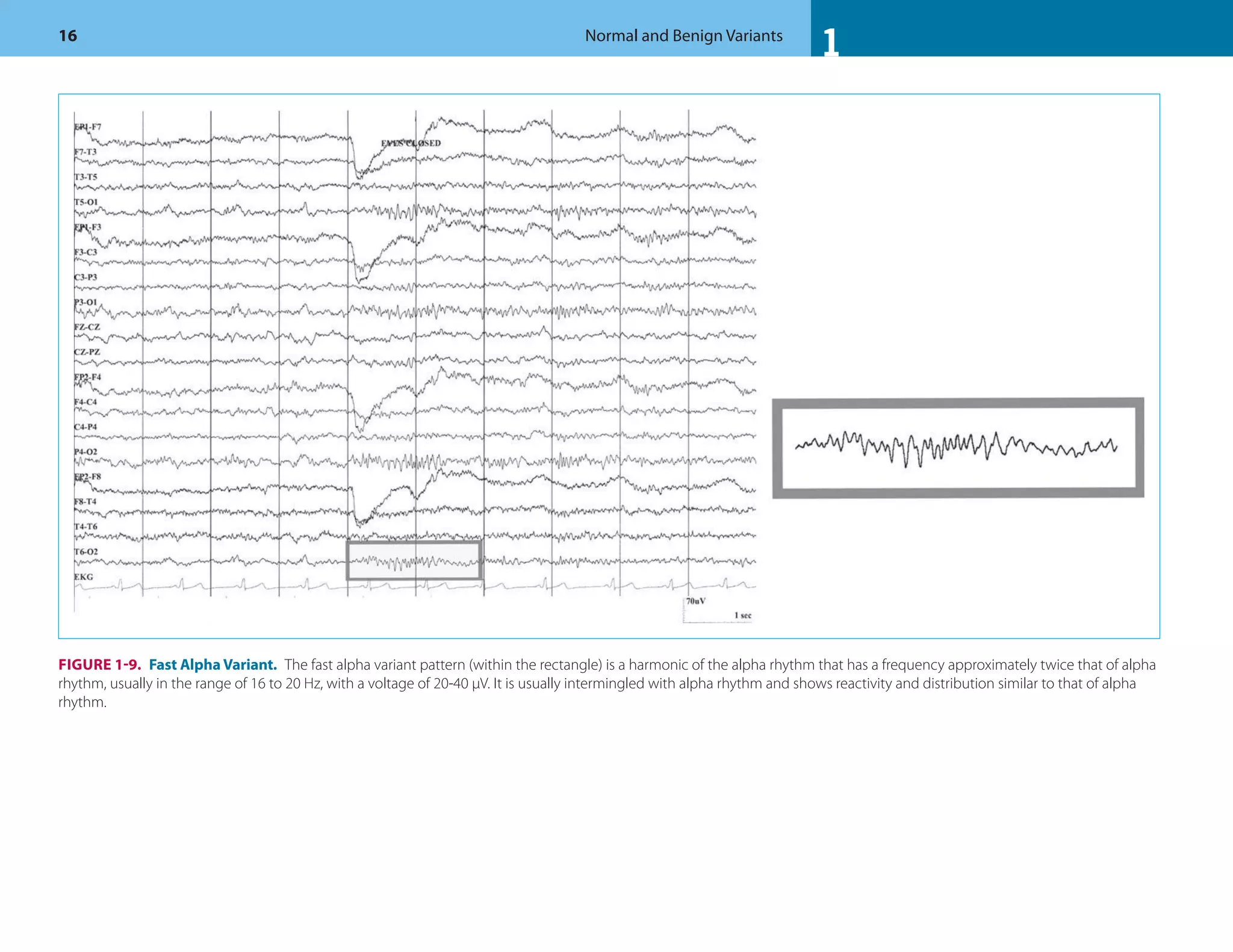
FIGURE 19. Fast Alpha Variant. The fast alpha variant pattern (within the rectangle) is a harmonic of the alpha rhythm that has a frequency approximately twice that of alpha
rhythm, usually in the range of 16 to 20 Hz, with a voltage of 20-40 μV. It is usually intermingled with alpha rhythm and shows reactivity and distribution similar to that of alpha
rhythm.
1 Normal and Benign Variants 17
FIGURE 110. Fast Alpha Variant. The fast alpha variant pattern (box) is a harmonic of the alpha rhythm that has a frequency approximately twice that of alpha rhythm,
usually in the range of 16 to 20 Hz, with a voltage of 20-40 μV. It shows reactivity and a distribution similar to that of alpha rhythm.
1
18 Normal and Benign Variants
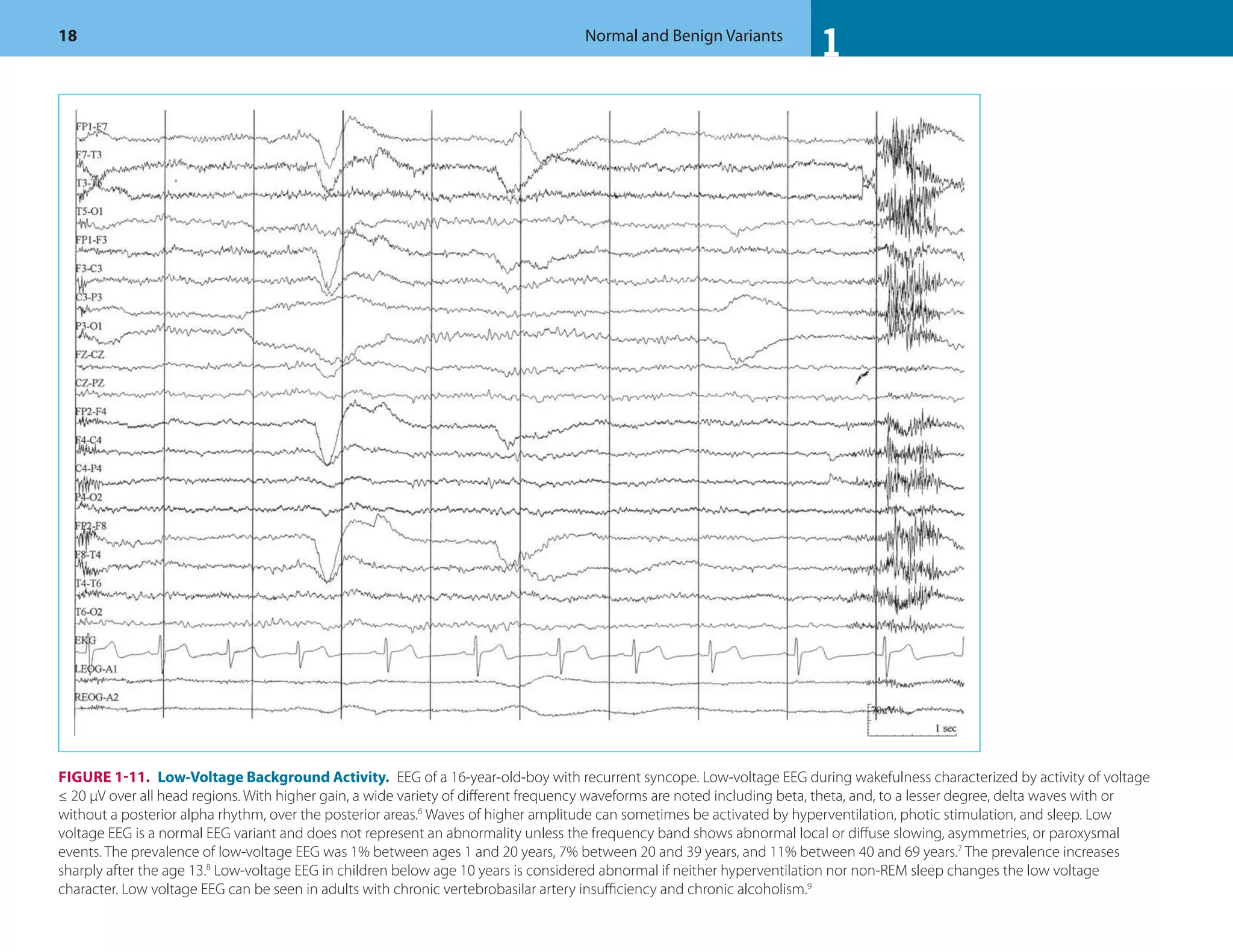
FIGURE 111. Low-Voltage Background Activity. EEG of a 16-year-old-boy with recurrent syncope. Low-voltage EEG during wakefulness characterized by activity of voltage
≤ 20 μV over all head regions. With higher gain, a wide variety of different frequency waveforms are noted including beta, theta, and, to a lesser degree, delta waves with or
without a posterior alpha rhythm, over the posterior areas.6
Waves of higher amplitude can sometimes be activated by hyperventilation, photic stimulation, and sleep. Low
voltage EEG is a normal EEG variant and does not represent an abnormality unless the frequency band shows abnormal local or diffuse slowing, asymmetries, or paroxysmal
events. The prevalence of low-voltage EEG was 1% between ages 1 and 20 years, 7% between 20 and 39 years, and 11% between 40 and 69 years.7
The prevalence increases
sharply after the age 13.8
Low-voltage EEG in children below age 10 years is considered abnormal if neither hyperventilation nor non-REM sleep changes the low voltage
character. Low voltage EEG can be seen in adults with chronic vertebrobasilar artery insufficiency and chronic alcoholism.9
1 Normal and Benign Variants 19
FIGURE 112. Posterior Slow Waves of Youth. EEG of a 9-year old boy with recurrent headaches and numbness shows bilateral occipital slow waves (Box) intermixed with
and briefly interrupting the alpha rhythm.
“Posterior slow waves of youth”(youth waves or polyphasic waves) are physiologically high-voltage theta or delta waves accompanied by the alpha rhythm and creating
spike wave-like phenomenon. They are most commonly seen in children aged 8 to 14 years but are uncommon in children under 2 years. They have a 15% incidence in healthy
individuals aged 16 to 20 years but are rare in adults after age 21 years. They are typically seen both unilaterally and bilaterally in a single recording. They are always accompanied
by the alpha rhythm, attenuated with eye opening, disappear with the alpha rhythm during drowsiness and light sleep, and may be accentuated by hyperventilation.10–12
1
20 Normal and Benign Variants
FIGURE 113. Posterior Slow Waves of Youth; Attenuated with Eye Opening. EEG of a 10-year-old boy with syncope showing occipital slow theta and delta waves (arrows)
mixed with and briefly interrupting the alpha rhythm in both occipital regions but maximally expressed in the left hemisphere. These are so-called“posterior slow waves of youth,”
which are physiologic findings seen commonly in children aged 8 to 14 years. They are always accompanied by the alpha rhythm, are attenuated with eye opening (open arrow).
and disappear with the alpha rhythm during drowsiness and light sleep.10–12
1 Normal and Benign Variants 21
FIGURE 114. Intermittent Right Occipital Delta Slowing; Simulating Posterior Slow Wave of Youth. An 8-year-old boy with autism and few generalized tonic-clonic
seizures. The 24-hour ambulatory EEG performed to rule out ESES persistently shows decreased alpha reactivity to eye closure (open arrow) and intermittent polymorphic delta
slowing (arrow head) in the right occipital region without shifting lateralization. This EEG can simulate“posterior slow waves of youth,”which is a physiologic finding. However,
persistent lateralization raises a concern of abnormality in the right posterior quadrant.
1
22 Normal and Benign Variants
FIGURE 115. Asymmetric Alpha Rhythm. (same EEG recording as in Fig. 1-14) EEG shows a train of spikes in the right parietal region (open arrow) as well as theta and
polymorphic delta slowing in the right occipital region. Persistent lateralization of theta and delta slowing is a red flag for posterior slow wave of youth and should raise the
concern of focal abnormality in that area.
1 Normal and Benign Variants 23
FIGURE 116. Squeak Effect. EEG of a healthy 10-year-old boy with migraine. Immediately after eye closure, the alpha frequency may be accelerated for 0.5–1 sec; therefore,
alpha frequency assessment should not be done during this period. This is called the“squeak effect.”1
1
24 Normal and Benign Variants
FIGURE 117. Lambda Waves. Lambda waves are“sharp transients occurring over the occipital region of the head of waking subjects during visual exploration, mainly positive
relative to other areas and time locked to saccadic eye movement. Amplitude varies, but is generally below 50 μV.”6
Lambda waves do not occur before 1 year of age and are
most common during the middle years of childhood. The prevalence of lambda waves between 3 and 12 years is about 80%. Lambda waves have been described as biphasic or
triphasic; their predominant positive component is preceded and followed by a negative component. They may be asymmetrical on the two sides or may be present only on one
side. Strictly speaking, they are bilaterally synchronous. The most important precipitating factor of lambda waves is voluntary scanning eye movements. Lambda waves usually
occur as random and isolated waveforms but may recur at intervals of 200–500 msec as in this EEG page.9
Sometimes, especially when present unilaterally, they may be mistaken
for focal abnormalities, but the distinction can be made by replacing the geometric image with a blank surface.13
1 Normal and Benign Variants 25
FIGURE 118. Lambda Waves and Alpha Rhythm. Lambda waves (open arrow) are“sharp transients occurring over the occipital region of the head of waking subjects
during visual exploration,”mainly positive relative to other areas and time locked to saccadic eye movement. Amplitude varies, but is generally below 50 μV.6
Lambda waves have
been described as biphasic or triphasic; their predominant positive component is preceded and followed by a negative component. They are most commonly seen in children
aged 2–15 years. They may be asymmetrical, appearing bilaterally, or may be present only on one side. Strictly speaking, they are bilaterally synchronous. The most important
precipitating factor of lambda waves is voluntary scanning eye movements.9
Note alpha rhythm with eye closure (double arrows).
1
26 Normal and Benign Variants
FIGURE 119. Lambda Waves. Lambda waves (A) are“sharp transients occurring over the occipital region of the head of waking subjects during visual exploration,”mainly
positive relative to other areas and time locked to saccadic eye movement. Amplitude varies, but is generally below 50 μV.6
Lambda waves have been described as biphasic or
triphasic; their predominant positive component is preceded and followed by a negative component. They are most commonly seen in children aged 2–15 years. They may
be asymmetrical on the two sides or may be present only on one side although are strictly bilateral synchronous. The most important precipitating factor of lambda waves is
voluntary scanning eye movements.9
POSTS (B, sample from the other EEG), also known as“lambdoid waves”are usually monophasic, sharply contoured electropositive waves
seen mainly during light to moderate levels of sleep.
1 Normal and Benign Variants 27
FIGURE 120. Positive Occipital SharpTransients of Sleep (POSTs). EEG of a 4-year-old asymptomatic male during drowsiness. Characteristics of POSTS include
sharply-contoured, surface positive, occurring in trains with a repetitive rate of 4–5 Hz, and monophasic checkmark-like waveform seen singularly or in clusters over the occipital
regions. POSTS are always bilaterally synchronous but are commonly asymmetric on the two sides and should not be misinterpreted as epileptiform activity or focal nonepileptiform
activity.10,14
POSTS occur during drowsiness and stage 2 sleep.
1
28 Normal and Benign Variants
FIGURE 121. Positive Occipital SharpTransients of Sleep (POSTs). EEG of a 3-year-old asymptomatic male during stage 2 sleep. Characteristics of POSTS are sharp-contoured,
surface positivity, occurring in trains with a repetitive rate of 4–5 Hz, and monophasic checkmark-like waveform seen in singly or in clusters over the occipital regions. POSTS are
always bilaterally synchronous but are commonly asymmetric on the two sides and should not be misinterpreted as epileptiform activity or focal nonepileptiform activity.10,14
POSTS occur during, drowsiness and stage 2 sleep.
1 Normal and Benign Variants 29
FIGURE 122. Posterior Occipital Sharp Transients of Sleep (POSTS). POSTS (Box) can simulate epileptiform activity. Their triangular morphology, persistent lack of slow
wave following sharp transients, positive polarity, constant symmetry, and occurrence during sleep differentiate them from epileptiform activity.
1
30 Normal and Benign Variants
FIGURE 123. Aymmetric Posterior Occipital Sharp Transient of Sleep (POSTS). A 7-year-old boy with recurring staring episodes and behavioral issues. The routine
EEG during sleep shows bilaterally synchronous but asymmetric POSTS. Characteristics of POSTS are surface positivity, occurring in trains with a repetitive rate of 4–5 Hz, and
monophasic checkmark-like waveforms. POSTS are always bilaterally synchronous but are commonly asymmetrical on the two sides and should not be misinterpreted as
epileptiform activity or focal nonepileptiform activity.10
1 Normal and Benign Variants 31
FIGURE 124. Pathologically Asymmetry of Positive Occipital Sharp Transients of Sleep (POSTS). A 7-year-old girl born 24 weeks gestational age with grade 4
intraventricular hemorrhage (IVH). Subsequently, she developed spastic quadriparesis and global developmental delay. Cranial MRI showed periventricular leukomalacia with
bilateral white matter involvement, greater on the left. Prolonged 72-h-video-EEG demonstrates persistent suppression of POSTS and anterior beta activity in the left hemisphere
throughout the drowsy and sleep EEG recording. Although persistent asymmetric POSTS in this case are pathologic, physiologic POSTS can be quite asymmetric and may be
present on only one side in the routine EEG. Therefore, asymmetric POSTS without other associated abnormalities should not be misinterpreted as abnormal.
1
32 Normal and Benign Variants
FIGURE 125. Posterior Slow-Wave Transients (Occipital Sharp Transients); Associated with Eye Movements. Posterior slow-wave transients associated with eye
movements is an EEG pattern consisting of a monophasic or biphasic slow transient with a duration of 200–400 msec and a voltage of up to 200 μV in the occipital regions (*).
The latency of 100–500 msec is noted after the eyeblinks or eye movements. The initial component of the transient is surface positive. The ascending phase is steeper than the
descending phase. This EEG pattern is seen in children age 6 months to 10 years, but seen most commonly in children aged 2–3 years. This EEG pattern is a normal phenomenon
but may be misinterpreted as epileptiform activity.9,10
1 Normal and Benign Variants 33
FIGURE 126. Posterior Slow-Wave Transients (Occipital Sharp Transients); Associated with Eye Movements. Posterior slow-wave transients associated with eye
movements is an EEG pattern consisting of a monophasic or biphasic slow transient with a duration of 200–400 msec and a voltage of up to 200 μV in the occipital regions
(open arrow). The latency of 100–500 msec is noted after the eyeblinks or eye movements. The initial component of the transient is surface positive. The ascending phase is
steeper than the descending phase. This EEG pattern is seen in children age 6 months to 10 years, but seen most commonly in children aged 2–3 years. This EEG pattern is a
normal phenomenon but may be misinterpreted as epileptiform activity.9,10
1
34 Normal and Benign Variants
FIGURE 127. Posterior Slow-Wave Transients (Occipital Sharp Transients); Associated with Eye Movements. Posterior slow-wave transients associated with eye
movements is an EEG pattern consisting of a monophasic or biphasic slow transient with a duration of 200–400 msec and a voltage of up to 200 μV in the occipital regions (*).
The latency of 100–500 msec is noted after the eyeblinks or eye movements. The initial component of the transient is surface positive. The ascending phase is steeper than the
descending phase. This EEG pattern is seen in children age 6 months to 10 years, but seen most commonly in children aged 2–3 years. This EEG pattern is a normal phenomenon
but may be misinterpreted as epileptiform activity.9,10
1 Normal and Benign Variants 35
FIGURE 128. Posterior Slow-Wave Transients (Occipital Sharp Transients); Associated with Eye Movements. Posterior slow-wave transients associated with eye
movements is an EEG pattern consisting of a monophasic or biphasic slow transient with a duration of 200–400 msec and a voltage of up to 200 μV in the occipital regions (*).
The latency of 100–500 msec is noted after the eyeblinks or eye movements. The initial component of the transient is surface positive. The ascending phase is steeper than the
descending phase. This EEG pattern is seen in children aged 6 months to 10 years, but seen most commonly in children aged 2–3 years. This EEG pattern is a normal phenomenon
but may be misinterpreted as epileptiform activity.9,10
1
36 Normal and Benign Variants
FIGURE 129. Occipital Slow Transients; Cone Wave and Diphasic Slow Transient. In children, the transition from light to deep sleep may be associated with bilateral
high-voltage slow transients in the occipital regions. These waves vary from a cone-shaped configuration (double arrows) to a biphasic slow transient (open arrow). These
transients occur every 3–6 sec during light sleep and more frequently during deeper stage of sleep.10
1 Normal and Benign Variants 37
FIGURE 130. Occipital Slow Transients; Cone Waves. In children, the transition from light to deep sleep may be associated with bilateral high-voltage slow transients in the
occipital regions. These waves vary from a cone-shaped configuration to a biphasic slow transient. These transients occur every 3–6 sec during light sleep and more frequently
during deeper stages of sleep.10
Cone waves or“O”waves (arrow) are physiologic waves presenting during non-REM sleep from infancy until 5 years of age. They are isolated,
medium- to high-amplitude, monomorphic, triangular shaped, delta waves with a typical duration greater than 250 msec that occur over the occipital region.15
1
38 Normal and Benign Variants
FIGURE 131. Occipital Slow Transients; Cone Wave. In children, the transition from light to deep sleep may be associated with bilateral high-voltage slow transients in the
occipital regions. These waves vary from a cone-shaped configuration to a biphasic slow transient. These transients occur every 3–6 sec during light sleep and more frequently
during deeper stage of sleep.10
Cone waves or“O”waves (arrow) are physiologic waves presenting during non-REM sleep from infancy until 5 years of age. They are isolated,
medium- to high-amplitude, monomorphic, triangular shaped, delta waves with a typical duration greater than 250 msec that occur over the occipital region.15
1 Normal and Benign Variants 39
FIGURE 132. Excessive Photic Response at High Frequency Stimulation (H Response); Migraine. A 17-year-old with recurrent headaches after the epilepsy surgery
(resection of epileptogenic zone in the right frontal region). The patient had headache characteristics compatible with the common migraine, normal neurologic examination,
and a strong family history of migraines. His headaches resolved with amitryptylline. The neuroimaging was not performed. This EEG was performed as a routine postoperative
follow-up. The“H-response”is a prominent photic driving response at flash rates beyond 20 Hz. The sensitivity of the H-response varied from 25% to 100%, and the specificity
from 80% to 91%. Although the relatively high sensitivities and specificities of the H-response in distinguishing migraine patients from controls and tension headache patients,
the American Academy of Neurology concluded that the H-response was not more effective than history and examination in diagnosing headaches. They, therefore, did not
recommend its use in clinical practice. However, in the presence of complex or prolonged aura, visual hallucinations, disorders of consciousness, history of recent trauma, and
in infants with vomiting and ocular and head deviation, the EEG may be useful for clinical diagnosis and help to monitor therapeutic response.16,17
1
40 Normal and Benign Variants
FIGURE 133. Excessive Photic Response at High Frequency Stimulation (H Response) Migraine. The“H-response”is a prominent photic driving response at flash
rates beyond 20 Hz. In a critical review of the literature, the reported sensitivity of the H-response varied from 25% to 100%, and the specificity from 80% to 91%. Although the
relatively high sensitivities and specificities reported suggest that the H-response may be effective in distinguishing migraine patients from controls, and possibly migraineurs
from tension headache sufferers, the Quality Standards Subcommittee (QSS) of the American Academy of Neurology concluded that the H-response was not more effective than
the neurological history and examination in diagnosing headaches and not recommended in clinical practice. However, in the presence of complex or prolonged aura, visual
hallucinations, disorders of consciousness, history of recent trauma, and in infants with vomiting and ocular and head deviation, the EEG may be useful for clinical diagnosis and
help to monitor therapeutic response.16,17
1 Normal and Benign Variants 41
FIGURE 134. Cyclic Vomiting; Migraine; Excessive Photic Response. A 2-year-old boy with cyclic vomiting who had normal extensive GI work-up. Cranial MRI was normal.
EEG shows excessive photic response intermixed with sharply-contoured waves. Very strong family history of migraines was noted. The patient was diagnosed with“cyclic
vomiting”caused by migraine. He showed dramatic improvement in vomiting after the treatment with cyproheptadine.
Photic driving responses in children <6 years are relatively small.18
Stimulus frequencies <3 Hz rarely produce a response. The maximal responses are obtained with stimulus
frequencies near the frequency of individual’s posterior dominant rhythm.15
Although excessive photic response can be seen in normal individuals, it is more commonly seen in
migraine patients. However, AAN concluded that the photic response was not more effective than history and examination in diagnosing headaches and did not recommend its
use in clinical practice.16
In 2–4% of normal children, posteriorly predominant paroxysmal slow activity is sometimes associated with sharp components.11
1
42 Normal and Benign Variants
FIGURE 135. Needle-Like Occipital Spikes of the Blind. A 4-year-old girl with congenital blindness due to congenital CMV infection who developed acute encephalopathy
due to enteroviral infection (hand-foot-mouth syndrome). This EEG was requested for altered mental status. EEG demonstrates diffuse delta slowing with occipital predominance
and frequent needle-like spikes in the occipital region. The patient regained her mental status completely 4 days later without treatment with anticonvulsant.
Needle-like spikes (*) develop in the occipital region in most patients with congenital blindness. Functional deafferentation of the visual cortex gives rise to an increase in its
irritability and this makes it fire off in this special manner. These spikes are not correlated with epileptic seizures. These discharges disappear during childhood or adolescence.19
1 Normal and Benign Variants 43
FIGURE 136. Needle-Like Occipital Spikes of the Blind. A 7-month-old girl with congenital blindness due to septo-optic dysplasia and with pendular nystagmus.
This EEG was requested to evaluate for possible seizure as a cause of nystagmus. EEG demonstrates frequent low-amplitude and short-duration spikes in the occipital regions
(open arrows).
Needle-like spikes develop in the occipital region in most patients with congenital blindness. Functional deafferentations of the visual cortex give rise to an increase in its
irritability that make it fire off in this special manner. These spikes are not correlated with epileptic seizures. These discharges disappear during childhood or adolescence.19
1
44 Normal and Benign Variants
FIGURE 137. Needle-Like Spikes of the Blind. A 25-month-old girl with congenital blindness and epilepsy due to congenital toxoplasmosis who has pendular nystagmus.
This EEG was requested to evaluate for epileptiform activity as a cause of her nystagmus. EEG demonstrates frequent low-amplitude and short-duration spikes in the occipital
regions (*).
Needle-like spikes develop in the occipital region in most patients with congenital blindness. Functional deafferentation of the visual cortex gives rise to an increase in its
irritability, which makes it fire off in this special manner. These spikes are not correlated with epileptic seizures. These discharges disappear during childhood or adolescence.19
1 Normal and Benign Variants 45
FIGURE 138. Drowsiness; Older Children and Adults. In older children and adults, early drowsiness is associated with (1) alpha dropout (earliest sign); (2) increased beta
activity over the fronto-central regions; (3) diffuse rhythmic theta activity with anterior predominance; and (4) slow eye movement. Mu rhythm, wicket wave and 14- and 6 Hz
positive spikes can be seen during drowsiness. Drowsiness must be differentiated from increased alertness after eye opening or caused by emotional stress that can cause alpha
blocking. In such cases the slow frequency component is absent and beta frequency predominates. Deep drowsiness is marked by the appearance of vertex waves and POSTS
that persist during light sleep and deep sleep.20
1
46 Normal and Benign Variants
FIGURE 139. Drowsiness; 14-and-6 Hertz Positive Bursts. In older children and adults, early drowsiness is associated with (1) alpha dropout (earliest sign); (2) increased
beta activity over the fronto-central regions (double arrows); (3) diffuse rhythmic theta activity with anterior predominance (open arrow); and (4) slow eye movement (double-
head arrow). Mu rhythm, wicket wave and 14- and 6 Hz positive spikes (*) can be seen during drowsiness. Drowsiness must be differentiated from increased alertness after eye
opening or caused by emotional stress that can cause alpha blocking. In such case slow frequency component is absent and beta frequency predominates. Deep drowsiness is
marked by the appearance of vertex waves and POSTS that persist during light sleep and deep sleep.20
1 Normal and Benign Variants 47
FIGURE 140. Stage 2 (Light Sleep). Stage 2 sleep shows symmetric, synchronous theta rhythms with posterior predominance, 12–15/sec spindles, vertex sharp waves,
K-complex and POSTS. The appearance of sleep spindles in the 12–15/sec range is a hallmark of sleep onset.20
1
48 Normal and Benign Variants
FIGURE 141. Sleep Spindles During Subdural EEG Recording. Subdural recording showing the sleep spindles in the parietal lobe during sleep. A harmonic of the sleep
spindles is more frequently seen in intracranial EEG. In addition, the sleep spindles usually appear sharper in morphology as the scalp and skull act as a high-frequency filter and
pass lower frequencies more efficiently than higher frequencies.2
Disappearance during wakefulness helps to differentiate the sleep spindles from low-voltage fast activity. All
normal EEG rhythms seen in the scalp EEG can be seen in the intracranial EEG.3
1 Normal and Benign Variants 49
FIGURE 142. Stage 3 (Moderate Deep Sleep). Delta frequencies in the 0.75–3/sec range are prominent over the anterior regions. Sleep spindles in the 10–12/sec and even
in the 12–14/sec ranges are still present but gradually become less prominent. Rhythmic activity of 5–9/sec is common. Rhythmic and symmetrical delta activity occurs during
20% to 50% of the recording.20
1
50 Normal and Benign Variants
FIGURE 143. Stage 4 (Very Deep Sleep). Over 50% of the recording is delta rhythm. Spindles are rare. Arousal at this stage can be correlated with sleep disorders
(somnambulism, nocturnal terror, or enuresis), and can cause confusion. Occasionally, spikes in temporal lobe epilepsy will only appear in stage 3 and 4 sleep.20
1 Normal and Benign Variants 51
FIGURE 144. REM Sleep. EEG reveals low-voltage activity, polyrhythmic waves, slower alpha waves, and short bursts of“saw-tooth waves”over the frontal or vertex leads
(Box B), and quick lateral eye movement (Box A). Appearance of REM sleep in routine EEG is seen in narcolepsy and in patients who are withdrawn from CNS depressants such
as alcohol or phenobarbital.20,21
1
52 Normal and Benign Variants
FIGURE 145. K Complexes. K complexes contain 3 components including sharp, slow, and fast. They are seen in stage 2 sleep and arousal. The K complexes are largest in
older children and adolescence. With increasing age, the K complexes show the decreasing voltage with tiny superimposed spindle-like waves.
1 Normal and Benign Variants 53
FIGURE 146. Subdural EEG Monitoring; K-Complex During Arousal. Subdural recording showing a run of vertex waves and widely distributed K-complexes, maximally
expressed in the parietal lobe during arousal. Harmonic of the sleep spindles is frequently seen in intracranial EEGs. In addition, the sleep spindles usually are sharper in
morphology as the scalp and skull act as a high-frequency filter and pass lower frequencies more efficiently than higher frequencies.2
Disappearance during wakefulness
helps to differentiate the K-complexes from low-voltage fast activity.
All normal EEG rhythms in the scalp EEG can be seen in the intracranial EEG.3
1
54 Normal and Benign Variants
FIGURE 147. Pathologic vs Physiologic Wave Forms in Intracranial EEG. The differentiation of physiologic waveforms and pathologic waveforms is extremely important
in intracranial EEG recording (open arrow-epileptiform in depth electrode; arrow-sleep spindles; double arrows-vertex waves). Harmonic and sharp morphology of the physiologic
waveforms in an intracranial EEG make distinguishing between nonepileptiform and epileptiform activities more difficult. Disappearance of spindles and vertex waves during
wakefulness, distribution, and morphology help to differentiate them from epileptiform activity, especially between sleep spindles and low-voltage fast epileptiform activity.
1 Normal and Benign Variants 55
FIGURE 148. Early K-Complex (16 Week CA). K-complex first appears at 4 months of age. They have high amplitude but their rise is not as abrupt and the configuration is
not as sharp as one seen in older children.20
1
56 Normal and Benign Variants
FIGURE 149. Normal Sleep Spindles (2 Months); Definite 14/sec Spindles. Sleep spindles arise from synchronized activity in functionally important neuronal networks
linking the thalamus and the cortex. Spindles result from rhythmic spike bursts in inhibitory (GABAergic) thalamic reticular neurons that induce rhythmic rebound bursting in
cortical neurons. This process has been shown to result in effective deafferentiation of the cerebral cortex. Cortical neurons show enhanced responsiveness and properties of
synaptic plasticity that may have a role in memory and learning processes.22
At 1.5 to 2 months, 14/sec spindles are first seen.23
1 Normal and Benign Variants 57
FIGURE 150. Normal Sleep Spindles (8 Weeks CA); Harmonic of Sleep Spindles. EEG of an 8-week-old full-term boy shows low-voltage 22–24 Hz biphasic beta activity
diffusely in the central vertex and bilateral central-parietal areas. This exceptional waveform most likely represents a harmonic of sleep spindles. More commonly spindles occur
independently from faster 18–25 Hz activity and both patterns may be seen at the same time.24
1
58 Normal and Benign Variants
FIGURE 151. Normal Sleep Spindles (10 Weeks CA). Trace alternant disappears in the first month of life. Sleep spindles usually appear in the second months of life with
frequency between 12 and 15/sec. Throughout infancy, they are maximal over the central and parietal areas with shifting asymmetry. They usually are electronegative with a
rounded positive component.20
A complete absence of spindles at age 3–8 months indicates a severe abnormality.25
1 Normal and Benign Variants 59
FIGURE 152. Normal Sleep Spindles (3-6 Months CA); Prolonged Runs of Spindles. Between the ages of 3–6 months, sleep spindles appear to be biphasic and occur as
prolonged runs, up to 10–15 sec.22,23,26
The prolonged run of spindles is a very useful developmental marker and is rarely seen beyond this age range.
1
60 Normal and Benign Variants
FIGURE 153. Prolonged Sleep Spindles (3-6 Months CA). Between the ages of 3–6 months, sleep spindles appear to be biphasic and occur as prolonged runs,
up to 10–15 sec.22,23,26
The prolonged run of spindles is a very useful developmental marker and is rarely seen beyond this age range.
1 Normal and Benign Variants 61
FIGURE 154. Prolonged Sleep Spindles (3-6 Months CA). Between the ages of 3–6 months, sleep spindles appear to be biphasic and occur as prolonged runs, up to
10–15 sec.22,23,26
The prolonged run of spindles is a very useful developmental marker and rarely seen beyond this age range.
1
62 Normal and Benign Variants
FIGURE 155. Normal Sleep Spindles (16 Weeks CA). Between the ages of 3–6 months, sleep spindles appear to be biphasic and as prolonged runs, up to 10–15 sec.22,23,26
The prolonged run of spindles is a very useful developmental marker and rarely seen beyond this age range. Throughout infancy, sleep spindles are maximal over the central
and parietal areas with shifting asymmetry. They usually shows electronegative with rounded positive component that is a typical hallmark of sleep spindles in infancy.20,27
These surface-negative spindles with wicket or comb-like shape can be erroneously interpreted as 14/sec positive spikes (below).
1 Normal and Benign Variants 63
FIGURE 156. Sleep Spindles with Subharmonic. Subharmonic of sleep spindles with a frequency approximately half that of sleep spindles with a notched appearance can
be seen. The subharmonic has the same reaction and distribution as sleep spindles.
1
64 Normal and Benign Variants
FIGURE 157. Normal Sleep Spindles (9 Months); Asynchronous Spindles. In the second half of the first year of life, the spindles appear to be monophasic and are
often asynchronous between the two sides. Asynchronous spindles may occasionally continue from 1 to 2 years of age but rarely are seen after the age of 2 years when
interhemispheric synchrony of the spindles are.22,23
1 Normal and Benign Variants 65
FIGURE 158. Normal Sleep Spindles (14 Months); Synchronous Spindles. After 1 year, interhemispheric synchrony of the spindles is seen although not constant until
the infant is nearly 2 years old. The frequency of spindles also changes, with 12/sec components becoming more prominent.22
1
66 Normal and Benign Variants
FIGURE 159. Mitten Pattern. Mitten patterns are seen during sleep and consist of a sharply-contoured waveform on the slope of a slow wave of the same polarity that
resemble a mitten, with the thumb of the mitten formed by the last wave of a spindle and the hand portion by the slower wave component. Mittens are a variant of a vertex
wave or K-complex and should not be mistaken for a spike-and-wave discharge.14
It is best seen in the referential montage and in stage 3 sleep.20
1 Normal and Benign Variants 67
FIGURE 160. Mitten Pattern. Mitten patterns are seen during sleep and consist of a sharply-contoured waveform on the slope of a slow wave of the same polarity that
resemble a mitten, with the thumb of the mitten formed by the last wave of a spindle and the hand portion by the slower wave component. Mittens are a variant of a vertex
wave or K-complex and should not be mistaken for a spike-and-wave discharge.14
It is best seen in the referential montage and in stage 3 sleep.20
1
68 Normal and Benign Variants
FIGURE 161. Mittens. Mitten patterns are seen during sleep and consist of a sharp-contoured waveform on the slope of a slow wave of the same polarity that resemble a
mitten, with a thumb of mitten formed by the last wave of a spindle and the hand portion by the slower wave component. Mittens are a variant of a vertex wave or K-complex
and should not be mistaken for a spike-and-wave discharge.14
It is best seen in referential montage and stage 3 sleep.20
1 Normal and Benign Variants 69
FIGURE 162. Mittens. Mitten patterns are seen during sleep and consist of a sharply-contoured waveform on the slope of a slow wave of the same polarity that resemble
a mitten, with the thumb of the mitten formed by the last wave of a spindle and the hand portion by the slower wave component. Mittens are a variant of a vertex wave or
K-complex and should not be mistaken for a spike-and-wave discharge.14
It is best seen in the referential montage and in stage 3 sleep.20
1
70 Normal and Benign Variants
FIGURE 163. Hypnagogic Hypersynchrony. Hypnagogic hypersynchrony is an activity seen in early drowsiness and in arousal from deeper sleep. It is characterized by
bilateral synchronous, high voltage, rhythmic 3-5 Hz activity. This activity first appears at the age of 2 to 3 months and becomes prominent and continuous at 9 months. At age
4 years, it becomes shorter in duration and more paroxysmal in appearance. By age 9 to 11 years, it becomes rare. Although the presence of hypnagogic hypersynchrony at age
12 years is considered abnormal by some authors,21
it may be seen in normal children up to the age of 12-13 years.10
The frequency of hypnagogic hypersynchrony is 3-4 Hz at
the age of 2-3 months and increases to 4-5 Hz in older children. This EEG also shows slow eye movement (SEM), maximally seen at F7 and F8, which is also one of the signs of
drowsiness.
1 Normal and Benign Variants 71
FIGURE 164. Hypnagogic Hypersynchrony. Nearly continuous hypnagogic hypersynchrony in a 22-month-old infant. Hypnagogic hypersynchrony appears at
approximately 3 months of age and is characterized by monorhythmic, slow generalized activity with the frequency of 3-4 Hz during drowsiness. It may be seen in older
children up to 12-13 years but is rare after 11 years (incidence of only 10%). The frequency increases to 4-5 Hz in older children.10
1
72 Normal and Benign Variants
FIGURE 165. Asymmetric Hypnagogic Hypersynchrony. EEG of a 25-month-old boy with asymmetric hypnagogic hypersynchrony with shifting predominance. The
paroxysmal bursts of generalized high-voltage, rhythmically monotonous theta activity superimposed on low-voltage background activity, so-called“hypnagogic hypersynchrony,”
is the hallmark of drowsiness in early childhood. Occasionally, small sharp or spiky discharges may be interspersed between the theta waves. These discharges should not be
interpreted as epileptiform activity unless they are definitely distinct from background activity and not only occur during drowsiness or at the onset of sleep but also persist into
deeper stages of sleep. Asymmetric hypnagogic hypersynchrony with shifting predominance can be seen and is not considered abnormal.10,11,28,29
1 Normal and Benign Variants 73
FIGURE 166. Hypnagogic Hypersynchrony. EEG of a 4-year-old boy with hypnagogic hypersynchrony. The paroxysmal bursts of generalized high-voltage, rhythmically
monotonous theta activity superimposed on low-voltage background activity, so-called“hypnagogic hypersynchrony”is the hallmark of drowsiness in early childhood.
Occasionally, small sharp or spiky discharges may be interspersed between the theta waves. These discharges should not be interpreted as epileptiform activity unless they
are definitely distinct from background activity and not only occur during drowsiness or at the onset of sleep but also persist into deeper stages of sleep.
1
74 Normal and Benign Variants
FIGURE 167. Hypnic Myoclonia (HM) (Sleep Starts or Hypnogogic Jerks). Video-EEG of a 5-year-old boy with well-controlled focal epilepsy shows a burst of high-voltage
3–4 Hz delta activity intermixed with low-amplitude spikes during chin quivering (*). This EEG pattern is compatible with hypnagogic hypersynchrony associated with HM.
This wake-to-sleep transition event is characterized by a sudden, single, brief muscular contraction of the legs and occasionally the arms, head, and postural muscles.30
Hypnagogic hallucinations often occur before the sleep starts, and the perception of falling may occur, ending with the myoclonic jerk. HM is a physiologic finding unless it is
frequent and results in sleep-onset insomnia. It also must be differentiated from seizure, especially if it occurs in patients with known epilepsy.31,32
HM occurs in 60–79% of normal
individuals. Ninety percent of patients stop these movements by age 4 years. It is more common in boys than in girls by 4:1.33
It may be frightening when observed by a parent,
especially if associated with a vocalization or cry. Injury from the massive movement is rare, but foot injuries secondary to kicking a bedpost or crib rail may occur.34
1 Normal and Benign Variants 75
FIGURE 168. 14-and-6-Hertz Positive Spikes; Hypnagogic Hypersynchrony. EEG of a 5-year-old asymptomatic boy shows 14- and 6 Hz positive spikes (arrow head)
immediately after hypnagogic hypersynchrony (open arrow). Fourteen and six hertz positive spikes (arrow head) are commonly seen during drowsiness.35
1
76 Normal and Benign Variants
FIGURE 169. Asymptomatic Centro-Temporal Spikes; Hypnagogic Hypersynchrony. An 8-year-old boy with recurrent syncope without other associated symptoms
suspicious of seizures or other neurologic conditions except borderline ADHD. There was a history of GTCS in his 4-year-old brother. EEG during drowsiness shows hypnagogic
hypersynchrony and bilateral-independent centro-temporal spikes. Characteristic spikes over the rolandic area are regarded as neurobiological markers of BECTS. However,
rolandic (centro-temporal) spikes have been reported in normal children without clinical seizures or neurologic manifestations. They are seen in 1.2–3.5% of normal healthy
children in the community36,37
and 6–34% of siblings of patients affected by BECTS.38,39
The risk of epilepsy is higher if rolandic spikes remain unilateral during sleep, rolandic
spikes continue during REM sleep, and if they occur in the presence of generalized spike-wave discharges.40
The frequency of rolandic spikes in children with ADHD (3–5.6%)
is significantly higher than expected from epidemiologic studies although how ADHD symptoms are related to rolandic spikes is still unclear.41–44
1 Normal and Benign Variants 77
FIGURE 170. Hypnic Myoclonia; Hypnagogic Hypersynchrony. Video-EEG of a 5-year-old boy with well-controlled focal epilepsy shows a burst of high-voltage 4 Hz delta
activity intermixed with low-amplitude spike-like during right arm jerks (arrow).This EEG pattern is compatible with hypnagogic hypersynchrony and the right arm jerking is most
likely to be hypnic myoclonia. Sleep starts (hypnic myoclonia) also have been termed“hypnagogic jerks”.This wake-to-sleep transition event is characterized by a sudden, single, brief
muscular contraction of the legs and occasionally the arms, head, and postural muscles.30
Sensory hallucinations (hypnagogic hallucinations) often occur before the sleep start, and
the subjective perception of falling may occur, ending with the myoclonic jerk. Sleep starts are common, occur in most individuals, and are not pathologic unless they are frequent and
result in sleep-onset insomnia.They also must be differentiated from seizure, especially if they occur in patients with known epilepsy.31
Hypnic myoclonia occurs in 60–79% of normal
individuals. Although it may occur at any age, 90% of patients stop these movements by age 4 years.They are more common in boys than girls by 4:1.33
It may be frightening when
observed by a parent, especially if associated with a vocalization or cry. Injury from the massive movement is rare, but foot injuries secondary to kicking a bedpost or crib rail may occur.34
1
78 Normal and Benign Variants
FIGURE 171. Midline Theta Rhythm (Ciganek Rhythm). The midline theta rhythm is a rhythmic train of 5–7 Hz theta activity occurring in the central vertex but may also
be seen in the frontal vertex. The morphology includes sinusoidal, aciform, spiky, or mu-like appearance. The midline theta rhythm is seen during wakefulness and drowsiness
and shows variable reactivity to eye opening, alerting, and limb movement. The rhythm usually lasts from 3 to 20 sec and does not evolve. It is a nonspecific finding of no clinical
significance.35,45
1 Normal and Benign Variants 79
FIGURE 172. Frontal Arousal Rhythm (FAR). Frontal arousal rhythm (FAR) is a rare EEG rhythm, seen in the frontal regions during arousal from sleep in children. The FAR is
characterized by 30–150 μV, predominantly monophasic negative waves, occurring in bursts or runs lasting up to 13 sec (usually 1–5 sec) with a characteristic notching of the
ascending or descending phase of each wave. The notched appearance may represent harmonics of the waveforms. The waxing and waning of the amplitude often leads to a
spindle-like morphology. The FAR appears at the F3 and F4 electrodes with minimal spread to nearby scalp areas.46
The incidence of the FAR in a normal population is unknown.
Although it was first reported in children with minimal cerebral dysfunction or a seizure disorder, it is later considered to be a nonspecific EEG pattern of no clinical significance.35
1
80 Normal and Benign Variants
FIGURE 173. Frontal Arousal Rhythm (FAR). EEG of an 8-year-old girl with idiopathic generalized epilepsy. Frontal arousal rhythm (FAR) is a rare EEG rhythm, seen in the
frontal regions during arousal from sleep in children between ages 2 and 12 years, mainly 2 and 4 years. The FAR is characterized by 30–150 μV predominantly monophasic
negative waves, occurring in bursts or runs lasting up to 13 sec (usually 1–5 sec), maximally over the frontal midline, with a characteristic notching of the ascending or descending
phase of each wave. The notched appearance may represent harmonics of the waveforms. Waxing and waning of the amplitude often leads to a spindle-like morphology. The FAR
appears at the F3 and F4 electrodes with minimal spread to nearby scalp areas.46
The incidence of the FAR in the normal population is unknown. Although it was first reported in
children with minimal cerebral dysfunction or a seizure disorder, it is now considered to be a nonspecific EEG pattern of no clinical significance.35
1 Normal and Benign Variants 81
FIGURE 174. Frontal Arousal Rhythm (FAR). An 8-year-old girl with a history of GTCS. EEG demonstrates trains of rhythmic 6-Hz sharp waves in bifrontal regions during
arousal state.
Frontal arousal rhythm (FAR) is a rare EEG rhythm, seen in the frontal regions during arousal from sleep in children. The FAR is characterized by 30–150 μV, predominantly
monophasic negative waves, occurring in bursts or runs lasting up to 13 sec (usually 1–5 sec) with a characteristic notching of the ascending or descending phase of each wave. The
notched appearance may represent harmonics of the waveforms. The waxing and waning of the amplitude often leads to a spindle-like morphology. The FAR appears at the F 3 and
F 4 electrodes with minimal spread to nearby scalp areas.46
The incidence of the FAR in a normal population is unknown. Although it was first reported in children with minimal
cerebral dysfunction or a seizure disorder, it is now considered to be a nonspecific EEG pattern of no clinical significance.35
1
82 Normal and Benign Variants
FIGURE 175. Frontal Arousal Rhythm (FAR). EEG of a 10-year-old boy with idiopathic generalized epilepsy. Frontal arousal rhythm (FAR) is a rare EEG rhythm, seen in the
frontal regions during arousal from sleep in children between ages 2 and 12 years, mainly 2 and 4 years. The FAR is characterized by 30–150 μV predominantly monophasic
negative waves, occurring in bursts or runs lasting up to 13 sec (usually 1–5 sec), maximally over the frontal midline, with a characteristic notching of the ascending or descending
phase of each wave. The notched appearance may represent harmonics of the waveforms. Waxing and waning of the amplitude often leads to a spindle-like morphology. The FAR
appears at the F3 and F4 electrodes with minimal spread to nearby scalp areas.46
The incidence of the FAR in a normal population is unknown. Although it was first reported in
children with minimal cerebral dysfunction or a seizure disorder, it is now considered to be a nonspecific EEG pattern of no clinical significance.35
1 Normal and Benign Variants 83
FIGURE 176. Frontal Arousal Rhythm (FAR). EEG of a 6-year-old boy with frontal lobe epilepsy during arousal from sleep. Frontal arousal rhythm (FAR) is a rare EEG rhythm,
seen in the frontal regions during arousal from sleep in children between ages 2 and 12 years, mainly 2 and 4 years. The FAR is characterized by 30–150 μV predominantly
monophasic negative waves, occurring in bursts or runs lasting up to 13 sec (usually 1–5 sec), maximally over the frontal midline, with a characteristic notching of the ascending
or descending phase of each wave. The notched appearance may represent harmonics of the waveforms. Waxing and waning of the amplitude often leads to a spindle-like
morphology. The FAR appears at the F3 and F4 electrodes with minimal spread to nearby scalp areas.46
The incidence of the FAR in a normal population is unknown. Although it
was first reported in children with minimal cerebral dysfunction or a seizure disorder, it is now considered to be a nonspecific EEG pattern of no clinical significance.35
Its mildly abnormal character is likely, but its clinical significance was thought to be debatable.47
Hughes found 70% of patients having epileptic seizures and demonstrated
a case in which FAR representing ictal electrographic seizure activity.48
1
84 Normal and Benign Variants
FIGURE 177. Rhythmic Temporal Theta Bursts of Drowsiness (RTTD); Rhythmic Midtemporal Discharges (RMTD); (Psychomotor Variant). RTTD is seen in 0.5–2.0%
of normal adult population and less common in adolescence. It is described as bursts or runs of rhythmic, 5–7 Hz (typically 5–5.5 Hz), theta activity with flat-topped, sharply
contoured, often notched appearance in the temporal regions, maximally expressed in the midanterior temporal electrode. The sharper component of the wave usually has a
negative polarity in the anterior temporal region. It can occur unilaterally, bilaterally, or shifting from side to side with gradual onset and offset. The pattern is distinguished from
ictal epileptiform activity because it is monomorphic and monorhythmic (no evolution into other frequencies), does not alter background activity, occurs in relaxed wakefulness
and drowsiness (most common), and disappears in deeper levels of sleep. This pattern has no clinical significance35
. However, it was considered by some authors to be a
pathologic finding in selected cases.49
This pattern was previously called“psychomotor variant.”50,51
They are also now called“rhythmic midtemporal discharges (RMTDs).”52,53
1 Normal and Benign Variants 85
FIGURE 178. Rhythmic Temporal Theta Bursts of Drowsiness (RTTD). A 15-year-old girl with recurrent passing out episodes. EEG during drowsiness shows rhythmic
5-6 Hz, theta activity with flat-topped, sharply contoured over the temporal regions with a phase reversal in the posterior temporal electrodes.
Rhythmic temporal theta waves of drowsiness (RTTD) is also called rhythmic midtemporal discharges (RMTDs) or psychomotor variant. RTTD is seen in adult and, less
commonly, in adolescent. This EEG pattern is distinguished from ictal epileptiform activity in that it is monomorphic and monorhythmic (no evolution), does not affect
background activity, and occurs in only in relaxed wakefulness and drowsiness. This EEG pattern is of uncertain significant 35.
1
86 Normal and Benign Variants
FIGURE 179. Rhythmic Temporal Theta Bursts of Drowsiness (RTTD). A 16-year-old girl with recurrent vertigo who had been diagnosed with simple partial seizures
and was treated with carbamazepine. The treatment failed to stop the symptoms and caused side effects. Brain MRI was unremarkable. EEGs were performed four times in
the past and were interpreted as epileptiform activity in the temporal regions. This EEG during drowsiness shows a burst of rhythmical 5.5 Hz theta activity in the left temporal
region (open arrow) with negative polarity of the sharper component of the burst in the midtemporal region. Note no disruption of alpha rhythm in the left occipital region
(arrow heads). The patient was completely normal throughout the discharge. This EEG pattern is compatible with RTTD and is considered a normal variant and has no clinical
significance. The patient has done well since stopping carbamazepine.
1 Normal and Benign Variants 87
FIGURE 180. Rhythmic Temporal Theta Bursts of Drowsiness (RTTD). A 17-year-old boy with recurrent headache and numbness of his right arm. EEG during resting
wakefulness shows bilateral-independent 5.5 Hz theta activity in the temporal regions in the 2 hemispheres. As the discharge proceeds, the morphology does not change
(monomorphic and monorhythmic). The discharge continues during drowsiness but disappears in stage 2 sleep. These differentiate the RTTD from focal ictal activity.
1
88 Normal and Benign Variants
FIGURE 181. RhythmicTemporalTheta Bursts of Drowsiness (RTTD). A 17-year-old boy with a new-onset GTCS. EEG during drowsiness shows runs of bilateral-independent
5.5 Hz sharply-contoured theta activity in the midtemporal regions in the two hemispheres. As the discharge proceeds, the morphology does not change (monomorphic and
monorhythmic). The discharge continues during drowsiness but disappears in stage 2 sleep. These findings differentiate the RTTD from focal ictal activity.
1 Normal and Benign Variants 89
FIGURE 182. Rhythmic Temporal Theta Bursts of Drowsiness (RTTD). EEG during drowsiness shows long runs of monomorphic and monorhythmic notched theta activity
that does not evolve into other frequencies or waveforms (same EEG tracing as in Figure 1-81). The patient was completely normal throughout the run of discharge. The discharge
disappears during deeper states of sleep. These findings differentiate RTTD from an electrographic seizure. Note an unusual morphology of the discharge that shows positive
polarity in the posterior temporal areas.
1
90 Normal and Benign Variants
FIGURE 183. 14 and 6/sec Positive Spike Discharge. This EEG pattern is defined as bursts of arch shaped waves at 13–17 Hz and/or 5–7 Hz, most commonly at 14 and/or 6 Hz,
seen generally over the posterior temporal and adjacent areas of one or both sides of the head during deep drowsiness and very light sleep. The sharp peaks of its components are
electropositive compared to other regions. The bursts have a widespread field and last for 0.5–1 sec. This EEG pattern occurs in children from the age of 3 up to young adulthood but
more commonly occur between 12 and 20 years with a peak at age 13–14 years. It is best displayed in the contralateral ear reference montage. 14 and 6/sec positive spike discharge
is a benign variant of no clinical significance.6,54
1 Normal and Benign Variants 91
FIGURE 184. 14 and 6/sec Positive Spike Discharge. Fourteen and six per second positive spike discharge shows mainly 13 Hz positive spikes (same EEG recording as in
Figure 1-83).
1
92 Normal and Benign Variants
FIGURE 185. 14 and 6/sec Positive Spike Discharges; (Anterior-Posterior Bipolar). This EEG pattern is defined as bursts of arch shaped waves at 13–17 Hz and/or 5–7 Hz,
most commonly at 14 and/or 6 Hz, seen generally over the posterior temporal and adjacent areas of one or both sides of the head during deep drowsiness and very light sleep
(arrow). The sharp peaks of its components are positive with respect to other regions. This pattern occurs in the children after age 3 to young adult with a peak at age 13–14 years.
This pattern is a benign variant of no clinical significance.6,54
1 Normal and Benign Variants 93
FIGURE 186. 14 and 6/sec Positive Spike Discharges; (Contralateral Ear Reference). The 14 and 6/sec positive spike discharges are best seen during a contralateral ear
reference run (same EEG page as in Figure 1-85).
1
94 Normal and Benign Variants
FIGURE 187. 14-and-6-Hertz Positive Spikes; Diffuse Encephalopathy. A 12-year-old boy with symptomatic Lennox-Gastaut syndrome after the treatment of status
epilepticus with intravenous midazolam. EEG showed continuously diffuse polymorphic delta activity with superimposed“14-and-6-Hertz positive spikes.”
Although 14- and 6 Hz positive spikes in diffuse encephalopathy EEG pattern was once thought to be seen exclusively in coma due to Reye’s syndrome,55,56
it was later reported
in other encephalopathies of childhood as well57
suggesting that they are epiphenomena or a resilient normal. The 14- and 6 Hz positive spikes are best seen in contralateral ear
reference montage.
1 Normal and Benign Variants 95
FIGURE 188. 14-and 6-Hz Positive Spikes. With contralateral ear reference, 14- and 6 Hz positive spikes (arrow head) are diffusely seen over both hemispheres but maximal
in the right posterior temporal region. The opposite polarity in the EEG electrodes over the left hemisphere may be suggestive of the dipole character of this waveform.
1
96 Normal and Benign Variants
FIGURE 189. 14 and 6/sec Positive Spike Discharge; Referential Montage. Diffuse 14 and 6/sec positive spike discharges with right hemispheric predominance during
referential run in a 12-year-old adolescent girl with nonepileptic events.
1 Normal and Benign Variants 97
FIGURE 190. 14 and 6/sec Positive Spike Discharge; Polyspike-Wave-Like Discharge. When a 14 and 6/sec positive spike discharge is intermixed with diffuse delta or
theta slowing, it can simulate spike-wave or polyspike-wave activity (same EEG recording as in Figure 1-89). Note the similarity of the configuration, distribution, and polarity of
the waveforms in this EEG page with the Figure 1-89.
1
98 Normal and Benign Variants
FIGURE 191. 14-and-6-Hertz Positive Spikes. Fourteen and six hertz positive spikes (**) can be mixed with sleep spindles (*). These 2 waveforms can be differentiated
from each other by configuration and distribution. Fourteen and six hertz positive spikes occur predominantly during drowsiness and light sleep and consist of short trains of
arch-shaped waveforms with alternating positive spiky components and a negative, smooth, rounded waveform. a 14 and 6/sec positive spike maximal amplitude over the
posterior temporal region. Sleep spindles occur predominantly during stage 2 sleep and consist of trains of sinusoidal waveforms. It usually has maximal amplitude over the
fronto-central region.
1 Normal and Benign Variants 99
FIGURE 192. 14-and 6-Hertz Positive Spikes (Subdural EEG Monitoring). During a subdural EEG recording in the patient with right neocortical temporal lobe epilepsy,
14 and 6/sec positive spikes are noted in the right anterior temporal region (open arrow) outside of the epileptogenic zone (blue). This is an uncommon location of this EEG
pattern that is usually seen in the posterior temporal region. This may be due to brain plasticity. The patient has been seizure free since the epileptogenic zone, excluding the area
containing 14 and 6/sec positive spike discharge, was resected. This strongly supports the benign nature of this EEG pattern. The 14 and 6/sec positive spikes EEG pattern has
never been reported in the literature.
1
100 Normal and Benign Variants
FIGURE 193. Small Sharp Spikes (SSS); Benign Epileptiform Transients of Sleep (BETS). Small sharp spike (SSS) is a benign EEG pattern that is seen in 20–25% of a
normal adult population. SSS are seen in adults during drowsiness or light sleep. They are usually low voltage, short duration, single monophasic or biphasic spike with an abrupt
ascending limb and a steep descending limb. The prominent after coming slow wave may not occur. SSS occur unilaterally or bilaterally.35
1 Normal and Benign Variants 101
FIGURE 194. Small Sharp Spikes (SSS); Benign Epileptiform Transients of Sleep (BETS). A 16-year-old girl with a history of migraine who presented with recurrent
passing out episodes. EEG obtained during light non-REM sleep shows low voltage, short duration, biphasic spikes with an abrupt ascending limb and a steep descending limb.
The negative and positive components are of approximately equally spiky character. The spikes are widely distributed in both hemispheres (*). Small sharp spikes (SSS) or BETS
occur almost exclusively during drowsiness or light non-REM sleep. A prevalence of 1.36% was found in adult with a peak between ages 30 and 40. It is uncommonly seen in
adolescents. There is a debate whether this is a normal or an epileptogenic pattern. In nonepileptics, these discharges may be seen in stroke, syncopal attacks, and psychiatric
patients.35,58,59
1
102 Normal and Benign Variants
FIGURE 195. Small Sharp Spikes (SSS); Benign Epileptiform Transients of Sleep (BETS); Benign Sporadic Sleep Spikes (BSSS). A 17-year-old-right-handed girl with
recurrent episodes of déjà vu. The presurgical work-up was consistent with right mesio-temporal epilepsy. EEG shows frequent small sharp spikes (SSS) during drowsiness and
light sleep (arrow head). The patient has been seizure free since the right anterior temporal lobectomy.“Small sharp spikes (SSS)”is a benign EEG pattern that is seen in 20–25% of
a normal adult population. SSS are seen in adults during drowsiness or light sleep, usually low voltage (less than 50 μV), short duration, single monophasic or biphasic spikes with
an abrupt ascending limb and a steep descending limb. The prominent after coming slow wave may not occur. SSS are almost always bilaterally represented, either occurring
independently or having reflection to the opposite hemisphere. The bilateral occurrence of the SSS should not be misinterpreted as bilateral epileptogenic foci.35,60
1 Normal and Benign Variants 103
FIGURE 196. Small Sharp Spikes (SSS). A 9-year-old girl with right mesio-temporal epilepsy caused by mild MCD. She has been seizure free since the left temporal
lobectomy. EEG during drowsiness shows diffuse SSS, predominantly in the left hemisphere.“Small sharp spikes (SSS)”is a benign EEG pattern that is seen in 20–25% of a normal
adult population. SSS are seen in adults during drowsiness or light sleep, usually low voltage, short duration, single monophasic or biphasic spikes with an abrupt ascending
limb and a steep descending limb. The prominent after coming slow wave may not occur. SSS occur unilaterally or bilaterally.35
Some authors believed this pattern indicates a
“moderate degree of epileptogenicity.”59
1
104 Normal and Benign Variants
FIGURE 197. Six-Hertz Spike-and-Wave Bursts; (Phantom Spike-and-Wave Discharge). This EEG pattern can be seen in 2.5% of both adolescents and young adults. It
occurs during relaxed wakefulness, drowsiness, and light sleep and disappears during deeper stages of sleep. It is described as bursts of 1–2 sec duration, diffuse, low voltage,
5–7 Hz, spike-and-wave discharges, commonly bifrontally or occipitally. At times, spikes are difficult to see. This EEG pattern is regarded as a benign variant of uncertain
significance.35
Six-hertz spikes with minimal or no associated waves may represent a transitional pattern between 6-Hz spike-wave bursts and 14 and 6 Hz positive bursts.61
1 Normal and Benign Variants 105
FIGURE 198. Six-Hertz Spike-and-Wave Bursts. Six-hertz spike and wave bursts in an 11-year-old girl with recurrent syncopal attacks associated with migraine. Six-hertz
spike and wave bursts (arrow) can be very difficult to distinguish from atypical spike-wave activity. The clue to make a distinction is that benign 6-Hz spike and wave bursts occur
during relaxed wakefulness and drowsiness and disappear during deeper stages of sleep.62
Two types of 6-Hz-spike-and-wave discharges have been described, FOLD (Female, Occipital, Low amplitude, Drowsiness) and WHAM (Wake, High-amplitude, Anterior, Male).
FOLD is more benign, and WHAM is more likely to be associated with seizures.63
1
106 Normal and Benign Variants
FIGURE 199. Wicket Wave. Wicket waves are one of the most common over-read EEG patterns64
seen almost exclusively in adults, most commonly >30 years of age and,
usually older than 50 years.65
Wicket waves are relatively rare with an incidence of 0.9%. It occurs in clusters or trains, but also as single sharp transients, of 6- to 11-Hz negative
sharp aciform waves with amplitude of 60–200 μV. They are seen over the anterior or midtemporal regions during relaxed wakefulness but facilitated by drowsiness and may
occur in light sleep. Wicket waves occur unilaterally with a shifting asymmetry between the two hemispheres. During the waking portion of the record, wicket waves are often
masked by background EEG activity. Recently, wicket waves have also been reported to occur during REM sleep.66
Their cardinal feature is a changing mode of occurrence
through any single recording, from intermittent trains of more or less sustained, aciform, discharges resembling mu rhythm, to sporadic single spikes. Amplitude may be high, but
the transient arises out of an ongoing rhythm and does not stand out. When occurring singly, wicket waves can be mistaken for anterior or mid-temporal spikes. Isolated wicket
wave(s) can be differentiated from epileptiform discharge (s) by the following criteria: (1) no slow wave component following the wicket wave; (2) occurring in trains or in isolation
and do not disrupt the background; (3) having a similar morphology to the waveforms in the train when they occur as a single spike. Wicket wave is considered a benign variant
pattern and is not associated with epilepsy.54,67–75
1 Normal and Benign Variants 107
FIGURE 1100. Rhythmic Temporal Rhythm (Psysiologic). Subdural recording showing the“Third Rhythm”(Independent Temporal Alphoid Rhythm) that is described as
rhythmical activity in the alpha and upper theta range over the midtemporal region. This rhythm is not seen in scalp EEG except if there is a skull defect. The“Third Rhythm”is a
physiologic rhythm that is clearly independent from mu or alpha rhythm.76
It needs to be differentiated form the rhythmical activity seen in anterior- and midtemporal regions
seen in patients with stroke.65
1
108 Normal and Benign Variants
FIGURE 1101. Wicket-Wave Like Waveform; Nonaccidental Trauma. A 12-year-old-right-handed boy with medically intractable epilepsy caused by nonaccidental trauma
in infancy. Interictal EEG shows trains of negative sharp arciform waves in the right anterior temporal region (box), continuously low-amplitude polymorphic delta activity (PDA),
and suppression of background activity over the right hemisphere, maximal in the temporal region. The trains of sharp waves are similar to“wicket waves.”MRI demonstrates
multifocal encephalomalacia but maximal over the right anterior temporal region (open arrow).
Wicket waves are most commonly seen in individuals older than 30 years of age. Wicket waves are relatively rare with a prevalence of 0.9% in adults but unknown in children.
They occur in clusters or trains, but also as single sharp transients, of mid- or anterior temporal 6–11 Hz negative sharp arciform waves with amplitude of up to 200 μV. Wicket
waves can be differentiated from temporal lobe epileptiform discharges based on the following criteria: (1) no slow wave component following wicket spikes; (2)occurring in
trains or in isolation and do not disrupt the background; (3) having a similar morphology to the waveforms in the train when they occur as a single spike. Wicket waves are more
commonly seen in patients with cerebrovascular disease.65
In this EEG, the age and abnormal background activity are strongly against the diagnosis of wicket waves and supportive of epileptiform activities.
1 Normal and Benign Variants 109
FIGURE 1102. Wicket-Wave Like Waveform; Left Frontal-Temporal Infarction. A 4-month-old boy who developed a right-sided focal motor seizure after cardiac surgery
for complex congenital heart defects. MRI with DWI shows cerebral infarction in the left fronto-temporal region. Interictal EEG shows trains of negative sharp arciform waves in the
left posterior temporal region (box) and suppression of background activity over the left hemisphere. The trains of sharp wave configuration are similar to“wicket waves.”
Wicket waves are most commonly seen in individuals older than 30 years of age. Wicket waves are relatively rare with a prevalence of 0.9% in adult but unknown in children.
They occur in clusters or trains, but also as single sharp transients, of mid- or anterior temporal 6–11 Hz negative sharp arciform waves with amplitude of up to 200 μV. Wicket
waves can be differentiated from temporal lobe epileptiform discharges based on the following criteria: (1) no slow wave component following wicket spikes; (2) occurring in
trains or in isolation and do not disrupt the background; (3) having a similar morphology to the waveforms in the train when occurs as a single spike.
In this EEG, the age and abnormal background activity are strongly against the diagnosis of wicket waves but supportive of epileptiform activities. In adult, wicket waves are
more common seen in patients with cerebrovascular disease.65
1
110 Normal and Benign Variants
FIGURE 1103. Photomyognic (Photomyoclonic) Response. A 14-year-old girl with well-controlled idiopathic generalized epilepsy. EEG performed due to frequent eye
fluttering shows spikes of muscle origin time locked to the flash stimuli. This so-called“photomyogenic response”occurs in 0.1% of the normal population and 1% of patients with
epilepsy. The response is most prominent in the frontal regions as a result of orbicularis oculi and frontalis muscle twitching during eye closure and stops with flash. Immediate
cessation of the response at the end of stimulation and prominent electromyographic activity help to distinguish this photomyogenic response from photoparoxysmal response.
Photomyogenic response is considered a normal variant, although it can coexist with photoparoxysmal response or rarely progress to GTCS.
1 Normal and Benign Variants 111
FIGURE 1104. Photomyognic Response. Another example of photomyoclonic response with widespread involvement of orbicularis oculi, frontalis, and temporalis muscles.
1
112 Normal and Benign Variants
FIGURE 1105. Photomyognic Response. EEG of a 9-year-old girl with childhood absence epilepsy showing spikes of muscle origin time locked with the flash stimuli. They
are most prominent in the frontal regions as a result of orbicularis oculi and frontalis muscle twitching. Photomyogenic response is considered a normal variant, although seen
slightly more commonly in patients with idiopathic generalized epilepsy.
1 Normal and Benign Variants 113
FIGURE 1106. Photomyognic Response; Eyelid Artifacts Intermixed With Electromyographic Potentials. A 13-year-old girl with well-controlled idiopathic generalized
epilepsy. EEG shows eyeblinking artifact intermixed with spikes of muscle origin time locked to the flash stimuli that is confined exclusively to the prefrontal electrodes (Fp1, Fp2).
This is the so-called“photomyogenic response”that occurs in 0.1% of the normal population and 1% of patients with epilepsy. The response is are most prominent in the frontal
regions as a result of orbicularis oculi and frontalis muscle twitching during eye closure and stops with flash. Immediate cessation of the response at the end of stimulation and
prominent electromyographic activity help to distinguish this photomyogenic response from photoparoxysmal response. Photomyogenic response considered a normal variant,
although it can coexist with photoparoxysmal response or rarely progress to GTCS. There is mild involvement of temporalis muscles noted.
1
114 Normal and Benign Variants
FIGURE 1107. Mu Rhythm. Mu is a central rhythm of an alpha frequency band (8–10 Hz) with an arciform configuration. Mu rhythm occurs in less than 5% of children
younger than 4 years and has the adult incidence of 18–20% between the age of 8 and 16 years. It is not blocked with eye opening, but blocked by touch, movement of limbs
(especially contralateral limbs), or thought of movement. Mu rhythm is usually asymmetric, asynchronous, and seen independently in the two hemispheres. It may present on
only one side. Mu rhythm is believed to be the rhythm of the sensorimotor cortex at rest. Mu rhythm is prominent in the patients with underneath skull defect (breach rhythm).
Mu is a physiologic EEG finding of no clinical significance.
1 Normal and Benign Variants 115
FIGURE 1108. Breach Rhythm; Prominent Mu Rhythm During Photic Stimulation. EEG of a 12-year-old boy with recurrent syncope shows prominent mu during
photic stimulation.
Mu rhythm is enhanced during photic stimulation and pattern vision.77,78
1
116 Normal and Benign Variants
FIGURE 1109. Breach Rhythm; Prominent Mu Rhythm. A 9-year-old boy with a history of right occipital ganglioglioma resection. T1-weighted coronal and sagittal MRIs
with GAD reveal skull defects and an area of previous surgical resection (arrow head). EEG during wakefulness with eye opening shows frequent runs of asymmetrical rhythmic
9 Hz arc-like activity in the central regions which is higher in amplitude on the right side.
1 Normal and Benign Variants 117
FIGURE 1110. Breach Rhythm; Prominent Mu Rhythm. (next EEG page of the same patient as in Fig. 1-109) The arc-like activity in the central regions is attenuated by left
hand movement. This is consistent with mu rhythm which can become very prominent beneath a skull defect. Sometimes, mu rhythm can simulate ictal EEG activity especially
in patients with skull defects; therefore, activation procedures such as limb movement are very important in their differentiation.
1
118 Normal and Benign Variants
FIGURE 1111. Mu Rhythm activated by Intermittent Photic Stmulation. Mu rhythm is enhanced during intermittent photic stimulation77
and pattern vision78
. It is
maximally expressed at C3 and C4 electrodes, and occasionally at Cz. Some spread to the parietal region is not uncommon. In older children and adults, the most common
frequency is 10 Hz, slightly higher than alpha frequencies.9
1 Normal and Benign Variants 119
FIGURE 1112. Mu Rhythm in Young Child. A 3-year-old girl who underwent epilepsy surgery in the right frontal-temporal region. EEG shows breach rhythm with higher
amplitude of mu rhythm at the C4 electrode. In infants and young children whose alpha rhythm is still less than 6 Hz, mu rhythm can lack its characteristic waveform.10
1
120 Normal and Benign Variants
FIGURE 1113. Mu Rhythm in Subdural EEG Monitoring. Subdural recording during wakefulness showing a run of mu rhythm. Harmonic of the mu rhythm is more
frequently seen in intracranial EEG. In addition, the mu rhythm usually shows sharper morphology, as the scalp and skull act as a high-frequency filter passing lower frequencies
more than higher frequencies.2
Disappearance during limb movement helps to differentiate the mu rhythm from a spike run.
All normal EEG rhythms seen in the scalp EEG can be seen in the intracranial EEG.3
1 Normal and Benign Variants 121
FIGURE 1114. Mu Rhythm in Depth EEG (Bipolar). Mu rhythm during bipolar run of the combined depth electrode-subdural EEG recording during wakefulness. The wave
disappeared during sleep and was attenuated by limb movement (not shown).
1
122 Normal and Benign Variants
FIGURE 1115. Mu Rhythm in Depth EEG Implantation During Seizure. (continued from the Fig. 114) Intracranial EEG shows mu rhythm (in the box) during the seizure
with the epileptogenic focus at DC3 (depth electrode contact #3) (arrow). Mu rhythm disappears during the burst of ictal EEG activity. Recognition of mu rhythm prevents
misinterpretation of mu as an ictal EEG activity in the DD3 electrode which can cause false localization of epileptogenic onset.
1
1 Normal and Benign Variants 123
References
1. Storm V, Bekkering D. Some results obtained with the
EEG-spectrograph. Electroencephalogr Clin Neurophysiol.
1958;10(3):563.
2. Gloor P. Contributions of electroencephalography and
electrocorticography to the neurosurgical treatment of
the epilepsies. Adv Neurol. 1975;8:59.
3. Sperling M. Intracranial electroencephalography. In:
Ebersole J, Pedley T, eds. Current Practice of Clinical
Electroencephalography. Philadelphia: Lippincott
Williams & Wilkins. 2003
4. Goodwin J. The significance of alpha variants in the
EEG, and their relationship to an epileptiform syndrome.
Am J Psychiatry. 1947;104(6):369–379.
5. Aird RB, Gastaut Y. Occipital and posterior
electroencephalographic rhythms. Electroencephalogr
Clin Neurophysiol. 1959;11:637–756.
6. Chatrian GE (Chairman), Bergamini L, Dondey M,
Klass DW, Lennox-Buchthal M and Petersén I. A
glossary of terms most commonly used by clinical
electroencephalographers. Electroencephalogr Clin
Neurophysiol. 1974;37:538–548.
7. Adams A. Studies on the flat electroencephalogram
in man. Electroencephalogr Clin Neurophysiol.
1959;11(1):35–41.
8. Gibbs FA, Gibbs EL. Atlas of Electroencephalography.
Cambridge, MA: Addison Wesley; 1950.
9. Niedermeyer E. The normal EEG of the waking
adult. In: Niedermeyer E, Da Silva F, eds.
Electroencephalography: Basic Principles, Clinical
Applications, and Related Fields. Philadelphia:
Lippincott Williams & Wilkins. 2005.
10. Eeg-Olofsson O, Petersen I, Sellden U. The development
of the electroencephalogram in normal children from
the age of 1 through 15 years. Paroxysmal activity.
Neuropadiatrie. 1971;2(4):375–404.
11. Petersen I, Eeg-Olofsson O. The development of the
electroencephalogram in normal children from the
age of 1 through 15 years. Non-paroxysmal activity.
Neuropadiatrie. 1971;2(3):247–304.
12. Kellaway P. Overly approach to visual analysis: Element
of the normal EEG and their characteristics in children
and adults. In: Ebersole JS, Pedley TA (eds) Current
Practice of Clinical Electroencephalography. 3rd ed.
Lippincott Williams & Wilkins, Philadelphia, USA,
2003;100–159.
13. Sunku A, Donat JF, Johnston JA, et al. Occipital
responses to visual pattern stimulation: B104. J Clin
Neurophysiol. 1996;13(5):438.
14. Westmoreland B. Electroencephalography: adult, normal,
and benign variants. Clin Neurophysiol. 2009;4(1):119.
15. Fisch BJ. Fisch and Spehlmann's EEG Primer: Basic
Principles of Digital and Analog EEG. New Orleans:
Elsevier Science Health Science Divison. 1999
16. Gronseth G, Greenberg M. The utility of the
electroencephalogram in the evaluation of patients
presenting with headache: a review of the literature.
Neurology. 1995;45(7):1263.
17. Raieli V, Puma D, Brighina F. Role of neurophysiology
in the clinical practice of primary pediatric headaches.
Drug Dev Res. 2007;68(7).
18. Grey Walter W, Shipton H. A new toposcopic display
system. Electroencephalogr Clin Neurophysiol.
1951;3(3):281–292.
19. Gibbs EL, Gibbs FA. [Electroencephalogram in
congenital anophthalmia (author's transl)]. EEG EMG
Z Elektroenzephalogr Elektromyogr Verwandte Geb.
1981;12(4):171–173.
20. Niedermeyer E. Sleep and EEG. In: Niedermeyer E,
Da Silva F, eds. Electroencephalography: Basic Principles,
Clinical Applications, and Related Fields. 5th ed.
Philadelphia: Lippincott Williams & Wilkins. 2005;
193–207.
21. Hughes J. EEG in Clinical Practice. Burlington, MA,
USA: Butterworth-Heinemann; 1994.
22. Dan B, Boyd SG. A neurophysiological perspective
on sleep and its maturation. Dev Med Child Neurol.
2006;48(09):773–779.
23. Hughes JR. Sleep spindles revisited. J Clin Neurophysiol.
1985;2(1):37–44.
24. Hess R. The electroencephalogram in sleep.
Electroencephalogr Clin Neurophysiol. 1964;16(1):44–55.
25. Dreyfus-Brisac and Curzi-Dascalova, 1975. Dreyfus-
Brisac C and Curzi-Dascalova L, The EEG during the
first year of life. In: G.C. Lairy, Editor, Handbook of
electroencephalography and clinical neurophysiology,
Elsevier, Amsterdam (1975), pp. 6–23.
26. Tharp B, Aminoff M. Electrodiagnosis in Clinical
Neurology. New York: Churchill Livingstone; 1980.
27. Fois A. The electroencephalogram of the normal child.
Springfield: Thomas; 1961:111.
28. Brandt S, Brandt H. The electroencephalographic
patterns in young healthy children from 0 to five
years of age; their practical use in daily clinical
electroencephalography. Acta Psychiatrica et Neurologica
Scandinavica. 1955;30(1–2):77.
29. Gibbs F, Gibbs E. Atlas of Electroencephalography.
Cambridge, MA: Addison Wesley, 1952.
30. Oswald I. Sudden bodily jerks on falling asleep. Brain.
1959;82(1):92–103.
31. Fusco L, Pachatz C, Cusmai R, Vigevano F. Repetitive
sleep starts in neurologically impaired children: an
unusual non-epileptic manifestation in otherwise
epileptic subjects. Epileptic Disord. 1999;1:63–67.
32. Fusco L, Specchio N. Non-epileptic paroxysmal
manifestations during sleep in infancy and childhood.
Neurol Sci. 2005;26:205–209.
33. Schwartz S, Gallagher R, Berkson G. Normal repetitive
and abnormal stereotyped behavior of nonretarded
infants and young mentally retarded children. Am J Ment
Def. 1986;90(6):625.
34. Sheldon S. Parasomnias in childhood. Pediatr Clin North
Am. 2004;51(1):69–88.
35. Westmoreland B. Benign electroencephalographic
variants and patterns of uncertain clinical significance.
In: Ebersole JS, Pedley TA (eds) Current Practice of
Clinical Electroencephalography. 3rd ed. Philadelphia:
Lippincott Williams & Wilkins, USA, 2003
36. Eeg-Olofsson O. The development of the
electroencephalogram in normal adolescents from the age
of 16 through 21 years. Neuropadiatrie. 1971;3(1):11–45.
37. Cavazzuti G, Cappella L, Nalin A. Longitudinal study of
epileptiform EEG patterns in normal children. Epilepsia.
2007;21(1):43–55.
38. Heijbel J, Blom S, Rasmuson M. Benign epilepsy of
childhood with centrotemporal EEG foci: a genetic study.
Epilepsia. 200;16(2):285–293.
39. Degen R, Degen H. Some genetic aspects of rolandic
epilepsy: waking and sleep EEGs in siblings. Epilepsia.
2007;31(6):795–801.
40. Dalla Bernardina B, Beghini G, Tassinari C. Rolandic
spikes in children with and without epilepsy (20 subjects
polygraphically studied during sleep). Epilepsia.
2007;17(2):161–167.
41. American Psychiatric Association. Diagnostic and
statistical manual of mental disorders. 4th ed. Washington
(DC): American Psychiatric Association; 1994.
42. The, M., A 14-month randomised clinical trial of
treatment strategies for attention-deficit/hyperactivity
disorder. Arch Gen Psychiatry. 1999;56:1073–1086.
124 Normal and Benign Variants
1
43. Dunn DW, Austin JK, Harezlak J, Ambrosius WT.
ADHD and epilepsy in childhood. Dev Med Child
Neurol. 2003;45:50–54.
44. Holtman M, Becker K, Kentner-Figura B, Schmidt
MH. Increased frequency of rolandic spikes in ADHD
children. Epilepsia. 2003;44:1241–1244.
45. Westmoreland BF, Klass DW. Midline theta rhythm.
Arch Neurol. 1986;43(2):139–141.
46. White J, Tharp B. An arousal pattern in children with
organic cerebral dysfunction. Electroencephalogr Clin
Neurophysiol. 1974;37(3):265–268.
47. Niedermeyer E. Maturation of the EEG: Development
of waking and sleep patterns. In: Niedermeyer E, Da Silva
F, eds. Electroencephalography: Basic Principles, Clinical
Applications, and Related Fields. Philadelphia: Lippincott
Williams & Wilkins. 2005:189–214.
48. Hughes J, Daaboul Y. The frontal arousal rhythm. Clin
EEG. 1999;30(1):16.
49. Hughes J, Cayaffa J. Is the “psychomotor variant”—
“rhythmic mid-temporal discharge” an ictal pattern.
Clin Electroencephalogr. 1973;4:42–49.
50. Gibbs FA. Ictal and non-ictal psychiatric disorders
in temporal lobe epilepsy. J Nerv Ment Dis.
1951;113(6):522–528.
51. Gibbs FA, Rich CL, Gibbs EL. Psychomotor variant
type of seizure discharge. Neurology. 1963;13:991–998.
52. Eeg-Olofsson O, Safwenberg J, Wigertz A. HLA
and epilepsy: an investigation of different types of
epilepsy in children and their families. Epilepsia.
1982;23(1):27–34.
53. Lipman IJ, Hughes JR. Rhythmic mid-temporal
discharges. An electro-clinical study. Electroencephalogr
Clin Neurophysiol. 1969;27(1):43.
54. Klass D, Westmoreland B. Nonepileptogenic epileptiform
electroencephalographic activity. Ann Neurol.
1985;18(6):627–635.
55. Yamada T, Tucker RP, Kooi KA. Fourteen and six c/sec
positive bursts in comatose patients. Electroencephalogr
Clin Neurophysiol. 1976;40(6):645–653.
56. Yamada T, Young S, Kimura J. Significance of
positive spike burst in Reye syndrome. Arch Neurol.
1977;34(6):376–380.
57. Drury I. 14-and-6 Hz positive bursts in childhood
encephalopathies. Electroencephalogr Clin Neurophysiol.
1989;72(6):479.
58. Niedermeyer E. Abnormal EEG patterns: epileptic
and paroxysmal. In: Niedermeyer E, Da Silva F, eds.
Electroencephalography: Basic Principles, Clinical
Applications, and Related fields. Philadelphia: Lippincott
Williams & Wilkins. 2005:255–280.
59. Hughes J, Gruener G. Small sharp spikes revisited:
further data on this controversial pattern. Clin EEG.
1984;15(4):208.
60. Klass DW, Westmoreland BF. Nonepileptogenic
epileptiform electroencephalographic activity. Ann
Neurol. 1985;18(6):627–635.
61. Silverman D. Phantom spike-waves and the fourteen and
six per second positive spike pattern: a consideration of
their relationship. Electroencephalogr Clin Neurophysiol.
1967;23(3):207.
62. Westmoreland B, Klass D. Unusual EEG patterns. J Clin
Neurophysiol. 1990;7(2):209–228.
63. Hughes J. Two forms of the 6/sec spike and wave
complex. Electroencephalogr Clin Neurophysiol.
1980;48(5):535.
64. Benbadis S, Tatum W. Overinterpretation of EEGs
and misdiagnosis of epilepsy. J Clin Neurophysiol.
2003;20(1):42.
65. Niedermeyer E. Cerebrovascular disorders and EEG. In:
Niedermeyer E, Da Silva F, eds. Electroencephalography:
Basic Principles, Clinical Applications, and Related Fields.
Philadelphia: Lippincott Williams & Wilkins. 2005.
66. Gélisse P, Kuate C, Coubes P, Baldy-Moulinier M,
Crespel A. Wicket spikes during rapid eye movement
sleep. J Clin Neurophysiol. 2003;20(5):345.
67. Krauss GL, Abdallah A, Lesser R, et al. Clinical and
EEG features of patients with EEG wicket rhythms
misdiagnosed with epilepsy. Neurology. 2005; 64:
1879–1883.
68. Drury I, Beydoun A. Interictal epileptiform activity in
elderly patients with epilepsy. Electroencephalogr Clin
Neurophysiol. 1998;106(4):369–373.
69. Westmoreland BF. Epileptiform electroencephalographic
patterns. Mayo Clin Proc. 1996;71(5):501–511.
70. Reiher J, Klass DW. Two common EEG patterns of doubtful
clinical significance. Med Clin North Am. 1968;52(4):933.
71. Reiher J, Lebel M. Wicket spikes: clinical correlates of a
previously undescribed EEG pattern. Can J Neurol Sci.
1977;4(1):39–47.
72. White JC, Langston JW, Pedley TA. Benign epileptiform
transients of sleep: clarification of the small sharp spike
controversy. Neurology. 1977;27(11):1061.
73. Tatum WO, Husain A, Benbadis SR, Kaplan P. Normal
adult EEG and patterns of uncertain significance. J Clin
Neurophysiol. 2006;23:194–207.
74. Mushtaq R, Van Cott AC. Benign EEG variants. Am J
Electroneurodiagnostic Technol. 2005;45(2):88–101.
75. MacDonald D. Normal electroencephalogram and
benign variants. Neurosciences. 2003;8(2):110–118.
76. Niedermeyer E. The Normal EEG of the waking adult. In:
Niedermeyer E, Da Silva F, eds. Electroencephalography:
Basic Principles, Clinical Applications, and Related Fields.
Philadelphia: Lippincott Williams & Wilkins. 2005.
77. Brechet R, Lecasble R. Reactivity of mu-rhythm to flicker.
Electroenceph Clin Neurophysiol. 1965;18:721–722.
78. Koshino Y, Niedermeyer E. Enhancement of Rolandic
mu-rhythm by pattern vision. Electroencephalogr Clin
Neurophysiol. 1975;38(5):535.
2
125
Artifacts
Characteristics of artifact
If the activity is limited to a single channel or
䡲
electrode, it should be assumed to be an artifact until
proven otherwise.
Repetitive, irregular, or rhythmic waves that occur
䡲
simultaneously in unrelated head regions.
Physiological artifacts
Eye movements
Eyeball acts as a dipole with positive polarity of
䡲
100 mV at the cornea with respect to the retina.
Bell’s phenomenon (upward eye deviation during
䡲
eye closure) causes positive electrical activity at
Fp1 and Fp2.
Lateral eye movement causes positivity to the side
䡲
of which gaze is directed to (either F7 or F8).
Oblique eye movement is more difficult and can
䡲
be misinterpreted as a focal abnormality.
Courses of asymmetric eye movements
䡲 include:
Decreased movement of one eye or eyelid
䊳
Absence of an eye or retina
䊳
Asymmetric electrode placement
䊳
Frontal skull defect
䊳
Rapid Eye Movement (REM) (Figure 2-1)
With lateral eye movements, the eyes are moving
䡲
to the side where positivity is noted. This is caused
by the positivity of the cornea (100 mV positive
compared to retina) coming closer to the F7 or F8
electrodes making positive the one toward which the
eyes are moving.
Asymmetric waves with steeper rise than fall.
䡲
REM stage in healthy children does not occur
䡲
within the first cycle but after one complete cycle
(stage 1 to 4 and then back from 4 to 1), usually
90 minutes after sleep onset. If REM sleep appears
near the onset of sleep (early REM), narcolepsy must
be considered. However, early REM can be seen in
individuals withdrawing from CNS depressants such
as barbiturates or alcohol.
Slow or Roving Eye Movement (SEM) (Figure 2-2)
SEM is a sign of drowsiness in older children and
䡲
adults.
Opposite polarity of slowing (<1 Hz) in the left and
䡲
right fronto-temporal regions (F7 and F8) associated
with other signs of drowsiness including:
Alpha dropout (earliest sign)
䊳
Increased beta activity over the fronto-central
䊳
regions
Diffuse rhythmic theta activity with anterior
䊳
predominance
Horizontal Nystagmus (Figures 2-3 to 2-6)
Horizontal nystagmus normally occurs bilaterally, but
䡲
it is often only recorded unilaterally at either F7 or F8
on the side of the direction of the fast nystagmus due
to larger positive voltage generated by the proximity
of the cornea to that electrode.
Vertical and
䡲 rotatory nystagmus are rarely detected at
the Fp1 and Fp2 due to the low voltage.
Electroretinogram (ERG) (Figure 2-7)
Low-voltage (<50 mV) response to light stimulus of
䡲
the retina.
Synchrony with the flashes of light.
䡲
Most commonly seen in, but does not invalidate, the
䡲
diagnosis of brain death.
The artifact disappears over the blocked eye with an
䡲
opaque card.
Consists
䡲 of two peaks.
Amplitude of ERG is usually low and obscured by
䡲
normal EEG activity in Fp1 and Fp2
ERG can be confused with an electrode artifact
䡲
generated by the exposed silver metal of chipped
EEG electrode during photic stimulation (photocell
artifact).
These physiological and artifactual potentials can
䡲
be differentiated by using high photic stimulus
frequencies. With 30-Hz photic stimulus frequency,
amplitude of ERG diminishes while amplitude of
electrode artifact is constant.
2
126 Artifacts
Eye Blink (Figures 2-8 to 2-10)
EEG shows biphasic sharp theta activity in bilateral
䡲
prefrontal regions that simulate frontal sharp transients.
Eye lead channels can differentiate between cerebral
䡲
activity and eye movement artifact. When activity
points to the different directions (out-of-phase), it
indicates that it is eye movement artifact rather than
cerebral activity.
When the dipole axis of the EEG generator is oriented
䡲
perpendicular to the skull defect, the defect usually
increases the EEG voltage as seen in the breach
rhythm. On the other hand, when the dipole axis
of the EEG generator is parallel to the skull defect,
as seen in the eye movement, the skull defect
decreases the EEG voltage.
Photomyoclonic Response (Figures 2-11 and 2-14)
Occurs in 0.1% of normal population and 1% of
䡲
patients with epilepsy.
Most prominent in the frontal regions as a result of
䡲
orbicularis oculi and frontalis muscle twitching during
eye closure. Stops with flash.
Immediate cessation of the response at the end
䡲
of stimulation and prominent electromyographic
activity help to distinguish this photomyoclonic
response from photoparoxysmal response.
Photomyoclonic response is considered a normal
䡲
variant, although it can coexist with photoparoxysmal
response or rarely progress to GTCS.
Eyelid Flutter (Figure 2-11 to 2-14)
Associated with a rhythmic 5- to 8-Hz activity at
䡲
Fp1 and Fp2 with or without falloff of the voltage
detected at F3, F4, or Fz because of the low voltage
of the flutter.
Alpha frequency activity restricted to the frontopolar
䡲
electrodes is eye movement (flutter) artifact until
proven otherwise.
Eye lead electrodes help to distinguish this artifact
䡲
from intermittent rhythmic slow activity by showing
out-of-phase potentials.
More rapid, more rhythmic, and lower amplitude
䡲
appearance than eye blink.
When periocular muscle contractions accompany
䡲
the eye movements, bifrontal liked may be noted.
May be falsely diagnosed as focal frontal delta activity
䡲
in prosthetic eye, 3rd nerve palsy, or unilateral eye
movement artifact.
Electrocardiographic artifacts
EKG Artifact (Figures 2-17 and 2-18)
Most prominent when the neck is short and wide.
䡲
Diphasic is the most common wave form.
䡲
Maximal in the temporal region, greater on the left
䡲
side.
Most obvious in referential montage.
䡲
Dipole with A1 positive and A2 negative in referential
䡲
montage run.
Regularity and bilateral
䡲 synchronous nature
distinguish EKG artifact from PLEDs.
Location distinguishes EKG artifact (temporal) from
䡲
GPEDs (bifrontal).
Irregular heartbeats can be mistaken for cerebral
䡲
activity.
Pulse Artifact (Figures 2-19 and 2-20)
Mechanical movement caused by pulsation artifact
䡲
that occurs when an EEG electrode is placed over the
pulsating blood vessel.
The mechanical movement caused by pulsation of
䡲
an artery can cause a rhythmic smooth or sharply
contoured slow wave (sawtooth) that sometimes
simulates EEG activity.
Time-locked with the EKG but is delayed by
䡲
approximately 200 msec after the R wave, because
the pulse requires time to travel from the heart to the
blood vessel.
O
䡲 ccurs in any lead but most commonly at frontal
and temporal regions, and less commonly over
the occipital region.
Identified by touching the electrode generating it.
䡲
If the patient is lying on the involved electrode, the
artifact sometimes may be eliminated by moving the
head slightly.
Relocation of electrode may eliminate the artifact.
䡲
Ballistocardiographic Artifact (Figure 2-21)
Caused by movement of electrodes, electrode wires,
䡲
or head.
Rocking movement of the patient’s entire body and
䡲
head each time the heart beats.
This
䡲 is in part due to the pulsatile force on the aortic
arch from the abrupt redirection of blood flow.
Similar in morphology to pulse artifact but is more
䡲
widespread.
EKG demonstrates the relationship to the pulsations,
䡲
although is not necessarily time-locked to the signal.
Mimic diffuse delta slowing indicating the presence
䡲
of brain activity.
Seen more
䡲 frequently during the electrocerebral
inactivity recording.
Very difficult to correct and it frequently obscures
䡲
the entire recording. This artifact may be removed
by moving the patient’s head or by putting a pillow
under the patient’s neck to minimize electrode
movement against the bed.
Electromyographic artifacts
Lateral Rectus Spike (Figures 2-15 and 2-16)
Single motor unit potential, best seen in F7 and F8
䡲
electrodes during a lateral eye movement.
Characterized by short-duration spike
䡲 superimposed
on slow wave activity caused by rapid lateral eye
movement.
Hemifacial Spasms (Figure 2-22)
Burst of diffuse muscle and movement artifacts in
䡲
ipsilateral electrodes.
Other similar artifacts: focal motor seizures, facial
䡲
myokymia, facial synkinesias.
2 Artifacts 127
Chewing Artifact (Figure 2-59)
Muscle artifact from scalp and facial muscle occur
䡲
mainly in the frontal or temporal regions.
Bursts of muscle activity followed by slow waves. It
䡲
usually occurs bilaterally but sometimes unilaterally.
To reduce, get the patient more relaxed.
䡲
May persist in sleep.
䡲
Glossokinetic artifact (Figures 2-23 and 2-24)
Movement of tongue, which produces DC potential.
䡲
Tip of the tongue is surface negative with respect to
䡲
the base.
Either unilateral or bilateral depending on the
䡲
direction of tongue movement.
Electrical field can be widely distributed, although
䡲
it is most often noted in the anterior head region,
especially temporal electrodes.
Bursts of diffuse delta activity, often accompanied by
䡲
superimposed muscle artifact.
Simulates
䡲 cerebral slow wave activity, especially
when the mouth remains closed during tongue
movements.
This artifact can be reproduced by asking the patients
䡲
to say“lilt la”and“tom thumb”or by asking them to
move the tongue in vertical and lateral directions.
Extra-electrodes above and below the mouth, and
䡲
slightly off center in opposite directions on either
side, may help to enhance this artifact.
Galvanic skin response
Sweat (Perspiration) Artifact
Long-duration artifact >2 sec involving more than
䡲
one channel.
Slow shifts of the electrical baseline.
䡲
Simultaneous occurrence of slow background activity
䡲
raises the diagnosis of hypoglycemia.
Can be avoided by cooling the patient, drying the
䡲
scalp with a fan, alcohol, or an antiperspirant, and
having adequate air conditioning.
Salt Bridge Artifact (Figure 2-25)
Excessive application of electrode paste
䡲
smeared on the scalp can act as a“salt bridge.”The
salt bridge results in the same potential at both
electrodes. Using bipolar montage , this can result
in extremely low voltage due to "phase cancellation"
effect.
Physiological movements
Patting Artifact (Figures 2-26 to 2-34)
Sometimes simulate an electrographic seizure.
䡲
Differentiate from electrographic seizure by:
䡲
Invariable rhythmic activity
䊳
Absence of frequency evolution
䊳
Abrupt start-and-stop of activity associated with
䊳
patting activity
Annotation of patting activity by an EEG technologist
䡲
and viewing the video recording are extremely
helpful in identifying this artifact.
Hiccup Artifact (Figures 2-35 to 2-42)
Repetitive or quasiperiodic pattern associated with
䡲
head movement from hiccup or sobbing.
Hiccup or sobbing can also cause“glossokinetic
䡲
artifact.”
Sucking Artifact (Figures 2-43 to 2-45)
Spike-like activity, mainly in bi-temporal regions.
䡲
Tremor and Limb Movement and Shivering Artifact
(Figures 2-46, 2-47, 2-50 to 2-52, and 2-55)
Vibratory movement of multiple electrodes,
䡲
especially occipital electrodes which can mimic
an electrographic seizure.
Monorhythmic theta activity occurring abruptly and
䡲
isolated from the ongoing background activity is
most likely due to tremor artifact.
Additional electrodes to monitor tremor may be
䡲
needed.
Head Movement (Figures 2-48 and 2-49)
Causes semi-rhythmic activity simulating spike-wave
䡲
discharges or rhythmical wave forms.
Artifacts can be diminished by asking the patient to
䡲
stop moving.
Movement artifacts are usually easily recognized
䡲
except when the technologist fails to document the
occurrence of movements.
Can be avoided by raising the patient’s head from
䡲
the bed.
Respiratory Artifact (Figures 2-53, 2-54, 2-56,
2-57 and 2-58)
Periodic positive sharp transients time-locked with
䡲
body movement related to artificial respirator.
Nonphysiological artifacts
Telephone ring artifact (Figure 2-60)
Low-amplitude, high-frequency artifact.
䡲
Other interference: signals from nearby television
䡲
stations, radio paging, cardiac pacemakers, or
movement of a charged body near the recording
electrodes.
Sixty-cycle artifact (Figure 2-61)
Most common external source of artifacts.
䡲
Arises from the 60-cycle power lines and
䡲 equipment.
Occurs in the electrodes that have a high resistance
from grease, dirt, and dead skin.
Reducing impedance
䡲 to less than 5 kΩ and having
stable ground electrode on the patient will eliminate
this artifact.
The 60-Hz filter helps to eliminate this electrical
䡲
artifact but should not be used on a routine basis, as
the 60-cycle artifact is a useful warning sign of poor
electrode contact or an improper input selection.
Sixty-cycle artifact in all channels of the EEG recording
䡲
raises the concern about electrical safety and should
be further investigated. It is important to rule out
ground loops or double grounding.
2
128 Artifacts
The patient’s head and the connection to an EEG
䡲
instrument should be kept as far as possible from the
power cables. If possible, the other equipment should
be unplugged.
High-frequency ventilator
artifact (Figures 2-62 and 2-63)
Diffuse, invariant, rhythmic, sinusoidal activity in all EEG
䡲
electrodes caused by vibratory effect on the entire body.
Electrode pop (Figures 2-64, 2-69 and 2-70)
Most common electrode artifact described as a
䡲
single or multiple spike-like, either negative or most
commonly positive discharges.
Caused by abrupt increase in electrode impedance,
䡲
which may be related to impurity in the metal portion
of the electrode.
Seen in high-impedance and poor-contact
䡲
electrode.
Characteristic morphology of very steep rise and
䡲
a shallower fall that“squares off”at the top.
Occurring intermittently or regularly.
䡲
Superimposed on normal background activity.
䡲
Additional electrode placed close to the one in
䡲
question may help if simple methods such as filling
or replacing the electrode do not eliminate it.
Photocell artifact (Figure 2-65)
During flash photic stimulation, high impedance in
䡲
electrodes may cause a“photocell artifact.”
Each flash causes a minute photochemical
䡲
reaction that, in the presence of high impedance,
causes the electrode to act as a photocell, producing
a corresponding spike-like transient that appears
simultaneously with the flash.
Distinguish from photomyoclonic responses
䡲
that have small but measurable latencies.
Detectable by increasing paper speed to
60 mm/sec.
Ground lead artifact (Figures 2-66 to 2-68)
A ground electrode on the patient eliminates a
䡲
60-Hz AC artifact from power lines.
A problem occurs when the impedance of one
䡲
of the active electrodes connected to G1 or G2 of
the amplifier becomes large relative to the other
active electrode and the ground of the amplifier. In
this case, the ground electrode becomes an active
electrode. Depending on its site, it may introduce
false cerebral activity.
2 Artifacts 129
FIGURE 21. Early Rapid Eye Movement (REM); Narcolepsy. A 15-year-old girl with recurrent episodes of daytime drowsiness and brief paralysis precipitated by laughing.
Routine EEG shows frequent REM occurring around 15 minutes into the recording. Subsequent sleep study (MSLT) confirmed the diagnosis of narcolepsy.
With lateral eye movements, the eyes are moving to the side where positivity is noted caused by the positivity of the cornea coming closer to the F7 or F8 electrode, making
one of them positive, the one toward which the eyes are moving. If the eyes are moving to the left, then the positivity on the cornea is directed to the left side (F7), making F7
a positive polarity (double-head arrows) and F8 a negative polarity. If the eyes are moving to the right, the opposite effect is noted at F7 and F8 (asterisk).
REM stage in healthy children does not occur within the first cycle but after one complete cycle (stage 1 to 4 and then back from 4 to 1), usually 90 minutes after sleep onset.
If REM sleep appears near the onset of sleep (early REM), narcolepsy or withdrawing from CNS depressants such as barbiturates or alcohol must be considered.1
2
130 Artifacts
FIGURE 22. Slow Eye Movement (SEM); Drowsiness. EEG of a 10-year-old girl during drowsiness shows slow (roving) eye movement. With lateral eye movements, the
positively charged cornea comes closer to either the F7 or F8 electrode, making the one toward which the eyes are moving more positive. If the eyes are moving to the left, then
the positivity on the cornea is directed to the left side (F7 electrode), making F7 a positive polarity (pen separation) (double-head arrows) and F8 a negative polarity (pen coming
together). If the eyes are moving to the right, the opposite effect is noted at F7 and F8 (asterisk). SEM is a sign of drowsiness in older children.
2 Artifacts 131
FIGURE 23. Eye Movement Artifact (Nystagmus); Holoprosencephaly. An 8-year-old boy, who developed constant horizontal nystagmus, with congenital
hydranencephaly and microcephaly with severe global developmental delay. EEG shows flattening of the background activity with rapid lateral eye movements characterized by
“out-of-phase”potentials between F7 and F8.
The cornea produces a potential of approximately 50–100 mV. When the eye moves to the left, the cornea comes closer to the F7 electrode, causing a positive phase reversal
with maximal positive potential at the F7 electrode, and a negative phase reversal with maximal negative potential recorded at the F8 electrode (open arrow).2
This EEG supported that the nystagmus in this patient was nonepileptic. Ophthalmic findings in hydranencephaly include pupillary abnormalities, strabismus, nystagmus,
ptosis, optic nerve hypoplasia, chorioretinitis, retinal vessel attenuation, and incomplete anterior chamber cleavage.3
2
132 Artifacts
FIGURE 24. Eye Movement Artifact (Horizontal Nystagmus and Eye Closure). Another example of horizontal nystagmus. Cornea produces a potential of approximately
50–100 mV. When the eye moves to the left, the cornea comes closer to the F7 electrode, causing a positive phase reversal with maximal positive potential at the F7 electrode,
and a negative phase reversal with maximal negative potential recorded at the F8 electrode (double-head arrow).
When the eyes are closed (open arrow), the eyeballs are in a neutral position (Bell’s phenomenon), and this upward eye movement is detected by a maximal positive potential
recorded at the Fp1 and Fp2 electrodes with a falloff potential recorded at the next electrodes (F3 and F4). These cause downward deflections of EEG at Fp1-F3 and Fp2-F4
channels. When the eyeball moves in a downward direction, the inverse occurs.
2 Artifacts 133
FIGURE 25. Eye Movement Artifact (Nystagmus). Constant horizontal nystagmus. EEG shows flattening of the background activity with rapid lateral eye movements
characterized by“out-of-phase”potentials between F7 and F8.
The cornea produces a potential of approximately 50–100 mV. When the eye moves to the left, the cornea comes closer to the F7 electrode, causing a positive phase reversal
with maximal positive potential at the F7 electrode, and a negative phase reversal with maximal negative potential recorded at the F8 electrode.2
2
134 Artifacts
FIGURE 26. Eye Movement Artifact (Nystagmus). Horizontal nystagmus with fast component to the left side. Horizontal nystagmus normally occurs bilaterally, but it is
often only recorded unilaterally at either F7 or F8 on the side of the direction of the fast nystagmus due to a larger positive voltage generated by the proximity of the cornea
to that electrode.2
2 Artifacts 135
FIGURE 27. Electroretinogram (ERG). Amplitude of ERG is usually low and obscured by normal EEG activity in Fp1 and Fp2. ERG can be confused with an electrode artifact
generated by an exposed silver metal of chipped EEG electrode during photic stimulation. These physiological and artifactual potentials can be differentiated by using high
photic stimulus frequency. With 30-Hz photic stimulus frequency, the amplitude of ERG diminishes while the amplitude of electrode artifact is constant.
2
136 Artifacts
FIGURE 28. Eye Movement Artifact. A 38-week CA infant with apnea. EEG shows biphasic sharp theta activity in bilateral prefrontal regions, which simulate frontal sharp
transients. Eye lead channels can differentiate between these two conditions. When activity points to different directions as in this EEG, it indicates that this is eye movement
artifact rather than brain waves.
2 Artifacts 137
FIGURE 29. Skull Defect; Effect on Eye Blinking Artifact. A 17-year-old boy with a skull defect in the right frontal region. EEG shows asymmetric eye blinking artifact
(asterisk) with lower voltage in the right prefrontal region and breach rhythm over the right hemisphere, especially parasagittal region.
When the dipole axis of the EEG generator is oriented perpendicular to the skull defect, the defect usually increases the EEG voltage as seen in the breach rhythm. On the other
hand, when the dipole axis of the EEG generator is parallel to the skull defect, as seen in the eye movement, the skull defect decreases the EEG voltage.4
2
138 Artifacts
FIGURE 210. 3-Hertz Spike-and Wave Discharges in Absence Epilepsy. EEG shows rhythmic 3- to 4-Hz spike-and-wave discharges in the anterior head region simulating
eye blink artifact. Widely distributed activity, not limited to only F3 or F4, helps to distinguish these two wave forms. Eye lead recording showing in-phase activity supports 3-Hz
spike-and-wave discharges.
2 Artifacts 139
FIGURE 211. Eye Fluttering During Photic Stimulation. A 9-year-old girl with well-controlled idiopathic generalized epilepsy. EEG shows spikes of muscle origin time-
locked to the flash stimuli, which is confined exclusively to the prefrontal electrodes (Fp1, Fp2). This so-called“photomyoclonic response”occurs in 0.1% of normal population
and 1% of patients with epilepsy. It is most prominent in the frontal regions as a result of orbicularis oculi and frontalis muscle twitching during eye closure and stops with
flash. Immediate cessation of the response at the end of stimulation and prominent electromyographic activity help to distinguish this photomyoclonic response from
photoparoxysmal response. Photomyoclonic response is considered a normal variant, although it can coexist with photoparoxysmal response or rarely progress to GTCS.
In this case, the involvement was limited to only frontalis and orbicularis oculi and did not involve temporalis muscles.
2
140 Artifacts
FIGURE 212. Eye Flutter. Eyelid flutter is usually associated with a rhythmic 5–8 Hz activity at Fp1 and Fp2 with or without falloff of the voltage detected at F3, F4, or Fz
because of the low voltage of the flutter.
Eye lead electrodes help to distinguish this artifact from intermittent rhythmic slow activity by showing out-of-phase potentials.
2 Artifacts 141
FIGURE 213. Eye Flutter During Photic Stimulation. Eye flutter in the alpha frequency range without falloff of the voltage detected at F3, F4, or Fz due to low voltage of the
flutter can be seen during photic stimulation. Alpha frequency activity restricted to the frontopolar electrodes is eye movement (flutter) artifact until proven otherwise.
2
142 Artifacts
FIGURE 214. Eye Fluttering During Photic Stimulation. An 8-year-old girl with recurrent headaches and numbness of arms. EEG shows spikes of muscle origin time-
locked to the flash stimuli, which is confined exclusively to the prefrontal electrodes (Fp1, Fp2). This so-called“photomyoclonic response”occurs in 0.1% of normal population
and 1% of patients with epilepsy. They are most prominent in the frontal regions as a result of orbicularis oculi and frontalis muscle twitching during eye closure and stops
with flash. Immediate cessation of the response at the end of stimulation and prominent electromyographic activity help to distinguish this photomyoclonic response from
photoparoxysmal response. Photomyoclonic response is considered a normal variant, although it can coexist with photoparoxysmal response or rarely progress to GTCS. In this
case, the involvement was limited to only frontalis and orbicularis oculi and did not involve temporalis muscles.
2 Artifacts 143
FIGURE 215. Lateral Rectus Spikes. A lateral rectus spike (open arrows) is a single motor unit potential, best seen in frontal electrodes during lateral eye movement. It is
characterized by a short-duration spike overriding a slow wave resulting from rapid lateral eye movement. Immediately after the lateral rectus spike (open arrows), a leftward
lateral eye movement is noted. As the cornea has a positive electrical potential, it causes F7 to be positive with opposite polarity at F8.
2
144 Artifacts
FIGURE 216. Lateral Rectus Spikes. A lateral rectus spike is a single motor unit potential, best seen in frontal electrodes during lateral eye movement. It is characterized
by a short-duration spike overriding a slow wave resulting from rapid lateral eye movement. Eye lead channels (not shown) demonstrate eye movement time-locked with lateral
rectus spikes.
2 Artifacts 145
FIGURE 217. Electrocerebral Inactivity (ECI); Severe Hypoxic Ischemic Encephalopathy (HIE) with Central Herniation Synodrome. A 4-day-old girl who was born
full term with Apgar scores of 0, 3, 3, and 5. Cord arterial gas was 6.91/66/-20. Initial venous blood gas 7.15/13/123/9/-22. She had a seizure described as tonic posturing. She was
placed in a head-cooling device. She developed another clinical seizure with rhythmic head twitching and tongue thrusting lasting 10 minutes. She received treatment with
phenobarbital and levetriacetam. No EEG was performed until the fourth day of life.
MRI performed at the fourth day of life shows severe global abnormality involving cerebellum, brainstem, thalamus, basal ganglia, deep white matter, and cortical gray matter.
DWI MRI shows markedly increased signal intensity that suggests severe injury with liquefaction. Cardiorespiratory support was withdrawn 1 day after the EEG. EEG shows no
cerebral activity (potentials > 2 μV when reviewed at a sensitivity of 2 μV/mm) consistent with electrocerebral inactivity (ECI). EKG artifact was noted with a dipole between A1 and
A2. Although A1 is usually positive and A2 is usually negative, the opposite is noted in this EEG.5
ECI is indicative of death only of the cortex, not the brainstem; therefore, a newborn can have prolonged survival despite having an EEG of ECI.6
2
146 Artifacts
FIGURE 218. EKG Artifacts Intermingled with Electrical Status Epilepticus During Slow Sleep (ESES); Left Cerebral Hemiatrophy. EKG artifact intermixed with
bilateral synchronous spike-wave activity seen in ESES (asterisk).
2 Artifacts 147
FIGURE 219. Pulse Artifact; Electrocerebral Inactivity (ECI). Pulse artifact (open arrow) is caused by mechanical movement resulting from pulsation artifact that occurs
when an EEG electrode is placed over the pulsating blood vessel. The mechanical movement caused by pulsation of an artery can cause a rhythmic smooth or sharply contoured
slow wave (sawtooth) that sometimes simulates EEG activity. Pulse artifact is time-locked with the EKG but is slightly delayed by approximately 200 msec, since the pulse requires
time to travel from the heart to the blood vessel. Pulse artifact can occur in any lead but most commonly in frontal and temporal regions, and less commonly over the occipital
region. Pulse artifact can be identified by touching the electrode generating it. If the patient is lying on the involved electrode, the artifact sometimes may be eliminated by
moving the head slightly. Relocation of electrode may eliminate the artifact.5,7,8
2
148 Artifacts
FIGURE 220. Pulse Artifact. Pulse artifact can simulate polymorphic delta activity. It can be confirmed by examining the EKG lead, which shows the signal time-locked to the
slow wave. It is seen only in one electrode (T3 in this patient) and caused by a loosely applied EEG electrode placing on the artery.
2 Artifacts 149
FIGURE 221. Ballistocardiographic Artifact. EEG in a 6-year-old boy with severe anoxic encephalopathy shows diffuse, low-voltage 2- to 2.5-Hz delta activity, maximally
expressed in Fp1, time-locked to the EKG.
Ballistocardiographic artifact is the result of rocking movement of the patient’s entire body and head each time the heart beats. This may be due partly to the pulsatile force on
the aortic arch from the abrupt redirection of blood flow. Ballistocardiographic artifact is similar in morphology to pulse artifact but is more widespread. EKG demonstrates the
relationship to the pulsations, although it is not necessarily time-locked with the signal. The ballistocardiographic artifact can mimic diffuse delta slowing indicating the presence
of brain activity. This artifact is seen more frequently during the electrocerebral inactivity recording. The artifact can be removed by moving the patient’s head or putting a pillow
under the patient’s neck so that electrode movement is against the bed.2,8
2
150 Artifacts
FIGURE 222. Artifactual Spikes Caused by Hemifacial Spasms. EEG of a 16-year-old boy with left hemifacial spasms. EEG shows a burst of muscle and movement artifacts
(arrow) during episodes of hemifacial spasms.
2 Artifacts 151
FIGURE 223. Glossokinetic Artifact. Glossokinetic artifact is caused by movement of tongue, which produces a DC potential. The tip of the tongue has a negative electrical
charge with respect to the root. The activity can be either unilateral or bilateral depending on the direction of tongue movement. The electrical field can be widely distributed,
although it is most often noted in the temporal electrodes. Sometimes it can simulate cerebral slow wave activity, especially when the mouth remains closed during tongue
movements.
2
152 Artifacts
FIGURE 224. Glossokinetic Artifact; Polymorphic Delta Activity (PDA) Caused by Complicated Migraine. EEG in a patient with hemiplegic migraine shows
polymorphic delta activity in the left temporal region. Also note glossokinetic artifact (arrow).
Glossokinetic artifact is caused by movement of tongue, which produces a DC potential. The tip of the tongue has a negative electrical charge with respect to the root. The
activity can be either unilateral or bilateral depending on the direction of tongue movement. The electrical field can be widely distributed, although it is most often noted in
the temporal electrodes. Sometimes it can simulate cerebral slow wave activity, especially when the mouth remains closed during tongue movements.
2 Artifacts 153
FIGURE 225. Excessively Low Impedance Due to Salt Bridge. Excessive application of electrode paste smeared on the scalp can act as a“salt bridge”between two
electrodes ( Fp1 and F3) and causes falsely low voltage activity.9
2
154 Artifacts
FIGURE 226. Patting Artifact. A 10-month-old girl being burped after feeding. She was patted on her back by her mother. EEG during referential montage run showed
continuously diffuse rhythmic sharp-contoured wave form, which stopped immediately after burping was discontinued. This EEG can easily mimic a generalized electrographic
seizure.
2 Artifacts 155
FIGURE 227. Patting Artifact. Patting artifact can sometimes simulate an electrographic seizure. It is differentiated from an electrographic seizure by its invariable rhythmic
activity and absence of frequency evolution.
2
156 Artifacts
FIGURE 228. Unilateral Patting Artifact. This patient was patted by his mother on the left side of his body while he was lying on his right side. The intensity of the patting
increased over time. Patting artifact can simulate an electrographic seizure, although invariable rhythmic activity and absence of frequency evolution help to differentiate
between these two EEG findings. Annotation by EEG technologists and video-EEG recordings are extremely helpful.
2 Artifacts 157
FIGURE 229. Patting Artifact. Another example of patting artifact. Patting artifact can sometimes simulate an electrographic seizure. It is differentiated from an
electrographic seizure by its invariable rhythmic activity and absence of frequency evolution.
2
158 Artifacts
FIGURE 230. Patting Artifact. Another example of patting artifact in an 11-month-old girl with congenital CMV infection with severe global developmental delay, blindness,
and recurrent cyanotic spells. Her mother was patting her on the back at the same rate as the rhythmic sharp-contoured theta activity.
2 Artifacts 159
FIGURE 231. Patting Artifact. EEG shows a run of monomorphic and monophasic spike-like activity at the Cz (asterisk), which is time-locked with patting on the back by her
grandmother.
2
160 Artifacts
FIGURE 232. Patting Artifact. (Same patient as in Figure 2-31) The next page of EEG shows electrode artifact in the Cz, which is caused by loosening of the electrode.
This gives a good explanation why patting artifact in the previous page occurred only in the Cz electrode.
2 Artifacts 161
FIGURE 233. Patting Artifact (Focal); Left Hemispheric Stroke. Patting artifact can sometimes simulate an electrographic seizure. It is different from electrographic seizure
because of its invariable rhythmic activity, absence of frequency evolution, and abrupt start-and-stop of activity associated with patting activity. Annotation of patting activity by
an EEG technologist and viewing the video recording are extremely helpful to confirm this artifact.
2
162 Artifacts
FIGURE 234. Patting Artifact. Patting artifact can sometimes simulate an electrographic seizure. It is differentiated from electrographic seizure by its invariable rhythmic
activity, absence of frequency evolution, and abrupt start-and-stop (arrow head—patting started; open arrow head—patting stopped) of electrical activity associated with patting
activity. Annotation of patting activity by an EEG technologist and viewing the video recording are extremely helpful to confirmation of this artifact.
2 Artifacts 163
FIGURE 235. Hiccup Artifact; Associated with Epidural Bupivacaine. A 1-day-old full-term infant with trachea-esophageal fistula and esophageal atresia, who received
epidural bupivacaine for acute pain after the surgical repair at 2 days of age. Immediately after the treatment, the patient developed nearly continuous hiccups. Bedside EEG was
performed to rule out seizures as a cause of hiccup. The background EEG activity showed mildly diffuse delta slowing due to the effect of general anesthesia. During the hiccups
(three very brief hiccups with shivering), EEG showed bilateral synchronous high-voltage 5- to 6-Hz theta activity with occipital predominance, followed by diffuse background
attenuation. Hiccups stopped within 1 hour after bupivacaine was discontinued. Hiccup artifact can mimic a diffuse electrodecremental event seen in infantile spasms. Video-EEG
recording or annotation by an EEG technologist is invaluable for the diagnosis. There was a single case report of persistent hiccups after epidural administration of bupivacaine in
an adult.10
The exact mechanism of hiccup is not completely understood, although it is likely caused by a stimulation of the central or peripheral components of hiccup reflex arc.11
2
164 Artifacts
FIGURE 236. Hiccup Artifact. (Same patient as in Figure 2-35) Movement artifact from hiccup can sometimes simulate diffuse electrodecremental pattern seen
in epileptic spasm.
2 Artifacts 165
FIGURE 237. Movement Artifact. A 2-year-old boy with recurrent staring episodes. EEG during photic stimulation shows wave forms simulating spike-wave discharges at
O1 electrode. They are associated with head movements that are time-locked with photic stimuli. These mimicks are caused by head movement. The patient has done well
without any treatment for seizures.
2
166 Artifacts
FIGURE 238. Hiccup Artifact. Hiccup artifact in an 8-week-old infant with recurrent cyanotic episodes. EEG shows quasi-periodic sharply-contoured waves in the O1
electrode with diffuse blunt theta activity, mimicking spike-wave discharges (asterisk). These artifacts are caused by movement of EEG electrodes during the hiccups.
2 Artifacts 167
FIGURE 239. Hiccup Artifact. Movement artifact from hiccups can sometimes simulate epileptiform discharge (asterisk). The presence of repetitive pattern associated
with movements, annotation of the clinical symptoms by an EEG technologist, and simultaneous video recording are extremely helpful in recognition of this artifact.
2
168 Artifacts
FIGURE 240. Hiccup Artifact. EEG and respiratory monitoring (Abd: abdominal lead) shows hiccup artifacts (asterisk) with variable degree of effect on the EEG electrodes.
2 Artifacts 169
FIGURE 241. Sobbing Artifact. Sobbing artifact in a 9-month-old boy. EEG shows bilateral synchronous high-voltage biphasic delta waves in the posterior head regions
time-locked with head movement during sobbing.
2
170 Artifacts
FIGURE 242. Sobbing Artifact. EEG in a neonate with apnea. Sobbing causes artifactual sharp-like wave form due to rapid movement of electrodes.
2 Artifacts 171
FIGURE 243. Sucking Artifact. Sucking artifact in a 3-month-old boy with recurrent staring episodes. Note spike-like activity (arrow) in bi-temporal regions.
2
172 Artifacts
FIGURE 244. Sucking Artifact. Sucking artifact in a 5-day-old neonate with HIE. Note spike-like activity in bi-temporal regions (X).
2 Artifacts 173
FIGURE 245. Sucking Artifact. Sucking artifact in a 5-day-old neonate with HIE. Note (poly)spike-like activity in bi-temporal regions.
2
174 Artifacts
FIGURE 246. Tremor Artifact. EEG of a 9-year-old boy with tremors. His entire body, especially both hands, was shaking, which caused vibratory movement of multiple
electrodes, especially occipital electrodes; rhythmic 11 Hz accompanied by muscle potential at the occipital electrodes.
2 Artifacts 175
FIGURE 247. Movement Artifact (Tremor). A 10-year-old boy with essential tremor. EEG showing movement artifact during tremor can mimic electrodecrement as seen in
an epileptic spasm.
2
176 Artifacts
FIGURE 248. Movement Artifact. Head movement caused semi-rhythmic activity simulating spike-wave discharges.
2 Artifacts 177
FIGURE 249. Head Movement Artifact. Head movement artifact simulating diffuse delta slowing.
2
178 Artifacts
FIGURE 250. Clonic Limb Movement Artifact. EEG of an infant 41 weeks of conceptional age who had recently been diagnosed with early epileptic encephalopathy. EEG
shows diffuse high-voltage sinusoidal 6- to 7-Hz activity time-locked with bilateral clonic limb movement. Clonic limb movement artifact can mimic an electrographic seizure.
2 Artifacts 179
FIGURE 251. Movement Artifact; Erratic Myoclonus in Early Myoclonic Encephalopathy (EME). EEG of a 1-week-old boy with early myoclonic encephalopathy (EME).
The patient developed frequent body, limb, or facial twitching, mostly with no EEG correlation. During one of his repetitive body jerking episodes, the EEG shows rhythmic
sinusoidal theta activity time-locked with the body movement (open arrow).
2
180 Artifacts
FIGURE 252. Muscle and Movement Artifact; Nonepileptic Event (Shivering). A 5-year-old girl with recurrent shivering episodes accompanied by loss of consciousness.
Background EEG was within normal limits. During the typical spells, the EEG shows bursts of bilateral synchronous high-frequency muscle artifact, maximal in the posterior head
regions (arrow head). Preservation of alpha rhythm is noted during the spells. Also note EKG artifact at T3.
Movement during the EEG recording can produce artifact through both the electrical fields generated by muscle and the effect of movement on the EEG electrodes. Muscle
artifact has a more disorganized appearance and occurs most commonly in regions with underlying muscle, especially the frontalis and masseters (frontal and temporal regions).
2 Artifacts 181
FIGURE 253. Respiration Artifact. Periodic positive sharp transients time-locked with body movement related to artificial respirator indicate respiratory artifact. Movement
causes mechanically induced impedance changes in electrodes. Respiratory artifact may also appear as a slow or sharp wave.7
2
182 Artifacts
FIGURE 254. Ventilator Artifact. Another example of respiratory artifact associated with body movement due to an artificial respirator.
2 Artifacts 183
FIGURE 255. Movement Artifact (Shivering). EEG of a 4-year-old boy during shivering episodes shows movement artifact that can mimic abnormal fast activity
such as seizure.
2
184 Artifacts
FIGURE 256. Movement Artifact & Respiration Artifact. Two types of artifact are noted: spike-like activity due to rapid body movement (open arrow) and slow activity
caused by respiration and head movement (double arrows).
2 Artifacts 185
FIGURE 257. Respiratory Artifact. Periodic bursts of unusual activity time-locked with body movement related to artificial respirator indicate respiratory artifact. Movement
causes mechanically induced impedance changes in electrodes. Respiratory artifact may also appear as a slow or sharp wave. The artifact can simulate burst-suppression pattern.
2
186 Artifacts
FIGURE 258. Breath Holding Artifact. A 9-year-old girl with recurrent apnea and cyanosis. During the breath-holding episodes, EEG shows diffuse muscle artifact
alternating with normal background activity, which indicates the spells are nonepileptic in nature.
2 Artifacts 187
FIGURE 259. Chewing Artifact (Unilateral). Chewing artifact is described as bursts of muscle activity followed by slow waves. It usually occurs bilaterally but sometimes
unilaterally.
2
188 Artifacts
FIGURE 260. Telephone Ring Artifact. Telephone ring can cause low-amplitude high-frequency artifact as seen in the right occipital region in this patient.
2 Artifacts 189
FIGURE 261. Sixty-Cycle Artifact. Sixty-cycle artifact arises from the 60-cycle power source, especially in the electrodes that have a high resistance from grease, dirt, and
dead skin. Reducing impedance to less than 5-kΩ and having a stable ground electrode on the patient will eliminate this artifact. The 60-Hz filter (arrow head) helps to eliminate
this electrical artifact but should not be used on a routine basis, as the 60-cycle artifact is a useful warning sign of poor electrode contact or an improper input selection. Sixty-
cycle artifact in all channels of the EEG recording raises the concern about electrical safety and should be further investigated, specifically looking for ground loops or double
grounding.2,7,1,12
2
190 Artifacts
FIGURE 262. Electrocerebral Inactivity (ECI); High-Frequency Ventilator Artifact. An infant 40 weeks of conceptional age with severe hypoxic ischemic encephalopathy
(Apgar scores of 0, 0, and 3 at 1, 5, and 10 minutes, respectively) who developed multiorgan failure and subsequently brain herniation syndrome.
EEG shows no cerebral activity. High-frequency ventilator artifact described as diffuse, invariant, rhythmic, sinusoidal activity in all EEG electrodes caused by vibratory effect on
the entire body is noted. Also note EKG artifact.
2 Artifacts 191
FIGURE 263. Low Voltage EKG Activity Due to Scalp Edema; High Frequency Jet Respirator Artifact. An 18-day-old boy with diaphragmatic hernia, pulmonary
hypoplasia, and severe scalp edema due to hypoalbuminemia who had been on ECMO since birth. Head CT showed significant extra-axial CSF space. His level of consciousness
had been improving. EEG demonstrates very low-voltage background activity mainly caused by scalp edema. Note artifactual, low-voltage, rhythmic, 7-Hz theta activity in the
right occipital electrode caused by the effect of high-frequency jet ventilator, which can vibrate a patient’s entire body and the recording EEG electrodes (arrow). This artifact
can mimic a focal electrographic seizure.
2
192 Artifacts
FIGURE 264. Electrode Pop. An electrode pop is the most common electrode artifact described as a single or multiple spike-like, negative or positive discharge. It is more
commonly positive. The popping is caused by an abrupt increase in electrode impedance, which may be related to impurity in the metal portion of the electrode.
2 Artifacts 193
FIGURE 265. Photocell Artifact. During flash photic stimulation, high impedance in electrodes may cause a“photocell artifact.”Each flash causes a minute photochemical
reaction that, in the presence of high impedance, causes the electrode to act as a photocell, a brief spike-like transient appearing simultaneously with the flash.
One can distinguish this photoelectric response from photomyoclonic responses because the latter have small but measurable latencies, detectable by increasing paper speed
to 60 mm/sec.13
2
194 Artifacts
FIGURE 266. Ground Lead Recording. A ground electrode on the patient eliminates the 60-Hz AC artifact from power lines. A problem occurs when the impedance of
one of the active electrodes connected to grid 1 (G1) or G2 of the amplifier becomes large relative to the other active electrode and the ground of the amplifier. In this case, the
ground electrode becomes an active electrode. Depending on its site, it may introduce false cerebral activity (Ford, 1981): Ford, R.G. (1981): A practical guide to EEG recording
technique. Am. J. EEG Technol. 21: 79-101
In this patient, the ground electrode was placed on the forehead and the low-impedance active electrode occurred in the occipital region. Therefore, the eye movement
artifacts were noted in the occipital region (asterisk) when the patient blinked his eyes. Due to the open circuit in channel 4 (O1-A1), O1 was not punched on G1 selection on the
selector board. Blink artifacts appear in channel 4 because ground electrode was on forehead. Artifacts appear in phase because Fp1, Fp2, and“active ”ground are on G1.13
2 Artifacts 195
FIGURE 267. Ground Lead Recording. A ground electrode on the patient eliminates the 60-Hz AC artifact from power lines. A problem occurs when the impedance of
one of the active electrodes connected to grid 1 (G1) or G2 of the amplifier becomes large relative to the other active electrode and the ground of the amplifier. In this case the
ground electrode becomes an active electrode. Depending on its site, it may introduce false cerebral activity (Ford, 1981).
In this patient, the ground electrode was placed on the forehead and the low-impedance active electrode occurred in the occipital region. Therefore, the eye movement
artifacts were noted in the occipital region (asterisk) when the patient blinked his eyes. Due to the open circuit in channel 4 (T5-O1), O1 was not punched on G2 selection on the
selector board. Blink artifacts appear in channel 4 because ground electrode was on forehead. Artifacts appear out of phase because Fp1 and Fp2 are on G1 while“active ”ground
is on G2.13
2
196 Artifacts
FIGURE 268. Misplacement of Ground Electrode. Erroneous placement of ground electrodes at Fp2 causes upward reflection of the wave at channels 12 (Fp2-F4) and 16
(Fp2-F8) during an eye blinking.13
2 Artifacts 197
FIGURE 269. Electrode Artifact. EEG in a 4-year-old boy with severe encephalomalacia in the right hemisphere. Electrode noise at T4 (arrow) can simulate an electrographic
seizure. The electrode test reveals impedance in excess of 60 kΩ. It is caused by an electrically unstable electrode. Replacement of the electrode, reapplication of electrode, or
application of a different electrode can correct the problem.7
2
198 Artifacts
FIGURE 270. Positive Sharp Waves. Positive sharp waves in older children and adults, especially if they are very focal as if from only one electrode, almost always represent
electrode artifacts caused by defective electrodes (“electrode pop”). However, positive sharp waves confined to only one electrode (open arrow) are not uncommon in neonates
and are usually associated with deep white matter abnormalities such as intraventricular hemorrhage, periventricular leukomalacia, or infarction. They are also associated with
seizures in 29%,14
although they are not epileptiform activity.15
2
2 Artifacts 199
References
1. Hughes JR. EEG in Clinical Practice. Boston:
Butterworth-Heinemann. 1994.
2. Klem G. Artifacts. In: Ebersole JS, Pedley TA, eds.
Current Practice of Clinical Electroencephalography.
Philadelphia: Lippincott Williams & Wilkins:
2003:271–287.
3. Herman D, Bartley G, Bullock J. Ophthalmic findings
of hydranencephaly. J Pediatr Ophthalmol Strabismus.
1988;25(3):106-11.
4. Sharbrough F. Nonspecific abnormal EEG
patterns. In: Niedermeyer E, Lopes du Silva F, eds.
Electroencephalography. 4th ed. Baltimore: Lippincott
Williams & Wilkins. 2005:235–254.
5. Blume W, Kaibara M. Atlas of Adult
Electroencephalography. Baltimore: Lippincott
Williams & Wilkins. 2002.
6. Mizrahi E, Pollack M, Kellaway P. Neocortical
death in infants: behavioral, neurologic, and
electroencephalographic characteristics. Pediatr Neurol.
1985;1(5):302-305.
7. Tyner F, Knott J, Mayer W. Fundamentals of EEG
Technology: Clinical Correlates. Lippincott Williams &
Wilkins. 1989.
8. Stern J, Engel J. Atlas of EEG Patterns. Baltimore:
Lippincott Williams & Wilkins. 2004.
9. American Electroencephalographic Society Guidelines
in EEG, 1-7 (revised 1985). J Clin Neurophysiol.
1986;3(2):131–168.
10. R.K. McAllister, A.J. McDavid, T.A. Meyer and T.M.
Bittenbinder, Recurrent persistent hiccup after epidural
steroid injection and analgesia with bupivacaine, Anesth
Analg 2005;100;1834–1836.
11. Bilotta F, Pietropaoli P, Rosa G. Nefopam for refractory
postoperative hiccups. Anesth Analg. 2001;93(5):1358.
12. Fisch BJ. Fisch and Spehlmann’s EEG Primer: Basic
Principles of Digital and Analog EEG. Amsterdam:
Elsevier Science Health Science Division. 1999.
13. Brittenham D. Artifacts. In: Daly D, Pedley T, eds.
Current Practice of Clinical Electroencephalography.
New York: Lippincott Williams & Wilkins; 1990.
14. Hughes J, Kuhlman D, Hughes C. Electro-clinical
correlations of positive and negative sharp waves on
the temporal and central areas in premature infants.
Clin Electroencephalogr. 1991;22(1):30.
15. Clancy R, Bergqvist, Dlugos J. In: Ebersole JS, Pedley TA,
eds. Current Practice of Clinical Electroencephalography.
3rd ed. Philadelphia: Lippincott Williams & Wilkins;
2003.
This page intentionally left blank
201
Newborn
3
Tracé discontinu (Figures 3-1 to 3-3 and 3-7)
Earliest electroencephalography (EEG) activity
䡲
that appears in viable neonate at 22–23 weeks of
gestational age (GA).
Short bursts, consisting of slow and fast rhythm,
䡲
interspersed against a flat or quiescent background
of less than 25 μV.
Appear at a very early age of 22–24 weeks GA; may
䡲
vary from 5 sec to 8 min.
As age increases, the periods of inactivity shorten.
䡲
The longest acceptable single interburst interval
(IBI) duration has been reported to be 26 weeks
conceptional age (CA), 46 sec; 27 weeks CA, 36 sec;
28 weeks, 27 sec; less than 30 weeks CA, 35 sec;
31–33 weeks CA, 20 sec; 34–36 weeks CA, 10 sec;
and 37–40 weeks CA, 6 sec.
In infants less than 30 weeks CA, the average IBI or
䡲
“quesence”is about 6–12 sec. The longest acceptable
IBI is 30–35 sec.
This is the
䡲 first EEG pattern occurring during quiet
sleep that differentiates wakefulness from sleep in the
premature infant at around 30–32 weeks CA.
Infants at less than 30 weeks CA have“paradoxical
䡲
hypersynchrony”whereby bursts of cerebral electrical
activities are well synchronized between the two
hemispheres.
After 30 weeks CA, bursts of cerebral activities appear
䡲
to be more asynchronous. The bursts of cerebral
activities during quiet sleep are synchronized in
approximately 70% at 31–32 weeks CA, 80% at 33–34
weeks CA, and 100% after 37 weeks CA.
Delta brushes (DBs) (“brushes,”
“spindles-delta bursts,”“ripples of
prematurity,”“spindles-like fast
waves,”and“beta-delta complexes”)
(Figures 3-4 to 3-7, 3-12, 3-13)
First appear at 24–26 weeks CA.
䡲
Consist
䡲 of a combination of a specific delta frequency
transient (0.3–1.5 Hz, 50–250 mV) waves with a
superimposed“buzz”of 8- to 22-Hz activity.
DBs are
䡲 symmetrical but asynchronous, except when
they are associated with monorhythmic occipital
delta activity, between the two hemispheres.
Before 33 weeks CA, they occur more frequently
䡲
during active than quiet sleep. After that, they are
more numerous in quiet sleep.
In the youngest
䡲 premature infants DBs are most
commonly seen in the central and midline areas.
At the peak of 32–34 weeks CA, they are seen in
䡲
occipital and temporal regions.
By term, DBs are only seen in the bursts of trace
䡲
alternant. DBs disappear completely at 44 weeks CA.
If
䡲 DBs are found more than 2 every 10 sec at term,
they should be considered abnormal. DBs are

prominent during rapid eye movement (REM) and
nonrapid eye movement (NREM) sleep between 26
and 33 weeks CA and 33 to 37 weeks CA, respectively.
Monorhythmic occipital delta activity
(Figures 3-5 to 3-7 and 3-12 to 3-13)
Run of monomorphic, high amplitude (50–250 μV),
䡲
surface-positive polarity, 0.3- to 1.5-Hz delta waves,
occurring symmetrically and synchronously in the
bi-occipital regions.
The run can last from 2 to 60 sec, rarely longer than
䡲
5–6 sec in duration in an infant less than28 weeks CA
and commonly greater than 30 sec at 28–31 weeks
CA.
Appears at 23–24 weeks CA, peaks between 31 and
䡲
33 weeks, and then significantly fades by 35 weeks.
Intermixed
䡲 with occipital delta brushes (DBs).
Principal landmark regional electrographic feature
䡲
of the preterm infant.
Strong rhythm and may persist in the presence
䡲
of severe acute encephalopathy.
Sharp theta on the occipitals of
prematures (STOP) (Figures 3-8 to 3-11)
Five- to 6-Hz
䡲 sharply-contoured theta activity, either
unilateral or bilateral and maximal in the occipital
regions.
3
202 Newborn
Similar to temporal theta bursts in configuration, but
䡲
faster in frequency and lower in amplitude.
The incidence was highest at the youngest age, 22–
䡲
25 weeks CA, decreasing to zero near term.
In the youngest age these rhythms are mainly
䡲
bilateral; in the older neonates, they are unilateral.
Seen more often in active sleep, but reduced in
䡲
incidence in patients with abnormal slow waves, ictal,
or immature patterns.
Right-sided sharp theta on the occipitals of
䡲
prematures (STOP) was more frequently associated
with abnormal EEGs, especially in males with right-
sided sharp waves, often noted in the patients with
seizures and intraventricular hemorrhages (IVHs).
Temporal theta bursts
(Figures 3-11 and 3-14 to 3-18)
Rhythmic 4- to 6-Hz sharply contoured theta waves
䡲
in short bursts of 1–2 sec with voltage varying from
20 to 200 μV.
Arising independently in the left and right
䡲
midtemporal regions.
Appears at the age of 26 weeks CA, is expressed
䡲
maximally around 29–32 weeks CA, then rapidly
disappears, and is replaced by temporal alpha bursts
at 33 weeks CA.
Temporal alpha bursts (Figure 3-19)
Similar character of amplitude, burst duration, and
䡲
spatial distribution as temporal theta bursts.
Very specific developmental marker for 33 weeks
䡲
CA because they appear at the 33 weeks CA and
disappear by 34 weeks CA.
Trace alternant (Figures 3-20 and 3-21)
Between 36 and 38 weeks CA, two NREM EEG patterns
䡲
present: (1) continuously diffuse high-voltage, slow-
wave activity and (2) trace alternant.
Bursts of activity (delta activity admixed with
䡲
faster frequencies) with amplitude of 50–300
μV, interspersed between periods of decreased
amplitude (resembles the EEG during wakefulness
and active sleep and consists of mixed frequencies
with 25–50 μV).
Begins to wane by 38–40 weeks CA and disappears
䡲
by 44–46 weeks CA when it is replaced by continuous
slow-wave activity. After that, sleep spindles present
at around 46 weeks CA.
The distinction between trace alternant and trace
䡲
discontinu (TD) is the amplitude of IBI. In TD, it is less
than 25 μV, whereas in trace alternant, it is more than
25 μV.
Frontal sharp transients (encoches
frontales) (Figures 3-22 to 3-26)
Physiologic findings.
䡲
Isolated high amplitude (50 to >150 μV), broad,
䡲
biphasic transients (either negative–positive or
positive–negative) with blunt configuration, seen
maximally in frontal–prefrontal regions (Fp3–Fp4).
They usually are isolated or occur in brief runs, alone
䡲
or in combination with anterior slow dysrhythmia,
symmetrically, bilaterally, and synchronously.
They occur in transition from active to early quiet sleep.
䡲
Although the premature form with
䡲 polyphasic
potentials and very high amplitude may appear very
early at 26–31 weeks CA, the typical biphasic frontal
sharp transients (FST) are maximally expressed at
35–36 weeks, are diminished in number and voltage
after 44 weeks CA, are rarely seen during sleep after
46 weeks CA, and are absent at 48 weeks CA.
Minor pathologic FST include (1) excessive amount,
䡲
(2) long duration, (3) high amplitude, (4) occurrence
in active sleep/wakefulness, (5) atypical morphology,
(6) marked asymmetry, and (7) appearance beyond
48 weeks.
Anterior slow dysrhythmia
(Figures 3-27 to 3-29)
Intermittent semirhythmic 1.5–2-Hz high-voltage
䡲
delta activity (50–100 μV) in the frontal regions
bilaterally.
Usually admixed with frontal sharp transients.
䡲
Occurs most prominently during transitional sleep.
䡲
It is a normal developmental EEG pattern. However,
䡲
when it is abundant, persistently asymmetric,
and high in amplitude or dysmorphic, it may be
considered abnormal
Rhythmic midline central
theta bursts (Figure 3-30)
Bursts of rhythmic 50- to 200-μV, 5- to 9-Hz activity
䡲
occurring in the midline central region.
Either a normal variant or in association with other
䡲
abnormalities, especially central sharp waves in
patients with various central nervous system (CNS)
insults.
Transient unilateral
attenuation of background
activity (Figures 3-31 and 3-32)
Occurs during the beginning of quiet sleep.
䡲
Seen in 3–4% of newborns.
䡲
Consists of a sudden flattening of the EEG activity
䡲
occurring in one hemisphere.
Asymmetry is transient, lasting from 1 to 5 min (less
䡲
than 1.5 min in 75% of cases).
EEG activity before and after the asymmetry is almost
䡲
always normal.
May reflect the unusual functioning of mechanisms
䡲
underlying the normal process of change from the
low-voltage continuous EEG in REM sleep to the
higher-voltage discontinuous pattern of quiet sleep.
Uncertain significance and must be differentiated
䡲
from asymmetric background activity associated with
structural abnormalities. The latter is usually shorter
in duration, occurs in all states, and is associated with
other EEG abnormalities such as sharp waves or delta
slowing.
Burst suppression (Figures 3-33 to 3-35)
Most extreme degree of discontinuity.
䡲
3 Newborn 203
Represents an intermediate degree between
䡲
depressed and undifferentiated EEG and
electrocerebral inactivity (ECI).
During the burst, activity
䡲 is comprised of an
intermixed of poorly organized delta and theta
frequencies, at times, with spikes or sharp waves.
The IBI contains very low voltage (<5 μV) activity that
䡲
can last more than 20 sec.
Burst suppression is different from TD:
䡲
Excessively discontinuous
䊳
Invariant
䊳
Completely unreactive to noxious stimulation
䊳
No spontaneous cycling of state
䊳
Some
䊳 patients may have myoclonic jerks during
the bursts.
Poor outcome is noted in 85–100%
䡲
The rhythmic alpha activity within the burst
䡲
suppression activity indicates encephalopathy rather
than epileptiform activity (alpha seizure).
Positive sharp waves
(Figures 3-36 to 3-43)
Neither epileptiform activity nor directly associated
䡲
with neonatal seizures.
Associated with underlying structural abnormalities,
䡲
especially in the deep cerebral white matter.
Seen in a variety of conditions including
䡲
periventricular leukomalacia.
Hydrocephalus, meningitis, inborn errors of
䡲
metabolism, stroke, hemorrhages, or hypoxic
ischemic encephalopathy (HIE).4
Positive rolandic sharp waves (PRSs) and positive
䡲
temporal sharp waves (PTSs) are often associated
with, but are not pathognomonic of, IVH.
The earlier descriptions of the neonatal positive sharp
䡲
wave (PSW) placed them on the central regions,
but later discharges of the same kind have been
described on the temporal regions.
PRSs have low sensitivity but high specificity for IVH
䡲
and are seen in 69.2% of grade III and IV IVH and in
31.8% of lower grades IVH.
PRSs may represent“white matter necrosis”with and
䡲
without IVH and infarction. They are associated with
seizures in 29%.
Focal negative sharp waves
(Figures 3-44 to 3-46)
Although there are no rigid criteria to
䡲
distinguish abnormal from normal focal sharp
waves in neonates, some findings, especially
in combination, may be helpful to identify
abnormal sharp waves:
Complex morphology, especially polyphasic,
䊳
followed by extremely high-voltage slow wave
Spikes rather than sharp waves
䊳
Positive polarity
䊳
Repetitive runs, especially burnt-out sharp waves
䊳
Persistent localization or lateralization (even as early
䊳
as 30 weeks CA)
Occurrence during wakefulness, especially in term
䊳
infants
Moderately or severely abnormal background
䊳
activity
Frequency more than 1 per 1 min
䊳
Any sharp waves or spikes after 2 months CA
䊳
High-amplitude (>150 μV) and long-duration (>150
䊳
msec), 10) multifocal sharp waves.
Zip-like electrical discharges (zips)
(Figures 3-47 to 3-49)
Common ictal EEG pattern in neonates, which
䡲
consists of focal episodic rapid spikes of accelerating
and decelerating speed that look like zips.
Zips may be associated with subclinical, subtle, focal
䡲
clonic, and tonic seizures. Zips of subtle seizures are
often multifocal and of shifting localization.
Seizures of the depressed brain
(Figures 3-47 to 3-51)
Seen in neonates whose background EEG activity is
䡲
depressed and undifferentiated.
The discharges are typically low in voltage, long
䡲
in duration, highly localized, may be unifocal or
multifocal, and show little tendency to spread.
This pattern is typically not accompanied by
䡲 a clinical
seizure and suggests a poor prognosis.
Focal clonic seizure (Figure 3-52)
Stroke or hemorrhage is the most common structural
䡲
abnormality that causes focal clonic or tonic seizures.
In addition, focal tonic or clonic seizures are also
䡲
associated with some metabolic conditions such as
hypocalcemia, hypoglycemia, and hypomagnesemia.
Alpha seizure discharge
(Figures 3-53 to 3-56)
Typically occurs in unilateral temporal or central
䡲
region or can evolve from activity that is more clearly
epileptic. It can also occur simultaneously, but
asynchronously with other electrographic seizures.
The alpha seizure discharge is associated with severe
䡲
encephalopathy and poor prognosis. It may occur
without clinical accompaniment.
Théta pointu alternant
(Figures 3-57 to 3-58)
Interictal EEG in benign familial and idiopathic
䡲
neonatal convulsions was normal, discontinuous,
and showed focal or multifocal sharp waves or“théta
pointu alternant”pattern.
Seen during waking and sleep and up to 12 days after
䡲
the seizures are stopped.
Bursts of unreactive dominant 4–7 Hz theta
䡲
activity intermixed with sharp waves with frequent
interhemispheric asynchrony and shifting
predominance between the two hemispheres.
3
204 Newborn
Nonspecific EEG pattern seen in status epilepticus
䡲
caused by a variety of conditions such as HIE,
hypocalcemia, meningitis, subarrachnoid
hemorrhage, and benign idiopathic/familial neonatal
convulsions.
The patterns suggesting poor prognosis such as a
䡲
paroxysmal, inactive, or burst suppression have never
been reported in benign idiopathic/familial neonatal
convulsions.
Théta pointu alternant pattern is associated with
䡲
good prognosis.
Early myoclonic encephalopathy
(Figure 3-59)
Very rare epileptic syndrome characterized by
䡲
myoclonus with onset of seizures in the neonatal period.
EEG shows
䡲 burst-suppression pattern.
Metabolic diseases, especially nonketotic
䡲
hyperglycinemia, are usually the causes of early
myoclonic encephalopathy (EME).
Malformation of cortical development is an
䡲
uncommon etiology.
Pyridoxine dependency was reported in one
䡲
patient with EME who had complete recovery
after the treatment with pyridoxine.
Almost all patients with EME have very poor prognosis.
䡲
Ohtahara syndrome (Figure 3-60)
Very rare and devastating form of epileptic
䡲
encephalopathy of very early infancy.
Onset of seizure is mainly within 1 month and often
䡲
within the first 10 days of life, sometimes prenatally
or the first 2–3 months after birth.
Tonic spasms and, less commonly, erratic focal motor
䡲
seizures and hemiconvulsions.
EEG shows
䡲 burst-suppression pattern occurring in
both sleep and waking states.
Etiologies are heterogeneous but prenatal brain
䡲
pathology such as malformation of cortical
development is suspected in most cases and
metabolic disorders are rare.
Evolution into West syndrome is often observed in
䡲
surviving cases.
Depression and lack of
differentiation EEG (Figure 3-61)
Indicative of severe brain insult but is nonspecific
䡲
in etiology and can be due to a wide variety of
conditions including severe HIE, severe metabolic
disorders, meningitis or encephalitis, cerebral
hemorrhage, and IVH.
Depressed and undifferentiated EEG within the
䡲
first 24 h after birth that persists indicates a poor
prognosis.
Electrocerebral inactivity
(Figures 3-62 to 3-64)
EEG shows no cerebral activity with the EEG
䡲
sensitivity of 2 μV/mm.
Represents the ultimate degree of depression and
䡲
lack of differentiation.
Serial EEGs are required to demonstrate a persistent
䡲
degree of cortical inactivity.
Isoelectric EEG is indicative of death of the cortex but
䡲
not of brainstem. Therefore, patients may continue
to survive with cardiorespiratory support despite the
presence of this EEG pattern.
ECI can be interpreted as a sign of brain death if there
䡲
is absence of cortical and brainstem functions, and no
evidence of intoxication, or hypothermia.
Minimal technical standards for the EEG recording
䡲
in brain death by The American Encephalographic
Society are required.
Symptomatic focal epilepsy
caused by focal cortical dysplasia
(Figures 3-65 to 3-67)
Intrinsic epileptogenicity in focal cortical dysplasia
䡲
(FCD) is caused by abnormal synaptic interconnectivity
and neurotransmitter changes within the lesion.
FCD has intrinsic epileptogenicity with unique EEG
䡲
patterns including continuous spikes or sharp waves,
abrupt runs of high-frequency spikes, rhythmic sharp
waves, and periodic spike complexes that occur
during sleep.
The incidence of intrinsic epileptogencity in FCD
䡲
was 11–20%. Polymorphic delta activity indicative
of white matter involvement is commonly seen
in FCD.
Trains of continuous or very frequent rhythmic spikes
䡲
or sharp waves and recurrent electrographic seizures
on the scalp EEG were seen in up to 44% of FCD in
one series.
Similar
䡲 discharges (low-voltage fast activity), also
called“regional polyspike,”especially in extratemporal
location, is highly associated with FCD (80%).
In all patients with FCD, the seizure onset zone (SOZ)
䡲
was located within the lesion. Lesional non-SOZ
areas might not be directly involved in the seizure
origin but might turn into a seizure focus after the
removal of primary epileptogenic tissue; therefore,
removal of the entire lesion and surrounding
interictally active tissue is necessary. Removal of
the FCD alone does not lead to a good outcome,
suggesting a more widespread epileptogenic
network in these patients.
3 Newborn 205
FIGURE 31. Tracé Discontinu. EEG of a 27-week CA infant with severe HIE. Tracé discontinu (TD) is the earliest EEG activity that appears in viable neonate at 22–23 weeks of
gestational age (GA). The waves are described as short bursts, consisting of slow and fast rhythm, interspersed against a flat or quiescent background of less than 25 μV.1
At a very
early age of 22–24 weeks GA may vary from 5 sec to 8 min.2
As age increases, the periods of inactivity shorten. The longest acceptable single interburst interval (IBI) duration has
been reported to be 26 weeks CA, 46 sec; 27 weeks CA, 36 sec; 28 weeks CA, 27 sec3
; less than 30 weeks CA, 35 sec; 31–33 weeks CA, 20 sec; 34–36 weeks CA, 10 sec; and 37–40
weeks CA, 6 sec.4–6
The TD is also the first EEG pattern occurring during quiet sleep that differentiates wakefulness from sleep in the premature infant at around 30–32 weeks CA.
Infants less than 30 weeks CA show interhemispheric hypersynchrony whereby the majority of bursts arising within the two hemispheres appear at the same time.5
3
206 Newborn
FIGURE 32. Interhemispheric Hypersynchrony. EEG of an infant 28 weeks CA with apnea. The tracing is discontinuous. Infants at less than 30 weeks CA have“paradoxical
hypersynchrony”whereby bursts of cerebral electrical activities are well synchronized and appear simultaneously between the two hemispheres. The pathophysiology of this
phenomenon is unknown. After 30 weeks CA, bursts of cerebral activities appear to be more asynchronous. The bursts of cerebral activities during quiet sleep are synchronized in
approximately 70% at 31–32 weeks CA, 80% at 33–34 weeks CA, and 100% after 37 weeks CA.
In infants less than 30 weeks CA, the average interburst interval (IBI) or quiescence is about 6–12 sec. The longest acceptable IBI is 30–35 sec.
3 Newborn 207
FIGURE 33. Tracé Discontinu. EEG of a 28-week CA infant with severe HIE. Tracé discontinu (TD) is the earliest EEG activity that appears in the viable neaonate at 22–23 weeks
of gestational age (GA). It is described as short bursts, consisting of slow and fast rhythm, interspersed against a flat or quiescent background of less than 25 μV.1
At a very early
age of 22–24 weeks GA, it may vary from 5 sec to 8 min.2
As age increases, the periods of inactivity shorten. The longest acceptable single interburst interval (IBI) duration has
been reported to be 26 weeks CA, 46 sec; 27 weeks CA, 36 sec; 28 weeks, 27 sec3
; less than 30 weeks CA, 35 sec; 31–33 weeks CA, 20 sec; 34–36 weeks CA, 10 sec; and
37–40 weeks CA, 6 sec.4–6
The TD is also the first EEG pattern occurring during quiet sleep that differentiates wakefulness from sleep in the premature infant at around 30–32 weeks CA.
Infants less than 30 weeks CA show interhemispheric hypersynchrony in which the majority of bursts arising within the two hemispheres appear at the same time.5
Note frequent low-voltage sharp waves at Cz.
3
208 Newborn
FIGURE 34. Delta Brushes (Central Predominance). EEG of a 28-week CA infant with apnea.
Delta brushes (DBs) (“brushes,”“spindles-delta bursts,”“ripples of prematurity,”spindles-like fast waves,”and“beta-delta complexes”) first appear at 24–26 weeks CA and consist
of a combination of a specific delta frequency transient (0.3–1.5 Hz, 50–250 mV) waves with a superimposed“buzz”of 8- to 22-Hz activity. DBs are symmetrical but asynchronous,
except when they are associated with monorhythmic occipital delta activity. Before 33 weeks CA, they occur more frequently during active than quiet sleep. After that, they
are more numerous in quiet sleep. In the youngest prematures, DBs are most commonly seen in the central and midline areas. At the peak of 32–34 weeks CA, they are seen in
occipital and temporal regions. By term, DBs are only seen in the bursts of trace alternant. DBs disappear completely at 44 weeks CA.4,5
If DBs are found at a frequency of greater
than 2 every 10 sec at term, they should be considered abnormal.12
DBs are prominent during REM and NREM sleep between 26–33 weeks CA and 33–37 weeks CA.5
3 Newborn 209
FIGURE 35. Monorhythmic Occipital Delta Activity and Delta Brushes; Extremely Low-Voltage Background Activity. Monorhythmic occipital delta activity in an infant
31 weeks of conceptional age (CA) with severe hypoxic ischemic encephalopathy. This activity is described as a run of monomorphic, high amplitude (50–250 μV), surface-positive
polarity, 0.3- to 1.5-Hz delta waves, occurring symmetrically and synchronously in the bi-occipital regions. The run can last from 2 to 60 sec, rarely longer than 5–6 sec in duration
in an infant less than 28 weeks CA and commonly greater than 30 sec at 28–31 weeks CA. It is present at 23–24 weeks CA, peaks between 31 and 33 weeks, and then significantly
fades by 35 weeks. It serves as the constituent of, and can intermix with, occipital delta brushes (arrow). Monorhythmic occipital delta activity is a principal landmark regional
electrographic feature of the preterm infant. It is a strong rhythm and may persist in the presence of severe acute encephalopathy.4,8
Also note EEG signs, bitemporal attenuation, and interhemispheric hypersynchrony in an infant less than 28 weeks CA. Bitemporal attenuation probably reflects
interhemispheric asynchrony and underdevelopment of the inferior frontal and superior temporal gyri.9
The physiology of interhemispheric hypersynchrony is unknown.4
3
210 Newborn
FIGURE 36. Delta Brushes (Occipital Predominance); Monorhythmic Occipital Delta Activity. EEG of a 31-week CA infant with HIE showed bilateral synchronous
monorhythmic occipital delta activity intermixed with delta brushes (DBs) in the occipital regions (arrow).
DBs (“brushes,”“spindles-delta bursts,”“ripples of prematurity,”“spindles-like fast waves,”and“beta-delta complexes”) first appear at 24–26 weeks CA and consist of a combination
of a specific delta frequency transient (0.3–1.5 Hz, 50–250 mV) waves with a superimposed“buzz”of 8- to 22-Hz activity. DBs are symmetric but asynchronous, except when they
are associated with monorhythmic occipital delta activity. Before 33 weeks CA, they occur more frequently during active than quiet sleep. After that, they are more numerous in
quiet sleep.
In the youngest prematures, DBs are most commonly seen in the central and midline areas. At the peak of 32–34 weeks CA, they are seen in occipital and temporal regions. By
term, DBs are only seen in the bursts of trace alternant. DBs disappear completely at 44 weeks CA.4,5
If DBs are found more than 2 every 10 sec at term, they should be considered
abnormal.12
DBs are prominent during REM and NREM sleep between 26–33 weeks CA and 33–37 weeks CA.5
3 Newborn 211
FIGURE 37. Markedly Excessive Discontinuity; Gross Interhemispheric Asynchrony; Extremely LowVoltage. (Same EEG recording as in Figure 3-5) A 31-week CA
with severe HIE. EEG during comatose state shows extremely low-voltage background activity, excessive interburst interval of more than 2 min (not shown), and marked
interhemispheric asynchrony. Also note monorhythmic occipital delta activity (open arrow), delta brushes in the occipital, temporal, and central regions (arrow), and STOP
(double arrows). The patient died 1 day after this EEG.
Extremely low-voltage (<5 μV) background, markedly excessive discontinuity for age, burst suppression pattern, gross hemispheric asynchrony, depressed and undifferentiated,
and isoelectric background activity are indicative of death or poor outcome.4,8,10–13
3
212 Newborn
FIGURE 38. Sharp Theta on the Occipitals of Prematures (STOP). STOP (open arrow) refers to 5–6 Hz sharp-contoured theta activity, either unilateral or bilateral and
maximal in the occipital regions. The STOP pattern is similar to temporal theta bursts in configuration, but is faster in frequency and lower in amplitude. The incidence was highest
at the youngest age, 22–25 weeks CA, decreasing to zero near term. In the youngest age these rhythms are mainly bilateral; in the older neonates they are unilateral. STOP is seen
more often in active sleep, but is reduced in incidence in patients with abnormal slow waves, ictal or immature patterns. Right-sided STOP was more frequently associated with
abnormal EEGs, especially in males with right-sided sharp waves, often noted in the patients with seizures and intraventricular hemorrhages.2,14
Note excessive delta brushes, maximally expressed in central and temporal regions.
3 Newborn 213
FIGURE 39. Sharp Theta Rhythm on the Occipital Areas of Prematures (STOP). STOP refers to 5–6 Hz sharp-contoured theta activity, either unilateral or bilateral and
maximal in the occipital regions. The STOP pattern is similar to temporal theta bursts in configuration, but is faster in frequency and lower in amplitude. The incidence was highest
at the youngest age, 22–25 weeks CA, decreasing to zero near term. In the youngest age these rhythms are mainly bilateral; in the older neonates they are unilateral. STOP is seen
more often in active sleep, but is reduced in incidence in patients with abnormal slow waves, ictal or immature patterns. Right-sided STOP was more frequently associated with
abnormal EEGs, especially in males with right-sided sharp waves, often noted in the patients with seizures and intraventricular hemorrhages.2,14
3
214 Newborn
FIGURE 310. Sharp Theta on the Occipitals of Prematures (STOP). A 39 weeks CA boy with severe hypoxic ischemic encephalopathy with shock, DIC, cardiorespiratory
failure, and seizures. He recovered after the treatment. EEG shows frequent bursts of unilateral or bilateral dependent 5–6 Hz sharp-contoured theta activity in the occipital
regions (arrow) superimposed on very low-voltage background activity.
STOP refers to 5–6 Hz sharp-contoured theta activity, either unilateral or bilateral and maximal in the occipital regions. The STOP pattern is similar to temporal theta bursts in
configuration, but is faster in frequency and lower in amplitude. The incidence was highest at the youngest age, 22–25 weeks CA, decreasing to zero near term. In the youngest
age these rhythms are mainly bilateral; in the older neonates they are unilateral. STOP is seen more often in active sleep, but is reduced in incidence in patients with abnormal
slow waves, ictal or immature patterns. Right-sided STOP was more frequently associated with abnormal EEGs, especially in males with right-sided sharp waves, often noted in
patients with seizures and intraventricular hemorrhages.2,14
3 Newborn 215
FIGURE 311. STOP and Temporal Theta Bursts Patterns. (Same recording as in Figure 3-10) The EEG shows both temporal theta bursts (double arrows) and sharp theta on
the occipitals of prematures (STOP) patterns (open arrow).
Temporal theta bursts are rhythmic 4- to 6-Hz, sharply contoured theta waves in short bursts of 1–2 sec with voltage varying from 20 to 200 μV, arising independently in the left
and right midtemporal regions. This activity appears at the age of 26 weeks CA, is expressed maximally around 29 weeks,15
29–31 weeks,2
or between 30 and 32 weeks CA,5
then
rapidly disappears, and is replaced by temporal alpha bursts at 33 weeks CA.5,16
STOP refers to 5 to 6 Hertz sharp-contoured theta activity, either unilateral or bilateral and maximal in the occipital regions. The STOP pattern is similar to temporal theta bursts
in configuration, but is faster in frequency and lower in amplitude. The incidence was highest at the youngest age, 22–25 weeks CA, decreasing to zero near term.2,14
3
216 Newborn
FIGURE 312. Extremely Low Voltage Background; Monorhythmic Occipital Delta Activity and Delta Brushes. EEG of a 31-week CA newborn with severe HIE. DWI
MI shows bilateral basal ganglia hyperintensity (open arrow). EEG shows monorhythmic occipital delta activity and delta brushes superimposed on extremely low-voltage
background activity with amplitude less than 5 μV. The patient died 1 day after this EEG.
Monorhythmic occipital delta activity is a principal landmark regional electrographic feature of the preterm infant. It is a strong rhythm and may persist in the presence of
severely acute encephalopathy. Extremely low-voltage (<5 μV) background, in the absence of drug intoxication, acute hypoxemia, hypothermia, severe metabolic disturbances,
and postictal state, along with markedly excessive discontinuity for age, burst suppression pattern, gross hemispheric asynchrony, depressed and undifferentiated, and isoelectric
background activity are indicative of death or poor outcome.4,8,10–13
3 Newborn 217
FIGURE 313. Monorhythmic Occipital Delta Activity and Delta Brushes. Monorhythmic occipital delta activity in an infant 31 weeks of conceptional age (CA) with
moderate hypoxic ischemic encephalopathy. This activity is described as a run of monomorphic, high-amplitude (50–250 μV), surface-positive polarity, 0.3- to 1.5-Hz delta waves,
occurring symmetrically and synchronously in the bi-occipital regions. The run can last from 2 to 60 sec, rarely longer than 5 or 6 sec in an infant less than 28 weeks CA and
commonly greater than 30 sec at 28–31 weeks CA. It is present at 23–24 weeks CA, peaks between 31 and 33 weeks, and then significantly fades by 35 weeks. It serves as the
constituent of, and can intermix with, occipital delta brushes (arrow). Monorhythmic occipital delta activity is a principal landmark regional electrographic feature of the preterm
infant. It is a strong rhythm and may persist in the presence of severely acute encephalopathy.4,8
Also note EEG signs, bitemporal attenuation, and interhemispheric hypersynchrony in infants less than 28 weeks CA. Bitemporal attenuation probably reflects interhemispheric
asynchrony and underdevelopment of the inferior frontal and superior temporal gyri.9
The physiology of interhemispheric hypersynchrony is unknown.4
3
218 Newborn
FIGURE 314. TemporalTheta Bursts (Temporal SawtoothWaves,Temporal SharpTransients). Temporal theta bursts are rhythmic, 4- to 6-Hz, sharply contoured theta
waves in short bursts of 1–2 sec with voltage varying from 20 to 200 μV, arising independently in the left and right midtemporal regions. This activity appears at the age of 26 weeks
CA, is expressed maximally around 29 weeks,15
29–31 weeks2
or between 30 and 32 weeks CA,5
then rapidly disappears, and is replaced by temporal alpha bursts at 33 weeks CA.5,16
3 Newborn 219
FIGURE 315. Temporal Theta Bursts. Temporal theta bursts are rhythmic 4- to 6-Hz, sharply contoured theta waves in short bursts of 1–2 sec with voltage varying from
20 to 200 μV, arising independently in the left and right midtemporal regions. This activity appears at the age of 26 weeks CA, is expressed maximally around 29 weeks,15
29–31 weeks,2
or between 30 and 32 weeks CA,5
then rapidly disappears, and is replaced by temporal alpha bursts at 33 weeks CA.5,16
3
220 Newborn
FIGURE 316. Temporal Theta Burst. Temporal theta bursts (arrow) are rhythmic 4- to 6-Hz, sharply contoured theta waves in short bursts of 1–2 sec with voltage varying
from 20 to 200 μV, arising independently in the left and right midtemporal regions. This activity appears at the age of 26 weeks CA, is expressed maximally around 29 weeks,15
29–31 weeks,2
or between 30 and 32 weeks CA,5
then rapidly disappears, and is replaced by temporal alpha bursts at 33 weeks CA.5,16
Also note delta brushes (arrow head) in
the left frontal and temporal regions.
3 Newborn 221
FIGURE 317. Temporal Theta Bursts (Temporal Sawtooth Waves). Temporal theta bursts are rhythmic 4- to 6-Hz, sharply contoured theta waves in short bursts of 1–2 sec
with voltage varying from 20 to 200 μV, arising independently in the left and right midtemporal regions. This activity appears at the age of 26 weeks CA, is expressed maximally
around 29 weeks,15
29–31 weeks,2
or between 30 and 32 weeks CA,5
then rapidly disappears, and is replaced by temporal alpha bursts at 33 weeks CA.5,16
3
222 Newborn
FIGURE 318. Temporal Theta Bursts. Temporal theta bursts are rhythmic 4- to 6-Hz, sharply contoured theta waves in short bursts of 1–2 sec with voltage varying from
20 to 200 μV, arising independently in the left and right midtemporal regions. This activity appears at the age of 26 weeks CA, is expressed maximally around 29 weeks,15
29–31 weeks,2
or between 30 and 32 weeks CA,5
then rapidly disappears, and is replaced by temporal alpha bursts at 33 weeks CA.5,16
3 Newborn 223
FIGURE 319. Temporal Alpha Bursts; Normal Newborn: 33 Weeks Conceptional Age (CA). Temporal alpha bursts have similar character of amplitude, burst duration,
and spatial distribution as temporal theta bursts (as described in Fig. 3-14 to 3-18). The presence of temporal alpha bursts is a very specific developmental marker for 33 weeks
CA, because they appear at 33 weeks CA and disappear by 34 weeks CA.5
3
224 Newborn
FIGURE 320. Trace Alternant. Background activity in NREM sleep is discontinuous before 36 weeks CA. Between 36 and 38 weeks CA, two NREM EEG patterns present
(1) continuously diffuse high-voltage, slow-wave activity and (2) trace alternant—this consists of bursts of activity (delta activity admixed with faster frequencies) with an
amplitude of 50–300 μV, interspersed between periods of decreased amplitude (resembles the EEG during wakefulness and active sleep and consists of mixed frequencies with
amplitudes of 25–50- μV). Trace alternant begins to wane by 38–40 weeks CA and disappears by 44–46 weeks CA when it is replaced by continuous slow-wave activity. After that,
sleep spindles present at around 46 weeks CA.
The distinction between trace alternant and tracé discontinu is the amplitude of IBI (interburst interval). In tracé discontinu, it is less than 25 μV, whereas in trace alternant,
it is more than 25 μV.2,4,5
3 Newborn 225
FIGURE 321. Trace Alternant. Background activity in NREM sleep is discontinuous before 36 weeks CA. Between 36 and 38 weeks CA, two NREM EEG patterns present
(1) continuously diffuse high-voltage, slow-wave activity and (2) trace alternant—this consists of bursts of activity (delta activity admixed with faster frequencies) with an
amplitude of 50–300 μV, interspersed between periods of decreased amplitude (resembles the EEG during wakefulness and active sleep and consists of mixed frequencies with
amplitudes of 25–50- μV). Trace alternant begins to wane by 38–40 weeks CA and disappears by 44–46 weeks CA when it is replaced by continuous slow-wave activity. After that,
sleep spindles present at around 46 weeks CA.
The distinction between trace alternant and tracé discontinu is the amplitude of IBI (interburst interval). In tracé discontinu, it is less than 25 μV, whereas in trace alternant,
it is more than 25 μV.2,4,5
3
226 Newborn
FIGURE 322. Frontal Sharp Transients (encouche frontales) (FSTs); Temporal Sharp Waves. A 39-week CA infant with apnea. EEG shows frontal sharp transients (open
arrow) and left anterior temporal sharp waves. The rest of EEG recording is within normal limits.
FSTs are physiological findings described as isolated high-amplitude, broad, biphasic transients with blunt configuration, seen maximally in frontal–prefrontal regions. They
usually either are isolated or occur in brief runs, alone or in combination with anterior slow dysrhythmia, symmetrically, bilaterally, and synchronously. They occur in transition from
active to early quiet sleep. Although the premature form, which is polyphasic and of very high amplitude, may appear very early at 26–31 wks CA, the typical biphasic FSTs are
maximally expressed at 35–36 wks, are diminished in number and voltage after 44 wks CA, are rarely seen during sleep after 46 wks CA, and are absent at 48 wks CA.17
Minor criteria for pathologic FSTs include (1) excessive amount, (2) excessive duration duration, (3) high amplitude, (4) occurrence in active sleep/wakefulness, (5) atypical
morphology, (6) marked asymmetry, and (7) FSTs beyond 48 weeks.4,5,7,8,16,18
Although there are no rigid criteria to distinguish abnormal from normal focal sharp waves in neonates, some findings, especially in combination, may be helpful to identify
abnormal sharp waves: (1) complex morphology, especially polyphasic, followed by extremely high-voltage slow wave, (2) spikes rather than sharp waves, (3) positive polarity,
(4) repetitive runs especially burnt-out sharp waves, (5) persistent localization or lateralization (even as early as 30 weeks CA), (6) occurrence during wakefulness (especially in term
infants) term infants, (7) moderately or severely abnormal background activity, (8) frequency of more than 1 per 1 min, (8) any sharp waves or spikes after 2 months CA, (9) high
amplitude (>150 μV) and long duration (>150 msec), and (10) multifocal sharp waves.2,4,5,19
3 Newborn 227
FIGURE 323. Frontal Sharp Transients (encouche frontales). Frontal sharp transients (encoches frontales) are physiologic findings described as isolated high amplitude
(50 to >150 μV), broad, biphasic transients (either negative–positive or positive–negative) with blunt configuration, seen maximally in frontal–prefrontal regions (Fp3–Fp4). They
usually are isolated or occur in brief runs, alone or in combination with anterior slow dysrhythmia, symmetrically, bilaterally, and synchronously. They occur in transition from
active to early quiet sleep. Although the premature form, which are polyphasic and very high amplitude may appear very early at 26–31 weeks CA, the typical biphasic FST are
maximally expressed at 35–36 weeks, are diminished in number and voltage after 44 weeks CA, are rarely seen during sleep after 46 weeks CA, and are absent at 48 weeks CA.17
Minor criteria for pathologic FSTs include (1) excessive amount, (2) excessive duration, (3) high amplitude, (4) occurrence in active sleep/wakefulness, (5) atypical morphology,
(6) marked asymmetry, and (7) FSTs beyond 48 weeks.4,5,7,8,16,18
3
228 Newborn
FIGURE 324. Frontal Sharp Transients (encouche frontales); Anterior Slow Dysrhythmia. Frontal sharp transients (FST) or encoche frontales (arrow) are physiologic sharp
waves occurring between 34 and 44 weeks CA. They are high-voltage, broad-based, biphasic, or, less commonly, triphasic sharp waves maximally seen in the prefrontal regions.
FST occur symmetrically and synchronously on both sides during sleep, particularly during transition from active to quiet sleep. An immature form of FST described as very high-
voltage polymorphic sharp waves can be seen at earlier ages between 27 and 31 weeks CA. The frequency of FST sharply declines between 43 and 45 weeks CA and disappears
at 48 weeks CA. They may occur alone or in combination with“anterior slow dysrhythmia”(arrow head).
3 Newborn 229
FIGURE 325. Premature Frontal SharpTransients (FST) in 31 weeks CA Infant. Frontal sharp transients (encoches frontales) are physiologic findings described as isolated
high amplitude (50 to >150 μV), broad, biphasic transients (either negative–positive or positive–negative) with blunt configuration, seen maximally in frontal–prefrontal regions
(Fp3–Fp4). They usually are isolated or occur in brief runs, alone or in combination with anterior slow dysrhythmia, symmetrically, bilaterally, and synchronously. They occur in
transition from active to early quiet sleep. Although the premature form which is polyphasic and very high amplitude may appear very early at 26–31 weeks CA, the typical
biphasic FST are maximally expressed at 35–36 weeks, are diminished in number and voltage after 44 weeks CA, are rarely seen during sleep after 46 weeks CA, and are absent
at 48 weeks CA.17
3
230 Newborn
FIGURE 326. Eye Movement Artifact. A 38-week CA infant with apnea. EEG shows biphasic sharp theta activity in bilateral prefrontal regions that simulate frontal sharp
transients. Eye lead channel can differentiate between these two conditions. When activity points in the different directions as in this EEG, it indicates that this is eye movement
artifact rather than brain wave.
3 Newborn 231
FIGURE 327. Anterior Slow Dysrhythmia; (Anterior Dysrhythmia, Bifrontal Delta Activity). A 40 weeks CA infant with apnea and cyanosis. EEG shows“anterior slow
dysrhythmia,”which is described as intermittent semirhythmic 1.5- to 2-Hz high-voltage delta activity (50- to 100 μV) in the frontal regions bilaterally. Anterior slow dysrhythmia
is usually admixed with frontal sharp transients. It occurs most prominently during transitional sleep. It is a normal developmental EEG pattern. However, when it is abundant,
persistently asymmetric, and high in amplitude or dysmorphic, it may be considered abnormal.2,4,5,10
3
232 Newborn
FIGURE 328. Anterior Slow Dysrhythmia & Frontal Sharp Transients. A 38-week CA baby girl with mild hypoxic ischemic encephalopathy and clinically suspected
seizures. EEG shows bilateral synchronous, rhythmic 1.5-Hz sharp-contoured delta activity in bilateral frontal regions, intermixed with frontal sharp transients. Repetitive frontal
sharp transients and anterior slow dysrhythmia is considered a normal, developmental EEG pattern.
3 Newborn 233
FIGURE 329. Frontal Sharp Waves; Intraventricular/Periventricular Hemorrhage. A 2-day-old full-term infant with intraventricular hemorrhage associated with
congenital CMV infection and cardiomyopathy. EEG shows marked and persistent spike/sharp-wave activity in the right frontal region intermixed with focal theta and delta
slowing in the same region. This spike/sharp wave activity is more likely to be epileptiform activity rather than anterior slow dysrhythmia. In the same recording (not shown),
the patient also has focal electrographic seizures in the right frontal region.
3
234 Newborn
FIGURE 330. Rhythmic Midline Central Theta Bursts. A 39-week CA infant with jitteriness. EEG shows bursts of rhythmic 4–5 Hz sharply-contoured theta activity in Cz and
C4. The rest of the EEG recording was unremarkable. Note an electrode artifact at F7.
Rhythmic midline central theta bursts are bursts of rhythmic 50- to 200 -μV, 5- to 9-Hz activity occurring in the midline central region. It can be either a normal variant or can
occur in association with other abnormalities, especially central sharp waves, in patients with various CNS insults.5,20
3 Newborn 235
FIGURE 331. Transient Unilateral Attenuation of Background Activity During Sleep. A 41-week CA newborn with recurrent apneic episodes associated with cyanosis.
The neurologic examination was normal. Head CT was unremarkable. A routine EEG during slow sleep shows intermittent attenuation of background activity over the left
hemisphere lasting for 1–2 min. Transient unilateral attenuation of background activity during quiet sleep is seen in 3–4% of newborns and consists of a sudden flattening of the
EEG activity occurring in one hemisphere. The asymmetry is transient, lasting from 1 to 5 min (less than 1.5 min in 75% of cases). It occurs at the beginning of quiet sleep. The EEG
activity before and after the asymmetry is almost always normal. This EEG pattern may reflect the unusual functioning of mechanisms underlying the normal process of change
from the low-voltage continuous EEG in REM sleep to the higher voltage discontinuous pattern of quiet sleep. This EEG phenomenon is of uncertain significance and must be
differentiated from asymmetric background activity associated with structural abnormalities. The latter is usually shorter in duration, occurs in all states, and is associated with
other EEG abnormalities such as sharp waves or delta slowing.5,20–22
3
236 Newborn
FIGURE 332. Transient Unilateral Attenuation of Background Activity During Sleep. A 41-week CA newborn with recurrent apneic episodes associated with cyanosis.
The neurologic examination was normal. Head CT was unremarkable. A routine EEG during slow sleep shows intermittent attenuation of background activity over the left
hemisphere lasting for 1–2 minutes. Faster paper speed enhances the“transient unilateral attenuation of background activity during sleep”.
Transient unilateral attenuation of background activity during quiet sleep is seen in 3–4% of newborn and consists of a sudden flattening of the EEG activity occurring in one
hemisphere.The asymmetry is transient, lasting from 1 to 5 min (less than 1.5 min in 75% of cases). It occurs at the beginning of quiet sleep.The EEG activity before and after the asymmetry
is almost always normal.This EEG pattern may reflect the unusual functioning of mechanisms underlying the normal process of change from the low-voltage continuous EEG in REM sleep
to the higher voltage discontinuous pattern of quiet sleep.This EEG phenomenon is of uncertain significance and must be differentiated from asymmetric background activity associated
with structural abnormalities.The latter is usually shorter in duration, occurs in all states, and is associated with other EEG abnormalities such as sharp waves or delta slowing.5,20–22
3 Newborn 237
FIGURE 333. Burst-Suppression Pattern; Severe Hypoxic-Ischemic Encephalopathy. (Same patient as in Figure 3-5 and 3-7) A 31-week CA infant with severe HIE. EEG
shows a nonreactive burst suppression pattern. The burst of activity contains sharp waves and spikes intermixed with delta and faster frequencies. The interburst interval (IBI) is of
very low amplitude. The patient died 1 day after this EEG.
Burst suppression is the most extreme degree of discontinuity and represents an intermediate degree between depressed and undifferentiated EEG and electrocerebral
inactivity. During the burst, activity contains intermixed components of poorly organized delta and theta frequencies, at times, with spikes or sharp waves. The IBI contains very
low-voltage (<5 μV) activity that can last more than 20 sec. Burst suppression is different from tracé discontinu in that it is excessively discontinuous and invariant and completely
unreactive to noxious stimulation. Also, there is no spontaneous cycling of state. Some patients may have myoclonic jerks during the bursts. Poor outcome is noted in 85–100%.4,5,8
3
238 Newborn
FIGURE 334. Burst-Suppression Activity with Diffuse Rhythmic Alpha Activity. A 35-week CA infant with moderate hypoxic ischemic encephalopathy who developed
hypotonia and focal clonic seizures. EEG shows diffuse moderate-voltage rhythmic alpha activity (open arrow) during the burst suppression EEG pattern. Note asymmetric
monorhythmic occipital delta activity at O1 and O2 (double arrows) and delta brushes in multifocal regions (arrow head).
The rhythmic alpha activity within the burst suppression activity indicates encephalopathy rather than epileptiform activity (alpha seizure).5
3 Newborn 239
FIGURE 335. Burst-Suppression Activity With Diffuse Rhythmic Alpha Activity. (Selected portion of the EEG in Figure 3-34) A 35-week CA infant with hypotonia and focal
clonic seizures caused by moderate hypoxic ischemic encephalopathy. EEG shows diffuse moderate-voltage rhythmic alpha activity (open arrow) during the burst suppression
EEG pattern.5
(Note asymmetric monorhythmic occipital delta activity at O1 and O2 (double arrows) and delta brushes in multifocal regions (arrow head).
3
240 Newborn
FIGURE 336. Positive Rolandic Sharp Waves (PRSs); Intracerebral Hemorrhage due to Venous Sinus Thombrosis. A 40-week CA infant born with Apgar scores of 1, 5,
and 7 at 1, 5, and 10 min, respectively. The patient developed right focal clonic seizures. He was subsequently found to have a left frontal-parietal hemorrhage caused by venous
sinus thrombosis (arrow). EEG shows trains of left positive rolandic sharp waves (PRSs) (open arrow).
Positive sharp waves (PSWs) are not epileptiform activity and not directly associated with neonatal seizures but rather with underlying structural abnormalities, especially in
the deep cerebral white matter, and can be seen in a variety of conditions, including periventricular leukomalacia, hydrocephalus, meningitis, inborn errors of metabolism, stroke,
hemorrhages, or HIE.4
PRSs and positive temporal sharp waves (PTSs) are often associated with, but are not pathognomonic of, intraventricular hemorrhage (IVH). The earlier descriptions of the
neonatal PSW placed them on the central regions, but later the same kind of discharges have been described on the temporal regions.2,23,24
PRSs have low sensitivity but high
specificity for IVH and are seen in 69.2% of grade III and IV IVH and in 31.8% of lower grades IVH. PRSs may represent“white matter necrosis”with and without IVH and infarction.11,25
They are associated with seizures in 29%.23
3 Newborn 241
FIGURE 337. Positive Temporal Sharp Waves (PTSs); Periventricular-Intraventricular Hemorrhage (PVH-IVH). A 7-day-old boy born at 27 weeks gestational age with
grade 4 intraventricular hemorrhage (IVH). MRI shows PVH-IVH, maximally expressed in the right hemisphere. EEG shows a train of positive sharp waves (PSW) (asterisk) in the right
temporal area with some spreading to the right rolandic area.
PSWs are not epileptiform activity and not directly associated with neonatal seizures but rather with underlying structural abnormalities, especially in the deep cerebral white
matter, and can be seen in a variety of conditions, including periventricular leukomalacia, hydrocephalus, meningitis, inborn errors of metabolism, stroke, hemorrhages, or HIE. Positive
temporal sharp waves (PTSs) in full-term infants are seen in structural cerebral lesions, including periventricular leukomalacia, intracerebral hemorrhages, HIE, and infarctions.4,23,24,26
PTSs present within 2–3 days of the acute illness and disappear within 4–5 weeks. The significance of PTSs in premature infants is uncertain. PTSs in normal neonates are seen in
15% at 33–34 weeks CA and 0.75% by 39–40 weeks CA.27
Positive rolandic sharp waves (PRSs) and PTSs are often associated with intraventricular hemorrhage (IVH) but they are not
pathognomonic of such a condition. The earlier descriptions of the neonatal PSW placed them on the central regions, but later the same kind of discharges have been described on
the temporal regions.7,23,24
PRSs have low sensitivity but high specificity for IVH. PRSs were seen in 69.2% of grade III and IV IVH and in 31.8% of lower grades IVH.11
PRSs may represent
“white matter necrosis”with and without IVH.25
3
242 Newborn
FIGURE 338. Positive Temporal and Rolandic Sharp Waves in Intraventricular Hemorrhage (IVH); Tracé Discontinu. An infant 30 weeks of conceptional age (CA)
with grade IV intraventricular hemorrhage (IVH). MRIs show bilateral IVHs (arrow). EEG shows excessive trace discontinu. During the bursts of trace discontinu, there are repetitive
positive temporal sharp waves (PTSs) and, to a lesser degree, positive rolandic sharp waves (PRSs) occurring independently in the two hemispheres at T3, T4 (open arrow) and C3,
C4 (double arrows), respectively.
3 Newborn 243
FIGURE 339. Positive Temporal and Rolandic Sharp Waves in Intraventricular Hemorrhage (IVH). (Same recording as in Figure 3-38) Positive temporal sharp waves
(PTSs) and, to a lesser degree, positive rolandic sharp waves (PRSs) occurring independently in the two hemispheres at T3, T4 (open arrow) and C3 (double arrows), respectively.
Background activity is very low in amplitude.
3
244 Newborn
FIGURE 340. Positive Temporal Sharp Waves (PTSs); Congenital Toxoplasmosis. A 9-day-old boy born full term with congenital toxoplasmosis. Axial T2-weighted
image and DWI show hyperintense signal abnormality in the right temporal region (double arrows and open arrow). EEG shows a train of positive sharp waves (PSWs) in the
right temporal region lasting for 2 sec. PSWs are not epileptiform activity and not directly associated with neonatal seizures but rather with underlying structural abnormalities,
especially in the deep cerebral white matter, and can be seen in a variety of conditions, including periventricular leukomalacia, hydrocephalus, meningitis, inborn errors of
metabolism, stroke, hemorrhages, or HIE. Positive temporal sharp waves (PTSs) in full-term infants are seen in structural cerebral lesions, including periventricular leukomalacia,
intracerebral hemorrhages, HIE, and infarctions.4,23,24,26
PTSs present within 2–3 days of the acute illness and disappear within 4–5 weeks. The significance of PTSs in premature
infants is uncertain. PTSs in normal neonates are seen in 15% at 33–34 weeks CA and 0.75% by 39–40 weeks CA.27
3 Newborn 245
FIGURE 341. Positive Sharp Waves. Positive sharp waves (PSWs) in older children and adults, especially if they are very focal as if from only one electrode, almost always
represent electrode artifacts caused by defective electrodes (”electrode pop”). However, PSWs confined to only one electrode (open arrow) are not uncommon in neonates and
are usually associated with deep white matter abnormalities such as intraventricular hemorrhage, periventricular leukomalacia, or infarction. They are also associated with seizures
in 29%,23
although they are not epileptiform activity.4
3
246 Newborn
FIGURE 342. Positive Temporal Sharp Waves. (Same recording as in Figure 3-41) The burst of positive sharp waves (PSWs) leads the ictal EEG activity at T4. Therefore, they
confirm that the PSWs shown in Figure 3-41 represent EEG activity and not“electrode pop”caused by a defective electrode.
3 Newborn 247
FIGURE 343. Electrographic Seizure (Continued from the previous EEG page) The ictal EEG activity from the Figure 3-42 evolves into (poly)spike-wave discharges at T4 (open
arrow) and then rhythmic delta activity at O2 (arrow) with some spread to O1 (double arrows).
3
248 Newborn
FIGURE 344. Neonatal Seizure (Focal Clonic Seizure);Venous SinusThrombosis. A 3-day-old girl (40 weeks CA) with clonic seizures caused by venous sinus thrombosis of
uncertain etiology. The patient had some fetal heart rate acceleration and trace meconium. At 4 h of age, she developed clonic seizures of her left arm. MRI with DWI was consistent
with cytotoxic edema related to ischemia in multiple areas including bilateral posterior temporal and parietal-occipital lobes, bilateral posterior thalami, and corpus callosum
(arrow), maximally expressed in the right temporal region (open arrow). Routine EEG shows multifocal epileptiform activity, maximal in the T4, right temporal region (*). Focal clonic
seizures were probably caused by a lesion in the right rolandic region (large arrow) as seen in the DWI. Neuropsychological testing at 4 years of age was within normal limits.
Focal clonic seizures are most commonly associated with structural abnormalities, especially focal infarction or hemorrhage. They are also associated with focal cortical dysplasia
or metabolic derangements such as hypocalcemia, and hypomagnesemia.28
3 Newborn 249
FIGURE 345. Right Middle Cerebral Artery Infarction; Left-sided Focal Clonic Seizures. A 5-day-old full-term newborn with Left-sided focal clonic seizures caused by a
right middle cerebral artery infarction (arrow). EEG shows very active epileptiform activity and, at times, periodic lateralized epileptiform discharges (PLEDs) in the central vertex
and right central regions.
The significance of negative sharp waves is controversial. Criteria for abnormality (not absolute) of temporal sharp waves are (1) complex morphology, (2) spikes rather than
sharp waves, (3) positive polarity, (4) repetitive runs (especially burnt-out sharp waves), (5) persistent localization or hemisphere (even as early as 30 weeks CA), (6) occurrence
during wakefulness, (7) moderately or severely abnormal background activity, (8) frequency more than 1 per min, and (9) any sharp waves or spikes after 2 months CA.2,4,5,19
Focal clonic or tonic seizures are most often associated with infarction and hemorrhage, and also with metabolic disorders such as hypocalcemia, hypoglycemia, and
hypomagnesemia.28
3
250 Newborn
FIGURE 346. Focal Clonic Seizure; Schizencephaly with Polymicrogyria Associated with Herpes Simplex Encephalitis. A 40-week CA infant with HSV encephalitis
who developed clonic jerking of left arm. T2WI MR shows right frontal-temporal polymicrogyria. EEG consistently shows short runs of sharp waves in the right central region
(double arrows).
The significance of negative sharp waves is controversial. Criteria for abnormality (not absolute) of negative sharp waves are (1) complex morphology, (2) spikes rather than
sharp waves, (3) positive polarity, (4) repetitive runs (especially burnt-out sharp waves), (5) persistent localization or hemisphere (even as early as 30 weeks CA), (6) occurrence
during wakefulness, (7) moderately or severely abnormal background activity, (8) frequency more than 1 per min, and (9) any sharp waves or spikes after 2 months CA.2,4,5,19
3 Newborn 251
FIGURE 347. Zip-Like Electrical Discharges (Zips). A 30-day-old full-term newborn with pulmonary hypoplasia associated with diaphragmatic hernia and severe hypoxic
ischemic encephalopathy, who developed frequent clonic jerking of the left arm. Ictal EEG shows low-voltage rhythmic, arc-like spikes in the right central region (open arrow)
superimposed on very low-voltage background activity.
“Zip-like electrical discharges (Zips)”is a common ictal EEG pattern in neonates, which consists of focal episodic rapid spikes of accelerating and decelerating speed that look
like zippers. Zips may be associated with subclinical, subtle, focal clonic, and tonic seizures. Zips of subtle seizures are often multifocal and of shifting localization.29
3
252 Newborn
FIGURE 348. Electrographic Seizure (Same recording as in Figure 3-47) The ictal EEG activity evolves from zip-like electrical discharges in the right central region to a train of
sharp waves in the right central-temporal region.
3 Newborn 253
FIGURE 349. Focal Clonic Seizure. (same recording as in Figure 3-47 and 3-48) The EEG demonstrates evolving of the“zips”to rhythmic sharply-contoured delta waves with
phase reversal at T4. Note continuation of trace discontinued pattern during the seizure.
“Seizures of the depressed brain”are seen in neonates whose background EEG activity is depressed and undifferentiated. The discharges are typically low in voltage, long in
duration, highly localized, may be unifocal or multifocal, and show little tendency to spread. This pattern is typically not accompanied by clinical seizure and suggests a poor
prognosis.5
3
254 Newborn
FIGURE 350. Seizures of the Depressed Brain; Severe Hypoxic Ischemic Encephalopathy (HIE) with Herniation Syndrome. A 4-day-old full-term infant with severe
hypoxic ischemic encephalopathy (HIE) who developed central herniation syndrome. Cranial CT and MRI show bilateral posterior cerebral artery infarction. The patient was
intubated and lacked brainstem reflexes. EEG shows nonreactive, very low-voltage EEG activity with status epilepticus with the total seizure duration greater than 50% of the
recording. The subclinical electrographic seizures are multifocal but maximally expressed in the left centro-temporal regions. The patient was withdrawn from cardiorespiratory
support and died 1 day after this EEG recording.
The effect of electrographic neonatal seizures on subsequent neurological outcomes is associated with the underlying cause of the seizures, the degree of background
abnormality, and the seizure frequency.4
Neonates with seizures superimposed on a normal background have good outcomes, whereas those with electrographic neonatal
seizures and a moderately or severely abnormal background have worse outcomes. Only 8% of patients with multifocal abnormalities, low amplitude, or periodic background
activities had normal outcomes.30
3 Newborn 255
FIGURE 351. Ictal EEG Activity; Periventricular-Intraventricular Hemorrhage (PVH-IVH). (Same recording as in Figure 3-37) EEG shows electrographic seizure in the
right centro-temporal region associated with left arm clonic jerking, most likely caused by deep white matter hemorrhage indicated by positive sharp waves in the right temporal
region as noted in Figure 3-37.
3
256 Newborn
FIGURE 352. Focal Clonic Seizure; Neonatal Stroke Due to Systemic Infection. A 7-day-old female with low-grade fever and frequent right arm clonic jerking. CSF
findings were unremarkable. Her mother had a history of fever and URI symptoms. Hypercoagulation studies were negative. The presumptive diagnosis was neonatal stroke
caused by systemic viral infection. T2-weighted and DWI MRI support the diagnosis of stroke in the left parietal region (arrow). Ictal EEG demonstrates rhythmic spike-wave activity
in the left central region time-locked with right arm clonic jerking. Seizures were stopped after topiramate was added to phenobarbital.
Stroke or hemorrhage is the most common structural abnormality that causes focal clonic or tonic seizures. In addition, focal tonic or clonic seizures are also associated
with some metabolic conditions such as hypocalcemia, hypoglycemia, and hypomagnesemia.28
MRI, especially with diffusion-weighted imaging (DWI), is the investigation
of choice for arterial stroke in the newborn. DWI can reliably detect ischemic injury within 24 h of its onset. However, DWI may become falsely negative 1 week after stroke
(pseudonormalization), by which time established changes should be evident on conventional T1- and T2-weighted imaging.31,32
3 Newborn 257
FIGURE 353. Pyruvate Dehydrogenase Deficiency. A 4-week-old girl with hypotonia, poor feeding, apnea, and seizures. Her seizures are described as tonic posturing and
multifocal myoclonic jerks. Interictal EEG activity shows diffuse background slowing with very frequent multifocal spikes and sharp waves.
Pyruvate dehydrogenase deficiency (PDH), a deficiency in the E1 (pyruvate dehydrogenase) component of the pyruvate dehydrogenase complex, is one of the most common
genetic defects of mitochondrial energy metabolism. PDH deficiency is an extremely heterogeneous condition, both in clinical presentation and in the severity of the biochemical
abnormality, with a clinical spectrum ranging from fatal lactic acidosis in the newborn period to a chronic neurodegenerative condition with gross structural abnormalities in the
central nervous system.
3
258 Newborn
FIGURE 354. Alpha Seizure Discharge; Pyruvate Dehydrogenase Deficiency. (Same patient as in Figure 3-53) A sudden appearance of rhythmic sinusoidal 9–12 Hz,
30–60 μV alpha activity in the left occipital region. No definite clinical seizure noted during this rhythmic run of alpha activity.
The sudden but transient rhythmic alpha activity is referred to as alpha seizure activity. It typically occurs unilateral to the temporal or central region or it can evolve from
activity that is more clearly epileptic. It can also occur simultaneously, but asynchronously with other electrographic seizures. The alpha seizure discharge is associated with severe
encephalopathy and poor prognosis. It may occur without clinical accompaniment.5
3 Newborn 259
FIGURE 355. Alpha Seizure Discharge; Pyruvate Dehydrogenase Deficiency. (Continued) An alpha seizure discharge spreads to the temporal and less so the parasagittal
regions in the same hemisphere with subsequent buildup of periodic sharp waves in the left midtemporal region (asterisk).
Patients with PDH deficiency typically develop symptoms soon after birth. There are two forms of presentation, metabolic and neurologically , occurring with equal frequencies.
The metabolic form presents as refractory lactic acidosis. Many of these patients die in the newborn period. Patients with neurological presentation are hypotonic, feed poorly,
are lethargic, and develop seizures, either tonic/clonic convulsions or epileptic spasms. They usually progress to profound mental retardation, microcephaly, blindness, and
spasticity. Seizure types in PDH include asymmetric posturing, generalized tonic, complex partial, absence, focal motor, versive and myoclonic seizures.
3
260 Newborn
FIGURE 356. Alpha Seizure Discharge; Pyruvate Dehydrogenase Deficiency. (Continued) Ten seconds later in the same recording the ictal EEG activity evolves into
continuous sharp-and slow-wave discharges, mainly in the left temporal region. The patient moves her arms slightly during this ictal EEG activity.
3 Newborn 261
FIGURE 357. Théta Pointu Alternant Pattern; Benign Familial Neonatal Convulsion (BFNC). An EEG of a younger twin who developed similar types of seizures on the
same day as his older twin. EEG showed bursts of théta pointu alternant pattern. An interictal EEG in BFNC was normal, discontinuous, and showed focal or multifocal sharp waves
or“théta pointu alternant”pattern. The théta pointu alternant pattern may be seen during waking and sleep and up to 12 days after the seizures have stopped. The théta pointu
alternant pattern is a nonspecific EEG pattern seen in status epilepticus caused by a variety of conditions such as HIE, hypocalcemia, meningitis, SAH, and benign idiopathic
neonatal seizure. It is described as bursts of an unreactive dominant theta activity intermixed with sharp waves with frequent interhemispheric asynchrony. The patterns
suggesting poor prognosis such as a paroxysmal, inactive, or burst suppression have never been reported in BNFC. The théta pointu alternant pattern is associated with good
prognosis.36
3
262 Newborn
FIGURE 358. Theta Pointu Alternant Pattern; Benign Neonatal Convulsion (Non-Familial) or“Fifth Day Fits”
. A 6-day-old full-term boy. He developed seizures on the
6th day described as either unilateral or bilateral clonic jerking and apnea. He was otherwise normal. Work-up was negative. The seizures lasted for approximately 36 h. There was
no family history of seizures. Interictal EEG shows bursts of unreactive theta activity mixed with sharp waves alternating with relative background suppression.
Interictal EEG was normal, discontinuous, and showed focal or multifocal sharp waves or“theta pointu alternant”pattern. The theta pointu alternant pattern is described as
bursts of an unreactive dominant 4–7 Hz theta activity intermixed with sharp waves with frequent interhemispheric asynchrony and shifting predominance between the two
hemispheres. It may be seen during waking and sleep and up to 12 days after the seizures have stopped. It is a nonspecific EEG pattern seen in status epilepticus caused by a
variety of conditions such as HIE, hypocalcemia, meningitis, SAH, and BFNC. The patterns suggesting poor prognosis such as a paroxysmal, inactive, or burst suppression have
never been reported in benign non-familial neonatal convulsions. The theta pointu alternant pattern is associated with good prognosis.36
3 Newborn 263
FIGURE 359. Early Myoclonic Encephalopathy (EME); Pyridoxine Dependency. A 7-day-old girl with intermittent irritability, jitteriness, lethargy, and myoclonic jerks. A
subsequent gene tests confirmed the diagnosis of pyridoxine dependency. Her MRI was unremarkable. Her initial EEG (as shown) demonstrates diffuse suppression burst pattern.
After an administration of intravenous pyridoxine, the patient showed dramatic improvement in her clinical symptoms and EEG. During her subsequent neurology visits, she
continued to have no seizures and had normal developmental milestones. Her EEGs performed at 1 and 3 months of age were appropriate for age.
EME is a very rare epileptic syndrome characterized by myoclonus with onset of seizures in the neonatal period. The EEG shows suppression burst pattern. Metabolic diseases,
especially nonketotic hyperglycinemia, are usually the causes of EME. Malformation of cortical development is an uncommon etiology. Pyridoxine dependency was reported in
one patient with EME who had complete recovery after the treatment with pyridoxine. Almost all patients with EME have a very poor prognosis.37
3
264 Newborn
FIGURE 360. Severe Neonatal Epilepsy With Suppression-Burst Pattern; Ohtahara Syndrome. A 1-week-old boy with a history of frequent tonic spasms starting on the
first DOL with subsequent developmental regression, spastic quadriparesis, and intractable infantile spasms. Serial neuroimaging studies showed progressive cerebral atrophy.
(A) CT performed at 10 months of age. (B) Axial T1-weighted image performed at 2½ years of age. The patient died at 2.5 years of age. After intensive investigation including
autopsy, no specific metabolic or degenerative disease was found. EEG performed at 1 week of age shows suppression burst (SB) pattern (Courtesy of Dr. B. Miller, Department
of Neurology, The Children’s Hospital, Denver, CO).
Ohtahara syndrome is a very rare and devastating form of epileptic encephalopathy of very early infancy. Onset of seizures is typically within 1 month of birth and often within
the first 10 days of life. It can range from prenatally to the first 2–3 months after birth. Characteristic clinico-EEG features are tonic spasms and, less commonly, erratic focal motor
seizures and hemiconvulsions with SB pattern in the EEG occurring in both sleep and waking states. Although the etiologies of Ohtahara syndrome are heterogeneous, prenatal
brain pathology such as malformation of cortical development is suspected in most cases and metabolic disorders are rare. Evolution into West syndrome is often observed in
surviving cases.37,38
3 Newborn 265
FIGURE 361. Very Low-Voltage Background Activity; Hypoxic-Ischemic Encephalopathy (HIE). A 6-day-old infant who was born at term with Apgar scores of 0, 0, 0, 3,
4, 6, and 7 at 1, 5, 10, 15, 20, 25, and 30 min of life. The infant was cyanotic, depressed, and floppy at delivery and received intubation, chest compressions, and epinephrine. He
underwent head cooling. MRI performed at DOL 5 shows restricted diffusion in the basal ganglia (arrow) and medial temporal lobes bilaterally (double arrows). EEG performed
on DOL 6 shows low-voltage background activity and lack of differentiation. Note frequent positive sharp waves (PSWs) in multifocal areas (open arrows). All patients with
HIE and bilateral basal ganglia involvement have developmental delay.“Depression and lack of differentiation”EEG is indicative of severe brain insult but is nonspecific as to
etiology and can be due to a wide variety of conditions including severe HIE, severe metabolic disorders, meningitis or encephalitis, cerebral hemorrhage, and IVH. A depressed
and undifferentiated EEG within the first 24 h after birth that persists indicates a poor prognosis.5
PSWs in full-term infants are seen in structural cerebral lesions, including
periventricular leukomalacia, intracerebral hemorrhages, HIE, and infarctions.4,23,24,26
3
266 Newborn
FIGURE 362. Electrocerebral Inactivity (ECI); High-Frequency Ventilator Artifact. An infant 40 weeks of conceptional age with severe hypoxic ischemic encephalopathy
(Apgar scores of 0, 0, and 3 at 1, 5, and 10 min, respectively) who developed multiorgan failure and subsequently brain herniation syndrome.
EEG shows no cerebral activity. High-frequency ventilator artifact described as diffuse, invariant, rhythmic, sinusoidal activity in all EEG electrodes, caused by vibratory effect on
the entire body is noted. Also note ECG artifact.
3 Newborn 267
FIGURE 363. Severe Hypoxic Ischemic Encephalopathy (HIE); Electrocerebral Inactivity (ECI). A 2-day-old full-term newborn with severe hypoxic ischemic encephalopathy.
Axial T1WI MR shows loss of signal in the posterior limb of internal capsule (open arrow) and increased signal in posterior putamen, GP, lateral thalamus (arrow), and cortex and
subcortical white matter. Sagittal T1WI MR shows increased signal in basal ganglion (double arrows). EEG shows no cerebral activity with the EEG sensitivity of 2 μV/mm. ECI can be
interpreted as a sign of brain death if there is absence of cortical and brainstem functions, no evidence of intoxication, and no hypothermia. Minimal technical standards for the EEG
recording in brain death by the American Encephalographic Society39
are required.
3
268 Newborn
FIGURE 364. Electrocerebral Inactivity (ECI); Severe Hypoxic Ischemic Encephalopathy. A 3-day-old full-term newborn with severe hypoxic ischemic encephalopathy.
Axial T1W1 MR shows loss of signal in the posterior limb of internal capsule (open arrow) and increased signal in posterior putamen, GP, lateral thalamus (arrow), and cortex and
subcortical white matter. Axial DWI MR shows increased signal in basal ganglion (double arrows). EEG shows no cerebral activity with the EEG sensitivity of 2 μV/mm.
ECI represents the ultimate degree of depression and lack of differentiation. Serial EEGs are required to demonstrate a persistent degree of cortical inactivity. An isoelectric EEG
is indicative of death of the cortex but not of brainstem. Therefore, patients may continue to survive with cardiorespiratory support despite the presence of this EEG pattern. ECI
can be interpreted as a sign of brain death if there is absence of cortical and brainstem functions, no evidence of intoxication, and no hypothermia. Minimal technical standards
for the EEG recording in brain death by the American Electroencephalographic Society39
are required. Note continuous ECG artifact due to the very high sensitivity setting.
3 Newborn 269
FIGURE 365. Focal Low Voltage Fast Activity (Intrinsic Epileptogenicity); Focal Cortical Dysplasia. A 2-month-old boy with symptomatic infantile spasms caused by
focal cortical dysplasia (FCD) in the right parietal-occipital region (small arrows). The interictal EEG shows focal low-voltage fast activity in the right occipital region (asterisk). Note
the similarity of these interictal discharges with the ictal discharges seen in FIGURE 3-66. This low-voltage fast activity most likely represents high-frequency oscillations (HFOs)
that indicate intrinsic epileptogenicity.
Intrinsic epileptogenicity in FCD is caused by abnormal synaptic interconnectivity and neurotransmitter changes within the lesion.40–42
FCD has intrinsic epileptogenicity with
unique EEG patterns including continuous spikes or sharp waves, abrupt runs of high-frequency spikes, rhythmic sharp waves, and periodic spike complexes that occur during
sleep.43
The incidence of intrinsic epileptogencity in FCD was 11–20% in different series. Polymorphic delta activity indicative of white matter involvement is commonly seen
in FCD.44–46
Trains of continuous or very frequent rhythmic spikes or sharp waves and recurrent electrographic seizures on the scalp EEG were seen in up to 44% of FCD in one
series.44
A similar discharge (low-voltage fast activity) is also called“regional polyspike”by Noachtar et al.,47
who concluded that regional polyspikes, especially in an extratemporal
location, are highly associated with FCD (80%).
In all patients with FCD the seizure onset zone (SOZ) was located within the lesion. Lesional non-SOZ areas might not be directly involved in the seizure origin but might turn
into a seizure focus after the removal of primary epileptogenic tissue; therefore, removal of the entire lesion and surrounding interictal active tissue is necessary.48
Removal of the
FCD alone does not necessarily lead to a good outcome, suggesting a more widespread epileptogenic network in these patients.49,50
3
270 Newborn
FIGURE 366. Infantile Spasms; Akinetic and Extensor Types of Epileptic Spasms. (Same EEG recording as in Figure 3-65) EEG during a cluster of epileptic spasms. EEG
during the first 1–3 sec shows the“akinetic type”of epileptic spasm. The patient stopped moving for 1–2 sec and then resumed his activity without confusion (arrow head),
consistent with“akinetic type”of infantile spasm. A few seconds later, the patient developed a typical asymmetric epileptic spasm with left arm extension, mild movement of left
arm, and eye jerking to the left side (open arrow), consistent with asymmetric infantile spasm. EEG shows some similarity in that there are bursts of low-voltage fast activities in
the left occipital region during both akinetic and asymmetric epileptic spasms. The difference is the pattern of spreading, with mild spreading of ictal activity to the parietal area
during the akinetic spasm and more prominent anterior spreading to the motor area (Cz and C4) during the asymmetric epileptic spasms (double arrows). These EEG finding may
explain the difference in seizures and confirm that the origin of epileptic focus is in the right occipital region. original epileptic focus in the right occipital region.
The epileptic spasms are probably subcortically mediated, but are modified by input from the cortex, which is believed to be abnormally excitable and disorganized in infantile
spasms. The bursts during flexor spasms are too long for epileptic myoclonus. Therefore, the nature of epileptic spasms is tonic rather than myoclonic. However, the infrequent
spontaneous myoclonic jerks, which can occur without spasms, and the head nodding could represent positive and negative myoclonus, respectively.51
Atonia is probably
an expression of transient disruption of cortical function in the sensorimotor cortex. The focal epileptic event that operates through an inhibitory interference on the areas
preparing the movements, or that directly involves a negative motor area provokes this disruption.52
Focal spike-induced cerebral transitory impairment can be related to the
slow component of the spike-wave discharge.53
Epileptic negative myoclonus has been described in different heterogeneous epileptic syndromes in children and even in the
newborn.54
3 Newborn 271
FIGURE 367. Ictal FDG PET Scan. (Same patient as in Figure 3-63) An FDG-PET was performed during very active epileptiform activity. One of his clinical seizures (epileptic
spasms) occurred approximately 5 min prior to the PET scan. The area of hypermetabolism in PET (large arrow) overlaps with the area of focal cortical dysplasia in MRI scan (small
arrow). The patient has been seizure free after the right functional hemispherectomy.
The extent of the PET hypometabolism may be substantially larger than the electrical focus.55
The relationship between the area of hypometabolism and the extent of surgical
resection needed for seizure control—particularly in extratemporal foci—has not been clearly defined.56
Planned ictal FDG-PET imaging of patients with frequent or continuous
partial seizures may offer a unique opportunity to study the metabolic pattern of the brain during ictal events. This may be especially important in patients with extensive underlying
structural brain abnormalities in whom both routine morphologic and interictal functional imaging may not sufficiently localize the epileptogenic tissue for surgical planning.
Planned ictal PET imaging may be a useful and potentially superior approach to ictal SPECT for identifying the epileptic focus in a selected group of patients with continuous or
frequent simple partial seizures.57
Ictal FDG-PET showing intense hypermetabolism in a hypothalamic hamartoma in a patient with gelastic seizures has been reported.58
3
272 Newborn
References
1. Dreyfus-Brisac C. Sleep ontogenesis in early human
prematurity from 24 to 27 weeks of conceptional age.
Dev Psychobiol. 1968;1(3):162–169.
2. Hughes JR. EEG in Clinical Practice. Butterworth-
Heinemann Boston; 1994.
3. Selton D, Andre M, Hascoet J. Normal EEG in very
premature infants: reference criteria. Clin Neurophysiol.
2000;111(12):2116–2124.
4. Clancy R, Bergqvist, Dlugos J. In: Ebersole JS, Pedley TA
(eds). Current Practice of Clinical Electroencephalography.
3rd ed. Philadelphia: Lippincott Williams & Wilkins; 2003.
5. Mizrahi E, Hrachovy R, Kellaway P. Atlas of Neonatal
Electroencephalography. Philadelphia: Lippincott
Williams & Wilkins; 2004.
6. Hahn J, Monyer H, Tharp B. Interburst interval
measurements in the EEGs of premature infants with
normal neurological outcome. Electroencephalogr Clin
Neurophysiol. 1989;73(5):410.
7. Hughes J. EEG in Clinical Practice. Butterworth-
Heinemann; 1994.
8. Scher M. Electroencephalography of the newborn:
normal and abnormal features. In: Niedermeyer E, Lopes
du Silva F, eds. Electroencephalography: Basic Principles,
Clinical Applications and Related Fields. Baltimore:
Lippincott Williams & Wilkins; 2005:937–989.
9. Scher M, Barmada M. Estimation of gestational age by
electrographic, clinical, and anatomic criteria. Pediatr
Neurol. 1987;3(5):256.
10. Holmes G, Lombroso C. Prognostic value of background
patterns in the neonatal EEG. J Clin Neurophysiol.
1993;10(3):323.
11. Clancy R, Tharp B, Enzman D. EEG in premature
infants with intraventricular hemorrhage. Neurology.
1984;34(5):583.
12. Olson D, Hahn J. The use of the EEG in assessing acute
and chronic brain damage in the newborn. In: Stevenson
DK, Sunshine P, Benitz WE. Fetal and Neonatal Brain
Injury: Mechanisms, Management, and The Risks of
Practice. Cambridge: Cambridge University Press;
2003:425–445.
13. Hahn J, Olson D. Primer on neonatal
electroencephalograms for the neonatologist.
NeoReviews. 2004;5(8):e336.
14. Hughes JR, Miller JK, Fino JJ, Hughes CA. The sharp
theta rhythm on the occipital areas of prematures
(STOP): a newly described waveform. Clin Electroenceph.
1990;21:77–87.
15. Torres F, Anderson C. The normal EEG of the human
newborn. J Clin Neurophysiol. 1985;2(2):89.
16. Stockard-Pope J, et al. Atlas of Neonatal
Electroencephalography. New York: Raven Press; 1992.
17. Ellingson R, Peters J. Development of EEG and daytime
sleep patterns in normal full-term infant during
the first 3 months of life: longitudinal observations.
Electroencephalogr Clin Neurophysiol. 1980;49(1–2):112.
18. Hahn J, Tharp B. Neonatal and pediatric
electroencephalography. In: Aminoff M, ed.
Electrodiagnosis in Clinical Neurology. New York:
Churchill Livingstone; 1992:93.
19. Clancy R. Interictal sharp EEG transients in neonatal
seizures. J Child Neurol. 1989;4(1):30.
20. Hrachovy R, Mizrahi E, Kellaway P.
Electroencephalography of the newborn. Curr Pract Clin
Electroencephalogr. 1990:201.
21. Challamel MJ, Isnard H, Brunon AM, Revol M.
Transitory EEG asymmetry at the start of quiet sleep
in the newborn infant: 75 cases. Rev Electroencephalogr
Neurophysiol Clin. 1984;14(1):17–23.
22. O'Brien MJ, Lems YL, Prechtl HF. Transient flattenings
in the EEG of newborns–a benign variation.
Electroencephalogr Clin Neurophysiol. 1987;67(1):16–26.
23. Hughes J, Kuhlman D, Hughes C. Electro-clinical
correlations of positive and negative sharp waves on the
temporal and central areas in premature infants. Clin
EEG. 1991;22(1):30.
24. Chung H, Clancy R. Significance of positive temporal
sharp waves in the neonatal electroencephalogram.
Electroencephalogr Clin Neurophysiol. 1991;79(4):256.
25. Novotny Jr E, Tharp BR, Coen RW, et al. Positive
rolandic sharp waves in the EEG of the premature infant.
Neurology. 1987;37(9):1481.
26. Nowack W, Janati A, Angtuaco T. Positive temporal
sharp waves in neonatal EEG. Clin EEG. 1989;20(3):196.
27. Scher M. Neonatal encephalopathies as classified by
EEG-sleep criteria: severity and timing based on
clinical/pathologic correlations. Pediatr Neurol.
1994;11(3):189.
28. Mizrahi E, Kellaway P. Diagnosis and Management of
Neonatal Seizures. PA: Lippincott-Raven; 1998.
29. Panayiotopoulos C. A Clinical Guide to Epileptic
Syndromes and Their Treatment. London; Springer
Verlag; 2007.
30. Rose A, Lombroso C. Neonatal seizure states: A study
of clinical, pathological, and electroencephalographic
features in 137 full-term babies with a long-term follow-
up. Pediatrics. 1970;45(3):404.
31. Hunt R, Inder T. Perinatal and neonatal ischaemic stroke:
a review. Thromb Res. 2006;118(1):39–48.
32. Mader I, Schoning M, Klose U, Kuker W. Neonatal
cerebral infarction diagnosed by diffusion-weighted
MRI: pseudonormalization occurs early. Stroke.
2002;33:1142–1145.
33. Brown GK, Otero LJ, LeGris M, Brown RM. Pyruvate
dehydrogenase deficiency. J Med Genet.1994;31:875–879.
34. Canafoglia L, Franceschetti S, Antozzi C, Carrara
F, Farina L, Granata T, et al. Epileptic phenotypes
associated with mitochondrial disorders. Neurology.
2001;56:1340–1346.
35. Nordli D, Leary L, De Vivo L. Progressive pediatric
neurological syndromes. In: Ebersole J, Pedley T, eds.
Current Practice of Clinical Electroencephalography.
Philadelphia: Lippincott Williams & Wilkins;
2003:483.
36. Plouin P, Anderson V. Epileptic syndromes in infancy.
In: Dravet C, et al., eds. Childhood and Adolescence.
London: John Libbey; 2005:3–17.
37. Aicardi J, Othahara S. Severe neonatal epilepsies with
suppression–burst pattern. In: Roger J, Bureau M,
Dravet C, Genton P, Tassinari CA, Wolf P, eds. Epileptic
syndromes in infancy, childhood and adolescence. 3rd ed.
Eastleigh, UK: Libbey; 2002:33–44
38. Aicardi J, Ohtahara S. Severe neonatal epilepsies
with suppression-burst pattern. In: Dravet C, et al.,
eds. Epileptic Syndromes in Infancy, Childhood and
Adolescence. London: John Libbey; 2005:39–52.
39. American EEG Society. Guideline three: minimum
technical standards for EEG recording in suspected
cerebral death. J Clin Neurophysiol. 1994;11:10–13
40. Ferrer I, Pineda M, Tallda M, et al. Abnormal local
circuit neurons in epilepsia partialis continua associated
with focal cortical dysplasia. Acta Neuropathol.
1992;83:647–652.
41. Mattia D, Olivier A, Avoli M. Seizure-like discharges
recorded in human dysplastic neocortex maintained in
vitro. Neurology. 1995;45(7):1391.
42. Chassoux F, Devaux B, Landré E, et al.
Stereoelectroencephalography in focal cortical dysplasia:
a 3D approach to delineating the dysplastic cortex. Brain
Dev. 2000;123:1733–1755.
3 Newborn 273
43. Sullivan LR, Kull LL, Sweeney DB, Davis CP.
Cortical dysplasia: zones of epileptogenesis. Am J
Electroneurodiagnostic Technol. 2005;45:49–60.
44. Palmini A, Gambardella A, Andermann F, Dubeau F,
da Costa JC, Olivier A, et al. Intrinsic epileptogenicity
of human dysplastic cortex as suggested by
corticography and surgical results. Ann Neurol.
1995;37:476–487.
45. Ambrosetto G. Treatable partial epilepsy and unilateral
opercular neuronal migration disorder. Epilepsia.
1993;34(4):604–608.
46. Raymond AA, Fish DR, Boyd SG, Smith SJ, Pitt MC,
Kendall B. Cortical dysgenesis: serial EEG findings
in children and adults. Electroencephalogr Clin
Neurophysiol. 1995b;94:389–397.
47. Noachtar S, Bilgin O, Remi J, Chang N, Midi I, Vollmar
C, Feddersen B. Interictal regional polyspikes in
noninvasive EEG suggest cortical dysplasia as etiology of
focal epilepsies. Epilepsia. 2008;49:1011–1017.
48. Jacobs J, Zelmann R, Jirsch J, Chander R, Dubeau CE,
Gotman J. High frequency oscillations (80–500 Hz)
in the preictal period in patients with focal seizures.
Epilepsia. 2009;50(7):1780–1792.
49. Tassi L, Colombo N, Garbelli R, et al. Focal cortical
dysplasia: neuropathological subtypes, EEG, neuroimaging
and surgical outcome. Brain. 2002;125:1719–1732.
50. Li LM, Cendes F, Watson C, Andermann F, Fish DR,
Dubeau F, et al. Surgical treatment of patients with
single and dual pathology: relevance of lesion and of
hippocampal atrophy to seizure outcome. Neurology.
1997a;48:437–444.
51. Pranzatelli M. Infantile spasms versus myoclonus:
is there a connection? Int Rev Neurobiol. 2002;49:285.
52. Guerrini R, Dravet C, Genton P, et al. Epileptic negative
myoclonus. Neurology. 1993;43:1078–1083.
53. Shewmon D, Erwin R. Focal spike-induced cerebral
dysfunction is related to the after-coming slow wave.
Ann Neurol. 1988;23(2):131–137.
54. Griffiths PD, Welch RJ, Garnder-Medwin D. The
radiological features of hemimegalencephaly including
three cases associated with Proteus syndrome.
Neuropediatrics. 1994;25:140–144.
55. Swartz BE, Tomiyasu U, Delgado-Escueta AV, et al.
Neuroimaging in temporal lobe epilepsy: test sensitivity
and relationships to pathology and postoperative
outcome. Epilepsia. 1992;33:624–634.
56. Henry, TR. Functional neuroimaging with positron
emission tomography. Epilepsia. 1996;37:1141–1154.
57. Meltzer C, Adelson P, Brenner R, Crumrine P, Van CA,
Schiff D, Townsend D, Scheuer M. Planned ictal FDG
PET imaging for localization of extratemporal epileptic
foci. Epilepsia. 2000;41:193–200.
58. Palmini A, Van Paesschen W, Dupont P, et al. Status
gelasticus after temporal lobectomy: ictal FDG-PET
findings and the question of dual pathology involving
hypothalamic hamartomas. Epilepsia. 2005;46:
1313–1316.
This page intentionally left blank
275
Focal Nonepileptoform
Activity
Abnormalities of alpha rhythm, photic
response, and mu rhythm (Figure 4-1 to
4-25 and 4-28)
Normal variations must be identified
Posterior slow wave of youth.
䡲
Slow alpha variant.
䡲
Voltage attenuation of alpha rhythm
Higher in voltage over the right hemisphere,
䡲
independent of handedness.
Abnormal voltage attenuation of alpha rhythm:
䡲
Voltage of the alpha rhythm on the right side more
䊳
than 1½ times that on the left side.
Voltage of the alpha rhythm on the left side
䊳
approximately 30% more than that on the right
side.
Voltage asymmetry alone, unless extreme,
䊳
constant, or in combination with other
abnormalities (slowing of frequency, decreased
reactivity, or modulation of alpha rhythm as well as
focal polymorphic delta activity (PDA), is the least
reliable finding and of little clinical significance.
Rarely, increased voltage of alpha rhythm may be
䊳
observed on the side of abnormality.
Location of the lesions causing voltage attenuation of
䡲
alpha rhythm:
Underlying cortex, especially occipital lobe
䊳
Thalamus and midbrain or its connections to the
䊳
underlying cortex (thalamo-cortical circuit)
Frontal or central areas (unknown mechanism)
䊳
Slowing of alpha frequency
Consistent focal slowing of alpha rhythm
䡲 by 1 Hz or
more on one side reliably identifies the side of focal
abnormality whether the voltage of the rhythm is
increased or decreased.
Asymmetrical slowing of mu has the same rule as
䡲
alpha rhythm.
Enhancement of amplitude of background activity
䡲
is rarely seen over the side of focal cerebral lesion.
The clue to determine lateralization of the lesion is
to identify slowing of alpha frequency and loss of
reactivity and modulation, which are more important
than voltage attenuation of alpha rhythm. In addition,
other associated findings, especially focal PDA, are
usually noted.
Loss of reactivity and modulation (eye opening/
䡲
mental alerting)
Loss of reactivity of the alpha rhythm to eye opening
䡲
(Bancaud’s phenomenon) or to mental alerting.
Voltage accentuation of alpha rhythm
Rarely, voltage accentuation of alpha rhythm can be
䡲
seen on the side of focal abnormality.
Enhancement of alpha rhythm can rarely be seen
䡲
contralateral to the side of a focal PDA and is due to
compression or interference with the blood supply
of that hemisphere.
Photic response
Attenuation of either ipsilateral (more common) or
䡲
contralateral (rare) to the epileptic focus.
Mu
Asymmetrical slowing of mu
䡲 has the same rule as
alpha rhythm (usually associated with an increase
in amplitude, often of a chronic nature).
Focal attenuation of beta activity and
voltage attenuation (Figures 4-29 to
4-31, 4-64, 4-66 to 4-81, 4-83 to 4-85)
Reduction in voltage of beta activity is
䡲 the earliest and
most sensitive electroencephalography (EEG) finding
of focal cortical dysfunction.
Barbiturate-induced beta activity can help to enhance
䡲
the beta asymmetry. Focal reduction of beta activity is
considered abnormal.
Consistent depression of beta activity of more than
䡲
35% is considered abnormal.

Involvement of cortical EEG generator
Structural damage or functional abnormality of the
䡲
cortical EEG generator, especially large pyramidal
neurons.
4
4
276 Focal Nonepileptoform Activity
Most often occurs with PDA (“smooth PDA”).
䡲
Etiology:
䡲
Developmental, degenerative, and demyelinating
䊳
conditions
Porencephaly, holoprocencephaly, focal brain
앫
atrophy, and unilateral hydrocephalus
Sturge-Weber syndrome
앫
Multiple sclerosis
앫
Toxic and metabolic encephalopathy
䊳
Complications of toxic and metabolic
앫
encephalopathy such as infarction, posterior
reversible leukoencephalopathy, hypoxia,
hypoglycemia, hypertension, SDH in hepatic
and Wernicke’s encephalopathy
Cerebrovascular accident
䊳
Stroke, t
앫 ransient ischemic attack (TIA), subdural
hemorrhage (SDH), subarrachnoid hemorrhage
(SAH), or migraine
Traumatic brain injury
䊳
Post-brain surgery
䊳
Brain tumor
䊳
Seizure
䊳
Infectious diseases
䊳
Encephalitis, abscess, venous sinus thrombosis,
앫
or progressive multifocal leukoencephalitis
Increased products of low impedance
Increased products of low impedance, such as blood
䡲
or cerebrospinal fluid, act as conductors within the
volume underneath the EEG electrodes and shunt
the potential differences before they reach the EEG
electrodes. These act as a high frequency filter, and
background activity is usually associated with focal
low-voltage PDA.
Etiology:
䡲
Epidural, subdural, or subgaleal fluid or blood
䊳
collection
Scalp edema
䊳
Paget’s disease (thickening of bone)
䊳
Focal enhancement of
background activity
Breach rhythm (Figures 4-95 to 4-98)
Focally enhanced physiological activities including
䡲
beta, mu, alpha, sleep architectures (vertex waves,
spindles, hypnagogic hypersynchrony, and K-complex)
as well as the presence of sharp transients caused by
craniotomy, burr hole or, less commonly, skull fractures.
Breach rhythm is usually associated with focal PDA.
Beta activity
䡲
Enhanced beta activity is
䊳 maximal nearest a burr
hole or craniotomy margin and typically a broad
voltage distribution.
Enhance the voltage of frontal beta activity as
䊳
much as threefold.
Mu
䡲
Breach rhythm is most evident at C3/C4 or T3/
䊳
T4 because of their proximity to underlying mu
rhythms or temporal rhythmic activity in the alpha
frequency range.
Sleep architectures:
䡲
Enhancement of spindles, hypnagogic
䊳
hypersynchrony, vertex waves, and K-complex
Alpha rhythm in either temporal or occipital regions.
䡲
In an
䡲 acute postoperative period, lower amplitude
background activity on the side of craniotomy
caused by brain edema can be seen. A follow-up
EEG performed months or years later usually shows
higher amplitude of the background activity on the
side of craniotomy. Persistent lower amplitude of
the background activity on the side of craniotomy
suggests significant underlying cortical injury.
Higher amplitude of the background activity
(Figures 4-99 to 4-106)
Especially beta activity on the side of a focal cerebral
䡲
lesion is rarely seen in the following conditions:
Tumor
䊳
Focal cortical dysplasia
䊳
Abscess
䊳
Stroke and arteriovenous malformation
䊳
Increased products of low impedance
(such as blood or cerebrospinal fluid)
Act as conductors within the volume underneath the
䡲
EEG electrodes and shunt the potential differences
before they reach the EEG electrodes.
Act as a high-frequency filter.
䡲
Background activity is usually associated with focal
䡲
low-voltage PDA.
Etiology:
䡲
Epidural, subdural or subgaleal fluid or blood
䊳
collection
Scalp edema
䊳
Paget’s disease (thickening of bone)
䊳
Unilateral attenuation of Sleep
Architectures (Figures 4-26, 4-31 to
4-42, 4-73)
Consistent attenuation of hypnagogic hypersynchrony,
䡲
vertex waves, spindles, or K-complex.
Involvement of thalamocortical circuit (especially
䡲
parietal lobe and thalamus).
Focal polymorphic delta activity
(Figures 4-27, 4-43 to 4-63, 4-65, 4-75,
4-77 to 4-86)
Definition: Arrhythmic delta wave activity (<4 Hz)
䡲
with constantly changing of morphology, frequency,
and voltage.
May be due to either
䡲 permanent structural damage or
a transient disturbance in the area of subcortical white
matter or thalamic nuclei.
PDA is one of the most reliable findings of a focal
䡲
cerebral disturbance, although focal depression of
beta activity is an earlier and more sensitive sign.
4 Focal Nonepileptoform Activity 277
Involvement of superficial cortex does not generally
䡲
produce significant PDA.
Brain edema alone, even when extensive, does
䡲
not generate PDA unless it causes a significant
compression of midline structures.
PDA can occur without demonstration of lesion in
䡲
the MRI.
Location of lesions causing PDA and their
䡲
distributions.
Cortical lesions.
䊳
Lesions in the superficial cortex without white
앫
matter involvement do not generally produce
significant PDA.
Subcortical white matter lesions
䊳
Cause PDA in the overlying cortex
앫
Thalamic lesions
䊳
Cause variable degree and extent of PDA but
앫
tend to involve the entire hemisphere ipsilateral
to the lesion
Hypothalamic or mesencephalic reticular formation
䊳
lesions
Unilateral lesions may or may not produce PDA.
앫
Bilateral lesions produce generalized delta
앫
activity.
Posterior fossa
䊳
Rarely produces PDA
앫
Possible Mechanisms (Debatable):
䡲
1. Interruption of the afferent input to the cortex
either in the white matter, thalamus, hypothalamus,
or mesencephalon produced delta activity
suggests that deafferentation of overlying cortical
neurons may be responsible for PDA.
2. Dorsal thalamus produces intrinsic 1–2 cycles/
sec rhythm. Depolarizing corticothalamic inputs
prevent the manifestation of the thalamic delta
rhythm. When the cortex is ablated and the
corticothalamic encroachment on thalamic
neurons is diminished, the thalamic cells become
more hyperpolarized leading to intrinsic thalamic
delta oscillation. The delta oscillating thalamic cells
then passively transfer the rhythm to the cortex
by thalamocortical pathways. This suggests that
thalamic deafferentation from the cortex rather that
cortical deafferentation from below may be the slow
wave mechanism.
The more persistent, the less reactive, and the more
䡲
nonrhythmic or polymorphic of the PDA, the more
reliable as indicator it becomes for the presence of a
focal cerebral disturbance.
The acute process will disrupt background rhythms to
䡲
a greater extent in young children than in adolescents
or adults.
Reactivity and the persistence
䡲 of focal abnormalities
(continuous versus intermittent) were considerably
the best indicators of degree of damage. Continuous
slow wave activity suggests severe brain damage
(likelihood of increased mass effect, large lesion, or
deep hemispheric involvement), whereas intermittent
slow activity usually indicates a small lesion and the
absence of mass effect on midline structures.
Intermittent PDA
Attenuated with eye opening and other alerting
䡲
procedures
Fails to persist into sleep
䡲
Occurs only during drowsiness, light sleep, or HPV
䡲
Clinical correlation is less well defined and is
䡲
usually caused by reversible causes when mixed
with substantial amount of theta activity such as TIA,
lacuna infarction, migraine, hypertension, metabolic
processes, partial seizure, postictal state, mild
encephalitis, or mild traumatic brain injury.
Continuous PDA (persistent nonrhythmic
delta activity; PNDA)
Highly correlated with a focal structural
䡲
lesion, more prominent in acute than chronic
processes.
Persists during changes in physiologic states
䡲
and may not be facilitated by HPV.
PDA is often
䡲 surrounded by theta waves.
Maximally expressed
䡲 over the lesions.
Superficial lesions cause more restricted field and
䡲
deeper lesions cause hemispheric or even bilateral
distribution.
Lower voltage of PDA is seen over the area of
䡲
maximal cerebral involvement, but higher voltage
PDA is noted in the border of lesions.
More severe PDA (closer to the lesion, more acute,
䡲
higher association with underlying structural
abnormality) consists of the following:
Greater variability (most irregularity or least
䊳
rhythmic)
Slower frequency
䊳
Greater persistence
䊳
Less reactive
䊳
No superimposed beta activity
䊳
Less intermixed activity above 4 Hz
䊳
“Smooth PDA,”“flat polymorphism,”or“flat PDA”
䡲
(concomitant loss of faster frequencies):
Very significant PDA and usually
䊳 affects both gray
and white matter
No intermixed activity of over 4 Hz or
䊳
superimposed beta activity
Often seen over the lesion
䊳
Characteristics of chronic lesions:
䡲
Marked attenuation and often total absence of
䊳
rhythmic activities
Very little, if any, slow activity over the involved
䊳
hemisphere
Posterior fossa lesion rarely causes PDA, although,
䡲
occasionally, it can produce PDA in the bilateral
occipital regions that may be due to either pressure
or ischemic effects or both.
Focality of the PDA depends on the lesion locations:
䡲
4
278 Focal Nonepileptoform Activity
Anterior- and midfrontal lesions often spread
䊳
to homologous contralateral frontal region
Occipital lesions often spread to
䊳 homologous
contralateral occipital region
Posterior frontal and parietal lesions can be falsely
䊳
localized to the temporal area.
Posterior PDA
䊳
More attenuated with eye opening
앫
More disruption of alpha rhythm
앫
Spreading of PDA, usually of lower amplitude,
䊳
to the homologous contralateral hemisphere,
especially in anterior- and midfrontal and occipital
regions, due to:
Effects of compression, edema, ischemia in
앫
neighboring parts of opposite hemisphere
Traveling via commissural fibers
앫
Volume conduction
앫
Other EEG abnormalities associated with PDA:
䡲
Widespread asynchronous slow waves
䡲
Either unilateral or bilateral PDA
䊳
Acute > chronic
䊳
Deeply located lesions
䊳
Bilateral synchronous slow waves
䡲
May be larger or more persistent on the side of PDA
䊳
Frontal predominance
䊳
Deep midline structure lesions
䊳
Combination of
䡲 frontal intermittent rhythmic delta
activity (FIRDA) or occipital intermittent rhythmic delta
activity (OIRDA) and continuous focal PDA is the classic
EEG sign of impending cerebral herniation from a
focal structural lesion if clinical features indicated.
Focal spike or sharp waves do not arise within a
䡲
structural lesion but at the periphery where cortical
structures are affected but not destroyed.
Holoprosencephaly may cause
䡲 focal PDA and
spikes, emanating from islands of preserved
brain tissue.
Focal or lateralized intermittent
rhythmic delta activity (IRDA)
(Figures 4-87 to 4-94)
Definition:
䡲
Bursts/runs of high voltage, bisynchronous
䊳
(sinusoidal or saw-toothed wave), and rhythmic
delta activity of fixed frequency (close to 2.5 Hz)
with more rapid ascending than descending phase.
Localizing value is limited when compared to PDA.
䡲
Age-dependent (maximal frontal in adult and
䡲
maximal posterior in children less than 10–15 years of
age).
Independence of the lesion locations, which may
䡲
be at some distance, either in the supratentorial or
infratentorial space.
Nonlocalizing rhythm, even when associated with
䡲
an intracranial lesion leading to its earlier misled
designation as a“projected”or“distant rhythm.”
Although frequently bilateral, IRDA may occur
䡲
predominantly unilaterally. Even when it occurs
unilaterally in association with lateralized
supratentorial lesion, the lateralization of the IRDA,
although usually ipsilateral, may even be contralateral
to the focal lesion. Therefore, when IRDA is present,
determining whether it is due to a focal lesion, is
based on persistent localizing signs, and not on the
morphology or even the laterality of IRDA. This misled
designation as a“projected”or“distant rhythm.”in the
earlier reports.
Reactivity:
䡲
IRDA is activated by eye closure, hyperventilation
䊳
and drowsiness and disappeared in stage 2 and
deeper sleep stages, and reappears again in REM
IRDA is attenuated with eye opening/alerting
䊳
Pathophysiology:
䡲
Only partially understood
䊳
Partial dysfunction and overreactivity of
䊳
thalamocortical circuit (especially dorsal thalamus)
Generally related to diseases states effecting
䊳
neurons at both cortical and subcortical levels
and not specific to deep midline pathology or
intracranial pressure
Frontal intermittent rhythmic delta
activity (FIRDA)
FIRDA is usually seen in adult or children older
䡲
than 10–15 years of age. The difference in location
between FIRDA and OIRDA is most likely due to
maturation-related spatial EEG features.
Indicative of widespread brain dysfunction and
䡲
mild-to-moderate degree of encephalopathy.
Earliest clinical feature of FIRDA is fluctuation
䡲
level of alertness or attention.
Indicative of active fluctuating, progressing, or
䡲
resolving widespread brain dysfunction and is less
likely to be associated with chronic, stable brain
dysfunction. As the condition progresses, often
leading to more persistent, bilateral abnormalities,
frank alteration in consciousness appropriates to the
degree of persistent bilateral abnormalities.
When presents in association with focal cerebral
䡲
lesion, it usually implies that the pathological
process is beginning to produce an active widespread
brain disturbance likely to be associated with clinical
signs of encephalopathy.
Shifting predominance is seen in diffuse
䡲
encephalopathy.
Persistent ipsilateral FIRDA is commonly seen in
䡲
ipsilateral deep lesion, although lateralizing value
is not as good as PDA.
Nonspecific in etiology and caused by a wide
䡲
variety of pathologic processes.
Seen in normal individuals during HPV.
䡲
Seen in diverse systemic and intracranial processes
䡲
or a wide variety of pathologic processes varying
from systemic, toxic or metabolic disturbances to
focal intracranial lesions.
4 Focal Nonepileptoform Activity 279
FIRDA is rarely reported to be associated with
䡲
generalized epilepsy.
Occipital intermittent rhythmic delta
activity (OIRDA)
Seen in children younger than 10–15 years of age.
䡲
“Maturation-related spatial EEG features.”
䡲
Clinical significance is similar to FIRDA in the
䡲
mean of encphalopathy.
The major difference between OIRDA and
䡲
FIRDA is that OIRDA is highly associated with
generalized epilepsy especially absence
epilepsy.
Temporal intermittent rhythmic delta
activity (TIRDA)
Monomorphic burst of delta activity in the
䡲
temporal region.
TIRDA is an important epileptogenic
䡲
abnormality, highly pathognomonic for
temporal lobe epilepsy, especially caused by
mesial temporal sclerosis.
Often associated with interictal epileptiform
䡲
activity and PDA
Seen in drowsiness and light sleep.
䡲
4
280 Focal Nonepileptoform Activity
FIGURE 41. Posterior Slow Wave of Youth. EEG of an 11-year old girl with a new onset of insomnia, weight loss, and depression shows occipital slow theta and delta slow
waves (arrows) mixed with and briefly interrupting the alpha rhythm on both sides.
Posterior slow waves of youth (youth waves or polyphasic waves) are physiologic theta or delta waves accompanied by the alpha rhythm and creating spike-wave-like
phenomenon. They are most commonly seen in children aged 8–14 years but are uncommon in children under 2 years. They have a 15% incidence in persons aged 16–20 years
but are rare in adults after age 21 years. They are typically seen both unilaterally and bilaterally in a single recording. They are always accompanied by the alpha rhythm, and are
attenuated with eye opening, disappear with the alpha rhythm during drowsiness and light sleep, and may be accentuated by hyperventilation.1–3
4 Focal Nonepileptoform Activity 281
FIGURE 42. Posterior Slow Wave of Youth. EEG of a 10-year old boy with recurrent syncope shows occipital slow waves (arrows) mixed with and briefly interrupting the
alpha rhythm on the right side.
Posterior slow waves of youth (youth waves or polyphasic waves) are physiologic theta or delta waves accompanied by the alpha rhythm and creating spike-wave-like
phenomenon. They are most commonly seen in children aged 8–14 years but are uncommon in children under 2 years. They have a 15% incidence in persons aged 16–20 years
but are rare in adults after age 21 years. They are typically seen both unilaterally and bilaterally in a single recording. They are always accompanied by the alpha rhythm, and are
attenuated with eye opening, disappear with the alpha rhythm during drowsiness and light sleep, and may be accentuated by hyperventilation.1–3
4
282 Focal Nonepileptoform Activity
FIGURE 43. Posterior Slow Wave of Youth; Attenuated with Eye Opening. EEG of a 10-year-old boy with syncope showing occipital slow theta and delta waves (arrows)
mixed with and briefly interrupting the alpha rhythm in both occipital regions but maximally expressed in the left hemisphere. This is so-called“posterior slow waves of youth”
that are physiologic findings seen commonly in children aged 8–14 years. They are always accompanied by the alpha rhythm, and are attenuated with eye opening (open arrow),
and disappear with the alpha rhythm during drowsiness and light sleep.1–3
4 Focal Nonepileptoform Activity 283
FIGURE 44. Posterior Slow Wave of Youth; Activated with Eye Closure. (Same EEG as in Figure 4-3) Alpha rhythm and posterior slow waves of youth are activated by eye
closure.
4
284 Focal Nonepileptoform Activity
FIGURE 45. Slow Alpha Variant. EEG of a 9-year-old boy with recurrent vertigo showing rhythmic notched theta or delta activities that have a harmonic relationship with
the alpha rhythm (one-third or half the frequency). Slow alpha variants are rare benign EEG variants (less than 1% of normal adult), have a harmonic relationship with the alpha
rhythm, and show similar distribution and reactivity as a normal alpha rhythm.4
It should not be misinterpreted as occipital intermittent rhythmic delta or theta activity activities,
pathologic findings seen in children and adults.
4 Focal Nonepileptoform Activity 285
FIGURE 46. Slow Alpha Variant. EEG of an 11-year-old girl with recurrent staring episodes showing slow alpha variants that are activated by eye closure.
4
286 Focal Nonepileptoform Activity
FIGURE 47. Slow Alpha Variants. EEG of a 10-year-old boy with behavioral disturbance and headache showing slow alpha variants (subharmonic of the alpha rhythm) with
notched appearance. They are intermingled with normal alpha rhythms and activated by eye closure.
4 Focal Nonepileptoform Activity 287
FIGURE 48. Asymmetric Alpha Rhythm; Dyke-Davidoff-Mason Syndrome Due to Intrauterine Stroke. A 9-year-old-left-handed girl with right hemiparesis and hemiatrophy
due to intrauterine stroke of who developed a new-onset right-sided focal motor seizure with secondarily generalized tonic-clonic seizure. Cranial MRI shows encephalomalacia in the left
frontal-temporal region, left cerebral hemiatrophy, and thickening of the clavarium. These findings are compatible with Dyke-Davidoff-Mason syndrome. EEG shows consistent suppression
of alpha rhythm and intermixture of theta and delta activities in the left occipital region.
Focal lesions in the thalamocortical circuit including occipital cortex and anteroventral thalamus can cause changes in alpha rhythm including (1) slowing of frequency (1 Hz or more
differences between both sides), (2) loss of reactivity and modulation, (3) voltage attenuation, (4) Bancuad’s phenomenon (failure of reactivity of alpha rhythm to eye opening), (5)
intermixed theta or delta activity (must be differentiated from posterior slow waves of youth), and (6) epileptiform activity.5
Dyke-Davidoff-Mason syndrome is first reported in 1934 by Dyke.6
The syndrome includes contralateral hemiatrophy and hemiparesis and seizure accompanied by cerebral hemiatrophy
and compensatory bone alterations in the clavarium, such as thickening, hyperpneumatization of the paranasal sinuses and mastoid cells, and elevation of the petrous pyramid and the
upper edge of the orbita.6–9
4
288 Focal Nonepileptoform Activity
FIGURE 49. Alpha Rhythm Changes Affected by Right Occipital Tumor. A 20-year-old boy with intractable epilepsy caused by low-grade tumor in the right occipital
region. His seizures are described as simple visual hallucination (colors and shapes) with or without versive seizure (head and eyes deviating to the left) and GTCS. MRIs show
a well-defined tumor in subcortical area of the right occipital region without mass effect. EEG shows asymmetry of alpha rhythm, which is normal on the left but significantly
attenuated (>30%), poorly regulated on the right, and failure of the alpha rhythm to attenuate with eye opening (*). There is focal theta and polymorphic delta activity
intermingled with the alpha rhythm.
Focal lesions in the occipital cortex and anteroventral thalamus can cause changes in alpha rhythm including (1) slowing of frequency (1 Hz or more differences between both
sides), (2) loss of reactivity and modulation, (3) voltage attenuation, (4) Bancuad’s phenomenon (failure of reactivity of alpha rhythm to eye opening), (5) intermixed theta or delta
activity (must be differentiated from posterior slow waves of youth), and (6) epileptiform activity.5
4 Focal Nonepileptoform Activity 289
FIGURE 410. Bancaud's Phenomenon; Dyke-Davidoff-Mason Syndrome. (Same patient as in Figure 4-8) EEG demonstrates failure of alpha rhythm to attenuate with
bilateral eye opening in the left occipital region (open arrow). This is so-called“Bancaud’s phenomenon.”In 1995, Bancaud described unilateral failure of alpha blocking with eye
opening.7,8
The patients had focal structural lesions in the temporal, parietal, and occipital regions. The side on which alpha activity failed to attenuate with eye opening was
ipsilateral to the side of the lesion.
In the study of 120 patients with defective alpha activity by mental arithmetic at Mayo Clinic, 32 patients had Bancaud phenomenon. Associated focal slowing and/or
epileptiform abnormalities were present over the temporal region in 60 patients, the parietal region in 33, posterior head regions in 14, and the frontal region in 6.9
4
290 Focal Nonepileptoform Activity
FIGURE 411. Symptomatic Focal Epilepsy; Congenital Hydrocephalus with Ventriculoperitoneal Shunt. An 11-year-old boy with congenital hydrocephalus and
ventriculoperitoneal shunt insertion who developed recurrent staring spells accompanied by“gulping sound.”CT shows dilatation of temporal horn of the right lateral ventricle,
multiple hypodensity areas of the right occipital lobe, and VP shunt catheters. EEG demonstrates marked attenuation of alpha rhythm in the right occipital region and polymorphic
delta activity and spikes in the right temporal region.
VP shunt insertion can cause injury to the cortex or interfere with postnatal neuronal migration or in combination. These can lead to focal seizures.
Epilepsy is an important predictor of poor intellectual outcome in the children with hydrocephalus with shunts. Epilepsy was significantly affected by the causes of
hydrocephalus, shunt complications, increased ICP caused by hydrocephalus or shunt malfunction, and the presence of a shunt by itself.10
4 Focal Nonepileptoform Activity 291
FIGURE 412. Ipsilateral Attenuation of Alpha Rhythm & Polymorphic Delta Activity (PDA); Focal Cortical Dysplasia, Left Occipital Lobe. EEG of a 6-year-old girl with
intractable occipital lobe epilepsy due to focal cortical dysplasia in the left occipital region. There is consistent slowing and decreased voltage (less than 50% of the right side) of
physiologic alpha rhythm and intermingled theta and polymorphic delta activity (PDA) in the left occipital region.
Consistent focal slowing of physiological rhythms by 1 Hz or more on one side is a reliable sign of focal abnormality of the side of slower frequency whether the amplitude of
the rhythm is increased or decreased.11
In this patient, the EEG also shows focal PDA and alpha asymmetric (decreased voltage by more than 50%, compared to the right side).
4
292 Focal Nonepileptoform Activity
FIGURE 413. Intermittent Polymorphic Delta Activity & Attenuation of Alpha Rhythm; Systemic Lupus Erythrematosus (SLE). A 17-year-old boy with a history of
SLE and epilepsy. EEG shows asymmetric alpha rhythm with suppression in the left occipital region, intermittent polymorphic delta activity in the left temporal region, and left
temporal sharp transients.
EEG was abnormal in 87.1% of the patient with SLE who had a history of seizures. Left hemisphere abnormalities were identified in 79.6% and right hemisphere abnormalities
in 7.4%. Abnormalities included theta, delta slowing, and sharp wave. In 74.4% of the patients with left hemisphere abnormalities, the abnormalities were localized to the left
temporal leads. These findings suggest selective damage to the left temporal limbic region in patients with SLE.12
4 Focal Nonepileptoform Activity 293
FIGURE 414. Asymmetric Reactivity of Alpha Rhythm; Hemorrhagic Stroke Caused by Streptococcal Infection. A 6-year-old girl with a new-onset seizure described
as fall followed by generalized tonic-clonic seizure associated with streptococcal infection. Her MRI/MRA is compatible with the diagnosis of hemorrhagic infarction in the left
temporal-occipital region. CT angiogram was normal. EEG shows depression of reactivity to eye closure (open arrow), decreased amplitude, and frequency of alpha rhythm in the
left occipital region.
Simultaneous EEG and fMRI study revealed the correlation between increased alpha power and decreased MRI signal in multiple regions of occipital, superior temporal, inferior
frontal, and cingulate cortex, and with increased signal in the thalamus and insula.13
Using simultaneous EEG and PET scan, a correlation between alpha power and metabolism
of the bilateral thalamus and the occipital and adjacent parietal cortex was found.14
These results support the role of thalamus as, in part, a generator of alpha rhythm. Therefore,
involvement of thalamocortical circuit can cause suppression of alpha rhythm.
4
294 Focal Nonepileptoform Activity
FIGURE 415. Unilateral Attenuation of Alpha Rhythm; Right Thalamic Heterotopia. A 6-year-old boy with intractable symptomatic absence epilepsy caused by
right thalamic heterotopia (arrow). EEG showed secondary bilateral synchrony with lateralized epileptic focus in the right hemisphere. In addition, background activity shows
attenuation of alpha rhythm in the right hemisphere.
Not only the lesions in the occipital lobes but also the lesions in the anteroventral thalamus or thalamocortical circuit can cause unilateral attenuation of alpha rhythm.15
The
studies using combined EEG/fMRI indicated the alpha rhythm may be generated, in part, by the thalamus.13,16
The studies using combined EEG/PET showed a correlation of alpha
rhythm in the pons, anterior midbrain, hypothalamus, medial thalamus, amygdala, the basal prefrontal cortex, insula, and the right dorsal premotor.14,17,18
It is therefore possible
that the mesencephalic-medial thalamic network is correlated with occipital EEG alpha rhythm.
4 Focal Nonepileptoform Activity 295
FIGURE 416. Attenuation of Alpha Rhythm & Focal Polymorphic Delta Activity; Acute Focal Axonal Injury. A 5 1/2-year-old boy with a new-onset generalized tonic-
clonic seizure followed by right-sided Todd paralysis caused by traumatic brain injury. Axial T2-weighted image shows small hemorrhage in the left mesial temporal area (open
arrow). EEG performed 2 hours after the seizure shows polymorphic delta activity (PDA) in the left temporal region and slowing of frequency of alpha rhythm in the left occipital
region.
Focal PDA and slowing of alpha frequency are supportive of focal structural abnormality in the left temporal-occipital region consistent with the MRI finding. PDA mixed with
substantial amount of theta or alpha activity usually indicates reversible cause such as mild TBI, migraine, postictal, or mild viral encephalitis.
4
296 Focal Nonepileptoform Activity
FIGURE 417. Ipsilateral Attenuation of Alpha Rhythm; Focal Cortical Dysplasia, Left SSMA. (Same EEG recording as in Figure 4-31 to 4-36) A 7-year-old-left-handed girl
with multiple types of seizures including focal myoclonic seizure, drop attack, and secondarily generalized tonic-clonic seizure. (A) MRI with FLAIR sequence shows focal cortical
dysplasia (FCD) in the left SSMA (arrow). (B) Interictal PET demonstrates diffuse hypometabolism in the left hemisphere but maximal in the left lateral frontal (open arrow) and
SSMA (double arrows) regions, corresponding to the lesion seen in the MRI in A. EEG shows suppression of amplitude and reactivity of the alpha rhythm as well as diffuse theta
activity in the left hemisphere. These findings are consistent with involvement of the thalamocortical circuit in the left hemisphere.
4 Focal Nonepileptoform Activity 297
FIGURE 418. Ipsilateral Attenuation of Photic Response; Hemispheric Malformation of Cortical Development (MCD). (Same patient as in Figure 6-16 to 6-18) EEG
during photic stimulation with different stimulus frequencies constantly shows asymmetric photic response with lower amplitude and less reactivity in the left compared to the
right hemispheres.
Although mild and inconsistent asymmetry of photic response is frequently seen in normal individuals, consistently lateralized voltage and reactivity on one side with all photic
stimulus frequencies raises the possibility of structural abnormality in the hemisphere of lower voltage.19
4
298 Focal Nonepileptoform Activity
FIGURE 419. Ipsilateral Attenuation of Photic Response; Focal Cortical Dysplasia, Left Temporo-Occipital. EEG of a 12-year-old girl with intractable occipital lobe
epilepsy due to focal cortical dysplasia. There is depression of photic response in the left occipital region caused by focal cortical dysplasia. Axial FLAIR sequence and coronal
T2-weighted MRIs show thickened cortex, decreased gyral pattern, increased signal intensity, and blurring of gray-white matter junction in the left temporal-occipital region.
4 Focal Nonepileptoform Activity 299
FIGURE 420. Asymmetric Photic Response (Ipsilateral Suppression); Left Temporo-Occipital Tumor. A 4-year-old girl with medically intractable epilepsy caused by
tumor. Her seizures were described as pupillary dilatation, right facial distortion, and eyes deviating to the left side, followed by left arm stiffening and shaking. (A) Axial FLAIR
shows high signal abnormality over the right temporo-occipital region. (B) Sagittal view demonstrates hypointense lesion in the left temporo-occipital region. EEG shows
consistent asymmetry of photic driving response during all flash frequencies over the left occipital region that is concordant with the location of the tumor in the left
temporo-occipital region.
A mild and inconsistent asymmetry of photic driving response is frequently seen in normal individuals. An asymmetry in photic driving response may result from a lesion on
the side of lower voltage, but an asymmetry in voltage only, although consistently lateralized, in the absence of other EEG changes can be seen in some normal individuals and
should not be viewed as abnormal.19
4
300 Focal Nonepileptoform Activity
FIGURE 421. Asymmetric Photic Response; Left Thalamic Atrophy and Calcification. (Same patient as in Figure 4-26 and 4-27) EEG shows attenuation of photic response
in the left hemisphere. MRI and CT show bilateral thalamic calcification, greater expressed on the left with left thalamic atrophy (arrows). Lesions in thalamocortical circuit can
cause ipsilateral attenuation of alpha rhythm and photic response.
4 Focal Nonepileptoform Activity 301
FIGURE 422. Alpha Asymmetry with Decreased Photic Response; Hemorrhagic Infarction. A 6-year-old girl with a new-onset seizure described as fall followed by
generalized tonic-clonic seizure associated with streptococcal infection. Her MRI/MRA is compatible with the diagnosis of hemorrhagic infarction in the left temporal-occipital
region. EEG shows consistent slower frequency and less reactivity of alpha rhythm (open arrow) and attenuation of photic response in the left occipital at all stimulus frequencies
(double arrows). Also note left posterior temporal sharp waves (*).
Focal lesions in the occipital cortex and anteroventral thalamus can cause changes in alpha rhythm including (1) slowing of frequency (1 Hz or more differences between
both sides), (2) loss of reactivity and modulation, (3) voltage attenuation, (4) Bancuad’s phenomenon (failure of reactivity of alpha rhythm to eye opening), (5) intermixed theta
or delta activity (must be differentiated from posterior slow waves of youth), and (6) epileptiform activity. Although mild and inconsistent asymmetry of photic driving response
(amplitude and reactivity) is frequently seen in normal individuals, constant asymmetry of photic driving response may result from a lesion on the side of lower voltage or less
reactivity. Asymmetry in voltage only, although consistently lateralized, in the absence of other EEG changes can be seen in some normal individuals and should not be viewed as
abnormal. Consistent focal slowing of alpha rhythm by 1 Hz or more on one side reliably identifies the side of focal abnormality whether the voltage of the rhythm is increased or
decreased.5,19
4
302 Focal Nonepileptoform Activity
FIGURE 423. Enhancement of Ipsilateral Alpha Rhythm; Unilateral Polymicrogyria (PMG). EEG of a 4-year-old boy with developmental delay and well-controlled focal
epilepsy shows alpha asymmetry with voltage higher in the right occipital region. MRIs demonstrate polymicrogyria in the right perisylvian and occipital regions.
Voltage asymmetry alone, unless extreme, constant, or in combination with other abnormalities (slowing of frequency, decreased reactivity or modulation of alpha rhythm
and focal PDA) is the least reliable finding and of little clinical significance. Although increased voltage of alpha rhythm may rarely be observed on the side of abnormality, it is
usually less reactive and poorly modulated.5
4 Focal Nonepileptoform Activity 303
FIGURE 424. Enhancement of Ipsilateral Photic Response; Unilateral Polymicrogyria (PMG). (Same patient as in Figure 4-23) Excessive photic response is noted in the
ipsilateral cerebral hemisphere (open arrows).
4
304 Focal Nonepileptoform Activity
FIGURE 425. Alpha Asymmetry; Focal Cortical Dysplasia. A 7-year-old boy with recurrent seizures described as loss of the right visual field followed shortly by eyes rolling
and tongue biting. He was confused and disoriented for 45–90 sec. MRI shows a focal cortical dysplasia in the left occipital region (open arrow). EEG demonstrates consistent
asymmetry of alpha rhythm with higher amplitude, slowing of alpha frequency and intermixed theta activity in the left occipital region (arrows).
Consistent focal slowing of alpha rhythm by 1 Hz or more on one side reliably identifies the side of focal abnormality whether the voltage of the rhythm is increased or
decreased .5,20
4 Focal Nonepileptoform Activity 305
FIGURE 426. Suppression of Vertex Sharp Waves and Spindles; Congenital Infection; Remote Stroke, Multiple Calcifications and Schizencephaly. A 7-year-old-
left-handed girl with microcephaly, spastic right hemiparesis, and mental retardation due to unknown congenital infection and new-onset right focal clonic seizures. MRI and CT
show encephalomalacia and open-lip schizencephaly in the left frontal-parietal region (open arrows) and multiple parenchymal calcifications (arrows). EEG during stage 2 sleep
demonstrates persistent asymmetry of vertex waves (asterisk) and sleep spindles with voltage lower in the left hemisphere.
Vertex waves and sleep spindles can be affected by cerebral structural abnormalities with abnormality on the side of lower voltage. Lesions in parietal lobe or thalamus can
attenuate sleep spindles.5,21,22
4
306 Focal Nonepileptoform Activity
FIGURE 427. Lateralized Polymorphic Delta Activity in the Left Hemisphere; During Arousal. (Same patient as in Figure 4-26) EEG shows attenuation of photic
response in the left hemisphere. MRI and CT show bilateral thalamic calcification, greater expressed on the left with left thalamic atrophy (arrows).
Lesions in thalamocortical circuit can cause ipsilateral attenuation of alpha rhythm and photic response.
4 Focal Nonepileptoform Activity 307
FIGURE 428. Asymmetric Lambda Waves; Status Post Resection of Epileptogenic Zone, Left Parietal. Twenty-four-hour video-EEG of a 5-year-old boy with a history of
two-step epilepsy surgery for intractable epilepsy caused by a focal cortical dysplasia in the left frontal-parietal region. There are constant depression of lambda waves (*), alpha
rhythm, and photic response (not shown) in the left occipital region associated with polymorphic delta activity in the left parietal-occipital region throughout the waking record.
These findings are compatible with breach rhythm occurring at the posterior margin of the previous craniectomy.
Asymmetry of lambda waves is common and should not be interpreted as being abnormal unless there are associated abnormalities such as polymorphic delta activity and
persistence of lambda asymmetry.
4
308 Focal Nonepileptoform Activity
FIGURE 429. Anterior Beta Asymmetry; Remote Left Middle Cerebral Artery Stroke. (Same patient as in Figure 4-8 and 4-10) EEG shows attenuation of beta activity
(arrows) in the left frontal-temporal region without definite polymorphic delta slowing.
Persistent voltage difference of beta activity of 35% or more between homologous areas of both hemispheres is considered a reliable sign of focal cerebral abnormality or
extra-axial blood or cerebrospinal fluid.5
Suppression of anterior beta activity is usually more sensitive than focal polymorphic delta activity in determining structural abnormality.
4 Focal Nonepileptoform Activity 309
FIGURE 430. Background Asymmetry and Polymorphic Delta Activity (PDA); Embolic Stroke Secondary to Pneumococcal Septicemia. A 15-year-old boy with
metastatic medulloblastoma who developed a sudden-onset high fever, mental status change, right hemiparesis, and focal seizures described as head and eyes deviating to
the right side followed by GTCS. Blood culture was positive for streptococcal pneumoniae. Cranial MRI reveals multiple infarctions caused by septic emboli, maximal in the right
parietal region. EEG during sleep demonstrates continuously diffuse polymorphic delta activity (PDA), maximally expressed in the left hemisphere with suppression of beta
activity, spindles, and vertex waves in the left hemisphere.
Sleep spindles are generated in the reticular nucleus of the thalamus, and through thalamocortical neurons the cortex is triggered to generate spindle bursts.21
Extended
cortical areas in the centroparietal regions (pyramidal neurons), most likely the whole parietal cortex and the posterior part of the frontal cortex, are involved in the generation
of sleep spindles as recorded using the MEG.22
Lesions in the thalamocortical circuit, especially thalamus and parietal lobe, can attenuate the sleep spindles.5,23,24
4
310 Focal Nonepileptoform Activity
FIGURE 431. Asymmetric Beta, Sleep Spindles and Vertex Waves; Encephalomalacia Caused by Acute Viral Meningoencephalitis in Newborn. A 12-year-old with
mild cognitive impairment, left hemiparesis, and intractable epilepsy due to extensive involvement of the right frontal-parietal-temporal, insula, and thalamic regions caused by
acute viral encephalitis at the age of 2 weeks. EEG during sleep shows marked suppression of spindles over the right hemisphere.
Sleep spindles are generated in the reticular nucleus of the thalamus, and through thalamocortical neurons the cortex is triggered to generate spindle bursts.21
Extended
cortical areas in the centroparietal regions (pyramidal neurons), most likely the whole parietal cortex and the posterior part of the frontal cortex, are involved in the generation
of sleep spindles as recorded using the MEG.22
Lesions in the thalamocortical circuit, especially thalamus and parietal lobe, can attenuate the sleep spindles.5,23,24
4 Focal Nonepileptoform Activity 311
FIGURE 432. Focal Cortical Dysplasia; Attenuation of Background Activity During Drowsiness. (Same patient as in Figures 4-104 and 9-106) A 4-week-old boy with
very frequent seizures described as epileptic nystagmus and versive seizures. MRI demonstrates extensive focal cortical dysplasia over the left parieto-temporo-occipital regions
(arrow). Suppression of premature hypnagogic hypersynchrony over the left hemisphere during drowsiness.
4
312 Focal Nonepileptoform Activity
FIGURE 433. Suppression of Hypnagogic Hypersynchrony; Focal Cortical Dysplasia (FCD). A 2-year-old girl with a history of frequent seizures due to FCD. Her seizures
were stereotypic and described as asymmetric tonic seizure with head and eyes deviating to the right side. (A) CT shows mixed hyperdense and hypodense areas in the left
mesial frontal region (arrow). (B, C, D) Axial, coronal, and sagittal MR images demonstrate mixed density lesion in the mesial frontal region without enhancement (arrows). These
findings are consistent with balloon cell-type focal cortical dysplasia. EEG during drowsiness shows persistently asymmetric hypnagogic hypersynchrony with lower amplitude
on the left side. Although asymmetric hypnagogic hypersynchrony with shifting predominance is common, persistent asymmetric hypnagogic hypersynchrony is indicative of
structural abnormality in the side of lower amplitude.
4 Focal Nonepileptoform Activity 313
FIGURE 434. Suppression of Hypnagogic Hypersynchrony; Focal Cortical Dysplasia. (Same patient as in Figure 9-41 ) A 13-month-old-right-handed boy with medically
intractable epilepsy due to focal cortical dysplasia (FCD) in the right parietal region. His typical seizure was described as a sudden onset of irritability, left facial twitching, left arm
stiffening, and eyes deviating to the left side. EEG shows persistent suppression of hypnagogic hypersynchrony on the right side throughout the recording during drowsiness.
The lesion in the parietal lobe can suppress sleep architectures such as hypnagogic hypersynchrony, vertex waves, and sleep spindles.
4
314 Focal Nonepileptoform Activity
FIGURE 435. Unilateral Attenuation of Hypnagogic Hypersynchrony; Subcortical Focal Cortical Dysplasia (FCD). (Same patient as in Figures 4-87 and 4-88 )
A 4-year-old girl with medically intractable epilepsy due to focal cortical dysplasia. Her seizure was described as stiffening and clonic jerking of her left arm and leg. Cranial MRI
reveals a large focal cortical dysplasia in the right temporal region causing dilatation of a temporal horn of left lateral ventricle. EEG during drowsiness shows attenuation of
hypnagogic hypersynchrony (arrow) in the right hemisphere corresponding to the focal cortical dysplasia.
Hypnagogic hypersynchrony is seen in drowsiness in children aged 3 months to 13 years but is rarely seen after age 9 years. This is described as paroxysmal bursts of high-
voltage, rhythmic 3–5 Hz activity, maximally expressed in the frontocentral regions. Normal sleep patterns can be affected by cerebral lesions. Lesions of the parietal lobe
or thalamus can attenuate sleep spindles.21,22
4 Focal Nonepileptoform Activity 315
FIGURE 436. Insular Epilepsy with Nocturnal Hypermotor Seizures; Focal Cortical Dysplasia. A 7-year-old-left-handed girl with nocturnal hypermotor seizures and
mild mental retardation. She also had frequent episodes of simple partial seizures described as“buzzing in her right ear.”Axial T2-weighted and sagittal T1-weighted MRIs show
thickened cortex intermixed with a small abnormal signal intensity (increased in T1 and decreased in T2) in the left insula area (arrow). Interictal EEG shows a run of spikes in the
left centrotemporal region (dot) with suppression of physiologic vertex sharp waves (X) in the left hemisphere. The patient underwent resection of epileptogenic zone after
extraoperative subdural/depth electrode EEG-video monitoring without any complication. Pathology showed focal cortical dysplasia without balloon cell and microcalcifications
(FCD type 2A). The patient has been free of seizures for over 2 years since the surgery.
The anterosuperior portion of the insula and temporal lobe plays a major role in generating nocturnal hypermotor seizures.25,26
Although it is well known that auditory cortex is
located in the superior temporal gyrus, there were case studies supporting for a major role of human insula cortex in auditory processing.25
4
316 Focal Nonepileptoform Activity
FIGURE 437. Late Post-Traumatic Epilepsy; Encephalomalacia Due to Cerebral Contusion (Contrecoup). A 7-year-old girl with a history of head trauma at 13 months of age.
She fell down and hit the left side of her forehead on the concrete floor. She was lethargic and vomited without seizures. (A) CT performed immediately after the injury shows multiple
small intraparenchymal hemorrhages in the right parietal region. This finding is compatible with countercoup injury. She had had recurrent episodes of very brief imbalance, left leg
tingling,“left ear popping,”dizziness and unable to focus without loss of consciousness for over 3 years prior to this EEG recording. (B and C) MRI performed 1 day prior to this recording
shows linear area of gliosis with decreased volume of the gray matter and increased T2 signal intensity in the area of calcification seen in the CT. EEG during sleep demonstrates spike in the
right centroparietal region corresponding to the lesion seen in both MRI and CT. The seizures disappeared completely after the treatment with carbamazepine.
Late posttraumatic epilepsy usually occurs within the first 2 years after the injury. Seizures are believed to originate from a cerebromeningeal scar.26
The 5-year and 30-year cumulative
incidence after severe head injury was 10% and 16.7%, respectively.27
The likelihood of late posttraumatic epilepsy is increased by the presence of any of 3 factors: an acute hemorrhage, a
depressed skull fracture, and early epilepsy.28–31
Annegers and colleagues found that the presence of early posttraumatic epilepsy did not predict late posttraumatic epilepsy.32
4 Focal Nonepileptoform Activity 317
FIGURE 438. Sturge-Weber Syndrome; Suppression of Sleep Spindles, Vertex Waves, and Beta Activity. A 5-year-old right-handed girl with right-sided facial hemangioma
presenting with a new-onset seizure described as eye fluttering and clonic jerking of the left upper and lower extremities lasting for approximately 45 minutes. (A) CT shows calcification in
the right parietal region. (B) MRI with FLAIR sequence shows right cerebral atrophy with decreased signal intensity in the white matter. (C) Axial
T1-weighted image with GAD shows contrast enhancement over the right hemisphere. EEG demonstrates persistent depression of sleep spindles, vertex waves, and beta activity over the
right hemisphere throughout the sleep recording. These findings support the diagnosis of Sturge-Weber syndrome (SWS).
EEG in vertex waves and spindles can be affected by cerebral structural abnormalities with abnormality on the side of lower voltage. Lesion in parietal lobe or thalamus can attenuate
sleep spindles.5,23,24
The typical EEG in SWS is asymmetric, with local voltage depression and background slowing ipsilateral to the affected hemisphere. This asymmetry may be seen from the first months of
life, but becomes more evident as atrophy of the hemisphere progresses. Decreased diazepam-enhanced β activity in the EEG is a sensitive criterion of functional abnormality. In patients
with subtle structural abnormalities diazepam-enhanced EEG may have added value in diagnosing functional involvement and in monitoring disease progression in patients.33,34
4
318 Focal Nonepileptoform Activity
FIGURE 439. Ipsilateral Attenuation of Vertex Waves and Spindles; Open-Lip Schizencephaly. A 3-year-old boy with global developmental delay, mild left hemiparesis, and
intermittent simple partial seizures described as funny sensation in her left arm with or without left arm stiffening. (A) Axial FLAIR image shows the right narrow open-lip schizencephaly
with surrounding irregular gray matter (double arrows). A dimple in the ventricular wall shows the opening of the cleft into the ventricle (open arrow). (B and C) Coronal and sagittal
images showed polymicrogyria lining around the cleft (arrows). EEG reveals depression of vertex and sleep spindles in the right frontal-central region (F4-C4). EEG also shows (not shown)
sharp waves in the right frontal-temporal region. Suppression of sleep architecture indicates that there is a functional involvement of the thalamocortical circuit over the right hemisphere.
The abnormal cortex lining of the schizencephalic cleft, not the cleft itself, which is epileptogenic. Background activity is more altered in the unilateral than in the bilateral form. The
background EEG activity can be normal in some patients. In addition to slow waves over the cleft location, contralateral spikes were sporadically seen. There is a causal relation between
schizencephaly and epilepsy; the seizure symptoms and EEG interictal and ictal abnormalities were consistent with the cleft location. Epileptiform abnormalities are seen in all patients with
seizures and EEG focal abnormalities were on the same side as the cleft location in 60% of cases. EEGs in some patients show focal or bilateral synchronous ESES.37–39
4 Focal Nonepileptoform Activity 319
FIGURE 440. Suppression of Sleep Architecture; Intrauterine Stroke. A 6-month-old boy with intrauterine stroke. Cranial CT shows encephalomalacia in the right parietal
region. EEG demonstrates consistent suppression of sleep spindles and vertex waves in the right hemisphere throughout the recording. Note prolonged sleep spindles in the
Cz and C3 that is a physiological finding at 3–6 months of age. Lesion in the parietal lobe or thalamus can attenuate sleep spindles.5,23,24
A more recent study demonstrates that
sleep spindles are generated in the reticular nucleus of the thalamus, and through thalamocortical neurons the cortex is triggered to generate spindle bursts.21
A study using
magnetoencephalogram (MEG) suggests involvement of the pre- and post-central areas in the generation of MEG sleep spindles.22
4
320 Focal Nonepileptoform Activity
FIGURE 441. Suppression of Sleep Spindles and Focal Polymorphic Delta Activity (PDA); Left Middle Cerebral Artery Stroke. A 2 1/2-month-old girl who developed
left MCA stroke after cardiac catheteralization. T2-weighted axial MRI (A) and DWI (B) show infarction in the left parietal region. EEG demonstrates depression of spindles as well as
diffuse polymorphic delta activity in the left hemisphere.
Sleep spindles are generated in the reticular nucleus of the thalamus, and through thalamocortical neurons the cortex is triggered to generate spindle bursts.21
Equivalent
dipoles of MEG spindles were distributed over the centroparietal region that suggests involvement of the pre- and post-central areas in the generation of MEG sleep spindles.22
4 Focal Nonepileptoform Activity 321
FIGURE 442. Unilateral Slowing of Spindle Frequency. A 7-month-old right-handed boy born at 28 weeks GA due to abruptio placenta and PROM. He had a normal
development until 5 months of age when he started having seizures described as head and eyes deviating to the left and clonic jerking of the left arm and left side of the face.
He had developmental regression and preferred to use his right hand more after the onset of his very first seizures. A: Axial T2-weighted image shows heterogeneous signal
abnormality (double arrows) extending inward from the abnormal gyri to the surface of the frontal horn of the right lateral ventricle (arrow). B: Sagittal T1-weighted image shows
heterogeneous signal abnormality (black arrow) over the surface of the right lateral ventricle. Interictal EEG demonstrates suppression of sleep spindles over the right central
region and PLEDs (open arrow) in the right fronto-parietal region.
Focal transmantle dysplasia is a malformation of cortical development that extends through the entire cerebral mantle, from the ventricular surface to the cerebral cortex. The
presence of balloon cells suggests that these malformations are associated with maldifferentiation of the stem cells generated in the germinal zone. A focal cerebral lesion is often
associated with voltage asymmetry of sleep spindles, usually with depressed voltage on the side of the lesion, and was reported to cause frequency asymmetry in addition to a
voltage asymmetry of sleep spindles with the slower frequency spindles occurring on the side of the lesion.
4
322 Focal Nonepileptoform Activity
FIGURE 443. Subtle Delta and Theta Slowing; Focal Cortical Dysplasia, Right Mesial Temporal. EEG of a 14-year-old boy with well-controlled focal epilepsy caused by
focal cortical dysplasia in the right mesial temporal region. There is subtle low-voltage smooth polymorphic delta activity (open arrow) and theta activity (double arrows) noted at
the F8 and T6 electrodes, respectively. Chronic lesions can cause very little, if any, slow activity over the involved hemisphere, especially deep-seated lesions such as in the mesial
temporal region.
4 Focal Nonepileptoform Activity 323
FIGURE 444. Posterior Reversible Leukoencephalopathy; Right Posterior Temporal Theta Slowing. A 7-year-old boy with severe asthma who was admitted to
the PICU for status asthmaticus. He received a treatment with high-dose corticosteroid and developed. He became lethargic and developed a new-onset seizure described as
headache, vomiting, blindness followed by head and eyes deviating to the left side, left arm clonic jerking and then GTCS after a shooting of blood pressure to 170/110 mmHg.
Axial FLAIR-sequence MRI shows multiple hyperintensity lesions in the white matter of the right occipital region (open arrow), the gray matter of the left occipital (double arrows)
and periventricular white matter in the left occipital region (arrow). These are consistent with posterior reversible encephalopathy syndrome (PRES) caused by hypertension due
to steroid treatment. The patient recovered within 1 week after hypertension was controlled. EEG after the seizure shows rhythmic theta activity intermixed with small spikes in
the right parietal-posterior temporal region.
Hypertensive encephalopathy is the cause of this syndrome caused by suddenly increased systemic blood pressure exceeding the autoregulatory capability of the brain
vasculature. Regions of vasodilatation and vasoconstriction develop, especially in arterial boundary zones, and there is breakdown of the blood–brain barrier with focal transudation
of fluid and petechial hemorrhages. Functional vascular changes and edema, rather than infarction, play a major role. The patients usually have a rapid resolution of clinical and
imaging abnormalities when blood pressure is lowered. The hyperintense signal seen mainly in the hemisphere where the seizures predominated. FLAIR is the sensitive sequence
to the characteristic cortical and subcortical edema of PRES. The FLAIR sequence shows involvement of gray matter to be a much greater part of this syndrome than previously
thought; the vasogenic edema may even originate in the cortex.35,36
4
324 Focal Nonepileptoform Activity
FIGURE 445. Ipsilateral Beta Attenuation & Monorhythmic Theta Activity; Focal Cortical Dysplasia, Right Parietal. EEG of a 13-year-old girl with intractable epilepsy
and mental retardation. Her seizures include a negative myoclonus of her left arm, drop attack, and secondarily GTCS. Axial FLAIR image shows a focal cortical dysplasia in the
right parietal (open arrow). Interictal PET scan is concordant and demonstrates hypometabolism in the same area (open arrow). EEG shows depression of anterior beta and
persistent monorhythmic theta activity in the right hemisphere, maximal in the parasagittal region throughout the entire recording.
Frontocentral region has fastest-frequency of beta activity and highest level of cerebral blood flow.37
Depression of beta activity is the most sensitive and earliest finding in
focal cortical dysfunction. Constant reduction in voltage more than 50% (normal voltage < 20 μV) is strongly suggestive of gray matter abnormality in the hemisphere with lower
voltage. Persistent rhythmic theta is also indicative of severe focal cerebral dysfunction.
4 Focal Nonepileptoform Activity 325
FIGURE 446. Pulse Artifact. Pulse artifact can simulate polymorphic delta activity. It can be confirmed by EKG lead that shows the signal time-locked to the slow wave. It is
seen only in one electrode (T3 in this patient) and caused by a loosely-applied EEG electrode placing on the artery.
4
326 Focal Nonepileptoform Activity
FIGURE 447. Polymorphic Delta Activity and Sharp Wave; Left Temporal-Occipital Tumor. (Same patient as in Figure 4-20) A 4-year-old girl with medically intractable
epilepsy caused by a low-grade tumor. Her seizures were described as pupillary dilatation, right facial distortion, and eyes deviating to the left side, followed by left arm stiffening
and shaking. A: Axial FLAIR image shows high signal abnormality over the left temporo-occipital region. B: Sagittal T1-weighted image demonstrates hypointense lesion in the
left temporo-occipital region. EEG during a Laplacian montage shows a sharp wave and polymorphic delta activity in the left temporal-occipital with some spreading to the
homologous area in the right hemisphere. Asymmetric photic driving response (previous page), in combination with lateralized polymorphic delta activity and sharp wave,
supports the diagnosis of focal epilepsy caused by structural abnormality in left temporal-occipital area.
The homologous area in the contralateral hemisphere, especially in the frontal and occipital regions, may be associated with similar slow waves and sharp waves, usually of
lower amplitude. These findings may be caused by compression, edema, ischemia in the opposite hemisphere, transmission through commissural fibers, or volume conduction.
4 Focal Nonepileptoform Activity 327
FIGURE 448. Polymorphic Delta Activity (PDA) and Right Temporal Sharp Waves; Focal Cortical Dysplasia (FCD). A 17-year-old boy with intractable epilepsy and
mild mental retardation. He developed his first seizure at 2 years of age after severe head trauma. His typical seizure types are generalized tonic-clonic seizure and complex
partial seizure described as shouting and crying, taking off his clothes, running away, and confusion. This EEG was performed 1 hour after his last GTCS that was followed by Todd
paralysis. MRI was unremarkable except diffuse cerebral atrophy, greater on the right side, especially in the sylvian area (open arrow). Ictal SPECT shows hyyperperfusion in the
right lateral temporal area. EEG shows continuously diffuse polymorphic delta activity (PDA) over the right hemisphere, maximally expressed in the midtemporal region (T4). Note
sharp waves at the T4 electrode. He has been seizure free after the two-step epilepsy surgery of the right temporal lobe. Pathology revealed focal cortical dysplasia (FCD 2A) with
mesial temporal sclerosis.
EEG performed within 24 hours after the seizure has a high yield. The presence of continuously focal PDA and sharp waves are indicative of epileptic focus caused by structural
abnormality. Seizures caused by FCD can be precipitated by head trauma. The closer of the epileptic focus to the hippocampus, the higher the risk of secondary hippocampal
sclerosis.
4
328 Focal Nonepileptoform Activity
FIGURE 449. Prolonged Complex Febrile Convulsion; Large Hippocampal Volume and Hyperintensity. A 2-year-old girl with mildly global developmental delay and
complex febrile seizures described as prolonged right hemiconvulsion. (A and B) Axial T2-weighted image and DWI shows left amygdala hyperintensity. (C) Coronal T2-weighted
image shows mild enlargement and hyperintensity of the left hippocampus. EEG demonstrates constant polymorphic delta activity (PDA) with intermixed spikes in the left
anterior temporal region.
There was a positive correlation between hippocampal volume and seizure duration. DWI showed hyperintensity in unilateral hippocampus in 3/12 patients with intractable
seizures, ipsilateral thalamus in 2/12, and cingulate in 1/12. EEG showed abnormalities in temporal areas ipsilateral to the DWI abnormalities in these patients. Large hippocampal
volume and hyperintensity on DWI were seen in patients with prolonged febrile convulsion. Prolonged febrile convulsion lasting for 60 minutes or longer may cause permanent
structural changes in limbic structures that could promote later epileptogenesis.38
4 Focal Nonepileptoform Activity 329
FIGURE 450. Prolonged Febrile Convulsion (PFC); Mesial Temporal Sclerosis (MTS). A 4-year-old left-handed boy with a history of first prolonged generalized tonic-
clonic seizure associated with high fever at the age of 13 months. (A) Coronal T2-weighted MRI at that time shows increased signal abnormality in the left hippocampus (open
arrow). He subsequently developed spastic right hemiparesis, global developmental delay and intractable epilepsy. At 4 years of age, he underwent another MRI (B) that shows
definite left hippocampal atrophy (arrow). EEG shows polymorphic delta activity and spikes in the left temporal region.
In acute febrile convulsion, MRI shows acute edema with increased hippocampal T2-weighted signal intensity and increased volume predominantly in the hippocampus in
the hemisphere of seizure origin.39
Patients with a history of PFC had a higher proportion of more severe mesial sclerosis (MTS) compared with those with no PFC. These findings
confirm a correlation between early childhood prolonged febrile convulsion, the severity of atrophy of mesial structures, and MTS.40
During prolonged febrile convulsion,
additional acute hippocampal injury may be superimposed on the original problem such as mild MCD, and this may evolve into MTS.41
4
330 Focal Nonepileptoform Activity
FIGURE 451. Focal Polymorphic Delta Activity (PDA), Right Temporal; Focal Cortical Dysplasia, Right Posterior Frontal. An 8-month-old girl presenting with
prolonged left arm clonic and versive seizures during a febrile episode. Sagittal and axial MRIs with FLAIR sequence performed 36 hours after the seizure show transmantle
cortical dysplasia in the right posterior frontal region (arrow). EEG reveals nearly continuous polymorphic delta activity (PDA) in the right midtemporal region (T4-T6).
PDA results from lesions affecting white matter tracts. The lesions differentiate the overlying cortex from its underlying white matter input.47,48
Lesions involving the posterior frontal (central) or parietal areas are less likely to present with well circumscribed delta focus but often produce PDA falsely localized to the
temporal areas. Focal PDA associated with lesions of the frontal area often spread to homologous contralateral areas, where it has a lower amplitude and smaller field.5,20
4 Focal Nonepileptoform Activity 331
FIGURE 452. Polymorphic Delta Activity (PDA); Mild Malformation of Cortical Development m(MCD), Right Mesial Temporal Lobe. A 6-month-old right-handed
boy with normal developmental milestones who developed his first seizure at 1 1/2 months of age. His seizure was described as a sudden onset of motionless, spacing out, lip
smacking, and cyanosis with or without head and eyes deviating to the left side lasting for 1–4 minutes. Postictally, he was either lethargic or irritable. (A) Coronal T2-weighted
image shows subtle thickened cortex with blurring of gray-white matter junction in the right mesial temporal region (black arrow). (B) Ictal SPECT shows hyperperfusion in the
right mesial temporal region (large arrow). EEG demonstrates nearly continuous polymorphic delta activity (PDA) in the right mid and posterior temporal region. Resection of the
epileptogenic zone in the right mesial temporal region after an invasive EEG-video monitoring leads to seizure freedom. Pathology revealed mMCD in the right hippocampus.
PDA usually results from structural abnormalities affecting the white matter and is seen in half of the patient with focal cortical dysplasia. Focal cortical dysplasia must be in the
differential diagnosis of localized PDA.42,43
4
332 Focal Nonepileptoform Activity
FIGURE 453. Polymorphic Delta Activity (PDA); Hemiplegic Migraine. An 8-year-old girl with hemiplegic migraine. EEG performed 8 hours after an acute onset of
left hemiparesis when she continued having mild weakness of her left arm shows widely diffuse distribution of polymorphic delta activity over the right cerebral hemisphere,
maximal in the temporal region. Suppression of alpha rhythm is also noted in the right occipital region. EEG done 2 weeks later (not shown) was within normal limits.
4 Focal Nonepileptoform Activity 333
FIGURE 454. Focal Polymorphic Delta Slowing; Acute Disseminated Encephalomyelitis (ADEM). An 8-year-old boy with a history of ADEM in remission. He presented
3 years later after ADEM with intermittent gait disturbance and dysarthria. MRI shows hyperintense signal abnormality in the right parietal region. EEG few days prior to the MRI
demonstrates polymorphic delta slowing in the right parietal and suppression of alpha rhythm in the right occipital region.
Polymorphic delta activity results primarily from lesions affecting white matter and involvement of superficial cortex is not essential. The localizing value of focal polymorphic
delta activity is greatest and is associated with underlying structural abnormalities when it is discrete and associated with depression of superimposed faster background
frequencies. These are associated with a number of structural abnormalities.5
4
334 Focal Nonepileptoform Activity
FIGURE 455. Polymorphic Delta Activity (PDA); Acquired HIV infection with Toxoplasmosis. A 21 year old man with a history of HIV infection and toxoplasmosis diagnosed
5 months prior to this EEG when he presented with a new-onset generalized tonic-clonic seizure. He then presented again with headache and intermittent right hand and foot numbness
lasting for approximately 1 minute. Cranial MRI shows multiple ring enhancement lesions with surrounding brain edema in the left frontal, parietal, and temporal regions with an old lytic
lesion in the left parietal from a previous stereotactic biopsy. EEG demonstrates diffuse polymorphic delta slowing in the left hemisphere with temporal predominance. The other pages of
this EEG recording (not shown) also showed epileptiform activity in the left temporo-parietal region.
The causes of new-onset seizures in 26 patients with AIDS were idiopathic (8), HIV encephalopathy (8), CNS toxoplasmosis (5), alcohol withdrawal (2), progressive multifocal
leukoencephalopathy (2), and CNS lymphoma (1). The authors suggest a neuroimaging study with a lumbar puncture, if indicated, in all patients with AIDS or suspected AIDS presenting
with new-onset generalized seizures.44
EEG from 47 patients with the acquired HIV infection were reviewed.45
Among 27 patients (57%) with abnormal EEGs, there were 9 patients with dementia, 10 with opportunistic
infections of the CNS, and 6 with no apparent neurologic disease. AIDS dementia was associated with intermittent or continuous slowing, often most prominent anteriorly. Focal slowing
or sharp activity was usually found in patients who had focal CNS processes, such as cerebral toxoplasmosis and CNS lymphoma. These findings suggest the EEG can be a useful diagnostic
test for evaluating patients with acquired HIV infection, particularly when these patients present with seizures, psychiatric symptoms, or cognitive dysfunction.
4 Focal Nonepileptoform Activity 335
FIGURE 456. Classic Migraine Headache; Intermittent Polymorphic Delta Activity. A 17-year-old girl with a last classic migraine attack 5 hours prior to the EEG. Her
headaches were describes as intermittent left-sided throbbing associated with visual aura, nausea, photophobia and phonophobia and numbness on the right side of her body.
Headaches occurred daily in the past 1 week. EEG during drowsiness without headache shows intermittently polymorphic delta activity (PDA) in the left temporal region.
Intermittent PDA may occur during drowsiness, light sleep, and hyperventilation and fail to persist into sleep. PDA is attenuated with eye opening and other alerting
procedures. It has been seen in reversible causes such as migraine, mild TBI, postictal state, mild viral encephalitis, hypertension, metabolic condition, and some cases of TIA and
lacuna infarction.
4
336 Focal Nonepileptoform Activity
FIGURE 457. Diffuse Delta Slowing with Occipital Predominance; Left Cerebral Hemiatrophy Due to Intraventricular Hemorrhage. A 20-month-old-boy with
developmental delay, spastic diplegia and right hemiparesis, stable hydrocephalus, and focal epilepsy caused by grade 4 intraventricular hemorrhages in newborn. Cranial CT
shows left cerebral hemiatrophy with VP shunt insertion in the left frontal region. EEG performed 12 hours after a secondarily GTCS showed asymmetrically diffuse delta slowing
with occipital predominance, greater on the left.
Posterior accentuated diffuse delta activity are usually seen after generalized seizure, febrile seizure, and head injury and rarely seen in white matter degenerative diseases such
as metachromatic leukodystrophy or metachromatic leukodystrophy.46,47
4 Focal Nonepileptoform Activity 337
FIGURE 458. Metachromatic Leukodystrophy (MLD); Posteriorly Accentuated Diffuse Delta Activity. A 20-month-old boy with developmental regression. The major neurologic
symptoms were poor balance, spasticity and depressed deep tendon reflexes. MRI (not shown) revealed diffuse white matter abnormality in the periventricular regions and centrum
semiovale in the posterior quadrants. Leukocyte arysulfatase-A activity was reduced. EEG demonstrates nearly continuous polymorphic delta activity in the posterior head regions.
At the beginning of the genetic leukodystrophies (GLs), the EEGs were normal or showed mild slowing of background activity.49–50
However, Baslev et al. reported that recurrent seizures
associated with epileptiform discharges on EEG are common in MLD at any stage of disease.51
Clinical seizures with progressive slowing and epileptiform discharges on EEGs, usually appeared
during the later stages of all types of GLs such as metachromatic leukodystrophy, X-linked childhood adrenoleukodystrophy, and classic Pelizaeus-Merzbacher disease. Although cerebral
involvement in GLs is mainly white matter, gray matter is eventually involved as well. In all types of GLs, there is good correlation between the severity of EEG changes, the severity of the
diseases, and the clinical state of the patient. Serial EEGs are also helpful in separating GLs from static encephalopathy such as cerebral palsy.49
4
338 Focal Nonepileptoform Activity
FIGURE 459. High-voltage, Frontal-Dominant, Generalized Slow Wave Transient Symptomatic West syndrome and Asymmetric Epileptic Spasm. A 3 1/2-year-
old boy with asymmetric epileptic spasms caused by left mesial fronto-parietal focal cortical dysplasia (FCD). A: Axial inversion recovery MRI shows blurring of gray-white matter
junction and thickened cortex in the left mesial parietal region (arrow). B: Interictal FDG-PET shows subtle hypometabolism in the same area as the FCD (open arrow). EEG during
a cluster of asymmetric epileptic spasms described as brief asymmetric tonic stiffening of arms and legs with left-sided predominance (arrow head) reveals lateralized high-
voltage delta slow activity in the left hemisphere with positive polarity of delta slowing maximum at the P3 electrode (open arrow).
4 Focal Nonepileptoform Activity 339
FIGURE 460. Intermittent Focal Polymorphic Delta Activity (PDA); Nonfamilial Hemiplegic Migraine. A 10-year-old girl with intermittent episodes of right hemiparesis
and/or aphasia accompanied by left-sided throbbing headaches. She has had a strong family history of migraines. The workup including cranial MRI/MRA and coagulation study
was unremarkable. The EEG performed during one of her typical episodes demonstrates polymorphic delta activity (PDA) in the left occipital region and asymmetric alpha rhythm
with lower amplitude in the left hemisphere. Focal PDA is exaggerated during hyperventilation.
During the attacks of hemiplegic migraine, PDA can be seen in the hemisphere contralateral to hemiparesis.52
However, in patients with mild hemiparesis or dysphasia, EEG may
remain normal.53
4
340 Focal Nonepileptoform Activity
FIGURE 461. Familial Hemiplegic Migraine; Focal Polymorphic Delta Activity. A 5-year-old boy who presented with a sudden onset of left-sided throbbing headache
with right hemiparesis lasting for approximately 15 minutes. Cranial MRI/MRA with DWI and hypercoagulation study was unremarkable. His father had similar episodes when he
was 10–15 years of age. EEG performed approximately 20 hours after the episode shows continuous polymorphic delta slowing in the left temporo-occipital region.
The most definitely abnormal EEGs with unilateral or bilateral delta activity have been recorded during attacks of hemiplegic migraine, and during attacks of migraine with
disturbed consciousness.54
However, Gastaut reported 2 patients with hemiplegic migraine whose EEG recording during the attacks were characterized by pseudoperiodic slow
sharp waves over the hemisphere contralateral to the hemiplegia. Between attacks the interictal EEGs were normal.55
4 Focal Nonepileptoform Activity 341
FIGURE 462. Focal Polymorphic Delta Activity (PDA); Common Migraine. EEG of a 12-year-old girl with lamotrigine toxicity and exacerbation of migraine. There is
background slow activity with the main posterior activity of 5–6 Hz. In addition, polymorphic delta activity maximally expressed in the left temporal region is noted.
EEGs vary from normal to mildly abnormal (loss of alpha rhythm, intermittent focal delta activity) during visual auras and common migraine attacks.54,56,57
Although EEGs
were reported to be almost always normal during classic and common migraine attacks by some authors,58
Niedermeyer disagreed and noted the statement was slightly
exaggerated.59
4
342 Focal Nonepileptoform Activity
FIGURE 463. Periodic Lateralized Epileptiform Discharges (PLEDs); Hemiplegic Migraine. A 9-year-old girl with migraine who presented with acute headache, lethargy,
aphasia, left eye gaze preference, right hemineglect, and profound right hemiparesis. The mother has a history of severe migraine but never had hemiplegic migraine. The first MRI
performed few hours after the admission was unremarkable. MRI performed 2 days later shows subtle diffusion abnormality in the left MCA distribution (open arrow). MRA (not
shown) shows small distal left ICA without cutoff or thrombus. CT angiogram done 1 day later was normal. MRI performed 3 months later was normal. EEG performed few hours
after the admission shows: (1) diffuse alpha activity over the right hemisphere with depression in the left hemisphere, (2) periodic lateralized epileptiform discharges (PLEDs)
in the left frontal-anterior temporal region (arrows), (3) diffuse polymorphic delta activity over the left hemisphere. The patient continued having neurologic deficits for 1 week
before recovery and had lower cognitive ability during the neuropsychological evaluation. The diagnosis of hemiplegic migraine was entertained. She was fully recovery at a
3-month visit. She was found to have elevation of factor 8. The genetic testing for familial hemiplegic migraine is still pending.
PLEDs have very rarely been reported in hemiplegic migraine/familial hemiplegic migraines.62,68,69
More commonly, EEG shows diffuse and/or focal delta slowing opposite to
hemiparesis.70–73
4 Focal Nonepileptoform Activity 343
FIGURE 464. Lateralized Background Suppression; Hemiplegic Migraine. (Five hours after the EEG in Figure.4-63) EEG performed after the sedation with lorazepam
for MRI shows depression of background activity over the left hemisphere and disappearance of the PLEDs. This EEG evolution supports the transient nature of her hemiplegic
migraine. She showed significant improvement in her mental status and headache but remained having the same degree of the right hemiparesis and hemineglect.
4
344 Focal Nonepileptoform Activity
FIGURE 465. Lateralized Polymorphic Delta Activity (PDA); Hemiplegic Migraine. (Seventeen hours after the EEG in Figure 4-63) EEG show diffuse polymorphic delta
activity (PDA) and suppression of spindles and vertex waves in the left hemisphere. The patient remained having right hemiparesis and hemineglect.
EEG commonly shows focal delta slowing opposite to the hemiparesis or, at times, diffuse delta slowing during the attack of hemiplegic migraine.60–63
4 Focal Nonepileptoform Activity 345
FIGURE 466. Transient Unilateral Attenuation of Background Activity During Sleep. A 41-week CA newborn with recurrent apneic episodes associated with cyanosis.
The neurologic examination was normal. Head CT was unremarkable. A routine EEG during slow sleep shows intermittent attenuation of background activity over the left
hemisphere lasting for 1–2 minutes.
Transient unilateral attenuation of background activity during quiet sleep is seen in 3–4% of newborn and consisted of a sudden flattening of the EEG activity occurring on one
hemisphere, The asymmetry is transient, lasting from 1 to 5 minutes (less than 1.5 minutes in 75% of cases). It occurs at the beginning of quiet sleep. The EEG activity before and
after the asymmetry is almost always normal. This EEG pattern may reflect the unusual functioning of mechanisms underlying the normal process of change from the low-voltage
continuous EEG in REM sleep to the higher voltage discontinuous pattern of quiet sleep. This EEG phenomenon is of uncertain significance and must be differentiated from
asymmetric background activity associated with structural abnormalities. The latter is usually shorter in duration, occurs in all states and is associated with other EEG abnormalities
such as sharp waves or delta slowing.64–66
4
346 Focal Nonepileptoform Activity
FIGURE 467. Volume Conduction; Left Functional Hemispherectomy. A 2-year-old-left-handed boy with a history of life-threatening seizures resulting from left
hemimegalencephaly associated with linear sebaceous nevus syndrome. He underwent emergency left functional hemispherectomy at 7 days of age and has been free of
disabling seizures since. MRI shows postoperative change. EEG shows nearly continuous sharp waves in the left frontal-temporal region superimposed on marked background
suppression in the left hemisphere. Background EEG activity is normal in the right hemisphere. There are periodic sharp waves of lower amplitude in the right frontal-temporal
(arrows) timed-locked with the homologous sharp waves in the left hemisphere. These sharp waves are most likely due to volume conduction of electrical discharges from the
homologous region in the left hemisphere passing through the skin to the right frontal-temporal region as the propagating pathway through the corpus callosum has been
eliminated by the surgery. This is another example of EEG application of volume conduction theory.67
4 Focal Nonepileptoform Activity 347
FIGURE 468. Hemispheric Background Depression; Diffuse Left hemispheric Encephalomalacia Due to Nonaccidental Trauma. A 7-year-old boy with a history
of nonaccidental trauma (NAT) at 1 month of age who subsequently developed severe mental retardation, spastic quadriparesis/right hemiparesis, and intractable epilepsy.
EEG shows diffuse background depression of all EEG frequencies and continuously diffuse low-voltage polymorphic delta activity (PDA) over the entire left hemisphere
and continuously diffuse medium-voltage PDA over the right hemisphere. A: Brain CT at the age of 1 month (1 day after the NAT) shows massive cerebral edema in the left
hemisphere with midline shift to the right side (open arrow). B: Brain CT at 7 years of age reveals severe encephalomalacia over the left hemisphere and mild right cerebral
atrophy with mild subdural hematoma (double arrows) in the frontal region.
Hemispheric voltage attenuation is caused by either loss of normal cortical activity or attenuation of EEG activity by fluid collection (e.g., subdural hematoma) or skull
thickening. Loss of normal EEG activity of all frequencies with low-voltage PDA is usually due to congenital or acguired (chronic) encephalomalacia caused by stroke, encephalitis,
HHE or head injury, and Sturge-Weber syndrome.5
4
348 Focal Nonepileptoform Activity
FIGURE 469. Hydranencephaly; Symptomatic Focal Epilepsy. A 2 1/2-year-old girl with global developmental delay and spastic quadriplegia due to hydranencephaly who
presented with recurrent episodes of staring, cyanosis, and apnea followed by postictal lethargy. Cranial CT shows absence of most of the cerebral hemispheres except small portion of the
right temporal lobe (arrow head). The thalami are preserved (arrows). EEG during wakefulness shows nearly continuous dysrhythmic delta activity intermixed with spikes and sharp waves
in the right temporal region. Flat EEG pattern is noted in all other brain regions in both hemispheres.
In hydranencephaly, most of the cortical plate and hemispheric white matter is destroyed and resorbed. The cerebral hemispheres are largely replaced by thin-walled sacs containing
CSF. A vascular etiology is highly likely the cause, although congenital infections, especially CMV and toxoplasmosis, have been reported. The distinction of hydranencephaly from severe
hydrocephalus is important as children with severe hydrocephalus typically respond well to CSF diversion procedures.69
The typical EEG of hydranencephaly shows a flat pattern but the EEG of severe hydrocephalus does not demonstrate a flat pattern. Visual evoked potential (VEP) of severe hydrocephalus
showed a normal pattern, while that of hydranencephaly showed no response.70
Short-latency somatosensory evoked potentials (SSEPs) showed absence of cortical activity with the
preservation of waves of the thalamus.71,72
Therefore, EEG, SSEP, and VEP are useful for differentiation of hydranencephaly and severe hydrocephalus in cases whose CT scans do not provide clear
differentiation. Lennox-Gastaut syndrome and infantile spasms reported in hydranencephaly support the important role of brainstem in generating seizures in these epileptic syndromes.73–75
4 Focal Nonepileptoform Activity 349
FIGURE 470. Focal Voltage Attenuation; Encephalomalacia Secondary to Neonatal Bacterial Meningitis. EEG of a 20-month-old-left-handed girl with a history of
streptococcal meningitis during neonatal period. She subsequently developed spastic right hemiparesis, developmental delay, and intractable epilepsy. There is diffuse voltage
attenuation over the entire left hemisphere and nearly continuous spike-wave discharges in the right hemisphere, maximal in the central-temporal region. MRI shows massive
encephalomalacia in the left hemisphere and lesser degree in the right hemisphere with bilateral ventricular dilatation, greater on the left.
Hemispheric voltage attenuation is due to either decreased cortical electrical activity production or increased impedance between the cortex and the recording electrodes
(e.g., subdural hematoma, subgaliel hematoma). Reduction in cortical EEG generator of all activity is due to congenital lesions such as porencephaly and Sturge-Weber syndrome
or acquired lesions such as meningitis, encephalitis, HHE, and stroke. EEG alone cannot differentiate between these causes.5,20
4
350 Focal Nonepileptoform Activity
FIGURE 471. Periodic Lateralized Epileptiform Discharges (PLEDs) in Epilepsia Partialis Continua (EPC); Hydrocephalus Secondary to Grade 4 Intraventricular
Hemorrhage (IVH). A 2-year-old boy born 34 weeks GA with grade 4 intraventricular hemorrhage (IVH). He subsequently developed hydrocephalus requiring multiple VP shunt revisions,
severely developmental delay, spastic quadriparesis, and intractable epilepsy. His seizure was described as continuous clonic jerking of his left arm (EPC) accompanied by horizontal
nystagmus. Cranial CT shows severe hydrocephalus in both hemispheres, greater in the right hemisphere with VP shunt insertion in the right lateral ventricle. EEG demonstrates PLEDs in
the right temporal-parietal-occipital regions with relative preservation of background activity in the left hemisphere. Sharp waves in the right hemisphere either were time-locked with
clonic jerking or occurred independently without clinical accompaniment. PLEDs were first described by Chatrian et al.76
to define an EEG pattern consisting of sharp waves, spikes (alone
or associated with slow waves), or more complex waveforms occurring at periodic intervals. PLEDs usually occur at the rate of 1–2/sec and are commonly seen in posterior head region,
especially in the parietal areas. It is sometimes associated with EPC.77
This EEG pattern is usually related to an acute or subacute focal brain lesion involving gray matter.78
Chronic PLEDs
were also reported in 9% of patients with intractable epilepsy who had structural abnormalities such as cortical dysplasia or severe remote cerebral injury.79,80
In a recent review of 96 patients with PLEDs,81
acute stroke, tumor, and CNS infection were the most common etiologies. Others included acute hemorrhage, TBI, PRES, familial
hemiplegic migraine, and cerebral amyloidosis. PLEDs were more periodic when they were associated with acute viral encephalitis than with other etiologies.82
Seizure activity occurred in
85% of patients with mortality rate of 27%. However, 50% of patients with PLEDs never developed clinical seizure.83
4 Focal Nonepileptoform Activity 351
FIGURE 472. Periodic Lateralized Epileptiform Discharges (PLEDs); Hydrocephalus with Ventriculoperitoneal Shunt Infection. A 2 1/2-year-old-ex-premie boy with
a history of grade 4 intraventricular hemorrhage with subsequent hydrocephalus. The ventriculoperitoneal shunt was inserted on the left side. One day prior to this EEG recording,
the patient developed prolonged right-sided clonic seizures followed by GTCS. He was found to have VP shunt infection. EEG shows periodic sharp waves occurring every 2 sec in
the left anterior/midtemporal region.
The incidence of epilepsy in children with hydrocephalus is approximately 30%. Myelomeningocele carries a low risk at approximately 7%, cerebral malformations and
intraventricular hemorrhage a moderate risk of approximately 30%, and infection a high risk of approximately 50%. There is a higher incidence of epilepsy among children who
had shunt malfunctions, infection, or a combination of both.10
Mental retardation or CNS malformations are poor predictors of seizure control.84
Focal epileptiform discharges and
slow waves found in the area of the ventricular catheter may indicate that shunt insertion is responsible for a cortical injury.85,86
Focal abnormalities were found in all children and
in 95% of cases they were on the same side as the shunt; in 65% of cases they had amplitude of 300 mV or more. During sleep there was activation of abnormalities in all subjects,
and in 33% we found continuous spikes and waves during slow sleep (CSWS).87
CSWS may partly be responsible for neuropsychological disturbances in these patients. Although
ventriculoextracranial shunts have been the standard treatment for hydrocephalus, the long-term morbidity, especially postshunt epilepsy and cognitive dysfunction, has to be
taken seriously.88
However, the relation of epilepsy to the shunting procedure remains to be a controversial topic.89
4
352 Focal Nonepileptoform Activity
FIGURE 473. Unilateral Attenuation of Background Activity; Sturge-Weber Syndrome. A 12-month-old-left-handed girl with port-wine stain (nevus flammeus) on both
sides of her face, glaucoma, developmental delay, and intractable epilepsy. Her seizures are stereotyped and described as hypomotor followed by apnea, cyanosis, and destauration
requiring oxygenation supplement. Her T1-weighted images with GAD show leptomeningeal enhancement over the entire left hemisphere. EEG shows marked attenuation of
normal sleep architecture including sleep spindles and medium-voltage occipital slowing in the left hemisphere. Note spikes and sharp waves in the left occipital region.
The most consistent interictal EEG finding was depression of activity over the ipsilateral hemisphere or part of one hemisphere that involved the side of the pial angioma and
intracranial calcifications (18/20 patients). Interictal epileptiform activity were found in 16/20 patients and frequently recorded over the contralateral side. Six (6/20) patients had
bilaterally synchronous spike/polyspike-wave discharges. Partial seizures were recorded in 7/20 patients.90
4 Focal Nonepileptoform Activity 353
FIGURE 474. Lateralized Electrodecrement; Intrauterine Stroke. A 14-year-old right-handed girl with severe mental retardation, left hemiparesis, and medically intractable
epilepsy due to prenatal stroke caused by intrauterine cocaine exposure. She started having the first seizure at 4 months of age described as left arm clonic jerking. Subsequently,
she developed multiple types of seizures including drop attacks, clonic jerking of left arm, staring episodes, and secondarily GTCS. This interictal EEG shows diffuse spike-wave
activity followed by electrodecrement over the right hemisphere (<--->). The patient has been free of seizures since the right functional hemispherectomy.
4
354 Focal Nonepileptoform Activity
FIGURE 475. Lateralized Delta Slowing and Background Suppression; Postictal State. A 10-year-old girl with medically intractable epilepsy due to dual pathology, right
frontal cortical dysplasia with secondary hippocampal sclerosis. (A and B) Axial FLAIR and coronal T2-weighted image through the hippocampal body shows definite atrophy and
high intensity signal of the right hippocampus.
EEG 1 minute after the seizure originating from the right mesial temporal lobe that was stopped by intravenous administration of benzodiazepine demonstrates marked diffuse
polymorphic delta slowing and suppression of beta activity over the right hemisphere. Excessive beta activity in the left hemisphere is caused by the effect of benzodiazepine.
Asymmetrical beta activity should be considered abnormal if there is a persistent voltage difference of 35% or more between homologous areas of the two sides. Polymorphic
delta activity results primarily from lesions affecting white matter and involvement of superficial cortex is not essential. The localizing value of focal polymorphic delta activity
is greatest when it is discrete and associated with depression of superimposed faster background frequencies. These are associated with a number of structural abnormalities.5
Lateralized polymorphic delta slowing during postictal state is highly predictive of the side of temporal lobe epilepsy.91
4 Focal Nonepileptoform Activity 355
FIGURE 476. Postictal Encephalopathy. A 14-year-old boy with static encephalopathy and infrequent focal motor seizures. This EEG was performed 1 week after the
last seizure that was described as right Jacksonian march with secondarily generalized tonic-clonic seizure lasting for approximately 45 minutes. Postictally, the patient had
Todd paralysis on the right side and global aphasia for 5 hours. One week later, the patient continued to be encephalopathy. Neurologic examination revealed mild right facial
weakness and probable right homonymous hemianopsia. The MRI scan was within normal limit.
4
356 Focal Nonepileptoform Activity
FIGURE 477. Focal Polymorphic Delta Activity (PDA); Traumatic Brain Injury. An 8-year-old right-handed boy with traumatic brain injury. He was unconsciousness for
15 minutes and was aphasic for 4 days before recovering. He was found to have mild fright facial weakness and hemiparesis. Axial FLAIR image shows hyperintensity in the left
temporal lobe (arrows) including mesial temporal region (open arrow). EEG reveals continuously diffuse polymorphic delta activity (PDA) and background attenuation in the left
hemisphere, maximally expressed in the posterior head region.
The combination of PDA and background attenuation is indicative of both gray and white matter lesion caused by head injury. Severe and acute focal processes are associated
with greater variability (irregularity), longer duration of waves (slower frequency), and greater persistence of PDA. Slow waves at the center of the focus of PDA are usually more
persistent and of lower frequency than slow waves at the periphery. PDA is often surrounded by theta waves (Fp1-F3 and C3-P3). Smooth PDA (flat polymorphism or flat PDA),
concomitant loss of faster frequencies is very significant and indicative of both gray and white matter involvement.
4 Focal Nonepileptoform Activity 357
FIGURE 478. Improvement of Polymorphic Delta Activity; Associated with Clinical Improvement. (Same patient as in Figure 4-77) EEG performed 4 days later shows
marked improvement in the left hemispheric PDA and disappearance of the right OIRDA consistent with resolution of the patient’s aphasia. Note reappearance of alpha rhythm,
greater on the right.
4
358 Focal Nonepileptoform Activity
FIGURE 479. Polymorphic Delta Activity (PDA) and Background Asymmetry; Nanaccidental Trauma (NAT). EEG of an 8 weeks old girl with nonaccidental trauma
(NAT). Diffuse low-voltage background activity is noted. There is depression of background activity over the right hemisphere with polymorphic delta activity (PDA) in the right
temporal region. Brain CT with contrast enhancement shows acute hemorrhage with surrounding cerebral edema in the right temporal region. Also note slight midline shift to
the left with brain edema in the left posterior quadrant.
PDA is indicative of cerebral dysfunction affecting white matter tracts, which causes deafferent of the overlying cortex from its underlying white matter input. It is more
prominent in acute than chronic lesions and in young children than in older patients, especially less than 5 years old. More severe and acute focal process is associated with
greater variability (irregularity), longer duration of waves (slower frequency), and greater persistence. PDA near lesion is the slowest, least reactive, and has no superimposed beta
activity. PDA at the center of the focus of slow wave activity is usually more persistent and of lower frequency than slow waves at the periphery. Smooth PDA (Flat polymorphism
or Flat PDA; concomitant loss of faster frequencies) is indicative of involvement of both gray and white matter. Brain edema alone, even when extensive, does not appear to make
a substantial contribution to the production of PDA unless it causes a functionally significant compression of midline structures.
4 Focal Nonepileptoform Activity 359
FIGURE 480. Focal Polymorphic Delta Activity (PDA) and Background Suppression; Sturge-Weber Syndrome. A 10-year-old girl with mental retardation, left
hemiparesis, homonymous hemianopsia, glaucoma and medically intractable epilepsy (Jacksonian march) caused by Sturge-Weber syndrome. She had port-wine nevus on both
sides of her face but much more prominent on the right side. Her left leg was 2 cm shorter than her right leg. She also had Klippel-Trenaunay syndrome (cutaneous vascular nevi
on the right side of her body and extremities, hypertrophy of the right limbs). CT shows characteristic“tram line”calcification along the cortical gyri (arrow) with cerebral atrophy
of the posterior aspect of the right hemisphere. She underwent right functional hemispherectomy and has been seizure free since. Leptomeningeal angiomatosis with enlarged
regional veins, a hallmark of Sturge-Weber, was noted (Courtesy of Dr. M. Handler, Neurosurgery, The Children’s Hospital, Aurora, CO).
EEG shows nearly continuous polymorphic delta slowing with a phase reversal in the right frontal temporal band background suppression in the right posterior regions.
This finding is strongly supportive of underlying structural abnormality that is most likely caused by hypoxic change due to both obstruction of angiomatosis and lack of
leptomeningeal vessels. These hemispheric EEG abnormalities are seen in infancy prior to development of intracranial calcification.23,92
4
360 Focal Nonepileptoform Activity
FIGURE 481. Sturge-Weber Syndrome; Decreased Benzodiazepine-Enhanced Beta Activity. (Same patient as in Figure 4-80) EEG after the treatment with intravenous
benzodiazepine (lorazepam) to control the seizure shows suppression of beta activity and diffuse delta slowing in the right hemisphere that is ipsilateral to the facial nevus.
Decreased diazepam-enhanced beta activity in the EEG is a sensitive criterion of functional abnormality. In patients with subtle structural abnormalities diazepam-enhanced
EEG may have added value in diagnosing functional involvement and in monitoring disease progression in patients.34
4 Focal Nonepileptoform Activity 361
FIGURE 482. Lateralized Monorhythmic/Polymorphic Delta Activity; Acute Herpes Simplex Encephalitis Involving Left MesialTemporal Region. A 7-year-old previously healthy
boy who presented with high fever, lethargy, aphasia, right hemiparesis, and a new-onset secondarily GTCS. CSF examination showed mild lymphocytic pleocytosis with normal protein but
slightly low glucose. Brain CT was unremarkable. EEG performed 2 hours after the lumbar puncture shows continuously diffuse monorhythmic and polymorphic delta activity over the left
hemisphere with no evolving pattern. Brain MRI performed 18 hours later shows hyperintensity in the left mesial temporal region in an axial FLAIR sequence and hypointensity in the left
mesial temporal in a coronal T1-weighted image (open arrow). The patient was treated with Acyclovir immediately in the ED. CSF PCR for HSV came back positive the next day after the MRI.
During the earlier stages of the disease, the background activity is disorganized and localized or lateralized polymorphic delta activity develops with predominance over the involved
temporal areas. Between 2 and 5 days after the onset of the disease, unilateral or bilateral periodic complexes (PLEDs or BiPLEDs), occurring every 1–3 sec develops. The periodic complexes
last only 3–4 days, and almost always disappear in a week no matter what the clinical features are. On Occasion, the periodic complexes has been observed up to 24 and 30 days after the
onset of the disease. EEG changes usually lag behind the clinical changes. MRI together with EEG was abnormal early in the disease stressing their significant role in any suspected case of
HSE.93–95
The sensitivity of the EEG is approximately 84%, but the specificity is only 32.5 %. PCR detection of HSV DNA in the CSF has become the diagnostic method of choice. The sensitivity
and specificity are 94% and 98%, respectively. The CSF remains PCR-positive for HSV DNA in more than 80% of cases even 1 week after the initiation of antiviral therapy in cases of HSE.96,97
4
362 Focal Nonepileptoform Activity
FIGURE 483. Unilateral Attenuation of Background Activity, PDA, and Sharp Wave; Acute Meningoencephalitis. A 15-year-old boy with an acute onset of low-grade fever,
altered mental status, and inability to speak or walk. Neurological examination revealed signs of meningeal irritation, hyperreflexia of lower extremities, and aphasia. He developed a new-
onset seizure described as tonic stiffening with head and eyes deviating to the right side, choking, and cyanosis associated with desaturation. CSF showed mild lymphocytic pleocytosis.
(A) Axial FLAIR shows signal abnormalities in the left lateral temporal and insula regions (open arrow). (B) Coronal T1-weighted image with GAD shows prominent enhancement of the
left frontal-temporal region (arrows) compared to the homologous areas in the right hemisphere. EEG shows lateralized polymorphic delta activity (PDA) and monorhythmic delta activity
(open arrow) in the left hemisphere, depression of alpha rhythm in the left occipital, depression of beta activity in the left frontal (double arrows at the right anterior beta), and sharp waves
in the left frontal temporal regions (*). Also note diffuse low-voltage PDA in the anterior head region with preservation of alpha rhythm in the right hemisphere.
The presence of PDA and depression of beta and alpha activities is supportive of underlying structural abnormalities (both gray and white matter) in the entire left hemisphere. In
addition, the presence of sharp waves is consistent with active epileptiform activity in the left frontotemporal region. Low-voltage PDA over the right anterior head region may be caused
by spreading of the PDA from the left homologous frontal region.
4 Focal Nonepileptoform Activity 363
FIGURE 484. Beta Suppression and Polymorphic Delta Activity (PDA); Right Mesial Temporal Sclerosis Due to Viral Encephalitis in Infancy. A 2-year-old girl with
global developmental delay, right hemiparesis, and intractable epilepsy caused by viral encephalitis at the age of 1 year. Her typical seizure was described as spacing out and
orofacial/hand automatisms. She presented to the ED with nonconvulsive status epilepticus. Coronal T2-weighted images show diffuse cerebral atrophy with increased signal
abnormality in the right temporal region with right hippocampal atrophy (open arrow). EEG after the treatment with lorazepam and fosphenytoin shows significant suppression
of beta activity over the right hemisphere but maximally expressed in the temporal lobe. In addition, there are polymorphic delta activity (PDA) and sharp waves in the in the right
temporal lobe.
The localizing value of PDA is greatest when it is topographically discrete and associated with depression of superimposed faster background activity.5,20,98
Superficial lesions
produce more restricted EEG changes, whereas deep cerebral lesions result in hemispheric or even bilateral PDA.5
4
364 Focal Nonepileptoform Activity
FIGURE 485. Unilateral Background Attenuation & Low-Voltage Polymorphic Delta Activity; Severe Right Hemispheric Encephalomalacia. A 13-year-old girl with
a history of severe traumatic brain injury at the age of 2 years. She has had mental retardation, profound left hemiparesis, and intractable epilepsy as consequences of the injury.
MRIs reveal extensive encephalomalacia over the right hemisphere. EEG shows diffuse background EEG attenuation over the right hemisphere with low-voltage polymorphic
delta activity (PDA) in the right central-temporal region.
Characteristic findings of chronic lesions include marked attenuation and often total absence of rhythmic activities with or without subtle PDA over the involved hemisphere.
4 Focal Nonepileptoform Activity 365
FIGURE 486. Diffuse Delta Slowing with Occipital Predominance; Left Cerebral Hemiatrophy Due to Intraventricular Hemorrhage. A 20-month-old-boy with
developmental delay, spastic diplegia and right hemiparesis, stable hydrocephalus, and focal epilepsy caused by grade 4 intraventricular hemorrhages in newborn. Cranial CT
shows left cerebral hemiatrophy with VP shunt insertion in the left frontal region. EEG performed 12 hours after a secondarily GTCS showed asymmetrically diffuse delta slowing
with occipital predominance, greater on the left.
Posteriorly accentuated diffuse delta activity are usually seen after generalized seizure, febrile seizure, and head injury and rarely seen in white matter degenerative diseases
such as metachromatic leukodystrophy or metachromatic leukodystrophy.46,47
4
366 Focal Nonepileptoform Activity
FIGURE 487. Occipital Intermittent Rhythmic Delta Activity (OIRDA) and Polymorphic Delta Activity (PDA); Subcortical Focal Cortical Dysplasia. A 4-year-old girl with
medically intractable epilepsy due to focal cortical dysplasia. Her seizure was described as stiffening and clonic jerking of her left arm and leg. Cranial MRI reveals a large focal cortical
dysplasia in the right temporal region causing dilatation of a temporal horn of left lateral ventricle (arrows). EEG during drowsiness shows constant rhythmic, high-voltage, 2.5–3.5-Hz delta
activity (double arrows), intermixed with PDA (open arrow) in the right occipital region corresponding to the location of a subcortical focal cortical dysplasia.
Focal PDA is seen in half of the patients with focal cortical dysplasia.100
Although the mechanisms remain unclear, it was hypothesized that focal PDA recorded over neocortical lesions is
probably due to underlying white matter abnormalities rather than the lesion itself.101
Malformation of cortical development must be in the differential diagnosis of localized PDA.43
Intermittent rhythmic delta activity (IRDA) is generated by either cortex or deep gray matter. Persistent unilateral IRDA is usually associated with deep lesion. When present in association
with focal cerebral lesion, it is usually indicative of the process that begins to produce an active widespread encephalopathy. Although frontal predominance is typical in adults, occipital
predominance is more common in children less than 10–15 years; this is likely to be related to maturation rather than to any morphological abnormality. Although frequently bilateral,
IRDA may occur predominantly unilaterally. Even when it occurs unilaterally in association with lateralized supratentorial lesion, the lateralization of the IRDA, although usually ipsilateral,
may even be contralateral to the focal lesion. Therefore, when IRDA is present, determining whether it is due to a focal lesion will depend on persistent localizing signs, and not on the
morphology or even the laterality of IRDA.102
4 Focal Nonepileptoform Activity 367
FIGURE 488. Temporal Intermittent Rhythmic Delta Activity (TIRDA); Subcortical Focal Cortical Dysplasia. (Same patient as in Figures 4-35 and 7-75) EEG shows
rhythmic 2-Hz delta activity in the right posterior temporal region consistent with TIRDA.
TIRDA is a unique EEG pattern that is highly pathognomonic for temporal lobe epilepsy. It is seen in drowsiness and light sleep in runs lasting 3–20 sec and often associated
with ipsilateral interictal epileptiform discharges. TIRDA is considered an EEG marker of an epileptogenesis that involves the mesial structures of the temporal lobe and seen in
approximately one fourth of patients undergoing presurgical workup for temporal lobe epilepsy.108,110–112
4
368 Focal Nonepileptoform Activity
FIGURE 489. Focal Spike-Wave Discharges & Intermittent Rhythmic Delta Activity; Right Precuneus Ganglioglioma. An 11-year-old boy with intractable epilepsy
caused by a low-grade tumor. His seizures were stereotyped and described as vertigo, rotation of body counterclockwise, stiffening of the left arm with head and eyes deviating
to the left side with or without secondarily GTCS. Interictal EEG during Laplacian run shows rhythmic delta activity intermingled with low-voltage spikes in the right central-
parietal region. Coronal and axial MRIs show a lesion in the medial aspect of the right precuneus (arrow). Ictal SPECT shows maximal hyperperfusion in the area concordant with
the lesion seen in the MRIs with some spreading to the right lateral parietal region. Pathology showed ganglioglioma grade 1.
Intermittent rhythmic delta activity (IRDA) seen in the temporal region (TIRDA) is a hallmark EEG of mesial temporal lobe epilepsy, especially caused by mesial temporal
sclerosis. IRDA seen in parietal lobe is not well established. In this patient, IRDA in the right central-parietal region, similar to TIRDA, is concordant with the most active epileptiform
activity seen in the right central-parietal region.
4 Focal Nonepileptoform Activity 369
FIGURE 490. Asymmetric Frontal Intermittent Rhythmic Delta Activity (FIRDA); Intrauterine Stroke. A 15-year-old girl with mental retardation, right spastic
hemiparesis, and intractable epilepsy due to intrauterine stroke. MRI reveals atrophy of left cerebral cortex, thalamus and midbrain. EEG shows asymmetric FIRDA with right
hemispheric predominance and depression of background activity over the left hemisphere.
Although frequently bilateral, IRDA may occur predominantly unilaterally. Even when it occurs unilaterally in association with lateralized supratentorial lesion, the lateralization
of the IRDA, although usually ipsilateral, may even be contralateral to the focal lesion. Therefore, when IRDA is present, determining whether it is due to a focal lesion is bested on
persistent localizing signs, and not on the morphology or even the laterality of IRDA.
4
370 Focal Nonepileptoform Activity
FIGURE 491. Ictal Aphasia; Intracranial Hemorhage Secondary to Malignant Hypertension. A 9-year-old girl with a sudden onset of altered mental status and right
hemiparesis caused by malignant hypertension secondary to chronic renal failure associated with hemolytic uremic syndrome. Fifteen hours later, she was aphasic and developed
intermittent clonic jerking of her right arm. MRI shows large hemorrhage in the left frontal-parietal region with mass effect. EEG demonstrates continuously diffuse semirhythmic
delta activity in the left hemisphere with posterior predominance. After the treatment with intravenous lorazepam, the patient showed dramatic improvement in her clinical
symptoms accompanied by resolution of the semirhythmic delta activity in the left hemisphere. This electroclinical feature confirmed the diagnosis of seizure as a cause of
aphasia and right arm clonic jerking.
4 Focal Nonepileptoform Activity 371
FIGURE 492. Temporal Intermittent Rhythmic Delta Activity (TIRDA); Dual Pathology (Ganglioglioma with Secondary Mesial Temporal Sclerosis). A 7-year-old girl
with medically intractable epilepsy caused by ganglioglioma. (A) Sagittal T1-weighted MRI shows mixed cystic and hyperintense lesions in the left mesial temporal lobe (arrow).
(B) Coronal T2-weighted MRI showed left hippocampal atrophy with increased signal intensity (double arrows).These MRI findings are compatible with dual pathology and
ganglioglioma with secondary hippocampal sclerosis.
Interictal EEG showed semirhythmic delta activity intermixed with low-amplitude spikes with phase reversal in the left midtemporal region.
Temporal intermittent rhythmic delta activity (TIRDA) is an EEG pattern characterized by sinusoidal trains of activity, ranging from 1 to 3.5 Hz, and well localized over the
temporal regions. It is often associated with temporal spikes or sharp waves. TIRDA represents an important epileptogenic abnormality and is associated with temporal lobe
epilepsy. TIRDA can be differentiated from polymorphic delta activity, in which frequencies and amplitudes are more variable.103–106
4
372 Focal Nonepileptoform Activity
FIGURE 493. Temporal Intermittent Rhythmic Delta Activity (TIRDA); Temporal Lobe Epilepsy. (Same patient as in Figure 9-71) A 12-year-old boy with medically
intractable focal epilepsy due to focal cortical dysplasia (FCD) in the right hippocampus. His seizure is described as spacing out with orofacial and/or hand automatisms with or
without GTCS.
EEG shows rhythmic 2.5 Hz delta activity intermingled with spikes (asterisk) in the right midtemporal region consistent with TIRDA (temporal intermittent rhythmic delta
activity). TIRDA represents an important epileptogenic abnormality. TIRDA was observed in 52 out of the 129 (40.3%) patients with temporal lobe epilepsy.105
Significant
correlations were found between TIRDA and (1) mesial and mesiolateral TLE, (2) mesial temporal sclerosis, (3) interictal epileptiform discharge localized over the anterior temporal
regions, and (4) 5–9 Hz temporal ictal discharge. TIRDA plays a role in localizing the epileptogenic zone, suggesting that this pattern might be considered as an EEG marker of an
epileptogenesis that involves the mesial structures of the temporal lobe.
4 Focal Nonepileptoform Activity 373
FIGURE 494. Temporal Intermittent Rhythmic Delta Activity (TIRDA); Right Occipital Ganglioglioma with Dual Pathology (Hippocampal Sclerosis). A 9-year-old
right-handed boy with medically intractable epilepsy caused by right occipital ganglioglioma with dual pathology (secondary mesial temporal sclerosis). His typical seizure was
described as orofacial automatisms without altered mental status that is a characteristic semiology of nondominant mesial temporal seizure. (A) Axial FLAIR sequence reveals
increased signal intensity and decreased volume in the right hippocampus (open arrow). (B) Coronal T1-weighted MRI shows enhanced lesion with dural sign in the right occipital
region (double arrows). EEG during Laplacian run shows semirhythmic 1.5–2 Hz delta activity in the right midtemporal region consistent with TIRDA pattern (arrows).
TIRDA is an EEG marker of epileptogenic zone localizing in the mesial temporal lobe and strongly supportive of the diagnosis of mesial temporal sclerosis as a cause of
seizures.103,105
4
374 Focal Nonepileptoform Activity
FIGURE 495. Breach Rhythm; Prominent Mu Rhythm. A 9-year-old boy with a history of right occipital ganglioglioma resection. T1-weighted coronal and sagittal MRIs with
GAD reveal skull defects and an area of previous surgical resection (arrow head). EEG during wakefulness with eye opening shows frequent runs of asymmetrical rhythmic 9 Hz
arc-like activity in the central regions that is higher in amplitude on the right side.
4 Focal Nonepileptoform Activity 375
FIGURE 496. Breach Rhythm; Prominent Mu Rhythm. (Next EEG page of the same patient as in Figure 4-95) The arc-like activity in the central regions is attenuated by left
hand movement. This is consistent with mu rhythm that can become very prominent beneath a skull defect. Sometimes, mu rhythm can simulate ictal EEG activity, especially in
patients with skull defects; therefore, activating procedures, especially limb movement, is very important to differentiate mu rhythm from epileptiform activity.
4
376 Focal Nonepileptoform Activity
FIGURE 497. Breach Rhythm; Asymmetric Lambda Waves: EEG of a 16-year-old boy who had had a right frontal-temporal resection for intractable epilepsy. A waking EEG
shows a breach rhythm (enhancement of lambda waves) (*) in the right occipital region and focal polymorphic delta and theta activity.
4 Focal Nonepileptoform Activity 377
FIGURE 498. Breach Rhythm; Focal Enhancement of Beta Activity; Polymorphic Delta Activity (PDA). (Same patient as in Figure 9-46 to 9-51) EEG of a 15-year-old
girl who underwent two-step epilepsy surgery of the epileptogenic zone in the left parietal region. There is enhancement of beta activity in the F3 electrode (arrow head) and
polymorphic delta activity (PDA) in the left parietal region (open arrow).
Enhancement of beta activity is maximal nearest a margin of a skull defect with a board voltage distribution and can be as much as threefold of normal beta activity.5,107,108
PDA reflects structural abnormality of the white matter underneath the resective area.
4
378 Focal Nonepileptoform Activity
FIGURE 499. Focal Enhancement of Beta Activity; Focal Cortical Dysplasia. A 20-month-old boy with global developmental delay and a new-onset seizure described as
prolonged clonic jerking of his left arm with secondarily GTCS. MRI showed a focal cortical dysplasia in the right superior temporal gyrus adjacent to posterior sylvian fissure. EEG
shows very frequent runs of medium voltage beta activity in the right posterior temporal region.
Contrary to localized attenuation of beta activity, focal enhancement of beta activity without skull defect is rare. It has been described in structural abnormalities including brain
abscess, stroke, arteriovenous malformations, tumors, and focal cortical dysplasia.5
4 Focal Nonepileptoform Activity 379
FIGURE 4100. Focal Enhancement of Rhythmic Beta and Alpha Activities; Focal Cortical Dysplasia. A 3-year-old boy with intractable epilepsy described as left focal
motor or hypermotor seizures with or without GTCS and drop attack. Coronal and axial MRIs show thickened and smooth cortex with blurred gray-white matter junction in the
right frontal region. EEG reveals enhancement of rhythmic alpha and beta activities and spikes at the F4 electrode. Also note diffuse polymorphic delta activity (PDA) over the
right hemisphere, maximally expressed in the midtemporal region.
Rarely, the amplitude of the background activity, especially beta activity, is seen higher on the side of focal cerebral lesions without a skull defect.109
These conditions include
focal cortical dysplasia, abscess, stroke, AVM, and tumor. Continuous, near continuous, or long trains of localized spikes or rhythmic sharp waves occur in 44% of patients with
focal cortical dysplasia.110
Eighty-six percent of patients with focal cortical dysplasia had localized PDA, suggesting a structural lesion.43
Localized PDA recorded over neocortical lesions is due to
underlying white matter abnormalities rather than the lesion itself. Developmental abnormalities affecting gyri may be associated with underlying changes in the white matter.111
Malformations of cortical development must be in the differential diagnosis of localized PDA.100
4
380 Focal Nonepileptoform Activity
FIGURE 4101. Ipsilateral Enhancement of Beta Activity; Polymicrogyria with Closed-lip Schizencephaly. EEG of a 13-year-old girl with focal epilepsy and mental
retardation due to polymicrogyria (double arrows) with closed-lip schizencephaly (open arrow). EEG shows a run of focal enhancement of beta activity in the Fp2-F4 channel
(arrow head).
Rarely, the amplitude of the background activity, especially beta activity, is seen higher on the side of focal cerebral lesions without a skull defect.109
These conditions include
focal cortical dysplasia,43,112
abscess,114,.115
stroke, AVM, and tumor.108,113,114
4 Focal Nonepileptoform Activity 381
FIGURE 4102. Focal Enhancement of Beta Activity; Low Voltage Fast Activity; Focal Transmantle Dysplasia. A 9-month-old boy with medically intractable epilepsy
due to focal transmantle dysplasia in the right frontal region (arrow). Interictal EEG during Laplacian montage run demonstrates focal attenuation of background activity with
superimposed low-voltage 18/sec beta activity in the right frontal-anterior temporal region (arrows). The epileptic foci are compatible with the location of the cortical dysplasia.
This focal low-voltage fast activity is similar to the activity during subdural EEG recording. It is more commonly seen in infant due to thinner skull and scalp.
Focal transmantle dysplasia is a malformation of cortical development that extends through the entire cerebral mantle, from the ventricular surface to the cerebral cortex.
The presence of balloon cells suggests that these malformations are associated with maldifferentiation of the stem cells generated in the germinal zone.115
4
382 Focal Nonepileptoform Activity
FIGURE 4103. Ipsilateral Enhancement of Beta Activity and Polymorphic Delta Activity; Periventricular Leukomalacia with Focal Cortical Dysplasia. A 2-year-old right-
handed boy who was born 24-week GA with grade 4 intraventricular hemorrhage (IVH). He subsequently developed hydrocephalus and required VP shunt that was inserted through
the right frontal region. He also had global developmental delay and left hemiparesis. His typical seizure was described as head and eyes deviation to the left side and tonic stiffening of
upper and lower extremities with left arm extension and right arm flexion. MRI shows periventricular leukomalacia with diffuse cerebral atrophy, greater in the right hemisphere. Also note
thickening of the gray matter in the right frontal region that is consistent with focal cortical dysplasia (open arrow). EEG shows enhancement of low-voltage beta activity in the right frontal
region (double arrows) that is concordant with the lesion seen in the MRI scan (open arrow). In addition, constant polymorphic delta activity is noted in the right prefrontal region (Fp2).
Rarely, the amplitude of the background activity, especially beta activity, is seen higher on the side of focal cerebral lesions without a skull defect.109
These conditions include focal cortical dysplasia, abscess, stroke, AVM, and tumor.5
Eighty-six percent of patients with focal cortical dysplasia had localized PDA, suggesting a structural
lesion.43
Localized PDA recorded over neocortical lesions is due to underlying white matter abnormalities rather than the lesion itself. Developmental abnormalities affecting gyri may be
associated with underlying changes in the white matter.111
Malformations of cortical development must be in the differential diagnosis for localized PDA.100
4 Focal Nonepileptoform Activity 383
FIGURE 4104. Enhancement of Alpha and Beta Activity; Intrinsic Epileptogenicity of Focal Cortical Dysplasia (FCD). A 4-week-old boy with very frequent seizures
described as epileptic nystagmus and versive seizures. MRI demonstrates thickened cortex and decreased normal cortical gyration over the left occipital region (arrow). EEG
shows very frequent runs of rhythmic sharply contoured/sinusoidal 12-13/sec activity with phase reversal at P3.
FCD has intrinsic epileptogenicity with unique EEG patterns including continuous spikes or sharp waves, abrupt runs of high-frequency spikes, rhythmic sharp waves, and
periodic spike complexes that occur during sleep.116
The incidence of intrinsic epileptogenicity in FCD was 11–20% in different series.43,100,110,117
4
384 Focal Nonepileptoform Activity
FIGURE 4105. Ipsilateral Diffuse Rhythmic Alpha Activity; Polymicrogyria and Close-Lip Schizencephaly. (Same patient as in Figure 4-101) EEG of a 13-year-old girl
with focal epilepsy and mental retardation due to polymicrogyria (double arrows) with closed-lip schizencephaly (open arrow). There is consistently diffuse rhythmic 12 Hz alpha
activity in the right hemisphere with some spreading to the anterior head region of the left hemisphere. Persistent focal rhythmic alpha or theta activity is indicative of focal
structural abnormalities.
4 Focal Nonepileptoform Activity 385
FIGURE 4106. Asymmetric Epileptic Spasms; Aicardi’s Syndrome with Focal Cortical Dysplasia. A 14-month-old right-handed girl with asymmetric infantile spasms
with spasms predominantly on the right side associated with Aicardi syndrome. MRI shows focal cortical dysplasia (FCD) in the right posterior head region (arrow). Interictal and
ictal SPECT demonstrate hypoperfusion (solid arrow) and hyperperfusion (double arrows), respectively, in the same region as FCD seen in the MRI.
Interictal EEG shows hemispheric asynchrony due to agenesis of corpus callosum, background suppression with superimposed low-voltage fast activity in the right temporal-
occipital region, and temporal sharp waves in the right temporal region. The patient was free of disabling seizure after the resection of epileptogenic zone in the right temporal
occipital region.
4
386 Focal Nonepileptoform Activity
References
1. Eeg-Olofsson O, Petersen I, Sellden U The development
of the electroencephalogram in normal children from
the age of 1 through 15 years. Paroxysmal activity.
Neuropadiatrie. 1971;2(4):375–404.
2. Petersen I, Eeg-Olofsson O. The development of the
electroencephalogram in normal children from the
age of 1 through 15 years. Non-paroxysmal activity.
Neuropadiatrie. 1971;2(3):247–304.
3. Kellaway P. Overly approach to visual analysis: element of
the normal EEG and their characteristics in children and
adults. In: Ebersole JS, Pedley TA, eds. Current Practice
of Clinical Electroencephalography. 3rd ed. Philadelphia,
USA: Lippincott Williams & Wilkins; 2003;100–159.
4. Goodwin J. The significance of alpha variants in the
EEG, and their relationship to an epileptiform syndrome.
Am J Psychiatry. 1947;104(6):369–379.
5. Bazil CWH, Susan T, Pedley Timothy A. Focal
electroencephalographic abnormalities. In:
J.S.P.T.A. Ebersole, ed. Current Practice of Clinical
Electroencephalography. Philadelphia: Lippincott
Williams & Wilkins; 2003:303–347.
6. Dyke C. Cerebral hemiatrophy with homolateral
hypertrophy of the skull and sinuses. J Nerv Ment Dis.
1934;79(6):703.
7. Bancaud J, Hecaen H, Lairy G. Modifications de la
reactivite EEG, troubles des fonctions symboliques et
troubles confusionnels dans les lesions hemispheriques
localisees. Electroencephalogr Clin Neurophysiol. 1955;7:179.
8. Bancaud J, Bonis A, Morel P. Epilepsie occipitale a
expression rhinencephalique'prevalente (Correlations
electrocliniques a la lumiere des investigations
fonctionelles stereotaxiques). Rev Neurol (Paris).
1961;105:219.
9. Westmoreland BF, Klass DW. Defective alpha reactivity
with mental concentration. J Clin Neurophysiol.
1998;15(5):424–428.
10. Bourgeois M, Sainte-Rose C, Cinalli G, et al. Epilepsy
in children with shunted hydrocephalus. J Neurosurg.
1999;90:274–281.
11. Kooi KA, Tucker RP, Marshall RE. Fundamentals of
Electroencephalography. : Medical Dept., Harper &
Row; 1971.
12. Glanz B, Schur P, Khoshbin S. EEG abnormalities
in systemic lupus erythematosus. Clin EEG.
1998;29(3):128.
13. Goldman RI, Stern JM, Engel Jr J, Cohen MS.
Simultaneous EEG and fMRI of the alpha rhythm.
NeuroReport. 2002;13:2487–2492.
14. Schreckenberger M, Lange-Asschenfeld C, Lochmann M,
Mann K, Siessmeier T, Buchholz HG, et al. The thalamus
as the generator and modulator of EEG alpha rhythm: a
combined PET/EEG study with lorazepam challenge in
humans. NeuroImage. 2004;22:637–644.
15. Jasper H, Van Buren J. Interrelationship between
cortex and subcortical structures: clinical
electroencephalographic studies. Electroencephalogr Clin
Neurophysiol Suppl. 1955(suppl 4):168–188.
16. Moosmann M, Ritter P, Krastel I, Brink A, Thees S,
Blankenburg F, et al. Correlates of alpha rhythm in
functional magnetic resonance imaging and near
infrared spectroscopy. NeuroImage. 2003;20:145–158.
17. Feige B, Scheffler K, Esposito F, Di Salle F, Hennig
J, Seifritz E. Cortical and subcortical correlates of
electroencephalographic alpha rhythm modulation. J
Neurophysiol. 2005;93:2864–2872.
18. Sadato N, Nakamura S, Oohashi T, Nishina E, Fuwamoto
Y, Waki, A, Yonekura Y. Neural networks for generation
and suppression of alpha rhythm: a PET study.
NeuroReport. 1998;9:893–897.
19. Coull BM, Pedley TA. Intermittent photic stimulation.
Clinical usefulness of non-convulsive responses.
Electroencephalogr Clin Neurophysiol. 1978;44(3):353–363.
20. Fisch BJ. Fisch and Spehlmann's EEG primer: basic
principles of digital and analog EEG. Elsevier Science
Health Science div; 1999.
21. Steriade M, McCormick DA, Sejnowski TJ.
Thalamocortical oscillations in the sleeping and aroused
brain. Science. 1993;262(5134):679–685.
22. Manshanden I, et al. Source localization of MEG sleep
spindles and the relation to sources of alpha band
rhythms. Clin Neurophysiol. 2002;113:1937–1947.
23. Brenner RP, Sharbrough FW. Electroencephalographic
evaluation in Sturge-Weber syndrome. Neurology.
1976;26(7):629–632.
24. Daly DD. The effect of sleep upon the
electroencephalogram in patients with brain tumors.
Electroencephalogr Clin Neurophysiol. 1968;25(6):521.
25. Bamiou DE, Musiek FE, Luxon LM. The insula (Island
of Reil) and its role in auditory processing. Literature
review. Brain Res Brain Res Rev. 2003;42(2):143–154.
26. Hendrick EB, Harris L. Post-traumatic epilepsy in
children. J Trauma. 1968;8(4):547–556.
27. Annegers JF, Hauser WA, Coan SP, et al. A population-based
study of seizures after traumatic brain injuries. N Engl J Med.
1998;38:20–24.
28. Jennett B, Van De Sande J. EEG prediction of post-
traumatic epilepsy. Epilepsia. 1975;16(2):251–256.
29. Jennett B, Teasdale G, Knill-Jones R. Prognosis after
severe head injury. Ciba Found Symp. 1975;34:309-324.
30. Jennett B. Predicting outcome after head injury. J R Coll
Physicians Lond. 1975;9(3):231–237.
31. Jennett B. Epilepsy and acute traumatic intracranial
haematoma. J Neurol Neurosurg Psychiatry.
1975;38(4):378–381.
32. Annegers JF, Grabow JD, Groover RV, Laws ER Jr,
Elveback LR, Kurland LT. Seizures after head trauma: a
population study. Neurology. 1980;30:683–689.
33. Comi AM. Advances in Sturge-Weber syndrome. Curr
Opin Neurol. 2006;19(2):124–128.
34. Jansen FE, van Huffelen AC, Witkamp T, et al.
Diazepamenhanced beta activity in Sturge Weber
syndrome: its diagnostic significance in comparison with
MRI. Clin Neurophysiol. 2002;113:1025-1029.
35. Hinchey J, Chaves C, Appignani B, et al. A reversible
posterior leukoencephalopathy syndrome. N Engl J Med.
1996;334:494–500.
36. Casey SO, Sampaio RC, Michel E, Truwit CL. Posterior
reversible encephalopathy syndrome: utility of fluid-
attenuated inversion recovery MR imaging in the
detection of cortical and subcortical lesions. Am J
Neuroradiol. 2000;21:1199–1206.
37. Ingvar M, Söderfelt B, Folbergrova J, Kalimo H, Olsson
Y, Siesjö BK. Metabolic, circulatory, and structural
alterations in the rat brain induced by sustained
pentylenetetrazol seizures. Epilepsia. 1994;25:191−204.
38. Natsume J, Bernasconi N, Miyauchi M, Naiki M,
Yokotsuka T, Sofue A, Bernasconi A. Hippocampal
volumes and diffusion-weighted image findings in
children with prolonged febrile seizures. Acta Neurol
Scand Suppl. 2007;186:25–28.
39. VanLandingham KE, Heinz ER, Cavazos JE, Lewis DV:
Magnetic resonance imaging evidence of hippocampal
injury after prolonged focal febrile convulsions. Ann
Neurol. 1998; 43:413–426.
40. Cendes F, Andermann F, Dubeau F, et al. Early
childhood prolonged febrile convulsions, atrophy
and sclerosis of mesial structures, and temporal
lobe epilepsy: an MRI volumetric study. Neurology.
1993;43:1083–1087.
4 Focal Nonepileptoform Activity 387
41. Lewis D. Febrile convulsions and mesial temporal
sclerosis. Curr Opin Neurol. 1999;12(2):197.
42. Raymond AA, Fish DR, Sisodiya SM, Alsanjari N,
Stevens JM, Shorvon SD. Abnormalities of gyration,
heterotopias, tuberous sclerosis, focal cortical dysplasia,
microdysgenesis, dysembryoplastic neuroepithelial
tumour and dysgenesis of the archicortex in epilepsy:
clinical, EEG and neuroimaging features in 100 adult
patients [Review]. Brain. 1995a;118:629–660.
43. Raymond AA, Fish DR. EEG features of focal
malformations of cortical development. J Clin
Neurophysiol. 1996;13:495–506.
44. Pesola GR, Westfal RE. New-onset generalized seizures
in patients with AIDS presenting to an emergency
department. Acad Emerg Med. 1998;5(9):905–911.
45. Gabuzda DH, Levy SR, Chiappa KH.
Electroencephalography in AIDS and AIDS-related
complex. Clin Electroencephalogr. 1988;19(1):1–6.
46. Frantzen E, Lennox-Buchthal M, Nygaard A.
Longitudinal EEG and clinical study of children with
febrile convulsions. Electroencephalogr Clin Neurophysiol.
1968;24(3):197.
47. Blume WT, Kaibara M. Atlas of Pediatric
Encephalography. Philadelphia (PA): Lippincott-
Raven; 1999.
48. Wang PJ, Hwu WL, Shen YZ. Epileptic seizures
and electroencephalographic evolution in genetic
leukodystrophies. J Clin Neurophysiol. 2001;18(1):
25–32.
49. Pampiglione G, Lehovsky M. The evolution of EEG
features in 26 children with proven neuronal lipidosis.
Electroencephalogr Clin Neurophysiol. 1968;25(5):509.
50. Dumermuth G, Walz W, Scollo-Lavizzari G, Kleiner B.
Spectral analysis of EEG activity in different sleep stages
in normal adults. Eur Neurol. 1972;7(5):265–296.
51. Balslev T, et al. Recurrent seizures in metachromatic
leukodystrophy. Pediatr Neurol. 1997;17(2):150.
52. Marchioni E, et al. Familial hemiplegic migraine versus
migraine with prolonged aura: an uncertain diagnosis in
a family report. Neurology. 1995;45(1):33–37.
53. Farkas V, et al. The EEG background activity in children
with migraine. Cephalalgia. 1987;7(suppl 6):59–64.
54. Sand T. EEG in migraine: a review of the literature. Funct
Neurol. 1991;6(1):7–22.
55. Gastaut JL, Yermenos E, Bonnefoy M, Cros D. Familial
hemiplegic migraine: EEG and CT scan study of two
cases. Ann Neurol. 1981;10:392–395.
56. Schoenen J. Clinical neurophysiology of headache.
Neurol Clin. 1997;15(1):85–105.
57. Beaumanoir A, Jekiel M. Electrographic Observations
during Attacks of Classical Migraine. Migraine and
Epilepsy. London: Butterworth Heinemann; 1987.
11: p. 163–80.
58. Gorman MJ, Welch KMA. Cerebral blood flow and
migraine. 1993, The Regulation of Cerebral Blood Flow.
Boca Raton, FL: CRC Press.
59. Niedermeyer E. The EEG in patients with migraine and
other forms of headache. In: Niedermeyer EdS, Fernando
Lopes, eds. Electroencephalography: Basic principles,
Clinical Applications, and Related fields. Philadelphia:
Lippincott Williams & Wilkins; 2005:631–638.
60. Vahedi K, Denier C, Ducros A, Bousson V, Levy C,
Chabriat H, Haguenau M, Tournier-Lasserve E, Bousser
MG: CACNA1A gene de novo mutation causing
hemiplegic migraine, coma, and cerebellar atrophy.
Neurology 2000;55:1040–1042.
61. Spadaro M, et al. A G301R Na+/K+-ATPase mutation
causes familial hemiplegic migraine type 2 with
cerebellar signs. Neurogenetics. 2004;5(3):177–185.
62. Cevoli S, et al. Familial hemiplegic migraine: clinical
features and probable linkage to chromosome 1 in an
Italian family. Neurol Sci. 2002;23(1):7–10.
63. Carrera P, Piatti M, Stenirri S, et al. Genetic heterogeneity
in Italian families with familial hemiplegic migraine.
Neurology. 1999;53:26–33.
64. O'Brien MJ, Lems YL, Prechtl HF. Transient flattenings
in the EEG of newborns––a benign variation.
Electroencephalogr Clin Neurophysiol. 1987;67(1):16–26.
65. Challamel MJ, Isnard H, Brunon AM, Revol M.
Transitory EEG asymmetry at the start of quiet sleep
in the newborn infant: 75 cases. Rev Electroencephalogr
Neurophysiol Clin. 1984;14(1):17–23.
66. Hrachovy RA, Mizrahi EM, Kellaway P.
Electroencephalography of the newborn. In:
Daly D, Pedley T, eds. Current Practice of Clinical
Electroencephalography. New York: Lippincott Williams
& Wilkins; 1990:201.
67. Lagerlund TD, Daube JR, Rubin DI. Volume conduction.
In: Daube JRR, Devon I, eds. Clinical Neurophysiology.
New York: Oxford University Press; 2009:33–52.
68. Markand ON, Pearls, perils, and pitfalls in the use of
the electroencephalogram. Semin Neurol. 2003;23(1):7–46.
69. Barkovich AJ, Norman D. Absence of the septum
pellucidum: a useful sign in the diagnosis of
congenital brain malformations. Am J Roentgenol.
1989;152(2):353–360.
70. Iinuma K, Handa I, Kojima A, Hayamizu S, Karahashi
M. Hydranencephaly and maximal hydrocephalus:
usefulness of electrophysiological studies for their
differentiation. J Child Neurol. 1989;4:114–117.
71. Tayama M, Hashimoto T, Mori K, Miyazaki M,
Hamaguchi H, Kuroda Y, et al. Electrophysiological study
on hydranencephaly. Brain Dev. 1992;14(3):185.
72. Lott IT, McPherson DL, Starr A. Cerebral cortical
contributions to sensory evoked potentials:
hydranencephaly. Electroencephalogr Clinl Neurophysiol.
1986;64(3):218–223.
73. Neville BGR. The origin of infantile spasms: evidence
from a case of hydranencephaly. Dev Med Child Neurol.
1972;14(5):644–647.
74. Ferguson JH, Levinsohn MW, Derakshan I. Brainstem
seizures in hydranencephaly. Neurology. 1974;24(12):1152.
75. Velasco M, Velasco F, Gardea G, Gordillo F, Diaz de
Leon AE. Polygraphic characterization of the sleep-
epilepsy patterns in a hydranencephalic child with severe
generalized seizures of the Lennox-Gastaut syndrome.
Arch Med Res. 1997;28:297–302.
76. Chatrian GE, Shaw CM, Leffman H. The significance
of periodic lateralized epileptiform discharges in EEG:
an electrographic, clinical and pathological study.
Electroencephalogr Clin Neurophysiol. 1964;17:177–193.
77. Hughes JR. EEG in Clinical Practice. Burlington, MA:
Butterworth-Heinemann Boston; 1994.
78. Raroque HG, Jr., Purdy P. Lesion localization in periodic
lateralized epileptiform discharges: gray or white matter.
Epilepsia. 1995;36(1):58–62.
79. Westmoreland BF, Klass DW, Sharbrough FW. Chronic
periodic lateralized epileptiform discharges. Arch Neurol.
1986;43(5):494–496.
80. Garcia-Morales I, Garcia MT, Galan-Davila L, Gomez-
Escalonilla C, Saiz-Diaz R, Martinez-Salio A, de la
Pena P, Tejerina JA. Periodic lateralized epileptiform
discharges: etiology, clinical aspects, seizures, and
evolution in 130 patients. J Clin Neurophysiol.
2002;19:172–177.
81. Fitzpatrick W, Lowry N. PLEDs: clinical correlates.
Can J Neurol Sci. 2007;34(4):443–450.
82. Gross DW, Gotman J, Quesney LF, Dubeau F, Olivier A.
Intracranial EEG with very low frequency activity fails to
demonstrate an advantage over conventional recordings.
Epilepsia. 1999; 40: 891–898.
4
388 Focal Nonepileptoform Activity
83. Garcia-Morales I, Garcia MT, Galan-Davila L, Gomez-
Escalonilla C, Saiz-Diaz R, Martinez-Salio A, de la
Pena P, Tejerina JA. Periodic lateralized epileptiform
discharges: etiology, clinical aspects, seizures, and
evolution in 130 patients. J Clin Neurophysiol.
2002;19:172–177.
84. Noetzel M, Blake J. Seizures in children with congenital
hydrocephalus: long-term outcome. Neurology.
1992;42(7):1277.
85. Graebner R, Celesia G. EEG findings in hydrocephalus
and their relation to shunting procedures.
Electroencephalogr Clin Neurophysiol. 1973;35(5):517.
86. Liguori G, Abate S, Buono S. Pittore L. EEG findings in
shunted hydrocephalic patients with epileptic seizures.
Ital J Neurol Sci. 1986;7(2):243–247.
87. Veggiotti P, Beccaria F, Guerrini R, Capovilla G,
Lanzi G. Continuous spike-and-wave activity during
slow-wavesleep: syndrome or EEG pattern? Epilepsia.
1999;40:1593–601.
88. Sato O, Yamaguchi T, Kittaka M, Toyama H,
Hydrocephalus and epilepsy. Childs Nerv Syst.
2001;17:76–86
89. Klepper J, Buesse M, Strassburg HM, et al: Epilepsy
in shunt treated hydrocephalus. Dev Med Child
Neurol 1998;40:731–736.
90. Arzimanoglou AA, Andermann F, Aicardi J, Sainte-
Rose C, Beaulieu MA, Villemure JG, et al. Sturge-Weber
syndrome: indications and results of surgery in 20
patients. Neurology. 2000;55:1472–1479.
91. Jan MM, Sadler M, Rahey SR. Lateralized postictal
EEG delta predicts the side of seizure surgery in
temporal lobe epilepsy. Epilepsia. 2001;42(3):402–405.
92. Menkes J, Maria B. Neurocutaneous syndromes. In:
Menkes J, Maria B, Sarnat HB, eds. Child Neurology. 7th ed.
Philadelphia: Lippincot Williams-Wilkins; 2006:803–828.
93. Chien LT, Boehm RM, Robinson H, et al. Characteristic
early electroencephalographic changes in herpes simplex
encephalitis, Arch Neurol. 1977;34:361–364.
94. Lai CW, Gragasin ME. Electroencephalography in
herpes simplex encephalitis. J Clin Neurophysiol.
1988;5(1):87.
95. Westmoreland BF. The EEG in cerebral in ammatory
processes. In: Niedermeyer E, Da Silva F, eds.
Electroencephalography: Basic Principles, Clinical
Applications, and Related Fields. Philadelphia: Lippincott
Williams & Wilkins; 2005.
96. Whitley R, Kimberlin D. Viral encephalitis. Pediatr Rev.
1999;20(6):192–198.
97. Whitley R, Kimberlin D. Herpes Simplex: Encephalitis
Children and Adolescents. Elsevier; 2005.
98. Arfel G, Fischgold H. EEG-signs in tumours of the
brain. Electroencephalogr Clin Neurophysiol. 1961;19:
36–50.
99. Goldensohn ES (1979a): Use of EEG for evaluation of
focal intracranial lesions. In: Klass DW, Daly DD, eds.
Current Practice of Clinical Electroencephalography.
New York: Raven Press; 1979a:307–341.
100. Raymond AA, Fish DR, Boyd SG, Smith SJ, Pitt MC,
Kendall B. Cortical dysgenesis: serial EEG findings
in children and adults. Electroencephalogr Clin
Neurophysiol. 1995b;94:389–397.
101. Gloor P, Ball G, Schaul N. Brain lesions that produce
delta waves in the EEG. Neurology. 1977;27(4):
326–333.
102. Sharbrough FW, Nonspecific abnormal EEG patterns. In:
Niedermeyer E, Da Silva F, eds. Electroencephalography:
Basic Principles, Clinical Applications, and Related Fields.
Philadelphia: Lippincott Williams & Wilkins; 2005:
235–254.
103. Di Gennaro G, Quarato PP, Onorati P, Colazza GB,
Mari F, Grammaldo LG, Ciccarelli O, et al. Localizing
significance of temporal intermittent rhythmic delta
activity (TIRDA) in drug-resistant focal epilepsy. Clin
Neurophysiol. 2003 114:70–78.
104. Geyer JD, Bilir E, Faught RE, et al. Significance of
interictal temporal lobe delta activity for localization
of the primary epileptogenic region [see comment].
Neurology. 1999;52:202–205.
105. Normand MM, Wszolek ZK, Klass DW.
Temporal intermittent rhythmic delta activity
in electroencephalograms. J Clin Neurophysiol.
1995;12(3):280–284.
106. Reiher J, Beaudry M, Leduc CP. Temporal intermittent
rhythmic delta activity (TIRDA) in the diagnosis of
complex partial epilepsy: sensitivity, specificity and
predictive value. Can J Neurol Sci. 1989;16(4):
398–401.
107. Cobb WA, Guiloff RJ, Cast J. Breach rhythm: the
EEG related to skull defects. Electroencephalogr Clin
Neurophysiol. 1979;47(3):251–271.
108. Jaffe R, Jacobs L. The beta focus: it's nature and
significance. Acta Neurol Scand. 1972;48(2):191–203.
109. Kershman J, Conde A, Gibson WC.
Electroencephalography in differential diagnosis
of supratentorial tumors. Arch Neurol Psychiatry.
1949;62(3):255.
110. Palmini A, Gambardella A, Andermann F, et al. Intrinsic
epileptogenicity of human dysplastic cortex as suggested
by corticography and surgical results. Ann Neurol.
1995;37:476–487.
111. Taylor DFM, Bruton C, Corsellis J. Focal dysplasia of the
cerebral cortex in epilepsy. J Neurol Neurosurg Psychiatry.
1971;34:369–387.
112. Quirk JA, Kendall B, Kingsley DPE, et al. EEG features
of cortical dysplasia in children. Neuropediatrics.
1993;24:193–199.
113. Blume WT, David RB, Gomez MR. Generalized
sharp and slow wave complexes. Associated clinical
features and long-term follow-up. Brain. 1973;96(2):
289–306.
114. Green RL, Wilson WP. Asymmetries of beta activity
in epilepsy, brain tumor, and cerebrovascular
disease. Electroencephalogr Clin Neurophysiol.
1961;13:75–78.
115. Barkovich A, Kuzniecky R, Bollen A, Grant P. Focal
transmantle dysplasia: a specific malformation of cortical
development. Neurology. 1997;49:1148–1152.
116. Sullivan LR, Kull LL, Sweeney DB, Davis CP.
Cortical dysplasia: zones of epileptogenesis. Am J
Electroneurodiagnostic Technol. 2005;45:49–60.
117. Ambrosetto G. Treatable partial epilepsy and unilateral
opercular neuronal migration disorder. Epilepsia.
1993;34:604–608.
389
Generalized
Nonepileptiform
Activity
General principle
The EEG is unable to distinguish between
䡲 different
etiologies. The major usage of the EEG is to determine
the severity of encephalopathy, prognosis, and
response of treatment.
Common etiology:
䡲
Metabolic, toxic, inflammation, anoxic, and
䊳
degenerative diseases
Few EEG patterns associated with more specific
䡲
etiologies for the encephalopathy:
Periodic pattern:
䊳
Anoxic encephalopathy
앫
Certain encephalitis
앫
Triphasic waves (TWs) or 14- and 6-Hz positive
䊳
spike bursts:
Metabolic encephalopathy
앫 Lithium and
ifosphamide toxicity
High-voltage beta activity:
䊳
Benzodiazepine or barbiturate intoxication
앫
Low-voltage fast patterns:
䊳
Alcohol withdrawal
앫
Bursts of high-voltage delta activity interspersed
䊳
with mixed frequencies:
PCP (angel dust) intoxication
앫
Prognosis in most EEG patterns is usually correlated
䡲
with underlying diseases and reactivity of EEG to
external stimuli.
Ischemic strokes and anoxic ischemia after
䊳
cardiorespiratory arrest are almost completely
irreversible.
Brain injury produced by head trauma, subdural
䊳
hemorrhages, and some intracranial hemorrhages,
in the absence of raised intracranial pressure, may be
partially, moderately, or occasionally wholly reversible.
Electrical disturbances with seizures and status
䊳
epilepticus (SE), metabolic, and some toxic
encephalopathies may be completely reversible.
Some particular patterns have been identified that
䡲
may have some prognostic significance:
Poor prognosis
䊳
Triphasic waves (TWs)
앫 .
Alpha coma (AC) patterns in patients with anoxic
앫
encephalopathy nonreactive to noxious stimuli.
Continuously diffuse polymorphic delta activity
앫
(unless due to a toxic/metabolic disturbance)
typically bodes poorly for the patient, when
these patterns are low voltage.
Marked bilateral suppression coma.
앫
Burst-suppression (B-S) patterns.
앫
Better prognosis:
䊳
Spindle coma (SC) patterns
앫
Beta coma
앫
Severity:
䡲
Milder encephalopathy:
䊳
Spontaneous variability
앫
Evidence of EEG reactivity to painful stimulation
앫
Reduction of amplitude,
⽧ increase in frequency,
and reduction in the slow activity
Paradoxical activation
⽧ , which is a period of
more severe delta slowing following painful
stimuli
Severe encephalopathy:
䊳
Invariant EEG
앫 —no spontaneous variability or
reactivity to external stimuli
Combination of diffuse and focal EEG abnormalities:
䡲
Associated focal process such as old infarction or
䊳
tumor
Nonketotic hyperosmolar coma
䊳
Focal seizure
䊳
Herpes simplex encephalitis and Creutzfeldt-Jakob
䊳
disease (CJD)
Selected specific conditions
Drug intoxication
Generalized theta-delta activity with superimposed
䡲
beta frequency activity is highly characteristic of
sedative drug intoxication.
5
5
390 Generalized Nonepileptiform Activity
With more severe intoxication, the fast activity
䡲
shows a slower frequency (10–13 Hz), widespread
distribution, but anterior predominance.
In the absence of prominent slow activity, the
䡲
anterior-dominant generalized fast activity caused by
sedative drug intoxication produces an alpha and SC
pattern in the EEG that is indistinguishable from that
seen with severe anoxic encephalopathy.
Phencyclidine (PCP) or ketamine is associated with
䡲
a distinctive EEG pattern similar to that of subacute
sclerosing panencephalitis (SSPE).
Anoxic encephalopathy
EEG should be done
䡲 at least 5–6 hours after
resuscitation.
B-S pattern or electrocerebral silence (ECS) does not
䡲
carry as ominous prognosis as when they occur in
the setting of cardiopulmonary resuscitation.
Common EEG patterns:
䡲
Delta coma pattern
䊳
Periodic discharges
䊳
PLEDs or BiPLEDs (periodic lateralized epileptiform
䊳
discharges or bilateral independent lateralized
epileptiform discharges):
Although involvement of cortical gray matter
앫
may play a role in generalized periodic patterns,
cortical isolation is not critical or not only
mechanism for these EEG patterns.
A recent stroke was the most frequent cause
앫
of PLEDs (33%), while anoxic encephalopathy
(28%) and CNS infection (28%) accounted for
the majority of BiPLEDs.
Focal neurologic deficits, focal seizures, and focal
앫
computed tomographic scan abnormalities
were frequent in those with PLEDs, while coma
predominated in the group with BiPLEDs
(72% vs. 24%).
Mortality was also higher in patients with
앫
BiPLEDs—61% versus 29% compared to PLEDs.
Often associated with myoclonic seizure.
앫
Extremely poor prognosis.
앫
No treatment.
앫
Alpha coma pattern
䊳
Coma associated with alpha frequency activity
앫
(without significant slower frequencies)
EEG resembles that of an“awake”person except:
앫
More widespread
⽧
More prominent over the anterior head regions
⽧
No reactivity
⽧
Prognosis is mainly based on etiology
앫
Prognosis is extremely poor in anoxic
앫
encephalopathy
Also present in other conditions besides anoxic
앫
encephalopathy:
Sedative/hypnotic drug intoxication (best
⽧
prognosis)
Intrinsic brainstem lesions
⽧
B-S pattern
䊳
At times, B-S associated with eye opening with
앫
brief body movement
Whether this is an epileptic event or a brainstem
앫
release phenomenon remains unknown. This
movement may sometimes cause doubt about
the patient’s state of consciousness, as they may
mimic volitional motor activity
Suppression
䊳
Encephalitis
Herpes Simplex Encephalitis (HSE)
PLEDs—focal or unilateral quasiperiodic pattern
䡲
with regular intervals of 1–3 sec
Large-amplitude sharp-wave complexes
䡲
Maximum over involved temporal lobe
䡲
Occurs 2–15 days after the onset of illness
䡲
BiPLEDs—with bilateral involvement, periodic
䡲
complexes may occur over both hemispheres,
either synchronously or independently.
Although PLEDs are not diagnostic of HSE, they are
䡲
strongly suggestive of HSE in association with an acute
febrile episode focal seizures, and CSF pleocytosis.
Subacute Sclerosing Panencephalitis (SSPE)
High-amplitude periodic complexes that are bilateral,
䡲
usually synchronous, and symmetrical.
Remarkably stereotyped and consists of two or more
䡲
delta waves with or without sharp waves.
Repeatedly every 4–10 sec.
䡲
One-to-one relationship with myoclonic jerks, when
䡲
present.
May be seen only in sleep.
䡲
In early stages, there is asymmetry of the periodic
䡲
complexes.
EEG pattern in diffuse
nonepileptiform abnormalities
Excessive beta activity (Figures 5-1 to 5-8, 5-53)
Amplitude exceeding 20 μV is seen in only 1% of
䡲
normal children.
Beta activity is predominant in anterior head regions
䡲
in children older than 6 years of age and is maximum
posteriorly in younger children.
Excessive beta activity, in the absence of medication
䡲
(phenobarbital/benzodiazepine):
Seen in
䊳 chronic, diffuse encephalopathy.
Diffuse cerebral atrophy is seen in 75% of patients
䊳
whose EEGs contained beta activity exceeding 20
μV but only 5% of children without excessive beta
activity had cerebral atrophy.
Mental retardation and behavioral disturbances
䊳
were greater among those with excessive beta.
Runs of
䊳 16- to 24-Hz, 20- to 50-μV waves also
occurs in association with degenerative diseases of
white matter.
Diffuse excessive beta bands along with theta and
䊳
alpha bands are characteristic of lissencephaly,
especially type 1.
5 Generalized Nonepileptiform Activity 391
Background slow activity (Figures 5-9, 5-11
to 5-20, and 5-49 to 5-52)
Slowing of posterior background activity.
䡲
Very sensitive index of mildly nonspecific or
䡲 mildly to
moderately diffuse encephalopathy.
Abnormal sleep architecture
Suppression of sleep architecture:
䡲
In patients
䊳 with a static encephalopathy,
suppressed V waves and spindles were most severe
in quadriparetic children and asymmetric among
hemiparetic children.
Extreme spindles:
䡲
70–80% are found in cognitively subnormal
䊳
patients
Higher voltage (100–400 μV)
䊳
More persistent and more widespread
䊳
Peak at 3 years and decline at 6 years
䊳
Frequency-amplitude gradient (FAG):
䡲
Sharp decline in voltage of delta from occipital
䊳
to frontal regions in normal children in stage 2–4
sleep
Not fully develop until 3–4 months
䊳
Absence of the gradient seen in moderate to
䊳
marked neurological disease
Diffuse intermittent slow activity
Delta activity in the awake tracing is rarely seen after
䡲
the age of 5 years.
Mild, diffuse, nonspecific cortical/subcortical
䡲
dysfunction.
Diffuse intermittent rhythmic delta activity
(IRDA) (Figures 5-21 to 5-31)
FIRDA/OIRDA
Definition:
䡲
Bursts/runs of high-voltage, bisynchronous
䊳
(sinusoidal or sawtooth wave), rhythmic delta
activity of fixed frequency (close to 2.5 Hz) with
more rapid ascending than descending phase
Pathogenesis/pathophysiology:
䡲
Only partially understood.
䊳
Associated with
䊳 diffuse gray matter disease both in
cortical and in subcortical locations.
Dysfunction (but not complete disruption) of
䊳 the
thalamocortical circuit (especially dorsal-medial
thalamus):
1. Overactive thalamocortical circuits
2. Some degree of cortical pathology
Clinical correlation:
䡲
Widespread brain dysfunction.
䊳
Mild to moderate degree of encephalopathy.
䊳
Earliest symptoms—
䊳 fluctuating levels of alertness
and attention.
Represents active fluctuating, progressing, or
䊳
resolving widespread brain dysfunction. As the
condition progresses, often leading to more
persistent, bilateral abnormalities, frank alteration
in consciousness appropriate to the degree of
persistent bilateral abnormalities is seen.
Less likely to be associated with chronic, stable
䊳
brain dysfunction.
Etiology:
䡲
Abnormal interaction between cortical and
䊳
subcortical neuronal systems.
Nonspecific in etiology with a wide variety of
䊳
pathologic processes.
Seen in normal individuals during
䊳 hyperventilation.
Found in diverse systemic and intracranial
䊳
processes varying from systemic, toxic, and
metabolic disturbances to focal intracranial
lesions. Even when associated with a focal lesion,
IRDA by itself is nonlocalizing.
With focal lesions, the mechanism may be
䊳
sufficiently distort of the brain to produce
secondary disturbances at both the subcortical
and cortical levels. With primary intracranial
encephalopathy, it appears to be due to
widespread involvement of the gray matter at
subcortical and cortical levels.
Ipsilateral IRDA is not only associated
䊳 with
an ipsilateral deep lesion but also can be
contralateral to the focal lesion. Therefore, when
IRDA is present, lateralization of the lesion should
not be based on morphology or even the laterality
of the IRDA.
Typically occur with structural brain disease,
䊳
midline abnormalities, obstructive hydrocephalus
in posterior fossa lesion, or bihemispheric disease.
Increased ICP alone (such as pseudotumor cerebri),
䊳
unless severe enough to produce secondary
disturbance in cerebral circulation, does not
produce IRDA.
When background activity is present and there is
䊳
reactivity, the prognosis is good.
No longer conceptionalized as“projected
앫
rhythm,”caused by deep midline lesions
Age:
䡲
Under 10–15 years: OIRDA.
䊳
Adult: always FIRDA.
䊳
The difference in the location of OIRDA and FIRDA
䊳
is more likely due to“maturation-related spatial EEG
features”rather than etiology.
Activation:
䡲
IRDA is accentuated by eye closure, hyperventilation,
䊳
or drowsiness, disappears in stage 2 and deeper
sleep stages, and reappears again in REM.
Attenuated with eye opening and alerting.
䊳
Diffuse continuous slow activity
(Figures 5-35 to 5-43, 5-54, 6-1 to 6-4, 6-30)
Continuous, nonrhythmic, irregular slow activity.
䡲
Severe diffuse encephalopathy. Patients are
䡲 always in
stupor or coma.
Nonreactive to external stimuli.
䡲
Caused by disturbance of interneuronal connections.
䡲
5
392 Generalized Nonepileptiform Activity
Cortical in origin and due to disruption of
䡲
corticocortical and thalamocortical relationships.
White matter is always involved
䡲 and causes cortical
deafferentation.
Bilateral mesencephalic reticular formation and bilateral
䡲
hypothalamic lesions in cats produce continuous PDA.
This PDA is similar to focal polymorphic delta activity
(PDA). produced by white matter lesions.
Disease processes that extensively involved
䡲
hemispheric white matter or white and gray matter.
The generalized monomorphic slow complexes are
䡲
considered a more severe manifestation of cerebral
damage than polymorphic delta activity (PDA).
A defect in cholinergic pathways may play a role in
䡲
pathological slow waves.
Posterior or Posteriorly Accentuated Diffuse
Delta Activity
Bilateral delta involving the occipital and adjacent
䡲
regions, with at least some preservation of
background rhythms:
Usually does not imply a posterior structural lesion
䊳
in children
Appears several days after generalized tonic-clonic
䊳
seizure
Any process producing a diffuse encephalopathy
䊳
Metabolic and electrolyte derangements in a child
䊳
with possible full resolution
During the first week of febrile convulsions
䊳
First day after TBI
䊳
White matter degenerative disorders such as
䊳
metachromatic leukodystrophy
Periodic pattern
Periodic Lateralized Epileptiform Discharges
(PLEDs) (Figures 6-8 to 6-11)
PLEDs are usually seen in acute, large, destructive,
䡲
and widespread cortical processes and represent a
confluent, although heterogeneous, area of cortical
dysfunction.
Sharp waves, spikes (alone or associated with slow
䡲
waves), or more complex wave forms occurring at
periodic intervals.
PLEDs are associated with acute processes and occur
䡲
transiently, typically between 2 and 20 days following
the insult, and often occur with recent seizures from
the surrounding structural abnormality. The prognosis
depends on the underlying etiology.
Periodic lateralized epileptiform discharges are almost
䡲
exclusively transient in nature, rarely persisting for
more than a few weeks. They evolve and abate over
an average 2-week time frame, with wave forms
becoming progressively less complex and frequent
over time. Rare chronic PLEDs, persisting for a period
of 3 months to more than 20 years, have been
reported in patients with chronic brain lesions and
associated partial seizure disorders.
PLEDs could be the EEG manifestation of an
䡲
abnormal response of neurons, which changes
their excitatory neurotransmission in cases of acute
brain lesion. The cells would either recover and
respond normally or die after a period of time, no
longer responding, and thereby leading to the
disappearance of PLEDs in the EEG. Thus, they could
be considered a nonspecific result of acute partial
and transient functional denervation in a localized
area of the cortex.
While an acute cortical lesion is the
䡲 most common
structural substrate of PLEDs, subcortical lesions,
chronic lesions, and nonlesional scans are not
uncommon in these patients.
Chronic PLEDs have also been reported in patients
䡲
with chronic epilepsy, although most of them had
chronic brain lesions.
An acute structural lesion was evident in 71%. Acute
䡲
ischemic stroke is the most frequent pathology,
followed by tumor and central nervous system (CNS)
infection, particularly acute herpes simplex virus
(HSV) encephalitis. Periodic lateralized epileptiform
discharges are reportedly frequent with hemorrhagic
transformation of a cerebral infarct and with embolic
infarcts.
Mesial temporal sclerosis and familial hemiplegic
䡲
migraine are rare causes of PLEDs.
The correlation between findings on neuroimages
䡲
and PLEDs localization was excellent.
Patients lacking an acute structural lesion included
䡲
the chronic PLED group and the alcohol-related
group, as well as the cases of CJD, adenoviral
encephalitis, hypertensive encephalopathy, familial
hemiplegic migraine, Hashimoto’s encephalopathy,
and two cases in which an acute anoxic or metabolic
insult“triggered”PLED formation ipsilateral to a
remote cerebral lesion.
PLEDs are usually associated with seizures
䡲
(80–90%), mostly partial motor seizures; therefore,
all patients with PLEDs should be treated with
anticonvulsants.
“
䡲 PLEDs Plus,, characterized by PLEDs admixed
with high-frequency, low-voltage“polyspike”
rhythms, is a rarer pattern associated with rapid,
rhythmic, predominantly frontal discharges.
This pattern is highly associated with seizures.
Rhythmic buildup of PLEDs-plus is thought to
precede seizures.
PLEDs are generally considered an interictal
䡲
pattern, but this issue remains debatable.
Seventy-three percent of children found to have
䡲
PLEDs on continuous EEG monitoring in the ICU
experienced NCSE, despite what was clinically felt
to be adequate anticonvulsant treatment. Absence
of EEG reactivity increases the risk of NCSE.
Variations of PLEDs that can be seen in the same
䡲
EEG as PLEDs, include:
BiPLEDs.
䊳
TriPLEDs.
䊳
Multifocal PLEDs.
䊳
Midline distribution (periodic epileptiform
䊳
discharges in the midline: PEDIMs)
MEG-SPECT study showed that PLEDs originated
䊳
from the hypoperfused cortex surrounding the
lesion.
5 Generalized Nonepileptiform Activity 393
Despite advances in neurocritical care, the
䊳
morbidity and mortality associated with PLEDs has
changed little since their recognition four decades
ago. This was even more striking in the BiPLED
group, where the mortality rate was 52%.
Bilateral Independent Periodic Lateralized
Epileptiform Discharges (BiPLEDs)
(Figures 6-12 to 6-16)
PLEDs that are bilateral, generally asynchronous, and
䡲
usually differ in amplitude, morphology, repetitive
rate, and the site of maximum involvement.
Most commonly caused by multifocal or diffuse
䡲
cerebral injury, such as anoxic encephalopathy and
CNS infection, having a poorer prognosis with a
mortality of 52%, twice that of PLED patients.
May be classified as periodic short-interval diffuse
䡲
discharges (PSIDDs) and suppression-burst pattern.
Periodic long-interval diffuse discharges (PLIDDs) are
the discharges with the interval duration 4–30 sec.
PSIDDs are discharges with an interval duration 0.5–4
䡲
sec. They occur in hypoxic or hepatic encephalopathy,
drug toxicity, and degenerative disorders such as CJD.
Generalized Periodic Epileptiform Discharges
(GPEDs) (Figure 5-67, 6-19 to 6-21)
Definition:
䡲 generalized, synchronous, periodic, or
near-periodic complexes that occupied at least 50%
of a standard 20-minute EEG. They may be spikes,
polyspikes, sharp waves, sharply contoured slow
waves, or a mixture of spikes and slow waves. The
waves may be monophasic, biphasic, or triphasic.
Typically, they are of high amplitude (100–300 μV)
and occur at intervals of 0.3 sec to several seconds.
Periodicity may be metronomic or almost periodic
(pseudoperiodic). Morphology of GPEDs in the SE
was variable and consisted of sharp/spike and slow-
wave complexes, triphasic-like waves, and slow-wave
complexes.
Pathology and pathophysiology:
䡲
Cortical and subcortical gray matter and white
䊳
matter lesions (5 out of 9 patients), cortical and
subcortical gray matter lesions (3/9), and a cortical
gray matter lesion (1/9); none had only white
matter lesions alone.
Cortical involvement is necessary in the
䊳
pathogenesis in both BiPLEDs and GPEDs in
patients with hypoxic encephalopathy.
Abnormal interactions between the‘‘deranged
䊳
cortex’’and deeper‘‘triggering’’structures to
increased local cortical irritability, possibly with
involvement of normal and abnormal intracortical
circuits.
Cause:
䡲
A wide variety of cerebral insults, and there is no
䊳
generalization regarding etiology, treatment, and
prognosis.
Toxic/metabolic encephalopathy (28%).
䊳
Anoxic with toxic/metabolic encephalopathy (40%).
䊳
Primary neurologic disorders—seizures,
䊳
ICH, dementia, stroke with seizures, TBI and
seizures (32%).
When GPEDs are seen in
䊳 the EEG, the patient should
carefully be checked for metabolic abnormalities
and/or infectious diseases and intracranial lesions.
Consciousness was impaired and clinical conditions
were poor in all of the patients with GPEDs.
SE was noted in 32%.
䊳
Structural lesions were found in most patients with
䊳
GPEDs, but concurrent metabolic abnormalities
and/or infectious diseases were also detected.
Whether GPEDs represent an EEG pattern of SE is
䡲
debated. It may be a terminal EEG pattern in anoxic
encephalopathy and represent severe brain damage
rather than SE.
GPEDs have been described in NCSE:
䡲
GPEDs with SE have higher amplitude, longer
䊳
duration, and less inter-GPED amplitude.
GPEDs are associated with SE in 32%.
䊳
GPEDs after an anoxic encephalopathy carried a poor
䡲
prognosis for survival. Aggressive treatment may not
be necessary, especially when GPEDs with very low
inter-GPED amplitude are seen. On the other hand,
43% of patients with toxic/metabolic encephalopathy
and 64% with primary neurologic process with GPEDs
survived.
An abnormal functional state in the CNS permitting
䡲
rapid generalization of neuronal discharges.
Brainstem structures were suggested to act as
䡲
a pacemaker in SSPE. GPEDs may arise from a
subcortical source in CJD.
Although GPEDs cannot be used in isolation to make
䡲
decisions regarding treatment and prognosis, when
associated with suppression-burst pattern, they are
indicative of poor prognosis.
Triphasic Waves (TWs) (Figures 5-32 to 5-34, 6-49)
High-voltage positive sharp transients that are
䡲
preceded and followed by negative waves of relatively
lower voltage with repetitive rate of 1–2 Hz.
Many of the morphologies in typical patterns of
䡲
“triphasic wave encephalopathy”may be biphasic
with surface positively of the initial phase of the
biphasic waveform.
Rarely seen in <20 years old.
䡲
Anterior predominance with
䡲 anterior-posterior lag
of the positive component of the TWs from the
anterior to the posterior region (progressive time lag
of 20–140 msec). However, occasionally, they may
show posterior-anterior lag and even be relatively
unilateral.
The frequency of these repeating patterns is 1–2 Hz,
䡲
and they may vary from appearing as single TWs
occasionally during the recording, to pairs, triples,
brief runs of the activity, or all the way to continuous
patterns.
Although earlier reports emphasized the TWs were
䡲
highly specific for hepatic encephalopathy, this EEG
pattern has been found to correlate best with any
metabolic types of encephalopathy such as hepatic,
renal, and anoxic etiologies, which account for over
75% of the EEGs with TWs.
5
394 Generalized Nonepileptiform Activity
TWs are also seen in lithium, ifosfamide, tricyclic,
䊳
and baclofen toxicity, neuroleptic malignant
syndrome, and serotonin syndrome.
Prognosis is
䊳 dependent on etiology, although TWs
show overall poor prognosis (in one series, more
than two-thirds of patients died).
Occasionally, TWs are very
䊳 difficult to differentiate
from NCSE, especially when they appear with a
frequency exceeding 1.0/sec. They may therefore
straddle the border zone between epilepsy and
encephalopathy.
When background activity is present and when
䊳
reactivity to external stimuli can be demonstrated,
the prognosis is usually good, especially with
reversible toxic/metabolic dysfunction. When seen
in the setting of closed head trauma or anoxia, the
prognosis is poor.
Fourteen- and six-hertz positive
spikes with continuous delta slowing
(Figures 5-44 to 5-48, 6-44)
Seen in comatose patients.
䡲
Rare but unique finding.
䡲
First described in rare patients with Reye syndrome.
䡲
Hepatic or anoxic encephalopathy in children.
䡲
Rhythmic coma pattern (alpha, theta, beta,
delta coma, spindle) (Figures 5-53 to 5-56,
6-25 to 6-37)
Etiology and outcome of
䡲 alpha coma (AC) patterns
and other rhythmic coma patterns were similar.
One type of rhythmic pattern changed to another.
䡲
Reactive rhythmic coma is associated with favorable
䡲
outcome in 67%.
Sixty percent with nonreactive pattern were
䡲
associated with unfavorable outcome.
Rhythmic coma patterns in comatose children are
䡲
not uncommon. The etiology, reactivity, and outcome
of individual patterns are similar and thus make the
rhythmic coma patterns distinct EEG signatures in
comatose children. There was a clinically significant
better outcome with reactive rhythmic coma patterns.
Comatose children with reactive
䡲
electroencephalographic patterns have better clinical
outcome in terms of morbidity and mortality.
Alpha Frequency Pattern (Alpha Coma)
Seen diffusely in comatose patients.
䡲
When coma arises from a brainstem lesion, the alpha
䡲
activity is seen more posteriorly and varies often with
external painful stimuli; the prognosis is poor.
When alpha frequency patterns are seen with anoxia
䡲
after CRA, alpha frequencies appear more diffusely
on EEG and are usually less reactive to external
stimuli. Such patients also have a poor prognosis with
mortality exceeding 90%.
Outcome of AC pattern depends on the underlying
䡲
cause of coma. Reactive AC usually occurs after drug
overdoses and lead to recovery in 90% of patients. At
the opposite end of the spectrum, survival after CRA
is 12% or less.
Theta Frequency Pattern
Diffuse theta patterns may occur on their own or may
䡲
be mixed with other frequencies such as alpha or
delta in coma. This mixed pattern in coma may occur
after CRA where theta activity (although diffuse) is
more prominent anteriorly, is usually unreactive to
external stimuli, and usually carries a poor prognosis
similar to AC.
Beta Frequency Pattern
Predominance of high-voltage beta activity.
䡲
Drug overdoses or even sedative withdrawal,
䡲
especially benzodiazepines and barbiturates, result
in more diffuse and higher voltage EEG beta activity,
occasionally with sleeplike spindle activity, and diffuse
high-voltage delta slowing.
In lesser degrees of encephalopathy, the EEG patterns
䡲
are usually reactive to external stimuli. Coma is largely
reversible and has a good prognosis.
Delta Frequency Pattern
Delta pattern comas may show polymorphic
䡲
morphology or more rhythmic or stereotyped
blunted TWs.
These patterns are usually seen with more advanced
䡲
states of encephalopathy, either predominating over
the anterior head regions or appearing diffusely with
progression to deeper stages of coma.
In early stages of coma, delta activity may attenuate
䡲
with external stimuli, but for the most part, it is usually
unreactive. Many polymorphic delta comas are due
to structural abnormalities involving subcortical white
matter, but some profound metabolic comas can
produce a similar pattern.
Spindle Coma (SC)
Predominantly
䡲 over the fronto-central regions, often
with vertex sharp waves, and remitting only briefly
with stimuli.
EEG pattern of“sleeplike”activity characterized by
䡲
spindles in the 9- to 14-Hz range, often with vertex
sharp waves and K-complexes occurring in patients
with unconsciousness or coma.
Metabolic, infectious, and hypoxic encephalopathies
䡲
are the most common etiologies; there was
no case of CNS trauma. It is assumed that SC
represents a coexistence of true sleep and coma,
the latter accounting for the failure of arousal
that is attributed to impairment of the activating
ascending reticular formation at the midbrain
level. The presence of spindles, vertex waves, and
K-complexes indicates relative integrity of the
cerebral hemispheres.
The specific frequency of the EEG pattern such as
䡲
alpha, beta, spindle, or theta did not influence the
outcome. The clinical outcome appeared to depend
on the primary disease process rather than the
electroencephalographic finding.
The prognosis of rhythmic coma, in general,
䡲
was better in children than in adults. The
pathophysiology in children may be similar
5 Generalized Nonepileptiform Activity 395
(interruption of reticulothalamocortical pathways
by metabolic or structural abnormalities, but the
expression of this deafferentation may be more
varied in the developing brain).93
Often with multiple concurrent pathologies,
䡲
including head injury; cerebral, thalamic, midbrain,
and brainstem infarctions and hemorrhages;
encephalopathy; hypoxia; drug intoxication;
eclampsia; and seizures.
There is controversy surrounding the prognostic
䡲
significance of SC.
Prognosis is usually poor in other EEG patterns
䡲
associated with coma such as diffuse suppression, B-S
after CRA, generalized periodic pattern, intermittent
attenuating, and AC of diverse etiologies, with
mortalities exceeding 65%. However, the overall
mortality in SC is only 23%.
In both SC and AC, there is a strong association
䡲
between coma etiology and outcome. The marked
difference in prognosis between AC and SC may be
due to the differences in the etiologies producing the
two EEG patterns. Whereas in AC, CRA accounts for
most of the cases, carrying with it a correspondingly
poor prognosis (83% mortality). CRA accounts for
only 3/227 patients with SC. This suggests that the
more“benign”nature of SC compared to AC is largely
related to the lesser severity or extent of cerebral
damage occurring with SC.
Burst-suppression pattern
(Figures 5-57 to 5-66, 6-38 to 6-41)
Complex wave forms alternating with complete
䡲
attenuated background activity (<10 mV).
Indicative of severe diffuse encephalopathy.
䡲
Immediately precedes ECI.
䡲
Always seen in coma except in
䡲 severe epileptic
encephalopathies, including:
Ohtahara
䊳
Early myoclonic encephalopathy
䊳
Infantile spasm variant
䊳
Nonketotic hyperglycinemia (NKH)
䊳
Experimental study of B-S showed that almost all
䡲
(95%) cortical neurons become electrically silent
during flat EEG epochs.
Hyperpolarization of cortical neurons precedes
䊳
EEG flattening.
The hyperpolarization is due to increased K
䊳 +
conductance, which in turn is secondary to
increased GABAergic inhibition at cortical synapses.
This inhibition leads to functional disconnection
䊳
from thalamic input, but 30–40% of thalamic
cells continue firing while the cortex is silent.
This is due to the intrinsic pacemaking
properties of the thalamic neurons at modest
levels of hyperpolarization. Volleys from these
thalamocortical neurons account for the cyclic
EEG wave bursts.
Diffuse background attenuation
(Figure 5-69 to 5-71, 6-42)
Voltage <10 μV.
䡲
Also seen in normal individual.
䡲
In some adults, alpha rhythm may be absent (7–10%
䡲
of adults >20 years but less common in children).
The background may consist of irregular mixture of
low-amplitude (<20 μV) activities without dominant
frequency. The EEG is reactive to various physiologic
stimuli. In more than 50% of these EEGs, HPV may
bring out an alpha rhythm. During sleep, architecture
may be generalized.
In unconscious patients, a persistent low-voltage
䡲
pattern of less than 20 μV is indicative of poor
prognosis.
Electrocerebral inactivity (ECI)
(Figure 5-68 , 6-5, 6-43)
No electrical cerebral activity >2 μV.
䡲
With few exceptions, it is an expression of brain
䡲
death.
Also seen in other conditions, including:
䡲
Thalamic involvement
䊳
Drug effect and toxic encephalopathy
䊳
5
396 Generalized Nonepileptiform Activity
FIGURE 51. Excessive Beta Activity Due to Benzodiazepine. EEG of a 12-year-old boy with epilepsy who was treated with clonazepam. There is excessively high-voltage,
18- to 22-Hz, beta activity with anterior predominance.“Beating”appearance caused by waxing and waning in amplitude of beta activity is noted.
Rhythmic 15- to 25-Hz beta activity increases with therapeutic doses of benzodiazepines (BZP) and phenobarbital and is most prominent during drowsiness. BZP produce
a decrease in alpha activity and general voltage and a slight increase of 4- to 7-Hz theta activity. Beta activity is more pronounced and acute in children. In adults, it is more
common in chronic treatment. Generalized slowing related to the decreased level of consciousness occurs with a higher dose of BZP. Paroxysmal rhythmic slow waves have been
reported in chronic treatment.1–3
5 Generalized Nonepileptiform Activity 397
FIGURE 52. Excessive Beta Activity; Benzodiazepine & Phenobarbital. EEG of a 7-year-old boy with mental retardation and generalized epilepsy caused by traumatic
brain injury who was on chronic phenobarbital and clonazepam. There is persistently high-voltage (>20 μV), 20- to 25-Hz beta activity with anterior predominance.
Beta activity in normal children and adults always has a voltage less than 20 μV. Benzodiazepines and barbiturates most prominently and commonly produce this effect. Other
agents or medications causing excessive beta activity but with lower voltage include cocaine, amphetamines, methylphenidates, and tricyclic antidepressants.2
Excess beta is also
seen in rare normal individuals, chronic encephalopathy, hyperthyroidism, anxiety, and alcohol or barbiturate withdrawal. The effect is more prominent in children than in adults.
5
398 Generalized Nonepileptiform Activity
FIGURE 53. Type 1 Lissencephaly (Miller-Dieker Syndrome); Generalized High-Amplitude Fast Activity (Beta Frequency Band). A 6-year-old boy with spastic
quadriparesis, severe mental retardation, and medically intractable epilepsy (atonic, atypical absence, and generalized tonic-clonic seizures) resulting from Miller-Dieker syndrome.
Deletion of the short arm of chromosome 17 (p13.3) containing lissencephaly type 1 gene (LIS1) was found. MRI reveals a nearly smooth cerebral surface with abnormally thick
cortex (typically 10–20 mm) and primitive sylvian fissures giving the“hourglass”configuration.4,5
EEG shows diffuse high-amplitude fast activity in alpha and beta frequency bands.
The EEG in type 1 lissencephaly is characterized by generalized high-amplitude fast activity in alpha and beta frequency bands (8–18/sec), burst of slow spike-wave complexes,
high-amplitude slow rhythms, hypsarrhythmia-like pattern, and alternating patterns consisting of bursts of sharp/spike waves alternating with periods of electrocerebral
depression. The EEG does not react to sleep or medication.6–9
5 Generalized Nonepileptiform Activity 399
FIGURE 54. Lissencephaly-Pachygyria Associated with Congenital CMV Infection; Excessive Beta Activity. EEG of a 7-year-old girl with lissencephaly-pachygyria
associated with congenital CMV infection. Brain CT shows smooth, flat gyri with thickened cortex and calcification (open arrow) adjacent to the right frontal horn of lateral
ventricle. The EEG shows excessively diffuse, medium-voltage beta activity with posterior predominance. The patient did not take any sedative medication.
Patients with lissencephaly suffer injury before 16 or 18 weeks gestational age, whereas those with polymicrogyria are injured between approximately 18 and 24 weeks
gestational age. Those with normal gyral patterns are probably injured during the third trimester. Cerebella hypoplasia and myelination delay in association with diffuse
lissencephaly or cortical dysplasia should suggest the diagnosis of congenital cytomegalovirus infection.10
Excessive and high-voltage beta activity (amplitude > 20 μV) with no history of sedative drug usage is a nonspecific finding but can be seen in patients with mental retardation
and also lissencephaly.7
5
400 Generalized Nonepileptiform Activity
FIGURE 55. Type 1 Lissencephaly (Miller-Dieker Syndrome); Generalized High-Amplitude Fast Activity (Alpha Frequency Band). A 6-year-old boy with spastic
quadriparesis, severe mental retardation, and medically intractable epilepsy (atonic, atypical absence, and generalized tonic-clonic seizures) resulting from Miller-Dieker syndrome.
Deletion of the short arm of chromosome 17 (p13.3) containing lissencephaly type 1 gene (LIS1) was found. MRI reveals a nearly smooth cerebral surface with abnormally thick
cortex (typically 10–20 mm) and primitive sylvian fissures giving the“hourglass”configuration.4,5
EEG shows generalized high-amplitude fast activity in the alpha frequency band.
The EEG in type 1 lissencephaly is characterized by generalized high-amplitude fast activity in alpha and beta frequency bands (8–18/sec), burst of slow spike-wave complexes,
high-amplitude slow rhythms, hypsarrhythmia-like pattern, and alternating patterns consisting of bursts of sharp/spike waves alternating with periods of electrocerebral
depression. The EEG does not react to sleep or medication.6–9
5 Generalized Nonepileptiform Activity 401
FIGURE 56. Hypsarrhythmia; Lissencephaly Type 1 (Classical LIS). EEG of a 15-month-old with infantile spasm and global developmental delay due to Lissencephaly type
1 (LIS 1). Hypsarrhythmic pattern is noted.
Classical lissencephaly (LIS) is a neuronal migration disorder resulting in brain malformation, epilepsy and mental retardation. Deletions or mutations of LIS1 on 17p13.3 and
mutations in XLIS (also called DCX ) on Xq22.3-q23 produce LIS. Whereas the brain malformation due to LIS1 mutations was more severe over the parietal and occipital regions
(posterior-to-anterior gradient), XLIS mutations produced the reverse gradient, which was more severe over the frontal cortex (anterior-to-posterior gradient). The distinct LIS
patterns suggest that LIS1 and XLIS may be part of overlapping, but distinct, signaling pathways that promote promote neuronal migration. Hypoplasia of the cerebellar vermis
is seen more common with XLIS mutations.11,12
Most children with LIS1 mutation have severe developmental delay and infantile spasms. DCX mutations usually cause lissencephaly in males and SBH in female patients.
Mutations of DCX have also been found in male patients with anterior SBH and in female relatives with normal brain MRI. Autosomal recessive lissencephaly with cerebellar
hypoplasia, accompanied by severe delay, hypotonia, and seizures, has been associated with mutations of the reelin (RELN) gene. X-linked lissencephaly with corpus callosum
agenesis and ambiguous genitalia in genotypic males is associated with mutations of the ARX gene. Affected boys have severe delay and seizures with suppression-burst EEG.
Carrier female patients can have isolated corpus callosum agenesis.13
5
402 Generalized Nonepileptiform Activity
FIGURE 57. Generalized High-Voltage Fast Activity (Alpha Band); Type 1 Lissencephaly. EEG of a 3-year-old boy with mental retardation and intractable epilepsy due to lissencephaly.
There is generalized high-voltage 8- to 10-Hz rhythmic alpha activity with frontal-central predominance. MRI is compatible with lissencephaly type 1.
The typical EEG in lissencephaly is characterized by abnormally high-voltage rhythmic EEG activity, predominantly in the alpha and beta frequency bands (8–18 Hz). This pattern is seen in the
waking period with high-amplitude slow rhythms and simulates slow spike-wave complexes or hypsarrhythmia. It has been suggested that this is associated with the unusual orientation of the
anomalous neuronal columns.7
This high-amplitude rhythmic EEG activity associated with lissencephaly has high specificity. Typical features of this EEG pattern include high voltage increasing with
age, missing topographic structuring, no reactivity to sleep or medication, and unusually high-voltage, sharp, slow-wave complexes.8,14,15
They correlate with the severity of the brain malformation
and the epilepsy.16
On sleep EEG, 14-Hz sleep spindles are found from early infancy but poorly observed after 1 year of age. Fourteen-hertz sleep spindles are replaced with high-amplitude rhythmic
activity (HARA). The frequency of HARA is in the 5- to 11-Hz bands, and its amplitude is abnormally high. HARA may represent the extreme spindles reported in patients with central nervous system
disorders.17
In an experimental study of lissencephaly, the extent of the extreme spindle activity, longer epileptiform after discharges, and seizure duration are dependent on the degree of cerebellar
dysplasia, whereas the EEG focal abnormalities were related to lesions in the cerebral hemispheres.18
The above-described EEG pattern is not seen in type II lissencephaly. In type II lissencephaly, initially theta or delta waves of somewhat lower amplitude are initially observed. Sharp- and slow-wave
complexes of very high amplitude are found more often in type I lissencephaly. They seem to correlate with the severity of the brain malformation and the epilepsy.16,19
The EEGs in the lissencephaly
patients showed the following patterns: (a) generalized fast activity (8–18/sec) with an amplitude higher than 50 mV, (b) sharp- and slow-wave complexes with an amplitude higher than 500 μV,
(c) an alternating pattern consisting of bursts of sharp waves alternating with periods of electrocerebral depression. Ninety-five percent show patterns (a) or (b) or both compared to only 5% of the
patients with an atypical cortical dysplasia and 0.4% in the controls. EEG appears to be valuable in the diagnosis of lissencephaly type I.20
The EEG features and their evolution change with age. In early or middle infancy when infantile spasms begin, the EEG shows very high-amplitude (more than 400 mV) slow waves mixed with
sharp theta waves. In late infancy, the EEG shows extreme spindles and a tendency toward bilaterally synchronous discharges of high-amplitude sharp and slow waves. The very high voltage of
hypsarrhythmic patterns and the very low frequency of sharp-wave discharges seem to be typical in the most severe cases of lissencephaly or agyria.21
5 Generalized Nonepileptiform Activity 403
FIGURE 58. Type 1 Lissencephaly; Infantile Spasm in Remission. (Same patient as in Figure 5-6) The patient was in remission after the treatment with antiseizure
medications. EEG shows very frequent sharp waves, maximally expressed in the left midtemporal region without hypsarrhythmia.
5
404 Generalized Nonepileptiform Activity
FIGURE 59. Glossokinetic Artifact. Glossokinetic artifact is caused by movement of the tongue, which produces a DC potential. The tip of the tongue has a negative
electrical charge with respect to the root. The activity can be either unilateral or bilateral, depending on the direction of tongue movement. The electrical field can be widely
distributed, although it is most often noted in the temporal electrodes. Sometimes it can simulate cerebral slow-wave activity, especially when the mouth remains closed during
tongue movements.
5 Generalized Nonepileptiform Activity 405
FIGURE 510. Excessive Photic Response at High Frequency Stimulation (H response); Migraine. The“H-response”is a prominent photic driving response at flash
rates beyond 20 Hz. In a critical review of the literature, the reported sensitivity of the H-response varied from 25% to 100%, and the specificity from 80% to 91%. Although the
relatively high sensitivities and specificities reported suggest that the H-response may be effective in distinguishing migraine patients from controls, and possibly migraineurs
from tension headache sufferers, the Quality Standards Subcommittee (QSS) of the American Academy of Neurology concluded that the H-response was not more effective than
the neurological history and examination in diagnosing headaches and was not recommended in clinical practice. However, in the presence of complex or prolonged aura, visual
hallucinations, disorders of consciousness, history of recent trauma, and in infants vomiting with ocular and head deviation, the EEG may be useful for clinical diagnosis and help
to monitor therapeutic response.22,23
5
406 Generalized Nonepileptiform Activity
FIGURE 511. Anterior Slow Dysrhythmia & Frontal Sharp Transients. A 38-week CA girl with hypoxic-ischemic encephalopathy and generalized clonic seizures on the first
day of life. She received a loading dose of intravenous phenobarbital a few hours prior to this EEG. The EEG shows bilaterally synchronous and symmetric, rhythmic 1.5-Hz delta
activity with frontal predominance, admixed with board frontal sharp transients. Excessive degree of anterior dysrhythmia is indicative of diffuse encephalopathy.
5 Generalized Nonepileptiform Activity 407
FIGURE 512. Excessive Anterior Slow Dysrhythmia & Frontal Sharp Transients. (Same patient as in Figure 5-11) EEG is similar to that on the previous page except that
the frontal sharp transients and anterior slow dysrhythmia are more continuous. Excessive degree of anterior dysrhythmia is indicative of diffuse encephalopathy.
5
408 Generalized Nonepileptiform Activity
FIGURE 513. Hyperventilation Effect; Sobbing Artifact. EEG of a 17-month-old boy with a history of febrile convulsions. There is diffuse rhythmic 5-Hz theta slowing
with posterior predominance noted during sobbing. The rest of the EEG was unremarkable. Diffuse theta slowing caused by hyperventilation effect from sobbing should not be
interpreted as mild diffuse encephalopathy.
5 Generalized Nonepileptiform Activity 409
FIGURE 514. Diffuse Theta Slowing With Central-Parietal Predominance; Myoclonic Astatic Epilepsy (MAE). EEG during wakefulness of a 5-year-old boy with
myoclonic astatic epilepsy (MAE) showing diffuse monorhythmic 5- to 6-Hz theta activity with frontal-central-parietal predominance.
Monorhythmic 4- to 7-Hz rhythm is a characteristic background EEG activity seen in almost all instances early in the course of MAE. This rhythm is usually parietally
predominant. This EEG pattern is falsely attributed to drowsiness. During active seizures, the rhythm is more irregular and slower, than in a period of remission.24,25
5
410 Generalized Nonepileptiform Activity
FIGURE 515. Diffuse Monomorphic Theta Rhythm; Myoclonic Astatic Epilepsy. Background EEG during wakefulness of a 6-year-old girl with myoclonic astatic epilepsy
(MAE) showing monorhythmic 5- to 6-Hz theta activity. The prolonged video-EEG over a 3-day period showed rare bursts of generalized epileptiform activity, activated by sleep.
Monorhythmic 4- to 7-Hz rhythm is a characteristic background EEG activity seen in almost all instances early in the course of MAE. This rhythm is usually parietally predominant.
This EEG pattern is falsely attributed to drowsiness. During active seizures, the rhythm is more irregular and slower, than in a period of remission.24,25
5 Generalized Nonepileptiform Activity 411
FIGURE 516. Slow Background Activity & Diffuse Theta Slowing; Lamotrigine Toxicity. A 12-year-old girl with juvenile myoclonic epilepsy (JME) who had been treated
with lamotrigine. She developed acute sinusitis and was treated with azithromycin. One day after the treatment, she developed alteration of mental status and exacerbation of
migraine. She showed marked improvement of her seizures and a decrease in EEG epileptiform activity. EEG during wakefulness shows slow background activity, diffuse theta
activity, and occasional epileptiform activity. She returned back to normal within a few days, and EEG was normalized (not shown) within 1 week after stopping azithromycin.
Therapeutic doses of lamotrigine did not affect the background EEG activity in patients with Lennox-Gastaut syndrome and partial epilepsies with secondary bilateral
synchrony.26
There is only little information available about the effect of new AEDs on the EEG record.2
5
412 Generalized Nonepileptiform Activity
FIGURE 517. Diffuse Rhythmic Theta Activity; Rett Syndrome. A 12-year-old girl with Rett syndrome. EEG in Rett syndrome is invariably abnormal when recorded
during clinical stage II (regression) after age 2 years. The changes in the EEG parallel the clinical course of Rett syndrome. Three characteristic EEG changes have been reported:
(1) loss of expected developmental features during wakefulness and NREM sleep and generalized background slowing; (2) epileptiform abnormalities, initially, characterized by
central-temporal spike- and/or sharp-wave discharges activated by sleep and, later, multifocal spikes and/or sharp waves and generalized spike- and slow-wave discharges; and
(3) rhythmic theta activity in the central or frontal-central regions during clinical stages III (post-regression) and IV (late motor regression). Less frequent EEG patterns, including
periodic patterns and hypsarrhythmia, can also be seen. For some older female individuals and adults in clinical stages III and IV, the EEG can be minimally slow, with expected
awake and sleep developmental features and an absence of epileptiform abnormalities.27
5 Generalized Nonepileptiform Activity 413
FIGURE 518. Diffuse Rhythmic 4-Hertz Delta Activity With Fronto-Central and Vertex Predominance; Rett Syndrome. A 10-year-old girl who presented at 14 months
with developmental delay and hypotonia. The first EEG done at 16 months was normal. Subsequently, she developed typical features of Rett syndrome, and the diagnosis was
confirmed by the gene test. EEG shows diffuse rhythmic 4-Hz delta activity with frontal-central and frontal vertex predominance.
Rhythmical 3- to 5-Hz theta or delta slowing is the most common EEG abnormality (30/44 patients) in patients with Rett syndrome. Diffuse/bisynchronous spikes or sharp
waves or slow spike-wave complexes were found in 22/44 and 9/44 patients, respectively. With advancing age, the EEG abnormalities improve and a low-voltage EEG may
develop. These changes parallel the clinical course of Rett syndrome.28
5
414 Generalized Nonepileptiform Activity
FIGURE 519. Electroretinogram (ERG). The amplitude of ERG is usually low and obscured by normal EEG activity in Fp1 and Fp2. ERG can be confused with an electrode
artifact generated by an exposed silver metal of chipped EEG electrode during photic stimulation. These physiological and art factual potentials can be differentiated by using a
high photic stimulus frequency. With 30-Hz photic stimulus frequency, the amplitude of ERG diminishes but the amplitude of electrode artifact is constant.
5 Generalized Nonepileptiform Activity 415
FIGURE 520. Sobbing: Hyperventilation Effect. EEG of a 9-year-old boy with mental retardation who sobbed during most of this EEG recording. There is diffuse rhythmic
3-Hz delta activity with posterior predominance noted.
Occipital intermittent rhythmic delta activity (OIRDA) is a physiologic finding seen during hyperventilation.
5
416 Generalized Nonepileptiform Activity
FIGURE 521. Migraine; Frontal Intermittent Rhythmic Delta Activity (FIRDA). A 17-year-old girl with migraine and a transient episode of confusion, aphasia, and right
hemiparesis, followed by her typical migraine headache. EEG during the headache and mild confusion (2 hrs after the resolution of aphasia and right hemiparesis) shows bursts
of bisynchronous high-voltage 2.5-Hz rhythmic delta activity with frontal predominance (FIRDA). MRI/MRA, CT angiography, and hypercoagulation study were unremarkable.
EEG during or shortly after the episodes of basilar migraine showed FIRDA, which appears to be a sign of the rostral basilar artery ischemia. EEG gradually normalizes within
1–3 days after the acute stage.29–31
Recurrent prolonged episodes of coma, varying from 3 to 14 days, due to basilar artery migraine have been reported. Severe spasm of
the basilar artery was demonstrated by arteriography. EEGs during the comatose episodes showed suppression-burst, marked generalized slow-wave delta activity or FIRDA
patterns.32, 33
Both the EEG and clinical findings subsided within the following weeks. Chronic ischemic structural brain lesions may predispose FIRDA during acute metabolic
derangement.34
The EEG changes during hyperventilation in migraine patients include theta activity and FIRDA.35
5 Generalized Nonepileptiform Activity 417
FIGURE 522. Confusional Migraine; Frontal Intermittent Rhythmic Delta Activity (FIRDA). The ictal EEG during the prolonged video-EEG monitoring in a 9-year-old
boy with confusional migraine. There is bisynchronous rhythmic delta activity, intermixed with low-amplitude spikes, with frontal predominance consistent with FIRDA (frontal
intermittent rhythmic delta activity).
EEG during or shortly after the basilar migraine episodes showed FIRDA, which appears to be a sign of ischemia of the rostral basilar artery region. The EEG gradually normalizes
after the acute stage, usually within 1–3 days.29–31
FIRDA may have a slight notch on the descending phase of the delta waves (arrow) and should not be misinterpreted as spike-
wave activity.36
5
418 Generalized Nonepileptiform Activity
FIGURE 523. Occipital Intermittent Rhythmic Delta Activity (OIRDA); Chronic Renal Failure with Chronic Dialysis. EEG of a 12-year-old boy with chronic renal failure
requiring intermittent dialysis. He developed his first GTCS. There are trains of bisynchronous high-amplitude 3-Hz delta activity with a maximum in the occipital regions.
Intermittent rhythmic delta activity (IRDA) is a burst or run of high-voltage, bisynchronous (sinusoidal or sawtooth wave), and rhythmic delta activity of fixed frequency (close to
2.5 Hz) with more rapid ascending than descending phase. It may have a slight notch on the descending phase of the wave form (in this EEG page, the small notches are noted
during the ascending phase of the OIRDA). OIRDA is seen in children less than 10–15 years, and FIRDA is always seen in older children or adults. This is a maturation-related spatial
EEG feature. The main association of IRDA is diffuse gray matter disease (both cortical and subcortical) or overactive thalamocortical circuits. It is indicative of mild to moderate
encephalopathy and is usually seen in active fluctuating, progressing, or resolving diffuse brain dysfunction. It is nonspecific in etiology and is also seen in normal individuals
during hyperventilation.
5 Generalized Nonepileptiform Activity 419
FIGURE 524. HIV Meningoencephalitis; Frontal Intermittent Rhythmic Delta Activity (FIRDA). An 18-year-old boy with HIV infection due to blood transfusion and a
recent episode of recurrent HIV meningoencephalitis. Cranial CT shows bilateral frontal and basal ganglia calcifications. Also note metallic artifact from cochlear implantation. EEG
during lethargic state shows frequent bursts of frontal intermittent rhythmic delta activity (FIRDA). This EEG pattern is indicative of diffuse encephalopathy but is nonspecific for
etiology. FIRDA can be seen in association with a wide variety of pathologic processes varying from systemic, toxic, or metabolic disturbances to focal intracranial lesions. Even
when associated with focal lesions, FIRDA by itself is nonfocal.37
5
420 Generalized Nonepileptiform Activity
FIGURE 525. HIV Meningoencephalitis; Occipital Intermittent Rhythmic Delta Activity (OIRDA). (Same patient as in Figure 5-24) EEG shows asymmetrical, bilateral
synchronous, rhythmic 2-Hz delta activity with occipital and left-hemispheric predominance.
OIRDA occurs almost exclusively in children and is associated with idiopathic generalized epilepsy and, less commonly, focal epilepsy. Occasionally, it can also be seen in
patients with diffuse encephalopathy, as in this patient.38–41
5 Generalized Nonepileptiform Activity 421
FIGURE 526. Frontal Intermittent Rhythmic Delta Activity (FIRDA); Postictal State. EEG of a 20-year-old boy with intractable epilepsy caused by a low-grade tumor in
the right occipital region. There is a run of frontal intermittent rhythmic delta activity (FIRDA) appearing immediately after his typical seizure, which is described as a secondarily
generalized tonic-clonic seizure.
FIRDA is indicative of a mild to moderate degree of encephalopathy. It is seen in active fluctuating, progressing, or resolving widespread brain dysfunction and is less likely to be
associated with chronic, stable brain dysfunction. It is nonspecific in etiology and can be seen in postictal state. OIRDA is seen in children under 10–15 years of age, and FIRDA is
always seen in older children and adults. This represents a maturation-related spatial EEG feature.
5
422 Generalized Nonepileptiform Activity
FIGURE 527. Occipital Intermittent Rhythmic Delta Activity (OIRDA); Diffuse Encephalopathy Caused by Moyamoya Disease. An 8-year-old boy with a new right
frontal infarction resulting in slurred speech and mild left hemiparesis. MRI/MRA shows bilateral supraclinoid carotid occlusion with lenticulostriate collateral vessels reconstituting
bilateral middle cerebral and anterior cerebral arteries. These findings are supportive of the diagnosis of moyamoya disease. Hypercoagulation study was positive for heterozygote
PT 20210 mutation. EEG shows bilateral synchronous, rhythmic delta activity with peak amplitude localized over the occipital area, which is consistent with an occipital
intermittent rhythmic delta activity (OIRDA) pattern.
OIRDA was first described in 1983.42
It was concluded that it was only seen in children and was not found to be helpful. in diagnosing a seizure disorder or structural
abnormality. Subsequent publications show that OIRDA is seen almost exclusively in children with epilepsy and is rarely seen in children with diffuse encephalopathy.38–41
5 Generalized Nonepileptiform Activity 423
FIGURE 528. Occipital Intermittent Rhythmic Delta Activity (OIRDA); Acute Viral Encephalopathy. A 4-year-old girl with congenital blindness due to congenital CMV
infection who developed acute encephalopathy due to enteroviral infection (hand-foot-mouth syndrome). EEG shows asymmetric, bilateral synchronous, rhythmic 2-Hz delta
activity with occipital and left-hemispheric predominance.
OIRDA occurs almost exclusively in children and is associated with idiopathic generalized epilepsy and, less commonly, focal epilepsy. Occasionally, it can also be seen in
patients with diffuse encephalopathy, as in this patient.38–41
5
424 Generalized Nonepileptiform Activity
FIGURE 529. Occipital Intermittent Rhythmic Delta Activity (OIRDA); Idiopathic Generalized Epilepsy. A 13-year-old boy with a history of idiopathic generalized
epilepsy. EEG shows bilateral synchronous, rhythmic delta activity with peak amplitude localized over the occipital area, consistent with the OIRDA pattern.
OIRDA occurs almost exclusively in children and is associated with idiopathic generalized epilepsy and, less commonly, focal epilepsy. Occasionally, it can also be seen in
patients with diffuse encephalopathy.38,39,41,43
5 Generalized Nonepileptiform Activity 425
FIGURE 530. Notch Delta Pattern in Angelman Syndrome. An 11-month-old boy with a new-onset myoclonic seizure. His clinical phenotype was not definitely suggestive
of Angelman syndrome (AS). MRI was normal. EEG shows frequent bursts of diffuse rhythmic notched delta with posterior predominance. The diagnosis was subsequently
confirmed by a genetic test, which showed a deletion of chromosome 15.
The notched delta pattern is the hallmark EEG feature in AS. It was described in AS children as young as 12–14 months.44,45
It often precedes the seizures and the suggestive
phenotype for AS, and therefore allows an early detection of these patients.44–48
Majority (78%) of the notched delta patients had a clinical phenotype consistent with AS,49
and
88% of patients with AS had the notched delta EEG.45
5
426 Generalized Nonepileptiform Activity
FIGURE 531. Notched Delta Pattern in Angelman Syndrome. A 12-year-old girl with Angelman syndrome (AS) with intractable epilepsy and multiple seizure types,
including myoclonic, generalized tonic-clonic, absence, and atonic seizures. Interictal EEG shows frequent bursts of diffuse high-voltage notched delta pattern with frontal
predominance.
The notched delta pattern is the hallmark EEG feature in AS. It was described in AS children as young as 12–14 months.44,45
It often precedes the seizures and the suggestive
phenotype for AS, and therefore allows an early detection of these patients.44–48
Majority (78%) of the notched delta patients had a clinical phenotype consistent with AS,49
and 88%
of patients with AS had the notched delta EEG.45,50
This EEG pattern is also seen in other genetic conditions such as Rett syndrome45,51–53
and 4p(−) syndrome.54
At times, AS can be
very difficult to distinguish from LGS. Absence of paroxysmal fast activity (PFA) during sleep in AS can help differentiate these two conditions. PFA is not seen in AS.
5 Generalized Nonepileptiform Activity 427
FIGURE 532. Triphasic Waves (TWs); Hepatic Encephalopathy. EEG of a 28-year-old man with hepatic encephalopathy caused by hepatitis. EEG shows bursts of diffuse
moderate amplitude 2-Hz TWs.
TWs are high-voltage positive sharp transients (open arrow) that are preceded and followed by negative waves of lower voltage (double arrows). Anterior-posterior lag
(20–140 msec) is inconsistently seen (<--->). TWS predominate in the anterior head regions but can be seen posteriorly, more diffusely, or in mixed dominance. TWs are
etiologically nonspecific and are associated with a wide variety of etiologies with hepatic, renal, and anoxic accounting for over 75%. Other conditions such as hyperosmolarity;
hyponatremia; Hashimoto thyroiditis; ifosfamide, metrizamide, lithium, tricyclic, baclofen toxicity; CJD; neuroleptic malignant syndrome; serotonin syndrome; Lyme disease; and
West Nile disease have been reported. When occur at a frequency faster than 1 Hz, they are very difficult to differentiate from NCSE. The prognosis is mainly dependent on the
etiology. TWs can also be seen in patients with cerebral atrophy and diffuse white matter disease. They are rarely seen in patients less than 20 years old.55–59
5
428 Generalized Nonepileptiform Activity
FIGURE 533. Triphasic Waves; Dialysis Encephalopathy. EEG of a 20-year-old male with acute encephalopathy due to chronic renal failure and dialysis. EEG shows
intermittently diffuse triphasic waves (TWs) (open arrow). The patient recovered after symptomatic treatment.
The most characteristic EEG feature in dialysis encephalopathy is paroxysmal high-voltage delta activity with anterior predominance, and TWs consist of bursts of moderate-
to high-amplitude complexes, usually at 1.5–2.5 Hz, with three (but sometimes two or four) negative-positive-negative phases, usually occurring in runs at 1.5–3/sec or more
continuously. A fronto-occipital lag (brought out by using a bipolar montage) is unique but not a constant finding. TWs have been considered as a pathognomonic sign in severe
hepatic encephalopathy, but they are also seen in encephalopathies associated with renal failure or electrolyte imbalance, as well as anoxia and intoxications (such as lithium,
metrizamide, and levodopa). In pre-coma, TWs do not predict outcome.59,61–63
TWs occur most often in patients with metabolic encephalopathies but cannot be used to distinguish
different causes.64
They are rarely reported in patients below the age of 20 years.64
5 Generalized Nonepileptiform Activity 429
FIGURE 534. Nonconvulsive Status Epilepticus (NCSE) with Triphasic Wave Configuration; Ifosfamide Toxicity. An 18-year-old boy with altered mental status
and mutism during the treatment of metastatic germ cell tumor with ifosfamide. EEG shows continuously diffuse sharp-contoured triphasic wave configuration. Immediate
improvement of his mental status and EEG following intravenous administration of diazepam supported the diagnosis of NCSE.
Trial of benzodiazepines is recommended in patients with ifosfamide encephalopathy with rhythmic electroencephalogic patterns.65–67
Differentiating triphasic waves and NCSE
may at times be very difficult. Both may disappear with benzodiazepines.58,59,68,69
Certain EEG morphological criteria may be helpful in distinguishing these two features. NCSE is
associated with higher frequency, shorter duration of phase 1, extra-spikes components, and less generalized background slowing. Triphasic waves are associated with amplitude
predominance of phase 2 and augmentation with noxious or auditory stimuli.55
5
430 Generalized Nonepileptiform Activity
FIGURE 535. Intermittent Polymorphic Delta Activity (PDA); Acute Viral Meningoencephalitis. EEG of a 5-year-old girl with acute enteroviral meningoencephalitis
demonstrates intermittent polymorphic delta activity (PDA) intermingled with theta activity, activated by eye closure (open arrow). The patient returned back to her baseline
mental status 2 days after the EEG recording.
Contrary to continuous PDA, the clinical correlation of intermittent PDA is less well defined and usually associated with a variety of reversible causes, including migraine, mild
TBI, mild viral encephalitis, postictal state, TIA, hypertension, toxic/metabolic conditions, and lacunar infarction.
Electroencephalographic findings of intermittent PDA include (1) attenuation with eye opening or other alerting procedures; (2) augmentation with eye closure ; (3) failure to
persist into sleep; (4) occurring only in drowsiness, light sleep, and hyperventilation; and (5) mixing with substantial amount of theta or alpha activity.
5 Generalized Nonepileptiform Activity 431
FIGURE 536. Metachromatic Leukodystrophy (MLD). A 20-month-old boy with developmental regression. The major neurologic symptoms were poor balance, spasticity,
and depressed deep tendon reflexes. MRI (not shown) revealed diffuse white matter abnormality in the periventricular regions and centrum semiovale in the posterior quadrants.
Leukocyte arylsulfatase-A activity was reduced. EEG demonstrates nearly continuous polymorphic delta activity in the posterior head regions.
At the beginning of the genetic leukodystrophies (GLs), the EEGs were normal or showed mild slowing of background activity.70–72
However, Balslev et al. reported that recurrent
seizures associated with epileptiform discharges on EEG are common in MLD at any stage of disease.73
Clinical seizures with progressive slowing and epileptiform discharges on EEGs
usually appeared during the later stages of all types of GLs such as metachromatic leukodystrophy, X-linked childhood adrenoleukodystrophy, and classic Pelizaeus-Merzbacher
disease. Although cerebral involvement in GLs is mainly white matter, gray matter is eventually involved as well. In all types of GLs, there is good correlation between the severity of
EEG changes, the severity of the diseases, and the clinical state of the patient. Serial EEGs are also helpful in separating GLs from static encephalopathies such as cerebral palsy.72
5
432 Generalized Nonepileptiform Activity
FIGURE 537. Combination of FIRDA and Continuous Polymorphic Delta Activity (PDA); HHE Syndrome (Hemiconvulsions Hemiplegia Epilepsy); Impending
Cerebral Herniation. A 3-year-old boy with high fever, persistent left hemiclonic seizure, and lethargy. T2-weighted MRI shows diffusely increased signal intensity over the
entire right hemisphere, maximal in the mesial temporal region. Ictal EEG during the left hemiclonic seizure demonstrates bilateral, high-voltage rhythmic slow waves, intermixed
with spikes and polyspikes with higher amplitude in the right hemisphere. There is preservation of physiologic sleep spindles in the left frontal region (arrow). A combination of
continuously diffuse PDA and FIRDA is noted.
Note very low-voltage EEG activity in C3-P3 channel caused by salt bridge from excessive smearing of the gel. The combination of FIRDA and continuous PDA is the classic EEG
sign of impending cerebral herniation.36
5 Generalized Nonepileptiform Activity 433
FIGURE 538. Delta Coma; Near Drowning: Hypoxic-Ischemic Encephalopathy. A 6-year-old boy with near drowning, cardiac arrest, requiring cardiopulmonary
resuscitation in the ER 30 minutes after the rescue. He was in comatose state and subsequently developed absent brainstem reflexes, diabetes insipitus, and decerebrate
rigidity. Cranial CT scans showed progressively diffuse brain edema (A, B - same day as the near drowning; C and D - 2 days later). EEG performed 3 days after the near drowning
demonstrates diffuse polymorphic delta slowing. The patient died 2 days after this EEG recording.
None of the patients who was still comatose 15-30 minutes after the rescue survied without major neurologic deficits and 60% died (Snodgrass, 2006). Poor prognostic signs
included 1) submersion more than 5 minutes; 2) serum pH below 7.0 in the ED; 3) delay resuscitation; 4) poor initial neurologic evaluation on resuscitation (Fields, 1992).
Delta coma is an EEG pattern seen in comatose patients with severely diffuse encephalopathy from various causes. Cortical deafferentiation plays a major role in generating
diffuse polymorphic delta activity.74,76,77,78
It is characterized by continuously or nearly continuously diffuse high-voltage polymorphic 1- to 2-Hertz delta activity without remaining
rhythmic background activity. In early stages of coma, delta coma may be attenuated by external stimuli. Reactivity to external stimuli is lost in deeper coma.79,80
Delta coma is a
poor prognostic indicator but nonspecific for etiology.81
5
434 Generalized Nonepileptiform Activity
FIGURE 539. Combination of Continuous PDA & FIRDA; Bilateral Frontal, Basal Ganglion, and Cerebellar Infarction. A 4-year-old girl with a sudden onset of
progressive deterioration of consciousness. MRIs with DWI show bilateral frontal, basal ganglia, and cerebellar infarction. The etiology was unknown. EEG shows frontal intermittent
rhythmic delta activity (FIRDA) (open arrow) superimposed on continuously diffuse polymorphic delta activity (PDA) and diffuse alpha activity (double arrows). The patient died
3 days after this EEG recording.
Widespread continuous PDA occurs mostly in deafferentation of the cortex caused by subcortical white matter lesions or, less commonly, in bilateral thalamic, hypothalamic,
and upper mesencephalic lesions.76,78
IRDA (FIRDA or OIRDA) occurs in a wide variety of conditions involving both subcortical and cortical gray matter.82
A recent study showed
that FIRDA may reflect a pathologic type of increased excitation of cortical and subcortical gray matter disease.83
The combination of IRDA (FIRDA or OIRDA) and continuous focal
PDA is a classic sign of impending cerebral herniation from a focal structural lesion, but it is also seen in a wide variety of diffuse encephalopathies such as toxic or metabolic
encephalopathies.36
5 Generalized Nonepileptiform Activity 435
FIGURE 540. Combination of Continuous Polymorphic Delta Activity and FIRDA; Massive Brain Edema with Central Herniation Syndrome. EEG of a 28-month-old
girl with a history of biliary atresia, status post-Kasai operation at 2 months of age. She developed multiorgan failure caused by septicemia 1 week after the liver transplantation.
She was in a comatose state requiring cardiorespiratory support and later intracranial pressure monitoring. Her cranial CT shows severely diffuse hypodensity in both hemispheres
(double arrows) and thalamus (open arrow). These findings and clinical features were consistent with central herniation syndrome. EEG reveals a combination of nonreactive,
continuously diffuse polymorphic delta activity (PDA) and frontal intermittent rhythmic delta activity (FIRDA), maximally expressed at Fz-Cz. Widespread continuous PDA occurs
mostly in cortical deafferentiation caused by subcortical white matter lesions or, less commonly, in bilateral thalamic, hypothalamic, and upper mesencephalic lesions.76,78
IRDA
(FIRDA or OIRDA) occurs in a wide variety of conditions involving both subcortical and cortical gray matter.82
A recent study showed that FIRDA may reflect a pathologic type of
increased excitation of cortical and subcortical gray matter disease.83
The combination of IRDA (FIRDA or OIRDA) and continuous focal PDA is a classic sign of impending cerebral
herniation from a focal structural lesion, but it is also seen in a wide variety of diffuse encephalopathies such as toxic or metabolic encephalopathy.36
The EEG, CT, and clinical
features in this patient are consistent with impending central herniation syndrome caused by diffuse massive brain edema.
5
436 Generalized Nonepileptiform Activity
FIGURE 541. Combination of Continuous Polymorphic Delta Activity and FIRDA; Massive Brain Edema with Central Herniation Syndrome. (Same patient as
in Figure 5-40) The EEG during the comatose state 18 hours after the EEG on the previous page (Figure 5-40) shows diffuse voltage attenuation with lower voltage and more
prominent FIRDA compared to the EEG on the previous page. The patient subsequently developed intermittent high fever, bradycardia, and hypotension. She died 2 days after
this EEG.
5 Generalized Nonepileptiform Activity 437
FIGURE 542. Paradoxical Activation; Hypoxic Encephalopathy. EEG of a 13-month-old girl with near drowning after being left unattended in the bathtub. There is a
period of background attenuation and more severe delta slowing following stimulation. This EEG reactivity is called“paradoxical activation.”
In severe encephalopathy, the EEG does not show reactivity to any stimulation and is called“invariant EEG.”In milder encephalopathy, the EEG shows spontaneous variability,
evidence of EEG reactivity to stimulation, typically attenuation of amplitude, reduction of delta activity, and increase in frequency. Paradoxical activation is a period of more severe
delta slowing following painful stimulation. It is seen less commonly than a typical response to stimuli but is associated with a milder degree of encephalopathy than the invariant
EEG.84
5
438 Generalized Nonepileptiform Activity
FIGURE 543. Paradoxical Activation. EEG of a 4-year-old girl who was in comatose state due to bilateral frontal and basal ganglia infarction of uncertain etiology. There is
an abrupt increase in the degree of diffuse delta slowing following stimulation (arrow head). This EEG reactivity is called“paradoxical activation.”It was performed on the first day
of admission when the patient still responded to painful stimuli. The patient deteriorated over the next 24 hours. The MRI scan performed 1 day later showed signs of central
herniation caused by bilateral frontal and basal ganglia infarction. In severe encephalopathy, the EEG does not show reactivity to any stimulation and is called“invariant EEG.”
In milder encephalopathy, the EEG shows spontaneous variability, evidence of EEG reactivity to stimulation, typically attenuation of amplitude, reduction of delta activity, and
increase in frequency. Paradoxical activation is a period of more severe delta slowing following painful stimulation. It is seen less commonly than a typical response to stimuli
but is associated with a milder degree of encephalopathy compared to the invariant EEG.84
5 Generalized Nonepileptiform Activity 439
FIGURE 544. 14 and 6/sec Positive Spike Discharge. This EEG pattern is defined as bursts of arch-shaped waves at 13–17 Hz and/or 5–7 Hz, most commonly at 14 and/
or 6 Hz, seen generally over the posterior temporal and adjacent areas of one or both sides of the head during deep drowsiness and very light sleep. The sharp peaks of its
components are positive with respect to other regions. This pattern occurs in children aged between 3 and young adulthood with a peak at age 13–14 years. This pattern is a
benign variant of no clinical significance.85
5
440 Generalized Nonepileptiform Activity
FIGURE 545. 14-and-6-Hertz Positive Spikes; Diffuse Encephalopathy. A 7-year-old boy with refractory status epilepticus of unknown etiology. This EEG performed
during continuous IV drip of midazolam shows the“14- and 6-Hz positive spikes”pattern (mainly 14 Hz) superimposed on diffuse background attenuation from physical
stimulation. The background activity revealed a continuous low-voltage polymorphic delta activity (PDA). The patient died 4 days after this EEG.
Fourteen- and six-hertz positive spikes in a background of diffuse PDA were initially reported in Reye syndrome.86,87
These were later reported in diverse encephalopathies of
childhood including toxic/metabolic and primary cerebral insults, especially hepatic or anoxic encephalopathy. The 14- and 6-Hz positive spikes pattern shows a similar incidence
and morphology and topography in healthy children. It was concluded that this EEG pattern is a normal wave form that is selectively preserved and more resistant to underlying
processes than other background features of drowsiness and sleep.88, 84
Sometimes, 14- and 6-Hz positive spikes were provoked by auditory and somatosensory stimuli.89
5 Generalized Nonepileptiform Activity 441
FIGURE 546. 14-and-6-Hertz Positive Spikes; Diffuse Encephalopathy. (Same EEG page as in Figure 5-45) EEG with referential ear montage, especially contralateral ear
reference, enhances 14- and 6-Hz positive spikes and shows dipole characteristic with positive polarity in the posterior temporal-occipital and negative polarity in frontal-central
regions.
5
442 Generalized Nonepileptiform Activity
FIGURE 547. 14-and-6-Hertz Positive Spikes; Diffuse Encephalopathy. This is an 11-year-old boy with Lennox-Gastaut syndrome who developed NCSE, requiring continuous infusion of
midazolam. EEG with contralateral ear reference montage shows“14- and 6-Hz positive spikes”pattern (mainly 14 Hz) superimposed on diffuse polymorphic delta activity (PDA) background activity.
Note the characteristic dipole of the 14- and 6-Hz positive spikes, with positive and negative polarity in the posterior temporal-occipital and frontal regions, respectively.
Fourteen- and six-hertz positive spikes in a background of diffuse PDA were initially reported in Reye syndrome.86,87
but later reported in diverse encephalopathies of childhood including toxic/
metabolic and primary cerebral insult, especially hepatic or anoxic encephalopathy. This EEG pattern may be a normal wave form that is selectively preserved and more resistant to underlying
processes than other background features of drowsiness and sleep.88, 84
The positive spike bursts with continuous PDA in comatose children are a rare but unique EEG pattern associated with hepatic
or anoxic encephalopathy.84
Fourteen- and six-hertz positive spikes are best seen in contralateral ear referential montage.
5 Generalized Nonepileptiform Activity 443
FIGURE 548. 14-and-6-Hertz Positive Spikes; Encephalopathy Associated with Sepsis and Stroke. This is a 6-year-old girl with multiple embolic strokes in both
hemispheres with largest involvement in the left MCA. EEG with an anterior-posterior bipolar montage run shows“14- and 6-Hz positive spikes”pattern (mainly 14 Hz)
superimposed on continuously diffuse low-voltage polymorphic delta activity (PDA), greater on the left side.
Fourteen- and six-hertz positive spikes in a background of diffuse delta waves were initially reported in patients with Reye syndrome.86,87
These were later reported in diverse
encephalopathies of childhood, not just Reye syndrome, including toxic/metabolic and primary cerebral insult. The 14- and 6-Hz positive spikes pattern shows a similar incidence
and morphology and topography to that seen in healthy children. It was concluded that the 14- and 6-Hz positive spikes are a normal wave form that is selectively preserved and
more resistant to underlying structural or metabolic processes than other background features of drowsiness and sleep.88
The positive spike bursts with continuous delta activity
in comatose children are a rare but unique EEG pattern associated with hepatic or anoxic encephalopathy.84
5
444 Generalized Nonepileptiform Activity
FIGURE 549. Prolonged Runs of Spindles; Normal Sleep Spindles (3-6 Months CA). Between the ages of 3 and 6 months, sleep spindles appear to be biphasic and as
prolonged runs, up to 10–15 sec.90,91
The prolonged run of spindles is a very useful developmental marker and is rarely seen beyond this age range.
5 Generalized Nonepileptiform Activity 445
FIGURE 550. Extreme Sleep Spindles; Viral Meningoencephalitis. A 6-week-old boy with an acute onset of fever, lethargy, and generalized tonic seizures. His CSF
examination showed mild lymphocytic pleocytosis with slightly high protein but negative PCR and viral culture. Cranial MRI with GAD was unremarkable. He recovered within
a few days after hospitalization. EEG during sleep demonstrates extreme sleep spindles for age.
Sleep spindles that last more than 10 sec are a hallmark of EEG in 3- to 6-month infants. At 3 months, the spindles are very long in duration and can last more than 10 sec, and
are biphasic in appearance. By 5 months of age, the spindles are usually shorter in duration but asynchronous and monophasic, occurring only on one side at a time.92
Extreme spindles had been reported in acute mycoplasma encephalitis. These extreme spindles were in parallel with the degree of delirium.93,94
The mechanism may be
explained by a transient involvement of the spindle generator in the thalamus.
5
446 Generalized Nonepileptiform Activity
FIGURE 551. Acute Meningoencephalitis; Extreme Sleep Spindles. (Same EEG recording as in Figure 5-50) EEG with paper speed of 30 mm/sec shows sleep spindles with
mixed biphasic and monophasic configurations lasting for a very long period, more than 10 sec.
5 Generalized Nonepileptiform Activity 447
FIGURE 552. Asynchronous Spindles After 2 Years of Age (Pathologic); Chromosome 46 XX, Inv (2) (p23.3p25.3). A 29-month-old female with a chromosomal
disorder and hypoplasia of the corpus callosum. EEG during sleep shows consistently asynchronous sleep spindles with monophasic appearance.
Asynchronous spindles are less common after 12 months and disappear after 2 years of age when the commissural pathway connecting both cerebral hemispheres is mature.
Constant spindle asynchrony after 2 years is considered abnormal.
5
448 Generalized Nonepileptiform Activity
FIGURE 553. Extreme Spindles; Acute Mycoplasma Encephalitis with Reversible Focal Lesion in the Corpus Callosum. A 6-year-old girl with an acute onset of fever,
cough, vomiting, and lethargy. CSF showed mild lymphocytic pleocytosis. Serology for mycoplasma IgM was positive. (A) An initial axial T2-weighted image shows hyperintense
signal abnormality in the splenium of the corpus callosum (arrow). (B) A follow-up MRI performed 5 days later shows disappearance of abnormal signal intensity in the corpus
callosum (arrow). EEG performed on the same day as the first MRI demonstrates excessively diffuse spindles. A repeated EEG performed 1 week later (not shown) was within
normal limits.
MRI of reversible focal lesions in the splenium of the corpus callosum (SCC) is hyperintense on T2-weighted sequences and iso- or hypointense on T1-weighted sequences, with
no contrast enhancement. On DWI, SCC lesions are hyperintense with low ADC values, indicating cytotoxic edema. The common causes of reversible focal lesions of the SCC are
viral encephalitis, antiepileptic drug toxicity/withdrawal, and hypoglycemic encephalopathy.95
Extreme spindles in acute mycoplasma encephalitis have been reported.93,94
5 Generalized Nonepileptiform Activity 449
FIGURE 554. Diffuse Alpha Activity (Alpha Coma Pattern) & Delta Slowing (FIRDA and PDA); POLG1 Mutation (A467T). A 16-year-old girl with intractable epilepsy, peripheral neuropathy,
ataxia, and mental deterioration. Her seizures include occipital lobe seizures and epilepsia partialis continua (EPC). She was lethargic, EEG is nonreactive, showing continuously diffuse alpha activity,
developed multiple brainstem signs (ophthalmoplegia, facial weakness, and dysphagia), and died 4 days after this EEG. Blood DNA subsequently showed POLG1 mutation (A467T). EEG shows
nonreactive, continuously diffuse alpha activity intermixed with polymorphic delta activity and FIRDA, indicating intrinsic brainstem dysfunction. An alpha frequency in an unresponsive patient (alpha
coma, AC) was first described in a pontomesencephalic hemorrhage96
and subsequently in patients with cardiorespiratory arrest; brainstem lesions, including pontomesencephalic and thalamic
tumors, infarctions, hemorrhages, and brainstem herniation; hypoxia; head trauma; Reye syndrome; encephalitis; drug and sedative overdoses; postictal state; and hyperglycemia. AC is described as
an invariant and diffuse alpha rhythm, with frontal predominance. Sparing of at least half of the midbrain tegmentum appears to be sufficient to maintain an alpha pattern but insufficient to maintain
full consciousness.97
AC after brain stem stroke or brain stem compromise carries a mortality of 90%. However, the etiology of AC is a more important prognostic indicator; patients with drug-induced
coma survive in more than 90%. EEG reactivity is also a good prognostic indicator; EEG reactivity to noxious stimuli favors survival; without it, most patients die.98
Other authors debate whether or not
AC lhas prognostic significance by itself.99
5
450 Generalized Nonepileptiform Activity
FIGURE 555. Alpha Coma. A 15-year-old boy with a cerebellar infarction secondary to dissection of his right vertebral artery. He was in a coma and subsequently developed
central herniation syndrome, and died 2 days after this EEG recording. Note broadly diffuse distribution of alpha activity without an anterior-posterior gradient that is nonreactive
to external stimuli. This EEG pattern is called“alpha coma (AC).”
AC is in the alpha frequency range that occurs with a generalized distribution in a comatose patient. It is monomorphic, does not change in response to sensory stimuli, and is
most commonly predominant in the frontal region. AC is most frequently seen in anoxic encephalopathy caused by cardiorespiratory arrest (CRA) and is associated with a very poor
prognosis. AC can also be seen in toxic encephalopathies, which are very similar to that seen with CRA, except with beta activity superimposed on the alpha activity. Other etiologies
include head trauma, CJD, brainstem lesion, and encephalitis. Prognosis in AC depends on the underlying causes of coma. Etiology and outcome of AC and other rhythmic coma
patterns (beta, theta, and spindle) were similar. One type of rhythmic pattern can change to another. Reactive rhythmic coma was associated with favorable outcome.57–59,100
5 Generalized Nonepileptiform Activity 451
FIGURE 556. Asymmetric Spindle Coma; Acute Amoebic Meningoencephalitis with Herniation Syndrome. A 10-year-old boy with refractory status epilepticus and coma caused by
the amoeba Balamuthia mandrillaris. Axial MRI with FLAIR sequence and coronal T1-weighted image with GAD show an infarction of the right basal ganglion and midbrain (arrow) and Kernohan
phenomenon in the opposite hemisphere (open arrow). EEG reveals asymmetrically diffuse spindle and delta coma with less abundant spindles and more pronounced polymorphic delta activity in
the right hemisphere. In this patient, spindle and delta coma is most likely due to the lesions in the midbrain and basal ganglia caused by infarction and brain herniation syndrome. The patient died a
few days after this EEG.
Rhythmic coma patterns were found in 30.2% of EEG recordings in coma. Etiology, reactivity, and outcome of spindle, beta, alpha, and theta coma patterns are similar. The reactive pattern was
associated with favorable outcome (66.7%). The nonreactive rhythmic pattern was associated with unfavorable outcome (60%). Sequential EEG recordings are required to detect the evolution of
rhythmic coma patterns during childhood.100
The prognosis depends mainly on the primary disease process rather than the EEG finding. The prognosis of rhythmic coma pattern is better in children
than in adults. The rhythmic coma pattern is probably caused by interruption of reticulothalamocortical pathways by metabolic or structural abnormalities.101
An incomplete pattern has a better
prognosis.98,102,103
More than 440 cases of severe central nervous system infections caused by Acanthamoeba spp., B. mandrillaris, and Naegleria fowleri have been reported.104
Balamuthia encephalitis may occur in
any age group, may or may not be associated with immunosuppression, and usually has a subacute and fatal course from hematogenous dissemination of chronic skin or lung lesions.97
Common
features that might be of value in the diagnosis of Balamuthia encephalitis are high CSF protein, hydrocephalus, and Hispanic ethnicity.106
When purulent CSF is obtained and when no bacteria are
noted in a patient with meningoencephalitis, the CSF should be examined specifically for other organisms, including amoeba. PCR assay and specific antibodies to Balamuthia are available. Brain
biopsy should be considered in patients with encephalitis of unknown etiology whose condition deteriorates despite treatment with acyclovir.107
Chronic necrotizing vasculitis and focal hemorrhages
are typical findings in Balamuthia infections.108,109
The prognosis is very poor due to delayed diagnosis, difficulty in isolation/identification of the organism, and lack of well-established treatment.110
5
452 Generalized Nonepileptiform Activity
FIGURE 557. Burst-Suppression Pattern; Central Pontine Myelinolysis (CPM). A 2-year-old boy with septo-optic dysplasia with panhypopituitarism who presented to the
ED with lethargy, poor feeding, and generalized hypotonia. He developed diabetes insipidus with Na, HCO3,
and glucose of 177 MMol/L, 10 MMol/L, and 33 Mg/DL, respectively.
He developed generalized hypertonia with intermittent tonic stiffening. Axial T2-weighted images show hyperintense signal abnormalities in the pons (arrow), cerebellum, (open
arrow), midbrain (double arrows), and cerebral white matter (arrow head). The diagnosis of CPM was made. EEG shows a burst-suppression (B-S) pattern.
CPM and EPM (extrapontine myelinolysis) frequently coexist with other abnormalities, such as electrolyte, and other metabolic disturbances or structural cortical abnormalities.
The EEGs (e.g., CPM in liver transplantation) may also show a variety of epileptiform abnormalities or triphasic waves, due to metabolic derangements. Although CPM and EPM do
not involve cortical structures, involvement of white matter and subcortical nuclei can produce generalized slowing on the EEG.111,112
B-S has never been reported in CPM.
B-S consists of bursts of high-voltage slow waves intermixed with sharp waves, alternating with periods of depressed background activity or complete electrographic
suppression. It was first described in 1949.113
Most experts consider deafferentation of the cortex from thalamus as the pathogenesis of B-S.114
At variance with cortical neurons, only 60–70% of thalamic cells ceased firing before overt EEG B-S and was completely silent during flat periods of EEG activity. The remaining
30– 40% of thalamic cells discharged rhythmic (1–4 Hz) spike bursts during periods of EEG silence. This rhythm, within the frequency range of delta waves, is generated in
thalamic cell hyperpolarization.115
B-S and periodic spikes indicate coma with dissolution of cerebral functions down to the midbrain level.116
This theory fits with this patient,
whose MRI shows involvement of brainstem at the midbrain and pontine levels.
5 Generalized Nonepileptiform Activity 453
FIGURE 558. Burst-Suppression Pattern; Central Pontine Myelinolysis. (Same EEG as in Figure 5-57) EEG of a 2-year-old boy with septo-optic dysplasia and
panhypopituitarism who developed central pontine myelinolysis (CPM) secondary to hypernatremia. Note a burst-suppression EEG pattern. Axial T2-weighted image shows
hyperintense lesions in the pons (arrow) and cerebellum (open arrow).
5
454 Generalized Nonepileptiform Activity
FIGURE 559. Background Asynchrony; Diffuse Axonal Injury: Vasogenic Edema in Corpus Callosum. EEG of a 7-year-old boy with moderate traumatic brain injury (TBI)
shows asynchronous background activity. Diffusion-weighted image shows hemorrhages in multiple areas, including the genu of the corpus callosum (CC) (open arrow), right
hippocampus (arrow), white matter (double arrows), and white-gray matter junction (arrow head).
Mild TBI is associated with diffusion tensor imaging (DTI) abnormalities in the genu. In more severe TBI, both the genu and the splenium are affected. DTI suggests a larger
contribution of vasogenic edema in the genu than in the splenium in TBI.117
The CC may play a critical role in interhemispheric synchronization of cortical neuronal electrical activity. Disruption of CC may cause cortical areas to be released from such
synchronization and act autonomously.118,119
5 Generalized Nonepileptiform Activity 455
FIGURE 560. Background Asynchrony; Ohtahara Syndrome Associated with Dysgenesis of Corpus Callosum. EEG of a 7-month-old boy with Ohtahara syndrome who
subsequently developed infantile spasm. (A, B) Cranial MRI and CT reveal dysgenesis of corpus callosum. EEG shows an asynchronous burst-suppression (B-S) pattern.
Asynchronous B-S may be explained by the following: (1) the corpus callosum normally modulates interhemispheric synchronization of cortical inhibition; (2) B-S pattern is
generated by cortical structures; (3) with corpus callosal disruption, cortical areas are released from such synchronization and act autonomously.118,119
5
456 Generalized Nonepileptiform Activity
FIGURE 561. Nonketotic Hyperglycinemia (NKH); Burst-Suppression Pattern. A 10-year-old girl with progressive encephalopathy and medically intractable epilepsy
resulting from nonketotic hyperglycinemia (NKH). (A) CT scans performed at 8 years of age, 7 months apart, show progressive brain atrophy. (B) MRI done at 9 years of age shows
diffuse brain atrophy and mild thinning of corpus callosum. EEG during sleep demonstrates a burst-suppression pattern.
EEGs were grossly abnormal in all patients with NKH. In the neonatal period, the“suppression-burst”pattern was observed. The EEG changed to hypsarrhythmia during early or
mid-infancy. In the 2nd to 5th years of life, multifocal epileptiform discharges superimposed on diffuse slow background activity occurred during wakefulness, but more severe
disorganization of the EEG occurred in sleep with the emerging of hypsarrhythmia.120
NKH must be in the differential diagnosis in all infants with infantile spasms who have a
burst-suppression EEG pattern, as well as dysgenesis of the corpus callosum. The burst-suppression EEG pattern in this patient continues into older age, especially during sleep.
5 Generalized Nonepileptiform Activity 457
FIGURE 562. Asynchronous Burst Suppression; Severely Diffuse Axonal Injury. A 15-year-old male with coma and frequent myoclonic jerks caused by severe head
injury from a motor vehicle accident. Cranial MRI showed severely diffuse axonal injury, including hemorrhage in the corpus callosum. EEG demonstrates asynchronous burst-
suppression (B-S) throughout the recording. The patient died a few days after this EEG tracing.
Asynchronous B-S under pentobarbital anesthesia in patients with a corpus callosum hemorrhage has been reported. The corpus callosum may play a critical role in
interhemispheric synchronization of cortical neuronal electrical activity. Asynchronous B-S associated with corpus callosum hemorrhage may be explained by the following:
(1) the corpus callosum normally modulates interhemispheric synchronization of cortical inhibition; (2) the B-S pattern is generated by cortical structures; (3) with corpus callosal
disruption, cortical areas are released from such synchronization and act autonomously.118,119
5
458 Generalized Nonepileptiform Activity
FIGURE 563. Severe Anoxic Encephalopathy. An adult male with cardiac arrest due to myocardial infarction. The patient had frequent generalized myoclonic jerks that
were time-locked with eye opening. He died 2 days after this EEG. The EEG shows a burst of generalized high-voltage polyspike-wave activity accompanied by a series of clinical
symptoms, including eye opening, body jerking, and eye closing lasting for approximately 1–2 sec.
This clinico-encephalographic finding is extremely rare and always indicative of a very poor prognosis for survival.121
5 Generalized Nonepileptiform Activity 459
FIGURE 564. Severe Anoxic Encephalopathy. A 23-year-old man with severe traumatic brain injury and severe hypoxic encephalopathy who developed very frequent
episodes of body jerking accompanied by eye opening and closing. He died 1 day after this EEG recording. The EEG shows a burst of generalized high-voltage spikes and sharp
waves intermixed with alpha, theta, and delta activity against a very low-voltage background activity. This EEG activity is accompanied by eye opening, body jerking, and then
eye closure. This clinico-encephalographic finding is indicative of a very poor prognosis for survival.121
5
460 Generalized Nonepileptiform Activity
FIGURE 565. Burst-Suppression Pattern; Anoxic Encephalopathy. A 12-year-old boy with severe anoxic encephalopathy due to near drowning. The patient was in
comatose state and had no brain stem reflexes on examination. He was not on any sedative medication. EEG shows bursts of generalized high-voltage spikes and sharp waves
intermixed with irregular delta activity against a very low-voltage background. Periodically, rapid eyelid opening followed by a very brief body jerk and slow eyelid closure
corresponding to the onset and termination of EEG suppression bursts are noted.
The burst-suppression pattern in anoxic encephalopathy is usually associated with a very poor prognosis. Severe myoclonic jerks may accompany the bursts of EEG activity.
Focal or multifocal intermittent jerks affecting only facial muscles, especially eyes and mouth, are rarely seen in association with bursts of EEG activity. These movements can
mimic volitional movements in response to external stimuli and mislead the physician about the patient’s mental status. The presence of these movements does not change the
poor prognosis associated with the burst-suppression EEG pattern. On rare occasions, these movements can be periodic. It is hypothesized that the myoclonus may arise from a
brain stem generator because the cortex is severely damaged and unable to generate cerebral activity.121–122
5 Generalized Nonepileptiform Activity 461
FIGURE 566. Evolution of EEG in Anoxic Encephalopathy: Burst-Suppression. An 18-year-old male who had cardiorespiratory arrest after severe head trauma from MVA.
He was in a comatose state and subsequently developed frequent myoclonic jerks. Head CT showed diffuse, massive brain edema. The patient was not sedated. EEG performed
on the 2nd day of admission shows a burst-suppression pattern.
5
462 Generalized Nonepileptiform Activity
FIGURE 567. Evolution of EEG in Anoxic Encephalopathy: GPEDs. (Same patient as in Figure 5-66) EEG on day 3 shows bilateral synchronous spikes and sharp waves in all
regions with frontal predominance, occurring every 0.5–1.5 sec.
Generalized periodic epileptiform discharges (GPEDs) after an anoxic encephalopathy carries a poor prognosis for survival. Aggressive treatment may not be warranted,
especially when GPEDs with very low inter-GPED amplitude are seen after anoxic brain injury. On the other hand, 43% of patients with toxic/metabolic disturbance and 64% with
a primary neurologic process with GPEDs survived. Approximately 30% of GPEDs are associated with NCSE. GPEDs with SE have higher amplitude, longer duration, and lower
inter-GPED amplitude.
5 Generalized Nonepileptiform Activity 463
FIGURE 568. Evolution of Severe Anoxic Encephalopathy; Electrocerebral Inactivity (ECI). (Same patient as in Figure 5-66 and 5-67) EEG (note: sensitivity of 2 μV/mm)
on day 5 shows no cerebral activity and is not reactive to noxious stimuli, consistent with electrocerebral inactivity (ECI). Cardiorespiratory support was discontinued shortly after
this EEG and a negative apnea test.
ECI indicates breakdown of neuronal electrical activity due to irreversible depolarization of the membrane potential. All patients with ECI die or survive with severe neurologic
deficits.
ECI can be helpful in confirming the diagnosis of brain death if the EEG is performed with all technical standards established by the American Clinical Neurophysiology Society.127
5
464 Generalized Nonepileptiform Activity
FIGURE 569. Low-Voltage EEG; Bilateral Subdural Effusion. A 3½-month-old female with a history of nonaccidental trauma at 2 months of age. EEG during wakefulness
demonstrates diffuse low-voltage activity with mild preservation of background activity in the left temporal region. Head CT performed 5 days later showed massive, bilateral
subdural effusion. Signal attenuation in this EEG was caused by the effect of subdural fluid collection on scalp-recorded potentials rather than loss of cortical activity. Properties
of the volume-conducting medium between intracranial generators and scalp electrodes can have a major effect on the recorded potentials. A regional increase in the thickness
of the conducting medium (fluid collection) between intracranial generators and overlying electrodes may lead to significant focal attenuation of electrical activity, as in this
case of a subdural fluid collection. This is an example of EEG application of volume conduction theory.128
5 Generalized Nonepileptiform Activity 465
FIGURE 570. Scalp Edema and High Frequency Respirator Artifacts. An 18-day-old boy with diaphragmatic hernia, pulmonary hypoplasia, and generalized skin edema,
including severe scalp edema due to hypoalbuminemia, who had been on ECMO since birth. Head CT showed significant extra-axial CSF space. His level of consciousness was
improving. EEG demonstrates very low-voltage background activity throughout the recording probably caused by a combination of scalp edema, increased extra-axial CSF space,
and hypoxic-ischemic encephalopathy. Note artifactual, low-voltage, rhythmic, 7-Hz theta activity due to the high-frequency respirator in the right occipital electrode (arrow).
5
466 Generalized Nonepileptiform Activity
FIGURE 571. Severe Hypoxic Ischemic Encephalopathy (HIE); Electrocerebral Inactivity (ECI). A 2-day-old full term newborn with severe hypoxic ischemic
encephalopathy. Axial T1W1 MR shows loss of signal in the posterioir limb of internal capsule (open arrow) and increased signal in posterior putamen, GP, lateral thalamus (arrow),
and cortex and subcortical white matter. Sagittal T1W1 MR shows increased signal in basal ganglion (double arrows). EEG shows no cerebral activity with the EEG sensitivity of
2 μV/mm . ECI can be interpreted as a sign of brain death if there are absence of cortical and brainstem functions, evidence of intoxication, or hypothermia. Minimal technical
standards for the EEG recording in brain death by The American Encephalographic Society (120) are required.
5
5 Generalized Nonepileptiform Activity 467
References
1. Van Cott A, Brenner R. Drug effects and toxic
encephalopathy. In: Ebersole JS, Pedley TA, eds. Current
Practice of Clinical Electroencephalography. Philadelphia:
Lippincott Williams & Wilkins; 2003:463–482.
2. Blume WT. Drug effects on EEG. J Clin Neurophysiol.
2006;23(4):306–311.
3. Bauer G, B.R., EEG, drug effects, and central nervous
system poisoning. In: Niedermeyer E, Da Silva FHL,
eds. Electroencephalography: Basic Principles, Clinical
Applications, and Related Fields. Amsterdams: Lippincott
Williams & Wilkins. 2005.
4. Kato M, Dobyns W. Lissencephaly and the molecular
basis of neuronal migration. Hum Mol Genet. 2003.
12(90001):89–96.
5. Osborn AG. Diagnostic Imaging: Brain. Salt Lake City,
UT: Amirsys. 2004.
6. Singh R, Gardner RJM, Crossland, KM, et al.
Chromosomal abnormalities and epilepsy: a review
for clinicians and gene hunters. Epilepsia. 2002;43:
127–140.
7. Gastaut H, Pinsard N, Raybaud C, et al. Lissencephaly
(agyria-pachygyria): clinical findings and serial EEG
studies. Dev Med Child Neurol. 1987;29:167–180.
8. Worle H, Keimer R, B. Kohler B. [Miller-Dieker syndrome
(type I lissencephaly) with specific EEG changes].
Monatsschr Kinderheilkd. 1990;138(9):615–618.
9. De Rijk-van Andel JF, Arts WF, De Weerd AW. EEG
and evoked potentials in a series of 21 patients with
lissencephaly type I. Neuropediatrics. 1992;23(1):4–9.
10. Barkovich A, Lindan C. Congenital cytomegalovirus
infection of the brain: imaging analysis and embryologic
considerations. Am J Neuroradiol. 1994;15(4):703–715.
11. Pilz DT, Matsumoto N, Minnerath S, et al. LIS1 and XLIS
(DCX) mutations cause most classical lissencephaly,
but different patterns of malformation. Hum Mol Genet.
1998;7:2029–2037.
12. Dobyns, W.B. et al. Differences in the gyral pattern
distinguish chromosome 17-linked and X-linked
lissencephaly. Neurology. 1999;53:270−277.
13. Guerrini R, Marini C (2006) Genetic malformations of
cortical development. Exp Brain Res 173:322–333
14. Hodgkins PR, Kriss A, Boyd S et al. A study of EEG,
electroretinogram, visual evoked potential, and eye
movements in classical lissencephaly. Dev Med Child
Neurol. 2000;42:48–52.
15. Quirk JA, Kendall B, Kingsley DPE, et al. EEG features
of cortical dysplasia in children. Neuropediatrics.
1993;24:193–199.
16. Bode H, Bubl R. EEG changes in type 1 and type 2
lissencephaly. Klin Pediatr. 1994;206:12–17.
17. Mori K, Hashimoto T, Tayama M, et al. Serial EEG and
sleep polygraphic studies on lissencephaly (agyria–
pachygyria). Brain Dev. 1994;16:365–373.
18. Majkowski J, Lee MH, Kozlowski PB, Haddad R. EEG
and seizure threshold in normal and lissencephalic
ferrets. Brain Res. 1984;307:29–38.
19. Kurlemann G, Schuierer G, Kuchelmeister K, Kleine M,
Weg-lage J, Palm DG. Lissencephaly syndromes: clinical
aspects. Childs Nerv Syst. 1993;9:380–386.
20. De Rijk-van Andel J, Arts W, De Weerd A. EEG
and evoked potentials in a series of 21 patients with
lissencephaly type I. Neuropediatrics. 1992;23(1):4–9.
21. Hakamada S, Watanabe K, Hara K, Miyazaki S. The
evolution of electroencephalographic features in
lissencephaly syndrome. Brain Dev. 1979;4:277–283.
22. Raieli V, Puma D, Brighina F. Role of neurophysiology
in the clinical practice of primary pediatric headaches.
Drug Dev Res. 2007;68(7):389–396.
23. Gronseth GS, Greenberg MK. The utility of the
electroencephalogram in the evaluation of patients
presenting with headache: a review of the literature.
Neurology. 1995;45(7):1263–1267.
24. Doose H. EEG in childhood epilepsy. 1st ed. Montrouge-
France: John Libbey Eurotext. 2003:410.
25. Neubauer BA, Hahn A, Doose H, Tuxhorn I. (2005)
Myoclonic-astatic epilepsy of early childhood—definition,
course, nosography, and genetics. Adv Neurol 95:
147–155.
26. Foletti G, Volanschi D. Influence of lamotrigine addition
on computerized background EEG parameters in
severe epileptogenic encephalopathies. Eur Neurol.
1994;34(1):87–89.
27. Glaze DG. Neurophysiology of Rett syndrome. J Child
Neurol. 2005;20(9):740–746.
28. Niedermeyer E, Rett A, Renner H, Murphy M, Naidu S.
Rett syndrome and the electroencephalogram. Am J Med
Genet Suppl. 1986;1:195–199
29. Walser H, Isler H. Frontal intermittent rhythmic delta
activity, impairment of consciousness and migraine.
Headache J Head Face Pain. 1982;22(2):74–80.
30. Pietrini V, Terzano MG, D’andrea G, Parrino L, Cananzi
AR, Ferro–Milone F. Acute confusional migraine: clinical
and electroencephalographic aspects. Cephalalgia.
1987;7:29–37.6.
31. Gladstein J. Headache in pediatric patients:
diagnosis and treatment. Top Pain Manag. 2007.
22(11):1.
32. Frequin S, Linssen WHJP.1, Pasman JW, Hommes
OR, Merx HL. Recurrent prolonged coma due to basilar
artery migraine. A case report. Headache J Head Face
Pain. 1991;31(2):75–81.
33. Muellbacher W, Mamoli B. Prolonged impaired
consciousness in basilar artery migraine. Headache
J Head Face Pain. 1994;34(5):282–285.
34. Alehan F, Watemberg N. Clinical and laboratory
correlates of frontal intermittent rhythmic delta
activity (FIRDA). Dementia. 2001;9:13.2.
35. Tan HJ, Suganthi C, Dhachayani S, et al. The coexistence
of anxiety and depressive personality traits in migraine.
Singapore Med J. 2007;48:307–310.
36. Fisch BJ. Fisch and Spehlmann's EEG Primer: Basic
Principles of Digital and Analog EEG. Amsterdams:
Elsevier Science Health Science Division. 1999.
37. Sharbrough FW, Nonspecific abnormal EEG
patterns. In: Niedermeyer E, Fernando LDS, eds.
Electroencephalography: Basic Principles, Clinical
Applications, and Related Fields. Lippincott Williams &
Wilkins; 2005:235–254.
38. Di Gennaro G, Quarato PP, Onorati P, et al. Localizing
significance of temporal intermittent rhythmic delta
activity (TIRDA) in drug-resistant focal epilepsy. Clin
Neurophysiol. 2003;114:70–78
39. Gullapalli D, Fountain NB. Clinical correlation of
occipital intermittent rhythmic delta activity. J Clin
Neurophysiol. 2003. 20(1):35–41.
40. Riviello J, Foley C. The epileptiform significance of
intermittent rhythmic delta activity in childhood.
J Child Neurol. 1992;7(2):156.
41. Watemberg N, Linder I, Dabby R, Blumkin L, Lerman-
Sagie T. Clinical correlates of occipital intermittent
rhythmic delta activity (OIRDA) in children. Epilepsia.
2007;48:330–334.
42. Belsh J, Chokroverty S, Barabas G. Posterior
rhythmic slow activity in EEG after eye closure.
Electroencephalogr Clin Neurophysiol. 1983;56(6):
562–568.
43. Riviello JJ, Jr., Foley CM. The epileptiform significance
of intermittent rhythmic delta activity in childhood.
J Child Neurol. 1992;7(2):156–160.
5
468 Generalized Nonepileptiform Activity
44. Boyd SG, Harden A, Patton MA. The EEG in early
diagnosis of the Angelman (happy puppet) syndrome.
Eur J Pediatr. 1988;147(5):508–513.
45. Valente KD, Andrade JQ, Grossmann RM, Kok F,
Fridman C, Koiffmann CP, Marques-Dias MJ. Angelman
syndrome: difficulties in EEG pattern recognition and
possible misinterpretations. Epilepsia. 2003;44:
1051–1063.
46. Casara GL, Vecchi M, Boniver C, et al. Electroclinical
diagnosis of Angelman syndrome: a study of 7 cases.
Brain Dev. 1995;17:64–68.
47. Laan LA, Renier WO, Arts WF, Buntinx IM, Van der
Burgt I, Stroink H, Beuten J, Zwinderman KH, van Dijk
JG. Brouwer OF. Evolution of epilepsy and EEG findings
in Angelman syndrome. Epilepsia. 1997;38:195–199.
48. Van Lierde A, Atza MG, Giardino D, Viani F. 1990.
Angelman's syndrome in the first year of life. Dev Med
Child Neurol. 1990;32:1011–1016.
49. Korff CM, Kelley KR, Nordli DR, Jr. Notched
delta, phenotype, and Angelman syndrome. J Clin
Neurophysiol. 2005;22(4):238–243.
50. Valente KD, Freitas A, Fiore LA, Kim CA. A study of
EEG and epilepsy profile in Wolf-Hirschhorn syndrome
and considerations regarding its correlation with other
chromosomal disorders. Brain Dev. 2003;25:283–287.
51. Laan LAEM, Brouwer OE, Begeer CE, Zwinderman
AE, van Dijk JG. The diagnostic value of the EEG in
Angelman syndrome and Rett syndrome at a young age.
Electroencephalogr Clin Neurophysiol. 1998;106:404–418.
52. Laan LA, Vein AA. A Rett patient with a typical
Angelman EEG. Epilepsia. 2002;43(12):1590–1592.
53. Valente KD. Another Rett patient with a typical
Angelman EEG. Epilepsia. 2003;44(6):873–874.
54. Sgrò V, Riva E, Canevini MP, Colamaria V, Rottoli A,
Minotti L, Canger R, Dalla Bernardina B (1995) 4p−
Syndrome: a chromosomal disorder associated with a
particular EEG pattern. Epilepsia. 1995 36:1206–1214.
55. Boulanger JM, Deacon C, Lécuyer D, Gosselin S,
and Reiher J, Triphasic waves versus nonconvulsive
status epilepticus: EEG distinction. Can J Neurol Sci.
2006;33:175–180.
56. Brenner. RP. The interpretation of the EEG in stupor
and coma. Neurologist. 2005;11(5):271–284.
57. Husain AM. Electroencephalographic assessment of
coma. J Clin Neurophysiol. 2006;23(3):208–220.
58. Kaplan PW. The EEG in metabolic encephalopathy and
coma. J Clin Neurophysiol. 2004;21(5):307–318.
59. Kaplan PW. Stupor and coma: metabolic encephalopathies.
Suppl Clin Neurophysiol. 2004;57:667–680.
60. Hughes JR. Correlations between EEG and chemical
changes in uremia. Electroencephalogr Clin Neurophysiol.
1980;48(5):583–594.
61. Bahamon-Dussan J, Celesia G, Grigg-Damberger
M. Prognostic significance of EEG triphasic waves
in patients with altered state of consciousness. J Clin
Neurophysiol. 1989;6(4):313.
62. Young GB, Kreeft JH, McLachlan RS, et al. EEG and
clinical associations with mortality in comatose patients
in a general intensive care unit. J Clin Neurophysiol.
1999;16:354–360.
63. Kaplan P. The EEG in metabolic encephalopathy and
coma. J Clin Neurophysiol. 2004;21(5):307.
64. MacGillivray B, Kennedy J. The" triphasic waves"
of hepatic encephalopathy. Electroencephalogr Clin
Neurophysiol. 1970;28(4):428.
65. Simonian NA, Gilliam FG, Chiappa KH. Ifosfamide
causes a diazepam-sensitive encephalopathy. Neurology.
1993;43(12):2700–2702.
66. Wengs WJ, Talwar D, Bernard J. Ifosfamide-induced
nonconvulsive status epilepticus. Arch Neurol.
1993;50(10):1104–1105.
67. Primavera A, Audenino D, Cocito L. Ifosfamide
encephalopathy and nonconvulsive status epilepticus.
Can J Neurol Sci. 2002;29(2):180–183.
68. Fountain NB, Waldman WA. Effects of benzodiazepines
on triphasic waves: implications for nonconvulsive status
epilepticus. J Clin Neurophysiol. 2001;18(4):345–352.
69. Kaplan PW. Prognosis in nonconvulsive status
epilepticus. Epileptic Disord. 2000;2(4):185–193.
70. Pampiglione G, Lehovsky M. The evolution of EEG
features in 26 children with proven neuronal lipidosis.
Electroencephalogr Clin Neurophysiol. 1968;25(5):509.
71. Dumermuth G, Molinari L. Spectral analysis of EEG
background activity. In: Gevins A, Remond A, eds.
Handbook of Electroencephalography and Clinical
Neurophysiology. Analysis of Eectrical and Magnetic
Signals. Vol. 1. Amsterdam: Elsevier; 1987: 85–130.
72. Wang PJ, Hwu WL, Shen YZ. Epileptic seizures
and electroencephalographic evolution in genetic
leukodystrophies. J Clin Neurophysiol. 2001;18(1):
25–32.
73. Balslev T, Cortez MA, Blaser SI, Haslam RH. Recurrent
seizures in metachromatic leukodystrophy. Pediatr
Neurol. 1997;17:150–154.
74. Gloor P., Kalabay O, Giard, N. The electroencephalogram
in diffuse encephalopathies: electroencephalographic
correlates of grey and white matter lesions. Brain.
1968;91:779–802.
75. Singh R, Gardner RJM, Crossland, KM, et al.
Chromosomal abnormalities and epilepsy: a review
for clinicians and gene hunters. Epilepsia. 2002;43:
127–140.
76. Gloor P., Ball G. Schaul N. Brain lesions that produce
delta waves in the EEG. Neurology. 1977;27:326–333.
77. Steriade M., Gloor P, Llinas R.R, Lopes da Silva, F.H,
Mesulam M.M. Basic mechanisms of cerebral rhythmic
activities. Electroencephalogr Clin Neurophysiol.
1998;106:11–107.
78. Schaul N. The fundamental mechanisms of
electroencephalography. Electroenceph Clin Neurophysiol.
106, pp. 101–107.
79. Gibbs FA, Gibbs EL, Lennot WG. Effect on the
electroencephalogram of certain drugs which influence
nervous activity, Arch Intern Med. 1937;60:154–166.
80. Chatrian G-E, Turella G. Electrophysiological evaluation
of coma and other states of diminished responsiveness
and brain death. In: Ebersole JS, Pedley TA, eds. Practice
of Clinical Electroencephalography. Philadelphia:
Lippincott Williams and Wilkins; 2003:405–462.
81. Evans BM, Bartlett JR. Prediction of outcome in severe
head injury based on recognition of sleep related activity
in the polygraphic electroencephalogram. J Neurol
Neurosurg Psychiatry. 1995;59:17–25.
82. Gloor P. Generalized cortico-reticular epilepsies. Some
considerations on the pathophysiology of generalized
bilaterally synchronous spike and wave discharge.
Epilepsia. 1968;9(3):249–263.
83. Stam C, Pritchard W. Dynamics underlying rhythmic
and non-rhythmic variants of abnormal, waking delta
activity. Int J Psychophysiol. 1999;34(1):5–20.
84. Markand ON. Pearls, perils, and pitfalls in the use of the
electroencephalogram. Semin Neurol. 2003;23(1):7–46.
85. Klass DW, Westmoreland BF. Nonepileptogenic
epileptiform electroencephalographic activity. Ann
Neurol. 1985;18(6):627–635.
86. Yamada T, Tucker RP, Kooi KA. Fourteen and six c/sec
positive bursts in comatose patients. Electroencephalogr
Clin Neurophysiol. 1976;40(6):645–653.
87. Yamada T, Young S, Kimura J. Significance of
positive spike burst in Reye syndrome. Arch Neurol.
1977;34(6):376–380.
5 Generalized Nonepileptiform Activity 469
88. Drury I. 14-and-6 Hz positive bursts in childhood
encephalopathies. Electroencephalogr Clin Neurophysiol.
1989;72(6):479.
89. Kooi K. Involutary movements associated with fourteen-
and six-per-second positive waves. Report of a case
with electroencephalographic studies. Neurology.
1968;18(10):997.
90. Hughes JR. Sleep spindles revisited. J Clin Neurophysiol.
1985;2(1):37–44.
91. Dan B, Boyd SG. A neurophysiological perspective
on sleep and its maturation. Dev Med Child Neurol.
2006;48(09):773–779.
92. Hughes JR. EEG in Clinical Practice. Boston:
Butterworth-Heinemann. 1994.
93. Akaboshi S, Koeda T, Houdou S. Transient extreme
spindles in a case of subacute Mycoplasma pneumoniae
encephalitis. Pediatr Int. 1998;40(5):479–482.
94. Heatwole CR, Berg MJ, Henry JC, Hallman JL.
Extreme spindles: a distinctive EEG pattern in
Mycoplasma pneumoniae encephalitis. Neurology.
2005;64:1096–1097.
95. Gallucci M, Limbucci N, Paonessa A, Caranci F.
Reversible focal splenial lesions. Neuroradiology.
2007;49:541–544.
96. Loeb C, Poggio G. Electroencephalograms in a
case with ponto-mesencephalic haemorrhage.
Electroencephalogr Clin Neurophysiol. 1953;5(2):295.
97. Westmoreland B, Klass DW, Sharbrough FW, Reagan
TJ. “Alpha coma.” Electroencephalographic, clinical,
pathologic and etiological correlations. Arch Neurol.
1975;32:713–718.
98. Kaplan PW, Genoud D, Ho TW, et al. Etiology,
neurologic correlations, and prognosis in alpha coma.
Clin Neurophysiol. 1999;110:205–213.
99. Austin EJ, Wilkus RJ, Longstreth WT, Jr. Etiology and
prognosis of alpha coma. Neurology. 1988;38(5):773–777.
100. Ramachandrannair R, Sharma R, Weiss SK, et al: A
reappraisal of rhythmic coma patterns in children. Can J
Neurol Sci. 2005;32:518–523.
101. Horton EJ, Goldie WD, Baram TZ. Rhythmic coma in
children. J Child Neurol. 1990;5(3):242–7.
102. Berkhoff M, Donati F, Bassetti C. Postanoxic alpha
(theta) coma: a reappraisal of its prognostic significance.
Clin Neurophysiol. 2000;111(2):297–304.
103. Young GB, Blume WT, Campbell VM, Demelo JD, Leung
LS, McKeown MJ, McLachlan RS, Ramsay DA, Schieven
JR. Alpha, theta and alpha-theta coma: a clinical outcome
study utilizing serial recordings. Electroencephalogr Clin
Neurophysiol. 1994;91:93–99.
104. Qvarnstrom Y, Visvesvara GS, Sriram R & Da Silva AJ
(2006) A multiplex real-time PCR assay for simultaneous
detection of Acanthamoeba spp., Balamuthia
mandrillaris and Naegleria fowleri. J Clin Microbiol.
2006;44:3589–3595.
105. Bodi I, Dutt N, Hampton T, Akbar N. Fatal granulomatous
amoebic meningoencephalitis due to Balamuthia
mandrillaris. Pathol Res Pract. 2008;204(12):925–928.
106. Bakardjiev A, Azimi PH, Ashouri N, Ascher DP, Janner
D, Schuster FL, Visvesvara GS, Glaser C. Amebic
encephalitis caused by Balamuthia mandrillaris: report of
four cases. Pediatr Infect Dis. 2003;22:447–452.
107. Tunkel AR, Glaser CA, Bloch KC, et al. The management
of encephalitis: clinical practice guidelines by the
Infectious Diseases Society of America. Clin Infect Dis.
2008;47:303–327.
108. Griesemer DA, Barton LL, Reese CM, et al. Amebic
meningoencephalitis caused by Balamuthia mandrillaris.
Pediatr Neurol. 1994;10:249–254.
109. Healy JF. Balamuthia amebic encephalitis: radiographic and
pathologic findings. Am J Neuroradiol 2002;23:486–489.
110. Perez M, Bush L. Balamuthia mandrillaris amebic
encephalitis. Current Infect Dis Rep. 2007;9(4):323–328.
111. Steg R, Wszolek Z. Electroencephalographic
abnormalities in liver transplant recipients: practical
considerations and review. J Clin Neurophysiol.
1996;13(1):60.
112. Wszolek ZK, McComb RD, Pfeiffer RF, et al. Pontine and
extrapontine myelinolysis following liver transplantation.
Transplantation. 1989;48:1006–1012
113. Swank R, Watson C. Effects of barbiturates and
ether on spontaneous electrical activity of dog brain.
J Neurophysiol. 1949;12(2):137–160.
114. Savard M, Huot P. Asynchronous burst-suppression on
EEG in severe, diffuse axonal injury. Can J Neurol Sci.
2008;35(4):526–527.
115. Steriade M, McCormick DA, Sejnowski TJ.
Thalamocortical oscillations in the sleeping and aroused
brain. Science. 1993;262(5134):679–685.
116. Bauer G, Niedermeyer E. Acute convulsions. Clin EEG
(Electroencephalogr). 1979;10(3):127.
117. Rutgers DR, Toulgoat F, Cazejust J, Fillard P, Lasjaunias
P, Ducreux D. White matter abnormalities in mild
traumatic brain injury: a diffusion tensor imaging study.
Am J Neuroradiol. 2008;29:514–519.
118. Lazar LM, Milrod LM, Solomon GE, Labar DR.
Asynchronous pentobarbital-induced burst suppression
with corpus callosum hemorrhage. Clin Neurophysiol.
1999;110:1036–1040.
119. Lambrakis C, Lancman M, Romano C. Asynchronous
and asymmetric burst-suppression in a patient
with a corpus callosum lesion. Clin Neurophysiol.
1999;110(1):103–105.
120. Markand ON, Garg BP, Brandt IK. Nonketotic
hyperglycinemia: electroencephalographic and
evoked potential abnormalities. Neurology.
1982;32(2):151–156.
121. McCarty G, Marshall D. Transient eyelid opening
associated with postanoxic EEG suppression-burst
pattern. Arch Neurol. 1981;38(12):754–756.
122. Wolf P. Periodic synchronous and stereotyped
myoclonus with postanoxic coma. J Neurol.
1977;215(1):39–47.
123. Jumao-as A, Brenner R. Myoclonic status epilepticus:
a clinical and electroencephalographic study. Neurology.
1990;40(8):1199–1202.
124. Reeves A, Westmoreland B, Klass D. Clinical
accompaniments of the burst-suppression EEG pattern.
J Clin Neurophysiol. 1997;14(2):150.
125. Hallett M. Physiology of human posthypoxic myoclonus.
Mov Disord. 2000;15:8–13.
126. Fernández-Torre J, Calleja J, Infante J. Periodic eye
opening and swallowing movements associated with
post-anoxic burst-suppression EEG pattern. Epileptic
Disord. 2008;10(1):19.
127. American Electroencephalographic Society. Guideline
three: minimum technical standards for EEG recording
in suspected cerebral death. J Clin Neurophysiol.
1994;11(1):10–13.
128. Lagerlund TD, Daube JR, Rubin DI. Volume
Conduction. In: Daube JRR, Devon I, eds. Clinical
Neurophysiology. New York: Oxford University
Press.2009:33–52.
This page intentionally left blank
471
ICU
EEG pattern of encephalopathy
Nonspecific patterns
Alpha rhythm slowing
䡲 → theta slowing →
delta slowing → loss of alpha rhythm → loss of
normal faster activity → loss/attenuation of sleep
architectures, abnormal arousal patterns and presence
of frontal intermittent rhythmic delta activity (FIRDA)
→ loss of normal variability and state changes → loss
of reactivity to external stimuli, burst-suppression (B-S)
→ electrocerebral inactivity (ECI).
Specific patterns
Generalized Periodic Epileptiform Discharges (GPEDs)
Anoxic encephalopathy
䡲
After status epilepticus (SE)
䡲
Toxic encephalopathy
䡲
Creutzfeldt-Jakob disease (CJD; GPEDs at
䡲
approximately 1 Hz)
Triphasic Waves
Toxic/metabolic encephalopathy
䡲
NCSE
䡲
Periodic Lateralized Epileptiform Discharges (PLEDs)
Acute or subacute unilateral lesions
䡲
Most commonly seen in stroke and herpes simplex
䡲
encephalitis
Normal or Near-Normal EEG
Psychogenic process or brainstem disease (
䡲 (locked-in
syndrome)
Diffuse polymorphic delta slowing
(delta coma) (Figures 6-1 to 6-4, 6-30)
Advanced states of encephalopathy and coma.
䡲
Caused by structural abnormalities involving
䡲
subcortical white matter or profound metabolic
coma.
In severe encephalopathy, the EEG does not show
䡲
reactivity to any stimulation and is called invariant EEG.
Bilateral but lateralized polymorphic delta activity
䡲
(PDA) is characteristic of frontal lobe lesions.
Functional or structural abnormal thalamocortical
interactions, especially the dorsal medial nucleus of
the thalamus, play a major role in IRDA.
A combination of FIRDA or OIRDA and continuously
䡲
focal PDA is the classic sign of impending cerebral
herniation from a focal structural abnormality.
However, the same combination of patterns can
also be seen in patients with focal structural lesions
and coexistent toxic or metabolic encephalopathies.
Therefore, clinical correlation is required.
EEG reactivity (Figures 6-6 and 6-7)
In milder encephalopathy, the EEG shows
䡲
spontaneous variability, evidence of EEG reactivity
to stimulation, typically attenuation of amplitude,
reduction of delta activity, and increase in frequency.
Paradoxical activation
䡲 is a period of more severe delta
slowing following painful stimulation. It is seen less
commonly than a typical response to stimuli but
associated with a milder degree of encephalopathy
compared to the invariant EEG.
Periodic lateralized epileptiform
discharges (PLEDs) (Figures 6-8 and 6-9)
PLEDs is defined as
䡲 an EEG pattern consisting of sharp
waves, spikes (alone or associated with slow waves),
or more complex wave forms occurring at periodic
intervals.
Considered an interictal > ictal pattern.
䡲
Transient phenomenon (disappear within days to
䡲
weeks).
Clinical: lethargic, focal seizures, focal neurological
䡲
signs.
Occur at the rate of 1–2/sec and are commonly
䡲
seen in posterior head region, especially in the
parietal areas.
6
6
472 ICU
Sometimes associated with EPC.
䡲
Related to an acute or subacute focal brain lesion
䡲
involving gray matter.
Chronic PLEDs were also reported in 9% of patients
䡲
with intractable epilepsy who had structural
abnormalities such as cortical dysplasia or severe
remote cerebral injury.
Etiology:
䡲
Acute stroke, tumor, and CNS infection were the
䊳
most common etiologies.
Others included acute hemorrhage, TBI, PRES,
䊳
familial hemiplegic migraine, and cerebral
amyloidosis.
PLEDs were more periodic when they were associated
䡲
with acute viral encephalitis than with other etiologies.
Most HSV encephalitides have PLEDs, maximal in
䡲
the temporal region.
Seizure activity occurred in 85%, with mortality rate
䡲
of 27%.
In one series, 50% of patients with PLEDs never
䡲
developed clinical seizure.
Periodic epileptiform discharges in the
midline (PEDIM) (Figures 6-10 and 6-11)
Same characteristics as PLEDs, except
䡲 for location
in midline vertex.
All had acute onset of partial motor seizures
䡲
involving the lower extremity and sustained a
cerebrovascular insult.
Origin from the watershed area involving
䡲
predominantly the parasagittal, midline parietal,
or midline central areas.
The location of the PEDIM corresponded to the
䡲
seizure type and focal neurologic deficits.
Bilateral independent periodic
lateralized epileptiform discharges
(BiPLEDs) (Figures 6-12 to 6-16)
Bilateral and asynchronous, and differ in amplitude,
䡲
morphology, repetitive rate, and the location.
Most commonly caused by multifocal or diffuse
䡲
cerebral injury, such as anoxic encephalopathy and
CNS infection, as well as strokes and epileptic seizure
disorders (especially complex partial SE).
Mortality of 52%, twice of patients with PLEDs.
䡲
Higher incidence of seizures.
䡲
BiPLEDs and GPEDs after an anoxic insult carried a
䡲
poor prognosis for survival. Aggressive treatment
of patients may not be warranted when these EEG
patterns are seen after anoxic brain injury.
Hypoxic encephalopathy (HE)
(Figures 6-5 and 6-16)
Poor prognosis for HE
Suppression.
䡲
Burst-suppression.
䡲
Alpha- and theta-pattern coma.
䡲
Generalized suppression to ≤20 μV.
䡲
Burst-suppression patterns with generalized
䡲
epileptiform activity.
Generalized periodic complexes (GPEDs), especially
䡲
on a flat background.
Nonreactive EEG.
䡲
Hemiconvulsion hemiplegia
epilepsy syndrome (HHE)
(Figures 6-17 and 6-18)
Rare sequence comprising a sudden and prolonged
䡲
hemiclonic seizure during febrile illness in an
otherwise normal child, followed by permanent
ipsilateral hemiplegia and focal epilepsy.
Caused by CNS infection and less commonly seen
䡲
in TBI or cerebrovascular accident.
Ictal EEG shows high-voltage rhythmic slow waves
䡲
intermingled with spikes, sharp waves, spike-wave
complexes, or low-voltage fast activity. Higher
amplitude and more abundant epileptiform activities
with posterior predominance are noted in the
affected hemisphere.
Generalized periodic epileptiform
discharges (GPEDs) (Figures 6-19 to 6-21)
Subcortically triggered cortical excitation alternating
䡲
with prolonged inhibitory events.
Periodic complexes that occur throughout the brain
䡲
in a symmetric and synchronized manner.
Not consistently associated with a specific etiology
䡲
including:
Severe anoxic encephalopathy
䊳
Post-SE
䊳
Toxic encephalopathy
䊳
High doses of almost any drugs depressing
앫
central nervous system function.
Lithium, baclofen, ifosphamide, and cefepime
앫
Metabolic encephalopathy
䊳
CJD
䊳
Whether GPEDs represent an EEG pattern of SE is
䡲
debated. Many believe that the GPEDs represent
brain damage rather than ongoing SE.
GPEDs with high amplitude (mean, 110 μV) and
䡲
longer duration (mean, 0.5 sec), with preserved inter-
GPED amplitude (mean, 34 μV), were more likely to
be associated with SE, although these differences
could not be used clinically in isolation to differentiate
between SE and non-SE.
Patients with GPEDs whose clinical history and EEG are
䡲
consistent with SE should be managed aggressively
with antiepileptic drugs.
Other characteristics that favor a more optimistic
䡲
outlook include:
Younger age
䊳
Higher level of alertness at the time of the EEG
䊳
History of seizures in the current illness
䊳
Higher inter-GPED amplitude
䊳
Independently associated with poor outcome in 90%
䡲
of those with GPEDs versus 63% of those without.
GPEDs and BiPLEDs after an anoxic insult carried a
䡲
poor prognosis for survival. Aggressive treatment
6 ICU 473
of patients may not be warranted when these EEG
patterns are seen after anoxic brain injury.
Stimulus-induced rhythmic, periodic,
or ictal discharges (SIRPIDs) (Figure 6-22)
Periodic, rhythmic, or ictal-appearing discharges
䡲
that were consistently induced by alerting stimuli.
Quasiperiodic discharges (sharp waves, spikes,
䡲
polyspikes, or sharply contoured delta waves)
recurring at regular intervals are noted.
At times, the pattern became continuous and
䡲
rhythmic rather than periodic.
The periodic or rhythmic nature of SIRPIDs may be
䡲
a reflection of the oscillations generated by burst
firing of the reticular thalamic nucleus. In the normal
setting, the cortex inhibits thalamocortical bursting.
In cortical dysfunction, disruption of this inhibitory
feedback on the thalamus by cortical projections
causes rhythmic activity.
These EEG patterns often qualify as electrographic
䡲
seizures but are consistently elicited by stimulation.
Common in encephalopathy, critically ill patients, and
䡲
particularly those with acute brain injury.
The relation between clinical seizures and SIRPIDs
䡲
is unclear; therefore, there is no consensus on how
aggressively SIRPIDs should be treated.
In patients with cortical and subcortical dysfunction,
䡲
alerting stimuli activate the arousal circuitry and,
when combined with hyperexcitable cortex, result in
epileptiform activity or seizures. This activity can be
focal or generalized, and is usually nonconvulsive.
If the electrographic seizure activity is adequately
䡲
synchronized in a specific region involving motor
pathways, focal motor seizures can occur.
Creutzfeldt-Jakob disease
(CJD) (Figure 6-23)
Generalized periodic discharges at approximately
䡲
1 Hz, with rapidly progressive dementia and
myoclonus.
Most common human transmissible subacute
䡲
spongiform encephalopathy (TSSE).
Most CJD cases are sporadic (85%). The remaining
䡲
15% consist of genetic forms (genetic CJD,
Gerstmann-Sträussler-Scheinker disease, fatal
familial insomnia) and iatrogenic forms (cadaveric
human growth hormone and dura mater, surgical
or other invasive procedures, and transfusion-
associated variant CJD infections). CJD has been
reported in children.
EEG in CJD usually starts with PLEDs with atypical
䡲
short interdischarge intervals of 0.5–2 sec.
It usually takes several months to evolve into BiPLEDs
䡲
or periodic sharp wave complexes (PSWCs).
In the terminal stage when myoclonus subsides,
䡲
EEG shows low-voltage EEG or continuously
diffuse PDA.
All patients showed PSWCs if serial recordings
䡲
are performed in different stages of the disease.
In another series, at the fully developed stage of
the disease, 94% of the EEGs showed PSWCs. The
sensitivity, specificity, and positive and negative
predictive values of PSWC were 64%, 91%, 95%, and
49%, respectively. Alzheimer’s disease and vascular
dementia were the underlying diseases in the falsely
positive cases.
Subacute sclerosing panencephalitis
(SSPE) (Figure 6-24)
Periodic high-amplitude complexes in almost all cases.
䡲
The periodic complexes consist of two to four
䡲
high-amplitude delta waves, polyspikes, and sharp-
and-slow wave complexes of 0.5–2 sec in duration,
and are usually bisynchronous and symmetric and
repeated at irregular intervals once in 5–7 sec but
can last up to 15 sec.
When both the clinical myoclonic jerks and the
䡲
periodic EEG complexes were present, a one-to-one
relationship existed between the two phenomena.
Other atypical EEG findings included:
䡲
Frontal rhythmic delta activity in intervals between
䊳
periodic complexes.
Electrodecremental periods following EEG
䊳
complexes.
Paroxysm of bisynchronous spike-wave activity.
䊳
Random spikes over frontal regions.
䊳
Focal abnormalities, such as spike- and slow-
䊳
wave foci.
In the terminal stage, the background activity is
䡲
suppressed, and the periodic complexes disappear.
Rhythmic coma (Figures 6-25 to 6-37)
Invariant, nonreactive, diffuse cortical activity of a
䡲
specific frequency, such as alpha, beta, spindle, or
theta, is called a rhythmic coma.
The clinical outcome in rhythmic coma pattern
䡲
depended on the underlying cause rather than the
EEG finding.
Beta coma
䡲 is generally caused by intoxication and,
thus, is often a reversible EEG abnormality. It may
also be caused by acute brain stem lesions.
Alpha coma
Alpha frequency range (8–13 Hz) that occurs with a
䡲
generalized distribution in a comatose patient.
Alpha coma can be distinguished from physiologic
䡲
alpha rhythm by:
Monotonous, monophasic, symmetric, and most
䊳
commonly anterior predominance (except alpha
coma caused by brain stem lesion, which is
posterior predominance)
Widespread distribution
䊳
Highly persistent and nonreactive to stimuli
䊳
May be caused by interruption of
䡲
reticulothalamocortical pathways by metabolic or
structural abnormalities.
Etiology and outcome of alpha coma patterns and
䡲
other rhythmic coma patterns (beta, theta, and
spindle) are similar.
6
474 ICU
One type of rhythmic pattern can change to another.
䡲
Sequential EEG recordings are required to detect
the evolution of rhythmic coma patterns during
childhood.
Monomorphic and no change to sensory stimuli.
䡲
Most commonly predominant in frontal region.
䡲
Most frequently seen in anoxic encephalopathy
䡲
caused by cardiorespiratory arrest hypoxia.
Also seen in drug overdose, which is very similar to
䡲
that seen with cardiorespiratory arrest, except with
beta activity superimposed on the alpha activity.
Other etiologies include head trauma, CJD,
䡲
pontomesencephalic lesions, and encephalitis.
Prognosis depends on the underlying causes of coma.
䡲
Reactive rhythmic coma was associated with
䡲
favorable outcome.
Prognosis is very poor in anoxic encephalopathy,
䡲
especially if it develops after 24 hours of coma.
Alpha coma is replaced within 5–10 days by delta
䡲
coma. EEG reactivity in subsequent patterns is relatively
favorable, while a B-S pattern without reactivity is
unfavorable in anoxic-ischemic encephalopathy.
Burst-suppression (B-S)
(Figures 6-38 to 6-41)
Complex wave forms (amplitudes of the bursts,
䡲
multiple sharps, and spikes or regular/irregular
rhythmic activity from delta to beta range, varying
from <20 to >100 μV) alternating with completely
attenuated background activity (<10 mV).
Indicative of severe diffuse encephalopathy and
䡲
immediately precedes ECI.
In the absence of a high level of sedative medications,
䡲
severe metabolic disturbances, and hypothermia,
B-S is indicative of irreversible severe encephalopathy
and carries a very poor prognosis.
Experimental study of B-S showed that almost all
䡲
(95%) cortical neurons become electrically silent
during the flat EEG. Hyperpolarization of cortical
neurons due to increased K+
conductance precedes
EEG flattening, which in turn is secondary to increased
GABAergic inhibition at cortical synapses. This
inhibition leads to functional disconnection of cortex
from thalamic input, but 30–40% of thalamic cells
continue firing while the cortex is silent. This is due to
the intrinsic pacemaking properties of the thalamic
neurons at modest levels of hyperpolarization. Volleys
from these thalamocortical neurons account for the
cyclic EEG wave bursts.
Spontaneous movements, especially myoclonic
䡲
jerks associated with spontaneous eye opening and
closing, during bursts of spike and sharp wave EEG
activity are extremely rare and can be seen in deeply
comatose patients after global anoxic or ischemic
insult. They may be misread as signs of clinical
improvement, although they apparently indicate
grave prognosis similar to B-S EEG pattern without
associated clinical symptoms.
Generalized myoclonus in comatose survivors of CPR
䡲
indicates a poor outcome despite advances in critical
care medicine. AEDs are not effective.
Amplitude of bursts in B-S: barbiturates higher >
䡲
propofol > benzodiazepines.
Common conditions:
䡲
Acute intoxication
䊳
Severe anoxic encephalopathy
䊳
Severe hypothermia
䊳
Anesthesia
䊳
Depression and lack of
differentiation EEG (Figure 6-42)
Indicative of severe brain insult but is nonspecific
䡲
in etiology and can be due to a wide variety of
conditions, including severe HIE, severe metabolic
disorders, meningitis or encephalitis, cerebral
hemorrhage, and IVH.
A depressed and undifferentiated EEG within the
䡲
first 24 hours after birth that persists indicates a poor
prognosis.
All patients with HIE bilateral basal ganglia
䡲
involvement have developmental delay.
Electrocerebral inactivity (ECI)
(Figures 6-43, 6-5)
Defined as“no cerebral activity over 2 μV when
䡲
recording from scalp or referential electrode pairs,
10 or more centimeters apart with interelectrode
resistances under 10,000 Ω (or impedances under
6000 Ω) but over 100 Ω.”
Indicative of death only of the cortex, not the brain
䡲
stem; therefore, a newborn can have prolonged
survival despite having an EEG with ECI.
Fourteen- and 6-Hz positive spikes
in encephalopathy (Figures 6-44,
5-44 to 5-48)
The 14- and 6-Hz positive spike pattern shows a
䡲
similar incidence and morphology and topography
to healthy children.
The normal wave form is selectively preserved and
䡲
more resistant to underlying structural or metabolic
processes than other background features of
drowsiness and sleep.
The positive spike bursts with continuous delta activity
䡲
in comatose children are a rare but unique EEG pattern
associated with hepatic, anoxic encephalopathy and
other toxic/metabolic and primary cerebral insult.
In some subjects, 14- and 6-Hz positive spikes
䡲
were provoked by auditory and somatosensory
stimuli.
Should not be misinterpreted as“paroxysmal
䡲
fast activity (PFA).”The morphology, polarity, and
distribution can differentiate between these two
wave forms.
Refractory status epilepticus (RSE)
(Figure 6-45 to 6-48)
Poor prognosis in children with mortality rate in one
䡲
series of 32%.
6 ICU 475
In seizures lasting >30 minutes, only 23% of the
䡲
survivors were normal at follow-up; 34% showed
developmental deterioration and 36% developed
new-onset epilepsy.
Mortality is related to etiology and is higher in
䡲
younger children and with multifocal or generalized
abnormalities on the initial EEG.
RSE due to either an acute symptomatic etiology or
䡲
a progressive encephalopathy were associated with
highest mortality rates.
Shorter duration of suppressive therapy, ultimately
䡲
with the same outcome and possibly with fewer
complications, was recommended.
Continuous EEG monitoring detected seizure activity
䡲
in 19% of patients, and the seizures were almost
always NCSE. Coma, age <18 years, a history of
epilepsy, and convulsive seizures prior to monitoring
are risk factors for electrographic seizures.
Comatose patients frequently require >24 hours of
䡲
monitoring to detect the first electrographic seizure. TBI
(18–28%), ischemic stroke (11–26%), and CNS infection
(29–33%) are the most common causes of NCSE.
Neuronal cell loss in HS occurs as the result of
䡲
prolonged severe seizure activity in humans.
MRI change in the early stage of SE,
䡲 in as little as
24 hours, is manifest by either asymmetrical or
bilateral T2 signal hyperintensity in the hippocampi
(HC) caused by focal transient cytotoxic and
vasogenic edema.
Significant volume loss in both hippocampi
䡲
between weeks 4 and 10, most likely representing
neuronal loss and astrogliosis as the correlate of the
later histologically proven hippocampal sclerosis.
HS can develop within 2 months of SE and may
䡲
further progress during the following 3–4 years.
Triphasic waves (TWs) (Figure 6-49)
Never been reported in children except in lithium and
䡲
ifosphamide toxicity.
Rarely reported below the age of 20 years.
䡲
Bursts of moderate- to high-amplitude complexes,
䡲
usually at 1.5–2.5 Hz, with three (but sometimes two
or four) negative-positive-negative phases, usually
occurring in runs at 1.5–3/sec or more continuously.
Fronto-occipital lag of 25–140 msec (bipolar
䡲
montage) is unique but not a constant finding.
Anterior (60%) > diffuse or posterior (40%)
䡲
predominance.
TWs have been considered as a pathognomonic
䡲
sign in severe hepatic encephalopathy, but they are
also seen in encephalopathies associated with renal
failure or electrolyte imbalance, as well as anoxia
and intoxications (such as lithium, metrizamide,
and levodopa).
Occur most often in patients with metabolic
䡲
encephalopathies but cannot be used to distinguish
different causes.
The most characteristic EEG feature in dialysis
䡲
encephalopathy was paroxysmal high-voltage
delta activity with anterior predominance and,
less commonly, spike-and-wave activity and
triphasic waves.
Causes: hepatic encephalopathy, uremia,
䡲
valproic encephalopathy, severe electrolyte
imbalance, hypercalcemia, anoxia, hypoglycemia,
hyperthyroidism, myxedema, Hashimoto’s
encephalopathy, hypothermia, toxic encephalopathy
(baclofen, levodopa, pentobarbital, lithium,
ifosphamide, and serotonin syndrome)
Also seen in NCSE.
䡲
Poor prognosis in severe anoxic and metabolic
䡲
encephalopathy.
6
476 ICU
FIGURE 61. Posterior Reversible Encephalopathy Syndrome (PRES); Diffuse Polymorphic Delta Activity with Posterior Predominance. A 10-year-old girl with
microscopic polyangiitis and chronic renal failure developed visual hallucinations, lethargy, and new-onset seizures. She was on cyclophosphamide. After the visual hallucination,
she was found to have elevation of her blood pressure. EEG shows continuously diffuse polymorphic delta activity (PDA) with occipital predominance. Head CT and MRI show
diffuse white matter involvement, maximally expressed in the watershed areas in the two hemispheres. The patient recovered after cyclophosphamide was stopped, and
the blood pressure was well controlled.
Diffuse slowing is the most common finding on the EEGs in posterior reversible leukoencephalopathy syndrome (PRES).1
The delta coma EEG pattern is usually seen with more
advanced states of encephalopathy and coma. With progression to deeper stages of coma, it appears diffuse and is usually unreactive. Polymorphic delta comas are due to structural
abnormalities involving subcortical white matter or profound metabolic coma.2–4
Posterior-predominant delta activity in this case is probably due to the predominant involvement of posterior head region in PRES.
6 ICU 477
FIGURE 62. Posterior Reversible Encephalopathy Syndrome (PRES); Occipital Lobe Seizure. (Same patient as in Figure 6-1) The patient developed a new-onset seizure
described as head and eyes deviating to the right side, associated with unconsciousness lasting for approximately 3 minutes. EEG shows ictal activity arising from the left occipital
lobe during the seizure.
Occipital lobe seizures have been described as a major clinical manifestation of PRES. This suggests that occipital lobe seizures may play a significant role in the anatomical
location of the signal changes, offering an alternative explanation for the posterior location of the lesions, instead of the hypothesis that a paucity of sympathetic innervation
in that region is the reason for this location.4
Status epilepticus (SE) can be the initial presenting symptom of PRES. Ictal EEG was obtained in six patients with SE in one series.
Seizure focus was parieto-occipital in four patients and temporal in two. Seizures in PRES are often occipital in origin, which correlates well with imaging findings of predominant
occipitoparietal involvement.6
6
478 ICU
FIGURE 63. Cerebral Herniation Syndrome; Continuous Polymorphic Delta Activity and FIRDA. A 7-year-old comatose girl with severe TBI causing intraparenchymal
hemorrhage required brain decompression. Cranial CT shows bilateral intraparenchymal hemorrhage, much greater in the left fronto-temporal region (open arrow and double
arrows), with compression of midline structure and probable bilateral cerebellar infarction/edema (arrow), signs of cerebral herniation syndrome. EEG shows asymmetrically and
continuously diffuse mono- and polymorphic delta activity (PDA) with superimposed frontal intermittent rhythmic delta activity (FIRDA). Note a persistent focal suppression of the
left fronto-temporal region.
Bilateral but lateralized PDA is characteristic of frontal lobe lesions. Functionally or structurally abnormal thalamocortical interactions, especially involving the dorsal medial
nucleus of the thalamus, play a major role in IRDA.7–9
A combination of FIRDA or OIRDA and continuously focal PDA is the classic sign of impending cerebral herniation
from a focal structural abnormality. However, the same combination of patterns can also be seen in patients with focal structural lesions and coexistent toxic or metabolic
encephalopathies.10,11
Therefore, clinical correlation is required.
6 ICU 479
FIGURE 64. Improvement of Right Hemispheric FIRDA and PDA; After Resection of Necrotic Tissues, Left Hemisphere. (Same patient as in Figure 6-3) The patient
developed signs of cerebral herniation. He underwent another cerebral decompression with resection of necrotic tissues in the left fronto-temporal region. EEG performed after
the surgery shows continuous high-voltage polymorphic delta activity (PDA) in the left hemisphere, caused by the surgery. In addition, there is improvement of PDA and FIRDA
in the frontal central midline and the right hemisphere.
Unfortunately, despite subsequent treatment with pentobarbital coma, the patient deteriorated and died 4 days after the surgery.
Improvement of FIRDA and PDA in the right hemisphere may be due to decreased intracranial pressure after the surgery, which can affect the thalamocortical interactions.
6
480 ICU
FIGURE 65. Electrocerebral Inactivity (ECI); Pulse Artifact. (Same patient as in Figure 6-3 and 6-4) The EEG shows electrocerebral inactivity before the cardiorespiratory
support was discontinued. Note rhythmic delta activity, mainly at F3, time-locked with ECG indicating pulse artifact.
Electrocerebral inactivity is defined as“no cerebral activity over 2 μV when recording from scalp or referential electrode pairs, 10 or more centimeters apart with interelectrode
resistances under 10,000 Ω (or impedances under 6000 Ω) but over 100 Ω.”12
6 ICU 481
FIGURE 66. Paradoxical Activation. EEG of a 20-month-old girl with nonaccidental trauma (NAT). There is a period of background attenuation more severe delta slowing
following stimulation. This EEG reactivity is called“paradoxical activation.”
In severe encephalopathy, the EEG does not show reactivity to any stimulation and is called“invariant EEG.”In milder encephalopathy, the EEG shows spontaneous variability,
evidence of EEG reactivity to stimulation, typically attenuation of amplitude, reduction of delta activity, and increase in frequency. Paradoxical activation is a period of more severe
delta slowing following painful stimulation. It is seen less commonly than a typical response to stimuli but is associated with a milder degree of encephalopathy compared to the
invariant EEG.13
6
482 ICU
FIGURE 67. EEG Reactivity in Coma; Diffuse Voltage Attenuation. (Same patient as in Figure 6-6) EEG of a 20-month-old girl with nonaccidental trauma (NAT). There is a
period of background attenuation without delta slowing following stimulation.
In severe encephalopathy, the EEG does not show reactivity to any stimulation and is called“invariant EEG.”In milder encephalopathy, the EEG shows spontaneous variability,
evidence of EEG reactivity to stimulation, typically attenuation of amplitude, reduction of delta activity, and increase in frequency.13
6 ICU 483
FIGURE 68. PLEDs (Periodic Lateralized Epileptiform Discharges); Ischemic Stroke Due to Cardiac Transplantation. A 2-year-old boy with bilateral parietal strokes,
maximal in the right hemisphere (arrow) occurring after cardiac transplantation. He developed frequent seizures described as head and eyes deviating to the left side, followed
by generalized tonic-clonic seizures. MRI shows bilateral watershed infarctions in the frontal parietal regions, much greater in the right hemisphere. EEG shows periodic lateralized
epileptiform discharges (PLEDs) in the right parietal temporal region and polymorphic delta slowing in parietal temporal regions, greater on the right, corresponding to the
strokes. Note pacemaker rhythm in the ECG channel.
PLEDs usually occur at the rate of 1–2/sec and are commonly seen in the posterior head region, especially in the parietal areas.14
Seizures occurred in 85% of patients with a
mortality rate of 27%.15
Acute stroke, tumor, and central nervous system infection were the most common etiologies of PLEDs.16
6
484 ICU
FIGURE 69. Periodic Lateralized Epileptiform Discharges (PLEDs); Posterior Reversible Encephalopathy Syndrome (PRES). A 14-year-old boy with ALL s/p
bone marrow transplantation who developed posterior reversible leukoencephalopathy syndrome (PRES). He developed a new-onset seizure described as left arm and facial
clonic jerking with head and eyes deviating to the left side, followed by a generalized tonic clinic seizure. EEG shows periodic lateralized epileptiform discharges in the right
centrotemporal region.
PLEDs were first described by Chatrian et al. (1964) to define an EEG pattern consisting of sharp waves, spikes (alone or associated with slow waves), or more complex wave
forms occurring at periodic intervals. They usually occur at the rate of 1–2/sec and are commonly seen in the posterior head region, especially in the parietal areas. It is sometimes
associated with EPC.14
This EEG pattern is usually related to an acute or subacute focal brain lesion involving gray matter.17
Chronic PLEDs were also reported in 9% of patients with
intractable epilepsy who had structural abnormalities such as cortical dysplasia or severe remote cerebral injury.15,16
In a recent review of 96 patients with PLEDs,19
acute stroke, tumor, and CNS infection were the most common etiologies. Others included acute hemorrhage, TBI, PRES, familial
hemiplegic migraine, and cerebral amyloidosis. PLEDs were more periodic when they were associated with acute viral encephalitis than with other etiologies.20
Seizure activity
occurred in 85% of patients, with mortality rate of 27%. However, 50% of patients with PLEDs never developed clinical seizures.15
6 ICU 485
FIGURE 610. Periodic Epileptiform Discharges in the Mideline (PEDIM). A 2-month-old boy with anoxic encephalopathy due to SIDS. He had multifocal clonic seizures.
MRI shows bilateral watershed infarction (arrows) as typically seen in anoxic encephalopathy. EEG shows quasiperiodic spikes and sharp waves the Cz electrode.
This activity has the same characteristics as periodic lateralized epileptiform discharges (PLEDs) except for its location in midline vertex. All five patients had acute onset of
partial motor seizures involving the lower extremity. All patients had sustained a cerebrovascular insult, either old or new. The PEDIM and seizures suggested an origin from the
watershed area between the anterior, middle, and posterior cerebral arteries, involving predominantly the parasagittal region of the cerebral hemisphere. The location of the
PEDIM corresponded to the seizure type and focal neurologic deficits.21
6
486 ICU
FIGURE 611. Periodic Epileptiform Discharges in the Midline (PEDIM); Bilateral Mesial Frontal Infarction. A 9-month-old boy with fever, left facial twitching, and
then generalized tonic clonic seizure. CSF findings showed 90 WBCs with 30 PMN, 69 lymphocytes, 1 monocyte; 46 glucose; 15 total protein; and 1000 RBCs. PCR for HSV type 2
was positive. MRI showed bilateral watershed infarction in the mesial frontal regions (arrows). EEG shows quasiperiodic spikes at the central vertex electrode consistent with the
PEDIM.
The PEDIM has the same characteristics as periodic lateralized epileptiform discharges (PLEDs) except the location. In one series, all five patients had acute onset of partial
motor seizures involving the lower extremity. All patients had strokes. The PEDIM and seizures suggested an origin from the watershed area, involving predominantly the
parasagittal, midline parietal, or midline central areas. The patients had partial motor seizures involving predominantly the leg, and EPC with continuous clonic jerks of the legs
time-locked with the PEDIM in the EEG. The seizures and PEDIM resolved after initiation of treatment with antiepileptic drugs and treatment of the underlying disorder. The EEG
characteristics of PEDIM, other than being in the midline, are similar to those of PLEDs. Similar to PLEDs, the PEDIM carries a poor prognosis, three out of five patients died and two
were left with significant neurologic deficits.21
6 ICU 487
FIGURE 612. Bilateral Independent Periodic Lateralized Epileptiform Discharges (BiPLEDs); Acute Herpes Simplex Encephalitis. A previously healthy 4-year-old girl who
presented with high fever, lethargy, vomiting, and a new-onset seizure described as head and eyes deviating to the right side, followed by cyanosis. Initial CSF showed 22 WBCs
(lymphocyte predominante) and 6 RBCs with normal glucose and protein. The CSF for HSV PCR was negative on three separated occasions. Brain biopsy was performed over the left
occipital region. Pathology revealed numerous histocytes and inflammatory cells with early capillary proliferation scattered throughout the molecular layer. Leptomeninges showed
histocytes and chronic inflammatory cells but no evidence of vasculitis. Brain tissue for herpes simplex type 1 DNA PCR was positive. (A) MRI with FLAIR sequence demonstrates
hyperintense signal in bilateral temporo-occipital regions, greater on the left (arrow and open arrow). (B) Axial T1-weighted image with GAD shows increased enhancement in the
left parieto-occipital regions (double arrows). EEG shows bilateral independent spikes and sharp wave complexes in the posterior temporal region with diffuse delta slowing (arrow
head and asterisk). At the last follow-up 1 year later, the patient had moderate global developmental delay, visual anogsia, and well-controlled seizures.
BiPLEDs are PLEDs that are bilateral, generally asynchronous, and differ in amplitude, morphology, repetitive rate, and location. They are most commonly caused by multifocal
or diffuse cerebral injury, such as anoxic encephalopathy and CNS infection, and have a poorer prognosis with a mortality of 52%, twice that of patients with PLEDs. It may be
classified as periodic short-interval diffuse discharges (PLIDDs).
6
488 ICU
FIGURE 613. Bilateral Periodic Lateralized Epileptiform Discharges (BiPLEDs); Pneumococcal Meningitis. A 5-month-old boy with pneumococcal meningitis who
was in a comatose state and developed seizures. DWI MRIs are compatible with multifocal ischemic infarctions. EEG performed 4 hours after the seizure described as tonic posturing
and nystagmus shows bilateral independent pseudoperiodic polymorphic sharp waves and spikes in the left temporal and right parieto-temporal regions. This finding is consistent
with BiPLEDs. The patient subsequently developed NCSE. At 7 months of age, he started having infantile spasms. At a 26-month follow-up, he had severe developmental delay,
microcephaly, intractable CPS, and left hemiparesis.
BiPLEDs are PLEDs that are bilateral, generally asynchronous, and differ in amplitude, morphology, repetitive rate, and location. They are most commonly caused by multifocal or
diffuse cerebral injury seen in patients with coma due to anoxic encephalopathy, strokes, epileptic seizure disorders, especially complex partial status epilepticus, and encephalitis.22,23
Stroke was the most frequent cause of PLEDs, while anoxic encephalopathy and CNS infection accounted for the majority of BiPLEDs.22
Patients with BiPLEDs have a poorer prognosis
with a mortality of 52%, twice that of patients with PLEDs. BiPLEDs and GPEDs after an anoxic insult carried a poor prognosis for survival. Aggressive treatment of patients may not be
warranted when these EEG patterns are seen after anoxic brain injury.24
BiPLEDs may be classified as periodic short-interval diffuse discharges (PLIDDs).
6 ICU 489
FIGURE 614. Bilateral Independent Periodic Lateralized Epileptiform Discharges (BIPLEDs); Watershed Infarction Associated with Cardiomyopathy. A 9-year-
old boy with dilated cardiomyopathy caused by viral myocarditis. He developed rhythmic shaking of his right arm and leg with eyes deviating to the right side as well as
staring off with mouth movement. Examination and CXR were compatible with congestive heart failure. Axial FLAIR MR shows bilateral watershed infarction caused by hypoxic
encephalopathy from poor cardiac function. EEG shows bilateral independent pseudoperiodic spikes and polymorphic sharp waves, maximum over the posterior head regions,
consistent with BiPLEDs. There was no evolving pattern as seen in his electrographic seizures. The BiPLEDs persisted throughout the prolonged recording.
BiPLEDs are PLEDs that are bilateral, generally asynchronous, and differ in amplitude, morphology, repetitive rate, and location. They are most commonly caused by multifocal or
diffuse cerebral injury seen in patients with coma due to anoxic encephalopathy, strokes, epileptic seizure disorders, especially complex partial status epilepticus, and encephalitis.23,25
Stroke was the most frequent cause of PLEDs, while anoxic encephalopathy and CNS infection accounted for the majority of BiPLEDs.25
Patients with BiPLEDs have a poorer prognosis
with a mortality of 52%, twice that of patients with PLEDs. BiPLEDs and GPEDs after an anoxic insult carried a poor prognosis for survival. Aggressive treatment of patients may not be
warranted when these EEG patterns are seen after anoxic brain injury.24
6
490 ICU
FIGURE 615. BIPLEDs; Bilateral Subdural Hematoma (Non-AccidentalTrauma). A 4-month-old boy with a prolonged generalized tonic-clonic seizures due to
nonaccidental trauma. Cranial CT and MRI show bilateral subdural hematoma and diffuse intracerebral hemorrhage. EEG during the comatose stage shows bilateral independent
periodic lateralized epileptiform discharges in the bitemporal regions (BiPLEDS) (arrow and asterisk). This EEG pattern is commonly seen in patients with coma due to anoxic
encephalopathy, strokes, epileptic seizure disorders, especially complex partial status epilepticus, and encephalitis.23,25
6 ICU 491
FIGURE 616. Bilateral Independent Periodic Lateralized Epileptiform Discharges (BIPLEDs); Watershed Infarction Associated with Near Drowning. A 6-year-old
boy with hypoplastic left ventricle with cardiac transplantation who developed anoxic encephalopathy due to near drowning. MRI shows a bilateral watershed infarction. EEG
demonstrates BiPLEDs.
The following EEG findings are associated with poor outcome in hypoxic encephalopathy (HE): (1) suppression; (2) burst-suppression; (3) alpha- and theta-pattern coma; (4)
generalized combined periodic complexes; (4) generalized suppression to ≤20 μV; (5) burst-suppression patterns with generalized epileptiform activity; and (6) generalized
periodic complexes on a flat background.
BiPLEDs are usually caused by hypoxic encephalopathy or CNS infections and are typically associated with a poorer prognosis than PLEDs with a mortality of 52%, twice
that of PLEDs patients. MRI in patients with BiPLEDs showed injury to the hippocampus bilaterally, bilateral infarction in the ACA territory or gray and white matter. Cortical
involvement may be necessary in the pathogenesis in both BiPLEDs and GPEDs in patients with HE. Pathophysiology of PLEDs range from abnormal interactions between the
“deranged cortex”and deeper“triggering”structures to increased local cortical irritability, possibly with involvement of normal and abnormal intracortical circuits.26
However, the
pathophysiological mechanism responsible for periodicity in the EEG is unknown. GPEDs and BiPLEDs after an anoxic insult carried a poor prognosis for survival. Thus aggressive
treatment of patients may not be warranted when these EEG patterns are seen after anoxic brain injury.24
6
492 ICU
FIGURE 617. Hemiconvulsion Hemiplegia Epilepsy Syndrome (HHE); Refractory Nonconvulsive Status Epilepticus (NCSE). A 3-year-old boy with high fever,
prolonged left hemiconvulsion, eye and head deviation to the left, and lethargy. Cranial CT shows diffuse hypodensity in the entire right hemisphere s/p decompression. EEG
shows continuous ictal activity in the right hemisphere, maximally expressed in the fronto-central region. At times, the sharp waves are time-locked with the clonic jerks on the
left side. He underwent surgical decompression and, subsequently, removal of necrotic tissue over the right hemisphere. A small focal cortical dysplasia was identified. The patient
survived but was left with permanent left hemiparesis and intractable epilepsy.
HHE is a rare sequence comprising a sudden and prolonged hemiclonic seizure during febrile illness in an otherwise normal child, followed by permanent ipsilateral hemiplegia
and focal epilepsy. It is often due to CNS infection and less commonly seen in TBI or vascular. Ictal EEG shows high-voltage rhythmic slow waves intermingled with spikes, sharp
waves, spike-wave complexes, or low-voltage fast activity. Higher-amplitude and more abundant epileptiform activity with posterior predominance is noted in the affected
hemisphere.27
6 ICU 493
FIGURE 618. Hemiconvulsion-Hemiplegia Epilepsy (HHE) Syndrome. (Same patient as in Figure 6-17) The EEG shows spike/polyspike-wave complexes time-locked with
contralateral hemiclonic seizures of arm and face. Note muscle artifact, maximum in the left temporal region during the left facial twitching (open arrow). Axial and coronal T2 WI
MRI shows increased signal intensity in the entire right hemisphere.
The ictal EEG is characterized by bilaterally rhythmic slow waves, with higher amplitude on the hemisphere contralateral to the clinical seizure. The spike-wave complexes are
periodically interrupted by a 1- to 2-sec background attenuation.28
6
494 ICU
FIGURE 619. Generalized Periodic Epileptiform Discharges (GPEDs); Status Post Cardiopulmonary Resuscitation (CPR). A 4-year-old boy with cardiac arrest
after rupture of coarctation of the aorta. Head CT shows bilateral massive cerebral edema. CXR shows congestive heart failure. EEG demonstrates generalized symmetric and
synchronous periodic complexes consistent with GPEDs.
Generalized periodic epileptiform discharges (GPEDs) are periodic complexes that occur throughout the brain in a symmetric and synchronized manner. They were not
consistently associated with a specific etiology. Whether GPEDs represent an EEG pattern of SE is debated.29,30
Many believe that GPEDs represent brain damage rather than
ongoing SE.31,32
GPEDs with high amplitude (mean, 110 μV) and longer duration (mean, 0.5 sec) with a preserved inter-GPED amplitude (mean, 34 μV) were more likely to be
associated with SE, although these differences could not be used clinically to differentiate between SE and non-SE. Patients whose clinical history and EEG are consistent with
SE should be managed aggressively with antiepileptic medications, despite GPEDs. Other characteristics that favor a more optimistic outlook include younger age, higher
level of alertness at the time of the EEG, history of seizures in the current illness, and higher inter-GPED amplitude.33,34
Presence of any GPEDs was independently associated
with poor outcome in 90% of those with PEDs versus 63% of those without.35
GPEDs and BiPLEDs after an anoxic insult carried a poor prognosis for survival than PLEDs.
Aggressive treatment of patients may not be warranted when these EEG patterns are seen after anoxic brain injury.24
6 ICU 495
FIGURE 620. Generalized Periodic Epileptiform Discharges (GPEDs); Refractory Status Epilepticus (RSE). A 9-year-old boy with refractory status epilepticus (RSE) of
unknown etiology who was treated with pentobarbital coma but developed cardiorespiratory complications. He developed clinical seizures described as facial twitching and
nystagmus while his pentobarbital dosage was decreased. EEG shows generalized periodic polyspikes and polyphasic sharp waves consistent with GPEDs superimposed on
low-voltage background activity. The patient died after the cardiorespiratory support was withdrawn 3 days after this EEG.
6
496 ICU
FIGURE 621. Asymmetrical Generalized Periodic Epileptiform Discharges (GPEDs); Refractory Status Epilepticus (RSE). (Same recording as in Figure 6-20) EEG
consistently shows asymmetric GPEDs with no clinical accompaniment. At times, there are only periodic discharges in the right hemisphere, which simulate PLEDs (not shown).
6 ICU 497
FIGURE 622. Stimulus-Induced Rhythmic, Periodic, or lctal Discharges (SIRPIDs); Refractory Status Epilepticus (RSE). (Same recording as in Figure 6-19 and 6-20)
Phone ring induced a long burst of generalized polyspikes/sharp-wave and slow-wave activity in the EEG.
SIRPIDs were defined as periodic, rhythmic, or ictal-appearing discharges that were consistently induced by alerting stimuli. Quasiperiodic discharges (sharp waves, spikes,
polyspikes, or sharply contoured delta waves) recurring at regular intervals are noted. At times, the pattern became continuous and rhythmic rather than periodic.36
The
periodic or rhythmic nature of SIRPIDs may be a reflection of the oscillations generated by burst firing of the reticular thalamic nucleus. In the normal setting, the cortex inhibits
thalamocortical bursting. In cortical dysfunction, disruption of this inhibitory feedback on the thalamus by cortical projections causes rhythmic activity.37
The EEG patterns often
qualify as electrographic seizures but are consistently elicited by stimulation. SIRPIDs are common in encephalopathic, critically ill patients, particularly those with acute brain
injury. The relationship between clinical seizures and SIRPIDs is unclear; therefore, there is no consensus on how aggressively SIRPIDs should be treated.36
In patients with cortical
and subcortical dysfunction, alerting stimuli activate the arousal circuitry and, when combined with hyperexcitable cortex, result in epileptiform activity or seizures. This activity
can be focal or generalized, and is usually nonconvulsive. If the electrographic seizure activity is adequately synchronized in a specific region involving motor pathways, focal
motor seizures can occur.38
6
498 ICU
FIGURE 623. Periodic Sharp Wave Complexes (PSWCs); Creutzfeldt-Jakob Disease (CJD). A 75-year-old female with subacute progressive dementia and myoclonic jerks
who was diagnosed with Creutzfeldt-Jakob disease (CJD) by postmortem examination. EEG shows bilateral synchronous periodic sharp waves occurring every 1.5–2 sec.
CJD is the most common human transmissible subacute spongiform encephalopathy (TSSE). Most CJD cases are sporadic (85%). The remaining 15% consist of genetic forms
(genetic CJD, Gerstmann-Sträussler-Scheinker disease, fatal familial insomnia) and iatrogenic forms (cadaveric human growth hormone and dura mater, surgical or other invasive
procedures, and transfusion-associated variant CJD infections). CJD has been reported in children.39,40
EEG in CJD usually starts with PLEDs41
with atypical short interdischarge intervals of 0.5–2 sec. It usually takes several months to evolve into BiPLEDs or PSWCs. In the terminal
stage when myoclonus subsides, EEG shows low-voltage or continuously diffuse polymorphic delta activity.42,43
All patients show PSWCs if serial recordings are performed in different stages of the disease.44
In another series, at the fully developed stage of the disease, 94% of the EEGs
showed PSWCs.45
The sensitivity, specificity, and positive and negative predictive values of PSWCs were 64%, 91%, 95%, and 49%, respectively. Alzheimer’s disease and vascular
dementia were the underlying diseases in the falsely positive cases.46
6 ICU 499
FIGURE 624. Subacute Sclerosing Panencephalitis (SSPE). A 10-year-old boy with subacute deterioration of cognitive function and frequent myoclonus. He was
diagnosed with SSPE. EEG shows bilateral synchronous pseudoperiodic sharp-wave complexes with interdischarge intervals of 3–4 sec.
EEG in SSPE shows periodic high-amplitude complexes in almost all cases. The periodic complexes consist of two to four high-amplitude delta waves and polyspike-, sharp-,
and slow-wave complexes of 0.5–2 sec in duration, are usually bisynchronous and symmetric, and repeated at irregular intervals once in 5–7 sec but can last up to 15 sec. When
both the clinical myoclonic jerks and the periodic EEG complexes were present, a one-to-one relationship existed between the two phenomena. Besides periodic complexes,
several atypical EEG findings were also noted that included frontal rhythmic delta activity in intervals between periodic complexes, electrodecremental periods following EEG
complexes, paroxysms of bisynchronous spike-wave activity, random spikes over frontal regions, and focal abnormalities, such as spike- and slow-wave foci. In the terminal stage,
the background activity is suppressed and the periodic complexes disappear.26,47
(Courtesy of Dr. Sorawit Viravan, Pediatric Neurology, Siriraj Hospital, Bangkok, Thailand.)
6
500 ICU
FIGURE 625. Alpha Coma (AC); Hypoxic Encephalopathy During Midazolam Infusion. EEG of a 7-year-old boy with traumatic brain injury (TBI) who was on midazolam
infusion for sedation. EEG shows continuously diffuse 10- to 12-Hz alpha activity, maximal anteriorly, throughout the whole recording. The EEG shows mild reactivity to external
stimuli. The patient returned back to his baseline few days later.
AC is an EEG pattern in the alpha frequency range (8–13 Hz) that occurs with a generalized distribution in a comatose patient. It is monomorphic and does not change in
response to sensory stimuli and is predominant in the frontal region. The AC is most frequently seen in anoxic encephalopathy caused by cardiorespiratory arrest (CRA) 48,49
and
associated with a very poor prognosis. AC can also be seen in drug overdose,50
which is very similar to that seen with CRA, except with beta activity superimposed on the alpha
activity. Other etiologies include TBI, CJD, pontomesencephalic lesions,51
and encephalitis. The prognosis of AC depends on the underlying causes of coma. Etiology and outcome
of AC and other rhythmic coma patterns (beta, theta, and spindle) were similar. One type of rhythmic pattern can change to another. Reactive rhythmic coma was associated with
favorable outcome.5,34,52
Prognosis is very poor in anoxic encephalopathy, especially if it develops after 24 hours of coma.53
6 ICU 501
FIGURE 626. Alpha Coma; Pontine Stroke. A 10-year-old boy with pontine stroke. He was in coma and died 4 days after this EEG recording. EEG shows broadly distributed
alpha activity with anterior predominance and is nonreactive to external stimuli. This EEG pattern is termed“alpha coma.”
Alpha coma is an EEG pattern in the alpha frequency range (8–13 Hz) that occurs with a generalized distribution in a comatose patient. It is monomorphic and does not change
in response to sensory stimuli and is, most commonly, predominant in the frontal region. The alpha coma pattern is most frequently seen in anoxic encephalopathy caused by
cardiorespiratory arrest and associated with a very poor prognosis. Alpha coma can also be seen in toxic encephalopathies that are very similar to that seen with cardiorespiratory
arrest, except with beta activity superimposed on the alpha activity. Other etiologies include head trauma, CJD, brain stem lesions, especially pontomesencephalic, and
encephalitis. Prognosis of alpha coma pattern depends on the underlying causes of coma. Etiology and outcome of alpha coma patterns and other rhythmic coma patterns
(beta, theta, and spindle) were similar. One type of rhythmic pattern can change to another. Reactive rhythmic coma was associated with favorable outcome.5,52,54,55
6
502 ICU
FIGURE 627. Alpha Coma. “Alpha coma”EEG pattern in an 18-year-old man who suffered from cardiac arrest after a severe motor vehicle accident occurring approximately
36 hours after the cardiopulmonary resuscitation. EEG shows continuously diffuse 10- to 11-Hz alpha activity, maximal posteriorly, throughout the whole recording. The EEG
shows no reactivity to noxious stimuli.
The alpha coma pattern has been reported in pontomesencephalic lesions,56
hypoxia,57,58
and drug overdose.50
The prognosis of alpha coma depends on the etiology. It is very
poor in anoxic encephalopathy, especially if it develops after 24 hours of coma.53
6 ICU 503
FIGURE 628. Comparison Between Alpha Coma and Physiological Alpha Rhythm. Alpha coma (B) can be distinguished from physiologic alpha rhythm (A) by
(1) monotonous, monophasic, symmetric, and most commonly anterior predominance (except alpha coma caused by brain stem lesion, which is posterior predominance);
(2) widespread distribution; and (3) highly persistent and nonreactive to stimuli.43
The clinical outcome in alpha coma depended on the underlying cause rather than the EEG
finding. The prognosis of alpha coma as well as of rhythmic coma was better in children than in adults. Alpha coma may be caused by interruption of reticulothalamocortical
pathways by metabolic or structural abnormalities.59
Alpha coma is replaced within 10 days by delta coma.60
In another study, alpha or theta coma change to a more definitive
pattern by 5 days from coma onset. EEG reactivity in subsequent patterns is relatively favorable, while a burst-suppression pattern without reactivity is unfavorable in anoxic-
ischemic encephalopathy.61
6
504 ICU
FIGURE 629. Alpha-Theta Coma Pattern; Hypoxic Encephalopathy. EEG in a 5-year-old comatose boy with hypoxic ischemic encephalopathy due to near drowning
shows widely distributed nonreactive alpha and theta activity with anterior predominance. This EEG is consistent with“alpha-theta coma.”
6 ICU 505
FIGURE 630. Delta Coma. (Same patient as in Figure 6-29) EEG performed 6 days after the last EEG that showed“rhythmic coma”EEG pattern reveals continuously diffuse
delta activity with suppression of sleep spindles. The patient developed moderate global developmental delay and focal epilepsy at 1-year follow-up after the near drowning.
Alpha coma is replaced within 10 days by delta coma.60
In another study, alpha or theta coma changes to a more definitive pattern by 5 days from coma onset. EEG reactivity
in subsequent patterns is relatively favorable, while a burst-suppression pattern without reactivity is unfavorable in anoxic-ischemic encephalopathy.5
6
506 ICU
FIGURE 631. Beta Coma Pattern. (Same patient as in Figure 6-29 and 6-30) Prolonged EEG on the same day shows predominantly diffuse beta activity with anterior
predominance. The patient received a low dose of midazolam for sedation.
Invariant, nonreactive, diffuse cortical activity of a specific frequency, such as alpha, beta, spindle, or theta, is called“rhythmic coma.”The clinical outcome in a rhythmic coma
pattern depended on the underlying cause rather than the EEG finding. The prognosis of alpha coma as well as of rhythmic coma was better in children than in adults. Alpha
coma may be caused by interruption of reticulothalamocortical pathways by metabolic or structural abnormalities.59
Alpha coma is replaced within 10 days by delta coma.60
In another study, alpha or theta coma changes to a more definitive pattern by 5 days from coma onset. EEG reactivity in subsequent patterns is relatively favorable, while a
burst-suppression pattern without reactivity is unfavorable in anoxic-ischemic encephalopathy.61
6 ICU 507
FIGURE 632. Theta Coma (Reversible); Sedative Medication After NCSE. A 9-year-old boy with NCSE who received midazolam infusion. EEG shows anteriorly
predominant theta activity intermixed with delta and beta activity. The patient was recovering after the treatment.
Alpha or theta coma can also be seen in toxic encephalopathy. The EEG pattern is very similar to that seen with cardiorespiratory arrest, except that there is superimposed beta
activity.62–64
Overdoses of many different drugs can produce this pattern.3
The outcome depends on the underlying causes. The prognosis of alpha-theta rhythmic coma as well
as of other rhythmic coma is better in children than in adults.65
6
508 ICU
FIGURE 633. Theta Coma (Irreversible) 15 Minutes Before the Patient Died; Anoxic Encephalopathy. A 9-year-old boy with anoxic encephalopathy after hanging. He
underwent 45-minutes of CPR. Continuous EEG 15 minutes before he passed away shows nonreactive anteriorly dominant rhythmic 5-Hz theta activity.
Diffuse theta patterns may occur on their own, or may be mixed with other frequencies such as alpha or delta in coma66,61
and may occur after cadiorespiratory arrest where
theta activity is more prominent anteriorly, is nonreactive to external stimuli, and carries a poor prognosis similar to alpha coma.4,5
The prognosis of alpha coma (AC), theta coma (TC), or alpha-theta coma (ATC) patterns is poor in adults but better in children, especially if they are an incomplete (reactive)
AC pattern. Based on the observation that etiology and outcome were similar in alpha, theta, spindle, and beta comas (“rhythmic coma”pattern), the pathophysiology of these
patterns in children might be the same as AC in adults, interruption of the reticulothalamocortical pathways by structural or metabolic derangement and deafferentation.
EEG patterns may be more variable in children (alpha, theta, spindle, and beta frequencies), possibly because of the difference in the response of the immature brain to such
deafferentation.55
Whereas complete ATC is invariably associated with a poor outcome, full recovery is possible in patients with incomplete ATC.56
EEG in neonates may take longer
to recover. Therefore, the first EEG should be waited until 24 hours after the CPR, unless seizures are suspected.68
6 ICU 509
FIGURE 634. Evolving EEG Patterns in Anoxic Encephalopathy After Cardiopulmonary Resuscitation (CPR). A 9-year-old boy with anoxic encephalopathy from
hanging. He underwent CPR 15 minutes after the incident when he was pulseless for 5 minutes. CPR was performed over 45 minutes. He was not noted to have hypothermia and
severe metabolic disturbances, and was not on sedation. EEG evolves from electrocerebral inactivity to burst-suppression, GPEDs, and eventually theta coma before he passed
away 15 minutes after the evidence of theta coma EEG pattern.
EEG may evolve from one rhythmic pattern during a series of tests or may even occur in the same recording. The pathophysiology of rhythmic coma patterns (alpha, theta,
spindle) in children might be the same as in adults, interruption of the reticulothalamocortical pathways by structural or metabolic derangement and deafferentation.65
In this
patient, the theta coma pattern was most likely caused by the effect of central herniation syndrome on the brainstem. The risks of severe neurologic deficits or death are high
among patients with alpha, theta, and alpha-theta coma patterns while in postanoxic coma. Seventy-three percent of patients with alpha coma after CPR died.3,64
6
510 ICU
FIGURE 635. Asymmetric Spindle Coma During Midazolam Infusion; Embolic Stroke. A 6-year-old girl with acute lymphoblastic leukemia with febrile neutropenia
complicated by left MCA stroke and small ischemia in the right occipital region. EEG during intubation and comatose state under midazolam IV infusion shows asymmetric
10- to 11-Hz spindle-like activity with suppression in the left hemisphere. Anterior predominance of spindle activity is noted. This finding is consistent with asymmetric
spindle coma.
Rhythmic coma patterns were found in 30.2% of recordings. Etiology, reactivity, and outcome of spindle, beta, alpha, and theta coma patterns are similar. The reactive pattern
was associated with favorable outcome in 67%. The nonreactive rhythmic pattern was associated with unfavorable outcome in 60%. Sequential EEG recordings are required to
detect the evolution of rhythmic coma patterns during childhood.55
The prognosis depends mainly on the primary disease process rather than the EEG finding. The prognosis
of rhythmic coma pattern is better in children than in adults. The rhythmic coma pattern is probably caused by the interruption of reticulothalamocortical pathways by metabolic
or structural abnormalities.59
An incomplete pattern has a better prognosis.64,61,67
6 ICU 511
FIGURE 636. Asymmetric Spindle Coma; Acute Amoebic Meningoencephalitis with Herniation Syndrome. A 10-year-old boy with refractory status epilepticus and
coma caused by amoeba Balamuthia mandrillaris. Axial MRI with FLAIR sequence and coronal T1-weighted image with GAD show an infarction of the right basal ganglion and
midbrain (arrow) and Kernohan phenomenon in the opposite hemisphere (open arrow). EEG reveals asymmetrically diffuse spindle and delta coma with less abundant spindles
and more pronounced polymorphic delta activity in the right hemisphere. In this patient, spindle and delta coma is most likely due to the lesions in the midbrain and basal
ganglion caused by infarction and brain herniation syndrome. The patient died a few days after this EEG.
Rhythmic coma patterns were found in 30.2% of recordings. Etiology, reactivity, and outcome of spindle, beta, alpha, and theta coma patterns are similar. The reactive pattern
was associated with favorable outcome in 67%. The nonreactive rhythmic pattern was associated with unfavorable outcome in 60%. Sequential EEG recordings are required to
detect the evolution of rhythmic coma patterns during childhood.52,55
The prognosis depends mainly on the primary disease process rather than the EEG finding. The prognosis of
rhythmic coma pattern is better in children than in adults. The rhythmic coma pattern is probably caused by the interruption of reticulothalamocortical pathways by metabolic or
structural abnormalities.65
Incomplete pattern has a better prognosis.4,61,67,69
More than 440 cases of severe central nervous system infections caused by Acanthamoeba spp., B. mandrillaris, and Naegleria fowleri have been reported.70
Balamuthia
encephalitis may occur in any age group, may or may not be associated with immunosuppression, and usually has a subacute and fatal course from hematogenous dissemination
of chronic skin or lung lesions. Common features that might be of value in diagnosis of Balamuthia encephalitis are high CSF protein, hydrocephalus, and Hispanic ethnicity.71
When purulent CSF is obtained and when no bacteria are noted in a patient with meningoencephalitis, the CSF should be examined specifically for other organisms, including
amoeba. PCR assay and specific antibodies to Balamuthia are available. Brain biopsy should be considered in patients with encephalitis of unknown etiology whose condition
deteriorates despite treatment with acyclovir.72
Chronic necrotizing vasculitis and focal hemorrhages are typical findings in Balamuthia infections.73,74
The prognosis is very poor
due to delayed diagnosis, difficulty in isolation/identification of the organism, and lack of well-established treatment.75
6
512 ICU
FIGURE 637. Beta Coma. A 10-year-old comatose boy following the treatment of convulsive status epilepticus with phenobarbital, fosphenytoin, and midazolam.
Beta coma is generally caused by intoxication and thus is often a reversible EEG abnormality.50
It may also be caused by acute brain stem lesions.76
6 ICU 513
FIGURE 638. Burst-Suppression Pattern; Cardiopulponary Arrest. A 15-month-old boy with anoxic encephalopathy caused by a complication of anesthesia. EEG shows
very low-voltage background activity alternating with medium-voltage diffuse delta activity.
The burst-suppression is characterized by their contrasting adjacent amplitude. The amplitudes of the bursts vary from <20 to >100 μV. Bursts contain multiple sharps and
spikes or regular/irregular rhythmic activity from delta to beta range.43
6
514 ICU
FIGURE 639. Burst-Suppression Pattern; Pentobarbital Coma. (Continue...) The EEG shows a burst-suppression (B-S) pattern with pentobarbital coma.
A B-S pattern is a complex wave form alternating with complete attenuated background activity (<10 mV). It is indicative of severe diffuse encephalopathy and immediately
precedes electrocerebral inactivity. In the absence of a high level of sedative medications, severe metabolic disturbances, and hypothermia, B-S is indicative of an irreversible
severe encephalopathy and very poor prognosis. Experimental study of B-S showed that almost all (95%) cortical neurons become electrically silent during the flat EEG.
Hyperpolarization of cortical neurons due to increased K+
conductance precedes EEG flattening, which in turn is secondary to increased GABAergic inhibition at cortical synapses.
This inhibition leads to functional disconnection from thalamic input, but 30–40% of thalamic cells continue firing while the cortex is silent. This is due to the intrinsic pacemaking
properties of the thalamic neurons at modest levels of hyperpolarization. Volleys from these thalamocortical neurons account for the cyclic EEG wave bursts.77,78
6 ICU 515
FIGURE 640. Severe Hypoxic Encephalopathy; Associated with Myoclonic Jerks and Spontaneous Movement. A 22-year-old male with severe hypoxic ischemic
encephalopathy after cardiac arrest due to a severe motor vehicle accident. He was in a comatose state with absent brain stem reflexes. He developed frequent body jerks (arrow)
accompanied by eye opening and eye closing (arrow heads) before being declared brain dead and withdrawn from life support 1 day after this EEG recording. EEG during one of
his typical episodes of jerking, associated with eye opening and closing, shows a burst of generalized high-voltage spikes and sharp waves intermingled with mixed frequency
activities against a very low-voltage background activity.
Spontaneous movements, especially myoclonic jerks associated with spontaneous eye opening and closing during bursts of spike- and sharp-wave EEG activity, are extremely
rare and can be seen in deeply comatose patients after global anoxic or ischemic insult. They may be misled as signs of clinical improvement, although they actually indicate a
grave prognosis similar to that of a suppression-burst EEG pattern without associated clinical symptoms.79,80
6
516 ICU
FIGURE 641. Burst-Suppression Pattern; Associated with Myoclonic Seizures and Eye Opening/Closure. A 4-year-old girl with severe anoxic encephalopathy after cardiac
arrest due to choking on corns. She was in a comatose state with absent brain stem reflexes, except for shallow irregular breathing. She developed frequent body jerks accompanied
by eye opening and eye closing. She was withdrawn from life support after the apneic test and a repeated EEG, which showed electrocerebral silence. EEG during one of her typical
episodes shows a burst of generalized high-voltage spikes and sharp waves intermingled with mixed frequency activities against, an extremely low-voltage background activity.
Spontaneous movements, most commonly myoclonic jerks associated with spontaneous eye opening and closing during bursts of spike- and sharp-wave EEG activity, are
extremely rare and can be seen in deeply comatose patients after global anoxic or ischemic insult. They may be misinterpreted as signs of clinical improvement, although their
appearances indicate a grave prognosis similar to that of a suppression-burst EEG pattern without associated clinical symptoms.79,80
Generalized myoclonus in comatose survivors of CPR indicates a poor outcome despite advances in critical care medicine. AEDs are not effective.81
6 ICU 517
FIGURE 642. Very Low-Voltage Background Activity; Hypoxic-Ischemic Encephalopathy (HIE). A 6-day-old infant who was born at term with Apgar scores of 0, 0, 0,
3, 4, 6, and 7 at 1, 5, 10, 15, 20, 25 and 30 minutes of life, respectively. The infant was cyanotic, depressed, and floppy at delivery and received intubation, chest compressions,
and epinephrine. He underwent head cooling. MRI performed on day of life (DOL) 5 shows restricted diffusion in the basal ganglia (arrow) and medial temporal lobes bilaterally
(double arrows). EEG performed on DOL 6 shows low-voltage background activity and lack of differentiation. Note frequent positive sharp waves in multifocal areas (open arrows).
All patients with HIE with bilateral basal ganglia involvement have developmental delay.“Depression and lack of differentiation”EEG is indicative of severe brain insult, but is
nonspecific in etiology and can be due to a wide variety of conditions, including severe HIE, severe metabolic disorders, meningitis or encephalitis, cerebral hemorrhage, and IVH.
A depressed and undifferentiated EEG within the first 24 hours after birth that persists indicates a poor prognosis.82
Positive sharp waves in full-term infants are seen in structural
cerebral lesions, including periventricular leukomalacia, intracerebral hemorrhages, HIE, and infarctions.14,66,83,84
6
518 ICU
FIGURE 643. Electrocerebral Inactivity (ECI); Severe Hypoxic Ischemic Encephalopathy (HIE) with Central Herniation Syndrome. A 4-day-old girl who was born
full term with Apgar scores of 0, 3, 3, and 5. Cord arterial gas was 6.91/66/-20. Initial blood gas was 7.15/13/123/9/-22. She had a seizure described as tonic posturing. She was
placed in a head-cooling device. She developed another clinical seizure with rhythmic head twitching and tongue thrusting lasting 10 minutes. She received treatment with
phenobarbital and levetriacetam. No EEG was performed until the 4th day of life.
MRI performed on the 4th day of life shows severe global abnormality involving cerebellum, brain stem, thalamus, basal ganglia, deep white matter, and cortical gray matter.
DWI shows markedly increased signal intensity, which suggests severe injury with liquefaction. Cardiorespiratory support was withdrawn 1 day after the EEG. EEG shows no
cerebral activity (potentials < 2 μV when reviewed at a sensitivity of 2 μV/mm) consistent with electrocerebral inactivity (ECI). ECG artifact was noted with a dipole.85
ECI is indicative of death only of the cortex, not the brain stem; therefore, a newborn can have prolonged survival despite having an EEG showing ECI.86
6 ICU 519
FIGURE 644. 14-and-6 Hertz Positive Spikes; Severely Diffuse Encephalopathy. An 8-year-old boy with refractory status epilepticus (RSE) of unknown etiology. Despite
being treated with a pentobarbital coma for over 1 month, he continued having seizures. MRI scan 6 weeks after the onset of SE shows severe bilateral hippocampal atrophy,
diffuse cortical atrophy, and severely diffuse white matter involvement. EEG shows markedly diffuse polymorphic delta slowing with superimposed 14- and 6-Hz positive spikes.
Fourteen- and six-hertz positive spikes in a background of diffuse delta waves were initially reported in patients with Reye syndrome.87,88
It was later reported in diverse
encephalopathies of childhood, including toxic/metabolic and primary cerebral insult, not just Reye syndrome. The 14- and 6-Hz positive spike patterns show a similar incidence,
morphology, and topography to that seen in healthy children. It was concluded that the 14- and 6-Hz positive spikes are a normal wave form that is selectively preserved and
more resistant to underlying structural or metabolic processes than other background features of drowsiness and sleep.89
The positive spike bursts with continuous delta activity in
comatose children is a rare but unique EEG pattern associated with hepatic or anoxic encephalopathy.90
In some subjects, 14- and 6-Hz positive spikes were provoked by auditory
and somatosensory stimuli as in this patient.91
Fourteen- and six-hertz positive spikes should not be misinterpreted as“paroxysmal fast activity (PFA).”The morphology, polarity, and distribution can differentiate between
these two wave forms.
6
520 ICU
FIGURE 645. Acute Viral Meningoencephalitis; Refractory Nonconvulsive Status Epilepticus (NCSE). An 11-month-old boy with high fever, lethargy, and prolonged
generalized tonic-clonic seizures (GTCS) of unknown etiology. GTCS resolved after IV fosphenytoin and lorazepam treatment. However, he continued having constant eye blinking
and facial and limb twitching. Video-EEG monitoring showed continuously bisynchronous slow (poly)spike-wave discharges with posterior predominance consistent with NCSE.
He was treated with pentobarbital coma for 7 days until the NCSE stopped. Although survived , he developed severe neurologic deficits including global developmental delay,
left hemiparesis, and behavioral disturbances.
RSE in children is associated with poor prognosis. The mortality rate of RSE in one series was 32%,92
which was much higher than the overall mortality rate in pediatric SE
(0–10%).93–98
Only 23% of the survivors were normal at follow-up; 34% showed developmental deterioration, and 36% developed new-onset epilepsy.98
Mortality is related to
etiology and is higher in younger children and with multifocal or generalized abnormalities on the initial EEG. RSE due to either an acute symptomatic etiology or a progressive
encephalopathy was associated with highest mortality rates. Almost all survivors had active epilepsy. A shorter duration of suppressive therapy, ultimately with the same outcome
and possibly fewer complications, was recommended.92
6 ICU 521
FIGURE 646. Nonconvulsive Status Epilepticus (NCSE). A 13-year-old boy with high fever and convulsive status epilepticus whose generalized tonic-clonic seizures were
stopped by fosphenytoin and lorazepam in the ED. The patient was intubated and transferred to the PICU, where he had no clinical seizures except intermittent facial and limb
twitching. Bedside video-EEG shows nonconvulsive status epilepticus (NCSE). The etiology of NCSE was not found. The patient developed refractory status epilepticus and was
put in pentobarbital coma.
CEEG monitoring detected seizure activity in 19% of patients, and the seizures were almost always nonconvulsive. Coma, age <18 years, a history of epilepsy, and convulsive
seizures prior to monitoring were risk factors for electrographic seizures. Comatose patients frequently required >24 hours of monitoring to detect the first electrographic seizure.
TBI (18–28%), ischemic stroke (11–26%), and CNS infection (29–33%) are the most common cause of NCSE.99
6
522 ICU
FIGURE 647. Nonconvulsive Status Epilepticus (NCSE): BisynchronousTemporal Discharges; Secondary Bilateral Hippocampal Atrophy. (Same patient as in Figure
6-46) A 13-year-old girl with prolonged generalized tonic-clonic seizures followed by refractory nonconvulsive status epilepticus despite treatment with fosphenytoin, phenobarbital,
and midazolam. The EEG after treatment with fosphenytoin, phenobarbital, and midazolam shows generalized periodic sharp waves. Clinically, the patient was in a comatose state
and had intermittent eye blinking and mouth movement. Subsequently, she was put in a pentobarbital coma for over 4 weeks. Repeated MRI 4 weeks later showed progressively
diffuse cortical and bilateral hippocampal atrophy/increased T2/FLAIR signal intensity in both hippocampi (arrows).The patient was withdrawn from the life support a few days after
the second MRI. Pathology showed diffuse laminar necrosis and severe bilateral mesial temporal sclerosis.
EEG performed 1 month after the onset of SE when the patient had bilateral hippocampal sclerosis shows bisynchronous temporal discharges. These may indicate temporal
lobe epilepsy caused by bilateral hippocampal sclerosis secondary to RSE.
6 ICU 523
FIGURE 648. Generalized Periodic Epileptiform Discharges (GPED) in Refractory Nonconvulsive Status Epilepticus; Status Epilepticus-induced Diffuse Cortical
Atrophy and Hippocampal Sclerosis. Same patient as in Figure 6-46 and 6-47). The EEG after the treatment with fosphenytoin, phenobarbital, and midazolam shows
generalized periodic sharp waves. Clinically, the patient was in a comatose state and had intermittent eye blinking and mouth movement. Subsequently, she was put in a
pentobarbital coma for over 4 weeks. Repeated MRI 4 weeks later showed progressively diffuse cortical and bilateral hippocampal atrophy/increased T2/FLAIR signal intensity in
both hippocampi (arrows).The patient was withdrawn from the life support a few days after the second MRI. Pathology showed diffuse laminar necrosis and severe bilateral mesial
temporal sclerosis.
This case supports prior evidence that neuronal cell loss in HS occurs as the result of prolonged severe seizure activity in humans.100
In humans, MRI change in the early stage of SE, as little as 24 hours, is either asymmetrical or bilateral T2 signal hyperintensity in the hippocampi (HC) caused by focal transient
cytotoxic and vasogenic edema.101
Associated early swelling of the affected HC was also shown.102–104
Serial coronal MRIs showed significant volume loss in both hippocampi
between weeks 4 and 10, most likely representing neuronal loss and astrogliosis as the correlate of the later histologically proven HS.100
HS can develop within 2 months of SE and
may further progress during the following 3–4 years.103,105
6
524 ICU
FIGURE 649. TriphasicWaves; Dialysis Encephalopathy. EEG of a 20-year-old male with acute encephalopathy due to chronic renal failure and dialysis. EEG shows intermittently
diffuse triphasic waves (TWs) (open arrow). The patient was recovered after symptomatic treatment. The most characteristic EEG feature in dialysis encephalopathy was paroxysmal
high-voltage delta activity with anterior predominance, and, less commonly, spike-and-wave activity and TWs.106
TWs consist of bursts of moderate- to high-amplitude complexes,
usually at 1.5–2.5 Hz, with three (but sometimes two or four) negative-positive-negative phases, usually occurring runs of 1.5–3/sec or more continuously. A fronto-occipital lag
(brought out by using a bipolar montage) is unique but not a constant finding. TWs have been considered as a pathognomonic sign in severe hepatic encephalopathy, but they are
also seen in encephalopathies associated with renal failure or electrolyte imbalance, as well as anoxia and intoxications (such as lithium, metrizamide, and levodopa). In pre-coma,
TWs do not predict outcome.4,5,107–109
TWs occur most often in patients with metabolic encephalopathies but cannot be used to distinguish different causes.107
They are rarely reported
below the age of 20 years.110
6
6 ICU 525
References
1. Onder AM, Lopez R, Teomete U, Francoeur D, Bhatia
R, Knowbi O, et al. Posterior reversible encephalopathy
syndrome in the pediatric renal population. Pediatr
Nephrol 2007;22:1921–192 9
2. Chatrian G, Turella G. Electrophysiological evaluation
of coma, other states of diminished responsiveness,
and brain death. In: Current Practice of Clinical
Electroencephalography. 3rd ed. Philadelphia, PA:
Lippincott Williams & Wilkins. 2003:405–462.
3. Kaplan PW. Stupor and coma: metabolic encephalopathies.
Suppl Clin Neurophysiol. 2004;57:667–680.
4 Obeid T, Shami A, Karsou S. The role of seizures in
reversible posterior leukoencephalopathy. Seizure
2004;13;277–281.
5. Kaplan PW. The EEG in metabolic encephalopathy and
coma. J Clin Neurophysiol. 2004;21(5):307–318.
6. Kozak O, et al. Status epilepticus as initial manifestation
of posterior reversible encephalopathy syndrome.
Neurology. 2007;69(9):894.
7. Jasper H, Van Buren J. Electroencephalogr Clin
Neurophysiol Suppl. 1953;4:168.
8. Cordeau JP. Monorhythmic frontal delta activity in the
human electroencephalogram: a study of 100 cases.
Electroencephalogr Clin Neurophysiol. 1959;11:733–746.
9. Ball GJ, Gloor P, Schaul N. The cortical
electromicrophysiology of pathological delta waves
in the electroencephalogram of cats. Electroencephalogr
Clin Neurophysiol. 1977;43(3):346–361.
10. Fisch BJ, Spehlmann R. Fisch and Spehlmann's EEG Primer:
Basic Principles of Digital and Analog EEG. Amsterdams:
Elsevier Science Health Science Division. 1999.
11. Bazil CW, Herman ST, Pedley TA. Focal
electroencephalographic abnormalities. In: Pedley
EA, ed. Current Practice of Clinical EEG. Philadelphia:
Lippincott Williams & Wilkins. 2003.
12. American Electroencephalographic Society. Guideline
three: minimum technical standards for EEG recording
in suspected cerebral death. J Clin Neurophysiol.
1994;11(1):10–13.
13. Markand ON. Pearls, perils, and pitfalls in the use of the
electroencephalogram. Semin Neurol. 2003;23(1):7–46.
14. Hughes JR. EEG in Clinical Practice. Boston:
Butterworth-Heinemann. 1994.
15. Garcia-Morales I, Garcia MT, Galan-Davila L, Gomez-
Escalonilla C, Saiz-Diaz R, Martinez-Salio A, de la
Pena P, Tejerina JA. Periodic lateralized epileptiform
discharges: etiology, clinical aspects, seizures, and
evolution in 130 patients. J Clin Neurophysiol.
2002;19:172–177.
16. Fitzpatrick W, Lowry N. PLEDS: clinical correlates.
Can J Neurol Sci. 2007;34(4):443–450.
17. Raroque HG, Purdy P. Lesion localization in periodic
lateralized epileptiform discharges: gray or white matter.
Epilepsia. 1995;36(1):58–62.
18. Westmoreland BF, Klass DW, Sharbrough FW. Chronic
periodic lateralized epileptiform discharges. Arch Neurol.
1986;43(5):494–496.
19. Fitzpatrick W, Lowry N. PLEDs: clinical correlates. Can J
Neurol Sci. 2007. 34(4):443–450.
20. Gross D, Wiebe S, Blume W. The periodicity of
lateralized epileptiform discharges. Clin Neurophysiol.
1999;110(9):1516-1520.
21. Westmoreland B, Frere R, Klass D. Periodic epileptiform
discharges in the midline. J Clin Neurophysiol.
1997;14(6):495.
22. De la Paz D, Brenner RP. Bilateral independent periodic
lateralized epileptiform discharges. Clinical significance.
Arch Neurol. 1981;38(11):713–715.
23. Walsh JM, Brenner RP. Periodic lateralized epileptiform
discharges—long-term outcome in adults. Epilepsia.
1987;28(5):533–536.
24. San juan Orta D, Chiappa KH, Quiroz AZ, Costello DJ,
Cole AJ. Prognostic Implications of periodic epileptiform
sischarges. Arch Neurol. 2009;66(8):985.
25. de la Paz D, Brenner R. Bilateral independent periodic
lateralized epileptiform discharges: clinical significance.
Arch Neurol. 1981;38(11):713.
26. Brenner RP, Schaul N. Periodic EEG patterns:
classification, clinical correlation, and pathophysiology.
J Clin Neurophysiol. 1990;7(2):249–267.
27. Panayiotopoulos C. A clinical guide to epileptic
syndromes and their treatment. London: Springer
Verlag. 2007.
28. Chauvel P., Dravet, C. The HHE syndrome. In : Roger
J, Bureau M, Dravet C, Genton P, Tassinari CA, Wold
P, eds., Epileptic Syndromes in Infancy, Childhood and
Adolescence. Eastleigh: John Libbey;2002:247–264.
29. Treiman D. Controversies in clinical neurophysiology:
which EEG patterns of status epilepticus warrant
emergent treatment. J Clin Neurophysiol. 1997;14(2):159.
30. Sharbrough F. Controversies in clinical neurophysiology:
which EEG patterns of status epilepticus warrant
emergent pharmacologic treatment?: S402. J
ClinNeurophysiol. 1997;14(2):159.
31. Brenner R, Schwartzman R, Richey E. Prognostic
significance of episodic low amplitude or relatively
isoelectric EEG patterns. Dis Nerv Syst. 1975;36(10):582.
32. Jumao-as A, Brenner R. Myoclonic status epilepticus: a
clinical and electroencephalographic study. Neurology.
1990;40(8):1199.
33. Husain A, Mebust K, Radtke R. Generalized periodic
epileptiform discharges: etiologies, relationship to
status epilepticus, and prognosis. J Clin Neurophysiol.
1999;16(1):51.
34. Husain A. Electroencephalographic assessment of coma.
J Clin Neurophysiol. 2006;23(3):208.
35. Claassen J, Hirsch LJ, Frontera JA, et al. Prognostic
significance of continuous EEG monitoring in patients
with poor-grade subarachnoid hemorrhage. Neurocrit
Care. 2006;4:103–112.
36. Hirsch LJ, Claassen J, Mayer SA, Emerson RG.
Stimulus-induced rhythmic, periodic, or ictal discharges
(SIRPIDs): a common EEG phenomenon in the critically
ill. Epilepsia. 2004;45:109–123.
37. Steriade M, McCormick DA, Sejnowski TJ.
Thalamocortical oscillations in the sleeping and aroused
brain. Science. 1993;262(5134):679–685.
38. Hirsch LJ, Pang T, Claassen J, Chang C, Khaled KA,
Wittman J, Emerson RG. Focal motor seizures induced
by alerting stimuli in critically ill patients. Epilepsia.
2008;49:968–973.
39. Brown P, Brandel JP, Preese M, et al. Iatrogenic
Creutzfeldt-Jakob disease, the waning of an era.
Neurology. 2006;67:389–393.
40. Brandel JP, Delasnerie-Laupretre N, Laplanche JL,
Hauw JJ, Alperovitch A. Diagnosis of Creutzfeldt–Jakob
disease: effect of clinical criteria on incidence estimates.
Neurology. 2000;54:1095–1099.
41. Aguglia U, Gambardella A, LePiane E, et al. Disappearance
of periodic sharp wave complexes in of Creutzfeldt-Jakob
disease. Neurophysiol Clin. 1997;27:277–282.
42. Ikeda A, Klem G, Luders H. Metabolic, infectious, and
hereditary encephalopathies. Current Practice of Clinical
Electroencephalography. Philadelphia, PA: Lippincott
Williams & Wilkins. 2003:348–377.
43. Stern J, Engel J. Atlas of EEG Patterns. Lippincott
Williams & Wilkins. 2004.
44. Bortone E, Bettoni L, Giorgi C, Terzano MG, Tabattoni
GR, Mancia D. Reliabilty of EEG in the diagnosis of
6
526 ICU
Creutzfeldt-Jakob disease. Electroencephalogr Clin
Neurophysiol. 1994: 90: 323–330.
45. Chiofalo N, Fuentes A, Galvez S. Serial EEG findings
in 27 cases of Creutzfeldt-Jakob disease. Arch Neurol.
1980;37(3):143.
46. Steinhoff BJ, Zerr I, Glatting M, Schulz-Schaeffer W,
Poser S, Kretzschmar HA. Diagnostic value of periodic
complexes in Creutzfeldt-Jakob disease. Ann Neurol.
2004; 56: 702–708.
47. Markand O, Panszi J. The electroencephalogram in
subacute sclerosing panencephalitis. Arch Neurol.
1975;32(11):719.
48. Vignaendra V, Wilkus RJ, Copass MK, Chatrian G-E.
(1974) Electroencephalographic rhythms of alpha
frequency in comatose patients after cardiopulmonary
arrest. Neurology. 1974;24:582–588.
49. Westmoreland B, Klass DW, Sharbrough FW, Reagan
TJ. Alpha coma. Electroencephalographic, clinical,
pathologic and etiological correlations. Arch Neurol.
1975;32:713–718.
50. Carroll W, Mastaglia F. Alpha and beta coma in drug
intoxication uncomplicated by cerebral hypoxia.
Electroencephalogr Clin Neurophysiol. 1979;46(1):95.
51. Loeb V, Jr., Moore C, Dubach R. The physiologic
evaluation and management of chronic bone marrow
failure. Am J Med. 1953;15(4):499–517.
52. Ramachandrannair R, Sharma R, Weiss SK, et al:
Reactive EEG patterns in pediatric coma. Pediatr Neurol.
2005;33:345–349.
53. Iragui V, McCutchen C. Physiologic and prognostic
significance of "alpha coma". Br Med J. 1983;46(7):632.
54. Husain AM. Electroencephalographic assessment of
coma. J Clin Neurophysiol. 2006;23(3):208–220.
55. Ramachandrannair R, Sharma R, Weiss SK, et al:
A reappraisal of rhythmic coma patterns in children.
Can J Neurol Sci. 2005;32:518–523.
56. Loeb C, Poggio G. Electroencephalograms in a
case with ponto-mesencephalic haemorrhage.
Electroencephalogr Clin Neurophysiol. 1953;5(2):295.
57. Vignaendra V, Matthews RL, Chatrian GE. Positive
occipital sharp transients of sleep: relationships to
nocturnal sleep cycle in man. Electroencephalogr Clin
Neurophysiol. 1974;37(3):239–246.
58. Westmoreland B, Klass DW, Sharbrough FW, Reagan
TJ. Alpha coma. Electroencephalographic, clinical,
pathologic and etiological correlations. Arch Neurol.
1975;32:713–718.
59. Horton E, Goldie W, Baram T. Rhythmic coma in
children. J Child Neurol. 1990;5(3):242.
60. Grindal A, Suter C, Martinez A. Alpha-pattern coma.
High voltage electrical injury. Electroencephalogr Clin
Neurophysiol. 1975;38(5):521–526.
61. Young GB, Blume WT, Campbell VM, Demelo JD, Leung
LS, McKeown MJ, McLachlan RS, Ramsay DA, Schieven
JR. Alpha, theta and alpha-theta coma: a clinical outcome
study utilizing serial recordings. Electroencephalogr Clin
Neurophysiol. 1994;91:93–99.
62. Austin EJ, Wilkus RJ, Longstreth WT, Jr. Etiology
and prognosis of alpha coma. Neurology. 1988;38(5):
773–777.
63. Carroll WM, Mastaglia FL. Alpha and beta coma in
drug intoxication uncomplicated by cerebral hypoxia.
Electroencephalogr Clin Neurophysiol. 1979;46(1):95–105.
64. Kaplan PW, Genoud D, Ho TW, et al. Etiology,
neurologic correlations, and prognosis in alpha coma.
Clin Neurophysiol. 1999;110:205–213 .
65. Horton EJ, Goldie WD, Baram TZ. Rhythmic coma in
children. J Child Neurol. 1990;5(3):242–247.
66. Nowack W, Janati A, Angtuaco T. Positive temporal sharp
waves in neonatal EEG. Clin EEG (Electroencephalogr).
1989;20(3):196.
67. Berkhoff M, Donati F, Bassetti C. Postanoxic alpha
(theta) coma: a reappraisal of its prognostic significance.
Clin Neurophysiol. 2000;111(2):297–304.
68. Young GB. The EEG in coma. J Clin Neurophysiol.
2000;17(5):473–485.
69. Kaplan P. The EEG in metabolic encephalopathy and
coma. J Clin Neurophysiol. 2004;21(5):307.
70. Qvarnstrom Y, Visvesvara GS, Sriram R, da Silva AJ.
Multiplex real-time PCR assay for simultaneous detection
of Acanthamoeba spp., Balamuthia mandrillaris, and
Naegleria fowleri. J Clin Microbiol. 2006;44:3589–3595.
71. Bakardjiev A, Azimi PH, Ashouri N, Ascher DP, Janner
D, Schuster FL, Visvesvara GS, Glaser C. Amebic
encephalitis caused by Balamuthia mandrillaris: report
of four cases. Pediatr Infect Dis. 2003;22:447–452.
72. Tunkel A, Glaser C, Bloch K, et al. Management
of encephalitis: clinical practice guidelines of the
Infectious Diseases Society of America. Clin Infect Dis.
2008;47:303–327.
73. Griesemer DA, Barton LL, Reese CM, Johnson PC,
Gabrielsen JAB, Talwar D, Visvesvara GS Amebic
meningoencephalitis caused by Balamuthia mandrillaris.
Pediatr Neurol. 1994;10:249–254.
74. Healy J. Balamuthia amebic encephalitis: radiographic and
pathologic findings. Am Soc Neuroradiol. 2002;486–489.
75. Perez M, Bush L. Balamuthia mandrillaris amebic
encephalitis. Curr Infect Dis Rep. 2007. 9(4):323–328.
76. Otomo E. Beta wave activity in the electroencephalogram
in cases of coma due to acute brain-stem lesions. J Neurol
Neurosurg Psychiatry. 1966;29(5):383.
77. Steriade M, Amzica F, Contreras D. Cortical and
thalamic cellular correlates of electroencephalographic
burst-suppression. Electroencephalogr Clin Neurophysiol.
1994;90(1):1.
78. Schaul N. Pathogenesis and significance of abnormal
nonepileptiform rhythms in the EEG. J Clin Neurophysiol.
1990;7(2):229–248.
79. McCarty G, Marshall D. Transient eyelid opening
associated with postanoxic EEG suppression-burst
pattern. Arch Neurol. 1981;38(12):754.
80. Reeves AL, Westmoreland BF, Klass DW. Clinical
accompaniments of the burst-suppression EEG pattern.
J Clin Neurophysiol. 1997;14(2):150–153.
81. Thömke F, et al. Observations on comatose survivors
of cardiopulmonary resuscitation with generalized
myoclonus. BMC Neurol. 2005;5(1):14.
82. Mizrahi E, Hrachovy R, Kellaway P. Atlas of Neonatal
Electroencephalography. Philadelphia: Lippincott
Williams & Wilkins. 2004.
83. Chung H, Clancy R. Significance of positive temporal
sharp waves in the neonatal electroencephalogram.
Electroencephalogr Clin Neurophysiol. 1991;79(4):256.
84. Clancy R, et al. Current Practice of Clinical
Electroencephalography. 3rd ed. New York: Lippincott
Williams & Wilkins. 2003.
85. Blume W, Kaibara M. Atlas of Adult
Electroencephalography. Philadelphia: Lippincott
Williams & Wilkins. 2002.
86. Mizrahi E, Pollack M, Kellaway P. Neocortical
death in infants: behavioral, neurologic, and
electroencephalographic characteristics. Pediatr
Neurol. 1985;1(5):302.
87. Yamada T, Tucker RP, Kooi KA. Fourteen and six c/sec
positive bursts in comatose patients. Electroencephalogr
Clin Neurophysiol. 1976;40(6):645–653.
88. Yamada T, Young S, Kimura J. Significance of positive spike
bursts in Reye syndrome. Arch Neurol. 1977;34(6):376.
89. Drury I. 14-and-6 Hz positive bursts in childhood
encephalopathies. Electroencephalogr Clin Neurophysiol.
1989;72(6):479.
6 ICU 527
90. Markand ON. Pearls, perils, and pitfalls in the use of
the electroencephalogram. Semin Neurol. 2003;23:7–46.
91. Kooi K, et al. Electroencephalographic patterns of
the temporal region in normal adults. Neurology.
1964;14(11):1029–1035.
92. Sahin M, et al. Outcome of severe refractory status
epilepticus in children. Epilepsia. 2001;42(11):1461–1467.
93. Aicardi J, Chevrie J. Convulsive status epilepticus in
infants and children. A study of 239 cases. Epilepsia.
1970;11(2):187.
94. Yager J, Cheang M, Seshia S. Status epilepticus in
children. Can J Neurol Sci. 1988;15(4):402.
95. Maytal J, Shinnar S, Moshe SL, Alvarez LA. Low
morbidity and mortality of status epilepticus in children.
Pediatrics. 1989;83:323–331.
96. Lacroix J, Deal C, Gauthier M, Rousseau E, Farrell
CA. Admissions to a pediatric intensive care unit for
status epilepticus: a 10-year experience. Crit Care Med.
1994;22:827–832.
97. Eriksson K, Koivikko M. Status epilepticus in children:
aetiology, treatment, and outcome. Dev Med Child
Neurol. 1997;39(10):652.
98. Barnard C, Wirrell E. Does status epilepticus in children
cause developmental deterioration and exacerbation of
epilepsy? J Child Neurol. 1999;14(12):787.
99. Claassen J, Mayer SA, Kowalski RG, Emerson RG, Hirsch
LJ. Detection of electrographic seizures with continuous
EEG monitoring in critically ill patients. Neurology.
2004;62:1743–1748.
100. Pohlmann-Eden B, Gass A, Peters CAN, Wennberg R,
Blumcke I. Evolution of MRI changes and development
of bilateral hippocampal sclerosis during long lasting
generalized status epilepticus. J Neurol Neurosurg
Psychiatry. 2004;75:898–900.
101. Nohria V, Lee N, Tien RD, et al. Magnetic resonance
imaging evidence of hippocampal sclerosis in
progression: a case report. Epilepsia. 1994;35:1332–1336.
102. Scott RC, Gadian DG, King MD, Chong WK, Cox TC,
Neville BG, et al. Magnetic resonance imaging findings
within 5 days of status epilepticus in childhood. Brain.
2002;125:1951–1959.
103. Wieshmann UC, Woermann FG, Lemieux L, Free SL,
Bartlett PA, Smith SJ, et al. Development of hippocampal
atrophy: a serial magnetic resonance imaging study in a
patient who developed epilepsy after generalized status
epilepticus. Epilepsia. 1997;38:1238–1241.
104. VanLandingham KE, Heinz ER, Cavazos JE, Lewis DV.
Magnetic resonance imaging evidence of hippocampal
injury after prolonged focal febrile convulsions. Ann
Neurol. 1998; 43: 413–426.
105. Tatus S. The hippocampus in status epilepticus:
demonstration of signal intensity and morphologic
changes with sequential fast spin-echo MR imaging.
Radiology. 1995;194:249-256.
106. Hughes JR. Correlations between EEG and chemical
changes in uremia. Electroencephalogr Clin Neurophysiol.
1980;48(5):583–594.
107. Bahamon-Dussan J, Celesia G, Grigg-Damberger
M. Prognostic significance of EEG triphasic waves
in patients with altered state of consciousness. J Clin
Neurophysiol. 1989;6(4):313.
108. Young GB, Kreeft JH, McLachlan RS, et al. EEG and
clinical associations with mortality in comatose patients
in a general intensive care unit. J Clin Neurophysiol.
1999;16:354–360.
109. Smith SJM. EEG in the diagnosis, classification, and
management of patients with epilepsy. Br Med J.
2005;76(Suppl 2): ii2–ii7
110. MacGillivray B, Kennedy J. The "triphasic waves" of
hepatic encephalopathy. Electroencephalogr Clinical
Neurophysiol. 1970;28(4):428.
This page intentionally left blank
529
Epileptic Encephalopathy
Severe neonatal epilepsy with
suppression-burst pattern
(Figures 7-1 to 7-6)
Consist of two epileptic syndromes:
䡲
Ohtahara syndrome (OS)
䊳
Early myoclonic encephalopathy (EME)
䊳
The EEG shows bursts, lasting several seconds, of
䡲
polyspikes alternating with very low-voltage activity,
this combination being called“suppression bursts (S-B).”
The S-B pattern may be asymmetric, affecting mainly
䡲
the side of following:
Malformation of cortical development
䊳
Hemimegalencephaly
䊳
Focal cortical dysplasia (FCD)
䊳
Aicardi syndrome
䊳
Olivary-dentate dysplasia
䊳
Schizencephaly
䊳
Encephalomalacia
䊳
The onset of seizures in OS is within the first 2–3
䡲
months but most commonly within the first 10 days.
The main type of
䡲 seizures in OS is tonic spasms.
Myoclonic seizures and erratic myoclonus are
rare. A majority of cases of OS are associated
with a structural brain abnormality, including
porencephaly, hydrocephalus, hemimegalencephaly,
and lissencephaly. No familial case of OS has been
reported.
EME is characterized by early onset in the neonatal
䡲
period with main seizure types of erratic and massive
myoclonus and partial seizures. The most common
cause of EME is metabolic disease. The most common
of these is nonketotic hyperglycinemia.
The causes of OS are symptomatic or organic. The
䡲
causes of EME can be genetic, metabolic, or entirely
unknown. OS causes tonic spasms and partial seizures.
EME causes myoclonic and partial seizures.
䡲
The EEG of OS contains periodic S-B and occurs
䡲
during both waking and sleeping, while EME may
have S-B only during sleep.
OS commonly transitions to West syndrome. EME
䡲
transition to West syndrome is transient, if there is
any transition at all.
The EEG course of S-B in OS is that
䡲 it turns into
hypsarrhythmia in 3–6 months. The EME S-B course
is long lasting. However, the distinction between
these two conditions may be difficult because
brief spasms are difficult to distinguish from
myoclonus.
The distinction between S-B and hypsarrhythmia
䡲
with extreme fragmentation in sleep also is difficult
in many cases, because in OS, the S-B evolves into
the more continuous asynchronous spike and
slow-wave activity of hypsarrhythmia.
Pyridoxine dependency was reported in one patient
䡲
with EME who had complete recovery after treatment
with pyridoxine.
Partial seizures
䡲 are an almost constant feature in
EME and tend to appear shortly after the erratic
myoclonus. Epileptic spasms are rarely seen early
in the course of EME.
West syndrome (Figures 7-7 to 7-39)
Incidence is 1 in 3225 live births.
䡲
Male
䡲 predominance.
The highest incidence correlates with higher
䡲
geographic latitudes.
Age at onset varies from the first week of life to
䡲
more than 3 years of age, with the average onset at
6 months. Most cases (94%) begin within the first
year of life.
Positive family history for epilepsy
䡲 in 1–7%.
Symptomatic in 80–90%:
䡲
Hypoxic-ischemic encephalopathy (HIE)
䊳
Infection
䊳
Trauma and intracranial hemorrhage
䊳
Malformation of cortical development
䊳
Neurocutaneous syndrome
䊳
Chromosome or genetic disorder
䊳
Inborn errors of metabolism
䊳
7
7
530 Epileptic Encephalopathy
Idiopathic or cryptogenic in 10–20%.
䡲
Gibbs and Gibbs defined hypsarrhythmia as“…
䡲
random high voltage slow waves and spikes. These
spikes vary from moment to moment, both in
duration and in location. At times they appear to be
focal, and a few seconds later they seem to originate
from multiple foci. Occasionally the spike discharge
becomes generalized, but it never appears as a
rhythmically repetitive and highly organized pattern
that could be confused with a discharge of the petit
mal or petit mal variant type. The abnormality is
almost continuous, and in most cases it shows as
clearly in the waking as in the sleeping record.”
Five variants of hypsarrhythmia:
䡲
Hypsarrhythmia with increased interhemispheric
䊳
synchronization (35%)
Asymmetric hypsarrhythmia (12%)
䊳
Hypsarrhythmia with a consistent focus of
䊳
abnormal discharge (26%)
Hypsarrhythmia with episodes of voltage
䊳
attenuation (11%)
Hypsarrhythmia with little spike or sharp
䊳
activity (7%)
Although hypsarrhythmia and its variants are the
䡲
most common EEG patterns seen in infantile spasms
(IS), other interictal patterns may occur singly or in
various combinations:
Focal or multifocal spikes and sharp waves
䊳
Abnormally slow or fast rhythms, diffuse slowing
䊳
Focal slowing
䊳
Focal depression
䊳
Paroxysmal slow or fast bursts
䊳
Slow spike and wave pattern
䊳
Continuous spindling Normal (rare)
䊳
Specific neuropathology:
䡲
Symptomatic West syndrome (WS) usually does
䊳
not have typical hypsarrhythmia.
Agyria is associated with fast rhythm.
䊳
Hemimegalencephaly and Aicardi syndrome with
䊳
asymmetrical suppression-burst pattern.
Tuberous sclerosis and porencephaly are associated
䊳
with focal slow waves.
Transient alterations of the hypsarrhythmia occur
䡲
throughout the day in relation to sleep states.
During non-rapid eye movement (NREM) sleep,
䊳
the voltage of the background activity typically
increases, and there is a tendency for grouping of
the multifocal spike and sharp wave activity, often
resulting in a periodic pattern.
Electrodecremental episodes frequently occur
䊳
during NREM sleep.
Immediately after arousal from either rapid eye
䊳
movement (REM) or NREM, there is a reduction
in amplitude or complete disappearance of the
hypsarrhythmic pattern that may persist for a few
seconds to many minutes (pseudonormalization)
before hypsarrhythmia reappears.
Hypsarrythmia seems to disappear during REM
䊳
sleep.
Review of earlier video-EEG evaluation is extremely
䡲
helpful to identify the epileptic focus.
Sleep spindles are commonly preserved.
䡲
Total REM is reduced.
䡲
The hypsarrhythmic pattern may also disappear
䡲
during a cluster of spasms but immediately returns
after cessation of the spasms.
As with the clinical spasms, hypsarrhythmia
䡲
characteristically disappears with increasing age.
A variety of patterns may be seen when
䡲
hypsarrhythmia disappears including:
Diffuse slowing
䊳
Focal or multifocal spikes and sharp waves
䊳
Monorhythmic background activity
䊳
Focal slowing
䊳
Asymmetric background activity
䊳
Slow spike and slow-wave activity
䊳
Diffuse high-voltage fast activity
䊳
Normal (rare)
䊳
Spike-wave activity is seen predominantly in
䡲 bilateral
parietal-occipital regions. West syndrome is a common
complication of severe periventricular leukomalacia
(PVL) and correlates strongly with the finding
of bilateral parietal-occipital dominant irregular
polyspike-wave activity.
Asymmetric hypsarrhythmia (hemihypsarrhythmia
䡲
or unilateral hypsarrhythmia) is characterized
by hypsarrhythmia, with a consistent amplitude
asymmetry between the two hemispheres.
Asymmetric hypsarrhythmia is always associated
䡲 with
an underlying structural abnormalities of the brain:
Large cystic or atrophic defects of one hemisphere,
䊳
such as porencephaly or encephalomalacia (most
common)
Tuberous sclerosis
䊳
Aicardi syndrome
䊳
Hemimegalencephaly
䊳
Other malformations of cortical development
䊳
Asymmetric hypsarrhythmia also occurs in bilateral
䡲
structural lesions that were more abnormal in the
area of the greater EEG abnormality.
Hypsarrhythmia may be maximal over either the
䡲
more abnormal or the more normal hemisphere.
Asymmetric hypsarrhythmia and asymmetric ictal
䡲
EEG changes during IS often occurred together: each
always indicated the side of a focal or asymmetric
structural cerebral lesion.
Spasms are rarely asymmetric
䡲 . Consistent asymmetry
of epileptic spasms, especially when associated with
asymmetry of ictal/interictal EEG discharges, is a
supportive evidence for underlying focal structural
abnormality. Persistent asymmetric hypsarrhythmia
is always associated with underlying structural brain
abnormalities.
Hypsarrhythmia with increased interhemispheric
䡲
synchronization was seen in 35% of hypsarrhythmia
7 Epileptic Encephalopathy 531
variants. The classic hypsarrhythmia, multifocal spikes
and sharp waves, and the diffuse asynchronous
slow-wave activity are replaced or intermixed with
activity that demonstrates a significant degree of
interhemispheric synchrony and symmetry.
The EEG evolution can
䡲 take place over weeks to
months. This EEG pattern sometimes appears only
intermittently with classic hypsarrhythmia. Most
infants with hypsarrhythmia will have some degree
of synchronization of the background activity if the
condition persists for many months or years. This
is particularly true of those infants who exhibit a
transition to the Lennox-Gastaut syndrome.
Hypsarrhythmia with a consistent focus of abnormal
䡲
discharge and asymmetric hypsarrhythmia are
associated with focal or lateralized structural lesions.
Asymmetric ictal patterns frequently occurring in
䡲
patients with asymmetric epileptic spasms and
are correlated with focal or lateralized structural
abnormalities.
Cerebral maturation begins in the central regions
䡲
and then extends to the occipital regions before the
frontal lobes. Theoretically, lesions in the central and
occipital regions would produce seizures earlier than
in the frontal region.
Developmental processes
䡲 may play a role in clinical
seizure expression and propagation of seizure
activity. Cerebral lesions located in critical areas of
brain maturation may have a role in the genesis of IS.
Occipital lesions are found to be associated with the
earliest onset of spasms, whereas frontal lesions are
rare and associated with latest spasm onset.
Patients with IS caused by FCD frequently develop
䡲
partial seizures that can precede, be simultaneous
with, or follow the cluster of epileptic spasms.
Spasms can be easily controlled by ACTH or
䡲
Vigabatrin. EEG epileptic foci tend to persist after
spontaneous disappearance of the hypsarrhythmic
pattern or after successful treatment.
When spasms
䡲 disappear, patients are left with focal
epilepsy that is intractable to medical treatment,
in contrast with IS. Antiepileptic drug (AED)
treatment seems to be able to prevent diffuse
paroxysmal activity outside of the FCD, which causes
secondary generalization such as IS, but the intrinsic
epileptogenicity of the FCD is poorly affected by AED.
Eleven different ictal patterns were identified:
䡲
1. A high-voltage, frontal-dominant, generalized
slow-wave transient followed by a period of
attenuation
2. Generalized sharp and slow-wave complex
3. Generalized sharp and slow-wave complex
followed by a period of voltage attenuation
4. Period of voltage attenuation only
5. Generalized slow transient only
6. Period of attenuation with superimposed fast
activity
7. Generalized slow-wave transient followed
by a period of voltage attenuation with
superimposed fast activity
8. Period of attenuation with rhythmic slow activity
9. Fast activity only
10. Sharp and slow-wave complex followed by a
period of voltage attenuation with superimposed
fast activity
11. Period of voltage attenuation with superimposed
fast activity followed by rhythmic slow activity
The most common pattern observed was an episode of
voltage attenuation (electrodecremental episode) seen
in 72%. The duration of ictal events ranged from 0.5 to
106 sec, with the longer episodes being associated with
the arrest phenomenon. However, there was no close
correlation between specific ictal EEG patterns and
specific types of clinical events.
Another study found medium- to high-voltage,
䡲
positive slow waves maximal at the central and vertex
regions with superimposed low-voltage fast activity
(ictal), followed by electrodecremental event (postictal)
to be the most common ictal EEG pattern in IS.
No significant correlation was found between the
䡲
various types of ictal EEG patterns and the underlying
cause (cryptogenic versus symptomatic), subsequent
seizure control, or prognosis for developmental
outcome.
As with interictal EEG patterns, an asymmetric ictal
䡲
pattern, regardless of type, does correlate with
focal or lateralized structural brain lesions. The most
common patterns noted were higher amplitude fast
activity and/or more pronounced voltage attenuation
on the side of the lesion.
Asymmetric spasms frequently occur in patients
䡲
with asymmetric ictal patterns.
Persistence of hypsarrhythmia during a cluster of
䡲
spasms indicates a good prognosis in idiopathic case.
A high-voltage, frontal-dominant, generalized slow-
䡲
wave transient is a common ictal EEG onset seen in IS.
ACTH leads to rapid normalization
䡲 of the EEG and
clinical spasms in 67–97%. Recurrent spasms were
noted in 31–47% after several months of being
seizure-free.
Transition to Lennox-Gastaut syndrome occurs in
䡲
approximately 50–70%.
Profound mental retardation
䡲 occurs in 50%.
Lennox-Gastaut syndrome
(Figures 7-40 to 7-59)
Two to three percent of all cases of childhood
䡲
epilepsies.
Onset between 3 and 10 years (peak 3–5 years).
䡲
Criteria for Lennox-Gastaut syndrome:
䡲
Multiple seizure types, mainly atypical absence,
䊳
axial tonic, and atonic seizures. Tonic seizures
during sleep is a constant feature; other seizures
(myoclonic, generalized tonic-clonic, focal) can
also occur.
Characteristic EEGs:
䊳
Diffuse
앫 slow-spike-and-wave discharges
Bursts of fast rhythms at 10–12 Hz during sleep
앫
(paroxysmal fast activity)
Permanent psychologic disturbances with
䊳
psychomotor delay, personality disorders, or both
LGS can be symptomatic or cryptogenic.
䡲
7
532 Epileptic Encephalopathy
Etiology (selected):
䡲
Perinatal anoxic ischemia; antenatal or perinatal
䊳
vascular accident
antenatal, perinatal, or postnatal cerebral and
䊳
cerebromeningeal infection
HHE (hemiconvulsion-hemiplegia-epilepsy)
䊳
syndrome
Both diffuse and lateralized or even focal brain
䊳
malformation and migration disorders
Tuberous sclerosis
䊳
Down syndrome
䊳
Hydrocephalus
䊳
Head trauma
䊳
Brain tumor and radiotherapy for brain tumor
䊳
History of prior IS with hypsarrhythmia is reported in
䡲
approximately 10–25% of all patients with LGS.
Because the causative factors are very similar in West
䡲
syndrome and LGS and because West syndrome may
evolve into LGS, these two syndromes have long
been considered as age-related, nonspecific epileptic
encephalopathies.
Typical EEG feature of LGS
Slow Spike-Wave (SSW) Pattern
A spike or a sharp wave followed first by a positive
䡲
deep“trough”and then by a negative wave (350–400
msec). Most often, it is a sharp wave followed by
a slow wave and less often a spike or polyspikes
followed by a slow wave.
Frontal or fronto-central predominance in
䡲
approximately 90%.
Occipital predominance <10%.
䡲
The frequency of the SSW varies from 1 to 4 cps,
䡲
commonly between 1.5 and 2.5 cps.
The SSW discharges of LGS, unlike the classic 3-cps
䡲
spike waves of absence epilepsy, only rarely show
a very regular repetition rate; their characteristic
feature is irregularity in frequency, amplitude, and
morphology and distribution.
The abundance and the waxing and waning
䡲
characteristics of SSWs commonly blur any
distinction between ictal and interictal patterns.
SSWs can be distinguished from 3-Hz spike-wave
䡲
discharges, which are usually associated with a
clinical change if their duration is longer than 3 sec.
The duration of the paroxysms of SSW activity also
䡲
varies widely, but they are distinguished from classic
3-Hz spike waves by their abundance; they often
appear in prolonged sequences without clinical
changes. Hence, the SSW activity of LGS is usually
considered to be an interictal pattern.
Bursts, which can range from several seconds
䡲 in
duration to being almost continuous, are often
associated with some clouding of consciousness,
which may constitute an atypical absence or even
absence status.
Although the SSW pattern is fairly symmetric over
䡲
the two hemispheres, shifting asymmetry in different
bursts is common.
Persistent focal or lateralized asymmetry of SSW
䡲
activity may occur in as high as 25% of patients.
Paroxysmal Fast Activity (PFA)
Generalized paroxysmal fast activity (GPFA), grand
䡲
mal discharge, fast paroxysmal rhythms, rhythmic
spikes, or runs of rapid spikes.
Seen only in NREM sleep and occurs in older children,
䡲
adolescents, and younger adults.
Paroxysms of 1–9 sec in duration, of high-frequency
䡲
(8- to 25-cps) rhythmic activity, voltage of 100–200
μV, usually generalized but maximum over frontal
regions, preceded or followed by generalized sharp
and slow-wave complexes.
Bursts of more than 5-sec duration are usually
䡲
associated with tonic seizures.
Although this EEG pattern is a hallmark of LGS,
䡲
it can be seen in other generalized epilepsies,
especially 3-Hz spike waves that have better
outcome than in LGS as well as focal epilepsy
(frontal or temporal lobe).
Shifting asymmetries are common, but rarely the
䡲
pattern may show persistent amplitude asymmetry
and may be unilateral or even focal.
The most characteristic feature of PFA is that the
䡲
rhythmic spikes show little or no change in frequency
throughout the burst, in contrast to the ictal pattern
associated with generalized convulsive seizures in
which the spikes decrease in frequency during the
course of ictus.
During waking state, the PFA is usually ictal and
䡲
associated with tonic seizures.
During NREM sleep, when it is most commonly
䡲
expressed (often repeating every few minutes),
the EEG pattern is usually unaccompanied by
obvious clinical signs. Subtle clinical changes
such as opening of the eyes and jaw, upward
deviation of the eyes, or slight change in breathing
are noted.
Electrodes placed over the paraspinous muscles
䡲
frequently demonstrate subclinical tonic EMG
activity.
PFA is frequently not an interictal pattern but is rather
䡲
an ictal manifestation of a tonic seizure, which may
range from a very slight change (only detected by
EMG electrodes placed in several axial muscles) to a
definite clinical tonic seizure.
Extremely rare during REM sleep.
䡲
Background Activity
The background activity is also abnormal with varying
䡲
degrees of diffuse slowing in 70–90% of patients.
Focal and multifocal epileptiform discharges are seen
䡲
in 14–18% of the patients.
Photic stimulation in patients with LGS typically fails
䡲
to“activate”SSWs, which distinguishes LGS from some
myoclonic epilepsies.
Seizure types
Ninety-five percent of LGS have multiple types of
䡲
seizures, the three common seizure types being tonic
seizures, atypical absences, and drop attacks.
7 Epileptic Encephalopathy 533
Tonic Seizures
Thought to be a characteristic sign of Lennox-Gastaut
䡲
syndrome, they are not present at onset and the EEG
features are not pathognomonic of the disorder.
Tonic seizures are the main feature of the syndrome
䡲
and are reported in 74%.
The EEG during tonic seizures consists of either a
䡲
bilateral discharge of fast rhythms, predominantly
in the anterior areas and at the vertex, or a flattening
of the background, or a combination of these two
patterns, sometimes preceded by generalized spike
waves, followed by diffuse slow waves and SSWs that
last longer in patients with“tonic-automatic”seizures.
There is no postictal silence. The fast discharges are
particularly common during slow-wave sleep, when
they can be nearly subclinical.
In a typical tonic seizure, the neck and the trunk
䡲
are usually flexed, arms are raised in a semiflexed or
extended position, the legs are extended, facial and
masticatory muscles contract, and the eyes deviate
upward.
Autonomic changes are consistent during tonic
䡲
seizures, and understandably, they may be referred to
as tonic-autonomic seizures. Autonomic symptoms
include loss of bladder control, respiratory changes
(apnea or rapid respirations), change in the heart rate
(usually tachycardia), facial flushing, and dilated pupils.
When a tonic seizure is prolonged (lasting more than
䡲
10 sec), it may end in a vibratory tremor-like shaking
of the body (tonic vibratory seizures). Less often, the
tonic phase is followed by gestural or ambulatory
automatisms (tonic-automatic seizures).
Loss of consciousness may be slightly delayed after
䡲
the onset of the seizure, but the recovery usually
coincides with the end of the EEG ictal discharge.
A brief, mild episode may be limited to a slight upward
䡲
movement of the eyes (sursum vergens) associated
with a brief change in the respiratory and heart rate.
The EEG correlates of a tonic seizure are
䡲
desynchronization and/or paroxysmal fast rhythmic
activity.
Four major types of ictal patterns are reported:
䡲
1. Simple flattening (desynchronization) of all activity
throughout the seizure
2. Very rapid rhythmic activity of 15–25 cps,
usually low in amplitude initially but increasing
progressively in amplitude to 50–100 μV
3. Combination of (1) and (2), i.e.,“flattening”followed
by very rapid rhythmic activity
4. Rhythmic discharge at approximately 10–15 cps,
which is high amplitude from the start
Typical ictal EEG seen in children with LGS during a
䡲
generalized tonic seizure.
Slow spike or slow wave
䊳 → brief (1 sec or less)
“flattening”of the EEG → low voltage fast (18–25)
activity or spikes → subsequently slowing →
postictal period, last spikes are followed by slow
waves
Atypical Absence
Associated with often irregular, more or less
䡲
symmetric discharge of diffuse slow spikes and
waves at 2–2.5 Hz or with a burst of rapid rhythms,
or with a mixed pattern.
Tonic seizures are divided into three types:
䡲
Axial (involvement of the head and trunk)
䊳
Axo-rhizomelic (involvement of the arms
䊳
predominantly)
Global (involvement of the whole body)
䊳
Atypical absences are also characteristic seizures of
䡲
LGS observed in more than 75%.
Although similar to typical absences of childhood
䡲
absence epilepsy in having brief loss of awareness
as the dominant feature, there are important
differences between the typical and atypical
absences.
During atypical absences, the impairment
䊳
of consciousness is progressive; it is usually
incomplete and recovers gradually at the end of
the seizure. Some purposeful motor activity may
continue during the seizure so that the seizure may
be difficult to recognize, especially in a child with
severe cognitive impairment.
Drooling, changes in postural tone, and
䊳
irregular eyelid/perioral myoclonia are common
accompaniments.
Atypical absences are usually not precipitated by
䊳
hyperventilation or intermittent photic stimulation.
EEG in atypical absences
䡲 is accompanied by
bisynchronous, high-amplitude, usually symmetric,
1.5- to 2.5-cps SSW activity, similar to the interictal
EEG pattern.
The ictal pattern tends to be higher in amplitude and
䡲
more regular and sustained than interictal paroxysms.
Occasionally, atypical absences are accompanied by a
generalized 10- to 20-cps PFA.
Drop Attack
Epileptic drop attacks, in which the loss of posture
䡲
with sudden forward or backward fall takes place
in a fraction of a second, constitute the third most
common and one of the cardinal seizure types in
patients with LGS.
Approximately one-third to two-thirds of all patients
䡲
with LGS are reported to have drop attacks.
Brief motor events associated with a fall may
䡲
represent any of the following four different
seizure types:
Pure atonic
䊳
Myoclonic-atonic
䊳
Myoclonic
䊳
Tonic
䊳
Most of the epileptic falls in patients with LGS
䡲
represent tonic falls, which are associated with
overt increase of muscle tone involving both
agonist and antagonist muscles of part of the or the
entire body.
Most patients with axial spasms or flexor spasms in
䡲
LGS have had a history of West syndrome.
The ictal EEG associated with drop/falling attacks is
䡲
heterogenous:
7
534 Epileptic Encephalopathy
Brief tonic seizures or spasms responsible for a drop
䊳
attack may produce either no change in the EEG or
slight flattening (desynchronization).
Longer tonic seizures (more than 1 sec in duration)
䊳
may be associated with a run of low-amplitude fast
rhythm or high-amplitude spike-wave discharges.
Myoclonic drop attacks may show a generalized
䊳
spike wave, polyspike wave, or polyspikes
corresponding to the myoclonic jerk.
Atonic or myoclonic-atonic events produce
䊳
generalized polyspike and wave with loss of tone,
usually in association with the wave component of
the spike-wave complex.
Other types of seizures, such as generalized tonic-
䡲
clonic, massive myoclonic jerks, and focal seizures,
are not uncommon, but these seizure types are not
considered to be specific for LGS.
Myoclonic variant of Lennox-Gastaut syndrome with
䡲
myoclonic seizures as the major seizure type.
Tonic seizures are either absent or only nocturnal.
䊳
Onset is later.
䊳
Two-thirds are cryptogenic.
䊳
The overall prognosis is better compared with
䊳
a typical case of symptomatic LGS (mental
development and neurologic/cognitive deficits).
The EEG shows SSW activity but no PFA.
䊳
Myoclonic variant of LGS accounted for 18%
䊳
(debatable).
Status Epilepticus
Episodes of epileptic status are common, occurring
䡲
in more than two-thirds of all patients with LGS,
often facilitated by overmedication, especially with
hypnotic/sedative AEDs. Although any seizure type
may constitute the status, tonic status and atypical
absence status are the two most common.
Tonic status, often encountered during sleep, may
䡲
occur spontaneously or may be precipitated by
intravenous administration of a benzodiazepine.
Atypical absence status characterized by mild
䡲
clouding of consciousness or a confusional state
is a type of nonconvulsive status, which is often
unrecognized and mistaken for medication effect or
intercurrent illness. It may begin so insidiously that
the health care provider may describe the child to be
more lethargic, irritable, or weak. Such an episode may
last several days. Intravenous benzodiazepines are
usually effective but may precipitate a tonic status.
Commonly, an episode of status may have features
䡲
both of atypical absences and tonic seizures. The
child has an almost continuous period of decline in
alertness interrupted by intermittent tonic seizures.
Such episodes may also last several hours to several
days.
The EEG during status epilepticus (SE) may not
䡲
be much different from the interictal EEG. The
generalized SSW activity may be more persistent, or
the EEG may become more severely abnormal to the
extent of showing an atypical hypsarrhythmic pattern.
The presence of persistent focal epileptiform
䡲
activity and polymorphic delta activity, asymmetric
generalized SSW discharges, and PFA predominating
in one hemisphere, especially if associated with
underlying structural abnormalities, should prompt
the neurologist to consider focal resective surgery.
Electrical status epilepticus during
slow sleep (ESES)
Continuous spikes and waves
during slow sleep (CSWS)
Landau-Kleffner syndrome (LKS)
(Figures 7-60 to 7-61, and 7-66 to 7-72)
CSWS (continuous spike wave during slow sleep)
䡲
refers to both the EEG and clinical features (cognitive
and behavior disorders), but practically, both ESES
and CSWS terms are interchangeable.
The age at onset is 2–10 years of life.
䡲
This is an EEG sign of particularly severe epilepsy.
䡲
ESES is seen in either normally developed children
or retarded patients. The patients usually present
with regression of psychomotor and language
development and motor incoordination.
Remission of the EEG findings usually occurs during
䡲
puberty, although the patients are usually left with
cognitive and language deficits.
ESES and CSWS are defined in the classification of the
䡲
ILAE (1989) as follows:“Epilepsy with CSWS results
from the association of various seizure types, partial
or generalized, occurring during sleep and atypical
absences when awake. Tonic seizures do not occur.
The characteristic EEG pattern consists of continuous
diffuse spike-waves during slow wave sleep, which
is noted after onset of seizures. Duration varies from
months to years. Despite the usually benign evolution
of seizures, prognosis is guarded, because of the
appearance of neuropsychological disorders.”
Similar condition called“encephalopathy with ESES”
䡲
in a recent ILAE proposal is defined as an age-related
and self-limited disorder, characterized by the
following features:
1. Epilepsy with focal and generalized seizures
2. Neuropsychological impairment (excluding
acquired aphasia)
3. Motor impairment (ataxia, apraxia, dystonia, or
unilateral deficit)
4. Typical EEG findings with a pattern of diffuse SW
(or more or less unilateral or focal) occurring in
up to 85% of slow sleep over a period of at least
1 month.
ESES is an electrographic pattern characterized by
䡲
nearly continuous SSW discharges, usually diffuse or
generalized in distribution during NREM sleep but
focal during awake or REM states.
The spike-wave discharges occur in >85% of the
䡲
NREM sleep, although the spike-wave index under
85% has been used by some authors.
In the original series, the EEG pattern of ESES
䡲
was described as consisting of“generalized”or
“diffuse”SSW discharges at 1.5–2 Hz. However,
7 Epileptic Encephalopathy 535
cases displaying slow spikes devoid of the wave
component, sharp waves or relatively focal, albeit
continuous, mainly involving the temporal or frontal
regions, or markedly asymmetrical spike-wave activity
over the two hemispheres, have been observed.
Interictal EEG abnormalities may have a role in
䡲
cognitive impairment. Congenital stroke was seen
in 10%. Early thalamic injuries have been reported
to be a facilitating factor in provoking ESES.
Children with unilateral brain lesions, intractable
䡲
seizures, and cognitive dysfunction with ESES may
become seizure-free, show resolution of ESES, and
improve cognitive function after epilepsy surgery,
mainly hemispherectomy.
Interictal epileptiform activity is more frequent
䡲
and diffuse during NREM sleep due to better
synchronization of EEG, but less frequent and
more focal during REM sleep and wakefulness.
Interictal epileptiform discharges in focal epilepsy
䡲
occur more frequently during sleep, especially
stage 3/4 sleep (slow-wave sleep). The discharges
have a greater propensity to spread during sleep
and, thus, are often seen over a wider field than
discharges occurring during wakefulness and
REM sleep. Therefore, EEG during REM sleep may
have greater localizing value in focal epilepsy than
NREM sleep.
ESES may be the result
䡲 of secondary bilateral
synchrony. Focal motor seizure is a common type
of seizure, and focal epileptiform activity is usually
seen during wakefulness and REM sleep.
EEG can sometimes simulate benign focal epilepsy
䡲
syndrome such as epilepsy with centro-temporal
spikes.
The duration of ESES and the localization of focal
䡲
epileptiform activity play major roles in cognitive
dysfunction, suggesting that the clinical features in
ESES result from a localized disruption of EEG activity
caused by focal epileptic activity during slow sleep.
Spike-wave activity below 85% during NREM sleep
was correlated with less cognitive impairment.
Epileptiform activity in the patients with LKS is
䡲
variable, but eventually, almost all of them have
bilateral spike-and-wave activity during more than
85% of NREM sleep (ESES). At the earlier stage, the
epileptic foci are usually located in the temporal
region (>50%) or in the parieto-occipital regions
(30%). Bilateral temporal (mainly posterior) spikes and
generalized spike-and-wave discharges have also
been observed.
Dravet syndrome (Figures 7-62 to 7-65)
Tetrad of seizures including:
䡲
Early infantile febrile clonic seizures (mainly
䊳
unilateral)
Myoclonic jerks
䊳
Atypical absences
䊳
Complex focal seizures
䊳
Seizures begin before
䡲 1 year of age in all cases.
Twenty-five percent present with non-febrile seizure
䡲 ,
and 20% have no myoclonic jerks.
Febrile seizures in Dravet syndrome (DS):
䡲
Prolonged >15–30 minutes
䊳
Unilateral
䊳
Mainly clonic
䊳
Frequent
䊳
Precipitated by low-grade fever, often <38 c
䊳
Early onset before 1 year
䊳
Concurrent with non-febrile seizures
䊳
Precipitating factors:
䡲
Hyperthermia
䊳
Photic or pattern stimulation, movement, and
䊳
eye closure
Focal seizures, simple partial seizure (SPS) of motor
䡲
type (versive or clonic), and complex partial seizures
(CPS) occur in 43–78% of patients. They can appear
early, from 4 months to 4 years. CPS are characterized
by autonomic phenomena (pallor, cyanosis, rube
faction, respiratory changes, drooling, sweating),
oral automatisms, hypotonia, stiffness (rare), and
sometimes with eyelid or distal myoclonia. The
seizure focus was noted in the frontal, temporal,
and occipital regions.
Only 25% of the patients with DS demonstrated
䡲
abnormalities on initial EEG. On evolution, most
patients demonstrated diffuse or generalized
interictal epileptiform discharges and, less commonly,
a combination of generalized and focal abnormalities.
The lack of definite, typical EEG abnormalities on
䡲
follow-up EEG makes the diagnosis of DS more
difficult.
Patients with DS have multiple types of seizures,
䡲
including generalized tonic-clonic or clonic seizures,
alternating unilateral clonic, myoclonic, focal seizures,
and atypical absence seizures with an obtunded
state. Tonic seizures are exceptional. Atypical absence
seizures are associated with generalized irregular
2- to 3.5-Hz spike-wave discharges.
Rare typical absence seizures
䡲 have been reported.
NCSE was observed in approximately 40% of patients
䡲
with DS. Characteristic clinical findings during NCSE
are erratic myoclonus associated with unsteadiness
and frank ataxia. Sensory stimulations can interrupt
but never definitely stop NCSE. EEG is characterized
by diffuse slow wave dysrhythmia intermixed with
focal, multifocal, or diffuse spikes, sharp waves, and
spike-wave activity. Rhythmic spike-wave activity
associated with absence SE is not seen, but complex
partial SE has been reported.
EEG
EEG becomes very abnormal in 2/3 within 1 year.
䡲
Diffuse theta and delta slowing
䊳
Brief asymmetrical paroxysms of polyspike/spike
䊳
slow-wave discharges
Focal or multifocal epileptiform activity
䊳
SSW discharges
䊳
Photoparoxysmal response (40%) and eye closure
䡲
and pattern stimulation.
7
536 Epileptic Encephalopathy
FIGURE 71. Severe Neonatal Epilepsy with Suppression-Burst Pattern (Early Epileptic Encephalopathy); Erratic Myoclonus. A 5-day-old boy born full term without
complications who presented with hypotonia, apnea, irritability, and jitteriness. He was found to have frequent erratic myoclonus and myoclonic seizures. MRI was unremarkable.
EEG shows suppression-burst (S-B) pattern and subclinical electrographic focal seizures (not shown). It also shows no significant changes during erratic myoclonus (open arrow).
An extensive metabolic work-up was negative.
There are two severe neonatal epilepsies with S-B pattern, Ohtahara syndrome (OS) and early myoclonic encephalopathy (EME). The EEG shows bursts, lasting several seconds,
of polyspikes alternating with very low-voltage activity, this combination being called "suppression bursts." The S-B pattern may be asymmetric, affecting mainly the side of the
cortical malformation, hemimegalencephaly, focal cortical dysplasia, Aicardi syndrome, olivary-dentate dysplasia, or schizencephaly.1–3
The onset of seizures in OS is within the
first 2–3 months but most commonly within the first 10 days. The main type of seizure in OS is the tonic spasm. Myoclonic seizures and erratic myoclonus are rare. A majority
of cases of OS are associated with structural brain abnormalities, including porencephaly, hydrocephalus, hemimegalencephaly, and lissencephaly. No familial case of OS have
been reported.
EME is characterized by an early onset in the neonatal period with the main seizure types of erratic and massive myoclonus and partial seizures. The most common cause of
EME is metabolic disease.
The causes of OS are symptomatic or organic; the causes of EME can be genetic, metabolic, or entirely unknown. OS causes tonic spasms and partial seizures. EME causes
myoclonic and partial seizures. The EEG of OS contains periodic S-B and is irrespective of waking and sleeping, while EME may have S-B only during sleep. OS commonly
transitions to West syndrome. EME transition to West syndrome is transient, if there is any transition at all. The EEG course of S-B in OS is that they turn into hypsarrhythmia in
3–6 months. The EME S-B course is long lasting.4,5
However, the distinction between these two conditions may be difficult because brief spasms are difficult to distinguish from
myoclonus. The distinction between S-B and hypsarrhythmia with extreme fragmentation in sleep also is difficult in many cases because in OS, the S-B evolves into the more
continuous asynchronous spike- and slow-wave activity of hypsarrhythmia.3
7 Epileptic Encephalopathy 537
FIGURE 72. Severe Neonatal Epilepsy with Suppression-Burst Pattern; Ohtahara Syndrome. A 1-week-old boy with a history of frequent tonic spasms starting on
the first day of life with subsequent developmental regression, spastic quadriparesis, and intractable infantile spasms. Serial neuroimaging studies showed progressive cerebral
atrophy. (A) CT performed at 10 months of age. (B) Axial T1-weighted image performed at 2½ years of age. The patient died at 2½ years of age. After intensive investigation,
including autopsy, no specific metabolic or degenerative disease was found. EEG performed at 1 week of age shows suppression-burst (S-B) pattern. (Courtesy of Dr. B. Miller,
Department of Neurology, The Children’s Hospital, Denver, CO.)
Ohtahara syndrome is a very rare and devastating form of epileptic encephalopathy of very early infancy. Onset of seizures is mainly by 1 month of age and often within the
first 10 days of life, sometimes prenatally or during the first 2–3 months after birth. Characteristic clinico-EEG features are tonic spasms and, less commonly, erratic focal motor
seizures and hemiconvulsion with S-B pattern in the EEG occurring in both sleep and waking states. Although the etiologies of Ohtahara syndrome are heterogeneous, prenatal
brain pathology such as a malformation of cortical development is suspected in most cases and metabolic disorders are rare. Evolution into West syndrome is often observed in
surviving cases.4,6
7
538 Epileptic Encephalopathy
FIGURE 73. Unilateral Suppression-Burst Pattern (Ohtahara Syndrome); Hemimegalencephaly. A 19-day-old boy born at 35 weeks GA who started having seizures in
utero (hiccup and increased fetal movement) and developed postnatal seizure at 1 week of age, described as left facial twitching and eye deviation and epileptic nystagmus with
fast component to the left side. The seizures, at times, were continuous. MRI shows right hemimegalencephaly. EEG demonstrates suppression-burst (S-B) pattern over the right
hemisphere. She underwent right functional hemispherectomy at 2 months of age and has been seizure-free for 3 years.
Out of 44 patients with hemimegalencephaly, 35% had neurocutaneous syndromes. Almost all patients had mental retardation and hemiparesis. Ninety-three percent had
epileptic seizures, which first appeared within a month in 40%. Twenty-five percent underwent functional hemispherectomy, which resulted in fairly good seizure control and
improved development. There is a correlation between the onset of epilepsy and the degree of clinical severity of motor deficit and intellectual level.7
The interictal EEG in hemimegalencephaly demonstrates many abnormalities, especially high-amplitude spikes and spike-wave complexes over the damaged hemisphere
in the first weeks or months of life8,9
and unilateral suppression burst (S-B).8,10,11
Hoefer et al.12
first described hypsarrhythmia with S-B pattern. The association of this pattern with
epileptic spasms justifies the diagnosis of Ohtahara syndrome.13
S-B pattern in Ohtahara syndrome is generated from the subcortical structures and caused by a subcortical-
cortical regulation disorder, which is also influenced by cortical lesions.11
Asymmetric S-B pattern can also be seen in cortical malformations, focal cortical dysplasia, Aicardi
syndrome, olivary-dentate dysplasia, and schizencephaly.1–3
7 Epileptic Encephalopathy 539
FIGURE 74. Early Myoclonic Encephalopathy (EME); Pyridoxine Dependency. A 7-day-old girl with intermittent irritability, jitteriness, lethargy, and myoclonic jerks. A
subsequent gene test confirmed the diagnosis of pyridoxine dependency. Her MRI was unremarkable. Her initial EEG (as shown) demonstrates diffuse suppression-burst pattern.
After an administration of intravenous pyridoxine, the patient showed dramatic improvement in both her clinical symptoms and EEG. During her subsequent neurology visits, she
continued to have no seizure and had normal developmental milestones. Her EEGs performed at 1 and 3 months of age were appropriate for age.
EME is a very rare epileptic syndrome characterized by myoclonus with onset of seizures in the neonatal period. The EEG shows suppression-burst pattern. Metabolic diseases,
especially nonketotic hyperglycinemia, are usually the causes of EME. Malformation of cortical development is an uncommon etiology. Pyridoxine dependency was reported in
one patient with EME who had complete recovery after treatment with pyridoxine. Almost all patients with EME have a very poor prognosis.4
7
540 Epileptic Encephalopathy
FIGURE 75. Early Myoclonic Encephalopathy (EME) due to Pyridoxine dependency; Focal Clonic Seizure. (Same patient as in Figure 7-4) EEG shows a run of spikes and
sharp waves in the right parieto-temporal region. The patient had focal clonic jerks of his left hand time-locked with spikes and sharp waves.
Focal clonic seizures in the newborn always show a close relationship to electrographic seizures. They can be seen in both structural abnormalities such as stroke or in a variety
of metabolic diseases.14
Partial seizures are an almost constant feature in EME and tend to appear shortly after erratic myoclonus. Epileptic spasms are rarely seen early in the course of EME.4
7 Epileptic Encephalopathy 541
FIGURE 76. Early Myoclonic Encephalopathy (EME) due to Pyridoxine dependency; Response to Treatment. (Same patient as in Figure 7-4) This EEG was performed
at 13 months of age. The patient continues to be on vitamin B6 supplementation for pyridoxine dependency and has done extremely well. He has had normal developmental
milestones and has been seizure-free. The EEG shows bilateral synchronous and relatively symmetric sleep spindles, which is normal for 13 months. No epileptiform activity is
noted.
7
542 Epileptic Encephalopathy
FIGURE 77. West Syndrome; Diffuse Cerebral Atrophy due to Severe Hypoxic Ischemic Encephalopathy (HIE). A 5-month-old boy born 27 weeks GA with severe HIE who developed West
syndrome at 4 months of age. EEG during wakefulness shows typical hypsarrhythmia.
The average incidence of infantile spasms is 1 in 3225 live births. The highest incidence correlates with higher geographic latitudes. The age of onset of infantile spasms varies from the first week of life
to more than 3 years of age, with the average onset at 6 months. Most cases (94%) begin within the first year of life. Positive family history for epilepsy ranges from 1% to 7%.15
Gibbs and Gibbs16
defined
the term hypsarrhythmia as follows:“…random high voltage slow waves and spikes. These spikes vary from moment to moment, both in duration and in location. At times they appear to be focal, and
a few seconds later they seem to originate from multiple foci. Occasionally the spike discharge becomes generalized, but it never appears as a rhythmically repetitive and highly organized pattern that
could be confused with a discharge of the petit mal or petit mal variant type. The abnormality is almost continuous, and in most cases it shows as clearly in the waking as in the sleeping record.”
Five variants of hypsarrhythmia were defined as follows: (1) hypsarrhythmia with increased interhemispheric synchronization (35%); (2) asymmetric hypsarrhythmia (12%); (3) hypsarrhythmia with
a consistent focus of abnormal discharge (26%); (4) hypsarrhythmia with episodes of voltage attenuation (11%); and (5) hypsarrhythmia with little spike or sharp activity (7%).17,18
Transient alterations
of the hypsarrhythmia occur throughout the day in relation to the sleep state. During non-rapid eye movement (NREM) sleep, the voltage of the background activity typically increases, and there
is a tendency for grouping of the multifocal spike- and sharp-wave activity, often resulting in a periodic pattern.19,20
Electrodecremental episodes frequently occur during NREM sleep. On arousal
from NREM sleep, there is also typically a reduction in amplitude or complete disappearance of the hypsarrhythmic pattern that may persist for a few seconds to many minutes. The hypsarrhythmic
pattern may also disappear during a cluster of spasms but immediately returns after cessation of the spasms.17
As with the clinical spasms, hypsarrhythmia characteristically disappears with
increasing age.21
A variety of patterns may be seen when hypsarrhythmia disappears, including diffuse slowing, focal or multifocal spikes and sharp waves, monorhythmic background activity, focal
slowing, asymmetric background activity, slow spike and slow-wave activity, and diffuse high-voltage fast activity.22
Rarely, the EEG may be normal.
Although hypsarrhythmia and its variants are the most common EEG patterns seen in infantile spasms, other interictal patterns may occur, including focal or multifocal spikes and sharp waves,
abnormally slow or fast rhythms, diffuse slowing, focal slowing, focal depression, paroxysmal slow or fast bursts, a slow spike and wave pattern, continuous spindling or, rarely a normal pattern. These
patterns may occur singly or in various combinations.15
7 Epileptic Encephalopathy 543
FIGURE 78. Hypsarrhythmia; Infantile Spasms secondary to Periventricular Leukomalacia (PVL). A 7-month-old girl with infantile spasms caused by periventricular
leukomalacia (PVL). The patient was born 30 weeks GA with severe HIE with subsequent moderately severe developmental delay and spastic diplegia. She had her first seizure at
3 months of age. MRI shows multiple small periventricular cysts (arrow), decreased white matter volume, thinning of the corpus callosum, and absence of the septum pellucidum,
consistent with PVL. Interictal EEG activity demonstrates a chaotic mixture of asynchronous, very high-voltage polymorphic delta slowing and multifocal sharp waves, which is
characteristic of hypsarrhythmia. Spike-wave activity is seen predominantly in bilateral parietal-occipital regions. West syndrome is a common complication of severe PVL and
correlates strongly with the finding of bilateral parietal-occipital dominant irregular polyspike-wave activity.23
7
544 Epileptic Encephalopathy
FIGURE 79. Asymmetric Hypsarrhythmia; Cystic Encephalomalacia due to Intrauterine Stroke. A 9-month-old right-handed boy with a history of antithrombin
3 deficiency with resultant intrauterine right middle cerebral artery stroke. At 7 months of age, he developed clusters of spells with bilateral upper extremity extension and left-
sided deviation of his head. EEG shows asymmetrical hypsarrhythmia characterized by voltage asymmetry with amplitude higher in the right hemisphere.
Asymmetric hypsarrhythmia (hemihypsarrhythmia or unilateral hypsarrhythmia), first described by Ohtahara24
is characterized by hypsarrhythmia, with a consistent amplitude
asymmetry between the two hemispheres. Asymmetric hypsarrhythmia is always associated with underlying structural abnormalities of the brain, most commonly seen in large
cystic or atrophic defects of one hemisphere, such as porencephaly or encephalomalacia, tuberous sclerosis, Aicardi syndrome, hemimegalencephaly, and other malformations
of cortical development.25–29
Asymmetric hypsarrhythmia can also occur in bilateral structural lesions that were more abnormal in the area of the greater EEG abnormality.30
Hypsarrhythmia may be maximal over either the more abnormal or the more normal hemisphere.31
Asymmetric hypsarrhythmia and asymmetric ictal EEG changes during
infantile spasms often occurred together: each always indicated the side of a focal or asymmetric structural cerebral lesion.30
7 Epileptic Encephalopathy 545
FIGURE 710. Asymmetric Infantile Spasms; Asymmetric Hypsarrhythmia. A 4-month-old left-handed boy with normal developmental milestones who developed
asymmetric infantile spasms characterized by clusters of brief tonic contractions of the muscles of the trunk, neck, and limbs, that gradually relaxed over 1–3 sec. Persistent
asymmetric muscle contraction of limbs and neck, described as head turning to the right side with left arm extension and right arm flexion, was noted. Axial and coronal T2-
weighted MRIs show left hippocampal atrophy (arrows). An interictal EEG shows hypsarrhythmia with a consistent amplitude asymmetry between hemispheres, compatible with
“asymmetric hypsarrhythmia”with consistent left parietal epileptiform discharges (large arrow). Interictal PET scan (not shown) demonstrated hypometabolism in the left temporal
region. The patient was in remission after 4 days of ACTH treatment and had normal developmental milestones after that.
In the series by Kellaway et al.,32
only 0.6% of spasms were asymmetric. Consistent asymmetry of epileptic spasms, especially when associated with asymmetry of ictal/interictal
EEG discharges, is supportive evidence for an underlying focal structural abnormality.33
Persistent asymmetric hypsarrhythmia is always associated with underlying structural brain
abnormalities. However, it should be noted that the hypsarrhythmia can be more prominent over either the more abnormal or the more normal hemisphere.15
7
546 Epileptic Encephalopathy
FIGURE 711. Hypsarrhythmia with Increased Interhemispheric Synchronization; Symptomatic Late onset Epileptic Spasm Associated withTrisomy 21.
A 2-year-old boy with trisomy 21 (mosaic) and mild global developmental delay and hypotonia who recently developed clusters of symmetric epileptic spasms. He responded well
to ACTH. EEG shows hypsarrhythmia with increased interhemispheric synchronization.
Hypsarrhythmia with increased interhemispheric synchronization was seen in 35% of hypsarrhythmia variants.18
The classic hypsarrhythmia, multifocal spikes and sharp waves,
and the diffuse asynchronous slow wave activity are replaced or intermixed with activity that demonstrates a significant degree of interhemispheric synchrony and symmetry. The
EEG evolution can take place over weeks to months. This EEG pattern sometimes appears only intermittently with classic hypsarrhythmia.31,34
Most infants with hypsarrhythmia will
have some degree of synchronization of the background activity if the condition persists for many months or years. This is particularly true of those infants who exhibit a transition
to Lennox-Gastaut syndrome.31
7 Epileptic Encephalopathy 547
FIGURE 712. Asymmetric Infantile Spasms; Asymmetric Hypsarrhythmia with Increased Interhemispheric Synchronization. (Same patient as in Figure 7-11)
EEG during sleep shows three variants of hypsarrhythmia, including suppression-burst pattern, asymmetric hypsarrhythmia, and consistent focus of abnormal discharges.
Hrachovy et al. describe five hypsarrhythmia variants: hypsarrhythmia with increased interhemispheric synchronization, asymmetric hypsarrhythmia, hypsarrhythmia with a
consistent focus of abnormal discharge, hypsarrhythmia with episodes of voltage attenuation, and hypsarrhythmia with little spikes or sharp activity. These patterns may occur in
various combinations. Hypsarrhythmia with a consistent focus of abnormal discharge and asymmetric hypsarrhythmia are associated with focal or lateralized structural lesions.15,17
7
548 Epileptic Encephalopathy
FIGURE 713. Asymmetric Hypsarrhythmia with a Consistent Focus of Abnormal Discharge; Asymmetric Infantile Spasm. (Same patient as in Figure 7-11) An
interictal EEG at 4 months of age shows consistent epileptiform activity in the left centro-parietal and centro-parietal vertex regions (arrow) and asymmetric hypsarrhythmia,
maximal in the left hemisphere. These findings are highly supportive of an epileptic focus caused by a structural abnormality in the left centro-parietal vertex region, which is
concordant with the MRI and PET scan finding performed at 4 years of age when the patient started having focal seizures. Review of earlier video-EEG evaluation is extremely
helpful in the identification of epileptic focus.35
7 Epileptic Encephalopathy 549
FIGURE 714. Asymmetric Infantile Spasms; Diffuse Electrodecrement with Focal Onset. (Same patient as in Figure 7-11) Ictal EEG during a typical asymmetric epileptic
spasm shows a burst of low-voltage beta activity in the left midtemporal (solid arrow) and a spike in the left centro-parietal region (arrow), immediately prior to bilateral
synchronous sharp activity, diffuse electrodecremental event, and the epileptic spasm.
Asymmetric ictal patterns frequently occurring in patients with asymmetric epileptic spasms are correlated with focal or lateralized structural abnormalities.15,30,36
7
550 Epileptic Encephalopathy
FIGURE 715. Asymmetric Epileptic Spasms; Focal Cortical Dysplasia (FCD). (Same patient as in Figure 7-11) After the remission of infantile spasms (IS), the patient had normal developmental
milestones with minimal focal neurological deficits that included pathologic left handedness, mild atrophy of the right thumb, mild right optic apraxia, asymmetric tonic neck refl ex, and hyperrefl exia/
dorsifl exion of the right side. EEGs performed every 6 months were within normal limits. At 3. years of age, the patient developed epileptic spasms similar to the IS he had when he was 4 months old. (A)
Axial inversion recovery MRI shows blurring of the gray-white matter junction and thickened cortex in the left mesial parietal region (arrow). (B) Coronal T2-weighted MRI shows thickened cortex in the
left lateral/mesial parietal region (arrow). The MRI continued to show left hippocampal atrophy (not shown). Interictal EEG shows frequent and, at times, periodic sharp waves and frequent polymorphic
delta slowing, maximal in the left parietal region. This finding is compatible with the hypsarrhythmia with consistent left parietal spikes seen at 4 months of age (Figure 7-12).
Cerebral maturation begins in the central regions and then extends to the occipital regions before occurring in the frontal lobes.37,38
. Theoretically, lesions in the central and occipital regions would
produce seizures earlier than those in the frontal region. Developmental process may play a role in clinical seizure expression and propagation of seizure activity. Cerebral lesions located in critical
areas of brain maturation may have a role in the genesis of IS. Occipital lesions are found to be associated with the earliest onset of spasms, whereas frontal lesions are rare and associated with latest
spasm onset.39,40
Patients with IS caused by FCD frequently develop partial seizures that can precede, be simultaneous with, or follow the cluster of epileptic spasms. Spasms can be easily controlled by ACTH
or Vigabatrin. EEG epileptic foci tend to persist after spontaneous disappearance of the hypsarrhythmic pattern or after successful treatment. When spasms disappear, patients are left with focal
epilepsy that is intractable to medical treatment, in contrast with IS. Antiepileptic drug (AED) treatment seems to be able to prevent the diffuse paroxysmal activity outside of the FCD that causes
secondary generalization such as in IS, but the intrinsic epileptogenicity of the FCD is poorly aff ected by the AED.15,41
7 Epileptic Encephalopathy 551
FIGURE 716. High-Voltage, Frontal-Dominant, Generalized Slow Wave Transient; Symptomatic West syndrome and Asymmetric Epileptic Spasm. (Same EEG tracing as in Figure 7-11)
EEG during a cluster of asymmetric epileptic spasms described as brief asymmetric tonic stiffening of arms and legs with left-sided predominance (arrow head) reveals lateralized high-voltage delta
slow activity in the left hemisphere with positive polarity delta slowing, maximal at the P3 electrode (arrow).
Eleven different ictal patterns were identified: (1) a high-voltage, frontal-dominant, generalized slow-wave transient followed by a period of attenuation; (2) a generalized sharp- and slow-wave
complex; (3) a generalized sharp- and slow-wave complex followed by a period of voltage attenuation; (4) a period of voltage attenuation only; (5) a generalized slow transient only; (6) a period
of attenuation with superimposed fast activity; (7) a generalized slow-wave transient followed by a period of voltage attenuation with superimposed fast activity; (8) a period of attenuation with
rhythmic slow activity; (9) fast activity only; (10) a sharp- and slow-wave complex followed by a period of voltage attenuation with superimposed fast activity; and (11) a period of voltage attenuation
with superimposed fast activity followed by rhythmic slow activity. The most common pattern observed was an episode of voltage attenuation (electrodecremental episode). The duration of ictal
events ranged from 0.5 to 106 sec, with the longer episodes being associated with the arrest phenomenon. However, there was no close correlation between specific ictal EEG patterns and specific
types of clinical events.32
No significant correlation was found between the various types of ictal EEG patterns and underlying cause (cryptogenic versus symptomatic), subsequent seizure control, or prognosis for
developmental outcome.42
As with interictal EEG patterns, an asymmetric ictal pattern, regardless of type, does correlate with focal or lateralized structural brain lesions.30,43
The most common patterns noted were higher
amplitude fast activity and/or more pronounced voltage attenuation on the side of the lesion. Asymmetric spasms frequently occur in patients with asymmetric ictal patterns.15
A high-voltage,
frontal-dominant, generalized slow-wave transient is a common ictal EEG onset seen in infantile spasm. In this patient, lateralized diffuse high-voltage biphasic delta activity in the left hemisphere
indicates a lateralized epileptic focus/structural abnormality in the left hemisphere. The positive sharp wave at P3 indicates a deep epileptic focus corresponding to the focal cortical dysplasia seen in
the left mesial parieto-frontal region (arrow).
7
552 Epileptic Encephalopathy
FIGURE 717. Subdural EEG During Asymmetric Epileptic Spasms; High-Frequency Oscillations (HFOs). (Same patient as in Figure 7-11) Subdural EEG recording during a cluster of similar
asymmetric epileptic spasms as in Figure 7-16 (arrow head) shows high-voltage delta slow activity with a positive polarity at the PG55 electrode, which is approximately at the same location as the
P3 electrode in scalp EEG. What is missing in the scalp EEG recording is a brief run of low-voltage 70- to 80-Hz gamma activity both preceding and superimposed on the delta slowing (open arrow).
High-frequency oscillations (HFOs), characterized by very fast activity, ranging from 80 to 150 Hz, are noted at the epileptic focus in neocortical epilepsy during subdural EEG recordings.44
Similar
gamma activity ranging from 50-100 Hz is also detected on the scalp EEG during epileptic spasms.45
Recent findings suggest that HFOs ranging between 100 and 500 Hz might be closely linked to
epileptogenesis.46
In humans, physiologic oscillations generally showed a frequency range between 80 and 160 Hz (“ripples”) in hippocampus.47,48
Pathological ripples were also observed.49
The differentiation
between pathological and physiological events remains unclear.50
HFOs between 250 and 500 Hz, called fast ripples, have been recorded from normal rodent and human brains.51–53
It was hypothesized that they are related to somatosensory stimulation and
sensory information processing.54,55
Fast ripples in mesial temporal structures were more epileptogenic than ripples.56
Ripples and fast ripples (250–500 Hz) occur frequently during interictal epileptiform discharges (IEDs) and may reflect pathological hypersynchronous events. In general, these HFOs are seen
more frequently during non-rapid eye movement (NREM) sleep compared to rapid eye movement (REM) sleep or wakefulness.48
Recently, it has been shown that HFOs may also be recorded from
intracranial macroelectrodes.57,58
During ictal recordings, HFOs could be identified and occurred mostly in the region of primary epileptogenesis and less frequently in areas of secondary spread.57
The recent study showed that HFOs are an important electrophysiological manifestation of the epileptic tissue. They are partially correlated with the spiking region and with the seizure-onset zone
(SOZ). Ripples and fast ripples behaved in parallel, increasing in the SOZ and spiking regions, but fast ripples were more specific to the SOZ region than ripples.46
7 Epileptic Encephalopathy 553
FIGURE 718. Symptomatic West Syndrome and Asymmetric Epileptic Spasm; Focal Cortical Dysplasia, Left Mesial Fronto-Parietal. (Same patient as in Figure 7-10
to 7-17) (A) MRI: blurred gray-white matter junction with cortical thickening in the left mesial fronto-parietal region. (B) Interictal PET: hypometabolism, left fronto-parietal region.
(C) Resection of epileptogenic zone in the same area.
7
554 Epileptic Encephalopathy
FIGURE 719. West Syndrome caused by Type 1 Neurofibromatosis. A 5-month-old boy with a family history of neurofibromatosis who had normal developmental history
and presented with 3 weeks of epileptic spasms. His EEG shows hypsarrhythmia. He responded well with ACTH. At a last follow-up visit at 3 years of age, he was seizure-free and
had only mild developmental delay.
Neurofibromatosis type 1 (NF1) is one of the most common autosomal dominant disorders with a prevalence of 1 in 4000. Seizures may be relatively uncommon in NF1 and are
not always explained by underlying brain lesions. Infantile spasms (IS) are the most frequent cause of epilepsy in infancy, with incidence rates ranging from 2 to 5 per 10,000 live
births. IS occurs in NF1 with a frequency (0.76%), 10- to 20-fold higher than that reported in the general population.59
The frequency of West syndrome (WS) in NF1 clearly exceeds
the frequency of WS in the general population.60,61
Although the combination of IS and NF1 is not coincidental, it is an unusual event in NF1 compared to other neurocutaneous
syndromes.
Generally, the outcome is favorable.62
Most patients had normal psychomotor development before spasms (14 of 15).60
Predictors of a good outcome include the following:
(1) symmetrical spasms without associated partial seizures; (2) typical hypsarrhythmia; (3) good response to corticoid therapy.60
Infantile spasms caused by NF1 have several
characteristics similar to idiopathic WS in profile and evolution: symmetrical spasms without partial seizures and without intellectual deficit, but with good response to
corticotherapy and good long-term outcome.60
Another report found the opposite outcome.63
Some studies showed intermediate outcome.59
MRIs of NF1 patients with
IS showed high-signal foci in the brain, either subcortical or higher brainstem and central cerebral regions, after the age of 3 years.59
7 Epileptic Encephalopathy 555
FIGURE 720. Infantile Spasm; Diffuse Electrodecremental Pattern (EDP) with Low-Voltage Fast Activity. A 6-month-old girl with infantile spasms. The work-up was
unremarkable. Interictal EEG shows hypsarrhythmia. Ictal EEG during her typical spasm demonstrates diffuse electrodecrement (*). Note diffuse attenuation of background activity
at the onset of epileptic spasm. Four seconds later, during the tonic phase, diffuse low-voltage fast activity with posterior predominance (arrow) followed by more pronounced
diffuse background attenuation is noted. At the end of electrodecrement (**), the patient starts to move and cry.
7
556 Epileptic Encephalopathy
FIGURE 721. West Syndrome with Asymmetric Epileptic Spasms; Focal Cortical Dysplasia Associated with Cobalamin C Deficiency. A 4-month-old boy with global developmental delay
who presented with asymmetric epileptic spasms with tonic stiffening greater on the right side, with or without high-pitch cry. MRI shows possible focal cortical dysplasia (FCD) in the left frontal
region (white arrow). EEG during one of his typical seizures demonstrates diffuse attenuation of background activity (electrodecrement) with superimposed low-voltage beta activity.
After treatment with zonisamide, the patient developed hyperthermia and apnea. He was intubated and was admitted from the ED to the PICU. He developed very frequent asymmetric epileptic
spasms with persistent epileptic focus in the left hemisphere. Emergency ictal SPECT showed hyperperfusion in the left frontal region concordant with the location of FCD seen in the MRI (black
arrow). He underwent emergency invasive EEG monitoring followed by resection of the epileptogenic zone in the left frontal region. The patient has been free of disabling seizures since the
resection of the FCD and surrounding epileptogenic zone. Pathology confirmed the diagnosis of mild FCD.
Asymmetric epileptic spasms are correlated with structural abnormalities, especially FCD in over 90% of cases. Functional modalities such as interictal PET and ictal SPECT play important roles
in identification of epileptic foci.64
Although FCD can be seen in rare neurometabolic diseases such as nonketotic hyperglycinemia or cerebrohepatorenal syndrome, it has never been reported in
cobalamin c deficiency. Underlying neurometabolic disease is not an absolute contraindication for epilepsy surgery.
Outcomes after surgery, cortical resection, or hemispherectomy in infants with catastrophic focal epilepsy are very good. About 75–78% are seizure-free or have at least a 90% seizure reduction.65,66
Life-saving epilepsy surgery for status epilepticus caused by cortical dysplasia has been reported.67
7 Epileptic Encephalopathy 557
FIGURE 722. Hypsarrhythmia Variant: Consistent Focus of Abnormal Discharge; Focal Cortical Dysplasia Due to Cobalamin c Deficiency. (Same patient as in
Figure 7-21) EEG during sleep shows high-voltage delta slowing intermixed with multifocal spikes and sharp waves with a consistent focus of polyspikes in the left occipital
region (arrow).
Hypsarrhythmia with a consistent focus of abnormal discharge is seen in 26% of hypsarrhythmia variants18
and characterized by a distinct focus of spike, polyspike, or sharp-
wave activity superimposed on a typical hypsarrhythmic background, and in some cases, focal electrographic seizure discharges may occur.
Such foci tend to persist after spontaneous disappearance of the hypsarrhythmic pattern or after successful treatment.15
7
558 Epileptic Encephalopathy
FIGURE 723. Hypsarrhythmia Variant: Consistent Focus of Abnormal Discharge; Focal Cortical Dysplasia Due to Cobalamin c Deficiency. (Same patient as in Figure
7-21) EEG performed during one of his typical asymmetric epileptic spasms described as rapid stiffening of the arms and legs, greater on the right side. The EEG shows a burst of
diffuse biphasic delta activity (arrow) followed by a diffuse lateralized electrodecremental event with superimposed low-voltage beta activity in the left hemisphere with occipital
predominance (double arrows). Three seconds later, there is a run of sharp waves in the left occipital region (open arrow).
Hypsarrhythmia with a consistent focus of abnormal discharge is seen in 26% of hypsarrhythmia variants18
and characterized by a distinct focus of spike, polyspike, or sharp-
wave activity superimposed on a typical hypsarrhythmic background, and in some cases, focal electrographic seizure discharges may occur. Such foci tend to persist after
spontaneous disappearance of the hypsarrhythmic pattern or after successful treatment.15
7 Epileptic Encephalopathy 559
FIGURE 724. West Syndrome with Asymmetric Epileptic Spasms; Focal Cortical Dysplasia Associated with Cobalamin c Deficiency. (Same patient as in Figure 7-21 to 7-23) A 4-month-
old boy with asymmetric epileptic spasms associated with cobalamin c deficiency. He developed seizure, hyperthermia, and apnea and was intubated. He developed NCSE. Emergency ictal SPECT
shows hyperperfusion in the left frontal region concordant with the MRI (black arrow). EEG during the SPECT injection (open arrow) showed ictal activity arising from the left frontal region during
the versive seizure. He underwent emergency invasive EEG monitoring followed by resection of epileptogenic zone in the left frontal region. The patient has been free of disabling seizures since the
surgery. Pathology confirmed the diagnosis of mild FCD.
Epileptic spasms (ES) in some patients with West syndrome (WS) may be triggered by an epileptic focus in the neocortex. A leading spike can be used as a marker of the trigger zone for ES.68
However, a study of WS by ictal SPECT demonstrates that the origin of hypsarrhythmia and ES may be different. Hypsarrhythmia appears to originate from cortical lesions, whereas the subcortical
structures may be primarily responsible for the ES.69
Lee et al. proposed a model in which the brainstem was implicated as the source of hypsarrhythmia and ES.70
Asymmetric epileptic spasms are
correlated with structural abnormalities, especially FCD in over 90% of cases. Functional modalities such as interictal PET and ictal SPECT play important roles in identification of epileptic foci.64,71
Although focal cortical dysplasia can be seen in rare neurometabolic diseases such as nonketotic hyperglycinemia or cerebrohepatorenal syndrome, it has never been reported in cobalamin c
deficiency. Underlying neurometabolic disease is not an absolute contraindication for epilepsy surgery.
Outcomes after surgery, cortical resection, or hemispherectomy in infants with catastrophic focal epilepsy are very good. About 75–78% are seizure-free or have at least a 90% seizure reduction.65,66
Life-saving epilepsy surgery for status epilepticus caused by cortical dysplasia has been reported.67
7
560 Epileptic Encephalopathy
FIGURE 725. Asymmetric Hypsarrhythmia (Hemihypsarrhythmia) (Ipsilateral); Intraventricular Hemorrhage with Subsequent Left cerebral Hemiatrophy. A 9-month-old girl with a
history of a new-onset asymmetric infantile spasm due to grade 4 IVH. Her seizures were described as clusters of subtle spells of head and eyes deviating to the right side without definite flexor or
extensor spasms, lasting for approximately 1 sec. (A) CT image during an acute IVH shows dilatation of lateral ventricles, intraventricular hemorrhages with abnormally hypodense areas surrounding
them (presumably infarct or edematous) with left-sided predominance, and intraparenchymal hemorrhage in the left occipital region. (B) CT image at 6 months of age shows diffuse cerebral atrophy,
greater on the left, with VP shunt placement into the temporal horn of the left lateral ventricle. EEG demonstrates chaotic, very high-voltage polymorphic delta slowing intermixed with multifocal
sharp waves in the left hemisphere, with relatively normal background activity in the right hemisphere. These findings are termed“asymmetric hypsarrhythmia.”
Asymmetric hypsarrhythmia is also referred to as hemihypsarrhythmia or unilateral hypsarrhythmia and is characterized by the presence of hypsarrhythmia with a consistent amplitude asymmetry
between hemispheres. Asymmetric hypsarrhythmia is always associated with underlying structural abnormalities of the brain. However, it should be noted that the hypsarrhythmic activity may
be maximal over either the more abnormal or the more normal hemisphere.31
It is more commonly seen in patients with malformation of cortical development. The presence of asymmetric
hypsarrhythmia and other variant hypsarrhythmic patterns is more common than previously thought and generally does not correlate with prognosis.71
In children with leukomalacia and in patients
with localized porencephalic lesions, the outcome of epilepsy appears to be better than in patients with diffuse cerebral lesions or in children with extensive porencephalic cysts, particularly
those involving the frontal lobe.73
Atrophy of midbrain and pons and the presence of bilateral parieto-occipital polyspike-wave discharges on follow-up EEGs were strongly correlated with the
development of West syndrome.74,75
7 Epileptic Encephalopathy 561
FIGURE 726. Hemihypsatthythmia; Herpes Simplex Encephalitis. A 4-year-old boy with intractable epilepsy caused by herpes simplex encephalitis at 2 years of age. His
seizure is described as“very frequent clusters of asymmetric tonic spasms with left-sided predominance accompanied by head and eye deviation to the left side, with or without
horizontal nystagmus with fast component to the left side.”MRI showed severe encephalomalacia of the entire right hemisphere with mild left cerebral atrophy. Interictal EEG shows
a hypsarrhythmic pattern over the left hemisphere with severe background suppression and multifocal sharp waves over the right hemisphere. This EEG pattern is compatible with
left hemihypsarrhythmia. The patient showed significant improvement of seizures after the right functional hemispherectomy. Brain pathology can be lateralized to either ipsilateral
or contralateral hemihypsarrhythmia.31
Infections are considered to be etiological factors in 10% of patients with infantile spasms (congenital or acquired cytomegalovirus (CMV), congenital rubella, herpes simplex
virus, enterovirus, adenovirus, meningococcus, pneumococcus, pertussis, and unknown agents). The outcome of children with infectious etiology is poor.76
herpes simplex virus
(HSV-1) and varicella-zoster virus (VZV) are the most common causes of sporadic encephalitis in adults and children, respectively.77
Sixty-one percent of children have early
seizures and an associated poor outcome.78
7
562 Epileptic Encephalopathy
FIGURE 727. Unilateral Paroxysmal Fast Activity (PFA); Infantile Spasms. (Same patient as in Figure 7-26) A 4-year-old boy with intractable infantile spasms caused by
herpes simplex encephalitis at 2 years of age. His seizures were described as very frequent clusters of asymmetric epileptic spasms with head and eyes deviating to the left side
with nystagmus. EEG during sleep shows left hemihypsarrhythmia with bursts of diffuse high-voltage fast activity (20–24/sec), compatible with unilateral PFA (arrow) over the
left hemisphere, with no clinical accompaniment except bradycardia noted in the ECG channel (double arrows). Absence of PFA in the right hemisphere may be due to severe
damage to the neocortex, which is an important substrate in generating PFA.
Although PFA is very common in the EEG of Lennox-Gastaut syndrome, it can also be seen in infantile spasms,15
progressive partial epilepsy, and atypical generalized epilepsy.79
The minimal substrate for the production of seizures consists of spike-wave/polyspike-wave complexes and runs of fast activity in the neocortex.80
7 Epileptic Encephalopathy 563
FIGURE 728. Hemihypsatthythmia; Herpes Simplex Encephalitis: EEG Normalization after Hemispherectomy. (Same patient as in Figure 7-26) EEG performed 1
month after the right hemispherectomy reveals resolution of hemihypsarrythmia in the left hemisphere. The patient was almost seizure-free for 6 months before developing
recurrent epileptic spasms.
7
564 Epileptic Encephalopathy
FIGURE 729. Asymmetric Epileptic Spasms; Post right Hemispherectomy. (Same patient as in Figure 7-26) After the right hemispherectomy, at 5 years of age, the
patient showed a significant decrease in epileptic spasms with seizure reduction greater than 90%. He continues having some daily epileptic spasms that no longer occur in
clusters. His seizure is described as rapid jerking of both arms and legs, greater on the left side, with head and eyes deviating to the left side, lasting for 2–5 sec. EEG during the
seizure demonstrates diffuse biphasic delta slowing followed by a diffuse electrodecremental event with superimposed low-voltage beta activity, more prominent in the left
hemisphere. Clinical seizures were compatible with epileptic focus lateralizing to the right hemisphere, although the EEG shows the predominant electrodecremental event in the
left hemisphere. Persistent postoperative seizures after the functional hemispherectomy could be associated with residual insular cortex. In selected cases, repeated surgery was
required.81,82
7 Epileptic Encephalopathy 565
FIGURE 730. MRI in Aicardi Syndrome. Aicardi syndrome is a genetic disorder transmitted as an X-linked dominant trait with hemizygous lethality in males. It is
characterized by a triad of infantile spasms, agenesis of the corpus callosum, and chorioretinal lacunae. Other features include malformations of cortical development
(polymicrogyria, periventricular heterotopia, focal cortical dysplasia), intracranial/interhemispheric cysts, papillomas of the choroid plexuses, gross hemispheric asymmetry,
coloboma of the optic disc, microphthalmia, and vertebral and costal anomalies.28
(A, B, C) Axial T2-weighted MRIs show microphthalmia (double arrows), periventricular heterotopia (arrow), polymicrogyria with schizencephaly (large arrow), and absence
of corpus callosum (curved arrow). (D, E) Axial T1-weighted MRIs demonstrate interhemispheric and intraventricular cysts (arrow), focal cortical dysplasia (double arrows), and
papilloma of chloroid plexus (large arrow). (F) Sagittal T1-weighted MRI shows focal cortical dysplasia (arrow) and a Dandy-Walker cyst (*).
7
566 Epileptic Encephalopathy
FIGURE 731. "Split Brain" EEG; Aicardi Syndrome. (Same patient as in Figure 7-30) A 4-month-old girl with Aicardi syndrome. Interictal EEG shows bursts of high-amplitude
spikes, sharp and slow waves separated by intervals of low-amplitude EEG. This suppression-burst pattern is almost always asymmetric, and the paroxysmal bursts may be
unilateral or, when bilateral, may arise independently from both hemispheres. This is called a“split brain”EEG, which suggests impaired interhemispheric connection caused by an
absence of corpus callosum.28
7 Epileptic Encephalopathy 567
FIGURE 732. Focal Transmantle Dysplasia; Focal low Voltage Fast Activity and Slow Direct Current (DC) Shift. A 21-day-old male child who started having seizures described as eye
deviation to the right and left-sided tonic-clonic seizures starting at 1 week of life. The seizures evolved into asymmetric epileptic spasms. MRI shows focal transmantle dysplasia in the left parieto-
temporal region. EEG during the asymmetric epileptic spasm (stronger on the right side), demonstrates low-voltage fast activity mixed with polyspikes during the spasm (arrow), followed by a
negative“slow DC shift”at F7 (underline).
An asymmetric paroxysmal fast activity discharge or a sharp transient was consistently associated with asymmetric spasms, and the side with the stronger spasm contractions is contralateral to
structural lesions.33,83
An ictal slow DC shift is a slow and sustained change in EEG voltage resulting from a change in the function or interaction of neurons, glia, or both.84,85
Ictal slow baseline shifts could be recorded
with DC amplifiers. They were not seen with conventional EEG systems. When the high-pass filter was opened to 0.01–0.1 Hz, ictal baseline shifts were present in the scalp and in intracranially
recorded seizures and may have localizing value.86–89
Usually scalp-recorded ictal DC shifts are not successfully recorded because movements during clinical seizures could cause artifacts. They are highly specific but low in sensitivity. Ictal DC shifts
were seen in 14–40% of recorded seizures and their sensitivity varied.86,90,91
Scalp-recorded DC shifts were detected when seizures were clinically intense, while no slow shifts were observed in small
seizures.86
They were restricted to 1–2 electrodes, very closely related to the onset of low-voltage fast activity and electrodecrement.92
7
568 Epileptic Encephalopathy
FIGURE 733. Aicardi’s Syndrome with Focal Cortical Dysplasia. A 14-month-old right-handed girl with asymmetric infantile spasms resulting from Aicardi syndrome. MRI
shows extensive focal cortical dysplasia in the right hemisphere, especially in the posterior quadrant (arrow head). Interictal EEG (left) shows asynchrony between both cerebral
hemispheres, suppression of background EEG activity, and diffuse low-voltage beta activity in the right hemisphere (arrow). Ictal EEG (above) during one of her typical asymmetric
epileptic spasms, which came in clusters, shows diffuse electrodecrement with no definite epileptic focus. Ictal SPECT during this seizure shows hyperperfusion in the right
temporal region corresponded to the focal cortical dysplasia (double arrows). The patient underwent a partial right functional hemispherectomy and has been seizure-free.
Asymmetric infantile spasms have been found to be more frequent than previously considered.33,93
They were seen in 25% in the study performed at the UCLA, and it was
suggested that the spasms are generated by a cortical epileptogenic region that involves the primary sensorimotor area.
7 Epileptic Encephalopathy 569
FIGURE 734. Hemihypsarrhythmia (Contralateral). A 6-month-old-boy who is an ex-38-week twin with a past history of left subdural hemorrhage at 5 days of age. He was
found to have a remote left middle cerebral artery (MCA) stroke at that time. He developed global developmental delay and right hemiparesis. At 5 months of age, he started
having clusters of asymmetric epileptic spasms with more intense jerking on the right side and with occasional head deviation to the right side. He failed very high dose of
topiramate. (A) Axial T2-weighted MRI at 7 days of age shows extensive subdural hematoma (SDH) over the left hemisphere with mass effect and focal encephalomalacia in the
left temporal region. (B) Axial T2-weighted MRI at 6 months of age shows resolution of SDH, which is transformed to a subdural hygroma, left temporal encephalomalacia, and left
cerebral atrophy, especially in the posterior region. Interictal EEG shows hypsarrythmia over the right hemisphere, marked background suppression over the left hemisphere, and
frequent bursts of low-voltage beta activity in the left posterior temporal region (arrow).
Asymmetric hypsarrhythmia is also referred to as hemihypsarrhythmia or unilateral hypsarrhythmia and is characterized by hypsarrhythmia with a consistent amplitude
asymmetry between both hemispheres. Asymmetric hypsarrhythmia is always associated with focal or lateralized structural abnormalities. Hypsarrhythmia can be maximal over
either the more abnormal or the more normal hemisphere.15
Consistent low-voltage beta activity may represent intrinsic epileptogenicity in the left posterior temporal region.
7
570 Epileptic Encephalopathy
FIGURE 735. Neuroimages Before Functional Hemispherectomy. (A) Interictal FDG (2-dehydroxy-fluoro-D-glucose)-PET images show hypometabolism in the left
parieto-temporo-occipital region. FDG-PET provides a measure of regional cerebral glucose utilization. Interictal PET and ictal PET (or frequent interictal spiking during tracer
uptake period) will show decreased and increased utilization of glucose, respectively. These findings are correspond to epileptic foci. (B) Axial T2-weighted MRI after the left
functional hemispherectomy.
7 Epileptic Encephalopathy 571
FIGURE 736. Asymmetric Infantile Spasms; Normalization of the Contralateral EEG After Left Functional Hemispherectomy. (Same patient as in Figure 7-34)
The patient has done extremely well after the left functional hemispherectomy. He has been seizure-free and shown significant improvement of his developmental milestones.
EEG shows disappearance of the right hemihypsarrhythmia and focal epileptic focus in the left temporal region. The background EEG activity in the right hemisphere is
appropriate for maturation age. Compared to the EEG performed before the surgery (Figure 7-34), this EEG shows dramatic improvement.
7
572 Epileptic Encephalopathy
FIGURE 737. Ipsilateral Rhythmic Theta Activity (Intrinsic Epileptogenicity); Malformation of Cortical Development (MCD), Left Hemisphere. A 3-year-old left-handed girl with
intractable epilepsy, severe global developmental delay associated with malformation of cortical development in the left hemisphere. She had a history of infantile spasms at 4 months of age. She
presented with daily episodes of asymmetric epileptic spasms. MRI demonstrates left frontal cortical dysplasia (open arrow) and left frontal periventricular nodular heterotopia (PNH) (small arrows).
Interictal PET shows diffuse hypometabolism in the left hemisphere, maximally expressed in the frontal region (arrow). EEG demonstrates very frequent runs of rhythmic theta and alpha activity in
the left fronto-central region, with spreading to the midline and, to a lesser degree, to the right centro-parietal region.
In a series of 132 patients with cortical dysgenesis, 15% had nodular heterotopias.1
Nodule formation may be the result of (1) failure of a stop signal in the germinal periventricular region, leading to cell
overproduction, and (2) early transformation of radial glial cells into astrocytes, resulting in defective neuronal migration. The intrinsic interictal epileptiform activity of nodules may be due to an impaired
intranodular GABAergic system.94
Two electroclinical patterns of PNH emerged: (1) simple PNH, characterized by normal intelligence and seizures, usually partial, that begin during the second decade of
life—the seizures never become frequent and tend to disappear or become very rare, and the EEG shows focal abnormalities—and (2) PNH plus, characterized by mental retardation and seizures that
begin during the first decade of life. The seizures were very frequent in most cases with drop attacks. Seizures were often medically refractory. The EEG showed focal and bisynchronous abnormalities.95
The interictal EEG abnormalities were always focal and consistent with the location of the PNH in focal PNH, often bilateral asynchronous foci in the patients with bilateral and symmetrical PNH,
and the posterior epileptiform abnormalities in those with unilateral or asymmetrical bilateral PNH, the side always being the same as that of the anatomic malformation.96,97
Recurrent seizures were
described in 82%, mainly partial seizures with temporo-parieto-occipital auras.97
The best predictor of surgical outcome is the presence of a focal epileptic generator that may or may not include the PNH. Invasive recording is required in patients with PNH to improve
localization and is the key to better outcome.97
Good outcomes can be achieved for unilateral heterotopia when the surgery is guided by a careful invasive presurgical study. The overlying cortex is
usually part of the epileptogenic zone and should be resected. In some cases, part of the nodular formation was left in situ, yet outcomes were excellent. Outcome in bilateral heterotopia was less
positive, although seizure reduction was noted.94
7 Epileptic Encephalopathy 573
FIGURE 738. Comparison of Subdural and Scalp EEG Recording; During Clusters of Epileptic Spasms. (Same patient as in Figure 7-37) The EEG findings during
asymmetric epileptic spasms (arrows) described as tonic stiffening of both arms and legs with right-sided predominance are quite similar in both subdural (above) and scalp EEG
recordings (below). Differences include lower spike amplitude and absence of low-voltage fast activity in the gamma range (70–80 Hz) (open arrow).
High-frequency oscillations (HFOs) (open arrow) characterized by very fast activity in the gamma range are noted at the epileptic focus in neocortical epilepsy during a
subdural EEG recording.44
Similar gamma activity is also detected on the scalp EEG during epileptic spasms.99
7
574 Epileptic Encephalopathy
FIGURE 739. Asymmetric Epileptic Spasms; Activation of Supplementary Sensorimotor Area (SSMA). Subdural EEG during a cluster of asymmetric epileptic spasms
shows periodic bursts of low-voltage very fast activity (gamma wave) in the range of approximately 40–80 Hz at the PIH 11 electrode, which is located in the left mesial fronto-
parietal region. The first burst of low-voltage gamma activity (arrow head) shows no association with clinical seizures. The second burst of gamma activity (open arrow) is
associated with an asymmetric epileptic spasm described as a brief episode of tonic stiffening of trunk, neck, and both upper and lower extremities, greater on the right side.
Most investigators think that epileptic spasms originate in the brainstem, although there has been no definite evidence for that.100
Ictal EEGs do not show bilaterally
synchronous generalized discharges even in cryptogenic West syndrome with symmetric spasms, but display a positive slow wave maximal at Fz/Pz in accordance with spasms.
This may suggest the supplementary sensorimotor area (SSMA) as a generator of spasms.101
Cortical stimulation of this area produces proximal, segmental, unilateral, or bilateral
tonic postural movements.102
Some frontal lobe seizures occur frequently in clusters, but this cannot explain all. The EEG finding in this patient may support the theory that
epileptic spasms are caused by activation of the SSMA.
7 Epileptic Encephalopathy 575
FIGURE 740. Lennox-Gastaut Syndrome (LGS); Generalized Slow Spike-Wave Discharges (SSW). A 14-year-old girl with a triad of severe mental retardation, multiple types of seizures,
with tonic seizures, atypical absences, and drop attacks being the three most common seizure types, and a typical EEG showing generalized slow spike-wave (SSW) discharges with anterior
predominance.
The classic EEG feature of LGS, the SSW pattern, consists of a spike or a sharp wave followed first by a positive deep“trough”and then by a negative wave (350–400 msec).103
Most often, it is a sharp
wave followed by a slow wave and less often spikes or polyspikes followed by a slow wave.104
The amplitude of the SSW is usually higher over the frontal or fronto-central regions in approximately
90% of patients. Less than 10% of the SSW shows occipital predominance. The frequency of the SSW varies from 1 to 4 cps, commonly between 1.5 and 2.5 cps. The SSW discharges of LGS, unlike the
classic 3-cps spike waves of absence epilepsy, only rarely show a very regular repetition rate; their characteristic feature is irregularity in frequency, amplitude, morphology and distribution.105,106
The abundance and the waxing and waning characteristics of SSWs commonly blur any distinction between ictal and interictal patterns. SSWs can therefore be distinguished from 3-Hz spike-wave
discharges, which are usually associated with a clinical change if their duration is longer than 3 sec. The duration of the paroxysms of SSW activity also varies widely, but they are distinguished from
classic 3-Hz spike waves by their abundance; they often appear in prolonged sequences without clinical changes. Hence, the SSW activity of LGS is usually considered to be an interictal pattern. Bursts,
which last several seconds in duration and may be almost continuous, are often associated with some clouding of consciousness. As such thismay constitute an atypical absence or even absence status.
Although the SSW pattern is fairly symmetric over the two hemispheres, shifting asymmetry in different bursts is common. Persistent focal or lateralized asymmetry of SSW activity may occur in
as as many as 25% of patients.105
The background activity is also abnormal with varying degrees of diffuse slowing in 70–90% of patients. Focal and multifocal epileptiform discharges are seen in
14–18% of the patients.104–106
Photic stimulation in patients with LGS typically fails to“activate”SSWs, which distinguishes LGS from some myoclonic epilepsies. Tonic seizures, which are thought to be a characteristic sign of
Lennox-Gastaut syndrome, are not present at onset, and the EEG features are not pathognomonic of the disorder.103
7
576 Epileptic Encephalopathy
FIGURE 741. Lennox-Gastaut Syndrome (LGS); Runs of Rapid Spikes or Paroxysmal Fast Activity (PFA). (Same patient as in Figure 7-40) The EEG during sleep shows
“runs of rapid spikes”(arrow), which are also called grand mal discharge, fast paroxysmal rhythms, rhythmic spikes, generalized paroxysmal fast activity (GPFA), or paroxysmal
fast activity (PFA). It is seen only in NREM sleep and occurs in older children, adolescents, and younger adults. It consists of bursts of spike discharges at a rate from 10 to 25/sec,
with voltage of 100–200 μV, usually generalized but maximum over frontal regions, and lasting for 2–10 sec. Bursts of more than 5-sec duration are usually associated with tonic
seizures.107
Although this EEG pattern is a hallmark of LGS, it can also be seen in other generalized epilepsies that have better outcome than in LGS.79
7 Epileptic Encephalopathy 577
FIGURE 742. Paoxysmal Fast Activity (PFA): Ictal Activity During Generalized Tonic Seizure. (Same patient as in Figure 7-40) Run of rapid spikes or paroxysmal fast
activity (PFA), which lasts more than 5 sec in duration, is usually associated with a tonic seizure.“Runs of rapid spikes”(arrow) are also called grand mal discharges, fast paroxysmal
rhythms, rhythmic spikes, generalized paroxysmal fast activity (GPFA), or PFA. This EEG pattern is seen only in NREM sleep and occurs in older children, adolescents, and younger
adults. It consists of bursts of spike discharges at a rate of 10 to 25/sec, voltage of 100–200 μV, usually generalized but maximal over frontal regions, lasting for 2–10 sec. Bursts of
more than 5-sec duration are usually associated with tonic seizures.106
Although this EEG pattern is a hallmark of LGS, it can also be seen in other generalized epilepsies that have
better outcomes than in LGS.79
7
578 Epileptic Encephalopathy
FIGURE 743. Generalized Tonic Seizure; Lennox-Gastaut Syndrome (LGS) in Children. Typical ictal EEG seen in children with LGS during a generalized tonic seizure
(adapted from Tassinari et al.108
). (1) A slow spike or slow wave. (2) A brief (1 sec or less)“flattening”of the EEG. (3) Low-voltage fast (18–25) activity or spikes (3a) subsequent
slowing (3b). (4) Postictal period; last spikes are followed by slow waves. Heart rates accelerate during (1) to (3), plateaus during (3a) and early to mid-(3b), and slightly increases
again during the late (3b). Postictally, the heart rates declines. Irregular respiration is noted throughout (1) to (4).
7 Epileptic Encephalopathy 579
FIGURE 744. Paroxysmal Fast Activity (PFA); Lennox-Gastaut Syndrome (LGS). A 9-year-old boy with severe mental retardation and multiple seizure types, including
tonic, atonic, atypical absence, and generalized tonic-clonic seizures. EEG during wakefulness showed generalized slow spike-wave discharges (not shown). EEG during slow sleep
demonstrates frequent bursts of high-voltage rhythmic rapid spikes at around 14 Hz with no clinical accompaniment. This EEG pattern is called PFA and is an EEG hallmark of LGS
during NREM sleep. Bursts of more than 5 sec are usually correlated with clinical tonic seizures.
7
580 Epileptic Encephalopathy
FIGURE 745. Paroxysmal Fast Activity (PFA); Juvenile Myoclonic Epilepsy (JME). Paroxysmal fast activity (PFA) is a characteristic EEG pattern of LGS occurring predominantly or exclusively
during NREM sleep.109
It is characterized by paroxysms of 1–9 sec in duration, high-frequency (10- to 25-cps) rhythmic activity, preceded or followed by generalized sharp- and slow-wave complexes.
The paroxysms are widespread in distribution and bilaterally synchronous over both hemispheres, with the highest amplitude over the frontal and central head regions. Shifting asymmetries are
common, but rarely, the pattern may show persistent amplitude asymmetry and may be unilateral or even focal.106
The rhythmic spikes show little or no change in frequency throughout the burst, in
contrast to the ictal pattern associated with generalized tonic-clonic seizures in which the spikes decrease in frequency during the course of seizure.110
In the waking state, the PFA is usually ictal and
associated with tonic seizures. During NREM sleep, when it is most commonly occurred, PFA is usually associated with subtle clinical changes such as opening of the eyes and jaw, upward deviation of
the eyes, or slight change in breathing.106
Paroxysms which are longer than 6 sec, are more commonly associated with discernible clinical change.111
Although the most common condition associated
with PFA is LGS, it is occasionally seen in patients with focal epilepsy and those with 3-Hz spike and wave106,112
or generalized epilepsies without severe mental deficit or any progressive symptoms.113
7 Epileptic Encephalopathy 581
FIGURE 746. Bilateral Perisylvian Polymicrogyria; Lennox-Gastaut syndrome (LGS). A 15-year-old girl with bilateral perisylvian polymicrogyria (arrows), severe mental
retardation, spastic quadriparesis, and multiple types of seizures, including partial, generalized tonic-clonic, absence, and tonic seizures. Background EEG activity shows generalized
1.5- to 2.5-Hz spike-wave activity with anterior predominance. The electroclinical features in this patient are consistent with the diagnosis of Lennox-Gastaut syndrome.
A classic patient with LGS is characterized by a triad of electroclinical features: (1) interictal EEG showing generalized slow spike-wave activity (SSW in the range of 1.5–2.5 Hz)
during awake and paroxysmal fast activity (PFA) with a frequency of approximately 10 Hz during sleep; (2) multiple types of seizures, including tonic seizures, atypical absences,
and drop attacks; (3) mental retardation. In 60% of LGS, the children have had a previous encephalopathy.114
7
582 Epileptic Encephalopathy
FIGURE 747. Bilateral Perisylvian Polymicrogyria with Lennox-Gastaut Syndrome; Generalized Paroxysmal Fast Activity (PFA or GPFA). (Same recording as in
Figure 7-46) EEG activity during slow sleep shows a burst of generalized fast activity (14–16/sec) accompanied by subtle clinical features of arousal from sleep with eye opening
and upward deviation, increased heart rate, and changing of respiration.
GPFA or PFA is a signature EEG finding of LGS, occurring almost exclusively during sleep and characterized by bursts of diffuse fast activity (10–25/sec), maximal in the frontal-
central regions, of varying duration (lasting a few seconds to a minute) with or without a clinical accompaniment. Without video-EEG monitoring, subtle seizures (e.g., arousal
from sleep, eye opening with upward eye deviation, and changing of heart rate and respiration) as were noted in this patient may be easily missed.15,114–116
7 Epileptic Encephalopathy 583
FIGURE 748. Bilateral Perisylvian Syndrome; Nocturnal Generalized Tonic Seizure in Lennox-Gastaut syndrome (LGS). (Same recording as in Figure 7-46) During
sleep, the patient developed a tonic seizure characterized by tonic stiffening of the body and arms with upward deviation of the eyes. Her neck and trunk were flexed, arms
were raised in an extended position, and legs were extended. EEG during the seizure shows a burst of polyspike-wave activity followed by generalized electrodecrement with
superimposed low-voltage beta activity.
Nocturnal tonic seizures are a hallmark of LGS and occur in almost all patients with LGS who underwent prolonged video-EEG monitoring. Four major types of ictal EEG patterns are
reported: (1) desynchronization of all activity; (2) very rapid rhythmic fast activity (15–25/sec), usually low amplitude initially but increasing progressively in amplitude; (3) combination
of (1) and (2); and (4) rhythmic high-amplitude activity at approximately 10–15/sec. These ictal patterns can be preceded by brief, generalized slow spike-wave activity.113,117,118
7
584 Epileptic Encephalopathy
FIGURE 749. Symptomatic Lennox-Gastaut Syndrome (LGS); Focal Cortical Dysplasia (FCD). A 15-year-old girl with mental retardation and multiple types of seizures
(atypical absences, complex partial seizures, drop attacks, and tonic seizures). Axial MRIs show a well-defined focal cortical dysplasia (FCD) in the right parietal region (white
arrow). Her seizure was described as an ill-defined sensory symptom followed by an asymmetric tonic seizure with left-sided predominance. Interictal EEG (not shown) showed
generalized slow spike-wave discharges with right-sided predominance consistent with the diagnosis of LGS. Ictal EEG as shown above during one of her typical seizures,
demonstrates a burst of polyspike-wave discharges (arrow head) followed by a diffuse electrodecremental event (black arrow) with superimposed low-voltage beta activity
lasting for 1–2 sec. After that, a long run of sharp waves is noted in the right centro-temporal regions (double arrows). Note interictal sharp waves in the same region prior to
the ictal EEG activity (open arrow).The patient has been free of seizures since the resection of the FCD and surrounding epileptogenic zone after invasive video-EEG monitoring.
Pathology confirmed the diagnosis of FCD (balloon cell type).
The presence of persistent focal epileptiform activity and polymorphic delta activity, asymmetric generalized slow spike-wave discharges, and paroxysmal fast activity predominating
in one hemisphere (shown in next page), especially if associated with underlying structural abnormalities, should prompt the neurologists to consider focal resective surgery.119–124
7 Epileptic Encephalopathy 585
FIGURE 750. Symptomatic Lennox-Gastaut Syndrome (LGS); Generalized Slow Spike-Wave Discharges. (Same patient as in Figure 7-49) Background EEG activity
during both wakefulness and sleep shows generalized slow spike-wave discharges with anterior predominance, which is a hallmark EEG finding of LGS. This EEG page does not
demonstrate any evidence of a focal abnormality caused by the FCD in the right parietal region.
7
586 Epileptic Encephalopathy
FIGURE 751. Symptomatic Lennox-Gastaut Syndrome (LGS); Normalization of Background EEG Activity After Focal Resection of FCD and Epileptogenic
Zone. (Same patient as in Figure 7-49) EEG performed 7 months after the surgery shows background asymmetry with decreased amplitude and reactivity over the right
hemisphere. Generalized slow spike-wave discharges seen prior to the surgery as shown in the previous page disappeared completely after the surgery. The patient has been free
of seizures since the resection of focal cortical dysplasia and surrounding epileptogenic zone. Pathology confirmed the diagnosis of focal cortical dysplasia (balloon cell type).
The presence of persistent focal epileptiform activity and polymorphic delta activity, asymmetric generalized slow spike-wave discharges, and paroxysmal fast activity
predominating in one hemisphere, especially if associated with underlying structural abnormalities, should prompt the neurologists to consider focal resective surgery.119–124
7 Epileptic Encephalopathy 587
FIGURE 752. Generalized Slow Spike-Wave Discharges; Lennox-Gastaut Syndrome (LGS) Secondary to Intrauterine Stroke. A 13-year-old left-handed boy with
moderately severe mental retardation and mild right hemiatrophy and hemiparesis. His first seizure occurred at 3 years of age with a staring episode. Subsequently, he developed
multiple types of seizures, including an asymmetric tonic seizures with right-side stiffness, atypical absence seizures, drop attacks, GTCSs, and nocturnal tonic axial seizure. MRI
showed encephalomalacia caused by intrauterine stroke in the left frontal-temporal and insula regions (arrow). EEG during sleep shows diffuse, slow spike-wave, and polyspike-
wave activities with mild left hemispheric predominance. Although LGS has long been established in the literature, there is no consensus on its precise definition. Most agree
that LGS is defined as (1) multiple types of epileptic seizures, including tonic axial, atypical absence, and atonic seizures; (2) interictal EEG, with bilaterally synchronous slow (1.5- to
2.5-Hz) spike waves (SSWs) during wakefulness and runs of bilateral paroxysmal fast activity (PFA) at about 10 Hz during sleep; and 3) slow mental development and behavioral/
personality disorders.125–127
7
588 Epileptic Encephalopathy
FIGURE 753. Asymmetric Paroxysmal Fast Activity (PFA); Lennox-Gastaut Syndrome (LGS). (Same patient as in Figure 7-52) EEG during NREM sleep shows 5–6 seconds
of asymmetric 10-Hz rhythmic activity with higher voltage in the left hemisphere, maximal in the temporal region, followed by a generalized sharp- and slow-wave complex with
no clinical accompaniment.
Paroxysmal fast activity (PFA) or“fast run”is a characteristic EEG pattern of LGS occurring most often during NREM sleep and rarely during wakefulness or REM sleep. It is
characterized by runs of 1–9 sec in duration, fast rhythmic waves or polyspikes, at 10–20 Hz, which show no change in frequency throughout the burst, preceded or followed by
generalized sharp- and slow-wave complexes. PFA is usually widespread in distribution and bilaterally synchronous over both hemispheres, with the highest amplitude over the
frontal and central head regions. Shifting asymmetries are not uncommon. Persistent amplitude asymmetry, unilateral or focal, may rarely be seen. It is often associated with tonic
seizures, especially if it lasts longer than 6 sec or occurs during wakefulness. Some authors require both generalized slow spike-wave (SSW) activity and PFA during sleep for the
diagnosis of LGS.106,109,111,125,128
7 Epileptic Encephalopathy 589
FIGURE 754. Generalized Slow Spike-Wave Discharges (SSW); Lennox-Gastaut Syndrome (LGS). (Same patient as in Figure 7-52) EEG shows generalized 2- to 2.5-hertz
spike-wave activity with anterior predominance. Slow spike-wave (SSW) pattern is a classic interictal EEG feature of LGS and was originally called“petit mal variant pattern.”The
SSW complexes consist of a spike or, more frequently, a sharp wave, followed by a sinusoidal electronegative slow wave of 350–400 msec in duration. The SSW complexes can
occur singly or in runs. Runs of spike-wave activity at 3 Hz occur commonly. Shifting asymmetries are frequently seen. SSW complexes are diffuse, but predominance over the
anterior head region is usually noted. They have little or no response to photic stimulation or hyperventilation.129
7
590 Epileptic Encephalopathy
FIGURE 755. Paroxysmal Fast Activity (PFA); Lennox-Gastaut Syndrome (LGS). A 9-year-old boy with severe mental retardation and intractable epilepsy with multiple
types of seizures, especially nocturnal generalized tonic seizures. EEG during arousal from slow sleep, immediately after the K-complex (open arrow), shows bursts of diffuse fast
activity (14–15/sec), maximal in the fronto-central regions, lasting a few seconds with subtle clinical accompaniment (changing of respiration, heart rate, and arousal from sleep).
PFA is a signature EEG finding in LGS, occurring almost exclusively during sleep and characterized by bursts of diff use fast activity (10–25/sec), maximal in the fronto-central
regions, of varying duration (lasting a few seconds to a minute) with or without a clinical accompaniment. Without video-EEG monitoring, subtle seizures (e.g., arousal from sleep,
eye opening with upward eye deviation, and changing of heart rate and respiration) such as those noted in this patient may be easily missed.111,130,131
7 Epileptic Encephalopathy 591
FIGURE 756. Symptomatic Lennox-Gastaut Syndrome; Multiple Cerebral & Cerebellar Anomalies; Bilateral Hippocampal Anomalies. A 15-year-old female, an ex-32
weeker, with a history of grade 4 intraventricular hemorrhage with greater impact on the right hemisphere. She developed hydrocephalus and had a VP shunt placed at 1 month
of age. She has multiple types of seizures, including asymmetric tonic seizures (left-arm stiffening with head and eye deviating to left side), absences, focal myoclonic seizures, and
secondarily generalized tonic-clonic seizures. MRI shows VP shunt placement (open arrow), right cerebral hemiatrophy, and right mesial temporal abnormalities (hyperintense
signal and atrophy) (arrow). EEG shows diffuse polymorphic delta activity (PDA) in the right hemisphere, maximal in the temporal region, and secondary bilateral synchrony with
maximal epileptogenic focus in the right frontal-central-anterior temporal and frontal vertex areas. Her electroclinical findings are consistent with symptomatic Lennox-Gastaut
syndrome. She underwent right functional hemispherectomy and has been seizure-free.
The presence of persistent focal epileptiform activity and polymorphic delta activity, asymmetric generalized slow spike-wave discharges, and paroxysmal fast activity
predominating in one hemisphere (shown in next page), especially if associated with underlying structural abnormalities, should prompt the neurologist to consider focal
resective surgery.119–124
7
592 Epileptic Encephalopathy
FIGURE 757. Symptomatic Lennox-Gastaut Syndrome; Asymmetric Paroxysmal Fast Activity (PFA). (Same recording as in Figure 7-56) Axial FLAIR MRI shows right
cerebral hemiatrophy and severe mesial temporal atrophy and hyperintensity (open arrow). Interictal PET scans reveal hypometabolism in the entire right temporal lobe and
posterior temporal region. EEG shows bisynchronous slow spike-wave discharges intermingled with paroxysmal fast activity (PFA), maximally expressed over the right hemisphere.
7 Epileptic Encephalopathy 593
FIGURE 758. Focal Polymorphic Delta Activity (PDA) With Intermixed Spikes; Mesial Temporal Abnormality. (Same patient as in Figure 7-56) Axial FLAIR image shows
atrophy and hyperintensity of the right amygdala (arrow) with decreased white matter volume of the right temporal lobe. EEG shows constant PDA with intermixed spikes in the
right posterior temporal region.
7
594 Epileptic Encephalopathy
FIGURE 759. Symptomatic Lennox-Gastaut Syndrome; s/p Right Functional Hemispherectomy. (Same patient as in Figure 7-56) Since the right functional
hemispherectomy, background EEG in the left hemisphere has normalized.
In rare cases where a stable EEG focus exists, associated with asymmetric generalized slow spike-wave discharges and paroxysmal fast activity (shown in next page)
predominating in one hemisphere, focal resective surgery should be considered.119–124
7 Epileptic Encephalopathy 595
FIGURE 760. Electrical Status Epilepticus During Slow Wave Sleep (ESES). A 6-year-old left-handed girl with a history of severe intraventricular hemorrhage due to
prematurity (26 weeks GA) who subsequently developed hydrocephalus and required VP shunt insertion into the left lateral ventricle. She subsequently developed frequent
complex partial seizures with or without GTCS and developmental regression. EEG during wakefulness shows sharp waves in the left centro-temporal region and occasional
bursts of generalized atypical spike-wave discharges.
7
596 Epileptic Encephalopathy
FIGURE 761. Electrical Status Epilepticus During Slow Sleep (ESES). When the patient entered into NREM sleep, the EEG showed nearly continuous generalized 2.5-Hz sharp-and-wave
activity with suppression of vertex waves and spindles.
Doose described ESES as the EEG sign of particularly severe epilepsy. ESES is seen in either normally developed children or retarded patients. The age of onset is 2–10 years of life. The patients
usually present with regression of psychomotor and language development and motor incoordination. Remission of the EEG findings usually occurs during puberty, although the patients are usually
left with cognitive and language deficits.132
ESES was first described by Patry et al.133
ESES or continuous spikes and waves during slow sleep (CSWS) are defined in the classification of the ILAE (1989) as follows:“Epilepsy with CSWS results
from the association of various seizure types, partial or generalized, occurring during sleep and atypical absences when awake. Tonic seizures do not occur. The characteristic EEG pattern consists of
continuous diffuse spike-waves during slow wave sleep, which is noted after the onset of seizures. Duration varies from months to years. Despite the usually benign evolution of seizures, prognosis is
guarded, because of the appearance of neuropsychological disorders.”
A similar condition called“encephalopathy with ESES”in a recent ILAE proposal (Engel, 2001) is defined as an age-related and self-limited disorder, characterized by the following features:
(1) epilepsy with focal and generalized seizures; (2) neuropsychological impairment (excluding acquired aphasia); (3) motor impairment (ataxia, apraxia, dystonia, or unilateral deficit); and (4) typical
EEG findings with a pattern of diffuse SW (or more or less unilateral or focal) occurring in up to 85% of slow sleep over a period of at least 1 month.134
7 Epileptic Encephalopathy 597
FIGURE 762. Dravet Syndrome; Complex Partial Seizure. A 4-year-old boy with intractable epilepsy and global developmental delay who was admitted to the EMU for
presurgical evaluation. He had a history of several febrile convulsions since 6 months of age, GTCS, and hemiconvulsion. His seizures increased in frequency and severity with
topiramate, which caused hyperthermia. Cranial MRI is unremarkable (not shown). EEG shows ictal EEG onset in the left occipital region (arrow). Clinically the patient started to be
confused, turned head and eyes to the right side, and rotated clockwise with right arm extension consistent with versive and rotatory seizures. During the same EMU admission,
he was also found to have complex partial seizures arising from the right occipital lobe. SCN1A gene mutation was sent and was positive.
Focal seizures, simple partial seizure (SPS) of the motor type (versive or clonic), and complex partial seizures (CPS) occur in 43–78% of patients. They can appear early, from
4 months to 4 years. CPS are characterized by autonomic phenomena (pallor, cyanosis, rubefaction, respiratory changes, drooling, sweating), oral automatisms, hypotonia, rarely
stiff ness, and sometimes eyelid or distal myoclonia. Seizure foci were noted in the frontal, temporal, and occipital regions.135
7
598 Epileptic Encephalopathy
FIGURE 763. Dravet Syndrome; Complex Partial Seizure. (Same patient as in Figure 7-62) EEG shows ictal activity arising from the right occipital region (arrow) at the onset
of versive seizures, hypotonia, and autonomic symptoms.
7 Epileptic Encephalopathy 599
FIGURE 764. Typical Absence Seizure; Dravet Syndrome. A 5-year-old boy with Dravet syndrome (DS). He had a history of several febrile convulsions since 6 months of age, GTCS,
hemiconvulsion, and versive seizures. His seizures were aggravated by hyperthermia caused by topiramate. SCN1A gene mutation was positive. He was admitted to the EMU for evaluation of
frequent staring episodes associated with unresponsiveness, eye blinking, and orofacial automatisms lasting 5–10 sec without postictal confusion. EEG shows generalized 3-Hz spike-and-wave
discharges associated with a typical absence seizure. Dramatic response was noted after treatment with valproate.
Only 25% of the patients with DS demonstrated abnormalities on initial EEG. On evolution, most patients demonstrated diffuse or generalized interictal epileptiform discharges and, less commonly,
a combination of generalized and focal abnormalities. The lack of definite, typical EEG abnormalities on follow-up EEG makes the diagnosis of DS more difficult.136
Patients with DS have multiple types of seizures, including GTC & GC, alternating unilateral clonic, myoclonic, and focal seizures, and atypical absence seizures with obtunded state. Tonic seizures
are exceptional.135
Atypical absence seizures are associated with generalized irregular 2- to 3.5-Hz spike-wave discharges. Rare typical absence seizures as noted in this patient were reported by Dulac
and Arthuis (1982).135
7
600 Epileptic Encephalopathy
FIGURE 765. Dravet Syndrome; Nonconvulsive Status Spilepticus (NCSE). A 4-year-old girl with global developmental delay, hand tremor, and medically intractable
epilepsy, including drop attacks, myoclonic, absence, tonic, and generalized tonic-clonic seizures. MRI (not shown) was unremarkable. During prolonged video-EEG monitoring, the
patient developed a prolonged episode of altered mental status, orofacial and hand automatisms, truncal ataxia, and erratic myoclonus lasting for about 45 minutes. EEG during
this episode showed nearly continuous bilateral synchronous spike-wave activity, multifocal epileptiform activity, and diffuse delta slowing. SCN1A gene was positive for Dravet
syndrome.
NCSE had been observed in approximately 40% of patients with Dravet syndrome. Characteristic clinical findings during NCSE are erratic myoclonus associated with unsteadiness
and frank ataxia. Sensory stimulations can interrupt but never definitely stop NCSE. EEG is characterized by diffuse slow-wave dysrhythmia intermixed with focal, multifocal, or diffuse
spikes, sharp waves, and spike-wave activity. Rhythmic spike-wave activity associated with absence status epilepticus (SE) is not seen, but complex partial SE has been reported.135,137
7 Epileptic Encephalopathy 601
FIGURE 766. Electrical Status Epilepticus During Slow Sleep (ESES); REM Sleep. (Same recording as in Figure 7-65) Although the prolonged video-EEG obtained during
REM sleep shows much less prominent diffuse epileptiform activity, an epileptic focus in the right centrotemporal region is better seen.
Interictal epileptiform activity is more frequent and diffuse during NREM sleep due to better synchronization of the EEG, but less frequent and more focal during REM sleep and
wakefulness.
Interictal epileptiform discharges in focal epilepsy occur more frequently during sleep, especially stage 3/4 sleep (slow-wave sleep). The discharges have a greater propensity
to spread during sleep, and thus are often seen over a wider field than discharges occurring during wakefulness and REM sleep. Therefore, EEG during REM sleep may have greater
localizing value in focal epilepsy than in NREM sleep.138
7
602 Epileptic Encephalopathy
FIGURE 767. Electrical Status Epilepticus During Slow Sleep (ESES) or; Continuous Spikes and Waves During Slow Sleep (CSWS). (Same patient as in Figure 7-65) This
prolonged video-EEG was performed 7 months later. Although the patient no longer had focal motor seizure, she developed cognitive dysfunction and behavioral disturbances.
EEG during slow sleep shows continuous diffuse slow spike-wave activity. EEG during wakefulness and REM sleep (not shown) only showed occasional right central temporal
sharp waves. These electroclinical features are compatible with the diagnosis of epilepsy with ESES.
ESES may be the result of a secondary bilateral synchrony. The focal motor seizure is a common type of seizure, and focal epileptiform activity is usually seen during wakefulness
and REM sleep. This EEG can sometimes simulate benign focal epilepsy syndrome such as epilepsy with centro-temporal spikes. The duration of ESES and the localization of
focal epileptiform activity play major roles in cognitive dysfunction, suggesting that the clinical features in ESES result from a localized disruption of EEG activity caused by focal
epileptic activity during slow sleep. Spike-wave activity less than 85% during NREM sleep was correlated with a decrease in cognitive impairment.139,140
7 Epileptic Encephalopathy 603
FIGURE 768. Electrical Status Epilepticus During Slow Sleep (ESES); Intrauterine Stroke. A 7-year-old left-handed girl with right hemiparesis, medically intractable
epilepsy, and developmental regression. MRI shows severe cystic encephalomalacia in the left hemisphere due to intrauterine stroke. Prolonged video-EEG during REM sleep
(on the left side) demonstrates very frequent polyspikes and polymorphic delta activity in the left frontal-central regions. EEG during slow sleep (on the right side) shows bilateral
synchronous spike/polyspike-wave activity. These EEG findings support the diagnosis of ESES. Epileptiform activity is more lateralized during wakefulness and REM sleep than
during a slow-sleep state. The MRI and EEG in this patient support the hypothesis that ESES is the result of a secondary bilateral synchrony.134
7
604 Epileptic Encephalopathy
FIGURE 769. Landau-Kleffner Syndrome (LKS). A 14-year-old boy with LKS diagnosed at the age of 7 years who partially responded to the treatment with
methylprednisolone and IVIG. Although he had only occasional seizures, he continued having moderate language impairment. The waking background EEG activity was normal
(not shown). EEG during sleep shows frequent epileptiform activity in the left centro-temporal region. Epileptiform activity in the patients with LKS is variable, but eventually,
almost all of them have bilateral spike-and-wave activity during more than 85% of NREM sleep (ESES). At earlier stage, the epileptic foci are usually located in the temporal region
(>50%) or in the parieto-occipital regions (30%).133
Bilateral temporal (mainly posterior) spikes and generalized spike-and-wave discharges have also been observed.141,142
7 Epileptic Encephalopathy 605
FIGURE 770. Landau-Kleffner Syndrome; During Wakefulness. (Same EEG recording as in Figure 7-69) EEG during wakefulness is within normal limits.
7
606 Epileptic Encephalopathy
FIGURE 771. ESES (Electrical Status Epilepticus During Slow Sleep); Intrauterine Stroke. An 8-year-old left-handed boy with mild global developmental delay, medically intractable
epilepsy, and right hemiparesis resulting from an intrauterine stroke. He recently developed cognitive decline and increased seizures. His seizures were stereotypical and described as a rising
sensation in his stomach, spacing out, left-hand automatisms, and loss of awareness followed by postictal confusion. MRI shows evidence of remote left middle cerebral artery stroke with thalamic
atrophy. Interictal EEG during slow sleep shows nearly continuous bisynchronous sharp waves, maximally expressed in the left centro-temporal region consistent with the diagnosis of ESES. The
patient has been seizure-free and has shown significant improvement of language and cognitive function after the left functional hemispherectomy. EEG has normalized since the surgery.
ESES is an electrographic pattern characterized by nearly continuous slow spike-wave discharges, usually diffuse or generalized in distribution during NREM sleep but focal during awake or
REM states. The spike-wave discharges occur in >85% of NREM sleep, although a spike-wave index of less than 85% has been used by some authors. In the original series, the EEG pattern of ESES
was described as consisting of“generalized”or“diffuse”slow spike-wave discharges at 1.5–2 Hz. However, cases displaying slow spikes devoid of the wave component, sharp waves or with relative
focality, albeit continuous, mainly involving the temporal or frontal regions, or markedly asymmetrical spike-wave activity over the two hemispheres have been observed.134
CSWS (continuous spike-
wave during slow sleep) refers to both the EEG and clinical features (cognitive and behavior disorders), but practically, both ESES and CSWS terms are interchangeable. Interictal EEG abnormalities
may have a role in cognitive impairment.143
Congenital stroke was seen in 10% of 67 patients with ESES pattern in one study.143
Early thalamic injuries have been reported to be a facilitating factor in
provoking ESES.145–147
7 Epileptic Encephalopathy 607
FIGURE 772. Resolution of ESES; After Left Functional Hemispherectomy. (Same patient as in Figure 7-71) EEG during sleep performed 2 months after the left functional
hemispherectomy shows disappearance of the ESES. Note suppression of background activity over the left hemisphere and normal sleep architecture over the right hemisphere.
The patient has shown dramatic improvement of cognitive function and has been seizure-free since the surgery.
Children with unilateral brain lesions, intractable seizures, and cognitive dysfunction with ESES may become seizure-free, show resolution of ESES, and improve cognitive
function after epilepsy surgery, speciafically a hemispherectomy.148
7
608 Epileptic Encephalopathy
References
1. Robain O, Dulac O. Early epileptic encephalopathy
with suppression bursts and olivary-dentate dysplasia.
Neuropediatrics. 1992;23(3):162–164.
2. Ohtahara S. Clinico-electrical delineation of epileptic
encephalopathies in childhood. Asian Med J.
1978;21:499–509.
3. Dulac O. Epileptic encephalopathy. Epilepsia.
2001;42(s3):23–26.
4. Aicardi J, Ohtahara S. Severe neonatal epilepsies
with suppression-burst pattern. In: Dravet C, et al.,
eds. Epileptic Syndromes in Infancy, Childhood and
Adolescence. London: John Libbey. 2005:39–52.
5. Ohtahara S, Yamatogi Y. Ohtahara syndrome: with
special reference to its developmental aspects for
differentiating from early myoclonic encephalopathy.
Epilepsy Res. 2006;70:58–67.
6. Ohtahara S, Yamatogi Y. Ohtahara syndrome: with
special reference to its developmental aspects for
differentiating from early myoclonic encephalopathy.
Epilepsy Res. 2006;70(2-3S):58–67.
7. Sasaki M, Hashimoto T, Furushima W, et al. Clinical
aspects of hemimegalencephaly by means of a
nationwide survey. J Child Neurol. 2005; 20:337–341.
8. Paladin F, et al. Electroencephalographs aspects of
hemimegalencephaly. Developmental Medicine & Child
Neurology. 2008;31(3):377–383.
9. Vigevano F, Fusco L, Granata T, Fariello G, Di Rocca
C, Cusmai R. Hemimegalencephaly: clinical and EEG
characteristics. In: Guerrini R, Canapicci R, Zifkin BG,
Andermann F, Roger J, Pfanner P, eds. Dysplasias of
Cerebral Cortex and Epilepsy. Philadelphia: Lippincott-
Raven; 1996:285–294.
10. Vigevano F, Bertini E, Boldrini R, Bosma C, Claps D, di
Capua M, et al. Hemimegalencephaly and intractable
epilepsy: benefits of hemispherectomy. Epilepsia. 1989;
30: 833–843.
11. Ohtsuka Y, Ohno S, Oka E. Electroclinical characteristics
of hemimegalencephaly. Pediatr Neurol. 1999;20(5):
390–393.
12. Hoefer P, deNapoli R, LESSE S. Periodicity and
Hypsarrhythmia in the EEG: a study of infantile
spasms, diffuse encephalopathies, and experimental
lesions of the brain. Archives of Neurology. 1963;9(4):424.
13. Bermejo AM, Martin VL, Arcas J, Perez-Higueras
A, Morales C, Pascual-Castroviejo I, Early infantile
epileptic encephalopathy: A case associated with
hemimegalencephaly. Brain Dev. 1992;14:425–428.
14. Mizrahi E, Kellaway P. Diagnosis and Management of
Neonatal Seizures. Philadelphia: Lippincott-Raven. 1998.
15. Hrachovy RA, Frost JD, Jr. Infantile epileptic
encephalopathy with hypsarrhythmia (infantile spasms/
West syndrome). J Clin Neurophysiol. 2003;20(6):408–425.
16. Gibbs F, Gibbs E. Atlas of Encephalography, Vol. 2
(Epilepsy). Reading, MA: Addison-Wesley Publishing
Company, Inc. 1952.
17. Hrachovy RA, Frost JD, Jr., Kellaway P. Hypsarrhythmia:
variations on the theme. Epilepsia. 1984;25(3):317–25.
18. Alva-Moncayo E, Diaz-Leal M, Olmos-García D.
Electroencephalographic discoveries in children
with infantile massive spasms in Mexico. Revista de
neurologia. 2002;34(10):928.
19. Hrachovy R, Frost J, Jr., Kellaway P. Sleep characteristics
in infantile spasms. Neurology. 1981;31(6):688.
20. Watanahe K, Negoro T, Aso K, Matsumoto A.
Reappraisal of interictal electroencephalograms in
infantile spasms. Epilepsia. 1993;34:679–685.
21. Livingston S, Eisner V, Pauli L. Minor motor epilepsy:
diagnosis, treatment and prognosis. Pediatrics.
1958;21(6):916.
22. Frost J, Jr., Hrachovy R. Infantile Spasms. Boston: Kluwer
Academic Publishers. 2003.
23. Okumura A, Hayakawa F, Kuno K, Watanabe K.
Periventricular leukomalacia and WEST syndrome. Dev
Med Child Neurol. 1996;38:13–18.
24. Ohtahara S. Electroencephalographic studies in infantile
spasms. Dev Med Child Neurol. 1965;7:707.
25. Tjiam AT, Stefando S, Schenk VWD, de Vlieger M.
Infantile spasms associated with hemihypsarrhythmia
and hemimegalencephaly, Dev Med Child Neurol.
1978;20:779–789.
26. Di Rocco C, Battaglia D, Pietrini D, Piastra M, Massimi
L. Hemimegalencephaly: Clinical implications and
surgical treatment. Childs Nerv Syst. 2006;22:852–866.
27. Kramer U, Sue W, Mikati M. Hypsarrhythmia: frequency
of variant patterns and correlation with etiology and
outcome. Neurology. 1997;48(1):197.
28. Aicardi J. Aicardi syndrome. Brain Dev. 2005;27(3):
164–171.
29. Maloof J, Sledz K, Hogg JF, Bodensteiner JB, Schwartz
T, Schochet SS. Unilateral megalencephaly and tuberous
sclerosis: related disorders? J Child Neurol. 1994;9:
443–446.
30. Donat J, Lo W. Asymmetric hypsarrhythmia and
infantile spasms in West syndrome. J Child Neurol.
1994;9(3):290.
31. Hrachovy R, Frost J, Jr. Infantile epileptic encephalopathy
with hypsarrhythmia (infantile spasms/West syndrome).
J Clin Neurophysiol. 2003;20(6):408.
32. Kellaway P, Hrachovy RA, Frost JD, Zion T. Precise
characterization and quantification of infantilespasms.
Ann Neurol. 1979;6:214–218.
33. Gaily EK, Shewmon DA, Chugani HT, Curran JG.
Asymmetric and asynchronous infantile spasms.
Epilepsia. 1995;36:873–882.
34. Pedley TA, Mendiretta A, Walczak TS. Seizure and
epilepsy. In: Ebersole J, Pedley T, eds. Current Practice of
Clinical Electroencephalography. Philadelphia: Lippincott
Williams & Wilkins. 2003.
35. Gupta A. Special characteristics of surgically remediable
epilepsies in infants. In: Luders H, ed. Textbook of
Epilepsy Surgery. London: Informa. 2008.
36. Gaily E, Liukkonen E, Paetau R, Rekola R, Granstrom
ML. Infantile spasms: diagnosis and assessment of
treatment response by video-EEG. Dev Med Child
Neurol. 2001;43:658–667.
37. Barkovich A. Malformations of neocortical development:
magnetic resonance imaging correlates. Curr Opin
Neurol. 1996;9(2):118.
38. Chugani HT, Phelps ME, Mazziotta JC. Positron
emission tomography study of human brain functional
development. Ann Neurol. 1987;22(4):487–497.
39. Koo B, Hwang P. Localization of focal cortical lesions
influences age of onset of infantile spasms. Epilepsia.
1996;37(11):1068–1071.
40. Nordli DR, Jr., Kuroda MM, Hirsch LJ. The ontogeny of
partial seizures in infants and young children. Epilepsia.
2001;42(8):986–990.
41. Lortie A, Plouin P, Chiron C, Delalande O, Dulac O.
Characteristics of epilepsy in focal cortical dysplasia in
infancy. Epilepsy Res. 2002;51:133–145.
42. Haga Y, Watanabe K, Negoro T, Aso K, Kasai K, Ohki T,
Natume J. Do ictal, clinical, and electroencephalographic
features predict outcome in West syndrome? Pediatr
Neurol. 1995a;13:226–229.
43. Gaily EK, Shewmon DA, Chugani HT, Curran JG.
Asymmetric and asynchronous infantile spasms.
Epilepsia. 1995;36:873–882.
44. Akiyama T, Otsubo H, Ochi A, et al. Topographic movie
of ictal high-frequency oscillations on the brain surface
7 Epileptic Encephalopathy 609
using subdural EEG in neocortical epilepsy. Epilepsia.
2006;47:1953–1957.
45. Kobayashi K, Oka M, Akiyama T, et al. Very fast
rhythmic activity on scalp EEG associated with epileptic
spasms. Epilepsia. 2004;45:488–496.
46. Jacobs J, et al. Interictal high-frequency oscillations
(80 500 Hz) are an indicator of seizure onset areas
independent of spikes in the human epileptic brain.
Epilepsia. 2008;49:1893–1907.
47. Bragin A, Jando G, Nadasdy Z, Hetke J, Wise K, Buzsaki
G. Gamma (40–100 Hz) oscillations in the hippocampus
of the behaving rat. J Neurosci. 1995;15:47–60.
48. Staba RJ, Wilson CL, Bragin A, Jhung D, Fried I, Engel
J Jr. High frequency oscillations recorded in human
medial temporal lobe during sleep. Ann Neurol.
2004;56:108–115.
49. Bragin A, Wilson CL, Almajano J, Mody I, Engel J Jr.
High-frequency oscillations after status epilepticus:
epileptogenesis and seizure genesis. Epilepsia.
2004;45:1017–1023.
50. Le Van Quyen M, Khalilov I, Ben-Ari Y. The dark side
of high-frequency oscillations in the developing brain.
Trends Neurosci. 2006;29(7):419–427.
51. Curio G, Mackert BM, Burghoff M, Koetitz R, Abraham-
Fuchs K, Harer W. Localization of evoked neuromagnetic
600-Hz activity in the cerebral somatosensory system.
Electroencephalogr Clin Neurophysiol. 1994;91:483–487.
52. Jones MS, MacDonald KD, Choi B, Dudek FE, Barth
DS. Intracellular correlates of fast (>200 Hz) electrical
oscillations in rat somatosensory cortex. J Neurophysiol.
2000;84:1505–1518.
53. Ikeda H, Wang Y, Okada Y. Origins of the somatic
N20 and high-frequency oscillations evoked by
trigeminal stimulation in the piglets. Clin Neurophysiol.
2005;116(4):827–841.
54. Gobbele R, Waberski TD, Simon H, et al. Different
origins of low- and high-frequency components
(600 Hz) of human somatosensory evoked potentials.
Clin Neurophysiol. 2004;115:927–937.
55. Curio G, Mackert BM, Burghoff M, et al. Somatotopic
source arrangement of 600 Hz oscillatory magnetic
fields at the human primary somatosensory hand cortex.
Neurosci Lett. 1997;234:131–134.
56. Staba RJ, Wilson CL, Bragin A, Fried I, Engel J Jr.
Quantitative analysis of high frequency oscillations
(80–500 Hz) recorded in human epileptic hippocampus
and entorhinal cortex. J Neurophysiol. 2002a;88:1743–1752.
57. Jirsch JD, Urrestarazu E, LeVan P, Olivier A, Dubeau F,
Gotman J. High-frequency oscillations during human
focal seizures. Brain. 2006;129:1593–1608.
58. Urrestarazu E, Jirsch JD, LeVan P, Hall J, Avoli M,
Dubeau F, et al. Highfrequency intracerebral EEG activity
(100-500 Hz) following interictal spikes. Epilepsia.
2006;47:1465–1476.
59. Ruggieri M, Iannetti P, Clementi M, et al. Neurofi
bromatosis type 1 and infantile spasms. Childs Nerv Syst.
2009;25(2):211–216.
60. Diebler C, Dulac O. Pediatric Neuroradiology: Cerebral
and Cranial Diseases. , New York, NY: Springer-Verlag
New York Inc. 1987.
61. Eeg-Olofsson O. The genetics of benign childhood
epilepsy with centro-temporal spikes. In: Berkovic SF,
Genton P, Hirsch E, et al., eds. Genetics of Focal Epilepsies:
Clinical Aspects and Molecular Biology. London: John
Libbey; 1999:35.
62. Huson S,Harper P, Compston D. Von Recklinghausen
neurofibromatosis: a clinical and population study in
south-east Wales. Brain. 1988;111(6):1355.
63. Fois A, Tiné A, Pavone L. Infantile spasms in patients
with neurofibromatosis type 1. Childs Nerv Syst.
1994;10(3):176–179.
64. Chugani HT, Shields WD, Shewmon DA, Olson DM,
Phelps ME, Peacock WJ. Infantile spasms: I. PET
identifies focal cortical dysgenesis in cryptogenic cases
for surgical treatment. Ann Neurol. 1990;27:406–413.
65. Chugani HT, Shewmon DA, Shields WD, et al.
Surgery for intractable infantile spasms: neuroimaging
perspectives. Epilepsia. 1993;34:764–771.
66. Wyllie E, Comair YG, Kotagal P, Raja S, Ruggieri P.
Epilepsy surgery in infants. Epilepsia. 1996a;37:
625–637.
67. Kresk P, Tichy M, Belsan T, Zamencnik J, Paulas L,
Faladova L, et al. Lifesaving epilepsy surgery for status
epilepticus caused by cortical dysplasia. Epileptic Disord.
2002;4:203–208.
68. Asano E, Juhasz C, Shah A, et al. Origin and propagation
of epileptic spasms delineated on electrocorticography.
Epilepsia 2005;46:1086–1097.
69. Haginoya K, Kon K, Takayanagi M, et al. Heterogeneity
of ictal SPECT findings in nine cases of West syndrome.
Epilepsia. 1998;39(suppl 5):26–29.
70. Lee CL, Frost JD, Jr., Swann JW, Hrachovy RA. A new
animal model of infantile spasms with unprovoked
persistent seizures. Epilepsia. 2008;49:298–307.
71. Mori K, Toda Y, Hashimoto T, Miyazaki M, Saijo T,
Ito H, Fujii E, Yamaue T, Kuroda Y. Patients with West
syndrome whose ICTAL SPECT showed focal cortical
hyperperfusion. Brain Dev. 2007;29:202–209.
72. Kramer U, Sue W, Mikati M. Focal features in West
syndrome indicating candidacy for surgery. Pediatr
Neurol. 1997;16(3):213–217.
73. Cusmai R, Ricci S, Pinard JM, Plouin P, Fariello G, Dulac
O. West syndrome due to perinatal insults. Epilepsia.
1993;34:738–742.
74. Okumura A, Hayakawa F, Kuno K, Watanabe K.
Periventricular leukomalacia and WEST syndrome. Dev
Med Child Neurol. 1996;38:13–18.
75. Ozawa H, Hashimoto T, Endo T, Kato T, Furusho J, Suzuki
Y, Takada E, Ogawa Y, Takashima S. West syndrome with
periventricular leukomalacia: a morphometric MRI study.
Pediatr Neurol. 1998;19:358–363.
76. Riikonen R. Infantile spasms: infectious disorders.
Neuropediatrics. 1993;24(5):274–280.
77. Mailles A, Vaillant V, Stahl JP. [Infectious encephalitis
in France from 2000 to 2002: the hospital database
is a valuable but limited source of information for
epidemiological studies]. Med Mal Infect. 2007;37(2):
95–102.
78. Misra UK, Tan CT, Kalita J. Viral encephalitis and
epilepsy. Epilepsia. 2008;49 Suppl 6:13–18.
79. Halász P, Janszky J, Barcs G, Szucs A. Generalised
paroxysmal fast activity (GPFA) is not always a sign of
malignant epileptic encephalopathy. Seizure Eur J Epilepsy.
2004;13(4): 270–276.
80. Steriade M, and Contreras D. Spike-wave complexes
and fast components of cortically generated seizures.
I. Role of neocortex and thalamus. J Neurophysiol.
1998;80:1439–1455.
81. Cats EA, Kho KH, Van Nieuwenhuizen O, Van Veelen
CW, Gosselaar PH, and PC Van Rijen PC: Seizure
freedom after functional hemispherectomy and a
possible role for the insular cortex: the Dutch experience.
J Neurosurg. 2007;107(4 suppl):275–280.
82. Mittal S, Farmer JP, Rosenblatt B, et al. Intractable
epilepsy after a functional hemispherectomy: important
lessons from an unusual case: case report. J Neurosurg.
2001;43:510–514.
83. Viani F, Romeo A, Mastrangelo M, Viri M. Infantile
spasms combined with partial seizures: electroclinical
study of eleven cases. Ital J Neurol Sci. 1994;15:
463–471.
7
610 Epileptic Encephalopathy
84. Ikeda A, Ohara S, Matsumoto R, Kunieda T, Nagamine T,
Miyamoto S, et al. Role of primary sensorimotor cortices
in generating inhibitory motor response in humans.
Brain. 2000;123:1710–1721.
85. Mader E, Jr, Fisch BJ, Carey ME, Villemarette-Pittman
NR. Ictal onset slow potential shifts recorded with
hippocampal depth electrodes. Neurol Clin Neurophysiol.
2005;4:1–12.
86. Ikeda A, Taki W, Kunieda T, Terada K, Mikuni N,
Nagamine T, et al. Focal ictal direct current shifts
in human epilepsy as studied by subdural and scalp
recording. Brain. 1999a;122:827–838.
87. Rodin E, Modur P. Ictal intracranial infraslow
EEG activity. Clin Neurophysiol. 2008;119(10):
2188–2200.
88. Rodin E, Constantino T, vanOrman C, et al. EEG
Infraslow activity in absence and partial seizures.
Clin EEG Neurosci. 2008a;39:12–19.
89. Rodin E, Constantino T, Rampp S, Modur P. Seizure
onset determination. J Clin Neurophysiol. 2009;26:1–12.
90. Ikeda A, Yazawa S, Kunieda T, Araki K, Aoki T, Hattori
H, Taki W, Shibasaki H. Scalp-recorded, ictal focal
DC shift in a patient with tonic seizure. Epilepsia.
1997;38:1350—1354.
91. Vanhatalo S, Holmes M, Tallgren P, et al. Very slow
EEG responses lateralize temporal lobe seizures.
An evaluation of non-invasive DC-EEG. Neurology.
2003;60(7):1098–1104.
92. Ikeda A. DC recordings to localize the ictal onset zone.
In: Luders H, ed. Textbook of Epilepsy Surgery. London:
Informa; 2008:695–666.
93. Hrachovy RA, Frost JD Jr, Kellaway P, et al. A controlled
study of prednisone therapy in infantile spasms. Epilepsia.
1979;20:403–477.
94. Li LM, Dubeau F, Andermann F, Fish DR, Watson C,
Cascino GD, et al. Periventricular nodular heterotopia
and intractable temporal lobe epilepsy: poor outcome
after temporal lobe resection. Ann Neurol. 1997;41:
662–668.
95. d’Orsi G, Tinuper P, Bisulli F, Zaniboni A, Bernardi B,
Rubboli G, et al. Clinical features and long term outcome
of epilepsy in periventricular nodular heterotopia. Simple
compared with plus forms. J Neurol Neurosurg Psychiatry.
2004;75:873–878.
96. Battaglia G, Franceschetti S, Chiapparini L, Freri
E, Bassanini S, Giavazzi A, Finardi A, Taroni F,
Granata T. Electroencephalographic recordings of
focal seizures in patients affected by periventricular
nodular heterotopia: role of the heterotopic nodules
in the genesis of epileptic discharges. J Child Neurol.
2005;20:369–377.
97. Dubeau F, Tampieri D, Lee N, Andermann E, Carpeneter
S, LeBlanc R, et al. Periventricular and subcortical
nodular heterotopia. A study of 33 patients. Brain.
1995;118:1273–1287.
98. Aghakhani Y, Kinay D, Gotman J, Soualmi L,
Andermann F, Olivier A, et al. The role of periventricular
nodular heterotopia in epileptogenesis. Brain.
2005;128:641–651.
99. Kobayashi K, Oka M, Akiyama T, et al. Very fast
rhythmic activity on scalp EEG associated with epileptic
spasms. Epilepsia. 2004;45:488–496.
100. Watanabe K. Recent advances and some problems in
the delineation of epileptic syndromes in children.
Brain Dev. 1996;18(6):423–437.
101. Watanabe K, Negoro T, Okumura A. Symptomatology of
infantile spasms. Brain Dev. 2001;23(7):453–466.
102. So N. Mesial frontal epilepsy. Epilepsia. 2007;39(s4):
S49–S61.
103. Arzimanoglou A, French J, Blume WT, Cross JH, Ernst
JP, Feucht M, Genton P, Guerrini R, Kluger G, Pellock
JM, Perucca E, Wheless JW. Lennox-Gastaut syndrome:
a consensus approach on diagnosis, assessment,
management, and trial methodology. Lancet Neurol.
2009;8:82–93.
104. Blume WT, David RB, Gomez MR. Generalized
sharp and slow wave complexes. Associated clinical
features and long-term follow-up. Brain. 1973;96(2):
289–306.
105. Markand ON. Slow spike-wave activity in EEG and
associated clinical features: often called 'Lennox' or
'Lennox-Gastaut' syndrome. Neurology. 1977;27(8):
746–757.
106. Markand O. Lennox-Gastaut syndrome (childhood
epileptic encephalopathy). J Clin Neurophysiol.
2003;20(6):426.
107. Niedemeyer E. Epileptic seizure disorders. In:
Niedermeyer E, Da Silva F, eds. Electroencephalography:
Basic Principles, Clinical Applications, and Related Fields.
Amsterdams: Lippincott Williams & Wilkins; 2005.
108. C.A. Tassinari and G. Ambrosetto, Tonic seizures in the
Lennox-Gastaut syndrome: semiology and differential
diagnosis. In: Degan R, ed. The Lennox-Gastaut
Syndrome. New York: Alan R. Liss; 1988:109–124.
109. Beaumanoir A. The Lennox-Gastaut syndrome: a
personal study. Electroencephalogr Clin Neurophysiol
Suppl. 1982;35:85–99.
110. Gabor A, Seyal M. Effect of sleep on the electrographic
manifestations of epilepsy. J Clin Neurophysiol.
1986;3(1):23.
111. Brenner RP, Atkinson R. Generalized paroxysmal fast
activity: electroencephalographic and clinical features.
Ann Neurol. 1982;11(4):386–390.
112. Brenner R, Atkinson R. Generalized paroxysmal fast
activity: electroencephalographic and clinical features.
Ann Neurol. 2004;11(4):386–390.
113. Halász P, Janszky J, Barcs G, Szucs A. Generalised
paroxysmal fast activity (GPFA) is not always a sign
of malignant epileptic encephalopathy. Seizure Eur J
Epilepsy. 2004;13(4):270–276.
114. Markand ON. Lennox-Gastaut syndrome (childhood
epileptic encephalopathy). J Clin Neurophysiol.
2003;20(6):426–441.
115. Brenner RP, Atkinson R. Generalized paroxysmal fast
activity: electroencephalographic and clinical features.
Ann Neurol. 1982;11:386–390.
116. Hrachovy RA, Frost JD, Jr. The EEG in selected
generalized seizures. J Clin Neurophysiol. 2006;23(4):312.
117. Horita H, Kumagai K, Maekawa K. Overnight
polygraphic study of Lennox-Gastaut syndrome. Brain
Dev. 1987;9(6):627.
118. Gastaut H, Tassinari CA. (1975) Epilepsies. In: Remond
A, ed. Handbook of electroencephalography and clinical
neurophysiology, vol. 13A. Amsterdam: Elsevier, 39–45.
119. Angelini L, Broggi G, Riva D and Solero CL, A case
of Lennox–Gastaut syndrome successfully treated by
removal of a parieto-temporal astrocytoma. Epilepsia.
1979;20:665–669.
120. Ishikawa T, Yamada K, Kanayama M. A case of Lennox-
Gastaut syndrome improved remarkably by surgical
treatment of a porencephalic cyst: a consideration on the
generalized corticoreticular epilepsy [Japanese]. No To
Hattatsu. 1983;9:356–365.
121. Quarato PP, Gennaro GD, Manfredi M, Esposito V:
Atypical Lennox-Gastaut syndrome successfully treated
with removal of a parietal dysembryoplastic tumour.
Seizure. 2002;11:325–329.
122. Beaumanoir A, Blume WT. The Lennox-Gastaut
syndrome. In: Beaumanoir A, Dravet C, eds. Epileptic
Syndromes in Infancy, Childhood and Adolescence.
Montrouge, France: John Libbey Eurotext. 2005:125–148.
7 Epileptic Encephalopathy 611
123. Dravet C. The Lennox-Gastaut syndrome: a surgical
remediable epilepsy? In: Luders H, ed. Textbook of
Epilepsy Surgery. UK London: Informa. 2008.
124. You S, Lee J, Ko T. Epilepsy surgery in a patient with
Lennox–Gastaut syndrome and cortical dysplasia. Brain
Dev. 2007;29(3):167–170.
125. Blume WT. Pathogenesis of Lennox-Gastaut syndrome:
considerations and hypotheses. Epileptic Disord.
2001;3(4):183–96.
126. Markand ON. Lennox-Gastaut syndrome (childhood
epileptic encephalopathy). J Clin Neurophysiol.
2003;20(6):426.
127. Beaumanoir A, Blume WT. The Lennox-Gastaut
syndrome. Epileptic Syndromes in Infancy, Childhood
and Adolescence. 2005:125–148.
128. Genton P, Guerrini R, Dravet C. The Lennox-Gastaut
syndrome. In: Meinardi H, ed. Handbook of Clinical
Neurology, Vol. 73 (29): The Epilepsies, Part II.
Amsterdam: Elsevier Science; 2000: 211–22.
129. Arzimanoglou A, Guerrini R, Aicardi J. Aicardi's
Epilepsy in Children. Philadelphia: Lippincott
Williams & Wilkins; 2004.
130. Hrachovy RA, Frost JD, Jr. The EEG in selected generalized
seizures. J Clin Neurophysiol. 2006;23(4):312–332.
131. Markand ON. Pearls, perils, and pitfalls in the use of the
electroencephalogram. Semin Neurol. 2003;23(1):7–46.
132. Doose H. eds. EEG in Childhood Epilepsy. 1st ed.
Montrouge, France: John Libbey Eurotext; 2003:410.
133. Patry G, Lyagoubi S, Tassinari CA. Subclinical ”electrical
status epilepticus” induced by sleep in children. A clinical
and electroencephalographic study of six cases. Arch
Neurol. 1971;24(3):242–252.
134. Tassinari C, Rubboli G, Volpi L. Electrical status
epilepticus during slow wave sleep (ESES or CSWS)
including acquired epileptic aphasia (Landau-Kleffner
syndrome). In: Epileptic Syndrome in Infancy, Childhood
and Adolescent. 3rd ed. London: John Libbey; 2002:
265–283.
135. Dravet C, Bureau M, Oguni H, Fukuyama Y, Cokar O,
Severe myoclonic epilepsy in infancy (Dravet syndrome).
In: Roger J, et al., eds. Epileptic Syndromes in Infancy,
Childhood and Adolescence. John Libbey Eurotext;
2005:89–114.
136. Korff C, Laux L, Kelley K, et al. Dravet syndrome (severe
myoclonic epilepsy in infancy): a retrospective study of
16 patients. J Child Neurol. 2007;22:185–194.
137. Arzimanglou A, Guerrini R, Aicardi J. eds. Dravet
syndrome: severe myoclonic epilepsy or severe
polymorphic epilepsy of infants. In: Aicardi’s Epilepsy in
Children. 3rd ed. Philadelphia, PA: Lippincott Williams &
Wilkins. 2004:51–57.
138. Sammaritano M, Gigli G, Gotman J. Interictal spiking
during wakefulness and sleep and the localization of
foci in temporal lobe epilepsy. Neurology. 1991;41
(2, Part 1):290.
139. Tassinari CA, Rubboli G. Cognition and paroxysmal
EEG activities: from a single spike to electrical status
epilepticus during sleep. Epilepsia. 2006;47(Suppl 2):
40–43.
140. Bureau, M., 1995. Continuous spikes and waves during
slow sleep (ESES): definition of the syndrome. In:
Beaumanoir A, Bureau M, Deonna T, Mira L, Tassinari
CA, eds. Continuous Spikes and Waves During Slow Sleep.
London: John Libbey;1995:17–26.
141. Hirsch E, Marescaux C, Maquet P, et al. Landau-Kleffner
syndrome: a clinical and EEG study of five cases.
Epilepsia. 1990;31:756–767.
142. Smith M, Hoeppner T. Epileptic encephalopathy
of late childhood: Landau-Kleffner syndrome
and the syndrome of continuous spikes and waves
during slow-wave sleep. J Clin Neurophysiol.
2003;20(6):462.
143. Holmes GL, Lenck-Santini PP. Role of interictal
epileptiform abnormalities in cognitive impairment.
Epilepsy Behav. 2006;8(3):504–515.
144. Van Hirtum-Das M, Licht EA, Koh S, Wu JY,
Shields WD, Sankar R. Children with ESES: variability
in the syndrome. Epilepsy Res. 2006;70(suppl 1):
S248–S258.
145. Monteiro JP, Roulet-Perez E, Davidoff V, et al. Primary
neonatal thalamic hemorrhage and epilepsy with
continuous spike-wave during sleep: a longitudinal
follow-up of a possible significant relation. Eur J
Paediatr Neurol. 2001;5: 41–47.
146. Battaglia D, Acquafondata C, Lettori D, et al.
Observation of continuous spike-waves during slowsleep
in children with myelomeningocele. Childs Nerv Syst.
2004;20:462–467.
147. Kelemen A, Barsi P, Gyorsok Z, Sarac J, Szucs A, Halász
P. Thalamic lesion and epilepsy with generalized seizures,
ESES and spike-wave paroxysms-report of three cases.
Seizure. 2006;15(6):454–458.
148. Loddenkemper T, Cosmo G, Kotagal P, Haut J, Klaas
P, Gupta A, et al. Epilepsy surgery in children with
electrical status epilepticus in sleep. Neurosurgery. 2009;
64: 328–337.
This page intentionally left blank
613
Generalized Epilepsy
Antiepileptic drug (AED)-induced
seizure worsening (Figure 8-1)
Carbamazepine (CBZ) is the most common
䡲
antiepileptic drug (AED).
CBZ can both aggravate and induce new seizure
䡲
types including absence, atonic, or myoclonic seizures
(MS) in patients with generalized epilepsies.
Vigabatrin and gabapentin have been found to
䡲
induce absence and MS.
Benzodiazepines have been reported to precipitate
䡲
tonic seizures, especially when given intravenously
in patients with Lennox-Gastaut syndrome.
Lamotrigine has been reported in worsening
䡲
myoclonic, clonic, and tonic-clonic seizures in the
patients with Dravet syndrome.
AED-induced seizure worsening must be considered
䡲
in all patients whose seizures are worse with the
introduction of the new AED.
Occipital intermittent rhythmic delta
activity (OIRDA) (Figures 8-6, 8-7,
8-16, 8-18)
Seen almost exclusively in children and is associated
䡲
with epilepsy, most commonly in idiopathic
generalized epilepsy (IGE), especially absence epilepsy.
Generalized paroxysmal fast activity
(GPFA) (Figures 8-8 and 8-42)
Occurring almost exclusively during sleep. It is
䡲
generated in the neocortex. Activation of thalamic
neurons in response to varying corticothalamic input
patterns may be critical in setting the oscillation
frequency of thalamocortical network interactions
causing GPFA.
Seventy-five percent of patients had clinical seizures
䡲
associated with this activity, mostly tonic.
Slow spike-and-wave complexes were present in half
䡲
of the patients. Twenty-five percent of patients had
normal background activity.
Eye closure sensitivity (ECS)
(Figures 8-9 and 8-10)
More common in females.
䡲
It may overlap with but is independent from
䡲
photosensitivity.
ECS can activate polyspike-wave (PSW) discharges
䡲
and myoclonic jerks (MJ).
It can be seen in different epileptic syndromes
䡲
including childhood absence epilepsy (CAE),
juvenile absence epilepsy (JAE), eyelid myoclonia
with absences (EMA), juvenile myoclonic epilepsy
(JME), idiopathic generalized epilepsy (IGE with
tonic-clonic seizure), generalized epilepsy with
grand mal upon awakening (EGMA), and idiopathic
occipital lobe epilepsy.
Rapid eye movement (REM) sleep, similarly to eye
䡲
opening, plays a role in inhibiting EEG manifestations
of JME with ECS.
Epilepsy with grand mal on awakening
(EGMA) (Figures 8-2 to 8-5, 8-10, and 8-13)
Occurs exclusively shortly after awakening.
䡲
The second seizure peak is in the
䡲 evening during the
peak period of relaxation.
Typical absences and MJ occur in 10% and 22% of
䡲
EGMA, respectively. Majority of patients with EGMA
have rare generalized tonic-clonic seizure (GTCS).
Sleep deprivation is a major triggering factor.
䡲
EEG of patients with EGMA
Generalized (poly)spike-and-wave discharges on their
䡲
first routine electroencephalography (EEG) in 44%.
Normal routine EEG but generalized (poly)spike-and-
䡲
wave discharges on sleep EEG only in 32%.
No EEG abnormality at all in 24%.
䡲
About 70% of those with additional absences or MJs
䡲
preceding GTCSs have generalized (poly)spike-and-
wave discharges.
8
8
614 Generalized Epilepsy
A 24-hour video-EEG should be considered in
䡲
patients suspected of having GMA and should
include sleep and awakening.
Ictal EEG in GTCS"
Tonic
䡲 phase: Brief period of diffuse background
attenuation with superimposed low-voltage fast
activity or spikes. These activities become more
synchronized, with increases in spiky configuration
and decreases in frequency and amplitude (into
10 Hz activity called "Epileptic recruiting rhythm")
Clonic phase
䡲 : Repetitive polyspike-slow-wave
complexes interupt the 10-Hz fast activity in tonic
phase. Subsequently, the amplitude increases and the
polyspike-slow-wave complexes slow down to 1 Hz.
The clonic jerks coreespond to the polyspikes, whereas
the periodic atonia corresponds to the slow waves.
Postictal period
䡲 : Diffuse background suppression, bursts
suppression, or triphasic wave pattern followed by
diffuse polymorphic delta activity. Higher amplitude,
faster frequency, and more rhythmic activity are noted
as the patients recovers. Normal background activity
may not be observed for 30 minutes to 24 hours. In
children less than 6 years of age, bilateral occipital
delta slowing is commonly seen.
Juvenile myoclonic epilepsy (JME)
(Figures 8-9, 8-11, 8-12 and 8-14)
JME is characterized by:
䡲
MJs on awakening
䊳
GTCS in all states.
䊳
Typical absence in most patients
䊳
Precipitating factors include sleep deprivation,
䡲
fatigue, and alcohol intake.
EEG findings
Generalized fast (4- to 6-Hz) PSW activity.
䡲
Focal epileptiform activity is seen in about one third
䡲
causing“pseudolateralization.”
As early as 0.5 sec after
䡲 the onset of (poly)spike-
wave discharges, the majority of patients will show
inattention,suggesting that very short-lasting spells
of a second or less may have a cognitive effect on the
patient.
The typical ictal EEG in myoclonic seizure (MS) is a
䡲
bilateral synchronous and symmetric PSW discharge,
immediately preceding a MJ.The polyspike component
contains 5–20 spikes, with a frequency between 12 and
16 Hz. The amplitude of spikes is typically increasing
and maximal over the frontal leads where it reaches
200–300 μV. Slow waves of variable frequency (3–4 Hz)
and amplitude (200–350 μV) often precede or follow
the polyspikes, this results in a PSW complex that lasts
much longer than the MJ (approximately 2–4 sec). The
number of spikes is associated with the MJ intensity:
there are few spikes and a more pronounced slow
component when the MJ is mild.
Back averaging shows that the
䡲 conduction time,
between the apex of the spike and the onset
of the MJ, is short (20–50 msec) and characteristic
of a cortical myoclonus.
Ictal EEG during absence seizure in JME is different
䡲
from CAE or JAE in that it consists of polyspike/
double/triple preceding or superimposed on the
slow waves with a frequency varying from 2 to 10 Hz
with a mean of 3–5 Hz.
Photoparoxysmal response (PPR) is described as
䡲
generalized irregular spike/polyspike-and-wave
complexes during photic stimulation.
PPRs are seen in 30–40% in JME, compared to 18% in
䡲
absence epilepsy. However, only 5% of patients suffer
from clinical photosensitivity. Seventy-seven percent
of patients with PPR have a history of epilepsy.
In patients with seizures, a generalized PPR strongly
䡲
suggests the diagnosis of primary generalized epilepsy.
Childhood absence epilepsy (CAE)
(Figures 8-15 to 8-20)
Inclusion criteria for CAE (Loiseau &
Panayiotopoulos, 2000)
Age at onset between 4 and 10 years
䡲 (peak at 5–7
years).
Normal neurological state and development.
䡲
Brief (4–20 sec) and frequent (tens per day) absence
䡲
seizures with abrupt and severe impairment of
consciousness.
EEG ictal discharges of generalized high-voltage spike
䡲
and double (maximum occasional 3 spikes are allowed)
spike- and slow-wave complexes. They are rhythmic
at around 3 Hz with a gradual and regular slow down
from the initial to the terminal phase of the discharge.
Exclusion criteria for CAE
Other types of seizure, such as GTCS, or MJs, prior to
䡲
or during the active stage of absences.
Eyelid myoclonia, perioral myoclonia, rhythmic
䡲
massivelimb jerking, and single or arrhythmic MJs
of the head, trunk, or limbs. However, mild myoclonic
elements of the eyes, eyebrows, and eyelids may be
featured, particularly in the first 3 sec of the absence
seizure.
Mild or no impairment of consciousness during the
䡲
3 or 4 Hz discharges.
Brief EEG 3- or 4-Hz spike-wave paroxysms of less
䡲
than 4 sec, polyspikes (more than 3) or ictal discharge
fragmentations.
Visual (photic) and other sensory precipitation of
䡲
clinical seizures.
EEG in Absence Epilepsy
OIRDA is seen almost exclusively in children with
䊳
epilepsy and it is rarely seen in children with diffuse
encephalopathy.
OIRDA is seen almost exclusively in children
䊳
less than 10–15 years old and is associated with
epilepsy, most commonly in IGE, especially absence
epilepsy and, less commonly, focal epilepsy.
The frequency of the occipital rhythmic discharges
䊳
in children with absences was generally faster (3–4
Hz) than in localization-related epilepsy (2–3 Hz).24
Diffuse 3-Hz rhythmic delta activity without spike
䊳
component is an exceptional ictal EEG finding
during the absence seizure.
8 Generalized Epilepsy 615
Alterations in normal thalamocortical reciprocal
䊳
interactions are critical in the generation of
the regular generalized spike-wave discharges
characteristic of the IGEs.
Most patients with unilateral thalamic lesion and
䊳
epilepsy showed bilateral synchronous generalized
spike-wave (GSW) discharges. Absence status with
bilateral GSW discharges caused by ischemic lesion
in the left thalamus was reported.
Children with thalamic
䊳 lesions should be monitored
closely for ESES. Lesions of the inferior-medial-
posterior thalamic structures might have a role in
the pathogenesis of bilateral SW discharges and
ESES by the mechanism of disinhibition, possibly
through the GABA-ergic system of the zona incerta
and its projections.
Jeavons syndrome
䊳 refers to idiopathic reflex
epilepsy with eyelid myoclonia, eye closure
sensitive seizure, and photosensitivity. Seizures are
brief (3–6 sec). Ictal EEG consists of generalized
PSW at 3–6 Hz, usually occurring after eye closure.
Eyelid myoclonia is resistant to treatment.
Benign myoclonic epilepsy of infancy
(BMEI) (Figures 8-21 and 8-22)
All tests other than EEGs in BMEI are normal.
䡲
Background and interictal EEG is normal.
䡲
Spontaneous generalized PSW discharges without
䡲
MS are rare.
The ictal EEG during jerks shows generalized PSW
䡲
discharges. The discharges are brief (1–3 sec) and
isolated. Frequently, ictal EEG activity is limited to
the rolandic and vertex regions.
During drowsiness, there is enhancement of MJ or
䡲
epileptiform discharges.
Photic stimulation, sudden noises, and contact
䡲
stimulate epileptiform discharges in the EEG.
No other type of seizure is observed. Clinical
examination and MRI are normal.
Outcome is correlated with early diagnosis and
䡲
treatment.
Myoclonic astatic epilepsy (MAE)
(Figures 8-23 to 8-27)
Monorhythmic 4- to 7-Hz rhythm is a characteristic
䡲
background EEG activity that is seen in almost all
instances early in the course of MAE. This rhythm
is usually parietal predominant. This EEG pattern
is falsely attributed to drowsiness. During active
seizures, the rhythm is more irregular and slower,
whereas it will be more regular and faster in a
period of remission.
MS and myoclonic-astatic seizures (MAS) are present
䡲
in all children with MAE.
MAE develops atonia immediately after a single or a
䡲
series of 2–3 MJs. A sudden loss of tone causes either
a drop attack or slight myatonia, head nodding or
sagging at the knees (post-myoclonic myatonia or
epileptic negative myoclonus).
Ictal EEG during MS is similar to a pure atonic
䡲
seizure (AS) and characterized by generalized (poly)
spike-and-wave discharges that can be isolated or
repeated rhythmically at 2–4 Hz, lasting 2–6 sec. MJs
are time-locked to a spike-and-wave complex. The
EMG correlation of each jerk is a burst lasting around
100 msec, followed by a longer (200- to 500-msec)
post-myoclonic myatonia. The atonic component
of seizures is characterized by a rhythmic discharge
of (poly)spike-and-slow-wave complexes at 2–4
Hz, accompanied by EMG inhibition lasting 60–400
msec, synchronous in the recorded muscles and
time-locked to the onset of the slow wave. This
generalized post-myoclonic myatonia (negative
epileptic myoclonus) has caused the fall.
The number of spikes in the individual complexes
䡲
is associated with the severity of MS. AS is usually
associated with the slow wave of a PSW complex,
and the intensity of atonia is proportionate to the
amplitude of the slow wave.
MS present as brief generalized jerks of the body,
䡲
isolated or in short series of 2–3 seizures. Proximal
muscles are more involved, producing a sudden flexion
of the head and trunk with a possible fall to the ground.
The duration of these episodes is very brief (0.3–1 sec).
Falls can be either the direct effect of massive
䡲
MJs or from the post-myoclonic silent period or
generalized post-myoclonic myatonia (atonia or
epileptic negative myoclonus) that may sometimes
be prominent in some children.
MS are also triggered by photic stimulation.
䡲
Myoclonic status epilepticus is characterized by
䡲
stupor, apathetic, and erratic myoclonus in distal,
facial, and neck muscles (head drops) lasting several
hours to days. NCSE usually occurs on awakening. The
MJs are brief (30–100 msec) and are not time-locked
to individual spikes. An increase in the background
muscle tone with mild vibratory movements is
sometimes visible. It is more commonly seen
in myoclonic astatic epilepsy (36%) or Dravet
syndrome (30–44%). EEG demonstrates long runs
of irregular slow waves and spike-wave discharges
that, sometimes simulate a hypsarrhythmic pattern.
Some AEDs including lamotrigine in high doses,
CBZ, phenytoin, and levetriacetam may exacerbate
myoclonic status.
Angelman syndrome (AS)
(Figures 8-28 to 8-30)
Three characteristic EEG patterns in AS are as follows:
䡲
Prolonged runs of high-amplitude rhythmic
䊳
2- to 3-Hz delta activity, maximal in the frontal
regions with superimposed epileptiform
discharges (most common in children and adults)
Persistent rhythmic 4- to 6-Hz high-amplitude
䊳
activity (under 12 years of age)
Spikes and sharp waves, intermixed with high
䊳
amplitude, 3- to 4-Hz delta activity, mainly
posterior and facilitated by eye closure
The notched-delta pattern was observed in more
䡲
than 80% of AS with a specificity of more than 38%.
Therefore, a patient with the clinical phenotype
of AS who exhibits this EEG pattern should undergo
genetic evaluation for AS.
This EEG pattern can precede clinical features and/
䡲
or may not be correlated with overt clinical seizure
events.
8
616 Generalized Epilepsy
Abnormal EEG findings are more pronounced
䡲
in AS with a deletion but are no different in AS
patients with or without epileptic seizures. The EEG
abnormalities are not pathognomonic of AS and can
be seen in different genetic syndromes, such as Rett
syndrome and 4p(-) syndrome.
Epilepsy in AS has typical features including absence,
䡲
MS, drop attacks, and nonconvulsive status epilepticus,
especially myoclonic status that characterized by
apathy or neurologic regression and MJs.
Rett syndrome (Figures 8-31 and 8-32)
EEG in Rett syndrome is invariably abnormal when
䡲
recorded during clinical stage II (regression) after age
2 years.
The changes in the EEG parallel the clinical course
䊳
of Rett syndrome. Three characteristic EEG changes
have been reported.
1. Loss of expected developmental features during
wakefulness and NREM sleep and generalized
background slowing.
2. Epileptiform abnormalities, initially, characterized
by central-temporal spike- and/or -sharp-
wave discharges activated by sleep and, later,
multifocal spikes and/or sharp waves and
generalized slow spike-and-wave discharges.
3. Rhythmic theta activity in the central or
frontal-central regions during clinical stages III
(postregression) and IV (late motor regression).
Rhythmic
䡲 3- to 5-Hz theta or delta slowing is the most
common EEG abnormality (30/44 patients) in patients
with Rett syndrome. Diffuse/bisynchronous spikes
or sharp waves or slow spike-wave complexes were
found in 22/44 and 9/44 patients, respectively. With
advancing age, the EEG abnormalities improve and
low voltage EEG may develop. These changes parallel
the clinical course of Rett syndrome.
Lissencephaly and subcortical band
heterotopia (SBH) (Figures 8-33 and 8-39)
Patients with SBH may present with infantile spasms,
䡲
Lennox-Gastaut syndrome, or focal epilepsy.
EEG in SBH is characterized by multifocal
䡲
epileptiform activity with frequent bilateral
diffusion, and high-amplitude anterior fast
activity, with bursts of repetitive spikes.
Seizure semiology and ictal EEG patterns in SBH
䡲
are not different from those seen in other causes
of symptomatic generalized epilepsies.
Miller-Dieker syndrome. Deletion of the short arm
䡲
of chromosome 17 (p13.3) containing lissencephaly
type 1 gene (LIS1) was found. MRI reveals a nearly
smooth cerebral surface with abnormally thick cortex
(typically 10–20 mm) and primitive sylvian fissures
giving the“hour-glass”configuration. EEG shows
generalized high-amplitude fast activity in alpha-
frequency band.
The EEG in type 1 lissencephaly is characterized
䡲
by generalized high-amplitude fast activity in
alpha and beta frequency (8–18/sec), burst of
slow spike-wave complexes, high-amplitude
slow rhythms, hypsarrhythmia-like pattern,
and alternating pattern consisting of bursts
of sharp/spike waves alternating with periods
of electrocerebral depression with periods of
depression. The EEG does not react to sleep or
medication.
The EEGs in the type 1 lissencephaly patients
䡲
showed the following patterns:
(a) Generalized fast activity (8–18/sec) with
amplitude higher than 50 μV.
(b) Sharp- and slow-wave complexes with
amplitude higher than 500 μV.
(c) An alternating pattern consisting of bursts
of sharp waves alternating with periods of
electrocerebral depression.
(d) high-amplitude slow rhythms
(e) hypsarrhythmia-like pattern
The EEG does not react to sleep or medication.
䡲
Ninety-five percent of the lissencephaly patients
䡲
showed pattern (a) or (c) or both compared to
only 5 % of the patients with an atypical cortical
dysplasia and 0.4% in the controls.
EEG in various conditions
(Figures 8-40 and 8-55)
In atypical MERRF, quasiperiodic sharp waves with
䡲
higher amplitude in the posterior regions enhanced
by low-frequency photic stimulation were noted.
All patients were seizure free on B6 monotherapy
䡲
in one series. Recurrence of seizures and of specific
sequential EEG changes (background slowing,
PPR, spontaneous discharges, stimulus-induced
myoclonus, generalized seizures) occurred upon B6
withdrawal. Long-term prognosis correlated with the
EEG. All patients who had normal EEGs had normal
or near normal development. Treatment requires
lifelong supplementation with vitamin B6
.
A characteristic EEG pattern of bilateral synchronous,
䡲
high-voltage occipital spikes on low-frequency photic
stimulation (1–3 Hz), associated with myoclonus, is
observed mainly in type 2 NCL (late infantile onset:
Jansky-Bielschowsky), but not in juvenile or adult
forms.
Differential diagnosis of drop attacks includes
䡲
syncope, seizure, TIA, third ventricular and posterior
fossa tumor, motor and sensory impairment of lower
limbs, vestibular disorders, cryptogenic falls in middle-
age women, aged state, and cataplexy.
REM stage in healthy children does not occur within
䡲
the first cycle but after one complete cycle (stage
1–4 and then back from 4 to 1), usually 90 minutes
after sleep onset. If REM sleep appears at first near
the onset of sleep (early REM), narcolepsy must
be considered. However, early REM can be seen in
individuals withdrawing from CNS depressants such
as barbiturates or alcohol.
The“H-response”is a prominent photic driving
䡲
response at flash rates beyond 20 Hz. In a critical
review of the literature, the reported sensitivity
of the H-response varied from 25% to 100%, and
the specificity from 80% to 91%. Although the
relatively high sensitivities and specificities reported
suggest that the H-response may be effective in
distinguishing migraine patients from controls, and
possibly migraineurs from tension headache sufferers,
8 Generalized Epilepsy 617
the Quality Standards Subcommittee (QSS) of the
American Academy of Neurology concluded that
the H-response was not more effective than the
neurological history and examination in diagnosing
headaches and not recommended in clinical practice
(QSS, 1995). However, in the presence of complex
or prolonged aura, visual hallucinations, disorders of
consciousness, history of recent trauma and in infants
with vomiting and ocular and head deviation, the
EEG may be useful for clinical diagnosis and help to
monitor therapeutic response.
Breath holding spells (BHS)
䡲 occur most commonly
within the first 18 months of age and 90% or more of
breath-holders have their initial spell by age 2 years.
Virtually all breath-holders cease experiencing
episodes by 7–8 years of age.
EEG in 129 children with BHS was examined. All these
䡲
children but one had normal EEG.
Gastaut and Fischer-Williams studied 100 patients, and
䡲
they used ocular pressure to induce syncope. In 71
patients, cardiac arrest was observed following ocular
compression. With an arrest lasting 3–6 sec, there
were no clinical or electrical abnormalities. However,
with a longer cardiac arrest (7–13 sec) bisynchronous
slow waves appeared. This was usually accompanied
by clouding or loss of consciousness. When the arrest
lasted more than 14 sec, one or two generalized clonic
jerks appeared without affecting the EEG. This could be
followed by a generalized tonic contraction resembling
decerebrate rigidity and accompanied by complete
flattening of the EEG. Thus, during a syncopal event the
EEG initially shows mild generalized slowing. This is
followed by high-voltage frontal delta activity. If the
cerebral hypoperfusion persists, the EEG flattens. With
recovery, the EEG normalizes in a reverse sequence.
Occasionally, patients may experience protracted
䡲
seizures or status epilepticus following either a
cyanotic or pallid BHS. Typically, interictal EEG findings
in these patients are normal, although one such
patient of the author’s acquaintance had vertex
spikes on his interictal EEG. Stephenson termed such
episodes anoxic-epileptic seizures. Administration
of an AED frequently ablates the lengthy seizures,
although BHS may continue to occur.
Patients with cyanotic BHS may follow this EEG
䡲
evolution without significant bradycardia or asystole.
Prolonged QT syndrome is a rare, but potentially
䡲
malignant, cause of anoxic seizure. It is recommended
that an EKG to screen for prolonged QT syndrome be
performed.
There are numerous causes of decreased cardiac
䡲
output that may result in syncope.
There are important differences between cardiac
䡲
syncope and neurocardiogenic syncope. In the
former, a mechanical or electrophysiologic cardiac
abnormality caused by serious underlying cardiac
disease results in a sudden critical reduction in cardiac
output, leading to cerebral hypoperfusion and
syncope. This condition carries an ominous prognosis,
whereas neurocardiogenic syncope has a more
favorable prognosis due to the absence of serious
cardiovascular disease.
Decreased cardiac output can result from
䡲
obstruction to flow. Other heart diseases include
pump failure and cardiac tamponade, as well as
arrhythmias, which can be either bradyarrhythmias or
tachyarrhythmias. With cardiac arrhythmias inducing
syncope, such as the Stokes-Adams syndrome or
prolonged QT interval (Romano-Ward syndrome),
patients may present with convulsive syncope and
be mistakenly diagnosed as epileptic. In addition to
spontaneously occurring cardiac arrhythmias, cardiac
dysrhythmias resulting in cardiac circulatory arrest
can be induced.
8
618 Generalized Epilepsy
FIGURE 81. Carbamazepine-Induced Myoclonic Seizure. A 3-year-old boy with a history of GTCS who developed frequent myoclonic jerks and drop attacks 2 weeks after
starting the treatment with carbamazepine (CBZ). Ictal EEG during one of his myoclonic seizures shows a burst of generalized polyspike-and-slow-wave discharge followed by a
brief diffuse electrodecrement and 5-Hz theta slowing. Myoclonic seizures and drop attacks disappeared 2 days after stopping CBZ.
CBZ is the most common antiepileptic drug (AED) causing AED-induced seizure worsening. CBZ can both aggravate and induce new seizure types including absence, atonic,
or myoclonic seizures in patients with generalized epilepsies. Vigabatrin and gabapentin have been found to induce absence and myoclonic seizures. Benzodiazepines have been
reported to precipitate tonic seizures in patients with Lennox–Gastaut syndrome. Lamotrigine has been reported to worsen myoclonic, clonic, and tonic-clonic seizures in the
patients with Dravet syndrome.1–3
Therefore,“AED-induced seizure worsening”must be considered in all patients whose seizures are worse with the introduction of the new AED.
8 Generalized Epilepsy 619
FIGURE 82. Generalized Tonic-Clonic Seizure (GTCS). A 14-year-old girl with a history of idiopathic generalized epilepsy (IGE). EEG shows recruiting rhythm described as
rhythmic generalized alpha and theta frequency activity. Approximately 22 sec into the seizure, the background activity becomes obscured by myogenic artifact (arrow head)
during generalized tonic stiffening.
8
620 Generalized Epilepsy
FIGURE 83. Generalized Tonic-Clonic Seizure (GTCS). (Continued) The fast spike activity characterizes the tonic phase of GTCS. However, the background EEG activity
becomes almost completely obscured by myogenic artifact during the tonic posturing. Digital high-frequency filter of myogenic artifact or EEG performed during paralyzing
with muscle relaxant allows visualization of the EEG activity.
8 Generalized Epilepsy 621
FIGURE 84. Generalized Tonic-Clonic Seizure (GTCS). (Continued) During the clonic phase of GTCS, the fast spike activity becomes discontinuous and is replaced by high-
voltage generalized polyspike-wave activity with polyspikes corresponding with clonic jerks and brief relaxation with slow waves. Immediately after the seizure stops, markedly
generalized background suppression is noted. Very irregular diffuse slow-wave activity then follows and may last for minutes. In patients with secondarily GTCS, asymmetric
postictal slowing can be a very important lateralizing sign.
8
622 Generalized Epilepsy
FIGURE 85. Tonic Phase of Generalized Tonic-Clonic Seizure; (Subdural EEG Recording). Subdural EEG allows visualization of the EEG activity during tonic phase of
generalized tonic-clonic seizure without myogenic artifact. EEG shows 4-Hz spike-wave activity during tonic posturing. Tonic and clonic phase of GTCS share similar EEG finding
of spike-wave activity but with different duration of relaxation (slow wave). Note myogenic artifact in the EKG channel that represents muscle contraction during the tonic phase
of GTCS (lowest channel).
8 Generalized Epilepsy 623
FIGURE 86. Occipital Intermittent Rhythmic Delta Activity (OIRDA); Idiopathic Generalized Epilepsy. A 9-year-old girl with a history of GTCS whose seizures were
aggravated by increasing dose of carbamazepine. EEG demonstrates intermittently bisynchronous rhythmic delta activity, maximally expressed in the posterior head regions,
which are attenuated with eye opening (arrow).
OIRDA is seen almost exclusively in children and is associated with epilepsy, most commonly in idiopathic generalized epilepsy, especially absence epilepsy.4,5
8
624 Generalized Epilepsy
FIGURE 87. Occipital Intermittent Rhythmic Delta Activity (OIRDA); Idiopathic Generalized Epilepsy. (Same EEG recording as in Figure 8-6) The patient developed
a staring episode with mild jerking of his body and upper extremities accompanied by generalized irregular 3-Hz spike-wave activity. This EEG confirms that OIRDA represents
epileptiform activity.
8 Generalized Epilepsy 625
FIGURE 88. Generalized Paroxysmal Fast Activity (GPFA); Idiopathic Generalized Epilepsy (IGE). A 10-year-old boy who started having his first seizure after TBI at
3 years of age. He did well until 9 years of age, when he started having breakthrough seizures consisting of GTCS and myoclonic seizures. He is otherwise normal. Brain MRI
was normal. Interictal EEG 3 days after the last GTCS shows very frequent bursts of generalized paroxysmal fast activity (GPFA).
GPFA, occurring almost exclusively during sleep, is generated in neocortex. Activation of thalamic neurons in response to varying corticothalamic input patterns may be critical
in setting the oscillation frequency of thalamocortical network interactions causing GPFA.6,7
Seventy-five percent of patients had clinical seizures associated with this activity,
mostly tonic. Slow spike-and-wave complexes were present in half of the patients. Twenty-five percent of patients had normal background activity.8
8
626 Generalized Epilepsy
FIGURE 89. Eye Closure Sensitivity (ECS); Juvenile Myoclonic Epilepsy (JME). A 14-year-old girl with a history of multiple types of seizures including absence, myoclonic,
and generalized tonic-clonic seizure (GTCS). GTCS occurs exclusively within the first 1 hour after awakening. She was seizure free with lamotrigine but developed recurrent
seizures after medication withdrawal. EEG shows generalized 4-Hz spike-and-wave activity consistently activated by eye closure.
ECS is more common in females. It may overlap with photosensitivity but is independent from photosensitivity. ECS can activate polyspike-wave discharges and myoclonic
jerks. It can be seen in different epileptic syndromes including childhood absence epilepsy (CAE), juvenile absence epilepsy (JAE), eyelid myoclonia with absences (EMA), juvenile
myoclonic epilepsy (JME), idiopathic generalized epilepsy (IGE with tonic-clonic seizure), generalized epilepsy with grand mal upon awakening GMA, and idiopathic occipital lobe
epilepsy.9–11
REM sleep, similar to eye opening, plays a role in inhibiting EEG manifestations of JME with eye closure sensitivity.12
8 Generalized Epilepsy 627
FIGURE 810. Epilepsy with Grand Mal on Awakening (GMA); Eye Closure Sensitivity (ECS). A 17-year-old girl with a history of three GTCSs occurring exclusively within
the first 1 hour after awakening at ages 13, 15, and 17. There were no other types of seizures. She was seizure free with lamotrigine for 2 years but developed recurrent seizures
after medication withdrawal. EEG shows generalized 4 Hz (poly)spike-and-wave discharges activated by eye closure.
GTCS of epilepsy with grand mal on awakening (EGMA) occurs exclusively shortly after awakening. The second seizure peak is in the evening corresponding to the peak period of
relaxation. Typical absences and myoclonic jerks occur in 10% and 22%, respectively. The majority of patients with EGMA have rare GTCS. Sleep deprivation is a major triggering factor.
The EEG of patients with GMA shows generalized (poly)spike-and-wave discharges on their first routine EEG in 44%, normal routine EEG but generalized (poly)spike-and-wave
discharges on sleep EEG only in 32%, and no EEG abnormality at all in 24%.13
About 70% of those with additional absences or myoclonic jerks preceding GTCSs have generalized
(poly)spike-and-wave discharges.14
A 24-hour video-EEG should be considered in patients suspected to have GMA. It is necessary to include sleep and awakening in the record.
8
628 Generalized Epilepsy
FIGURE 811. Juvenile Myoclonic Epilepsy (JME). A 17-year-old girl with JME. The patient was asked by an EEG technologist to count during frequent bursts of generalized
polyspike-wave discharges. She skipped counting the number“19”during the burst of generalized 4- to 4.5-Hz polyspike-wave activity that lasted for only 1–1.5 sec. No visible jerk
was noted during the burst.
As early as 0.5 sec after their onset of (poly)spike-wave discharges, the majority of patients will show inattention,15
suggesting that very short-lasting spells of a second or less
may have a cognitive effect on the patient.16
8 Generalized Epilepsy 629
FIGURE 812. Juvenile Myoclonic Epilepsy (JME); Myoclonic Seizures. A 15-year-old girl with JME. EEG during myoclonic jerks (MJ) of the right arm (*) shows symmetrically
bilateral synchronous polyspike-wave discharges time-locked with the jerk followed by 2-sec bilateral synchronous, 3-Hz polyspike-wave discharges, and a subsequent diffuse
electrodecremental event.
A typical ictal EEG in myoclonic seizure is bilateral synchronous and symmetric polyspike-wave discharge, immediately preceding a myoclonic jerk. The polyspike component
contains 5–20 spikes, with a frequency between 12 and 16 Hz. The amplitude of spikes is typically increasing and is maximal over the frontal leads where it reaches 200–300 μV.
Slow waves of variable frequency (3–4 Hz) and amplitude (200–350 μV) often precede or follow the polyspikes that result in a polyspike-wave complex that lasts much longer
than the MJ (approximately 2–4 sec). The number of spikes is associated with the MJ intensity: there are fewer spikes and a more pronounced slow component when the MJ is
mild. Back averaging shows that the conduction time, between the apex of the spike and the onset of the MJ, is short (20–50 msec) and characteristic of a cortical myoclonus.17
8
630 Generalized Epilepsy
FIGURE 813. Epilepsy with Grand Mal on Awakening (GMA); Photoparoxysmal Response (PPR). (Same recording as in Figure 8-12 ) EEG shows photoparoxysmal
response during photic stimulation. GMA is positively correlated, and grand mal during sleep negatively correlated with photosensitivity.
8 Generalized Epilepsy 631
FIGURE 814. Juvenile Myoclonic Epilepsy (JME); Photoparoxysmal Response (PPR). EEG of a 15-year-old girl with JME. EEG during photic stimulation reveals
photoparoxysmal response (PPR) with no clinical accompaniment.
PPR is described as generalized irregular spike/polyspike-and-wave complexes during photic stimulation. PPRs are seen in 30–40% of JME patients, compared to 18% in
absence epilepsy.9
However, only 5% of patients suffer from clinical photosensitivity.18
Seventy-seven percent of patients with PPR have a history of epilepsy.19
In patients with
seizures, a generalized PPR strongly suggests the diagnosis of primary generalized epilepsy.20
8
632 Generalized Epilepsy
FIGURE 815. Childhood Absence Epilepsy (CAE). A 6-year-old boy with poor school performance and recurrent staring episodes.
Inclusion criteria for CAE are (1) onset at 4 -10 years (peak at 5–7), (2) normal neurological condition, (3) brief (4–20 sec) and frequent (tens per day) absence seizures with abrupt
and severe impairment of consciousness, (4) EEG ictal discharges of generalized high-voltage spike and double (occasionally triples are allowed) spike-and-slow-wave complexes.
They are rhythmic at about 3 Hz with a gradual and regular slowdown from the initial to the terminal phase of the discharge. Exclusion criteria for CAE are: (1) other types of seizure
prior to or during the active stage of absence; (2) eyelid myoclonia, perioral myoclonia, rhythmic massive limb jerking, and single or arrhythmic myoclonic jerks —however, mild
myoclonic elements of the eyes, eyebrows, and eyelids may be featured, particularly in the first 3 sec of the absence seizure; (3) mild or no impairment of consciousness during
the 3- or 4-Hz discharges; (4) brief EEG 3- or 4-Hz spike-wave paroxysms of <4 sec, polyspikes (more than three), or ictal discharge fragmentations; and (5) visual (photic) and other
sensory precipitation of clinical seizures.21
8 Generalized Epilepsy 633
FIGURE 816. Occipital Intermittent Rhythmic Delta Activity (OIRDA) and Generalized 3/sec Spike-Wave Activity; Childhood Absence Epilepsy. A 7-year-old boy
with a recent diagnosis of childhood absence epilepsy. EEG during hyperventilation demonstrates both occipital intermittent rhythmic delta activity (OIRDA) (open arrow) and
generalized 3/sec spike-wave activity (double arrows) in the same recording. The patient has been seizure free with ethosuximide.
OIRDA was first described in 1983 and was concluded to only be seen in children and not found to be helpful in diagnosing a seizure disorder or structural abnormality.22
Subsequent publications show that OIRDA is seen almost exclusively in children with epilepsy and it is rarely seen in children with diffuse encephalopathy. OIRDA is seen almost
exclusively in children, less than 10–15 years old, and is associated with epilepsy, most commonly in idiopathic generalized epilepsy, especially absence epilepsy and, less
commonly, in focal epilepsy.23–25
8
634 Generalized Epilepsy
FIGURE 817. Childhood Absence Epilepsy; Diffuse Rhythmic Delta Activity During Absence Seizure. A 12-year-old girl with a history of childhood absence epilepsy
(CAE) in remission who presented with syncope. EEG during hyperventilation (HV) shows diffuse rhythmic 3-Hz delta activity with fronto-central predominance. Approximately
10 sec into the HV, the patient developed clinical absence seizures described as staring off, unresponsiveness, motionless, and lip smacking. The patient started moving
immediately when the diffuse delta activity stopped. No postictal state is noted.
Diffuse 3-Hz rhythmic delta activity without spike component is an exceptional ictal EEG finding during an absence seizure.
8 Generalized Epilepsy 635
FIGURE 818. Asymmetric OIRDA; Childhood Absence Epilepsy. An 8-year-old boy with recurrent absence seizures after stopping ethosuximide. EEG shows an asymmetric,
bilateral synchronous occipital rhythmic 2.5- to 3.5-Hz delta activity with shifting predominance between left and right hemispheres. The patient was seizure free again after
ethosuximide was reintroduced.
OIRDA is found in children. Because it is age dependent, maturational factors probably play a role in the expression of OIRDA in children with epilepsy. OIRDA is not commonly
associated with encephalopathy. It is more closely related to temporal intermittent rhythmic delta activity (TIRDA) than to FIRDA.4
OIRDA is seen during wakefulness and probably
an epileptiform pattern. OIRDA is seen in absence and generalized tonic-clonic seizures. Its electrographic characteristics appear to differ between localization-related epilepsy
and primary generalized epilepsy, particularly absence seizures. The frequency of the occipital rhythmic discharges in children with absences was generally faster (3–4 Hz) than in
localization-related epilepsy (2–3 Hz).25
8
636 Generalized Epilepsy
FIGURE 819. Symptomatic Absence Seizure and ESES; Thalamic Heterotopia. A 6-year-old boy with intractable absence epilepsy and cognitive dysfunction caused by right
thalamic heterotopia (arrow). Complete resection of heterotopia resulted in seizure freedom.
Alterations in normal thalamocortical reciprocal interactions are critical in the generation of the regular generalized spike-wave discharges (GSWD).26
Most patients with unilateral
thalamic lesion and epilepsy showed GSWD.27–31
Absence status with GSWD caused by ischemic lesion in the left thalamus have been reported.27
Lesions of the inferior-medial-posterior
thalamic structures might have a role in the pathogenesis of GSWD and ESES.29
Gray matter heterotopia is caused by a halt in neuronal radial migration.32
Although gray matter heterotopia is commonly associated with refractory epilepsy, it is still uncertain what
role heterotopic lesions play in seizure onset and propagation and whether they are epileptogenic. Intracranial EEG investigations showed that seizures are generated sometimes by
heterotopias, sometimes by distant cortex, or sometimes by both. However, neither the removal of the lesion alone nor mesial temporal resections lead to a favorable outcome, suggesting
a more widespread epileptogenic network in these patients. Seizure onset in a heterotopia is sometimes completely outside the lesion and sometimes has an overlap with the lesion.
The heterotopia is part of more complex circuitry involving the surrounding and distant cerebral cortex.33,34
High-frequency oscillations (HFOs), especially fast ripples, are closely linked
to seizure-onset areas. In focal cortical dysplasia and sometimes in heterotopia, HFOs occur in lesional areas that are not part of the seizure onset zone, and they may indicate potential
epileptogenicity of these lesions.35–37
8 Generalized Epilepsy 637
FIGURE 820. Jeavons Syndrome (Eyelid Myoclonia with Absence). A 2-year-old boy who developed absence seizures at 18 months of age. He also had GTCS, myoclonic
seizures, and tooth brushing-induced seizure. He was also noted to have“eyelid myoclonia”during prolonged video-EEG monitoring. EEG shows 3-Hz polyspike-wave (PSW)
discharges associated with eyelid myoclonic and absence seizure.
Jeavons syndrome is refers to idiopathic reflex epilepsy with eyelid myoclonia, eye-closure sensitive seizure, and photosensitivity. Seizures are brief (3–6 sec). Ictal EEG consists of
generalized PSW at 3–6 Hz, usually occurring after eye closure. Eyelid myoclonia is resistant to treatment.38
8
638 Generalized Epilepsy
FIGURE 821. Benign Myoclonic Epilepsy of Infancy (BMEI). A 10-month-old boy who did well until 8 months when he developed recurrent myoclonic jerks with
occasional drop attacks. Video-EEG captured his typical drop attack while sitting. There was increased muscle activity in the deltoid muscle corresponding to generalized
polyspike-wave discharges during his drop. These findings confirmed the drop attack was a myoclonic seizure rather than atonic seizure. Background EEG was within normal
limits. His development was normal.
All tests other than EEGs in BMEI are normal. Background and interictal EEG is normal. Spontaneous generalized polyspike-wave discharges without myoclonic seizures are rare.
The ictal EEG during jerks show generalized (poly)spike-wave discharges. The discharges are brief (1–3 sec) and isolated. Frequently, ictal EEG activity is limited to the rolandic
and vertex regions. During drowsiness, there is enhancement of myoclonic jerks or epileptiform discharges. Photic stimulation, sudden noises and contact stimulate epileptiform
discharges in the EEG. No other type of seizure is observed. Clinical examination and MRI are normal. Outcome is correlated with early diagnosis and treatment.14,39
8 Generalized Epilepsy 639
FIGURE 822. Benign Myoclonic Epilepsy of Infancy. A 22-month-old girl with recurrent myoclonic jerks of her arms, especially noticeable when something came in contact
with her head. Cranial MRI was normal. Interictal EEG is normal. The patient had one typical episode of bilateral arm jerking associated with generalized spike/polyspikes-wave
discharges (asterisk).
All tests other than EEGs in BMEI are normal. Background and interictal EEG are normal. Spontaneous generalized polyspike-wave discharges without myoclonic seizures are
rare. The ictal EEG during jerks show generalized (poly)spike-wave discharges. The discharges are brief (1–3 sec) and isolated. Frequently, ictal EEG activity is limited to the rolandic
and vertex regions. During drowsiness, there is enhancement of myoclonic jerks or epileptiform discharges. Photic stimulation, sudden noises and contact stimulate epileptiform
discharges in the EEG. No other type of seizure is observed. Clinical examination and MRI are normal. Outcome is correlated with early diagnosis and treatment.14,39
8
640 Generalized Epilepsy
FIGURE 823. Diffuse Theta Activity; Myoclonic Astatic Epilepsy (MAE). EEG during wakefulness of a 6-year-old boy with myoclonic astatic epilepsy (MAE) showing diffuse
monorhythmic 5- to 6-Hz theta activity with centro-parietal predominance.
A monorhythmic 4- to 7-Hz rhythm is a characteristic background EEG activity that is seen in almost all instances early in the course of MAE. This rhythm is usually parietal
predominance. This EEG pattern is, falsely attributed to drowsiness. During active seizures, the rhythm is more irregular and slower, whereas it will be more regular and faster
in a period of remission.40,41
8 Generalized Epilepsy 641
FIGURE 824. Myoclonic-Astatic Seizure (MAS - Myoclonic Seizure with Atonia); Myoclonic Astatic Epilepsy (MAE). EEG of a 7-year-old boy with MAE during his typical seizure
described as myoclonic jerks of arms (open arrows) followed by head drop (double arrows).
MAS develop atonia immediately after a single or a series of 2–3 myoclonic seizures (MS). A sudden loss of tone causes either a drop attack or slight myatonia, head nodding, or
sagging at the knees (post-myoclonic myatonia or epileptic negative myoclonus).41,42
Ictal EEG during MS is similar to a pure atonic seizure (AS) and characterized by a generalized (poly)
spike-and-wave discharges that can be isolated or repeated rhythmically at 2–4 Hz, lasting 2–6 sec. MS are time-locked to a spike-and-wave complex. The EMG correlation of each jerk
is a burst lasting around 100 msec, followed by a longer (200–500 msec) post-myoclonic myatonia. The atonic component of seizures is characterized by a rhythmic discharge of (poly)
spike-and-slow-wave complexes at 2–4 Hz, accompanied by EMG inhibition lasting 60–400 msec, synchronous in the recorded muscles and time-locked to the onset of the slow wave.
This generalized post-myoclonic myatonia has caused the fall. The number of spikes in the individual complexes are associated with the severity of MS. AS is usually associated with the
slow wave of a (poly)spike-wave complex, and the intensity of atonia is proportionate to the amplitude of the slow wave.14,41,43
8
642 Generalized Epilepsy
FIGURE 825. Myoclonic Astatic Epilepsy (MAE); Myoclonic Seizure (MS). EEG of a 6-year-old boy with myoclonic astatic epilepsy (MAE) during a myoclonic seizure.
Myoclonic (MS) and MAS are present in all children with MAE. Clinically, MS presents as brief generalized jerks of the body, isolated or in a short series of 2–3 seizures. Proximal
muscle is more involved, producing a sudden flexion of the head and trunk with a possible fall to the ground. The duration of these episodes is very brief (0.3–1 sec). Falls can be
either the direct effect of massive myoclonic jerks or from the post-myoclonic silent period or generalized post-myoclonic myatonia (atonia or epileptic negative myoclonus) that
may sometimes be prominent. In some children, MS is also triggered by photic stimulation.
Ictal EEG during MS is similar to a pure atonic seizure (AS) and characterized by a generalized (poly)spike-and-wave discharge that can be isolated or repeated rhythmically at
2–4 Hz, lasting 2–6 sec. Myoclonic jerks are time-locked to a spike-and-wave complex.
8 Generalized Epilepsy 643
FIGURE 826. Myoclonic Astatic Epilepsy (MAE); Drop Attack. EEG of a 5-year-old boy with myoclonic astatic epilepsy (MAE) during an atonic seizure (AS).
Myoclonic (MS) and MAS are present in all children with MAE. Clinically, MS present as brief generalized jerks of the body, isolated or in a short series of 2–3 seizures. Proximal
muscles are more involved, producing a sudden flexion of the head and trunk with possible fall to the ground. The duration of these episodes is very brief (0.3–1 sec). Falls can
be either the direct effect of massive myoclonic jerks or from the post-myoclonic silent period or generalized post-myoclonic myotonia (atonia or negative epileptic myoclonus)
that may sometimes be prominent. In some children, MS is also triggered by photic stimulation. Ictal EEG during MS is similar to a pure AS. The number of spikes in the individual
complexes is associated with the severity of MS. The intensity of atonia is proportionate to the amplitude of the slow wave.14,41,43
8
644 Generalized Epilepsy
FIGURE 827. Myoclonic Status Epilepticus; Myoclonic Astatic Epilepsy (MAE). Myoclonic status epilepticus is characterized by stupor, apathetic and erratic myoclonus in
distal, facial, and neck muscles (head drops) lasting several hours to days. NCSE usually occurs on awakening. The myoclonic jerks are brief (30–100 msec) and are not time-locked
to individual spikes. An increase in the background muscle tone with mild vibratory movements is sometimes visible. It is more commonly seen in myoclonic astatic epilepsy
(36%) or Dravet syndrome (30–44%).44,45
EEG demonstrates long runs of irregular slow-wave and spike-wave discharges that, sometimes simulate a hypsarrhythmic pattern.46
Some antiepileptic drugs (AEDs) including lamotrigine in high doses. carbamazepine, phenytoin and levetriacetam may exacerbate myoclonic status.1,3
8 Generalized Epilepsy 645
FIGURE 828. Angelman Syndrome (AS); Notched-Delta Pattern. An 11-year-old girl with mental retardation and intractable epilepsy (absence and myoclonic) associated
with AS. Interictal EEG shows frequent bursts of high voltage 2.5- to 3-Hz rhythmic delta activity with superimposed low-amplitude spikes, maximal in the occipital region.
Three common EEG patterns in AS are (1) prolonged runs of high-amplitude rhythmic 2- to 3-Hz delta activity, maximal in the frontal regions with superimposed epileptiform
discharges (most common in children and adults), (2) persistent rhythmic 4- to 6-Hz high-amplitude activity (under 12 years of age), and (3) spikes and sharp waves, intermixed
with high-amplitude, 3- to 4-Hz delta activity, mainly posterior and facilitated by eye closure. The notched-delta pattern was observed in > 80% of AS with a specificity of > 38%.
Therefore, a patient with the clinical phenotype of AS who exhibits this EEG pattern should undergo genetic evaluation for AS. This EEG pattern can precede clinical features and/
or may not be correlated with overt clinical seizure events. Abnormal EEG findings are more pronounced in AS with a deletion but are no different in AS patients with or without
epileptic seizures. These EEG abnormalities can also be seen in different genetic syndromes, such as Rett syndrome and 4p(-) syndrome.47–49
8
646 Generalized Epilepsy
FIGURE 829. Bilateral Synchronous 3-4 Hz Spike-Wave Activity in the Occipital Region; Angelman Syndrome (AS). (Same patient as in Figure 8-28) EEG demonstrates
a combination of bilateral synchronous 3- to 4-Hz spike-wave activity in the occipital regions and diffuse rhythmic 2.5- to 3-Hz, high-amplitude often-notched delta activity.
8 Generalized Epilepsy 647
FIGURE 830. Nonconvulsive Status Epilepticus (NCSE); Angelman Syndrome. EEG in an 8-year-old boy with Angelman syndrome. The patient developed nonconvulsive
status epilepticus and died despite aggressive treatment. EEG shows continuously diffuse spike-wave and polyspike-wave activities.
Epilepsy in Angelman syndrome has typical features including absence, myoclonic seizures, drop attacks, and nonconvulsive status epilepticus, especially myoclonic status that
is characterized by apathy or neurologic regression and myoclonic jerks.50
8
648 Generalized Epilepsy
FIGURE 831. Rett Syndrome; Bisynchronous Sharp Waves. A 12-year-old girl with Rett syndrome. EEG in Rett syndrome is invariably abnormal when recorded during
clinical stage II (Regression) after age 2 years. The changes in the EEG parallel the clinical course of Rett syndrome. Three characteristic EEG changes have been reported: (1) loss of
expected developmental features during wakefulness and non-REM sleep and generalized background slowing; (2) epileptiform abnormalities, initially characterized by central-
temporal spike-and/or-sharp-wave discharges activated by sleep and, later, multifocal spikes and/or sharp waves and generalized slow spike-and-wave discharges; (3) rhythmic
theta activity in the central or frontal-central regions during clinical stages III (post-regression) and IV (Late motor regression).51
Rhythmical 3- to 5-Hz theta or delta slowing is the
most common EEG abnormality (30/44 patients) in the patients with Rett syndrome. Diffuse/bisynchronous spikes or sharp waves or slow spike-wave complexes were found in
22/44 and 9/44 patients, respectively. With advancing age, the EEG abnormalities improve and low-voltage EEG may develop. These changes parallel the clinical course of Rett
syndrome.52
8 Generalized Epilepsy 649
FIGURE 832. Rett Syndrome; Bisynchronous Sharp Waves. A 9-year-old girl with Rett syndrome. EEG in Rett syndrome is invariably abnormal when recorded during clinical
stage II (Regression) after age 2 years. The changes in the EEG parallel the clinical course of Rett syndrome. Three characteristic EEG changes have been reported: (1) loss of expected
developmental features during wakefulness and non-REM sleep and generalized background slowing; (2) epileptiform abnormalities, initially, characterized by central-temporal
spike-and/or-sharp-wave discharges activated by sleep and, later, multifocal spikes and/or sharp waves and generalized slow spike-and-wave discharges; (3) rhythmic theta activity
in the central or frontal-central regions during clinical stages III (post-regression) and IV (Late motor regression).51
Rhythmic 3- to 5-Hz theta or delta slowing is the most common
EEG abnormality (30/44 patients) in the patients with Rett syndrome. Diffuse/bisynchronous spikes or sharp waves or slow spike-wave complexes were found in 22/44 and 9/44
patients, respectively. With advancing age, the EEG abnormalities improve and low-voltage EEG may develop. These changes parallel the clinical course of Rett syndrome.52
8
650 Generalized Epilepsy
FIGURE 833. Subcortical Band Heterotopia (Double Cortex Syndrome). A 14-year-old girl with severe mental retardation, spastic quadriparesis, and medically intractable
epilepsy resulting from subcortical band heterotopia (SBH). DCX gene located in chromosome Xp22.3-q23 was identified. MRI shows a thin layer of gray matter separated from
the normal-appearing cortex by a layer of white matter. Also note the cortex in the right temporal lobe is smoother and thicker than in the left temporal lobe. EEG during sleep
demonstrates generalized 2-Hz spike/polyspike-wave discharges intermixed with diffuse spindles with frontal predominance.
Patients with SBH may present with infantile spasms, Lennox-Gastaut syndrome, or focal epilepsy. EEG in SBH is characterized by multifocal epileptiform activity with frequent
bilateral diffusion, and high-amplitude anterior fast activity, with bursts of repetitive spikes.53,54
Seizure semiology and ictal EEG patterns in SBH are not different from those seen in
other causes of symptomatic generalized epilepsies.55
8 Generalized Epilepsy 651
FIGURE 834. Type 1 Lissencephaly (Miller-Dieker Syndrome); Generalized High-Amplitude Fast Activity (Alpha-Frequency Band). A 6-year-old boy with spastic
quadriparesis, severe mental retardation, and medically intractable epilepsy (atonic, atypical absence, and generalized tonic-clonic seizures) resulting from Miller-Dieker syndrome.
Deletion of the short arm of chromosome 17 (p13.3) containing lissencephaly type 1 gene (LIS1) was found. MRI reveals a nearly smooth cerebral surface with abnormally thick
cortex (typically 10–20 mm) and primitive sylvian fissures giving the“hour-glass”configuration.56
EEG shows generalized high-amplitude fast activity in alpha-frequency band.
The EEG in type 1 lissencephaly is characterized by generalized high-amplitude fast activity in alpha and beta frequency (8–18/sec), burst of slow spike-wave complexes, high-
amplitude slow rhythms, hypsarrhythmia-like pattern, and alternating pattern consisting of bursts of sharp/spike waves alternating with periods of electrocerebral depression.
The EEG does not react to sleep or medication.57–59
8
652 Generalized Epilepsy
FIGURE 835. Type 1 Lissencephaly (Miller-Dieker Syndrome); Generalized High-Amplitude Fast Activity & Polyspike-and Slow-Wave Complexes. (Same recording
as in Figure 8-34) EEG shows generalized high-amplitude fast activity alternating with bursts of slow polyspike-wave complexes.
The EEG in type 1 lissencephaly is characterized by generalized high-amplitude fast activity in alpha and beta frequency (8–18/sec), burst of slow spike-wave complexes, high-
amplitude slow rhythms, hypsarrhythmia-like pattern, and alternating pattern consisting of bursts of sharp/spike waves alternating with periods of electrocerebral depression.
The EEG does not react to sleep or medication.57–59
8 Generalized Epilepsy 653
FIGURE 836. Type 1 Lissencephaly (Miller-Dieker Syndrome); Generalized High-Amplitude Fast Activity (Beta Frequency Band). (Same recording as in Figure 8-34
and 8-35) EEG shows abnormally generalized, very high-amplitude activity in the beta frequency band.57
The EEG in type 1 lissencephaly is characterized by generalized high-amplitude fast activity in alpha and beta frequency (8–18/sec), burst of slow spike-wave complexes, high-
amplitude slow rhythms, hypsarrhythmia-like pattern, and alternating pattern consisting of bursts of sharp/spike waves alternating with periods of electrocerebral depression.
The EEG does not react to sleep or medication.57–59
8
654 Generalized Epilepsy
FIGURE 837. Type 1 Lissencephaly; High-Voltage Sharp-and-Slow-Wave Complexes. EEG of a 16-year-old girl with Lennox-Gastaut syndrome caused by type 1
lissencephaly. The EEGs in type 1 lissencephaly patients showed the following patterns: (a) generalized fast activity (8–18/sec) with amplitude higher than 50 μV; (b) sharp- and
slow-wave complexes with amplitude higher than 500 μV; (c) an alternating pattern consisting of bursts of sharp waves alternating with periods of electrocerebral depression.
Ninety-five percent of the lissencephaly patients showed pattern (a) or (c) or both compared to only 5 % of the patients with an atypical cortical dysplasia and 0.4% in controls.59
8 Generalized Epilepsy 655
FIGURE 838. Lissencephaly Type 2; Alternating Pattern (Bursts of Sharp Waves Alternating with Periods of Electrocerebral Depression). EEG of a 16-year-old girl
with Lennox-Gastaut syndrome caused by type 1 lissencephaly. The EEGs in the type 1 lissencephaly patients showed the following patterns: (a) generalized fast activity (8–18/sec)
with an amplitude higher than 50 μV; (b) sharp- and slow-wave complexes with an amplitude higher than 500 μV; (c) an alternating pattern consisting of bursts of sharp waves
alternating with periods of electrocerebral depression. Ninety-five percent of the lissencephaly patients showed pattern (a) or (c) or both compared to only 5 % of the patients
with an atypical cortical dysplasia and 0.4% in controls.59
8
656 Generalized Epilepsy
FIGURE 839. Type 1 Lissencephaly; Generalized Fast Activity (8-18/sec). EEG of a 16-year-old girl with Lennox-Gastaut syndrome caused by type 1 lissencephaly. The
EEGs in the type 1 lissencephaly patients showed the following patterns: (a) generalized fast activity (8–18/sec) with amplitude higher than 50 μV; (b) sharp- and slow-wave
complexes with amplitude higher than 500 μV; (c) an alternating pattern consisting of bursts of sharp waves alternating with periods of electrocerebral depression. Ninety-five
percent of the lissencephaly patients showed pattern (a) or (c) or both compared to only 5 % of the patients with an atypical cortical dysplasia and 0.4% in controls.59
8 Generalized Epilepsy 657
FIGURE 840. Generalized Epileptiform Discharges with Diffuse Delta Slowing; End-stage Myoclonic Epilepsy with Ragged Red Fibres (MERRF). A 10-year-old girl
with progressive myoclonic epilepsy caused by end-stage MERRF. EEG demonstrates continuously diffuse polymorphic delta activity and frequent bursts of generalized slow
spike/polyspike-wave discharges. The patient expired a few weeks after this EEG recording.
EEG in patients with MERRF shows diffuse background slowing with polyspike and wave complexes enhanced by photic stimulation and often related to generalize myoclonic
jerks. In atypical MERRF, quasiperiodic sharp waves with higher amplitude in the posterior regions enhanced by low-frequency photic stimulation were noted.60,61
8
658 Generalized Epilepsy
FIGURE 841. Epileptic Encephalopathy; Generalized Clonic Seizure. A 13-year-old girl with severe developmental delay and medically intractable epilepsy. She
developed more frequent generalized tonic-clonic seizures and increasing hand tremor-like episodes. EEG shows generalized 3- to 3.5-Hz (poly)spike-wave discharges with the
spikes time-locked with her typical tremors. This finding indicates that her hand tremors were apparently generalized clonic seizures. A cranial MRI (not shown) and intensive
metabolic work-up were unremarkable.
Generalized clonic seizures are the result of either intermittent generalized activation of the motor cortex (Brodmann areas 4 and 6) or, rarely, epileptic seizures originating in
the supplementary sensorimotor area. Generalized clonic seizures are frequently seen after generalized tonic-clonic seizures in GTCS. Isolated generalized clonic seizures are rare
but may occur in patients with progressive myoclonic epilepsies.62
8 Generalized Epilepsy 659
FIGURE 842. Paroxysmal Fast Activity (PFA); Generalized Clonic Seizures. (Same recording as in Figure 8-41) EEG during one of her typical tremor-like episodes shows a
run of 3 sec fast rhythmic spikes at 15 Hz, which shows no change in frequency throughout the burst, preceded and followed by generalized spike-wave activity. This EEG pattern
is consistent with“paroxysmal fast activity (PFA)”commonly seen in Lennox-Gastaut syndrome. PFA can be either an interictal activity or ictal activity correlating with generalized
tonic seizures. However, PFA can also be associated with other generalized or focal epilepsies. In this case, PFA is associated with generalized clonic seizures presenting as tremor-
like episodes.
8
660 Generalized Epilepsy
FIGURE 843. Pyridoxine Dependency. A 4-week-full-term and previously healthy female with erratic myoclonus, poor feeding, irritability and apneic spells requiring
mechanical ventilation. EEG shows burst-suppression pattern with multifocal epileptiform activity. EEG normalized 25 minutes after the B6 (pyridoxine) IV injection. The patient
showed clinical improvement and was discharged 36 hours after that. At a follow-up visit at 20 months, the patient had normal developmental milestones and was seizure free for
11 months. Repeated EEG at 4 months of age was normal.
At birth, patients were hypotonic, had decreased visual alertness, were agitated, irritable, jittery, hyperalert, and exhibited sleeplessness and a startle reaction to touch and
sound. Age of onset of seizures varied from 30 minutes to 3 days. Seizures of various types include spasms, myoclonic seizures, partial clonic, and secondary generalized seizures.
EEG showed burst-suppression patterns, continuous-discontinuous patterns, and bilateral high-voltage delta activity.63
Clinical seizures improved within minutes and paroxysmal
discharges within hours after the IV pyridoxine. Treatment requires lifelong supplementation with pyridoxine (vitamin B6). All patients were seizure free on B6 monotherapy in one
series. Recurrence of seizures and of specific sequential EEG changes (background slowing, photoparoxysmal response, spontaneous discharges, stimulus-induced myoclonus, and
generalized seizures) occurred upon B6 withdrawal. Long-term prognosis correlated with the EEG. All patients who had normal EEGs had normal or near normal development.64
8 Generalized Epilepsy 661
FIGURE 844. Neuronal Ceroid Lipofuscinosis (NCL); Occipital Spikes Evoked by Low-Frequency Photic Stimulation. A 16-year-old boy with visual impairment, ataxia,
myoclonus, cognitive decline, and medically intractable epilepsy, predominantly myoclonic seizures. He has been diagnosed with type 6 NCL. EEG shows occipital spikes on low-
frequency photic stimulation (1–3 Hz).
A characteristic EEG pattern of bilateral synchronous, high-voltage occipital spikes on low-frequency photic stimulation (1–3 Hz), associated with myoclonus, is observed mainly
in type 2 NCL (Late infantile onset: Jansky-Bielschowsky), but not in juvenile or adult forms.65
8
662 Generalized Epilepsy
FIGURE 845. Neuronal Ceroid Lipofuscinosis (NCL); Occipital Spikes Evoked by Low-Frequency Photic Stimulation. (Same patient as in Figure 8-34) A 16-year-old boy
with visual impairment, ataxia, myoclonus, cognitive decline, and medically intractable epilepsy, predominantly myoclonic seizures. He has been diagnosed with type 6 NCL. EEG
shows occipital spikes on low-frequency photic stimulation (1–3 Hz).
A characteristic EEG pattern of bilateral synchronous, high-voltage occipital spikes on low-frequency photic stimulation (1–3 Hz), associated with myoclonus, is observed mainly
in type 2 NCL (Late infantile onset: Jansky-Bielschowsky), but not in juvenile or adult forms.65
8 Generalized Epilepsy 663
FIGURE 846. Neuronal Ceroid Lipofuscinosis (NCL); Diffuse Bisynchronous Epileptiform Paroxysms. (Same patient as in Figure 8-34) A 16-year-old boy with visual
impairment, ataxia, myoclonus, cognitive decline, and medically intractable epilepsy, predominantly myoclonic seizures. He has been diagnosed with type 6 NCL. EEG shows
diffuse bisynchronous polyspikes intermixed with diphasic delta activity.
EEG in NCL shows markedly diffuse delta slowing with diffuse bisynchronous epileptiform discharges intermixed with the slow waves.66
8
664 Generalized Epilepsy
FIGURE 847. Drop Attack; Cataplexy. A 7-year-old boy with excessive daytime drowsiness, very difficult to wake in the morning, intermittent inability to move, and frequent fall to the
ground while walking. Sleep study with MSLT confirmed the diagnosis of narcolepsy. Video-EEG captured multiple drop attacks. The EEG shows rapid eye movement (REM) approximately
1–1.5 sec prior to drop attack. No epileptiform activity is noted during the drop attack.
With lateral eye movements, the eyes are moving to the side where positivity is noted. This is a result of the positivity of the cornea coming closer to the F7 or F8 electrode, making the
one toward which the eyes are moving positive. If the eyes are moving to the left, then the positivity on the cornea is directed to the left side (F7 electrode), making F7 a positive polarity
(pen separation) (arrow) and F8 a negative polarity (pen coming together) (arrow).
REM stage in healthy children does not occur within the first cycle but after one complete cycle (stages 1 to 4 and then back from 4 to 1), usually 90 minutes after sleep onset. If REM
sleep appears at first near the onset of sleep (early REM), narcolepsy and individuals withdrawing from CNS depressants such as barbiturates or alcohol.16
Differential diagnosis of drop
attacks includes syncope, seizure, TIA, third ventricular and posterior fossa tumor, motor and sensory impairment of lower limbs, vestibular disorders, cryptogenic falls in middle-age
women, aged state, and cataplexy.67
8 Generalized Epilepsy 665
FIGURE 848. Excessive Photic Response at High Frequency Stimulation (H Response); Migraine. The“H-response”is a prominent photic driving response at flash
rates beyond 20 Hz. In a critical review of the literature, the reported sensitivity of the H-response varied from 25% to 100%, and the specificity from 80% to 91%. Although the
relatively high sensitivities and specificities reported suggest that the H-response may be effective in distinguishing migraine patients from controls, and possibly migraineurs
from tension headache sufferers, the Quality Standards Subcommittee (QSS) of the American Academy of Neurology concluded that the H-response was not more effective than
the neurological history and examination in diagnosing headaches and not recommended in clinical practice (Quality Standard Subcommittee, 1995). However, in the presence
of complex or prolonged aura, visual hallucinations, disorders of consciousness, history of recent trauma, and in infants with vomiting and ocular and head deviation, the EEG may
be useful for clinical diagnosis and help to monitor therapeutic response.68
8
666 Generalized Epilepsy
FIGURE 849. Migraine with Excessive Periventricular Space; H-Response. EEG of a 10-year-old boy with severe migraine shows excessive photic response at flash rates
of 21 Hz. Coronal T2 WI MRs show increased signal intensity at deep periventricular white matter. About 19% of the migraineurs had high signal white matter foci (WMF) on T2
weighted images strictly localized in the deep white matter (DF). No PVF were observed. These findings were not correlated with age, sex, disease duration, frequency of attacks,
or different types of migraines. The presence in a subgroup of migraineurs of leukoaraiosis (DF) suggests that migraine could represent a cerebrovascular risk factor in these
patients.69
The“H-response”is a prominent photic driving response at flash rates beyond 20 Hz. In a critical review of the literature, the reported sensitivity of the H-response varied from
25% to 100%, and the specificity from 80% to 91% for migraine headaches. Although the relatively high sensitivities and specificities reported suggest that the H-response may be
effective in distinguishing migraine patients from controls, and possibly migraineurs from tension headache sufferers, the Quality Standards Subcommittee (QSS) of the American
Academy of Neurology concluded that the H-response was not more effective than the neurological history and examination in diagnosing headaches and not recommended
in clinical practice (Quality Standard Subcommittee, 1995). However, in the presence of complex or prolonged aura, visual hallucinations, disorders of consciousness, history of
recent trauma, and in infants with vomiting and ocular and head deviation, the EEG may be useful for clinical diagnosis and for monitoring therapeutic response.68
8 Generalized Epilepsy 667
FIGURE 850. Anoxic Seizures; Pallid Breath Holding Spells. A 2-year-old boy with frequent tonic stiffening that always occurred after crying. The EEG when he holds his breath and
stares off shows diffused rhythmic delta activity (arrow) followed by background attenuation during tonic stiffening (double arrows). EKG shows bradycardia. EEG returns back to normal in
reverse fashion (open arrow) when the symptoms subside. The spells disappear after treatment with iron supplement for an iron deficiency anemia.
BHS occur most commonly within the first 18 months of age. Virtually all breath-holders cease experiencing episodes by 7–8 years of age. 70
EEGs in 129 children with breath-holding
spells were almost always normal.71
Cardiac arrest was observed following ocular compression. With an arrest lasting 3–6 sec, there were no clinical or electrical abnormalities. However,
with a longer cardiac arrest (7–13 sec) bisynchronous slow waves appeared. This was usually accompanied by clouding or loss of consciousness. When the arrest lasted more than 14 sec,
one or two generalized clonic jerks appeared without affecting the EEG. This could be followed by a generalized tonic contraction resembling decerebrate rigidity and accompanied
by complete flattening of the EEG. Thus, during a syncopal event the EEG initially shows mild generalized slowing. This is followed by high-voltage frontal delta activity. If the cerebral
hypoperfusion persists, the EEG flattens. With recovery, the EEG normalizes in a reverse sequence.71–73
Occasionally, patients may experience protracted seizures or status epilepticus
following BHS.74,75
Typically, interictal EEG findings in these patients are normal or rarely vertex spikes. They were termed episodes anoxic-epileptic seizures. Administration of an AED
frequently ablates the lengthy seizures, although BHS may continue to occur.76
Patients with cyanotic BHS may follow this EEG evolution without significant bradycardia or asystole.
Prolonged QT syndrome is a rare, but potentially malignant, cause of anoxic seizure. It is recommended that an EKG to screen for prolonged QT syndrome be performed in all cases.77
8
668 Generalized Epilepsy
FIGURE 851. Cardiac Syncope. A 7-year-old boy s/p cardiac transplantation with frequent syncpoe. The EEG shows bisynchronous rhythmic delta activity (open arrow) after
the ectopic beats in the EKG (asterisk) followed immediately by diffuse background suppression (double arrows). The EEG returns back to normal in reverse fashion (open arrow)
when the symptoms subside. The patient died a few months after this EEG from heart failure.
Cardiac arrest was observed following ocular compression. With an arrest lasting 3–6 sec, there were no clinical or electrical abnormalities. However, with a longer cardiac
arrest (7–13 sec) bisynchronous slow waves appeared. This was usually accompanied by altered consciousness. When the arrest lasted > 14 sec, one or two generalized clonic jerks
appeared without affecting the EEG. This could be followed by a generalized tonic contraction resembling decerebrate rigidity and accompanied by complete flattening of the EEG.
With recovery, the EEG normalizes in a reverse sequence.72,73
8 Generalized Epilepsy 669
FIGURE 852. Cardiac Syncope. (Continued) There are numerous causes of decreased cardiac output that may result in syncope.78–80
There are important differences between
cardiac syncope and neurocardiogenic syncope. In the former, a mechanical or electrophysiologic cardiac abnormality caused by serious underlying cardiac disease results in a
sudden critical reduction in cardiac output leading to cerebral hypoperfusion and syncope. This condition carries an ominous prognosis, whereas neurocardiogenic syncope has a
more favorable prognosis due to the absence of serious cardiovascular disease.81
Decreased cardiac output can result from obstruction to flow. Other heart diseases include pump
failure and cardiac tamponade, as well as arrhythmias, which can be either bradyarrhythmias or tachyarrhythmias. With cardiac arrhythmias inducing syncope, such as the Stokes-
Adams syndrome or prolonged QT interval (Romano-Ward syndrome), patients may present with convulsive syncope and be mistakenly diagnosed as epileptic.82–84
In addition to
spontaneously occurring cardiac arrhythmias, cardiac dysrhythmias resulting in cardiac circulatory arrest can be induced.
8
670 Generalized Epilepsy
FIGURE 853. Cardiac Asystole; Anoxic Encephalopathy S/P Cardiac Arrest Due To Severe Traumatic Brain Injury. A 35-year-old male with anoxic encephalopathy after
cardiac arrest due to severe TBI. His brainstem reflexes were absent. On day 4, the patient developed cardiac asystole. After cardiac asystole (open arrow), the EEG shows diffuse
delta activity, which is followed by electrocerebral inactivity (ECI). Thirty seconds after the onset of cardiac asystole, the patient developed decerebrate rigidity with eye fluttering.
The cardiac asystole lasts for approximately 75 sec. Four seconds after the first heart beat, the EEG changes from ECI to diffuse delta slowing.
Six hundred and nine patients diagnosed clinically as brain dead were studied; 326 had final cardiac asystole while still being ventilated. The median time in hospital before
the heart finally stopped was 3–4 days, with 30–40 hours on the ventilator.85
A singular ventricular escape beat occurring in the midst of prolonged asystole may prevent or delay
both the tonic fit and the isoelectric pattern.86
8 Generalized Epilepsy 671
FIGURE 854. Cardiac Asystole; Anoxic Encephalopathy S/P Cardiac Arrest Due To Severe Traumatic Brain Injury. (Continued from Figure 8-53).
8
672 Generalized Epilepsy
FIGURE 855. Cardiac Asystole; Anoxic Encephalopathy S/P Cardiac Arrest Due To Severe Traumatic Brain Injury. (Continued from Figure 8-53).
8
8 Generalized Epilepsy 673
References
1. Gayatri N, Livingston J. Aggravation of epilepsy by
anti-epileptic drugs. Dev Med Child Neurol. 2006;48(05):
394–398.
2. Perucca E, Gram L, Avanzini G, Dulac O. Antiepileptic
drugs as a cause of worsening of seizures. Epilepsia
1998;39:5-17.
3. Thomas P, Valton L, Genton P. Absence and myoclonic
status epilepticus precipitated by antiepileptic drugs in
idiopathic generalized epilepsy. Brain. 2006;129(5):1281.
4. Gullapalli D, Fountain NB. Clinical correlation of
occipital intermittent rhythmic delta activity. J Clin
Neurophysiol. 2003;20(1):35–41.
5. Riviello JJ Jr, Foley CM. The epileptiform significance of
intermittent rhythmic delta activity in childhood. J Child
Neurol. 1992;7(2):156–160.
6. TimofeevI, Grenier F, Steriade M. Spike-wave complexes
and fast components of cortically generated seizures. IV.
Paroxysmal fast runs in cortical and thalamic neurons.
J Neurophysiol. 1998;80(3):1495.
7. Blumenfeld H, McCormick D. Corticothalamic inputs
control the pattern of activity generated in thalamocortical
networks. J Neurosci. 2000;20(13):5153.
8. Brenner R, Atkinson R. Generalized paroxysmal fast
activity: electroencephalographic and clinical features.
Ann Neurol. 1982;11(4):386–390.
9. Wolf P, Goosses R. Relation of photosensitivity to
epileptic syndromes. J Neurol Neurosurg Psychiatry.
1986;49(12):1386–1391.
10. Baykan-Kurt B, et al. Eye closure related spike and wave
discharges: clinical and syndromic associations. Clin
Electroencephalogr. 1999;30(3):106–110.
11. Sevgi EB, Saygi S, Ciger A. Eye closure sensitivity and
epileptic syndromes: a retrospective study of 26 adult
cases. Seizure. 2007;16(1):17–21.
12. Gigli G, et al. Eye closure sensitivity without
photosensitivity in juvenile myoclonic epilepsy:
polysomnographic study of electroencephalographic
epileptiform discharge rates. Epilepsia. 1991;32(5):677–683.
13. Genton P, Gonzalez Sanchez M, Thomas P. Epilepsy
with grand mal on awakening. In: Dravet C, et al.,
eds. Epileptic Syndromes in Infancy, Childhood and
Adolescence. Paris: John Libbey; 2005.
14. Panayiotopoulos C. A Clinical Guide to Epileptic
Syndromes and Their Treatment. London: Springer
Verlag; 2007.
15. Browne TR, Penry SK, Porter RS, Dreifuss F.
Responsiveness before, during and after spike-wave
paroxysms. Neurology. 1974;24:659–665.
16. Hughes JR. EEG in Clinical Practice. Boston:
Butterworth-Heinemann Boston; 1994.
17. Thomas P, Genton P, Gelisse P, , Wolf P. Juvenile
myoclonic epilepsy. In: Beaumanoir A, Dravet C,
eds. Epileptic Syndromes in Infancy, Childhood and
Adolescence. Montrouge, France: John Libbey Eurotext;
2005:367.
18. Genton P, Salas Puig J, Tunon A, Lahoz C, Gonzalez
Sanchez M. Juvenile myoclonic epilepsy and related
syndromes: clinical and neurophysiological aspects. In:
Malafosse A, Genton P, Hirsch E, Marescaux C, Broglin
D, Bernasconi R, eds. Idiopathic Generalized Epilepsies:
Clinical, Experimental and Genetic Aspects. London:
John Libbey; 1994:253–265.
19. Jayakar P, Chiappa K. Clinical correlations of
photoparoxysmal responses. Electroencephalogr Clin
Neurophysiol. 1990;75(3):251.
20. Fisch BJ, So EL Activation methods. In: Pedley T, Traub
R eds. Current Practice of Clinical Electroencephalography.
Lippincott Williams & Wilkins; 2003:246–270.
21. Loiseau P, Panayiotopoulos CP. Childhood absence
epilepsy. http://www.ilae-epilepsy.org/visitors/centre/ctf/
childhood_absence.html, 2004. Last update: April 28, 2004.
22. Belsh J, Chokroverty S, Barabas G. Posterior rhythmic
slow activity in EEG after eye closure. Electroencephalogr
Clin Neurophysiol. 1983;56: 562–568.
23. Riviello J, Foley C. The epileptiform significance of
intermittent rhythmic delta activity in childhood.
J Child Neurol. 1992;7(2):156.
24. Gullapalli D, Fountain N. Clinical correlation of occipital
intermittent rhythmic delta activity. J Clin Neurophysiol.
2003;20(1):35.
25. Watemberg N, Linder I, Dabby R, Blumkin L, Lerman-
Sagie T. Clinical correlates of occipital intermittent
rhythmic delta activity (OIRDA) in children. Epilepsia.
2007;48:330–334.
26. Avoli M, Rogawski M, Avanzini G. Generalized
epileptic disorders: an update. Epilepsia(Copenhagen).
2001;42(4):445–457.
27. Monteiro JP, Roulet-Perez E, Davidoff V, et al. Primary
neonatal thalamic hemorrhage and epilepsy with
continuous spike-wave during sleep: a longitudinal
follow-up of a possible significant relation. Eur J Paediatr
Neurol. 2001;5: 41–47.
28. Inghilleri M, Clemenzi A, Conte A, Frasca V, Manfredi
M. Bilateral spike-and-wave discharges in a hemi-
deafferented cortex. Clin Neurophysiol. 2002;113:
1970–1972.
29. Kellerman K. Recurrent aphasia with subclinical
bioelectric status epilepticus during sleep. Eur J Pediatr.
1978;128:207–212.
30. Incorpora G, Pavone P, Asmilari PG, et al. Late primary
unilateral thalamic hemorrhage in infancy: report of two
cases. Neuropediatrics. 1999;30:264–267.
31. Guzzetta F, Battaglia D, Veredice C, Donvito V, Pane M,
Lettori D, Chiricozzi F, Chieffo D, Tartaglione T, Dravet
C. Early thalamic injury associated with epilepsy and
continuous spike-wave during slow sleep. Epilepsia.
2005;46(6):889–900.
32. Barkovich AJ, Kjos BO. Gray matter heterotopias: MR
characteristics and correlation with developmental and
neurologic manifestations. Radiology. 1992;182(2):
493–499.
33. Kobayashi E, Bagshaw AP, Grova C, Gotman J, Dubeau
F. Grey matter heterotopia: what EEG-fMRI can tell us
about epileptogenicity of neuronal migration disorders.
Brain. 2006a;129(Pt 2):366–374.
34. Aghakhani Y, Kinay D, Gotman J, Soualmi L,
Andermann F, Olivier A, et al. The role of periventricular
nodular heterotopia in epileptogenesis. Brain.
2005;128:641–651.
35. Jacobs J, et al. High frequency oscillations in intracranial
EEGs mark epileptogenicity rather than lesion type.
Brain. 2009;132:1022–1037.
36. Li LM, Dubeau F, Andermann F, Fish DR, Watson C,
Cascino GD, et al. Periventricular nodular heterotopia
and intractable temporal lobe epilepsy: poor outcome
after temporal lobe resection. Ann Neurol. 1997; 41:
662–668.
37. Tassi L, Colombo N, Cossu M, Mai R, Francione S, Lo
Russo G, et al. Electroclinical, MRI and neuropathological
study of 10 patients with nodular heterotopia, with
surgical outcomes. Brain. 2005;128 (Pt 2):321–337.
38. Panayiotopoulos CP. A Clinical Guide to Epileptic
Syndromes and Their Treatment. Springer Verlag; 2007.
39. Dravet C, Bureau M. Benign myoclonic epilepsy in
infancy. In: Epileptic Syndromes in Infancy, Childhood
and Adolescence. 2005.
40. Neubauer BA, Hahn A, Doose H, Tuxhorn I. Myoclonic-
astatic epilepsy of early childhood Definition, course,
nosography, and genetics. Adv Neurol. 2005;95:147–155.
8
674 Generalized Epilepsy
41. Doose H. EEG in Childhood Epilepsy. 1st ed. Montrouge,
France; John Libbey; 2003 Eurotext.
42. Gastaut H, Regis H. On the subject of Lennox's"
akinetic" petit mal. in memory of WG Lennox. Epilepsia.
1961;2:298.
43. Guerrini R, Parmeggiani L, Bonanni P, Kaminska
A, Dulac O. Myoclonic astatic epilepsy. In: Roger J,
Bureau M, Dravet C, Genton P, Tassinari CA, Wolf
P, eds. Epilepsy Syndromes in Infancy, Childhood and
Adolescence. Montrouge: John Libbey Eurotext Ltd;
2005:115–124.
44. Ohtahara S, Yamatogi Y. Epilepsy with myoclonic-astatic
seizures. Epilepsies. 2000:223.
45. Dravet C, Bureau M, Oguni H, Fukuyama Y, Cokar O.
(2005) Severe myoclonic epilepsy in infancy (Dravet
syndrome). In: Roger J, Bureau M, Dravet C, Genton P,
Tassinari CA, Wolf P, eds. Epileptic Syndromes In Infancy,
Childhood and AdolescenceMountrouge: John Libbey
Eurotext Ltd; 2005:89–113.
46. Guerrini R, Aicardi J. Epileptic encephalopathies with
myoclonic seizures in infants and children (severe
myoclonic epilepsy and myoclonic-astatic epilepsy).
J Clin Neurophysiol. 2003;20(6):449.
47. Laan LA, Vein AA. Angelman syndrome: is there a
characteristic EEG? Brain Dev. 2005;27(2):80–87.
48. Williams CA., Beaudet AL, Clayton-Smith J, Knoll JH,
Kyllerman M, Laan LA, Magenis RE, Moncla A, Schinzel
AA, Summers JA, et al. Angelman syndrome 2005:
updated consensus for diagnostic criteria. Am J Med
Genet A. 2006;140:413–418.
49. Korff C, Kelley K, Nordli Jr D. Notched delta, phenotype,
and Angelman syndrome. J Clin Neurophysiol.
2005;22(4):238.
50. Guerrini R, Carrozzo R, Rinaldi R, Bonanni P. Angelman
syndrome: etiology, clinical features, diagnosis, and
management of symptoms. Pediatr Drugs. 2003;5:647–661.
51. Glaze DG. Neurophysiology of Rett syndrome. J Child
Neurol. 2005;20(9):740–746.
52. Niedermeyer E, Rett A, Renner H, Murphy M, Naidu S
Rett syndrome and the electroencephalogram. Am J Med
Genet Suppl. 1986;1:195–199.
53. Palmini A, Andermann F, Olivier A, Tampieri D,
Robitaille Y. Focal neuronal migration disorders and
intractable partial epilepsy: results of surgical treatment.
Ann Neurol. 1991;30:750–757.
54. Granata T, Battaglia G, D'Incerti L, et al. Double cortex
syndrome: electroclinical study of three cases. Ital J
Neurol Sci. 1994;15(1):15–23.
55. Grant AC, Rho JM. Ictal EEG patterns in band
heterotopia. Epilepsia. 2002;43(4):403–407.
56. Kato M, Dobyns W. Lissencephaly and the molecular
basis of neuronal migration. Hum Mol Genet.
2003;12(Rev 1):R89.
57. Gastaut H, Pinsard M, Raybaud O, et al. Lissencephaly
(agyria-pachygyria): clinical fi ndings and serial
EEG studies. Dev Med Child Neurol. 1987;29(2):
167–180.
58. Worle H, Keimer R, Kohler B. [Miller-Dieker syndrome
(type I lissencephaly) with specific EEG changes].
Monatsschr Kinderheilkd. 1990;138(9):615–618.
59. De Rijk-van Andel J, Arts W, De Weerd A. EEG
and evoked potentials in a series of 21 patients with
lissencephaly type I. Neuropediatrics. 1992;23(1):4–9.
60. Canafoglia L, Franceschetti S, Antozzi C, Carrara
F, Farina L, Granata T, et al. Epileptic phenotypes
associated with mitochondrial disorders. Neurology.
2001;56:1340–1346.
61. Acharya J, Satishchandra P, Shankar S. Familial
progressive myoclonus epilepsy: clinical and
electrophysiologic observations. Epilepsia.
1995;36(5):429–434.
62. Noachtar S, Arnold S eds. Clonic seizures. In: Lüders
H, Noachtar S, eds. Epileptic Seizures: Pathophysiology
and Clinical Semiology. Churchill Livingstone
Philadelphia: Saunders; 2000.
63. Nabbout R, Soufflet C, Plouin P, Dulac O. Pyridoxine
dependent-epilepsy: a suggestive electroclinical pattern.
Arch Dis Child Fetal Neonatal Ed. 1999;81:F125–F129.
64. Mikati M, Trevathan E, Krishnamoorthy K, et al.
Pyridoxine dependent epilepsy: EEG investigations
and long-term follow-up. EEG Clin Neurophysiol.
1991;78:215–221.
65. Pampiglione G, Harden A. So-called neuronal ceroid
lipofuscinosis. Neurophysiological studies in 60 children.
J Neurol Neurosurg Psychiatry. 1977;40(4):323–330.
66. Blume W, Kaibara M. Atlas of Pediatric Encephalography.
Philadelphia, PA: Lippincott-Raven; 1999.
67. Remler, Bradley W. Falls and drop attacks. In: Bradley
W, ed. Neurology in Clinical Practice. Churchill
Livingstone Philadelphia: Taylor & Francis; 1996.
68. Raieli V, Puma D, Brighina F. Role of neurophysiology
in the clinical practice of primary pediatric headaches.
Drug Dev Res. 2007;68(7).
69. Pavese N, Canapicchi R, Nuti A, et al. White matter
MRI hyperintensities in a hundred and twenty-nine
consecutive migraine patients. Cephalalgia. 1994;14:
312–345.
70. DiMario Jr F. Breath-holding spells in childhood. Arch
Pediatr Adolesc Med. 1992;146(1):125.
71. Low N, Gibbs E, Gibbs F. Electroencephalographic
findings in breath holding spells. Pediatrics.
1955;15(5):595.
72. Gastaut H, Fischer-Williams M. Electro-
encephalographic study of syncope; its differentiation
from epilepsy. Lancet. 1957;273(7004):1018.
73. Brenner R. Electroencephalography in syncope. J Clin
Neurophysiol. 1997;14(3):197.
74. Emery ES. Status epilepticus secondary to breath-holding
and pallid syncopal spells. Neurology. 1990;40:859.
75. Moorjani B, Rothner A, Kotagal P. Breath-holding spells
and prolonged seizures. Ann Neurol. 1995;38:512–513.
76. Stephenson JBP. Fits and Faints. London: Mac Keith
Press; 1990.
77. Breningstall G. Breath-holding spells. Pediatr Neurol.
1996;14(2):91–97.
78. Fogoros R. Cardiac arrhythmias. Syncope and stroke.
Neurologic Clinics. 1993;11(2):375.
79. Kapoor W, Hanusa B. Is syncope a risk factor for poor
outcomes? Comparison of patients with and without
syncope. Am J Med. 1996;100(6):646–655.
80. Morrell M. Differential diagnosis of seizures. Neurologic
Clinics. 1993;11(4):737.
81. Abboud F. Neurocardiogenic syncope. N Engl J Med.
1993;328(15):1117.
82. Schott G, McLeod A, Jewitt D. Cardiac arrhythmias
that masquerade as epilepsy. BMJ. 1977;1(6074):1454.
83. Ballardie F, Murphy R, Davis J. Epilepsy: a presentation
of the Romano-Ward syndrome. BMJ. 1983;287(6396):896.
84. Blumhardt L. Ambulatory ECG and EEG monitoring of
patients with blackouts. Br J Hosp Med. 1986;36(5):354.
85. Jennett B, Gleave J, Wilson P. Brain death in three
neurosurgical units. BMJ. 1981;282(6263):533.
86. Maulsby R, Kellaway P. Transient hypoxic crises in
children. In: Neurological and Electroencephalographic
Correlative Studies in Infancy. 1964:349–360.
675
Focal Epilepsy
Interictal epileptiform discharges
(IEDs) associated with epilepsy
With clinical correlation, the high sensitivity and the
䡲
specificity of IEDs for seizure disorders support the
use of IEDs as the electrophysiological signature
of an epileptogenic brain.
IEDs represent the macroscopic field created by
䡲
the summation of potentials from pathologically
synchronized bursting neurons.
Common types of IEDs
Spikes, polyspikes,
䡲 sharp waves, and spike-and-
slow-wave complexes, which can be either focal or
generalized.
The main types of generalized IED patterns are:
䡲
3-Hz spike and slow wave
䊳
Sharp and slow wave
䊳
Atypical repetitive spike and slow wave
䊳
Multiple spike and slow wave
䊳
Paroxysmal fast activity (PFA)
䊳
Definition of IEDs and features
The epileptiform sharp waves and spikes are:
䡲
Transient waveforms that may repeat, and arise
䊳
abruptly out of the EEG background activity.
The waveforms are asymmetric with more than
䊳
one phase (usually two or three). In contrast,
nonepileptiform, sharply contoured transients such
as wicket waves are often approximately symmetric.
The epileptiform spikes and sharp waves are often
䡲
followed by a smoothly contoured slow wave
(spike-and-slow-wave complexes), which disrupts
the ongoing EEG background rhythm.
The sharp wave or spike is produced by an abrupt
䡲
change in voltage polarity that occurs over several
milliseconds. The duration of an epileptiform sharp
wave is between 70 and 200 msec, and the duration
of spikes is less than 70 msec, although the distinction
is of unclear clinical importance.
The epileptiform discharge should have a physiologic
䡲
field and not be confined to a single electrode except
in newborn.
Besides interictal epileptiform spikes and sharp waves,
䡲
intermittent rhythmic delta activity over the temporal
region (TIRDA) has similar specificity for temporal lobe
epilepsy.
There are also
䡲 localized, periodic patterns of IEDs that
are associated with seizures. These periodic patterns
of IEDs can be lateralized to one hemisphere, as seen
in periodic lateralized epileptiform discharges (PLEDs),
or can be bilateral or multifocal (BiPLEDs).
Types of interictal EEG patterns
Spikes, spike-wave discharges, polyspikes, or sharp
䡲
waves (interictal epileptiform discharges [IEDs]).
Broad
䡲 sharp or polyphasic sharp waves (duration >
200 msec).
Periodic lateralized epileptiform activity (PLEDs) or
䡲
bilateral independent periodic lateralized epileptiform
activity (BiPLEDs) in an acute/subacute cerebral insult.
Paroxysmal fast activity (PFA)
䡲 —most commonly in
Lennox-Gastaut syndrome.
Hypsarrhythmia in infantile spasm (hemihypsarrhythmia
䡲
in focal, symptomatic infantile spasm).
Temporal intermittent rhythmic delta activity (TIRDA)
䡲
in mesial temporal epilepsy.
Occipital intermittent rhythmic delta activity (OIRDA)
䡲
in generalized epilepsy, especially absence epilepsy.
Frontal intermittent rhythmic delta activity
䡲
(FIRDA) rarely represents IED.
Continuous, near-continuous, or long trains of
䡲
localized spikes or rhythmic sharp waves (intrinsic
epileptogenicity) in structural abnormalities,
especially focal cortical dysplasia (FCD).
Regional polyspikes (especially in extratemporal
䡲
region) are highly associated with FCD (80%).
Focal low-voltage fast activity or electrodecrement
䡲
in scalp EEG corresponding to high-frequency
oscillation (HFO) in intracranial EEG.
9
9
676 Focal Epilepsy
Usually occur with focal slowing, especially
䡲
polymorphic delta activity (PDA) and focal
attenuation.
Interictal epileptiform discharges (IEDs)
IEDs can induce brief episodes of impaired cognitive
䡲
function.
Six to 11
䡲 cm2 of synchronously discharging cortex are
necessary to be detected by scalp electrodes.
The first EEG will
䡲 uncover an IED in 30–50% of the
patients with epilepsy, and the yield increases to
80–90% by the fourth EEG.
Frequency of IEDs
At least 0.5% in healthy young men.
䡲
Twelve percent
䡲 in all age groups and patients with
progressive cerebral disorders.
Majority of the reports could not establish the
䡲
relationship between the AED level and the
frequency of focal IEDs, although this issue remains
controversial.
Ten percent of patients with epilepsy
䡲 extratemporal >
temporal) show no IEDs.
The yield of a single EEG is increased
䡲 if:
EEG performed within 1–2 days after the seizure
䊳
Monthly seizures > seizure-free for a year:
䊳
NREM sleep—increased neuronal synchronization
䊳
within thalamocortical projection neurons during
NREM
IEDs are most focal in REM and least in NREM.
䡲
IEDs are most sensitive in NREM and least in REM.
䡲
Wakefulness is between REM and NREM.
䡲
Distinction between partial
and generalized IEDs
Usually is not difficult except in two relatively
䡲
common situations:
Focal IEDs may manifest as secondary bilateral
䊳
synchronous discharges:
Focal discharges that appear generalized on
앫
scalp EEG due to secondary bilateral synchrony
(SBS) often can be detected by examining the
discharges on an expanded timescale to detect if
one hemisphere discharge precedes the other.
Generalized IEDs in primary generalized epilepsy can
䊳
have fragmentary expression:
The focal fragmentary discharges seen in primary
앫
generalized epilepsy are typically maximal over
the frontal head region with shifting lateralization
and have morphologies similar to the generalized
discharge
Most common in JME (pseudolocalization)
앫
Evidence for the importance of IEDs
Most studies evaluating the sensitivity and specificity
䡲
of interictal EEG for the diagnosis of epilepsy have a
number of methodological flaws:
Epilepsy remains a clinical diagnosis, and some
䊳
studies may include patients with incorrect
diagnoses.
Most studies are retrospective, originating
䊳
at epilepsy centers and likely representing a
significant referral bias toward patients with
refractory epilepsy.
Retrospective studies show that IEDs are demonstrated
䡲
on the initial EEG in 30–50% of patients with the clinical
diagnosis of epilepsy.
The sensitivity can often be increased to 80–90% by
䡲
the use of serial routine EEG up to four EEGs.
In patients with infrequent seizures, the initial and
䡲
subsequent EEGs are likely to show a lower sensitivity.
In a study of patients who had a single seizure, only
12% had IEDs on their first EEG. A subsequent EEG
showed IEDs in an additional 14% of these patients,
for a cumulative sensitivity of 26% after two EEGs.
There are also patients with refractory epilepsy and
䡲
infrequent IEDs, e.g., patients with mesial frontal lobe
seizure disorders. In a study that examined IEDs in the
continuous long-term EEG records of patients with
proven epilepsy, 19% of patients had no IEDs after an
average of 7 days of prolonged recording.
The specificity of IEDs as a marker for epilepsy
䡲
depends strongly on the population studied.
Only 69 (0.5%) of 13,658 healthy men who were
䊳
candidates for aircrew training had IEDs on a
routine EEG. Between 5 and 29 years of clinical
follow-up was available for 43 of the 69 patients
with IEDs, and only 1 patient developed epilepsy.
In contrast, 12% of 521 nonepileptic patients
䊳
residing in Rochester, MN, had IEDs on routine EEGs
performed as part of a neurological evaluation.
Seventy-three percent of the patients with IEDs had
acute or progressive cerebral disorders. None of
these patients had seizures during follow-up.
The results of interictal EEG should be interpreted
䡲
within the clinical setting, especially in patients with
neurological disorders, structural lesions, or previous
craniotomy.
Continuous polymorphic delta
activity (PDA)
In scalp EEG, slow-wave activity was present in 62%.
䡲
Its distribution was most commonly regional and
then multiregional, or generalized respectively. The
slow-wave activity was more commonly absent in
temporal than extratemporal tumor groups.
Highly correlated with a focal structural lesion, more
䡲
prominent in acute than chronic processes.
PDA is often surrounded by theta waves and
䡲
maximally expressed over the lesions.
Superficial lesions cause more restricted field, and
䡲
deeper lesions cause hemispheric or even bilateral
distribution.
A lower voltage of PDA is seen over the area of
䡲
maximal cerebral involvement, but a higher voltage
PDA is noted in the border of lesions.
More severe PDAs (closer to the lesion, more acute,
䡲
higher association with underlying structural
abnormality) consist of the following:
9 Focal Epilepsy 677
1. Greater variability (most irregular or least
rhythmic)
2. Slower frequency
3. Greater persistence
4. Less reactivity
5. No superimposed beta activity
6. Less intermixed activity above 4 Hz
Periodic lateralized epileptiform
discharges (PLEDs)
PLEDs define an EEG pattern consisting of sharp
䡲
waves, spikes (alone or associated with slow waves),
or more complex waveforms occurring at periodic
intervals.
PLEDs usually occur at the rate of 1–2/sec and
䡲
are commonly seen in the posterior head region,
especially in the parietal areas. They are sometimes
associated with EPC.
Usually related to an acute or subacute focal brain
䡲
lesion involving gray matter.
Chronic PLEDs were also reported in 9% of patients
䡲
with intractable epilepsy who had structural
abnormalities such as cortical dysplasia or severe
remote cerebral injury.
PLEDs usually represent acute or subacute
䡲
cerebral insults. However, in a review of 96 patients
with PLEDs, 9 cases of chronic PLEDs (6.2%) were
seen in patients with symptomatic focal epilepsy
caused by underlying FCD or severe remote
cerebral injury.
Acute stroke, tumor, and CNS infection were the
䡲
most common etiologies. Others included acute
hemorrhage, TBI, PRES, familial hemiplegic migraine,
and cerebral amyloidosis.
PLEDs were more periodic when they were
䡲
associated with acute viral encephalitis than with
other etiologies.
Seizure activity occurred in 85% of patients with
䡲
mortality rate of 27%. However, 50% of patients with
PLEDs never developed clinical seizures.
Positive sharp waves (PSWs)
Not epileptiform activity and not directly associated
䡲
with neonatal seizures but rather with underlying
structural abnormalities, especially in the deep
cerebral white matter, and can be seen in a variety
of conditions, including periventricular leukomalacia,
hydrocephalus, meningitis, inborn errors of
metabolism, stroke, hemorrhages, or HIE.
Limitation of scalp EEG
Impedance of the CSF, meninges, skull, and scalp.
䡲
Deep or midline epileptogenic foci.
䡲
Distribution of EEG
Affected by:
䡲
Conductive properties
䊳
Spatial characteristics of generator
䊳
Propagation pathway
䊳
Spatial resolution of surface EEG
䊳
Falsely localizing temporal IEDs
Frontal.
䡲
Parietal.
䡲
Occipital.
䡲
Insular-opercular.
䡲
Orbitofrontal.
䡲
Pitfalls encountered in identifying IEDs
Common pitfalls in identifying IEDs include
䡲
misinterpretation of noncerebral potentials, benign
cerebral transients and patterns, and artifacts.
The electrodes, the recording equipment, or other
䡲
electrical devices can produce artifacts. Artifacts can be
especially challenging to distinguish in the hospital or
intensive-care setting. Artifacts arising from swallowing,
eye movements, body movements, sweating, pulse,
and an electrocardiogram can be seen. These can be
overcome by reviewing simultaneous video recording
and annotation by the EEG technologist.
Benign EEG variants not associated
with seizures
Can be mistaken for IEDs, including:
䡲
Wicket waves
䊳
Small sharp spikes (SSS)
䊳
Rhythmic temporal theta of drowsiness (RTTD)
䊳
Subclinical electrographic discharge of adults (SREDA)
䊳
14- and 6-Hz positive bursts
䊳
6-Hz spike and slow wave
䊳
Paroxysmal hypnogogic hypersynchrony
䊳
Midline theta rhythms
䊳
In practice, IEDs often lack some of the characteristic
䡲
features listed previously, whereas some
nonepileptiform discharges can demonstrate many
of these characteristics.
It is often useful to review possible IEDs by using
䡲
different electrode montages, e.g., bipolar, referential,
and laplacian recording montages. This often allows a
more accurate understanding of the cerebral potential.
The choice of montage can make discharges appear
䡲
more focal or generalized; the Laplacian montage
can make a generalized discharge appear more focal,
whereas a referential montage, when the reference
electrode is active, may make a focal discharge
appear generalized.
Ictal EEG pattern in focal epilepsy
Characteristics
Almost always stereotyped for an individual.
䡲
Evolving repetitive sharp waves/spikes.
䡲
Infrequently, lack of evolution
䡲 , regular repetitive spikes,
desynchronization, or regular rhythmic slowing is
noted.
Evolution of frequency, amplitude, topography, and
䡲
morphology.
May have generalization at the onset such as slowing,
䡲
attenuation, or high-amplitude sharp waves lasting
only a few seconds.
9
678 Focal Epilepsy
May cause secondary generalization.
䡲
Postictal slowing or depression usually occurs in the
䡲
ictal onset zone.
Postictally increased focal epileptiform activity in the
䡲
ictal onset zone.
General consideration
Surface ictal EEG was adequately localized in 72% of
䡲
cases, more often in temporal than extratemporal
epilepsy.
Localized ictal onsets were seen in 57% of seizures
䡲
and were most common in:
Mesial temporal lobe epilepsy (MTLE)
䊳
Lateral frontal lobe epilepsy (LFLE)
䊳
Parietal lobe epilepsy (PLE)
䊳
Lateralized onset predominates in neocortical
䡲
temporal lobe epilepsy.
Generalized onset predominates in:
䡲
Mesial frontal lobe epilepsy (MFLE)
䊳
Occipital lobe epilepsy (OLE)
䊳
Approximately two-thirds of seizures were localized,
䡲
22% generalized, 4% lateralized, and 6% mislocalized/
lateralized.
False localization/lateralization occurred in 28% of
䡲
occipital and 16% of parietal seizures.
Rhythmic temporal theta at ictal onset was seen
䡲
exclusively in temporal lobe seizures.
Localized repetitive epileptiform activity was highly
䡲
predictive of LFLE.
Seizures arising from the lateral convexity and
䡲
mesial regions of frontal lobe were differentiated by
a high incidence of repetitive epileptiform activity at
ictal onset in the former and rhythmic theta activity in
the latter.
With the exception of MFLE, ictal recordings are
䡲
very useful in the localization/lateralization of focal
seizures. Some patterns are highly accurate in
localizing the epileptogenic lobe.
One limitation of ictal EEG is the potential for false
䡲
localization/lateralization in occipital and parietal lobe
epilepsies.
Secondary bilateral synchrony
Generalized spike-wave (GSW) discharges are a
䡲
hallmark of idiopathic generalized epilepsy (IGE). The
reticular thalamic nucleus is the pacemaker structure
for the rhythmic cortical oscillations in spindle
frequency range, which transform into GSW activity
in IGE. The nucleus anterior thalami and the zona
incerta have an important role in SBS.
GSW discharges were described in patients with
䡲
shunted hydrocephalus and in hypothalamic lesions.
In the generation of GSW, the cortex is considered to
䡲
be the decisive factor, while the thalamus is involved
secondarily.
The primary role in the synchronized activity of the
䡲
thalamus and cortex is attributed to the reticular
nucleus. Zona incerta contains a GABAergic inhibitory
effect on the higher order thalamic nuclei projecting
to the neocortex and results in effective, state-
dependent gating of thalamocortical information.
A lesion
䡲 of this system can lead to disinhibition and
marked activation of the paroxysmal activity in sleep.
Alterations in normal thalamocortical reciprocal
䡲
interactions are critical in the generation of the
regular GSW discharges characteristic of the
idiopathic generalized epilepsies.
Most patients with unilateral thalamic lesion
䡲
and epilepsy showed bilateral synchronous GSW
discharges.
Absence status with bilateral GSW discharges caused
䡲
by an seizure lesion in the left thalamus was reported.
Children with thalamic lesion should be monitored
䡲
closely for ESES. Lesions of the inferior-medial-
posterior thalamic structures might have a role in the
pathogenesis of bilateral SW discharges and ESES by
a mechanism of disinhibition, possibly through the
GABAergic system of zona incerta and its projections.
Start-stop-start phenomenon
HFOs characterized by very fast activity, ranging
䡲
from 80 to 150 Hz, are noted at the epileptic
focus in neocortical epilepsy during subdural EEG
recording. Recent findings suggest that HFOs ranging
between 100 and 500 Hz might be closely linked to
epileptogenesis. Ripples (80–160 Hz) and fast ripples
(250–500 Hz) occur frequently during IEDs and may
reflect pathological hypersynchronous events. During
ictal recordings, HFOs could be identified and occurred
mostly in the region of primary epileptogenesis and
less frequently in areas of secondary spread. HFOs
are an important electrophysiological manifestation
of the epileptic tissue and are associated with the
spiking region and somewhat with the seizure-onset
zone (SOZ). Although ripples and fast ripples share
some characteristics, increasing in the SOZ and spiking
regions, fast ripples are more specific to the SOZ
region than ripples.
The start-stop-start (SSS) phenomenon is defined
䡲
as a pair of sequential ictal potentials separated by
complete or almost complete cessation of seizure
activity; the SSS phenomenon was found on subdural
recordings in 23% of 98 patients. The two phases
were morphologically similar. The first“start”usually
had a narrow field. Fifty-eight percent of SSS seizures
showed a complete stop. Thirty-five percent of
patients and seizures restarted in a different location
than the first start. When in different locations, the
start, not the restart, is correlated with non-SSS
origin. SSS seizures arose in the same region as non-
SSS seizures in almost all patients. Subsequently, the
SSS phenomenon was also observed in scalp EEG,
sphenoidal, and foramen ovale electrodes, and the
recognition of the phenomenon may improve the
accuracy of seizure localization.
Ictal slow DC shift
An ictal slow DC shift is a slow and sustained change
䡲
in EEG voltage resulting from a change in the function
or interaction of neurons, glia, or both.
9 Focal Epilepsy 679
Ictal slow baseline shifts could be recorded with DC
䡲
amplifiers. They were not seen with conventional EEG
systems. When the high-pass filter was opened to
0.01–0.1 Hz, ictal baseline shifts were present in scalp
and intracranially recorded seizures and could have
localizing value.
Usually scalp-recorded ictal DC shifts are not
䡲
successfully recorded because movements during
clinical seizures cause artifacts. They are highly
specific but low in sensitivity. Ictal DC shifts were
seen in 14–40% of recorded seizures with sensitivity
varying.
Scalp-recorded DC shifts were detected when seizures
䡲
were clinically intense, while no slow shifts were
observed in small seizures. They were restricted to one
to two electrodes, very closely related to the onset of
low-voltage fast activity and electrodecrement.
Ikeda concluded that (1) ictal DC shifts were observed
䡲
in 85% of all the recorded seizures in subdural EEG and
in 23% of all the scalp EEG recordings, by using LFF of
0.016 Hz for the AC amplifier; (2) ictal DC shifts were
mainly surface-negative in polarity; (3) they started
1–10 sec earlier than the conventional ictal EEG onset;
(4) ictal DC shifts were seen in a more restricted area
(one to two electrodes) compared with the dimension
defined by the conventional ictal EEG changes; (5) ictal
DC shifts often coincided with the electrodecremental
pattern; (6) scalp-recorded ictal slow shifts have high
specificity but low sensitivity; (7) a DC amplifier is not
necessary to record slow DC shifts; instead, an AC
amplifier with long time constant could be used.
Additional electrodes
Can be used to supplement the standard 10-20
䡲
System.
Added sensitivity of additional anterior temporal
䡲
region surface electrodes for recording IEDs—97%
of spikes are detected using additional anterior
temporal region surface electrodes, whereas 58%
of spikes are detected using only 10-20 System
electrodes.
Closely spaced scalp electrodes can improve the yield
䡲
of spike detection and localization over the standard
10-20 System.
The advantages of using sphenoid electrodes, even
䡲
implanted under fluoroscopic control, over T1 and T2
electrodes are unclear. Anterior temporal electrodes
are able to detect nearly all IEDs recorded by the
foramen ovale. Therefore, assuming that the location
of the latter is analogous to that of sphenoidal
electrodes optimally, the use of sphenoidal electrodes
in routine interictal investigations is controversial.
Areas that sphenoidal electrodes may help:
䡲
Mesial temporal
䊳
Lateral temporal
䊳
Orbitofrontal
䊳
Epileptiform discharges in temporal lobe epilepsy
䡲
tend to produce a stereotyped pattern on the scalp,
with largest amplitudes at the anterior temporal
electrodes, independent of the topographic
distribution of corticographic discharges. All these
findings can be explained by assuming that a
significant proportion of the electrical signal reaches
the scalp through high-conductivity holes in the skull,
such as the foramen ovale, the optic foramen, or the
superior orbital fissure.
As the optic foramen, the superior orbital fissure,
䡲
and the foramen ovale are located anteriorly, this
hypothesis would also explain the higher sensitivity
of T1 and T2 electrodes to detect discharges in
comparison to A1/A2 or T3/T4 electrodes, which
are situated, however, anatomically nearer to the
temporal lobe.
Activation methods
Sleep deprivation before routine EEG can increase
䡲
the yield of recorded IEDs in patients with epilepsy by
30–70%.
Hyperventilation can activate IEDs and ictal EEG
䡲
discharges in patients with absence seizures and
complex partial seizures.
Photic stimulation can activate IEDs—
䡲
photoparoxysmal response.
Between 70% and 77% of individuals with
䡲
generalized IEDs activated by photic stimulation
have epilepsy.
The IEDs associated with photic stimulation
䡲
frequently outlast the photic stimulus by seconds
and can evolve into a seizure.
The photoparoxysmal response must be
䡲
distinguished from the photomyogenic response, a
noncerebral myogenic and eye movement artifact
that usually ceases when the stimulus is stopped.
In patients with nonepileptic seizures, provocative
䡲
testing and suggestion can frequently elicit the
patient’s spell, although some clinicians question
the ethical and diagnostic merits of provocative
testing in such patients.
Ambulatory EEG
Improved sensitivity of prolonged recordings
䡲
for detecting IEDs and seizures, with a“clinically
useful”result achieved in 74% of patients in a large
outpatient study.
Of patients with previously normal or nonspecific
䡲
routine EEGs, clinically useful findings were obtained
in 67.5%. Clinically useful findings included recordings
of habitual events (normal and abnormal) and
detection of subclinical EEG abnormalities.
Ambulatory EEG is a useful tool for determining
䡲
seizure frequency and response to treatment.
Magnetoencephalogram (MEG)
MEG has a similar sensitivity to detect
䡲 IEDs as scalp
EEG.
MEG identified
䡲 IEDs in one-third of EEG-negative
patients, especially in cases of lateral neocortical
epilepsies and epilepsies due to FCD.
Surface ictal EEG was adequately localized in 72% of
䡲
cases, more often in temporal than extratemporal
epilepsy.
9
680 Focal Epilepsy
Localized ictal onsets were seen in 57% of seizures
䡲
and were most common in:
MTLE
䊳
LFLE
䊳
Parietal lobe epilepsy
䊳
Lateralized onsets predominated in neocortical
䡲
temporal lobe epilepsy.
Generalized onsets in:
䡲
MFLE
䊳
Occipital lobe epilepsy
䊳
Approximately two-thirds of seizures were localized,
䡲
22% generalized, 4% lateralized, and 6% mislocalized/
lateralized.
False localization/lateralization
䡲 occurred in 28% of
occipital and 16% of parietal seizures.
Rhythmic temporal theta at ictal onset
䡲 was seen
exclusively in temporal lobe seizures.
Localized repetitive epileptiform activity
䡲 was highly
predictive of LFLE.
Seizures arising from the lateral convexity and mesial
䡲
regions were differentiated by a high incidence of
repetitive epileptiform activity at ictal onset in the former
and rhythmic theta activity in the latter.
With the exception of mesial frontal lobe epilepsy,
䡲
ictal recordings are very useful in the localization/
lateralization of focal seizures. Some patterns are
highly accurate in localizing the epileptogenic lobe.
One limitation of ictal EEG is the potential for false
localization/lateralization in occipital and parietal lobe
epilepsies.
EEG criteria of poor prognosis in focal
epilepsies in children
Abnormal asymmetric background activity.
䡲
Continuous focal slow waves.
䡲
Multifocal or diffuse epileptiform discharges.
䡲
Disappearance of changes in REM sleep.
䡲
Localized background flattening.
䡲
Generalized or focal PFA.
䡲
Focal cortical dysplasia (FCD)
and epilepsy
Higher amplitude of the background activity,
䡲
especially beta activity on the side of a focal cerebral
lesion, is rarely seen in the following conditions:
tumor, FCD, abscess, stroke, and arteriovenous
malformation.
FCD is often associated with severe focal epilepsy.
䡲
Intraoperative electrocorticography (ECoG) showed
one of the following patterns:
1. Repetitive electrographic seizures
2. Repetitive bursting discharges
3. Continuous or quasicontinuous rhythmic spiking
One or more of these patterns were present in 67%
䡲
with intractable focal epilepsy associated with FCD,
and in only 2.5% with intractable focal epilepsy
associated with other types of structural lesions.
These ictal or continuous epileptogenic discharges
䡲
(I/CEDs) were usually localized, which contrast with the
more widespread interictal ECoG epileptic activity, and
tended to correspond with the lesion seen in the MRI.
Complete resection of the FCD displaying I/CEDs
䡲
correlated with good surgical outcome. Three-fourths
of the patients in whom the FCD displaying I/CEDs
was entirely excised had favorable surgical outcome.
FCDs are highly and intrinsically epileptogenic, and
intraoperative ECoG identification of the intrinsically
epileptogenic dysplastic cortical tissue is critical to
decide the extent of excision.
Trains of continuous or very frequent rhythmic spikes
䡲
or sharp waves and recurrent electrographic seizures
on the scalp EEG were seen in up to 44% of FCD in
one series.
Eighty-six percent of patients with FCD also had
䡲
localized PDA suggesting a structural lesion.
Localized PDA recorded over neocortical lesions is due
䡲
to underlying white matter abnormalities rather than
the lesion itself. Developmental abnormalities affecting
gyri are associated with underlying changes in the
white matter. Malformations of cortical development
must be in the differential diagnosis for localized PDA,
especially when associated with epileptiform activity.
Interictal low-voltage beta activity seen in FCD
䡲
represents intrinsic epileptogenicity.
Intrinsic epileptogenicity in FCD is caused
䡲
by abnormal synaptic interconnectivity and
neurotransmitter changes within the lesion.
FCD has intrinsic epileptogenicity with unique EEG
䡲
patterns including:
Continuous spikes or sharp waves
䊳
Abrupt runs of high-frequency spikes
䊳
Rhythmic sharp waves
䊳
Periodic spike complexes that occur during sleep
䊳
The incidences of intrinsic epileptogencity in FCD
䡲
were 11–20%.
In all patients with FCD, the SOZ was located within
䡲
the lesion.
Lesional non-SOZ areas might not be directly involved
䡲
in the seizure origin but might turn into a seizure focus
after the removal of primary epileptogenic tissue;
therefore, removal of the entire lesion and surrounding
interictally active tissue is necessary. Removal of
the FCD alone does not lead to a good outcome,
suggesting a more widespread epileptogenic network.
A strong relationship was observed between the
䡲
presence of rhythmic epileptiform discharges (REDs)
on the scalp EEGs and the occurrence of continuous
epileptiform discharges (CEDs) recorded on ECoG.
Eighty percent of patients with REDs had CEDs.
Regional polyspikes, especially in extratemporal
䡲
region, are highly associated with FCD (80%) and
should lead the clinician to perform advanced MRI
studies to detect FCD.
FCD is associated with REDs.
䡲
Hemimegalencephaly and epilepsy
Interictal electroencephalograms revealed
䡲
asymmetric suppression-burst patterns, frequent focal
discharges, a nearly continuous burst-suppression
pattern over the malformed hemisphere.
9 Focal Epilepsy 681
As with interictal EEG patterns, an asymmetric ictal
䡲
pattern correlates with focal or lateralized structural
abnormality of the brain.
Three types of EEG abnormalities in
hemimegalencephaly
Triphasic Complexes of Very Large Amplitude
Consists
䡲 of a small negative wave, followed by a large-
amplitude, positive slow spike. This was followed by a
very slow wave, of large amplitude sometimes, which
formed a plateau, often associated with monomorphic,
sharp theta activity of moderate amplitude. This
pattern was observed in patients with partial seizures.
They are seen in patients with the earliest onset of
䡲
seizures and were associated with the poorest prognosis.
Asymmetrical Suppression-Burst Pattern, with Bursts
of “Alpha-Like” Activity
Interrupted by hypoactive phases on the affected side
䡲
and, on the unaffected side, bursts of large-amplitude,
polymorphic polyspikes of the type usually observed
in suppression-burst tracings. This pattern was
observed at birth or after a few months and coincided
with Ohtahara syndrome. It can also be recorded until
adult life in patients with epilepsia partialis continua.
An “Alpha-Like” Activity
Consists
䡲 of an asymmetrical and large-amplitude,
sharp, nonreactive 7- to 12-Hz rhythm, little modified
by waking state, apart from the association of slow
waves during sleep, which tends to be focused in the
abnormal hemisphere. This pattern was recorded in
patients with seizures occurring after three months of
age and associated with better outcome.
Asymmetric hypsarrhythmia originating on the affected
side is also noted.
Periventricular nodular heterotopia
(PNH) and epilepsy
IEDs in PNH
Focal interictal EEG abnormalities are always
䡲
consistent with anatomic location of the PNH.
In slow sleep, focal abnormalities frequently change
䡲
in bilaterally diffuse bursts of polyspikes.
Multifocal interictal EEG abnormalities. Spikes may
䡲
be asynchronous (mostly independent) and occur in
multifocal regions.
In a minority of patients, 3- to 4-Hz spike-wave
䡲
discharges, mimicking primary generalized epilepsy,
are noted.
Ictal EEG abnormalities
䡲 at the onset and immediately
after the end of the seizures were always localized
to the brain regions where PNH was located. These
findings suggest that epileptic discharges may
originate from abnormal circuitries located close to or
involving the PNH.
Epilepsy in PNH patients is generated by
䡲 abnormal
anatomic circuitries including the heterotopic nodules
and adjacent archicortical and neocortical areas. In the
patient with medically intractable epilepsy, the surgical
outcome can be very favorable if the abnormal
circuitry generating seizures is carefully assessed
before and then removed with epilepsy surgery.
Patients with PNH and epilepsy represent a
䡲
heterogeneous group. Seizures result from complex
interactions between PNH and allo- or neocortex.
A reduction of GABA-mediated inhibitory activity
was demonstrated in both the cortex and the
heterotopic gray matter. Abnormalities of cortical
architecture, and of cortical neuronal composition
and connectivity, may allow the cortex to act as
a primary epileptogenic substrate. Patients with
nodular heterotopia have a high incidence of cortical
abnormalities such as atrophy and polymicrogyria in
addition to hippocampal atrophy. Fifty-four percent
of patients with PNH have visually detectable cortical
abnormalities.
In most patients with bilateral and symmetric PNH, no
䡲
neurologic deficits or mental retardation are present.
However, the lower limits of normal IQ scores and
learning disability were noted. Epilepsy is the main
clinical symptom in PNH. In patients with bilateral
PNH, epilepsy onset is in the second decade of life,
preceded by infantile febrile convulsions. GTCS is rare
and easily controlled. Focal seizures are observed in
all patients and are intractable to medical treatment.
Status epilepticus is never observed.
A close relationship exists between heterotopic
䡲
nodules and cortical regions in bilateral PNH, with an
epileptogenic network including both structures. This
finding may explain why a limited surgical resection
to the temporal lobe fails to stop the seizures in these
patients.
Unilateral PNH is frequently located in the posterior
䡲
paratrigonal region (i.e., a watershed area) of the lateral
ventricles and may extend into the white matter to
involve adjacent neocortical and archicortical areas.
Epilepsy in PNH patients is generated by abnormal
anatomic circuitries including the heterotopic nodules
and adjacent archicortical and neocortical areas.
Regardless of the different MRI features, the main
䡲
clinical problem in most PNH patients is the presence
of focal drug-resistant epilepsy.
The presence of risk factors for prenatal brain
䡲
damage, the common location in the paratrigonal
region, and the lack of familial cases all suggest
that acquired factors, damaging a limited region
of the developing brain, may provoke the genesis
of unilateral nodules. The selective ablation of a
subpopulation of dividing neuroblasts alter the
migration and differentiation of subsequently
generated neurons, which in turn set the base for
the formation of heterotopia.
The clinical picture is related to the amount of
䡲
heterotopic tissue, the distribution of nodules, and
the extension to the overlying cortex. Therefore,
the outcome is much more favorable in patients
with unilateral PNH, especially single-nodule PNH,
compared to patients with PNH associated with
periventricular and subcortical nodules extending
to the neocortex.
Frontal epileptiform patterns
Next to temporal lobe-onset seizures, frontal lobe-
䡲
onset seizures are the most frequent type of focal
seizures.
9
682 Focal Epilepsy
Frontal seizures can occur at any age and are often
䡲
caused by structural abnormalities, such as mass
lesions, vascular lesions, trauma, or congenital
abnormalities, that give rise to the seizures.
Limitations of scalp EEG recording in the frontal lobe:
䡲
Inherent risk of sampling error, since only a small
䊳
portion of the frontal lobe is accessible:
Mesial interhemispheric convexity
앫
Cingulate cortex
앫
Depth of the cerebral sulci
앫
Trend of frontal lobe seizures to undergo rapid
䊳
seizure spread within and outside the frontal lobe:
Seizure propagation to the temporal lobe via the
앫
uncinate fasciculus or the cingulum may result
in a constellation of clinical and electrographic
features resembling a TLS.
Small epileptogenic lesions located in the
䊳
depth of frontal lobe, beyond the resolution
of scalp recording, which may be reflected as
a widespread epileptic disturbance recorded
over the fronto-parasagittal or fronto-temporal
convexity, thus resembling a large epileptogenic
zone, especially ipsilateral fronto-centro-temporal
region.
Bifrontal or generalized interictal or ictal epileptic
䊳
abnormalities are commonly recorded in patients
with unilateral FLE:
Mesial parasagittal convexity
앫
Orbitofrontal region
앫
Cingular region
앫
Anterofrontal convexity
앫
Certain factors
䡲 contribute to difficulty with localization:
Focal onset obscured by the rapid spread to other
䊳
areas.
Brief duration of seizure.
䊳
Little or no postictal change, and the discharge
䊳
may be obscured by muscle artifact.
Clinical seizure may occur before the ictal discharge
䊳
is apparent on the EEG.
Ictal EEG discharge may occur without the patient
䊳
being aware of the seizure (subclinical).
Frontal absence
Seen in frontal lobe epilepsy with epileptic foci in
䡲
either mesial frontal or orbitofrontal regions.
Generalized absences and frontal absences may show
䡲
similar clinical and EEG features and involve the same
neuronal circuits.
The neuronal system primarily involved in these seizures
䡲
consists of a relatively limited cortico-thalamocortical
circuit, including the reticular thalamic nucleus, the
thalamocortical relay and the predominantly anterior
and mesial frontal cerebral cortex, with the cortex
probably acting as the primary driving site.
The anterior cingulate gyrus
䡲 is involved in self-
regulation of fronto-thalamic circuits and may play an
important role in both maintenance of arousal and
generalized epilepsy in human.
Absence seizures may not be truly generalized but rather
䡲
involve selective cortical networks as described above.
Can be caused by epileptic discharges arising from
䡲
several areas of frontal region, including SSMA,
orbitofrontal region, and cingulate gyrus.
Compared with absences of childhood absence
䡲
epilepsy, frontal lobe absences may have subtle
repetitive vocalization, rocking movements, mild
version, and brief postictal confusion.
The patient may report awareness of motor arrest
䡲
without loss of consciousness. Staring may evolve into
a secondarily GTCS with version of the head and eyes,
and focal or bilateral tonic posturing of upper limb(s).
Frontal absences seem to have a more anterior
䡲
epileptogenic zone than those with bilateral
asymmetric tonic seizures. However, the clinical and
EEG features can be very close to that of a typical or
simple absence seizure.
Interictal patterns in frontal lobe epilepsy
A variety of IEDs can be seen with frontal seizures:
䡲
Spikes
䊳
Sharp waves
䊳
Spike and wave
䊳
Multiple spikes or multiple spikes and waves
䊳
Periodic sharp- and slow-wave complexes
䊳
Low-voltage fast rhythms
䊳
PFA
䊳
The interictal discharges can occur as:
䡲
Focal discharges
䊳
Unilateral discharges over one frontal lobe
䊳
Multifocal discharges over one frontal lobe
䊳
Lateralized hemispheric discharges
䊳
Bifrontal spike or spike-and-wave discharges
䊳
that are symmetric or asymmetric
Bilaterally synchronous generalized spike and
䊳
spike-and-wave discharges
SBS with a consistent focal onset in one region
䊳
On occasion, no epileptiform activity may be
䊳
apparent:
SSMA
앫
Orbitofrontal
앫
Ictal EEG activity in patients with SBS
앫
Epilepsia partialis continua
앫
False localization in temporal lobe foci:
䡲
Orbitofrontal lesion
䊳
Mesial frontal lesion—projection through limbic
䊳
pathway
Secondarily generalized discharges are a common
䡲
occurrence with frontal lobe epilepsy. The EEG
findings that suggest SBS include:
1. Focal spikes or sharp waves consistently occurring
in one area
2. Focal spike discharges that precede or initiate
more generalized bursts
3. Persistent lateralized abnormalities such as slowing
or an asymmetry over the involved area
Because bilateral synchronous discharges in primary
䡲
generalized epilepsy are not always perfectly
9 Focal Epilepsy 683
synchronous and symmetric, overinterpretation of
SBS should be avoided. Persistent focal abnormality
in one area and with consistent initiation of most
of the bursts of bilateral synchrony throughout
the recording is very important to avoid this error
of overinterpretation.
Epileptic focus on the mesial surface of one cerebral
䡲
hemisphere can project epileptiform activity obliquely
to the opposite hemisphere, leading to paradoxical
lateralization of the epileptiform activity, which is most
likely the result of a horizontal dipole located within
the interhemispheric fissure.
Prolonged interictal EEG in mesial frontal epilepsy
䡲
showed normal findings in 9%, and focal sharp
waves were increased or appeared exclusively
during sleep in the remaining patients. Interictal
sharp waves were over the vertex in 90% and
over the ipsilateral frontal-central region in 10%.
Vertex sharp waves were asymmetric with greater
distribution over the ipsilateral parasagittal region
on one side in 40%.
Midline fronto-central IEDs were found in 38–50%
䡲
of patients with SSMA seizures.
Rhythmical midline theta (RMT) activity
䡲 not related to
drowsiness or mental activation is significantly more
common in patients with frontal (48.1%) than with
temporal (3.7%) lobe epilepsy.
The localizing value of RMT activity is even more
䡲
important in those patients with FLE who do not have
any IEDs (24%). RMT was observed in the majority of
these patients with FLE (62%).
Interictal RMT activity is, thus, common and has a
䡲
localizing value in patients with FLE, provided that
conditions such as drowsiness and mental activation
as confounding factors for RMT activity are excluded.
Midline IEDs can sometimes be difficult to differentiate
䡲
from vertex waves. The clues to differentiate between
these two are:
1. After-going slow waves in IEDs.
2 Narrower and more persistently asymmetric field
in IEDs.
3. Presence of the same midline IEDs during
wakefulness. Paradoxical lateralization of IEDs
was seen in 25%.
Other nonepileptiform EEG abnormalities that may
䡲
be present and may give a clue to the abnormal side
are focal or lateralized slowing or an asymmetry of
activity over the two hemispheres.
Special electrodes may be helpful in distinguishing
䡲
temporal from frontal foci (sphenoid, T1/T2, closely
spaced additional electrodes).
IEDs in orbitofrontal epilepsy, including (1) SBS; (2)
䡲
anterior temporal IED; (3) central or frontro-central
IED; (4) bifrontal IED caused by volume conduction;
(5) contralateral frontal IED; (6) large or blunted
bifrontal or fronto-polar sharp waves with or without
additional temporal involvement; and (7) various
multilobar locations. At times, EEG can be normal.
Ictal patterns in frontal lobe epilepsy
Ictal discharges can be complex and quite variable,
䡲
including:
Low-voltage fast activity
䊳
Incrementing or recruiting rhythm
䊳
Repetitive spikes or spikes and slow waves
䊳
Rhythmic slow waves
䊳
High-voltage sharp waves
䊳
Focal or widespread attenuation
䊳
Flattening of the background
䊳
At times, the seizure may be“electrically silent,”with
䡲
no apparent change evident in the EEG.
In contrast to seizures arising from the temporal lobe,
䡲
spike-and-wave, paroxysmal fast, and poly-frequency
discharges with rapid spread are more likely to be
seen with extratemporal and, particularly, with frontal
seizures.
As with interictal discharges, the ictal discharges may
䡲
be focal, unilateral in onset, lateralized asymmetric,
bilaterally synchronous, or secondarily generalized.
In contrast to temporal lobe seizures, the ictal
䡲
discharges are frequently more widespread and may
become evident later in the course of the clinical
seizure.
Precise localization of frontal lobe epilepsy is often
䡲
difficult and may be misleading, due to:
Limitations of scalp recordings because of the
䊳
anatomy of the frontal lobe and the network of
projection pathways that allow the rapid spread
of seizure activity within the frontal lobes or outside
the temporal lobes.
Widespread areas of epileptogenicity or multiple
䊳
foci of seizure generators within the frontal lobe.
Missed epileptic focus with scalp recordings,
䊳
which may not show the focal onset or may not
even show the seizure activity itself because of the
inaccessibility of certain areas of the frontal lobe
to scalp electrode, including:
Orbitofrontal lobe
앫
Mesial frontal lobe
앫
Cingulum
앫
SSMA
앫
The focus may be too distant from the scalp
䊳
electrodes.
Small localized foci may not be apparent on scalp
䊳
recordings because a certain population size of
neurons is required for a focus to be propagated
to the surface.
The spike discharges that may be present may not
䊳
represent the primary focus because the lesion
could be projected from a buried focus within
deep cortical areas.
In general, well-localized frontal foci are the exception.
䡲
More often, the discharges occur in a regional or
lateralized manner or as bilateral discharges with
or without a lateralized predominance.
Bisynchronous frontal or generalized interictal
䡲
and ictal discharges are often seen with seizures
originating from:
Orbitofrontal lobe
䊳
Cingulate gyrus
䊳
SSMA
䊳
9
684 Focal Epilepsy
Frontal lobe seizures are often manifested
䡲
by widespread seizure discharges with poor
localization or lateralization, because frontal lobe
seizures commonly propagate to contralateral frontal
regions and ipsilateral temporal regions, causing a
false localization.
Secondarily generalized discharges are a common
䡲
occurrence with frontal lobe epilepsy. The EEG
findings that suggest secondary bilateral synchrony
or secondary generalized discharges include:
Focal spikes or sharp waves consistently occurring
䊳
in one area.
Focal spike discharges that precede or initiate more
䊳
generalized bursts.
Persistent lateralized abnormalities such as slowing
䊳
or an asymmetry over the involved area.
Seizures arising from the mesial frontal lobe are
䊳
challenging to localize.
Rhythmic alpha, beta, or theta at or adjacent to the
䊳
midline was observed in 45% of cases
PFA was observed at the onset of seizures arising
䊳
from the inferior aspect of the SSMA and cingulate
gyrus.
Only 25% of mesial frontal seizures showed
䡲 a
localized or lateralized ictal EEG. Ictal EEG showed no
EEG change or EEG was obscured by muscle artifact
in more than 50%.
Seizures from SSMA most commonly show PFA (33%)
䡲
or electrodecrement (29%) as the initial ictal pattern,
whereas seizures from lateral frontal lobe show
repetitive epileptic discharges (36%) or rhythmic delta
at onset (26%).
Only 25% of SSMA epilepsy seizures showed correct
䡲
localization or lateralization, and 75% showed no
lateralization. Lateral frontal epilepsy showed correct
localization in 60% and correct lateralization in an
additional 27%.
Although ictal involvement of SSMA produces
䡲
bilateral tonic stiffening, ictal onset exclusively in
SSMA is rare. The ictal onset zone and epileptogenic
zone commonly extend beyond the SSMA to the
primary motor cortex, premotor cortex, cingulate
gyrus, and mesial parietal lobe.
Intracranial or depth recording may be helpful in
䡲
patients who may be candidates for surgery for more
accurate localization of the seizure focus.
Central midtemporal spikes
The central midtemporal spikes
䡲 are characteristically
present in children with benign epilepsy of childhood
with centro-temporal spikes (BECTS).
Usually, the centro-temporal spike discharges are
䡲
seen in children between 5 and 10 years of age.
BECTS are characterized by focal twitching or
䡲
paresthesias involving the hand or face on one side,
and during the seizure the patient is unable to speak
and exhibits excessive drooling or salivation. The
seizures may spread and become generalized. Often
they occur at night. The seizures are easily controlled
with antiepileptic drugs (AEDs) and resolve after
childhood. The children are usually otherwise normal
and have no underlying lesion.
Interictal discharges
The characteristic EEG features consist of slow
䡲
diphasic spikes with an after-coming slow-wave
component.
The spike discharge is usually prominent and is high
䡲
in amplitude. The spike discharges may vary in shape
and amplitude, and at the other end of the spectrum,
a small low-voltage spike discharge that is difficult to
distinguish from background activity can be seen.
The discharges can occur singly or in brief clusters of
䡲
two to four in a row.
The spike discharges are maximal over the central
䡲
midtemporal regions.
If extra electrodes are placed over the lower
䡲
rolandic area midway between the central and the
midtemporal electrodes, the discharge is usually
maximal in these electrodes.
The discharge may occur unilaterally, bilaterally,
䡲
asynchronously, or synchronously with an asymmetric
amplitude.
At times the EEG shows what appears to be
䡲
generalized bursts, but these may merely represent
a widespread reflection of the centro-temporal spike
discharges.
The discharges can shift from side to side and may
䡲
vary in location.
The centro-temporal spike often presents as a
䡲
tangential dipole across the rolandic fissure, with a
surface positivity over the frontal region and a surface
negativity over the centro-temporal regions.
The frequency of the spike discharges is significantly
䡲
increased during drowsiness and sleep.
The discharges are not significantly altered by
䡲
hyperventilation or by photic stimulation.
There is no correlation between the frequency and
䡲
prominence of the spike discharge and the frequency
of clinical seizures. The spike discharge can also be
present in patients without seizures.
The EEG background is usually otherwise normal. No
䡲
anatomic or structural lesions are seen, and the child
usually exhibits no abnormalities.
The location of EEG foci can change over time.
䡲
It is the morphology of the spike discharge rather
䡲
than the location that is the distinctive factor in
identifying this type of spike discharge in association
with the benign epilepsy of childhood.
Ictal discharges
Ictal discharges of patients with benign epilepsy of
䡲
childhood have rarely been seen.
When recorded, the ictal discharge consists of low-
䡲
voltage fast activity, which initially occurs over the
centro-temporal region and then evolves into higher
amplitude with slower frequencies over the temporal
and centro-temporal regions. The seizure discharge
may spread ipsilaterally or contralaterally and may
secondarily generalize.
9 Focal Epilepsy 685
Centro-parietal spikes
Centro-parietal spikes of childhood
Centro-parietal spikes can be seen in childhood
䡲
between the ages of 2 and 8 years, with a peak at
5 years of age.
Occur with benign seizures of childhood and may
䡲
have characteristics similar to those of the centro-
temporal spikes of childhood.
The benign centro-temporal spikes of childhood
䡲
may not necessarily be associated with seizures but
can also be associated with cerebral palsy or some
type of motor dysfunction.
These can also occur in asymptomatic children
䡲
without epilepsy.
Centro-parietal spikes seen with
other conditions
Symptomatic epilepsies arising from the central and
䡲
parietal regions are associated with focal spikes or sharp-
wave discharges over the central and parietal regions.
The centro-parietal spikes that occur in
䡲
association with symptomatic seizures, in contrast
to those seen in benign epilepsy of childhood,
often occur as brief or rapid spikes. These are usually
more epileptogenic spike and often are associated
with some underlying pathology or disturbance of
cerebral function affecting the central regions.
As with other focal spikes, these also may have a more
䡲
widespread reflection to adjacent areas.
Parietal lobe epilepsy
Scalp EEG is frequently negative or maybe misleading.
䡲
In general, IED is an unreliable finding in parietal lobe
epilepsy. IEDs are usually widespread, multifocal, and
bilateral. Secondary bilateral synchrony is recorded
up to 30% of cases.
Furthermore, spread of epileptic discharges from the
䡲
parietal and occipital lobes to frontal and temporal
regions may obscure the seizure origin.
Ictal EEG in PLE is predominantly lateralized.
䡲
The maximum ictal activity was over either the
䡲
central-parietal or the posterior head region in
most patients.
Localized parietal seizure onset was noted in only
䡲
4 out of 36 patients.
Surface EEG monitoring is often nonlocalizing and
䡲
unreliable in the parietal lobe.
False localization/lateralization is 16% in PLE. The low
䡲
sensitivity of extracranial ictal EEG may be related to
the predominance of simple partial seizures.
Epileptogenic zone in the frontal, occipital, insular,
䡲
parietal, and orbitofrontal regions may show falsely
localizing IEDs. Closely spaced scalp electrodes can
improve the yield of spike detection and localization
over the standard 10-20 System.
The most frequent anatomical localization of
䡲
somatosensory auras (SSAs) was in the upper
extremities, followed by lower extremities and then
face. Foot involvement was found in about 13%;
48.7% had purely SSAs, whereas evolution of motor
seizures occurred in 47.4%.
Tingling was the most common symptom (76%) of
䡲
SSAs. SSAs are highly correlated with an epileptogenic
zone in the central parietal region, particularly if
they are well localized in the distal extremity and are
associated with a sensory march. It was found to have
localizing value in 96% with central parietal epilepsy.
Epileptic focus on the mesial surface of one
䡲
cerebral hemisphere can project epileptiform
activity obliquely to the opposite hemisphere,
leading to paradoxical lateralization of the
epileptiform activity.“Paradoxical lateralization”is
most likely the result of a horizontal dipole located
within the interhemispheric fissure.
MEGs only detect dipoles
䡲 parellel to the surface,
and are more sensitive to generators lining the sulci
than ones from gyral surfaces. Therefore, MEGs may
be helpful in detecting epileptic focus in the mesial
aspect of hemispheres.
An
䡲 prefrontal-occipital (Fp-O) EEG pattern is an
age-dependent nonspecific EEG pattern reflecting
the maturational process of the brain seen in
both idiopathic (Panayiotopoulos syndrome) and
symptomatic focal epilepsies.
Midline spikes
Highly epileptogenic.
䡲
Most patients have different types of clinical seizures,
䡲
most commonly generalized tonic-clonic or SSMA
seizures (unilateral or bilateral).
Over two-thirds of the patients were neurologically
䡲
impaired.
Most of midline spikes originate from the mesial
䡲
or paramedian region of the cerebral cortex
(supplementary motor seizures or somatosensory
seizures arising from the mesial surface of the brain).
They are more common in children than in adults and
䡲
markedly activated with sleep.
They must be distinguished from normal sleep
䡲
transients. In the patients with SSMA seizures, routine
EEG findings were usually normal, but prolonged EEG
showed epileptiform discharges over the vertex.
Typical seizures are either unilateral or bilateral
䡲
tonic limb involvement with preserved consciousness.
Interictal sharp waves, when present, are seen over
䡲
the vertex or just adjacent to the midline in the
fronto-central region in 50%.
The distinction between epileptic and physiologic
䡲
vertex sharp waves can be difficult.
Characteristic waveforms indicating epileptiform
䡲
discharges include:
1. The presence of prominent slow waves after the
initial sharp transients
2. Morphology of short duration with a subsequent
spike-like appearance
3. The appearance of sharp transients during
wakefulness
4. Morphology of the sharp transients as polyspikes
9
686 Focal Epilepsy
Distinguishing the midline spikes from vertex waves can
䡲
be difficult. If the discharges are consistently confined
to one or more midline electrodes, the distinction can
be made by the following:
1. Different fields of distribution
2. The tendency for spikes to be lateralized to one side
3. Focal slowing in association with the spikes
4. Occurrence during wakefulness or drowsiness
before V-waves are present
5. Secondary generalization of epileptiform activity
Interictal and ictal scalp EEG findings may be absent,
䡲
non-lateralizing, or misleading, due to paradoxical
lateralization.
None of patients had abnormal scalp recordings in
䡲
one study, and they underlined that depth recordings
were mandatory when surgery was contemplated.
SSMA epilepsy cannot be excluded solely on the
grounds of a normal EEG.
Midline spikes occur almost exclusively in children,
䡲
are strongly associated with clinical seizures, and
are activated by sleep. Cz is the most frequent spike
location. Most patients without sleep activation had
CNS disease.
Adults with midline spikes may represent a distinct
䡲
entity with a worse prognosis. Midline spikes showed
strong correlations with clinical seizures; 91% had
epileptic seizures of diverse types. Over two-thirds
of the patients were neurologically impaired.
Midline spikes most probably originate from
䡲
discharging lesions of the mesial or paramedian
region of the cerebral cortex. Epilepsy with midline
spikes is not necessarily benign.
If bilateral or widespread spikes or spike-and-wave
䡲
discharges are present, it may be difficult to tell
whether there is a midline focus or the side or site
of origin of the discharges. Simultaneous video EEG
monitoring, as well as intracranial monitoring, may
be helpful in documenting the seizures, indicating
the site of origin and distinguishing the seizures from
nonepileptic seizures.
Ictal patterns
The ictal patterns consist of trains of spikes, sharp
䡲
waves, spike-and-wave discharges, or rhythmic, or
activity occurring focally in the midline. At times
there may be an initial attenuation of the background
followed by low-amplitude fast activity or spike-and-
wave discharges. There may be spread to adjacent
parasagittal regions or a more widespread and
bisynchronous reflection of the ictal discharges. On
the other hand, the ictal EEG may show no change or
may be obscured by muscle artifact.
Occipital spikes
Occipital spikes can be seen at different ages and
䡲
with young children without seizures but with some
type of visual impairment.
Benign epilepsy of childhood with occipital spikes.
䡲
Sturge-Weber syndrome.
䡲
Epilepsy with bilateral occipital calcification.
䡲
Late infantile neuronal ceroid lipofuscinosis and other
䡲
symptomatic lesions.
Needlelike spikes of the blind (occipital
spikes of blindness)
Occipital or parietal regions in most patients with
䡲
congenital blindness and retinopathy during early
infancy.
Prevalence of 75% in retrolental fibroplasia age
䡲
3–14 years and 35% in all causes of blindness.
Amplitude 50–250 μV.
䡲
can be in isolation or in burst
䡲
Activated by sleep.
䡲
Low amplitude at 10 months; typical features
䡲
at 2.5 years; after-going slow waves in mid
childhood; disappear by the end of
adolescence.
Functional deafferentation of the visual
䡲
cortex gives rise to an increase in its irritability
(denervation hypersensitivity).
Not an epileptiform activity.
䡲
Seen more commonly in patients with mental
䡲
retardation and epilepsy.
Disappear during childhood or adolescence.
䡲
Idiopathic childhood occipital
epilepsy of Gastaut
Onset is between 3 and 15 years.
䡲
Clinical Manifestation
Elementary visual hallucination, such as
䡲
scotomata, flashing lights, and amaurosis.
Complex visual hallucinations.
䡲
Eye deviation.
䡲
Forced eyelid closure and blinking.
䡲
Ictal blindness.
䡲
Ictal headache/postictal headache.
䡲
Interictal EEG
Shows the following:
䡲
High-amplitude spike and spike-and-wave
䊳
discharges over the occipital and adjacent head
regions in a unilateral, bilaterally independent, or
bilaterally synchronous manner.
The discharges can occur singly or in rhythmic
䊳
trains of 1–3 Hz and are usually maximal over the
occipital head regions.
They may also spread to the adjacent posterior
䊳
temporal and parietal regions.
The discharges are attenuated with eye opening
䊳
and reoccur with eye closure.
The epileptiform activity is increased during NREM
䊳
sleep and decreased during REM sleep.
The Ictal Discharges
Consist of low-voltage fast activity or fast rhythms or
䡲
fast spikes or both over one or both occipital regions,
which can spread more widely.
There are also subclinical discharges that can occur
䊳
during sleep. The EEG is otherwise normal. Usually,
9 Focal Epilepsy 687
there is no demonstrable lesion, and the child is
otherwise normal and outgrows the seizures and
the spike discharges.
The EEG pattern of occipital paroxysmal discharges
䊳
suppressed by eye opening is not specific to
benign epilepsy of childhood. It can also be seen
with variants of the entity, including benign
nocturnal occipital epilepsy, and in patients who
have had basilar migraine associated with seizures.
Panayiotopoulos syndrome (PS)
One of the most common childhood seizure
䡲
disorders.
Characterized by prolonged, predominantly
䡲
autonomic symptoms with EEG that shows
shifting and/or multiple foci, often with occipital
predominance.
Three-quarters of patients have their first seizure
䡲
between the ages of 3 and 6 years with peak at 5 years.
Seizures in PS occur predominantly in sleep.
䡲
Vomiting is the most common symptom.
䡲
Versive seizure is seen in 60%, and progression to
䡲
generalized convulsions is quite frequent.
Headache may be described and is concurrent with
䡲
other autonomic symptoms.
Most patients will have between two and five
䡲
seizures.
Approximately one-third had partial status
䡲
epilepticus.
Interictal EEG
Normal background with high-amplitude sharp- and
䡲
slow-wave complexes, similar in morphology to
those seen in benign childhood epilepsy with centro-
temporal spikes.
There is great variability in location. Occipital
䡲
localization is the most common, but all other brain
regions may be involved.
Frequently shift in location, this possibly being age
䡲
related.
Brief generalized discharges are occasionally
䡲
encountered.
Sharp waves or sharp- and slow-wave complexes may
䡲
repeat themselves regularly and propagate, especially
to frontal regions (clone-like). Seen in 17%.
EEG abnormalities in PS are accentuated by sleep.
䡲
Not expected to be photosensitive.
䡲
Elimination of central vision and fixation.
䡲
Variants of the EEG that are uncommon,
䡲
but compatible, with the diagnosis include
mild background abnormalities and small or
inconspicuous spikes.
Ten percent of patients with PS may have a normal
䡲
awake EEG, but abnormalities are nearly always seen
in sleep.
EEG or a series of EEGs. Consistently normal EEGs are
䡲
exceptional.
None of the interictal EEG abnormalities in PS appear
䡲
to determine prognosis.
EEG foci in most patients with PS are frequently
䡲
shifting location, multiplying, and propagating
diffusely with age rather than persistently localizing in
the occipital region.
The occipital EEG spikes appeared initially and then
䡲
shifted to the Fp region or appeared at the same time
as Fp spikes, forming an Fp-O EEG pattern resulting
in secondary occipito-fronto-polar synchrony. This
phenomenon is an age-dependent nonspecific EEG
pattern reflecting the maturational process of the brain.
Ictal EEG
Clinical features, including tachycardia, irregular
䡲
breathing, emesis, or coughing, start long after
the ictal EEG onset. This onset is characterized by
rhythmic theta or delta activity mixed with small
spikes in unilateral posterior head region.
MEG in most patients showed
䡲 an epileptic focus in
parieto-occipital sulcus (61.5%) or calcarine sulcus
(30.8%). Despite Fp-O synchronization of spike
discharges in EEG, no frontal focus was found.
Sturge-Weber syndrome
Epileptiform activity and seizures arising from the
䡲
occipital region or adjacent posterior head regions.
Depression of background activity on the side of the
䡲
facial nevus and intracranial calcifications.
Epilepsy with bilateral occipital calcification
The EEG findings consist of posterior spike-and-wave
䡲
discharges, which are attenuated with eye opening
in the waking state, and posterior“fast”spikes and
polyspikes during the sleep state.
As the disease progresses, the seizures become more
䡲
frequent, and the EEG shows more diffuse spike and
wave discharges and posterior dominant polyspike
discharges. The ictal pattern consists of a diffuse
recruiting rhythm that is maximal over the posterior
head regions.
Late infantile neuronal ceroid lipofuscinosis
Spike discharges are present over the occipital
䡲
regions in the earlier stages of the disease. Later, these
become more widespread.
The most specific and diagnostic findings are photic-
䡲
induced spikes over the occipital head regions at low
rates of flash stimuli.
Symptomatic occipital epilepsy
Various symptomatic conditions and structural lesions
䡲
involving the posterior head regions can also be
associated with occipital seizures and epileptiform
abnormalities, including:
Head trauma
䊳
Birth injury
䊳
Porencephaly
䊳
Congenital defects
䊳
Cortical dysplasia
䊳
Tumors
䊳
Inflammatory processes
䊳
Vascular lesions or malformations
䊳
9
688 Focal Epilepsy
Mitochondrial encephalopathies
䊳
Hematoma
䊳
Tuberous sclerosis
䊳
Interictal EEG
Focal spikes.
䡲
Sharp waves.
䡲
Spike-and-wave discharges.
䡲
Polyspike-and-wave discharges.
䡲
The discharges can occur focally over the occipital
䡲
head regions or with a more widespread reflection
over the posterior quadrant. Epileptiform discharges
can also be seen over the temporal or centro-
temporal region, or as wandering foci from one
region to the other. The EEG may show other
abnormalities, including slowing, asymmetry, or
attenuation of activity over one or both occipital
regions, in addition to the epileptiform abnormalities.
Ictal EEG
Repetitive spikes, sharp waves, and spike-and-wave or
䡲
rhythmic fast activity.
The ictal discharges from the occipital region have a
䡲
lesser tendency to evolve into polymorphic seizure.
Ictal discharges that occur focally over the occipital
䡲
regions are usually associated with elementary visual
symptoms or nystagmus. Occipital seizures can also
spread to the temporal, parietal, and frontal lobes, to
produce secondarily complex partial seizures or focal
motor or sensory seizures.
The ictal discharges that occur in a widespread
䡲
manner over the posterior head regions with spread
to the temporal and other regions may make it
difficult to distinguish occipital from temporal or
parietal lobe epilepsy.
There may also be a problem in detecting occipital
䡲
discharges on scalp recordings, particularly if the
seizure focus originates from the meso-occipital
region at a distance from scalp leads. Rapid spread of
the discharges may also make it difficult to identify
the origin from the occipital lobe. Muscle artifact can
contaminate the recording, adding to the difficulty in
detecting the onset of the seizure discharges.
The most common ictal EEG onset in occipital lobe
䡲
seizures is regional involving the posterior temporal
occipital region.
Ictal onsets restricted to the occipital lobe were seen
䡲
in only 17%.
The most common pattern of spread involved the
䡲
ipsilateral mesial temporal structures.
Ictal onset was localized to the occipital lobe in
䊳
30%, temporal and occipito-temporal lobes in 27%,
and was more diffuse in 43%.
False localization and lateralization occurred in 28% of
䡲
occipital seizures.
The homologous area in the contralateral
䡲
hemisphere, especially in the frontal and occipital
regions, may be associated with similar slow waves
and sharp waves, usually of lower amplitude. These
findings may be caused by compression, edema,
ischemia in the opposite hemisphere, transmission
through commissural fibers, or volume conduction.
Temporal spikes
Removal of visible
䡲 lesions seen in MRI alone may
not lead to a favorable outcome, suggesting a more
widespread epileptogenic network or multiple
FCD in these patients. Subdural EEG covering
adjacent cortex or remote cortex, especially mesial
temporal, is necessary for a complete resection of the
epileptogenic zone.
Patients with MTS have >90% of IEDs in the anterior
䡲
temporal region. Therefore, frequent posterior or
extratemporal sharp waves decrease the certainty of
the diagnosis of MTS.
Rarely, IEDs can be seen in lateral temporal and
䡲
frontal regions due to spreading of the discharges
to the orbitofrontal or temporal neocortex via the
limbic system.
In MTLE, concordance of abnormal MRI and IED is
䡲
associated with good surgical outcome and is a
better indicator than concordance of abnormal MRI
and ictal EEG activity but non-lateralizing IED.
Although bilateral IEDs decrease the chance of
䡲
favorable postoperative outcome, patients with
bitemporal IEDs but MRI hippocampal abnormalities
concordant with the ictal-onset region still can have a
good to excellent surgical outcome.
Automatisms with preserved responsiveness were
䡲
observed exclusively during seizures arising from
the right nondominant temporal lobe. They were
not observed during seizures arising from the left
dominant temporal region.
IEDs in MTLE show negative spikes and sharp waves
䡲
in the sphenoidal, T1/T2, and F7/F8 electrodes. These
IEDs are an expression of epileptiform activity in the
parahippocampal cortex.
Spikes in the hippocampus are usually not seen in
䡲
scalp electrodes.
Most IEDs are accompanied by a widespread
䡲
positivity over the contralateral central-parietal region
or vertex.
Bilateral IEDs occur in one-third of patients,
䡲
often during NREM sleep. IEDs recorded during
wakefulness and REM sleep are more often
lateralized and closely associated with the area
of seizure onset.
Seizure recording may not be necessary if serial
䡲
routine EEGs are consistently concordant with MRI-
identified unilateral hippocampal atrophy.
In scalp EEG, slow-wave activity was present in 62%.
䡲
Its distribution was most commonly regional and
then multiregional, or generalized. The slow-wave
activity was more commonly absent in temporal
than extratemporal tumor groups.
IEDs occurred in 32 of the 37 patients and were
䡲
present in all of those with extratemporal epilepsy.
They were most often multiregional (n = 15), or
regional (n = 12), or multiregional and generalized
(n = 5). They were usually found over the lobe
with the tumor, but in three patients, they were
predominantly contralateral.
9 Focal Epilepsy 689
Another study of ganglioglioma in temporal lobe
䡲
revealed scalp IEDs ipsilateral temporal in 71% of
patients, bitemporal in 19%, and generalized in 19%.
An interictal mirror focus was found in 26.9% of
䡲
patients with temporal lobe epilepsy.
IEDs recorded during wakefulness and REM sleep are
䡲
more often lateralized and closely associated with the
area of seizure onset.
“Hypomotor”seizure is a signature of temporal lobe
䡲
epilepsy.
A bipolar antero-posterior montage using the
䡲 Standard
10-20 electrode placement would incompletely record
in only about 40–55% of anterior temporal spikes.
Additional electrodes can be used to supplement
䡲
the standard 10-20 electrode placement. Ninety-
seven percent of spikes are detected using additional
anterior temporal region surface electrodes (T1 and
T2), whereas 58% of the spikes are detected using only
standard 10-20 electrode placement
Anterior
䡲 temporal electrodes (T1 and T2) are able to
detect nearly all IEDs recorded by the foramen ovale
electrode. Therefore, assuming that the location of
the foramen ovale electrode is analogous to that of
sphenoidal electrodes optimally implanted under
fluoroscope, the use of sphenoidal electrodes in routine
interictal investigations appears not to be justified.
TIRDA has the same clinical significance as anterior
䡲
temporal spikes/sharp waves, a characterisctic EEG
finding seen in MTLE and hippocampal sclerosis.
Epilepsia partialis continua (EPC)
EPC may occur in any location but is most often
䡲
associated with spike discharges over the central
regions. Often the discharges consist of low-
amplitude rapid spikes.
The spike discharges can occur as continuous
䡲
repetitive spikes, in bursts or clusters, or in an
intermittent fashion.
Back-averaging
䡲 from the clonic or myoclonic
jerks may help to demonstrate the presence of
an antecedent spike discharge. At times no spike
discharges may be visible on surface recordings, and
only a focal slow-wave abnormality or an asymmetry
of activity may be present over the involved region.
Corticography or intracranial recordings may be
䡲
necessary to demonstrate the presence of the
epileptiform discharges that are not apparent with
scalp recordings.
Rasmussen syndrome is the most common cause of
䡲
EPC. The EEG abnormalities vary widely depending on
the stage of the disease with lateralized abnormalities
early in the course and bilateral abnormalities in
later stages. PDA occurred in all 49 patients. This
was unilateral in 19%, bilateral but with unilateral
predominance in 68%, and symmetrical in both
hemispheres in 13%. In 32 patients in whom seizures
were recorded, a localized onset was found in only 16%.
An early and striking EEG feature in all cases was the
䡲
presence of focal PDA, mainly over the central and
temporal regions.
Other EEG features were early ictal and interictal
䡲
multifocal epileptiform activity over a single
hemisphere, presence of subclinical ictal EEG activity,
and progressive unilateral suppression of background
activity.
These abnormal EEG findings correspond to typical
䡲
clinical features, and an MRI indicating progressive
disease is rarely observed in other conditions causing
symptomatic focal epilepsy besides Rasmussen
encephalitis.
The scalp EEG in EPC is nonspecific and is determined
䡲
by the underlying pathology. EEG can vary from
normal, focal slowing with or without spikes or
spike-wave complexes, especially over the central or
centro-parietal regions. Focal epileptiform discharges
may consist of spike, spike-and-wave, or polyspike-
and-wave discharges. Focal periodic slow transients
and PLEDs were reported. Bilateral, but with unilateral
predominance, bursts of delta waves are the rule.
Ictal SPECT and interictal PET are useful tools
䡲 in
presurgical workup for the localization of the
epileptogenic focus in patients with epilepsia partialis
continua with no definite ictal EEG localization,
especially in the early phase.
SPECT with 99mTc-HMPAO may be the only imaging
䡲
study to suggest Rasmussen encephalitis and to
localize an abnormality in a patient with worsening
clinical course and normal MRI and CSF examination.
Ictal SPECT shows focal hyperperfusion while EEG fails
to show epileptic changes.
Insular epilepsy
Semiology of
䡲 an insular seizure includes sensation
of laryngeal constriction, paresthesias affecting large
cutaneous territories, dysarthric speech, focal motor
convulsive symptoms, dysgeusia and contralateral
somatosensory phenomena.
Generally, interictal or ictal epileptiform discharges
䡲
originating in the insular cortex are unlikely to be
detected by scalp-EEG recordings, unless these
discharges propagate to lateral neocortical regions.
Benign neonatal familial convulsion
Interictal EEG
Normal.
䡲
Discontinuous.
䡲
Focal or multifocal sharp waves.
䡲
Théta pointu alternant pattern.
䡲
Seen during waking and sleep and up to 12 days after
䡲
the seizures are stopped.
Nonspecific EEG pattern seen in status epilepticus
䡲
caused by a variety of conditions such as HIE,
hypocalcemia, meningitis, SAH, and benign idiopathic
neonatal seizure.
Described as bursts of an unreactive dominant theta
䡲
activity intermixed with sharp waves with frequent
interhemispheric asynchrony.
The théta pointu alternant pattern is associated with
䡲
good prognosis.
The patterns suggesting poor prognosis, such as a
䡲
paroxysmal, inactive, or burst-suppression, have never
been reported in BNFC.
9
690 Focal Epilepsy
Selected epilepsy syndromes
Benign neonatal nonfamilial convulsion
Theta activity mixed with sharp waves alternating
䡲
with relative background suppression.
An Interictal EEG in BFNC
Was normal (10%) and discontinuous; showed focal
䡲
or multifocal sharp waves or“théta pointu alternant”
pattern. The“théta pointu alternant”pattern seen in
half the cases may be seen during waking and sleep
and up to 12 days after the seizures are stopped.
Benign infantile seizure
Age of onset was under 1 year and ranged from 3 to
䡲
20 months.
Seizures occurred in clusters, 1–10 times a day for 1–3
䡲
days, possibly recurring 1–8 weeks later.
The duration of seizures ranged from 30 to 217 sec.
䡲
Seizures occurred either during wakefulness or during
䡲
sleep.
They were characterized by motion arrest,
䡲
decreased responsiveness, staring or blank eyes
mostly with automatisms, and mild convulsive
movements. Convulsive movements consist of eye
deviation or head rotation, mild clonic movements
involving the face, eyelids, or limbs, and increased
limb tone.
Benign infantile seizures are characterized by:
䡲
Familial or nonfamilial occurrence.
䊳
Normal development prior to onset.
䊳
Onset mostly during the first year of life.
䊳
No underlying disorders nor neurological
䊳
abnormalities.
Complex partial seizures or secondarily generalized
䊳
seizures often occurring in clusters.
Normal interictal EEG.
䊳
Ictal EEG most often showing temporal focus.
䊳
Excellent response to treatment.
䊳
Normal developmental outcome.
䊳
Ictal EEGs and clinical seizure are not much different
䊳
from those of infants with refractory seizures.
Atypical benign partial epilepsy (ABPE) or
pseudo-Lennox syndrome (PLS)
Characterized by generalized minor seizures (i.e.,
䡲
atonic-astatic, myoclonic seizures and atypical
absences).
Focal sharp slow waves and spikes (SHW) as observed
䡲
in rolandic epilepsy (RE), but with exceptionally
pronounced activation during sleep.
All patients have at least atonic and nocturnal
䡲
rolandic seizures.
ABPE broadly overlaps with RE, electrical status
䡲
epilepticus during sleep, and Landau-Kleffner syndrome.
Regarding the epilepsy, the prognosis is excellent;
䡲
mental deficit, however, seems to be frequent.
ABPE needs to be differentiated from Lennox-Gastaut
䡲
syndrome and myoclonic astatic epilepsy.
Interictal EEG during wake shows characteristic
䡲
features of BECTS in all cases, at least transiently, as
well as generalized 3-Hz spike-wave discharges.
Epileptiform activity can also be seen in parietal,
䡲
temporal, occipital, and frontal regions. EEG during
sleep is similar to ESES.
Benign epilepsy with centro-temporal
spikes (BECTS)
The spike may have a phase reversal in the centro-
䡲
temporal or parietal regions but less commonly in the
frontal or the vertex areas.
A more posterior predominance is often observed in
䡲
the youngest subjects.
The most striking finding of the centro-temporal
䡲
spikes is their significant increase in frequency during
light NREM sleep.
When the frequency of centro-temporal spikes
䡲
decreases abruptly during sleep, an underlying
structural abnormality needs to be excluded.
During the recording with referential montage, the
䡲
centro-temporal spike shows a horizontal dipole
configuration with a negative pole over the centro-
temporal region and a positive pole over the frontal
region.The clinical relevance of a dipole in BCTS has
become a widely debated issue. MEG demonstrates that
the spikes were generated by a single tangential dipole
source located in the precentral gyrus, closer to hand SII
than to SI cortex, with the positive pole directed frontally
and the negative pole directed centro-temporally.
Characteristic spikes over the rolandic area are
䡲
regarded as neurobiological markers of BECTS.
However, rolandic (centro-temporal) spikes have been
reported in normal children without clinical seizures
or neurologic manifestations. They are seen in 1.2–
3.5% of normal healthy children in the community
and 6–34% of siblings of patients affected by BECTS.
The risk of epilepsy is higher if rolandic spikes remain
unilateral during sleep, rolandic spikes continue
during REM sleep, and there are GSW discharges.
The frequency of rolandic spikes in children with
䡲
ADHD (3–5.6%) is significantly higher than expected
from epidemiologic studies.
Benign focal epileptiform discharges, mostly rolandic
䡲
spikes, were seen in 9% of childhood migraine.
Temporal-parietal spikes can occur with BECTS with
䡲
or without epilepsy.
Malignant rolandic-sylvian epilepsy (MRSE)
䡲
differs from BECTS and LKS in its refractoriness to
medication, clusters of seizures, change in semiology,
and secondarily generalized seizures. After careful
observation over at least 5 years, surgery is
considered to control refractory seizures.
The clinical and EEG features which point to
䡲
symptomatic focal epilepsy are:
1. Presence of subtle neuropsychological deficit or
oromotor apraxia
2. Seizures starting with symptoms supporting an
onset outside the opercular region
3. Presence of atypical absences or focal hypomotor
seizures
9 Focal Epilepsy 691
4. Background EEG abnormalities
5. Presence of unusual fast activity
6. Morphological modification of the centro-
temporal spikes during sleep
7. Enhancement of slow waves following the spike/
recurrence of spikes in trains
8. Intermittent slow-wave focus
9. Frontalization of the spikes
10. Diffuse discharges of slow-spike-slow-wave
complexes
11. Continuous spikes and waves during slow sleep
(CSWS)
12. Polymorphisms of the ictal discharge
13. Severe postictal depression
Back-averaging
䡲 revealed that a biphasic spike in the
contralateral rolandic region precedes an EMG burst
by 6–22 msec, depending on whether proximal or
distal muscles of the arm are involved. This time
lag characterizes“cortical myoclonus”passing
rostrocaudally through the brain stem, spinal cord,
and then activating muscle.
HHE syndrome (hemiconvulsions,
hemiplegia, epilepsy)
The causes of the initial convulsions in HHE syndrome
䡲
include meningitis, subdural effusions, stroke, and
trauma, although in many patients, no cause is found.
Rhythmic
䡲 bilateral slow waves, with higher amplitude
on the hemisphere contralateral to the clinical seizure,
are seen in the initial phase of HHE syndrome.
The ictal EEG is characterized by
䡲 rhythmic bilateral
slow waves, with higher amplitude on the
hemisphere contralateral to the clinical seizure.
In the early phase of HHE, pseudorhythmical spike-
䡲
and-wave discharges, contralateral to the clinical
seizures, periodically interrupted by a 1- to 2-sec
electrical flattening can also be noted.
Polygraphic recordings do not demonstrate any
䡲
consistent relation between muscle jerks and EEG
discharges.
Autism and epilepsy
Abnormal EEGs were found in 43-75% of children
䡲
with autism.
Forty-six percent had clinical seizures.
䡲
Nearly all children with seizures had epileptiform
䡲
activity.
Almost 20% of those with spike discharges did not
䡲
have clinical seizures.
Slow-wave abnormalities were more frequent in
䡲
individuals with autism.
Most epileptic discharges were localized spikes;
䡲
some had multiple spike foci and, only on rare
occasions, generalized spikes.
Seventy-five percent
䡲 of the epileptic discharge foci
were in the frontal region, 2.1% in the temporal
region, 14.1% in the centro-parietal region, and 6.4%
in the occipital region.
Fifty-five percent
䡲 of the frontal spikes were at
midline, approximately equal at Fz and Cz. The
dipole of midline spikes was in the deep midline
frontal region. These results suggest that frontal
dysfunctions are important in the mechanism and
symptoms of autism.
9
692 Focal Epilepsy
FIGURE 91. Théta Pointe Alternant Pattern; Benign Familial Neonatal Convulsion (BFNC). An EEG of a younger twin. He developed similar types of seizures on the same
day as his older twin. EEG showed bursts of théta pointu alternant pattern.
An interictal EEG in BFNC was normal and discontinuous, and showed focal or multifocal sharp waves or“théta pointu alternant”pattern. The théta pointu alternant”pattern
may be seen during waking and sleep and up to 12 days after the seizures are stopped. The théta pointu alternant pattern is a nonspecific EEG pattern seen in status epilepticus
caused by a variety of conditions such as HIE, hypocalcemia, meningitis, SAH, and benign idiopathic neonatal seizures. It is described as bursts of an unreactive dominant theta
activity intermixed with sharp waves with frequent interhemispheric asynchrony. Patterns suggesting poor prognosis, such as a paroxysmal, inactive, or burst-suppression, have
never been reported in BNFC. The théta pointu alternant pattern is associated with good prognosis.1
9 Focal Epilepsy 693
FIGURE 92. Théta Pointu Alternant Pattern; Benign Neonatal Convulsion (Non-Familial) or“Fifth Day Fits”
. A 6-day-old boy born full term without complication. He
developed the first seizure 6 days after birth. His seizure is described as either unilateral or bilateral clonic jerking, as well as apnea. Postictally, he cried for 30–45 sec and returned
back to normal. He was otherwise normal. Neurological examination was normal. Workup including cranial CT and metabolic tests were negative. There was no family history
of epilepsy or seizure. The seizures lasted for approximately 36 hours. Interictal EEG shows bursts of unreactive theta activity mixed with sharp waves alternating with relative
background suppression.
An interictal EEG in benign non-familial neonatal convulsion was normal (10%) and discontinuous, and showed focal or multifocal sharp waves or“théta pointu alternant”
pattern. The“théta pointu alternant”pattern seen in half the cases may be seen during waking and sleep and up to 12 days after the seizures have stopped. The théta pointu
alternant pattern is described as bursts of an unreactive dominant 4- to 7-Hz theta activity intermixed with sharp waves with frequent interhemispheric asynchrony and shifting
predominance between the two hemispheres. It is a nonspecific EEG pattern seen in status epilepticus caused by a variety of conditions such as HIE, hypocalcemia, meningitis,
SAH, and benign idiopathic neonatal seizure. The patterns suggesting poor prognosis, such as a paroxysmal, inactive, or burst-suppression, have never been reported in BNFC.
The théta pointu alternant pattern is associated with a good prognosis.1
9
694 Focal Epilepsy
FIGURE 93. Benign Infantile Seizures (Benign Partial Epilepsy in Infancy). A 4-week-old boy who was born full term without complication. He started having recurrent
apneas at 3 days of age. He was treated with phenobarbital and did well until 1 week prior to this EEG recording, when he started having his typical seizures described as eye
deviation to the left with left arm and leg clonic jerking followed by apnea and cyanosis. Subsequently, clonic seizures also occurred on the right side with or without generalized
tonic-clonic seizures. He had clusters of seizures up to 10/day for 4 days and had recurrent clusters of seizures at 3 and 9 months of age. Extensive metabolic workup was normal.
The patient has been seizure-free for 13 months with low-dose levetriacetam. His development has been normal. No family history of seizures was noted. DWI MRI during active
seizures shows cytotoxic edema in the right frontal region (open arrow), which subsequently disappeared in the repeated MRI.
Ictal EEG onset (arrow) is described as diffuse background attenuation with superimposed low-voltage spikes intermixed with rhythmic alpha activity in the right hemisphere,
maximal in Cz, C4, and T4. Three seconds later, a spike is noted in the T4 (double arrows).
9 Focal Epilepsy 695
FIGURE 94. Benign Infantile Seizures (Benign Partial Epilepsy in Infancy). (Continued) Twenty-two seconds after the ictal EEG onset, the EEG shows a train of spikes in
the Cz corresponding to left-leg movement. Three seconds later, a train of spikes are noted in the central areas, greater in the C4, corresponding to both arms stiffening. Ictal EEG
then evolves into rhythmic sharply-contoured theta activity in the same areas corresponding to clonic jerking of the left arm and leg with eye deviation to the left side.
The age of onset was under 1 year and ranged from 3 to 20 months. Seizures occurred in clusters, 1–10 times a day for 1–3 days, sometimes recurring 1–8 weeks later. The
duration of seizures ranged from 30 to 217 sec. Seizures could occur during wakefulness or during sleep. They were characterized by motion arrest, decreased responsiveness,
staring or blank eyes mostly with automatisms, and mild convulsive movements. Convulsive movements consist of eye deviation or head rotation, mild clonic movements
involving the face, eyelids, or limbs, and increased limb tone.
Benign infantile seizures are characterized by (1) familial or nonfamilial occurrence; (2) normal development prior to onset; (3) onset mostly during the first year of life; (4) no
underlying disorders nor neurological abnormalities; (5) complex partial seizures or secondarily generalized seizures often occurring in clusters; (6) normal interictal EEG; (7) ictal
EEG most often showing a temporal focus; (8) excellent response to treatment; and (9) normal developmental outcome. Ictal EEGs and clinical seizures are not much different
from those of infants with refractory seizures.2–6
9
696 Focal Epilepsy
FIGURE 95. Benign Infantile Seizures (Benign Partial Epilepsy in Infancy). A previously healthy 9-week-old boy developed clusters of 5–10 seizures per day for 3
days. Seizures began with twitching of the left upper and lower extremities and spread to the left side of the face and then to the right upper and lower extremities, lasting for
2–5 minutes. The seizures finally stopped after multiple AEDs, including lorazepam, topiramate, phenytoin, and levetriacetam were tried. Extensive workup for metabolic and
infectious diseases was unremarkable. MRI reveals cytotoxic edema, probably secondary to seizures in bilateral frontal regions, greater on the left. At a 7-month clinic visit, the
patient had normal developmental milestones and had no seizures. A repeat MRI showed disappearance of the previous cytotoxic edema. EEG was normal.
The age of onset was under 1 year and ranged from 3 to 20 months. Seizures occurred in clusters, 1–10 times a day for 1–3 days, sometimes recurring every 1–8 weeks. The
duration of seizures ranged from 30 to 217 sec. Seizures occurred either during wakefulness or during sleep. They were characterized by motion arrest, decreased responsiveness,
staring or blank eyes mostly with automatisms, and mild convulsive movements. Convulsive movements consist of eye deviation or head rotation, mild clonic movements
involving the face, eyelids, or limbs, and increased limb tone.
Benign infantile seizures are characterized by (1) familial or nonfamilial occurrence; (2) normal development prior to onset; (3) onset mostly during the first year of life; (4) no
underlying disorders nor neurological abnormalities; (5) complex partial seizures or secondarily generalized seizures often occurring in clusters; (6) normal interictal EEG; (7) ictal
EEG most often showing a temporal focus; (8) excellent response to treatment; and (9) normal developmental outcome. Ictal EEGs and clinical seizures are not much different
from those of infants with refractory seizures.2–6
9 Focal Epilepsy 697
FIGURE 96. Benign Infantile Seizures (Benign Partial Epilepsy in Infancy). (Continued) An ictal EEG shows seizure onset starting at O1, spreading to Cz and C3 when he
started having hemiconvulsions on the right side. Later in the seizure, the ictal EEG activity occurs in both hemispheres when the patient develops multifocal clonic jerking. The
seizure lasts for approximately 3 minutes. The patient cries afterward with only very brief postictal lethargy.
9
698 Focal Epilepsy
FIGURE 97. Atypical Benign Partial Epilepsy of Childhood; Pseudo-Lennox Syndrome. A 7-year-old boy with mild developmental delay before his first seizure at 3 years of age. He had
multiple types of seizures, including drop attack, GTCS, hemiconvulsion especially involving the orofacial region, and nonconvulsive status epilepticus (absence). His past EEGs showed different types
of epileptiform activity such as generalized slow spike-wave or focal epileptiform activity in various locations, including multifocal, occipital, centro-temporal, or central vertex regions. In the past 2
years, EEG showed a constant finding of centro-temporal spikes with continuous discharges during slow sleep. His seizures have been relatively well controlled, but he developed a moderate degree
of language and cognitive impairment.
Atypical benign partial epilepsy (ABPE) or pseudo-Lennox syndrome (PLS) is characterized by generalized minor seizures (i.e., atonic-astatic, myoclonic seizures and atypical absences) and focal
sharp slow waves and spikes (SHW) as observed in rolandic epilepsy (RE), but with exceptionally pronounced activation during sleep. All patients have at least atonic and nocturnal rolandic seizures.
ABPE broadly overlaps with RE, electrical status epilepticus during sleep, and Landau-Kleffner syndrome. Regarding the epilepsy, the prognosis is excellent; mental deficit, however, seems to be
frequent. ABPE needs to be differentiated from Lennox-Gastaut syndrome and myoclonic astatic epilepsy. Interictal EEG during wake shows characteristic features of BECTS in all cases, at least
transiently, as well as generalized 3-Hz spike-wave discharges. Epileptiform activity can also be seen in parietal, temporal, occipital, and frontal regions. EEG during sleep is similar to ESES.6–9
9 Focal Epilepsy 699
FIGURE 98. Lennox-Gastaut Syndrome; Remote Stroke and Hydrocephalus. A 9-year-old boy with a history of congenital heart disease status post surgical correction,
hydrocephalus with VP shunt, remote left middle cerebral artery stroke, mental retardation, and medically intractable epilepsy. He had multiple types of seizures, consisting of
complex partial, generalized tonic-clonic and atypical absence seizures. He was hospitalized for a mental status change. Cranial CT shows remote ischemic infarction of the left
middle cerebral artery distribution with left lateral ventricular dilatation and VP shunt insertion. Compared to the previous CT, there has been no change. EEG demonstrates
continuous generalized 2-Hz spike-and-wave discharges with anterior and right predominance.
9
700 Focal Epilepsy
FIGURE 99. Lennox-Gastaut Syndrome; Focal Myoclonic Seizure. EEG of an 8-year-old with cryptogenic Lennox-Gastaut syndrome. The patient developed a myoclonic
jerk on the right arm (arrow) accompanied by a very brief run of rapid spikes in the left parietal and central vertex regions. This finding is supportive of the diagnosis of a focal
seizure with left centro-parietal focus.
9 Focal Epilepsy 701
FIGURE 910. Panayiotopoulos Syndrome. A 5-year-old girl with nocturnal GTCS associated with clicking noises from her mouth. She went back to sleep and then woke up with a throbbing
headache. EEG shows clone-like repetitive occipital spike-wave discharges. Brain MRI was normal. The patient has normal development and been seizure free for over 2 years.
Panayiotopoulos syndrome (PS) is one of the most common childhood seizure disorders. It is characterized by prolonged, predominantly autonomic symptoms with EEG that shows shifting and/
or multiple foci, often with occipital predominance. Three-quarters of patients have their first seizure between the ages of 3 and 6 years with a peak at 5 years. Seizures in PS occur predominantly in
sleep. Vomiting is the most common symptom. Versive seizure is seen in 60%, and progression to generalized convulsions is quite frequent. Headache may be described and is concurrent with other
autonomic symptoms. Most patients will have between two and five seizures. Approximately one-third had partial status epilepticus.
The interictal EEG of PS shows a normal background with high-amplitude sharp- and slow-wave complexes. These are similar in morphology to those seen in benign childhood epilepsy with
centro-temporal spikes. However, in PS, there is great variability in location. Occipital localization is the most common, but all other brain regions may be involved. Moreover, the complexes
frequently shift in location, this possibly being age related. Brief generalized discharges are occasionally encountered. The sharp waves or sharp- and slow-wave complexes may repeat themselves
regularly and propagate, especially to frontal regions. The term“clone-like”has been used to describe this appearance. EEG abnormalities in PS are accentuated by sleep. Patients are not expected
to be photosensitive. Variants of the EEG that are uncommon, but compatible, with the diagnosis include mild background abnormalities and small or inconspicuous spikes. EEG Similar patterns to
the ones seen in PS occasionally occur randomly in other children. Ten percent of patients with PS may have a normal awake EEG, but abnormalities are nearly always seen in sleep EEG or a series of
EEGs. Consistently normal EEGs are exceptional. None of the interictal EEG abnormalities in PS appear to determine prognosis.6,10,11
EEG foci in most patients with PS frequently shift locations, multiply, and propagate diffusely with age rather than persistently localizing in the occipital region. The occipital EEG spikes appeared
initially and then shifted to the Fp region or appeared at the same time as Fp spikes, forming an Fp-O EEG pattern resulting in secondary occipitofrontopolar synchrony. This phenomenon is an
age-dependent nonspecific EEG pattern reflecting the maturational process of the brain.12
MEG in most patients showed epileptic focus in the parieto-occipital sulcus (61.5%) or calcarine sulcus (30.8%). Despite Fp-O synchronization of spike discharges in the EEG, no frontal focus was
found.13
9
702 Focal Epilepsy
FIGURE 911. Panayiotopoulos Syndrome. A 6-year-old girl with fever and URI. She had headache and vomiting. After the third episode of vomiting, she woke up and had staring episode,
which was followed immediately by clonic jerking of the left side of her body lasting for 10 minutes. This was followed by headache and lethargy. She was fine the next morning when she woke up.
EEG performed 2 days later revealed right occipital spike- and -slow-wave discharges. Cranial MRI was unremarkable. She did well with oxcarbazepine until 1 year later, when she developed three
episodes of seeing“colors”without loss of consciousness.
Interictal EEG shows a normal background with high-amplitude sharp- and slow-wave complexes, which are similar in morphology to those seen in benign childhood epilepsy with centro-
temporal spikes. However, in PS, there is great variability in their location. Occipital localization is the most common (70%), but sharp waves may appear anywhere and often shift from one location
to another. They are age related. Brief generalized discharges may occur. The sharp waves or sharp- and slow-wave complexes may repeat themselves regularly and propagate, especially to frontal
regions. They are termed“clone-like,”which are seen in 19%. EEG abnormalities are activated by sleep and elimination of central vision and fixation.6,10,11
9 Focal Epilepsy 703
FIGURE 912. Panayiotopoulos Syndrome. A 6½-year-old girl with a single febrile GTCS at 5 years of age who developed an episode of waking up with vomiting. She was continuously
chewing, and her tongue and lips were very swollen. She was alert at the time but was unable to talk. She was noted to have left facial weakness with her tongue deviating to the left; otherwise, her
neurological exam was normal. She subsequently had two more episodes of vomiting followed by left arm and head jerking with no LOC or postictal confusion. EEG shows multifocal epileptiform
activity but maximally over the left occipital region.
Interictal EEG shows a normal background (slow background in 20%) with high-amplitude sharp- and slow-wave complexes, which are similar in morphology to those seen in benign childhood
epilepsy with centro-temporal spikes. However, in PS, there is great variability in their location. Occipital localization is the most common (70%), but sharp waves may appear anywhere and often
often shift from one location to another. They are age related. Brief generalized discharges may occur. The sharp waves or sharp- and slow-wave complexes may repeat themselves regularly and
propagate, especially to frontal regions. They are termed“clone-like,”which are seen in 19% of PS cases. EEG abnormalities are activated by sleep and elimination of central vision and fixation.6,10,11
9
704 Focal Epilepsy
FIGURE 913. Benign Epilepsy with Centro-Temporal Spikes (BCTS). A 12-year-old boy with recurrent episodes of nocturnal seizures described as right facial numbness
followed immediately by mouth twitching, speech arrest, and drooling without loss of consciousness. Background EEG activity was normal during wakefulness. EEG during
drowsiness and sleep showed frequent bilateral synchronous/independent biphasic spikes followed by slow waves in the centro-temporal regions.
During the recording with a bipolar montage, the spike may have a phase reversal in the centro-temporal or parietal regions but less commonly in the frontal or the vertex
areas. A more posterior predominance is often observed in the youngest subjects. The most striking finding of the centro-temporal spikes is their significant increase in frequency
during light NREM sleep. When the frequency of centro-temporal spikes decreases abruptly during sleep, an underlying structural abnormality needs to be excluded.14
9 Focal Epilepsy 705
FIGURE 914. Benign Epilepsy with Centro-Temporal Spikes (BECTS); Horizontal Dipole. During the recording with referential montage, the centro-temporal spike
shows a horizontal dipole configuration with a negative pole over the centro-temporal region and a positive pole over the frontal region.15,16
The clinical relevance of a dipole
in BECTS has become a widely debated issue. Magnetoencephalogram (MEG) demonstrates that the spikes were generated by a single tangential dipolar source located in the
precentral gyrus, closer to hand SII than to SI cortex, with the positive pole directed frontally and the negative pole directed centro-temporally.17,18
9
706 Focal Epilepsy
FIGURE 915. Contralateral Parietal-Midtemporal Spikes; Symptomatic Focal Epilepsy Due to Hemorrhagic Infarction Caused by Streptococcal Infaction.
A 6-year-old girl with focal epilepsy with secondarily generalized tonic-clonic seizures caused by streptococcal infection. Her MRI/MRA is compatible with the diagnosis of
hemorrhagic infarction in the left temporal-occipital region. EEG shows consistently slower frequency and less reactivity of the alpha rhythm in the left hemisphere and
polymorphic delta slowing and sharp waves (open arrow) in the left posterior temporal region. In addition, there are trains of sharp waves in the right parietal-midtemporal region
with horizontal dipole (double arrows), activated by drowsiness and sleep. The background activity of the right hemisphere, otherwise, is unremarkable. There is a very strong
family history of nocturnal seizures. Despite active epileptiform activity in the right rolandic region in the subsequent EEGs, the patient has done well without clinical seizures.
This EEG represents two types of abnormalities caused by both left temporal hemorrhagic infarction and the genetic trait of benign epilepsy with centro-temporal spikes (BECTS).
Temporal-parietal spikes can occur in BECTS with or without epilepsy.
9 Focal Epilepsy 707
FIGURE 916. Malformation of Cortical Development with Cerebral Atrophy; Congenital CMV Infection. A 12-year-old girl with spastic right hemiparesis,
developmental delay, and medically intractable epilepsy with epilepsia partialis continua (EPC) as a main type of seizure associated with a history of congenital CMV infection. CT
and MRI showed an extensive malformation of cortical development in the left cerebral hemisphere, consisting of diffuse cerebral atrophy, widespread polymicrogyria (double
arrows), and gyral calcifications (arrow). Interictal EEG demonstrates occasional bursts of bilateral synchronous frontal spikes with left-sided predominance (white arrow head) and
mild asymmetry with amplitude lower in the left hemisphere.
Patients with CMV infection with polymicrogyria suffer injury between approximately 18 and 24 weeks, whereas those with lissencephaly are injured before 16 or 18 weeks.19
Ictal SPECT is a useful tool in presurgical workup for the localization of the epileptogenic focus in patients with EPC with no definite ictal EEG localization.20,21
9
708 Focal Epilepsy
FIGURE 917. Epilepsia Partialis Continua (EPC); Ictal SPECT During Focal Clonic Seizure. (Same patient as in Figure 9-16) Ictal SPECT injection (*) was performed
approximately 20 sec from the onset of right focal clonic seizure. Although EEG during the injection demonstrates no definite ictal activity except lambda asymmetry (arrow
head), the ictal SPECT shows definite hyperperfusion in the left frontal parietal region (arrow).
EEG in the early phase of a focal motor seizure can be normal or only show subtle abnormality; therefore, ictal SPECT is invaluable in localizing the epileptic focus. Ictal SPECT is
a useful tool in presurgical workup for the localization of the epileptogenic focus in patients with epilepsia partialis continua with no definite ictal EEG localization.20,21
9 Focal Epilepsy 709
FIGURE 918. Ictal EEG Activity During Focal Clonic Seizure. (Same seizure as in Figure 9-16 and 9-17) EEG findings during the same episode of focal clonic seizure can be
variable. The above EEG pages show more prominent rhythmic theta activity in the left parietal temporal regions compared to the EEG activity seen in Figure 9-17.
9
710 Focal Epilepsy
FIGURE 919. Rasmussen’s Encephalitis; Epilepsia Partialis Continua. An 18-year-old girl with EPC caused by Rasmussen syndrome. Axial FLAIR and coronal T2 MRIs show left cerebral
hemiatrophy with increased signal intensity in the left fronto-parietal region (open arrows). Sagittal T1 MRI shows focal gyral enlargement in the left fronto-parietal region (open arrows).
Ictal single photon emission computed tomography (SPECT) during EPC demonstrates hyperperfusion in the left fronto-parietal region (black arrow) corresponding to the lesion seen in the MRI.
A reduced uptake of HMPAO (hypoperfusion) in the left temporal region in the interictal SPECT despite normal MRI was noted 6 months before the abnormalities, including abnormal neurological
signs and left hemispheric atrophy in the MRI, were noted in the patient with EPC.22
Burke et al. found that SPECT with 99mTc-HMPAO was the only imaging study to suggest Rasmussen encephalitis
and to localize an abnormality in a patient with a worsening clinical course and normal MRI and CSF examination.23
High concordance among clinical, EEG, CT, and SPECT studies in localization of
epileptogenic foci were noted.24
Ictal SPECT showed focal hyperperfusion while EEG failed to show epileptic changes.25
9 Focal Epilepsy 711
FIGURE 920. Epilepsia Partialis Continua (EPC); Rasmussen’s Syndrome. An 18-year-old girl with EPC secondary to Rasmussen syndrome. Axial MRI with FLAIR shows
left cerebral atrophy with increased signal intensity in the left frontal parietal region (white arrow). Ictal SPECT during EPC demonstrates hyperperfusion in the left parietal region
corresponding to the lesion seen in the MRI (black arrow). Ictal EEG during continuous jerking of her right hand shows nearly continuous sharp waves and spikes in the left
frontal-temporal region time-locked with right hand jerking (*). Intermixed polymorphic delta activity is also noted over the left hemisphere.
Rasmussen syndrome is the most common cause of EPC. The EEG abnormalities vary widely depending on the stage of the disease with lateralized abnormalities early in the
course and bilateral abnormalities in later stages. Polymorphic delta activity (PDA) occurred in all 49 patients studied at the Montreal Neurology Institute. PDA was unilateral in
19%, bilateral but with unilateral predominance in 68%, and symmetrical in 13%. In 32 patients in whom seizures were recorded, a localized onset was found in only 16%.26,27
An early and striking EEG feature in all cases was the presence of focal PDA, mainly over the central and temporal regions. Other EEG features were early ictal and interictal
multifocal epileptiform activity over a single hemisphere, presence of subclinical ictal EEG activity, and progressive unilateral suppression of background activity. These abnormal
EEG findings correspond to typical clinical features and an MRI indicating progressive disease is rarely observed in other conditions causing symptomatic focal epilepsy.28
9
712 Focal Epilepsy
FIGURE 921. Rasmussen Encephalitis; Periodic Lateralized Epileptiform Discharges (PLEDs). (Same patient as in Figure 9-19) An 18-year-old girl with Rasmussen
encephalitis and epilepsia partialis continua (EPC). MRI shows a focal cerebral atrophy with increased signal intensity in the right fronto-parietal region (double arrows). Ictal SPECT
demonstrates hyperperfusion in the same area as the abnormal MRI (open arrow).
The scalp EEG in EPC is nonspecific and is determined by the underlying pathology. EEG can vary from normal to focal slowing with or without spikes or spike-wave complexes,
especially over the central or centro-parietal regions. Focal epileptiform discharges may consist of spike, spike-and-wave, or polyspike-and-wave discharges.29
Focal periodic slow
transients and PLEDs have been reported.30,31
Bilateral, but with unilateral predominant bursts of delta waves are the rule.26
9 Focal Epilepsy 713
FIGURE 922. HHE (Hemiconvulsions, Hemiplegia, Epilepsy) Syndrome. A 3-year-old boy with high fever, persistent left hemiclonic seizure, and lethargy. T2-weighted
MRI shows diffusely increased signal intensity over the entire right hemisphere, maximal in the mesial temporal region. Ictal EEG during the left hemiclonic seizure demonstrates
bilateral high-voltage rhythmic, slow waves, intermixed with spikes and polyspikes with amplitudes higher in the right hemisphere. Note the preservation of physiologic sleep
spindles in the left frontal region (arrow). Note very low-voltage EEG activity in the C3-P3 channel caused by a salt bridge from excessive smearing of the gel.
Rhythmic bilateral slow waves, with higher amplitude on the hemisphere contralateral to the clinical seizure, are seen in the initial phase of HHE syndrome.32
9
714 Focal Epilepsy
FIGURE 923. Hemiconvulsion-Hemiplegia Epilepsy (HHE) Syndrome. (Same patient as in Figure 9-22) EEG shows spike/polyspike-wave complexes time-locked with
contralateral hemiclonic seizures of arm and face. Note muscle artifact, maximum in the left temporal region during the left facial twitching (open arrow). Axial and coronal T2 WI
MRI shows increased signal intensity in the entire right hemisphere.
The ictal EEG is characterized by rhythmic bilateral slow waves, with higher amplitude on the hemisphere contralateral to the clinical seizure. The spike-wave complexes are
periodically interrupted by 1–2 sec of background attenuation.32
9 Focal Epilepsy 715
FIGURE 924. Hemiplegia Hemiconvulsion Epilepsy (HHE) Syndrome; Epilepsia Partialis Continua (EPC). (Same patient and EEG recording) The patient developed very
frequent and, sometimes, continuous left hemiconvulsion with facial predominance, which led to left hemiparesis. During most of the EEG recordings, there was no consistent
correlation between muscle jerks and EEG discharges. However, during some portions of the EEG (above), left facial twitching (*) was associated with spike/polyspike-wave
discharges in the right hemisphere. Note muscle artifact, maximal at T5, caused by left facial twitching. Periodically diffuse flattening of the background EEG activity, maximally
expressed in the right hemisphere (open arrow), was also noted. In the early phase of HHE, pseudorhythmic spike-and-wave discharges, contralateral to the clinical seizures,
periodically interrupted by 1–2 sec of electrical flattening, can also be noted. Polygraphic recordings do not demonstrate any consistent relation between muscle jerks and EEG
discharges.32
The causes of the initial convulsions in HHE syndrome include meningitis, subdural effusions, stroke, and trauma, although in many patients, no cause is found.33
9
716 Focal Epilepsy
FIGURE 925. Orbitofrontal Seizure caused by Tuberous Sclerosis Complex (TSC); Secondary Bilateral Synchrony (SBS). A 15-year-old boy with TSC and gelastic
seizures. The MRI shows prominent tuber (arrows) in the left orbitofrontal region. Ictal SPECT (double arrows) reveals hyperperfusion in the left lateral and basal frontal regions.
Interictal EEG during sleep demonstrates generalized slow spike/polyspike-wave discharges.
Frontal lobe seizures are often manifested by bisynchronous spike-wave discharges with poor localization or lateralization due to rapid spreading to contralateral frontal and
ipsilateral temporal regions, causing no definite or even false localization or lateralization.34
Bisynchronous frontal or generalized interictal and ictal discharges are often seen with
seizures originating from the mesial frontal region, cingulate gyrus, or orbitofrontal regions.35
Gelastic seizures can be a very rare manifestation of the seizure originating from the orbitofrontal region.36
9 Focal Epilepsy 717
FIGURE 926. Tuberous Sclerosis Complex (TSC). A 12-year-old girl with tuberous sclerosis complex, mental retardation, and intractable epilepsy. Cranial MRI showed
multiple cortical tubers in both hemispheres with the largest one in the right frontal region. Her EEG during the seizure shows an ictal onset zone described as a train of spikes
in the right frontal-temporal region (open arrow). The patient underwent extraoperative subdural video-EEG monitoring with subsequent resection of the epileptogenic zone in
the right frontal region. The ictal EEG activity during the invasive monitoring is somewhat similar to the scalp recording (see Figure 9-27). The patient had significant improvement
of cognition and has been seizure-free since the surgery. Epilepsy surgery may be beneficial in select patients with TSC, despite multifocal interictal EEG and neuroimaging
abnormalities.37
All patients in this study had ictal EEG foci corresponding to prominent neuroimaging abnormalities.
9
718 Focal Epilepsy
FIGURE 927. Comparison of Ictal Scalp and Subdural EEG; Tuberous Sclerosis Complex. (Continued) Comparison of subdural EEG (A) and scalp EEG (B) during the
patient’s typical seizures. The scalp and subdural EEG recordings show similarity of the ictal patterns with some loss of high-frequency activity in the scalp electrode due to
volume conduction.
9 Focal Epilepsy 719
FIGURE 928. Tuberous Sclerosis Complex (TSC). A 4-year-old girl with mental retardation and medically intractable epilepsy due to TSC. She had multiple types of seizures
occurring in isolation or in combination. These included staring spells, head and eyes deviating to the right side, asymmetric tonic stiffening greater on the right side, myoclonic
jerks, and drop attacks. (A) Axial FLAIR MRI shows multiple cortical tubers (white arrow) with subependymal nodules (arrow head). (B) Ictal SPECT scans show hyperperfusion in
the left occipital region (large arrow). (C) Surface of the cortex illustrates cortical tubers (double black arrows), which are smooth, round, white, and firm to touch, and projected
slightly above the surface of the surrounding cortex compared to normal cortex (black arrow).
Ictal EEG during her typical seizure described as spacing out with head and eyes deviating to the right side demonstrates a run of spikes and sharp waves in the left occipital
region. The patient was seizure-free for over 1 year after surgical resection of tubers and surrounding epileptogenic zone after invasive video-EEG monitoring. She then developed
a new type of seizure described as a left focal motor seizure caused by a tuber in the right frontal region and required a second surgery that led to a greater than 95% seizure
reduction and significant improvement of cognitive function.
Epilepsy surgery in TSC can be performed safely. Good surgical outcome was related to concordance of seizure semiology, EEG, MRI, and ictal SPECT findings.37–39
9
720 Focal Epilepsy
FIGURE 929. Tuberous Sclerosis Complex (TSC); Frontal Lobe Epilepsy with SSMA Seizure. (Same patient as in Figure 9-28) After the first epilepsy surgery in the left
occipital region, the patient was seizure-free for more than 1 year and showed significant improvement of cognition. She then developed a new type of seizure. The seizure was
described as an asymmetric epileptic spasm, greater on the left, followed by left arm and leg stiffening and clonic jerking of left hand. Prolonged video-EEG during the epileptic
spasm shows bilateral synchronous spike-wave discharges followed by diffuse electrodecrement with superimposed beta activity (paroxysmal fast activity), maximal in the right
fronto-central and fronto-central vertex regions, lasting for 3 sec. During asymmetric tonic stiffening, diffuse semi-rhythmic theta activity evolving into rhythmic 10-Hz alpha
activity in the right centro-temporal region is noted. Ictal SPECT shows hyperperfusion in the right frontal region (black arrow), which is concordant with the EEG and MRI (white
arrows). The patient has had greater than 90% seizure reduction and significant improvement of cognition since the second surgery (resection of epileptogenic zone and tuber in
the right frontal region after invasive video-EEG monitoring).
Seizures arising from the mesial frontal lobe are challenging to localize. Rhythmic alpha, beta, and theta at or adjacent to the midline were observed in 45% of cases.40
In
another series, the ictal onset activity most commonly consisted of generalized paroxysmal fast activity, as seen in this patient.41
An epileptic focus on the mesial surface of
one cerebral hemisphere can project epileptiform activity obliquely to the opposite hemisphere, leading to paradoxical lateralization of the epileptiform activity.42
Paradoxical
lateralization is most likely the result of a horizontal dipole located within the interhemispheric fissure.43
9 Focal Epilepsy 721
FIGURE 930. Apneic Spell: Cardiac Arrhythmia Associated with Cardiac Rhabdomyoma; Tuberous Sclerosis Complex (TSC). A 9-month-old boy who presented to the ED with recurrent
apneic episodes. Physical examination revealed multiple hypopigmented patches over his body and limbs. MRI shows multiple cortical tubers and subependymal nodules. The diagnosis of TSC was
made after the MRI. Although EEG recording shows no definite epileptiform activity, the ECG channel (box) shows a marked cardiac arrhythmia. Cardiology consultation revealed ventricular pre-
excitation syndrome with obstructive subaortic rhabdomyoma.
Approximately 50–65% of patients with TSC have rhabdomyoma; most of the tumors usually regress with increasing age and are asymptomatic. Possible prevalence of Wolff-Parkinson-White
syndrome WPW in TSC is 1.5%. The etiology of WPW in TSC is unknown. There was a hypothesis that some of the cells in the cardiac rhabdomyoma are structurally identical to normal Purkinje cells.
Therefore, WPW may be caused by rhabdomyomatous tissue traversing the atrioventricular junction acting as the accessory pathway bypassing the atrioventricular node. Sudden unexpected death
in infancy has been reported in TSC. It is possible that some of these cases may be caused by atrial arrhythmias, which, when associated with anterograde conduction down an accessory pathway,
provoke ventricular fibrillation.
Ten patients with concurrent diagnoses of WPW and TSC were reported by Callaghan.44
Nine cases were diagnosed during the first year of life. WPW was associated with supraventricular
tachycardias in eight cases, and with cardiac rhabdomyoma in nine cases. One child died from cardiac failure secondary to obstruction of the left ventricular outflow tract by a rhabdomyoma.
Therefore, cardiac arhythmia, most commonly, WPW and supraventricular tachycardia as well as cardiac rhabdomyomas must be considered in all patients with TSC. Infants diagnosed with tuberous
sclerosis should always have an ECG and echocardiogram to exclude the possibility of pre-excitation and the presence of rhabdomyoma.44,45
Carbamazepine has been reported to induce cardiac arrhythmias in the patients with TSC who have cardiac rhabdomyomas and should be used with caution.46
9
722 Focal Epilepsy
FIGURE 931. Symptomatic Focal Epilepsy Simulating Myoclonic Astatic Epilepsy (MAE); Focal Cortical Dysplasia (FCD). A 7-year-old girl with medically intractable
epilepsy with multiple types of seizures, including myoclonic seizures, generalized tonic-clonic seizures, and drop attacks. Some of her myoclonic seizures involved predominantly
or solely her right arm. (A) MRI with FLAIR sequence shows focal cortical dysplasia (FCD) in the left SSMA (arrow). (B) Interictal PET demonstrates diffuse hypometabolism in the
left hemisphere but it is maximal in the left lateral frontal (open arrow) and SSMA (double arrows) regions. Hypometabolism in the left SSMA is concordant with the FCD seen in
the MRI (arrow). EEG during one of her typical asymmetric myoclonic seizures, with right-sided predominance (*), shows low-voltage fast activity followed by a run of spikes in the
left frontal region (open arrow) and then secondary bilateral synchronous slow spike-wave discharges with left frontal-temporal focus. Also note tachycardia (arrow head) during
the burst of spike-wave activity. These findings are consistent with epileptic focus arising from the left SSMA and then propagating to the left motor area, causing asymmetric
myoclonic seizure, maximally expressed on the right side.
Patients presenting with clinical features compatible with MAE but with seizure semiology consistent with focal seizure or focal abnormality seen in the EEG or MRI should be
further evaluated to rule out symptomatic focal epilepsy caused by a structural abnormality, especially FCD.
9 Focal Epilepsy 723
FIGURE 932. Frontal Absence; Focal Cortical Dysplasia, Left Supplementary Sensorimotor Area (SSMA). (Same patient as in Figure 9-31) A 7-year-old girl with
medically intractable epilepsy who had multiple types of seizures, including myoclonic seizure, generalized tonic-clonic seizure, and drop attack. At times, she had spacing out,
subtle repetitive vocalization, rocking movement, and slight head and eyes turning to the right side with brief postictal confusion. (A) Axial MRIs with FLAIR and inversion recovery
sequence show focal cortical dysplasia (FCD) in the left SSMA (arrow). EEG during one of her typical absence seizures shows generalized 2- to 2.5-Hz (poly) spike-and-wave
discharges with higher amplitude over the left hemisphere.
Frontal absences can be caused by epileptic discharges arising from several areas of the frontal region, including SSMA, orbitofrontal region, and cingulate gyrus. Compared
with absences of childhood absence epilepsy, frontal lobe absences may have subtle repetitive vocalization, rocking movements, mild version, and brief postictal confusion. The
patient may report awareness of motor arrest without loss of consciousness. The staring may evolve into a secondarily GTCS via version of the head and eyes, and focal or bilateral
tonic posturing of upper limb(s). Frontal absences seem to have a more anterior epileptogenic zone than those with bilateral asymmetric tonic seizures. However, the clinical and
EEG features can be very close to that of a typical or simple absence seizures.47,48
Secondarily generalized discharges are a common occurrence with frontal lobe epilepsy. The EEG findings that suggest secondary bilateral synchrony include (1) focal spikes
or sharp waves consistently occurring in one area, (2) focal spike discharges that precede or initiate more generalized bursts, and (3) persistent lateralized abnormalities such as
slowing or an asymmetry over the involved area.49,50
9
724 Focal Epilepsy
FIGURE 933. Frontal Absence; Focal Cortical Dysplasia, Left Supplementary Sensorimotor Area (SSMA). (Same patient as in Figure 9-32) EEG recording in depth
electrodes during her typical“frontal absence seizure”described as spacing out, unresponsiveness, and orofacial and hand automatisms demonstrates slow negative DC shifts
(open arrow) at DC3 prior to diffuse low-voltage fast activity, maximally expressed at DC3 before the onset of generalized slow spike-wave discharges, which correspond to the
clinical“absence seizure.”The scalp EEG recording captured only generalized spike-wave discharges but missed the low-voltage fast activity because the scalp and the skull act as
a high-frequency filter and pass lower frequencies more than higher frequencies.51
Negative baseline shifts associated with seizure onset have been extensively studied in animals.
Slow DC shifts during absence seizures has been reported.52–54
9 Focal Epilepsy 725
FIGURE 934. Focal Myoclonic Seizure; Focal Cortical Dysplasia in Left Supplementary Sensorimotor Area (SSMA). (Same patient as in Figure 9-31) A 7-year-old girl
with medically intractable epilepsy who had multiple types of seizures including myoclonic seizures, absence seizures, generalized tonic-clonic seizures and drop attacks. Axial
MRIs with FLAIR and inversion recovery sequence show focal cortical dysplasia (FCD) in the left SSMA (open arrow). Sleep EEG during one of her myoclonic seizures (arrow)
described as mild head jerking to the right side shows a positive sharp wave at F3.
9
726 Focal Epilepsy
FIGURE 935. Focal Myoclonic Seizure; Focal Cortical Dysplasia in Left Supplementary Sensorimotor Area (SSMA). (Same patient as in Figure 9-31) A 7-year-old girl
with medically intractable epilepsy who had multiple types of seizures including myoclonic seizures, absence seizures, generalized tonic-clonic seizures and drop attacks. Axial
MRIs with FLAIR and inversion recovery sequence show focal cortical dysplasia (FCD) in the left SSMA (open arrow). Sleep EEG during one of her myoclonic seizures described as
mild head jerking (arrow) to the right side shows a train of focal spike-wave discharges in the left frontal-central region. There is low-voltage fast activity overriding the last slow
wave (arrow). The head jerking is slower than typical myoclonic seizure and may represent a very brief asymmetric tonic seizure.
9 Focal Epilepsy 727
FIGURE 936. Bilateral Asymmetric Tonic Seizure; Supplementary Sensorimotor Area (SSMA) Seizure. (Same patient as in Figure 9-31) A 7-year-old girl with medically
intractable epilepsy who had multiple types of seizures, including myoclonic seizures, absence seizures, generalized tonic-clonic seizures, and drop attacks. Axial MRIs with FLAIR
and inversion recovery sequence show focal cortical dysplasia (FCD) in the left SSMA (arrow). Sleep EEG during one of her bilateral asymmetric tonic seizures described as head
and eyes slightly turning to the right side with bilateral arm tonic posturing, right arm extension, and left arm flexion shows focal low-voltage fast activity (arrow) at C3 followed
by generalized paroxysmal fast activity (double arrows).
Although ictal involvement of SSMA produces bilateral tonic stiffening, ictal onset exclusively in the SSMA is rare. The ictal onset zone and the epileptogenic zone commonly
extend beyond the SSMA to the primary motor cortex, premotor cortex, cingulate gyrus, and mesial parietal lobe.47,55
Paroxysmal fast activity was observed at the onset of seizures arising from the inferior aspect of the supplementary sensorimotor area and cingulate gyrus. Seizures from SSMA
most commonly show paroxysmal fast activity (33%) or electrodecrements (29%) as the initial ictal pattern, whereas seizures from the lateral frontal lobe show repetitive epileptic
discharges (36%) or rhythmic delta at onset (26%). Only 25% of SSMA epilepsy seizures showed correct localization or lateralization, and 75% showed no lateralization. Lateral
frontal epilepsy showed correct localization in 60% and correct lateralization in additional 27%.56
9
728 Focal Epilepsy
FIGURE 937. Focal Cortical Dysplasia; Intrinsic Epileptogenicity. A 2-year-old girl with an unusual seizure pattern. At 13 months of age, she had her first seizure described
as“head and eye deviating to the right side with tonic stiffening of arms and legs (right arm extension and left arm flexion) without altered mental status”occurring 20–30 times
daily. After treatment with carbamazepine, her seizures disappeared within 4 weeks but recurred at the age of 24 months. CT and MRI show focal cortical dysplasia (FCD) in the
anterior-medial aspect of the left superior frontal gyrus (arrow). EEG demonstrates frequent bursts of polyspikes and low-voltage fast activity in the left fronto-central region
(double arrows) compatible with intrinsic epileptogenicity of the FCD.
During presurgical evaluation, her seizures improved. Subsequently, her carbamazepine was stopped by her parents. Since then, she has been seizure-free and had normal
developmental milestones. Follow-up cranial MRIs showed no change of the FCD. Follow-up EEGs were unremarkable.
Regional polyspikes, especially in the extratemporal location, are highly associated with focal cortical dysplasia (80%).57,58
9 Focal Epilepsy 729
FIGURE 938. Focal Cortical Dysplasia (FCD); Subtle Epileptiform Activity. A 4-year-old right-handed girl with new-onset seizures described as“head and eyes deviating
to the left side followed immediately by generalized tonic-clonic seizures.”She received treatment with intravenous lorazepam in the emergency department. (A) Axial MRI with
FLAIR sequences exhibits increased signal intensity in the white matter underneath thickened cortex with blurred white and gray matter junction in the right frontal region
(arrow). (B) Axial T2-weighted MRI shows focal cortical atrophy with increased subdural space adjacent to the focal cortical dysplasia (FCD) described in (A) (arrow). EEG done
approximately 24 hours after the seizures demonstrates low-voltage spikes with polymorphic delta slowing in the right frontal region (small arrows) corresponding to the FCD.
EEG can sometimes show only subtle abnormalities, especially after the treatment of seizures.
9
730 Focal Epilepsy
FIGURE 939. Positive Spikes; Focal Transmantle Dysplasia, Right Frontal. (Same patient as in Figure 4-90 and 9-140) EEG shows positive and negative spikes in the right
frontal area (box) with some spreading to the right anterior temporal area. Axial T2 WI MRI shows focal transmantle dysplasia in the right frontal region. Note board gyri (open
arrow) with underneath subcortical hypointensity (double arrows) connecting to the ventricle (arrow).
Focal transmantle dysplasia is a malformation of cortical development that extends through the entire cerebral mantle, from the ventricular surface to the cerebral cortex. The
presence of balloon cells suggests that these malformations are associated with maldifferentiation of the stem cells generated in the germinal zone.59
The presence of positive
spikes is indicative of deep epileptogenic focus caused by deep focal transmantle dysplasia.
9 Focal Epilepsy 731
FIGURE 940. Dyke-Davidoff-Mason Syndrome; Left Frontal Spikes. (Same patient as in Figure 4-8 and 4-10) A 9-year-old left-handed girl with right hemiparesis and
hemiatrophy due to intrauterine stroke who developed a new-onset right-sided focal motor seizure with secondarily generalized tonic-clonic seizure. Cranial MRI shows
encephalomalacia in the left frontal-temporal region, left cerebral hemiatrophy, and thickening of the clavarium. These findings are compatible with Dyke-Davidoff-Mason
syndrome. EEG during sleep shows spikes in the left frontal region (F3) with suppression of vertex waves in the left central region (C3). The epileptogenic focus is at the rim of the
remote stroke, not within the lesion.
9
732 Focal Epilepsy
FIGURE 941. Focal Clonic Seizures; Focal Cortical Dysplasia. A 13-month-old right-handed boy with medically intractable epilepsy due to focal cortical dysplasia (FCD) in
the right parietal region. His typical seizure was described as“a sudden onset of irritability, left facial twitching, left arm stiffening, and eyes deviating to the left side.”This EEG was
recorded during one of his typical seizures. He had facial twitching and head jerking time-locked with right frontal-anterior temporal spikes (X). MRI shows an FCD in the right
parietal region (arrow). The patient has been seizure-free since the surgical resection of the FCD and surrounding epileptogenic zone after invasive video-EEG monitoring.
9 Focal Epilepsy 733
FIGURE 942. Frontal Lobe Epilepsy; Interictal Psychosis. An 8-year-old girl with a long history of severe psychotic symptoms, including agitation, aggression, and
hallucination, despite adequate treatment with antipsychotic drugs. She has not had a family history of psychosis. Her previous routine EEGs and MRIs were reported as normal.
Axial FLAIR and coronal T2-weighted MRIs show thickened and smoothed cortex with mildly increased signal intensity in the right lateral frontal area (arrows) consistent with focal
cortical dysplasia. Interictal EEG during prolonged video-EEG monitoring demonstrates very frequent bilateral synchronous spikes in bifrontal regions, which are compatible with
“secondary bilateral synchrony”. Her psychotic symptoms completely disappeared within 1 week after the treatment with phenytoin. Antipsychotic drugs were stopped shortly after
the diagnosis of interictal psychosis. She has done extremely well without psychiatric symptoms and been seizure-free without AEDs for over 4 years.
Interictal psychosis is a very rare condition. It is seen in temporal lobe epilepsy, but rarely in frontal lobe epilepsy.60–62
The prevalence of interictal psychosis is approximately
3–7%.63
Interictal psychosis of epilepsy is characterized by the presence of psychotic symptoms not temporally related to seizure activity and lasting 6 months or more, and the
presence of delusions, hallucinations in clear consciousness, bizarre or disorganized behavior, formal thought disorder of affective changes without any evidence of AED toxicity,
EEG findings consistent with nonconvulsive status epilepticus, recent head trauma, and alcohol or drug intoxication or withdrawal. Diagnosis can be made by EEG.64
9
734 Focal Epilepsy
FIGURE 943. Frontal Lobe Seizure; Interictal Psychosis in Frontal Lobe Epilepsy. (Same recording as in Figure 9-42) The ictal EEG onset (open arrow) during arousal from
sleep shows bilateral synchronous frontal polyspikes, maximum on the right (arrow). It is followed by diffuse background attenuation with superimposed low-voltage fast activity.
Subsequently, bilateral synchronous rhythmic delta activity with anterior predominance (arrow head) is noted. Postictally, FIRDA with right hemispheric predominance (double
arrows) is noted. Clinically, she was awoken from sleep with excessive movement of her right upper and lower extremities and stiffening of her left upper and lower extremities.
She was very agitated and had excessive vocalization. She went back to sleep after the seizure.
Nocturnal hypermotor seizures are most commonly seen in frontal lobe epilepsy (FLE). Ictal vocalization is a potential lateralizing sign in patients with FLE. The mechanism
is unclear, although either the dominant hemisphere from inhibition through the nondominant hemisphere or, alternatively, overexcitement of the nondominant hemisphere
was supected.65
However, ictal vocalizations have also been observed after stimulation of the contralateral non-language-dominant anatomical Broca equivalent.66
Additionally,
vocalizations have also been seen after stimulation of the SSMA, but more frequently in the language-dominant hemisphere.67
9 Focal Epilepsy 735
FIGURE 944. Frontal Lobe Epilepsy; Focal Cortical Dysplasia (FCD). An 11-year-old boy with a history of intractable generalized tonic-clonic seizures (GTCS). Recently,
the patient turned his head to the right side immediately prior to some of his GTCS. Five routine EEGs during wakefulness and sleep were within normal limits. He was admitted
to an epilepsy monitoring unit. One seizure was described as“head and eyes deviating to the right side with right arm extension and left arm flexion followed by generalized
tonic-clonic seizure.”The ictal EEG with laplacian montage shows a burst of spikes (black arrow), diffuse electrodecrement (black arrow head), and a run of spike-wave discharges
(double arrows) followed by sharply-contoured rhythmic theta activity in the bifrontal region with left-sided predominance (big arrow). MRI shows subtle focal cortical dysplasia in
the left frontal region (white arrow head).
The patient with frontal lobe seizures can present with generalized tonic-clonic seizures. Routine EEGs can be normal or show generalized epileptiform activity. Prolonged
video-EEG is the gold standard with which to identify epileptic focus if focal seizures are suspected.
Limitations of scalp EEG recording in the frontal lobe include the following: only a small portion of the frontal lobe is accessible, rapid seizure spread within and outside the
frontal lobe can occur, small epileptogenic lesions may be located deep in the frontal lobe beyond the resolution of scalp recording. There are common findings of bifrontal or
generalized interictal or ictal epileptic abnormalities.68
9
736 Focal Epilepsy
FIGURE 945. Six-Hertz-Spike-and-Wave Discharges; Remote Right Fronto-Temporal Stroke. A 9-year-old girl with a new-onset left focal clonic seizure. Head CT shows
remote stroke in the right fronto-temporal-insular region. EEG shows asymmetric low-voltage bilateral synchronous 6-Hz spike-and-wave discharges with right hemispheric
predominance.
“ Six-hertz spike-and-wave discharges (phantom spikes)”are seen in adolescents and young adults. These are described as bursts of 1- to 2-sec-duration, diffuse, low-voltage,
5- to 7-Hz spike-and-wave discharges, commonly bifrontally or occipitally. This EEG pattern is regarded as a benign variant of uncertain significance.69
In this patient, the 6-Hz
spike-and-wave discharges are most likely a pathologic finding caused by the remote right fronto-temporal stroke rather than a benign variant.
9 Focal Epilepsy 737
FIGURE 946. Parietal Lobe Epilepsy; Focal Cortical Dysplasia. A 15-year-old right-handed girl with medically intractable focal epilepsy due to focal cortical dysplasia (FCD). Her seizure was
described as“a tingling sensation in her right foot followed immediately by shaky feeling all over her body and limbs,”which was greater on the right side. Visible clonic limb jerking was noted on
both sides, especially on the right side. She also had a nonspecific feeling of fear with palpitations in her chest and urinary urge during the seizure. The seizure lasted for approximately 20–50 sec
without loss of consciousness. After some of her seizures, she could not move her right arm for 1–2 minutes. Axial MRI with inversion recovery sequence shows thickening of the cortex and blurring
of the gray-white matter junction in the left mesial parietal lobe (arrow). Ictal SPECT shows hyperperfusion in the left superior parietal region adjacent to the lesion seen in the MRI (double arrows).
EEG shows frequent and, at times, continuous spikes and polymorphic delta activity in the central vertex with some spreading to both parasagittal regions. The seizure semiology, EEG, MRI, and ictal
SPECT are supportive of the diagnosis of left parietal epilepsy caused by FCD.
Intrinsic epileptogenicity in focal cortical dysplasia (FCD) is caused by abnormal synaptic interconnectivity and neurotransmitter changes within the lesion.70,71
FCD has intrinsic epileptogenicity
with unique EEG patterns, including continuous spikes or sharp waves, abrupt runs of high-frequency spikes, rhythmic sharp waves, and periodic spike complexes that occur during sleep.72
The
incidences of intrinsic epileptogencity in FCD were 11–20% in different series. Polymorphic delta activity indicative of white matter involvement is commonly seen in FCD.73–75
Trains of continuous or
very frequent rhythmic spikes or sharp waves and recurrent electrographic seizures on the scalp EEG were seen in up to 44% of FCD in one series.73
In all patients with FCD, the seizure onset zone was located within the lesion. Lesional non-SOZ areas might not be directly involved in the seizure origin but might turn into a seizure focus
after the removal of primary epileptogenic tissue; therefore, removal of the entire lesion and surrounding interictally active tissue is necessary.76
Removal of the FCD alone does not lead to a good
outcome, suggesting a more widespread epileptogenic network.77,78
Midline spikes are highly epileptogenic. Most patients have different types of clinical seizures, most commonly generalized tonic-clonic or SSMA seizures. Over two-thirds of the patients were
neurologically impaired. Most of midline spikes originate from the mesial or paramedian region of the cerebral cortex. They are more common in children than in adults and are markedly activated
with sleep. They must be distinguished from normal sleep transients. In the patients with SSMA seizures, routine EEG findings were usually normal, but prolonged EEGs showed epileptiform
discharges over the vertex. Typical seizures are either unilateral or bilateral tonic limb involvement with preserved consciousness.79–81
9
738 Focal Epilepsy
FIGURE 947. Parietal Lobe Epilepsy (PLE). (Same patient as in Figure 9-46) AXIR MRI shows thickening of the cortex and blurring of gray-white matter junction in the left
mesial parietal lobe (arrow). Ictal SPECT shows hyperperfusion in the left superior parietal region adjacent to the lesion seen in the MRI (double arrows).
Ictal EEG activity during one of her typical seizure shows rhythmic 17- to 19-Hz beta activity in the central vertex with poorly defined lateralization.
The scalp EEG is frequently negative or maybe misleading; furthermore, spread of epileptic discharges from the parietal and occipital lobes to frontal and temporal regions may
obscure seizure origin.82
Ictal EEG in PLE is predominantly lateralized; the maximum ictal activity was over either the central-parietal or the posterior head region in most patients.
Localized parietal seizure onset was noted in only 4 out of 36 patients.83
Surface EEG monitoring is often nonlocalizing and unreliable for parietal lobe seizures.84,85
Foldvary et al.
reported false localization/lateralization in 16% of PLE.56
The low sensitivity of extracranial ictal EEG may have been related to the predominance of simple partial seizures.86
9 Focal Epilepsy 739
FIGURE 948. Closely Spaced Scalp Electrodes; Mesial Parietal Lobe Epilepsy. (Same EEG page as in Figure 9-46) Adding extra electrodes (P1, P2, C1, C2) helps to define
the epileptic focus in the P1 electrode (arrow), which is located between Pz and P3. This finding is invaluable to confirm the lateralization and localization of the epileptic focus,
which will be invaluable in surgical planning.
Epileptogenic zone in the frontal, occipital, insular, parietal, and orbitofrontal regions may show falsely localizing IEDs. Closely spaced scalp electrodes can improve the yield of
spike detection and localization over the standard 10-20 System.68,87,88
9
740 Focal Epilepsy
FIGURE 949. Simple Partial Seizure (Somatosensory). Subdural EEG (sEEG) recording during one of her typical“auras”described as“tingling of her right foot with rapid
marching to the whole right side of the body.”The scalp EEG was unremarkable during most of these seizures. All ictal sEEGs show low-voltage fast activity in the left parietal area
(circle) lasting for 4–5 sec (arrow).
The most frequent anatomical localization of somatosensory auras (SSAs) was in the upper extremities, followed by lower extremities and then face. An aura involving the foot
was found in about 13%; 48.7% had purely SSAs, whereas evolution of motor seizures occurred in 47.4%. Tingling was the most common symptom (76%) of SSAs. SSAs are highly
correlated with an epileptogenic zone in the central parietal region, particularly if they are well localized in the distal extremity and are associated with a sensory march. It was
found to have localizing value in 96% with central parietal epilepsy.89–91
9 Focal Epilepsy 741
FIGURE 950. Comparison of Scalp and Subdural EEG recording in Simple Partial Seizure Due to Mesial Parietal Cortical Dysplasia. (Same patient as in Figure 9-46)
MRI shows thickened cortex with blurring of the gray and white matter junction (arrow). During most of the patient’s simple partial seizures (SPS) described as right foot numbness
with rapid spread to the right thigh, right side of the trunk, arm, and face, the scalp EEG recording showed no change from the baseline. However, approximately 15–20% of the
scalp EEGs during these seizures (as shown on the left) demonstrate diffuse low-voltage spikes in the parasagittal area in both hemispheres without definite lateralization (arrow
head). The characteristics of ictal EEG during scalp EEG recording (left) and subdural EEG recording (right) on separate episodes of SPS are quite similar, except for the difference in
voltage that is lost during scalp EEG recording due to volume conduction when they pass through resistances, including the meninges, CSF, skull, and scalp.
9
742 Focal Epilepsy
FIGURE 951. Paradoxical Lateralization; Focal Cortical Dysplasia: Left Parietal Lobe. (Same patient as in Figure 9-46) The extra electrodes (F3’, F4’, C3’, C4’, P3’, and P4’)
were added between the frontal, central, and parietal electrodes in both hemispheres and the Fz, Cz, and Pz electrodes to precisely identify the epileptic focus. An interictal EEG
shows a train of spikes in the Pz and P4’electrodes (large arrow), which are opposite to the epileptic focus caused by a focal cortical dysplasia (FCD) in the left parietal region
(arrow). The patient has been seizure-free since the resection of epileptogenic zone, which included the FCD and surrounding tissue in the left lateral and mesial parietal region.
An epileptic focus on the mesial surface of one cerebral hemisphere can project epileptiform activity obliquely to the opposite hemisphere, leading to paradoxical lateralization
of the epileptiform activity.42
“Paradoxical lateralization”is most likely the result of a horizontal dipole located within the interhemispheric fissure.43
Magnetoencephalogram (MEG) only detects dipoles horizontal to the surface, and is more sensitive to generators lining the sulci than ones from gyral surfaces. Therefore, MEGs
may be helpful in detecting an epileptic focus in the mesial aspect of hemispheres.92
9 Focal Epilepsy 743
FIGURE 952. Paradoxical Lateralization of Epileptic Focus. A 3-month-old girl with a hypoplastic left ventricle who developed a watershed infarction in the left mesial
parietal region (arrow). The interictal EEG performed for focal clonic jerking of the right arm shows a train of board sharp waves in the right central-parietal region (*).
Epileptic focus on the mesial surface of one cerebral hemisphere can project epileptiform activity obliquely to the opposite hemisphere, leading to paradoxical lateralization of
the epileptiform activity.“Paradoxical lateralization”is most likely the result of a horizontal dipole located within the interhemispheric fissure.42,43,93
Magnetoencephalogram (MEG) may be helpful in detecting an epileptic focus in the mesial aspect of hemispheres as it detects only dipoles horizontal to the surface and is
more sensitive in the detection of generators lining the sulci than ones from gyral surfaces.92
9
744 Focal Epilepsy
FIGURE 953. Occipital Lobe Epilepsy; Intrinsic Epileptogenicity (Nearly Continuous Spikes) in Focal Cortical Dysplasia (FCD). A 4-year-old boy with medically
intractable epilepsy secondary to focal cortical dysplasia (FCD) in the left occipital region. His seizures were stereotypic and were described as“head and eyes deviating to the
right side and horizontal nystagmus with a fast component on the left side.”Axial and coronal MRI images show abnormal gyral pattern, blurring of the gray and white matter
junction, and white matter hyperintensity in the left occipital region compatible with FCD (arrow). EEG shows nearly continuous epileptiform activity and polymorphic delta
slowing in the left occipital region.
Intrinsic epileptogenicity in focal cortical dysplasia (FCD) is caused by abnormal synaptic interconnectivity and neurotransmitter changes within the lesion.70,71
FCD has intrinsic
epileptogenicity with unique EEG patterns, including continuous spikes or sharp waves, abrupt runs of high-frequency spikes, rhythmic sharp waves, and periodic spike complexes
that occur during sleep.72
The incidences of intrinsic epileptogencity in FCD were 11–20% in different series. Polymorphic delta activity indicative of white matter involvement is
commonly seen in FCD.73–75
Trains of continuous or very frequent rhythmic spikes or sharp waves and recurrent electrographic seizures on the scalp EEG were seen in up to 44% of
FCD in one series.73
In all patients with an FCD, the seizure onset zone was located within the lesion. Lesional non-SOZ areas might not be directly involved in the seizure origin but might turn into
a seizure focus after the removal of primary epileptogenic tissue; therefore, removal of the entire lesion and surrounding interictally active tissue is necessary.76
Removal of the
FCD alone does not lead to a good outcome, suggesting a more widespread epileptogenic network.77,78
9 Focal Epilepsy 745
FIGURE 954. Ictal SPECT. (Continued from the previous EEG page) EEG shows evolving ictal activity in the left occipital region and postictal stage (third segment). Ictal SPECT
injection was performed 13 sec after the ictal EEG onset in O1 (open arrow). Ictal SPECT shows hyperperfusion in the left occipital region (arrow).
Note postictal delta slowing, maximally expressed in O1 and Fp1 (double arrows). An Fp-O EEG pattern is an age-dependent nonspecific EEG pattern reflecting the maturational
process of the brain seen in both idiopathic (Panayiotopoulos syndrome) and symptomatic focal epilepsy.12
9
746 Focal Epilepsy
FIGURE 955. Intrinsic Epileptogenicity; Focal Cortical Dysplasia (FCD). A 6-year-old boy with symptomatic focal epilepsy due to focal cortical dysplasia (FCD). Axial and
coronal MRIs reveal FCD in the left occipital region (arrow). Interictal EEG shows continuous spike-wave activity in the left occipital region, which is concordant with the MRI
finding. The presence of continuous spike-wave activity in the EEG is indicative of intrinsic epileptogenicity of the FCD.
Long trains of nearly continuous or pseudoperiodic localized spikes are characteristics found in scalp EEGs in FCD and are seen in 22–44% of the patients.73,75
9 Focal Epilepsy 747
FIGURE 956. Intrinsic Epileptogenicity; Focal Cortical Dysplasia (FCD). (Same patient as in Figure 9-55) FDG-PET scan during continuous left occipital spikes
demonstrates hypometabolism in the left temporo-occipital region, which is much larger than the FCD and the area of intrinsic epileptogenicity.
FDG-PET is very sensitive in localizing the area of seizure onset in patients with focal epilepsy, and includes areas outside the epileptogenic zone, and overestimates the extent
of surgical resection needed to achieve seizure freedom. Glucose metabolism is nonspecific and can be seen in patients without seizures such as periventricular leukomalacia. The
area of hypometabolism in FDG-PET does not necessarily correspond precisely to the seizure onset zone.94
Flumazenil (FMZ) PET scan detected at least the seizure onset zone in
all patients, whereas FDG-PET failed to detect the seizure onset zone in 20%. Neither FMZ nor FDG PET was sensitive in identifying cortical areas of rapid seizure spread.95
In the
patients with neocortical epilepsies, the cortical areas of decreased FMZ binding showed good correspondence and were smaller than the areas of glucose hypometabolism in
FDG-PET.94
9
748 Focal Epilepsy
FIGURE 957. Occipital Lobe Epilepsy; Focal Cortical Dysplasia. (Same patient as in Figure 9-55) Ictal EEG during the seizure characterized by visual hallucination (“figures
look larger”), vertigo, imbalance, and head and eyes deviating to the right side demonstrates evolution of the frequency, amplitude, and shape of the waveforms with only mild
spreading to the adjacent areas and opposite homologous hemisphere.
The most common ictal EEG onset in occipital lobe seizures involving the posterior temporal occipital region. Ictal onsets restricted to the occipital lobe were seen in only 17%.
The most common pattern of spread involved the ipsilateral mesial temporal structures.83
Ictal onset was localized to the occipital lobe in 30% and to the temporal and occipito-
temporal region in 27%, and was more diffuse in 43%.96
False localization and lateralization occurred in 28% of occipital seizures.56
9 Focal Epilepsy 749
FIGURE 958. Intrinsic Epileptogenicity; Occipital Lobe Epilepsy Caused By Focal Cortical Dysplasia (FCD). An 11-year-old girl with medically intractable epilepsy and
right homonimous hemianopsia due to FCD in the left occipital region (open arrow). Her seizure was described as seeing different color spots in both eyes without alteration of
awareness. Occasionally, she had generalized tonic-clonic seizures with headache and vomiting. EEG demonstrates continuous spikes and sharp waves and polymorphic delta
activity in the left occipital region (double arrows) with some spread to the adjacent areas.
Intrinsic epileptogenicity in focal cortical dysplasia (FCD) is caused by abnormal synaptic interconnectivity and neurotransmitter changes within the lesion.70,71
FCD has intrinsic
epileptogenicity with unique EEG patterns, including continuous spikes or sharp waves, abrupt runs of high-frequency spikes, rhythmic sharp waves, and periodic spike complexes
that occur during sleep.72
The incidences of intrinsic epileptogencity in FCD were 11–20% in different series. Polymorphic delta activity indicative of white matter involvement is
commonly seen in FCD.73–75
Trains of continuous or very frequent rhythmic spikes or sharp waves and recurrent electrographic seizures on the scalp EEG seen in up to 44% of FCD
in one series.73
In all patients with FCD, the seizure onset zone was located within the lesion. Lesional non-SOZ areas might not be directly involved in the seizure origin but might turn into a
seizure focus after the removal of primary epileptogenic tissue; therefore, removal of the entire lesion and surrounding interictally active tissue is necessary.76
Removal of the FCD
alone does not lead to a good outcome, suggesting a more widespread epileptogenic network.77,78
9
750 Focal Epilepsy
FIGURE 959. Polymorphic Delta Activity & Sharp Wave; Left Temporal-Occipital Tumor. (Same patient as in Figure XXX) EEG with a laplacian montage shows a sharp
wave and polymorphic delta activity in the left temporo-occipital region with some spread to the homologous area in the right hemisphere. Asymmetric photic driving response
(previous page), in combination with lateralized polymorphic delta activity and sharp wave (arrow), supports the diagnosis of focal epilepsy caused by a structural abnormality in
the left temporal-occipital area (open arrow).
The homologous area in the contralateral hemisphere, especially in the frontal and occipital regions, may be associated with similar slow waves and sharp waves, usually
of lower amplitude. These findings may be caused by compression, edema, ischemia in the opposite hemisphere, transmission through commissural fibers, or volume
conduction.50,97
9 Focal Epilepsy 751
FIGURE 960. Left Occipital and Mesial Temporal Cortical Dysplasia. (Same patient as in Figure 9-53) A 4-year-old boy with medically intractable epilepsy secondary to
focal cortical dysplasia (FCD) in the left occipital region. His seizures were stereotypic and were described as head and eyes deviating to the right side and horizontal nystagmus
with fast component to the left side. Brain MRIs show focal cortical dysplasia in the left occipital region (arrow) without hippocampal abnormality (not shown). (A) Subdural EEG
shows ictal activity arising from the left lateral occipital region (double arrows) during his typical versive seizure and epileptic nystagmus. (B) Subdural EEG shows ictal activity
arising from the left hippocampus (open arrow) approximately 45 sec before spreading to the left occipital electrodes (double arrows) when the patient starts having a typical
versive seizure with epileptic nystagmus.
Complete resection of the epileptogenic zone in the left occipital region as well as left anterior temporal lobectomy results in seizure freedom. Pathology revealed grade 2 focal
cortical dysplasia in both the occipital lobe and the hippocampus without hippocampal sclerosis.
Removal of the lesion seen in MRI alone may not lead to a favorable outcome, suggesting a more widespread epileptogenic network or multiple focal cortical dysplasia in these
patients.98
Subdural EEG covering the adjacent cortex or remote cortex, especially mesial temporal, is necessary for a complete resection of epileptogenic zone.
9
752 Focal Epilepsy
FIGURE 961. Mesial Temporal Lobe Epilepsy (mTLE); Mesial Temporal Sclerosis (MTS). A 15-year-old girl with a history of febrile convulsion who developed medically
intractable epilepsy. Her typical seizure is described as an“epigastric sensation and orofacial and hand automatisms without loss of consciousness.”Occasionally, the automatisms
were followed by GTCS. MRI with T2-weighted image shows right hippocampal atrophy with increased signal intensity consistent with mesial temporal sclerosis (open arrow).
Interictal PET shows hypometabolism in the right mesial and lateral temporal regions (small arrows). The patient has been seizure-free for more than 3 years after the right
temporal lobectomy. EEG during sleep shows frequent right anterior temporal spikes (arrow head) and polymorphic delta activity in the temporal region. No epileptiform activity
is noted in the left temporal area.
Patients with MTS have >90% of the IEDs in the anterior temporal region. Therefore, frequent posterior or extratemporal sharp waves make the diagnosis of MTS less
certain. Rarely, IEDs can be seen in lateral temporal and frontal regions due to spreading of the discharges to the orbitofrontal or temporal neocortex via the limbic system. In
MTLE, concordance of abnormal MRI and IED is associated with good surgical outcome and is a better indicator than concordance of abnormal MRI and ictal EEG activity but
nonlateralizing IEDs.102
Although bilateral IEDs decrease the chance of favorable postoperative outcome, patients with bitemporal IED but with MRI hippocampal abnormalities
concordant with the ictal-onset region still can have a good-to-excellent surgical outcome.68
Automatisms with preserved responsiveness were observed exclusively during seizures arising from the right nondominant temporal lobe. They were not observed during
seizures arising from the left temporal region.99
9 Focal Epilepsy 753
FIGURE 962. Mesio-Temporal Lobe Epilepsy (mTLE); Dual Pathology: Focal Cortical Dysplasia (FCD) and Hippocampal Sclerosis. A 12-year-old left-handed boy with a history of
recurrent staring spells accompanied by hand and orofacial automatisms without altered mental status. Sometimes, he also had a feeling of“heart palpitation”immediately prior to or during the
seizures. He had no past history of febrile seizure. Axial FLAIR and coronal T2-weighted MRIs reveal increased signal intensity and decreased volume of the right hippocampus (arrows). EEG shows
periodic sharp waves in the right anterior temporal region (arrow heads). Clinical features, EEG and MRI scans support the diagnosis of right mesial temporal lobe epilepsy. WADA test was compatible
with nondominant right temporal lobe. The patient has been seizure-free since the right temporal lobectomy. Pathology showed a mild malformation of cortical development in the inferior
temporal region and severe hippocampal sclerosis (dual pathology).
IEDs in MTLE show negative spikes and sharp waves in the sphenoidal, T1/T2, and F7/F8 electrodes. These IEDs are an expression of epileptiform activity in the parahippocampal cortex. Spikes in
the hippocampus are usually not seen in scalp electrodes (So, 2001). Most IEDs are accompanied by a widespread positivity over the contralateral central-parietal region or vertex.100
Bilateral IEDs
occur in one-third of patients, often during NREM sleep. IEDs recorded during wakefulness and REM sleep are more often lateralized and closely associated with the area of seizure onset.101
Patients with MTS have >90% of their IEDs in the anterior temporal region. Therefore, frequent posterior or extratemporal sharp waves are red flags for the diagnosis of hippocampal sclerosis.
Rarely, IEDs can be seen in lateral temporal or frontal regions due to spreading of the discharges to the orbitofrontal or temporal neocortex via the limbic system. In MTLE, concordance of abnormal
MRI and IEDs is associated with good surgical outcome and is a better indicator than concordance of abnormal MRI and ictal EEG activity but nonlateralizing IEDs.102
Although bilateral IEDs decrease
the chance of favorable postoperative outcome, patients with bitemporal IEDs but MRI hippocampal abnormalities concordant with the ictal-onset region still can have a good to excellent surgical
outcome.68
Seizure recording may not be necessary if serial routine EEGs are consistently concordant with MRI-identified unilateral hippocampal atrophy.103
Automatisms with preserved responsiveness were observed exclusively during seizures arising from the right nondominant temporal lobe. They were not observed during seizures arising from the
left temporal region.99
9
754 Focal Epilepsy
FIGURE 963. Temporal Lobe Epilepsy; Left Temporal Ganglioglioma. A 12-year-old boy with medically intractable epilepsy and deterioration of memory. His seizures were described as
spacing out and loss of consciousness with orofacial and hand automatisms. Sagittal T1-weighted MRI shows a cystic cavity with a signal isointense to CSF in the left mesial temporal region. Note
primary white matter involvement adjacent to the cyst. These findings are consistent with ganglioglioma. EEG shows rhythmic sinusoidal alpha activity intermixed with spikes and delta slowing in
the left temporal region, maximally expressed at T3 (double arrows). Also note low-voltage polymorphic delta activity, maximally expressed at T3.
In the scalp EEG, slow-wave activity was present in 62%. Its distribution was most commonly regional and then multiregional, or generalized. The slow-wave activity was more commonly absent
in temporal than extratemporal tumor groups. Interictal epileptiform discharges occurred in 32 of the 37 patients and were present in all of those with extratemporal epilepsy. They were most often
multiregional (n = 15), or regional (n = 12), or multiregional and generalized (n = 5). They were usually found over the lobe involved by the tumor, but in three patients, they were predominantly
contralateral. An interictal mirror focus was found in 26.9% of patients with temporal lobe epilepsy.104
Another study of ganglioglioma in temporal lobe revealed scalp IEDs ipsilateral temporal in 71%
of patients, bitemporal in 19%, and generalized in 19%.105
9 Focal Epilepsy 755
FIGURE 964. Focal Polymorphic Delta Activity (PDA); Left Anterio-Mesial Temporal Ganglioglioma. (Same patient as in Figure 9-63) EEG shows continuous medium-voltage polymorphic
delta activity (PDA) (double arrows) at T5 during laplacian run.
Continuous PDA is highly correlated with a focal structural lesion, more prominent in acute than chronic processes. PDA is often surrounded by theta waves and maximally expressed over
the lesions. Superficial lesions cause a more restricted field, and deeper lesions cause hemispheric or even bilateral distribution. A lower voltage of PDA is seen over the area of maximal cerebral
involvement, but higher voltage PDA is noted in the border of lesions. More severe PDAs (closer to the lesion, more acute, higher association with underlying structural abnormality) consist of the
following: (1) greater variability (most irregular or least rhythmic), (2) slower frequency, (3) greater persistence, (4) less reactivity, (5) no superimposed beta activity, and (6) less intermixed activity
above 4 Hz.
In the scalp EEG, slow-wave activity was present in 62%. Its distribution was most commonly regional and then multiregional, or generalized. The slow wave activity was more commonly absent in
temporal than extratemporal tumor groups.104
9
756 Focal Epilepsy
FIGURE 965. Periodic Lateralized Epileptiform Discharges (PLEDs); Left Temporal Ganglioglioma. (Same patient as in Figure 9-63) EEG shows periodic sharp waves
at T3 and T5 during the laplacian run. PLEDs were first described by Chatrian et al.106
as an EEG pattern consisting of sharp waves, spikes (alone or associated with slow waves), or
more complex waveforms occurring at periodic intervals. They usually occur at the rate of 1–2/sec and are commonly seen in the posterior head region, especially in the parietal
areas. It is sometimes associated with EPC.107
This EEG pattern is usually related to an acute or subacute focal brain lesion involving gray matter.108
Chronic PLEDs were also reported in 9% of patients with intractable epilepsy who had structural abnormalities such as cortical dysplasia or severe remote cerebral injury.109,110
In a recent review of 96 patients with PLEDs,111
acute stroke, tumor, and CNS infection were the most common etiologies. Others included acute hemorrhage, TBI, PRES, familial
hemiplegic migraine, and cerebral amyloidosis. PLEDs were more periodic when they were associated with acute viral encephalitis than with other etiologies.112
Seizure activity
occurred in 85% of patients with a mortality rate of 27%. However, 50% of patients with PLEDs never developed clinical seizures.110
9 Focal Epilepsy 757
FIGURE 966. Temporal Intermittent Rhythmic Delta Activity (TIRDA); Left Orbitofrontal–Mesial Temporal Tumor. A 13-year-old boy with a single episode of
unprovoked seizure described as a mood change of“grumpiness”30 minutes prior to the seizure followed by slumping over to the right and becoming unresponsive. During
this time, he was drooling and had some upper body trembling that progressed to full-body shaking. The episode lasted 30 minutes altogether. After the seizure, he had slurred
speech and a right Todd’s paralysis.
He also has had aggressive behavior and depression. MRI shows a mass lesion that displaces the A1 segment superiorly and anteriorly, courses along the lateral wall of the
cavernous sinus, and extends into the medial aspect of the left temporal fossa. EEG shows a brief run of monomorphic 1.5- to 2-Hz delta activity at F7-T3 consistent with TIRDA.
TIRDA has the same clinical significance as anterior temporal spikes/sharp waves, a characterisctic EEG finding seen in MTLE and hippocampal sclerosis.113,114
9
758 Focal Epilepsy
FIGURE 967. Mesio-Temporal Lobe Epilepsy (mTLE); Right Anterior Temporal Spikes. An 18-year-old right-handed girl with autism and intractable complex partial
seizures described as a“catatonic stare”with lip smacking and hand automatisms since 2 years of age. In the past 2 years, she started having secondarily generalized seizures. MRI
shows right hippocampal atrophy. Interictal PET scan shows hypometabolism in the right temporal lobe. All routine EEGs were normal. Prolonged video-EEG shows subtle right
anterior temporal spikes (*), best seen at the T1-T2 channel.
IEDs in MTLE show negative spikes and sharp waves in the sphenoidal, T1/T2, and F7/F8 electrodes. These IEDs are an expression of epileptiform activity in the parahippocampal
cortex. Spikes in the hippocampus are usually not seen in scalp electrodes (So, 2001). Most IEDs are accompanied by a widespread positivity over the contralateral central-parietal
region or vertex.100
Bilateral IEDs occur in one-third of patients, often during NREM sleep. IEDs recorded during wakefulness and REM sleep are more often lateralized and closely
associated with the area of seizure onset.101
Patients with MTS have >90% of their IEDs in the anterior temporal region. Therefore, frequent posterior or extratemporal sharp waves are red flags for the diagnosis of
hippocampal sclerosis. Rarely, IEDs can be seen in lateral temporal or frontal regions due to spreading of the discharges to the orbitofrontal or temporal neocortex via the
limbic system. In MTLE, concordance of abnormal MRI and IEDs is associated with good surgical outcome and is a better indicator than concordance of abnormal MRI and ictal
EEG activity but nonlateralizing IEDs.102
Although bilateral IEDs decrease the chance of favorable postoperative outcome, patients with bitemporal IEDs but MRI hippocampal
abnormalities concordant with the ictal-onset region still can have a good to excellent surgical outcome.68
Seizure recording may not be necessary if serial routine EEGs are
consistently concordant with MRI-identified unilateral hippocampal atrophy.103
9 Focal Epilepsy 759
FIGURE 968. Temporal Lobe Epilepsy; Low-Grade Tumor, Right Mesial-Posterior Temporal Lobe. A 17-year-old boy with medically intractable localization-related
epilepsy. His seizure was described as staring off and orofacial and hand automatisms, followed by head and eye deviation to the left side with or without generalized tonic-clonic
seizure. EEG shows occasional spikes and sharp waves in the right anterior- and midtemporal region (T2, T4) with maximal potential at the T1-T2 channel (double arrows). MRI with
coronal FLAIR, axial FLAIR, and sagittal T1 sequences (open arrow) shows a cystic lesion most likely a low-grade tumor in the right mesial-posterior temporal region. The seizure
semiology is compatible with“hypomotor”seizure, which is a signature of temporal lobe epilepsy.
Additional electrodes can be used to supplement the standard 10-20 System.115
Ninety-seven percent of spikes are detected using additional anterior temporal region surface
electrodes (T1 and T2), whereas 58% of the spikes are detected using only 10-20 System electrodes. Anterior temporal electrodes (T1 and T2) are able to detect nearly all interictal
epileptiform discharges recorded by the foramen ovale electrode. Therefore, assuming that the location of the foramen ovale electrode is analogous to that of sphenoidal
electrodes optimally implanted under fluoroscopy, the use of sphenoidal electrodes in routine interictal investigations appears not to be justified.116
9
760 Focal Epilepsy
FIGURE 969. Mesio-Temporal Lobe Epilepsy (mTLE); Subtle Right Anterior Temporal Spikes at T1-T2 Channel. (Same recording as in Figure 9-67) EEG during NREM
sleep shows a subtle spike at the T1-T2 channel. This spike would not be detected using a standard 10-20 international electrode system.
A bipolar anteroposterior montage using the 10-20 electrode system would incompletely record about 40–55% of anterior temporal spikes.117
9 Focal Epilepsy 761
FIGURE 970. Mesio-Temporal Epilepsy (mTLE); Temporal Intermittent Rhythmic Delta Activity (TIRDA). (Same recording as in Figure 9-67) EEG during wakefulness
shows a brief run of monomorphic 1- to 1.5-Hz delta activity in the right anterior- and midtemporal region. This is termed temporal intermittent rhythmic delta activity (TIRDA).
TIRDA has the same clinical significance as anterior temporal spikes/sharp waves, a characteristic EEG finding seen in MTLE and hippocampal sclerosis.113,114
9
762 Focal Epilepsy
FIGURE 971. Mesial Temporal Lobe Epilepsy; Focal Cortical Dysplasia. A 12-year-old boy with medically intractable focal epilepsy due to focal
Atlas of Pediatric EEG.pdf

Atlas of Pediatric EEG.pdf

  • 2.
  • 3.
    NOTICE Medicine is anever-changing science. As new research and clinical experience broaden our knowledge, changes in treatment and drug therapy are required. The authors and the publisher of this work have checked with sources believed to be reliable in their efforts to provide information that is complete and generally in accord with the standards accepted at the time of publication. However, in view of the possibility of human error or changes in medical sciences, neither the authors nor the publisher nor any other party who has been involved in the preparation or publication of this work warrants that the information contained herein is in every respect accurate or complete, and they disclaim all responsibility for any errors or omissions or for the results obtained from use of the information contained in this work. Readers are encouraged to confirm the information contained herein with other sources. For example and in particular, readers are advised to check the product information sheet included in the package of each drug they plan to administer to be certain that the information contained in this work is accurate and that changes have not been made in the recommended dose or in the contraindications for administration. This recommendation is of particular importance in connection with new or infrequently used drugs.
  • 4.
    Atlas of Pediatric EEG PramoteLaoprasert, MD Assistant Professor University of Colorado School of Medicine Director of Surgical Epilepsy Program and Epilepsy Monitoring Unit Department of Pediatric Neurology The Children’s Hospital of Denver Aurora, Colorado New York Chicago San Francisco Lisbon London Madrid Mexico City Milan New Delhi San Juan Seoul Singapore Sydney Toronto
  • 5.
    Copyright © 2011by The McGraw-Hill Companies, Inc. All rights reserved. Except as permitted under the United States Copyright Act of 1976, no part of this publication may be reproduced or distributed in any form or by any means, or stored in a database or retrieval system, without the prior written permission of the publisher. ISBN: 978-0-07-163246-1 MHID: 0-07-163246-8 The material in this eBook also appears in the print version of this title: ISBN: 978-0-07-162332-2, MHID: 0-07-162332-9. All trademarks are trademarks of their respective owners. Rather than put a trademark symbol after every occurrence of a trademarked name, we use names in an editorial fashion only, and to the benefit of the trademark owner, with no intention of infringement of the trademark. Where such designations appear in this book, they have been printed with initial caps. McGraw-Hill eBooks are available at special quantity discounts to use as premiums and sales promotions, or for use in corporate training programs. To contact a representative please e-mail us at bulksales@mcgraw-hill.com. TERMS OF USE This is a copyrighted work and The McGraw-Hill Companies, Inc. (“McGrawHill”) and its licensors reserve all rights in and to the work. Use of this work is subject to these terms. Except as permitted under the Copyright Act of 1976 and the right to store and retrieve one copy of the work, you may not decompile, disassemble, reverse engineer, reproduce, modify, create derivative works based upon, transmit, distribute, disseminate, sell, publish or sublicense the work or any part of it without McGraw-Hill’s prior consent. You may use the work for your own noncommercial and personal use; any other use of the work is strictly prohibited. Your right to use the work may be terminated if you fail to comply with these terms. THE WORK IS PROVIDED “AS IS.” McGRAW-HILL AND ITS LICENSORS MAKE NO GUARANTEES OR WARRANTIES AS TO THE ACCURACY, ADEQUACY OR COMPLETENESS OF OR RESULTS TO BE OBTAINED FROM USING THE WORK, INCLUDING ANY INFORMATION THAT CAN BE ACCESSED THROUGH THE WORK VIA HYPERLINK OR OTHERWISE, AND EXPRESSLY DISCLAIM ANY WARRANTY, EXPRESS OR IMPLIED, INCLUDING BUT NOT LIMITED TO IMPLIED WARRANTIES OF MERCHANTABILITY OR FITNESS FOR A PARTICULAR PURPOSE. McGraw-Hill and its licensors do not warrant or guarantee that the functions contained in the work will meet your requirements or that its operation will be uninterrupted or error free. Neither McGraw-Hill nor its licensors shall be liable to you or anyone else for any inaccuracy, error or omission, regardless of cause, in the work or for any damages resulting therefrom. McGraw-Hill has no responsibility for the content of any information accessed through the work. Under no circumstances shall McGraw-Hill and/or its licensors be liable for any indirect, incidental, special, punitive, consequential or similar damages that result from the use of or inability to use the work, even if any of them has been advised of the possibility of such damages. This limitation of liability shall apply to any claim or cause whatsoever whether such claim or cause arises in contract, tort or otherwise.
  • 6.
    Dedicated to mywife Nan, my children Maddy and Rick, and my parents Saman and Vilai For their unconditional love, enthusiastic support, encouragement, and long-suffering tolerance during preparation of this book. And to my patients and their families. Without them, this book would be impossible.
  • 7.
  • 8.
    vii CONTENTS Foreword . .. . . . . . . . . . . . . . . . . . . . . . . . . . . . . . . . . . . . . . . ix Preface . . . . . . . . . . . . . . . . . . . . . . . . . . . . . . . . . . . . . . . . . . . xi Acknowledgments . . . . . . . . . . . . . . . . . . . . . . . . . . . . . . . xii 1 Normal and Benign Variants . . . . . . . . . . . . . . . . . . . 1 2 Artifacts . . . . . . . . . . . . . . . . . . . . . . . . . . . . . . . . . . . . 125 3 Newborn . . . . . . . . . . . . . . . . . . . . . . . . . . . . . . . . . . . 201 4 Focal Nonepileptoform Activity. . . . . . . . . . . . . . 275 5 Generalized Nonepileptiform Activity. . . . . . . . 389 6 ICU. . . . . . . . . . . . . . . . . . . . . . . . . . . . . . . . . . . . . . . . . 471 7 Epileptic Encephalopathy . . . . . . . . . . . . . . . . . . . 529 8 Generalized Epilepsy . . . . . . . . . . . . . . . . . . . . . . . . 613 9 Focal Epilepsy. . . . . . . . . . . . . . . . . . . . . . . . . . . . . . . 675 Index . . . . . . . . . . . . . . . . . . . . . . . . . . . . . . . . . . . . . . . . . . . 861
  • 9.
  • 10.
    ix FOREWORD Epilepsy is acommon and frequently disabling disorder in children. Linking its clinical manifestations to electrographic and imaging changes is essential to correct diagnosis and management. This multimedia work provides an accessible, comprehensive, and timely tool for the child neurologist or epileptologist in training or in practice to become familiar with the extraordinary richness of the clinical and electrographic manifestations of childhood epilepsy. The text represents the distillation of an extraordinary body of clinical experience and painstaking attention to detail, which is characteristic of Dr. Laoprasert. I first had the privilege of making his acquaintance two decades ago, when he began his child neurology training at Mayo Clinic. Since that time, he has established himself as a first-class pediatric epileptologist and scholar. This fine work is an appropriate testament to his diligence and skill. The text is laid out in a systematic and thoughtful fashion, beginning with common and not-so-common patterns and variants in the electroencephalogram, which can be a source of confusion and diagnostic error to the novice. Subsequently, pathological conditions are explored in a similarly logical and comprehensive fashion. Since most of us learn from our patients, I predict that this case-based approach will be extremely effective. I commend this work to anyone who wishes to improve his or her grasp of epilepsy in childhood. It will be essential reading for pediatric epilepsy trainees but will also be a frequently consulted resource for residents in training. By the same token, the child neurologist who is not an expert in epilepsy, and even experienced pediatric epileptologists, will find a great deal of valuable material to enhance the care of their patients. Whether read cover-to-cover, used to review specific problems, or dipped into at random, this text makes learning about epilepsy in children a pleasure and will ultimately enhance the quality of their lives and those of their families. Marc C. Patterson, MD, FRACP, FAAN Professor of Neurology, Pediatrics and Medical Genetics Chair, Division of Child and Adolescent Neurology Mayo Clinic Rochester, Minnesota
  • 11.
  • 12.
    xi PREFACE EEG presents atremendous challenge to the neurologist. Although EEG has been used for almost a century, it is still and will continue to be one of the most important diagnostic tools in neurology, especially in pediatric neurology and epilepsy. The rapid advances in digital and prolonged video-EEG as well as in epilepsy surgery enhance the usage of the EEG to the higher level. Atlas of Pediatric EEG presents both common and uncommon EEG diagnoses in a case-study-oriented manner. Unlike other EEG atlases that catalog only the EEG patterns, this book stresses the viewpoint of the practicing neurologists and neurophysiologists. Integration of the EEG, clinical information, and neuroimaging is the heart of this book and is consistently presented throughout. Cited references for further study are extensive and up to date. This will help the readers to have a better understanding of the EEG and its applications. Atlas of Pediatric EEG is designed for the electroencephalographer, child neurologist, EEG/ epilepsy fellow, neurology resident, pediatrician, and EEG technologist with an interest in pediatric EEG. Other healthcare providers, such as nurse practitioners and physician assistants who care for children with neurologic conditions, as well as medical students during the pediatric neurology clerkship who want to learn about the EEG in children, will also find this atlas valuable.
  • 13.
    xii ACKNOWLEDGMENTS I would liketo acknowledge Dr. Marc Patterson for his extraordinary mentoring and for a very kind and thoughtful foreword. I thank Dr. Paul Moe and Dr. Andy White for their critical review and proofreading. I also thank my colleagues, epilepsy fellows, and neurology residents at the Denver Children’s Hospital in the preparation of this book. I am also deeply grateful to the editorial staff at McGraw-Hill, especially to Anne Sydor, Christine Diedrich, Sherri Souffrance and Priscilla Beer, as well as Sandeep Pannu and Aakriti Kathuria of Thomson Digital, for their generous support and competent assistance.
  • 14.
    1 Normal and BenignVariants Alpha rhythmor posterior dominant rhythm (Figures 1-1 to 1-5, 1-11, and 1-16) Monomorphic either sinusoidal or having sharp 䡲 points at the top or bottom, 8–13 Hz in older children and adults during relaxed wakefulness with eyes closed. Eye opening attenuates alpha rhythm (AR) and eye 䡲 closure accentuates AR. AR also attenuates with: 䡲 Drowsiness 䊳 Concentration 䊳 Stimulation 䊳 Visual fixation 䊳 Anxiety 䊳 Eye closure with mental calculation 䊳 AR responsive to eye opening occurs in 75% of infants 䡲 between 3rd and 4th months. Frequency Mean AR frequency: 䡲 4 months – 4 Hz 䊳 12 months – 6 Hz 䊳 36 months – 8 Hz 䊳 9 years – 9 Hz 䊳 10 years – 10 Hz 䊳 Elderly – above 9 Hz 䊳 Abnormal AR: 䡲 1 year: <5 Hz 䊳 4 year: <6 Hz 䊳 5 year: <7 Hz 䊳 ≥ 8 year: < 8 Hz (8.5 Hz by some authors) 䊳 Incidence of AR as slow as 8 Hz in adult is <1%; 䊳 therefore, consistent 8 Hz of AR is considered mild abnormality by some authors. Frequency of AR is constant throughout adult life, a 䊳 decline of ≥1 Hz is abnormal even if their absolute frequency remains in the range ≥8 Hz. Difference of AR frequency >1 Hz in the two 䊳 hemispheres. Good AR is seen during crying and passive eye 䡲 closure. Drowsiness must be considered if muscle artifact is 䡲 seen less than usual. Fever and hypermetabolic states, including 䡲 hyperthyroidism and amphetamine intoxication, may increase the AR’s frequency. High fever in children can either increase or decrease the AR’s frequency. Extreme upward gaze or lateral eye deviations may 䡲 facilitate AR frequency. Voltage Most adults have AR voltages of 15–45 μV; Children 䡲 (3–15 years) 50–60 μV; Children (6–9 years) 100 μV or more. 6–7% of adults have voltage less than 15 μV. 䡲 Only 1.3% of children >12 years have AR voltage less 䡲 than 30 μV. Low voltage (< 20 μV) EEG (electroencephalography) 䡲 is abnormal in children. Low voltage (< 10 μV) EEG is more likely to be 䡲 abnormal in adult. Very low voltage ≤ 2 μV EEG is seen in electrocerebral 䡲 inactivity and marked subdural fluid collection. High-voltage AR alone should never be considered 䡲 abnormal. Reduced voltage AR with advancing age is more 䡲 likely due to increased bone density and electrical impedance of the intervening tissue rather than decreased electrical brain activity. Regulation Sustained rhythm, in which the mean frequency does 䡲 not vary more than ± 0.5 Hz, and the smoothness of the envelope of the waxing and waning of voltage. Best regulation between 6 months and 3 years. 䡲 Poor regulation between 3 and 4 years (low voltage). 䡲 Affected by mental activity and anxiety. 䡲 1
  • 15.
    1 2 Normal andBenign Variants Distribution AR is in occipital region in 65% of adults and 95% of 䡲 children. Variant: central and temporal regions and widely 䡲 distributed AR. Although slight AR in the frontal regions is occasionally 䡲 seen, prominent anterior alpha frequency rhythm is considered abnormal. Alpha frequency activity restricted to the frontopolar 䡲 electrodes is eyelid flutter until proven otherwise. AR may be prominent in frontocentral region during 䡲 drowsiness. Asymmetry 60% of adults and 95% of children, AR is higher 䡲 voltage in the right side with asymmetry less than 20%, regardless of handedness. Most likely due to difference in skull thickness. 䡲 Asymmetry >20% is seen in 17% and >50% is seen 䡲 in 1.5% in all ages. Voltage asymmetry >20% is seen in 5% of normal 䡲 children. Persistent asymmetry of 50% or more is considered 䡲 abnormal. Persistent asymmetry of 35–50% is considered 䡲 suspect if the lower voltage AR is on the right side. Symmetry is best 䡲 measured in referential montage to avoid phase cancellation. The same rule is applied to mu and temporal theta 䡲 activity. Squeak effect Immediately after eye closure, alpha frequency may be 䡲 accelerated for 0.5–1 sec. Therefore, alpha frequency assessment should not be done during this period. Paradoxical AR AR presents with eye opening if the environment 䡲 is devoid of light as the result of partial alerting. Paradoxical AR is seen in drowsiness and sedation. Beating or waxing and waning of the AR Effect of two separate alpha frequencies. 䡲 Bancaud phenomenon When unilateral cerebral lesions or transient 䡲 cerebral dysfunction (such as migraine or TIA) are present in the occipital or, less commonly, parietal or temporal lobes, the side of defective reactivity (eye opening and alerting) occurs ipsilateral to the side of the lesion. When both phenomena exist, the same side of the brain is affected. Beta activity ≥ 13 Hz; most common 18–25 Hz; less common 䡲 14–16 Hz; rare 35–40 Hz. First develops between 6 months and 2 years 䡲 Distribution: frontocentral >widespread>posterior. 䡲 Voltage <20 μV in 98% and <10 in 70% 䡲 Voltage of >30 μV is rare but should generally not 䡲 be considered abnormal, although generalized but anterior-predominant fast activity called“extreme spindles”can be seen in mental retardation or cerebral palsy as well as lissencephaly. Drugs including barbiturates, benzodiazepine, and 䡲 chloral hydrate increase amplitude and amount of beta activity. Increase in amount and amplitude during drowsiness, 䡲 stage 2 sleep and rapid eye movement (REM); decrease during deeper stages of sleep. Consistently low voltage on one side >35% is 䡲 indicative of: Cortical injury 䊳 Transient conditions such as postictal state 䊳 Subdural or epidural fluid collection 䊳 More sensitive than focal polymorphic delta 䊳 activity (PDA) Amplitude asymmetry of >35% is considered 䡲 abnormal. Focal 䡲 increased amplitude is seen in: Skull defect (breach rhythm) 䊳 Focal structural abnormality, especially focal 䊳 cortical dysplasia Presence of beta activity is almost always a good 䡲 prognostic sign. Slow alpha variant (Figures 1-6 to 1-7) A rare physiologic variant of AR (less than 1% of 䡲 normal adults), seen during relaxed wakefulness, has a harmonic relationship and interspersed with the normal AR, and shows similar distribution and reactivity as a normal AR. Usually alternates with AR. 䡲 Rhythmic sinusoidal, notched theta, or delta 䡲 activities that have a harmonic relationship with the AR (one-third or, more commonly, one-half the frequency). Should not be misinterpreted as occipital 䡲 intermittent rhythmic delta (OIRDA) or theta activity activities, and pathologic findings seen in children and adults. Slow alpha variant may be differentiated from 䡲 pathologic slow waves by: Morphology (notched appearance) 䊳 Frequency (subharmonic of normal AR) 䊳 Reactivity to eye opening 䊳 Disappearance with sleep 䊳 Sometimes mimics rhythmic temporal theta bursts 䡲 of drowsiness (RTTD), except that it occurs only over the posterior head regions. Fast alpha variant pattern (Figures 1-8 to 1-10) Harmonic of the AR that has a frequency approximately 䡲 twice that of AR, usually within the range of 16–20 Hz, with a voltage of 20–40 μV. Usually intermingled with AR and shows reactivity 䡲 and a distribution similar to AR.
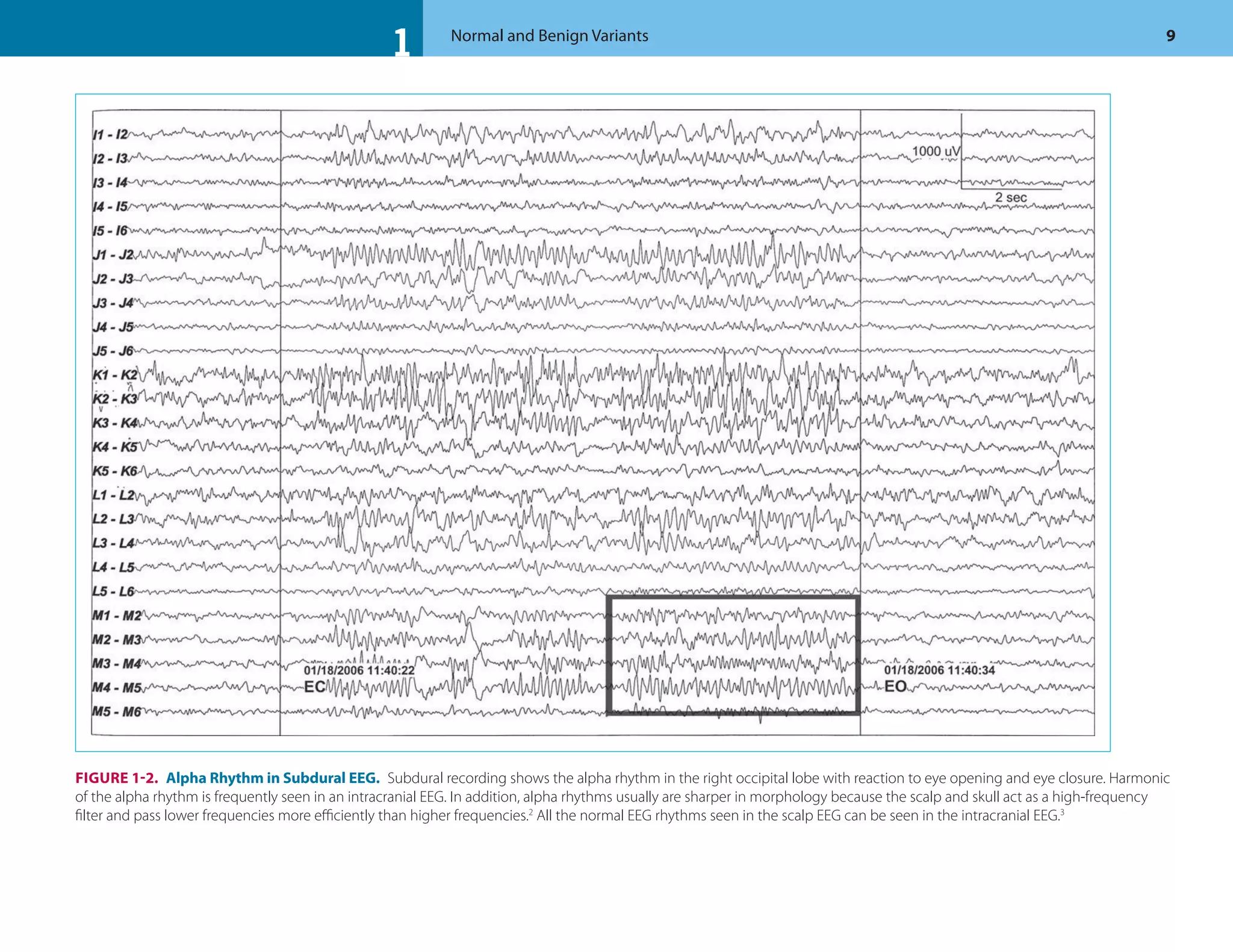
  • 16.
    1 Normal andBenign Variants 3 Posterior slow waves of youth (youth waves or polyphasic waves) (Figures 1-12 to 1-15) Physiologically high-voltage theta or delta waves 䡲 accompanied by the AR and creating spike wave-like phenomenon Most commonly seen in children aged 8–14 years 䡲 and are uncommon in children under 2 years. A 15% incidence in healthy 䡲 individuals aged 16–20 years but rare in adults above 21 years of age. Typically seen both unilaterally and bilaterally in a 䡲 single recording. They are always accompanied by the AR, attenuated with eye opening, disappear with the AR during drowsiness and light sleep, and may be accentuated by hyperventilation and stress. Characteristic findings: 䡲 Monorhythmic occipital rhythm attenuates with 䊳 eye opening Normal slower waveforms rarely >1.5 times the 䊳 amplitude of AR. Normal slower waveforms attenuate with AR 䊳 during alerting. Slower 䊳 waveforms has the same asymmetry in the ongoing AR Index of abnormality of theta/delta slowing. 䡲 Complexity and variability of waveforms 䊳 Incidence (how often slow waves occur) 䊳 Voltage ratio (normal slow waves rarely >1.5 times 䊳 the amplitude of AR) Persistence with eye opening 䊳 Symmetry (consistently predominant on one side). 䊳 Lambda waves (Figures 1-17 to 1-19) Sharp transients of sawtooth shape (biphasic or 䡲 triphasic) occurring over the occipital region of waking subjects during visual exploration (scanning complex picture), mainly positive relative to other areas and time locked to saccadic eye movements. Amplitude varies, but is generally below 50 μV. 䡲 Duration is 100–250 msec except in 1–3 years that can be up to 400 msec. Resemble positive occipital sharp transients of sleep 䡲 (POSTS) and visual evoked potential. Subjects with prominent lambda waves also have prominent POSTS. In children, highest amplitude and sharpest 䡲 component is surface negative in the occipital region. Random and isolated waveforms but may be recur at 䡲 intervals of 200–500 msec. Visual evoked 䡲 potentials occur in association with saccadic eye movement. Do not occur before 1 year of age. 䡲 Most common during the middle years of childhood. 䡲 The prevalence of lambda waves between 3 and 12 years of age is about 80%. Lambda waves have been described as biphasic or 䡲 triphasic; their predominant positive component is preceded and followed by a negative component. Strictly bilateral synchronous although may be 䡲 asymmetrical on the two sides. Rarely present only on one side. Marked asymmetry indicates an abnormality on the 䡲 side of lower amplitude. The most important precipitating factor is voluntary 䡲 scanning eye movements. Lambda wave is attenuated by: 䡲 Darkening room 䊳 Staring at a blank card 䊳 Eye closure 䊳 Lambda waves usually occur as random and isolated 䡲 waveforms but may recur at intervals of 200–500 msec. Accompanied by eye movement and eyeblink 䡲 artifacts. Sometimes, especially when present unilaterally, 䡲 they may be mistaken for focal abnormalities, but the distinction can be made by replacing the geometric image with a blank surface. Marked and persistent asymmetry indicates an 䡲 abnormality on the side of lower amplitude. Positive occipital sharp transients of Sleep (Figures 1-20 to 1-24) Best seen at the age of 15–35 years and rarely 䡲 <3 years. Seen in 50–80% of healthy adults. 䡲 Amplitude 20–75 μV; duration 80–200 msec. 䡲 Absent in individuals with poor 䡲 central vision. Sharply-contoured 䡲 , surface positivity, occurring in trains with a repetitive rate of 4–5 Hz, and monophasic checkmark-like waveform seen singularly or in clusters over the occipital regions. Always bilaterally synchronous but are commonly 䡲 asymmetric on the two sides. Asymmetry of 50% is normal. POSTS occur during deep drowsiness and stage 䡲 2 sleep. Rare in REM sleep. Posterior slow-wave transients associated with eye movements (Figures 1-25 to 1-28) Seen in children age 6 months to 10 years, but most 䡲 commonly in children aged 2–3 years. Consisting of a monophasic or biphasic slow transient 䡲 with a duration of 200–400 msec and a voltage of up to 200 μV in the occipital regions. A 䡲 latency of 100–500 msec is noted after the eyeblinks or eye movements. The initial component of the transient is surface 䡲 positive. The ascending phase is steeper than the descending phase. Occipital slow transients (Figures 1-29 to 1-31) Physiologic waves presenting during non-REM sleep, 䡲 especially a transition from light to deep sleep in infancy until 5 years of age
  • 17.
    1 4 Normal andBenign Variants Bilateral, isolated, medium- to high-amplitude, 䡲 monomorphic, triangular-shaped, delta waves with a typical duration greater than 250 msec in the occipital regions. These waves vary from a 䡲 cone-shaped configuration (cone waves or “O” waves) to a biphasic slow transient. These transients occur every 3–6sec during light sleep and more frequently during deeper stages of sleep. H-Response (Figures 1-32 to 1-34) Prominent photic driving response at flash rates 䡲 beyond 20 Hz. Sensitivity varied from 25% to 100%, and specificity 䡲 from 80% to 91%. Although 䡲 there are relatively high sensitivities and specificities of the H-response in distinguishing migraine patients from controls and tension headache, H-response is not more effective than the history and examination in diagnosing headaches and not recommended for use in clinical practice. May be useful for clinical diagnosis in complicated 䡲 headache and help to monitor therapeutic response. Needle-like spikes of the blind (occipital spikes of blindness) (Figures 1-35 to 1-37) Occipital or parietal regions in most patients with 䡲 congenital blindness and retinopathy during early infancy. Prevalence of 75% in retrolental fibroplasia age 䡲 3–14 years and 35% in all causes of blindness. Amplitude 50–250 μV. 䡲 Isolation or burst. 䡲 Activated by sleep. 䡲 Low amplitude at 10 months; typical features at 䡲 2.5 years; after-going slow waves in mid-childhood; disappear by the end of adolescence. Functional deafferentation of the visual cortex gives 䡲 rise to an increase in its irritability (denervation hypersensitivity). Not an epileptiform activity. 䡲 Seen more commonly in patients with mental 䡲 retardation and epilepsy. Disappear during childhood or adolescence. 䡲 Sleep stages Drowsiness (Figures 1-38 to 1-39) Alpha dropout (earliest sign) 䡲 Increased beta activity over the frontocentral regions 䡲 Diffuse rhythmic theta activity with anterior 䡲 predominance Slow eye movement 䡲 Mu rhythm, wicket wave, and 14 and 6 Hz positive 䡲 spikes can be seen. Deep drowsiness is marked by the vertex waves 䡲 and POSTS that persist during light sleep and deep sleep Hypnagogic hypersynchrony in 3 months to 8 years. 䡲 Stage 2 sleep (Figures 1-40 to 1-41) Symmetric, synchronous theta rhythms with posterior 䡲 predominance, 12–15/sec spindles, vertex sharp waves, K-complexes, and POSTS. Sleep spindles in the 12–15/sec range 䡲 are hallmark of sleep onset. Stage 3 sleep (Figure 1-42) Delta frequencies in the 0.75–3/sec range are 䡲 prominent over the anterior regions. Sleep spindle in the 10–12/sec and even in the 12– 䡲 14/sec ranges are still present but gradually become less prominent. Rhythmic activity of 5–9/sec is common. 䡲 Rhythmic and symmetrical delta activity is noted 䡲 between 20% and 50% of the recording Stage 4 sleep (Figure 1-43) Over 50% of the recording is delta rhythm. 䡲 Spindles are rare. 䡲 Arousal at this stage can be correlated with sleep 䡲 disorders (somnambulism, nocturnal terror, or enuresis), and can cause confusion. Occasionally, spikes in temporal lobe epilepsy will 䡲 only appear in stage 3 and 4 sleep. REM sleep (Figure 1-44 and 2-1) Low-voltage activity, polyrhythmic waves, and slower 䡲 alpha waves. Short bursts of“saw-tooth waves”over the frontal or 䡲 vertex leads and quick lateral eye movements. Appearance of REM sleep in routine EEG is seen in 䡲 narcolepsy and in patients who are withdrawn from CNS depressants such as alcohol or phenobarbital. K-Complex (Figures 1-45 to 1-48) Contain 3 components including sharp, slow, and fast. 䡲 Seen in stage 2 sleep and arousal. 䡲 Largest in older children and adolescence. With 䡲 advanced age, the K-complexes show the decline in voltage with tiny superimposed spindle-like waves. First appears at 4 months of age. They have high 䡲 amplitude but their rise is not as abrupt and the configuration is not as sharp as seen in older children. Sleep spindles (Figures 1-49 to 1-58) Arise from synchronized activity in neuronal networks 䡲 linking the thalamus and the cortex. Spindles result from rhythmic spike bursts in inhibitory (GABAergic) thalamic reticular neurons that induce rhythmic rebound bursting in cortical neurons resulting in effective deafferentiation of the cerebral cortex. Cortical neurons show enhanced synaptic plasticity that might have a role in memory and learning processes. First seen at 1.5–2 months with a frequency of 14/sec. 䡲 Throughout infancy, they are maximal over the 䡲 central and parietal areas with shifting asymmetry. They usually are electronegative with rounded positive component that is a typical hallmark of sleep spindles in infancy. These surface-negative spindles with
  • 18.
    1 Normal andBenign Variants 5 wicket or comb-like shape can be erroneously interpreted as 14/sec positive spikes Between the ages of 3 and 6 months, sleep spindles 䡲 appear to be biphasic and as prolonged runs, up to 10– 15 sec. The prolonged run of spindles is a very useful developmental marker and is rarely seen beyond this age range. Subharmonic or harmonic of sleep spindles with a 䡲 frequency approximately half or double that of sleep spindles and notched appearance can be seen. In the second half of the first year of life, the 䡲 spindles appear to be monophasic and are often asynchronous between the two sides. The frequency of spindles also changes, with 12/sec components becoming more prominent. Asynchronous spindles 䡲 may occasionally continue from 1 to 2 year of age but rarely are seen after the age of 2 years when interhemispheric synchrony of the spindles appears. Mitten patterns (Figures 1-59 to 1-62) Consist of a sharp-contoured waveform on the slope 䡲 of a slow wave of the same polarity that resembles a mitten, with a thumb of mitten formed by the last wave of a spindle and the hand portion by the slower wave component. Maximal at the frontocentral vertex with spread into 䡲 parasagittal regions. The location is different from K-complexes in that it is centered anterior to the central vertex where K-complexes are maximal. Variant of a vertex wave or K-complex and should not 䡲 be mistaken for a spike-and-wave discharge. It is best seen in referential montage in stage 䡲 3 sleep. Hypnagogic hypersynchrony (Figures 1-63 to 1-70) Seen in early drowsiness and arousal from deeper 䡲 sleep. Characterized by bilateral synchronous, high voltage, 䡲 rhythmic 3–5 Hz activity. The frequency of hypnagogic hypersynchrony is 3–4 䡲 Hz at the age of 2–3 months and increases to 4–5 Hz in older children. Asymmetric hypnagogic hypersynchrony with 䡲 shifting predominance can be seen and is not considered abnormal. At 2–3 months, first appears. 䡲 At 9 months, more prominent and continuous. 䡲 Between 4 months and 2 years, seen in almost all 䡲 infants. Few infants do not show this pattern but show 䡲 occipital or widespread rhythmical and synchronous 4–5 Hz waves of low to medium amplitude. At 4 years, shorter in duration and more paroxysmal. 䡲 At 9–11 years, it becomes rare (10%). 䡲 Although the presence of hypnagogic hypersynchrony 䡲 at age 12 years is considered abnormal by some authors, it may be seen in normal children up to the age of 12–13 years. Occasionally, small sharp or spiky discharges may 䡲 be interspersed between the theta waves. These discharges should not be interpreted as epileptiform activity unless they are definitely distinct from background activity and not only occur during drowsiness or at the onset of sleep but persist into deeper stages of sleep. Hypnic myoclonia (hypnagogic jerks) (Figures 1-67 and 1-70) This wake-to-sleep transition event is characterized 䡲 by a sudden, single, brief muscular contraction of the legs and occasionally the arms, head, and postural muscles. Sensory hallucinations (hypnagogic hallucinations) 䡲 often occur before the hypnic myoclonia. Hypnic myoclonia occurs in 60–79% of normal 䡲 population. Although it may occur at any age, 90% of patients stop these movements by age of 4 years. They are more common in boys than girls by 4:1. 䡲 Midline theta rhythm (Figure 1-71) Rare nonspecific finding of no clinical significance. 䡲 Rhythmic train of 5–7 Hz theta activity occurring 䡲 in the central vertex but may also be seen in the frontal vertex. Morphology includes sinusoidal, aciform, spiky, or 䡲 mu-like appearance. Seen during wakefulness and drowsiness. 䡲 Variable reactivity to eye opening, alerting, and limb 䡲 movement. The rhythm usually lasts from 3 to 20 sec and does not evolve. Frontal arousal rhythm (FAR) (Figures 1-72 to 1-76) Rare nonspecific EEG pattern of no clinical 䡲 significance. Frontal regions (F3 and F4 electrodes with minimal 䡲 spread to nearby scalp areas) during arousal from sleep in children. Characterized by 30–150 μV, predominantly 䡲 monophasic negative waves, occurring in bursts or runs lasting up to 13 sec (usually 1–5 sec) with a characteristic notching of the ascending or descending phase of each wave that may represent harmonics of the waveforms. The waxing and waning of the amplitude often leads 䡲 to a spindle-like morphology. 70% of patients having epileptic seizures; a 䡲 reported case in which FAR representing ictal electrographic seizure activity. Rhythmic temporal theta bursts of drowsiness, rhythmic midtemporal discharges (RMTD), psychomotor variant (Figures 1-77 to 1-82) Benign variant of no clinical significance. 䡲 Seen in 0.5–2.0% of normal adult population and 䡲 less common in adolescence. No prevalence in childhood.
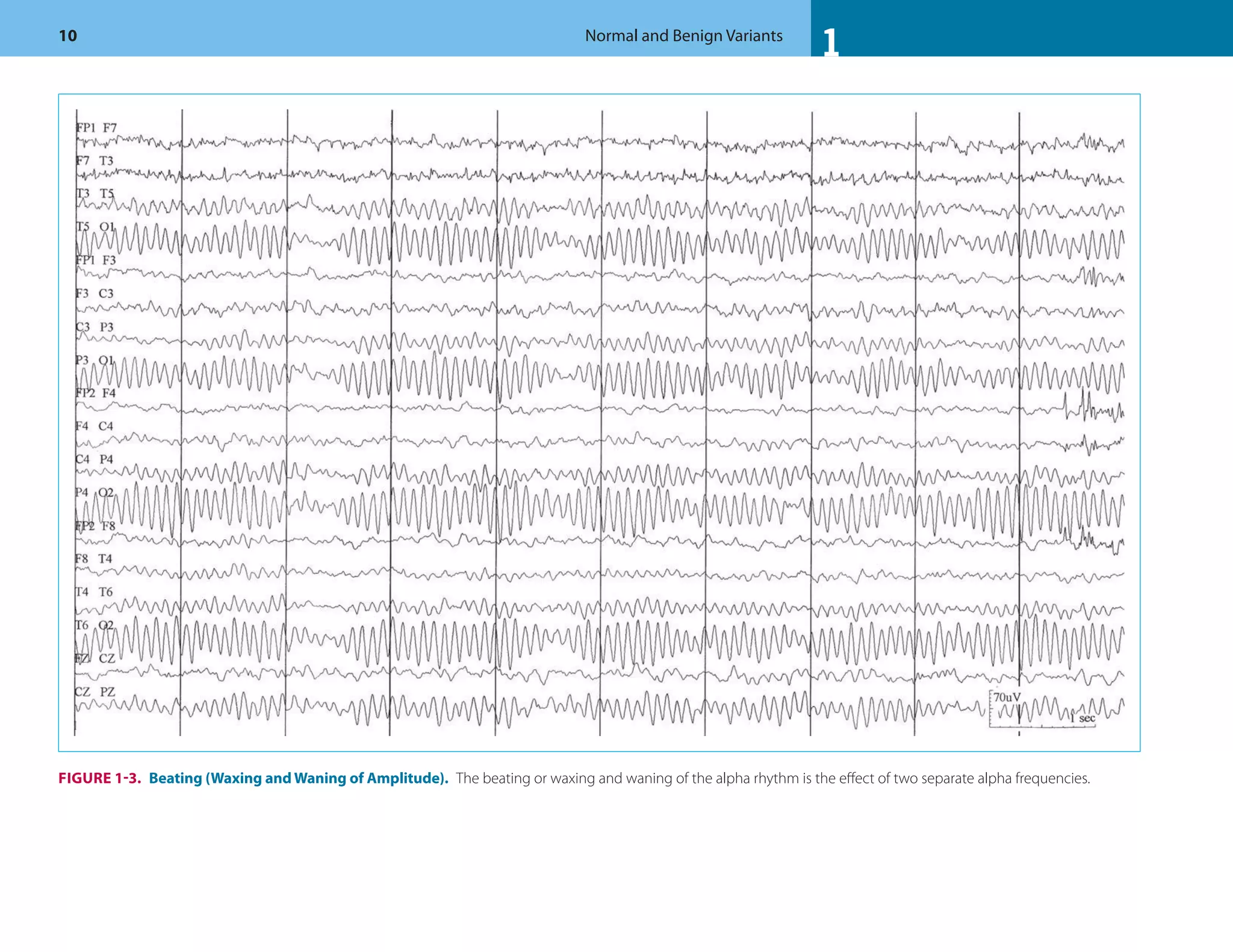
  • 19.
    1 6 Normal andBenign Variants Bursts or runs of rhythmic, 5–7 Hz or 4–7 Hz (typically 䡲 5–5.5 Hz), theta activity with flat-topped, sharply contoured, often notched appearance in the temporal regions. Maximally expressed in the mid- or anterior temporal 䡲 electrodes. Monomorphic pattern with amplitude of 50–200 μV. 䡲 Duration: commonly 5–10 sec; vary from 1 to >60 䊳 sec with gradual onset and offset. The sharper component of the wave usually has a 䊳 negative polarity in the anterior temporal region. Unilaterally with shifting from side to side greater 䊳 than bisynchronous. Differentiated from ictal epileptiform activity by 䊳 Monomorphic and monorhythmic (no evolution 앫 into other frequencies although amplitude can vary) No alteration of background activity 앫 Occurrence in relaxed wakefulness and 앫 drowsiness (most common) and disappearance in deeper levels of sleep. Although it has no clinical significance, it was 䡲 considered by some authors to be a pathologic finding in selected cases. Fourteen and six per second positive spike discharge (Figures 1-83 to 1-92, 5-44 to 5-48, 6-44) Benign variant of no clinical significance. 䡲 Bursts of arch-shaped waves at 13–17 Hz and/or 䡲 5–7 Hz, most commonly at 14 and/or 6 Hz. The 14 Hz component is more commonly seen than 6 Hz. Maximal 䡲 over the posterior temporal and adjacent areas of one or both sides of the head. Amplitude <75 μV. 䡲 Appearance in deep drowsiness and very 䡲 light sleep and disappearance in deeper levels of sleep. Electropositive of sharp component and 䡲 electronegative of smooth component. Widespread field lasting for 0.5–1 sec. 䡲 Occurs in children after age 3 to young adult 䡲 but more common between 12 and 20 years with a peak at age 13–14 years. Best seen in contralateral ear reference 䡲 montage. Appearance in diffuse encephalopathy EEG pattern 䡲 in a wide variety of encephalopathies of childhood suggesting that they are epiphenomena or a resilient normal. Frequency is more variable and can be elicited by alerting stimuli. Small sharp spike (SSS) or benign epileptiform transients of sleep (BETS) (Figures 1-93 to 1-96) Benign variant of no clinical significance. 䡲 20–25% of a normal adult population. 䡲 Appearance in deep drowsiness and very light sleep 䡲 and disappearance in deeper stages of sleep. Usually low voltage, short duration, single 䡲 monophasic, or biphasic spike with an abrupt ascending limb and a steep descending limb. ± After coming slow wave. 䡲 Either unilaterally or bilaterally. 䡲 Six-hertz spike-wave bursts (phantom spike-wave) (Figures 1-97 to 1-98) Benign variant of no clinical significance. 䡲 2.5% of both adolescents and young adults; 䡲 0.5–1% overall. Appearance in relaxed wakefulness, drowsiness, 䡲 and light sleep and disappearance in deeper levels of sleep. Bursts of 1–2 sec duration diffuse, low voltage (<40 䡲 μV), short duration (<30 msec), 5–7 Hz, spike-and- wave discharges, commonly bifrontal or occipital. 25% of phantom spike and wave have repetitive rate 䡲 of 4 Hz. At times, spikes are difficult to see. 䡲 Six-hertz spikes with minimal or no associated 䡲 waves may represent a transitional pattern between 6-Hz spike-wave bursts and 14 and 6-Hz positive bursts. Waking, high-amplitude, anterior, male (WHAM) vs 䡲 female, occipital, low-amplitude, drowsy (FOLD). WHAM is more likely to be associated with seizures 䡲 if the repetitive rate is <5 Hz or amplitude of spike greater than slow wave. Wicket waves (Figures 1-99, 1-101, 1-102) One of the most common over-read EEG patterns 䡲 seen almost exclusively in adults, most commonly >30 years of age and, usually, older than 50 years. Benign variant pattern and is not associated with 䡲 epilepsy. Rare waveform (0.9%). 䡲 It occurs in clusters or trains, but also as single sharp 䡲 transients, of 6- to 11-Hz negative sharp aciform waves with amplitude of 60–200 μV. Anterior or midtemporal regions. 䡲 Seen during relaxed wakefulness but facilitated by 䡲 drowsiness and may occur in light sleep. Recently wicket waves have also been reported to occur during REM sleep. Unilaterally with a shifting asymmetry between the 䡲 two hemispheres. During the wakefulness, wicket waves are often 䡲 masked by background EEG activity. Cardinal feature is a changing mode of occurrence 䡲 through any single recording, from intermittent trains of more or less sustained, aciform, discharges resembling mu rhythm, to sporadic single spikes. Amplitude may be high, but the transient arises out 䡲 of an ongoing rhythm and does not stand out.
  • 20.
    1 Normal andBenign Variants 7 When occurring singly, wicket waves can be 䡲 mistaken for anterior or middle temporal spikes. Isolated wicket wave can be differentiated from epileptiform discharge by the following criteria: No slow wave component following the 䊳 wicket wave Occurring in trains or in isolation and do not 䊳 disrupt the background Similar morphology to the waveforms in the train 䊳 when occurring as a single spike More commonly seen in patients with 䡲 cerebrovascular disease. The age (younger than 30 years) and abnormal 䡲 background activity are strongly against the diagnosis of wicket waves and supportive of epileptiform activities. Third rhythm (independent temporal alphoid rhythm) (Figure 1-100) Rhythmical activity in the alpha and upper theta 䡲 range over the midtemporal region. Not seen in scalp EEG except the presence of skull 䡲 defect. Physiologic rhythm that is clearly independent from 䡲 mu or AR. It needs to be differentiated form the rhythmical 䡲 activity seen in anterior- and midtemporal regions seen in patients with stroke. Photomyogenic response (Figures 1-103 to 1-106) Occurs in 0.1% of the normal population and 1% of 䡲 patients with epilepsy. Most prominent in the frontal regions as a 䡲 result of orbicularis oculi and frontalis muscle twitching during eye closure and stops with flash. Immediate cessation of the response at the end 䡲 of stimulation and prominent electromyographic activity help to distinguish this photomyogenic response from photoparoxysmal response. Normal variant although it can coexist with 䡲 photoparoxysmal response or rarely progress to generalized tonic-clonic seizures (GTCS). Mu rhythm (Figures 1-107 to 1-115) Physiologic EEG finding of no clinical significance. 䡲 Central rhythm of an alpha frequency band (8–10 Hz) 䡲 with an arciform configuration, intermix or alternate with beta activity. Occurs in less than 5% of children younger than 䡲 4 years of age and in 18–20% between the age of 8 and 16 years. Not blocked with eye opening, but blocked by touch, 䡲 movement of limbs (especially contralateral limbs) or thought of movement. Usually asymmetric, asynchronous and independent 䡲 in the two hemispheres. Consistent asymmetry of amplitude or frequency 䡲 of mu suggests an abnormality on the side of lower amplitude or frequency. Believed to be the rhythm of the sensorimotor cortex 䡲 at rest. Prominent in the patients with underneath skull 䡲 defect (breach rhythm). Paradoxical mu rhythm – induced by contralateral 䡲 movement or touch after the mu rhythm has dropped out in drowsiness. Paradoxical AR may be induced at the same time.
  • 21.
    1 8 Normal andBenign Variants FIGURE 11. Normal Alpha Rhythm and Squeak Effect. An alpha rhythm appears immediately after eye closure and disappears with eye opening. Immediately after eye closure, alpha frequency may be accelerated for 0.5–1 sec. Therefore, alpha frequency assessment should not be done during this period. This is called the“squeak effect.”1
  • 22.
    1 Normal andBenign Variants 9 FIGURE 12. Alpha Rhythm in Subdural EEG. Subdural recording shows the alpha rhythm in the right occipital lobe with reaction to eye opening and eye closure. Harmonic of the alpha rhythm is frequently seen in an intracranial EEG. In addition, alpha rhythms usually are sharper in morphology because the scalp and skull act as a high-frequency filter and pass lower frequencies more efficiently than higher frequencies.2 All the normal EEG rhythms seen in the scalp EEG can be seen in the intracranial EEG.3
  • 23.
    1 10 Normal andBenign Variants FIGURE 13. Beating (Waxing and Waning of Amplitude). The beating or waxing and waning of the alpha rhythm is the effect of two separate alpha frequencies.
  • 24.
    1 Normal andBenign Variants 11 FIGURE 14. Alpha and Mu Rhythm. Eye opening (open arrow) attenuates the alpha rhythm but reveals a prominent mu rhythm (C3 and C4) at the same frequency (11 Hz). Note lateral eye movement (X) after the eye opening. Mu is an arc-like central rhythm with negative sharp component and positive slow component. The frequency is similar to alpha rhythm and it is intermixed with 20-Hz beta activity. It is located at the C3, C4, and Cz electrodes. It is not blocked by eye opening but is attenuated by movement of extremities or thinking about moving with greater effect on opposite hand. The apiculate phase may resemble spikes.
  • 25.
    1 12 Normal andBenign Variants FIGURE 15. Alpha and Mu Rhythm. Eye opening attenuates the alpha rhythm (open arrow), and eye closure accentuates the alpha rhythm. Eye opening or closure does not affect the mu rhythm (C3 and C4). Mu is an arc-like central rhythm with negative sharp component and positive slow component. The frequency is similar to alpha rhythm and it is intermixed with 20-Hz beta activity. It is located at C3, C4, and Cz electrodes and is not blocked by eye opening but attenuated by movement of extremities or thinking about moving with greater effect on opposite hand. The apiculate phase may resemble spikes.
  • 26.
    1 Normal andBenign Variants 13 FIGURE 16. Slow Alpha Variant. Slow alpha variant (open arrow) is described as rhythmic sinusoidal, notched theta or delta activities, which have a harmonic relationship with the alpha rhythm (one-third or, more commonly, one-half the frequency). Slow alpha variant is a rare physiologic variant of alpha rhythm (less than 1% of normal adults) seen during relaxed wakefulness, has a harmonic relationship and is interspersed with the normal alpha rhythm, and shows similar distribution and reactivity as a normal alpha rhythm.4, 5 It should not be misinterpreted as occipital intermittent rhythmic delta (OIRDA) or theta activity activities, pathologic findings seen in children and adults. Slow alpha variant may be differentiated from pathologic slow waves by morphology (notched appearance), frequency (subharmonic of normal alpha rhythm), reactivity to eye opening, and disappearance with sleep. It sometimes mimics RTTD, except that it occurs only over the posterior head regions.
  • 27.
    1 14 Normal andBenign Variants FIGURE 17. Slow Alpha Variant. EEG of a 7-year-old boy with recurrent syncope showing semi-rhythmic notched theta activity, a subharmonic of the baseline alpha rhythm at channels 4, 8, 14, and 18, which appears immediately following the eye blink. Slow alpha variant is a rare, benign EEG variant (less than 1% of normal adults), has a harmonic relationship with the alpha rhythm, and shows similar distribution and reactivity as a normal alpha rhythm, reactivity to eye opening and eye closure (arrow), and disappearance with sleep.4 It should not be misinterpreted as occipital intermittent rhythmic delta activity (OIRDA) or theta activity, pathologic findings seen in children and adults.
  • 28.
    1 Normal andBenign Variants 15 FIGURE 18. Fast Alpha Variant. The fast alpha variant pattern (arrow) is a harmonic of the alpha rhythm that has a frequency approximately twice that of alpha rhythm, usually within the range of 16 to 20 Hz, with a voltage of 20-40 μV. It is usually intermingled with alpha rhythm and shows reactivity and a distribution similar to that of alpha rhythm.
  • 29.
    1 16 Normal andBenign Variants FIGURE 19. Fast Alpha Variant. The fast alpha variant pattern (within the rectangle) is a harmonic of the alpha rhythm that has a frequency approximately twice that of alpha rhythm, usually in the range of 16 to 20 Hz, with a voltage of 20-40 μV. It is usually intermingled with alpha rhythm and shows reactivity and distribution similar to that of alpha rhythm.
  • 30.
    1 Normal andBenign Variants 17 FIGURE 110. Fast Alpha Variant. The fast alpha variant pattern (box) is a harmonic of the alpha rhythm that has a frequency approximately twice that of alpha rhythm, usually in the range of 16 to 20 Hz, with a voltage of 20-40 μV. It shows reactivity and a distribution similar to that of alpha rhythm.
  • 31.
    1 18 Normal andBenign Variants FIGURE 111. Low-Voltage Background Activity. EEG of a 16-year-old-boy with recurrent syncope. Low-voltage EEG during wakefulness characterized by activity of voltage ≤ 20 μV over all head regions. With higher gain, a wide variety of different frequency waveforms are noted including beta, theta, and, to a lesser degree, delta waves with or without a posterior alpha rhythm, over the posterior areas.6 Waves of higher amplitude can sometimes be activated by hyperventilation, photic stimulation, and sleep. Low voltage EEG is a normal EEG variant and does not represent an abnormality unless the frequency band shows abnormal local or diffuse slowing, asymmetries, or paroxysmal events. The prevalence of low-voltage EEG was 1% between ages 1 and 20 years, 7% between 20 and 39 years, and 11% between 40 and 69 years.7 The prevalence increases sharply after the age 13.8 Low-voltage EEG in children below age 10 years is considered abnormal if neither hyperventilation nor non-REM sleep changes the low voltage character. Low voltage EEG can be seen in adults with chronic vertebrobasilar artery insufficiency and chronic alcoholism.9
  • 32.
    1 Normal andBenign Variants 19 FIGURE 112. Posterior Slow Waves of Youth. EEG of a 9-year old boy with recurrent headaches and numbness shows bilateral occipital slow waves (Box) intermixed with and briefly interrupting the alpha rhythm. “Posterior slow waves of youth”(youth waves or polyphasic waves) are physiologically high-voltage theta or delta waves accompanied by the alpha rhythm and creating spike wave-like phenomenon. They are most commonly seen in children aged 8 to 14 years but are uncommon in children under 2 years. They have a 15% incidence in healthy individuals aged 16 to 20 years but are rare in adults after age 21 years. They are typically seen both unilaterally and bilaterally in a single recording. They are always accompanied by the alpha rhythm, attenuated with eye opening, disappear with the alpha rhythm during drowsiness and light sleep, and may be accentuated by hyperventilation.10–12
  • 33.
    1 20 Normal andBenign Variants FIGURE 113. Posterior Slow Waves of Youth; Attenuated with Eye Opening. EEG of a 10-year-old boy with syncope showing occipital slow theta and delta waves (arrows) mixed with and briefly interrupting the alpha rhythm in both occipital regions but maximally expressed in the left hemisphere. These are so-called“posterior slow waves of youth,” which are physiologic findings seen commonly in children aged 8 to 14 years. They are always accompanied by the alpha rhythm, are attenuated with eye opening (open arrow). and disappear with the alpha rhythm during drowsiness and light sleep.10–12
  • 34.
    1 Normal andBenign Variants 21 FIGURE 114. Intermittent Right Occipital Delta Slowing; Simulating Posterior Slow Wave of Youth. An 8-year-old boy with autism and few generalized tonic-clonic seizures. The 24-hour ambulatory EEG performed to rule out ESES persistently shows decreased alpha reactivity to eye closure (open arrow) and intermittent polymorphic delta slowing (arrow head) in the right occipital region without shifting lateralization. This EEG can simulate“posterior slow waves of youth,”which is a physiologic finding. However, persistent lateralization raises a concern of abnormality in the right posterior quadrant.
  • 35.
    1 22 Normal andBenign Variants FIGURE 115. Asymmetric Alpha Rhythm. (same EEG recording as in Fig. 1-14) EEG shows a train of spikes in the right parietal region (open arrow) as well as theta and polymorphic delta slowing in the right occipital region. Persistent lateralization of theta and delta slowing is a red flag for posterior slow wave of youth and should raise the concern of focal abnormality in that area.
  • 36.
    1 Normal andBenign Variants 23 FIGURE 116. Squeak Effect. EEG of a healthy 10-year-old boy with migraine. Immediately after eye closure, the alpha frequency may be accelerated for 0.5–1 sec; therefore, alpha frequency assessment should not be done during this period. This is called the“squeak effect.”1
  • 37.
    1 24 Normal andBenign Variants FIGURE 117. Lambda Waves. Lambda waves are“sharp transients occurring over the occipital region of the head of waking subjects during visual exploration, mainly positive relative to other areas and time locked to saccadic eye movement. Amplitude varies, but is generally below 50 μV.”6 Lambda waves do not occur before 1 year of age and are most common during the middle years of childhood. The prevalence of lambda waves between 3 and 12 years is about 80%. Lambda waves have been described as biphasic or triphasic; their predominant positive component is preceded and followed by a negative component. They may be asymmetrical on the two sides or may be present only on one side. Strictly speaking, they are bilaterally synchronous. The most important precipitating factor of lambda waves is voluntary scanning eye movements. Lambda waves usually occur as random and isolated waveforms but may recur at intervals of 200–500 msec as in this EEG page.9 Sometimes, especially when present unilaterally, they may be mistaken for focal abnormalities, but the distinction can be made by replacing the geometric image with a blank surface.13
  • 38.
    1 Normal andBenign Variants 25 FIGURE 118. Lambda Waves and Alpha Rhythm. Lambda waves (open arrow) are“sharp transients occurring over the occipital region of the head of waking subjects during visual exploration,”mainly positive relative to other areas and time locked to saccadic eye movement. Amplitude varies, but is generally below 50 μV.6 Lambda waves have been described as biphasic or triphasic; their predominant positive component is preceded and followed by a negative component. They are most commonly seen in children aged 2–15 years. They may be asymmetrical, appearing bilaterally, or may be present only on one side. Strictly speaking, they are bilaterally synchronous. The most important precipitating factor of lambda waves is voluntary scanning eye movements.9 Note alpha rhythm with eye closure (double arrows).
  • 39.
    1 26 Normal andBenign Variants FIGURE 119. Lambda Waves. Lambda waves (A) are“sharp transients occurring over the occipital region of the head of waking subjects during visual exploration,”mainly positive relative to other areas and time locked to saccadic eye movement. Amplitude varies, but is generally below 50 μV.6 Lambda waves have been described as biphasic or triphasic; their predominant positive component is preceded and followed by a negative component. They are most commonly seen in children aged 2–15 years. They may be asymmetrical on the two sides or may be present only on one side although are strictly bilateral synchronous. The most important precipitating factor of lambda waves is voluntary scanning eye movements.9 POSTS (B, sample from the other EEG), also known as“lambdoid waves”are usually monophasic, sharply contoured electropositive waves seen mainly during light to moderate levels of sleep.
  • 40.
    1 Normal andBenign Variants 27 FIGURE 120. Positive Occipital SharpTransients of Sleep (POSTs). EEG of a 4-year-old asymptomatic male during drowsiness. Characteristics of POSTS include sharply-contoured, surface positive, occurring in trains with a repetitive rate of 4–5 Hz, and monophasic checkmark-like waveform seen singularly or in clusters over the occipital regions. POSTS are always bilaterally synchronous but are commonly asymmetric on the two sides and should not be misinterpreted as epileptiform activity or focal nonepileptiform activity.10,14 POSTS occur during drowsiness and stage 2 sleep.
  • 41.
    1 28 Normal andBenign Variants FIGURE 121. Positive Occipital SharpTransients of Sleep (POSTs). EEG of a 3-year-old asymptomatic male during stage 2 sleep. Characteristics of POSTS are sharp-contoured, surface positivity, occurring in trains with a repetitive rate of 4–5 Hz, and monophasic checkmark-like waveform seen in singly or in clusters over the occipital regions. POSTS are always bilaterally synchronous but are commonly asymmetric on the two sides and should not be misinterpreted as epileptiform activity or focal nonepileptiform activity.10,14 POSTS occur during, drowsiness and stage 2 sleep.
  • 42.
    1 Normal andBenign Variants 29 FIGURE 122. Posterior Occipital Sharp Transients of Sleep (POSTS). POSTS (Box) can simulate epileptiform activity. Their triangular morphology, persistent lack of slow wave following sharp transients, positive polarity, constant symmetry, and occurrence during sleep differentiate them from epileptiform activity.
  • 43.
    1 30 Normal andBenign Variants FIGURE 123. Aymmetric Posterior Occipital Sharp Transient of Sleep (POSTS). A 7-year-old boy with recurring staring episodes and behavioral issues. The routine EEG during sleep shows bilaterally synchronous but asymmetric POSTS. Characteristics of POSTS are surface positivity, occurring in trains with a repetitive rate of 4–5 Hz, and monophasic checkmark-like waveforms. POSTS are always bilaterally synchronous but are commonly asymmetrical on the two sides and should not be misinterpreted as epileptiform activity or focal nonepileptiform activity.10
  • 44.
    1 Normal andBenign Variants 31 FIGURE 124. Pathologically Asymmetry of Positive Occipital Sharp Transients of Sleep (POSTS). A 7-year-old girl born 24 weeks gestational age with grade 4 intraventricular hemorrhage (IVH). Subsequently, she developed spastic quadriparesis and global developmental delay. Cranial MRI showed periventricular leukomalacia with bilateral white matter involvement, greater on the left. Prolonged 72-h-video-EEG demonstrates persistent suppression of POSTS and anterior beta activity in the left hemisphere throughout the drowsy and sleep EEG recording. Although persistent asymmetric POSTS in this case are pathologic, physiologic POSTS can be quite asymmetric and may be present on only one side in the routine EEG. Therefore, asymmetric POSTS without other associated abnormalities should not be misinterpreted as abnormal.
  • 45.
    1 32 Normal andBenign Variants FIGURE 125. Posterior Slow-Wave Transients (Occipital Sharp Transients); Associated with Eye Movements. Posterior slow-wave transients associated with eye movements is an EEG pattern consisting of a monophasic or biphasic slow transient with a duration of 200–400 msec and a voltage of up to 200 μV in the occipital regions (*). The latency of 100–500 msec is noted after the eyeblinks or eye movements. The initial component of the transient is surface positive. The ascending phase is steeper than the descending phase. This EEG pattern is seen in children age 6 months to 10 years, but seen most commonly in children aged 2–3 years. This EEG pattern is a normal phenomenon but may be misinterpreted as epileptiform activity.9,10
  • 46.
    1 Normal andBenign Variants 33 FIGURE 126. Posterior Slow-Wave Transients (Occipital Sharp Transients); Associated with Eye Movements. Posterior slow-wave transients associated with eye movements is an EEG pattern consisting of a monophasic or biphasic slow transient with a duration of 200–400 msec and a voltage of up to 200 μV in the occipital regions (open arrow). The latency of 100–500 msec is noted after the eyeblinks or eye movements. The initial component of the transient is surface positive. The ascending phase is steeper than the descending phase. This EEG pattern is seen in children age 6 months to 10 years, but seen most commonly in children aged 2–3 years. This EEG pattern is a normal phenomenon but may be misinterpreted as epileptiform activity.9,10
  • 47.
    1 34 Normal andBenign Variants FIGURE 127. Posterior Slow-Wave Transients (Occipital Sharp Transients); Associated with Eye Movements. Posterior slow-wave transients associated with eye movements is an EEG pattern consisting of a monophasic or biphasic slow transient with a duration of 200–400 msec and a voltage of up to 200 μV in the occipital regions (*). The latency of 100–500 msec is noted after the eyeblinks or eye movements. The initial component of the transient is surface positive. The ascending phase is steeper than the descending phase. This EEG pattern is seen in children age 6 months to 10 years, but seen most commonly in children aged 2–3 years. This EEG pattern is a normal phenomenon but may be misinterpreted as epileptiform activity.9,10
  • 48.
    1 Normal andBenign Variants 35 FIGURE 128. Posterior Slow-Wave Transients (Occipital Sharp Transients); Associated with Eye Movements. Posterior slow-wave transients associated with eye movements is an EEG pattern consisting of a monophasic or biphasic slow transient with a duration of 200–400 msec and a voltage of up to 200 μV in the occipital regions (*). The latency of 100–500 msec is noted after the eyeblinks or eye movements. The initial component of the transient is surface positive. The ascending phase is steeper than the descending phase. This EEG pattern is seen in children aged 6 months to 10 years, but seen most commonly in children aged 2–3 years. This EEG pattern is a normal phenomenon but may be misinterpreted as epileptiform activity.9,10
  • 49.
    1 36 Normal andBenign Variants FIGURE 129. Occipital Slow Transients; Cone Wave and Diphasic Slow Transient. In children, the transition from light to deep sleep may be associated with bilateral high-voltage slow transients in the occipital regions. These waves vary from a cone-shaped configuration (double arrows) to a biphasic slow transient (open arrow). These transients occur every 3–6 sec during light sleep and more frequently during deeper stage of sleep.10
  • 50.
    1 Normal andBenign Variants 37 FIGURE 130. Occipital Slow Transients; Cone Waves. In children, the transition from light to deep sleep may be associated with bilateral high-voltage slow transients in the occipital regions. These waves vary from a cone-shaped configuration to a biphasic slow transient. These transients occur every 3–6 sec during light sleep and more frequently during deeper stages of sleep.10 Cone waves or“O”waves (arrow) are physiologic waves presenting during non-REM sleep from infancy until 5 years of age. They are isolated, medium- to high-amplitude, monomorphic, triangular shaped, delta waves with a typical duration greater than 250 msec that occur over the occipital region.15
  • 51.
    1 38 Normal andBenign Variants FIGURE 131. Occipital Slow Transients; Cone Wave. In children, the transition from light to deep sleep may be associated with bilateral high-voltage slow transients in the occipital regions. These waves vary from a cone-shaped configuration to a biphasic slow transient. These transients occur every 3–6 sec during light sleep and more frequently during deeper stage of sleep.10 Cone waves or“O”waves (arrow) are physiologic waves presenting during non-REM sleep from infancy until 5 years of age. They are isolated, medium- to high-amplitude, monomorphic, triangular shaped, delta waves with a typical duration greater than 250 msec that occur over the occipital region.15
  • 52.
    1 Normal andBenign Variants 39 FIGURE 132. Excessive Photic Response at High Frequency Stimulation (H Response); Migraine. A 17-year-old with recurrent headaches after the epilepsy surgery (resection of epileptogenic zone in the right frontal region). The patient had headache characteristics compatible with the common migraine, normal neurologic examination, and a strong family history of migraines. His headaches resolved with amitryptylline. The neuroimaging was not performed. This EEG was performed as a routine postoperative follow-up. The“H-response”is a prominent photic driving response at flash rates beyond 20 Hz. The sensitivity of the H-response varied from 25% to 100%, and the specificity from 80% to 91%. Although the relatively high sensitivities and specificities of the H-response in distinguishing migraine patients from controls and tension headache patients, the American Academy of Neurology concluded that the H-response was not more effective than history and examination in diagnosing headaches. They, therefore, did not recommend its use in clinical practice. However, in the presence of complex or prolonged aura, visual hallucinations, disorders of consciousness, history of recent trauma, and in infants with vomiting and ocular and head deviation, the EEG may be useful for clinical diagnosis and help to monitor therapeutic response.16,17
  • 53.
    1 40 Normal andBenign Variants FIGURE 133. Excessive Photic Response at High Frequency Stimulation (H Response) Migraine. The“H-response”is a prominent photic driving response at flash rates beyond 20 Hz. In a critical review of the literature, the reported sensitivity of the H-response varied from 25% to 100%, and the specificity from 80% to 91%. Although the relatively high sensitivities and specificities reported suggest that the H-response may be effective in distinguishing migraine patients from controls, and possibly migraineurs from tension headache sufferers, the Quality Standards Subcommittee (QSS) of the American Academy of Neurology concluded that the H-response was not more effective than the neurological history and examination in diagnosing headaches and not recommended in clinical practice. However, in the presence of complex or prolonged aura, visual hallucinations, disorders of consciousness, history of recent trauma, and in infants with vomiting and ocular and head deviation, the EEG may be useful for clinical diagnosis and help to monitor therapeutic response.16,17
  • 54.
    1 Normal andBenign Variants 41 FIGURE 134. Cyclic Vomiting; Migraine; Excessive Photic Response. A 2-year-old boy with cyclic vomiting who had normal extensive GI work-up. Cranial MRI was normal. EEG shows excessive photic response intermixed with sharply-contoured waves. Very strong family history of migraines was noted. The patient was diagnosed with“cyclic vomiting”caused by migraine. He showed dramatic improvement in vomiting after the treatment with cyproheptadine. Photic driving responses in children <6 years are relatively small.18 Stimulus frequencies <3 Hz rarely produce a response. The maximal responses are obtained with stimulus frequencies near the frequency of individual’s posterior dominant rhythm.15 Although excessive photic response can be seen in normal individuals, it is more commonly seen in migraine patients. However, AAN concluded that the photic response was not more effective than history and examination in diagnosing headaches and did not recommend its use in clinical practice.16 In 2–4% of normal children, posteriorly predominant paroxysmal slow activity is sometimes associated with sharp components.11
  • 55.
    1 42 Normal andBenign Variants FIGURE 135. Needle-Like Occipital Spikes of the Blind. A 4-year-old girl with congenital blindness due to congenital CMV infection who developed acute encephalopathy due to enteroviral infection (hand-foot-mouth syndrome). This EEG was requested for altered mental status. EEG demonstrates diffuse delta slowing with occipital predominance and frequent needle-like spikes in the occipital region. The patient regained her mental status completely 4 days later without treatment with anticonvulsant. Needle-like spikes (*) develop in the occipital region in most patients with congenital blindness. Functional deafferentation of the visual cortex gives rise to an increase in its irritability and this makes it fire off in this special manner. These spikes are not correlated with epileptic seizures. These discharges disappear during childhood or adolescence.19
  • 56.
    1 Normal andBenign Variants 43 FIGURE 136. Needle-Like Occipital Spikes of the Blind. A 7-month-old girl with congenital blindness due to septo-optic dysplasia and with pendular nystagmus. This EEG was requested to evaluate for possible seizure as a cause of nystagmus. EEG demonstrates frequent low-amplitude and short-duration spikes in the occipital regions (open arrows). Needle-like spikes develop in the occipital region in most patients with congenital blindness. Functional deafferentations of the visual cortex give rise to an increase in its irritability that make it fire off in this special manner. These spikes are not correlated with epileptic seizures. These discharges disappear during childhood or adolescence.19
  • 57.
    1 44 Normal andBenign Variants FIGURE 137. Needle-Like Spikes of the Blind. A 25-month-old girl with congenital blindness and epilepsy due to congenital toxoplasmosis who has pendular nystagmus. This EEG was requested to evaluate for epileptiform activity as a cause of her nystagmus. EEG demonstrates frequent low-amplitude and short-duration spikes in the occipital regions (*). Needle-like spikes develop in the occipital region in most patients with congenital blindness. Functional deafferentation of the visual cortex gives rise to an increase in its irritability, which makes it fire off in this special manner. These spikes are not correlated with epileptic seizures. These discharges disappear during childhood or adolescence.19
  • 58.
    1 Normal andBenign Variants 45 FIGURE 138. Drowsiness; Older Children and Adults. In older children and adults, early drowsiness is associated with (1) alpha dropout (earliest sign); (2) increased beta activity over the fronto-central regions; (3) diffuse rhythmic theta activity with anterior predominance; and (4) slow eye movement. Mu rhythm, wicket wave and 14- and 6 Hz positive spikes can be seen during drowsiness. Drowsiness must be differentiated from increased alertness after eye opening or caused by emotional stress that can cause alpha blocking. In such cases the slow frequency component is absent and beta frequency predominates. Deep drowsiness is marked by the appearance of vertex waves and POSTS that persist during light sleep and deep sleep.20
  • 59.
    1 46 Normal andBenign Variants FIGURE 139. Drowsiness; 14-and-6 Hertz Positive Bursts. In older children and adults, early drowsiness is associated with (1) alpha dropout (earliest sign); (2) increased beta activity over the fronto-central regions (double arrows); (3) diffuse rhythmic theta activity with anterior predominance (open arrow); and (4) slow eye movement (double- head arrow). Mu rhythm, wicket wave and 14- and 6 Hz positive spikes (*) can be seen during drowsiness. Drowsiness must be differentiated from increased alertness after eye opening or caused by emotional stress that can cause alpha blocking. In such case slow frequency component is absent and beta frequency predominates. Deep drowsiness is marked by the appearance of vertex waves and POSTS that persist during light sleep and deep sleep.20
  • 60.
    1 Normal andBenign Variants 47 FIGURE 140. Stage 2 (Light Sleep). Stage 2 sleep shows symmetric, synchronous theta rhythms with posterior predominance, 12–15/sec spindles, vertex sharp waves, K-complex and POSTS. The appearance of sleep spindles in the 12–15/sec range is a hallmark of sleep onset.20
  • 61.
    1 48 Normal andBenign Variants FIGURE 141. Sleep Spindles During Subdural EEG Recording. Subdural recording showing the sleep spindles in the parietal lobe during sleep. A harmonic of the sleep spindles is more frequently seen in intracranial EEG. In addition, the sleep spindles usually appear sharper in morphology as the scalp and skull act as a high-frequency filter and pass lower frequencies more efficiently than higher frequencies.2 Disappearance during wakefulness helps to differentiate the sleep spindles from low-voltage fast activity. All normal EEG rhythms seen in the scalp EEG can be seen in the intracranial EEG.3
  • 62.
    1 Normal andBenign Variants 49 FIGURE 142. Stage 3 (Moderate Deep Sleep). Delta frequencies in the 0.75–3/sec range are prominent over the anterior regions. Sleep spindles in the 10–12/sec and even in the 12–14/sec ranges are still present but gradually become less prominent. Rhythmic activity of 5–9/sec is common. Rhythmic and symmetrical delta activity occurs during 20% to 50% of the recording.20
  • 63.
    1 50 Normal andBenign Variants FIGURE 143. Stage 4 (Very Deep Sleep). Over 50% of the recording is delta rhythm. Spindles are rare. Arousal at this stage can be correlated with sleep disorders (somnambulism, nocturnal terror, or enuresis), and can cause confusion. Occasionally, spikes in temporal lobe epilepsy will only appear in stage 3 and 4 sleep.20
  • 64.
    1 Normal andBenign Variants 51 FIGURE 144. REM Sleep. EEG reveals low-voltage activity, polyrhythmic waves, slower alpha waves, and short bursts of“saw-tooth waves”over the frontal or vertex leads (Box B), and quick lateral eye movement (Box A). Appearance of REM sleep in routine EEG is seen in narcolepsy and in patients who are withdrawn from CNS depressants such as alcohol or phenobarbital.20,21
  • 65.
    1 52 Normal andBenign Variants FIGURE 145. K Complexes. K complexes contain 3 components including sharp, slow, and fast. They are seen in stage 2 sleep and arousal. The K complexes are largest in older children and adolescence. With increasing age, the K complexes show the decreasing voltage with tiny superimposed spindle-like waves.
  • 66.
    1 Normal andBenign Variants 53 FIGURE 146. Subdural EEG Monitoring; K-Complex During Arousal. Subdural recording showing a run of vertex waves and widely distributed K-complexes, maximally expressed in the parietal lobe during arousal. Harmonic of the sleep spindles is frequently seen in intracranial EEGs. In addition, the sleep spindles usually are sharper in morphology as the scalp and skull act as a high-frequency filter and pass lower frequencies more efficiently than higher frequencies.2 Disappearance during wakefulness helps to differentiate the K-complexes from low-voltage fast activity. All normal EEG rhythms in the scalp EEG can be seen in the intracranial EEG.3
  • 67.
    1 54 Normal andBenign Variants FIGURE 147. Pathologic vs Physiologic Wave Forms in Intracranial EEG. The differentiation of physiologic waveforms and pathologic waveforms is extremely important in intracranial EEG recording (open arrow-epileptiform in depth electrode; arrow-sleep spindles; double arrows-vertex waves). Harmonic and sharp morphology of the physiologic waveforms in an intracranial EEG make distinguishing between nonepileptiform and epileptiform activities more difficult. Disappearance of spindles and vertex waves during wakefulness, distribution, and morphology help to differentiate them from epileptiform activity, especially between sleep spindles and low-voltage fast epileptiform activity.
  • 68.
    1 Normal andBenign Variants 55 FIGURE 148. Early K-Complex (16 Week CA). K-complex first appears at 4 months of age. They have high amplitude but their rise is not as abrupt and the configuration is not as sharp as one seen in older children.20
  • 69.
    1 56 Normal andBenign Variants FIGURE 149. Normal Sleep Spindles (2 Months); Definite 14/sec Spindles. Sleep spindles arise from synchronized activity in functionally important neuronal networks linking the thalamus and the cortex. Spindles result from rhythmic spike bursts in inhibitory (GABAergic) thalamic reticular neurons that induce rhythmic rebound bursting in cortical neurons. This process has been shown to result in effective deafferentiation of the cerebral cortex. Cortical neurons show enhanced responsiveness and properties of synaptic plasticity that may have a role in memory and learning processes.22 At 1.5 to 2 months, 14/sec spindles are first seen.23
  • 70.
    1 Normal andBenign Variants 57 FIGURE 150. Normal Sleep Spindles (8 Weeks CA); Harmonic of Sleep Spindles. EEG of an 8-week-old full-term boy shows low-voltage 22–24 Hz biphasic beta activity diffusely in the central vertex and bilateral central-parietal areas. This exceptional waveform most likely represents a harmonic of sleep spindles. More commonly spindles occur independently from faster 18–25 Hz activity and both patterns may be seen at the same time.24
  • 71.
    1 58 Normal andBenign Variants FIGURE 151. Normal Sleep Spindles (10 Weeks CA). Trace alternant disappears in the first month of life. Sleep spindles usually appear in the second months of life with frequency between 12 and 15/sec. Throughout infancy, they are maximal over the central and parietal areas with shifting asymmetry. They usually are electronegative with a rounded positive component.20 A complete absence of spindles at age 3–8 months indicates a severe abnormality.25
  • 72.
    1 Normal andBenign Variants 59 FIGURE 152. Normal Sleep Spindles (3-6 Months CA); Prolonged Runs of Spindles. Between the ages of 3–6 months, sleep spindles appear to be biphasic and occur as prolonged runs, up to 10–15 sec.22,23,26 The prolonged run of spindles is a very useful developmental marker and is rarely seen beyond this age range.
  • 73.
    1 60 Normal andBenign Variants FIGURE 153. Prolonged Sleep Spindles (3-6 Months CA). Between the ages of 3–6 months, sleep spindles appear to be biphasic and occur as prolonged runs, up to 10–15 sec.22,23,26 The prolonged run of spindles is a very useful developmental marker and is rarely seen beyond this age range.
  • 74.
    1 Normal andBenign Variants 61 FIGURE 154. Prolonged Sleep Spindles (3-6 Months CA). Between the ages of 3–6 months, sleep spindles appear to be biphasic and occur as prolonged runs, up to 10–15 sec.22,23,26 The prolonged run of spindles is a very useful developmental marker and rarely seen beyond this age range.
  • 75.
    1 62 Normal andBenign Variants FIGURE 155. Normal Sleep Spindles (16 Weeks CA). Between the ages of 3–6 months, sleep spindles appear to be biphasic and as prolonged runs, up to 10–15 sec.22,23,26 The prolonged run of spindles is a very useful developmental marker and rarely seen beyond this age range. Throughout infancy, sleep spindles are maximal over the central and parietal areas with shifting asymmetry. They usually shows electronegative with rounded positive component that is a typical hallmark of sleep spindles in infancy.20,27 These surface-negative spindles with wicket or comb-like shape can be erroneously interpreted as 14/sec positive spikes (below).
  • 76.
    1 Normal andBenign Variants 63 FIGURE 156. Sleep Spindles with Subharmonic. Subharmonic of sleep spindles with a frequency approximately half that of sleep spindles with a notched appearance can be seen. The subharmonic has the same reaction and distribution as sleep spindles.
  • 77.
    1 64 Normal andBenign Variants FIGURE 157. Normal Sleep Spindles (9 Months); Asynchronous Spindles. In the second half of the first year of life, the spindles appear to be monophasic and are often asynchronous between the two sides. Asynchronous spindles may occasionally continue from 1 to 2 years of age but rarely are seen after the age of 2 years when interhemispheric synchrony of the spindles are.22,23
  • 78.
    1 Normal andBenign Variants 65 FIGURE 158. Normal Sleep Spindles (14 Months); Synchronous Spindles. After 1 year, interhemispheric synchrony of the spindles is seen although not constant until the infant is nearly 2 years old. The frequency of spindles also changes, with 12/sec components becoming more prominent.22
  • 79.
    1 66 Normal andBenign Variants FIGURE 159. Mitten Pattern. Mitten patterns are seen during sleep and consist of a sharply-contoured waveform on the slope of a slow wave of the same polarity that resemble a mitten, with the thumb of the mitten formed by the last wave of a spindle and the hand portion by the slower wave component. Mittens are a variant of a vertex wave or K-complex and should not be mistaken for a spike-and-wave discharge.14 It is best seen in the referential montage and in stage 3 sleep.20
  • 80.
    1 Normal andBenign Variants 67 FIGURE 160. Mitten Pattern. Mitten patterns are seen during sleep and consist of a sharply-contoured waveform on the slope of a slow wave of the same polarity that resemble a mitten, with the thumb of the mitten formed by the last wave of a spindle and the hand portion by the slower wave component. Mittens are a variant of a vertex wave or K-complex and should not be mistaken for a spike-and-wave discharge.14 It is best seen in the referential montage and in stage 3 sleep.20
  • 81.
    1 68 Normal andBenign Variants FIGURE 161. Mittens. Mitten patterns are seen during sleep and consist of a sharp-contoured waveform on the slope of a slow wave of the same polarity that resemble a mitten, with a thumb of mitten formed by the last wave of a spindle and the hand portion by the slower wave component. Mittens are a variant of a vertex wave or K-complex and should not be mistaken for a spike-and-wave discharge.14 It is best seen in referential montage and stage 3 sleep.20
  • 82.
    1 Normal andBenign Variants 69 FIGURE 162. Mittens. Mitten patterns are seen during sleep and consist of a sharply-contoured waveform on the slope of a slow wave of the same polarity that resemble a mitten, with the thumb of the mitten formed by the last wave of a spindle and the hand portion by the slower wave component. Mittens are a variant of a vertex wave or K-complex and should not be mistaken for a spike-and-wave discharge.14 It is best seen in the referential montage and in stage 3 sleep.20
  • 83.
    1 70 Normal andBenign Variants FIGURE 163. Hypnagogic Hypersynchrony. Hypnagogic hypersynchrony is an activity seen in early drowsiness and in arousal from deeper sleep. It is characterized by bilateral synchronous, high voltage, rhythmic 3-5 Hz activity. This activity first appears at the age of 2 to 3 months and becomes prominent and continuous at 9 months. At age 4 years, it becomes shorter in duration and more paroxysmal in appearance. By age 9 to 11 years, it becomes rare. Although the presence of hypnagogic hypersynchrony at age 12 years is considered abnormal by some authors,21 it may be seen in normal children up to the age of 12-13 years.10 The frequency of hypnagogic hypersynchrony is 3-4 Hz at the age of 2-3 months and increases to 4-5 Hz in older children. This EEG also shows slow eye movement (SEM), maximally seen at F7 and F8, which is also one of the signs of drowsiness.
  • 84.
    1 Normal andBenign Variants 71 FIGURE 164. Hypnagogic Hypersynchrony. Nearly continuous hypnagogic hypersynchrony in a 22-month-old infant. Hypnagogic hypersynchrony appears at approximately 3 months of age and is characterized by monorhythmic, slow generalized activity with the frequency of 3-4 Hz during drowsiness. It may be seen in older children up to 12-13 years but is rare after 11 years (incidence of only 10%). The frequency increases to 4-5 Hz in older children.10
  • 85.
    1 72 Normal andBenign Variants FIGURE 165. Asymmetric Hypnagogic Hypersynchrony. EEG of a 25-month-old boy with asymmetric hypnagogic hypersynchrony with shifting predominance. The paroxysmal bursts of generalized high-voltage, rhythmically monotonous theta activity superimposed on low-voltage background activity, so-called“hypnagogic hypersynchrony,” is the hallmark of drowsiness in early childhood. Occasionally, small sharp or spiky discharges may be interspersed between the theta waves. These discharges should not be interpreted as epileptiform activity unless they are definitely distinct from background activity and not only occur during drowsiness or at the onset of sleep but also persist into deeper stages of sleep. Asymmetric hypnagogic hypersynchrony with shifting predominance can be seen and is not considered abnormal.10,11,28,29
  • 86.
    1 Normal andBenign Variants 73 FIGURE 166. Hypnagogic Hypersynchrony. EEG of a 4-year-old boy with hypnagogic hypersynchrony. The paroxysmal bursts of generalized high-voltage, rhythmically monotonous theta activity superimposed on low-voltage background activity, so-called“hypnagogic hypersynchrony”is the hallmark of drowsiness in early childhood. Occasionally, small sharp or spiky discharges may be interspersed between the theta waves. These discharges should not be interpreted as epileptiform activity unless they are definitely distinct from background activity and not only occur during drowsiness or at the onset of sleep but also persist into deeper stages of sleep.
  • 87.
    1 74 Normal andBenign Variants FIGURE 167. Hypnic Myoclonia (HM) (Sleep Starts or Hypnogogic Jerks). Video-EEG of a 5-year-old boy with well-controlled focal epilepsy shows a burst of high-voltage 3–4 Hz delta activity intermixed with low-amplitude spikes during chin quivering (*). This EEG pattern is compatible with hypnagogic hypersynchrony associated with HM. This wake-to-sleep transition event is characterized by a sudden, single, brief muscular contraction of the legs and occasionally the arms, head, and postural muscles.30 Hypnagogic hallucinations often occur before the sleep starts, and the perception of falling may occur, ending with the myoclonic jerk. HM is a physiologic finding unless it is frequent and results in sleep-onset insomnia. It also must be differentiated from seizure, especially if it occurs in patients with known epilepsy.31,32 HM occurs in 60–79% of normal individuals. Ninety percent of patients stop these movements by age 4 years. It is more common in boys than in girls by 4:1.33 It may be frightening when observed by a parent, especially if associated with a vocalization or cry. Injury from the massive movement is rare, but foot injuries secondary to kicking a bedpost or crib rail may occur.34
  • 88.
    1 Normal andBenign Variants 75 FIGURE 168. 14-and-6-Hertz Positive Spikes; Hypnagogic Hypersynchrony. EEG of a 5-year-old asymptomatic boy shows 14- and 6 Hz positive spikes (arrow head) immediately after hypnagogic hypersynchrony (open arrow). Fourteen and six hertz positive spikes (arrow head) are commonly seen during drowsiness.35
  • 89.
    1 76 Normal andBenign Variants FIGURE 169. Asymptomatic Centro-Temporal Spikes; Hypnagogic Hypersynchrony. An 8-year-old boy with recurrent syncope without other associated symptoms suspicious of seizures or other neurologic conditions except borderline ADHD. There was a history of GTCS in his 4-year-old brother. EEG during drowsiness shows hypnagogic hypersynchrony and bilateral-independent centro-temporal spikes. Characteristic spikes over the rolandic area are regarded as neurobiological markers of BECTS. However, rolandic (centro-temporal) spikes have been reported in normal children without clinical seizures or neurologic manifestations. They are seen in 1.2–3.5% of normal healthy children in the community36,37 and 6–34% of siblings of patients affected by BECTS.38,39 The risk of epilepsy is higher if rolandic spikes remain unilateral during sleep, rolandic spikes continue during REM sleep, and if they occur in the presence of generalized spike-wave discharges.40 The frequency of rolandic spikes in children with ADHD (3–5.6%) is significantly higher than expected from epidemiologic studies although how ADHD symptoms are related to rolandic spikes is still unclear.41–44
  • 90.
    1 Normal andBenign Variants 77 FIGURE 170. Hypnic Myoclonia; Hypnagogic Hypersynchrony. Video-EEG of a 5-year-old boy with well-controlled focal epilepsy shows a burst of high-voltage 4 Hz delta activity intermixed with low-amplitude spike-like during right arm jerks (arrow).This EEG pattern is compatible with hypnagogic hypersynchrony and the right arm jerking is most likely to be hypnic myoclonia. Sleep starts (hypnic myoclonia) also have been termed“hypnagogic jerks”.This wake-to-sleep transition event is characterized by a sudden, single, brief muscular contraction of the legs and occasionally the arms, head, and postural muscles.30 Sensory hallucinations (hypnagogic hallucinations) often occur before the sleep start, and the subjective perception of falling may occur, ending with the myoclonic jerk. Sleep starts are common, occur in most individuals, and are not pathologic unless they are frequent and result in sleep-onset insomnia.They also must be differentiated from seizure, especially if they occur in patients with known epilepsy.31 Hypnic myoclonia occurs in 60–79% of normal individuals. Although it may occur at any age, 90% of patients stop these movements by age 4 years.They are more common in boys than girls by 4:1.33 It may be frightening when observed by a parent, especially if associated with a vocalization or cry. Injury from the massive movement is rare, but foot injuries secondary to kicking a bedpost or crib rail may occur.34
  • 91.
    1 78 Normal andBenign Variants FIGURE 171. Midline Theta Rhythm (Ciganek Rhythm). The midline theta rhythm is a rhythmic train of 5–7 Hz theta activity occurring in the central vertex but may also be seen in the frontal vertex. The morphology includes sinusoidal, aciform, spiky, or mu-like appearance. The midline theta rhythm is seen during wakefulness and drowsiness and shows variable reactivity to eye opening, alerting, and limb movement. The rhythm usually lasts from 3 to 20 sec and does not evolve. It is a nonspecific finding of no clinical significance.35,45
  • 92.
    1 Normal andBenign Variants 79 FIGURE 172. Frontal Arousal Rhythm (FAR). Frontal arousal rhythm (FAR) is a rare EEG rhythm, seen in the frontal regions during arousal from sleep in children. The FAR is characterized by 30–150 μV, predominantly monophasic negative waves, occurring in bursts or runs lasting up to 13 sec (usually 1–5 sec) with a characteristic notching of the ascending or descending phase of each wave. The notched appearance may represent harmonics of the waveforms. The waxing and waning of the amplitude often leads to a spindle-like morphology. The FAR appears at the F3 and F4 electrodes with minimal spread to nearby scalp areas.46 The incidence of the FAR in a normal population is unknown. Although it was first reported in children with minimal cerebral dysfunction or a seizure disorder, it is later considered to be a nonspecific EEG pattern of no clinical significance.35
  • 93.
    1 80 Normal andBenign Variants FIGURE 173. Frontal Arousal Rhythm (FAR). EEG of an 8-year-old girl with idiopathic generalized epilepsy. Frontal arousal rhythm (FAR) is a rare EEG rhythm, seen in the frontal regions during arousal from sleep in children between ages 2 and 12 years, mainly 2 and 4 years. The FAR is characterized by 30–150 μV predominantly monophasic negative waves, occurring in bursts or runs lasting up to 13 sec (usually 1–5 sec), maximally over the frontal midline, with a characteristic notching of the ascending or descending phase of each wave. The notched appearance may represent harmonics of the waveforms. Waxing and waning of the amplitude often leads to a spindle-like morphology. The FAR appears at the F3 and F4 electrodes with minimal spread to nearby scalp areas.46 The incidence of the FAR in the normal population is unknown. Although it was first reported in children with minimal cerebral dysfunction or a seizure disorder, it is now considered to be a nonspecific EEG pattern of no clinical significance.35
  • 94.
    1 Normal andBenign Variants 81 FIGURE 174. Frontal Arousal Rhythm (FAR). An 8-year-old girl with a history of GTCS. EEG demonstrates trains of rhythmic 6-Hz sharp waves in bifrontal regions during arousal state. Frontal arousal rhythm (FAR) is a rare EEG rhythm, seen in the frontal regions during arousal from sleep in children. The FAR is characterized by 30–150 μV, predominantly monophasic negative waves, occurring in bursts or runs lasting up to 13 sec (usually 1–5 sec) with a characteristic notching of the ascending or descending phase of each wave. The notched appearance may represent harmonics of the waveforms. The waxing and waning of the amplitude often leads to a spindle-like morphology. The FAR appears at the F 3 and F 4 electrodes with minimal spread to nearby scalp areas.46 The incidence of the FAR in a normal population is unknown. Although it was first reported in children with minimal cerebral dysfunction or a seizure disorder, it is now considered to be a nonspecific EEG pattern of no clinical significance.35
  • 95.
    1 82 Normal andBenign Variants FIGURE 175. Frontal Arousal Rhythm (FAR). EEG of a 10-year-old boy with idiopathic generalized epilepsy. Frontal arousal rhythm (FAR) is a rare EEG rhythm, seen in the frontal regions during arousal from sleep in children between ages 2 and 12 years, mainly 2 and 4 years. The FAR is characterized by 30–150 μV predominantly monophasic negative waves, occurring in bursts or runs lasting up to 13 sec (usually 1–5 sec), maximally over the frontal midline, with a characteristic notching of the ascending or descending phase of each wave. The notched appearance may represent harmonics of the waveforms. Waxing and waning of the amplitude often leads to a spindle-like morphology. The FAR appears at the F3 and F4 electrodes with minimal spread to nearby scalp areas.46 The incidence of the FAR in a normal population is unknown. Although it was first reported in children with minimal cerebral dysfunction or a seizure disorder, it is now considered to be a nonspecific EEG pattern of no clinical significance.35
  • 96.
    1 Normal andBenign Variants 83 FIGURE 176. Frontal Arousal Rhythm (FAR). EEG of a 6-year-old boy with frontal lobe epilepsy during arousal from sleep. Frontal arousal rhythm (FAR) is a rare EEG rhythm, seen in the frontal regions during arousal from sleep in children between ages 2 and 12 years, mainly 2 and 4 years. The FAR is characterized by 30–150 μV predominantly monophasic negative waves, occurring in bursts or runs lasting up to 13 sec (usually 1–5 sec), maximally over the frontal midline, with a characteristic notching of the ascending or descending phase of each wave. The notched appearance may represent harmonics of the waveforms. Waxing and waning of the amplitude often leads to a spindle-like morphology. The FAR appears at the F3 and F4 electrodes with minimal spread to nearby scalp areas.46 The incidence of the FAR in a normal population is unknown. Although it was first reported in children with minimal cerebral dysfunction or a seizure disorder, it is now considered to be a nonspecific EEG pattern of no clinical significance.35 Its mildly abnormal character is likely, but its clinical significance was thought to be debatable.47 Hughes found 70% of patients having epileptic seizures and demonstrated a case in which FAR representing ictal electrographic seizure activity.48
  • 97.
    1 84 Normal andBenign Variants FIGURE 177. Rhythmic Temporal Theta Bursts of Drowsiness (RTTD); Rhythmic Midtemporal Discharges (RMTD); (Psychomotor Variant). RTTD is seen in 0.5–2.0% of normal adult population and less common in adolescence. It is described as bursts or runs of rhythmic, 5–7 Hz (typically 5–5.5 Hz), theta activity with flat-topped, sharply contoured, often notched appearance in the temporal regions, maximally expressed in the midanterior temporal electrode. The sharper component of the wave usually has a negative polarity in the anterior temporal region. It can occur unilaterally, bilaterally, or shifting from side to side with gradual onset and offset. The pattern is distinguished from ictal epileptiform activity because it is monomorphic and monorhythmic (no evolution into other frequencies), does not alter background activity, occurs in relaxed wakefulness and drowsiness (most common), and disappears in deeper levels of sleep. This pattern has no clinical significance35 . However, it was considered by some authors to be a pathologic finding in selected cases.49 This pattern was previously called“psychomotor variant.”50,51 They are also now called“rhythmic midtemporal discharges (RMTDs).”52,53
  • 98.
    1 Normal andBenign Variants 85 FIGURE 178. Rhythmic Temporal Theta Bursts of Drowsiness (RTTD). A 15-year-old girl with recurrent passing out episodes. EEG during drowsiness shows rhythmic 5-6 Hz, theta activity with flat-topped, sharply contoured over the temporal regions with a phase reversal in the posterior temporal electrodes. Rhythmic temporal theta waves of drowsiness (RTTD) is also called rhythmic midtemporal discharges (RMTDs) or psychomotor variant. RTTD is seen in adult and, less commonly, in adolescent. This EEG pattern is distinguished from ictal epileptiform activity in that it is monomorphic and monorhythmic (no evolution), does not affect background activity, and occurs in only in relaxed wakefulness and drowsiness. This EEG pattern is of uncertain significant 35.
  • 99.
    1 86 Normal andBenign Variants FIGURE 179. Rhythmic Temporal Theta Bursts of Drowsiness (RTTD). A 16-year-old girl with recurrent vertigo who had been diagnosed with simple partial seizures and was treated with carbamazepine. The treatment failed to stop the symptoms and caused side effects. Brain MRI was unremarkable. EEGs were performed four times in the past and were interpreted as epileptiform activity in the temporal regions. This EEG during drowsiness shows a burst of rhythmical 5.5 Hz theta activity in the left temporal region (open arrow) with negative polarity of the sharper component of the burst in the midtemporal region. Note no disruption of alpha rhythm in the left occipital region (arrow heads). The patient was completely normal throughout the discharge. This EEG pattern is compatible with RTTD and is considered a normal variant and has no clinical significance. The patient has done well since stopping carbamazepine.
  • 100.
    1 Normal andBenign Variants 87 FIGURE 180. Rhythmic Temporal Theta Bursts of Drowsiness (RTTD). A 17-year-old boy with recurrent headache and numbness of his right arm. EEG during resting wakefulness shows bilateral-independent 5.5 Hz theta activity in the temporal regions in the 2 hemispheres. As the discharge proceeds, the morphology does not change (monomorphic and monorhythmic). The discharge continues during drowsiness but disappears in stage 2 sleep. These differentiate the RTTD from focal ictal activity.
  • 101.
    1 88 Normal andBenign Variants FIGURE 181. RhythmicTemporalTheta Bursts of Drowsiness (RTTD). A 17-year-old boy with a new-onset GTCS. EEG during drowsiness shows runs of bilateral-independent 5.5 Hz sharply-contoured theta activity in the midtemporal regions in the two hemispheres. As the discharge proceeds, the morphology does not change (monomorphic and monorhythmic). The discharge continues during drowsiness but disappears in stage 2 sleep. These findings differentiate the RTTD from focal ictal activity.
  • 102.
    1 Normal andBenign Variants 89 FIGURE 182. Rhythmic Temporal Theta Bursts of Drowsiness (RTTD). EEG during drowsiness shows long runs of monomorphic and monorhythmic notched theta activity that does not evolve into other frequencies or waveforms (same EEG tracing as in Figure 1-81). The patient was completely normal throughout the run of discharge. The discharge disappears during deeper states of sleep. These findings differentiate RTTD from an electrographic seizure. Note an unusual morphology of the discharge that shows positive polarity in the posterior temporal areas.
  • 103.
    1 90 Normal andBenign Variants FIGURE 183. 14 and 6/sec Positive Spike Discharge. This EEG pattern is defined as bursts of arch shaped waves at 13–17 Hz and/or 5–7 Hz, most commonly at 14 and/or 6 Hz, seen generally over the posterior temporal and adjacent areas of one or both sides of the head during deep drowsiness and very light sleep. The sharp peaks of its components are electropositive compared to other regions. The bursts have a widespread field and last for 0.5–1 sec. This EEG pattern occurs in children from the age of 3 up to young adulthood but more commonly occur between 12 and 20 years with a peak at age 13–14 years. It is best displayed in the contralateral ear reference montage. 14 and 6/sec positive spike discharge is a benign variant of no clinical significance.6,54
  • 104.
    1 Normal andBenign Variants 91 FIGURE 184. 14 and 6/sec Positive Spike Discharge. Fourteen and six per second positive spike discharge shows mainly 13 Hz positive spikes (same EEG recording as in Figure 1-83).
  • 105.
    1 92 Normal andBenign Variants FIGURE 185. 14 and 6/sec Positive Spike Discharges; (Anterior-Posterior Bipolar). This EEG pattern is defined as bursts of arch shaped waves at 13–17 Hz and/or 5–7 Hz, most commonly at 14 and/or 6 Hz, seen generally over the posterior temporal and adjacent areas of one or both sides of the head during deep drowsiness and very light sleep (arrow). The sharp peaks of its components are positive with respect to other regions. This pattern occurs in the children after age 3 to young adult with a peak at age 13–14 years. This pattern is a benign variant of no clinical significance.6,54
  • 106.
    1 Normal andBenign Variants 93 FIGURE 186. 14 and 6/sec Positive Spike Discharges; (Contralateral Ear Reference). The 14 and 6/sec positive spike discharges are best seen during a contralateral ear reference run (same EEG page as in Figure 1-85).
  • 107.
    1 94 Normal andBenign Variants FIGURE 187. 14-and-6-Hertz Positive Spikes; Diffuse Encephalopathy. A 12-year-old boy with symptomatic Lennox-Gastaut syndrome after the treatment of status epilepticus with intravenous midazolam. EEG showed continuously diffuse polymorphic delta activity with superimposed“14-and-6-Hertz positive spikes.” Although 14- and 6 Hz positive spikes in diffuse encephalopathy EEG pattern was once thought to be seen exclusively in coma due to Reye’s syndrome,55,56 it was later reported in other encephalopathies of childhood as well57 suggesting that they are epiphenomena or a resilient normal. The 14- and 6 Hz positive spikes are best seen in contralateral ear reference montage.
  • 108.
    1 Normal andBenign Variants 95 FIGURE 188. 14-and 6-Hz Positive Spikes. With contralateral ear reference, 14- and 6 Hz positive spikes (arrow head) are diffusely seen over both hemispheres but maximal in the right posterior temporal region. The opposite polarity in the EEG electrodes over the left hemisphere may be suggestive of the dipole character of this waveform.
  • 109.
    1 96 Normal andBenign Variants FIGURE 189. 14 and 6/sec Positive Spike Discharge; Referential Montage. Diffuse 14 and 6/sec positive spike discharges with right hemispheric predominance during referential run in a 12-year-old adolescent girl with nonepileptic events.
  • 110.
    1 Normal andBenign Variants 97 FIGURE 190. 14 and 6/sec Positive Spike Discharge; Polyspike-Wave-Like Discharge. When a 14 and 6/sec positive spike discharge is intermixed with diffuse delta or theta slowing, it can simulate spike-wave or polyspike-wave activity (same EEG recording as in Figure 1-89). Note the similarity of the configuration, distribution, and polarity of the waveforms in this EEG page with the Figure 1-89.
  • 111.
    1 98 Normal andBenign Variants FIGURE 191. 14-and-6-Hertz Positive Spikes. Fourteen and six hertz positive spikes (**) can be mixed with sleep spindles (*). These 2 waveforms can be differentiated from each other by configuration and distribution. Fourteen and six hertz positive spikes occur predominantly during drowsiness and light sleep and consist of short trains of arch-shaped waveforms with alternating positive spiky components and a negative, smooth, rounded waveform. a 14 and 6/sec positive spike maximal amplitude over the posterior temporal region. Sleep spindles occur predominantly during stage 2 sleep and consist of trains of sinusoidal waveforms. It usually has maximal amplitude over the fronto-central region.
  • 112.
    1 Normal andBenign Variants 99 FIGURE 192. 14-and 6-Hertz Positive Spikes (Subdural EEG Monitoring). During a subdural EEG recording in the patient with right neocortical temporal lobe epilepsy, 14 and 6/sec positive spikes are noted in the right anterior temporal region (open arrow) outside of the epileptogenic zone (blue). This is an uncommon location of this EEG pattern that is usually seen in the posterior temporal region. This may be due to brain plasticity. The patient has been seizure free since the epileptogenic zone, excluding the area containing 14 and 6/sec positive spike discharge, was resected. This strongly supports the benign nature of this EEG pattern. The 14 and 6/sec positive spikes EEG pattern has never been reported in the literature.
  • 113.
    1 100 Normal andBenign Variants FIGURE 193. Small Sharp Spikes (SSS); Benign Epileptiform Transients of Sleep (BETS). Small sharp spike (SSS) is a benign EEG pattern that is seen in 20–25% of a normal adult population. SSS are seen in adults during drowsiness or light sleep. They are usually low voltage, short duration, single monophasic or biphasic spike with an abrupt ascending limb and a steep descending limb. The prominent after coming slow wave may not occur. SSS occur unilaterally or bilaterally.35
  • 114.
    1 Normal andBenign Variants 101 FIGURE 194. Small Sharp Spikes (SSS); Benign Epileptiform Transients of Sleep (BETS). A 16-year-old girl with a history of migraine who presented with recurrent passing out episodes. EEG obtained during light non-REM sleep shows low voltage, short duration, biphasic spikes with an abrupt ascending limb and a steep descending limb. The negative and positive components are of approximately equally spiky character. The spikes are widely distributed in both hemispheres (*). Small sharp spikes (SSS) or BETS occur almost exclusively during drowsiness or light non-REM sleep. A prevalence of 1.36% was found in adult with a peak between ages 30 and 40. It is uncommonly seen in adolescents. There is a debate whether this is a normal or an epileptogenic pattern. In nonepileptics, these discharges may be seen in stroke, syncopal attacks, and psychiatric patients.35,58,59
  • 115.
    1 102 Normal andBenign Variants FIGURE 195. Small Sharp Spikes (SSS); Benign Epileptiform Transients of Sleep (BETS); Benign Sporadic Sleep Spikes (BSSS). A 17-year-old-right-handed girl with recurrent episodes of déjà vu. The presurgical work-up was consistent with right mesio-temporal epilepsy. EEG shows frequent small sharp spikes (SSS) during drowsiness and light sleep (arrow head). The patient has been seizure free since the right anterior temporal lobectomy.“Small sharp spikes (SSS)”is a benign EEG pattern that is seen in 20–25% of a normal adult population. SSS are seen in adults during drowsiness or light sleep, usually low voltage (less than 50 μV), short duration, single monophasic or biphasic spikes with an abrupt ascending limb and a steep descending limb. The prominent after coming slow wave may not occur. SSS are almost always bilaterally represented, either occurring independently or having reflection to the opposite hemisphere. The bilateral occurrence of the SSS should not be misinterpreted as bilateral epileptogenic foci.35,60
  • 116.
    1 Normal andBenign Variants 103 FIGURE 196. Small Sharp Spikes (SSS). A 9-year-old girl with right mesio-temporal epilepsy caused by mild MCD. She has been seizure free since the left temporal lobectomy. EEG during drowsiness shows diffuse SSS, predominantly in the left hemisphere.“Small sharp spikes (SSS)”is a benign EEG pattern that is seen in 20–25% of a normal adult population. SSS are seen in adults during drowsiness or light sleep, usually low voltage, short duration, single monophasic or biphasic spikes with an abrupt ascending limb and a steep descending limb. The prominent after coming slow wave may not occur. SSS occur unilaterally or bilaterally.35 Some authors believed this pattern indicates a “moderate degree of epileptogenicity.”59
  • 117.
    1 104 Normal andBenign Variants FIGURE 197. Six-Hertz Spike-and-Wave Bursts; (Phantom Spike-and-Wave Discharge). This EEG pattern can be seen in 2.5% of both adolescents and young adults. It occurs during relaxed wakefulness, drowsiness, and light sleep and disappears during deeper stages of sleep. It is described as bursts of 1–2 sec duration, diffuse, low voltage, 5–7 Hz, spike-and-wave discharges, commonly bifrontally or occipitally. At times, spikes are difficult to see. This EEG pattern is regarded as a benign variant of uncertain significance.35 Six-hertz spikes with minimal or no associated waves may represent a transitional pattern between 6-Hz spike-wave bursts and 14 and 6 Hz positive bursts.61
  • 118.
    1 Normal andBenign Variants 105 FIGURE 198. Six-Hertz Spike-and-Wave Bursts. Six-hertz spike and wave bursts in an 11-year-old girl with recurrent syncopal attacks associated with migraine. Six-hertz spike and wave bursts (arrow) can be very difficult to distinguish from atypical spike-wave activity. The clue to make a distinction is that benign 6-Hz spike and wave bursts occur during relaxed wakefulness and drowsiness and disappear during deeper stages of sleep.62 Two types of 6-Hz-spike-and-wave discharges have been described, FOLD (Female, Occipital, Low amplitude, Drowsiness) and WHAM (Wake, High-amplitude, Anterior, Male). FOLD is more benign, and WHAM is more likely to be associated with seizures.63
  • 119.
    1 106 Normal andBenign Variants FIGURE 199. Wicket Wave. Wicket waves are one of the most common over-read EEG patterns64 seen almost exclusively in adults, most commonly >30 years of age and, usually older than 50 years.65 Wicket waves are relatively rare with an incidence of 0.9%. It occurs in clusters or trains, but also as single sharp transients, of 6- to 11-Hz negative sharp aciform waves with amplitude of 60–200 μV. They are seen over the anterior or midtemporal regions during relaxed wakefulness but facilitated by drowsiness and may occur in light sleep. Wicket waves occur unilaterally with a shifting asymmetry between the two hemispheres. During the waking portion of the record, wicket waves are often masked by background EEG activity. Recently, wicket waves have also been reported to occur during REM sleep.66 Their cardinal feature is a changing mode of occurrence through any single recording, from intermittent trains of more or less sustained, aciform, discharges resembling mu rhythm, to sporadic single spikes. Amplitude may be high, but the transient arises out of an ongoing rhythm and does not stand out. When occurring singly, wicket waves can be mistaken for anterior or mid-temporal spikes. Isolated wicket wave(s) can be differentiated from epileptiform discharge (s) by the following criteria: (1) no slow wave component following the wicket wave; (2) occurring in trains or in isolation and do not disrupt the background; (3) having a similar morphology to the waveforms in the train when they occur as a single spike. Wicket wave is considered a benign variant pattern and is not associated with epilepsy.54,67–75
  • 120.
    1 Normal andBenign Variants 107 FIGURE 1100. Rhythmic Temporal Rhythm (Psysiologic). Subdural recording showing the“Third Rhythm”(Independent Temporal Alphoid Rhythm) that is described as rhythmical activity in the alpha and upper theta range over the midtemporal region. This rhythm is not seen in scalp EEG except if there is a skull defect. The“Third Rhythm”is a physiologic rhythm that is clearly independent from mu or alpha rhythm.76 It needs to be differentiated form the rhythmical activity seen in anterior- and midtemporal regions seen in patients with stroke.65
  • 121.
    1 108 Normal andBenign Variants FIGURE 1101. Wicket-Wave Like Waveform; Nonaccidental Trauma. A 12-year-old-right-handed boy with medically intractable epilepsy caused by nonaccidental trauma in infancy. Interictal EEG shows trains of negative sharp arciform waves in the right anterior temporal region (box), continuously low-amplitude polymorphic delta activity (PDA), and suppression of background activity over the right hemisphere, maximal in the temporal region. The trains of sharp waves are similar to“wicket waves.”MRI demonstrates multifocal encephalomalacia but maximal over the right anterior temporal region (open arrow). Wicket waves are most commonly seen in individuals older than 30 years of age. Wicket waves are relatively rare with a prevalence of 0.9% in adults but unknown in children. They occur in clusters or trains, but also as single sharp transients, of mid- or anterior temporal 6–11 Hz negative sharp arciform waves with amplitude of up to 200 μV. Wicket waves can be differentiated from temporal lobe epileptiform discharges based on the following criteria: (1) no slow wave component following wicket spikes; (2)occurring in trains or in isolation and do not disrupt the background; (3) having a similar morphology to the waveforms in the train when they occur as a single spike. Wicket waves are more commonly seen in patients with cerebrovascular disease.65 In this EEG, the age and abnormal background activity are strongly against the diagnosis of wicket waves and supportive of epileptiform activities.
  • 122.
    1 Normal andBenign Variants 109 FIGURE 1102. Wicket-Wave Like Waveform; Left Frontal-Temporal Infarction. A 4-month-old boy who developed a right-sided focal motor seizure after cardiac surgery for complex congenital heart defects. MRI with DWI shows cerebral infarction in the left fronto-temporal region. Interictal EEG shows trains of negative sharp arciform waves in the left posterior temporal region (box) and suppression of background activity over the left hemisphere. The trains of sharp wave configuration are similar to“wicket waves.” Wicket waves are most commonly seen in individuals older than 30 years of age. Wicket waves are relatively rare with a prevalence of 0.9% in adult but unknown in children. They occur in clusters or trains, but also as single sharp transients, of mid- or anterior temporal 6–11 Hz negative sharp arciform waves with amplitude of up to 200 μV. Wicket waves can be differentiated from temporal lobe epileptiform discharges based on the following criteria: (1) no slow wave component following wicket spikes; (2) occurring in trains or in isolation and do not disrupt the background; (3) having a similar morphology to the waveforms in the train when occurs as a single spike. In this EEG, the age and abnormal background activity are strongly against the diagnosis of wicket waves but supportive of epileptiform activities. In adult, wicket waves are more common seen in patients with cerebrovascular disease.65
  • 123.
    1 110 Normal andBenign Variants FIGURE 1103. Photomyognic (Photomyoclonic) Response. A 14-year-old girl with well-controlled idiopathic generalized epilepsy. EEG performed due to frequent eye fluttering shows spikes of muscle origin time locked to the flash stimuli. This so-called“photomyogenic response”occurs in 0.1% of the normal population and 1% of patients with epilepsy. The response is most prominent in the frontal regions as a result of orbicularis oculi and frontalis muscle twitching during eye closure and stops with flash. Immediate cessation of the response at the end of stimulation and prominent electromyographic activity help to distinguish this photomyogenic response from photoparoxysmal response. Photomyogenic response is considered a normal variant, although it can coexist with photoparoxysmal response or rarely progress to GTCS.
  • 124.
    1 Normal andBenign Variants 111 FIGURE 1104. Photomyognic Response. Another example of photomyoclonic response with widespread involvement of orbicularis oculi, frontalis, and temporalis muscles.
  • 125.
    1 112 Normal andBenign Variants FIGURE 1105. Photomyognic Response. EEG of a 9-year-old girl with childhood absence epilepsy showing spikes of muscle origin time locked with the flash stimuli. They are most prominent in the frontal regions as a result of orbicularis oculi and frontalis muscle twitching. Photomyogenic response is considered a normal variant, although seen slightly more commonly in patients with idiopathic generalized epilepsy.
  • 126.
    1 Normal andBenign Variants 113 FIGURE 1106. Photomyognic Response; Eyelid Artifacts Intermixed With Electromyographic Potentials. A 13-year-old girl with well-controlled idiopathic generalized epilepsy. EEG shows eyeblinking artifact intermixed with spikes of muscle origin time locked to the flash stimuli that is confined exclusively to the prefrontal electrodes (Fp1, Fp2). This is the so-called“photomyogenic response”that occurs in 0.1% of the normal population and 1% of patients with epilepsy. The response is are most prominent in the frontal regions as a result of orbicularis oculi and frontalis muscle twitching during eye closure and stops with flash. Immediate cessation of the response at the end of stimulation and prominent electromyographic activity help to distinguish this photomyogenic response from photoparoxysmal response. Photomyogenic response considered a normal variant, although it can coexist with photoparoxysmal response or rarely progress to GTCS. There is mild involvement of temporalis muscles noted.
  • 127.
    1 114 Normal andBenign Variants FIGURE 1107. Mu Rhythm. Mu is a central rhythm of an alpha frequency band (8–10 Hz) with an arciform configuration. Mu rhythm occurs in less than 5% of children younger than 4 years and has the adult incidence of 18–20% between the age of 8 and 16 years. It is not blocked with eye opening, but blocked by touch, movement of limbs (especially contralateral limbs), or thought of movement. Mu rhythm is usually asymmetric, asynchronous, and seen independently in the two hemispheres. It may present on only one side. Mu rhythm is believed to be the rhythm of the sensorimotor cortex at rest. Mu rhythm is prominent in the patients with underneath skull defect (breach rhythm). Mu is a physiologic EEG finding of no clinical significance.
  • 128.
    1 Normal andBenign Variants 115 FIGURE 1108. Breach Rhythm; Prominent Mu Rhythm During Photic Stimulation. EEG of a 12-year-old boy with recurrent syncope shows prominent mu during photic stimulation. Mu rhythm is enhanced during photic stimulation and pattern vision.77,78
  • 129.
    1 116 Normal andBenign Variants FIGURE 1109. Breach Rhythm; Prominent Mu Rhythm. A 9-year-old boy with a history of right occipital ganglioglioma resection. T1-weighted coronal and sagittal MRIs with GAD reveal skull defects and an area of previous surgical resection (arrow head). EEG during wakefulness with eye opening shows frequent runs of asymmetrical rhythmic 9 Hz arc-like activity in the central regions which is higher in amplitude on the right side.
  • 130.
    1 Normal andBenign Variants 117 FIGURE 1110. Breach Rhythm; Prominent Mu Rhythm. (next EEG page of the same patient as in Fig. 1-109) The arc-like activity in the central regions is attenuated by left hand movement. This is consistent with mu rhythm which can become very prominent beneath a skull defect. Sometimes, mu rhythm can simulate ictal EEG activity especially in patients with skull defects; therefore, activation procedures such as limb movement are very important in their differentiation.
  • 131.
    1 118 Normal andBenign Variants FIGURE 1111. Mu Rhythm activated by Intermittent Photic Stmulation. Mu rhythm is enhanced during intermittent photic stimulation77 and pattern vision78 . It is maximally expressed at C3 and C4 electrodes, and occasionally at Cz. Some spread to the parietal region is not uncommon. In older children and adults, the most common frequency is 10 Hz, slightly higher than alpha frequencies.9
  • 132.
    1 Normal andBenign Variants 119 FIGURE 1112. Mu Rhythm in Young Child. A 3-year-old girl who underwent epilepsy surgery in the right frontal-temporal region. EEG shows breach rhythm with higher amplitude of mu rhythm at the C4 electrode. In infants and young children whose alpha rhythm is still less than 6 Hz, mu rhythm can lack its characteristic waveform.10
  • 133.
    1 120 Normal andBenign Variants FIGURE 1113. Mu Rhythm in Subdural EEG Monitoring. Subdural recording during wakefulness showing a run of mu rhythm. Harmonic of the mu rhythm is more frequently seen in intracranial EEG. In addition, the mu rhythm usually shows sharper morphology, as the scalp and skull act as a high-frequency filter passing lower frequencies more than higher frequencies.2 Disappearance during limb movement helps to differentiate the mu rhythm from a spike run. All normal EEG rhythms seen in the scalp EEG can be seen in the intracranial EEG.3
  • 134.
    1 Normal andBenign Variants 121 FIGURE 1114. Mu Rhythm in Depth EEG (Bipolar). Mu rhythm during bipolar run of the combined depth electrode-subdural EEG recording during wakefulness. The wave disappeared during sleep and was attenuated by limb movement (not shown).
  • 135.
    1 122 Normal andBenign Variants FIGURE 1115. Mu Rhythm in Depth EEG Implantation During Seizure. (continued from the Fig. 114) Intracranial EEG shows mu rhythm (in the box) during the seizure with the epileptogenic focus at DC3 (depth electrode contact #3) (arrow). Mu rhythm disappears during the burst of ictal EEG activity. Recognition of mu rhythm prevents misinterpretation of mu as an ictal EEG activity in the DD3 electrode which can cause false localization of epileptogenic onset.
  • 136.
    1 1 Normal andBenign Variants 123 References 1. Storm V, Bekkering D. Some results obtained with the EEG-spectrograph. Electroencephalogr Clin Neurophysiol. 1958;10(3):563. 2. Gloor P. Contributions of electroencephalography and electrocorticography to the neurosurgical treatment of the epilepsies. Adv Neurol. 1975;8:59. 3. Sperling M. Intracranial electroencephalography. In: Ebersole J, Pedley T, eds. Current Practice of Clinical Electroencephalography. Philadelphia: Lippincott Williams & Wilkins. 2003 4. Goodwin J. The significance of alpha variants in the EEG, and their relationship to an epileptiform syndrome. Am J Psychiatry. 1947;104(6):369–379. 5. Aird RB, Gastaut Y. Occipital and posterior electroencephalographic rhythms. Electroencephalogr Clin Neurophysiol. 1959;11:637–756. 6. Chatrian GE (Chairman), Bergamini L, Dondey M, Klass DW, Lennox-Buchthal M and Petersén I. A glossary of terms most commonly used by clinical electroencephalographers. Electroencephalogr Clin Neurophysiol. 1974;37:538–548. 7. Adams A. Studies on the flat electroencephalogram in man. Electroencephalogr Clin Neurophysiol. 1959;11(1):35–41. 8. Gibbs FA, Gibbs EL. Atlas of Electroencephalography. Cambridge, MA: Addison Wesley; 1950. 9. Niedermeyer E. The normal EEG of the waking adult. In: Niedermeyer E, Da Silva F, eds. Electroencephalography: Basic Principles, Clinical Applications, and Related Fields. Philadelphia: Lippincott Williams & Wilkins. 2005. 10. Eeg-Olofsson O, Petersen I, Sellden U. The development of the electroencephalogram in normal children from the age of 1 through 15 years. Paroxysmal activity. Neuropadiatrie. 1971;2(4):375–404. 11. Petersen I, Eeg-Olofsson O. The development of the electroencephalogram in normal children from the age of 1 through 15 years. Non-paroxysmal activity. Neuropadiatrie. 1971;2(3):247–304. 12. Kellaway P. Overly approach to visual analysis: Element of the normal EEG and their characteristics in children and adults. In: Ebersole JS, Pedley TA (eds) Current Practice of Clinical Electroencephalography. 3rd ed. Lippincott Williams & Wilkins, Philadelphia, USA, 2003;100–159. 13. Sunku A, Donat JF, Johnston JA, et al. Occipital responses to visual pattern stimulation: B104. J Clin Neurophysiol. 1996;13(5):438. 14. Westmoreland B. Electroencephalography: adult, normal, and benign variants. Clin Neurophysiol. 2009;4(1):119. 15. Fisch BJ. Fisch and Spehlmann's EEG Primer: Basic Principles of Digital and Analog EEG. New Orleans: Elsevier Science Health Science Divison. 1999 16. Gronseth G, Greenberg M. The utility of the electroencephalogram in the evaluation of patients presenting with headache: a review of the literature. Neurology. 1995;45(7):1263. 17. Raieli V, Puma D, Brighina F. Role of neurophysiology in the clinical practice of primary pediatric headaches. Drug Dev Res. 2007;68(7). 18. Grey Walter W, Shipton H. A new toposcopic display system. Electroencephalogr Clin Neurophysiol. 1951;3(3):281–292. 19. Gibbs EL, Gibbs FA. [Electroencephalogram in congenital anophthalmia (author's transl)]. EEG EMG Z Elektroenzephalogr Elektromyogr Verwandte Geb. 1981;12(4):171–173. 20. Niedermeyer E. Sleep and EEG. In: Niedermeyer E, Da Silva F, eds. Electroencephalography: Basic Principles, Clinical Applications, and Related Fields. 5th ed. Philadelphia: Lippincott Williams & Wilkins. 2005; 193–207. 21. Hughes J. EEG in Clinical Practice. Burlington, MA, USA: Butterworth-Heinemann; 1994. 22. Dan B, Boyd SG. A neurophysiological perspective on sleep and its maturation. Dev Med Child Neurol. 2006;48(09):773–779. 23. Hughes JR. Sleep spindles revisited. J Clin Neurophysiol. 1985;2(1):37–44. 24. Hess R. The electroencephalogram in sleep. Electroencephalogr Clin Neurophysiol. 1964;16(1):44–55. 25. Dreyfus-Brisac and Curzi-Dascalova, 1975. Dreyfus- Brisac C and Curzi-Dascalova L, The EEG during the first year of life. In: G.C. Lairy, Editor, Handbook of electroencephalography and clinical neurophysiology, Elsevier, Amsterdam (1975), pp. 6–23. 26. Tharp B, Aminoff M. Electrodiagnosis in Clinical Neurology. New York: Churchill Livingstone; 1980. 27. Fois A. The electroencephalogram of the normal child. Springfield: Thomas; 1961:111. 28. Brandt S, Brandt H. The electroencephalographic patterns in young healthy children from 0 to five years of age; their practical use in daily clinical electroencephalography. Acta Psychiatrica et Neurologica Scandinavica. 1955;30(1–2):77. 29. Gibbs F, Gibbs E. Atlas of Electroencephalography. Cambridge, MA: Addison Wesley, 1952. 30. Oswald I. Sudden bodily jerks on falling asleep. Brain. 1959;82(1):92–103. 31. Fusco L, Pachatz C, Cusmai R, Vigevano F. Repetitive sleep starts in neurologically impaired children: an unusual non-epileptic manifestation in otherwise epileptic subjects. Epileptic Disord. 1999;1:63–67. 32. Fusco L, Specchio N. Non-epileptic paroxysmal manifestations during sleep in infancy and childhood. Neurol Sci. 2005;26:205–209. 33. Schwartz S, Gallagher R, Berkson G. Normal repetitive and abnormal stereotyped behavior of nonretarded infants and young mentally retarded children. Am J Ment Def. 1986;90(6):625. 34. Sheldon S. Parasomnias in childhood. Pediatr Clin North Am. 2004;51(1):69–88. 35. Westmoreland B. Benign electroencephalographic variants and patterns of uncertain clinical significance. In: Ebersole JS, Pedley TA (eds) Current Practice of Clinical Electroencephalography. 3rd ed. Philadelphia: Lippincott Williams & Wilkins, USA, 2003 36. Eeg-Olofsson O. The development of the electroencephalogram in normal adolescents from the age of 16 through 21 years. Neuropadiatrie. 1971;3(1):11–45. 37. Cavazzuti G, Cappella L, Nalin A. Longitudinal study of epileptiform EEG patterns in normal children. Epilepsia. 2007;21(1):43–55. 38. Heijbel J, Blom S, Rasmuson M. Benign epilepsy of childhood with centrotemporal EEG foci: a genetic study. Epilepsia. 200;16(2):285–293. 39. Degen R, Degen H. Some genetic aspects of rolandic epilepsy: waking and sleep EEGs in siblings. Epilepsia. 2007;31(6):795–801. 40. Dalla Bernardina B, Beghini G, Tassinari C. Rolandic spikes in children with and without epilepsy (20 subjects polygraphically studied during sleep). Epilepsia. 2007;17(2):161–167. 41. American Psychiatric Association. Diagnostic and statistical manual of mental disorders. 4th ed. Washington (DC): American Psychiatric Association; 1994. 42. The, M., A 14-month randomised clinical trial of treatment strategies for attention-deficit/hyperactivity disorder. Arch Gen Psychiatry. 1999;56:1073–1086.
  • 137.
    124 Normal andBenign Variants 1 43. Dunn DW, Austin JK, Harezlak J, Ambrosius WT. ADHD and epilepsy in childhood. Dev Med Child Neurol. 2003;45:50–54. 44. Holtman M, Becker K, Kentner-Figura B, Schmidt MH. Increased frequency of rolandic spikes in ADHD children. Epilepsia. 2003;44:1241–1244. 45. Westmoreland BF, Klass DW. Midline theta rhythm. Arch Neurol. 1986;43(2):139–141. 46. White J, Tharp B. An arousal pattern in children with organic cerebral dysfunction. Electroencephalogr Clin Neurophysiol. 1974;37(3):265–268. 47. Niedermeyer E. Maturation of the EEG: Development of waking and sleep patterns. In: Niedermeyer E, Da Silva F, eds. Electroencephalography: Basic Principles, Clinical Applications, and Related Fields. Philadelphia: Lippincott Williams & Wilkins. 2005:189–214. 48. Hughes J, Daaboul Y. The frontal arousal rhythm. Clin EEG. 1999;30(1):16. 49. Hughes J, Cayaffa J. Is the “psychomotor variant”— “rhythmic mid-temporal discharge” an ictal pattern. Clin Electroencephalogr. 1973;4:42–49. 50. Gibbs FA. Ictal and non-ictal psychiatric disorders in temporal lobe epilepsy. J Nerv Ment Dis. 1951;113(6):522–528. 51. Gibbs FA, Rich CL, Gibbs EL. Psychomotor variant type of seizure discharge. Neurology. 1963;13:991–998. 52. Eeg-Olofsson O, Safwenberg J, Wigertz A. HLA and epilepsy: an investigation of different types of epilepsy in children and their families. Epilepsia. 1982;23(1):27–34. 53. Lipman IJ, Hughes JR. Rhythmic mid-temporal discharges. An electro-clinical study. Electroencephalogr Clin Neurophysiol. 1969;27(1):43. 54. Klass D, Westmoreland B. Nonepileptogenic epileptiform electroencephalographic activity. Ann Neurol. 1985;18(6):627–635. 55. Yamada T, Tucker RP, Kooi KA. Fourteen and six c/sec positive bursts in comatose patients. Electroencephalogr Clin Neurophysiol. 1976;40(6):645–653. 56. Yamada T, Young S, Kimura J. Significance of positive spike burst in Reye syndrome. Arch Neurol. 1977;34(6):376–380. 57. Drury I. 14-and-6 Hz positive bursts in childhood encephalopathies. Electroencephalogr Clin Neurophysiol. 1989;72(6):479. 58. Niedermeyer E. Abnormal EEG patterns: epileptic and paroxysmal. In: Niedermeyer E, Da Silva F, eds. Electroencephalography: Basic Principles, Clinical Applications, and Related fields. Philadelphia: Lippincott Williams & Wilkins. 2005:255–280. 59. Hughes J, Gruener G. Small sharp spikes revisited: further data on this controversial pattern. Clin EEG. 1984;15(4):208. 60. Klass DW, Westmoreland BF. Nonepileptogenic epileptiform electroencephalographic activity. Ann Neurol. 1985;18(6):627–635. 61. Silverman D. Phantom spike-waves and the fourteen and six per second positive spike pattern: a consideration of their relationship. Electroencephalogr Clin Neurophysiol. 1967;23(3):207. 62. Westmoreland B, Klass D. Unusual EEG patterns. J Clin Neurophysiol. 1990;7(2):209–228. 63. Hughes J. Two forms of the 6/sec spike and wave complex. Electroencephalogr Clin Neurophysiol. 1980;48(5):535. 64. Benbadis S, Tatum W. Overinterpretation of EEGs and misdiagnosis of epilepsy. J Clin Neurophysiol. 2003;20(1):42. 65. Niedermeyer E. Cerebrovascular disorders and EEG. In: Niedermeyer E, Da Silva F, eds. Electroencephalography: Basic Principles, Clinical Applications, and Related Fields. Philadelphia: Lippincott Williams & Wilkins. 2005. 66. Gélisse P, Kuate C, Coubes P, Baldy-Moulinier M, Crespel A. Wicket spikes during rapid eye movement sleep. J Clin Neurophysiol. 2003;20(5):345. 67. Krauss GL, Abdallah A, Lesser R, et al. Clinical and EEG features of patients with EEG wicket rhythms misdiagnosed with epilepsy. Neurology. 2005; 64: 1879–1883. 68. Drury I, Beydoun A. Interictal epileptiform activity in elderly patients with epilepsy. Electroencephalogr Clin Neurophysiol. 1998;106(4):369–373. 69. Westmoreland BF. Epileptiform electroencephalographic patterns. Mayo Clin Proc. 1996;71(5):501–511. 70. Reiher J, Klass DW. Two common EEG patterns of doubtful clinical significance. Med Clin North Am. 1968;52(4):933. 71. Reiher J, Lebel M. Wicket spikes: clinical correlates of a previously undescribed EEG pattern. Can J Neurol Sci. 1977;4(1):39–47. 72. White JC, Langston JW, Pedley TA. Benign epileptiform transients of sleep: clarification of the small sharp spike controversy. Neurology. 1977;27(11):1061. 73. Tatum WO, Husain A, Benbadis SR, Kaplan P. Normal adult EEG and patterns of uncertain significance. J Clin Neurophysiol. 2006;23:194–207. 74. Mushtaq R, Van Cott AC. Benign EEG variants. Am J Electroneurodiagnostic Technol. 2005;45(2):88–101. 75. MacDonald D. Normal electroencephalogram and benign variants. Neurosciences. 2003;8(2):110–118. 76. Niedermeyer E. The Normal EEG of the waking adult. In: Niedermeyer E, Da Silva F, eds. Electroencephalography: Basic Principles, Clinical Applications, and Related Fields. Philadelphia: Lippincott Williams & Wilkins. 2005. 77. Brechet R, Lecasble R. Reactivity of mu-rhythm to flicker. Electroenceph Clin Neurophysiol. 1965;18:721–722. 78. Koshino Y, Niedermeyer E. Enhancement of Rolandic mu-rhythm by pattern vision. Electroencephalogr Clin Neurophysiol. 1975;38(5):535.
  • 138.
    2 125 Artifacts Characteristics of artifact Ifthe activity is limited to a single channel or 䡲 electrode, it should be assumed to be an artifact until proven otherwise. Repetitive, irregular, or rhythmic waves that occur 䡲 simultaneously in unrelated head regions. Physiological artifacts Eye movements Eyeball acts as a dipole with positive polarity of 䡲 100 mV at the cornea with respect to the retina. Bell’s phenomenon (upward eye deviation during 䡲 eye closure) causes positive electrical activity at Fp1 and Fp2. Lateral eye movement causes positivity to the side 䡲 of which gaze is directed to (either F7 or F8). Oblique eye movement is more difficult and can 䡲 be misinterpreted as a focal abnormality. Courses of asymmetric eye movements 䡲 include: Decreased movement of one eye or eyelid 䊳 Absence of an eye or retina 䊳 Asymmetric electrode placement 䊳 Frontal skull defect 䊳 Rapid Eye Movement (REM) (Figure 2-1) With lateral eye movements, the eyes are moving 䡲 to the side where positivity is noted. This is caused by the positivity of the cornea (100 mV positive compared to retina) coming closer to the F7 or F8 electrodes making positive the one toward which the eyes are moving. Asymmetric waves with steeper rise than fall. 䡲 REM stage in healthy children does not occur 䡲 within the first cycle but after one complete cycle (stage 1 to 4 and then back from 4 to 1), usually 90 minutes after sleep onset. If REM sleep appears near the onset of sleep (early REM), narcolepsy must be considered. However, early REM can be seen in individuals withdrawing from CNS depressants such as barbiturates or alcohol. Slow or Roving Eye Movement (SEM) (Figure 2-2) SEM is a sign of drowsiness in older children and 䡲 adults. Opposite polarity of slowing (<1 Hz) in the left and 䡲 right fronto-temporal regions (F7 and F8) associated with other signs of drowsiness including: Alpha dropout (earliest sign) 䊳 Increased beta activity over the fronto-central 䊳 regions Diffuse rhythmic theta activity with anterior 䊳 predominance Horizontal Nystagmus (Figures 2-3 to 2-6) Horizontal nystagmus normally occurs bilaterally, but 䡲 it is often only recorded unilaterally at either F7 or F8 on the side of the direction of the fast nystagmus due to larger positive voltage generated by the proximity of the cornea to that electrode. Vertical and 䡲 rotatory nystagmus are rarely detected at the Fp1 and Fp2 due to the low voltage. Electroretinogram (ERG) (Figure 2-7) Low-voltage (<50 mV) response to light stimulus of 䡲 the retina. Synchrony with the flashes of light. 䡲 Most commonly seen in, but does not invalidate, the 䡲 diagnosis of brain death. The artifact disappears over the blocked eye with an 䡲 opaque card. Consists 䡲 of two peaks. Amplitude of ERG is usually low and obscured by 䡲 normal EEG activity in Fp1 and Fp2 ERG can be confused with an electrode artifact 䡲 generated by the exposed silver metal of chipped EEG electrode during photic stimulation (photocell artifact). These physiological and artifactual potentials can 䡲 be differentiated by using high photic stimulus frequencies. With 30-Hz photic stimulus frequency, amplitude of ERG diminishes while amplitude of electrode artifact is constant.
  • 139.
    2 126 Artifacts Eye Blink(Figures 2-8 to 2-10) EEG shows biphasic sharp theta activity in bilateral 䡲 prefrontal regions that simulate frontal sharp transients. Eye lead channels can differentiate between cerebral 䡲 activity and eye movement artifact. When activity points to the different directions (out-of-phase), it indicates that it is eye movement artifact rather than cerebral activity. When the dipole axis of the EEG generator is oriented 䡲 perpendicular to the skull defect, the defect usually increases the EEG voltage as seen in the breach rhythm. On the other hand, when the dipole axis of the EEG generator is parallel to the skull defect, as seen in the eye movement, the skull defect decreases the EEG voltage. Photomyoclonic Response (Figures 2-11 and 2-14) Occurs in 0.1% of normal population and 1% of 䡲 patients with epilepsy. Most prominent in the frontal regions as a result of 䡲 orbicularis oculi and frontalis muscle twitching during eye closure. Stops with flash. Immediate cessation of the response at the end 䡲 of stimulation and prominent electromyographic activity help to distinguish this photomyoclonic response from photoparoxysmal response. Photomyoclonic response is considered a normal 䡲 variant, although it can coexist with photoparoxysmal response or rarely progress to GTCS. Eyelid Flutter (Figure 2-11 to 2-14) Associated with a rhythmic 5- to 8-Hz activity at 䡲 Fp1 and Fp2 with or without falloff of the voltage detected at F3, F4, or Fz because of the low voltage of the flutter. Alpha frequency activity restricted to the frontopolar 䡲 electrodes is eye movement (flutter) artifact until proven otherwise. Eye lead electrodes help to distinguish this artifact 䡲 from intermittent rhythmic slow activity by showing out-of-phase potentials. More rapid, more rhythmic, and lower amplitude 䡲 appearance than eye blink. When periocular muscle contractions accompany 䡲 the eye movements, bifrontal liked may be noted. May be falsely diagnosed as focal frontal delta activity 䡲 in prosthetic eye, 3rd nerve palsy, or unilateral eye movement artifact. Electrocardiographic artifacts EKG Artifact (Figures 2-17 and 2-18) Most prominent when the neck is short and wide. 䡲 Diphasic is the most common wave form. 䡲 Maximal in the temporal region, greater on the left 䡲 side. Most obvious in referential montage. 䡲 Dipole with A1 positive and A2 negative in referential 䡲 montage run. Regularity and bilateral 䡲 synchronous nature distinguish EKG artifact from PLEDs. Location distinguishes EKG artifact (temporal) from 䡲 GPEDs (bifrontal). Irregular heartbeats can be mistaken for cerebral 䡲 activity. Pulse Artifact (Figures 2-19 and 2-20) Mechanical movement caused by pulsation artifact 䡲 that occurs when an EEG electrode is placed over the pulsating blood vessel. The mechanical movement caused by pulsation of 䡲 an artery can cause a rhythmic smooth or sharply contoured slow wave (sawtooth) that sometimes simulates EEG activity. Time-locked with the EKG but is delayed by 䡲 approximately 200 msec after the R wave, because the pulse requires time to travel from the heart to the blood vessel. O 䡲 ccurs in any lead but most commonly at frontal and temporal regions, and less commonly over the occipital region. Identified by touching the electrode generating it. 䡲 If the patient is lying on the involved electrode, the artifact sometimes may be eliminated by moving the head slightly. Relocation of electrode may eliminate the artifact. 䡲 Ballistocardiographic Artifact (Figure 2-21) Caused by movement of electrodes, electrode wires, 䡲 or head. Rocking movement of the patient’s entire body and 䡲 head each time the heart beats. This 䡲 is in part due to the pulsatile force on the aortic arch from the abrupt redirection of blood flow. Similar in morphology to pulse artifact but is more 䡲 widespread. EKG demonstrates the relationship to the pulsations, 䡲 although is not necessarily time-locked to the signal. Mimic diffuse delta slowing indicating the presence 䡲 of brain activity. Seen more 䡲 frequently during the electrocerebral inactivity recording. Very difficult to correct and it frequently obscures 䡲 the entire recording. This artifact may be removed by moving the patient’s head or by putting a pillow under the patient’s neck to minimize electrode movement against the bed. Electromyographic artifacts Lateral Rectus Spike (Figures 2-15 and 2-16) Single motor unit potential, best seen in F7 and F8 䡲 electrodes during a lateral eye movement. Characterized by short-duration spike 䡲 superimposed on slow wave activity caused by rapid lateral eye movement. Hemifacial Spasms (Figure 2-22) Burst of diffuse muscle and movement artifacts in 䡲 ipsilateral electrodes. Other similar artifacts: focal motor seizures, facial 䡲 myokymia, facial synkinesias.
  • 140.
    2 Artifacts 127 ChewingArtifact (Figure 2-59) Muscle artifact from scalp and facial muscle occur 䡲 mainly in the frontal or temporal regions. Bursts of muscle activity followed by slow waves. It 䡲 usually occurs bilaterally but sometimes unilaterally. To reduce, get the patient more relaxed. 䡲 May persist in sleep. 䡲 Glossokinetic artifact (Figures 2-23 and 2-24) Movement of tongue, which produces DC potential. 䡲 Tip of the tongue is surface negative with respect to 䡲 the base. Either unilateral or bilateral depending on the 䡲 direction of tongue movement. Electrical field can be widely distributed, although 䡲 it is most often noted in the anterior head region, especially temporal electrodes. Bursts of diffuse delta activity, often accompanied by 䡲 superimposed muscle artifact. Simulates 䡲 cerebral slow wave activity, especially when the mouth remains closed during tongue movements. This artifact can be reproduced by asking the patients 䡲 to say“lilt la”and“tom thumb”or by asking them to move the tongue in vertical and lateral directions. Extra-electrodes above and below the mouth, and 䡲 slightly off center in opposite directions on either side, may help to enhance this artifact. Galvanic skin response Sweat (Perspiration) Artifact Long-duration artifact >2 sec involving more than 䡲 one channel. Slow shifts of the electrical baseline. 䡲 Simultaneous occurrence of slow background activity 䡲 raises the diagnosis of hypoglycemia. Can be avoided by cooling the patient, drying the 䡲 scalp with a fan, alcohol, or an antiperspirant, and having adequate air conditioning. Salt Bridge Artifact (Figure 2-25) Excessive application of electrode paste 䡲 smeared on the scalp can act as a“salt bridge.”The salt bridge results in the same potential at both electrodes. Using bipolar montage , this can result in extremely low voltage due to "phase cancellation" effect. Physiological movements Patting Artifact (Figures 2-26 to 2-34) Sometimes simulate an electrographic seizure. 䡲 Differentiate from electrographic seizure by: 䡲 Invariable rhythmic activity 䊳 Absence of frequency evolution 䊳 Abrupt start-and-stop of activity associated with 䊳 patting activity Annotation of patting activity by an EEG technologist 䡲 and viewing the video recording are extremely helpful in identifying this artifact. Hiccup Artifact (Figures 2-35 to 2-42) Repetitive or quasiperiodic pattern associated with 䡲 head movement from hiccup or sobbing. Hiccup or sobbing can also cause“glossokinetic 䡲 artifact.” Sucking Artifact (Figures 2-43 to 2-45) Spike-like activity, mainly in bi-temporal regions. 䡲 Tremor and Limb Movement and Shivering Artifact (Figures 2-46, 2-47, 2-50 to 2-52, and 2-55) Vibratory movement of multiple electrodes, 䡲 especially occipital electrodes which can mimic an electrographic seizure. Monorhythmic theta activity occurring abruptly and 䡲 isolated from the ongoing background activity is most likely due to tremor artifact. Additional electrodes to monitor tremor may be 䡲 needed. Head Movement (Figures 2-48 and 2-49) Causes semi-rhythmic activity simulating spike-wave 䡲 discharges or rhythmical wave forms. Artifacts can be diminished by asking the patient to 䡲 stop moving. Movement artifacts are usually easily recognized 䡲 except when the technologist fails to document the occurrence of movements. Can be avoided by raising the patient’s head from 䡲 the bed. Respiratory Artifact (Figures 2-53, 2-54, 2-56, 2-57 and 2-58) Periodic positive sharp transients time-locked with 䡲 body movement related to artificial respirator. Nonphysiological artifacts Telephone ring artifact (Figure 2-60) Low-amplitude, high-frequency artifact. 䡲 Other interference: signals from nearby television 䡲 stations, radio paging, cardiac pacemakers, or movement of a charged body near the recording electrodes. Sixty-cycle artifact (Figure 2-61) Most common external source of artifacts. 䡲 Arises from the 60-cycle power lines and 䡲 equipment. Occurs in the electrodes that have a high resistance from grease, dirt, and dead skin. Reducing impedance 䡲 to less than 5 kΩ and having stable ground electrode on the patient will eliminate this artifact. The 60-Hz filter helps to eliminate this electrical 䡲 artifact but should not be used on a routine basis, as the 60-cycle artifact is a useful warning sign of poor electrode contact or an improper input selection. Sixty-cycle artifact in all channels of the EEG recording 䡲 raises the concern about electrical safety and should be further investigated. It is important to rule out ground loops or double grounding.
  • 141.
    2 128 Artifacts The patient’shead and the connection to an EEG 䡲 instrument should be kept as far as possible from the power cables. If possible, the other equipment should be unplugged. High-frequency ventilator artifact (Figures 2-62 and 2-63) Diffuse, invariant, rhythmic, sinusoidal activity in all EEG 䡲 electrodes caused by vibratory effect on the entire body. Electrode pop (Figures 2-64, 2-69 and 2-70) Most common electrode artifact described as a 䡲 single or multiple spike-like, either negative or most commonly positive discharges. Caused by abrupt increase in electrode impedance, 䡲 which may be related to impurity in the metal portion of the electrode. Seen in high-impedance and poor-contact 䡲 electrode. Characteristic morphology of very steep rise and 䡲 a shallower fall that“squares off”at the top. Occurring intermittently or regularly. 䡲 Superimposed on normal background activity. 䡲 Additional electrode placed close to the one in 䡲 question may help if simple methods such as filling or replacing the electrode do not eliminate it. Photocell artifact (Figure 2-65) During flash photic stimulation, high impedance in 䡲 electrodes may cause a“photocell artifact.” Each flash causes a minute photochemical 䡲 reaction that, in the presence of high impedance, causes the electrode to act as a photocell, producing a corresponding spike-like transient that appears simultaneously with the flash. Distinguish from photomyoclonic responses 䡲 that have small but measurable latencies. Detectable by increasing paper speed to 60 mm/sec. Ground lead artifact (Figures 2-66 to 2-68) A ground electrode on the patient eliminates a 䡲 60-Hz AC artifact from power lines. A problem occurs when the impedance of one 䡲 of the active electrodes connected to G1 or G2 of the amplifier becomes large relative to the other active electrode and the ground of the amplifier. In this case, the ground electrode becomes an active electrode. Depending on its site, it may introduce false cerebral activity.
  • 142.
    2 Artifacts 129 FIGURE21. Early Rapid Eye Movement (REM); Narcolepsy. A 15-year-old girl with recurrent episodes of daytime drowsiness and brief paralysis precipitated by laughing. Routine EEG shows frequent REM occurring around 15 minutes into the recording. Subsequent sleep study (MSLT) confirmed the diagnosis of narcolepsy. With lateral eye movements, the eyes are moving to the side where positivity is noted caused by the positivity of the cornea coming closer to the F7 or F8 electrode, making one of them positive, the one toward which the eyes are moving. If the eyes are moving to the left, then the positivity on the cornea is directed to the left side (F7), making F7 a positive polarity (double-head arrows) and F8 a negative polarity. If the eyes are moving to the right, the opposite effect is noted at F7 and F8 (asterisk). REM stage in healthy children does not occur within the first cycle but after one complete cycle (stage 1 to 4 and then back from 4 to 1), usually 90 minutes after sleep onset. If REM sleep appears near the onset of sleep (early REM), narcolepsy or withdrawing from CNS depressants such as barbiturates or alcohol must be considered.1
  • 143.
    2 130 Artifacts FIGURE 22.Slow Eye Movement (SEM); Drowsiness. EEG of a 10-year-old girl during drowsiness shows slow (roving) eye movement. With lateral eye movements, the positively charged cornea comes closer to either the F7 or F8 electrode, making the one toward which the eyes are moving more positive. If the eyes are moving to the left, then the positivity on the cornea is directed to the left side (F7 electrode), making F7 a positive polarity (pen separation) (double-head arrows) and F8 a negative polarity (pen coming together). If the eyes are moving to the right, the opposite effect is noted at F7 and F8 (asterisk). SEM is a sign of drowsiness in older children.
  • 144.
    2 Artifacts 131 FIGURE23. Eye Movement Artifact (Nystagmus); Holoprosencephaly. An 8-year-old boy, who developed constant horizontal nystagmus, with congenital hydranencephaly and microcephaly with severe global developmental delay. EEG shows flattening of the background activity with rapid lateral eye movements characterized by “out-of-phase”potentials between F7 and F8. The cornea produces a potential of approximately 50–100 mV. When the eye moves to the left, the cornea comes closer to the F7 electrode, causing a positive phase reversal with maximal positive potential at the F7 electrode, and a negative phase reversal with maximal negative potential recorded at the F8 electrode (open arrow).2 This EEG supported that the nystagmus in this patient was nonepileptic. Ophthalmic findings in hydranencephaly include pupillary abnormalities, strabismus, nystagmus, ptosis, optic nerve hypoplasia, chorioretinitis, retinal vessel attenuation, and incomplete anterior chamber cleavage.3
  • 145.
    2 132 Artifacts FIGURE 24.Eye Movement Artifact (Horizontal Nystagmus and Eye Closure). Another example of horizontal nystagmus. Cornea produces a potential of approximately 50–100 mV. When the eye moves to the left, the cornea comes closer to the F7 electrode, causing a positive phase reversal with maximal positive potential at the F7 electrode, and a negative phase reversal with maximal negative potential recorded at the F8 electrode (double-head arrow). When the eyes are closed (open arrow), the eyeballs are in a neutral position (Bell’s phenomenon), and this upward eye movement is detected by a maximal positive potential recorded at the Fp1 and Fp2 electrodes with a falloff potential recorded at the next electrodes (F3 and F4). These cause downward deflections of EEG at Fp1-F3 and Fp2-F4 channels. When the eyeball moves in a downward direction, the inverse occurs.
  • 146.
    2 Artifacts 133 FIGURE25. Eye Movement Artifact (Nystagmus). Constant horizontal nystagmus. EEG shows flattening of the background activity with rapid lateral eye movements characterized by“out-of-phase”potentials between F7 and F8. The cornea produces a potential of approximately 50–100 mV. When the eye moves to the left, the cornea comes closer to the F7 electrode, causing a positive phase reversal with maximal positive potential at the F7 electrode, and a negative phase reversal with maximal negative potential recorded at the F8 electrode.2
  • 147.
    2 134 Artifacts FIGURE 26.Eye Movement Artifact (Nystagmus). Horizontal nystagmus with fast component to the left side. Horizontal nystagmus normally occurs bilaterally, but it is often only recorded unilaterally at either F7 or F8 on the side of the direction of the fast nystagmus due to a larger positive voltage generated by the proximity of the cornea to that electrode.2
  • 148.
    2 Artifacts 135 FIGURE27. Electroretinogram (ERG). Amplitude of ERG is usually low and obscured by normal EEG activity in Fp1 and Fp2. ERG can be confused with an electrode artifact generated by an exposed silver metal of chipped EEG electrode during photic stimulation. These physiological and artifactual potentials can be differentiated by using high photic stimulus frequency. With 30-Hz photic stimulus frequency, the amplitude of ERG diminishes while the amplitude of electrode artifact is constant.
  • 149.
    2 136 Artifacts FIGURE 28.Eye Movement Artifact. A 38-week CA infant with apnea. EEG shows biphasic sharp theta activity in bilateral prefrontal regions, which simulate frontal sharp transients. Eye lead channels can differentiate between these two conditions. When activity points to different directions as in this EEG, it indicates that this is eye movement artifact rather than brain waves.
  • 150.
    2 Artifacts 137 FIGURE29. Skull Defect; Effect on Eye Blinking Artifact. A 17-year-old boy with a skull defect in the right frontal region. EEG shows asymmetric eye blinking artifact (asterisk) with lower voltage in the right prefrontal region and breach rhythm over the right hemisphere, especially parasagittal region. When the dipole axis of the EEG generator is oriented perpendicular to the skull defect, the defect usually increases the EEG voltage as seen in the breach rhythm. On the other hand, when the dipole axis of the EEG generator is parallel to the skull defect, as seen in the eye movement, the skull defect decreases the EEG voltage.4
  • 151.
    2 138 Artifacts FIGURE 210.3-Hertz Spike-and Wave Discharges in Absence Epilepsy. EEG shows rhythmic 3- to 4-Hz spike-and-wave discharges in the anterior head region simulating eye blink artifact. Widely distributed activity, not limited to only F3 or F4, helps to distinguish these two wave forms. Eye lead recording showing in-phase activity supports 3-Hz spike-and-wave discharges.
  • 152.
    2 Artifacts 139 FIGURE211. Eye Fluttering During Photic Stimulation. A 9-year-old girl with well-controlled idiopathic generalized epilepsy. EEG shows spikes of muscle origin time- locked to the flash stimuli, which is confined exclusively to the prefrontal electrodes (Fp1, Fp2). This so-called“photomyoclonic response”occurs in 0.1% of normal population and 1% of patients with epilepsy. It is most prominent in the frontal regions as a result of orbicularis oculi and frontalis muscle twitching during eye closure and stops with flash. Immediate cessation of the response at the end of stimulation and prominent electromyographic activity help to distinguish this photomyoclonic response from photoparoxysmal response. Photomyoclonic response is considered a normal variant, although it can coexist with photoparoxysmal response or rarely progress to GTCS. In this case, the involvement was limited to only frontalis and orbicularis oculi and did not involve temporalis muscles.
  • 153.
    2 140 Artifacts FIGURE 212.Eye Flutter. Eyelid flutter is usually associated with a rhythmic 5–8 Hz activity at Fp1 and Fp2 with or without falloff of the voltage detected at F3, F4, or Fz because of the low voltage of the flutter. Eye lead electrodes help to distinguish this artifact from intermittent rhythmic slow activity by showing out-of-phase potentials.
  • 154.
    2 Artifacts 141 FIGURE213. Eye Flutter During Photic Stimulation. Eye flutter in the alpha frequency range without falloff of the voltage detected at F3, F4, or Fz due to low voltage of the flutter can be seen during photic stimulation. Alpha frequency activity restricted to the frontopolar electrodes is eye movement (flutter) artifact until proven otherwise.
  • 155.
    2 142 Artifacts FIGURE 214.Eye Fluttering During Photic Stimulation. An 8-year-old girl with recurrent headaches and numbness of arms. EEG shows spikes of muscle origin time- locked to the flash stimuli, which is confined exclusively to the prefrontal electrodes (Fp1, Fp2). This so-called“photomyoclonic response”occurs in 0.1% of normal population and 1% of patients with epilepsy. They are most prominent in the frontal regions as a result of orbicularis oculi and frontalis muscle twitching during eye closure and stops with flash. Immediate cessation of the response at the end of stimulation and prominent electromyographic activity help to distinguish this photomyoclonic response from photoparoxysmal response. Photomyoclonic response is considered a normal variant, although it can coexist with photoparoxysmal response or rarely progress to GTCS. In this case, the involvement was limited to only frontalis and orbicularis oculi and did not involve temporalis muscles.
  • 156.
    2 Artifacts 143 FIGURE215. Lateral Rectus Spikes. A lateral rectus spike (open arrows) is a single motor unit potential, best seen in frontal electrodes during lateral eye movement. It is characterized by a short-duration spike overriding a slow wave resulting from rapid lateral eye movement. Immediately after the lateral rectus spike (open arrows), a leftward lateral eye movement is noted. As the cornea has a positive electrical potential, it causes F7 to be positive with opposite polarity at F8.
  • 157.
    2 144 Artifacts FIGURE 216.Lateral Rectus Spikes. A lateral rectus spike is a single motor unit potential, best seen in frontal electrodes during lateral eye movement. It is characterized by a short-duration spike overriding a slow wave resulting from rapid lateral eye movement. Eye lead channels (not shown) demonstrate eye movement time-locked with lateral rectus spikes.
  • 158.
    2 Artifacts 145 FIGURE217. Electrocerebral Inactivity (ECI); Severe Hypoxic Ischemic Encephalopathy (HIE) with Central Herniation Synodrome. A 4-day-old girl who was born full term with Apgar scores of 0, 3, 3, and 5. Cord arterial gas was 6.91/66/-20. Initial venous blood gas 7.15/13/123/9/-22. She had a seizure described as tonic posturing. She was placed in a head-cooling device. She developed another clinical seizure with rhythmic head twitching and tongue thrusting lasting 10 minutes. She received treatment with phenobarbital and levetriacetam. No EEG was performed until the fourth day of life. MRI performed at the fourth day of life shows severe global abnormality involving cerebellum, brainstem, thalamus, basal ganglia, deep white matter, and cortical gray matter. DWI MRI shows markedly increased signal intensity that suggests severe injury with liquefaction. Cardiorespiratory support was withdrawn 1 day after the EEG. EEG shows no cerebral activity (potentials > 2 μV when reviewed at a sensitivity of 2 μV/mm) consistent with electrocerebral inactivity (ECI). EKG artifact was noted with a dipole between A1 and A2. Although A1 is usually positive and A2 is usually negative, the opposite is noted in this EEG.5 ECI is indicative of death only of the cortex, not the brainstem; therefore, a newborn can have prolonged survival despite having an EEG of ECI.6
  • 159.
    2 146 Artifacts FIGURE 218.EKG Artifacts Intermingled with Electrical Status Epilepticus During Slow Sleep (ESES); Left Cerebral Hemiatrophy. EKG artifact intermixed with bilateral synchronous spike-wave activity seen in ESES (asterisk).
  • 160.
    2 Artifacts 147 FIGURE219. Pulse Artifact; Electrocerebral Inactivity (ECI). Pulse artifact (open arrow) is caused by mechanical movement resulting from pulsation artifact that occurs when an EEG electrode is placed over the pulsating blood vessel. The mechanical movement caused by pulsation of an artery can cause a rhythmic smooth or sharply contoured slow wave (sawtooth) that sometimes simulates EEG activity. Pulse artifact is time-locked with the EKG but is slightly delayed by approximately 200 msec, since the pulse requires time to travel from the heart to the blood vessel. Pulse artifact can occur in any lead but most commonly in frontal and temporal regions, and less commonly over the occipital region. Pulse artifact can be identified by touching the electrode generating it. If the patient is lying on the involved electrode, the artifact sometimes may be eliminated by moving the head slightly. Relocation of electrode may eliminate the artifact.5,7,8
  • 161.
    2 148 Artifacts FIGURE 220.Pulse Artifact. Pulse artifact can simulate polymorphic delta activity. It can be confirmed by examining the EKG lead, which shows the signal time-locked to the slow wave. It is seen only in one electrode (T3 in this patient) and caused by a loosely applied EEG electrode placing on the artery.
  • 162.
    2 Artifacts 149 FIGURE221. Ballistocardiographic Artifact. EEG in a 6-year-old boy with severe anoxic encephalopathy shows diffuse, low-voltage 2- to 2.5-Hz delta activity, maximally expressed in Fp1, time-locked to the EKG. Ballistocardiographic artifact is the result of rocking movement of the patient’s entire body and head each time the heart beats. This may be due partly to the pulsatile force on the aortic arch from the abrupt redirection of blood flow. Ballistocardiographic artifact is similar in morphology to pulse artifact but is more widespread. EKG demonstrates the relationship to the pulsations, although it is not necessarily time-locked with the signal. The ballistocardiographic artifact can mimic diffuse delta slowing indicating the presence of brain activity. This artifact is seen more frequently during the electrocerebral inactivity recording. The artifact can be removed by moving the patient’s head or putting a pillow under the patient’s neck so that electrode movement is against the bed.2,8
  • 163.
    2 150 Artifacts FIGURE 222.Artifactual Spikes Caused by Hemifacial Spasms. EEG of a 16-year-old boy with left hemifacial spasms. EEG shows a burst of muscle and movement artifacts (arrow) during episodes of hemifacial spasms.
  • 164.
    2 Artifacts 151 FIGURE223. Glossokinetic Artifact. Glossokinetic artifact is caused by movement of tongue, which produces a DC potential. The tip of the tongue has a negative electrical charge with respect to the root. The activity can be either unilateral or bilateral depending on the direction of tongue movement. The electrical field can be widely distributed, although it is most often noted in the temporal electrodes. Sometimes it can simulate cerebral slow wave activity, especially when the mouth remains closed during tongue movements.
  • 165.
    2 152 Artifacts FIGURE 224.Glossokinetic Artifact; Polymorphic Delta Activity (PDA) Caused by Complicated Migraine. EEG in a patient with hemiplegic migraine shows polymorphic delta activity in the left temporal region. Also note glossokinetic artifact (arrow). Glossokinetic artifact is caused by movement of tongue, which produces a DC potential. The tip of the tongue has a negative electrical charge with respect to the root. The activity can be either unilateral or bilateral depending on the direction of tongue movement. The electrical field can be widely distributed, although it is most often noted in the temporal electrodes. Sometimes it can simulate cerebral slow wave activity, especially when the mouth remains closed during tongue movements.
  • 166.
    2 Artifacts 153 FIGURE225. Excessively Low Impedance Due to Salt Bridge. Excessive application of electrode paste smeared on the scalp can act as a“salt bridge”between two electrodes ( Fp1 and F3) and causes falsely low voltage activity.9
  • 167.
    2 154 Artifacts FIGURE 226.Patting Artifact. A 10-month-old girl being burped after feeding. She was patted on her back by her mother. EEG during referential montage run showed continuously diffuse rhythmic sharp-contoured wave form, which stopped immediately after burping was discontinued. This EEG can easily mimic a generalized electrographic seizure.
  • 168.
    2 Artifacts 155 FIGURE227. Patting Artifact. Patting artifact can sometimes simulate an electrographic seizure. It is differentiated from an electrographic seizure by its invariable rhythmic activity and absence of frequency evolution.
  • 169.
    2 156 Artifacts FIGURE 228.Unilateral Patting Artifact. This patient was patted by his mother on the left side of his body while he was lying on his right side. The intensity of the patting increased over time. Patting artifact can simulate an electrographic seizure, although invariable rhythmic activity and absence of frequency evolution help to differentiate between these two EEG findings. Annotation by EEG technologists and video-EEG recordings are extremely helpful.
  • 170.
    2 Artifacts 157 FIGURE229. Patting Artifact. Another example of patting artifact. Patting artifact can sometimes simulate an electrographic seizure. It is differentiated from an electrographic seizure by its invariable rhythmic activity and absence of frequency evolution.
  • 171.
    2 158 Artifacts FIGURE 230.Patting Artifact. Another example of patting artifact in an 11-month-old girl with congenital CMV infection with severe global developmental delay, blindness, and recurrent cyanotic spells. Her mother was patting her on the back at the same rate as the rhythmic sharp-contoured theta activity.
  • 172.
    2 Artifacts 159 FIGURE231. Patting Artifact. EEG shows a run of monomorphic and monophasic spike-like activity at the Cz (asterisk), which is time-locked with patting on the back by her grandmother.
  • 173.
    2 160 Artifacts FIGURE 232.Patting Artifact. (Same patient as in Figure 2-31) The next page of EEG shows electrode artifact in the Cz, which is caused by loosening of the electrode. This gives a good explanation why patting artifact in the previous page occurred only in the Cz electrode.
  • 174.
    2 Artifacts 161 FIGURE233. Patting Artifact (Focal); Left Hemispheric Stroke. Patting artifact can sometimes simulate an electrographic seizure. It is different from electrographic seizure because of its invariable rhythmic activity, absence of frequency evolution, and abrupt start-and-stop of activity associated with patting activity. Annotation of patting activity by an EEG technologist and viewing the video recording are extremely helpful to confirm this artifact.
  • 175.
    2 162 Artifacts FIGURE 234.Patting Artifact. Patting artifact can sometimes simulate an electrographic seizure. It is differentiated from electrographic seizure by its invariable rhythmic activity, absence of frequency evolution, and abrupt start-and-stop (arrow head—patting started; open arrow head—patting stopped) of electrical activity associated with patting activity. Annotation of patting activity by an EEG technologist and viewing the video recording are extremely helpful to confirmation of this artifact.
  • 176.
    2 Artifacts 163 FIGURE235. Hiccup Artifact; Associated with Epidural Bupivacaine. A 1-day-old full-term infant with trachea-esophageal fistula and esophageal atresia, who received epidural bupivacaine for acute pain after the surgical repair at 2 days of age. Immediately after the treatment, the patient developed nearly continuous hiccups. Bedside EEG was performed to rule out seizures as a cause of hiccup. The background EEG activity showed mildly diffuse delta slowing due to the effect of general anesthesia. During the hiccups (three very brief hiccups with shivering), EEG showed bilateral synchronous high-voltage 5- to 6-Hz theta activity with occipital predominance, followed by diffuse background attenuation. Hiccups stopped within 1 hour after bupivacaine was discontinued. Hiccup artifact can mimic a diffuse electrodecremental event seen in infantile spasms. Video-EEG recording or annotation by an EEG technologist is invaluable for the diagnosis. There was a single case report of persistent hiccups after epidural administration of bupivacaine in an adult.10 The exact mechanism of hiccup is not completely understood, although it is likely caused by a stimulation of the central or peripheral components of hiccup reflex arc.11
  • 177.
    2 164 Artifacts FIGURE 236.Hiccup Artifact. (Same patient as in Figure 2-35) Movement artifact from hiccup can sometimes simulate diffuse electrodecremental pattern seen in epileptic spasm.
  • 178.
    2 Artifacts 165 FIGURE237. Movement Artifact. A 2-year-old boy with recurrent staring episodes. EEG during photic stimulation shows wave forms simulating spike-wave discharges at O1 electrode. They are associated with head movements that are time-locked with photic stimuli. These mimicks are caused by head movement. The patient has done well without any treatment for seizures.
  • 179.
    2 166 Artifacts FIGURE 238.Hiccup Artifact. Hiccup artifact in an 8-week-old infant with recurrent cyanotic episodes. EEG shows quasi-periodic sharply-contoured waves in the O1 electrode with diffuse blunt theta activity, mimicking spike-wave discharges (asterisk). These artifacts are caused by movement of EEG electrodes during the hiccups.
  • 180.
    2 Artifacts 167 FIGURE239. Hiccup Artifact. Movement artifact from hiccups can sometimes simulate epileptiform discharge (asterisk). The presence of repetitive pattern associated with movements, annotation of the clinical symptoms by an EEG technologist, and simultaneous video recording are extremely helpful in recognition of this artifact.
  • 181.
    2 168 Artifacts FIGURE 240.Hiccup Artifact. EEG and respiratory monitoring (Abd: abdominal lead) shows hiccup artifacts (asterisk) with variable degree of effect on the EEG electrodes.
  • 182.
    2 Artifacts 169 FIGURE241. Sobbing Artifact. Sobbing artifact in a 9-month-old boy. EEG shows bilateral synchronous high-voltage biphasic delta waves in the posterior head regions time-locked with head movement during sobbing.
  • 183.
    2 170 Artifacts FIGURE 242.Sobbing Artifact. EEG in a neonate with apnea. Sobbing causes artifactual sharp-like wave form due to rapid movement of electrodes.
  • 184.
    2 Artifacts 171 FIGURE243. Sucking Artifact. Sucking artifact in a 3-month-old boy with recurrent staring episodes. Note spike-like activity (arrow) in bi-temporal regions.
  • 185.
    2 172 Artifacts FIGURE 244.Sucking Artifact. Sucking artifact in a 5-day-old neonate with HIE. Note spike-like activity in bi-temporal regions (X).
  • 186.
    2 Artifacts 173 FIGURE245. Sucking Artifact. Sucking artifact in a 5-day-old neonate with HIE. Note (poly)spike-like activity in bi-temporal regions.
  • 187.
    2 174 Artifacts FIGURE 246.Tremor Artifact. EEG of a 9-year-old boy with tremors. His entire body, especially both hands, was shaking, which caused vibratory movement of multiple electrodes, especially occipital electrodes; rhythmic 11 Hz accompanied by muscle potential at the occipital electrodes.
  • 188.
    2 Artifacts 175 FIGURE247. Movement Artifact (Tremor). A 10-year-old boy with essential tremor. EEG showing movement artifact during tremor can mimic electrodecrement as seen in an epileptic spasm.
  • 189.
    2 176 Artifacts FIGURE 248.Movement Artifact. Head movement caused semi-rhythmic activity simulating spike-wave discharges.
  • 190.
    2 Artifacts 177 FIGURE249. Head Movement Artifact. Head movement artifact simulating diffuse delta slowing.
  • 191.
    2 178 Artifacts FIGURE 250.Clonic Limb Movement Artifact. EEG of an infant 41 weeks of conceptional age who had recently been diagnosed with early epileptic encephalopathy. EEG shows diffuse high-voltage sinusoidal 6- to 7-Hz activity time-locked with bilateral clonic limb movement. Clonic limb movement artifact can mimic an electrographic seizure.
  • 192.
    2 Artifacts 179 FIGURE251. Movement Artifact; Erratic Myoclonus in Early Myoclonic Encephalopathy (EME). EEG of a 1-week-old boy with early myoclonic encephalopathy (EME). The patient developed frequent body, limb, or facial twitching, mostly with no EEG correlation. During one of his repetitive body jerking episodes, the EEG shows rhythmic sinusoidal theta activity time-locked with the body movement (open arrow).
  • 193.
    2 180 Artifacts FIGURE 252.Muscle and Movement Artifact; Nonepileptic Event (Shivering). A 5-year-old girl with recurrent shivering episodes accompanied by loss of consciousness. Background EEG was within normal limits. During the typical spells, the EEG shows bursts of bilateral synchronous high-frequency muscle artifact, maximal in the posterior head regions (arrow head). Preservation of alpha rhythm is noted during the spells. Also note EKG artifact at T3. Movement during the EEG recording can produce artifact through both the electrical fields generated by muscle and the effect of movement on the EEG electrodes. Muscle artifact has a more disorganized appearance and occurs most commonly in regions with underlying muscle, especially the frontalis and masseters (frontal and temporal regions).
  • 194.
    2 Artifacts 181 FIGURE253. Respiration Artifact. Periodic positive sharp transients time-locked with body movement related to artificial respirator indicate respiratory artifact. Movement causes mechanically induced impedance changes in electrodes. Respiratory artifact may also appear as a slow or sharp wave.7
  • 195.
    2 182 Artifacts FIGURE 254.Ventilator Artifact. Another example of respiratory artifact associated with body movement due to an artificial respirator.
  • 196.
    2 Artifacts 183 FIGURE255. Movement Artifact (Shivering). EEG of a 4-year-old boy during shivering episodes shows movement artifact that can mimic abnormal fast activity such as seizure.
  • 197.
    2 184 Artifacts FIGURE 256.Movement Artifact & Respiration Artifact. Two types of artifact are noted: spike-like activity due to rapid body movement (open arrow) and slow activity caused by respiration and head movement (double arrows).
  • 198.
    2 Artifacts 185 FIGURE257. Respiratory Artifact. Periodic bursts of unusual activity time-locked with body movement related to artificial respirator indicate respiratory artifact. Movement causes mechanically induced impedance changes in electrodes. Respiratory artifact may also appear as a slow or sharp wave. The artifact can simulate burst-suppression pattern.
  • 199.
    2 186 Artifacts FIGURE 258.Breath Holding Artifact. A 9-year-old girl with recurrent apnea and cyanosis. During the breath-holding episodes, EEG shows diffuse muscle artifact alternating with normal background activity, which indicates the spells are nonepileptic in nature.
  • 200.
    2 Artifacts 187 FIGURE259. Chewing Artifact (Unilateral). Chewing artifact is described as bursts of muscle activity followed by slow waves. It usually occurs bilaterally but sometimes unilaterally.
  • 201.
    2 188 Artifacts FIGURE 260.Telephone Ring Artifact. Telephone ring can cause low-amplitude high-frequency artifact as seen in the right occipital region in this patient.
  • 202.
    2 Artifacts 189 FIGURE261. Sixty-Cycle Artifact. Sixty-cycle artifact arises from the 60-cycle power source, especially in the electrodes that have a high resistance from grease, dirt, and dead skin. Reducing impedance to less than 5-kΩ and having a stable ground electrode on the patient will eliminate this artifact. The 60-Hz filter (arrow head) helps to eliminate this electrical artifact but should not be used on a routine basis, as the 60-cycle artifact is a useful warning sign of poor electrode contact or an improper input selection. Sixty- cycle artifact in all channels of the EEG recording raises the concern about electrical safety and should be further investigated, specifically looking for ground loops or double grounding.2,7,1,12
  • 203.
    2 190 Artifacts FIGURE 262.Electrocerebral Inactivity (ECI); High-Frequency Ventilator Artifact. An infant 40 weeks of conceptional age with severe hypoxic ischemic encephalopathy (Apgar scores of 0, 0, and 3 at 1, 5, and 10 minutes, respectively) who developed multiorgan failure and subsequently brain herniation syndrome. EEG shows no cerebral activity. High-frequency ventilator artifact described as diffuse, invariant, rhythmic, sinusoidal activity in all EEG electrodes caused by vibratory effect on the entire body is noted. Also note EKG artifact.
  • 204.
    2 Artifacts 191 FIGURE263. Low Voltage EKG Activity Due to Scalp Edema; High Frequency Jet Respirator Artifact. An 18-day-old boy with diaphragmatic hernia, pulmonary hypoplasia, and severe scalp edema due to hypoalbuminemia who had been on ECMO since birth. Head CT showed significant extra-axial CSF space. His level of consciousness had been improving. EEG demonstrates very low-voltage background activity mainly caused by scalp edema. Note artifactual, low-voltage, rhythmic, 7-Hz theta activity in the right occipital electrode caused by the effect of high-frequency jet ventilator, which can vibrate a patient’s entire body and the recording EEG electrodes (arrow). This artifact can mimic a focal electrographic seizure.
  • 205.
    2 192 Artifacts FIGURE 264.Electrode Pop. An electrode pop is the most common electrode artifact described as a single or multiple spike-like, negative or positive discharge. It is more commonly positive. The popping is caused by an abrupt increase in electrode impedance, which may be related to impurity in the metal portion of the electrode.
  • 206.
    2 Artifacts 193 FIGURE265. Photocell Artifact. During flash photic stimulation, high impedance in electrodes may cause a“photocell artifact.”Each flash causes a minute photochemical reaction that, in the presence of high impedance, causes the electrode to act as a photocell, a brief spike-like transient appearing simultaneously with the flash. One can distinguish this photoelectric response from photomyoclonic responses because the latter have small but measurable latencies, detectable by increasing paper speed to 60 mm/sec.13
  • 207.
    2 194 Artifacts FIGURE 266.Ground Lead Recording. A ground electrode on the patient eliminates the 60-Hz AC artifact from power lines. A problem occurs when the impedance of one of the active electrodes connected to grid 1 (G1) or G2 of the amplifier becomes large relative to the other active electrode and the ground of the amplifier. In this case, the ground electrode becomes an active electrode. Depending on its site, it may introduce false cerebral activity (Ford, 1981): Ford, R.G. (1981): A practical guide to EEG recording technique. Am. J. EEG Technol. 21: 79-101 In this patient, the ground electrode was placed on the forehead and the low-impedance active electrode occurred in the occipital region. Therefore, the eye movement artifacts were noted in the occipital region (asterisk) when the patient blinked his eyes. Due to the open circuit in channel 4 (O1-A1), O1 was not punched on G1 selection on the selector board. Blink artifacts appear in channel 4 because ground electrode was on forehead. Artifacts appear in phase because Fp1, Fp2, and“active ”ground are on G1.13
  • 208.
    2 Artifacts 195 FIGURE267. Ground Lead Recording. A ground electrode on the patient eliminates the 60-Hz AC artifact from power lines. A problem occurs when the impedance of one of the active electrodes connected to grid 1 (G1) or G2 of the amplifier becomes large relative to the other active electrode and the ground of the amplifier. In this case the ground electrode becomes an active electrode. Depending on its site, it may introduce false cerebral activity (Ford, 1981). In this patient, the ground electrode was placed on the forehead and the low-impedance active electrode occurred in the occipital region. Therefore, the eye movement artifacts were noted in the occipital region (asterisk) when the patient blinked his eyes. Due to the open circuit in channel 4 (T5-O1), O1 was not punched on G2 selection on the selector board. Blink artifacts appear in channel 4 because ground electrode was on forehead. Artifacts appear out of phase because Fp1 and Fp2 are on G1 while“active ”ground is on G2.13
  • 209.
    2 196 Artifacts FIGURE 268.Misplacement of Ground Electrode. Erroneous placement of ground electrodes at Fp2 causes upward reflection of the wave at channels 12 (Fp2-F4) and 16 (Fp2-F8) during an eye blinking.13
  • 210.
    2 Artifacts 197 FIGURE269. Electrode Artifact. EEG in a 4-year-old boy with severe encephalomalacia in the right hemisphere. Electrode noise at T4 (arrow) can simulate an electrographic seizure. The electrode test reveals impedance in excess of 60 kΩ. It is caused by an electrically unstable electrode. Replacement of the electrode, reapplication of electrode, or application of a different electrode can correct the problem.7
  • 211.
    2 198 Artifacts FIGURE 270.Positive Sharp Waves. Positive sharp waves in older children and adults, especially if they are very focal as if from only one electrode, almost always represent electrode artifacts caused by defective electrodes (“electrode pop”). However, positive sharp waves confined to only one electrode (open arrow) are not uncommon in neonates and are usually associated with deep white matter abnormalities such as intraventricular hemorrhage, periventricular leukomalacia, or infarction. They are also associated with seizures in 29%,14 although they are not epileptiform activity.15
  • 212.
    2 2 Artifacts 199 References 1.Hughes JR. EEG in Clinical Practice. Boston: Butterworth-Heinemann. 1994. 2. Klem G. Artifacts. In: Ebersole JS, Pedley TA, eds. Current Practice of Clinical Electroencephalography. Philadelphia: Lippincott Williams & Wilkins: 2003:271–287. 3. Herman D, Bartley G, Bullock J. Ophthalmic findings of hydranencephaly. J Pediatr Ophthalmol Strabismus. 1988;25(3):106-11. 4. Sharbrough F. Nonspecific abnormal EEG patterns. In: Niedermeyer E, Lopes du Silva F, eds. Electroencephalography. 4th ed. Baltimore: Lippincott Williams & Wilkins. 2005:235–254. 5. Blume W, Kaibara M. Atlas of Adult Electroencephalography. Baltimore: Lippincott Williams & Wilkins. 2002. 6. Mizrahi E, Pollack M, Kellaway P. Neocortical death in infants: behavioral, neurologic, and electroencephalographic characteristics. Pediatr Neurol. 1985;1(5):302-305. 7. Tyner F, Knott J, Mayer W. Fundamentals of EEG Technology: Clinical Correlates. Lippincott Williams & Wilkins. 1989. 8. Stern J, Engel J. Atlas of EEG Patterns. Baltimore: Lippincott Williams & Wilkins. 2004. 9. American Electroencephalographic Society Guidelines in EEG, 1-7 (revised 1985). J Clin Neurophysiol. 1986;3(2):131–168. 10. R.K. McAllister, A.J. McDavid, T.A. Meyer and T.M. Bittenbinder, Recurrent persistent hiccup after epidural steroid injection and analgesia with bupivacaine, Anesth Analg 2005;100;1834–1836. 11. Bilotta F, Pietropaoli P, Rosa G. Nefopam for refractory postoperative hiccups. Anesth Analg. 2001;93(5):1358. 12. Fisch BJ. Fisch and Spehlmann’s EEG Primer: Basic Principles of Digital and Analog EEG. Amsterdam: Elsevier Science Health Science Division. 1999. 13. Brittenham D. Artifacts. In: Daly D, Pedley T, eds. Current Practice of Clinical Electroencephalography. New York: Lippincott Williams & Wilkins; 1990. 14. Hughes J, Kuhlman D, Hughes C. Electro-clinical correlations of positive and negative sharp waves on the temporal and central areas in premature infants. Clin Electroencephalogr. 1991;22(1):30. 15. Clancy R, Bergqvist, Dlugos J. In: Ebersole JS, Pedley TA, eds. Current Practice of Clinical Electroencephalography. 3rd ed. Philadelphia: Lippincott Williams & Wilkins; 2003.
  • 213.
  • 214.
    201 Newborn 3 Tracé discontinu (Figures3-1 to 3-3 and 3-7) Earliest electroencephalography (EEG) activity 䡲 that appears in viable neonate at 22–23 weeks of gestational age (GA). Short bursts, consisting of slow and fast rhythm, 䡲 interspersed against a flat or quiescent background of less than 25 μV. Appear at a very early age of 22–24 weeks GA; may 䡲 vary from 5 sec to 8 min. As age increases, the periods of inactivity shorten. 䡲 The longest acceptable single interburst interval (IBI) duration has been reported to be 26 weeks conceptional age (CA), 46 sec; 27 weeks CA, 36 sec; 28 weeks, 27 sec; less than 30 weeks CA, 35 sec; 31–33 weeks CA, 20 sec; 34–36 weeks CA, 10 sec; and 37–40 weeks CA, 6 sec. In infants less than 30 weeks CA, the average IBI or 䡲 “quesence”is about 6–12 sec. The longest acceptable IBI is 30–35 sec. This is the 䡲 first EEG pattern occurring during quiet sleep that differentiates wakefulness from sleep in the premature infant at around 30–32 weeks CA. Infants at less than 30 weeks CA have“paradoxical 䡲 hypersynchrony”whereby bursts of cerebral electrical activities are well synchronized between the two hemispheres. After 30 weeks CA, bursts of cerebral activities appear 䡲 to be more asynchronous. The bursts of cerebral activities during quiet sleep are synchronized in approximately 70% at 31–32 weeks CA, 80% at 33–34 weeks CA, and 100% after 37 weeks CA. Delta brushes (DBs) (“brushes,” “spindles-delta bursts,”“ripples of prematurity,”“spindles-like fast waves,”and“beta-delta complexes”) (Figures 3-4 to 3-7, 3-12, 3-13) First appear at 24–26 weeks CA. 䡲 Consist 䡲 of a combination of a specific delta frequency transient (0.3–1.5 Hz, 50–250 mV) waves with a superimposed“buzz”of 8- to 22-Hz activity. DBs are 䡲 symmetrical but asynchronous, except when they are associated with monorhythmic occipital delta activity, between the two hemispheres. Before 33 weeks CA, they occur more frequently 䡲 during active than quiet sleep. After that, they are more numerous in quiet sleep. In the youngest 䡲 premature infants DBs are most commonly seen in the central and midline areas. At the peak of 32–34 weeks CA, they are seen in 䡲 occipital and temporal regions. By term, DBs are only seen in the bursts of trace 䡲 alternant. DBs disappear completely at 44 weeks CA. If 䡲 DBs are found more than 2 every 10 sec at term, they should be considered abnormal. DBs are prominent during rapid eye movement (REM) and nonrapid eye movement (NREM) sleep between 26 and 33 weeks CA and 33 to 37 weeks CA, respectively. Monorhythmic occipital delta activity (Figures 3-5 to 3-7 and 3-12 to 3-13) Run of monomorphic, high amplitude (50–250 μV), 䡲 surface-positive polarity, 0.3- to 1.5-Hz delta waves, occurring symmetrically and synchronously in the bi-occipital regions. The run can last from 2 to 60 sec, rarely longer than 䡲 5–6 sec in duration in an infant less than28 weeks CA and commonly greater than 30 sec at 28–31 weeks CA. Appears at 23–24 weeks CA, peaks between 31 and 䡲 33 weeks, and then significantly fades by 35 weeks. Intermixed 䡲 with occipital delta brushes (DBs). Principal landmark regional electrographic feature 䡲 of the preterm infant. Strong rhythm and may persist in the presence 䡲 of severe acute encephalopathy. Sharp theta on the occipitals of prematures (STOP) (Figures 3-8 to 3-11) Five- to 6-Hz 䡲 sharply-contoured theta activity, either unilateral or bilateral and maximal in the occipital regions.
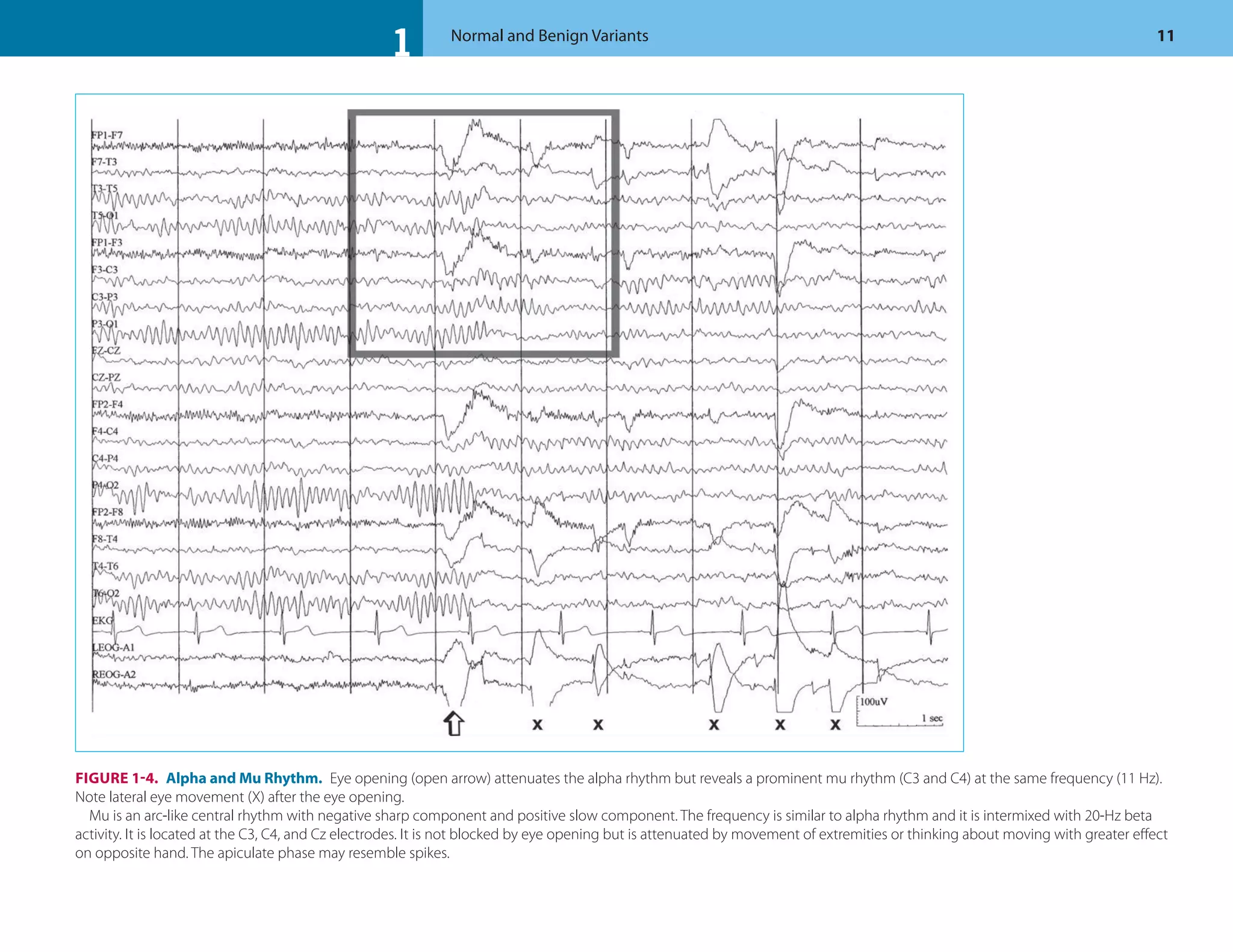
  • 215.
    3 202 Newborn Similar totemporal theta bursts in configuration, but 䡲 faster in frequency and lower in amplitude. The incidence was highest at the youngest age, 22– 䡲 25 weeks CA, decreasing to zero near term. In the youngest age these rhythms are mainly 䡲 bilateral; in the older neonates, they are unilateral. Seen more often in active sleep, but reduced in 䡲 incidence in patients with abnormal slow waves, ictal, or immature patterns. Right-sided sharp theta on the occipitals of 䡲 prematures (STOP) was more frequently associated with abnormal EEGs, especially in males with right- sided sharp waves, often noted in the patients with seizures and intraventricular hemorrhages (IVHs). Temporal theta bursts (Figures 3-11 and 3-14 to 3-18) Rhythmic 4- to 6-Hz sharply contoured theta waves 䡲 in short bursts of 1–2 sec with voltage varying from 20 to 200 μV. Arising independently in the left and right 䡲 midtemporal regions. Appears at the age of 26 weeks CA, is expressed 䡲 maximally around 29–32 weeks CA, then rapidly disappears, and is replaced by temporal alpha bursts at 33 weeks CA. Temporal alpha bursts (Figure 3-19) Similar character of amplitude, burst duration, and 䡲 spatial distribution as temporal theta bursts. Very specific developmental marker for 33 weeks 䡲 CA because they appear at the 33 weeks CA and disappear by 34 weeks CA. Trace alternant (Figures 3-20 and 3-21) Between 36 and 38 weeks CA, two NREM EEG patterns 䡲 present: (1) continuously diffuse high-voltage, slow- wave activity and (2) trace alternant. Bursts of activity (delta activity admixed with 䡲 faster frequencies) with amplitude of 50–300 μV, interspersed between periods of decreased amplitude (resembles the EEG during wakefulness and active sleep and consists of mixed frequencies with 25–50 μV). Begins to wane by 38–40 weeks CA and disappears 䡲 by 44–46 weeks CA when it is replaced by continuous slow-wave activity. After that, sleep spindles present at around 46 weeks CA. The distinction between trace alternant and trace 䡲 discontinu (TD) is the amplitude of IBI. In TD, it is less than 25 μV, whereas in trace alternant, it is more than 25 μV. Frontal sharp transients (encoches frontales) (Figures 3-22 to 3-26) Physiologic findings. 䡲 Isolated high amplitude (50 to >150 μV), broad, 䡲 biphasic transients (either negative–positive or positive–negative) with blunt configuration, seen maximally in frontal–prefrontal regions (Fp3–Fp4). They usually are isolated or occur in brief runs, alone 䡲 or in combination with anterior slow dysrhythmia, symmetrically, bilaterally, and synchronously. They occur in transition from active to early quiet sleep. 䡲 Although the premature form with 䡲 polyphasic potentials and very high amplitude may appear very early at 26–31 weeks CA, the typical biphasic frontal sharp transients (FST) are maximally expressed at 35–36 weeks, are diminished in number and voltage after 44 weeks CA, are rarely seen during sleep after 46 weeks CA, and are absent at 48 weeks CA. Minor pathologic FST include (1) excessive amount, 䡲 (2) long duration, (3) high amplitude, (4) occurrence in active sleep/wakefulness, (5) atypical morphology, (6) marked asymmetry, and (7) appearance beyond 48 weeks. Anterior slow dysrhythmia (Figures 3-27 to 3-29) Intermittent semirhythmic 1.5–2-Hz high-voltage 䡲 delta activity (50–100 μV) in the frontal regions bilaterally. Usually admixed with frontal sharp transients. 䡲 Occurs most prominently during transitional sleep. 䡲 It is a normal developmental EEG pattern. However, 䡲 when it is abundant, persistently asymmetric, and high in amplitude or dysmorphic, it may be considered abnormal Rhythmic midline central theta bursts (Figure 3-30) Bursts of rhythmic 50- to 200-μV, 5- to 9-Hz activity 䡲 occurring in the midline central region. Either a normal variant or in association with other 䡲 abnormalities, especially central sharp waves in patients with various central nervous system (CNS) insults. Transient unilateral attenuation of background activity (Figures 3-31 and 3-32) Occurs during the beginning of quiet sleep. 䡲 Seen in 3–4% of newborns. 䡲 Consists of a sudden flattening of the EEG activity 䡲 occurring in one hemisphere. Asymmetry is transient, lasting from 1 to 5 min (less 䡲 than 1.5 min in 75% of cases). EEG activity before and after the asymmetry is almost 䡲 always normal. May reflect the unusual functioning of mechanisms 䡲 underlying the normal process of change from the low-voltage continuous EEG in REM sleep to the higher-voltage discontinuous pattern of quiet sleep. Uncertain significance and must be differentiated 䡲 from asymmetric background activity associated with structural abnormalities. The latter is usually shorter in duration, occurs in all states, and is associated with other EEG abnormalities such as sharp waves or delta slowing. Burst suppression (Figures 3-33 to 3-35) Most extreme degree of discontinuity. 䡲
  • 216.
    3 Newborn 203 Representsan intermediate degree between 䡲 depressed and undifferentiated EEG and electrocerebral inactivity (ECI). During the burst, activity 䡲 is comprised of an intermixed of poorly organized delta and theta frequencies, at times, with spikes or sharp waves. The IBI contains very low voltage (<5 μV) activity that 䡲 can last more than 20 sec. Burst suppression is different from TD: 䡲 Excessively discontinuous 䊳 Invariant 䊳 Completely unreactive to noxious stimulation 䊳 No spontaneous cycling of state 䊳 Some 䊳 patients may have myoclonic jerks during the bursts. Poor outcome is noted in 85–100% 䡲 The rhythmic alpha activity within the burst 䡲 suppression activity indicates encephalopathy rather than epileptiform activity (alpha seizure). Positive sharp waves (Figures 3-36 to 3-43) Neither epileptiform activity nor directly associated 䡲 with neonatal seizures. Associated with underlying structural abnormalities, 䡲 especially in the deep cerebral white matter. Seen in a variety of conditions including 䡲 periventricular leukomalacia. Hydrocephalus, meningitis, inborn errors of 䡲 metabolism, stroke, hemorrhages, or hypoxic ischemic encephalopathy (HIE).4 Positive rolandic sharp waves (PRSs) and positive 䡲 temporal sharp waves (PTSs) are often associated with, but are not pathognomonic of, IVH. The earlier descriptions of the neonatal positive sharp 䡲 wave (PSW) placed them on the central regions, but later discharges of the same kind have been described on the temporal regions. PRSs have low sensitivity but high specificity for IVH 䡲 and are seen in 69.2% of grade III and IV IVH and in 31.8% of lower grades IVH. PRSs may represent“white matter necrosis”with and 䡲 without IVH and infarction. They are associated with seizures in 29%. Focal negative sharp waves (Figures 3-44 to 3-46) Although there are no rigid criteria to 䡲 distinguish abnormal from normal focal sharp waves in neonates, some findings, especially in combination, may be helpful to identify abnormal sharp waves: Complex morphology, especially polyphasic, 䊳 followed by extremely high-voltage slow wave Spikes rather than sharp waves 䊳 Positive polarity 䊳 Repetitive runs, especially burnt-out sharp waves 䊳 Persistent localization or lateralization (even as early 䊳 as 30 weeks CA) Occurrence during wakefulness, especially in term 䊳 infants Moderately or severely abnormal background 䊳 activity Frequency more than 1 per 1 min 䊳 Any sharp waves or spikes after 2 months CA 䊳 High-amplitude (>150 μV) and long-duration (>150 䊳 msec), 10) multifocal sharp waves. Zip-like electrical discharges (zips) (Figures 3-47 to 3-49) Common ictal EEG pattern in neonates, which 䡲 consists of focal episodic rapid spikes of accelerating and decelerating speed that look like zips. Zips may be associated with subclinical, subtle, focal 䡲 clonic, and tonic seizures. Zips of subtle seizures are often multifocal and of shifting localization. Seizures of the depressed brain (Figures 3-47 to 3-51) Seen in neonates whose background EEG activity is 䡲 depressed and undifferentiated. The discharges are typically low in voltage, long 䡲 in duration, highly localized, may be unifocal or multifocal, and show little tendency to spread. This pattern is typically not accompanied by 䡲 a clinical seizure and suggests a poor prognosis. Focal clonic seizure (Figure 3-52) Stroke or hemorrhage is the most common structural 䡲 abnormality that causes focal clonic or tonic seizures. In addition, focal tonic or clonic seizures are also 䡲 associated with some metabolic conditions such as hypocalcemia, hypoglycemia, and hypomagnesemia. Alpha seizure discharge (Figures 3-53 to 3-56) Typically occurs in unilateral temporal or central 䡲 region or can evolve from activity that is more clearly epileptic. It can also occur simultaneously, but asynchronously with other electrographic seizures. The alpha seizure discharge is associated with severe 䡲 encephalopathy and poor prognosis. It may occur without clinical accompaniment. Théta pointu alternant (Figures 3-57 to 3-58) Interictal EEG in benign familial and idiopathic 䡲 neonatal convulsions was normal, discontinuous, and showed focal or multifocal sharp waves or“théta pointu alternant”pattern. Seen during waking and sleep and up to 12 days after 䡲 the seizures are stopped. Bursts of unreactive dominant 4–7 Hz theta 䡲 activity intermixed with sharp waves with frequent interhemispheric asynchrony and shifting predominance between the two hemispheres.
  • 217.
    3 204 Newborn Nonspecific EEGpattern seen in status epilepticus 䡲 caused by a variety of conditions such as HIE, hypocalcemia, meningitis, subarrachnoid hemorrhage, and benign idiopathic/familial neonatal convulsions. The patterns suggesting poor prognosis such as a 䡲 paroxysmal, inactive, or burst suppression have never been reported in benign idiopathic/familial neonatal convulsions. Théta pointu alternant pattern is associated with 䡲 good prognosis. Early myoclonic encephalopathy (Figure 3-59) Very rare epileptic syndrome characterized by 䡲 myoclonus with onset of seizures in the neonatal period. EEG shows 䡲 burst-suppression pattern. Metabolic diseases, especially nonketotic 䡲 hyperglycinemia, are usually the causes of early myoclonic encephalopathy (EME). Malformation of cortical development is an 䡲 uncommon etiology. Pyridoxine dependency was reported in one 䡲 patient with EME who had complete recovery after the treatment with pyridoxine. Almost all patients with EME have very poor prognosis. 䡲 Ohtahara syndrome (Figure 3-60) Very rare and devastating form of epileptic 䡲 encephalopathy of very early infancy. Onset of seizure is mainly within 1 month and often 䡲 within the first 10 days of life, sometimes prenatally or the first 2–3 months after birth. Tonic spasms and, less commonly, erratic focal motor 䡲 seizures and hemiconvulsions. EEG shows 䡲 burst-suppression pattern occurring in both sleep and waking states. Etiologies are heterogeneous but prenatal brain 䡲 pathology such as malformation of cortical development is suspected in most cases and metabolic disorders are rare. Evolution into West syndrome is often observed in 䡲 surviving cases. Depression and lack of differentiation EEG (Figure 3-61) Indicative of severe brain insult but is nonspecific 䡲 in etiology and can be due to a wide variety of conditions including severe HIE, severe metabolic disorders, meningitis or encephalitis, cerebral hemorrhage, and IVH. Depressed and undifferentiated EEG within the 䡲 first 24 h after birth that persists indicates a poor prognosis. Electrocerebral inactivity (Figures 3-62 to 3-64) EEG shows no cerebral activity with the EEG 䡲 sensitivity of 2 μV/mm. Represents the ultimate degree of depression and 䡲 lack of differentiation. Serial EEGs are required to demonstrate a persistent 䡲 degree of cortical inactivity. Isoelectric EEG is indicative of death of the cortex but 䡲 not of brainstem. Therefore, patients may continue to survive with cardiorespiratory support despite the presence of this EEG pattern. ECI can be interpreted as a sign of brain death if there 䡲 is absence of cortical and brainstem functions, and no evidence of intoxication, or hypothermia. Minimal technical standards for the EEG recording 䡲 in brain death by The American Encephalographic Society are required. Symptomatic focal epilepsy caused by focal cortical dysplasia (Figures 3-65 to 3-67) Intrinsic epileptogenicity in focal cortical dysplasia 䡲 (FCD) is caused by abnormal synaptic interconnectivity and neurotransmitter changes within the lesion. FCD has intrinsic epileptogenicity with unique EEG 䡲 patterns including continuous spikes or sharp waves, abrupt runs of high-frequency spikes, rhythmic sharp waves, and periodic spike complexes that occur during sleep. The incidence of intrinsic epileptogencity in FCD 䡲 was 11–20%. Polymorphic delta activity indicative of white matter involvement is commonly seen in FCD. Trains of continuous or very frequent rhythmic spikes 䡲 or sharp waves and recurrent electrographic seizures on the scalp EEG were seen in up to 44% of FCD in one series. Similar 䡲 discharges (low-voltage fast activity), also called“regional polyspike,”especially in extratemporal location, is highly associated with FCD (80%). In all patients with FCD, the seizure onset zone (SOZ) 䡲 was located within the lesion. Lesional non-SOZ areas might not be directly involved in the seizure origin but might turn into a seizure focus after the removal of primary epileptogenic tissue; therefore, removal of the entire lesion and surrounding interictally active tissue is necessary. Removal of the FCD alone does not lead to a good outcome, suggesting a more widespread epileptogenic network in these patients.
  • 218.
    3 Newborn 205 FIGURE31. Tracé Discontinu. EEG of a 27-week CA infant with severe HIE. Tracé discontinu (TD) is the earliest EEG activity that appears in viable neonate at 22–23 weeks of gestational age (GA). The waves are described as short bursts, consisting of slow and fast rhythm, interspersed against a flat or quiescent background of less than 25 μV.1 At a very early age of 22–24 weeks GA may vary from 5 sec to 8 min.2 As age increases, the periods of inactivity shorten. The longest acceptable single interburst interval (IBI) duration has been reported to be 26 weeks CA, 46 sec; 27 weeks CA, 36 sec; 28 weeks CA, 27 sec3 ; less than 30 weeks CA, 35 sec; 31–33 weeks CA, 20 sec; 34–36 weeks CA, 10 sec; and 37–40 weeks CA, 6 sec.4–6 The TD is also the first EEG pattern occurring during quiet sleep that differentiates wakefulness from sleep in the premature infant at around 30–32 weeks CA. Infants less than 30 weeks CA show interhemispheric hypersynchrony whereby the majority of bursts arising within the two hemispheres appear at the same time.5
  • 219.
    3 206 Newborn FIGURE 32.Interhemispheric Hypersynchrony. EEG of an infant 28 weeks CA with apnea. The tracing is discontinuous. Infants at less than 30 weeks CA have“paradoxical hypersynchrony”whereby bursts of cerebral electrical activities are well synchronized and appear simultaneously between the two hemispheres. The pathophysiology of this phenomenon is unknown. After 30 weeks CA, bursts of cerebral activities appear to be more asynchronous. The bursts of cerebral activities during quiet sleep are synchronized in approximately 70% at 31–32 weeks CA, 80% at 33–34 weeks CA, and 100% after 37 weeks CA. In infants less than 30 weeks CA, the average interburst interval (IBI) or quiescence is about 6–12 sec. The longest acceptable IBI is 30–35 sec.
  • 220.
    3 Newborn 207 FIGURE33. Tracé Discontinu. EEG of a 28-week CA infant with severe HIE. Tracé discontinu (TD) is the earliest EEG activity that appears in the viable neaonate at 22–23 weeks of gestational age (GA). It is described as short bursts, consisting of slow and fast rhythm, interspersed against a flat or quiescent background of less than 25 μV.1 At a very early age of 22–24 weeks GA, it may vary from 5 sec to 8 min.2 As age increases, the periods of inactivity shorten. The longest acceptable single interburst interval (IBI) duration has been reported to be 26 weeks CA, 46 sec; 27 weeks CA, 36 sec; 28 weeks, 27 sec3 ; less than 30 weeks CA, 35 sec; 31–33 weeks CA, 20 sec; 34–36 weeks CA, 10 sec; and 37–40 weeks CA, 6 sec.4–6 The TD is also the first EEG pattern occurring during quiet sleep that differentiates wakefulness from sleep in the premature infant at around 30–32 weeks CA. Infants less than 30 weeks CA show interhemispheric hypersynchrony in which the majority of bursts arising within the two hemispheres appear at the same time.5 Note frequent low-voltage sharp waves at Cz.
  • 221.
    3 208 Newborn FIGURE 34.Delta Brushes (Central Predominance). EEG of a 28-week CA infant with apnea. Delta brushes (DBs) (“brushes,”“spindles-delta bursts,”“ripples of prematurity,”spindles-like fast waves,”and“beta-delta complexes”) first appear at 24–26 weeks CA and consist of a combination of a specific delta frequency transient (0.3–1.5 Hz, 50–250 mV) waves with a superimposed“buzz”of 8- to 22-Hz activity. DBs are symmetrical but asynchronous, except when they are associated with monorhythmic occipital delta activity. Before 33 weeks CA, they occur more frequently during active than quiet sleep. After that, they are more numerous in quiet sleep. In the youngest prematures, DBs are most commonly seen in the central and midline areas. At the peak of 32–34 weeks CA, they are seen in occipital and temporal regions. By term, DBs are only seen in the bursts of trace alternant. DBs disappear completely at 44 weeks CA.4,5 If DBs are found at a frequency of greater than 2 every 10 sec at term, they should be considered abnormal.12 DBs are prominent during REM and NREM sleep between 26–33 weeks CA and 33–37 weeks CA.5
  • 222.
    3 Newborn 209 FIGURE35. Monorhythmic Occipital Delta Activity and Delta Brushes; Extremely Low-Voltage Background Activity. Monorhythmic occipital delta activity in an infant 31 weeks of conceptional age (CA) with severe hypoxic ischemic encephalopathy. This activity is described as a run of monomorphic, high amplitude (50–250 μV), surface-positive polarity, 0.3- to 1.5-Hz delta waves, occurring symmetrically and synchronously in the bi-occipital regions. The run can last from 2 to 60 sec, rarely longer than 5–6 sec in duration in an infant less than 28 weeks CA and commonly greater than 30 sec at 28–31 weeks CA. It is present at 23–24 weeks CA, peaks between 31 and 33 weeks, and then significantly fades by 35 weeks. It serves as the constituent of, and can intermix with, occipital delta brushes (arrow). Monorhythmic occipital delta activity is a principal landmark regional electrographic feature of the preterm infant. It is a strong rhythm and may persist in the presence of severe acute encephalopathy.4,8 Also note EEG signs, bitemporal attenuation, and interhemispheric hypersynchrony in an infant less than 28 weeks CA. Bitemporal attenuation probably reflects interhemispheric asynchrony and underdevelopment of the inferior frontal and superior temporal gyri.9 The physiology of interhemispheric hypersynchrony is unknown.4
  • 223.
    3 210 Newborn FIGURE 36.Delta Brushes (Occipital Predominance); Monorhythmic Occipital Delta Activity. EEG of a 31-week CA infant with HIE showed bilateral synchronous monorhythmic occipital delta activity intermixed with delta brushes (DBs) in the occipital regions (arrow). DBs (“brushes,”“spindles-delta bursts,”“ripples of prematurity,”“spindles-like fast waves,”and“beta-delta complexes”) first appear at 24–26 weeks CA and consist of a combination of a specific delta frequency transient (0.3–1.5 Hz, 50–250 mV) waves with a superimposed“buzz”of 8- to 22-Hz activity. DBs are symmetric but asynchronous, except when they are associated with monorhythmic occipital delta activity. Before 33 weeks CA, they occur more frequently during active than quiet sleep. After that, they are more numerous in quiet sleep. In the youngest prematures, DBs are most commonly seen in the central and midline areas. At the peak of 32–34 weeks CA, they are seen in occipital and temporal regions. By term, DBs are only seen in the bursts of trace alternant. DBs disappear completely at 44 weeks CA.4,5 If DBs are found more than 2 every 10 sec at term, they should be considered abnormal.12 DBs are prominent during REM and NREM sleep between 26–33 weeks CA and 33–37 weeks CA.5
  • 224.
    3 Newborn 211 FIGURE37. Markedly Excessive Discontinuity; Gross Interhemispheric Asynchrony; Extremely LowVoltage. (Same EEG recording as in Figure 3-5) A 31-week CA with severe HIE. EEG during comatose state shows extremely low-voltage background activity, excessive interburst interval of more than 2 min (not shown), and marked interhemispheric asynchrony. Also note monorhythmic occipital delta activity (open arrow), delta brushes in the occipital, temporal, and central regions (arrow), and STOP (double arrows). The patient died 1 day after this EEG. Extremely low-voltage (<5 μV) background, markedly excessive discontinuity for age, burst suppression pattern, gross hemispheric asynchrony, depressed and undifferentiated, and isoelectric background activity are indicative of death or poor outcome.4,8,10–13
  • 225.
    3 212 Newborn FIGURE 38.Sharp Theta on the Occipitals of Prematures (STOP). STOP (open arrow) refers to 5–6 Hz sharp-contoured theta activity, either unilateral or bilateral and maximal in the occipital regions. The STOP pattern is similar to temporal theta bursts in configuration, but is faster in frequency and lower in amplitude. The incidence was highest at the youngest age, 22–25 weeks CA, decreasing to zero near term. In the youngest age these rhythms are mainly bilateral; in the older neonates they are unilateral. STOP is seen more often in active sleep, but is reduced in incidence in patients with abnormal slow waves, ictal or immature patterns. Right-sided STOP was more frequently associated with abnormal EEGs, especially in males with right-sided sharp waves, often noted in the patients with seizures and intraventricular hemorrhages.2,14 Note excessive delta brushes, maximally expressed in central and temporal regions.
  • 226.
    3 Newborn 213 FIGURE39. Sharp Theta Rhythm on the Occipital Areas of Prematures (STOP). STOP refers to 5–6 Hz sharp-contoured theta activity, either unilateral or bilateral and maximal in the occipital regions. The STOP pattern is similar to temporal theta bursts in configuration, but is faster in frequency and lower in amplitude. The incidence was highest at the youngest age, 22–25 weeks CA, decreasing to zero near term. In the youngest age these rhythms are mainly bilateral; in the older neonates they are unilateral. STOP is seen more often in active sleep, but is reduced in incidence in patients with abnormal slow waves, ictal or immature patterns. Right-sided STOP was more frequently associated with abnormal EEGs, especially in males with right-sided sharp waves, often noted in the patients with seizures and intraventricular hemorrhages.2,14
  • 227.
    3 214 Newborn FIGURE 310.Sharp Theta on the Occipitals of Prematures (STOP). A 39 weeks CA boy with severe hypoxic ischemic encephalopathy with shock, DIC, cardiorespiratory failure, and seizures. He recovered after the treatment. EEG shows frequent bursts of unilateral or bilateral dependent 5–6 Hz sharp-contoured theta activity in the occipital regions (arrow) superimposed on very low-voltage background activity. STOP refers to 5–6 Hz sharp-contoured theta activity, either unilateral or bilateral and maximal in the occipital regions. The STOP pattern is similar to temporal theta bursts in configuration, but is faster in frequency and lower in amplitude. The incidence was highest at the youngest age, 22–25 weeks CA, decreasing to zero near term. In the youngest age these rhythms are mainly bilateral; in the older neonates they are unilateral. STOP is seen more often in active sleep, but is reduced in incidence in patients with abnormal slow waves, ictal or immature patterns. Right-sided STOP was more frequently associated with abnormal EEGs, especially in males with right-sided sharp waves, often noted in patients with seizures and intraventricular hemorrhages.2,14
  • 228.
    3 Newborn 215 FIGURE311. STOP and Temporal Theta Bursts Patterns. (Same recording as in Figure 3-10) The EEG shows both temporal theta bursts (double arrows) and sharp theta on the occipitals of prematures (STOP) patterns (open arrow). Temporal theta bursts are rhythmic 4- to 6-Hz, sharply contoured theta waves in short bursts of 1–2 sec with voltage varying from 20 to 200 μV, arising independently in the left and right midtemporal regions. This activity appears at the age of 26 weeks CA, is expressed maximally around 29 weeks,15 29–31 weeks,2 or between 30 and 32 weeks CA,5 then rapidly disappears, and is replaced by temporal alpha bursts at 33 weeks CA.5,16 STOP refers to 5 to 6 Hertz sharp-contoured theta activity, either unilateral or bilateral and maximal in the occipital regions. The STOP pattern is similar to temporal theta bursts in configuration, but is faster in frequency and lower in amplitude. The incidence was highest at the youngest age, 22–25 weeks CA, decreasing to zero near term.2,14
  • 229.
    3 216 Newborn FIGURE 312.Extremely Low Voltage Background; Monorhythmic Occipital Delta Activity and Delta Brushes. EEG of a 31-week CA newborn with severe HIE. DWI MI shows bilateral basal ganglia hyperintensity (open arrow). EEG shows monorhythmic occipital delta activity and delta brushes superimposed on extremely low-voltage background activity with amplitude less than 5 μV. The patient died 1 day after this EEG. Monorhythmic occipital delta activity is a principal landmark regional electrographic feature of the preterm infant. It is a strong rhythm and may persist in the presence of severely acute encephalopathy. Extremely low-voltage (<5 μV) background, in the absence of drug intoxication, acute hypoxemia, hypothermia, severe metabolic disturbances, and postictal state, along with markedly excessive discontinuity for age, burst suppression pattern, gross hemispheric asynchrony, depressed and undifferentiated, and isoelectric background activity are indicative of death or poor outcome.4,8,10–13
  • 230.
    3 Newborn 217 FIGURE313. Monorhythmic Occipital Delta Activity and Delta Brushes. Monorhythmic occipital delta activity in an infant 31 weeks of conceptional age (CA) with moderate hypoxic ischemic encephalopathy. This activity is described as a run of monomorphic, high-amplitude (50–250 μV), surface-positive polarity, 0.3- to 1.5-Hz delta waves, occurring symmetrically and synchronously in the bi-occipital regions. The run can last from 2 to 60 sec, rarely longer than 5 or 6 sec in an infant less than 28 weeks CA and commonly greater than 30 sec at 28–31 weeks CA. It is present at 23–24 weeks CA, peaks between 31 and 33 weeks, and then significantly fades by 35 weeks. It serves as the constituent of, and can intermix with, occipital delta brushes (arrow). Monorhythmic occipital delta activity is a principal landmark regional electrographic feature of the preterm infant. It is a strong rhythm and may persist in the presence of severely acute encephalopathy.4,8 Also note EEG signs, bitemporal attenuation, and interhemispheric hypersynchrony in infants less than 28 weeks CA. Bitemporal attenuation probably reflects interhemispheric asynchrony and underdevelopment of the inferior frontal and superior temporal gyri.9 The physiology of interhemispheric hypersynchrony is unknown.4
  • 231.
    3 218 Newborn FIGURE 314.TemporalTheta Bursts (Temporal SawtoothWaves,Temporal SharpTransients). Temporal theta bursts are rhythmic, 4- to 6-Hz, sharply contoured theta waves in short bursts of 1–2 sec with voltage varying from 20 to 200 μV, arising independently in the left and right midtemporal regions. This activity appears at the age of 26 weeks CA, is expressed maximally around 29 weeks,15 29–31 weeks2 or between 30 and 32 weeks CA,5 then rapidly disappears, and is replaced by temporal alpha bursts at 33 weeks CA.5,16
  • 232.
    3 Newborn 219 FIGURE315. Temporal Theta Bursts. Temporal theta bursts are rhythmic 4- to 6-Hz, sharply contoured theta waves in short bursts of 1–2 sec with voltage varying from 20 to 200 μV, arising independently in the left and right midtemporal regions. This activity appears at the age of 26 weeks CA, is expressed maximally around 29 weeks,15 29–31 weeks,2 or between 30 and 32 weeks CA,5 then rapidly disappears, and is replaced by temporal alpha bursts at 33 weeks CA.5,16
  • 233.
    3 220 Newborn FIGURE 316.Temporal Theta Burst. Temporal theta bursts (arrow) are rhythmic 4- to 6-Hz, sharply contoured theta waves in short bursts of 1–2 sec with voltage varying from 20 to 200 μV, arising independently in the left and right midtemporal regions. This activity appears at the age of 26 weeks CA, is expressed maximally around 29 weeks,15 29–31 weeks,2 or between 30 and 32 weeks CA,5 then rapidly disappears, and is replaced by temporal alpha bursts at 33 weeks CA.5,16 Also note delta brushes (arrow head) in the left frontal and temporal regions.
  • 234.
    3 Newborn 221 FIGURE317. Temporal Theta Bursts (Temporal Sawtooth Waves). Temporal theta bursts are rhythmic 4- to 6-Hz, sharply contoured theta waves in short bursts of 1–2 sec with voltage varying from 20 to 200 μV, arising independently in the left and right midtemporal regions. This activity appears at the age of 26 weeks CA, is expressed maximally around 29 weeks,15 29–31 weeks,2 or between 30 and 32 weeks CA,5 then rapidly disappears, and is replaced by temporal alpha bursts at 33 weeks CA.5,16
  • 235.
    3 222 Newborn FIGURE 318.Temporal Theta Bursts. Temporal theta bursts are rhythmic 4- to 6-Hz, sharply contoured theta waves in short bursts of 1–2 sec with voltage varying from 20 to 200 μV, arising independently in the left and right midtemporal regions. This activity appears at the age of 26 weeks CA, is expressed maximally around 29 weeks,15 29–31 weeks,2 or between 30 and 32 weeks CA,5 then rapidly disappears, and is replaced by temporal alpha bursts at 33 weeks CA.5,16
  • 236.
    3 Newborn 223 FIGURE319. Temporal Alpha Bursts; Normal Newborn: 33 Weeks Conceptional Age (CA). Temporal alpha bursts have similar character of amplitude, burst duration, and spatial distribution as temporal theta bursts (as described in Fig. 3-14 to 3-18). The presence of temporal alpha bursts is a very specific developmental marker for 33 weeks CA, because they appear at 33 weeks CA and disappear by 34 weeks CA.5
  • 237.
    3 224 Newborn FIGURE 320.Trace Alternant. Background activity in NREM sleep is discontinuous before 36 weeks CA. Between 36 and 38 weeks CA, two NREM EEG patterns present (1) continuously diffuse high-voltage, slow-wave activity and (2) trace alternant—this consists of bursts of activity (delta activity admixed with faster frequencies) with an amplitude of 50–300 μV, interspersed between periods of decreased amplitude (resembles the EEG during wakefulness and active sleep and consists of mixed frequencies with amplitudes of 25–50- μV). Trace alternant begins to wane by 38–40 weeks CA and disappears by 44–46 weeks CA when it is replaced by continuous slow-wave activity. After that, sleep spindles present at around 46 weeks CA. The distinction between trace alternant and tracé discontinu is the amplitude of IBI (interburst interval). In tracé discontinu, it is less than 25 μV, whereas in trace alternant, it is more than 25 μV.2,4,5
  • 238.
    3 Newborn 225 FIGURE321. Trace Alternant. Background activity in NREM sleep is discontinuous before 36 weeks CA. Between 36 and 38 weeks CA, two NREM EEG patterns present (1) continuously diffuse high-voltage, slow-wave activity and (2) trace alternant—this consists of bursts of activity (delta activity admixed with faster frequencies) with an amplitude of 50–300 μV, interspersed between periods of decreased amplitude (resembles the EEG during wakefulness and active sleep and consists of mixed frequencies with amplitudes of 25–50- μV). Trace alternant begins to wane by 38–40 weeks CA and disappears by 44–46 weeks CA when it is replaced by continuous slow-wave activity. After that, sleep spindles present at around 46 weeks CA. The distinction between trace alternant and tracé discontinu is the amplitude of IBI (interburst interval). In tracé discontinu, it is less than 25 μV, whereas in trace alternant, it is more than 25 μV.2,4,5
  • 239.
    3 226 Newborn FIGURE 322.Frontal Sharp Transients (encouche frontales) (FSTs); Temporal Sharp Waves. A 39-week CA infant with apnea. EEG shows frontal sharp transients (open arrow) and left anterior temporal sharp waves. The rest of EEG recording is within normal limits. FSTs are physiological findings described as isolated high-amplitude, broad, biphasic transients with blunt configuration, seen maximally in frontal–prefrontal regions. They usually either are isolated or occur in brief runs, alone or in combination with anterior slow dysrhythmia, symmetrically, bilaterally, and synchronously. They occur in transition from active to early quiet sleep. Although the premature form, which is polyphasic and of very high amplitude, may appear very early at 26–31 wks CA, the typical biphasic FSTs are maximally expressed at 35–36 wks, are diminished in number and voltage after 44 wks CA, are rarely seen during sleep after 46 wks CA, and are absent at 48 wks CA.17 Minor criteria for pathologic FSTs include (1) excessive amount, (2) excessive duration duration, (3) high amplitude, (4) occurrence in active sleep/wakefulness, (5) atypical morphology, (6) marked asymmetry, and (7) FSTs beyond 48 weeks.4,5,7,8,16,18 Although there are no rigid criteria to distinguish abnormal from normal focal sharp waves in neonates, some findings, especially in combination, may be helpful to identify abnormal sharp waves: (1) complex morphology, especially polyphasic, followed by extremely high-voltage slow wave, (2) spikes rather than sharp waves, (3) positive polarity, (4) repetitive runs especially burnt-out sharp waves, (5) persistent localization or lateralization (even as early as 30 weeks CA), (6) occurrence during wakefulness (especially in term infants) term infants, (7) moderately or severely abnormal background activity, (8) frequency of more than 1 per 1 min, (8) any sharp waves or spikes after 2 months CA, (9) high amplitude (>150 μV) and long duration (>150 msec), and (10) multifocal sharp waves.2,4,5,19
  • 240.
    3 Newborn 227 FIGURE323. Frontal Sharp Transients (encouche frontales). Frontal sharp transients (encoches frontales) are physiologic findings described as isolated high amplitude (50 to >150 μV), broad, biphasic transients (either negative–positive or positive–negative) with blunt configuration, seen maximally in frontal–prefrontal regions (Fp3–Fp4). They usually are isolated or occur in brief runs, alone or in combination with anterior slow dysrhythmia, symmetrically, bilaterally, and synchronously. They occur in transition from active to early quiet sleep. Although the premature form, which are polyphasic and very high amplitude may appear very early at 26–31 weeks CA, the typical biphasic FST are maximally expressed at 35–36 weeks, are diminished in number and voltage after 44 weeks CA, are rarely seen during sleep after 46 weeks CA, and are absent at 48 weeks CA.17 Minor criteria for pathologic FSTs include (1) excessive amount, (2) excessive duration, (3) high amplitude, (4) occurrence in active sleep/wakefulness, (5) atypical morphology, (6) marked asymmetry, and (7) FSTs beyond 48 weeks.4,5,7,8,16,18
  • 241.
    3 228 Newborn FIGURE 324.Frontal Sharp Transients (encouche frontales); Anterior Slow Dysrhythmia. Frontal sharp transients (FST) or encoche frontales (arrow) are physiologic sharp waves occurring between 34 and 44 weeks CA. They are high-voltage, broad-based, biphasic, or, less commonly, triphasic sharp waves maximally seen in the prefrontal regions. FST occur symmetrically and synchronously on both sides during sleep, particularly during transition from active to quiet sleep. An immature form of FST described as very high- voltage polymorphic sharp waves can be seen at earlier ages between 27 and 31 weeks CA. The frequency of FST sharply declines between 43 and 45 weeks CA and disappears at 48 weeks CA. They may occur alone or in combination with“anterior slow dysrhythmia”(arrow head).
  • 242.
    3 Newborn 229 FIGURE325. Premature Frontal SharpTransients (FST) in 31 weeks CA Infant. Frontal sharp transients (encoches frontales) are physiologic findings described as isolated high amplitude (50 to >150 μV), broad, biphasic transients (either negative–positive or positive–negative) with blunt configuration, seen maximally in frontal–prefrontal regions (Fp3–Fp4). They usually are isolated or occur in brief runs, alone or in combination with anterior slow dysrhythmia, symmetrically, bilaterally, and synchronously. They occur in transition from active to early quiet sleep. Although the premature form which is polyphasic and very high amplitude may appear very early at 26–31 weeks CA, the typical biphasic FST are maximally expressed at 35–36 weeks, are diminished in number and voltage after 44 weeks CA, are rarely seen during sleep after 46 weeks CA, and are absent at 48 weeks CA.17
  • 243.
    3 230 Newborn FIGURE 326.Eye Movement Artifact. A 38-week CA infant with apnea. EEG shows biphasic sharp theta activity in bilateral prefrontal regions that simulate frontal sharp transients. Eye lead channel can differentiate between these two conditions. When activity points in the different directions as in this EEG, it indicates that this is eye movement artifact rather than brain wave.
  • 244.
    3 Newborn 231 FIGURE327. Anterior Slow Dysrhythmia; (Anterior Dysrhythmia, Bifrontal Delta Activity). A 40 weeks CA infant with apnea and cyanosis. EEG shows“anterior slow dysrhythmia,”which is described as intermittent semirhythmic 1.5- to 2-Hz high-voltage delta activity (50- to 100 μV) in the frontal regions bilaterally. Anterior slow dysrhythmia is usually admixed with frontal sharp transients. It occurs most prominently during transitional sleep. It is a normal developmental EEG pattern. However, when it is abundant, persistently asymmetric, and high in amplitude or dysmorphic, it may be considered abnormal.2,4,5,10
  • 245.
    3 232 Newborn FIGURE 328.Anterior Slow Dysrhythmia & Frontal Sharp Transients. A 38-week CA baby girl with mild hypoxic ischemic encephalopathy and clinically suspected seizures. EEG shows bilateral synchronous, rhythmic 1.5-Hz sharp-contoured delta activity in bilateral frontal regions, intermixed with frontal sharp transients. Repetitive frontal sharp transients and anterior slow dysrhythmia is considered a normal, developmental EEG pattern.
  • 246.
    3 Newborn 233 FIGURE329. Frontal Sharp Waves; Intraventricular/Periventricular Hemorrhage. A 2-day-old full-term infant with intraventricular hemorrhage associated with congenital CMV infection and cardiomyopathy. EEG shows marked and persistent spike/sharp-wave activity in the right frontal region intermixed with focal theta and delta slowing in the same region. This spike/sharp wave activity is more likely to be epileptiform activity rather than anterior slow dysrhythmia. In the same recording (not shown), the patient also has focal electrographic seizures in the right frontal region.
  • 247.
    3 234 Newborn FIGURE 330.Rhythmic Midline Central Theta Bursts. A 39-week CA infant with jitteriness. EEG shows bursts of rhythmic 4–5 Hz sharply-contoured theta activity in Cz and C4. The rest of the EEG recording was unremarkable. Note an electrode artifact at F7. Rhythmic midline central theta bursts are bursts of rhythmic 50- to 200 -μV, 5- to 9-Hz activity occurring in the midline central region. It can be either a normal variant or can occur in association with other abnormalities, especially central sharp waves, in patients with various CNS insults.5,20
  • 248.
    3 Newborn 235 FIGURE331. Transient Unilateral Attenuation of Background Activity During Sleep. A 41-week CA newborn with recurrent apneic episodes associated with cyanosis. The neurologic examination was normal. Head CT was unremarkable. A routine EEG during slow sleep shows intermittent attenuation of background activity over the left hemisphere lasting for 1–2 min. Transient unilateral attenuation of background activity during quiet sleep is seen in 3–4% of newborns and consists of a sudden flattening of the EEG activity occurring in one hemisphere. The asymmetry is transient, lasting from 1 to 5 min (less than 1.5 min in 75% of cases). It occurs at the beginning of quiet sleep. The EEG activity before and after the asymmetry is almost always normal. This EEG pattern may reflect the unusual functioning of mechanisms underlying the normal process of change from the low-voltage continuous EEG in REM sleep to the higher voltage discontinuous pattern of quiet sleep. This EEG phenomenon is of uncertain significance and must be differentiated from asymmetric background activity associated with structural abnormalities. The latter is usually shorter in duration, occurs in all states, and is associated with other EEG abnormalities such as sharp waves or delta slowing.5,20–22
  • 249.
    3 236 Newborn FIGURE 332.Transient Unilateral Attenuation of Background Activity During Sleep. A 41-week CA newborn with recurrent apneic episodes associated with cyanosis. The neurologic examination was normal. Head CT was unremarkable. A routine EEG during slow sleep shows intermittent attenuation of background activity over the left hemisphere lasting for 1–2 minutes. Faster paper speed enhances the“transient unilateral attenuation of background activity during sleep”. Transient unilateral attenuation of background activity during quiet sleep is seen in 3–4% of newborn and consists of a sudden flattening of the EEG activity occurring in one hemisphere.The asymmetry is transient, lasting from 1 to 5 min (less than 1.5 min in 75% of cases). It occurs at the beginning of quiet sleep.The EEG activity before and after the asymmetry is almost always normal.This EEG pattern may reflect the unusual functioning of mechanisms underlying the normal process of change from the low-voltage continuous EEG in REM sleep to the higher voltage discontinuous pattern of quiet sleep.This EEG phenomenon is of uncertain significance and must be differentiated from asymmetric background activity associated with structural abnormalities.The latter is usually shorter in duration, occurs in all states, and is associated with other EEG abnormalities such as sharp waves or delta slowing.5,20–22
  • 250.
    3 Newborn 237 FIGURE333. Burst-Suppression Pattern; Severe Hypoxic-Ischemic Encephalopathy. (Same patient as in Figure 3-5 and 3-7) A 31-week CA infant with severe HIE. EEG shows a nonreactive burst suppression pattern. The burst of activity contains sharp waves and spikes intermixed with delta and faster frequencies. The interburst interval (IBI) is of very low amplitude. The patient died 1 day after this EEG. Burst suppression is the most extreme degree of discontinuity and represents an intermediate degree between depressed and undifferentiated EEG and electrocerebral inactivity. During the burst, activity contains intermixed components of poorly organized delta and theta frequencies, at times, with spikes or sharp waves. The IBI contains very low-voltage (<5 μV) activity that can last more than 20 sec. Burst suppression is different from tracé discontinu in that it is excessively discontinuous and invariant and completely unreactive to noxious stimulation. Also, there is no spontaneous cycling of state. Some patients may have myoclonic jerks during the bursts. Poor outcome is noted in 85–100%.4,5,8
  • 251.
    3 238 Newborn FIGURE 334.Burst-Suppression Activity with Diffuse Rhythmic Alpha Activity. A 35-week CA infant with moderate hypoxic ischemic encephalopathy who developed hypotonia and focal clonic seizures. EEG shows diffuse moderate-voltage rhythmic alpha activity (open arrow) during the burst suppression EEG pattern. Note asymmetric monorhythmic occipital delta activity at O1 and O2 (double arrows) and delta brushes in multifocal regions (arrow head). The rhythmic alpha activity within the burst suppression activity indicates encephalopathy rather than epileptiform activity (alpha seizure).5
  • 252.
    3 Newborn 239 FIGURE335. Burst-Suppression Activity With Diffuse Rhythmic Alpha Activity. (Selected portion of the EEG in Figure 3-34) A 35-week CA infant with hypotonia and focal clonic seizures caused by moderate hypoxic ischemic encephalopathy. EEG shows diffuse moderate-voltage rhythmic alpha activity (open arrow) during the burst suppression EEG pattern.5 (Note asymmetric monorhythmic occipital delta activity at O1 and O2 (double arrows) and delta brushes in multifocal regions (arrow head).
  • 253.
    3 240 Newborn FIGURE 336.Positive Rolandic Sharp Waves (PRSs); Intracerebral Hemorrhage due to Venous Sinus Thombrosis. A 40-week CA infant born with Apgar scores of 1, 5, and 7 at 1, 5, and 10 min, respectively. The patient developed right focal clonic seizures. He was subsequently found to have a left frontal-parietal hemorrhage caused by venous sinus thrombosis (arrow). EEG shows trains of left positive rolandic sharp waves (PRSs) (open arrow). Positive sharp waves (PSWs) are not epileptiform activity and not directly associated with neonatal seizures but rather with underlying structural abnormalities, especially in the deep cerebral white matter, and can be seen in a variety of conditions, including periventricular leukomalacia, hydrocephalus, meningitis, inborn errors of metabolism, stroke, hemorrhages, or HIE.4 PRSs and positive temporal sharp waves (PTSs) are often associated with, but are not pathognomonic of, intraventricular hemorrhage (IVH). The earlier descriptions of the neonatal PSW placed them on the central regions, but later the same kind of discharges have been described on the temporal regions.2,23,24 PRSs have low sensitivity but high specificity for IVH and are seen in 69.2% of grade III and IV IVH and in 31.8% of lower grades IVH. PRSs may represent“white matter necrosis”with and without IVH and infarction.11,25 They are associated with seizures in 29%.23
  • 254.
    3 Newborn 241 FIGURE337. Positive Temporal Sharp Waves (PTSs); Periventricular-Intraventricular Hemorrhage (PVH-IVH). A 7-day-old boy born at 27 weeks gestational age with grade 4 intraventricular hemorrhage (IVH). MRI shows PVH-IVH, maximally expressed in the right hemisphere. EEG shows a train of positive sharp waves (PSW) (asterisk) in the right temporal area with some spreading to the right rolandic area. PSWs are not epileptiform activity and not directly associated with neonatal seizures but rather with underlying structural abnormalities, especially in the deep cerebral white matter, and can be seen in a variety of conditions, including periventricular leukomalacia, hydrocephalus, meningitis, inborn errors of metabolism, stroke, hemorrhages, or HIE. Positive temporal sharp waves (PTSs) in full-term infants are seen in structural cerebral lesions, including periventricular leukomalacia, intracerebral hemorrhages, HIE, and infarctions.4,23,24,26 PTSs present within 2–3 days of the acute illness and disappear within 4–5 weeks. The significance of PTSs in premature infants is uncertain. PTSs in normal neonates are seen in 15% at 33–34 weeks CA and 0.75% by 39–40 weeks CA.27 Positive rolandic sharp waves (PRSs) and PTSs are often associated with intraventricular hemorrhage (IVH) but they are not pathognomonic of such a condition. The earlier descriptions of the neonatal PSW placed them on the central regions, but later the same kind of discharges have been described on the temporal regions.7,23,24 PRSs have low sensitivity but high specificity for IVH. PRSs were seen in 69.2% of grade III and IV IVH and in 31.8% of lower grades IVH.11 PRSs may represent “white matter necrosis”with and without IVH.25
  • 255.
    3 242 Newborn FIGURE 338.Positive Temporal and Rolandic Sharp Waves in Intraventricular Hemorrhage (IVH); Tracé Discontinu. An infant 30 weeks of conceptional age (CA) with grade IV intraventricular hemorrhage (IVH). MRIs show bilateral IVHs (arrow). EEG shows excessive trace discontinu. During the bursts of trace discontinu, there are repetitive positive temporal sharp waves (PTSs) and, to a lesser degree, positive rolandic sharp waves (PRSs) occurring independently in the two hemispheres at T3, T4 (open arrow) and C3, C4 (double arrows), respectively.
  • 256.
    3 Newborn 243 FIGURE339. Positive Temporal and Rolandic Sharp Waves in Intraventricular Hemorrhage (IVH). (Same recording as in Figure 3-38) Positive temporal sharp waves (PTSs) and, to a lesser degree, positive rolandic sharp waves (PRSs) occurring independently in the two hemispheres at T3, T4 (open arrow) and C3 (double arrows), respectively. Background activity is very low in amplitude.
  • 257.
    3 244 Newborn FIGURE 340.Positive Temporal Sharp Waves (PTSs); Congenital Toxoplasmosis. A 9-day-old boy born full term with congenital toxoplasmosis. Axial T2-weighted image and DWI show hyperintense signal abnormality in the right temporal region (double arrows and open arrow). EEG shows a train of positive sharp waves (PSWs) in the right temporal region lasting for 2 sec. PSWs are not epileptiform activity and not directly associated with neonatal seizures but rather with underlying structural abnormalities, especially in the deep cerebral white matter, and can be seen in a variety of conditions, including periventricular leukomalacia, hydrocephalus, meningitis, inborn errors of metabolism, stroke, hemorrhages, or HIE. Positive temporal sharp waves (PTSs) in full-term infants are seen in structural cerebral lesions, including periventricular leukomalacia, intracerebral hemorrhages, HIE, and infarctions.4,23,24,26 PTSs present within 2–3 days of the acute illness and disappear within 4–5 weeks. The significance of PTSs in premature infants is uncertain. PTSs in normal neonates are seen in 15% at 33–34 weeks CA and 0.75% by 39–40 weeks CA.27
  • 258.
    3 Newborn 245 FIGURE341. Positive Sharp Waves. Positive sharp waves (PSWs) in older children and adults, especially if they are very focal as if from only one electrode, almost always represent electrode artifacts caused by defective electrodes (”electrode pop”). However, PSWs confined to only one electrode (open arrow) are not uncommon in neonates and are usually associated with deep white matter abnormalities such as intraventricular hemorrhage, periventricular leukomalacia, or infarction. They are also associated with seizures in 29%,23 although they are not epileptiform activity.4
  • 259.
    3 246 Newborn FIGURE 342.Positive Temporal Sharp Waves. (Same recording as in Figure 3-41) The burst of positive sharp waves (PSWs) leads the ictal EEG activity at T4. Therefore, they confirm that the PSWs shown in Figure 3-41 represent EEG activity and not“electrode pop”caused by a defective electrode.
  • 260.
    3 Newborn 247 FIGURE343. Electrographic Seizure (Continued from the previous EEG page) The ictal EEG activity from the Figure 3-42 evolves into (poly)spike-wave discharges at T4 (open arrow) and then rhythmic delta activity at O2 (arrow) with some spread to O1 (double arrows).
  • 261.
    3 248 Newborn FIGURE 344.Neonatal Seizure (Focal Clonic Seizure);Venous SinusThrombosis. A 3-day-old girl (40 weeks CA) with clonic seizures caused by venous sinus thrombosis of uncertain etiology. The patient had some fetal heart rate acceleration and trace meconium. At 4 h of age, she developed clonic seizures of her left arm. MRI with DWI was consistent with cytotoxic edema related to ischemia in multiple areas including bilateral posterior temporal and parietal-occipital lobes, bilateral posterior thalami, and corpus callosum (arrow), maximally expressed in the right temporal region (open arrow). Routine EEG shows multifocal epileptiform activity, maximal in the T4, right temporal region (*). Focal clonic seizures were probably caused by a lesion in the right rolandic region (large arrow) as seen in the DWI. Neuropsychological testing at 4 years of age was within normal limits. Focal clonic seizures are most commonly associated with structural abnormalities, especially focal infarction or hemorrhage. They are also associated with focal cortical dysplasia or metabolic derangements such as hypocalcemia, and hypomagnesemia.28
  • 262.
    3 Newborn 249 FIGURE345. Right Middle Cerebral Artery Infarction; Left-sided Focal Clonic Seizures. A 5-day-old full-term newborn with Left-sided focal clonic seizures caused by a right middle cerebral artery infarction (arrow). EEG shows very active epileptiform activity and, at times, periodic lateralized epileptiform discharges (PLEDs) in the central vertex and right central regions. The significance of negative sharp waves is controversial. Criteria for abnormality (not absolute) of temporal sharp waves are (1) complex morphology, (2) spikes rather than sharp waves, (3) positive polarity, (4) repetitive runs (especially burnt-out sharp waves), (5) persistent localization or hemisphere (even as early as 30 weeks CA), (6) occurrence during wakefulness, (7) moderately or severely abnormal background activity, (8) frequency more than 1 per min, and (9) any sharp waves or spikes after 2 months CA.2,4,5,19 Focal clonic or tonic seizures are most often associated with infarction and hemorrhage, and also with metabolic disorders such as hypocalcemia, hypoglycemia, and hypomagnesemia.28
  • 263.
    3 250 Newborn FIGURE 346.Focal Clonic Seizure; Schizencephaly with Polymicrogyria Associated with Herpes Simplex Encephalitis. A 40-week CA infant with HSV encephalitis who developed clonic jerking of left arm. T2WI MR shows right frontal-temporal polymicrogyria. EEG consistently shows short runs of sharp waves in the right central region (double arrows). The significance of negative sharp waves is controversial. Criteria for abnormality (not absolute) of negative sharp waves are (1) complex morphology, (2) spikes rather than sharp waves, (3) positive polarity, (4) repetitive runs (especially burnt-out sharp waves), (5) persistent localization or hemisphere (even as early as 30 weeks CA), (6) occurrence during wakefulness, (7) moderately or severely abnormal background activity, (8) frequency more than 1 per min, and (9) any sharp waves or spikes after 2 months CA.2,4,5,19
  • 264.
    3 Newborn 251 FIGURE347. Zip-Like Electrical Discharges (Zips). A 30-day-old full-term newborn with pulmonary hypoplasia associated with diaphragmatic hernia and severe hypoxic ischemic encephalopathy, who developed frequent clonic jerking of the left arm. Ictal EEG shows low-voltage rhythmic, arc-like spikes in the right central region (open arrow) superimposed on very low-voltage background activity. “Zip-like electrical discharges (Zips)”is a common ictal EEG pattern in neonates, which consists of focal episodic rapid spikes of accelerating and decelerating speed that look like zippers. Zips may be associated with subclinical, subtle, focal clonic, and tonic seizures. Zips of subtle seizures are often multifocal and of shifting localization.29
  • 265.
    3 252 Newborn FIGURE 348.Electrographic Seizure (Same recording as in Figure 3-47) The ictal EEG activity evolves from zip-like electrical discharges in the right central region to a train of sharp waves in the right central-temporal region.
  • 266.
    3 Newborn 253 FIGURE349. Focal Clonic Seizure. (same recording as in Figure 3-47 and 3-48) The EEG demonstrates evolving of the“zips”to rhythmic sharply-contoured delta waves with phase reversal at T4. Note continuation of trace discontinued pattern during the seizure. “Seizures of the depressed brain”are seen in neonates whose background EEG activity is depressed and undifferentiated. The discharges are typically low in voltage, long in duration, highly localized, may be unifocal or multifocal, and show little tendency to spread. This pattern is typically not accompanied by clinical seizure and suggests a poor prognosis.5
  • 267.
    3 254 Newborn FIGURE 350.Seizures of the Depressed Brain; Severe Hypoxic Ischemic Encephalopathy (HIE) with Herniation Syndrome. A 4-day-old full-term infant with severe hypoxic ischemic encephalopathy (HIE) who developed central herniation syndrome. Cranial CT and MRI show bilateral posterior cerebral artery infarction. The patient was intubated and lacked brainstem reflexes. EEG shows nonreactive, very low-voltage EEG activity with status epilepticus with the total seizure duration greater than 50% of the recording. The subclinical electrographic seizures are multifocal but maximally expressed in the left centro-temporal regions. The patient was withdrawn from cardiorespiratory support and died 1 day after this EEG recording. The effect of electrographic neonatal seizures on subsequent neurological outcomes is associated with the underlying cause of the seizures, the degree of background abnormality, and the seizure frequency.4 Neonates with seizures superimposed on a normal background have good outcomes, whereas those with electrographic neonatal seizures and a moderately or severely abnormal background have worse outcomes. Only 8% of patients with multifocal abnormalities, low amplitude, or periodic background activities had normal outcomes.30
  • 268.
    3 Newborn 255 FIGURE351. Ictal EEG Activity; Periventricular-Intraventricular Hemorrhage (PVH-IVH). (Same recording as in Figure 3-37) EEG shows electrographic seizure in the right centro-temporal region associated with left arm clonic jerking, most likely caused by deep white matter hemorrhage indicated by positive sharp waves in the right temporal region as noted in Figure 3-37.
  • 269.
    3 256 Newborn FIGURE 352.Focal Clonic Seizure; Neonatal Stroke Due to Systemic Infection. A 7-day-old female with low-grade fever and frequent right arm clonic jerking. CSF findings were unremarkable. Her mother had a history of fever and URI symptoms. Hypercoagulation studies were negative. The presumptive diagnosis was neonatal stroke caused by systemic viral infection. T2-weighted and DWI MRI support the diagnosis of stroke in the left parietal region (arrow). Ictal EEG demonstrates rhythmic spike-wave activity in the left central region time-locked with right arm clonic jerking. Seizures were stopped after topiramate was added to phenobarbital. Stroke or hemorrhage is the most common structural abnormality that causes focal clonic or tonic seizures. In addition, focal tonic or clonic seizures are also associated with some metabolic conditions such as hypocalcemia, hypoglycemia, and hypomagnesemia.28 MRI, especially with diffusion-weighted imaging (DWI), is the investigation of choice for arterial stroke in the newborn. DWI can reliably detect ischemic injury within 24 h of its onset. However, DWI may become falsely negative 1 week after stroke (pseudonormalization), by which time established changes should be evident on conventional T1- and T2-weighted imaging.31,32
  • 270.
    3 Newborn 257 FIGURE353. Pyruvate Dehydrogenase Deficiency. A 4-week-old girl with hypotonia, poor feeding, apnea, and seizures. Her seizures are described as tonic posturing and multifocal myoclonic jerks. Interictal EEG activity shows diffuse background slowing with very frequent multifocal spikes and sharp waves. Pyruvate dehydrogenase deficiency (PDH), a deficiency in the E1 (pyruvate dehydrogenase) component of the pyruvate dehydrogenase complex, is one of the most common genetic defects of mitochondrial energy metabolism. PDH deficiency is an extremely heterogeneous condition, both in clinical presentation and in the severity of the biochemical abnormality, with a clinical spectrum ranging from fatal lactic acidosis in the newborn period to a chronic neurodegenerative condition with gross structural abnormalities in the central nervous system.
  • 271.
    3 258 Newborn FIGURE 354.Alpha Seizure Discharge; Pyruvate Dehydrogenase Deficiency. (Same patient as in Figure 3-53) A sudden appearance of rhythmic sinusoidal 9–12 Hz, 30–60 μV alpha activity in the left occipital region. No definite clinical seizure noted during this rhythmic run of alpha activity. The sudden but transient rhythmic alpha activity is referred to as alpha seizure activity. It typically occurs unilateral to the temporal or central region or it can evolve from activity that is more clearly epileptic. It can also occur simultaneously, but asynchronously with other electrographic seizures. The alpha seizure discharge is associated with severe encephalopathy and poor prognosis. It may occur without clinical accompaniment.5
  • 272.
    3 Newborn 259 FIGURE355. Alpha Seizure Discharge; Pyruvate Dehydrogenase Deficiency. (Continued) An alpha seizure discharge spreads to the temporal and less so the parasagittal regions in the same hemisphere with subsequent buildup of periodic sharp waves in the left midtemporal region (asterisk). Patients with PDH deficiency typically develop symptoms soon after birth. There are two forms of presentation, metabolic and neurologically , occurring with equal frequencies. The metabolic form presents as refractory lactic acidosis. Many of these patients die in the newborn period. Patients with neurological presentation are hypotonic, feed poorly, are lethargic, and develop seizures, either tonic/clonic convulsions or epileptic spasms. They usually progress to profound mental retardation, microcephaly, blindness, and spasticity. Seizure types in PDH include asymmetric posturing, generalized tonic, complex partial, absence, focal motor, versive and myoclonic seizures.
  • 273.
    3 260 Newborn FIGURE 356.Alpha Seizure Discharge; Pyruvate Dehydrogenase Deficiency. (Continued) Ten seconds later in the same recording the ictal EEG activity evolves into continuous sharp-and slow-wave discharges, mainly in the left temporal region. The patient moves her arms slightly during this ictal EEG activity.
  • 274.
    3 Newborn 261 FIGURE357. Théta Pointu Alternant Pattern; Benign Familial Neonatal Convulsion (BFNC). An EEG of a younger twin who developed similar types of seizures on the same day as his older twin. EEG showed bursts of théta pointu alternant pattern. An interictal EEG in BFNC was normal, discontinuous, and showed focal or multifocal sharp waves or“théta pointu alternant”pattern. The théta pointu alternant pattern may be seen during waking and sleep and up to 12 days after the seizures have stopped. The théta pointu alternant pattern is a nonspecific EEG pattern seen in status epilepticus caused by a variety of conditions such as HIE, hypocalcemia, meningitis, SAH, and benign idiopathic neonatal seizure. It is described as bursts of an unreactive dominant theta activity intermixed with sharp waves with frequent interhemispheric asynchrony. The patterns suggesting poor prognosis such as a paroxysmal, inactive, or burst suppression have never been reported in BNFC. The théta pointu alternant pattern is associated with good prognosis.36
  • 275.
    3 262 Newborn FIGURE 358.Theta Pointu Alternant Pattern; Benign Neonatal Convulsion (Non-Familial) or“Fifth Day Fits” . A 6-day-old full-term boy. He developed seizures on the 6th day described as either unilateral or bilateral clonic jerking and apnea. He was otherwise normal. Work-up was negative. The seizures lasted for approximately 36 h. There was no family history of seizures. Interictal EEG shows bursts of unreactive theta activity mixed with sharp waves alternating with relative background suppression. Interictal EEG was normal, discontinuous, and showed focal or multifocal sharp waves or“theta pointu alternant”pattern. The theta pointu alternant pattern is described as bursts of an unreactive dominant 4–7 Hz theta activity intermixed with sharp waves with frequent interhemispheric asynchrony and shifting predominance between the two hemispheres. It may be seen during waking and sleep and up to 12 days after the seizures have stopped. It is a nonspecific EEG pattern seen in status epilepticus caused by a variety of conditions such as HIE, hypocalcemia, meningitis, SAH, and BFNC. The patterns suggesting poor prognosis such as a paroxysmal, inactive, or burst suppression have never been reported in benign non-familial neonatal convulsions. The theta pointu alternant pattern is associated with good prognosis.36
  • 276.
    3 Newborn 263 FIGURE359. Early Myoclonic Encephalopathy (EME); Pyridoxine Dependency. A 7-day-old girl with intermittent irritability, jitteriness, lethargy, and myoclonic jerks. A subsequent gene tests confirmed the diagnosis of pyridoxine dependency. Her MRI was unremarkable. Her initial EEG (as shown) demonstrates diffuse suppression burst pattern. After an administration of intravenous pyridoxine, the patient showed dramatic improvement in her clinical symptoms and EEG. During her subsequent neurology visits, she continued to have no seizures and had normal developmental milestones. Her EEGs performed at 1 and 3 months of age were appropriate for age. EME is a very rare epileptic syndrome characterized by myoclonus with onset of seizures in the neonatal period. The EEG shows suppression burst pattern. Metabolic diseases, especially nonketotic hyperglycinemia, are usually the causes of EME. Malformation of cortical development is an uncommon etiology. Pyridoxine dependency was reported in one patient with EME who had complete recovery after the treatment with pyridoxine. Almost all patients with EME have a very poor prognosis.37
  • 277.
    3 264 Newborn FIGURE 360.Severe Neonatal Epilepsy With Suppression-Burst Pattern; Ohtahara Syndrome. A 1-week-old boy with a history of frequent tonic spasms starting on the first DOL with subsequent developmental regression, spastic quadriparesis, and intractable infantile spasms. Serial neuroimaging studies showed progressive cerebral atrophy. (A) CT performed at 10 months of age. (B) Axial T1-weighted image performed at 2½ years of age. The patient died at 2.5 years of age. After intensive investigation including autopsy, no specific metabolic or degenerative disease was found. EEG performed at 1 week of age shows suppression burst (SB) pattern (Courtesy of Dr. B. Miller, Department of Neurology, The Children’s Hospital, Denver, CO). Ohtahara syndrome is a very rare and devastating form of epileptic encephalopathy of very early infancy. Onset of seizures is typically within 1 month of birth and often within the first 10 days of life. It can range from prenatally to the first 2–3 months after birth. Characteristic clinico-EEG features are tonic spasms and, less commonly, erratic focal motor seizures and hemiconvulsions with SB pattern in the EEG occurring in both sleep and waking states. Although the etiologies of Ohtahara syndrome are heterogeneous, prenatal brain pathology such as malformation of cortical development is suspected in most cases and metabolic disorders are rare. Evolution into West syndrome is often observed in surviving cases.37,38
  • 278.
    3 Newborn 265 FIGURE361. Very Low-Voltage Background Activity; Hypoxic-Ischemic Encephalopathy (HIE). A 6-day-old infant who was born at term with Apgar scores of 0, 0, 0, 3, 4, 6, and 7 at 1, 5, 10, 15, 20, 25, and 30 min of life. The infant was cyanotic, depressed, and floppy at delivery and received intubation, chest compressions, and epinephrine. He underwent head cooling. MRI performed at DOL 5 shows restricted diffusion in the basal ganglia (arrow) and medial temporal lobes bilaterally (double arrows). EEG performed on DOL 6 shows low-voltage background activity and lack of differentiation. Note frequent positive sharp waves (PSWs) in multifocal areas (open arrows). All patients with HIE and bilateral basal ganglia involvement have developmental delay.“Depression and lack of differentiation”EEG is indicative of severe brain insult but is nonspecific as to etiology and can be due to a wide variety of conditions including severe HIE, severe metabolic disorders, meningitis or encephalitis, cerebral hemorrhage, and IVH. A depressed and undifferentiated EEG within the first 24 h after birth that persists indicates a poor prognosis.5 PSWs in full-term infants are seen in structural cerebral lesions, including periventricular leukomalacia, intracerebral hemorrhages, HIE, and infarctions.4,23,24,26
  • 279.
    3 266 Newborn FIGURE 362.Electrocerebral Inactivity (ECI); High-Frequency Ventilator Artifact. An infant 40 weeks of conceptional age with severe hypoxic ischemic encephalopathy (Apgar scores of 0, 0, and 3 at 1, 5, and 10 min, respectively) who developed multiorgan failure and subsequently brain herniation syndrome. EEG shows no cerebral activity. High-frequency ventilator artifact described as diffuse, invariant, rhythmic, sinusoidal activity in all EEG electrodes, caused by vibratory effect on the entire body is noted. Also note ECG artifact.
  • 280.
    3 Newborn 267 FIGURE363. Severe Hypoxic Ischemic Encephalopathy (HIE); Electrocerebral Inactivity (ECI). A 2-day-old full-term newborn with severe hypoxic ischemic encephalopathy. Axial T1WI MR shows loss of signal in the posterior limb of internal capsule (open arrow) and increased signal in posterior putamen, GP, lateral thalamus (arrow), and cortex and subcortical white matter. Sagittal T1WI MR shows increased signal in basal ganglion (double arrows). EEG shows no cerebral activity with the EEG sensitivity of 2 μV/mm. ECI can be interpreted as a sign of brain death if there is absence of cortical and brainstem functions, no evidence of intoxication, and no hypothermia. Minimal technical standards for the EEG recording in brain death by the American Encephalographic Society39 are required.
  • 281.
    3 268 Newborn FIGURE 364.Electrocerebral Inactivity (ECI); Severe Hypoxic Ischemic Encephalopathy. A 3-day-old full-term newborn with severe hypoxic ischemic encephalopathy. Axial T1W1 MR shows loss of signal in the posterior limb of internal capsule (open arrow) and increased signal in posterior putamen, GP, lateral thalamus (arrow), and cortex and subcortical white matter. Axial DWI MR shows increased signal in basal ganglion (double arrows). EEG shows no cerebral activity with the EEG sensitivity of 2 μV/mm. ECI represents the ultimate degree of depression and lack of differentiation. Serial EEGs are required to demonstrate a persistent degree of cortical inactivity. An isoelectric EEG is indicative of death of the cortex but not of brainstem. Therefore, patients may continue to survive with cardiorespiratory support despite the presence of this EEG pattern. ECI can be interpreted as a sign of brain death if there is absence of cortical and brainstem functions, no evidence of intoxication, and no hypothermia. Minimal technical standards for the EEG recording in brain death by the American Electroencephalographic Society39 are required. Note continuous ECG artifact due to the very high sensitivity setting.
  • 282.
    3 Newborn 269 FIGURE365. Focal Low Voltage Fast Activity (Intrinsic Epileptogenicity); Focal Cortical Dysplasia. A 2-month-old boy with symptomatic infantile spasms caused by focal cortical dysplasia (FCD) in the right parietal-occipital region (small arrows). The interictal EEG shows focal low-voltage fast activity in the right occipital region (asterisk). Note the similarity of these interictal discharges with the ictal discharges seen in FIGURE 3-66. This low-voltage fast activity most likely represents high-frequency oscillations (HFOs) that indicate intrinsic epileptogenicity. Intrinsic epileptogenicity in FCD is caused by abnormal synaptic interconnectivity and neurotransmitter changes within the lesion.40–42 FCD has intrinsic epileptogenicity with unique EEG patterns including continuous spikes or sharp waves, abrupt runs of high-frequency spikes, rhythmic sharp waves, and periodic spike complexes that occur during sleep.43 The incidence of intrinsic epileptogencity in FCD was 11–20% in different series. Polymorphic delta activity indicative of white matter involvement is commonly seen in FCD.44–46 Trains of continuous or very frequent rhythmic spikes or sharp waves and recurrent electrographic seizures on the scalp EEG were seen in up to 44% of FCD in one series.44 A similar discharge (low-voltage fast activity) is also called“regional polyspike”by Noachtar et al.,47 who concluded that regional polyspikes, especially in an extratemporal location, are highly associated with FCD (80%). In all patients with FCD the seizure onset zone (SOZ) was located within the lesion. Lesional non-SOZ areas might not be directly involved in the seizure origin but might turn into a seizure focus after the removal of primary epileptogenic tissue; therefore, removal of the entire lesion and surrounding interictal active tissue is necessary.48 Removal of the FCD alone does not necessarily lead to a good outcome, suggesting a more widespread epileptogenic network in these patients.49,50
  • 283.
    3 270 Newborn FIGURE 366.Infantile Spasms; Akinetic and Extensor Types of Epileptic Spasms. (Same EEG recording as in Figure 3-65) EEG during a cluster of epileptic spasms. EEG during the first 1–3 sec shows the“akinetic type”of epileptic spasm. The patient stopped moving for 1–2 sec and then resumed his activity without confusion (arrow head), consistent with“akinetic type”of infantile spasm. A few seconds later, the patient developed a typical asymmetric epileptic spasm with left arm extension, mild movement of left arm, and eye jerking to the left side (open arrow), consistent with asymmetric infantile spasm. EEG shows some similarity in that there are bursts of low-voltage fast activities in the left occipital region during both akinetic and asymmetric epileptic spasms. The difference is the pattern of spreading, with mild spreading of ictal activity to the parietal area during the akinetic spasm and more prominent anterior spreading to the motor area (Cz and C4) during the asymmetric epileptic spasms (double arrows). These EEG finding may explain the difference in seizures and confirm that the origin of epileptic focus is in the right occipital region. original epileptic focus in the right occipital region. The epileptic spasms are probably subcortically mediated, but are modified by input from the cortex, which is believed to be abnormally excitable and disorganized in infantile spasms. The bursts during flexor spasms are too long for epileptic myoclonus. Therefore, the nature of epileptic spasms is tonic rather than myoclonic. However, the infrequent spontaneous myoclonic jerks, which can occur without spasms, and the head nodding could represent positive and negative myoclonus, respectively.51 Atonia is probably an expression of transient disruption of cortical function in the sensorimotor cortex. The focal epileptic event that operates through an inhibitory interference on the areas preparing the movements, or that directly involves a negative motor area provokes this disruption.52 Focal spike-induced cerebral transitory impairment can be related to the slow component of the spike-wave discharge.53 Epileptic negative myoclonus has been described in different heterogeneous epileptic syndromes in children and even in the newborn.54
  • 284.
    3 Newborn 271 FIGURE367. Ictal FDG PET Scan. (Same patient as in Figure 3-63) An FDG-PET was performed during very active epileptiform activity. One of his clinical seizures (epileptic spasms) occurred approximately 5 min prior to the PET scan. The area of hypermetabolism in PET (large arrow) overlaps with the area of focal cortical dysplasia in MRI scan (small arrow). The patient has been seizure free after the right functional hemispherectomy. The extent of the PET hypometabolism may be substantially larger than the electrical focus.55 The relationship between the area of hypometabolism and the extent of surgical resection needed for seizure control—particularly in extratemporal foci—has not been clearly defined.56 Planned ictal FDG-PET imaging of patients with frequent or continuous partial seizures may offer a unique opportunity to study the metabolic pattern of the brain during ictal events. This may be especially important in patients with extensive underlying structural brain abnormalities in whom both routine morphologic and interictal functional imaging may not sufficiently localize the epileptogenic tissue for surgical planning. Planned ictal PET imaging may be a useful and potentially superior approach to ictal SPECT for identifying the epileptic focus in a selected group of patients with continuous or frequent simple partial seizures.57 Ictal FDG-PET showing intense hypermetabolism in a hypothalamic hamartoma in a patient with gelastic seizures has been reported.58
  • 285.
    3 272 Newborn References 1. Dreyfus-BrisacC. Sleep ontogenesis in early human prematurity from 24 to 27 weeks of conceptional age. Dev Psychobiol. 1968;1(3):162–169. 2. Hughes JR. EEG in Clinical Practice. Butterworth- Heinemann Boston; 1994. 3. Selton D, Andre M, Hascoet J. Normal EEG in very premature infants: reference criteria. Clin Neurophysiol. 2000;111(12):2116–2124. 4. Clancy R, Bergqvist, Dlugos J. In: Ebersole JS, Pedley TA (eds). Current Practice of Clinical Electroencephalography. 3rd ed. Philadelphia: Lippincott Williams & Wilkins; 2003. 5. Mizrahi E, Hrachovy R, Kellaway P. Atlas of Neonatal Electroencephalography. Philadelphia: Lippincott Williams & Wilkins; 2004. 6. Hahn J, Monyer H, Tharp B. Interburst interval measurements in the EEGs of premature infants with normal neurological outcome. Electroencephalogr Clin Neurophysiol. 1989;73(5):410. 7. Hughes J. EEG in Clinical Practice. Butterworth- Heinemann; 1994. 8. Scher M. Electroencephalography of the newborn: normal and abnormal features. In: Niedermeyer E, Lopes du Silva F, eds. Electroencephalography: Basic Principles, Clinical Applications and Related Fields. Baltimore: Lippincott Williams & Wilkins; 2005:937–989. 9. Scher M, Barmada M. Estimation of gestational age by electrographic, clinical, and anatomic criteria. Pediatr Neurol. 1987;3(5):256. 10. Holmes G, Lombroso C. Prognostic value of background patterns in the neonatal EEG. J Clin Neurophysiol. 1993;10(3):323. 11. Clancy R, Tharp B, Enzman D. EEG in premature infants with intraventricular hemorrhage. Neurology. 1984;34(5):583. 12. Olson D, Hahn J. The use of the EEG in assessing acute and chronic brain damage in the newborn. In: Stevenson DK, Sunshine P, Benitz WE. Fetal and Neonatal Brain Injury: Mechanisms, Management, and The Risks of Practice. Cambridge: Cambridge University Press; 2003:425–445. 13. Hahn J, Olson D. Primer on neonatal electroencephalograms for the neonatologist. NeoReviews. 2004;5(8):e336. 14. Hughes JR, Miller JK, Fino JJ, Hughes CA. The sharp theta rhythm on the occipital areas of prematures (STOP): a newly described waveform. Clin Electroenceph. 1990;21:77–87. 15. Torres F, Anderson C. The normal EEG of the human newborn. J Clin Neurophysiol. 1985;2(2):89. 16. Stockard-Pope J, et al. Atlas of Neonatal Electroencephalography. New York: Raven Press; 1992. 17. Ellingson R, Peters J. Development of EEG and daytime sleep patterns in normal full-term infant during the first 3 months of life: longitudinal observations. Electroencephalogr Clin Neurophysiol. 1980;49(1–2):112. 18. Hahn J, Tharp B. Neonatal and pediatric electroencephalography. In: Aminoff M, ed. Electrodiagnosis in Clinical Neurology. New York: Churchill Livingstone; 1992:93. 19. Clancy R. Interictal sharp EEG transients in neonatal seizures. J Child Neurol. 1989;4(1):30. 20. Hrachovy R, Mizrahi E, Kellaway P. Electroencephalography of the newborn. Curr Pract Clin Electroencephalogr. 1990:201. 21. Challamel MJ, Isnard H, Brunon AM, Revol M. Transitory EEG asymmetry at the start of quiet sleep in the newborn infant: 75 cases. Rev Electroencephalogr Neurophysiol Clin. 1984;14(1):17–23. 22. O'Brien MJ, Lems YL, Prechtl HF. Transient flattenings in the EEG of newborns–a benign variation. Electroencephalogr Clin Neurophysiol. 1987;67(1):16–26. 23. Hughes J, Kuhlman D, Hughes C. Electro-clinical correlations of positive and negative sharp waves on the temporal and central areas in premature infants. Clin EEG. 1991;22(1):30. 24. Chung H, Clancy R. Significance of positive temporal sharp waves in the neonatal electroencephalogram. Electroencephalogr Clin Neurophysiol. 1991;79(4):256. 25. Novotny Jr E, Tharp BR, Coen RW, et al. Positive rolandic sharp waves in the EEG of the premature infant. Neurology. 1987;37(9):1481. 26. Nowack W, Janati A, Angtuaco T. Positive temporal sharp waves in neonatal EEG. Clin EEG. 1989;20(3):196. 27. Scher M. Neonatal encephalopathies as classified by EEG-sleep criteria: severity and timing based on clinical/pathologic correlations. Pediatr Neurol. 1994;11(3):189. 28. Mizrahi E, Kellaway P. Diagnosis and Management of Neonatal Seizures. PA: Lippincott-Raven; 1998. 29. Panayiotopoulos C. A Clinical Guide to Epileptic Syndromes and Their Treatment. London; Springer Verlag; 2007. 30. Rose A, Lombroso C. Neonatal seizure states: A study of clinical, pathological, and electroencephalographic features in 137 full-term babies with a long-term follow- up. Pediatrics. 1970;45(3):404. 31. Hunt R, Inder T. Perinatal and neonatal ischaemic stroke: a review. Thromb Res. 2006;118(1):39–48. 32. Mader I, Schoning M, Klose U, Kuker W. Neonatal cerebral infarction diagnosed by diffusion-weighted MRI: pseudonormalization occurs early. Stroke. 2002;33:1142–1145. 33. Brown GK, Otero LJ, LeGris M, Brown RM. Pyruvate dehydrogenase deficiency. J Med Genet.1994;31:875–879. 34. Canafoglia L, Franceschetti S, Antozzi C, Carrara F, Farina L, Granata T, et al. Epileptic phenotypes associated with mitochondrial disorders. Neurology. 2001;56:1340–1346. 35. Nordli D, Leary L, De Vivo L. Progressive pediatric neurological syndromes. In: Ebersole J, Pedley T, eds. Current Practice of Clinical Electroencephalography. Philadelphia: Lippincott Williams & Wilkins; 2003:483. 36. Plouin P, Anderson V. Epileptic syndromes in infancy. In: Dravet C, et al., eds. Childhood and Adolescence. London: John Libbey; 2005:3–17. 37. Aicardi J, Othahara S. Severe neonatal epilepsies with suppression–burst pattern. In: Roger J, Bureau M, Dravet C, Genton P, Tassinari CA, Wolf P, eds. Epileptic syndromes in infancy, childhood and adolescence. 3rd ed. Eastleigh, UK: Libbey; 2002:33–44 38. Aicardi J, Ohtahara S. Severe neonatal epilepsies with suppression-burst pattern. In: Dravet C, et al., eds. Epileptic Syndromes in Infancy, Childhood and Adolescence. London: John Libbey; 2005:39–52. 39. American EEG Society. Guideline three: minimum technical standards for EEG recording in suspected cerebral death. J Clin Neurophysiol. 1994;11:10–13 40. Ferrer I, Pineda M, Tallda M, et al. Abnormal local circuit neurons in epilepsia partialis continua associated with focal cortical dysplasia. Acta Neuropathol. 1992;83:647–652. 41. Mattia D, Olivier A, Avoli M. Seizure-like discharges recorded in human dysplastic neocortex maintained in vitro. Neurology. 1995;45(7):1391. 42. Chassoux F, Devaux B, Landré E, et al. Stereoelectroencephalography in focal cortical dysplasia: a 3D approach to delineating the dysplastic cortex. Brain Dev. 2000;123:1733–1755.
  • 286.
    3 Newborn 273 43.Sullivan LR, Kull LL, Sweeney DB, Davis CP. Cortical dysplasia: zones of epileptogenesis. Am J Electroneurodiagnostic Technol. 2005;45:49–60. 44. Palmini A, Gambardella A, Andermann F, Dubeau F, da Costa JC, Olivier A, et al. Intrinsic epileptogenicity of human dysplastic cortex as suggested by corticography and surgical results. Ann Neurol. 1995;37:476–487. 45. Ambrosetto G. Treatable partial epilepsy and unilateral opercular neuronal migration disorder. Epilepsia. 1993;34(4):604–608. 46. Raymond AA, Fish DR, Boyd SG, Smith SJ, Pitt MC, Kendall B. Cortical dysgenesis: serial EEG findings in children and adults. Electroencephalogr Clin Neurophysiol. 1995b;94:389–397. 47. Noachtar S, Bilgin O, Remi J, Chang N, Midi I, Vollmar C, Feddersen B. Interictal regional polyspikes in noninvasive EEG suggest cortical dysplasia as etiology of focal epilepsies. Epilepsia. 2008;49:1011–1017. 48. Jacobs J, Zelmann R, Jirsch J, Chander R, Dubeau CE, Gotman J. High frequency oscillations (80–500 Hz) in the preictal period in patients with focal seizures. Epilepsia. 2009;50(7):1780–1792. 49. Tassi L, Colombo N, Garbelli R, et al. Focal cortical dysplasia: neuropathological subtypes, EEG, neuroimaging and surgical outcome. Brain. 2002;125:1719–1732. 50. Li LM, Cendes F, Watson C, Andermann F, Fish DR, Dubeau F, et al. Surgical treatment of patients with single and dual pathology: relevance of lesion and of hippocampal atrophy to seizure outcome. Neurology. 1997a;48:437–444. 51. Pranzatelli M. Infantile spasms versus myoclonus: is there a connection? Int Rev Neurobiol. 2002;49:285. 52. Guerrini R, Dravet C, Genton P, et al. Epileptic negative myoclonus. Neurology. 1993;43:1078–1083. 53. Shewmon D, Erwin R. Focal spike-induced cerebral dysfunction is related to the after-coming slow wave. Ann Neurol. 1988;23(2):131–137. 54. Griffiths PD, Welch RJ, Garnder-Medwin D. The radiological features of hemimegalencephaly including three cases associated with Proteus syndrome. Neuropediatrics. 1994;25:140–144. 55. Swartz BE, Tomiyasu U, Delgado-Escueta AV, et al. Neuroimaging in temporal lobe epilepsy: test sensitivity and relationships to pathology and postoperative outcome. Epilepsia. 1992;33:624–634. 56. Henry, TR. Functional neuroimaging with positron emission tomography. Epilepsia. 1996;37:1141–1154. 57. Meltzer C, Adelson P, Brenner R, Crumrine P, Van CA, Schiff D, Townsend D, Scheuer M. Planned ictal FDG PET imaging for localization of extratemporal epileptic foci. Epilepsia. 2000;41:193–200. 58. Palmini A, Van Paesschen W, Dupont P, et al. Status gelasticus after temporal lobectomy: ictal FDG-PET findings and the question of dual pathology involving hypothalamic hamartomas. Epilepsia. 2005;46: 1313–1316.
  • 287.
  • 288.
    275 Focal Nonepileptoform Activity Abnormalities ofalpha rhythm, photic response, and mu rhythm (Figure 4-1 to 4-25 and 4-28) Normal variations must be identified Posterior slow wave of youth. 䡲 Slow alpha variant. 䡲 Voltage attenuation of alpha rhythm Higher in voltage over the right hemisphere, 䡲 independent of handedness. Abnormal voltage attenuation of alpha rhythm: 䡲 Voltage of the alpha rhythm on the right side more 䊳 than 1½ times that on the left side. Voltage of the alpha rhythm on the left side 䊳 approximately 30% more than that on the right side. Voltage asymmetry alone, unless extreme, 䊳 constant, or in combination with other abnormalities (slowing of frequency, decreased reactivity, or modulation of alpha rhythm as well as focal polymorphic delta activity (PDA), is the least reliable finding and of little clinical significance. Rarely, increased voltage of alpha rhythm may be 䊳 observed on the side of abnormality. Location of the lesions causing voltage attenuation of 䡲 alpha rhythm: Underlying cortex, especially occipital lobe 䊳 Thalamus and midbrain or its connections to the 䊳 underlying cortex (thalamo-cortical circuit) Frontal or central areas (unknown mechanism) 䊳 Slowing of alpha frequency Consistent focal slowing of alpha rhythm 䡲 by 1 Hz or more on one side reliably identifies the side of focal abnormality whether the voltage of the rhythm is increased or decreased. Asymmetrical slowing of mu has the same rule as 䡲 alpha rhythm. Enhancement of amplitude of background activity 䡲 is rarely seen over the side of focal cerebral lesion. The clue to determine lateralization of the lesion is to identify slowing of alpha frequency and loss of reactivity and modulation, which are more important than voltage attenuation of alpha rhythm. In addition, other associated findings, especially focal PDA, are usually noted. Loss of reactivity and modulation (eye opening/ 䡲 mental alerting) Loss of reactivity of the alpha rhythm to eye opening 䡲 (Bancaud’s phenomenon) or to mental alerting. Voltage accentuation of alpha rhythm Rarely, voltage accentuation of alpha rhythm can be 䡲 seen on the side of focal abnormality. Enhancement of alpha rhythm can rarely be seen 䡲 contralateral to the side of a focal PDA and is due to compression or interference with the blood supply of that hemisphere. Photic response Attenuation of either ipsilateral (more common) or 䡲 contralateral (rare) to the epileptic focus. Mu Asymmetrical slowing of mu 䡲 has the same rule as alpha rhythm (usually associated with an increase in amplitude, often of a chronic nature). Focal attenuation of beta activity and voltage attenuation (Figures 4-29 to 4-31, 4-64, 4-66 to 4-81, 4-83 to 4-85) Reduction in voltage of beta activity is 䡲 the earliest and most sensitive electroencephalography (EEG) finding of focal cortical dysfunction. Barbiturate-induced beta activity can help to enhance 䡲 the beta asymmetry. Focal reduction of beta activity is considered abnormal. Consistent depression of beta activity of more than 䡲 35% is considered abnormal. Involvement of cortical EEG generator Structural damage or functional abnormality of the 䡲 cortical EEG generator, especially large pyramidal neurons. 4
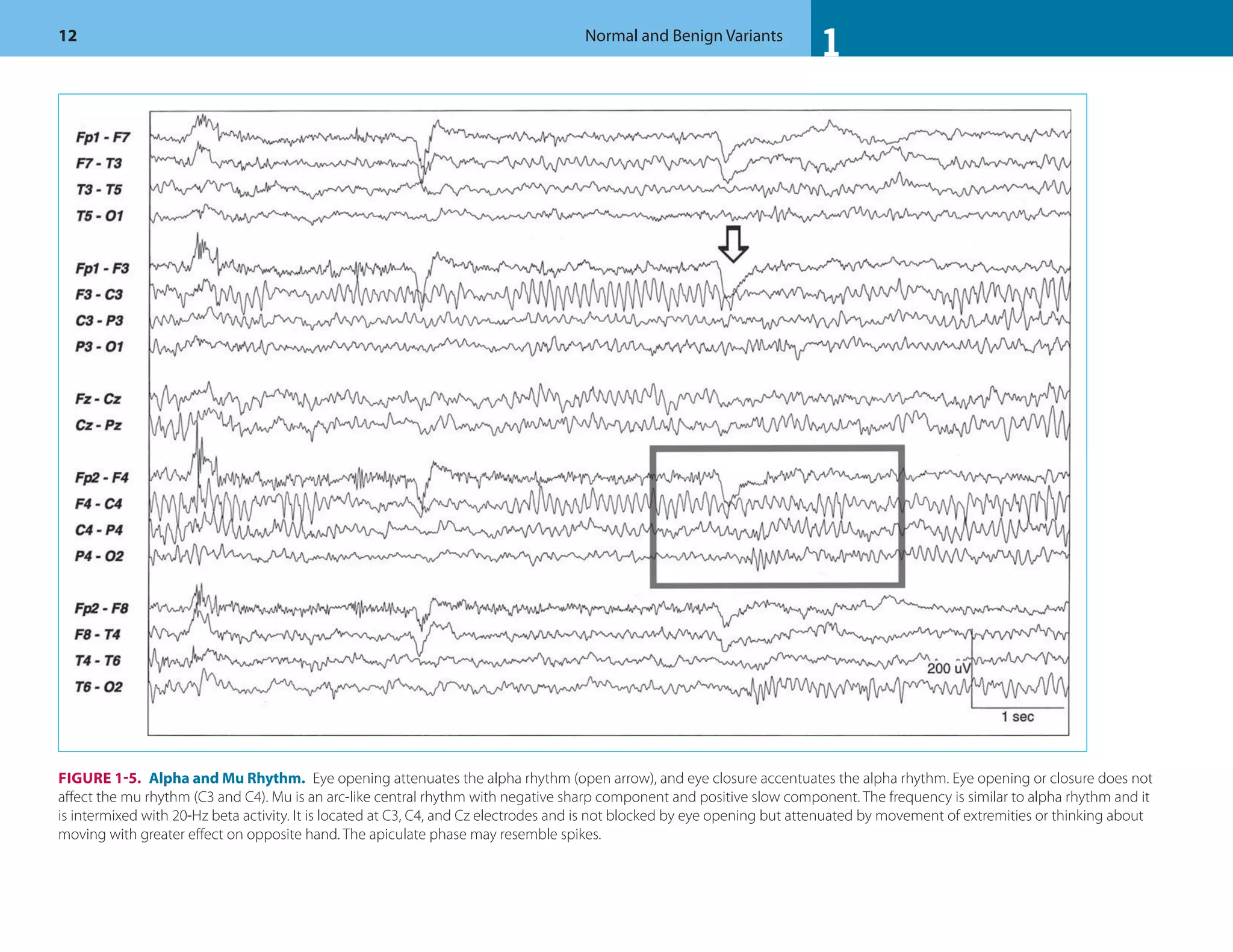
  • 289.
    4 276 Focal NonepileptoformActivity Most often occurs with PDA (“smooth PDA”). 䡲 Etiology: 䡲 Developmental, degenerative, and demyelinating 䊳 conditions Porencephaly, holoprocencephaly, focal brain 앫 atrophy, and unilateral hydrocephalus Sturge-Weber syndrome 앫 Multiple sclerosis 앫 Toxic and metabolic encephalopathy 䊳 Complications of toxic and metabolic 앫 encephalopathy such as infarction, posterior reversible leukoencephalopathy, hypoxia, hypoglycemia, hypertension, SDH in hepatic and Wernicke’s encephalopathy Cerebrovascular accident 䊳 Stroke, t 앫 ransient ischemic attack (TIA), subdural hemorrhage (SDH), subarrachnoid hemorrhage (SAH), or migraine Traumatic brain injury 䊳 Post-brain surgery 䊳 Brain tumor 䊳 Seizure 䊳 Infectious diseases 䊳 Encephalitis, abscess, venous sinus thrombosis, 앫 or progressive multifocal leukoencephalitis Increased products of low impedance Increased products of low impedance, such as blood 䡲 or cerebrospinal fluid, act as conductors within the volume underneath the EEG electrodes and shunt the potential differences before they reach the EEG electrodes. These act as a high frequency filter, and background activity is usually associated with focal low-voltage PDA. Etiology: 䡲 Epidural, subdural, or subgaleal fluid or blood 䊳 collection Scalp edema 䊳 Paget’s disease (thickening of bone) 䊳 Focal enhancement of background activity Breach rhythm (Figures 4-95 to 4-98) Focally enhanced physiological activities including 䡲 beta, mu, alpha, sleep architectures (vertex waves, spindles, hypnagogic hypersynchrony, and K-complex) as well as the presence of sharp transients caused by craniotomy, burr hole or, less commonly, skull fractures. Breach rhythm is usually associated with focal PDA. Beta activity 䡲 Enhanced beta activity is 䊳 maximal nearest a burr hole or craniotomy margin and typically a broad voltage distribution. Enhance the voltage of frontal beta activity as 䊳 much as threefold. Mu 䡲 Breach rhythm is most evident at C3/C4 or T3/ 䊳 T4 because of their proximity to underlying mu rhythms or temporal rhythmic activity in the alpha frequency range. Sleep architectures: 䡲 Enhancement of spindles, hypnagogic 䊳 hypersynchrony, vertex waves, and K-complex Alpha rhythm in either temporal or occipital regions. 䡲 In an 䡲 acute postoperative period, lower amplitude background activity on the side of craniotomy caused by brain edema can be seen. A follow-up EEG performed months or years later usually shows higher amplitude of the background activity on the side of craniotomy. Persistent lower amplitude of the background activity on the side of craniotomy suggests significant underlying cortical injury. Higher amplitude of the background activity (Figures 4-99 to 4-106) Especially beta activity on the side of a focal cerebral 䡲 lesion is rarely seen in the following conditions: Tumor 䊳 Focal cortical dysplasia 䊳 Abscess 䊳 Stroke and arteriovenous malformation 䊳 Increased products of low impedance (such as blood or cerebrospinal fluid) Act as conductors within the volume underneath the 䡲 EEG electrodes and shunt the potential differences before they reach the EEG electrodes. Act as a high-frequency filter. 䡲 Background activity is usually associated with focal 䡲 low-voltage PDA. Etiology: 䡲 Epidural, subdural or subgaleal fluid or blood 䊳 collection Scalp edema 䊳 Paget’s disease (thickening of bone) 䊳 Unilateral attenuation of Sleep Architectures (Figures 4-26, 4-31 to 4-42, 4-73) Consistent attenuation of hypnagogic hypersynchrony, 䡲 vertex waves, spindles, or K-complex. Involvement of thalamocortical circuit (especially 䡲 parietal lobe and thalamus). Focal polymorphic delta activity (Figures 4-27, 4-43 to 4-63, 4-65, 4-75, 4-77 to 4-86) Definition: Arrhythmic delta wave activity (<4 Hz) 䡲 with constantly changing of morphology, frequency, and voltage. May be due to either 䡲 permanent structural damage or a transient disturbance in the area of subcortical white matter or thalamic nuclei. PDA is one of the most reliable findings of a focal 䡲 cerebral disturbance, although focal depression of beta activity is an earlier and more sensitive sign.
  • 290.
    4 Focal NonepileptoformActivity 277 Involvement of superficial cortex does not generally 䡲 produce significant PDA. Brain edema alone, even when extensive, does 䡲 not generate PDA unless it causes a significant compression of midline structures. PDA can occur without demonstration of lesion in 䡲 the MRI. Location of lesions causing PDA and their 䡲 distributions. Cortical lesions. 䊳 Lesions in the superficial cortex without white 앫 matter involvement do not generally produce significant PDA. Subcortical white matter lesions 䊳 Cause PDA in the overlying cortex 앫 Thalamic lesions 䊳 Cause variable degree and extent of PDA but 앫 tend to involve the entire hemisphere ipsilateral to the lesion Hypothalamic or mesencephalic reticular formation 䊳 lesions Unilateral lesions may or may not produce PDA. 앫 Bilateral lesions produce generalized delta 앫 activity. Posterior fossa 䊳 Rarely produces PDA 앫 Possible Mechanisms (Debatable): 䡲 1. Interruption of the afferent input to the cortex either in the white matter, thalamus, hypothalamus, or mesencephalon produced delta activity suggests that deafferentation of overlying cortical neurons may be responsible for PDA. 2. Dorsal thalamus produces intrinsic 1–2 cycles/ sec rhythm. Depolarizing corticothalamic inputs prevent the manifestation of the thalamic delta rhythm. When the cortex is ablated and the corticothalamic encroachment on thalamic neurons is diminished, the thalamic cells become more hyperpolarized leading to intrinsic thalamic delta oscillation. The delta oscillating thalamic cells then passively transfer the rhythm to the cortex by thalamocortical pathways. This suggests that thalamic deafferentation from the cortex rather that cortical deafferentation from below may be the slow wave mechanism. The more persistent, the less reactive, and the more 䡲 nonrhythmic or polymorphic of the PDA, the more reliable as indicator it becomes for the presence of a focal cerebral disturbance. The acute process will disrupt background rhythms to 䡲 a greater extent in young children than in adolescents or adults. Reactivity and the persistence 䡲 of focal abnormalities (continuous versus intermittent) were considerably the best indicators of degree of damage. Continuous slow wave activity suggests severe brain damage (likelihood of increased mass effect, large lesion, or deep hemispheric involvement), whereas intermittent slow activity usually indicates a small lesion and the absence of mass effect on midline structures. Intermittent PDA Attenuated with eye opening and other alerting 䡲 procedures Fails to persist into sleep 䡲 Occurs only during drowsiness, light sleep, or HPV 䡲 Clinical correlation is less well defined and is 䡲 usually caused by reversible causes when mixed with substantial amount of theta activity such as TIA, lacuna infarction, migraine, hypertension, metabolic processes, partial seizure, postictal state, mild encephalitis, or mild traumatic brain injury. Continuous PDA (persistent nonrhythmic delta activity; PNDA) Highly correlated with a focal structural 䡲 lesion, more prominent in acute than chronic processes. Persists during changes in physiologic states 䡲 and may not be facilitated by HPV. PDA is often 䡲 surrounded by theta waves. Maximally expressed 䡲 over the lesions. Superficial lesions cause more restricted field and 䡲 deeper lesions cause hemispheric or even bilateral distribution. Lower voltage of PDA is seen over the area of 䡲 maximal cerebral involvement, but higher voltage PDA is noted in the border of lesions. More severe PDA (closer to the lesion, more acute, 䡲 higher association with underlying structural abnormality) consists of the following: Greater variability (most irregularity or least 䊳 rhythmic) Slower frequency 䊳 Greater persistence 䊳 Less reactive 䊳 No superimposed beta activity 䊳 Less intermixed activity above 4 Hz 䊳 “Smooth PDA,”“flat polymorphism,”or“flat PDA” 䡲 (concomitant loss of faster frequencies): Very significant PDA and usually 䊳 affects both gray and white matter No intermixed activity of over 4 Hz or 䊳 superimposed beta activity Often seen over the lesion 䊳 Characteristics of chronic lesions: 䡲 Marked attenuation and often total absence of 䊳 rhythmic activities Very little, if any, slow activity over the involved 䊳 hemisphere Posterior fossa lesion rarely causes PDA, although, 䡲 occasionally, it can produce PDA in the bilateral occipital regions that may be due to either pressure or ischemic effects or both. Focality of the PDA depends on the lesion locations: 䡲
  • 291.
    4 278 Focal NonepileptoformActivity Anterior- and midfrontal lesions often spread 䊳 to homologous contralateral frontal region Occipital lesions often spread to 䊳 homologous contralateral occipital region Posterior frontal and parietal lesions can be falsely 䊳 localized to the temporal area. Posterior PDA 䊳 More attenuated with eye opening 앫 More disruption of alpha rhythm 앫 Spreading of PDA, usually of lower amplitude, 䊳 to the homologous contralateral hemisphere, especially in anterior- and midfrontal and occipital regions, due to: Effects of compression, edema, ischemia in 앫 neighboring parts of opposite hemisphere Traveling via commissural fibers 앫 Volume conduction 앫 Other EEG abnormalities associated with PDA: 䡲 Widespread asynchronous slow waves 䡲 Either unilateral or bilateral PDA 䊳 Acute > chronic 䊳 Deeply located lesions 䊳 Bilateral synchronous slow waves 䡲 May be larger or more persistent on the side of PDA 䊳 Frontal predominance 䊳 Deep midline structure lesions 䊳 Combination of 䡲 frontal intermittent rhythmic delta activity (FIRDA) or occipital intermittent rhythmic delta activity (OIRDA) and continuous focal PDA is the classic EEG sign of impending cerebral herniation from a focal structural lesion if clinical features indicated. Focal spike or sharp waves do not arise within a 䡲 structural lesion but at the periphery where cortical structures are affected but not destroyed. Holoprosencephaly may cause 䡲 focal PDA and spikes, emanating from islands of preserved brain tissue. Focal or lateralized intermittent rhythmic delta activity (IRDA) (Figures 4-87 to 4-94) Definition: 䡲 Bursts/runs of high voltage, bisynchronous 䊳 (sinusoidal or saw-toothed wave), and rhythmic delta activity of fixed frequency (close to 2.5 Hz) with more rapid ascending than descending phase. Localizing value is limited when compared to PDA. 䡲 Age-dependent (maximal frontal in adult and 䡲 maximal posterior in children less than 10–15 years of age). Independence of the lesion locations, which may 䡲 be at some distance, either in the supratentorial or infratentorial space. Nonlocalizing rhythm, even when associated with 䡲 an intracranial lesion leading to its earlier misled designation as a“projected”or“distant rhythm.” Although frequently bilateral, IRDA may occur 䡲 predominantly unilaterally. Even when it occurs unilaterally in association with lateralized supratentorial lesion, the lateralization of the IRDA, although usually ipsilateral, may even be contralateral to the focal lesion. Therefore, when IRDA is present, determining whether it is due to a focal lesion, is based on persistent localizing signs, and not on the morphology or even the laterality of IRDA. This misled designation as a“projected”or“distant rhythm.”in the earlier reports. Reactivity: 䡲 IRDA is activated by eye closure, hyperventilation 䊳 and drowsiness and disappeared in stage 2 and deeper sleep stages, and reappears again in REM IRDA is attenuated with eye opening/alerting 䊳 Pathophysiology: 䡲 Only partially understood 䊳 Partial dysfunction and overreactivity of 䊳 thalamocortical circuit (especially dorsal thalamus) Generally related to diseases states effecting 䊳 neurons at both cortical and subcortical levels and not specific to deep midline pathology or intracranial pressure Frontal intermittent rhythmic delta activity (FIRDA) FIRDA is usually seen in adult or children older 䡲 than 10–15 years of age. The difference in location between FIRDA and OIRDA is most likely due to maturation-related spatial EEG features. Indicative of widespread brain dysfunction and 䡲 mild-to-moderate degree of encephalopathy. Earliest clinical feature of FIRDA is fluctuation 䡲 level of alertness or attention. Indicative of active fluctuating, progressing, or 䡲 resolving widespread brain dysfunction and is less likely to be associated with chronic, stable brain dysfunction. As the condition progresses, often leading to more persistent, bilateral abnormalities, frank alteration in consciousness appropriates to the degree of persistent bilateral abnormalities. When presents in association with focal cerebral 䡲 lesion, it usually implies that the pathological process is beginning to produce an active widespread brain disturbance likely to be associated with clinical signs of encephalopathy. Shifting predominance is seen in diffuse 䡲 encephalopathy. Persistent ipsilateral FIRDA is commonly seen in 䡲 ipsilateral deep lesion, although lateralizing value is not as good as PDA. Nonspecific in etiology and caused by a wide 䡲 variety of pathologic processes. Seen in normal individuals during HPV. 䡲 Seen in diverse systemic and intracranial processes 䡲 or a wide variety of pathologic processes varying from systemic, toxic or metabolic disturbances to focal intracranial lesions.
  • 292.
    4 Focal NonepileptoformActivity 279 FIRDA is rarely reported to be associated with 䡲 generalized epilepsy. Occipital intermittent rhythmic delta activity (OIRDA) Seen in children younger than 10–15 years of age. 䡲 “Maturation-related spatial EEG features.” 䡲 Clinical significance is similar to FIRDA in the 䡲 mean of encphalopathy. The major difference between OIRDA and 䡲 FIRDA is that OIRDA is highly associated with generalized epilepsy especially absence epilepsy. Temporal intermittent rhythmic delta activity (TIRDA) Monomorphic burst of delta activity in the 䡲 temporal region. TIRDA is an important epileptogenic 䡲 abnormality, highly pathognomonic for temporal lobe epilepsy, especially caused by mesial temporal sclerosis. Often associated with interictal epileptiform 䡲 activity and PDA Seen in drowsiness and light sleep. 䡲
  • 293.
    4 280 Focal NonepileptoformActivity FIGURE 41. Posterior Slow Wave of Youth. EEG of an 11-year old girl with a new onset of insomnia, weight loss, and depression shows occipital slow theta and delta slow waves (arrows) mixed with and briefly interrupting the alpha rhythm on both sides. Posterior slow waves of youth (youth waves or polyphasic waves) are physiologic theta or delta waves accompanied by the alpha rhythm and creating spike-wave-like phenomenon. They are most commonly seen in children aged 8–14 years but are uncommon in children under 2 years. They have a 15% incidence in persons aged 16–20 years but are rare in adults after age 21 years. They are typically seen both unilaterally and bilaterally in a single recording. They are always accompanied by the alpha rhythm, and are attenuated with eye opening, disappear with the alpha rhythm during drowsiness and light sleep, and may be accentuated by hyperventilation.1–3
  • 294.
    4 Focal NonepileptoformActivity 281 FIGURE 42. Posterior Slow Wave of Youth. EEG of a 10-year old boy with recurrent syncope shows occipital slow waves (arrows) mixed with and briefly interrupting the alpha rhythm on the right side. Posterior slow waves of youth (youth waves or polyphasic waves) are physiologic theta or delta waves accompanied by the alpha rhythm and creating spike-wave-like phenomenon. They are most commonly seen in children aged 8–14 years but are uncommon in children under 2 years. They have a 15% incidence in persons aged 16–20 years but are rare in adults after age 21 years. They are typically seen both unilaterally and bilaterally in a single recording. They are always accompanied by the alpha rhythm, and are attenuated with eye opening, disappear with the alpha rhythm during drowsiness and light sleep, and may be accentuated by hyperventilation.1–3
  • 295.
    4 282 Focal NonepileptoformActivity FIGURE 43. Posterior Slow Wave of Youth; Attenuated with Eye Opening. EEG of a 10-year-old boy with syncope showing occipital slow theta and delta waves (arrows) mixed with and briefly interrupting the alpha rhythm in both occipital regions but maximally expressed in the left hemisphere. This is so-called“posterior slow waves of youth” that are physiologic findings seen commonly in children aged 8–14 years. They are always accompanied by the alpha rhythm, and are attenuated with eye opening (open arrow), and disappear with the alpha rhythm during drowsiness and light sleep.1–3
  • 296.
    4 Focal NonepileptoformActivity 283 FIGURE 44. Posterior Slow Wave of Youth; Activated with Eye Closure. (Same EEG as in Figure 4-3) Alpha rhythm and posterior slow waves of youth are activated by eye closure.
  • 297.
    4 284 Focal NonepileptoformActivity FIGURE 45. Slow Alpha Variant. EEG of a 9-year-old boy with recurrent vertigo showing rhythmic notched theta or delta activities that have a harmonic relationship with the alpha rhythm (one-third or half the frequency). Slow alpha variants are rare benign EEG variants (less than 1% of normal adult), have a harmonic relationship with the alpha rhythm, and show similar distribution and reactivity as a normal alpha rhythm.4 It should not be misinterpreted as occipital intermittent rhythmic delta or theta activity activities, pathologic findings seen in children and adults.
  • 298.
    4 Focal NonepileptoformActivity 285 FIGURE 46. Slow Alpha Variant. EEG of an 11-year-old girl with recurrent staring episodes showing slow alpha variants that are activated by eye closure.
  • 299.
    4 286 Focal NonepileptoformActivity FIGURE 47. Slow Alpha Variants. EEG of a 10-year-old boy with behavioral disturbance and headache showing slow alpha variants (subharmonic of the alpha rhythm) with notched appearance. They are intermingled with normal alpha rhythms and activated by eye closure.
  • 300.
    4 Focal NonepileptoformActivity 287 FIGURE 48. Asymmetric Alpha Rhythm; Dyke-Davidoff-Mason Syndrome Due to Intrauterine Stroke. A 9-year-old-left-handed girl with right hemiparesis and hemiatrophy due to intrauterine stroke of who developed a new-onset right-sided focal motor seizure with secondarily generalized tonic-clonic seizure. Cranial MRI shows encephalomalacia in the left frontal-temporal region, left cerebral hemiatrophy, and thickening of the clavarium. These findings are compatible with Dyke-Davidoff-Mason syndrome. EEG shows consistent suppression of alpha rhythm and intermixture of theta and delta activities in the left occipital region. Focal lesions in the thalamocortical circuit including occipital cortex and anteroventral thalamus can cause changes in alpha rhythm including (1) slowing of frequency (1 Hz or more differences between both sides), (2) loss of reactivity and modulation, (3) voltage attenuation, (4) Bancuad’s phenomenon (failure of reactivity of alpha rhythm to eye opening), (5) intermixed theta or delta activity (must be differentiated from posterior slow waves of youth), and (6) epileptiform activity.5 Dyke-Davidoff-Mason syndrome is first reported in 1934 by Dyke.6 The syndrome includes contralateral hemiatrophy and hemiparesis and seizure accompanied by cerebral hemiatrophy and compensatory bone alterations in the clavarium, such as thickening, hyperpneumatization of the paranasal sinuses and mastoid cells, and elevation of the petrous pyramid and the upper edge of the orbita.6–9
  • 301.
    4 288 Focal NonepileptoformActivity FIGURE 49. Alpha Rhythm Changes Affected by Right Occipital Tumor. A 20-year-old boy with intractable epilepsy caused by low-grade tumor in the right occipital region. His seizures are described as simple visual hallucination (colors and shapes) with or without versive seizure (head and eyes deviating to the left) and GTCS. MRIs show a well-defined tumor in subcortical area of the right occipital region without mass effect. EEG shows asymmetry of alpha rhythm, which is normal on the left but significantly attenuated (>30%), poorly regulated on the right, and failure of the alpha rhythm to attenuate with eye opening (*). There is focal theta and polymorphic delta activity intermingled with the alpha rhythm. Focal lesions in the occipital cortex and anteroventral thalamus can cause changes in alpha rhythm including (1) slowing of frequency (1 Hz or more differences between both sides), (2) loss of reactivity and modulation, (3) voltage attenuation, (4) Bancuad’s phenomenon (failure of reactivity of alpha rhythm to eye opening), (5) intermixed theta or delta activity (must be differentiated from posterior slow waves of youth), and (6) epileptiform activity.5
  • 302.
    4 Focal NonepileptoformActivity 289 FIGURE 410. Bancaud's Phenomenon; Dyke-Davidoff-Mason Syndrome. (Same patient as in Figure 4-8) EEG demonstrates failure of alpha rhythm to attenuate with bilateral eye opening in the left occipital region (open arrow). This is so-called“Bancaud’s phenomenon.”In 1995, Bancaud described unilateral failure of alpha blocking with eye opening.7,8 The patients had focal structural lesions in the temporal, parietal, and occipital regions. The side on which alpha activity failed to attenuate with eye opening was ipsilateral to the side of the lesion. In the study of 120 patients with defective alpha activity by mental arithmetic at Mayo Clinic, 32 patients had Bancaud phenomenon. Associated focal slowing and/or epileptiform abnormalities were present over the temporal region in 60 patients, the parietal region in 33, posterior head regions in 14, and the frontal region in 6.9
  • 303.
    4 290 Focal NonepileptoformActivity FIGURE 411. Symptomatic Focal Epilepsy; Congenital Hydrocephalus with Ventriculoperitoneal Shunt. An 11-year-old boy with congenital hydrocephalus and ventriculoperitoneal shunt insertion who developed recurrent staring spells accompanied by“gulping sound.”CT shows dilatation of temporal horn of the right lateral ventricle, multiple hypodensity areas of the right occipital lobe, and VP shunt catheters. EEG demonstrates marked attenuation of alpha rhythm in the right occipital region and polymorphic delta activity and spikes in the right temporal region. VP shunt insertion can cause injury to the cortex or interfere with postnatal neuronal migration or in combination. These can lead to focal seizures. Epilepsy is an important predictor of poor intellectual outcome in the children with hydrocephalus with shunts. Epilepsy was significantly affected by the causes of hydrocephalus, shunt complications, increased ICP caused by hydrocephalus or shunt malfunction, and the presence of a shunt by itself.10
  • 304.
    4 Focal NonepileptoformActivity 291 FIGURE 412. Ipsilateral Attenuation of Alpha Rhythm & Polymorphic Delta Activity (PDA); Focal Cortical Dysplasia, Left Occipital Lobe. EEG of a 6-year-old girl with intractable occipital lobe epilepsy due to focal cortical dysplasia in the left occipital region. There is consistent slowing and decreased voltage (less than 50% of the right side) of physiologic alpha rhythm and intermingled theta and polymorphic delta activity (PDA) in the left occipital region. Consistent focal slowing of physiological rhythms by 1 Hz or more on one side is a reliable sign of focal abnormality of the side of slower frequency whether the amplitude of the rhythm is increased or decreased.11 In this patient, the EEG also shows focal PDA and alpha asymmetric (decreased voltage by more than 50%, compared to the right side).
  • 305.
    4 292 Focal NonepileptoformActivity FIGURE 413. Intermittent Polymorphic Delta Activity & Attenuation of Alpha Rhythm; Systemic Lupus Erythrematosus (SLE). A 17-year-old boy with a history of SLE and epilepsy. EEG shows asymmetric alpha rhythm with suppression in the left occipital region, intermittent polymorphic delta activity in the left temporal region, and left temporal sharp transients. EEG was abnormal in 87.1% of the patient with SLE who had a history of seizures. Left hemisphere abnormalities were identified in 79.6% and right hemisphere abnormalities in 7.4%. Abnormalities included theta, delta slowing, and sharp wave. In 74.4% of the patients with left hemisphere abnormalities, the abnormalities were localized to the left temporal leads. These findings suggest selective damage to the left temporal limbic region in patients with SLE.12
  • 306.
    4 Focal NonepileptoformActivity 293 FIGURE 414. Asymmetric Reactivity of Alpha Rhythm; Hemorrhagic Stroke Caused by Streptococcal Infection. A 6-year-old girl with a new-onset seizure described as fall followed by generalized tonic-clonic seizure associated with streptococcal infection. Her MRI/MRA is compatible with the diagnosis of hemorrhagic infarction in the left temporal-occipital region. CT angiogram was normal. EEG shows depression of reactivity to eye closure (open arrow), decreased amplitude, and frequency of alpha rhythm in the left occipital region. Simultaneous EEG and fMRI study revealed the correlation between increased alpha power and decreased MRI signal in multiple regions of occipital, superior temporal, inferior frontal, and cingulate cortex, and with increased signal in the thalamus and insula.13 Using simultaneous EEG and PET scan, a correlation between alpha power and metabolism of the bilateral thalamus and the occipital and adjacent parietal cortex was found.14 These results support the role of thalamus as, in part, a generator of alpha rhythm. Therefore, involvement of thalamocortical circuit can cause suppression of alpha rhythm.
  • 307.
    4 294 Focal NonepileptoformActivity FIGURE 415. Unilateral Attenuation of Alpha Rhythm; Right Thalamic Heterotopia. A 6-year-old boy with intractable symptomatic absence epilepsy caused by right thalamic heterotopia (arrow). EEG showed secondary bilateral synchrony with lateralized epileptic focus in the right hemisphere. In addition, background activity shows attenuation of alpha rhythm in the right hemisphere. Not only the lesions in the occipital lobes but also the lesions in the anteroventral thalamus or thalamocortical circuit can cause unilateral attenuation of alpha rhythm.15 The studies using combined EEG/fMRI indicated the alpha rhythm may be generated, in part, by the thalamus.13,16 The studies using combined EEG/PET showed a correlation of alpha rhythm in the pons, anterior midbrain, hypothalamus, medial thalamus, amygdala, the basal prefrontal cortex, insula, and the right dorsal premotor.14,17,18 It is therefore possible that the mesencephalic-medial thalamic network is correlated with occipital EEG alpha rhythm.
  • 308.
    4 Focal NonepileptoformActivity 295 FIGURE 416. Attenuation of Alpha Rhythm & Focal Polymorphic Delta Activity; Acute Focal Axonal Injury. A 5 1/2-year-old boy with a new-onset generalized tonic- clonic seizure followed by right-sided Todd paralysis caused by traumatic brain injury. Axial T2-weighted image shows small hemorrhage in the left mesial temporal area (open arrow). EEG performed 2 hours after the seizure shows polymorphic delta activity (PDA) in the left temporal region and slowing of frequency of alpha rhythm in the left occipital region. Focal PDA and slowing of alpha frequency are supportive of focal structural abnormality in the left temporal-occipital region consistent with the MRI finding. PDA mixed with substantial amount of theta or alpha activity usually indicates reversible cause such as mild TBI, migraine, postictal, or mild viral encephalitis.
  • 309.
    4 296 Focal NonepileptoformActivity FIGURE 417. Ipsilateral Attenuation of Alpha Rhythm; Focal Cortical Dysplasia, Left SSMA. (Same EEG recording as in Figure 4-31 to 4-36) A 7-year-old-left-handed girl with multiple types of seizures including focal myoclonic seizure, drop attack, and secondarily generalized tonic-clonic seizure. (A) MRI with FLAIR sequence shows focal cortical dysplasia (FCD) in the left SSMA (arrow). (B) Interictal PET demonstrates diffuse hypometabolism in the left hemisphere but maximal in the left lateral frontal (open arrow) and SSMA (double arrows) regions, corresponding to the lesion seen in the MRI in A. EEG shows suppression of amplitude and reactivity of the alpha rhythm as well as diffuse theta activity in the left hemisphere. These findings are consistent with involvement of the thalamocortical circuit in the left hemisphere.
  • 310.
    4 Focal NonepileptoformActivity 297 FIGURE 418. Ipsilateral Attenuation of Photic Response; Hemispheric Malformation of Cortical Development (MCD). (Same patient as in Figure 6-16 to 6-18) EEG during photic stimulation with different stimulus frequencies constantly shows asymmetric photic response with lower amplitude and less reactivity in the left compared to the right hemispheres. Although mild and inconsistent asymmetry of photic response is frequently seen in normal individuals, consistently lateralized voltage and reactivity on one side with all photic stimulus frequencies raises the possibility of structural abnormality in the hemisphere of lower voltage.19
  • 311.
    4 298 Focal NonepileptoformActivity FIGURE 419. Ipsilateral Attenuation of Photic Response; Focal Cortical Dysplasia, Left Temporo-Occipital. EEG of a 12-year-old girl with intractable occipital lobe epilepsy due to focal cortical dysplasia. There is depression of photic response in the left occipital region caused by focal cortical dysplasia. Axial FLAIR sequence and coronal T2-weighted MRIs show thickened cortex, decreased gyral pattern, increased signal intensity, and blurring of gray-white matter junction in the left temporal-occipital region.
  • 312.
    4 Focal NonepileptoformActivity 299 FIGURE 420. Asymmetric Photic Response (Ipsilateral Suppression); Left Temporo-Occipital Tumor. A 4-year-old girl with medically intractable epilepsy caused by tumor. Her seizures were described as pupillary dilatation, right facial distortion, and eyes deviating to the left side, followed by left arm stiffening and shaking. (A) Axial FLAIR shows high signal abnormality over the right temporo-occipital region. (B) Sagittal view demonstrates hypointense lesion in the left temporo-occipital region. EEG shows consistent asymmetry of photic driving response during all flash frequencies over the left occipital region that is concordant with the location of the tumor in the left temporo-occipital region. A mild and inconsistent asymmetry of photic driving response is frequently seen in normal individuals. An asymmetry in photic driving response may result from a lesion on the side of lower voltage, but an asymmetry in voltage only, although consistently lateralized, in the absence of other EEG changes can be seen in some normal individuals and should not be viewed as abnormal.19
  • 313.
    4 300 Focal NonepileptoformActivity FIGURE 421. Asymmetric Photic Response; Left Thalamic Atrophy and Calcification. (Same patient as in Figure 4-26 and 4-27) EEG shows attenuation of photic response in the left hemisphere. MRI and CT show bilateral thalamic calcification, greater expressed on the left with left thalamic atrophy (arrows). Lesions in thalamocortical circuit can cause ipsilateral attenuation of alpha rhythm and photic response.
  • 314.
    4 Focal NonepileptoformActivity 301 FIGURE 422. Alpha Asymmetry with Decreased Photic Response; Hemorrhagic Infarction. A 6-year-old girl with a new-onset seizure described as fall followed by generalized tonic-clonic seizure associated with streptococcal infection. Her MRI/MRA is compatible with the diagnosis of hemorrhagic infarction in the left temporal-occipital region. EEG shows consistent slower frequency and less reactivity of alpha rhythm (open arrow) and attenuation of photic response in the left occipital at all stimulus frequencies (double arrows). Also note left posterior temporal sharp waves (*). Focal lesions in the occipital cortex and anteroventral thalamus can cause changes in alpha rhythm including (1) slowing of frequency (1 Hz or more differences between both sides), (2) loss of reactivity and modulation, (3) voltage attenuation, (4) Bancuad’s phenomenon (failure of reactivity of alpha rhythm to eye opening), (5) intermixed theta or delta activity (must be differentiated from posterior slow waves of youth), and (6) epileptiform activity. Although mild and inconsistent asymmetry of photic driving response (amplitude and reactivity) is frequently seen in normal individuals, constant asymmetry of photic driving response may result from a lesion on the side of lower voltage or less reactivity. Asymmetry in voltage only, although consistently lateralized, in the absence of other EEG changes can be seen in some normal individuals and should not be viewed as abnormal. Consistent focal slowing of alpha rhythm by 1 Hz or more on one side reliably identifies the side of focal abnormality whether the voltage of the rhythm is increased or decreased.5,19
  • 315.
    4 302 Focal NonepileptoformActivity FIGURE 423. Enhancement of Ipsilateral Alpha Rhythm; Unilateral Polymicrogyria (PMG). EEG of a 4-year-old boy with developmental delay and well-controlled focal epilepsy shows alpha asymmetry with voltage higher in the right occipital region. MRIs demonstrate polymicrogyria in the right perisylvian and occipital regions. Voltage asymmetry alone, unless extreme, constant, or in combination with other abnormalities (slowing of frequency, decreased reactivity or modulation of alpha rhythm and focal PDA) is the least reliable finding and of little clinical significance. Although increased voltage of alpha rhythm may rarely be observed on the side of abnormality, it is usually less reactive and poorly modulated.5
  • 316.
    4 Focal NonepileptoformActivity 303 FIGURE 424. Enhancement of Ipsilateral Photic Response; Unilateral Polymicrogyria (PMG). (Same patient as in Figure 4-23) Excessive photic response is noted in the ipsilateral cerebral hemisphere (open arrows).
  • 317.
    4 304 Focal NonepileptoformActivity FIGURE 425. Alpha Asymmetry; Focal Cortical Dysplasia. A 7-year-old boy with recurrent seizures described as loss of the right visual field followed shortly by eyes rolling and tongue biting. He was confused and disoriented for 45–90 sec. MRI shows a focal cortical dysplasia in the left occipital region (open arrow). EEG demonstrates consistent asymmetry of alpha rhythm with higher amplitude, slowing of alpha frequency and intermixed theta activity in the left occipital region (arrows). Consistent focal slowing of alpha rhythm by 1 Hz or more on one side reliably identifies the side of focal abnormality whether the voltage of the rhythm is increased or decreased .5,20
  • 318.
    4 Focal NonepileptoformActivity 305 FIGURE 426. Suppression of Vertex Sharp Waves and Spindles; Congenital Infection; Remote Stroke, Multiple Calcifications and Schizencephaly. A 7-year-old- left-handed girl with microcephaly, spastic right hemiparesis, and mental retardation due to unknown congenital infection and new-onset right focal clonic seizures. MRI and CT show encephalomalacia and open-lip schizencephaly in the left frontal-parietal region (open arrows) and multiple parenchymal calcifications (arrows). EEG during stage 2 sleep demonstrates persistent asymmetry of vertex waves (asterisk) and sleep spindles with voltage lower in the left hemisphere. Vertex waves and sleep spindles can be affected by cerebral structural abnormalities with abnormality on the side of lower voltage. Lesions in parietal lobe or thalamus can attenuate sleep spindles.5,21,22
  • 319.
    4 306 Focal NonepileptoformActivity FIGURE 427. Lateralized Polymorphic Delta Activity in the Left Hemisphere; During Arousal. (Same patient as in Figure 4-26) EEG shows attenuation of photic response in the left hemisphere. MRI and CT show bilateral thalamic calcification, greater expressed on the left with left thalamic atrophy (arrows). Lesions in thalamocortical circuit can cause ipsilateral attenuation of alpha rhythm and photic response.
  • 320.
    4 Focal NonepileptoformActivity 307 FIGURE 428. Asymmetric Lambda Waves; Status Post Resection of Epileptogenic Zone, Left Parietal. Twenty-four-hour video-EEG of a 5-year-old boy with a history of two-step epilepsy surgery for intractable epilepsy caused by a focal cortical dysplasia in the left frontal-parietal region. There are constant depression of lambda waves (*), alpha rhythm, and photic response (not shown) in the left occipital region associated with polymorphic delta activity in the left parietal-occipital region throughout the waking record. These findings are compatible with breach rhythm occurring at the posterior margin of the previous craniectomy. Asymmetry of lambda waves is common and should not be interpreted as being abnormal unless there are associated abnormalities such as polymorphic delta activity and persistence of lambda asymmetry.
  • 321.
    4 308 Focal NonepileptoformActivity FIGURE 429. Anterior Beta Asymmetry; Remote Left Middle Cerebral Artery Stroke. (Same patient as in Figure 4-8 and 4-10) EEG shows attenuation of beta activity (arrows) in the left frontal-temporal region without definite polymorphic delta slowing. Persistent voltage difference of beta activity of 35% or more between homologous areas of both hemispheres is considered a reliable sign of focal cerebral abnormality or extra-axial blood or cerebrospinal fluid.5 Suppression of anterior beta activity is usually more sensitive than focal polymorphic delta activity in determining structural abnormality.
  • 322.
    4 Focal NonepileptoformActivity 309 FIGURE 430. Background Asymmetry and Polymorphic Delta Activity (PDA); Embolic Stroke Secondary to Pneumococcal Septicemia. A 15-year-old boy with metastatic medulloblastoma who developed a sudden-onset high fever, mental status change, right hemiparesis, and focal seizures described as head and eyes deviating to the right side followed by GTCS. Blood culture was positive for streptococcal pneumoniae. Cranial MRI reveals multiple infarctions caused by septic emboli, maximal in the right parietal region. EEG during sleep demonstrates continuously diffuse polymorphic delta activity (PDA), maximally expressed in the left hemisphere with suppression of beta activity, spindles, and vertex waves in the left hemisphere. Sleep spindles are generated in the reticular nucleus of the thalamus, and through thalamocortical neurons the cortex is triggered to generate spindle bursts.21 Extended cortical areas in the centroparietal regions (pyramidal neurons), most likely the whole parietal cortex and the posterior part of the frontal cortex, are involved in the generation of sleep spindles as recorded using the MEG.22 Lesions in the thalamocortical circuit, especially thalamus and parietal lobe, can attenuate the sleep spindles.5,23,24
  • 323.
    4 310 Focal NonepileptoformActivity FIGURE 431. Asymmetric Beta, Sleep Spindles and Vertex Waves; Encephalomalacia Caused by Acute Viral Meningoencephalitis in Newborn. A 12-year-old with mild cognitive impairment, left hemiparesis, and intractable epilepsy due to extensive involvement of the right frontal-parietal-temporal, insula, and thalamic regions caused by acute viral encephalitis at the age of 2 weeks. EEG during sleep shows marked suppression of spindles over the right hemisphere. Sleep spindles are generated in the reticular nucleus of the thalamus, and through thalamocortical neurons the cortex is triggered to generate spindle bursts.21 Extended cortical areas in the centroparietal regions (pyramidal neurons), most likely the whole parietal cortex and the posterior part of the frontal cortex, are involved in the generation of sleep spindles as recorded using the MEG.22 Lesions in the thalamocortical circuit, especially thalamus and parietal lobe, can attenuate the sleep spindles.5,23,24
  • 324.
    4 Focal NonepileptoformActivity 311 FIGURE 432. Focal Cortical Dysplasia; Attenuation of Background Activity During Drowsiness. (Same patient as in Figures 4-104 and 9-106) A 4-week-old boy with very frequent seizures described as epileptic nystagmus and versive seizures. MRI demonstrates extensive focal cortical dysplasia over the left parieto-temporo-occipital regions (arrow). Suppression of premature hypnagogic hypersynchrony over the left hemisphere during drowsiness.
  • 325.
    4 312 Focal NonepileptoformActivity FIGURE 433. Suppression of Hypnagogic Hypersynchrony; Focal Cortical Dysplasia (FCD). A 2-year-old girl with a history of frequent seizures due to FCD. Her seizures were stereotypic and described as asymmetric tonic seizure with head and eyes deviating to the right side. (A) CT shows mixed hyperdense and hypodense areas in the left mesial frontal region (arrow). (B, C, D) Axial, coronal, and sagittal MR images demonstrate mixed density lesion in the mesial frontal region without enhancement (arrows). These findings are consistent with balloon cell-type focal cortical dysplasia. EEG during drowsiness shows persistently asymmetric hypnagogic hypersynchrony with lower amplitude on the left side. Although asymmetric hypnagogic hypersynchrony with shifting predominance is common, persistent asymmetric hypnagogic hypersynchrony is indicative of structural abnormality in the side of lower amplitude.
  • 326.
    4 Focal NonepileptoformActivity 313 FIGURE 434. Suppression of Hypnagogic Hypersynchrony; Focal Cortical Dysplasia. (Same patient as in Figure 9-41 ) A 13-month-old-right-handed boy with medically intractable epilepsy due to focal cortical dysplasia (FCD) in the right parietal region. His typical seizure was described as a sudden onset of irritability, left facial twitching, left arm stiffening, and eyes deviating to the left side. EEG shows persistent suppression of hypnagogic hypersynchrony on the right side throughout the recording during drowsiness. The lesion in the parietal lobe can suppress sleep architectures such as hypnagogic hypersynchrony, vertex waves, and sleep spindles.
  • 327.
    4 314 Focal NonepileptoformActivity FIGURE 435. Unilateral Attenuation of Hypnagogic Hypersynchrony; Subcortical Focal Cortical Dysplasia (FCD). (Same patient as in Figures 4-87 and 4-88 ) A 4-year-old girl with medically intractable epilepsy due to focal cortical dysplasia. Her seizure was described as stiffening and clonic jerking of her left arm and leg. Cranial MRI reveals a large focal cortical dysplasia in the right temporal region causing dilatation of a temporal horn of left lateral ventricle. EEG during drowsiness shows attenuation of hypnagogic hypersynchrony (arrow) in the right hemisphere corresponding to the focal cortical dysplasia. Hypnagogic hypersynchrony is seen in drowsiness in children aged 3 months to 13 years but is rarely seen after age 9 years. This is described as paroxysmal bursts of high- voltage, rhythmic 3–5 Hz activity, maximally expressed in the frontocentral regions. Normal sleep patterns can be affected by cerebral lesions. Lesions of the parietal lobe or thalamus can attenuate sleep spindles.21,22
  • 328.
    4 Focal NonepileptoformActivity 315 FIGURE 436. Insular Epilepsy with Nocturnal Hypermotor Seizures; Focal Cortical Dysplasia. A 7-year-old-left-handed girl with nocturnal hypermotor seizures and mild mental retardation. She also had frequent episodes of simple partial seizures described as“buzzing in her right ear.”Axial T2-weighted and sagittal T1-weighted MRIs show thickened cortex intermixed with a small abnormal signal intensity (increased in T1 and decreased in T2) in the left insula area (arrow). Interictal EEG shows a run of spikes in the left centrotemporal region (dot) with suppression of physiologic vertex sharp waves (X) in the left hemisphere. The patient underwent resection of epileptogenic zone after extraoperative subdural/depth electrode EEG-video monitoring without any complication. Pathology showed focal cortical dysplasia without balloon cell and microcalcifications (FCD type 2A). The patient has been free of seizures for over 2 years since the surgery. The anterosuperior portion of the insula and temporal lobe plays a major role in generating nocturnal hypermotor seizures.25,26 Although it is well known that auditory cortex is located in the superior temporal gyrus, there were case studies supporting for a major role of human insula cortex in auditory processing.25
  • 329.
    4 316 Focal NonepileptoformActivity FIGURE 437. Late Post-Traumatic Epilepsy; Encephalomalacia Due to Cerebral Contusion (Contrecoup). A 7-year-old girl with a history of head trauma at 13 months of age. She fell down and hit the left side of her forehead on the concrete floor. She was lethargic and vomited without seizures. (A) CT performed immediately after the injury shows multiple small intraparenchymal hemorrhages in the right parietal region. This finding is compatible with countercoup injury. She had had recurrent episodes of very brief imbalance, left leg tingling,“left ear popping,”dizziness and unable to focus without loss of consciousness for over 3 years prior to this EEG recording. (B and C) MRI performed 1 day prior to this recording shows linear area of gliosis with decreased volume of the gray matter and increased T2 signal intensity in the area of calcification seen in the CT. EEG during sleep demonstrates spike in the right centroparietal region corresponding to the lesion seen in both MRI and CT. The seizures disappeared completely after the treatment with carbamazepine. Late posttraumatic epilepsy usually occurs within the first 2 years after the injury. Seizures are believed to originate from a cerebromeningeal scar.26 The 5-year and 30-year cumulative incidence after severe head injury was 10% and 16.7%, respectively.27 The likelihood of late posttraumatic epilepsy is increased by the presence of any of 3 factors: an acute hemorrhage, a depressed skull fracture, and early epilepsy.28–31 Annegers and colleagues found that the presence of early posttraumatic epilepsy did not predict late posttraumatic epilepsy.32
  • 330.
    4 Focal NonepileptoformActivity 317 FIGURE 438. Sturge-Weber Syndrome; Suppression of Sleep Spindles, Vertex Waves, and Beta Activity. A 5-year-old right-handed girl with right-sided facial hemangioma presenting with a new-onset seizure described as eye fluttering and clonic jerking of the left upper and lower extremities lasting for approximately 45 minutes. (A) CT shows calcification in the right parietal region. (B) MRI with FLAIR sequence shows right cerebral atrophy with decreased signal intensity in the white matter. (C) Axial T1-weighted image with GAD shows contrast enhancement over the right hemisphere. EEG demonstrates persistent depression of sleep spindles, vertex waves, and beta activity over the right hemisphere throughout the sleep recording. These findings support the diagnosis of Sturge-Weber syndrome (SWS). EEG in vertex waves and spindles can be affected by cerebral structural abnormalities with abnormality on the side of lower voltage. Lesion in parietal lobe or thalamus can attenuate sleep spindles.5,23,24 The typical EEG in SWS is asymmetric, with local voltage depression and background slowing ipsilateral to the affected hemisphere. This asymmetry may be seen from the first months of life, but becomes more evident as atrophy of the hemisphere progresses. Decreased diazepam-enhanced β activity in the EEG is a sensitive criterion of functional abnormality. In patients with subtle structural abnormalities diazepam-enhanced EEG may have added value in diagnosing functional involvement and in monitoring disease progression in patients.33,34
  • 331.
    4 318 Focal NonepileptoformActivity FIGURE 439. Ipsilateral Attenuation of Vertex Waves and Spindles; Open-Lip Schizencephaly. A 3-year-old boy with global developmental delay, mild left hemiparesis, and intermittent simple partial seizures described as funny sensation in her left arm with or without left arm stiffening. (A) Axial FLAIR image shows the right narrow open-lip schizencephaly with surrounding irregular gray matter (double arrows). A dimple in the ventricular wall shows the opening of the cleft into the ventricle (open arrow). (B and C) Coronal and sagittal images showed polymicrogyria lining around the cleft (arrows). EEG reveals depression of vertex and sleep spindles in the right frontal-central region (F4-C4). EEG also shows (not shown) sharp waves in the right frontal-temporal region. Suppression of sleep architecture indicates that there is a functional involvement of the thalamocortical circuit over the right hemisphere. The abnormal cortex lining of the schizencephalic cleft, not the cleft itself, which is epileptogenic. Background activity is more altered in the unilateral than in the bilateral form. The background EEG activity can be normal in some patients. In addition to slow waves over the cleft location, contralateral spikes were sporadically seen. There is a causal relation between schizencephaly and epilepsy; the seizure symptoms and EEG interictal and ictal abnormalities were consistent with the cleft location. Epileptiform abnormalities are seen in all patients with seizures and EEG focal abnormalities were on the same side as the cleft location in 60% of cases. EEGs in some patients show focal or bilateral synchronous ESES.37–39
  • 332.
    4 Focal NonepileptoformActivity 319 FIGURE 440. Suppression of Sleep Architecture; Intrauterine Stroke. A 6-month-old boy with intrauterine stroke. Cranial CT shows encephalomalacia in the right parietal region. EEG demonstrates consistent suppression of sleep spindles and vertex waves in the right hemisphere throughout the recording. Note prolonged sleep spindles in the Cz and C3 that is a physiological finding at 3–6 months of age. Lesion in the parietal lobe or thalamus can attenuate sleep spindles.5,23,24 A more recent study demonstrates that sleep spindles are generated in the reticular nucleus of the thalamus, and through thalamocortical neurons the cortex is triggered to generate spindle bursts.21 A study using magnetoencephalogram (MEG) suggests involvement of the pre- and post-central areas in the generation of MEG sleep spindles.22
  • 333.
    4 320 Focal NonepileptoformActivity FIGURE 441. Suppression of Sleep Spindles and Focal Polymorphic Delta Activity (PDA); Left Middle Cerebral Artery Stroke. A 2 1/2-month-old girl who developed left MCA stroke after cardiac catheteralization. T2-weighted axial MRI (A) and DWI (B) show infarction in the left parietal region. EEG demonstrates depression of spindles as well as diffuse polymorphic delta activity in the left hemisphere. Sleep spindles are generated in the reticular nucleus of the thalamus, and through thalamocortical neurons the cortex is triggered to generate spindle bursts.21 Equivalent dipoles of MEG spindles were distributed over the centroparietal region that suggests involvement of the pre- and post-central areas in the generation of MEG sleep spindles.22
  • 334.
    4 Focal NonepileptoformActivity 321 FIGURE 442. Unilateral Slowing of Spindle Frequency. A 7-month-old right-handed boy born at 28 weeks GA due to abruptio placenta and PROM. He had a normal development until 5 months of age when he started having seizures described as head and eyes deviating to the left and clonic jerking of the left arm and left side of the face. He had developmental regression and preferred to use his right hand more after the onset of his very first seizures. A: Axial T2-weighted image shows heterogeneous signal abnormality (double arrows) extending inward from the abnormal gyri to the surface of the frontal horn of the right lateral ventricle (arrow). B: Sagittal T1-weighted image shows heterogeneous signal abnormality (black arrow) over the surface of the right lateral ventricle. Interictal EEG demonstrates suppression of sleep spindles over the right central region and PLEDs (open arrow) in the right fronto-parietal region. Focal transmantle dysplasia is a malformation of cortical development that extends through the entire cerebral mantle, from the ventricular surface to the cerebral cortex. The presence of balloon cells suggests that these malformations are associated with maldifferentiation of the stem cells generated in the germinal zone. A focal cerebral lesion is often associated with voltage asymmetry of sleep spindles, usually with depressed voltage on the side of the lesion, and was reported to cause frequency asymmetry in addition to a voltage asymmetry of sleep spindles with the slower frequency spindles occurring on the side of the lesion.
  • 335.
    4 322 Focal NonepileptoformActivity FIGURE 443. Subtle Delta and Theta Slowing; Focal Cortical Dysplasia, Right Mesial Temporal. EEG of a 14-year-old boy with well-controlled focal epilepsy caused by focal cortical dysplasia in the right mesial temporal region. There is subtle low-voltage smooth polymorphic delta activity (open arrow) and theta activity (double arrows) noted at the F8 and T6 electrodes, respectively. Chronic lesions can cause very little, if any, slow activity over the involved hemisphere, especially deep-seated lesions such as in the mesial temporal region.
  • 336.
    4 Focal NonepileptoformActivity 323 FIGURE 444. Posterior Reversible Leukoencephalopathy; Right Posterior Temporal Theta Slowing. A 7-year-old boy with severe asthma who was admitted to the PICU for status asthmaticus. He received a treatment with high-dose corticosteroid and developed. He became lethargic and developed a new-onset seizure described as headache, vomiting, blindness followed by head and eyes deviating to the left side, left arm clonic jerking and then GTCS after a shooting of blood pressure to 170/110 mmHg. Axial FLAIR-sequence MRI shows multiple hyperintensity lesions in the white matter of the right occipital region (open arrow), the gray matter of the left occipital (double arrows) and periventricular white matter in the left occipital region (arrow). These are consistent with posterior reversible encephalopathy syndrome (PRES) caused by hypertension due to steroid treatment. The patient recovered within 1 week after hypertension was controlled. EEG after the seizure shows rhythmic theta activity intermixed with small spikes in the right parietal-posterior temporal region. Hypertensive encephalopathy is the cause of this syndrome caused by suddenly increased systemic blood pressure exceeding the autoregulatory capability of the brain vasculature. Regions of vasodilatation and vasoconstriction develop, especially in arterial boundary zones, and there is breakdown of the blood–brain barrier with focal transudation of fluid and petechial hemorrhages. Functional vascular changes and edema, rather than infarction, play a major role. The patients usually have a rapid resolution of clinical and imaging abnormalities when blood pressure is lowered. The hyperintense signal seen mainly in the hemisphere where the seizures predominated. FLAIR is the sensitive sequence to the characteristic cortical and subcortical edema of PRES. The FLAIR sequence shows involvement of gray matter to be a much greater part of this syndrome than previously thought; the vasogenic edema may even originate in the cortex.35,36
  • 337.
    4 324 Focal NonepileptoformActivity FIGURE 445. Ipsilateral Beta Attenuation & Monorhythmic Theta Activity; Focal Cortical Dysplasia, Right Parietal. EEG of a 13-year-old girl with intractable epilepsy and mental retardation. Her seizures include a negative myoclonus of her left arm, drop attack, and secondarily GTCS. Axial FLAIR image shows a focal cortical dysplasia in the right parietal (open arrow). Interictal PET scan is concordant and demonstrates hypometabolism in the same area (open arrow). EEG shows depression of anterior beta and persistent monorhythmic theta activity in the right hemisphere, maximal in the parasagittal region throughout the entire recording. Frontocentral region has fastest-frequency of beta activity and highest level of cerebral blood flow.37 Depression of beta activity is the most sensitive and earliest finding in focal cortical dysfunction. Constant reduction in voltage more than 50% (normal voltage < 20 μV) is strongly suggestive of gray matter abnormality in the hemisphere with lower voltage. Persistent rhythmic theta is also indicative of severe focal cerebral dysfunction.
  • 338.
    4 Focal NonepileptoformActivity 325 FIGURE 446. Pulse Artifact. Pulse artifact can simulate polymorphic delta activity. It can be confirmed by EKG lead that shows the signal time-locked to the slow wave. It is seen only in one electrode (T3 in this patient) and caused by a loosely-applied EEG electrode placing on the artery.
  • 339.
    4 326 Focal NonepileptoformActivity FIGURE 447. Polymorphic Delta Activity and Sharp Wave; Left Temporal-Occipital Tumor. (Same patient as in Figure 4-20) A 4-year-old girl with medically intractable epilepsy caused by a low-grade tumor. Her seizures were described as pupillary dilatation, right facial distortion, and eyes deviating to the left side, followed by left arm stiffening and shaking. A: Axial FLAIR image shows high signal abnormality over the left temporo-occipital region. B: Sagittal T1-weighted image demonstrates hypointense lesion in the left temporo-occipital region. EEG during a Laplacian montage shows a sharp wave and polymorphic delta activity in the left temporal-occipital with some spreading to the homologous area in the right hemisphere. Asymmetric photic driving response (previous page), in combination with lateralized polymorphic delta activity and sharp wave, supports the diagnosis of focal epilepsy caused by structural abnormality in left temporal-occipital area. The homologous area in the contralateral hemisphere, especially in the frontal and occipital regions, may be associated with similar slow waves and sharp waves, usually of lower amplitude. These findings may be caused by compression, edema, ischemia in the opposite hemisphere, transmission through commissural fibers, or volume conduction.
  • 340.
    4 Focal NonepileptoformActivity 327 FIGURE 448. Polymorphic Delta Activity (PDA) and Right Temporal Sharp Waves; Focal Cortical Dysplasia (FCD). A 17-year-old boy with intractable epilepsy and mild mental retardation. He developed his first seizure at 2 years of age after severe head trauma. His typical seizure types are generalized tonic-clonic seizure and complex partial seizure described as shouting and crying, taking off his clothes, running away, and confusion. This EEG was performed 1 hour after his last GTCS that was followed by Todd paralysis. MRI was unremarkable except diffuse cerebral atrophy, greater on the right side, especially in the sylvian area (open arrow). Ictal SPECT shows hyyperperfusion in the right lateral temporal area. EEG shows continuously diffuse polymorphic delta activity (PDA) over the right hemisphere, maximally expressed in the midtemporal region (T4). Note sharp waves at the T4 electrode. He has been seizure free after the two-step epilepsy surgery of the right temporal lobe. Pathology revealed focal cortical dysplasia (FCD 2A) with mesial temporal sclerosis. EEG performed within 24 hours after the seizure has a high yield. The presence of continuously focal PDA and sharp waves are indicative of epileptic focus caused by structural abnormality. Seizures caused by FCD can be precipitated by head trauma. The closer of the epileptic focus to the hippocampus, the higher the risk of secondary hippocampal sclerosis.
  • 341.
    4 328 Focal NonepileptoformActivity FIGURE 449. Prolonged Complex Febrile Convulsion; Large Hippocampal Volume and Hyperintensity. A 2-year-old girl with mildly global developmental delay and complex febrile seizures described as prolonged right hemiconvulsion. (A and B) Axial T2-weighted image and DWI shows left amygdala hyperintensity. (C) Coronal T2-weighted image shows mild enlargement and hyperintensity of the left hippocampus. EEG demonstrates constant polymorphic delta activity (PDA) with intermixed spikes in the left anterior temporal region. There was a positive correlation between hippocampal volume and seizure duration. DWI showed hyperintensity in unilateral hippocampus in 3/12 patients with intractable seizures, ipsilateral thalamus in 2/12, and cingulate in 1/12. EEG showed abnormalities in temporal areas ipsilateral to the DWI abnormalities in these patients. Large hippocampal volume and hyperintensity on DWI were seen in patients with prolonged febrile convulsion. Prolonged febrile convulsion lasting for 60 minutes or longer may cause permanent structural changes in limbic structures that could promote later epileptogenesis.38
  • 342.
    4 Focal NonepileptoformActivity 329 FIGURE 450. Prolonged Febrile Convulsion (PFC); Mesial Temporal Sclerosis (MTS). A 4-year-old left-handed boy with a history of first prolonged generalized tonic- clonic seizure associated with high fever at the age of 13 months. (A) Coronal T2-weighted MRI at that time shows increased signal abnormality in the left hippocampus (open arrow). He subsequently developed spastic right hemiparesis, global developmental delay and intractable epilepsy. At 4 years of age, he underwent another MRI (B) that shows definite left hippocampal atrophy (arrow). EEG shows polymorphic delta activity and spikes in the left temporal region. In acute febrile convulsion, MRI shows acute edema with increased hippocampal T2-weighted signal intensity and increased volume predominantly in the hippocampus in the hemisphere of seizure origin.39 Patients with a history of PFC had a higher proportion of more severe mesial sclerosis (MTS) compared with those with no PFC. These findings confirm a correlation between early childhood prolonged febrile convulsion, the severity of atrophy of mesial structures, and MTS.40 During prolonged febrile convulsion, additional acute hippocampal injury may be superimposed on the original problem such as mild MCD, and this may evolve into MTS.41
  • 343.
    4 330 Focal NonepileptoformActivity FIGURE 451. Focal Polymorphic Delta Activity (PDA), Right Temporal; Focal Cortical Dysplasia, Right Posterior Frontal. An 8-month-old girl presenting with prolonged left arm clonic and versive seizures during a febrile episode. Sagittal and axial MRIs with FLAIR sequence performed 36 hours after the seizure show transmantle cortical dysplasia in the right posterior frontal region (arrow). EEG reveals nearly continuous polymorphic delta activity (PDA) in the right midtemporal region (T4-T6). PDA results from lesions affecting white matter tracts. The lesions differentiate the overlying cortex from its underlying white matter input.47,48 Lesions involving the posterior frontal (central) or parietal areas are less likely to present with well circumscribed delta focus but often produce PDA falsely localized to the temporal areas. Focal PDA associated with lesions of the frontal area often spread to homologous contralateral areas, where it has a lower amplitude and smaller field.5,20
  • 344.
    4 Focal NonepileptoformActivity 331 FIGURE 452. Polymorphic Delta Activity (PDA); Mild Malformation of Cortical Development m(MCD), Right Mesial Temporal Lobe. A 6-month-old right-handed boy with normal developmental milestones who developed his first seizure at 1 1/2 months of age. His seizure was described as a sudden onset of motionless, spacing out, lip smacking, and cyanosis with or without head and eyes deviating to the left side lasting for 1–4 minutes. Postictally, he was either lethargic or irritable. (A) Coronal T2-weighted image shows subtle thickened cortex with blurring of gray-white matter junction in the right mesial temporal region (black arrow). (B) Ictal SPECT shows hyperperfusion in the right mesial temporal region (large arrow). EEG demonstrates nearly continuous polymorphic delta activity (PDA) in the right mid and posterior temporal region. Resection of the epileptogenic zone in the right mesial temporal region after an invasive EEG-video monitoring leads to seizure freedom. Pathology revealed mMCD in the right hippocampus. PDA usually results from structural abnormalities affecting the white matter and is seen in half of the patient with focal cortical dysplasia. Focal cortical dysplasia must be in the differential diagnosis of localized PDA.42,43
  • 345.
    4 332 Focal NonepileptoformActivity FIGURE 453. Polymorphic Delta Activity (PDA); Hemiplegic Migraine. An 8-year-old girl with hemiplegic migraine. EEG performed 8 hours after an acute onset of left hemiparesis when she continued having mild weakness of her left arm shows widely diffuse distribution of polymorphic delta activity over the right cerebral hemisphere, maximal in the temporal region. Suppression of alpha rhythm is also noted in the right occipital region. EEG done 2 weeks later (not shown) was within normal limits.
  • 346.
    4 Focal NonepileptoformActivity 333 FIGURE 454. Focal Polymorphic Delta Slowing; Acute Disseminated Encephalomyelitis (ADEM). An 8-year-old boy with a history of ADEM in remission. He presented 3 years later after ADEM with intermittent gait disturbance and dysarthria. MRI shows hyperintense signal abnormality in the right parietal region. EEG few days prior to the MRI demonstrates polymorphic delta slowing in the right parietal and suppression of alpha rhythm in the right occipital region. Polymorphic delta activity results primarily from lesions affecting white matter and involvement of superficial cortex is not essential. The localizing value of focal polymorphic delta activity is greatest and is associated with underlying structural abnormalities when it is discrete and associated with depression of superimposed faster background frequencies. These are associated with a number of structural abnormalities.5
  • 347.
    4 334 Focal NonepileptoformActivity FIGURE 455. Polymorphic Delta Activity (PDA); Acquired HIV infection with Toxoplasmosis. A 21 year old man with a history of HIV infection and toxoplasmosis diagnosed 5 months prior to this EEG when he presented with a new-onset generalized tonic-clonic seizure. He then presented again with headache and intermittent right hand and foot numbness lasting for approximately 1 minute. Cranial MRI shows multiple ring enhancement lesions with surrounding brain edema in the left frontal, parietal, and temporal regions with an old lytic lesion in the left parietal from a previous stereotactic biopsy. EEG demonstrates diffuse polymorphic delta slowing in the left hemisphere with temporal predominance. The other pages of this EEG recording (not shown) also showed epileptiform activity in the left temporo-parietal region. The causes of new-onset seizures in 26 patients with AIDS were idiopathic (8), HIV encephalopathy (8), CNS toxoplasmosis (5), alcohol withdrawal (2), progressive multifocal leukoencephalopathy (2), and CNS lymphoma (1). The authors suggest a neuroimaging study with a lumbar puncture, if indicated, in all patients with AIDS or suspected AIDS presenting with new-onset generalized seizures.44 EEG from 47 patients with the acquired HIV infection were reviewed.45 Among 27 patients (57%) with abnormal EEGs, there were 9 patients with dementia, 10 with opportunistic infections of the CNS, and 6 with no apparent neurologic disease. AIDS dementia was associated with intermittent or continuous slowing, often most prominent anteriorly. Focal slowing or sharp activity was usually found in patients who had focal CNS processes, such as cerebral toxoplasmosis and CNS lymphoma. These findings suggest the EEG can be a useful diagnostic test for evaluating patients with acquired HIV infection, particularly when these patients present with seizures, psychiatric symptoms, or cognitive dysfunction.
  • 348.
    4 Focal NonepileptoformActivity 335 FIGURE 456. Classic Migraine Headache; Intermittent Polymorphic Delta Activity. A 17-year-old girl with a last classic migraine attack 5 hours prior to the EEG. Her headaches were describes as intermittent left-sided throbbing associated with visual aura, nausea, photophobia and phonophobia and numbness on the right side of her body. Headaches occurred daily in the past 1 week. EEG during drowsiness without headache shows intermittently polymorphic delta activity (PDA) in the left temporal region. Intermittent PDA may occur during drowsiness, light sleep, and hyperventilation and fail to persist into sleep. PDA is attenuated with eye opening and other alerting procedures. It has been seen in reversible causes such as migraine, mild TBI, postictal state, mild viral encephalitis, hypertension, metabolic condition, and some cases of TIA and lacuna infarction.
  • 349.
    4 336 Focal NonepileptoformActivity FIGURE 457. Diffuse Delta Slowing with Occipital Predominance; Left Cerebral Hemiatrophy Due to Intraventricular Hemorrhage. A 20-month-old-boy with developmental delay, spastic diplegia and right hemiparesis, stable hydrocephalus, and focal epilepsy caused by grade 4 intraventricular hemorrhages in newborn. Cranial CT shows left cerebral hemiatrophy with VP shunt insertion in the left frontal region. EEG performed 12 hours after a secondarily GTCS showed asymmetrically diffuse delta slowing with occipital predominance, greater on the left. Posterior accentuated diffuse delta activity are usually seen after generalized seizure, febrile seizure, and head injury and rarely seen in white matter degenerative diseases such as metachromatic leukodystrophy or metachromatic leukodystrophy.46,47
  • 350.
    4 Focal NonepileptoformActivity 337 FIGURE 458. Metachromatic Leukodystrophy (MLD); Posteriorly Accentuated Diffuse Delta Activity. A 20-month-old boy with developmental regression. The major neurologic symptoms were poor balance, spasticity and depressed deep tendon reflexes. MRI (not shown) revealed diffuse white matter abnormality in the periventricular regions and centrum semiovale in the posterior quadrants. Leukocyte arysulfatase-A activity was reduced. EEG demonstrates nearly continuous polymorphic delta activity in the posterior head regions. At the beginning of the genetic leukodystrophies (GLs), the EEGs were normal or showed mild slowing of background activity.49–50 However, Baslev et al. reported that recurrent seizures associated with epileptiform discharges on EEG are common in MLD at any stage of disease.51 Clinical seizures with progressive slowing and epileptiform discharges on EEGs, usually appeared during the later stages of all types of GLs such as metachromatic leukodystrophy, X-linked childhood adrenoleukodystrophy, and classic Pelizaeus-Merzbacher disease. Although cerebral involvement in GLs is mainly white matter, gray matter is eventually involved as well. In all types of GLs, there is good correlation between the severity of EEG changes, the severity of the diseases, and the clinical state of the patient. Serial EEGs are also helpful in separating GLs from static encephalopathy such as cerebral palsy.49
  • 351.
    4 338 Focal NonepileptoformActivity FIGURE 459. High-voltage, Frontal-Dominant, Generalized Slow Wave Transient Symptomatic West syndrome and Asymmetric Epileptic Spasm. A 3 1/2-year- old boy with asymmetric epileptic spasms caused by left mesial fronto-parietal focal cortical dysplasia (FCD). A: Axial inversion recovery MRI shows blurring of gray-white matter junction and thickened cortex in the left mesial parietal region (arrow). B: Interictal FDG-PET shows subtle hypometabolism in the same area as the FCD (open arrow). EEG during a cluster of asymmetric epileptic spasms described as brief asymmetric tonic stiffening of arms and legs with left-sided predominance (arrow head) reveals lateralized high- voltage delta slow activity in the left hemisphere with positive polarity of delta slowing maximum at the P3 electrode (open arrow).
  • 352.
    4 Focal NonepileptoformActivity 339 FIGURE 460. Intermittent Focal Polymorphic Delta Activity (PDA); Nonfamilial Hemiplegic Migraine. A 10-year-old girl with intermittent episodes of right hemiparesis and/or aphasia accompanied by left-sided throbbing headaches. She has had a strong family history of migraines. The workup including cranial MRI/MRA and coagulation study was unremarkable. The EEG performed during one of her typical episodes demonstrates polymorphic delta activity (PDA) in the left occipital region and asymmetric alpha rhythm with lower amplitude in the left hemisphere. Focal PDA is exaggerated during hyperventilation. During the attacks of hemiplegic migraine, PDA can be seen in the hemisphere contralateral to hemiparesis.52 However, in patients with mild hemiparesis or dysphasia, EEG may remain normal.53
  • 353.
    4 340 Focal NonepileptoformActivity FIGURE 461. Familial Hemiplegic Migraine; Focal Polymorphic Delta Activity. A 5-year-old boy who presented with a sudden onset of left-sided throbbing headache with right hemiparesis lasting for approximately 15 minutes. Cranial MRI/MRA with DWI and hypercoagulation study was unremarkable. His father had similar episodes when he was 10–15 years of age. EEG performed approximately 20 hours after the episode shows continuous polymorphic delta slowing in the left temporo-occipital region. The most definitely abnormal EEGs with unilateral or bilateral delta activity have been recorded during attacks of hemiplegic migraine, and during attacks of migraine with disturbed consciousness.54 However, Gastaut reported 2 patients with hemiplegic migraine whose EEG recording during the attacks were characterized by pseudoperiodic slow sharp waves over the hemisphere contralateral to the hemiplegia. Between attacks the interictal EEGs were normal.55
  • 354.
    4 Focal NonepileptoformActivity 341 FIGURE 462. Focal Polymorphic Delta Activity (PDA); Common Migraine. EEG of a 12-year-old girl with lamotrigine toxicity and exacerbation of migraine. There is background slow activity with the main posterior activity of 5–6 Hz. In addition, polymorphic delta activity maximally expressed in the left temporal region is noted. EEGs vary from normal to mildly abnormal (loss of alpha rhythm, intermittent focal delta activity) during visual auras and common migraine attacks.54,56,57 Although EEGs were reported to be almost always normal during classic and common migraine attacks by some authors,58 Niedermeyer disagreed and noted the statement was slightly exaggerated.59
  • 355.
    4 342 Focal NonepileptoformActivity FIGURE 463. Periodic Lateralized Epileptiform Discharges (PLEDs); Hemiplegic Migraine. A 9-year-old girl with migraine who presented with acute headache, lethargy, aphasia, left eye gaze preference, right hemineglect, and profound right hemiparesis. The mother has a history of severe migraine but never had hemiplegic migraine. The first MRI performed few hours after the admission was unremarkable. MRI performed 2 days later shows subtle diffusion abnormality in the left MCA distribution (open arrow). MRA (not shown) shows small distal left ICA without cutoff or thrombus. CT angiogram done 1 day later was normal. MRI performed 3 months later was normal. EEG performed few hours after the admission shows: (1) diffuse alpha activity over the right hemisphere with depression in the left hemisphere, (2) periodic lateralized epileptiform discharges (PLEDs) in the left frontal-anterior temporal region (arrows), (3) diffuse polymorphic delta activity over the left hemisphere. The patient continued having neurologic deficits for 1 week before recovery and had lower cognitive ability during the neuropsychological evaluation. The diagnosis of hemiplegic migraine was entertained. She was fully recovery at a 3-month visit. She was found to have elevation of factor 8. The genetic testing for familial hemiplegic migraine is still pending. PLEDs have very rarely been reported in hemiplegic migraine/familial hemiplegic migraines.62,68,69 More commonly, EEG shows diffuse and/or focal delta slowing opposite to hemiparesis.70–73
  • 356.
    4 Focal NonepileptoformActivity 343 FIGURE 464. Lateralized Background Suppression; Hemiplegic Migraine. (Five hours after the EEG in Figure.4-63) EEG performed after the sedation with lorazepam for MRI shows depression of background activity over the left hemisphere and disappearance of the PLEDs. This EEG evolution supports the transient nature of her hemiplegic migraine. She showed significant improvement in her mental status and headache but remained having the same degree of the right hemiparesis and hemineglect.
  • 357.
    4 344 Focal NonepileptoformActivity FIGURE 465. Lateralized Polymorphic Delta Activity (PDA); Hemiplegic Migraine. (Seventeen hours after the EEG in Figure 4-63) EEG show diffuse polymorphic delta activity (PDA) and suppression of spindles and vertex waves in the left hemisphere. The patient remained having right hemiparesis and hemineglect. EEG commonly shows focal delta slowing opposite to the hemiparesis or, at times, diffuse delta slowing during the attack of hemiplegic migraine.60–63
  • 358.
    4 Focal NonepileptoformActivity 345 FIGURE 466. Transient Unilateral Attenuation of Background Activity During Sleep. A 41-week CA newborn with recurrent apneic episodes associated with cyanosis. The neurologic examination was normal. Head CT was unremarkable. A routine EEG during slow sleep shows intermittent attenuation of background activity over the left hemisphere lasting for 1–2 minutes. Transient unilateral attenuation of background activity during quiet sleep is seen in 3–4% of newborn and consisted of a sudden flattening of the EEG activity occurring on one hemisphere, The asymmetry is transient, lasting from 1 to 5 minutes (less than 1.5 minutes in 75% of cases). It occurs at the beginning of quiet sleep. The EEG activity before and after the asymmetry is almost always normal. This EEG pattern may reflect the unusual functioning of mechanisms underlying the normal process of change from the low-voltage continuous EEG in REM sleep to the higher voltage discontinuous pattern of quiet sleep. This EEG phenomenon is of uncertain significance and must be differentiated from asymmetric background activity associated with structural abnormalities. The latter is usually shorter in duration, occurs in all states and is associated with other EEG abnormalities such as sharp waves or delta slowing.64–66
  • 359.
    4 346 Focal NonepileptoformActivity FIGURE 467. Volume Conduction; Left Functional Hemispherectomy. A 2-year-old-left-handed boy with a history of life-threatening seizures resulting from left hemimegalencephaly associated with linear sebaceous nevus syndrome. He underwent emergency left functional hemispherectomy at 7 days of age and has been free of disabling seizures since. MRI shows postoperative change. EEG shows nearly continuous sharp waves in the left frontal-temporal region superimposed on marked background suppression in the left hemisphere. Background EEG activity is normal in the right hemisphere. There are periodic sharp waves of lower amplitude in the right frontal-temporal (arrows) timed-locked with the homologous sharp waves in the left hemisphere. These sharp waves are most likely due to volume conduction of electrical discharges from the homologous region in the left hemisphere passing through the skin to the right frontal-temporal region as the propagating pathway through the corpus callosum has been eliminated by the surgery. This is another example of EEG application of volume conduction theory.67
  • 360.
    4 Focal NonepileptoformActivity 347 FIGURE 468. Hemispheric Background Depression; Diffuse Left hemispheric Encephalomalacia Due to Nonaccidental Trauma. A 7-year-old boy with a history of nonaccidental trauma (NAT) at 1 month of age who subsequently developed severe mental retardation, spastic quadriparesis/right hemiparesis, and intractable epilepsy. EEG shows diffuse background depression of all EEG frequencies and continuously diffuse low-voltage polymorphic delta activity (PDA) over the entire left hemisphere and continuously diffuse medium-voltage PDA over the right hemisphere. A: Brain CT at the age of 1 month (1 day after the NAT) shows massive cerebral edema in the left hemisphere with midline shift to the right side (open arrow). B: Brain CT at 7 years of age reveals severe encephalomalacia over the left hemisphere and mild right cerebral atrophy with mild subdural hematoma (double arrows) in the frontal region. Hemispheric voltage attenuation is caused by either loss of normal cortical activity or attenuation of EEG activity by fluid collection (e.g., subdural hematoma) or skull thickening. Loss of normal EEG activity of all frequencies with low-voltage PDA is usually due to congenital or acguired (chronic) encephalomalacia caused by stroke, encephalitis, HHE or head injury, and Sturge-Weber syndrome.5
  • 361.
    4 348 Focal NonepileptoformActivity FIGURE 469. Hydranencephaly; Symptomatic Focal Epilepsy. A 2 1/2-year-old girl with global developmental delay and spastic quadriplegia due to hydranencephaly who presented with recurrent episodes of staring, cyanosis, and apnea followed by postictal lethargy. Cranial CT shows absence of most of the cerebral hemispheres except small portion of the right temporal lobe (arrow head). The thalami are preserved (arrows). EEG during wakefulness shows nearly continuous dysrhythmic delta activity intermixed with spikes and sharp waves in the right temporal region. Flat EEG pattern is noted in all other brain regions in both hemispheres. In hydranencephaly, most of the cortical plate and hemispheric white matter is destroyed and resorbed. The cerebral hemispheres are largely replaced by thin-walled sacs containing CSF. A vascular etiology is highly likely the cause, although congenital infections, especially CMV and toxoplasmosis, have been reported. The distinction of hydranencephaly from severe hydrocephalus is important as children with severe hydrocephalus typically respond well to CSF diversion procedures.69 The typical EEG of hydranencephaly shows a flat pattern but the EEG of severe hydrocephalus does not demonstrate a flat pattern. Visual evoked potential (VEP) of severe hydrocephalus showed a normal pattern, while that of hydranencephaly showed no response.70 Short-latency somatosensory evoked potentials (SSEPs) showed absence of cortical activity with the preservation of waves of the thalamus.71,72 Therefore, EEG, SSEP, and VEP are useful for differentiation of hydranencephaly and severe hydrocephalus in cases whose CT scans do not provide clear differentiation. Lennox-Gastaut syndrome and infantile spasms reported in hydranencephaly support the important role of brainstem in generating seizures in these epileptic syndromes.73–75
  • 362.
    4 Focal NonepileptoformActivity 349 FIGURE 470. Focal Voltage Attenuation; Encephalomalacia Secondary to Neonatal Bacterial Meningitis. EEG of a 20-month-old-left-handed girl with a history of streptococcal meningitis during neonatal period. She subsequently developed spastic right hemiparesis, developmental delay, and intractable epilepsy. There is diffuse voltage attenuation over the entire left hemisphere and nearly continuous spike-wave discharges in the right hemisphere, maximal in the central-temporal region. MRI shows massive encephalomalacia in the left hemisphere and lesser degree in the right hemisphere with bilateral ventricular dilatation, greater on the left. Hemispheric voltage attenuation is due to either decreased cortical electrical activity production or increased impedance between the cortex and the recording electrodes (e.g., subdural hematoma, subgaliel hematoma). Reduction in cortical EEG generator of all activity is due to congenital lesions such as porencephaly and Sturge-Weber syndrome or acquired lesions such as meningitis, encephalitis, HHE, and stroke. EEG alone cannot differentiate between these causes.5,20
  • 363.
    4 350 Focal NonepileptoformActivity FIGURE 471. Periodic Lateralized Epileptiform Discharges (PLEDs) in Epilepsia Partialis Continua (EPC); Hydrocephalus Secondary to Grade 4 Intraventricular Hemorrhage (IVH). A 2-year-old boy born 34 weeks GA with grade 4 intraventricular hemorrhage (IVH). He subsequently developed hydrocephalus requiring multiple VP shunt revisions, severely developmental delay, spastic quadriparesis, and intractable epilepsy. His seizure was described as continuous clonic jerking of his left arm (EPC) accompanied by horizontal nystagmus. Cranial CT shows severe hydrocephalus in both hemispheres, greater in the right hemisphere with VP shunt insertion in the right lateral ventricle. EEG demonstrates PLEDs in the right temporal-parietal-occipital regions with relative preservation of background activity in the left hemisphere. Sharp waves in the right hemisphere either were time-locked with clonic jerking or occurred independently without clinical accompaniment. PLEDs were first described by Chatrian et al.76 to define an EEG pattern consisting of sharp waves, spikes (alone or associated with slow waves), or more complex waveforms occurring at periodic intervals. PLEDs usually occur at the rate of 1–2/sec and are commonly seen in posterior head region, especially in the parietal areas. It is sometimes associated with EPC.77 This EEG pattern is usually related to an acute or subacute focal brain lesion involving gray matter.78 Chronic PLEDs were also reported in 9% of patients with intractable epilepsy who had structural abnormalities such as cortical dysplasia or severe remote cerebral injury.79,80 In a recent review of 96 patients with PLEDs,81 acute stroke, tumor, and CNS infection were the most common etiologies. Others included acute hemorrhage, TBI, PRES, familial hemiplegic migraine, and cerebral amyloidosis. PLEDs were more periodic when they were associated with acute viral encephalitis than with other etiologies.82 Seizure activity occurred in 85% of patients with mortality rate of 27%. However, 50% of patients with PLEDs never developed clinical seizure.83
  • 364.
    4 Focal NonepileptoformActivity 351 FIGURE 472. Periodic Lateralized Epileptiform Discharges (PLEDs); Hydrocephalus with Ventriculoperitoneal Shunt Infection. A 2 1/2-year-old-ex-premie boy with a history of grade 4 intraventricular hemorrhage with subsequent hydrocephalus. The ventriculoperitoneal shunt was inserted on the left side. One day prior to this EEG recording, the patient developed prolonged right-sided clonic seizures followed by GTCS. He was found to have VP shunt infection. EEG shows periodic sharp waves occurring every 2 sec in the left anterior/midtemporal region. The incidence of epilepsy in children with hydrocephalus is approximately 30%. Myelomeningocele carries a low risk at approximately 7%, cerebral malformations and intraventricular hemorrhage a moderate risk of approximately 30%, and infection a high risk of approximately 50%. There is a higher incidence of epilepsy among children who had shunt malfunctions, infection, or a combination of both.10 Mental retardation or CNS malformations are poor predictors of seizure control.84 Focal epileptiform discharges and slow waves found in the area of the ventricular catheter may indicate that shunt insertion is responsible for a cortical injury.85,86 Focal abnormalities were found in all children and in 95% of cases they were on the same side as the shunt; in 65% of cases they had amplitude of 300 mV or more. During sleep there was activation of abnormalities in all subjects, and in 33% we found continuous spikes and waves during slow sleep (CSWS).87 CSWS may partly be responsible for neuropsychological disturbances in these patients. Although ventriculoextracranial shunts have been the standard treatment for hydrocephalus, the long-term morbidity, especially postshunt epilepsy and cognitive dysfunction, has to be taken seriously.88 However, the relation of epilepsy to the shunting procedure remains to be a controversial topic.89
  • 365.
    4 352 Focal NonepileptoformActivity FIGURE 473. Unilateral Attenuation of Background Activity; Sturge-Weber Syndrome. A 12-month-old-left-handed girl with port-wine stain (nevus flammeus) on both sides of her face, glaucoma, developmental delay, and intractable epilepsy. Her seizures are stereotyped and described as hypomotor followed by apnea, cyanosis, and destauration requiring oxygenation supplement. Her T1-weighted images with GAD show leptomeningeal enhancement over the entire left hemisphere. EEG shows marked attenuation of normal sleep architecture including sleep spindles and medium-voltage occipital slowing in the left hemisphere. Note spikes and sharp waves in the left occipital region. The most consistent interictal EEG finding was depression of activity over the ipsilateral hemisphere or part of one hemisphere that involved the side of the pial angioma and intracranial calcifications (18/20 patients). Interictal epileptiform activity were found in 16/20 patients and frequently recorded over the contralateral side. Six (6/20) patients had bilaterally synchronous spike/polyspike-wave discharges. Partial seizures were recorded in 7/20 patients.90
  • 366.
    4 Focal NonepileptoformActivity 353 FIGURE 474. Lateralized Electrodecrement; Intrauterine Stroke. A 14-year-old right-handed girl with severe mental retardation, left hemiparesis, and medically intractable epilepsy due to prenatal stroke caused by intrauterine cocaine exposure. She started having the first seizure at 4 months of age described as left arm clonic jerking. Subsequently, she developed multiple types of seizures including drop attacks, clonic jerking of left arm, staring episodes, and secondarily GTCS. This interictal EEG shows diffuse spike-wave activity followed by electrodecrement over the right hemisphere (<--->). The patient has been free of seizures since the right functional hemispherectomy.
  • 367.
    4 354 Focal NonepileptoformActivity FIGURE 475. Lateralized Delta Slowing and Background Suppression; Postictal State. A 10-year-old girl with medically intractable epilepsy due to dual pathology, right frontal cortical dysplasia with secondary hippocampal sclerosis. (A and B) Axial FLAIR and coronal T2-weighted image through the hippocampal body shows definite atrophy and high intensity signal of the right hippocampus. EEG 1 minute after the seizure originating from the right mesial temporal lobe that was stopped by intravenous administration of benzodiazepine demonstrates marked diffuse polymorphic delta slowing and suppression of beta activity over the right hemisphere. Excessive beta activity in the left hemisphere is caused by the effect of benzodiazepine. Asymmetrical beta activity should be considered abnormal if there is a persistent voltage difference of 35% or more between homologous areas of the two sides. Polymorphic delta activity results primarily from lesions affecting white matter and involvement of superficial cortex is not essential. The localizing value of focal polymorphic delta activity is greatest when it is discrete and associated with depression of superimposed faster background frequencies. These are associated with a number of structural abnormalities.5 Lateralized polymorphic delta slowing during postictal state is highly predictive of the side of temporal lobe epilepsy.91
  • 368.
    4 Focal NonepileptoformActivity 355 FIGURE 476. Postictal Encephalopathy. A 14-year-old boy with static encephalopathy and infrequent focal motor seizures. This EEG was performed 1 week after the last seizure that was described as right Jacksonian march with secondarily generalized tonic-clonic seizure lasting for approximately 45 minutes. Postictally, the patient had Todd paralysis on the right side and global aphasia for 5 hours. One week later, the patient continued to be encephalopathy. Neurologic examination revealed mild right facial weakness and probable right homonymous hemianopsia. The MRI scan was within normal limit.
  • 369.
    4 356 Focal NonepileptoformActivity FIGURE 477. Focal Polymorphic Delta Activity (PDA); Traumatic Brain Injury. An 8-year-old right-handed boy with traumatic brain injury. He was unconsciousness for 15 minutes and was aphasic for 4 days before recovering. He was found to have mild fright facial weakness and hemiparesis. Axial FLAIR image shows hyperintensity in the left temporal lobe (arrows) including mesial temporal region (open arrow). EEG reveals continuously diffuse polymorphic delta activity (PDA) and background attenuation in the left hemisphere, maximally expressed in the posterior head region. The combination of PDA and background attenuation is indicative of both gray and white matter lesion caused by head injury. Severe and acute focal processes are associated with greater variability (irregularity), longer duration of waves (slower frequency), and greater persistence of PDA. Slow waves at the center of the focus of PDA are usually more persistent and of lower frequency than slow waves at the periphery. PDA is often surrounded by theta waves (Fp1-F3 and C3-P3). Smooth PDA (flat polymorphism or flat PDA), concomitant loss of faster frequencies is very significant and indicative of both gray and white matter involvement.
  • 370.
    4 Focal NonepileptoformActivity 357 FIGURE 478. Improvement of Polymorphic Delta Activity; Associated with Clinical Improvement. (Same patient as in Figure 4-77) EEG performed 4 days later shows marked improvement in the left hemispheric PDA and disappearance of the right OIRDA consistent with resolution of the patient’s aphasia. Note reappearance of alpha rhythm, greater on the right.
  • 371.
    4 358 Focal NonepileptoformActivity FIGURE 479. Polymorphic Delta Activity (PDA) and Background Asymmetry; Nanaccidental Trauma (NAT). EEG of an 8 weeks old girl with nonaccidental trauma (NAT). Diffuse low-voltage background activity is noted. There is depression of background activity over the right hemisphere with polymorphic delta activity (PDA) in the right temporal region. Brain CT with contrast enhancement shows acute hemorrhage with surrounding cerebral edema in the right temporal region. Also note slight midline shift to the left with brain edema in the left posterior quadrant. PDA is indicative of cerebral dysfunction affecting white matter tracts, which causes deafferent of the overlying cortex from its underlying white matter input. It is more prominent in acute than chronic lesions and in young children than in older patients, especially less than 5 years old. More severe and acute focal process is associated with greater variability (irregularity), longer duration of waves (slower frequency), and greater persistence. PDA near lesion is the slowest, least reactive, and has no superimposed beta activity. PDA at the center of the focus of slow wave activity is usually more persistent and of lower frequency than slow waves at the periphery. Smooth PDA (Flat polymorphism or Flat PDA; concomitant loss of faster frequencies) is indicative of involvement of both gray and white matter. Brain edema alone, even when extensive, does not appear to make a substantial contribution to the production of PDA unless it causes a functionally significant compression of midline structures.
  • 372.
    4 Focal NonepileptoformActivity 359 FIGURE 480. Focal Polymorphic Delta Activity (PDA) and Background Suppression; Sturge-Weber Syndrome. A 10-year-old girl with mental retardation, left hemiparesis, homonymous hemianopsia, glaucoma and medically intractable epilepsy (Jacksonian march) caused by Sturge-Weber syndrome. She had port-wine nevus on both sides of her face but much more prominent on the right side. Her left leg was 2 cm shorter than her right leg. She also had Klippel-Trenaunay syndrome (cutaneous vascular nevi on the right side of her body and extremities, hypertrophy of the right limbs). CT shows characteristic“tram line”calcification along the cortical gyri (arrow) with cerebral atrophy of the posterior aspect of the right hemisphere. She underwent right functional hemispherectomy and has been seizure free since. Leptomeningeal angiomatosis with enlarged regional veins, a hallmark of Sturge-Weber, was noted (Courtesy of Dr. M. Handler, Neurosurgery, The Children’s Hospital, Aurora, CO). EEG shows nearly continuous polymorphic delta slowing with a phase reversal in the right frontal temporal band background suppression in the right posterior regions. This finding is strongly supportive of underlying structural abnormality that is most likely caused by hypoxic change due to both obstruction of angiomatosis and lack of leptomeningeal vessels. These hemispheric EEG abnormalities are seen in infancy prior to development of intracranial calcification.23,92
  • 373.
    4 360 Focal NonepileptoformActivity FIGURE 481. Sturge-Weber Syndrome; Decreased Benzodiazepine-Enhanced Beta Activity. (Same patient as in Figure 4-80) EEG after the treatment with intravenous benzodiazepine (lorazepam) to control the seizure shows suppression of beta activity and diffuse delta slowing in the right hemisphere that is ipsilateral to the facial nevus. Decreased diazepam-enhanced beta activity in the EEG is a sensitive criterion of functional abnormality. In patients with subtle structural abnormalities diazepam-enhanced EEG may have added value in diagnosing functional involvement and in monitoring disease progression in patients.34
  • 374.
    4 Focal NonepileptoformActivity 361 FIGURE 482. Lateralized Monorhythmic/Polymorphic Delta Activity; Acute Herpes Simplex Encephalitis Involving Left MesialTemporal Region. A 7-year-old previously healthy boy who presented with high fever, lethargy, aphasia, right hemiparesis, and a new-onset secondarily GTCS. CSF examination showed mild lymphocytic pleocytosis with normal protein but slightly low glucose. Brain CT was unremarkable. EEG performed 2 hours after the lumbar puncture shows continuously diffuse monorhythmic and polymorphic delta activity over the left hemisphere with no evolving pattern. Brain MRI performed 18 hours later shows hyperintensity in the left mesial temporal region in an axial FLAIR sequence and hypointensity in the left mesial temporal in a coronal T1-weighted image (open arrow). The patient was treated with Acyclovir immediately in the ED. CSF PCR for HSV came back positive the next day after the MRI. During the earlier stages of the disease, the background activity is disorganized and localized or lateralized polymorphic delta activity develops with predominance over the involved temporal areas. Between 2 and 5 days after the onset of the disease, unilateral or bilateral periodic complexes (PLEDs or BiPLEDs), occurring every 1–3 sec develops. The periodic complexes last only 3–4 days, and almost always disappear in a week no matter what the clinical features are. On Occasion, the periodic complexes has been observed up to 24 and 30 days after the onset of the disease. EEG changes usually lag behind the clinical changes. MRI together with EEG was abnormal early in the disease stressing their significant role in any suspected case of HSE.93–95 The sensitivity of the EEG is approximately 84%, but the specificity is only 32.5 %. PCR detection of HSV DNA in the CSF has become the diagnostic method of choice. The sensitivity and specificity are 94% and 98%, respectively. The CSF remains PCR-positive for HSV DNA in more than 80% of cases even 1 week after the initiation of antiviral therapy in cases of HSE.96,97
  • 375.
    4 362 Focal NonepileptoformActivity FIGURE 483. Unilateral Attenuation of Background Activity, PDA, and Sharp Wave; Acute Meningoencephalitis. A 15-year-old boy with an acute onset of low-grade fever, altered mental status, and inability to speak or walk. Neurological examination revealed signs of meningeal irritation, hyperreflexia of lower extremities, and aphasia. He developed a new- onset seizure described as tonic stiffening with head and eyes deviating to the right side, choking, and cyanosis associated with desaturation. CSF showed mild lymphocytic pleocytosis. (A) Axial FLAIR shows signal abnormalities in the left lateral temporal and insula regions (open arrow). (B) Coronal T1-weighted image with GAD shows prominent enhancement of the left frontal-temporal region (arrows) compared to the homologous areas in the right hemisphere. EEG shows lateralized polymorphic delta activity (PDA) and monorhythmic delta activity (open arrow) in the left hemisphere, depression of alpha rhythm in the left occipital, depression of beta activity in the left frontal (double arrows at the right anterior beta), and sharp waves in the left frontal temporal regions (*). Also note diffuse low-voltage PDA in the anterior head region with preservation of alpha rhythm in the right hemisphere. The presence of PDA and depression of beta and alpha activities is supportive of underlying structural abnormalities (both gray and white matter) in the entire left hemisphere. In addition, the presence of sharp waves is consistent with active epileptiform activity in the left frontotemporal region. Low-voltage PDA over the right anterior head region may be caused by spreading of the PDA from the left homologous frontal region.
  • 376.
    4 Focal NonepileptoformActivity 363 FIGURE 484. Beta Suppression and Polymorphic Delta Activity (PDA); Right Mesial Temporal Sclerosis Due to Viral Encephalitis in Infancy. A 2-year-old girl with global developmental delay, right hemiparesis, and intractable epilepsy caused by viral encephalitis at the age of 1 year. Her typical seizure was described as spacing out and orofacial/hand automatisms. She presented to the ED with nonconvulsive status epilepticus. Coronal T2-weighted images show diffuse cerebral atrophy with increased signal abnormality in the right temporal region with right hippocampal atrophy (open arrow). EEG after the treatment with lorazepam and fosphenytoin shows significant suppression of beta activity over the right hemisphere but maximally expressed in the temporal lobe. In addition, there are polymorphic delta activity (PDA) and sharp waves in the in the right temporal lobe. The localizing value of PDA is greatest when it is topographically discrete and associated with depression of superimposed faster background activity.5,20,98 Superficial lesions produce more restricted EEG changes, whereas deep cerebral lesions result in hemispheric or even bilateral PDA.5
  • 377.
    4 364 Focal NonepileptoformActivity FIGURE 485. Unilateral Background Attenuation & Low-Voltage Polymorphic Delta Activity; Severe Right Hemispheric Encephalomalacia. A 13-year-old girl with a history of severe traumatic brain injury at the age of 2 years. She has had mental retardation, profound left hemiparesis, and intractable epilepsy as consequences of the injury. MRIs reveal extensive encephalomalacia over the right hemisphere. EEG shows diffuse background EEG attenuation over the right hemisphere with low-voltage polymorphic delta activity (PDA) in the right central-temporal region. Characteristic findings of chronic lesions include marked attenuation and often total absence of rhythmic activities with or without subtle PDA over the involved hemisphere.
  • 378.
    4 Focal NonepileptoformActivity 365 FIGURE 486. Diffuse Delta Slowing with Occipital Predominance; Left Cerebral Hemiatrophy Due to Intraventricular Hemorrhage. A 20-month-old-boy with developmental delay, spastic diplegia and right hemiparesis, stable hydrocephalus, and focal epilepsy caused by grade 4 intraventricular hemorrhages in newborn. Cranial CT shows left cerebral hemiatrophy with VP shunt insertion in the left frontal region. EEG performed 12 hours after a secondarily GTCS showed asymmetrically diffuse delta slowing with occipital predominance, greater on the left. Posteriorly accentuated diffuse delta activity are usually seen after generalized seizure, febrile seizure, and head injury and rarely seen in white matter degenerative diseases such as metachromatic leukodystrophy or metachromatic leukodystrophy.46,47
  • 379.
    4 366 Focal NonepileptoformActivity FIGURE 487. Occipital Intermittent Rhythmic Delta Activity (OIRDA) and Polymorphic Delta Activity (PDA); Subcortical Focal Cortical Dysplasia. A 4-year-old girl with medically intractable epilepsy due to focal cortical dysplasia. Her seizure was described as stiffening and clonic jerking of her left arm and leg. Cranial MRI reveals a large focal cortical dysplasia in the right temporal region causing dilatation of a temporal horn of left lateral ventricle (arrows). EEG during drowsiness shows constant rhythmic, high-voltage, 2.5–3.5-Hz delta activity (double arrows), intermixed with PDA (open arrow) in the right occipital region corresponding to the location of a subcortical focal cortical dysplasia. Focal PDA is seen in half of the patients with focal cortical dysplasia.100 Although the mechanisms remain unclear, it was hypothesized that focal PDA recorded over neocortical lesions is probably due to underlying white matter abnormalities rather than the lesion itself.101 Malformation of cortical development must be in the differential diagnosis of localized PDA.43 Intermittent rhythmic delta activity (IRDA) is generated by either cortex or deep gray matter. Persistent unilateral IRDA is usually associated with deep lesion. When present in association with focal cerebral lesion, it is usually indicative of the process that begins to produce an active widespread encephalopathy. Although frontal predominance is typical in adults, occipital predominance is more common in children less than 10–15 years; this is likely to be related to maturation rather than to any morphological abnormality. Although frequently bilateral, IRDA may occur predominantly unilaterally. Even when it occurs unilaterally in association with lateralized supratentorial lesion, the lateralization of the IRDA, although usually ipsilateral, may even be contralateral to the focal lesion. Therefore, when IRDA is present, determining whether it is due to a focal lesion will depend on persistent localizing signs, and not on the morphology or even the laterality of IRDA.102
  • 380.
    4 Focal NonepileptoformActivity 367 FIGURE 488. Temporal Intermittent Rhythmic Delta Activity (TIRDA); Subcortical Focal Cortical Dysplasia. (Same patient as in Figures 4-35 and 7-75) EEG shows rhythmic 2-Hz delta activity in the right posterior temporal region consistent with TIRDA. TIRDA is a unique EEG pattern that is highly pathognomonic for temporal lobe epilepsy. It is seen in drowsiness and light sleep in runs lasting 3–20 sec and often associated with ipsilateral interictal epileptiform discharges. TIRDA is considered an EEG marker of an epileptogenesis that involves the mesial structures of the temporal lobe and seen in approximately one fourth of patients undergoing presurgical workup for temporal lobe epilepsy.108,110–112
  • 381.
    4 368 Focal NonepileptoformActivity FIGURE 489. Focal Spike-Wave Discharges & Intermittent Rhythmic Delta Activity; Right Precuneus Ganglioglioma. An 11-year-old boy with intractable epilepsy caused by a low-grade tumor. His seizures were stereotyped and described as vertigo, rotation of body counterclockwise, stiffening of the left arm with head and eyes deviating to the left side with or without secondarily GTCS. Interictal EEG during Laplacian run shows rhythmic delta activity intermingled with low-voltage spikes in the right central- parietal region. Coronal and axial MRIs show a lesion in the medial aspect of the right precuneus (arrow). Ictal SPECT shows maximal hyperperfusion in the area concordant with the lesion seen in the MRIs with some spreading to the right lateral parietal region. Pathology showed ganglioglioma grade 1. Intermittent rhythmic delta activity (IRDA) seen in the temporal region (TIRDA) is a hallmark EEG of mesial temporal lobe epilepsy, especially caused by mesial temporal sclerosis. IRDA seen in parietal lobe is not well established. In this patient, IRDA in the right central-parietal region, similar to TIRDA, is concordant with the most active epileptiform activity seen in the right central-parietal region.
  • 382.
    4 Focal NonepileptoformActivity 369 FIGURE 490. Asymmetric Frontal Intermittent Rhythmic Delta Activity (FIRDA); Intrauterine Stroke. A 15-year-old girl with mental retardation, right spastic hemiparesis, and intractable epilepsy due to intrauterine stroke. MRI reveals atrophy of left cerebral cortex, thalamus and midbrain. EEG shows asymmetric FIRDA with right hemispheric predominance and depression of background activity over the left hemisphere. Although frequently bilateral, IRDA may occur predominantly unilaterally. Even when it occurs unilaterally in association with lateralized supratentorial lesion, the lateralization of the IRDA, although usually ipsilateral, may even be contralateral to the focal lesion. Therefore, when IRDA is present, determining whether it is due to a focal lesion is bested on persistent localizing signs, and not on the morphology or even the laterality of IRDA.
  • 383.
    4 370 Focal NonepileptoformActivity FIGURE 491. Ictal Aphasia; Intracranial Hemorhage Secondary to Malignant Hypertension. A 9-year-old girl with a sudden onset of altered mental status and right hemiparesis caused by malignant hypertension secondary to chronic renal failure associated with hemolytic uremic syndrome. Fifteen hours later, she was aphasic and developed intermittent clonic jerking of her right arm. MRI shows large hemorrhage in the left frontal-parietal region with mass effect. EEG demonstrates continuously diffuse semirhythmic delta activity in the left hemisphere with posterior predominance. After the treatment with intravenous lorazepam, the patient showed dramatic improvement in her clinical symptoms accompanied by resolution of the semirhythmic delta activity in the left hemisphere. This electroclinical feature confirmed the diagnosis of seizure as a cause of aphasia and right arm clonic jerking.
  • 384.
    4 Focal NonepileptoformActivity 371 FIGURE 492. Temporal Intermittent Rhythmic Delta Activity (TIRDA); Dual Pathology (Ganglioglioma with Secondary Mesial Temporal Sclerosis). A 7-year-old girl with medically intractable epilepsy caused by ganglioglioma. (A) Sagittal T1-weighted MRI shows mixed cystic and hyperintense lesions in the left mesial temporal lobe (arrow). (B) Coronal T2-weighted MRI showed left hippocampal atrophy with increased signal intensity (double arrows).These MRI findings are compatible with dual pathology and ganglioglioma with secondary hippocampal sclerosis. Interictal EEG showed semirhythmic delta activity intermixed with low-amplitude spikes with phase reversal in the left midtemporal region. Temporal intermittent rhythmic delta activity (TIRDA) is an EEG pattern characterized by sinusoidal trains of activity, ranging from 1 to 3.5 Hz, and well localized over the temporal regions. It is often associated with temporal spikes or sharp waves. TIRDA represents an important epileptogenic abnormality and is associated with temporal lobe epilepsy. TIRDA can be differentiated from polymorphic delta activity, in which frequencies and amplitudes are more variable.103–106
  • 385.
    4 372 Focal NonepileptoformActivity FIGURE 493. Temporal Intermittent Rhythmic Delta Activity (TIRDA); Temporal Lobe Epilepsy. (Same patient as in Figure 9-71) A 12-year-old boy with medically intractable focal epilepsy due to focal cortical dysplasia (FCD) in the right hippocampus. His seizure is described as spacing out with orofacial and/or hand automatisms with or without GTCS. EEG shows rhythmic 2.5 Hz delta activity intermingled with spikes (asterisk) in the right midtemporal region consistent with TIRDA (temporal intermittent rhythmic delta activity). TIRDA represents an important epileptogenic abnormality. TIRDA was observed in 52 out of the 129 (40.3%) patients with temporal lobe epilepsy.105 Significant correlations were found between TIRDA and (1) mesial and mesiolateral TLE, (2) mesial temporal sclerosis, (3) interictal epileptiform discharge localized over the anterior temporal regions, and (4) 5–9 Hz temporal ictal discharge. TIRDA plays a role in localizing the epileptogenic zone, suggesting that this pattern might be considered as an EEG marker of an epileptogenesis that involves the mesial structures of the temporal lobe.
  • 386.
    4 Focal NonepileptoformActivity 373 FIGURE 494. Temporal Intermittent Rhythmic Delta Activity (TIRDA); Right Occipital Ganglioglioma with Dual Pathology (Hippocampal Sclerosis). A 9-year-old right-handed boy with medically intractable epilepsy caused by right occipital ganglioglioma with dual pathology (secondary mesial temporal sclerosis). His typical seizure was described as orofacial automatisms without altered mental status that is a characteristic semiology of nondominant mesial temporal seizure. (A) Axial FLAIR sequence reveals increased signal intensity and decreased volume in the right hippocampus (open arrow). (B) Coronal T1-weighted MRI shows enhanced lesion with dural sign in the right occipital region (double arrows). EEG during Laplacian run shows semirhythmic 1.5–2 Hz delta activity in the right midtemporal region consistent with TIRDA pattern (arrows). TIRDA is an EEG marker of epileptogenic zone localizing in the mesial temporal lobe and strongly supportive of the diagnosis of mesial temporal sclerosis as a cause of seizures.103,105
  • 387.
    4 374 Focal NonepileptoformActivity FIGURE 495. Breach Rhythm; Prominent Mu Rhythm. A 9-year-old boy with a history of right occipital ganglioglioma resection. T1-weighted coronal and sagittal MRIs with GAD reveal skull defects and an area of previous surgical resection (arrow head). EEG during wakefulness with eye opening shows frequent runs of asymmetrical rhythmic 9 Hz arc-like activity in the central regions that is higher in amplitude on the right side.
  • 388.
    4 Focal NonepileptoformActivity 375 FIGURE 496. Breach Rhythm; Prominent Mu Rhythm. (Next EEG page of the same patient as in Figure 4-95) The arc-like activity in the central regions is attenuated by left hand movement. This is consistent with mu rhythm that can become very prominent beneath a skull defect. Sometimes, mu rhythm can simulate ictal EEG activity, especially in patients with skull defects; therefore, activating procedures, especially limb movement, is very important to differentiate mu rhythm from epileptiform activity.
  • 389.
    4 376 Focal NonepileptoformActivity FIGURE 497. Breach Rhythm; Asymmetric Lambda Waves: EEG of a 16-year-old boy who had had a right frontal-temporal resection for intractable epilepsy. A waking EEG shows a breach rhythm (enhancement of lambda waves) (*) in the right occipital region and focal polymorphic delta and theta activity.
  • 390.
    4 Focal NonepileptoformActivity 377 FIGURE 498. Breach Rhythm; Focal Enhancement of Beta Activity; Polymorphic Delta Activity (PDA). (Same patient as in Figure 9-46 to 9-51) EEG of a 15-year-old girl who underwent two-step epilepsy surgery of the epileptogenic zone in the left parietal region. There is enhancement of beta activity in the F3 electrode (arrow head) and polymorphic delta activity (PDA) in the left parietal region (open arrow). Enhancement of beta activity is maximal nearest a margin of a skull defect with a board voltage distribution and can be as much as threefold of normal beta activity.5,107,108 PDA reflects structural abnormality of the white matter underneath the resective area.
  • 391.
    4 378 Focal NonepileptoformActivity FIGURE 499. Focal Enhancement of Beta Activity; Focal Cortical Dysplasia. A 20-month-old boy with global developmental delay and a new-onset seizure described as prolonged clonic jerking of his left arm with secondarily GTCS. MRI showed a focal cortical dysplasia in the right superior temporal gyrus adjacent to posterior sylvian fissure. EEG shows very frequent runs of medium voltage beta activity in the right posterior temporal region. Contrary to localized attenuation of beta activity, focal enhancement of beta activity without skull defect is rare. It has been described in structural abnormalities including brain abscess, stroke, arteriovenous malformations, tumors, and focal cortical dysplasia.5
  • 392.
    4 Focal NonepileptoformActivity 379 FIGURE 4100. Focal Enhancement of Rhythmic Beta and Alpha Activities; Focal Cortical Dysplasia. A 3-year-old boy with intractable epilepsy described as left focal motor or hypermotor seizures with or without GTCS and drop attack. Coronal and axial MRIs show thickened and smooth cortex with blurred gray-white matter junction in the right frontal region. EEG reveals enhancement of rhythmic alpha and beta activities and spikes at the F4 electrode. Also note diffuse polymorphic delta activity (PDA) over the right hemisphere, maximally expressed in the midtemporal region. Rarely, the amplitude of the background activity, especially beta activity, is seen higher on the side of focal cerebral lesions without a skull defect.109 These conditions include focal cortical dysplasia, abscess, stroke, AVM, and tumor. Continuous, near continuous, or long trains of localized spikes or rhythmic sharp waves occur in 44% of patients with focal cortical dysplasia.110 Eighty-six percent of patients with focal cortical dysplasia had localized PDA, suggesting a structural lesion.43 Localized PDA recorded over neocortical lesions is due to underlying white matter abnormalities rather than the lesion itself. Developmental abnormalities affecting gyri may be associated with underlying changes in the white matter.111 Malformations of cortical development must be in the differential diagnosis of localized PDA.100
  • 393.
    4 380 Focal NonepileptoformActivity FIGURE 4101. Ipsilateral Enhancement of Beta Activity; Polymicrogyria with Closed-lip Schizencephaly. EEG of a 13-year-old girl with focal epilepsy and mental retardation due to polymicrogyria (double arrows) with closed-lip schizencephaly (open arrow). EEG shows a run of focal enhancement of beta activity in the Fp2-F4 channel (arrow head). Rarely, the amplitude of the background activity, especially beta activity, is seen higher on the side of focal cerebral lesions without a skull defect.109 These conditions include focal cortical dysplasia,43,112 abscess,114,.115 stroke, AVM, and tumor.108,113,114
  • 394.
    4 Focal NonepileptoformActivity 381 FIGURE 4102. Focal Enhancement of Beta Activity; Low Voltage Fast Activity; Focal Transmantle Dysplasia. A 9-month-old boy with medically intractable epilepsy due to focal transmantle dysplasia in the right frontal region (arrow). Interictal EEG during Laplacian montage run demonstrates focal attenuation of background activity with superimposed low-voltage 18/sec beta activity in the right frontal-anterior temporal region (arrows). The epileptic foci are compatible with the location of the cortical dysplasia. This focal low-voltage fast activity is similar to the activity during subdural EEG recording. It is more commonly seen in infant due to thinner skull and scalp. Focal transmantle dysplasia is a malformation of cortical development that extends through the entire cerebral mantle, from the ventricular surface to the cerebral cortex. The presence of balloon cells suggests that these malformations are associated with maldifferentiation of the stem cells generated in the germinal zone.115
  • 395.
    4 382 Focal NonepileptoformActivity FIGURE 4103. Ipsilateral Enhancement of Beta Activity and Polymorphic Delta Activity; Periventricular Leukomalacia with Focal Cortical Dysplasia. A 2-year-old right- handed boy who was born 24-week GA with grade 4 intraventricular hemorrhage (IVH). He subsequently developed hydrocephalus and required VP shunt that was inserted through the right frontal region. He also had global developmental delay and left hemiparesis. His typical seizure was described as head and eyes deviation to the left side and tonic stiffening of upper and lower extremities with left arm extension and right arm flexion. MRI shows periventricular leukomalacia with diffuse cerebral atrophy, greater in the right hemisphere. Also note thickening of the gray matter in the right frontal region that is consistent with focal cortical dysplasia (open arrow). EEG shows enhancement of low-voltage beta activity in the right frontal region (double arrows) that is concordant with the lesion seen in the MRI scan (open arrow). In addition, constant polymorphic delta activity is noted in the right prefrontal region (Fp2). Rarely, the amplitude of the background activity, especially beta activity, is seen higher on the side of focal cerebral lesions without a skull defect.109 These conditions include focal cortical dysplasia, abscess, stroke, AVM, and tumor.5 Eighty-six percent of patients with focal cortical dysplasia had localized PDA, suggesting a structural lesion.43 Localized PDA recorded over neocortical lesions is due to underlying white matter abnormalities rather than the lesion itself. Developmental abnormalities affecting gyri may be associated with underlying changes in the white matter.111 Malformations of cortical development must be in the differential diagnosis for localized PDA.100
  • 396.
    4 Focal NonepileptoformActivity 383 FIGURE 4104. Enhancement of Alpha and Beta Activity; Intrinsic Epileptogenicity of Focal Cortical Dysplasia (FCD). A 4-week-old boy with very frequent seizures described as epileptic nystagmus and versive seizures. MRI demonstrates thickened cortex and decreased normal cortical gyration over the left occipital region (arrow). EEG shows very frequent runs of rhythmic sharply contoured/sinusoidal 12-13/sec activity with phase reversal at P3. FCD has intrinsic epileptogenicity with unique EEG patterns including continuous spikes or sharp waves, abrupt runs of high-frequency spikes, rhythmic sharp waves, and periodic spike complexes that occur during sleep.116 The incidence of intrinsic epileptogenicity in FCD was 11–20% in different series.43,100,110,117
  • 397.
    4 384 Focal NonepileptoformActivity FIGURE 4105. Ipsilateral Diffuse Rhythmic Alpha Activity; Polymicrogyria and Close-Lip Schizencephaly. (Same patient as in Figure 4-101) EEG of a 13-year-old girl with focal epilepsy and mental retardation due to polymicrogyria (double arrows) with closed-lip schizencephaly (open arrow). There is consistently diffuse rhythmic 12 Hz alpha activity in the right hemisphere with some spreading to the anterior head region of the left hemisphere. Persistent focal rhythmic alpha or theta activity is indicative of focal structural abnormalities.
  • 398.
    4 Focal NonepileptoformActivity 385 FIGURE 4106. Asymmetric Epileptic Spasms; Aicardi’s Syndrome with Focal Cortical Dysplasia. A 14-month-old right-handed girl with asymmetric infantile spasms with spasms predominantly on the right side associated with Aicardi syndrome. MRI shows focal cortical dysplasia (FCD) in the right posterior head region (arrow). Interictal and ictal SPECT demonstrate hypoperfusion (solid arrow) and hyperperfusion (double arrows), respectively, in the same region as FCD seen in the MRI. Interictal EEG shows hemispheric asynchrony due to agenesis of corpus callosum, background suppression with superimposed low-voltage fast activity in the right temporal- occipital region, and temporal sharp waves in the right temporal region. The patient was free of disabling seizure after the resection of epileptogenic zone in the right temporal occipital region.
  • 399.
    4 386 Focal NonepileptoformActivity References 1. Eeg-Olofsson O, Petersen I, Sellden U The development of the electroencephalogram in normal children from the age of 1 through 15 years. Paroxysmal activity. Neuropadiatrie. 1971;2(4):375–404. 2. Petersen I, Eeg-Olofsson O. The development of the electroencephalogram in normal children from the age of 1 through 15 years. Non-paroxysmal activity. Neuropadiatrie. 1971;2(3):247–304. 3. Kellaway P. Overly approach to visual analysis: element of the normal EEG and their characteristics in children and adults. In: Ebersole JS, Pedley TA, eds. Current Practice of Clinical Electroencephalography. 3rd ed. Philadelphia, USA: Lippincott Williams & Wilkins; 2003;100–159. 4. Goodwin J. The significance of alpha variants in the EEG, and their relationship to an epileptiform syndrome. Am J Psychiatry. 1947;104(6):369–379. 5. Bazil CWH, Susan T, Pedley Timothy A. Focal electroencephalographic abnormalities. In: J.S.P.T.A. Ebersole, ed. Current Practice of Clinical Electroencephalography. Philadelphia: Lippincott Williams & Wilkins; 2003:303–347. 6. Dyke C. Cerebral hemiatrophy with homolateral hypertrophy of the skull and sinuses. J Nerv Ment Dis. 1934;79(6):703. 7. Bancaud J, Hecaen H, Lairy G. Modifications de la reactivite EEG, troubles des fonctions symboliques et troubles confusionnels dans les lesions hemispheriques localisees. Electroencephalogr Clin Neurophysiol. 1955;7:179. 8. Bancaud J, Bonis A, Morel P. Epilepsie occipitale a expression rhinencephalique'prevalente (Correlations electrocliniques a la lumiere des investigations fonctionelles stereotaxiques). Rev Neurol (Paris). 1961;105:219. 9. Westmoreland BF, Klass DW. Defective alpha reactivity with mental concentration. J Clin Neurophysiol. 1998;15(5):424–428. 10. Bourgeois M, Sainte-Rose C, Cinalli G, et al. Epilepsy in children with shunted hydrocephalus. J Neurosurg. 1999;90:274–281. 11. Kooi KA, Tucker RP, Marshall RE. Fundamentals of Electroencephalography. : Medical Dept., Harper & Row; 1971. 12. Glanz B, Schur P, Khoshbin S. EEG abnormalities in systemic lupus erythematosus. Clin EEG. 1998;29(3):128. 13. Goldman RI, Stern JM, Engel Jr J, Cohen MS. Simultaneous EEG and fMRI of the alpha rhythm. NeuroReport. 2002;13:2487–2492. 14. Schreckenberger M, Lange-Asschenfeld C, Lochmann M, Mann K, Siessmeier T, Buchholz HG, et al. The thalamus as the generator and modulator of EEG alpha rhythm: a combined PET/EEG study with lorazepam challenge in humans. NeuroImage. 2004;22:637–644. 15. Jasper H, Van Buren J. Interrelationship between cortex and subcortical structures: clinical electroencephalographic studies. Electroencephalogr Clin Neurophysiol Suppl. 1955(suppl 4):168–188. 16. Moosmann M, Ritter P, Krastel I, Brink A, Thees S, Blankenburg F, et al. Correlates of alpha rhythm in functional magnetic resonance imaging and near infrared spectroscopy. NeuroImage. 2003;20:145–158. 17. Feige B, Scheffler K, Esposito F, Di Salle F, Hennig J, Seifritz E. Cortical and subcortical correlates of electroencephalographic alpha rhythm modulation. J Neurophysiol. 2005;93:2864–2872. 18. Sadato N, Nakamura S, Oohashi T, Nishina E, Fuwamoto Y, Waki, A, Yonekura Y. Neural networks for generation and suppression of alpha rhythm: a PET study. NeuroReport. 1998;9:893–897. 19. Coull BM, Pedley TA. Intermittent photic stimulation. Clinical usefulness of non-convulsive responses. Electroencephalogr Clin Neurophysiol. 1978;44(3):353–363. 20. Fisch BJ. Fisch and Spehlmann's EEG primer: basic principles of digital and analog EEG. Elsevier Science Health Science div; 1999. 21. Steriade M, McCormick DA, Sejnowski TJ. Thalamocortical oscillations in the sleeping and aroused brain. Science. 1993;262(5134):679–685. 22. Manshanden I, et al. Source localization of MEG sleep spindles and the relation to sources of alpha band rhythms. Clin Neurophysiol. 2002;113:1937–1947. 23. Brenner RP, Sharbrough FW. Electroencephalographic evaluation in Sturge-Weber syndrome. Neurology. 1976;26(7):629–632. 24. Daly DD. The effect of sleep upon the electroencephalogram in patients with brain tumors. Electroencephalogr Clin Neurophysiol. 1968;25(6):521. 25. Bamiou DE, Musiek FE, Luxon LM. The insula (Island of Reil) and its role in auditory processing. Literature review. Brain Res Brain Res Rev. 2003;42(2):143–154. 26. Hendrick EB, Harris L. Post-traumatic epilepsy in children. J Trauma. 1968;8(4):547–556. 27. Annegers JF, Hauser WA, Coan SP, et al. A population-based study of seizures after traumatic brain injuries. N Engl J Med. 1998;38:20–24. 28. Jennett B, Van De Sande J. EEG prediction of post- traumatic epilepsy. Epilepsia. 1975;16(2):251–256. 29. Jennett B, Teasdale G, Knill-Jones R. Prognosis after severe head injury. Ciba Found Symp. 1975;34:309-324. 30. Jennett B. Predicting outcome after head injury. J R Coll Physicians Lond. 1975;9(3):231–237. 31. Jennett B. Epilepsy and acute traumatic intracranial haematoma. J Neurol Neurosurg Psychiatry. 1975;38(4):378–381. 32. Annegers JF, Grabow JD, Groover RV, Laws ER Jr, Elveback LR, Kurland LT. Seizures after head trauma: a population study. Neurology. 1980;30:683–689. 33. Comi AM. Advances in Sturge-Weber syndrome. Curr Opin Neurol. 2006;19(2):124–128. 34. Jansen FE, van Huffelen AC, Witkamp T, et al. Diazepamenhanced beta activity in Sturge Weber syndrome: its diagnostic significance in comparison with MRI. Clin Neurophysiol. 2002;113:1025-1029. 35. Hinchey J, Chaves C, Appignani B, et al. A reversible posterior leukoencephalopathy syndrome. N Engl J Med. 1996;334:494–500. 36. Casey SO, Sampaio RC, Michel E, Truwit CL. Posterior reversible encephalopathy syndrome: utility of fluid- attenuated inversion recovery MR imaging in the detection of cortical and subcortical lesions. Am J Neuroradiol. 2000;21:1199–1206. 37. Ingvar M, Söderfelt B, Folbergrova J, Kalimo H, Olsson Y, Siesjö BK. Metabolic, circulatory, and structural alterations in the rat brain induced by sustained pentylenetetrazol seizures. Epilepsia. 1994;25:191−204. 38. Natsume J, Bernasconi N, Miyauchi M, Naiki M, Yokotsuka T, Sofue A, Bernasconi A. Hippocampal volumes and diffusion-weighted image findings in children with prolonged febrile seizures. Acta Neurol Scand Suppl. 2007;186:25–28. 39. VanLandingham KE, Heinz ER, Cavazos JE, Lewis DV: Magnetic resonance imaging evidence of hippocampal injury after prolonged focal febrile convulsions. Ann Neurol. 1998; 43:413–426. 40. Cendes F, Andermann F, Dubeau F, et al. Early childhood prolonged febrile convulsions, atrophy and sclerosis of mesial structures, and temporal lobe epilepsy: an MRI volumetric study. Neurology. 1993;43:1083–1087.
  • 400.
    4 Focal NonepileptoformActivity 387 41. Lewis D. Febrile convulsions and mesial temporal sclerosis. Curr Opin Neurol. 1999;12(2):197. 42. Raymond AA, Fish DR, Sisodiya SM, Alsanjari N, Stevens JM, Shorvon SD. Abnormalities of gyration, heterotopias, tuberous sclerosis, focal cortical dysplasia, microdysgenesis, dysembryoplastic neuroepithelial tumour and dysgenesis of the archicortex in epilepsy: clinical, EEG and neuroimaging features in 100 adult patients [Review]. Brain. 1995a;118:629–660. 43. Raymond AA, Fish DR. EEG features of focal malformations of cortical development. J Clin Neurophysiol. 1996;13:495–506. 44. Pesola GR, Westfal RE. New-onset generalized seizures in patients with AIDS presenting to an emergency department. Acad Emerg Med. 1998;5(9):905–911. 45. Gabuzda DH, Levy SR, Chiappa KH. Electroencephalography in AIDS and AIDS-related complex. Clin Electroencephalogr. 1988;19(1):1–6. 46. Frantzen E, Lennox-Buchthal M, Nygaard A. Longitudinal EEG and clinical study of children with febrile convulsions. Electroencephalogr Clin Neurophysiol. 1968;24(3):197. 47. Blume WT, Kaibara M. Atlas of Pediatric Encephalography. Philadelphia (PA): Lippincott- Raven; 1999. 48. Wang PJ, Hwu WL, Shen YZ. Epileptic seizures and electroencephalographic evolution in genetic leukodystrophies. J Clin Neurophysiol. 2001;18(1): 25–32. 49. Pampiglione G, Lehovsky M. The evolution of EEG features in 26 children with proven neuronal lipidosis. Electroencephalogr Clin Neurophysiol. 1968;25(5):509. 50. Dumermuth G, Walz W, Scollo-Lavizzari G, Kleiner B. Spectral analysis of EEG activity in different sleep stages in normal adults. Eur Neurol. 1972;7(5):265–296. 51. Balslev T, et al. Recurrent seizures in metachromatic leukodystrophy. Pediatr Neurol. 1997;17(2):150. 52. Marchioni E, et al. Familial hemiplegic migraine versus migraine with prolonged aura: an uncertain diagnosis in a family report. Neurology. 1995;45(1):33–37. 53. Farkas V, et al. The EEG background activity in children with migraine. Cephalalgia. 1987;7(suppl 6):59–64. 54. Sand T. EEG in migraine: a review of the literature. Funct Neurol. 1991;6(1):7–22. 55. Gastaut JL, Yermenos E, Bonnefoy M, Cros D. Familial hemiplegic migraine: EEG and CT scan study of two cases. Ann Neurol. 1981;10:392–395. 56. Schoenen J. Clinical neurophysiology of headache. Neurol Clin. 1997;15(1):85–105. 57. Beaumanoir A, Jekiel M. Electrographic Observations during Attacks of Classical Migraine. Migraine and Epilepsy. London: Butterworth Heinemann; 1987. 11: p. 163–80. 58. Gorman MJ, Welch KMA. Cerebral blood flow and migraine. 1993, The Regulation of Cerebral Blood Flow. Boca Raton, FL: CRC Press. 59. Niedermeyer E. The EEG in patients with migraine and other forms of headache. In: Niedermeyer EdS, Fernando Lopes, eds. Electroencephalography: Basic principles, Clinical Applications, and Related fields. Philadelphia: Lippincott Williams & Wilkins; 2005:631–638. 60. Vahedi K, Denier C, Ducros A, Bousson V, Levy C, Chabriat H, Haguenau M, Tournier-Lasserve E, Bousser MG: CACNA1A gene de novo mutation causing hemiplegic migraine, coma, and cerebellar atrophy. Neurology 2000;55:1040–1042. 61. Spadaro M, et al. A G301R Na+/K+-ATPase mutation causes familial hemiplegic migraine type 2 with cerebellar signs. Neurogenetics. 2004;5(3):177–185. 62. Cevoli S, et al. Familial hemiplegic migraine: clinical features and probable linkage to chromosome 1 in an Italian family. Neurol Sci. 2002;23(1):7–10. 63. Carrera P, Piatti M, Stenirri S, et al. Genetic heterogeneity in Italian families with familial hemiplegic migraine. Neurology. 1999;53:26–33. 64. O'Brien MJ, Lems YL, Prechtl HF. Transient flattenings in the EEG of newborns––a benign variation. Electroencephalogr Clin Neurophysiol. 1987;67(1):16–26. 65. Challamel MJ, Isnard H, Brunon AM, Revol M. Transitory EEG asymmetry at the start of quiet sleep in the newborn infant: 75 cases. Rev Electroencephalogr Neurophysiol Clin. 1984;14(1):17–23. 66. Hrachovy RA, Mizrahi EM, Kellaway P. Electroencephalography of the newborn. In: Daly D, Pedley T, eds. Current Practice of Clinical Electroencephalography. New York: Lippincott Williams & Wilkins; 1990:201. 67. Lagerlund TD, Daube JR, Rubin DI. Volume conduction. In: Daube JRR, Devon I, eds. Clinical Neurophysiology. New York: Oxford University Press; 2009:33–52. 68. Markand ON, Pearls, perils, and pitfalls in the use of the electroencephalogram. Semin Neurol. 2003;23(1):7–46. 69. Barkovich AJ, Norman D. Absence of the septum pellucidum: a useful sign in the diagnosis of congenital brain malformations. Am J Roentgenol. 1989;152(2):353–360. 70. Iinuma K, Handa I, Kojima A, Hayamizu S, Karahashi M. Hydranencephaly and maximal hydrocephalus: usefulness of electrophysiological studies for their differentiation. J Child Neurol. 1989;4:114–117. 71. Tayama M, Hashimoto T, Mori K, Miyazaki M, Hamaguchi H, Kuroda Y, et al. Electrophysiological study on hydranencephaly. Brain Dev. 1992;14(3):185. 72. Lott IT, McPherson DL, Starr A. Cerebral cortical contributions to sensory evoked potentials: hydranencephaly. Electroencephalogr Clinl Neurophysiol. 1986;64(3):218–223. 73. Neville BGR. The origin of infantile spasms: evidence from a case of hydranencephaly. Dev Med Child Neurol. 1972;14(5):644–647. 74. Ferguson JH, Levinsohn MW, Derakshan I. Brainstem seizures in hydranencephaly. Neurology. 1974;24(12):1152. 75. Velasco M, Velasco F, Gardea G, Gordillo F, Diaz de Leon AE. Polygraphic characterization of the sleep- epilepsy patterns in a hydranencephalic child with severe generalized seizures of the Lennox-Gastaut syndrome. Arch Med Res. 1997;28:297–302. 76. Chatrian GE, Shaw CM, Leffman H. The significance of periodic lateralized epileptiform discharges in EEG: an electrographic, clinical and pathological study. Electroencephalogr Clin Neurophysiol. 1964;17:177–193. 77. Hughes JR. EEG in Clinical Practice. Burlington, MA: Butterworth-Heinemann Boston; 1994. 78. Raroque HG, Jr., Purdy P. Lesion localization in periodic lateralized epileptiform discharges: gray or white matter. Epilepsia. 1995;36(1):58–62. 79. Westmoreland BF, Klass DW, Sharbrough FW. Chronic periodic lateralized epileptiform discharges. Arch Neurol. 1986;43(5):494–496. 80. Garcia-Morales I, Garcia MT, Galan-Davila L, Gomez- Escalonilla C, Saiz-Diaz R, Martinez-Salio A, de la Pena P, Tejerina JA. Periodic lateralized epileptiform discharges: etiology, clinical aspects, seizures, and evolution in 130 patients. J Clin Neurophysiol. 2002;19:172–177. 81. Fitzpatrick W, Lowry N. PLEDs: clinical correlates. Can J Neurol Sci. 2007;34(4):443–450. 82. Gross DW, Gotman J, Quesney LF, Dubeau F, Olivier A. Intracranial EEG with very low frequency activity fails to demonstrate an advantage over conventional recordings. Epilepsia. 1999; 40: 891–898.
  • 401.
    4 388 Focal NonepileptoformActivity 83. Garcia-Morales I, Garcia MT, Galan-Davila L, Gomez- Escalonilla C, Saiz-Diaz R, Martinez-Salio A, de la Pena P, Tejerina JA. Periodic lateralized epileptiform discharges: etiology, clinical aspects, seizures, and evolution in 130 patients. J Clin Neurophysiol. 2002;19:172–177. 84. Noetzel M, Blake J. Seizures in children with congenital hydrocephalus: long-term outcome. Neurology. 1992;42(7):1277. 85. Graebner R, Celesia G. EEG findings in hydrocephalus and their relation to shunting procedures. Electroencephalogr Clin Neurophysiol. 1973;35(5):517. 86. Liguori G, Abate S, Buono S. Pittore L. EEG findings in shunted hydrocephalic patients with epileptic seizures. Ital J Neurol Sci. 1986;7(2):243–247. 87. Veggiotti P, Beccaria F, Guerrini R, Capovilla G, Lanzi G. Continuous spike-and-wave activity during slow-wavesleep: syndrome or EEG pattern? Epilepsia. 1999;40:1593–601. 88. Sato O, Yamaguchi T, Kittaka M, Toyama H, Hydrocephalus and epilepsy. Childs Nerv Syst. 2001;17:76–86 89. Klepper J, Buesse M, Strassburg HM, et al: Epilepsy in shunt treated hydrocephalus. Dev Med Child Neurol 1998;40:731–736. 90. Arzimanoglou AA, Andermann F, Aicardi J, Sainte- Rose C, Beaulieu MA, Villemure JG, et al. Sturge-Weber syndrome: indications and results of surgery in 20 patients. Neurology. 2000;55:1472–1479. 91. Jan MM, Sadler M, Rahey SR. Lateralized postictal EEG delta predicts the side of seizure surgery in temporal lobe epilepsy. Epilepsia. 2001;42(3):402–405. 92. Menkes J, Maria B. Neurocutaneous syndromes. In: Menkes J, Maria B, Sarnat HB, eds. Child Neurology. 7th ed. Philadelphia: Lippincot Williams-Wilkins; 2006:803–828. 93. Chien LT, Boehm RM, Robinson H, et al. Characteristic early electroencephalographic changes in herpes simplex encephalitis, Arch Neurol. 1977;34:361–364. 94. Lai CW, Gragasin ME. Electroencephalography in herpes simplex encephalitis. J Clin Neurophysiol. 1988;5(1):87. 95. Westmoreland BF. The EEG in cerebral in ammatory processes. In: Niedermeyer E, Da Silva F, eds. Electroencephalography: Basic Principles, Clinical Applications, and Related Fields. Philadelphia: Lippincott Williams & Wilkins; 2005. 96. Whitley R, Kimberlin D. Viral encephalitis. Pediatr Rev. 1999;20(6):192–198. 97. Whitley R, Kimberlin D. Herpes Simplex: Encephalitis Children and Adolescents. Elsevier; 2005. 98. Arfel G, Fischgold H. EEG-signs in tumours of the brain. Electroencephalogr Clin Neurophysiol. 1961;19: 36–50. 99. Goldensohn ES (1979a): Use of EEG for evaluation of focal intracranial lesions. In: Klass DW, Daly DD, eds. Current Practice of Clinical Electroencephalography. New York: Raven Press; 1979a:307–341. 100. Raymond AA, Fish DR, Boyd SG, Smith SJ, Pitt MC, Kendall B. Cortical dysgenesis: serial EEG findings in children and adults. Electroencephalogr Clin Neurophysiol. 1995b;94:389–397. 101. Gloor P, Ball G, Schaul N. Brain lesions that produce delta waves in the EEG. Neurology. 1977;27(4): 326–333. 102. Sharbrough FW, Nonspecific abnormal EEG patterns. In: Niedermeyer E, Da Silva F, eds. Electroencephalography: Basic Principles, Clinical Applications, and Related Fields. Philadelphia: Lippincott Williams & Wilkins; 2005: 235–254. 103. Di Gennaro G, Quarato PP, Onorati P, Colazza GB, Mari F, Grammaldo LG, Ciccarelli O, et al. Localizing significance of temporal intermittent rhythmic delta activity (TIRDA) in drug-resistant focal epilepsy. Clin Neurophysiol. 2003 114:70–78. 104. Geyer JD, Bilir E, Faught RE, et al. Significance of interictal temporal lobe delta activity for localization of the primary epileptogenic region [see comment]. Neurology. 1999;52:202–205. 105. Normand MM, Wszolek ZK, Klass DW. Temporal intermittent rhythmic delta activity in electroencephalograms. J Clin Neurophysiol. 1995;12(3):280–284. 106. Reiher J, Beaudry M, Leduc CP. Temporal intermittent rhythmic delta activity (TIRDA) in the diagnosis of complex partial epilepsy: sensitivity, specificity and predictive value. Can J Neurol Sci. 1989;16(4): 398–401. 107. Cobb WA, Guiloff RJ, Cast J. Breach rhythm: the EEG related to skull defects. Electroencephalogr Clin Neurophysiol. 1979;47(3):251–271. 108. Jaffe R, Jacobs L. The beta focus: it's nature and significance. Acta Neurol Scand. 1972;48(2):191–203. 109. Kershman J, Conde A, Gibson WC. Electroencephalography in differential diagnosis of supratentorial tumors. Arch Neurol Psychiatry. 1949;62(3):255. 110. Palmini A, Gambardella A, Andermann F, et al. Intrinsic epileptogenicity of human dysplastic cortex as suggested by corticography and surgical results. Ann Neurol. 1995;37:476–487. 111. Taylor DFM, Bruton C, Corsellis J. Focal dysplasia of the cerebral cortex in epilepsy. J Neurol Neurosurg Psychiatry. 1971;34:369–387. 112. Quirk JA, Kendall B, Kingsley DPE, et al. EEG features of cortical dysplasia in children. Neuropediatrics. 1993;24:193–199. 113. Blume WT, David RB, Gomez MR. Generalized sharp and slow wave complexes. Associated clinical features and long-term follow-up. Brain. 1973;96(2): 289–306. 114. Green RL, Wilson WP. Asymmetries of beta activity in epilepsy, brain tumor, and cerebrovascular disease. Electroencephalogr Clin Neurophysiol. 1961;13:75–78. 115. Barkovich A, Kuzniecky R, Bollen A, Grant P. Focal transmantle dysplasia: a specific malformation of cortical development. Neurology. 1997;49:1148–1152. 116. Sullivan LR, Kull LL, Sweeney DB, Davis CP. Cortical dysplasia: zones of epileptogenesis. Am J Electroneurodiagnostic Technol. 2005;45:49–60. 117. Ambrosetto G. Treatable partial epilepsy and unilateral opercular neuronal migration disorder. Epilepsia. 1993;34:604–608.
  • 402.
    389 Generalized Nonepileptiform Activity General principle The EEGis unable to distinguish between 䡲 different etiologies. The major usage of the EEG is to determine the severity of encephalopathy, prognosis, and response of treatment. Common etiology: 䡲 Metabolic, toxic, inflammation, anoxic, and 䊳 degenerative diseases Few EEG patterns associated with more specific 䡲 etiologies for the encephalopathy: Periodic pattern: 䊳 Anoxic encephalopathy 앫 Certain encephalitis 앫 Triphasic waves (TWs) or 14- and 6-Hz positive 䊳 spike bursts: Metabolic encephalopathy 앫 Lithium and ifosphamide toxicity High-voltage beta activity: 䊳 Benzodiazepine or barbiturate intoxication 앫 Low-voltage fast patterns: 䊳 Alcohol withdrawal 앫 Bursts of high-voltage delta activity interspersed 䊳 with mixed frequencies: PCP (angel dust) intoxication 앫 Prognosis in most EEG patterns is usually correlated 䡲 with underlying diseases and reactivity of EEG to external stimuli. Ischemic strokes and anoxic ischemia after 䊳 cardiorespiratory arrest are almost completely irreversible. Brain injury produced by head trauma, subdural 䊳 hemorrhages, and some intracranial hemorrhages, in the absence of raised intracranial pressure, may be partially, moderately, or occasionally wholly reversible. Electrical disturbances with seizures and status 䊳 epilepticus (SE), metabolic, and some toxic encephalopathies may be completely reversible. Some particular patterns have been identified that 䡲 may have some prognostic significance: Poor prognosis 䊳 Triphasic waves (TWs) 앫 . Alpha coma (AC) patterns in patients with anoxic 앫 encephalopathy nonreactive to noxious stimuli. Continuously diffuse polymorphic delta activity 앫 (unless due to a toxic/metabolic disturbance) typically bodes poorly for the patient, when these patterns are low voltage. Marked bilateral suppression coma. 앫 Burst-suppression (B-S) patterns. 앫 Better prognosis: 䊳 Spindle coma (SC) patterns 앫 Beta coma 앫 Severity: 䡲 Milder encephalopathy: 䊳 Spontaneous variability 앫 Evidence of EEG reactivity to painful stimulation 앫 Reduction of amplitude, ⽧ increase in frequency, and reduction in the slow activity Paradoxical activation ⽧ , which is a period of more severe delta slowing following painful stimuli Severe encephalopathy: 䊳 Invariant EEG 앫 —no spontaneous variability or reactivity to external stimuli Combination of diffuse and focal EEG abnormalities: 䡲 Associated focal process such as old infarction or 䊳 tumor Nonketotic hyperosmolar coma 䊳 Focal seizure 䊳 Herpes simplex encephalitis and Creutzfeldt-Jakob 䊳 disease (CJD) Selected specific conditions Drug intoxication Generalized theta-delta activity with superimposed 䡲 beta frequency activity is highly characteristic of sedative drug intoxication. 5
  • 403.
    5 390 Generalized NonepileptiformActivity With more severe intoxication, the fast activity 䡲 shows a slower frequency (10–13 Hz), widespread distribution, but anterior predominance. In the absence of prominent slow activity, the 䡲 anterior-dominant generalized fast activity caused by sedative drug intoxication produces an alpha and SC pattern in the EEG that is indistinguishable from that seen with severe anoxic encephalopathy. Phencyclidine (PCP) or ketamine is associated with 䡲 a distinctive EEG pattern similar to that of subacute sclerosing panencephalitis (SSPE). Anoxic encephalopathy EEG should be done 䡲 at least 5–6 hours after resuscitation. B-S pattern or electrocerebral silence (ECS) does not 䡲 carry as ominous prognosis as when they occur in the setting of cardiopulmonary resuscitation. Common EEG patterns: 䡲 Delta coma pattern 䊳 Periodic discharges 䊳 PLEDs or BiPLEDs (periodic lateralized epileptiform 䊳 discharges or bilateral independent lateralized epileptiform discharges): Although involvement of cortical gray matter 앫 may play a role in generalized periodic patterns, cortical isolation is not critical or not only mechanism for these EEG patterns. A recent stroke was the most frequent cause 앫 of PLEDs (33%), while anoxic encephalopathy (28%) and CNS infection (28%) accounted for the majority of BiPLEDs. Focal neurologic deficits, focal seizures, and focal 앫 computed tomographic scan abnormalities were frequent in those with PLEDs, while coma predominated in the group with BiPLEDs (72% vs. 24%). Mortality was also higher in patients with 앫 BiPLEDs—61% versus 29% compared to PLEDs. Often associated with myoclonic seizure. 앫 Extremely poor prognosis. 앫 No treatment. 앫 Alpha coma pattern 䊳 Coma associated with alpha frequency activity 앫 (without significant slower frequencies) EEG resembles that of an“awake”person except: 앫 More widespread ⽧ More prominent over the anterior head regions ⽧ No reactivity ⽧ Prognosis is mainly based on etiology 앫 Prognosis is extremely poor in anoxic 앫 encephalopathy Also present in other conditions besides anoxic 앫 encephalopathy: Sedative/hypnotic drug intoxication (best ⽧ prognosis) Intrinsic brainstem lesions ⽧ B-S pattern 䊳 At times, B-S associated with eye opening with 앫 brief body movement Whether this is an epileptic event or a brainstem 앫 release phenomenon remains unknown. This movement may sometimes cause doubt about the patient’s state of consciousness, as they may mimic volitional motor activity Suppression 䊳 Encephalitis Herpes Simplex Encephalitis (HSE) PLEDs—focal or unilateral quasiperiodic pattern 䡲 with regular intervals of 1–3 sec Large-amplitude sharp-wave complexes 䡲 Maximum over involved temporal lobe 䡲 Occurs 2–15 days after the onset of illness 䡲 BiPLEDs—with bilateral involvement, periodic 䡲 complexes may occur over both hemispheres, either synchronously or independently. Although PLEDs are not diagnostic of HSE, they are 䡲 strongly suggestive of HSE in association with an acute febrile episode focal seizures, and CSF pleocytosis. Subacute Sclerosing Panencephalitis (SSPE) High-amplitude periodic complexes that are bilateral, 䡲 usually synchronous, and symmetrical. Remarkably stereotyped and consists of two or more 䡲 delta waves with or without sharp waves. Repeatedly every 4–10 sec. 䡲 One-to-one relationship with myoclonic jerks, when 䡲 present. May be seen only in sleep. 䡲 In early stages, there is asymmetry of the periodic 䡲 complexes. EEG pattern in diffuse nonepileptiform abnormalities Excessive beta activity (Figures 5-1 to 5-8, 5-53) Amplitude exceeding 20 μV is seen in only 1% of 䡲 normal children. Beta activity is predominant in anterior head regions 䡲 in children older than 6 years of age and is maximum posteriorly in younger children. Excessive beta activity, in the absence of medication 䡲 (phenobarbital/benzodiazepine): Seen in 䊳 chronic, diffuse encephalopathy. Diffuse cerebral atrophy is seen in 75% of patients 䊳 whose EEGs contained beta activity exceeding 20 μV but only 5% of children without excessive beta activity had cerebral atrophy. Mental retardation and behavioral disturbances 䊳 were greater among those with excessive beta. Runs of 䊳 16- to 24-Hz, 20- to 50-μV waves also occurs in association with degenerative diseases of white matter. Diffuse excessive beta bands along with theta and 䊳 alpha bands are characteristic of lissencephaly, especially type 1.
  • 404.
    5 Generalized NonepileptiformActivity 391 Background slow activity (Figures 5-9, 5-11 to 5-20, and 5-49 to 5-52) Slowing of posterior background activity. 䡲 Very sensitive index of mildly nonspecific or 䡲 mildly to moderately diffuse encephalopathy. Abnormal sleep architecture Suppression of sleep architecture: 䡲 In patients 䊳 with a static encephalopathy, suppressed V waves and spindles were most severe in quadriparetic children and asymmetric among hemiparetic children. Extreme spindles: 䡲 70–80% are found in cognitively subnormal 䊳 patients Higher voltage (100–400 μV) 䊳 More persistent and more widespread 䊳 Peak at 3 years and decline at 6 years 䊳 Frequency-amplitude gradient (FAG): 䡲 Sharp decline in voltage of delta from occipital 䊳 to frontal regions in normal children in stage 2–4 sleep Not fully develop until 3–4 months 䊳 Absence of the gradient seen in moderate to 䊳 marked neurological disease Diffuse intermittent slow activity Delta activity in the awake tracing is rarely seen after 䡲 the age of 5 years. Mild, diffuse, nonspecific cortical/subcortical 䡲 dysfunction. Diffuse intermittent rhythmic delta activity (IRDA) (Figures 5-21 to 5-31) FIRDA/OIRDA Definition: 䡲 Bursts/runs of high-voltage, bisynchronous 䊳 (sinusoidal or sawtooth wave), rhythmic delta activity of fixed frequency (close to 2.5 Hz) with more rapid ascending than descending phase Pathogenesis/pathophysiology: 䡲 Only partially understood. 䊳 Associated with 䊳 diffuse gray matter disease both in cortical and in subcortical locations. Dysfunction (but not complete disruption) of 䊳 the thalamocortical circuit (especially dorsal-medial thalamus): 1. Overactive thalamocortical circuits 2. Some degree of cortical pathology Clinical correlation: 䡲 Widespread brain dysfunction. 䊳 Mild to moderate degree of encephalopathy. 䊳 Earliest symptoms— 䊳 fluctuating levels of alertness and attention. Represents active fluctuating, progressing, or 䊳 resolving widespread brain dysfunction. As the condition progresses, often leading to more persistent, bilateral abnormalities, frank alteration in consciousness appropriate to the degree of persistent bilateral abnormalities is seen. Less likely to be associated with chronic, stable 䊳 brain dysfunction. Etiology: 䡲 Abnormal interaction between cortical and 䊳 subcortical neuronal systems. Nonspecific in etiology with a wide variety of 䊳 pathologic processes. Seen in normal individuals during 䊳 hyperventilation. Found in diverse systemic and intracranial 䊳 processes varying from systemic, toxic, and metabolic disturbances to focal intracranial lesions. Even when associated with a focal lesion, IRDA by itself is nonlocalizing. With focal lesions, the mechanism may be 䊳 sufficiently distort of the brain to produce secondary disturbances at both the subcortical and cortical levels. With primary intracranial encephalopathy, it appears to be due to widespread involvement of the gray matter at subcortical and cortical levels. Ipsilateral IRDA is not only associated 䊳 with an ipsilateral deep lesion but also can be contralateral to the focal lesion. Therefore, when IRDA is present, lateralization of the lesion should not be based on morphology or even the laterality of the IRDA. Typically occur with structural brain disease, 䊳 midline abnormalities, obstructive hydrocephalus in posterior fossa lesion, or bihemispheric disease. Increased ICP alone (such as pseudotumor cerebri), 䊳 unless severe enough to produce secondary disturbance in cerebral circulation, does not produce IRDA. When background activity is present and there is 䊳 reactivity, the prognosis is good. No longer conceptionalized as“projected 앫 rhythm,”caused by deep midline lesions Age: 䡲 Under 10–15 years: OIRDA. 䊳 Adult: always FIRDA. 䊳 The difference in the location of OIRDA and FIRDA 䊳 is more likely due to“maturation-related spatial EEG features”rather than etiology. Activation: 䡲 IRDA is accentuated by eye closure, hyperventilation, 䊳 or drowsiness, disappears in stage 2 and deeper sleep stages, and reappears again in REM. Attenuated with eye opening and alerting. 䊳 Diffuse continuous slow activity (Figures 5-35 to 5-43, 5-54, 6-1 to 6-4, 6-30) Continuous, nonrhythmic, irregular slow activity. 䡲 Severe diffuse encephalopathy. Patients are 䡲 always in stupor or coma. Nonreactive to external stimuli. 䡲 Caused by disturbance of interneuronal connections. 䡲
  • 405.
    5 392 Generalized NonepileptiformActivity Cortical in origin and due to disruption of 䡲 corticocortical and thalamocortical relationships. White matter is always involved 䡲 and causes cortical deafferentation. Bilateral mesencephalic reticular formation and bilateral 䡲 hypothalamic lesions in cats produce continuous PDA. This PDA is similar to focal polymorphic delta activity (PDA). produced by white matter lesions. Disease processes that extensively involved 䡲 hemispheric white matter or white and gray matter. The generalized monomorphic slow complexes are 䡲 considered a more severe manifestation of cerebral damage than polymorphic delta activity (PDA). A defect in cholinergic pathways may play a role in 䡲 pathological slow waves. Posterior or Posteriorly Accentuated Diffuse Delta Activity Bilateral delta involving the occipital and adjacent 䡲 regions, with at least some preservation of background rhythms: Usually does not imply a posterior structural lesion 䊳 in children Appears several days after generalized tonic-clonic 䊳 seizure Any process producing a diffuse encephalopathy 䊳 Metabolic and electrolyte derangements in a child 䊳 with possible full resolution During the first week of febrile convulsions 䊳 First day after TBI 䊳 White matter degenerative disorders such as 䊳 metachromatic leukodystrophy Periodic pattern Periodic Lateralized Epileptiform Discharges (PLEDs) (Figures 6-8 to 6-11) PLEDs are usually seen in acute, large, destructive, 䡲 and widespread cortical processes and represent a confluent, although heterogeneous, area of cortical dysfunction. Sharp waves, spikes (alone or associated with slow 䡲 waves), or more complex wave forms occurring at periodic intervals. PLEDs are associated with acute processes and occur 䡲 transiently, typically between 2 and 20 days following the insult, and often occur with recent seizures from the surrounding structural abnormality. The prognosis depends on the underlying etiology. Periodic lateralized epileptiform discharges are almost 䡲 exclusively transient in nature, rarely persisting for more than a few weeks. They evolve and abate over an average 2-week time frame, with wave forms becoming progressively less complex and frequent over time. Rare chronic PLEDs, persisting for a period of 3 months to more than 20 years, have been reported in patients with chronic brain lesions and associated partial seizure disorders. PLEDs could be the EEG manifestation of an 䡲 abnormal response of neurons, which changes their excitatory neurotransmission in cases of acute brain lesion. The cells would either recover and respond normally or die after a period of time, no longer responding, and thereby leading to the disappearance of PLEDs in the EEG. Thus, they could be considered a nonspecific result of acute partial and transient functional denervation in a localized area of the cortex. While an acute cortical lesion is the 䡲 most common structural substrate of PLEDs, subcortical lesions, chronic lesions, and nonlesional scans are not uncommon in these patients. Chronic PLEDs have also been reported in patients 䡲 with chronic epilepsy, although most of them had chronic brain lesions. An acute structural lesion was evident in 71%. Acute 䡲 ischemic stroke is the most frequent pathology, followed by tumor and central nervous system (CNS) infection, particularly acute herpes simplex virus (HSV) encephalitis. Periodic lateralized epileptiform discharges are reportedly frequent with hemorrhagic transformation of a cerebral infarct and with embolic infarcts. Mesial temporal sclerosis and familial hemiplegic 䡲 migraine are rare causes of PLEDs. The correlation between findings on neuroimages 䡲 and PLEDs localization was excellent. Patients lacking an acute structural lesion included 䡲 the chronic PLED group and the alcohol-related group, as well as the cases of CJD, adenoviral encephalitis, hypertensive encephalopathy, familial hemiplegic migraine, Hashimoto’s encephalopathy, and two cases in which an acute anoxic or metabolic insult“triggered”PLED formation ipsilateral to a remote cerebral lesion. PLEDs are usually associated with seizures 䡲 (80–90%), mostly partial motor seizures; therefore, all patients with PLEDs should be treated with anticonvulsants. “ 䡲 PLEDs Plus,, characterized by PLEDs admixed with high-frequency, low-voltage“polyspike” rhythms, is a rarer pattern associated with rapid, rhythmic, predominantly frontal discharges. This pattern is highly associated with seizures. Rhythmic buildup of PLEDs-plus is thought to precede seizures. PLEDs are generally considered an interictal 䡲 pattern, but this issue remains debatable. Seventy-three percent of children found to have 䡲 PLEDs on continuous EEG monitoring in the ICU experienced NCSE, despite what was clinically felt to be adequate anticonvulsant treatment. Absence of EEG reactivity increases the risk of NCSE. Variations of PLEDs that can be seen in the same 䡲 EEG as PLEDs, include: BiPLEDs. 䊳 TriPLEDs. 䊳 Multifocal PLEDs. 䊳 Midline distribution (periodic epileptiform 䊳 discharges in the midline: PEDIMs) MEG-SPECT study showed that PLEDs originated 䊳 from the hypoperfused cortex surrounding the lesion.
  • 406.
    5 Generalized NonepileptiformActivity 393 Despite advances in neurocritical care, the 䊳 morbidity and mortality associated with PLEDs has changed little since their recognition four decades ago. This was even more striking in the BiPLED group, where the mortality rate was 52%. Bilateral Independent Periodic Lateralized Epileptiform Discharges (BiPLEDs) (Figures 6-12 to 6-16) PLEDs that are bilateral, generally asynchronous, and 䡲 usually differ in amplitude, morphology, repetitive rate, and the site of maximum involvement. Most commonly caused by multifocal or diffuse 䡲 cerebral injury, such as anoxic encephalopathy and CNS infection, having a poorer prognosis with a mortality of 52%, twice that of PLED patients. May be classified as periodic short-interval diffuse 䡲 discharges (PSIDDs) and suppression-burst pattern. Periodic long-interval diffuse discharges (PLIDDs) are the discharges with the interval duration 4–30 sec. PSIDDs are discharges with an interval duration 0.5–4 䡲 sec. They occur in hypoxic or hepatic encephalopathy, drug toxicity, and degenerative disorders such as CJD. Generalized Periodic Epileptiform Discharges (GPEDs) (Figure 5-67, 6-19 to 6-21) Definition: 䡲 generalized, synchronous, periodic, or near-periodic complexes that occupied at least 50% of a standard 20-minute EEG. They may be spikes, polyspikes, sharp waves, sharply contoured slow waves, or a mixture of spikes and slow waves. The waves may be monophasic, biphasic, or triphasic. Typically, they are of high amplitude (100–300 μV) and occur at intervals of 0.3 sec to several seconds. Periodicity may be metronomic or almost periodic (pseudoperiodic). Morphology of GPEDs in the SE was variable and consisted of sharp/spike and slow- wave complexes, triphasic-like waves, and slow-wave complexes. Pathology and pathophysiology: 䡲 Cortical and subcortical gray matter and white 䊳 matter lesions (5 out of 9 patients), cortical and subcortical gray matter lesions (3/9), and a cortical gray matter lesion (1/9); none had only white matter lesions alone. Cortical involvement is necessary in the 䊳 pathogenesis in both BiPLEDs and GPEDs in patients with hypoxic encephalopathy. Abnormal interactions between the‘‘deranged 䊳 cortex’’and deeper‘‘triggering’’structures to increased local cortical irritability, possibly with involvement of normal and abnormal intracortical circuits. Cause: 䡲 A wide variety of cerebral insults, and there is no 䊳 generalization regarding etiology, treatment, and prognosis. Toxic/metabolic encephalopathy (28%). 䊳 Anoxic with toxic/metabolic encephalopathy (40%). 䊳 Primary neurologic disorders—seizures, 䊳 ICH, dementia, stroke with seizures, TBI and seizures (32%). When GPEDs are seen in 䊳 the EEG, the patient should carefully be checked for metabolic abnormalities and/or infectious diseases and intracranial lesions. Consciousness was impaired and clinical conditions were poor in all of the patients with GPEDs. SE was noted in 32%. 䊳 Structural lesions were found in most patients with 䊳 GPEDs, but concurrent metabolic abnormalities and/or infectious diseases were also detected. Whether GPEDs represent an EEG pattern of SE is 䡲 debated. It may be a terminal EEG pattern in anoxic encephalopathy and represent severe brain damage rather than SE. GPEDs have been described in NCSE: 䡲 GPEDs with SE have higher amplitude, longer 䊳 duration, and less inter-GPED amplitude. GPEDs are associated with SE in 32%. 䊳 GPEDs after an anoxic encephalopathy carried a poor 䡲 prognosis for survival. Aggressive treatment may not be necessary, especially when GPEDs with very low inter-GPED amplitude are seen. On the other hand, 43% of patients with toxic/metabolic encephalopathy and 64% with primary neurologic process with GPEDs survived. An abnormal functional state in the CNS permitting 䡲 rapid generalization of neuronal discharges. Brainstem structures were suggested to act as 䡲 a pacemaker in SSPE. GPEDs may arise from a subcortical source in CJD. Although GPEDs cannot be used in isolation to make 䡲 decisions regarding treatment and prognosis, when associated with suppression-burst pattern, they are indicative of poor prognosis. Triphasic Waves (TWs) (Figures 5-32 to 5-34, 6-49) High-voltage positive sharp transients that are 䡲 preceded and followed by negative waves of relatively lower voltage with repetitive rate of 1–2 Hz. Many of the morphologies in typical patterns of 䡲 “triphasic wave encephalopathy”may be biphasic with surface positively of the initial phase of the biphasic waveform. Rarely seen in <20 years old. 䡲 Anterior predominance with 䡲 anterior-posterior lag of the positive component of the TWs from the anterior to the posterior region (progressive time lag of 20–140 msec). However, occasionally, they may show posterior-anterior lag and even be relatively unilateral. The frequency of these repeating patterns is 1–2 Hz, 䡲 and they may vary from appearing as single TWs occasionally during the recording, to pairs, triples, brief runs of the activity, or all the way to continuous patterns. Although earlier reports emphasized the TWs were 䡲 highly specific for hepatic encephalopathy, this EEG pattern has been found to correlate best with any metabolic types of encephalopathy such as hepatic, renal, and anoxic etiologies, which account for over 75% of the EEGs with TWs.
  • 407.
    5 394 Generalized NonepileptiformActivity TWs are also seen in lithium, ifosfamide, tricyclic, 䊳 and baclofen toxicity, neuroleptic malignant syndrome, and serotonin syndrome. Prognosis is 䊳 dependent on etiology, although TWs show overall poor prognosis (in one series, more than two-thirds of patients died). Occasionally, TWs are very 䊳 difficult to differentiate from NCSE, especially when they appear with a frequency exceeding 1.0/sec. They may therefore straddle the border zone between epilepsy and encephalopathy. When background activity is present and when 䊳 reactivity to external stimuli can be demonstrated, the prognosis is usually good, especially with reversible toxic/metabolic dysfunction. When seen in the setting of closed head trauma or anoxia, the prognosis is poor. Fourteen- and six-hertz positive spikes with continuous delta slowing (Figures 5-44 to 5-48, 6-44) Seen in comatose patients. 䡲 Rare but unique finding. 䡲 First described in rare patients with Reye syndrome. 䡲 Hepatic or anoxic encephalopathy in children. 䡲 Rhythmic coma pattern (alpha, theta, beta, delta coma, spindle) (Figures 5-53 to 5-56, 6-25 to 6-37) Etiology and outcome of 䡲 alpha coma (AC) patterns and other rhythmic coma patterns were similar. One type of rhythmic pattern changed to another. 䡲 Reactive rhythmic coma is associated with favorable 䡲 outcome in 67%. Sixty percent with nonreactive pattern were 䡲 associated with unfavorable outcome. Rhythmic coma patterns in comatose children are 䡲 not uncommon. The etiology, reactivity, and outcome of individual patterns are similar and thus make the rhythmic coma patterns distinct EEG signatures in comatose children. There was a clinically significant better outcome with reactive rhythmic coma patterns. Comatose children with reactive 䡲 electroencephalographic patterns have better clinical outcome in terms of morbidity and mortality. Alpha Frequency Pattern (Alpha Coma) Seen diffusely in comatose patients. 䡲 When coma arises from a brainstem lesion, the alpha 䡲 activity is seen more posteriorly and varies often with external painful stimuli; the prognosis is poor. When alpha frequency patterns are seen with anoxia 䡲 after CRA, alpha frequencies appear more diffusely on EEG and are usually less reactive to external stimuli. Such patients also have a poor prognosis with mortality exceeding 90%. Outcome of AC pattern depends on the underlying 䡲 cause of coma. Reactive AC usually occurs after drug overdoses and lead to recovery in 90% of patients. At the opposite end of the spectrum, survival after CRA is 12% or less. Theta Frequency Pattern Diffuse theta patterns may occur on their own or may 䡲 be mixed with other frequencies such as alpha or delta in coma. This mixed pattern in coma may occur after CRA where theta activity (although diffuse) is more prominent anteriorly, is usually unreactive to external stimuli, and usually carries a poor prognosis similar to AC. Beta Frequency Pattern Predominance of high-voltage beta activity. 䡲 Drug overdoses or even sedative withdrawal, 䡲 especially benzodiazepines and barbiturates, result in more diffuse and higher voltage EEG beta activity, occasionally with sleeplike spindle activity, and diffuse high-voltage delta slowing. In lesser degrees of encephalopathy, the EEG patterns 䡲 are usually reactive to external stimuli. Coma is largely reversible and has a good prognosis. Delta Frequency Pattern Delta pattern comas may show polymorphic 䡲 morphology or more rhythmic or stereotyped blunted TWs. These patterns are usually seen with more advanced 䡲 states of encephalopathy, either predominating over the anterior head regions or appearing diffusely with progression to deeper stages of coma. In early stages of coma, delta activity may attenuate 䡲 with external stimuli, but for the most part, it is usually unreactive. Many polymorphic delta comas are due to structural abnormalities involving subcortical white matter, but some profound metabolic comas can produce a similar pattern. Spindle Coma (SC) Predominantly 䡲 over the fronto-central regions, often with vertex sharp waves, and remitting only briefly with stimuli. EEG pattern of“sleeplike”activity characterized by 䡲 spindles in the 9- to 14-Hz range, often with vertex sharp waves and K-complexes occurring in patients with unconsciousness or coma. Metabolic, infectious, and hypoxic encephalopathies 䡲 are the most common etiologies; there was no case of CNS trauma. It is assumed that SC represents a coexistence of true sleep and coma, the latter accounting for the failure of arousal that is attributed to impairment of the activating ascending reticular formation at the midbrain level. The presence of spindles, vertex waves, and K-complexes indicates relative integrity of the cerebral hemispheres. The specific frequency of the EEG pattern such as 䡲 alpha, beta, spindle, or theta did not influence the outcome. The clinical outcome appeared to depend on the primary disease process rather than the electroencephalographic finding. The prognosis of rhythmic coma, in general, 䡲 was better in children than in adults. The pathophysiology in children may be similar
  • 408.
    5 Generalized NonepileptiformActivity 395 (interruption of reticulothalamocortical pathways by metabolic or structural abnormalities, but the expression of this deafferentation may be more varied in the developing brain).93 Often with multiple concurrent pathologies, 䡲 including head injury; cerebral, thalamic, midbrain, and brainstem infarctions and hemorrhages; encephalopathy; hypoxia; drug intoxication; eclampsia; and seizures. There is controversy surrounding the prognostic 䡲 significance of SC. Prognosis is usually poor in other EEG patterns 䡲 associated with coma such as diffuse suppression, B-S after CRA, generalized periodic pattern, intermittent attenuating, and AC of diverse etiologies, with mortalities exceeding 65%. However, the overall mortality in SC is only 23%. In both SC and AC, there is a strong association 䡲 between coma etiology and outcome. The marked difference in prognosis between AC and SC may be due to the differences in the etiologies producing the two EEG patterns. Whereas in AC, CRA accounts for most of the cases, carrying with it a correspondingly poor prognosis (83% mortality). CRA accounts for only 3/227 patients with SC. This suggests that the more“benign”nature of SC compared to AC is largely related to the lesser severity or extent of cerebral damage occurring with SC. Burst-suppression pattern (Figures 5-57 to 5-66, 6-38 to 6-41) Complex wave forms alternating with complete 䡲 attenuated background activity (<10 mV). Indicative of severe diffuse encephalopathy. 䡲 Immediately precedes ECI. 䡲 Always seen in coma except in 䡲 severe epileptic encephalopathies, including: Ohtahara 䊳 Early myoclonic encephalopathy 䊳 Infantile spasm variant 䊳 Nonketotic hyperglycinemia (NKH) 䊳 Experimental study of B-S showed that almost all 䡲 (95%) cortical neurons become electrically silent during flat EEG epochs. Hyperpolarization of cortical neurons precedes 䊳 EEG flattening. The hyperpolarization is due to increased K 䊳 + conductance, which in turn is secondary to increased GABAergic inhibition at cortical synapses. This inhibition leads to functional disconnection 䊳 from thalamic input, but 30–40% of thalamic cells continue firing while the cortex is silent. This is due to the intrinsic pacemaking properties of the thalamic neurons at modest levels of hyperpolarization. Volleys from these thalamocortical neurons account for the cyclic EEG wave bursts. Diffuse background attenuation (Figure 5-69 to 5-71, 6-42) Voltage <10 μV. 䡲 Also seen in normal individual. 䡲 In some adults, alpha rhythm may be absent (7–10% 䡲 of adults >20 years but less common in children). The background may consist of irregular mixture of low-amplitude (<20 μV) activities without dominant frequency. The EEG is reactive to various physiologic stimuli. In more than 50% of these EEGs, HPV may bring out an alpha rhythm. During sleep, architecture may be generalized. In unconscious patients, a persistent low-voltage 䡲 pattern of less than 20 μV is indicative of poor prognosis. Electrocerebral inactivity (ECI) (Figure 5-68 , 6-5, 6-43) No electrical cerebral activity >2 μV. 䡲 With few exceptions, it is an expression of brain 䡲 death. Also seen in other conditions, including: 䡲 Thalamic involvement 䊳 Drug effect and toxic encephalopathy 䊳
  • 409.
    5 396 Generalized NonepileptiformActivity FIGURE 51. Excessive Beta Activity Due to Benzodiazepine. EEG of a 12-year-old boy with epilepsy who was treated with clonazepam. There is excessively high-voltage, 18- to 22-Hz, beta activity with anterior predominance.“Beating”appearance caused by waxing and waning in amplitude of beta activity is noted. Rhythmic 15- to 25-Hz beta activity increases with therapeutic doses of benzodiazepines (BZP) and phenobarbital and is most prominent during drowsiness. BZP produce a decrease in alpha activity and general voltage and a slight increase of 4- to 7-Hz theta activity. Beta activity is more pronounced and acute in children. In adults, it is more common in chronic treatment. Generalized slowing related to the decreased level of consciousness occurs with a higher dose of BZP. Paroxysmal rhythmic slow waves have been reported in chronic treatment.1–3
  • 410.
    5 Generalized NonepileptiformActivity 397 FIGURE 52. Excessive Beta Activity; Benzodiazepine & Phenobarbital. EEG of a 7-year-old boy with mental retardation and generalized epilepsy caused by traumatic brain injury who was on chronic phenobarbital and clonazepam. There is persistently high-voltage (>20 μV), 20- to 25-Hz beta activity with anterior predominance. Beta activity in normal children and adults always has a voltage less than 20 μV. Benzodiazepines and barbiturates most prominently and commonly produce this effect. Other agents or medications causing excessive beta activity but with lower voltage include cocaine, amphetamines, methylphenidates, and tricyclic antidepressants.2 Excess beta is also seen in rare normal individuals, chronic encephalopathy, hyperthyroidism, anxiety, and alcohol or barbiturate withdrawal. The effect is more prominent in children than in adults.
  • 411.
    5 398 Generalized NonepileptiformActivity FIGURE 53. Type 1 Lissencephaly (Miller-Dieker Syndrome); Generalized High-Amplitude Fast Activity (Beta Frequency Band). A 6-year-old boy with spastic quadriparesis, severe mental retardation, and medically intractable epilepsy (atonic, atypical absence, and generalized tonic-clonic seizures) resulting from Miller-Dieker syndrome. Deletion of the short arm of chromosome 17 (p13.3) containing lissencephaly type 1 gene (LIS1) was found. MRI reveals a nearly smooth cerebral surface with abnormally thick cortex (typically 10–20 mm) and primitive sylvian fissures giving the“hourglass”configuration.4,5 EEG shows diffuse high-amplitude fast activity in alpha and beta frequency bands. The EEG in type 1 lissencephaly is characterized by generalized high-amplitude fast activity in alpha and beta frequency bands (8–18/sec), burst of slow spike-wave complexes, high-amplitude slow rhythms, hypsarrhythmia-like pattern, and alternating patterns consisting of bursts of sharp/spike waves alternating with periods of electrocerebral depression. The EEG does not react to sleep or medication.6–9
  • 412.
    5 Generalized NonepileptiformActivity 399 FIGURE 54. Lissencephaly-Pachygyria Associated with Congenital CMV Infection; Excessive Beta Activity. EEG of a 7-year-old girl with lissencephaly-pachygyria associated with congenital CMV infection. Brain CT shows smooth, flat gyri with thickened cortex and calcification (open arrow) adjacent to the right frontal horn of lateral ventricle. The EEG shows excessively diffuse, medium-voltage beta activity with posterior predominance. The patient did not take any sedative medication. Patients with lissencephaly suffer injury before 16 or 18 weeks gestational age, whereas those with polymicrogyria are injured between approximately 18 and 24 weeks gestational age. Those with normal gyral patterns are probably injured during the third trimester. Cerebella hypoplasia and myelination delay in association with diffuse lissencephaly or cortical dysplasia should suggest the diagnosis of congenital cytomegalovirus infection.10 Excessive and high-voltage beta activity (amplitude > 20 μV) with no history of sedative drug usage is a nonspecific finding but can be seen in patients with mental retardation and also lissencephaly.7
  • 413.
    5 400 Generalized NonepileptiformActivity FIGURE 55. Type 1 Lissencephaly (Miller-Dieker Syndrome); Generalized High-Amplitude Fast Activity (Alpha Frequency Band). A 6-year-old boy with spastic quadriparesis, severe mental retardation, and medically intractable epilepsy (atonic, atypical absence, and generalized tonic-clonic seizures) resulting from Miller-Dieker syndrome. Deletion of the short arm of chromosome 17 (p13.3) containing lissencephaly type 1 gene (LIS1) was found. MRI reveals a nearly smooth cerebral surface with abnormally thick cortex (typically 10–20 mm) and primitive sylvian fissures giving the“hourglass”configuration.4,5 EEG shows generalized high-amplitude fast activity in the alpha frequency band. The EEG in type 1 lissencephaly is characterized by generalized high-amplitude fast activity in alpha and beta frequency bands (8–18/sec), burst of slow spike-wave complexes, high-amplitude slow rhythms, hypsarrhythmia-like pattern, and alternating patterns consisting of bursts of sharp/spike waves alternating with periods of electrocerebral depression. The EEG does not react to sleep or medication.6–9
  • 414.
    5 Generalized NonepileptiformActivity 401 FIGURE 56. Hypsarrhythmia; Lissencephaly Type 1 (Classical LIS). EEG of a 15-month-old with infantile spasm and global developmental delay due to Lissencephaly type 1 (LIS 1). Hypsarrhythmic pattern is noted. Classical lissencephaly (LIS) is a neuronal migration disorder resulting in brain malformation, epilepsy and mental retardation. Deletions or mutations of LIS1 on 17p13.3 and mutations in XLIS (also called DCX ) on Xq22.3-q23 produce LIS. Whereas the brain malformation due to LIS1 mutations was more severe over the parietal and occipital regions (posterior-to-anterior gradient), XLIS mutations produced the reverse gradient, which was more severe over the frontal cortex (anterior-to-posterior gradient). The distinct LIS patterns suggest that LIS1 and XLIS may be part of overlapping, but distinct, signaling pathways that promote promote neuronal migration. Hypoplasia of the cerebellar vermis is seen more common with XLIS mutations.11,12 Most children with LIS1 mutation have severe developmental delay and infantile spasms. DCX mutations usually cause lissencephaly in males and SBH in female patients. Mutations of DCX have also been found in male patients with anterior SBH and in female relatives with normal brain MRI. Autosomal recessive lissencephaly with cerebellar hypoplasia, accompanied by severe delay, hypotonia, and seizures, has been associated with mutations of the reelin (RELN) gene. X-linked lissencephaly with corpus callosum agenesis and ambiguous genitalia in genotypic males is associated with mutations of the ARX gene. Affected boys have severe delay and seizures with suppression-burst EEG. Carrier female patients can have isolated corpus callosum agenesis.13
  • 415.
    5 402 Generalized NonepileptiformActivity FIGURE 57. Generalized High-Voltage Fast Activity (Alpha Band); Type 1 Lissencephaly. EEG of a 3-year-old boy with mental retardation and intractable epilepsy due to lissencephaly. There is generalized high-voltage 8- to 10-Hz rhythmic alpha activity with frontal-central predominance. MRI is compatible with lissencephaly type 1. The typical EEG in lissencephaly is characterized by abnormally high-voltage rhythmic EEG activity, predominantly in the alpha and beta frequency bands (8–18 Hz). This pattern is seen in the waking period with high-amplitude slow rhythms and simulates slow spike-wave complexes or hypsarrhythmia. It has been suggested that this is associated with the unusual orientation of the anomalous neuronal columns.7 This high-amplitude rhythmic EEG activity associated with lissencephaly has high specificity. Typical features of this EEG pattern include high voltage increasing with age, missing topographic structuring, no reactivity to sleep or medication, and unusually high-voltage, sharp, slow-wave complexes.8,14,15 They correlate with the severity of the brain malformation and the epilepsy.16 On sleep EEG, 14-Hz sleep spindles are found from early infancy but poorly observed after 1 year of age. Fourteen-hertz sleep spindles are replaced with high-amplitude rhythmic activity (HARA). The frequency of HARA is in the 5- to 11-Hz bands, and its amplitude is abnormally high. HARA may represent the extreme spindles reported in patients with central nervous system disorders.17 In an experimental study of lissencephaly, the extent of the extreme spindle activity, longer epileptiform after discharges, and seizure duration are dependent on the degree of cerebellar dysplasia, whereas the EEG focal abnormalities were related to lesions in the cerebral hemispheres.18 The above-described EEG pattern is not seen in type II lissencephaly. In type II lissencephaly, initially theta or delta waves of somewhat lower amplitude are initially observed. Sharp- and slow-wave complexes of very high amplitude are found more often in type I lissencephaly. They seem to correlate with the severity of the brain malformation and the epilepsy.16,19 The EEGs in the lissencephaly patients showed the following patterns: (a) generalized fast activity (8–18/sec) with an amplitude higher than 50 mV, (b) sharp- and slow-wave complexes with an amplitude higher than 500 μV, (c) an alternating pattern consisting of bursts of sharp waves alternating with periods of electrocerebral depression. Ninety-five percent show patterns (a) or (b) or both compared to only 5% of the patients with an atypical cortical dysplasia and 0.4% in the controls. EEG appears to be valuable in the diagnosis of lissencephaly type I.20 The EEG features and their evolution change with age. In early or middle infancy when infantile spasms begin, the EEG shows very high-amplitude (more than 400 mV) slow waves mixed with sharp theta waves. In late infancy, the EEG shows extreme spindles and a tendency toward bilaterally synchronous discharges of high-amplitude sharp and slow waves. The very high voltage of hypsarrhythmic patterns and the very low frequency of sharp-wave discharges seem to be typical in the most severe cases of lissencephaly or agyria.21
  • 416.
    5 Generalized NonepileptiformActivity 403 FIGURE 58. Type 1 Lissencephaly; Infantile Spasm in Remission. (Same patient as in Figure 5-6) The patient was in remission after the treatment with antiseizure medications. EEG shows very frequent sharp waves, maximally expressed in the left midtemporal region without hypsarrhythmia.
  • 417.
    5 404 Generalized NonepileptiformActivity FIGURE 59. Glossokinetic Artifact. Glossokinetic artifact is caused by movement of the tongue, which produces a DC potential. The tip of the tongue has a negative electrical charge with respect to the root. The activity can be either unilateral or bilateral, depending on the direction of tongue movement. The electrical field can be widely distributed, although it is most often noted in the temporal electrodes. Sometimes it can simulate cerebral slow-wave activity, especially when the mouth remains closed during tongue movements.
  • 418.
    5 Generalized NonepileptiformActivity 405 FIGURE 510. Excessive Photic Response at High Frequency Stimulation (H response); Migraine. The“H-response”is a prominent photic driving response at flash rates beyond 20 Hz. In a critical review of the literature, the reported sensitivity of the H-response varied from 25% to 100%, and the specificity from 80% to 91%. Although the relatively high sensitivities and specificities reported suggest that the H-response may be effective in distinguishing migraine patients from controls, and possibly migraineurs from tension headache sufferers, the Quality Standards Subcommittee (QSS) of the American Academy of Neurology concluded that the H-response was not more effective than the neurological history and examination in diagnosing headaches and was not recommended in clinical practice. However, in the presence of complex or prolonged aura, visual hallucinations, disorders of consciousness, history of recent trauma, and in infants vomiting with ocular and head deviation, the EEG may be useful for clinical diagnosis and help to monitor therapeutic response.22,23
  • 419.
    5 406 Generalized NonepileptiformActivity FIGURE 511. Anterior Slow Dysrhythmia & Frontal Sharp Transients. A 38-week CA girl with hypoxic-ischemic encephalopathy and generalized clonic seizures on the first day of life. She received a loading dose of intravenous phenobarbital a few hours prior to this EEG. The EEG shows bilaterally synchronous and symmetric, rhythmic 1.5-Hz delta activity with frontal predominance, admixed with board frontal sharp transients. Excessive degree of anterior dysrhythmia is indicative of diffuse encephalopathy.
  • 420.
    5 Generalized NonepileptiformActivity 407 FIGURE 512. Excessive Anterior Slow Dysrhythmia & Frontal Sharp Transients. (Same patient as in Figure 5-11) EEG is similar to that on the previous page except that the frontal sharp transients and anterior slow dysrhythmia are more continuous. Excessive degree of anterior dysrhythmia is indicative of diffuse encephalopathy.
  • 421.
    5 408 Generalized NonepileptiformActivity FIGURE 513. Hyperventilation Effect; Sobbing Artifact. EEG of a 17-month-old boy with a history of febrile convulsions. There is diffuse rhythmic 5-Hz theta slowing with posterior predominance noted during sobbing. The rest of the EEG was unremarkable. Diffuse theta slowing caused by hyperventilation effect from sobbing should not be interpreted as mild diffuse encephalopathy.
  • 422.
    5 Generalized NonepileptiformActivity 409 FIGURE 514. Diffuse Theta Slowing With Central-Parietal Predominance; Myoclonic Astatic Epilepsy (MAE). EEG during wakefulness of a 5-year-old boy with myoclonic astatic epilepsy (MAE) showing diffuse monorhythmic 5- to 6-Hz theta activity with frontal-central-parietal predominance. Monorhythmic 4- to 7-Hz rhythm is a characteristic background EEG activity seen in almost all instances early in the course of MAE. This rhythm is usually parietally predominant. This EEG pattern is falsely attributed to drowsiness. During active seizures, the rhythm is more irregular and slower, than in a period of remission.24,25
  • 423.
    5 410 Generalized NonepileptiformActivity FIGURE 515. Diffuse Monomorphic Theta Rhythm; Myoclonic Astatic Epilepsy. Background EEG during wakefulness of a 6-year-old girl with myoclonic astatic epilepsy (MAE) showing monorhythmic 5- to 6-Hz theta activity. The prolonged video-EEG over a 3-day period showed rare bursts of generalized epileptiform activity, activated by sleep. Monorhythmic 4- to 7-Hz rhythm is a characteristic background EEG activity seen in almost all instances early in the course of MAE. This rhythm is usually parietally predominant. This EEG pattern is falsely attributed to drowsiness. During active seizures, the rhythm is more irregular and slower, than in a period of remission.24,25
  • 424.
    5 Generalized NonepileptiformActivity 411 FIGURE 516. Slow Background Activity & Diffuse Theta Slowing; Lamotrigine Toxicity. A 12-year-old girl with juvenile myoclonic epilepsy (JME) who had been treated with lamotrigine. She developed acute sinusitis and was treated with azithromycin. One day after the treatment, she developed alteration of mental status and exacerbation of migraine. She showed marked improvement of her seizures and a decrease in EEG epileptiform activity. EEG during wakefulness shows slow background activity, diffuse theta activity, and occasional epileptiform activity. She returned back to normal within a few days, and EEG was normalized (not shown) within 1 week after stopping azithromycin. Therapeutic doses of lamotrigine did not affect the background EEG activity in patients with Lennox-Gastaut syndrome and partial epilepsies with secondary bilateral synchrony.26 There is only little information available about the effect of new AEDs on the EEG record.2
  • 425.
    5 412 Generalized NonepileptiformActivity FIGURE 517. Diffuse Rhythmic Theta Activity; Rett Syndrome. A 12-year-old girl with Rett syndrome. EEG in Rett syndrome is invariably abnormal when recorded during clinical stage II (regression) after age 2 years. The changes in the EEG parallel the clinical course of Rett syndrome. Three characteristic EEG changes have been reported: (1) loss of expected developmental features during wakefulness and NREM sleep and generalized background slowing; (2) epileptiform abnormalities, initially, characterized by central-temporal spike- and/or sharp-wave discharges activated by sleep and, later, multifocal spikes and/or sharp waves and generalized spike- and slow-wave discharges; and (3) rhythmic theta activity in the central or frontal-central regions during clinical stages III (post-regression) and IV (late motor regression). Less frequent EEG patterns, including periodic patterns and hypsarrhythmia, can also be seen. For some older female individuals and adults in clinical stages III and IV, the EEG can be minimally slow, with expected awake and sleep developmental features and an absence of epileptiform abnormalities.27
  • 426.
    5 Generalized NonepileptiformActivity 413 FIGURE 518. Diffuse Rhythmic 4-Hertz Delta Activity With Fronto-Central and Vertex Predominance; Rett Syndrome. A 10-year-old girl who presented at 14 months with developmental delay and hypotonia. The first EEG done at 16 months was normal. Subsequently, she developed typical features of Rett syndrome, and the diagnosis was confirmed by the gene test. EEG shows diffuse rhythmic 4-Hz delta activity with frontal-central and frontal vertex predominance. Rhythmical 3- to 5-Hz theta or delta slowing is the most common EEG abnormality (30/44 patients) in patients with Rett syndrome. Diffuse/bisynchronous spikes or sharp waves or slow spike-wave complexes were found in 22/44 and 9/44 patients, respectively. With advancing age, the EEG abnormalities improve and a low-voltage EEG may develop. These changes parallel the clinical course of Rett syndrome.28
  • 427.
    5 414 Generalized NonepileptiformActivity FIGURE 519. Electroretinogram (ERG). The amplitude of ERG is usually low and obscured by normal EEG activity in Fp1 and Fp2. ERG can be confused with an electrode artifact generated by an exposed silver metal of chipped EEG electrode during photic stimulation. These physiological and art factual potentials can be differentiated by using a high photic stimulus frequency. With 30-Hz photic stimulus frequency, the amplitude of ERG diminishes but the amplitude of electrode artifact is constant.
  • 428.
    5 Generalized NonepileptiformActivity 415 FIGURE 520. Sobbing: Hyperventilation Effect. EEG of a 9-year-old boy with mental retardation who sobbed during most of this EEG recording. There is diffuse rhythmic 3-Hz delta activity with posterior predominance noted. Occipital intermittent rhythmic delta activity (OIRDA) is a physiologic finding seen during hyperventilation.
  • 429.
    5 416 Generalized NonepileptiformActivity FIGURE 521. Migraine; Frontal Intermittent Rhythmic Delta Activity (FIRDA). A 17-year-old girl with migraine and a transient episode of confusion, aphasia, and right hemiparesis, followed by her typical migraine headache. EEG during the headache and mild confusion (2 hrs after the resolution of aphasia and right hemiparesis) shows bursts of bisynchronous high-voltage 2.5-Hz rhythmic delta activity with frontal predominance (FIRDA). MRI/MRA, CT angiography, and hypercoagulation study were unremarkable. EEG during or shortly after the episodes of basilar migraine showed FIRDA, which appears to be a sign of the rostral basilar artery ischemia. EEG gradually normalizes within 1–3 days after the acute stage.29–31 Recurrent prolonged episodes of coma, varying from 3 to 14 days, due to basilar artery migraine have been reported. Severe spasm of the basilar artery was demonstrated by arteriography. EEGs during the comatose episodes showed suppression-burst, marked generalized slow-wave delta activity or FIRDA patterns.32, 33 Both the EEG and clinical findings subsided within the following weeks. Chronic ischemic structural brain lesions may predispose FIRDA during acute metabolic derangement.34 The EEG changes during hyperventilation in migraine patients include theta activity and FIRDA.35
  • 430.
    5 Generalized NonepileptiformActivity 417 FIGURE 522. Confusional Migraine; Frontal Intermittent Rhythmic Delta Activity (FIRDA). The ictal EEG during the prolonged video-EEG monitoring in a 9-year-old boy with confusional migraine. There is bisynchronous rhythmic delta activity, intermixed with low-amplitude spikes, with frontal predominance consistent with FIRDA (frontal intermittent rhythmic delta activity). EEG during or shortly after the basilar migraine episodes showed FIRDA, which appears to be a sign of ischemia of the rostral basilar artery region. The EEG gradually normalizes after the acute stage, usually within 1–3 days.29–31 FIRDA may have a slight notch on the descending phase of the delta waves (arrow) and should not be misinterpreted as spike- wave activity.36
  • 431.
    5 418 Generalized NonepileptiformActivity FIGURE 523. Occipital Intermittent Rhythmic Delta Activity (OIRDA); Chronic Renal Failure with Chronic Dialysis. EEG of a 12-year-old boy with chronic renal failure requiring intermittent dialysis. He developed his first GTCS. There are trains of bisynchronous high-amplitude 3-Hz delta activity with a maximum in the occipital regions. Intermittent rhythmic delta activity (IRDA) is a burst or run of high-voltage, bisynchronous (sinusoidal or sawtooth wave), and rhythmic delta activity of fixed frequency (close to 2.5 Hz) with more rapid ascending than descending phase. It may have a slight notch on the descending phase of the wave form (in this EEG page, the small notches are noted during the ascending phase of the OIRDA). OIRDA is seen in children less than 10–15 years, and FIRDA is always seen in older children or adults. This is a maturation-related spatial EEG feature. The main association of IRDA is diffuse gray matter disease (both cortical and subcortical) or overactive thalamocortical circuits. It is indicative of mild to moderate encephalopathy and is usually seen in active fluctuating, progressing, or resolving diffuse brain dysfunction. It is nonspecific in etiology and is also seen in normal individuals during hyperventilation.
  • 432.
    5 Generalized NonepileptiformActivity 419 FIGURE 524. HIV Meningoencephalitis; Frontal Intermittent Rhythmic Delta Activity (FIRDA). An 18-year-old boy with HIV infection due to blood transfusion and a recent episode of recurrent HIV meningoencephalitis. Cranial CT shows bilateral frontal and basal ganglia calcifications. Also note metallic artifact from cochlear implantation. EEG during lethargic state shows frequent bursts of frontal intermittent rhythmic delta activity (FIRDA). This EEG pattern is indicative of diffuse encephalopathy but is nonspecific for etiology. FIRDA can be seen in association with a wide variety of pathologic processes varying from systemic, toxic, or metabolic disturbances to focal intracranial lesions. Even when associated with focal lesions, FIRDA by itself is nonfocal.37
  • 433.
    5 420 Generalized NonepileptiformActivity FIGURE 525. HIV Meningoencephalitis; Occipital Intermittent Rhythmic Delta Activity (OIRDA). (Same patient as in Figure 5-24) EEG shows asymmetrical, bilateral synchronous, rhythmic 2-Hz delta activity with occipital and left-hemispheric predominance. OIRDA occurs almost exclusively in children and is associated with idiopathic generalized epilepsy and, less commonly, focal epilepsy. Occasionally, it can also be seen in patients with diffuse encephalopathy, as in this patient.38–41
  • 434.
    5 Generalized NonepileptiformActivity 421 FIGURE 526. Frontal Intermittent Rhythmic Delta Activity (FIRDA); Postictal State. EEG of a 20-year-old boy with intractable epilepsy caused by a low-grade tumor in the right occipital region. There is a run of frontal intermittent rhythmic delta activity (FIRDA) appearing immediately after his typical seizure, which is described as a secondarily generalized tonic-clonic seizure. FIRDA is indicative of a mild to moderate degree of encephalopathy. It is seen in active fluctuating, progressing, or resolving widespread brain dysfunction and is less likely to be associated with chronic, stable brain dysfunction. It is nonspecific in etiology and can be seen in postictal state. OIRDA is seen in children under 10–15 years of age, and FIRDA is always seen in older children and adults. This represents a maturation-related spatial EEG feature.
  • 435.
    5 422 Generalized NonepileptiformActivity FIGURE 527. Occipital Intermittent Rhythmic Delta Activity (OIRDA); Diffuse Encephalopathy Caused by Moyamoya Disease. An 8-year-old boy with a new right frontal infarction resulting in slurred speech and mild left hemiparesis. MRI/MRA shows bilateral supraclinoid carotid occlusion with lenticulostriate collateral vessels reconstituting bilateral middle cerebral and anterior cerebral arteries. These findings are supportive of the diagnosis of moyamoya disease. Hypercoagulation study was positive for heterozygote PT 20210 mutation. EEG shows bilateral synchronous, rhythmic delta activity with peak amplitude localized over the occipital area, which is consistent with an occipital intermittent rhythmic delta activity (OIRDA) pattern. OIRDA was first described in 1983.42 It was concluded that it was only seen in children and was not found to be helpful. in diagnosing a seizure disorder or structural abnormality. Subsequent publications show that OIRDA is seen almost exclusively in children with epilepsy and is rarely seen in children with diffuse encephalopathy.38–41
  • 436.
    5 Generalized NonepileptiformActivity 423 FIGURE 528. Occipital Intermittent Rhythmic Delta Activity (OIRDA); Acute Viral Encephalopathy. A 4-year-old girl with congenital blindness due to congenital CMV infection who developed acute encephalopathy due to enteroviral infection (hand-foot-mouth syndrome). EEG shows asymmetric, bilateral synchronous, rhythmic 2-Hz delta activity with occipital and left-hemispheric predominance. OIRDA occurs almost exclusively in children and is associated with idiopathic generalized epilepsy and, less commonly, focal epilepsy. Occasionally, it can also be seen in patients with diffuse encephalopathy, as in this patient.38–41
  • 437.
    5 424 Generalized NonepileptiformActivity FIGURE 529. Occipital Intermittent Rhythmic Delta Activity (OIRDA); Idiopathic Generalized Epilepsy. A 13-year-old boy with a history of idiopathic generalized epilepsy. EEG shows bilateral synchronous, rhythmic delta activity with peak amplitude localized over the occipital area, consistent with the OIRDA pattern. OIRDA occurs almost exclusively in children and is associated with idiopathic generalized epilepsy and, less commonly, focal epilepsy. Occasionally, it can also be seen in patients with diffuse encephalopathy.38,39,41,43
  • 438.
    5 Generalized NonepileptiformActivity 425 FIGURE 530. Notch Delta Pattern in Angelman Syndrome. An 11-month-old boy with a new-onset myoclonic seizure. His clinical phenotype was not definitely suggestive of Angelman syndrome (AS). MRI was normal. EEG shows frequent bursts of diffuse rhythmic notched delta with posterior predominance. The diagnosis was subsequently confirmed by a genetic test, which showed a deletion of chromosome 15. The notched delta pattern is the hallmark EEG feature in AS. It was described in AS children as young as 12–14 months.44,45 It often precedes the seizures and the suggestive phenotype for AS, and therefore allows an early detection of these patients.44–48 Majority (78%) of the notched delta patients had a clinical phenotype consistent with AS,49 and 88% of patients with AS had the notched delta EEG.45
  • 439.
    5 426 Generalized NonepileptiformActivity FIGURE 531. Notched Delta Pattern in Angelman Syndrome. A 12-year-old girl with Angelman syndrome (AS) with intractable epilepsy and multiple seizure types, including myoclonic, generalized tonic-clonic, absence, and atonic seizures. Interictal EEG shows frequent bursts of diffuse high-voltage notched delta pattern with frontal predominance. The notched delta pattern is the hallmark EEG feature in AS. It was described in AS children as young as 12–14 months.44,45 It often precedes the seizures and the suggestive phenotype for AS, and therefore allows an early detection of these patients.44–48 Majority (78%) of the notched delta patients had a clinical phenotype consistent with AS,49 and 88% of patients with AS had the notched delta EEG.45,50 This EEG pattern is also seen in other genetic conditions such as Rett syndrome45,51–53 and 4p(−) syndrome.54 At times, AS can be very difficult to distinguish from LGS. Absence of paroxysmal fast activity (PFA) during sleep in AS can help differentiate these two conditions. PFA is not seen in AS.
  • 440.
    5 Generalized NonepileptiformActivity 427 FIGURE 532. Triphasic Waves (TWs); Hepatic Encephalopathy. EEG of a 28-year-old man with hepatic encephalopathy caused by hepatitis. EEG shows bursts of diffuse moderate amplitude 2-Hz TWs. TWs are high-voltage positive sharp transients (open arrow) that are preceded and followed by negative waves of lower voltage (double arrows). Anterior-posterior lag (20–140 msec) is inconsistently seen (<--->). TWS predominate in the anterior head regions but can be seen posteriorly, more diffusely, or in mixed dominance. TWs are etiologically nonspecific and are associated with a wide variety of etiologies with hepatic, renal, and anoxic accounting for over 75%. Other conditions such as hyperosmolarity; hyponatremia; Hashimoto thyroiditis; ifosfamide, metrizamide, lithium, tricyclic, baclofen toxicity; CJD; neuroleptic malignant syndrome; serotonin syndrome; Lyme disease; and West Nile disease have been reported. When occur at a frequency faster than 1 Hz, they are very difficult to differentiate from NCSE. The prognosis is mainly dependent on the etiology. TWs can also be seen in patients with cerebral atrophy and diffuse white matter disease. They are rarely seen in patients less than 20 years old.55–59
  • 441.
    5 428 Generalized NonepileptiformActivity FIGURE 533. Triphasic Waves; Dialysis Encephalopathy. EEG of a 20-year-old male with acute encephalopathy due to chronic renal failure and dialysis. EEG shows intermittently diffuse triphasic waves (TWs) (open arrow). The patient recovered after symptomatic treatment. The most characteristic EEG feature in dialysis encephalopathy is paroxysmal high-voltage delta activity with anterior predominance, and TWs consist of bursts of moderate- to high-amplitude complexes, usually at 1.5–2.5 Hz, with three (but sometimes two or four) negative-positive-negative phases, usually occurring in runs at 1.5–3/sec or more continuously. A fronto-occipital lag (brought out by using a bipolar montage) is unique but not a constant finding. TWs have been considered as a pathognomonic sign in severe hepatic encephalopathy, but they are also seen in encephalopathies associated with renal failure or electrolyte imbalance, as well as anoxia and intoxications (such as lithium, metrizamide, and levodopa). In pre-coma, TWs do not predict outcome.59,61–63 TWs occur most often in patients with metabolic encephalopathies but cannot be used to distinguish different causes.64 They are rarely reported in patients below the age of 20 years.64
  • 442.
    5 Generalized NonepileptiformActivity 429 FIGURE 534. Nonconvulsive Status Epilepticus (NCSE) with Triphasic Wave Configuration; Ifosfamide Toxicity. An 18-year-old boy with altered mental status and mutism during the treatment of metastatic germ cell tumor with ifosfamide. EEG shows continuously diffuse sharp-contoured triphasic wave configuration. Immediate improvement of his mental status and EEG following intravenous administration of diazepam supported the diagnosis of NCSE. Trial of benzodiazepines is recommended in patients with ifosfamide encephalopathy with rhythmic electroencephalogic patterns.65–67 Differentiating triphasic waves and NCSE may at times be very difficult. Both may disappear with benzodiazepines.58,59,68,69 Certain EEG morphological criteria may be helpful in distinguishing these two features. NCSE is associated with higher frequency, shorter duration of phase 1, extra-spikes components, and less generalized background slowing. Triphasic waves are associated with amplitude predominance of phase 2 and augmentation with noxious or auditory stimuli.55
  • 443.
    5 430 Generalized NonepileptiformActivity FIGURE 535. Intermittent Polymorphic Delta Activity (PDA); Acute Viral Meningoencephalitis. EEG of a 5-year-old girl with acute enteroviral meningoencephalitis demonstrates intermittent polymorphic delta activity (PDA) intermingled with theta activity, activated by eye closure (open arrow). The patient returned back to her baseline mental status 2 days after the EEG recording. Contrary to continuous PDA, the clinical correlation of intermittent PDA is less well defined and usually associated with a variety of reversible causes, including migraine, mild TBI, mild viral encephalitis, postictal state, TIA, hypertension, toxic/metabolic conditions, and lacunar infarction. Electroencephalographic findings of intermittent PDA include (1) attenuation with eye opening or other alerting procedures; (2) augmentation with eye closure ; (3) failure to persist into sleep; (4) occurring only in drowsiness, light sleep, and hyperventilation; and (5) mixing with substantial amount of theta or alpha activity.
  • 444.
    5 Generalized NonepileptiformActivity 431 FIGURE 536. Metachromatic Leukodystrophy (MLD). A 20-month-old boy with developmental regression. The major neurologic symptoms were poor balance, spasticity, and depressed deep tendon reflexes. MRI (not shown) revealed diffuse white matter abnormality in the periventricular regions and centrum semiovale in the posterior quadrants. Leukocyte arylsulfatase-A activity was reduced. EEG demonstrates nearly continuous polymorphic delta activity in the posterior head regions. At the beginning of the genetic leukodystrophies (GLs), the EEGs were normal or showed mild slowing of background activity.70–72 However, Balslev et al. reported that recurrent seizures associated with epileptiform discharges on EEG are common in MLD at any stage of disease.73 Clinical seizures with progressive slowing and epileptiform discharges on EEGs usually appeared during the later stages of all types of GLs such as metachromatic leukodystrophy, X-linked childhood adrenoleukodystrophy, and classic Pelizaeus-Merzbacher disease. Although cerebral involvement in GLs is mainly white matter, gray matter is eventually involved as well. In all types of GLs, there is good correlation between the severity of EEG changes, the severity of the diseases, and the clinical state of the patient. Serial EEGs are also helpful in separating GLs from static encephalopathies such as cerebral palsy.72
  • 445.
    5 432 Generalized NonepileptiformActivity FIGURE 537. Combination of FIRDA and Continuous Polymorphic Delta Activity (PDA); HHE Syndrome (Hemiconvulsions Hemiplegia Epilepsy); Impending Cerebral Herniation. A 3-year-old boy with high fever, persistent left hemiclonic seizure, and lethargy. T2-weighted MRI shows diffusely increased signal intensity over the entire right hemisphere, maximal in the mesial temporal region. Ictal EEG during the left hemiclonic seizure demonstrates bilateral, high-voltage rhythmic slow waves, intermixed with spikes and polyspikes with higher amplitude in the right hemisphere. There is preservation of physiologic sleep spindles in the left frontal region (arrow). A combination of continuously diffuse PDA and FIRDA is noted. Note very low-voltage EEG activity in C3-P3 channel caused by salt bridge from excessive smearing of the gel. The combination of FIRDA and continuous PDA is the classic EEG sign of impending cerebral herniation.36
  • 446.
    5 Generalized NonepileptiformActivity 433 FIGURE 538. Delta Coma; Near Drowning: Hypoxic-Ischemic Encephalopathy. A 6-year-old boy with near drowning, cardiac arrest, requiring cardiopulmonary resuscitation in the ER 30 minutes after the rescue. He was in comatose state and subsequently developed absent brainstem reflexes, diabetes insipitus, and decerebrate rigidity. Cranial CT scans showed progressively diffuse brain edema (A, B - same day as the near drowning; C and D - 2 days later). EEG performed 3 days after the near drowning demonstrates diffuse polymorphic delta slowing. The patient died 2 days after this EEG recording. None of the patients who was still comatose 15-30 minutes after the rescue survied without major neurologic deficits and 60% died (Snodgrass, 2006). Poor prognostic signs included 1) submersion more than 5 minutes; 2) serum pH below 7.0 in the ED; 3) delay resuscitation; 4) poor initial neurologic evaluation on resuscitation (Fields, 1992). Delta coma is an EEG pattern seen in comatose patients with severely diffuse encephalopathy from various causes. Cortical deafferentiation plays a major role in generating diffuse polymorphic delta activity.74,76,77,78 It is characterized by continuously or nearly continuously diffuse high-voltage polymorphic 1- to 2-Hertz delta activity without remaining rhythmic background activity. In early stages of coma, delta coma may be attenuated by external stimuli. Reactivity to external stimuli is lost in deeper coma.79,80 Delta coma is a poor prognostic indicator but nonspecific for etiology.81
  • 447.
    5 434 Generalized NonepileptiformActivity FIGURE 539. Combination of Continuous PDA & FIRDA; Bilateral Frontal, Basal Ganglion, and Cerebellar Infarction. A 4-year-old girl with a sudden onset of progressive deterioration of consciousness. MRIs with DWI show bilateral frontal, basal ganglia, and cerebellar infarction. The etiology was unknown. EEG shows frontal intermittent rhythmic delta activity (FIRDA) (open arrow) superimposed on continuously diffuse polymorphic delta activity (PDA) and diffuse alpha activity (double arrows). The patient died 3 days after this EEG recording. Widespread continuous PDA occurs mostly in deafferentation of the cortex caused by subcortical white matter lesions or, less commonly, in bilateral thalamic, hypothalamic, and upper mesencephalic lesions.76,78 IRDA (FIRDA or OIRDA) occurs in a wide variety of conditions involving both subcortical and cortical gray matter.82 A recent study showed that FIRDA may reflect a pathologic type of increased excitation of cortical and subcortical gray matter disease.83 The combination of IRDA (FIRDA or OIRDA) and continuous focal PDA is a classic sign of impending cerebral herniation from a focal structural lesion, but it is also seen in a wide variety of diffuse encephalopathies such as toxic or metabolic encephalopathies.36
  • 448.
    5 Generalized NonepileptiformActivity 435 FIGURE 540. Combination of Continuous Polymorphic Delta Activity and FIRDA; Massive Brain Edema with Central Herniation Syndrome. EEG of a 28-month-old girl with a history of biliary atresia, status post-Kasai operation at 2 months of age. She developed multiorgan failure caused by septicemia 1 week after the liver transplantation. She was in a comatose state requiring cardiorespiratory support and later intracranial pressure monitoring. Her cranial CT shows severely diffuse hypodensity in both hemispheres (double arrows) and thalamus (open arrow). These findings and clinical features were consistent with central herniation syndrome. EEG reveals a combination of nonreactive, continuously diffuse polymorphic delta activity (PDA) and frontal intermittent rhythmic delta activity (FIRDA), maximally expressed at Fz-Cz. Widespread continuous PDA occurs mostly in cortical deafferentiation caused by subcortical white matter lesions or, less commonly, in bilateral thalamic, hypothalamic, and upper mesencephalic lesions.76,78 IRDA (FIRDA or OIRDA) occurs in a wide variety of conditions involving both subcortical and cortical gray matter.82 A recent study showed that FIRDA may reflect a pathologic type of increased excitation of cortical and subcortical gray matter disease.83 The combination of IRDA (FIRDA or OIRDA) and continuous focal PDA is a classic sign of impending cerebral herniation from a focal structural lesion, but it is also seen in a wide variety of diffuse encephalopathies such as toxic or metabolic encephalopathy.36 The EEG, CT, and clinical features in this patient are consistent with impending central herniation syndrome caused by diffuse massive brain edema.
  • 449.
    5 436 Generalized NonepileptiformActivity FIGURE 541. Combination of Continuous Polymorphic Delta Activity and FIRDA; Massive Brain Edema with Central Herniation Syndrome. (Same patient as in Figure 5-40) The EEG during the comatose state 18 hours after the EEG on the previous page (Figure 5-40) shows diffuse voltage attenuation with lower voltage and more prominent FIRDA compared to the EEG on the previous page. The patient subsequently developed intermittent high fever, bradycardia, and hypotension. She died 2 days after this EEG.
  • 450.
    5 Generalized NonepileptiformActivity 437 FIGURE 542. Paradoxical Activation; Hypoxic Encephalopathy. EEG of a 13-month-old girl with near drowning after being left unattended in the bathtub. There is a period of background attenuation and more severe delta slowing following stimulation. This EEG reactivity is called“paradoxical activation.” In severe encephalopathy, the EEG does not show reactivity to any stimulation and is called“invariant EEG.”In milder encephalopathy, the EEG shows spontaneous variability, evidence of EEG reactivity to stimulation, typically attenuation of amplitude, reduction of delta activity, and increase in frequency. Paradoxical activation is a period of more severe delta slowing following painful stimulation. It is seen less commonly than a typical response to stimuli but is associated with a milder degree of encephalopathy than the invariant EEG.84
  • 451.
    5 438 Generalized NonepileptiformActivity FIGURE 543. Paradoxical Activation. EEG of a 4-year-old girl who was in comatose state due to bilateral frontal and basal ganglia infarction of uncertain etiology. There is an abrupt increase in the degree of diffuse delta slowing following stimulation (arrow head). This EEG reactivity is called“paradoxical activation.”It was performed on the first day of admission when the patient still responded to painful stimuli. The patient deteriorated over the next 24 hours. The MRI scan performed 1 day later showed signs of central herniation caused by bilateral frontal and basal ganglia infarction. In severe encephalopathy, the EEG does not show reactivity to any stimulation and is called“invariant EEG.” In milder encephalopathy, the EEG shows spontaneous variability, evidence of EEG reactivity to stimulation, typically attenuation of amplitude, reduction of delta activity, and increase in frequency. Paradoxical activation is a period of more severe delta slowing following painful stimulation. It is seen less commonly than a typical response to stimuli but is associated with a milder degree of encephalopathy compared to the invariant EEG.84
  • 452.
    5 Generalized NonepileptiformActivity 439 FIGURE 544. 14 and 6/sec Positive Spike Discharge. This EEG pattern is defined as bursts of arch-shaped waves at 13–17 Hz and/or 5–7 Hz, most commonly at 14 and/ or 6 Hz, seen generally over the posterior temporal and adjacent areas of one or both sides of the head during deep drowsiness and very light sleep. The sharp peaks of its components are positive with respect to other regions. This pattern occurs in children aged between 3 and young adulthood with a peak at age 13–14 years. This pattern is a benign variant of no clinical significance.85
  • 453.
    5 440 Generalized NonepileptiformActivity FIGURE 545. 14-and-6-Hertz Positive Spikes; Diffuse Encephalopathy. A 7-year-old boy with refractory status epilepticus of unknown etiology. This EEG performed during continuous IV drip of midazolam shows the“14- and 6-Hz positive spikes”pattern (mainly 14 Hz) superimposed on diffuse background attenuation from physical stimulation. The background activity revealed a continuous low-voltage polymorphic delta activity (PDA). The patient died 4 days after this EEG. Fourteen- and six-hertz positive spikes in a background of diffuse PDA were initially reported in Reye syndrome.86,87 These were later reported in diverse encephalopathies of childhood including toxic/metabolic and primary cerebral insults, especially hepatic or anoxic encephalopathy. The 14- and 6-Hz positive spikes pattern shows a similar incidence and morphology and topography in healthy children. It was concluded that this EEG pattern is a normal wave form that is selectively preserved and more resistant to underlying processes than other background features of drowsiness and sleep.88, 84 Sometimes, 14- and 6-Hz positive spikes were provoked by auditory and somatosensory stimuli.89
  • 454.
    5 Generalized NonepileptiformActivity 441 FIGURE 546. 14-and-6-Hertz Positive Spikes; Diffuse Encephalopathy. (Same EEG page as in Figure 5-45) EEG with referential ear montage, especially contralateral ear reference, enhances 14- and 6-Hz positive spikes and shows dipole characteristic with positive polarity in the posterior temporal-occipital and negative polarity in frontal-central regions.
  • 455.
    5 442 Generalized NonepileptiformActivity FIGURE 547. 14-and-6-Hertz Positive Spikes; Diffuse Encephalopathy. This is an 11-year-old boy with Lennox-Gastaut syndrome who developed NCSE, requiring continuous infusion of midazolam. EEG with contralateral ear reference montage shows“14- and 6-Hz positive spikes”pattern (mainly 14 Hz) superimposed on diffuse polymorphic delta activity (PDA) background activity. Note the characteristic dipole of the 14- and 6-Hz positive spikes, with positive and negative polarity in the posterior temporal-occipital and frontal regions, respectively. Fourteen- and six-hertz positive spikes in a background of diffuse PDA were initially reported in Reye syndrome.86,87 but later reported in diverse encephalopathies of childhood including toxic/ metabolic and primary cerebral insult, especially hepatic or anoxic encephalopathy. This EEG pattern may be a normal wave form that is selectively preserved and more resistant to underlying processes than other background features of drowsiness and sleep.88, 84 The positive spike bursts with continuous PDA in comatose children are a rare but unique EEG pattern associated with hepatic or anoxic encephalopathy.84 Fourteen- and six-hertz positive spikes are best seen in contralateral ear referential montage.
  • 456.
    5 Generalized NonepileptiformActivity 443 FIGURE 548. 14-and-6-Hertz Positive Spikes; Encephalopathy Associated with Sepsis and Stroke. This is a 6-year-old girl with multiple embolic strokes in both hemispheres with largest involvement in the left MCA. EEG with an anterior-posterior bipolar montage run shows“14- and 6-Hz positive spikes”pattern (mainly 14 Hz) superimposed on continuously diffuse low-voltage polymorphic delta activity (PDA), greater on the left side. Fourteen- and six-hertz positive spikes in a background of diffuse delta waves were initially reported in patients with Reye syndrome.86,87 These were later reported in diverse encephalopathies of childhood, not just Reye syndrome, including toxic/metabolic and primary cerebral insult. The 14- and 6-Hz positive spikes pattern shows a similar incidence and morphology and topography to that seen in healthy children. It was concluded that the 14- and 6-Hz positive spikes are a normal wave form that is selectively preserved and more resistant to underlying structural or metabolic processes than other background features of drowsiness and sleep.88 The positive spike bursts with continuous delta activity in comatose children are a rare but unique EEG pattern associated with hepatic or anoxic encephalopathy.84
  • 457.
    5 444 Generalized NonepileptiformActivity FIGURE 549. Prolonged Runs of Spindles; Normal Sleep Spindles (3-6 Months CA). Between the ages of 3 and 6 months, sleep spindles appear to be biphasic and as prolonged runs, up to 10–15 sec.90,91 The prolonged run of spindles is a very useful developmental marker and is rarely seen beyond this age range.
  • 458.
    5 Generalized NonepileptiformActivity 445 FIGURE 550. Extreme Sleep Spindles; Viral Meningoencephalitis. A 6-week-old boy with an acute onset of fever, lethargy, and generalized tonic seizures. His CSF examination showed mild lymphocytic pleocytosis with slightly high protein but negative PCR and viral culture. Cranial MRI with GAD was unremarkable. He recovered within a few days after hospitalization. EEG during sleep demonstrates extreme sleep spindles for age. Sleep spindles that last more than 10 sec are a hallmark of EEG in 3- to 6-month infants. At 3 months, the spindles are very long in duration and can last more than 10 sec, and are biphasic in appearance. By 5 months of age, the spindles are usually shorter in duration but asynchronous and monophasic, occurring only on one side at a time.92 Extreme spindles had been reported in acute mycoplasma encephalitis. These extreme spindles were in parallel with the degree of delirium.93,94 The mechanism may be explained by a transient involvement of the spindle generator in the thalamus.
  • 459.
    5 446 Generalized NonepileptiformActivity FIGURE 551. Acute Meningoencephalitis; Extreme Sleep Spindles. (Same EEG recording as in Figure 5-50) EEG with paper speed of 30 mm/sec shows sleep spindles with mixed biphasic and monophasic configurations lasting for a very long period, more than 10 sec.
  • 460.
    5 Generalized NonepileptiformActivity 447 FIGURE 552. Asynchronous Spindles After 2 Years of Age (Pathologic); Chromosome 46 XX, Inv (2) (p23.3p25.3). A 29-month-old female with a chromosomal disorder and hypoplasia of the corpus callosum. EEG during sleep shows consistently asynchronous sleep spindles with monophasic appearance. Asynchronous spindles are less common after 12 months and disappear after 2 years of age when the commissural pathway connecting both cerebral hemispheres is mature. Constant spindle asynchrony after 2 years is considered abnormal.
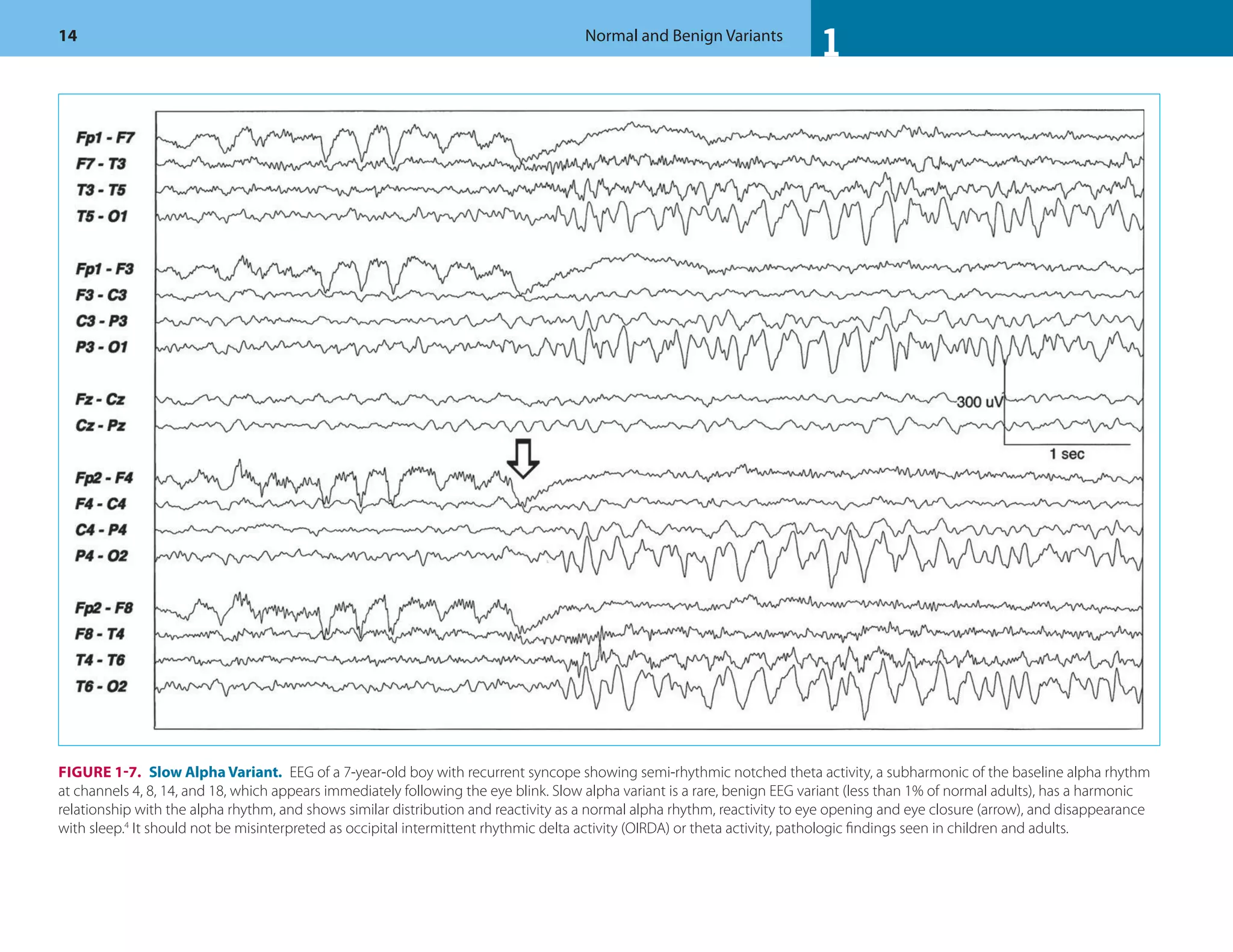
  • 461.
    5 448 Generalized NonepileptiformActivity FIGURE 553. Extreme Spindles; Acute Mycoplasma Encephalitis with Reversible Focal Lesion in the Corpus Callosum. A 6-year-old girl with an acute onset of fever, cough, vomiting, and lethargy. CSF showed mild lymphocytic pleocytosis. Serology for mycoplasma IgM was positive. (A) An initial axial T2-weighted image shows hyperintense signal abnormality in the splenium of the corpus callosum (arrow). (B) A follow-up MRI performed 5 days later shows disappearance of abnormal signal intensity in the corpus callosum (arrow). EEG performed on the same day as the first MRI demonstrates excessively diffuse spindles. A repeated EEG performed 1 week later (not shown) was within normal limits. MRI of reversible focal lesions in the splenium of the corpus callosum (SCC) is hyperintense on T2-weighted sequences and iso- or hypointense on T1-weighted sequences, with no contrast enhancement. On DWI, SCC lesions are hyperintense with low ADC values, indicating cytotoxic edema. The common causes of reversible focal lesions of the SCC are viral encephalitis, antiepileptic drug toxicity/withdrawal, and hypoglycemic encephalopathy.95 Extreme spindles in acute mycoplasma encephalitis have been reported.93,94
  • 462.
    5 Generalized NonepileptiformActivity 449 FIGURE 554. Diffuse Alpha Activity (Alpha Coma Pattern) & Delta Slowing (FIRDA and PDA); POLG1 Mutation (A467T). A 16-year-old girl with intractable epilepsy, peripheral neuropathy, ataxia, and mental deterioration. Her seizures include occipital lobe seizures and epilepsia partialis continua (EPC). She was lethargic, EEG is nonreactive, showing continuously diffuse alpha activity, developed multiple brainstem signs (ophthalmoplegia, facial weakness, and dysphagia), and died 4 days after this EEG. Blood DNA subsequently showed POLG1 mutation (A467T). EEG shows nonreactive, continuously diffuse alpha activity intermixed with polymorphic delta activity and FIRDA, indicating intrinsic brainstem dysfunction. An alpha frequency in an unresponsive patient (alpha coma, AC) was first described in a pontomesencephalic hemorrhage96 and subsequently in patients with cardiorespiratory arrest; brainstem lesions, including pontomesencephalic and thalamic tumors, infarctions, hemorrhages, and brainstem herniation; hypoxia; head trauma; Reye syndrome; encephalitis; drug and sedative overdoses; postictal state; and hyperglycemia. AC is described as an invariant and diffuse alpha rhythm, with frontal predominance. Sparing of at least half of the midbrain tegmentum appears to be sufficient to maintain an alpha pattern but insufficient to maintain full consciousness.97 AC after brain stem stroke or brain stem compromise carries a mortality of 90%. However, the etiology of AC is a more important prognostic indicator; patients with drug-induced coma survive in more than 90%. EEG reactivity is also a good prognostic indicator; EEG reactivity to noxious stimuli favors survival; without it, most patients die.98 Other authors debate whether or not AC lhas prognostic significance by itself.99
  • 463.
    5 450 Generalized NonepileptiformActivity FIGURE 555. Alpha Coma. A 15-year-old boy with a cerebellar infarction secondary to dissection of his right vertebral artery. He was in a coma and subsequently developed central herniation syndrome, and died 2 days after this EEG recording. Note broadly diffuse distribution of alpha activity without an anterior-posterior gradient that is nonreactive to external stimuli. This EEG pattern is called“alpha coma (AC).” AC is in the alpha frequency range that occurs with a generalized distribution in a comatose patient. It is monomorphic, does not change in response to sensory stimuli, and is most commonly predominant in the frontal region. AC is most frequently seen in anoxic encephalopathy caused by cardiorespiratory arrest (CRA) and is associated with a very poor prognosis. AC can also be seen in toxic encephalopathies, which are very similar to that seen with CRA, except with beta activity superimposed on the alpha activity. Other etiologies include head trauma, CJD, brainstem lesion, and encephalitis. Prognosis in AC depends on the underlying causes of coma. Etiology and outcome of AC and other rhythmic coma patterns (beta, theta, and spindle) were similar. One type of rhythmic pattern can change to another. Reactive rhythmic coma was associated with favorable outcome.57–59,100
  • 464.
    5 Generalized NonepileptiformActivity 451 FIGURE 556. Asymmetric Spindle Coma; Acute Amoebic Meningoencephalitis with Herniation Syndrome. A 10-year-old boy with refractory status epilepticus and coma caused by the amoeba Balamuthia mandrillaris. Axial MRI with FLAIR sequence and coronal T1-weighted image with GAD show an infarction of the right basal ganglion and midbrain (arrow) and Kernohan phenomenon in the opposite hemisphere (open arrow). EEG reveals asymmetrically diffuse spindle and delta coma with less abundant spindles and more pronounced polymorphic delta activity in the right hemisphere. In this patient, spindle and delta coma is most likely due to the lesions in the midbrain and basal ganglia caused by infarction and brain herniation syndrome. The patient died a few days after this EEG. Rhythmic coma patterns were found in 30.2% of EEG recordings in coma. Etiology, reactivity, and outcome of spindle, beta, alpha, and theta coma patterns are similar. The reactive pattern was associated with favorable outcome (66.7%). The nonreactive rhythmic pattern was associated with unfavorable outcome (60%). Sequential EEG recordings are required to detect the evolution of rhythmic coma patterns during childhood.100 The prognosis depends mainly on the primary disease process rather than the EEG finding. The prognosis of rhythmic coma pattern is better in children than in adults. The rhythmic coma pattern is probably caused by interruption of reticulothalamocortical pathways by metabolic or structural abnormalities.101 An incomplete pattern has a better prognosis.98,102,103 More than 440 cases of severe central nervous system infections caused by Acanthamoeba spp., B. mandrillaris, and Naegleria fowleri have been reported.104 Balamuthia encephalitis may occur in any age group, may or may not be associated with immunosuppression, and usually has a subacute and fatal course from hematogenous dissemination of chronic skin or lung lesions.97 Common features that might be of value in the diagnosis of Balamuthia encephalitis are high CSF protein, hydrocephalus, and Hispanic ethnicity.106 When purulent CSF is obtained and when no bacteria are noted in a patient with meningoencephalitis, the CSF should be examined specifically for other organisms, including amoeba. PCR assay and specific antibodies to Balamuthia are available. Brain biopsy should be considered in patients with encephalitis of unknown etiology whose condition deteriorates despite treatment with acyclovir.107 Chronic necrotizing vasculitis and focal hemorrhages are typical findings in Balamuthia infections.108,109 The prognosis is very poor due to delayed diagnosis, difficulty in isolation/identification of the organism, and lack of well-established treatment.110
  • 465.
    5 452 Generalized NonepileptiformActivity FIGURE 557. Burst-Suppression Pattern; Central Pontine Myelinolysis (CPM). A 2-year-old boy with septo-optic dysplasia with panhypopituitarism who presented to the ED with lethargy, poor feeding, and generalized hypotonia. He developed diabetes insipidus with Na, HCO3, and glucose of 177 MMol/L, 10 MMol/L, and 33 Mg/DL, respectively. He developed generalized hypertonia with intermittent tonic stiffening. Axial T2-weighted images show hyperintense signal abnormalities in the pons (arrow), cerebellum, (open arrow), midbrain (double arrows), and cerebral white matter (arrow head). The diagnosis of CPM was made. EEG shows a burst-suppression (B-S) pattern. CPM and EPM (extrapontine myelinolysis) frequently coexist with other abnormalities, such as electrolyte, and other metabolic disturbances or structural cortical abnormalities. The EEGs (e.g., CPM in liver transplantation) may also show a variety of epileptiform abnormalities or triphasic waves, due to metabolic derangements. Although CPM and EPM do not involve cortical structures, involvement of white matter and subcortical nuclei can produce generalized slowing on the EEG.111,112 B-S has never been reported in CPM. B-S consists of bursts of high-voltage slow waves intermixed with sharp waves, alternating with periods of depressed background activity or complete electrographic suppression. It was first described in 1949.113 Most experts consider deafferentation of the cortex from thalamus as the pathogenesis of B-S.114 At variance with cortical neurons, only 60–70% of thalamic cells ceased firing before overt EEG B-S and was completely silent during flat periods of EEG activity. The remaining 30– 40% of thalamic cells discharged rhythmic (1–4 Hz) spike bursts during periods of EEG silence. This rhythm, within the frequency range of delta waves, is generated in thalamic cell hyperpolarization.115 B-S and periodic spikes indicate coma with dissolution of cerebral functions down to the midbrain level.116 This theory fits with this patient, whose MRI shows involvement of brainstem at the midbrain and pontine levels.
  • 466.
    5 Generalized NonepileptiformActivity 453 FIGURE 558. Burst-Suppression Pattern; Central Pontine Myelinolysis. (Same EEG as in Figure 5-57) EEG of a 2-year-old boy with septo-optic dysplasia and panhypopituitarism who developed central pontine myelinolysis (CPM) secondary to hypernatremia. Note a burst-suppression EEG pattern. Axial T2-weighted image shows hyperintense lesions in the pons (arrow) and cerebellum (open arrow).
  • 467.
    5 454 Generalized NonepileptiformActivity FIGURE 559. Background Asynchrony; Diffuse Axonal Injury: Vasogenic Edema in Corpus Callosum. EEG of a 7-year-old boy with moderate traumatic brain injury (TBI) shows asynchronous background activity. Diffusion-weighted image shows hemorrhages in multiple areas, including the genu of the corpus callosum (CC) (open arrow), right hippocampus (arrow), white matter (double arrows), and white-gray matter junction (arrow head). Mild TBI is associated with diffusion tensor imaging (DTI) abnormalities in the genu. In more severe TBI, both the genu and the splenium are affected. DTI suggests a larger contribution of vasogenic edema in the genu than in the splenium in TBI.117 The CC may play a critical role in interhemispheric synchronization of cortical neuronal electrical activity. Disruption of CC may cause cortical areas to be released from such synchronization and act autonomously.118,119
  • 468.
    5 Generalized NonepileptiformActivity 455 FIGURE 560. Background Asynchrony; Ohtahara Syndrome Associated with Dysgenesis of Corpus Callosum. EEG of a 7-month-old boy with Ohtahara syndrome who subsequently developed infantile spasm. (A, B) Cranial MRI and CT reveal dysgenesis of corpus callosum. EEG shows an asynchronous burst-suppression (B-S) pattern. Asynchronous B-S may be explained by the following: (1) the corpus callosum normally modulates interhemispheric synchronization of cortical inhibition; (2) B-S pattern is generated by cortical structures; (3) with corpus callosal disruption, cortical areas are released from such synchronization and act autonomously.118,119
  • 469.
    5 456 Generalized NonepileptiformActivity FIGURE 561. Nonketotic Hyperglycinemia (NKH); Burst-Suppression Pattern. A 10-year-old girl with progressive encephalopathy and medically intractable epilepsy resulting from nonketotic hyperglycinemia (NKH). (A) CT scans performed at 8 years of age, 7 months apart, show progressive brain atrophy. (B) MRI done at 9 years of age shows diffuse brain atrophy and mild thinning of corpus callosum. EEG during sleep demonstrates a burst-suppression pattern. EEGs were grossly abnormal in all patients with NKH. In the neonatal period, the“suppression-burst”pattern was observed. The EEG changed to hypsarrhythmia during early or mid-infancy. In the 2nd to 5th years of life, multifocal epileptiform discharges superimposed on diffuse slow background activity occurred during wakefulness, but more severe disorganization of the EEG occurred in sleep with the emerging of hypsarrhythmia.120 NKH must be in the differential diagnosis in all infants with infantile spasms who have a burst-suppression EEG pattern, as well as dysgenesis of the corpus callosum. The burst-suppression EEG pattern in this patient continues into older age, especially during sleep.
  • 470.
    5 Generalized NonepileptiformActivity 457 FIGURE 562. Asynchronous Burst Suppression; Severely Diffuse Axonal Injury. A 15-year-old male with coma and frequent myoclonic jerks caused by severe head injury from a motor vehicle accident. Cranial MRI showed severely diffuse axonal injury, including hemorrhage in the corpus callosum. EEG demonstrates asynchronous burst- suppression (B-S) throughout the recording. The patient died a few days after this EEG tracing. Asynchronous B-S under pentobarbital anesthesia in patients with a corpus callosum hemorrhage has been reported. The corpus callosum may play a critical role in interhemispheric synchronization of cortical neuronal electrical activity. Asynchronous B-S associated with corpus callosum hemorrhage may be explained by the following: (1) the corpus callosum normally modulates interhemispheric synchronization of cortical inhibition; (2) the B-S pattern is generated by cortical structures; (3) with corpus callosal disruption, cortical areas are released from such synchronization and act autonomously.118,119
  • 471.
    5 458 Generalized NonepileptiformActivity FIGURE 563. Severe Anoxic Encephalopathy. An adult male with cardiac arrest due to myocardial infarction. The patient had frequent generalized myoclonic jerks that were time-locked with eye opening. He died 2 days after this EEG. The EEG shows a burst of generalized high-voltage polyspike-wave activity accompanied by a series of clinical symptoms, including eye opening, body jerking, and eye closing lasting for approximately 1–2 sec. This clinico-encephalographic finding is extremely rare and always indicative of a very poor prognosis for survival.121
  • 472.
    5 Generalized NonepileptiformActivity 459 FIGURE 564. Severe Anoxic Encephalopathy. A 23-year-old man with severe traumatic brain injury and severe hypoxic encephalopathy who developed very frequent episodes of body jerking accompanied by eye opening and closing. He died 1 day after this EEG recording. The EEG shows a burst of generalized high-voltage spikes and sharp waves intermixed with alpha, theta, and delta activity against a very low-voltage background activity. This EEG activity is accompanied by eye opening, body jerking, and then eye closure. This clinico-encephalographic finding is indicative of a very poor prognosis for survival.121
  • 473.
    5 460 Generalized NonepileptiformActivity FIGURE 565. Burst-Suppression Pattern; Anoxic Encephalopathy. A 12-year-old boy with severe anoxic encephalopathy due to near drowning. The patient was in comatose state and had no brain stem reflexes on examination. He was not on any sedative medication. EEG shows bursts of generalized high-voltage spikes and sharp waves intermixed with irregular delta activity against a very low-voltage background. Periodically, rapid eyelid opening followed by a very brief body jerk and slow eyelid closure corresponding to the onset and termination of EEG suppression bursts are noted. The burst-suppression pattern in anoxic encephalopathy is usually associated with a very poor prognosis. Severe myoclonic jerks may accompany the bursts of EEG activity. Focal or multifocal intermittent jerks affecting only facial muscles, especially eyes and mouth, are rarely seen in association with bursts of EEG activity. These movements can mimic volitional movements in response to external stimuli and mislead the physician about the patient’s mental status. The presence of these movements does not change the poor prognosis associated with the burst-suppression EEG pattern. On rare occasions, these movements can be periodic. It is hypothesized that the myoclonus may arise from a brain stem generator because the cortex is severely damaged and unable to generate cerebral activity.121–122
  • 474.
    5 Generalized NonepileptiformActivity 461 FIGURE 566. Evolution of EEG in Anoxic Encephalopathy: Burst-Suppression. An 18-year-old male who had cardiorespiratory arrest after severe head trauma from MVA. He was in a comatose state and subsequently developed frequent myoclonic jerks. Head CT showed diffuse, massive brain edema. The patient was not sedated. EEG performed on the 2nd day of admission shows a burst-suppression pattern.
  • 475.
    5 462 Generalized NonepileptiformActivity FIGURE 567. Evolution of EEG in Anoxic Encephalopathy: GPEDs. (Same patient as in Figure 5-66) EEG on day 3 shows bilateral synchronous spikes and sharp waves in all regions with frontal predominance, occurring every 0.5–1.5 sec. Generalized periodic epileptiform discharges (GPEDs) after an anoxic encephalopathy carries a poor prognosis for survival. Aggressive treatment may not be warranted, especially when GPEDs with very low inter-GPED amplitude are seen after anoxic brain injury. On the other hand, 43% of patients with toxic/metabolic disturbance and 64% with a primary neurologic process with GPEDs survived. Approximately 30% of GPEDs are associated with NCSE. GPEDs with SE have higher amplitude, longer duration, and lower inter-GPED amplitude.
  • 476.
    5 Generalized NonepileptiformActivity 463 FIGURE 568. Evolution of Severe Anoxic Encephalopathy; Electrocerebral Inactivity (ECI). (Same patient as in Figure 5-66 and 5-67) EEG (note: sensitivity of 2 μV/mm) on day 5 shows no cerebral activity and is not reactive to noxious stimuli, consistent with electrocerebral inactivity (ECI). Cardiorespiratory support was discontinued shortly after this EEG and a negative apnea test. ECI indicates breakdown of neuronal electrical activity due to irreversible depolarization of the membrane potential. All patients with ECI die or survive with severe neurologic deficits. ECI can be helpful in confirming the diagnosis of brain death if the EEG is performed with all technical standards established by the American Clinical Neurophysiology Society.127
  • 477.
    5 464 Generalized NonepileptiformActivity FIGURE 569. Low-Voltage EEG; Bilateral Subdural Effusion. A 3½-month-old female with a history of nonaccidental trauma at 2 months of age. EEG during wakefulness demonstrates diffuse low-voltage activity with mild preservation of background activity in the left temporal region. Head CT performed 5 days later showed massive, bilateral subdural effusion. Signal attenuation in this EEG was caused by the effect of subdural fluid collection on scalp-recorded potentials rather than loss of cortical activity. Properties of the volume-conducting medium between intracranial generators and scalp electrodes can have a major effect on the recorded potentials. A regional increase in the thickness of the conducting medium (fluid collection) between intracranial generators and overlying electrodes may lead to significant focal attenuation of electrical activity, as in this case of a subdural fluid collection. This is an example of EEG application of volume conduction theory.128
  • 478.
    5 Generalized NonepileptiformActivity 465 FIGURE 570. Scalp Edema and High Frequency Respirator Artifacts. An 18-day-old boy with diaphragmatic hernia, pulmonary hypoplasia, and generalized skin edema, including severe scalp edema due to hypoalbuminemia, who had been on ECMO since birth. Head CT showed significant extra-axial CSF space. His level of consciousness was improving. EEG demonstrates very low-voltage background activity throughout the recording probably caused by a combination of scalp edema, increased extra-axial CSF space, and hypoxic-ischemic encephalopathy. Note artifactual, low-voltage, rhythmic, 7-Hz theta activity due to the high-frequency respirator in the right occipital electrode (arrow).
  • 479.
    5 466 Generalized NonepileptiformActivity FIGURE 571. Severe Hypoxic Ischemic Encephalopathy (HIE); Electrocerebral Inactivity (ECI). A 2-day-old full term newborn with severe hypoxic ischemic encephalopathy. Axial T1W1 MR shows loss of signal in the posterioir limb of internal capsule (open arrow) and increased signal in posterior putamen, GP, lateral thalamus (arrow), and cortex and subcortical white matter. Sagittal T1W1 MR shows increased signal in basal ganglion (double arrows). EEG shows no cerebral activity with the EEG sensitivity of 2 μV/mm . ECI can be interpreted as a sign of brain death if there are absence of cortical and brainstem functions, evidence of intoxication, or hypothermia. Minimal technical standards for the EEG recording in brain death by The American Encephalographic Society (120) are required.
  • 480.
    5 5 Generalized NonepileptiformActivity 467 References 1. Van Cott A, Brenner R. Drug effects and toxic encephalopathy. In: Ebersole JS, Pedley TA, eds. Current Practice of Clinical Electroencephalography. Philadelphia: Lippincott Williams & Wilkins; 2003:463–482. 2. Blume WT. Drug effects on EEG. J Clin Neurophysiol. 2006;23(4):306–311. 3. Bauer G, B.R., EEG, drug effects, and central nervous system poisoning. In: Niedermeyer E, Da Silva FHL, eds. Electroencephalography: Basic Principles, Clinical Applications, and Related Fields. Amsterdams: Lippincott Williams & Wilkins. 2005. 4. Kato M, Dobyns W. Lissencephaly and the molecular basis of neuronal migration. Hum Mol Genet. 2003. 12(90001):89–96. 5. Osborn AG. Diagnostic Imaging: Brain. Salt Lake City, UT: Amirsys. 2004. 6. Singh R, Gardner RJM, Crossland, KM, et al. Chromosomal abnormalities and epilepsy: a review for clinicians and gene hunters. Epilepsia. 2002;43: 127–140. 7. Gastaut H, Pinsard N, Raybaud C, et al. Lissencephaly (agyria-pachygyria): clinical findings and serial EEG studies. Dev Med Child Neurol. 1987;29:167–180. 8. Worle H, Keimer R, B. Kohler B. [Miller-Dieker syndrome (type I lissencephaly) with specific EEG changes]. Monatsschr Kinderheilkd. 1990;138(9):615–618. 9. De Rijk-van Andel JF, Arts WF, De Weerd AW. EEG and evoked potentials in a series of 21 patients with lissencephaly type I. Neuropediatrics. 1992;23(1):4–9. 10. Barkovich A, Lindan C. Congenital cytomegalovirus infection of the brain: imaging analysis and embryologic considerations. Am J Neuroradiol. 1994;15(4):703–715. 11. Pilz DT, Matsumoto N, Minnerath S, et al. LIS1 and XLIS (DCX) mutations cause most classical lissencephaly, but different patterns of malformation. Hum Mol Genet. 1998;7:2029–2037. 12. Dobyns, W.B. et al. Differences in the gyral pattern distinguish chromosome 17-linked and X-linked lissencephaly. Neurology. 1999;53:270−277. 13. Guerrini R, Marini C (2006) Genetic malformations of cortical development. Exp Brain Res 173:322–333 14. Hodgkins PR, Kriss A, Boyd S et al. A study of EEG, electroretinogram, visual evoked potential, and eye movements in classical lissencephaly. Dev Med Child Neurol. 2000;42:48–52. 15. Quirk JA, Kendall B, Kingsley DPE, et al. EEG features of cortical dysplasia in children. Neuropediatrics. 1993;24:193–199. 16. Bode H, Bubl R. EEG changes in type 1 and type 2 lissencephaly. Klin Pediatr. 1994;206:12–17. 17. Mori K, Hashimoto T, Tayama M, et al. Serial EEG and sleep polygraphic studies on lissencephaly (agyria– pachygyria). Brain Dev. 1994;16:365–373. 18. Majkowski J, Lee MH, Kozlowski PB, Haddad R. EEG and seizure threshold in normal and lissencephalic ferrets. Brain Res. 1984;307:29–38. 19. Kurlemann G, Schuierer G, Kuchelmeister K, Kleine M, Weg-lage J, Palm DG. Lissencephaly syndromes: clinical aspects. Childs Nerv Syst. 1993;9:380–386. 20. De Rijk-van Andel J, Arts W, De Weerd A. EEG and evoked potentials in a series of 21 patients with lissencephaly type I. Neuropediatrics. 1992;23(1):4–9. 21. Hakamada S, Watanabe K, Hara K, Miyazaki S. The evolution of electroencephalographic features in lissencephaly syndrome. Brain Dev. 1979;4:277–283. 22. Raieli V, Puma D, Brighina F. Role of neurophysiology in the clinical practice of primary pediatric headaches. Drug Dev Res. 2007;68(7):389–396. 23. Gronseth GS, Greenberg MK. The utility of the electroencephalogram in the evaluation of patients presenting with headache: a review of the literature. Neurology. 1995;45(7):1263–1267. 24. Doose H. EEG in childhood epilepsy. 1st ed. Montrouge- France: John Libbey Eurotext. 2003:410. 25. Neubauer BA, Hahn A, Doose H, Tuxhorn I. (2005) Myoclonic-astatic epilepsy of early childhood—definition, course, nosography, and genetics. Adv Neurol 95: 147–155. 26. Foletti G, Volanschi D. Influence of lamotrigine addition on computerized background EEG parameters in severe epileptogenic encephalopathies. Eur Neurol. 1994;34(1):87–89. 27. Glaze DG. Neurophysiology of Rett syndrome. J Child Neurol. 2005;20(9):740–746. 28. Niedermeyer E, Rett A, Renner H, Murphy M, Naidu S. Rett syndrome and the electroencephalogram. Am J Med Genet Suppl. 1986;1:195–199 29. Walser H, Isler H. Frontal intermittent rhythmic delta activity, impairment of consciousness and migraine. Headache J Head Face Pain. 1982;22(2):74–80. 30. Pietrini V, Terzano MG, D’andrea G, Parrino L, Cananzi AR, Ferro–Milone F. Acute confusional migraine: clinical and electroencephalographic aspects. Cephalalgia. 1987;7:29–37.6. 31. Gladstein J. Headache in pediatric patients: diagnosis and treatment. Top Pain Manag. 2007. 22(11):1. 32. Frequin S, Linssen WHJP.1, Pasman JW, Hommes OR, Merx HL. Recurrent prolonged coma due to basilar artery migraine. A case report. Headache J Head Face Pain. 1991;31(2):75–81. 33. Muellbacher W, Mamoli B. Prolonged impaired consciousness in basilar artery migraine. Headache J Head Face Pain. 1994;34(5):282–285. 34. Alehan F, Watemberg N. Clinical and laboratory correlates of frontal intermittent rhythmic delta activity (FIRDA). Dementia. 2001;9:13.2. 35. Tan HJ, Suganthi C, Dhachayani S, et al. The coexistence of anxiety and depressive personality traits in migraine. Singapore Med J. 2007;48:307–310. 36. Fisch BJ. Fisch and Spehlmann's EEG Primer: Basic Principles of Digital and Analog EEG. Amsterdams: Elsevier Science Health Science Division. 1999. 37. Sharbrough FW, Nonspecific abnormal EEG patterns. In: Niedermeyer E, Fernando LDS, eds. Electroencephalography: Basic Principles, Clinical Applications, and Related Fields. Lippincott Williams & Wilkins; 2005:235–254. 38. Di Gennaro G, Quarato PP, Onorati P, et al. Localizing significance of temporal intermittent rhythmic delta activity (TIRDA) in drug-resistant focal epilepsy. Clin Neurophysiol. 2003;114:70–78 39. Gullapalli D, Fountain NB. Clinical correlation of occipital intermittent rhythmic delta activity. J Clin Neurophysiol. 2003. 20(1):35–41. 40. Riviello J, Foley C. The epileptiform significance of intermittent rhythmic delta activity in childhood. J Child Neurol. 1992;7(2):156. 41. Watemberg N, Linder I, Dabby R, Blumkin L, Lerman- Sagie T. Clinical correlates of occipital intermittent rhythmic delta activity (OIRDA) in children. Epilepsia. 2007;48:330–334. 42. Belsh J, Chokroverty S, Barabas G. Posterior rhythmic slow activity in EEG after eye closure. Electroencephalogr Clin Neurophysiol. 1983;56(6): 562–568. 43. Riviello JJ, Jr., Foley CM. The epileptiform significance of intermittent rhythmic delta activity in childhood. J Child Neurol. 1992;7(2):156–160.
  • 481.
    5 468 Generalized NonepileptiformActivity 44. Boyd SG, Harden A, Patton MA. The EEG in early diagnosis of the Angelman (happy puppet) syndrome. Eur J Pediatr. 1988;147(5):508–513. 45. Valente KD, Andrade JQ, Grossmann RM, Kok F, Fridman C, Koiffmann CP, Marques-Dias MJ. Angelman syndrome: difficulties in EEG pattern recognition and possible misinterpretations. Epilepsia. 2003;44: 1051–1063. 46. Casara GL, Vecchi M, Boniver C, et al. Electroclinical diagnosis of Angelman syndrome: a study of 7 cases. Brain Dev. 1995;17:64–68. 47. Laan LA, Renier WO, Arts WF, Buntinx IM, Van der Burgt I, Stroink H, Beuten J, Zwinderman KH, van Dijk JG. Brouwer OF. Evolution of epilepsy and EEG findings in Angelman syndrome. Epilepsia. 1997;38:195–199. 48. Van Lierde A, Atza MG, Giardino D, Viani F. 1990. Angelman's syndrome in the first year of life. Dev Med Child Neurol. 1990;32:1011–1016. 49. Korff CM, Kelley KR, Nordli DR, Jr. Notched delta, phenotype, and Angelman syndrome. J Clin Neurophysiol. 2005;22(4):238–243. 50. Valente KD, Freitas A, Fiore LA, Kim CA. A study of EEG and epilepsy profile in Wolf-Hirschhorn syndrome and considerations regarding its correlation with other chromosomal disorders. Brain Dev. 2003;25:283–287. 51. Laan LAEM, Brouwer OE, Begeer CE, Zwinderman AE, van Dijk JG. The diagnostic value of the EEG in Angelman syndrome and Rett syndrome at a young age. Electroencephalogr Clin Neurophysiol. 1998;106:404–418. 52. Laan LA, Vein AA. A Rett patient with a typical Angelman EEG. Epilepsia. 2002;43(12):1590–1592. 53. Valente KD. Another Rett patient with a typical Angelman EEG. Epilepsia. 2003;44(6):873–874. 54. Sgrò V, Riva E, Canevini MP, Colamaria V, Rottoli A, Minotti L, Canger R, Dalla Bernardina B (1995) 4p− Syndrome: a chromosomal disorder associated with a particular EEG pattern. Epilepsia. 1995 36:1206–1214. 55. Boulanger JM, Deacon C, Lécuyer D, Gosselin S, and Reiher J, Triphasic waves versus nonconvulsive status epilepticus: EEG distinction. Can J Neurol Sci. 2006;33:175–180. 56. Brenner. RP. The interpretation of the EEG in stupor and coma. Neurologist. 2005;11(5):271–284. 57. Husain AM. Electroencephalographic assessment of coma. J Clin Neurophysiol. 2006;23(3):208–220. 58. Kaplan PW. The EEG in metabolic encephalopathy and coma. J Clin Neurophysiol. 2004;21(5):307–318. 59. Kaplan PW. Stupor and coma: metabolic encephalopathies. Suppl Clin Neurophysiol. 2004;57:667–680. 60. Hughes JR. Correlations between EEG and chemical changes in uremia. Electroencephalogr Clin Neurophysiol. 1980;48(5):583–594. 61. Bahamon-Dussan J, Celesia G, Grigg-Damberger M. Prognostic significance of EEG triphasic waves in patients with altered state of consciousness. J Clin Neurophysiol. 1989;6(4):313. 62. Young GB, Kreeft JH, McLachlan RS, et al. EEG and clinical associations with mortality in comatose patients in a general intensive care unit. J Clin Neurophysiol. 1999;16:354–360. 63. Kaplan P. The EEG in metabolic encephalopathy and coma. J Clin Neurophysiol. 2004;21(5):307. 64. MacGillivray B, Kennedy J. The" triphasic waves" of hepatic encephalopathy. Electroencephalogr Clin Neurophysiol. 1970;28(4):428. 65. Simonian NA, Gilliam FG, Chiappa KH. Ifosfamide causes a diazepam-sensitive encephalopathy. Neurology. 1993;43(12):2700–2702. 66. Wengs WJ, Talwar D, Bernard J. Ifosfamide-induced nonconvulsive status epilepticus. Arch Neurol. 1993;50(10):1104–1105. 67. Primavera A, Audenino D, Cocito L. Ifosfamide encephalopathy and nonconvulsive status epilepticus. Can J Neurol Sci. 2002;29(2):180–183. 68. Fountain NB, Waldman WA. Effects of benzodiazepines on triphasic waves: implications for nonconvulsive status epilepticus. J Clin Neurophysiol. 2001;18(4):345–352. 69. Kaplan PW. Prognosis in nonconvulsive status epilepticus. Epileptic Disord. 2000;2(4):185–193. 70. Pampiglione G, Lehovsky M. The evolution of EEG features in 26 children with proven neuronal lipidosis. Electroencephalogr Clin Neurophysiol. 1968;25(5):509. 71. Dumermuth G, Molinari L. Spectral analysis of EEG background activity. In: Gevins A, Remond A, eds. Handbook of Electroencephalography and Clinical Neurophysiology. Analysis of Eectrical and Magnetic Signals. Vol. 1. Amsterdam: Elsevier; 1987: 85–130. 72. Wang PJ, Hwu WL, Shen YZ. Epileptic seizures and electroencephalographic evolution in genetic leukodystrophies. J Clin Neurophysiol. 2001;18(1): 25–32. 73. Balslev T, Cortez MA, Blaser SI, Haslam RH. Recurrent seizures in metachromatic leukodystrophy. Pediatr Neurol. 1997;17:150–154. 74. Gloor P., Kalabay O, Giard, N. The electroencephalogram in diffuse encephalopathies: electroencephalographic correlates of grey and white matter lesions. Brain. 1968;91:779–802. 75. Singh R, Gardner RJM, Crossland, KM, et al. Chromosomal abnormalities and epilepsy: a review for clinicians and gene hunters. Epilepsia. 2002;43: 127–140. 76. Gloor P., Ball G. Schaul N. Brain lesions that produce delta waves in the EEG. Neurology. 1977;27:326–333. 77. Steriade M., Gloor P, Llinas R.R, Lopes da Silva, F.H, Mesulam M.M. Basic mechanisms of cerebral rhythmic activities. Electroencephalogr Clin Neurophysiol. 1998;106:11–107. 78. Schaul N. The fundamental mechanisms of electroencephalography. Electroenceph Clin Neurophysiol. 106, pp. 101–107. 79. Gibbs FA, Gibbs EL, Lennot WG. Effect on the electroencephalogram of certain drugs which influence nervous activity, Arch Intern Med. 1937;60:154–166. 80. Chatrian G-E, Turella G. Electrophysiological evaluation of coma and other states of diminished responsiveness and brain death. In: Ebersole JS, Pedley TA, eds. Practice of Clinical Electroencephalography. Philadelphia: Lippincott Williams and Wilkins; 2003:405–462. 81. Evans BM, Bartlett JR. Prediction of outcome in severe head injury based on recognition of sleep related activity in the polygraphic electroencephalogram. J Neurol Neurosurg Psychiatry. 1995;59:17–25. 82. Gloor P. Generalized cortico-reticular epilepsies. Some considerations on the pathophysiology of generalized bilaterally synchronous spike and wave discharge. Epilepsia. 1968;9(3):249–263. 83. Stam C, Pritchard W. Dynamics underlying rhythmic and non-rhythmic variants of abnormal, waking delta activity. Int J Psychophysiol. 1999;34(1):5–20. 84. Markand ON. Pearls, perils, and pitfalls in the use of the electroencephalogram. Semin Neurol. 2003;23(1):7–46. 85. Klass DW, Westmoreland BF. Nonepileptogenic epileptiform electroencephalographic activity. Ann Neurol. 1985;18(6):627–635. 86. Yamada T, Tucker RP, Kooi KA. Fourteen and six c/sec positive bursts in comatose patients. Electroencephalogr Clin Neurophysiol. 1976;40(6):645–653. 87. Yamada T, Young S, Kimura J. Significance of positive spike burst in Reye syndrome. Arch Neurol. 1977;34(6):376–380.
  • 482.
    5 Generalized NonepileptiformActivity 469 88. Drury I. 14-and-6 Hz positive bursts in childhood encephalopathies. Electroencephalogr Clin Neurophysiol. 1989;72(6):479. 89. Kooi K. Involutary movements associated with fourteen- and six-per-second positive waves. Report of a case with electroencephalographic studies. Neurology. 1968;18(10):997. 90. Hughes JR. Sleep spindles revisited. J Clin Neurophysiol. 1985;2(1):37–44. 91. Dan B, Boyd SG. A neurophysiological perspective on sleep and its maturation. Dev Med Child Neurol. 2006;48(09):773–779. 92. Hughes JR. EEG in Clinical Practice. Boston: Butterworth-Heinemann. 1994. 93. Akaboshi S, Koeda T, Houdou S. Transient extreme spindles in a case of subacute Mycoplasma pneumoniae encephalitis. Pediatr Int. 1998;40(5):479–482. 94. Heatwole CR, Berg MJ, Henry JC, Hallman JL. Extreme spindles: a distinctive EEG pattern in Mycoplasma pneumoniae encephalitis. Neurology. 2005;64:1096–1097. 95. Gallucci M, Limbucci N, Paonessa A, Caranci F. Reversible focal splenial lesions. Neuroradiology. 2007;49:541–544. 96. Loeb C, Poggio G. Electroencephalograms in a case with ponto-mesencephalic haemorrhage. Electroencephalogr Clin Neurophysiol. 1953;5(2):295. 97. Westmoreland B, Klass DW, Sharbrough FW, Reagan TJ. “Alpha coma.” Electroencephalographic, clinical, pathologic and etiological correlations. Arch Neurol. 1975;32:713–718. 98. Kaplan PW, Genoud D, Ho TW, et al. Etiology, neurologic correlations, and prognosis in alpha coma. Clin Neurophysiol. 1999;110:205–213. 99. Austin EJ, Wilkus RJ, Longstreth WT, Jr. Etiology and prognosis of alpha coma. Neurology. 1988;38(5):773–777. 100. Ramachandrannair R, Sharma R, Weiss SK, et al: A reappraisal of rhythmic coma patterns in children. Can J Neurol Sci. 2005;32:518–523. 101. Horton EJ, Goldie WD, Baram TZ. Rhythmic coma in children. J Child Neurol. 1990;5(3):242–7. 102. Berkhoff M, Donati F, Bassetti C. Postanoxic alpha (theta) coma: a reappraisal of its prognostic significance. Clin Neurophysiol. 2000;111(2):297–304. 103. Young GB, Blume WT, Campbell VM, Demelo JD, Leung LS, McKeown MJ, McLachlan RS, Ramsay DA, Schieven JR. Alpha, theta and alpha-theta coma: a clinical outcome study utilizing serial recordings. Electroencephalogr Clin Neurophysiol. 1994;91:93–99. 104. Qvarnstrom Y, Visvesvara GS, Sriram R & Da Silva AJ (2006) A multiplex real-time PCR assay for simultaneous detection of Acanthamoeba spp., Balamuthia mandrillaris and Naegleria fowleri. J Clin Microbiol. 2006;44:3589–3595. 105. Bodi I, Dutt N, Hampton T, Akbar N. Fatal granulomatous amoebic meningoencephalitis due to Balamuthia mandrillaris. Pathol Res Pract. 2008;204(12):925–928. 106. Bakardjiev A, Azimi PH, Ashouri N, Ascher DP, Janner D, Schuster FL, Visvesvara GS, Glaser C. Amebic encephalitis caused by Balamuthia mandrillaris: report of four cases. Pediatr Infect Dis. 2003;22:447–452. 107. Tunkel AR, Glaser CA, Bloch KC, et al. The management of encephalitis: clinical practice guidelines by the Infectious Diseases Society of America. Clin Infect Dis. 2008;47:303–327. 108. Griesemer DA, Barton LL, Reese CM, et al. Amebic meningoencephalitis caused by Balamuthia mandrillaris. Pediatr Neurol. 1994;10:249–254. 109. Healy JF. Balamuthia amebic encephalitis: radiographic and pathologic findings. Am J Neuroradiol 2002;23:486–489. 110. Perez M, Bush L. Balamuthia mandrillaris amebic encephalitis. Current Infect Dis Rep. 2007;9(4):323–328. 111. Steg R, Wszolek Z. Electroencephalographic abnormalities in liver transplant recipients: practical considerations and review. J Clin Neurophysiol. 1996;13(1):60. 112. Wszolek ZK, McComb RD, Pfeiffer RF, et al. Pontine and extrapontine myelinolysis following liver transplantation. Transplantation. 1989;48:1006–1012 113. Swank R, Watson C. Effects of barbiturates and ether on spontaneous electrical activity of dog brain. J Neurophysiol. 1949;12(2):137–160. 114. Savard M, Huot P. Asynchronous burst-suppression on EEG in severe, diffuse axonal injury. Can J Neurol Sci. 2008;35(4):526–527. 115. Steriade M, McCormick DA, Sejnowski TJ. Thalamocortical oscillations in the sleeping and aroused brain. Science. 1993;262(5134):679–685. 116. Bauer G, Niedermeyer E. Acute convulsions. Clin EEG (Electroencephalogr). 1979;10(3):127. 117. Rutgers DR, Toulgoat F, Cazejust J, Fillard P, Lasjaunias P, Ducreux D. White matter abnormalities in mild traumatic brain injury: a diffusion tensor imaging study. Am J Neuroradiol. 2008;29:514–519. 118. Lazar LM, Milrod LM, Solomon GE, Labar DR. Asynchronous pentobarbital-induced burst suppression with corpus callosum hemorrhage. Clin Neurophysiol. 1999;110:1036–1040. 119. Lambrakis C, Lancman M, Romano C. Asynchronous and asymmetric burst-suppression in a patient with a corpus callosum lesion. Clin Neurophysiol. 1999;110(1):103–105. 120. Markand ON, Garg BP, Brandt IK. Nonketotic hyperglycinemia: electroencephalographic and evoked potential abnormalities. Neurology. 1982;32(2):151–156. 121. McCarty G, Marshall D. Transient eyelid opening associated with postanoxic EEG suppression-burst pattern. Arch Neurol. 1981;38(12):754–756. 122. Wolf P. Periodic synchronous and stereotyped myoclonus with postanoxic coma. J Neurol. 1977;215(1):39–47. 123. Jumao-as A, Brenner R. Myoclonic status epilepticus: a clinical and electroencephalographic study. Neurology. 1990;40(8):1199–1202. 124. Reeves A, Westmoreland B, Klass D. Clinical accompaniments of the burst-suppression EEG pattern. J Clin Neurophysiol. 1997;14(2):150. 125. Hallett M. Physiology of human posthypoxic myoclonus. Mov Disord. 2000;15:8–13. 126. Fernández-Torre J, Calleja J, Infante J. Periodic eye opening and swallowing movements associated with post-anoxic burst-suppression EEG pattern. Epileptic Disord. 2008;10(1):19. 127. American Electroencephalographic Society. Guideline three: minimum technical standards for EEG recording in suspected cerebral death. J Clin Neurophysiol. 1994;11(1):10–13. 128. Lagerlund TD, Daube JR, Rubin DI. Volume Conduction. In: Daube JRR, Devon I, eds. Clinical Neurophysiology. New York: Oxford University Press.2009:33–52.
  • 483.
  • 484.
    471 ICU EEG pattern ofencephalopathy Nonspecific patterns Alpha rhythm slowing 䡲 → theta slowing → delta slowing → loss of alpha rhythm → loss of normal faster activity → loss/attenuation of sleep architectures, abnormal arousal patterns and presence of frontal intermittent rhythmic delta activity (FIRDA) → loss of normal variability and state changes → loss of reactivity to external stimuli, burst-suppression (B-S) → electrocerebral inactivity (ECI). Specific patterns Generalized Periodic Epileptiform Discharges (GPEDs) Anoxic encephalopathy 䡲 After status epilepticus (SE) 䡲 Toxic encephalopathy 䡲 Creutzfeldt-Jakob disease (CJD; GPEDs at 䡲 approximately 1 Hz) Triphasic Waves Toxic/metabolic encephalopathy 䡲 NCSE 䡲 Periodic Lateralized Epileptiform Discharges (PLEDs) Acute or subacute unilateral lesions 䡲 Most commonly seen in stroke and herpes simplex 䡲 encephalitis Normal or Near-Normal EEG Psychogenic process or brainstem disease ( 䡲 (locked-in syndrome) Diffuse polymorphic delta slowing (delta coma) (Figures 6-1 to 6-4, 6-30) Advanced states of encephalopathy and coma. 䡲 Caused by structural abnormalities involving 䡲 subcortical white matter or profound metabolic coma. In severe encephalopathy, the EEG does not show 䡲 reactivity to any stimulation and is called invariant EEG. Bilateral but lateralized polymorphic delta activity 䡲 (PDA) is characteristic of frontal lobe lesions. Functional or structural abnormal thalamocortical interactions, especially the dorsal medial nucleus of the thalamus, play a major role in IRDA. A combination of FIRDA or OIRDA and continuously 䡲 focal PDA is the classic sign of impending cerebral herniation from a focal structural abnormality. However, the same combination of patterns can also be seen in patients with focal structural lesions and coexistent toxic or metabolic encephalopathies. Therefore, clinical correlation is required. EEG reactivity (Figures 6-6 and 6-7) In milder encephalopathy, the EEG shows 䡲 spontaneous variability, evidence of EEG reactivity to stimulation, typically attenuation of amplitude, reduction of delta activity, and increase in frequency. Paradoxical activation 䡲 is a period of more severe delta slowing following painful stimulation. It is seen less commonly than a typical response to stimuli but associated with a milder degree of encephalopathy compared to the invariant EEG. Periodic lateralized epileptiform discharges (PLEDs) (Figures 6-8 and 6-9) PLEDs is defined as 䡲 an EEG pattern consisting of sharp waves, spikes (alone or associated with slow waves), or more complex wave forms occurring at periodic intervals. Considered an interictal > ictal pattern. 䡲 Transient phenomenon (disappear within days to 䡲 weeks). Clinical: lethargic, focal seizures, focal neurological 䡲 signs. Occur at the rate of 1–2/sec and are commonly 䡲 seen in posterior head region, especially in the parietal areas. 6
  • 485.
    6 472 ICU Sometimes associatedwith EPC. 䡲 Related to an acute or subacute focal brain lesion 䡲 involving gray matter. Chronic PLEDs were also reported in 9% of patients 䡲 with intractable epilepsy who had structural abnormalities such as cortical dysplasia or severe remote cerebral injury. Etiology: 䡲 Acute stroke, tumor, and CNS infection were the 䊳 most common etiologies. Others included acute hemorrhage, TBI, PRES, 䊳 familial hemiplegic migraine, and cerebral amyloidosis. PLEDs were more periodic when they were associated 䡲 with acute viral encephalitis than with other etiologies. Most HSV encephalitides have PLEDs, maximal in 䡲 the temporal region. Seizure activity occurred in 85%, with mortality rate 䡲 of 27%. In one series, 50% of patients with PLEDs never 䡲 developed clinical seizure. Periodic epileptiform discharges in the midline (PEDIM) (Figures 6-10 and 6-11) Same characteristics as PLEDs, except 䡲 for location in midline vertex. All had acute onset of partial motor seizures 䡲 involving the lower extremity and sustained a cerebrovascular insult. Origin from the watershed area involving 䡲 predominantly the parasagittal, midline parietal, or midline central areas. The location of the PEDIM corresponded to the 䡲 seizure type and focal neurologic deficits. Bilateral independent periodic lateralized epileptiform discharges (BiPLEDs) (Figures 6-12 to 6-16) Bilateral and asynchronous, and differ in amplitude, 䡲 morphology, repetitive rate, and the location. Most commonly caused by multifocal or diffuse 䡲 cerebral injury, such as anoxic encephalopathy and CNS infection, as well as strokes and epileptic seizure disorders (especially complex partial SE). Mortality of 52%, twice of patients with PLEDs. 䡲 Higher incidence of seizures. 䡲 BiPLEDs and GPEDs after an anoxic insult carried a 䡲 poor prognosis for survival. Aggressive treatment of patients may not be warranted when these EEG patterns are seen after anoxic brain injury. Hypoxic encephalopathy (HE) (Figures 6-5 and 6-16) Poor prognosis for HE Suppression. 䡲 Burst-suppression. 䡲 Alpha- and theta-pattern coma. 䡲 Generalized suppression to ≤20 μV. 䡲 Burst-suppression patterns with generalized 䡲 epileptiform activity. Generalized periodic complexes (GPEDs), especially 䡲 on a flat background. Nonreactive EEG. 䡲 Hemiconvulsion hemiplegia epilepsy syndrome (HHE) (Figures 6-17 and 6-18) Rare sequence comprising a sudden and prolonged 䡲 hemiclonic seizure during febrile illness in an otherwise normal child, followed by permanent ipsilateral hemiplegia and focal epilepsy. Caused by CNS infection and less commonly seen 䡲 in TBI or cerebrovascular accident. Ictal EEG shows high-voltage rhythmic slow waves 䡲 intermingled with spikes, sharp waves, spike-wave complexes, or low-voltage fast activity. Higher amplitude and more abundant epileptiform activities with posterior predominance are noted in the affected hemisphere. Generalized periodic epileptiform discharges (GPEDs) (Figures 6-19 to 6-21) Subcortically triggered cortical excitation alternating 䡲 with prolonged inhibitory events. Periodic complexes that occur throughout the brain 䡲 in a symmetric and synchronized manner. Not consistently associated with a specific etiology 䡲 including: Severe anoxic encephalopathy 䊳 Post-SE 䊳 Toxic encephalopathy 䊳 High doses of almost any drugs depressing 앫 central nervous system function. Lithium, baclofen, ifosphamide, and cefepime 앫 Metabolic encephalopathy 䊳 CJD 䊳 Whether GPEDs represent an EEG pattern of SE is 䡲 debated. Many believe that the GPEDs represent brain damage rather than ongoing SE. GPEDs with high amplitude (mean, 110 μV) and 䡲 longer duration (mean, 0.5 sec), with preserved inter- GPED amplitude (mean, 34 μV), were more likely to be associated with SE, although these differences could not be used clinically in isolation to differentiate between SE and non-SE. Patients with GPEDs whose clinical history and EEG are 䡲 consistent with SE should be managed aggressively with antiepileptic drugs. Other characteristics that favor a more optimistic 䡲 outlook include: Younger age 䊳 Higher level of alertness at the time of the EEG 䊳 History of seizures in the current illness 䊳 Higher inter-GPED amplitude 䊳 Independently associated with poor outcome in 90% 䡲 of those with GPEDs versus 63% of those without. GPEDs and BiPLEDs after an anoxic insult carried a 䡲 poor prognosis for survival. Aggressive treatment
  • 486.
    6 ICU 473 ofpatients may not be warranted when these EEG patterns are seen after anoxic brain injury. Stimulus-induced rhythmic, periodic, or ictal discharges (SIRPIDs) (Figure 6-22) Periodic, rhythmic, or ictal-appearing discharges 䡲 that were consistently induced by alerting stimuli. Quasiperiodic discharges (sharp waves, spikes, 䡲 polyspikes, or sharply contoured delta waves) recurring at regular intervals are noted. At times, the pattern became continuous and 䡲 rhythmic rather than periodic. The periodic or rhythmic nature of SIRPIDs may be 䡲 a reflection of the oscillations generated by burst firing of the reticular thalamic nucleus. In the normal setting, the cortex inhibits thalamocortical bursting. In cortical dysfunction, disruption of this inhibitory feedback on the thalamus by cortical projections causes rhythmic activity. These EEG patterns often qualify as electrographic 䡲 seizures but are consistently elicited by stimulation. Common in encephalopathy, critically ill patients, and 䡲 particularly those with acute brain injury. The relation between clinical seizures and SIRPIDs 䡲 is unclear; therefore, there is no consensus on how aggressively SIRPIDs should be treated. In patients with cortical and subcortical dysfunction, 䡲 alerting stimuli activate the arousal circuitry and, when combined with hyperexcitable cortex, result in epileptiform activity or seizures. This activity can be focal or generalized, and is usually nonconvulsive. If the electrographic seizure activity is adequately 䡲 synchronized in a specific region involving motor pathways, focal motor seizures can occur. Creutzfeldt-Jakob disease (CJD) (Figure 6-23) Generalized periodic discharges at approximately 䡲 1 Hz, with rapidly progressive dementia and myoclonus. Most common human transmissible subacute 䡲 spongiform encephalopathy (TSSE). Most CJD cases are sporadic (85%). The remaining 䡲 15% consist of genetic forms (genetic CJD, Gerstmann-Sträussler-Scheinker disease, fatal familial insomnia) and iatrogenic forms (cadaveric human growth hormone and dura mater, surgical or other invasive procedures, and transfusion- associated variant CJD infections). CJD has been reported in children. EEG in CJD usually starts with PLEDs with atypical 䡲 short interdischarge intervals of 0.5–2 sec. It usually takes several months to evolve into BiPLEDs 䡲 or periodic sharp wave complexes (PSWCs). In the terminal stage when myoclonus subsides, 䡲 EEG shows low-voltage EEG or continuously diffuse PDA. All patients showed PSWCs if serial recordings 䡲 are performed in different stages of the disease. In another series, at the fully developed stage of the disease, 94% of the EEGs showed PSWCs. The sensitivity, specificity, and positive and negative predictive values of PSWC were 64%, 91%, 95%, and 49%, respectively. Alzheimer’s disease and vascular dementia were the underlying diseases in the falsely positive cases. Subacute sclerosing panencephalitis (SSPE) (Figure 6-24) Periodic high-amplitude complexes in almost all cases. 䡲 The periodic complexes consist of two to four 䡲 high-amplitude delta waves, polyspikes, and sharp- and-slow wave complexes of 0.5–2 sec in duration, and are usually bisynchronous and symmetric and repeated at irregular intervals once in 5–7 sec but can last up to 15 sec. When both the clinical myoclonic jerks and the 䡲 periodic EEG complexes were present, a one-to-one relationship existed between the two phenomena. Other atypical EEG findings included: 䡲 Frontal rhythmic delta activity in intervals between 䊳 periodic complexes. Electrodecremental periods following EEG 䊳 complexes. Paroxysm of bisynchronous spike-wave activity. 䊳 Random spikes over frontal regions. 䊳 Focal abnormalities, such as spike- and slow- 䊳 wave foci. In the terminal stage, the background activity is 䡲 suppressed, and the periodic complexes disappear. Rhythmic coma (Figures 6-25 to 6-37) Invariant, nonreactive, diffuse cortical activity of a 䡲 specific frequency, such as alpha, beta, spindle, or theta, is called a rhythmic coma. The clinical outcome in rhythmic coma pattern 䡲 depended on the underlying cause rather than the EEG finding. Beta coma 䡲 is generally caused by intoxication and, thus, is often a reversible EEG abnormality. It may also be caused by acute brain stem lesions. Alpha coma Alpha frequency range (8–13 Hz) that occurs with a 䡲 generalized distribution in a comatose patient. Alpha coma can be distinguished from physiologic 䡲 alpha rhythm by: Monotonous, monophasic, symmetric, and most 䊳 commonly anterior predominance (except alpha coma caused by brain stem lesion, which is posterior predominance) Widespread distribution 䊳 Highly persistent and nonreactive to stimuli 䊳 May be caused by interruption of 䡲 reticulothalamocortical pathways by metabolic or structural abnormalities. Etiology and outcome of alpha coma patterns and 䡲 other rhythmic coma patterns (beta, theta, and spindle) are similar.
  • 487.
    6 474 ICU One typeof rhythmic pattern can change to another. 䡲 Sequential EEG recordings are required to detect the evolution of rhythmic coma patterns during childhood. Monomorphic and no change to sensory stimuli. 䡲 Most commonly predominant in frontal region. 䡲 Most frequently seen in anoxic encephalopathy 䡲 caused by cardiorespiratory arrest hypoxia. Also seen in drug overdose, which is very similar to 䡲 that seen with cardiorespiratory arrest, except with beta activity superimposed on the alpha activity. Other etiologies include head trauma, CJD, 䡲 pontomesencephalic lesions, and encephalitis. Prognosis depends on the underlying causes of coma. 䡲 Reactive rhythmic coma was associated with 䡲 favorable outcome. Prognosis is very poor in anoxic encephalopathy, 䡲 especially if it develops after 24 hours of coma. Alpha coma is replaced within 5–10 days by delta 䡲 coma. EEG reactivity in subsequent patterns is relatively favorable, while a B-S pattern without reactivity is unfavorable in anoxic-ischemic encephalopathy. Burst-suppression (B-S) (Figures 6-38 to 6-41) Complex wave forms (amplitudes of the bursts, 䡲 multiple sharps, and spikes or regular/irregular rhythmic activity from delta to beta range, varying from <20 to >100 μV) alternating with completely attenuated background activity (<10 mV). Indicative of severe diffuse encephalopathy and 䡲 immediately precedes ECI. In the absence of a high level of sedative medications, 䡲 severe metabolic disturbances, and hypothermia, B-S is indicative of irreversible severe encephalopathy and carries a very poor prognosis. Experimental study of B-S showed that almost all 䡲 (95%) cortical neurons become electrically silent during the flat EEG. Hyperpolarization of cortical neurons due to increased K+ conductance precedes EEG flattening, which in turn is secondary to increased GABAergic inhibition at cortical synapses. This inhibition leads to functional disconnection of cortex from thalamic input, but 30–40% of thalamic cells continue firing while the cortex is silent. This is due to the intrinsic pacemaking properties of the thalamic neurons at modest levels of hyperpolarization. Volleys from these thalamocortical neurons account for the cyclic EEG wave bursts. Spontaneous movements, especially myoclonic 䡲 jerks associated with spontaneous eye opening and closing, during bursts of spike and sharp wave EEG activity are extremely rare and can be seen in deeply comatose patients after global anoxic or ischemic insult. They may be misread as signs of clinical improvement, although they apparently indicate grave prognosis similar to B-S EEG pattern without associated clinical symptoms. Generalized myoclonus in comatose survivors of CPR 䡲 indicates a poor outcome despite advances in critical care medicine. AEDs are not effective. Amplitude of bursts in B-S: barbiturates higher > 䡲 propofol > benzodiazepines. Common conditions: 䡲 Acute intoxication 䊳 Severe anoxic encephalopathy 䊳 Severe hypothermia 䊳 Anesthesia 䊳 Depression and lack of differentiation EEG (Figure 6-42) Indicative of severe brain insult but is nonspecific 䡲 in etiology and can be due to a wide variety of conditions, including severe HIE, severe metabolic disorders, meningitis or encephalitis, cerebral hemorrhage, and IVH. A depressed and undifferentiated EEG within the 䡲 first 24 hours after birth that persists indicates a poor prognosis. All patients with HIE bilateral basal ganglia 䡲 involvement have developmental delay. Electrocerebral inactivity (ECI) (Figures 6-43, 6-5) Defined as“no cerebral activity over 2 μV when 䡲 recording from scalp or referential electrode pairs, 10 or more centimeters apart with interelectrode resistances under 10,000 Ω (or impedances under 6000 Ω) but over 100 Ω.” Indicative of death only of the cortex, not the brain 䡲 stem; therefore, a newborn can have prolonged survival despite having an EEG with ECI. Fourteen- and 6-Hz positive spikes in encephalopathy (Figures 6-44, 5-44 to 5-48) The 14- and 6-Hz positive spike pattern shows a 䡲 similar incidence and morphology and topography to healthy children. The normal wave form is selectively preserved and 䡲 more resistant to underlying structural or metabolic processes than other background features of drowsiness and sleep. The positive spike bursts with continuous delta activity 䡲 in comatose children are a rare but unique EEG pattern associated with hepatic, anoxic encephalopathy and other toxic/metabolic and primary cerebral insult. In some subjects, 14- and 6-Hz positive spikes 䡲 were provoked by auditory and somatosensory stimuli. Should not be misinterpreted as“paroxysmal 䡲 fast activity (PFA).”The morphology, polarity, and distribution can differentiate between these two wave forms. Refractory status epilepticus (RSE) (Figure 6-45 to 6-48) Poor prognosis in children with mortality rate in one 䡲 series of 32%.
  • 488.
    6 ICU 475 Inseizures lasting >30 minutes, only 23% of the 䡲 survivors were normal at follow-up; 34% showed developmental deterioration and 36% developed new-onset epilepsy. Mortality is related to etiology and is higher in 䡲 younger children and with multifocal or generalized abnormalities on the initial EEG. RSE due to either an acute symptomatic etiology or 䡲 a progressive encephalopathy were associated with highest mortality rates. Shorter duration of suppressive therapy, ultimately 䡲 with the same outcome and possibly with fewer complications, was recommended. Continuous EEG monitoring detected seizure activity 䡲 in 19% of patients, and the seizures were almost always NCSE. Coma, age <18 years, a history of epilepsy, and convulsive seizures prior to monitoring are risk factors for electrographic seizures. Comatose patients frequently require >24 hours of 䡲 monitoring to detect the first electrographic seizure. TBI (18–28%), ischemic stroke (11–26%), and CNS infection (29–33%) are the most common causes of NCSE. Neuronal cell loss in HS occurs as the result of 䡲 prolonged severe seizure activity in humans. MRI change in the early stage of SE, 䡲 in as little as 24 hours, is manifest by either asymmetrical or bilateral T2 signal hyperintensity in the hippocampi (HC) caused by focal transient cytotoxic and vasogenic edema. Significant volume loss in both hippocampi 䡲 between weeks 4 and 10, most likely representing neuronal loss and astrogliosis as the correlate of the later histologically proven hippocampal sclerosis. HS can develop within 2 months of SE and may 䡲 further progress during the following 3–4 years. Triphasic waves (TWs) (Figure 6-49) Never been reported in children except in lithium and 䡲 ifosphamide toxicity. Rarely reported below the age of 20 years. 䡲 Bursts of moderate- to high-amplitude complexes, 䡲 usually at 1.5–2.5 Hz, with three (but sometimes two or four) negative-positive-negative phases, usually occurring in runs at 1.5–3/sec or more continuously. Fronto-occipital lag of 25–140 msec (bipolar 䡲 montage) is unique but not a constant finding. Anterior (60%) > diffuse or posterior (40%) 䡲 predominance. TWs have been considered as a pathognomonic 䡲 sign in severe hepatic encephalopathy, but they are also seen in encephalopathies associated with renal failure or electrolyte imbalance, as well as anoxia and intoxications (such as lithium, metrizamide, and levodopa). Occur most often in patients with metabolic 䡲 encephalopathies but cannot be used to distinguish different causes. The most characteristic EEG feature in dialysis 䡲 encephalopathy was paroxysmal high-voltage delta activity with anterior predominance and, less commonly, spike-and-wave activity and triphasic waves. Causes: hepatic encephalopathy, uremia, 䡲 valproic encephalopathy, severe electrolyte imbalance, hypercalcemia, anoxia, hypoglycemia, hyperthyroidism, myxedema, Hashimoto’s encephalopathy, hypothermia, toxic encephalopathy (baclofen, levodopa, pentobarbital, lithium, ifosphamide, and serotonin syndrome) Also seen in NCSE. 䡲 Poor prognosis in severe anoxic and metabolic 䡲 encephalopathy.
  • 489.
    6 476 ICU FIGURE 61.Posterior Reversible Encephalopathy Syndrome (PRES); Diffuse Polymorphic Delta Activity with Posterior Predominance. A 10-year-old girl with microscopic polyangiitis and chronic renal failure developed visual hallucinations, lethargy, and new-onset seizures. She was on cyclophosphamide. After the visual hallucination, she was found to have elevation of her blood pressure. EEG shows continuously diffuse polymorphic delta activity (PDA) with occipital predominance. Head CT and MRI show diffuse white matter involvement, maximally expressed in the watershed areas in the two hemispheres. The patient recovered after cyclophosphamide was stopped, and the blood pressure was well controlled. Diffuse slowing is the most common finding on the EEGs in posterior reversible leukoencephalopathy syndrome (PRES).1 The delta coma EEG pattern is usually seen with more advanced states of encephalopathy and coma. With progression to deeper stages of coma, it appears diffuse and is usually unreactive. Polymorphic delta comas are due to structural abnormalities involving subcortical white matter or profound metabolic coma.2–4 Posterior-predominant delta activity in this case is probably due to the predominant involvement of posterior head region in PRES.
  • 490.
    6 ICU 477 FIGURE62. Posterior Reversible Encephalopathy Syndrome (PRES); Occipital Lobe Seizure. (Same patient as in Figure 6-1) The patient developed a new-onset seizure described as head and eyes deviating to the right side, associated with unconsciousness lasting for approximately 3 minutes. EEG shows ictal activity arising from the left occipital lobe during the seizure. Occipital lobe seizures have been described as a major clinical manifestation of PRES. This suggests that occipital lobe seizures may play a significant role in the anatomical location of the signal changes, offering an alternative explanation for the posterior location of the lesions, instead of the hypothesis that a paucity of sympathetic innervation in that region is the reason for this location.4 Status epilepticus (SE) can be the initial presenting symptom of PRES. Ictal EEG was obtained in six patients with SE in one series. Seizure focus was parieto-occipital in four patients and temporal in two. Seizures in PRES are often occipital in origin, which correlates well with imaging findings of predominant occipitoparietal involvement.6
  • 491.
    6 478 ICU FIGURE 63.Cerebral Herniation Syndrome; Continuous Polymorphic Delta Activity and FIRDA. A 7-year-old comatose girl with severe TBI causing intraparenchymal hemorrhage required brain decompression. Cranial CT shows bilateral intraparenchymal hemorrhage, much greater in the left fronto-temporal region (open arrow and double arrows), with compression of midline structure and probable bilateral cerebellar infarction/edema (arrow), signs of cerebral herniation syndrome. EEG shows asymmetrically and continuously diffuse mono- and polymorphic delta activity (PDA) with superimposed frontal intermittent rhythmic delta activity (FIRDA). Note a persistent focal suppression of the left fronto-temporal region. Bilateral but lateralized PDA is characteristic of frontal lobe lesions. Functionally or structurally abnormal thalamocortical interactions, especially involving the dorsal medial nucleus of the thalamus, play a major role in IRDA.7–9 A combination of FIRDA or OIRDA and continuously focal PDA is the classic sign of impending cerebral herniation from a focal structural abnormality. However, the same combination of patterns can also be seen in patients with focal structural lesions and coexistent toxic or metabolic encephalopathies.10,11 Therefore, clinical correlation is required.
  • 492.
    6 ICU 479 FIGURE64. Improvement of Right Hemispheric FIRDA and PDA; After Resection of Necrotic Tissues, Left Hemisphere. (Same patient as in Figure 6-3) The patient developed signs of cerebral herniation. He underwent another cerebral decompression with resection of necrotic tissues in the left fronto-temporal region. EEG performed after the surgery shows continuous high-voltage polymorphic delta activity (PDA) in the left hemisphere, caused by the surgery. In addition, there is improvement of PDA and FIRDA in the frontal central midline and the right hemisphere. Unfortunately, despite subsequent treatment with pentobarbital coma, the patient deteriorated and died 4 days after the surgery. Improvement of FIRDA and PDA in the right hemisphere may be due to decreased intracranial pressure after the surgery, which can affect the thalamocortical interactions.
  • 493.
    6 480 ICU FIGURE 65.Electrocerebral Inactivity (ECI); Pulse Artifact. (Same patient as in Figure 6-3 and 6-4) The EEG shows electrocerebral inactivity before the cardiorespiratory support was discontinued. Note rhythmic delta activity, mainly at F3, time-locked with ECG indicating pulse artifact. Electrocerebral inactivity is defined as“no cerebral activity over 2 μV when recording from scalp or referential electrode pairs, 10 or more centimeters apart with interelectrode resistances under 10,000 Ω (or impedances under 6000 Ω) but over 100 Ω.”12
  • 494.
    6 ICU 481 FIGURE66. Paradoxical Activation. EEG of a 20-month-old girl with nonaccidental trauma (NAT). There is a period of background attenuation more severe delta slowing following stimulation. This EEG reactivity is called“paradoxical activation.” In severe encephalopathy, the EEG does not show reactivity to any stimulation and is called“invariant EEG.”In milder encephalopathy, the EEG shows spontaneous variability, evidence of EEG reactivity to stimulation, typically attenuation of amplitude, reduction of delta activity, and increase in frequency. Paradoxical activation is a period of more severe delta slowing following painful stimulation. It is seen less commonly than a typical response to stimuli but is associated with a milder degree of encephalopathy compared to the invariant EEG.13
  • 495.
    6 482 ICU FIGURE 67.EEG Reactivity in Coma; Diffuse Voltage Attenuation. (Same patient as in Figure 6-6) EEG of a 20-month-old girl with nonaccidental trauma (NAT). There is a period of background attenuation without delta slowing following stimulation. In severe encephalopathy, the EEG does not show reactivity to any stimulation and is called“invariant EEG.”In milder encephalopathy, the EEG shows spontaneous variability, evidence of EEG reactivity to stimulation, typically attenuation of amplitude, reduction of delta activity, and increase in frequency.13
  • 496.
    6 ICU 483 FIGURE68. PLEDs (Periodic Lateralized Epileptiform Discharges); Ischemic Stroke Due to Cardiac Transplantation. A 2-year-old boy with bilateral parietal strokes, maximal in the right hemisphere (arrow) occurring after cardiac transplantation. He developed frequent seizures described as head and eyes deviating to the left side, followed by generalized tonic-clonic seizures. MRI shows bilateral watershed infarctions in the frontal parietal regions, much greater in the right hemisphere. EEG shows periodic lateralized epileptiform discharges (PLEDs) in the right parietal temporal region and polymorphic delta slowing in parietal temporal regions, greater on the right, corresponding to the strokes. Note pacemaker rhythm in the ECG channel. PLEDs usually occur at the rate of 1–2/sec and are commonly seen in the posterior head region, especially in the parietal areas.14 Seizures occurred in 85% of patients with a mortality rate of 27%.15 Acute stroke, tumor, and central nervous system infection were the most common etiologies of PLEDs.16
  • 497.
    6 484 ICU FIGURE 69.Periodic Lateralized Epileptiform Discharges (PLEDs); Posterior Reversible Encephalopathy Syndrome (PRES). A 14-year-old boy with ALL s/p bone marrow transplantation who developed posterior reversible leukoencephalopathy syndrome (PRES). He developed a new-onset seizure described as left arm and facial clonic jerking with head and eyes deviating to the left side, followed by a generalized tonic clinic seizure. EEG shows periodic lateralized epileptiform discharges in the right centrotemporal region. PLEDs were first described by Chatrian et al. (1964) to define an EEG pattern consisting of sharp waves, spikes (alone or associated with slow waves), or more complex wave forms occurring at periodic intervals. They usually occur at the rate of 1–2/sec and are commonly seen in the posterior head region, especially in the parietal areas. It is sometimes associated with EPC.14 This EEG pattern is usually related to an acute or subacute focal brain lesion involving gray matter.17 Chronic PLEDs were also reported in 9% of patients with intractable epilepsy who had structural abnormalities such as cortical dysplasia or severe remote cerebral injury.15,16 In a recent review of 96 patients with PLEDs,19 acute stroke, tumor, and CNS infection were the most common etiologies. Others included acute hemorrhage, TBI, PRES, familial hemiplegic migraine, and cerebral amyloidosis. PLEDs were more periodic when they were associated with acute viral encephalitis than with other etiologies.20 Seizure activity occurred in 85% of patients, with mortality rate of 27%. However, 50% of patients with PLEDs never developed clinical seizures.15
  • 498.
    6 ICU 485 FIGURE610. Periodic Epileptiform Discharges in the Mideline (PEDIM). A 2-month-old boy with anoxic encephalopathy due to SIDS. He had multifocal clonic seizures. MRI shows bilateral watershed infarction (arrows) as typically seen in anoxic encephalopathy. EEG shows quasiperiodic spikes and sharp waves the Cz electrode. This activity has the same characteristics as periodic lateralized epileptiform discharges (PLEDs) except for its location in midline vertex. All five patients had acute onset of partial motor seizures involving the lower extremity. All patients had sustained a cerebrovascular insult, either old or new. The PEDIM and seizures suggested an origin from the watershed area between the anterior, middle, and posterior cerebral arteries, involving predominantly the parasagittal region of the cerebral hemisphere. The location of the PEDIM corresponded to the seizure type and focal neurologic deficits.21
  • 499.
    6 486 ICU FIGURE 611.Periodic Epileptiform Discharges in the Midline (PEDIM); Bilateral Mesial Frontal Infarction. A 9-month-old boy with fever, left facial twitching, and then generalized tonic clonic seizure. CSF findings showed 90 WBCs with 30 PMN, 69 lymphocytes, 1 monocyte; 46 glucose; 15 total protein; and 1000 RBCs. PCR for HSV type 2 was positive. MRI showed bilateral watershed infarction in the mesial frontal regions (arrows). EEG shows quasiperiodic spikes at the central vertex electrode consistent with the PEDIM. The PEDIM has the same characteristics as periodic lateralized epileptiform discharges (PLEDs) except the location. In one series, all five patients had acute onset of partial motor seizures involving the lower extremity. All patients had strokes. The PEDIM and seizures suggested an origin from the watershed area, involving predominantly the parasagittal, midline parietal, or midline central areas. The patients had partial motor seizures involving predominantly the leg, and EPC with continuous clonic jerks of the legs time-locked with the PEDIM in the EEG. The seizures and PEDIM resolved after initiation of treatment with antiepileptic drugs and treatment of the underlying disorder. The EEG characteristics of PEDIM, other than being in the midline, are similar to those of PLEDs. Similar to PLEDs, the PEDIM carries a poor prognosis, three out of five patients died and two were left with significant neurologic deficits.21
  • 500.
    6 ICU 487 FIGURE612. Bilateral Independent Periodic Lateralized Epileptiform Discharges (BiPLEDs); Acute Herpes Simplex Encephalitis. A previously healthy 4-year-old girl who presented with high fever, lethargy, vomiting, and a new-onset seizure described as head and eyes deviating to the right side, followed by cyanosis. Initial CSF showed 22 WBCs (lymphocyte predominante) and 6 RBCs with normal glucose and protein. The CSF for HSV PCR was negative on three separated occasions. Brain biopsy was performed over the left occipital region. Pathology revealed numerous histocytes and inflammatory cells with early capillary proliferation scattered throughout the molecular layer. Leptomeninges showed histocytes and chronic inflammatory cells but no evidence of vasculitis. Brain tissue for herpes simplex type 1 DNA PCR was positive. (A) MRI with FLAIR sequence demonstrates hyperintense signal in bilateral temporo-occipital regions, greater on the left (arrow and open arrow). (B) Axial T1-weighted image with GAD shows increased enhancement in the left parieto-occipital regions (double arrows). EEG shows bilateral independent spikes and sharp wave complexes in the posterior temporal region with diffuse delta slowing (arrow head and asterisk). At the last follow-up 1 year later, the patient had moderate global developmental delay, visual anogsia, and well-controlled seizures. BiPLEDs are PLEDs that are bilateral, generally asynchronous, and differ in amplitude, morphology, repetitive rate, and location. They are most commonly caused by multifocal or diffuse cerebral injury, such as anoxic encephalopathy and CNS infection, and have a poorer prognosis with a mortality of 52%, twice that of patients with PLEDs. It may be classified as periodic short-interval diffuse discharges (PLIDDs).
  • 501.
    6 488 ICU FIGURE 613.Bilateral Periodic Lateralized Epileptiform Discharges (BiPLEDs); Pneumococcal Meningitis. A 5-month-old boy with pneumococcal meningitis who was in a comatose state and developed seizures. DWI MRIs are compatible with multifocal ischemic infarctions. EEG performed 4 hours after the seizure described as tonic posturing and nystagmus shows bilateral independent pseudoperiodic polymorphic sharp waves and spikes in the left temporal and right parieto-temporal regions. This finding is consistent with BiPLEDs. The patient subsequently developed NCSE. At 7 months of age, he started having infantile spasms. At a 26-month follow-up, he had severe developmental delay, microcephaly, intractable CPS, and left hemiparesis. BiPLEDs are PLEDs that are bilateral, generally asynchronous, and differ in amplitude, morphology, repetitive rate, and location. They are most commonly caused by multifocal or diffuse cerebral injury seen in patients with coma due to anoxic encephalopathy, strokes, epileptic seizure disorders, especially complex partial status epilepticus, and encephalitis.22,23 Stroke was the most frequent cause of PLEDs, while anoxic encephalopathy and CNS infection accounted for the majority of BiPLEDs.22 Patients with BiPLEDs have a poorer prognosis with a mortality of 52%, twice that of patients with PLEDs. BiPLEDs and GPEDs after an anoxic insult carried a poor prognosis for survival. Aggressive treatment of patients may not be warranted when these EEG patterns are seen after anoxic brain injury.24 BiPLEDs may be classified as periodic short-interval diffuse discharges (PLIDDs).
  • 502.
    6 ICU 489 FIGURE614. Bilateral Independent Periodic Lateralized Epileptiform Discharges (BIPLEDs); Watershed Infarction Associated with Cardiomyopathy. A 9-year- old boy with dilated cardiomyopathy caused by viral myocarditis. He developed rhythmic shaking of his right arm and leg with eyes deviating to the right side as well as staring off with mouth movement. Examination and CXR were compatible with congestive heart failure. Axial FLAIR MR shows bilateral watershed infarction caused by hypoxic encephalopathy from poor cardiac function. EEG shows bilateral independent pseudoperiodic spikes and polymorphic sharp waves, maximum over the posterior head regions, consistent with BiPLEDs. There was no evolving pattern as seen in his electrographic seizures. The BiPLEDs persisted throughout the prolonged recording. BiPLEDs are PLEDs that are bilateral, generally asynchronous, and differ in amplitude, morphology, repetitive rate, and location. They are most commonly caused by multifocal or diffuse cerebral injury seen in patients with coma due to anoxic encephalopathy, strokes, epileptic seizure disorders, especially complex partial status epilepticus, and encephalitis.23,25 Stroke was the most frequent cause of PLEDs, while anoxic encephalopathy and CNS infection accounted for the majority of BiPLEDs.25 Patients with BiPLEDs have a poorer prognosis with a mortality of 52%, twice that of patients with PLEDs. BiPLEDs and GPEDs after an anoxic insult carried a poor prognosis for survival. Aggressive treatment of patients may not be warranted when these EEG patterns are seen after anoxic brain injury.24
  • 503.
    6 490 ICU FIGURE 615.BIPLEDs; Bilateral Subdural Hematoma (Non-AccidentalTrauma). A 4-month-old boy with a prolonged generalized tonic-clonic seizures due to nonaccidental trauma. Cranial CT and MRI show bilateral subdural hematoma and diffuse intracerebral hemorrhage. EEG during the comatose stage shows bilateral independent periodic lateralized epileptiform discharges in the bitemporal regions (BiPLEDS) (arrow and asterisk). This EEG pattern is commonly seen in patients with coma due to anoxic encephalopathy, strokes, epileptic seizure disorders, especially complex partial status epilepticus, and encephalitis.23,25
  • 504.
    6 ICU 491 FIGURE616. Bilateral Independent Periodic Lateralized Epileptiform Discharges (BIPLEDs); Watershed Infarction Associated with Near Drowning. A 6-year-old boy with hypoplastic left ventricle with cardiac transplantation who developed anoxic encephalopathy due to near drowning. MRI shows a bilateral watershed infarction. EEG demonstrates BiPLEDs. The following EEG findings are associated with poor outcome in hypoxic encephalopathy (HE): (1) suppression; (2) burst-suppression; (3) alpha- and theta-pattern coma; (4) generalized combined periodic complexes; (4) generalized suppression to ≤20 μV; (5) burst-suppression patterns with generalized epileptiform activity; and (6) generalized periodic complexes on a flat background. BiPLEDs are usually caused by hypoxic encephalopathy or CNS infections and are typically associated with a poorer prognosis than PLEDs with a mortality of 52%, twice that of PLEDs patients. MRI in patients with BiPLEDs showed injury to the hippocampus bilaterally, bilateral infarction in the ACA territory or gray and white matter. Cortical involvement may be necessary in the pathogenesis in both BiPLEDs and GPEDs in patients with HE. Pathophysiology of PLEDs range from abnormal interactions between the “deranged cortex”and deeper“triggering”structures to increased local cortical irritability, possibly with involvement of normal and abnormal intracortical circuits.26 However, the pathophysiological mechanism responsible for periodicity in the EEG is unknown. GPEDs and BiPLEDs after an anoxic insult carried a poor prognosis for survival. Thus aggressive treatment of patients may not be warranted when these EEG patterns are seen after anoxic brain injury.24
  • 505.
    6 492 ICU FIGURE 617.Hemiconvulsion Hemiplegia Epilepsy Syndrome (HHE); Refractory Nonconvulsive Status Epilepticus (NCSE). A 3-year-old boy with high fever, prolonged left hemiconvulsion, eye and head deviation to the left, and lethargy. Cranial CT shows diffuse hypodensity in the entire right hemisphere s/p decompression. EEG shows continuous ictal activity in the right hemisphere, maximally expressed in the fronto-central region. At times, the sharp waves are time-locked with the clonic jerks on the left side. He underwent surgical decompression and, subsequently, removal of necrotic tissue over the right hemisphere. A small focal cortical dysplasia was identified. The patient survived but was left with permanent left hemiparesis and intractable epilepsy. HHE is a rare sequence comprising a sudden and prolonged hemiclonic seizure during febrile illness in an otherwise normal child, followed by permanent ipsilateral hemiplegia and focal epilepsy. It is often due to CNS infection and less commonly seen in TBI or vascular. Ictal EEG shows high-voltage rhythmic slow waves intermingled with spikes, sharp waves, spike-wave complexes, or low-voltage fast activity. Higher-amplitude and more abundant epileptiform activity with posterior predominance is noted in the affected hemisphere.27
  • 506.
    6 ICU 493 FIGURE618. Hemiconvulsion-Hemiplegia Epilepsy (HHE) Syndrome. (Same patient as in Figure 6-17) The EEG shows spike/polyspike-wave complexes time-locked with contralateral hemiclonic seizures of arm and face. Note muscle artifact, maximum in the left temporal region during the left facial twitching (open arrow). Axial and coronal T2 WI MRI shows increased signal intensity in the entire right hemisphere. The ictal EEG is characterized by bilaterally rhythmic slow waves, with higher amplitude on the hemisphere contralateral to the clinical seizure. The spike-wave complexes are periodically interrupted by a 1- to 2-sec background attenuation.28
  • 507.
    6 494 ICU FIGURE 619.Generalized Periodic Epileptiform Discharges (GPEDs); Status Post Cardiopulmonary Resuscitation (CPR). A 4-year-old boy with cardiac arrest after rupture of coarctation of the aorta. Head CT shows bilateral massive cerebral edema. CXR shows congestive heart failure. EEG demonstrates generalized symmetric and synchronous periodic complexes consistent with GPEDs. Generalized periodic epileptiform discharges (GPEDs) are periodic complexes that occur throughout the brain in a symmetric and synchronized manner. They were not consistently associated with a specific etiology. Whether GPEDs represent an EEG pattern of SE is debated.29,30 Many believe that GPEDs represent brain damage rather than ongoing SE.31,32 GPEDs with high amplitude (mean, 110 μV) and longer duration (mean, 0.5 sec) with a preserved inter-GPED amplitude (mean, 34 μV) were more likely to be associated with SE, although these differences could not be used clinically to differentiate between SE and non-SE. Patients whose clinical history and EEG are consistent with SE should be managed aggressively with antiepileptic medications, despite GPEDs. Other characteristics that favor a more optimistic outlook include younger age, higher level of alertness at the time of the EEG, history of seizures in the current illness, and higher inter-GPED amplitude.33,34 Presence of any GPEDs was independently associated with poor outcome in 90% of those with PEDs versus 63% of those without.35 GPEDs and BiPLEDs after an anoxic insult carried a poor prognosis for survival than PLEDs. Aggressive treatment of patients may not be warranted when these EEG patterns are seen after anoxic brain injury.24
  • 508.
    6 ICU 495 FIGURE620. Generalized Periodic Epileptiform Discharges (GPEDs); Refractory Status Epilepticus (RSE). A 9-year-old boy with refractory status epilepticus (RSE) of unknown etiology who was treated with pentobarbital coma but developed cardiorespiratory complications. He developed clinical seizures described as facial twitching and nystagmus while his pentobarbital dosage was decreased. EEG shows generalized periodic polyspikes and polyphasic sharp waves consistent with GPEDs superimposed on low-voltage background activity. The patient died after the cardiorespiratory support was withdrawn 3 days after this EEG.
  • 509.
    6 496 ICU FIGURE 621.Asymmetrical Generalized Periodic Epileptiform Discharges (GPEDs); Refractory Status Epilepticus (RSE). (Same recording as in Figure 6-20) EEG consistently shows asymmetric GPEDs with no clinical accompaniment. At times, there are only periodic discharges in the right hemisphere, which simulate PLEDs (not shown).
  • 510.
    6 ICU 497 FIGURE622. Stimulus-Induced Rhythmic, Periodic, or lctal Discharges (SIRPIDs); Refractory Status Epilepticus (RSE). (Same recording as in Figure 6-19 and 6-20) Phone ring induced a long burst of generalized polyspikes/sharp-wave and slow-wave activity in the EEG. SIRPIDs were defined as periodic, rhythmic, or ictal-appearing discharges that were consistently induced by alerting stimuli. Quasiperiodic discharges (sharp waves, spikes, polyspikes, or sharply contoured delta waves) recurring at regular intervals are noted. At times, the pattern became continuous and rhythmic rather than periodic.36 The periodic or rhythmic nature of SIRPIDs may be a reflection of the oscillations generated by burst firing of the reticular thalamic nucleus. In the normal setting, the cortex inhibits thalamocortical bursting. In cortical dysfunction, disruption of this inhibitory feedback on the thalamus by cortical projections causes rhythmic activity.37 The EEG patterns often qualify as electrographic seizures but are consistently elicited by stimulation. SIRPIDs are common in encephalopathic, critically ill patients, particularly those with acute brain injury. The relationship between clinical seizures and SIRPIDs is unclear; therefore, there is no consensus on how aggressively SIRPIDs should be treated.36 In patients with cortical and subcortical dysfunction, alerting stimuli activate the arousal circuitry and, when combined with hyperexcitable cortex, result in epileptiform activity or seizures. This activity can be focal or generalized, and is usually nonconvulsive. If the electrographic seizure activity is adequately synchronized in a specific region involving motor pathways, focal motor seizures can occur.38
  • 511.
    6 498 ICU FIGURE 623.Periodic Sharp Wave Complexes (PSWCs); Creutzfeldt-Jakob Disease (CJD). A 75-year-old female with subacute progressive dementia and myoclonic jerks who was diagnosed with Creutzfeldt-Jakob disease (CJD) by postmortem examination. EEG shows bilateral synchronous periodic sharp waves occurring every 1.5–2 sec. CJD is the most common human transmissible subacute spongiform encephalopathy (TSSE). Most CJD cases are sporadic (85%). The remaining 15% consist of genetic forms (genetic CJD, Gerstmann-Sträussler-Scheinker disease, fatal familial insomnia) and iatrogenic forms (cadaveric human growth hormone and dura mater, surgical or other invasive procedures, and transfusion-associated variant CJD infections). CJD has been reported in children.39,40 EEG in CJD usually starts with PLEDs41 with atypical short interdischarge intervals of 0.5–2 sec. It usually takes several months to evolve into BiPLEDs or PSWCs. In the terminal stage when myoclonus subsides, EEG shows low-voltage or continuously diffuse polymorphic delta activity.42,43 All patients show PSWCs if serial recordings are performed in different stages of the disease.44 In another series, at the fully developed stage of the disease, 94% of the EEGs showed PSWCs.45 The sensitivity, specificity, and positive and negative predictive values of PSWCs were 64%, 91%, 95%, and 49%, respectively. Alzheimer’s disease and vascular dementia were the underlying diseases in the falsely positive cases.46
  • 512.
    6 ICU 499 FIGURE624. Subacute Sclerosing Panencephalitis (SSPE). A 10-year-old boy with subacute deterioration of cognitive function and frequent myoclonus. He was diagnosed with SSPE. EEG shows bilateral synchronous pseudoperiodic sharp-wave complexes with interdischarge intervals of 3–4 sec. EEG in SSPE shows periodic high-amplitude complexes in almost all cases. The periodic complexes consist of two to four high-amplitude delta waves and polyspike-, sharp-, and slow-wave complexes of 0.5–2 sec in duration, are usually bisynchronous and symmetric, and repeated at irregular intervals once in 5–7 sec but can last up to 15 sec. When both the clinical myoclonic jerks and the periodic EEG complexes were present, a one-to-one relationship existed between the two phenomena. Besides periodic complexes, several atypical EEG findings were also noted that included frontal rhythmic delta activity in intervals between periodic complexes, electrodecremental periods following EEG complexes, paroxysms of bisynchronous spike-wave activity, random spikes over frontal regions, and focal abnormalities, such as spike- and slow-wave foci. In the terminal stage, the background activity is suppressed and the periodic complexes disappear.26,47 (Courtesy of Dr. Sorawit Viravan, Pediatric Neurology, Siriraj Hospital, Bangkok, Thailand.)
  • 513.
    6 500 ICU FIGURE 625.Alpha Coma (AC); Hypoxic Encephalopathy During Midazolam Infusion. EEG of a 7-year-old boy with traumatic brain injury (TBI) who was on midazolam infusion for sedation. EEG shows continuously diffuse 10- to 12-Hz alpha activity, maximal anteriorly, throughout the whole recording. The EEG shows mild reactivity to external stimuli. The patient returned back to his baseline few days later. AC is an EEG pattern in the alpha frequency range (8–13 Hz) that occurs with a generalized distribution in a comatose patient. It is monomorphic and does not change in response to sensory stimuli and is predominant in the frontal region. The AC is most frequently seen in anoxic encephalopathy caused by cardiorespiratory arrest (CRA) 48,49 and associated with a very poor prognosis. AC can also be seen in drug overdose,50 which is very similar to that seen with CRA, except with beta activity superimposed on the alpha activity. Other etiologies include TBI, CJD, pontomesencephalic lesions,51 and encephalitis. The prognosis of AC depends on the underlying causes of coma. Etiology and outcome of AC and other rhythmic coma patterns (beta, theta, and spindle) were similar. One type of rhythmic pattern can change to another. Reactive rhythmic coma was associated with favorable outcome.5,34,52 Prognosis is very poor in anoxic encephalopathy, especially if it develops after 24 hours of coma.53
  • 514.
    6 ICU 501 FIGURE626. Alpha Coma; Pontine Stroke. A 10-year-old boy with pontine stroke. He was in coma and died 4 days after this EEG recording. EEG shows broadly distributed alpha activity with anterior predominance and is nonreactive to external stimuli. This EEG pattern is termed“alpha coma.” Alpha coma is an EEG pattern in the alpha frequency range (8–13 Hz) that occurs with a generalized distribution in a comatose patient. It is monomorphic and does not change in response to sensory stimuli and is, most commonly, predominant in the frontal region. The alpha coma pattern is most frequently seen in anoxic encephalopathy caused by cardiorespiratory arrest and associated with a very poor prognosis. Alpha coma can also be seen in toxic encephalopathies that are very similar to that seen with cardiorespiratory arrest, except with beta activity superimposed on the alpha activity. Other etiologies include head trauma, CJD, brain stem lesions, especially pontomesencephalic, and encephalitis. Prognosis of alpha coma pattern depends on the underlying causes of coma. Etiology and outcome of alpha coma patterns and other rhythmic coma patterns (beta, theta, and spindle) were similar. One type of rhythmic pattern can change to another. Reactive rhythmic coma was associated with favorable outcome.5,52,54,55
  • 515.
    6 502 ICU FIGURE 627.Alpha Coma. “Alpha coma”EEG pattern in an 18-year-old man who suffered from cardiac arrest after a severe motor vehicle accident occurring approximately 36 hours after the cardiopulmonary resuscitation. EEG shows continuously diffuse 10- to 11-Hz alpha activity, maximal posteriorly, throughout the whole recording. The EEG shows no reactivity to noxious stimuli. The alpha coma pattern has been reported in pontomesencephalic lesions,56 hypoxia,57,58 and drug overdose.50 The prognosis of alpha coma depends on the etiology. It is very poor in anoxic encephalopathy, especially if it develops after 24 hours of coma.53
  • 516.
    6 ICU 503 FIGURE628. Comparison Between Alpha Coma and Physiological Alpha Rhythm. Alpha coma (B) can be distinguished from physiologic alpha rhythm (A) by (1) monotonous, monophasic, symmetric, and most commonly anterior predominance (except alpha coma caused by brain stem lesion, which is posterior predominance); (2) widespread distribution; and (3) highly persistent and nonreactive to stimuli.43 The clinical outcome in alpha coma depended on the underlying cause rather than the EEG finding. The prognosis of alpha coma as well as of rhythmic coma was better in children than in adults. Alpha coma may be caused by interruption of reticulothalamocortical pathways by metabolic or structural abnormalities.59 Alpha coma is replaced within 10 days by delta coma.60 In another study, alpha or theta coma change to a more definitive pattern by 5 days from coma onset. EEG reactivity in subsequent patterns is relatively favorable, while a burst-suppression pattern without reactivity is unfavorable in anoxic- ischemic encephalopathy.61
  • 517.
    6 504 ICU FIGURE 629.Alpha-Theta Coma Pattern; Hypoxic Encephalopathy. EEG in a 5-year-old comatose boy with hypoxic ischemic encephalopathy due to near drowning shows widely distributed nonreactive alpha and theta activity with anterior predominance. This EEG is consistent with“alpha-theta coma.”
  • 518.
    6 ICU 505 FIGURE630. Delta Coma. (Same patient as in Figure 6-29) EEG performed 6 days after the last EEG that showed“rhythmic coma”EEG pattern reveals continuously diffuse delta activity with suppression of sleep spindles. The patient developed moderate global developmental delay and focal epilepsy at 1-year follow-up after the near drowning. Alpha coma is replaced within 10 days by delta coma.60 In another study, alpha or theta coma changes to a more definitive pattern by 5 days from coma onset. EEG reactivity in subsequent patterns is relatively favorable, while a burst-suppression pattern without reactivity is unfavorable in anoxic-ischemic encephalopathy.5
  • 519.
    6 506 ICU FIGURE 631.Beta Coma Pattern. (Same patient as in Figure 6-29 and 6-30) Prolonged EEG on the same day shows predominantly diffuse beta activity with anterior predominance. The patient received a low dose of midazolam for sedation. Invariant, nonreactive, diffuse cortical activity of a specific frequency, such as alpha, beta, spindle, or theta, is called“rhythmic coma.”The clinical outcome in a rhythmic coma pattern depended on the underlying cause rather than the EEG finding. The prognosis of alpha coma as well as of rhythmic coma was better in children than in adults. Alpha coma may be caused by interruption of reticulothalamocortical pathways by metabolic or structural abnormalities.59 Alpha coma is replaced within 10 days by delta coma.60 In another study, alpha or theta coma changes to a more definitive pattern by 5 days from coma onset. EEG reactivity in subsequent patterns is relatively favorable, while a burst-suppression pattern without reactivity is unfavorable in anoxic-ischemic encephalopathy.61
  • 520.
    6 ICU 507 FIGURE632. Theta Coma (Reversible); Sedative Medication After NCSE. A 9-year-old boy with NCSE who received midazolam infusion. EEG shows anteriorly predominant theta activity intermixed with delta and beta activity. The patient was recovering after the treatment. Alpha or theta coma can also be seen in toxic encephalopathy. The EEG pattern is very similar to that seen with cardiorespiratory arrest, except that there is superimposed beta activity.62–64 Overdoses of many different drugs can produce this pattern.3 The outcome depends on the underlying causes. The prognosis of alpha-theta rhythmic coma as well as of other rhythmic coma is better in children than in adults.65
  • 521.
    6 508 ICU FIGURE 633.Theta Coma (Irreversible) 15 Minutes Before the Patient Died; Anoxic Encephalopathy. A 9-year-old boy with anoxic encephalopathy after hanging. He underwent 45-minutes of CPR. Continuous EEG 15 minutes before he passed away shows nonreactive anteriorly dominant rhythmic 5-Hz theta activity. Diffuse theta patterns may occur on their own, or may be mixed with other frequencies such as alpha or delta in coma66,61 and may occur after cadiorespiratory arrest where theta activity is more prominent anteriorly, is nonreactive to external stimuli, and carries a poor prognosis similar to alpha coma.4,5 The prognosis of alpha coma (AC), theta coma (TC), or alpha-theta coma (ATC) patterns is poor in adults but better in children, especially if they are an incomplete (reactive) AC pattern. Based on the observation that etiology and outcome were similar in alpha, theta, spindle, and beta comas (“rhythmic coma”pattern), the pathophysiology of these patterns in children might be the same as AC in adults, interruption of the reticulothalamocortical pathways by structural or metabolic derangement and deafferentation. EEG patterns may be more variable in children (alpha, theta, spindle, and beta frequencies), possibly because of the difference in the response of the immature brain to such deafferentation.55 Whereas complete ATC is invariably associated with a poor outcome, full recovery is possible in patients with incomplete ATC.56 EEG in neonates may take longer to recover. Therefore, the first EEG should be waited until 24 hours after the CPR, unless seizures are suspected.68
  • 522.
    6 ICU 509 FIGURE634. Evolving EEG Patterns in Anoxic Encephalopathy After Cardiopulmonary Resuscitation (CPR). A 9-year-old boy with anoxic encephalopathy from hanging. He underwent CPR 15 minutes after the incident when he was pulseless for 5 minutes. CPR was performed over 45 minutes. He was not noted to have hypothermia and severe metabolic disturbances, and was not on sedation. EEG evolves from electrocerebral inactivity to burst-suppression, GPEDs, and eventually theta coma before he passed away 15 minutes after the evidence of theta coma EEG pattern. EEG may evolve from one rhythmic pattern during a series of tests or may even occur in the same recording. The pathophysiology of rhythmic coma patterns (alpha, theta, spindle) in children might be the same as in adults, interruption of the reticulothalamocortical pathways by structural or metabolic derangement and deafferentation.65 In this patient, the theta coma pattern was most likely caused by the effect of central herniation syndrome on the brainstem. The risks of severe neurologic deficits or death are high among patients with alpha, theta, and alpha-theta coma patterns while in postanoxic coma. Seventy-three percent of patients with alpha coma after CPR died.3,64
  • 523.
    6 510 ICU FIGURE 635.Asymmetric Spindle Coma During Midazolam Infusion; Embolic Stroke. A 6-year-old girl with acute lymphoblastic leukemia with febrile neutropenia complicated by left MCA stroke and small ischemia in the right occipital region. EEG during intubation and comatose state under midazolam IV infusion shows asymmetric 10- to 11-Hz spindle-like activity with suppression in the left hemisphere. Anterior predominance of spindle activity is noted. This finding is consistent with asymmetric spindle coma. Rhythmic coma patterns were found in 30.2% of recordings. Etiology, reactivity, and outcome of spindle, beta, alpha, and theta coma patterns are similar. The reactive pattern was associated with favorable outcome in 67%. The nonreactive rhythmic pattern was associated with unfavorable outcome in 60%. Sequential EEG recordings are required to detect the evolution of rhythmic coma patterns during childhood.55 The prognosis depends mainly on the primary disease process rather than the EEG finding. The prognosis of rhythmic coma pattern is better in children than in adults. The rhythmic coma pattern is probably caused by the interruption of reticulothalamocortical pathways by metabolic or structural abnormalities.59 An incomplete pattern has a better prognosis.64,61,67
  • 524.
    6 ICU 511 FIGURE636. Asymmetric Spindle Coma; Acute Amoebic Meningoencephalitis with Herniation Syndrome. A 10-year-old boy with refractory status epilepticus and coma caused by amoeba Balamuthia mandrillaris. Axial MRI with FLAIR sequence and coronal T1-weighted image with GAD show an infarction of the right basal ganglion and midbrain (arrow) and Kernohan phenomenon in the opposite hemisphere (open arrow). EEG reveals asymmetrically diffuse spindle and delta coma with less abundant spindles and more pronounced polymorphic delta activity in the right hemisphere. In this patient, spindle and delta coma is most likely due to the lesions in the midbrain and basal ganglion caused by infarction and brain herniation syndrome. The patient died a few days after this EEG. Rhythmic coma patterns were found in 30.2% of recordings. Etiology, reactivity, and outcome of spindle, beta, alpha, and theta coma patterns are similar. The reactive pattern was associated with favorable outcome in 67%. The nonreactive rhythmic pattern was associated with unfavorable outcome in 60%. Sequential EEG recordings are required to detect the evolution of rhythmic coma patterns during childhood.52,55 The prognosis depends mainly on the primary disease process rather than the EEG finding. The prognosis of rhythmic coma pattern is better in children than in adults. The rhythmic coma pattern is probably caused by the interruption of reticulothalamocortical pathways by metabolic or structural abnormalities.65 Incomplete pattern has a better prognosis.4,61,67,69 More than 440 cases of severe central nervous system infections caused by Acanthamoeba spp., B. mandrillaris, and Naegleria fowleri have been reported.70 Balamuthia encephalitis may occur in any age group, may or may not be associated with immunosuppression, and usually has a subacute and fatal course from hematogenous dissemination of chronic skin or lung lesions. Common features that might be of value in diagnosis of Balamuthia encephalitis are high CSF protein, hydrocephalus, and Hispanic ethnicity.71 When purulent CSF is obtained and when no bacteria are noted in a patient with meningoencephalitis, the CSF should be examined specifically for other organisms, including amoeba. PCR assay and specific antibodies to Balamuthia are available. Brain biopsy should be considered in patients with encephalitis of unknown etiology whose condition deteriorates despite treatment with acyclovir.72 Chronic necrotizing vasculitis and focal hemorrhages are typical findings in Balamuthia infections.73,74 The prognosis is very poor due to delayed diagnosis, difficulty in isolation/identification of the organism, and lack of well-established treatment.75
  • 525.
    6 512 ICU FIGURE 637.Beta Coma. A 10-year-old comatose boy following the treatment of convulsive status epilepticus with phenobarbital, fosphenytoin, and midazolam. Beta coma is generally caused by intoxication and thus is often a reversible EEG abnormality.50 It may also be caused by acute brain stem lesions.76
  • 526.
    6 ICU 513 FIGURE638. Burst-Suppression Pattern; Cardiopulponary Arrest. A 15-month-old boy with anoxic encephalopathy caused by a complication of anesthesia. EEG shows very low-voltage background activity alternating with medium-voltage diffuse delta activity. The burst-suppression is characterized by their contrasting adjacent amplitude. The amplitudes of the bursts vary from <20 to >100 μV. Bursts contain multiple sharps and spikes or regular/irregular rhythmic activity from delta to beta range.43
  • 527.
    6 514 ICU FIGURE 639.Burst-Suppression Pattern; Pentobarbital Coma. (Continue...) The EEG shows a burst-suppression (B-S) pattern with pentobarbital coma. A B-S pattern is a complex wave form alternating with complete attenuated background activity (<10 mV). It is indicative of severe diffuse encephalopathy and immediately precedes electrocerebral inactivity. In the absence of a high level of sedative medications, severe metabolic disturbances, and hypothermia, B-S is indicative of an irreversible severe encephalopathy and very poor prognosis. Experimental study of B-S showed that almost all (95%) cortical neurons become electrically silent during the flat EEG. Hyperpolarization of cortical neurons due to increased K+ conductance precedes EEG flattening, which in turn is secondary to increased GABAergic inhibition at cortical synapses. This inhibition leads to functional disconnection from thalamic input, but 30–40% of thalamic cells continue firing while the cortex is silent. This is due to the intrinsic pacemaking properties of the thalamic neurons at modest levels of hyperpolarization. Volleys from these thalamocortical neurons account for the cyclic EEG wave bursts.77,78
  • 528.
    6 ICU 515 FIGURE640. Severe Hypoxic Encephalopathy; Associated with Myoclonic Jerks and Spontaneous Movement. A 22-year-old male with severe hypoxic ischemic encephalopathy after cardiac arrest due to a severe motor vehicle accident. He was in a comatose state with absent brain stem reflexes. He developed frequent body jerks (arrow) accompanied by eye opening and eye closing (arrow heads) before being declared brain dead and withdrawn from life support 1 day after this EEG recording. EEG during one of his typical episodes of jerking, associated with eye opening and closing, shows a burst of generalized high-voltage spikes and sharp waves intermingled with mixed frequency activities against a very low-voltage background activity. Spontaneous movements, especially myoclonic jerks associated with spontaneous eye opening and closing during bursts of spike- and sharp-wave EEG activity, are extremely rare and can be seen in deeply comatose patients after global anoxic or ischemic insult. They may be misled as signs of clinical improvement, although they actually indicate a grave prognosis similar to that of a suppression-burst EEG pattern without associated clinical symptoms.79,80
  • 529.
    6 516 ICU FIGURE 641.Burst-Suppression Pattern; Associated with Myoclonic Seizures and Eye Opening/Closure. A 4-year-old girl with severe anoxic encephalopathy after cardiac arrest due to choking on corns. She was in a comatose state with absent brain stem reflexes, except for shallow irregular breathing. She developed frequent body jerks accompanied by eye opening and eye closing. She was withdrawn from life support after the apneic test and a repeated EEG, which showed electrocerebral silence. EEG during one of her typical episodes shows a burst of generalized high-voltage spikes and sharp waves intermingled with mixed frequency activities against, an extremely low-voltage background activity. Spontaneous movements, most commonly myoclonic jerks associated with spontaneous eye opening and closing during bursts of spike- and sharp-wave EEG activity, are extremely rare and can be seen in deeply comatose patients after global anoxic or ischemic insult. They may be misinterpreted as signs of clinical improvement, although their appearances indicate a grave prognosis similar to that of a suppression-burst EEG pattern without associated clinical symptoms.79,80 Generalized myoclonus in comatose survivors of CPR indicates a poor outcome despite advances in critical care medicine. AEDs are not effective.81
  • 530.
    6 ICU 517 FIGURE642. Very Low-Voltage Background Activity; Hypoxic-Ischemic Encephalopathy (HIE). A 6-day-old infant who was born at term with Apgar scores of 0, 0, 0, 3, 4, 6, and 7 at 1, 5, 10, 15, 20, 25 and 30 minutes of life, respectively. The infant was cyanotic, depressed, and floppy at delivery and received intubation, chest compressions, and epinephrine. He underwent head cooling. MRI performed on day of life (DOL) 5 shows restricted diffusion in the basal ganglia (arrow) and medial temporal lobes bilaterally (double arrows). EEG performed on DOL 6 shows low-voltage background activity and lack of differentiation. Note frequent positive sharp waves in multifocal areas (open arrows). All patients with HIE with bilateral basal ganglia involvement have developmental delay.“Depression and lack of differentiation”EEG is indicative of severe brain insult, but is nonspecific in etiology and can be due to a wide variety of conditions, including severe HIE, severe metabolic disorders, meningitis or encephalitis, cerebral hemorrhage, and IVH. A depressed and undifferentiated EEG within the first 24 hours after birth that persists indicates a poor prognosis.82 Positive sharp waves in full-term infants are seen in structural cerebral lesions, including periventricular leukomalacia, intracerebral hemorrhages, HIE, and infarctions.14,66,83,84
  • 531.
    6 518 ICU FIGURE 643.Electrocerebral Inactivity (ECI); Severe Hypoxic Ischemic Encephalopathy (HIE) with Central Herniation Syndrome. A 4-day-old girl who was born full term with Apgar scores of 0, 3, 3, and 5. Cord arterial gas was 6.91/66/-20. Initial blood gas was 7.15/13/123/9/-22. She had a seizure described as tonic posturing. She was placed in a head-cooling device. She developed another clinical seizure with rhythmic head twitching and tongue thrusting lasting 10 minutes. She received treatment with phenobarbital and levetriacetam. No EEG was performed until the 4th day of life. MRI performed on the 4th day of life shows severe global abnormality involving cerebellum, brain stem, thalamus, basal ganglia, deep white matter, and cortical gray matter. DWI shows markedly increased signal intensity, which suggests severe injury with liquefaction. Cardiorespiratory support was withdrawn 1 day after the EEG. EEG shows no cerebral activity (potentials < 2 μV when reviewed at a sensitivity of 2 μV/mm) consistent with electrocerebral inactivity (ECI). ECG artifact was noted with a dipole.85 ECI is indicative of death only of the cortex, not the brain stem; therefore, a newborn can have prolonged survival despite having an EEG showing ECI.86
  • 532.
    6 ICU 519 FIGURE644. 14-and-6 Hertz Positive Spikes; Severely Diffuse Encephalopathy. An 8-year-old boy with refractory status epilepticus (RSE) of unknown etiology. Despite being treated with a pentobarbital coma for over 1 month, he continued having seizures. MRI scan 6 weeks after the onset of SE shows severe bilateral hippocampal atrophy, diffuse cortical atrophy, and severely diffuse white matter involvement. EEG shows markedly diffuse polymorphic delta slowing with superimposed 14- and 6-Hz positive spikes. Fourteen- and six-hertz positive spikes in a background of diffuse delta waves were initially reported in patients with Reye syndrome.87,88 It was later reported in diverse encephalopathies of childhood, including toxic/metabolic and primary cerebral insult, not just Reye syndrome. The 14- and 6-Hz positive spike patterns show a similar incidence, morphology, and topography to that seen in healthy children. It was concluded that the 14- and 6-Hz positive spikes are a normal wave form that is selectively preserved and more resistant to underlying structural or metabolic processes than other background features of drowsiness and sleep.89 The positive spike bursts with continuous delta activity in comatose children is a rare but unique EEG pattern associated with hepatic or anoxic encephalopathy.90 In some subjects, 14- and 6-Hz positive spikes were provoked by auditory and somatosensory stimuli as in this patient.91 Fourteen- and six-hertz positive spikes should not be misinterpreted as“paroxysmal fast activity (PFA).”The morphology, polarity, and distribution can differentiate between these two wave forms.
  • 533.
    6 520 ICU FIGURE 645.Acute Viral Meningoencephalitis; Refractory Nonconvulsive Status Epilepticus (NCSE). An 11-month-old boy with high fever, lethargy, and prolonged generalized tonic-clonic seizures (GTCS) of unknown etiology. GTCS resolved after IV fosphenytoin and lorazepam treatment. However, he continued having constant eye blinking and facial and limb twitching. Video-EEG monitoring showed continuously bisynchronous slow (poly)spike-wave discharges with posterior predominance consistent with NCSE. He was treated with pentobarbital coma for 7 days until the NCSE stopped. Although survived , he developed severe neurologic deficits including global developmental delay, left hemiparesis, and behavioral disturbances. RSE in children is associated with poor prognosis. The mortality rate of RSE in one series was 32%,92 which was much higher than the overall mortality rate in pediatric SE (0–10%).93–98 Only 23% of the survivors were normal at follow-up; 34% showed developmental deterioration, and 36% developed new-onset epilepsy.98 Mortality is related to etiology and is higher in younger children and with multifocal or generalized abnormalities on the initial EEG. RSE due to either an acute symptomatic etiology or a progressive encephalopathy was associated with highest mortality rates. Almost all survivors had active epilepsy. A shorter duration of suppressive therapy, ultimately with the same outcome and possibly fewer complications, was recommended.92
  • 534.
    6 ICU 521 FIGURE646. Nonconvulsive Status Epilepticus (NCSE). A 13-year-old boy with high fever and convulsive status epilepticus whose generalized tonic-clonic seizures were stopped by fosphenytoin and lorazepam in the ED. The patient was intubated and transferred to the PICU, where he had no clinical seizures except intermittent facial and limb twitching. Bedside video-EEG shows nonconvulsive status epilepticus (NCSE). The etiology of NCSE was not found. The patient developed refractory status epilepticus and was put in pentobarbital coma. CEEG monitoring detected seizure activity in 19% of patients, and the seizures were almost always nonconvulsive. Coma, age <18 years, a history of epilepsy, and convulsive seizures prior to monitoring were risk factors for electrographic seizures. Comatose patients frequently required >24 hours of monitoring to detect the first electrographic seizure. TBI (18–28%), ischemic stroke (11–26%), and CNS infection (29–33%) are the most common cause of NCSE.99
  • 535.
    6 522 ICU FIGURE 647.Nonconvulsive Status Epilepticus (NCSE): BisynchronousTemporal Discharges; Secondary Bilateral Hippocampal Atrophy. (Same patient as in Figure 6-46) A 13-year-old girl with prolonged generalized tonic-clonic seizures followed by refractory nonconvulsive status epilepticus despite treatment with fosphenytoin, phenobarbital, and midazolam. The EEG after treatment with fosphenytoin, phenobarbital, and midazolam shows generalized periodic sharp waves. Clinically, the patient was in a comatose state and had intermittent eye blinking and mouth movement. Subsequently, she was put in a pentobarbital coma for over 4 weeks. Repeated MRI 4 weeks later showed progressively diffuse cortical and bilateral hippocampal atrophy/increased T2/FLAIR signal intensity in both hippocampi (arrows).The patient was withdrawn from the life support a few days after the second MRI. Pathology showed diffuse laminar necrosis and severe bilateral mesial temporal sclerosis. EEG performed 1 month after the onset of SE when the patient had bilateral hippocampal sclerosis shows bisynchronous temporal discharges. These may indicate temporal lobe epilepsy caused by bilateral hippocampal sclerosis secondary to RSE.
  • 536.
    6 ICU 523 FIGURE648. Generalized Periodic Epileptiform Discharges (GPED) in Refractory Nonconvulsive Status Epilepticus; Status Epilepticus-induced Diffuse Cortical Atrophy and Hippocampal Sclerosis. Same patient as in Figure 6-46 and 6-47). The EEG after the treatment with fosphenytoin, phenobarbital, and midazolam shows generalized periodic sharp waves. Clinically, the patient was in a comatose state and had intermittent eye blinking and mouth movement. Subsequently, she was put in a pentobarbital coma for over 4 weeks. Repeated MRI 4 weeks later showed progressively diffuse cortical and bilateral hippocampal atrophy/increased T2/FLAIR signal intensity in both hippocampi (arrows).The patient was withdrawn from the life support a few days after the second MRI. Pathology showed diffuse laminar necrosis and severe bilateral mesial temporal sclerosis. This case supports prior evidence that neuronal cell loss in HS occurs as the result of prolonged severe seizure activity in humans.100 In humans, MRI change in the early stage of SE, as little as 24 hours, is either asymmetrical or bilateral T2 signal hyperintensity in the hippocampi (HC) caused by focal transient cytotoxic and vasogenic edema.101 Associated early swelling of the affected HC was also shown.102–104 Serial coronal MRIs showed significant volume loss in both hippocampi between weeks 4 and 10, most likely representing neuronal loss and astrogliosis as the correlate of the later histologically proven HS.100 HS can develop within 2 months of SE and may further progress during the following 3–4 years.103,105
  • 537.
    6 524 ICU FIGURE 649.TriphasicWaves; Dialysis Encephalopathy. EEG of a 20-year-old male with acute encephalopathy due to chronic renal failure and dialysis. EEG shows intermittently diffuse triphasic waves (TWs) (open arrow). The patient was recovered after symptomatic treatment. The most characteristic EEG feature in dialysis encephalopathy was paroxysmal high-voltage delta activity with anterior predominance, and, less commonly, spike-and-wave activity and TWs.106 TWs consist of bursts of moderate- to high-amplitude complexes, usually at 1.5–2.5 Hz, with three (but sometimes two or four) negative-positive-negative phases, usually occurring runs of 1.5–3/sec or more continuously. A fronto-occipital lag (brought out by using a bipolar montage) is unique but not a constant finding. TWs have been considered as a pathognomonic sign in severe hepatic encephalopathy, but they are also seen in encephalopathies associated with renal failure or electrolyte imbalance, as well as anoxia and intoxications (such as lithium, metrizamide, and levodopa). In pre-coma, TWs do not predict outcome.4,5,107–109 TWs occur most often in patients with metabolic encephalopathies but cannot be used to distinguish different causes.107 They are rarely reported below the age of 20 years.110
  • 538.
    6 6 ICU 525 References 1.Onder AM, Lopez R, Teomete U, Francoeur D, Bhatia R, Knowbi O, et al. Posterior reversible encephalopathy syndrome in the pediatric renal population. Pediatr Nephrol 2007;22:1921–192 9 2. Chatrian G, Turella G. Electrophysiological evaluation of coma, other states of diminished responsiveness, and brain death. In: Current Practice of Clinical Electroencephalography. 3rd ed. Philadelphia, PA: Lippincott Williams & Wilkins. 2003:405–462. 3. Kaplan PW. Stupor and coma: metabolic encephalopathies. Suppl Clin Neurophysiol. 2004;57:667–680. 4 Obeid T, Shami A, Karsou S. The role of seizures in reversible posterior leukoencephalopathy. Seizure 2004;13;277–281. 5. Kaplan PW. The EEG in metabolic encephalopathy and coma. J Clin Neurophysiol. 2004;21(5):307–318. 6. Kozak O, et al. Status epilepticus as initial manifestation of posterior reversible encephalopathy syndrome. Neurology. 2007;69(9):894. 7. Jasper H, Van Buren J. Electroencephalogr Clin Neurophysiol Suppl. 1953;4:168. 8. Cordeau JP. Monorhythmic frontal delta activity in the human electroencephalogram: a study of 100 cases. Electroencephalogr Clin Neurophysiol. 1959;11:733–746. 9. Ball GJ, Gloor P, Schaul N. The cortical electromicrophysiology of pathological delta waves in the electroencephalogram of cats. Electroencephalogr Clin Neurophysiol. 1977;43(3):346–361. 10. Fisch BJ, Spehlmann R. Fisch and Spehlmann's EEG Primer: Basic Principles of Digital and Analog EEG. Amsterdams: Elsevier Science Health Science Division. 1999. 11. Bazil CW, Herman ST, Pedley TA. Focal electroencephalographic abnormalities. In: Pedley EA, ed. Current Practice of Clinical EEG. Philadelphia: Lippincott Williams & Wilkins. 2003. 12. American Electroencephalographic Society. Guideline three: minimum technical standards for EEG recording in suspected cerebral death. J Clin Neurophysiol. 1994;11(1):10–13. 13. Markand ON. Pearls, perils, and pitfalls in the use of the electroencephalogram. Semin Neurol. 2003;23(1):7–46. 14. Hughes JR. EEG in Clinical Practice. Boston: Butterworth-Heinemann. 1994. 15. Garcia-Morales I, Garcia MT, Galan-Davila L, Gomez- Escalonilla C, Saiz-Diaz R, Martinez-Salio A, de la Pena P, Tejerina JA. Periodic lateralized epileptiform discharges: etiology, clinical aspects, seizures, and evolution in 130 patients. J Clin Neurophysiol. 2002;19:172–177. 16. Fitzpatrick W, Lowry N. PLEDS: clinical correlates. Can J Neurol Sci. 2007;34(4):443–450. 17. Raroque HG, Purdy P. Lesion localization in periodic lateralized epileptiform discharges: gray or white matter. Epilepsia. 1995;36(1):58–62. 18. Westmoreland BF, Klass DW, Sharbrough FW. Chronic periodic lateralized epileptiform discharges. Arch Neurol. 1986;43(5):494–496. 19. Fitzpatrick W, Lowry N. PLEDs: clinical correlates. Can J Neurol Sci. 2007. 34(4):443–450. 20. Gross D, Wiebe S, Blume W. The periodicity of lateralized epileptiform discharges. Clin Neurophysiol. 1999;110(9):1516-1520. 21. Westmoreland B, Frere R, Klass D. Periodic epileptiform discharges in the midline. J Clin Neurophysiol. 1997;14(6):495. 22. De la Paz D, Brenner RP. Bilateral independent periodic lateralized epileptiform discharges. Clinical significance. Arch Neurol. 1981;38(11):713–715. 23. Walsh JM, Brenner RP. Periodic lateralized epileptiform discharges—long-term outcome in adults. Epilepsia. 1987;28(5):533–536. 24. San juan Orta D, Chiappa KH, Quiroz AZ, Costello DJ, Cole AJ. Prognostic Implications of periodic epileptiform sischarges. Arch Neurol. 2009;66(8):985. 25. de la Paz D, Brenner R. Bilateral independent periodic lateralized epileptiform discharges: clinical significance. Arch Neurol. 1981;38(11):713. 26. Brenner RP, Schaul N. Periodic EEG patterns: classification, clinical correlation, and pathophysiology. J Clin Neurophysiol. 1990;7(2):249–267. 27. Panayiotopoulos C. A clinical guide to epileptic syndromes and their treatment. London: Springer Verlag. 2007. 28. Chauvel P., Dravet, C. The HHE syndrome. In : Roger J, Bureau M, Dravet C, Genton P, Tassinari CA, Wold P, eds., Epileptic Syndromes in Infancy, Childhood and Adolescence. Eastleigh: John Libbey;2002:247–264. 29. Treiman D. Controversies in clinical neurophysiology: which EEG patterns of status epilepticus warrant emergent treatment. J Clin Neurophysiol. 1997;14(2):159. 30. Sharbrough F. Controversies in clinical neurophysiology: which EEG patterns of status epilepticus warrant emergent pharmacologic treatment?: S402. J ClinNeurophysiol. 1997;14(2):159. 31. Brenner R, Schwartzman R, Richey E. Prognostic significance of episodic low amplitude or relatively isoelectric EEG patterns. Dis Nerv Syst. 1975;36(10):582. 32. Jumao-as A, Brenner R. Myoclonic status epilepticus: a clinical and electroencephalographic study. Neurology. 1990;40(8):1199. 33. Husain A, Mebust K, Radtke R. Generalized periodic epileptiform discharges: etiologies, relationship to status epilepticus, and prognosis. J Clin Neurophysiol. 1999;16(1):51. 34. Husain A. Electroencephalographic assessment of coma. J Clin Neurophysiol. 2006;23(3):208. 35. Claassen J, Hirsch LJ, Frontera JA, et al. Prognostic significance of continuous EEG monitoring in patients with poor-grade subarachnoid hemorrhage. Neurocrit Care. 2006;4:103–112. 36. Hirsch LJ, Claassen J, Mayer SA, Emerson RG. Stimulus-induced rhythmic, periodic, or ictal discharges (SIRPIDs): a common EEG phenomenon in the critically ill. Epilepsia. 2004;45:109–123. 37. Steriade M, McCormick DA, Sejnowski TJ. Thalamocortical oscillations in the sleeping and aroused brain. Science. 1993;262(5134):679–685. 38. Hirsch LJ, Pang T, Claassen J, Chang C, Khaled KA, Wittman J, Emerson RG. Focal motor seizures induced by alerting stimuli in critically ill patients. Epilepsia. 2008;49:968–973. 39. Brown P, Brandel JP, Preese M, et al. Iatrogenic Creutzfeldt-Jakob disease, the waning of an era. Neurology. 2006;67:389–393. 40. Brandel JP, Delasnerie-Laupretre N, Laplanche JL, Hauw JJ, Alperovitch A. Diagnosis of Creutzfeldt–Jakob disease: effect of clinical criteria on incidence estimates. Neurology. 2000;54:1095–1099. 41. Aguglia U, Gambardella A, LePiane E, et al. Disappearance of periodic sharp wave complexes in of Creutzfeldt-Jakob disease. Neurophysiol Clin. 1997;27:277–282. 42. Ikeda A, Klem G, Luders H. Metabolic, infectious, and hereditary encephalopathies. Current Practice of Clinical Electroencephalography. Philadelphia, PA: Lippincott Williams & Wilkins. 2003:348–377. 43. Stern J, Engel J. Atlas of EEG Patterns. Lippincott Williams & Wilkins. 2004. 44. Bortone E, Bettoni L, Giorgi C, Terzano MG, Tabattoni GR, Mancia D. Reliabilty of EEG in the diagnosis of
  • 539.
    6 526 ICU Creutzfeldt-Jakob disease.Electroencephalogr Clin Neurophysiol. 1994: 90: 323–330. 45. Chiofalo N, Fuentes A, Galvez S. Serial EEG findings in 27 cases of Creutzfeldt-Jakob disease. Arch Neurol. 1980;37(3):143. 46. Steinhoff BJ, Zerr I, Glatting M, Schulz-Schaeffer W, Poser S, Kretzschmar HA. Diagnostic value of periodic complexes in Creutzfeldt-Jakob disease. Ann Neurol. 2004; 56: 702–708. 47. Markand O, Panszi J. The electroencephalogram in subacute sclerosing panencephalitis. Arch Neurol. 1975;32(11):719. 48. Vignaendra V, Wilkus RJ, Copass MK, Chatrian G-E. (1974) Electroencephalographic rhythms of alpha frequency in comatose patients after cardiopulmonary arrest. Neurology. 1974;24:582–588. 49. Westmoreland B, Klass DW, Sharbrough FW, Reagan TJ. Alpha coma. Electroencephalographic, clinical, pathologic and etiological correlations. Arch Neurol. 1975;32:713–718. 50. Carroll W, Mastaglia F. Alpha and beta coma in drug intoxication uncomplicated by cerebral hypoxia. Electroencephalogr Clin Neurophysiol. 1979;46(1):95. 51. Loeb V, Jr., Moore C, Dubach R. The physiologic evaluation and management of chronic bone marrow failure. Am J Med. 1953;15(4):499–517. 52. Ramachandrannair R, Sharma R, Weiss SK, et al: Reactive EEG patterns in pediatric coma. Pediatr Neurol. 2005;33:345–349. 53. Iragui V, McCutchen C. Physiologic and prognostic significance of "alpha coma". Br Med J. 1983;46(7):632. 54. Husain AM. Electroencephalographic assessment of coma. J Clin Neurophysiol. 2006;23(3):208–220. 55. Ramachandrannair R, Sharma R, Weiss SK, et al: A reappraisal of rhythmic coma patterns in children. Can J Neurol Sci. 2005;32:518–523. 56. Loeb C, Poggio G. Electroencephalograms in a case with ponto-mesencephalic haemorrhage. Electroencephalogr Clin Neurophysiol. 1953;5(2):295. 57. Vignaendra V, Matthews RL, Chatrian GE. Positive occipital sharp transients of sleep: relationships to nocturnal sleep cycle in man. Electroencephalogr Clin Neurophysiol. 1974;37(3):239–246. 58. Westmoreland B, Klass DW, Sharbrough FW, Reagan TJ. Alpha coma. Electroencephalographic, clinical, pathologic and etiological correlations. Arch Neurol. 1975;32:713–718. 59. Horton E, Goldie W, Baram T. Rhythmic coma in children. J Child Neurol. 1990;5(3):242. 60. Grindal A, Suter C, Martinez A. Alpha-pattern coma. High voltage electrical injury. Electroencephalogr Clin Neurophysiol. 1975;38(5):521–526. 61. Young GB, Blume WT, Campbell VM, Demelo JD, Leung LS, McKeown MJ, McLachlan RS, Ramsay DA, Schieven JR. Alpha, theta and alpha-theta coma: a clinical outcome study utilizing serial recordings. Electroencephalogr Clin Neurophysiol. 1994;91:93–99. 62. Austin EJ, Wilkus RJ, Longstreth WT, Jr. Etiology and prognosis of alpha coma. Neurology. 1988;38(5): 773–777. 63. Carroll WM, Mastaglia FL. Alpha and beta coma in drug intoxication uncomplicated by cerebral hypoxia. Electroencephalogr Clin Neurophysiol. 1979;46(1):95–105. 64. Kaplan PW, Genoud D, Ho TW, et al. Etiology, neurologic correlations, and prognosis in alpha coma. Clin Neurophysiol. 1999;110:205–213 . 65. Horton EJ, Goldie WD, Baram TZ. Rhythmic coma in children. J Child Neurol. 1990;5(3):242–247. 66. Nowack W, Janati A, Angtuaco T. Positive temporal sharp waves in neonatal EEG. Clin EEG (Electroencephalogr). 1989;20(3):196. 67. Berkhoff M, Donati F, Bassetti C. Postanoxic alpha (theta) coma: a reappraisal of its prognostic significance. Clin Neurophysiol. 2000;111(2):297–304. 68. Young GB. The EEG in coma. J Clin Neurophysiol. 2000;17(5):473–485. 69. Kaplan P. The EEG in metabolic encephalopathy and coma. J Clin Neurophysiol. 2004;21(5):307. 70. Qvarnstrom Y, Visvesvara GS, Sriram R, da Silva AJ. Multiplex real-time PCR assay for simultaneous detection of Acanthamoeba spp., Balamuthia mandrillaris, and Naegleria fowleri. J Clin Microbiol. 2006;44:3589–3595. 71. Bakardjiev A, Azimi PH, Ashouri N, Ascher DP, Janner D, Schuster FL, Visvesvara GS, Glaser C. Amebic encephalitis caused by Balamuthia mandrillaris: report of four cases. Pediatr Infect Dis. 2003;22:447–452. 72. Tunkel A, Glaser C, Bloch K, et al. Management of encephalitis: clinical practice guidelines of the Infectious Diseases Society of America. Clin Infect Dis. 2008;47:303–327. 73. Griesemer DA, Barton LL, Reese CM, Johnson PC, Gabrielsen JAB, Talwar D, Visvesvara GS Amebic meningoencephalitis caused by Balamuthia mandrillaris. Pediatr Neurol. 1994;10:249–254. 74. Healy J. Balamuthia amebic encephalitis: radiographic and pathologic findings. Am Soc Neuroradiol. 2002;486–489. 75. Perez M, Bush L. Balamuthia mandrillaris amebic encephalitis. Curr Infect Dis Rep. 2007. 9(4):323–328. 76. Otomo E. Beta wave activity in the electroencephalogram in cases of coma due to acute brain-stem lesions. J Neurol Neurosurg Psychiatry. 1966;29(5):383. 77. Steriade M, Amzica F, Contreras D. Cortical and thalamic cellular correlates of electroencephalographic burst-suppression. Electroencephalogr Clin Neurophysiol. 1994;90(1):1. 78. Schaul N. Pathogenesis and significance of abnormal nonepileptiform rhythms in the EEG. J Clin Neurophysiol. 1990;7(2):229–248. 79. McCarty G, Marshall D. Transient eyelid opening associated with postanoxic EEG suppression-burst pattern. Arch Neurol. 1981;38(12):754. 80. Reeves AL, Westmoreland BF, Klass DW. Clinical accompaniments of the burst-suppression EEG pattern. J Clin Neurophysiol. 1997;14(2):150–153. 81. Thömke F, et al. Observations on comatose survivors of cardiopulmonary resuscitation with generalized myoclonus. BMC Neurol. 2005;5(1):14. 82. Mizrahi E, Hrachovy R, Kellaway P. Atlas of Neonatal Electroencephalography. Philadelphia: Lippincott Williams & Wilkins. 2004. 83. Chung H, Clancy R. Significance of positive temporal sharp waves in the neonatal electroencephalogram. Electroencephalogr Clin Neurophysiol. 1991;79(4):256. 84. Clancy R, et al. Current Practice of Clinical Electroencephalography. 3rd ed. New York: Lippincott Williams & Wilkins. 2003. 85. Blume W, Kaibara M. Atlas of Adult Electroencephalography. Philadelphia: Lippincott Williams & Wilkins. 2002. 86. Mizrahi E, Pollack M, Kellaway P. Neocortical death in infants: behavioral, neurologic, and electroencephalographic characteristics. Pediatr Neurol. 1985;1(5):302. 87. Yamada T, Tucker RP, Kooi KA. Fourteen and six c/sec positive bursts in comatose patients. Electroencephalogr Clin Neurophysiol. 1976;40(6):645–653. 88. Yamada T, Young S, Kimura J. Significance of positive spike bursts in Reye syndrome. Arch Neurol. 1977;34(6):376. 89. Drury I. 14-and-6 Hz positive bursts in childhood encephalopathies. Electroencephalogr Clin Neurophysiol. 1989;72(6):479.
  • 540.
    6 ICU 527 90.Markand ON. Pearls, perils, and pitfalls in the use of the electroencephalogram. Semin Neurol. 2003;23:7–46. 91. Kooi K, et al. Electroencephalographic patterns of the temporal region in normal adults. Neurology. 1964;14(11):1029–1035. 92. Sahin M, et al. Outcome of severe refractory status epilepticus in children. Epilepsia. 2001;42(11):1461–1467. 93. Aicardi J, Chevrie J. Convulsive status epilepticus in infants and children. A study of 239 cases. Epilepsia. 1970;11(2):187. 94. Yager J, Cheang M, Seshia S. Status epilepticus in children. Can J Neurol Sci. 1988;15(4):402. 95. Maytal J, Shinnar S, Moshe SL, Alvarez LA. Low morbidity and mortality of status epilepticus in children. Pediatrics. 1989;83:323–331. 96. Lacroix J, Deal C, Gauthier M, Rousseau E, Farrell CA. Admissions to a pediatric intensive care unit for status epilepticus: a 10-year experience. Crit Care Med. 1994;22:827–832. 97. Eriksson K, Koivikko M. Status epilepticus in children: aetiology, treatment, and outcome. Dev Med Child Neurol. 1997;39(10):652. 98. Barnard C, Wirrell E. Does status epilepticus in children cause developmental deterioration and exacerbation of epilepsy? J Child Neurol. 1999;14(12):787. 99. Claassen J, Mayer SA, Kowalski RG, Emerson RG, Hirsch LJ. Detection of electrographic seizures with continuous EEG monitoring in critically ill patients. Neurology. 2004;62:1743–1748. 100. Pohlmann-Eden B, Gass A, Peters CAN, Wennberg R, Blumcke I. Evolution of MRI changes and development of bilateral hippocampal sclerosis during long lasting generalized status epilepticus. J Neurol Neurosurg Psychiatry. 2004;75:898–900. 101. Nohria V, Lee N, Tien RD, et al. Magnetic resonance imaging evidence of hippocampal sclerosis in progression: a case report. Epilepsia. 1994;35:1332–1336. 102. Scott RC, Gadian DG, King MD, Chong WK, Cox TC, Neville BG, et al. Magnetic resonance imaging findings within 5 days of status epilepticus in childhood. Brain. 2002;125:1951–1959. 103. Wieshmann UC, Woermann FG, Lemieux L, Free SL, Bartlett PA, Smith SJ, et al. Development of hippocampal atrophy: a serial magnetic resonance imaging study in a patient who developed epilepsy after generalized status epilepticus. Epilepsia. 1997;38:1238–1241. 104. VanLandingham KE, Heinz ER, Cavazos JE, Lewis DV. Magnetic resonance imaging evidence of hippocampal injury after prolonged focal febrile convulsions. Ann Neurol. 1998; 43: 413–426. 105. Tatus S. The hippocampus in status epilepticus: demonstration of signal intensity and morphologic changes with sequential fast spin-echo MR imaging. Radiology. 1995;194:249-256. 106. Hughes JR. Correlations between EEG and chemical changes in uremia. Electroencephalogr Clin Neurophysiol. 1980;48(5):583–594. 107. Bahamon-Dussan J, Celesia G, Grigg-Damberger M. Prognostic significance of EEG triphasic waves in patients with altered state of consciousness. J Clin Neurophysiol. 1989;6(4):313. 108. Young GB, Kreeft JH, McLachlan RS, et al. EEG and clinical associations with mortality in comatose patients in a general intensive care unit. J Clin Neurophysiol. 1999;16:354–360. 109. Smith SJM. EEG in the diagnosis, classification, and management of patients with epilepsy. Br Med J. 2005;76(Suppl 2): ii2–ii7 110. MacGillivray B, Kennedy J. The "triphasic waves" of hepatic encephalopathy. Electroencephalogr Clinical Neurophysiol. 1970;28(4):428.
  • 541.
  • 542.
    529 Epileptic Encephalopathy Severe neonatalepilepsy with suppression-burst pattern (Figures 7-1 to 7-6) Consist of two epileptic syndromes: 䡲 Ohtahara syndrome (OS) 䊳 Early myoclonic encephalopathy (EME) 䊳 The EEG shows bursts, lasting several seconds, of 䡲 polyspikes alternating with very low-voltage activity, this combination being called“suppression bursts (S-B).” The S-B pattern may be asymmetric, affecting mainly 䡲 the side of following: Malformation of cortical development 䊳 Hemimegalencephaly 䊳 Focal cortical dysplasia (FCD) 䊳 Aicardi syndrome 䊳 Olivary-dentate dysplasia 䊳 Schizencephaly 䊳 Encephalomalacia 䊳 The onset of seizures in OS is within the first 2–3 䡲 months but most commonly within the first 10 days. The main type of 䡲 seizures in OS is tonic spasms. Myoclonic seizures and erratic myoclonus are rare. A majority of cases of OS are associated with a structural brain abnormality, including porencephaly, hydrocephalus, hemimegalencephaly, and lissencephaly. No familial case of OS has been reported. EME is characterized by early onset in the neonatal 䡲 period with main seizure types of erratic and massive myoclonus and partial seizures. The most common cause of EME is metabolic disease. The most common of these is nonketotic hyperglycinemia. The causes of OS are symptomatic or organic. The 䡲 causes of EME can be genetic, metabolic, or entirely unknown. OS causes tonic spasms and partial seizures. EME causes myoclonic and partial seizures. 䡲 The EEG of OS contains periodic S-B and occurs 䡲 during both waking and sleeping, while EME may have S-B only during sleep. OS commonly transitions to West syndrome. EME 䡲 transition to West syndrome is transient, if there is any transition at all. The EEG course of S-B in OS is that 䡲 it turns into hypsarrhythmia in 3–6 months. The EME S-B course is long lasting. However, the distinction between these two conditions may be difficult because brief spasms are difficult to distinguish from myoclonus. The distinction between S-B and hypsarrhythmia 䡲 with extreme fragmentation in sleep also is difficult in many cases, because in OS, the S-B evolves into the more continuous asynchronous spike and slow-wave activity of hypsarrhythmia. Pyridoxine dependency was reported in one patient 䡲 with EME who had complete recovery after treatment with pyridoxine. Partial seizures 䡲 are an almost constant feature in EME and tend to appear shortly after the erratic myoclonus. Epileptic spasms are rarely seen early in the course of EME. West syndrome (Figures 7-7 to 7-39) Incidence is 1 in 3225 live births. 䡲 Male 䡲 predominance. The highest incidence correlates with higher 䡲 geographic latitudes. Age at onset varies from the first week of life to 䡲 more than 3 years of age, with the average onset at 6 months. Most cases (94%) begin within the first year of life. Positive family history for epilepsy 䡲 in 1–7%. Symptomatic in 80–90%: 䡲 Hypoxic-ischemic encephalopathy (HIE) 䊳 Infection 䊳 Trauma and intracranial hemorrhage 䊳 Malformation of cortical development 䊳 Neurocutaneous syndrome 䊳 Chromosome or genetic disorder 䊳 Inborn errors of metabolism 䊳 7
  • 543.
    7 530 Epileptic Encephalopathy Idiopathicor cryptogenic in 10–20%. 䡲 Gibbs and Gibbs defined hypsarrhythmia as“… 䡲 random high voltage slow waves and spikes. These spikes vary from moment to moment, both in duration and in location. At times they appear to be focal, and a few seconds later they seem to originate from multiple foci. Occasionally the spike discharge becomes generalized, but it never appears as a rhythmically repetitive and highly organized pattern that could be confused with a discharge of the petit mal or petit mal variant type. The abnormality is almost continuous, and in most cases it shows as clearly in the waking as in the sleeping record.” Five variants of hypsarrhythmia: 䡲 Hypsarrhythmia with increased interhemispheric 䊳 synchronization (35%) Asymmetric hypsarrhythmia (12%) 䊳 Hypsarrhythmia with a consistent focus of 䊳 abnormal discharge (26%) Hypsarrhythmia with episodes of voltage 䊳 attenuation (11%) Hypsarrhythmia with little spike or sharp 䊳 activity (7%) Although hypsarrhythmia and its variants are the 䡲 most common EEG patterns seen in infantile spasms (IS), other interictal patterns may occur singly or in various combinations: Focal or multifocal spikes and sharp waves 䊳 Abnormally slow or fast rhythms, diffuse slowing 䊳 Focal slowing 䊳 Focal depression 䊳 Paroxysmal slow or fast bursts 䊳 Slow spike and wave pattern 䊳 Continuous spindling Normal (rare) 䊳 Specific neuropathology: 䡲 Symptomatic West syndrome (WS) usually does 䊳 not have typical hypsarrhythmia. Agyria is associated with fast rhythm. 䊳 Hemimegalencephaly and Aicardi syndrome with 䊳 asymmetrical suppression-burst pattern. Tuberous sclerosis and porencephaly are associated 䊳 with focal slow waves. Transient alterations of the hypsarrhythmia occur 䡲 throughout the day in relation to sleep states. During non-rapid eye movement (NREM) sleep, 䊳 the voltage of the background activity typically increases, and there is a tendency for grouping of the multifocal spike and sharp wave activity, often resulting in a periodic pattern. Electrodecremental episodes frequently occur 䊳 during NREM sleep. Immediately after arousal from either rapid eye 䊳 movement (REM) or NREM, there is a reduction in amplitude or complete disappearance of the hypsarrhythmic pattern that may persist for a few seconds to many minutes (pseudonormalization) before hypsarrhythmia reappears. Hypsarrythmia seems to disappear during REM 䊳 sleep. Review of earlier video-EEG evaluation is extremely 䡲 helpful to identify the epileptic focus. Sleep spindles are commonly preserved. 䡲 Total REM is reduced. 䡲 The hypsarrhythmic pattern may also disappear 䡲 during a cluster of spasms but immediately returns after cessation of the spasms. As with the clinical spasms, hypsarrhythmia 䡲 characteristically disappears with increasing age. A variety of patterns may be seen when 䡲 hypsarrhythmia disappears including: Diffuse slowing 䊳 Focal or multifocal spikes and sharp waves 䊳 Monorhythmic background activity 䊳 Focal slowing 䊳 Asymmetric background activity 䊳 Slow spike and slow-wave activity 䊳 Diffuse high-voltage fast activity 䊳 Normal (rare) 䊳 Spike-wave activity is seen predominantly in 䡲 bilateral parietal-occipital regions. West syndrome is a common complication of severe periventricular leukomalacia (PVL) and correlates strongly with the finding of bilateral parietal-occipital dominant irregular polyspike-wave activity. Asymmetric hypsarrhythmia (hemihypsarrhythmia 䡲 or unilateral hypsarrhythmia) is characterized by hypsarrhythmia, with a consistent amplitude asymmetry between the two hemispheres. Asymmetric hypsarrhythmia is always associated 䡲 with an underlying structural abnormalities of the brain: Large cystic or atrophic defects of one hemisphere, 䊳 such as porencephaly or encephalomalacia (most common) Tuberous sclerosis 䊳 Aicardi syndrome 䊳 Hemimegalencephaly 䊳 Other malformations of cortical development 䊳 Asymmetric hypsarrhythmia also occurs in bilateral 䡲 structural lesions that were more abnormal in the area of the greater EEG abnormality. Hypsarrhythmia may be maximal over either the 䡲 more abnormal or the more normal hemisphere. Asymmetric hypsarrhythmia and asymmetric ictal 䡲 EEG changes during IS often occurred together: each always indicated the side of a focal or asymmetric structural cerebral lesion. Spasms are rarely asymmetric 䡲 . Consistent asymmetry of epileptic spasms, especially when associated with asymmetry of ictal/interictal EEG discharges, is a supportive evidence for underlying focal structural abnormality. Persistent asymmetric hypsarrhythmia is always associated with underlying structural brain abnormalities. Hypsarrhythmia with increased interhemispheric 䡲 synchronization was seen in 35% of hypsarrhythmia
  • 544.
    7 Epileptic Encephalopathy531 variants. The classic hypsarrhythmia, multifocal spikes and sharp waves, and the diffuse asynchronous slow-wave activity are replaced or intermixed with activity that demonstrates a significant degree of interhemispheric synchrony and symmetry. The EEG evolution can 䡲 take place over weeks to months. This EEG pattern sometimes appears only intermittently with classic hypsarrhythmia. Most infants with hypsarrhythmia will have some degree of synchronization of the background activity if the condition persists for many months or years. This is particularly true of those infants who exhibit a transition to the Lennox-Gastaut syndrome. Hypsarrhythmia with a consistent focus of abnormal 䡲 discharge and asymmetric hypsarrhythmia are associated with focal or lateralized structural lesions. Asymmetric ictal patterns frequently occurring in 䡲 patients with asymmetric epileptic spasms and are correlated with focal or lateralized structural abnormalities. Cerebral maturation begins in the central regions 䡲 and then extends to the occipital regions before the frontal lobes. Theoretically, lesions in the central and occipital regions would produce seizures earlier than in the frontal region. Developmental processes 䡲 may play a role in clinical seizure expression and propagation of seizure activity. Cerebral lesions located in critical areas of brain maturation may have a role in the genesis of IS. Occipital lesions are found to be associated with the earliest onset of spasms, whereas frontal lesions are rare and associated with latest spasm onset. Patients with IS caused by FCD frequently develop 䡲 partial seizures that can precede, be simultaneous with, or follow the cluster of epileptic spasms. Spasms can be easily controlled by ACTH or 䡲 Vigabatrin. EEG epileptic foci tend to persist after spontaneous disappearance of the hypsarrhythmic pattern or after successful treatment. When spasms 䡲 disappear, patients are left with focal epilepsy that is intractable to medical treatment, in contrast with IS. Antiepileptic drug (AED) treatment seems to be able to prevent diffuse paroxysmal activity outside of the FCD, which causes secondary generalization such as IS, but the intrinsic epileptogenicity of the FCD is poorly affected by AED. Eleven different ictal patterns were identified: 䡲 1. A high-voltage, frontal-dominant, generalized slow-wave transient followed by a period of attenuation 2. Generalized sharp and slow-wave complex 3. Generalized sharp and slow-wave complex followed by a period of voltage attenuation 4. Period of voltage attenuation only 5. Generalized slow transient only 6. Period of attenuation with superimposed fast activity 7. Generalized slow-wave transient followed by a period of voltage attenuation with superimposed fast activity 8. Period of attenuation with rhythmic slow activity 9. Fast activity only 10. Sharp and slow-wave complex followed by a period of voltage attenuation with superimposed fast activity 11. Period of voltage attenuation with superimposed fast activity followed by rhythmic slow activity The most common pattern observed was an episode of voltage attenuation (electrodecremental episode) seen in 72%. The duration of ictal events ranged from 0.5 to 106 sec, with the longer episodes being associated with the arrest phenomenon. However, there was no close correlation between specific ictal EEG patterns and specific types of clinical events. Another study found medium- to high-voltage, 䡲 positive slow waves maximal at the central and vertex regions with superimposed low-voltage fast activity (ictal), followed by electrodecremental event (postictal) to be the most common ictal EEG pattern in IS. No significant correlation was found between the 䡲 various types of ictal EEG patterns and the underlying cause (cryptogenic versus symptomatic), subsequent seizure control, or prognosis for developmental outcome. As with interictal EEG patterns, an asymmetric ictal 䡲 pattern, regardless of type, does correlate with focal or lateralized structural brain lesions. The most common patterns noted were higher amplitude fast activity and/or more pronounced voltage attenuation on the side of the lesion. Asymmetric spasms frequently occur in patients 䡲 with asymmetric ictal patterns. Persistence of hypsarrhythmia during a cluster of 䡲 spasms indicates a good prognosis in idiopathic case. A high-voltage, frontal-dominant, generalized slow- 䡲 wave transient is a common ictal EEG onset seen in IS. ACTH leads to rapid normalization 䡲 of the EEG and clinical spasms in 67–97%. Recurrent spasms were noted in 31–47% after several months of being seizure-free. Transition to Lennox-Gastaut syndrome occurs in 䡲 approximately 50–70%. Profound mental retardation 䡲 occurs in 50%. Lennox-Gastaut syndrome (Figures 7-40 to 7-59) Two to three percent of all cases of childhood 䡲 epilepsies. Onset between 3 and 10 years (peak 3–5 years). 䡲 Criteria for Lennox-Gastaut syndrome: 䡲 Multiple seizure types, mainly atypical absence, 䊳 axial tonic, and atonic seizures. Tonic seizures during sleep is a constant feature; other seizures (myoclonic, generalized tonic-clonic, focal) can also occur. Characteristic EEGs: 䊳 Diffuse 앫 slow-spike-and-wave discharges Bursts of fast rhythms at 10–12 Hz during sleep 앫 (paroxysmal fast activity) Permanent psychologic disturbances with 䊳 psychomotor delay, personality disorders, or both LGS can be symptomatic or cryptogenic. 䡲
  • 545.
    7 532 Epileptic Encephalopathy Etiology(selected): 䡲 Perinatal anoxic ischemia; antenatal or perinatal 䊳 vascular accident antenatal, perinatal, or postnatal cerebral and 䊳 cerebromeningeal infection HHE (hemiconvulsion-hemiplegia-epilepsy) 䊳 syndrome Both diffuse and lateralized or even focal brain 䊳 malformation and migration disorders Tuberous sclerosis 䊳 Down syndrome 䊳 Hydrocephalus 䊳 Head trauma 䊳 Brain tumor and radiotherapy for brain tumor 䊳 History of prior IS with hypsarrhythmia is reported in 䡲 approximately 10–25% of all patients with LGS. Because the causative factors are very similar in West 䡲 syndrome and LGS and because West syndrome may evolve into LGS, these two syndromes have long been considered as age-related, nonspecific epileptic encephalopathies. Typical EEG feature of LGS Slow Spike-Wave (SSW) Pattern A spike or a sharp wave followed first by a positive 䡲 deep“trough”and then by a negative wave (350–400 msec). Most often, it is a sharp wave followed by a slow wave and less often a spike or polyspikes followed by a slow wave. Frontal or fronto-central predominance in 䡲 approximately 90%. Occipital predominance <10%. 䡲 The frequency of the SSW varies from 1 to 4 cps, 䡲 commonly between 1.5 and 2.5 cps. The SSW discharges of LGS, unlike the classic 3-cps 䡲 spike waves of absence epilepsy, only rarely show a very regular repetition rate; their characteristic feature is irregularity in frequency, amplitude, and morphology and distribution. The abundance and the waxing and waning 䡲 characteristics of SSWs commonly blur any distinction between ictal and interictal patterns. SSWs can be distinguished from 3-Hz spike-wave 䡲 discharges, which are usually associated with a clinical change if their duration is longer than 3 sec. The duration of the paroxysms of SSW activity also 䡲 varies widely, but they are distinguished from classic 3-Hz spike waves by their abundance; they often appear in prolonged sequences without clinical changes. Hence, the SSW activity of LGS is usually considered to be an interictal pattern. Bursts, which can range from several seconds 䡲 in duration to being almost continuous, are often associated with some clouding of consciousness, which may constitute an atypical absence or even absence status. Although the SSW pattern is fairly symmetric over 䡲 the two hemispheres, shifting asymmetry in different bursts is common. Persistent focal or lateralized asymmetry of SSW 䡲 activity may occur in as high as 25% of patients. Paroxysmal Fast Activity (PFA) Generalized paroxysmal fast activity (GPFA), grand 䡲 mal discharge, fast paroxysmal rhythms, rhythmic spikes, or runs of rapid spikes. Seen only in NREM sleep and occurs in older children, 䡲 adolescents, and younger adults. Paroxysms of 1–9 sec in duration, of high-frequency 䡲 (8- to 25-cps) rhythmic activity, voltage of 100–200 μV, usually generalized but maximum over frontal regions, preceded or followed by generalized sharp and slow-wave complexes. Bursts of more than 5-sec duration are usually 䡲 associated with tonic seizures. Although this EEG pattern is a hallmark of LGS, 䡲 it can be seen in other generalized epilepsies, especially 3-Hz spike waves that have better outcome than in LGS as well as focal epilepsy (frontal or temporal lobe). Shifting asymmetries are common, but rarely the 䡲 pattern may show persistent amplitude asymmetry and may be unilateral or even focal. The most characteristic feature of PFA is that the 䡲 rhythmic spikes show little or no change in frequency throughout the burst, in contrast to the ictal pattern associated with generalized convulsive seizures in which the spikes decrease in frequency during the course of ictus. During waking state, the PFA is usually ictal and 䡲 associated with tonic seizures. During NREM sleep, when it is most commonly 䡲 expressed (often repeating every few minutes), the EEG pattern is usually unaccompanied by obvious clinical signs. Subtle clinical changes such as opening of the eyes and jaw, upward deviation of the eyes, or slight change in breathing are noted. Electrodes placed over the paraspinous muscles 䡲 frequently demonstrate subclinical tonic EMG activity. PFA is frequently not an interictal pattern but is rather 䡲 an ictal manifestation of a tonic seizure, which may range from a very slight change (only detected by EMG electrodes placed in several axial muscles) to a definite clinical tonic seizure. Extremely rare during REM sleep. 䡲 Background Activity The background activity is also abnormal with varying 䡲 degrees of diffuse slowing in 70–90% of patients. Focal and multifocal epileptiform discharges are seen 䡲 in 14–18% of the patients. Photic stimulation in patients with LGS typically fails 䡲 to“activate”SSWs, which distinguishes LGS from some myoclonic epilepsies. Seizure types Ninety-five percent of LGS have multiple types of 䡲 seizures, the three common seizure types being tonic seizures, atypical absences, and drop attacks.
  • 546.
    7 Epileptic Encephalopathy533 Tonic Seizures Thought to be a characteristic sign of Lennox-Gastaut 䡲 syndrome, they are not present at onset and the EEG features are not pathognomonic of the disorder. Tonic seizures are the main feature of the syndrome 䡲 and are reported in 74%. The EEG during tonic seizures consists of either a 䡲 bilateral discharge of fast rhythms, predominantly in the anterior areas and at the vertex, or a flattening of the background, or a combination of these two patterns, sometimes preceded by generalized spike waves, followed by diffuse slow waves and SSWs that last longer in patients with“tonic-automatic”seizures. There is no postictal silence. The fast discharges are particularly common during slow-wave sleep, when they can be nearly subclinical. In a typical tonic seizure, the neck and the trunk 䡲 are usually flexed, arms are raised in a semiflexed or extended position, the legs are extended, facial and masticatory muscles contract, and the eyes deviate upward. Autonomic changes are consistent during tonic 䡲 seizures, and understandably, they may be referred to as tonic-autonomic seizures. Autonomic symptoms include loss of bladder control, respiratory changes (apnea or rapid respirations), change in the heart rate (usually tachycardia), facial flushing, and dilated pupils. When a tonic seizure is prolonged (lasting more than 䡲 10 sec), it may end in a vibratory tremor-like shaking of the body (tonic vibratory seizures). Less often, the tonic phase is followed by gestural or ambulatory automatisms (tonic-automatic seizures). Loss of consciousness may be slightly delayed after 䡲 the onset of the seizure, but the recovery usually coincides with the end of the EEG ictal discharge. A brief, mild episode may be limited to a slight upward 䡲 movement of the eyes (sursum vergens) associated with a brief change in the respiratory and heart rate. The EEG correlates of a tonic seizure are 䡲 desynchronization and/or paroxysmal fast rhythmic activity. Four major types of ictal patterns are reported: 䡲 1. Simple flattening (desynchronization) of all activity throughout the seizure 2. Very rapid rhythmic activity of 15–25 cps, usually low in amplitude initially but increasing progressively in amplitude to 50–100 μV 3. Combination of (1) and (2), i.e.,“flattening”followed by very rapid rhythmic activity 4. Rhythmic discharge at approximately 10–15 cps, which is high amplitude from the start Typical ictal EEG seen in children with LGS during a 䡲 generalized tonic seizure. Slow spike or slow wave 䊳 → brief (1 sec or less) “flattening”of the EEG → low voltage fast (18–25) activity or spikes → subsequently slowing → postictal period, last spikes are followed by slow waves Atypical Absence Associated with often irregular, more or less 䡲 symmetric discharge of diffuse slow spikes and waves at 2–2.5 Hz or with a burst of rapid rhythms, or with a mixed pattern. Tonic seizures are divided into three types: 䡲 Axial (involvement of the head and trunk) 䊳 Axo-rhizomelic (involvement of the arms 䊳 predominantly) Global (involvement of the whole body) 䊳 Atypical absences are also characteristic seizures of 䡲 LGS observed in more than 75%. Although similar to typical absences of childhood 䡲 absence epilepsy in having brief loss of awareness as the dominant feature, there are important differences between the typical and atypical absences. During atypical absences, the impairment 䊳 of consciousness is progressive; it is usually incomplete and recovers gradually at the end of the seizure. Some purposeful motor activity may continue during the seizure so that the seizure may be difficult to recognize, especially in a child with severe cognitive impairment. Drooling, changes in postural tone, and 䊳 irregular eyelid/perioral myoclonia are common accompaniments. Atypical absences are usually not precipitated by 䊳 hyperventilation or intermittent photic stimulation. EEG in atypical absences 䡲 is accompanied by bisynchronous, high-amplitude, usually symmetric, 1.5- to 2.5-cps SSW activity, similar to the interictal EEG pattern. The ictal pattern tends to be higher in amplitude and 䡲 more regular and sustained than interictal paroxysms. Occasionally, atypical absences are accompanied by a generalized 10- to 20-cps PFA. Drop Attack Epileptic drop attacks, in which the loss of posture 䡲 with sudden forward or backward fall takes place in a fraction of a second, constitute the third most common and one of the cardinal seizure types in patients with LGS. Approximately one-third to two-thirds of all patients 䡲 with LGS are reported to have drop attacks. Brief motor events associated with a fall may 䡲 represent any of the following four different seizure types: Pure atonic 䊳 Myoclonic-atonic 䊳 Myoclonic 䊳 Tonic 䊳 Most of the epileptic falls in patients with LGS 䡲 represent tonic falls, which are associated with overt increase of muscle tone involving both agonist and antagonist muscles of part of the or the entire body. Most patients with axial spasms or flexor spasms in 䡲 LGS have had a history of West syndrome. The ictal EEG associated with drop/falling attacks is 䡲 heterogenous:
  • 547.
    7 534 Epileptic Encephalopathy Brieftonic seizures or spasms responsible for a drop 䊳 attack may produce either no change in the EEG or slight flattening (desynchronization). Longer tonic seizures (more than 1 sec in duration) 䊳 may be associated with a run of low-amplitude fast rhythm or high-amplitude spike-wave discharges. Myoclonic drop attacks may show a generalized 䊳 spike wave, polyspike wave, or polyspikes corresponding to the myoclonic jerk. Atonic or myoclonic-atonic events produce 䊳 generalized polyspike and wave with loss of tone, usually in association with the wave component of the spike-wave complex. Other types of seizures, such as generalized tonic- 䡲 clonic, massive myoclonic jerks, and focal seizures, are not uncommon, but these seizure types are not considered to be specific for LGS. Myoclonic variant of Lennox-Gastaut syndrome with 䡲 myoclonic seizures as the major seizure type. Tonic seizures are either absent or only nocturnal. 䊳 Onset is later. 䊳 Two-thirds are cryptogenic. 䊳 The overall prognosis is better compared with 䊳 a typical case of symptomatic LGS (mental development and neurologic/cognitive deficits). The EEG shows SSW activity but no PFA. 䊳 Myoclonic variant of LGS accounted for 18% 䊳 (debatable). Status Epilepticus Episodes of epileptic status are common, occurring 䡲 in more than two-thirds of all patients with LGS, often facilitated by overmedication, especially with hypnotic/sedative AEDs. Although any seizure type may constitute the status, tonic status and atypical absence status are the two most common. Tonic status, often encountered during sleep, may 䡲 occur spontaneously or may be precipitated by intravenous administration of a benzodiazepine. Atypical absence status characterized by mild 䡲 clouding of consciousness or a confusional state is a type of nonconvulsive status, which is often unrecognized and mistaken for medication effect or intercurrent illness. It may begin so insidiously that the health care provider may describe the child to be more lethargic, irritable, or weak. Such an episode may last several days. Intravenous benzodiazepines are usually effective but may precipitate a tonic status. Commonly, an episode of status may have features 䡲 both of atypical absences and tonic seizures. The child has an almost continuous period of decline in alertness interrupted by intermittent tonic seizures. Such episodes may also last several hours to several days. The EEG during status epilepticus (SE) may not 䡲 be much different from the interictal EEG. The generalized SSW activity may be more persistent, or the EEG may become more severely abnormal to the extent of showing an atypical hypsarrhythmic pattern. The presence of persistent focal epileptiform 䡲 activity and polymorphic delta activity, asymmetric generalized SSW discharges, and PFA predominating in one hemisphere, especially if associated with underlying structural abnormalities, should prompt the neurologist to consider focal resective surgery. Electrical status epilepticus during slow sleep (ESES) Continuous spikes and waves during slow sleep (CSWS) Landau-Kleffner syndrome (LKS) (Figures 7-60 to 7-61, and 7-66 to 7-72) CSWS (continuous spike wave during slow sleep) 䡲 refers to both the EEG and clinical features (cognitive and behavior disorders), but practically, both ESES and CSWS terms are interchangeable. The age at onset is 2–10 years of life. 䡲 This is an EEG sign of particularly severe epilepsy. 䡲 ESES is seen in either normally developed children or retarded patients. The patients usually present with regression of psychomotor and language development and motor incoordination. Remission of the EEG findings usually occurs during 䡲 puberty, although the patients are usually left with cognitive and language deficits. ESES and CSWS are defined in the classification of the 䡲 ILAE (1989) as follows:“Epilepsy with CSWS results from the association of various seizure types, partial or generalized, occurring during sleep and atypical absences when awake. Tonic seizures do not occur. The characteristic EEG pattern consists of continuous diffuse spike-waves during slow wave sleep, which is noted after onset of seizures. Duration varies from months to years. Despite the usually benign evolution of seizures, prognosis is guarded, because of the appearance of neuropsychological disorders.” Similar condition called“encephalopathy with ESES” 䡲 in a recent ILAE proposal is defined as an age-related and self-limited disorder, characterized by the following features: 1. Epilepsy with focal and generalized seizures 2. Neuropsychological impairment (excluding acquired aphasia) 3. Motor impairment (ataxia, apraxia, dystonia, or unilateral deficit) 4. Typical EEG findings with a pattern of diffuse SW (or more or less unilateral or focal) occurring in up to 85% of slow sleep over a period of at least 1 month. ESES is an electrographic pattern characterized by 䡲 nearly continuous SSW discharges, usually diffuse or generalized in distribution during NREM sleep but focal during awake or REM states. The spike-wave discharges occur in >85% of the 䡲 NREM sleep, although the spike-wave index under 85% has been used by some authors. In the original series, the EEG pattern of ESES 䡲 was described as consisting of“generalized”or “diffuse”SSW discharges at 1.5–2 Hz. However,
  • 548.
    7 Epileptic Encephalopathy535 cases displaying slow spikes devoid of the wave component, sharp waves or relatively focal, albeit continuous, mainly involving the temporal or frontal regions, or markedly asymmetrical spike-wave activity over the two hemispheres, have been observed. Interictal EEG abnormalities may have a role in 䡲 cognitive impairment. Congenital stroke was seen in 10%. Early thalamic injuries have been reported to be a facilitating factor in provoking ESES. Children with unilateral brain lesions, intractable 䡲 seizures, and cognitive dysfunction with ESES may become seizure-free, show resolution of ESES, and improve cognitive function after epilepsy surgery, mainly hemispherectomy. Interictal epileptiform activity is more frequent 䡲 and diffuse during NREM sleep due to better synchronization of EEG, but less frequent and more focal during REM sleep and wakefulness. Interictal epileptiform discharges in focal epilepsy 䡲 occur more frequently during sleep, especially stage 3/4 sleep (slow-wave sleep). The discharges have a greater propensity to spread during sleep and, thus, are often seen over a wider field than discharges occurring during wakefulness and REM sleep. Therefore, EEG during REM sleep may have greater localizing value in focal epilepsy than NREM sleep. ESES may be the result 䡲 of secondary bilateral synchrony. Focal motor seizure is a common type of seizure, and focal epileptiform activity is usually seen during wakefulness and REM sleep. EEG can sometimes simulate benign focal epilepsy 䡲 syndrome such as epilepsy with centro-temporal spikes. The duration of ESES and the localization of focal 䡲 epileptiform activity play major roles in cognitive dysfunction, suggesting that the clinical features in ESES result from a localized disruption of EEG activity caused by focal epileptic activity during slow sleep. Spike-wave activity below 85% during NREM sleep was correlated with less cognitive impairment. Epileptiform activity in the patients with LKS is 䡲 variable, but eventually, almost all of them have bilateral spike-and-wave activity during more than 85% of NREM sleep (ESES). At the earlier stage, the epileptic foci are usually located in the temporal region (>50%) or in the parieto-occipital regions (30%). Bilateral temporal (mainly posterior) spikes and generalized spike-and-wave discharges have also been observed. Dravet syndrome (Figures 7-62 to 7-65) Tetrad of seizures including: 䡲 Early infantile febrile clonic seizures (mainly 䊳 unilateral) Myoclonic jerks 䊳 Atypical absences 䊳 Complex focal seizures 䊳 Seizures begin before 䡲 1 year of age in all cases. Twenty-five percent present with non-febrile seizure 䡲 , and 20% have no myoclonic jerks. Febrile seizures in Dravet syndrome (DS): 䡲 Prolonged >15–30 minutes 䊳 Unilateral 䊳 Mainly clonic 䊳 Frequent 䊳 Precipitated by low-grade fever, often <38 c 䊳 Early onset before 1 year 䊳 Concurrent with non-febrile seizures 䊳 Precipitating factors: 䡲 Hyperthermia 䊳 Photic or pattern stimulation, movement, and 䊳 eye closure Focal seizures, simple partial seizure (SPS) of motor 䡲 type (versive or clonic), and complex partial seizures (CPS) occur in 43–78% of patients. They can appear early, from 4 months to 4 years. CPS are characterized by autonomic phenomena (pallor, cyanosis, rube faction, respiratory changes, drooling, sweating), oral automatisms, hypotonia, stiffness (rare), and sometimes with eyelid or distal myoclonia. The seizure focus was noted in the frontal, temporal, and occipital regions. Only 25% of the patients with DS demonstrated 䡲 abnormalities on initial EEG. On evolution, most patients demonstrated diffuse or generalized interictal epileptiform discharges and, less commonly, a combination of generalized and focal abnormalities. The lack of definite, typical EEG abnormalities on 䡲 follow-up EEG makes the diagnosis of DS more difficult. Patients with DS have multiple types of seizures, 䡲 including generalized tonic-clonic or clonic seizures, alternating unilateral clonic, myoclonic, focal seizures, and atypical absence seizures with an obtunded state. Tonic seizures are exceptional. Atypical absence seizures are associated with generalized irregular 2- to 3.5-Hz spike-wave discharges. Rare typical absence seizures 䡲 have been reported. NCSE was observed in approximately 40% of patients 䡲 with DS. Characteristic clinical findings during NCSE are erratic myoclonus associated with unsteadiness and frank ataxia. Sensory stimulations can interrupt but never definitely stop NCSE. EEG is characterized by diffuse slow wave dysrhythmia intermixed with focal, multifocal, or diffuse spikes, sharp waves, and spike-wave activity. Rhythmic spike-wave activity associated with absence SE is not seen, but complex partial SE has been reported. EEG EEG becomes very abnormal in 2/3 within 1 year. 䡲 Diffuse theta and delta slowing 䊳 Brief asymmetrical paroxysms of polyspike/spike 䊳 slow-wave discharges Focal or multifocal epileptiform activity 䊳 SSW discharges 䊳 Photoparoxysmal response (40%) and eye closure 䡲 and pattern stimulation.
  • 549.
    7 536 Epileptic Encephalopathy FIGURE71. Severe Neonatal Epilepsy with Suppression-Burst Pattern (Early Epileptic Encephalopathy); Erratic Myoclonus. A 5-day-old boy born full term without complications who presented with hypotonia, apnea, irritability, and jitteriness. He was found to have frequent erratic myoclonus and myoclonic seizures. MRI was unremarkable. EEG shows suppression-burst (S-B) pattern and subclinical electrographic focal seizures (not shown). It also shows no significant changes during erratic myoclonus (open arrow). An extensive metabolic work-up was negative. There are two severe neonatal epilepsies with S-B pattern, Ohtahara syndrome (OS) and early myoclonic encephalopathy (EME). The EEG shows bursts, lasting several seconds, of polyspikes alternating with very low-voltage activity, this combination being called "suppression bursts." The S-B pattern may be asymmetric, affecting mainly the side of the cortical malformation, hemimegalencephaly, focal cortical dysplasia, Aicardi syndrome, olivary-dentate dysplasia, or schizencephaly.1–3 The onset of seizures in OS is within the first 2–3 months but most commonly within the first 10 days. The main type of seizure in OS is the tonic spasm. Myoclonic seizures and erratic myoclonus are rare. A majority of cases of OS are associated with structural brain abnormalities, including porencephaly, hydrocephalus, hemimegalencephaly, and lissencephaly. No familial case of OS have been reported. EME is characterized by an early onset in the neonatal period with the main seizure types of erratic and massive myoclonus and partial seizures. The most common cause of EME is metabolic disease. The causes of OS are symptomatic or organic; the causes of EME can be genetic, metabolic, or entirely unknown. OS causes tonic spasms and partial seizures. EME causes myoclonic and partial seizures. The EEG of OS contains periodic S-B and is irrespective of waking and sleeping, while EME may have S-B only during sleep. OS commonly transitions to West syndrome. EME transition to West syndrome is transient, if there is any transition at all. The EEG course of S-B in OS is that they turn into hypsarrhythmia in 3–6 months. The EME S-B course is long lasting.4,5 However, the distinction between these two conditions may be difficult because brief spasms are difficult to distinguish from myoclonus. The distinction between S-B and hypsarrhythmia with extreme fragmentation in sleep also is difficult in many cases because in OS, the S-B evolves into the more continuous asynchronous spike- and slow-wave activity of hypsarrhythmia.3
  • 550.
    7 Epileptic Encephalopathy537 FIGURE 72. Severe Neonatal Epilepsy with Suppression-Burst Pattern; Ohtahara Syndrome. A 1-week-old boy with a history of frequent tonic spasms starting on the first day of life with subsequent developmental regression, spastic quadriparesis, and intractable infantile spasms. Serial neuroimaging studies showed progressive cerebral atrophy. (A) CT performed at 10 months of age. (B) Axial T1-weighted image performed at 2½ years of age. The patient died at 2½ years of age. After intensive investigation, including autopsy, no specific metabolic or degenerative disease was found. EEG performed at 1 week of age shows suppression-burst (S-B) pattern. (Courtesy of Dr. B. Miller, Department of Neurology, The Children’s Hospital, Denver, CO.) Ohtahara syndrome is a very rare and devastating form of epileptic encephalopathy of very early infancy. Onset of seizures is mainly by 1 month of age and often within the first 10 days of life, sometimes prenatally or during the first 2–3 months after birth. Characteristic clinico-EEG features are tonic spasms and, less commonly, erratic focal motor seizures and hemiconvulsion with S-B pattern in the EEG occurring in both sleep and waking states. Although the etiologies of Ohtahara syndrome are heterogeneous, prenatal brain pathology such as a malformation of cortical development is suspected in most cases and metabolic disorders are rare. Evolution into West syndrome is often observed in surviving cases.4,6
  • 551.
    7 538 Epileptic Encephalopathy FIGURE73. Unilateral Suppression-Burst Pattern (Ohtahara Syndrome); Hemimegalencephaly. A 19-day-old boy born at 35 weeks GA who started having seizures in utero (hiccup and increased fetal movement) and developed postnatal seizure at 1 week of age, described as left facial twitching and eye deviation and epileptic nystagmus with fast component to the left side. The seizures, at times, were continuous. MRI shows right hemimegalencephaly. EEG demonstrates suppression-burst (S-B) pattern over the right hemisphere. She underwent right functional hemispherectomy at 2 months of age and has been seizure-free for 3 years. Out of 44 patients with hemimegalencephaly, 35% had neurocutaneous syndromes. Almost all patients had mental retardation and hemiparesis. Ninety-three percent had epileptic seizures, which first appeared within a month in 40%. Twenty-five percent underwent functional hemispherectomy, which resulted in fairly good seizure control and improved development. There is a correlation between the onset of epilepsy and the degree of clinical severity of motor deficit and intellectual level.7 The interictal EEG in hemimegalencephaly demonstrates many abnormalities, especially high-amplitude spikes and spike-wave complexes over the damaged hemisphere in the first weeks or months of life8,9 and unilateral suppression burst (S-B).8,10,11 Hoefer et al.12 first described hypsarrhythmia with S-B pattern. The association of this pattern with epileptic spasms justifies the diagnosis of Ohtahara syndrome.13 S-B pattern in Ohtahara syndrome is generated from the subcortical structures and caused by a subcortical- cortical regulation disorder, which is also influenced by cortical lesions.11 Asymmetric S-B pattern can also be seen in cortical malformations, focal cortical dysplasia, Aicardi syndrome, olivary-dentate dysplasia, and schizencephaly.1–3
  • 552.
    7 Epileptic Encephalopathy539 FIGURE 74. Early Myoclonic Encephalopathy (EME); Pyridoxine Dependency. A 7-day-old girl with intermittent irritability, jitteriness, lethargy, and myoclonic jerks. A subsequent gene test confirmed the diagnosis of pyridoxine dependency. Her MRI was unremarkable. Her initial EEG (as shown) demonstrates diffuse suppression-burst pattern. After an administration of intravenous pyridoxine, the patient showed dramatic improvement in both her clinical symptoms and EEG. During her subsequent neurology visits, she continued to have no seizure and had normal developmental milestones. Her EEGs performed at 1 and 3 months of age were appropriate for age. EME is a very rare epileptic syndrome characterized by myoclonus with onset of seizures in the neonatal period. The EEG shows suppression-burst pattern. Metabolic diseases, especially nonketotic hyperglycinemia, are usually the causes of EME. Malformation of cortical development is an uncommon etiology. Pyridoxine dependency was reported in one patient with EME who had complete recovery after treatment with pyridoxine. Almost all patients with EME have a very poor prognosis.4
  • 553.
    7 540 Epileptic Encephalopathy FIGURE75. Early Myoclonic Encephalopathy (EME) due to Pyridoxine dependency; Focal Clonic Seizure. (Same patient as in Figure 7-4) EEG shows a run of spikes and sharp waves in the right parieto-temporal region. The patient had focal clonic jerks of his left hand time-locked with spikes and sharp waves. Focal clonic seizures in the newborn always show a close relationship to electrographic seizures. They can be seen in both structural abnormalities such as stroke or in a variety of metabolic diseases.14 Partial seizures are an almost constant feature in EME and tend to appear shortly after erratic myoclonus. Epileptic spasms are rarely seen early in the course of EME.4
  • 554.
    7 Epileptic Encephalopathy541 FIGURE 76. Early Myoclonic Encephalopathy (EME) due to Pyridoxine dependency; Response to Treatment. (Same patient as in Figure 7-4) This EEG was performed at 13 months of age. The patient continues to be on vitamin B6 supplementation for pyridoxine dependency and has done extremely well. He has had normal developmental milestones and has been seizure-free. The EEG shows bilateral synchronous and relatively symmetric sleep spindles, which is normal for 13 months. No epileptiform activity is noted.
  • 555.
    7 542 Epileptic Encephalopathy FIGURE77. West Syndrome; Diffuse Cerebral Atrophy due to Severe Hypoxic Ischemic Encephalopathy (HIE). A 5-month-old boy born 27 weeks GA with severe HIE who developed West syndrome at 4 months of age. EEG during wakefulness shows typical hypsarrhythmia. The average incidence of infantile spasms is 1 in 3225 live births. The highest incidence correlates with higher geographic latitudes. The age of onset of infantile spasms varies from the first week of life to more than 3 years of age, with the average onset at 6 months. Most cases (94%) begin within the first year of life. Positive family history for epilepsy ranges from 1% to 7%.15 Gibbs and Gibbs16 defined the term hypsarrhythmia as follows:“…random high voltage slow waves and spikes. These spikes vary from moment to moment, both in duration and in location. At times they appear to be focal, and a few seconds later they seem to originate from multiple foci. Occasionally the spike discharge becomes generalized, but it never appears as a rhythmically repetitive and highly organized pattern that could be confused with a discharge of the petit mal or petit mal variant type. The abnormality is almost continuous, and in most cases it shows as clearly in the waking as in the sleeping record.” Five variants of hypsarrhythmia were defined as follows: (1) hypsarrhythmia with increased interhemispheric synchronization (35%); (2) asymmetric hypsarrhythmia (12%); (3) hypsarrhythmia with a consistent focus of abnormal discharge (26%); (4) hypsarrhythmia with episodes of voltage attenuation (11%); and (5) hypsarrhythmia with little spike or sharp activity (7%).17,18 Transient alterations of the hypsarrhythmia occur throughout the day in relation to the sleep state. During non-rapid eye movement (NREM) sleep, the voltage of the background activity typically increases, and there is a tendency for grouping of the multifocal spike- and sharp-wave activity, often resulting in a periodic pattern.19,20 Electrodecremental episodes frequently occur during NREM sleep. On arousal from NREM sleep, there is also typically a reduction in amplitude or complete disappearance of the hypsarrhythmic pattern that may persist for a few seconds to many minutes. The hypsarrhythmic pattern may also disappear during a cluster of spasms but immediately returns after cessation of the spasms.17 As with the clinical spasms, hypsarrhythmia characteristically disappears with increasing age.21 A variety of patterns may be seen when hypsarrhythmia disappears, including diffuse slowing, focal or multifocal spikes and sharp waves, monorhythmic background activity, focal slowing, asymmetric background activity, slow spike and slow-wave activity, and diffuse high-voltage fast activity.22 Rarely, the EEG may be normal. Although hypsarrhythmia and its variants are the most common EEG patterns seen in infantile spasms, other interictal patterns may occur, including focal or multifocal spikes and sharp waves, abnormally slow or fast rhythms, diffuse slowing, focal slowing, focal depression, paroxysmal slow or fast bursts, a slow spike and wave pattern, continuous spindling or, rarely a normal pattern. These patterns may occur singly or in various combinations.15
  • 556.
    7 Epileptic Encephalopathy543 FIGURE 78. Hypsarrhythmia; Infantile Spasms secondary to Periventricular Leukomalacia (PVL). A 7-month-old girl with infantile spasms caused by periventricular leukomalacia (PVL). The patient was born 30 weeks GA with severe HIE with subsequent moderately severe developmental delay and spastic diplegia. She had her first seizure at 3 months of age. MRI shows multiple small periventricular cysts (arrow), decreased white matter volume, thinning of the corpus callosum, and absence of the septum pellucidum, consistent with PVL. Interictal EEG activity demonstrates a chaotic mixture of asynchronous, very high-voltage polymorphic delta slowing and multifocal sharp waves, which is characteristic of hypsarrhythmia. Spike-wave activity is seen predominantly in bilateral parietal-occipital regions. West syndrome is a common complication of severe PVL and correlates strongly with the finding of bilateral parietal-occipital dominant irregular polyspike-wave activity.23
  • 557.
    7 544 Epileptic Encephalopathy FIGURE79. Asymmetric Hypsarrhythmia; Cystic Encephalomalacia due to Intrauterine Stroke. A 9-month-old right-handed boy with a history of antithrombin 3 deficiency with resultant intrauterine right middle cerebral artery stroke. At 7 months of age, he developed clusters of spells with bilateral upper extremity extension and left- sided deviation of his head. EEG shows asymmetrical hypsarrhythmia characterized by voltage asymmetry with amplitude higher in the right hemisphere. Asymmetric hypsarrhythmia (hemihypsarrhythmia or unilateral hypsarrhythmia), first described by Ohtahara24 is characterized by hypsarrhythmia, with a consistent amplitude asymmetry between the two hemispheres. Asymmetric hypsarrhythmia is always associated with underlying structural abnormalities of the brain, most commonly seen in large cystic or atrophic defects of one hemisphere, such as porencephaly or encephalomalacia, tuberous sclerosis, Aicardi syndrome, hemimegalencephaly, and other malformations of cortical development.25–29 Asymmetric hypsarrhythmia can also occur in bilateral structural lesions that were more abnormal in the area of the greater EEG abnormality.30 Hypsarrhythmia may be maximal over either the more abnormal or the more normal hemisphere.31 Asymmetric hypsarrhythmia and asymmetric ictal EEG changes during infantile spasms often occurred together: each always indicated the side of a focal or asymmetric structural cerebral lesion.30
  • 558.
    7 Epileptic Encephalopathy545 FIGURE 710. Asymmetric Infantile Spasms; Asymmetric Hypsarrhythmia. A 4-month-old left-handed boy with normal developmental milestones who developed asymmetric infantile spasms characterized by clusters of brief tonic contractions of the muscles of the trunk, neck, and limbs, that gradually relaxed over 1–3 sec. Persistent asymmetric muscle contraction of limbs and neck, described as head turning to the right side with left arm extension and right arm flexion, was noted. Axial and coronal T2- weighted MRIs show left hippocampal atrophy (arrows). An interictal EEG shows hypsarrhythmia with a consistent amplitude asymmetry between hemispheres, compatible with “asymmetric hypsarrhythmia”with consistent left parietal epileptiform discharges (large arrow). Interictal PET scan (not shown) demonstrated hypometabolism in the left temporal region. The patient was in remission after 4 days of ACTH treatment and had normal developmental milestones after that. In the series by Kellaway et al.,32 only 0.6% of spasms were asymmetric. Consistent asymmetry of epileptic spasms, especially when associated with asymmetry of ictal/interictal EEG discharges, is supportive evidence for an underlying focal structural abnormality.33 Persistent asymmetric hypsarrhythmia is always associated with underlying structural brain abnormalities. However, it should be noted that the hypsarrhythmia can be more prominent over either the more abnormal or the more normal hemisphere.15
  • 559.
    7 546 Epileptic Encephalopathy FIGURE711. Hypsarrhythmia with Increased Interhemispheric Synchronization; Symptomatic Late onset Epileptic Spasm Associated withTrisomy 21. A 2-year-old boy with trisomy 21 (mosaic) and mild global developmental delay and hypotonia who recently developed clusters of symmetric epileptic spasms. He responded well to ACTH. EEG shows hypsarrhythmia with increased interhemispheric synchronization. Hypsarrhythmia with increased interhemispheric synchronization was seen in 35% of hypsarrhythmia variants.18 The classic hypsarrhythmia, multifocal spikes and sharp waves, and the diffuse asynchronous slow wave activity are replaced or intermixed with activity that demonstrates a significant degree of interhemispheric synchrony and symmetry. The EEG evolution can take place over weeks to months. This EEG pattern sometimes appears only intermittently with classic hypsarrhythmia.31,34 Most infants with hypsarrhythmia will have some degree of synchronization of the background activity if the condition persists for many months or years. This is particularly true of those infants who exhibit a transition to Lennox-Gastaut syndrome.31
  • 560.
    7 Epileptic Encephalopathy547 FIGURE 712. Asymmetric Infantile Spasms; Asymmetric Hypsarrhythmia with Increased Interhemispheric Synchronization. (Same patient as in Figure 7-11) EEG during sleep shows three variants of hypsarrhythmia, including suppression-burst pattern, asymmetric hypsarrhythmia, and consistent focus of abnormal discharges. Hrachovy et al. describe five hypsarrhythmia variants: hypsarrhythmia with increased interhemispheric synchronization, asymmetric hypsarrhythmia, hypsarrhythmia with a consistent focus of abnormal discharge, hypsarrhythmia with episodes of voltage attenuation, and hypsarrhythmia with little spikes or sharp activity. These patterns may occur in various combinations. Hypsarrhythmia with a consistent focus of abnormal discharge and asymmetric hypsarrhythmia are associated with focal or lateralized structural lesions.15,17
  • 561.
    7 548 Epileptic Encephalopathy FIGURE713. Asymmetric Hypsarrhythmia with a Consistent Focus of Abnormal Discharge; Asymmetric Infantile Spasm. (Same patient as in Figure 7-11) An interictal EEG at 4 months of age shows consistent epileptiform activity in the left centro-parietal and centro-parietal vertex regions (arrow) and asymmetric hypsarrhythmia, maximal in the left hemisphere. These findings are highly supportive of an epileptic focus caused by a structural abnormality in the left centro-parietal vertex region, which is concordant with the MRI and PET scan finding performed at 4 years of age when the patient started having focal seizures. Review of earlier video-EEG evaluation is extremely helpful in the identification of epileptic focus.35
  • 562.
    7 Epileptic Encephalopathy549 FIGURE 714. Asymmetric Infantile Spasms; Diffuse Electrodecrement with Focal Onset. (Same patient as in Figure 7-11) Ictal EEG during a typical asymmetric epileptic spasm shows a burst of low-voltage beta activity in the left midtemporal (solid arrow) and a spike in the left centro-parietal region (arrow), immediately prior to bilateral synchronous sharp activity, diffuse electrodecremental event, and the epileptic spasm. Asymmetric ictal patterns frequently occurring in patients with asymmetric epileptic spasms are correlated with focal or lateralized structural abnormalities.15,30,36
  • 563.
    7 550 Epileptic Encephalopathy FIGURE715. Asymmetric Epileptic Spasms; Focal Cortical Dysplasia (FCD). (Same patient as in Figure 7-11) After the remission of infantile spasms (IS), the patient had normal developmental milestones with minimal focal neurological deficits that included pathologic left handedness, mild atrophy of the right thumb, mild right optic apraxia, asymmetric tonic neck refl ex, and hyperrefl exia/ dorsifl exion of the right side. EEGs performed every 6 months were within normal limits. At 3. years of age, the patient developed epileptic spasms similar to the IS he had when he was 4 months old. (A) Axial inversion recovery MRI shows blurring of the gray-white matter junction and thickened cortex in the left mesial parietal region (arrow). (B) Coronal T2-weighted MRI shows thickened cortex in the left lateral/mesial parietal region (arrow). The MRI continued to show left hippocampal atrophy (not shown). Interictal EEG shows frequent and, at times, periodic sharp waves and frequent polymorphic delta slowing, maximal in the left parietal region. This finding is compatible with the hypsarrhythmia with consistent left parietal spikes seen at 4 months of age (Figure 7-12). Cerebral maturation begins in the central regions and then extends to the occipital regions before occurring in the frontal lobes.37,38 . Theoretically, lesions in the central and occipital regions would produce seizures earlier than those in the frontal region. Developmental process may play a role in clinical seizure expression and propagation of seizure activity. Cerebral lesions located in critical areas of brain maturation may have a role in the genesis of IS. Occipital lesions are found to be associated with the earliest onset of spasms, whereas frontal lesions are rare and associated with latest spasm onset.39,40 Patients with IS caused by FCD frequently develop partial seizures that can precede, be simultaneous with, or follow the cluster of epileptic spasms. Spasms can be easily controlled by ACTH or Vigabatrin. EEG epileptic foci tend to persist after spontaneous disappearance of the hypsarrhythmic pattern or after successful treatment. When spasms disappear, patients are left with focal epilepsy that is intractable to medical treatment, in contrast with IS. Antiepileptic drug (AED) treatment seems to be able to prevent the diffuse paroxysmal activity outside of the FCD that causes secondary generalization such as in IS, but the intrinsic epileptogenicity of the FCD is poorly aff ected by the AED.15,41
  • 564.
    7 Epileptic Encephalopathy551 FIGURE 716. High-Voltage, Frontal-Dominant, Generalized Slow Wave Transient; Symptomatic West syndrome and Asymmetric Epileptic Spasm. (Same EEG tracing as in Figure 7-11) EEG during a cluster of asymmetric epileptic spasms described as brief asymmetric tonic stiffening of arms and legs with left-sided predominance (arrow head) reveals lateralized high-voltage delta slow activity in the left hemisphere with positive polarity delta slowing, maximal at the P3 electrode (arrow). Eleven different ictal patterns were identified: (1) a high-voltage, frontal-dominant, generalized slow-wave transient followed by a period of attenuation; (2) a generalized sharp- and slow-wave complex; (3) a generalized sharp- and slow-wave complex followed by a period of voltage attenuation; (4) a period of voltage attenuation only; (5) a generalized slow transient only; (6) a period of attenuation with superimposed fast activity; (7) a generalized slow-wave transient followed by a period of voltage attenuation with superimposed fast activity; (8) a period of attenuation with rhythmic slow activity; (9) fast activity only; (10) a sharp- and slow-wave complex followed by a period of voltage attenuation with superimposed fast activity; and (11) a period of voltage attenuation with superimposed fast activity followed by rhythmic slow activity. The most common pattern observed was an episode of voltage attenuation (electrodecremental episode). The duration of ictal events ranged from 0.5 to 106 sec, with the longer episodes being associated with the arrest phenomenon. However, there was no close correlation between specific ictal EEG patterns and specific types of clinical events.32 No significant correlation was found between the various types of ictal EEG patterns and underlying cause (cryptogenic versus symptomatic), subsequent seizure control, or prognosis for developmental outcome.42 As with interictal EEG patterns, an asymmetric ictal pattern, regardless of type, does correlate with focal or lateralized structural brain lesions.30,43 The most common patterns noted were higher amplitude fast activity and/or more pronounced voltage attenuation on the side of the lesion. Asymmetric spasms frequently occur in patients with asymmetric ictal patterns.15 A high-voltage, frontal-dominant, generalized slow-wave transient is a common ictal EEG onset seen in infantile spasm. In this patient, lateralized diffuse high-voltage biphasic delta activity in the left hemisphere indicates a lateralized epileptic focus/structural abnormality in the left hemisphere. The positive sharp wave at P3 indicates a deep epileptic focus corresponding to the focal cortical dysplasia seen in the left mesial parieto-frontal region (arrow).
  • 565.
    7 552 Epileptic Encephalopathy FIGURE717. Subdural EEG During Asymmetric Epileptic Spasms; High-Frequency Oscillations (HFOs). (Same patient as in Figure 7-11) Subdural EEG recording during a cluster of similar asymmetric epileptic spasms as in Figure 7-16 (arrow head) shows high-voltage delta slow activity with a positive polarity at the PG55 electrode, which is approximately at the same location as the P3 electrode in scalp EEG. What is missing in the scalp EEG recording is a brief run of low-voltage 70- to 80-Hz gamma activity both preceding and superimposed on the delta slowing (open arrow). High-frequency oscillations (HFOs), characterized by very fast activity, ranging from 80 to 150 Hz, are noted at the epileptic focus in neocortical epilepsy during subdural EEG recordings.44 Similar gamma activity ranging from 50-100 Hz is also detected on the scalp EEG during epileptic spasms.45 Recent findings suggest that HFOs ranging between 100 and 500 Hz might be closely linked to epileptogenesis.46 In humans, physiologic oscillations generally showed a frequency range between 80 and 160 Hz (“ripples”) in hippocampus.47,48 Pathological ripples were also observed.49 The differentiation between pathological and physiological events remains unclear.50 HFOs between 250 and 500 Hz, called fast ripples, have been recorded from normal rodent and human brains.51–53 It was hypothesized that they are related to somatosensory stimulation and sensory information processing.54,55 Fast ripples in mesial temporal structures were more epileptogenic than ripples.56 Ripples and fast ripples (250–500 Hz) occur frequently during interictal epileptiform discharges (IEDs) and may reflect pathological hypersynchronous events. In general, these HFOs are seen more frequently during non-rapid eye movement (NREM) sleep compared to rapid eye movement (REM) sleep or wakefulness.48 Recently, it has been shown that HFOs may also be recorded from intracranial macroelectrodes.57,58 During ictal recordings, HFOs could be identified and occurred mostly in the region of primary epileptogenesis and less frequently in areas of secondary spread.57 The recent study showed that HFOs are an important electrophysiological manifestation of the epileptic tissue. They are partially correlated with the spiking region and with the seizure-onset zone (SOZ). Ripples and fast ripples behaved in parallel, increasing in the SOZ and spiking regions, but fast ripples were more specific to the SOZ region than ripples.46
  • 566.
    7 Epileptic Encephalopathy553 FIGURE 718. Symptomatic West Syndrome and Asymmetric Epileptic Spasm; Focal Cortical Dysplasia, Left Mesial Fronto-Parietal. (Same patient as in Figure 7-10 to 7-17) (A) MRI: blurred gray-white matter junction with cortical thickening in the left mesial fronto-parietal region. (B) Interictal PET: hypometabolism, left fronto-parietal region. (C) Resection of epileptogenic zone in the same area.
  • 567.
    7 554 Epileptic Encephalopathy FIGURE719. West Syndrome caused by Type 1 Neurofibromatosis. A 5-month-old boy with a family history of neurofibromatosis who had normal developmental history and presented with 3 weeks of epileptic spasms. His EEG shows hypsarrhythmia. He responded well with ACTH. At a last follow-up visit at 3 years of age, he was seizure-free and had only mild developmental delay. Neurofibromatosis type 1 (NF1) is one of the most common autosomal dominant disorders with a prevalence of 1 in 4000. Seizures may be relatively uncommon in NF1 and are not always explained by underlying brain lesions. Infantile spasms (IS) are the most frequent cause of epilepsy in infancy, with incidence rates ranging from 2 to 5 per 10,000 live births. IS occurs in NF1 with a frequency (0.76%), 10- to 20-fold higher than that reported in the general population.59 The frequency of West syndrome (WS) in NF1 clearly exceeds the frequency of WS in the general population.60,61 Although the combination of IS and NF1 is not coincidental, it is an unusual event in NF1 compared to other neurocutaneous syndromes. Generally, the outcome is favorable.62 Most patients had normal psychomotor development before spasms (14 of 15).60 Predictors of a good outcome include the following: (1) symmetrical spasms without associated partial seizures; (2) typical hypsarrhythmia; (3) good response to corticoid therapy.60 Infantile spasms caused by NF1 have several characteristics similar to idiopathic WS in profile and evolution: symmetrical spasms without partial seizures and without intellectual deficit, but with good response to corticotherapy and good long-term outcome.60 Another report found the opposite outcome.63 Some studies showed intermediate outcome.59 MRIs of NF1 patients with IS showed high-signal foci in the brain, either subcortical or higher brainstem and central cerebral regions, after the age of 3 years.59
  • 568.
    7 Epileptic Encephalopathy555 FIGURE 720. Infantile Spasm; Diffuse Electrodecremental Pattern (EDP) with Low-Voltage Fast Activity. A 6-month-old girl with infantile spasms. The work-up was unremarkable. Interictal EEG shows hypsarrhythmia. Ictal EEG during her typical spasm demonstrates diffuse electrodecrement (*). Note diffuse attenuation of background activity at the onset of epileptic spasm. Four seconds later, during the tonic phase, diffuse low-voltage fast activity with posterior predominance (arrow) followed by more pronounced diffuse background attenuation is noted. At the end of electrodecrement (**), the patient starts to move and cry.
  • 569.
    7 556 Epileptic Encephalopathy FIGURE721. West Syndrome with Asymmetric Epileptic Spasms; Focal Cortical Dysplasia Associated with Cobalamin C Deficiency. A 4-month-old boy with global developmental delay who presented with asymmetric epileptic spasms with tonic stiffening greater on the right side, with or without high-pitch cry. MRI shows possible focal cortical dysplasia (FCD) in the left frontal region (white arrow). EEG during one of his typical seizures demonstrates diffuse attenuation of background activity (electrodecrement) with superimposed low-voltage beta activity. After treatment with zonisamide, the patient developed hyperthermia and apnea. He was intubated and was admitted from the ED to the PICU. He developed very frequent asymmetric epileptic spasms with persistent epileptic focus in the left hemisphere. Emergency ictal SPECT showed hyperperfusion in the left frontal region concordant with the location of FCD seen in the MRI (black arrow). He underwent emergency invasive EEG monitoring followed by resection of the epileptogenic zone in the left frontal region. The patient has been free of disabling seizures since the resection of the FCD and surrounding epileptogenic zone. Pathology confirmed the diagnosis of mild FCD. Asymmetric epileptic spasms are correlated with structural abnormalities, especially FCD in over 90% of cases. Functional modalities such as interictal PET and ictal SPECT play important roles in identification of epileptic foci.64 Although FCD can be seen in rare neurometabolic diseases such as nonketotic hyperglycinemia or cerebrohepatorenal syndrome, it has never been reported in cobalamin c deficiency. Underlying neurometabolic disease is not an absolute contraindication for epilepsy surgery. Outcomes after surgery, cortical resection, or hemispherectomy in infants with catastrophic focal epilepsy are very good. About 75–78% are seizure-free or have at least a 90% seizure reduction.65,66 Life-saving epilepsy surgery for status epilepticus caused by cortical dysplasia has been reported.67
  • 570.
    7 Epileptic Encephalopathy557 FIGURE 722. Hypsarrhythmia Variant: Consistent Focus of Abnormal Discharge; Focal Cortical Dysplasia Due to Cobalamin c Deficiency. (Same patient as in Figure 7-21) EEG during sleep shows high-voltage delta slowing intermixed with multifocal spikes and sharp waves with a consistent focus of polyspikes in the left occipital region (arrow). Hypsarrhythmia with a consistent focus of abnormal discharge is seen in 26% of hypsarrhythmia variants18 and characterized by a distinct focus of spike, polyspike, or sharp- wave activity superimposed on a typical hypsarrhythmic background, and in some cases, focal electrographic seizure discharges may occur. Such foci tend to persist after spontaneous disappearance of the hypsarrhythmic pattern or after successful treatment.15
  • 571.
    7 558 Epileptic Encephalopathy FIGURE723. Hypsarrhythmia Variant: Consistent Focus of Abnormal Discharge; Focal Cortical Dysplasia Due to Cobalamin c Deficiency. (Same patient as in Figure 7-21) EEG performed during one of his typical asymmetric epileptic spasms described as rapid stiffening of the arms and legs, greater on the right side. The EEG shows a burst of diffuse biphasic delta activity (arrow) followed by a diffuse lateralized electrodecremental event with superimposed low-voltage beta activity in the left hemisphere with occipital predominance (double arrows). Three seconds later, there is a run of sharp waves in the left occipital region (open arrow). Hypsarrhythmia with a consistent focus of abnormal discharge is seen in 26% of hypsarrhythmia variants18 and characterized by a distinct focus of spike, polyspike, or sharp- wave activity superimposed on a typical hypsarrhythmic background, and in some cases, focal electrographic seizure discharges may occur. Such foci tend to persist after spontaneous disappearance of the hypsarrhythmic pattern or after successful treatment.15
  • 572.
    7 Epileptic Encephalopathy559 FIGURE 724. West Syndrome with Asymmetric Epileptic Spasms; Focal Cortical Dysplasia Associated with Cobalamin c Deficiency. (Same patient as in Figure 7-21 to 7-23) A 4-month- old boy with asymmetric epileptic spasms associated with cobalamin c deficiency. He developed seizure, hyperthermia, and apnea and was intubated. He developed NCSE. Emergency ictal SPECT shows hyperperfusion in the left frontal region concordant with the MRI (black arrow). EEG during the SPECT injection (open arrow) showed ictal activity arising from the left frontal region during the versive seizure. He underwent emergency invasive EEG monitoring followed by resection of epileptogenic zone in the left frontal region. The patient has been free of disabling seizures since the surgery. Pathology confirmed the diagnosis of mild FCD. Epileptic spasms (ES) in some patients with West syndrome (WS) may be triggered by an epileptic focus in the neocortex. A leading spike can be used as a marker of the trigger zone for ES.68 However, a study of WS by ictal SPECT demonstrates that the origin of hypsarrhythmia and ES may be different. Hypsarrhythmia appears to originate from cortical lesions, whereas the subcortical structures may be primarily responsible for the ES.69 Lee et al. proposed a model in which the brainstem was implicated as the source of hypsarrhythmia and ES.70 Asymmetric epileptic spasms are correlated with structural abnormalities, especially FCD in over 90% of cases. Functional modalities such as interictal PET and ictal SPECT play important roles in identification of epileptic foci.64,71 Although focal cortical dysplasia can be seen in rare neurometabolic diseases such as nonketotic hyperglycinemia or cerebrohepatorenal syndrome, it has never been reported in cobalamin c deficiency. Underlying neurometabolic disease is not an absolute contraindication for epilepsy surgery. Outcomes after surgery, cortical resection, or hemispherectomy in infants with catastrophic focal epilepsy are very good. About 75–78% are seizure-free or have at least a 90% seizure reduction.65,66 Life-saving epilepsy surgery for status epilepticus caused by cortical dysplasia has been reported.67
  • 573.
    7 560 Epileptic Encephalopathy FIGURE725. Asymmetric Hypsarrhythmia (Hemihypsarrhythmia) (Ipsilateral); Intraventricular Hemorrhage with Subsequent Left cerebral Hemiatrophy. A 9-month-old girl with a history of a new-onset asymmetric infantile spasm due to grade 4 IVH. Her seizures were described as clusters of subtle spells of head and eyes deviating to the right side without definite flexor or extensor spasms, lasting for approximately 1 sec. (A) CT image during an acute IVH shows dilatation of lateral ventricles, intraventricular hemorrhages with abnormally hypodense areas surrounding them (presumably infarct or edematous) with left-sided predominance, and intraparenchymal hemorrhage in the left occipital region. (B) CT image at 6 months of age shows diffuse cerebral atrophy, greater on the left, with VP shunt placement into the temporal horn of the left lateral ventricle. EEG demonstrates chaotic, very high-voltage polymorphic delta slowing intermixed with multifocal sharp waves in the left hemisphere, with relatively normal background activity in the right hemisphere. These findings are termed“asymmetric hypsarrhythmia.” Asymmetric hypsarrhythmia is also referred to as hemihypsarrhythmia or unilateral hypsarrhythmia and is characterized by the presence of hypsarrhythmia with a consistent amplitude asymmetry between hemispheres. Asymmetric hypsarrhythmia is always associated with underlying structural abnormalities of the brain. However, it should be noted that the hypsarrhythmic activity may be maximal over either the more abnormal or the more normal hemisphere.31 It is more commonly seen in patients with malformation of cortical development. The presence of asymmetric hypsarrhythmia and other variant hypsarrhythmic patterns is more common than previously thought and generally does not correlate with prognosis.71 In children with leukomalacia and in patients with localized porencephalic lesions, the outcome of epilepsy appears to be better than in patients with diffuse cerebral lesions or in children with extensive porencephalic cysts, particularly those involving the frontal lobe.73 Atrophy of midbrain and pons and the presence of bilateral parieto-occipital polyspike-wave discharges on follow-up EEGs were strongly correlated with the development of West syndrome.74,75
  • 574.
    7 Epileptic Encephalopathy561 FIGURE 726. Hemihypsatthythmia; Herpes Simplex Encephalitis. A 4-year-old boy with intractable epilepsy caused by herpes simplex encephalitis at 2 years of age. His seizure is described as“very frequent clusters of asymmetric tonic spasms with left-sided predominance accompanied by head and eye deviation to the left side, with or without horizontal nystagmus with fast component to the left side.”MRI showed severe encephalomalacia of the entire right hemisphere with mild left cerebral atrophy. Interictal EEG shows a hypsarrhythmic pattern over the left hemisphere with severe background suppression and multifocal sharp waves over the right hemisphere. This EEG pattern is compatible with left hemihypsarrhythmia. The patient showed significant improvement of seizures after the right functional hemispherectomy. Brain pathology can be lateralized to either ipsilateral or contralateral hemihypsarrhythmia.31 Infections are considered to be etiological factors in 10% of patients with infantile spasms (congenital or acquired cytomegalovirus (CMV), congenital rubella, herpes simplex virus, enterovirus, adenovirus, meningococcus, pneumococcus, pertussis, and unknown agents). The outcome of children with infectious etiology is poor.76 herpes simplex virus (HSV-1) and varicella-zoster virus (VZV) are the most common causes of sporadic encephalitis in adults and children, respectively.77 Sixty-one percent of children have early seizures and an associated poor outcome.78
  • 575.
    7 562 Epileptic Encephalopathy FIGURE727. Unilateral Paroxysmal Fast Activity (PFA); Infantile Spasms. (Same patient as in Figure 7-26) A 4-year-old boy with intractable infantile spasms caused by herpes simplex encephalitis at 2 years of age. His seizures were described as very frequent clusters of asymmetric epileptic spasms with head and eyes deviating to the left side with nystagmus. EEG during sleep shows left hemihypsarrhythmia with bursts of diffuse high-voltage fast activity (20–24/sec), compatible with unilateral PFA (arrow) over the left hemisphere, with no clinical accompaniment except bradycardia noted in the ECG channel (double arrows). Absence of PFA in the right hemisphere may be due to severe damage to the neocortex, which is an important substrate in generating PFA. Although PFA is very common in the EEG of Lennox-Gastaut syndrome, it can also be seen in infantile spasms,15 progressive partial epilepsy, and atypical generalized epilepsy.79 The minimal substrate for the production of seizures consists of spike-wave/polyspike-wave complexes and runs of fast activity in the neocortex.80
  • 576.
    7 Epileptic Encephalopathy563 FIGURE 728. Hemihypsatthythmia; Herpes Simplex Encephalitis: EEG Normalization after Hemispherectomy. (Same patient as in Figure 7-26) EEG performed 1 month after the right hemispherectomy reveals resolution of hemihypsarrythmia in the left hemisphere. The patient was almost seizure-free for 6 months before developing recurrent epileptic spasms.
  • 577.
    7 564 Epileptic Encephalopathy FIGURE729. Asymmetric Epileptic Spasms; Post right Hemispherectomy. (Same patient as in Figure 7-26) After the right hemispherectomy, at 5 years of age, the patient showed a significant decrease in epileptic spasms with seizure reduction greater than 90%. He continues having some daily epileptic spasms that no longer occur in clusters. His seizure is described as rapid jerking of both arms and legs, greater on the left side, with head and eyes deviating to the left side, lasting for 2–5 sec. EEG during the seizure demonstrates diffuse biphasic delta slowing followed by a diffuse electrodecremental event with superimposed low-voltage beta activity, more prominent in the left hemisphere. Clinical seizures were compatible with epileptic focus lateralizing to the right hemisphere, although the EEG shows the predominant electrodecremental event in the left hemisphere. Persistent postoperative seizures after the functional hemispherectomy could be associated with residual insular cortex. In selected cases, repeated surgery was required.81,82
  • 578.
    7 Epileptic Encephalopathy565 FIGURE 730. MRI in Aicardi Syndrome. Aicardi syndrome is a genetic disorder transmitted as an X-linked dominant trait with hemizygous lethality in males. It is characterized by a triad of infantile spasms, agenesis of the corpus callosum, and chorioretinal lacunae. Other features include malformations of cortical development (polymicrogyria, periventricular heterotopia, focal cortical dysplasia), intracranial/interhemispheric cysts, papillomas of the choroid plexuses, gross hemispheric asymmetry, coloboma of the optic disc, microphthalmia, and vertebral and costal anomalies.28 (A, B, C) Axial T2-weighted MRIs show microphthalmia (double arrows), periventricular heterotopia (arrow), polymicrogyria with schizencephaly (large arrow), and absence of corpus callosum (curved arrow). (D, E) Axial T1-weighted MRIs demonstrate interhemispheric and intraventricular cysts (arrow), focal cortical dysplasia (double arrows), and papilloma of chloroid plexus (large arrow). (F) Sagittal T1-weighted MRI shows focal cortical dysplasia (arrow) and a Dandy-Walker cyst (*).
  • 579.
    7 566 Epileptic Encephalopathy FIGURE731. "Split Brain" EEG; Aicardi Syndrome. (Same patient as in Figure 7-30) A 4-month-old girl with Aicardi syndrome. Interictal EEG shows bursts of high-amplitude spikes, sharp and slow waves separated by intervals of low-amplitude EEG. This suppression-burst pattern is almost always asymmetric, and the paroxysmal bursts may be unilateral or, when bilateral, may arise independently from both hemispheres. This is called a“split brain”EEG, which suggests impaired interhemispheric connection caused by an absence of corpus callosum.28
  • 580.
    7 Epileptic Encephalopathy567 FIGURE 732. Focal Transmantle Dysplasia; Focal low Voltage Fast Activity and Slow Direct Current (DC) Shift. A 21-day-old male child who started having seizures described as eye deviation to the right and left-sided tonic-clonic seizures starting at 1 week of life. The seizures evolved into asymmetric epileptic spasms. MRI shows focal transmantle dysplasia in the left parieto- temporal region. EEG during the asymmetric epileptic spasm (stronger on the right side), demonstrates low-voltage fast activity mixed with polyspikes during the spasm (arrow), followed by a negative“slow DC shift”at F7 (underline). An asymmetric paroxysmal fast activity discharge or a sharp transient was consistently associated with asymmetric spasms, and the side with the stronger spasm contractions is contralateral to structural lesions.33,83 An ictal slow DC shift is a slow and sustained change in EEG voltage resulting from a change in the function or interaction of neurons, glia, or both.84,85 Ictal slow baseline shifts could be recorded with DC amplifiers. They were not seen with conventional EEG systems. When the high-pass filter was opened to 0.01–0.1 Hz, ictal baseline shifts were present in the scalp and in intracranially recorded seizures and may have localizing value.86–89 Usually scalp-recorded ictal DC shifts are not successfully recorded because movements during clinical seizures could cause artifacts. They are highly specific but low in sensitivity. Ictal DC shifts were seen in 14–40% of recorded seizures and their sensitivity varied.86,90,91 Scalp-recorded DC shifts were detected when seizures were clinically intense, while no slow shifts were observed in small seizures.86 They were restricted to 1–2 electrodes, very closely related to the onset of low-voltage fast activity and electrodecrement.92
  • 581.
    7 568 Epileptic Encephalopathy FIGURE733. Aicardi’s Syndrome with Focal Cortical Dysplasia. A 14-month-old right-handed girl with asymmetric infantile spasms resulting from Aicardi syndrome. MRI shows extensive focal cortical dysplasia in the right hemisphere, especially in the posterior quadrant (arrow head). Interictal EEG (left) shows asynchrony between both cerebral hemispheres, suppression of background EEG activity, and diffuse low-voltage beta activity in the right hemisphere (arrow). Ictal EEG (above) during one of her typical asymmetric epileptic spasms, which came in clusters, shows diffuse electrodecrement with no definite epileptic focus. Ictal SPECT during this seizure shows hyperperfusion in the right temporal region corresponded to the focal cortical dysplasia (double arrows). The patient underwent a partial right functional hemispherectomy and has been seizure-free. Asymmetric infantile spasms have been found to be more frequent than previously considered.33,93 They were seen in 25% in the study performed at the UCLA, and it was suggested that the spasms are generated by a cortical epileptogenic region that involves the primary sensorimotor area.
  • 582.
    7 Epileptic Encephalopathy569 FIGURE 734. Hemihypsarrhythmia (Contralateral). A 6-month-old-boy who is an ex-38-week twin with a past history of left subdural hemorrhage at 5 days of age. He was found to have a remote left middle cerebral artery (MCA) stroke at that time. He developed global developmental delay and right hemiparesis. At 5 months of age, he started having clusters of asymmetric epileptic spasms with more intense jerking on the right side and with occasional head deviation to the right side. He failed very high dose of topiramate. (A) Axial T2-weighted MRI at 7 days of age shows extensive subdural hematoma (SDH) over the left hemisphere with mass effect and focal encephalomalacia in the left temporal region. (B) Axial T2-weighted MRI at 6 months of age shows resolution of SDH, which is transformed to a subdural hygroma, left temporal encephalomalacia, and left cerebral atrophy, especially in the posterior region. Interictal EEG shows hypsarrythmia over the right hemisphere, marked background suppression over the left hemisphere, and frequent bursts of low-voltage beta activity in the left posterior temporal region (arrow). Asymmetric hypsarrhythmia is also referred to as hemihypsarrhythmia or unilateral hypsarrhythmia and is characterized by hypsarrhythmia with a consistent amplitude asymmetry between both hemispheres. Asymmetric hypsarrhythmia is always associated with focal or lateralized structural abnormalities. Hypsarrhythmia can be maximal over either the more abnormal or the more normal hemisphere.15 Consistent low-voltage beta activity may represent intrinsic epileptogenicity in the left posterior temporal region.
  • 583.
    7 570 Epileptic Encephalopathy FIGURE735. Neuroimages Before Functional Hemispherectomy. (A) Interictal FDG (2-dehydroxy-fluoro-D-glucose)-PET images show hypometabolism in the left parieto-temporo-occipital region. FDG-PET provides a measure of regional cerebral glucose utilization. Interictal PET and ictal PET (or frequent interictal spiking during tracer uptake period) will show decreased and increased utilization of glucose, respectively. These findings are correspond to epileptic foci. (B) Axial T2-weighted MRI after the left functional hemispherectomy.
  • 584.
    7 Epileptic Encephalopathy571 FIGURE 736. Asymmetric Infantile Spasms; Normalization of the Contralateral EEG After Left Functional Hemispherectomy. (Same patient as in Figure 7-34) The patient has done extremely well after the left functional hemispherectomy. He has been seizure-free and shown significant improvement of his developmental milestones. EEG shows disappearance of the right hemihypsarrhythmia and focal epileptic focus in the left temporal region. The background EEG activity in the right hemisphere is appropriate for maturation age. Compared to the EEG performed before the surgery (Figure 7-34), this EEG shows dramatic improvement.
  • 585.
    7 572 Epileptic Encephalopathy FIGURE737. Ipsilateral Rhythmic Theta Activity (Intrinsic Epileptogenicity); Malformation of Cortical Development (MCD), Left Hemisphere. A 3-year-old left-handed girl with intractable epilepsy, severe global developmental delay associated with malformation of cortical development in the left hemisphere. She had a history of infantile spasms at 4 months of age. She presented with daily episodes of asymmetric epileptic spasms. MRI demonstrates left frontal cortical dysplasia (open arrow) and left frontal periventricular nodular heterotopia (PNH) (small arrows). Interictal PET shows diffuse hypometabolism in the left hemisphere, maximally expressed in the frontal region (arrow). EEG demonstrates very frequent runs of rhythmic theta and alpha activity in the left fronto-central region, with spreading to the midline and, to a lesser degree, to the right centro-parietal region. In a series of 132 patients with cortical dysgenesis, 15% had nodular heterotopias.1 Nodule formation may be the result of (1) failure of a stop signal in the germinal periventricular region, leading to cell overproduction, and (2) early transformation of radial glial cells into astrocytes, resulting in defective neuronal migration. The intrinsic interictal epileptiform activity of nodules may be due to an impaired intranodular GABAergic system.94 Two electroclinical patterns of PNH emerged: (1) simple PNH, characterized by normal intelligence and seizures, usually partial, that begin during the second decade of life—the seizures never become frequent and tend to disappear or become very rare, and the EEG shows focal abnormalities—and (2) PNH plus, characterized by mental retardation and seizures that begin during the first decade of life. The seizures were very frequent in most cases with drop attacks. Seizures were often medically refractory. The EEG showed focal and bisynchronous abnormalities.95 The interictal EEG abnormalities were always focal and consistent with the location of the PNH in focal PNH, often bilateral asynchronous foci in the patients with bilateral and symmetrical PNH, and the posterior epileptiform abnormalities in those with unilateral or asymmetrical bilateral PNH, the side always being the same as that of the anatomic malformation.96,97 Recurrent seizures were described in 82%, mainly partial seizures with temporo-parieto-occipital auras.97 The best predictor of surgical outcome is the presence of a focal epileptic generator that may or may not include the PNH. Invasive recording is required in patients with PNH to improve localization and is the key to better outcome.97 Good outcomes can be achieved for unilateral heterotopia when the surgery is guided by a careful invasive presurgical study. The overlying cortex is usually part of the epileptogenic zone and should be resected. In some cases, part of the nodular formation was left in situ, yet outcomes were excellent. Outcome in bilateral heterotopia was less positive, although seizure reduction was noted.94
  • 586.
    7 Epileptic Encephalopathy573 FIGURE 738. Comparison of Subdural and Scalp EEG Recording; During Clusters of Epileptic Spasms. (Same patient as in Figure 7-37) The EEG findings during asymmetric epileptic spasms (arrows) described as tonic stiffening of both arms and legs with right-sided predominance are quite similar in both subdural (above) and scalp EEG recordings (below). Differences include lower spike amplitude and absence of low-voltage fast activity in the gamma range (70–80 Hz) (open arrow). High-frequency oscillations (HFOs) (open arrow) characterized by very fast activity in the gamma range are noted at the epileptic focus in neocortical epilepsy during a subdural EEG recording.44 Similar gamma activity is also detected on the scalp EEG during epileptic spasms.99
  • 587.
    7 574 Epileptic Encephalopathy FIGURE739. Asymmetric Epileptic Spasms; Activation of Supplementary Sensorimotor Area (SSMA). Subdural EEG during a cluster of asymmetric epileptic spasms shows periodic bursts of low-voltage very fast activity (gamma wave) in the range of approximately 40–80 Hz at the PIH 11 electrode, which is located in the left mesial fronto- parietal region. The first burst of low-voltage gamma activity (arrow head) shows no association with clinical seizures. The second burst of gamma activity (open arrow) is associated with an asymmetric epileptic spasm described as a brief episode of tonic stiffening of trunk, neck, and both upper and lower extremities, greater on the right side. Most investigators think that epileptic spasms originate in the brainstem, although there has been no definite evidence for that.100 Ictal EEGs do not show bilaterally synchronous generalized discharges even in cryptogenic West syndrome with symmetric spasms, but display a positive slow wave maximal at Fz/Pz in accordance with spasms. This may suggest the supplementary sensorimotor area (SSMA) as a generator of spasms.101 Cortical stimulation of this area produces proximal, segmental, unilateral, or bilateral tonic postural movements.102 Some frontal lobe seizures occur frequently in clusters, but this cannot explain all. The EEG finding in this patient may support the theory that epileptic spasms are caused by activation of the SSMA.
  • 588.
    7 Epileptic Encephalopathy575 FIGURE 740. Lennox-Gastaut Syndrome (LGS); Generalized Slow Spike-Wave Discharges (SSW). A 14-year-old girl with a triad of severe mental retardation, multiple types of seizures, with tonic seizures, atypical absences, and drop attacks being the three most common seizure types, and a typical EEG showing generalized slow spike-wave (SSW) discharges with anterior predominance. The classic EEG feature of LGS, the SSW pattern, consists of a spike or a sharp wave followed first by a positive deep“trough”and then by a negative wave (350–400 msec).103 Most often, it is a sharp wave followed by a slow wave and less often spikes or polyspikes followed by a slow wave.104 The amplitude of the SSW is usually higher over the frontal or fronto-central regions in approximately 90% of patients. Less than 10% of the SSW shows occipital predominance. The frequency of the SSW varies from 1 to 4 cps, commonly between 1.5 and 2.5 cps. The SSW discharges of LGS, unlike the classic 3-cps spike waves of absence epilepsy, only rarely show a very regular repetition rate; their characteristic feature is irregularity in frequency, amplitude, morphology and distribution.105,106 The abundance and the waxing and waning characteristics of SSWs commonly blur any distinction between ictal and interictal patterns. SSWs can therefore be distinguished from 3-Hz spike-wave discharges, which are usually associated with a clinical change if their duration is longer than 3 sec. The duration of the paroxysms of SSW activity also varies widely, but they are distinguished from classic 3-Hz spike waves by their abundance; they often appear in prolonged sequences without clinical changes. Hence, the SSW activity of LGS is usually considered to be an interictal pattern. Bursts, which last several seconds in duration and may be almost continuous, are often associated with some clouding of consciousness. As such thismay constitute an atypical absence or even absence status. Although the SSW pattern is fairly symmetric over the two hemispheres, shifting asymmetry in different bursts is common. Persistent focal or lateralized asymmetry of SSW activity may occur in as as many as 25% of patients.105 The background activity is also abnormal with varying degrees of diffuse slowing in 70–90% of patients. Focal and multifocal epileptiform discharges are seen in 14–18% of the patients.104–106 Photic stimulation in patients with LGS typically fails to“activate”SSWs, which distinguishes LGS from some myoclonic epilepsies. Tonic seizures, which are thought to be a characteristic sign of Lennox-Gastaut syndrome, are not present at onset, and the EEG features are not pathognomonic of the disorder.103
  • 589.
    7 576 Epileptic Encephalopathy FIGURE741. Lennox-Gastaut Syndrome (LGS); Runs of Rapid Spikes or Paroxysmal Fast Activity (PFA). (Same patient as in Figure 7-40) The EEG during sleep shows “runs of rapid spikes”(arrow), which are also called grand mal discharge, fast paroxysmal rhythms, rhythmic spikes, generalized paroxysmal fast activity (GPFA), or paroxysmal fast activity (PFA). It is seen only in NREM sleep and occurs in older children, adolescents, and younger adults. It consists of bursts of spike discharges at a rate from 10 to 25/sec, with voltage of 100–200 μV, usually generalized but maximum over frontal regions, and lasting for 2–10 sec. Bursts of more than 5-sec duration are usually associated with tonic seizures.107 Although this EEG pattern is a hallmark of LGS, it can also be seen in other generalized epilepsies that have better outcome than in LGS.79
  • 590.
    7 Epileptic Encephalopathy577 FIGURE 742. Paoxysmal Fast Activity (PFA): Ictal Activity During Generalized Tonic Seizure. (Same patient as in Figure 7-40) Run of rapid spikes or paroxysmal fast activity (PFA), which lasts more than 5 sec in duration, is usually associated with a tonic seizure.“Runs of rapid spikes”(arrow) are also called grand mal discharges, fast paroxysmal rhythms, rhythmic spikes, generalized paroxysmal fast activity (GPFA), or PFA. This EEG pattern is seen only in NREM sleep and occurs in older children, adolescents, and younger adults. It consists of bursts of spike discharges at a rate of 10 to 25/sec, voltage of 100–200 μV, usually generalized but maximal over frontal regions, lasting for 2–10 sec. Bursts of more than 5-sec duration are usually associated with tonic seizures.106 Although this EEG pattern is a hallmark of LGS, it can also be seen in other generalized epilepsies that have better outcomes than in LGS.79
  • 591.
    7 578 Epileptic Encephalopathy FIGURE743. Generalized Tonic Seizure; Lennox-Gastaut Syndrome (LGS) in Children. Typical ictal EEG seen in children with LGS during a generalized tonic seizure (adapted from Tassinari et al.108 ). (1) A slow spike or slow wave. (2) A brief (1 sec or less)“flattening”of the EEG. (3) Low-voltage fast (18–25) activity or spikes (3a) subsequent slowing (3b). (4) Postictal period; last spikes are followed by slow waves. Heart rates accelerate during (1) to (3), plateaus during (3a) and early to mid-(3b), and slightly increases again during the late (3b). Postictally, the heart rates declines. Irregular respiration is noted throughout (1) to (4).
  • 592.
    7 Epileptic Encephalopathy579 FIGURE 744. Paroxysmal Fast Activity (PFA); Lennox-Gastaut Syndrome (LGS). A 9-year-old boy with severe mental retardation and multiple seizure types, including tonic, atonic, atypical absence, and generalized tonic-clonic seizures. EEG during wakefulness showed generalized slow spike-wave discharges (not shown). EEG during slow sleep demonstrates frequent bursts of high-voltage rhythmic rapid spikes at around 14 Hz with no clinical accompaniment. This EEG pattern is called PFA and is an EEG hallmark of LGS during NREM sleep. Bursts of more than 5 sec are usually correlated with clinical tonic seizures.
  • 593.
    7 580 Epileptic Encephalopathy FIGURE745. Paroxysmal Fast Activity (PFA); Juvenile Myoclonic Epilepsy (JME). Paroxysmal fast activity (PFA) is a characteristic EEG pattern of LGS occurring predominantly or exclusively during NREM sleep.109 It is characterized by paroxysms of 1–9 sec in duration, high-frequency (10- to 25-cps) rhythmic activity, preceded or followed by generalized sharp- and slow-wave complexes. The paroxysms are widespread in distribution and bilaterally synchronous over both hemispheres, with the highest amplitude over the frontal and central head regions. Shifting asymmetries are common, but rarely, the pattern may show persistent amplitude asymmetry and may be unilateral or even focal.106 The rhythmic spikes show little or no change in frequency throughout the burst, in contrast to the ictal pattern associated with generalized tonic-clonic seizures in which the spikes decrease in frequency during the course of seizure.110 In the waking state, the PFA is usually ictal and associated with tonic seizures. During NREM sleep, when it is most commonly occurred, PFA is usually associated with subtle clinical changes such as opening of the eyes and jaw, upward deviation of the eyes, or slight change in breathing.106 Paroxysms which are longer than 6 sec, are more commonly associated with discernible clinical change.111 Although the most common condition associated with PFA is LGS, it is occasionally seen in patients with focal epilepsy and those with 3-Hz spike and wave106,112 or generalized epilepsies without severe mental deficit or any progressive symptoms.113
  • 594.
    7 Epileptic Encephalopathy581 FIGURE 746. Bilateral Perisylvian Polymicrogyria; Lennox-Gastaut syndrome (LGS). A 15-year-old girl with bilateral perisylvian polymicrogyria (arrows), severe mental retardation, spastic quadriparesis, and multiple types of seizures, including partial, generalized tonic-clonic, absence, and tonic seizures. Background EEG activity shows generalized 1.5- to 2.5-Hz spike-wave activity with anterior predominance. The electroclinical features in this patient are consistent with the diagnosis of Lennox-Gastaut syndrome. A classic patient with LGS is characterized by a triad of electroclinical features: (1) interictal EEG showing generalized slow spike-wave activity (SSW in the range of 1.5–2.5 Hz) during awake and paroxysmal fast activity (PFA) with a frequency of approximately 10 Hz during sleep; (2) multiple types of seizures, including tonic seizures, atypical absences, and drop attacks; (3) mental retardation. In 60% of LGS, the children have had a previous encephalopathy.114
  • 595.
    7 582 Epileptic Encephalopathy FIGURE747. Bilateral Perisylvian Polymicrogyria with Lennox-Gastaut Syndrome; Generalized Paroxysmal Fast Activity (PFA or GPFA). (Same recording as in Figure 7-46) EEG activity during slow sleep shows a burst of generalized fast activity (14–16/sec) accompanied by subtle clinical features of arousal from sleep with eye opening and upward deviation, increased heart rate, and changing of respiration. GPFA or PFA is a signature EEG finding of LGS, occurring almost exclusively during sleep and characterized by bursts of diffuse fast activity (10–25/sec), maximal in the frontal- central regions, of varying duration (lasting a few seconds to a minute) with or without a clinical accompaniment. Without video-EEG monitoring, subtle seizures (e.g., arousal from sleep, eye opening with upward eye deviation, and changing of heart rate and respiration) as were noted in this patient may be easily missed.15,114–116
  • 596.
    7 Epileptic Encephalopathy583 FIGURE 748. Bilateral Perisylvian Syndrome; Nocturnal Generalized Tonic Seizure in Lennox-Gastaut syndrome (LGS). (Same recording as in Figure 7-46) During sleep, the patient developed a tonic seizure characterized by tonic stiffening of the body and arms with upward deviation of the eyes. Her neck and trunk were flexed, arms were raised in an extended position, and legs were extended. EEG during the seizure shows a burst of polyspike-wave activity followed by generalized electrodecrement with superimposed low-voltage beta activity. Nocturnal tonic seizures are a hallmark of LGS and occur in almost all patients with LGS who underwent prolonged video-EEG monitoring. Four major types of ictal EEG patterns are reported: (1) desynchronization of all activity; (2) very rapid rhythmic fast activity (15–25/sec), usually low amplitude initially but increasing progressively in amplitude; (3) combination of (1) and (2); and (4) rhythmic high-amplitude activity at approximately 10–15/sec. These ictal patterns can be preceded by brief, generalized slow spike-wave activity.113,117,118
  • 597.
    7 584 Epileptic Encephalopathy FIGURE749. Symptomatic Lennox-Gastaut Syndrome (LGS); Focal Cortical Dysplasia (FCD). A 15-year-old girl with mental retardation and multiple types of seizures (atypical absences, complex partial seizures, drop attacks, and tonic seizures). Axial MRIs show a well-defined focal cortical dysplasia (FCD) in the right parietal region (white arrow). Her seizure was described as an ill-defined sensory symptom followed by an asymmetric tonic seizure with left-sided predominance. Interictal EEG (not shown) showed generalized slow spike-wave discharges with right-sided predominance consistent with the diagnosis of LGS. Ictal EEG as shown above during one of her typical seizures, demonstrates a burst of polyspike-wave discharges (arrow head) followed by a diffuse electrodecremental event (black arrow) with superimposed low-voltage beta activity lasting for 1–2 sec. After that, a long run of sharp waves is noted in the right centro-temporal regions (double arrows). Note interictal sharp waves in the same region prior to the ictal EEG activity (open arrow).The patient has been free of seizures since the resection of the FCD and surrounding epileptogenic zone after invasive video-EEG monitoring. Pathology confirmed the diagnosis of FCD (balloon cell type). The presence of persistent focal epileptiform activity and polymorphic delta activity, asymmetric generalized slow spike-wave discharges, and paroxysmal fast activity predominating in one hemisphere (shown in next page), especially if associated with underlying structural abnormalities, should prompt the neurologists to consider focal resective surgery.119–124
  • 598.
    7 Epileptic Encephalopathy585 FIGURE 750. Symptomatic Lennox-Gastaut Syndrome (LGS); Generalized Slow Spike-Wave Discharges. (Same patient as in Figure 7-49) Background EEG activity during both wakefulness and sleep shows generalized slow spike-wave discharges with anterior predominance, which is a hallmark EEG finding of LGS. This EEG page does not demonstrate any evidence of a focal abnormality caused by the FCD in the right parietal region.
  • 599.
    7 586 Epileptic Encephalopathy FIGURE751. Symptomatic Lennox-Gastaut Syndrome (LGS); Normalization of Background EEG Activity After Focal Resection of FCD and Epileptogenic Zone. (Same patient as in Figure 7-49) EEG performed 7 months after the surgery shows background asymmetry with decreased amplitude and reactivity over the right hemisphere. Generalized slow spike-wave discharges seen prior to the surgery as shown in the previous page disappeared completely after the surgery. The patient has been free of seizures since the resection of focal cortical dysplasia and surrounding epileptogenic zone. Pathology confirmed the diagnosis of focal cortical dysplasia (balloon cell type). The presence of persistent focal epileptiform activity and polymorphic delta activity, asymmetric generalized slow spike-wave discharges, and paroxysmal fast activity predominating in one hemisphere, especially if associated with underlying structural abnormalities, should prompt the neurologists to consider focal resective surgery.119–124
  • 600.
    7 Epileptic Encephalopathy587 FIGURE 752. Generalized Slow Spike-Wave Discharges; Lennox-Gastaut Syndrome (LGS) Secondary to Intrauterine Stroke. A 13-year-old left-handed boy with moderately severe mental retardation and mild right hemiatrophy and hemiparesis. His first seizure occurred at 3 years of age with a staring episode. Subsequently, he developed multiple types of seizures, including an asymmetric tonic seizures with right-side stiffness, atypical absence seizures, drop attacks, GTCSs, and nocturnal tonic axial seizure. MRI showed encephalomalacia caused by intrauterine stroke in the left frontal-temporal and insula regions (arrow). EEG during sleep shows diffuse, slow spike-wave, and polyspike- wave activities with mild left hemispheric predominance. Although LGS has long been established in the literature, there is no consensus on its precise definition. Most agree that LGS is defined as (1) multiple types of epileptic seizures, including tonic axial, atypical absence, and atonic seizures; (2) interictal EEG, with bilaterally synchronous slow (1.5- to 2.5-Hz) spike waves (SSWs) during wakefulness and runs of bilateral paroxysmal fast activity (PFA) at about 10 Hz during sleep; and 3) slow mental development and behavioral/ personality disorders.125–127
  • 601.
    7 588 Epileptic Encephalopathy FIGURE753. Asymmetric Paroxysmal Fast Activity (PFA); Lennox-Gastaut Syndrome (LGS). (Same patient as in Figure 7-52) EEG during NREM sleep shows 5–6 seconds of asymmetric 10-Hz rhythmic activity with higher voltage in the left hemisphere, maximal in the temporal region, followed by a generalized sharp- and slow-wave complex with no clinical accompaniment. Paroxysmal fast activity (PFA) or“fast run”is a characteristic EEG pattern of LGS occurring most often during NREM sleep and rarely during wakefulness or REM sleep. It is characterized by runs of 1–9 sec in duration, fast rhythmic waves or polyspikes, at 10–20 Hz, which show no change in frequency throughout the burst, preceded or followed by generalized sharp- and slow-wave complexes. PFA is usually widespread in distribution and bilaterally synchronous over both hemispheres, with the highest amplitude over the frontal and central head regions. Shifting asymmetries are not uncommon. Persistent amplitude asymmetry, unilateral or focal, may rarely be seen. It is often associated with tonic seizures, especially if it lasts longer than 6 sec or occurs during wakefulness. Some authors require both generalized slow spike-wave (SSW) activity and PFA during sleep for the diagnosis of LGS.106,109,111,125,128
  • 602.
    7 Epileptic Encephalopathy589 FIGURE 754. Generalized Slow Spike-Wave Discharges (SSW); Lennox-Gastaut Syndrome (LGS). (Same patient as in Figure 7-52) EEG shows generalized 2- to 2.5-hertz spike-wave activity with anterior predominance. Slow spike-wave (SSW) pattern is a classic interictal EEG feature of LGS and was originally called“petit mal variant pattern.”The SSW complexes consist of a spike or, more frequently, a sharp wave, followed by a sinusoidal electronegative slow wave of 350–400 msec in duration. The SSW complexes can occur singly or in runs. Runs of spike-wave activity at 3 Hz occur commonly. Shifting asymmetries are frequently seen. SSW complexes are diffuse, but predominance over the anterior head region is usually noted. They have little or no response to photic stimulation or hyperventilation.129
  • 603.
    7 590 Epileptic Encephalopathy FIGURE755. Paroxysmal Fast Activity (PFA); Lennox-Gastaut Syndrome (LGS). A 9-year-old boy with severe mental retardation and intractable epilepsy with multiple types of seizures, especially nocturnal generalized tonic seizures. EEG during arousal from slow sleep, immediately after the K-complex (open arrow), shows bursts of diffuse fast activity (14–15/sec), maximal in the fronto-central regions, lasting a few seconds with subtle clinical accompaniment (changing of respiration, heart rate, and arousal from sleep). PFA is a signature EEG finding in LGS, occurring almost exclusively during sleep and characterized by bursts of diff use fast activity (10–25/sec), maximal in the fronto-central regions, of varying duration (lasting a few seconds to a minute) with or without a clinical accompaniment. Without video-EEG monitoring, subtle seizures (e.g., arousal from sleep, eye opening with upward eye deviation, and changing of heart rate and respiration) such as those noted in this patient may be easily missed.111,130,131
  • 604.
    7 Epileptic Encephalopathy591 FIGURE 756. Symptomatic Lennox-Gastaut Syndrome; Multiple Cerebral & Cerebellar Anomalies; Bilateral Hippocampal Anomalies. A 15-year-old female, an ex-32 weeker, with a history of grade 4 intraventricular hemorrhage with greater impact on the right hemisphere. She developed hydrocephalus and had a VP shunt placed at 1 month of age. She has multiple types of seizures, including asymmetric tonic seizures (left-arm stiffening with head and eye deviating to left side), absences, focal myoclonic seizures, and secondarily generalized tonic-clonic seizures. MRI shows VP shunt placement (open arrow), right cerebral hemiatrophy, and right mesial temporal abnormalities (hyperintense signal and atrophy) (arrow). EEG shows diffuse polymorphic delta activity (PDA) in the right hemisphere, maximal in the temporal region, and secondary bilateral synchrony with maximal epileptogenic focus in the right frontal-central-anterior temporal and frontal vertex areas. Her electroclinical findings are consistent with symptomatic Lennox-Gastaut syndrome. She underwent right functional hemispherectomy and has been seizure-free. The presence of persistent focal epileptiform activity and polymorphic delta activity, asymmetric generalized slow spike-wave discharges, and paroxysmal fast activity predominating in one hemisphere (shown in next page), especially if associated with underlying structural abnormalities, should prompt the neurologist to consider focal resective surgery.119–124
  • 605.
    7 592 Epileptic Encephalopathy FIGURE757. Symptomatic Lennox-Gastaut Syndrome; Asymmetric Paroxysmal Fast Activity (PFA). (Same recording as in Figure 7-56) Axial FLAIR MRI shows right cerebral hemiatrophy and severe mesial temporal atrophy and hyperintensity (open arrow). Interictal PET scans reveal hypometabolism in the entire right temporal lobe and posterior temporal region. EEG shows bisynchronous slow spike-wave discharges intermingled with paroxysmal fast activity (PFA), maximally expressed over the right hemisphere.
  • 606.
    7 Epileptic Encephalopathy593 FIGURE 758. Focal Polymorphic Delta Activity (PDA) With Intermixed Spikes; Mesial Temporal Abnormality. (Same patient as in Figure 7-56) Axial FLAIR image shows atrophy and hyperintensity of the right amygdala (arrow) with decreased white matter volume of the right temporal lobe. EEG shows constant PDA with intermixed spikes in the right posterior temporal region.
  • 607.
    7 594 Epileptic Encephalopathy FIGURE759. Symptomatic Lennox-Gastaut Syndrome; s/p Right Functional Hemispherectomy. (Same patient as in Figure 7-56) Since the right functional hemispherectomy, background EEG in the left hemisphere has normalized. In rare cases where a stable EEG focus exists, associated with asymmetric generalized slow spike-wave discharges and paroxysmal fast activity (shown in next page) predominating in one hemisphere, focal resective surgery should be considered.119–124
  • 608.
    7 Epileptic Encephalopathy595 FIGURE 760. Electrical Status Epilepticus During Slow Wave Sleep (ESES). A 6-year-old left-handed girl with a history of severe intraventricular hemorrhage due to prematurity (26 weeks GA) who subsequently developed hydrocephalus and required VP shunt insertion into the left lateral ventricle. She subsequently developed frequent complex partial seizures with or without GTCS and developmental regression. EEG during wakefulness shows sharp waves in the left centro-temporal region and occasional bursts of generalized atypical spike-wave discharges.
  • 609.
    7 596 Epileptic Encephalopathy FIGURE761. Electrical Status Epilepticus During Slow Sleep (ESES). When the patient entered into NREM sleep, the EEG showed nearly continuous generalized 2.5-Hz sharp-and-wave activity with suppression of vertex waves and spindles. Doose described ESES as the EEG sign of particularly severe epilepsy. ESES is seen in either normally developed children or retarded patients. The age of onset is 2–10 years of life. The patients usually present with regression of psychomotor and language development and motor incoordination. Remission of the EEG findings usually occurs during puberty, although the patients are usually left with cognitive and language deficits.132 ESES was first described by Patry et al.133 ESES or continuous spikes and waves during slow sleep (CSWS) are defined in the classification of the ILAE (1989) as follows:“Epilepsy with CSWS results from the association of various seizure types, partial or generalized, occurring during sleep and atypical absences when awake. Tonic seizures do not occur. The characteristic EEG pattern consists of continuous diffuse spike-waves during slow wave sleep, which is noted after the onset of seizures. Duration varies from months to years. Despite the usually benign evolution of seizures, prognosis is guarded, because of the appearance of neuropsychological disorders.” A similar condition called“encephalopathy with ESES”in a recent ILAE proposal (Engel, 2001) is defined as an age-related and self-limited disorder, characterized by the following features: (1) epilepsy with focal and generalized seizures; (2) neuropsychological impairment (excluding acquired aphasia); (3) motor impairment (ataxia, apraxia, dystonia, or unilateral deficit); and (4) typical EEG findings with a pattern of diffuse SW (or more or less unilateral or focal) occurring in up to 85% of slow sleep over a period of at least 1 month.134
  • 610.
    7 Epileptic Encephalopathy597 FIGURE 762. Dravet Syndrome; Complex Partial Seizure. A 4-year-old boy with intractable epilepsy and global developmental delay who was admitted to the EMU for presurgical evaluation. He had a history of several febrile convulsions since 6 months of age, GTCS, and hemiconvulsion. His seizures increased in frequency and severity with topiramate, which caused hyperthermia. Cranial MRI is unremarkable (not shown). EEG shows ictal EEG onset in the left occipital region (arrow). Clinically the patient started to be confused, turned head and eyes to the right side, and rotated clockwise with right arm extension consistent with versive and rotatory seizures. During the same EMU admission, he was also found to have complex partial seizures arising from the right occipital lobe. SCN1A gene mutation was sent and was positive. Focal seizures, simple partial seizure (SPS) of the motor type (versive or clonic), and complex partial seizures (CPS) occur in 43–78% of patients. They can appear early, from 4 months to 4 years. CPS are characterized by autonomic phenomena (pallor, cyanosis, rubefaction, respiratory changes, drooling, sweating), oral automatisms, hypotonia, rarely stiff ness, and sometimes eyelid or distal myoclonia. Seizure foci were noted in the frontal, temporal, and occipital regions.135
  • 611.
    7 598 Epileptic Encephalopathy FIGURE763. Dravet Syndrome; Complex Partial Seizure. (Same patient as in Figure 7-62) EEG shows ictal activity arising from the right occipital region (arrow) at the onset of versive seizures, hypotonia, and autonomic symptoms.
  • 612.
    7 Epileptic Encephalopathy599 FIGURE 764. Typical Absence Seizure; Dravet Syndrome. A 5-year-old boy with Dravet syndrome (DS). He had a history of several febrile convulsions since 6 months of age, GTCS, hemiconvulsion, and versive seizures. His seizures were aggravated by hyperthermia caused by topiramate. SCN1A gene mutation was positive. He was admitted to the EMU for evaluation of frequent staring episodes associated with unresponsiveness, eye blinking, and orofacial automatisms lasting 5–10 sec without postictal confusion. EEG shows generalized 3-Hz spike-and-wave discharges associated with a typical absence seizure. Dramatic response was noted after treatment with valproate. Only 25% of the patients with DS demonstrated abnormalities on initial EEG. On evolution, most patients demonstrated diffuse or generalized interictal epileptiform discharges and, less commonly, a combination of generalized and focal abnormalities. The lack of definite, typical EEG abnormalities on follow-up EEG makes the diagnosis of DS more difficult.136 Patients with DS have multiple types of seizures, including GTC & GC, alternating unilateral clonic, myoclonic, and focal seizures, and atypical absence seizures with obtunded state. Tonic seizures are exceptional.135 Atypical absence seizures are associated with generalized irregular 2- to 3.5-Hz spike-wave discharges. Rare typical absence seizures as noted in this patient were reported by Dulac and Arthuis (1982).135
  • 613.
    7 600 Epileptic Encephalopathy FIGURE765. Dravet Syndrome; Nonconvulsive Status Spilepticus (NCSE). A 4-year-old girl with global developmental delay, hand tremor, and medically intractable epilepsy, including drop attacks, myoclonic, absence, tonic, and generalized tonic-clonic seizures. MRI (not shown) was unremarkable. During prolonged video-EEG monitoring, the patient developed a prolonged episode of altered mental status, orofacial and hand automatisms, truncal ataxia, and erratic myoclonus lasting for about 45 minutes. EEG during this episode showed nearly continuous bilateral synchronous spike-wave activity, multifocal epileptiform activity, and diffuse delta slowing. SCN1A gene was positive for Dravet syndrome. NCSE had been observed in approximately 40% of patients with Dravet syndrome. Characteristic clinical findings during NCSE are erratic myoclonus associated with unsteadiness and frank ataxia. Sensory stimulations can interrupt but never definitely stop NCSE. EEG is characterized by diffuse slow-wave dysrhythmia intermixed with focal, multifocal, or diffuse spikes, sharp waves, and spike-wave activity. Rhythmic spike-wave activity associated with absence status epilepticus (SE) is not seen, but complex partial SE has been reported.135,137
  • 614.
    7 Epileptic Encephalopathy601 FIGURE 766. Electrical Status Epilepticus During Slow Sleep (ESES); REM Sleep. (Same recording as in Figure 7-65) Although the prolonged video-EEG obtained during REM sleep shows much less prominent diffuse epileptiform activity, an epileptic focus in the right centrotemporal region is better seen. Interictal epileptiform activity is more frequent and diffuse during NREM sleep due to better synchronization of the EEG, but less frequent and more focal during REM sleep and wakefulness. Interictal epileptiform discharges in focal epilepsy occur more frequently during sleep, especially stage 3/4 sleep (slow-wave sleep). The discharges have a greater propensity to spread during sleep, and thus are often seen over a wider field than discharges occurring during wakefulness and REM sleep. Therefore, EEG during REM sleep may have greater localizing value in focal epilepsy than in NREM sleep.138
  • 615.
    7 602 Epileptic Encephalopathy FIGURE767. Electrical Status Epilepticus During Slow Sleep (ESES) or; Continuous Spikes and Waves During Slow Sleep (CSWS). (Same patient as in Figure 7-65) This prolonged video-EEG was performed 7 months later. Although the patient no longer had focal motor seizure, she developed cognitive dysfunction and behavioral disturbances. EEG during slow sleep shows continuous diffuse slow spike-wave activity. EEG during wakefulness and REM sleep (not shown) only showed occasional right central temporal sharp waves. These electroclinical features are compatible with the diagnosis of epilepsy with ESES. ESES may be the result of a secondary bilateral synchrony. The focal motor seizure is a common type of seizure, and focal epileptiform activity is usually seen during wakefulness and REM sleep. This EEG can sometimes simulate benign focal epilepsy syndrome such as epilepsy with centro-temporal spikes. The duration of ESES and the localization of focal epileptiform activity play major roles in cognitive dysfunction, suggesting that the clinical features in ESES result from a localized disruption of EEG activity caused by focal epileptic activity during slow sleep. Spike-wave activity less than 85% during NREM sleep was correlated with a decrease in cognitive impairment.139,140
  • 616.
    7 Epileptic Encephalopathy603 FIGURE 768. Electrical Status Epilepticus During Slow Sleep (ESES); Intrauterine Stroke. A 7-year-old left-handed girl with right hemiparesis, medically intractable epilepsy, and developmental regression. MRI shows severe cystic encephalomalacia in the left hemisphere due to intrauterine stroke. Prolonged video-EEG during REM sleep (on the left side) demonstrates very frequent polyspikes and polymorphic delta activity in the left frontal-central regions. EEG during slow sleep (on the right side) shows bilateral synchronous spike/polyspike-wave activity. These EEG findings support the diagnosis of ESES. Epileptiform activity is more lateralized during wakefulness and REM sleep than during a slow-sleep state. The MRI and EEG in this patient support the hypothesis that ESES is the result of a secondary bilateral synchrony.134
  • 617.
    7 604 Epileptic Encephalopathy FIGURE769. Landau-Kleffner Syndrome (LKS). A 14-year-old boy with LKS diagnosed at the age of 7 years who partially responded to the treatment with methylprednisolone and IVIG. Although he had only occasional seizures, he continued having moderate language impairment. The waking background EEG activity was normal (not shown). EEG during sleep shows frequent epileptiform activity in the left centro-temporal region. Epileptiform activity in the patients with LKS is variable, but eventually, almost all of them have bilateral spike-and-wave activity during more than 85% of NREM sleep (ESES). At earlier stage, the epileptic foci are usually located in the temporal region (>50%) or in the parieto-occipital regions (30%).133 Bilateral temporal (mainly posterior) spikes and generalized spike-and-wave discharges have also been observed.141,142
  • 618.
    7 Epileptic Encephalopathy605 FIGURE 770. Landau-Kleffner Syndrome; During Wakefulness. (Same EEG recording as in Figure 7-69) EEG during wakefulness is within normal limits.
  • 619.
    7 606 Epileptic Encephalopathy FIGURE771. ESES (Electrical Status Epilepticus During Slow Sleep); Intrauterine Stroke. An 8-year-old left-handed boy with mild global developmental delay, medically intractable epilepsy, and right hemiparesis resulting from an intrauterine stroke. He recently developed cognitive decline and increased seizures. His seizures were stereotypical and described as a rising sensation in his stomach, spacing out, left-hand automatisms, and loss of awareness followed by postictal confusion. MRI shows evidence of remote left middle cerebral artery stroke with thalamic atrophy. Interictal EEG during slow sleep shows nearly continuous bisynchronous sharp waves, maximally expressed in the left centro-temporal region consistent with the diagnosis of ESES. The patient has been seizure-free and has shown significant improvement of language and cognitive function after the left functional hemispherectomy. EEG has normalized since the surgery. ESES is an electrographic pattern characterized by nearly continuous slow spike-wave discharges, usually diffuse or generalized in distribution during NREM sleep but focal during awake or REM states. The spike-wave discharges occur in >85% of NREM sleep, although a spike-wave index of less than 85% has been used by some authors. In the original series, the EEG pattern of ESES was described as consisting of“generalized”or“diffuse”slow spike-wave discharges at 1.5–2 Hz. However, cases displaying slow spikes devoid of the wave component, sharp waves or with relative focality, albeit continuous, mainly involving the temporal or frontal regions, or markedly asymmetrical spike-wave activity over the two hemispheres have been observed.134 CSWS (continuous spike- wave during slow sleep) refers to both the EEG and clinical features (cognitive and behavior disorders), but practically, both ESES and CSWS terms are interchangeable. Interictal EEG abnormalities may have a role in cognitive impairment.143 Congenital stroke was seen in 10% of 67 patients with ESES pattern in one study.143 Early thalamic injuries have been reported to be a facilitating factor in provoking ESES.145–147
  • 620.
    7 Epileptic Encephalopathy607 FIGURE 772. Resolution of ESES; After Left Functional Hemispherectomy. (Same patient as in Figure 7-71) EEG during sleep performed 2 months after the left functional hemispherectomy shows disappearance of the ESES. Note suppression of background activity over the left hemisphere and normal sleep architecture over the right hemisphere. The patient has shown dramatic improvement of cognitive function and has been seizure-free since the surgery. Children with unilateral brain lesions, intractable seizures, and cognitive dysfunction with ESES may become seizure-free, show resolution of ESES, and improve cognitive function after epilepsy surgery, speciafically a hemispherectomy.148
  • 621.
    7 608 Epileptic Encephalopathy References 1.Robain O, Dulac O. Early epileptic encephalopathy with suppression bursts and olivary-dentate dysplasia. Neuropediatrics. 1992;23(3):162–164. 2. Ohtahara S. Clinico-electrical delineation of epileptic encephalopathies in childhood. Asian Med J. 1978;21:499–509. 3. Dulac O. Epileptic encephalopathy. Epilepsia. 2001;42(s3):23–26. 4. Aicardi J, Ohtahara S. Severe neonatal epilepsies with suppression-burst pattern. In: Dravet C, et al., eds. Epileptic Syndromes in Infancy, Childhood and Adolescence. London: John Libbey. 2005:39–52. 5. Ohtahara S, Yamatogi Y. Ohtahara syndrome: with special reference to its developmental aspects for differentiating from early myoclonic encephalopathy. Epilepsy Res. 2006;70:58–67. 6. Ohtahara S, Yamatogi Y. Ohtahara syndrome: with special reference to its developmental aspects for differentiating from early myoclonic encephalopathy. Epilepsy Res. 2006;70(2-3S):58–67. 7. Sasaki M, Hashimoto T, Furushima W, et al. Clinical aspects of hemimegalencephaly by means of a nationwide survey. J Child Neurol. 2005; 20:337–341. 8. Paladin F, et al. Electroencephalographs aspects of hemimegalencephaly. Developmental Medicine & Child Neurology. 2008;31(3):377–383. 9. Vigevano F, Fusco L, Granata T, Fariello G, Di Rocca C, Cusmai R. Hemimegalencephaly: clinical and EEG characteristics. In: Guerrini R, Canapicci R, Zifkin BG, Andermann F, Roger J, Pfanner P, eds. Dysplasias of Cerebral Cortex and Epilepsy. Philadelphia: Lippincott- Raven; 1996:285–294. 10. Vigevano F, Bertini E, Boldrini R, Bosma C, Claps D, di Capua M, et al. Hemimegalencephaly and intractable epilepsy: benefits of hemispherectomy. Epilepsia. 1989; 30: 833–843. 11. Ohtsuka Y, Ohno S, Oka E. Electroclinical characteristics of hemimegalencephaly. Pediatr Neurol. 1999;20(5): 390–393. 12. Hoefer P, deNapoli R, LESSE S. Periodicity and Hypsarrhythmia in the EEG: a study of infantile spasms, diffuse encephalopathies, and experimental lesions of the brain. Archives of Neurology. 1963;9(4):424. 13. Bermejo AM, Martin VL, Arcas J, Perez-Higueras A, Morales C, Pascual-Castroviejo I, Early infantile epileptic encephalopathy: A case associated with hemimegalencephaly. Brain Dev. 1992;14:425–428. 14. Mizrahi E, Kellaway P. Diagnosis and Management of Neonatal Seizures. Philadelphia: Lippincott-Raven. 1998. 15. Hrachovy RA, Frost JD, Jr. Infantile epileptic encephalopathy with hypsarrhythmia (infantile spasms/ West syndrome). J Clin Neurophysiol. 2003;20(6):408–425. 16. Gibbs F, Gibbs E. Atlas of Encephalography, Vol. 2 (Epilepsy). Reading, MA: Addison-Wesley Publishing Company, Inc. 1952. 17. Hrachovy RA, Frost JD, Jr., Kellaway P. Hypsarrhythmia: variations on the theme. Epilepsia. 1984;25(3):317–25. 18. Alva-Moncayo E, Diaz-Leal M, Olmos-García D. Electroencephalographic discoveries in children with infantile massive spasms in Mexico. Revista de neurologia. 2002;34(10):928. 19. Hrachovy R, Frost J, Jr., Kellaway P. Sleep characteristics in infantile spasms. Neurology. 1981;31(6):688. 20. Watanahe K, Negoro T, Aso K, Matsumoto A. Reappraisal of interictal electroencephalograms in infantile spasms. Epilepsia. 1993;34:679–685. 21. Livingston S, Eisner V, Pauli L. Minor motor epilepsy: diagnosis, treatment and prognosis. Pediatrics. 1958;21(6):916. 22. Frost J, Jr., Hrachovy R. Infantile Spasms. Boston: Kluwer Academic Publishers. 2003. 23. Okumura A, Hayakawa F, Kuno K, Watanabe K. Periventricular leukomalacia and WEST syndrome. Dev Med Child Neurol. 1996;38:13–18. 24. Ohtahara S. Electroencephalographic studies in infantile spasms. Dev Med Child Neurol. 1965;7:707. 25. Tjiam AT, Stefando S, Schenk VWD, de Vlieger M. Infantile spasms associated with hemihypsarrhythmia and hemimegalencephaly, Dev Med Child Neurol. 1978;20:779–789. 26. Di Rocco C, Battaglia D, Pietrini D, Piastra M, Massimi L. Hemimegalencephaly: Clinical implications and surgical treatment. Childs Nerv Syst. 2006;22:852–866. 27. Kramer U, Sue W, Mikati M. Hypsarrhythmia: frequency of variant patterns and correlation with etiology and outcome. Neurology. 1997;48(1):197. 28. Aicardi J. Aicardi syndrome. Brain Dev. 2005;27(3): 164–171. 29. Maloof J, Sledz K, Hogg JF, Bodensteiner JB, Schwartz T, Schochet SS. Unilateral megalencephaly and tuberous sclerosis: related disorders? J Child Neurol. 1994;9: 443–446. 30. Donat J, Lo W. Asymmetric hypsarrhythmia and infantile spasms in West syndrome. J Child Neurol. 1994;9(3):290. 31. Hrachovy R, Frost J, Jr. Infantile epileptic encephalopathy with hypsarrhythmia (infantile spasms/West syndrome). J Clin Neurophysiol. 2003;20(6):408. 32. Kellaway P, Hrachovy RA, Frost JD, Zion T. Precise characterization and quantification of infantilespasms. Ann Neurol. 1979;6:214–218. 33. Gaily EK, Shewmon DA, Chugani HT, Curran JG. Asymmetric and asynchronous infantile spasms. Epilepsia. 1995;36:873–882. 34. Pedley TA, Mendiretta A, Walczak TS. Seizure and epilepsy. In: Ebersole J, Pedley T, eds. Current Practice of Clinical Electroencephalography. Philadelphia: Lippincott Williams & Wilkins. 2003. 35. Gupta A. Special characteristics of surgically remediable epilepsies in infants. In: Luders H, ed. Textbook of Epilepsy Surgery. London: Informa. 2008. 36. Gaily E, Liukkonen E, Paetau R, Rekola R, Granstrom ML. Infantile spasms: diagnosis and assessment of treatment response by video-EEG. Dev Med Child Neurol. 2001;43:658–667. 37. Barkovich A. Malformations of neocortical development: magnetic resonance imaging correlates. Curr Opin Neurol. 1996;9(2):118. 38. Chugani HT, Phelps ME, Mazziotta JC. Positron emission tomography study of human brain functional development. Ann Neurol. 1987;22(4):487–497. 39. Koo B, Hwang P. Localization of focal cortical lesions influences age of onset of infantile spasms. Epilepsia. 1996;37(11):1068–1071. 40. Nordli DR, Jr., Kuroda MM, Hirsch LJ. The ontogeny of partial seizures in infants and young children. Epilepsia. 2001;42(8):986–990. 41. Lortie A, Plouin P, Chiron C, Delalande O, Dulac O. Characteristics of epilepsy in focal cortical dysplasia in infancy. Epilepsy Res. 2002;51:133–145. 42. Haga Y, Watanabe K, Negoro T, Aso K, Kasai K, Ohki T, Natume J. Do ictal, clinical, and electroencephalographic features predict outcome in West syndrome? Pediatr Neurol. 1995a;13:226–229. 43. Gaily EK, Shewmon DA, Chugani HT, Curran JG. Asymmetric and asynchronous infantile spasms. Epilepsia. 1995;36:873–882. 44. Akiyama T, Otsubo H, Ochi A, et al. Topographic movie of ictal high-frequency oscillations on the brain surface
  • 622.
    7 Epileptic Encephalopathy609 using subdural EEG in neocortical epilepsy. Epilepsia. 2006;47:1953–1957. 45. Kobayashi K, Oka M, Akiyama T, et al. Very fast rhythmic activity on scalp EEG associated with epileptic spasms. Epilepsia. 2004;45:488–496. 46. Jacobs J, et al. Interictal high-frequency oscillations (80 500 Hz) are an indicator of seizure onset areas independent of spikes in the human epileptic brain. Epilepsia. 2008;49:1893–1907. 47. Bragin A, Jando G, Nadasdy Z, Hetke J, Wise K, Buzsaki G. Gamma (40–100 Hz) oscillations in the hippocampus of the behaving rat. J Neurosci. 1995;15:47–60. 48. Staba RJ, Wilson CL, Bragin A, Jhung D, Fried I, Engel J Jr. High frequency oscillations recorded in human medial temporal lobe during sleep. Ann Neurol. 2004;56:108–115. 49. Bragin A, Wilson CL, Almajano J, Mody I, Engel J Jr. High-frequency oscillations after status epilepticus: epileptogenesis and seizure genesis. Epilepsia. 2004;45:1017–1023. 50. Le Van Quyen M, Khalilov I, Ben-Ari Y. The dark side of high-frequency oscillations in the developing brain. Trends Neurosci. 2006;29(7):419–427. 51. Curio G, Mackert BM, Burghoff M, Koetitz R, Abraham- Fuchs K, Harer W. Localization of evoked neuromagnetic 600-Hz activity in the cerebral somatosensory system. Electroencephalogr Clin Neurophysiol. 1994;91:483–487. 52. Jones MS, MacDonald KD, Choi B, Dudek FE, Barth DS. Intracellular correlates of fast (>200 Hz) electrical oscillations in rat somatosensory cortex. J Neurophysiol. 2000;84:1505–1518. 53. Ikeda H, Wang Y, Okada Y. Origins of the somatic N20 and high-frequency oscillations evoked by trigeminal stimulation in the piglets. Clin Neurophysiol. 2005;116(4):827–841. 54. Gobbele R, Waberski TD, Simon H, et al. Different origins of low- and high-frequency components (600 Hz) of human somatosensory evoked potentials. Clin Neurophysiol. 2004;115:927–937. 55. Curio G, Mackert BM, Burghoff M, et al. Somatotopic source arrangement of 600 Hz oscillatory magnetic fields at the human primary somatosensory hand cortex. Neurosci Lett. 1997;234:131–134. 56. Staba RJ, Wilson CL, Bragin A, Fried I, Engel J Jr. Quantitative analysis of high frequency oscillations (80–500 Hz) recorded in human epileptic hippocampus and entorhinal cortex. J Neurophysiol. 2002a;88:1743–1752. 57. Jirsch JD, Urrestarazu E, LeVan P, Olivier A, Dubeau F, Gotman J. High-frequency oscillations during human focal seizures. Brain. 2006;129:1593–1608. 58. Urrestarazu E, Jirsch JD, LeVan P, Hall J, Avoli M, Dubeau F, et al. Highfrequency intracerebral EEG activity (100-500 Hz) following interictal spikes. Epilepsia. 2006;47:1465–1476. 59. Ruggieri M, Iannetti P, Clementi M, et al. Neurofi bromatosis type 1 and infantile spasms. Childs Nerv Syst. 2009;25(2):211–216. 60. Diebler C, Dulac O. Pediatric Neuroradiology: Cerebral and Cranial Diseases. , New York, NY: Springer-Verlag New York Inc. 1987. 61. Eeg-Olofsson O. The genetics of benign childhood epilepsy with centro-temporal spikes. In: Berkovic SF, Genton P, Hirsch E, et al., eds. Genetics of Focal Epilepsies: Clinical Aspects and Molecular Biology. London: John Libbey; 1999:35. 62. Huson S,Harper P, Compston D. Von Recklinghausen neurofibromatosis: a clinical and population study in south-east Wales. Brain. 1988;111(6):1355. 63. Fois A, Tiné A, Pavone L. Infantile spasms in patients with neurofibromatosis type 1. Childs Nerv Syst. 1994;10(3):176–179. 64. Chugani HT, Shields WD, Shewmon DA, Olson DM, Phelps ME, Peacock WJ. Infantile spasms: I. PET identifies focal cortical dysgenesis in cryptogenic cases for surgical treatment. Ann Neurol. 1990;27:406–413. 65. Chugani HT, Shewmon DA, Shields WD, et al. Surgery for intractable infantile spasms: neuroimaging perspectives. Epilepsia. 1993;34:764–771. 66. Wyllie E, Comair YG, Kotagal P, Raja S, Ruggieri P. Epilepsy surgery in infants. Epilepsia. 1996a;37: 625–637. 67. Kresk P, Tichy M, Belsan T, Zamencnik J, Paulas L, Faladova L, et al. Lifesaving epilepsy surgery for status epilepticus caused by cortical dysplasia. Epileptic Disord. 2002;4:203–208. 68. Asano E, Juhasz C, Shah A, et al. Origin and propagation of epileptic spasms delineated on electrocorticography. Epilepsia 2005;46:1086–1097. 69. Haginoya K, Kon K, Takayanagi M, et al. Heterogeneity of ictal SPECT findings in nine cases of West syndrome. Epilepsia. 1998;39(suppl 5):26–29. 70. Lee CL, Frost JD, Jr., Swann JW, Hrachovy RA. A new animal model of infantile spasms with unprovoked persistent seizures. Epilepsia. 2008;49:298–307. 71. Mori K, Toda Y, Hashimoto T, Miyazaki M, Saijo T, Ito H, Fujii E, Yamaue T, Kuroda Y. Patients with West syndrome whose ICTAL SPECT showed focal cortical hyperperfusion. Brain Dev. 2007;29:202–209. 72. Kramer U, Sue W, Mikati M. Focal features in West syndrome indicating candidacy for surgery. Pediatr Neurol. 1997;16(3):213–217. 73. Cusmai R, Ricci S, Pinard JM, Plouin P, Fariello G, Dulac O. West syndrome due to perinatal insults. Epilepsia. 1993;34:738–742. 74. Okumura A, Hayakawa F, Kuno K, Watanabe K. Periventricular leukomalacia and WEST syndrome. Dev Med Child Neurol. 1996;38:13–18. 75. Ozawa H, Hashimoto T, Endo T, Kato T, Furusho J, Suzuki Y, Takada E, Ogawa Y, Takashima S. West syndrome with periventricular leukomalacia: a morphometric MRI study. Pediatr Neurol. 1998;19:358–363. 76. Riikonen R. Infantile spasms: infectious disorders. Neuropediatrics. 1993;24(5):274–280. 77. Mailles A, Vaillant V, Stahl JP. [Infectious encephalitis in France from 2000 to 2002: the hospital database is a valuable but limited source of information for epidemiological studies]. Med Mal Infect. 2007;37(2): 95–102. 78. Misra UK, Tan CT, Kalita J. Viral encephalitis and epilepsy. Epilepsia. 2008;49 Suppl 6:13–18. 79. Halász P, Janszky J, Barcs G, Szucs A. Generalised paroxysmal fast activity (GPFA) is not always a sign of malignant epileptic encephalopathy. Seizure Eur J Epilepsy. 2004;13(4): 270–276. 80. Steriade M, and Contreras D. Spike-wave complexes and fast components of cortically generated seizures. I. Role of neocortex and thalamus. J Neurophysiol. 1998;80:1439–1455. 81. Cats EA, Kho KH, Van Nieuwenhuizen O, Van Veelen CW, Gosselaar PH, and PC Van Rijen PC: Seizure freedom after functional hemispherectomy and a possible role for the insular cortex: the Dutch experience. J Neurosurg. 2007;107(4 suppl):275–280. 82. Mittal S, Farmer JP, Rosenblatt B, et al. Intractable epilepsy after a functional hemispherectomy: important lessons from an unusual case: case report. J Neurosurg. 2001;43:510–514. 83. Viani F, Romeo A, Mastrangelo M, Viri M. Infantile spasms combined with partial seizures: electroclinical study of eleven cases. Ital J Neurol Sci. 1994;15: 463–471.
  • 623.
    7 610 Epileptic Encephalopathy 84.Ikeda A, Ohara S, Matsumoto R, Kunieda T, Nagamine T, Miyamoto S, et al. Role of primary sensorimotor cortices in generating inhibitory motor response in humans. Brain. 2000;123:1710–1721. 85. Mader E, Jr, Fisch BJ, Carey ME, Villemarette-Pittman NR. Ictal onset slow potential shifts recorded with hippocampal depth electrodes. Neurol Clin Neurophysiol. 2005;4:1–12. 86. Ikeda A, Taki W, Kunieda T, Terada K, Mikuni N, Nagamine T, et al. Focal ictal direct current shifts in human epilepsy as studied by subdural and scalp recording. Brain. 1999a;122:827–838. 87. Rodin E, Modur P. Ictal intracranial infraslow EEG activity. Clin Neurophysiol. 2008;119(10): 2188–2200. 88. Rodin E, Constantino T, vanOrman C, et al. EEG Infraslow activity in absence and partial seizures. Clin EEG Neurosci. 2008a;39:12–19. 89. Rodin E, Constantino T, Rampp S, Modur P. Seizure onset determination. J Clin Neurophysiol. 2009;26:1–12. 90. Ikeda A, Yazawa S, Kunieda T, Araki K, Aoki T, Hattori H, Taki W, Shibasaki H. Scalp-recorded, ictal focal DC shift in a patient with tonic seizure. Epilepsia. 1997;38:1350—1354. 91. Vanhatalo S, Holmes M, Tallgren P, et al. Very slow EEG responses lateralize temporal lobe seizures. An evaluation of non-invasive DC-EEG. Neurology. 2003;60(7):1098–1104. 92. Ikeda A. DC recordings to localize the ictal onset zone. In: Luders H, ed. Textbook of Epilepsy Surgery. London: Informa; 2008:695–666. 93. Hrachovy RA, Frost JD Jr, Kellaway P, et al. A controlled study of prednisone therapy in infantile spasms. Epilepsia. 1979;20:403–477. 94. Li LM, Dubeau F, Andermann F, Fish DR, Watson C, Cascino GD, et al. Periventricular nodular heterotopia and intractable temporal lobe epilepsy: poor outcome after temporal lobe resection. Ann Neurol. 1997;41: 662–668. 95. d’Orsi G, Tinuper P, Bisulli F, Zaniboni A, Bernardi B, Rubboli G, et al. Clinical features and long term outcome of epilepsy in periventricular nodular heterotopia. Simple compared with plus forms. J Neurol Neurosurg Psychiatry. 2004;75:873–878. 96. Battaglia G, Franceschetti S, Chiapparini L, Freri E, Bassanini S, Giavazzi A, Finardi A, Taroni F, Granata T. Electroencephalographic recordings of focal seizures in patients affected by periventricular nodular heterotopia: role of the heterotopic nodules in the genesis of epileptic discharges. J Child Neurol. 2005;20:369–377. 97. Dubeau F, Tampieri D, Lee N, Andermann E, Carpeneter S, LeBlanc R, et al. Periventricular and subcortical nodular heterotopia. A study of 33 patients. Brain. 1995;118:1273–1287. 98. Aghakhani Y, Kinay D, Gotman J, Soualmi L, Andermann F, Olivier A, et al. The role of periventricular nodular heterotopia in epileptogenesis. Brain. 2005;128:641–651. 99. Kobayashi K, Oka M, Akiyama T, et al. Very fast rhythmic activity on scalp EEG associated with epileptic spasms. Epilepsia. 2004;45:488–496. 100. Watanabe K. Recent advances and some problems in the delineation of epileptic syndromes in children. Brain Dev. 1996;18(6):423–437. 101. Watanabe K, Negoro T, Okumura A. Symptomatology of infantile spasms. Brain Dev. 2001;23(7):453–466. 102. So N. Mesial frontal epilepsy. Epilepsia. 2007;39(s4): S49–S61. 103. Arzimanoglou A, French J, Blume WT, Cross JH, Ernst JP, Feucht M, Genton P, Guerrini R, Kluger G, Pellock JM, Perucca E, Wheless JW. Lennox-Gastaut syndrome: a consensus approach on diagnosis, assessment, management, and trial methodology. Lancet Neurol. 2009;8:82–93. 104. Blume WT, David RB, Gomez MR. Generalized sharp and slow wave complexes. Associated clinical features and long-term follow-up. Brain. 1973;96(2): 289–306. 105. Markand ON. Slow spike-wave activity in EEG and associated clinical features: often called 'Lennox' or 'Lennox-Gastaut' syndrome. Neurology. 1977;27(8): 746–757. 106. Markand O. Lennox-Gastaut syndrome (childhood epileptic encephalopathy). J Clin Neurophysiol. 2003;20(6):426. 107. Niedemeyer E. Epileptic seizure disorders. In: Niedermeyer E, Da Silva F, eds. Electroencephalography: Basic Principles, Clinical Applications, and Related Fields. Amsterdams: Lippincott Williams & Wilkins; 2005. 108. C.A. Tassinari and G. Ambrosetto, Tonic seizures in the Lennox-Gastaut syndrome: semiology and differential diagnosis. In: Degan R, ed. The Lennox-Gastaut Syndrome. New York: Alan R. Liss; 1988:109–124. 109. Beaumanoir A. The Lennox-Gastaut syndrome: a personal study. Electroencephalogr Clin Neurophysiol Suppl. 1982;35:85–99. 110. Gabor A, Seyal M. Effect of sleep on the electrographic manifestations of epilepsy. J Clin Neurophysiol. 1986;3(1):23. 111. Brenner RP, Atkinson R. Generalized paroxysmal fast activity: electroencephalographic and clinical features. Ann Neurol. 1982;11(4):386–390. 112. Brenner R, Atkinson R. Generalized paroxysmal fast activity: electroencephalographic and clinical features. Ann Neurol. 2004;11(4):386–390. 113. Halász P, Janszky J, Barcs G, Szucs A. Generalised paroxysmal fast activity (GPFA) is not always a sign of malignant epileptic encephalopathy. Seizure Eur J Epilepsy. 2004;13(4):270–276. 114. Markand ON. Lennox-Gastaut syndrome (childhood epileptic encephalopathy). J Clin Neurophysiol. 2003;20(6):426–441. 115. Brenner RP, Atkinson R. Generalized paroxysmal fast activity: electroencephalographic and clinical features. Ann Neurol. 1982;11:386–390. 116. Hrachovy RA, Frost JD, Jr. The EEG in selected generalized seizures. J Clin Neurophysiol. 2006;23(4):312. 117. Horita H, Kumagai K, Maekawa K. Overnight polygraphic study of Lennox-Gastaut syndrome. Brain Dev. 1987;9(6):627. 118. Gastaut H, Tassinari CA. (1975) Epilepsies. In: Remond A, ed. Handbook of electroencephalography and clinical neurophysiology, vol. 13A. Amsterdam: Elsevier, 39–45. 119. Angelini L, Broggi G, Riva D and Solero CL, A case of Lennox–Gastaut syndrome successfully treated by removal of a parieto-temporal astrocytoma. Epilepsia. 1979;20:665–669. 120. Ishikawa T, Yamada K, Kanayama M. A case of Lennox- Gastaut syndrome improved remarkably by surgical treatment of a porencephalic cyst: a consideration on the generalized corticoreticular epilepsy [Japanese]. No To Hattatsu. 1983;9:356–365. 121. Quarato PP, Gennaro GD, Manfredi M, Esposito V: Atypical Lennox-Gastaut syndrome successfully treated with removal of a parietal dysembryoplastic tumour. Seizure. 2002;11:325–329. 122. Beaumanoir A, Blume WT. The Lennox-Gastaut syndrome. In: Beaumanoir A, Dravet C, eds. Epileptic Syndromes in Infancy, Childhood and Adolescence. Montrouge, France: John Libbey Eurotext. 2005:125–148.
  • 624.
    7 Epileptic Encephalopathy611 123. Dravet C. The Lennox-Gastaut syndrome: a surgical remediable epilepsy? In: Luders H, ed. Textbook of Epilepsy Surgery. UK London: Informa. 2008. 124. You S, Lee J, Ko T. Epilepsy surgery in a patient with Lennox–Gastaut syndrome and cortical dysplasia. Brain Dev. 2007;29(3):167–170. 125. Blume WT. Pathogenesis of Lennox-Gastaut syndrome: considerations and hypotheses. Epileptic Disord. 2001;3(4):183–96. 126. Markand ON. Lennox-Gastaut syndrome (childhood epileptic encephalopathy). J Clin Neurophysiol. 2003;20(6):426. 127. Beaumanoir A, Blume WT. The Lennox-Gastaut syndrome. Epileptic Syndromes in Infancy, Childhood and Adolescence. 2005:125–148. 128. Genton P, Guerrini R, Dravet C. The Lennox-Gastaut syndrome. In: Meinardi H, ed. Handbook of Clinical Neurology, Vol. 73 (29): The Epilepsies, Part II. Amsterdam: Elsevier Science; 2000: 211–22. 129. Arzimanoglou A, Guerrini R, Aicardi J. Aicardi's Epilepsy in Children. Philadelphia: Lippincott Williams & Wilkins; 2004. 130. Hrachovy RA, Frost JD, Jr. The EEG in selected generalized seizures. J Clin Neurophysiol. 2006;23(4):312–332. 131. Markand ON. Pearls, perils, and pitfalls in the use of the electroencephalogram. Semin Neurol. 2003;23(1):7–46. 132. Doose H. eds. EEG in Childhood Epilepsy. 1st ed. Montrouge, France: John Libbey Eurotext; 2003:410. 133. Patry G, Lyagoubi S, Tassinari CA. Subclinical ”electrical status epilepticus” induced by sleep in children. A clinical and electroencephalographic study of six cases. Arch Neurol. 1971;24(3):242–252. 134. Tassinari C, Rubboli G, Volpi L. Electrical status epilepticus during slow wave sleep (ESES or CSWS) including acquired epileptic aphasia (Landau-Kleffner syndrome). In: Epileptic Syndrome in Infancy, Childhood and Adolescent. 3rd ed. London: John Libbey; 2002: 265–283. 135. Dravet C, Bureau M, Oguni H, Fukuyama Y, Cokar O, Severe myoclonic epilepsy in infancy (Dravet syndrome). In: Roger J, et al., eds. Epileptic Syndromes in Infancy, Childhood and Adolescence. John Libbey Eurotext; 2005:89–114. 136. Korff C, Laux L, Kelley K, et al. Dravet syndrome (severe myoclonic epilepsy in infancy): a retrospective study of 16 patients. J Child Neurol. 2007;22:185–194. 137. Arzimanglou A, Guerrini R, Aicardi J. eds. Dravet syndrome: severe myoclonic epilepsy or severe polymorphic epilepsy of infants. In: Aicardi’s Epilepsy in Children. 3rd ed. Philadelphia, PA: Lippincott Williams & Wilkins. 2004:51–57. 138. Sammaritano M, Gigli G, Gotman J. Interictal spiking during wakefulness and sleep and the localization of foci in temporal lobe epilepsy. Neurology. 1991;41 (2, Part 1):290. 139. Tassinari CA, Rubboli G. Cognition and paroxysmal EEG activities: from a single spike to electrical status epilepticus during sleep. Epilepsia. 2006;47(Suppl 2): 40–43. 140. Bureau, M., 1995. Continuous spikes and waves during slow sleep (ESES): definition of the syndrome. In: Beaumanoir A, Bureau M, Deonna T, Mira L, Tassinari CA, eds. Continuous Spikes and Waves During Slow Sleep. London: John Libbey;1995:17–26. 141. Hirsch E, Marescaux C, Maquet P, et al. Landau-Kleffner syndrome: a clinical and EEG study of five cases. Epilepsia. 1990;31:756–767. 142. Smith M, Hoeppner T. Epileptic encephalopathy of late childhood: Landau-Kleffner syndrome and the syndrome of continuous spikes and waves during slow-wave sleep. J Clin Neurophysiol. 2003;20(6):462. 143. Holmes GL, Lenck-Santini PP. Role of interictal epileptiform abnormalities in cognitive impairment. Epilepsy Behav. 2006;8(3):504–515. 144. Van Hirtum-Das M, Licht EA, Koh S, Wu JY, Shields WD, Sankar R. Children with ESES: variability in the syndrome. Epilepsy Res. 2006;70(suppl 1): S248–S258. 145. Monteiro JP, Roulet-Perez E, Davidoff V, et al. Primary neonatal thalamic hemorrhage and epilepsy with continuous spike-wave during sleep: a longitudinal follow-up of a possible significant relation. Eur J Paediatr Neurol. 2001;5: 41–47. 146. Battaglia D, Acquafondata C, Lettori D, et al. Observation of continuous spike-waves during slowsleep in children with myelomeningocele. Childs Nerv Syst. 2004;20:462–467. 147. Kelemen A, Barsi P, Gyorsok Z, Sarac J, Szucs A, Halász P. Thalamic lesion and epilepsy with generalized seizures, ESES and spike-wave paroxysms-report of three cases. Seizure. 2006;15(6):454–458. 148. Loddenkemper T, Cosmo G, Kotagal P, Haut J, Klaas P, Gupta A, et al. Epilepsy surgery in children with electrical status epilepticus in sleep. Neurosurgery. 2009; 64: 328–337.
  • 625.
  • 626.
    613 Generalized Epilepsy Antiepileptic drug(AED)-induced seizure worsening (Figure 8-1) Carbamazepine (CBZ) is the most common 䡲 antiepileptic drug (AED). CBZ can both aggravate and induce new seizure 䡲 types including absence, atonic, or myoclonic seizures (MS) in patients with generalized epilepsies. Vigabatrin and gabapentin have been found to 䡲 induce absence and MS. Benzodiazepines have been reported to precipitate 䡲 tonic seizures, especially when given intravenously in patients with Lennox-Gastaut syndrome. Lamotrigine has been reported in worsening 䡲 myoclonic, clonic, and tonic-clonic seizures in the patients with Dravet syndrome. AED-induced seizure worsening must be considered 䡲 in all patients whose seizures are worse with the introduction of the new AED. Occipital intermittent rhythmic delta activity (OIRDA) (Figures 8-6, 8-7, 8-16, 8-18) Seen almost exclusively in children and is associated 䡲 with epilepsy, most commonly in idiopathic generalized epilepsy (IGE), especially absence epilepsy. Generalized paroxysmal fast activity (GPFA) (Figures 8-8 and 8-42) Occurring almost exclusively during sleep. It is 䡲 generated in the neocortex. Activation of thalamic neurons in response to varying corticothalamic input patterns may be critical in setting the oscillation frequency of thalamocortical network interactions causing GPFA. Seventy-five percent of patients had clinical seizures 䡲 associated with this activity, mostly tonic. Slow spike-and-wave complexes were present in half 䡲 of the patients. Twenty-five percent of patients had normal background activity. Eye closure sensitivity (ECS) (Figures 8-9 and 8-10) More common in females. 䡲 It may overlap with but is independent from 䡲 photosensitivity. ECS can activate polyspike-wave (PSW) discharges 䡲 and myoclonic jerks (MJ). It can be seen in different epileptic syndromes 䡲 including childhood absence epilepsy (CAE), juvenile absence epilepsy (JAE), eyelid myoclonia with absences (EMA), juvenile myoclonic epilepsy (JME), idiopathic generalized epilepsy (IGE with tonic-clonic seizure), generalized epilepsy with grand mal upon awakening (EGMA), and idiopathic occipital lobe epilepsy. Rapid eye movement (REM) sleep, similarly to eye 䡲 opening, plays a role in inhibiting EEG manifestations of JME with ECS. Epilepsy with grand mal on awakening (EGMA) (Figures 8-2 to 8-5, 8-10, and 8-13) Occurs exclusively shortly after awakening. 䡲 The second seizure peak is in the 䡲 evening during the peak period of relaxation. Typical absences and MJ occur in 10% and 22% of 䡲 EGMA, respectively. Majority of patients with EGMA have rare generalized tonic-clonic seizure (GTCS). Sleep deprivation is a major triggering factor. 䡲 EEG of patients with EGMA Generalized (poly)spike-and-wave discharges on their 䡲 first routine electroencephalography (EEG) in 44%. Normal routine EEG but generalized (poly)spike-and- 䡲 wave discharges on sleep EEG only in 32%. No EEG abnormality at all in 24%. 䡲 About 70% of those with additional absences or MJs 䡲 preceding GTCSs have generalized (poly)spike-and- wave discharges. 8
  • 627.
    8 614 Generalized Epilepsy A24-hour video-EEG should be considered in 䡲 patients suspected of having GMA and should include sleep and awakening. Ictal EEG in GTCS" Tonic 䡲 phase: Brief period of diffuse background attenuation with superimposed low-voltage fast activity or spikes. These activities become more synchronized, with increases in spiky configuration and decreases in frequency and amplitude (into 10 Hz activity called "Epileptic recruiting rhythm") Clonic phase 䡲 : Repetitive polyspike-slow-wave complexes interupt the 10-Hz fast activity in tonic phase. Subsequently, the amplitude increases and the polyspike-slow-wave complexes slow down to 1 Hz. The clonic jerks coreespond to the polyspikes, whereas the periodic atonia corresponds to the slow waves. Postictal period 䡲 : Diffuse background suppression, bursts suppression, or triphasic wave pattern followed by diffuse polymorphic delta activity. Higher amplitude, faster frequency, and more rhythmic activity are noted as the patients recovers. Normal background activity may not be observed for 30 minutes to 24 hours. In children less than 6 years of age, bilateral occipital delta slowing is commonly seen. Juvenile myoclonic epilepsy (JME) (Figures 8-9, 8-11, 8-12 and 8-14) JME is characterized by: 䡲 MJs on awakening 䊳 GTCS in all states. 䊳 Typical absence in most patients 䊳 Precipitating factors include sleep deprivation, 䡲 fatigue, and alcohol intake. EEG findings Generalized fast (4- to 6-Hz) PSW activity. 䡲 Focal epileptiform activity is seen in about one third 䡲 causing“pseudolateralization.” As early as 0.5 sec after 䡲 the onset of (poly)spike- wave discharges, the majority of patients will show inattention,suggesting that very short-lasting spells of a second or less may have a cognitive effect on the patient. The typical ictal EEG in myoclonic seizure (MS) is a 䡲 bilateral synchronous and symmetric PSW discharge, immediately preceding a MJ.The polyspike component contains 5–20 spikes, with a frequency between 12 and 16 Hz. The amplitude of spikes is typically increasing and maximal over the frontal leads where it reaches 200–300 μV. Slow waves of variable frequency (3–4 Hz) and amplitude (200–350 μV) often precede or follow the polyspikes, this results in a PSW complex that lasts much longer than the MJ (approximately 2–4 sec). The number of spikes is associated with the MJ intensity: there are few spikes and a more pronounced slow component when the MJ is mild. Back averaging shows that the 䡲 conduction time, between the apex of the spike and the onset of the MJ, is short (20–50 msec) and characteristic of a cortical myoclonus. Ictal EEG during absence seizure in JME is different 䡲 from CAE or JAE in that it consists of polyspike/ double/triple preceding or superimposed on the slow waves with a frequency varying from 2 to 10 Hz with a mean of 3–5 Hz. Photoparoxysmal response (PPR) is described as 䡲 generalized irregular spike/polyspike-and-wave complexes during photic stimulation. PPRs are seen in 30–40% in JME, compared to 18% in 䡲 absence epilepsy. However, only 5% of patients suffer from clinical photosensitivity. Seventy-seven percent of patients with PPR have a history of epilepsy. In patients with seizures, a generalized PPR strongly 䡲 suggests the diagnosis of primary generalized epilepsy. Childhood absence epilepsy (CAE) (Figures 8-15 to 8-20) Inclusion criteria for CAE (Loiseau & Panayiotopoulos, 2000) Age at onset between 4 and 10 years 䡲 (peak at 5–7 years). Normal neurological state and development. 䡲 Brief (4–20 sec) and frequent (tens per day) absence 䡲 seizures with abrupt and severe impairment of consciousness. EEG ictal discharges of generalized high-voltage spike 䡲 and double (maximum occasional 3 spikes are allowed) spike- and slow-wave complexes. They are rhythmic at around 3 Hz with a gradual and regular slow down from the initial to the terminal phase of the discharge. Exclusion criteria for CAE Other types of seizure, such as GTCS, or MJs, prior to 䡲 or during the active stage of absences. Eyelid myoclonia, perioral myoclonia, rhythmic 䡲 massivelimb jerking, and single or arrhythmic MJs of the head, trunk, or limbs. However, mild myoclonic elements of the eyes, eyebrows, and eyelids may be featured, particularly in the first 3 sec of the absence seizure. Mild or no impairment of consciousness during the 䡲 3 or 4 Hz discharges. Brief EEG 3- or 4-Hz spike-wave paroxysms of less 䡲 than 4 sec, polyspikes (more than 3) or ictal discharge fragmentations. Visual (photic) and other sensory precipitation of 䡲 clinical seizures. EEG in Absence Epilepsy OIRDA is seen almost exclusively in children with 䊳 epilepsy and it is rarely seen in children with diffuse encephalopathy. OIRDA is seen almost exclusively in children 䊳 less than 10–15 years old and is associated with epilepsy, most commonly in IGE, especially absence epilepsy and, less commonly, focal epilepsy. The frequency of the occipital rhythmic discharges 䊳 in children with absences was generally faster (3–4 Hz) than in localization-related epilepsy (2–3 Hz).24 Diffuse 3-Hz rhythmic delta activity without spike 䊳 component is an exceptional ictal EEG finding during the absence seizure.
  • 628.
    8 Generalized Epilepsy615 Alterations in normal thalamocortical reciprocal 䊳 interactions are critical in the generation of the regular generalized spike-wave discharges characteristic of the IGEs. Most patients with unilateral thalamic lesion and 䊳 epilepsy showed bilateral synchronous generalized spike-wave (GSW) discharges. Absence status with bilateral GSW discharges caused by ischemic lesion in the left thalamus was reported. Children with thalamic 䊳 lesions should be monitored closely for ESES. Lesions of the inferior-medial- posterior thalamic structures might have a role in the pathogenesis of bilateral SW discharges and ESES by the mechanism of disinhibition, possibly through the GABA-ergic system of the zona incerta and its projections. Jeavons syndrome 䊳 refers to idiopathic reflex epilepsy with eyelid myoclonia, eye closure sensitive seizure, and photosensitivity. Seizures are brief (3–6 sec). Ictal EEG consists of generalized PSW at 3–6 Hz, usually occurring after eye closure. Eyelid myoclonia is resistant to treatment. Benign myoclonic epilepsy of infancy (BMEI) (Figures 8-21 and 8-22) All tests other than EEGs in BMEI are normal. 䡲 Background and interictal EEG is normal. 䡲 Spontaneous generalized PSW discharges without 䡲 MS are rare. The ictal EEG during jerks shows generalized PSW 䡲 discharges. The discharges are brief (1–3 sec) and isolated. Frequently, ictal EEG activity is limited to the rolandic and vertex regions. During drowsiness, there is enhancement of MJ or 䡲 epileptiform discharges. Photic stimulation, sudden noises, and contact 䡲 stimulate epileptiform discharges in the EEG. No other type of seizure is observed. Clinical examination and MRI are normal. Outcome is correlated with early diagnosis and 䡲 treatment. Myoclonic astatic epilepsy (MAE) (Figures 8-23 to 8-27) Monorhythmic 4- to 7-Hz rhythm is a characteristic 䡲 background EEG activity that is seen in almost all instances early in the course of MAE. This rhythm is usually parietal predominant. This EEG pattern is falsely attributed to drowsiness. During active seizures, the rhythm is more irregular and slower, whereas it will be more regular and faster in a period of remission. MS and myoclonic-astatic seizures (MAS) are present 䡲 in all children with MAE. MAE develops atonia immediately after a single or a 䡲 series of 2–3 MJs. A sudden loss of tone causes either a drop attack or slight myatonia, head nodding or sagging at the knees (post-myoclonic myatonia or epileptic negative myoclonus). Ictal EEG during MS is similar to a pure atonic 䡲 seizure (AS) and characterized by generalized (poly) spike-and-wave discharges that can be isolated or repeated rhythmically at 2–4 Hz, lasting 2–6 sec. MJs are time-locked to a spike-and-wave complex. The EMG correlation of each jerk is a burst lasting around 100 msec, followed by a longer (200- to 500-msec) post-myoclonic myatonia. The atonic component of seizures is characterized by a rhythmic discharge of (poly)spike-and-slow-wave complexes at 2–4 Hz, accompanied by EMG inhibition lasting 60–400 msec, synchronous in the recorded muscles and time-locked to the onset of the slow wave. This generalized post-myoclonic myatonia (negative epileptic myoclonus) has caused the fall. The number of spikes in the individual complexes 䡲 is associated with the severity of MS. AS is usually associated with the slow wave of a PSW complex, and the intensity of atonia is proportionate to the amplitude of the slow wave. MS present as brief generalized jerks of the body, 䡲 isolated or in short series of 2–3 seizures. Proximal muscles are more involved, producing a sudden flexion of the head and trunk with a possible fall to the ground. The duration of these episodes is very brief (0.3–1 sec). Falls can be either the direct effect of massive 䡲 MJs or from the post-myoclonic silent period or generalized post-myoclonic myatonia (atonia or epileptic negative myoclonus) that may sometimes be prominent in some children. MS are also triggered by photic stimulation. 䡲 Myoclonic status epilepticus is characterized by 䡲 stupor, apathetic, and erratic myoclonus in distal, facial, and neck muscles (head drops) lasting several hours to days. NCSE usually occurs on awakening. The MJs are brief (30–100 msec) and are not time-locked to individual spikes. An increase in the background muscle tone with mild vibratory movements is sometimes visible. It is more commonly seen in myoclonic astatic epilepsy (36%) or Dravet syndrome (30–44%). EEG demonstrates long runs of irregular slow waves and spike-wave discharges that, sometimes simulate a hypsarrhythmic pattern. Some AEDs including lamotrigine in high doses, CBZ, phenytoin, and levetriacetam may exacerbate myoclonic status. Angelman syndrome (AS) (Figures 8-28 to 8-30) Three characteristic EEG patterns in AS are as follows: 䡲 Prolonged runs of high-amplitude rhythmic 䊳 2- to 3-Hz delta activity, maximal in the frontal regions with superimposed epileptiform discharges (most common in children and adults) Persistent rhythmic 4- to 6-Hz high-amplitude 䊳 activity (under 12 years of age) Spikes and sharp waves, intermixed with high 䊳 amplitude, 3- to 4-Hz delta activity, mainly posterior and facilitated by eye closure The notched-delta pattern was observed in more 䡲 than 80% of AS with a specificity of more than 38%. Therefore, a patient with the clinical phenotype of AS who exhibits this EEG pattern should undergo genetic evaluation for AS. This EEG pattern can precede clinical features and/ 䡲 or may not be correlated with overt clinical seizure events.
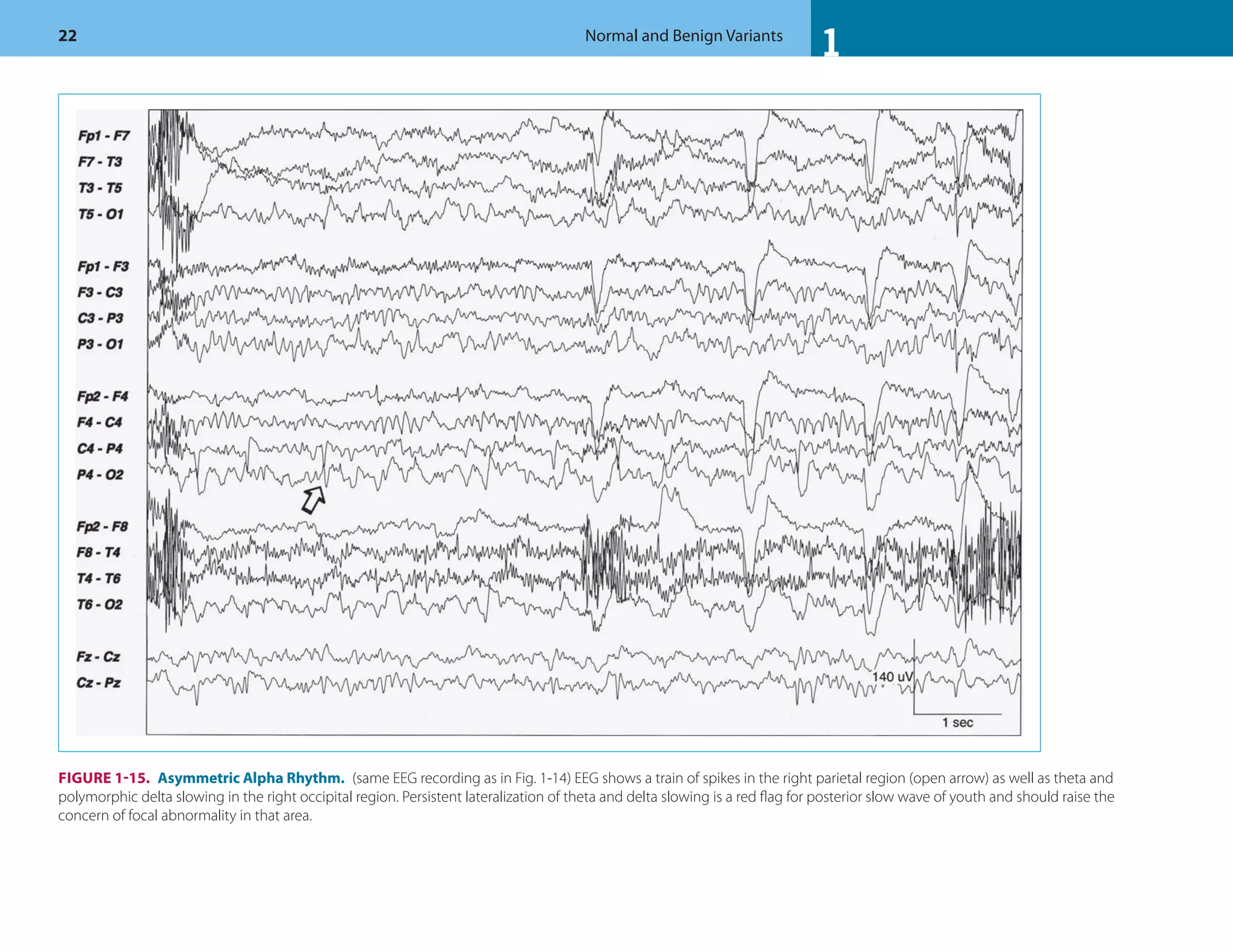
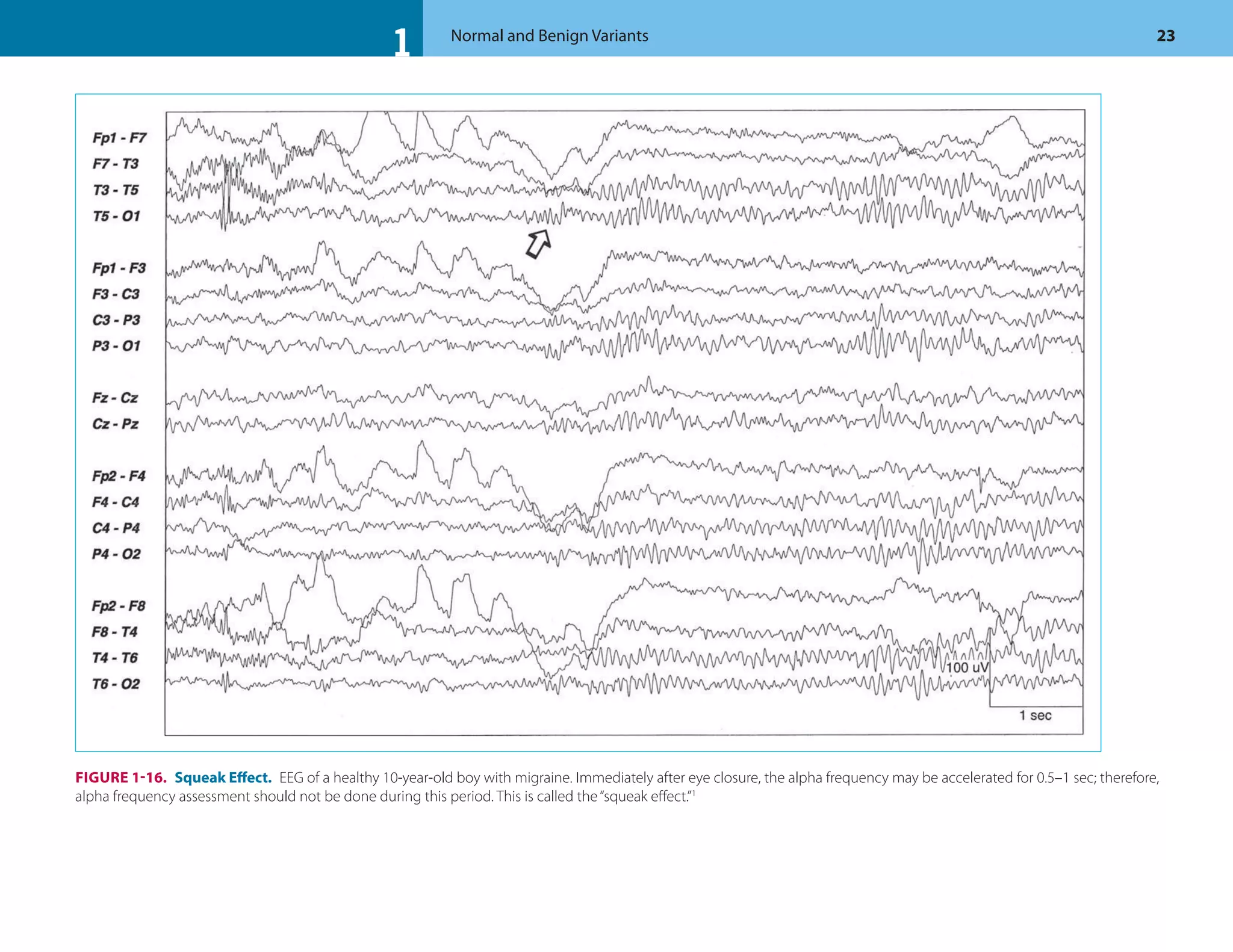
  • 629.
    8 616 Generalized Epilepsy AbnormalEEG findings are more pronounced 䡲 in AS with a deletion but are no different in AS patients with or without epileptic seizures. The EEG abnormalities are not pathognomonic of AS and can be seen in different genetic syndromes, such as Rett syndrome and 4p(-) syndrome. Epilepsy in AS has typical features including absence, 䡲 MS, drop attacks, and nonconvulsive status epilepticus, especially myoclonic status that characterized by apathy or neurologic regression and MJs. Rett syndrome (Figures 8-31 and 8-32) EEG in Rett syndrome is invariably abnormal when 䡲 recorded during clinical stage II (regression) after age 2 years. The changes in the EEG parallel the clinical course 䊳 of Rett syndrome. Three characteristic EEG changes have been reported. 1. Loss of expected developmental features during wakefulness and NREM sleep and generalized background slowing. 2. Epileptiform abnormalities, initially, characterized by central-temporal spike- and/or -sharp- wave discharges activated by sleep and, later, multifocal spikes and/or sharp waves and generalized slow spike-and-wave discharges. 3. Rhythmic theta activity in the central or frontal-central regions during clinical stages III (postregression) and IV (late motor regression). Rhythmic 䡲 3- to 5-Hz theta or delta slowing is the most common EEG abnormality (30/44 patients) in patients with Rett syndrome. Diffuse/bisynchronous spikes or sharp waves or slow spike-wave complexes were found in 22/44 and 9/44 patients, respectively. With advancing age, the EEG abnormalities improve and low voltage EEG may develop. These changes parallel the clinical course of Rett syndrome. Lissencephaly and subcortical band heterotopia (SBH) (Figures 8-33 and 8-39) Patients with SBH may present with infantile spasms, 䡲 Lennox-Gastaut syndrome, or focal epilepsy. EEG in SBH is characterized by multifocal 䡲 epileptiform activity with frequent bilateral diffusion, and high-amplitude anterior fast activity, with bursts of repetitive spikes. Seizure semiology and ictal EEG patterns in SBH 䡲 are not different from those seen in other causes of symptomatic generalized epilepsies. Miller-Dieker syndrome. Deletion of the short arm 䡲 of chromosome 17 (p13.3) containing lissencephaly type 1 gene (LIS1) was found. MRI reveals a nearly smooth cerebral surface with abnormally thick cortex (typically 10–20 mm) and primitive sylvian fissures giving the“hour-glass”configuration. EEG shows generalized high-amplitude fast activity in alpha- frequency band. The EEG in type 1 lissencephaly is characterized 䡲 by generalized high-amplitude fast activity in alpha and beta frequency (8–18/sec), burst of slow spike-wave complexes, high-amplitude slow rhythms, hypsarrhythmia-like pattern, and alternating pattern consisting of bursts of sharp/spike waves alternating with periods of electrocerebral depression with periods of depression. The EEG does not react to sleep or medication. The EEGs in the type 1 lissencephaly patients 䡲 showed the following patterns: (a) Generalized fast activity (8–18/sec) with amplitude higher than 50 μV. (b) Sharp- and slow-wave complexes with amplitude higher than 500 μV. (c) An alternating pattern consisting of bursts of sharp waves alternating with periods of electrocerebral depression. (d) high-amplitude slow rhythms (e) hypsarrhythmia-like pattern The EEG does not react to sleep or medication. 䡲 Ninety-five percent of the lissencephaly patients 䡲 showed pattern (a) or (c) or both compared to only 5 % of the patients with an atypical cortical dysplasia and 0.4% in the controls. EEG in various conditions (Figures 8-40 and 8-55) In atypical MERRF, quasiperiodic sharp waves with 䡲 higher amplitude in the posterior regions enhanced by low-frequency photic stimulation were noted. All patients were seizure free on B6 monotherapy 䡲 in one series. Recurrence of seizures and of specific sequential EEG changes (background slowing, PPR, spontaneous discharges, stimulus-induced myoclonus, generalized seizures) occurred upon B6 withdrawal. Long-term prognosis correlated with the EEG. All patients who had normal EEGs had normal or near normal development. Treatment requires lifelong supplementation with vitamin B6 . A characteristic EEG pattern of bilateral synchronous, 䡲 high-voltage occipital spikes on low-frequency photic stimulation (1–3 Hz), associated with myoclonus, is observed mainly in type 2 NCL (late infantile onset: Jansky-Bielschowsky), but not in juvenile or adult forms. Differential diagnosis of drop attacks includes 䡲 syncope, seizure, TIA, third ventricular and posterior fossa tumor, motor and sensory impairment of lower limbs, vestibular disorders, cryptogenic falls in middle- age women, aged state, and cataplexy. REM stage in healthy children does not occur within 䡲 the first cycle but after one complete cycle (stage 1–4 and then back from 4 to 1), usually 90 minutes after sleep onset. If REM sleep appears at first near the onset of sleep (early REM), narcolepsy must be considered. However, early REM can be seen in individuals withdrawing from CNS depressants such as barbiturates or alcohol. The“H-response”is a prominent photic driving 䡲 response at flash rates beyond 20 Hz. In a critical review of the literature, the reported sensitivity of the H-response varied from 25% to 100%, and the specificity from 80% to 91%. Although the relatively high sensitivities and specificities reported suggest that the H-response may be effective in distinguishing migraine patients from controls, and possibly migraineurs from tension headache sufferers,
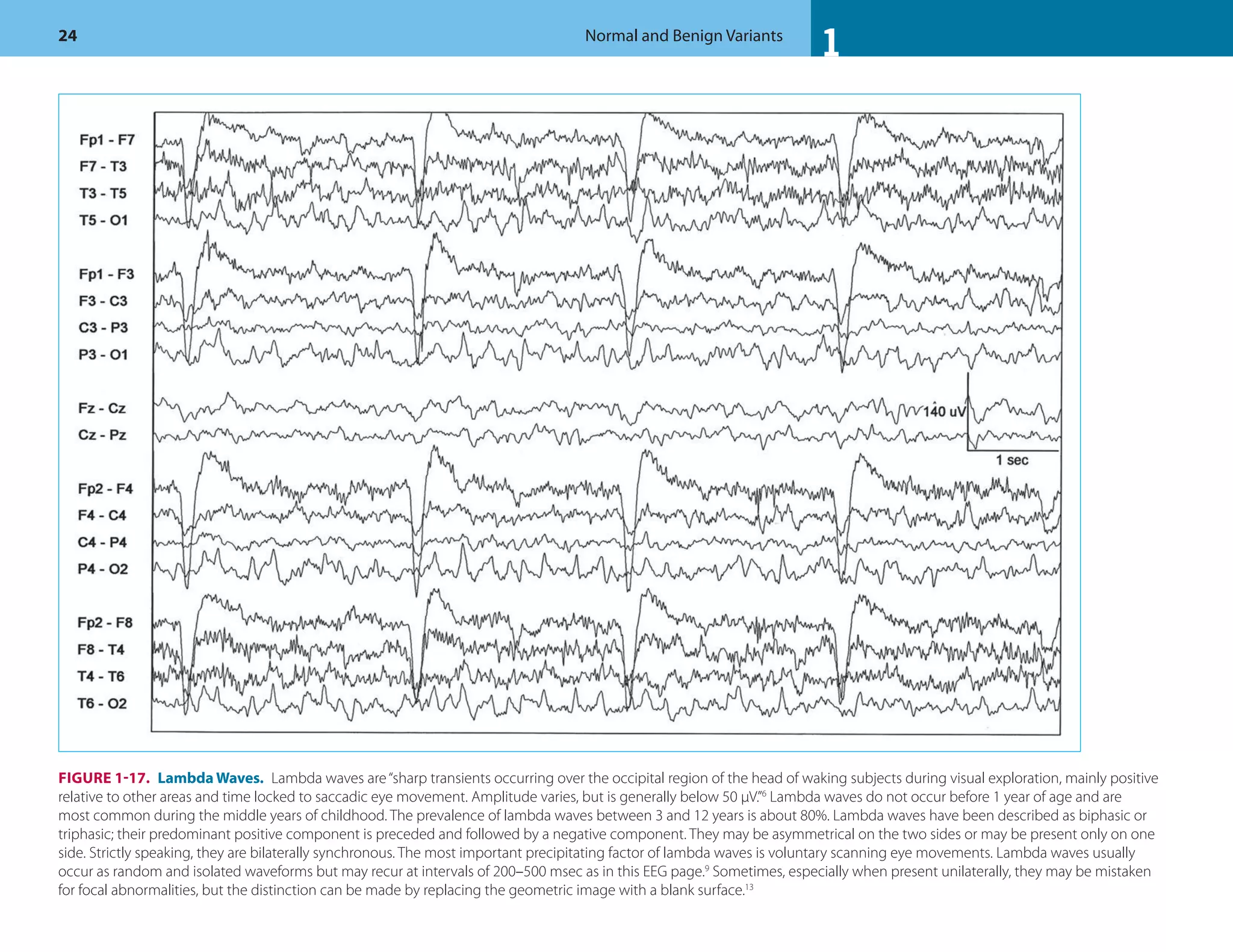
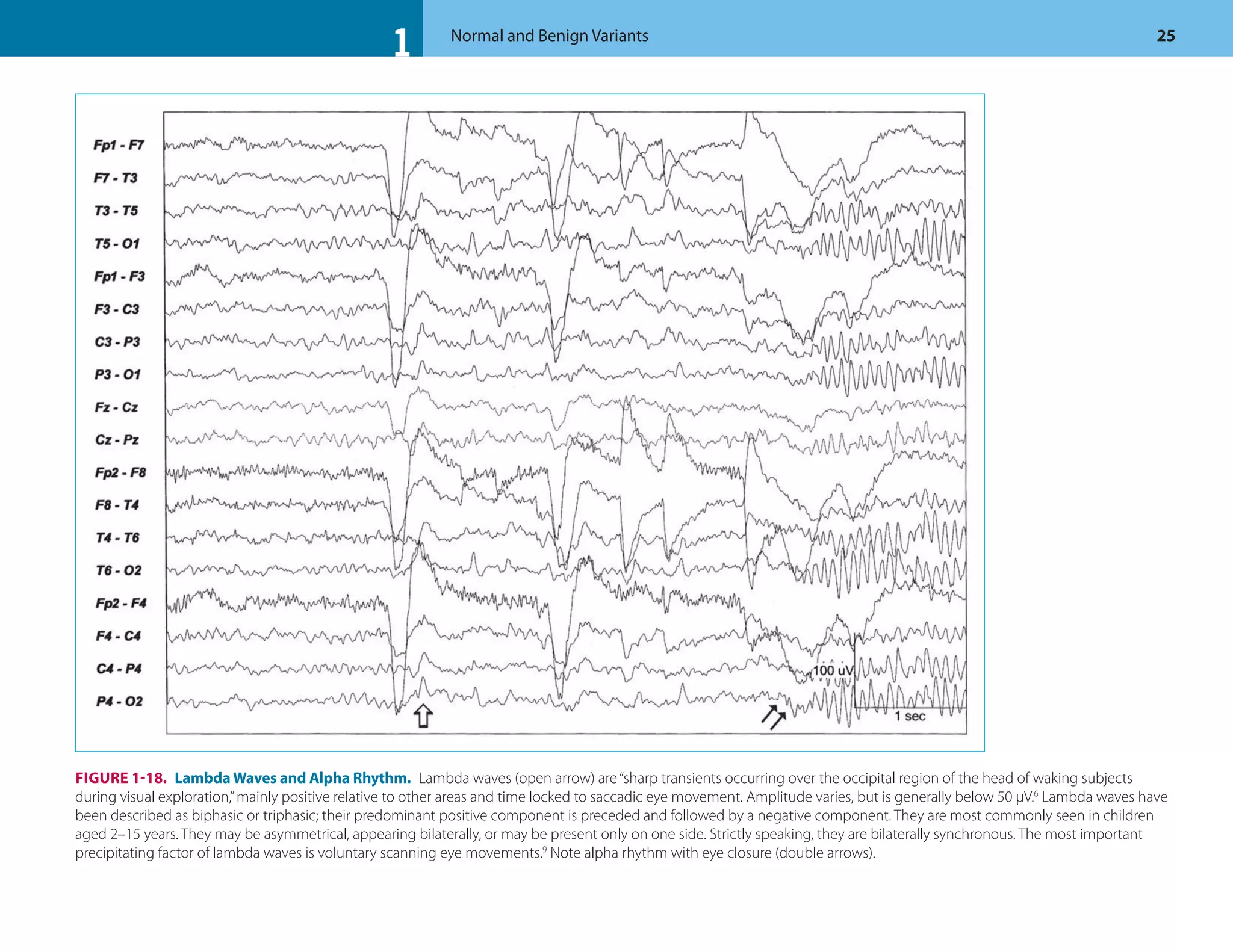
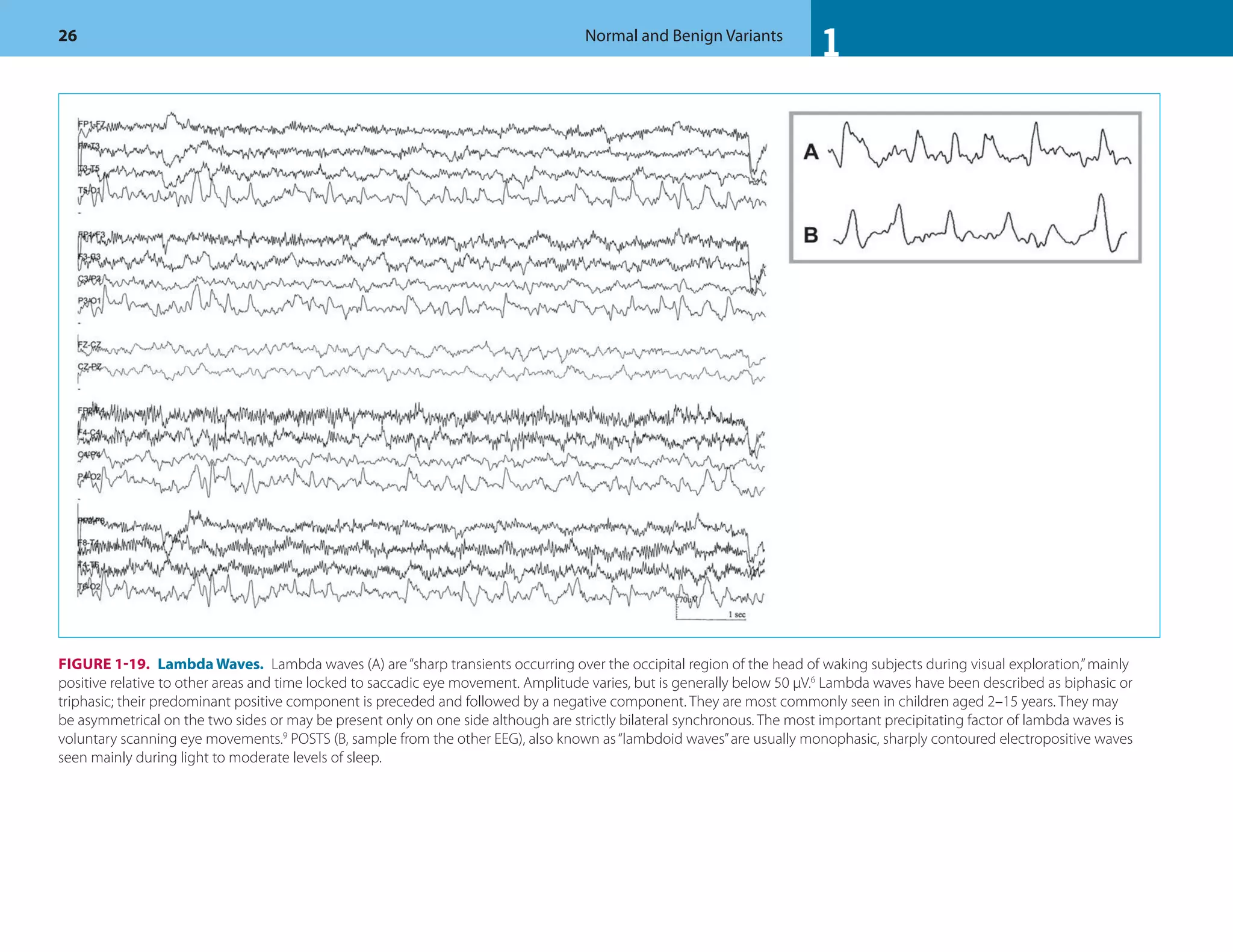
  • 630.
    8 Generalized Epilepsy617 the Quality Standards Subcommittee (QSS) of the American Academy of Neurology concluded that the H-response was not more effective than the neurological history and examination in diagnosing headaches and not recommended in clinical practice (QSS, 1995). However, in the presence of complex or prolonged aura, visual hallucinations, disorders of consciousness, history of recent trauma and in infants with vomiting and ocular and head deviation, the EEG may be useful for clinical diagnosis and help to monitor therapeutic response. Breath holding spells (BHS) 䡲 occur most commonly within the first 18 months of age and 90% or more of breath-holders have their initial spell by age 2 years. Virtually all breath-holders cease experiencing episodes by 7–8 years of age. EEG in 129 children with BHS was examined. All these 䡲 children but one had normal EEG. Gastaut and Fischer-Williams studied 100 patients, and 䡲 they used ocular pressure to induce syncope. In 71 patients, cardiac arrest was observed following ocular compression. With an arrest lasting 3–6 sec, there were no clinical or electrical abnormalities. However, with a longer cardiac arrest (7–13 sec) bisynchronous slow waves appeared. This was usually accompanied by clouding or loss of consciousness. When the arrest lasted more than 14 sec, one or two generalized clonic jerks appeared without affecting the EEG. This could be followed by a generalized tonic contraction resembling decerebrate rigidity and accompanied by complete flattening of the EEG. Thus, during a syncopal event the EEG initially shows mild generalized slowing. This is followed by high-voltage frontal delta activity. If the cerebral hypoperfusion persists, the EEG flattens. With recovery, the EEG normalizes in a reverse sequence. Occasionally, patients may experience protracted 䡲 seizures or status epilepticus following either a cyanotic or pallid BHS. Typically, interictal EEG findings in these patients are normal, although one such patient of the author’s acquaintance had vertex spikes on his interictal EEG. Stephenson termed such episodes anoxic-epileptic seizures. Administration of an AED frequently ablates the lengthy seizures, although BHS may continue to occur. Patients with cyanotic BHS may follow this EEG 䡲 evolution without significant bradycardia or asystole. Prolonged QT syndrome is a rare, but potentially 䡲 malignant, cause of anoxic seizure. It is recommended that an EKG to screen for prolonged QT syndrome be performed. There are numerous causes of decreased cardiac 䡲 output that may result in syncope. There are important differences between cardiac 䡲 syncope and neurocardiogenic syncope. In the former, a mechanical or electrophysiologic cardiac abnormality caused by serious underlying cardiac disease results in a sudden critical reduction in cardiac output, leading to cerebral hypoperfusion and syncope. This condition carries an ominous prognosis, whereas neurocardiogenic syncope has a more favorable prognosis due to the absence of serious cardiovascular disease. Decreased cardiac output can result from 䡲 obstruction to flow. Other heart diseases include pump failure and cardiac tamponade, as well as arrhythmias, which can be either bradyarrhythmias or tachyarrhythmias. With cardiac arrhythmias inducing syncope, such as the Stokes-Adams syndrome or prolonged QT interval (Romano-Ward syndrome), patients may present with convulsive syncope and be mistakenly diagnosed as epileptic. In addition to spontaneously occurring cardiac arrhythmias, cardiac dysrhythmias resulting in cardiac circulatory arrest can be induced.
  • 631.
    8 618 Generalized Epilepsy FIGURE81. Carbamazepine-Induced Myoclonic Seizure. A 3-year-old boy with a history of GTCS who developed frequent myoclonic jerks and drop attacks 2 weeks after starting the treatment with carbamazepine (CBZ). Ictal EEG during one of his myoclonic seizures shows a burst of generalized polyspike-and-slow-wave discharge followed by a brief diffuse electrodecrement and 5-Hz theta slowing. Myoclonic seizures and drop attacks disappeared 2 days after stopping CBZ. CBZ is the most common antiepileptic drug (AED) causing AED-induced seizure worsening. CBZ can both aggravate and induce new seizure types including absence, atonic, or myoclonic seizures in patients with generalized epilepsies. Vigabatrin and gabapentin have been found to induce absence and myoclonic seizures. Benzodiazepines have been reported to precipitate tonic seizures in patients with Lennox–Gastaut syndrome. Lamotrigine has been reported to worsen myoclonic, clonic, and tonic-clonic seizures in the patients with Dravet syndrome.1–3 Therefore,“AED-induced seizure worsening”must be considered in all patients whose seizures are worse with the introduction of the new AED.
  • 632.
    8 Generalized Epilepsy619 FIGURE 82. Generalized Tonic-Clonic Seizure (GTCS). A 14-year-old girl with a history of idiopathic generalized epilepsy (IGE). EEG shows recruiting rhythm described as rhythmic generalized alpha and theta frequency activity. Approximately 22 sec into the seizure, the background activity becomes obscured by myogenic artifact (arrow head) during generalized tonic stiffening.
  • 633.
    8 620 Generalized Epilepsy FIGURE83. Generalized Tonic-Clonic Seizure (GTCS). (Continued) The fast spike activity characterizes the tonic phase of GTCS. However, the background EEG activity becomes almost completely obscured by myogenic artifact during the tonic posturing. Digital high-frequency filter of myogenic artifact or EEG performed during paralyzing with muscle relaxant allows visualization of the EEG activity.
  • 634.
    8 Generalized Epilepsy621 FIGURE 84. Generalized Tonic-Clonic Seizure (GTCS). (Continued) During the clonic phase of GTCS, the fast spike activity becomes discontinuous and is replaced by high- voltage generalized polyspike-wave activity with polyspikes corresponding with clonic jerks and brief relaxation with slow waves. Immediately after the seizure stops, markedly generalized background suppression is noted. Very irregular diffuse slow-wave activity then follows and may last for minutes. In patients with secondarily GTCS, asymmetric postictal slowing can be a very important lateralizing sign.
  • 635.
    8 622 Generalized Epilepsy FIGURE85. Tonic Phase of Generalized Tonic-Clonic Seizure; (Subdural EEG Recording). Subdural EEG allows visualization of the EEG activity during tonic phase of generalized tonic-clonic seizure without myogenic artifact. EEG shows 4-Hz spike-wave activity during tonic posturing. Tonic and clonic phase of GTCS share similar EEG finding of spike-wave activity but with different duration of relaxation (slow wave). Note myogenic artifact in the EKG channel that represents muscle contraction during the tonic phase of GTCS (lowest channel).
  • 636.
    8 Generalized Epilepsy623 FIGURE 86. Occipital Intermittent Rhythmic Delta Activity (OIRDA); Idiopathic Generalized Epilepsy. A 9-year-old girl with a history of GTCS whose seizures were aggravated by increasing dose of carbamazepine. EEG demonstrates intermittently bisynchronous rhythmic delta activity, maximally expressed in the posterior head regions, which are attenuated with eye opening (arrow). OIRDA is seen almost exclusively in children and is associated with epilepsy, most commonly in idiopathic generalized epilepsy, especially absence epilepsy.4,5
  • 637.
    8 624 Generalized Epilepsy FIGURE87. Occipital Intermittent Rhythmic Delta Activity (OIRDA); Idiopathic Generalized Epilepsy. (Same EEG recording as in Figure 8-6) The patient developed a staring episode with mild jerking of his body and upper extremities accompanied by generalized irregular 3-Hz spike-wave activity. This EEG confirms that OIRDA represents epileptiform activity.
  • 638.
    8 Generalized Epilepsy625 FIGURE 88. Generalized Paroxysmal Fast Activity (GPFA); Idiopathic Generalized Epilepsy (IGE). A 10-year-old boy who started having his first seizure after TBI at 3 years of age. He did well until 9 years of age, when he started having breakthrough seizures consisting of GTCS and myoclonic seizures. He is otherwise normal. Brain MRI was normal. Interictal EEG 3 days after the last GTCS shows very frequent bursts of generalized paroxysmal fast activity (GPFA). GPFA, occurring almost exclusively during sleep, is generated in neocortex. Activation of thalamic neurons in response to varying corticothalamic input patterns may be critical in setting the oscillation frequency of thalamocortical network interactions causing GPFA.6,7 Seventy-five percent of patients had clinical seizures associated with this activity, mostly tonic. Slow spike-and-wave complexes were present in half of the patients. Twenty-five percent of patients had normal background activity.8
  • 639.
    8 626 Generalized Epilepsy FIGURE89. Eye Closure Sensitivity (ECS); Juvenile Myoclonic Epilepsy (JME). A 14-year-old girl with a history of multiple types of seizures including absence, myoclonic, and generalized tonic-clonic seizure (GTCS). GTCS occurs exclusively within the first 1 hour after awakening. She was seizure free with lamotrigine but developed recurrent seizures after medication withdrawal. EEG shows generalized 4-Hz spike-and-wave activity consistently activated by eye closure. ECS is more common in females. It may overlap with photosensitivity but is independent from photosensitivity. ECS can activate polyspike-wave discharges and myoclonic jerks. It can be seen in different epileptic syndromes including childhood absence epilepsy (CAE), juvenile absence epilepsy (JAE), eyelid myoclonia with absences (EMA), juvenile myoclonic epilepsy (JME), idiopathic generalized epilepsy (IGE with tonic-clonic seizure), generalized epilepsy with grand mal upon awakening GMA, and idiopathic occipital lobe epilepsy.9–11 REM sleep, similar to eye opening, plays a role in inhibiting EEG manifestations of JME with eye closure sensitivity.12
  • 640.
    8 Generalized Epilepsy627 FIGURE 810. Epilepsy with Grand Mal on Awakening (GMA); Eye Closure Sensitivity (ECS). A 17-year-old girl with a history of three GTCSs occurring exclusively within the first 1 hour after awakening at ages 13, 15, and 17. There were no other types of seizures. She was seizure free with lamotrigine for 2 years but developed recurrent seizures after medication withdrawal. EEG shows generalized 4 Hz (poly)spike-and-wave discharges activated by eye closure. GTCS of epilepsy with grand mal on awakening (EGMA) occurs exclusively shortly after awakening. The second seizure peak is in the evening corresponding to the peak period of relaxation. Typical absences and myoclonic jerks occur in 10% and 22%, respectively. The majority of patients with EGMA have rare GTCS. Sleep deprivation is a major triggering factor. The EEG of patients with GMA shows generalized (poly)spike-and-wave discharges on their first routine EEG in 44%, normal routine EEG but generalized (poly)spike-and-wave discharges on sleep EEG only in 32%, and no EEG abnormality at all in 24%.13 About 70% of those with additional absences or myoclonic jerks preceding GTCSs have generalized (poly)spike-and-wave discharges.14 A 24-hour video-EEG should be considered in patients suspected to have GMA. It is necessary to include sleep and awakening in the record.
  • 641.
    8 628 Generalized Epilepsy FIGURE811. Juvenile Myoclonic Epilepsy (JME). A 17-year-old girl with JME. The patient was asked by an EEG technologist to count during frequent bursts of generalized polyspike-wave discharges. She skipped counting the number“19”during the burst of generalized 4- to 4.5-Hz polyspike-wave activity that lasted for only 1–1.5 sec. No visible jerk was noted during the burst. As early as 0.5 sec after their onset of (poly)spike-wave discharges, the majority of patients will show inattention,15 suggesting that very short-lasting spells of a second or less may have a cognitive effect on the patient.16
  • 642.
    8 Generalized Epilepsy629 FIGURE 812. Juvenile Myoclonic Epilepsy (JME); Myoclonic Seizures. A 15-year-old girl with JME. EEG during myoclonic jerks (MJ) of the right arm (*) shows symmetrically bilateral synchronous polyspike-wave discharges time-locked with the jerk followed by 2-sec bilateral synchronous, 3-Hz polyspike-wave discharges, and a subsequent diffuse electrodecremental event. A typical ictal EEG in myoclonic seizure is bilateral synchronous and symmetric polyspike-wave discharge, immediately preceding a myoclonic jerk. The polyspike component contains 5–20 spikes, with a frequency between 12 and 16 Hz. The amplitude of spikes is typically increasing and is maximal over the frontal leads where it reaches 200–300 μV. Slow waves of variable frequency (3–4 Hz) and amplitude (200–350 μV) often precede or follow the polyspikes that result in a polyspike-wave complex that lasts much longer than the MJ (approximately 2–4 sec). The number of spikes is associated with the MJ intensity: there are fewer spikes and a more pronounced slow component when the MJ is mild. Back averaging shows that the conduction time, between the apex of the spike and the onset of the MJ, is short (20–50 msec) and characteristic of a cortical myoclonus.17
  • 643.
    8 630 Generalized Epilepsy FIGURE813. Epilepsy with Grand Mal on Awakening (GMA); Photoparoxysmal Response (PPR). (Same recording as in Figure 8-12 ) EEG shows photoparoxysmal response during photic stimulation. GMA is positively correlated, and grand mal during sleep negatively correlated with photosensitivity.
  • 644.
    8 Generalized Epilepsy631 FIGURE 814. Juvenile Myoclonic Epilepsy (JME); Photoparoxysmal Response (PPR). EEG of a 15-year-old girl with JME. EEG during photic stimulation reveals photoparoxysmal response (PPR) with no clinical accompaniment. PPR is described as generalized irregular spike/polyspike-and-wave complexes during photic stimulation. PPRs are seen in 30–40% of JME patients, compared to 18% in absence epilepsy.9 However, only 5% of patients suffer from clinical photosensitivity.18 Seventy-seven percent of patients with PPR have a history of epilepsy.19 In patients with seizures, a generalized PPR strongly suggests the diagnosis of primary generalized epilepsy.20
  • 645.
    8 632 Generalized Epilepsy FIGURE815. Childhood Absence Epilepsy (CAE). A 6-year-old boy with poor school performance and recurrent staring episodes. Inclusion criteria for CAE are (1) onset at 4 -10 years (peak at 5–7), (2) normal neurological condition, (3) brief (4–20 sec) and frequent (tens per day) absence seizures with abrupt and severe impairment of consciousness, (4) EEG ictal discharges of generalized high-voltage spike and double (occasionally triples are allowed) spike-and-slow-wave complexes. They are rhythmic at about 3 Hz with a gradual and regular slowdown from the initial to the terminal phase of the discharge. Exclusion criteria for CAE are: (1) other types of seizure prior to or during the active stage of absence; (2) eyelid myoclonia, perioral myoclonia, rhythmic massive limb jerking, and single or arrhythmic myoclonic jerks —however, mild myoclonic elements of the eyes, eyebrows, and eyelids may be featured, particularly in the first 3 sec of the absence seizure; (3) mild or no impairment of consciousness during the 3- or 4-Hz discharges; (4) brief EEG 3- or 4-Hz spike-wave paroxysms of <4 sec, polyspikes (more than three), or ictal discharge fragmentations; and (5) visual (photic) and other sensory precipitation of clinical seizures.21
  • 646.
    8 Generalized Epilepsy633 FIGURE 816. Occipital Intermittent Rhythmic Delta Activity (OIRDA) and Generalized 3/sec Spike-Wave Activity; Childhood Absence Epilepsy. A 7-year-old boy with a recent diagnosis of childhood absence epilepsy. EEG during hyperventilation demonstrates both occipital intermittent rhythmic delta activity (OIRDA) (open arrow) and generalized 3/sec spike-wave activity (double arrows) in the same recording. The patient has been seizure free with ethosuximide. OIRDA was first described in 1983 and was concluded to only be seen in children and not found to be helpful in diagnosing a seizure disorder or structural abnormality.22 Subsequent publications show that OIRDA is seen almost exclusively in children with epilepsy and it is rarely seen in children with diffuse encephalopathy. OIRDA is seen almost exclusively in children, less than 10–15 years old, and is associated with epilepsy, most commonly in idiopathic generalized epilepsy, especially absence epilepsy and, less commonly, in focal epilepsy.23–25
  • 647.
    8 634 Generalized Epilepsy FIGURE817. Childhood Absence Epilepsy; Diffuse Rhythmic Delta Activity During Absence Seizure. A 12-year-old girl with a history of childhood absence epilepsy (CAE) in remission who presented with syncope. EEG during hyperventilation (HV) shows diffuse rhythmic 3-Hz delta activity with fronto-central predominance. Approximately 10 sec into the HV, the patient developed clinical absence seizures described as staring off, unresponsiveness, motionless, and lip smacking. The patient started moving immediately when the diffuse delta activity stopped. No postictal state is noted. Diffuse 3-Hz rhythmic delta activity without spike component is an exceptional ictal EEG finding during an absence seizure.
  • 648.
    8 Generalized Epilepsy635 FIGURE 818. Asymmetric OIRDA; Childhood Absence Epilepsy. An 8-year-old boy with recurrent absence seizures after stopping ethosuximide. EEG shows an asymmetric, bilateral synchronous occipital rhythmic 2.5- to 3.5-Hz delta activity with shifting predominance between left and right hemispheres. The patient was seizure free again after ethosuximide was reintroduced. OIRDA is found in children. Because it is age dependent, maturational factors probably play a role in the expression of OIRDA in children with epilepsy. OIRDA is not commonly associated with encephalopathy. It is more closely related to temporal intermittent rhythmic delta activity (TIRDA) than to FIRDA.4 OIRDA is seen during wakefulness and probably an epileptiform pattern. OIRDA is seen in absence and generalized tonic-clonic seizures. Its electrographic characteristics appear to differ between localization-related epilepsy and primary generalized epilepsy, particularly absence seizures. The frequency of the occipital rhythmic discharges in children with absences was generally faster (3–4 Hz) than in localization-related epilepsy (2–3 Hz).25
  • 649.
    8 636 Generalized Epilepsy FIGURE819. Symptomatic Absence Seizure and ESES; Thalamic Heterotopia. A 6-year-old boy with intractable absence epilepsy and cognitive dysfunction caused by right thalamic heterotopia (arrow). Complete resection of heterotopia resulted in seizure freedom. Alterations in normal thalamocortical reciprocal interactions are critical in the generation of the regular generalized spike-wave discharges (GSWD).26 Most patients with unilateral thalamic lesion and epilepsy showed GSWD.27–31 Absence status with GSWD caused by ischemic lesion in the left thalamus have been reported.27 Lesions of the inferior-medial-posterior thalamic structures might have a role in the pathogenesis of GSWD and ESES.29 Gray matter heterotopia is caused by a halt in neuronal radial migration.32 Although gray matter heterotopia is commonly associated with refractory epilepsy, it is still uncertain what role heterotopic lesions play in seizure onset and propagation and whether they are epileptogenic. Intracranial EEG investigations showed that seizures are generated sometimes by heterotopias, sometimes by distant cortex, or sometimes by both. However, neither the removal of the lesion alone nor mesial temporal resections lead to a favorable outcome, suggesting a more widespread epileptogenic network in these patients. Seizure onset in a heterotopia is sometimes completely outside the lesion and sometimes has an overlap with the lesion. The heterotopia is part of more complex circuitry involving the surrounding and distant cerebral cortex.33,34 High-frequency oscillations (HFOs), especially fast ripples, are closely linked to seizure-onset areas. In focal cortical dysplasia and sometimes in heterotopia, HFOs occur in lesional areas that are not part of the seizure onset zone, and they may indicate potential epileptogenicity of these lesions.35–37
  • 650.
    8 Generalized Epilepsy637 FIGURE 820. Jeavons Syndrome (Eyelid Myoclonia with Absence). A 2-year-old boy who developed absence seizures at 18 months of age. He also had GTCS, myoclonic seizures, and tooth brushing-induced seizure. He was also noted to have“eyelid myoclonia”during prolonged video-EEG monitoring. EEG shows 3-Hz polyspike-wave (PSW) discharges associated with eyelid myoclonic and absence seizure. Jeavons syndrome is refers to idiopathic reflex epilepsy with eyelid myoclonia, eye-closure sensitive seizure, and photosensitivity. Seizures are brief (3–6 sec). Ictal EEG consists of generalized PSW at 3–6 Hz, usually occurring after eye closure. Eyelid myoclonia is resistant to treatment.38
  • 651.
    8 638 Generalized Epilepsy FIGURE821. Benign Myoclonic Epilepsy of Infancy (BMEI). A 10-month-old boy who did well until 8 months when he developed recurrent myoclonic jerks with occasional drop attacks. Video-EEG captured his typical drop attack while sitting. There was increased muscle activity in the deltoid muscle corresponding to generalized polyspike-wave discharges during his drop. These findings confirmed the drop attack was a myoclonic seizure rather than atonic seizure. Background EEG was within normal limits. His development was normal. All tests other than EEGs in BMEI are normal. Background and interictal EEG is normal. Spontaneous generalized polyspike-wave discharges without myoclonic seizures are rare. The ictal EEG during jerks show generalized (poly)spike-wave discharges. The discharges are brief (1–3 sec) and isolated. Frequently, ictal EEG activity is limited to the rolandic and vertex regions. During drowsiness, there is enhancement of myoclonic jerks or epileptiform discharges. Photic stimulation, sudden noises and contact stimulate epileptiform discharges in the EEG. No other type of seizure is observed. Clinical examination and MRI are normal. Outcome is correlated with early diagnosis and treatment.14,39
  • 652.
    8 Generalized Epilepsy639 FIGURE 822. Benign Myoclonic Epilepsy of Infancy. A 22-month-old girl with recurrent myoclonic jerks of her arms, especially noticeable when something came in contact with her head. Cranial MRI was normal. Interictal EEG is normal. The patient had one typical episode of bilateral arm jerking associated with generalized spike/polyspikes-wave discharges (asterisk). All tests other than EEGs in BMEI are normal. Background and interictal EEG are normal. Spontaneous generalized polyspike-wave discharges without myoclonic seizures are rare. The ictal EEG during jerks show generalized (poly)spike-wave discharges. The discharges are brief (1–3 sec) and isolated. Frequently, ictal EEG activity is limited to the rolandic and vertex regions. During drowsiness, there is enhancement of myoclonic jerks or epileptiform discharges. Photic stimulation, sudden noises and contact stimulate epileptiform discharges in the EEG. No other type of seizure is observed. Clinical examination and MRI are normal. Outcome is correlated with early diagnosis and treatment.14,39
  • 653.
    8 640 Generalized Epilepsy FIGURE823. Diffuse Theta Activity; Myoclonic Astatic Epilepsy (MAE). EEG during wakefulness of a 6-year-old boy with myoclonic astatic epilepsy (MAE) showing diffuse monorhythmic 5- to 6-Hz theta activity with centro-parietal predominance. A monorhythmic 4- to 7-Hz rhythm is a characteristic background EEG activity that is seen in almost all instances early in the course of MAE. This rhythm is usually parietal predominance. This EEG pattern is, falsely attributed to drowsiness. During active seizures, the rhythm is more irregular and slower, whereas it will be more regular and faster in a period of remission.40,41
  • 654.
    8 Generalized Epilepsy641 FIGURE 824. Myoclonic-Astatic Seizure (MAS - Myoclonic Seizure with Atonia); Myoclonic Astatic Epilepsy (MAE). EEG of a 7-year-old boy with MAE during his typical seizure described as myoclonic jerks of arms (open arrows) followed by head drop (double arrows). MAS develop atonia immediately after a single or a series of 2–3 myoclonic seizures (MS). A sudden loss of tone causes either a drop attack or slight myatonia, head nodding, or sagging at the knees (post-myoclonic myatonia or epileptic negative myoclonus).41,42 Ictal EEG during MS is similar to a pure atonic seizure (AS) and characterized by a generalized (poly) spike-and-wave discharges that can be isolated or repeated rhythmically at 2–4 Hz, lasting 2–6 sec. MS are time-locked to a spike-and-wave complex. The EMG correlation of each jerk is a burst lasting around 100 msec, followed by a longer (200–500 msec) post-myoclonic myatonia. The atonic component of seizures is characterized by a rhythmic discharge of (poly) spike-and-slow-wave complexes at 2–4 Hz, accompanied by EMG inhibition lasting 60–400 msec, synchronous in the recorded muscles and time-locked to the onset of the slow wave. This generalized post-myoclonic myatonia has caused the fall. The number of spikes in the individual complexes are associated with the severity of MS. AS is usually associated with the slow wave of a (poly)spike-wave complex, and the intensity of atonia is proportionate to the amplitude of the slow wave.14,41,43
  • 655.
    8 642 Generalized Epilepsy FIGURE825. Myoclonic Astatic Epilepsy (MAE); Myoclonic Seizure (MS). EEG of a 6-year-old boy with myoclonic astatic epilepsy (MAE) during a myoclonic seizure. Myoclonic (MS) and MAS are present in all children with MAE. Clinically, MS presents as brief generalized jerks of the body, isolated or in a short series of 2–3 seizures. Proximal muscle is more involved, producing a sudden flexion of the head and trunk with a possible fall to the ground. The duration of these episodes is very brief (0.3–1 sec). Falls can be either the direct effect of massive myoclonic jerks or from the post-myoclonic silent period or generalized post-myoclonic myatonia (atonia or epileptic negative myoclonus) that may sometimes be prominent. In some children, MS is also triggered by photic stimulation. Ictal EEG during MS is similar to a pure atonic seizure (AS) and characterized by a generalized (poly)spike-and-wave discharge that can be isolated or repeated rhythmically at 2–4 Hz, lasting 2–6 sec. Myoclonic jerks are time-locked to a spike-and-wave complex.
  • 656.
    8 Generalized Epilepsy643 FIGURE 826. Myoclonic Astatic Epilepsy (MAE); Drop Attack. EEG of a 5-year-old boy with myoclonic astatic epilepsy (MAE) during an atonic seizure (AS). Myoclonic (MS) and MAS are present in all children with MAE. Clinically, MS present as brief generalized jerks of the body, isolated or in a short series of 2–3 seizures. Proximal muscles are more involved, producing a sudden flexion of the head and trunk with possible fall to the ground. The duration of these episodes is very brief (0.3–1 sec). Falls can be either the direct effect of massive myoclonic jerks or from the post-myoclonic silent period or generalized post-myoclonic myotonia (atonia or negative epileptic myoclonus) that may sometimes be prominent. In some children, MS is also triggered by photic stimulation. Ictal EEG during MS is similar to a pure AS. The number of spikes in the individual complexes is associated with the severity of MS. The intensity of atonia is proportionate to the amplitude of the slow wave.14,41,43
  • 657.
    8 644 Generalized Epilepsy FIGURE827. Myoclonic Status Epilepticus; Myoclonic Astatic Epilepsy (MAE). Myoclonic status epilepticus is characterized by stupor, apathetic and erratic myoclonus in distal, facial, and neck muscles (head drops) lasting several hours to days. NCSE usually occurs on awakening. The myoclonic jerks are brief (30–100 msec) and are not time-locked to individual spikes. An increase in the background muscle tone with mild vibratory movements is sometimes visible. It is more commonly seen in myoclonic astatic epilepsy (36%) or Dravet syndrome (30–44%).44,45 EEG demonstrates long runs of irregular slow-wave and spike-wave discharges that, sometimes simulate a hypsarrhythmic pattern.46 Some antiepileptic drugs (AEDs) including lamotrigine in high doses. carbamazepine, phenytoin and levetriacetam may exacerbate myoclonic status.1,3
  • 658.
    8 Generalized Epilepsy645 FIGURE 828. Angelman Syndrome (AS); Notched-Delta Pattern. An 11-year-old girl with mental retardation and intractable epilepsy (absence and myoclonic) associated with AS. Interictal EEG shows frequent bursts of high voltage 2.5- to 3-Hz rhythmic delta activity with superimposed low-amplitude spikes, maximal in the occipital region. Three common EEG patterns in AS are (1) prolonged runs of high-amplitude rhythmic 2- to 3-Hz delta activity, maximal in the frontal regions with superimposed epileptiform discharges (most common in children and adults), (2) persistent rhythmic 4- to 6-Hz high-amplitude activity (under 12 years of age), and (3) spikes and sharp waves, intermixed with high-amplitude, 3- to 4-Hz delta activity, mainly posterior and facilitated by eye closure. The notched-delta pattern was observed in > 80% of AS with a specificity of > 38%. Therefore, a patient with the clinical phenotype of AS who exhibits this EEG pattern should undergo genetic evaluation for AS. This EEG pattern can precede clinical features and/ or may not be correlated with overt clinical seizure events. Abnormal EEG findings are more pronounced in AS with a deletion but are no different in AS patients with or without epileptic seizures. These EEG abnormalities can also be seen in different genetic syndromes, such as Rett syndrome and 4p(-) syndrome.47–49
  • 659.
    8 646 Generalized Epilepsy FIGURE829. Bilateral Synchronous 3-4 Hz Spike-Wave Activity in the Occipital Region; Angelman Syndrome (AS). (Same patient as in Figure 8-28) EEG demonstrates a combination of bilateral synchronous 3- to 4-Hz spike-wave activity in the occipital regions and diffuse rhythmic 2.5- to 3-Hz, high-amplitude often-notched delta activity.
  • 660.
    8 Generalized Epilepsy647 FIGURE 830. Nonconvulsive Status Epilepticus (NCSE); Angelman Syndrome. EEG in an 8-year-old boy with Angelman syndrome. The patient developed nonconvulsive status epilepticus and died despite aggressive treatment. EEG shows continuously diffuse spike-wave and polyspike-wave activities. Epilepsy in Angelman syndrome has typical features including absence, myoclonic seizures, drop attacks, and nonconvulsive status epilepticus, especially myoclonic status that is characterized by apathy or neurologic regression and myoclonic jerks.50
  • 661.
    8 648 Generalized Epilepsy FIGURE831. Rett Syndrome; Bisynchronous Sharp Waves. A 12-year-old girl with Rett syndrome. EEG in Rett syndrome is invariably abnormal when recorded during clinical stage II (Regression) after age 2 years. The changes in the EEG parallel the clinical course of Rett syndrome. Three characteristic EEG changes have been reported: (1) loss of expected developmental features during wakefulness and non-REM sleep and generalized background slowing; (2) epileptiform abnormalities, initially characterized by central- temporal spike-and/or-sharp-wave discharges activated by sleep and, later, multifocal spikes and/or sharp waves and generalized slow spike-and-wave discharges; (3) rhythmic theta activity in the central or frontal-central regions during clinical stages III (post-regression) and IV (Late motor regression).51 Rhythmical 3- to 5-Hz theta or delta slowing is the most common EEG abnormality (30/44 patients) in the patients with Rett syndrome. Diffuse/bisynchronous spikes or sharp waves or slow spike-wave complexes were found in 22/44 and 9/44 patients, respectively. With advancing age, the EEG abnormalities improve and low-voltage EEG may develop. These changes parallel the clinical course of Rett syndrome.52
  • 662.
    8 Generalized Epilepsy649 FIGURE 832. Rett Syndrome; Bisynchronous Sharp Waves. A 9-year-old girl with Rett syndrome. EEG in Rett syndrome is invariably abnormal when recorded during clinical stage II (Regression) after age 2 years. The changes in the EEG parallel the clinical course of Rett syndrome. Three characteristic EEG changes have been reported: (1) loss of expected developmental features during wakefulness and non-REM sleep and generalized background slowing; (2) epileptiform abnormalities, initially, characterized by central-temporal spike-and/or-sharp-wave discharges activated by sleep and, later, multifocal spikes and/or sharp waves and generalized slow spike-and-wave discharges; (3) rhythmic theta activity in the central or frontal-central regions during clinical stages III (post-regression) and IV (Late motor regression).51 Rhythmic 3- to 5-Hz theta or delta slowing is the most common EEG abnormality (30/44 patients) in the patients with Rett syndrome. Diffuse/bisynchronous spikes or sharp waves or slow spike-wave complexes were found in 22/44 and 9/44 patients, respectively. With advancing age, the EEG abnormalities improve and low-voltage EEG may develop. These changes parallel the clinical course of Rett syndrome.52
  • 663.
    8 650 Generalized Epilepsy FIGURE833. Subcortical Band Heterotopia (Double Cortex Syndrome). A 14-year-old girl with severe mental retardation, spastic quadriparesis, and medically intractable epilepsy resulting from subcortical band heterotopia (SBH). DCX gene located in chromosome Xp22.3-q23 was identified. MRI shows a thin layer of gray matter separated from the normal-appearing cortex by a layer of white matter. Also note the cortex in the right temporal lobe is smoother and thicker than in the left temporal lobe. EEG during sleep demonstrates generalized 2-Hz spike/polyspike-wave discharges intermixed with diffuse spindles with frontal predominance. Patients with SBH may present with infantile spasms, Lennox-Gastaut syndrome, or focal epilepsy. EEG in SBH is characterized by multifocal epileptiform activity with frequent bilateral diffusion, and high-amplitude anterior fast activity, with bursts of repetitive spikes.53,54 Seizure semiology and ictal EEG patterns in SBH are not different from those seen in other causes of symptomatic generalized epilepsies.55
  • 664.
    8 Generalized Epilepsy651 FIGURE 834. Type 1 Lissencephaly (Miller-Dieker Syndrome); Generalized High-Amplitude Fast Activity (Alpha-Frequency Band). A 6-year-old boy with spastic quadriparesis, severe mental retardation, and medically intractable epilepsy (atonic, atypical absence, and generalized tonic-clonic seizures) resulting from Miller-Dieker syndrome. Deletion of the short arm of chromosome 17 (p13.3) containing lissencephaly type 1 gene (LIS1) was found. MRI reveals a nearly smooth cerebral surface with abnormally thick cortex (typically 10–20 mm) and primitive sylvian fissures giving the“hour-glass”configuration.56 EEG shows generalized high-amplitude fast activity in alpha-frequency band. The EEG in type 1 lissencephaly is characterized by generalized high-amplitude fast activity in alpha and beta frequency (8–18/sec), burst of slow spike-wave complexes, high- amplitude slow rhythms, hypsarrhythmia-like pattern, and alternating pattern consisting of bursts of sharp/spike waves alternating with periods of electrocerebral depression. The EEG does not react to sleep or medication.57–59
  • 665.
    8 652 Generalized Epilepsy FIGURE835. Type 1 Lissencephaly (Miller-Dieker Syndrome); Generalized High-Amplitude Fast Activity & Polyspike-and Slow-Wave Complexes. (Same recording as in Figure 8-34) EEG shows generalized high-amplitude fast activity alternating with bursts of slow polyspike-wave complexes. The EEG in type 1 lissencephaly is characterized by generalized high-amplitude fast activity in alpha and beta frequency (8–18/sec), burst of slow spike-wave complexes, high- amplitude slow rhythms, hypsarrhythmia-like pattern, and alternating pattern consisting of bursts of sharp/spike waves alternating with periods of electrocerebral depression. The EEG does not react to sleep or medication.57–59
  • 666.
    8 Generalized Epilepsy653 FIGURE 836. Type 1 Lissencephaly (Miller-Dieker Syndrome); Generalized High-Amplitude Fast Activity (Beta Frequency Band). (Same recording as in Figure 8-34 and 8-35) EEG shows abnormally generalized, very high-amplitude activity in the beta frequency band.57 The EEG in type 1 lissencephaly is characterized by generalized high-amplitude fast activity in alpha and beta frequency (8–18/sec), burst of slow spike-wave complexes, high- amplitude slow rhythms, hypsarrhythmia-like pattern, and alternating pattern consisting of bursts of sharp/spike waves alternating with periods of electrocerebral depression. The EEG does not react to sleep or medication.57–59
  • 667.
    8 654 Generalized Epilepsy FIGURE837. Type 1 Lissencephaly; High-Voltage Sharp-and-Slow-Wave Complexes. EEG of a 16-year-old girl with Lennox-Gastaut syndrome caused by type 1 lissencephaly. The EEGs in type 1 lissencephaly patients showed the following patterns: (a) generalized fast activity (8–18/sec) with amplitude higher than 50 μV; (b) sharp- and slow-wave complexes with amplitude higher than 500 μV; (c) an alternating pattern consisting of bursts of sharp waves alternating with periods of electrocerebral depression. Ninety-five percent of the lissencephaly patients showed pattern (a) or (c) or both compared to only 5 % of the patients with an atypical cortical dysplasia and 0.4% in controls.59
  • 668.
    8 Generalized Epilepsy655 FIGURE 838. Lissencephaly Type 2; Alternating Pattern (Bursts of Sharp Waves Alternating with Periods of Electrocerebral Depression). EEG of a 16-year-old girl with Lennox-Gastaut syndrome caused by type 1 lissencephaly. The EEGs in the type 1 lissencephaly patients showed the following patterns: (a) generalized fast activity (8–18/sec) with an amplitude higher than 50 μV; (b) sharp- and slow-wave complexes with an amplitude higher than 500 μV; (c) an alternating pattern consisting of bursts of sharp waves alternating with periods of electrocerebral depression. Ninety-five percent of the lissencephaly patients showed pattern (a) or (c) or both compared to only 5 % of the patients with an atypical cortical dysplasia and 0.4% in controls.59
  • 669.
    8 656 Generalized Epilepsy FIGURE839. Type 1 Lissencephaly; Generalized Fast Activity (8-18/sec). EEG of a 16-year-old girl with Lennox-Gastaut syndrome caused by type 1 lissencephaly. The EEGs in the type 1 lissencephaly patients showed the following patterns: (a) generalized fast activity (8–18/sec) with amplitude higher than 50 μV; (b) sharp- and slow-wave complexes with amplitude higher than 500 μV; (c) an alternating pattern consisting of bursts of sharp waves alternating with periods of electrocerebral depression. Ninety-five percent of the lissencephaly patients showed pattern (a) or (c) or both compared to only 5 % of the patients with an atypical cortical dysplasia and 0.4% in controls.59
  • 670.
    8 Generalized Epilepsy657 FIGURE 840. Generalized Epileptiform Discharges with Diffuse Delta Slowing; End-stage Myoclonic Epilepsy with Ragged Red Fibres (MERRF). A 10-year-old girl with progressive myoclonic epilepsy caused by end-stage MERRF. EEG demonstrates continuously diffuse polymorphic delta activity and frequent bursts of generalized slow spike/polyspike-wave discharges. The patient expired a few weeks after this EEG recording. EEG in patients with MERRF shows diffuse background slowing with polyspike and wave complexes enhanced by photic stimulation and often related to generalize myoclonic jerks. In atypical MERRF, quasiperiodic sharp waves with higher amplitude in the posterior regions enhanced by low-frequency photic stimulation were noted.60,61
  • 671.
    8 658 Generalized Epilepsy FIGURE841. Epileptic Encephalopathy; Generalized Clonic Seizure. A 13-year-old girl with severe developmental delay and medically intractable epilepsy. She developed more frequent generalized tonic-clonic seizures and increasing hand tremor-like episodes. EEG shows generalized 3- to 3.5-Hz (poly)spike-wave discharges with the spikes time-locked with her typical tremors. This finding indicates that her hand tremors were apparently generalized clonic seizures. A cranial MRI (not shown) and intensive metabolic work-up were unremarkable. Generalized clonic seizures are the result of either intermittent generalized activation of the motor cortex (Brodmann areas 4 and 6) or, rarely, epileptic seizures originating in the supplementary sensorimotor area. Generalized clonic seizures are frequently seen after generalized tonic-clonic seizures in GTCS. Isolated generalized clonic seizures are rare but may occur in patients with progressive myoclonic epilepsies.62
  • 672.
    8 Generalized Epilepsy659 FIGURE 842. Paroxysmal Fast Activity (PFA); Generalized Clonic Seizures. (Same recording as in Figure 8-41) EEG during one of her typical tremor-like episodes shows a run of 3 sec fast rhythmic spikes at 15 Hz, which shows no change in frequency throughout the burst, preceded and followed by generalized spike-wave activity. This EEG pattern is consistent with“paroxysmal fast activity (PFA)”commonly seen in Lennox-Gastaut syndrome. PFA can be either an interictal activity or ictal activity correlating with generalized tonic seizures. However, PFA can also be associated with other generalized or focal epilepsies. In this case, PFA is associated with generalized clonic seizures presenting as tremor- like episodes.
  • 673.
    8 660 Generalized Epilepsy FIGURE843. Pyridoxine Dependency. A 4-week-full-term and previously healthy female with erratic myoclonus, poor feeding, irritability and apneic spells requiring mechanical ventilation. EEG shows burst-suppression pattern with multifocal epileptiform activity. EEG normalized 25 minutes after the B6 (pyridoxine) IV injection. The patient showed clinical improvement and was discharged 36 hours after that. At a follow-up visit at 20 months, the patient had normal developmental milestones and was seizure free for 11 months. Repeated EEG at 4 months of age was normal. At birth, patients were hypotonic, had decreased visual alertness, were agitated, irritable, jittery, hyperalert, and exhibited sleeplessness and a startle reaction to touch and sound. Age of onset of seizures varied from 30 minutes to 3 days. Seizures of various types include spasms, myoclonic seizures, partial clonic, and secondary generalized seizures. EEG showed burst-suppression patterns, continuous-discontinuous patterns, and bilateral high-voltage delta activity.63 Clinical seizures improved within minutes and paroxysmal discharges within hours after the IV pyridoxine. Treatment requires lifelong supplementation with pyridoxine (vitamin B6). All patients were seizure free on B6 monotherapy in one series. Recurrence of seizures and of specific sequential EEG changes (background slowing, photoparoxysmal response, spontaneous discharges, stimulus-induced myoclonus, and generalized seizures) occurred upon B6 withdrawal. Long-term prognosis correlated with the EEG. All patients who had normal EEGs had normal or near normal development.64
  • 674.
    8 Generalized Epilepsy661 FIGURE 844. Neuronal Ceroid Lipofuscinosis (NCL); Occipital Spikes Evoked by Low-Frequency Photic Stimulation. A 16-year-old boy with visual impairment, ataxia, myoclonus, cognitive decline, and medically intractable epilepsy, predominantly myoclonic seizures. He has been diagnosed with type 6 NCL. EEG shows occipital spikes on low- frequency photic stimulation (1–3 Hz). A characteristic EEG pattern of bilateral synchronous, high-voltage occipital spikes on low-frequency photic stimulation (1–3 Hz), associated with myoclonus, is observed mainly in type 2 NCL (Late infantile onset: Jansky-Bielschowsky), but not in juvenile or adult forms.65
  • 675.
    8 662 Generalized Epilepsy FIGURE845. Neuronal Ceroid Lipofuscinosis (NCL); Occipital Spikes Evoked by Low-Frequency Photic Stimulation. (Same patient as in Figure 8-34) A 16-year-old boy with visual impairment, ataxia, myoclonus, cognitive decline, and medically intractable epilepsy, predominantly myoclonic seizures. He has been diagnosed with type 6 NCL. EEG shows occipital spikes on low-frequency photic stimulation (1–3 Hz). A characteristic EEG pattern of bilateral synchronous, high-voltage occipital spikes on low-frequency photic stimulation (1–3 Hz), associated with myoclonus, is observed mainly in type 2 NCL (Late infantile onset: Jansky-Bielschowsky), but not in juvenile or adult forms.65
  • 676.
    8 Generalized Epilepsy663 FIGURE 846. Neuronal Ceroid Lipofuscinosis (NCL); Diffuse Bisynchronous Epileptiform Paroxysms. (Same patient as in Figure 8-34) A 16-year-old boy with visual impairment, ataxia, myoclonus, cognitive decline, and medically intractable epilepsy, predominantly myoclonic seizures. He has been diagnosed with type 6 NCL. EEG shows diffuse bisynchronous polyspikes intermixed with diphasic delta activity. EEG in NCL shows markedly diffuse delta slowing with diffuse bisynchronous epileptiform discharges intermixed with the slow waves.66
  • 677.
    8 664 Generalized Epilepsy FIGURE847. Drop Attack; Cataplexy. A 7-year-old boy with excessive daytime drowsiness, very difficult to wake in the morning, intermittent inability to move, and frequent fall to the ground while walking. Sleep study with MSLT confirmed the diagnosis of narcolepsy. Video-EEG captured multiple drop attacks. The EEG shows rapid eye movement (REM) approximately 1–1.5 sec prior to drop attack. No epileptiform activity is noted during the drop attack. With lateral eye movements, the eyes are moving to the side where positivity is noted. This is a result of the positivity of the cornea coming closer to the F7 or F8 electrode, making the one toward which the eyes are moving positive. If the eyes are moving to the left, then the positivity on the cornea is directed to the left side (F7 electrode), making F7 a positive polarity (pen separation) (arrow) and F8 a negative polarity (pen coming together) (arrow). REM stage in healthy children does not occur within the first cycle but after one complete cycle (stages 1 to 4 and then back from 4 to 1), usually 90 minutes after sleep onset. If REM sleep appears at first near the onset of sleep (early REM), narcolepsy and individuals withdrawing from CNS depressants such as barbiturates or alcohol.16 Differential diagnosis of drop attacks includes syncope, seizure, TIA, third ventricular and posterior fossa tumor, motor and sensory impairment of lower limbs, vestibular disorders, cryptogenic falls in middle-age women, aged state, and cataplexy.67
  • 678.
    8 Generalized Epilepsy665 FIGURE 848. Excessive Photic Response at High Frequency Stimulation (H Response); Migraine. The“H-response”is a prominent photic driving response at flash rates beyond 20 Hz. In a critical review of the literature, the reported sensitivity of the H-response varied from 25% to 100%, and the specificity from 80% to 91%. Although the relatively high sensitivities and specificities reported suggest that the H-response may be effective in distinguishing migraine patients from controls, and possibly migraineurs from tension headache sufferers, the Quality Standards Subcommittee (QSS) of the American Academy of Neurology concluded that the H-response was not more effective than the neurological history and examination in diagnosing headaches and not recommended in clinical practice (Quality Standard Subcommittee, 1995). However, in the presence of complex or prolonged aura, visual hallucinations, disorders of consciousness, history of recent trauma, and in infants with vomiting and ocular and head deviation, the EEG may be useful for clinical diagnosis and help to monitor therapeutic response.68
  • 679.
    8 666 Generalized Epilepsy FIGURE849. Migraine with Excessive Periventricular Space; H-Response. EEG of a 10-year-old boy with severe migraine shows excessive photic response at flash rates of 21 Hz. Coronal T2 WI MRs show increased signal intensity at deep periventricular white matter. About 19% of the migraineurs had high signal white matter foci (WMF) on T2 weighted images strictly localized in the deep white matter (DF). No PVF were observed. These findings were not correlated with age, sex, disease duration, frequency of attacks, or different types of migraines. The presence in a subgroup of migraineurs of leukoaraiosis (DF) suggests that migraine could represent a cerebrovascular risk factor in these patients.69 The“H-response”is a prominent photic driving response at flash rates beyond 20 Hz. In a critical review of the literature, the reported sensitivity of the H-response varied from 25% to 100%, and the specificity from 80% to 91% for migraine headaches. Although the relatively high sensitivities and specificities reported suggest that the H-response may be effective in distinguishing migraine patients from controls, and possibly migraineurs from tension headache sufferers, the Quality Standards Subcommittee (QSS) of the American Academy of Neurology concluded that the H-response was not more effective than the neurological history and examination in diagnosing headaches and not recommended in clinical practice (Quality Standard Subcommittee, 1995). However, in the presence of complex or prolonged aura, visual hallucinations, disorders of consciousness, history of recent trauma, and in infants with vomiting and ocular and head deviation, the EEG may be useful for clinical diagnosis and for monitoring therapeutic response.68
  • 680.
    8 Generalized Epilepsy667 FIGURE 850. Anoxic Seizures; Pallid Breath Holding Spells. A 2-year-old boy with frequent tonic stiffening that always occurred after crying. The EEG when he holds his breath and stares off shows diffused rhythmic delta activity (arrow) followed by background attenuation during tonic stiffening (double arrows). EKG shows bradycardia. EEG returns back to normal in reverse fashion (open arrow) when the symptoms subside. The spells disappear after treatment with iron supplement for an iron deficiency anemia. BHS occur most commonly within the first 18 months of age. Virtually all breath-holders cease experiencing episodes by 7–8 years of age. 70 EEGs in 129 children with breath-holding spells were almost always normal.71 Cardiac arrest was observed following ocular compression. With an arrest lasting 3–6 sec, there were no clinical or electrical abnormalities. However, with a longer cardiac arrest (7–13 sec) bisynchronous slow waves appeared. This was usually accompanied by clouding or loss of consciousness. When the arrest lasted more than 14 sec, one or two generalized clonic jerks appeared without affecting the EEG. This could be followed by a generalized tonic contraction resembling decerebrate rigidity and accompanied by complete flattening of the EEG. Thus, during a syncopal event the EEG initially shows mild generalized slowing. This is followed by high-voltage frontal delta activity. If the cerebral hypoperfusion persists, the EEG flattens. With recovery, the EEG normalizes in a reverse sequence.71–73 Occasionally, patients may experience protracted seizures or status epilepticus following BHS.74,75 Typically, interictal EEG findings in these patients are normal or rarely vertex spikes. They were termed episodes anoxic-epileptic seizures. Administration of an AED frequently ablates the lengthy seizures, although BHS may continue to occur.76 Patients with cyanotic BHS may follow this EEG evolution without significant bradycardia or asystole. Prolonged QT syndrome is a rare, but potentially malignant, cause of anoxic seizure. It is recommended that an EKG to screen for prolonged QT syndrome be performed in all cases.77
  • 681.
    8 668 Generalized Epilepsy FIGURE851. Cardiac Syncope. A 7-year-old boy s/p cardiac transplantation with frequent syncpoe. The EEG shows bisynchronous rhythmic delta activity (open arrow) after the ectopic beats in the EKG (asterisk) followed immediately by diffuse background suppression (double arrows). The EEG returns back to normal in reverse fashion (open arrow) when the symptoms subside. The patient died a few months after this EEG from heart failure. Cardiac arrest was observed following ocular compression. With an arrest lasting 3–6 sec, there were no clinical or electrical abnormalities. However, with a longer cardiac arrest (7–13 sec) bisynchronous slow waves appeared. This was usually accompanied by altered consciousness. When the arrest lasted > 14 sec, one or two generalized clonic jerks appeared without affecting the EEG. This could be followed by a generalized tonic contraction resembling decerebrate rigidity and accompanied by complete flattening of the EEG. With recovery, the EEG normalizes in a reverse sequence.72,73
  • 682.
    8 Generalized Epilepsy669 FIGURE 852. Cardiac Syncope. (Continued) There are numerous causes of decreased cardiac output that may result in syncope.78–80 There are important differences between cardiac syncope and neurocardiogenic syncope. In the former, a mechanical or electrophysiologic cardiac abnormality caused by serious underlying cardiac disease results in a sudden critical reduction in cardiac output leading to cerebral hypoperfusion and syncope. This condition carries an ominous prognosis, whereas neurocardiogenic syncope has a more favorable prognosis due to the absence of serious cardiovascular disease.81 Decreased cardiac output can result from obstruction to flow. Other heart diseases include pump failure and cardiac tamponade, as well as arrhythmias, which can be either bradyarrhythmias or tachyarrhythmias. With cardiac arrhythmias inducing syncope, such as the Stokes- Adams syndrome or prolonged QT interval (Romano-Ward syndrome), patients may present with convulsive syncope and be mistakenly diagnosed as epileptic.82–84 In addition to spontaneously occurring cardiac arrhythmias, cardiac dysrhythmias resulting in cardiac circulatory arrest can be induced.
  • 683.
    8 670 Generalized Epilepsy FIGURE853. Cardiac Asystole; Anoxic Encephalopathy S/P Cardiac Arrest Due To Severe Traumatic Brain Injury. A 35-year-old male with anoxic encephalopathy after cardiac arrest due to severe TBI. His brainstem reflexes were absent. On day 4, the patient developed cardiac asystole. After cardiac asystole (open arrow), the EEG shows diffuse delta activity, which is followed by electrocerebral inactivity (ECI). Thirty seconds after the onset of cardiac asystole, the patient developed decerebrate rigidity with eye fluttering. The cardiac asystole lasts for approximately 75 sec. Four seconds after the first heart beat, the EEG changes from ECI to diffuse delta slowing. Six hundred and nine patients diagnosed clinically as brain dead were studied; 326 had final cardiac asystole while still being ventilated. The median time in hospital before the heart finally stopped was 3–4 days, with 30–40 hours on the ventilator.85 A singular ventricular escape beat occurring in the midst of prolonged asystole may prevent or delay both the tonic fit and the isoelectric pattern.86
  • 684.
    8 Generalized Epilepsy671 FIGURE 854. Cardiac Asystole; Anoxic Encephalopathy S/P Cardiac Arrest Due To Severe Traumatic Brain Injury. (Continued from Figure 8-53).
  • 685.
    8 672 Generalized Epilepsy FIGURE855. Cardiac Asystole; Anoxic Encephalopathy S/P Cardiac Arrest Due To Severe Traumatic Brain Injury. (Continued from Figure 8-53).
  • 686.
    8 8 Generalized Epilepsy673 References 1. Gayatri N, Livingston J. Aggravation of epilepsy by anti-epileptic drugs. Dev Med Child Neurol. 2006;48(05): 394–398. 2. Perucca E, Gram L, Avanzini G, Dulac O. Antiepileptic drugs as a cause of worsening of seizures. Epilepsia 1998;39:5-17. 3. Thomas P, Valton L, Genton P. Absence and myoclonic status epilepticus precipitated by antiepileptic drugs in idiopathic generalized epilepsy. Brain. 2006;129(5):1281. 4. Gullapalli D, Fountain NB. Clinical correlation of occipital intermittent rhythmic delta activity. J Clin Neurophysiol. 2003;20(1):35–41. 5. Riviello JJ Jr, Foley CM. The epileptiform significance of intermittent rhythmic delta activity in childhood. J Child Neurol. 1992;7(2):156–160. 6. TimofeevI, Grenier F, Steriade M. Spike-wave complexes and fast components of cortically generated seizures. IV. Paroxysmal fast runs in cortical and thalamic neurons. J Neurophysiol. 1998;80(3):1495. 7. Blumenfeld H, McCormick D. Corticothalamic inputs control the pattern of activity generated in thalamocortical networks. J Neurosci. 2000;20(13):5153. 8. Brenner R, Atkinson R. Generalized paroxysmal fast activity: electroencephalographic and clinical features. Ann Neurol. 1982;11(4):386–390. 9. Wolf P, Goosses R. Relation of photosensitivity to epileptic syndromes. J Neurol Neurosurg Psychiatry. 1986;49(12):1386–1391. 10. Baykan-Kurt B, et al. Eye closure related spike and wave discharges: clinical and syndromic associations. Clin Electroencephalogr. 1999;30(3):106–110. 11. Sevgi EB, Saygi S, Ciger A. Eye closure sensitivity and epileptic syndromes: a retrospective study of 26 adult cases. Seizure. 2007;16(1):17–21. 12. Gigli G, et al. Eye closure sensitivity without photosensitivity in juvenile myoclonic epilepsy: polysomnographic study of electroencephalographic epileptiform discharge rates. Epilepsia. 1991;32(5):677–683. 13. Genton P, Gonzalez Sanchez M, Thomas P. Epilepsy with grand mal on awakening. In: Dravet C, et al., eds. Epileptic Syndromes in Infancy, Childhood and Adolescence. Paris: John Libbey; 2005. 14. Panayiotopoulos C. A Clinical Guide to Epileptic Syndromes and Their Treatment. London: Springer Verlag; 2007. 15. Browne TR, Penry SK, Porter RS, Dreifuss F. Responsiveness before, during and after spike-wave paroxysms. Neurology. 1974;24:659–665. 16. Hughes JR. EEG in Clinical Practice. Boston: Butterworth-Heinemann Boston; 1994. 17. Thomas P, Genton P, Gelisse P, , Wolf P. Juvenile myoclonic epilepsy. In: Beaumanoir A, Dravet C, eds. Epileptic Syndromes in Infancy, Childhood and Adolescence. Montrouge, France: John Libbey Eurotext; 2005:367. 18. Genton P, Salas Puig J, Tunon A, Lahoz C, Gonzalez Sanchez M. Juvenile myoclonic epilepsy and related syndromes: clinical and neurophysiological aspects. In: Malafosse A, Genton P, Hirsch E, Marescaux C, Broglin D, Bernasconi R, eds. Idiopathic Generalized Epilepsies: Clinical, Experimental and Genetic Aspects. London: John Libbey; 1994:253–265. 19. Jayakar P, Chiappa K. Clinical correlations of photoparoxysmal responses. Electroencephalogr Clin Neurophysiol. 1990;75(3):251. 20. Fisch BJ, So EL Activation methods. In: Pedley T, Traub R eds. Current Practice of Clinical Electroencephalography. Lippincott Williams & Wilkins; 2003:246–270. 21. Loiseau P, Panayiotopoulos CP. Childhood absence epilepsy. http://www.ilae-epilepsy.org/visitors/centre/ctf/ childhood_absence.html, 2004. Last update: April 28, 2004. 22. Belsh J, Chokroverty S, Barabas G. Posterior rhythmic slow activity in EEG after eye closure. Electroencephalogr Clin Neurophysiol. 1983;56: 562–568. 23. Riviello J, Foley C. The epileptiform significance of intermittent rhythmic delta activity in childhood. J Child Neurol. 1992;7(2):156. 24. Gullapalli D, Fountain N. Clinical correlation of occipital intermittent rhythmic delta activity. J Clin Neurophysiol. 2003;20(1):35. 25. Watemberg N, Linder I, Dabby R, Blumkin L, Lerman- Sagie T. Clinical correlates of occipital intermittent rhythmic delta activity (OIRDA) in children. Epilepsia. 2007;48:330–334. 26. Avoli M, Rogawski M, Avanzini G. Generalized epileptic disorders: an update. Epilepsia(Copenhagen). 2001;42(4):445–457. 27. Monteiro JP, Roulet-Perez E, Davidoff V, et al. Primary neonatal thalamic hemorrhage and epilepsy with continuous spike-wave during sleep: a longitudinal follow-up of a possible significant relation. Eur J Paediatr Neurol. 2001;5: 41–47. 28. Inghilleri M, Clemenzi A, Conte A, Frasca V, Manfredi M. Bilateral spike-and-wave discharges in a hemi- deafferented cortex. Clin Neurophysiol. 2002;113: 1970–1972. 29. Kellerman K. Recurrent aphasia with subclinical bioelectric status epilepticus during sleep. Eur J Pediatr. 1978;128:207–212. 30. Incorpora G, Pavone P, Asmilari PG, et al. Late primary unilateral thalamic hemorrhage in infancy: report of two cases. Neuropediatrics. 1999;30:264–267. 31. Guzzetta F, Battaglia D, Veredice C, Donvito V, Pane M, Lettori D, Chiricozzi F, Chieffo D, Tartaglione T, Dravet C. Early thalamic injury associated with epilepsy and continuous spike-wave during slow sleep. Epilepsia. 2005;46(6):889–900. 32. Barkovich AJ, Kjos BO. Gray matter heterotopias: MR characteristics and correlation with developmental and neurologic manifestations. Radiology. 1992;182(2): 493–499. 33. Kobayashi E, Bagshaw AP, Grova C, Gotman J, Dubeau F. Grey matter heterotopia: what EEG-fMRI can tell us about epileptogenicity of neuronal migration disorders. Brain. 2006a;129(Pt 2):366–374. 34. Aghakhani Y, Kinay D, Gotman J, Soualmi L, Andermann F, Olivier A, et al. The role of periventricular nodular heterotopia in epileptogenesis. Brain. 2005;128:641–651. 35. Jacobs J, et al. High frequency oscillations in intracranial EEGs mark epileptogenicity rather than lesion type. Brain. 2009;132:1022–1037. 36. Li LM, Dubeau F, Andermann F, Fish DR, Watson C, Cascino GD, et al. Periventricular nodular heterotopia and intractable temporal lobe epilepsy: poor outcome after temporal lobe resection. Ann Neurol. 1997; 41: 662–668. 37. Tassi L, Colombo N, Cossu M, Mai R, Francione S, Lo Russo G, et al. Electroclinical, MRI and neuropathological study of 10 patients with nodular heterotopia, with surgical outcomes. Brain. 2005;128 (Pt 2):321–337. 38. Panayiotopoulos CP. A Clinical Guide to Epileptic Syndromes and Their Treatment. Springer Verlag; 2007. 39. Dravet C, Bureau M. Benign myoclonic epilepsy in infancy. In: Epileptic Syndromes in Infancy, Childhood and Adolescence. 2005. 40. Neubauer BA, Hahn A, Doose H, Tuxhorn I. Myoclonic- astatic epilepsy of early childhood Definition, course, nosography, and genetics. Adv Neurol. 2005;95:147–155.
  • 687.
    8 674 Generalized Epilepsy 41.Doose H. EEG in Childhood Epilepsy. 1st ed. Montrouge, France; John Libbey; 2003 Eurotext. 42. Gastaut H, Regis H. On the subject of Lennox's" akinetic" petit mal. in memory of WG Lennox. Epilepsia. 1961;2:298. 43. Guerrini R, Parmeggiani L, Bonanni P, Kaminska A, Dulac O. Myoclonic astatic epilepsy. In: Roger J, Bureau M, Dravet C, Genton P, Tassinari CA, Wolf P, eds. Epilepsy Syndromes in Infancy, Childhood and Adolescence. Montrouge: John Libbey Eurotext Ltd; 2005:115–124. 44. Ohtahara S, Yamatogi Y. Epilepsy with myoclonic-astatic seizures. Epilepsies. 2000:223. 45. Dravet C, Bureau M, Oguni H, Fukuyama Y, Cokar O. (2005) Severe myoclonic epilepsy in infancy (Dravet syndrome). In: Roger J, Bureau M, Dravet C, Genton P, Tassinari CA, Wolf P, eds. Epileptic Syndromes In Infancy, Childhood and AdolescenceMountrouge: John Libbey Eurotext Ltd; 2005:89–113. 46. Guerrini R, Aicardi J. Epileptic encephalopathies with myoclonic seizures in infants and children (severe myoclonic epilepsy and myoclonic-astatic epilepsy). J Clin Neurophysiol. 2003;20(6):449. 47. Laan LA, Vein AA. Angelman syndrome: is there a characteristic EEG? Brain Dev. 2005;27(2):80–87. 48. Williams CA., Beaudet AL, Clayton-Smith J, Knoll JH, Kyllerman M, Laan LA, Magenis RE, Moncla A, Schinzel AA, Summers JA, et al. Angelman syndrome 2005: updated consensus for diagnostic criteria. Am J Med Genet A. 2006;140:413–418. 49. Korff C, Kelley K, Nordli Jr D. Notched delta, phenotype, and Angelman syndrome. J Clin Neurophysiol. 2005;22(4):238. 50. Guerrini R, Carrozzo R, Rinaldi R, Bonanni P. Angelman syndrome: etiology, clinical features, diagnosis, and management of symptoms. Pediatr Drugs. 2003;5:647–661. 51. Glaze DG. Neurophysiology of Rett syndrome. J Child Neurol. 2005;20(9):740–746. 52. Niedermeyer E, Rett A, Renner H, Murphy M, Naidu S Rett syndrome and the electroencephalogram. Am J Med Genet Suppl. 1986;1:195–199. 53. Palmini A, Andermann F, Olivier A, Tampieri D, Robitaille Y. Focal neuronal migration disorders and intractable partial epilepsy: results of surgical treatment. Ann Neurol. 1991;30:750–757. 54. Granata T, Battaglia G, D'Incerti L, et al. Double cortex syndrome: electroclinical study of three cases. Ital J Neurol Sci. 1994;15(1):15–23. 55. Grant AC, Rho JM. Ictal EEG patterns in band heterotopia. Epilepsia. 2002;43(4):403–407. 56. Kato M, Dobyns W. Lissencephaly and the molecular basis of neuronal migration. Hum Mol Genet. 2003;12(Rev 1):R89. 57. Gastaut H, Pinsard M, Raybaud O, et al. Lissencephaly (agyria-pachygyria): clinical fi ndings and serial EEG studies. Dev Med Child Neurol. 1987;29(2): 167–180. 58. Worle H, Keimer R, Kohler B. [Miller-Dieker syndrome (type I lissencephaly) with specific EEG changes]. Monatsschr Kinderheilkd. 1990;138(9):615–618. 59. De Rijk-van Andel J, Arts W, De Weerd A. EEG and evoked potentials in a series of 21 patients with lissencephaly type I. Neuropediatrics. 1992;23(1):4–9. 60. Canafoglia L, Franceschetti S, Antozzi C, Carrara F, Farina L, Granata T, et al. Epileptic phenotypes associated with mitochondrial disorders. Neurology. 2001;56:1340–1346. 61. Acharya J, Satishchandra P, Shankar S. Familial progressive myoclonus epilepsy: clinical and electrophysiologic observations. Epilepsia. 1995;36(5):429–434. 62. Noachtar S, Arnold S eds. Clonic seizures. In: Lüders H, Noachtar S, eds. Epileptic Seizures: Pathophysiology and Clinical Semiology. Churchill Livingstone Philadelphia: Saunders; 2000. 63. Nabbout R, Soufflet C, Plouin P, Dulac O. Pyridoxine dependent-epilepsy: a suggestive electroclinical pattern. Arch Dis Child Fetal Neonatal Ed. 1999;81:F125–F129. 64. Mikati M, Trevathan E, Krishnamoorthy K, et al. Pyridoxine dependent epilepsy: EEG investigations and long-term follow-up. EEG Clin Neurophysiol. 1991;78:215–221. 65. Pampiglione G, Harden A. So-called neuronal ceroid lipofuscinosis. Neurophysiological studies in 60 children. J Neurol Neurosurg Psychiatry. 1977;40(4):323–330. 66. Blume W, Kaibara M. Atlas of Pediatric Encephalography. Philadelphia, PA: Lippincott-Raven; 1999. 67. Remler, Bradley W. Falls and drop attacks. In: Bradley W, ed. Neurology in Clinical Practice. Churchill Livingstone Philadelphia: Taylor & Francis; 1996. 68. Raieli V, Puma D, Brighina F. Role of neurophysiology in the clinical practice of primary pediatric headaches. Drug Dev Res. 2007;68(7). 69. Pavese N, Canapicchi R, Nuti A, et al. White matter MRI hyperintensities in a hundred and twenty-nine consecutive migraine patients. Cephalalgia. 1994;14: 312–345. 70. DiMario Jr F. Breath-holding spells in childhood. Arch Pediatr Adolesc Med. 1992;146(1):125. 71. Low N, Gibbs E, Gibbs F. Electroencephalographic findings in breath holding spells. Pediatrics. 1955;15(5):595. 72. Gastaut H, Fischer-Williams M. Electro- encephalographic study of syncope; its differentiation from epilepsy. Lancet. 1957;273(7004):1018. 73. Brenner R. Electroencephalography in syncope. J Clin Neurophysiol. 1997;14(3):197. 74. Emery ES. Status epilepticus secondary to breath-holding and pallid syncopal spells. Neurology. 1990;40:859. 75. Moorjani B, Rothner A, Kotagal P. Breath-holding spells and prolonged seizures. Ann Neurol. 1995;38:512–513. 76. Stephenson JBP. Fits and Faints. London: Mac Keith Press; 1990. 77. Breningstall G. Breath-holding spells. Pediatr Neurol. 1996;14(2):91–97. 78. Fogoros R. Cardiac arrhythmias. Syncope and stroke. Neurologic Clinics. 1993;11(2):375. 79. Kapoor W, Hanusa B. Is syncope a risk factor for poor outcomes? Comparison of patients with and without syncope. Am J Med. 1996;100(6):646–655. 80. Morrell M. Differential diagnosis of seizures. Neurologic Clinics. 1993;11(4):737. 81. Abboud F. Neurocardiogenic syncope. N Engl J Med. 1993;328(15):1117. 82. Schott G, McLeod A, Jewitt D. Cardiac arrhythmias that masquerade as epilepsy. BMJ. 1977;1(6074):1454. 83. Ballardie F, Murphy R, Davis J. Epilepsy: a presentation of the Romano-Ward syndrome. BMJ. 1983;287(6396):896. 84. Blumhardt L. Ambulatory ECG and EEG monitoring of patients with blackouts. Br J Hosp Med. 1986;36(5):354. 85. Jennett B, Gleave J, Wilson P. Brain death in three neurosurgical units. BMJ. 1981;282(6263):533. 86. Maulsby R, Kellaway P. Transient hypoxic crises in children. In: Neurological and Electroencephalographic Correlative Studies in Infancy. 1964:349–360.
  • 688.
    675 Focal Epilepsy Interictal epileptiformdischarges (IEDs) associated with epilepsy With clinical correlation, the high sensitivity and the 䡲 specificity of IEDs for seizure disorders support the use of IEDs as the electrophysiological signature of an epileptogenic brain. IEDs represent the macroscopic field created by 䡲 the summation of potentials from pathologically synchronized bursting neurons. Common types of IEDs Spikes, polyspikes, 䡲 sharp waves, and spike-and- slow-wave complexes, which can be either focal or generalized. The main types of generalized IED patterns are: 䡲 3-Hz spike and slow wave 䊳 Sharp and slow wave 䊳 Atypical repetitive spike and slow wave 䊳 Multiple spike and slow wave 䊳 Paroxysmal fast activity (PFA) 䊳 Definition of IEDs and features The epileptiform sharp waves and spikes are: 䡲 Transient waveforms that may repeat, and arise 䊳 abruptly out of the EEG background activity. The waveforms are asymmetric with more than 䊳 one phase (usually two or three). In contrast, nonepileptiform, sharply contoured transients such as wicket waves are often approximately symmetric. The epileptiform spikes and sharp waves are often 䡲 followed by a smoothly contoured slow wave (spike-and-slow-wave complexes), which disrupts the ongoing EEG background rhythm. The sharp wave or spike is produced by an abrupt 䡲 change in voltage polarity that occurs over several milliseconds. The duration of an epileptiform sharp wave is between 70 and 200 msec, and the duration of spikes is less than 70 msec, although the distinction is of unclear clinical importance. The epileptiform discharge should have a physiologic 䡲 field and not be confined to a single electrode except in newborn. Besides interictal epileptiform spikes and sharp waves, 䡲 intermittent rhythmic delta activity over the temporal region (TIRDA) has similar specificity for temporal lobe epilepsy. There are also 䡲 localized, periodic patterns of IEDs that are associated with seizures. These periodic patterns of IEDs can be lateralized to one hemisphere, as seen in periodic lateralized epileptiform discharges (PLEDs), or can be bilateral or multifocal (BiPLEDs). Types of interictal EEG patterns Spikes, spike-wave discharges, polyspikes, or sharp 䡲 waves (interictal epileptiform discharges [IEDs]). Broad 䡲 sharp or polyphasic sharp waves (duration > 200 msec). Periodic lateralized epileptiform activity (PLEDs) or 䡲 bilateral independent periodic lateralized epileptiform activity (BiPLEDs) in an acute/subacute cerebral insult. Paroxysmal fast activity (PFA) 䡲 —most commonly in Lennox-Gastaut syndrome. Hypsarrhythmia in infantile spasm (hemihypsarrhythmia 䡲 in focal, symptomatic infantile spasm). Temporal intermittent rhythmic delta activity (TIRDA) 䡲 in mesial temporal epilepsy. Occipital intermittent rhythmic delta activity (OIRDA) 䡲 in generalized epilepsy, especially absence epilepsy. Frontal intermittent rhythmic delta activity 䡲 (FIRDA) rarely represents IED. Continuous, near-continuous, or long trains of 䡲 localized spikes or rhythmic sharp waves (intrinsic epileptogenicity) in structural abnormalities, especially focal cortical dysplasia (FCD). Regional polyspikes (especially in extratemporal 䡲 region) are highly associated with FCD (80%). Focal low-voltage fast activity or electrodecrement 䡲 in scalp EEG corresponding to high-frequency oscillation (HFO) in intracranial EEG. 9
  • 689.
    9 676 Focal Epilepsy Usuallyoccur with focal slowing, especially 䡲 polymorphic delta activity (PDA) and focal attenuation. Interictal epileptiform discharges (IEDs) IEDs can induce brief episodes of impaired cognitive 䡲 function. Six to 11 䡲 cm2 of synchronously discharging cortex are necessary to be detected by scalp electrodes. The first EEG will 䡲 uncover an IED in 30–50% of the patients with epilepsy, and the yield increases to 80–90% by the fourth EEG. Frequency of IEDs At least 0.5% in healthy young men. 䡲 Twelve percent 䡲 in all age groups and patients with progressive cerebral disorders. Majority of the reports could not establish the 䡲 relationship between the AED level and the frequency of focal IEDs, although this issue remains controversial. Ten percent of patients with epilepsy 䡲 extratemporal > temporal) show no IEDs. The yield of a single EEG is increased 䡲 if: EEG performed within 1–2 days after the seizure 䊳 Monthly seizures > seizure-free for a year: 䊳 NREM sleep—increased neuronal synchronization 䊳 within thalamocortical projection neurons during NREM IEDs are most focal in REM and least in NREM. 䡲 IEDs are most sensitive in NREM and least in REM. 䡲 Wakefulness is between REM and NREM. 䡲 Distinction between partial and generalized IEDs Usually is not difficult except in two relatively 䡲 common situations: Focal IEDs may manifest as secondary bilateral 䊳 synchronous discharges: Focal discharges that appear generalized on 앫 scalp EEG due to secondary bilateral synchrony (SBS) often can be detected by examining the discharges on an expanded timescale to detect if one hemisphere discharge precedes the other. Generalized IEDs in primary generalized epilepsy can 䊳 have fragmentary expression: The focal fragmentary discharges seen in primary 앫 generalized epilepsy are typically maximal over the frontal head region with shifting lateralization and have morphologies similar to the generalized discharge Most common in JME (pseudolocalization) 앫 Evidence for the importance of IEDs Most studies evaluating the sensitivity and specificity 䡲 of interictal EEG for the diagnosis of epilepsy have a number of methodological flaws: Epilepsy remains a clinical diagnosis, and some 䊳 studies may include patients with incorrect diagnoses. Most studies are retrospective, originating 䊳 at epilepsy centers and likely representing a significant referral bias toward patients with refractory epilepsy. Retrospective studies show that IEDs are demonstrated 䡲 on the initial EEG in 30–50% of patients with the clinical diagnosis of epilepsy. The sensitivity can often be increased to 80–90% by 䡲 the use of serial routine EEG up to four EEGs. In patients with infrequent seizures, the initial and 䡲 subsequent EEGs are likely to show a lower sensitivity. In a study of patients who had a single seizure, only 12% had IEDs on their first EEG. A subsequent EEG showed IEDs in an additional 14% of these patients, for a cumulative sensitivity of 26% after two EEGs. There are also patients with refractory epilepsy and 䡲 infrequent IEDs, e.g., patients with mesial frontal lobe seizure disorders. In a study that examined IEDs in the continuous long-term EEG records of patients with proven epilepsy, 19% of patients had no IEDs after an average of 7 days of prolonged recording. The specificity of IEDs as a marker for epilepsy 䡲 depends strongly on the population studied. Only 69 (0.5%) of 13,658 healthy men who were 䊳 candidates for aircrew training had IEDs on a routine EEG. Between 5 and 29 years of clinical follow-up was available for 43 of the 69 patients with IEDs, and only 1 patient developed epilepsy. In contrast, 12% of 521 nonepileptic patients 䊳 residing in Rochester, MN, had IEDs on routine EEGs performed as part of a neurological evaluation. Seventy-three percent of the patients with IEDs had acute or progressive cerebral disorders. None of these patients had seizures during follow-up. The results of interictal EEG should be interpreted 䡲 within the clinical setting, especially in patients with neurological disorders, structural lesions, or previous craniotomy. Continuous polymorphic delta activity (PDA) In scalp EEG, slow-wave activity was present in 62%. 䡲 Its distribution was most commonly regional and then multiregional, or generalized respectively. The slow-wave activity was more commonly absent in temporal than extratemporal tumor groups. Highly correlated with a focal structural lesion, more 䡲 prominent in acute than chronic processes. PDA is often surrounded by theta waves and 䡲 maximally expressed over the lesions. Superficial lesions cause more restricted field, and 䡲 deeper lesions cause hemispheric or even bilateral distribution. A lower voltage of PDA is seen over the area of 䡲 maximal cerebral involvement, but a higher voltage PDA is noted in the border of lesions. More severe PDAs (closer to the lesion, more acute, 䡲 higher association with underlying structural abnormality) consist of the following:
  • 690.
    9 Focal Epilepsy677 1. Greater variability (most irregular or least rhythmic) 2. Slower frequency 3. Greater persistence 4. Less reactivity 5. No superimposed beta activity 6. Less intermixed activity above 4 Hz Periodic lateralized epileptiform discharges (PLEDs) PLEDs define an EEG pattern consisting of sharp 䡲 waves, spikes (alone or associated with slow waves), or more complex waveforms occurring at periodic intervals. PLEDs usually occur at the rate of 1–2/sec and 䡲 are commonly seen in the posterior head region, especially in the parietal areas. They are sometimes associated with EPC. Usually related to an acute or subacute focal brain 䡲 lesion involving gray matter. Chronic PLEDs were also reported in 9% of patients 䡲 with intractable epilepsy who had structural abnormalities such as cortical dysplasia or severe remote cerebral injury. PLEDs usually represent acute or subacute 䡲 cerebral insults. However, in a review of 96 patients with PLEDs, 9 cases of chronic PLEDs (6.2%) were seen in patients with symptomatic focal epilepsy caused by underlying FCD or severe remote cerebral injury. Acute stroke, tumor, and CNS infection were the 䡲 most common etiologies. Others included acute hemorrhage, TBI, PRES, familial hemiplegic migraine, and cerebral amyloidosis. PLEDs were more periodic when they were 䡲 associated with acute viral encephalitis than with other etiologies. Seizure activity occurred in 85% of patients with 䡲 mortality rate of 27%. However, 50% of patients with PLEDs never developed clinical seizures. Positive sharp waves (PSWs) Not epileptiform activity and not directly associated 䡲 with neonatal seizures but rather with underlying structural abnormalities, especially in the deep cerebral white matter, and can be seen in a variety of conditions, including periventricular leukomalacia, hydrocephalus, meningitis, inborn errors of metabolism, stroke, hemorrhages, or HIE. Limitation of scalp EEG Impedance of the CSF, meninges, skull, and scalp. 䡲 Deep or midline epileptogenic foci. 䡲 Distribution of EEG Affected by: 䡲 Conductive properties 䊳 Spatial characteristics of generator 䊳 Propagation pathway 䊳 Spatial resolution of surface EEG 䊳 Falsely localizing temporal IEDs Frontal. 䡲 Parietal. 䡲 Occipital. 䡲 Insular-opercular. 䡲 Orbitofrontal. 䡲 Pitfalls encountered in identifying IEDs Common pitfalls in identifying IEDs include 䡲 misinterpretation of noncerebral potentials, benign cerebral transients and patterns, and artifacts. The electrodes, the recording equipment, or other 䡲 electrical devices can produce artifacts. Artifacts can be especially challenging to distinguish in the hospital or intensive-care setting. Artifacts arising from swallowing, eye movements, body movements, sweating, pulse, and an electrocardiogram can be seen. These can be overcome by reviewing simultaneous video recording and annotation by the EEG technologist. Benign EEG variants not associated with seizures Can be mistaken for IEDs, including: 䡲 Wicket waves 䊳 Small sharp spikes (SSS) 䊳 Rhythmic temporal theta of drowsiness (RTTD) 䊳 Subclinical electrographic discharge of adults (SREDA) 䊳 14- and 6-Hz positive bursts 䊳 6-Hz spike and slow wave 䊳 Paroxysmal hypnogogic hypersynchrony 䊳 Midline theta rhythms 䊳 In practice, IEDs often lack some of the characteristic 䡲 features listed previously, whereas some nonepileptiform discharges can demonstrate many of these characteristics. It is often useful to review possible IEDs by using 䡲 different electrode montages, e.g., bipolar, referential, and laplacian recording montages. This often allows a more accurate understanding of the cerebral potential. The choice of montage can make discharges appear 䡲 more focal or generalized; the Laplacian montage can make a generalized discharge appear more focal, whereas a referential montage, when the reference electrode is active, may make a focal discharge appear generalized. Ictal EEG pattern in focal epilepsy Characteristics Almost always stereotyped for an individual. 䡲 Evolving repetitive sharp waves/spikes. 䡲 Infrequently, lack of evolution 䡲 , regular repetitive spikes, desynchronization, or regular rhythmic slowing is noted. Evolution of frequency, amplitude, topography, and 䡲 morphology. May have generalization at the onset such as slowing, 䡲 attenuation, or high-amplitude sharp waves lasting only a few seconds.
  • 691.
    9 678 Focal Epilepsy Maycause secondary generalization. 䡲 Postictal slowing or depression usually occurs in the 䡲 ictal onset zone. Postictally increased focal epileptiform activity in the 䡲 ictal onset zone. General consideration Surface ictal EEG was adequately localized in 72% of 䡲 cases, more often in temporal than extratemporal epilepsy. Localized ictal onsets were seen in 57% of seizures 䡲 and were most common in: Mesial temporal lobe epilepsy (MTLE) 䊳 Lateral frontal lobe epilepsy (LFLE) 䊳 Parietal lobe epilepsy (PLE) 䊳 Lateralized onset predominates in neocortical 䡲 temporal lobe epilepsy. Generalized onset predominates in: 䡲 Mesial frontal lobe epilepsy (MFLE) 䊳 Occipital lobe epilepsy (OLE) 䊳 Approximately two-thirds of seizures were localized, 䡲 22% generalized, 4% lateralized, and 6% mislocalized/ lateralized. False localization/lateralization occurred in 28% of 䡲 occipital and 16% of parietal seizures. Rhythmic temporal theta at ictal onset was seen 䡲 exclusively in temporal lobe seizures. Localized repetitive epileptiform activity was highly 䡲 predictive of LFLE. Seizures arising from the lateral convexity and 䡲 mesial regions of frontal lobe were differentiated by a high incidence of repetitive epileptiform activity at ictal onset in the former and rhythmic theta activity in the latter. With the exception of MFLE, ictal recordings are 䡲 very useful in the localization/lateralization of focal seizures. Some patterns are highly accurate in localizing the epileptogenic lobe. One limitation of ictal EEG is the potential for false 䡲 localization/lateralization in occipital and parietal lobe epilepsies. Secondary bilateral synchrony Generalized spike-wave (GSW) discharges are a 䡲 hallmark of idiopathic generalized epilepsy (IGE). The reticular thalamic nucleus is the pacemaker structure for the rhythmic cortical oscillations in spindle frequency range, which transform into GSW activity in IGE. The nucleus anterior thalami and the zona incerta have an important role in SBS. GSW discharges were described in patients with 䡲 shunted hydrocephalus and in hypothalamic lesions. In the generation of GSW, the cortex is considered to 䡲 be the decisive factor, while the thalamus is involved secondarily. The primary role in the synchronized activity of the 䡲 thalamus and cortex is attributed to the reticular nucleus. Zona incerta contains a GABAergic inhibitory effect on the higher order thalamic nuclei projecting to the neocortex and results in effective, state- dependent gating of thalamocortical information. A lesion 䡲 of this system can lead to disinhibition and marked activation of the paroxysmal activity in sleep. Alterations in normal thalamocortical reciprocal 䡲 interactions are critical in the generation of the regular GSW discharges characteristic of the idiopathic generalized epilepsies. Most patients with unilateral thalamic lesion 䡲 and epilepsy showed bilateral synchronous GSW discharges. Absence status with bilateral GSW discharges caused 䡲 by an seizure lesion in the left thalamus was reported. Children with thalamic lesion should be monitored 䡲 closely for ESES. Lesions of the inferior-medial- posterior thalamic structures might have a role in the pathogenesis of bilateral SW discharges and ESES by a mechanism of disinhibition, possibly through the GABAergic system of zona incerta and its projections. Start-stop-start phenomenon HFOs characterized by very fast activity, ranging 䡲 from 80 to 150 Hz, are noted at the epileptic focus in neocortical epilepsy during subdural EEG recording. Recent findings suggest that HFOs ranging between 100 and 500 Hz might be closely linked to epileptogenesis. Ripples (80–160 Hz) and fast ripples (250–500 Hz) occur frequently during IEDs and may reflect pathological hypersynchronous events. During ictal recordings, HFOs could be identified and occurred mostly in the region of primary epileptogenesis and less frequently in areas of secondary spread. HFOs are an important electrophysiological manifestation of the epileptic tissue and are associated with the spiking region and somewhat with the seizure-onset zone (SOZ). Although ripples and fast ripples share some characteristics, increasing in the SOZ and spiking regions, fast ripples are more specific to the SOZ region than ripples. The start-stop-start (SSS) phenomenon is defined 䡲 as a pair of sequential ictal potentials separated by complete or almost complete cessation of seizure activity; the SSS phenomenon was found on subdural recordings in 23% of 98 patients. The two phases were morphologically similar. The first“start”usually had a narrow field. Fifty-eight percent of SSS seizures showed a complete stop. Thirty-five percent of patients and seizures restarted in a different location than the first start. When in different locations, the start, not the restart, is correlated with non-SSS origin. SSS seizures arose in the same region as non- SSS seizures in almost all patients. Subsequently, the SSS phenomenon was also observed in scalp EEG, sphenoidal, and foramen ovale electrodes, and the recognition of the phenomenon may improve the accuracy of seizure localization. Ictal slow DC shift An ictal slow DC shift is a slow and sustained change 䡲 in EEG voltage resulting from a change in the function or interaction of neurons, glia, or both.
  • 692.
    9 Focal Epilepsy679 Ictal slow baseline shifts could be recorded with DC 䡲 amplifiers. They were not seen with conventional EEG systems. When the high-pass filter was opened to 0.01–0.1 Hz, ictal baseline shifts were present in scalp and intracranially recorded seizures and could have localizing value. Usually scalp-recorded ictal DC shifts are not 䡲 successfully recorded because movements during clinical seizures cause artifacts. They are highly specific but low in sensitivity. Ictal DC shifts were seen in 14–40% of recorded seizures with sensitivity varying. Scalp-recorded DC shifts were detected when seizures 䡲 were clinically intense, while no slow shifts were observed in small seizures. They were restricted to one to two electrodes, very closely related to the onset of low-voltage fast activity and electrodecrement. Ikeda concluded that (1) ictal DC shifts were observed 䡲 in 85% of all the recorded seizures in subdural EEG and in 23% of all the scalp EEG recordings, by using LFF of 0.016 Hz for the AC amplifier; (2) ictal DC shifts were mainly surface-negative in polarity; (3) they started 1–10 sec earlier than the conventional ictal EEG onset; (4) ictal DC shifts were seen in a more restricted area (one to two electrodes) compared with the dimension defined by the conventional ictal EEG changes; (5) ictal DC shifts often coincided with the electrodecremental pattern; (6) scalp-recorded ictal slow shifts have high specificity but low sensitivity; (7) a DC amplifier is not necessary to record slow DC shifts; instead, an AC amplifier with long time constant could be used. Additional electrodes Can be used to supplement the standard 10-20 䡲 System. Added sensitivity of additional anterior temporal 䡲 region surface electrodes for recording IEDs—97% of spikes are detected using additional anterior temporal region surface electrodes, whereas 58% of spikes are detected using only 10-20 System electrodes. Closely spaced scalp electrodes can improve the yield 䡲 of spike detection and localization over the standard 10-20 System. The advantages of using sphenoid electrodes, even 䡲 implanted under fluoroscopic control, over T1 and T2 electrodes are unclear. Anterior temporal electrodes are able to detect nearly all IEDs recorded by the foramen ovale. Therefore, assuming that the location of the latter is analogous to that of sphenoidal electrodes optimally, the use of sphenoidal electrodes in routine interictal investigations is controversial. Areas that sphenoidal electrodes may help: 䡲 Mesial temporal 䊳 Lateral temporal 䊳 Orbitofrontal 䊳 Epileptiform discharges in temporal lobe epilepsy 䡲 tend to produce a stereotyped pattern on the scalp, with largest amplitudes at the anterior temporal electrodes, independent of the topographic distribution of corticographic discharges. All these findings can be explained by assuming that a significant proportion of the electrical signal reaches the scalp through high-conductivity holes in the skull, such as the foramen ovale, the optic foramen, or the superior orbital fissure. As the optic foramen, the superior orbital fissure, 䡲 and the foramen ovale are located anteriorly, this hypothesis would also explain the higher sensitivity of T1 and T2 electrodes to detect discharges in comparison to A1/A2 or T3/T4 electrodes, which are situated, however, anatomically nearer to the temporal lobe. Activation methods Sleep deprivation before routine EEG can increase 䡲 the yield of recorded IEDs in patients with epilepsy by 30–70%. Hyperventilation can activate IEDs and ictal EEG 䡲 discharges in patients with absence seizures and complex partial seizures. Photic stimulation can activate IEDs— 䡲 photoparoxysmal response. Between 70% and 77% of individuals with 䡲 generalized IEDs activated by photic stimulation have epilepsy. The IEDs associated with photic stimulation 䡲 frequently outlast the photic stimulus by seconds and can evolve into a seizure. The photoparoxysmal response must be 䡲 distinguished from the photomyogenic response, a noncerebral myogenic and eye movement artifact that usually ceases when the stimulus is stopped. In patients with nonepileptic seizures, provocative 䡲 testing and suggestion can frequently elicit the patient’s spell, although some clinicians question the ethical and diagnostic merits of provocative testing in such patients. Ambulatory EEG Improved sensitivity of prolonged recordings 䡲 for detecting IEDs and seizures, with a“clinically useful”result achieved in 74% of patients in a large outpatient study. Of patients with previously normal or nonspecific 䡲 routine EEGs, clinically useful findings were obtained in 67.5%. Clinically useful findings included recordings of habitual events (normal and abnormal) and detection of subclinical EEG abnormalities. Ambulatory EEG is a useful tool for determining 䡲 seizure frequency and response to treatment. Magnetoencephalogram (MEG) MEG has a similar sensitivity to detect 䡲 IEDs as scalp EEG. MEG identified 䡲 IEDs in one-third of EEG-negative patients, especially in cases of lateral neocortical epilepsies and epilepsies due to FCD. Surface ictal EEG was adequately localized in 72% of 䡲 cases, more often in temporal than extratemporal epilepsy.
  • 693.
    9 680 Focal Epilepsy Localizedictal onsets were seen in 57% of seizures 䡲 and were most common in: MTLE 䊳 LFLE 䊳 Parietal lobe epilepsy 䊳 Lateralized onsets predominated in neocortical 䡲 temporal lobe epilepsy. Generalized onsets in: 䡲 MFLE 䊳 Occipital lobe epilepsy 䊳 Approximately two-thirds of seizures were localized, 䡲 22% generalized, 4% lateralized, and 6% mislocalized/ lateralized. False localization/lateralization 䡲 occurred in 28% of occipital and 16% of parietal seizures. Rhythmic temporal theta at ictal onset 䡲 was seen exclusively in temporal lobe seizures. Localized repetitive epileptiform activity 䡲 was highly predictive of LFLE. Seizures arising from the lateral convexity and mesial 䡲 regions were differentiated by a high incidence of repetitive epileptiform activity at ictal onset in the former and rhythmic theta activity in the latter. With the exception of mesial frontal lobe epilepsy, 䡲 ictal recordings are very useful in the localization/ lateralization of focal seizures. Some patterns are highly accurate in localizing the epileptogenic lobe. One limitation of ictal EEG is the potential for false localization/lateralization in occipital and parietal lobe epilepsies. EEG criteria of poor prognosis in focal epilepsies in children Abnormal asymmetric background activity. 䡲 Continuous focal slow waves. 䡲 Multifocal or diffuse epileptiform discharges. 䡲 Disappearance of changes in REM sleep. 䡲 Localized background flattening. 䡲 Generalized or focal PFA. 䡲 Focal cortical dysplasia (FCD) and epilepsy Higher amplitude of the background activity, 䡲 especially beta activity on the side of a focal cerebral lesion, is rarely seen in the following conditions: tumor, FCD, abscess, stroke, and arteriovenous malformation. FCD is often associated with severe focal epilepsy. 䡲 Intraoperative electrocorticography (ECoG) showed one of the following patterns: 1. Repetitive electrographic seizures 2. Repetitive bursting discharges 3. Continuous or quasicontinuous rhythmic spiking One or more of these patterns were present in 67% 䡲 with intractable focal epilepsy associated with FCD, and in only 2.5% with intractable focal epilepsy associated with other types of structural lesions. These ictal or continuous epileptogenic discharges 䡲 (I/CEDs) were usually localized, which contrast with the more widespread interictal ECoG epileptic activity, and tended to correspond with the lesion seen in the MRI. Complete resection of the FCD displaying I/CEDs 䡲 correlated with good surgical outcome. Three-fourths of the patients in whom the FCD displaying I/CEDs was entirely excised had favorable surgical outcome. FCDs are highly and intrinsically epileptogenic, and intraoperative ECoG identification of the intrinsically epileptogenic dysplastic cortical tissue is critical to decide the extent of excision. Trains of continuous or very frequent rhythmic spikes 䡲 or sharp waves and recurrent electrographic seizures on the scalp EEG were seen in up to 44% of FCD in one series. Eighty-six percent of patients with FCD also had 䡲 localized PDA suggesting a structural lesion. Localized PDA recorded over neocortical lesions is due 䡲 to underlying white matter abnormalities rather than the lesion itself. Developmental abnormalities affecting gyri are associated with underlying changes in the white matter. Malformations of cortical development must be in the differential diagnosis for localized PDA, especially when associated with epileptiform activity. Interictal low-voltage beta activity seen in FCD 䡲 represents intrinsic epileptogenicity. Intrinsic epileptogenicity in FCD is caused 䡲 by abnormal synaptic interconnectivity and neurotransmitter changes within the lesion. FCD has intrinsic epileptogenicity with unique EEG 䡲 patterns including: Continuous spikes or sharp waves 䊳 Abrupt runs of high-frequency spikes 䊳 Rhythmic sharp waves 䊳 Periodic spike complexes that occur during sleep 䊳 The incidences of intrinsic epileptogencity in FCD 䡲 were 11–20%. In all patients with FCD, the SOZ was located within 䡲 the lesion. Lesional non-SOZ areas might not be directly involved 䡲 in the seizure origin but might turn into a seizure focus after the removal of primary epileptogenic tissue; therefore, removal of the entire lesion and surrounding interictally active tissue is necessary. Removal of the FCD alone does not lead to a good outcome, suggesting a more widespread epileptogenic network. A strong relationship was observed between the 䡲 presence of rhythmic epileptiform discharges (REDs) on the scalp EEGs and the occurrence of continuous epileptiform discharges (CEDs) recorded on ECoG. Eighty percent of patients with REDs had CEDs. Regional polyspikes, especially in extratemporal 䡲 region, are highly associated with FCD (80%) and should lead the clinician to perform advanced MRI studies to detect FCD. FCD is associated with REDs. 䡲 Hemimegalencephaly and epilepsy Interictal electroencephalograms revealed 䡲 asymmetric suppression-burst patterns, frequent focal discharges, a nearly continuous burst-suppression pattern over the malformed hemisphere.
  • 694.
    9 Focal Epilepsy681 As with interictal EEG patterns, an asymmetric ictal 䡲 pattern correlates with focal or lateralized structural abnormality of the brain. Three types of EEG abnormalities in hemimegalencephaly Triphasic Complexes of Very Large Amplitude Consists 䡲 of a small negative wave, followed by a large- amplitude, positive slow spike. This was followed by a very slow wave, of large amplitude sometimes, which formed a plateau, often associated with monomorphic, sharp theta activity of moderate amplitude. This pattern was observed in patients with partial seizures. They are seen in patients with the earliest onset of 䡲 seizures and were associated with the poorest prognosis. Asymmetrical Suppression-Burst Pattern, with Bursts of “Alpha-Like” Activity Interrupted by hypoactive phases on the affected side 䡲 and, on the unaffected side, bursts of large-amplitude, polymorphic polyspikes of the type usually observed in suppression-burst tracings. This pattern was observed at birth or after a few months and coincided with Ohtahara syndrome. It can also be recorded until adult life in patients with epilepsia partialis continua. An “Alpha-Like” Activity Consists 䡲 of an asymmetrical and large-amplitude, sharp, nonreactive 7- to 12-Hz rhythm, little modified by waking state, apart from the association of slow waves during sleep, which tends to be focused in the abnormal hemisphere. This pattern was recorded in patients with seizures occurring after three months of age and associated with better outcome. Asymmetric hypsarrhythmia originating on the affected side is also noted. Periventricular nodular heterotopia (PNH) and epilepsy IEDs in PNH Focal interictal EEG abnormalities are always 䡲 consistent with anatomic location of the PNH. In slow sleep, focal abnormalities frequently change 䡲 in bilaterally diffuse bursts of polyspikes. Multifocal interictal EEG abnormalities. Spikes may 䡲 be asynchronous (mostly independent) and occur in multifocal regions. In a minority of patients, 3- to 4-Hz spike-wave 䡲 discharges, mimicking primary generalized epilepsy, are noted. Ictal EEG abnormalities 䡲 at the onset and immediately after the end of the seizures were always localized to the brain regions where PNH was located. These findings suggest that epileptic discharges may originate from abnormal circuitries located close to or involving the PNH. Epilepsy in PNH patients is generated by 䡲 abnormal anatomic circuitries including the heterotopic nodules and adjacent archicortical and neocortical areas. In the patient with medically intractable epilepsy, the surgical outcome can be very favorable if the abnormal circuitry generating seizures is carefully assessed before and then removed with epilepsy surgery. Patients with PNH and epilepsy represent a 䡲 heterogeneous group. Seizures result from complex interactions between PNH and allo- or neocortex. A reduction of GABA-mediated inhibitory activity was demonstrated in both the cortex and the heterotopic gray matter. Abnormalities of cortical architecture, and of cortical neuronal composition and connectivity, may allow the cortex to act as a primary epileptogenic substrate. Patients with nodular heterotopia have a high incidence of cortical abnormalities such as atrophy and polymicrogyria in addition to hippocampal atrophy. Fifty-four percent of patients with PNH have visually detectable cortical abnormalities. In most patients with bilateral and symmetric PNH, no 䡲 neurologic deficits or mental retardation are present. However, the lower limits of normal IQ scores and learning disability were noted. Epilepsy is the main clinical symptom in PNH. In patients with bilateral PNH, epilepsy onset is in the second decade of life, preceded by infantile febrile convulsions. GTCS is rare and easily controlled. Focal seizures are observed in all patients and are intractable to medical treatment. Status epilepticus is never observed. A close relationship exists between heterotopic 䡲 nodules and cortical regions in bilateral PNH, with an epileptogenic network including both structures. This finding may explain why a limited surgical resection to the temporal lobe fails to stop the seizures in these patients. Unilateral PNH is frequently located in the posterior 䡲 paratrigonal region (i.e., a watershed area) of the lateral ventricles and may extend into the white matter to involve adjacent neocortical and archicortical areas. Epilepsy in PNH patients is generated by abnormal anatomic circuitries including the heterotopic nodules and adjacent archicortical and neocortical areas. Regardless of the different MRI features, the main 䡲 clinical problem in most PNH patients is the presence of focal drug-resistant epilepsy. The presence of risk factors for prenatal brain 䡲 damage, the common location in the paratrigonal region, and the lack of familial cases all suggest that acquired factors, damaging a limited region of the developing brain, may provoke the genesis of unilateral nodules. The selective ablation of a subpopulation of dividing neuroblasts alter the migration and differentiation of subsequently generated neurons, which in turn set the base for the formation of heterotopia. The clinical picture is related to the amount of 䡲 heterotopic tissue, the distribution of nodules, and the extension to the overlying cortex. Therefore, the outcome is much more favorable in patients with unilateral PNH, especially single-nodule PNH, compared to patients with PNH associated with periventricular and subcortical nodules extending to the neocortex. Frontal epileptiform patterns Next to temporal lobe-onset seizures, frontal lobe- 䡲 onset seizures are the most frequent type of focal seizures.
  • 695.
    9 682 Focal Epilepsy Frontalseizures can occur at any age and are often 䡲 caused by structural abnormalities, such as mass lesions, vascular lesions, trauma, or congenital abnormalities, that give rise to the seizures. Limitations of scalp EEG recording in the frontal lobe: 䡲 Inherent risk of sampling error, since only a small 䊳 portion of the frontal lobe is accessible: Mesial interhemispheric convexity 앫 Cingulate cortex 앫 Depth of the cerebral sulci 앫 Trend of frontal lobe seizures to undergo rapid 䊳 seizure spread within and outside the frontal lobe: Seizure propagation to the temporal lobe via the 앫 uncinate fasciculus or the cingulum may result in a constellation of clinical and electrographic features resembling a TLS. Small epileptogenic lesions located in the 䊳 depth of frontal lobe, beyond the resolution of scalp recording, which may be reflected as a widespread epileptic disturbance recorded over the fronto-parasagittal or fronto-temporal convexity, thus resembling a large epileptogenic zone, especially ipsilateral fronto-centro-temporal region. Bifrontal or generalized interictal or ictal epileptic 䊳 abnormalities are commonly recorded in patients with unilateral FLE: Mesial parasagittal convexity 앫 Orbitofrontal region 앫 Cingular region 앫 Anterofrontal convexity 앫 Certain factors 䡲 contribute to difficulty with localization: Focal onset obscured by the rapid spread to other 䊳 areas. Brief duration of seizure. 䊳 Little or no postictal change, and the discharge 䊳 may be obscured by muscle artifact. Clinical seizure may occur before the ictal discharge 䊳 is apparent on the EEG. Ictal EEG discharge may occur without the patient 䊳 being aware of the seizure (subclinical). Frontal absence Seen in frontal lobe epilepsy with epileptic foci in 䡲 either mesial frontal or orbitofrontal regions. Generalized absences and frontal absences may show 䡲 similar clinical and EEG features and involve the same neuronal circuits. The neuronal system primarily involved in these seizures 䡲 consists of a relatively limited cortico-thalamocortical circuit, including the reticular thalamic nucleus, the thalamocortical relay and the predominantly anterior and mesial frontal cerebral cortex, with the cortex probably acting as the primary driving site. The anterior cingulate gyrus 䡲 is involved in self- regulation of fronto-thalamic circuits and may play an important role in both maintenance of arousal and generalized epilepsy in human. Absence seizures may not be truly generalized but rather 䡲 involve selective cortical networks as described above. Can be caused by epileptic discharges arising from 䡲 several areas of frontal region, including SSMA, orbitofrontal region, and cingulate gyrus. Compared with absences of childhood absence 䡲 epilepsy, frontal lobe absences may have subtle repetitive vocalization, rocking movements, mild version, and brief postictal confusion. The patient may report awareness of motor arrest 䡲 without loss of consciousness. Staring may evolve into a secondarily GTCS with version of the head and eyes, and focal or bilateral tonic posturing of upper limb(s). Frontal absences seem to have a more anterior 䡲 epileptogenic zone than those with bilateral asymmetric tonic seizures. However, the clinical and EEG features can be very close to that of a typical or simple absence seizure. Interictal patterns in frontal lobe epilepsy A variety of IEDs can be seen with frontal seizures: 䡲 Spikes 䊳 Sharp waves 䊳 Spike and wave 䊳 Multiple spikes or multiple spikes and waves 䊳 Periodic sharp- and slow-wave complexes 䊳 Low-voltage fast rhythms 䊳 PFA 䊳 The interictal discharges can occur as: 䡲 Focal discharges 䊳 Unilateral discharges over one frontal lobe 䊳 Multifocal discharges over one frontal lobe 䊳 Lateralized hemispheric discharges 䊳 Bifrontal spike or spike-and-wave discharges 䊳 that are symmetric or asymmetric Bilaterally synchronous generalized spike and 䊳 spike-and-wave discharges SBS with a consistent focal onset in one region 䊳 On occasion, no epileptiform activity may be 䊳 apparent: SSMA 앫 Orbitofrontal 앫 Ictal EEG activity in patients with SBS 앫 Epilepsia partialis continua 앫 False localization in temporal lobe foci: 䡲 Orbitofrontal lesion 䊳 Mesial frontal lesion—projection through limbic 䊳 pathway Secondarily generalized discharges are a common 䡲 occurrence with frontal lobe epilepsy. The EEG findings that suggest SBS include: 1. Focal spikes or sharp waves consistently occurring in one area 2. Focal spike discharges that precede or initiate more generalized bursts 3. Persistent lateralized abnormalities such as slowing or an asymmetry over the involved area Because bilateral synchronous discharges in primary 䡲 generalized epilepsy are not always perfectly
  • 696.
    9 Focal Epilepsy683 synchronous and symmetric, overinterpretation of SBS should be avoided. Persistent focal abnormality in one area and with consistent initiation of most of the bursts of bilateral synchrony throughout the recording is very important to avoid this error of overinterpretation. Epileptic focus on the mesial surface of one cerebral 䡲 hemisphere can project epileptiform activity obliquely to the opposite hemisphere, leading to paradoxical lateralization of the epileptiform activity, which is most likely the result of a horizontal dipole located within the interhemispheric fissure. Prolonged interictal EEG in mesial frontal epilepsy 䡲 showed normal findings in 9%, and focal sharp waves were increased or appeared exclusively during sleep in the remaining patients. Interictal sharp waves were over the vertex in 90% and over the ipsilateral frontal-central region in 10%. Vertex sharp waves were asymmetric with greater distribution over the ipsilateral parasagittal region on one side in 40%. Midline fronto-central IEDs were found in 38–50% 䡲 of patients with SSMA seizures. Rhythmical midline theta (RMT) activity 䡲 not related to drowsiness or mental activation is significantly more common in patients with frontal (48.1%) than with temporal (3.7%) lobe epilepsy. The localizing value of RMT activity is even more 䡲 important in those patients with FLE who do not have any IEDs (24%). RMT was observed in the majority of these patients with FLE (62%). Interictal RMT activity is, thus, common and has a 䡲 localizing value in patients with FLE, provided that conditions such as drowsiness and mental activation as confounding factors for RMT activity are excluded. Midline IEDs can sometimes be difficult to differentiate 䡲 from vertex waves. The clues to differentiate between these two are: 1. After-going slow waves in IEDs. 2 Narrower and more persistently asymmetric field in IEDs. 3. Presence of the same midline IEDs during wakefulness. Paradoxical lateralization of IEDs was seen in 25%. Other nonepileptiform EEG abnormalities that may 䡲 be present and may give a clue to the abnormal side are focal or lateralized slowing or an asymmetry of activity over the two hemispheres. Special electrodes may be helpful in distinguishing 䡲 temporal from frontal foci (sphenoid, T1/T2, closely spaced additional electrodes). IEDs in orbitofrontal epilepsy, including (1) SBS; (2) 䡲 anterior temporal IED; (3) central or frontro-central IED; (4) bifrontal IED caused by volume conduction; (5) contralateral frontal IED; (6) large or blunted bifrontal or fronto-polar sharp waves with or without additional temporal involvement; and (7) various multilobar locations. At times, EEG can be normal. Ictal patterns in frontal lobe epilepsy Ictal discharges can be complex and quite variable, 䡲 including: Low-voltage fast activity 䊳 Incrementing or recruiting rhythm 䊳 Repetitive spikes or spikes and slow waves 䊳 Rhythmic slow waves 䊳 High-voltage sharp waves 䊳 Focal or widespread attenuation 䊳 Flattening of the background 䊳 At times, the seizure may be“electrically silent,”with 䡲 no apparent change evident in the EEG. In contrast to seizures arising from the temporal lobe, 䡲 spike-and-wave, paroxysmal fast, and poly-frequency discharges with rapid spread are more likely to be seen with extratemporal and, particularly, with frontal seizures. As with interictal discharges, the ictal discharges may 䡲 be focal, unilateral in onset, lateralized asymmetric, bilaterally synchronous, or secondarily generalized. In contrast to temporal lobe seizures, the ictal 䡲 discharges are frequently more widespread and may become evident later in the course of the clinical seizure. Precise localization of frontal lobe epilepsy is often 䡲 difficult and may be misleading, due to: Limitations of scalp recordings because of the 䊳 anatomy of the frontal lobe and the network of projection pathways that allow the rapid spread of seizure activity within the frontal lobes or outside the temporal lobes. Widespread areas of epileptogenicity or multiple 䊳 foci of seizure generators within the frontal lobe. Missed epileptic focus with scalp recordings, 䊳 which may not show the focal onset or may not even show the seizure activity itself because of the inaccessibility of certain areas of the frontal lobe to scalp electrode, including: Orbitofrontal lobe 앫 Mesial frontal lobe 앫 Cingulum 앫 SSMA 앫 The focus may be too distant from the scalp 䊳 electrodes. Small localized foci may not be apparent on scalp 䊳 recordings because a certain population size of neurons is required for a focus to be propagated to the surface. The spike discharges that may be present may not 䊳 represent the primary focus because the lesion could be projected from a buried focus within deep cortical areas. In general, well-localized frontal foci are the exception. 䡲 More often, the discharges occur in a regional or lateralized manner or as bilateral discharges with or without a lateralized predominance. Bisynchronous frontal or generalized interictal 䡲 and ictal discharges are often seen with seizures originating from: Orbitofrontal lobe 䊳 Cingulate gyrus 䊳 SSMA 䊳
  • 697.
    9 684 Focal Epilepsy Frontallobe seizures are often manifested 䡲 by widespread seizure discharges with poor localization or lateralization, because frontal lobe seizures commonly propagate to contralateral frontal regions and ipsilateral temporal regions, causing a false localization. Secondarily generalized discharges are a common 䡲 occurrence with frontal lobe epilepsy. The EEG findings that suggest secondary bilateral synchrony or secondary generalized discharges include: Focal spikes or sharp waves consistently occurring 䊳 in one area. Focal spike discharges that precede or initiate more 䊳 generalized bursts. Persistent lateralized abnormalities such as slowing 䊳 or an asymmetry over the involved area. Seizures arising from the mesial frontal lobe are 䊳 challenging to localize. Rhythmic alpha, beta, or theta at or adjacent to the 䊳 midline was observed in 45% of cases PFA was observed at the onset of seizures arising 䊳 from the inferior aspect of the SSMA and cingulate gyrus. Only 25% of mesial frontal seizures showed 䡲 a localized or lateralized ictal EEG. Ictal EEG showed no EEG change or EEG was obscured by muscle artifact in more than 50%. Seizures from SSMA most commonly show PFA (33%) 䡲 or electrodecrement (29%) as the initial ictal pattern, whereas seizures from lateral frontal lobe show repetitive epileptic discharges (36%) or rhythmic delta at onset (26%). Only 25% of SSMA epilepsy seizures showed correct 䡲 localization or lateralization, and 75% showed no lateralization. Lateral frontal epilepsy showed correct localization in 60% and correct lateralization in an additional 27%. Although ictal involvement of SSMA produces 䡲 bilateral tonic stiffening, ictal onset exclusively in SSMA is rare. The ictal onset zone and epileptogenic zone commonly extend beyond the SSMA to the primary motor cortex, premotor cortex, cingulate gyrus, and mesial parietal lobe. Intracranial or depth recording may be helpful in 䡲 patients who may be candidates for surgery for more accurate localization of the seizure focus. Central midtemporal spikes The central midtemporal spikes 䡲 are characteristically present in children with benign epilepsy of childhood with centro-temporal spikes (BECTS). Usually, the centro-temporal spike discharges are 䡲 seen in children between 5 and 10 years of age. BECTS are characterized by focal twitching or 䡲 paresthesias involving the hand or face on one side, and during the seizure the patient is unable to speak and exhibits excessive drooling or salivation. The seizures may spread and become generalized. Often they occur at night. The seizures are easily controlled with antiepileptic drugs (AEDs) and resolve after childhood. The children are usually otherwise normal and have no underlying lesion. Interictal discharges The characteristic EEG features consist of slow 䡲 diphasic spikes with an after-coming slow-wave component. The spike discharge is usually prominent and is high 䡲 in amplitude. The spike discharges may vary in shape and amplitude, and at the other end of the spectrum, a small low-voltage spike discharge that is difficult to distinguish from background activity can be seen. The discharges can occur singly or in brief clusters of 䡲 two to four in a row. The spike discharges are maximal over the central 䡲 midtemporal regions. If extra electrodes are placed over the lower 䡲 rolandic area midway between the central and the midtemporal electrodes, the discharge is usually maximal in these electrodes. The discharge may occur unilaterally, bilaterally, 䡲 asynchronously, or synchronously with an asymmetric amplitude. At times the EEG shows what appears to be 䡲 generalized bursts, but these may merely represent a widespread reflection of the centro-temporal spike discharges. The discharges can shift from side to side and may 䡲 vary in location. The centro-temporal spike often presents as a 䡲 tangential dipole across the rolandic fissure, with a surface positivity over the frontal region and a surface negativity over the centro-temporal regions. The frequency of the spike discharges is significantly 䡲 increased during drowsiness and sleep. The discharges are not significantly altered by 䡲 hyperventilation or by photic stimulation. There is no correlation between the frequency and 䡲 prominence of the spike discharge and the frequency of clinical seizures. The spike discharge can also be present in patients without seizures. The EEG background is usually otherwise normal. No 䡲 anatomic or structural lesions are seen, and the child usually exhibits no abnormalities. The location of EEG foci can change over time. 䡲 It is the morphology of the spike discharge rather 䡲 than the location that is the distinctive factor in identifying this type of spike discharge in association with the benign epilepsy of childhood. Ictal discharges Ictal discharges of patients with benign epilepsy of 䡲 childhood have rarely been seen. When recorded, the ictal discharge consists of low- 䡲 voltage fast activity, which initially occurs over the centro-temporal region and then evolves into higher amplitude with slower frequencies over the temporal and centro-temporal regions. The seizure discharge may spread ipsilaterally or contralaterally and may secondarily generalize.
  • 698.
    9 Focal Epilepsy685 Centro-parietal spikes Centro-parietal spikes of childhood Centro-parietal spikes can be seen in childhood 䡲 between the ages of 2 and 8 years, with a peak at 5 years of age. Occur with benign seizures of childhood and may 䡲 have characteristics similar to those of the centro- temporal spikes of childhood. The benign centro-temporal spikes of childhood 䡲 may not necessarily be associated with seizures but can also be associated with cerebral palsy or some type of motor dysfunction. These can also occur in asymptomatic children 䡲 without epilepsy. Centro-parietal spikes seen with other conditions Symptomatic epilepsies arising from the central and 䡲 parietal regions are associated with focal spikes or sharp- wave discharges over the central and parietal regions. The centro-parietal spikes that occur in 䡲 association with symptomatic seizures, in contrast to those seen in benign epilepsy of childhood, often occur as brief or rapid spikes. These are usually more epileptogenic spike and often are associated with some underlying pathology or disturbance of cerebral function affecting the central regions. As with other focal spikes, these also may have a more 䡲 widespread reflection to adjacent areas. Parietal lobe epilepsy Scalp EEG is frequently negative or maybe misleading. 䡲 In general, IED is an unreliable finding in parietal lobe epilepsy. IEDs are usually widespread, multifocal, and bilateral. Secondary bilateral synchrony is recorded up to 30% of cases. Furthermore, spread of epileptic discharges from the 䡲 parietal and occipital lobes to frontal and temporal regions may obscure the seizure origin. Ictal EEG in PLE is predominantly lateralized. 䡲 The maximum ictal activity was over either the 䡲 central-parietal or the posterior head region in most patients. Localized parietal seizure onset was noted in only 䡲 4 out of 36 patients. Surface EEG monitoring is often nonlocalizing and 䡲 unreliable in the parietal lobe. False localization/lateralization is 16% in PLE. The low 䡲 sensitivity of extracranial ictal EEG may be related to the predominance of simple partial seizures. Epileptogenic zone in the frontal, occipital, insular, 䡲 parietal, and orbitofrontal regions may show falsely localizing IEDs. Closely spaced scalp electrodes can improve the yield of spike detection and localization over the standard 10-20 System. The most frequent anatomical localization of 䡲 somatosensory auras (SSAs) was in the upper extremities, followed by lower extremities and then face. Foot involvement was found in about 13%; 48.7% had purely SSAs, whereas evolution of motor seizures occurred in 47.4%. Tingling was the most common symptom (76%) of 䡲 SSAs. SSAs are highly correlated with an epileptogenic zone in the central parietal region, particularly if they are well localized in the distal extremity and are associated with a sensory march. It was found to have localizing value in 96% with central parietal epilepsy. Epileptic focus on the mesial surface of one 䡲 cerebral hemisphere can project epileptiform activity obliquely to the opposite hemisphere, leading to paradoxical lateralization of the epileptiform activity.“Paradoxical lateralization”is most likely the result of a horizontal dipole located within the interhemispheric fissure. MEGs only detect dipoles 䡲 parellel to the surface, and are more sensitive to generators lining the sulci than ones from gyral surfaces. Therefore, MEGs may be helpful in detecting epileptic focus in the mesial aspect of hemispheres. An 䡲 prefrontal-occipital (Fp-O) EEG pattern is an age-dependent nonspecific EEG pattern reflecting the maturational process of the brain seen in both idiopathic (Panayiotopoulos syndrome) and symptomatic focal epilepsies. Midline spikes Highly epileptogenic. 䡲 Most patients have different types of clinical seizures, 䡲 most commonly generalized tonic-clonic or SSMA seizures (unilateral or bilateral). Over two-thirds of the patients were neurologically 䡲 impaired. Most of midline spikes originate from the mesial 䡲 or paramedian region of the cerebral cortex (supplementary motor seizures or somatosensory seizures arising from the mesial surface of the brain). They are more common in children than in adults and 䡲 markedly activated with sleep. They must be distinguished from normal sleep 䡲 transients. In the patients with SSMA seizures, routine EEG findings were usually normal, but prolonged EEG showed epileptiform discharges over the vertex. Typical seizures are either unilateral or bilateral 䡲 tonic limb involvement with preserved consciousness. Interictal sharp waves, when present, are seen over 䡲 the vertex or just adjacent to the midline in the fronto-central region in 50%. The distinction between epileptic and physiologic 䡲 vertex sharp waves can be difficult. Characteristic waveforms indicating epileptiform 䡲 discharges include: 1. The presence of prominent slow waves after the initial sharp transients 2. Morphology of short duration with a subsequent spike-like appearance 3. The appearance of sharp transients during wakefulness 4. Morphology of the sharp transients as polyspikes
  • 699.
    9 686 Focal Epilepsy Distinguishingthe midline spikes from vertex waves can 䡲 be difficult. If the discharges are consistently confined to one or more midline electrodes, the distinction can be made by the following: 1. Different fields of distribution 2. The tendency for spikes to be lateralized to one side 3. Focal slowing in association with the spikes 4. Occurrence during wakefulness or drowsiness before V-waves are present 5. Secondary generalization of epileptiform activity Interictal and ictal scalp EEG findings may be absent, 䡲 non-lateralizing, or misleading, due to paradoxical lateralization. None of patients had abnormal scalp recordings in 䡲 one study, and they underlined that depth recordings were mandatory when surgery was contemplated. SSMA epilepsy cannot be excluded solely on the grounds of a normal EEG. Midline spikes occur almost exclusively in children, 䡲 are strongly associated with clinical seizures, and are activated by sleep. Cz is the most frequent spike location. Most patients without sleep activation had CNS disease. Adults with midline spikes may represent a distinct 䡲 entity with a worse prognosis. Midline spikes showed strong correlations with clinical seizures; 91% had epileptic seizures of diverse types. Over two-thirds of the patients were neurologically impaired. Midline spikes most probably originate from 䡲 discharging lesions of the mesial or paramedian region of the cerebral cortex. Epilepsy with midline spikes is not necessarily benign. If bilateral or widespread spikes or spike-and-wave 䡲 discharges are present, it may be difficult to tell whether there is a midline focus or the side or site of origin of the discharges. Simultaneous video EEG monitoring, as well as intracranial monitoring, may be helpful in documenting the seizures, indicating the site of origin and distinguishing the seizures from nonepileptic seizures. Ictal patterns The ictal patterns consist of trains of spikes, sharp 䡲 waves, spike-and-wave discharges, or rhythmic, or activity occurring focally in the midline. At times there may be an initial attenuation of the background followed by low-amplitude fast activity or spike-and- wave discharges. There may be spread to adjacent parasagittal regions or a more widespread and bisynchronous reflection of the ictal discharges. On the other hand, the ictal EEG may show no change or may be obscured by muscle artifact. Occipital spikes Occipital spikes can be seen at different ages and 䡲 with young children without seizures but with some type of visual impairment. Benign epilepsy of childhood with occipital spikes. 䡲 Sturge-Weber syndrome. 䡲 Epilepsy with bilateral occipital calcification. 䡲 Late infantile neuronal ceroid lipofuscinosis and other 䡲 symptomatic lesions. Needlelike spikes of the blind (occipital spikes of blindness) Occipital or parietal regions in most patients with 䡲 congenital blindness and retinopathy during early infancy. Prevalence of 75% in retrolental fibroplasia age 䡲 3–14 years and 35% in all causes of blindness. Amplitude 50–250 μV. 䡲 can be in isolation or in burst 䡲 Activated by sleep. 䡲 Low amplitude at 10 months; typical features 䡲 at 2.5 years; after-going slow waves in mid childhood; disappear by the end of adolescence. Functional deafferentation of the visual 䡲 cortex gives rise to an increase in its irritability (denervation hypersensitivity). Not an epileptiform activity. 䡲 Seen more commonly in patients with mental 䡲 retardation and epilepsy. Disappear during childhood or adolescence. 䡲 Idiopathic childhood occipital epilepsy of Gastaut Onset is between 3 and 15 years. 䡲 Clinical Manifestation Elementary visual hallucination, such as 䡲 scotomata, flashing lights, and amaurosis. Complex visual hallucinations. 䡲 Eye deviation. 䡲 Forced eyelid closure and blinking. 䡲 Ictal blindness. 䡲 Ictal headache/postictal headache. 䡲 Interictal EEG Shows the following: 䡲 High-amplitude spike and spike-and-wave 䊳 discharges over the occipital and adjacent head regions in a unilateral, bilaterally independent, or bilaterally synchronous manner. The discharges can occur singly or in rhythmic 䊳 trains of 1–3 Hz and are usually maximal over the occipital head regions. They may also spread to the adjacent posterior 䊳 temporal and parietal regions. The discharges are attenuated with eye opening 䊳 and reoccur with eye closure. The epileptiform activity is increased during NREM 䊳 sleep and decreased during REM sleep. The Ictal Discharges Consist of low-voltage fast activity or fast rhythms or 䡲 fast spikes or both over one or both occipital regions, which can spread more widely. There are also subclinical discharges that can occur 䊳 during sleep. The EEG is otherwise normal. Usually,
  • 700.
    9 Focal Epilepsy687 there is no demonstrable lesion, and the child is otherwise normal and outgrows the seizures and the spike discharges. The EEG pattern of occipital paroxysmal discharges 䊳 suppressed by eye opening is not specific to benign epilepsy of childhood. It can also be seen with variants of the entity, including benign nocturnal occipital epilepsy, and in patients who have had basilar migraine associated with seizures. Panayiotopoulos syndrome (PS) One of the most common childhood seizure 䡲 disorders. Characterized by prolonged, predominantly 䡲 autonomic symptoms with EEG that shows shifting and/or multiple foci, often with occipital predominance. Three-quarters of patients have their first seizure 䡲 between the ages of 3 and 6 years with peak at 5 years. Seizures in PS occur predominantly in sleep. 䡲 Vomiting is the most common symptom. 䡲 Versive seizure is seen in 60%, and progression to 䡲 generalized convulsions is quite frequent. Headache may be described and is concurrent with 䡲 other autonomic symptoms. Most patients will have between two and five 䡲 seizures. Approximately one-third had partial status 䡲 epilepticus. Interictal EEG Normal background with high-amplitude sharp- and 䡲 slow-wave complexes, similar in morphology to those seen in benign childhood epilepsy with centro- temporal spikes. There is great variability in location. Occipital 䡲 localization is the most common, but all other brain regions may be involved. Frequently shift in location, this possibly being age 䡲 related. Brief generalized discharges are occasionally 䡲 encountered. Sharp waves or sharp- and slow-wave complexes may 䡲 repeat themselves regularly and propagate, especially to frontal regions (clone-like). Seen in 17%. EEG abnormalities in PS are accentuated by sleep. 䡲 Not expected to be photosensitive. 䡲 Elimination of central vision and fixation. 䡲 Variants of the EEG that are uncommon, 䡲 but compatible, with the diagnosis include mild background abnormalities and small or inconspicuous spikes. Ten percent of patients with PS may have a normal 䡲 awake EEG, but abnormalities are nearly always seen in sleep. EEG or a series of EEGs. Consistently normal EEGs are 䡲 exceptional. None of the interictal EEG abnormalities in PS appear 䡲 to determine prognosis. EEG foci in most patients with PS are frequently 䡲 shifting location, multiplying, and propagating diffusely with age rather than persistently localizing in the occipital region. The occipital EEG spikes appeared initially and then 䡲 shifted to the Fp region or appeared at the same time as Fp spikes, forming an Fp-O EEG pattern resulting in secondary occipito-fronto-polar synchrony. This phenomenon is an age-dependent nonspecific EEG pattern reflecting the maturational process of the brain. Ictal EEG Clinical features, including tachycardia, irregular 䡲 breathing, emesis, or coughing, start long after the ictal EEG onset. This onset is characterized by rhythmic theta or delta activity mixed with small spikes in unilateral posterior head region. MEG in most patients showed 䡲 an epileptic focus in parieto-occipital sulcus (61.5%) or calcarine sulcus (30.8%). Despite Fp-O synchronization of spike discharges in EEG, no frontal focus was found. Sturge-Weber syndrome Epileptiform activity and seizures arising from the 䡲 occipital region or adjacent posterior head regions. Depression of background activity on the side of the 䡲 facial nevus and intracranial calcifications. Epilepsy with bilateral occipital calcification The EEG findings consist of posterior spike-and-wave 䡲 discharges, which are attenuated with eye opening in the waking state, and posterior“fast”spikes and polyspikes during the sleep state. As the disease progresses, the seizures become more 䡲 frequent, and the EEG shows more diffuse spike and wave discharges and posterior dominant polyspike discharges. The ictal pattern consists of a diffuse recruiting rhythm that is maximal over the posterior head regions. Late infantile neuronal ceroid lipofuscinosis Spike discharges are present over the occipital 䡲 regions in the earlier stages of the disease. Later, these become more widespread. The most specific and diagnostic findings are photic- 䡲 induced spikes over the occipital head regions at low rates of flash stimuli. Symptomatic occipital epilepsy Various symptomatic conditions and structural lesions 䡲 involving the posterior head regions can also be associated with occipital seizures and epileptiform abnormalities, including: Head trauma 䊳 Birth injury 䊳 Porencephaly 䊳 Congenital defects 䊳 Cortical dysplasia 䊳 Tumors 䊳 Inflammatory processes 䊳 Vascular lesions or malformations 䊳
  • 701.
    9 688 Focal Epilepsy Mitochondrialencephalopathies 䊳 Hematoma 䊳 Tuberous sclerosis 䊳 Interictal EEG Focal spikes. 䡲 Sharp waves. 䡲 Spike-and-wave discharges. 䡲 Polyspike-and-wave discharges. 䡲 The discharges can occur focally over the occipital 䡲 head regions or with a more widespread reflection over the posterior quadrant. Epileptiform discharges can also be seen over the temporal or centro- temporal region, or as wandering foci from one region to the other. The EEG may show other abnormalities, including slowing, asymmetry, or attenuation of activity over one or both occipital regions, in addition to the epileptiform abnormalities. Ictal EEG Repetitive spikes, sharp waves, and spike-and-wave or 䡲 rhythmic fast activity. The ictal discharges from the occipital region have a 䡲 lesser tendency to evolve into polymorphic seizure. Ictal discharges that occur focally over the occipital 䡲 regions are usually associated with elementary visual symptoms or nystagmus. Occipital seizures can also spread to the temporal, parietal, and frontal lobes, to produce secondarily complex partial seizures or focal motor or sensory seizures. The ictal discharges that occur in a widespread 䡲 manner over the posterior head regions with spread to the temporal and other regions may make it difficult to distinguish occipital from temporal or parietal lobe epilepsy. There may also be a problem in detecting occipital 䡲 discharges on scalp recordings, particularly if the seizure focus originates from the meso-occipital region at a distance from scalp leads. Rapid spread of the discharges may also make it difficult to identify the origin from the occipital lobe. Muscle artifact can contaminate the recording, adding to the difficulty in detecting the onset of the seizure discharges. The most common ictal EEG onset in occipital lobe 䡲 seizures is regional involving the posterior temporal occipital region. Ictal onsets restricted to the occipital lobe were seen 䡲 in only 17%. The most common pattern of spread involved the 䡲 ipsilateral mesial temporal structures. Ictal onset was localized to the occipital lobe in 䊳 30%, temporal and occipito-temporal lobes in 27%, and was more diffuse in 43%. False localization and lateralization occurred in 28% of 䡲 occipital seizures. The homologous area in the contralateral 䡲 hemisphere, especially in the frontal and occipital regions, may be associated with similar slow waves and sharp waves, usually of lower amplitude. These findings may be caused by compression, edema, ischemia in the opposite hemisphere, transmission through commissural fibers, or volume conduction. Temporal spikes Removal of visible 䡲 lesions seen in MRI alone may not lead to a favorable outcome, suggesting a more widespread epileptogenic network or multiple FCD in these patients. Subdural EEG covering adjacent cortex or remote cortex, especially mesial temporal, is necessary for a complete resection of the epileptogenic zone. Patients with MTS have >90% of IEDs in the anterior 䡲 temporal region. Therefore, frequent posterior or extratemporal sharp waves decrease the certainty of the diagnosis of MTS. Rarely, IEDs can be seen in lateral temporal and 䡲 frontal regions due to spreading of the discharges to the orbitofrontal or temporal neocortex via the limbic system. In MTLE, concordance of abnormal MRI and IED is 䡲 associated with good surgical outcome and is a better indicator than concordance of abnormal MRI and ictal EEG activity but non-lateralizing IED. Although bilateral IEDs decrease the chance of 䡲 favorable postoperative outcome, patients with bitemporal IEDs but MRI hippocampal abnormalities concordant with the ictal-onset region still can have a good to excellent surgical outcome. Automatisms with preserved responsiveness were 䡲 observed exclusively during seizures arising from the right nondominant temporal lobe. They were not observed during seizures arising from the left dominant temporal region. IEDs in MTLE show negative spikes and sharp waves 䡲 in the sphenoidal, T1/T2, and F7/F8 electrodes. These IEDs are an expression of epileptiform activity in the parahippocampal cortex. Spikes in the hippocampus are usually not seen in 䡲 scalp electrodes. Most IEDs are accompanied by a widespread 䡲 positivity over the contralateral central-parietal region or vertex. Bilateral IEDs occur in one-third of patients, 䡲 often during NREM sleep. IEDs recorded during wakefulness and REM sleep are more often lateralized and closely associated with the area of seizure onset. Seizure recording may not be necessary if serial 䡲 routine EEGs are consistently concordant with MRI- identified unilateral hippocampal atrophy. In scalp EEG, slow-wave activity was present in 62%. 䡲 Its distribution was most commonly regional and then multiregional, or generalized. The slow-wave activity was more commonly absent in temporal than extratemporal tumor groups. IEDs occurred in 32 of the 37 patients and were 䡲 present in all of those with extratemporal epilepsy. They were most often multiregional (n = 15), or regional (n = 12), or multiregional and generalized (n = 5). They were usually found over the lobe with the tumor, but in three patients, they were predominantly contralateral.
  • 702.
    9 Focal Epilepsy689 Another study of ganglioglioma in temporal lobe 䡲 revealed scalp IEDs ipsilateral temporal in 71% of patients, bitemporal in 19%, and generalized in 19%. An interictal mirror focus was found in 26.9% of 䡲 patients with temporal lobe epilepsy. IEDs recorded during wakefulness and REM sleep are 䡲 more often lateralized and closely associated with the area of seizure onset. “Hypomotor”seizure is a signature of temporal lobe 䡲 epilepsy. A bipolar antero-posterior montage using the 䡲 Standard 10-20 electrode placement would incompletely record in only about 40–55% of anterior temporal spikes. Additional electrodes can be used to supplement 䡲 the standard 10-20 electrode placement. Ninety- seven percent of spikes are detected using additional anterior temporal region surface electrodes (T1 and T2), whereas 58% of the spikes are detected using only standard 10-20 electrode placement Anterior 䡲 temporal electrodes (T1 and T2) are able to detect nearly all IEDs recorded by the foramen ovale electrode. Therefore, assuming that the location of the foramen ovale electrode is analogous to that of sphenoidal electrodes optimally implanted under fluoroscope, the use of sphenoidal electrodes in routine interictal investigations appears not to be justified. TIRDA has the same clinical significance as anterior 䡲 temporal spikes/sharp waves, a characterisctic EEG finding seen in MTLE and hippocampal sclerosis. Epilepsia partialis continua (EPC) EPC may occur in any location but is most often 䡲 associated with spike discharges over the central regions. Often the discharges consist of low- amplitude rapid spikes. The spike discharges can occur as continuous 䡲 repetitive spikes, in bursts or clusters, or in an intermittent fashion. Back-averaging 䡲 from the clonic or myoclonic jerks may help to demonstrate the presence of an antecedent spike discharge. At times no spike discharges may be visible on surface recordings, and only a focal slow-wave abnormality or an asymmetry of activity may be present over the involved region. Corticography or intracranial recordings may be 䡲 necessary to demonstrate the presence of the epileptiform discharges that are not apparent with scalp recordings. Rasmussen syndrome is the most common cause of 䡲 EPC. The EEG abnormalities vary widely depending on the stage of the disease with lateralized abnormalities early in the course and bilateral abnormalities in later stages. PDA occurred in all 49 patients. This was unilateral in 19%, bilateral but with unilateral predominance in 68%, and symmetrical in both hemispheres in 13%. In 32 patients in whom seizures were recorded, a localized onset was found in only 16%. An early and striking EEG feature in all cases was the 䡲 presence of focal PDA, mainly over the central and temporal regions. Other EEG features were early ictal and interictal 䡲 multifocal epileptiform activity over a single hemisphere, presence of subclinical ictal EEG activity, and progressive unilateral suppression of background activity. These abnormal EEG findings correspond to typical 䡲 clinical features, and an MRI indicating progressive disease is rarely observed in other conditions causing symptomatic focal epilepsy besides Rasmussen encephalitis. The scalp EEG in EPC is nonspecific and is determined 䡲 by the underlying pathology. EEG can vary from normal, focal slowing with or without spikes or spike-wave complexes, especially over the central or centro-parietal regions. Focal epileptiform discharges may consist of spike, spike-and-wave, or polyspike- and-wave discharges. Focal periodic slow transients and PLEDs were reported. Bilateral, but with unilateral predominance, bursts of delta waves are the rule. Ictal SPECT and interictal PET are useful tools 䡲 in presurgical workup for the localization of the epileptogenic focus in patients with epilepsia partialis continua with no definite ictal EEG localization, especially in the early phase. SPECT with 99mTc-HMPAO may be the only imaging 䡲 study to suggest Rasmussen encephalitis and to localize an abnormality in a patient with worsening clinical course and normal MRI and CSF examination. Ictal SPECT shows focal hyperperfusion while EEG fails to show epileptic changes. Insular epilepsy Semiology of 䡲 an insular seizure includes sensation of laryngeal constriction, paresthesias affecting large cutaneous territories, dysarthric speech, focal motor convulsive symptoms, dysgeusia and contralateral somatosensory phenomena. Generally, interictal or ictal epileptiform discharges 䡲 originating in the insular cortex are unlikely to be detected by scalp-EEG recordings, unless these discharges propagate to lateral neocortical regions. Benign neonatal familial convulsion Interictal EEG Normal. 䡲 Discontinuous. 䡲 Focal or multifocal sharp waves. 䡲 Théta pointu alternant pattern. 䡲 Seen during waking and sleep and up to 12 days after 䡲 the seizures are stopped. Nonspecific EEG pattern seen in status epilepticus 䡲 caused by a variety of conditions such as HIE, hypocalcemia, meningitis, SAH, and benign idiopathic neonatal seizure. Described as bursts of an unreactive dominant theta 䡲 activity intermixed with sharp waves with frequent interhemispheric asynchrony. The théta pointu alternant pattern is associated with 䡲 good prognosis. The patterns suggesting poor prognosis, such as a 䡲 paroxysmal, inactive, or burst-suppression, have never been reported in BNFC.
  • 703.
    9 690 Focal Epilepsy Selectedepilepsy syndromes Benign neonatal nonfamilial convulsion Theta activity mixed with sharp waves alternating 䡲 with relative background suppression. An Interictal EEG in BFNC Was normal (10%) and discontinuous; showed focal 䡲 or multifocal sharp waves or“théta pointu alternant” pattern. The“théta pointu alternant”pattern seen in half the cases may be seen during waking and sleep and up to 12 days after the seizures are stopped. Benign infantile seizure Age of onset was under 1 year and ranged from 3 to 䡲 20 months. Seizures occurred in clusters, 1–10 times a day for 1–3 䡲 days, possibly recurring 1–8 weeks later. The duration of seizures ranged from 30 to 217 sec. 䡲 Seizures occurred either during wakefulness or during 䡲 sleep. They were characterized by motion arrest, 䡲 decreased responsiveness, staring or blank eyes mostly with automatisms, and mild convulsive movements. Convulsive movements consist of eye deviation or head rotation, mild clonic movements involving the face, eyelids, or limbs, and increased limb tone. Benign infantile seizures are characterized by: 䡲 Familial or nonfamilial occurrence. 䊳 Normal development prior to onset. 䊳 Onset mostly during the first year of life. 䊳 No underlying disorders nor neurological 䊳 abnormalities. Complex partial seizures or secondarily generalized 䊳 seizures often occurring in clusters. Normal interictal EEG. 䊳 Ictal EEG most often showing temporal focus. 䊳 Excellent response to treatment. 䊳 Normal developmental outcome. 䊳 Ictal EEGs and clinical seizure are not much different 䊳 from those of infants with refractory seizures. Atypical benign partial epilepsy (ABPE) or pseudo-Lennox syndrome (PLS) Characterized by generalized minor seizures (i.e., 䡲 atonic-astatic, myoclonic seizures and atypical absences). Focal sharp slow waves and spikes (SHW) as observed 䡲 in rolandic epilepsy (RE), but with exceptionally pronounced activation during sleep. All patients have at least atonic and nocturnal 䡲 rolandic seizures. ABPE broadly overlaps with RE, electrical status 䡲 epilepticus during sleep, and Landau-Kleffner syndrome. Regarding the epilepsy, the prognosis is excellent; 䡲 mental deficit, however, seems to be frequent. ABPE needs to be differentiated from Lennox-Gastaut 䡲 syndrome and myoclonic astatic epilepsy. Interictal EEG during wake shows characteristic 䡲 features of BECTS in all cases, at least transiently, as well as generalized 3-Hz spike-wave discharges. Epileptiform activity can also be seen in parietal, 䡲 temporal, occipital, and frontal regions. EEG during sleep is similar to ESES. Benign epilepsy with centro-temporal spikes (BECTS) The spike may have a phase reversal in the centro- 䡲 temporal or parietal regions but less commonly in the frontal or the vertex areas. A more posterior predominance is often observed in 䡲 the youngest subjects. The most striking finding of the centro-temporal 䡲 spikes is their significant increase in frequency during light NREM sleep. When the frequency of centro-temporal spikes 䡲 decreases abruptly during sleep, an underlying structural abnormality needs to be excluded. During the recording with referential montage, the 䡲 centro-temporal spike shows a horizontal dipole configuration with a negative pole over the centro- temporal region and a positive pole over the frontal region.The clinical relevance of a dipole in BCTS has become a widely debated issue. MEG demonstrates that the spikes were generated by a single tangential dipole source located in the precentral gyrus, closer to hand SII than to SI cortex, with the positive pole directed frontally and the negative pole directed centro-temporally. Characteristic spikes over the rolandic area are 䡲 regarded as neurobiological markers of BECTS. However, rolandic (centro-temporal) spikes have been reported in normal children without clinical seizures or neurologic manifestations. They are seen in 1.2– 3.5% of normal healthy children in the community and 6–34% of siblings of patients affected by BECTS. The risk of epilepsy is higher if rolandic spikes remain unilateral during sleep, rolandic spikes continue during REM sleep, and there are GSW discharges. The frequency of rolandic spikes in children with 䡲 ADHD (3–5.6%) is significantly higher than expected from epidemiologic studies. Benign focal epileptiform discharges, mostly rolandic 䡲 spikes, were seen in 9% of childhood migraine. Temporal-parietal spikes can occur with BECTS with 䡲 or without epilepsy. Malignant rolandic-sylvian epilepsy (MRSE) 䡲 differs from BECTS and LKS in its refractoriness to medication, clusters of seizures, change in semiology, and secondarily generalized seizures. After careful observation over at least 5 years, surgery is considered to control refractory seizures. The clinical and EEG features which point to 䡲 symptomatic focal epilepsy are: 1. Presence of subtle neuropsychological deficit or oromotor apraxia 2. Seizures starting with symptoms supporting an onset outside the opercular region 3. Presence of atypical absences or focal hypomotor seizures
  • 704.
    9 Focal Epilepsy691 4. Background EEG abnormalities 5. Presence of unusual fast activity 6. Morphological modification of the centro- temporal spikes during sleep 7. Enhancement of slow waves following the spike/ recurrence of spikes in trains 8. Intermittent slow-wave focus 9. Frontalization of the spikes 10. Diffuse discharges of slow-spike-slow-wave complexes 11. Continuous spikes and waves during slow sleep (CSWS) 12. Polymorphisms of the ictal discharge 13. Severe postictal depression Back-averaging 䡲 revealed that a biphasic spike in the contralateral rolandic region precedes an EMG burst by 6–22 msec, depending on whether proximal or distal muscles of the arm are involved. This time lag characterizes“cortical myoclonus”passing rostrocaudally through the brain stem, spinal cord, and then activating muscle. HHE syndrome (hemiconvulsions, hemiplegia, epilepsy) The causes of the initial convulsions in HHE syndrome 䡲 include meningitis, subdural effusions, stroke, and trauma, although in many patients, no cause is found. Rhythmic 䡲 bilateral slow waves, with higher amplitude on the hemisphere contralateral to the clinical seizure, are seen in the initial phase of HHE syndrome. The ictal EEG is characterized by 䡲 rhythmic bilateral slow waves, with higher amplitude on the hemisphere contralateral to the clinical seizure. In the early phase of HHE, pseudorhythmical spike- 䡲 and-wave discharges, contralateral to the clinical seizures, periodically interrupted by a 1- to 2-sec electrical flattening can also be noted. Polygraphic recordings do not demonstrate any 䡲 consistent relation between muscle jerks and EEG discharges. Autism and epilepsy Abnormal EEGs were found in 43-75% of children 䡲 with autism. Forty-six percent had clinical seizures. 䡲 Nearly all children with seizures had epileptiform 䡲 activity. Almost 20% of those with spike discharges did not 䡲 have clinical seizures. Slow-wave abnormalities were more frequent in 䡲 individuals with autism. Most epileptic discharges were localized spikes; 䡲 some had multiple spike foci and, only on rare occasions, generalized spikes. Seventy-five percent 䡲 of the epileptic discharge foci were in the frontal region, 2.1% in the temporal region, 14.1% in the centro-parietal region, and 6.4% in the occipital region. Fifty-five percent 䡲 of the frontal spikes were at midline, approximately equal at Fz and Cz. The dipole of midline spikes was in the deep midline frontal region. These results suggest that frontal dysfunctions are important in the mechanism and symptoms of autism.
  • 705.
    9 692 Focal Epilepsy FIGURE91. Théta Pointe Alternant Pattern; Benign Familial Neonatal Convulsion (BFNC). An EEG of a younger twin. He developed similar types of seizures on the same day as his older twin. EEG showed bursts of théta pointu alternant pattern. An interictal EEG in BFNC was normal and discontinuous, and showed focal or multifocal sharp waves or“théta pointu alternant”pattern. The théta pointu alternant”pattern may be seen during waking and sleep and up to 12 days after the seizures are stopped. The théta pointu alternant pattern is a nonspecific EEG pattern seen in status epilepticus caused by a variety of conditions such as HIE, hypocalcemia, meningitis, SAH, and benign idiopathic neonatal seizures. It is described as bursts of an unreactive dominant theta activity intermixed with sharp waves with frequent interhemispheric asynchrony. Patterns suggesting poor prognosis, such as a paroxysmal, inactive, or burst-suppression, have never been reported in BNFC. The théta pointu alternant pattern is associated with good prognosis.1
  • 706.
    9 Focal Epilepsy693 FIGURE 92. Théta Pointu Alternant Pattern; Benign Neonatal Convulsion (Non-Familial) or“Fifth Day Fits” . A 6-day-old boy born full term without complication. He developed the first seizure 6 days after birth. His seizure is described as either unilateral or bilateral clonic jerking, as well as apnea. Postictally, he cried for 30–45 sec and returned back to normal. He was otherwise normal. Neurological examination was normal. Workup including cranial CT and metabolic tests were negative. There was no family history of epilepsy or seizure. The seizures lasted for approximately 36 hours. Interictal EEG shows bursts of unreactive theta activity mixed with sharp waves alternating with relative background suppression. An interictal EEG in benign non-familial neonatal convulsion was normal (10%) and discontinuous, and showed focal or multifocal sharp waves or“théta pointu alternant” pattern. The“théta pointu alternant”pattern seen in half the cases may be seen during waking and sleep and up to 12 days after the seizures have stopped. The théta pointu alternant pattern is described as bursts of an unreactive dominant 4- to 7-Hz theta activity intermixed with sharp waves with frequent interhemispheric asynchrony and shifting predominance between the two hemispheres. It is a nonspecific EEG pattern seen in status epilepticus caused by a variety of conditions such as HIE, hypocalcemia, meningitis, SAH, and benign idiopathic neonatal seizure. The patterns suggesting poor prognosis, such as a paroxysmal, inactive, or burst-suppression, have never been reported in BNFC. The théta pointu alternant pattern is associated with a good prognosis.1
  • 707.
    9 694 Focal Epilepsy FIGURE93. Benign Infantile Seizures (Benign Partial Epilepsy in Infancy). A 4-week-old boy who was born full term without complication. He started having recurrent apneas at 3 days of age. He was treated with phenobarbital and did well until 1 week prior to this EEG recording, when he started having his typical seizures described as eye deviation to the left with left arm and leg clonic jerking followed by apnea and cyanosis. Subsequently, clonic seizures also occurred on the right side with or without generalized tonic-clonic seizures. He had clusters of seizures up to 10/day for 4 days and had recurrent clusters of seizures at 3 and 9 months of age. Extensive metabolic workup was normal. The patient has been seizure-free for 13 months with low-dose levetriacetam. His development has been normal. No family history of seizures was noted. DWI MRI during active seizures shows cytotoxic edema in the right frontal region (open arrow), which subsequently disappeared in the repeated MRI. Ictal EEG onset (arrow) is described as diffuse background attenuation with superimposed low-voltage spikes intermixed with rhythmic alpha activity in the right hemisphere, maximal in Cz, C4, and T4. Three seconds later, a spike is noted in the T4 (double arrows).
  • 708.
    9 Focal Epilepsy695 FIGURE 94. Benign Infantile Seizures (Benign Partial Epilepsy in Infancy). (Continued) Twenty-two seconds after the ictal EEG onset, the EEG shows a train of spikes in the Cz corresponding to left-leg movement. Three seconds later, a train of spikes are noted in the central areas, greater in the C4, corresponding to both arms stiffening. Ictal EEG then evolves into rhythmic sharply-contoured theta activity in the same areas corresponding to clonic jerking of the left arm and leg with eye deviation to the left side. The age of onset was under 1 year and ranged from 3 to 20 months. Seizures occurred in clusters, 1–10 times a day for 1–3 days, sometimes recurring 1–8 weeks later. The duration of seizures ranged from 30 to 217 sec. Seizures could occur during wakefulness or during sleep. They were characterized by motion arrest, decreased responsiveness, staring or blank eyes mostly with automatisms, and mild convulsive movements. Convulsive movements consist of eye deviation or head rotation, mild clonic movements involving the face, eyelids, or limbs, and increased limb tone. Benign infantile seizures are characterized by (1) familial or nonfamilial occurrence; (2) normal development prior to onset; (3) onset mostly during the first year of life; (4) no underlying disorders nor neurological abnormalities; (5) complex partial seizures or secondarily generalized seizures often occurring in clusters; (6) normal interictal EEG; (7) ictal EEG most often showing a temporal focus; (8) excellent response to treatment; and (9) normal developmental outcome. Ictal EEGs and clinical seizures are not much different from those of infants with refractory seizures.2–6
  • 709.
    9 696 Focal Epilepsy FIGURE95. Benign Infantile Seizures (Benign Partial Epilepsy in Infancy). A previously healthy 9-week-old boy developed clusters of 5–10 seizures per day for 3 days. Seizures began with twitching of the left upper and lower extremities and spread to the left side of the face and then to the right upper and lower extremities, lasting for 2–5 minutes. The seizures finally stopped after multiple AEDs, including lorazepam, topiramate, phenytoin, and levetriacetam were tried. Extensive workup for metabolic and infectious diseases was unremarkable. MRI reveals cytotoxic edema, probably secondary to seizures in bilateral frontal regions, greater on the left. At a 7-month clinic visit, the patient had normal developmental milestones and had no seizures. A repeat MRI showed disappearance of the previous cytotoxic edema. EEG was normal. The age of onset was under 1 year and ranged from 3 to 20 months. Seizures occurred in clusters, 1–10 times a day for 1–3 days, sometimes recurring every 1–8 weeks. The duration of seizures ranged from 30 to 217 sec. Seizures occurred either during wakefulness or during sleep. They were characterized by motion arrest, decreased responsiveness, staring or blank eyes mostly with automatisms, and mild convulsive movements. Convulsive movements consist of eye deviation or head rotation, mild clonic movements involving the face, eyelids, or limbs, and increased limb tone. Benign infantile seizures are characterized by (1) familial or nonfamilial occurrence; (2) normal development prior to onset; (3) onset mostly during the first year of life; (4) no underlying disorders nor neurological abnormalities; (5) complex partial seizures or secondarily generalized seizures often occurring in clusters; (6) normal interictal EEG; (7) ictal EEG most often showing a temporal focus; (8) excellent response to treatment; and (9) normal developmental outcome. Ictal EEGs and clinical seizures are not much different from those of infants with refractory seizures.2–6
  • 710.
    9 Focal Epilepsy697 FIGURE 96. Benign Infantile Seizures (Benign Partial Epilepsy in Infancy). (Continued) An ictal EEG shows seizure onset starting at O1, spreading to Cz and C3 when he started having hemiconvulsions on the right side. Later in the seizure, the ictal EEG activity occurs in both hemispheres when the patient develops multifocal clonic jerking. The seizure lasts for approximately 3 minutes. The patient cries afterward with only very brief postictal lethargy.
  • 711.
    9 698 Focal Epilepsy FIGURE97. Atypical Benign Partial Epilepsy of Childhood; Pseudo-Lennox Syndrome. A 7-year-old boy with mild developmental delay before his first seizure at 3 years of age. He had multiple types of seizures, including drop attack, GTCS, hemiconvulsion especially involving the orofacial region, and nonconvulsive status epilepticus (absence). His past EEGs showed different types of epileptiform activity such as generalized slow spike-wave or focal epileptiform activity in various locations, including multifocal, occipital, centro-temporal, or central vertex regions. In the past 2 years, EEG showed a constant finding of centro-temporal spikes with continuous discharges during slow sleep. His seizures have been relatively well controlled, but he developed a moderate degree of language and cognitive impairment. Atypical benign partial epilepsy (ABPE) or pseudo-Lennox syndrome (PLS) is characterized by generalized minor seizures (i.e., atonic-astatic, myoclonic seizures and atypical absences) and focal sharp slow waves and spikes (SHW) as observed in rolandic epilepsy (RE), but with exceptionally pronounced activation during sleep. All patients have at least atonic and nocturnal rolandic seizures. ABPE broadly overlaps with RE, electrical status epilepticus during sleep, and Landau-Kleffner syndrome. Regarding the epilepsy, the prognosis is excellent; mental deficit, however, seems to be frequent. ABPE needs to be differentiated from Lennox-Gastaut syndrome and myoclonic astatic epilepsy. Interictal EEG during wake shows characteristic features of BECTS in all cases, at least transiently, as well as generalized 3-Hz spike-wave discharges. Epileptiform activity can also be seen in parietal, temporal, occipital, and frontal regions. EEG during sleep is similar to ESES.6–9
  • 712.
    9 Focal Epilepsy699 FIGURE 98. Lennox-Gastaut Syndrome; Remote Stroke and Hydrocephalus. A 9-year-old boy with a history of congenital heart disease status post surgical correction, hydrocephalus with VP shunt, remote left middle cerebral artery stroke, mental retardation, and medically intractable epilepsy. He had multiple types of seizures, consisting of complex partial, generalized tonic-clonic and atypical absence seizures. He was hospitalized for a mental status change. Cranial CT shows remote ischemic infarction of the left middle cerebral artery distribution with left lateral ventricular dilatation and VP shunt insertion. Compared to the previous CT, there has been no change. EEG demonstrates continuous generalized 2-Hz spike-and-wave discharges with anterior and right predominance.
  • 713.
    9 700 Focal Epilepsy FIGURE99. Lennox-Gastaut Syndrome; Focal Myoclonic Seizure. EEG of an 8-year-old with cryptogenic Lennox-Gastaut syndrome. The patient developed a myoclonic jerk on the right arm (arrow) accompanied by a very brief run of rapid spikes in the left parietal and central vertex regions. This finding is supportive of the diagnosis of a focal seizure with left centro-parietal focus.
  • 714.
    9 Focal Epilepsy701 FIGURE 910. Panayiotopoulos Syndrome. A 5-year-old girl with nocturnal GTCS associated with clicking noises from her mouth. She went back to sleep and then woke up with a throbbing headache. EEG shows clone-like repetitive occipital spike-wave discharges. Brain MRI was normal. The patient has normal development and been seizure free for over 2 years. Panayiotopoulos syndrome (PS) is one of the most common childhood seizure disorders. It is characterized by prolonged, predominantly autonomic symptoms with EEG that shows shifting and/ or multiple foci, often with occipital predominance. Three-quarters of patients have their first seizure between the ages of 3 and 6 years with a peak at 5 years. Seizures in PS occur predominantly in sleep. Vomiting is the most common symptom. Versive seizure is seen in 60%, and progression to generalized convulsions is quite frequent. Headache may be described and is concurrent with other autonomic symptoms. Most patients will have between two and five seizures. Approximately one-third had partial status epilepticus. The interictal EEG of PS shows a normal background with high-amplitude sharp- and slow-wave complexes. These are similar in morphology to those seen in benign childhood epilepsy with centro-temporal spikes. However, in PS, there is great variability in location. Occipital localization is the most common, but all other brain regions may be involved. Moreover, the complexes frequently shift in location, this possibly being age related. Brief generalized discharges are occasionally encountered. The sharp waves or sharp- and slow-wave complexes may repeat themselves regularly and propagate, especially to frontal regions. The term“clone-like”has been used to describe this appearance. EEG abnormalities in PS are accentuated by sleep. Patients are not expected to be photosensitive. Variants of the EEG that are uncommon, but compatible, with the diagnosis include mild background abnormalities and small or inconspicuous spikes. EEG Similar patterns to the ones seen in PS occasionally occur randomly in other children. Ten percent of patients with PS may have a normal awake EEG, but abnormalities are nearly always seen in sleep EEG or a series of EEGs. Consistently normal EEGs are exceptional. None of the interictal EEG abnormalities in PS appear to determine prognosis.6,10,11 EEG foci in most patients with PS frequently shift locations, multiply, and propagate diffusely with age rather than persistently localizing in the occipital region. The occipital EEG spikes appeared initially and then shifted to the Fp region or appeared at the same time as Fp spikes, forming an Fp-O EEG pattern resulting in secondary occipitofrontopolar synchrony. This phenomenon is an age-dependent nonspecific EEG pattern reflecting the maturational process of the brain.12 MEG in most patients showed epileptic focus in the parieto-occipital sulcus (61.5%) or calcarine sulcus (30.8%). Despite Fp-O synchronization of spike discharges in the EEG, no frontal focus was found.13
  • 715.
    9 702 Focal Epilepsy FIGURE911. Panayiotopoulos Syndrome. A 6-year-old girl with fever and URI. She had headache and vomiting. After the third episode of vomiting, she woke up and had staring episode, which was followed immediately by clonic jerking of the left side of her body lasting for 10 minutes. This was followed by headache and lethargy. She was fine the next morning when she woke up. EEG performed 2 days later revealed right occipital spike- and -slow-wave discharges. Cranial MRI was unremarkable. She did well with oxcarbazepine until 1 year later, when she developed three episodes of seeing“colors”without loss of consciousness. Interictal EEG shows a normal background with high-amplitude sharp- and slow-wave complexes, which are similar in morphology to those seen in benign childhood epilepsy with centro- temporal spikes. However, in PS, there is great variability in their location. Occipital localization is the most common (70%), but sharp waves may appear anywhere and often shift from one location to another. They are age related. Brief generalized discharges may occur. The sharp waves or sharp- and slow-wave complexes may repeat themselves regularly and propagate, especially to frontal regions. They are termed“clone-like,”which are seen in 19%. EEG abnormalities are activated by sleep and elimination of central vision and fixation.6,10,11
  • 716.
    9 Focal Epilepsy703 FIGURE 912. Panayiotopoulos Syndrome. A 6½-year-old girl with a single febrile GTCS at 5 years of age who developed an episode of waking up with vomiting. She was continuously chewing, and her tongue and lips were very swollen. She was alert at the time but was unable to talk. She was noted to have left facial weakness with her tongue deviating to the left; otherwise, her neurological exam was normal. She subsequently had two more episodes of vomiting followed by left arm and head jerking with no LOC or postictal confusion. EEG shows multifocal epileptiform activity but maximally over the left occipital region. Interictal EEG shows a normal background (slow background in 20%) with high-amplitude sharp- and slow-wave complexes, which are similar in morphology to those seen in benign childhood epilepsy with centro-temporal spikes. However, in PS, there is great variability in their location. Occipital localization is the most common (70%), but sharp waves may appear anywhere and often often shift from one location to another. They are age related. Brief generalized discharges may occur. The sharp waves or sharp- and slow-wave complexes may repeat themselves regularly and propagate, especially to frontal regions. They are termed“clone-like,”which are seen in 19% of PS cases. EEG abnormalities are activated by sleep and elimination of central vision and fixation.6,10,11
  • 717.
    9 704 Focal Epilepsy FIGURE913. Benign Epilepsy with Centro-Temporal Spikes (BCTS). A 12-year-old boy with recurrent episodes of nocturnal seizures described as right facial numbness followed immediately by mouth twitching, speech arrest, and drooling without loss of consciousness. Background EEG activity was normal during wakefulness. EEG during drowsiness and sleep showed frequent bilateral synchronous/independent biphasic spikes followed by slow waves in the centro-temporal regions. During the recording with a bipolar montage, the spike may have a phase reversal in the centro-temporal or parietal regions but less commonly in the frontal or the vertex areas. A more posterior predominance is often observed in the youngest subjects. The most striking finding of the centro-temporal spikes is their significant increase in frequency during light NREM sleep. When the frequency of centro-temporal spikes decreases abruptly during sleep, an underlying structural abnormality needs to be excluded.14
  • 718.
    9 Focal Epilepsy705 FIGURE 914. Benign Epilepsy with Centro-Temporal Spikes (BECTS); Horizontal Dipole. During the recording with referential montage, the centro-temporal spike shows a horizontal dipole configuration with a negative pole over the centro-temporal region and a positive pole over the frontal region.15,16 The clinical relevance of a dipole in BECTS has become a widely debated issue. Magnetoencephalogram (MEG) demonstrates that the spikes were generated by a single tangential dipolar source located in the precentral gyrus, closer to hand SII than to SI cortex, with the positive pole directed frontally and the negative pole directed centro-temporally.17,18
  • 719.
    9 706 Focal Epilepsy FIGURE915. Contralateral Parietal-Midtemporal Spikes; Symptomatic Focal Epilepsy Due to Hemorrhagic Infarction Caused by Streptococcal Infaction. A 6-year-old girl with focal epilepsy with secondarily generalized tonic-clonic seizures caused by streptococcal infection. Her MRI/MRA is compatible with the diagnosis of hemorrhagic infarction in the left temporal-occipital region. EEG shows consistently slower frequency and less reactivity of the alpha rhythm in the left hemisphere and polymorphic delta slowing and sharp waves (open arrow) in the left posterior temporal region. In addition, there are trains of sharp waves in the right parietal-midtemporal region with horizontal dipole (double arrows), activated by drowsiness and sleep. The background activity of the right hemisphere, otherwise, is unremarkable. There is a very strong family history of nocturnal seizures. Despite active epileptiform activity in the right rolandic region in the subsequent EEGs, the patient has done well without clinical seizures. This EEG represents two types of abnormalities caused by both left temporal hemorrhagic infarction and the genetic trait of benign epilepsy with centro-temporal spikes (BECTS). Temporal-parietal spikes can occur in BECTS with or without epilepsy.
  • 720.
    9 Focal Epilepsy707 FIGURE 916. Malformation of Cortical Development with Cerebral Atrophy; Congenital CMV Infection. A 12-year-old girl with spastic right hemiparesis, developmental delay, and medically intractable epilepsy with epilepsia partialis continua (EPC) as a main type of seizure associated with a history of congenital CMV infection. CT and MRI showed an extensive malformation of cortical development in the left cerebral hemisphere, consisting of diffuse cerebral atrophy, widespread polymicrogyria (double arrows), and gyral calcifications (arrow). Interictal EEG demonstrates occasional bursts of bilateral synchronous frontal spikes with left-sided predominance (white arrow head) and mild asymmetry with amplitude lower in the left hemisphere. Patients with CMV infection with polymicrogyria suffer injury between approximately 18 and 24 weeks, whereas those with lissencephaly are injured before 16 or 18 weeks.19 Ictal SPECT is a useful tool in presurgical workup for the localization of the epileptogenic focus in patients with EPC with no definite ictal EEG localization.20,21
  • 721.
    9 708 Focal Epilepsy FIGURE917. Epilepsia Partialis Continua (EPC); Ictal SPECT During Focal Clonic Seizure. (Same patient as in Figure 9-16) Ictal SPECT injection (*) was performed approximately 20 sec from the onset of right focal clonic seizure. Although EEG during the injection demonstrates no definite ictal activity except lambda asymmetry (arrow head), the ictal SPECT shows definite hyperperfusion in the left frontal parietal region (arrow). EEG in the early phase of a focal motor seizure can be normal or only show subtle abnormality; therefore, ictal SPECT is invaluable in localizing the epileptic focus. Ictal SPECT is a useful tool in presurgical workup for the localization of the epileptogenic focus in patients with epilepsia partialis continua with no definite ictal EEG localization.20,21
  • 722.
    9 Focal Epilepsy709 FIGURE 918. Ictal EEG Activity During Focal Clonic Seizure. (Same seizure as in Figure 9-16 and 9-17) EEG findings during the same episode of focal clonic seizure can be variable. The above EEG pages show more prominent rhythmic theta activity in the left parietal temporal regions compared to the EEG activity seen in Figure 9-17.
  • 723.
    9 710 Focal Epilepsy FIGURE919. Rasmussen’s Encephalitis; Epilepsia Partialis Continua. An 18-year-old girl with EPC caused by Rasmussen syndrome. Axial FLAIR and coronal T2 MRIs show left cerebral hemiatrophy with increased signal intensity in the left fronto-parietal region (open arrows). Sagittal T1 MRI shows focal gyral enlargement in the left fronto-parietal region (open arrows). Ictal single photon emission computed tomography (SPECT) during EPC demonstrates hyperperfusion in the left fronto-parietal region (black arrow) corresponding to the lesion seen in the MRI. A reduced uptake of HMPAO (hypoperfusion) in the left temporal region in the interictal SPECT despite normal MRI was noted 6 months before the abnormalities, including abnormal neurological signs and left hemispheric atrophy in the MRI, were noted in the patient with EPC.22 Burke et al. found that SPECT with 99mTc-HMPAO was the only imaging study to suggest Rasmussen encephalitis and to localize an abnormality in a patient with a worsening clinical course and normal MRI and CSF examination.23 High concordance among clinical, EEG, CT, and SPECT studies in localization of epileptogenic foci were noted.24 Ictal SPECT showed focal hyperperfusion while EEG failed to show epileptic changes.25
  • 724.
    9 Focal Epilepsy711 FIGURE 920. Epilepsia Partialis Continua (EPC); Rasmussen’s Syndrome. An 18-year-old girl with EPC secondary to Rasmussen syndrome. Axial MRI with FLAIR shows left cerebral atrophy with increased signal intensity in the left frontal parietal region (white arrow). Ictal SPECT during EPC demonstrates hyperperfusion in the left parietal region corresponding to the lesion seen in the MRI (black arrow). Ictal EEG during continuous jerking of her right hand shows nearly continuous sharp waves and spikes in the left frontal-temporal region time-locked with right hand jerking (*). Intermixed polymorphic delta activity is also noted over the left hemisphere. Rasmussen syndrome is the most common cause of EPC. The EEG abnormalities vary widely depending on the stage of the disease with lateralized abnormalities early in the course and bilateral abnormalities in later stages. Polymorphic delta activity (PDA) occurred in all 49 patients studied at the Montreal Neurology Institute. PDA was unilateral in 19%, bilateral but with unilateral predominance in 68%, and symmetrical in 13%. In 32 patients in whom seizures were recorded, a localized onset was found in only 16%.26,27 An early and striking EEG feature in all cases was the presence of focal PDA, mainly over the central and temporal regions. Other EEG features were early ictal and interictal multifocal epileptiform activity over a single hemisphere, presence of subclinical ictal EEG activity, and progressive unilateral suppression of background activity. These abnormal EEG findings correspond to typical clinical features and an MRI indicating progressive disease is rarely observed in other conditions causing symptomatic focal epilepsy.28
  • 725.
    9 712 Focal Epilepsy FIGURE921. Rasmussen Encephalitis; Periodic Lateralized Epileptiform Discharges (PLEDs). (Same patient as in Figure 9-19) An 18-year-old girl with Rasmussen encephalitis and epilepsia partialis continua (EPC). MRI shows a focal cerebral atrophy with increased signal intensity in the right fronto-parietal region (double arrows). Ictal SPECT demonstrates hyperperfusion in the same area as the abnormal MRI (open arrow). The scalp EEG in EPC is nonspecific and is determined by the underlying pathology. EEG can vary from normal to focal slowing with or without spikes or spike-wave complexes, especially over the central or centro-parietal regions. Focal epileptiform discharges may consist of spike, spike-and-wave, or polyspike-and-wave discharges.29 Focal periodic slow transients and PLEDs have been reported.30,31 Bilateral, but with unilateral predominant bursts of delta waves are the rule.26
  • 726.
    9 Focal Epilepsy713 FIGURE 922. HHE (Hemiconvulsions, Hemiplegia, Epilepsy) Syndrome. A 3-year-old boy with high fever, persistent left hemiclonic seizure, and lethargy. T2-weighted MRI shows diffusely increased signal intensity over the entire right hemisphere, maximal in the mesial temporal region. Ictal EEG during the left hemiclonic seizure demonstrates bilateral high-voltage rhythmic, slow waves, intermixed with spikes and polyspikes with amplitudes higher in the right hemisphere. Note the preservation of physiologic sleep spindles in the left frontal region (arrow). Note very low-voltage EEG activity in the C3-P3 channel caused by a salt bridge from excessive smearing of the gel. Rhythmic bilateral slow waves, with higher amplitude on the hemisphere contralateral to the clinical seizure, are seen in the initial phase of HHE syndrome.32
  • 727.
    9 714 Focal Epilepsy FIGURE923. Hemiconvulsion-Hemiplegia Epilepsy (HHE) Syndrome. (Same patient as in Figure 9-22) EEG shows spike/polyspike-wave complexes time-locked with contralateral hemiclonic seizures of arm and face. Note muscle artifact, maximum in the left temporal region during the left facial twitching (open arrow). Axial and coronal T2 WI MRI shows increased signal intensity in the entire right hemisphere. The ictal EEG is characterized by rhythmic bilateral slow waves, with higher amplitude on the hemisphere contralateral to the clinical seizure. The spike-wave complexes are periodically interrupted by 1–2 sec of background attenuation.32
  • 728.
    9 Focal Epilepsy715 FIGURE 924. Hemiplegia Hemiconvulsion Epilepsy (HHE) Syndrome; Epilepsia Partialis Continua (EPC). (Same patient and EEG recording) The patient developed very frequent and, sometimes, continuous left hemiconvulsion with facial predominance, which led to left hemiparesis. During most of the EEG recordings, there was no consistent correlation between muscle jerks and EEG discharges. However, during some portions of the EEG (above), left facial twitching (*) was associated with spike/polyspike-wave discharges in the right hemisphere. Note muscle artifact, maximal at T5, caused by left facial twitching. Periodically diffuse flattening of the background EEG activity, maximally expressed in the right hemisphere (open arrow), was also noted. In the early phase of HHE, pseudorhythmic spike-and-wave discharges, contralateral to the clinical seizures, periodically interrupted by 1–2 sec of electrical flattening, can also be noted. Polygraphic recordings do not demonstrate any consistent relation between muscle jerks and EEG discharges.32 The causes of the initial convulsions in HHE syndrome include meningitis, subdural effusions, stroke, and trauma, although in many patients, no cause is found.33
  • 729.
    9 716 Focal Epilepsy FIGURE925. Orbitofrontal Seizure caused by Tuberous Sclerosis Complex (TSC); Secondary Bilateral Synchrony (SBS). A 15-year-old boy with TSC and gelastic seizures. The MRI shows prominent tuber (arrows) in the left orbitofrontal region. Ictal SPECT (double arrows) reveals hyperperfusion in the left lateral and basal frontal regions. Interictal EEG during sleep demonstrates generalized slow spike/polyspike-wave discharges. Frontal lobe seizures are often manifested by bisynchronous spike-wave discharges with poor localization or lateralization due to rapid spreading to contralateral frontal and ipsilateral temporal regions, causing no definite or even false localization or lateralization.34 Bisynchronous frontal or generalized interictal and ictal discharges are often seen with seizures originating from the mesial frontal region, cingulate gyrus, or orbitofrontal regions.35 Gelastic seizures can be a very rare manifestation of the seizure originating from the orbitofrontal region.36
  • 730.
    9 Focal Epilepsy717 FIGURE 926. Tuberous Sclerosis Complex (TSC). A 12-year-old girl with tuberous sclerosis complex, mental retardation, and intractable epilepsy. Cranial MRI showed multiple cortical tubers in both hemispheres with the largest one in the right frontal region. Her EEG during the seizure shows an ictal onset zone described as a train of spikes in the right frontal-temporal region (open arrow). The patient underwent extraoperative subdural video-EEG monitoring with subsequent resection of the epileptogenic zone in the right frontal region. The ictal EEG activity during the invasive monitoring is somewhat similar to the scalp recording (see Figure 9-27). The patient had significant improvement of cognition and has been seizure-free since the surgery. Epilepsy surgery may be beneficial in select patients with TSC, despite multifocal interictal EEG and neuroimaging abnormalities.37 All patients in this study had ictal EEG foci corresponding to prominent neuroimaging abnormalities.
  • 731.
    9 718 Focal Epilepsy FIGURE927. Comparison of Ictal Scalp and Subdural EEG; Tuberous Sclerosis Complex. (Continued) Comparison of subdural EEG (A) and scalp EEG (B) during the patient’s typical seizures. The scalp and subdural EEG recordings show similarity of the ictal patterns with some loss of high-frequency activity in the scalp electrode due to volume conduction.
  • 732.
    9 Focal Epilepsy719 FIGURE 928. Tuberous Sclerosis Complex (TSC). A 4-year-old girl with mental retardation and medically intractable epilepsy due to TSC. She had multiple types of seizures occurring in isolation or in combination. These included staring spells, head and eyes deviating to the right side, asymmetric tonic stiffening greater on the right side, myoclonic jerks, and drop attacks. (A) Axial FLAIR MRI shows multiple cortical tubers (white arrow) with subependymal nodules (arrow head). (B) Ictal SPECT scans show hyperperfusion in the left occipital region (large arrow). (C) Surface of the cortex illustrates cortical tubers (double black arrows), which are smooth, round, white, and firm to touch, and projected slightly above the surface of the surrounding cortex compared to normal cortex (black arrow). Ictal EEG during her typical seizure described as spacing out with head and eyes deviating to the right side demonstrates a run of spikes and sharp waves in the left occipital region. The patient was seizure-free for over 1 year after surgical resection of tubers and surrounding epileptogenic zone after invasive video-EEG monitoring. She then developed a new type of seizure described as a left focal motor seizure caused by a tuber in the right frontal region and required a second surgery that led to a greater than 95% seizure reduction and significant improvement of cognitive function. Epilepsy surgery in TSC can be performed safely. Good surgical outcome was related to concordance of seizure semiology, EEG, MRI, and ictal SPECT findings.37–39
  • 733.
    9 720 Focal Epilepsy FIGURE929. Tuberous Sclerosis Complex (TSC); Frontal Lobe Epilepsy with SSMA Seizure. (Same patient as in Figure 9-28) After the first epilepsy surgery in the left occipital region, the patient was seizure-free for more than 1 year and showed significant improvement of cognition. She then developed a new type of seizure. The seizure was described as an asymmetric epileptic spasm, greater on the left, followed by left arm and leg stiffening and clonic jerking of left hand. Prolonged video-EEG during the epileptic spasm shows bilateral synchronous spike-wave discharges followed by diffuse electrodecrement with superimposed beta activity (paroxysmal fast activity), maximal in the right fronto-central and fronto-central vertex regions, lasting for 3 sec. During asymmetric tonic stiffening, diffuse semi-rhythmic theta activity evolving into rhythmic 10-Hz alpha activity in the right centro-temporal region is noted. Ictal SPECT shows hyperperfusion in the right frontal region (black arrow), which is concordant with the EEG and MRI (white arrows). The patient has had greater than 90% seizure reduction and significant improvement of cognition since the second surgery (resection of epileptogenic zone and tuber in the right frontal region after invasive video-EEG monitoring). Seizures arising from the mesial frontal lobe are challenging to localize. Rhythmic alpha, beta, and theta at or adjacent to the midline were observed in 45% of cases.40 In another series, the ictal onset activity most commonly consisted of generalized paroxysmal fast activity, as seen in this patient.41 An epileptic focus on the mesial surface of one cerebral hemisphere can project epileptiform activity obliquely to the opposite hemisphere, leading to paradoxical lateralization of the epileptiform activity.42 Paradoxical lateralization is most likely the result of a horizontal dipole located within the interhemispheric fissure.43
  • 734.
    9 Focal Epilepsy721 FIGURE 930. Apneic Spell: Cardiac Arrhythmia Associated with Cardiac Rhabdomyoma; Tuberous Sclerosis Complex (TSC). A 9-month-old boy who presented to the ED with recurrent apneic episodes. Physical examination revealed multiple hypopigmented patches over his body and limbs. MRI shows multiple cortical tubers and subependymal nodules. The diagnosis of TSC was made after the MRI. Although EEG recording shows no definite epileptiform activity, the ECG channel (box) shows a marked cardiac arrhythmia. Cardiology consultation revealed ventricular pre- excitation syndrome with obstructive subaortic rhabdomyoma. Approximately 50–65% of patients with TSC have rhabdomyoma; most of the tumors usually regress with increasing age and are asymptomatic. Possible prevalence of Wolff-Parkinson-White syndrome WPW in TSC is 1.5%. The etiology of WPW in TSC is unknown. There was a hypothesis that some of the cells in the cardiac rhabdomyoma are structurally identical to normal Purkinje cells. Therefore, WPW may be caused by rhabdomyomatous tissue traversing the atrioventricular junction acting as the accessory pathway bypassing the atrioventricular node. Sudden unexpected death in infancy has been reported in TSC. It is possible that some of these cases may be caused by atrial arrhythmias, which, when associated with anterograde conduction down an accessory pathway, provoke ventricular fibrillation. Ten patients with concurrent diagnoses of WPW and TSC were reported by Callaghan.44 Nine cases were diagnosed during the first year of life. WPW was associated with supraventricular tachycardias in eight cases, and with cardiac rhabdomyoma in nine cases. One child died from cardiac failure secondary to obstruction of the left ventricular outflow tract by a rhabdomyoma. Therefore, cardiac arhythmia, most commonly, WPW and supraventricular tachycardia as well as cardiac rhabdomyomas must be considered in all patients with TSC. Infants diagnosed with tuberous sclerosis should always have an ECG and echocardiogram to exclude the possibility of pre-excitation and the presence of rhabdomyoma.44,45 Carbamazepine has been reported to induce cardiac arrhythmias in the patients with TSC who have cardiac rhabdomyomas and should be used with caution.46
  • 735.
    9 722 Focal Epilepsy FIGURE931. Symptomatic Focal Epilepsy Simulating Myoclonic Astatic Epilepsy (MAE); Focal Cortical Dysplasia (FCD). A 7-year-old girl with medically intractable epilepsy with multiple types of seizures, including myoclonic seizures, generalized tonic-clonic seizures, and drop attacks. Some of her myoclonic seizures involved predominantly or solely her right arm. (A) MRI with FLAIR sequence shows focal cortical dysplasia (FCD) in the left SSMA (arrow). (B) Interictal PET demonstrates diffuse hypometabolism in the left hemisphere but it is maximal in the left lateral frontal (open arrow) and SSMA (double arrows) regions. Hypometabolism in the left SSMA is concordant with the FCD seen in the MRI (arrow). EEG during one of her typical asymmetric myoclonic seizures, with right-sided predominance (*), shows low-voltage fast activity followed by a run of spikes in the left frontal region (open arrow) and then secondary bilateral synchronous slow spike-wave discharges with left frontal-temporal focus. Also note tachycardia (arrow head) during the burst of spike-wave activity. These findings are consistent with epileptic focus arising from the left SSMA and then propagating to the left motor area, causing asymmetric myoclonic seizure, maximally expressed on the right side. Patients presenting with clinical features compatible with MAE but with seizure semiology consistent with focal seizure or focal abnormality seen in the EEG or MRI should be further evaluated to rule out symptomatic focal epilepsy caused by a structural abnormality, especially FCD.
  • 736.
    9 Focal Epilepsy723 FIGURE 932. Frontal Absence; Focal Cortical Dysplasia, Left Supplementary Sensorimotor Area (SSMA). (Same patient as in Figure 9-31) A 7-year-old girl with medically intractable epilepsy who had multiple types of seizures, including myoclonic seizure, generalized tonic-clonic seizure, and drop attack. At times, she had spacing out, subtle repetitive vocalization, rocking movement, and slight head and eyes turning to the right side with brief postictal confusion. (A) Axial MRIs with FLAIR and inversion recovery sequence show focal cortical dysplasia (FCD) in the left SSMA (arrow). EEG during one of her typical absence seizures shows generalized 2- to 2.5-Hz (poly) spike-and-wave discharges with higher amplitude over the left hemisphere. Frontal absences can be caused by epileptic discharges arising from several areas of the frontal region, including SSMA, orbitofrontal region, and cingulate gyrus. Compared with absences of childhood absence epilepsy, frontal lobe absences may have subtle repetitive vocalization, rocking movements, mild version, and brief postictal confusion. The patient may report awareness of motor arrest without loss of consciousness. The staring may evolve into a secondarily GTCS via version of the head and eyes, and focal or bilateral tonic posturing of upper limb(s). Frontal absences seem to have a more anterior epileptogenic zone than those with bilateral asymmetric tonic seizures. However, the clinical and EEG features can be very close to that of a typical or simple absence seizures.47,48 Secondarily generalized discharges are a common occurrence with frontal lobe epilepsy. The EEG findings that suggest secondary bilateral synchrony include (1) focal spikes or sharp waves consistently occurring in one area, (2) focal spike discharges that precede or initiate more generalized bursts, and (3) persistent lateralized abnormalities such as slowing or an asymmetry over the involved area.49,50
  • 737.
    9 724 Focal Epilepsy FIGURE933. Frontal Absence; Focal Cortical Dysplasia, Left Supplementary Sensorimotor Area (SSMA). (Same patient as in Figure 9-32) EEG recording in depth electrodes during her typical“frontal absence seizure”described as spacing out, unresponsiveness, and orofacial and hand automatisms demonstrates slow negative DC shifts (open arrow) at DC3 prior to diffuse low-voltage fast activity, maximally expressed at DC3 before the onset of generalized slow spike-wave discharges, which correspond to the clinical“absence seizure.”The scalp EEG recording captured only generalized spike-wave discharges but missed the low-voltage fast activity because the scalp and the skull act as a high-frequency filter and pass lower frequencies more than higher frequencies.51 Negative baseline shifts associated with seizure onset have been extensively studied in animals. Slow DC shifts during absence seizures has been reported.52–54
  • 738.
    9 Focal Epilepsy725 FIGURE 934. Focal Myoclonic Seizure; Focal Cortical Dysplasia in Left Supplementary Sensorimotor Area (SSMA). (Same patient as in Figure 9-31) A 7-year-old girl with medically intractable epilepsy who had multiple types of seizures including myoclonic seizures, absence seizures, generalized tonic-clonic seizures and drop attacks. Axial MRIs with FLAIR and inversion recovery sequence show focal cortical dysplasia (FCD) in the left SSMA (open arrow). Sleep EEG during one of her myoclonic seizures (arrow) described as mild head jerking to the right side shows a positive sharp wave at F3.
  • 739.
    9 726 Focal Epilepsy FIGURE935. Focal Myoclonic Seizure; Focal Cortical Dysplasia in Left Supplementary Sensorimotor Area (SSMA). (Same patient as in Figure 9-31) A 7-year-old girl with medically intractable epilepsy who had multiple types of seizures including myoclonic seizures, absence seizures, generalized tonic-clonic seizures and drop attacks. Axial MRIs with FLAIR and inversion recovery sequence show focal cortical dysplasia (FCD) in the left SSMA (open arrow). Sleep EEG during one of her myoclonic seizures described as mild head jerking (arrow) to the right side shows a train of focal spike-wave discharges in the left frontal-central region. There is low-voltage fast activity overriding the last slow wave (arrow). The head jerking is slower than typical myoclonic seizure and may represent a very brief asymmetric tonic seizure.
  • 740.
    9 Focal Epilepsy727 FIGURE 936. Bilateral Asymmetric Tonic Seizure; Supplementary Sensorimotor Area (SSMA) Seizure. (Same patient as in Figure 9-31) A 7-year-old girl with medically intractable epilepsy who had multiple types of seizures, including myoclonic seizures, absence seizures, generalized tonic-clonic seizures, and drop attacks. Axial MRIs with FLAIR and inversion recovery sequence show focal cortical dysplasia (FCD) in the left SSMA (arrow). Sleep EEG during one of her bilateral asymmetric tonic seizures described as head and eyes slightly turning to the right side with bilateral arm tonic posturing, right arm extension, and left arm flexion shows focal low-voltage fast activity (arrow) at C3 followed by generalized paroxysmal fast activity (double arrows). Although ictal involvement of SSMA produces bilateral tonic stiffening, ictal onset exclusively in the SSMA is rare. The ictal onset zone and the epileptogenic zone commonly extend beyond the SSMA to the primary motor cortex, premotor cortex, cingulate gyrus, and mesial parietal lobe.47,55 Paroxysmal fast activity was observed at the onset of seizures arising from the inferior aspect of the supplementary sensorimotor area and cingulate gyrus. Seizures from SSMA most commonly show paroxysmal fast activity (33%) or electrodecrements (29%) as the initial ictal pattern, whereas seizures from the lateral frontal lobe show repetitive epileptic discharges (36%) or rhythmic delta at onset (26%). Only 25% of SSMA epilepsy seizures showed correct localization or lateralization, and 75% showed no lateralization. Lateral frontal epilepsy showed correct localization in 60% and correct lateralization in additional 27%.56
  • 741.
    9 728 Focal Epilepsy FIGURE937. Focal Cortical Dysplasia; Intrinsic Epileptogenicity. A 2-year-old girl with an unusual seizure pattern. At 13 months of age, she had her first seizure described as“head and eye deviating to the right side with tonic stiffening of arms and legs (right arm extension and left arm flexion) without altered mental status”occurring 20–30 times daily. After treatment with carbamazepine, her seizures disappeared within 4 weeks but recurred at the age of 24 months. CT and MRI show focal cortical dysplasia (FCD) in the anterior-medial aspect of the left superior frontal gyrus (arrow). EEG demonstrates frequent bursts of polyspikes and low-voltage fast activity in the left fronto-central region (double arrows) compatible with intrinsic epileptogenicity of the FCD. During presurgical evaluation, her seizures improved. Subsequently, her carbamazepine was stopped by her parents. Since then, she has been seizure-free and had normal developmental milestones. Follow-up cranial MRIs showed no change of the FCD. Follow-up EEGs were unremarkable. Regional polyspikes, especially in the extratemporal location, are highly associated with focal cortical dysplasia (80%).57,58
  • 742.
    9 Focal Epilepsy729 FIGURE 938. Focal Cortical Dysplasia (FCD); Subtle Epileptiform Activity. A 4-year-old right-handed girl with new-onset seizures described as“head and eyes deviating to the left side followed immediately by generalized tonic-clonic seizures.”She received treatment with intravenous lorazepam in the emergency department. (A) Axial MRI with FLAIR sequences exhibits increased signal intensity in the white matter underneath thickened cortex with blurred white and gray matter junction in the right frontal region (arrow). (B) Axial T2-weighted MRI shows focal cortical atrophy with increased subdural space adjacent to the focal cortical dysplasia (FCD) described in (A) (arrow). EEG done approximately 24 hours after the seizures demonstrates low-voltage spikes with polymorphic delta slowing in the right frontal region (small arrows) corresponding to the FCD. EEG can sometimes show only subtle abnormalities, especially after the treatment of seizures.
  • 743.
    9 730 Focal Epilepsy FIGURE939. Positive Spikes; Focal Transmantle Dysplasia, Right Frontal. (Same patient as in Figure 4-90 and 9-140) EEG shows positive and negative spikes in the right frontal area (box) with some spreading to the right anterior temporal area. Axial T2 WI MRI shows focal transmantle dysplasia in the right frontal region. Note board gyri (open arrow) with underneath subcortical hypointensity (double arrows) connecting to the ventricle (arrow). Focal transmantle dysplasia is a malformation of cortical development that extends through the entire cerebral mantle, from the ventricular surface to the cerebral cortex. The presence of balloon cells suggests that these malformations are associated with maldifferentiation of the stem cells generated in the germinal zone.59 The presence of positive spikes is indicative of deep epileptogenic focus caused by deep focal transmantle dysplasia.
  • 744.
    9 Focal Epilepsy731 FIGURE 940. Dyke-Davidoff-Mason Syndrome; Left Frontal Spikes. (Same patient as in Figure 4-8 and 4-10) A 9-year-old left-handed girl with right hemiparesis and hemiatrophy due to intrauterine stroke who developed a new-onset right-sided focal motor seizure with secondarily generalized tonic-clonic seizure. Cranial MRI shows encephalomalacia in the left frontal-temporal region, left cerebral hemiatrophy, and thickening of the clavarium. These findings are compatible with Dyke-Davidoff-Mason syndrome. EEG during sleep shows spikes in the left frontal region (F3) with suppression of vertex waves in the left central region (C3). The epileptogenic focus is at the rim of the remote stroke, not within the lesion.
  • 745.
    9 732 Focal Epilepsy FIGURE941. Focal Clonic Seizures; Focal Cortical Dysplasia. A 13-month-old right-handed boy with medically intractable epilepsy due to focal cortical dysplasia (FCD) in the right parietal region. His typical seizure was described as“a sudden onset of irritability, left facial twitching, left arm stiffening, and eyes deviating to the left side.”This EEG was recorded during one of his typical seizures. He had facial twitching and head jerking time-locked with right frontal-anterior temporal spikes (X). MRI shows an FCD in the right parietal region (arrow). The patient has been seizure-free since the surgical resection of the FCD and surrounding epileptogenic zone after invasive video-EEG monitoring.
  • 746.
    9 Focal Epilepsy733 FIGURE 942. Frontal Lobe Epilepsy; Interictal Psychosis. An 8-year-old girl with a long history of severe psychotic symptoms, including agitation, aggression, and hallucination, despite adequate treatment with antipsychotic drugs. She has not had a family history of psychosis. Her previous routine EEGs and MRIs were reported as normal. Axial FLAIR and coronal T2-weighted MRIs show thickened and smoothed cortex with mildly increased signal intensity in the right lateral frontal area (arrows) consistent with focal cortical dysplasia. Interictal EEG during prolonged video-EEG monitoring demonstrates very frequent bilateral synchronous spikes in bifrontal regions, which are compatible with “secondary bilateral synchrony”. Her psychotic symptoms completely disappeared within 1 week after the treatment with phenytoin. Antipsychotic drugs were stopped shortly after the diagnosis of interictal psychosis. She has done extremely well without psychiatric symptoms and been seizure-free without AEDs for over 4 years. Interictal psychosis is a very rare condition. It is seen in temporal lobe epilepsy, but rarely in frontal lobe epilepsy.60–62 The prevalence of interictal psychosis is approximately 3–7%.63 Interictal psychosis of epilepsy is characterized by the presence of psychotic symptoms not temporally related to seizure activity and lasting 6 months or more, and the presence of delusions, hallucinations in clear consciousness, bizarre or disorganized behavior, formal thought disorder of affective changes without any evidence of AED toxicity, EEG findings consistent with nonconvulsive status epilepticus, recent head trauma, and alcohol or drug intoxication or withdrawal. Diagnosis can be made by EEG.64
  • 747.
    9 734 Focal Epilepsy FIGURE943. Frontal Lobe Seizure; Interictal Psychosis in Frontal Lobe Epilepsy. (Same recording as in Figure 9-42) The ictal EEG onset (open arrow) during arousal from sleep shows bilateral synchronous frontal polyspikes, maximum on the right (arrow). It is followed by diffuse background attenuation with superimposed low-voltage fast activity. Subsequently, bilateral synchronous rhythmic delta activity with anterior predominance (arrow head) is noted. Postictally, FIRDA with right hemispheric predominance (double arrows) is noted. Clinically, she was awoken from sleep with excessive movement of her right upper and lower extremities and stiffening of her left upper and lower extremities. She was very agitated and had excessive vocalization. She went back to sleep after the seizure. Nocturnal hypermotor seizures are most commonly seen in frontal lobe epilepsy (FLE). Ictal vocalization is a potential lateralizing sign in patients with FLE. The mechanism is unclear, although either the dominant hemisphere from inhibition through the nondominant hemisphere or, alternatively, overexcitement of the nondominant hemisphere was supected.65 However, ictal vocalizations have also been observed after stimulation of the contralateral non-language-dominant anatomical Broca equivalent.66 Additionally, vocalizations have also been seen after stimulation of the SSMA, but more frequently in the language-dominant hemisphere.67
  • 748.
    9 Focal Epilepsy735 FIGURE 944. Frontal Lobe Epilepsy; Focal Cortical Dysplasia (FCD). An 11-year-old boy with a history of intractable generalized tonic-clonic seizures (GTCS). Recently, the patient turned his head to the right side immediately prior to some of his GTCS. Five routine EEGs during wakefulness and sleep were within normal limits. He was admitted to an epilepsy monitoring unit. One seizure was described as“head and eyes deviating to the right side with right arm extension and left arm flexion followed by generalized tonic-clonic seizure.”The ictal EEG with laplacian montage shows a burst of spikes (black arrow), diffuse electrodecrement (black arrow head), and a run of spike-wave discharges (double arrows) followed by sharply-contoured rhythmic theta activity in the bifrontal region with left-sided predominance (big arrow). MRI shows subtle focal cortical dysplasia in the left frontal region (white arrow head). The patient with frontal lobe seizures can present with generalized tonic-clonic seizures. Routine EEGs can be normal or show generalized epileptiform activity. Prolonged video-EEG is the gold standard with which to identify epileptic focus if focal seizures are suspected. Limitations of scalp EEG recording in the frontal lobe include the following: only a small portion of the frontal lobe is accessible, rapid seizure spread within and outside the frontal lobe can occur, small epileptogenic lesions may be located deep in the frontal lobe beyond the resolution of scalp recording. There are common findings of bifrontal or generalized interictal or ictal epileptic abnormalities.68
  • 749.
    9 736 Focal Epilepsy FIGURE945. Six-Hertz-Spike-and-Wave Discharges; Remote Right Fronto-Temporal Stroke. A 9-year-old girl with a new-onset left focal clonic seizure. Head CT shows remote stroke in the right fronto-temporal-insular region. EEG shows asymmetric low-voltage bilateral synchronous 6-Hz spike-and-wave discharges with right hemispheric predominance. “ Six-hertz spike-and-wave discharges (phantom spikes)”are seen in adolescents and young adults. These are described as bursts of 1- to 2-sec-duration, diffuse, low-voltage, 5- to 7-Hz spike-and-wave discharges, commonly bifrontally or occipitally. This EEG pattern is regarded as a benign variant of uncertain significance.69 In this patient, the 6-Hz spike-and-wave discharges are most likely a pathologic finding caused by the remote right fronto-temporal stroke rather than a benign variant.
  • 750.
    9 Focal Epilepsy737 FIGURE 946. Parietal Lobe Epilepsy; Focal Cortical Dysplasia. A 15-year-old right-handed girl with medically intractable focal epilepsy due to focal cortical dysplasia (FCD). Her seizure was described as“a tingling sensation in her right foot followed immediately by shaky feeling all over her body and limbs,”which was greater on the right side. Visible clonic limb jerking was noted on both sides, especially on the right side. She also had a nonspecific feeling of fear with palpitations in her chest and urinary urge during the seizure. The seizure lasted for approximately 20–50 sec without loss of consciousness. After some of her seizures, she could not move her right arm for 1–2 minutes. Axial MRI with inversion recovery sequence shows thickening of the cortex and blurring of the gray-white matter junction in the left mesial parietal lobe (arrow). Ictal SPECT shows hyperperfusion in the left superior parietal region adjacent to the lesion seen in the MRI (double arrows). EEG shows frequent and, at times, continuous spikes and polymorphic delta activity in the central vertex with some spreading to both parasagittal regions. The seizure semiology, EEG, MRI, and ictal SPECT are supportive of the diagnosis of left parietal epilepsy caused by FCD. Intrinsic epileptogenicity in focal cortical dysplasia (FCD) is caused by abnormal synaptic interconnectivity and neurotransmitter changes within the lesion.70,71 FCD has intrinsic epileptogenicity with unique EEG patterns, including continuous spikes or sharp waves, abrupt runs of high-frequency spikes, rhythmic sharp waves, and periodic spike complexes that occur during sleep.72 The incidences of intrinsic epileptogencity in FCD were 11–20% in different series. Polymorphic delta activity indicative of white matter involvement is commonly seen in FCD.73–75 Trains of continuous or very frequent rhythmic spikes or sharp waves and recurrent electrographic seizures on the scalp EEG were seen in up to 44% of FCD in one series.73 In all patients with FCD, the seizure onset zone was located within the lesion. Lesional non-SOZ areas might not be directly involved in the seizure origin but might turn into a seizure focus after the removal of primary epileptogenic tissue; therefore, removal of the entire lesion and surrounding interictally active tissue is necessary.76 Removal of the FCD alone does not lead to a good outcome, suggesting a more widespread epileptogenic network.77,78 Midline spikes are highly epileptogenic. Most patients have different types of clinical seizures, most commonly generalized tonic-clonic or SSMA seizures. Over two-thirds of the patients were neurologically impaired. Most of midline spikes originate from the mesial or paramedian region of the cerebral cortex. They are more common in children than in adults and are markedly activated with sleep. They must be distinguished from normal sleep transients. In the patients with SSMA seizures, routine EEG findings were usually normal, but prolonged EEGs showed epileptiform discharges over the vertex. Typical seizures are either unilateral or bilateral tonic limb involvement with preserved consciousness.79–81
  • 751.
    9 738 Focal Epilepsy FIGURE947. Parietal Lobe Epilepsy (PLE). (Same patient as in Figure 9-46) AXIR MRI shows thickening of the cortex and blurring of gray-white matter junction in the left mesial parietal lobe (arrow). Ictal SPECT shows hyperperfusion in the left superior parietal region adjacent to the lesion seen in the MRI (double arrows). Ictal EEG activity during one of her typical seizure shows rhythmic 17- to 19-Hz beta activity in the central vertex with poorly defined lateralization. The scalp EEG is frequently negative or maybe misleading; furthermore, spread of epileptic discharges from the parietal and occipital lobes to frontal and temporal regions may obscure seizure origin.82 Ictal EEG in PLE is predominantly lateralized; the maximum ictal activity was over either the central-parietal or the posterior head region in most patients. Localized parietal seizure onset was noted in only 4 out of 36 patients.83 Surface EEG monitoring is often nonlocalizing and unreliable for parietal lobe seizures.84,85 Foldvary et al. reported false localization/lateralization in 16% of PLE.56 The low sensitivity of extracranial ictal EEG may have been related to the predominance of simple partial seizures.86
  • 752.
    9 Focal Epilepsy739 FIGURE 948. Closely Spaced Scalp Electrodes; Mesial Parietal Lobe Epilepsy. (Same EEG page as in Figure 9-46) Adding extra electrodes (P1, P2, C1, C2) helps to define the epileptic focus in the P1 electrode (arrow), which is located between Pz and P3. This finding is invaluable to confirm the lateralization and localization of the epileptic focus, which will be invaluable in surgical planning. Epileptogenic zone in the frontal, occipital, insular, parietal, and orbitofrontal regions may show falsely localizing IEDs. Closely spaced scalp electrodes can improve the yield of spike detection and localization over the standard 10-20 System.68,87,88
  • 753.
    9 740 Focal Epilepsy FIGURE949. Simple Partial Seizure (Somatosensory). Subdural EEG (sEEG) recording during one of her typical“auras”described as“tingling of her right foot with rapid marching to the whole right side of the body.”The scalp EEG was unremarkable during most of these seizures. All ictal sEEGs show low-voltage fast activity in the left parietal area (circle) lasting for 4–5 sec (arrow). The most frequent anatomical localization of somatosensory auras (SSAs) was in the upper extremities, followed by lower extremities and then face. An aura involving the foot was found in about 13%; 48.7% had purely SSAs, whereas evolution of motor seizures occurred in 47.4%. Tingling was the most common symptom (76%) of SSAs. SSAs are highly correlated with an epileptogenic zone in the central parietal region, particularly if they are well localized in the distal extremity and are associated with a sensory march. It was found to have localizing value in 96% with central parietal epilepsy.89–91
  • 754.
    9 Focal Epilepsy741 FIGURE 950. Comparison of Scalp and Subdural EEG recording in Simple Partial Seizure Due to Mesial Parietal Cortical Dysplasia. (Same patient as in Figure 9-46) MRI shows thickened cortex with blurring of the gray and white matter junction (arrow). During most of the patient’s simple partial seizures (SPS) described as right foot numbness with rapid spread to the right thigh, right side of the trunk, arm, and face, the scalp EEG recording showed no change from the baseline. However, approximately 15–20% of the scalp EEGs during these seizures (as shown on the left) demonstrate diffuse low-voltage spikes in the parasagittal area in both hemispheres without definite lateralization (arrow head). The characteristics of ictal EEG during scalp EEG recording (left) and subdural EEG recording (right) on separate episodes of SPS are quite similar, except for the difference in voltage that is lost during scalp EEG recording due to volume conduction when they pass through resistances, including the meninges, CSF, skull, and scalp.
  • 755.
    9 742 Focal Epilepsy FIGURE951. Paradoxical Lateralization; Focal Cortical Dysplasia: Left Parietal Lobe. (Same patient as in Figure 9-46) The extra electrodes (F3’, F4’, C3’, C4’, P3’, and P4’) were added between the frontal, central, and parietal electrodes in both hemispheres and the Fz, Cz, and Pz electrodes to precisely identify the epileptic focus. An interictal EEG shows a train of spikes in the Pz and P4’electrodes (large arrow), which are opposite to the epileptic focus caused by a focal cortical dysplasia (FCD) in the left parietal region (arrow). The patient has been seizure-free since the resection of epileptogenic zone, which included the FCD and surrounding tissue in the left lateral and mesial parietal region. An epileptic focus on the mesial surface of one cerebral hemisphere can project epileptiform activity obliquely to the opposite hemisphere, leading to paradoxical lateralization of the epileptiform activity.42 “Paradoxical lateralization”is most likely the result of a horizontal dipole located within the interhemispheric fissure.43 Magnetoencephalogram (MEG) only detects dipoles horizontal to the surface, and is more sensitive to generators lining the sulci than ones from gyral surfaces. Therefore, MEGs may be helpful in detecting an epileptic focus in the mesial aspect of hemispheres.92
  • 756.
    9 Focal Epilepsy743 FIGURE 952. Paradoxical Lateralization of Epileptic Focus. A 3-month-old girl with a hypoplastic left ventricle who developed a watershed infarction in the left mesial parietal region (arrow). The interictal EEG performed for focal clonic jerking of the right arm shows a train of board sharp waves in the right central-parietal region (*). Epileptic focus on the mesial surface of one cerebral hemisphere can project epileptiform activity obliquely to the opposite hemisphere, leading to paradoxical lateralization of the epileptiform activity.“Paradoxical lateralization”is most likely the result of a horizontal dipole located within the interhemispheric fissure.42,43,93 Magnetoencephalogram (MEG) may be helpful in detecting an epileptic focus in the mesial aspect of hemispheres as it detects only dipoles horizontal to the surface and is more sensitive in the detection of generators lining the sulci than ones from gyral surfaces.92
  • 757.
    9 744 Focal Epilepsy FIGURE953. Occipital Lobe Epilepsy; Intrinsic Epileptogenicity (Nearly Continuous Spikes) in Focal Cortical Dysplasia (FCD). A 4-year-old boy with medically intractable epilepsy secondary to focal cortical dysplasia (FCD) in the left occipital region. His seizures were stereotypic and were described as“head and eyes deviating to the right side and horizontal nystagmus with a fast component on the left side.”Axial and coronal MRI images show abnormal gyral pattern, blurring of the gray and white matter junction, and white matter hyperintensity in the left occipital region compatible with FCD (arrow). EEG shows nearly continuous epileptiform activity and polymorphic delta slowing in the left occipital region. Intrinsic epileptogenicity in focal cortical dysplasia (FCD) is caused by abnormal synaptic interconnectivity and neurotransmitter changes within the lesion.70,71 FCD has intrinsic epileptogenicity with unique EEG patterns, including continuous spikes or sharp waves, abrupt runs of high-frequency spikes, rhythmic sharp waves, and periodic spike complexes that occur during sleep.72 The incidences of intrinsic epileptogencity in FCD were 11–20% in different series. Polymorphic delta activity indicative of white matter involvement is commonly seen in FCD.73–75 Trains of continuous or very frequent rhythmic spikes or sharp waves and recurrent electrographic seizures on the scalp EEG were seen in up to 44% of FCD in one series.73 In all patients with an FCD, the seizure onset zone was located within the lesion. Lesional non-SOZ areas might not be directly involved in the seizure origin but might turn into a seizure focus after the removal of primary epileptogenic tissue; therefore, removal of the entire lesion and surrounding interictally active tissue is necessary.76 Removal of the FCD alone does not lead to a good outcome, suggesting a more widespread epileptogenic network.77,78
  • 758.
    9 Focal Epilepsy745 FIGURE 954. Ictal SPECT. (Continued from the previous EEG page) EEG shows evolving ictal activity in the left occipital region and postictal stage (third segment). Ictal SPECT injection was performed 13 sec after the ictal EEG onset in O1 (open arrow). Ictal SPECT shows hyperperfusion in the left occipital region (arrow). Note postictal delta slowing, maximally expressed in O1 and Fp1 (double arrows). An Fp-O EEG pattern is an age-dependent nonspecific EEG pattern reflecting the maturational process of the brain seen in both idiopathic (Panayiotopoulos syndrome) and symptomatic focal epilepsy.12
  • 759.
    9 746 Focal Epilepsy FIGURE955. Intrinsic Epileptogenicity; Focal Cortical Dysplasia (FCD). A 6-year-old boy with symptomatic focal epilepsy due to focal cortical dysplasia (FCD). Axial and coronal MRIs reveal FCD in the left occipital region (arrow). Interictal EEG shows continuous spike-wave activity in the left occipital region, which is concordant with the MRI finding. The presence of continuous spike-wave activity in the EEG is indicative of intrinsic epileptogenicity of the FCD. Long trains of nearly continuous or pseudoperiodic localized spikes are characteristics found in scalp EEGs in FCD and are seen in 22–44% of the patients.73,75
  • 760.
    9 Focal Epilepsy747 FIGURE 956. Intrinsic Epileptogenicity; Focal Cortical Dysplasia (FCD). (Same patient as in Figure 9-55) FDG-PET scan during continuous left occipital spikes demonstrates hypometabolism in the left temporo-occipital region, which is much larger than the FCD and the area of intrinsic epileptogenicity. FDG-PET is very sensitive in localizing the area of seizure onset in patients with focal epilepsy, and includes areas outside the epileptogenic zone, and overestimates the extent of surgical resection needed to achieve seizure freedom. Glucose metabolism is nonspecific and can be seen in patients without seizures such as periventricular leukomalacia. The area of hypometabolism in FDG-PET does not necessarily correspond precisely to the seizure onset zone.94 Flumazenil (FMZ) PET scan detected at least the seizure onset zone in all patients, whereas FDG-PET failed to detect the seizure onset zone in 20%. Neither FMZ nor FDG PET was sensitive in identifying cortical areas of rapid seizure spread.95 In the patients with neocortical epilepsies, the cortical areas of decreased FMZ binding showed good correspondence and were smaller than the areas of glucose hypometabolism in FDG-PET.94
  • 761.
    9 748 Focal Epilepsy FIGURE957. Occipital Lobe Epilepsy; Focal Cortical Dysplasia. (Same patient as in Figure 9-55) Ictal EEG during the seizure characterized by visual hallucination (“figures look larger”), vertigo, imbalance, and head and eyes deviating to the right side demonstrates evolution of the frequency, amplitude, and shape of the waveforms with only mild spreading to the adjacent areas and opposite homologous hemisphere. The most common ictal EEG onset in occipital lobe seizures involving the posterior temporal occipital region. Ictal onsets restricted to the occipital lobe were seen in only 17%. The most common pattern of spread involved the ipsilateral mesial temporal structures.83 Ictal onset was localized to the occipital lobe in 30% and to the temporal and occipito- temporal region in 27%, and was more diffuse in 43%.96 False localization and lateralization occurred in 28% of occipital seizures.56
  • 762.
    9 Focal Epilepsy749 FIGURE 958. Intrinsic Epileptogenicity; Occipital Lobe Epilepsy Caused By Focal Cortical Dysplasia (FCD). An 11-year-old girl with medically intractable epilepsy and right homonimous hemianopsia due to FCD in the left occipital region (open arrow). Her seizure was described as seeing different color spots in both eyes without alteration of awareness. Occasionally, she had generalized tonic-clonic seizures with headache and vomiting. EEG demonstrates continuous spikes and sharp waves and polymorphic delta activity in the left occipital region (double arrows) with some spread to the adjacent areas. Intrinsic epileptogenicity in focal cortical dysplasia (FCD) is caused by abnormal synaptic interconnectivity and neurotransmitter changes within the lesion.70,71 FCD has intrinsic epileptogenicity with unique EEG patterns, including continuous spikes or sharp waves, abrupt runs of high-frequency spikes, rhythmic sharp waves, and periodic spike complexes that occur during sleep.72 The incidences of intrinsic epileptogencity in FCD were 11–20% in different series. Polymorphic delta activity indicative of white matter involvement is commonly seen in FCD.73–75 Trains of continuous or very frequent rhythmic spikes or sharp waves and recurrent electrographic seizures on the scalp EEG seen in up to 44% of FCD in one series.73 In all patients with FCD, the seizure onset zone was located within the lesion. Lesional non-SOZ areas might not be directly involved in the seizure origin but might turn into a seizure focus after the removal of primary epileptogenic tissue; therefore, removal of the entire lesion and surrounding interictally active tissue is necessary.76 Removal of the FCD alone does not lead to a good outcome, suggesting a more widespread epileptogenic network.77,78
  • 763.
    9 750 Focal Epilepsy FIGURE959. Polymorphic Delta Activity & Sharp Wave; Left Temporal-Occipital Tumor. (Same patient as in Figure XXX) EEG with a laplacian montage shows a sharp wave and polymorphic delta activity in the left temporo-occipital region with some spread to the homologous area in the right hemisphere. Asymmetric photic driving response (previous page), in combination with lateralized polymorphic delta activity and sharp wave (arrow), supports the diagnosis of focal epilepsy caused by a structural abnormality in the left temporal-occipital area (open arrow). The homologous area in the contralateral hemisphere, especially in the frontal and occipital regions, may be associated with similar slow waves and sharp waves, usually of lower amplitude. These findings may be caused by compression, edema, ischemia in the opposite hemisphere, transmission through commissural fibers, or volume conduction.50,97
  • 764.
    9 Focal Epilepsy751 FIGURE 960. Left Occipital and Mesial Temporal Cortical Dysplasia. (Same patient as in Figure 9-53) A 4-year-old boy with medically intractable epilepsy secondary to focal cortical dysplasia (FCD) in the left occipital region. His seizures were stereotypic and were described as head and eyes deviating to the right side and horizontal nystagmus with fast component to the left side. Brain MRIs show focal cortical dysplasia in the left occipital region (arrow) without hippocampal abnormality (not shown). (A) Subdural EEG shows ictal activity arising from the left lateral occipital region (double arrows) during his typical versive seizure and epileptic nystagmus. (B) Subdural EEG shows ictal activity arising from the left hippocampus (open arrow) approximately 45 sec before spreading to the left occipital electrodes (double arrows) when the patient starts having a typical versive seizure with epileptic nystagmus. Complete resection of the epileptogenic zone in the left occipital region as well as left anterior temporal lobectomy results in seizure freedom. Pathology revealed grade 2 focal cortical dysplasia in both the occipital lobe and the hippocampus without hippocampal sclerosis. Removal of the lesion seen in MRI alone may not lead to a favorable outcome, suggesting a more widespread epileptogenic network or multiple focal cortical dysplasia in these patients.98 Subdural EEG covering the adjacent cortex or remote cortex, especially mesial temporal, is necessary for a complete resection of epileptogenic zone.
  • 765.
    9 752 Focal Epilepsy FIGURE961. Mesial Temporal Lobe Epilepsy (mTLE); Mesial Temporal Sclerosis (MTS). A 15-year-old girl with a history of febrile convulsion who developed medically intractable epilepsy. Her typical seizure is described as an“epigastric sensation and orofacial and hand automatisms without loss of consciousness.”Occasionally, the automatisms were followed by GTCS. MRI with T2-weighted image shows right hippocampal atrophy with increased signal intensity consistent with mesial temporal sclerosis (open arrow). Interictal PET shows hypometabolism in the right mesial and lateral temporal regions (small arrows). The patient has been seizure-free for more than 3 years after the right temporal lobectomy. EEG during sleep shows frequent right anterior temporal spikes (arrow head) and polymorphic delta activity in the temporal region. No epileptiform activity is noted in the left temporal area. Patients with MTS have >90% of the IEDs in the anterior temporal region. Therefore, frequent posterior or extratemporal sharp waves make the diagnosis of MTS less certain. Rarely, IEDs can be seen in lateral temporal and frontal regions due to spreading of the discharges to the orbitofrontal or temporal neocortex via the limbic system. In MTLE, concordance of abnormal MRI and IED is associated with good surgical outcome and is a better indicator than concordance of abnormal MRI and ictal EEG activity but nonlateralizing IEDs.102 Although bilateral IEDs decrease the chance of favorable postoperative outcome, patients with bitemporal IED but with MRI hippocampal abnormalities concordant with the ictal-onset region still can have a good-to-excellent surgical outcome.68 Automatisms with preserved responsiveness were observed exclusively during seizures arising from the right nondominant temporal lobe. They were not observed during seizures arising from the left temporal region.99
  • 766.
    9 Focal Epilepsy753 FIGURE 962. Mesio-Temporal Lobe Epilepsy (mTLE); Dual Pathology: Focal Cortical Dysplasia (FCD) and Hippocampal Sclerosis. A 12-year-old left-handed boy with a history of recurrent staring spells accompanied by hand and orofacial automatisms without altered mental status. Sometimes, he also had a feeling of“heart palpitation”immediately prior to or during the seizures. He had no past history of febrile seizure. Axial FLAIR and coronal T2-weighted MRIs reveal increased signal intensity and decreased volume of the right hippocampus (arrows). EEG shows periodic sharp waves in the right anterior temporal region (arrow heads). Clinical features, EEG and MRI scans support the diagnosis of right mesial temporal lobe epilepsy. WADA test was compatible with nondominant right temporal lobe. The patient has been seizure-free since the right temporal lobectomy. Pathology showed a mild malformation of cortical development in the inferior temporal region and severe hippocampal sclerosis (dual pathology). IEDs in MTLE show negative spikes and sharp waves in the sphenoidal, T1/T2, and F7/F8 electrodes. These IEDs are an expression of epileptiform activity in the parahippocampal cortex. Spikes in the hippocampus are usually not seen in scalp electrodes (So, 2001). Most IEDs are accompanied by a widespread positivity over the contralateral central-parietal region or vertex.100 Bilateral IEDs occur in one-third of patients, often during NREM sleep. IEDs recorded during wakefulness and REM sleep are more often lateralized and closely associated with the area of seizure onset.101 Patients with MTS have >90% of their IEDs in the anterior temporal region. Therefore, frequent posterior or extratemporal sharp waves are red flags for the diagnosis of hippocampal sclerosis. Rarely, IEDs can be seen in lateral temporal or frontal regions due to spreading of the discharges to the orbitofrontal or temporal neocortex via the limbic system. In MTLE, concordance of abnormal MRI and IEDs is associated with good surgical outcome and is a better indicator than concordance of abnormal MRI and ictal EEG activity but nonlateralizing IEDs.102 Although bilateral IEDs decrease the chance of favorable postoperative outcome, patients with bitemporal IEDs but MRI hippocampal abnormalities concordant with the ictal-onset region still can have a good to excellent surgical outcome.68 Seizure recording may not be necessary if serial routine EEGs are consistently concordant with MRI-identified unilateral hippocampal atrophy.103 Automatisms with preserved responsiveness were observed exclusively during seizures arising from the right nondominant temporal lobe. They were not observed during seizures arising from the left temporal region.99
  • 767.
    9 754 Focal Epilepsy FIGURE963. Temporal Lobe Epilepsy; Left Temporal Ganglioglioma. A 12-year-old boy with medically intractable epilepsy and deterioration of memory. His seizures were described as spacing out and loss of consciousness with orofacial and hand automatisms. Sagittal T1-weighted MRI shows a cystic cavity with a signal isointense to CSF in the left mesial temporal region. Note primary white matter involvement adjacent to the cyst. These findings are consistent with ganglioglioma. EEG shows rhythmic sinusoidal alpha activity intermixed with spikes and delta slowing in the left temporal region, maximally expressed at T3 (double arrows). Also note low-voltage polymorphic delta activity, maximally expressed at T3. In the scalp EEG, slow-wave activity was present in 62%. Its distribution was most commonly regional and then multiregional, or generalized. The slow-wave activity was more commonly absent in temporal than extratemporal tumor groups. Interictal epileptiform discharges occurred in 32 of the 37 patients and were present in all of those with extratemporal epilepsy. They were most often multiregional (n = 15), or regional (n = 12), or multiregional and generalized (n = 5). They were usually found over the lobe involved by the tumor, but in three patients, they were predominantly contralateral. An interictal mirror focus was found in 26.9% of patients with temporal lobe epilepsy.104 Another study of ganglioglioma in temporal lobe revealed scalp IEDs ipsilateral temporal in 71% of patients, bitemporal in 19%, and generalized in 19%.105
  • 768.
    9 Focal Epilepsy755 FIGURE 964. Focal Polymorphic Delta Activity (PDA); Left Anterio-Mesial Temporal Ganglioglioma. (Same patient as in Figure 9-63) EEG shows continuous medium-voltage polymorphic delta activity (PDA) (double arrows) at T5 during laplacian run. Continuous PDA is highly correlated with a focal structural lesion, more prominent in acute than chronic processes. PDA is often surrounded by theta waves and maximally expressed over the lesions. Superficial lesions cause a more restricted field, and deeper lesions cause hemispheric or even bilateral distribution. A lower voltage of PDA is seen over the area of maximal cerebral involvement, but higher voltage PDA is noted in the border of lesions. More severe PDAs (closer to the lesion, more acute, higher association with underlying structural abnormality) consist of the following: (1) greater variability (most irregular or least rhythmic), (2) slower frequency, (3) greater persistence, (4) less reactivity, (5) no superimposed beta activity, and (6) less intermixed activity above 4 Hz. In the scalp EEG, slow-wave activity was present in 62%. Its distribution was most commonly regional and then multiregional, or generalized. The slow wave activity was more commonly absent in temporal than extratemporal tumor groups.104
  • 769.
    9 756 Focal Epilepsy FIGURE965. Periodic Lateralized Epileptiform Discharges (PLEDs); Left Temporal Ganglioglioma. (Same patient as in Figure 9-63) EEG shows periodic sharp waves at T3 and T5 during the laplacian run. PLEDs were first described by Chatrian et al.106 as an EEG pattern consisting of sharp waves, spikes (alone or associated with slow waves), or more complex waveforms occurring at periodic intervals. They usually occur at the rate of 1–2/sec and are commonly seen in the posterior head region, especially in the parietal areas. It is sometimes associated with EPC.107 This EEG pattern is usually related to an acute or subacute focal brain lesion involving gray matter.108 Chronic PLEDs were also reported in 9% of patients with intractable epilepsy who had structural abnormalities such as cortical dysplasia or severe remote cerebral injury.109,110 In a recent review of 96 patients with PLEDs,111 acute stroke, tumor, and CNS infection were the most common etiologies. Others included acute hemorrhage, TBI, PRES, familial hemiplegic migraine, and cerebral amyloidosis. PLEDs were more periodic when they were associated with acute viral encephalitis than with other etiologies.112 Seizure activity occurred in 85% of patients with a mortality rate of 27%. However, 50% of patients with PLEDs never developed clinical seizures.110
  • 770.
    9 Focal Epilepsy757 FIGURE 966. Temporal Intermittent Rhythmic Delta Activity (TIRDA); Left Orbitofrontal–Mesial Temporal Tumor. A 13-year-old boy with a single episode of unprovoked seizure described as a mood change of“grumpiness”30 minutes prior to the seizure followed by slumping over to the right and becoming unresponsive. During this time, he was drooling and had some upper body trembling that progressed to full-body shaking. The episode lasted 30 minutes altogether. After the seizure, he had slurred speech and a right Todd’s paralysis. He also has had aggressive behavior and depression. MRI shows a mass lesion that displaces the A1 segment superiorly and anteriorly, courses along the lateral wall of the cavernous sinus, and extends into the medial aspect of the left temporal fossa. EEG shows a brief run of monomorphic 1.5- to 2-Hz delta activity at F7-T3 consistent with TIRDA. TIRDA has the same clinical significance as anterior temporal spikes/sharp waves, a characterisctic EEG finding seen in MTLE and hippocampal sclerosis.113,114
  • 771.
    9 758 Focal Epilepsy FIGURE967. Mesio-Temporal Lobe Epilepsy (mTLE); Right Anterior Temporal Spikes. An 18-year-old right-handed girl with autism and intractable complex partial seizures described as a“catatonic stare”with lip smacking and hand automatisms since 2 years of age. In the past 2 years, she started having secondarily generalized seizures. MRI shows right hippocampal atrophy. Interictal PET scan shows hypometabolism in the right temporal lobe. All routine EEGs were normal. Prolonged video-EEG shows subtle right anterior temporal spikes (*), best seen at the T1-T2 channel. IEDs in MTLE show negative spikes and sharp waves in the sphenoidal, T1/T2, and F7/F8 electrodes. These IEDs are an expression of epileptiform activity in the parahippocampal cortex. Spikes in the hippocampus are usually not seen in scalp electrodes (So, 2001). Most IEDs are accompanied by a widespread positivity over the contralateral central-parietal region or vertex.100 Bilateral IEDs occur in one-third of patients, often during NREM sleep. IEDs recorded during wakefulness and REM sleep are more often lateralized and closely associated with the area of seizure onset.101 Patients with MTS have >90% of their IEDs in the anterior temporal region. Therefore, frequent posterior or extratemporal sharp waves are red flags for the diagnosis of hippocampal sclerosis. Rarely, IEDs can be seen in lateral temporal or frontal regions due to spreading of the discharges to the orbitofrontal or temporal neocortex via the limbic system. In MTLE, concordance of abnormal MRI and IEDs is associated with good surgical outcome and is a better indicator than concordance of abnormal MRI and ictal EEG activity but nonlateralizing IEDs.102 Although bilateral IEDs decrease the chance of favorable postoperative outcome, patients with bitemporal IEDs but MRI hippocampal abnormalities concordant with the ictal-onset region still can have a good to excellent surgical outcome.68 Seizure recording may not be necessary if serial routine EEGs are consistently concordant with MRI-identified unilateral hippocampal atrophy.103
  • 772.
    9 Focal Epilepsy759 FIGURE 968. Temporal Lobe Epilepsy; Low-Grade Tumor, Right Mesial-Posterior Temporal Lobe. A 17-year-old boy with medically intractable localization-related epilepsy. His seizure was described as staring off and orofacial and hand automatisms, followed by head and eye deviation to the left side with or without generalized tonic-clonic seizure. EEG shows occasional spikes and sharp waves in the right anterior- and midtemporal region (T2, T4) with maximal potential at the T1-T2 channel (double arrows). MRI with coronal FLAIR, axial FLAIR, and sagittal T1 sequences (open arrow) shows a cystic lesion most likely a low-grade tumor in the right mesial-posterior temporal region. The seizure semiology is compatible with“hypomotor”seizure, which is a signature of temporal lobe epilepsy. Additional electrodes can be used to supplement the standard 10-20 System.115 Ninety-seven percent of spikes are detected using additional anterior temporal region surface electrodes (T1 and T2), whereas 58% of the spikes are detected using only 10-20 System electrodes. Anterior temporal electrodes (T1 and T2) are able to detect nearly all interictal epileptiform discharges recorded by the foramen ovale electrode. Therefore, assuming that the location of the foramen ovale electrode is analogous to that of sphenoidal electrodes optimally implanted under fluoroscopy, the use of sphenoidal electrodes in routine interictal investigations appears not to be justified.116
  • 773.
    9 760 Focal Epilepsy FIGURE969. Mesio-Temporal Lobe Epilepsy (mTLE); Subtle Right Anterior Temporal Spikes at T1-T2 Channel. (Same recording as in Figure 9-67) EEG during NREM sleep shows a subtle spike at the T1-T2 channel. This spike would not be detected using a standard 10-20 international electrode system. A bipolar anteroposterior montage using the 10-20 electrode system would incompletely record about 40–55% of anterior temporal spikes.117
  • 774.
    9 Focal Epilepsy761 FIGURE 970. Mesio-Temporal Epilepsy (mTLE); Temporal Intermittent Rhythmic Delta Activity (TIRDA). (Same recording as in Figure 9-67) EEG during wakefulness shows a brief run of monomorphic 1- to 1.5-Hz delta activity in the right anterior- and midtemporal region. This is termed temporal intermittent rhythmic delta activity (TIRDA). TIRDA has the same clinical significance as anterior temporal spikes/sharp waves, a characteristic EEG finding seen in MTLE and hippocampal sclerosis.113,114
  • 775.
    9 762 Focal Epilepsy FIGURE971. Mesial Temporal Lobe Epilepsy; Focal Cortical Dysplasia. A 12-year-old boy with medically intractable focal epilepsy due to focal