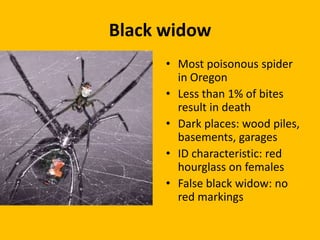
Introductory EntomologyMaster Gardener TrainingFebruary 16, 2010Linn and Benton Co., ORLaurel Moulton  --Graduate Student -- Oregon State University
The Menu for today:Basic EntomologyIdentifying plant damageCommon insect ordersBREAKLabBeneficial insectsHabitat
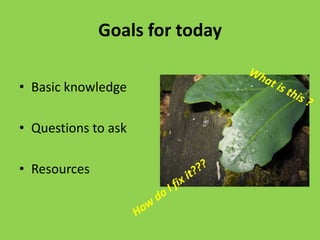
Goals for todayBasic knowledgeQuestions to askResourcesWhat is this ?How do I fix it???
Small bodies, BIG impactwaste management
nutrient cycling
crop protection
food webs
cultural value
plant propagation
entomophagy
disease transmission
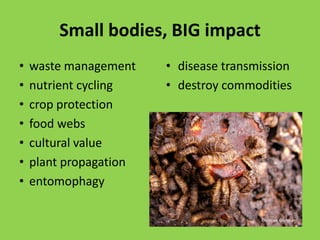
destroy commoditiesChristian Grantham
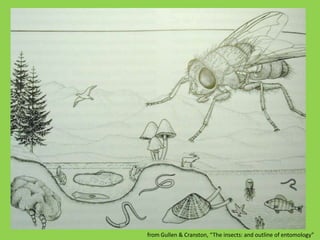
from Gullen & Cranston, “The insects: and outline of entomology”
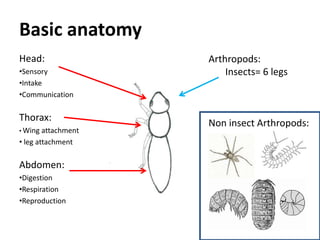
Basic anatomyHead: Sensory
Intake
CommunicationThorax: Wing attachment
 leg attachmentAbdomen: Digestion
Respiration
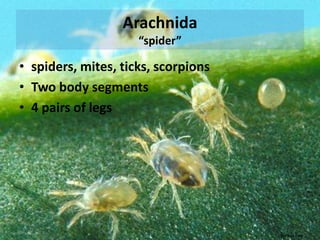
ReproductionArthropods:       Insects= 6 legsNon insect Arthropods:
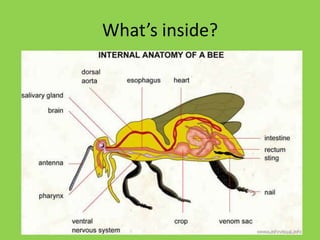
What’s inside?
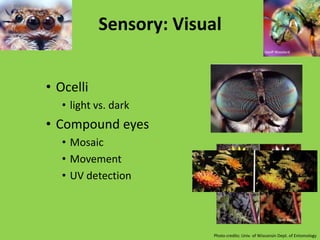
Sensory: Visual Geoff WoodardOcellilight vs. darkCompound eyesMosaicMovementUV detectionBjorn RoslettPhoto credits: Univ. of Wisconsin Dept. of Entomology
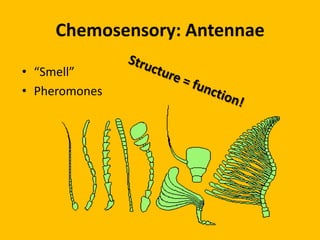
Chemosensory: Antennae“Smell”Pheromones Structure = function!
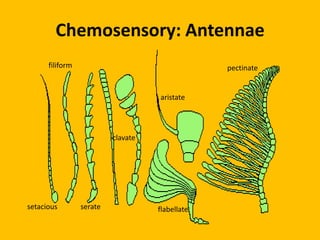
Chemosensory: Antennaefiliformpectinatearistateclavatesetaciousserateflabellate
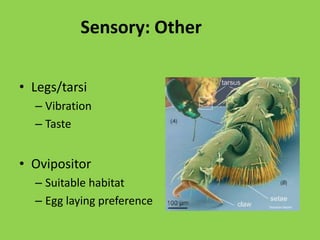
Legs/tarsiVibrationTaste OvipositorSuitable habitatEgg laying preferenceSensory: OtherStanislav Georb
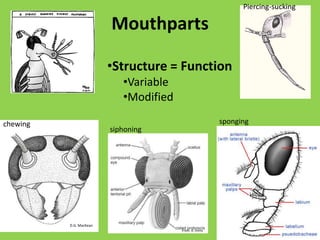
Piercing-suckingMouthpartsStructure = Function
Variable
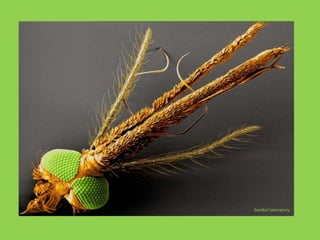
Modified spongingchewingsiphoningD.G. MacKeanFrom: A. Imms
Zweibel laboratory
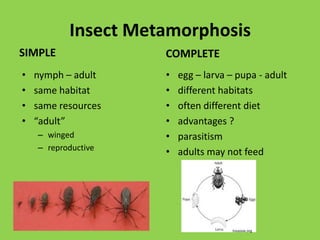
Insect MetamorphosisCOMPLETESIMPLEnymph – adultsame habitatsame resources“adult”wingedreproductiveegg – larva – pupa - adultdifferent habitatsoften different dietadvantages ?parasitismadults may not feedInvasive.org
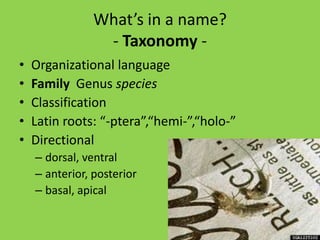
What’s in a name?- Taxonomy - Organizational languageFamily  Genus speciesClassificationLatin roots: “-ptera”,“hemi-”,“holo-”Directionaldorsal, ventralanterior, posteriorbasal, apical
Insects & plants
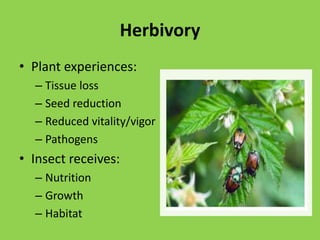
HerbivoryPlant experiences:Tissue lossSeed reductionReduced vitality/vigorPathogensInsect receives:NutritionGrowthHabitat
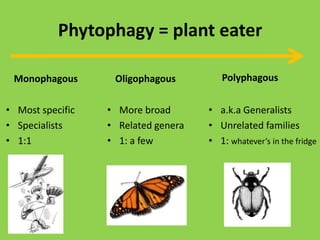
Phytophagy = plant eaterPolyphagousMonophagous	OligophagousMost specificSpecialists1:1More broadRelated genera1: a fewa.k.a Generalists
Unrelated families
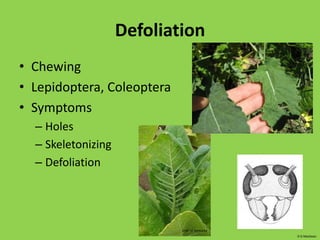
1: whatever’s in the fridgeDefoliationChewingLepidoptera, ColeopteraSymptomsHolesSkeletonizingDefoliationUniv. of KentuckyD G Mackean
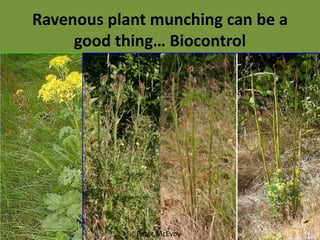
Ravenous plant munching can be a good thing… BiocontrolPeter McEvoy
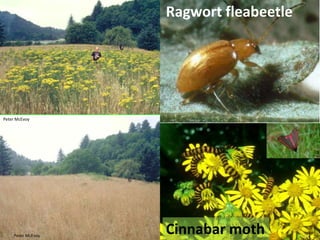
Ragwort fleabeetlePeter McEvoyCinnabar mothPeter McEvoy
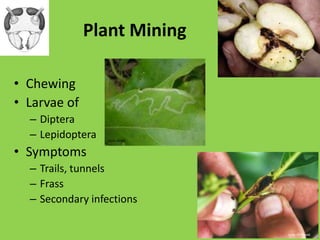
Plant MiningChewing  Larvae of DipteraLepidopteraSymptomsTrails, tunnelsFrassSecondary infections Univ. of HawaiiUSDA-APHIS
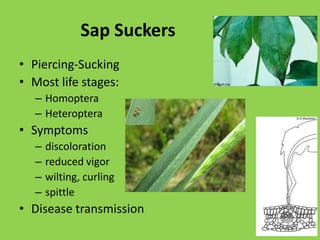
Sap SuckersPiercing-Sucking Most life stages:HomopteraHeteropteraSymptomsdiscolorationreduced vigor wilting, curlingspittleDisease transmissionD G MackeanAPSnet.org
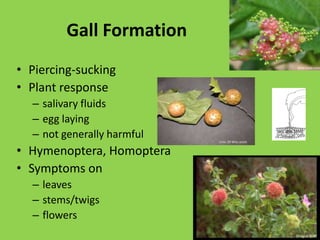
Gall FormationPiercing-suckingPlant responsesalivary fluidsegg layingnot generally harmfulHymenoptera, HomopteraSymptoms onleavesstems/twigsflowersUniv. Of Wisc.onsinOhio State Univ.Oregon BLM
Common insect orders
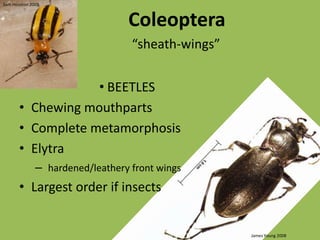
James Young 2008       Coleoptera“sheath-wings”BeetleBEETLESChewing mouthpartsComplete metamorphosisElytrahardened/leathery front wings Largest order if insectsSam Houston 2009
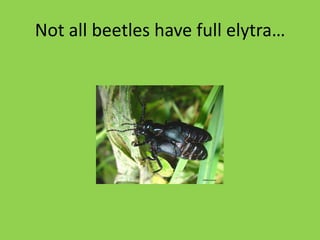
Not all beetles have full elytra…
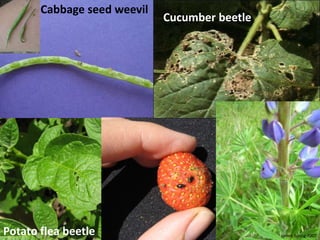
Cabbage seed weevilCucumber beetleColeoptera: Black vine weevilPotato flea beetleJames Young 2007
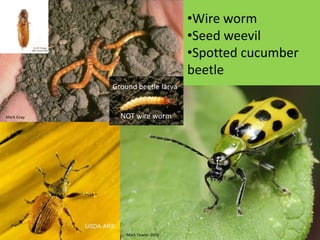
Wire worm
Seed weevil
Spotted cucumber     beetleMark GrayGround beetle larva NOT wire wormMark Fowler 2005
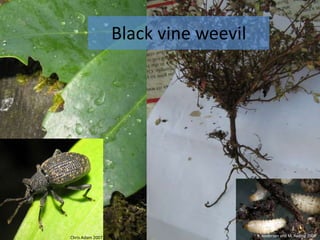
Black vine weevil
Black vine weevilChris Adam 2007B. Anderson and M. Reding 2009
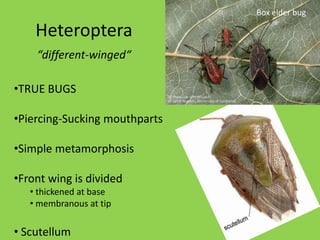
Box elder bugHeteroptera“different-winged“TRUE BUGS
Piercing-Sucking mouthparts
Simple metamorphosis
Front wing is divided
 thickened at base
 membranous at tip
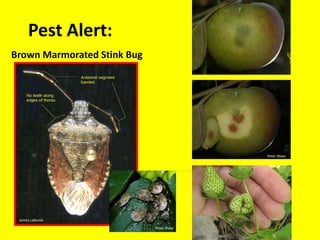
Scutellum  Pest Alert:Brown Marmorated Stink BugPeter ShearPeter ShearJames LaBonte
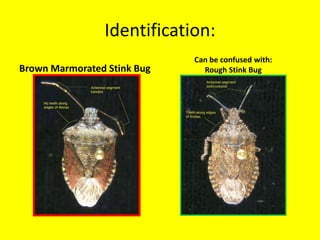
Identification:Brown Marmorated Stink BugCan be confused with:Rough Stink Bug
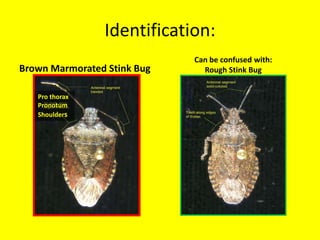
Identification:Brown Marmorated Stink BugCan be confused with:Rough Stink BugPro thoraxPronotumShoulders
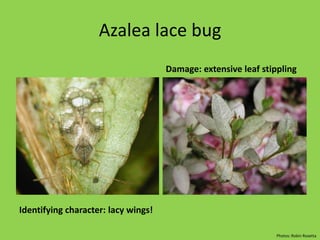
Azalea lace bugIdentifying character: lacy wings!Damage: extensive leaf stipplingPhotos: Robin Rosetta
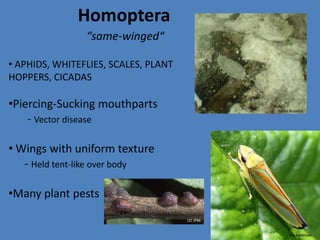
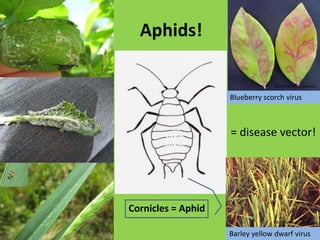
Homoptera“same-winged“ APHIDS, WHITEFLIES, SCALES, PLANT HOPPERS, CICADAS
Piercing-Sucking mouthparts                          - Vector disease Wings with uniform texture- Held tent-like over bodyMany plant pestsRobin RosettaUC IPMEric Matthews
     Aphids!WSU Whatcom Co. ExtensionBlueberry scorch virus= disease vector!Cornicles = AphidWSU Whatcom Co. ExtensionBarley yellow dwarf virus
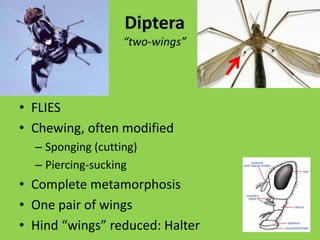
Diptera“two-wings”FLIESChewing, often modifiedSponging (cutting)Piercing-suckingComplete metamorphosisOne pair of wingsHind “wings” reduced: Halter
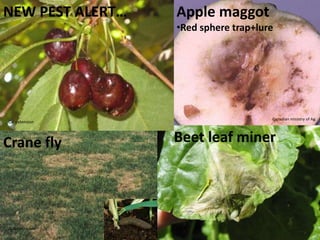
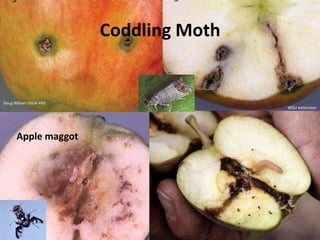
Apple maggotRed sphere trap+lureNEW PEST ALERT…Canadian ministry of Ag.Cal extensionBeet leaf minerCrane flyA. Schattmann
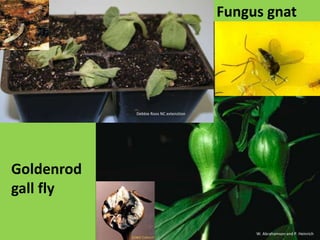
Fungus gnatDebbie Roos NC extenstionGoldenrod gall flyW. Abrahamson and P. Heinrich
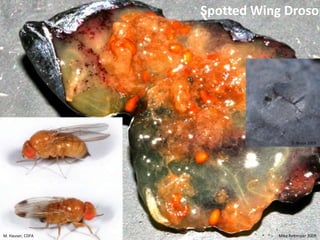
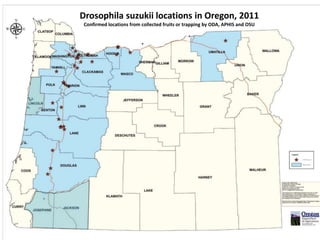
Spotted winged drosophilaSpotted Wing DrosophilaD. Bruck 2009M. Hauser, CDFAMike Reitmajer 2009
Drosophila suzukii locations in Oregon, 2011Confirmed locations from collected fruits or trapping by ODA, APHIS and OSU
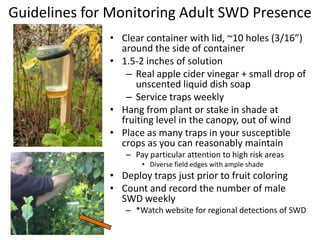
Guidelines for Monitoring Adult SWD PresenceClear container with lid, ~10 holes (3/16”) around the side of container1.5-2 inches of solutionReal apple cider vinegar + small drop of unscented liquid dish soapService traps weeklyHang from plant or stake in shade at fruiting level in the canopy, out of windPlace as many traps in your susceptible crops as you can reasonably maintainPay particular attention to high risk areasDiverse field edges with ample shadeDeploy traps just prior to fruit coloringCount and record the number of male SWD weekly*Watch website for regional detections of SWD
Spotted Winged DrosophilaDrosophila suzukii, an invasive pestof berry and stone fruitsOregon Non-Commercial HomeownersBackyard Management GuideBackyard Gardener MonitoringTo share your information with OSU researchers, make sure to provide as much of the requested information as possible.Report any findings  of SWD adults and larvae in fruit to your nearest extension office
    Fill out the online excel record sheet and email  to :  SWD.OREGON@GMX.COMFound on SWD website, For Gardenershttp://swd.hort.oregonstate.edu
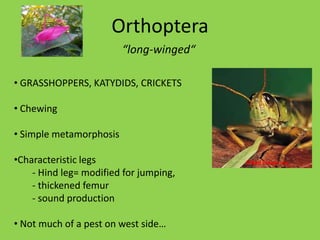
Orthoptera“long-winged“ GRASSHOPPERS, KATYDIDS, CRICKETS
 Chewing
 Simple metamorphosis
Characteristic legs - Hind leg= modified for jumping,  - thickened femur - sound production Not much of a pest on west side…©Red Planet Inc.
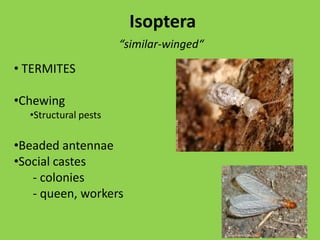
Isoptera“similar-winged“ TERMITES
Chewing
Structural pests
Beaded antennae
Social castes - colonies - queen, workers© Lucas Raptis 2008photo: Kevin Hall 2008
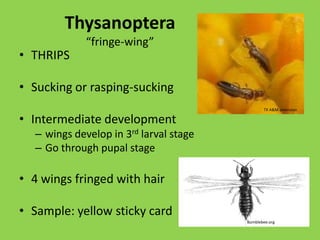
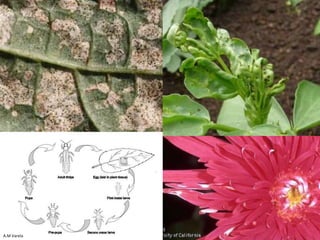
Thysanoptera“fringe-wing”THRIPSSucking or rasping-suckingIntermediate development wings develop in 3rd larval stageGo through pupal stage4 wings fringed with hairSample: yellow sticky cardTX A&M extensionBumblebee.org
Feed on flowers, fruit, leaves, twigs, budsDisease vectorsA.M Varela
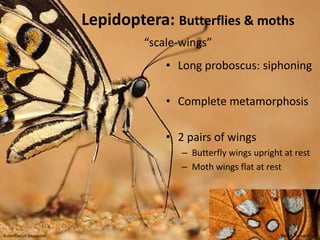
Butterflies of SingaporeGlen K. PetersonLepidoptera: Butterflies & moths“scale-wings”Long proboscus: siphoningComplete metamorphosis2 pairs of wingsButterfly wings upright at restMoth wings flat at rest
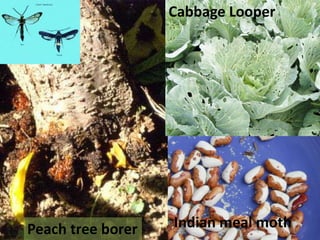
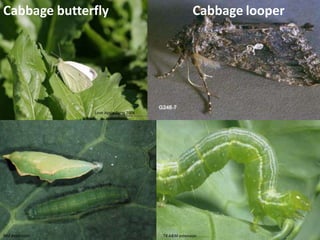
Cabbage LooperIndian meal mothPeach tree borer

Basic Entomology

Editor's Notes

  • #4 THINK about issueASK the right questionsUtilizing RESOURCES
  • #5 Insects are small but they have a significant impact! They are major players in all sorts of life processes.I am here to try to show you just a few ways that insects are relevant to our life and world today and why plant/insect interactions are so important!
  • #6 The most important message to take away though is:ONLY 1% of all insect species are ever considered a pest!!
  • #7 sensory, intake, communicationdigestion, sensory,leg & wing attachment respiration, reproduction, defense, output, special
  • #9 One way insects sense is by vision. Simple= ocelli Complex= compound – made of 40,000 facets so vision is by mosaic. It is not as clear, but it is much better at detecting movement. It is like seeing the world through your screen door.
  • #10 Different forms of antennae depend on their function: What it needs to smell.some GROUND dwelling..have no use for eyes, and rely on smell and taste. Some can also sense vibration through typanal membranes…located either in thorax, or along the abdomen.Chemosensation is the main mode of sensing.
  • #12 OVIPOSITOR story: mason bees , we’ll see later…can actually deposit male (fertilized) eggs near entrance to protect his sisters… incredible accuracy!
  • #13 Chewing, piercing-sucking, rasping-sucking, siphoning, sponging, cutting-sponging, chewing lapping
  • #14 The piercing-sucking mouthparts are composted of 4 “stylets” that are really modified mandibles and maxilla
  • #15 Talk about advantages and disadvantagesComplete metamorphosis: more stages for parasitism
  • #16 Phyllum, class, order, family, tribe, genus, species… with various “subs”Organizes, provides common languageReflects evolutionary relationships Most resources have a Glossary! You will need it!
  • #19 MONO – Eloria moth caterpillar..actually used….coca plantationsOLIGO – monarch bfly larv. milkweedPOLY – including other insects. Japanese Beetle , feeds on over 300spp of plants…prob. Is why, in huge part, it’s a PEST
  • #20 HOW insects eat depends on SPECIALIZED MOUTHPARTS. Plant damage DIFFERS depending on what type of insect that is doing the damage.The most ancestral type of mouthpart is CHEWING.
  • #21 Cinnabar moth damage on Noxious weed: Tansy Ragwort. This moth was introduced as a biocontrol agent, and the “damage” is caused by larval feeding on the plant.
  • #22 The Ragwort fleabeetle was also introduced, and proved to be a more effective biocontrol agent than the Cinnabar moth. See before and after examples (several years have passed)
  • #24 TRUE BUGS..PESTS:aphids, thrips, spider mites, whitefliesIn addition to direct feeding damage, sap suckers often act as disease vectors
  • #25 Gall formation is insect initiated: Plant growth is altered by a signal from the insect to form gall tissue. Unknown how gall formation gets triggered… saliva, excretions? Studies show increased levels of SUGARS, LIPIDS, PROTIENS available to the gall forming insect within the gall tissue.Aside from being unsightly, most galls are not harmful to the plant.Examples: Cynipid wasps on oak….grape tube
  • #27 Wings: Beetles have two sets of wings Meet in a straight line down the back Membranous back wings hidden under front used for flying Front or back wings may be greatly reducedMouth parts: strong mandibles predatory, seed eating, leaf chewing, scavengingStriped cucumber beetle: Diabrotica sp. Related to the spotted cucumber beetle Becoming more of a problem Also related to Western corn root worms (larvae cause similar damage to roots/crowns)
  • #28 Either front or hind wings may be greatly reduced. I the case of blister beetles and rove beetles, it is the front wings that are reducedBlister beetles rove around on the ground eating bee and grasshopper eggs. They produce a toxin that can be hazardous to livestock.
  • #29 Cabbage seedpod weevil Ceutorhynchus obstrictusCucumber beetle Diabrotica sp.Potato flea beetle Epitrix sp. “Shot holing”Native weevilSeed weevil on Kincaid’s lupine
  • #30 The spotted cucumber beetle is a major pest in squash, cucumbers, beans and other crops. In this picture you can clearly see its well developed mandibles that it uses to chew holes in leaves.This weevil is an example of a seed weevil, just to give you an idea of what they look like. Weevils are also called snout beetles because of their elongated nose, and many of them are considered pests. They also have strong chewing mandibles, but they are located on the end of a long snout.Click beetles aren’t really pests, but their larvae are. Their larvae are called wire worms, and can be big pests in potatoes, sugar beats and other crops. They kind of look like millipedes without all the legs. They look similar to the larvae of ground beetles. Ground beetles are beneficial insects, so look closely before you decide to squash it. Ground beetles have two cerci at their tail end… kind of like earwigs.
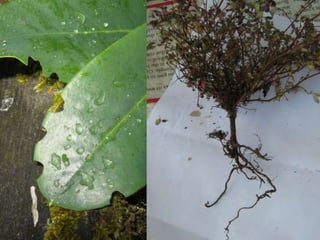
  • #31 Can you tell me what these two examples of damage have in common, and what is different. The picture on the right is Rhododendron leaves, and the one on the right is a dead Thyme leaved fuschia. The host isn’t necessarily important.
  • #32 Vine weevils present a good lesson in prevention, and tolerance. They are pretty difficult to control. All of the weevils are female, and therefore just one weevil can turn into a problem… one female can lay up to 500 eggs per year. Nurseries will reject a whole shipment of plants if they find even one black vine weevil in the truck. Don’t buy plants that show weevil damage on the leaves, and it could be a good idea to check the root balls of plants that you purchase between Fall and spring… this is the time when the larvae are visible.
  • #33 True bugs have:abdomen that is Broadly joined to the thoraxTwo pairs of wingsHemelytra= front wings= most distinctive characteristicScutellumBox elder bugs are a common insect in western Oregon. They develop on maple trees during the summer. They are most visible when they congregate on or in buildings! Seal up gaps around windows and doors and put screens in windows to prevent entry.Can be pests, predators or parasites
  • #34 Damages:tree fruit, grapes, berries, vegetables, corn, soybeans, and ornamental plants aggregates on the side of houses
  • #36 The nomenclature used to describe insects varies: While I was reading up on the marmorated stink bug I found the thorax region of this insect described as the Prothorax, pronotum and shoulders
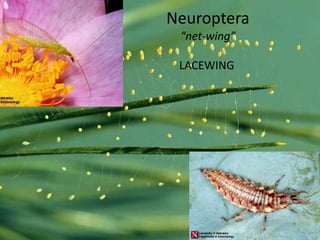
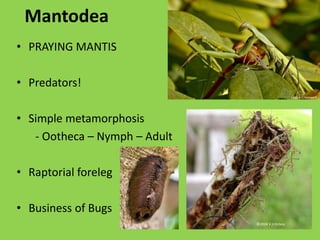
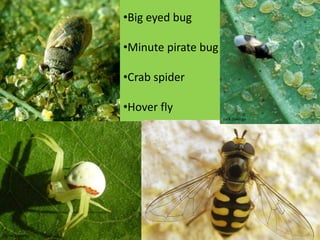
  • #37 Natural enemies= green lace wings, minute pirate bug, azalea plant bugCultural control= azaleas in the sun or that are water stressed are more likely to get damaged. There are also varieties that are resistantThere are native lace bugs on Indian Plum
  • #38 Variable life histories:Largest member of suborder= Cicadas with life cycles that last between 4 and 17 yearsAphids have many generations per yearScales (males) and white flies= last nymphalinstar is quiescent and pupalike, making it resemble complete metamorphosisProduce honeydew= sooty moldScale= European fruit lecaneum scale
  • #41 Knowing the lifecycle helps decide how to target control effortsFlies tend to be pests in their larval stage.Walnut husk fly is related to the apple maggot it causes discoloration in walnut shell so lower value
  • #42 Insects that cause galls are often very host specific. See examples of oak gall, mossy rose gall…In addition to flies there are also wasps (oak gall), mites (maple gall)Fungus gnats can feed on root hairs, crowns and inside stems
  • #43 Confirmed hosts:BlueberriesCherriesWine and table grapesStrawberriesBlackberriesMarrionberriesRaspberriesPlumsPeachesFigsHardy kiwiAsian pears
  • #47 grain belt damage picant story ghoppercpt., “bad” imageadults vs nymphsCongeners Widely varying habit Family, genus, spp. Red list to Red Book
  • #49 They have a short proboscis that is probably used for piercing and sucking liquid.Some describe it as a scraping and sucking feeding actionMany generations per yearVery common on daisies and dandelion
  • #50 Prefer to feed on rapidly growing tissuesCause tiny scars : “Stipling”Damaged leaves papery and distorted and discolored… often with black specksStunted growthMalformed fruit
  • #51 Scales come off like dust11,000 species occur in US and CanadaButterflies have knobbed antenae, moths have
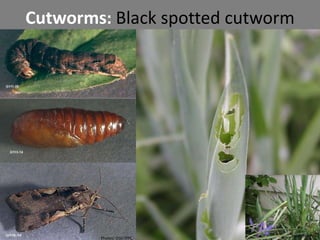
  • #54 The black spotted cutworm is very common on Dutch Iris and lupines in the home gardenThe best way to identify it is the black “triangular” markings on it’s posterior segments
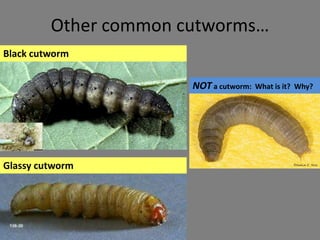
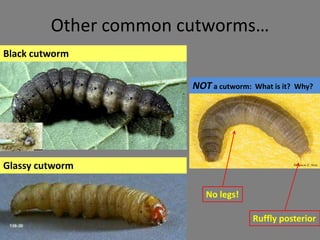
  • #55 Black cutworm= grass, corn, brassicasGlassy cutworm= very common in grass, corn, brassicasCrane fly larvae do not have legs or a hard head capsule (see ruffly mouth parts..)
  • #56 Black cutworm= grass, corn, brassicasGlassy cutworm= very common in grass, corn, brassicasCrane fly larvae do not have legs or a hard head capsule (see ruffly mouth parts..)
  • #57 Compare the damage of Coddling Moth (Lepidoptera) to the Apple maggot (Diptera)
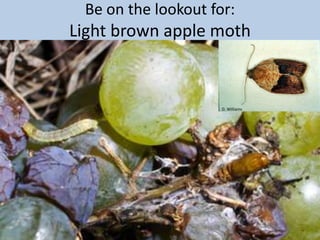
  • #58 Tortricid leaf rollerPicture: male… often colors more muted as scales are brushed offFirst found in US in California Bay Area in 2007Can consume 250 known plants including grapes, apples and other economically important cropsIt feeds on foliage, reducing photosynthetic ability… weakens plants.It can also feed directly on fruit making it unmarketableIt has not been found in Oregon yet, BUT master gardeners are one of the first lines of defense!
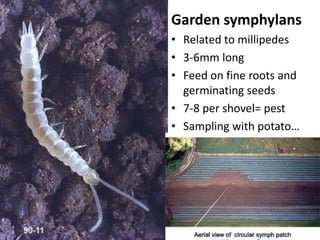
  • #60 Root feeding leads to lack of vigourOften found in patches or circlesThey are considered a huge pest in organic gardens and farmsNot much is knownWhat works for one person, doesn’t work for othersTo monitor put out slices of potatoes under up turned garden pots
  • #61 True insects have 3 body parts and 3 sets of legs
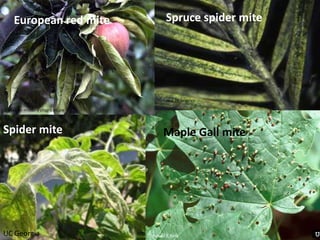
  • #62 European red mites cause stippling and in serious cases “bronzing” of leavesSpruce spider mite effects all conifers. This picture is Douglas fir. Effective control during summer includes overhead watering and insecticidal soap. Unusual b/c overwinter as eggsSpider mite on tomatoGall mite on big leaf maple
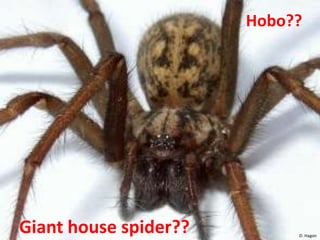
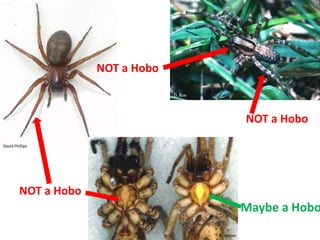
  • #63 Hobo spider is also known as the Aggressive House spider. The spider is neither aggressive or overly prone to living in household environments. At some point it’s latinname:Tegenariaagrestis(agrestis means “rural” in latin) was misinterpreted to mean aggressive.Easiest to ID what is NOT a hoboCan’t rely on size or color because they vary and can be similar between species
  • #64 Giant house spiders and other look alikes are much more common than Hobo spidersIt is unusual to find them in the houseThose giant brown hairy ones are giant house spidersOnly giant house spider and domestic house spider have spots on sternum (at base of legs). They may be very faint!Stripes on cephlothorax= NOT hoboStripes on legs = NOT hoboShiny reddish legs= NOT hobo
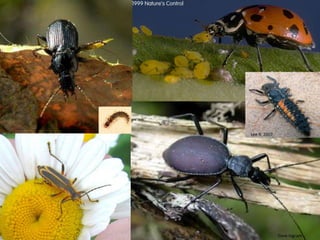
  • #68 Pterostichus melanariusLady bug: aphidsSoldier beetle: pollen, nectar, aphids, caterpillars, soft bodied insectsScaphinotusangusticollis: Snails
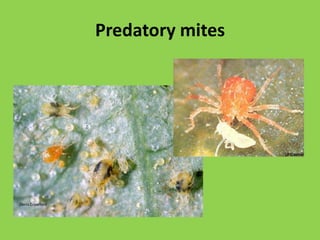
  • #69 The red mites are predatory.
  • #73 I’m just going to stick to beneficials!
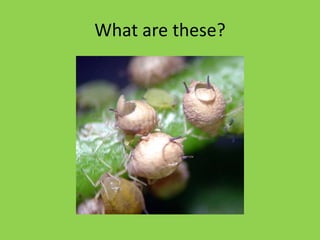
  • #74 Parasitized aphids: Aphid mummies! Note the “tail pipes” or cornicles (this is the telltale sign that you would look for to know that it is an aphid). The circular “trap doors” on their backs are the spots where the grown parasitoids exited their home.
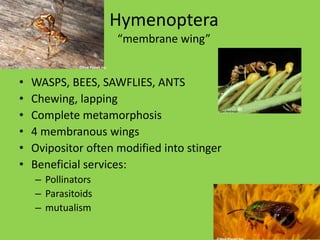
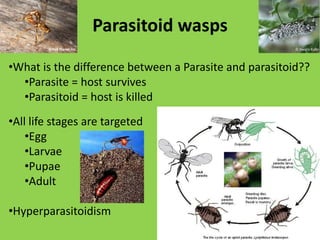
  • #75 Top right: Hymenoptera laying eggs inside a log (more likely, laying eggs in a larvae found inside the log..!)Top left: parasitized lepidoptera larva. This would be an “ecto parasite” because the eggs are on the outside of the host.Bottom left: Hymenoptera parasitizing a pupae in the soilBottom right: life cycle of the Hymenoptera that parasitizes aphids (aphid mummies seen on previous slide)Hyperparasitoidism is when a parasitoid on/inside a host is parasitized by another parasitoid…
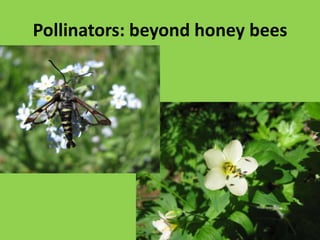
  • #76 Not all insects that visit flowers are pollinators!Here is a clearwing moth on a native forget me notTiny diptera on Royal jacobs ladder
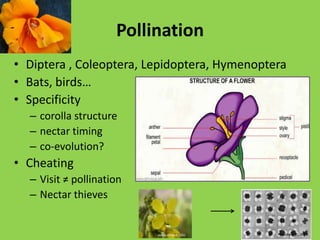
  • #77 Flowers with open corollas are usually pollinated by many different insects. Other flowers with specialized flower shapes may be better suited to particular pollinators: humming birds, bats, bumble bees, etc.Some insects are just cheaters and get away with the nectar without helping with pollination.Bottom: human vs insect view of flower color!
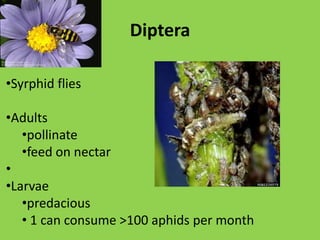
  • #78 How could you tell that this is a fly and not a bee?: only two wings (bees have 4). If you look closely you can see the second set of modified wings on flies called a haltier.Do you see anything else in the picture besides the syrphid fly larvae and aphids? Could some of these aphids be parasitized?
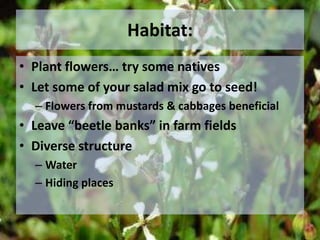
  • #80 Shelter: Crop rotation, Beetle banks, alternate row harvest, perennial hedgerows, or perennial plantings among otherwise annual crops
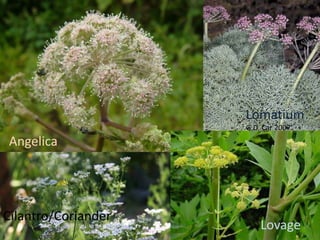
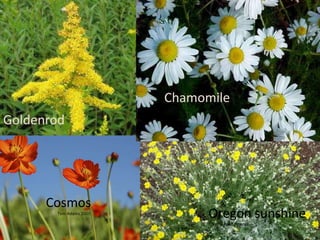
  • #81 Angelica: ladybird beetles, lacewingsCilantro: hover flies, parasitoid wasps and flies,Lomatium: native beesLovage: parasitoid waspsOthers include: DillFennelCarawayAniseChervilBlue lace flowerWhite lace flowerQueen Ann’s lace
  • #82 Goldenrod: Soldier beetles, predatory bugs, lady beetles, parasitoid waspsChamomile: lady beetlesCosmos: hover flies, lace wings, minute pirate bugsOregon sunshine: native insects and pollenators