



PEER REVIEW AT THE
CROSSROADS
OPEN SCIENCE FAIR 2017,
8TH SEPTEMBER, ATHENS
Crossroads: CC BY-SA
http://flickr.com/photos/
60359963@N00/5943132296
THE PLAN
1. Introduction
OpenUp, OpenAIRE and our research in alternative peer review
services and methods
2. Expert presentations
Michael Markie: Recognition of review work, considering peer
review as research output
Jon Tennant: Barriers to open peer review, researchers’
attitude,
Jadranka Stonajovski: Survey results and presenting PEERE
activities
3. Round table discussion
OPENAIRE
Human
Network
50 Partners from every EU country, and beyond
Data centers, universities, libraries, repositories, legal experts
Digital
Network
… fosters the social and technical links
that enable Open Science in Europe and beyond
5
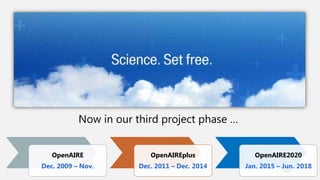
OpenAIRE
Dec. 2009 – Nov.
OpenAIREplus
Dec. 2011 – Dec. 2014
OpenAIRE2020
Jan. 2015 – Jun. 2018
Now in our third project phase …
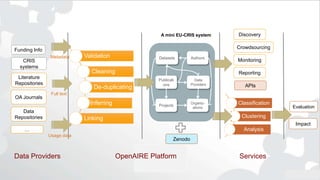
Literature
Repositories
OA Journals
Funding Info
Validation
Cleaning
De-duplicating
Inferring
Linking
Organiz-
ations
Projects
AuthorsDatasets
Publicati
ons
Data
Providers
…
Monitoring
Reporting
Evaluation
Impact
Classification
Clustering
Analysis
CRIS
systems
A mini EU-CRIS system
Data
Repositories
Metadata
Full text
Usage data
Discovery
Crowdsourcing
Zenodo
APIs
Data Providers ServicesOpenAIRE Platform
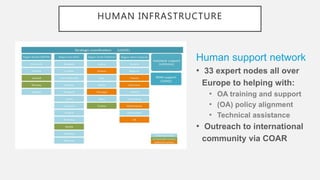
HUMAN INFRASTRUCTURE
Human support network
• 33 expert nodes all over
Europe to helping with:
• OA training and support
• (OA) policy alignment
• Technical assistance
• Outreach to international
community via COAR
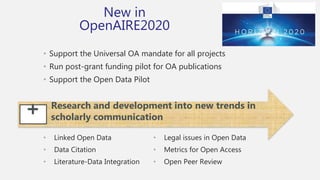
• Support the Universal OA mandate for all projects
• Run post-grant funding pilot for OA publications
• Support the Open Data Pilot
+ Research and development into new trends in
scholarly communication
• Linked Open Data
• Data Citation
• Literature-Data Integration
• Legal issues in Open Data
• Metrics for Open Access
• Open Peer Review
New in
OpenAIRE2020
OPENUP
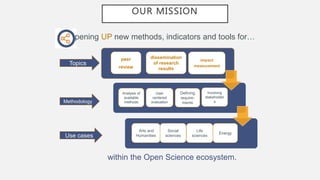
OUR MISSION
.
within the Open Science ecosystem.
peer
review
dissemination
of research
results
impact
measurement
Analysis of
available
methods
User
centered
evaluation
Defining
require-
ments
Involving
stakeholder
s
Topics
Use cases
Methodology
Arts and
Humanities
Social
sciences
Life
sciences
Energy
pening UP new methods, indicators and tools for…
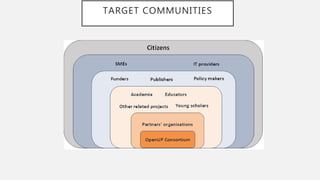
TARGET COMMUNITIES
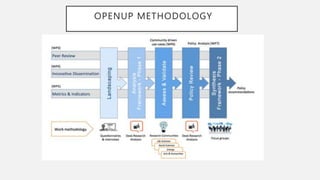
OPENUP METHODOLOGY
COMMON GOAL: OPEN SCIENCE
OPEN SCIENCE IS MORE THAN JUST
OPEN ACCESS …
It’s about opening up scientific processes
and products from all levels to everyone …
• Open Access (publications, data,
software, educational resources)
• Open Methodology (open notebooks,
study preregistration)
• Citizen Science
• Open Evaluation / Open Peer Review
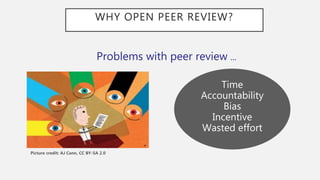
WHY OPEN PEER REVIEW?
Time
Accountability
Bias
Incentive
Wasted effort
Picture credit: AJ Cann, CC BY-SA 2.0
Problems with peer review ...
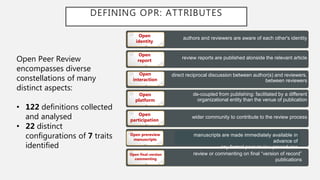
DEFINING OPR: ATTRIBUTES
authors and reviewers are aware of each other's identity
review reports are published alonside the relevant article
direct reciprocal discussion between author(s) and reviewers,
between reviewers
de-coupled from publishing: facilitated by a different
organizational entity than the venue of publication
wider community to contribute to the review process
Open
identity
Open
interaction
Open
platform
Open
participation
Open prereview
manuscripts
Open
report
manuscripts are made immediately available in
advance of
any formal peer review procedures
review or commenting on final “version of record”
publications
Open final-version
commenting
Open Peer Review
encompasses diverse
constellations of many
distinct aspects:
• 122 definitions collected
and analysed
• 22 distinct
configurations of 7 traits
identified
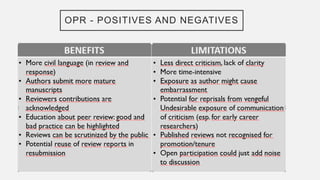
OPR - POSITIVES AND NEGATIVES
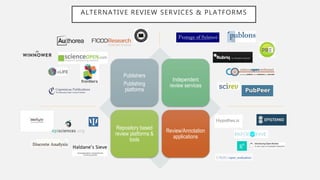
ALTERNATIVE REVIEW SERVICES & PLATFORMS
Publishers
Publishing
platforms
Independent
review services
Repository based
review platforms &
tools
Review/Annotation
applications
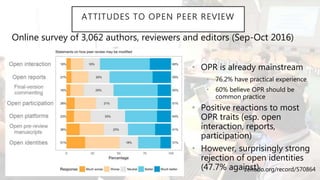
ATTITUDES TO OPEN PEER REVIEW
• OPR is already mainstream
• 76.2% have practical experience
• 60% believe OPR should be
common practice
• Positive reactions to most
OPR traits (esp. open
interaction, reports,
participation)
• However, surprisingly strong
rejection of open identities
(47.7% against)
Online survey of 3,062 authors, reviewers and editors (Sep-Oct 2016)
zenodo.org/record/570864
MORE TO COME…

OSFair2017 Workshop | Peer review at te crossroads

  • 1.
    PEER REVIEW ATTHE CROSSROADS OPEN SCIENCE FAIR 2017, 8TH SEPTEMBER, ATHENS Crossroads: CC BY-SA http://flickr.com/photos/ 60359963@N00/5943132296
  • 2.
    THE PLAN 1. Introduction OpenUp,OpenAIRE and our research in alternative peer review services and methods 2. Expert presentations Michael Markie: Recognition of review work, considering peer review as research output Jon Tennant: Barriers to open peer review, researchers’ attitude, Jadranka Stonajovski: Survey results and presenting PEERE activities 3. Round table discussion
  • 3.
  • 4.
    Human Network 50 Partners fromevery EU country, and beyond Data centers, universities, libraries, repositories, legal experts Digital Network … fosters the social and technical links that enable Open Science in Europe and beyond
  • 5.
    5 OpenAIRE Dec. 2009 –Nov. OpenAIREplus Dec. 2011 – Dec. 2014 OpenAIRE2020 Jan. 2015 – Jun. 2018 Now in our third project phase …
  • 6.
  • 7.
    HUMAN INFRASTRUCTURE Human supportnetwork • 33 expert nodes all over Europe to helping with: • OA training and support • (OA) policy alignment • Technical assistance • Outreach to international community via COAR
  • 8.
    • Support theUniversal OA mandate for all projects • Run post-grant funding pilot for OA publications • Support the Open Data Pilot + Research and development into new trends in scholarly communication • Linked Open Data • Data Citation • Literature-Data Integration • Legal issues in Open Data • Metrics for Open Access • Open Peer Review New in OpenAIRE2020
  • 9.
  • 10.
    OUR MISSION . within theOpen Science ecosystem. peer review dissemination of research results impact measurement Analysis of available methods User centered evaluation Defining require- ments Involving stakeholder s Topics Use cases Methodology Arts and Humanities Social sciences Life sciences Energy pening UP new methods, indicators and tools for…
  • 11.
  • 12.
  • 13.
  • 14.
    OPEN SCIENCE ISMORE THAN JUST OPEN ACCESS … It’s about opening up scientific processes and products from all levels to everyone … • Open Access (publications, data, software, educational resources) • Open Methodology (open notebooks, study preregistration) • Citizen Science • Open Evaluation / Open Peer Review
  • 15.
    WHY OPEN PEERREVIEW? Time Accountability Bias Incentive Wasted effort Picture credit: AJ Cann, CC BY-SA 2.0 Problems with peer review ...
  • 16.
    DEFINING OPR: ATTRIBUTES authorsand reviewers are aware of each other's identity review reports are published alonside the relevant article direct reciprocal discussion between author(s) and reviewers, between reviewers de-coupled from publishing: facilitated by a different organizational entity than the venue of publication wider community to contribute to the review process Open identity Open interaction Open platform Open participation Open prereview manuscripts Open report manuscripts are made immediately available in advance of any formal peer review procedures review or commenting on final “version of record” publications Open final-version commenting Open Peer Review encompasses diverse constellations of many distinct aspects: • 122 definitions collected and analysed • 22 distinct configurations of 7 traits identified
  • 17.
    OPR - POSITIVESAND NEGATIVES
  • 18.
    ALTERNATIVE REVIEW SERVICES& PLATFORMS Publishers Publishing platforms Independent review services Repository based review platforms & tools Review/Annotation applications
  • 19.
    ATTITUDES TO OPENPEER REVIEW • OPR is already mainstream • 76.2% have practical experience • 60% believe OPR should be common practice • Positive reactions to most OPR traits (esp. open interaction, reports, participation) • However, surprisingly strong rejection of open identities (47.7% against) Online survey of 3,062 authors, reviewers and editors (Sep-Oct 2016) zenodo.org/record/570864
  • 20.

Editor's Notes

  • #11 OpenUp aims to…
  • #12 open dialogue with the community