Sixth International Workshop on Serverless Computing (WoSC6) 2020 Dec 7, 2020
Temporal Performance Modeling of Serverless Computing Platforms
N. Mahmoudi and H. Khazaei, “Temporal Performance Modelling of Serverless
Computing Platforms,” in Proceedings of the 6th International Workshop on
Serverless Computing, 2020, p. 1–6., doi: 10.10.1145/3429880.3430092.
https://www.serverlesscomputing.org/wosc6/#p1
Hamzeh Khazaei
hkh@yorku.ca
Performant and Available
Computing Systems (PACS) Lab
Nima Mahmoudi
nmahmoud@ualberta.ca
Sixth International Workshop on Serverless Computing (WoSC6) 2020 Dec 7, 2020
TOC
Introduction
System Description
Analytical Modelling
Experimental Validation
Conclusion
2
Introduction
3
Serverless Computing
● Runtime operation and management done by the provider
○ Reduces the overhead for the software owner
○ Provisioning
○ Scaling resources
● Software is developed by writing functions
○ Well-defined interface
○ Functions deployed separately
4
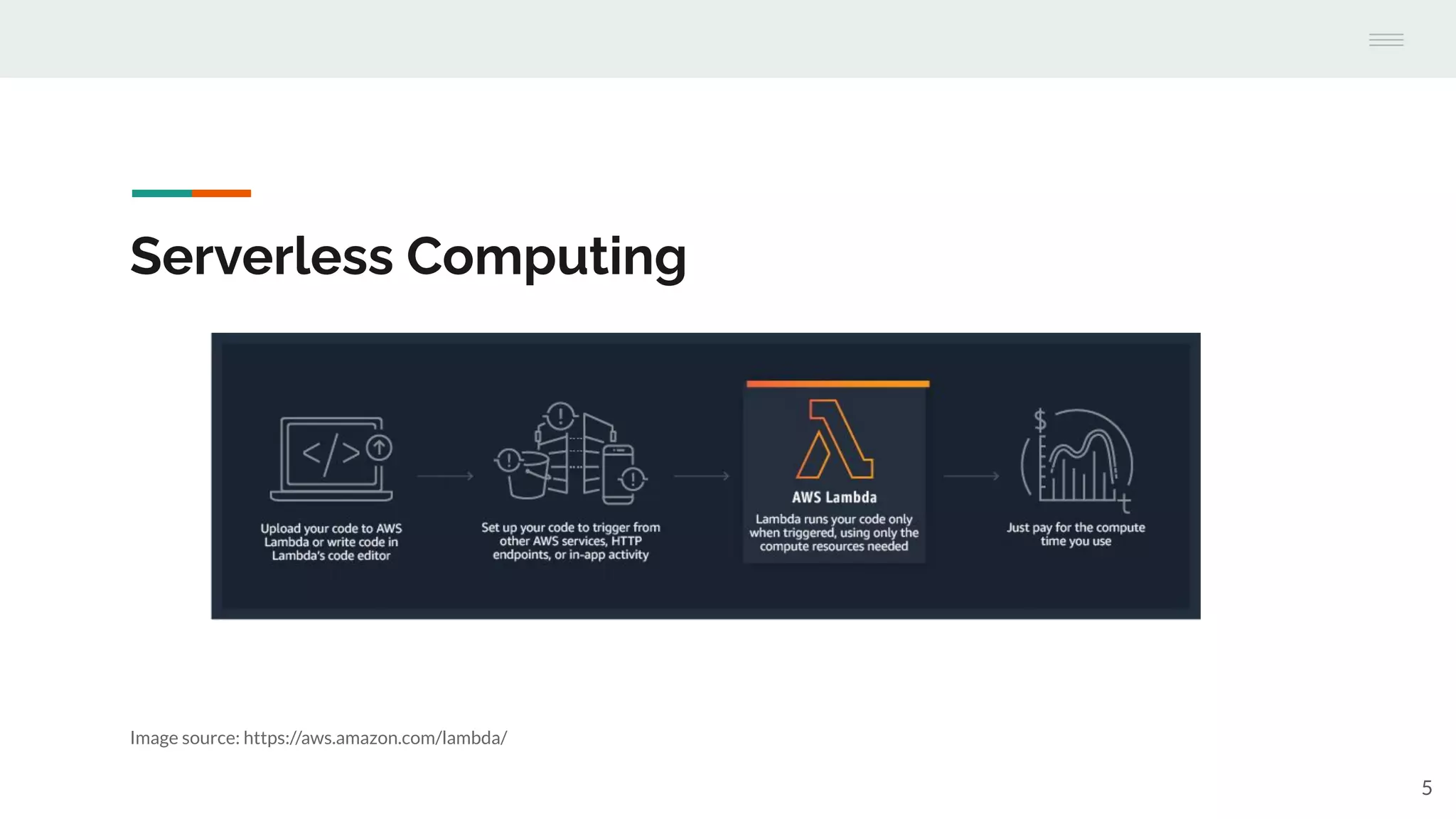
Serverless Computing
Image source: https://aws.amazon.com/lambda/
5
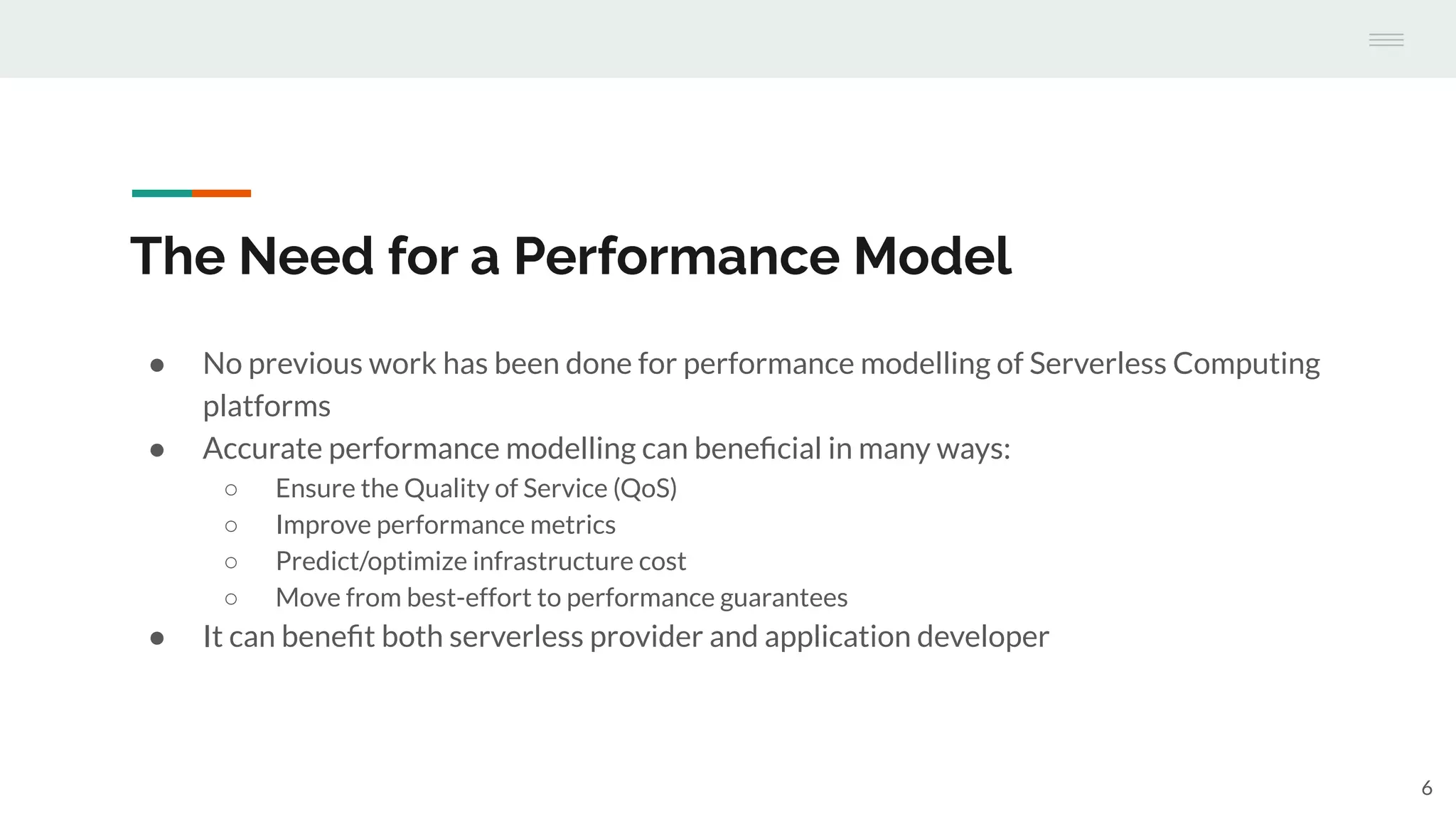
The Need for a Performance Model
● No previous work has been done for performance modelling of Serverless Computing
platforms
● Accurate performance modelling can beneficial in many ways:
○ Ensure the Quality of Service (QoS)
○ Improve performance metrics
○ Predict/optimize infrastructure cost
○ Move from best-effort to performance guarantees
● It can benefit both serverless provider and application developer
6
System Description
7
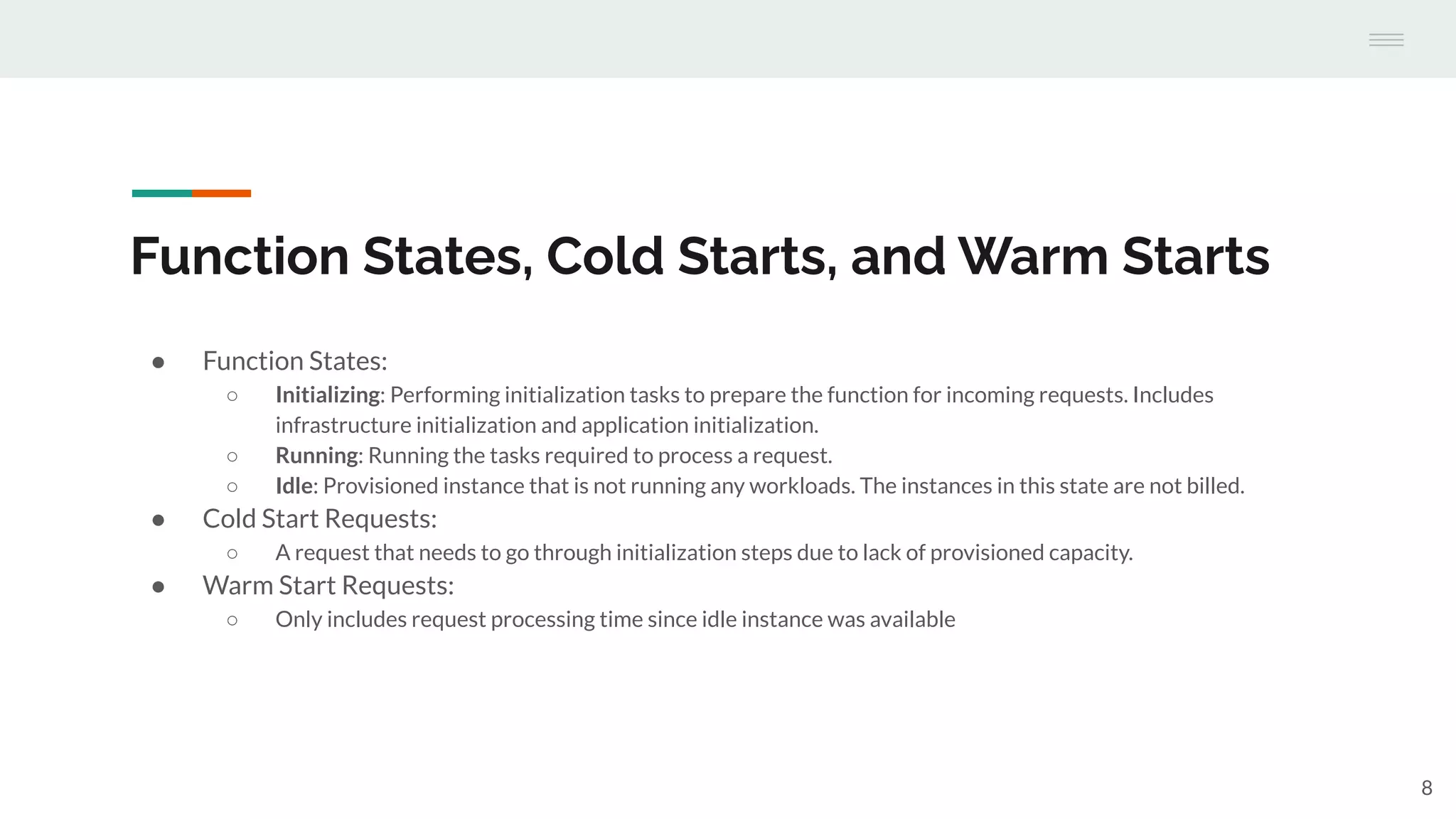
Function States, Cold Starts, and Warm Starts
● Function States:
○ Initializing: Performing initialization tasks to prepare the function for incoming requests. Includes
infrastructure initialization and application initialization.
○ Running: Running the tasks required to process a request.
○ Idle: Provisioned instance that is not running any workloads. The instances in this state are not billed.
● Cold Start Requests:
○ A request that needs to go through initialization steps due to lack of provisioned capacity.
● Warm Start Requests:
○ Only includes request processing time since idle instance was available
8
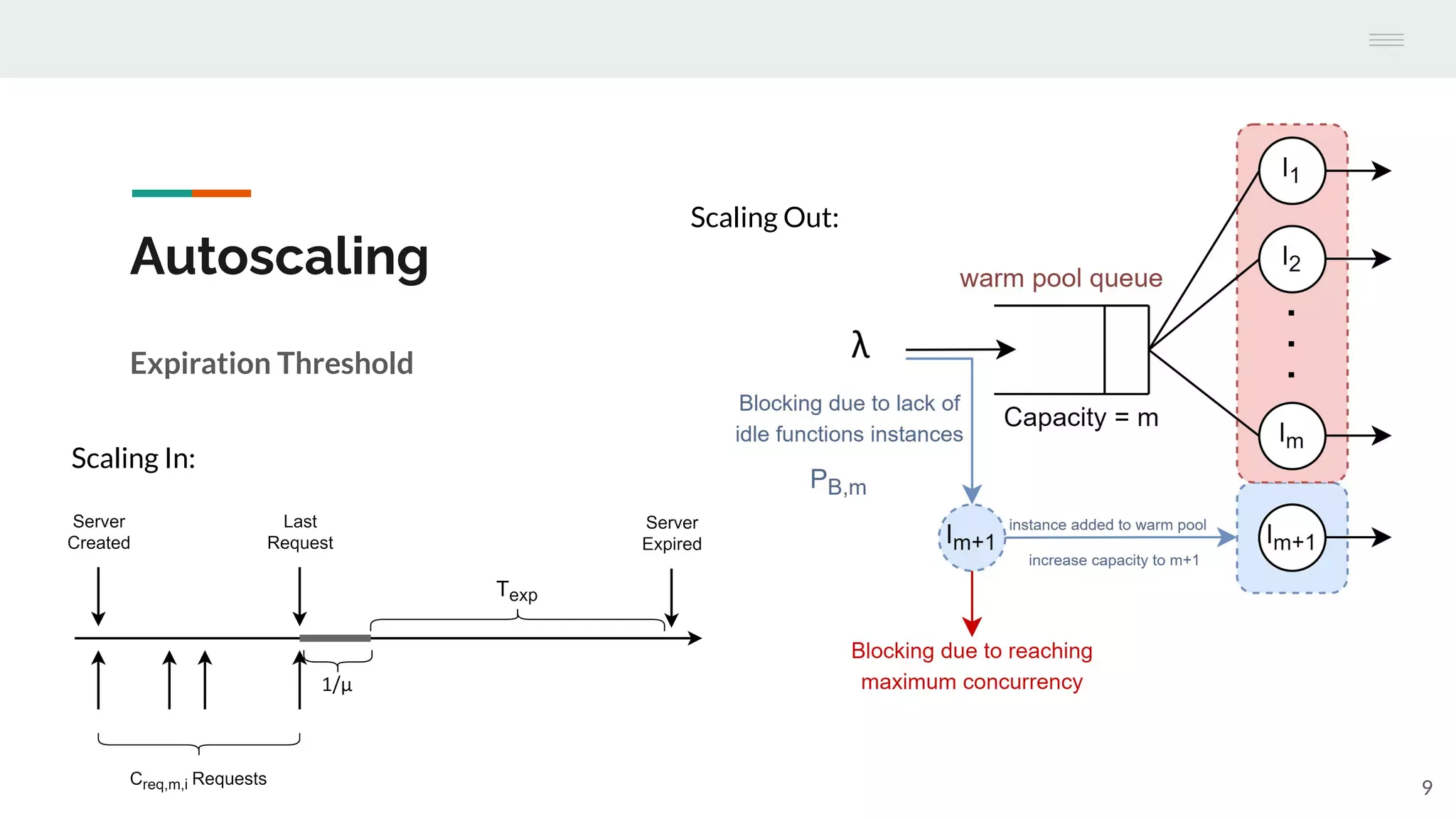
Autoscaling
Expiration Threshold
Scaling Out:
Scaling In:
9
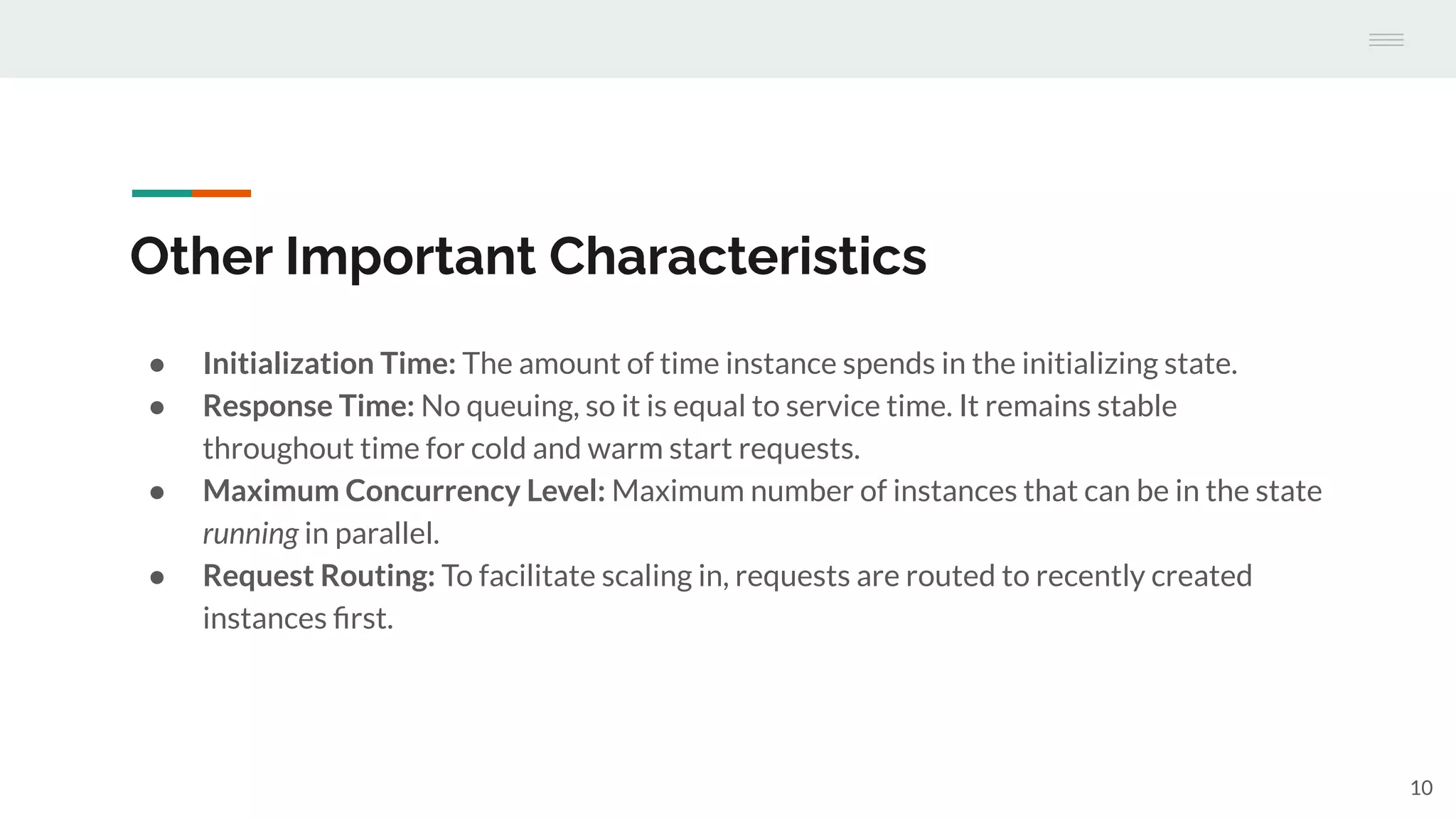
Other Important Characteristics
● Initialization Time: The amount of time instance spends in the initializing state.
● Response Time: No queuing, so it is equal to service time. It remains stable
throughout time for cold and warm start requests.
● Maximum Concurrency Level: Maximum number of instances that can be in the state
running in parallel.
● Request Routing: To facilitate scaling in, requests are routed to recently created
instances first.
10
Analytical Modelling
11
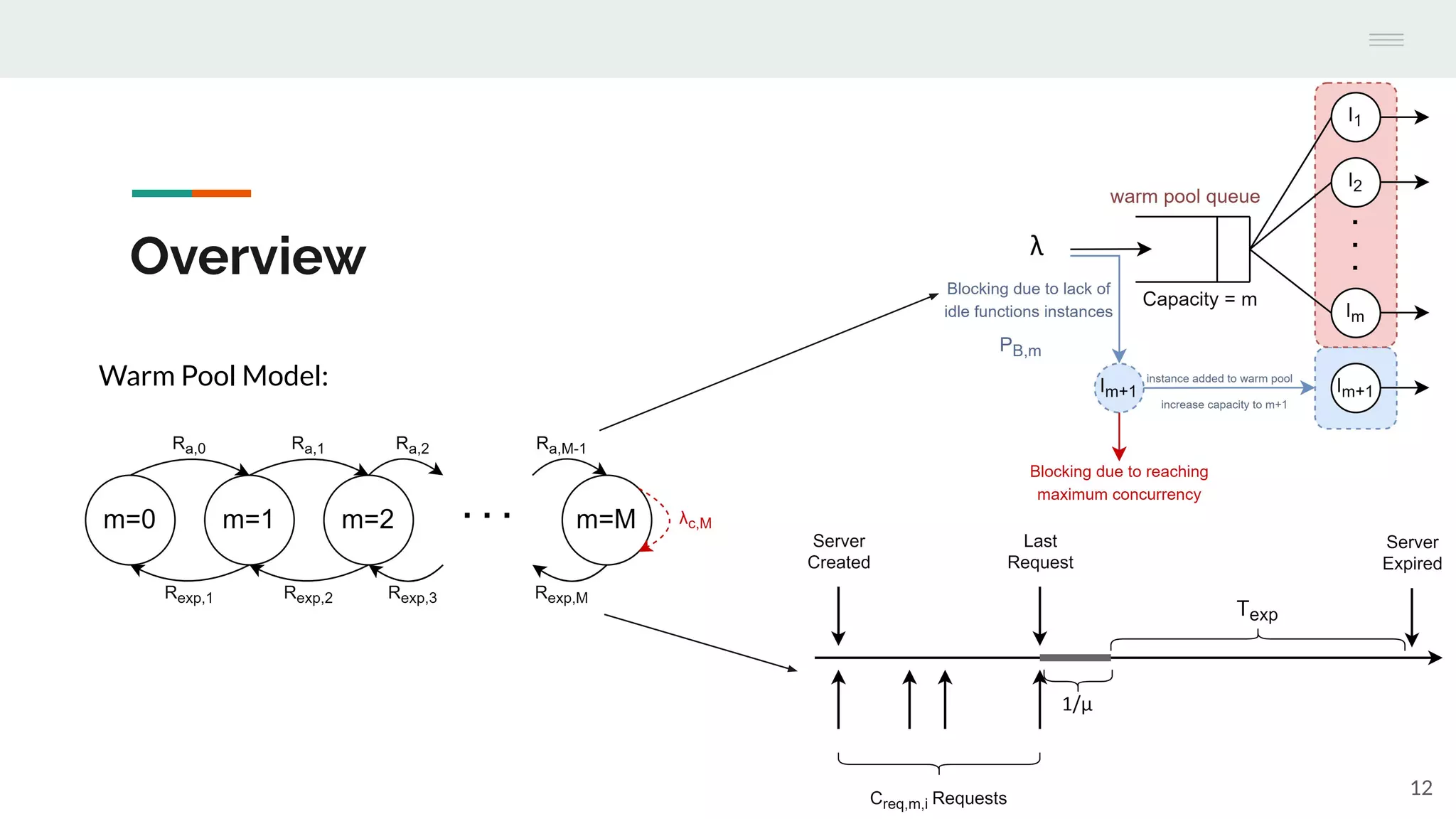
Overview
Warm Pool Model:
12
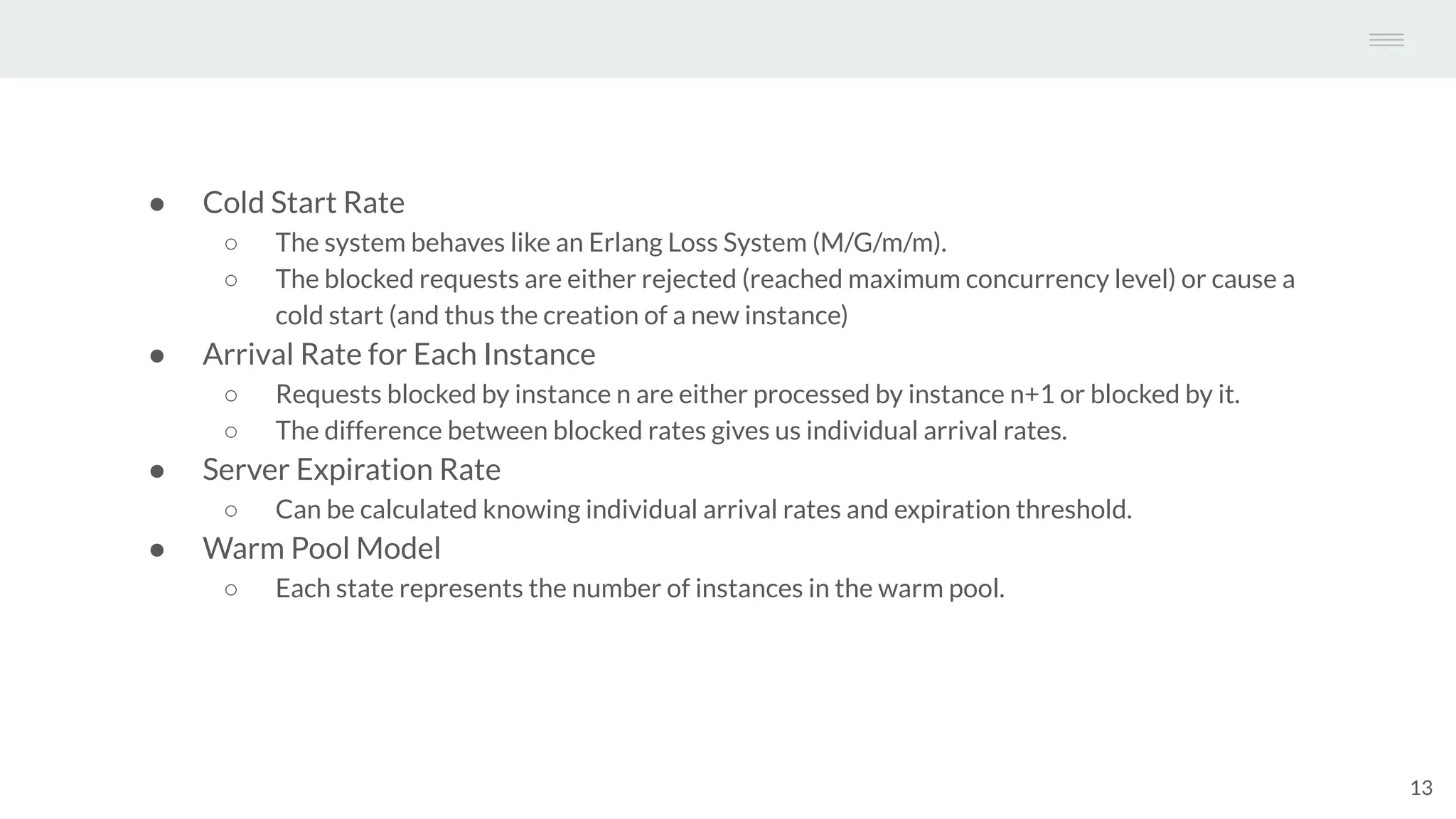
● Cold Start Rate
○ The system behaves like an Erlang Loss System (M/G/m/m).
○ The blocked requests are either rejected (reached maximum concurrency level) or cause a
cold start (and thus the creation of a new instance)
● Arrival Rate for Each Instance
○ Requests blocked by instance n are either processed by instance n+1 or blocked by it.
○ The difference between blocked rates gives us individual arrival rates.
● Server Expiration Rate
○ Can be calculated knowing individual arrival rates and expiration threshold.
● Warm Pool Model
○ Each state represents the number of instances in the warm pool.
13
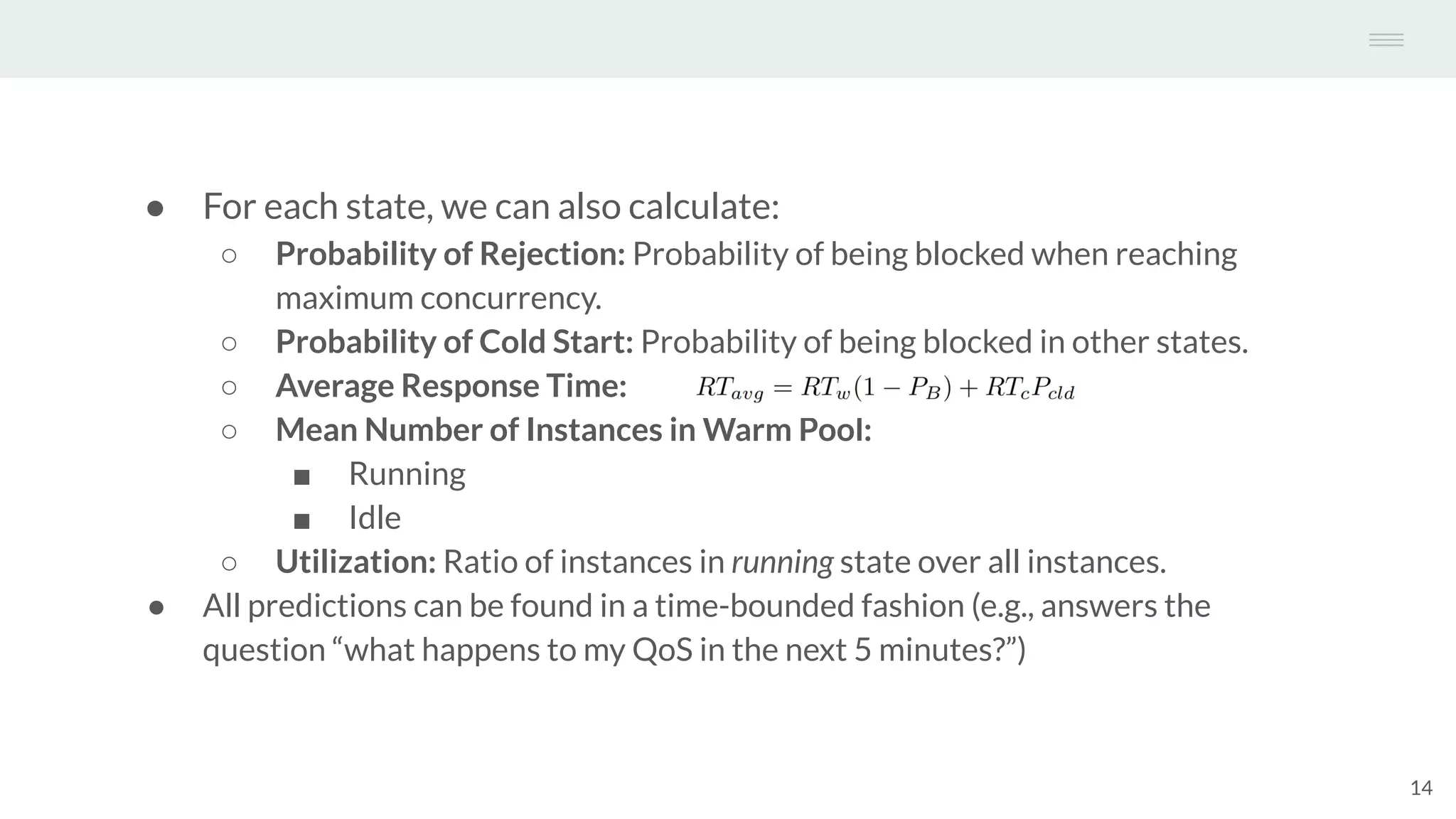
● For each state, we can also calculate:
○ Probability of Rejection: Probability of being blocked when reaching
maximum concurrency.
○ Probability of Cold Start: Probability of being blocked in other states.
○ Average Response Time:
○ Mean Number of Instances in Warm Pool:
■ Running
■ Idle
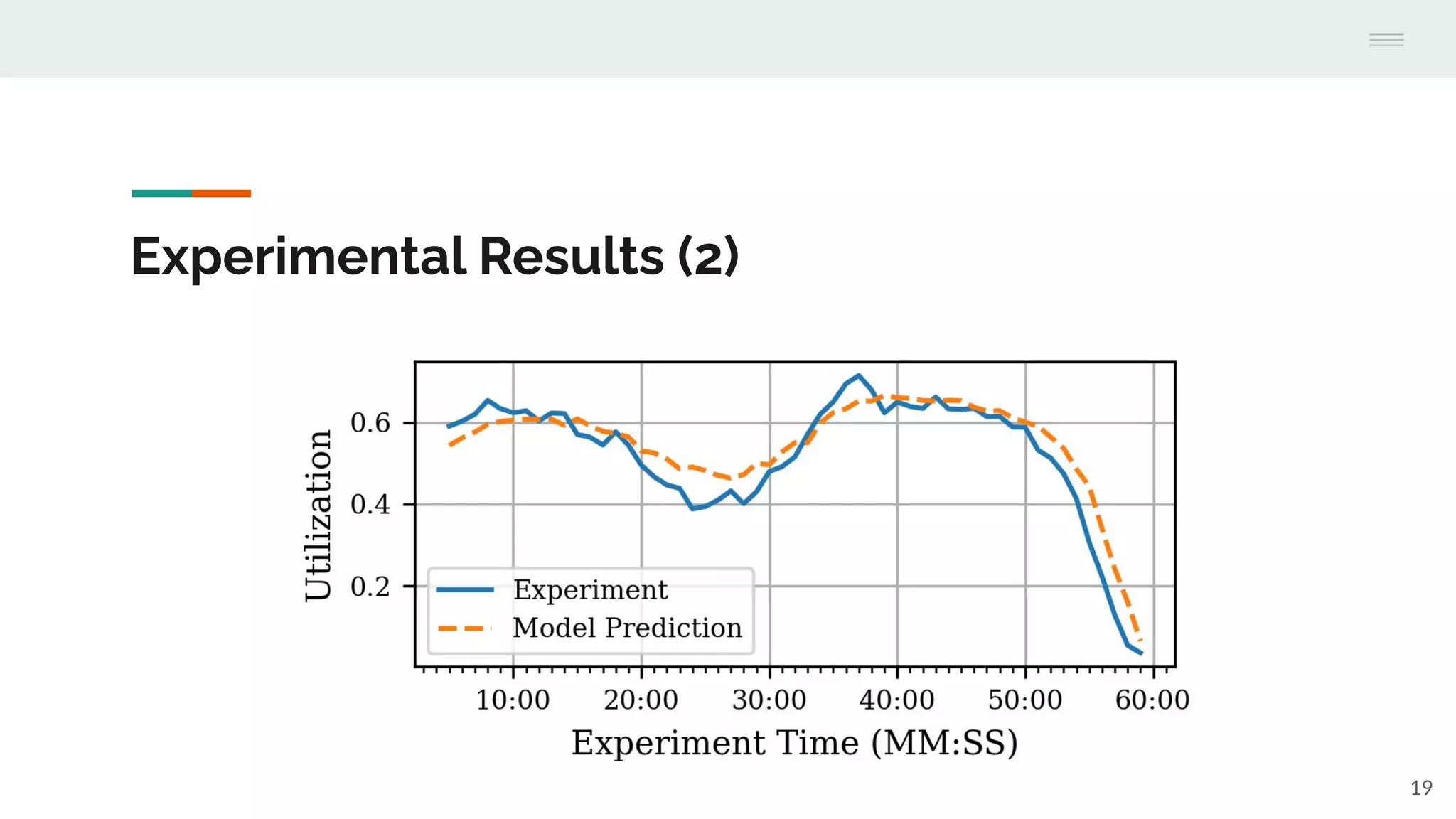
○ Utilization: Ratio of instances in running state over all instances.
● All predictions can be found in a time-bounded fashion (e.g., answers the
question “what happens to my QoS in the next 5 minutes?”)
14
Experimental Validation
15
Experimental Setup
● Experiments done on AWS Lambda
○ Python 3.6 runtime with 128MB of RAM on us-east-1 region
○ A mixture of CPU and IO intensive tasks
● Client was a virtual machine on Compute Canada Arbutus
○ 8 vCPUs, 16GB of RAM, 1000Mbps connectivity, single-digit milliseconds latency to AWS
servers
○ Python with in-house workload generation tool pacswg
○ Official boto3 library for API communication
○ Communicated directly with Lambda API, no intermediary interfaces like API Gateway
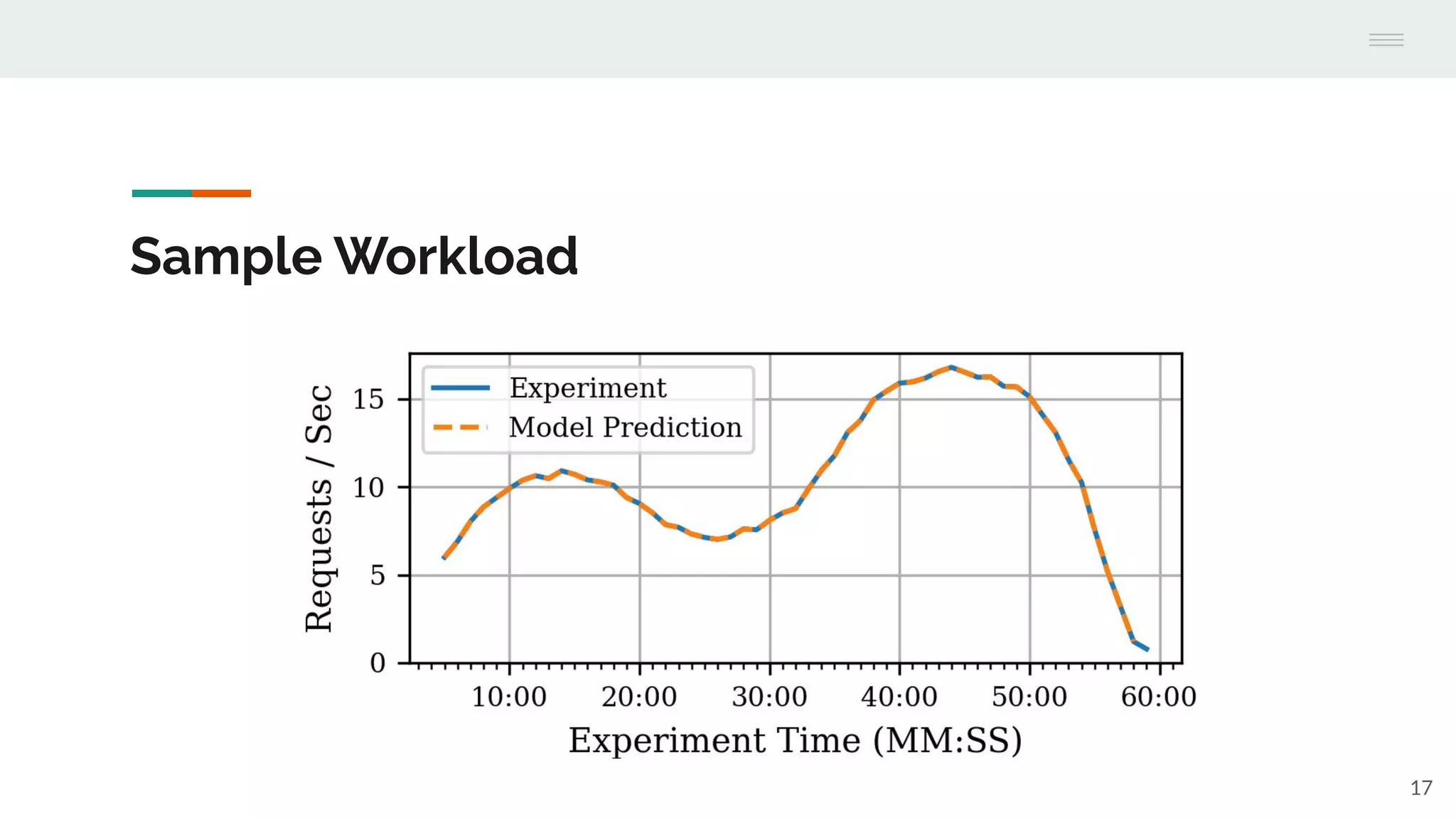
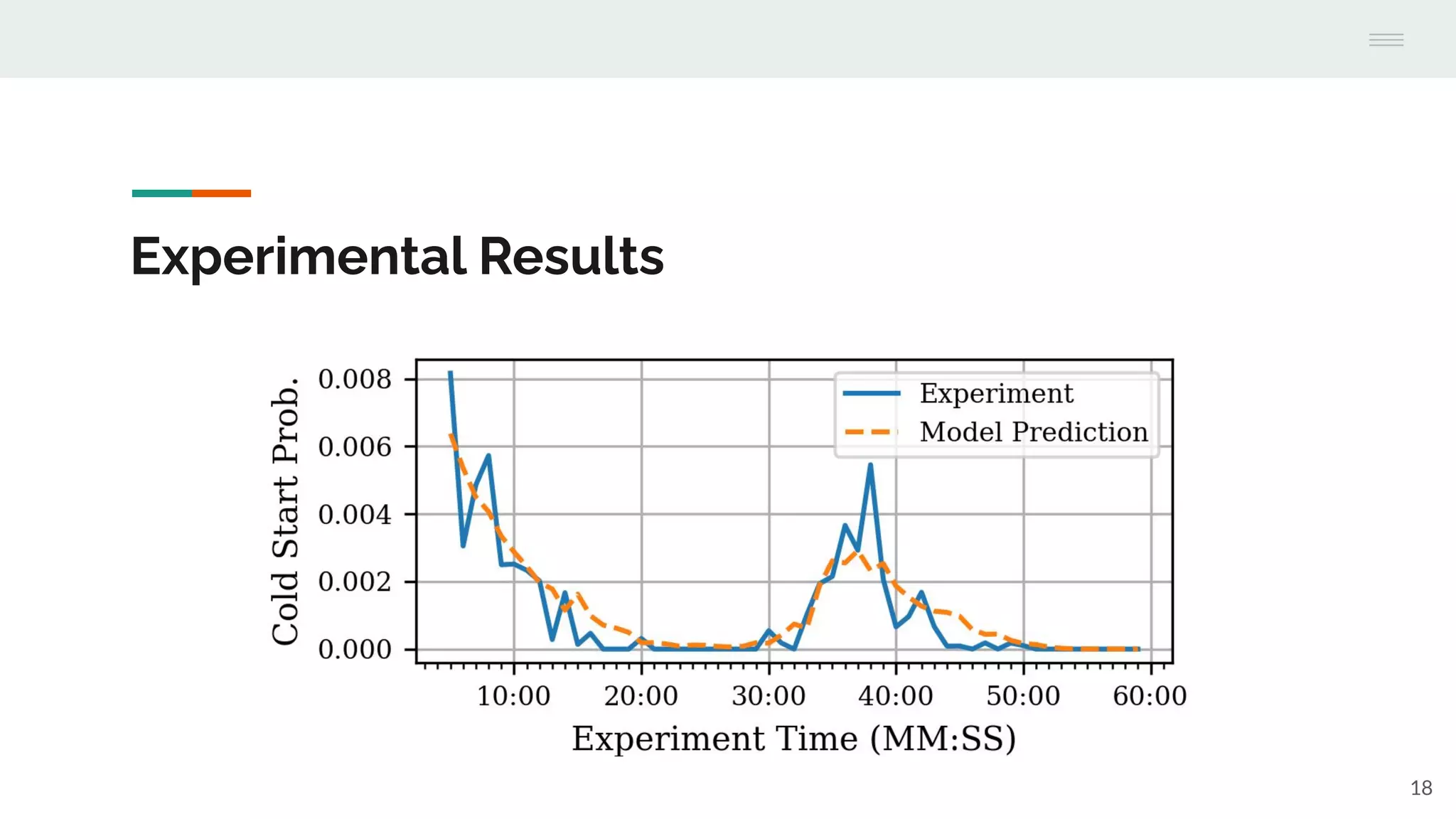
● Predictions are made 5 minutes into the future
● Assumed oracle request pattern prediction
16
Sample Workload
17
Experimental Results
18
Experimental Results (2)
19
Conclusion
20
Conclusion
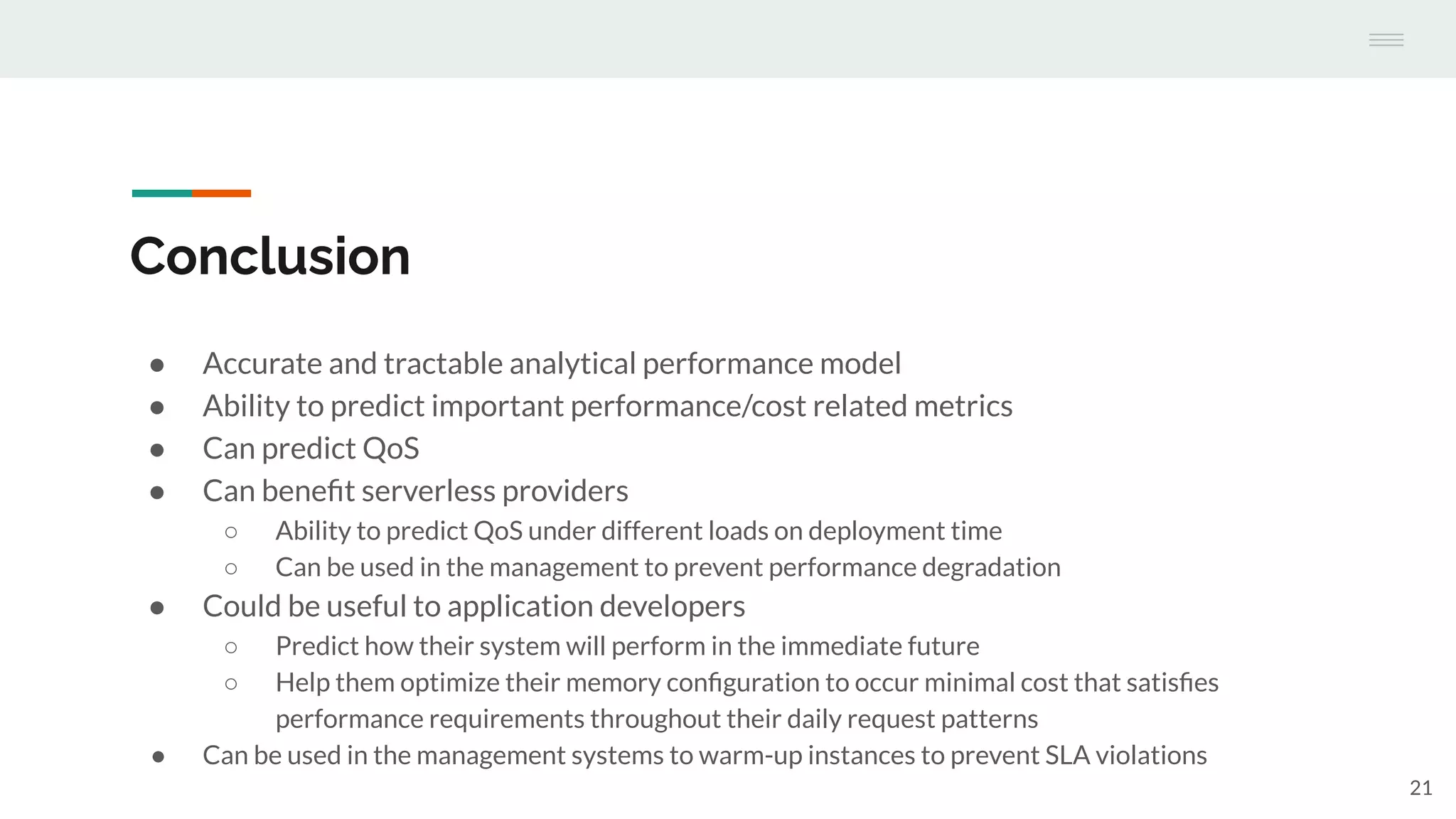
● Accurate and tractable analytical performance model
● Ability to predict important performance/cost related metrics
● Can predict QoS
● Can benefit serverless providers
○ Ability to predict QoS under different loads on deployment time
○ Can be used in the management to prevent performance degradation
● Could be useful to application developers
○ Predict how their system will perform in the immediate future
○ Help them optimize their memory configuration to occur minimal cost that satisfies
performance requirements throughout their daily request patterns
● Can be used in the management systems to warm-up instances to prevent SLA violations
21
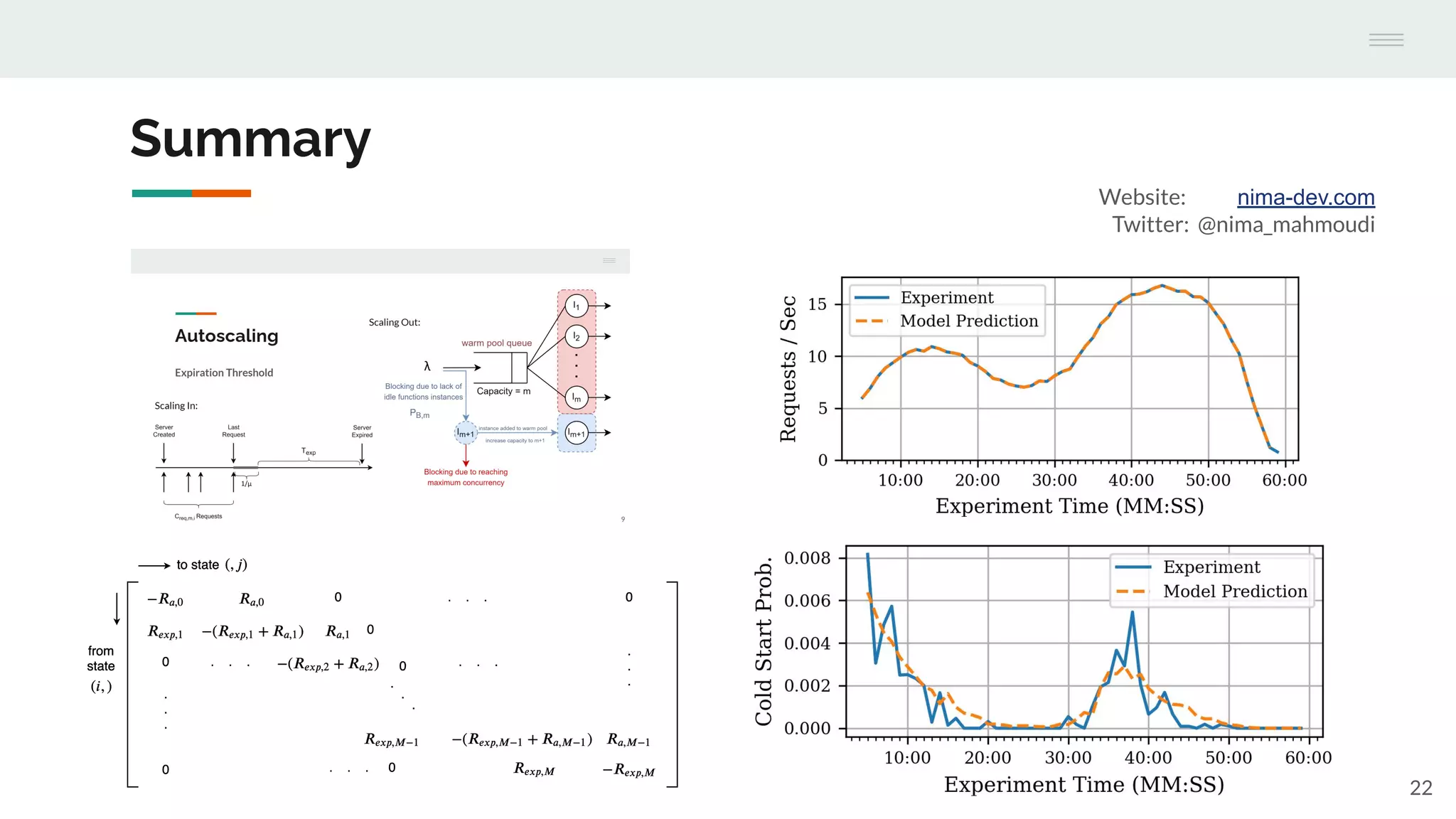
Summary
Website: nima-dev.com
Twitter: @nima_mahmoudi
22

Temporal Performance Modelling of Serverless Computing Platforms - WoSC6

  • 1.
    Sixth International Workshopon Serverless Computing (WoSC6) 2020 Dec 7, 2020 Temporal Performance Modeling of Serverless Computing Platforms N. Mahmoudi and H. Khazaei, “Temporal Performance Modelling of Serverless Computing Platforms,” in Proceedings of the 6th International Workshop on Serverless Computing, 2020, p. 1–6., doi: 10.10.1145/3429880.3430092. https://www.serverlesscomputing.org/wosc6/#p1 Hamzeh Khazaei hkh@yorku.ca Performant and Available Computing Systems (PACS) Lab Nima Mahmoudi nmahmoud@ualberta.ca
  • 2.
    Sixth International Workshopon Serverless Computing (WoSC6) 2020 Dec 7, 2020 TOC Introduction System Description Analytical Modelling Experimental Validation Conclusion 2
  • 3.
  • 4.
    Serverless Computing ● Runtimeoperation and management done by the provider ○ Reduces the overhead for the software owner ○ Provisioning ○ Scaling resources ● Software is developed by writing functions ○ Well-defined interface ○ Functions deployed separately 4
  • 5.
    Serverless Computing Image source:https://aws.amazon.com/lambda/ 5
  • 6.
    The Need fora Performance Model ● No previous work has been done for performance modelling of Serverless Computing platforms ● Accurate performance modelling can beneficial in many ways: ○ Ensure the Quality of Service (QoS) ○ Improve performance metrics ○ Predict/optimize infrastructure cost ○ Move from best-effort to performance guarantees ● It can benefit both serverless provider and application developer 6
  • 7.
  • 8.
    Function States, ColdStarts, and Warm Starts ● Function States: ○ Initializing: Performing initialization tasks to prepare the function for incoming requests. Includes infrastructure initialization and application initialization. ○ Running: Running the tasks required to process a request. ○ Idle: Provisioned instance that is not running any workloads. The instances in this state are not billed. ● Cold Start Requests: ○ A request that needs to go through initialization steps due to lack of provisioned capacity. ● Warm Start Requests: ○ Only includes request processing time since idle instance was available 8
  • 9.
  • 10.
    Other Important Characteristics ●Initialization Time: The amount of time instance spends in the initializing state. ● Response Time: No queuing, so it is equal to service time. It remains stable throughout time for cold and warm start requests. ● Maximum Concurrency Level: Maximum number of instances that can be in the state running in parallel. ● Request Routing: To facilitate scaling in, requests are routed to recently created instances first. 10
  • 11.
  • 12.
  • 13.
    ● Cold StartRate ○ The system behaves like an Erlang Loss System (M/G/m/m). ○ The blocked requests are either rejected (reached maximum concurrency level) or cause a cold start (and thus the creation of a new instance) ● Arrival Rate for Each Instance ○ Requests blocked by instance n are either processed by instance n+1 or blocked by it. ○ The difference between blocked rates gives us individual arrival rates. ● Server Expiration Rate ○ Can be calculated knowing individual arrival rates and expiration threshold. ● Warm Pool Model ○ Each state represents the number of instances in the warm pool. 13
  • 14.
    ● For eachstate, we can also calculate: ○ Probability of Rejection: Probability of being blocked when reaching maximum concurrency. ○ Probability of Cold Start: Probability of being blocked in other states. ○ Average Response Time: ○ Mean Number of Instances in Warm Pool: ■ Running ■ Idle ○ Utilization: Ratio of instances in running state over all instances. ● All predictions can be found in a time-bounded fashion (e.g., answers the question “what happens to my QoS in the next 5 minutes?”) 14
  • 15.
  • 16.
    Experimental Setup ● Experimentsdone on AWS Lambda ○ Python 3.6 runtime with 128MB of RAM on us-east-1 region ○ A mixture of CPU and IO intensive tasks ● Client was a virtual machine on Compute Canada Arbutus ○ 8 vCPUs, 16GB of RAM, 1000Mbps connectivity, single-digit milliseconds latency to AWS servers ○ Python with in-house workload generation tool pacswg ○ Official boto3 library for API communication ○ Communicated directly with Lambda API, no intermediary interfaces like API Gateway ● Predictions are made 5 minutes into the future ● Assumed oracle request pattern prediction 16
  • 17.
  • 18.
  • 19.
  • 20.
  • 21.
    Conclusion ● Accurate andtractable analytical performance model ● Ability to predict important performance/cost related metrics ● Can predict QoS ● Can benefit serverless providers ○ Ability to predict QoS under different loads on deployment time ○ Can be used in the management to prevent performance degradation ● Could be useful to application developers ○ Predict how their system will perform in the immediate future ○ Help them optimize their memory configuration to occur minimal cost that satisfies performance requirements throughout their daily request patterns ● Can be used in the management systems to warm-up instances to prevent SLA violations 21
  • 22.