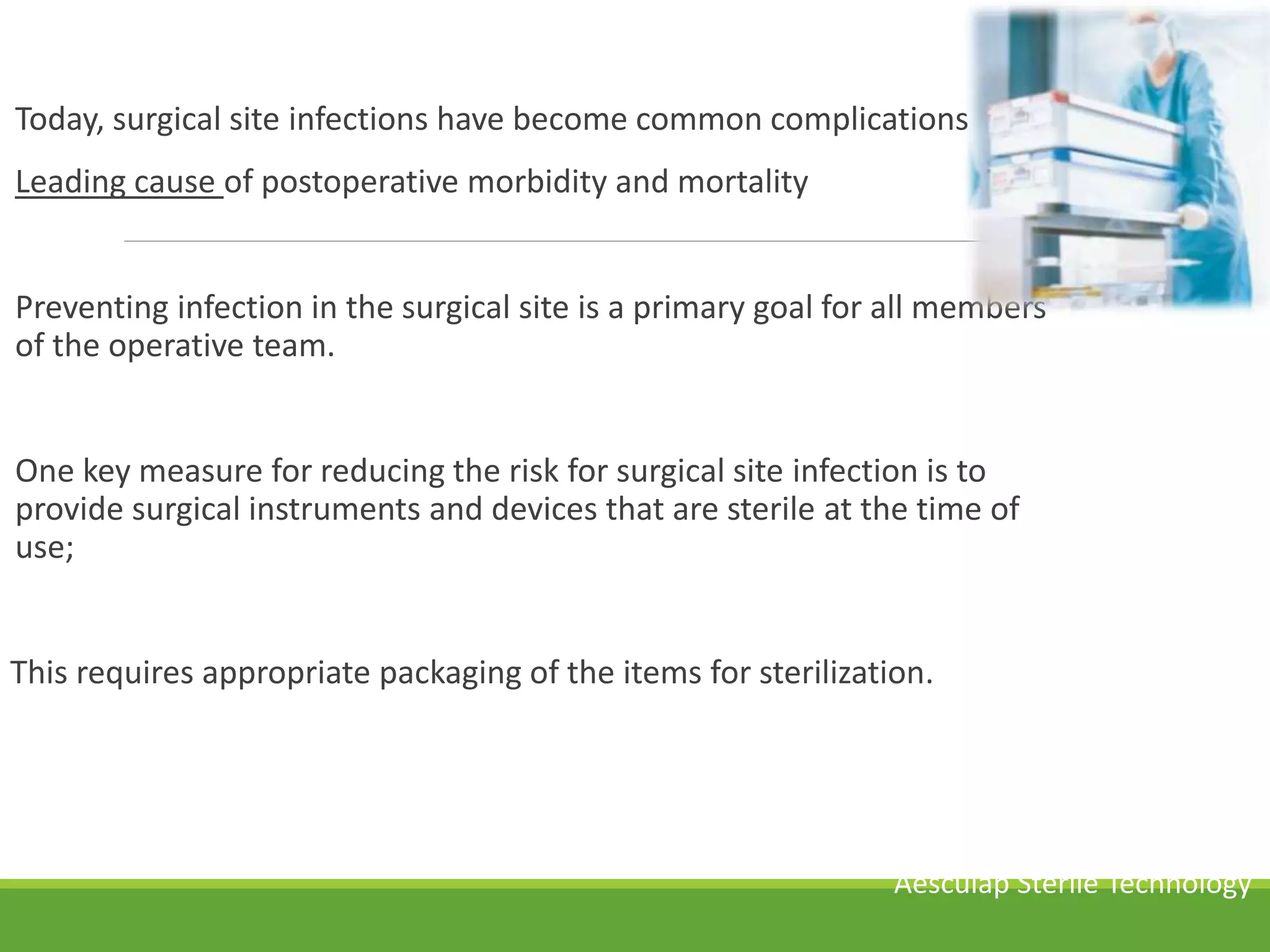
Today, surgical site infections have become common complications
Leading cause of postoperative morbidity and mortality
Preventing infection in the surgical site is a primary goal for all members
of the operative team.
One key measure for reducing the risk for surgical site infection is to
provide surgical instruments and devices that are sterile at the time of
use;
This requires appropriate packaging of the items for sterilization.
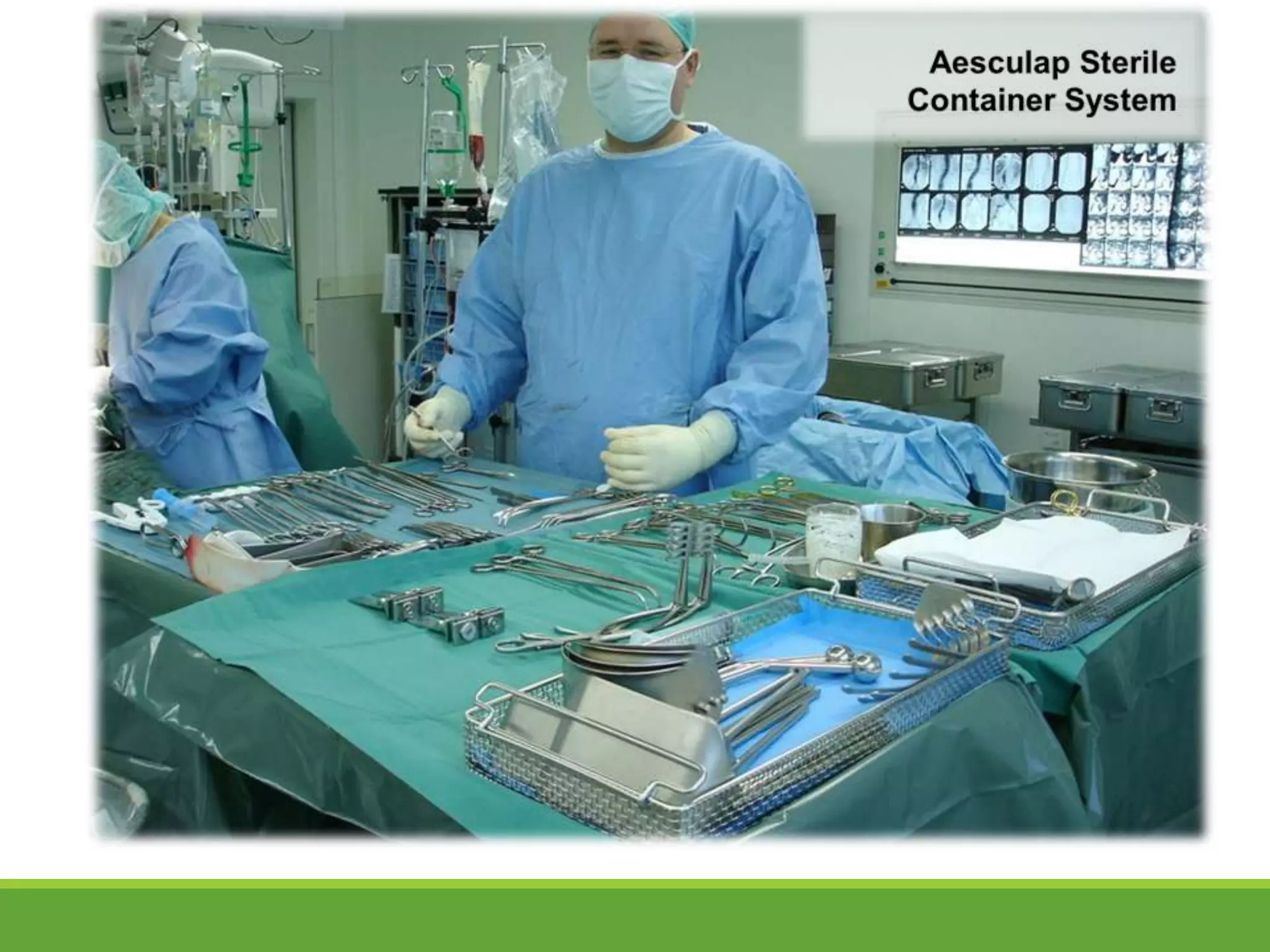
Aesculap Sterile Technology
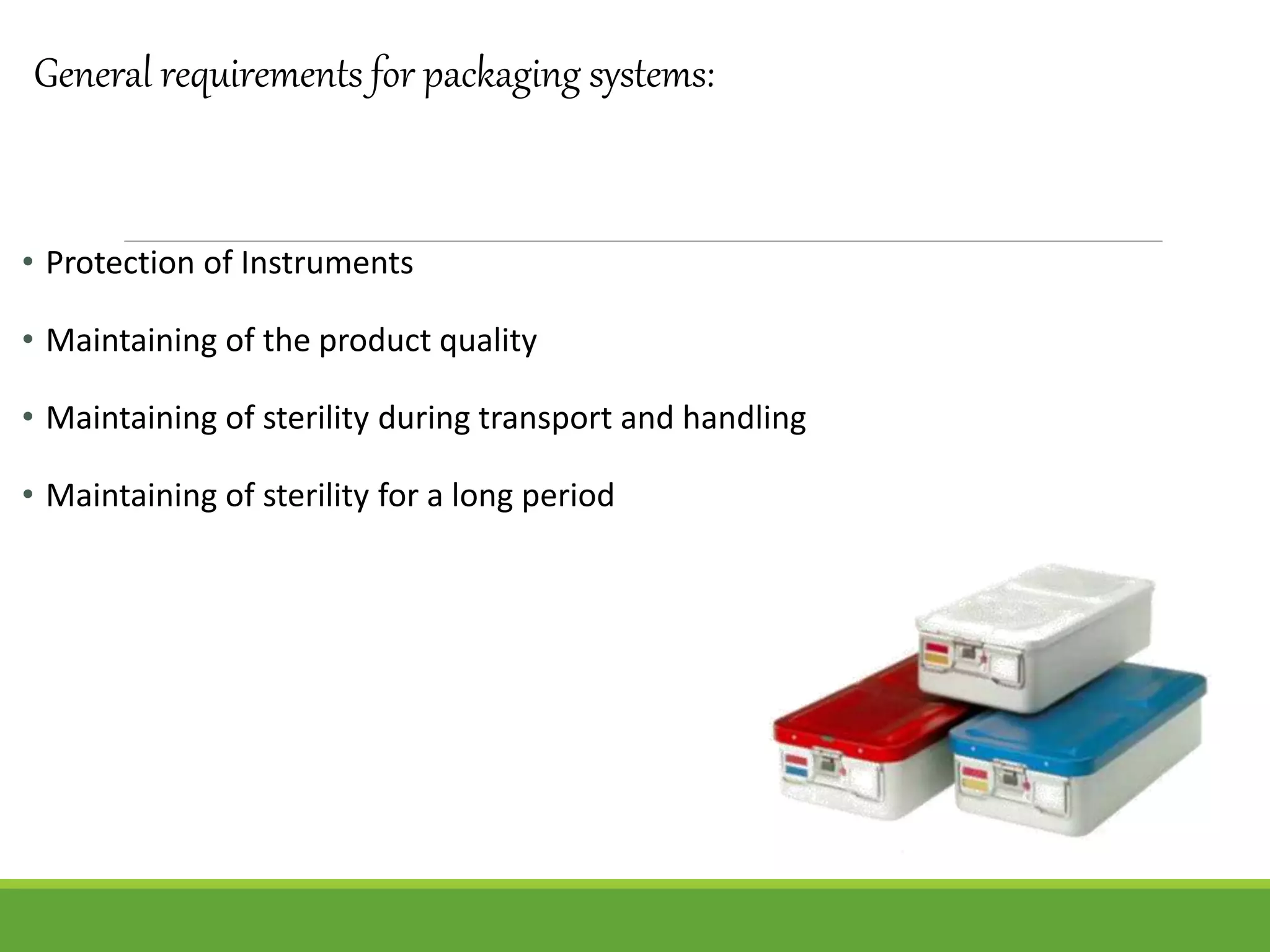
General requirements for packaging systems:
• Protection of Instruments
• Maintaining of the product quality
• Maintaining of sterility during transport and handling
• Maintaining of sterility for a long period
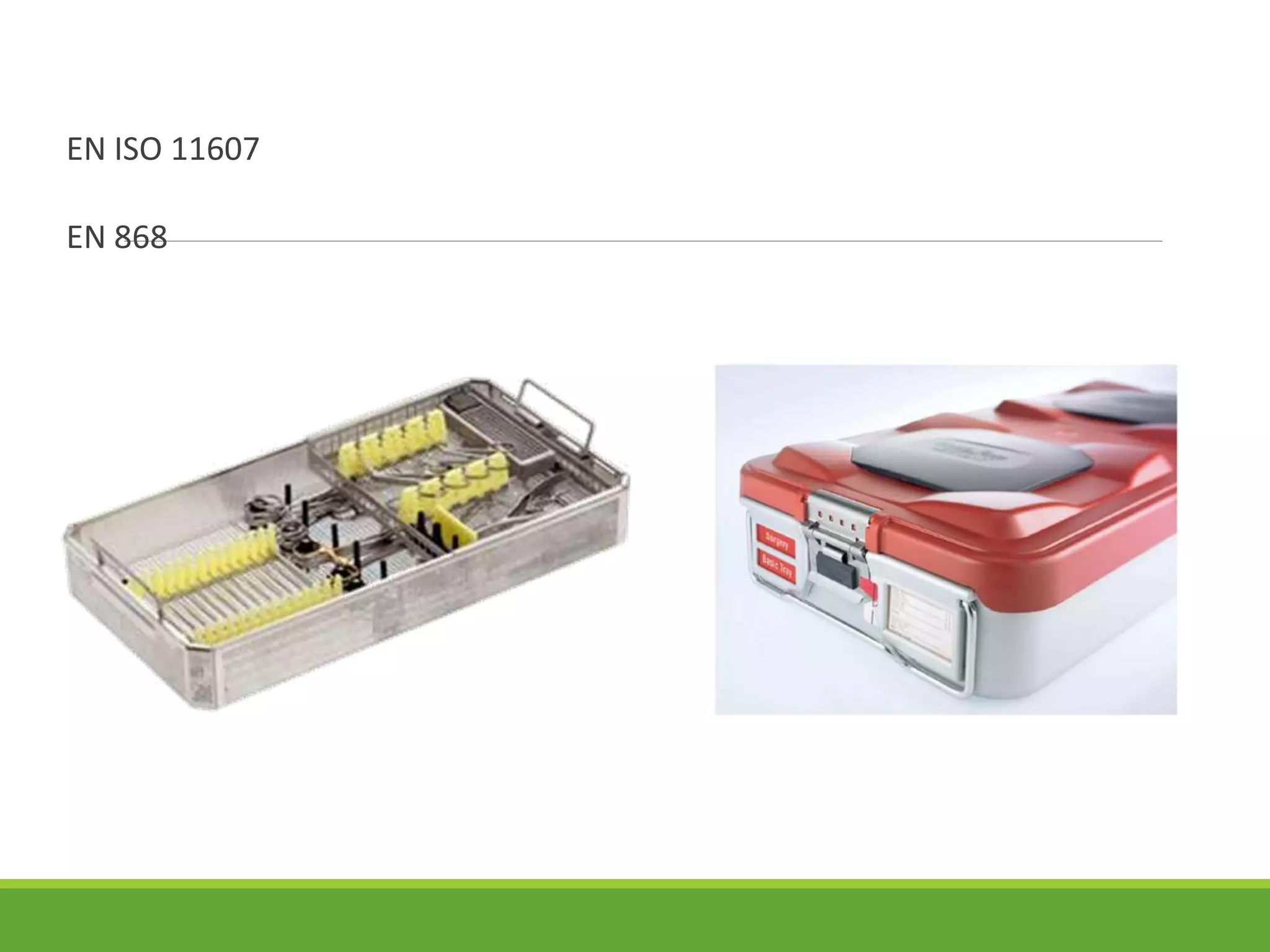
EN ISO 11607
EN 868
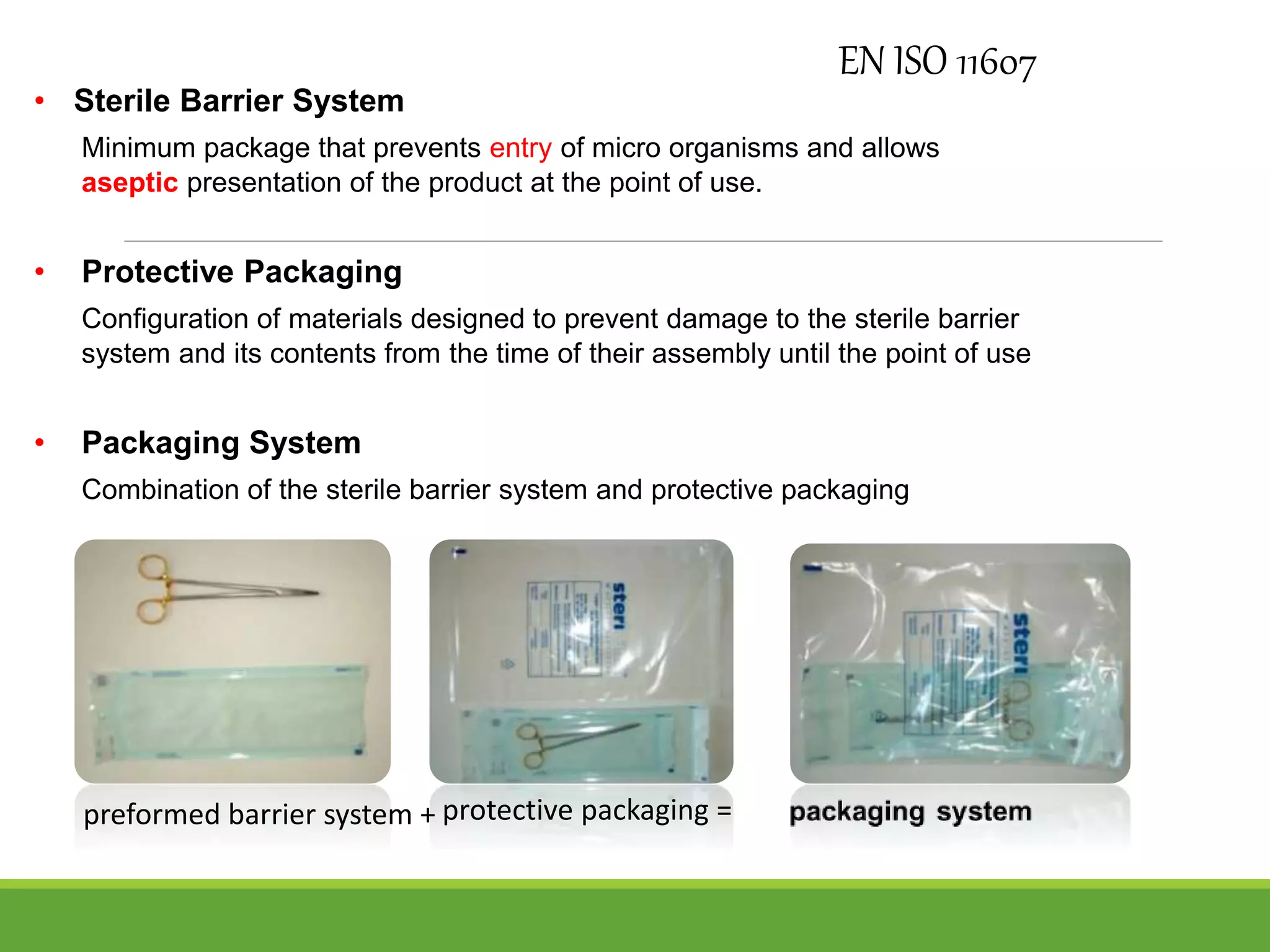
• Sterile Barrier System
Minimum package that prevents entry of micro organisms and allows
aseptic presentation of the product at the point of use.
• Protective Packaging
Configuration of materials designed to prevent damage to the sterile barrier
system and its contents from the time of their assembly until the point of use
• Packaging System
Combination of the sterile barrier system and protective packaging
EN ISO 11607
preformed barrier system + protective packaging =
Part 1: General requirements and test methods for all packaging materials
• Compatibility with the medical product to be packed
• Protection of medical devices
• Maintaining of the product quality
• Maintaining sterility during transport and handling (event related)
• Aseptically presentation in the OR must be possible
EN 868-1 & 8:
Part 8: Re-usable sterilization containers for steam sterilizers
conforming to EN 285- Requirements and test methods.
• Sealing system against unauthorised opening
• Gasket between lid and bottom part: bacterial barrier properties
• Stack ability
• Steam permeability
• Good drying capacity
• Bacterial barrier properties during transport and storage
• Maximum load: 10 kg
EN 868-8:
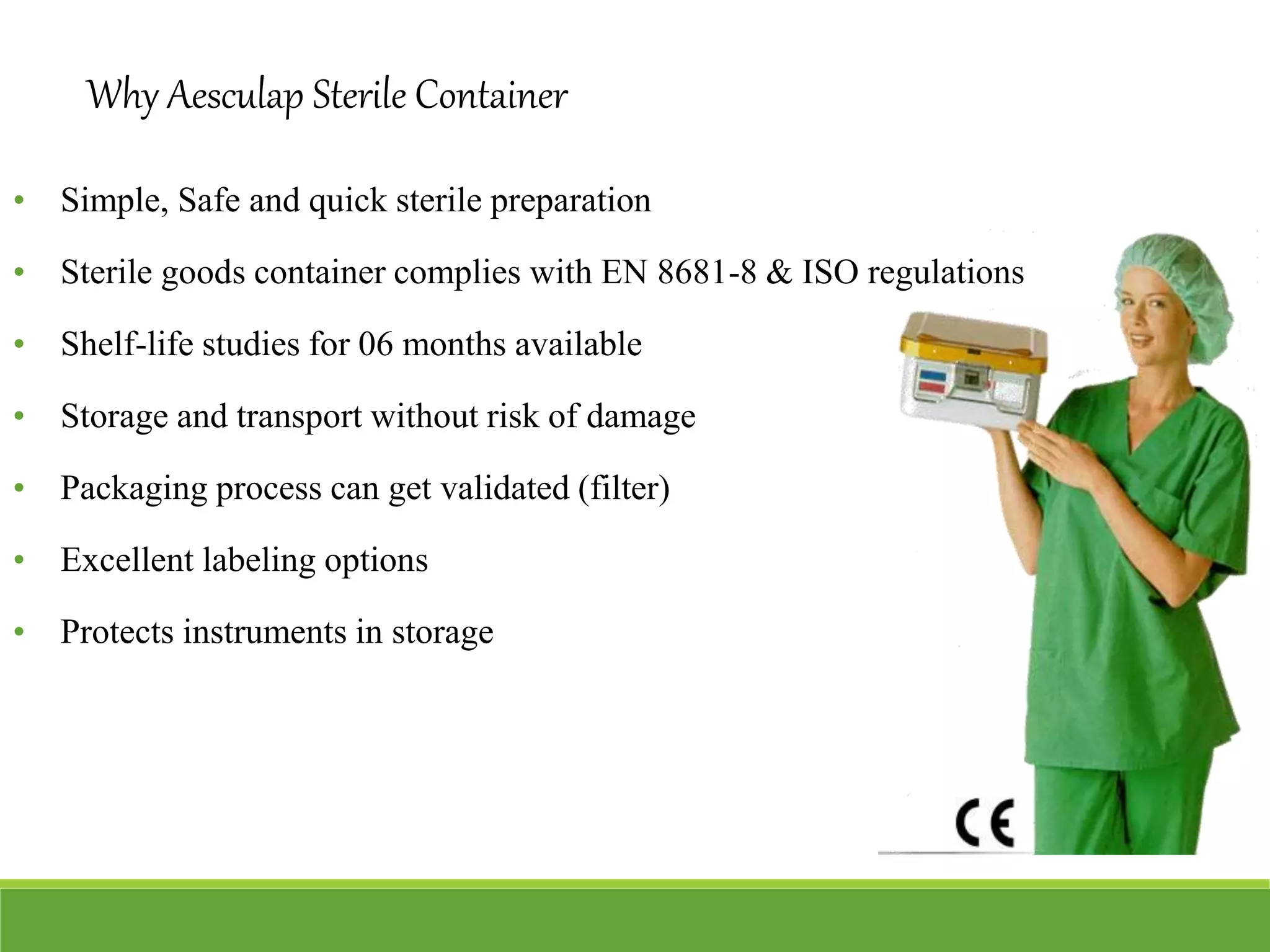
Why Aesculap Sterile Container
• Simple, Safe and quick sterile preparation
• Sterile goods container complies with EN 8681-8 & ISO regulations
• Shelf-life studies for 06 months available
• Storage and transport without risk of damage
• Packaging process can get validated (filter)
• Excellent labeling options
• Protects instruments in storage
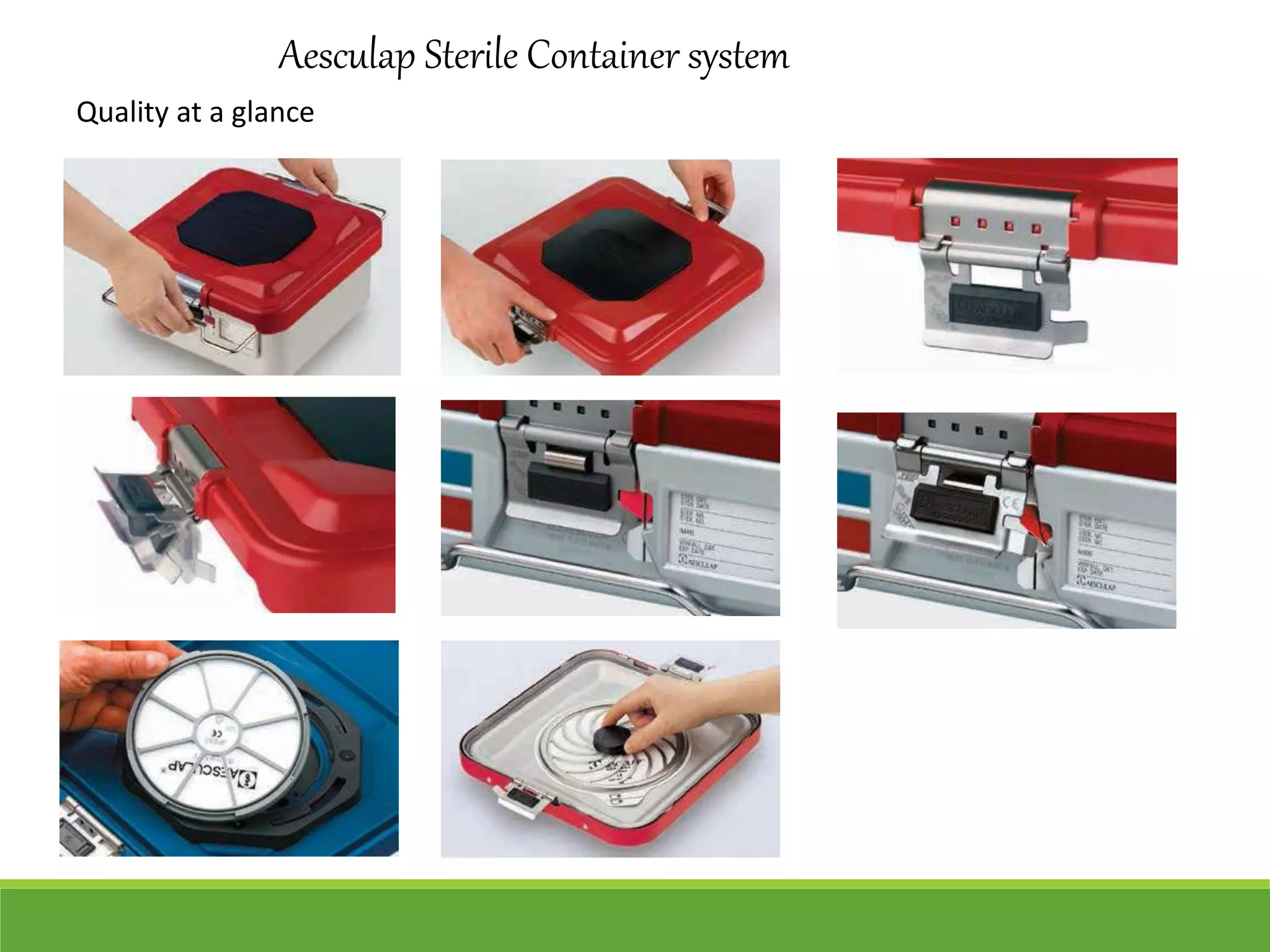
Quality at a glance
Aesculap Sterile Container system
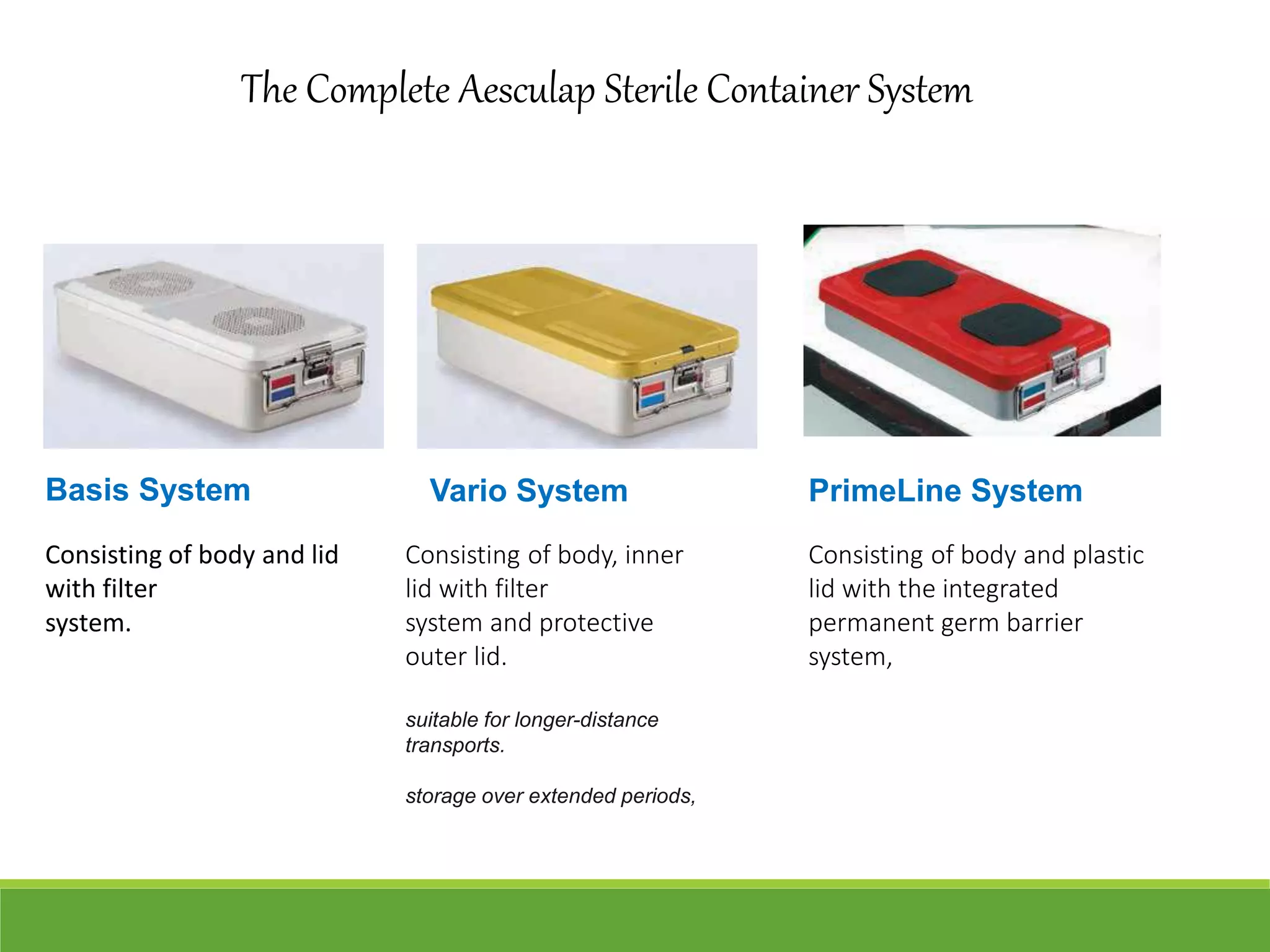
The Complete Aesculap Sterile Container System
Basis System Vario System PrimeLine System
Consisting of body and lid
with filter
system.
Consisting of body, inner
lid with filter
system and protective
outer lid.
suitable for longer-distance
transports.
storage over extended periods,
Consisting of body and plastic
lid with the integrated
permanent germ barrier
system,
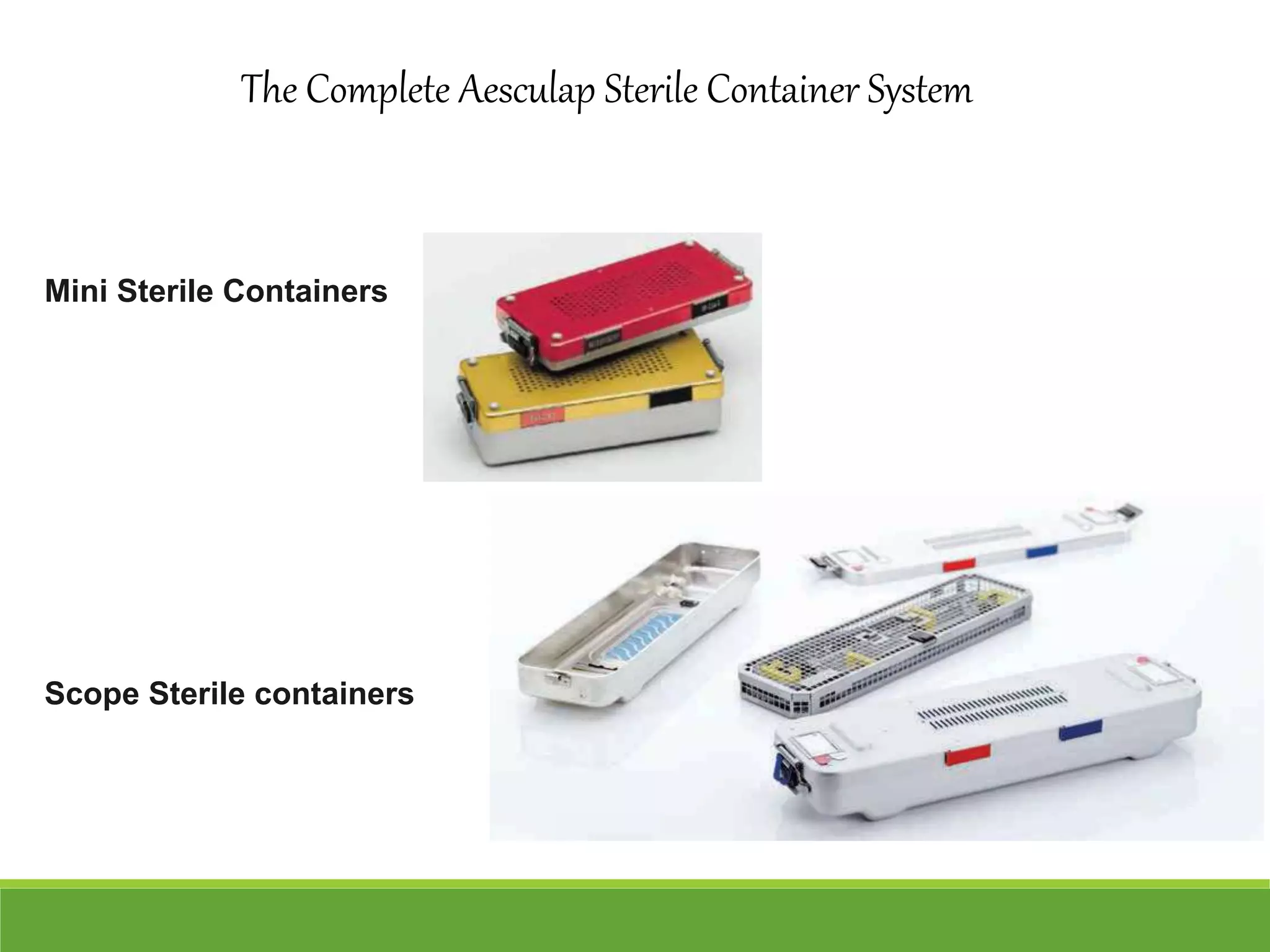
Mini Sterile Containers
The Complete Aesculap Sterile Container System
Scope Sterile containers
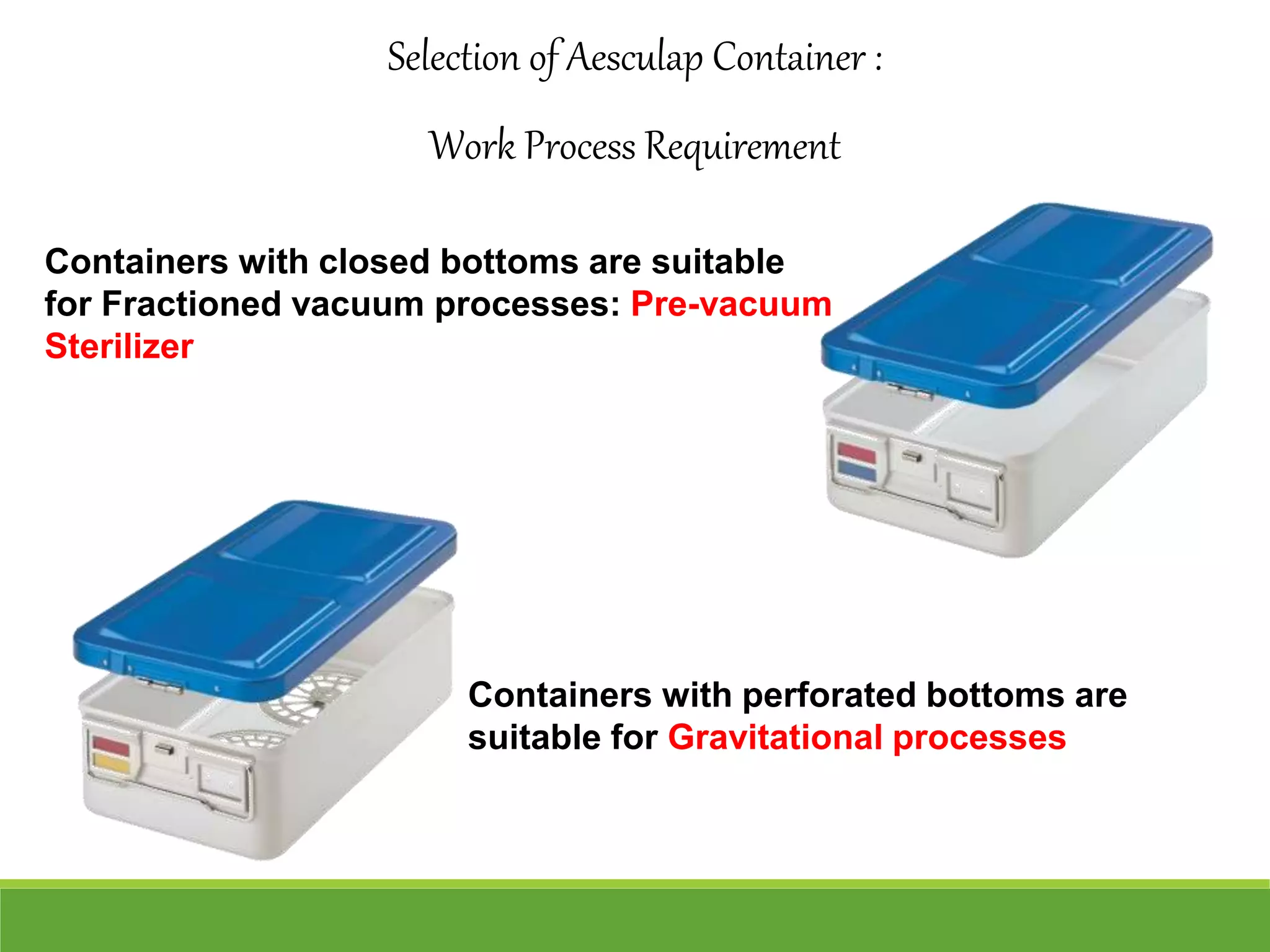
Containers with closed bottoms are suitable
for Fractioned vacuum processes: Pre-vacuum
Sterilizer
Containers with perforated bottoms are
suitable for Gravitational processes
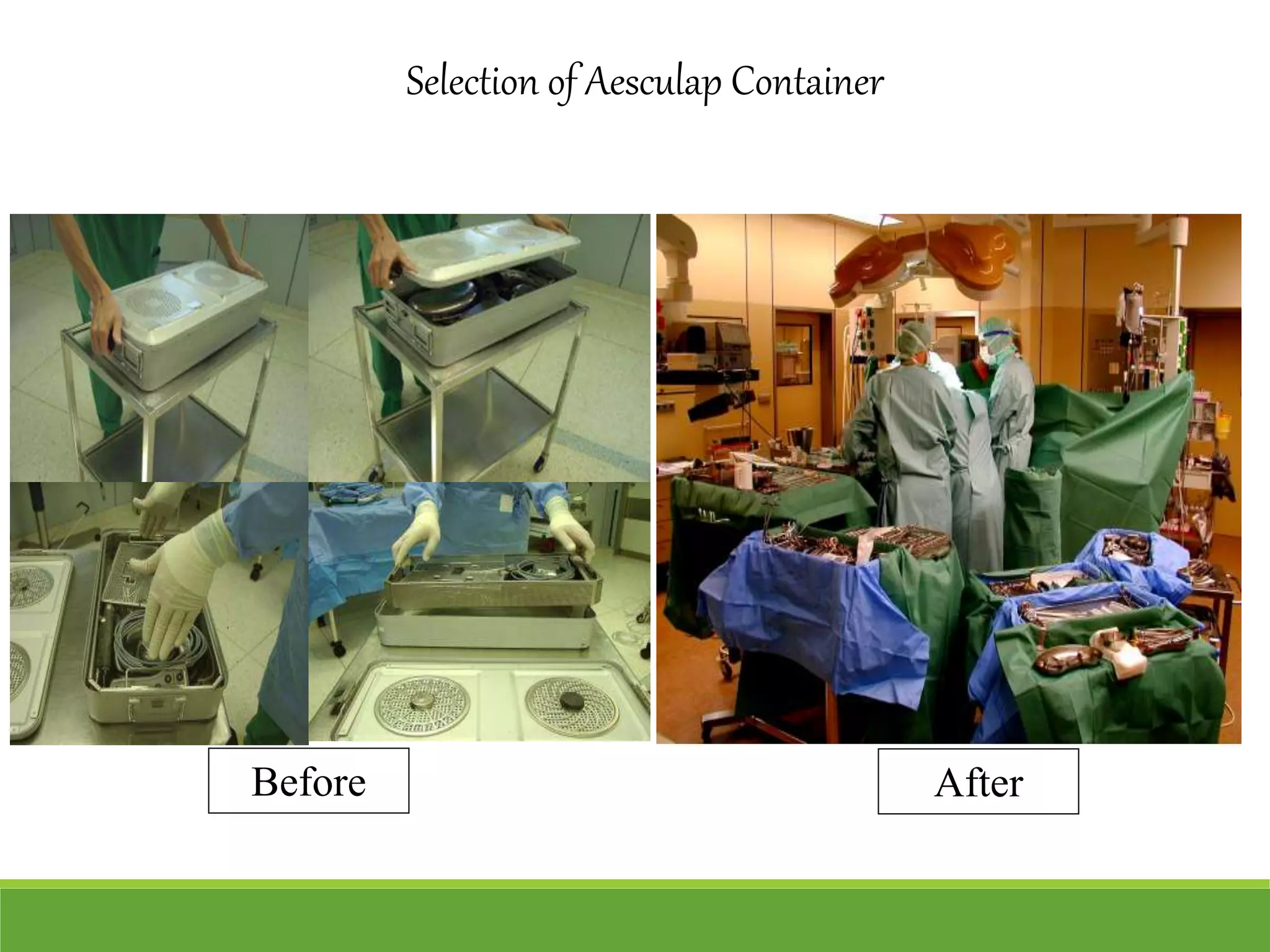
Selection of Aesculap Container :
Work Process Requirement
Selection of Aesculap Container
Before After
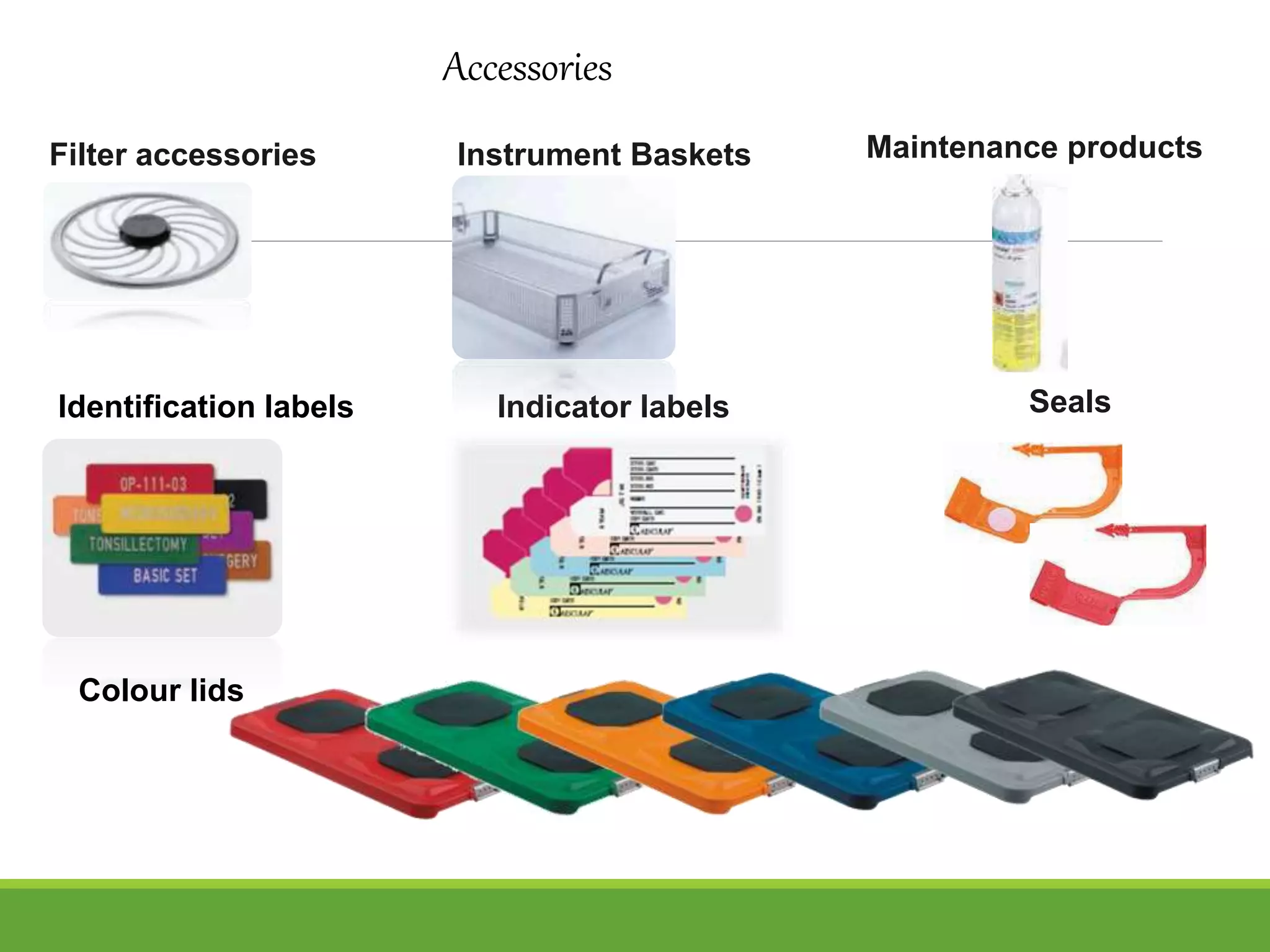
Instrument Baskets
Accessories
Identification labels
Filter accessories
Indicator labels Seals
Maintenance products
Colour lids
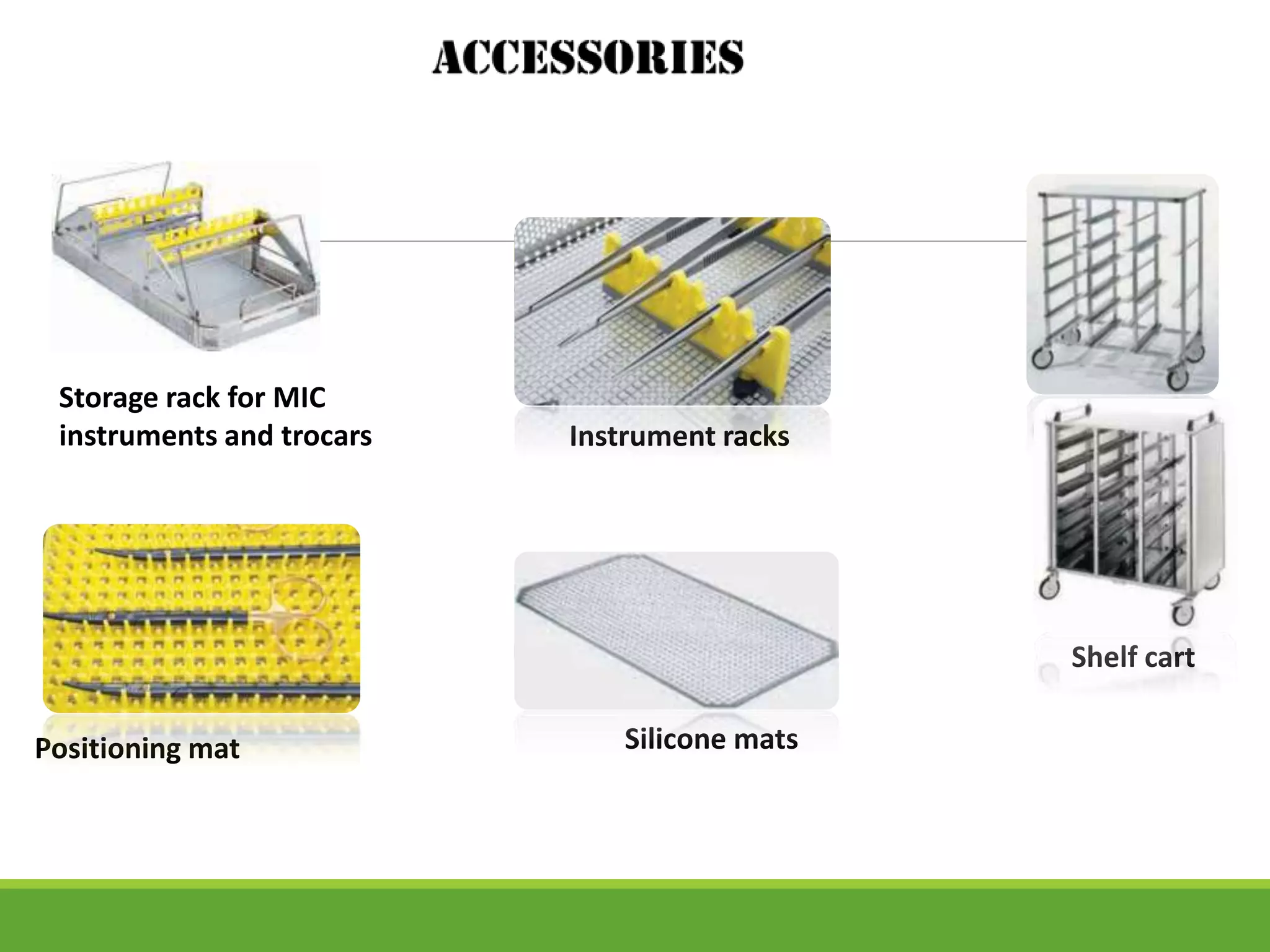
Storage rack for MIC
instruments and trocars Instrument racks
Silicone matsPositioning mat
Shelf cart
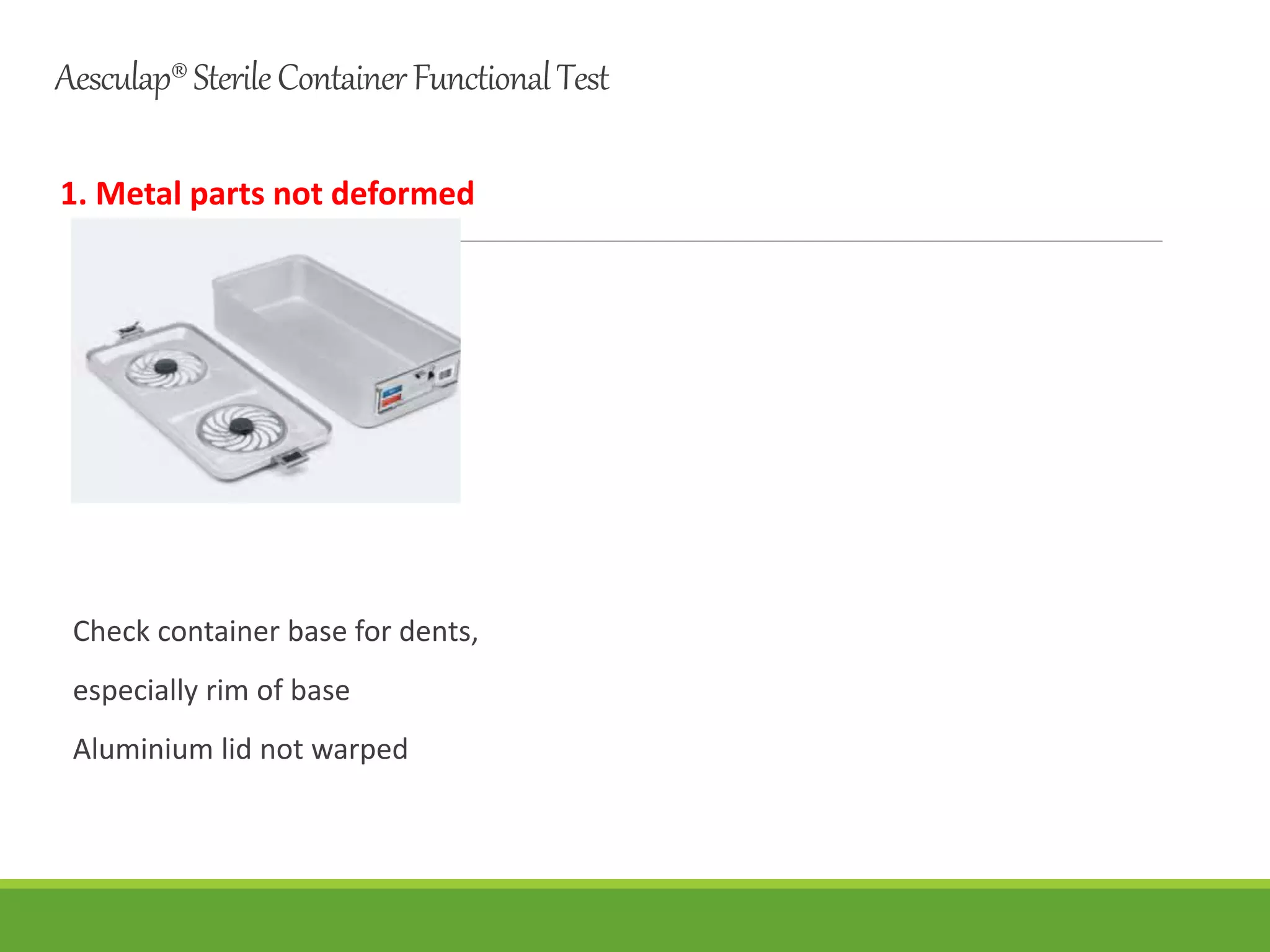
Aesculap®SterileContainerFunctionalTest
1. Metal parts not deformed
Check container base for dents,
especially rim of base
Aluminium lid not warped
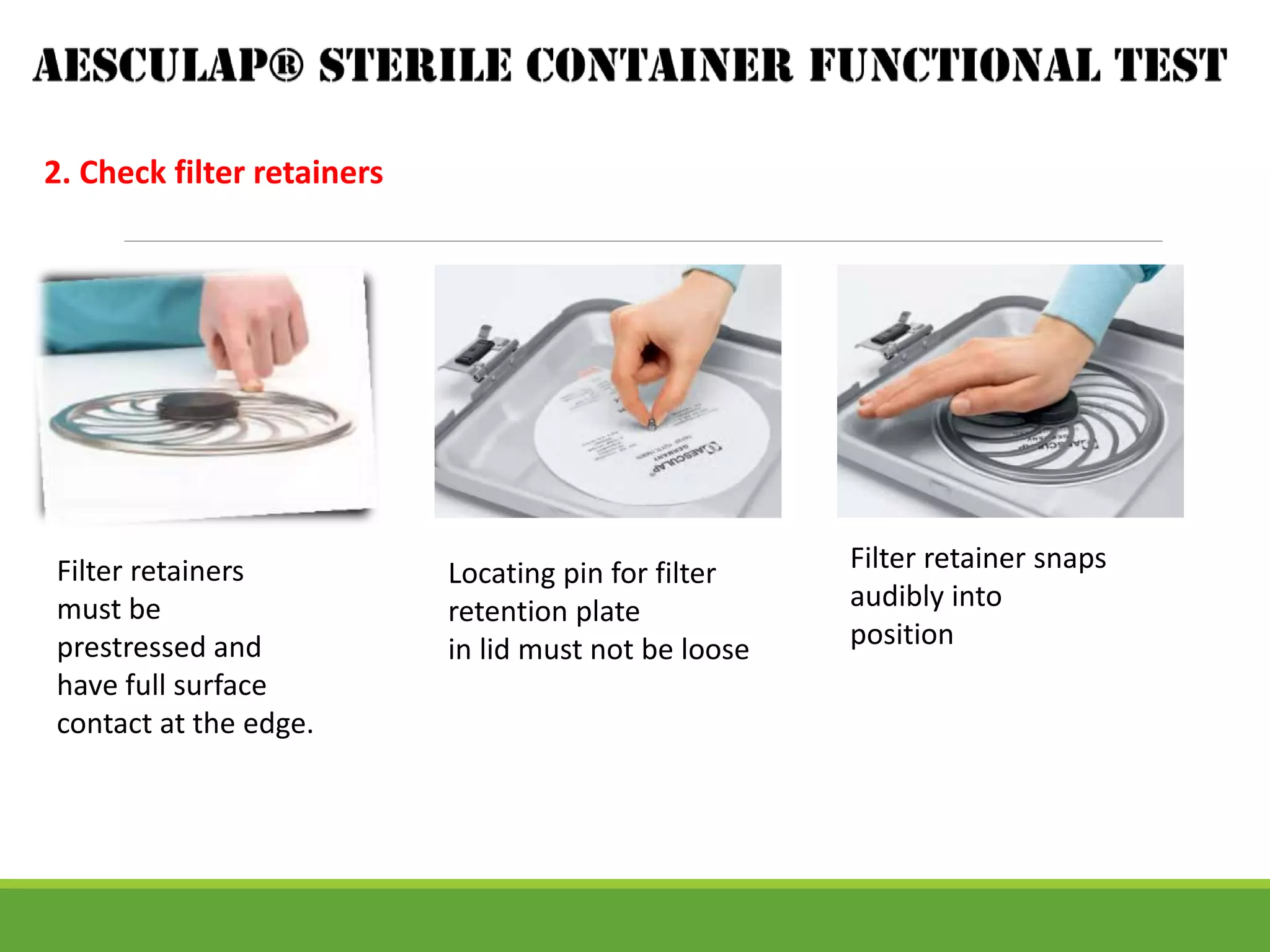
2. Check filter retainers
Filter retainers
must be
prestressed and
have full surface
contact at the edge.
Locating pin for filter
retention plate
in lid must not be loose
Filter retainer snaps
audibly into
position
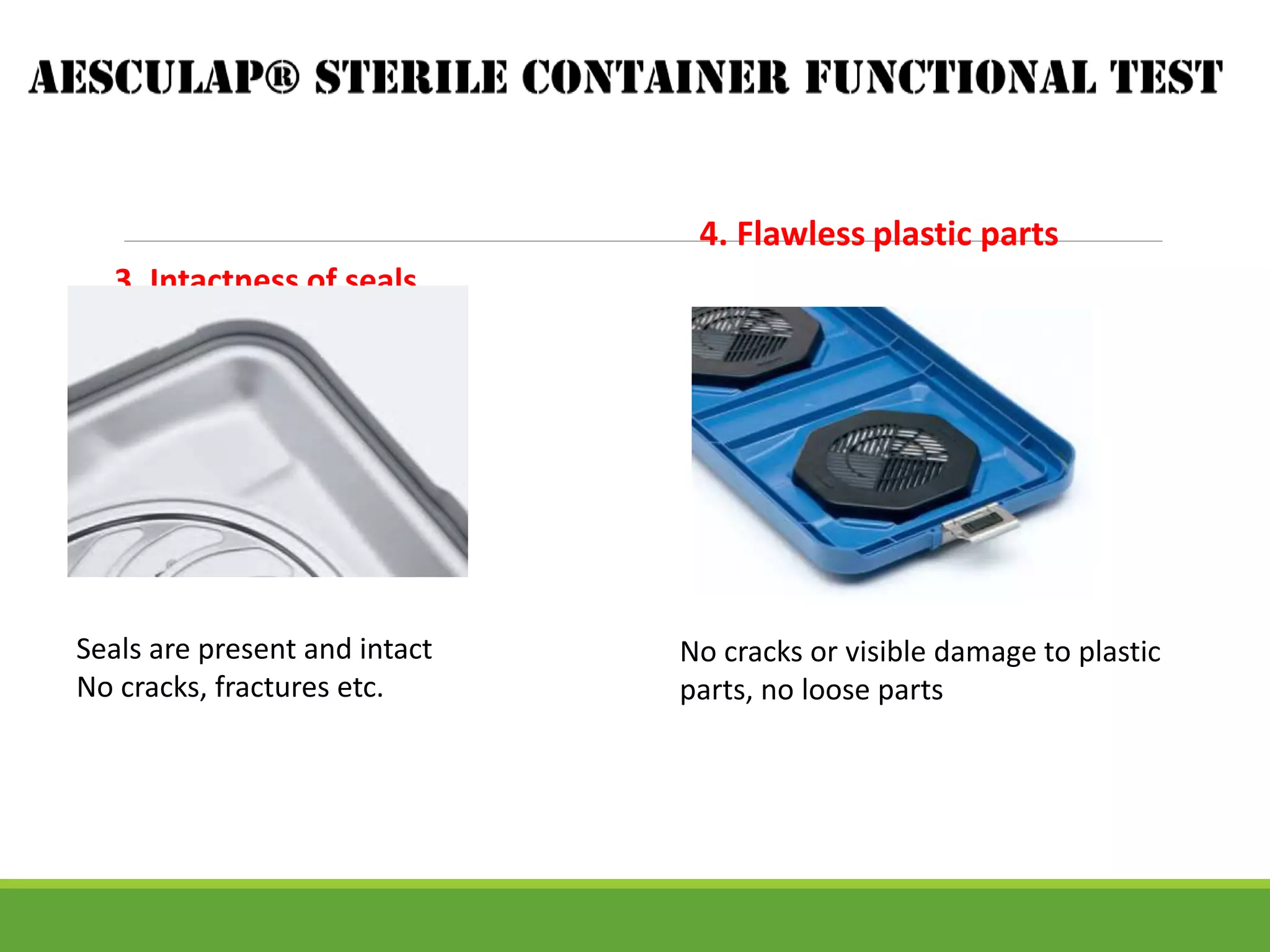
3. Intactness of seals
Seals are present and intact
No cracks, fractures etc.
4. Flawless plastic parts
No cracks or visible damage to plastic
parts, no loose parts
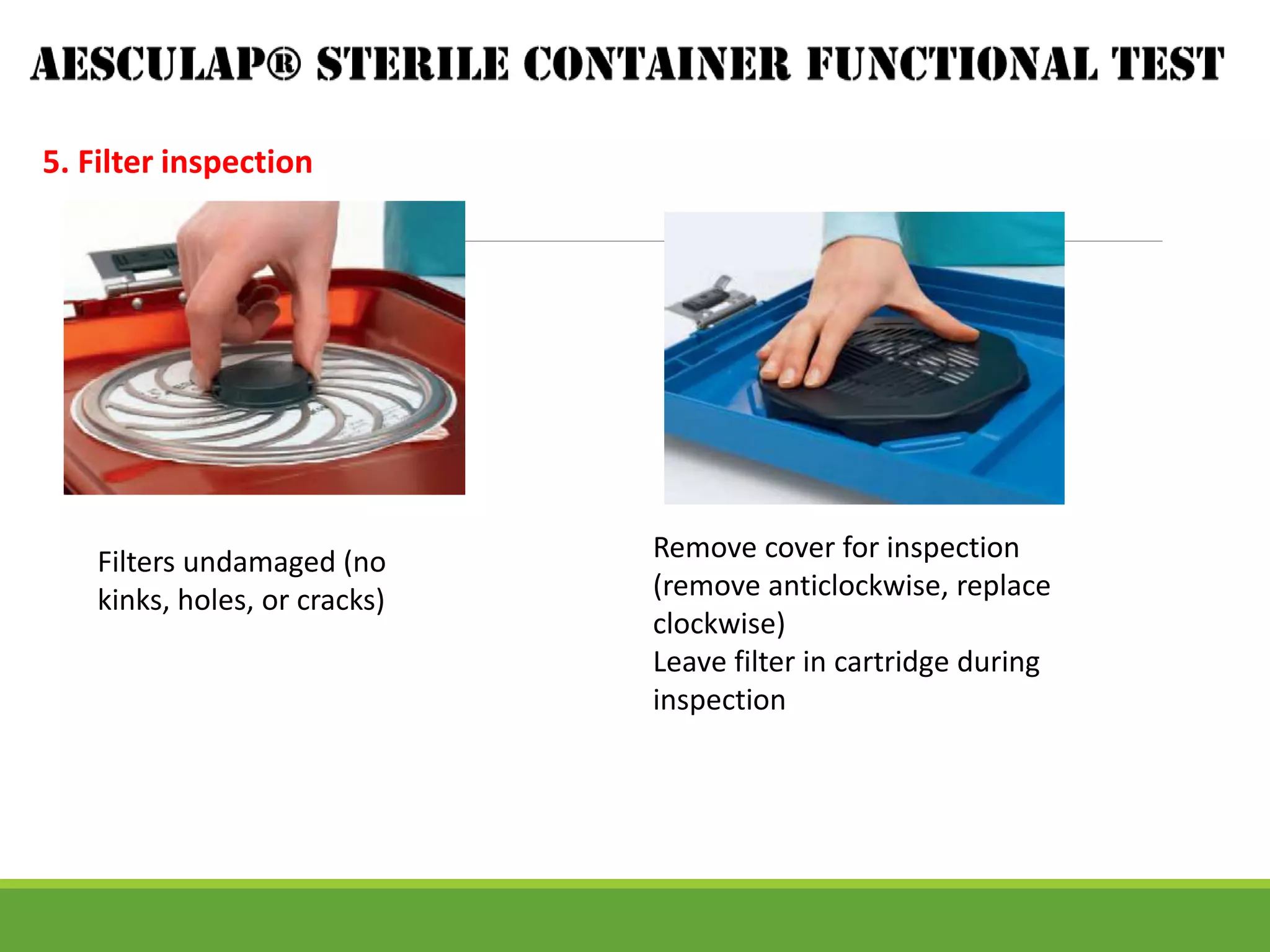
5. Filter inspection
Filters undamaged (no
kinks, holes, or cracks)
Remove cover for inspection
(remove anticlockwise, replace
clockwise)
Leave filter in cartridge during
inspection
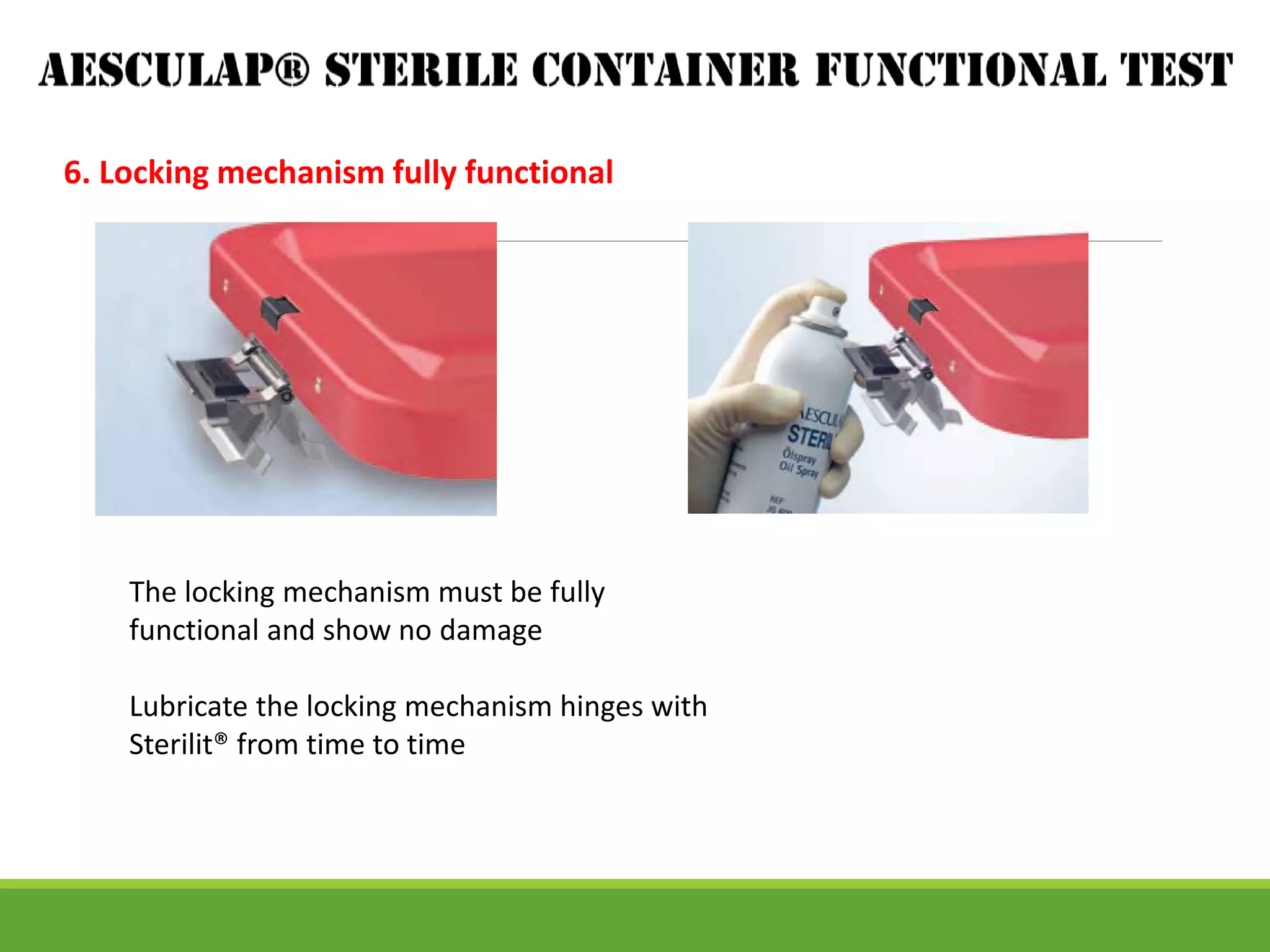
6. Locking mechanism fully functional
The locking mechanism must be fully
functional and show no damage
Lubricate the locking mechanism hinges with
Sterilit® from time to time
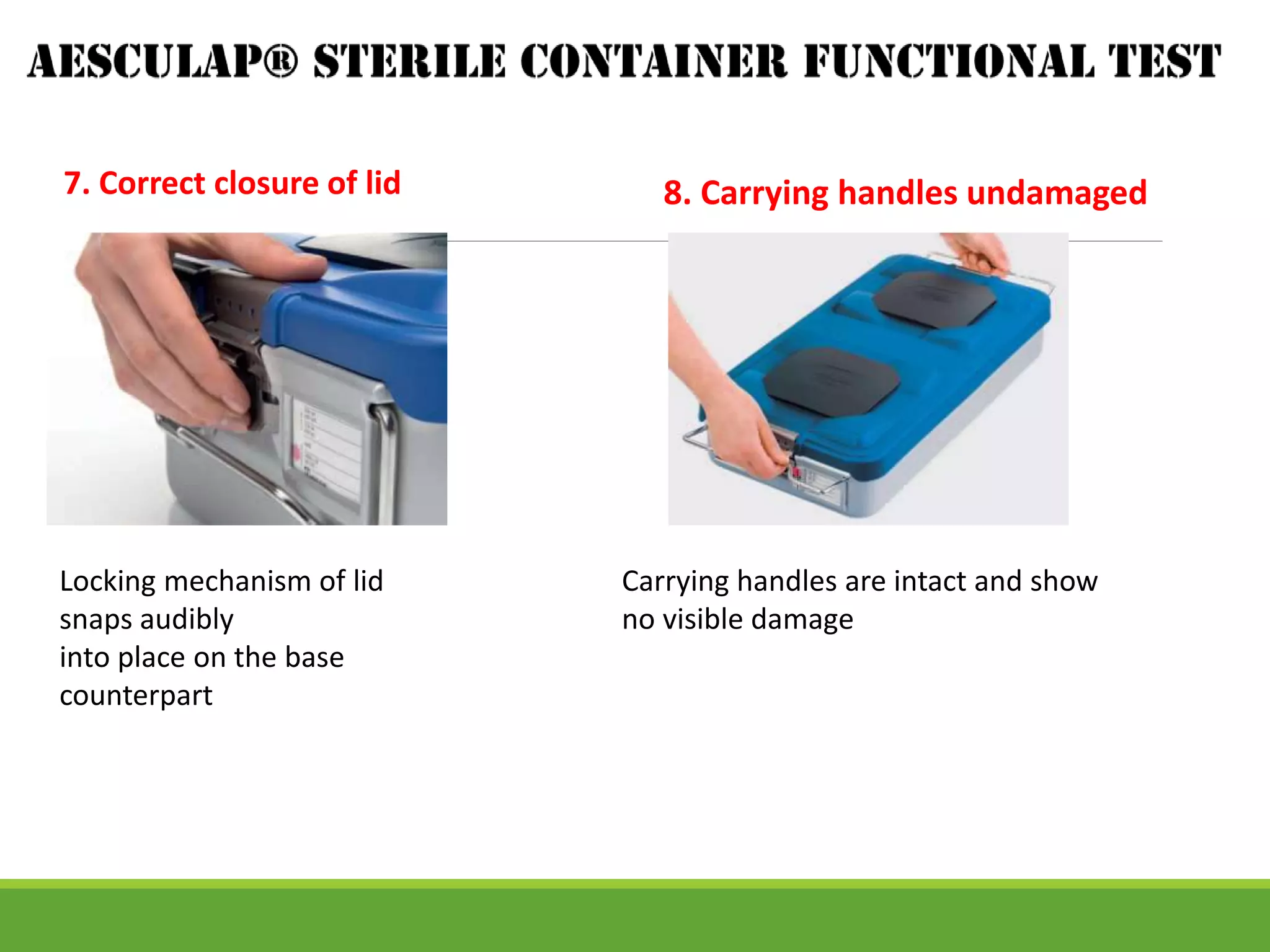
7. Correct closure of lid
Locking mechanism of lid
snaps audibly
into place on the base
counterpart
8. Carrying handles undamaged
Carrying handles are intact and show
no visible damage
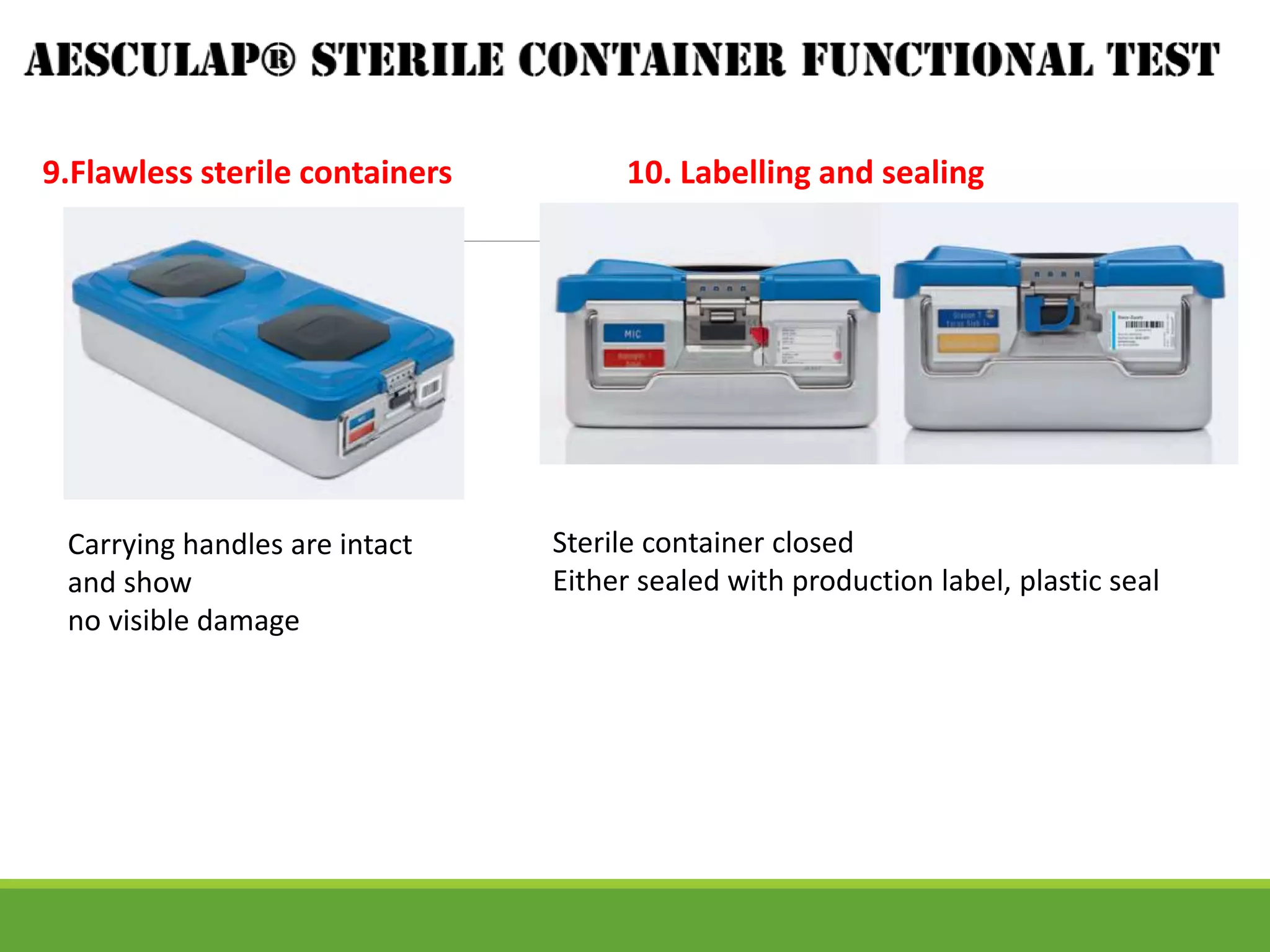
9.Flawless sterile containers 10. Labelling and sealing
Carrying handles are intact
and show
no visible damage
Sterile container closed
Either sealed with production label, plastic seal

Sterile container system

  • 2.
    Today, surgical siteinfections have become common complications Leading cause of postoperative morbidity and mortality Preventing infection in the surgical site is a primary goal for all members of the operative team. One key measure for reducing the risk for surgical site infection is to provide surgical instruments and devices that are sterile at the time of use; This requires appropriate packaging of the items for sterilization. Aesculap Sterile Technology
  • 3.
    General requirements forpackaging systems: • Protection of Instruments • Maintaining of the product quality • Maintaining of sterility during transport and handling • Maintaining of sterility for a long period
  • 4.
  • 5.
    • Sterile BarrierSystem Minimum package that prevents entry of micro organisms and allows aseptic presentation of the product at the point of use. • Protective Packaging Configuration of materials designed to prevent damage to the sterile barrier system and its contents from the time of their assembly until the point of use • Packaging System Combination of the sterile barrier system and protective packaging EN ISO 11607 preformed barrier system + protective packaging =
  • 6.
    Part 1: Generalrequirements and test methods for all packaging materials • Compatibility with the medical product to be packed • Protection of medical devices • Maintaining of the product quality • Maintaining sterility during transport and handling (event related) • Aseptically presentation in the OR must be possible EN 868-1 & 8:
  • 7.
    Part 8: Re-usablesterilization containers for steam sterilizers conforming to EN 285- Requirements and test methods. • Sealing system against unauthorised opening • Gasket between lid and bottom part: bacterial barrier properties • Stack ability • Steam permeability • Good drying capacity • Bacterial barrier properties during transport and storage • Maximum load: 10 kg EN 868-8:
  • 8.
    Why Aesculap SterileContainer • Simple, Safe and quick sterile preparation • Sterile goods container complies with EN 8681-8 & ISO regulations • Shelf-life studies for 06 months available • Storage and transport without risk of damage • Packaging process can get validated (filter) • Excellent labeling options • Protects instruments in storage
  • 9.
    Quality at aglance Aesculap Sterile Container system
  • 10.
    The Complete AesculapSterile Container System Basis System Vario System PrimeLine System Consisting of body and lid with filter system. Consisting of body, inner lid with filter system and protective outer lid. suitable for longer-distance transports. storage over extended periods, Consisting of body and plastic lid with the integrated permanent germ barrier system,
  • 11.
    Mini Sterile Containers TheComplete Aesculap Sterile Container System Scope Sterile containers
  • 12.
    Containers with closedbottoms are suitable for Fractioned vacuum processes: Pre-vacuum Sterilizer Containers with perforated bottoms are suitable for Gravitational processes Selection of Aesculap Container : Work Process Requirement
  • 13.
    Selection of AesculapContainer Before After
  • 14.
    Instrument Baskets Accessories Identification labels Filteraccessories Indicator labels Seals Maintenance products Colour lids
  • 15.
    Storage rack forMIC instruments and trocars Instrument racks Silicone matsPositioning mat Shelf cart
  • 16.
    Aesculap®SterileContainerFunctionalTest 1. Metal partsnot deformed Check container base for dents, especially rim of base Aluminium lid not warped
  • 17.
    2. Check filterretainers Filter retainers must be prestressed and have full surface contact at the edge. Locating pin for filter retention plate in lid must not be loose Filter retainer snaps audibly into position
  • 18.
    3. Intactness ofseals Seals are present and intact No cracks, fractures etc. 4. Flawless plastic parts No cracks or visible damage to plastic parts, no loose parts
  • 19.
    5. Filter inspection Filtersundamaged (no kinks, holes, or cracks) Remove cover for inspection (remove anticlockwise, replace clockwise) Leave filter in cartridge during inspection
  • 20.
    6. Locking mechanismfully functional The locking mechanism must be fully functional and show no damage Lubricate the locking mechanism hinges with Sterilit® from time to time
  • 21.
    7. Correct closureof lid Locking mechanism of lid snaps audibly into place on the base counterpart 8. Carrying handles undamaged Carrying handles are intact and show no visible damage
  • 22.
    9.Flawless sterile containers10. Labelling and sealing Carrying handles are intact and show no visible damage Sterile container closed Either sealed with production label, plastic seal