Setting the Context
• Make parents aware of cyber risks and their
affect on teenage children
• Outline commonly used practices for child
safety online
• Parents need to selectively adopt these
practices based on their child's personality
and environment
What is on
your mind
when your
child uses the
Internet?
The“4C’s” of Child Risk
Exposure to pornographic or violent
content while surfing , watching video’s
or playing games
Online threats, bullying, people saying
bad things and misuse of personal
information on social sites
Possibility of inappropriate contact when
meeting a stranger befriended online
Malware used to steal credentials, personal
information or to hack computers
Inappropriate Content
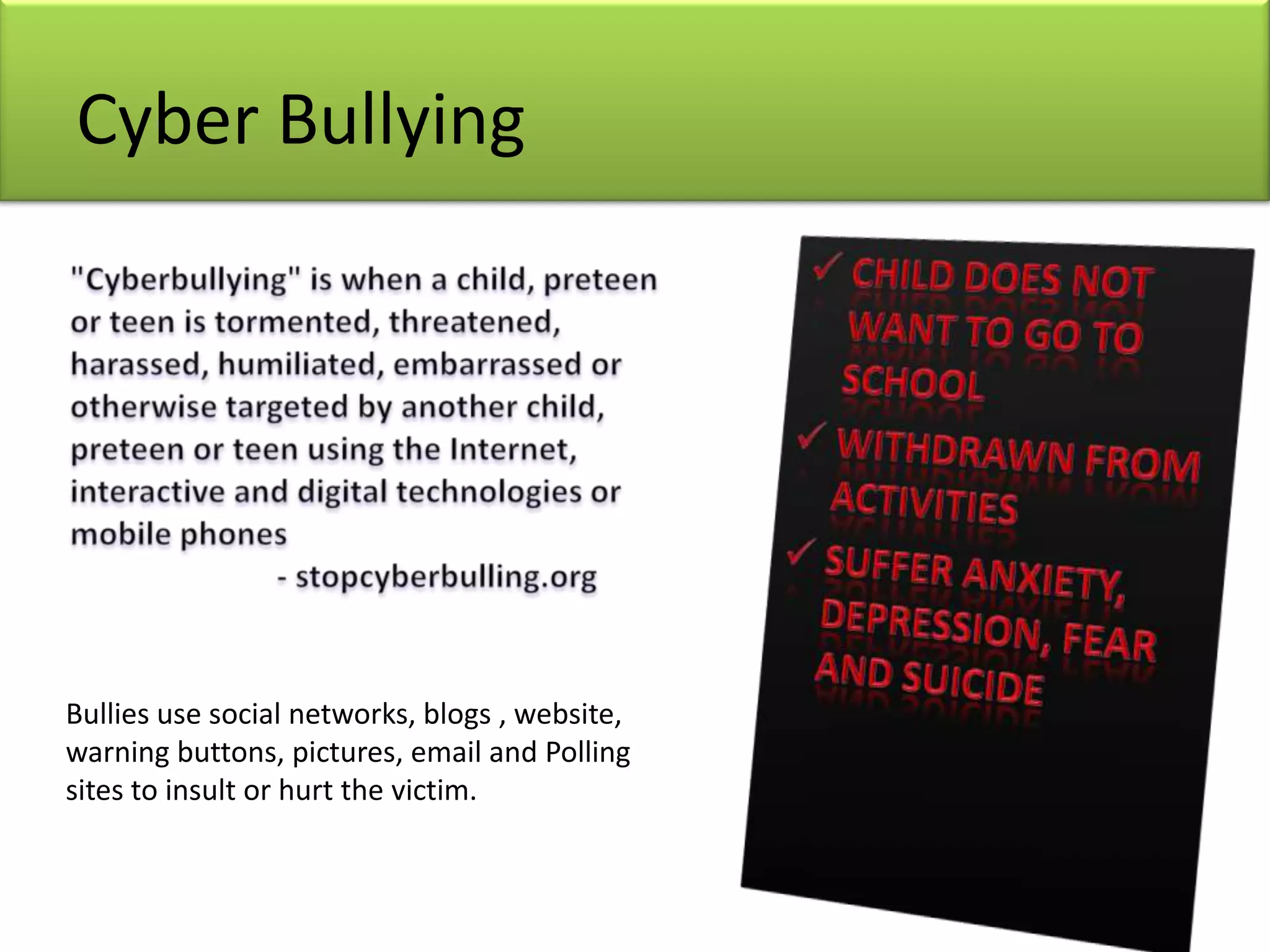
Cyber Bullying
Bullies use social networks, blogs , website,
warning buttons, pictures, email and Polling
sites to insult or hurt the victim.
Disclosure of Personal information
 PROFILE PAGES
 PICTURES
 POSTS AND CHATS
 USING WEBCAMS
 USING SMS, IM’S AND MMS
 VIDEO CHATS
 INFORMATION MAY BE VOLUNTARILY
POSTED OR SOUGHT OUT IN
CONVERSATION
Make you a victim of cybercrime
• Children download malicious
applications used by cyber hackers to
steal credentials and personal
information from your computer.
• Links to malicious applications may be
circulated by friends who are
themselves victims
Pedophiles, Perverts, Strangers
Online
1. Pedophiles are anonymous and may pose
and other children's (sex, age, location)
2. Teenagers who talk about sex to strangers
online are more likely to come in contact
with predators
3. Groom children with excessively friendly
behavior and with similar tastes
4. They diminish any inhibition a child may
have by gradually introducing sexual
content into the conversations
5. Vulnerable children who participate in
these conversations are exploited.
6. They make them share inappropriate snaps
or videos,try to Blackmail them and try to
make physical contact
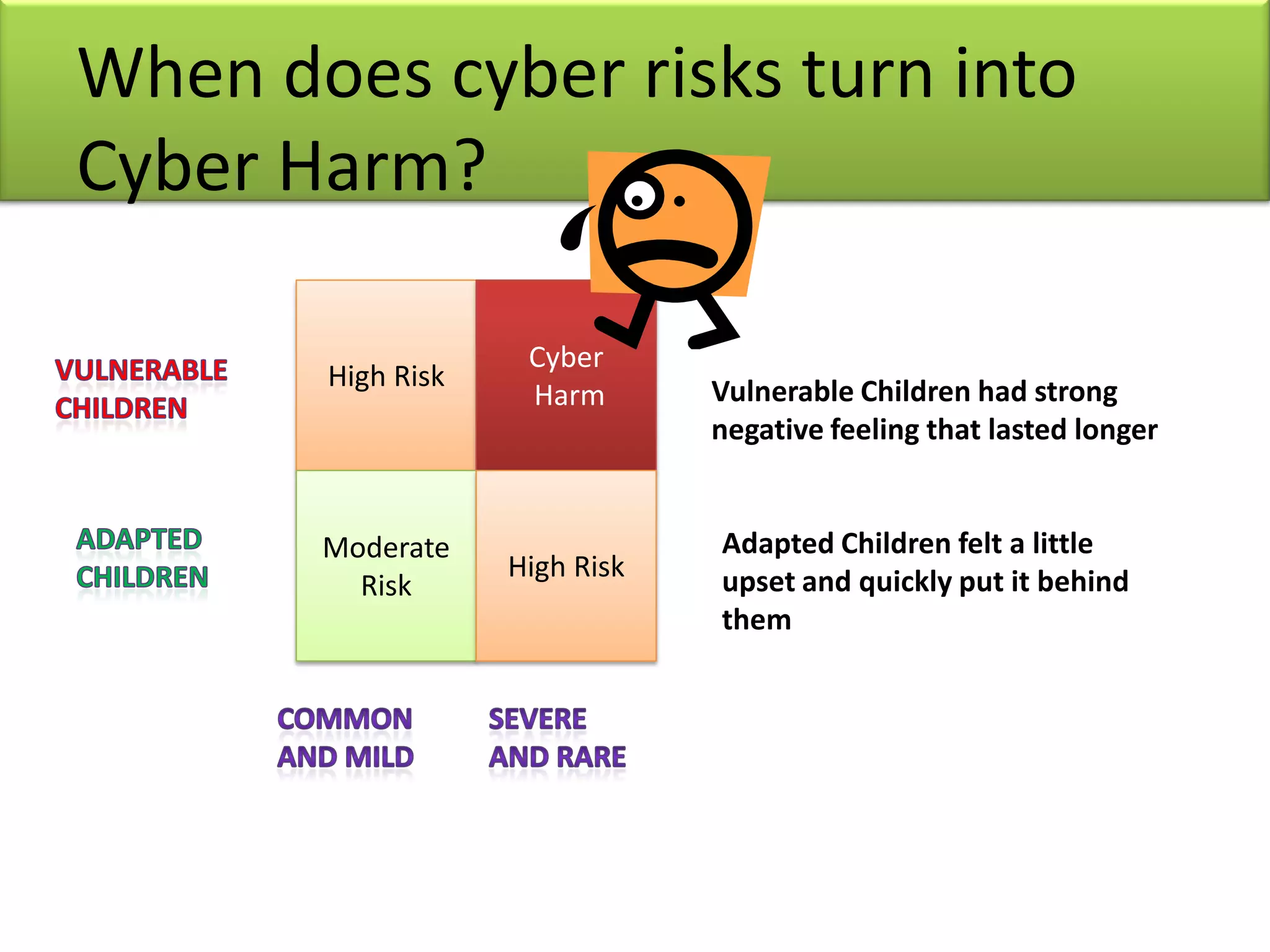
When does cyber risks turn into
Cyber Harm?
Adapted Children felt a little
upset and quickly put it behind
them
Vulnerable Children had strong
negative feeling that lasted longer
High Risk
Cyber
Harm
Moderate
Risk
High Risk
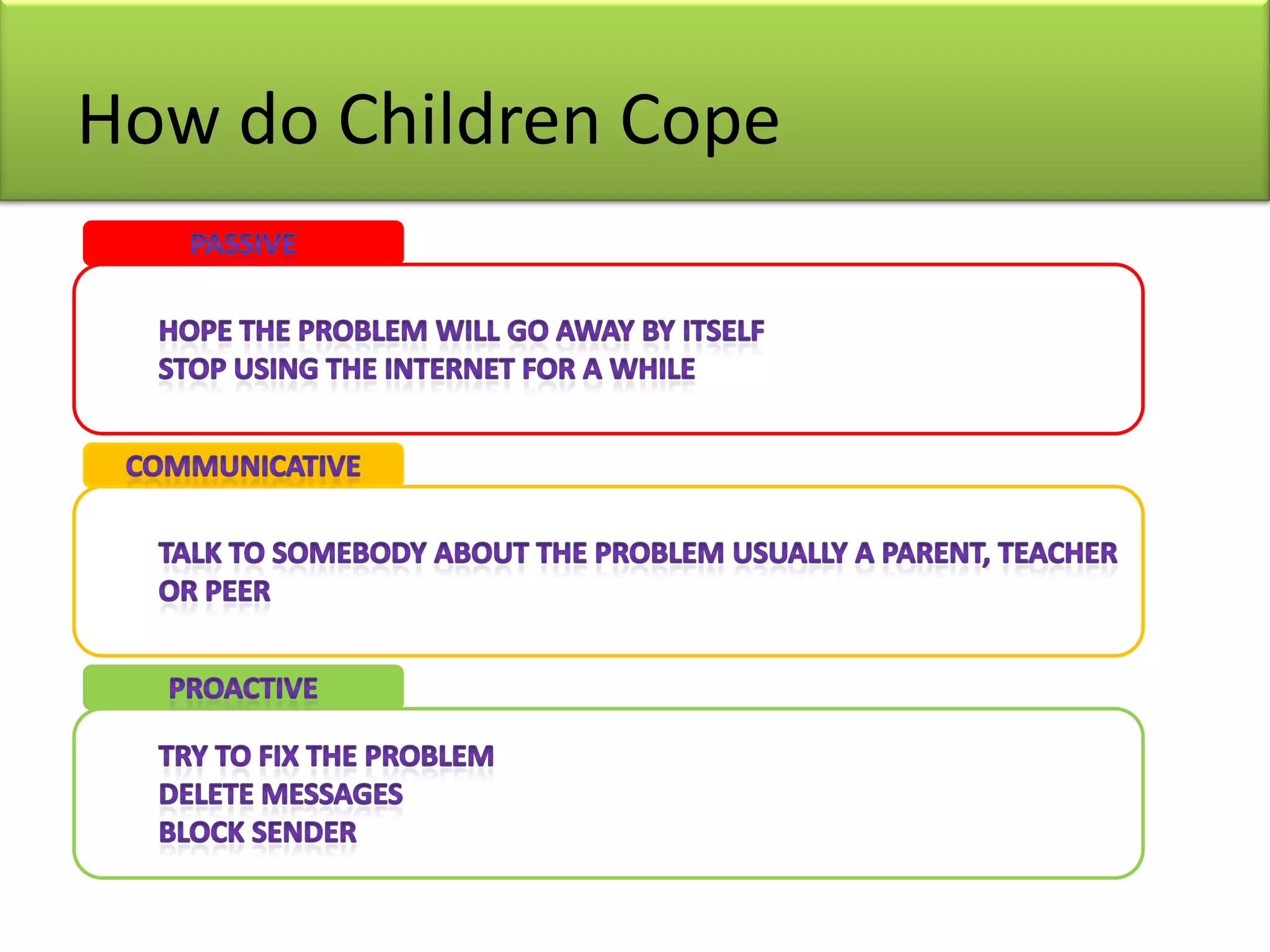
How do Children Cope
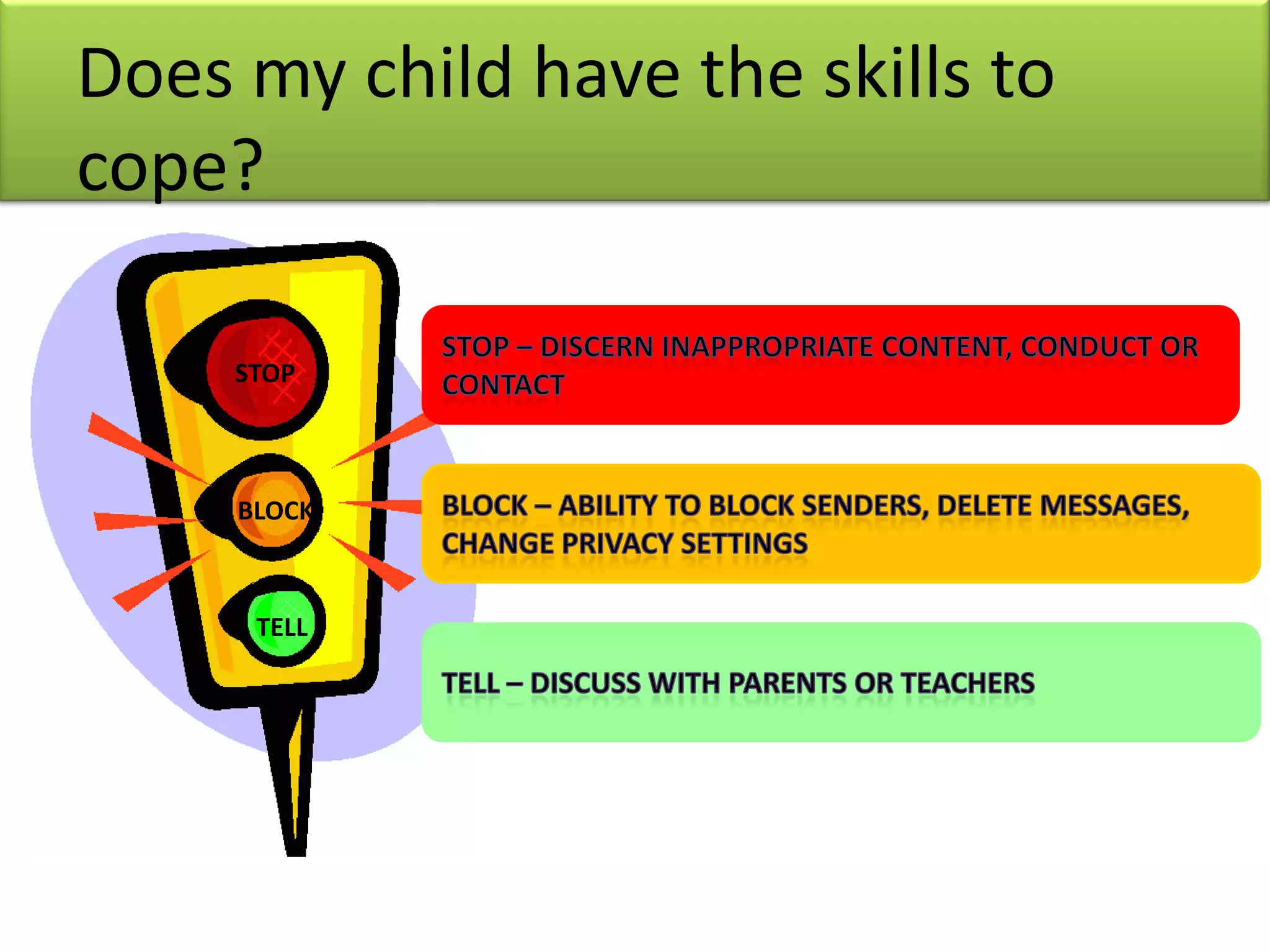
Does my child have the skills to
cope?
STOP
BLOCK
TELL
6 Best Practices for Parents
Raise Situational Awareness
Topics For Discussion
1. Your child’s online experience, hobbies and
interests
2. Net etiquette and cyber bullying
3. The importance of letting parents know if
the child has come across foul language or
improper suggestions online
4. What sites are off limits and why
5. How to use, create and protect passwords
6. What information that should not be
posted online such as travel plans, assets
owned, who the family knows, family
pictures, parental squabbles, and so on.
Learn to Report?
Courtesy Facebook
Use Technical Controls
1. Use a PC without a webcam.
2. Ensure that a child cannot delete logs
and history.
3. Use filters for email, internet, privacy
setting on the browser, and child
protection software.
4. Keep the PC in an open area where
the child’s activity can be observed.
5. Use an antivirus and personal
firewall.
6. Ensure regular updates of security
software.
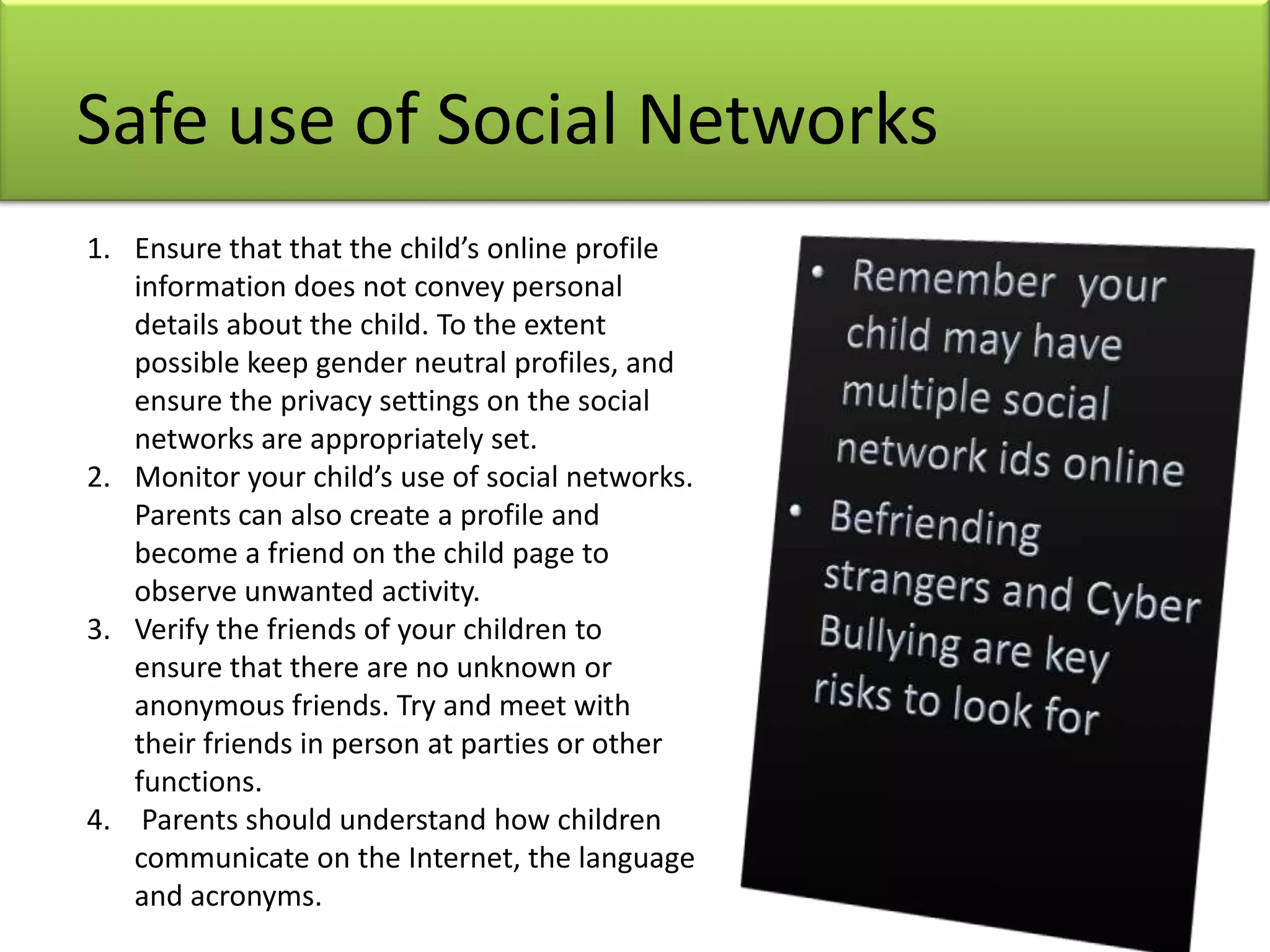
Safe use of Social Networks
1. Ensure that that the child’s online profile
information does not convey personal
details about the child. To the extent
possible keep gender neutral profiles, and
ensure the privacy settings on the social
networks are appropriately set.
2. Monitor your child’s use of social networks.
Parents can also create a profile and
become a friend on the child page to
observe unwanted activity.
3. Verify the friends of your children to
ensure that there are no unknown or
anonymous friends. Try and meet with
their friends in person at parties or other
functions.
4. Parents should understand how children
communicate on the Internet, the language
and acronyms.
Monitor
1. Monitor surfing activity for early signs of
inappropriate use.
2. Review browsing history, chat logs.
3. Search for pornographic and other
material on the computer.
4. Monitor phone bills as these provide clues
when an online relationship has progressed
into the real world, as it may if be a
pedophile has been trying to trap your
child.
Set Rules for Offline Meetings
Meeting in a covert manner is ill advised
Educate your child on “Stranger Danger”
Face to Face meetings have led to sexual
crimes, theft and kidnappings
Your child may not remain a child again if
sexually abused
4 Questions Parents Must Answer
Stay in Touch
Blog: Luciusonsecurity.blogspot.com
Twitter: luciuslobo
Download and Read my free ebook
“StaySafe CyberCitizen”. Available on my blog.

Keeping your child safe online

  • 2.
    Setting the Context •Make parents aware of cyber risks and their affect on teenage children • Outline commonly used practices for child safety online • Parents need to selectively adopt these practices based on their child's personality and environment
  • 3.
    What is on yourmind when your child uses the Internet?
  • 7.
    The“4C’s” of ChildRisk Exposure to pornographic or violent content while surfing , watching video’s or playing games Online threats, bullying, people saying bad things and misuse of personal information on social sites Possibility of inappropriate contact when meeting a stranger befriended online Malware used to steal credentials, personal information or to hack computers
  • 10.
  • 11.
    Cyber Bullying Bullies usesocial networks, blogs , website, warning buttons, pictures, email and Polling sites to insult or hurt the victim.
  • 12.
    Disclosure of Personalinformation  PROFILE PAGES  PICTURES  POSTS AND CHATS  USING WEBCAMS  USING SMS, IM’S AND MMS  VIDEO CHATS  INFORMATION MAY BE VOLUNTARILY POSTED OR SOUGHT OUT IN CONVERSATION
  • 13.
    Make you avictim of cybercrime • Children download malicious applications used by cyber hackers to steal credentials and personal information from your computer. • Links to malicious applications may be circulated by friends who are themselves victims
  • 14.
    Pedophiles, Perverts, Strangers Online 1.Pedophiles are anonymous and may pose and other children's (sex, age, location) 2. Teenagers who talk about sex to strangers online are more likely to come in contact with predators 3. Groom children with excessively friendly behavior and with similar tastes 4. They diminish any inhibition a child may have by gradually introducing sexual content into the conversations 5. Vulnerable children who participate in these conversations are exploited. 6. They make them share inappropriate snaps or videos,try to Blackmail them and try to make physical contact
  • 15.
    When does cyberrisks turn into Cyber Harm? Adapted Children felt a little upset and quickly put it behind them Vulnerable Children had strong negative feeling that lasted longer High Risk Cyber Harm Moderate Risk High Risk
  • 16.
  • 17.
    Does my childhave the skills to cope? STOP BLOCK TELL
  • 18.
    6 Best Practicesfor Parents
  • 19.
    Raise Situational Awareness TopicsFor Discussion 1. Your child’s online experience, hobbies and interests 2. Net etiquette and cyber bullying 3. The importance of letting parents know if the child has come across foul language or improper suggestions online 4. What sites are off limits and why 5. How to use, create and protect passwords 6. What information that should not be posted online such as travel plans, assets owned, who the family knows, family pictures, parental squabbles, and so on.
  • 20.
  • 21.
    Use Technical Controls 1.Use a PC without a webcam. 2. Ensure that a child cannot delete logs and history. 3. Use filters for email, internet, privacy setting on the browser, and child protection software. 4. Keep the PC in an open area where the child’s activity can be observed. 5. Use an antivirus and personal firewall. 6. Ensure regular updates of security software.
  • 22.
    Safe use ofSocial Networks 1. Ensure that that the child’s online profile information does not convey personal details about the child. To the extent possible keep gender neutral profiles, and ensure the privacy settings on the social networks are appropriately set. 2. Monitor your child’s use of social networks. Parents can also create a profile and become a friend on the child page to observe unwanted activity. 3. Verify the friends of your children to ensure that there are no unknown or anonymous friends. Try and meet with their friends in person at parties or other functions. 4. Parents should understand how children communicate on the Internet, the language and acronyms.
  • 23.
    Monitor 1. Monitor surfingactivity for early signs of inappropriate use. 2. Review browsing history, chat logs. 3. Search for pornographic and other material on the computer. 4. Monitor phone bills as these provide clues when an online relationship has progressed into the real world, as it may if be a pedophile has been trying to trap your child.
  • 24.
    Set Rules forOffline Meetings Meeting in a covert manner is ill advised Educate your child on “Stranger Danger” Face to Face meetings have led to sexual crimes, theft and kidnappings Your child may not remain a child again if sexually abused
  • 25.
  • 26.
    Stay in Touch Blog:Luciusonsecurity.blogspot.com Twitter: luciuslobo Download and Read my free ebook “StaySafe CyberCitizen”. Available on my blog.