AGILE MINDSET SHIFTING:
AGILE FOR ALL
Syedur Rahman
1st – 3rd December, 2017 | Westin, Hyderabad, INDIA
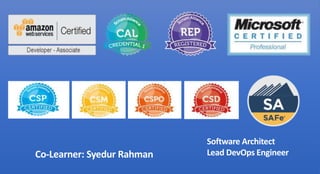
Co-Learner: Syedur Rahman
Software Architect
Lead DevOps Engineer
Agile
 Process?
 Process Framework?
 Empirical Process?
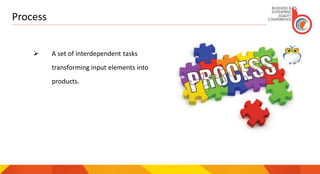
Process
 A set of interdependent tasks
transforming input elements into
products.
Process Framework
 That is still a process.
 What is the difference between a process and process framework?
 Every framework is a collection of best practices.
 Where did these best practices come from? Did some one just dream off? It
comes from some success stories.
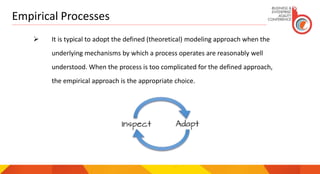
Empirical Processes
 It is typical to adopt the defined (theoretical) modeling approach when the
underlying mechanisms by which a process operates are reasonably well
understood. When the process is too complicated for the defined approach,
the empirical approach is the appropriate choice.
Agile
 Agile is not a process, not a empirical
process, not a framework. It is a
philosophy.
 Every religion has a holy book. So agile
also has one: Agile Manifesto.
The Agile Manifesto
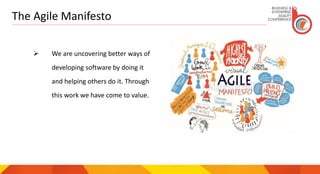
 We are uncovering better ways of
developing software by doing it
and helping others do it. Through
this work we have come to value.
Agile Mindset
 Attitude to accept change is the foremost
change that needs to be brought in for any
change to survive.
Agile Mindset
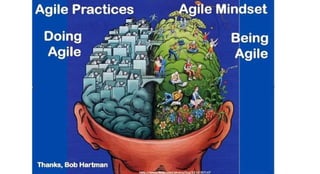
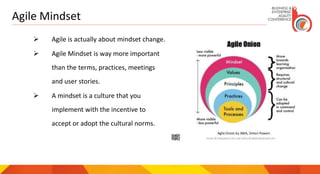
 Agile is actually about mindset change.
 Agile Mindset is way more important
than the terms, practices, meetings
and user stories.
 A mindset is a culture that you
implement with the incentive to
accept or adopt the cultural norms.
Team looks at failure as a learning opportunity
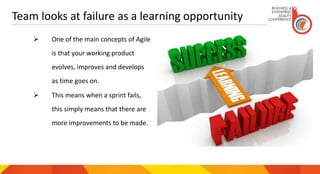
 One of the main concepts of Agile
is that your working product
evolves, improves and develops
as time goes on.
 This means when a sprint fails,
this simply means that there are
more improvements to be made.
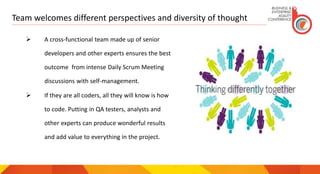
Team welcomes different perspectives and diversity of thought
 A cross-functional team made up of senior
developers and other experts ensures the best
outcome from intense Daily Scrum Meeting
discussions with self-management.
 If they are all coders, all they will know is how
to code. Putting in QA testers, analysts and
other experts can produce wonderful results
and add value to everything in the project.
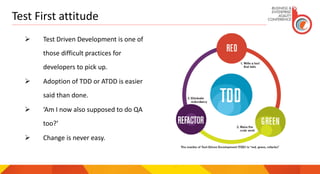
Test First attitude
 Test Driven Development is one of
those difficult practices for
developers to pick up.
 Adoption of TDD or ATDD is easier
said than done.
 ‘Am I now also supposed to do QA
too?’
 Change is never easy.
People are having fun
 Definition of fun can be subjective but it is
easy to measure and observe.
 When energy is high, people are motivated
and they spend time with each other outside
the Scrum or the office, you know that they
are having fun with each other.
 We want to make such a team that everyone
wants to join.
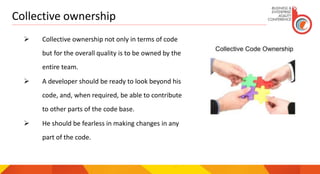
Collective ownership
 Collective ownership not only in terms of code
but for the overall quality is to be owned by the
entire team.
 A developer should be ready to look beyond his
code, and, when required, be able to contribute
to other parts of the code base.
 He should be fearless in making changes in any
part of the code.
Collective ownership
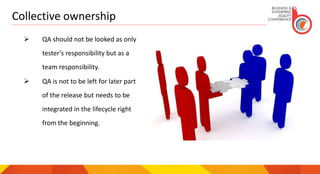
 QA should not be looked as only
tester’s responsibility but as a
team responsibility.
 QA is not to be left for later part
of the release but needs to be
integrated in the lifecycle right
from the beginning.
Individual heroism vs. team collaboration
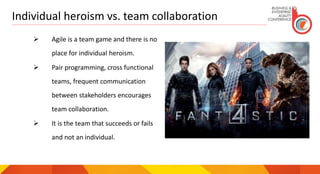
 Agile is a team game and there is no
place for individual heroism.
 Pair programming, cross functional
teams, frequent communication
between stakeholders encourages
team collaboration.
 It is the team that succeeds or fails
and not an individual.
Work pace is sustainable
 The Burn down Chart is a great way to see if
the pace you have set for your Sprints is right
for the team.
 Late turnovers and unfinished items are
indications that the pace is too fast or there
are too many items.
 Early finishes means the pace is too slow or
people are capable of more and are not
challenged.
Team members can accept change and adapt quickly
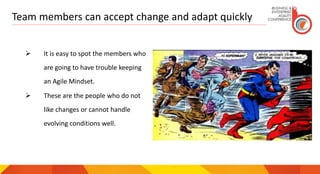
 It is easy to spot the members who
are going to have trouble keeping
an Agile Mindset.
 These are the people who do not
like changes or cannot handle
evolving conditions well.
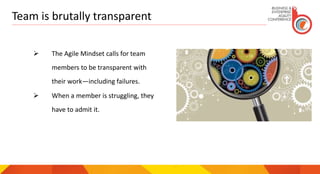
Team is brutally transparent
 The Agile Mindset calls for team
members to be transparent with
their work—including failures.
 When a member is struggling, they
have to admit it.
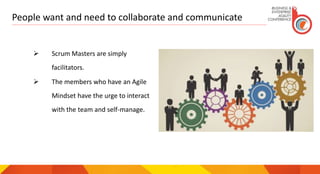
People want and need to collaborate and communicate
 Scrum Masters are simply
facilitators.
 The members who have an Agile
Mindset have the urge to interact
with the team and self-manage.
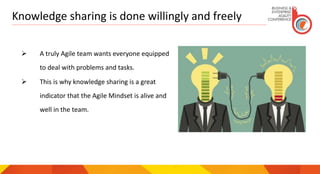
Knowledge sharing is done willingly and freely
 A truly Agile team wants everyone equipped
to deal with problems and tasks.
 This is why knowledge sharing is a great
indicator that the Agile Mindset is alive and
well in the team.
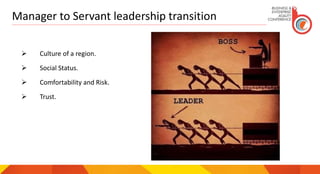
Manager to Servant leadership transition
 Culture of a region.
 Social Status.
 Comfortability and Risk.
 Trust.
Syedur Rahman
Lead Software Engineer & Software Architect
+8801921365543
syedur84@gmail.com
https://bd.linkedin.com/in/syedur-rahman-6689b713
Thank You

Agile Mindset Shifting: Agile For All

  • 1.
    AGILE MINDSET SHIFTING: AGILEFOR ALL Syedur Rahman 1st – 3rd December, 2017 | Westin, Hyderabad, INDIA
  • 2.
    Co-Learner: Syedur Rahman SoftwareArchitect Lead DevOps Engineer
  • 4.
    Agile  Process?  ProcessFramework?  Empirical Process?
  • 5.
    Process  A setof interdependent tasks transforming input elements into products.
  • 6.
    Process Framework  Thatis still a process.  What is the difference between a process and process framework?  Every framework is a collection of best practices.  Where did these best practices come from? Did some one just dream off? It comes from some success stories.
  • 7.
    Empirical Processes  Itis typical to adopt the defined (theoretical) modeling approach when the underlying mechanisms by which a process operates are reasonably well understood. When the process is too complicated for the defined approach, the empirical approach is the appropriate choice.
  • 8.
    Agile  Agile isnot a process, not a empirical process, not a framework. It is a philosophy.  Every religion has a holy book. So agile also has one: Agile Manifesto.
  • 9.
    The Agile Manifesto We are uncovering better ways of developing software by doing it and helping others do it. Through this work we have come to value.
  • 10.
    Agile Mindset  Attitudeto accept change is the foremost change that needs to be brought in for any change to survive.
  • 11.
    Agile Mindset  Agileis actually about mindset change.  Agile Mindset is way more important than the terms, practices, meetings and user stories.  A mindset is a culture that you implement with the incentive to accept or adopt the cultural norms.
  • 12.
    Team looks atfailure as a learning opportunity  One of the main concepts of Agile is that your working product evolves, improves and develops as time goes on.  This means when a sprint fails, this simply means that there are more improvements to be made.
  • 13.
    Team welcomes differentperspectives and diversity of thought  A cross-functional team made up of senior developers and other experts ensures the best outcome from intense Daily Scrum Meeting discussions with self-management.  If they are all coders, all they will know is how to code. Putting in QA testers, analysts and other experts can produce wonderful results and add value to everything in the project.
  • 14.
    Test First attitude Test Driven Development is one of those difficult practices for developers to pick up.  Adoption of TDD or ATDD is easier said than done.  ‘Am I now also supposed to do QA too?’  Change is never easy.
  • 15.
    People are havingfun  Definition of fun can be subjective but it is easy to measure and observe.  When energy is high, people are motivated and they spend time with each other outside the Scrum or the office, you know that they are having fun with each other.  We want to make such a team that everyone wants to join.
  • 16.
    Collective ownership  Collectiveownership not only in terms of code but for the overall quality is to be owned by the entire team.  A developer should be ready to look beyond his code, and, when required, be able to contribute to other parts of the code base.  He should be fearless in making changes in any part of the code.
  • 17.
    Collective ownership  QAshould not be looked as only tester’s responsibility but as a team responsibility.  QA is not to be left for later part of the release but needs to be integrated in the lifecycle right from the beginning.
  • 18.
    Individual heroism vs.team collaboration  Agile is a team game and there is no place for individual heroism.  Pair programming, cross functional teams, frequent communication between stakeholders encourages team collaboration.  It is the team that succeeds or fails and not an individual.
  • 19.
    Work pace issustainable  The Burn down Chart is a great way to see if the pace you have set for your Sprints is right for the team.  Late turnovers and unfinished items are indications that the pace is too fast or there are too many items.  Early finishes means the pace is too slow or people are capable of more and are not challenged.
  • 20.
    Team members canaccept change and adapt quickly  It is easy to spot the members who are going to have trouble keeping an Agile Mindset.  These are the people who do not like changes or cannot handle evolving conditions well.
  • 21.
    Team is brutallytransparent  The Agile Mindset calls for team members to be transparent with their work—including failures.  When a member is struggling, they have to admit it.
  • 22.
    People want andneed to collaborate and communicate  Scrum Masters are simply facilitators.  The members who have an Agile Mindset have the urge to interact with the team and self-manage.
  • 23.
    Knowledge sharing isdone willingly and freely  A truly Agile team wants everyone equipped to deal with problems and tasks.  This is why knowledge sharing is a great indicator that the Agile Mindset is alive and well in the team.
  • 24.
    Manager to Servantleadership transition  Culture of a region.  Social Status.  Comfortability and Risk.  Trust.
  • 25.
    Syedur Rahman Lead SoftwareEngineer & Software Architect +8801921365543 syedur84@gmail.com https://bd.linkedin.com/in/syedur-rahman-6689b713 Thank You