Digital First
Managing Disruption in the Digital Economy
Youngjin Yoo
Faculty Director, xLab
Elizabeth M. and William C. Treuhaft Professor in Entrepreneurship
Weatherhead School of Management
Case Western Reserve University
@YoungjinYoo
November 1, 2018
IOTC Thought Leadership Meeting
Digital innovation:
 transformation of the way
value is created…
through the use of digital
assets as the foundation
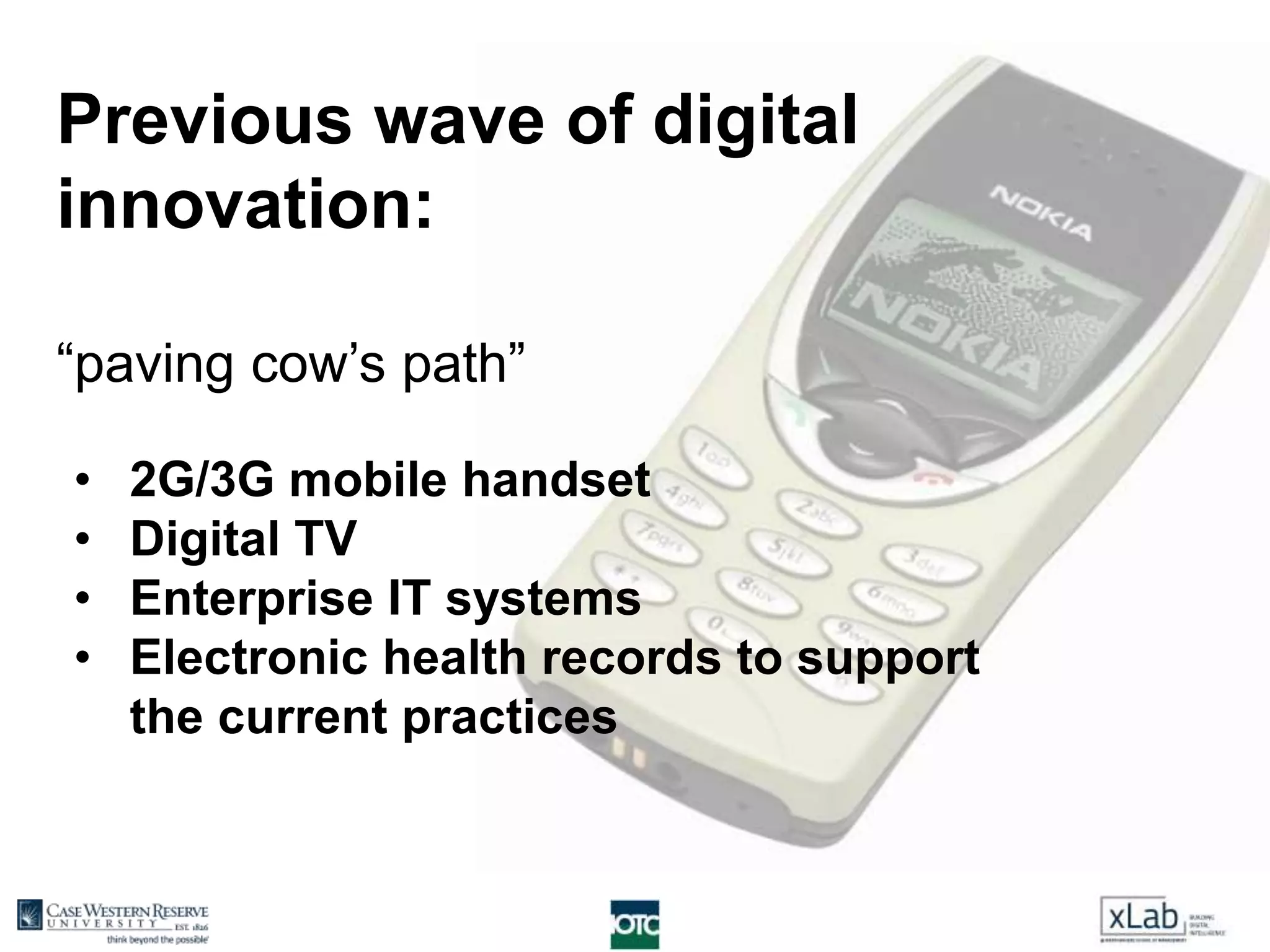
Previous wave of digital
innovation:
“paving cow’s path”
• 2G/3G mobile handset
• Digital TV
• Enterprise IT systems
• Electronic health records to support
the current practices
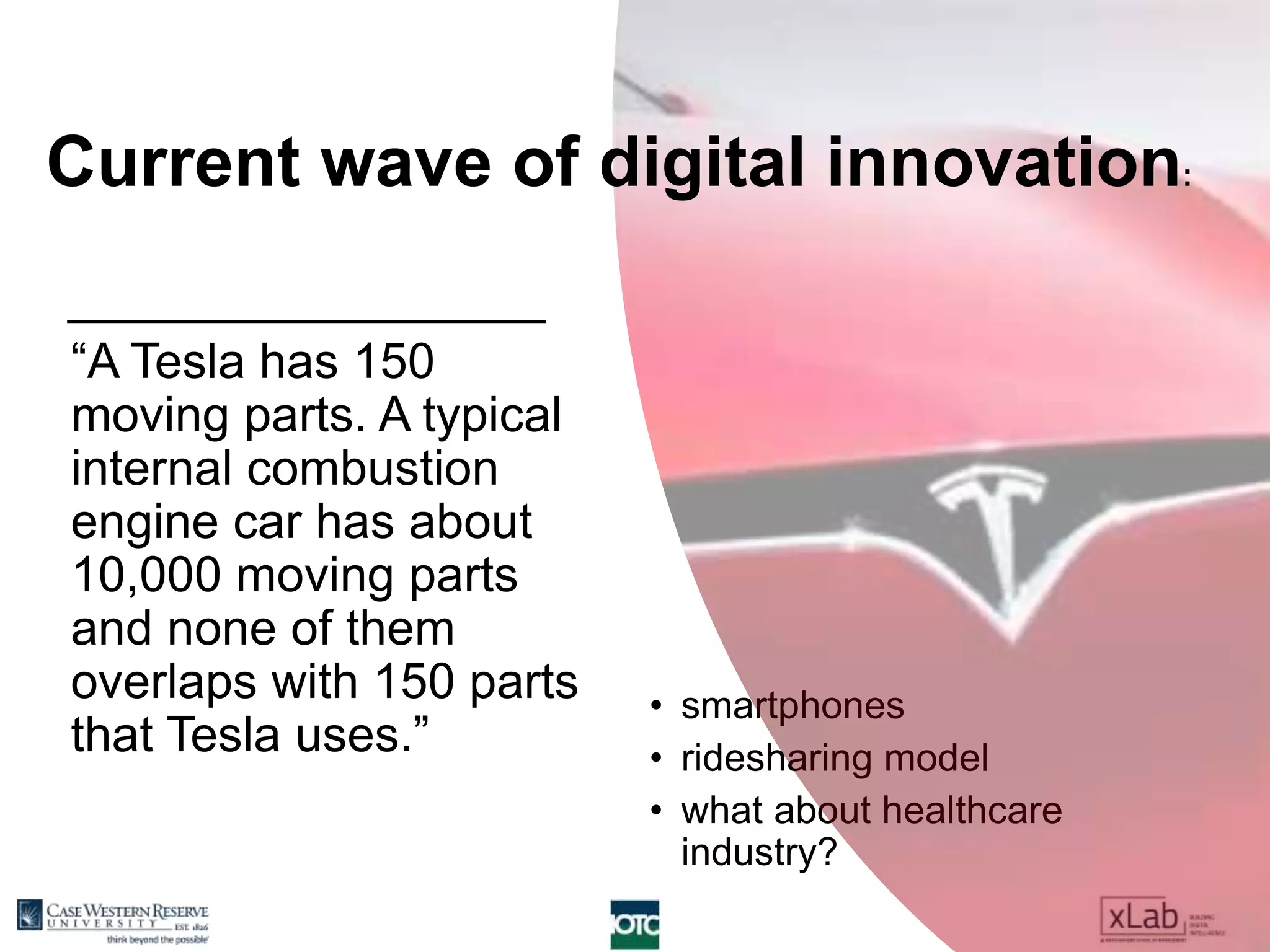
“A Tesla has 150
moving parts. A typical
internal combustion
engine car has about
10,000 moving parts
and none of them
overlaps with 150 parts
that Tesla uses.”
• smartphones
• ridesharing model
• what about healthcare
industry?
Current wave of digital innovation:
Digital objects
“objects that take shape on a
screen or hide in the back end
of a computer program,
composed of data and meta
data regulated by structures or
schemas” (Hui 2016, p. 1)
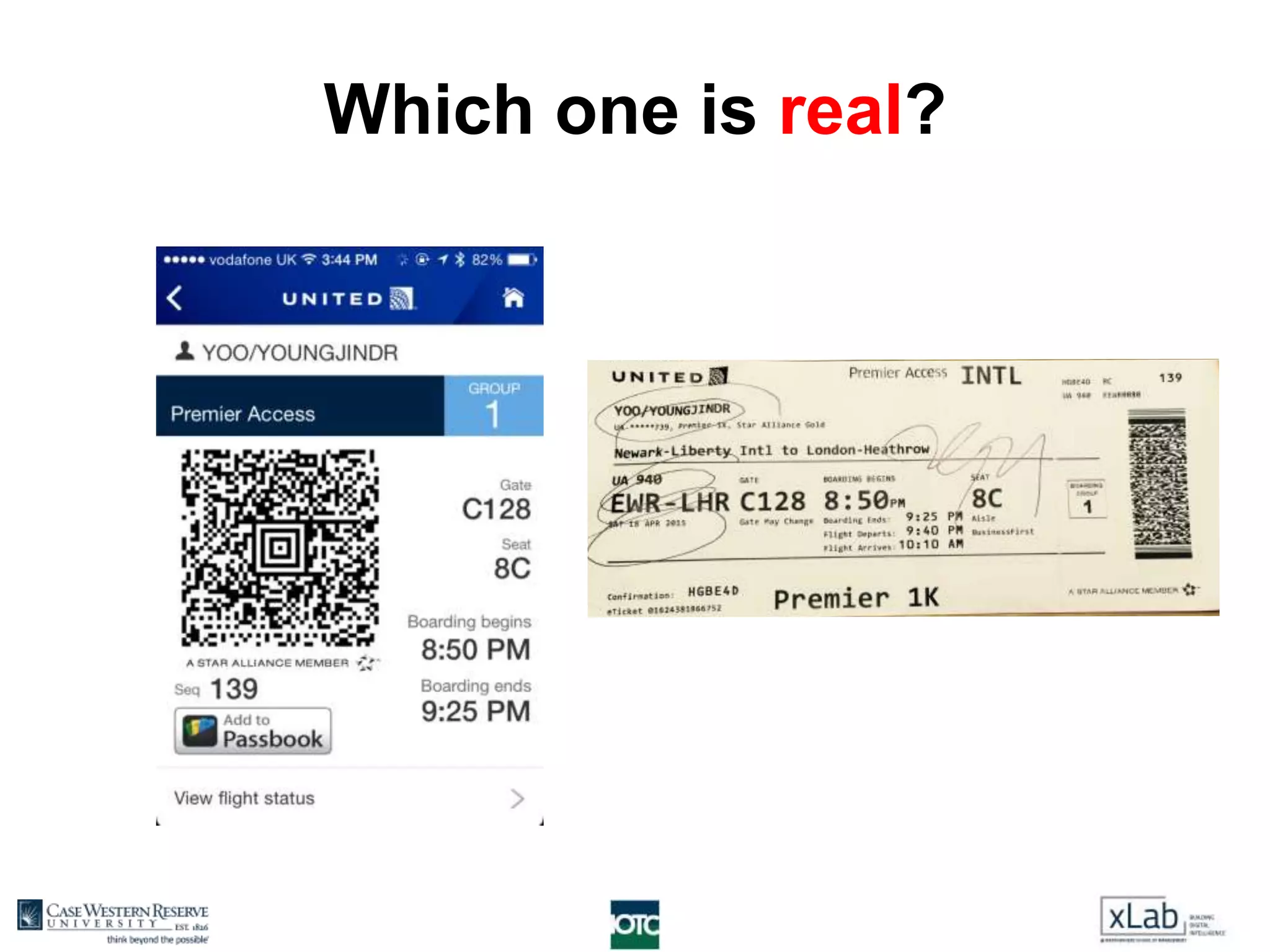
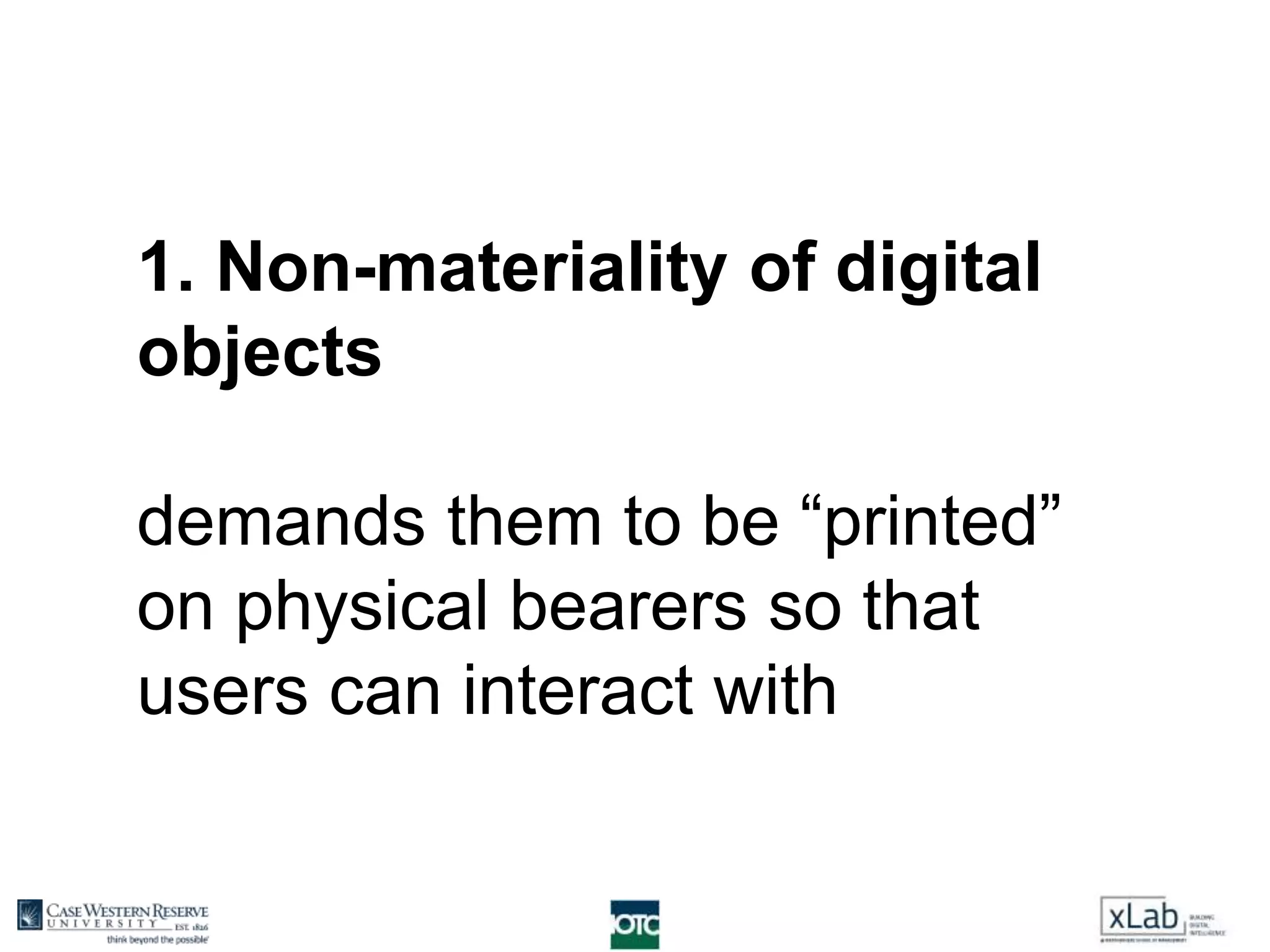
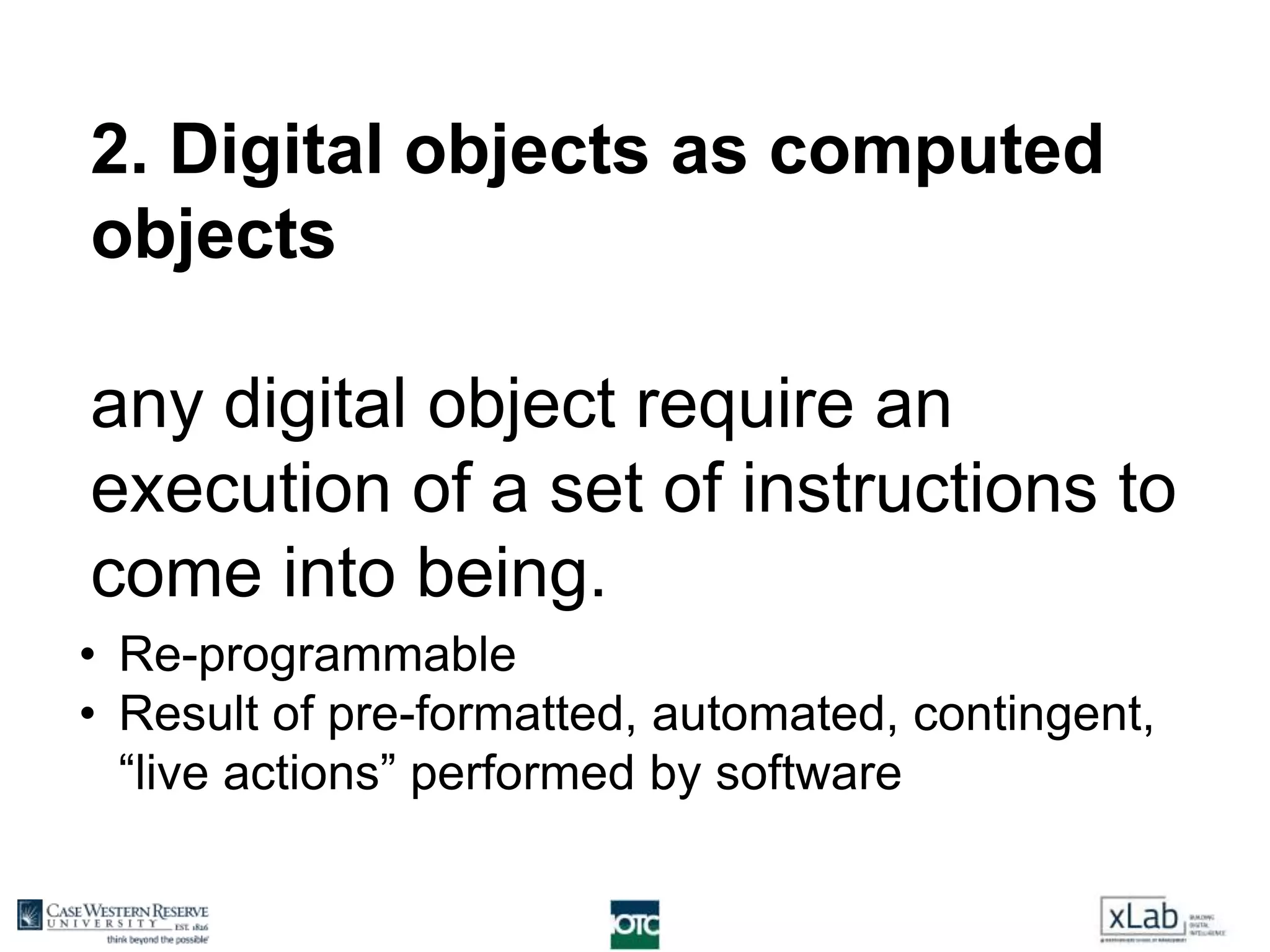
Which one is real?
Two essential properties of
digital objects
1. non-material
2. computed
1. Non-materiality of digital
objects
demands them to be “printed”
on physical bearers so that
users can interact with
2. Digital objects as computed
objects
any digital object require an
execution of a set of instructions to
come into being.
• Re-programmable
• Result of pre-formatted, automated, contingent,
“live actions” performed by software
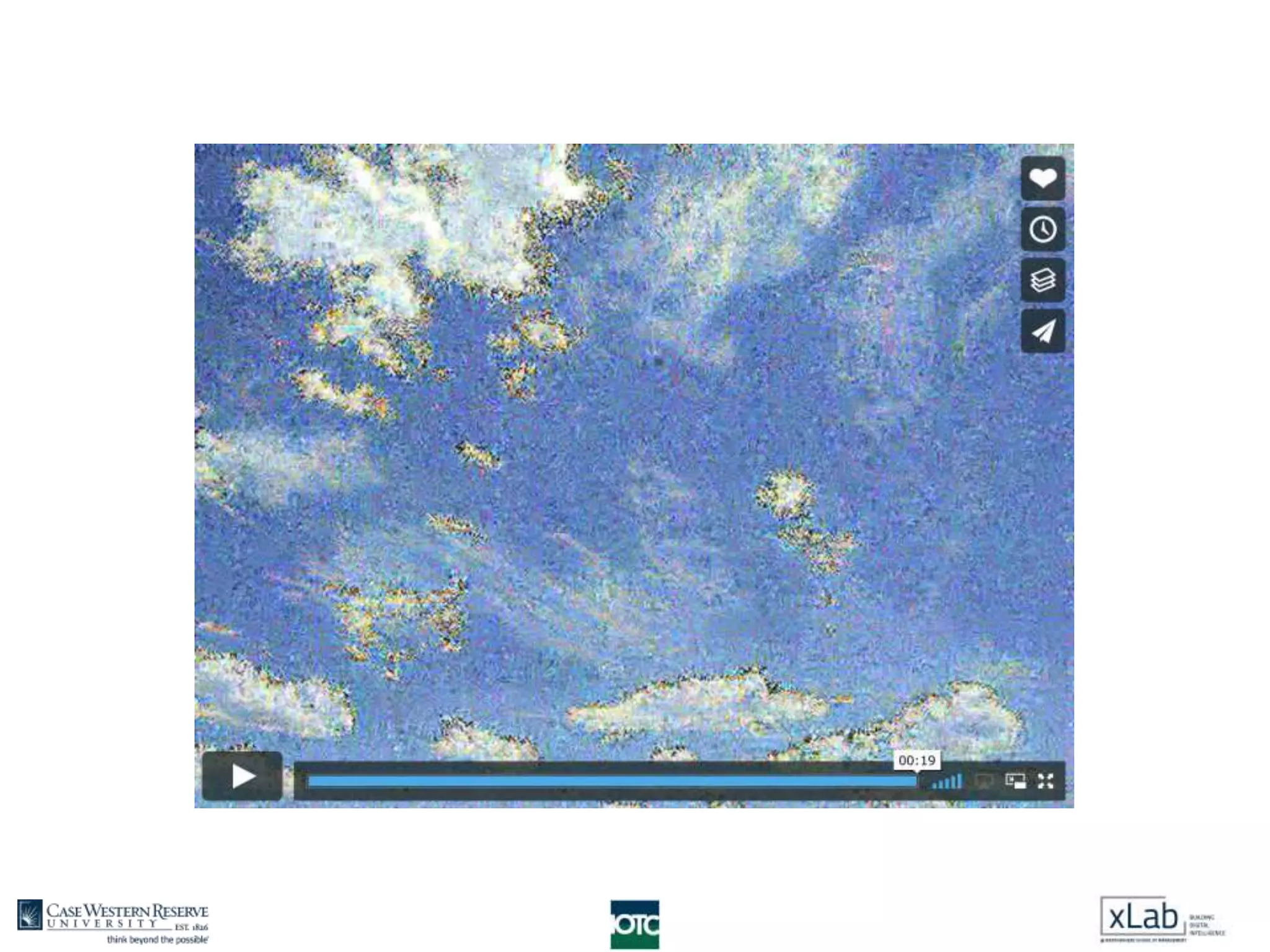
When you do cut & paste …
each instance is an emergent
and temporary reproduction
of non-material objects
created instantaneously by a
set of instructions
Value creation process
“the steps and activities (within
and across firms or industries)
that lead to the production of
marketable goods”
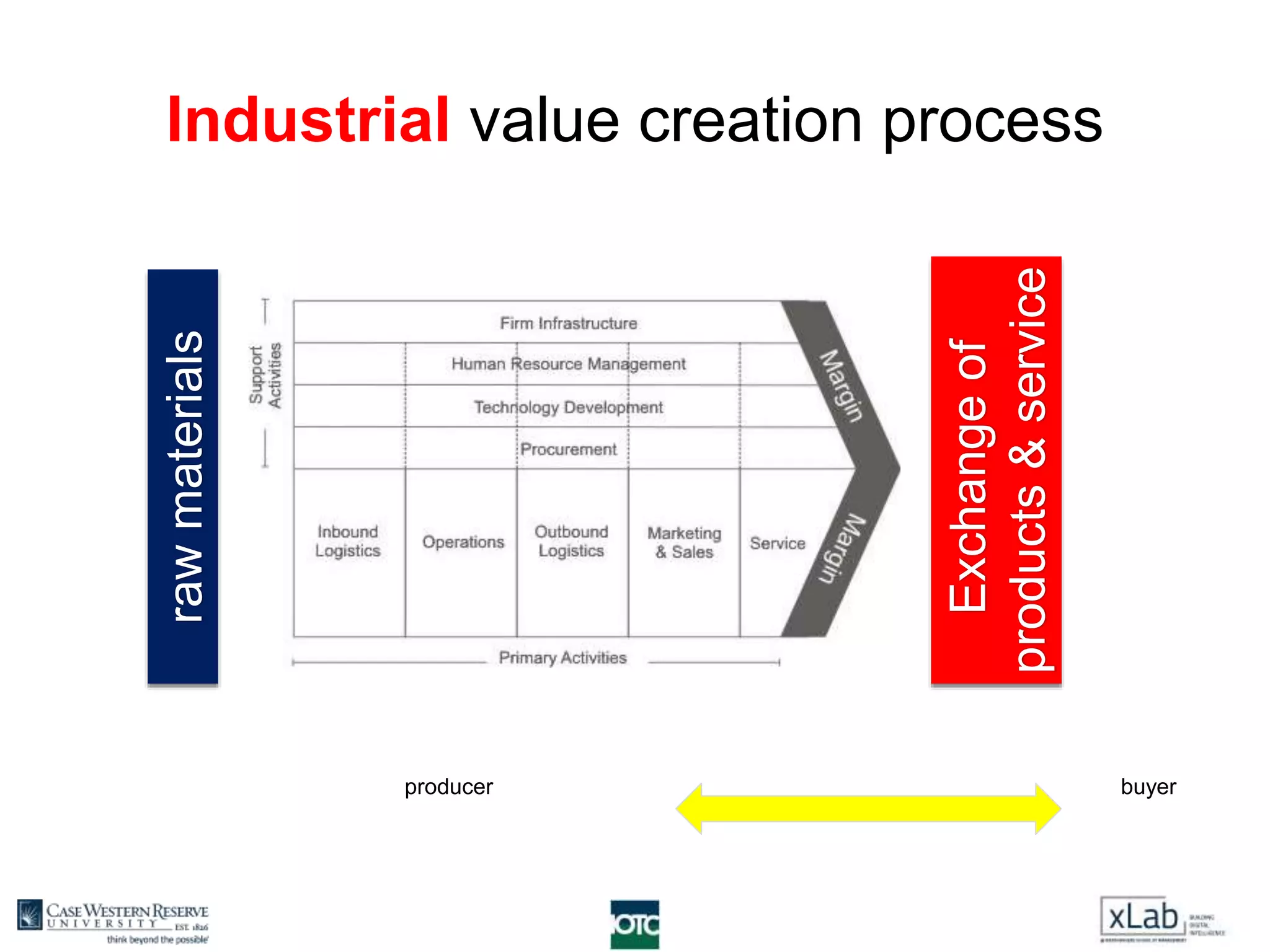
rawmaterials
Industrial value creation process
Exchangeof
products&service
producer buyer
early and permanent binding
of resources through
irreversible process of value
creation to produce goods with
irrevocable status
the transfer of ownership as
the finality of economic
transactions
information as a
representational by-product
of physical activities
buyers only
but no users in sight
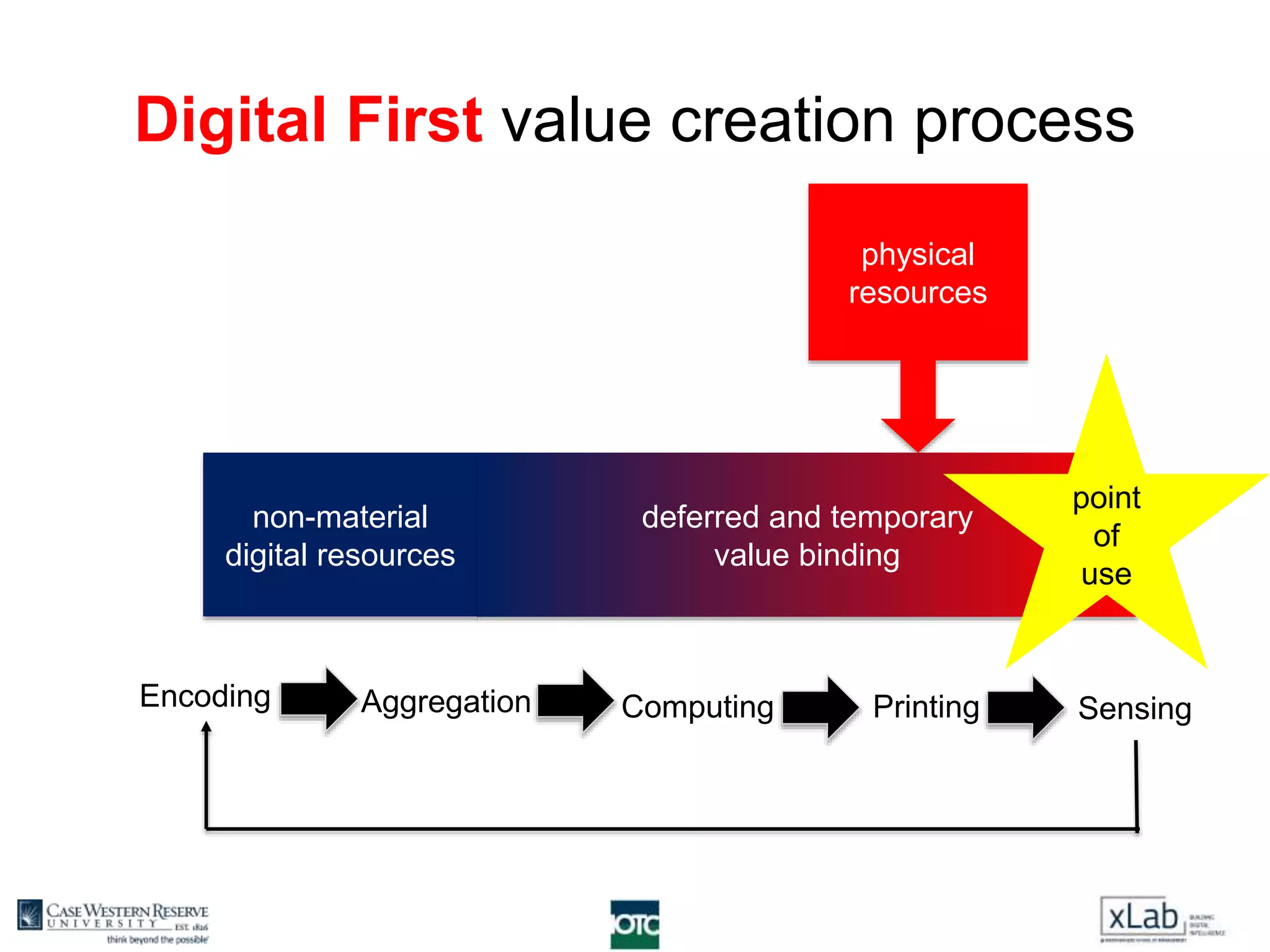
non-material
digital resources
physical
resources
deferred and temporary
value binding
point
of
use
Encoding Aggregation Computing Printing Sensing
Digital First value creation process
deferred and temporary
binding of resources at or near
the point of use through
reversible
Value co-creation process
on-demand, deferred, temporary,
and recombinant assemblage of
distributed material and non-
material resources through the “live
actions” by software-enabled
instructions
binding (assemblage) of resources
are done at or near the point or
near of use through “printing”
a firm as a nexus of algorithms that
carry out “print” instructions at or
near the point of use for deferred
binding
Data & algorithm are the
driver of value creation.
Physical resources are
combined only when and where
it adds value.
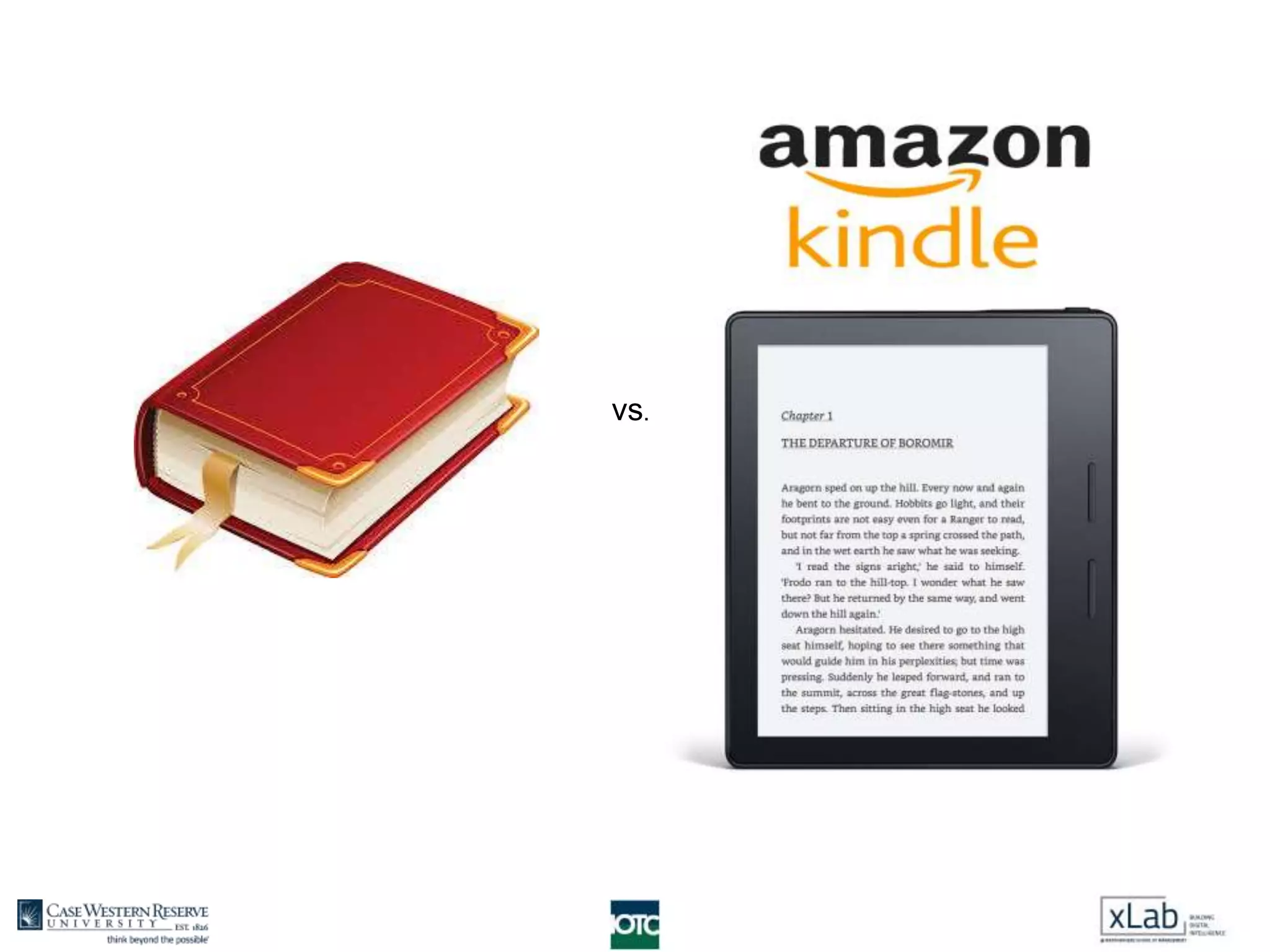
vs.
a “publishing” logic
a “printing” logic
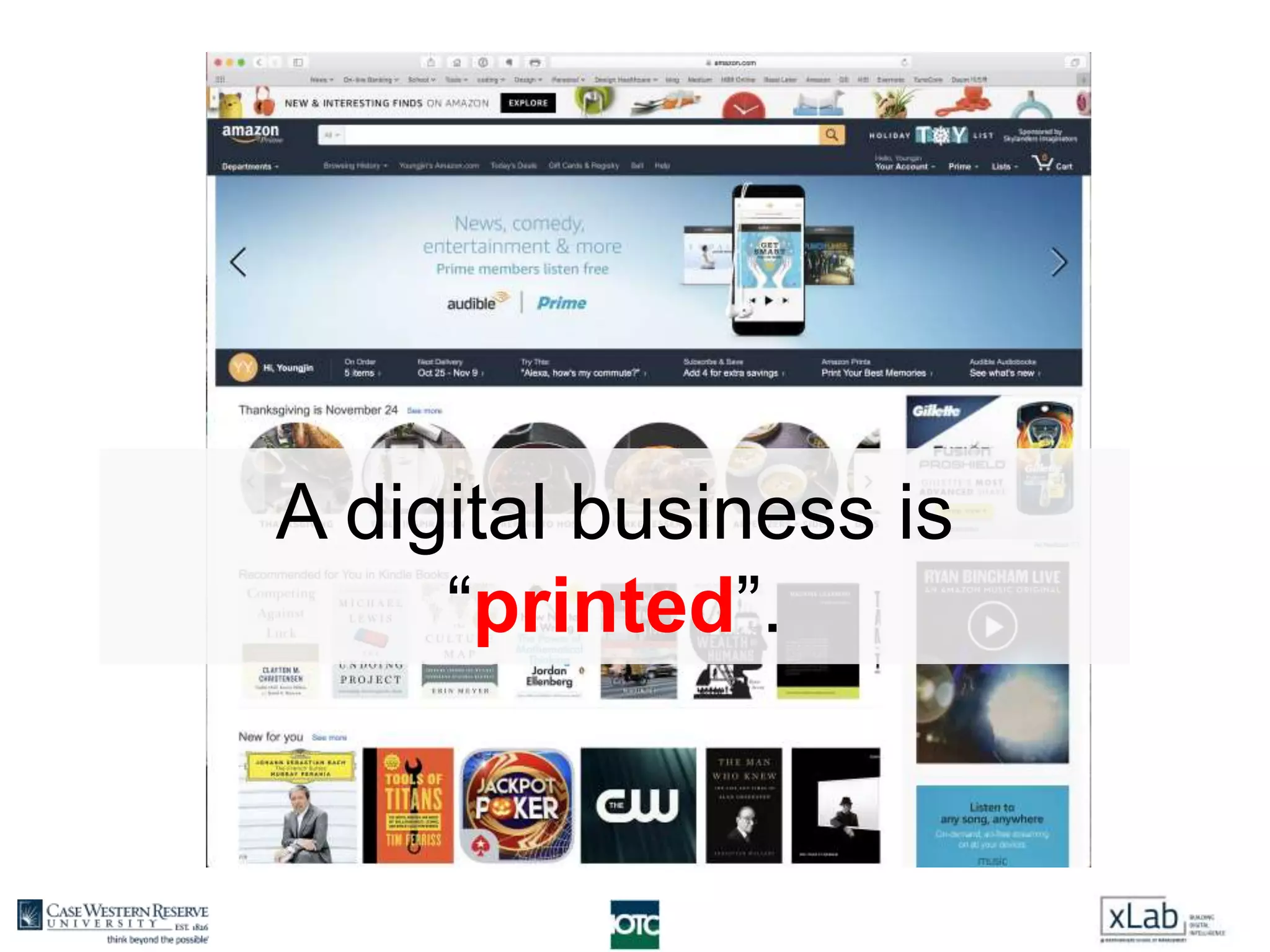
A digital business is
“printed”.
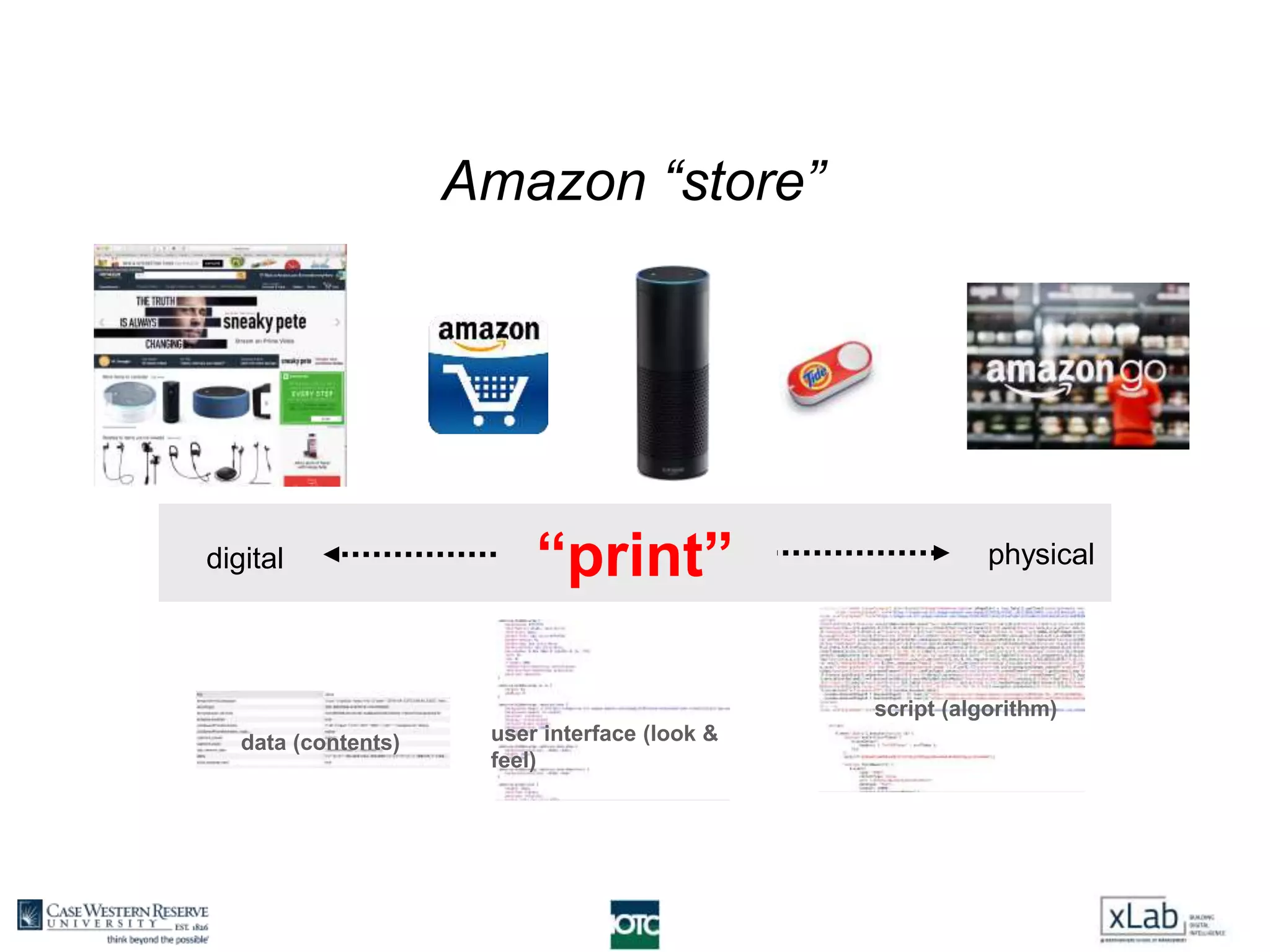
Amazon “store”
script (algorithm)
user interface (look &
feel)
data (contents)
“print”digital physical
Digital
Technology
Strategic
Framework
Digital Talent
Digital
Business
Model
Connected Healthy Living
Connected Manufacturing
Connected Experience
CWRU Assets Digital First
Solutions Needed
xLab Themes
Technology
Engineering, IOTC,
think[box], Data
Analytics
Management
Design thinking,
Entrepreneurship,
Marketing, Finance
Domain Knowledge
Heatlhcare, Manufacturing,
Data Science
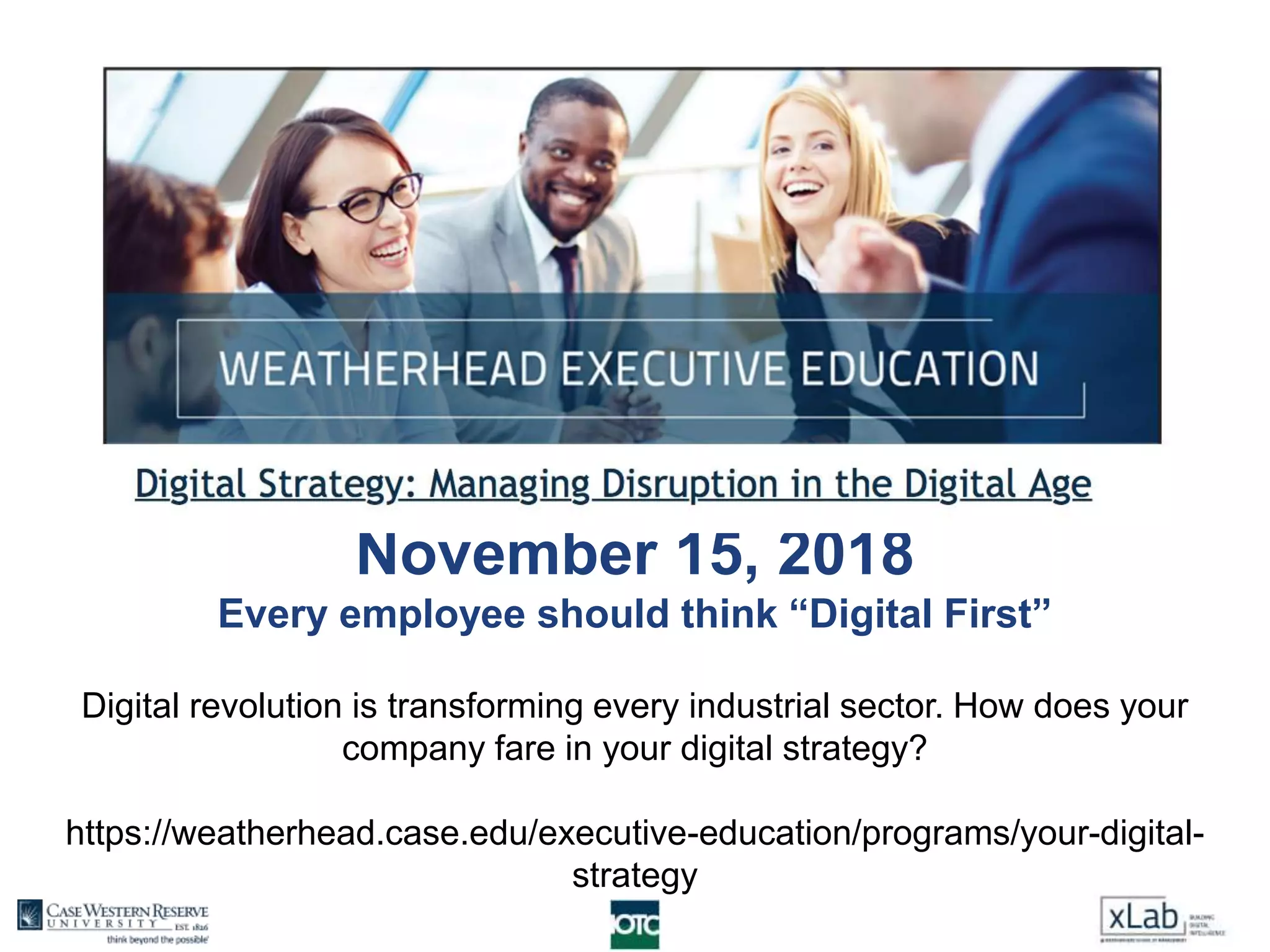
November 15, 2018
Every employee should think “Digital First”
Digital revolution is transforming every industrial sector. How does your
company fare in your digital strategy?
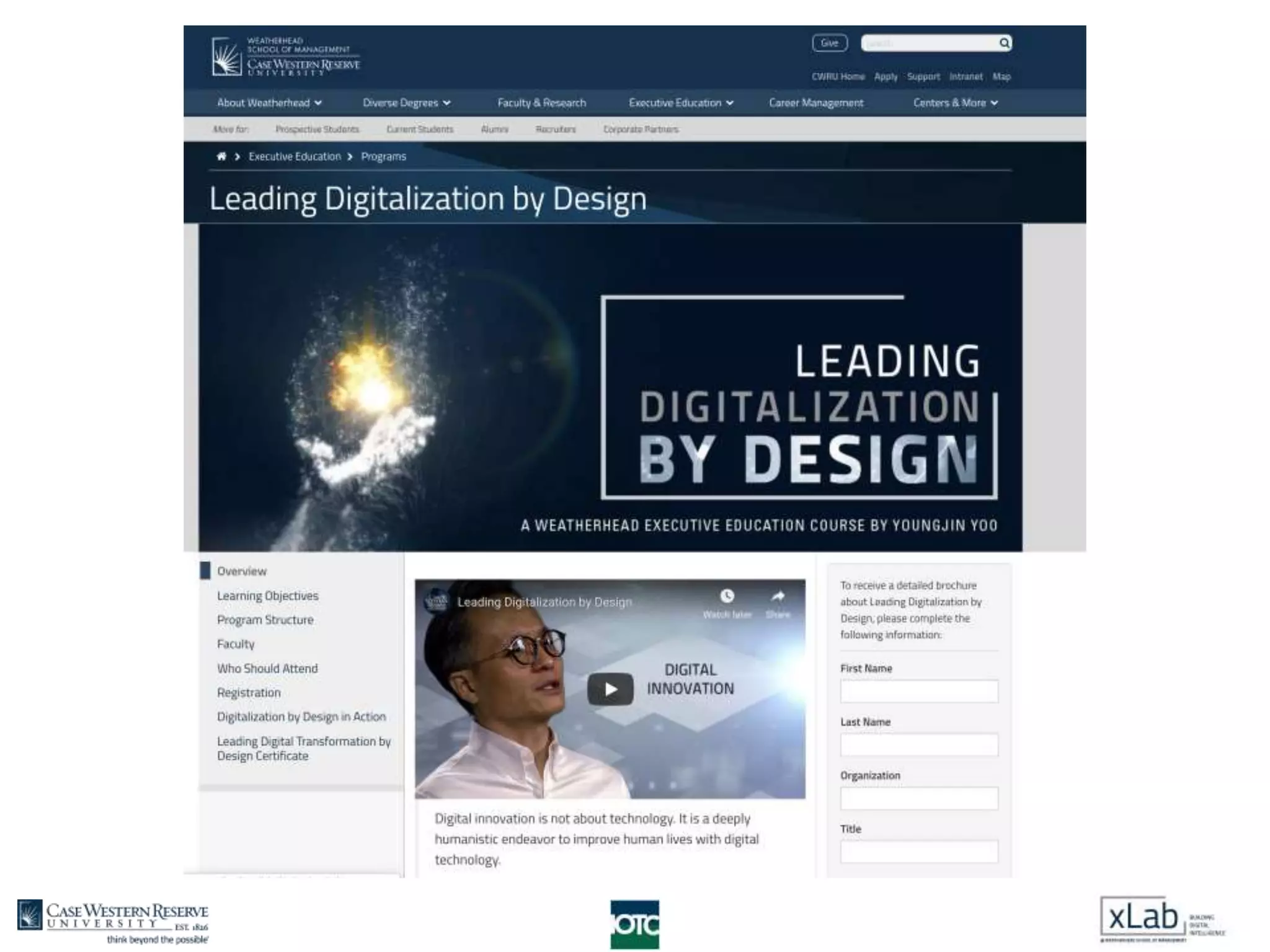
https://weatherhead.case.edu/executive-education/programs/your-digital-
strategy
Digital First - Managing Disruption in the Digital Economy

Digital First - Managing Disruption in the Digital Economy

  • 1.
    Digital First Managing Disruptionin the Digital Economy Youngjin Yoo Faculty Director, xLab Elizabeth M. and William C. Treuhaft Professor in Entrepreneurship Weatherhead School of Management Case Western Reserve University @YoungjinYoo November 1, 2018 IOTC Thought Leadership Meeting
  • 3.
    Digital innovation:  transformationof the way value is created… through the use of digital assets as the foundation
  • 4.
    Previous wave ofdigital innovation: “paving cow’s path” • 2G/3G mobile handset • Digital TV • Enterprise IT systems • Electronic health records to support the current practices
  • 5.
    “A Tesla has150 moving parts. A typical internal combustion engine car has about 10,000 moving parts and none of them overlaps with 150 parts that Tesla uses.” • smartphones • ridesharing model • what about healthcare industry? Current wave of digital innovation:
  • 6.
    Digital objects “objects thattake shape on a screen or hide in the back end of a computer program, composed of data and meta data regulated by structures or schemas” (Hui 2016, p. 1)
  • 7.
  • 8.
    Two essential propertiesof digital objects 1. non-material 2. computed
  • 9.
    1. Non-materiality ofdigital objects demands them to be “printed” on physical bearers so that users can interact with
  • 10.
    2. Digital objectsas computed objects any digital object require an execution of a set of instructions to come into being. • Re-programmable • Result of pre-formatted, automated, contingent, “live actions” performed by software
  • 13.
    When you docut & paste … each instance is an emergent and temporary reproduction of non-material objects created instantaneously by a set of instructions
  • 14.
    Value creation process “thesteps and activities (within and across firms or industries) that lead to the production of marketable goods”
  • 15.
    rawmaterials Industrial value creationprocess Exchangeof products&service producer buyer
  • 16.
    early and permanentbinding of resources through irreversible process of value creation to produce goods with irrevocable status
  • 17.
    the transfer ofownership as the finality of economic transactions
  • 18.
    information as a representationalby-product of physical activities
  • 19.
    buyers only but nousers in sight
  • 20.
    non-material digital resources physical resources deferred andtemporary value binding point of use Encoding Aggregation Computing Printing Sensing Digital First value creation process
  • 21.
    deferred and temporary bindingof resources at or near the point of use through reversible
  • 22.
    Value co-creation process on-demand,deferred, temporary, and recombinant assemblage of distributed material and non- material resources through the “live actions” by software-enabled instructions
  • 23.
    binding (assemblage) ofresources are done at or near the point or near of use through “printing”
  • 24.
    a firm asa nexus of algorithms that carry out “print” instructions at or near the point of use for deferred binding
  • 25.
    Data & algorithmare the driver of value creation. Physical resources are combined only when and where it adds value.
  • 26.
  • 27.
  • 28.
  • 29.
    A digital businessis “printed”.
  • 30.
    Amazon “store” script (algorithm) userinterface (look & feel) data (contents) “print”digital physical
  • 31.
    Digital Technology Strategic Framework Digital Talent Digital Business Model Connected HealthyLiving Connected Manufacturing Connected Experience CWRU Assets Digital First Solutions Needed xLab Themes Technology Engineering, IOTC, think[box], Data Analytics Management Design thinking, Entrepreneurship, Marketing, Finance Domain Knowledge Heatlhcare, Manufacturing, Data Science
  • 32.
    November 15, 2018 Everyemployee should think “Digital First” Digital revolution is transforming every industrial sector. How does your company fare in your digital strategy? https://weatherhead.case.edu/executive-education/programs/your-digital- strategy

Editor's Notes

  • #6 this means you will have to have new supply chain