2013 ACCF/AHA Guideline for the 
Management of STEMI
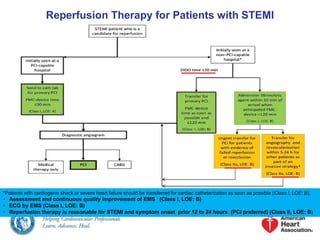
Reperfusion Therapy for Patients with STEMI 
*Patients with cardiogenic shock or severe heart failure should be transferred for cardiac catheterization as soon as possible (Class I, LOE: B). 
• Assessment and continuous quality improvement of EMS (Class I, LOE: B) 
• ECG by EMS (Class I, LOE: B) 
• Reperfusion therapy is reasonable for STEMI and symptom onset prior 12 to 24 hours (PCI preferred) (Class II, LOE: B)
Primary PCI in STEMI 
APEX-AMI Trial 
? PRAMI Trial 
• Manual aspiration thrombectomy is reasonable for patients 
undergoing primary PCI. [+TAPAS / -TASTE TRIAL]
Use of Stents in Patients With STEMI 
Placement of a stent (BMS or DES) is useful in primary PCI for 
patients with STEMI. [EES DES best] 
I IIa IIb III 
BMS* should be used in patients with high bleeding risk, inability 
to comply with 1 year of DAPT, or anticipated invasive or surgical 
procedures in the next year. 
I IIa IIb III 
DES should not be used in primary PCI for patients with STEMI 
who are unable to tolerate or comply with a prolonged course of 
DAPT because of the increased risk of stent thrombosis with 
premature discontinuation of one or both agents. 
I IIa IIb III 
*Balloon angioplasty without stent placement may be used in selected patients. 
Harm
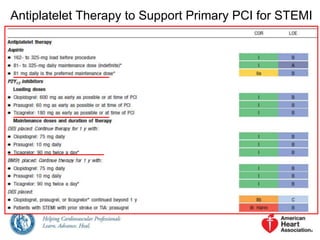
Antiplatelet Therapy to Support Primary PCI for STEMI
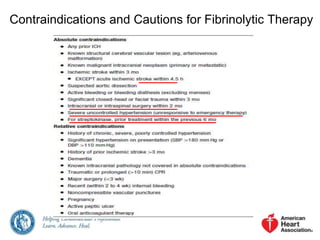
Contraindications and Cautions for Fibrinolytic Therapy
Indications for PCI of an Infarct Artery in Patients Who 
Were Managed With Fibrinolytic Therapy or Who Did 
Not Receive Reperfusion Therapy 
[PHARMACOINVASIVE] 
[CAG (CLASS IIA)] 
[OAT TRIAL] 
*Although individual circumstances will vary, clinical stability is defined by the absence of low output, 
hypotension, persistent tachycardia, apparent shock, high-grade ventricular or symptomatic 
supraventricular tachyarrhythmias, and spontaneous recurrent ischemia. 
PCI is indicated in a noninfarct artery at a time separate from primary PCI 
• In patients who have spontaneous symptoms of myocardial ischemia (CLASS I) 
• In patients with intermediate/high-risk findings on noninvasive testing (CLASS IIA)
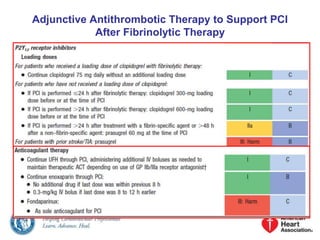
Adjunctive Antithrombotic Therapy to Support PCI 
After Fibrinolytic Therapy
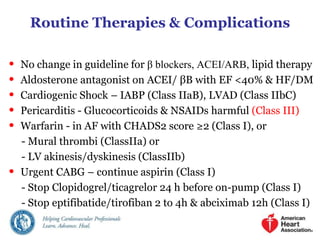
Routine Therapies & Complications 
• No change in guideline for β blockers, ACEI/ARB, lipid therapy 
• Aldosterone antagonist on ACEI/ βB with EF <40% & HF/DM 
• Cardiogenic Shock – IABP (Class IIaB), LVAD (Class IIbC) 
• Pericarditis - Glucocorticoids & NSAIDs harmful (Class III) 
• Warfarin - in AF with CHADS2 score ≥2 (Class I), or 
- Mural thrombi (ClassIIa) or 
- LV akinesis/dyskinesis (ClassIIb) 
• Urgent CABG – continue aspirin (Class I) 
- Stop Clopidogrel/ticagrelor 24 h before on-pump (Class I) 
- Stop eptifibatide/tirofiban 2 to 4h & abciximab 12h (Class I)
ACCF/AHA 2013 STEMI Guideline 
• Shorter document length & color-coded recommendation 
charts and algorithms makes it more practice-friendly 
• Effort to achieve timely reperfusion starts with attention to 
response to symptom onset (strengthening EMS) 
• Primary PCI is the strategy of choice (FMC to D <2h) 
• After fibrinolysis all patients should be transferred for 
angiography and revascularization 
• Preference for 81-mg maintenance dose of aspirin after PCI 
• Benefit of therapeutic hypothermia in improving neurologic 
outcomes in out-of-hospital cardiac arrest patients
THANK YOU

ACC/AHA 2013 STEMI GUIDELINES - SUMMARY & NEW ADDITIONS

  • 1.
    2013 ACCF/AHA Guidelinefor the Management of STEMI
  • 2.
    Reperfusion Therapy forPatients with STEMI *Patients with cardiogenic shock or severe heart failure should be transferred for cardiac catheterization as soon as possible (Class I, LOE: B). • Assessment and continuous quality improvement of EMS (Class I, LOE: B) • ECG by EMS (Class I, LOE: B) • Reperfusion therapy is reasonable for STEMI and symptom onset prior 12 to 24 hours (PCI preferred) (Class II, LOE: B)
  • 3.
    Primary PCI inSTEMI APEX-AMI Trial ? PRAMI Trial • Manual aspiration thrombectomy is reasonable for patients undergoing primary PCI. [+TAPAS / -TASTE TRIAL]
  • 4.
    Use of Stentsin Patients With STEMI Placement of a stent (BMS or DES) is useful in primary PCI for patients with STEMI. [EES DES best] I IIa IIb III BMS* should be used in patients with high bleeding risk, inability to comply with 1 year of DAPT, or anticipated invasive or surgical procedures in the next year. I IIa IIb III DES should not be used in primary PCI for patients with STEMI who are unable to tolerate or comply with a prolonged course of DAPT because of the increased risk of stent thrombosis with premature discontinuation of one or both agents. I IIa IIb III *Balloon angioplasty without stent placement may be used in selected patients. Harm
  • 5.
    Antiplatelet Therapy toSupport Primary PCI for STEMI
  • 6.
    Contraindications and Cautionsfor Fibrinolytic Therapy
  • 7.
    Indications for PCIof an Infarct Artery in Patients Who Were Managed With Fibrinolytic Therapy or Who Did Not Receive Reperfusion Therapy [PHARMACOINVASIVE] [CAG (CLASS IIA)] [OAT TRIAL] *Although individual circumstances will vary, clinical stability is defined by the absence of low output, hypotension, persistent tachycardia, apparent shock, high-grade ventricular or symptomatic supraventricular tachyarrhythmias, and spontaneous recurrent ischemia. PCI is indicated in a noninfarct artery at a time separate from primary PCI • In patients who have spontaneous symptoms of myocardial ischemia (CLASS I) • In patients with intermediate/high-risk findings on noninvasive testing (CLASS IIA)
  • 8.
    Adjunctive Antithrombotic Therapyto Support PCI After Fibrinolytic Therapy
  • 9.
    Routine Therapies &Complications • No change in guideline for β blockers, ACEI/ARB, lipid therapy • Aldosterone antagonist on ACEI/ βB with EF <40% & HF/DM • Cardiogenic Shock – IABP (Class IIaB), LVAD (Class IIbC) • Pericarditis - Glucocorticoids & NSAIDs harmful (Class III) • Warfarin - in AF with CHADS2 score ≥2 (Class I), or - Mural thrombi (ClassIIa) or - LV akinesis/dyskinesis (ClassIIb) • Urgent CABG – continue aspirin (Class I) - Stop Clopidogrel/ticagrelor 24 h before on-pump (Class I) - Stop eptifibatide/tirofiban 2 to 4h & abciximab 12h (Class I)
  • 10.
    ACCF/AHA 2013 STEMIGuideline • Shorter document length & color-coded recommendation charts and algorithms makes it more practice-friendly • Effort to achieve timely reperfusion starts with attention to response to symptom onset (strengthening EMS) • Primary PCI is the strategy of choice (FMC to D <2h) • After fibrinolysis all patients should be transferred for angiography and revascularization • Preference for 81-mg maintenance dose of aspirin after PCI • Benefit of therapeutic hypothermia in improving neurologic outcomes in out-of-hospital cardiac arrest patients
  • 11.