What lies beneath: Why worry about
women’s and girl’s wellbeing in the
context of India’s malnutrition
challenge?
Purnima Menon, PhD
Poverty, Health and Nutrition Division,
International Food Policy Research Institute
December 10 2018 | New Delhi, India
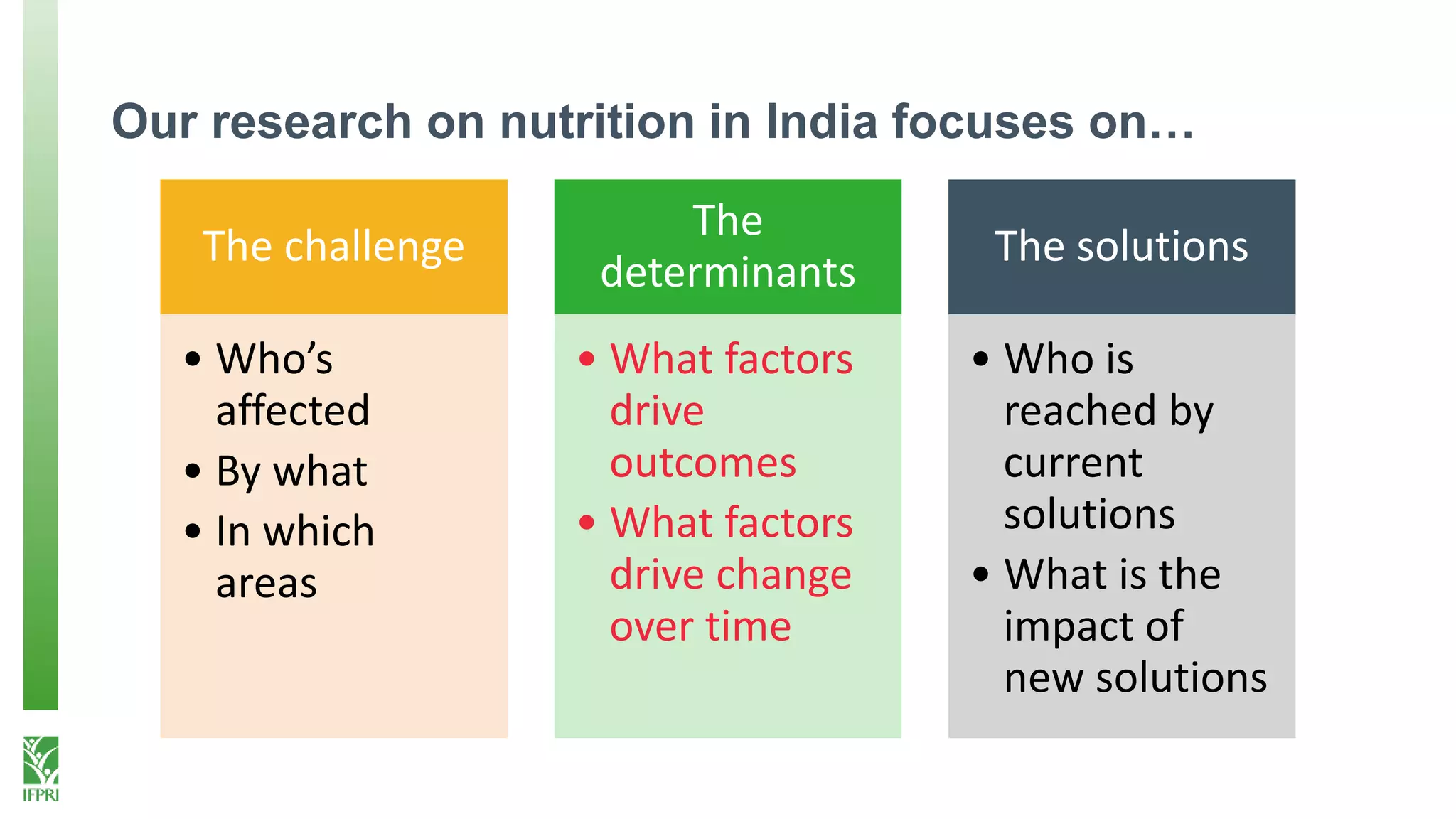
Our research on nutrition in India focuses on…
The challenge
• Who’s
affected
• By what
• In which
areas
The
determinants
• What factors
drive
outcomes
• What factors
drive change
over time
The solutions
• Who is
reached by
current
solutions
• What is the
impact of
new solutions
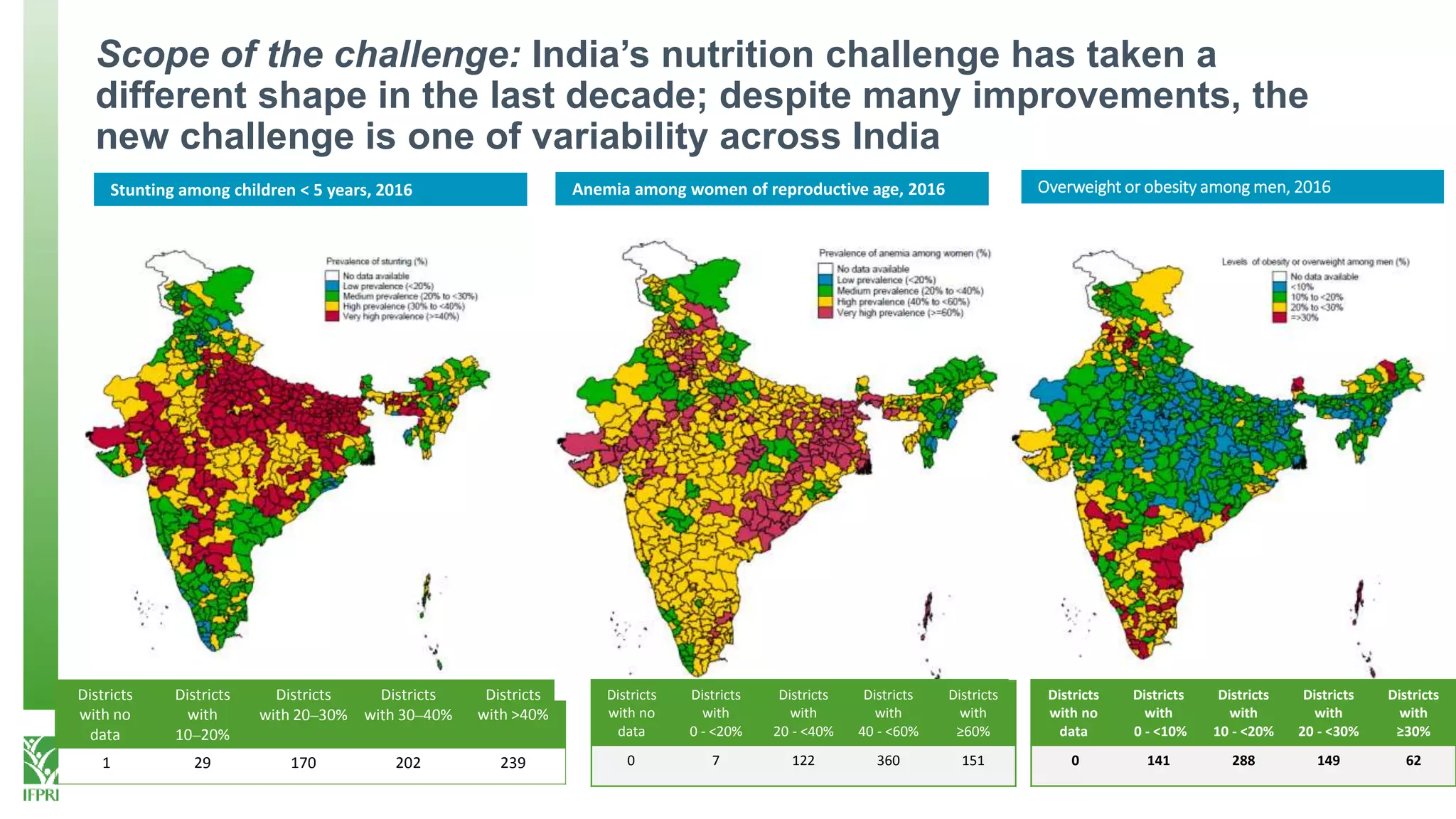
Scope of the challenge: India’s nutrition challenge has taken a
different shape in the last decade; despite many improvements, the
new challenge is one of variability across India
Districts
with no
data
Districts
with
10⎼20%
Districts
with 20⎼30%
Districts
with 30⎼40%
Districts
with >40%
1 29 170 202 239
Anemia among women of reproductive age, 2016
Districts
with no
data
Districts
with
0 - <20%
Districts
with
20 - <40%
Districts
with
40 - <60%
Districts
with
≥60%
0 7 122 360 151
Overweight or obesity among men, 2016
Districts
with no
data
Districts
with
0 - <10%
Districts
with
10 - <20%
Districts
with
20 - <30%
Districts
with
≥30%
0 141 288 149 62
Stunting among children < 5 years, 2016
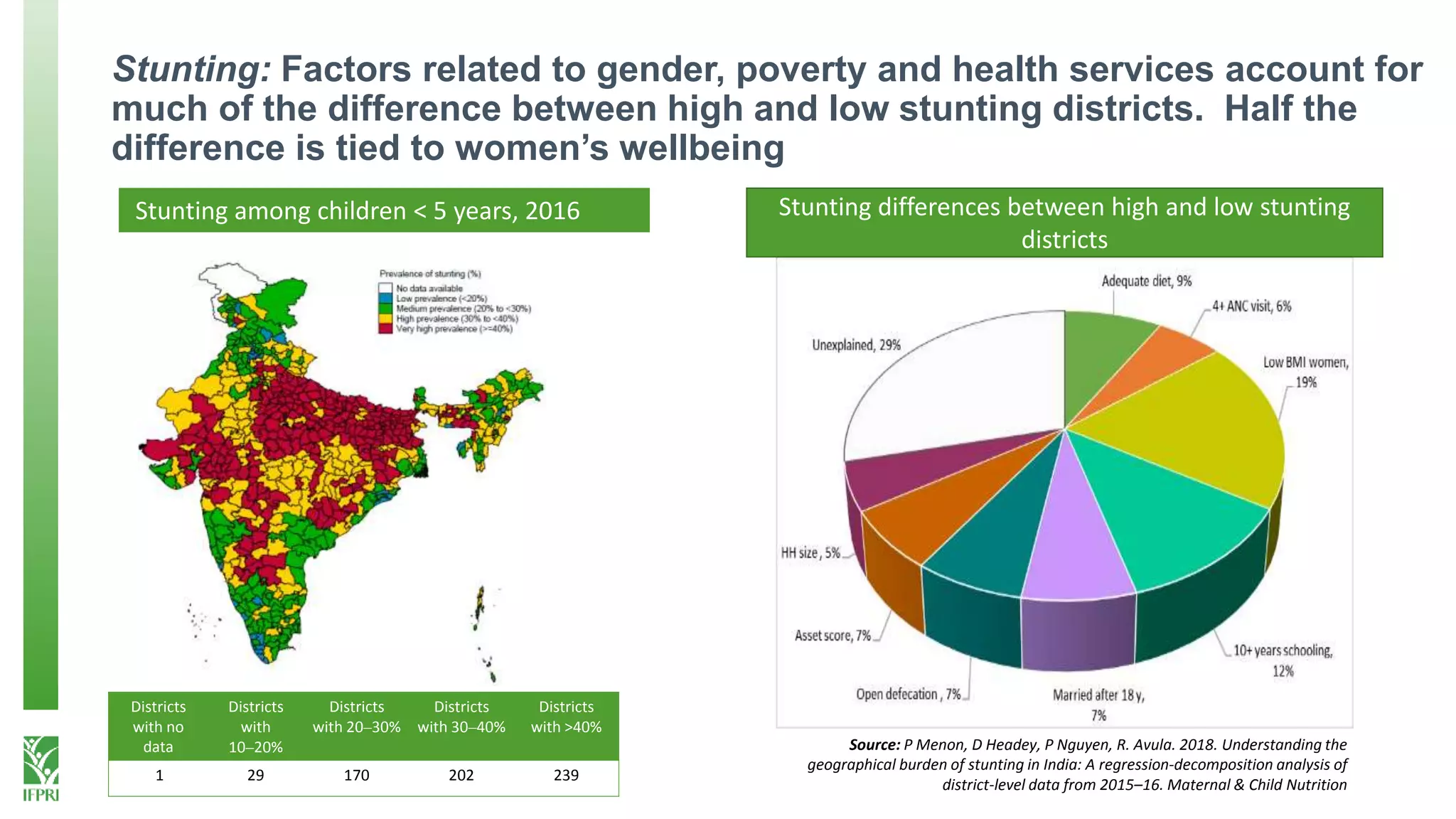
Stunting: Factors related to gender, poverty and health services account for
much of the difference between high and low stunting districts. Half the
difference is tied to women’s wellbeing
Districts
with no
data
Districts
with
10⎼20%
Districts
with 20⎼30%
Districts
with 30⎼40%
Districts
with >40%
1 29 170 202 239
Stunting among children < 5 years, 2016
Source: P Menon, D Headey, P Nguyen, R. Avula. 2018. Understanding the
geographical burden of stunting in India: A regression‐decomposition analysis of
district‐level data from 2015–16. Maternal & Child Nutrition
Stunting differences between high and low stunting
districts
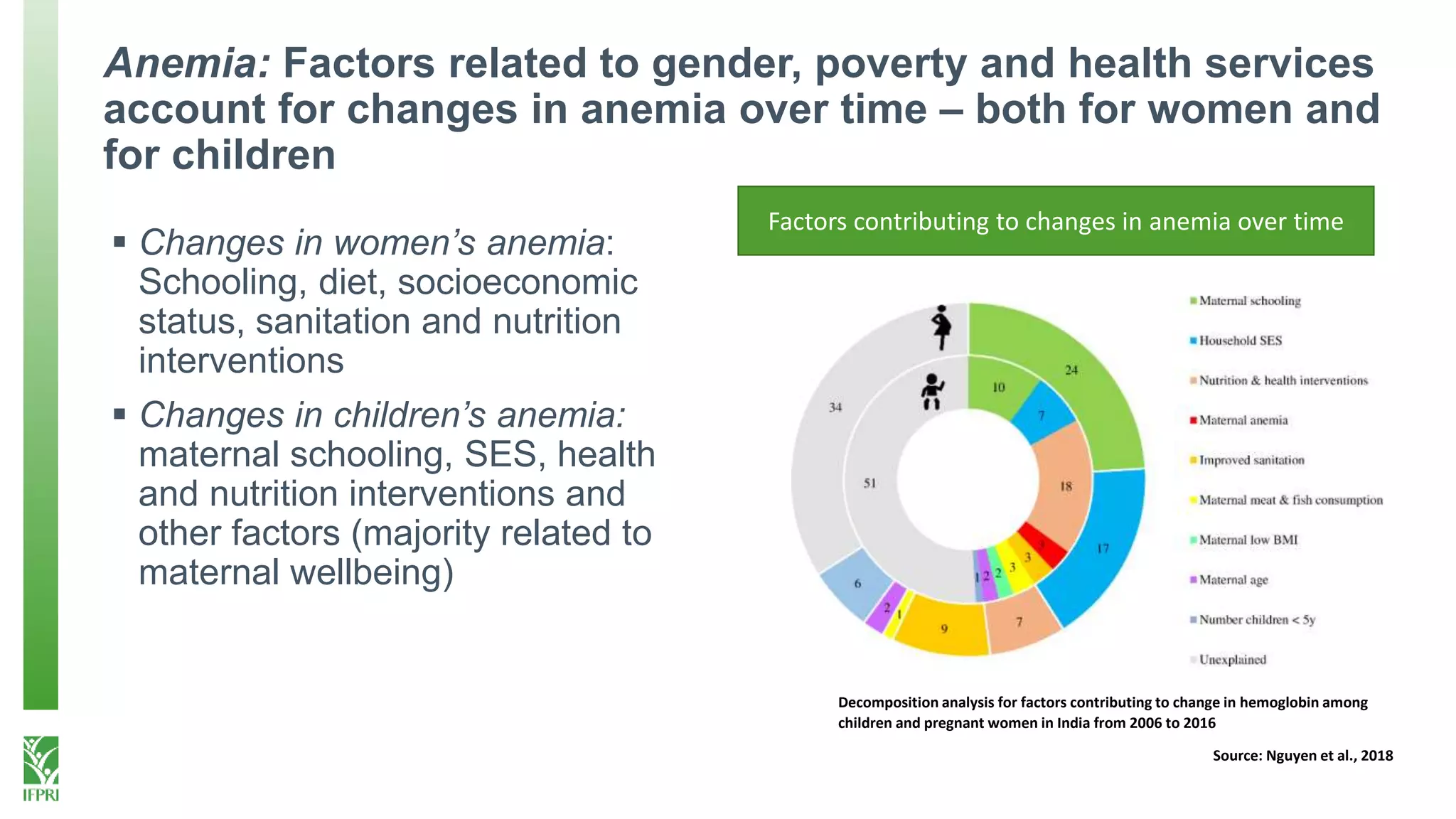
Anemia: Factors related to gender, poverty and health services
account for changes in anemia over time – both for women and
for children
Decomposition analysis for factors contributing to change in hemoglobin among
children and pregnant women in India from 2006 to 2016
Source: Nguyen et al., 2018
Factors contributing to changes in anemia over time
 Changes in women’s anemia:
Schooling, diet, socioeconomic
status, sanitation and nutrition
interventions
 Changes in children’s anemia:
maternal schooling, SES, health
and nutrition interventions and
other factors (majority related to
maternal wellbeing)
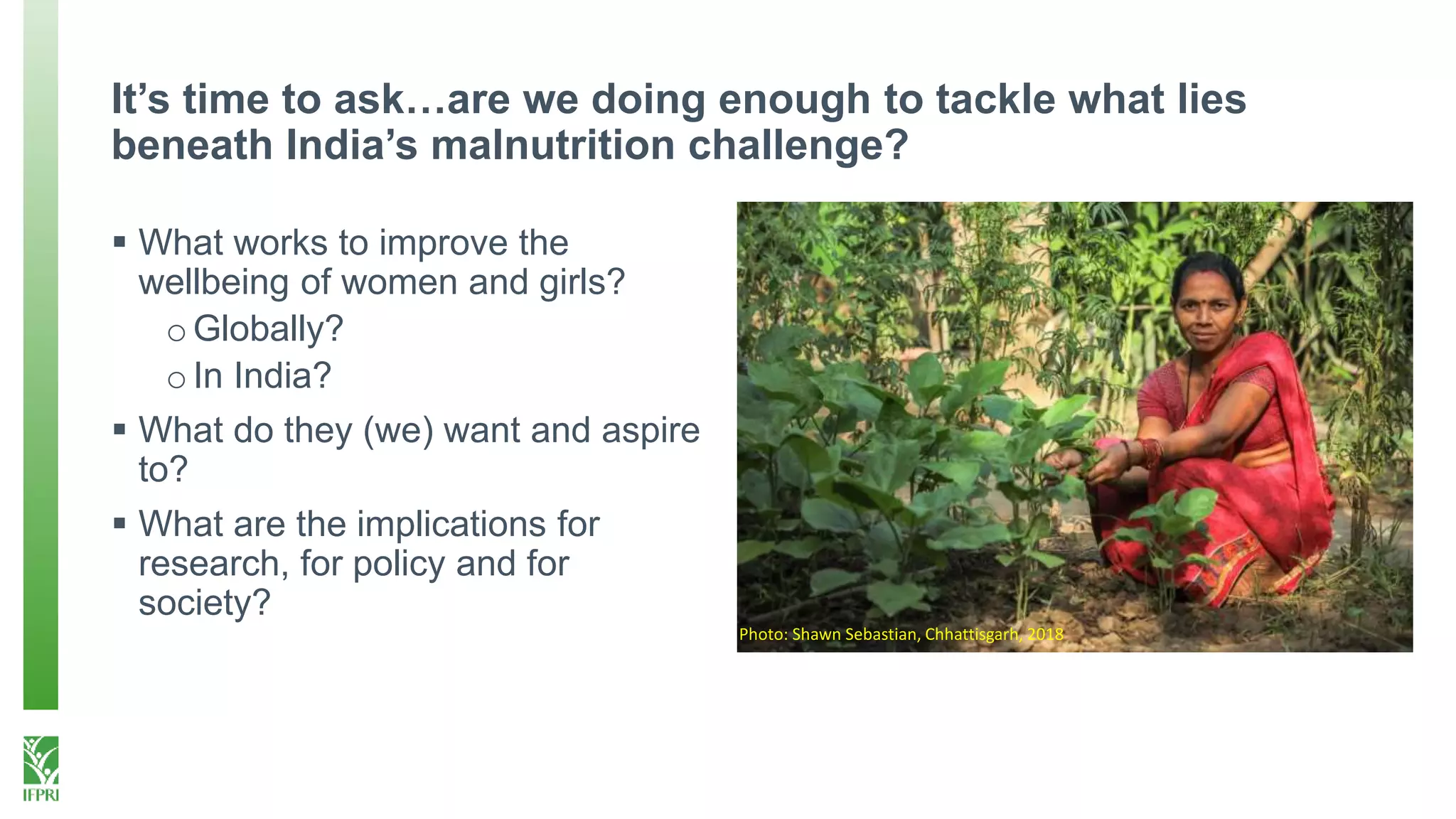
It’s time to ask…are we doing enough to tackle what lies
beneath India’s malnutrition challenge?
 What works to improve the
wellbeing of women and girls?
oGlobally?
oIn India?
 What do they (we) want and aspire
to?
 What are the implications for
research, for policy and for
society?
Photo: Shawn Sebastian, Chhattisgarh, 2018
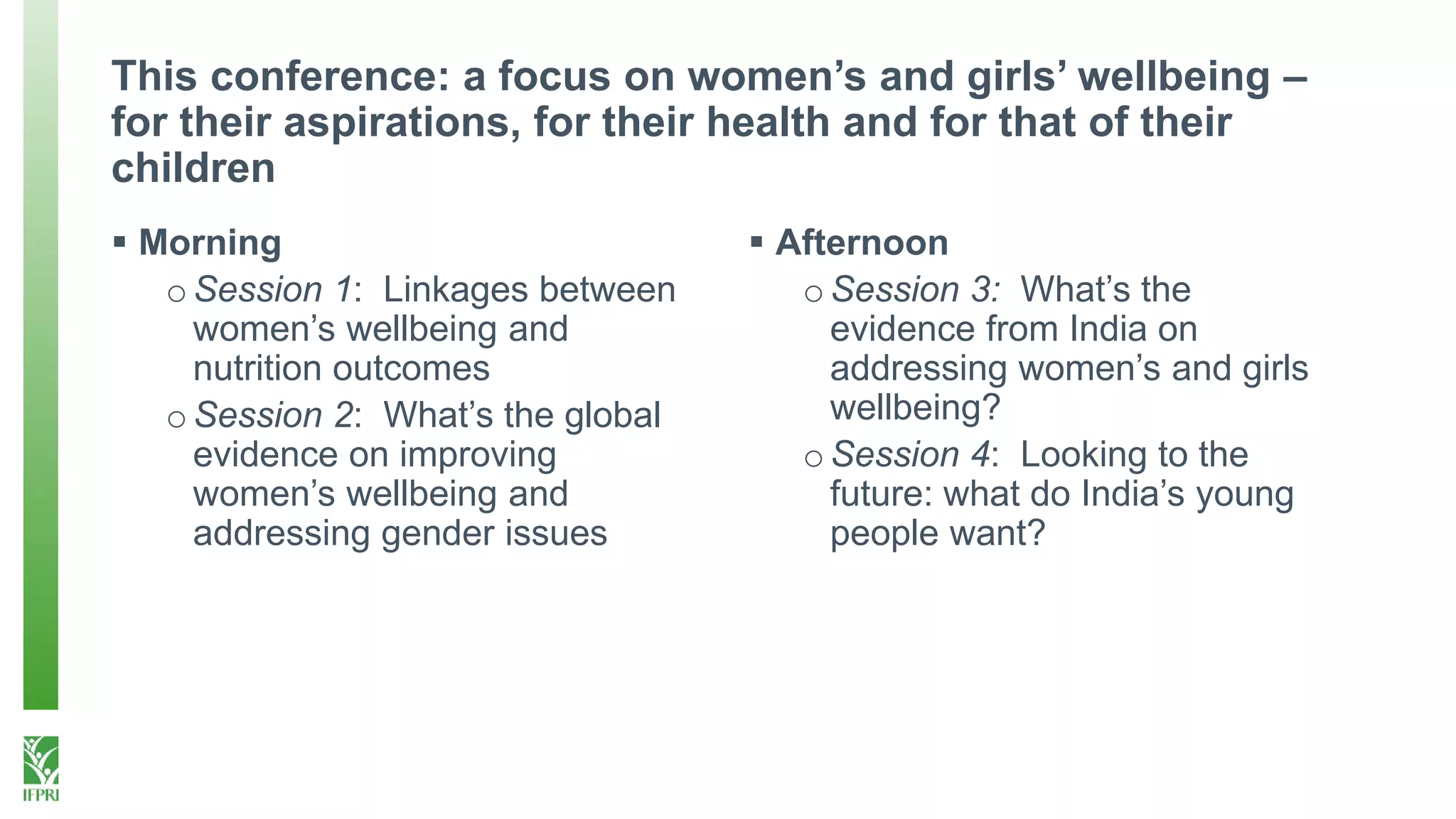
This conference: a focus on women’s and girls’ wellbeing –
for their aspirations, for their health and for that of their
children
 Morning
oSession 1: Linkages between
women’s wellbeing and
nutrition outcomes
oSession 2: What’s the global
evidence on improving
women’s wellbeing and
addressing gender issues
 Afternoon
oSession 3: What’s the
evidence from India on
addressing women’s and girls
wellbeing?
oSession 4: Looking to the
future: what do India’s young
people want?

Purnima Menon, IFPRI - Overview and structure of the gender and nutrition event, Dec 10, 2018

  • 1.
    What lies beneath:Why worry about women’s and girl’s wellbeing in the context of India’s malnutrition challenge? Purnima Menon, PhD Poverty, Health and Nutrition Division, International Food Policy Research Institute December 10 2018 | New Delhi, India
  • 2.
    Our research onnutrition in India focuses on… The challenge • Who’s affected • By what • In which areas The determinants • What factors drive outcomes • What factors drive change over time The solutions • Who is reached by current solutions • What is the impact of new solutions
  • 3.
    Scope of thechallenge: India’s nutrition challenge has taken a different shape in the last decade; despite many improvements, the new challenge is one of variability across India Districts with no data Districts with 10⎼20% Districts with 20⎼30% Districts with 30⎼40% Districts with >40% 1 29 170 202 239 Anemia among women of reproductive age, 2016 Districts with no data Districts with 0 - <20% Districts with 20 - <40% Districts with 40 - <60% Districts with ≥60% 0 7 122 360 151 Overweight or obesity among men, 2016 Districts with no data Districts with 0 - <10% Districts with 10 - <20% Districts with 20 - <30% Districts with ≥30% 0 141 288 149 62 Stunting among children < 5 years, 2016
  • 4.
    Stunting: Factors relatedto gender, poverty and health services account for much of the difference between high and low stunting districts. Half the difference is tied to women’s wellbeing Districts with no data Districts with 10⎼20% Districts with 20⎼30% Districts with 30⎼40% Districts with >40% 1 29 170 202 239 Stunting among children < 5 years, 2016 Source: P Menon, D Headey, P Nguyen, R. Avula. 2018. Understanding the geographical burden of stunting in India: A regression‐decomposition analysis of district‐level data from 2015–16. Maternal & Child Nutrition Stunting differences between high and low stunting districts
  • 5.
    Anemia: Factors relatedto gender, poverty and health services account for changes in anemia over time – both for women and for children Decomposition analysis for factors contributing to change in hemoglobin among children and pregnant women in India from 2006 to 2016 Source: Nguyen et al., 2018 Factors contributing to changes in anemia over time  Changes in women’s anemia: Schooling, diet, socioeconomic status, sanitation and nutrition interventions  Changes in children’s anemia: maternal schooling, SES, health and nutrition interventions and other factors (majority related to maternal wellbeing)
  • 6.
    It’s time toask…are we doing enough to tackle what lies beneath India’s malnutrition challenge?  What works to improve the wellbeing of women and girls? oGlobally? oIn India?  What do they (we) want and aspire to?  What are the implications for research, for policy and for society? Photo: Shawn Sebastian, Chhattisgarh, 2018
  • 7.
    This conference: afocus on women’s and girls’ wellbeing – for their aspirations, for their health and for that of their children  Morning oSession 1: Linkages between women’s wellbeing and nutrition outcomes oSession 2: What’s the global evidence on improving women’s wellbeing and addressing gender issues  Afternoon oSession 3: What’s the evidence from India on addressing women’s and girls wellbeing? oSession 4: Looking to the future: what do India’s young people want?