IFAC Guide to Review
Engagements

Andreas Noodt
Member, IFAC Small and Medium
Practices Committee
FEE & ICAEW Event
February 19, 2014

Page 1 | Confidential and Proprietary Information
IFAC SMP Committee - Overview
• To represent interests of small- and medium-sized
practices (SMPs)
• Comprised of 18 members from 17 countries
• Regular input to policy, regulation and international
standards
– IAASB on key projects

• Develops tools and guidance
– Guide to Review Engagements

• Promotes the visibility and recognition of SMPs
• IFAC Global Knowledge Gateway
Page 2 | Confidential and Proprietary Information
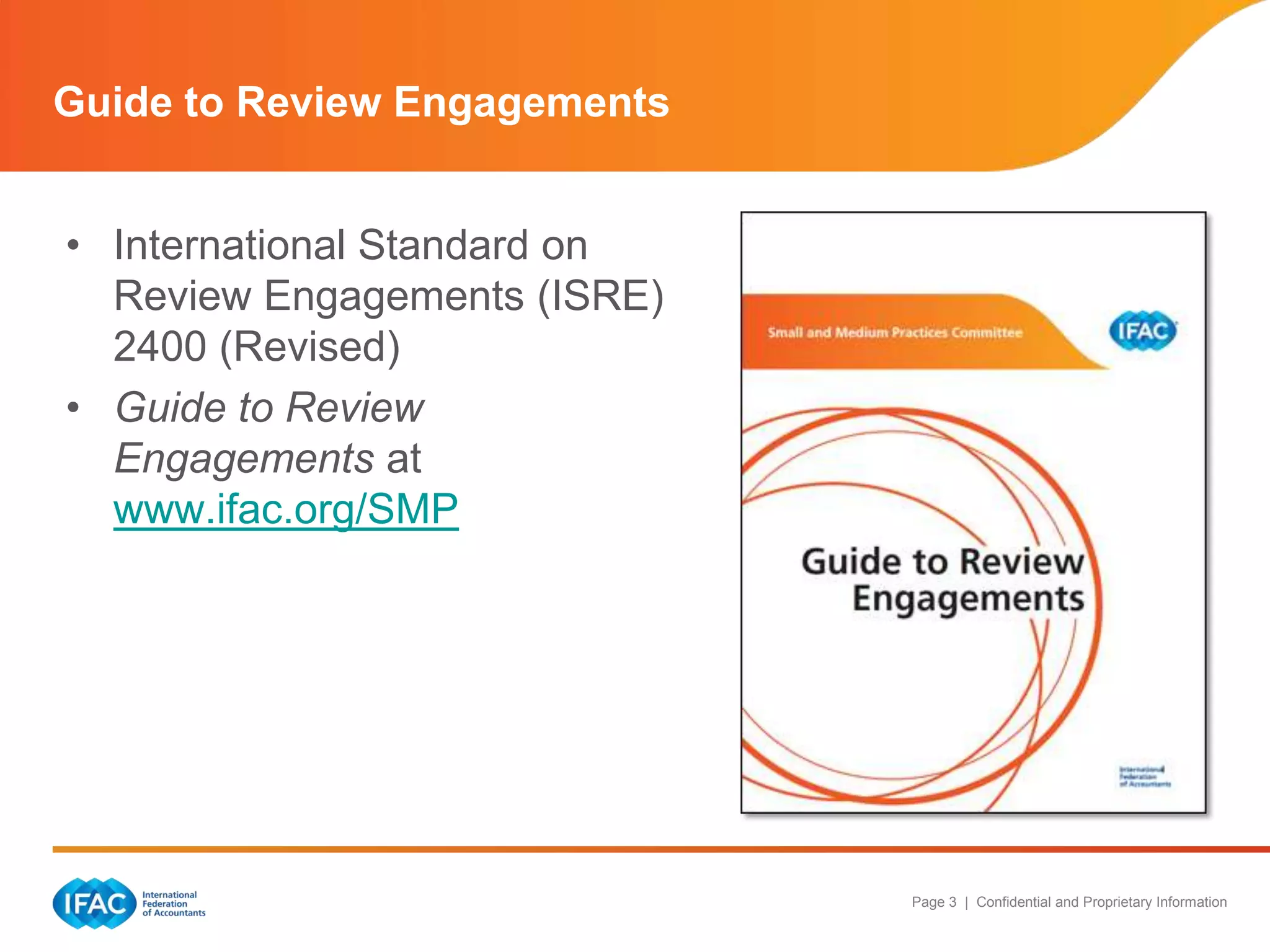
Guide to Review Engagements
• International Standard on
Review Engagements (ISRE)
2400 (Revised)
• Guide to Review
Engagements at
www.ifac.org/SMP

Page 3 | Confidential and Proprietary Information
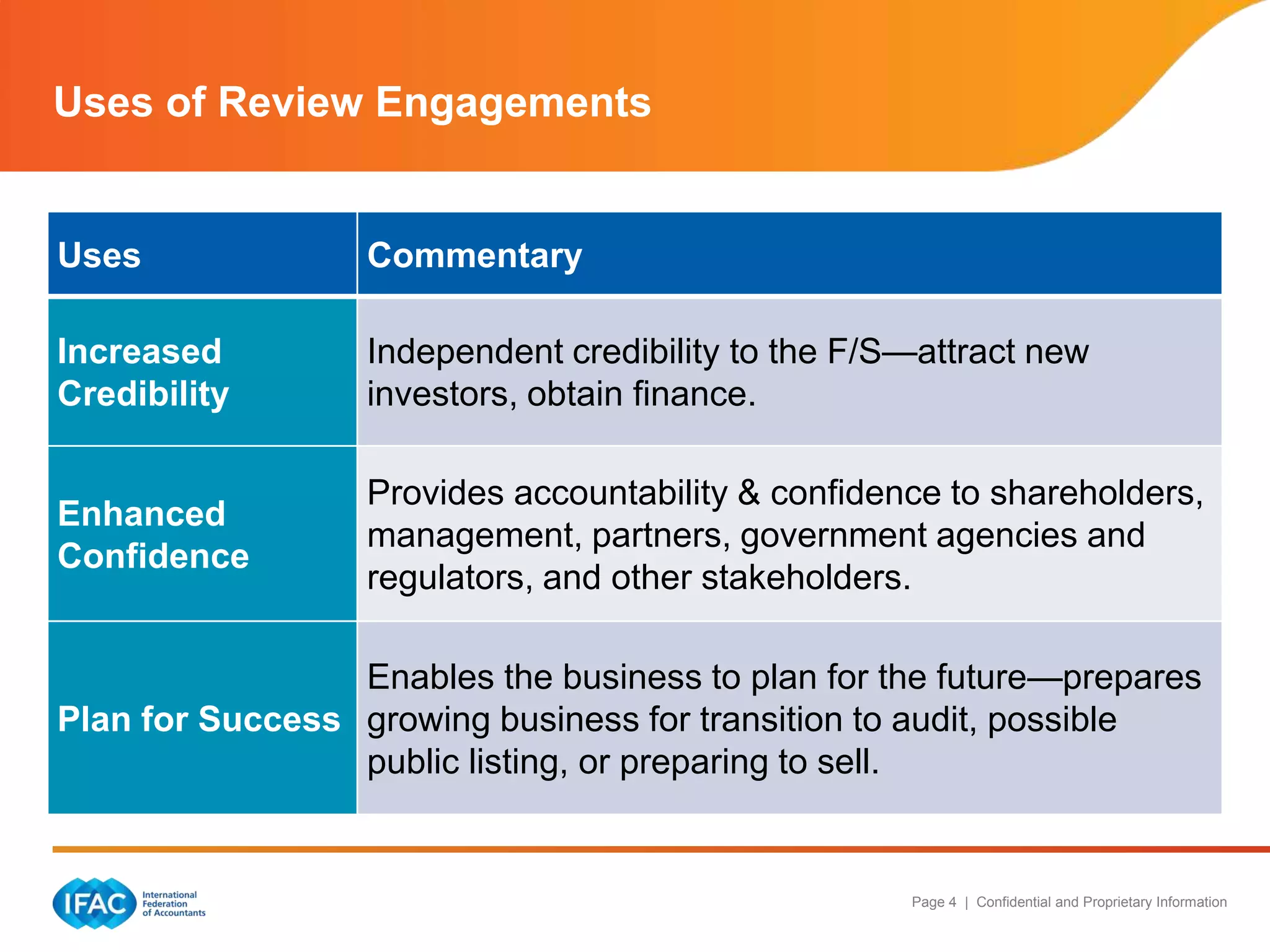
Uses of Review Engagements

Uses

Commentary

Increased
Credibility

Independent credibility to the F/S—attract new
investors, obtain finance.

Enhanced
Confidence

Provides accountability & confidence to shareholders,
management, partners, government agencies and
regulators, and other stakeholders.

Enables the business to plan for the future—prepares
Plan for Success growing business for transition to audit or preparing to
sell.

Page 4 | Confidential and Proprietary Information
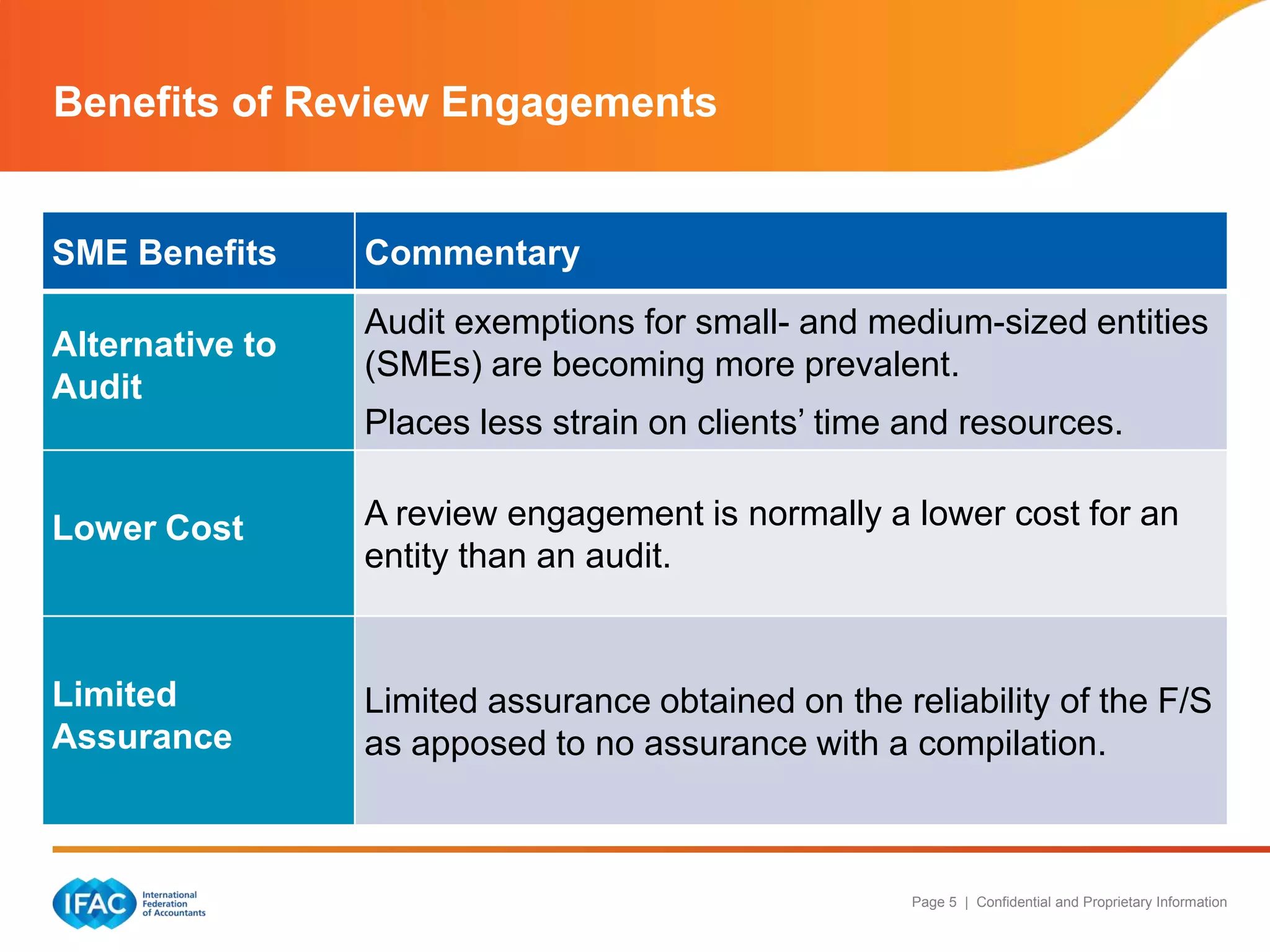
Benefits of Review Engagements

SME Benefits
Alternative to
Audit

Commentary
Audit exemptions for small- and medium-sized entities
(SMEs) are becoming more prevalent.
Less time consuming for client.

Lower Cost

A review engagement is normally a lower cost for an
entity than an audit.

Limited
Assurance

Limited assurance obtained on the F/S as apposed to
no assurance with a compilation.

Page 5 | Confidential and Proprietary Information
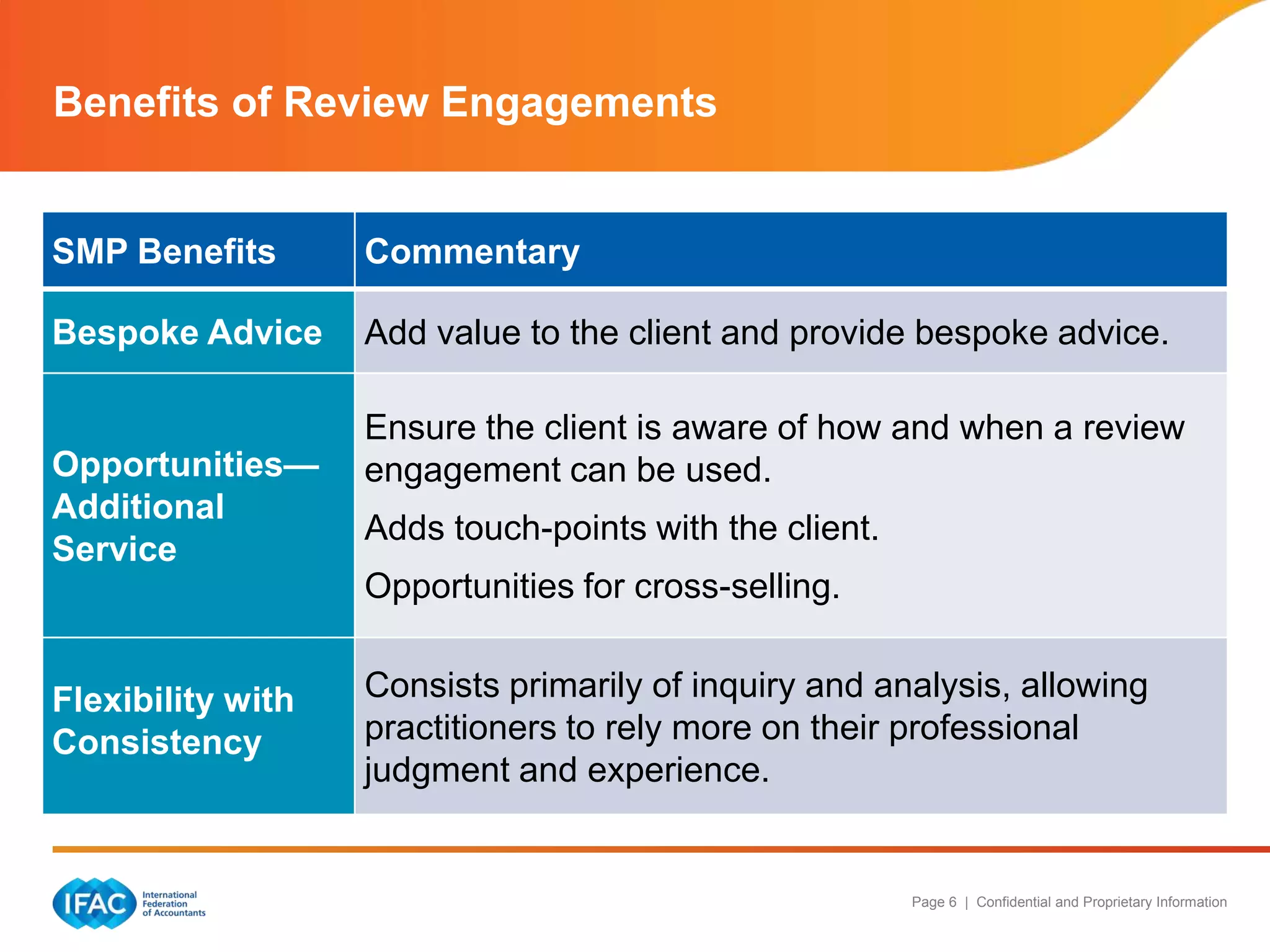
Benefits of Review Engagements

SMP Benefits

Commentary

Bespoke Advice

Add value to the client and provide a basis for
bespoke advice

Opportunities—
Additional
Service

Ensure the client is aware of how and when a review
engagement can be used
Adds touch-points with the client
Opportunities for cross-selling

Flexibility with
Consistency

Consists primarily of inquiry and analytical procedures,
allowing practitioners to tailor procedures based on
their professional judgment and experience

Page 6 | Confidential and Proprietary Information
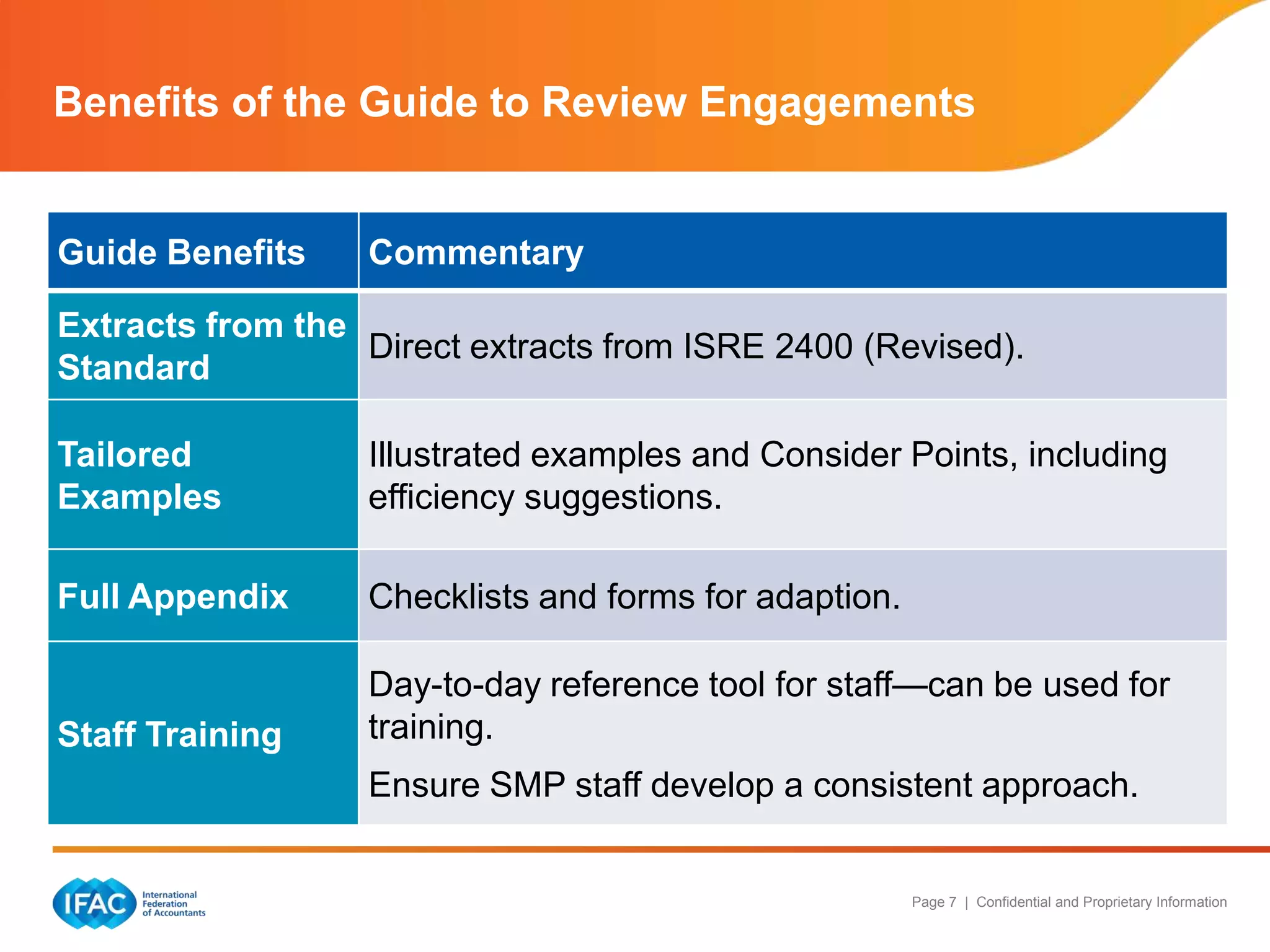
Benefits of the Guide to Review Engagements

Guide Benefits

Commentary

Extracts from the
Direct extracts from ISRE 2400 (Revised)
Standard
Tailored
Examples

Illustrated examples and Consider Points, including
efficiency suggestions

Full Appendix

Checklists, Letters and Forms for adaption

Staff Training

Day-to-day reference tool for staff—can be used for
training
Ensure SMP staff develop a consistent approach

Page 7 | Confidential and Proprietary Information
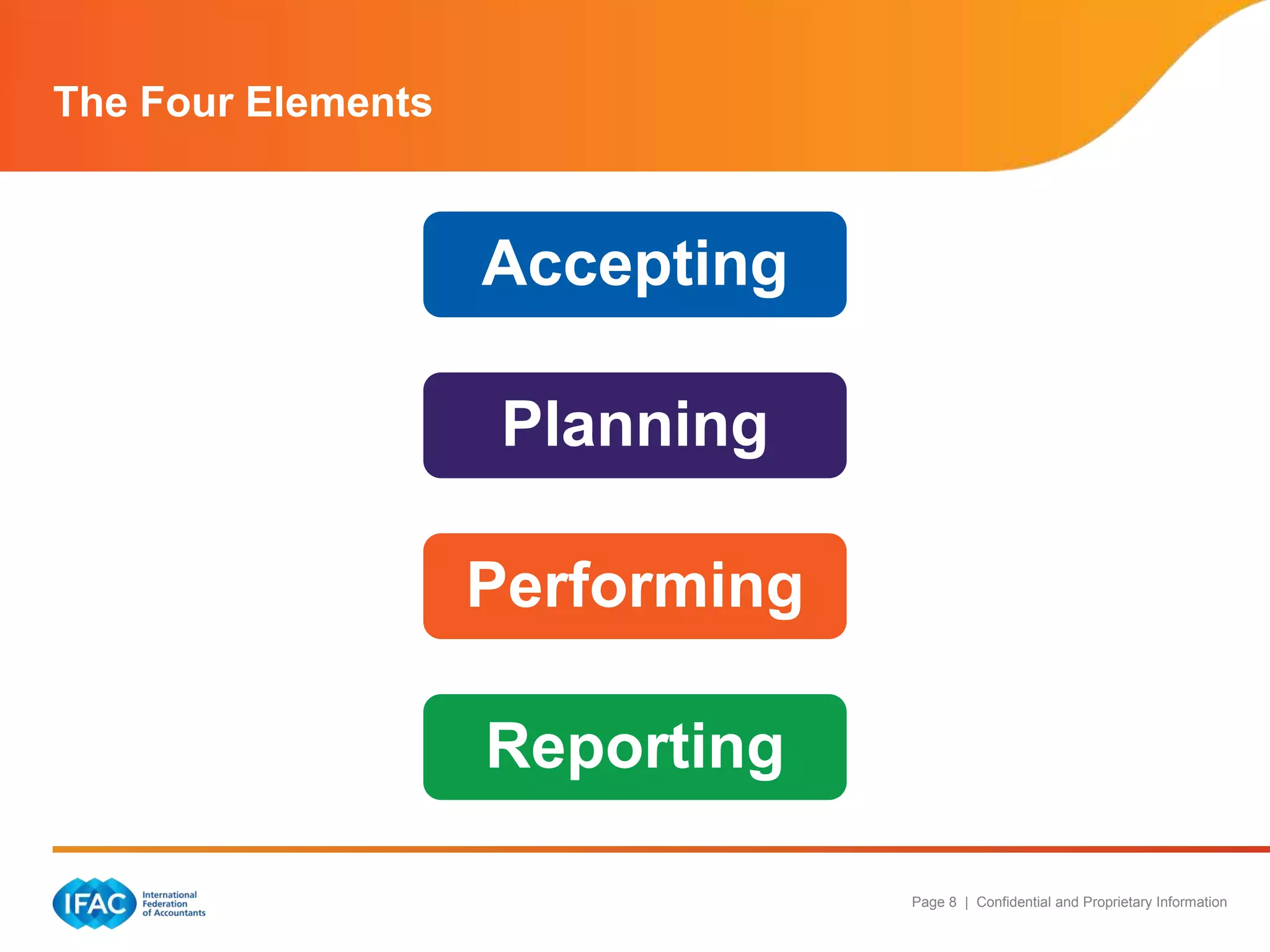
The Four Elements

Accepting
Planning
Performing
Reporting
Page 8 | Confidential and Proprietary Information
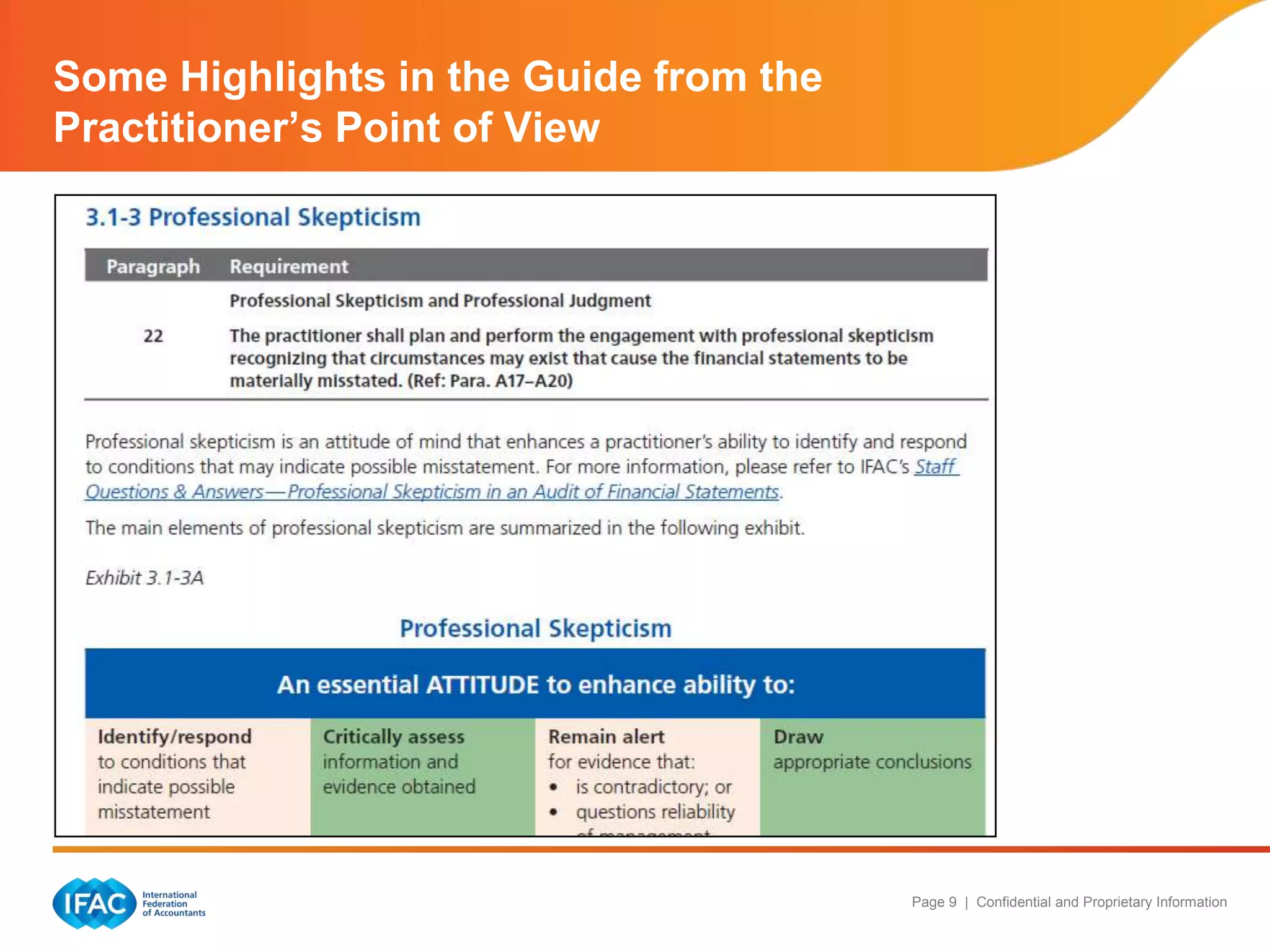
Some Highlights in the Guide from the
Practitioner’s Point of View

Page 9 | Confidential and Proprietary Information
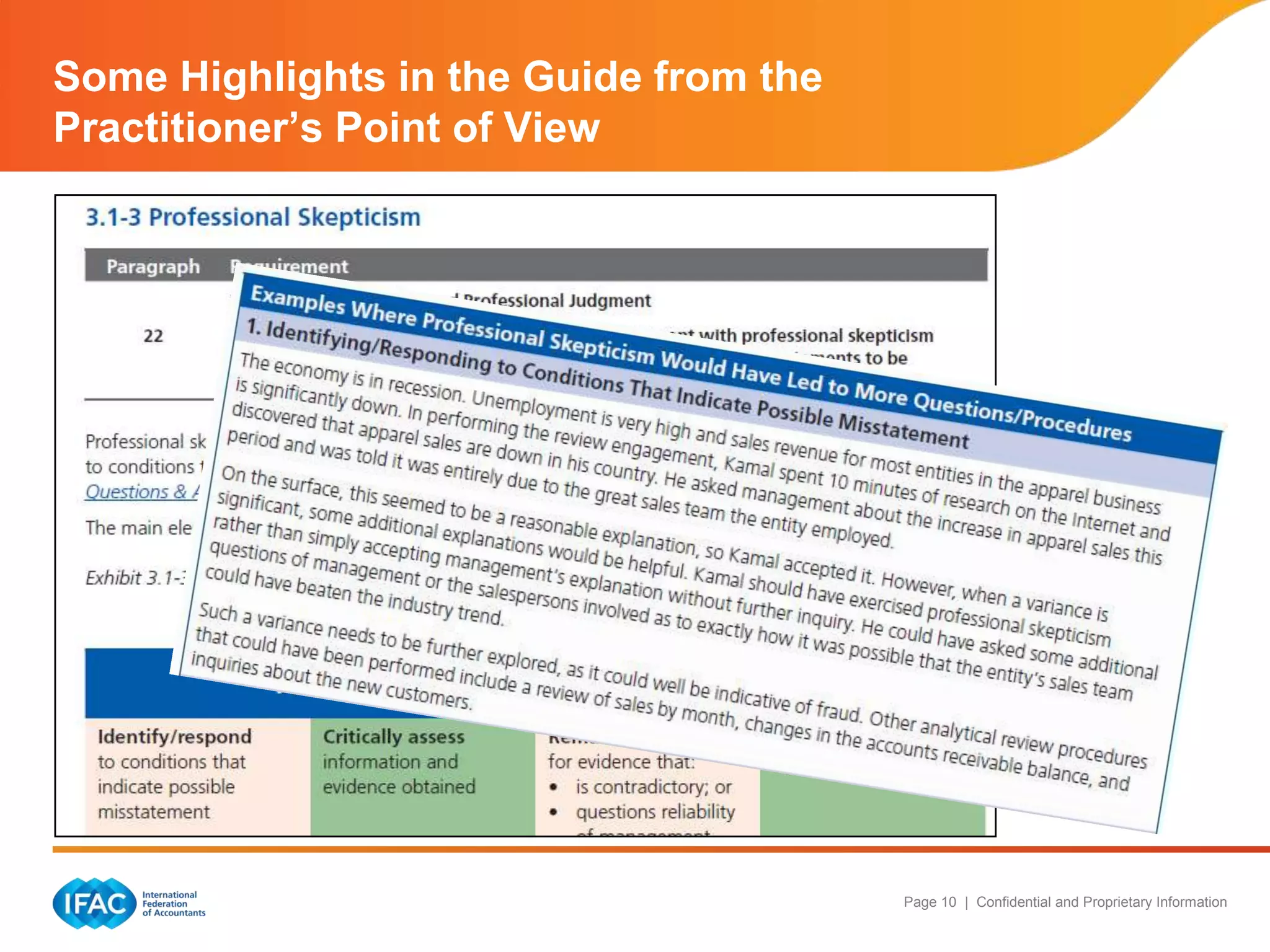
Some Highlights in the Guide from the
Practitioner’s Point of View

Page 10 | Confidential and Proprietary Information
Some Highlights in the Guide from the
Practitioner’s Point of View

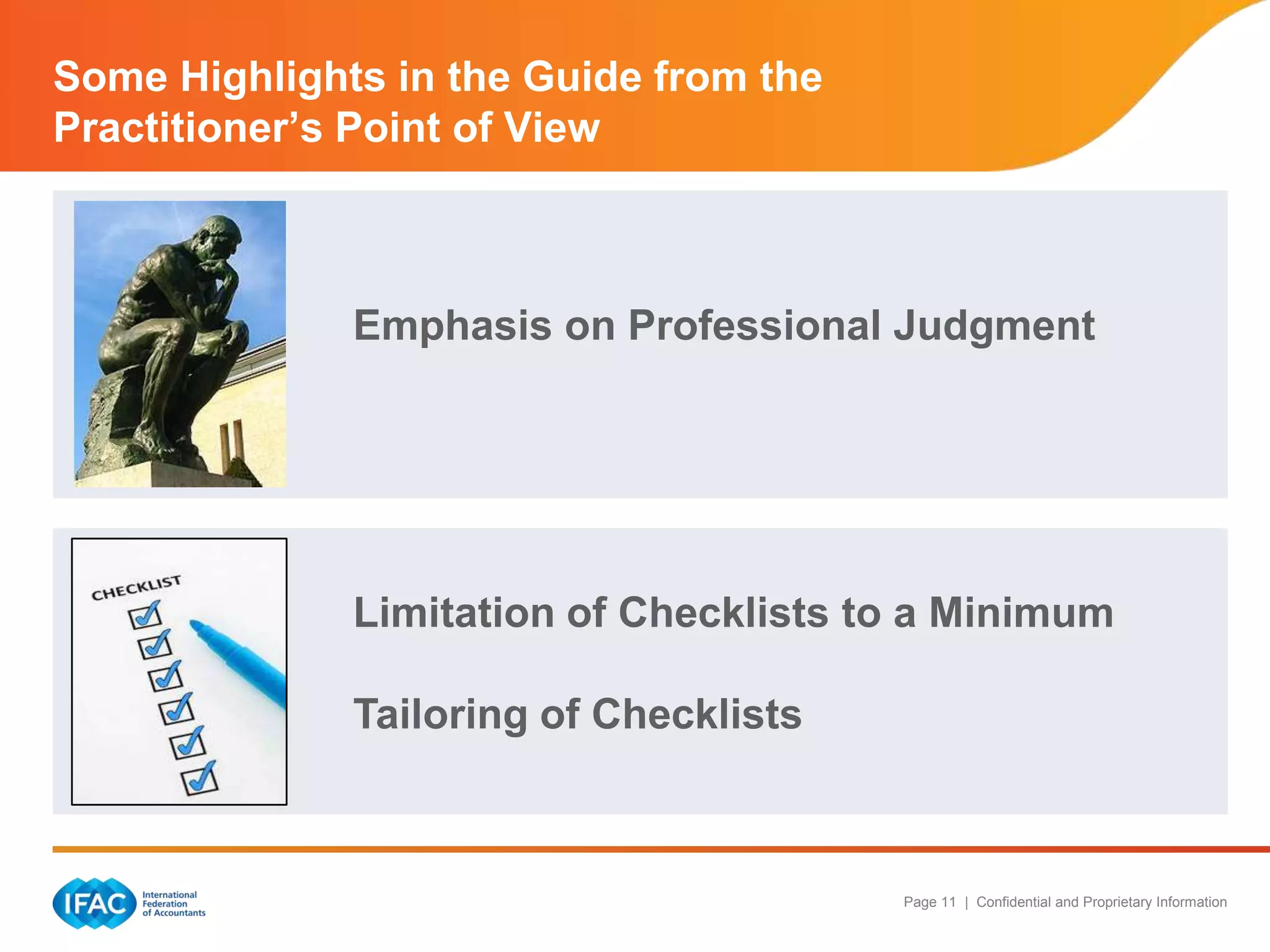
Emphasis on Professional Judgment

Limitation of Checklists to a Minimum
Tailoring of Checklists

Page 11 | Confidential and Proprietary Information
Some Highlights in the Guide from the
Practitioner’s Point of View
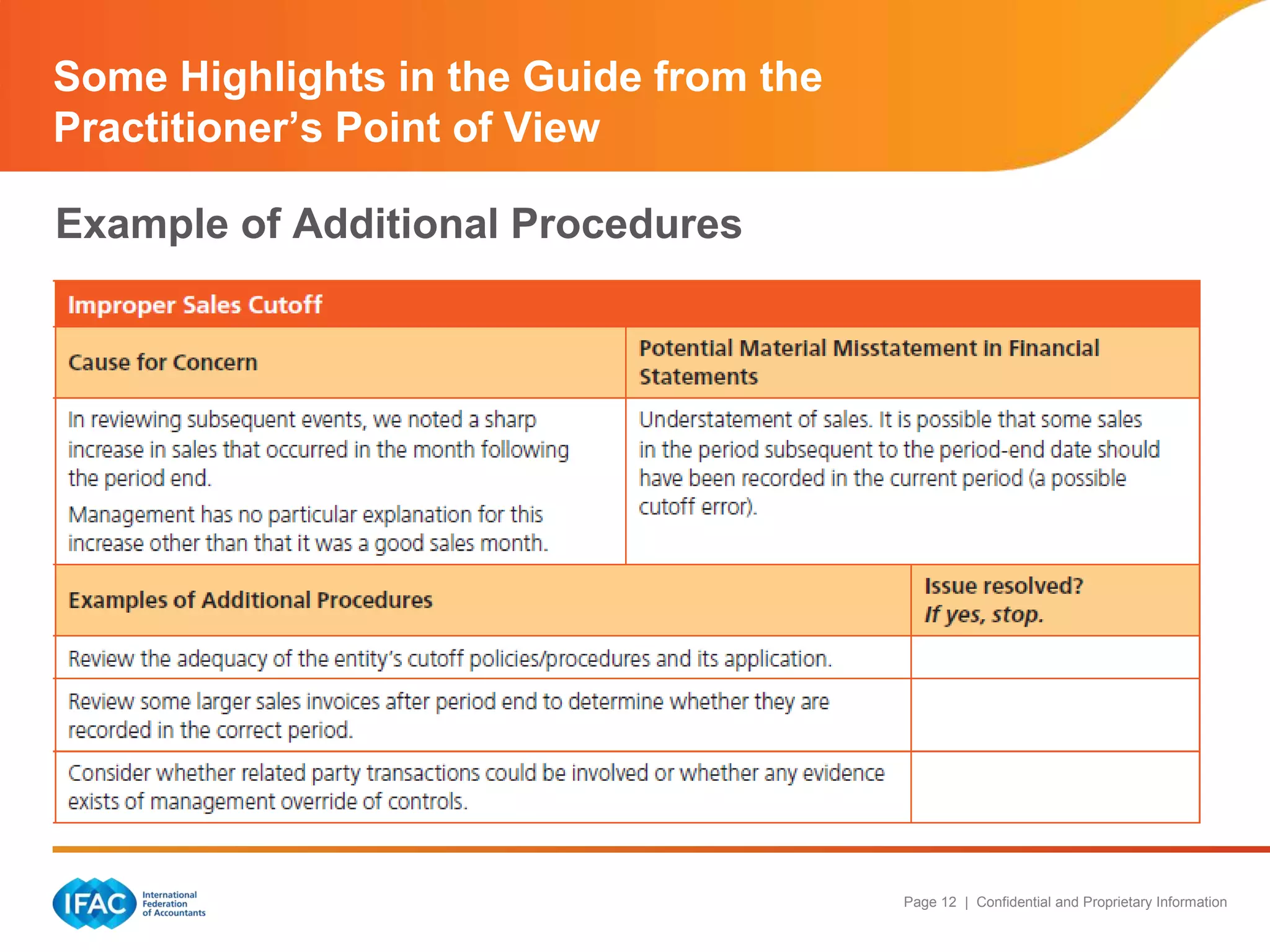
Example of Additional Procedures

Page 12 | Confidential and Proprietary Information
Some Highlights in the Guide from the
Practitioner’s Point of View
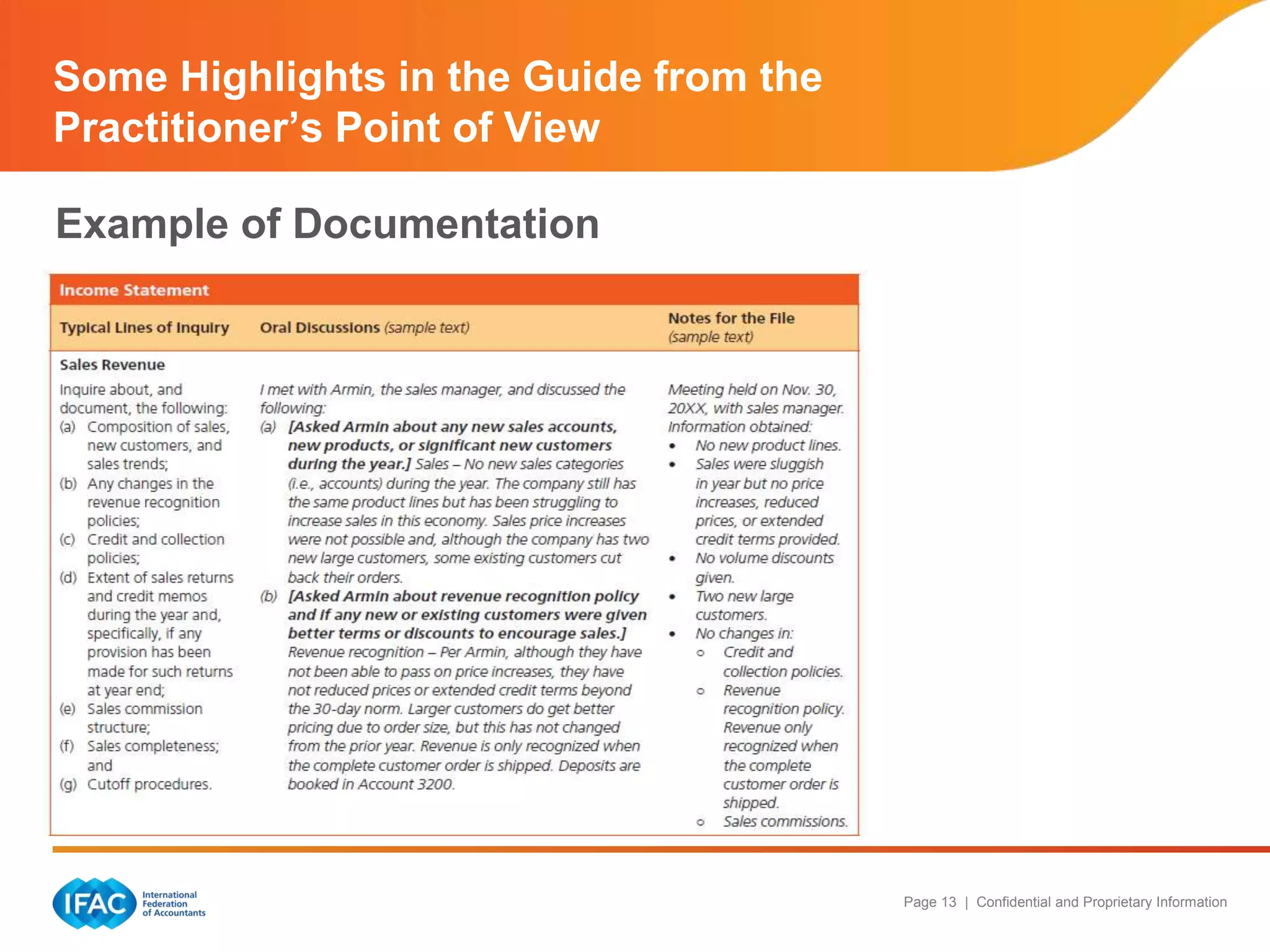
Example of Documentation

Page 13 | Confidential and Proprietary Information
IFAC Resources—Review Engagements
• IFAC SMP Committee: www.ifac.org/SMP
– Article—Review Engagements for SMEs: Limited
Assurance, Numerous Benefits
– Article—The Standard for Limited Assurance Review
Engagements

– Follow us on Twitter: IFAC_SMP
– IFAC SMP Quick Poll www.ifac.org/smp
– Subscribe: IFAC SMP eNews
– Join us on LinkedIn: IFAC SMP Community
• IAASB: www.iaasb.org
– ISRE 2400 (Revised), Engagements to Review Historical
Financial Statements
Page 14 | Confidential and Proprietary Information
Thank You
www.ifac.org/smp

Page 15 | Confidential and Proprietary Information

IFAC Guide to Review Engagements

  • 1.
    IFAC Guide toReview Engagements Andreas Noodt Member, IFAC Small and Medium Practices Committee FEE & ICAEW Event February 19, 2014 Page 1 | Confidential and Proprietary Information
  • 2.
    IFAC SMP Committee- Overview • To represent interests of small- and medium-sized practices (SMPs) • Comprised of 18 members from 17 countries • Regular input to policy, regulation and international standards – IAASB on key projects • Develops tools and guidance – Guide to Review Engagements • Promotes the visibility and recognition of SMPs • IFAC Global Knowledge Gateway Page 2 | Confidential and Proprietary Information
  • 3.
    Guide to ReviewEngagements • International Standard on Review Engagements (ISRE) 2400 (Revised) • Guide to Review Engagements at www.ifac.org/SMP Page 3 | Confidential and Proprietary Information
  • 4.
    Uses of ReviewEngagements Uses Commentary Increased Credibility Independent credibility to the F/S—attract new investors, obtain finance. Enhanced Confidence Provides accountability & confidence to shareholders, management, partners, government agencies and regulators, and other stakeholders. Enables the business to plan for the future—prepares Plan for Success growing business for transition to audit or preparing to sell. Page 4 | Confidential and Proprietary Information
  • 5.
    Benefits of ReviewEngagements SME Benefits Alternative to Audit Commentary Audit exemptions for small- and medium-sized entities (SMEs) are becoming more prevalent. Less time consuming for client. Lower Cost A review engagement is normally a lower cost for an entity than an audit. Limited Assurance Limited assurance obtained on the F/S as apposed to no assurance with a compilation. Page 5 | Confidential and Proprietary Information
  • 6.
    Benefits of ReviewEngagements SMP Benefits Commentary Bespoke Advice Add value to the client and provide a basis for bespoke advice Opportunities— Additional Service Ensure the client is aware of how and when a review engagement can be used Adds touch-points with the client Opportunities for cross-selling Flexibility with Consistency Consists primarily of inquiry and analytical procedures, allowing practitioners to tailor procedures based on their professional judgment and experience Page 6 | Confidential and Proprietary Information
  • 7.
    Benefits of theGuide to Review Engagements Guide Benefits Commentary Extracts from the Direct extracts from ISRE 2400 (Revised) Standard Tailored Examples Illustrated examples and Consider Points, including efficiency suggestions Full Appendix Checklists, Letters and Forms for adaption Staff Training Day-to-day reference tool for staff—can be used for training Ensure SMP staff develop a consistent approach Page 7 | Confidential and Proprietary Information
  • 8.
    The Four Elements Accepting Planning Performing Reporting Page8 | Confidential and Proprietary Information
  • 9.
    Some Highlights inthe Guide from the Practitioner’s Point of View Page 9 | Confidential and Proprietary Information
  • 10.
    Some Highlights inthe Guide from the Practitioner’s Point of View Page 10 | Confidential and Proprietary Information
  • 11.
    Some Highlights inthe Guide from the Practitioner’s Point of View Emphasis on Professional Judgment Limitation of Checklists to a Minimum Tailoring of Checklists Page 11 | Confidential and Proprietary Information
  • 12.
    Some Highlights inthe Guide from the Practitioner’s Point of View Example of Additional Procedures Page 12 | Confidential and Proprietary Information
  • 13.
    Some Highlights inthe Guide from the Practitioner’s Point of View Example of Documentation Page 13 | Confidential and Proprietary Information
  • 14.
    IFAC Resources—Review Engagements •IFAC SMP Committee: www.ifac.org/SMP – Article—Review Engagements for SMEs: Limited Assurance, Numerous Benefits – Article—The Standard for Limited Assurance Review Engagements – Follow us on Twitter: IFAC_SMP – IFAC SMP Quick Poll www.ifac.org/smp – Subscribe: IFAC SMP eNews – Join us on LinkedIn: IFAC SMP Community • IAASB: www.iaasb.org – ISRE 2400 (Revised), Engagements to Review Historical Financial Statements Page 14 | Confidential and Proprietary Information
  • 15.
    Thank You www.ifac.org/smp Page 15| Confidential and Proprietary Information

Editor's Notes

  • #4 ISRE 2400 (Revised) was issued in September 2012 and comes into effect for periods ending on or after December 31, 2013. The standard addresses the practitioner’s responsibilities when engaged to perform a review of historical financial statements (when the practitioner is not the auditor of the entity) and the form and content of the practitioner’s report on the financial statements.  The Guide to Review Engagements was published in December 2013 and provides non-authoritative guidance on applying ISRE 2400 (Revised). It is not to be used as a substitute for reading the standard, but rather as a supplement to support consistent implementation of the standard.
  • #5 SMEs that do not require a statutory audit may still want some degree of independent assurance to increase the credibility of their statements; in which case, a review can be an ideal solution.
  • #6 A review engagement may be better suited to the needs of some SMEs and place less strain on the clients time and resources. It also normally costs less than an audit.
  • #7 SMP BenefitsThrough obtaining a detailed understanding the business and its environment the practitioner should be able to use industry knowledge gained from other clients to add value to the client and provide bespoke advice.Undertaking the review engagement onsite will enable the practitioner to effectively communicate with the client, build strong relationships and improve staff efficiency levels.Ensure the client is aware of how and when a review engagement can be used and the value of this being undertaken by a qualified, objective and independent practitioner.A review engagement using ISRE 2400 (Revised): - Consists primarily of inquiry and analysis, allowing practitioners to rely more on their professional judgment and experience rather than detailed substantive testing. - Ensures a consistent work effort on all such engagements.
  • #8 This Guide is directed primarily at those with knowledge of auditing, but little or no experience with performing review engagements. Checklists & forms in the Guide include: Client Acceptance/Continuance Checklist (Appendix B)Sample Engagement Letter (Appendix C)Checklist for Understanding the Entity (Appendix D)Examples of Analytical Procedures (Appendix E)Going-Concern Events and Conditions (Appendix F)Sample File Completion Checklist (Appendix G)Example of Written Representations from Management (Appendix H)
  • #9 The diagram outlines the four major elements of a review engagement. AcceptingThere should always be a rational (logical) purpose for a client to request a review engagement. A review engagement is typically requested to enhance the degree of confidence that intended users will place on the financial statements.  The engagement preconditions are designed to ensure that before any work commences, management understands the full extent of its responsibility for the preparation of the financial statements and for providing the practitioner with access to relevant information and personnel. PlanningPlanning involves determining the nature, timing, and extent of the procedures needed to obtain sufficient appropriate evidence for the review engagement. There is a significant emphasis on professional judgment. It is important to fully understand the entity and its environment.Inquiry and analysis is directed to all financial statement areas that exceed materiality and areas where material misstatements are likely to arise (e.g.areas prone to misstatement due to matters such as estimation uncertainty, complexity, or need for judgment).PerformingThe review procedures chosen may not be limited to just inquiry and analysis, they could potentially include substantive tests of details and obtaining external confirmations. Additional Procedures are required where the practitioner becomes aware that the financial misstatements may be materially misstated.ReportingThe final step in performing a review engagement is to form an appropriate conclusion (unmodified or modified) based on the evidence obtained. This includes an evaluation of the identified misstatements. Effective and continuous two-way communication between the practitioner, engagement team, management, and those charged with governance is important.This will help minimize any (particularly last-minute) surprises.