-Internal Factors
 Divya

Dalwani 07
 Maitri Devi 10
 Bhumita Sarabhai 46
 Harshil Shah 49
 Vatsal Shah 55
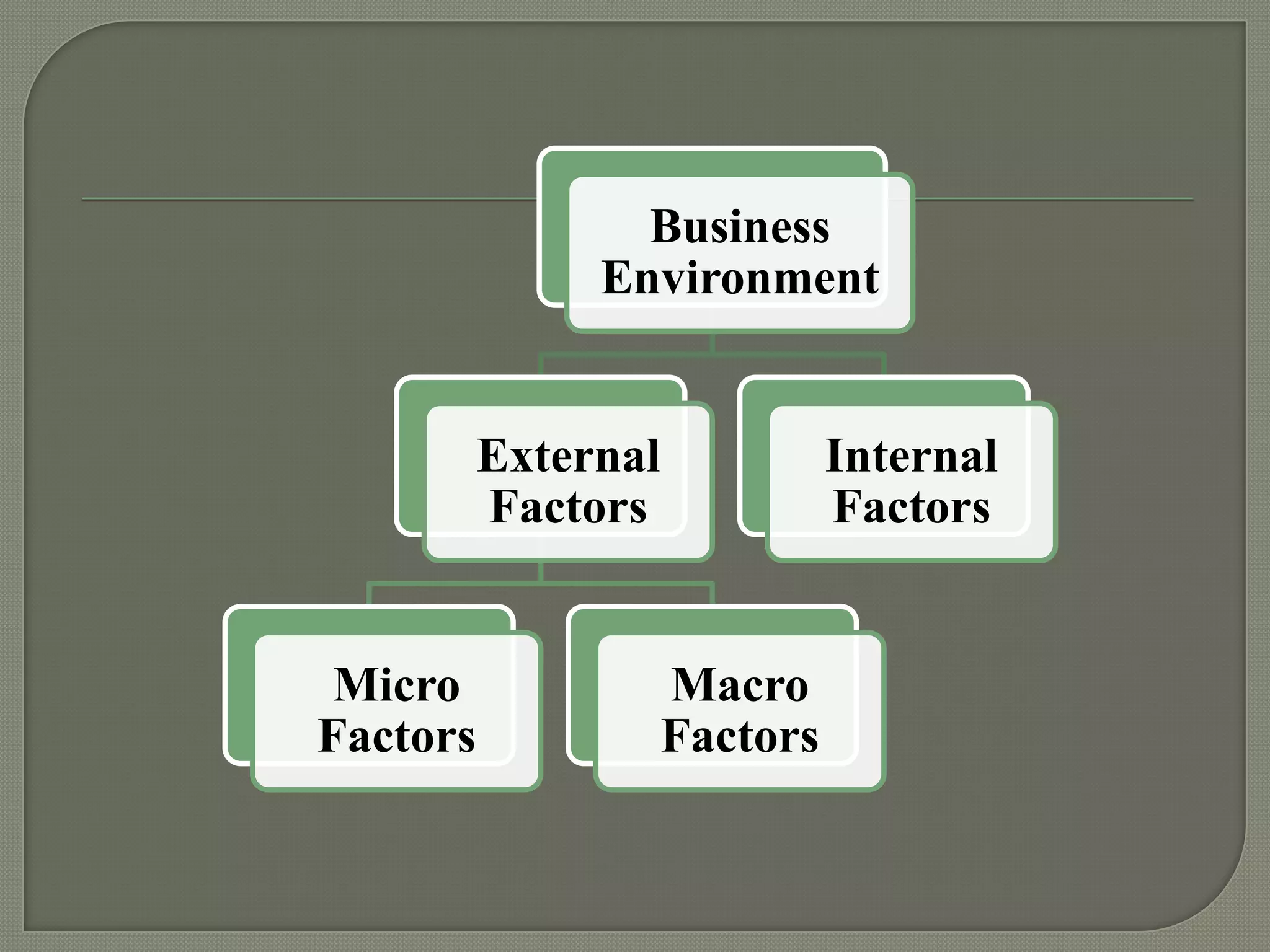
Business
Environment

External
Factors

Micro
Factors

Internal
Factors

Macro
Factors
 It

relates to all aspects within the boundaries of
the organization and generally are within the
control of top management team.
 Direct impact
 Controllable by the company
 Alter or modify
 Value

system
 Mission & objectives
 Management structure and nature
 Human resources
 Company image and brand equity
 Other factors:
•
•
•
•

Physical assets and facilities
R & D and technological capabilities
Marketing resources
Financial resources
• Value System of founders and those at the helm of affairs has
•
•
•

•

important bearing on
Choice of business:
Mission
Objectives of the organization
Business policies and practices
Factors
 Organizational structure
 Composition of the Board of Directors
 Extent of professionalization of
management
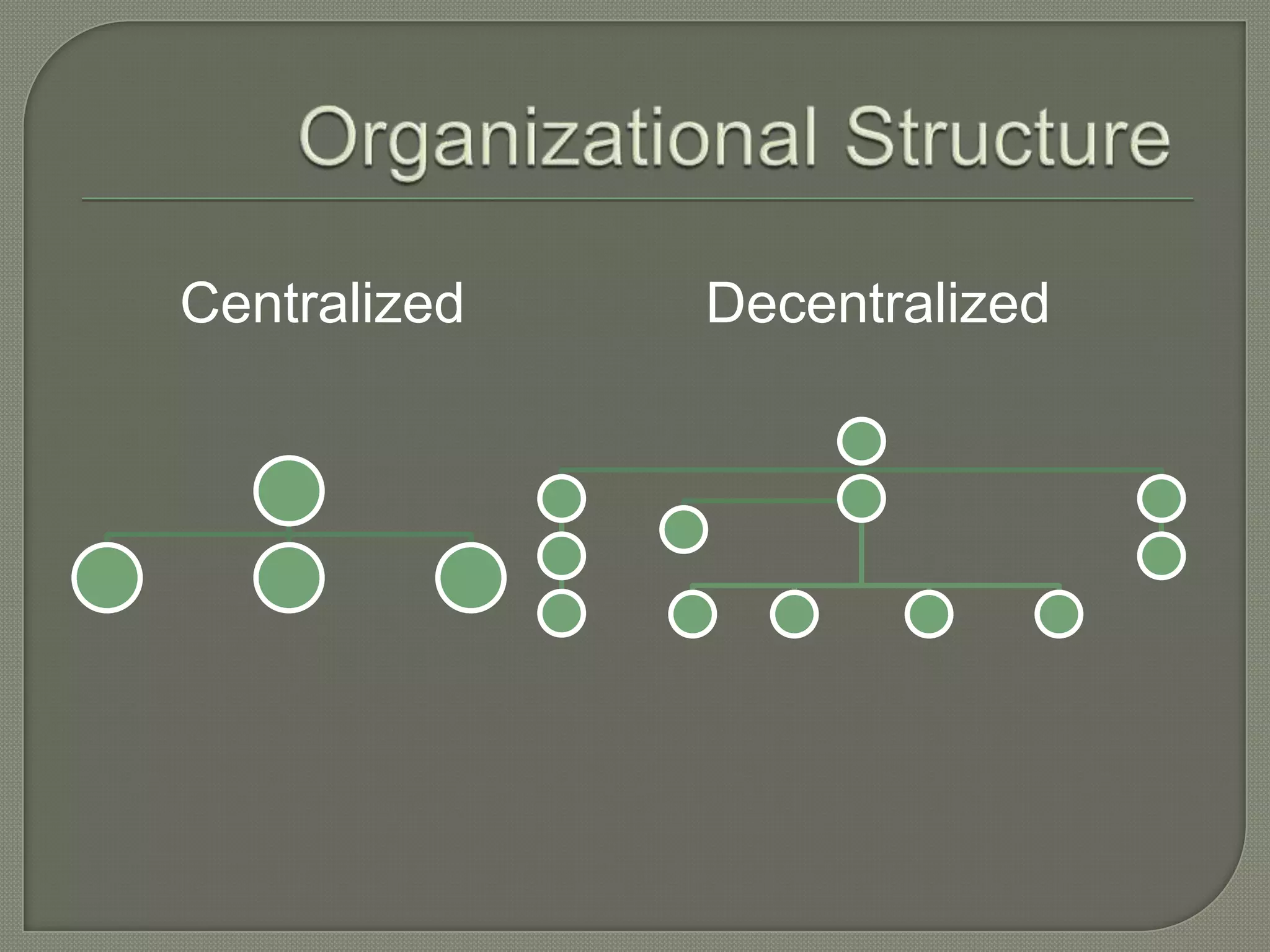
Centralized

Decentralized
 Support

to Top Management from other
Stakeholders
 Relationship between Members of BOD
 Relationship between CEOs
 Relationship between BOD and CEO
The characteristics of the human resources
like skill, quality, morale, commitment,
attitudes etc. could contribute to the strength
and weakness of the organization.
The involvement, initiative etc. of the people
at different levels may vary from organization
to organization.
 Various

HR policies
 Employee retention techniques
 Selection criteria
 Training and development
 Disputes
 Public relations
 Issues: selecting right people, offering
competitive compensation packages and
payroll taxes
 Describes
 Serve

the purpose

the needs of customers

 Identifies
 Answers

various intents of the company

various questions
 Reputation
 Important
 Value

of the company

dimension

premium

 Memorable,

recognizable and reliable
1)

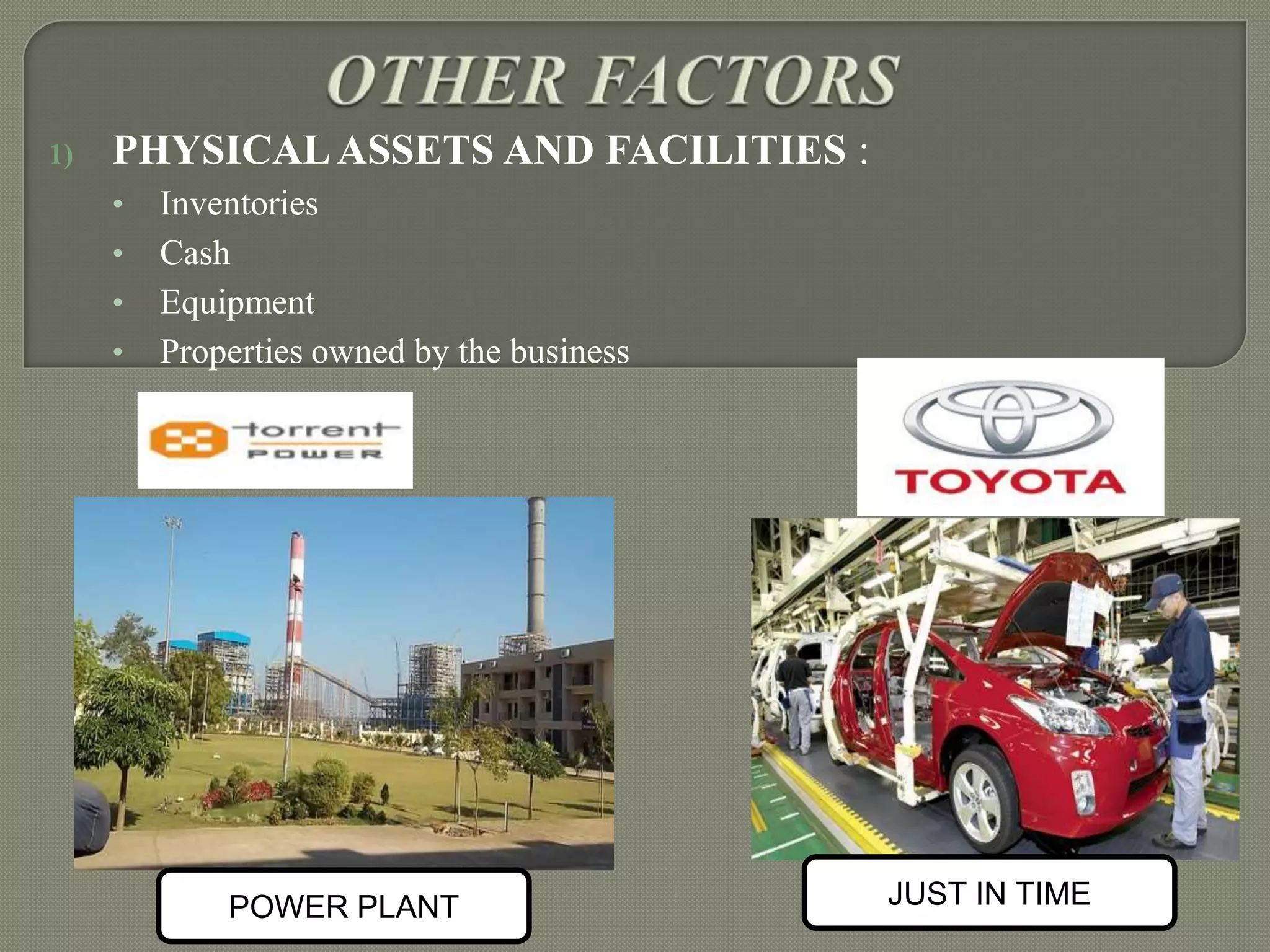
PHYSICAL ASSETS AND FACILITIES :
•
•
•
•

Inventories
Cash
Equipment
Properties owned by the business

POWER PLANT

JUST IN TIME
2)

R/D AND TECHNOLOGICAL CAPABILITIES :

Advantage :
•
•
•
•

Disadvantage :

Competitive edge
Enhance brand and reputation
Overseas market
Increase profitability

High cost involvement
Long time scale
Uncertain outcome
3)

MARKETING RESOURCES :
•
•
•

Marketing Research
Channel Management (Intermediaries)
Marketing Strategies.
•

•
•

Procurement Of Finance.
Meeting working capital needs.
Allocation of finance.
Internal Factors Affecting Business Environment . ppt

Internal Factors Affecting Business Environment . ppt

  • 1.
  • 2.
     Divya Dalwani 07 Maitri Devi 10  Bhumita Sarabhai 46  Harshil Shah 49  Vatsal Shah 55
  • 3.
  • 4.
     It relates toall aspects within the boundaries of the organization and generally are within the control of top management team.  Direct impact  Controllable by the company  Alter or modify
  • 5.
     Value system  Mission& objectives  Management structure and nature  Human resources  Company image and brand equity  Other factors: • • • • Physical assets and facilities R & D and technological capabilities Marketing resources Financial resources
  • 6.
    • Value Systemof founders and those at the helm of affairs has • • • • important bearing on Choice of business: Mission Objectives of the organization Business policies and practices
  • 7.
    Factors  Organizational structure Composition of the Board of Directors  Extent of professionalization of management
  • 8.
  • 10.
     Support to TopManagement from other Stakeholders  Relationship between Members of BOD  Relationship between CEOs  Relationship between BOD and CEO
  • 11.
    The characteristics ofthe human resources like skill, quality, morale, commitment, attitudes etc. could contribute to the strength and weakness of the organization. The involvement, initiative etc. of the people at different levels may vary from organization to organization.
  • 12.
     Various HR policies Employee retention techniques  Selection criteria  Training and development  Disputes  Public relations  Issues: selecting right people, offering competitive compensation packages and payroll taxes
  • 13.
     Describes  Serve thepurpose the needs of customers  Identifies  Answers various intents of the company various questions
  • 14.
     Reputation  Important Value of the company dimension premium  Memorable, recognizable and reliable
  • 15.
    1) PHYSICAL ASSETS ANDFACILITIES : • • • • Inventories Cash Equipment Properties owned by the business POWER PLANT JUST IN TIME
  • 16.
    2) R/D AND TECHNOLOGICALCAPABILITIES : Advantage : • • • • Disadvantage : Competitive edge Enhance brand and reputation Overseas market Increase profitability High cost involvement Long time scale Uncertain outcome
  • 17.
    3) MARKETING RESOURCES : • • • MarketingResearch Channel Management (Intermediaries) Marketing Strategies.
  • 18.
    • • • Procurement Of Finance. Meetingworking capital needs. Allocation of finance.