APPETITE
STIMULANTS AND
SUPPRESSANTS
- T.GOKUL B.PHARM
Appetite
• Appetite is the desire to eat food, felt as hunger.
• Appetite exists in all higher life-forms, and serves to
regulate adequate energy intake to maintain
metabolic needs.
• It is regulated by a close interplay between the
digestive tract, adipose tissue and the brain.
What causes a decrease in
appetite?
• Some of the most common reasons for a decrease in appetite
include: psychological disorders, such as stress, depression,
and anxiety
• Cancer
• gastrointestinal disorders, such as peptic ulcer disease,
GERD, and ulcerative colitis
• chronic diseases, such as COPD, cystic fibrosis, and
Parkinson's disease some chronic infections, such as HIV
• medications, such as chemotherapy, laxatives, and
amphetamines
• slowed metabolism
• decrease in activity level
• Hormonal Change
APPETITE STIMULANTS
• Definition ; They are medication, supplements,
agents or any other substances that increases
person's 'hunger' feeling
• They increase 'Hungry'
• They Enhance Food Consumption
• Also called as 'Appetisers' or 'Orexigenics’
• it can be beneficial for purpose, especially when
the patient is suffering from
• severe appetite loss or muscle wasting due to cystic
fibrosis, anorexia, old age, cancer or AIDS'
Classification
Appetite stimulants are classified
as follows :
SUPPLEMENTS
1. Zinc
2. Fish
3. Thiamine
# Supplements
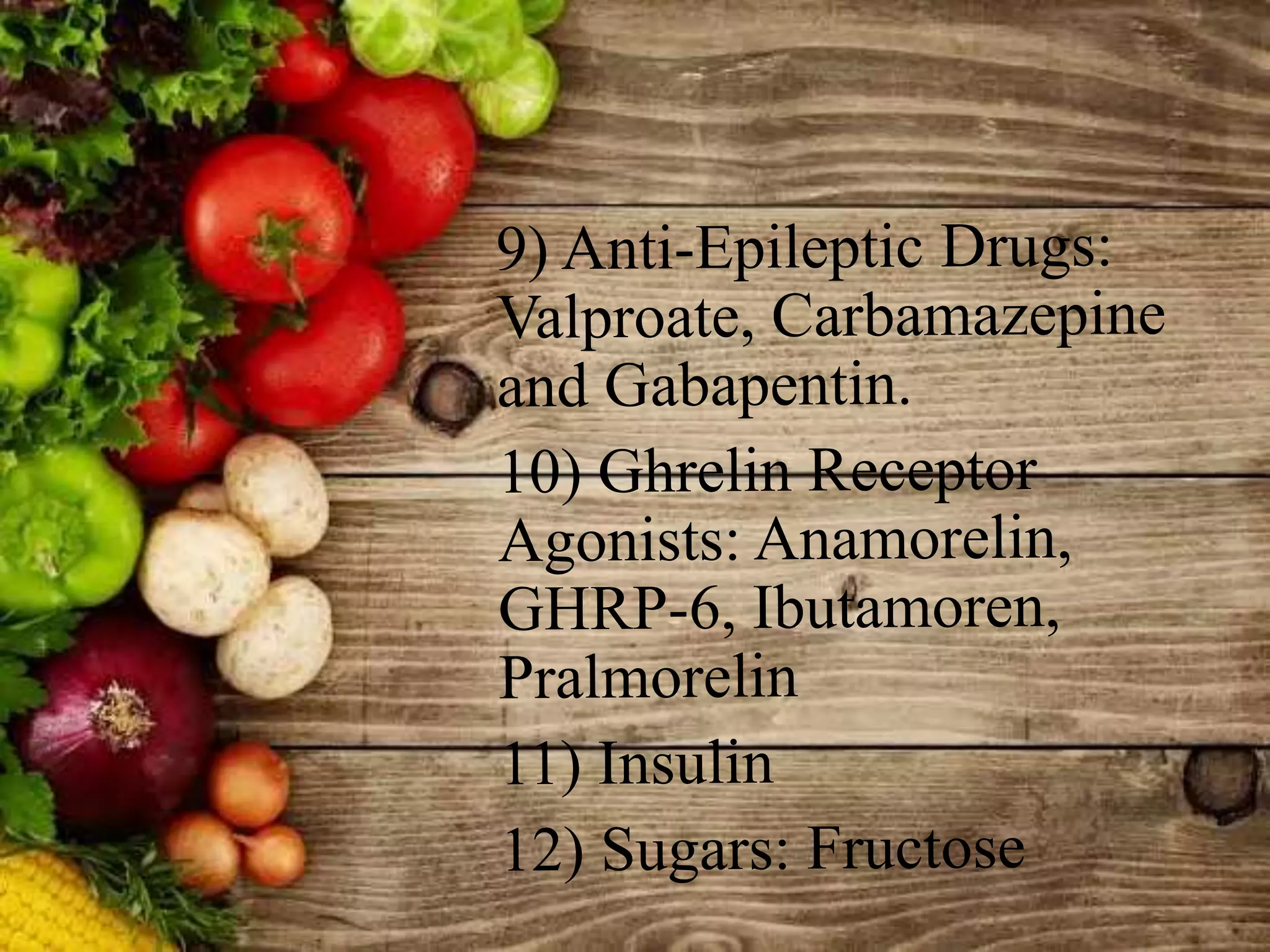
# Drug Therapies
DRUG THERAPIES
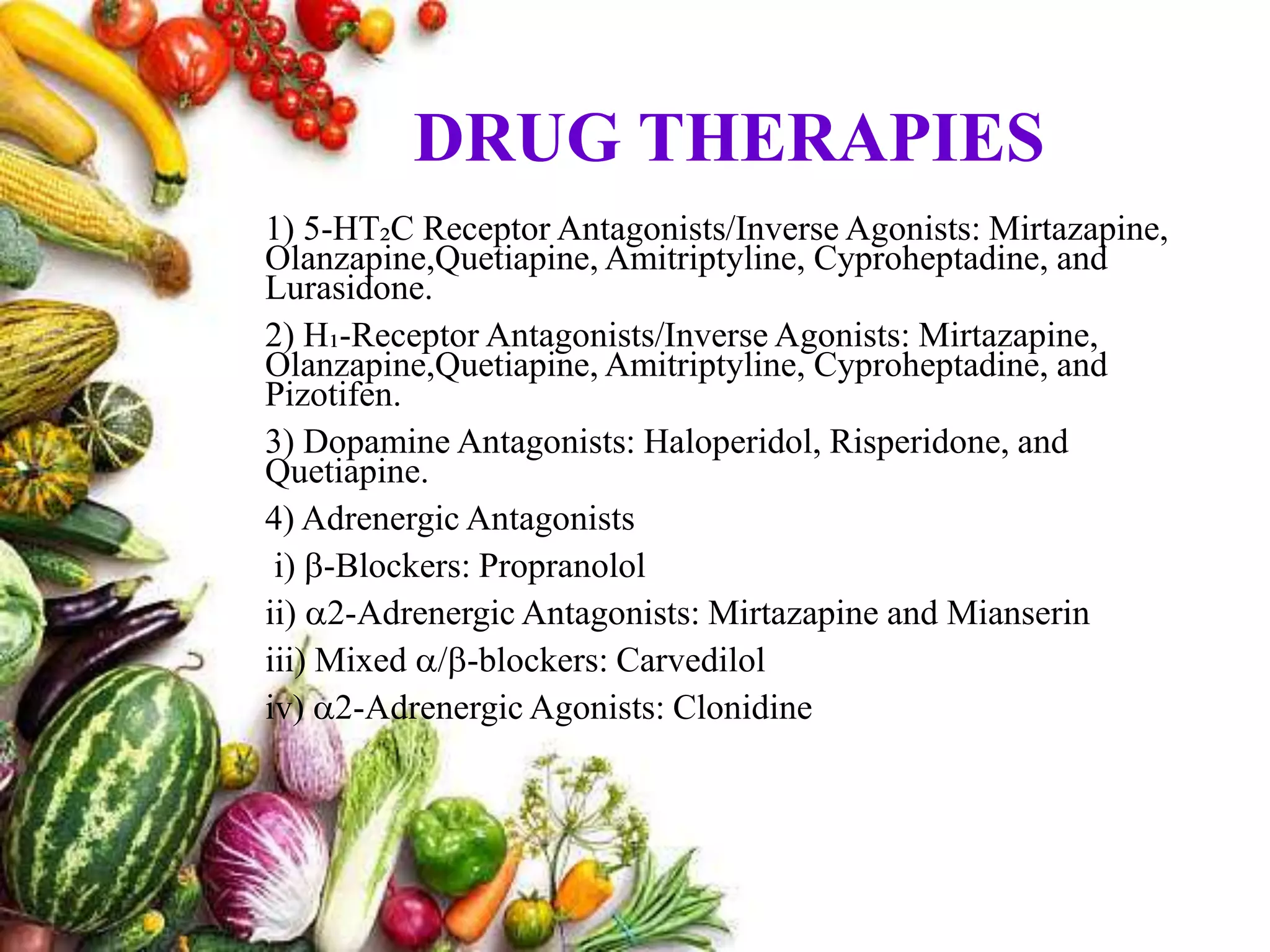
1) 5-HT₂C Receptor Antagonists/Inverse Agonists: Mirtazapine,
Olanzapine,Quetiapine, Amitriptyline, Cyproheptadine, and
Lurasidone.
2) H₁-Receptor Antagonists/Inverse Agonists: Mirtazapine,
Olanzapine,Quetiapine, Amitriptyline, Cyproheptadine, and
Pizotifen.
3) Dopamine Antagonists: Haloperidol, Risperidone, and
Quetiapine.
4) Adrenergic Antagonists
i) -Blockers: Propranolol
ii) 2-Adrenergic Antagonists: Mirtazapine and Mianserin
iii) Mixed /-blockers: Carvedilol
iv) 2-Adrenergic Agonists: Clonidine
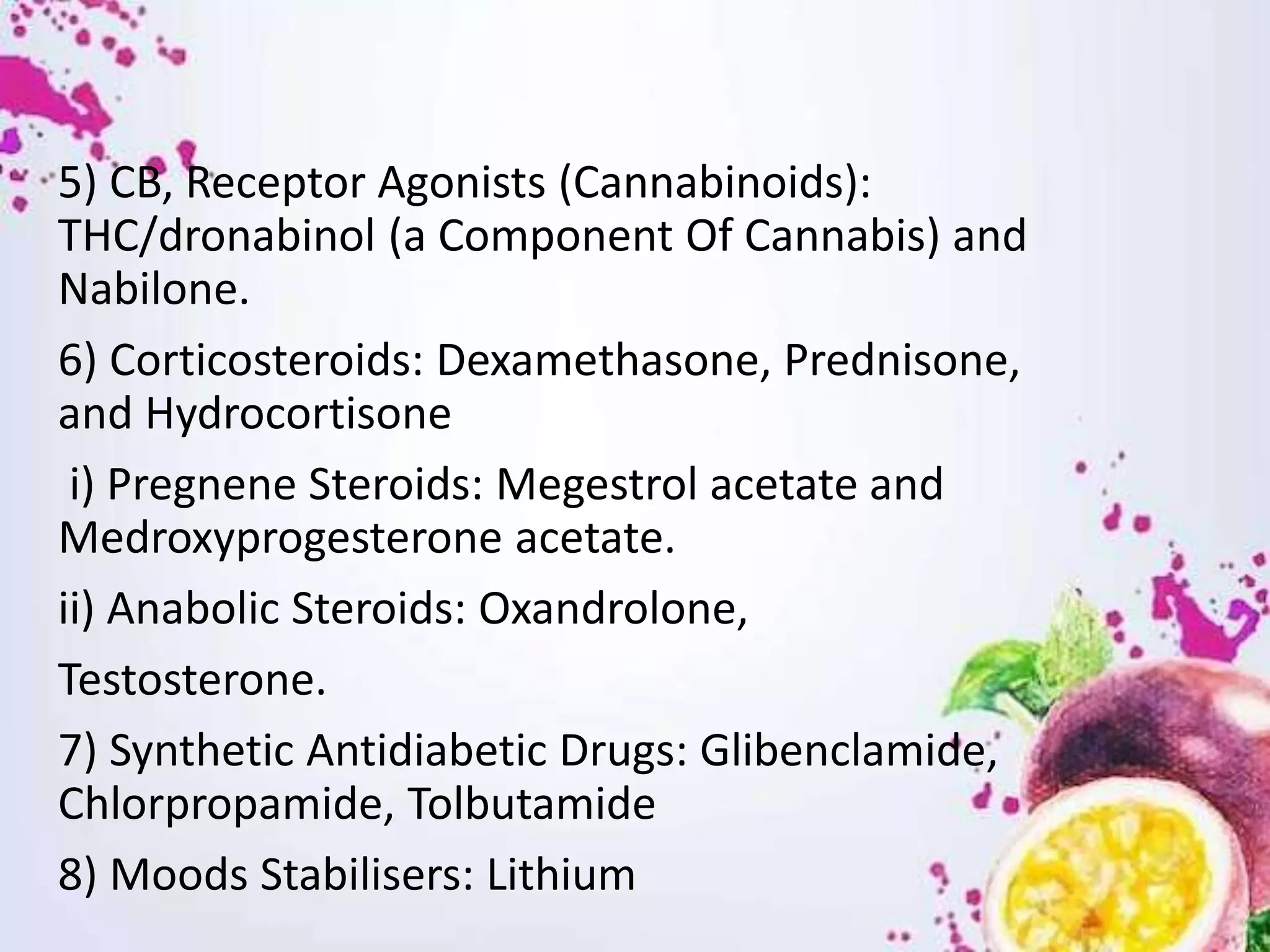
5) CB, Receptor Agonists (Cannabinoids):
THC/dronabinol (a Component Of Cannabis) and
Nabilone.
6) Corticosteroids: Dexamethasone, Prednisone,
and Hydrocortisone
i) Pregnene Steroids: Megestrol acetate and
Medroxyprogesterone acetate.
ii) Anabolic Steroids: Oxandrolone,
Testosterone.
7) Synthetic Antidiabetic Drugs: Glibenclamide,
Chlorpropamide, Tolbutamide
8) Moods Stabilisers: Lithium
Zinc
# A zinc deficiency can
cause taste & appetite
changes.
# A zinc supplement or
multi-vitamine
containing zinc should be
safe for most adults.
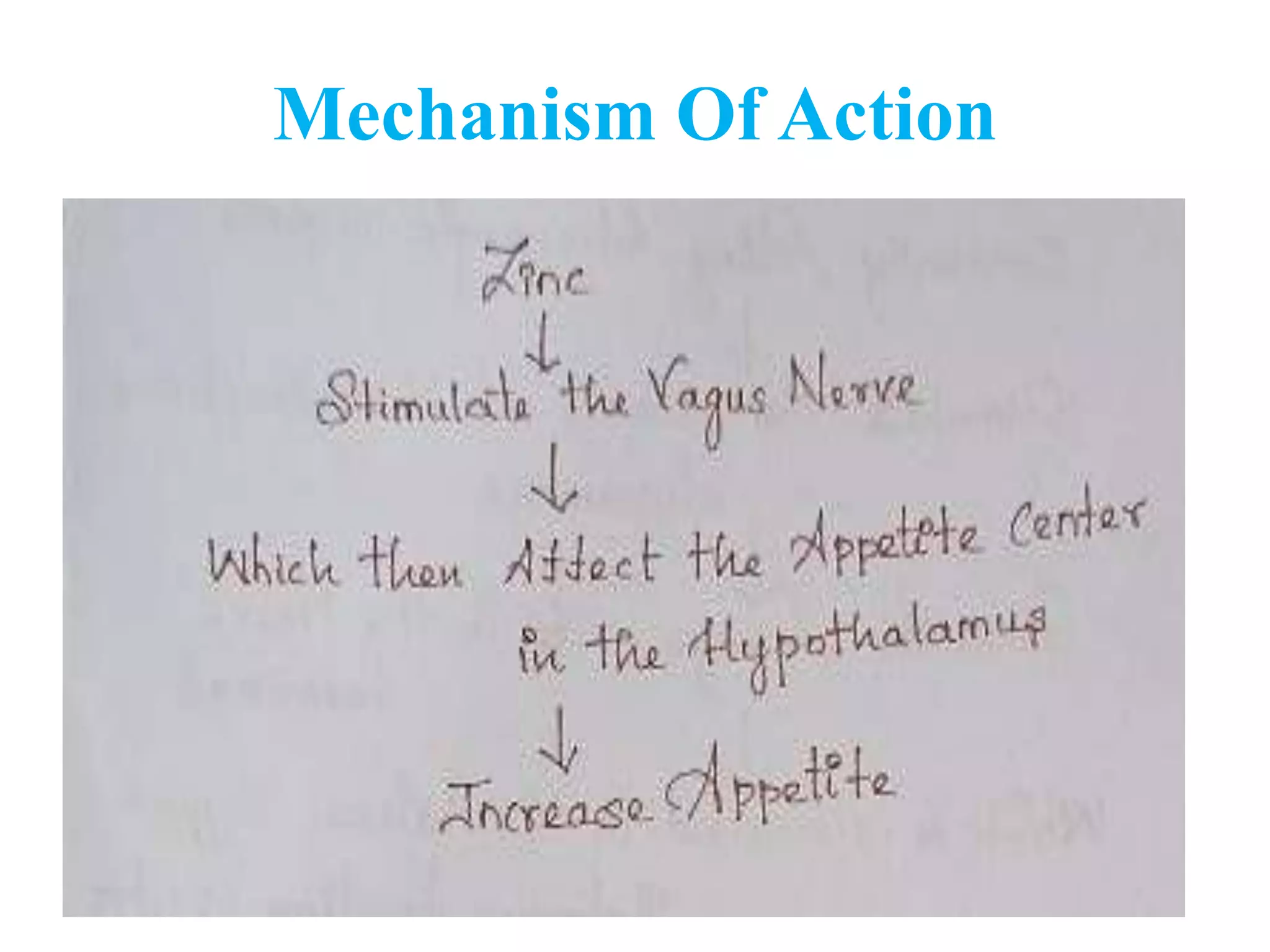
Mechanism Of Action
Thiamine
•A deficiency of thiamine,
also know vitamin B₁ Can
Cause ;
•Increases resting energy
expenditure.
•Increases appetite
•Increases weight loss
• Dronabinol or Marinol is a
cannabinoid, a synthetic
form of cannabis,used to
treat appetite in people with
AIDS & to treat Severe
nausea & vomiting caused
by Cancer chemotherapy.
Mechanism Of Action
Use:
• Weight gain in cancer-related
anorexia patients
Side Effects:
• Light headedness
• Sleepiness
• Blurred vision
• Can't think clearly
• Dizziness
• Sedation
• Fatigue
• Hallucinations
Oxandrolone
Oxandrolone is a
orally administered,
anabolic - androgenic
Steroid approved by
FDA for weight gain
following disease
related weight loss.
Mechanism Of Action
Use:
• Treats wasting in AIDS & Cachexia
in Cancer
Side Effects :
• Carpal tunnel syndrome
• Headache
• Arthralgias
• Myalgias, & gynecomastia
• Risk of prostate hyperplasia, fluid
retention, and transaminase elevations
APPETITE SUPPRESSANT
• It is a drug which reduces appetite, resulting in lower food
consumption, leading to weight loss
• Medications classified as appetite suppressants act upon
the body's central nervous system ,tricking the body into
believing that it is not hungry.
• Also called as 'Anorexients' or 'Anorectic' or
'Anorexigenic'
• Supresses the 'Hungry or 'Appetite
• Used to manage obesity that results from excess intake of
food
• Used to loose weight
• Appetite Suppressants are used as a short term
treatment for patients with obesity.
Appetite-Suppressants Reduce hunger through
1. Affects certain neurotransmitters to decrease
appetite
2 Increases heart rate and blood pressure
3. Increases serotonin and catecholamine levels
Classification
1.Centrally acting adrenergic
agents: Benzphetamine,
phentermine, diethylpropion,
mazidal phendimetrazine,
phenylpropanolamine.
2.Serotonergic agents:
Dexfenfluramine,
Fenfluramine, Floxetine
3.Adrenergic-serotonergic
agents: Sibutramine
Centrally Acting Drugs
Mechanism Of Action
OTHER EFFECTS:
•The Sympatho mimetic
appetite Suppressants
Produces CNS stimulation &
elevation of B.P
SIDE EFFECTS:
•Increased Heart rate
•Increased B.P
•Sweating & constipation
SEROTONERGIC AGENTS
This class of drugs act by enhancing 5-HT levels in brain, by
stimulating their release and reducing reuptake.
Fenfluramine
• Fenfluramine in combination with phenteramine is widely used
as an anti obesity medication. This combination is known as
"FEN-PHEN".
• It is found to be effective in the management of exogenous
obesity and as an adjunct in the treatment of weight reduction
based on caloric restriction.
• Most common adverse effects of fenfluramine includes
drowsiness, diarrhoea and dry mouth.
• It is no longer used because of wide profile of unwanted effects
which include heart valve disease, pulmonary hypertension and
cardiac fibrosis.
ADRENERGIC - SEROTONERGIC AGENTS
This class of drugs exhibit their action by inhibiting the
reuptake of serotonin and norepinephrine.
Sibutramine
• Sibutramine exerts its action by inhibiting the reuptake of
the neurotransmitters like serotonin, norepinephrine and
dopamine leading to enhanced levels of the neurotransmitters
in the synaptic cleft. Enhanced level of neurotransmitters
stimulates satiety centre. Anorexiant effect of sibutramine is
due to its serotonergic action.
• It is rapidly metabolized by cytochrome P450 Isozyme
CYP3A4 to yield secondary (M1) and primary (M2)
metabolites which are pharmacologically active in nature.
• Side effects include
headache, insomnia, dry
mouth, nausea, constipation,
tachycardia, rise in BP and
rarely arrhythmias.
• It is contraindicated in
uncontrolled hypertension,
stroke, hepatic failure and
obesity of endocrine and
psychiatric origin.
Appetite Stimulant And Suppressants.pptx

Appetite Stimulant And Suppressants.pptx

  • 1.
  • 2.
    Appetite • Appetite isthe desire to eat food, felt as hunger. • Appetite exists in all higher life-forms, and serves to regulate adequate energy intake to maintain metabolic needs. • It is regulated by a close interplay between the digestive tract, adipose tissue and the brain.
  • 3.
    What causes adecrease in appetite? • Some of the most common reasons for a decrease in appetite include: psychological disorders, such as stress, depression, and anxiety • Cancer • gastrointestinal disorders, such as peptic ulcer disease, GERD, and ulcerative colitis • chronic diseases, such as COPD, cystic fibrosis, and Parkinson's disease some chronic infections, such as HIV • medications, such as chemotherapy, laxatives, and amphetamines • slowed metabolism • decrease in activity level • Hormonal Change
  • 4.
    APPETITE STIMULANTS • Definition; They are medication, supplements, agents or any other substances that increases person's 'hunger' feeling • They increase 'Hungry' • They Enhance Food Consumption • Also called as 'Appetisers' or 'Orexigenics’ • it can be beneficial for purpose, especially when the patient is suffering from • severe appetite loss or muscle wasting due to cystic fibrosis, anorexia, old age, cancer or AIDS'
  • 5.
    Classification Appetite stimulants areclassified as follows : SUPPLEMENTS 1. Zinc 2. Fish 3. Thiamine # Supplements # Drug Therapies
  • 6.
    DRUG THERAPIES 1) 5-HT₂CReceptor Antagonists/Inverse Agonists: Mirtazapine, Olanzapine,Quetiapine, Amitriptyline, Cyproheptadine, and Lurasidone. 2) H₁-Receptor Antagonists/Inverse Agonists: Mirtazapine, Olanzapine,Quetiapine, Amitriptyline, Cyproheptadine, and Pizotifen. 3) Dopamine Antagonists: Haloperidol, Risperidone, and Quetiapine. 4) Adrenergic Antagonists i) -Blockers: Propranolol ii) 2-Adrenergic Antagonists: Mirtazapine and Mianserin iii) Mixed /-blockers: Carvedilol iv) 2-Adrenergic Agonists: Clonidine
  • 7.
    5) CB, ReceptorAgonists (Cannabinoids): THC/dronabinol (a Component Of Cannabis) and Nabilone. 6) Corticosteroids: Dexamethasone, Prednisone, and Hydrocortisone i) Pregnene Steroids: Megestrol acetate and Medroxyprogesterone acetate. ii) Anabolic Steroids: Oxandrolone, Testosterone. 7) Synthetic Antidiabetic Drugs: Glibenclamide, Chlorpropamide, Tolbutamide 8) Moods Stabilisers: Lithium
  • 9.
    Zinc # A zincdeficiency can cause taste & appetite changes. # A zinc supplement or multi-vitamine containing zinc should be safe for most adults.
  • 10.
  • 11.
    Thiamine •A deficiency ofthiamine, also know vitamin B₁ Can Cause ; •Increases resting energy expenditure. •Increases appetite •Increases weight loss
  • 12.
    • Dronabinol orMarinol is a cannabinoid, a synthetic form of cannabis,used to treat appetite in people with AIDS & to treat Severe nausea & vomiting caused by Cancer chemotherapy.
  • 13.
  • 14.
    Use: • Weight gainin cancer-related anorexia patients Side Effects: • Light headedness • Sleepiness • Blurred vision • Can't think clearly • Dizziness • Sedation • Fatigue • Hallucinations
  • 15.
    Oxandrolone Oxandrolone is a orallyadministered, anabolic - androgenic Steroid approved by FDA for weight gain following disease related weight loss.
  • 16.
  • 17.
    Use: • Treats wastingin AIDS & Cachexia in Cancer Side Effects : • Carpal tunnel syndrome • Headache • Arthralgias • Myalgias, & gynecomastia • Risk of prostate hyperplasia, fluid retention, and transaminase elevations
  • 18.
    APPETITE SUPPRESSANT • Itis a drug which reduces appetite, resulting in lower food consumption, leading to weight loss • Medications classified as appetite suppressants act upon the body's central nervous system ,tricking the body into believing that it is not hungry. • Also called as 'Anorexients' or 'Anorectic' or 'Anorexigenic' • Supresses the 'Hungry or 'Appetite • Used to manage obesity that results from excess intake of food • Used to loose weight
  • 19.
    • Appetite Suppressantsare used as a short term treatment for patients with obesity. Appetite-Suppressants Reduce hunger through 1. Affects certain neurotransmitters to decrease appetite 2 Increases heart rate and blood pressure 3. Increases serotonin and catecholamine levels
  • 20.
    Classification 1.Centrally acting adrenergic agents:Benzphetamine, phentermine, diethylpropion, mazidal phendimetrazine, phenylpropanolamine. 2.Serotonergic agents: Dexfenfluramine, Fenfluramine, Floxetine 3.Adrenergic-serotonergic agents: Sibutramine
  • 21.
  • 22.
    OTHER EFFECTS: •The Sympathomimetic appetite Suppressants Produces CNS stimulation & elevation of B.P SIDE EFFECTS: •Increased Heart rate •Increased B.P •Sweating & constipation
  • 23.
    SEROTONERGIC AGENTS This classof drugs act by enhancing 5-HT levels in brain, by stimulating their release and reducing reuptake. Fenfluramine • Fenfluramine in combination with phenteramine is widely used as an anti obesity medication. This combination is known as "FEN-PHEN". • It is found to be effective in the management of exogenous obesity and as an adjunct in the treatment of weight reduction based on caloric restriction. • Most common adverse effects of fenfluramine includes drowsiness, diarrhoea and dry mouth. • It is no longer used because of wide profile of unwanted effects which include heart valve disease, pulmonary hypertension and cardiac fibrosis.
  • 24.
    ADRENERGIC - SEROTONERGICAGENTS This class of drugs exhibit their action by inhibiting the reuptake of serotonin and norepinephrine. Sibutramine • Sibutramine exerts its action by inhibiting the reuptake of the neurotransmitters like serotonin, norepinephrine and dopamine leading to enhanced levels of the neurotransmitters in the synaptic cleft. Enhanced level of neurotransmitters stimulates satiety centre. Anorexiant effect of sibutramine is due to its serotonergic action. • It is rapidly metabolized by cytochrome P450 Isozyme CYP3A4 to yield secondary (M1) and primary (M2) metabolites which are pharmacologically active in nature.
  • 25.
    • Side effectsinclude headache, insomnia, dry mouth, nausea, constipation, tachycardia, rise in BP and rarely arrhythmias. • It is contraindicated in uncontrolled hypertension, stroke, hepatic failure and obesity of endocrine and psychiatric origin.