STEPS
10
GREAT LEADERS
TAKE WHEN THINGS
GO WRONG
The only real mistake is the one
from which we learn nothing.
– HENRY FORD
The only real mistake is the one
from which we learn nothing.
– HENRY FORD
At the end of the day, it’s how you embrace your mistakes in the

pursuit of success that defines your character as a leader.

GREAT LEADERS ACCEPT
THAT FAILURE IS INEVITABLE.
1
ACCEPTING THAT
FAILURE IS PART OF THE
PROCESS WILL MOTIVATE
YOU TO TAKE MORE RISKS
AND TRY HARDER.
1
ACCEPTING THAT
FAILURE IS PART OF THE
PROCESS WILL MOTIVATE
YOU TO TAKE MORE RISKS
AND TRY HARDER.
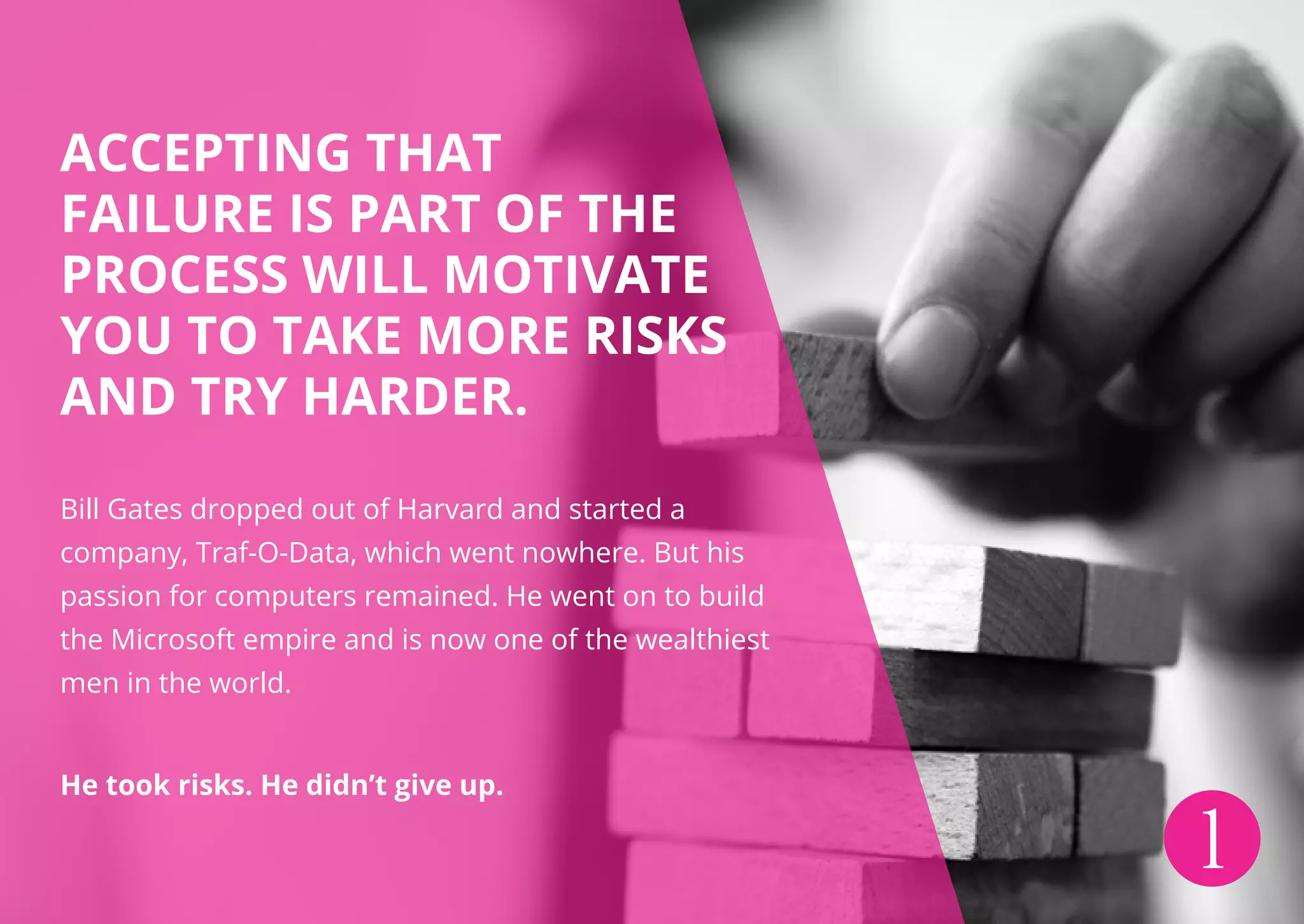
Bill Gates dropped out of Harvard and started a
company, Traf-O-Data, which went nowhere. But his
passion for computers remained. He went on to build
the Microsoft empire and is now one of the wealthiest
men in the world.
1
ACCEPTING THAT
FAILURE IS PART OF THE
PROCESS WILL MOTIVATE
YOU TO TAKE MORE RISKS
AND TRY HARDER.
Bill Gates dropped out of Harvard and started a
company, Traf-O-Data, which went nowhere. But his
passion for computers remained. He went on to build
the Microsoft empire and is now one of the wealthiest
men in the world.
He took risks. He didn’t give up.
1
GREAT LEADERS
CONFRONT FAILURE.
2
FROM A YOUNG AGE WE
ARE TAUGHT THAT MAKING
MISTAKES IS BAD.
2
FROM A YOUNG AGE WE
ARE TAUGHT THAT MAKING
MISTAKES IS BAD.
Painful memories of past failures trigger negative
emotions like fear and anxiety which prevent us from
taking risks in the present. It’s better to confront your
failure than to run away from it.
2
FROM A YOUNG AGE WE
ARE TAUGHT THAT MAKING
MISTAKES IS BAD.
Painful memories of past failures trigger negative
emotions like fear and anxiety which prevent us from
taking risks in the present. It’s better to confront your
failure than to run away from it.
TAKE TIME TO REFLECT ON THE
MISTAKES YOU HAVE MADE
2
FROM A YOUNG AGE WE
ARE TAUGHT THAT MAKING
MISTAKES IS BAD.
Painful memories of past failures trigger negative
emotions like fear and anxiety which prevent us from
taking risks in the present. It’s better to confront your
failure than to run away from it.
TAKE TIME TO REFLECT ON THE
MISTAKES YOU HAVE MADE
Evaluate how you could have improved on the situation.
Write down the lessons you have learned.
2
GREAT LEADERS
ARE VULNERABLE.
3
SUCCESSFUL
LEADERS NEVER
HIDE THE FACT THAT
THEY MAKE MISTAKES.
3
SUCCESSFUL
LEADERS NEVER
HIDE THE FACT THAT
THEY MAKE MISTAKES.
OPEN UP TO YOUR TEAM
WHEN YOU GET IT WRONG
3
SUCCESSFUL
LEADERS NEVER
HIDE THE FACT THAT
THEY MAKE MISTAKES.
OPEN UP TO YOUR TEAM
WHEN YOU GET IT WRONG
Create an environment where they can admit
their failures too.
3
SUCCESSFUL
LEADERS NEVER
HIDE THE FACT THAT
THEY MAKE MISTAKES.
OPEN UP TO YOUR TEAM
WHEN YOU GET IT WRONG
Create an environment where they can admit
their failures too.
Surround yourself with a strong team who will
rally behind you or a mentor who will hold you
accountable and offer guidance. This will ensure
you don’t make the same mistake twice.
3
GREAT LEADERS
FAIL FORWARD.
4
4
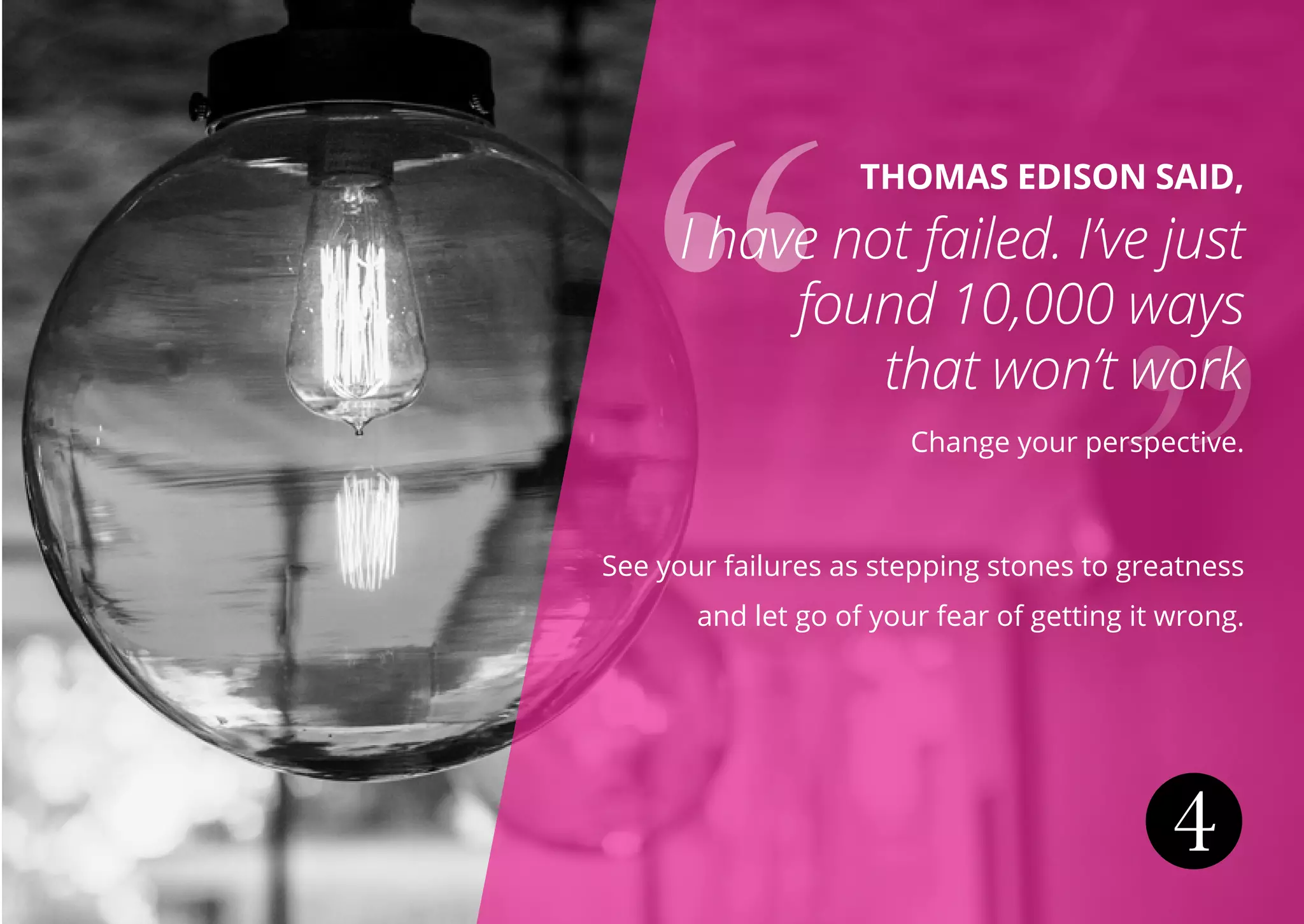
THOMAS EDISON SAID,
I have not failed. I’ve just
found 10,000 ways
that won’t work
4
THOMAS EDISON SAID,
I have not failed. I’ve just
found 10,000 ways
that won’t work
Change your perspective.
4
THOMAS EDISON SAID,
I have not failed. I’ve just
found 10,000 ways
that won’t work
Change your perspective.
See your failures as stepping stones to greatness
and let go of your fear of getting it wrong.
4
WRITE DOWN
MOTIVATIONAL
QUOTES OR STORIES
ABOUT LEADERS
4
WRITE DOWN
MOTIVATIONAL
QUOTES OR STORIES
ABOUT LEADERS
who failed before they became successful.
4
WRITE DOWN
MOTIVATIONAL
QUOTES OR STORIES
ABOUT LEADERS
who failed before they became successful.
• Stick them up in your office.
4
WRITE DOWN
MOTIVATIONAL
QUOTES OR STORIES
ABOUT LEADERS
who failed before they became successful.
• Stick them up in your office.
• Make them your mantra to turn to when
you feel defeated.
GREAT LEADERS
RECOVER FAST.
5
WHEN SOMETHING GOES
WRONG, PEOPLE WILL
INEVITABLY SEEK CONTEXT.
5
WHEN SOMETHING GOES
WRONG, PEOPLE WILL
INEVITABLY SEEK CONTEXT.
THE BEST LEADERS DO NOT LET THE
BURDEN OF THE BLAME GET TO THEM.
5
WHEN SOMETHING GOES
WRONG, PEOPLE WILL
INEVITABLY SEEK CONTEXT.
THE BEST LEADERS DO NOT LET THE
BURDEN OF THE BLAME GET TO THEM.
• Help people to understand the context of the problem.
5
WHEN SOMETHING GOES
WRONG, PEOPLE WILL
INEVITABLY SEEK CONTEXT.
THE BEST LEADERS DO NOT LET THE
BURDEN OF THE BLAME GET TO THEM.
• Help people to understand the context of the problem.
• Respond confidently with solutions.
5
GREAT LEADERS
FIGHT BACK.
6
6
35% OF OUSTED CEOS
6
6
35% OF OUSTED CEOS
returned to an active executive role within two years of departure,
but 43% effectively ended their careers.
6
6
35% OF OUSTED CEOS
returned to an active executive role within two years of departure,
but 43% effectively ended their careers.
LEADERS ARE QUICK TO BLAME THEMSELVES
6
6
35% OF OUSTED CEOS
returned to an active executive role within two years of departure,
but 43% effectively ended their careers.
LEADERS ARE QUICK TO BLAME THEMSELVES
and often dwell on the past rather than look to the future. The ability to rise
above failure is an essential feature of becoming a great leader.
6
6
35% OF OUSTED CEOS
returned to an active executive role within two years of departure,
but 43% effectively ended their careers.
LEADERS ARE QUICK TO BLAME THEMSELVES
and often dwell on the past rather than look to the future. The ability to rise
above failure is an essential feature of becoming a great leader.
• Fight back.
6
6
35% OF OUSTED CEOS
returned to an active executive role within two years of departure,
but 43% effectively ended their careers.
LEADERS ARE QUICK TO BLAME THEMSELVES
and often dwell on the past rather than look to the future. The ability to rise
above failure is an essential feature of becoming a great leader.
• Fight back. • Be energised by failure.
6
6
35% OF OUSTED CEOS
returned to an active executive role within two years of departure,
but 43% effectively ended their careers.
LEADERS ARE QUICK TO BLAME THEMSELVES
and often dwell on the past rather than look to the future. The ability to rise
above failure is an essential feature of becoming a great leader.
• Fight back. • Be energised by failure. • Look for the opportunities it brings.
6
GREAT LEADERS
MAKE TOUGH CHOICES.
7
7
YOU ARE WISER
BECAUSE OF YOUR
FAILURES.
7
YOU ARE WISER
BECAUSE OF YOUR
FAILURES.
Weigh up the worth of your mistake and decide
whether it’s worth fighting for or letting go of.
7
DEVELOP A STRATEGY TO MOVE
FORWARD. TRUST YOUR INSTINCTS.
7
DEVELOP A STRATEGY TO MOVE
FORWARD. TRUST YOUR INSTINCTS.
Akio Morito co-founded Sony. The first product they sold was a rice-cooker
which burnt rice more than it cooked it. They made the choice to abandon this idea
and moved on to building a multi-billion dollar software company.
GREAT LEADERS
REALISE THEIR
RESPONSIBILITY.
8
8
APPRECIATE THE DUTY YOU HAVE AS A
LEADER TO OVERCOME ADVERSITY.
8
APPRECIATE THE DUTY YOU HAVE AS A
LEADER TO OVERCOME ADVERSITY.
Great leaders have a profound impact on others.
.
8
APPRECIATE THE DUTY YOU HAVE AS A
LEADER TO OVERCOME ADVERSITY.
Great leaders have a profound impact on others.
HOW ARE YOU USING THE LESSONS YOU HAVE
LEARNED TO INFLUENCE THOSE AROUND YOU?
8
APPRECIATE THE DUTY YOU HAVE AS A
LEADER TO OVERCOME ADVERSITY.
Great leaders have a profound impact on others.
HOW ARE YOU USING THE LESSONS YOU HAVE
LEARNED TO INFLUENCE THOSE AROUND YOU?
Find innovative ways to improve your skills and become a more
effective leader for your team.
GREAT LEADERS
TAKE ONE FOR THE TEAM.
9
SOMETIMES YOUR
TEAM WILL WANT TO
MAKE RISKY DECISIONS
9
SOMETIMES YOUR
TEAM WILL WANT TO
MAKE RISKY DECISIONS
- the kind that could achieve great success or
could go horribly wrong.
9
SOMETIMES YOUR
TEAM WILL WANT TO
MAKE RISKY DECISIONS
- the kind that could achieve great success or
could go horribly wrong.
BE PREPARED TO HAVE THEIR BACK IF THEY
FAIL. BUT LET THEM TAKE THE RISK ANYWAY.
9
SOMETIMES YOUR
TEAM WILL WANT TO
MAKE RISKY DECISIONS
- the kind that could achieve great success or
could go horribly wrong.
BE PREPARED TO HAVE THEIR BACK IF THEY
FAIL. BUT LET THEM TAKE THE RISK ANYWAY.
Establish a company culture where failure
is celebrated.
9
GREAT LEADERS KNOW
WHEN TO TAKE A STEP BACK.
10
IT’S REFLECTION
TIME AGAIN.
10
IT’S REFLECTION
TIME AGAIN.
Take a step back and consider the failures
you identified, the lessons learnt and the
opportunities available.
10
IT’S REFLECTION
TIME AGAIN.
Take a step back and consider the failures
you identified, the lessons learnt and the
opportunities available.
WRITE DOWN HOW THIS HAS
IMPACTED YOU AS A LEADER.
10
IT’S REFLECTION
TIME AGAIN.
Take a step back and consider the failures
you identified, the lessons learnt and the
opportunities available.
WRITE DOWN HOW THIS HAS
IMPACTED YOU AS A LEADER.
Use this as a reminder for next time
something goes wrong.
10
ONE FINAL PIECE OF INSPIRATION:
Only those who dare to fail greatly can
ever achieve greatly.
– ROBERT F. KENNEDY
How will you use today’s failure
for tomorrow’s success?
Empower yourself with a world-class education
from the University of Cape Town and GetSmarter:
getsmarter.co.za
Improving lives through better education
getsmarter.co.za

10 Steps great leaders take when things go wrong

  • 1.
  • 2.
    The only realmistake is the one from which we learn nothing. – HENRY FORD
  • 3.
    The only realmistake is the one from which we learn nothing. – HENRY FORD At the end of the day, it’s how you embrace your mistakes in the pursuit of success that defines your character as a leader.
  • 4.
    GREAT LEADERS ACCEPT THATFAILURE IS INEVITABLE. 1
  • 5.
    ACCEPTING THAT FAILURE ISPART OF THE PROCESS WILL MOTIVATE YOU TO TAKE MORE RISKS AND TRY HARDER. 1
  • 6.
    ACCEPTING THAT FAILURE ISPART OF THE PROCESS WILL MOTIVATE YOU TO TAKE MORE RISKS AND TRY HARDER. Bill Gates dropped out of Harvard and started a company, Traf-O-Data, which went nowhere. But his passion for computers remained. He went on to build the Microsoft empire and is now one of the wealthiest men in the world. 1
  • 7.
    ACCEPTING THAT FAILURE ISPART OF THE PROCESS WILL MOTIVATE YOU TO TAKE MORE RISKS AND TRY HARDER. Bill Gates dropped out of Harvard and started a company, Traf-O-Data, which went nowhere. But his passion for computers remained. He went on to build the Microsoft empire and is now one of the wealthiest men in the world. He took risks. He didn’t give up. 1
  • 8.
  • 9.
    FROM A YOUNGAGE WE ARE TAUGHT THAT MAKING MISTAKES IS BAD. 2
  • 10.
    FROM A YOUNGAGE WE ARE TAUGHT THAT MAKING MISTAKES IS BAD. Painful memories of past failures trigger negative emotions like fear and anxiety which prevent us from taking risks in the present. It’s better to confront your failure than to run away from it. 2
  • 11.
    FROM A YOUNGAGE WE ARE TAUGHT THAT MAKING MISTAKES IS BAD. Painful memories of past failures trigger negative emotions like fear and anxiety which prevent us from taking risks in the present. It’s better to confront your failure than to run away from it. TAKE TIME TO REFLECT ON THE MISTAKES YOU HAVE MADE 2
  • 12.
    FROM A YOUNGAGE WE ARE TAUGHT THAT MAKING MISTAKES IS BAD. Painful memories of past failures trigger negative emotions like fear and anxiety which prevent us from taking risks in the present. It’s better to confront your failure than to run away from it. TAKE TIME TO REFLECT ON THE MISTAKES YOU HAVE MADE Evaluate how you could have improved on the situation. Write down the lessons you have learned. 2
  • 13.
  • 14.
    SUCCESSFUL LEADERS NEVER HIDE THEFACT THAT THEY MAKE MISTAKES. 3
  • 15.
    SUCCESSFUL LEADERS NEVER HIDE THEFACT THAT THEY MAKE MISTAKES. OPEN UP TO YOUR TEAM WHEN YOU GET IT WRONG 3
  • 16.
    SUCCESSFUL LEADERS NEVER HIDE THEFACT THAT THEY MAKE MISTAKES. OPEN UP TO YOUR TEAM WHEN YOU GET IT WRONG Create an environment where they can admit their failures too. 3
  • 17.
    SUCCESSFUL LEADERS NEVER HIDE THEFACT THAT THEY MAKE MISTAKES. OPEN UP TO YOUR TEAM WHEN YOU GET IT WRONG Create an environment where they can admit their failures too. Surround yourself with a strong team who will rally behind you or a mentor who will hold you accountable and offer guidance. This will ensure you don’t make the same mistake twice. 3
  • 18.
  • 19.
    4 THOMAS EDISON SAID, Ihave not failed. I’ve just found 10,000 ways that won’t work
  • 20.
    4 THOMAS EDISON SAID, Ihave not failed. I’ve just found 10,000 ways that won’t work Change your perspective.
  • 21.
    4 THOMAS EDISON SAID, Ihave not failed. I’ve just found 10,000 ways that won’t work Change your perspective. See your failures as stepping stones to greatness and let go of your fear of getting it wrong.
  • 22.
  • 23.
    4 WRITE DOWN MOTIVATIONAL QUOTES ORSTORIES ABOUT LEADERS who failed before they became successful.
  • 24.
    4 WRITE DOWN MOTIVATIONAL QUOTES ORSTORIES ABOUT LEADERS who failed before they became successful. • Stick them up in your office.
  • 25.
    4 WRITE DOWN MOTIVATIONAL QUOTES ORSTORIES ABOUT LEADERS who failed before they became successful. • Stick them up in your office. • Make them your mantra to turn to when you feel defeated.
  • 26.
  • 27.
    WHEN SOMETHING GOES WRONG,PEOPLE WILL INEVITABLY SEEK CONTEXT. 5
  • 28.
    WHEN SOMETHING GOES WRONG,PEOPLE WILL INEVITABLY SEEK CONTEXT. THE BEST LEADERS DO NOT LET THE BURDEN OF THE BLAME GET TO THEM. 5
  • 29.
    WHEN SOMETHING GOES WRONG,PEOPLE WILL INEVITABLY SEEK CONTEXT. THE BEST LEADERS DO NOT LET THE BURDEN OF THE BLAME GET TO THEM. • Help people to understand the context of the problem. 5
  • 30.
    WHEN SOMETHING GOES WRONG,PEOPLE WILL INEVITABLY SEEK CONTEXT. THE BEST LEADERS DO NOT LET THE BURDEN OF THE BLAME GET TO THEM. • Help people to understand the context of the problem. • Respond confidently with solutions. 5
  • 31.
  • 32.
  • 33.
    6 35% OF OUSTEDCEOS returned to an active executive role within two years of departure, but 43% effectively ended their careers. 6
  • 34.
    6 35% OF OUSTEDCEOS returned to an active executive role within two years of departure, but 43% effectively ended their careers. LEADERS ARE QUICK TO BLAME THEMSELVES 6
  • 35.
    6 35% OF OUSTEDCEOS returned to an active executive role within two years of departure, but 43% effectively ended their careers. LEADERS ARE QUICK TO BLAME THEMSELVES and often dwell on the past rather than look to the future. The ability to rise above failure is an essential feature of becoming a great leader. 6
  • 36.
    6 35% OF OUSTEDCEOS returned to an active executive role within two years of departure, but 43% effectively ended their careers. LEADERS ARE QUICK TO BLAME THEMSELVES and often dwell on the past rather than look to the future. The ability to rise above failure is an essential feature of becoming a great leader. • Fight back. 6
  • 37.
    6 35% OF OUSTEDCEOS returned to an active executive role within two years of departure, but 43% effectively ended their careers. LEADERS ARE QUICK TO BLAME THEMSELVES and often dwell on the past rather than look to the future. The ability to rise above failure is an essential feature of becoming a great leader. • Fight back. • Be energised by failure. 6
  • 38.
    6 35% OF OUSTEDCEOS returned to an active executive role within two years of departure, but 43% effectively ended their careers. LEADERS ARE QUICK TO BLAME THEMSELVES and often dwell on the past rather than look to the future. The ability to rise above failure is an essential feature of becoming a great leader. • Fight back. • Be energised by failure. • Look for the opportunities it brings. 6
  • 39.
  • 40.
    7 YOU ARE WISER BECAUSEOF YOUR FAILURES.
  • 41.
    7 YOU ARE WISER BECAUSEOF YOUR FAILURES. Weigh up the worth of your mistake and decide whether it’s worth fighting for or letting go of.
  • 42.
    7 DEVELOP A STRATEGYTO MOVE FORWARD. TRUST YOUR INSTINCTS.
  • 43.
    7 DEVELOP A STRATEGYTO MOVE FORWARD. TRUST YOUR INSTINCTS. Akio Morito co-founded Sony. The first product they sold was a rice-cooker which burnt rice more than it cooked it. They made the choice to abandon this idea and moved on to building a multi-billion dollar software company.
  • 44.
  • 45.
    8 APPRECIATE THE DUTYYOU HAVE AS A LEADER TO OVERCOME ADVERSITY.
  • 46.
    8 APPRECIATE THE DUTYYOU HAVE AS A LEADER TO OVERCOME ADVERSITY. Great leaders have a profound impact on others. .
  • 47.
    8 APPRECIATE THE DUTYYOU HAVE AS A LEADER TO OVERCOME ADVERSITY. Great leaders have a profound impact on others. HOW ARE YOU USING THE LESSONS YOU HAVE LEARNED TO INFLUENCE THOSE AROUND YOU?
  • 48.
    8 APPRECIATE THE DUTYYOU HAVE AS A LEADER TO OVERCOME ADVERSITY. Great leaders have a profound impact on others. HOW ARE YOU USING THE LESSONS YOU HAVE LEARNED TO INFLUENCE THOSE AROUND YOU? Find innovative ways to improve your skills and become a more effective leader for your team.
  • 49.
    GREAT LEADERS TAKE ONEFOR THE TEAM. 9
  • 50.
    SOMETIMES YOUR TEAM WILLWANT TO MAKE RISKY DECISIONS 9
  • 51.
    SOMETIMES YOUR TEAM WILLWANT TO MAKE RISKY DECISIONS - the kind that could achieve great success or could go horribly wrong. 9
  • 52.
    SOMETIMES YOUR TEAM WILLWANT TO MAKE RISKY DECISIONS - the kind that could achieve great success or could go horribly wrong. BE PREPARED TO HAVE THEIR BACK IF THEY FAIL. BUT LET THEM TAKE THE RISK ANYWAY. 9
  • 53.
    SOMETIMES YOUR TEAM WILLWANT TO MAKE RISKY DECISIONS - the kind that could achieve great success or could go horribly wrong. BE PREPARED TO HAVE THEIR BACK IF THEY FAIL. BUT LET THEM TAKE THE RISK ANYWAY. Establish a company culture where failure is celebrated. 9
  • 54.
    GREAT LEADERS KNOW WHENTO TAKE A STEP BACK. 10
  • 55.
  • 56.
    IT’S REFLECTION TIME AGAIN. Takea step back and consider the failures you identified, the lessons learnt and the opportunities available. 10
  • 57.
    IT’S REFLECTION TIME AGAIN. Takea step back and consider the failures you identified, the lessons learnt and the opportunities available. WRITE DOWN HOW THIS HAS IMPACTED YOU AS A LEADER. 10
  • 58.
    IT’S REFLECTION TIME AGAIN. Takea step back and consider the failures you identified, the lessons learnt and the opportunities available. WRITE DOWN HOW THIS HAS IMPACTED YOU AS A LEADER. Use this as a reminder for next time something goes wrong. 10
  • 59.
    ONE FINAL PIECEOF INSPIRATION:
  • 60.
    ONE FINAL PIECEOF INSPIRATION: Only those who dare to fail greatly can ever achieve greatly. – ROBERT F. KENNEDY
  • 61.
    How will youuse today’s failure for tomorrow’s success?
  • 62.
    Empower yourself witha world-class education from the University of Cape Town and GetSmarter: getsmarter.co.za
  • 63.
    Improving lives throughbetter education getsmarter.co.za