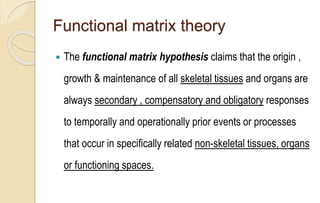
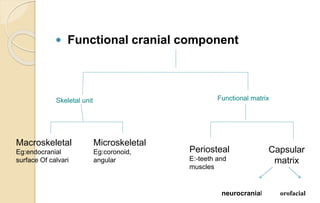
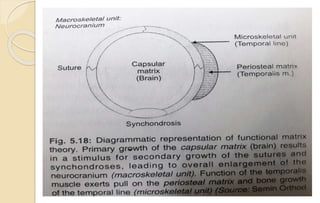
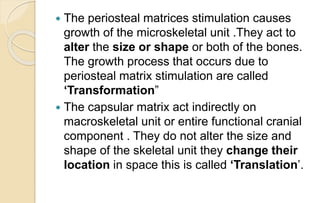
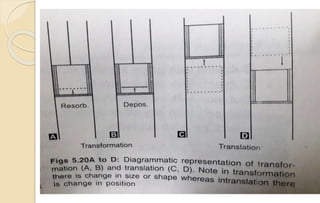
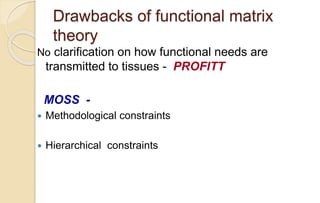
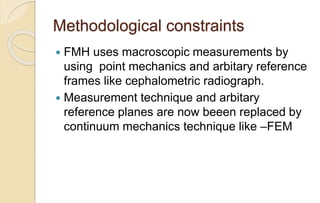
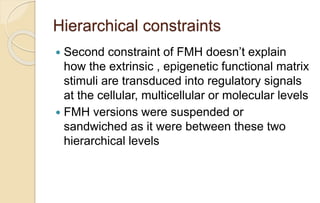
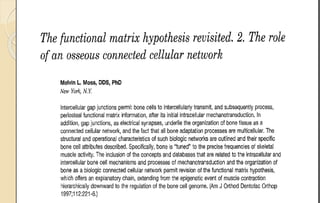
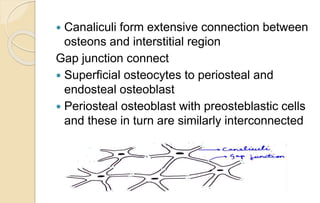
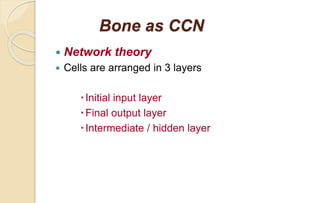
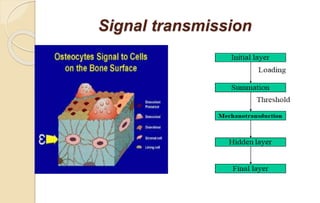
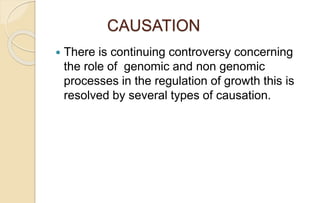
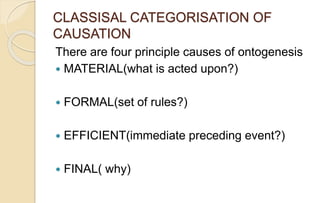
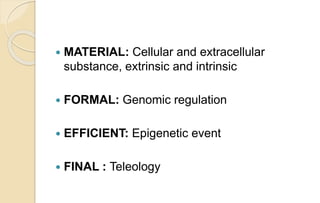
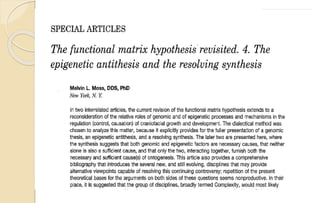
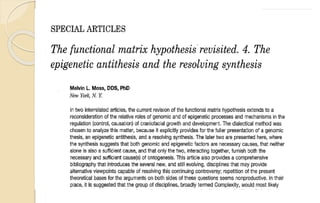
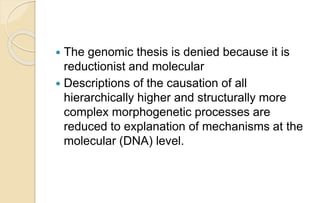
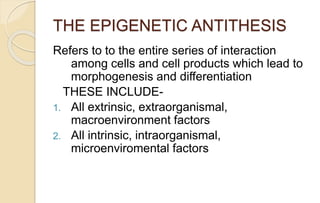
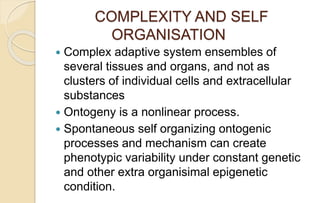
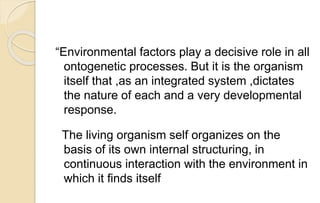
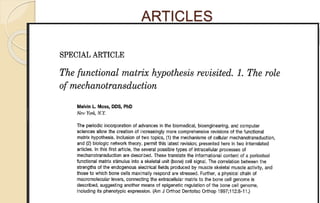
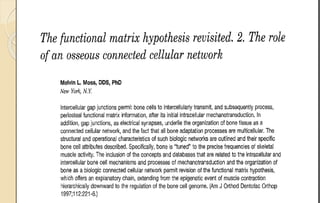
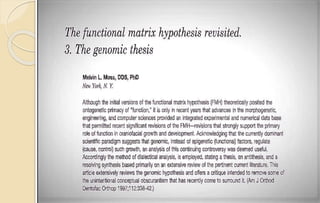
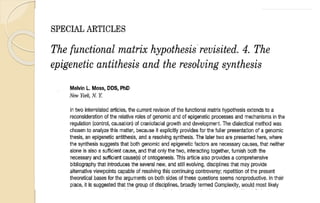
The document discusses the functional matrix theory, which posits that the development of skeletal tissues is influenced primarily by non-skeletal functions and their associated stimuli. It critiques the original functional matrix hypothesis for its methodological and hierarchical constraints while proposing an updated version that incorporates mechanotransduction and the concept of interconnected cellular networks in bone tissue. Additionally, it contrasts genomic regulation and epigenetic influences in the context of craniofacial development, emphasizing the complexity of interactions in morphogenesis.



![CTEV [ clubfoot] DR ARUN LAL ,DR MOHAMED ASHRAF travancore medical college k...](https://cdn.slidesharecdn.com/ss_thumbnails/ctevclubfootdrarunlaldrmohamedashraftravancoremedicalcollegekollamkeralaindia-260208063247-18fc466c-thumbnail.jpg?width=640&height=640&fit=bounds)


