
Erosion model testing -
are we doing enough?
Pedro V. G. Batista1,2, Jess Davies2,
Marx L. N. Silva1,2, John N. Quinton2
1Lavras Federal University, Brazil
2Lancaster University, United Kingdom
1
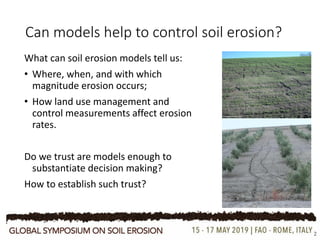
Can models help to control soil erosion?
What can soil erosion models tell us:
• Where, when, and with which
magnitude erosion occurs;
• How land use management and
control measurements affect erosion
rates.
Do we trust are models enough to
substantiate decision making?
How to establish such trust?
2
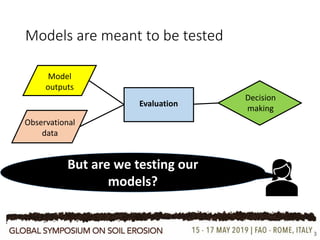
Models are meant to be tested
3
Observational
data
Model
outputs
Evaluation
Decision
making
But are we testing our
models?
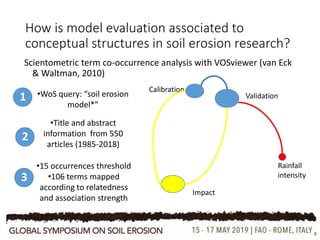
How is model evaluation associated to
conceptual structures in soil erosion research?
Scientometric term co-occurrence analysis with VOSviewer (van Eck
& Waltman, 2010)
4
•WoS query: “soil erosion
model*”
1
•Title and abstract
information from 550
articles (1985-2018)
2
•15 occurrences threshold
•106 terms mapped
according to relatedness
and association strength
3
Rainfall
intensity
Calibration
Validation
Impact
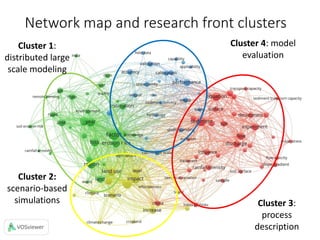
Network map and research front clusters
5
Cluster 1:
distributed large
scale modeling
Cluster 2:
scenario-based
simulations Cluster 3:
process
description
Cluster 4: model
evaluation
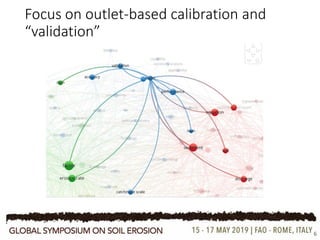
Focus on outlet-based calibration and
“validation”
6
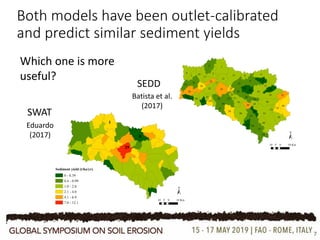
Both models have been outlet-calibrated
and predict similar sediment yields
7
SWAT
SEDD
Which one is more
useful?
Eduardo
(2017)
Batista et al.
(2017)
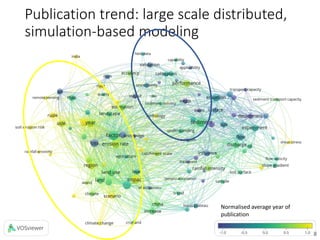
Publication trend: large scale distributed,
simulation-based modeling
8
Normalised average year of
publication
9
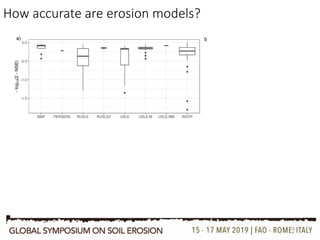
How accurate are erosion models?
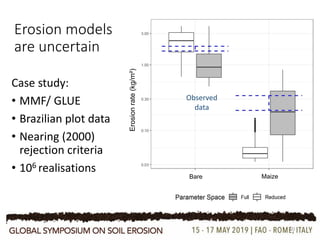
Erosion models
are uncertain
Case study:
• MMF/ GLUE
• Brazilian plot data
• Nearing (2000)
rejection criteria
• 106 realisations
10
Observed
data
Bare Maize
Erosionrate(kg/m²)
Then are we so confident about the performance
of soil erosion models that we do not need to
test them anymore?
11
The scientific literature says NO:
• Modeled erosion/deposition patterns/rates
frequently compare poorly to independent
estimates (Takken et al., 1999; Jetten et al., 2003;
Evans & Brazier, 2005);
• Un-calibrated models do not provide reliable
estimates of sediment yield (Jetten et al., 1999; Van
Rompaey et al. 2003; de Vente et al., 2013);
• Models outputs are considerably uncertain
(Quinton, 1997; Brazier et al., 2000; Van Rompaey
& Govers, 2002).
Conclusion
12
• If soil erosion models are to influence matters of
public interest they must be continuously
evaluated.
• Our co-occurrence analysis indicates that this is not
the case.
• Evaluating erosion models is inherently difficult,
defining tests according to the purpose, structure,
and scale of the application would benefit both
modelers and stakeholders.
13
Thank you!
Contacts:
p.batista@lancaster.ac.uk
jess.davies@lancaster.ac.uk
marx@dcs.ufla.br
j.quinton@lancaster.ac.uk
Erosion model testing – are doing enough?

Erosion model testing – are doing enough?

  • 1.
    Erosion model testing- are we doing enough? Pedro V. G. Batista1,2, Jess Davies2, Marx L. N. Silva1,2, John N. Quinton2 1Lavras Federal University, Brazil 2Lancaster University, United Kingdom 1
  • 2.
    Can models helpto control soil erosion? What can soil erosion models tell us: • Where, when, and with which magnitude erosion occurs; • How land use management and control measurements affect erosion rates. Do we trust are models enough to substantiate decision making? How to establish such trust? 2
  • 3.
    Models are meantto be tested 3 Observational data Model outputs Evaluation Decision making But are we testing our models?
  • 4.
    How is modelevaluation associated to conceptual structures in soil erosion research? Scientometric term co-occurrence analysis with VOSviewer (van Eck & Waltman, 2010) 4 •WoS query: “soil erosion model*” 1 •Title and abstract information from 550 articles (1985-2018) 2 •15 occurrences threshold •106 terms mapped according to relatedness and association strength 3 Rainfall intensity Calibration Validation Impact
  • 5.
    Network map andresearch front clusters 5 Cluster 1: distributed large scale modeling Cluster 2: scenario-based simulations Cluster 3: process description Cluster 4: model evaluation
  • 6.
    Focus on outlet-basedcalibration and “validation” 6
  • 7.
    Both models havebeen outlet-calibrated and predict similar sediment yields 7 SWAT SEDD Which one is more useful? Eduardo (2017) Batista et al. (2017)
  • 8.
    Publication trend: largescale distributed, simulation-based modeling 8 Normalised average year of publication
  • 9.
    9 How accurate areerosion models?
  • 10.
    Erosion models are uncertain Casestudy: • MMF/ GLUE • Brazilian plot data • Nearing (2000) rejection criteria • 106 realisations 10 Observed data Bare Maize Erosionrate(kg/m²)
  • 11.
    Then are weso confident about the performance of soil erosion models that we do not need to test them anymore? 11 The scientific literature says NO: • Modeled erosion/deposition patterns/rates frequently compare poorly to independent estimates (Takken et al., 1999; Jetten et al., 2003; Evans & Brazier, 2005); • Un-calibrated models do not provide reliable estimates of sediment yield (Jetten et al., 1999; Van Rompaey et al. 2003; de Vente et al., 2013); • Models outputs are considerably uncertain (Quinton, 1997; Brazier et al., 2000; Van Rompaey & Govers, 2002).
  • 12.
    Conclusion 12 • If soilerosion models are to influence matters of public interest they must be continuously evaluated. • Our co-occurrence analysis indicates that this is not the case. • Evaluating erosion models is inherently difficult, defining tests according to the purpose, structure, and scale of the application would benefit both modelers and stakeholders.
  • 13.