DRESS CODE

1st MHA 2013

IN HOSPITALS
DARK
KNIGHT

SHOWS
WHO AM I
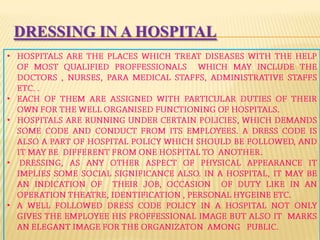
DRESSING IN A HOSPITAL
•

•
•

•

•
CODE OF DRESSING
PART OF THE POLICY FORMED BY
THE MANAGEMENT.
IT MAY BE A WRITTEN RULE AND SHOULD
BE FOLLOWED BY EVERY EMPLOYEE.
DRESSING PATTERN AND TYPE OF DRESS
VARIES ACCORDING TO THE JOB.
IT SHOULD BE HELPFUL IN PROVIDING
UNIFORMITY AMONG EMPLOYEES.
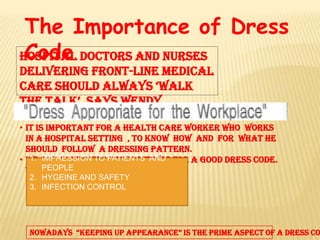
The Importance of Dress
Code
Hospital doctors and nurses
delivering front-line medical
care should always „walk
the talk‟, says wendy
Beckingham.

• It is important for a health care worker who works
in a hospital setting , to know how and for what he
should follow a dressing pattern.
1. IMPRESSION TO perspectives
• We can sort out 3PATIENTS AND for a good dress code.
PEOPLE
They are
2. Keeping Up Appearances
HYGEINE AND SAFETY
3. INFECTION CONTROL

nowadays “keeping up appearance” is the prime aspect of a dress co
GUIDELINES IN
DRESSING

EVEN THOUGH THE GUIDELINES IN DR
MAY VARY FROM EACH AND EVERY ORGANISATION , THER
MAY BE SOME COMMON ASPECTS WHICH SHOULD BE
FOLLOWED BY EVERYONE.
• IT SHOULD BE OF A SUITABLE COLOUR ,FABRIC AND STYLE WHICH
REFLECTS HIS/HER PROFFESSION.
• DRESS SHOULD BE CLEAN , NEAT AND STITCHED WELL.
• SHOULD PROVIDE SAFETY TO THE EMPLOYEE AND PATIENTS.
• SUITABLE TO PERFORM EVERY DUTIES OF EMPLOYEE.
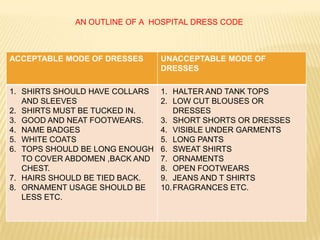
AN OUTLINE OF A HOSPITAL DRESS CODE

ACCEPTABLE MODE OF DRESSES

UNACCEPTABLE MODE OF
DRESSES

1. SHIRTS SHOULD HAVE COLLARS
AND SLEEVES
2. SHIRTS MUST BE TUCKED IN.
3. GOOD AND NEAT FOOTWEARS.
4. NAME BADGES
5. WHITE COATS
6. TOPS SHOULD BE LONG ENOUGH
TO COVER ABDOMEN ,BACK AND
CHEST.
7. HAIRS SHOULD BE TIED BACK.
8. ORNAMENT USAGE SHOULD BE
LESS ETC.

1. HALTER AND TANK TOPS
2. LOW CUT BLOUSES OR
DRESSES
3. SHORT SHORTS OR DRESSES
4. VISIBLE UNDER GARMENTS
5. LONG PANTS
6. SWEAT SHIRTS
7. ORNAMENTS
8. OPEN FOOTWEARS
9. JEANS AND T SHIRTS
10. FRAGRANCES ETC.
AN EXAMPLE OF DRESS CODE POLICY IN A
HOSPITAL
For staffs not required to wear a uniform

Female employees can wear skirts, blouses, smart T-shirts,suits etc.
Male employees can wear business suits, sports jackets, blazers,
trousers, smart Tshirts,shirts .
Non acceptable Clothings
• Casual trousers or skirts (all colours and styles), tracksuits, casual
sports T-shirts, leisure shorts, combat
trousers, sweatshirts, caps/hats, overly tight or revealing
clothes, including mini-skirts, low cut tops or those revealing the midriff
and clothing bearing inappropriate slogans. Trousers or skirts that are
of a length that they touch the ground when walking are not acceptable
on safety and hygiene grounds.
•
•

Personal Protective Clothing and Equipment

Staff in roles that require protective clothing are required to wear this while carrying
out their duties in accordance with health and safety requirements .

Footwear

Footwear must be safe, sensible, in good order, smart and clean and have regard to
health and safety considerations. High heels and plastic chappals are not
acceptable. Certain jobs require staff to wear protective footwear which should be
provided.
Tattoos

Visible tattoos are to be discouraged and offensive ones should be appropriately covered.

Jewellery and Piercing

Jewellery for clinical staff must be kept to a minimum. Wrist watches must be worn when
providing clinical care, which includes examining patient . Facial/body piercing is not permitted

Hair

Hair should be neat and tidy at all times and in the clinical environment. Long hair
should be tied back. Headscarves worn for religious purposes are permitted in most
areas, however they are excluded in areas such as theatre, where they could
present a health and safety and cross-infection hazard. Beards should be short and
neatly trimmed. Beards should be covered with a hood when undertaking aseptic procedures.

Facial Covers

Staff who wear facial coverings for religious reasons are expected to remove them
while on duty.

General requirements for uniform wearers

1. The uniform should be worn in a clean and presentable fashion and all staff must
have access to a spare uniform in case one becomes soiled during the shift.
2. Smart and appropriate shoes should be worn.
3. Nail varnish, false nails and false eyelashes are not permitted. Nails should be sufficiently
short to ensure safe patient contact and good hand hygiene.
4. The uniforms issued must not be altered or added to by the individual.
5. All staff should change out of their uniform before going off duty.
6. Staff who smoke must not smoke in uniform.
Specific Uniform Groups
There are many groups of employee who does same kind of job are provided with
same kind of dresses, which serves to identify them for patients and other staffs in the hospital like
Nurses, Midwives, Dental Nurses Radiology, Occupational Therapists and Physiotherapists
Medical and Dental Staff etc

Protective Clothing

A number of clinical and non clinical staff groups are required to wear protective
clothing as part of their individual role. The principles are based upon the need for
• Patient safety
• Personal safety
• Statutory regulatory requirements
• Work environment
• Health and safety requirements
• Infection control requirements

Theatre Staff

1.

2.
3.
4.
5.

Scrubs must be clean at the beginning of every shift and changed each time they become stained
with blood or body fluids.
When leaving these areas, the member of staff should change into their own clothes.
Unless attending a clinical emergency, it is not acceptable to wear scrubs outside the theatre .
When attending a clinical emergency, scrubs should be covered with a clean white coat and theatre
headgear and masks removed.
Staff should wear well fitted dedicated operating theatre footwear. These must be decontaminated
on a regular basis, particularly when visibly dirty or when contaminated with blood or body fluids.
6.
7.

In the operating theatre, hair must be entirely covered with a clean,disposable hat.
Protective eyewear with visors, appropriate aprons and gloves must be readily
available in every theatre .
8. Theatre gowns is recommended to protect both the patient and individual staff
member.
9. Headscarves must not be worn in the operating theatre.

Visitors to the operating theatre complex

Any visitor entering an operating theatre must change into scrubs and suitable footwear

Catering

1. All catering staff involved in the preparation and service of food must wear
the appropriate uniform, headwear and, where required, protective shoes.
2. For hygiene reasons no jewellery can be worn.
3. Staff working in a kitchen environment must ensure that their hair is kept
covered at all times, and beards must be covered with an appropriate facial
mask/hood when preparing food.
THANK YOU

Dress code in hospitals

  • 1.
    DRESS CODE 1st MHA2013 IN HOSPITALS
  • 2.
  • 3.
    DRESSING IN AHOSPITAL • • • • •
  • 4.
    CODE OF DRESSING PARTOF THE POLICY FORMED BY THE MANAGEMENT. IT MAY BE A WRITTEN RULE AND SHOULD BE FOLLOWED BY EVERY EMPLOYEE. DRESSING PATTERN AND TYPE OF DRESS VARIES ACCORDING TO THE JOB. IT SHOULD BE HELPFUL IN PROVIDING UNIFORMITY AMONG EMPLOYEES.
  • 5.
    The Importance ofDress Code Hospital doctors and nurses delivering front-line medical care should always „walk the talk‟, says wendy Beckingham. • It is important for a health care worker who works in a hospital setting , to know how and for what he should follow a dressing pattern. 1. IMPRESSION TO perspectives • We can sort out 3PATIENTS AND for a good dress code. PEOPLE They are 2. Keeping Up Appearances HYGEINE AND SAFETY 3. INFECTION CONTROL nowadays “keeping up appearance” is the prime aspect of a dress co
  • 6.
    GUIDELINES IN DRESSING EVEN THOUGHTHE GUIDELINES IN DR MAY VARY FROM EACH AND EVERY ORGANISATION , THER MAY BE SOME COMMON ASPECTS WHICH SHOULD BE FOLLOWED BY EVERYONE. • IT SHOULD BE OF A SUITABLE COLOUR ,FABRIC AND STYLE WHICH REFLECTS HIS/HER PROFFESSION. • DRESS SHOULD BE CLEAN , NEAT AND STITCHED WELL. • SHOULD PROVIDE SAFETY TO THE EMPLOYEE AND PATIENTS. • SUITABLE TO PERFORM EVERY DUTIES OF EMPLOYEE.
  • 7.
    AN OUTLINE OFA HOSPITAL DRESS CODE ACCEPTABLE MODE OF DRESSES UNACCEPTABLE MODE OF DRESSES 1. SHIRTS SHOULD HAVE COLLARS AND SLEEVES 2. SHIRTS MUST BE TUCKED IN. 3. GOOD AND NEAT FOOTWEARS. 4. NAME BADGES 5. WHITE COATS 6. TOPS SHOULD BE LONG ENOUGH TO COVER ABDOMEN ,BACK AND CHEST. 7. HAIRS SHOULD BE TIED BACK. 8. ORNAMENT USAGE SHOULD BE LESS ETC. 1. HALTER AND TANK TOPS 2. LOW CUT BLOUSES OR DRESSES 3. SHORT SHORTS OR DRESSES 4. VISIBLE UNDER GARMENTS 5. LONG PANTS 6. SWEAT SHIRTS 7. ORNAMENTS 8. OPEN FOOTWEARS 9. JEANS AND T SHIRTS 10. FRAGRANCES ETC.
  • 8.
    AN EXAMPLE OFDRESS CODE POLICY IN A HOSPITAL For staffs not required to wear a uniform Female employees can wear skirts, blouses, smart T-shirts,suits etc. Male employees can wear business suits, sports jackets, blazers, trousers, smart Tshirts,shirts . Non acceptable Clothings • Casual trousers or skirts (all colours and styles), tracksuits, casual sports T-shirts, leisure shorts, combat trousers, sweatshirts, caps/hats, overly tight or revealing clothes, including mini-skirts, low cut tops or those revealing the midriff and clothing bearing inappropriate slogans. Trousers or skirts that are of a length that they touch the ground when walking are not acceptable on safety and hygiene grounds. • • Personal Protective Clothing and Equipment Staff in roles that require protective clothing are required to wear this while carrying out their duties in accordance with health and safety requirements . Footwear Footwear must be safe, sensible, in good order, smart and clean and have regard to health and safety considerations. High heels and plastic chappals are not acceptable. Certain jobs require staff to wear protective footwear which should be provided.
  • 9.
    Tattoos Visible tattoos areto be discouraged and offensive ones should be appropriately covered. Jewellery and Piercing Jewellery for clinical staff must be kept to a minimum. Wrist watches must be worn when providing clinical care, which includes examining patient . Facial/body piercing is not permitted Hair Hair should be neat and tidy at all times and in the clinical environment. Long hair should be tied back. Headscarves worn for religious purposes are permitted in most areas, however they are excluded in areas such as theatre, where they could present a health and safety and cross-infection hazard. Beards should be short and neatly trimmed. Beards should be covered with a hood when undertaking aseptic procedures. Facial Covers Staff who wear facial coverings for religious reasons are expected to remove them while on duty. General requirements for uniform wearers 1. The uniform should be worn in a clean and presentable fashion and all staff must have access to a spare uniform in case one becomes soiled during the shift. 2. Smart and appropriate shoes should be worn. 3. Nail varnish, false nails and false eyelashes are not permitted. Nails should be sufficiently short to ensure safe patient contact and good hand hygiene. 4. The uniforms issued must not be altered or added to by the individual. 5. All staff should change out of their uniform before going off duty. 6. Staff who smoke must not smoke in uniform.
  • 10.
    Specific Uniform Groups Thereare many groups of employee who does same kind of job are provided with same kind of dresses, which serves to identify them for patients and other staffs in the hospital like Nurses, Midwives, Dental Nurses Radiology, Occupational Therapists and Physiotherapists Medical and Dental Staff etc Protective Clothing A number of clinical and non clinical staff groups are required to wear protective clothing as part of their individual role. The principles are based upon the need for • Patient safety • Personal safety • Statutory regulatory requirements • Work environment • Health and safety requirements • Infection control requirements Theatre Staff 1. 2. 3. 4. 5. Scrubs must be clean at the beginning of every shift and changed each time they become stained with blood or body fluids. When leaving these areas, the member of staff should change into their own clothes. Unless attending a clinical emergency, it is not acceptable to wear scrubs outside the theatre . When attending a clinical emergency, scrubs should be covered with a clean white coat and theatre headgear and masks removed. Staff should wear well fitted dedicated operating theatre footwear. These must be decontaminated on a regular basis, particularly when visibly dirty or when contaminated with blood or body fluids.
  • 11.
    6. 7. In the operatingtheatre, hair must be entirely covered with a clean,disposable hat. Protective eyewear with visors, appropriate aprons and gloves must be readily available in every theatre . 8. Theatre gowns is recommended to protect both the patient and individual staff member. 9. Headscarves must not be worn in the operating theatre. Visitors to the operating theatre complex Any visitor entering an operating theatre must change into scrubs and suitable footwear Catering 1. All catering staff involved in the preparation and service of food must wear the appropriate uniform, headwear and, where required, protective shoes. 2. For hygiene reasons no jewellery can be worn. 3. Staff working in a kitchen environment must ensure that their hair is kept covered at all times, and beards must be covered with an appropriate facial mask/hood when preparing food.
  • 12.