Overview Process Flow
GTM Development Framework
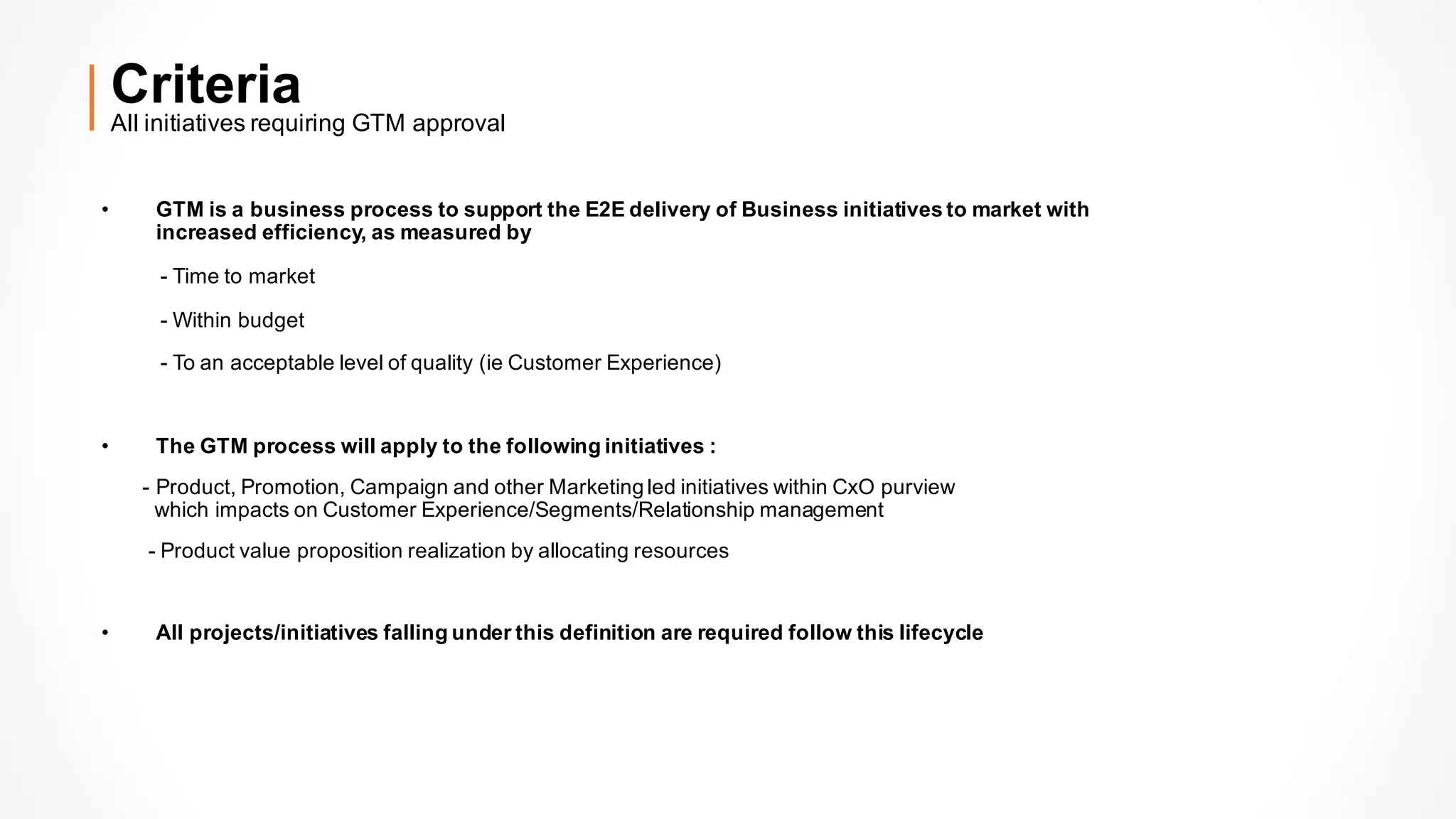
All initiatives requiring GTM approval
Criteria
• GTM is a business process to support the E2E delivery of Business initiatives to market with
increased efficiency, as measured by
- Time to market
- Within budget
- To an acceptable level of quality (ie Customer Experience)
• The GTM process will apply to the following initiatives :
- Product, Promotion, Campaign and other Marketing led initiatives within CxO purview
which impacts on Customer Experience/Segments/Relationship management
- Product value proposition realization by allocating resources
• All projects/initiatives falling under this definition are required follow this lifecycle
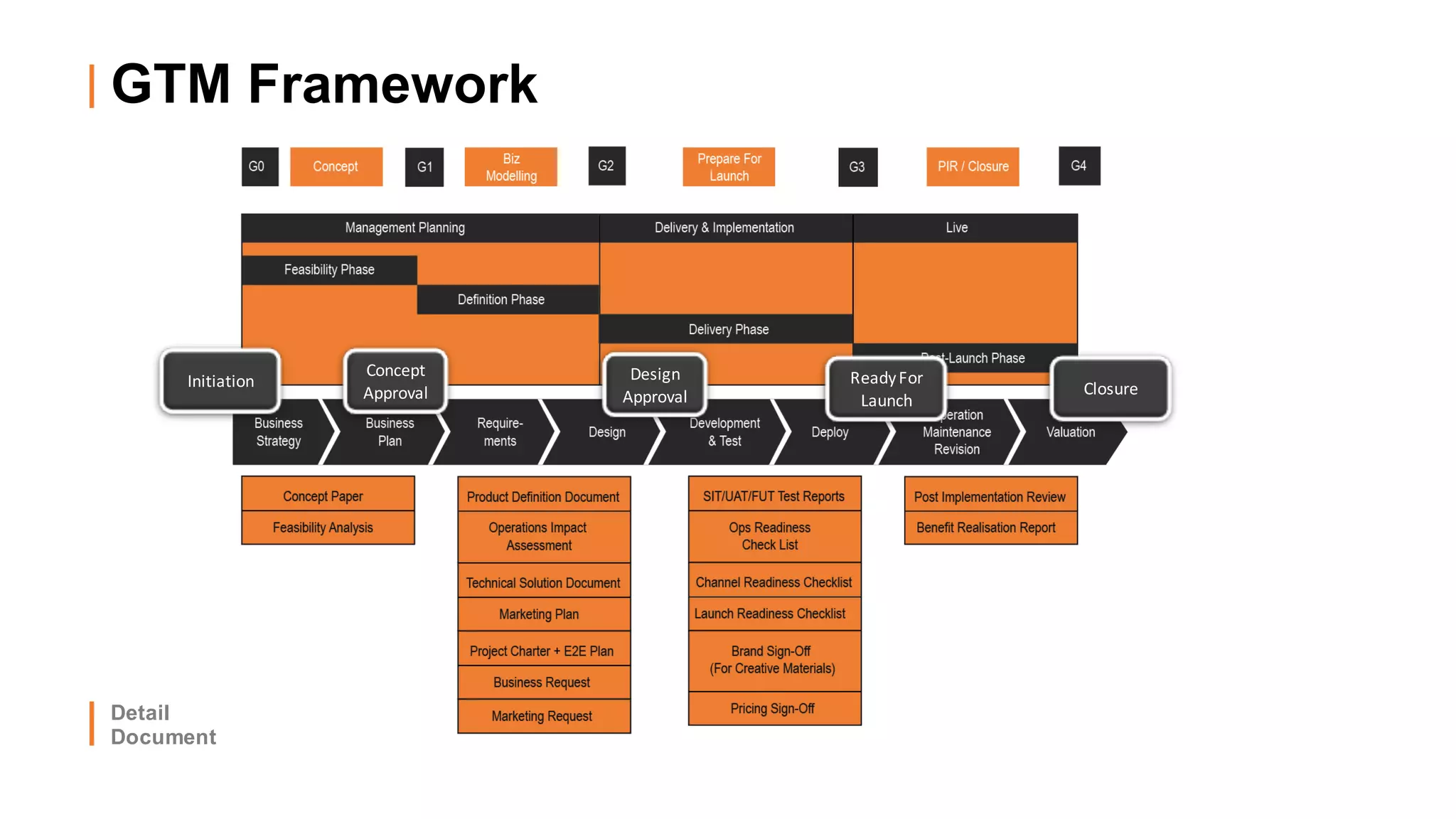
GTM Framework
Detail
Document
Concept
Approval
Design
Approval
Ready	For
Launch
ClosureInitiation
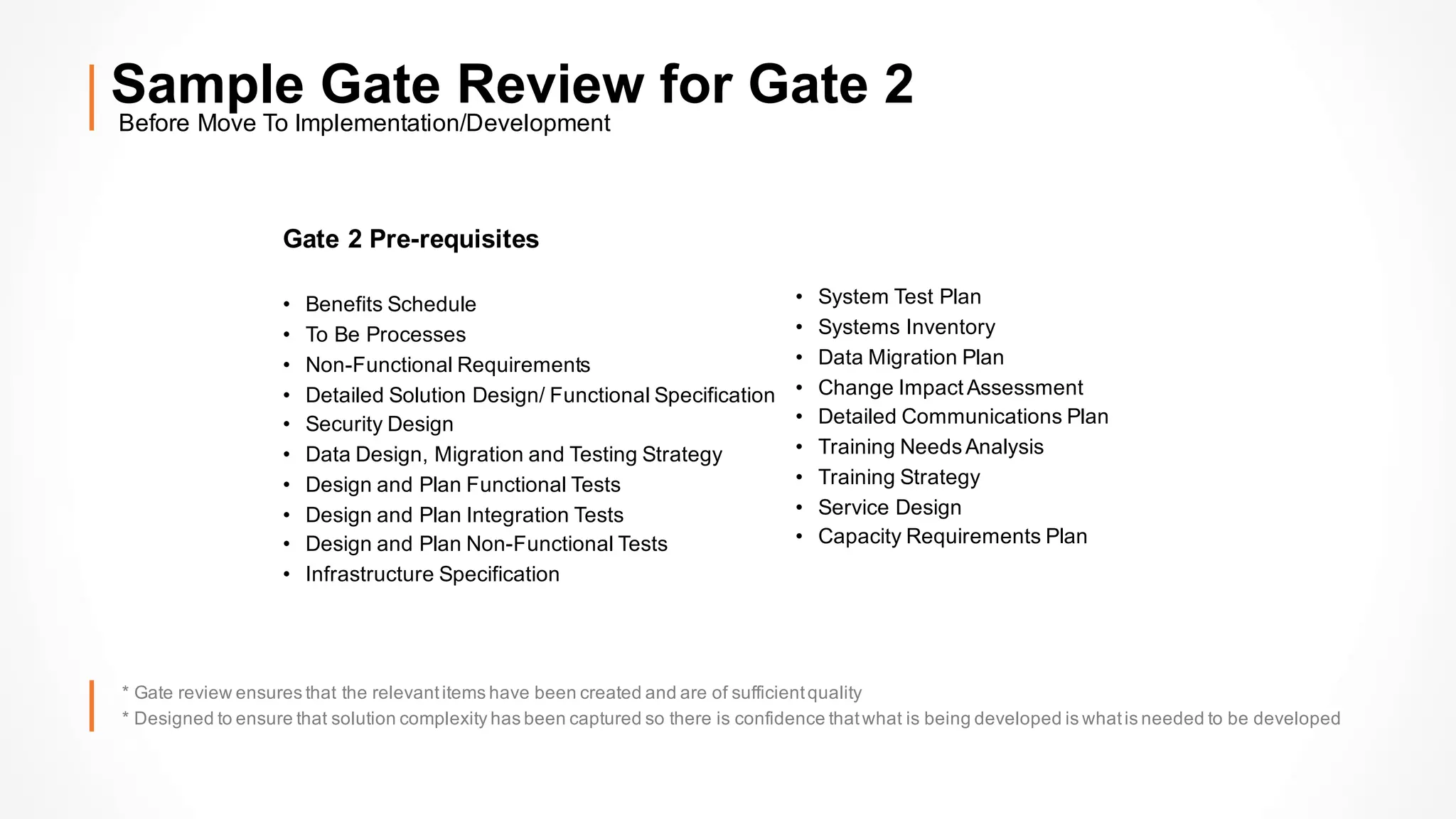
Before Move To Implementation/Development
Sample Gate Review for Gate 2
Gate 2 Pre-requisites
• Benefits Schedule
• To Be Processes
• Non-Functional Requirements
• Detailed Solution Design/ Functional Specification
• Security Design
• Data Design, Migration and Testing Strategy
• Design and Plan Functional Tests
• Design and Plan Integration Tests
• Design and Plan Non-Functional Tests
• Infrastructure Specification
• System Test Plan
• Systems Inventory
• Data Migration Plan
• Change Impact Assessment
• Detailed Communications Plan
• Training NeedsAnalysis
• Training Strategy
• Service Design
• Capacity Requirements Plan
* Gate review ensures that the relevantitems have been created and are of sufficientquality
* Designed to ensure that solution complexity has been captured so there is confidence thatwhat is being developed is whatis needed to be developed
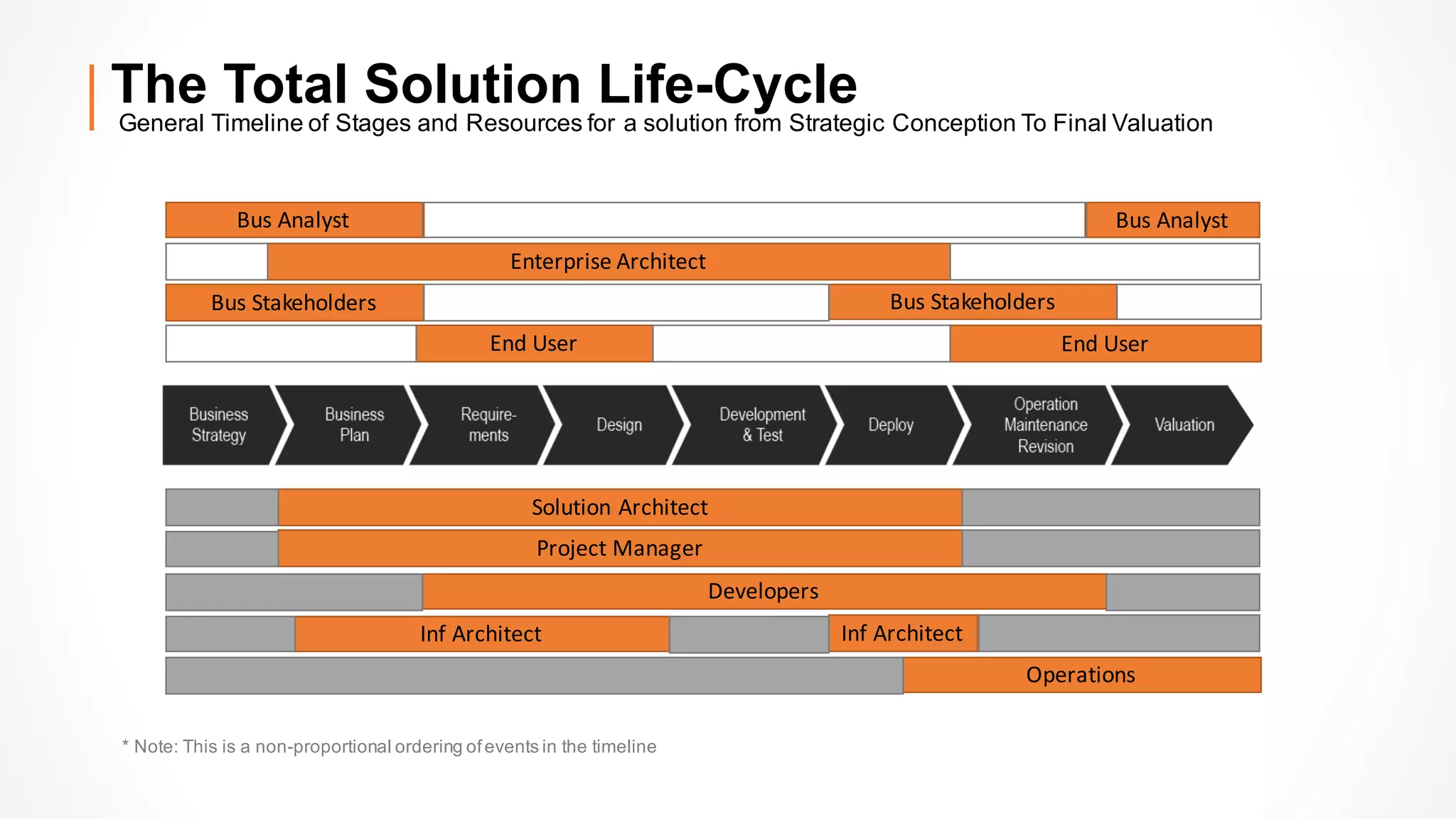
General Timeline of Stages and Resources for a solution from Strategic Conception To Final Valuation
The Total Solution Life-Cycle
* Note: This is a non-proportional ordering ofevents in the timeline
Bus	Analyst Bus	Analyst
Enterprise	Architect
Bus	Stakeholders Bus	Stakeholders
End	User End	User
Solution	Architect
Project	Manager
Developers
Inf Architect Inf Architect
Operations
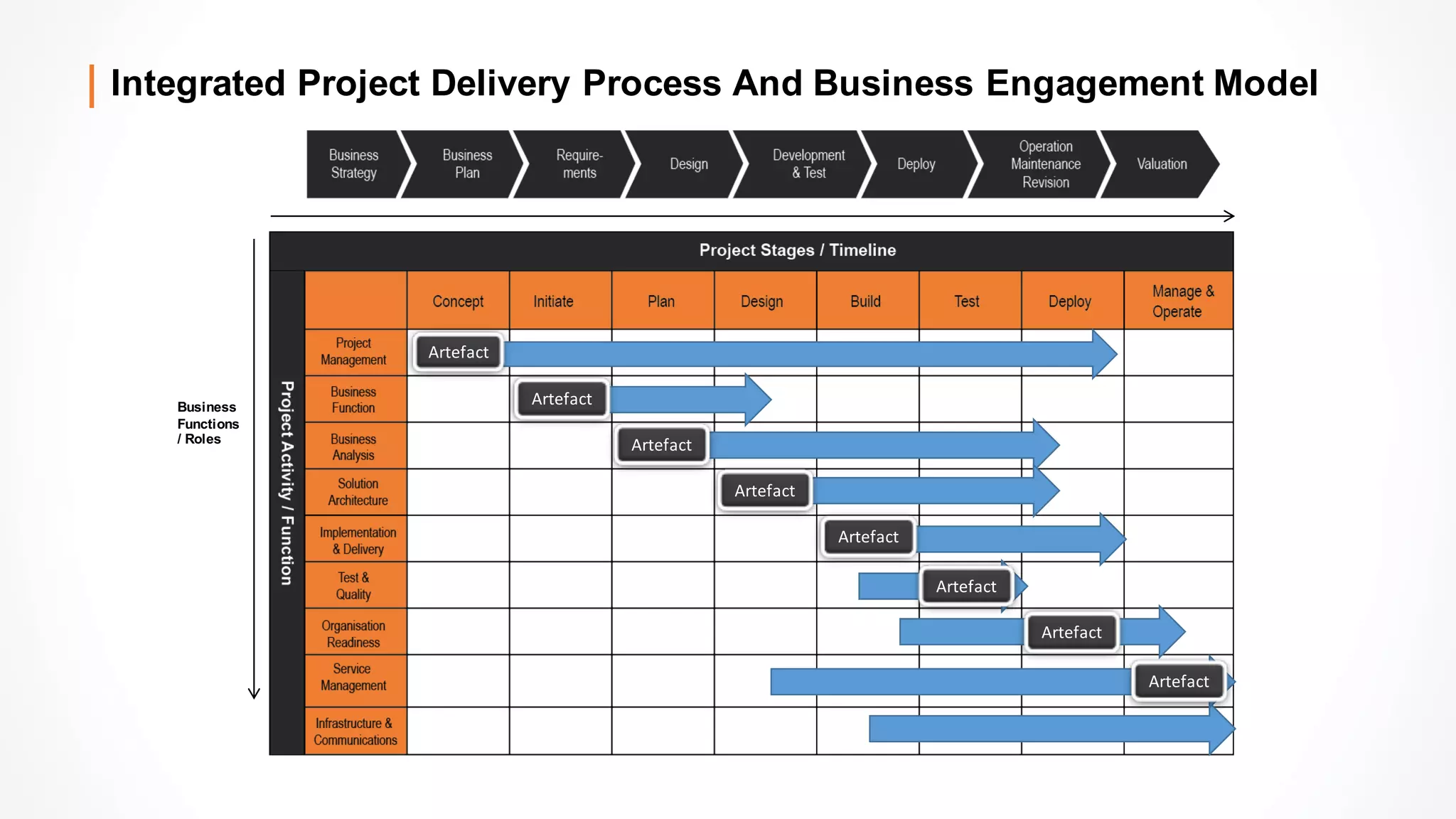
Integrated Project Delivery Process And Business Engagement Model
Business
Functions
/ Roles
Artefact
Artefact
Artefact
Artefact
Artefact
Artefact
Artefact
Artefact
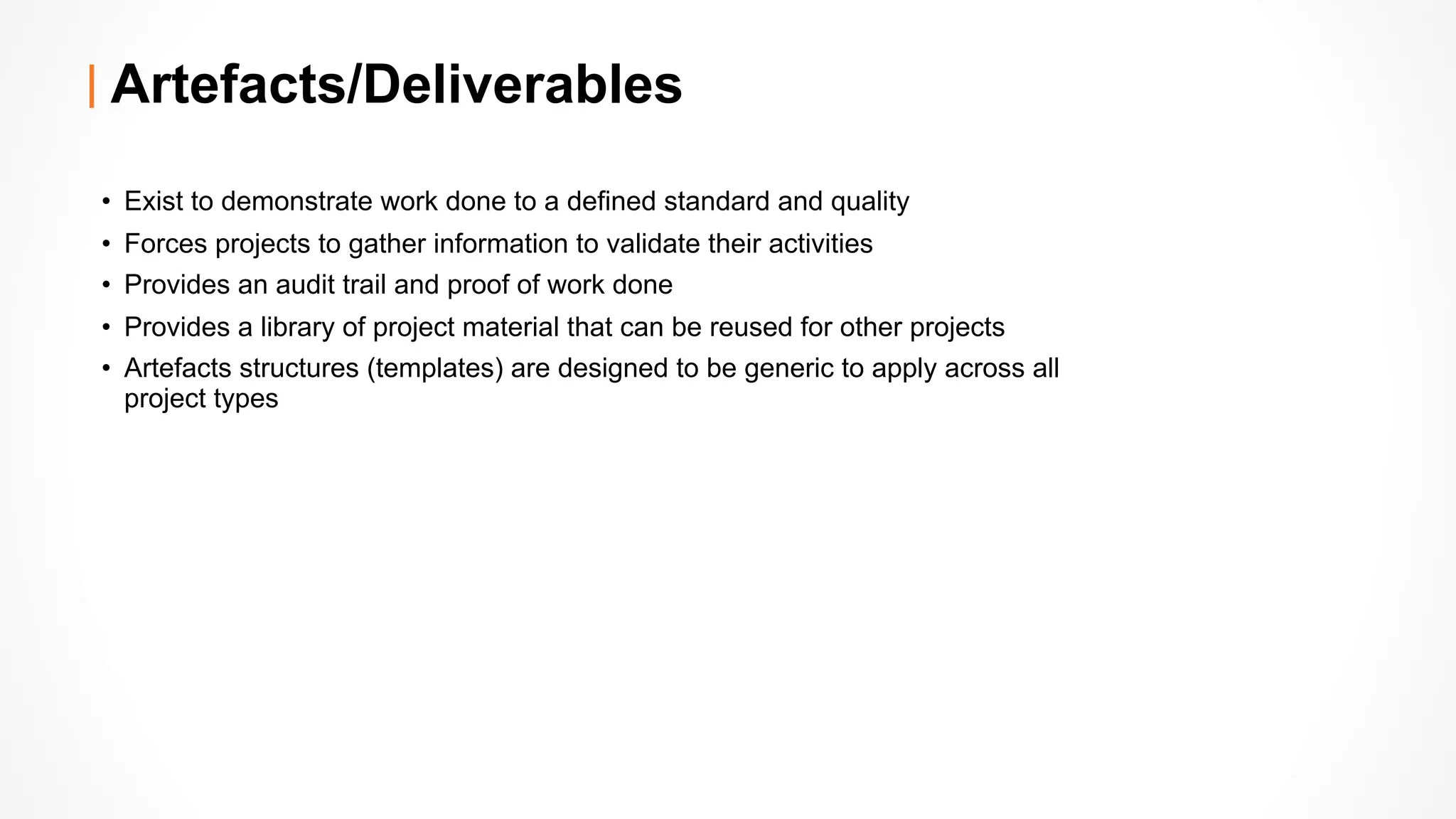
Artefacts/Deliverables
• Exist to demonstrate work done to a defined standard and quality
• Forces projects to gather information to validate their activities
• Provides an audit trail and proof of work done
• Provides a library of project material that can be reused for other projects
• Artefacts structures (templates) are designed to be generic to apply across all
project types
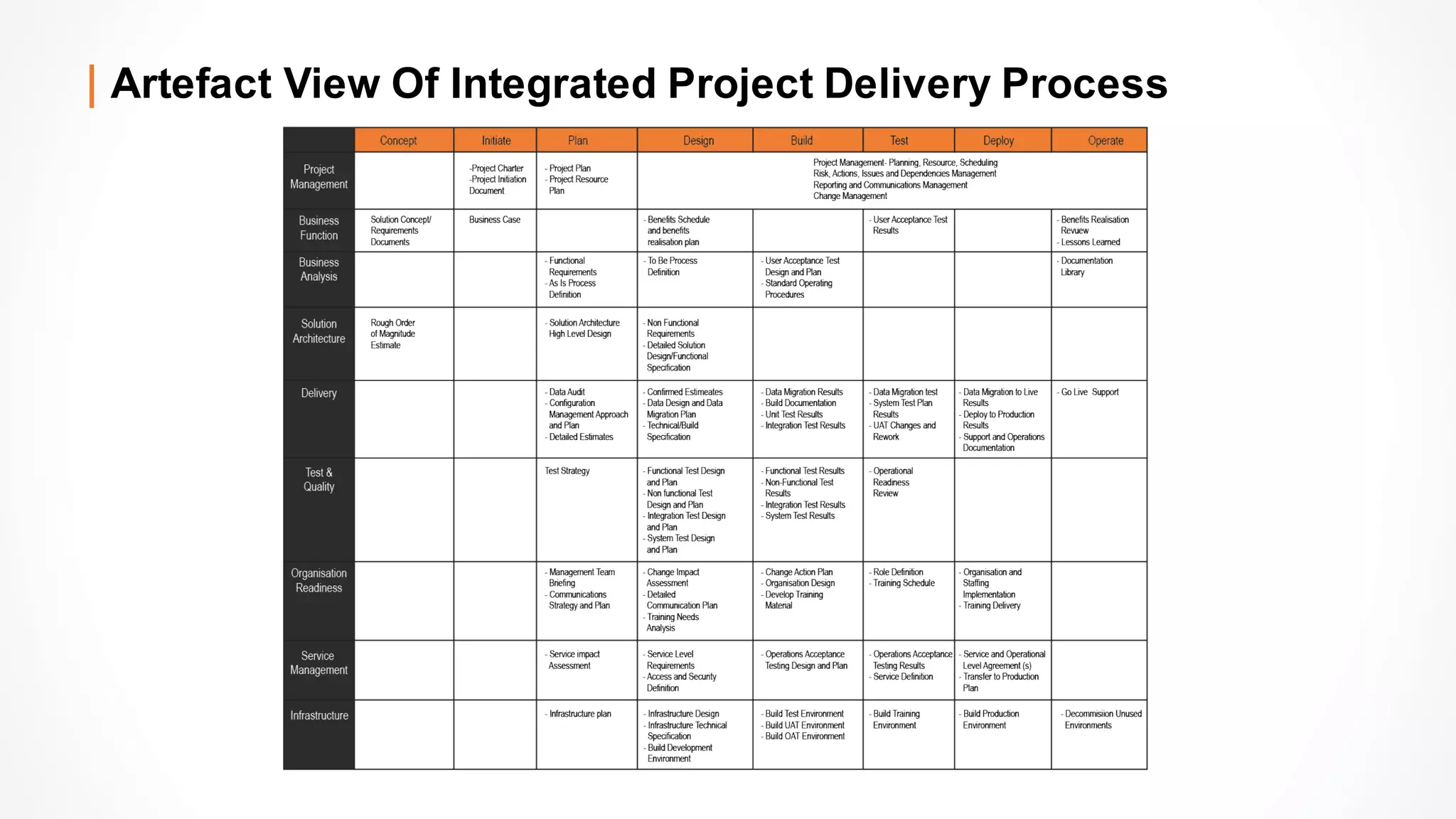
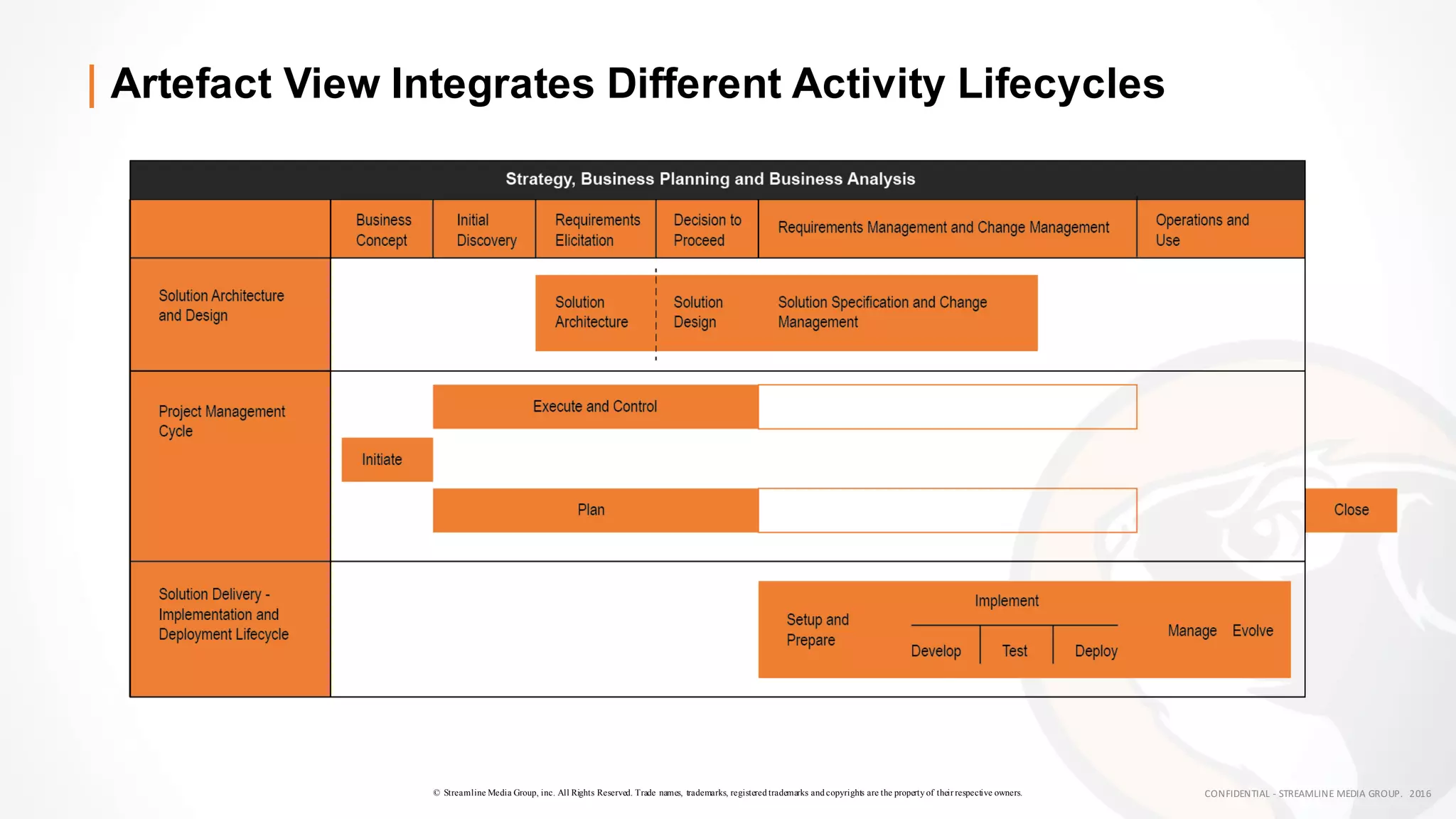
Artefact View Of Integrated Project Delivery Process
CONFIDENTIAL	- STREAMLINE	MEDIA	GROUP.		2016© Streamline Media Group, inc. All Rights Reserved. Trade names, trademarks, registered trademarks and copyrights are the property of their respective owners.
Artefact View Integrates Different Activity Lifecycles
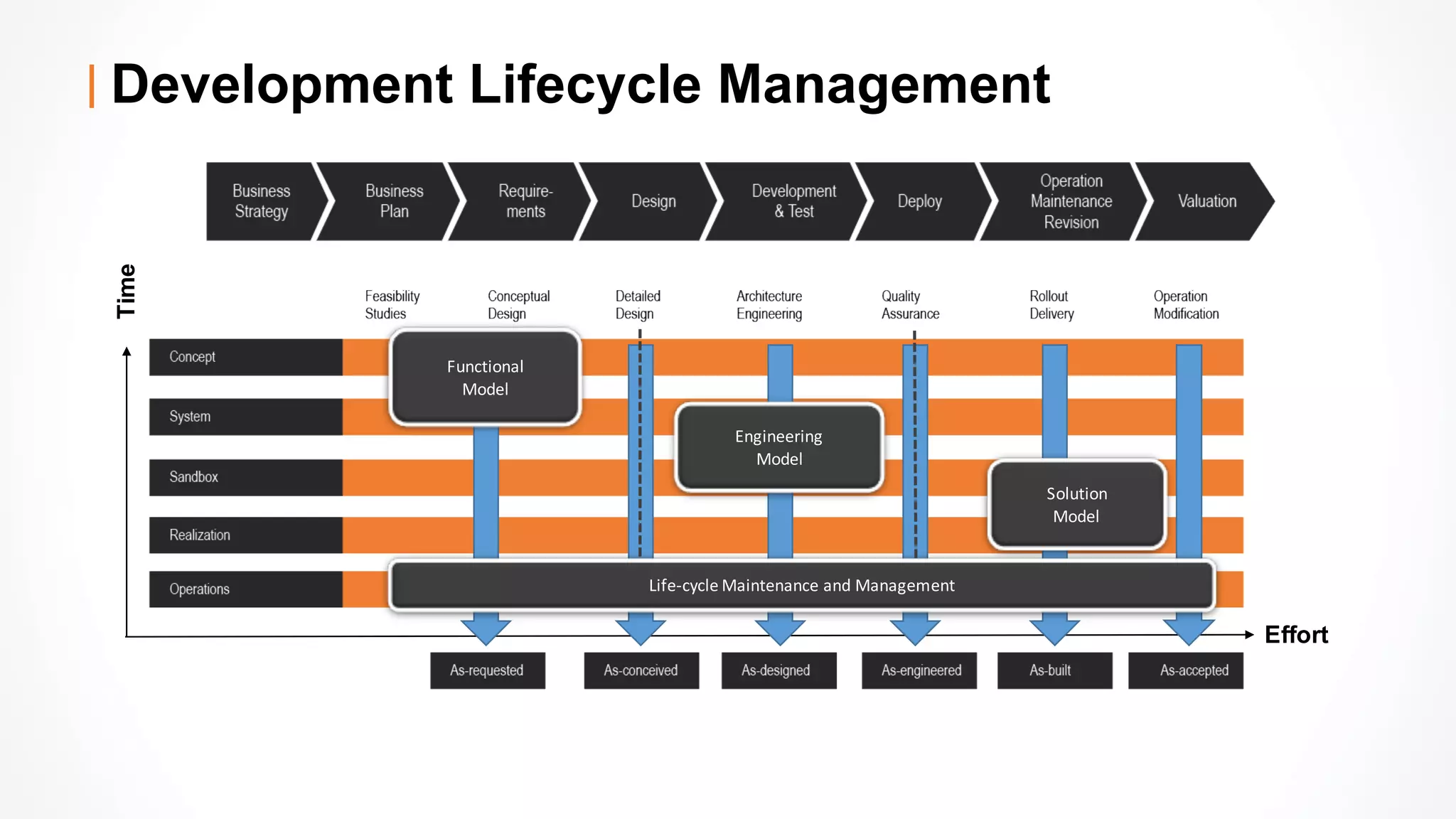
Development Lifecycle Management
Time
Effort
Functional
Model
Engineering
Model
Solution
Model
Life-cycle	Maintenance	and	Management
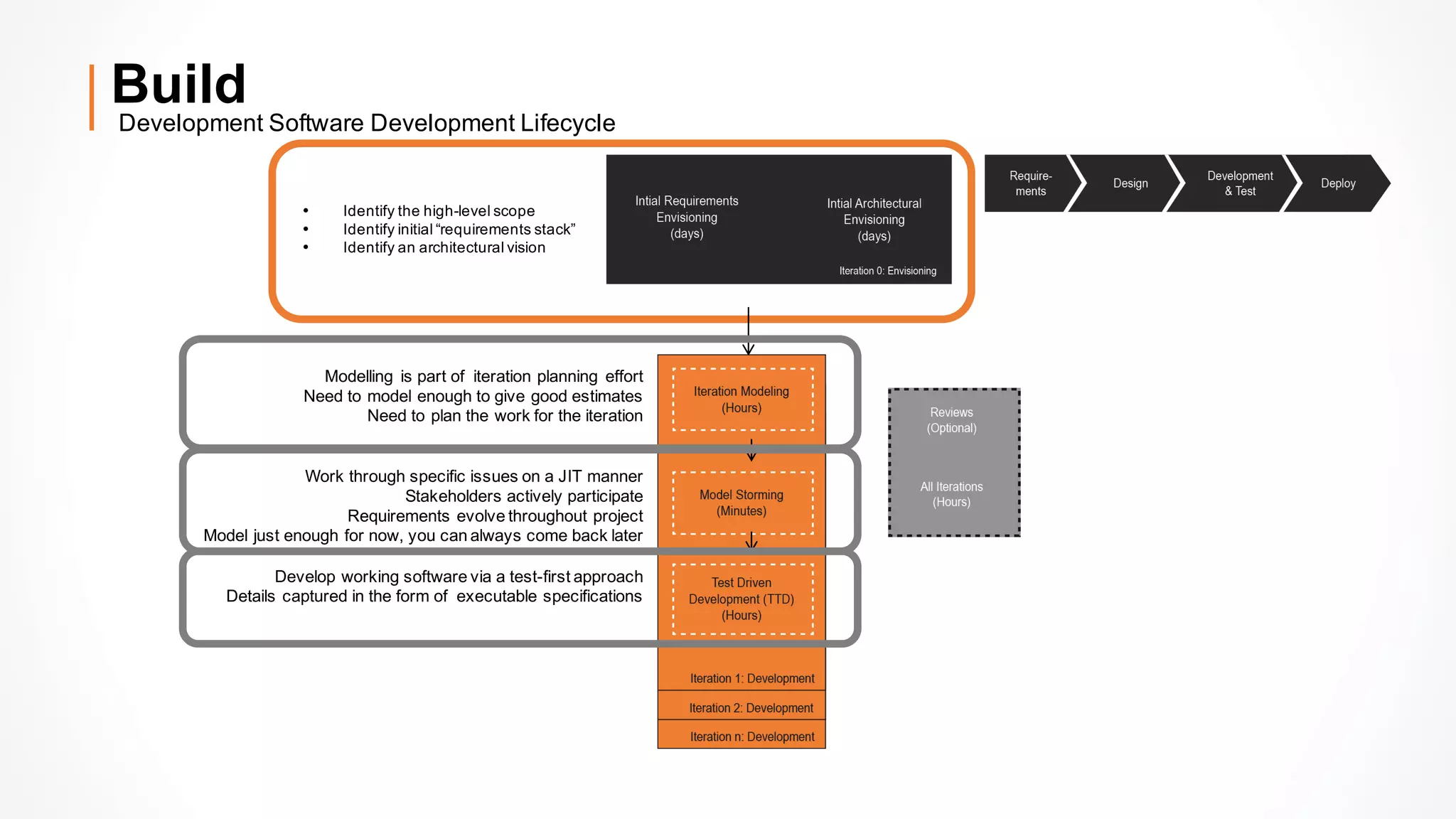
Development Software Development Lifecycle
Build
• Identify the high-level scope
• Identify initial “requirements stack”
• Identify an architectural vision
Modelling is part of iteration planning effort
Need to model enough to give good estimates
Need to plan the work for the iteration
Work through specific issues on a JIT manner
Stakeholders actively participate
Requirements evolve throughout project
Model just enough for now, you can always come back later
Develop working software via a test-first approach
Details captured in the form of executable specifications
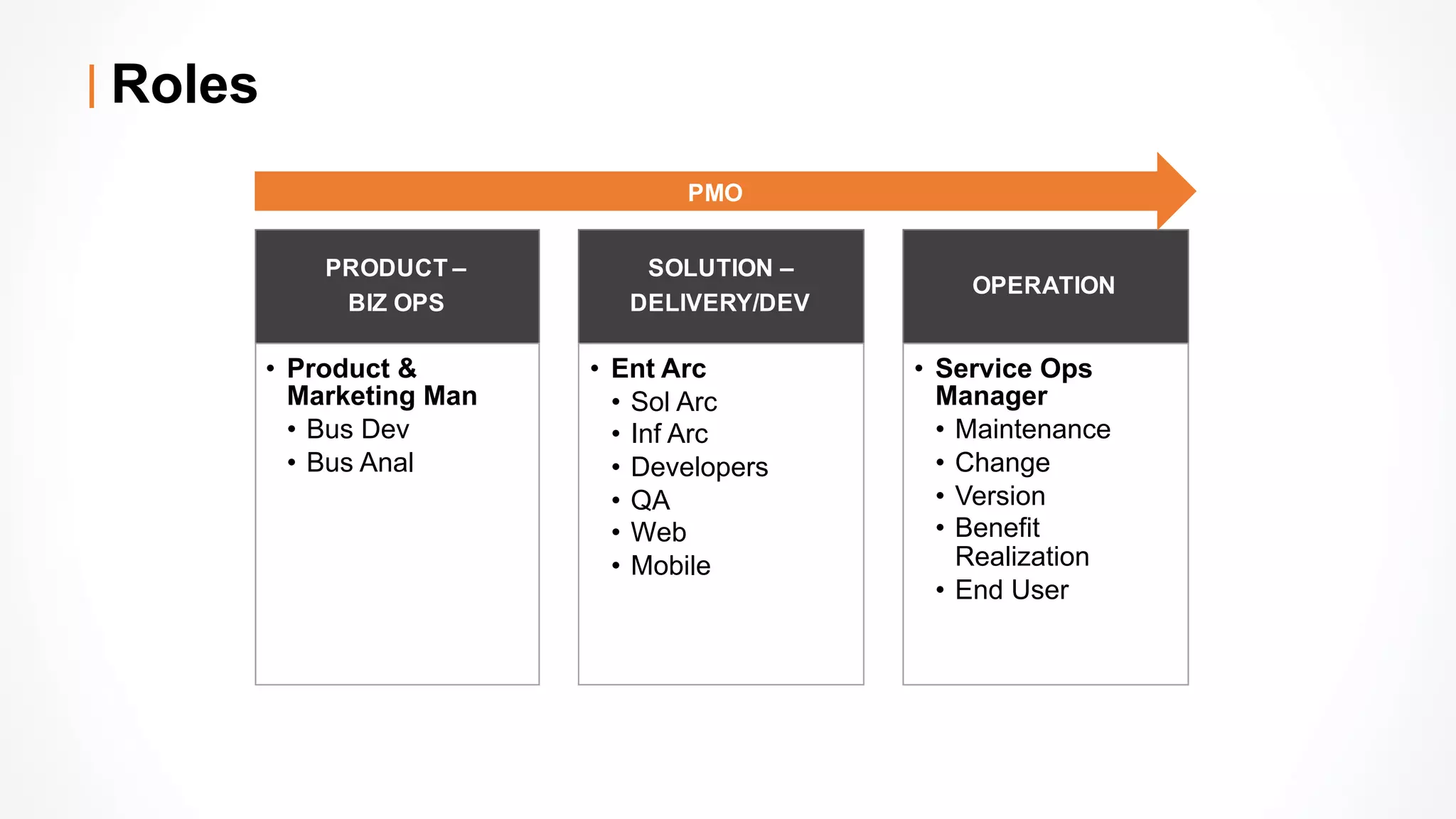
Roles
PRODUCT –
BIZ OPS
• Product &
Marketing Man
• Bus Dev
• Bus Anal
SOLUTION –
DELIVERY/DEV
• Ent Arc
• Sol Arc
• Inf Arc
• Developers
• QA
• Web
• Mobile
OPERATION
• Service Ops
Manager
• Maintenance
• Change
• Version
• Benefit
Realization
• End User
PMO
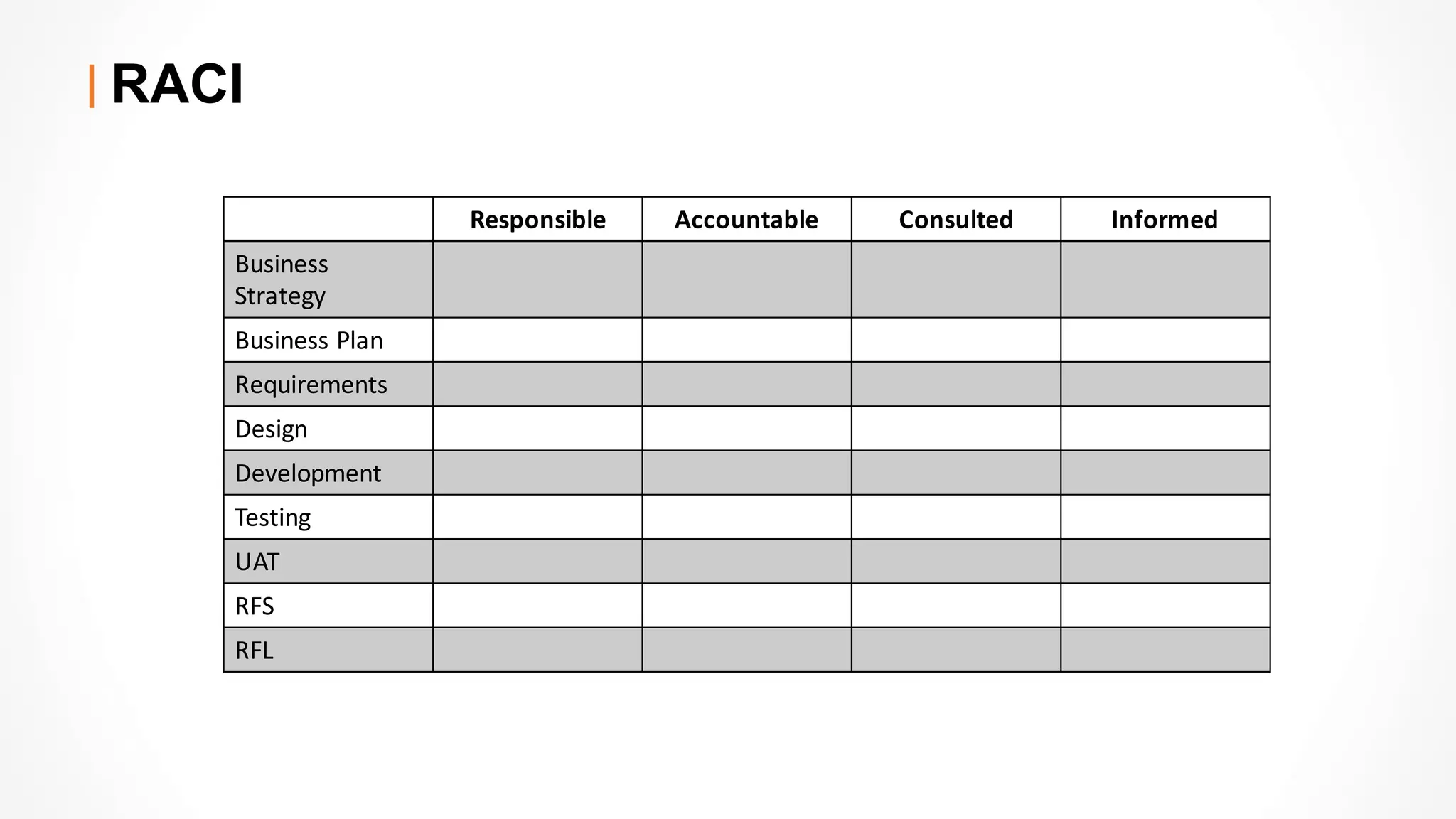
RACI
Responsible Accountable Consulted Informed
Business	
Strategy
Business	Plan
Requirements
Design
Development
Testing
UAT
RFS
RFL
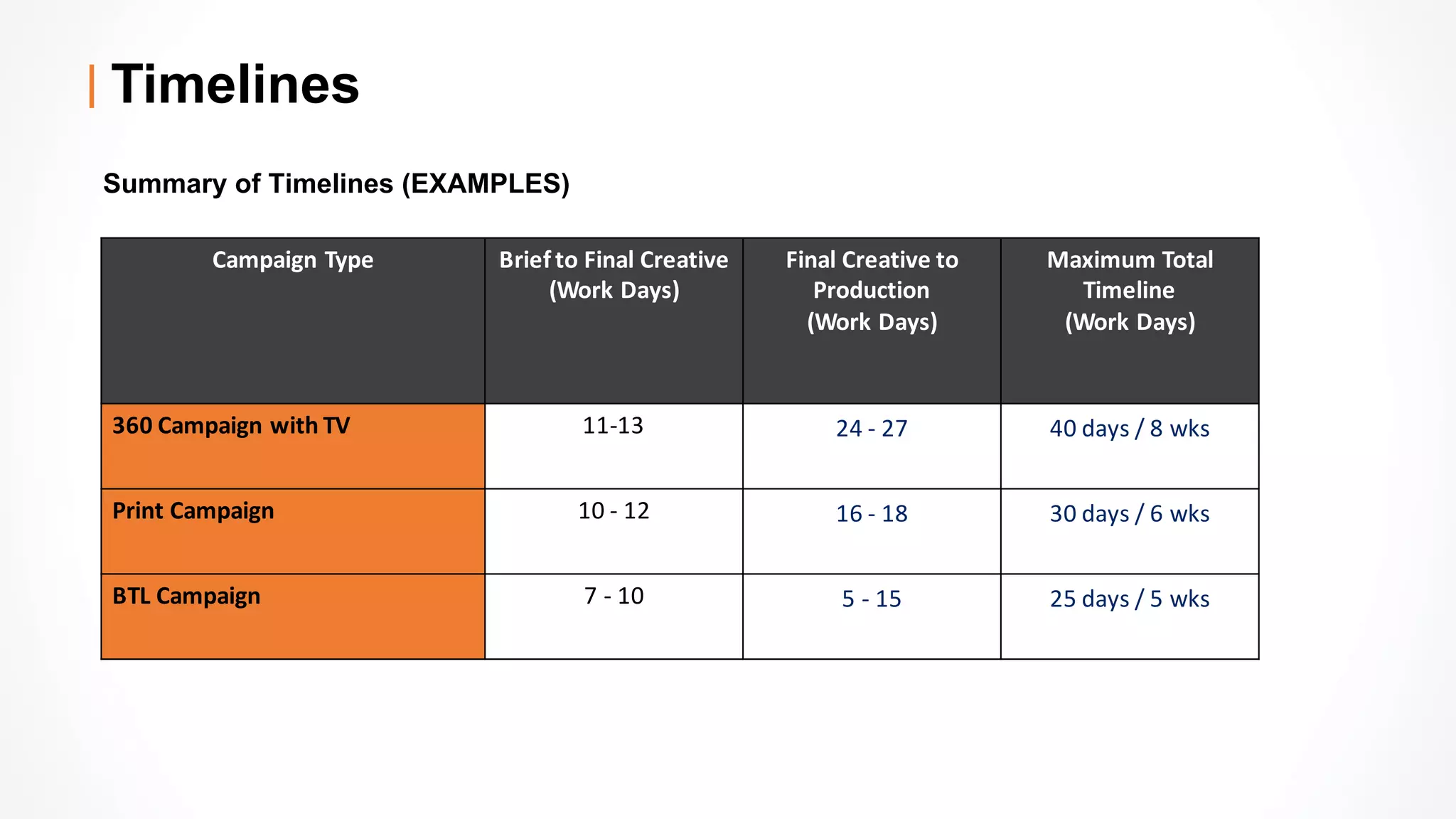
Timelines
Summary of Timelines (EXAMPLES)
Campaign	Type Brief	to	Final	Creative
(Work	Days)
Final	Creative	to	
Production
(Work	Days)
Maximum	Total	
Timeline	
(Work	Days)
360	Campaign	with	TV 11-13 24	- 27 40	days	/	8	wks
Print	Campaign 10	- 12 16	- 18 30	days	/	6	wks
BTL	Campaign 7	- 10 5	- 15 25	days	/	5	wks
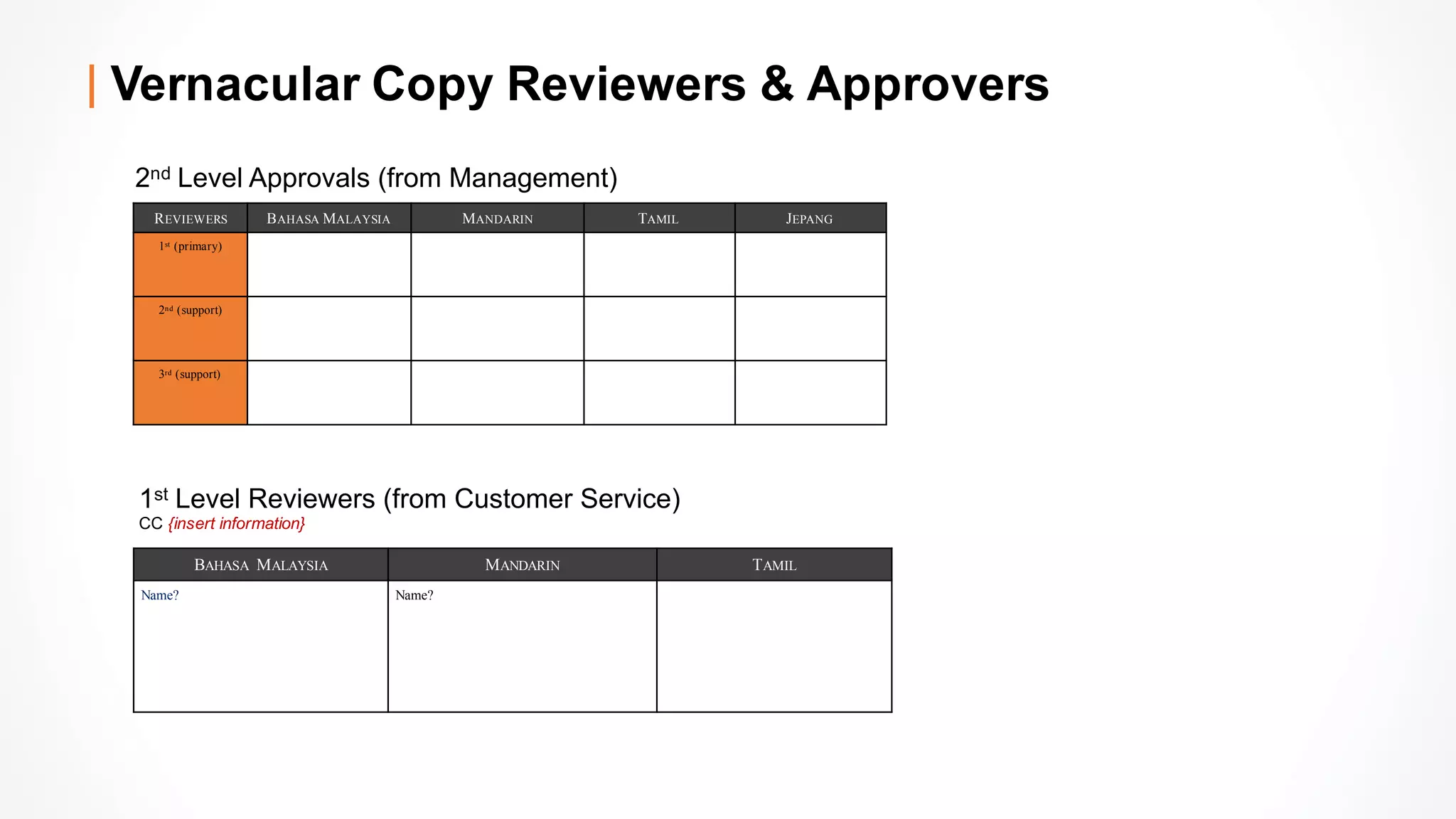
Vernacular Copy Reviewers & Approvers
REVIEWERS BAHASA MALAYSIA MANDARIN TAMIL JEPANG
1st (primary)
2nd (support)
3rd (support)
BAHASA MALAYSIA MANDARIN TAMIL
Name? Name?
1st Level Reviewers (from Customer Service)
CC {insert information}
2nd Level Approvals (from Management)
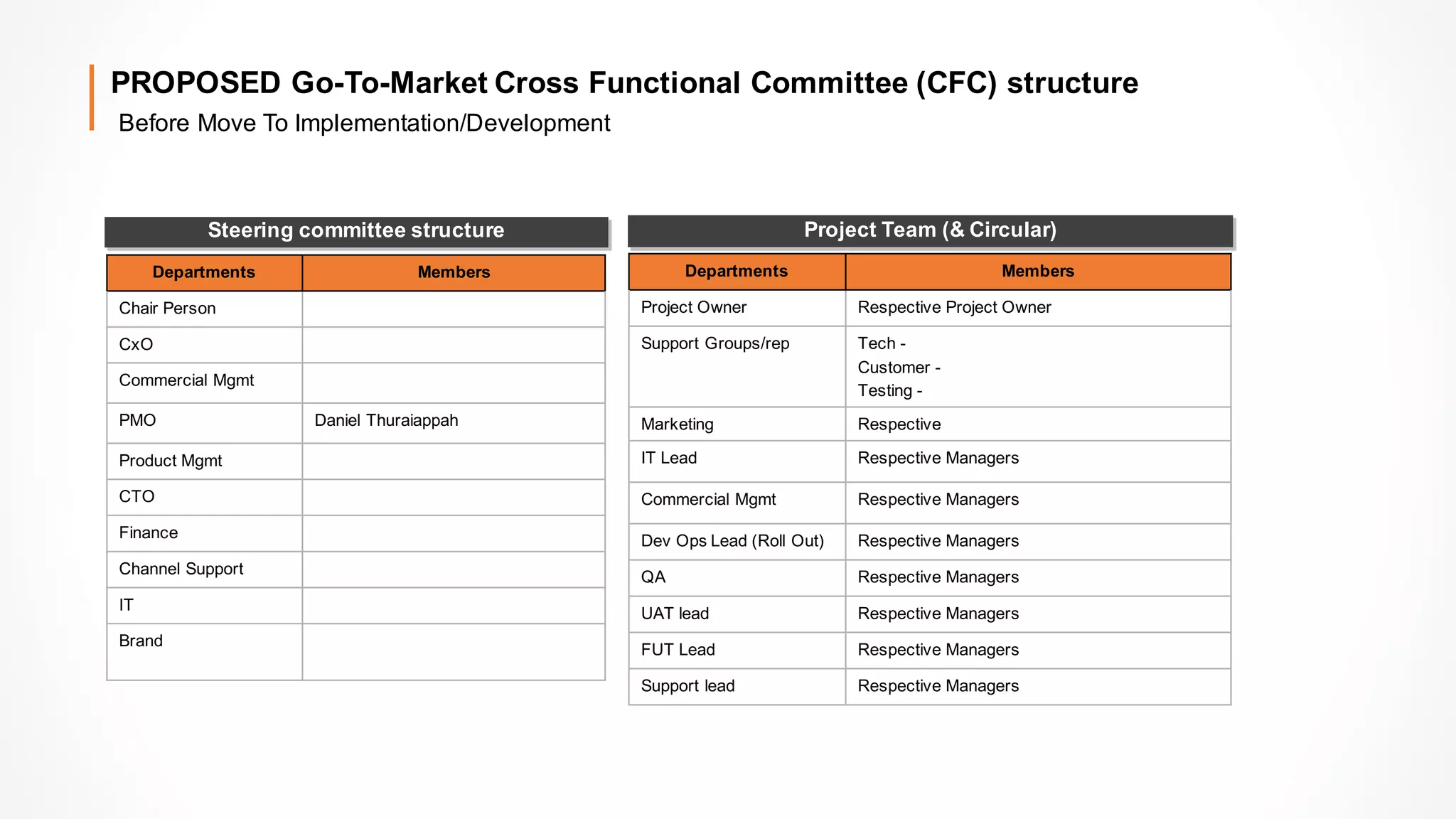
Before Move To Implementation/Development
PROPOSED Go-To-Market Cross Functional Committee (CFC) structure
Departments Members
Chair Person
CxO
Commercial Mgmt
PMO Daniel Thuraiappah
Product Mgmt
CTO
Finance
Channel Support
IT
Brand
Departments Members
Project Owner Respective Project Owner
Support Groups/rep Tech -
Customer -
Testing -
Marketing Respective
IT Lead Respective Managers
Commercial Mgmt Respective Managers
Dev Ops Lead (Roll Out) Respective Managers
QA Respective Managers
UAT lead Respective Managers
FUT Lead Respective Managers
Support lead Respective Managers
Steering committee structure Project Team (& Circular)
Owned by: D. Thuraiappah
13 Aug 2017
GTM Development Framework

Gtm development framework aug 2017

  • 1.
    Overview Process Flow GTMDevelopment Framework
  • 2.
    All initiatives requiringGTM approval Criteria • GTM is a business process to support the E2E delivery of Business initiatives to market with increased efficiency, as measured by - Time to market - Within budget - To an acceptable level of quality (ie Customer Experience) • The GTM process will apply to the following initiatives : - Product, Promotion, Campaign and other Marketing led initiatives within CxO purview which impacts on Customer Experience/Segments/Relationship management - Product value proposition realization by allocating resources • All projects/initiatives falling under this definition are required follow this lifecycle
  • 3.
  • 4.
    Before Move ToImplementation/Development Sample Gate Review for Gate 2 Gate 2 Pre-requisites • Benefits Schedule • To Be Processes • Non-Functional Requirements • Detailed Solution Design/ Functional Specification • Security Design • Data Design, Migration and Testing Strategy • Design and Plan Functional Tests • Design and Plan Integration Tests • Design and Plan Non-Functional Tests • Infrastructure Specification • System Test Plan • Systems Inventory • Data Migration Plan • Change Impact Assessment • Detailed Communications Plan • Training NeedsAnalysis • Training Strategy • Service Design • Capacity Requirements Plan * Gate review ensures that the relevantitems have been created and are of sufficientquality * Designed to ensure that solution complexity has been captured so there is confidence thatwhat is being developed is whatis needed to be developed
  • 5.
    General Timeline ofStages and Resources for a solution from Strategic Conception To Final Valuation The Total Solution Life-Cycle * Note: This is a non-proportional ordering ofevents in the timeline Bus Analyst Bus Analyst Enterprise Architect Bus Stakeholders Bus Stakeholders End User End User Solution Architect Project Manager Developers Inf Architect Inf Architect Operations
  • 6.
    Integrated Project DeliveryProcess And Business Engagement Model Business Functions / Roles Artefact Artefact Artefact Artefact Artefact Artefact Artefact Artefact
  • 7.
    Artefacts/Deliverables • Exist todemonstrate work done to a defined standard and quality • Forces projects to gather information to validate their activities • Provides an audit trail and proof of work done • Provides a library of project material that can be reused for other projects • Artefacts structures (templates) are designed to be generic to apply across all project types
  • 8.
    Artefact View OfIntegrated Project Delivery Process
  • 9.
    CONFIDENTIAL - STREAMLINE MEDIA GROUP. 2016© StreamlineMedia Group, inc. All Rights Reserved. Trade names, trademarks, registered trademarks and copyrights are the property of their respective owners. Artefact View Integrates Different Activity Lifecycles
  • 10.
  • 11.
    Development Software DevelopmentLifecycle Build • Identify the high-level scope • Identify initial “requirements stack” • Identify an architectural vision Modelling is part of iteration planning effort Need to model enough to give good estimates Need to plan the work for the iteration Work through specific issues on a JIT manner Stakeholders actively participate Requirements evolve throughout project Model just enough for now, you can always come back later Develop working software via a test-first approach Details captured in the form of executable specifications
  • 12.
    Roles PRODUCT – BIZ OPS •Product & Marketing Man • Bus Dev • Bus Anal SOLUTION – DELIVERY/DEV • Ent Arc • Sol Arc • Inf Arc • Developers • QA • Web • Mobile OPERATION • Service Ops Manager • Maintenance • Change • Version • Benefit Realization • End User PMO
  • 13.
    RACI Responsible Accountable ConsultedInformed Business Strategy Business Plan Requirements Design Development Testing UAT RFS RFL
  • 14.
    Timelines Summary of Timelines(EXAMPLES) Campaign Type Brief to Final Creative (Work Days) Final Creative to Production (Work Days) Maximum Total Timeline (Work Days) 360 Campaign with TV 11-13 24 - 27 40 days / 8 wks Print Campaign 10 - 12 16 - 18 30 days / 6 wks BTL Campaign 7 - 10 5 - 15 25 days / 5 wks
  • 15.
    Vernacular Copy Reviewers& Approvers REVIEWERS BAHASA MALAYSIA MANDARIN TAMIL JEPANG 1st (primary) 2nd (support) 3rd (support) BAHASA MALAYSIA MANDARIN TAMIL Name? Name? 1st Level Reviewers (from Customer Service) CC {insert information} 2nd Level Approvals (from Management)
  • 16.
    Before Move ToImplementation/Development PROPOSED Go-To-Market Cross Functional Committee (CFC) structure Departments Members Chair Person CxO Commercial Mgmt PMO Daniel Thuraiappah Product Mgmt CTO Finance Channel Support IT Brand Departments Members Project Owner Respective Project Owner Support Groups/rep Tech - Customer - Testing - Marketing Respective IT Lead Respective Managers Commercial Mgmt Respective Managers Dev Ops Lead (Roll Out) Respective Managers QA Respective Managers UAT lead Respective Managers FUT Lead Respective Managers Support lead Respective Managers Steering committee structure Project Team (& Circular)
  • 17.
    Owned by: D.Thuraiappah 13 Aug 2017 GTM Development Framework