Download as PDF, PPTX

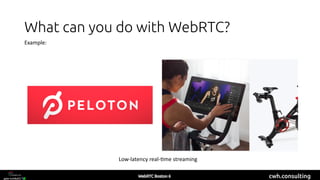
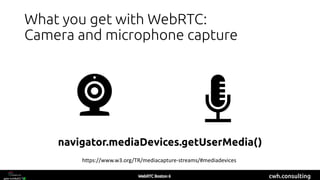
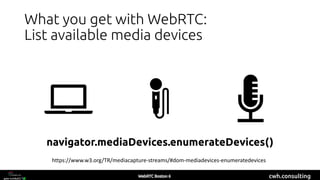
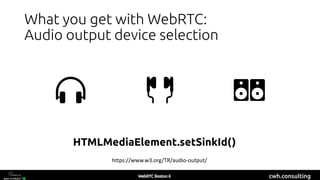
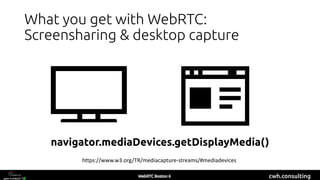
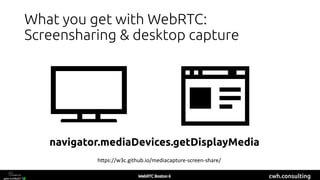
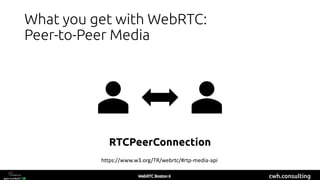
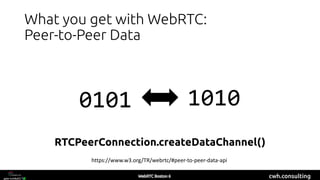
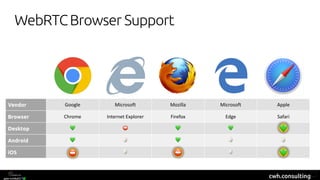
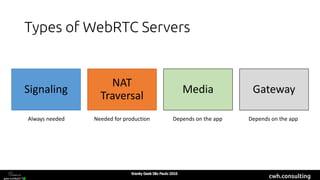
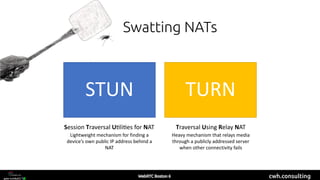
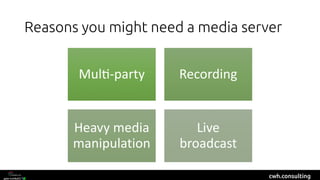
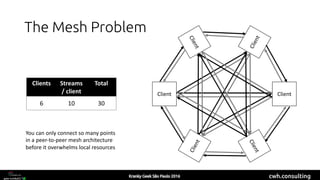
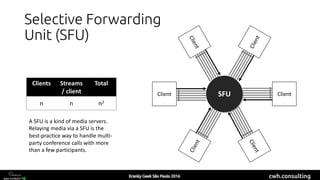
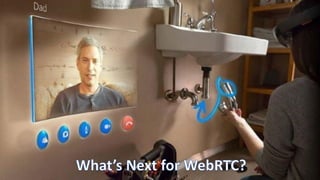
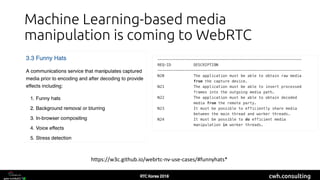
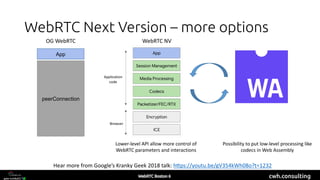
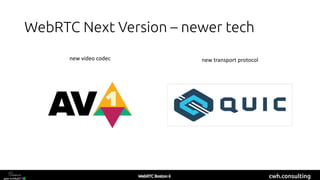


This document discusses WebRTC and its capabilities and components. WebRTC allows for real-time communication like low-latency video calling directly in the browser. It includes APIs for accessing media devices, recording media, and setting up peer-to-peer connections. WebRTC works across browsers but support varies, and signaling, NAT traversal, or media servers may be needed for production apps. New versions of WebRTC will support newer codecs, transports, and allow for more advanced media processing and machine learning.


