Management by Richard L Daft
9th Edition
 Proverbs 16:3 “Commit to the LORD
whatever you do, and your plans will
succeed.”
 The plan of action that prescribes reserve
allocation and other activities for dealing with
the environment, achieving competitive
advantage and attaining organizational goals.
 Competitive advantage- what set the
organization apart from others and provides
it with a distinctive edge in the market place.
 To take the long term view and to take and to
see the big picture, including the
organization and the competitive
environment and, conside how they fit
together.
 Set of decisions and actions used to
formulate and execute strategies that will
provides competitively superior fit between
the organization and environment so as to
achieve organizational goals.
 Core competence- is something the
organization does especially well in
comparison to its competitors.
 Build synergy- when organizational parts
interact to produce a joint effect that is
greater than the sum of the parts acting alone
synergy occurs.
 Deliver Value- combination of benefits
received and cost paid.
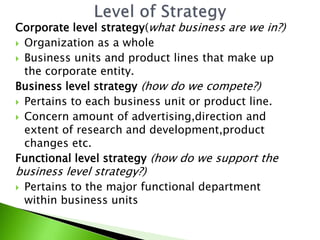
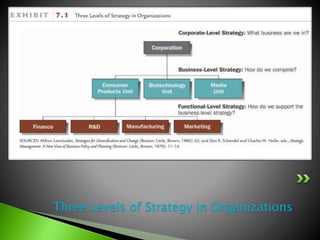
Corporate level strategy(what business are we in?)
 Organization as a whole
 Business units and product lines that make up
the corporate entity.
Business level strategy (how do we compete?)
 Pertains to each business unit or product line.
 Concern amount of advertising,direction and
extent of research and development,product
changes etc.
Functional level strategy (how do we support the
business level strategy?)
 Pertains to the major functional department
within business units
Three Levels of Strategy in Organizations
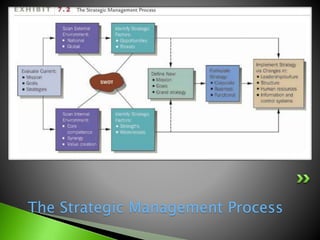
The Strategic Management Process
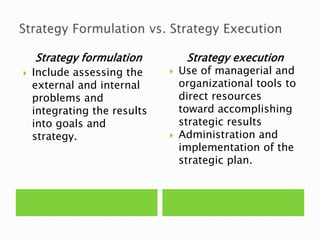
Strategy formulation
 Include assessing the
external and internal
problems and
integrating the results
into goals and
strategy.
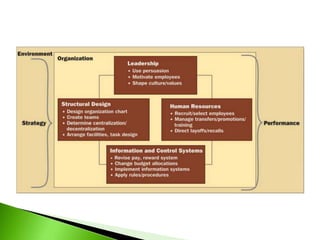
Strategy execution
 Use of managerial and
organizational tools to
direct resources
toward accomplishing
strategic results
 Administration and
implementation of the
strategic plan.
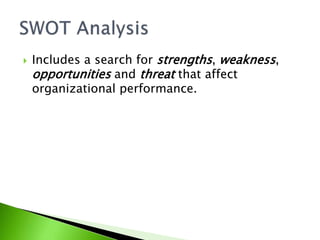
 Includes a search for strengths, weakness,
opportunities and threat that affect
organizational performance.
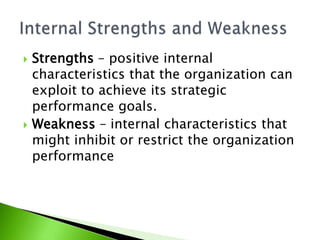
 Strengths – positive internal
characteristics that the organization can
exploit to achieve its strategic
performance goals.
 Weakness – internal characteristics that
might inhibit or restrict the organization
performance
 Threats – are the characteristics of the
external environment that may prevent the
organization on achieving its strategic
goals.
 Opportunities- are characteristics of the
external environment that have the
potential to help the organization achieve
or exceed its strategic goals.
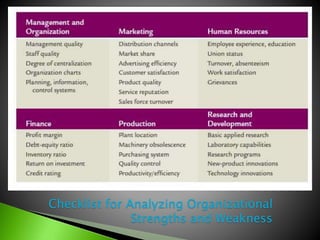
Checklist for Analyzing Organizational
Strengths and Weakness
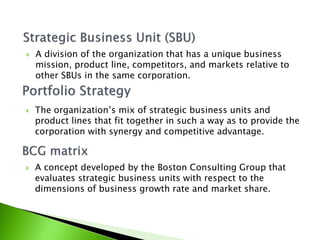
 The organization’s mix of strategic business units and
product lines that fit together in such a way as to provide the
corporation with synergy and competitive advantage.
 A division of the organization that has a unique business
mission, product line, competitors, and markets relative to
other SBUs in the same corporation.
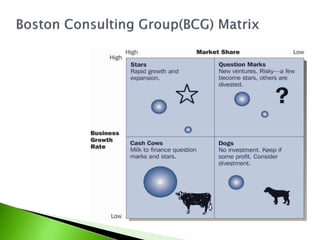
 A concept developed by the Boston Consulting Group that
evaluates strategic business units with respect to the
dimensions of business growth rate and market share.
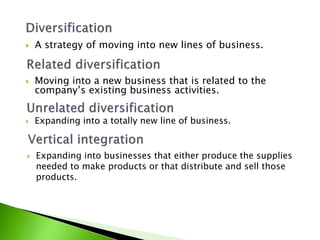
 Moving into a new business that is related to the
company’s existing business activities.
 A strategy of moving into new lines of business.
 Expanding into a totally new line of business.
 Expanding into businesses that either produce the supplies
needed to make products or that distribute and sell those
products.
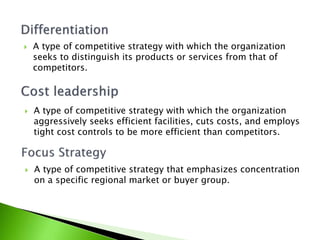
 A type of competitive strategy with which the organization
aggressively seeks efficient facilities, cuts costs, and employs
tight cost controls to be more efficient than competitors.
 A type of competitive strategy with which the organization
seeks to distinguish its products or services from that of
competitors.
 A type of competitive strategy that emphasizes concentration
on a specific regional market or buyer group.
 managers focus on
◦ leveraging and developing more from the firm’s
existing assets, capabilities, and core competencies
◦ The idea is that getting growth out of existing
businesses is cheaper and more effective than
trying to buy it from outside
 Collaboration with other organizations
(competitors) is an important part of how
today’s successful companies enter new areas
of business
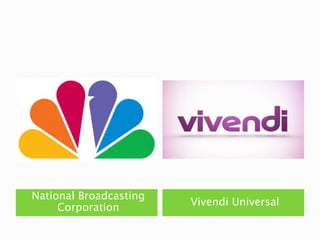
National Broadcasting
Corporation
Vivendi Universal
 Standardization of product design and
advertising strategies throughout the world
 Can help the organization reap efficiencies by
product standardization
 people everywhere want to buy the same
products and live the same way
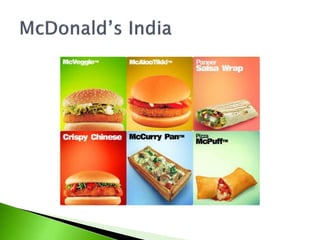
 Modification of product design and
advertising strategies to suit the specific
needs of individual countries
 Some companies reject the idea of single
global market
 Combines global coordination to attain
efficiency with flexibility to meet specific
needs in various countries
 Global integration and national
responsiveness
 World market operations
 According to Porter (1996) companies must
be adapt and flexible when it comes to
responding to the drastic changes in the
business industry.
 Strategic positions are based on customer’s
requirements
 Strategy needs to be expand as a horizon and
should not be of a single, planning cycle

Strategy Formulation and Implementation

  • 1.
    Management by RichardL Daft 9th Edition
  • 2.
     Proverbs 16:3“Commit to the LORD whatever you do, and your plans will succeed.”
  • 3.
     The planof action that prescribes reserve allocation and other activities for dealing with the environment, achieving competitive advantage and attaining organizational goals.  Competitive advantage- what set the organization apart from others and provides it with a distinctive edge in the market place.
  • 4.
     To takethe long term view and to take and to see the big picture, including the organization and the competitive environment and, conside how they fit together.
  • 5.
     Set ofdecisions and actions used to formulate and execute strategies that will provides competitively superior fit between the organization and environment so as to achieve organizational goals.
  • 6.
     Core competence-is something the organization does especially well in comparison to its competitors.  Build synergy- when organizational parts interact to produce a joint effect that is greater than the sum of the parts acting alone synergy occurs.  Deliver Value- combination of benefits received and cost paid.
  • 7.
    Corporate level strategy(whatbusiness are we in?)  Organization as a whole  Business units and product lines that make up the corporate entity. Business level strategy (how do we compete?)  Pertains to each business unit or product line.  Concern amount of advertising,direction and extent of research and development,product changes etc. Functional level strategy (how do we support the business level strategy?)  Pertains to the major functional department within business units
  • 8.
    Three Levels ofStrategy in Organizations
  • 9.
  • 10.
    Strategy formulation  Includeassessing the external and internal problems and integrating the results into goals and strategy. Strategy execution  Use of managerial and organizational tools to direct resources toward accomplishing strategic results  Administration and implementation of the strategic plan.
  • 11.
     Includes asearch for strengths, weakness, opportunities and threat that affect organizational performance.
  • 12.
     Strengths –positive internal characteristics that the organization can exploit to achieve its strategic performance goals.  Weakness – internal characteristics that might inhibit or restrict the organization performance
  • 13.
     Threats –are the characteristics of the external environment that may prevent the organization on achieving its strategic goals.  Opportunities- are characteristics of the external environment that have the potential to help the organization achieve or exceed its strategic goals.
  • 14.
    Checklist for AnalyzingOrganizational Strengths and Weakness
  • 17.
     The organization’smix of strategic business units and product lines that fit together in such a way as to provide the corporation with synergy and competitive advantage.  A division of the organization that has a unique business mission, product line, competitors, and markets relative to other SBUs in the same corporation.  A concept developed by the Boston Consulting Group that evaluates strategic business units with respect to the dimensions of business growth rate and market share.
  • 20.
     Moving intoa new business that is related to the company’s existing business activities.  A strategy of moving into new lines of business.  Expanding into a totally new line of business.  Expanding into businesses that either produce the supplies needed to make products or that distribute and sell those products.
  • 24.
     A typeof competitive strategy with which the organization aggressively seeks efficient facilities, cuts costs, and employs tight cost controls to be more efficient than competitors.  A type of competitive strategy with which the organization seeks to distinguish its products or services from that of competitors.  A type of competitive strategy that emphasizes concentration on a specific regional market or buyer group.
  • 28.
     managers focuson ◦ leveraging and developing more from the firm’s existing assets, capabilities, and core competencies ◦ The idea is that getting growth out of existing businesses is cheaper and more effective than trying to buy it from outside
  • 30.
     Collaboration withother organizations (competitors) is an important part of how today’s successful companies enter new areas of business
  • 31.
  • 34.
     Standardization ofproduct design and advertising strategies throughout the world  Can help the organization reap efficiencies by product standardization  people everywhere want to buy the same products and live the same way
  • 36.
     Modification ofproduct design and advertising strategies to suit the specific needs of individual countries  Some companies reject the idea of single global market
  • 38.
     Combines globalcoordination to attain efficiency with flexibility to meet specific needs in various countries  Global integration and national responsiveness  World market operations
  • 44.
     According toPorter (1996) companies must be adapt and flexible when it comes to responding to the drastic changes in the business industry.  Strategic positions are based on customer’s requirements  Strategy needs to be expand as a horizon and should not be of a single, planning cycle