Art Criticism
4 Steps to Criticizing a piece of
art.
Art Criticism:
 A systematic discussion of art that
involves 4 steps.
 The 4 steps are
– Description
– Analysis
– Interpretation
– Evaluation / Judgment
Step 1 Description
 Stick to the Facts.
 Talk about the things that you see in the
piece.
 These things are called the subject of the piece.
 Be specific about the subject. Tell where
things are located.
 Talk about the dominate Elements in the
piece.
 Line, Shape, Form, Value, Color, Texture, Space.
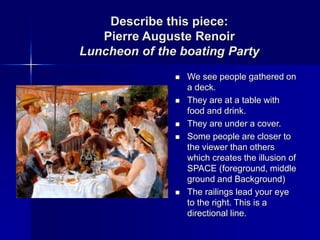
Describe this piece:
Pierre Auguste Renoir
Luncheon of the boating Party
 We see people gathered on
a deck.
 They are at a table with
food and drink.
 They are under a cover.
 Some people are closer to
the viewer than others
which creates the illusion of
SPACE (foreground, middle
ground and Background)
 The railings lead your eye
to the right. This is a
directional line.
Step 2 Analysis:
 In this step you will talk about how the
elements work in the piece.
 This relationship between the elements and
the subject matter is called composition.
 Now you will talk about how the artist used
the principles of design to organize the
elements.
– Rhythm, Movement, Pattern, Emphasis, Unity,
Variety, Balance
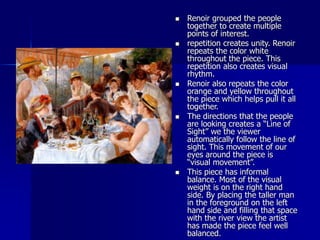
 Renoir grouped the people
together to create multiple
points of interest.
 repetition creates unity. Renoir
repeats the color white
throughout the piece. This
repetition also creates visual
rhythm.
 Renoir also repeats the color
orange and yellow throughout
the piece which helps pull it all
together.
 The directions that the people
are looking creates a “Line of
Sight” we the viewer
automatically follow the line of
sight. This movement of our
eyes around the piece is
“visual movement”.
 This piece has informal
balance. Most of the visual
weight is on the right hand
side. By placing the taller man
in the foreground on the left
hand side and filling that space
with the river view the artist
has made the piece feel well
balanced.
Step 3 Interpretation:
 In this step you will take cues from the
subject matter, elements and
principles to determine the meaning of
the piece.
 This is called Content.
 The meaning/content of the piece is
subject to the viewers opinion.
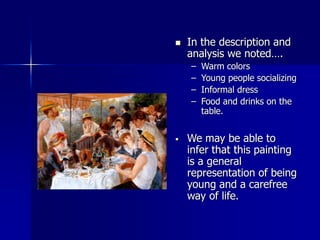
 In the description and
analysis we noted….
– Warm colors
– Young people socializing
– Informal dress
– Food and drinks on the
table.
 We may be able to
infer that this painting
is a general
representation of being
young and a carefree
way of life.
Step 4 Evaluation:
 In this step you will determine the
quality or lasting importance of the
work of art.
 You are entitled to your own opinion
but you have to have some criteria to
base your evaluation on. (you have to
have a good explanation to back up
your opinion)
A few Good Criteria to
base your Evaluation on:
 Design quality: How well the artist uses the
Elements and Principles. Also how well the
piece represents a theme or world view. A
good piece of art is timeless. Even if it was
obviously created a long time ago, it is still
relevant today.
 Originality: is the piece unique in some way?
An innovative use of material or a new take
on an old theme?

Art Criticism.ppt

  • 1.
    Art Criticism 4 Stepsto Criticizing a piece of art.
  • 2.
    Art Criticism:  Asystematic discussion of art that involves 4 steps.  The 4 steps are – Description – Analysis – Interpretation – Evaluation / Judgment
  • 3.
    Step 1 Description Stick to the Facts.  Talk about the things that you see in the piece.  These things are called the subject of the piece.  Be specific about the subject. Tell where things are located.  Talk about the dominate Elements in the piece.  Line, Shape, Form, Value, Color, Texture, Space.
  • 4.
    Describe this piece: PierreAuguste Renoir Luncheon of the boating Party  We see people gathered on a deck.  They are at a table with food and drink.  They are under a cover.  Some people are closer to the viewer than others which creates the illusion of SPACE (foreground, middle ground and Background)  The railings lead your eye to the right. This is a directional line.
  • 5.
    Step 2 Analysis: In this step you will talk about how the elements work in the piece.  This relationship between the elements and the subject matter is called composition.  Now you will talk about how the artist used the principles of design to organize the elements. – Rhythm, Movement, Pattern, Emphasis, Unity, Variety, Balance
  • 6.
     Renoir groupedthe people together to create multiple points of interest.  repetition creates unity. Renoir repeats the color white throughout the piece. This repetition also creates visual rhythm.  Renoir also repeats the color orange and yellow throughout the piece which helps pull it all together.  The directions that the people are looking creates a “Line of Sight” we the viewer automatically follow the line of sight. This movement of our eyes around the piece is “visual movement”.  This piece has informal balance. Most of the visual weight is on the right hand side. By placing the taller man in the foreground on the left hand side and filling that space with the river view the artist has made the piece feel well balanced.
  • 7.
    Step 3 Interpretation: In this step you will take cues from the subject matter, elements and principles to determine the meaning of the piece.  This is called Content.  The meaning/content of the piece is subject to the viewers opinion.
  • 8.
     In thedescription and analysis we noted…. – Warm colors – Young people socializing – Informal dress – Food and drinks on the table.  We may be able to infer that this painting is a general representation of being young and a carefree way of life.
  • 9.
    Step 4 Evaluation: In this step you will determine the quality or lasting importance of the work of art.  You are entitled to your own opinion but you have to have some criteria to base your evaluation on. (you have to have a good explanation to back up your opinion)
  • 10.
    A few GoodCriteria to base your Evaluation on:  Design quality: How well the artist uses the Elements and Principles. Also how well the piece represents a theme or world view. A good piece of art is timeless. Even if it was obviously created a long time ago, it is still relevant today.  Originality: is the piece unique in some way? An innovative use of material or a new take on an old theme?