EKOLOGI
TANAMAN LANJUT
Budiastuti Kurniasih
 Cox, G.W. and Atkins, M.D. 1979. Agricultural Ecology. An
Analysis of World Food Production Systems. Freeman and co. San
Fransisco.
 Neugebauer, B. 1995. Ecologically Appropriate Agriculture. ZEL.
Germany
 Spedding, C.R.W. 1979. An Introduction of Agricultural Systems.
Applied Science Pub. London.
 Lowrance, R, Stinner, B.R., House, G.J. 1984. Agricultural
Ecosystem. John Wiley & Sons. Canada.
 Myers, J.H. D., Bazely. 2003. Ecology and Control of Introduced
Plants. Cambridge University Press
 More references from other sources
REFERENCES
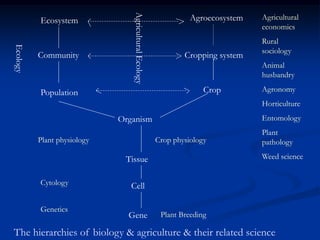
Ecosystem Agroecosystem
Community Cropping system
Population Crop
Organism
Tissue
Cell
Gene
AgriculturalEcology
Ecology
Crop physiology
Plant Breeding
Plant physiology
Cytology
Genetics
Agricultural
economics
Rural
sociology
Animal
husbandry
Agronomy
Horticulture
Entomology
Plant
pathology
Weed science
The hierarchies of biology & agriculture & their related science
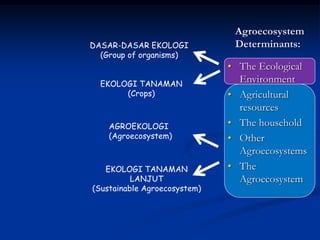
DASAR-DASAR EKOLOGI
(Group of organisms)
EKOLOGI TANAMAN
(Crops)
AGROEKOLOGI
(Agroecosystem)
EKOLOGI TANAMAN
LANJUT
(Sustainable Agroecosystem)
• The Ecological
Environment
• Agricultural
resources
• The household
• Other
Agroecosystems
• The
Agroecosystem
Agroecosystem
Determinants:
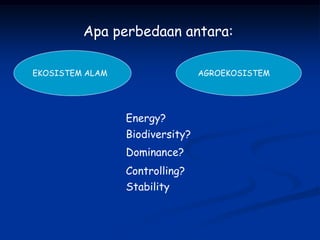
EKOSISTEM ALAM AGROEKOSISTEM
Apa perbedaan antara:
Energy?
Biodiversity?
Dominance?
Controlling?
Stability
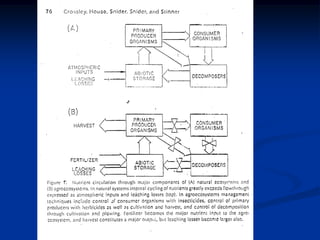
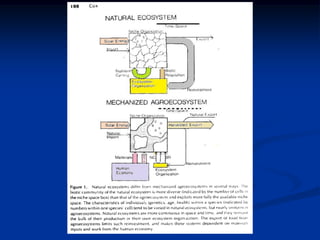
Dampak ekologis perubahan
E.S. Alam menjadi Agro E.S.
• Simplifikasi struktur trofik mengganggu stabilitas sistem shg
memudahkan terjadinya serangan hama atau gulma.
• Perubahan komposisi vegetasi akan mengubah pola penyerapan
nutrien dari dalam tanah dan mengubah pola produktifitas
primer setiap musimnya.
• Penurunan keragaman serangga yang memakan produsen akan
menurunkan jumlah sisa biomasa tanaman yang kembali ke
tanah.
• Semakin pendeknya rantai makanan akan menurunkan variasi
biomasa hewan yang kembali ke tanah, sehingga akan
menurunkan akumulasi dari mikroorganisme tanah dan
mengganggu rantai makanan mikroorganisme.
What is sustainable agriculture?
SUSTAINABLE AGRICULTURE
What is the sustainability?
 Dictionary:
 Keeping the effort going continuously, the ability to
last out and keep from falling
 World Commision on Environment and Development, 1987;
Harremous, 1996 cit Keeney, 1998
 The need to meet the needs of the present without
compromising the ability to meet needs of future
generations
Why should be agriculture?
 Pertanian merupakan sektor pembangunan yang amat
vital karena menghasilkan pangan untuk kehidupan
sehari-hari dan industri, kebutuhan domestik dan
ekspor, serta menjadi sumber pendapatan bagi sebagian
besar penduduk
 Pertanian merupakan satu-satunya industri yang dapat
menurunkan entropy dunia, karena sumber utamanya
adalah sinar matahari
Sustainable Agriculture
 Reijntjes (1994)
Sustainable agriculture is the successful management
of resources for agriculture to satisfy changing
human needs while maintaining or enhancing the
quality of the environment and conserving natural
resources
 Miquel A Altieri (1994)
Mode of farming that attempts to provide long
term sustained yields through the use of ecologically
sound management technologies
• Pretty et al. (1994)
Agriculture that:
- pursues a more thorough incorporation of natural
processes
- minimal use of external and non renewable inputs that
harm the environment or health of farmers and
consumers
- more participation of farmers, environmentalists,
industrialists and consumers in problem analysis and
development of solutions
- equity in access of productive resources and
opportunities
- use of local knowledge and resources
 Gips, 1986 cit Reijntjes, 1994
judging agriculture to be sustainable if it is:
- ecologically sound
- economically viable
- socially just
- humane
- adaptable
What Sustainable Agriculture means to us
(The University of Vermont)
 We believe that sustainable agriculture is a food and
fiber production and distribution system that:
 support profitable production;
 protects environmental quality;
 uses natural resources efficiently;
 provide consumers with affordable, high quality products;
 decreases dependency on nonrenewable resources;
 Enhances the quality of life for farmers and rural
communities;
 And will last for generations to come
What is Sustainable Agriculture?
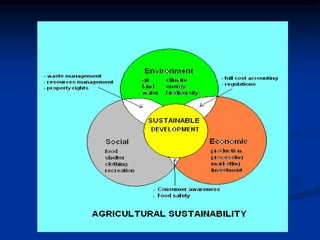
 Sustainable agriculture can be described as any
practice or system which is economically viable,
environmentally friendly and socially acceptable.
For a crop, a field, a farm, or even a community
to be sustainable over time, similar consideration
must be given to economics, the environment
and people (society). It’s like a three legged stool
– saw off one of the three legs and the stool
won’t work very well.
Sust agric 1 ho 2015

Sust agric 1 ho 2015

  • 1.
  • 2.
     Cox, G.W.and Atkins, M.D. 1979. Agricultural Ecology. An Analysis of World Food Production Systems. Freeman and co. San Fransisco.  Neugebauer, B. 1995. Ecologically Appropriate Agriculture. ZEL. Germany  Spedding, C.R.W. 1979. An Introduction of Agricultural Systems. Applied Science Pub. London.  Lowrance, R, Stinner, B.R., House, G.J. 1984. Agricultural Ecosystem. John Wiley & Sons. Canada.  Myers, J.H. D., Bazely. 2003. Ecology and Control of Introduced Plants. Cambridge University Press  More references from other sources REFERENCES
  • 3.
    Ecosystem Agroecosystem Community Croppingsystem Population Crop Organism Tissue Cell Gene AgriculturalEcology Ecology Crop physiology Plant Breeding Plant physiology Cytology Genetics Agricultural economics Rural sociology Animal husbandry Agronomy Horticulture Entomology Plant pathology Weed science The hierarchies of biology & agriculture & their related science
  • 4.
    DASAR-DASAR EKOLOGI (Group oforganisms) EKOLOGI TANAMAN (Crops) AGROEKOLOGI (Agroecosystem) EKOLOGI TANAMAN LANJUT (Sustainable Agroecosystem) • The Ecological Environment • Agricultural resources • The household • Other Agroecosystems • The Agroecosystem Agroecosystem Determinants:
  • 5.
    EKOSISTEM ALAM AGROEKOSISTEM Apaperbedaan antara: Energy? Biodiversity? Dominance? Controlling? Stability
  • 8.
    Dampak ekologis perubahan E.S.Alam menjadi Agro E.S. • Simplifikasi struktur trofik mengganggu stabilitas sistem shg memudahkan terjadinya serangan hama atau gulma. • Perubahan komposisi vegetasi akan mengubah pola penyerapan nutrien dari dalam tanah dan mengubah pola produktifitas primer setiap musimnya. • Penurunan keragaman serangga yang memakan produsen akan menurunkan jumlah sisa biomasa tanaman yang kembali ke tanah. • Semakin pendeknya rantai makanan akan menurunkan variasi biomasa hewan yang kembali ke tanah, sehingga akan menurunkan akumulasi dari mikroorganisme tanah dan mengganggu rantai makanan mikroorganisme.
  • 9.
    What is sustainableagriculture?
  • 10.
    SUSTAINABLE AGRICULTURE What isthe sustainability?  Dictionary:  Keeping the effort going continuously, the ability to last out and keep from falling  World Commision on Environment and Development, 1987; Harremous, 1996 cit Keeney, 1998  The need to meet the needs of the present without compromising the ability to meet needs of future generations
  • 11.
    Why should beagriculture?  Pertanian merupakan sektor pembangunan yang amat vital karena menghasilkan pangan untuk kehidupan sehari-hari dan industri, kebutuhan domestik dan ekspor, serta menjadi sumber pendapatan bagi sebagian besar penduduk  Pertanian merupakan satu-satunya industri yang dapat menurunkan entropy dunia, karena sumber utamanya adalah sinar matahari
  • 12.
    Sustainable Agriculture  Reijntjes(1994) Sustainable agriculture is the successful management of resources for agriculture to satisfy changing human needs while maintaining or enhancing the quality of the environment and conserving natural resources  Miquel A Altieri (1994) Mode of farming that attempts to provide long term sustained yields through the use of ecologically sound management technologies
  • 13.
    • Pretty etal. (1994) Agriculture that: - pursues a more thorough incorporation of natural processes - minimal use of external and non renewable inputs that harm the environment or health of farmers and consumers - more participation of farmers, environmentalists, industrialists and consumers in problem analysis and development of solutions - equity in access of productive resources and opportunities - use of local knowledge and resources
  • 14.
     Gips, 1986cit Reijntjes, 1994 judging agriculture to be sustainable if it is: - ecologically sound - economically viable - socially just - humane - adaptable
  • 15.
    What Sustainable Agriculturemeans to us (The University of Vermont)  We believe that sustainable agriculture is a food and fiber production and distribution system that:  support profitable production;  protects environmental quality;  uses natural resources efficiently;  provide consumers with affordable, high quality products;  decreases dependency on nonrenewable resources;  Enhances the quality of life for farmers and rural communities;  And will last for generations to come
  • 16.
    What is SustainableAgriculture?  Sustainable agriculture can be described as any practice or system which is economically viable, environmentally friendly and socially acceptable. For a crop, a field, a farm, or even a community to be sustainable over time, similar consideration must be given to economics, the environment and people (society). It’s like a three legged stool – saw off one of the three legs and the stool won’t work very well.