HOW TO ORGANISE YOUR VOCABULARY WHEN LEARNING ENGLISH
1. Keeping a notebook to write down new words is a good idea.
However, you should revise the words you've written every now
and then.
2. Classify the vocabulary into groups according to type of word,
meaning, level of difficulty, etc.
ANIMAL SOUND CHILDREN
dog bark puppy
car mew / purr kitten
bird tweet / chirp chick
cow moo calf
pig oink / grunt piglet
sheep bleat lamb
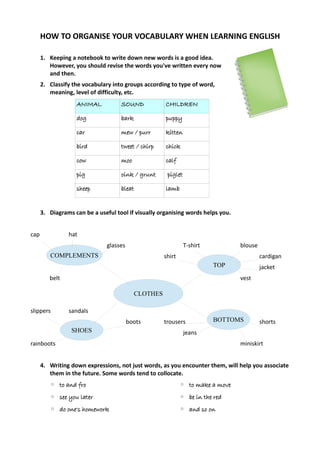
3. Diagrams can be a useful tool if visually organising words helps you.
cap hat
glasses T-shirt blouse
shirt cardigan
jacket
belt vest
slippers sandals
boots trousers shorts
jeans
rainboots miniskirt
4. Writing down expressions, not just words, as you encounter them, will help you associate
them in the future. Some words tend to collocate.
◦ to and fro
◦ see you later
◦ do one's homework
◦ to make a move
◦ be in the red
◦ and so on
CLOTHES
TOP
COMPLEMENTS
BOTTOMS
SHOES

Organising vocabulary

  • 1.
    HOW TO ORGANISEYOUR VOCABULARY WHEN LEARNING ENGLISH 1. Keeping a notebook to write down new words is a good idea. However, you should revise the words you've written every now and then. 2. Classify the vocabulary into groups according to type of word, meaning, level of difficulty, etc. ANIMAL SOUND CHILDREN dog bark puppy car mew / purr kitten bird tweet / chirp chick cow moo calf pig oink / grunt piglet sheep bleat lamb 3. Diagrams can be a useful tool if visually organising words helps you. cap hat glasses T-shirt blouse shirt cardigan jacket belt vest slippers sandals boots trousers shorts jeans rainboots miniskirt 4. Writing down expressions, not just words, as you encounter them, will help you associate them in the future. Some words tend to collocate. ◦ to and fro ◦ see you later ◦ do one's homework ◦ to make a move ◦ be in the red ◦ and so on CLOTHES TOP COMPLEMENTS BOTTOMS SHOES