Bacterial Infections Of
Oral cavity
By : Ahmed Jawad
Group A1
Introduction
Bacteria constitute a large domain of
prokaryotic microorganisms.
Few micrometres in length .
Different shapes, ranging from
spheres to rods and spirals .
They lack true nucleus .
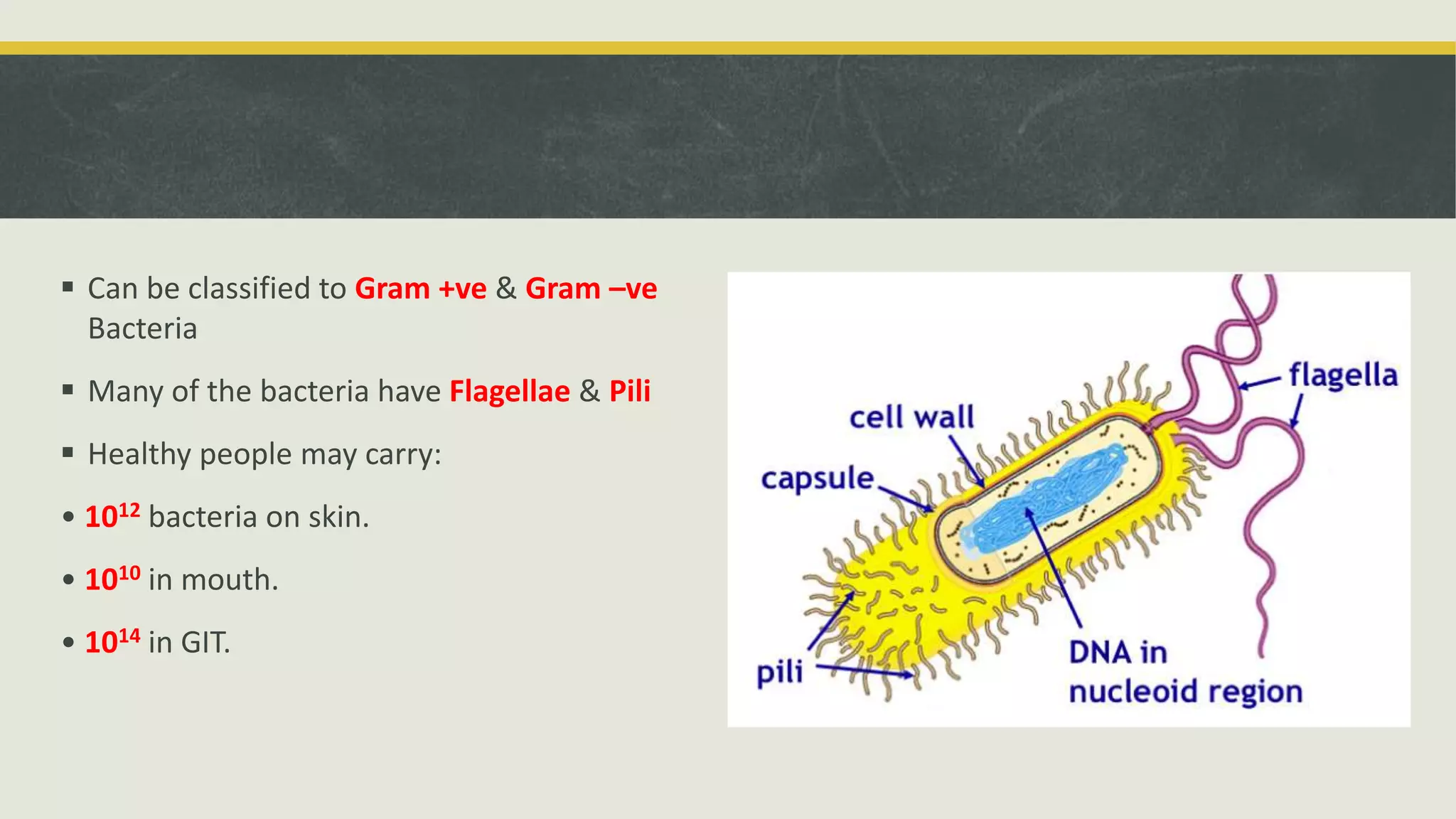
 Can be classified to Gram +ve & Gram –ve
Bacteria
 Many of the bacteria have Flagellae & Pili
 Healthy people may carry:
• 1012 bacteria on skin.
• 1010 in mouth.
• 1014 in GIT.
Tuberculosis
Infects about 1/3 of world’s
population
Kills approximately 3 million people
per year
Most important cause of death in
the world
caused by aerobic, non-spore
forming bacillus Mycobacterium
Tuberculosis
It has :
 Thick , Waxy coat
 Doesn’t react with Gram Stains
It can be spread through small airborne droplets
The organism will be carried to the Pulmonary air
spaces.
 Primary Tuberculosis
•Occurs in previously unexposed people.
•Almost always involves the lungs.
•Most infections are the result of direct person -
to – person spread.
•Results only in a localized , fibrocalcified nodule .
Secondary Tuberculosis ( Active Disease )
•Develops later in life from a reactivation of
organisms.
•This reactivation is typically associated with
compromised host defenses
Immunosuppressive medication Or HIV Patients
Diabetes
Old age
Clinical Signs And Symptoms :
1. Primary T.B : Usually asymptomatic.
2. Secondary T.B :
 Low grade fever
 Malaise
 Night sweats and weight loss
 With progression , hemoptysis and chest pain.
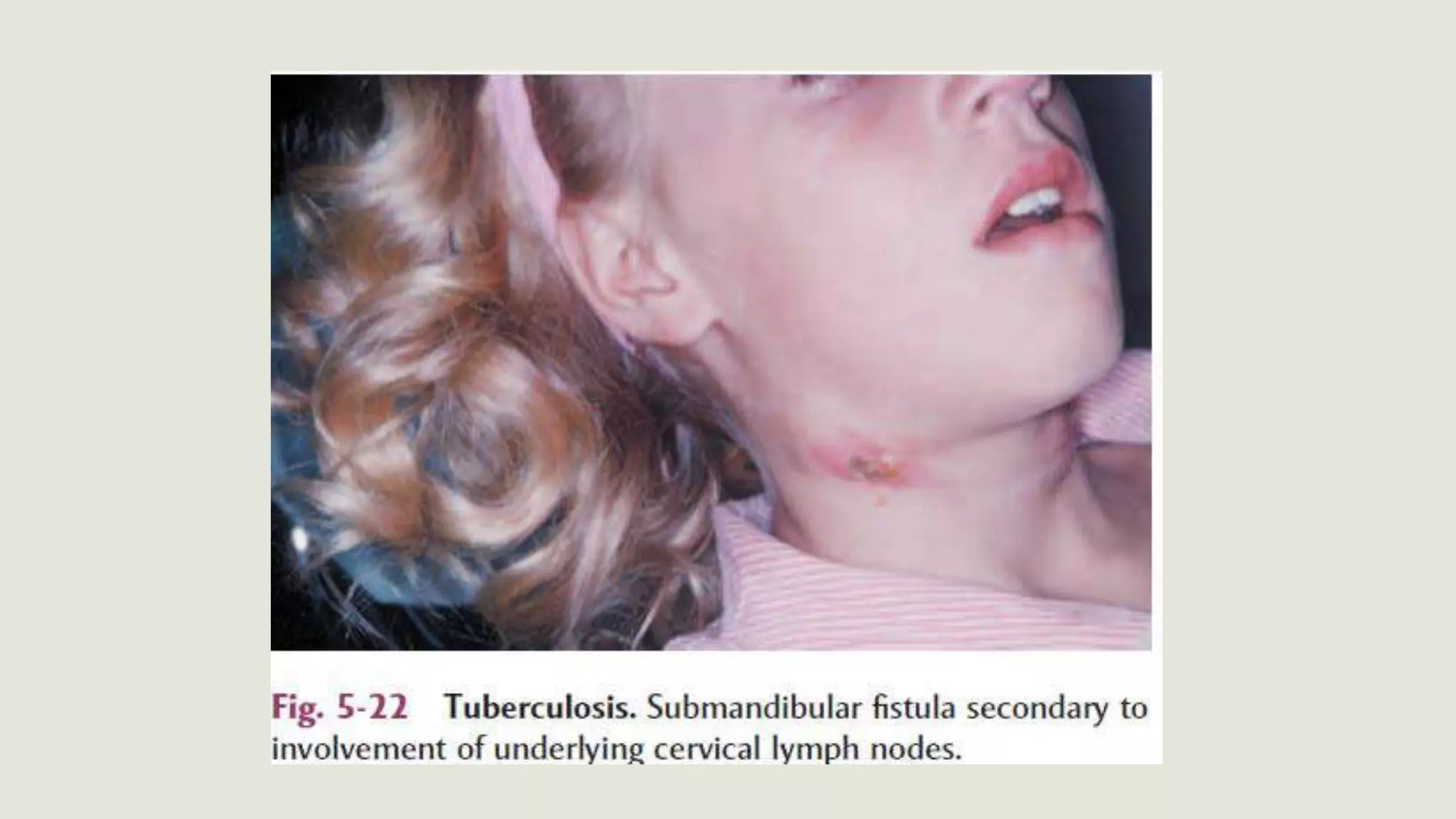
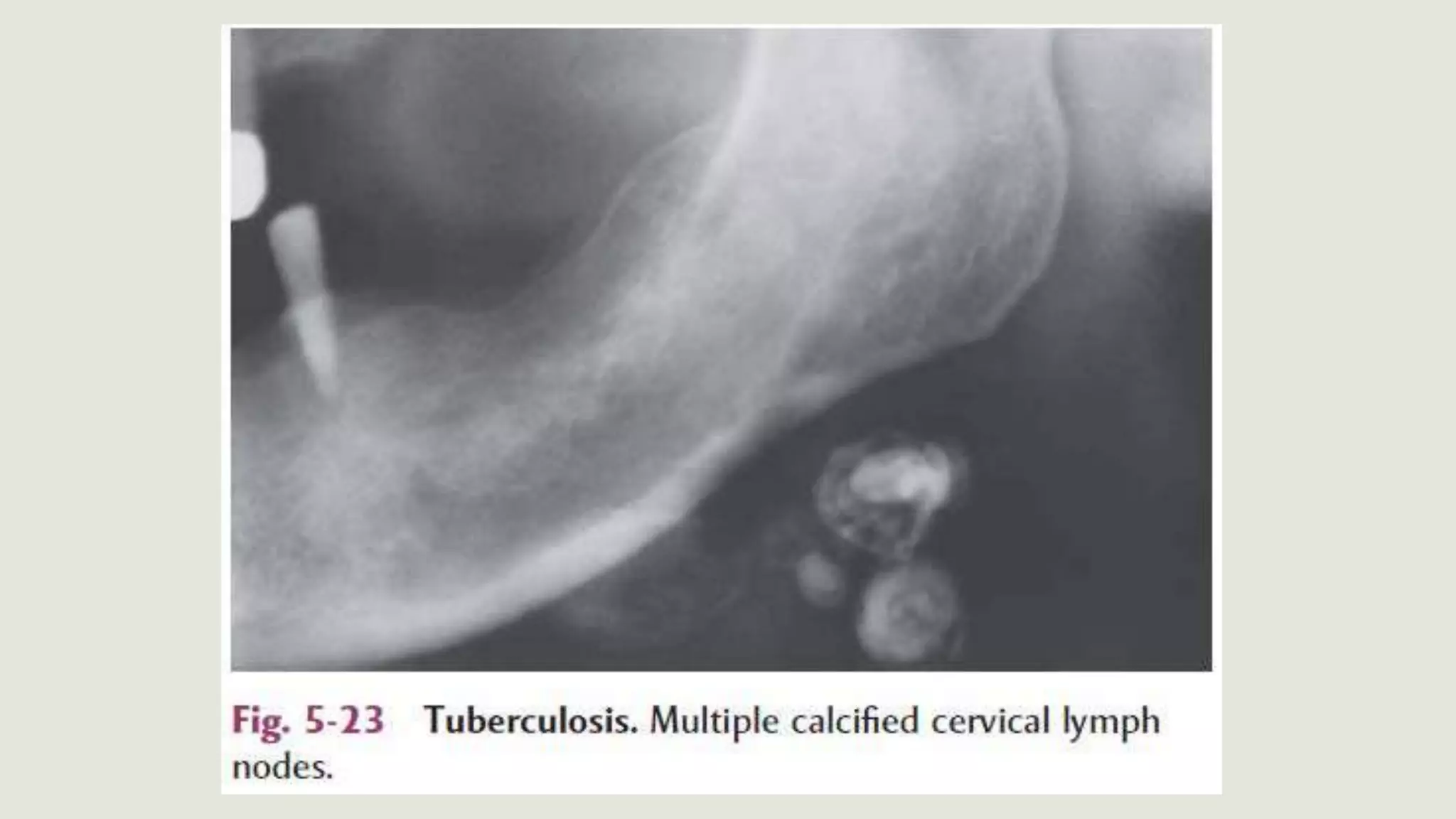
 Oral Tuberculosis
If oral cavity is involved , it is presented either as :
1. Primary infections
Effects
 Gingiva
 Mucobuccal fold
 Areas of inflammation
2. Secondary infection ( more common )
Effects:
 The tongue
 Palate due to infected sputum
 Typical lesion
Indurate Chronic
Nonhealing Ulcer
That Is Usually Painful
Bony involvement of maxilla and mandible produces
tuberculosis osteomyelitis
 Diagnosis
•Tuberculin skin test.
•Biopsy (with special stains)
•Polymerase chain reaction (PCR) for
bacterial DNA detects the disease.
 Treatment
First line drugs likely to used fro treatment of TB include
• ISONIAZID
• RIFAMPIN
• PYRAZINAMIDE
• EXAMBUTHOL
 Drug combinations are often used in 6, 9, or 12
month treatment regimens.
Bacille Calmette Guerin (BCG) vaccine is effective
in controlling childhood TB.
Syphilis
 STD Disease
 Caused by Treponema Pallidum
 Two Types:
 Acquired
 Congenital
Acquired Syphilis
 Acquired syphilis is subdivided into:
1. Primary Syphilis:
Characterized by the appearance of “Chancre”
A firm nodule in which the surface breaks up in a few
days leaving a round hard ulcer
Chancre is typically painless and heals spontaneously
in weeks
2. Secondary Syphilis :
• Develops in 1 to 4 months of initial infection.
• It Causes:
 Mild Fever - Malaise
 Sore Throat
 Headache
 Muscle Pain
 Generalized lymphadenopathy
 Rash and Stomatisis
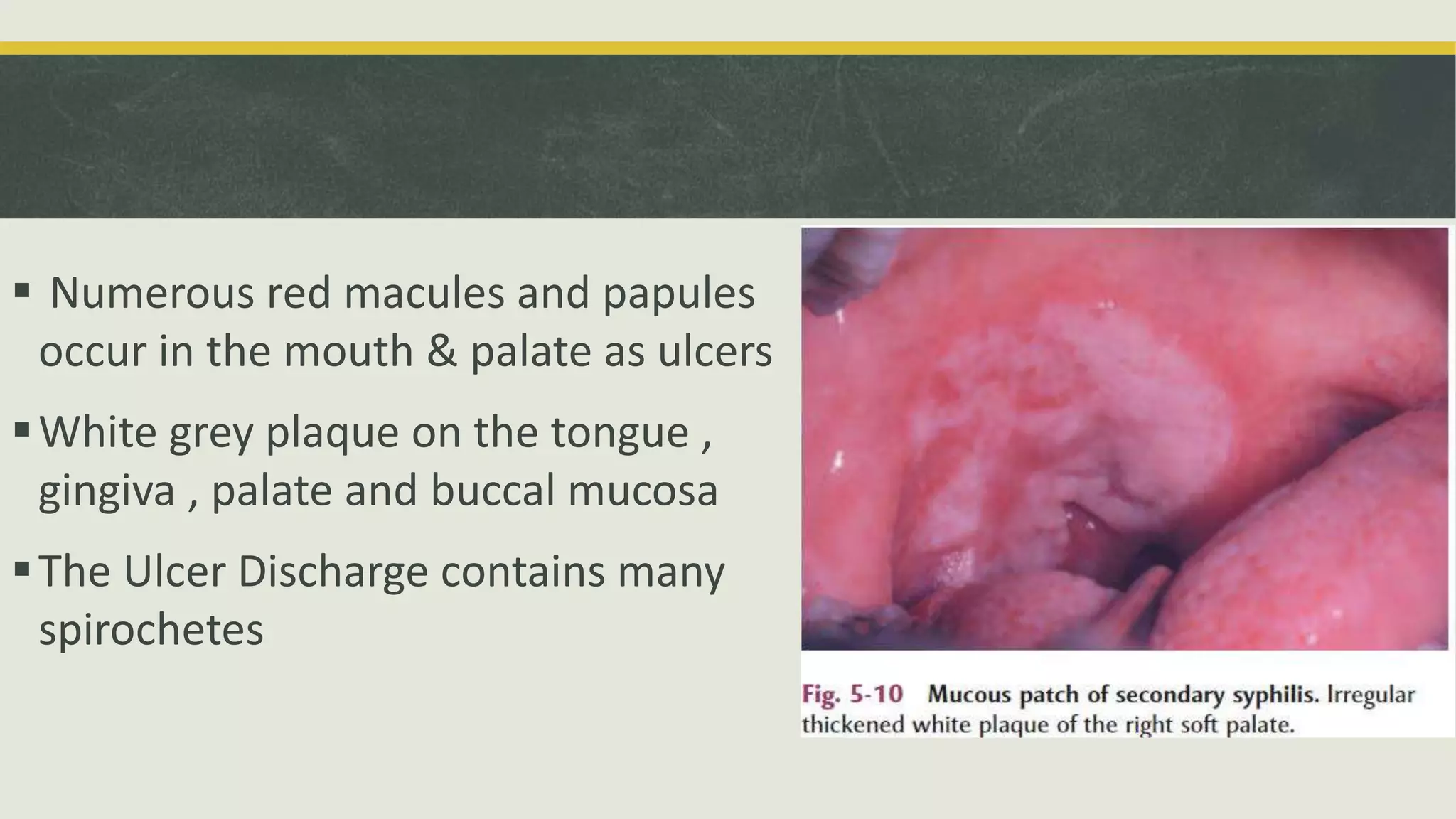
 Numerous red macules and papules
occur in the mouth & palate as ulcers
White grey plaque on the tongue ,
gingiva , palate and buccal mucosa
The Ulcer Discharge contains many
spirochetes
3. Tertiary syphilis
Latent period of 1-30 years between secondary
and tertiary stage
 Presented as
 Neurological defects
 Cardiovascular defects
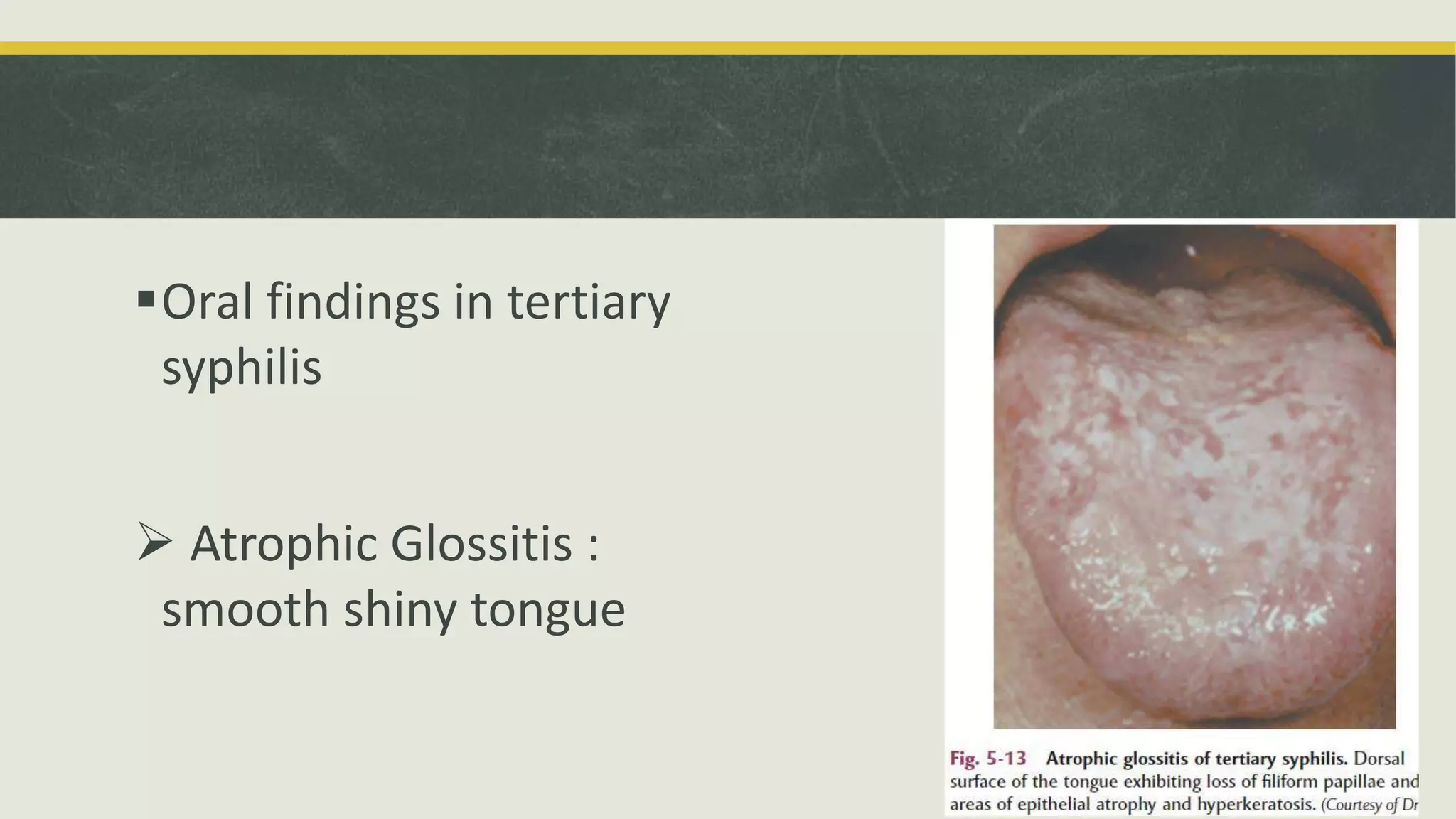
Oral findings in tertiary
syphilis
 Atrophic Glossitis :
smooth shiny tongue
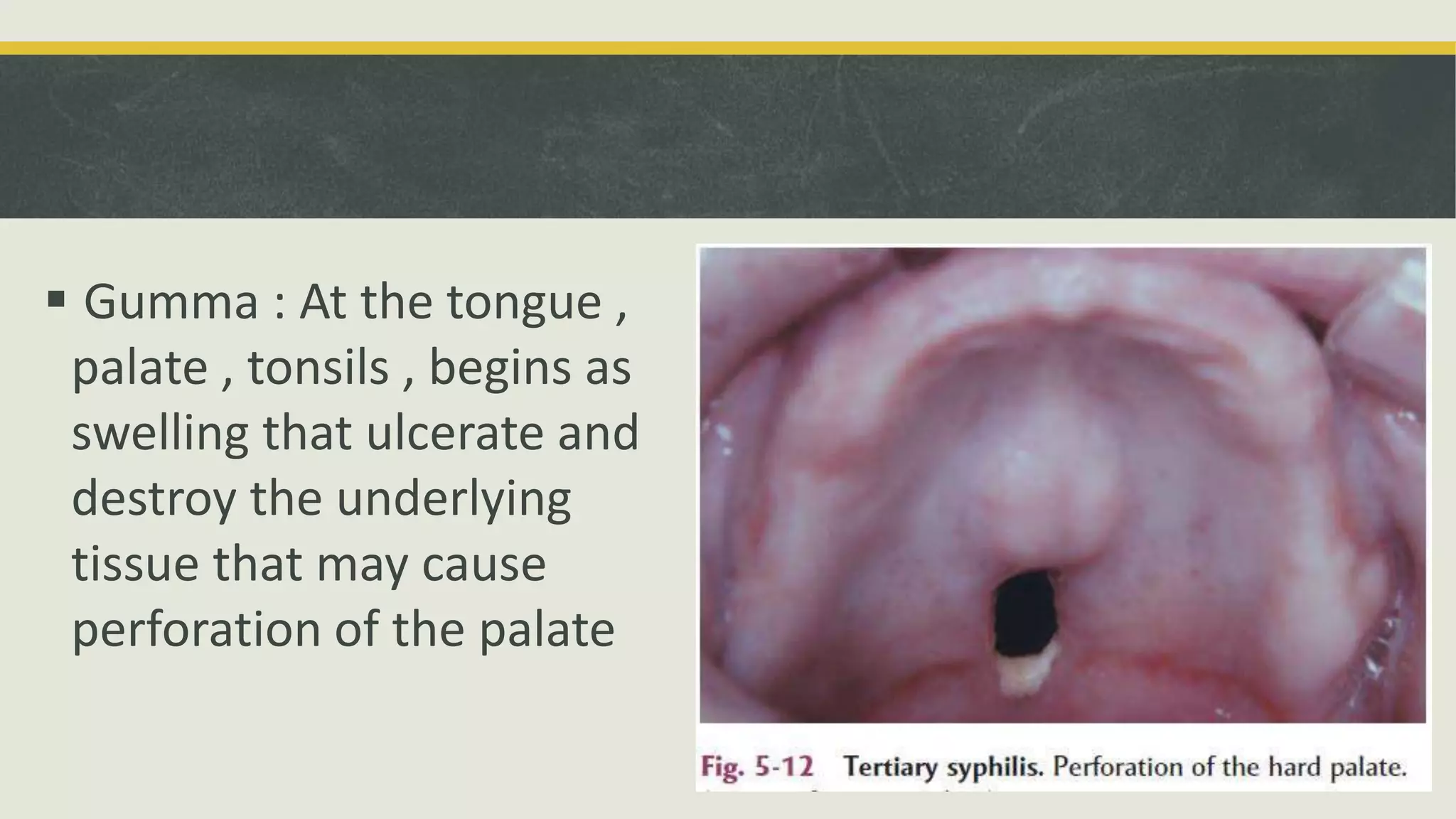
 Gumma : At the tongue ,
palate , tonsils , begins as
swelling that ulcerate and
destroy the underlying
tissue that may cause
perforation of the palate
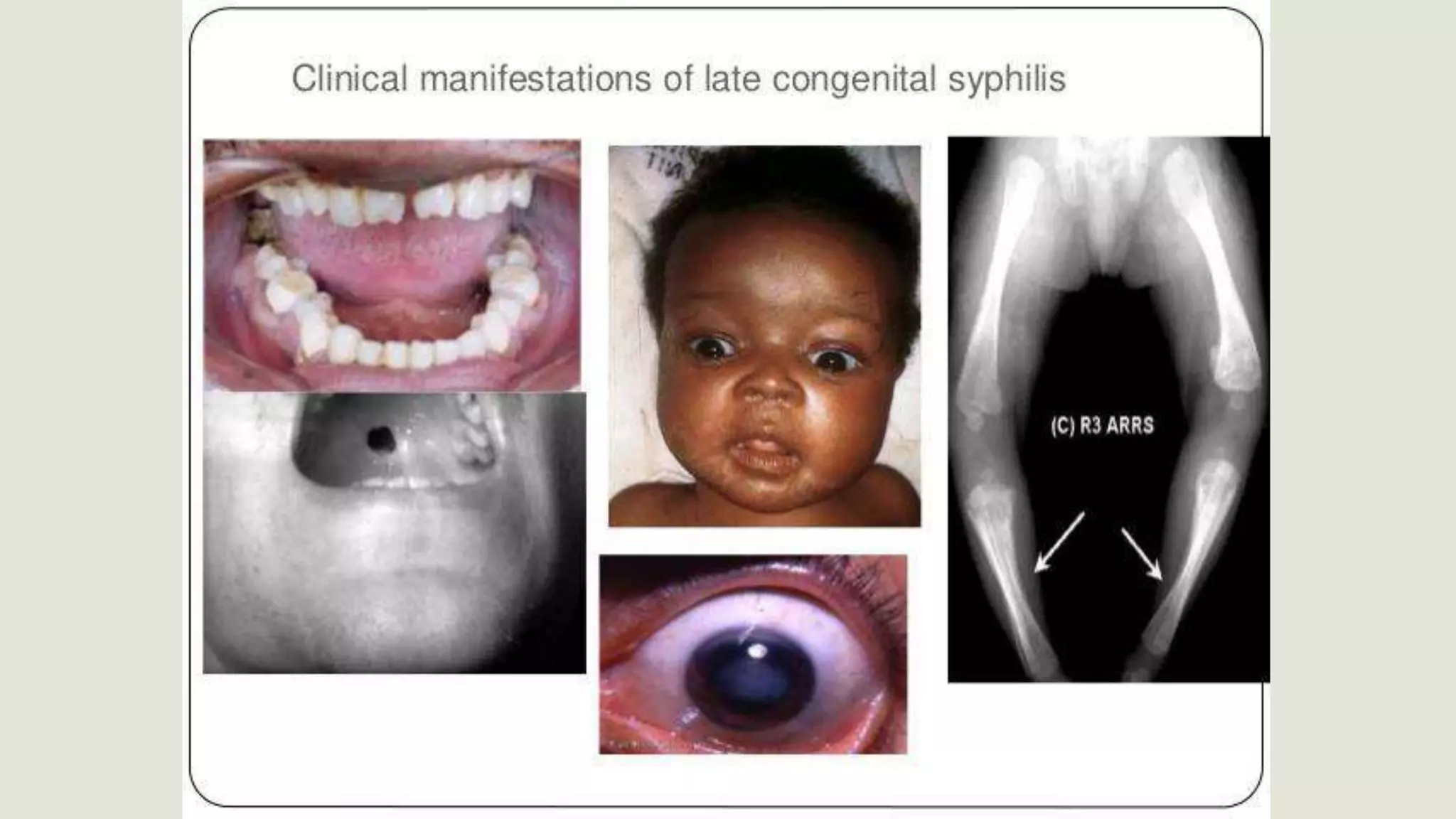
Congenital syphilis
 Passing syphilis from the mother to the child
 Results in classical symptoms called triad of
Hutchinson:
 Corneal Keratitis
 Deafness ( involvement of the 8th cranial nerve)
 under development of the maxilla , palate and
saddle nose
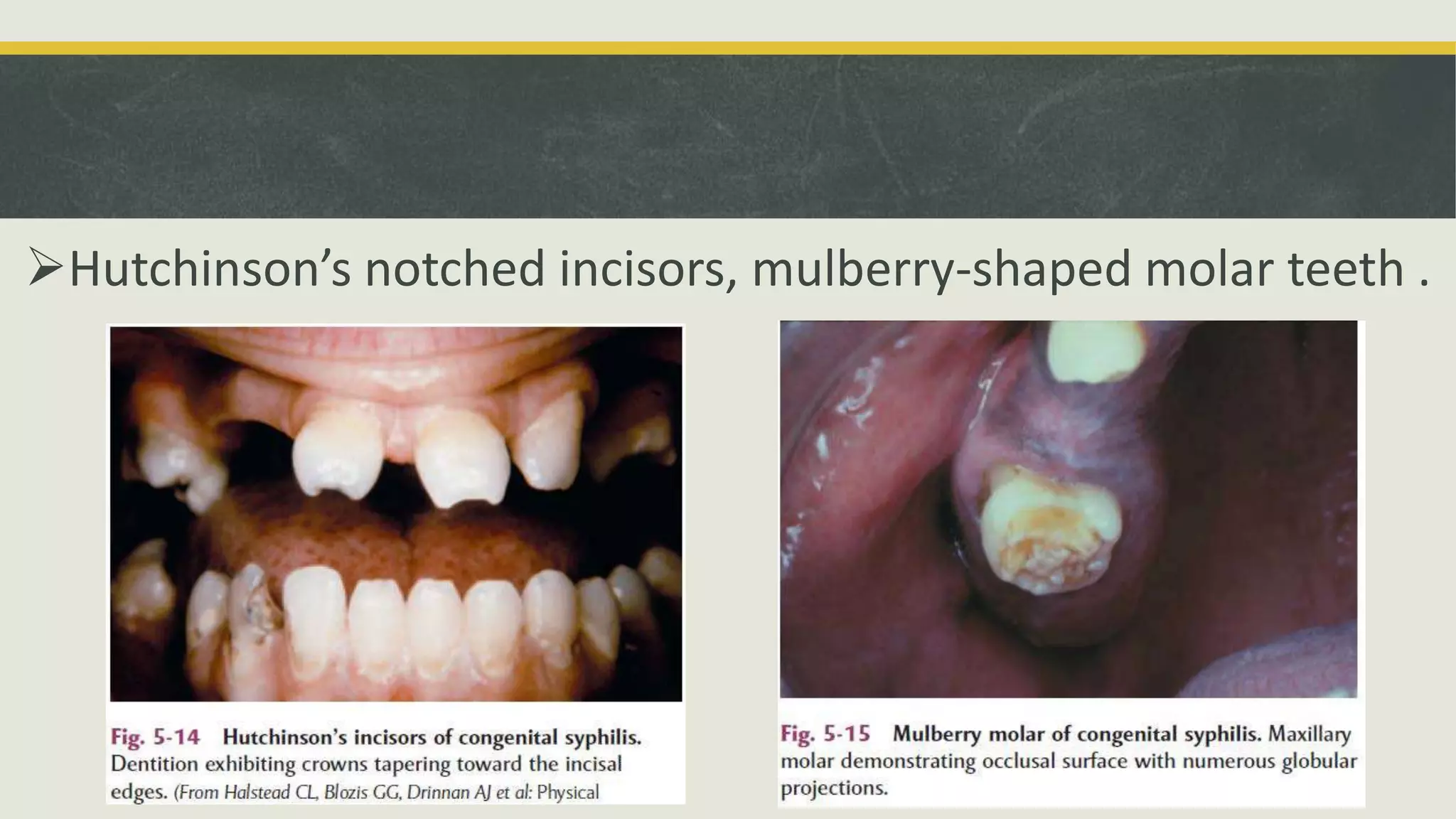
Hutchinson’s notched incisors, mulberry-shaped molar teeth .
Actinomycosis
Chronic bacterial disease
Caused by Gr +ve anaerobic Actinomyces Israeli
About 55% occur in cervicofacial region
Not regarded as contagious because infection cannot be
transmitted from one individual to another
 Usually appears after Trauma , Surgery and previous infection
When occurs in the Head and Neck it
appears as:
• Swelling of Mandible.
• Skin lesion are indurated.
• Having woody hard consistency.
• Results in Osteomyelitis that may drain
through gingiva.
Treatment
Drainage of abscess
surgical excison of sinus tracts
Long-term, high-dose
penicillin
For severe cases, IV penicillin
followed by oral penicillin
Gonorrhea
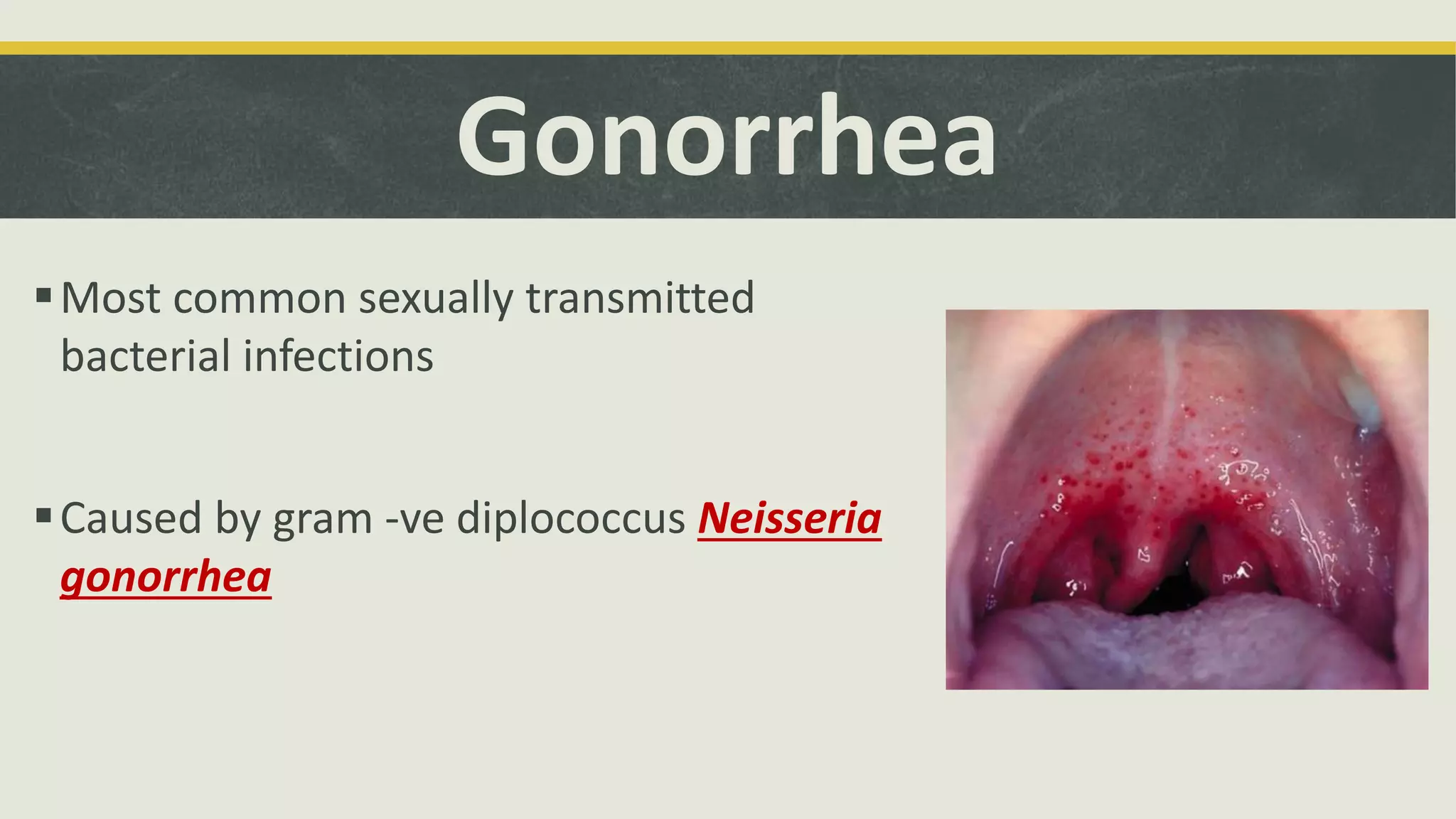
Most common sexually transmitted
bacterial infections
Caused by gram -ve diplococcus Neisseria
gonorrhea
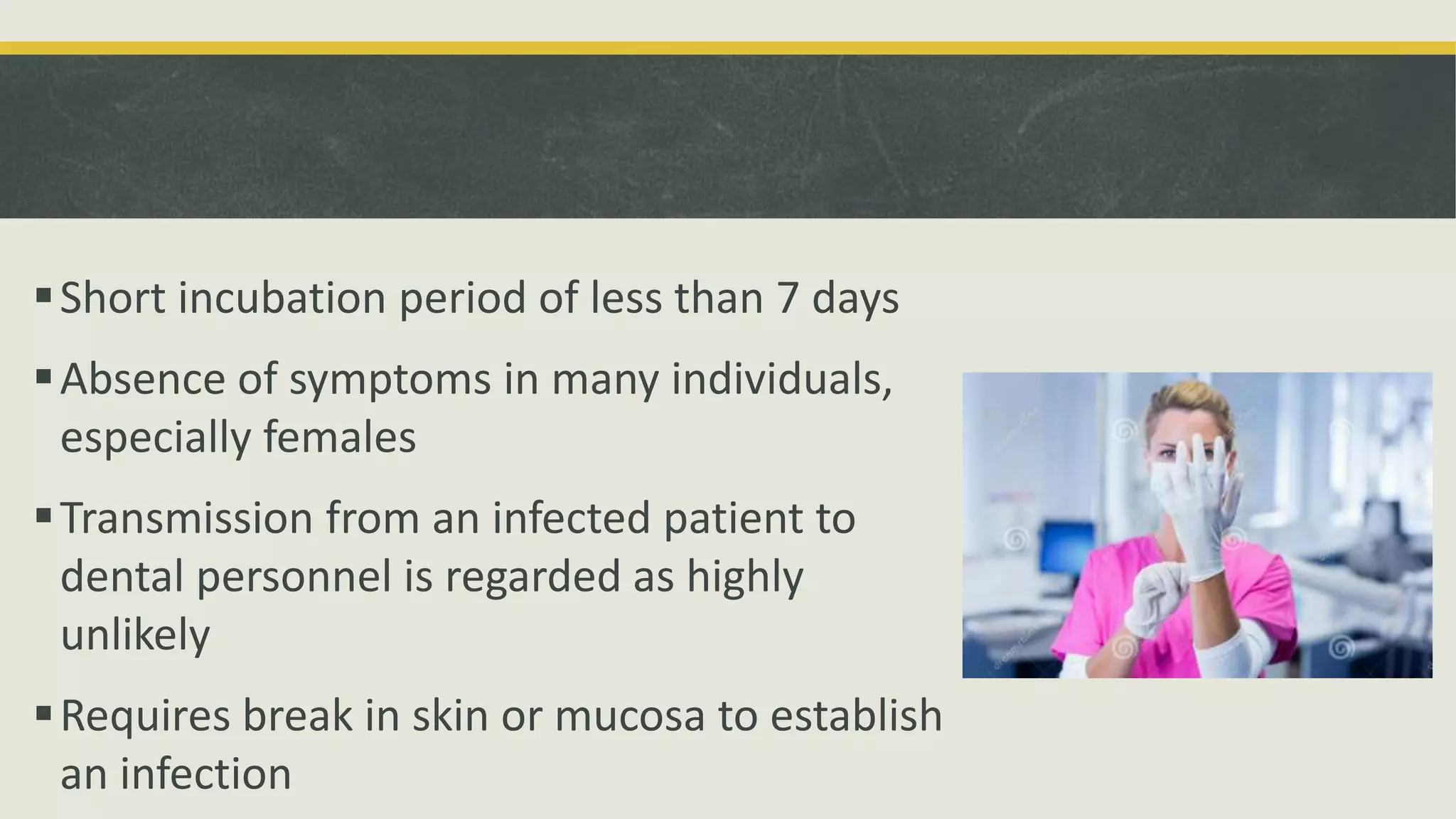
Short incubation period of less than 7 days
Absence of symptoms in many individuals,
especially females
Transmission from an infected patient to
dental personnel is regarded as highly
unlikely
Requires break in skin or mucosa to establish
an infection
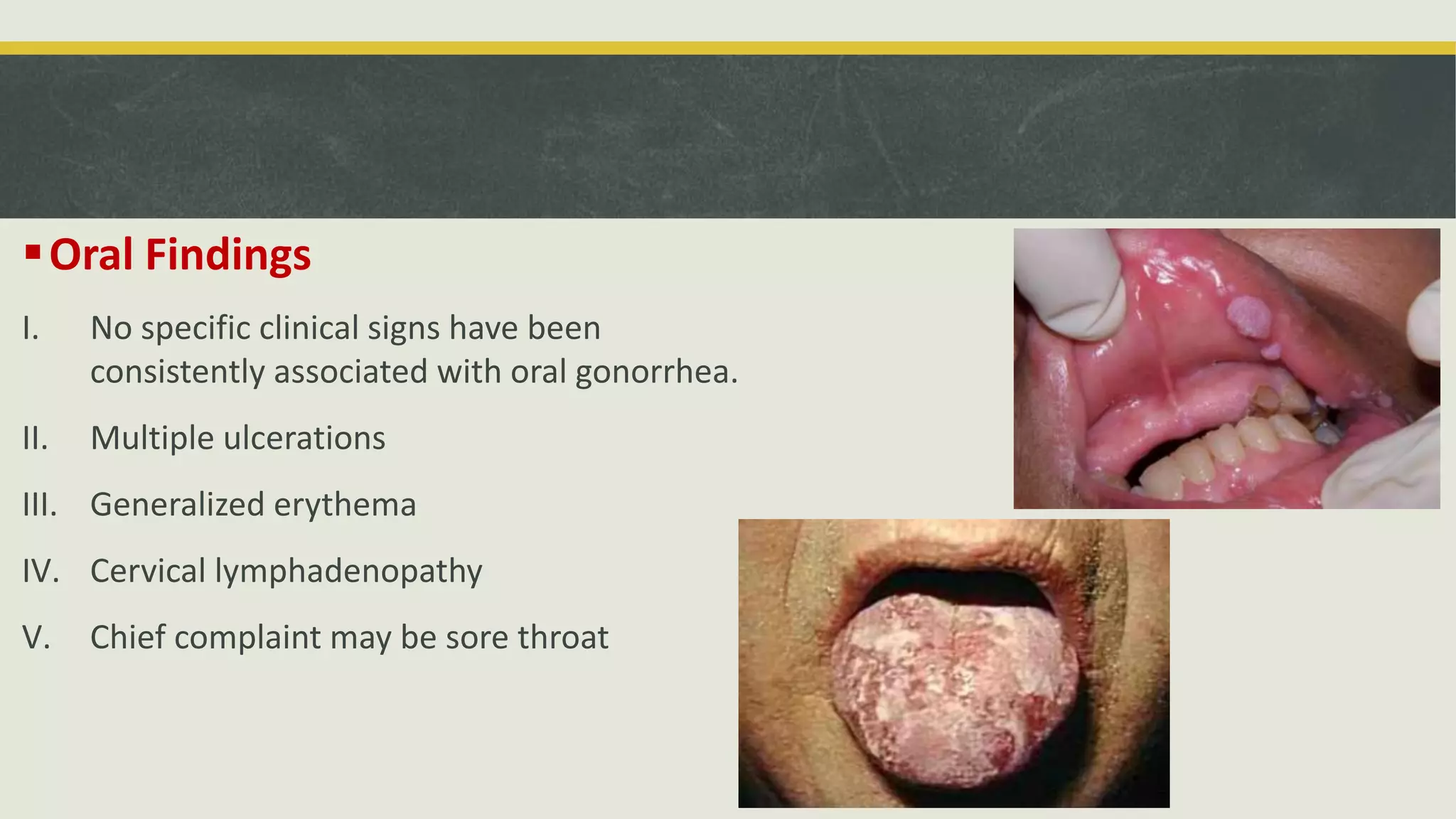
Oral Findings
I. No specific clinical signs have been
consistently associated with oral gonorrhea.
II. Multiple ulcerations
III. Generalized erythema
IV. Cervical lymphadenopathy
V. Chief complaint may be sore throat
Treatment
Uncomplicated gonorrhea responds to single dose of
appropriately selected antibiotic.
Bacterial Infections of Oral Cavity

Bacterial Infections of Oral Cavity

  • 1.
    Bacterial Infections Of Oralcavity By : Ahmed Jawad Group A1
  • 2.
    Introduction Bacteria constitute alarge domain of prokaryotic microorganisms. Few micrometres in length . Different shapes, ranging from spheres to rods and spirals . They lack true nucleus .
  • 3.
     Can beclassified to Gram +ve & Gram –ve Bacteria  Many of the bacteria have Flagellae & Pili  Healthy people may carry: • 1012 bacteria on skin. • 1010 in mouth. • 1014 in GIT.
  • 4.
    Tuberculosis Infects about 1/3of world’s population Kills approximately 3 million people per year Most important cause of death in the world
  • 5.
    caused by aerobic,non-spore forming bacillus Mycobacterium Tuberculosis It has :  Thick , Waxy coat  Doesn’t react with Gram Stains
  • 6.
    It can bespread through small airborne droplets The organism will be carried to the Pulmonary air spaces.
  • 7.
     Primary Tuberculosis •Occursin previously unexposed people. •Almost always involves the lungs. •Most infections are the result of direct person - to – person spread. •Results only in a localized , fibrocalcified nodule .
  • 8.
    Secondary Tuberculosis (Active Disease ) •Develops later in life from a reactivation of organisms. •This reactivation is typically associated with compromised host defenses Immunosuppressive medication Or HIV Patients Diabetes Old age
  • 9.
    Clinical Signs AndSymptoms : 1. Primary T.B : Usually asymptomatic. 2. Secondary T.B :  Low grade fever  Malaise  Night sweats and weight loss  With progression , hemoptysis and chest pain.
  • 11.
     Oral Tuberculosis Iforal cavity is involved , it is presented either as : 1. Primary infections Effects  Gingiva  Mucobuccal fold  Areas of inflammation
  • 12.
    2. Secondary infection( more common ) Effects:  The tongue  Palate due to infected sputum
  • 13.
     Typical lesion IndurateChronic Nonhealing Ulcer That Is Usually Painful Bony involvement of maxilla and mandible produces tuberculosis osteomyelitis
  • 20.
     Diagnosis •Tuberculin skintest. •Biopsy (with special stains) •Polymerase chain reaction (PCR) for bacterial DNA detects the disease.
  • 21.
     Treatment First linedrugs likely to used fro treatment of TB include • ISONIAZID • RIFAMPIN • PYRAZINAMIDE • EXAMBUTHOL
  • 22.
     Drug combinationsare often used in 6, 9, or 12 month treatment regimens. Bacille Calmette Guerin (BCG) vaccine is effective in controlling childhood TB.
  • 23.
    Syphilis  STD Disease Caused by Treponema Pallidum  Two Types:  Acquired  Congenital
  • 24.
    Acquired Syphilis  Acquiredsyphilis is subdivided into: 1. Primary Syphilis: Characterized by the appearance of “Chancre” A firm nodule in which the surface breaks up in a few days leaving a round hard ulcer Chancre is typically painless and heals spontaneously in weeks
  • 26.
    2. Secondary Syphilis: • Develops in 1 to 4 months of initial infection. • It Causes:  Mild Fever - Malaise  Sore Throat  Headache  Muscle Pain  Generalized lymphadenopathy  Rash and Stomatisis
  • 27.
     Numerous redmacules and papules occur in the mouth & palate as ulcers White grey plaque on the tongue , gingiva , palate and buccal mucosa The Ulcer Discharge contains many spirochetes
  • 29.
    3. Tertiary syphilis Latentperiod of 1-30 years between secondary and tertiary stage  Presented as  Neurological defects  Cardiovascular defects
  • 30.
    Oral findings intertiary syphilis  Atrophic Glossitis : smooth shiny tongue
  • 31.
     Gumma :At the tongue , palate , tonsils , begins as swelling that ulcerate and destroy the underlying tissue that may cause perforation of the palate
  • 32.
    Congenital syphilis  Passingsyphilis from the mother to the child  Results in classical symptoms called triad of Hutchinson:  Corneal Keratitis  Deafness ( involvement of the 8th cranial nerve)  under development of the maxilla , palate and saddle nose
  • 33.
    Hutchinson’s notched incisors,mulberry-shaped molar teeth .
  • 35.
    Actinomycosis Chronic bacterial disease Causedby Gr +ve anaerobic Actinomyces Israeli About 55% occur in cervicofacial region Not regarded as contagious because infection cannot be transmitted from one individual to another  Usually appears after Trauma , Surgery and previous infection
  • 36.
    When occurs inthe Head and Neck it appears as: • Swelling of Mandible. • Skin lesion are indurated. • Having woody hard consistency. • Results in Osteomyelitis that may drain through gingiva.
  • 37.
    Treatment Drainage of abscess surgicalexcison of sinus tracts Long-term, high-dose penicillin For severe cases, IV penicillin followed by oral penicillin
  • 38.
    Gonorrhea Most common sexuallytransmitted bacterial infections Caused by gram -ve diplococcus Neisseria gonorrhea
  • 39.
    Short incubation periodof less than 7 days Absence of symptoms in many individuals, especially females Transmission from an infected patient to dental personnel is regarded as highly unlikely Requires break in skin or mucosa to establish an infection
  • 40.
    Oral Findings I. Nospecific clinical signs have been consistently associated with oral gonorrhea. II. Multiple ulcerations III. Generalized erythema IV. Cervical lymphadenopathy V. Chief complaint may be sore throat
  • 41.
    Treatment Uncomplicated gonorrhea respondsto single dose of appropriately selected antibiotic.