Electrotherapy
By Dr. Aasma Ahmed
What is electrotherapy??
• Application of electric current to the effected part of
the body in easing of the pain swelling and stiffness
by stimulating nerves and muscle.
What is current?
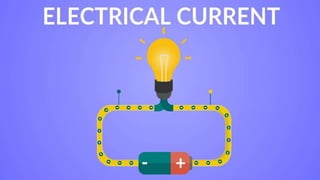
• An electric current is a flow of electrons and is
produced when difference of potential exist between
the ends of a conducting pathways
Essential for an electric current
• A difference of potential
• A pathway along which electrons can move
• A difference of potential give rise to a force,
called electromotive force (EMF).
• If there is a pathway EMF produce the flow of
electron, current will generate. If there is no
pathway there is no current but the force still
exist.
• Unit of PD and EMF is Volt. (V)
• Volt: that EMF which when applied to the
conductor with a resistance of one ohm
produces the current of one ampere.
• Conducter: any material or substance that
allows electricity to move through it.
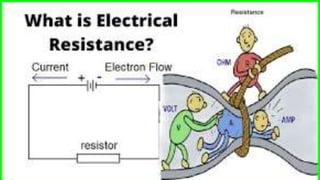
• Resistance: any source that offers some
impedence to the movement of electrons
• Amount of resistance depends on
1. The material of the conductor
2. The length of the pathway
3. Cross sectional area of the conductor
4. Temperature
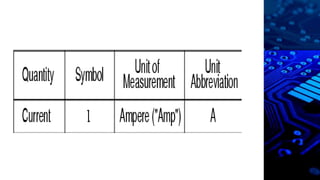
• The rate of flow of flow of electrons through a
conductor is know as intensity of current. And
its unit is known as ampere. One ampere is
equal to one coulomb of electrical charge
(6.24 x 10¹⁸ charge carriers) moving past a
specific point in one second.
• the unit of quantity of electricity is coloumb
and intensity of the current is measured in
coloumb per second.
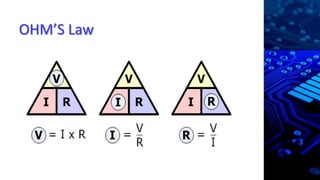
OHM’S Law
Types of current
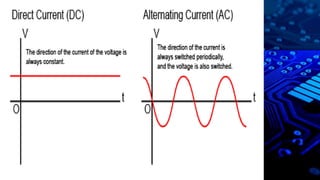
Direct Current
• Unidirectional current
• Used for iontopherosis,
stimulating the
contraction of
denervated muscle,
somtime fascilitate the
wound
• Alternating current
• Bidirectional current,
electrons move in one
direction than the
polarity is reversed and
they start moving in
opposite direction.
Safety rules for using electrotherapy
• Thermotherapy
Superficial heating modalities: The main
problem with superficial heating modalities has
to do with the patient. The development of
burns or scalds inpatients depends on the
equipment in question. Very short distance
between the patient and the infra-red radiation
(IRR) lamp and use of insufficient layers or
thickness of towels in hot pack therapy can
result in burns and scalds respectively.
• Heat treatment around areas contraindicated
in heating modalities, such as devitalized
tissue or areas with metal implants, can also
cause burns or gangrene
• The distance and thickness should be such
that erythema does not occur until ten
minutes after the treatment has started,
while the application time should be short
and under no circumstance must it exceed 30
minutes
• the patient should be instructed not to touch the glass
bulb inside the lamp while in use to avoid burns.
• Lasers are contraindicated in cancerous tissue,
unclosed fontanelle of infants, over the pregnant
uterus, the heart of patients with pacemakers, as well
as areas of venous thrombosis, phlebitis and arterial
disease. Also, the eyes of both the physiotherapist and
the patient must be protected with suitable goggles
provided for the specific type of laser in use.
• use of pure paraffin wax ensures that the temperature
of the wax ranges between 45 and 49 degree celsius
• Deep heating modalities:
1. Short wave and microwave diathermy units
heat tissue through absorption of energy
from electromagnetic fields — electric and
magnetic fields
2. Even with the diffuse nature of energy, the
presence of metal implants in the tissue can
cause burns due to the concentration of
adjacent field lines produced by shortwaves
or microwaves
3. The level of exposure of the physiotherapist’s
eyes is small but care should be taken to ensure that
the patient’s eyes are not closer to the electrodes
and cables than necessary during treatment.
4. other electrotherapy devices, especially
electrical stimulation apparatus should be kept at
least 2 meters from the PSWD machine. When
operating two diathermy machines simultaneously,
they should be positioned at least 3 metres apart
• Sonotherapy
To reduce the likelihood of standing waves, which can damage
tissue and may also lead to thrombus formation, the treatment
head must be moved continuously across the treatment area
Transient cavitation is another source of burns caused by the
pressure changes applied to the tissues by the sound waves. It
occurs as a result of collapse of a bubble of gas formed as a
result of a mechanical effect.
This can be prevented by using intensities of about 3 watt/cm
using a pulsed source of ultrasound, or moving the treatment
head during insonation. Above all, ultrasound should not be
used if contraindicated
• Direct current (DC) also known as
electromotor stimulation (EMS) is
electrical current that flows for one
second or longer
• The galvanic machine produces direct
current, which travels through the skin
across two electrodes, and produces a
chemical effect within the skin
• GC produces hazards which include
electrocution, local infection, chemical and
heat burns as well as powerful and prolonged
muscle contraction which can damage the
heart muscles and stop circulation. There is
also the risk of tissue reaction or skin
infection from the electrodes (Charman,
1990). There may also be undue localization
of current due to open wounds or skin
lesions, such as eczema
• current could provoke undesirable metabolic activity
in cancerous tissue or in healed tuberculous infection.
Current which is not biphasic may lead to skin damage
or irritation, especially if there is loss of sensation
• General precautions for GC include prevention of
strong muscle contraction, which can cause joint or
muscle damage, detachment of thrombus, spread of
infection, and haemorrhage; prevention of stimulation
of autonomic nerves that may cause altered cardiac
rhythm or other autonomic effects
• the current must not change in intensity too
rapidly or the pain receptors of the skin may
be stimulated, in addition to the muscle
• To ensure safety, electrodes must stay in
contact with the skin while the machine is
operating and the intensity of the current
should be reduced when bony regions of the
face are being treated .To avoid tissue
reaction, silver or platinum electrodes should
be used.
• The two electrodes should not be allowed
to come in contact while the machine is
on to avoid short circuiting
• Alternating current
This direct application of current along with
its potential fluctuations sometimes causes
unpleasant shock in subjects
• Safety precautions such as avoiding contraindications
to individual modalities, ensuring electrical safety of
the equipment, giving comprehensive instructions,
and maintaining adequate distance between the body
parts and the equipment as well as delivering optimal
dosage of the modalities to the patient are crucial to
ensuring safety in electrotherapy. Above all,
employers, and paid and selfemployed
physiotherapists need to ensure the health, safety and
welfare of persons attending their clinics.

electrotherapy [Autosaved].pptx

  • 1.
  • 2.
    What is electrotherapy?? •Application of electric current to the effected part of the body in easing of the pain swelling and stiffness by stimulating nerves and muscle.
  • 3.
    What is current? •An electric current is a flow of electrons and is produced when difference of potential exist between the ends of a conducting pathways
  • 5.
    Essential for anelectric current • A difference of potential • A pathway along which electrons can move • A difference of potential give rise to a force, called electromotive force (EMF). • If there is a pathway EMF produce the flow of electron, current will generate. If there is no pathway there is no current but the force still exist. • Unit of PD and EMF is Volt. (V)
  • 7.
    • Volt: thatEMF which when applied to the conductor with a resistance of one ohm produces the current of one ampere. • Conducter: any material or substance that allows electricity to move through it. • Resistance: any source that offers some impedence to the movement of electrons
  • 8.
    • Amount ofresistance depends on 1. The material of the conductor 2. The length of the pathway 3. Cross sectional area of the conductor 4. Temperature
  • 10.
    • The rateof flow of flow of electrons through a conductor is know as intensity of current. And its unit is known as ampere. One ampere is equal to one coulomb of electrical charge (6.24 x 10¹⁸ charge carriers) moving past a specific point in one second. • the unit of quantity of electricity is coloumb and intensity of the current is measured in coloumb per second.
  • 11.
  • 12.
  • 13.
    Direct Current • Unidirectionalcurrent • Used for iontopherosis, stimulating the contraction of denervated muscle, somtime fascilitate the wound • Alternating current • Bidirectional current, electrons move in one direction than the polarity is reversed and they start moving in opposite direction.
  • 15.
    Safety rules forusing electrotherapy
  • 16.
    • Thermotherapy Superficial heatingmodalities: The main problem with superficial heating modalities has to do with the patient. The development of burns or scalds inpatients depends on the equipment in question. Very short distance between the patient and the infra-red radiation (IRR) lamp and use of insufficient layers or thickness of towels in hot pack therapy can result in burns and scalds respectively.
  • 17.
    • Heat treatmentaround areas contraindicated in heating modalities, such as devitalized tissue or areas with metal implants, can also cause burns or gangrene • The distance and thickness should be such that erythema does not occur until ten minutes after the treatment has started, while the application time should be short and under no circumstance must it exceed 30 minutes
  • 18.
    • the patientshould be instructed not to touch the glass bulb inside the lamp while in use to avoid burns. • Lasers are contraindicated in cancerous tissue, unclosed fontanelle of infants, over the pregnant uterus, the heart of patients with pacemakers, as well as areas of venous thrombosis, phlebitis and arterial disease. Also, the eyes of both the physiotherapist and the patient must be protected with suitable goggles provided for the specific type of laser in use. • use of pure paraffin wax ensures that the temperature of the wax ranges between 45 and 49 degree celsius
  • 19.
    • Deep heatingmodalities: 1. Short wave and microwave diathermy units heat tissue through absorption of energy from electromagnetic fields — electric and magnetic fields 2. Even with the diffuse nature of energy, the presence of metal implants in the tissue can cause burns due to the concentration of adjacent field lines produced by shortwaves or microwaves
  • 20.
    3. The levelof exposure of the physiotherapist’s eyes is small but care should be taken to ensure that the patient’s eyes are not closer to the electrodes and cables than necessary during treatment. 4. other electrotherapy devices, especially electrical stimulation apparatus should be kept at least 2 meters from the PSWD machine. When operating two diathermy machines simultaneously, they should be positioned at least 3 metres apart
  • 21.
    • Sonotherapy To reducethe likelihood of standing waves, which can damage tissue and may also lead to thrombus formation, the treatment head must be moved continuously across the treatment area Transient cavitation is another source of burns caused by the pressure changes applied to the tissues by the sound waves. It occurs as a result of collapse of a bubble of gas formed as a result of a mechanical effect. This can be prevented by using intensities of about 3 watt/cm using a pulsed source of ultrasound, or moving the treatment head during insonation. Above all, ultrasound should not be used if contraindicated
  • 22.
    • Direct current(DC) also known as electromotor stimulation (EMS) is electrical current that flows for one second or longer • The galvanic machine produces direct current, which travels through the skin across two electrodes, and produces a chemical effect within the skin
  • 23.
    • GC produceshazards which include electrocution, local infection, chemical and heat burns as well as powerful and prolonged muscle contraction which can damage the heart muscles and stop circulation. There is also the risk of tissue reaction or skin infection from the electrodes (Charman, 1990). There may also be undue localization of current due to open wounds or skin lesions, such as eczema
  • 24.
    • current couldprovoke undesirable metabolic activity in cancerous tissue or in healed tuberculous infection. Current which is not biphasic may lead to skin damage or irritation, especially if there is loss of sensation • General precautions for GC include prevention of strong muscle contraction, which can cause joint or muscle damage, detachment of thrombus, spread of infection, and haemorrhage; prevention of stimulation of autonomic nerves that may cause altered cardiac rhythm or other autonomic effects
  • 25.
    • the currentmust not change in intensity too rapidly or the pain receptors of the skin may be stimulated, in addition to the muscle • To ensure safety, electrodes must stay in contact with the skin while the machine is operating and the intensity of the current should be reduced when bony regions of the face are being treated .To avoid tissue reaction, silver or platinum electrodes should be used.
  • 26.
    • The twoelectrodes should not be allowed to come in contact while the machine is on to avoid short circuiting
  • 27.
    • Alternating current Thisdirect application of current along with its potential fluctuations sometimes causes unpleasant shock in subjects
  • 28.
    • Safety precautionssuch as avoiding contraindications to individual modalities, ensuring electrical safety of the equipment, giving comprehensive instructions, and maintaining adequate distance between the body parts and the equipment as well as delivering optimal dosage of the modalities to the patient are crucial to ensuring safety in electrotherapy. Above all, employers, and paid and selfemployed physiotherapists need to ensure the health, safety and welfare of persons attending their clinics.