INDIA’S BIGGEST
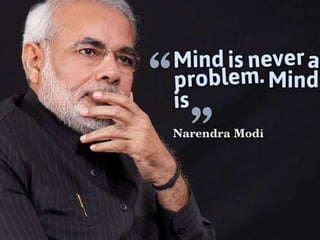
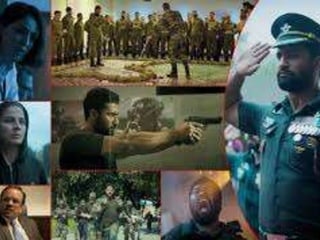
SUPERSTAR
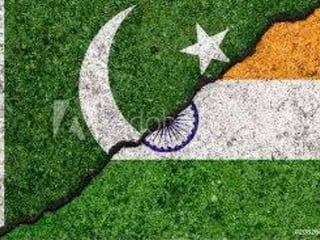
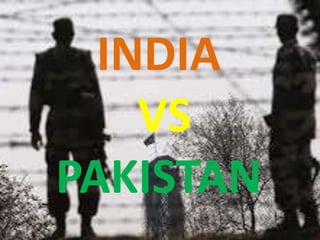
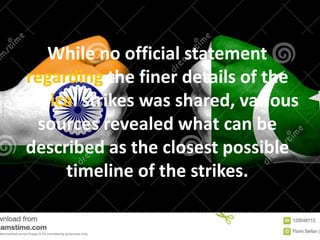
INDIA
VS
PAKISTAN
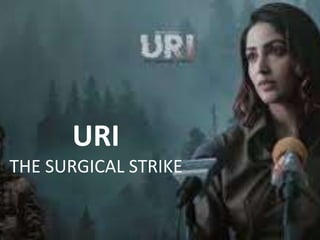
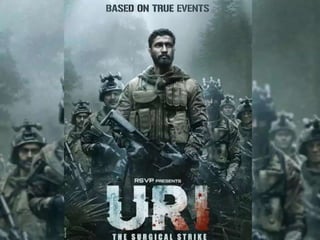
URI
THE SURGICAL STRIKE
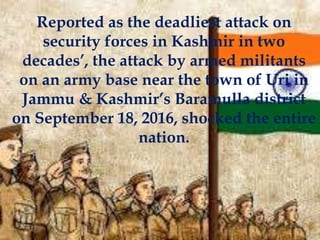
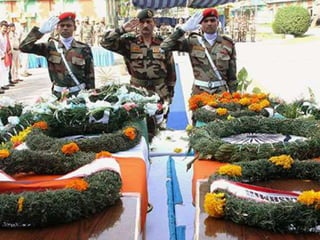
Reported as the deadliest attack on
security forces in Kashmir in two
decades’, the attack by armed militants
on an army base near the town of Uri in
Jammu & Kashmir’s Baramulla district
on September 18, 2016, shocked the entire
nation.
About 10 kilometers east of the Line of
Control with Pakistan, the Uri hadn’t even
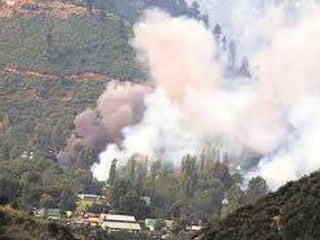
woken up when, at around 5:30 am, four
militants attacked the Indian Army brigade
headquarters. 17 grenades were lobbed in 3
minutes, killing 19 army personnel during
the attack. Additionally, 80-100 soldiers were
reportedly injured even though all the four
militants were killed in a gun battle that’s
said to have lasted for six hours.
On September 19, 2016, a team led by Home Minister
Rajah Singh, then-Defence Minister Manohar Parrikar,
then-Chief of Army Staff Dalbir Singh and National
Security Advisor Ajit Doval sat down to review the
situation. The National Investigation Agency was quick
to file a first information report (FIR), taking over the
investigation from the J&K police. The Pakistan-based
terrorist organization Jaish-e-Mohammed was thought
to have carried out the planning and execution of the
attack. On September 21, India summoned the
Pakistan High Commission with a letter that contained
details of Jaish-e-Mohammed’s involvement with the
attack.
What was the
aftermath of the
Uri attack?
Amidst already strained Indo-Pak relations, the Uri attack came as
a big blow. In terms of immediate actions that affected bilateral
terms between the two nations, India cancelled its participation in
the 19th SAARC summit in Islamabad. While Pakistan termed it
‘unfortunate’, Afghanistan, Bangladesh and Bhutan stood in
support of India and also withdrew from the summit, forcing
Pakistan to reschedule it at a later date.
Soon after, TV channel Zindagi
discontinued showcasing all
Pakistani shows on the
channel. As an act of solidarity
with the Indian Army, the
Badminton Association of India
boycotted the Pakistani
International Series the same
year and the Board of Cricket
Control in India (BCCI) ruled
out any possible revival of
bilateral cricket ties with
Pakistan.
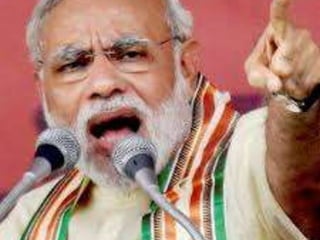
Speaking to the press, multiple
ministers including Prime Minister
Narendra Modi strongly condemned
the attacks and vouched to give the
terrorists a taste of their own
medicine. Many other countries from
across the world expressed their
solidarity with India in fighting
terrorism. Pakistan, on the other
hand, rejected all possible allegations
made by India regarding the country’s
involvement in the attack.
SURGICAL
STRIKE DECISION
SEPTEMBER 29 2016
On September 29, 2016 — 11 days after the
dreadful Uri attack — the Indian Army announced
that it had successfully conducted surgical strikes
against suspected militants in Pakistani-
administered Kashmir. Speaking to the media,
then-Director General of Military Operations Lt.
Gen Ranbir Singh shared that the Indian Army had
received information about various terrorist teams
that were planning attacks similar to the one at Uri
in other parts of Jammu & Kashmir, and the
surgical strikes were the Indian Army’s preemptive
self-defence against terrorism. Soon after, on
September 30, then-I&B Minister Rajyavardhan
Singh Rathore shared some details about the
strikes, mentioning that the entire operation had
been conducted on the ground without any aerial
support.
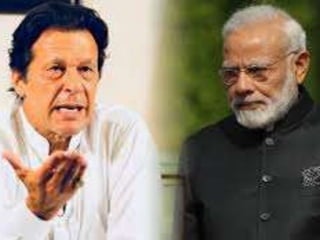
Pakistan’s
government, on the
other hand, denied
the occurrence of any
surgical strikes and
dismissed it as
nothing but cross-
border firing.
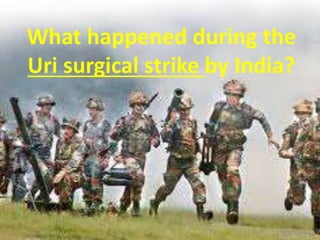
What happened during the
Uri surgical strike by India?
While no official statement
regarding the finer details of the
surgical strikes was shared, various
sources revealed what can be
described as the closest possible
timeline of the strikes.
Though officials only confirmed that the strikes
had targeted just the areas close to the Line of
Control (LoC), as per the sources, the operation
began with Indian forces firing artillery across the
frontier – the idea was to provide a cover for
three to four teams of 70-80 soldiers from the 4th
and 9th Battalions of the Parachute Regiment
(Special Forces) to cross the LoC at separate
points. Just after midnight, in the early hours of
September 29, forces from 4 Para crossed the
LoC in the Nowgam sector of Kupwara District
while the 9 Para crossed the LoC in the Poonch
district.
Further sources from the Indian Army
revealed that, in less than two hours, the
Special Forces teams had travelled close to
1-3 kilometres on foot. In that short span of
time, they had destroyed multiple terrorist
bases with nothing but hand-held grenades
and 84 mm rocket launchers before
returning to the Indian side of the LoC. The
only casualty reported was one soldier who
was wounded after he tripped on a land
mine.
As per Pakistan’s version of the events, it was
regular cross-border firing that resulted in
the deaths of two soldiers namely Naik
Imtiaz and Havildar Jumma Khan. Any
occurrence of surgical strikes in any form was
categorically denied by the Government of
Pakistani. Additionally, the Pakistani sources
also reported that they had killed up to 14
Indian soldiers in retaliatory firing, even
capturing one of them, Chandu Babulal Chavan.
However, later it was reported that the
captured Indian soldier had wandered across
the border in a different sector and was duly
returned to India without any conflict.
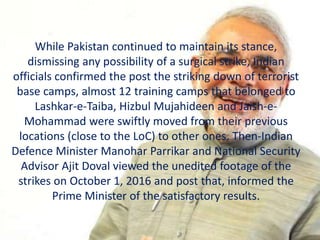
While Pakistan continued to maintain its stance,
dismissing any possibility of a surgical strike, Indian
officials confirmed the post the striking down of terrorist
base camps, almost 12 training camps that belonged to
Lashkar-e-Taiba, Hizbul Mujahideen and Jaish-e-
Mohammad were swiftly moved from their previous
locations (close to the LoC) to other ones. Then-Indian
Defence Minister Manohar Parrikar and National Security
Advisor Ajit Doval viewed the unedited footage of the
strikes on October 1, 2016 and post that, informed the
Prime Minister of the satisfactory results.
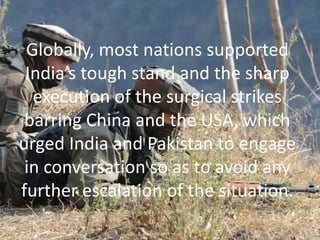
Globally, most nations supported
India’s tough stand and the sharp
execution of the surgical strikes
barring China and the USA, which
urged India and Pakistan to engage
in conversation so as to avoid any
further escalation of the situation.
THE
END
BY:
ABHI

URI "THE SURGICAL STRIKE"

  • 1.
  • 4.
  • 5.
  • 6.
    Reported as thedeadliest attack on security forces in Kashmir in two decades’, the attack by armed militants on an army base near the town of Uri in Jammu & Kashmir’s Baramulla district on September 18, 2016, shocked the entire nation.
  • 7.
    About 10 kilometerseast of the Line of Control with Pakistan, the Uri hadn’t even woken up when, at around 5:30 am, four militants attacked the Indian Army brigade headquarters. 17 grenades were lobbed in 3 minutes, killing 19 army personnel during the attack. Additionally, 80-100 soldiers were reportedly injured even though all the four militants were killed in a gun battle that’s said to have lasted for six hours.
  • 9.
    On September 19,2016, a team led by Home Minister Rajah Singh, then-Defence Minister Manohar Parrikar, then-Chief of Army Staff Dalbir Singh and National Security Advisor Ajit Doval sat down to review the situation. The National Investigation Agency was quick to file a first information report (FIR), taking over the investigation from the J&K police. The Pakistan-based terrorist organization Jaish-e-Mohammed was thought to have carried out the planning and execution of the attack. On September 21, India summoned the Pakistan High Commission with a letter that contained details of Jaish-e-Mohammed’s involvement with the attack.
  • 10.
    What was the aftermathof the Uri attack?
  • 11.
    Amidst already strainedIndo-Pak relations, the Uri attack came as a big blow. In terms of immediate actions that affected bilateral terms between the two nations, India cancelled its participation in the 19th SAARC summit in Islamabad. While Pakistan termed it ‘unfortunate’, Afghanistan, Bangladesh and Bhutan stood in support of India and also withdrew from the summit, forcing Pakistan to reschedule it at a later date.
  • 12.
    Soon after, TVchannel Zindagi discontinued showcasing all Pakistani shows on the channel. As an act of solidarity with the Indian Army, the Badminton Association of India boycotted the Pakistani International Series the same year and the Board of Cricket Control in India (BCCI) ruled out any possible revival of bilateral cricket ties with Pakistan.
  • 14.
    Speaking to thepress, multiple ministers including Prime Minister Narendra Modi strongly condemned the attacks and vouched to give the terrorists a taste of their own medicine. Many other countries from across the world expressed their solidarity with India in fighting terrorism. Pakistan, on the other hand, rejected all possible allegations made by India regarding the country’s involvement in the attack.
  • 17.
  • 18.
    On September 29,2016 — 11 days after the dreadful Uri attack — the Indian Army announced that it had successfully conducted surgical strikes against suspected militants in Pakistani- administered Kashmir. Speaking to the media, then-Director General of Military Operations Lt. Gen Ranbir Singh shared that the Indian Army had received information about various terrorist teams that were planning attacks similar to the one at Uri in other parts of Jammu & Kashmir, and the surgical strikes were the Indian Army’s preemptive self-defence against terrorism. Soon after, on September 30, then-I&B Minister Rajyavardhan Singh Rathore shared some details about the strikes, mentioning that the entire operation had been conducted on the ground without any aerial support.
  • 20.
    Pakistan’s government, on the otherhand, denied the occurrence of any surgical strikes and dismissed it as nothing but cross- border firing.
  • 21.
    What happened duringthe Uri surgical strike by India?
  • 22.
    While no officialstatement regarding the finer details of the surgical strikes was shared, various sources revealed what can be described as the closest possible timeline of the strikes.
  • 23.
    Though officials onlyconfirmed that the strikes had targeted just the areas close to the Line of Control (LoC), as per the sources, the operation began with Indian forces firing artillery across the frontier – the idea was to provide a cover for three to four teams of 70-80 soldiers from the 4th and 9th Battalions of the Parachute Regiment (Special Forces) to cross the LoC at separate points. Just after midnight, in the early hours of September 29, forces from 4 Para crossed the LoC in the Nowgam sector of Kupwara District while the 9 Para crossed the LoC in the Poonch district.
  • 24.
    Further sources fromthe Indian Army revealed that, in less than two hours, the Special Forces teams had travelled close to 1-3 kilometres on foot. In that short span of time, they had destroyed multiple terrorist bases with nothing but hand-held grenades and 84 mm rocket launchers before returning to the Indian side of the LoC. The only casualty reported was one soldier who was wounded after he tripped on a land mine.
  • 26.
    As per Pakistan’sversion of the events, it was regular cross-border firing that resulted in the deaths of two soldiers namely Naik Imtiaz and Havildar Jumma Khan. Any occurrence of surgical strikes in any form was categorically denied by the Government of Pakistani. Additionally, the Pakistani sources also reported that they had killed up to 14 Indian soldiers in retaliatory firing, even capturing one of them, Chandu Babulal Chavan. However, later it was reported that the captured Indian soldier had wandered across the border in a different sector and was duly returned to India without any conflict.
  • 28.
    While Pakistan continuedto maintain its stance, dismissing any possibility of a surgical strike, Indian officials confirmed the post the striking down of terrorist base camps, almost 12 training camps that belonged to Lashkar-e-Taiba, Hizbul Mujahideen and Jaish-e- Mohammad were swiftly moved from their previous locations (close to the LoC) to other ones. Then-Indian Defence Minister Manohar Parrikar and National Security Advisor Ajit Doval viewed the unedited footage of the strikes on October 1, 2016 and post that, informed the Prime Minister of the satisfactory results.
  • 29.
    Globally, most nationssupported India’s tough stand and the sharp execution of the surgical strikes barring China and the USA, which urged India and Pakistan to engage in conversation so as to avoid any further escalation of the situation.
  • 35.
  • 36.