An Architecture for Participatory Learning IDA iLAB2015 Ideation workshop,  Singapore, Aug. 2008 Niall Winters and Yishay Mor
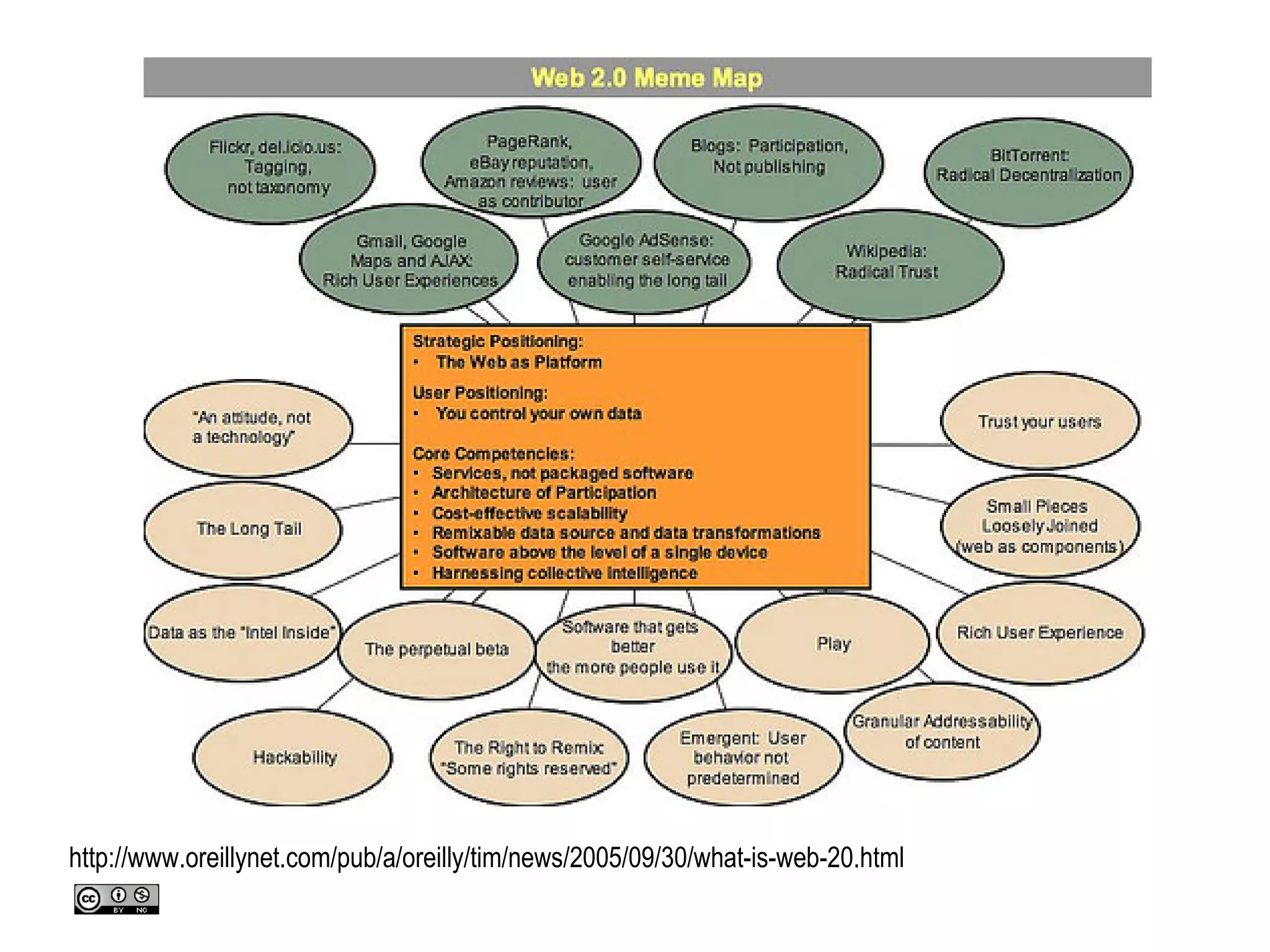
http://www.oreillynet.com/pub/a/oreilly/tim/news/2005/09/30/what-is-web-20.html
Something happening here http://www.youtube.com/watch?v=268PcyxU4kE http://www.youtube.com/watch?v=Yws_Re5nlcM http://www.flickr.com/photos/zedomax/260984975/ http://www.slideshare.net/ http://www.edu20.org/ http://schoolofeverything.com/
Web2.0: What makes it tick? One of the key lessons of the Web 2.0 era is this:  Users add value . But only a small percentage of users will go to the trouble of adding value to your application via explicit means.  Web 2.0 companies set inclusive defaults for aggregating user data and building value as a side-effect of ordinary use of the application. ... they build  systems that get better the more people use them . O'Rielly, 2005 / 2007 Embrace the power of the web to harness collective intelligence
 
World of LearnCraft? You Play World of Warcraft? You're Hired! http://www.wired.com/wired/archive/14.04/learn.html http://learningfromsocialworlds.wordpress.com/ Nardi, Ly and Harris (2007) Learning Conversations in World of Warcraft
Problem: How do we bring the power of web2.0, MMORPGs and MUVEs into education?
Assumptions This is a design problem. You are the experts. You are designers. “ everyone designs who devises courses of action aimed at changing existing situations into desired ones ” (Simon, 1969, p 129).
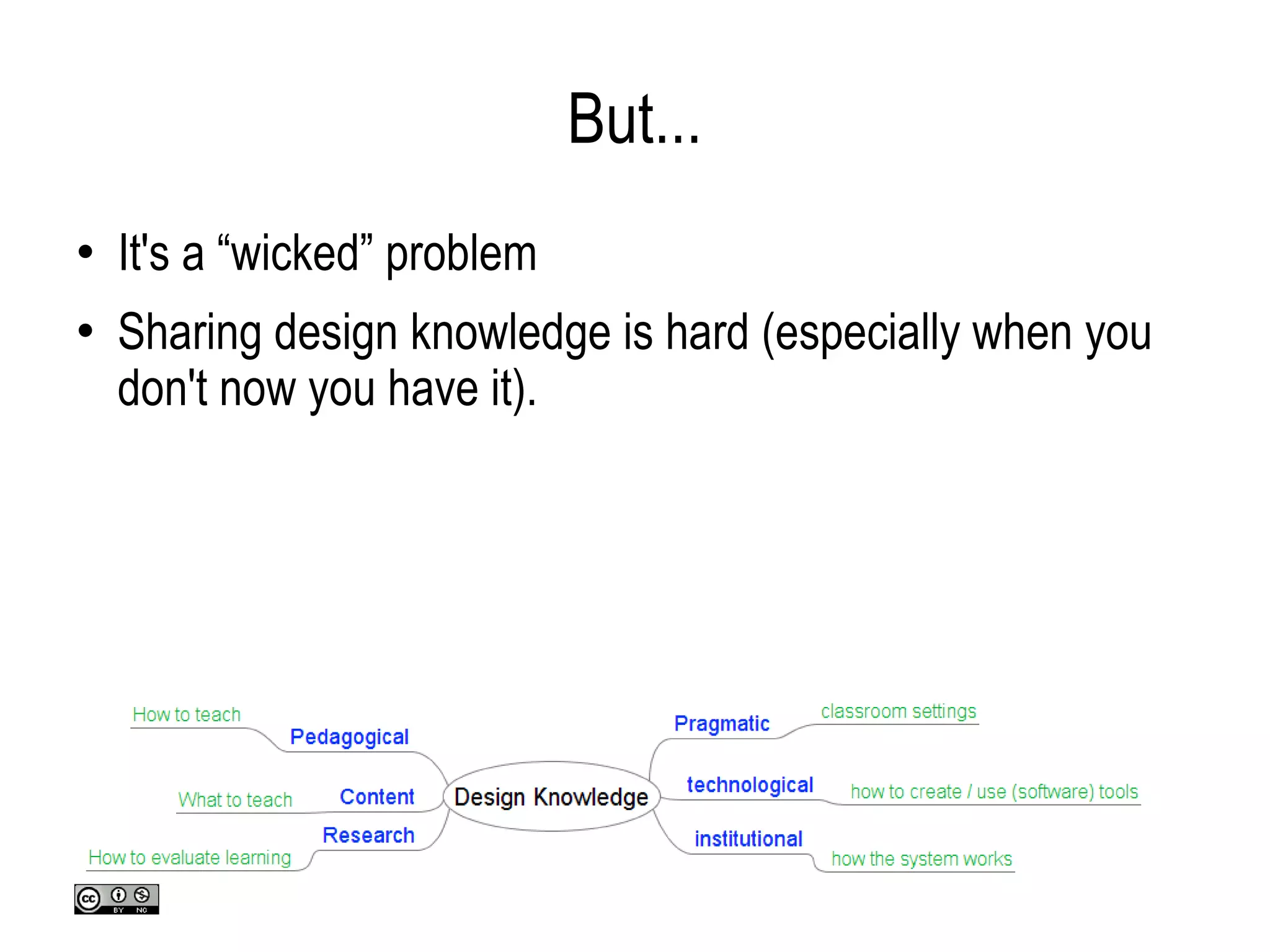
But... It's a “wicked” problem Sharing design knowledge is hard (especially when you don't now you have it).
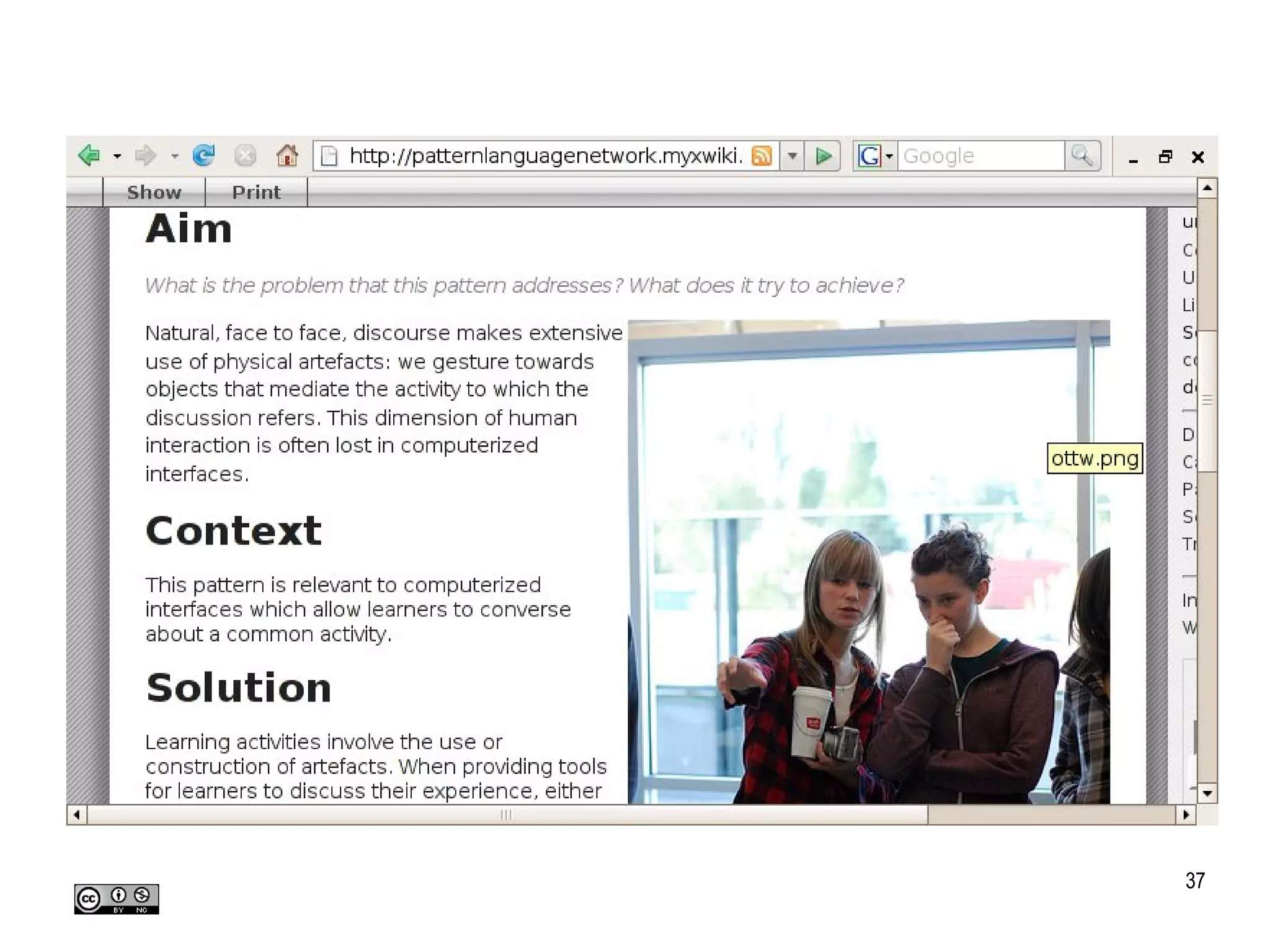
The Planet Project 6 partners, led by Janet Finlay, Leeds met 15 months, starting Jan 2008, ~£200k Sponsored by  JISC Emerge http:// patternlanguagenetwork.org Workspace:  http:// patternlanguagenetwork.myxwiki.org /
The Problem Experts know how to solve problems. They may not know  how  they solve problems. They may not know how to  make others  know how to solve problems.  They may not even know  they had  solved a problem.
The Planet Way Winters & Mor, 2008
Design patterns [describe] a problem which occurs over and over again in our environment, and then describes the core of the solution to that problem, in such a way that you can use this solution a million times over, without ever doing it the same way twice (Alexander et al., 1977)‏
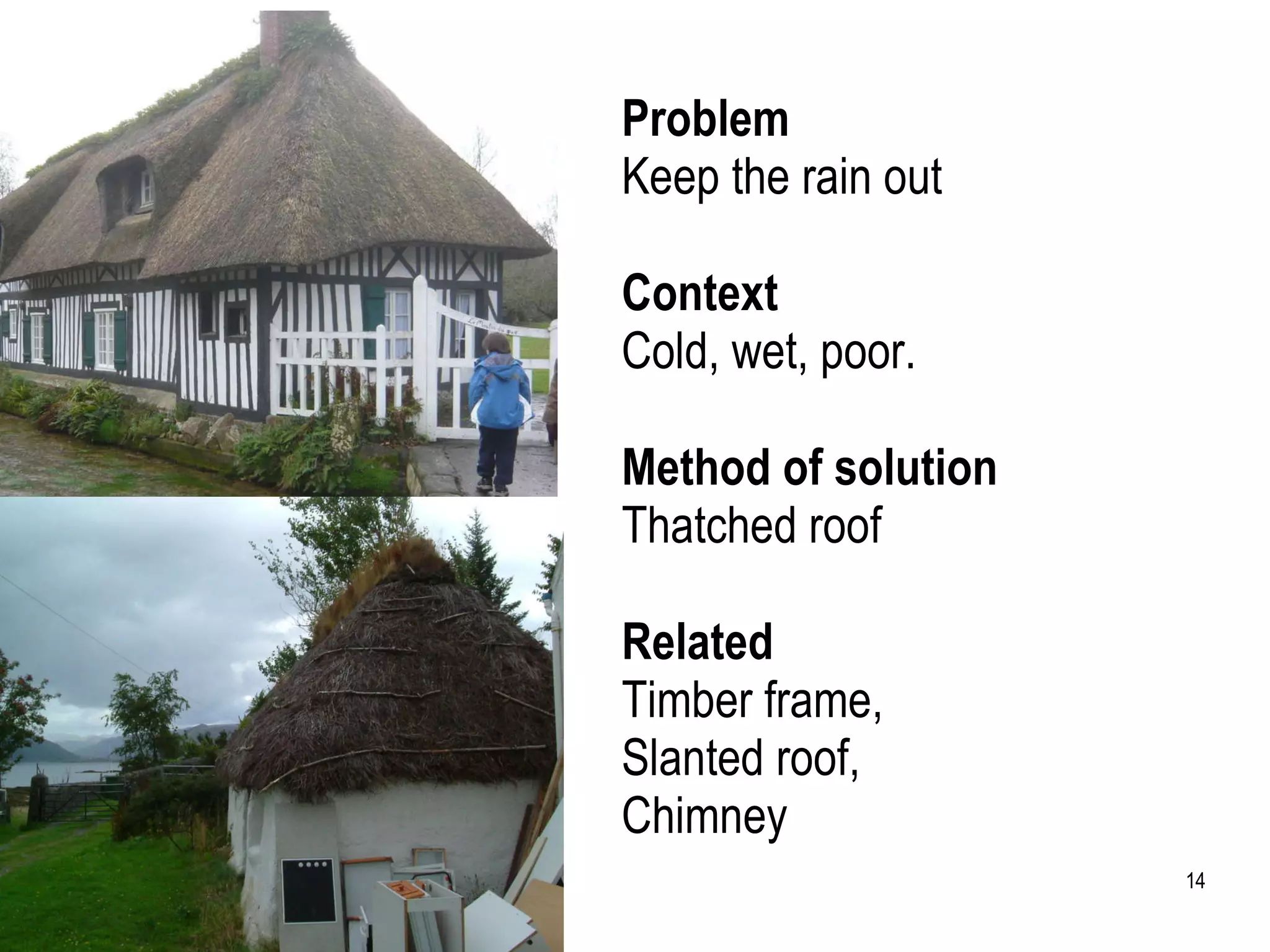
Problem Keep the rain out Context Cold, wet, poor. Method of solution Thatched roof Related Timber frame,  Slanted roof, Chimney
example: activity nodes Design problem Community facilities scattered individually through the city do nothing for the life of the city. Design solution Create nodes of activity throughout the community, spread about 300 yards apart.  http://www.uni-weimar.de/architektur/InfAR/lehre/Entwurf/Patterns/030/ca_030.html
More on patterns Yishay Mor and Niall Winters (2008).  Participatory design in open education: a workshop model for developing a pattern language ,  Journal of Interactive Media Yishay Mor and Niall Winters (2007).  Design approaches in technology enhanced learning . Interactive Learning Environments, 15(1):61-75 Dearden, Finlay, Allgar and Mcmanus (2002)  Patterns Languages in Participatory Design   People and Computers XVII: Memorable yet Invisible, Proceedings of HCI'2002,  159-174 Michael Derntl and Renate Motschnig-Pitrik (2005)  The Role of Structure, Patterns, and People in Blended   Learning The Internet and Higher Education,  8: 111-130 Goodyear, Avgeriou, Baggetun, Bartoluzzi, Retalis, Ronteltap and Rusman (2004)  Towards a pattern language for networked learning    Networked learning 2004 http://www.bibsonomy.org/tag/designpatterns
Fine, but... Where do they come from? How are they validated? How do we use them?
Case Study: The Learning Patterns project http://lp.noe-kaleidoscope.org/ (Niall Winters, Dave Pratt, others)‏
pattern workshops
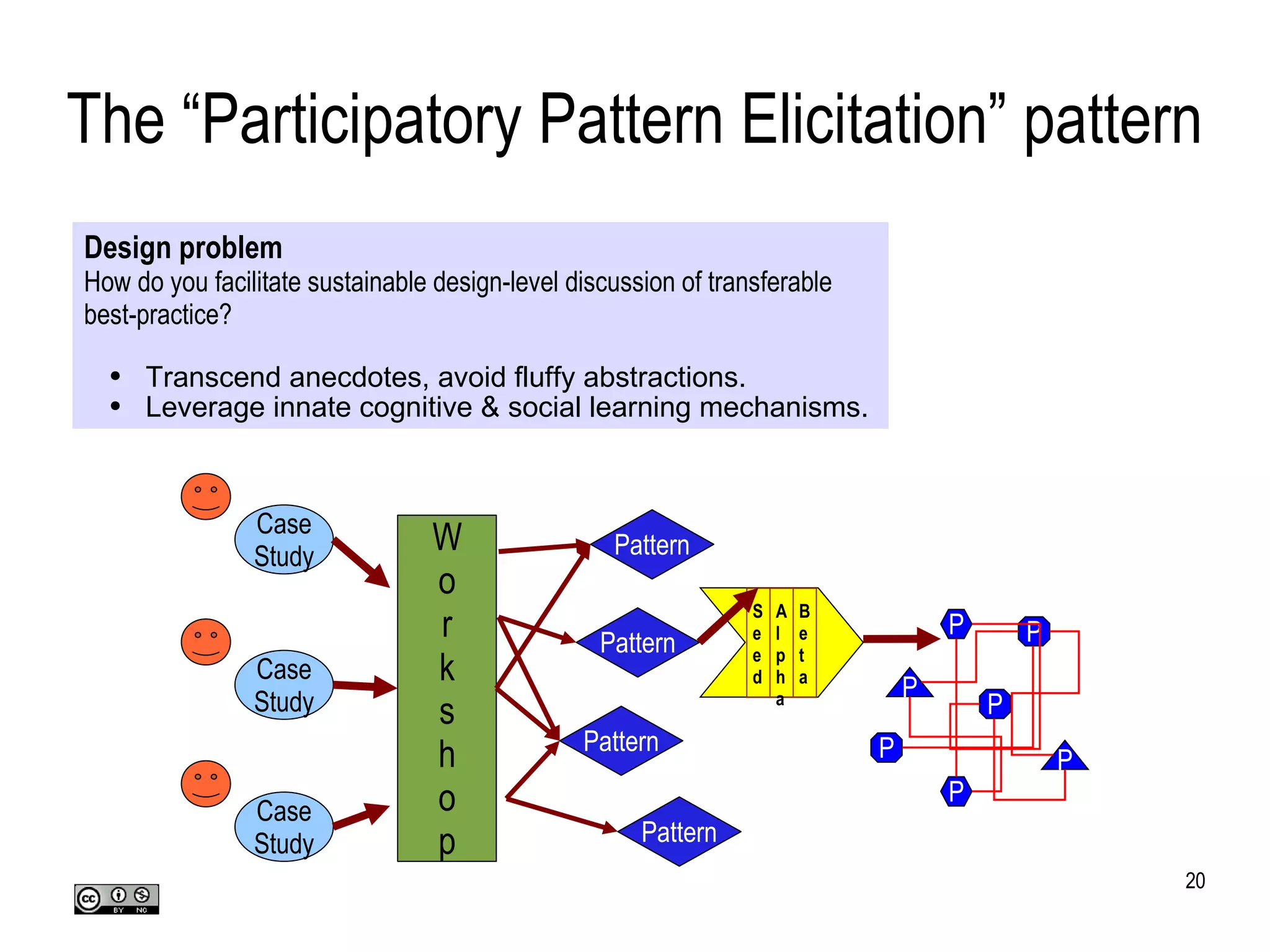
The “Participatory Pattern Elicitation” pattern Design problem How do you facilitate sustainable design-level discussion of transferable best-practice? Transcend anecdotes, avoid fluffy abstractions. Leverage innate cognitive & social learning mechanisms. Case Study Case Study Case Study W o r k s h o p Pattern Pattern Pattern Pattern Seed Alpha Beta P P P P P P P
Scenario: the pattern elicitation workshop Instantiate the  Participatory Pattern Elicitation  pattern in the specific context of design-based educational research. Assumptions: 10-20 participants, practitioners interested in a common theme from varied perspectives. 2-4 facilitators ½ - full day on-site workshop Pre and post workshop engagement
Before the workshop Participants contribute case studies, using an on-line, form-based tool. Facilitators work with participants to refine and retune their case studies. Participants review peer’s case studies.
Anton presents case study
Bob and Charlie discuss
Anton adds details (per template) ‏
Charlie identifies parallels
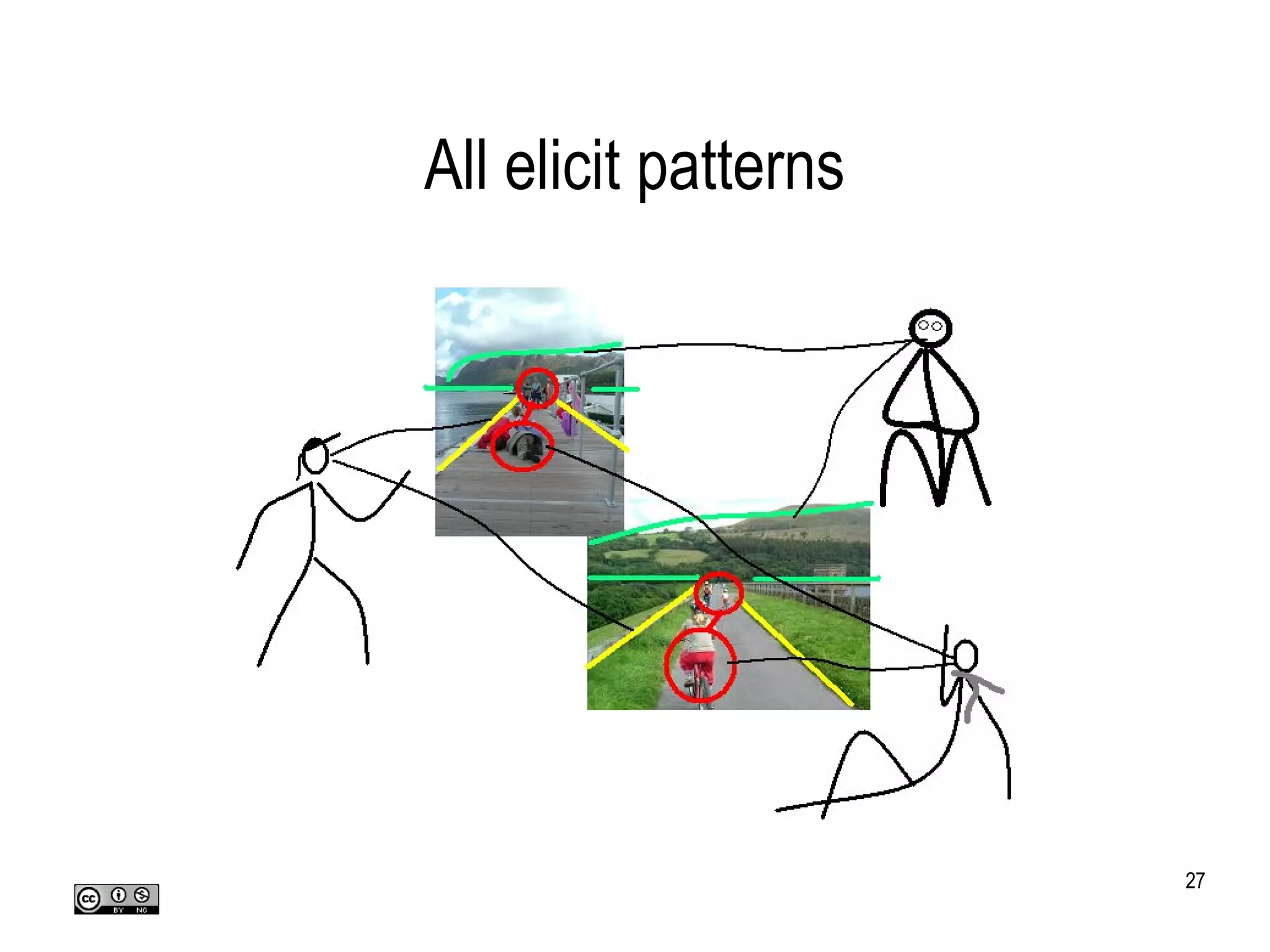
All elicit patterns
Anton and Charlie submit patterns
After the workshop Participants clarify case studies and patterns based on workshop discussions. Facilitators help participants refine patterns, and note links to other patterns. Facilitators reflect on the process, drawing on participants’ feedback.
How does it work?


Thank you The pattern language network project: http://patternlanguagenetworg.org Niall http://www.lkl.ac.uk/people/winters.html Yishay http://www.lkl.ac.uk/people/mor.html This presentation http://www.slideshare.net/yish/architecture-for-participatory-learning And now – your turn!

Architecture for Participatory Learning

  • 1.
    An Architecture forParticipatory Learning IDA iLAB2015 Ideation workshop, Singapore, Aug. 2008 Niall Winters and Yishay Mor
  • 2.
  • 3.
    Something happening herehttp://www.youtube.com/watch?v=268PcyxU4kE http://www.youtube.com/watch?v=Yws_Re5nlcM http://www.flickr.com/photos/zedomax/260984975/ http://www.slideshare.net/ http://www.edu20.org/ http://schoolofeverything.com/
  • 4.
    Web2.0: What makesit tick? One of the key lessons of the Web 2.0 era is this: Users add value . But only a small percentage of users will go to the trouble of adding value to your application via explicit means. Web 2.0 companies set inclusive defaults for aggregating user data and building value as a side-effect of ordinary use of the application. ... they build systems that get better the more people use them . O'Rielly, 2005 / 2007 Embrace the power of the web to harness collective intelligence
  • 5.
  • 6.
    World of LearnCraft?You Play World of Warcraft? You're Hired! http://www.wired.com/wired/archive/14.04/learn.html http://learningfromsocialworlds.wordpress.com/ Nardi, Ly and Harris (2007) Learning Conversations in World of Warcraft
  • 7.
    Problem: How dowe bring the power of web2.0, MMORPGs and MUVEs into education?
  • 8.
    Assumptions This isa design problem. You are the experts. You are designers. “ everyone designs who devises courses of action aimed at changing existing situations into desired ones ” (Simon, 1969, p 129).
  • 9.
    But... It's a“wicked” problem Sharing design knowledge is hard (especially when you don't now you have it).
  • 10.
    The Planet Project6 partners, led by Janet Finlay, Leeds met 15 months, starting Jan 2008, ~£200k Sponsored by JISC Emerge http:// patternlanguagenetwork.org Workspace: http:// patternlanguagenetwork.myxwiki.org /
  • 11.
    The Problem Expertsknow how to solve problems. They may not know how they solve problems. They may not know how to make others know how to solve problems. They may not even know they had solved a problem.
  • 12.
    The Planet WayWinters & Mor, 2008
  • 13.
    Design patterns [describe]a problem which occurs over and over again in our environment, and then describes the core of the solution to that problem, in such a way that you can use this solution a million times over, without ever doing it the same way twice (Alexander et al., 1977)‏
  • 14.
    Problem Keep therain out Context Cold, wet, poor. Method of solution Thatched roof Related Timber frame, Slanted roof, Chimney
  • 15.
    example: activity nodesDesign problem Community facilities scattered individually through the city do nothing for the life of the city. Design solution Create nodes of activity throughout the community, spread about 300 yards apart. http://www.uni-weimar.de/architektur/InfAR/lehre/Entwurf/Patterns/030/ca_030.html
  • 16.
    More on patternsYishay Mor and Niall Winters (2008). Participatory design in open education: a workshop model for developing a pattern language , Journal of Interactive Media Yishay Mor and Niall Winters (2007). Design approaches in technology enhanced learning . Interactive Learning Environments, 15(1):61-75 Dearden, Finlay, Allgar and Mcmanus (2002) Patterns Languages in Participatory Design People and Computers XVII: Memorable yet Invisible, Proceedings of HCI'2002, 159-174 Michael Derntl and Renate Motschnig-Pitrik (2005) The Role of Structure, Patterns, and People in Blended Learning The Internet and Higher Education, 8: 111-130 Goodyear, Avgeriou, Baggetun, Bartoluzzi, Retalis, Ronteltap and Rusman (2004) Towards a pattern language for networked learning   Networked learning 2004 http://www.bibsonomy.org/tag/designpatterns
  • 17.
    Fine, but... Wheredo they come from? How are they validated? How do we use them?
  • 18.
    Case Study: TheLearning Patterns project http://lp.noe-kaleidoscope.org/ (Niall Winters, Dave Pratt, others)‏
  • 19.
  • 20.
    The “Participatory PatternElicitation” pattern Design problem How do you facilitate sustainable design-level discussion of transferable best-practice? Transcend anecdotes, avoid fluffy abstractions. Leverage innate cognitive & social learning mechanisms. Case Study Case Study Case Study W o r k s h o p Pattern Pattern Pattern Pattern Seed Alpha Beta P P P P P P P
  • 21.
    Scenario: the patternelicitation workshop Instantiate the Participatory Pattern Elicitation pattern in the specific context of design-based educational research. Assumptions: 10-20 participants, practitioners interested in a common theme from varied perspectives. 2-4 facilitators ½ - full day on-site workshop Pre and post workshop engagement
  • 22.
    Before the workshopParticipants contribute case studies, using an on-line, form-based tool. Facilitators work with participants to refine and retune their case studies. Participants review peer’s case studies.
  • 23.
  • 24.
  • 25.
    Anton adds details(per template) ‏
  • 26.
  • 27.
  • 28.
    Anton and Charliesubmit patterns
  • 29.
    After the workshopParticipants clarify case studies and patterns based on workshop discussions. Facilitators help participants refine patterns, and note links to other patterns. Facilitators reflect on the process, drawing on participants’ feedback.
  • 30.
  • 31.
  • 32.
  • 33.
  • 34.
  • 35.
  • 36.
  • 37.
  • 38.
  • 39.
    Thank you Thepattern language network project: http://patternlanguagenetworg.org Niall http://www.lkl.ac.uk/people/winters.html Yishay http://www.lkl.ac.uk/people/mor.html This presentation http://www.slideshare.net/yish/architecture-for-participatory-learning And now – your turn!