Downloaded 407 times
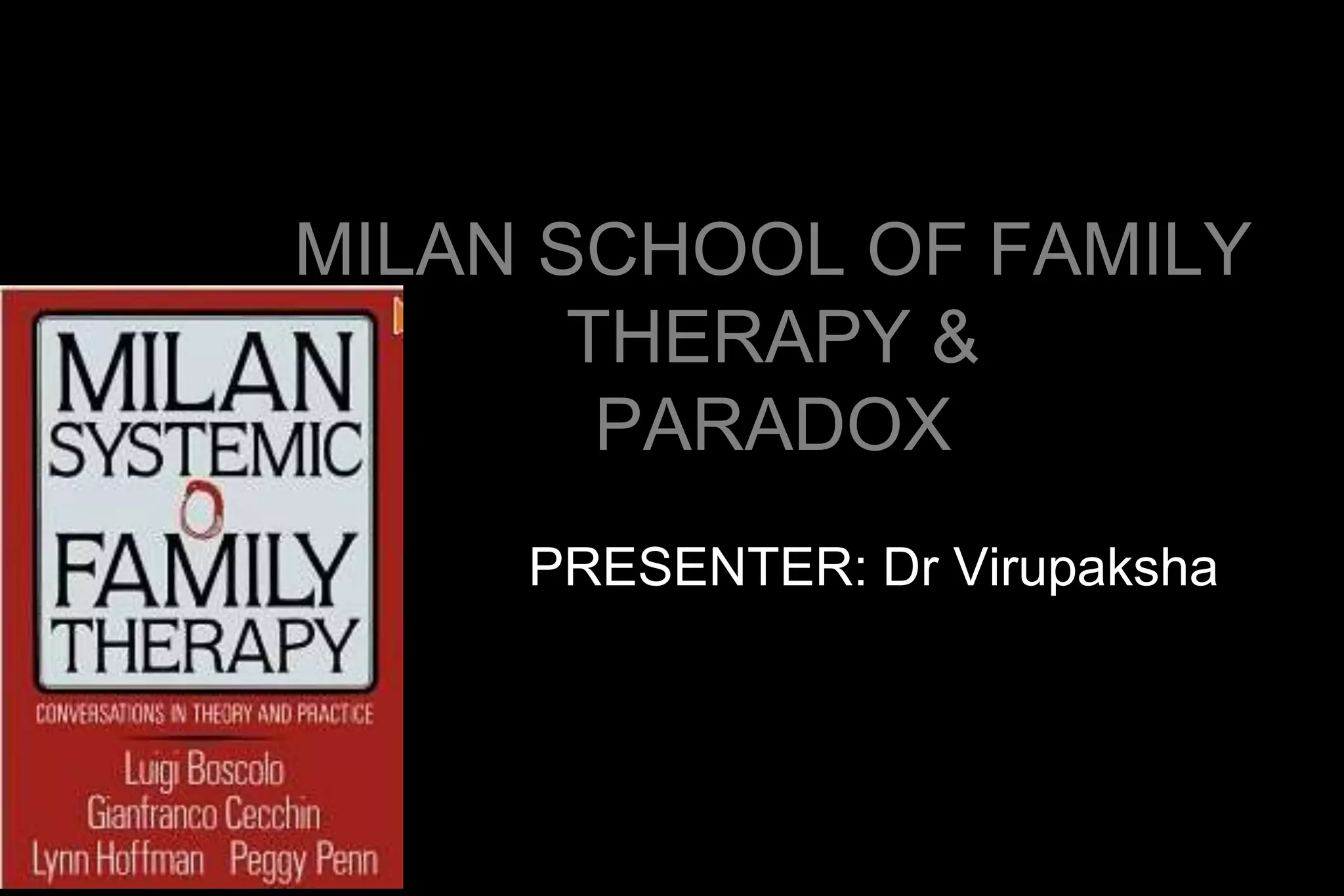

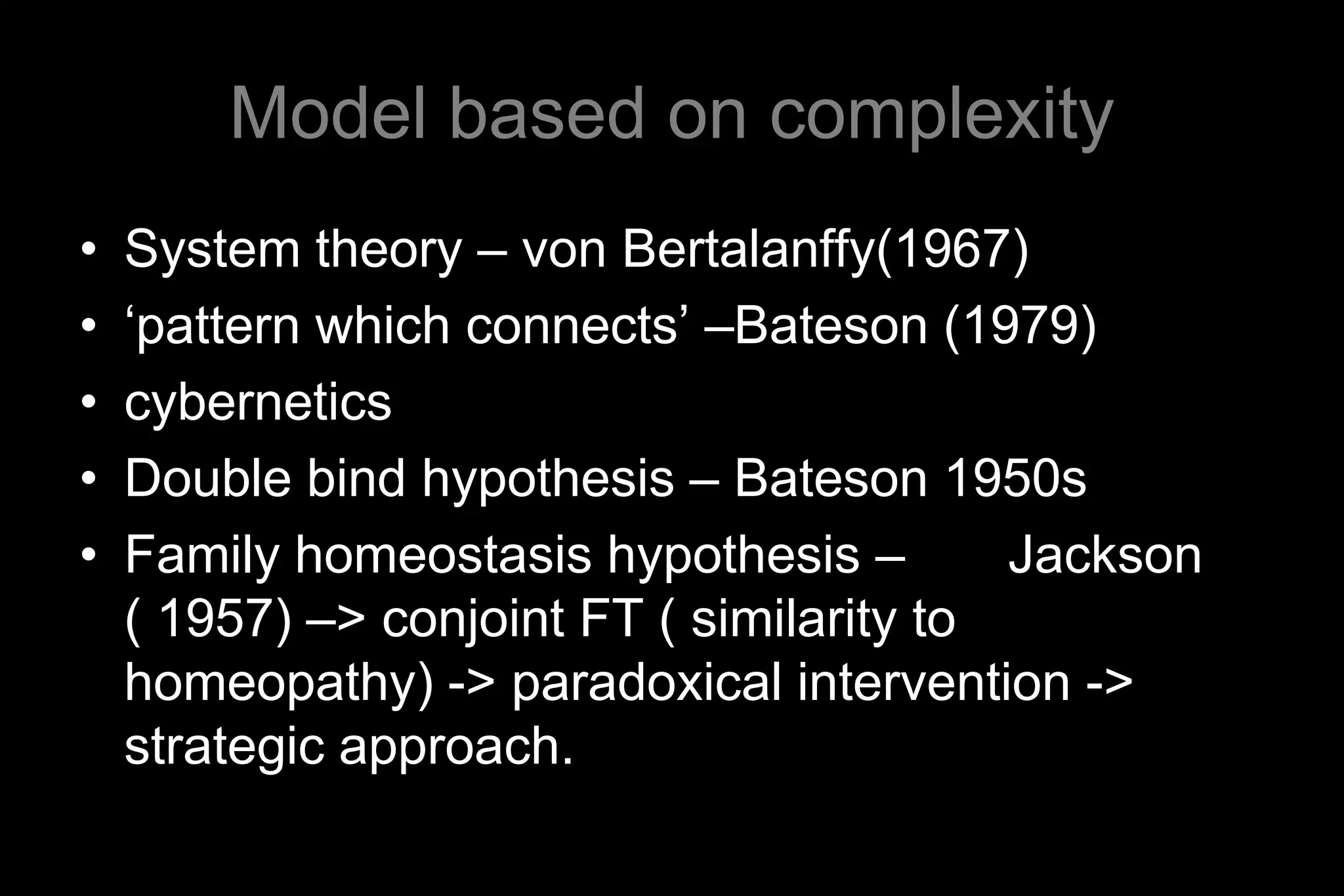


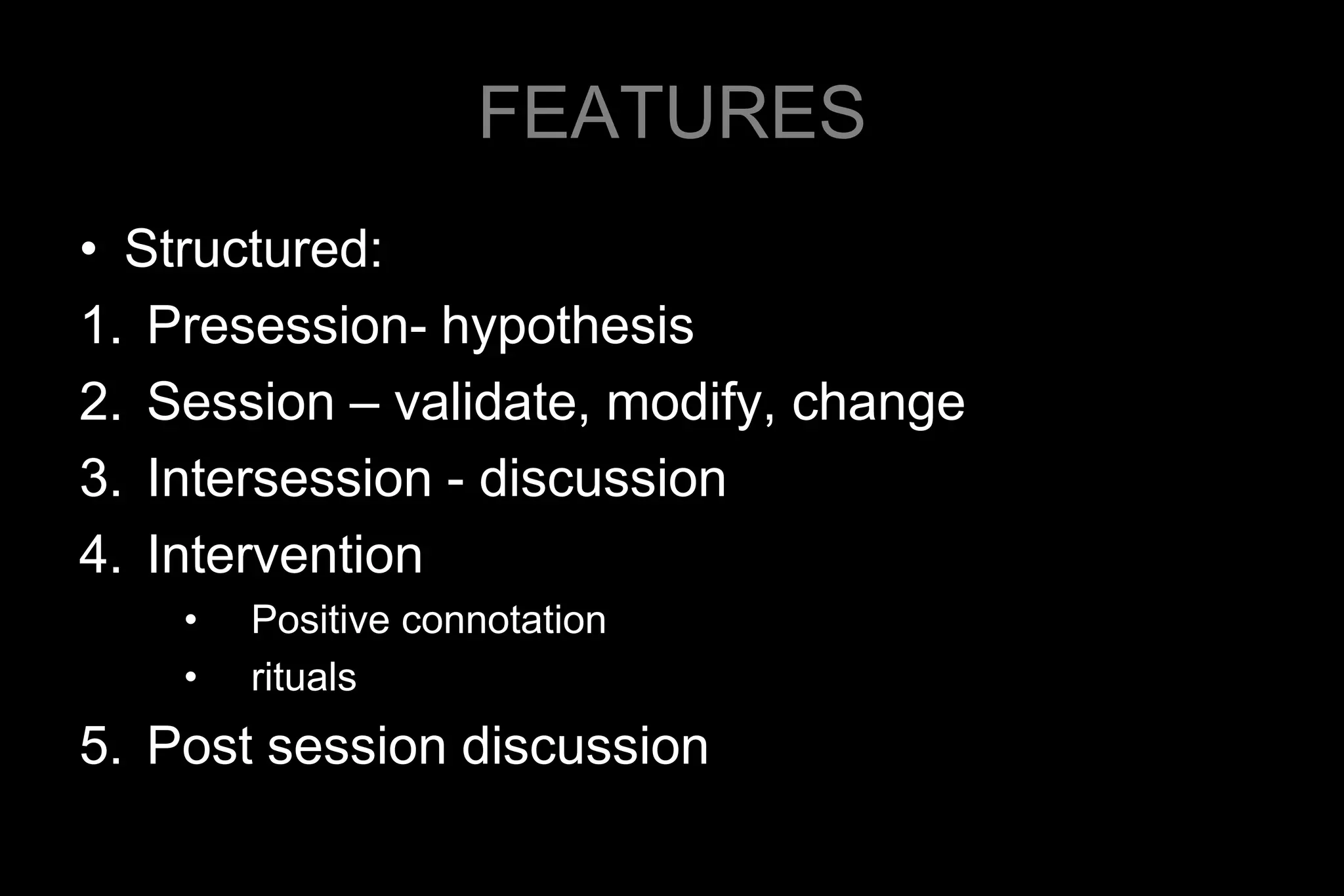
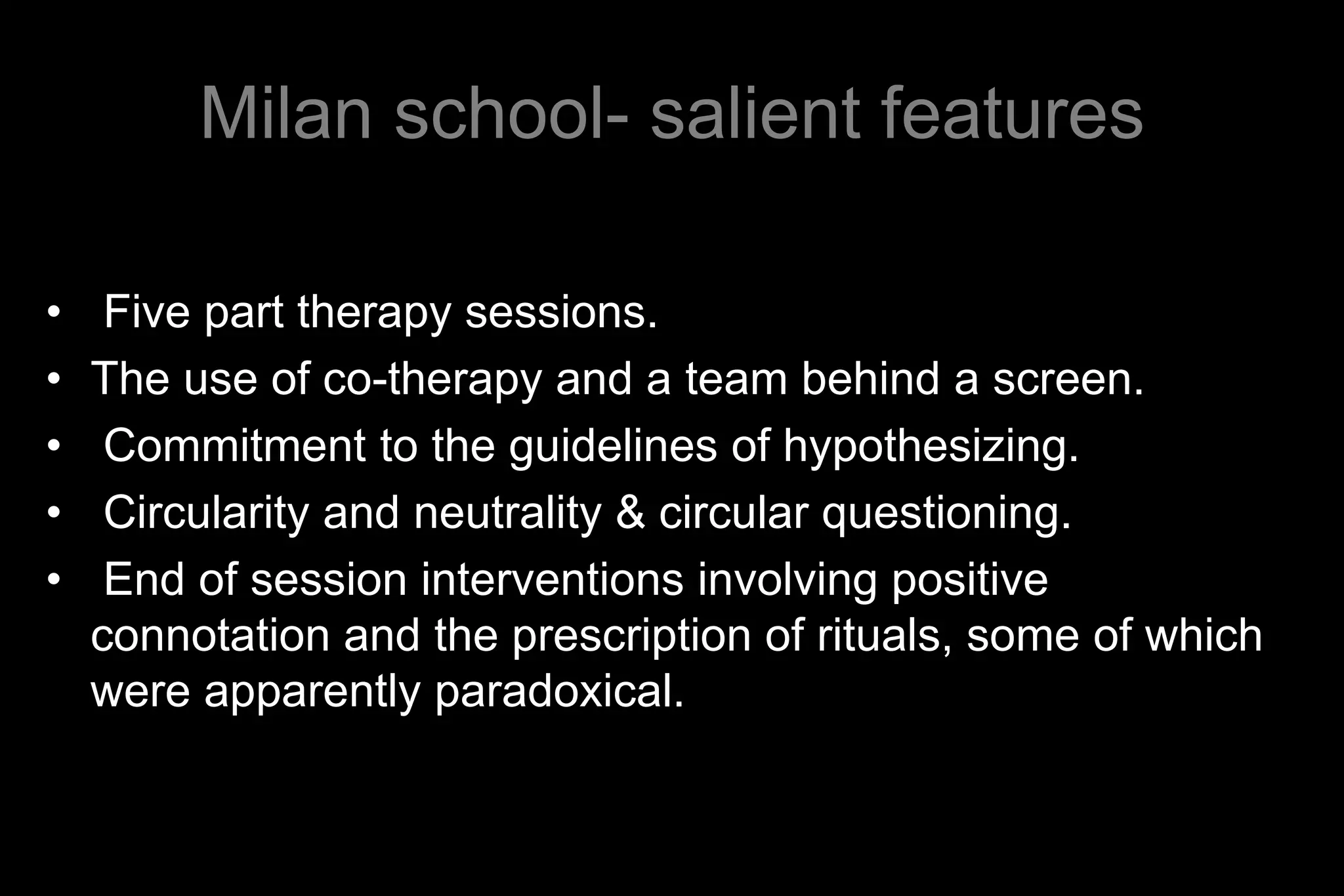

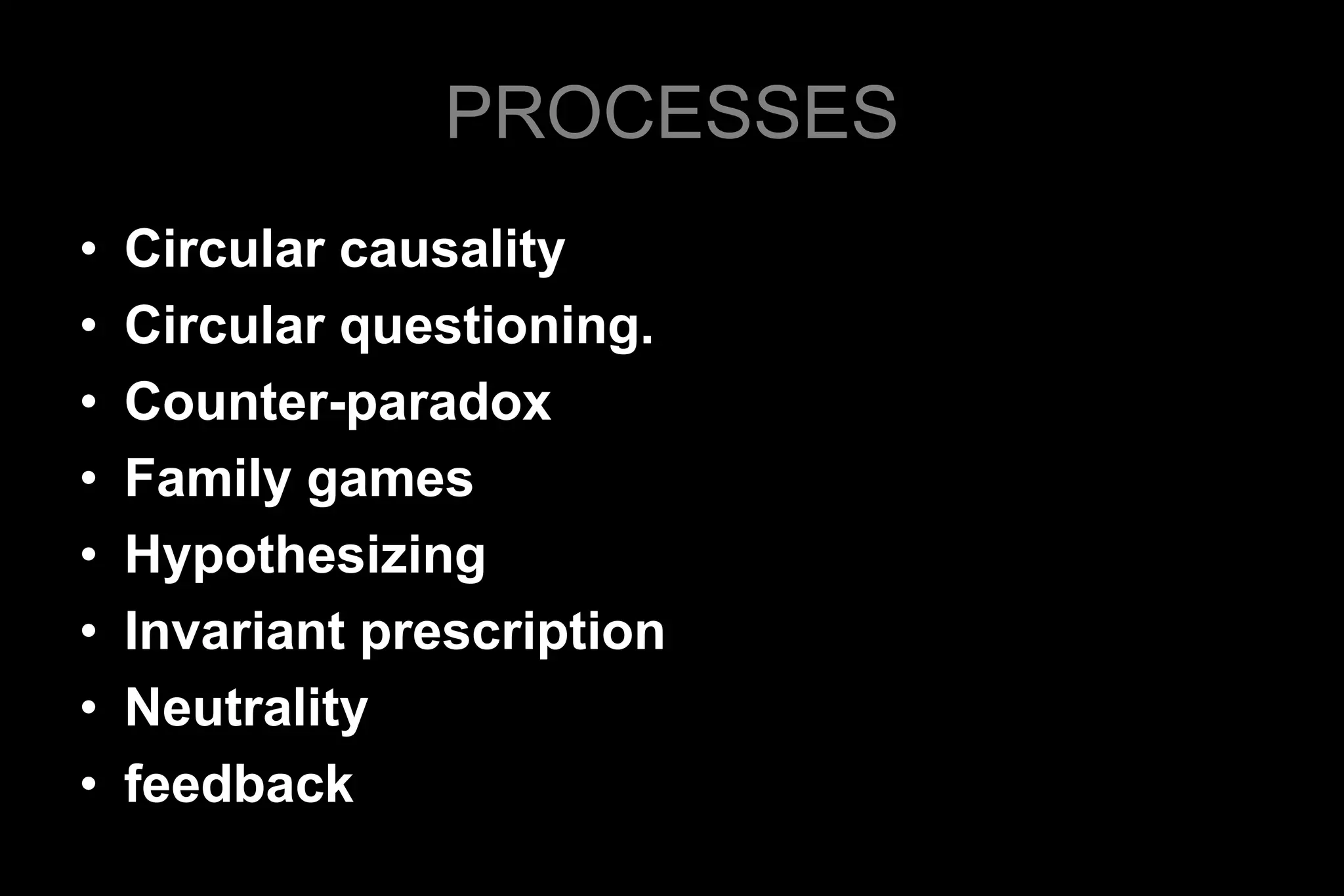

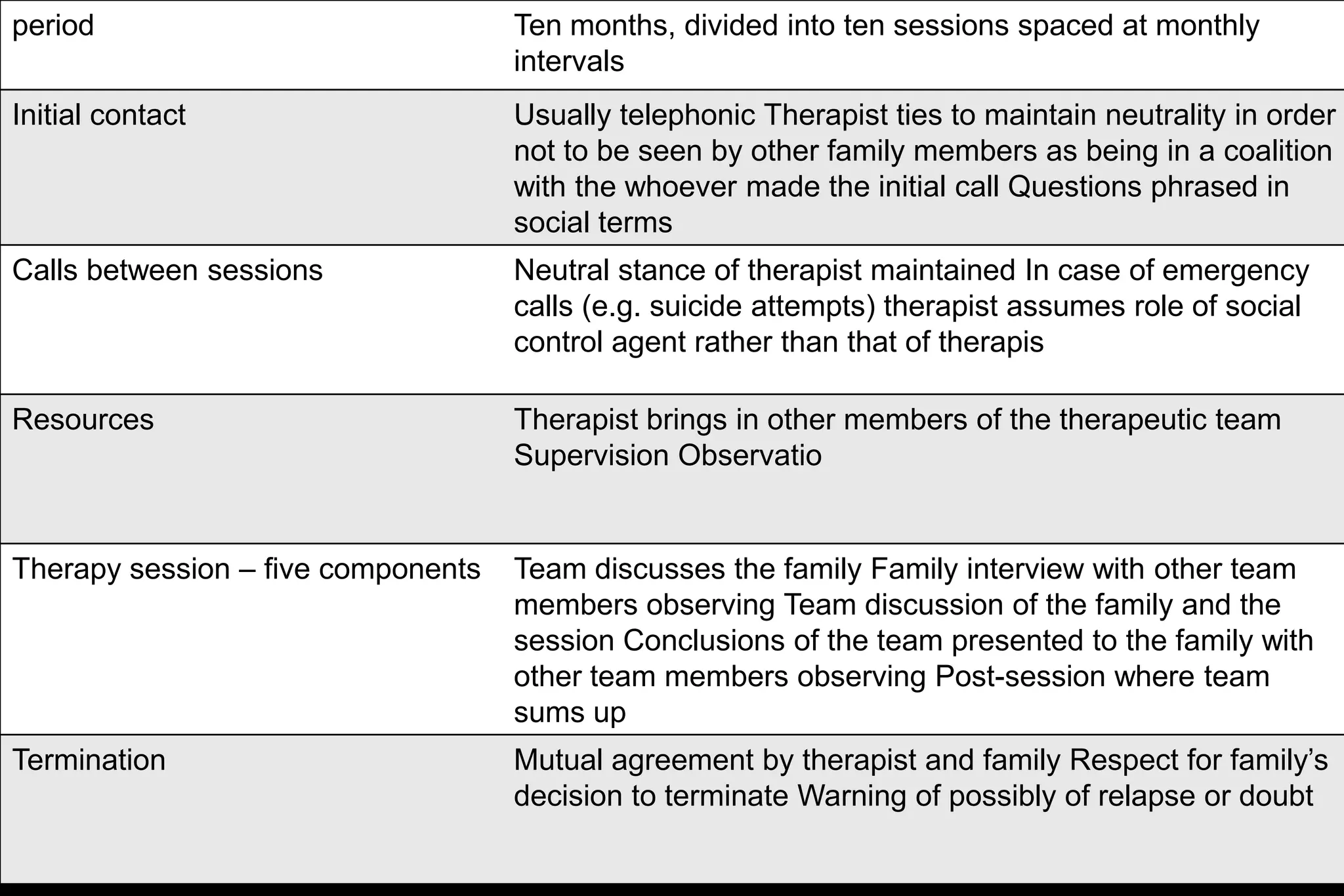


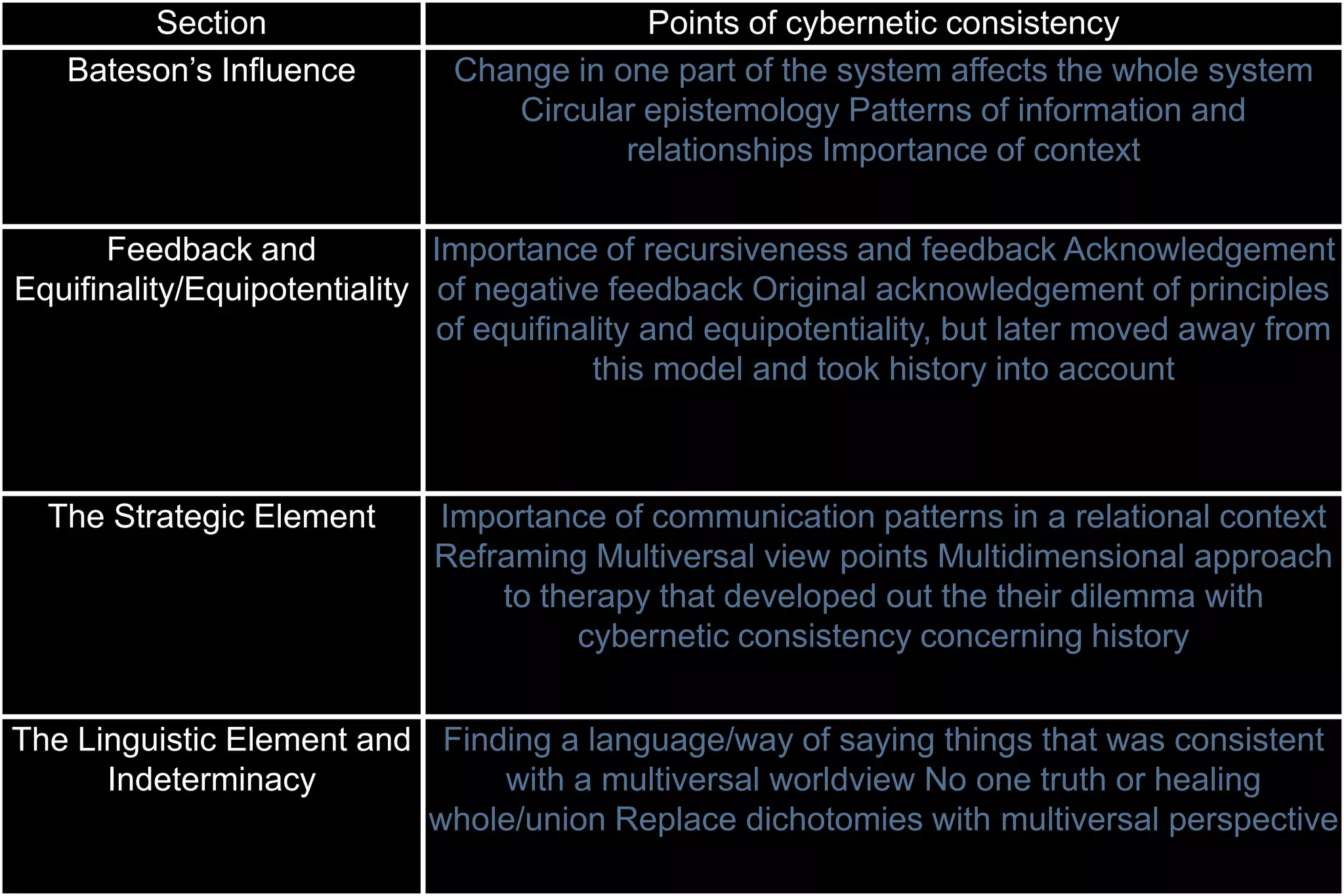


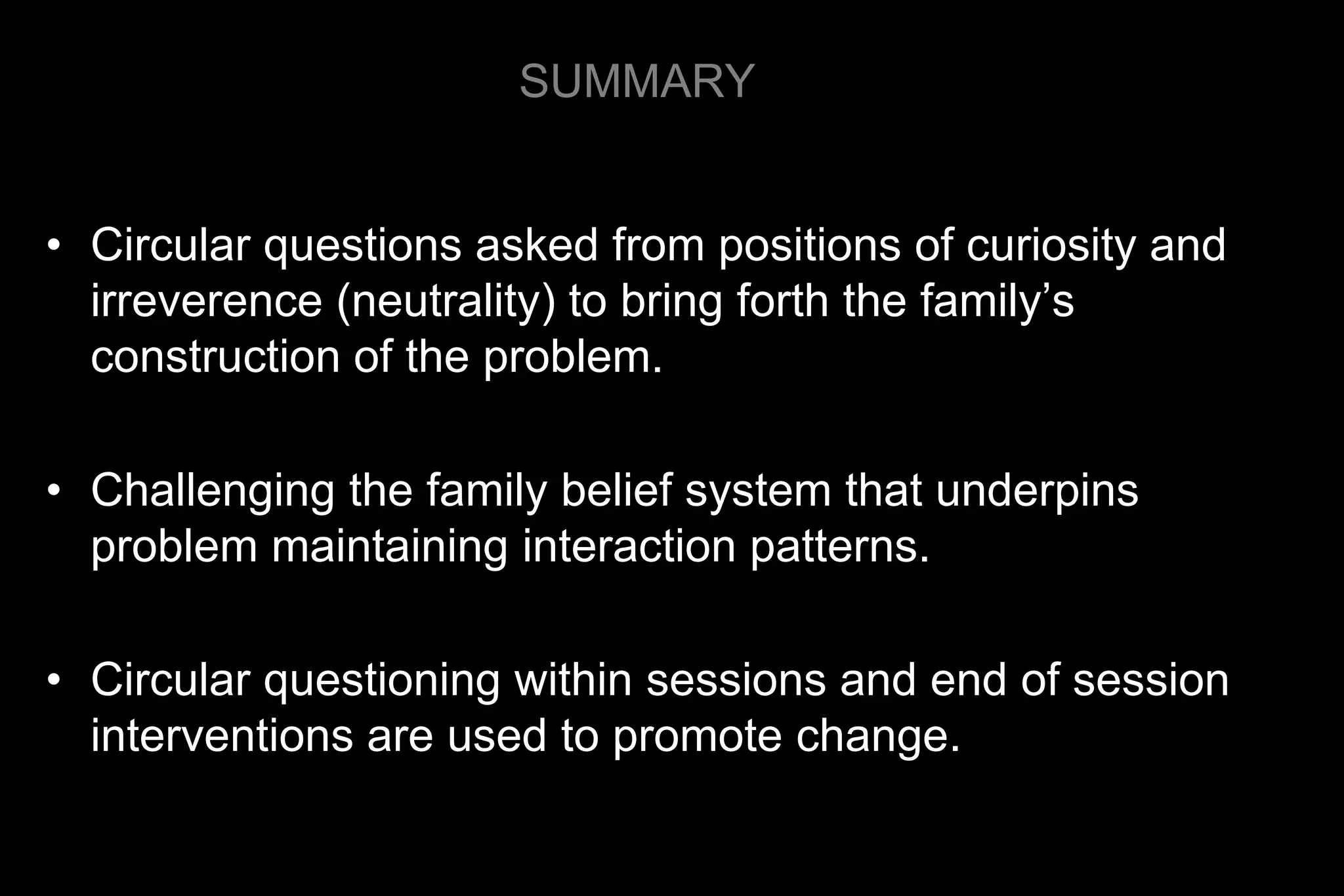




The Milan school of family therapy developed an approach based on systems theory and complexity. Key aspects included circular questioning to challenge problem maintaining beliefs, end of session interventions like paradoxes and rituals, and a team approach with co-therapists. The goal was to alter family interaction patterns and beliefs supporting problems like schizophrenia. Over time the Milan school split into more strategic and non-directive branches but both retained a focus on flexibility, feedback and challenging existing family constructs.


