Download as PDF, PPTX

This document summarizes an introductory session on object-oriented programming in Python. It introduces key concepts of OOP like classes, objects, attributes, methods, encapsulation, inheritance and provides examples of defining classes for a Person and Bank Account. It also demonstrates how to define a class, create objects, access attributes and methods in Python. The benefits of OOP like code reusability, abstraction and inheritance are discussed.
Overview of the CLTL Python course focusing on Object Oriented Programming (OOP). First session date: April 24, 2013.
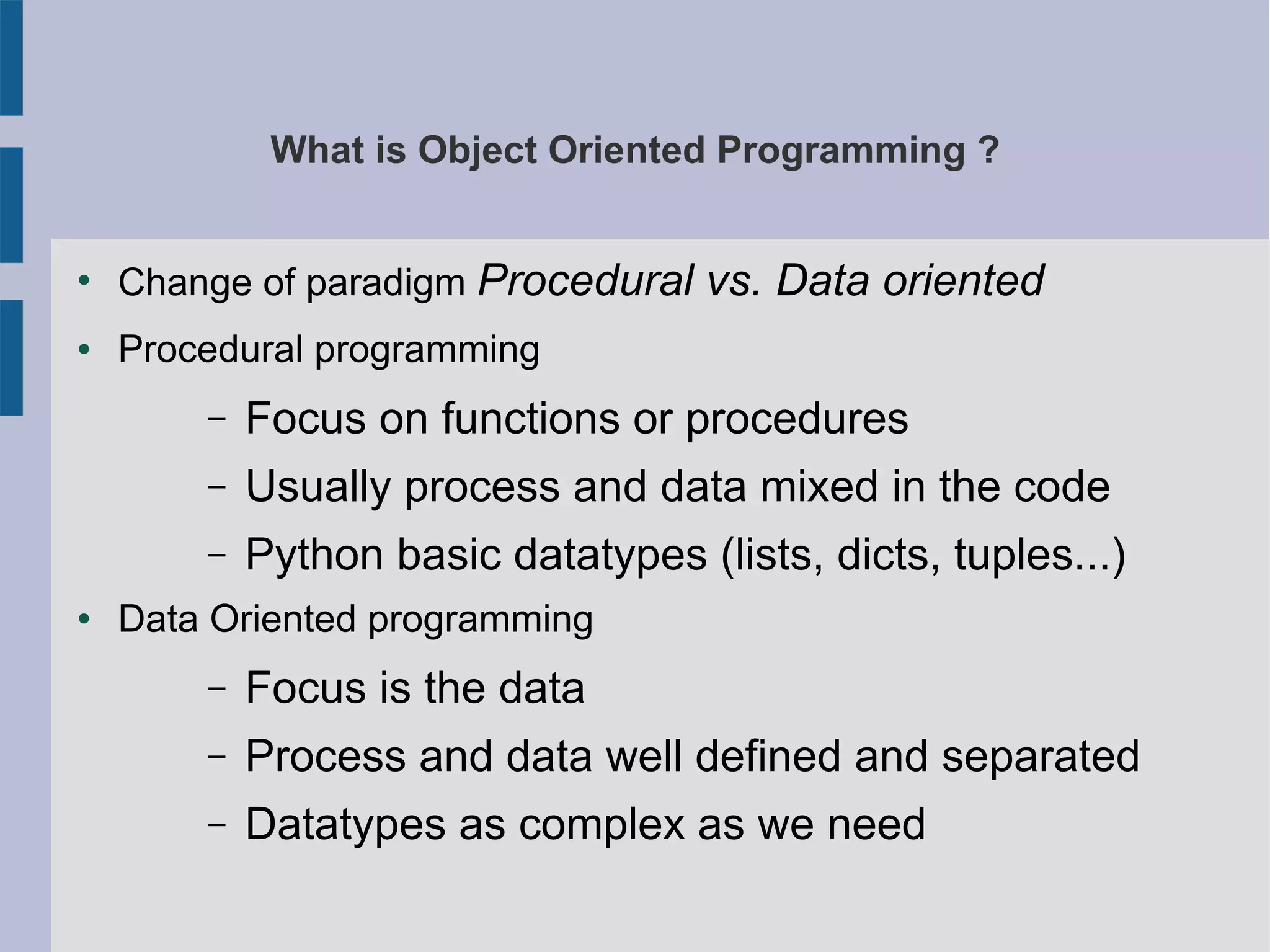
Difference between procedural and data-oriented programming. Key focus on functions vs. data, and the flexibility of data types.
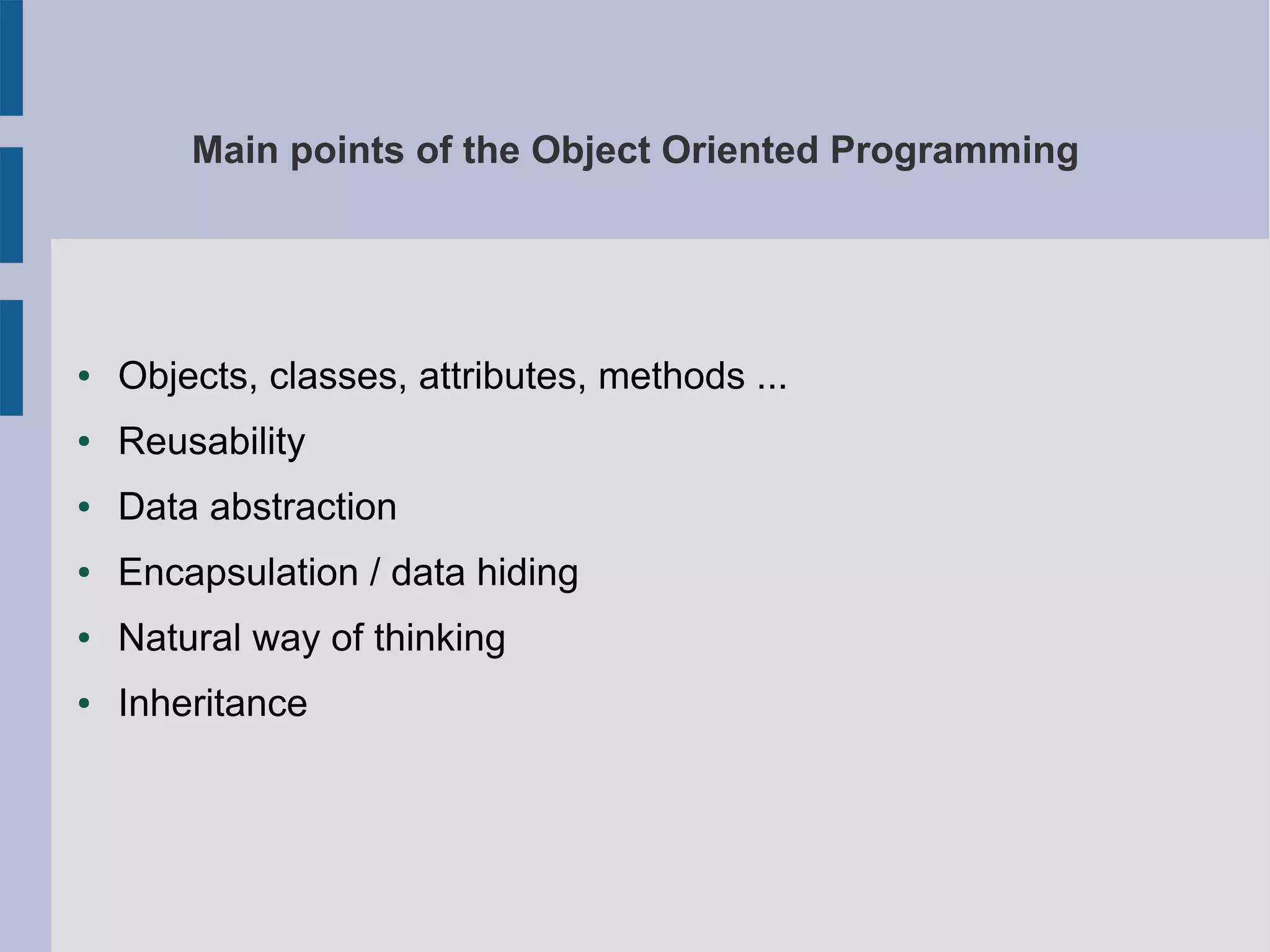
Discusses essential OOP concepts: objects, classes, attributes, methods, reusability, encapsulation, and inheritance.
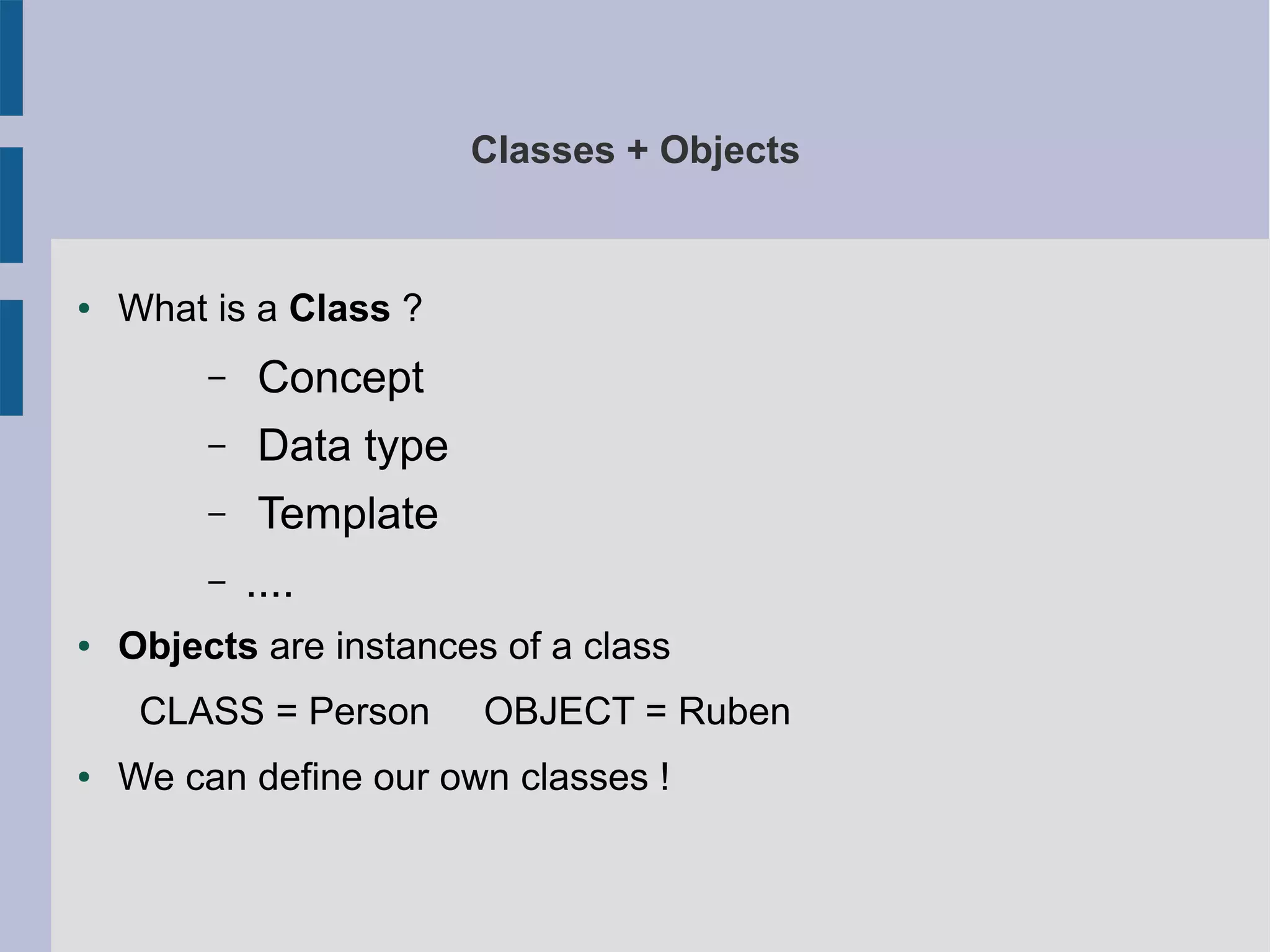
Defines classes as templates and objects as instances. Example: class Person with an instance named Ruben.
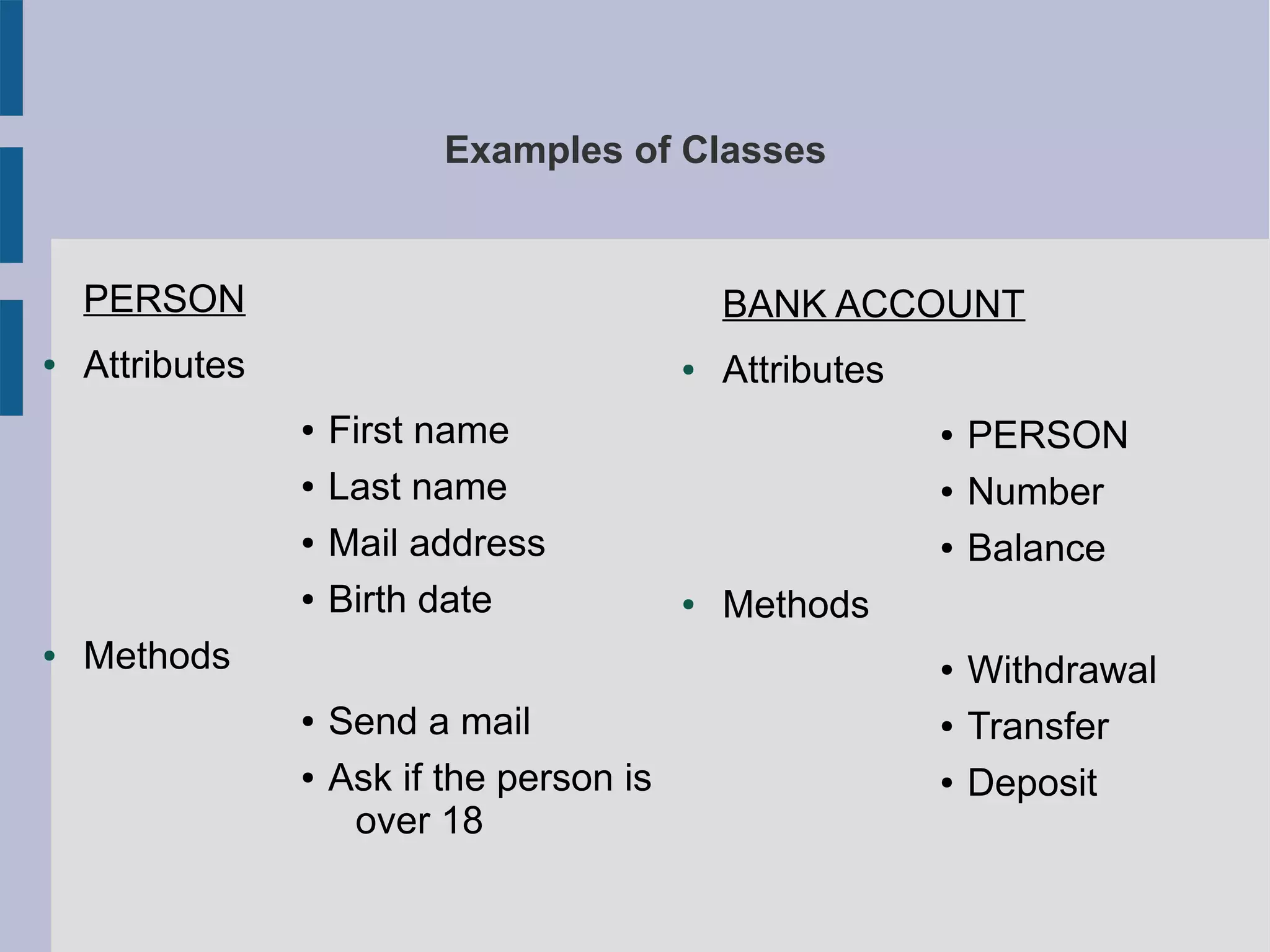
Illustration of classes like PERSON and BANK ACCOUNT with their attributes and methods for managing data.
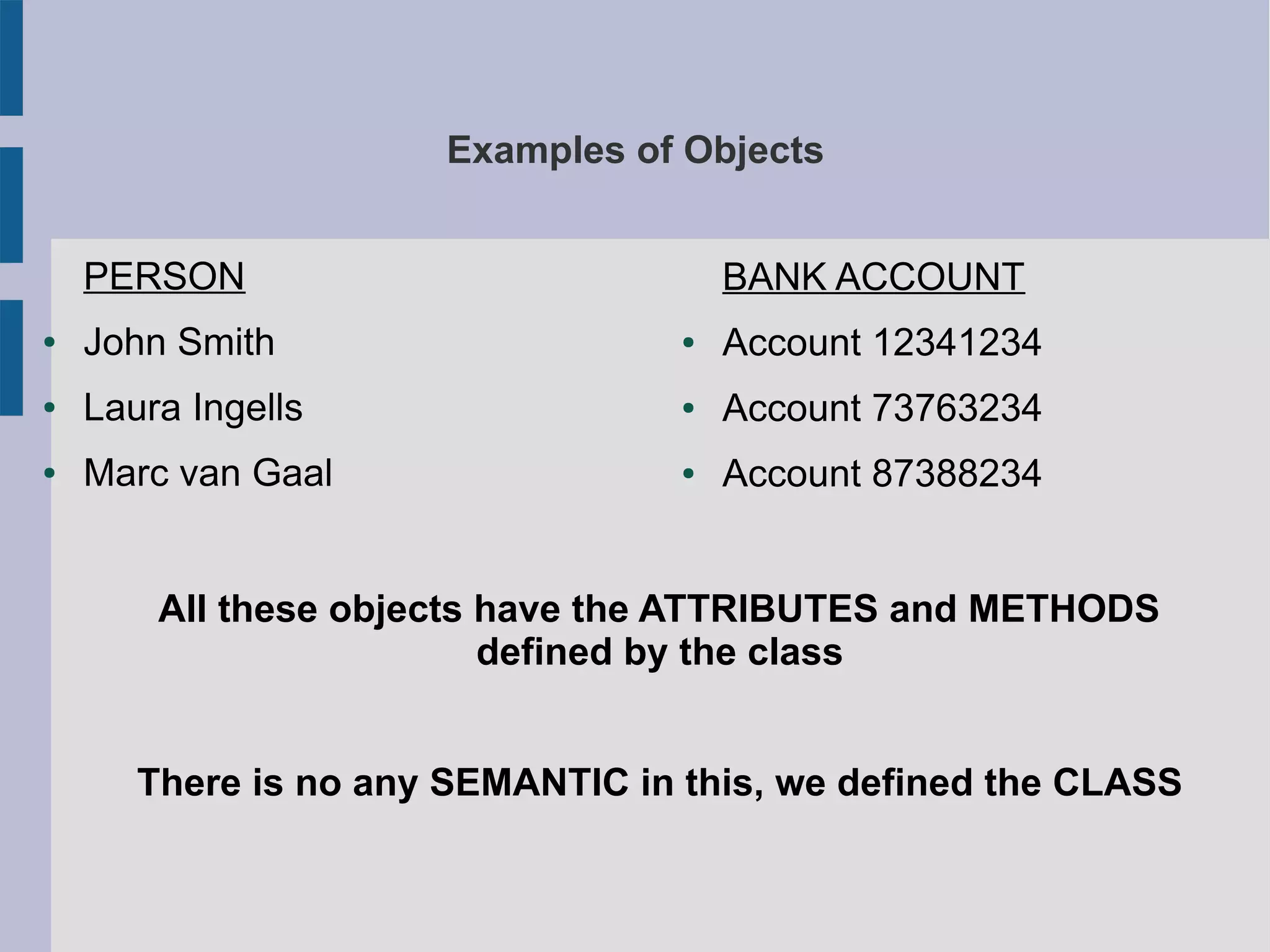
Examples of object instances like John Smith and various bank accounts demonstrating defined attributes and methods.
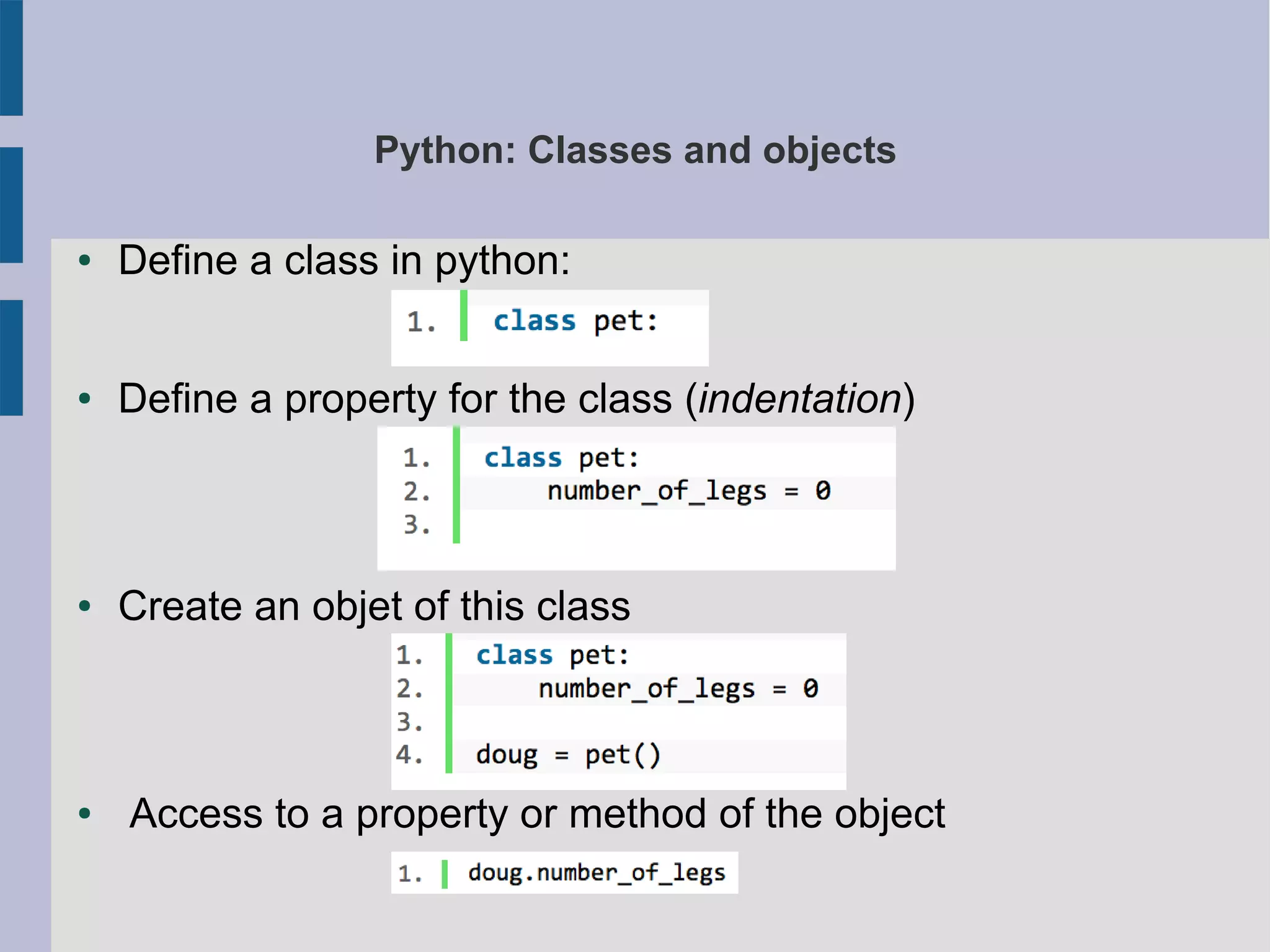
Instructions on defining classes and creating objects in Python, along with accessing properties and methods.
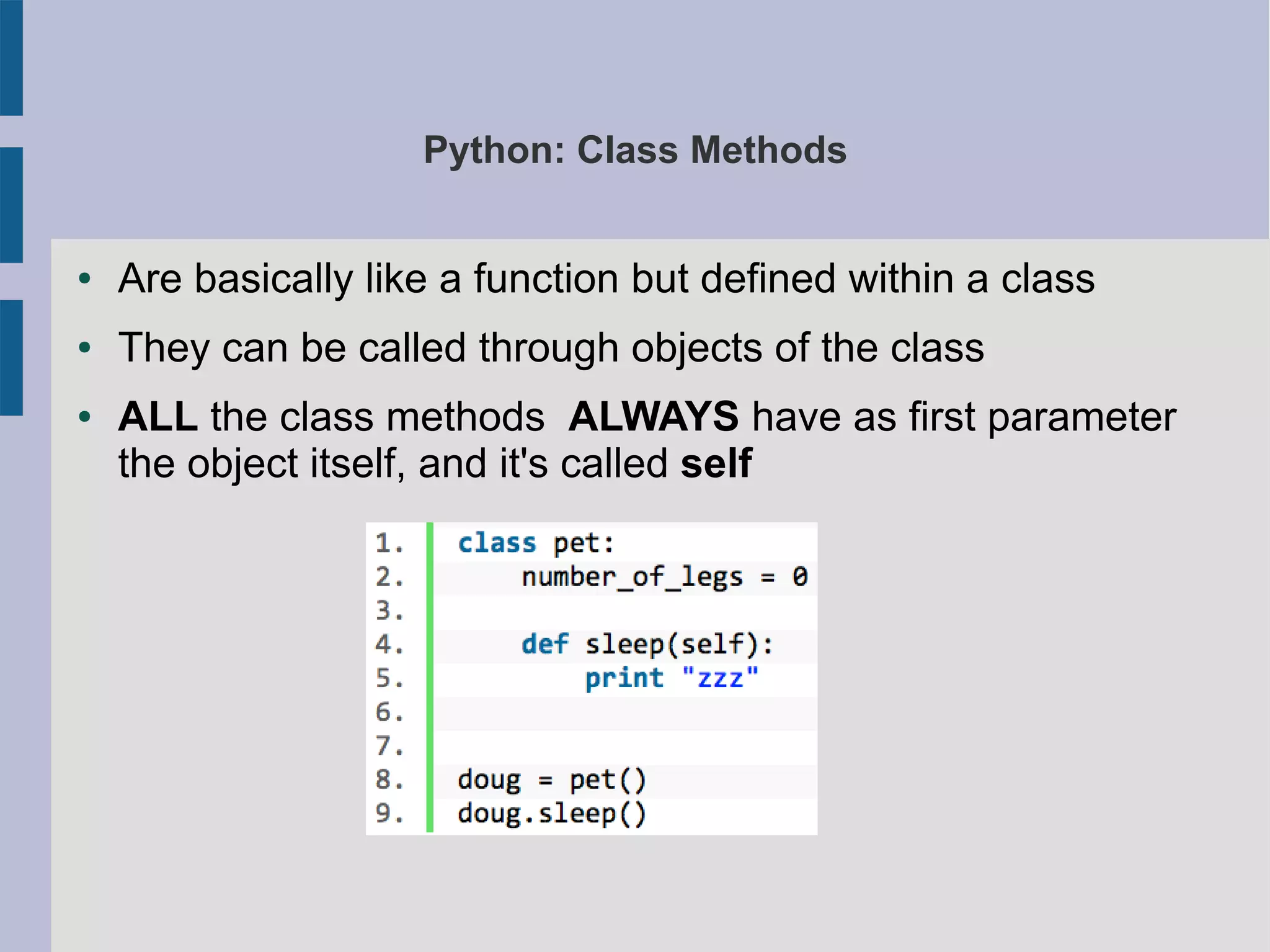
Describes class methods in Python, which operate like functions but are defined within classes, always including 'self'.
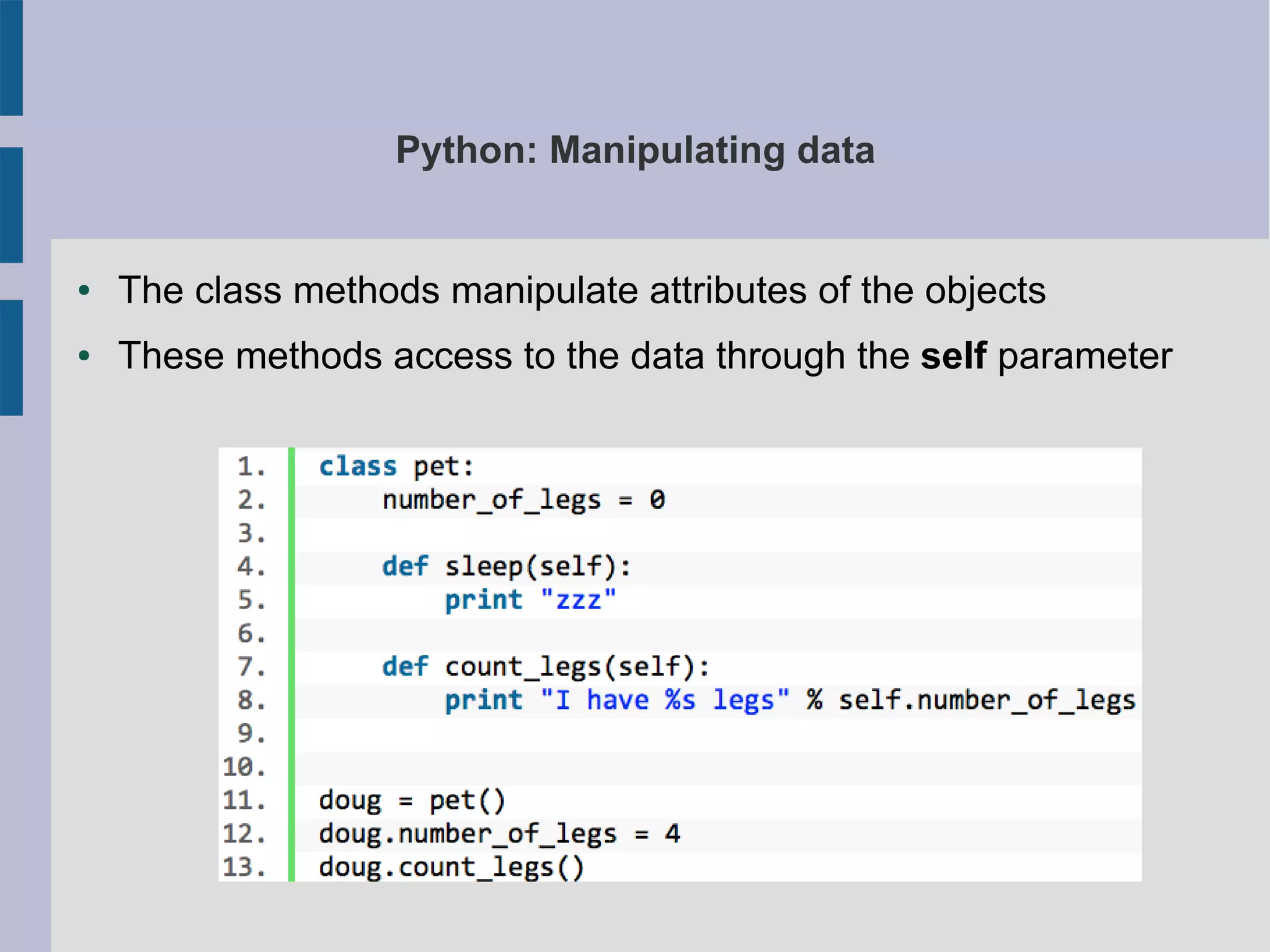
How class methods manipulate object attributes and utilize the self parameter for data access.
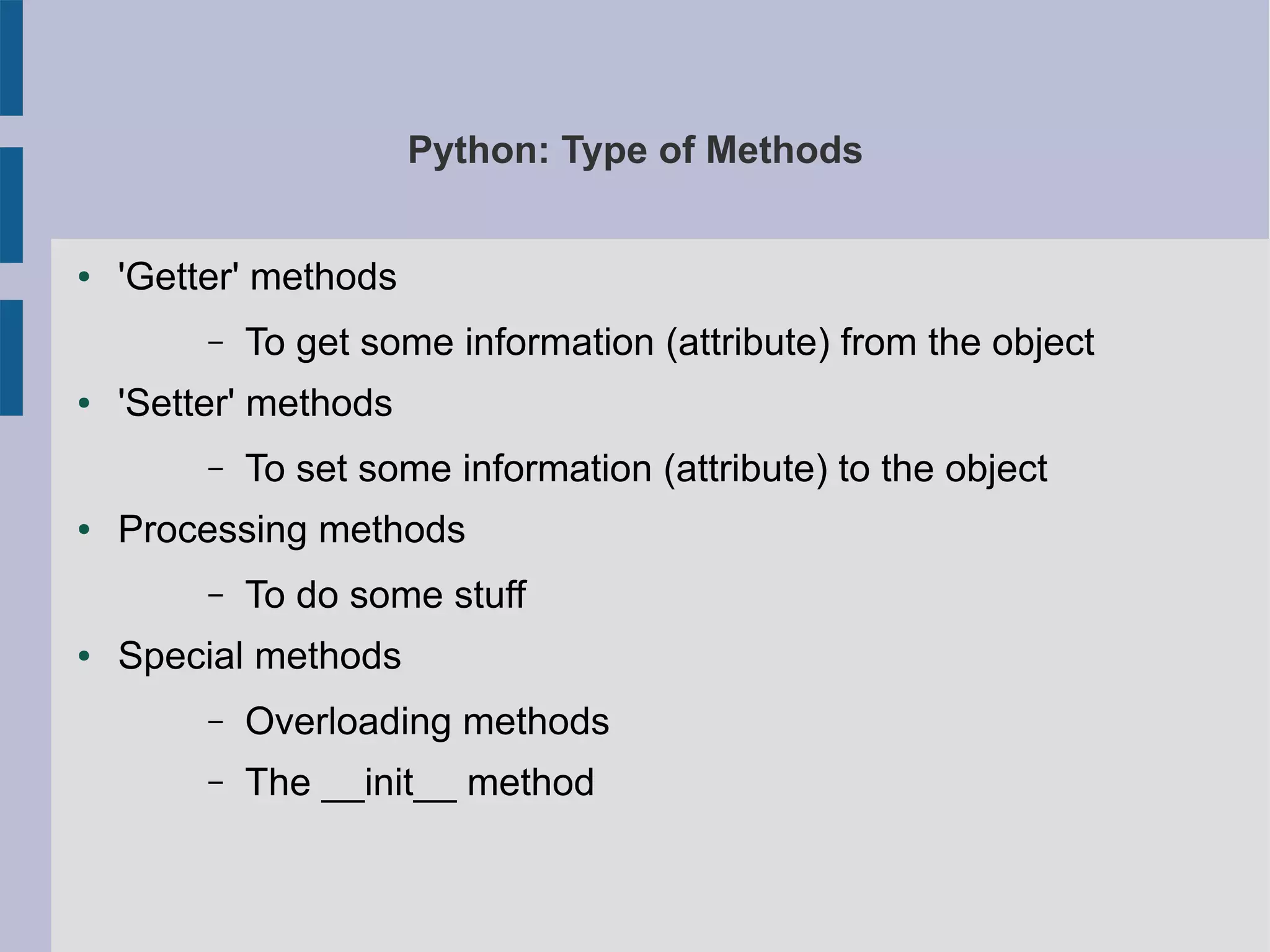
Different types of methods in Python classes: 'getter', 'setter', processing methods, and special methods.
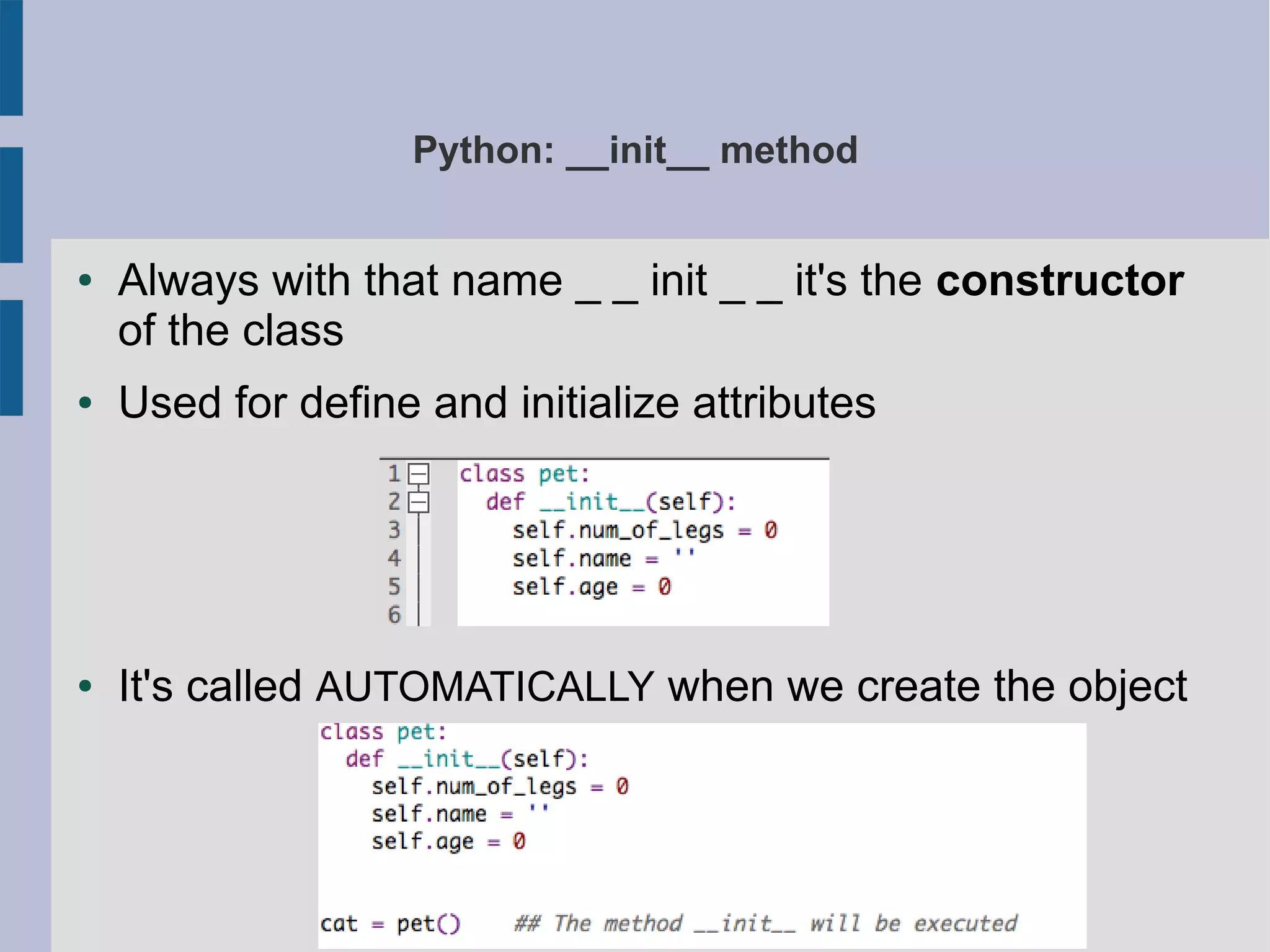
Explains the constructor __init__ method used for initializing instance attributes automatically upon object creation.
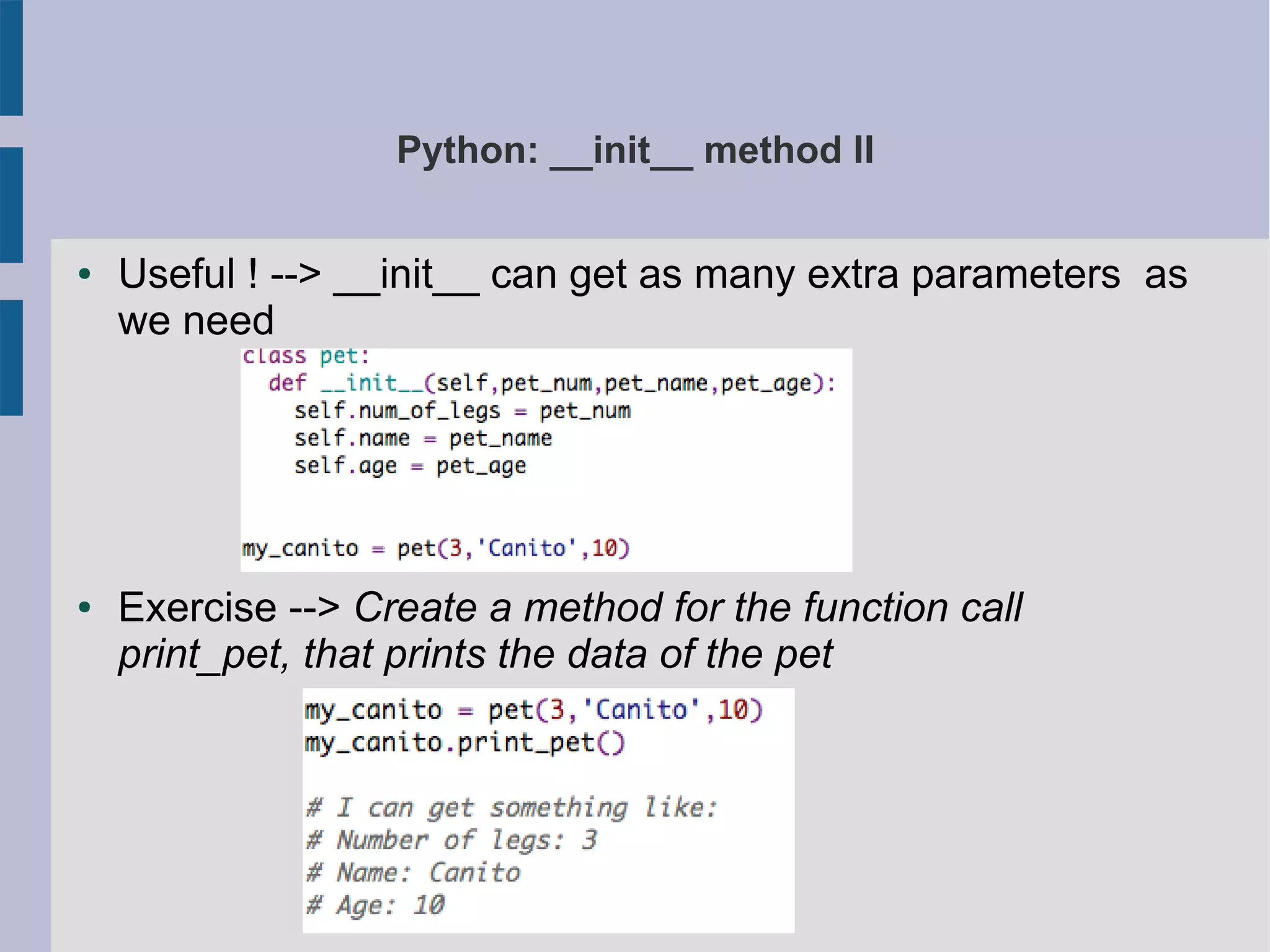
Further details on the __init__ method, indicating its ability to accept multiple parameters, with exercise example.
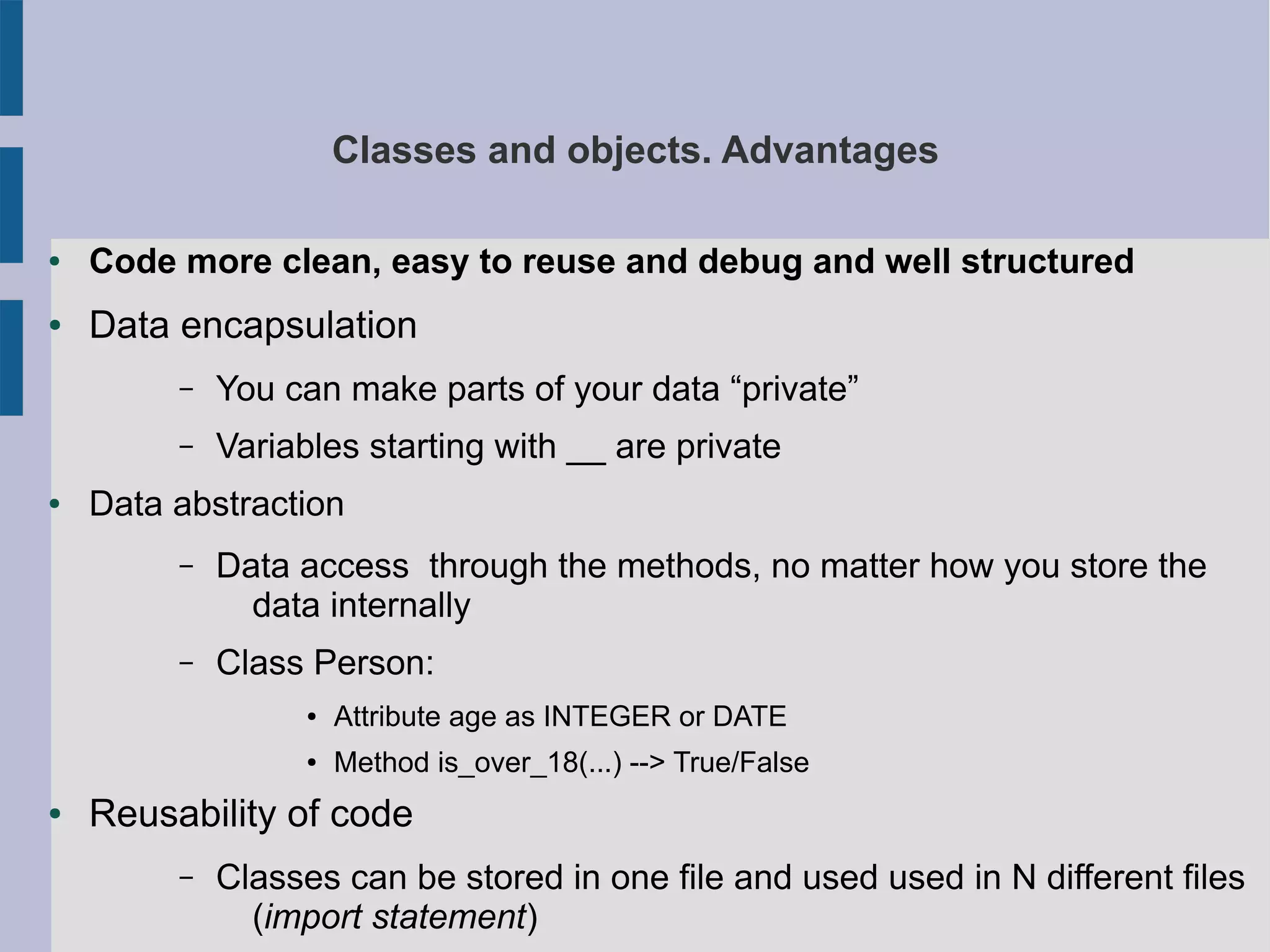
Highlights benefits of OOP such as clean code, data encapsulation, abstraction, and code reusability.
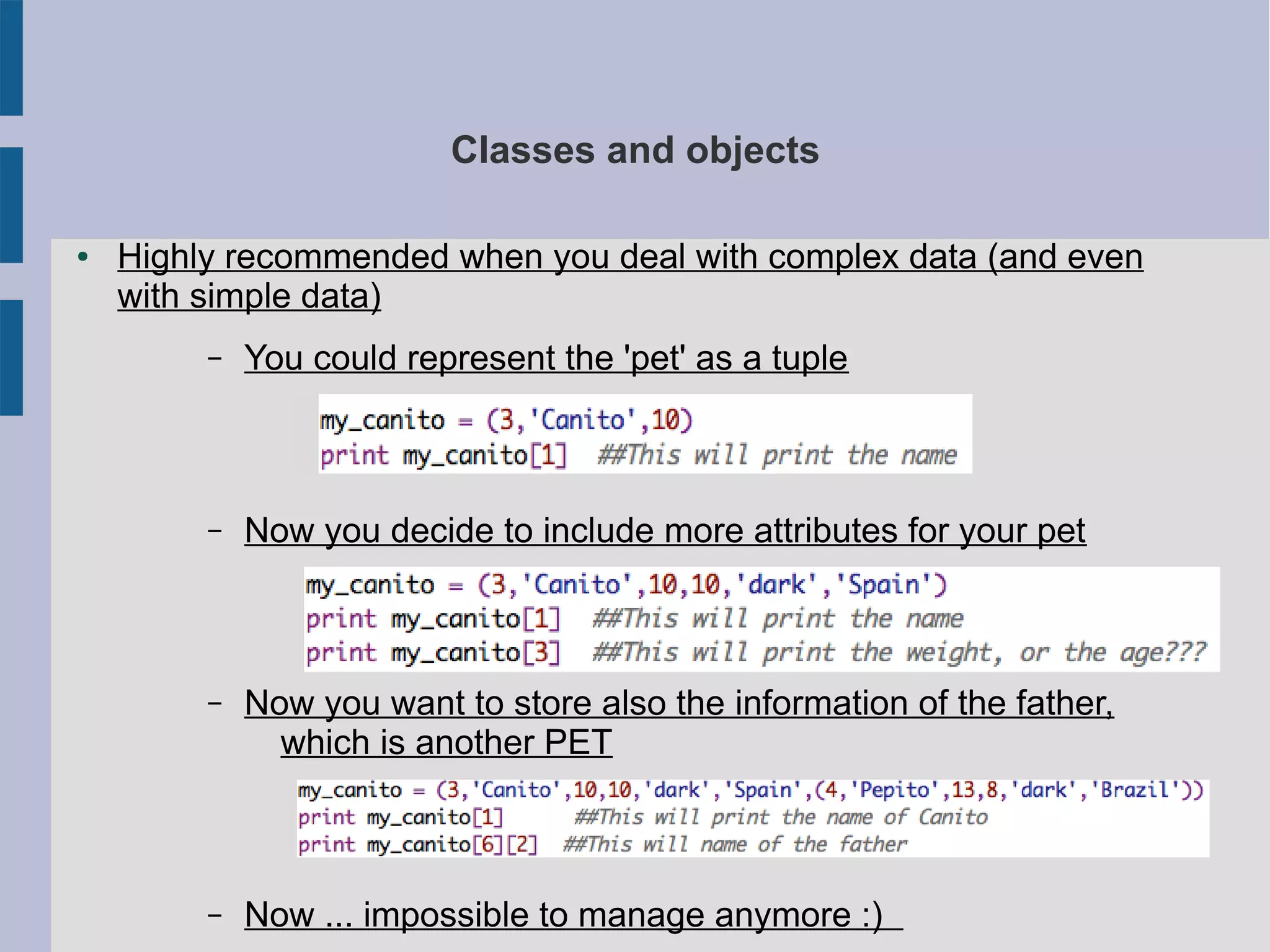
Advice on using classes for managing complex data scenarios, illustrating the challenge of managing simple data with tuples.
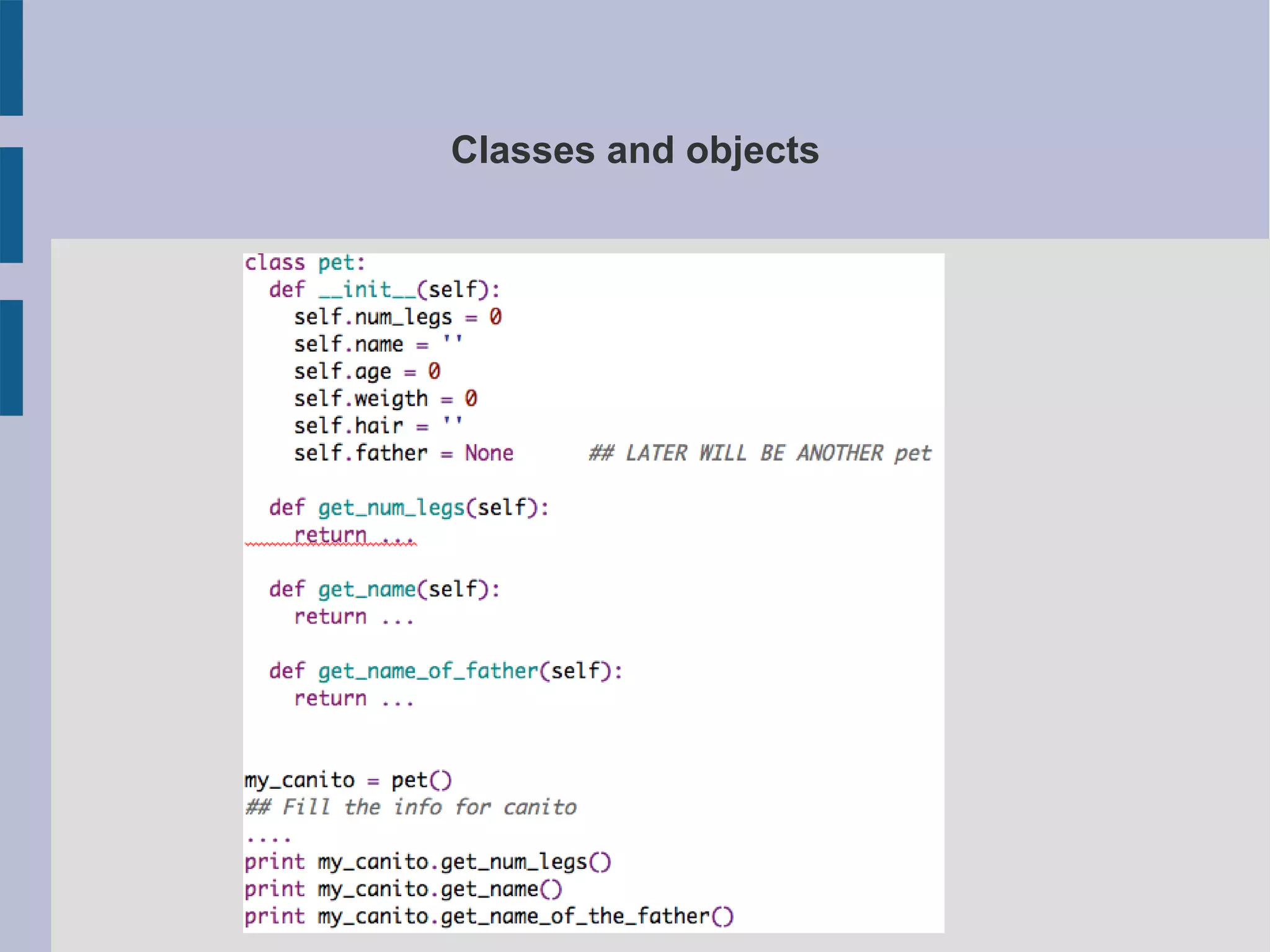
Continued exploration of classes and objects in OOP.
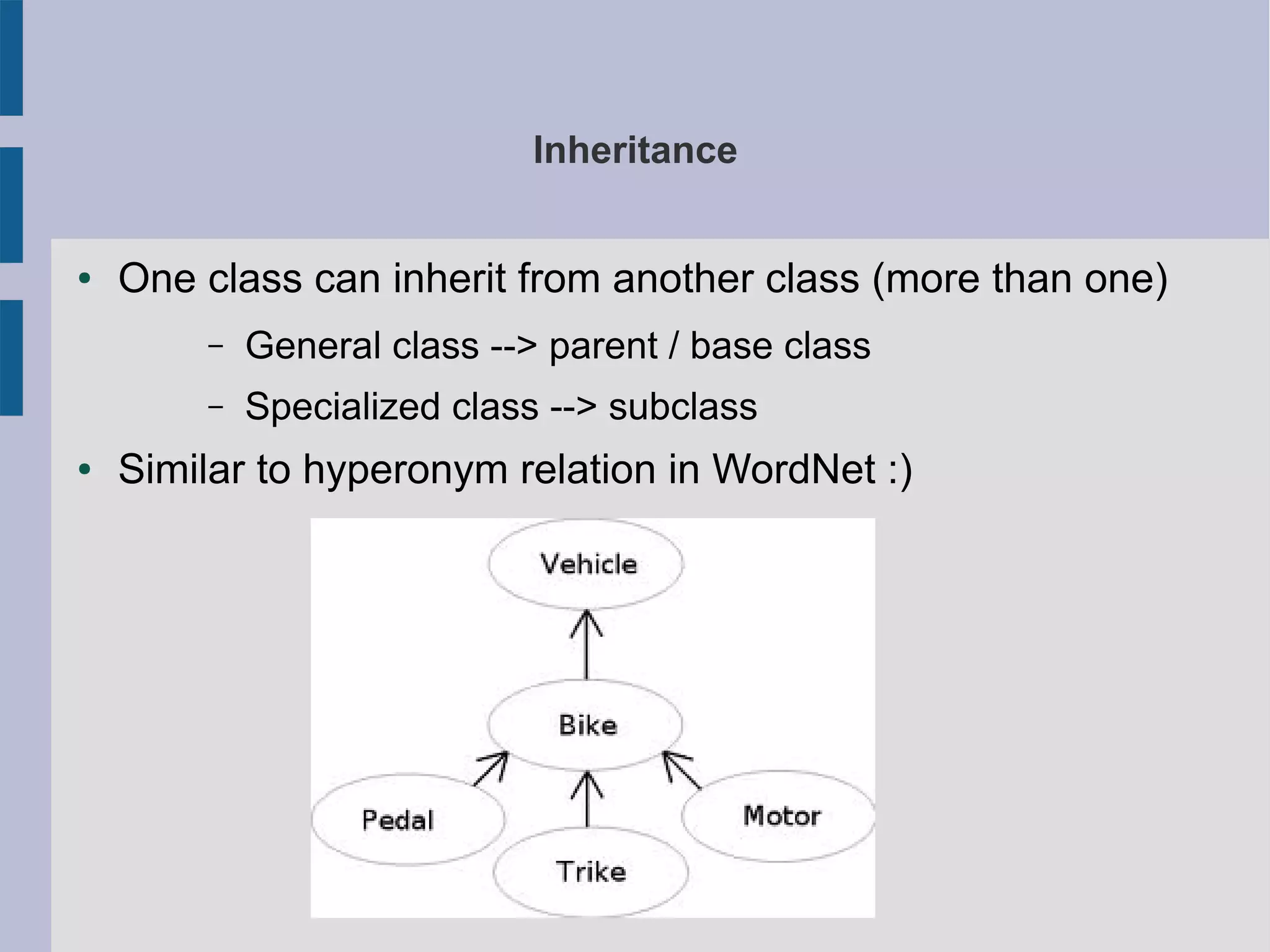
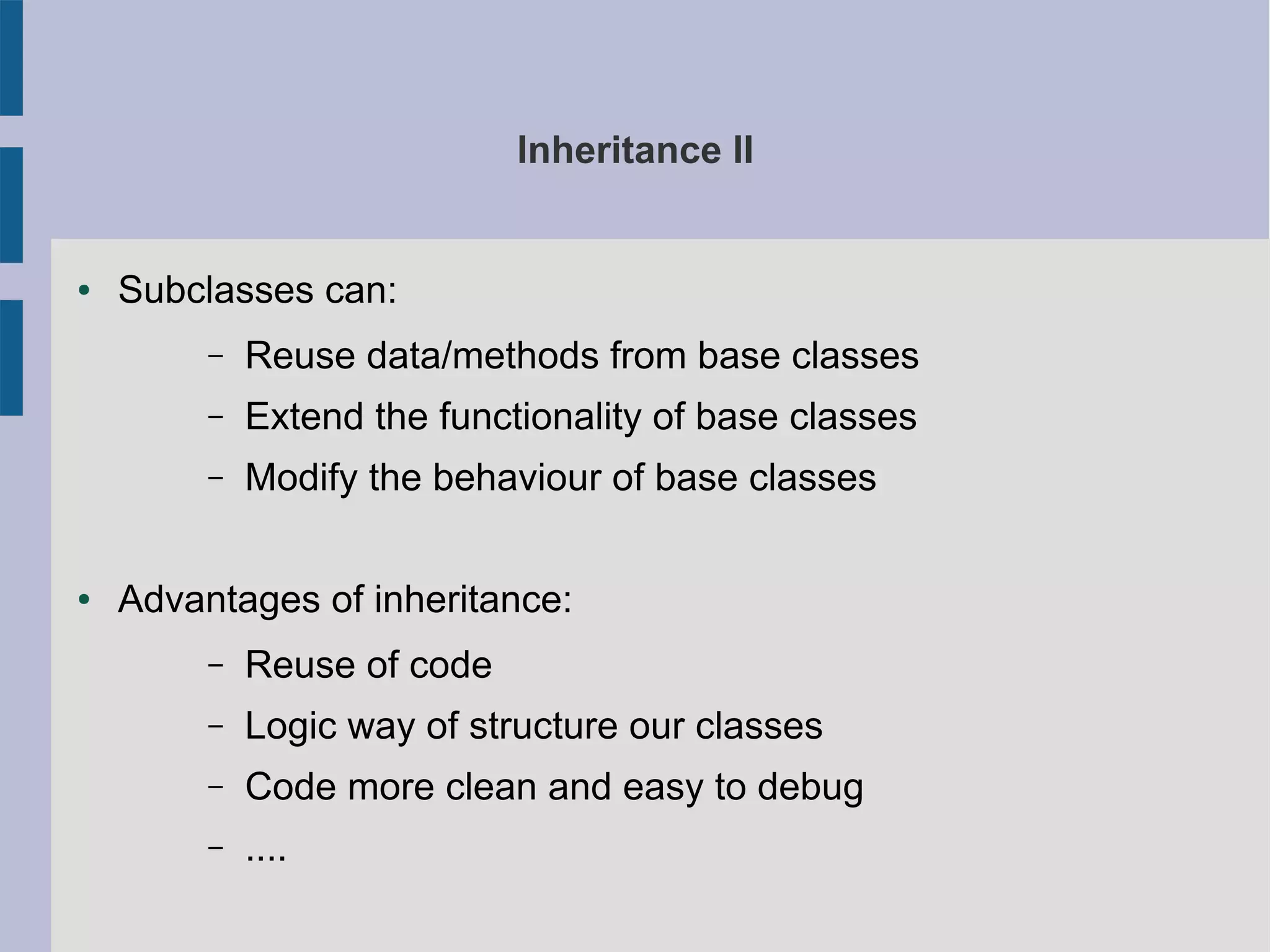
Concept of inheritance in OOP, where a subclass inherits characteristics from a parent class.
Advantages of using inheritance: code reuse, structured logic, cleaner, easier debug.
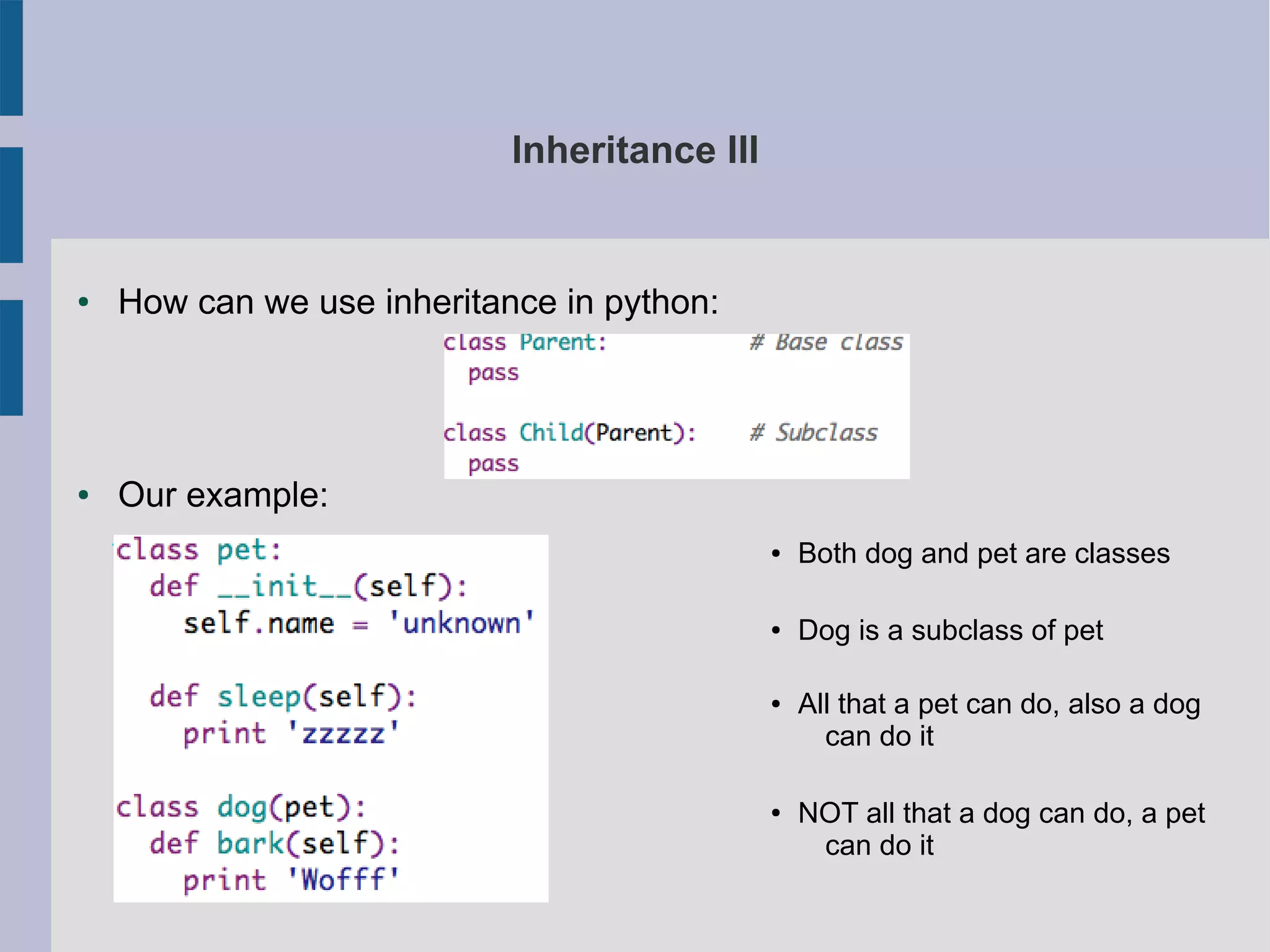
Demonstrates the relationship between subclasses and parent classes with an example of pets.
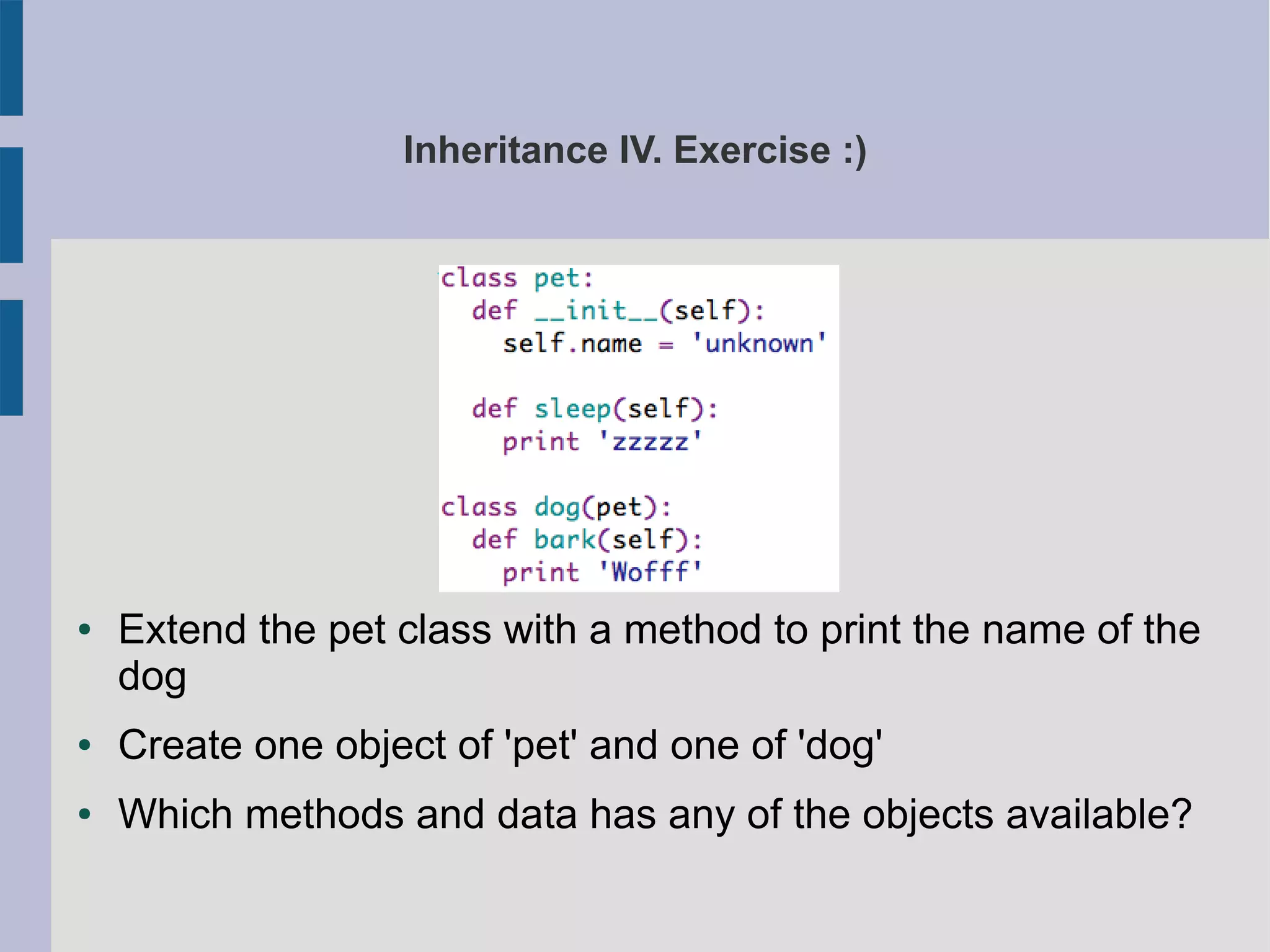
An exercise to expand the pet class, creating instances of pet and dog to explore class methods and attributes.


![[OOP - Lec 20,21] Inheritance](https://cdn.slidesharecdn.com/ss_thumbnails/lecture-2021inheritance-160705095417-thumbnail.jpg?width=640&height=640&fit=bounds)


![[OOP - Lec 09,10,11] Class Members & their Accessing](https://cdn.slidesharecdn.com/ss_thumbnails/lecture-091011classmemberstheiraccessing-160604060651-thumbnail.jpg?width=640&height=640&fit=bounds)


![[OOP - Lec 18] Static Data Member](https://cdn.slidesharecdn.com/ss_thumbnails/lecture-18staticdatamember-160705095116-thumbnail.jpg?width=640&height=640&fit=bounds)


