How to let go of your ego
and help your customers
succeed
Subtitle: Don't be a jerk

Rich Bowen - rbowen@geek.net
Community Growth Hacker, SourceForge
@rbowen
Open Source = Middle School


 Make fun of the new kid
 Say mean things to the girls
 Show off your scars
It's even codified:
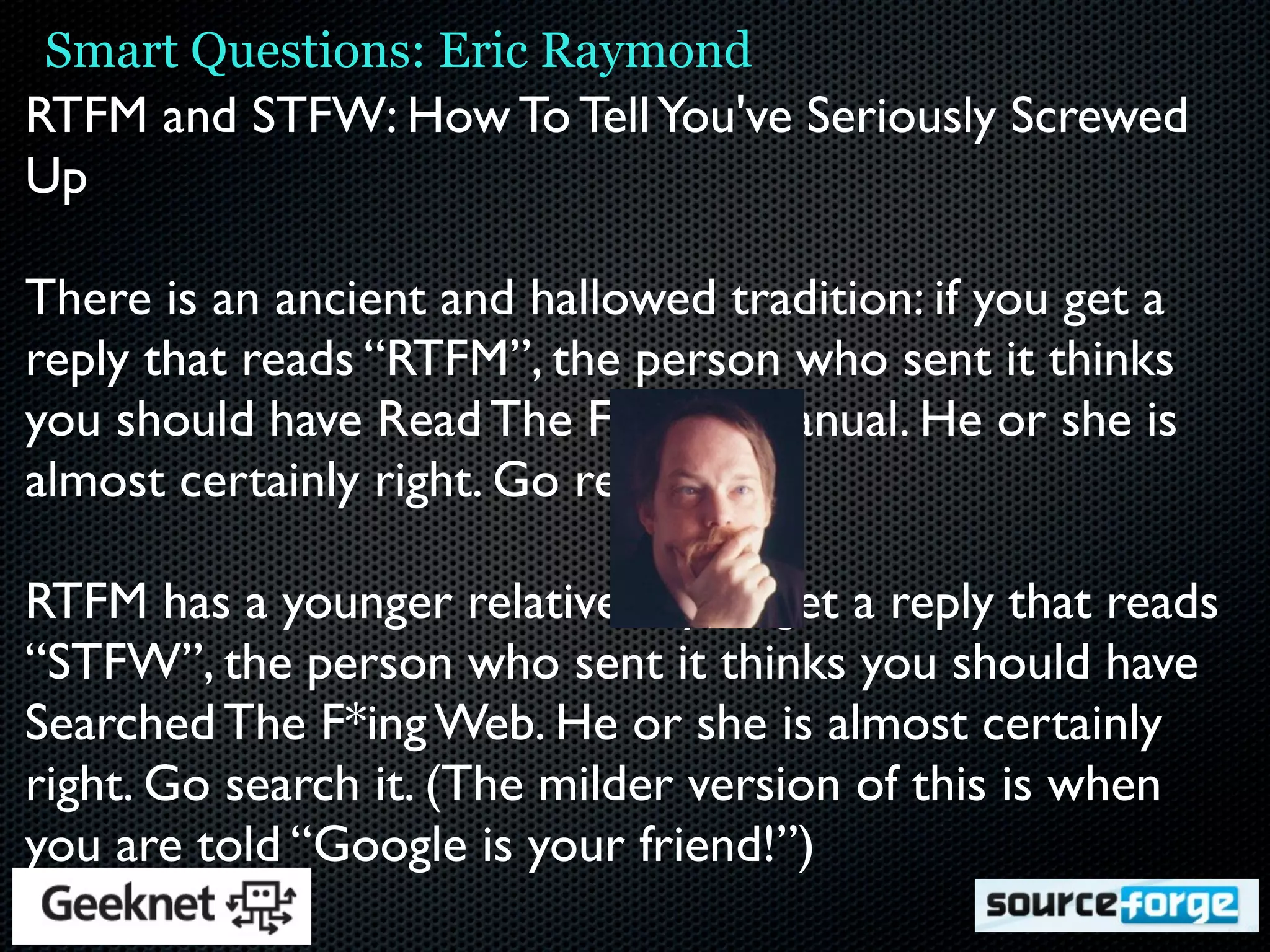
Smart Questions: Eric Raymond
RTFM and STFW: How To Tell You've Seriously Screwed
Up

There is an ancient and hallowed tradition: if you get a
reply that reads “RTFM”, the person who sent it thinks
you should have Read The F***ing Manual. He or she is
almost certainly right. Go read it.

RTFM has a younger relative. If you get a reply that reads
“STFW”, the person who sent it thinks you should have
Searched The F*ing Web. He or she is almost certainly
right. Go search it. (The milder version of this is when
you are told “Google is your friend!”)
Why do we do this?


This is a hobby. Support is a job
People are mean and entitled
The answers are obvious
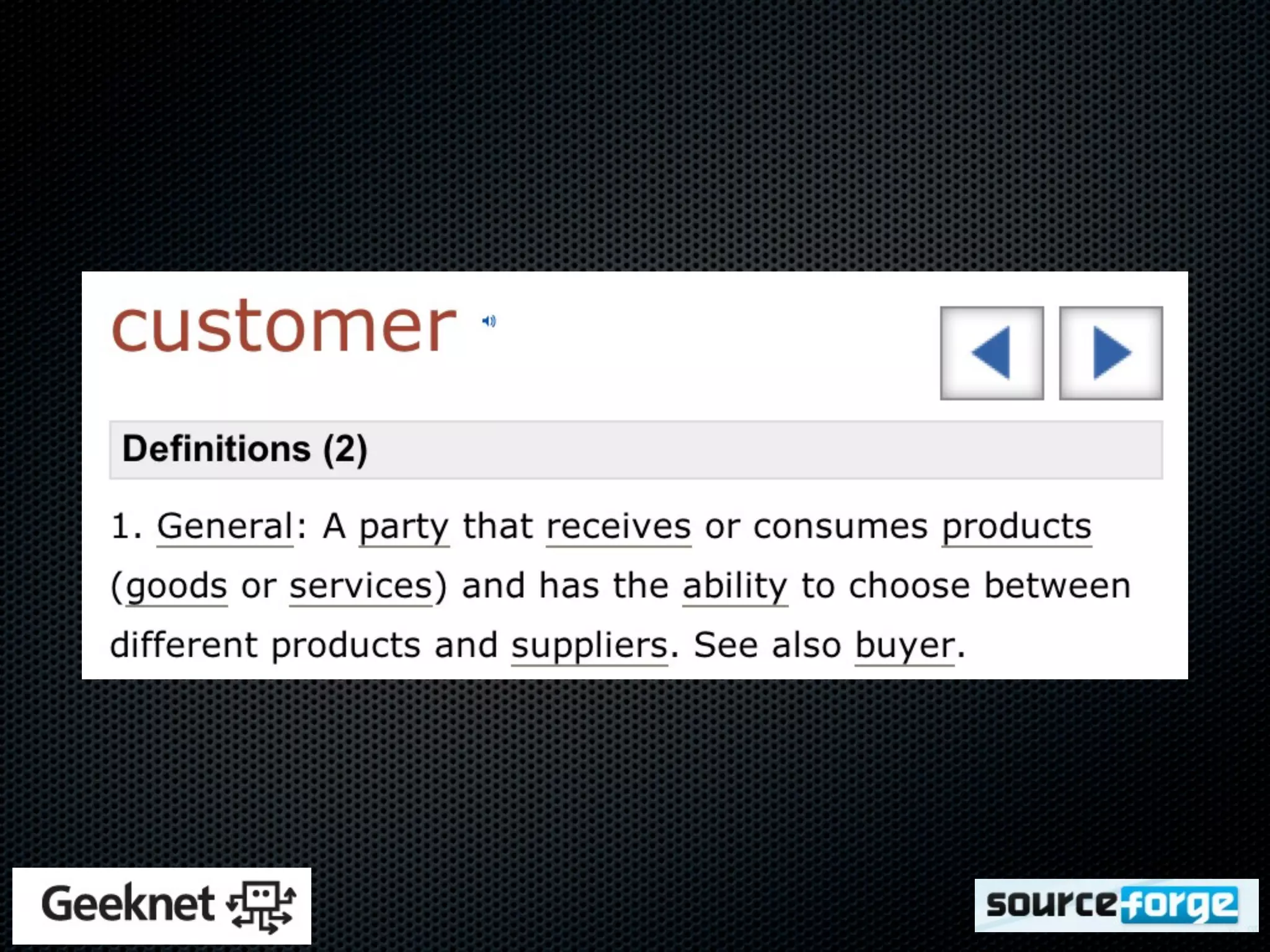
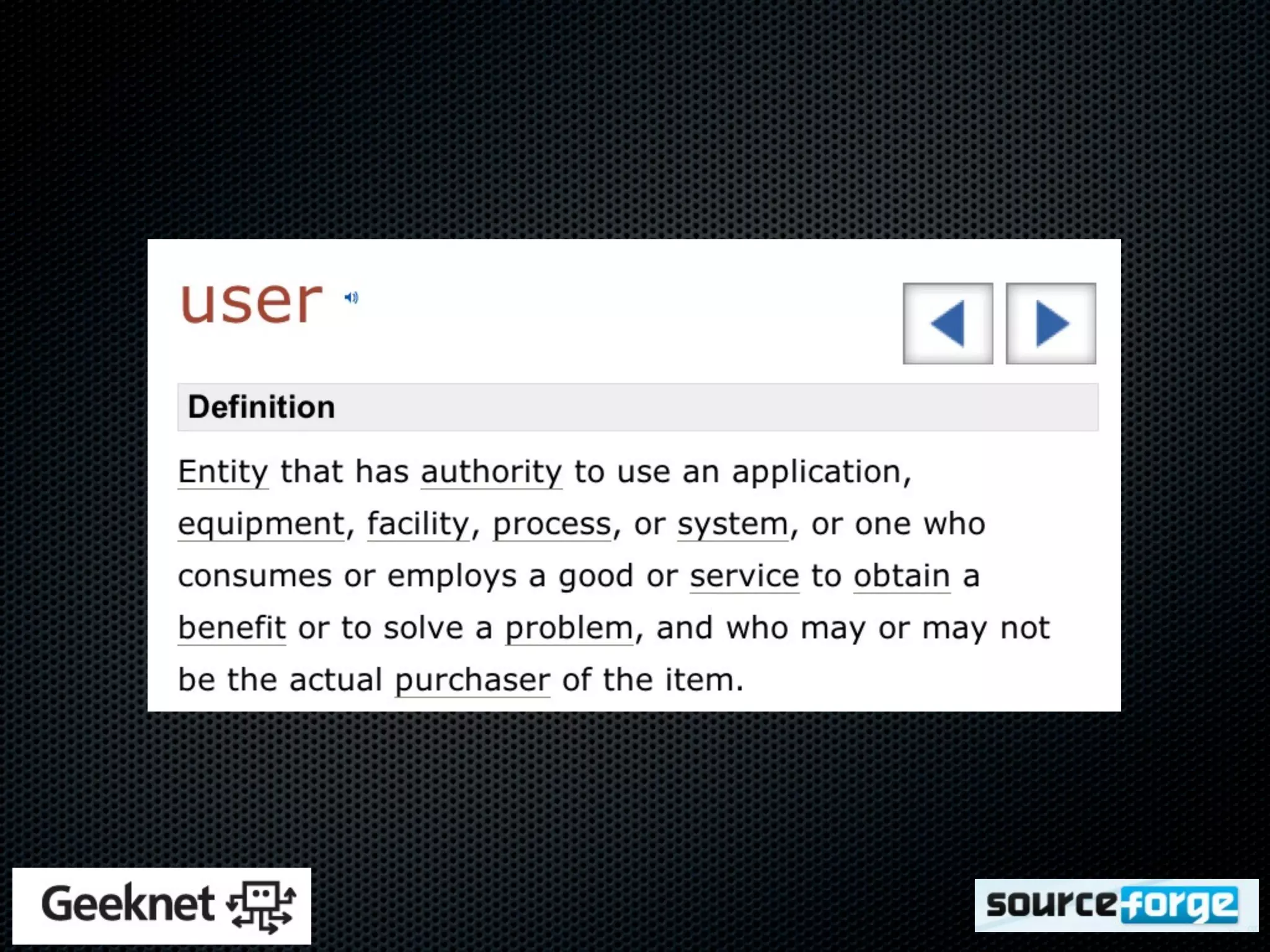
Users vs Customers


What difference does it make?
Users, right?


 They didn't pay for it
 We don't owe them anything
Customers

Without them, there's no reason for
your product
Your product is not unique
Good customer service is what
distinguishes you
What's the difference
 between users and
    customers?

  The attitude of the
 people on the other
end of that transaction.
The way you
 treat them
defines their
     role
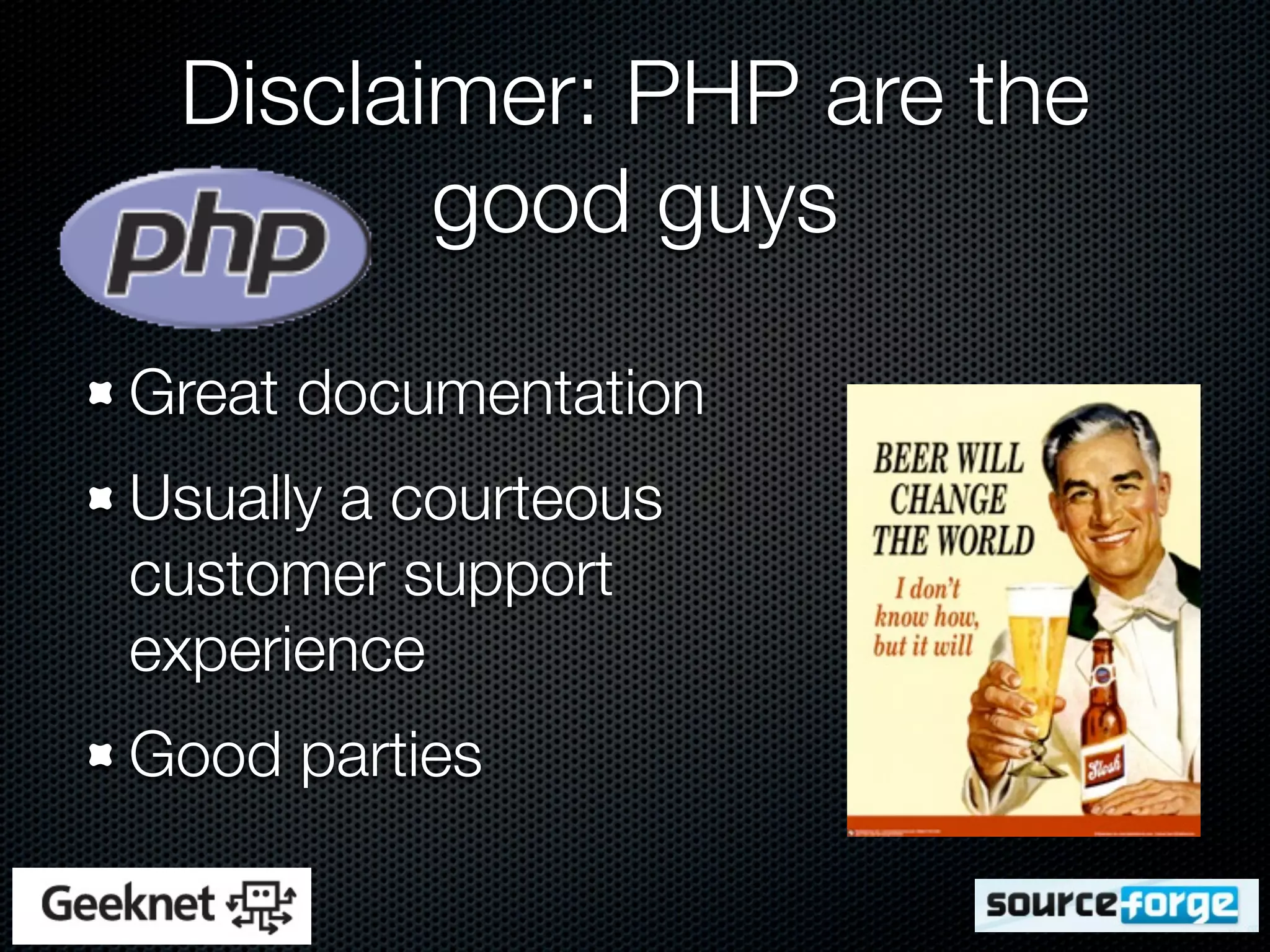
Disclaimer: PHP are the
        good guys

Great documentation
Usually a courteous
customer support
experience
Good parties
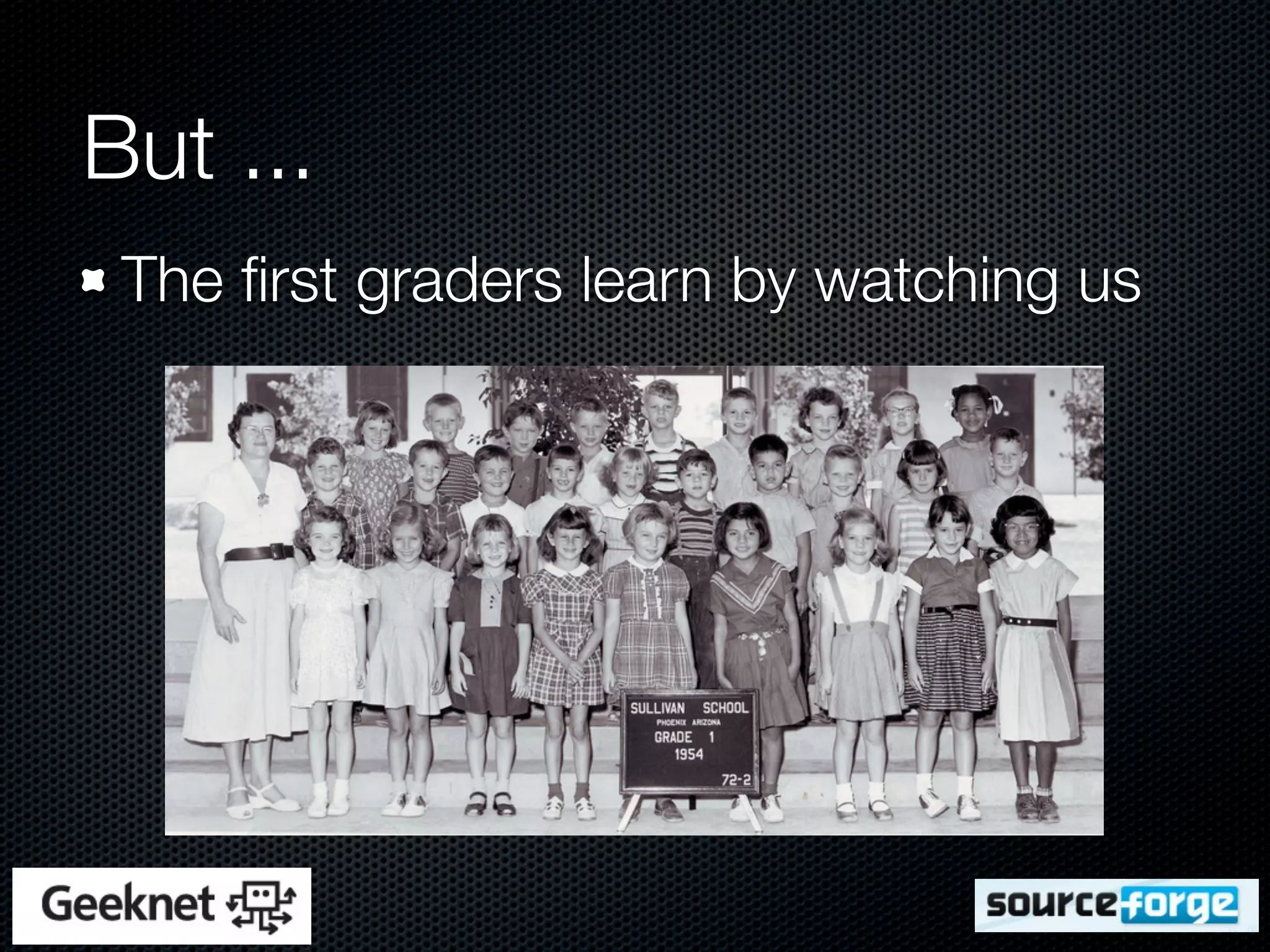
But ...
 The first graders learn by watching us
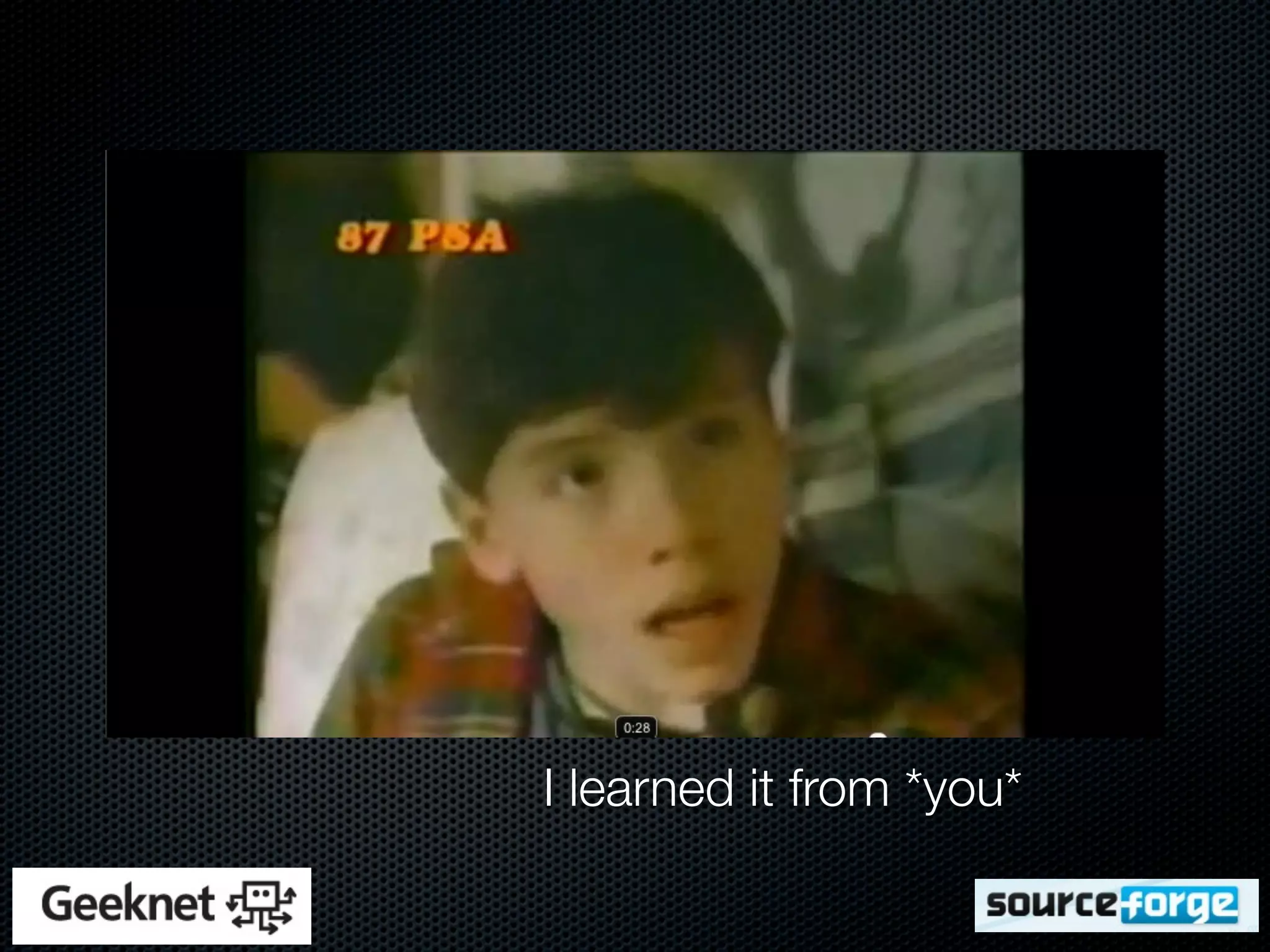
I learned it from *you*
So, what can we do ...
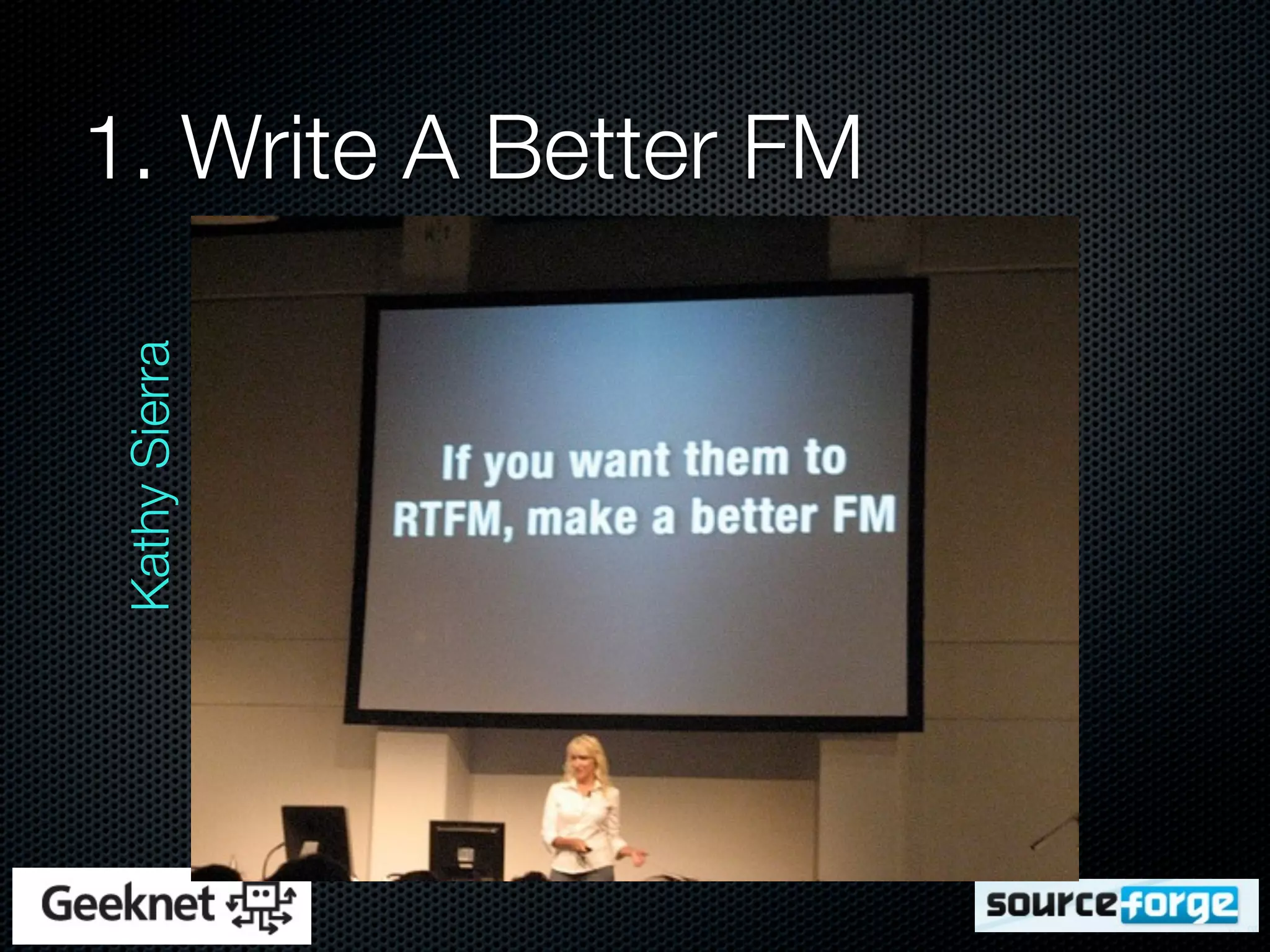
1. Write A Better FM
Kathy Sierra
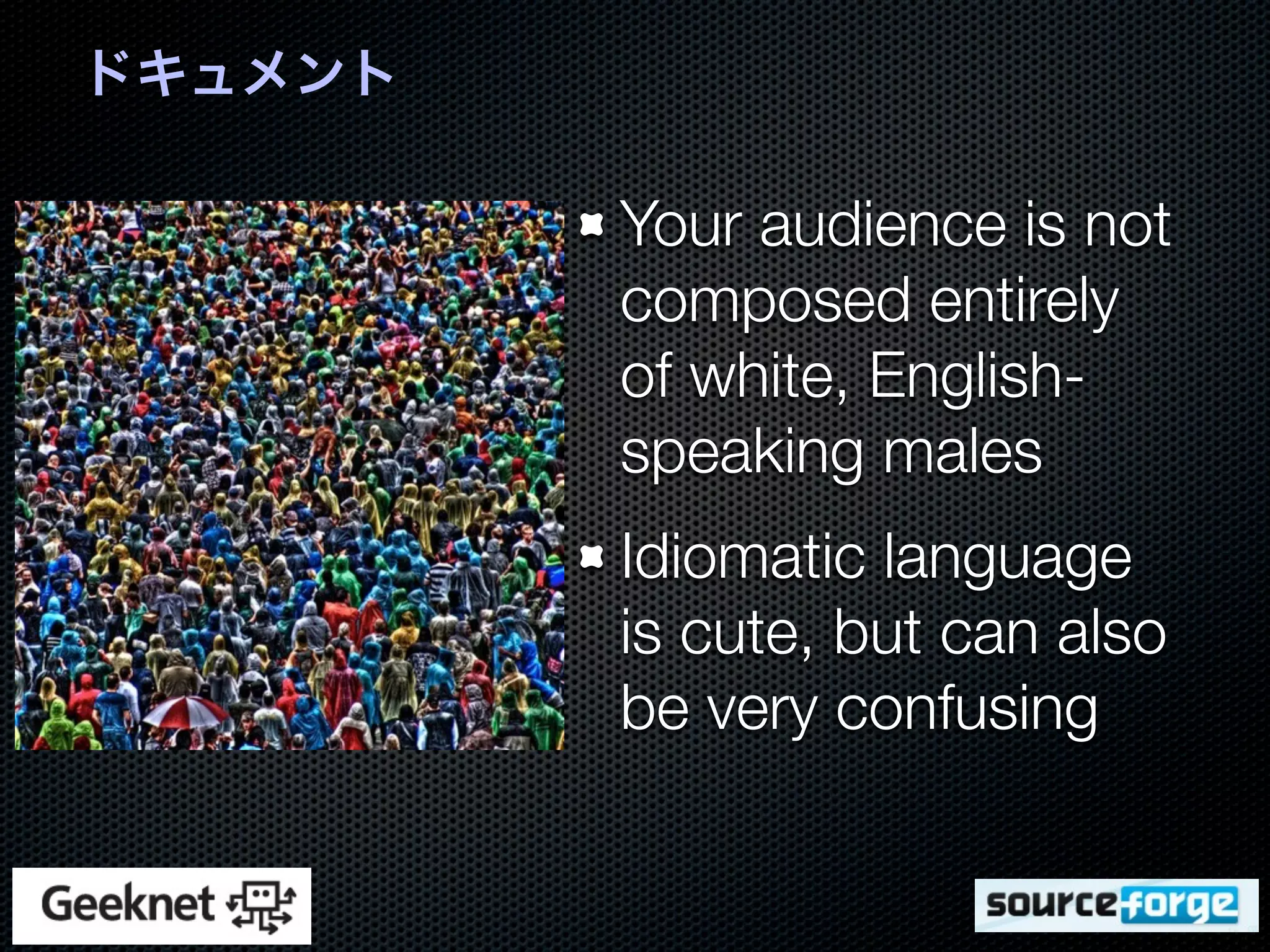
ドキュメント

         Your audience is not
         composed entirely
         of white, English-
         speaking males
         Idiomatic language
         is cute, but can also
         be very confusing
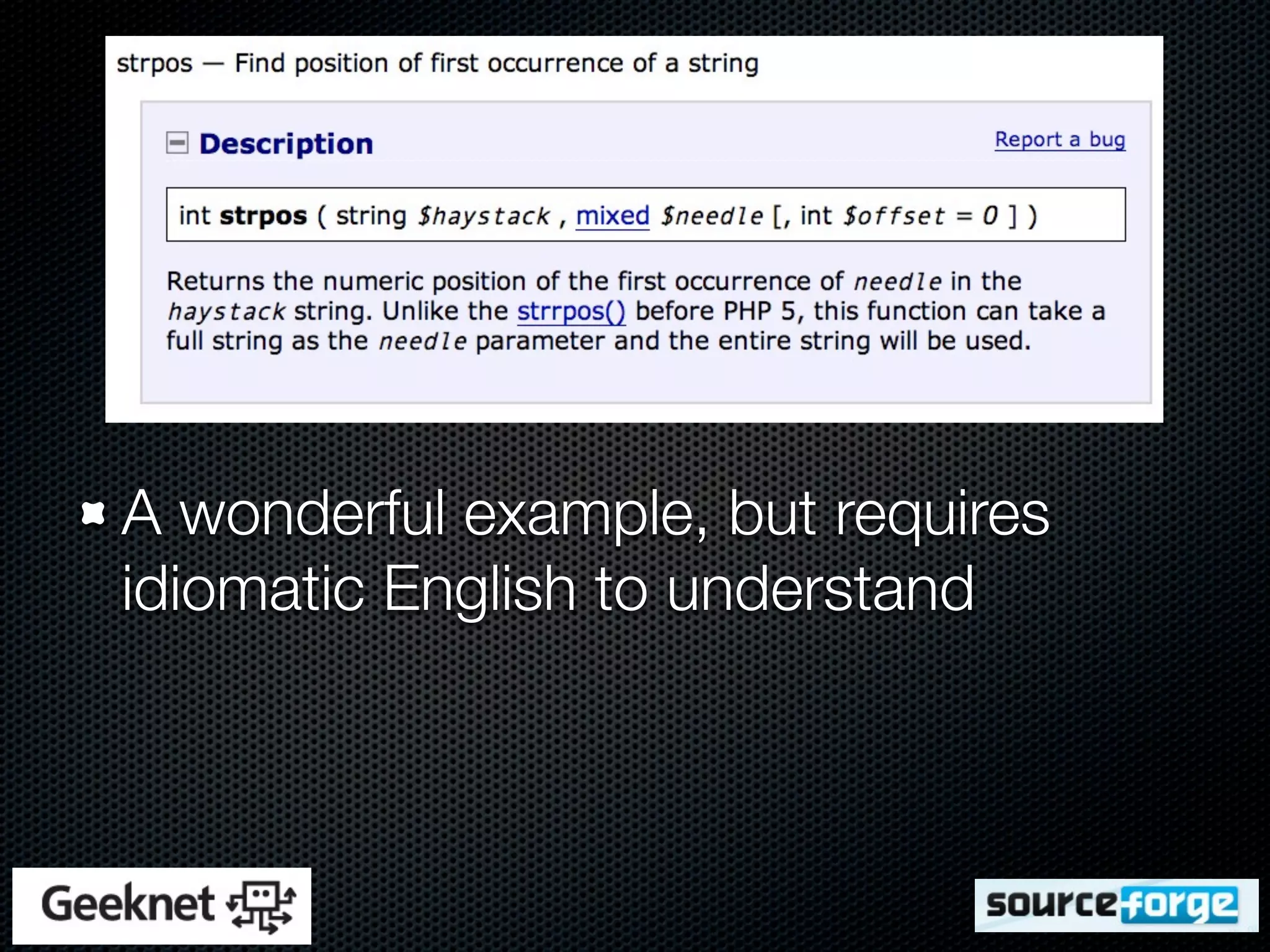
A wonderful example, but requires
idiomatic English to understand
Voice


Determine who your audience is
Speak to them
Who is your audience?

Apprentice
 Avoid terms like "newbie" and "user",
 as they set the wrong voice.
Journeyman
Master
Apprentice

How to get started
May not know what questions to ask
Preserve their dignity (See also: Don't
be a jerk)
Journeyman
         Viz: Wikipedia

May do this every day, but it's probably
not their primary skill
Will likely know what to ask, and has
already done some research
Generally wants to solve a problem or
complete a task
Master

Doesn't want to waste your time or
theirs
May be a good candidate for project
participation
Speak to them

Imagine an actual audience that you're
writing to
This helps set your voice correctly
Good docs will have different voices for
each audience
Elevator


“If you can't explain
 it simply, you don't


                        cszar, on Flickr
  understand it well
       enough”
    -Albert Einstein
Again, half as long
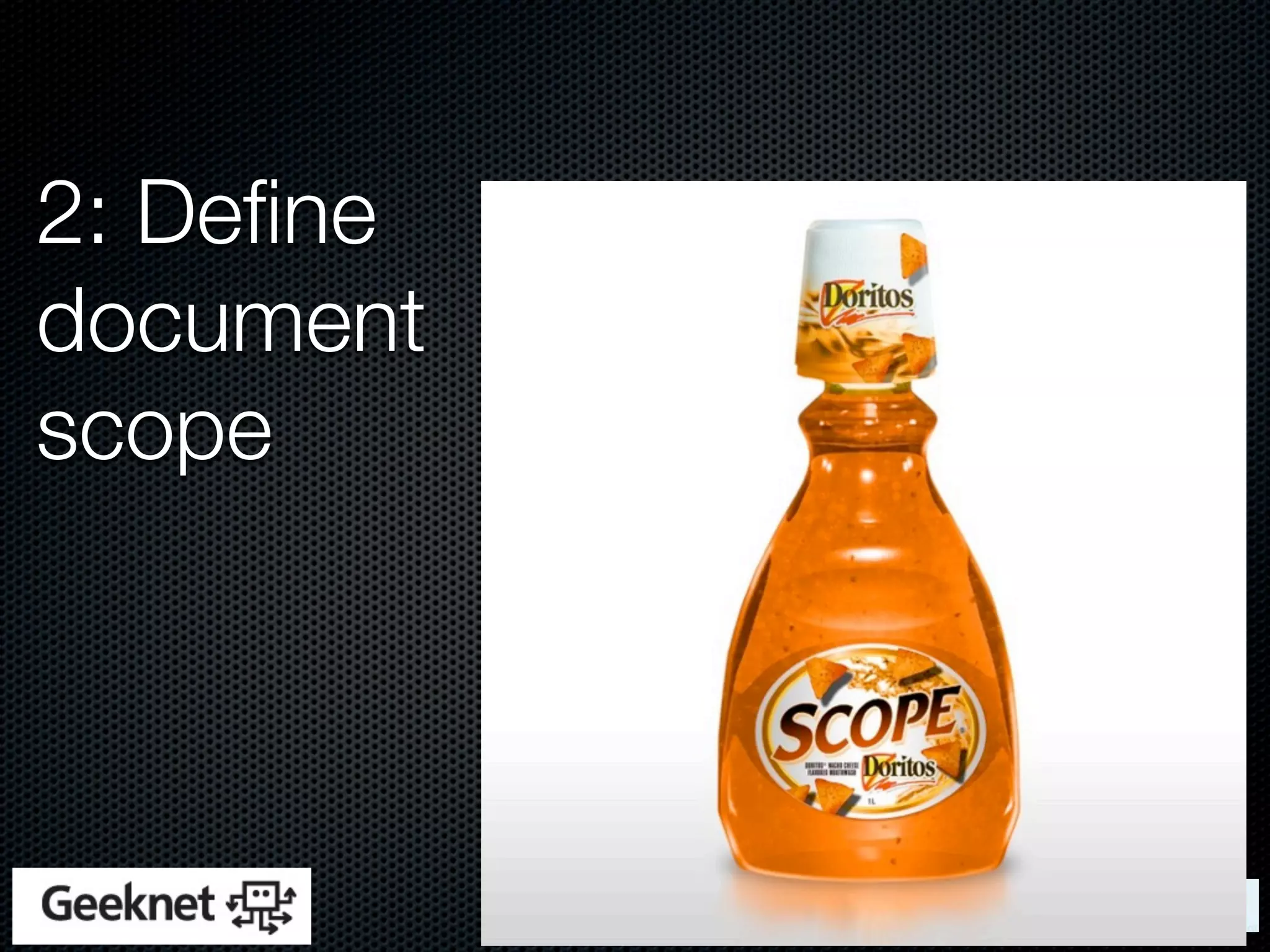
2: Define
document
scope
Scope


What are we going to talk about?
Scope


If you don't define your scope, your
readers will insist that you expand it.
Benefits
of
defining
your
scope:
Benefits of defining scope

You know when you hit it
You know when you're done
You know when you can safely say
"that's documented over there"
Document your scope

"This documentation covers ..."
Helpful when people insist you cover
more
Can politely point to your policy
This is not just being lazy


 Do your thing really well
 Let other people do their thing well
 This is what the <a> tag is for
3.

Don't
be a
 jerk
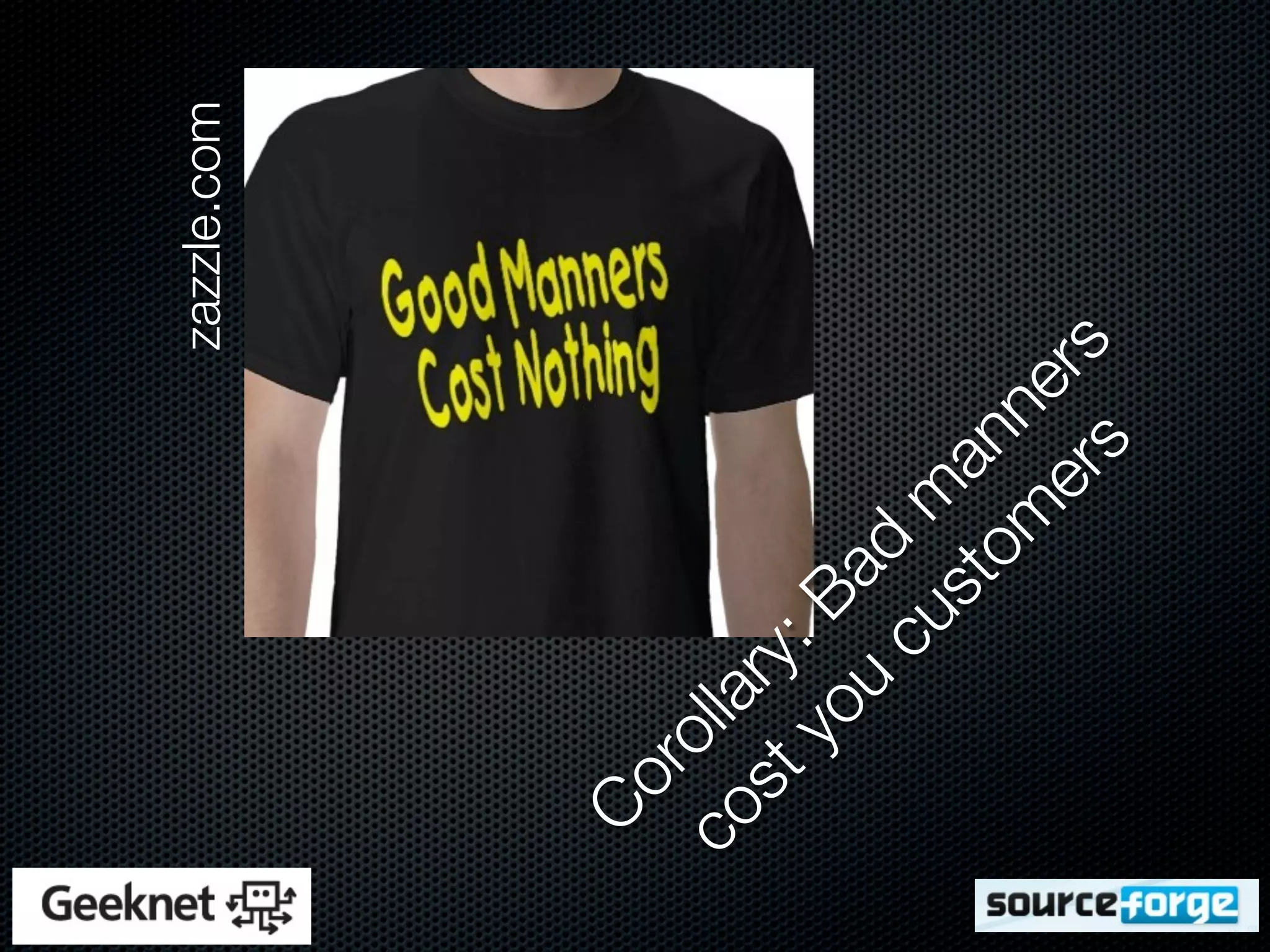
zazzle.com


 Co
    ro
co lla
  st ry:
     yo B
       u ad
        cu m
          st an
            om n
              er ser
                s
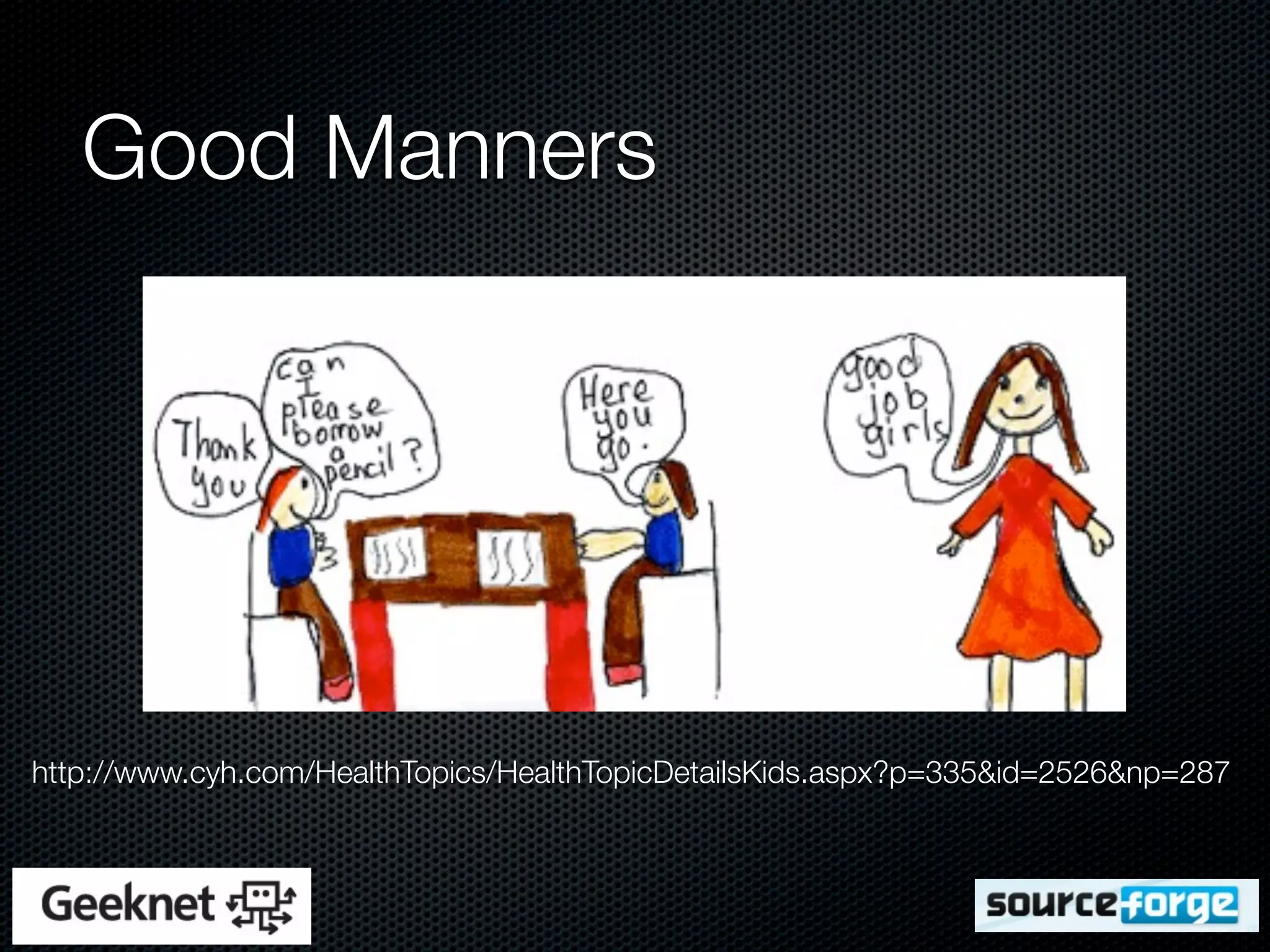
Good Manners


http://www.cyh.com/HealthTopics/HealthTopicDetailsKids.aspx?p=335&id=2526&np=287
Being Rude

Most of the time, you don't mean to
That guy was just an idiot
Idiots are frustrating
I've already answered that question
17,000,000 times today
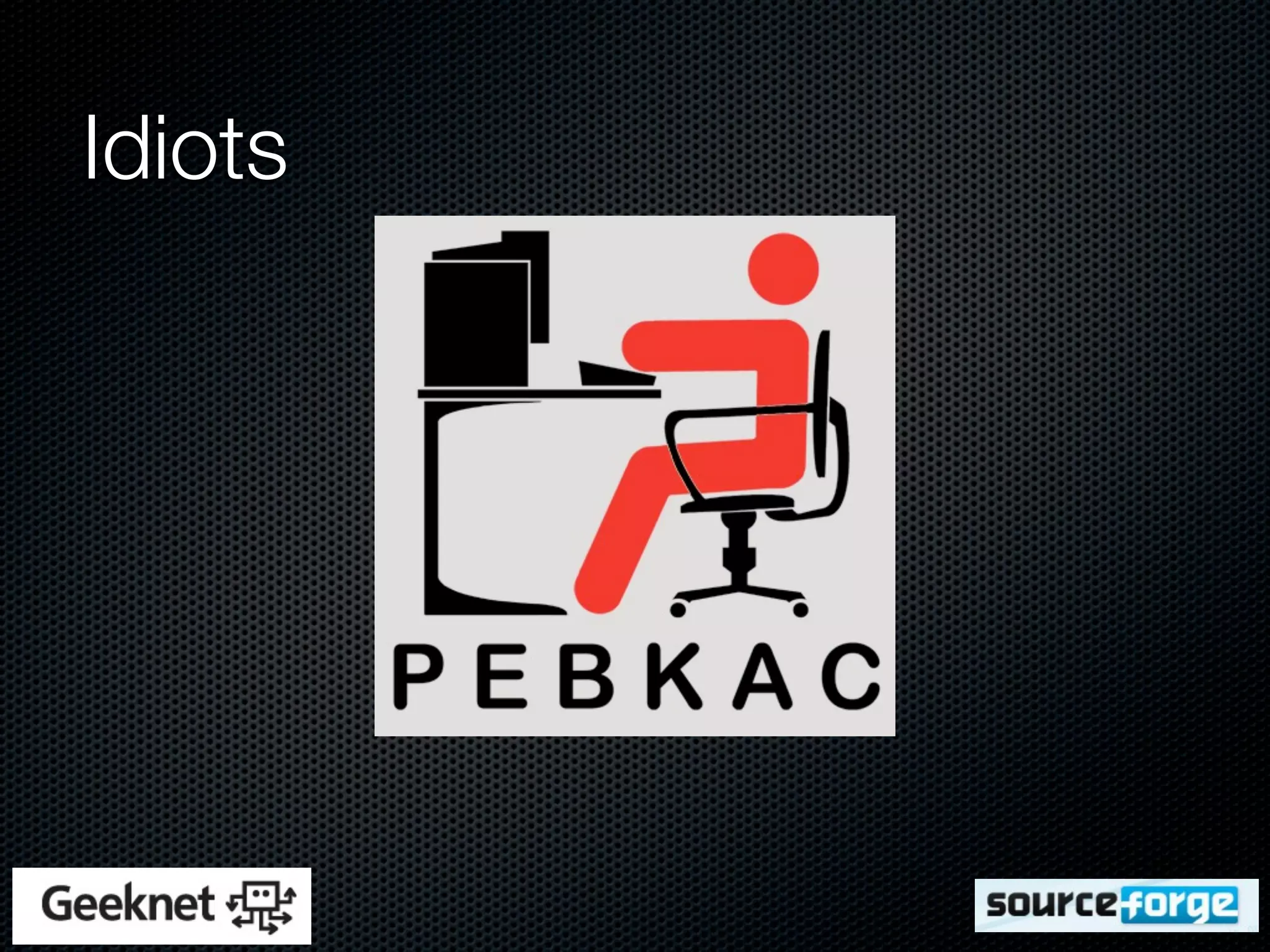
Idiots
Two things to remember


You were a first-grader once, too
You don't actually know the context of
their question
ftp://rbowen:glio124@s.ms.uky.edu/
You have a story like
 that too. You don't
have to share it with
the whole class, but
we all know you do.
Be an advocate, not an ...

 Not everything is "good" vs "bad"
 There are many right answers
 http://www.perl.com/pub/2000/12/
 advocacy.html
3.5 - Be a mentor

It takes time
Most people won't thank you
The benefits are immeasurable and will
outlast your "real" work
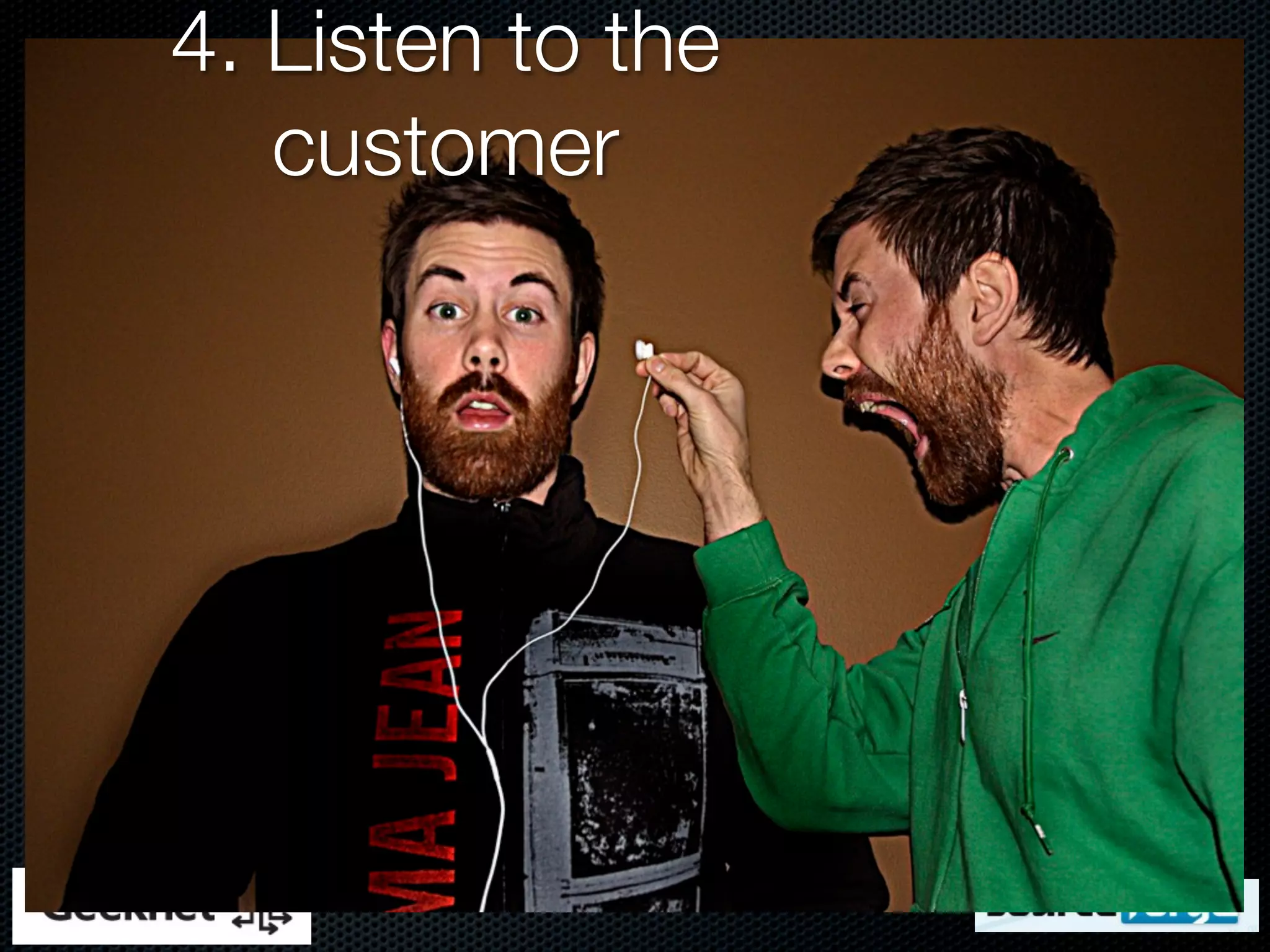
4. Listen to the
   customer
Context

  Context can be the difference
between a stupid question and a
 brilliant one. Don't assume that
  the customer is an imbecile.
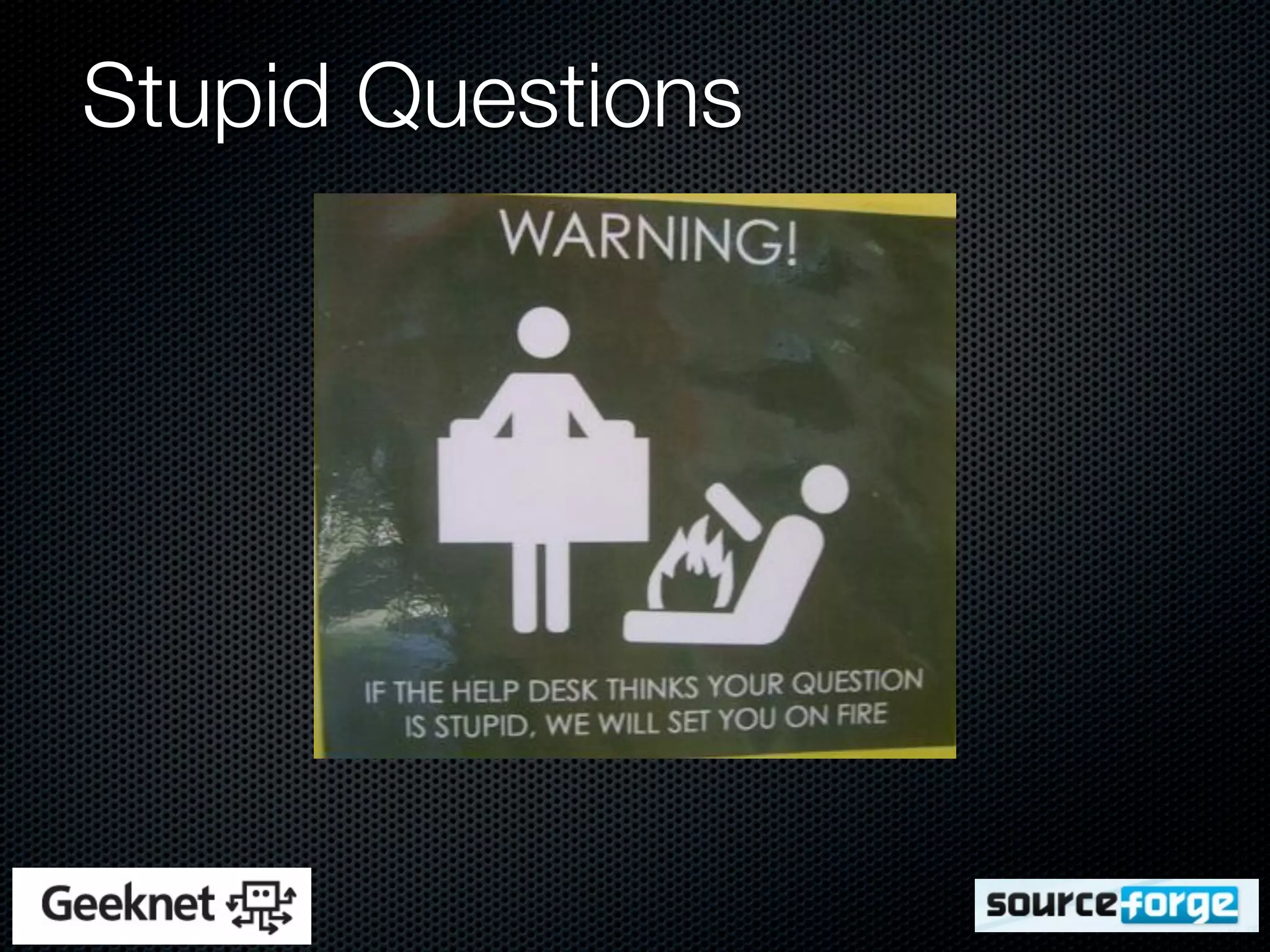
Stupid Questions
Yes, some questions are stupid
Attempt to understand the
situation the question came
from, rather than critiquing the
question
They're probably not intentionally
wasting your time
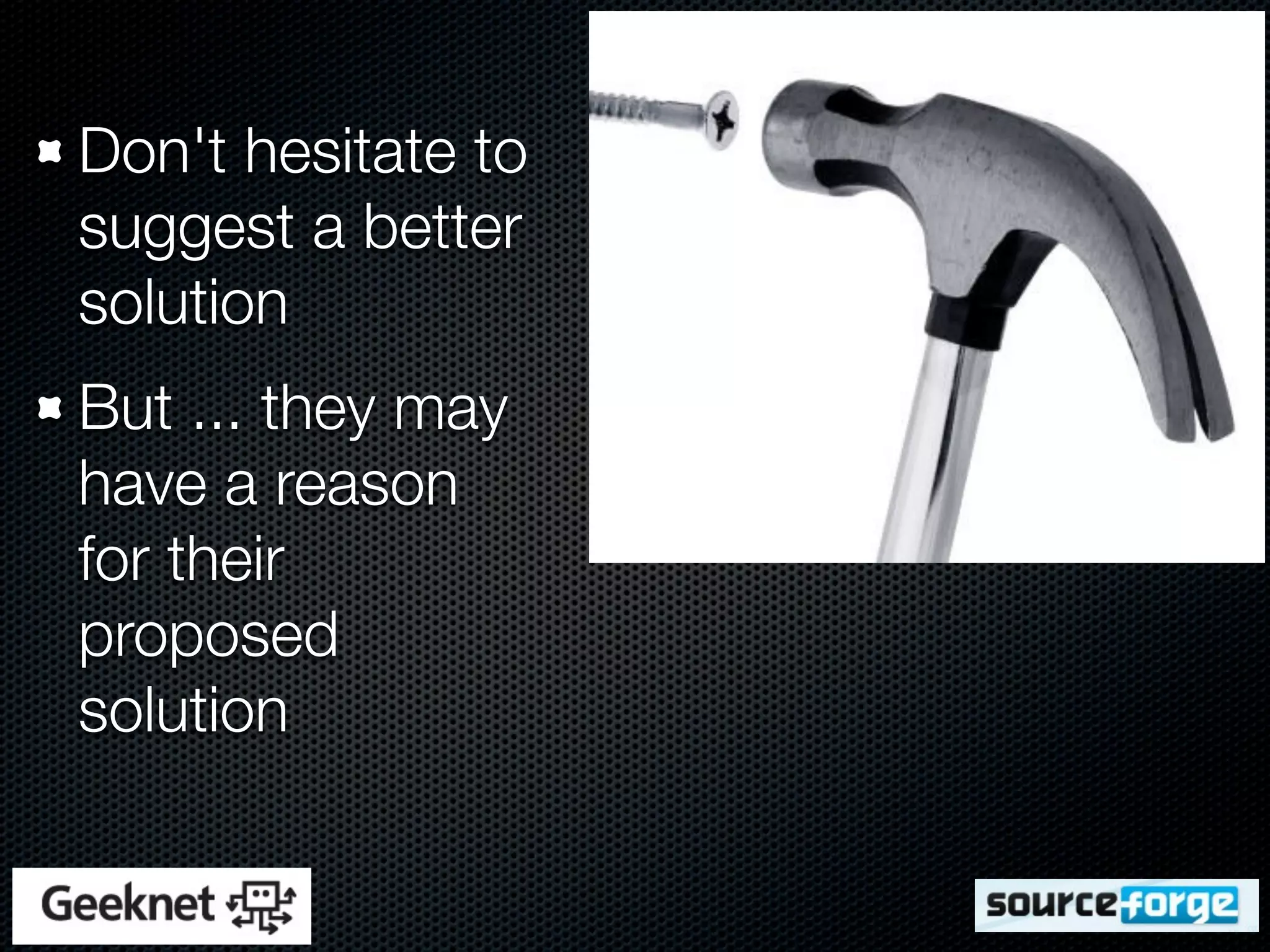
Don't hesitate to
suggest a better
solution
But ... they may
have a reason
for their
proposed
solution
Frequently Asked Questions


They're called that for a reason
Frequently Asked Questions
Don't say "RTFM"
Rather, provide a link directly to the
answer in the FM, so that next time,
they look there first
Actually read that answer, and if it's
inadequate, GO FIX IT
Frequently Asked Questions
Also, don't say "STFW"
It's insulting to assume that they
haven't done anything at all towards a
solution.
(Even if it's occasionally true.)
By listening, you can ascertain what
they've already done
Yes, people should do
their research, but ...
 Being rude as your initial stance is
 hugely arrogant
 "How to ask smart questions" is an
 arrogant document that puts all the
 blame on the customer
Do it once, really really well

It's better to answer the question once,
  really well, and then link to it, than to
    answer it repeatedly, getting more
           frustrated each time
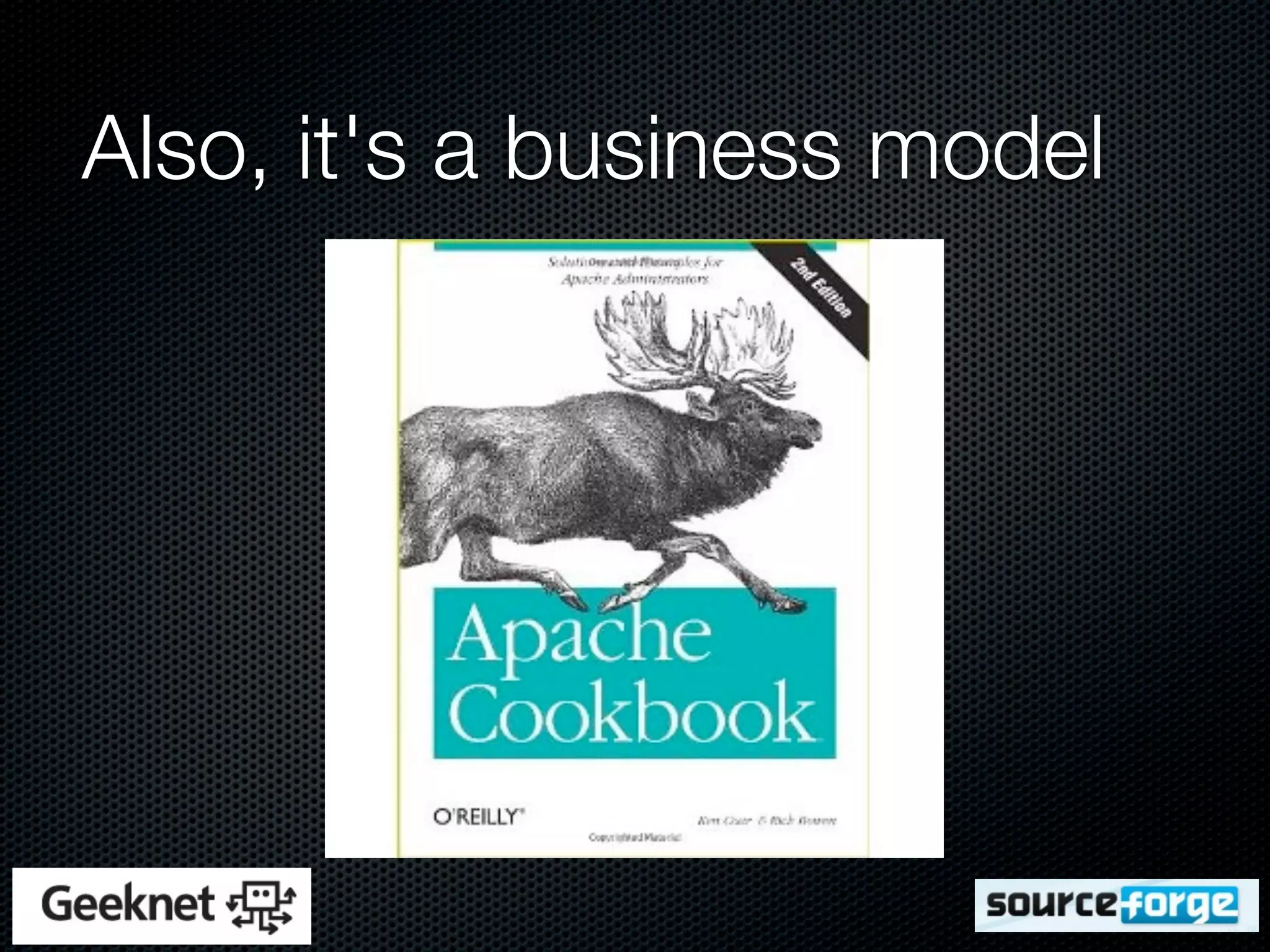
Also, it's a business model
Where do docs come from?

These are questions we think users
might want answered
                 vs.

These are questions customers are
actually asking
Young projects


You don't know what folks will ask
You write docs about what you expect
to be useful
Mature projects

Listen to the customer, and answer the
questions that they're asking
Frequently asked questions might
actually be feature requests
Listening

 Mailing lists
 Usenet (Yes, it's still alive)
 IRC
 Third-party websites with their horrible
 horrible advice
Third-party sites
 Sometimes evidence that you've failed
 with your docs
 Gently point out their errors
 Ask them if they'd like to contribute to
 the official docs
 Everybody wins
Third-party sites
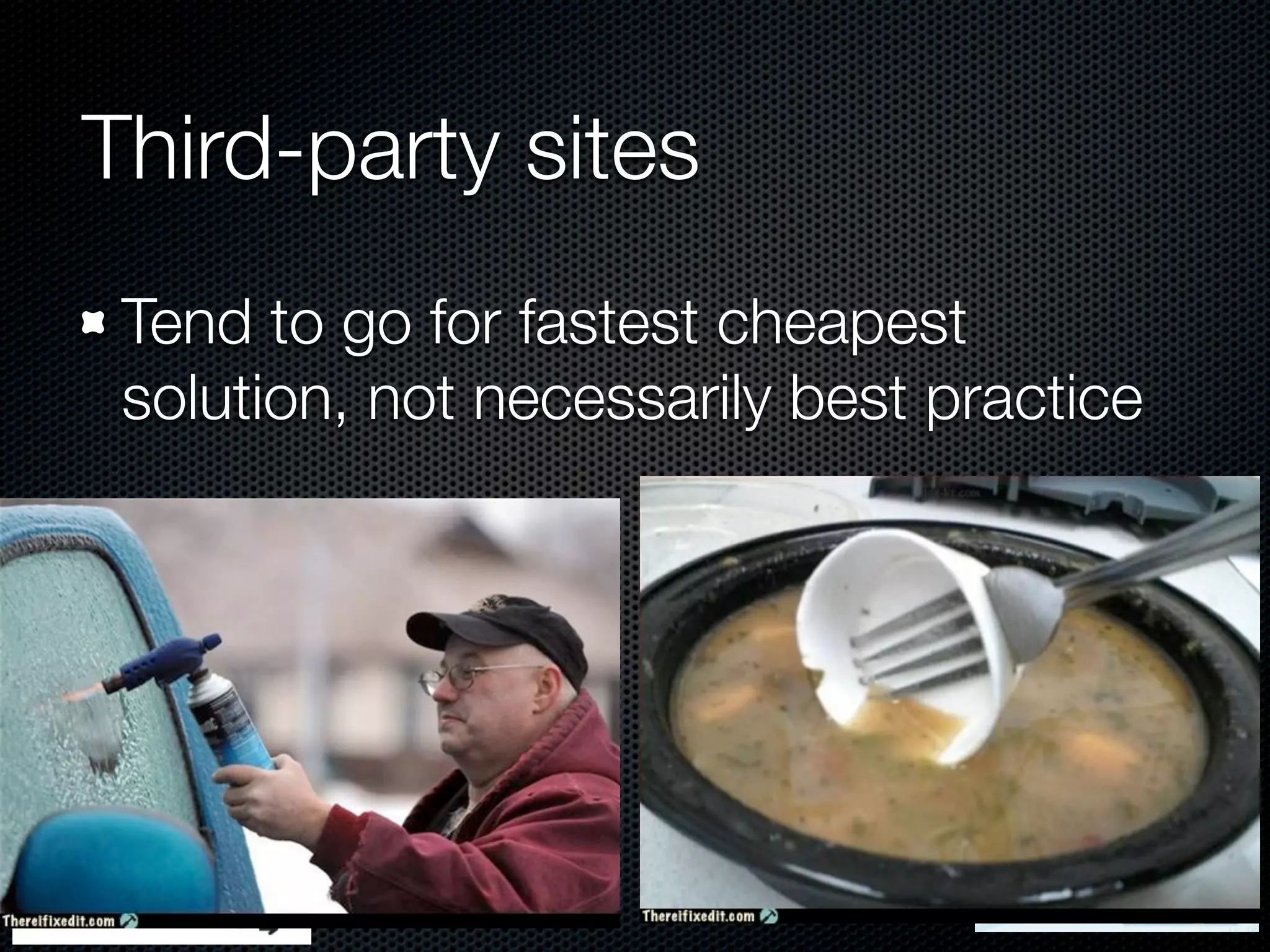
 Tend to go for fastest cheapest
 solution, not necessarily best practice
Unfortunately ...

 You have to actually participate on
 those sites to make a difference
Statistics
 What docs are people looking at?
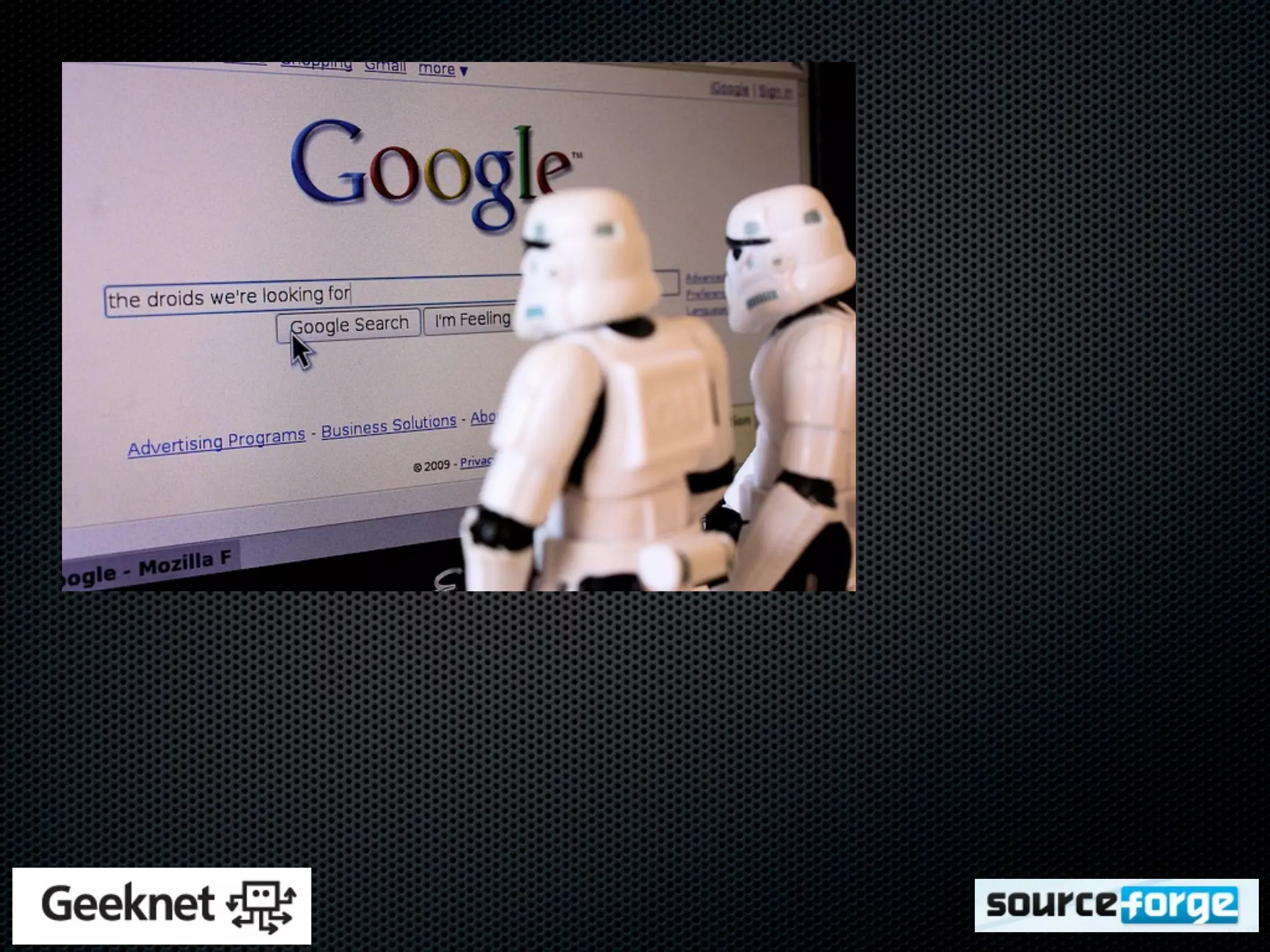
 What Google search led them there?
 Does the doc seem to answer that
 question?
 Do you provide them a feedback
 method?
5. Learn something


If you go very long without learning
anything, you probably are out of touch
with the audience of your
documentation
By duane.schoon, Flickr
FIN    rbowen@geek.net
      rbowen@apache.org
          sf.net/blog
        drbacchus.com
          @rbowen
        @sourceforge
         joind.in/6504

Don't be a jerk

  • 1.
    How to letgo of your ego and help your customers succeed Subtitle: Don't be a jerk Rich Bowen - rbowen@geek.net Community Growth Hacker, SourceForge @rbowen
  • 3.
    Open Source =Middle School Make fun of the new kid Say mean things to the girls Show off your scars
  • 4.
  • 5.
    Smart Questions: EricRaymond RTFM and STFW: How To Tell You've Seriously Screwed Up There is an ancient and hallowed tradition: if you get a reply that reads “RTFM”, the person who sent it thinks you should have Read The F***ing Manual. He or she is almost certainly right. Go read it. RTFM has a younger relative. If you get a reply that reads “STFW”, the person who sent it thinks you should have Searched The F*ing Web. He or she is almost certainly right. Go search it. (The milder version of this is when you are told “Google is your friend!”)
  • 6.
    Why do wedo this? This is a hobby. Support is a job People are mean and entitled The answers are obvious
  • 7.
    Users vs Customers Whatdifference does it make?
  • 10.
    Users, right? Theydidn't pay for it We don't owe them anything
  • 11.
    Customers Without them, there'sno reason for your product Your product is not unique Good customer service is what distinguishes you
  • 12.
    What's the difference between users and customers? The attitude of the people on the other end of that transaction.
  • 13.
    The way you treat them defines their role
  • 14.
    Disclaimer: PHP arethe good guys Great documentation Usually a courteous customer support experience Good parties
  • 15.
    But ... Thefirst graders learn by watching us
  • 16.
    I learned itfrom *you*
  • 17.
    So, what canwe do ...
  • 18.
    1. Write ABetter FM Kathy Sierra
  • 19.
    ドキュメント Your audience is not composed entirely of white, English- speaking males Idiomatic language is cute, but can also be very confusing
  • 20.
    A wonderful example,but requires idiomatic English to understand
  • 22.
    Voice Determine who youraudience is Speak to them
  • 23.
    Who is youraudience? Apprentice Avoid terms like "newbie" and "user", as they set the wrong voice. Journeyman Master
  • 24.
    Apprentice How to getstarted May not know what questions to ask Preserve their dignity (See also: Don't be a jerk)
  • 25.
    Journeyman Viz: Wikipedia May do this every day, but it's probably not their primary skill Will likely know what to ask, and has already done some research Generally wants to solve a problem or complete a task
  • 26.
    Master Doesn't want towaste your time or theirs May be a good candidate for project participation
  • 27.
    Speak to them Imaginean actual audience that you're writing to This helps set your voice correctly Good docs will have different voices for each audience
  • 28.
    Elevator      “If you can't explain it simply, you don't cszar, on Flickr understand it well enough” -Albert Einstein
  • 29.
  • 30.
  • 31.
    Scope What are wegoing to talk about?
  • 32.
    Scope If you don'tdefine your scope, your readers will insist that you expand it.
  • 33.
  • 34.
    Benefits of definingscope You know when you hit it You know when you're done You know when you can safely say "that's documented over there"
  • 35.
    Document your scope "Thisdocumentation covers ..." Helpful when people insist you cover more Can politely point to your policy
  • 36.
    This is notjust being lazy Do your thing really well Let other people do their thing well This is what the <a> tag is for
  • 37.
  • 38.
    zazzle.com Co ro co lla st ry: yo B u ad cu m st an om n er ser s
  • 39.
  • 40.
    Being Rude Most ofthe time, you don't mean to That guy was just an idiot Idiots are frustrating I've already answered that question 17,000,000 times today
  • 41.
  • 42.
    Two things toremember You were a first-grader once, too You don't actually know the context of their question
  • 43.
  • 44.
    You have astory like that too. You don't have to share it with the whole class, but we all know you do.
  • 45.
    Be an advocate,not an ... Not everything is "good" vs "bad" There are many right answers http://www.perl.com/pub/2000/12/ advocacy.html
  • 46.
    3.5 - Bea mentor It takes time Most people won't thank you The benefits are immeasurable and will outlast your "real" work
  • 48.
    4. Listen tothe customer
  • 49.
    Context Contextcan be the difference between a stupid question and a brilliant one. Don't assume that the customer is an imbecile.
  • 50.
  • 51.
    Yes, some questionsare stupid Attempt to understand the situation the question came from, rather than critiquing the question They're probably not intentionally wasting your time
  • 52.
    Don't hesitate to suggesta better solution But ... they may have a reason for their proposed solution
  • 53.
    Frequently Asked Questions They'recalled that for a reason
  • 54.
    Frequently Asked Questions Don'tsay "RTFM" Rather, provide a link directly to the answer in the FM, so that next time, they look there first Actually read that answer, and if it's inadequate, GO FIX IT
  • 55.
    Frequently Asked Questions Also,don't say "STFW" It's insulting to assume that they haven't done anything at all towards a solution. (Even if it's occasionally true.) By listening, you can ascertain what they've already done
  • 56.
    Yes, people shoulddo their research, but ... Being rude as your initial stance is hugely arrogant "How to ask smart questions" is an arrogant document that puts all the blame on the customer
  • 57.
    Do it once,really really well It's better to answer the question once, really well, and then link to it, than to answer it repeatedly, getting more frustrated each time
  • 58.
    Also, it's abusiness model
  • 59.
    Where do docscome from? These are questions we think users might want answered vs. These are questions customers are actually asking
  • 60.
    Young projects You don'tknow what folks will ask You write docs about what you expect to be useful
  • 61.
    Mature projects Listen tothe customer, and answer the questions that they're asking Frequently asked questions might actually be feature requests
  • 62.
    Listening Mailing lists Usenet (Yes, it's still alive) IRC Third-party websites with their horrible horrible advice
  • 63.
    Third-party sites Sometimesevidence that you've failed with your docs Gently point out their errors Ask them if they'd like to contribute to the official docs Everybody wins
  • 64.
    Third-party sites Tendto go for fastest cheapest solution, not necessarily best practice
  • 65.
    Unfortunately ... Youhave to actually participate on those sites to make a difference
  • 66.
    Statistics What docsare people looking at? What Google search led them there? Does the doc seem to answer that question? Do you provide them a feedback method?
  • 68.
    5. Learn something Ifyou go very long without learning anything, you probably are out of touch with the audience of your documentation
  • 69.
  • 70.
    FIN rbowen@geek.net rbowen@apache.org sf.net/blog drbacchus.com @rbowen @sourceforge joind.in/6504