



Raunak Shrestha
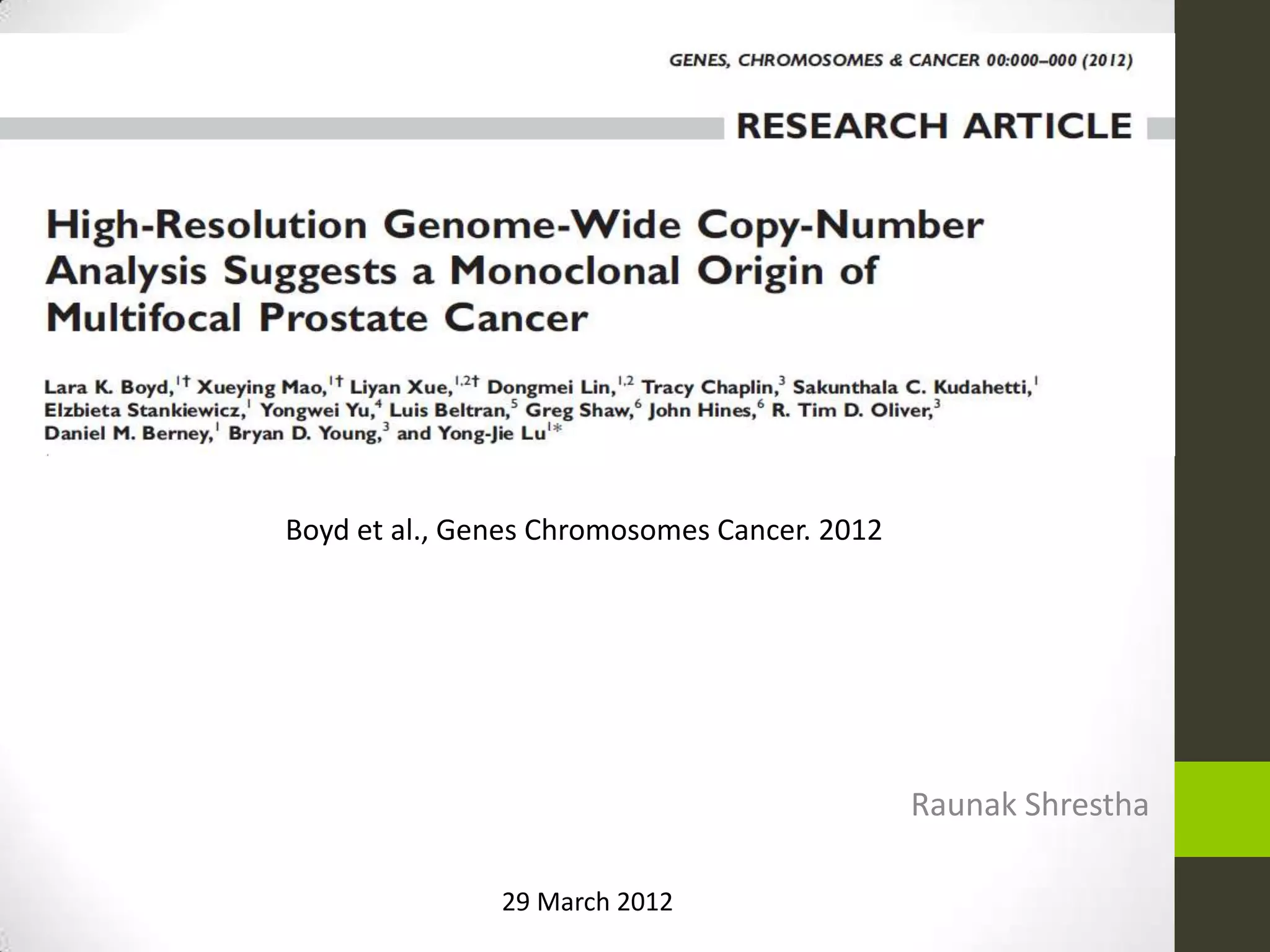
Boyd et al., Genes Chromosomes Cancer. 2012
29 March 2012
BACKGROUND 2
Introduction
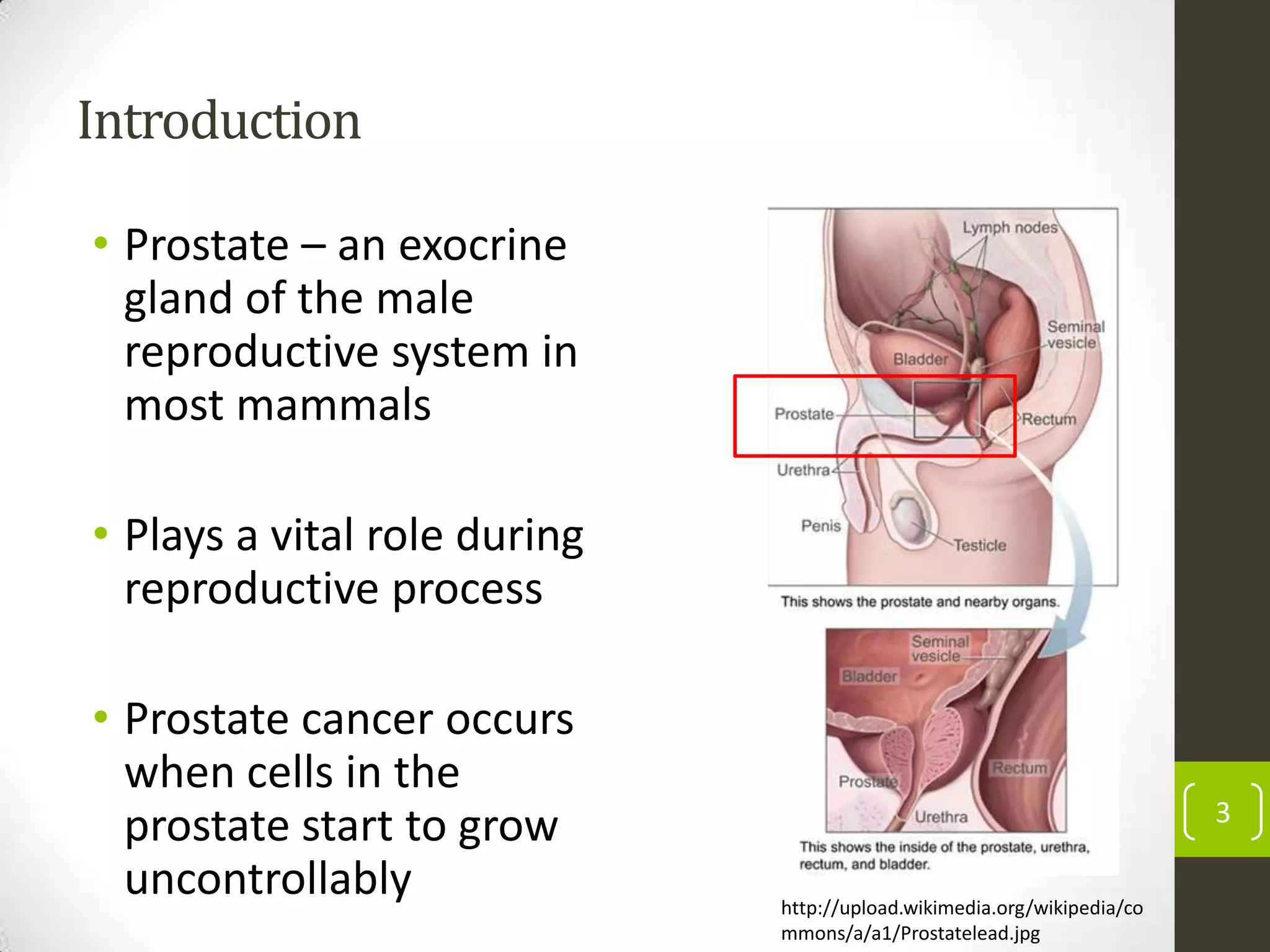
• Prostate – an exocrine
gland of the male
reproductive system in
most mammals
• Plays a vital role during
reproductive process
• Prostate cancer occurs
when cells in the
prostate start to grow
uncontrollably
3
http://upload.wikimedia.org/wikipedia/co
mmons/a/a1/Prostatelead.jpg
ProstateCancer Prevalence
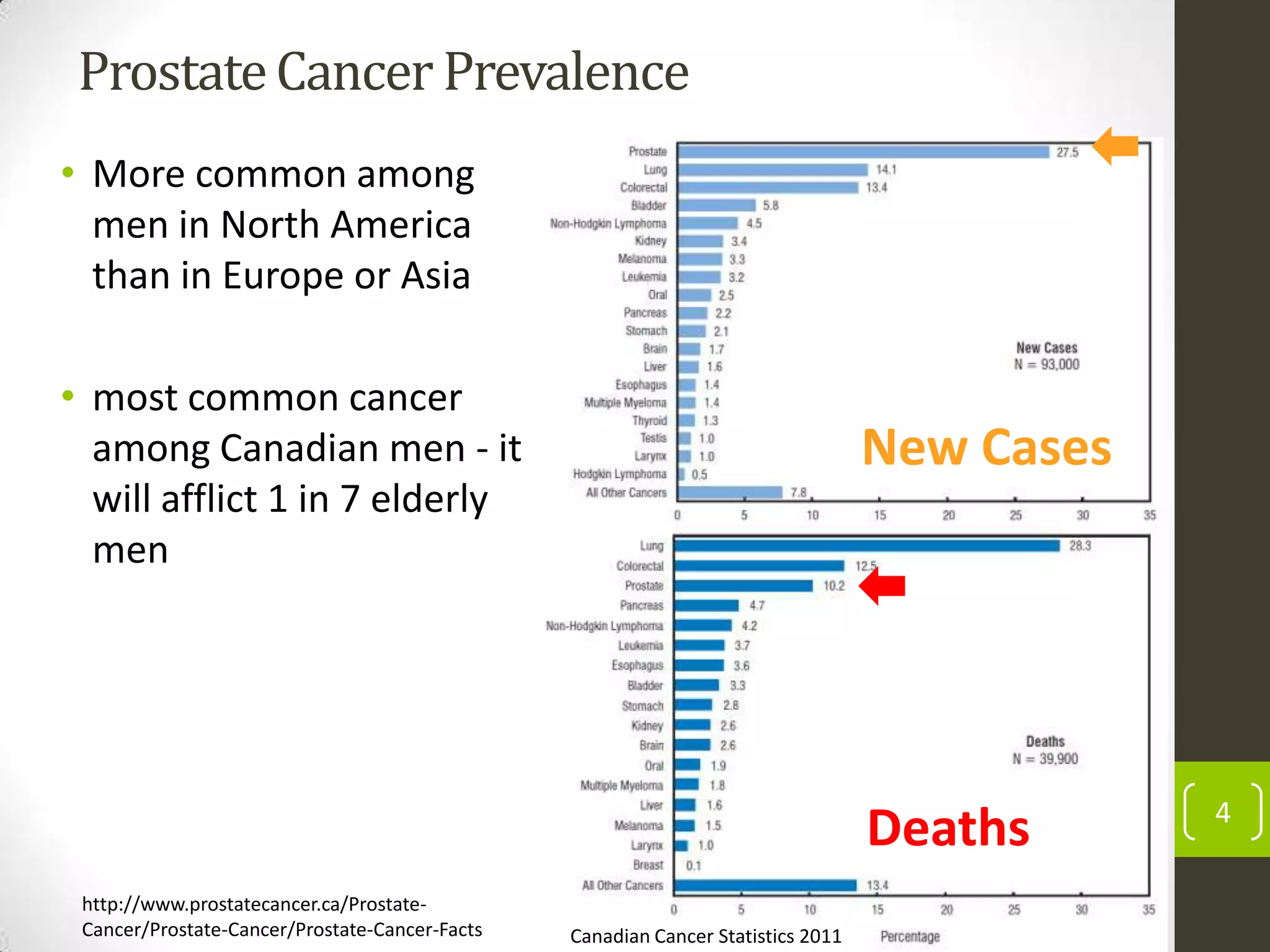
• More common among
men in North America
than in Europe or Asia
• most common cancer
among Canadian men - it
will afflict 1 in 7 elderly
men
4
New Cases
Deaths
http://www.prostatecancer.ca/Prostate-
Cancer/Prostate-Cancer/Prostate-Cancer-Facts Canadian Cancer Statistics 2011
Multifocality of Prostate Cancer
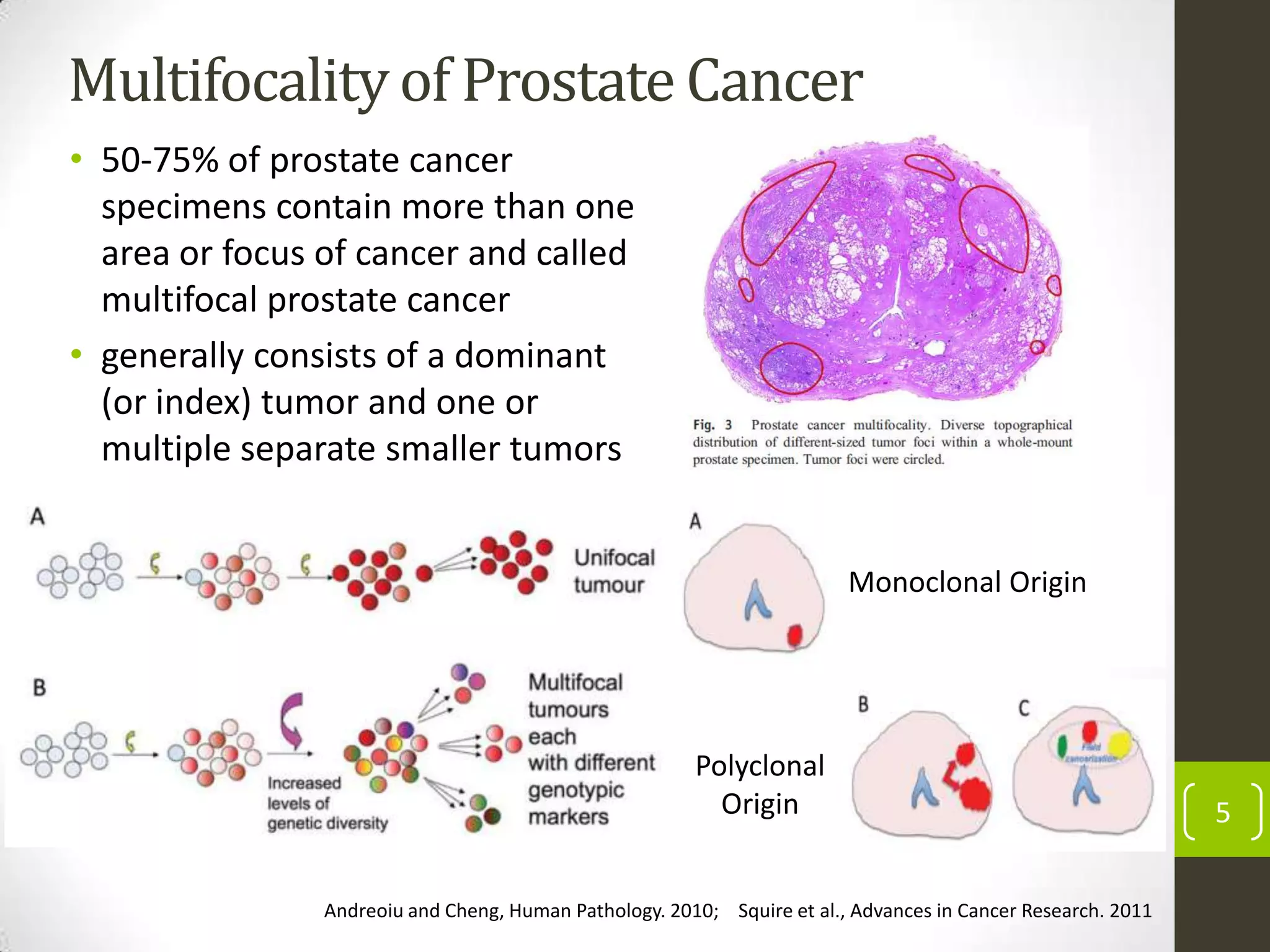
• 50-75% of prostate cancer
specimens contain more than one
area or focus of cancer and called
multifocal prostate cancer
• generally consists of a dominant
(or index) tumor and one or
multiple separate smaller tumors
5
Andreoiu and Cheng, Human Pathology. 2010; Squire et al., Advances in Cancer Research. 2011
Monoclonal Origin
Polyclonal
Origin
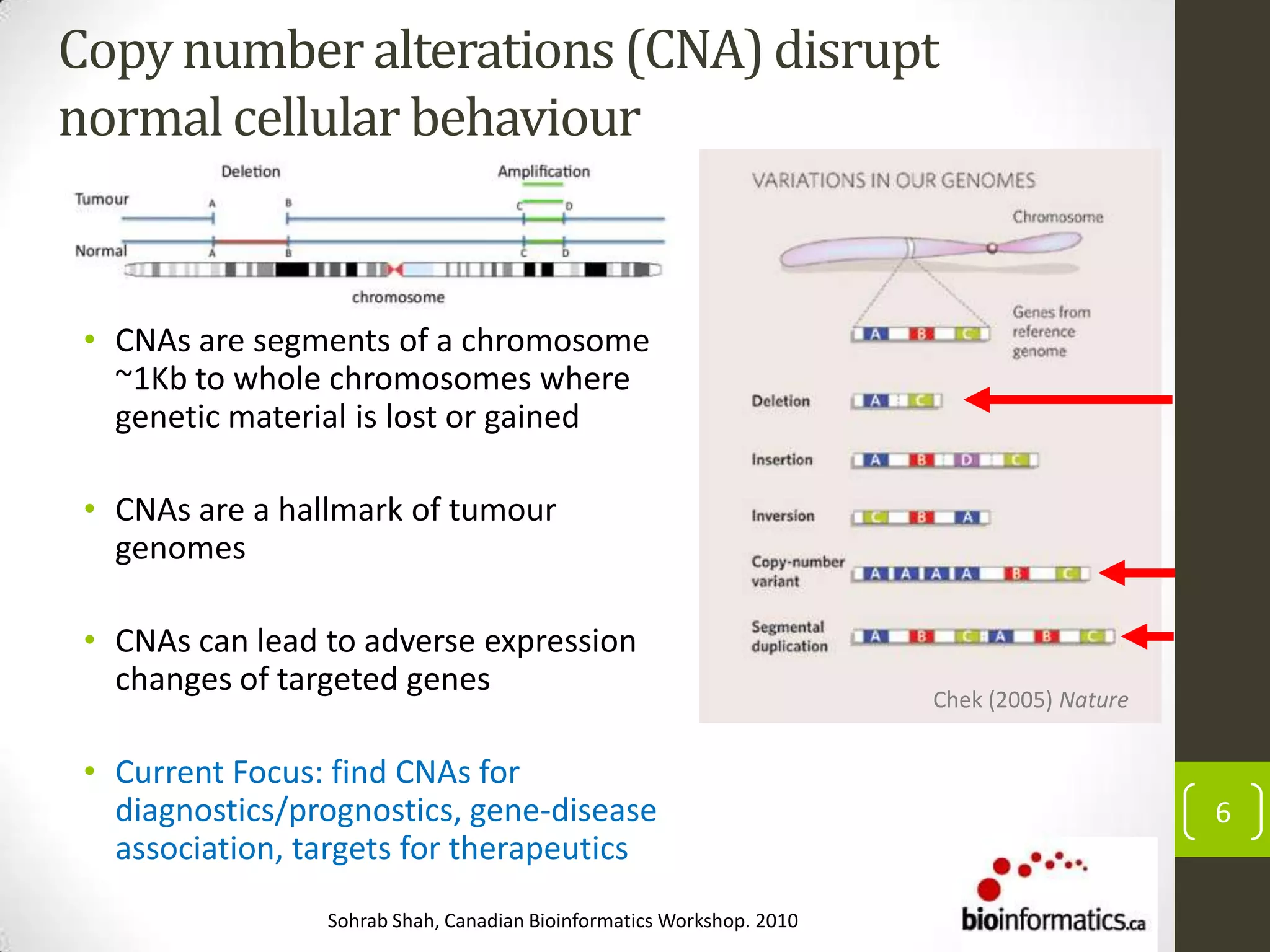
Copynumberalterations (CNA)disrupt
normalcellular behaviour
• CNAs are segments of a chromosome
~1Kb to whole chromosomes where
genetic material is lost or gained
• CNAs are a hallmark of tumour
genomes
• CNAs can lead to adverse expression
changes of targeted genes
• Current Focus: find CNAs for
diagnostics/prognostics, gene-disease
association, targets for therapeutics
6
Chek (2005) Nature
Sohrab Shah, Canadian Bioinformatics Workshop. 2010
METHODS 7
Tissue Sample Selection
8
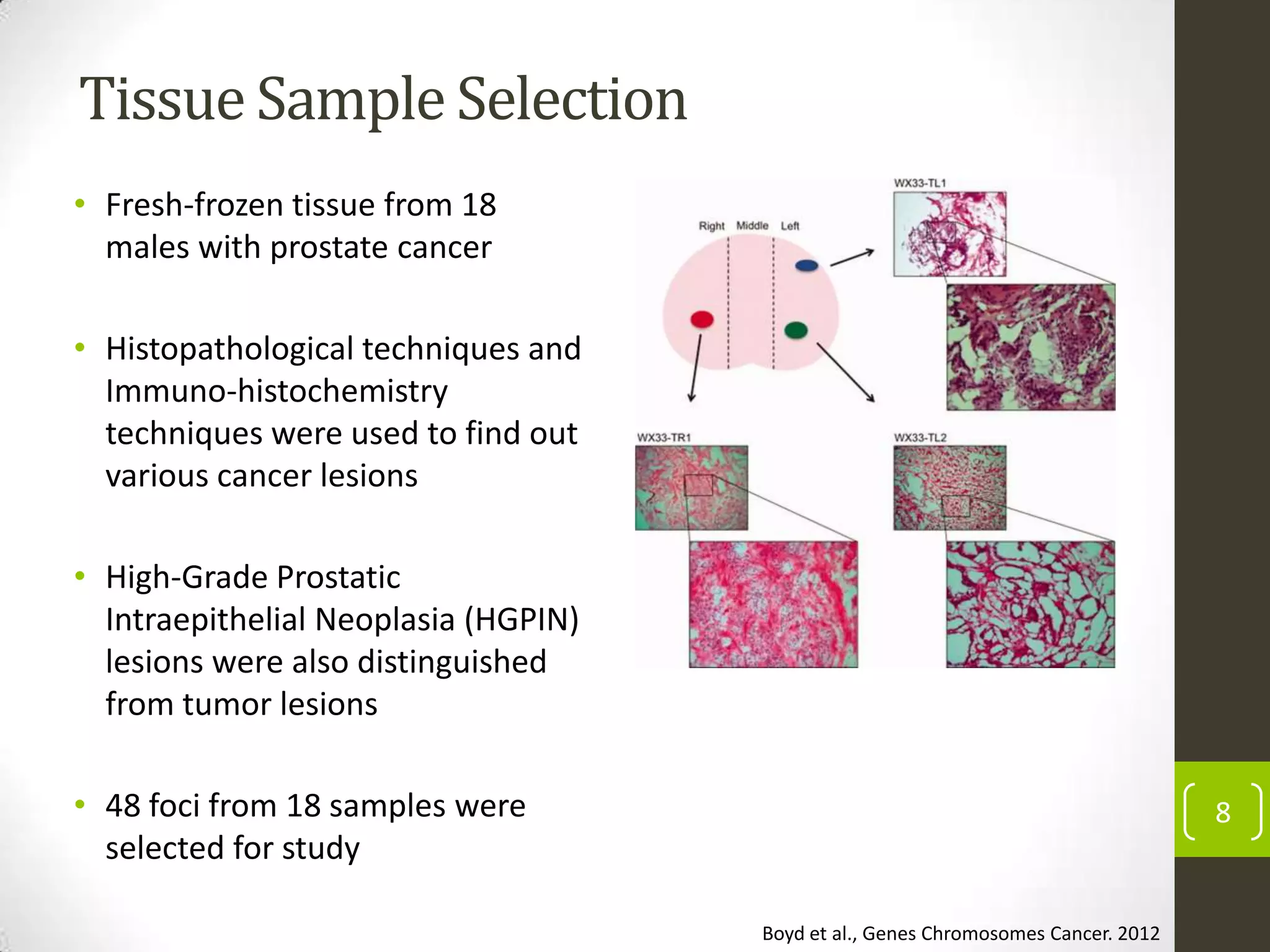
• Fresh-frozen tissue from 18
males with prostate cancer
• Histopathological techniques and
Immuno-histochemistry
techniques were used to find out
various cancer lesions
• High-Grade Prostatic
Intraepithelial Neoplasia (HGPIN)
lesions were also distinguished
from tumor lesions
• 48 foci from 18 samples were
selected for study
Boyd et al., Genes Chromosomes Cancer. 2012
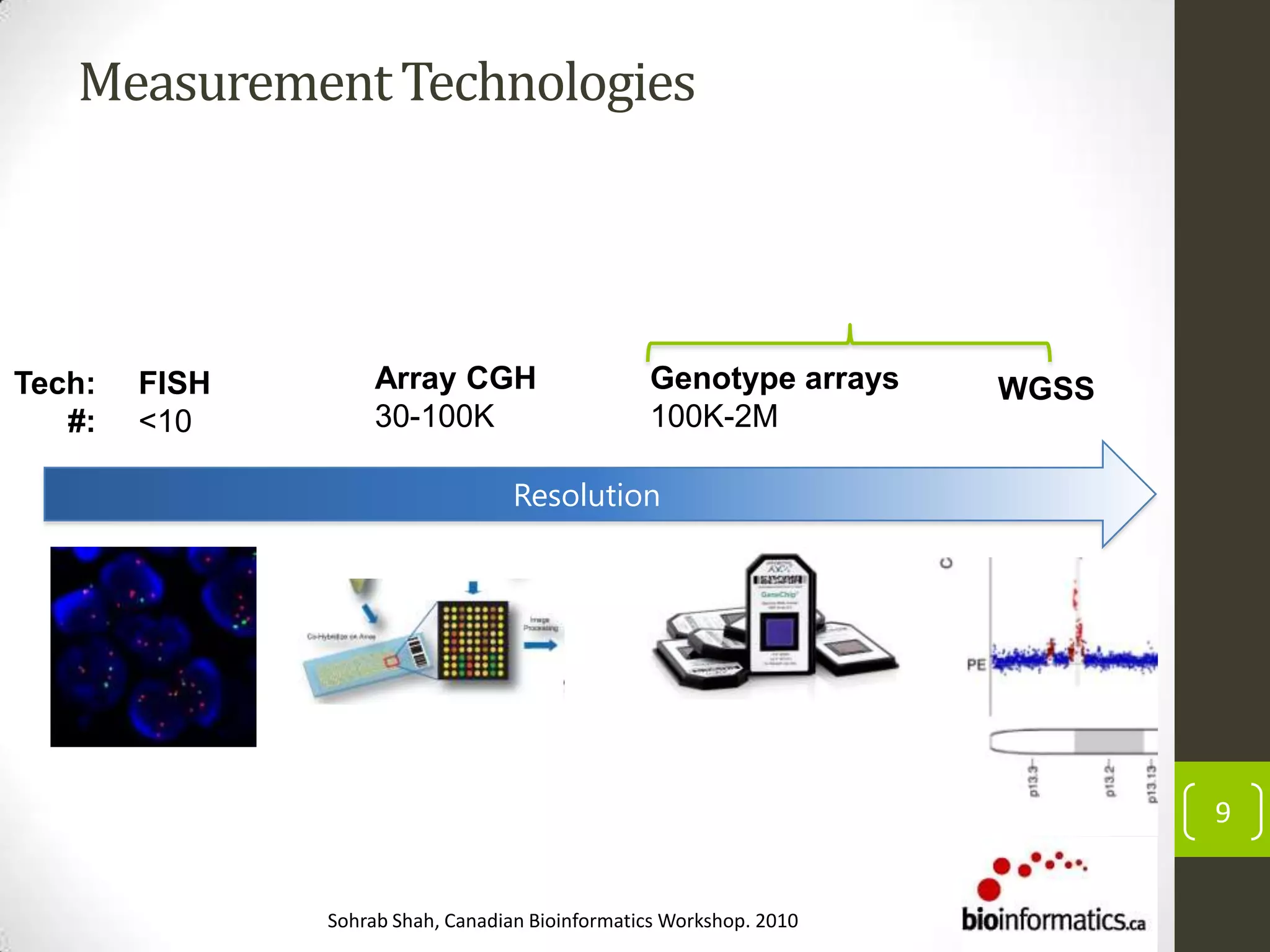
MeasurementTechnologies
9
Resolution
FISH
<10
Array CGH
30-100K
Tech:
#:
Genotype arrays
100K-2M
WGSS
Sohrab Shah, Canadian Bioinformatics Workshop. 2010
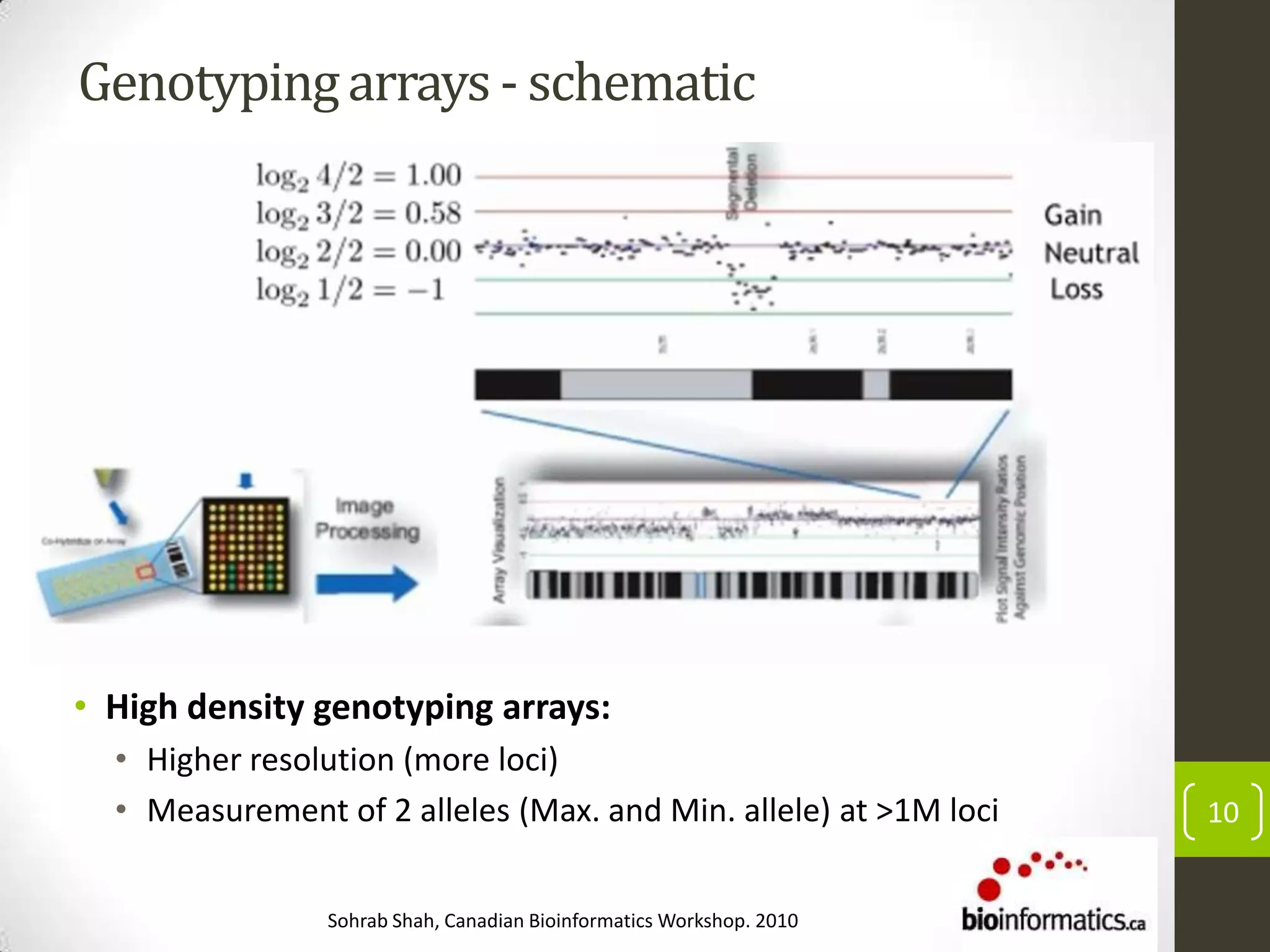
Genotypingarrays - schematic
10
Sohrab Shah, Canadian Bioinformatics Workshop. 2010
• High density genotyping arrays:
• Higher resolution (more loci)
• Measurement of 2 alleles (Max. and Min. allele) at >1M loci
RESULTS 11
12
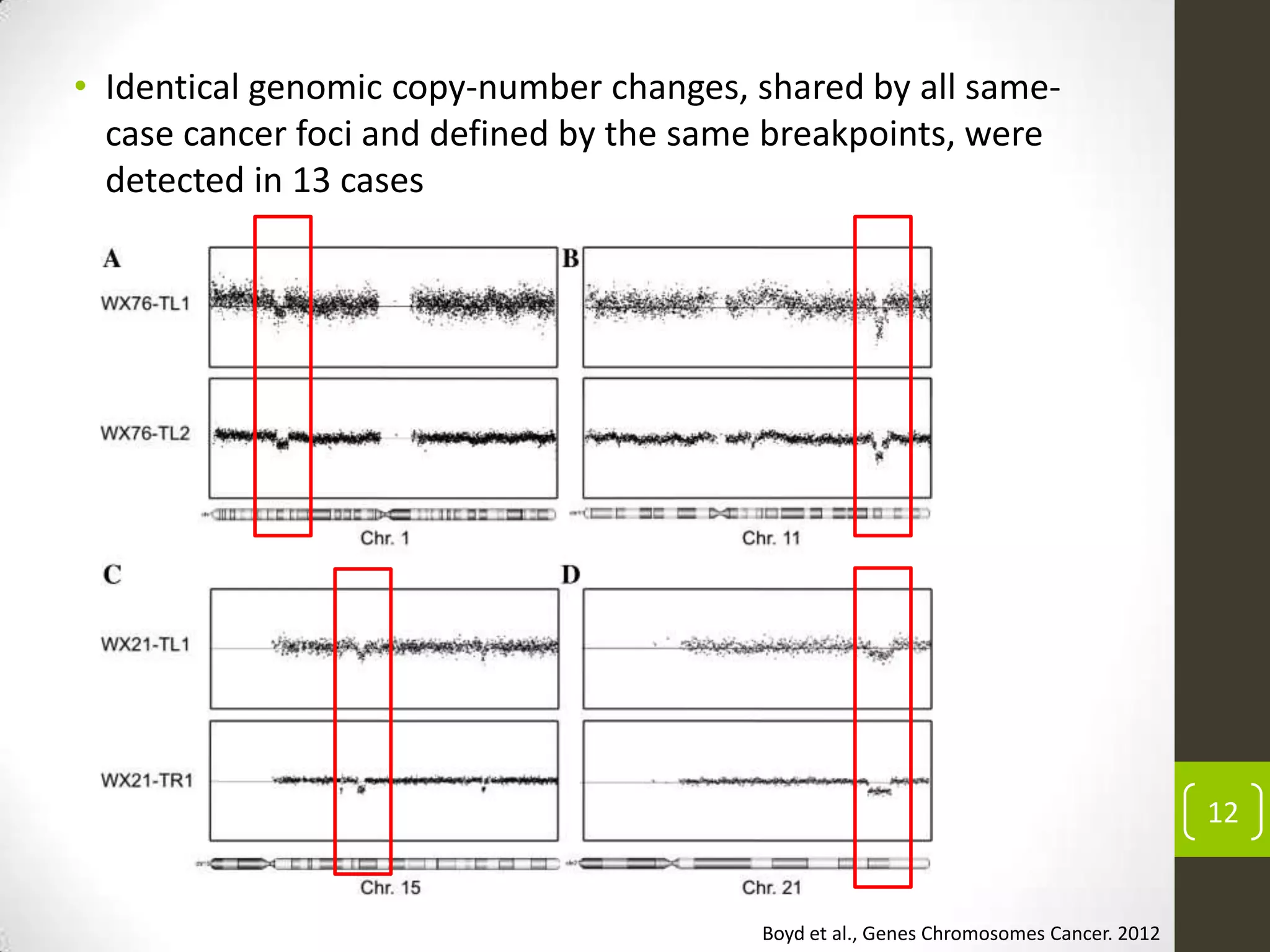
• Identical genomic copy-number changes, shared by all same-
case cancer foci and defined by the same breakpoints, were
detected in 13 cases
Boyd et al., Genes Chromosomes Cancer. 2012
13
Boyd et al., Genes Chromosomes Cancer. 2012
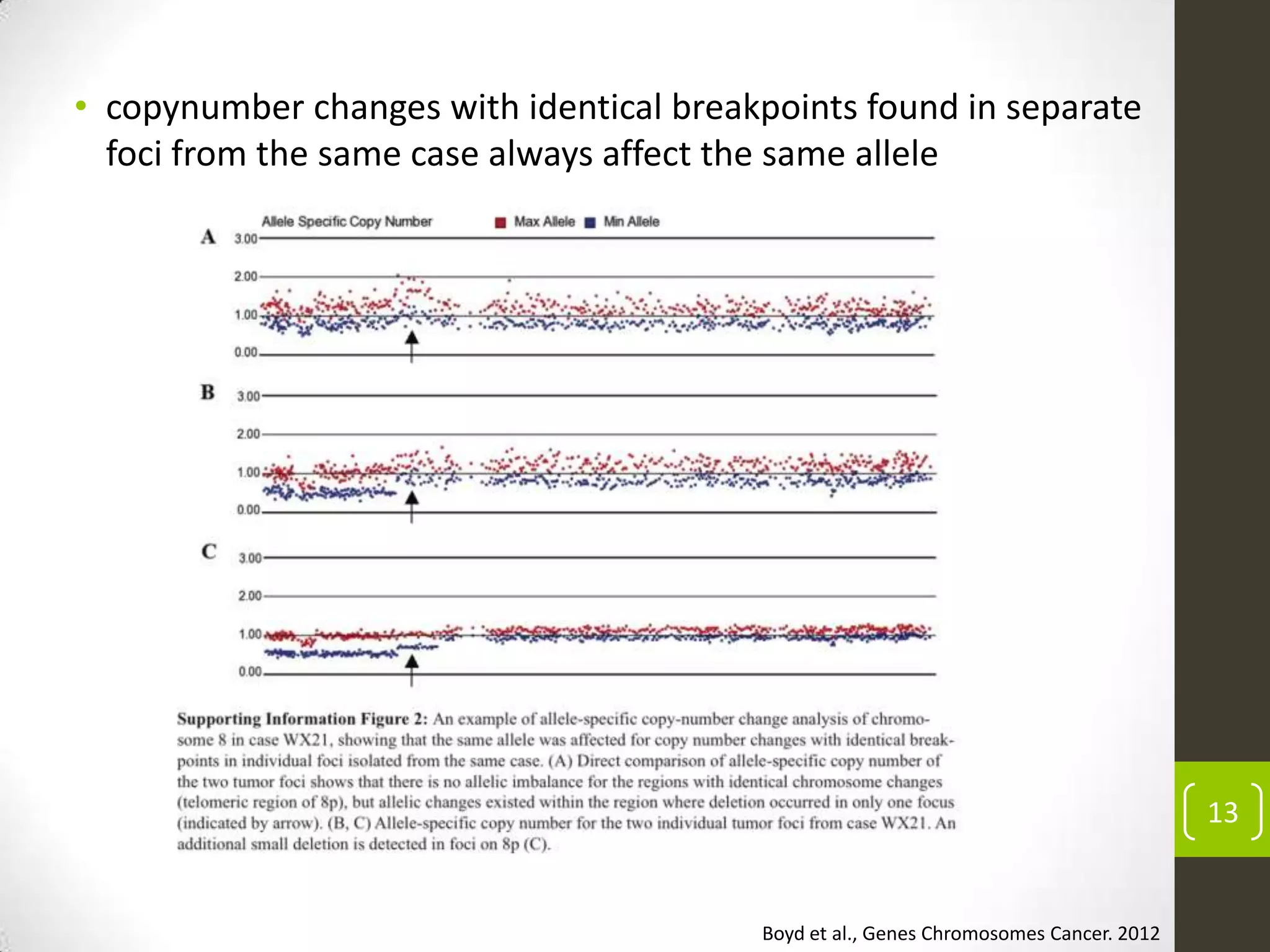
• copynumber changes with identical breakpoints found in separate
foci from the same case always affect the same allele
14
Boyd et al., Genes Chromosomes Cancer. 2012
15
Boyd et al., Genes Chromosomes Cancer. 2012
16
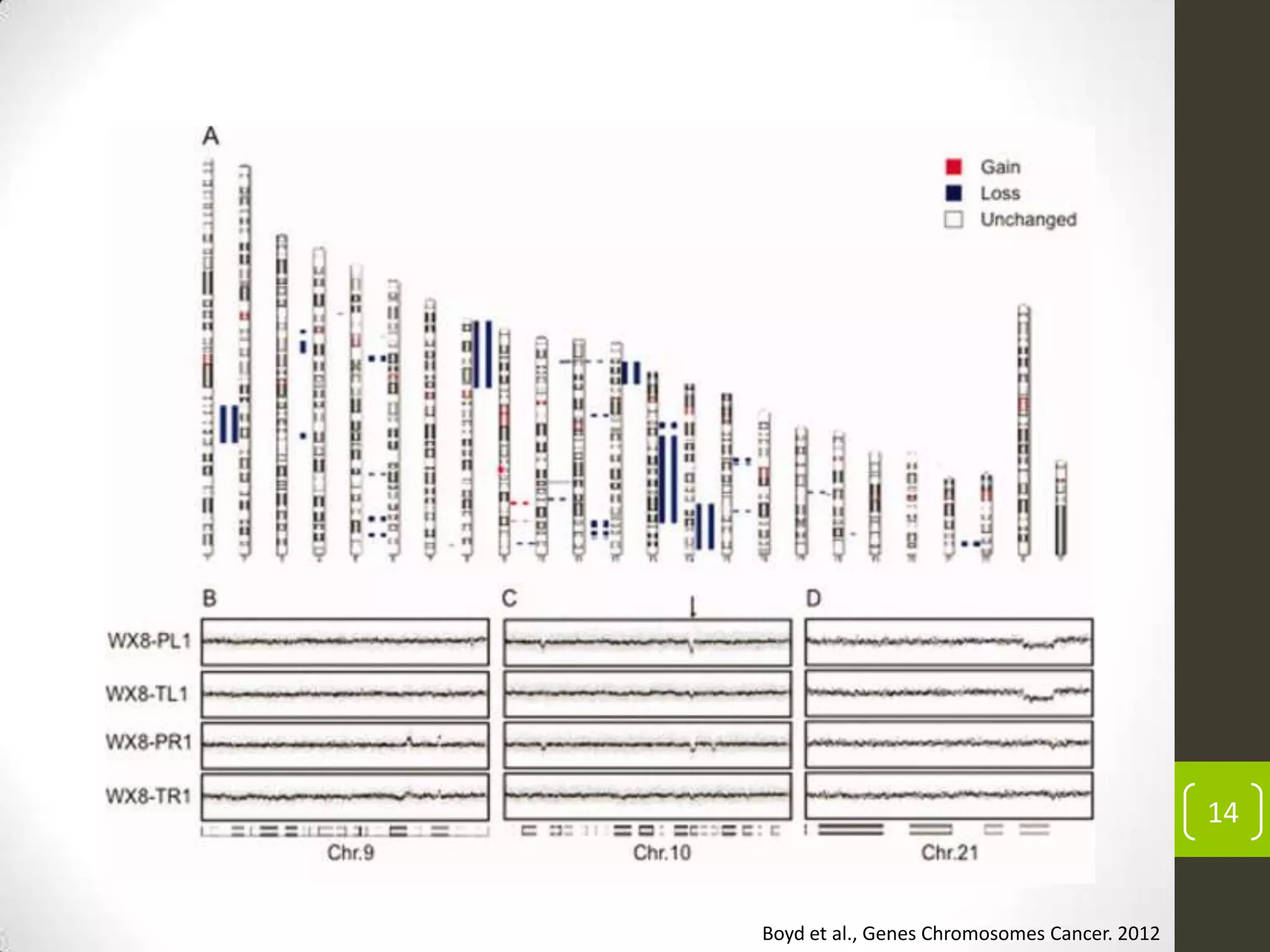
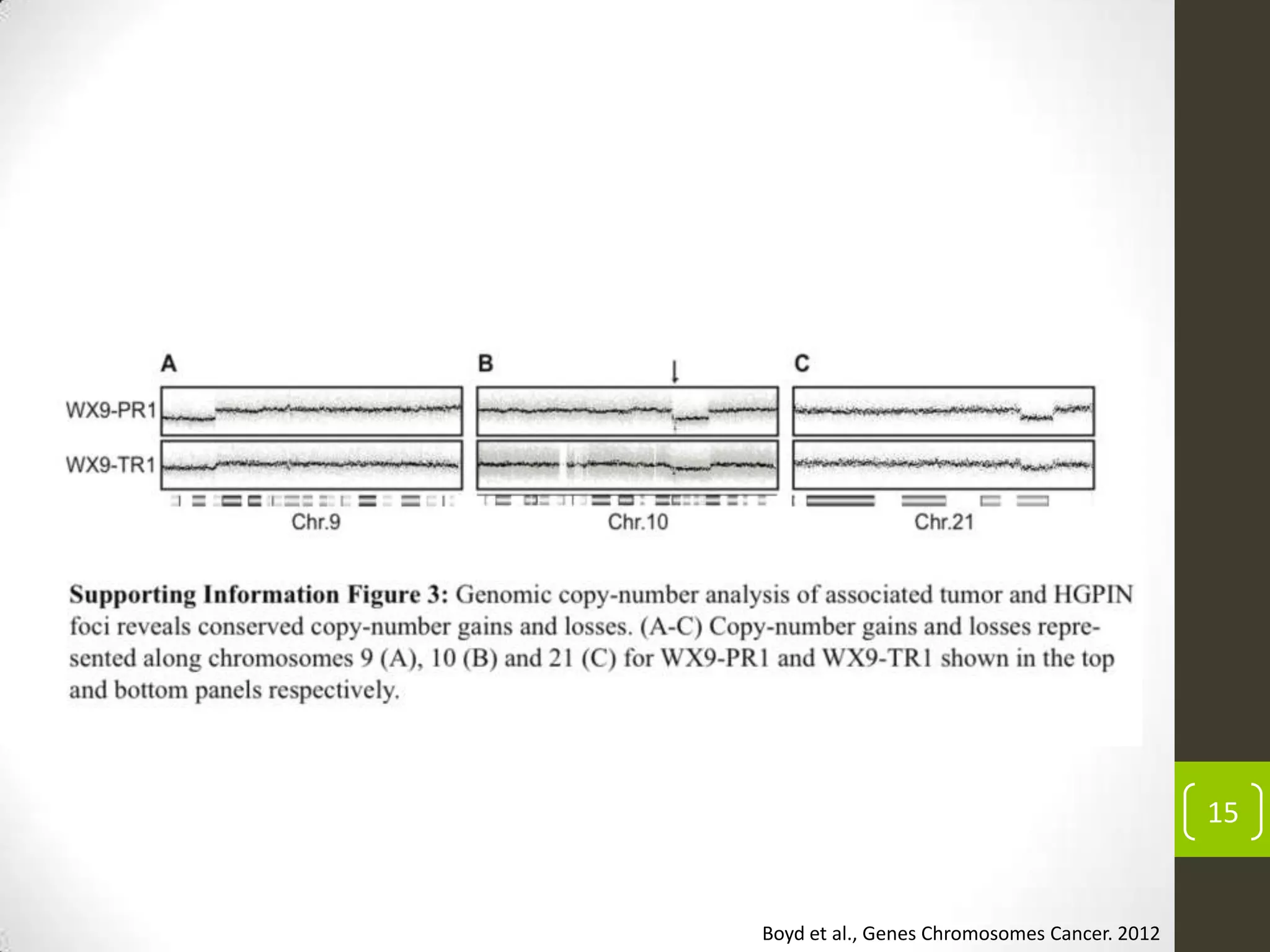
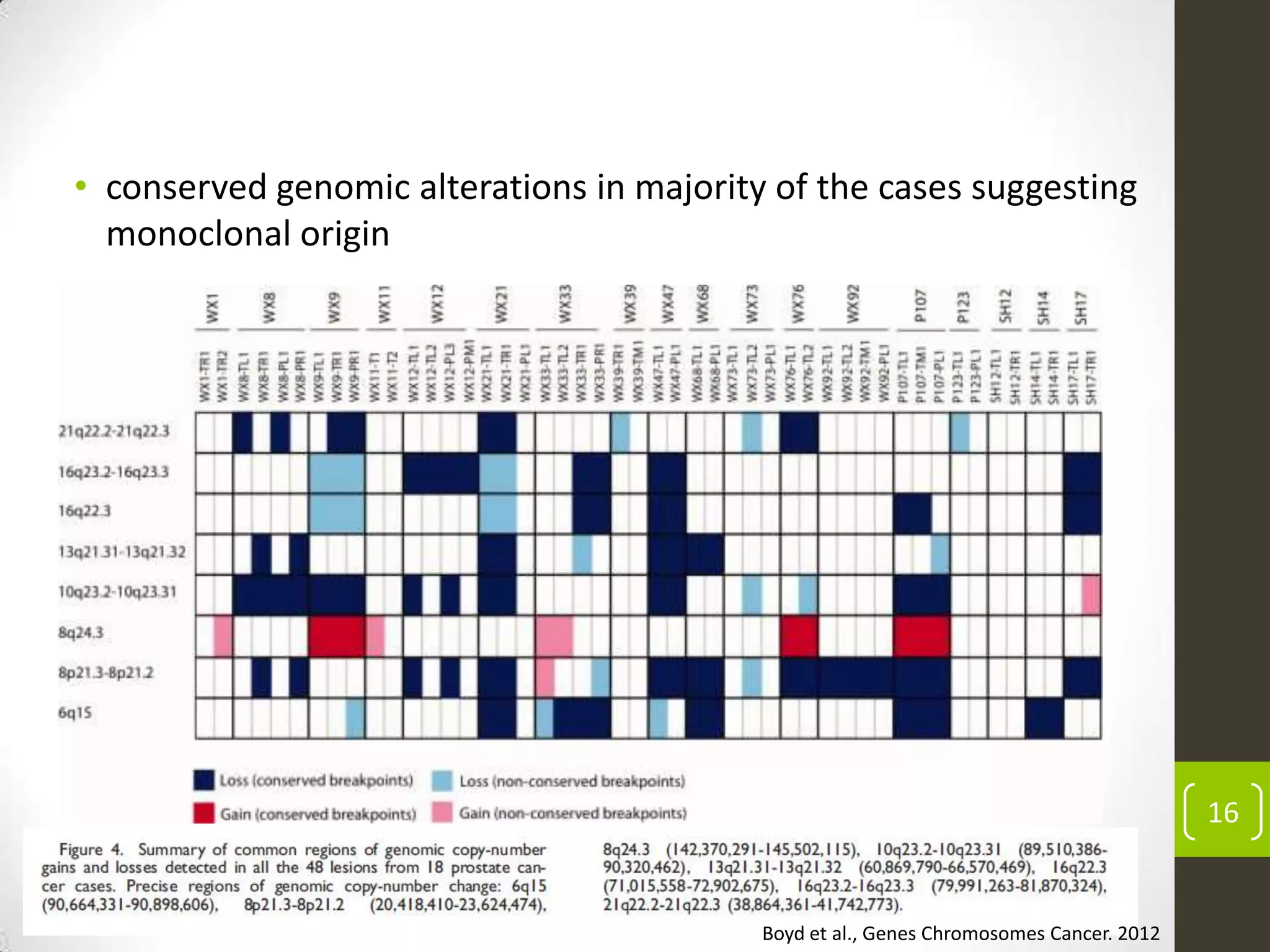
• conserved genomic alterations in majority of the cases suggesting
monoclonal origin
Boyd et al., Genes Chromosomes Cancer. 2012
Conclusion
• From previous molecular studies in prostate cancer, polyclonal
origin is widely believed
• But these studies assume that, for foci to be monoclonal, same
case foci must share all genetic alterations
• Passenger mutations outnumber the Driver mutations
• Passenger mutations accumulate in cancer subclones
independently and may not be common to all the subclones
(or to all foci)
17
Conclusion
• This paper hypothesize that,
• if foci were monoclonal in origin, all same-case foci would share
some early genetic changes, with conserved breakpoints,
• individual foci from that case would harbor additional genetic
changes acquired during subclonal progression.
• But does not completely rule out the polyclonal origin
• Though majority of cases exhibited monoclonal origin small
fraction of cases did not fit into this model !!!
• Study recommends further study with larger sample size
18
Critiques
• Analyzed only the copy-number changes to study the clonal
origin of the multifocal cancers
• Sequence level variation as well as other Genomic Variation could
give more insight on the topic
• Did not use the sequence information of the cancer genome
to look for precise breakpoints in the genome
• DNA extraction from the micro-dissected tissue samples would
be very difficult
• DNA concentration may not be well enough for sequencing
19
20
?
Questions

High-resolution genome-wide copy-number analysis suggests a monoclonal origin of multifocal prostate cancer.

  • 1.
    Raunak Shrestha Boyd etal., Genes Chromosomes Cancer. 2012 29 March 2012
  • 2.
  • 3.
    Introduction • Prostate –an exocrine gland of the male reproductive system in most mammals • Plays a vital role during reproductive process • Prostate cancer occurs when cells in the prostate start to grow uncontrollably 3 http://upload.wikimedia.org/wikipedia/co mmons/a/a1/Prostatelead.jpg
  • 4.
    ProstateCancer Prevalence • Morecommon among men in North America than in Europe or Asia • most common cancer among Canadian men - it will afflict 1 in 7 elderly men 4 New Cases Deaths http://www.prostatecancer.ca/Prostate- Cancer/Prostate-Cancer/Prostate-Cancer-Facts Canadian Cancer Statistics 2011
  • 5.
    Multifocality of ProstateCancer • 50-75% of prostate cancer specimens contain more than one area or focus of cancer and called multifocal prostate cancer • generally consists of a dominant (or index) tumor and one or multiple separate smaller tumors 5 Andreoiu and Cheng, Human Pathology. 2010; Squire et al., Advances in Cancer Research. 2011 Monoclonal Origin Polyclonal Origin
  • 6.
    Copynumberalterations (CNA)disrupt normalcellular behaviour •CNAs are segments of a chromosome ~1Kb to whole chromosomes where genetic material is lost or gained • CNAs are a hallmark of tumour genomes • CNAs can lead to adverse expression changes of targeted genes • Current Focus: find CNAs for diagnostics/prognostics, gene-disease association, targets for therapeutics 6 Chek (2005) Nature Sohrab Shah, Canadian Bioinformatics Workshop. 2010
  • 7.
  • 8.
    Tissue Sample Selection 8 •Fresh-frozen tissue from 18 males with prostate cancer • Histopathological techniques and Immuno-histochemistry techniques were used to find out various cancer lesions • High-Grade Prostatic Intraepithelial Neoplasia (HGPIN) lesions were also distinguished from tumor lesions • 48 foci from 18 samples were selected for study Boyd et al., Genes Chromosomes Cancer. 2012
  • 9.
  • 10.
    Genotypingarrays - schematic 10 SohrabShah, Canadian Bioinformatics Workshop. 2010 • High density genotyping arrays: • Higher resolution (more loci) • Measurement of 2 alleles (Max. and Min. allele) at >1M loci
  • 11.
  • 12.
    12 • Identical genomiccopy-number changes, shared by all same- case cancer foci and defined by the same breakpoints, were detected in 13 cases Boyd et al., Genes Chromosomes Cancer. 2012
  • 13.
    13 Boyd et al.,Genes Chromosomes Cancer. 2012 • copynumber changes with identical breakpoints found in separate foci from the same case always affect the same allele
  • 14.
    14 Boyd et al.,Genes Chromosomes Cancer. 2012
  • 15.
    15 Boyd et al.,Genes Chromosomes Cancer. 2012
  • 16.
    16 • conserved genomicalterations in majority of the cases suggesting monoclonal origin Boyd et al., Genes Chromosomes Cancer. 2012
  • 17.
    Conclusion • From previousmolecular studies in prostate cancer, polyclonal origin is widely believed • But these studies assume that, for foci to be monoclonal, same case foci must share all genetic alterations • Passenger mutations outnumber the Driver mutations • Passenger mutations accumulate in cancer subclones independently and may not be common to all the subclones (or to all foci) 17
  • 18.
    Conclusion • This paperhypothesize that, • if foci were monoclonal in origin, all same-case foci would share some early genetic changes, with conserved breakpoints, • individual foci from that case would harbor additional genetic changes acquired during subclonal progression. • But does not completely rule out the polyclonal origin • Though majority of cases exhibited monoclonal origin small fraction of cases did not fit into this model !!! • Study recommends further study with larger sample size 18
  • 19.
    Critiques • Analyzed onlythe copy-number changes to study the clonal origin of the multifocal cancers • Sequence level variation as well as other Genomic Variation could give more insight on the topic • Did not use the sequence information of the cancer genome to look for precise breakpoints in the genome • DNA extraction from the micro-dissected tissue samples would be very difficult • DNA concentration may not be well enough for sequencing 19
  • 20.