
Storage and Transportation of Art ObjectsENGI/HUMA 240Matthew Wettergreen, PhD
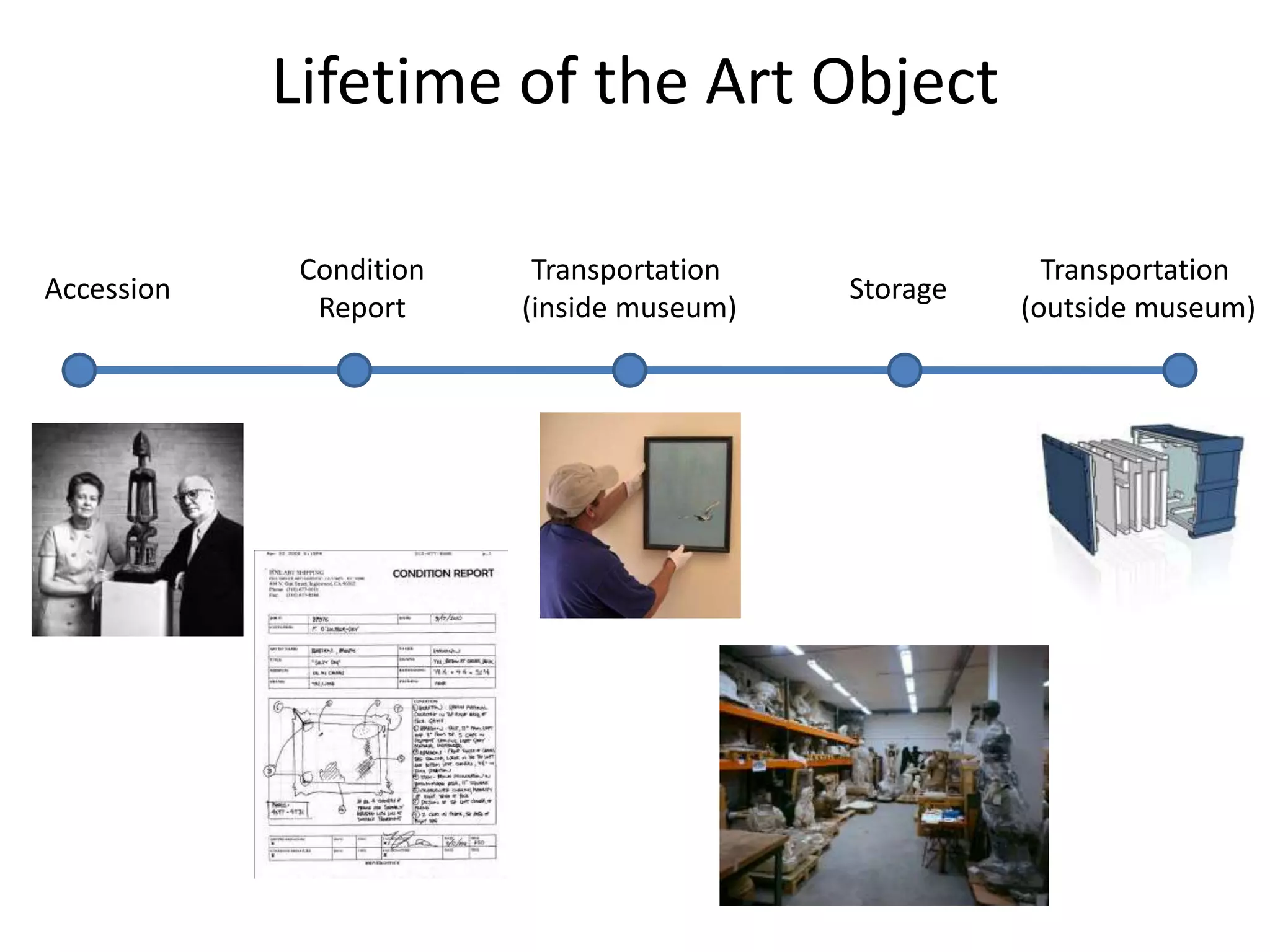
Lifetime of the Art ObjectConditionReportTransportation (inside museum)Transportation (outside museum)AccessionStorage
Accession / Condition Report
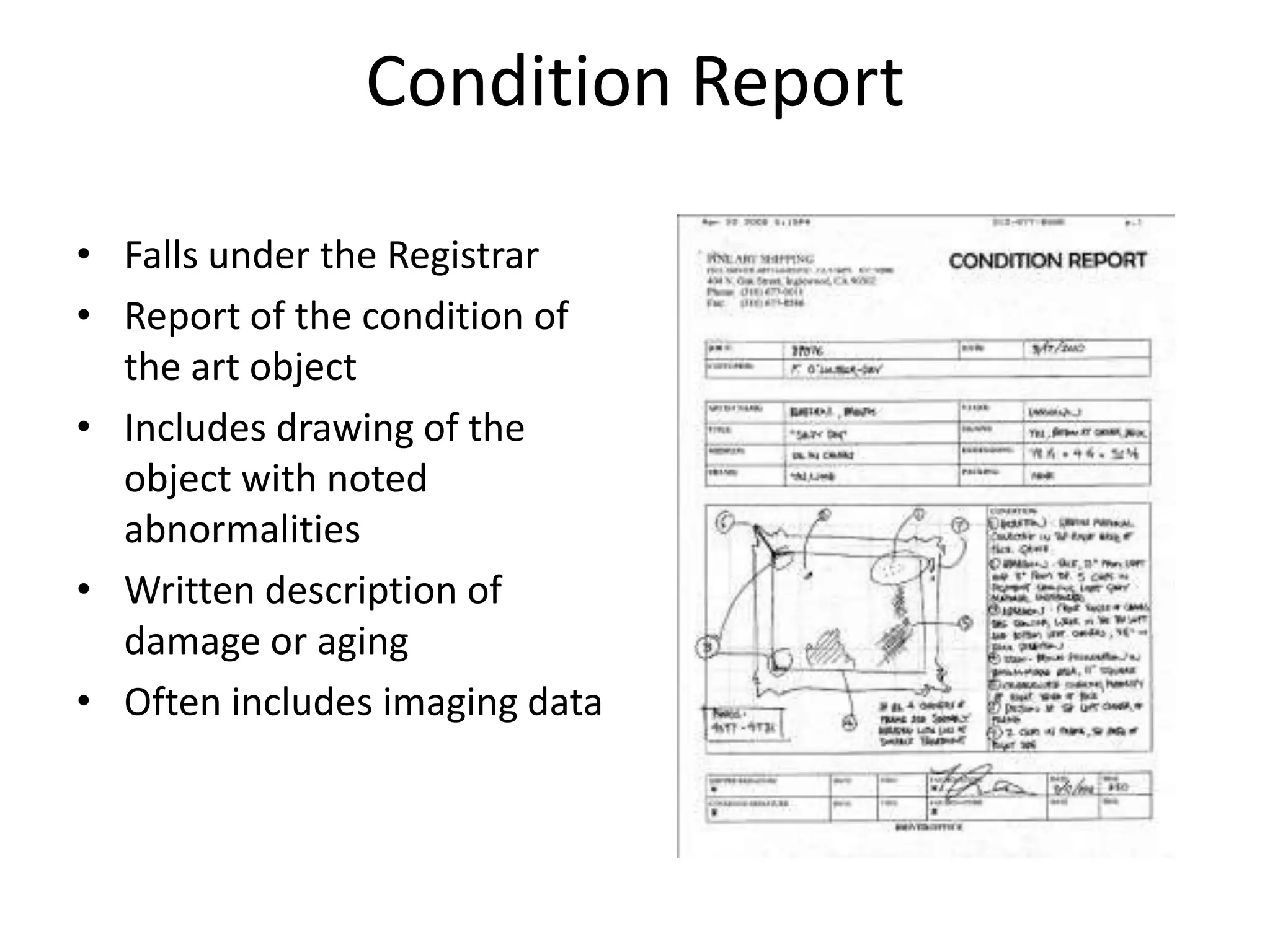
Condition ReportFalls under the RegistrarReport of the condition of the art objectIncludes drawing of the object with noted abnormalitiesWritten description of damage or agingOften includes imaging data
Transportation (inside museum)
Transportation (inside museum)Uses art handling best practices“Low” riskApplies individual museum’s standard guidelines
Storage
Storage“The basic principle of art storage is to keep the object in a physically secure environment but yet permit ready access for inspection”Why is this needed?Museum collections grow ~1.5% per yearLess than 10% of most collections are shown
What does Storage do for your Museum?Organizes space efficientlyFacilitates access to collectionsProvides physical support Provides environmental protectionEncourages logical organizationReinforces good handling practices
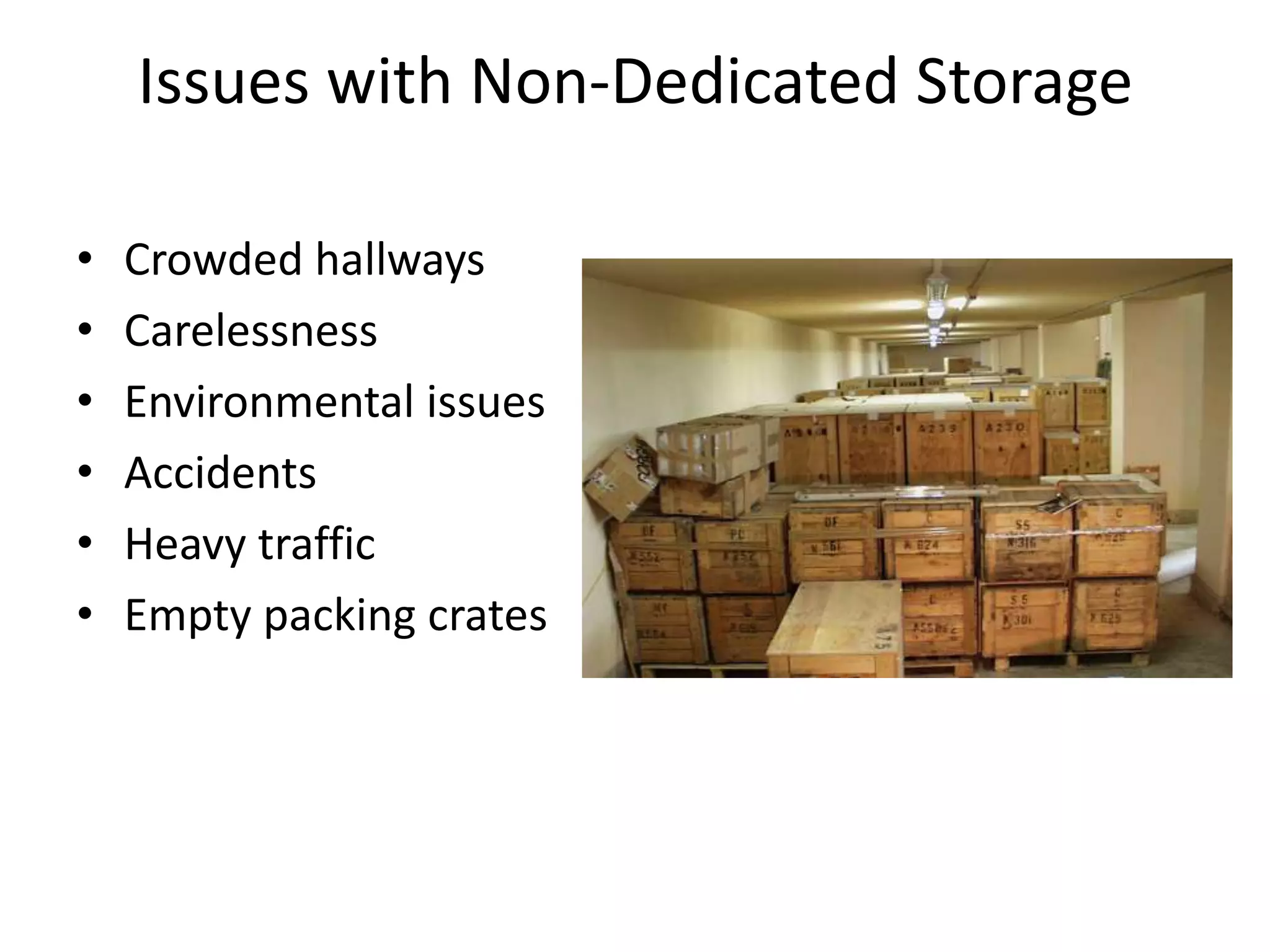
Issues with Non-Dedicated StorageCrowded hallwaysCarelessnessEnvironmental issuesAccidentsHeavy trafficEmpty packing crates
Storage PlanningBegins with organizational requirementsDependent upon size, value, composition, physical needs of art objectsFactors in size and nature of storage spaceRequires decision of nature and frequency of collection usageDependent upon institution’s budget1985, per year cost per object was $65Optimally separate from normal traffic
Guidelines for Storage SelectionAvoid false economiesStable, non-reactive materialsFocus on modularityObject requirements dictate storage choiceElevate objectsSegregation of storage from normal usageWeight, size, sensitivity
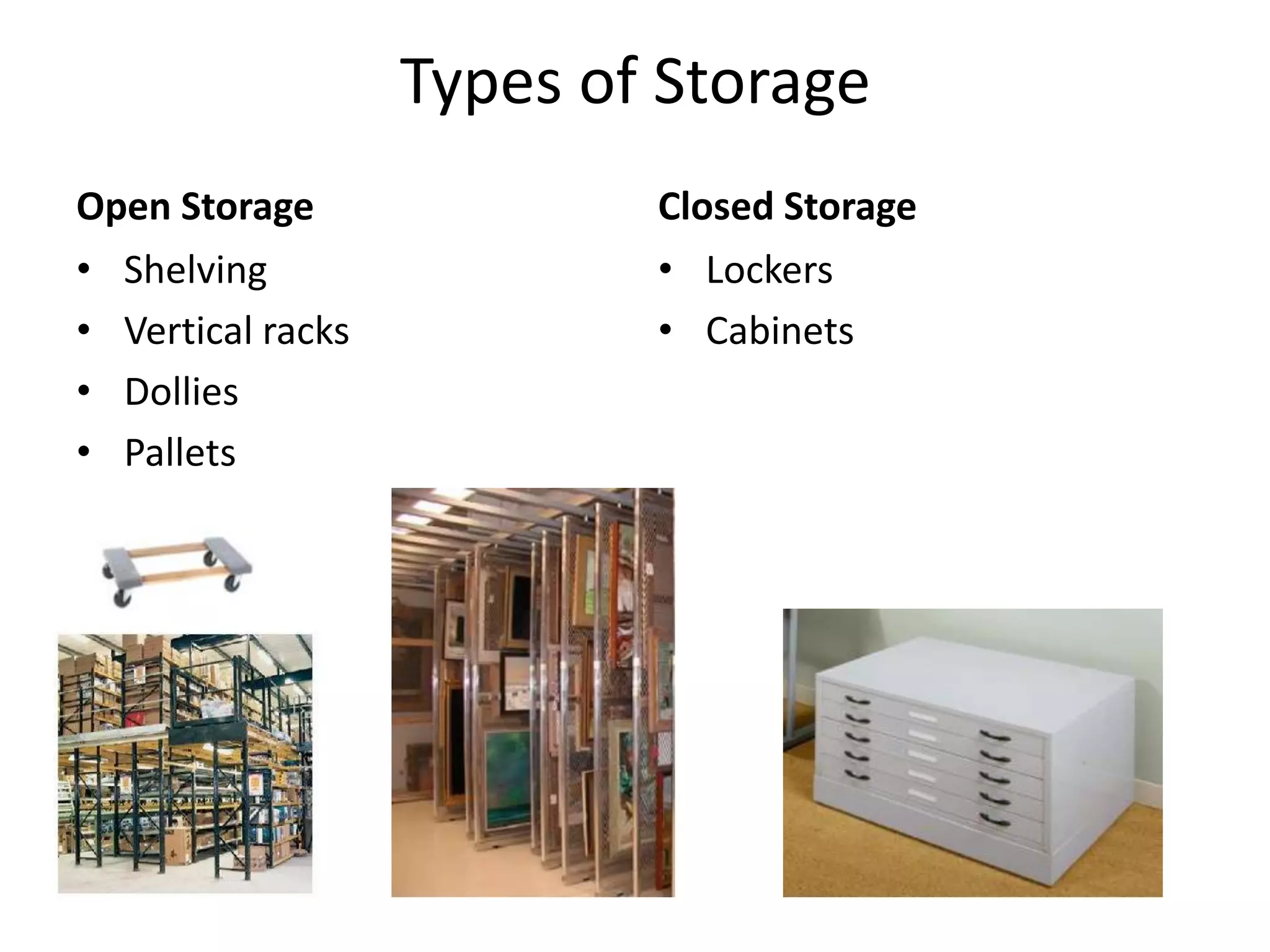
Types of StorageOpen StorageClosed StorageShelvingVertical racksDolliesPalletsLockersCabinets
Open StorageDesigned for objects too heavy for cabinetsDesigned for objects too large for cabinetsObjects are highly visible and accessibleOffers zero environmental controlMaterialsWood: palletsSteel: shelvingAluminum: Racks
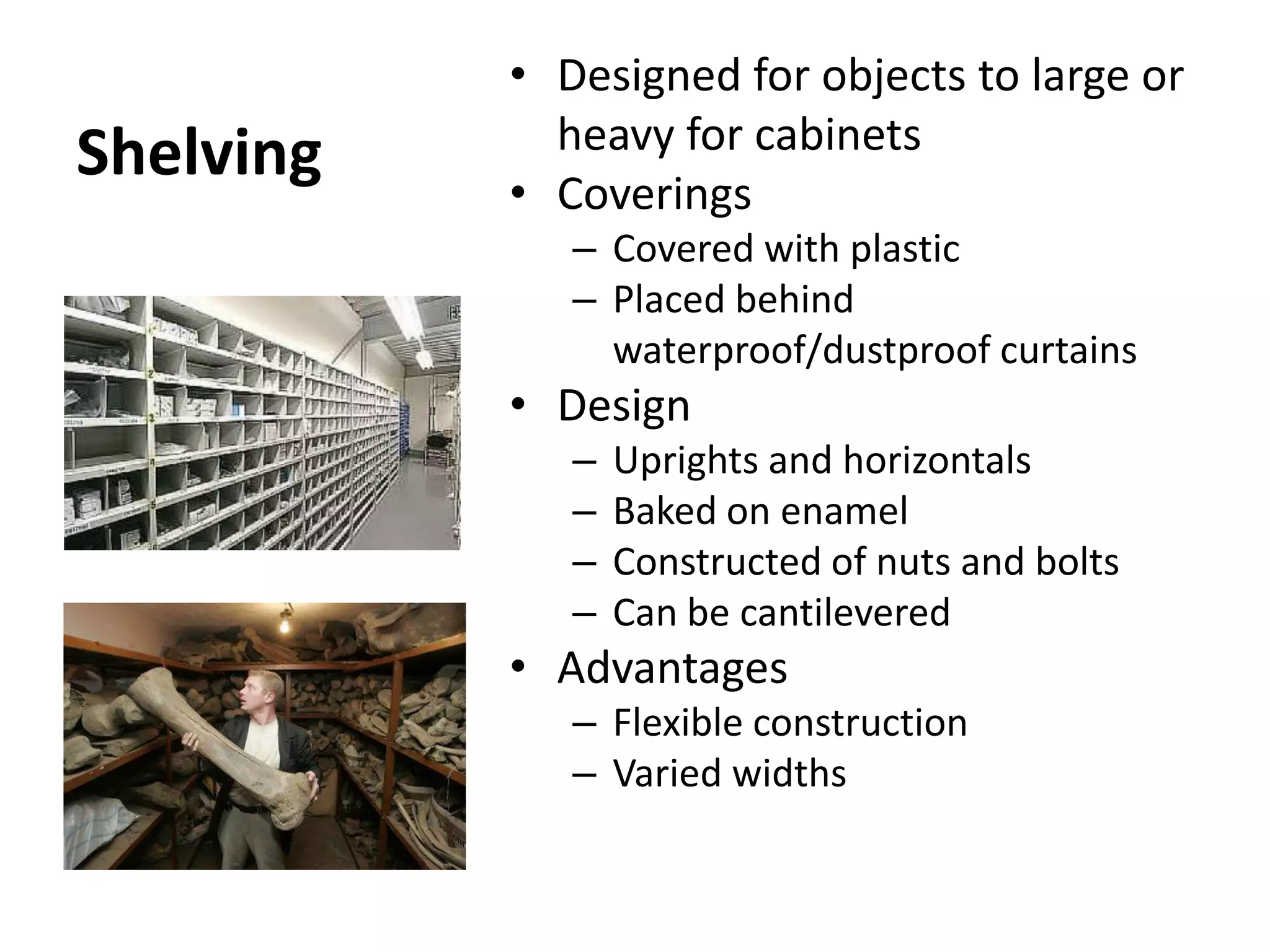
ShelvingDesigned for objects to large or heavy for cabinetsCoveringsCovered with plasticPlaced behind waterproof/dustproof curtainsDesignUprights and horizontalsBaked on enamelConstructed of nuts and boltsCan be cantileveredAdvantagesFlexible constructionVaried widths
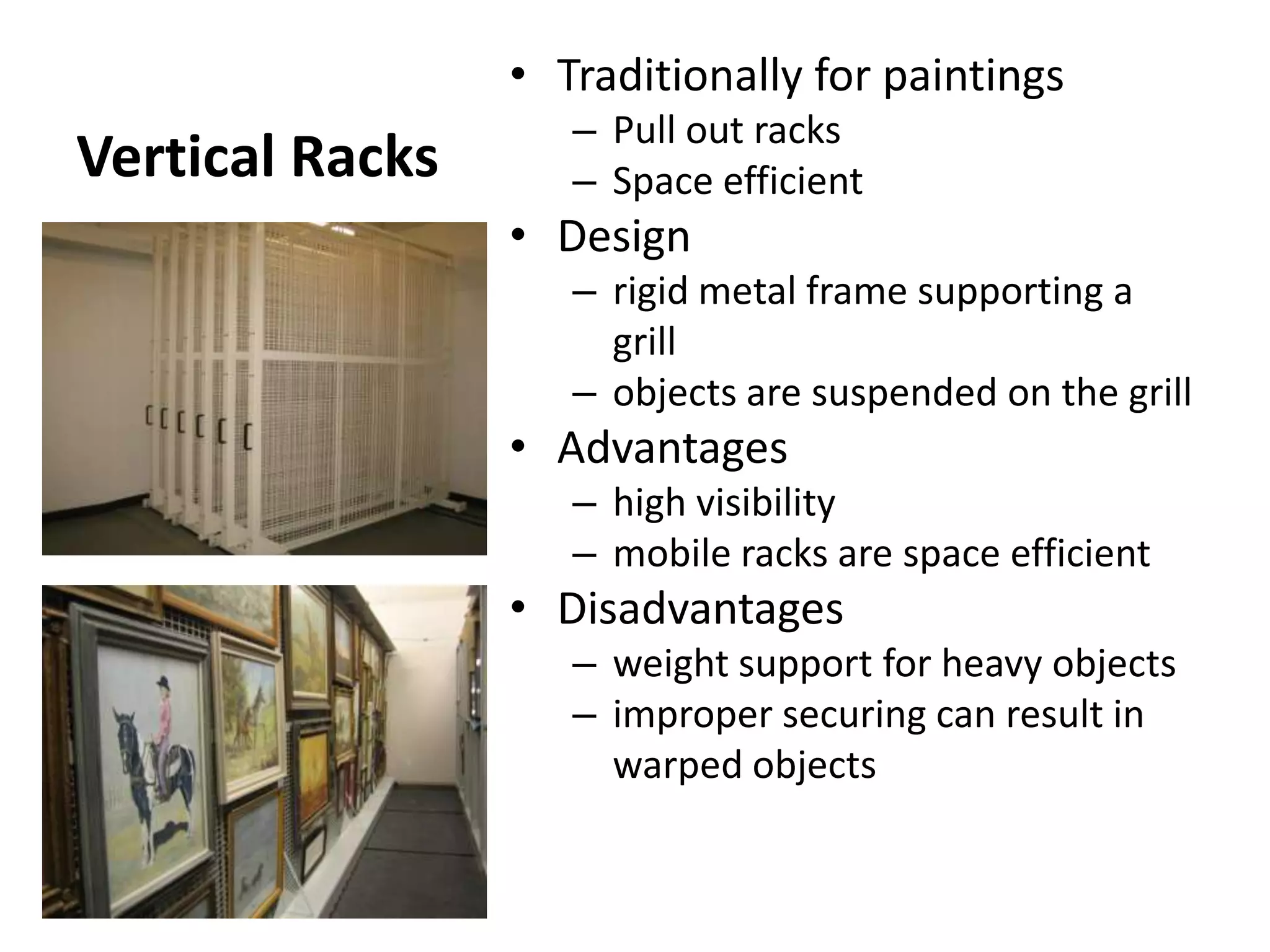
Vertical RacksTraditionally for paintingsPull out racksSpace efficientDesignrigid metal frame supporting a grillobjects are suspended on the grillAdvantageshigh visibilitymobile racks are space efficientDisadvantagesweight support for heavy objectsimproper securing can result in warped objects
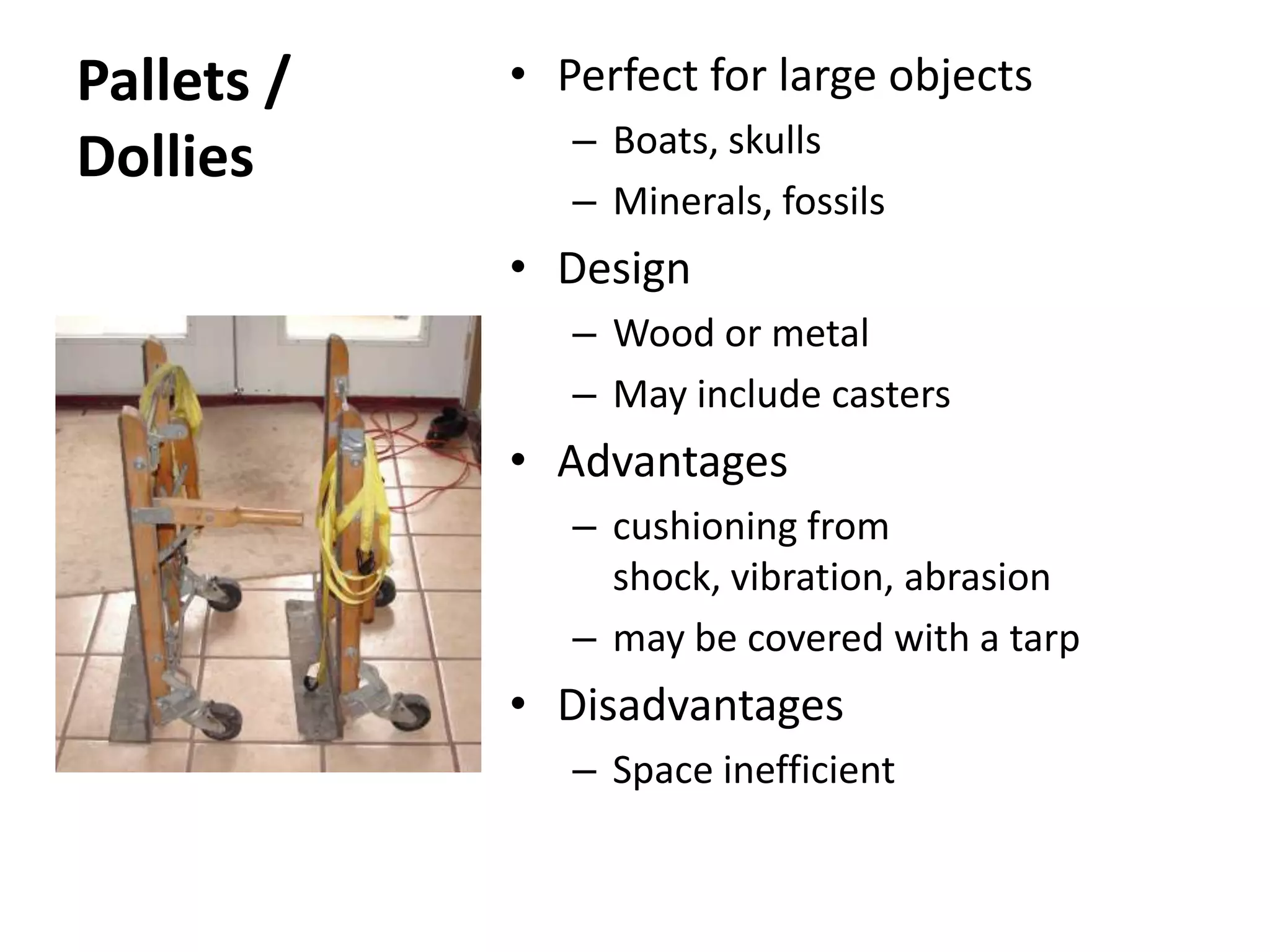
Pallets /DolliesPerfect for large objectsBoats, skullsMinerals, fossilsDesignWood or metalMay include castersAdvantagescushioning from shock, vibration, abrasionmay be covered with a tarpDisadvantagesSpace inefficient
Closed StorageDesigned for smaller objectsOffers environmental protectionOffers additional accident protectionGreater degree of control
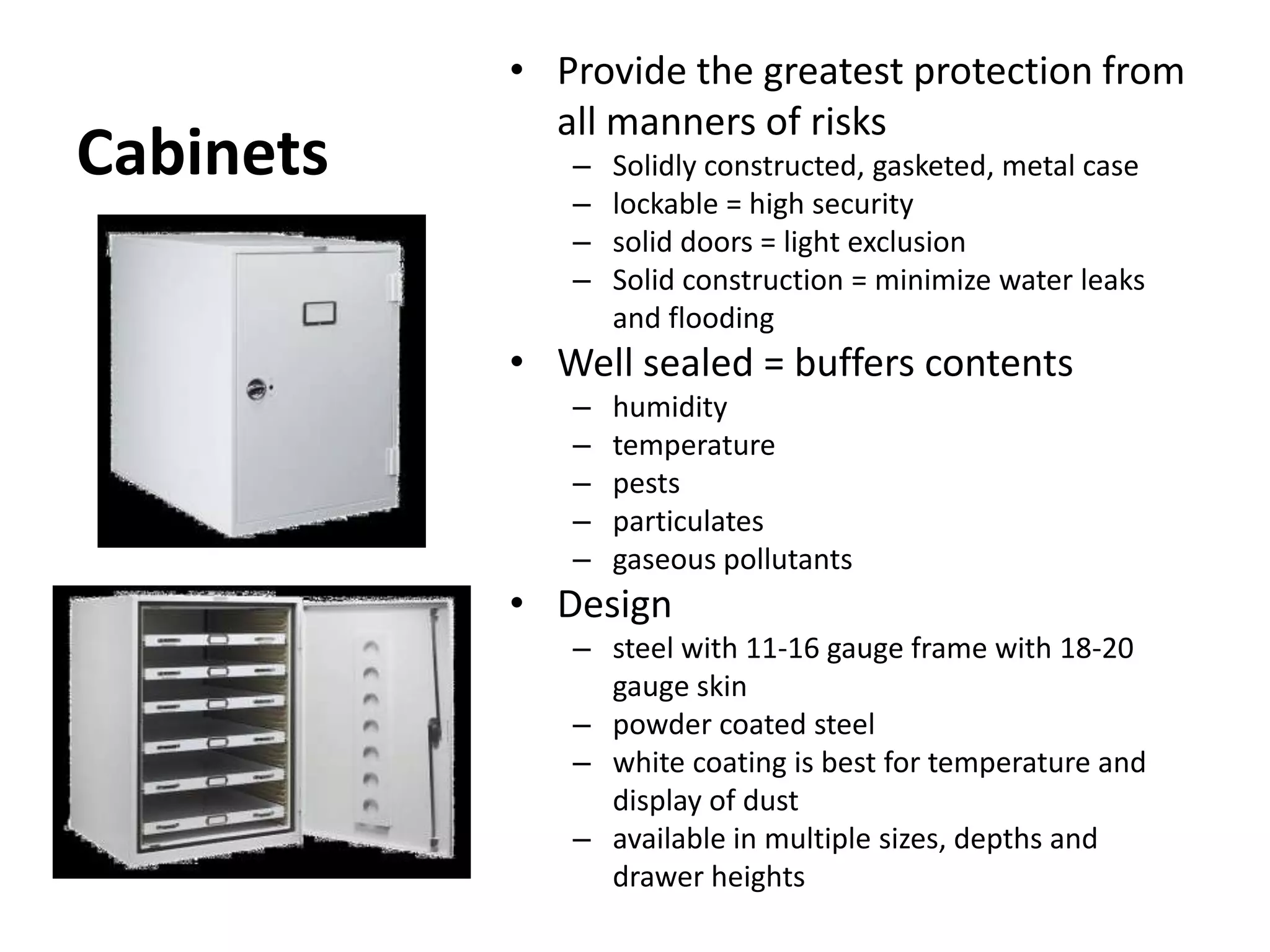
CabinetsProvide the greatest protection from all manners of risksSolidly constructed, gasketed, metal caselockable = high securitysolid doors = light exclusionSolid construction = minimize water leaks and floodingWell sealed = buffers contentshumiditytemperaturepestsparticulatesgaseous pollutantsDesignsteel with 11-16 gauge frame with 18-20 gauge skinpowder coated steelwhite coating is best for temperature and display of dustavailable in multiple sizes, depths and drawer heights
Cabinets (continued)Versatile options:rollout shelves, drawers, flat trays, screens, slide-out surfaces, desiccant drawers, metal rods for tubes, bars for hangingmay be configured for entomology or botanyGasket Designpoly(dymethylsiloxane), PDMSpoly(diphenylsiloxane), PDPSethylene vinyl acetate (closed cell), EVAethylene propylene diene monomer, EPDM
Mobile StorageCombination of open/closedAugments existing storage solutionHighest space efficiencyRequires weight calculations for floor limits
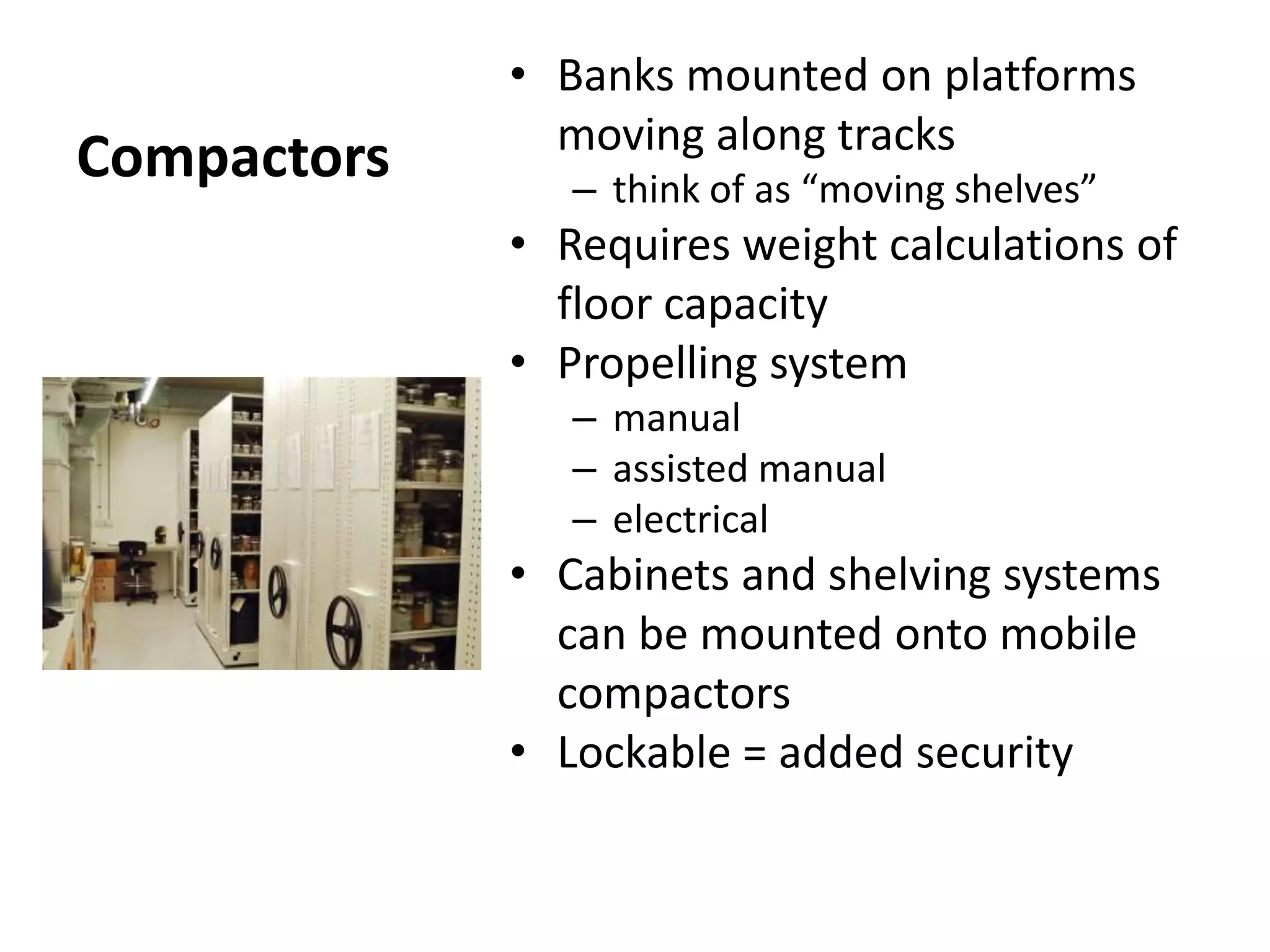
CompactorsBanks mounted on platforms moving along tracksthink of as “moving shelves”Requires weight calculations of floor capacityPropelling systemmanualassisted manualelectricalCabinets and shelving systems can be mounted onto mobile compactorsLockable = added security
Transportation (outside museum)
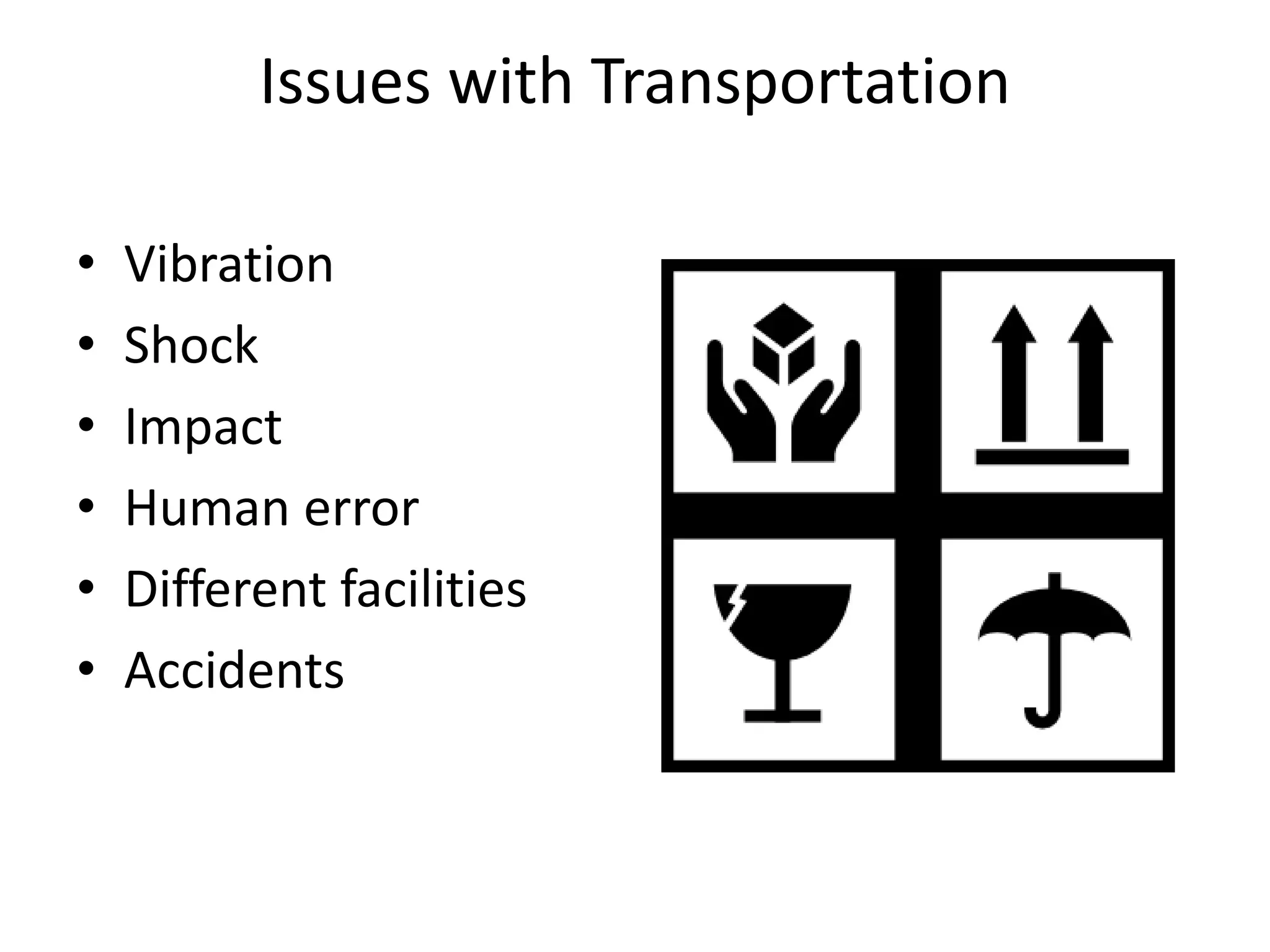
Issues with TransportationVibrationShockImpactHuman errorDifferent facilitiesAccidents
Transportation (outside museum)High riskInvolves the use of cratesUses a principle of “most cushioning”Assumes the object will experience vibration, shock, damagePacked for unknown conditions and unknown handlers
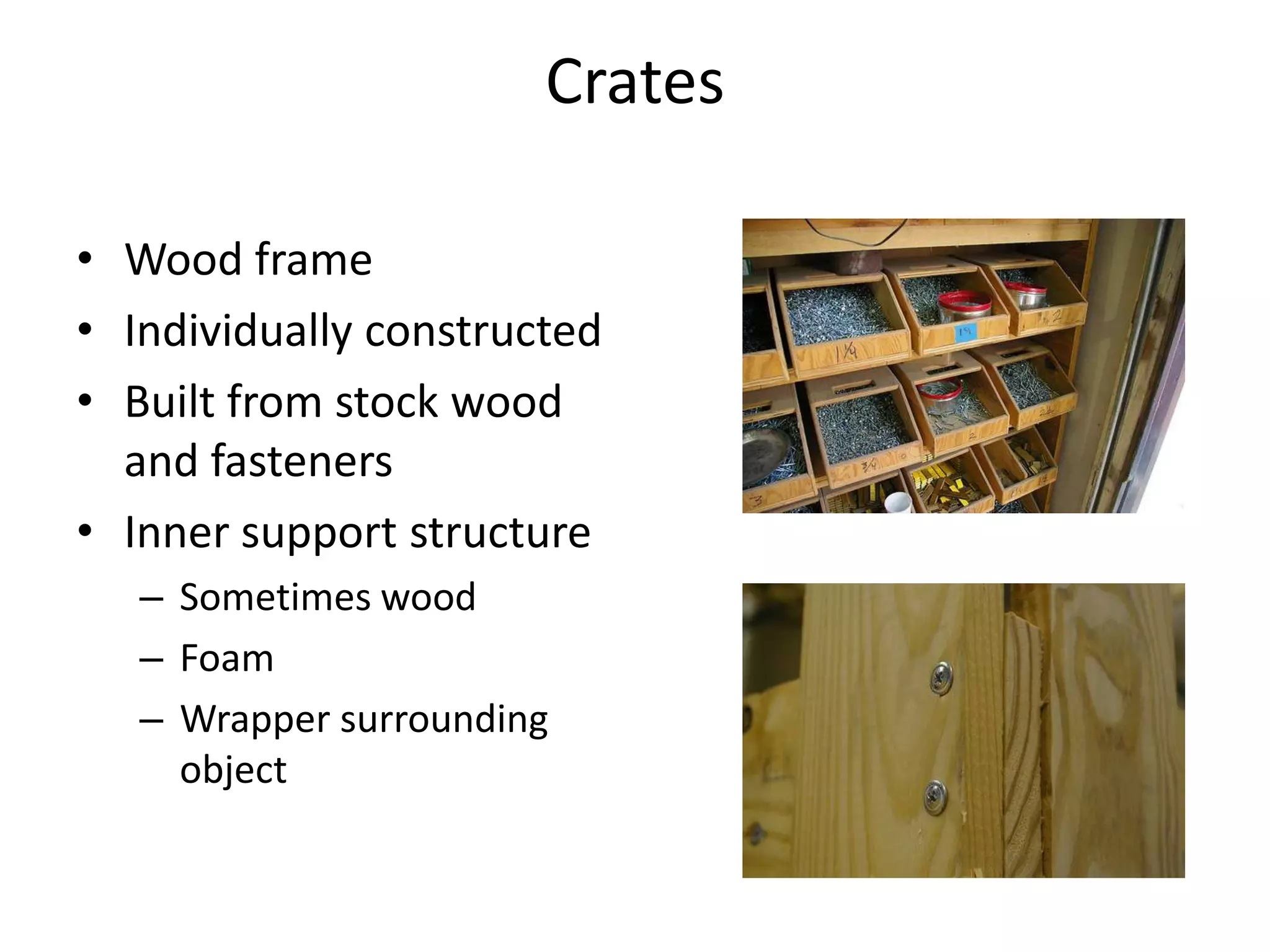
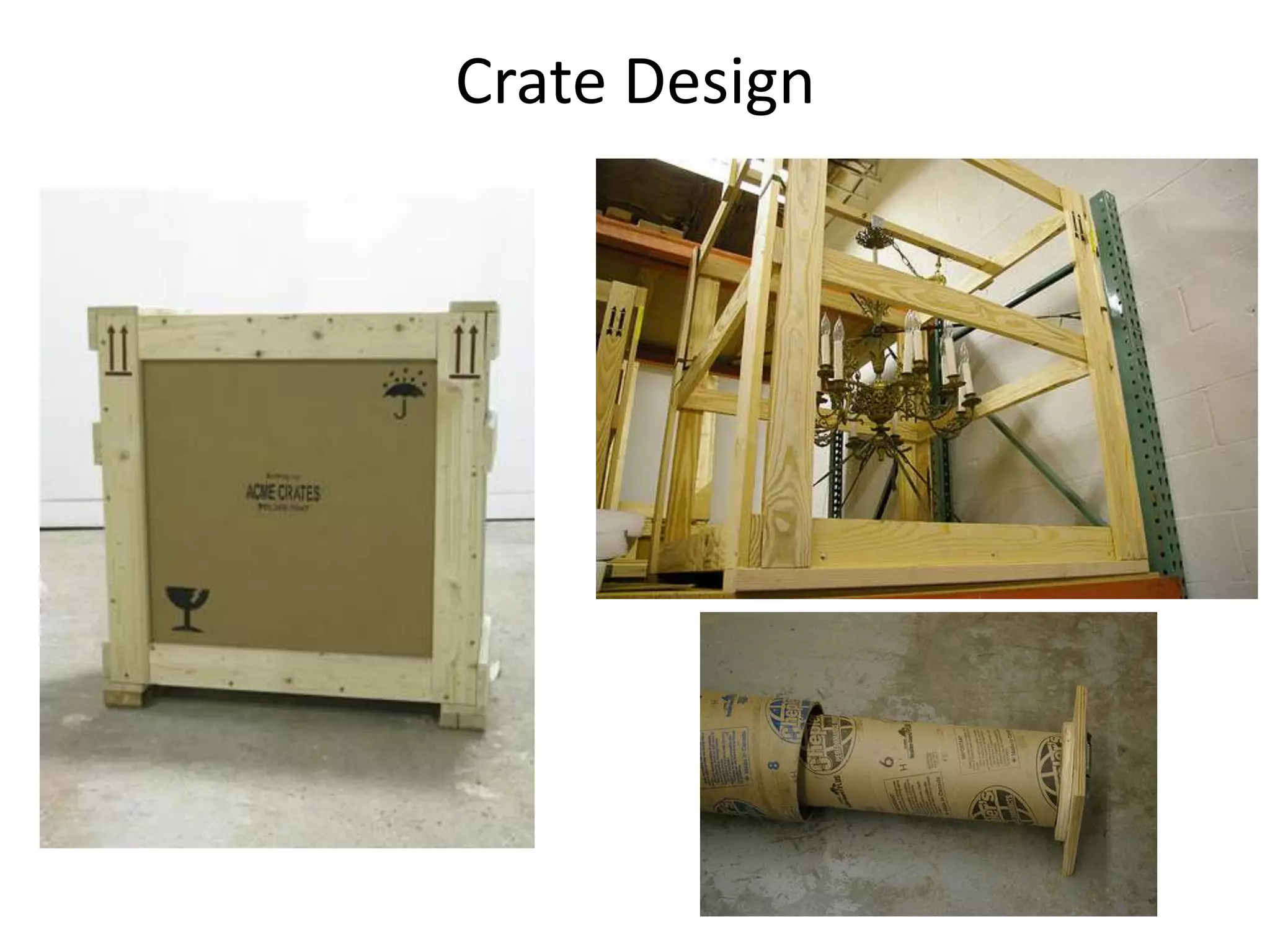
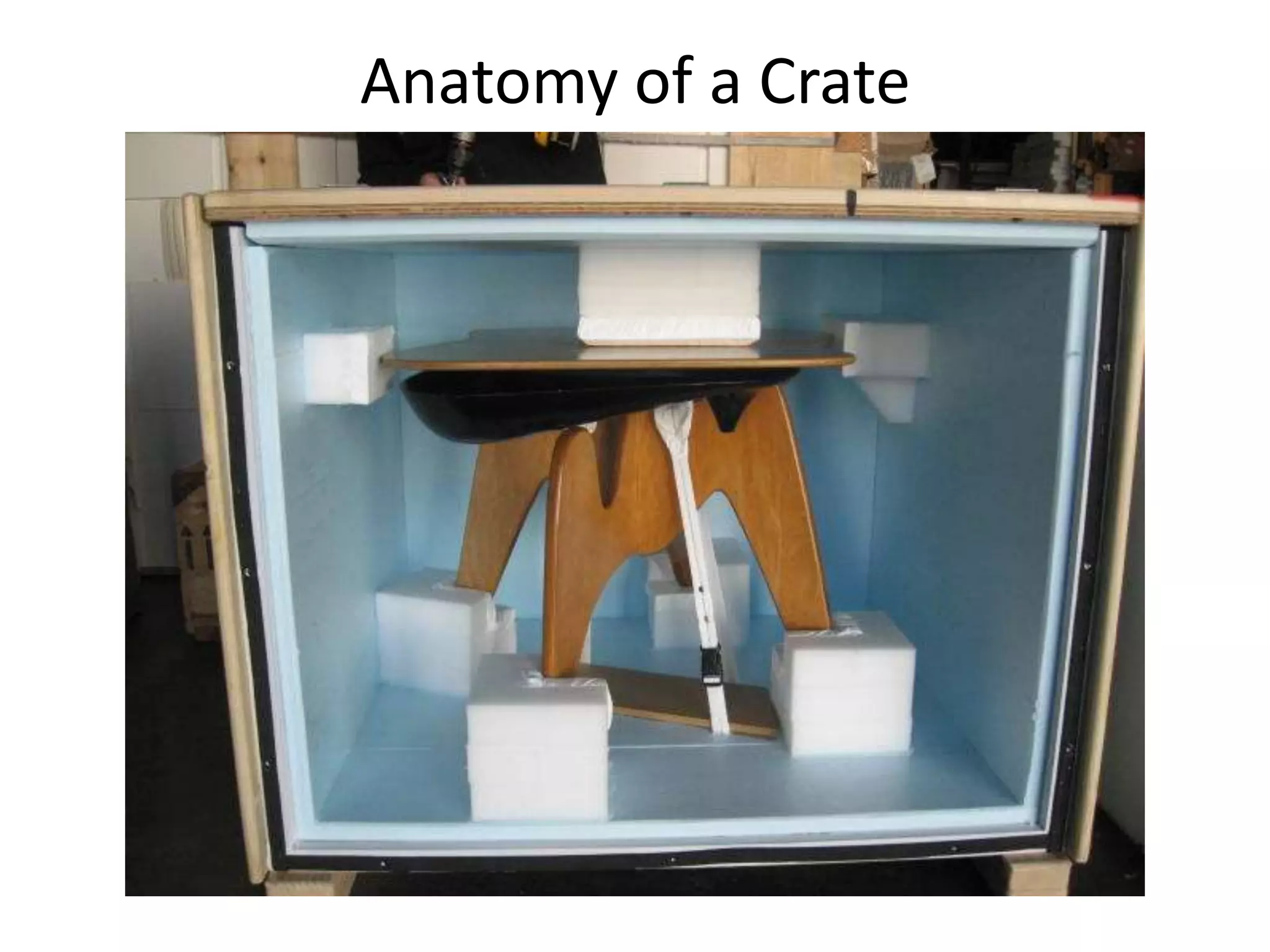
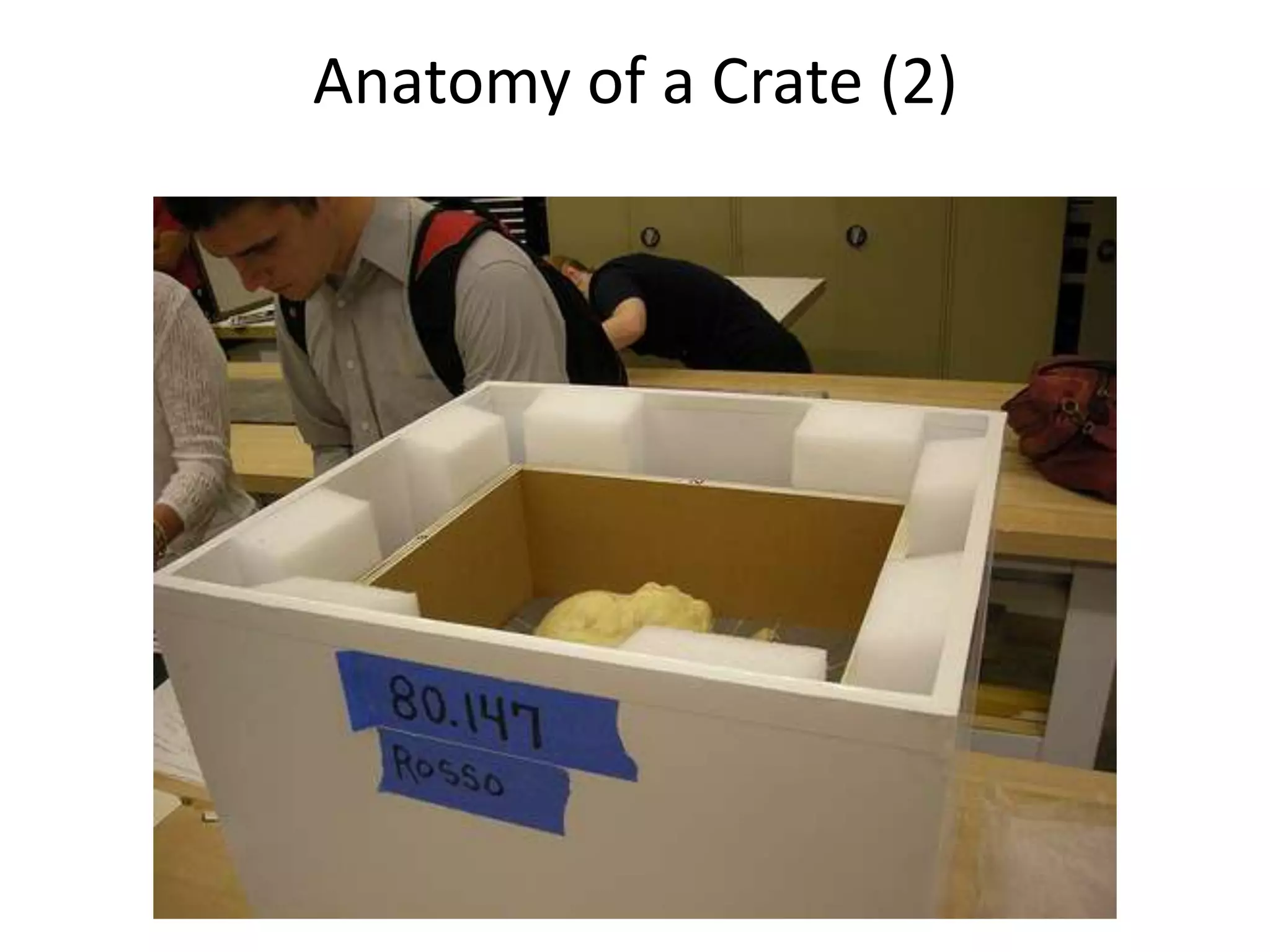
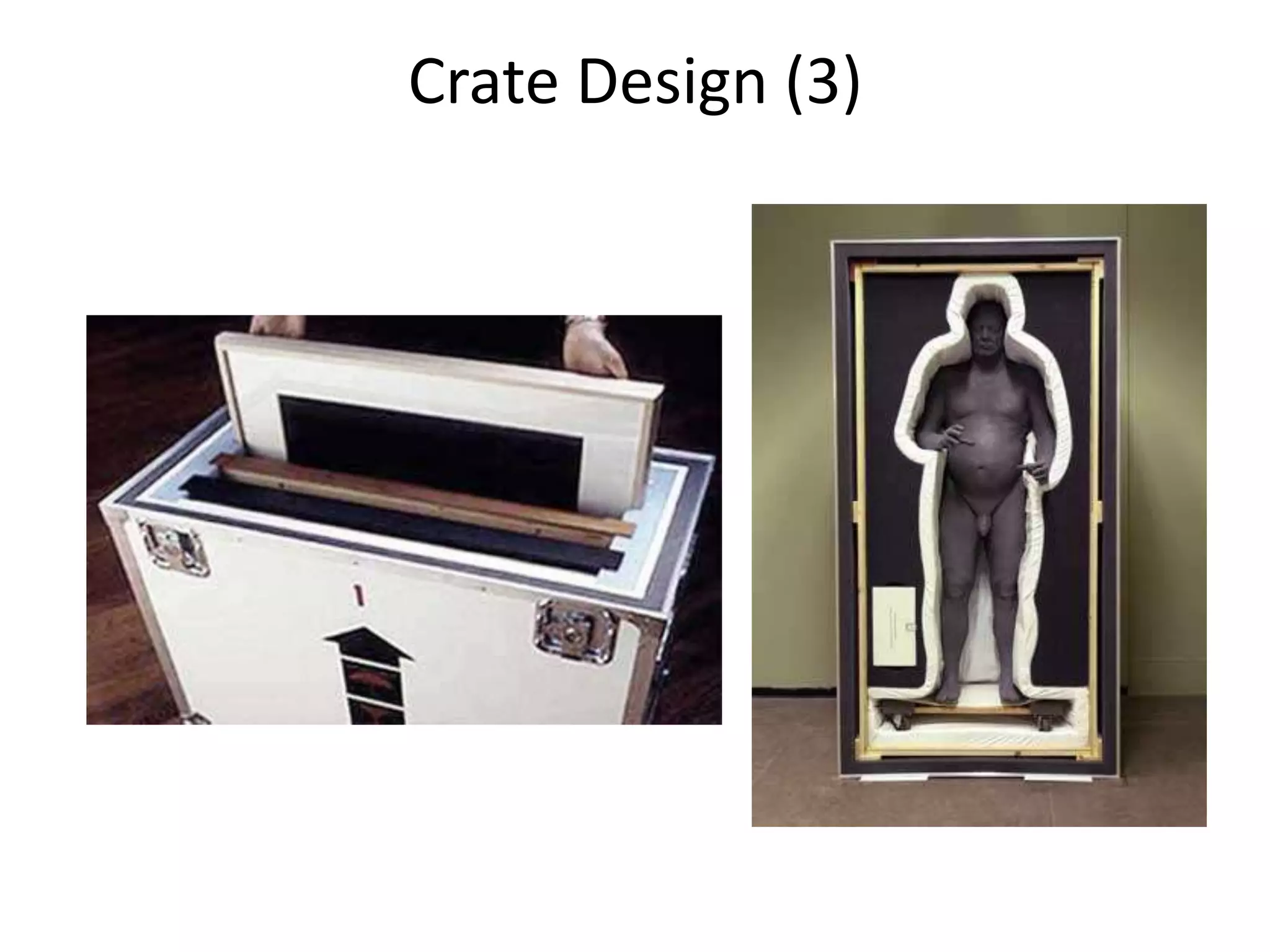
CratesWood frameIndividually constructedBuilt from stock wood and fastenersInner support structureSometimes woodFoamWrapper surrounding object
Crate Design
Anatomy of a Crate
Anatomy of a Crate (2)
Crate Design (3)
Your Semester project:create your own storage system
Picture ReferencesSlide 2http://texasarchitect.blogspot.com/2009/07/tsa-2009-cornerstone-award-john-and.htmlhttp://www.fineartship.com/2009/04/the-condition-report-quick-start-rules/http://www.logar.co.at/e/nonpublicspaces.htmhttp://www.fineartship.com/images/crating_C.jpgSlide 5http://www.fineartship.com/2009/04/the-condition-report-quick-start-rules/Slide 7http://farm3.static.flickr.com/2174/2098729951_2dcaf7260b.jpghttp://photos.jpgmag.com/1379494_204492_3fefc2693e_p.jpghttp://4.bp.blogspot.com/_hsTuDxtqI7c/Sa8ca293zII/AAAAAAAAJN4/bO-xc1X-CwQ/s400/8.jpgSlide 14http://www.meyermat.com/Images/n-dolly(umnrg2).jpghttp://www.montel.com/images/img_products/art-rack_movable-panels/141_1.jpghttp://www.ifurn.com/pics/8/studio-designs/flat-file-storage-cabinet.RTA607A.1.800.jpgSlide 16http://filesdown.esecure.co.uk/museumID/GlasgowOpenStorage.jpg_17072009-1327-26.jpgSlide 17http://museum.spacesaver.com/DefaultFilePile/Public/Museum/MuseumContent/art_01.jpghttp://www.hdfiles.com/images/Art%20Rack/Art%20Rack%20Sliding%20Shelving%20System.JPGhttp://www.hdfiles.com/images/Art%20Rack/Art%20Rack%20Shelving%20Storage%20Systems.jpg
Picture ReferencesSlide 20http://montel.comSlide 23http://www.hdfiles.com/images/Art%20Rack/Art%20Rack%20Storage%20That%20Condenses%20Art%20Storage.JPGSlide 25http://artransintl.com/images/crate_symbols.pngSlide 27, 28http://www.flickr.com/photos/39016610@N06/Slide 29http://www.fineartship.com/wp-content/uploads/2009/04/img_69083.jpgSlide 30http://www.flickr.com/photos/39016610@N06/Slide 31http://farm3.static.flickr.com/2146/2386729423_00a06df1b8.jpghttp://rebul.com.au/media/images/sculpture-from-below.jpg

Storage And Transportation Of Art Objects

  • 1.
    Storage and Transportationof Art ObjectsENGI/HUMA 240Matthew Wettergreen, PhD
  • 2.
    Lifetime of theArt ObjectConditionReportTransportation (inside museum)Transportation (outside museum)AccessionStorage
  • 3.
  • 4.
    Condition ReportFalls underthe RegistrarReport of the condition of the art objectIncludes drawing of the object with noted abnormalitiesWritten description of damage or agingOften includes imaging data
  • 5.
  • 6.
    Transportation (inside museum)Usesart handling best practices“Low” riskApplies individual museum’s standard guidelines
  • 7.
  • 8.
    Storage“The basic principleof art storage is to keep the object in a physically secure environment but yet permit ready access for inspection”Why is this needed?Museum collections grow ~1.5% per yearLess than 10% of most collections are shown
  • 9.
    What does Storagedo for your Museum?Organizes space efficientlyFacilitates access to collectionsProvides physical support Provides environmental protectionEncourages logical organizationReinforces good handling practices
  • 10.
    Issues with Non-DedicatedStorageCrowded hallwaysCarelessnessEnvironmental issuesAccidentsHeavy trafficEmpty packing crates
  • 11.
    Storage PlanningBegins withorganizational requirementsDependent upon size, value, composition, physical needs of art objectsFactors in size and nature of storage spaceRequires decision of nature and frequency of collection usageDependent upon institution’s budget1985, per year cost per object was $65Optimally separate from normal traffic
  • 12.
    Guidelines for StorageSelectionAvoid false economiesStable, non-reactive materialsFocus on modularityObject requirements dictate storage choiceElevate objectsSegregation of storage from normal usageWeight, size, sensitivity
  • 13.
    Types of StorageOpenStorageClosed StorageShelvingVertical racksDolliesPalletsLockersCabinets
  • 14.
    Open StorageDesigned forobjects too heavy for cabinetsDesigned for objects too large for cabinetsObjects are highly visible and accessibleOffers zero environmental controlMaterialsWood: palletsSteel: shelvingAluminum: Racks
  • 15.
    ShelvingDesigned for objectsto large or heavy for cabinetsCoveringsCovered with plasticPlaced behind waterproof/dustproof curtainsDesignUprights and horizontalsBaked on enamelConstructed of nuts and boltsCan be cantileveredAdvantagesFlexible constructionVaried widths
  • 16.
    Vertical RacksTraditionally forpaintingsPull out racksSpace efficientDesignrigid metal frame supporting a grillobjects are suspended on the grillAdvantageshigh visibilitymobile racks are space efficientDisadvantagesweight support for heavy objectsimproper securing can result in warped objects
  • 17.
    Pallets /DolliesPerfect forlarge objectsBoats, skullsMinerals, fossilsDesignWood or metalMay include castersAdvantagescushioning from shock, vibration, abrasionmay be covered with a tarpDisadvantagesSpace inefficient
  • 18.
    Closed StorageDesigned forsmaller objectsOffers environmental protectionOffers additional accident protectionGreater degree of control
  • 19.
    CabinetsProvide the greatestprotection from all manners of risksSolidly constructed, gasketed, metal caselockable = high securitysolid doors = light exclusionSolid construction = minimize water leaks and floodingWell sealed = buffers contentshumiditytemperaturepestsparticulatesgaseous pollutantsDesignsteel with 11-16 gauge frame with 18-20 gauge skinpowder coated steelwhite coating is best for temperature and display of dustavailable in multiple sizes, depths and drawer heights
  • 20.
    Cabinets (continued)Versatile options:rolloutshelves, drawers, flat trays, screens, slide-out surfaces, desiccant drawers, metal rods for tubes, bars for hangingmay be configured for entomology or botanyGasket Designpoly(dymethylsiloxane), PDMSpoly(diphenylsiloxane), PDPSethylene vinyl acetate (closed cell), EVAethylene propylene diene monomer, EPDM
  • 21.
    Mobile StorageCombination ofopen/closedAugments existing storage solutionHighest space efficiencyRequires weight calculations for floor limits
  • 22.
    CompactorsBanks mounted onplatforms moving along tracksthink of as “moving shelves”Requires weight calculations of floor capacityPropelling systemmanualassisted manualelectricalCabinets and shelving systems can be mounted onto mobile compactorsLockable = added security
  • 23.
  • 24.
    Issues with TransportationVibrationShockImpactHumanerrorDifferent facilitiesAccidents
  • 25.
    Transportation (outside museum)HighriskInvolves the use of cratesUses a principle of “most cushioning”Assumes the object will experience vibration, shock, damagePacked for unknown conditions and unknown handlers
  • 26.
    CratesWood frameIndividually constructedBuiltfrom stock wood and fastenersInner support structureSometimes woodFoamWrapper surrounding object
  • 27.
  • 28.
  • 29.
    Anatomy of aCrate (2)
  • 30.
  • 31.
    Your Semester project:createyour own storage system
  • 32.
    Picture ReferencesSlide 2http://texasarchitect.blogspot.com/2009/07/tsa-2009-cornerstone-award-john-and.htmlhttp://www.fineartship.com/2009/04/the-condition-report-quick-start-rules/http://www.logar.co.at/e/nonpublicspaces.htmhttp://www.fineartship.com/images/crating_C.jpgSlide5http://www.fineartship.com/2009/04/the-condition-report-quick-start-rules/Slide 7http://farm3.static.flickr.com/2174/2098729951_2dcaf7260b.jpghttp://photos.jpgmag.com/1379494_204492_3fefc2693e_p.jpghttp://4.bp.blogspot.com/_hsTuDxtqI7c/Sa8ca293zII/AAAAAAAAJN4/bO-xc1X-CwQ/s400/8.jpgSlide 14http://www.meyermat.com/Images/n-dolly(umnrg2).jpghttp://www.montel.com/images/img_products/art-rack_movable-panels/141_1.jpghttp://www.ifurn.com/pics/8/studio-designs/flat-file-storage-cabinet.RTA607A.1.800.jpgSlide 16http://filesdown.esecure.co.uk/museumID/GlasgowOpenStorage.jpg_17072009-1327-26.jpgSlide 17http://museum.spacesaver.com/DefaultFilePile/Public/Museum/MuseumContent/art_01.jpghttp://www.hdfiles.com/images/Art%20Rack/Art%20Rack%20Sliding%20Shelving%20System.JPGhttp://www.hdfiles.com/images/Art%20Rack/Art%20Rack%20Shelving%20Storage%20Systems.jpg
  • 33.
    Picture ReferencesSlide 20http://montel.comSlide23http://www.hdfiles.com/images/Art%20Rack/Art%20Rack%20Storage%20That%20Condenses%20Art%20Storage.JPGSlide 25http://artransintl.com/images/crate_symbols.pngSlide 27, 28http://www.flickr.com/photos/39016610@N06/Slide 29http://www.fineartship.com/wp-content/uploads/2009/04/img_69083.jpgSlide 30http://www.flickr.com/photos/39016610@N06/Slide 31http://farm3.static.flickr.com/2146/2386729423_00a06df1b8.jpghttp://rebul.com.au/media/images/sculpture-from-below.jpg