Unit 1, Section B –  extended writing skills Cameron Dunn Chief Examiner
What do I have to do?  One question from a choice of 4 – you should spend 30-35 minutes on this Each question is worth 25 marks  The 25 marks is split into a 10 mark part ‘a’ and 15 mark part ‘b’ There is a stimulus resource for the 10 mark question
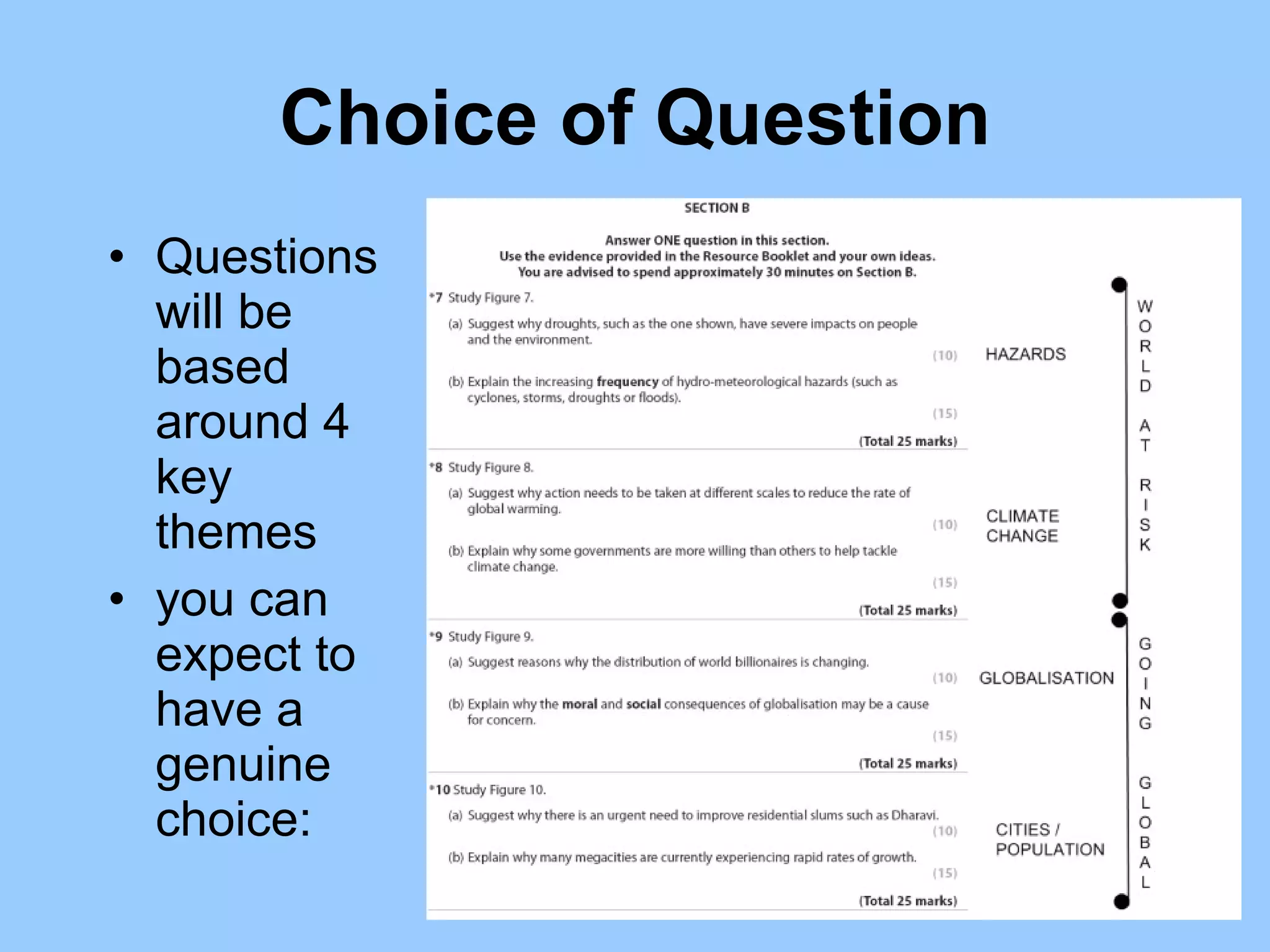
Choice of Question Questions will be based around 4 key themes you can expect to have a genuine choice:
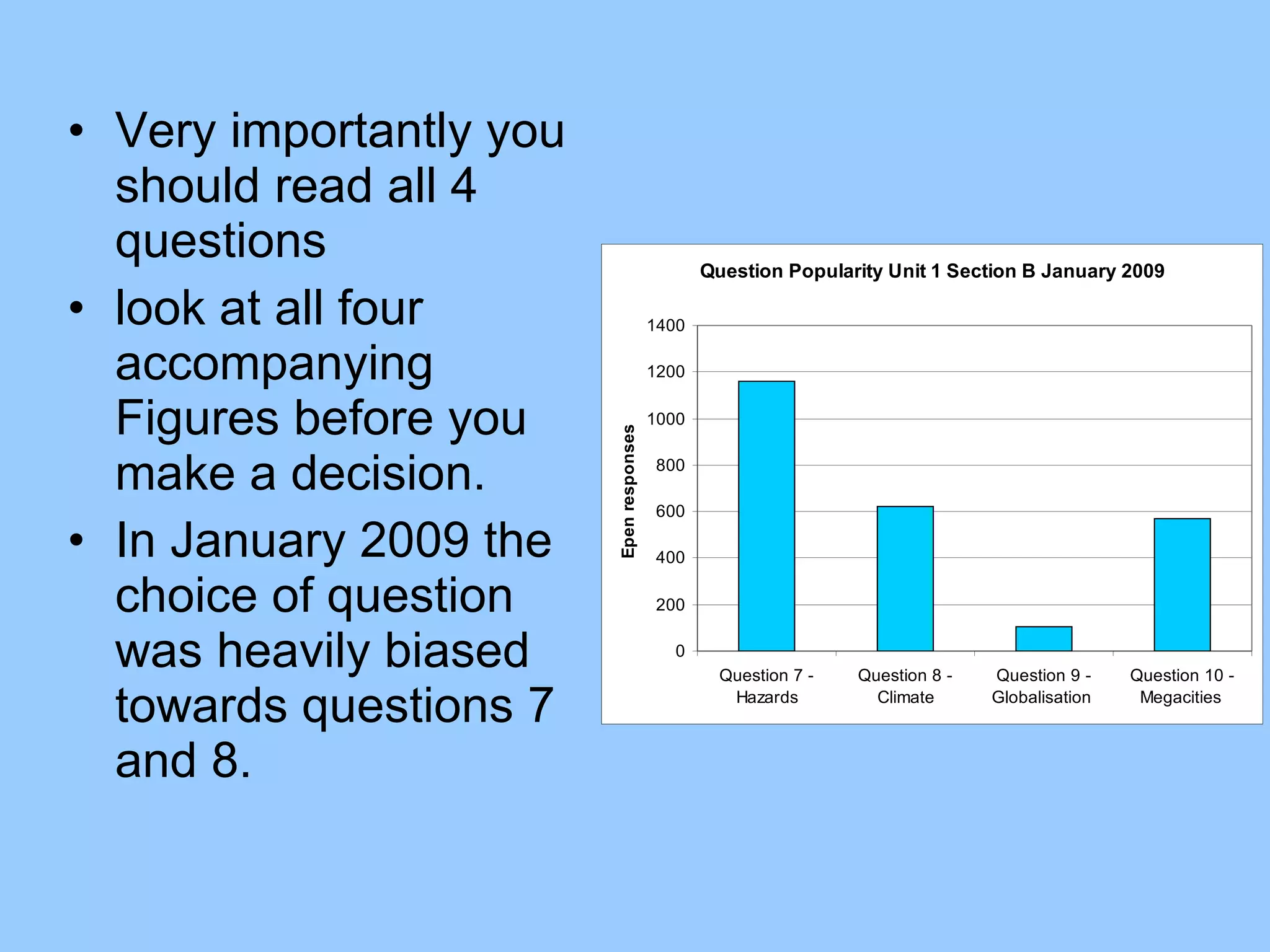
Very importantly you should read all 4 questions look at all four accompanying Figures before you make a decision.  In January 2009 the choice of question was heavily biased towards questions 7 and 8.
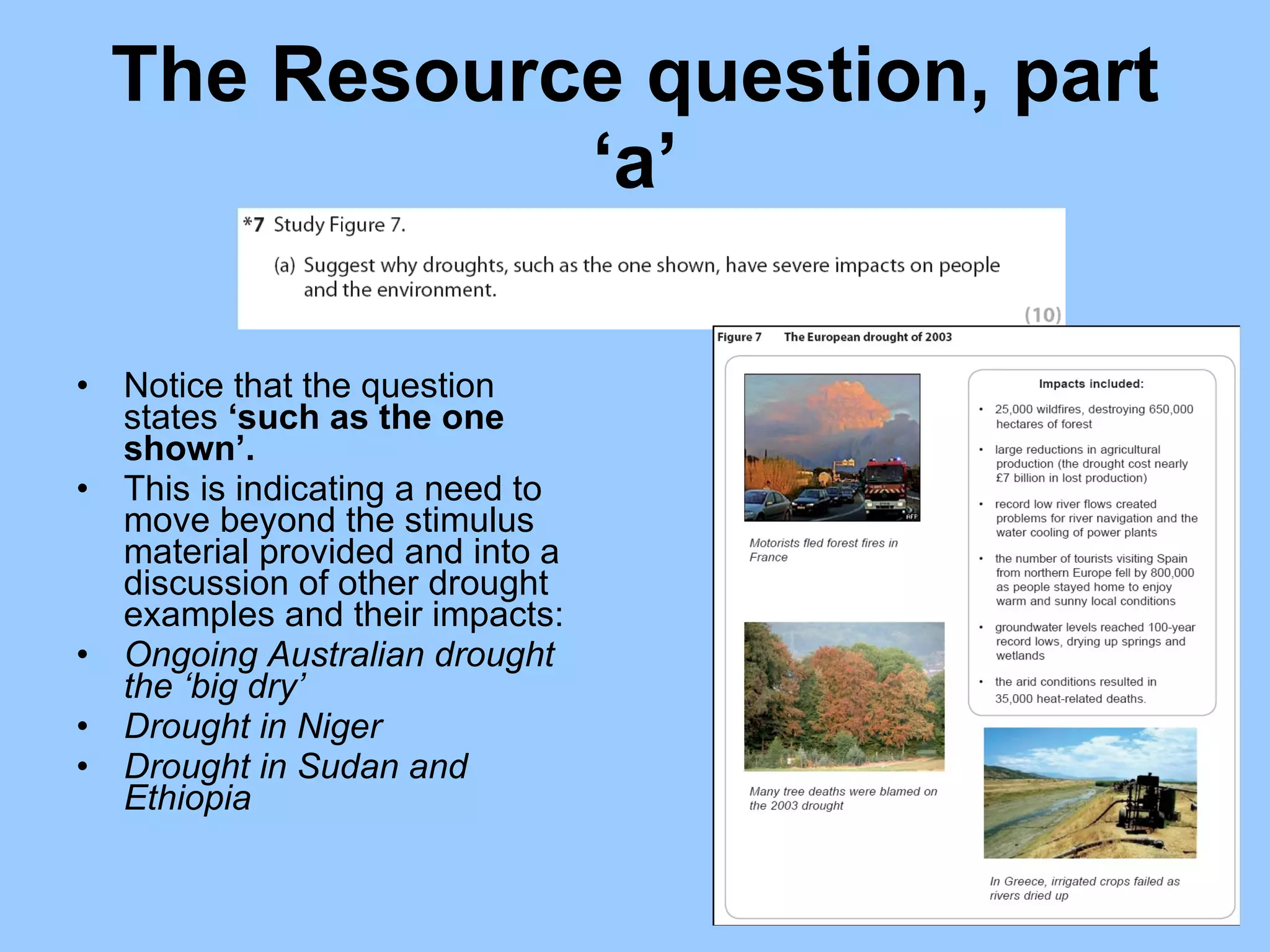
The Resource question, part ‘a’ Notice that the question states  ‘such as the one shown’.  This is indicating a need to move beyond the stimulus material provided and into a discussion of other drought examples and their impacts: Ongoing Australian drought the ‘big dry’  Drought in Niger  Drought in Sudan and Ethiopia
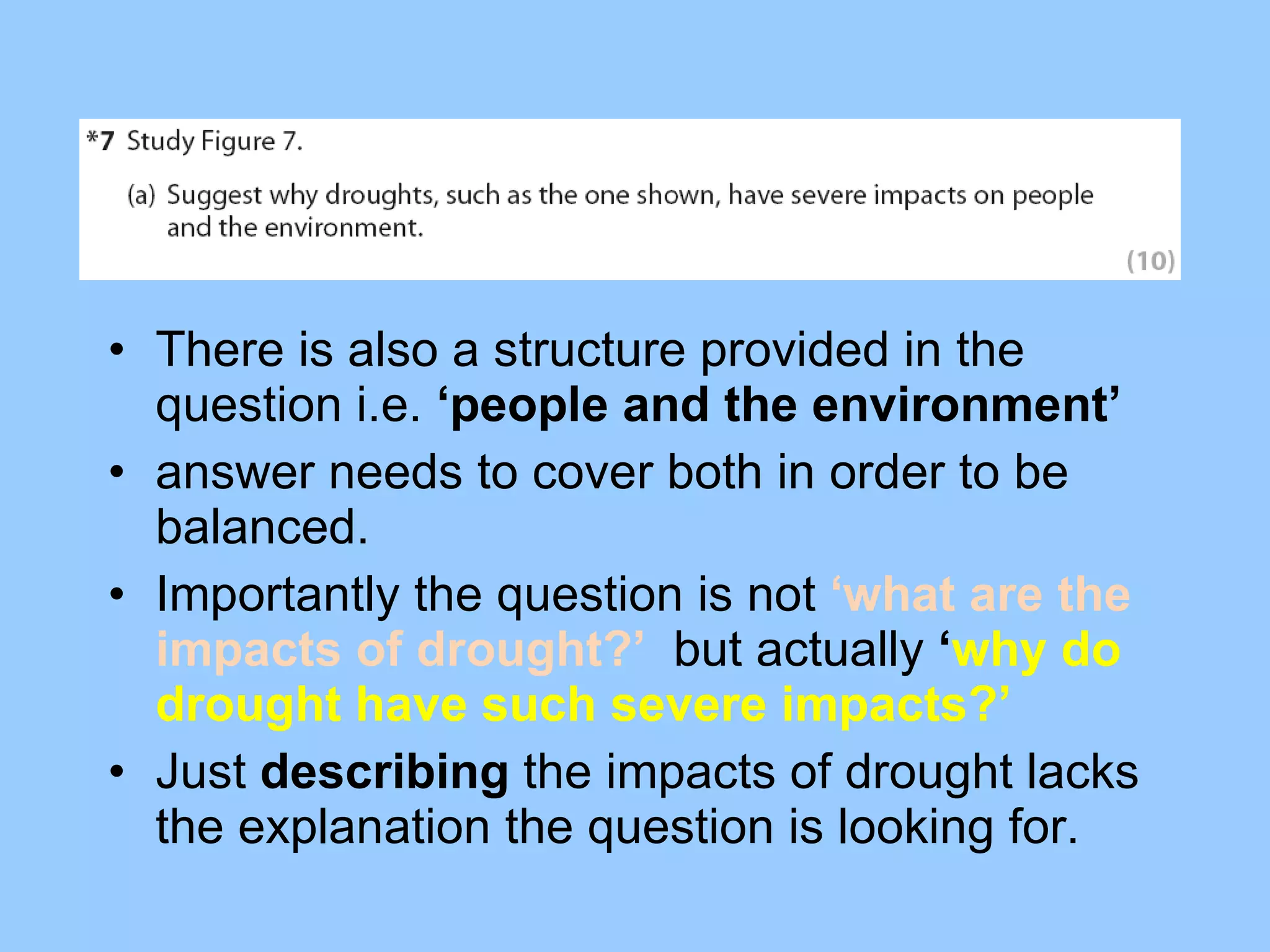
There is also a structure provided in the question i.e.  ‘people and the environment’ answer needs to cover both in order to be balanced.  Importantly the question is not  ‘what are the impacts of drought?’  but actually  ‘ why do drought have such severe impacts?’ Just  describing  the impacts of drought lacks the explanation the question is looking for.
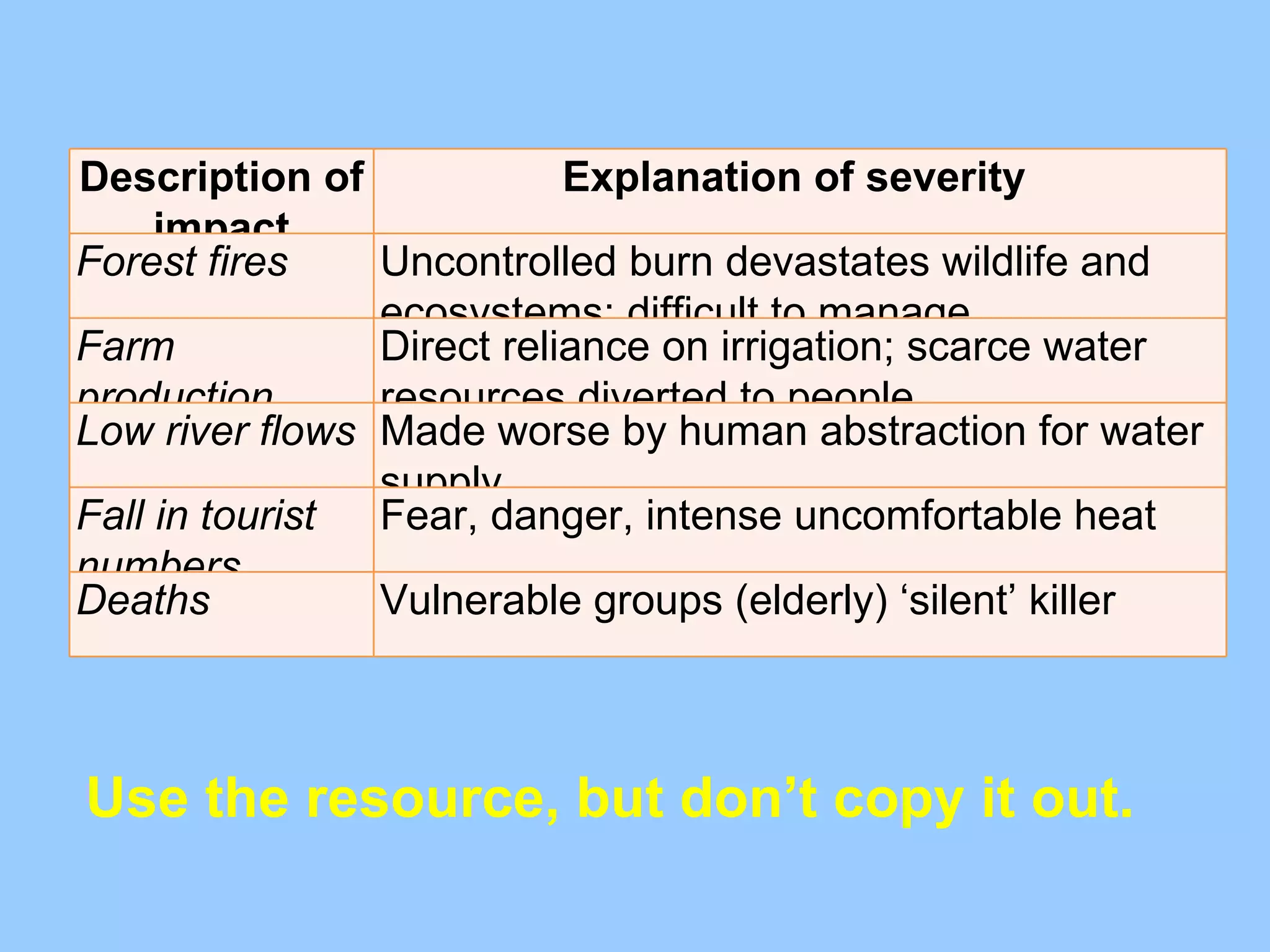
Use the resource, but don’t copy it out. Description of impact Explanation of severity  Forest fires  Uncontrolled burn devastates wildlife and ecosystems; difficult to manage Farm production down  Direct reliance on irrigation; scarce water resources diverted to people Low river flows Made worse by human abstraction for water supply Fall in tourist numbers Fear, danger, intense uncomfortable heat  Deaths  Vulnerable groups (elderly) ‘silent’ killer
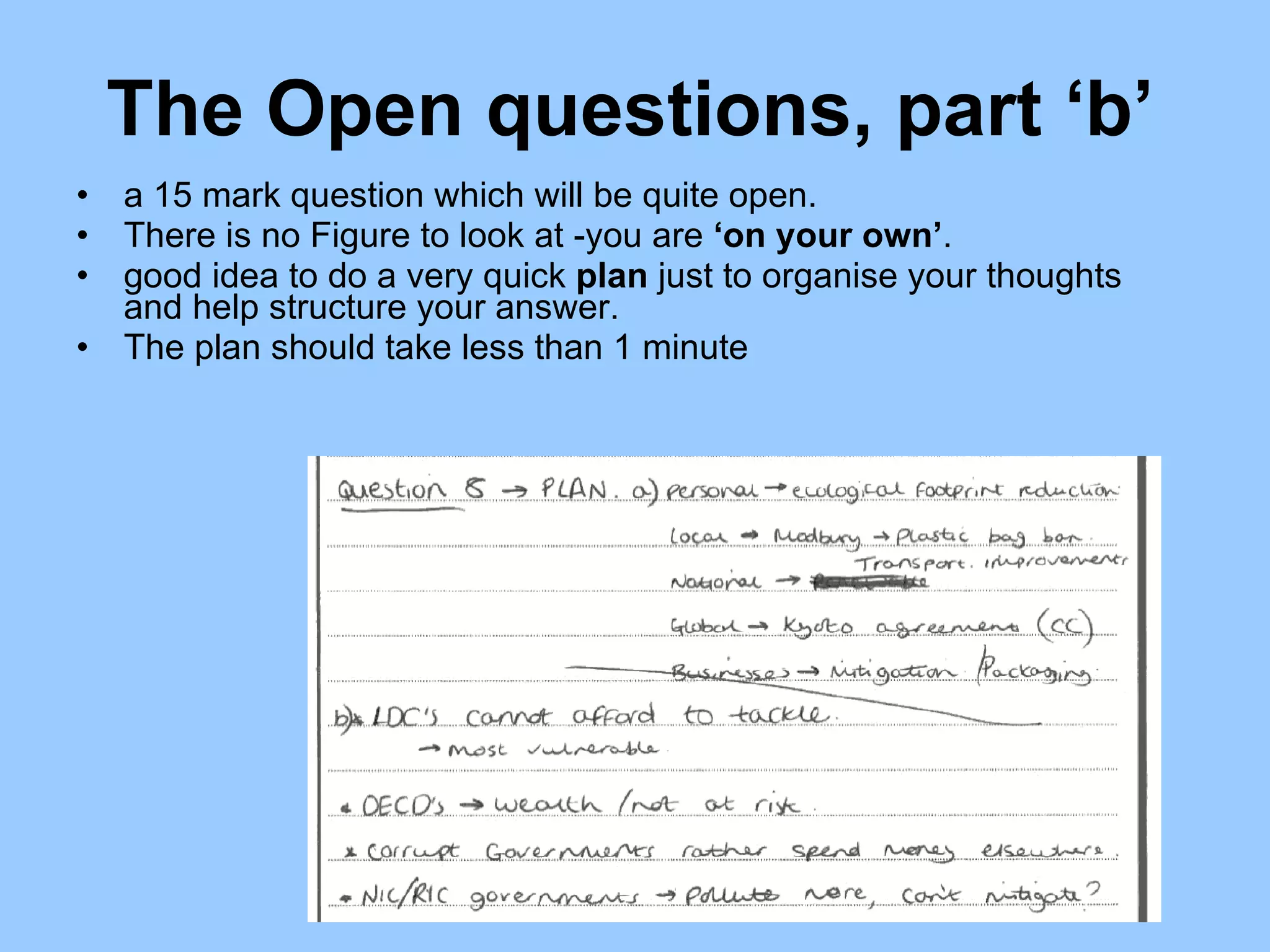
The Open questions, part ‘b’  a 15 mark question which will be quite open.  There is no Figure to look at -you are  ‘on your own’ .  good idea to do a very quick  plan  just to organise your thoughts and help structure your answer.  The plan should take less than 1 minute
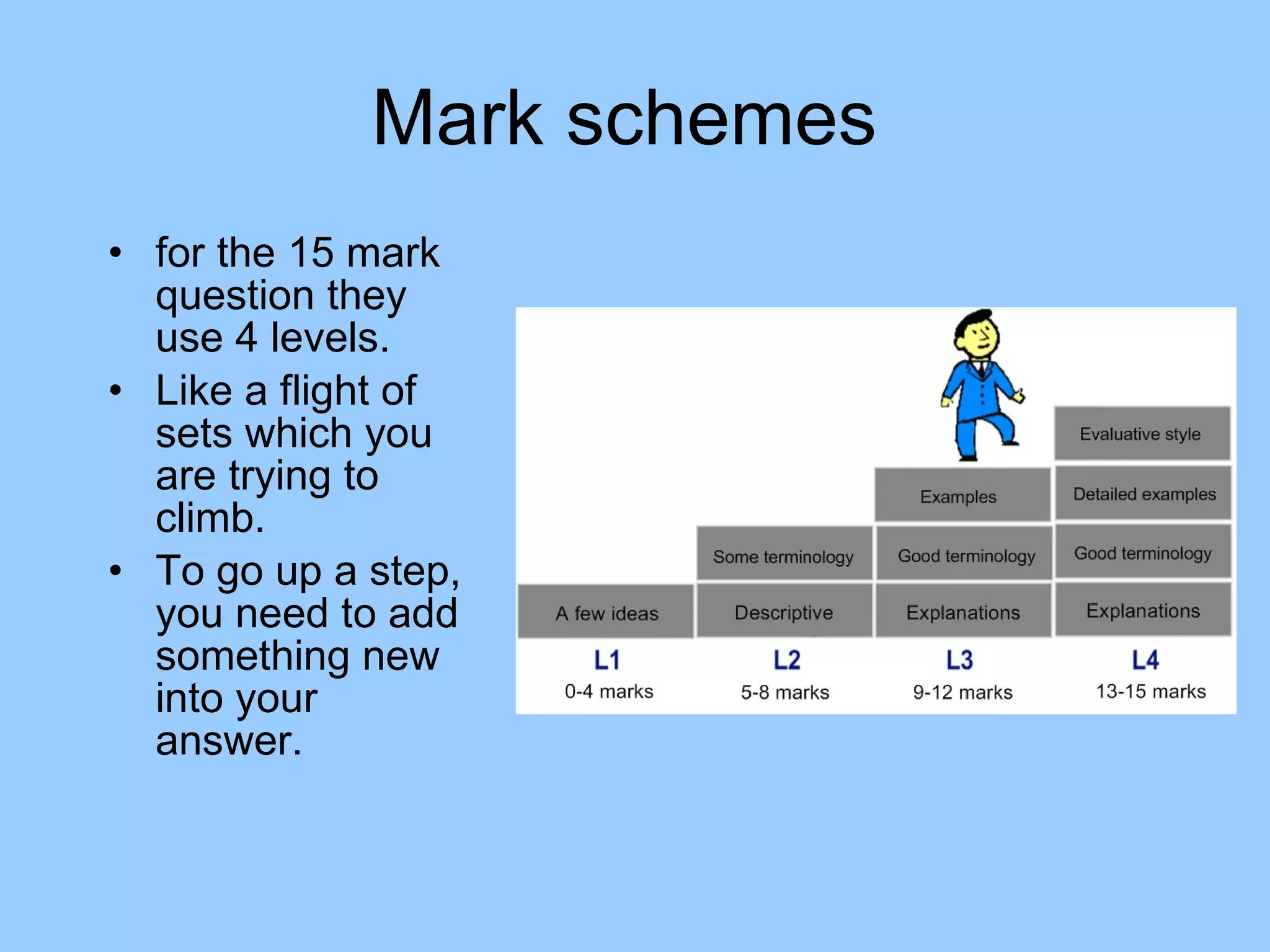
Mark schemes  for the 15 mark question they use 4 levels.  Like a flight of sets which you are trying to climb.  To go up a step, you need to add something new into your answer.
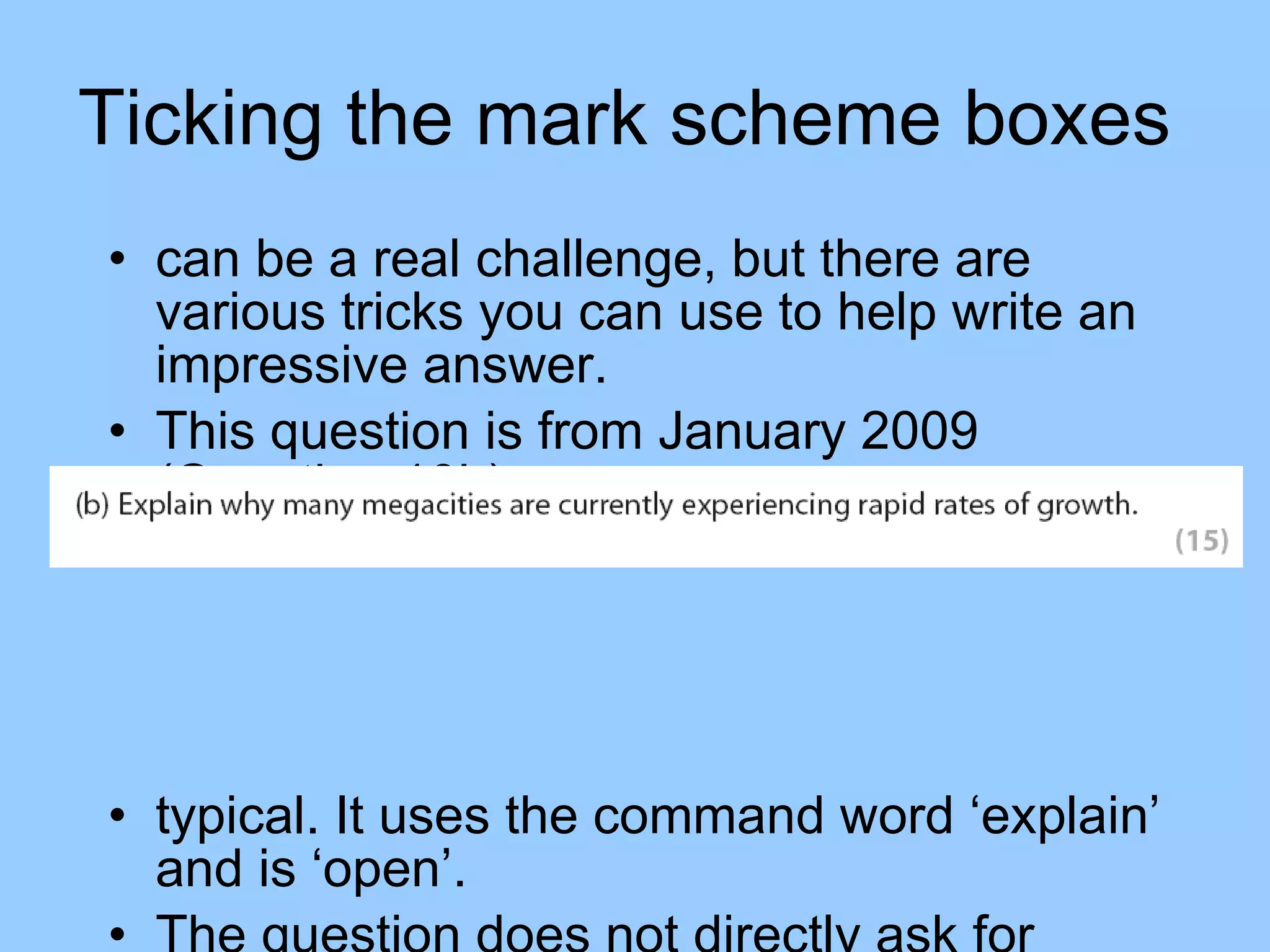
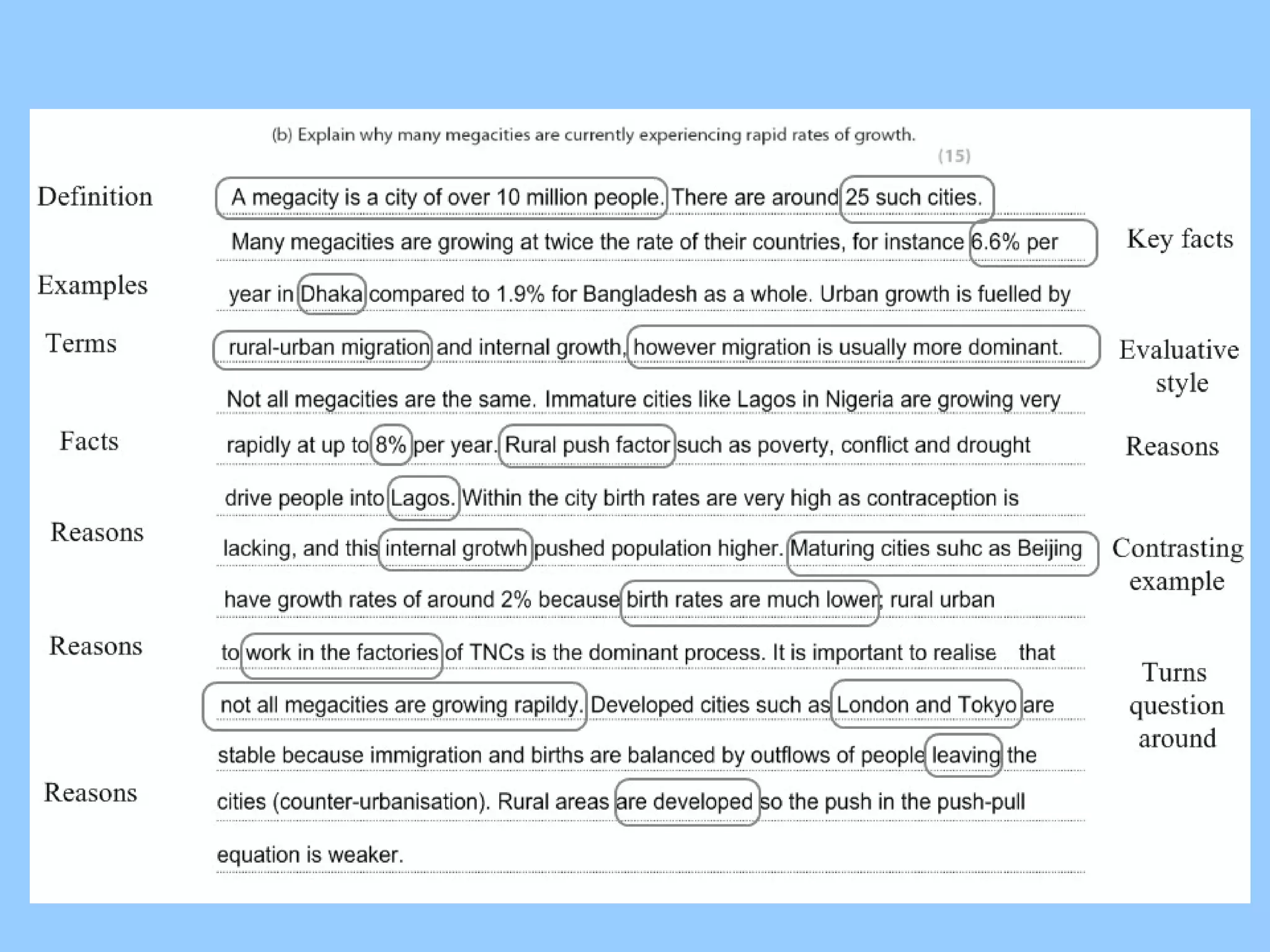
Ticking the mark scheme boxes  can be a real challenge, but there are various tricks you can use to help write an impressive answer.  This question is from January 2009 (Question 10b): typical. It uses the command word ‘explain’ and is ‘open’. The question does not directly ask for examples to be used, but you should just assume you should use them!
 
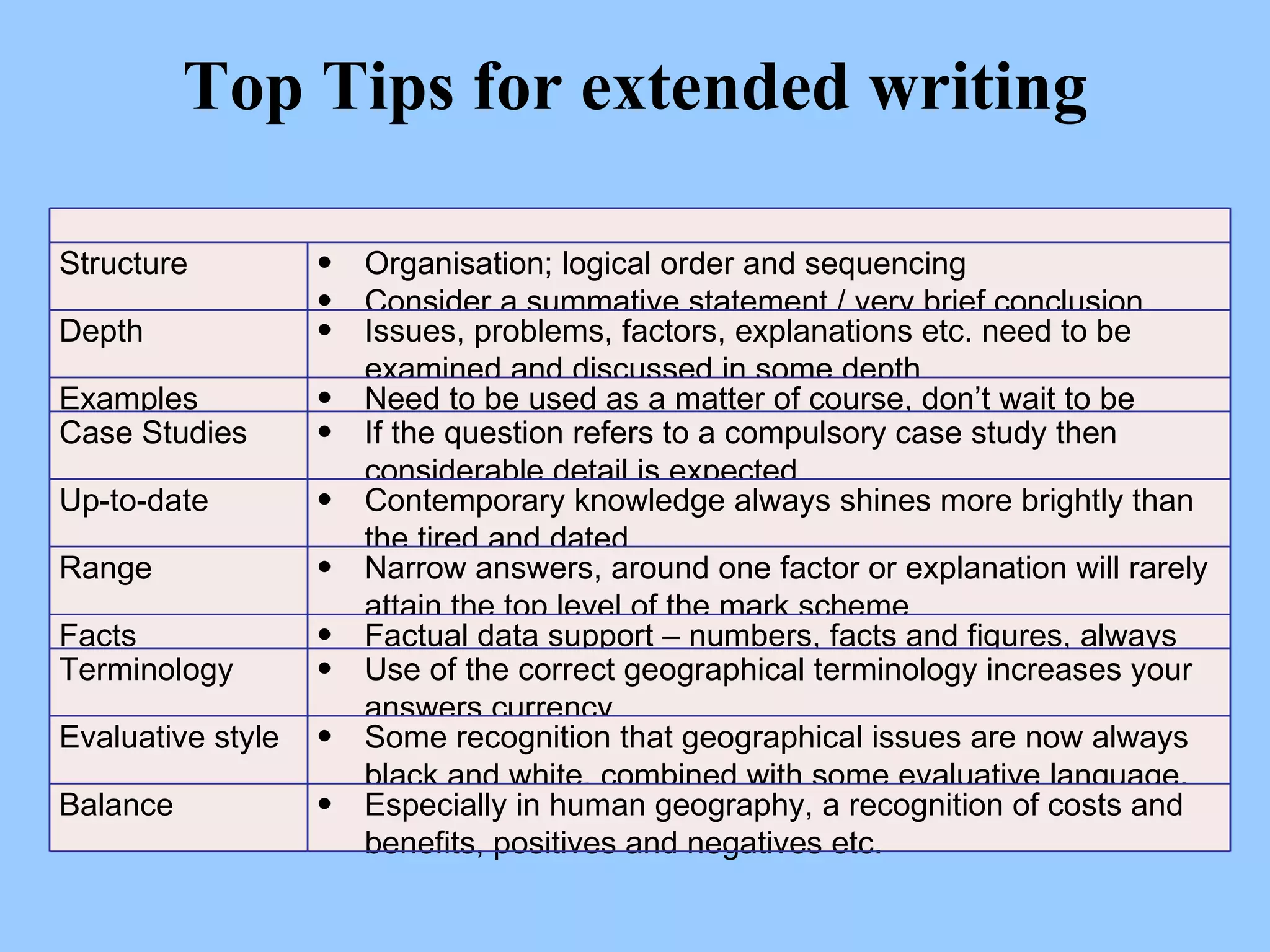
Top Tips for extended writing Structure  Organisation; logical order and sequencing  Consider a summative statement / very brief conclusion.  Depth  Issues, problems, factors, explanations etc. need to be examined and discussed in some depth  Examples  Need to be used as a matter of course, don’t wait to be asked! Case Studies  If the question refers to a compulsory case study then considerable detail is expected  Up-to-date Contemporary knowledge always shines more brightly than the tired and dated Range  Narrow answers, around one factor or explanation will rarely attain the top level of the mark scheme  Facts  Factual data support – numbers, facts and figures, always impress. Terminology  Use of the correct geographical terminology increases your answers currency  Evaluative style  Some recognition that geographical issues are now always black and white, combined with some evaluative language.  Balance Especially in human geography, a recognition of costs and benefits, positives and negatives etc.

Unit 1 B Extended Writing

  • 1.
    Unit 1, SectionB – extended writing skills Cameron Dunn Chief Examiner
  • 2.
    What do Ihave to do? One question from a choice of 4 – you should spend 30-35 minutes on this Each question is worth 25 marks The 25 marks is split into a 10 mark part ‘a’ and 15 mark part ‘b’ There is a stimulus resource for the 10 mark question
  • 3.
    Choice of QuestionQuestions will be based around 4 key themes you can expect to have a genuine choice:
  • 4.
    Very importantly youshould read all 4 questions look at all four accompanying Figures before you make a decision. In January 2009 the choice of question was heavily biased towards questions 7 and 8.
  • 5.
    The Resource question,part ‘a’ Notice that the question states ‘such as the one shown’. This is indicating a need to move beyond the stimulus material provided and into a discussion of other drought examples and their impacts: Ongoing Australian drought the ‘big dry’ Drought in Niger Drought in Sudan and Ethiopia
  • 6.
    There is alsoa structure provided in the question i.e. ‘people and the environment’ answer needs to cover both in order to be balanced. Importantly the question is not ‘what are the impacts of drought?’ but actually ‘ why do drought have such severe impacts?’ Just describing the impacts of drought lacks the explanation the question is looking for.
  • 7.
    Use the resource,but don’t copy it out. Description of impact Explanation of severity Forest fires Uncontrolled burn devastates wildlife and ecosystems; difficult to manage Farm production down Direct reliance on irrigation; scarce water resources diverted to people Low river flows Made worse by human abstraction for water supply Fall in tourist numbers Fear, danger, intense uncomfortable heat Deaths Vulnerable groups (elderly) ‘silent’ killer
  • 8.
    The Open questions,part ‘b’ a 15 mark question which will be quite open. There is no Figure to look at -you are ‘on your own’ . good idea to do a very quick plan just to organise your thoughts and help structure your answer. The plan should take less than 1 minute
  • 9.
    Mark schemes for the 15 mark question they use 4 levels. Like a flight of sets which you are trying to climb. To go up a step, you need to add something new into your answer.
  • 10.
    Ticking the markscheme boxes can be a real challenge, but there are various tricks you can use to help write an impressive answer. This question is from January 2009 (Question 10b): typical. It uses the command word ‘explain’ and is ‘open’. The question does not directly ask for examples to be used, but you should just assume you should use them!
  • 11.
  • 12.
    Top Tips forextended writing Structure Organisation; logical order and sequencing Consider a summative statement / very brief conclusion. Depth Issues, problems, factors, explanations etc. need to be examined and discussed in some depth Examples Need to be used as a matter of course, don’t wait to be asked! Case Studies If the question refers to a compulsory case study then considerable detail is expected Up-to-date Contemporary knowledge always shines more brightly than the tired and dated Range Narrow answers, around one factor or explanation will rarely attain the top level of the mark scheme Facts Factual data support – numbers, facts and figures, always impress. Terminology Use of the correct geographical terminology increases your answers currency Evaluative style Some recognition that geographical issues are now always black and white, combined with some evaluative language. Balance Especially in human geography, a recognition of costs and benefits, positives and negatives etc.