Demystifying Social Media: Navigating All that Noise
by Angela Natividad on May 08, 2010
- 1,435 views
Accessibility
Categories
Tags
More...Upload Details
Uploaded via SlideShare as Apple Keynote
Usage Rights
© All Rights Reserved
Statistics
- Favorites
- 2
- Downloads
- 53
- Comments
- 0
- Embed Views
- Views on SlideShare
- 1,300
- Total Views
- 1,435
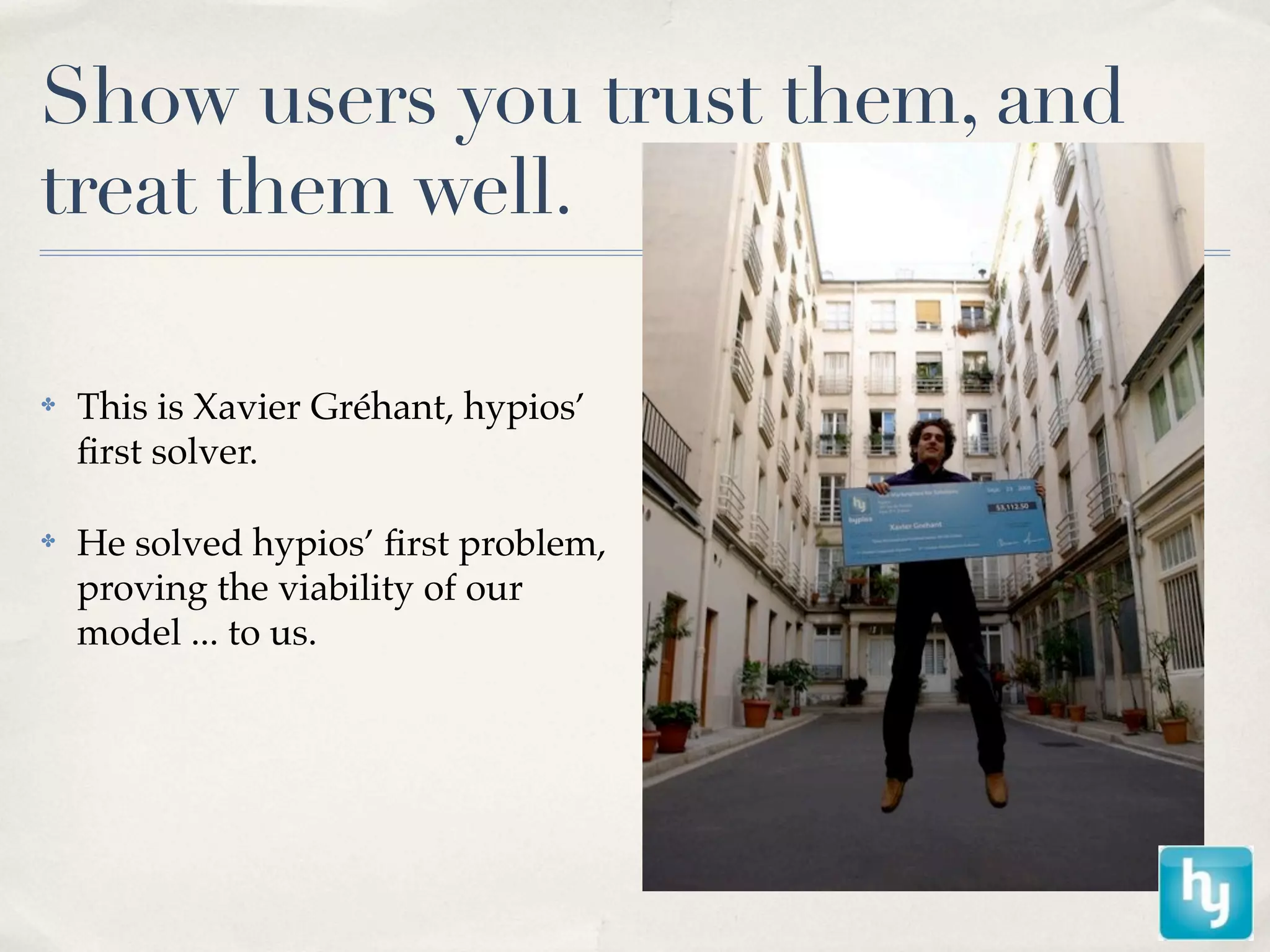
Really, all people want is proof you care about your relationship with them. They want you to be truthful, responsive and respectful of their intelligence.
We trust solvers. They not only provide custom fit solutions to our seekers, they often show them where the solution is if it already exists, and ask tough questions that sometimes force both seekers and ourselves to rethink our approach.
If they were not invested in our success we would be dead in the water.
http://www.youtube.com/watch?v=hgcHTHGu5tA&feature=player_embedded
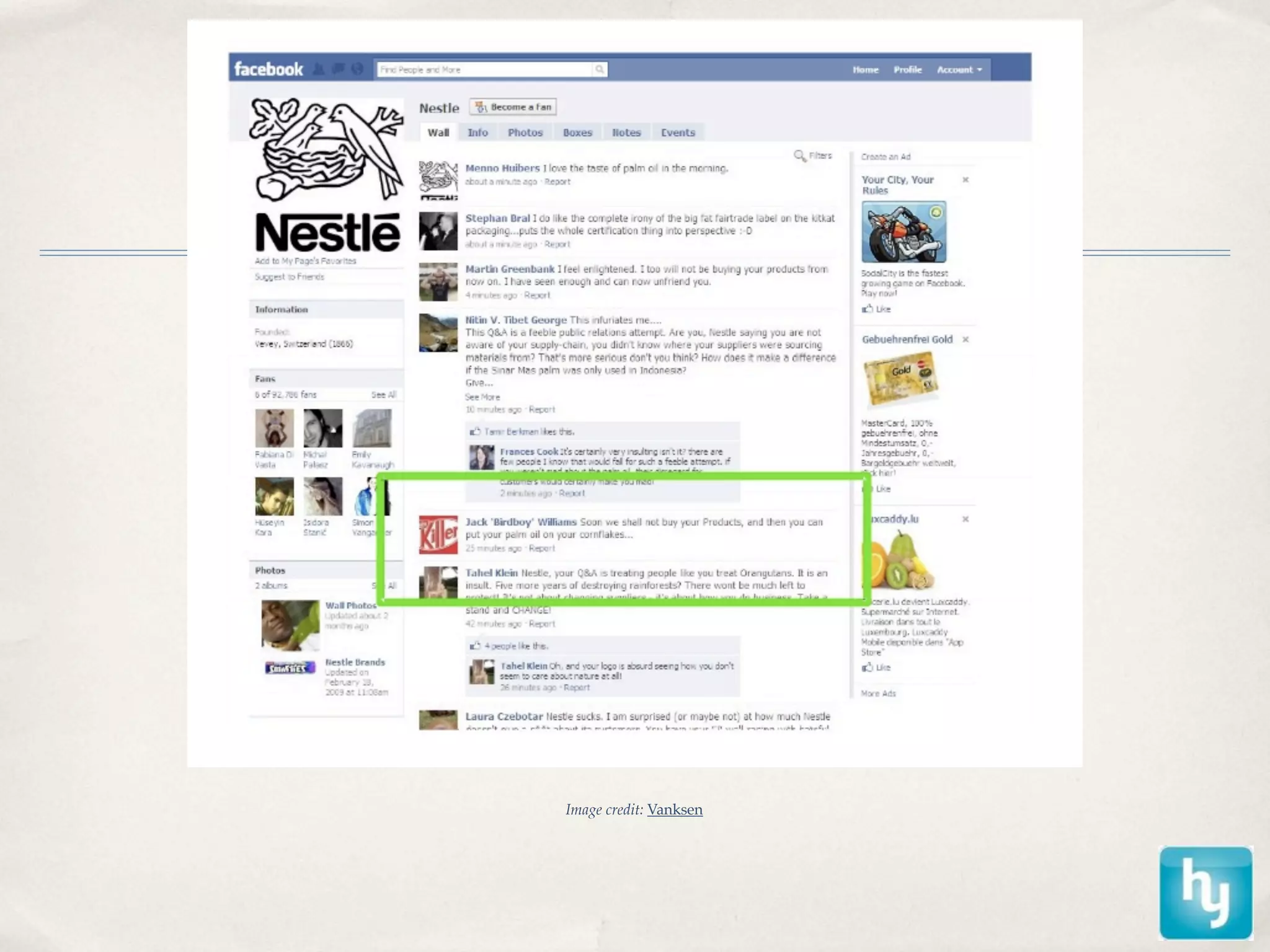
When people are sufficiently riled up, they go to the most accessible place where they can maximise contact with you while making the most noise possible.
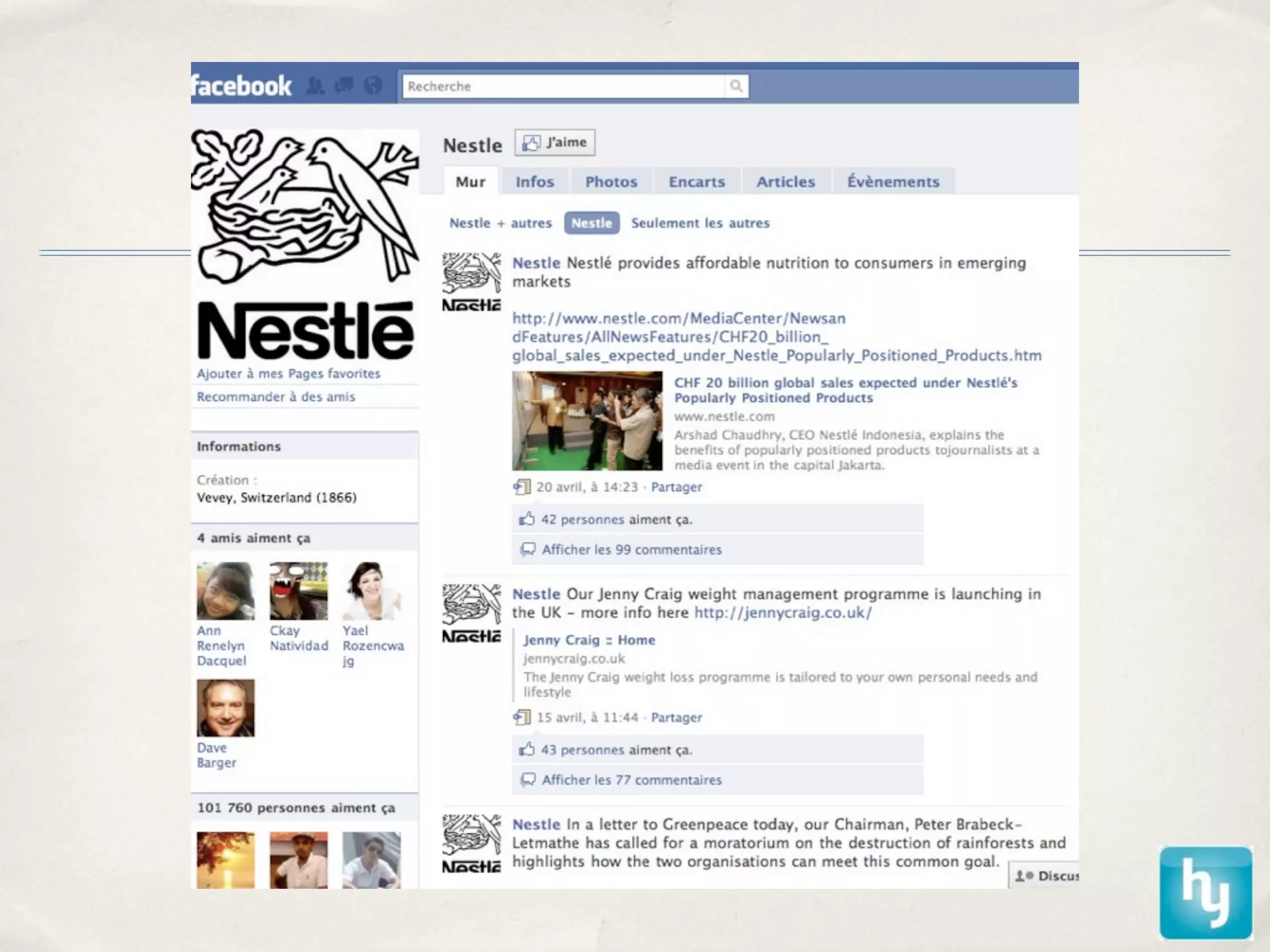
Naturally, they opted for Nestlé’s Facebook.
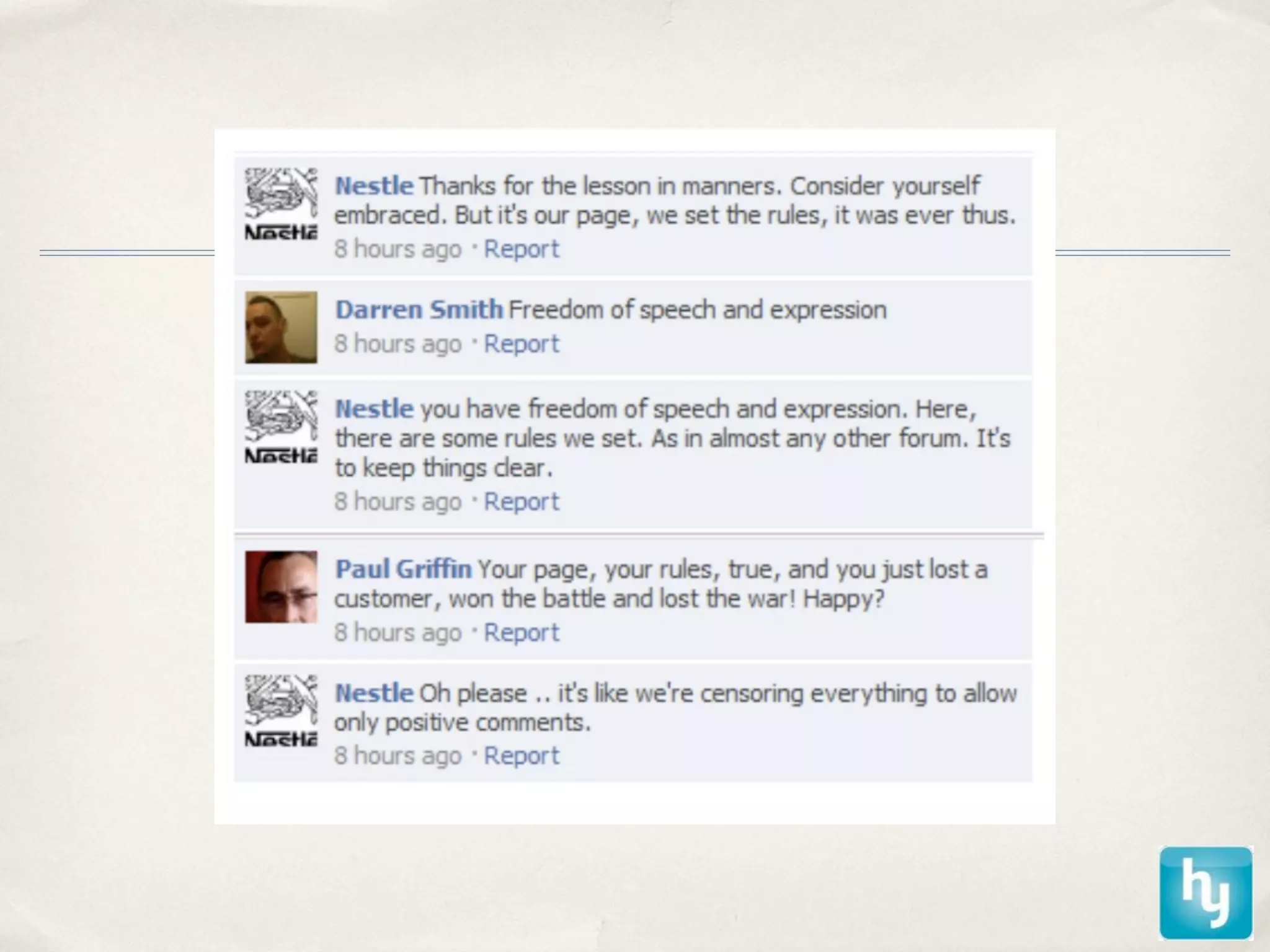
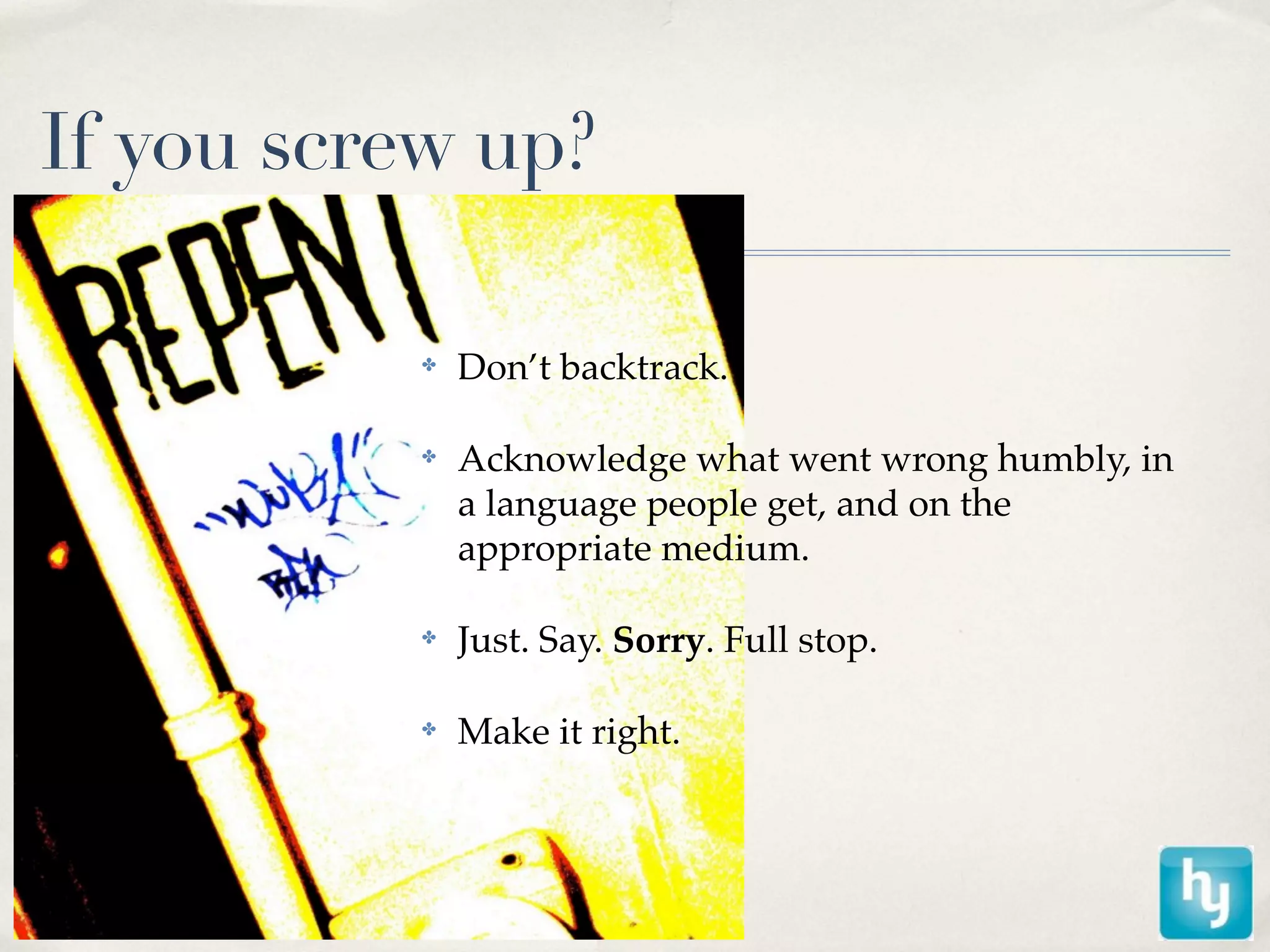
For weeks after this, the page was violently deluged with commentary - not just about palm oil but about Nestlé’s historical contributions to destroying global happiness in general. Nestlé backtracked, promising to clean up its act by 2015. Incensed users didn’t think that was good enough.
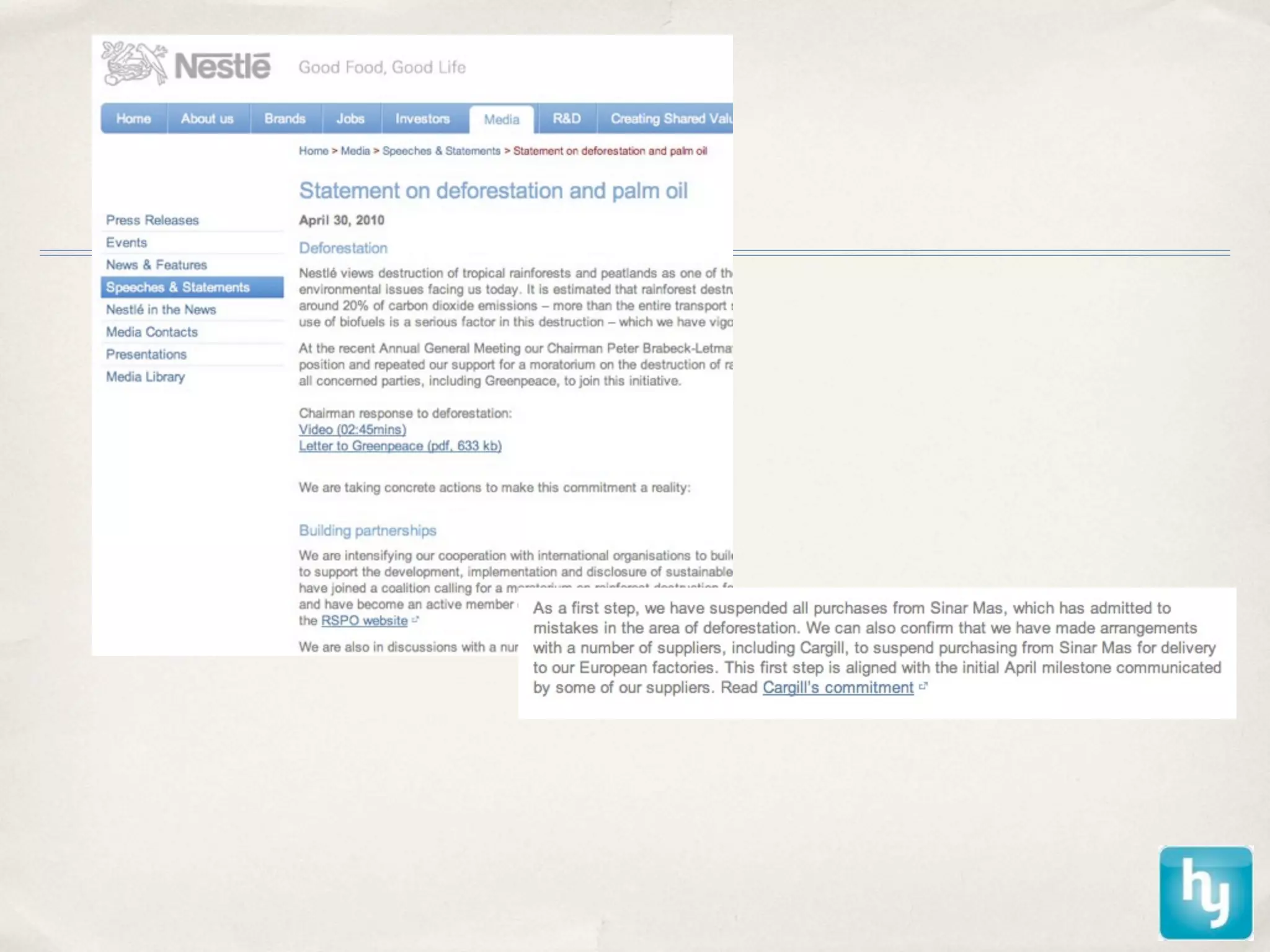
It also suspended all purchases from Sinar Mas, a primary deforestation culprit and palm oil provider, immediately.
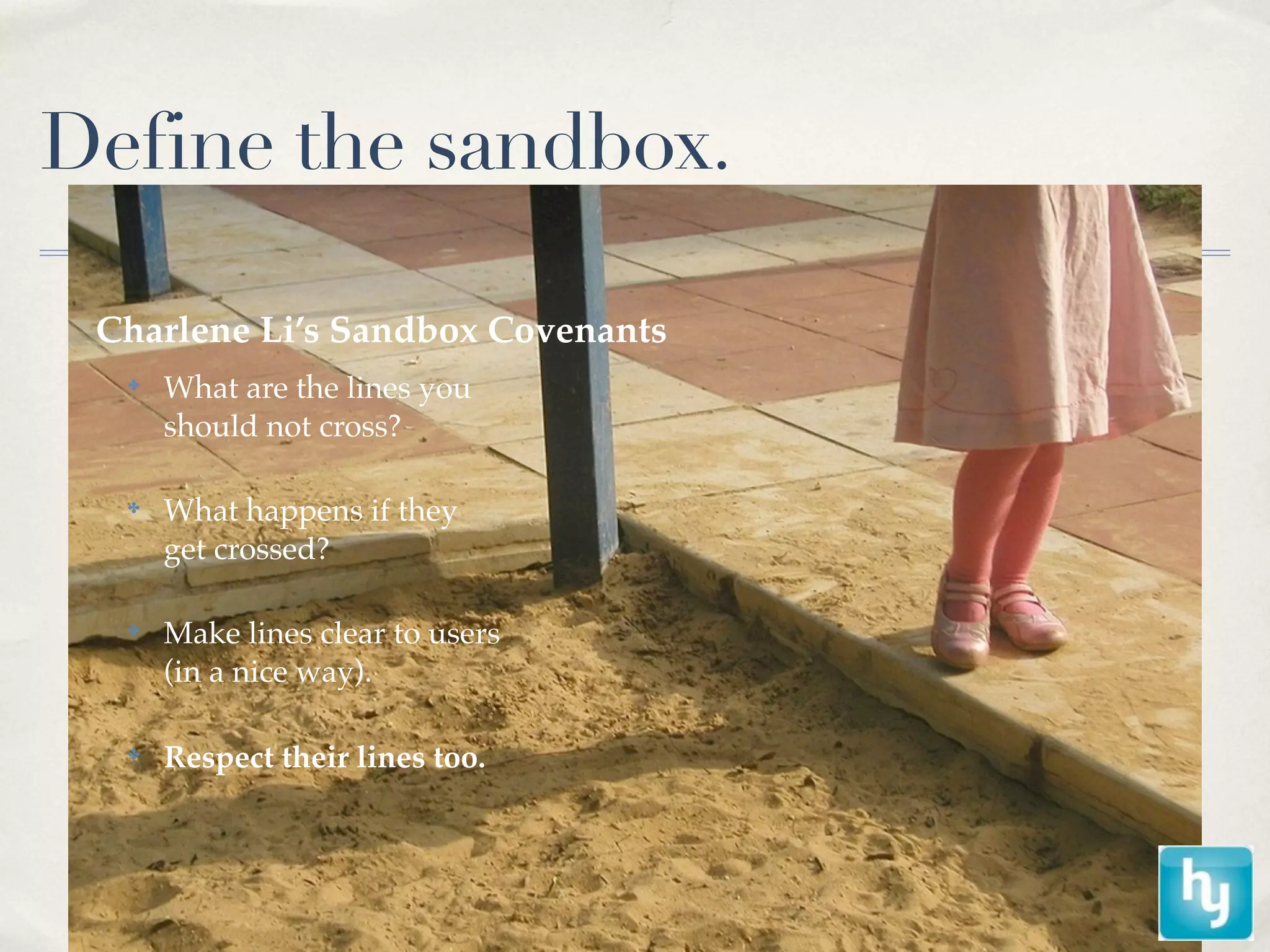
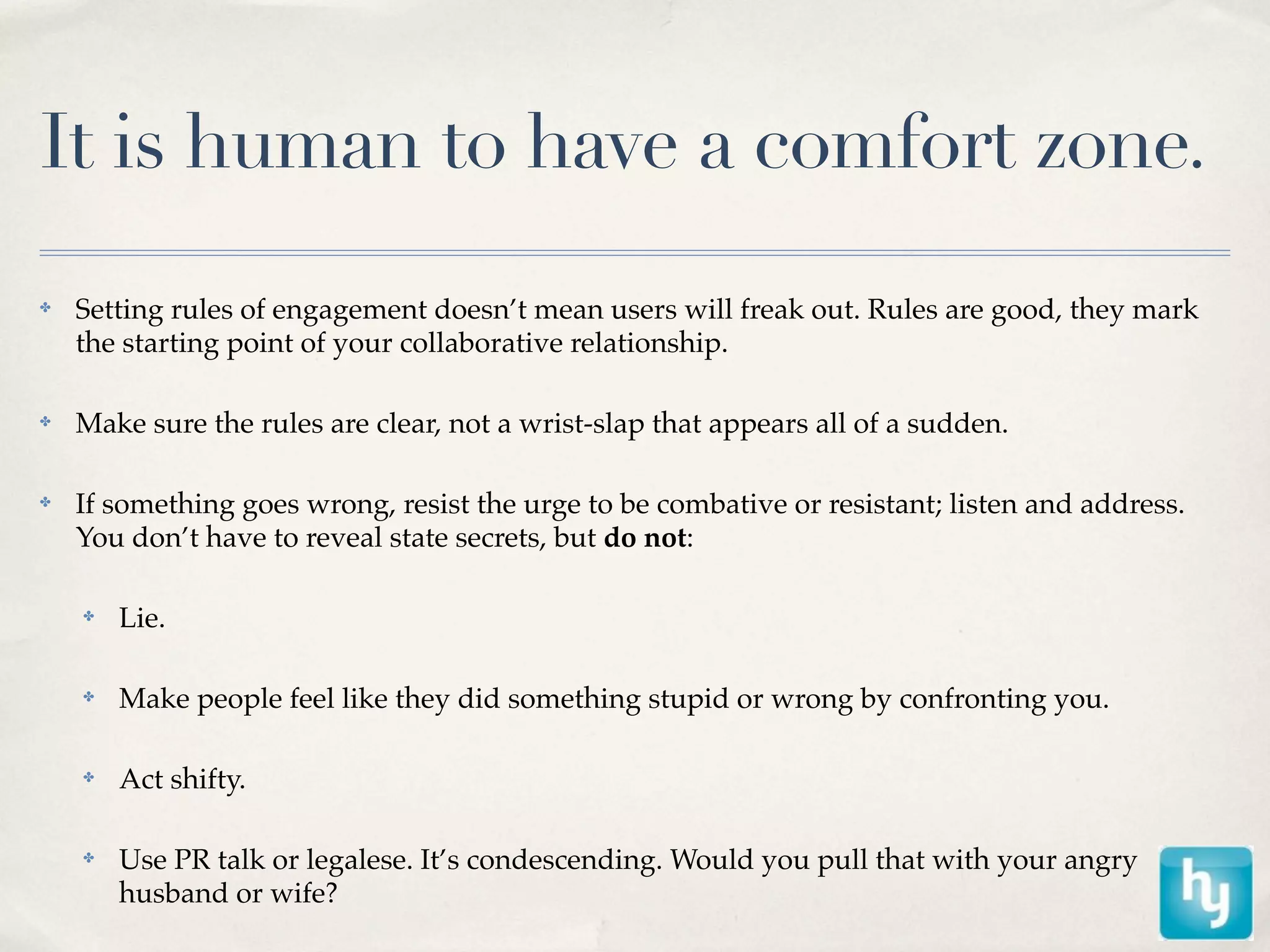
Users also have sandboxes. Think of them as the mental boundary for what they consider appropriate from your brand. As your relationship develops and grows more collaborative, the sandbox naturally expands over time.
Shifty: We’re naturally suspicious of people that tell half-truths, or avoid questions. If there’s no simple answer, sometimes it’s okay to say, I’ll get back to you, or We’re trying to make this work; it’s a complicated situation but stick around, we are trying.
PR talk: When people get mad and mob you, the way they did with Nestlé, you have to consider they wouldn’t bother to scream in your face if they weren’t looking for the opportunity to trust you again. Honor that.
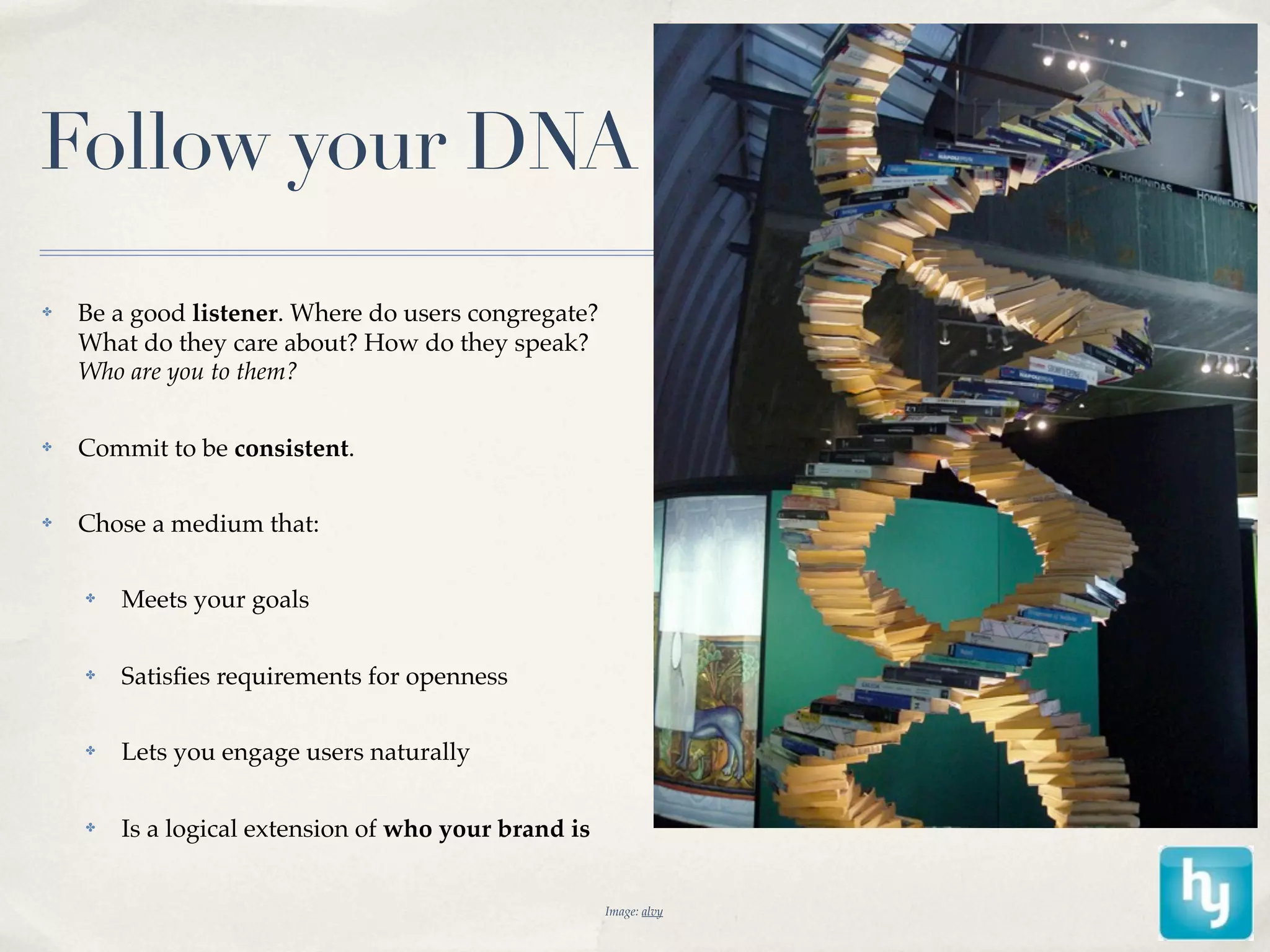
Consistency: Don’t stick yourself somewhere you won’t want to be for awhile, because it takes time to realise the value of social efforts. And because of how fast things are moving now, users don’t want to waste time investing in things that look half-finished or like they’ll disappear tomorrow. You should feel like you’re here to stay, like you should’ve always been here.
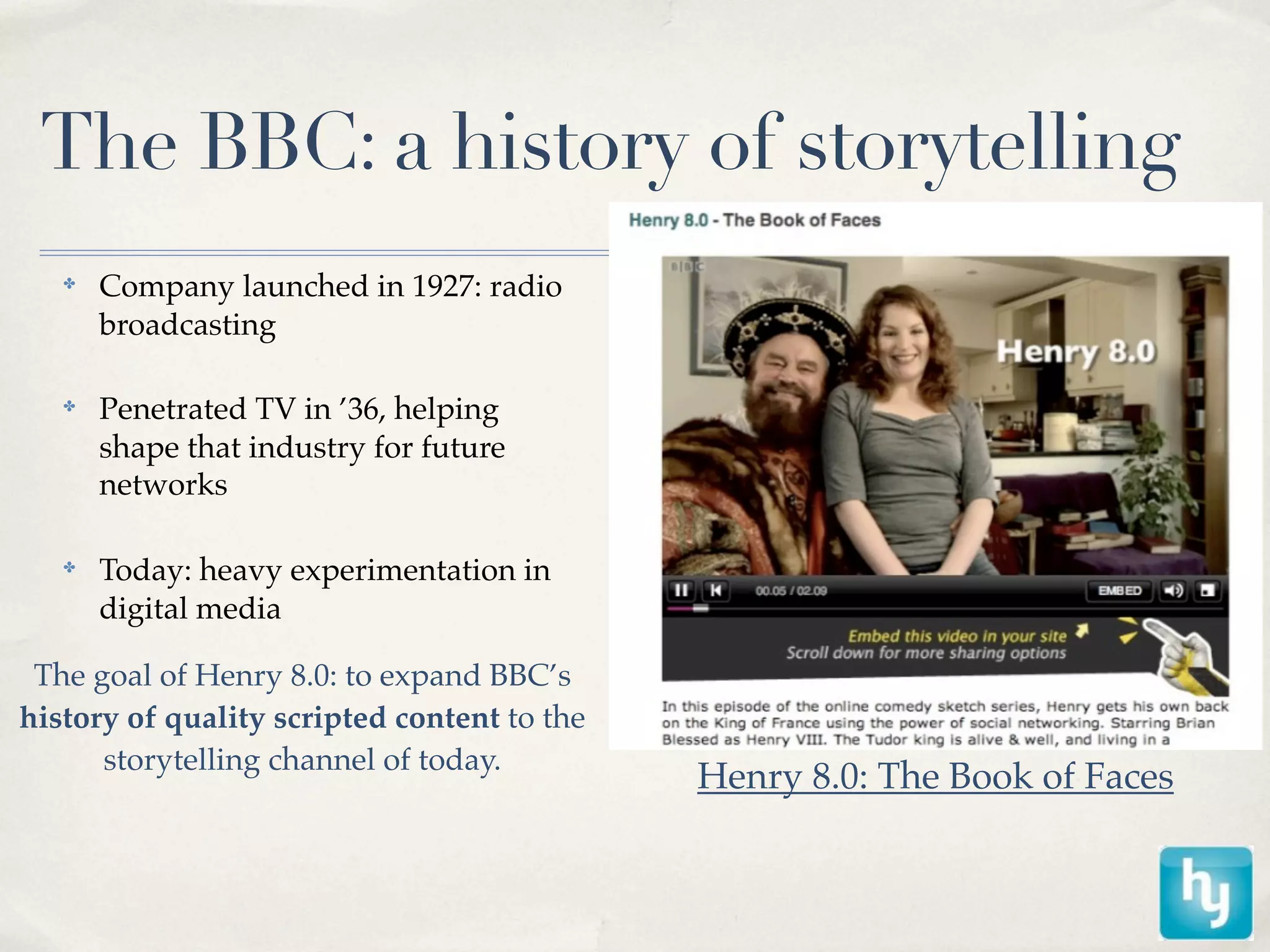
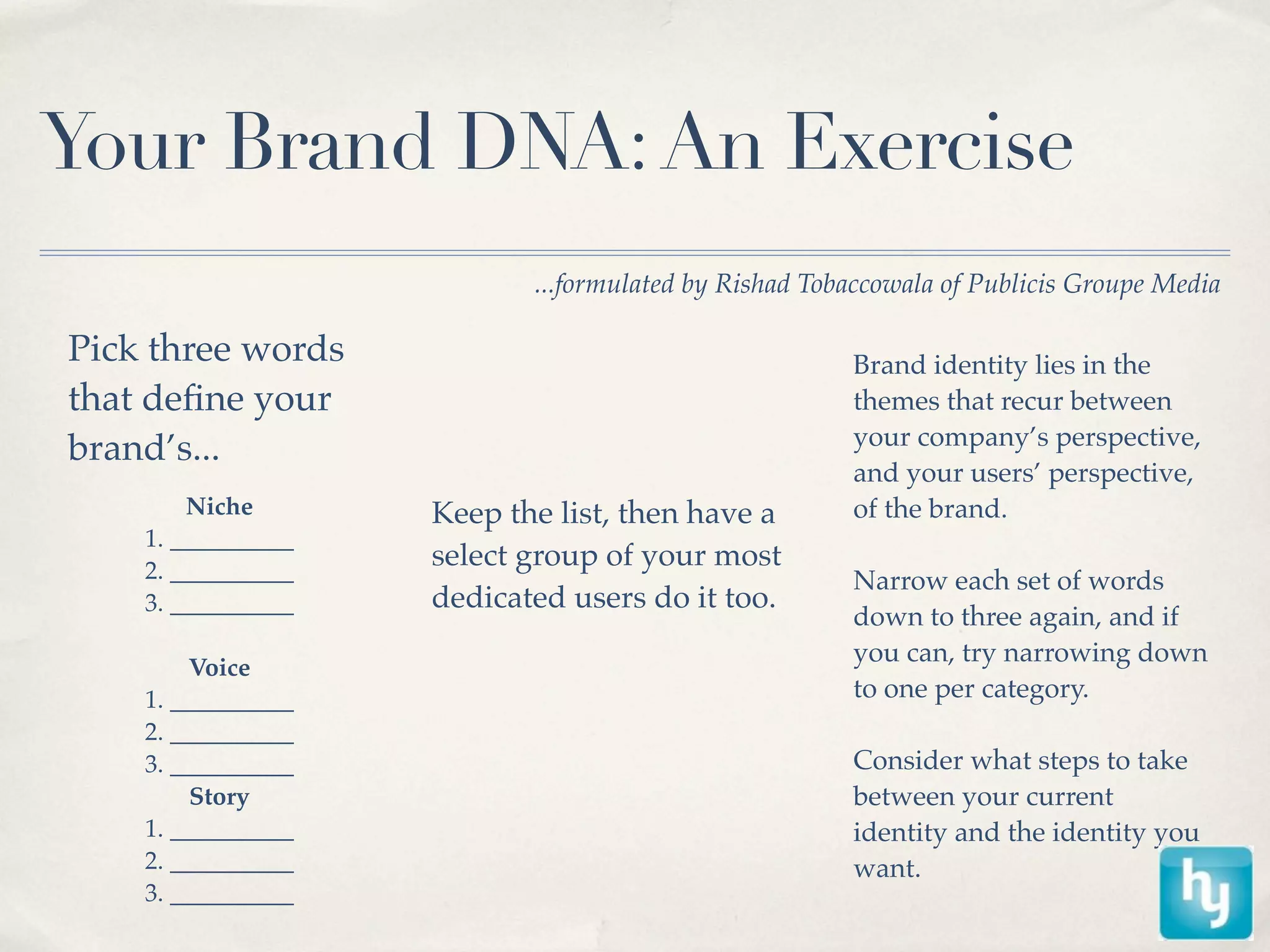
A good example of this DNA idea is the BBC, which is doing a lot of interesting things in the digital space right now: interactive storybooks that live online, livemaps that show where crime occurs in your area, quiz games you can play on your phone while watching EastEnders, all kinds of stuff. Here’s a taste of its new web series, Henry 8.0.
But let’s expand this idea to more engagement-intensive platforms.
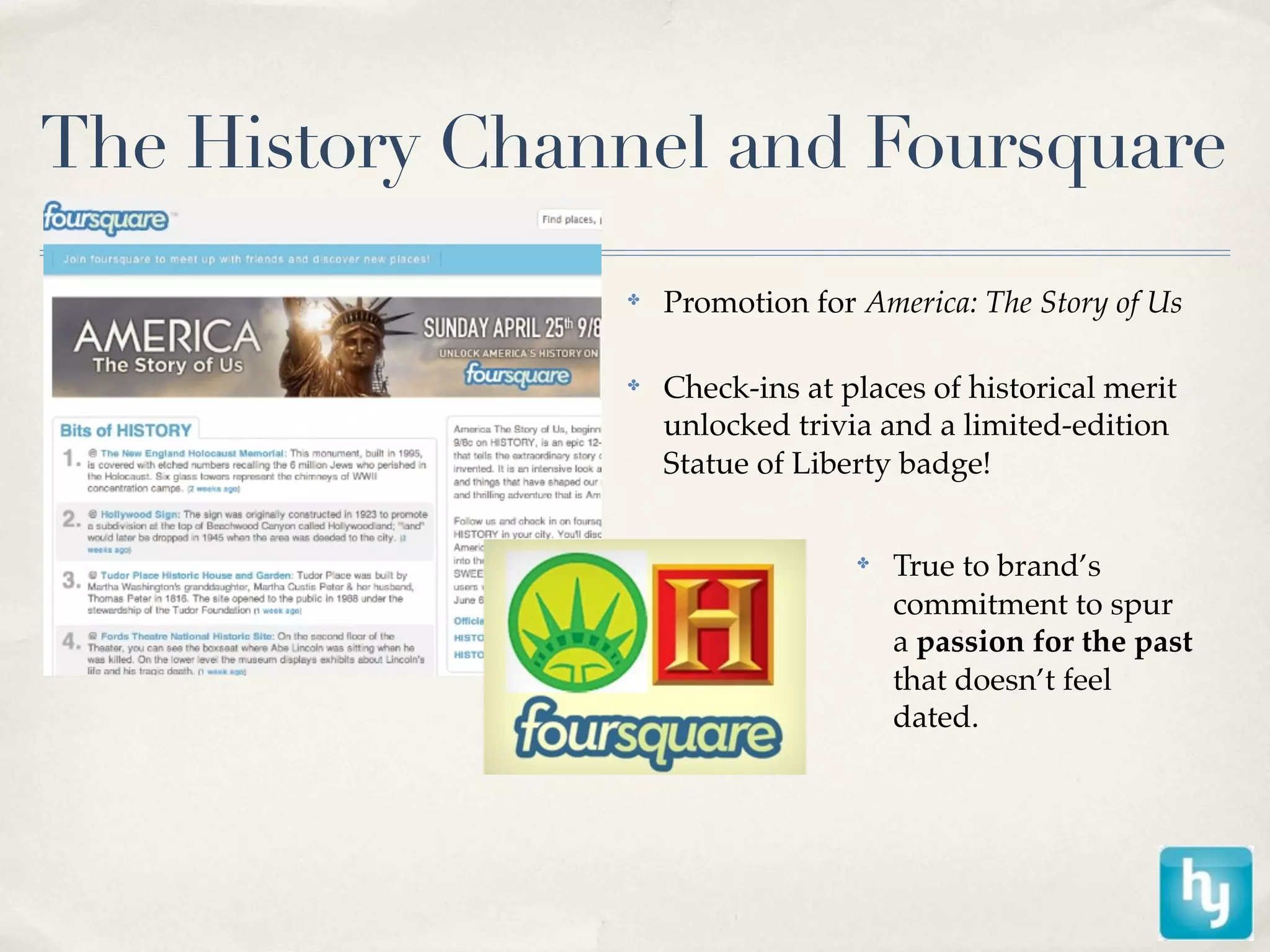
Foursquare users that check in at locations of historical merit can unlock the limited-edition History Channel badge and learn illustrative tidbits about the area.
"users in Los Angeles who check in at the Cinerama Dome will find out it opened in 1963 with the premiere of ‘It’s a Mad, Mad, Mad, Mad World’ and that it’s the world’s only concrete geodesic dome.”
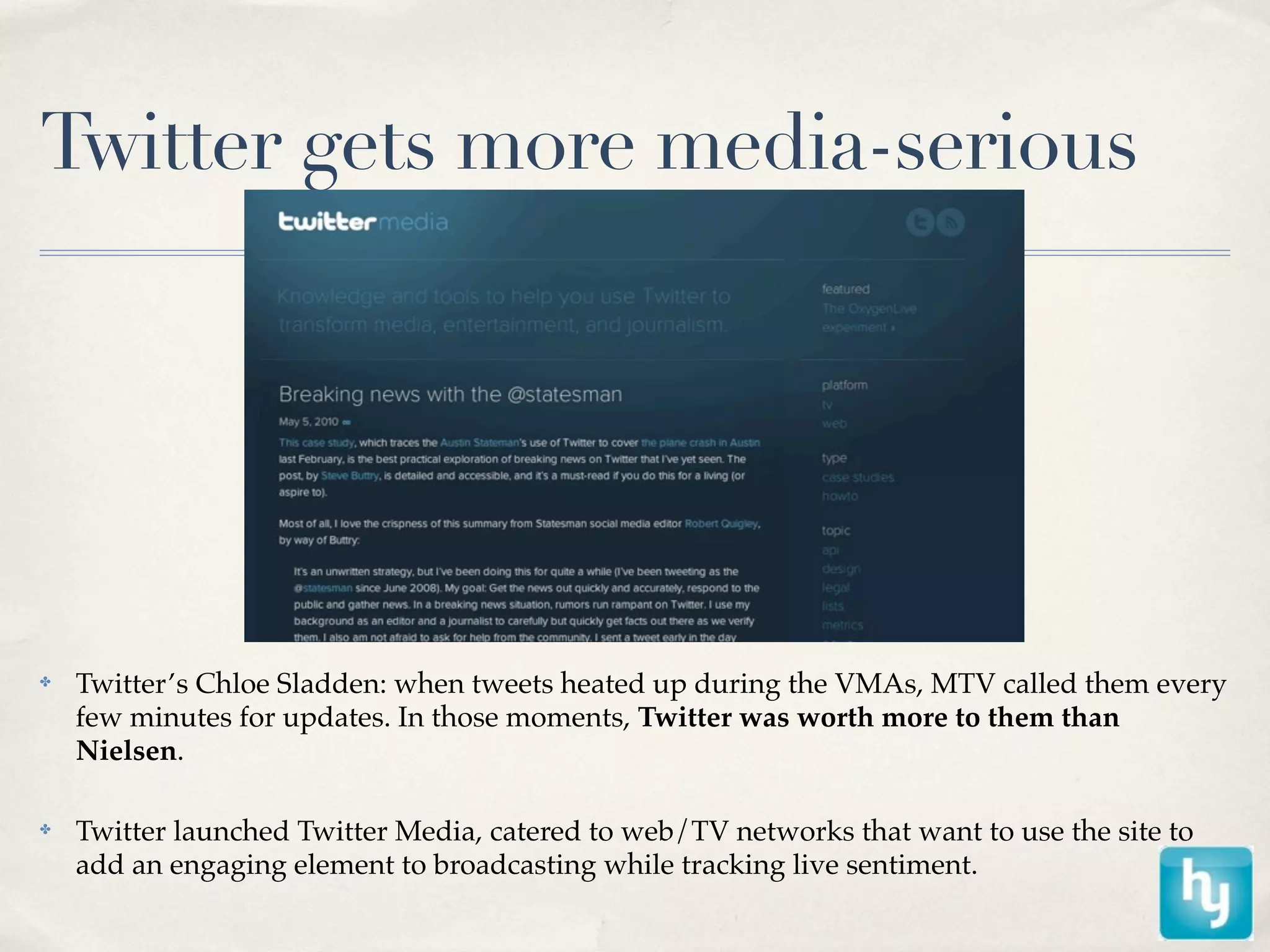
I get the sense people are trying to get a grip on why Twitter is useful, so let’s get into that.
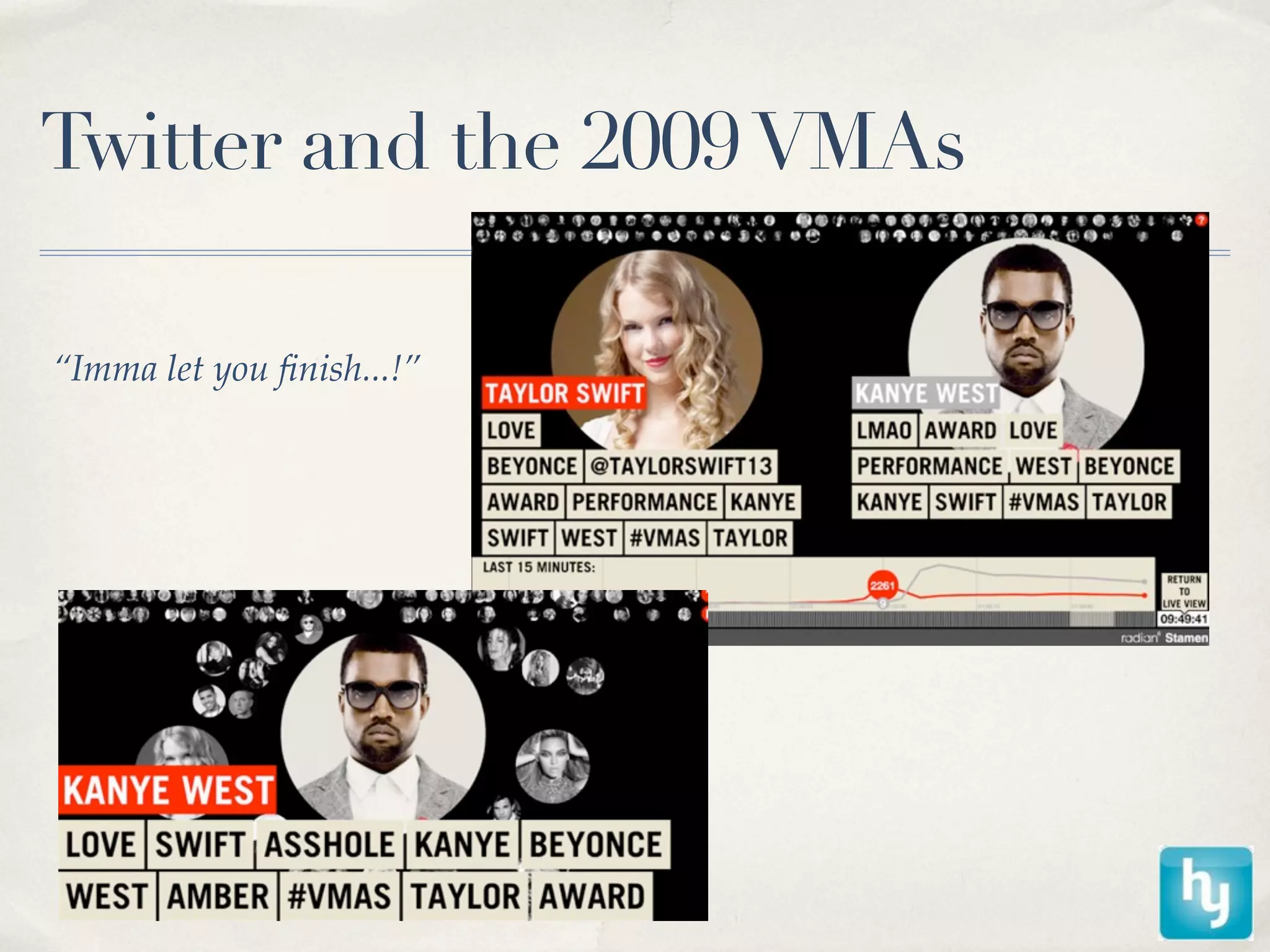
A data visualisation of how discussion looked when the incident happened: http://vimeo.com/11302556
I really hate networking cocktails because it’s hard to see if a person is honest, likeable or worth collaborating with; you have no context, just their sales pitch and a weak mojito. Watching what they post on Twitter builds trust and gives you a working glimpse of their personality and values. I’ve become so comfortable with what I know of some of the people on there that I think nothing of sharing business with them, reaching out for help or even just giving them a ping when I’m in town. They are my friends.
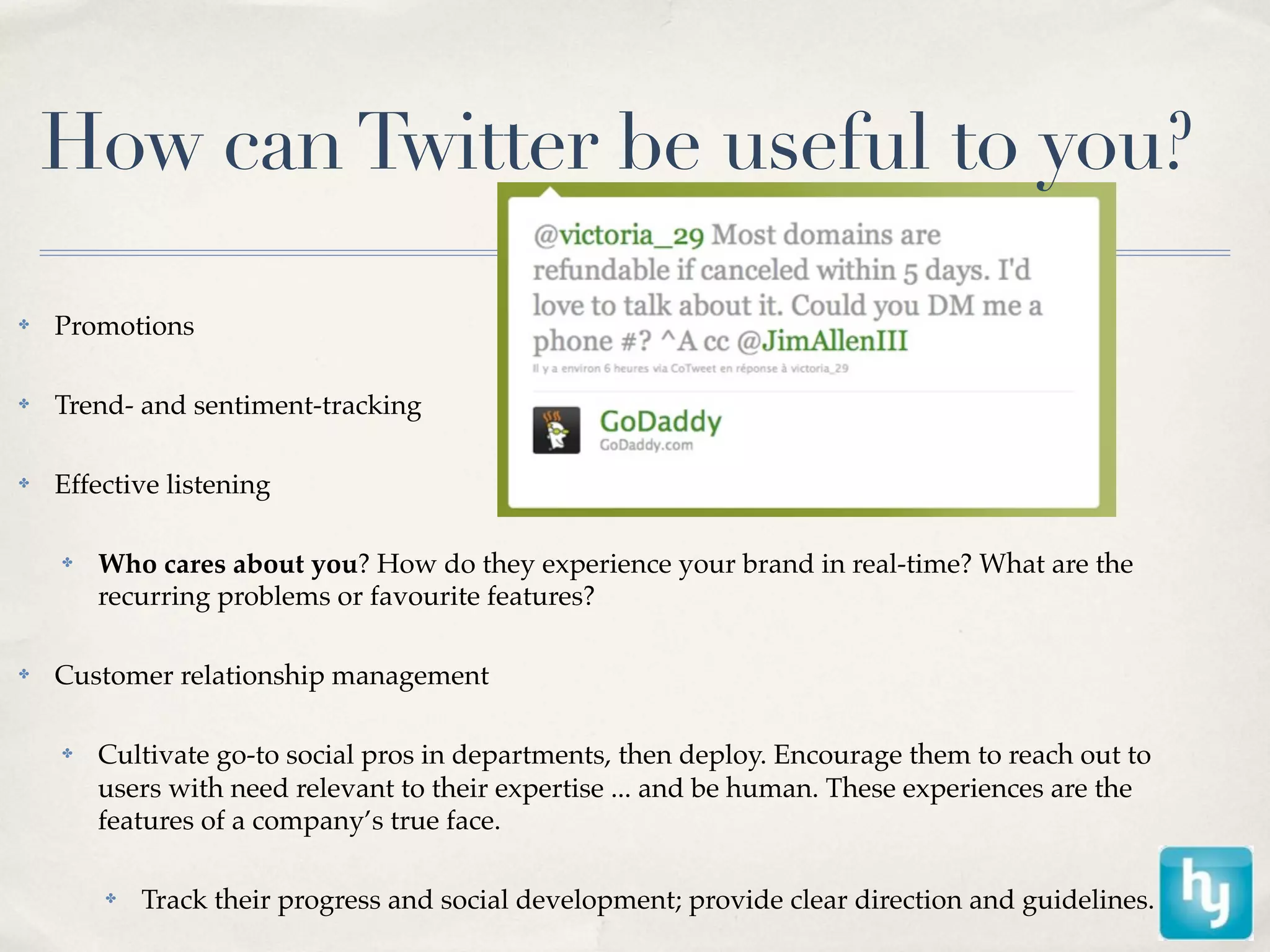
Service providers are rarely forthcoming about the best ways to reach them. Once you’ve run the customer support hamster wheel to no avail, and turned to Twitter as a last resort, it is frustrating to hear radio silence from the brand. There is almost the sense they are willfully ignoring you.
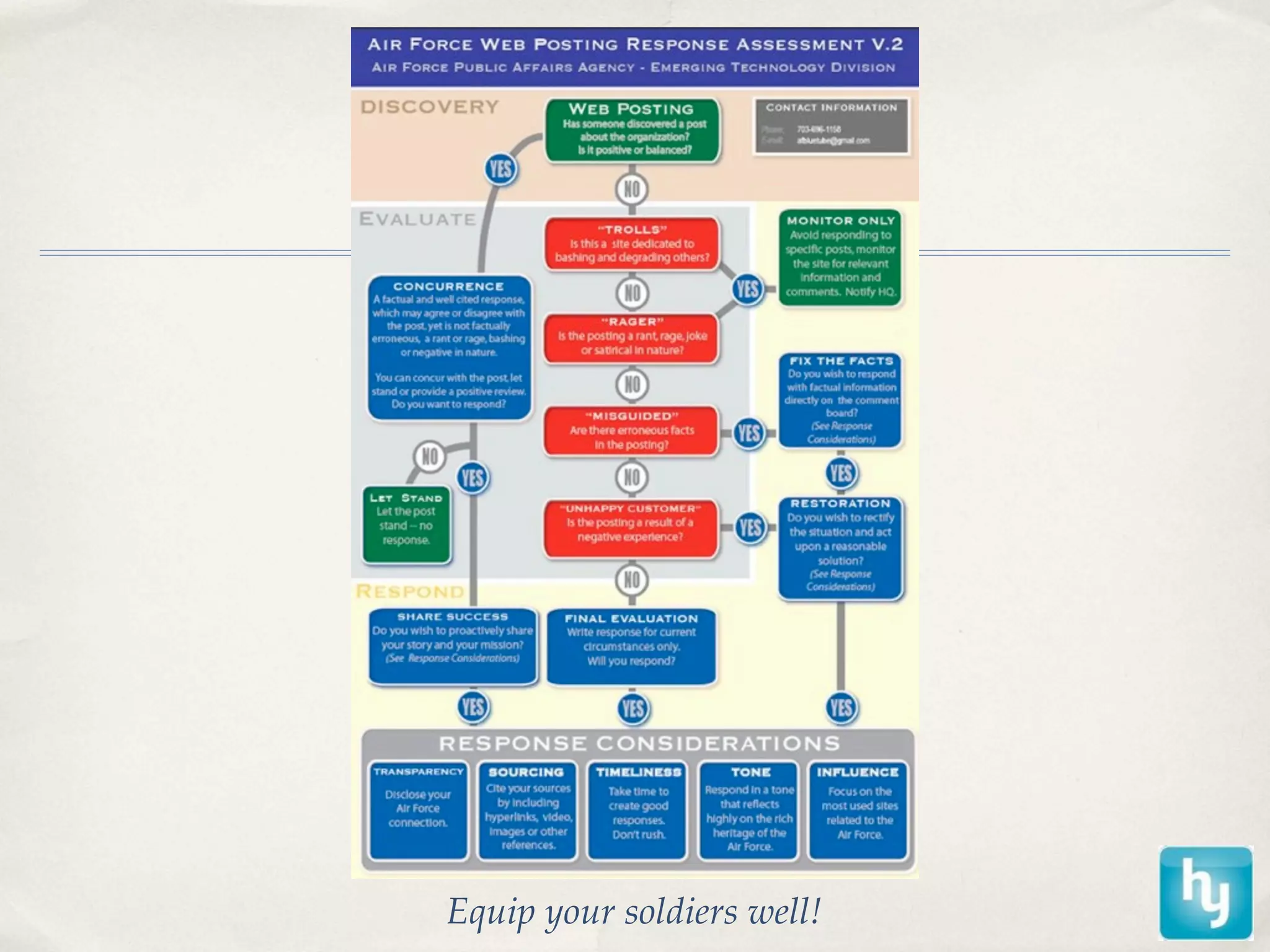
It’s when the road map is vague that there are problems. People panic and improvise. Remember Nestlé.
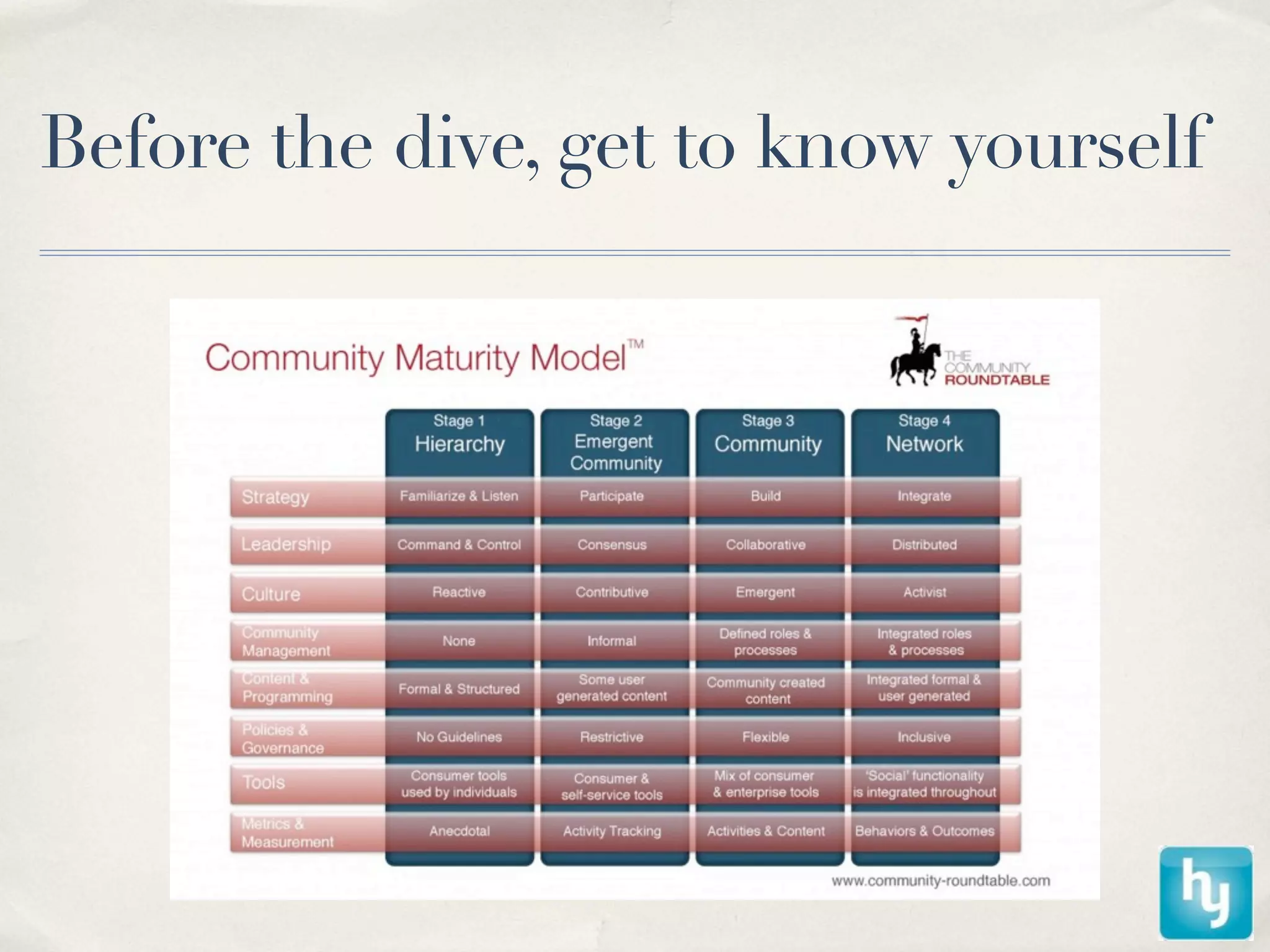
Two things to help with that: this here is the Community Maturity Model, dev’d by The Community Roundtable. It shows how various elements of a company’s workflow move slowly from a traditional hierarchical model to a network model, where structures are formed mostly collaboratively. You cannot race from 1-4; consider where you are, and pace yourself. It’s okay to start small if you know where you’re headed.
But whether or not you do the exercise, it is crucial to make it a practice to
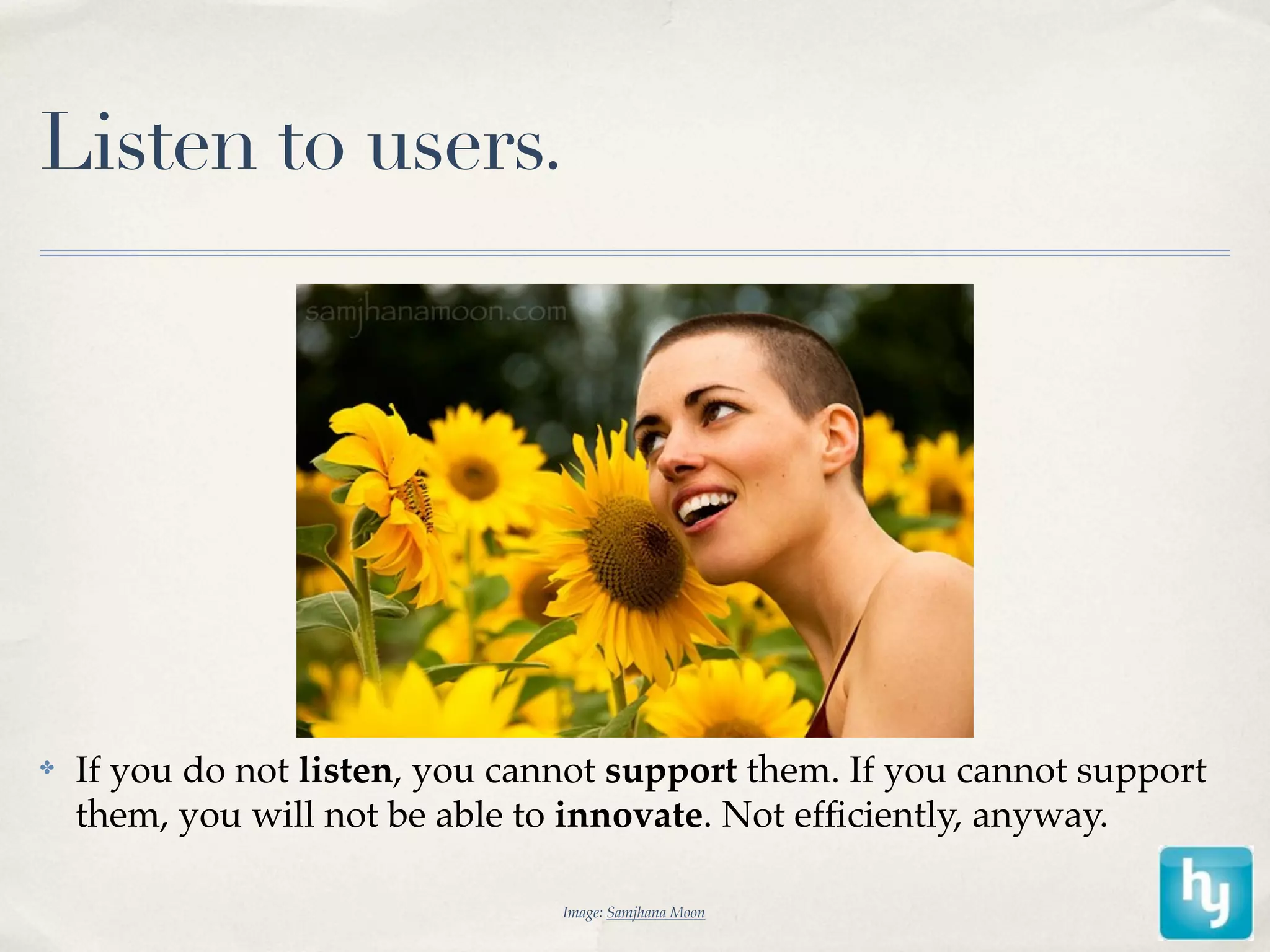
Users are useful. They bug-test, help you refine your marketing focus, are willing to contribute to case studies, and, at their most intense, know more about your brand than you do. Really, you could not ask for better product management and innovation partners.