![Configuration - IdP
Create keystore with signing key
keytool -genkey -keyalg RSA -alias liferaysamlidpdemo -keystore keystore.jks -storepass liferay
-keysize 2048
Create portal-ext.properties
saml.enabled=true
saml.role=idp
saml.entity.id=liferaysamlidpdemo
saml.metadata.paths=
${liferay.home}/saml/salesforce.xml,
http://beta.test.com:9080/c/portal/saml/metadata
saml.keystore.type=jks
saml.keystore.path=${liferay.home}/data/keystore.jks
saml.keystore.password=liferay
saml.keystore.credential.password[liferaysamlidpdemo]=liferay](https://image.slidesharecdn.com/introductiontosaml20-111013180601-phpapp01/75/Introduction-to-SAML-2-0-19-2048.jpg)
![Configuration - SP
Create keystore with signing key
keytool -genkey -keyalg RSA -alias liferaysamlspdemo -keystore keystore.jks -storepass liferay
-keysize 2048
Create portal-ext.properties
saml.enabled=true
saml.role=sp
saml.entity.id=liferaysamlspdemo
saml.metadata.paths=http://localhost:8080/c/portal/saml/metadata
saml.sp.default.idp.entity.id=liferaysamlidpdemo
saml.keystore.type=jks
saml.keystore.path=${liferay.home}/data/keystore.jks
saml.keystore.password=liferay
saml.keystore.credential.password[liferaysamlspdemo]=liferay](https://image.slidesharecdn.com/introductiontosaml20-111013180601-phpapp01/75/Introduction-to-SAML-2-0-20-2048.jpg)


This document provides an introduction to Security Assertion Markup Language (SAML) 2.0, including: - SAML is an XML-based standard for exchanging authentication and authorization data between parties like an identity provider and service provider. - It defines roles like identity providers, service providers, and users. - SAML supports single sign-on, attribute sharing, identity federation, and other use cases through protocols, bindings, and profiles. - Liferay supports acting as an identity provider or service provider using SAML through an enterprise edition plugin, allowing configuration as an IdP or SP through properties and metadata files. - The presentation demonstrates SAML single sign-on flows and configurations using examples
Introduction to SAML 2.0 and agenda items including SAML concepts, integration with Liferay, and a demo.
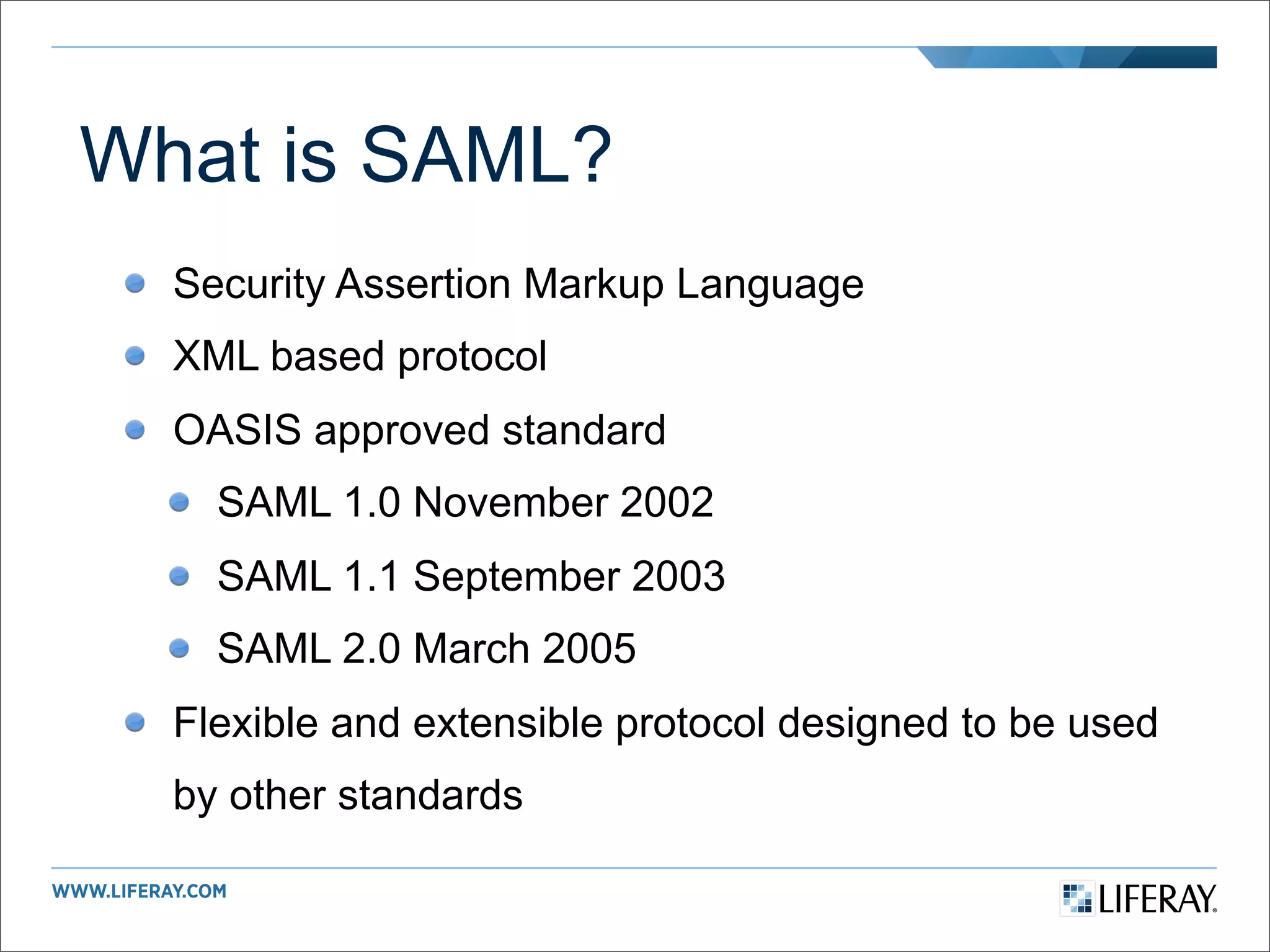
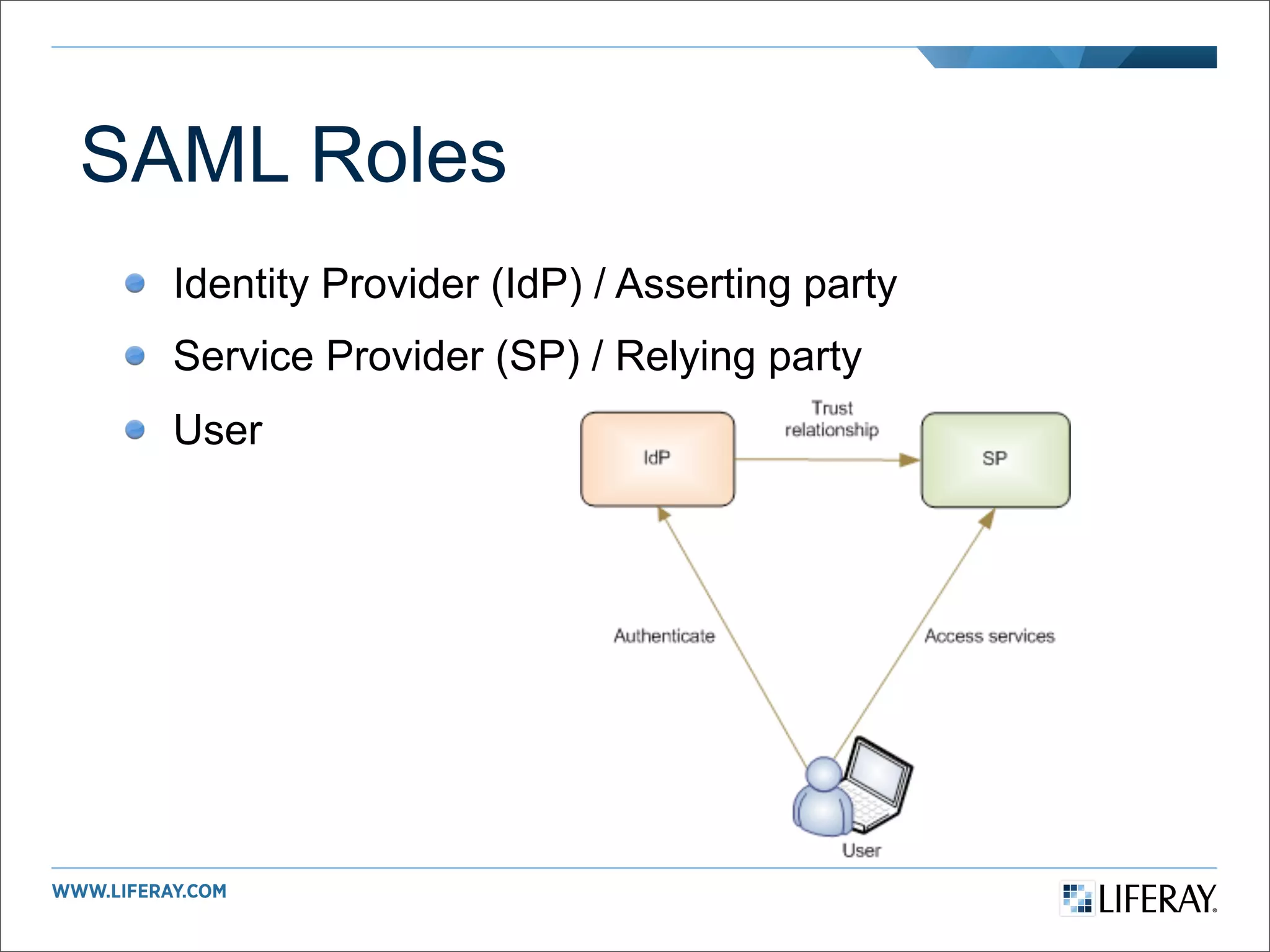
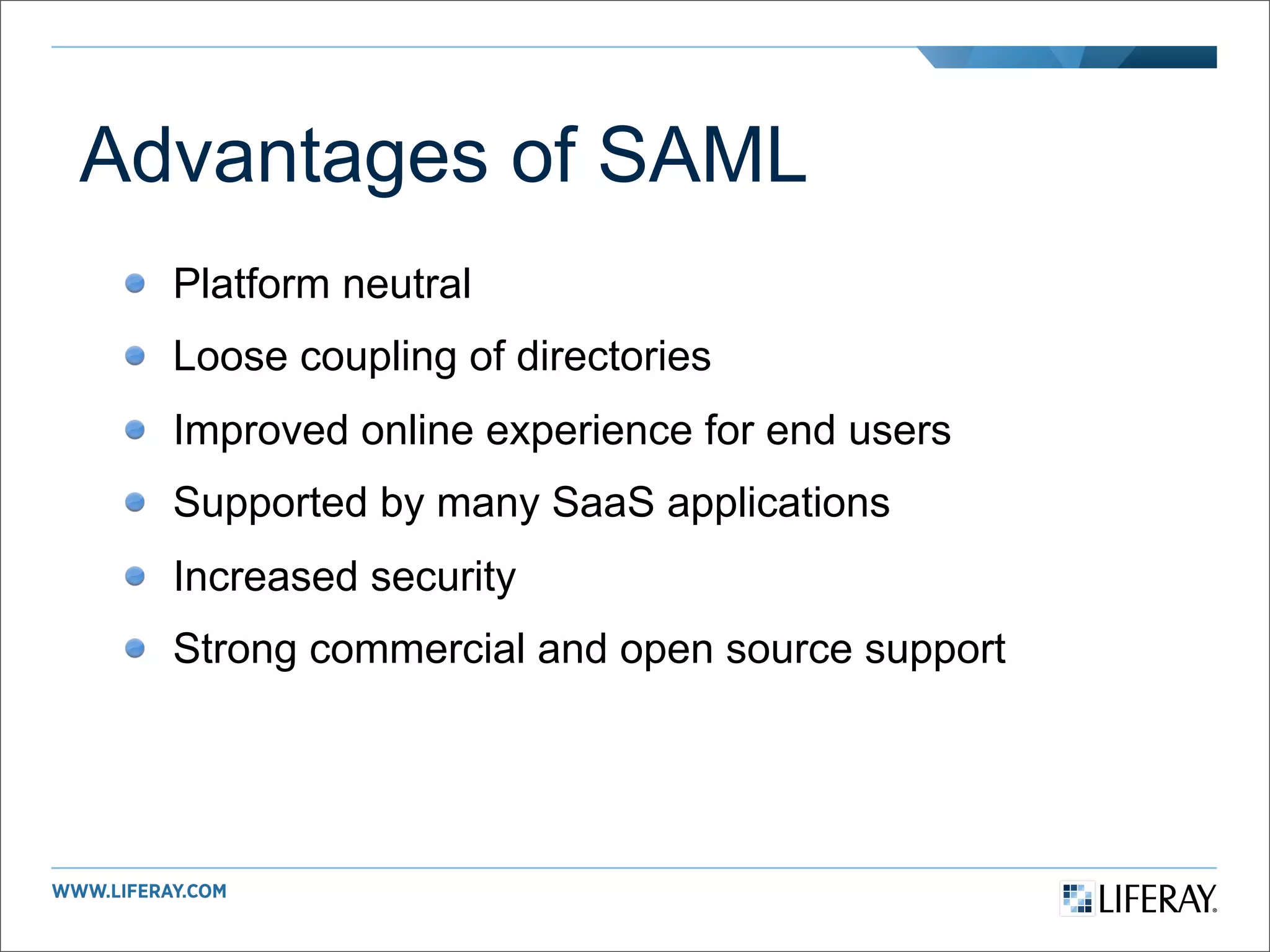
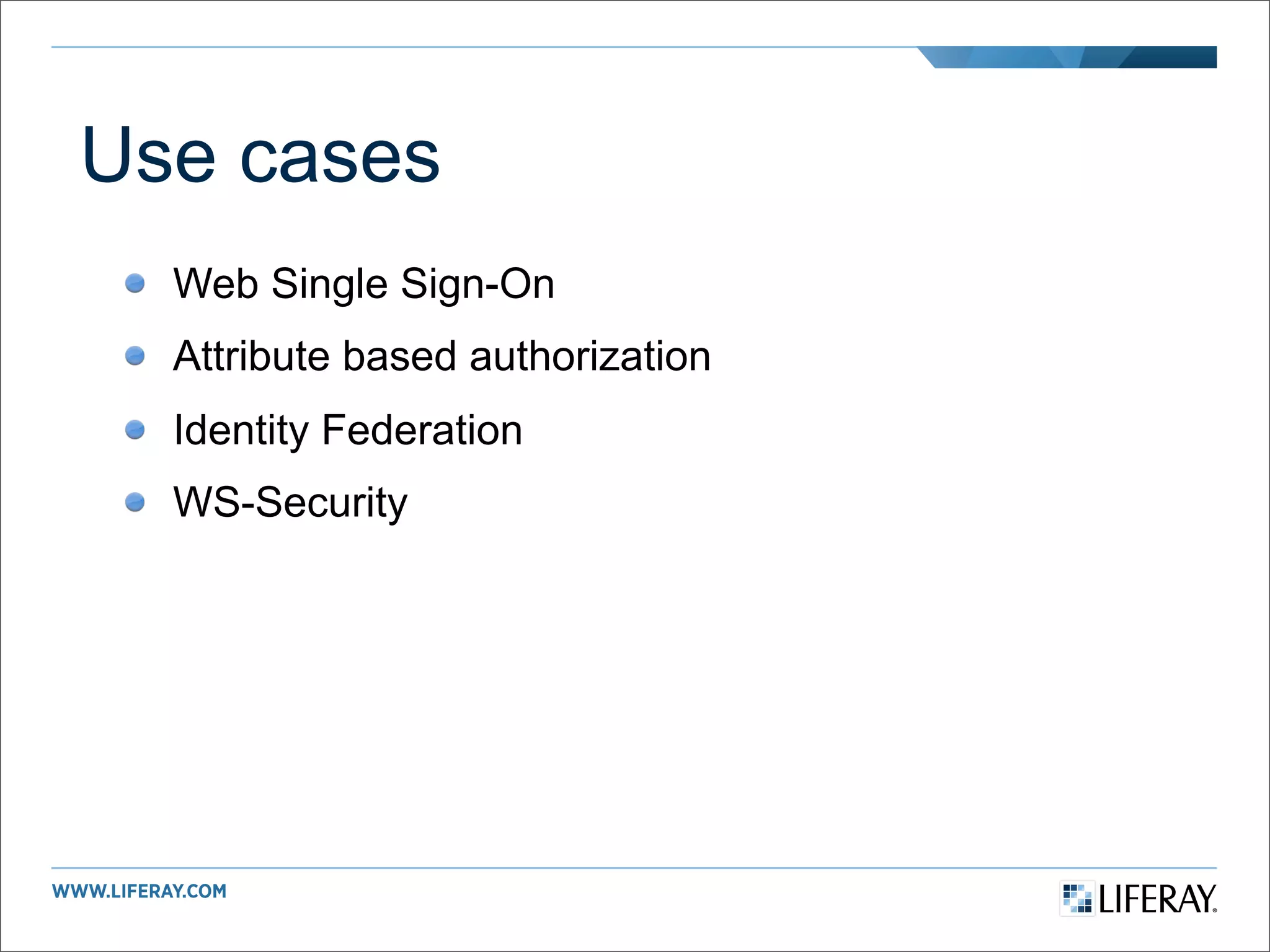
Overview of SAML: its definition, roles (IdP, SP, User) and advantages, including improved user experience and security.
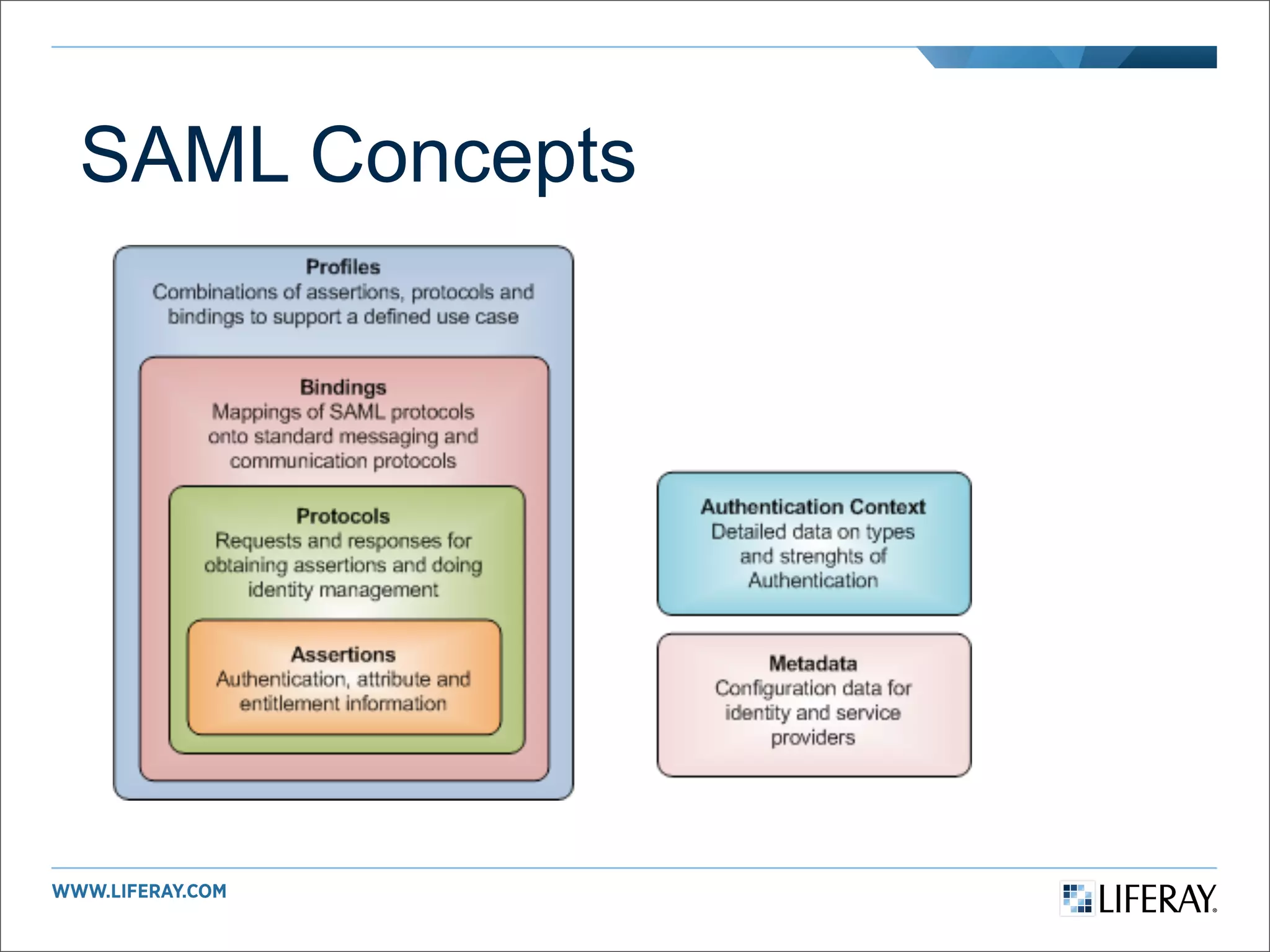
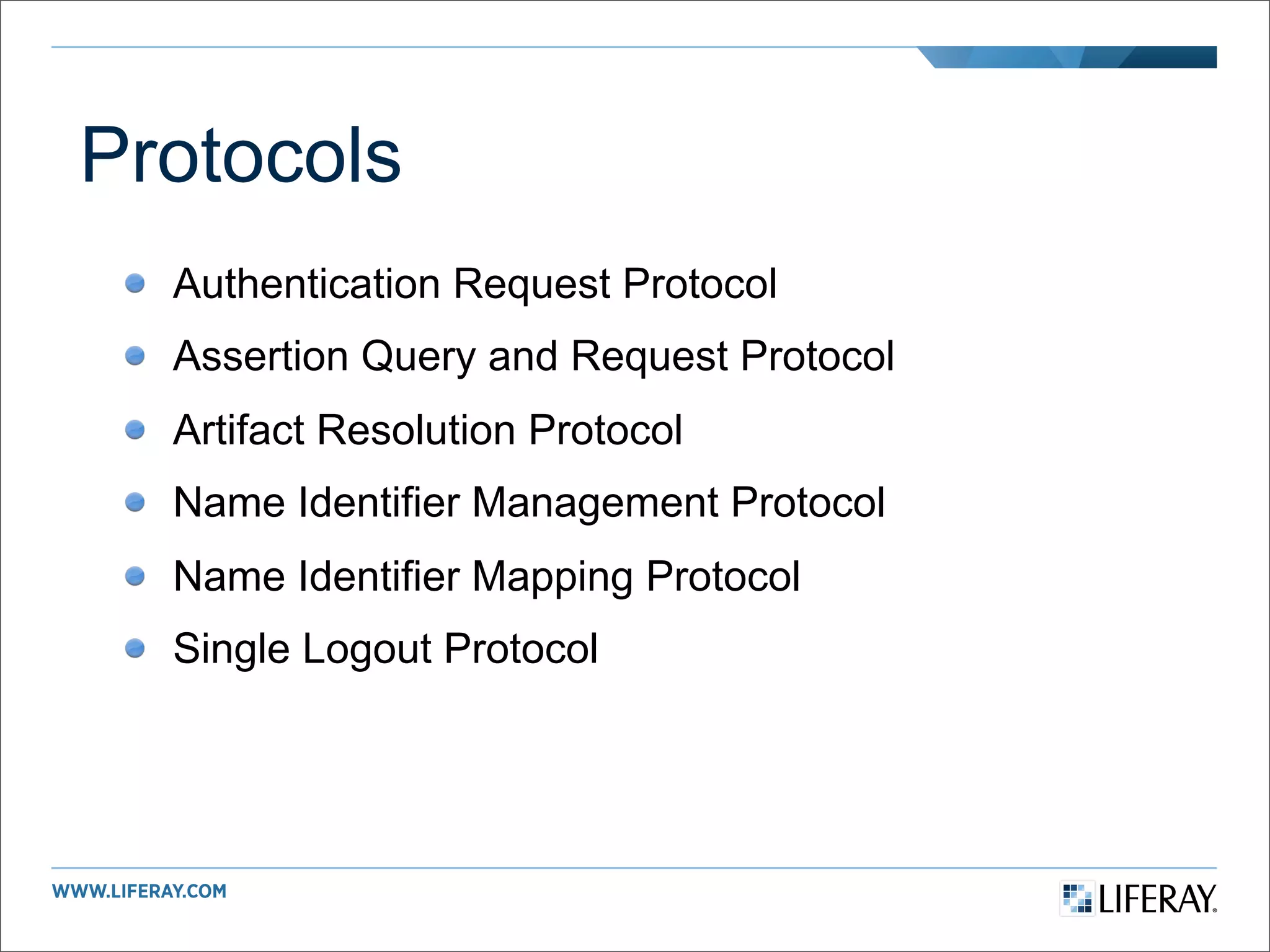
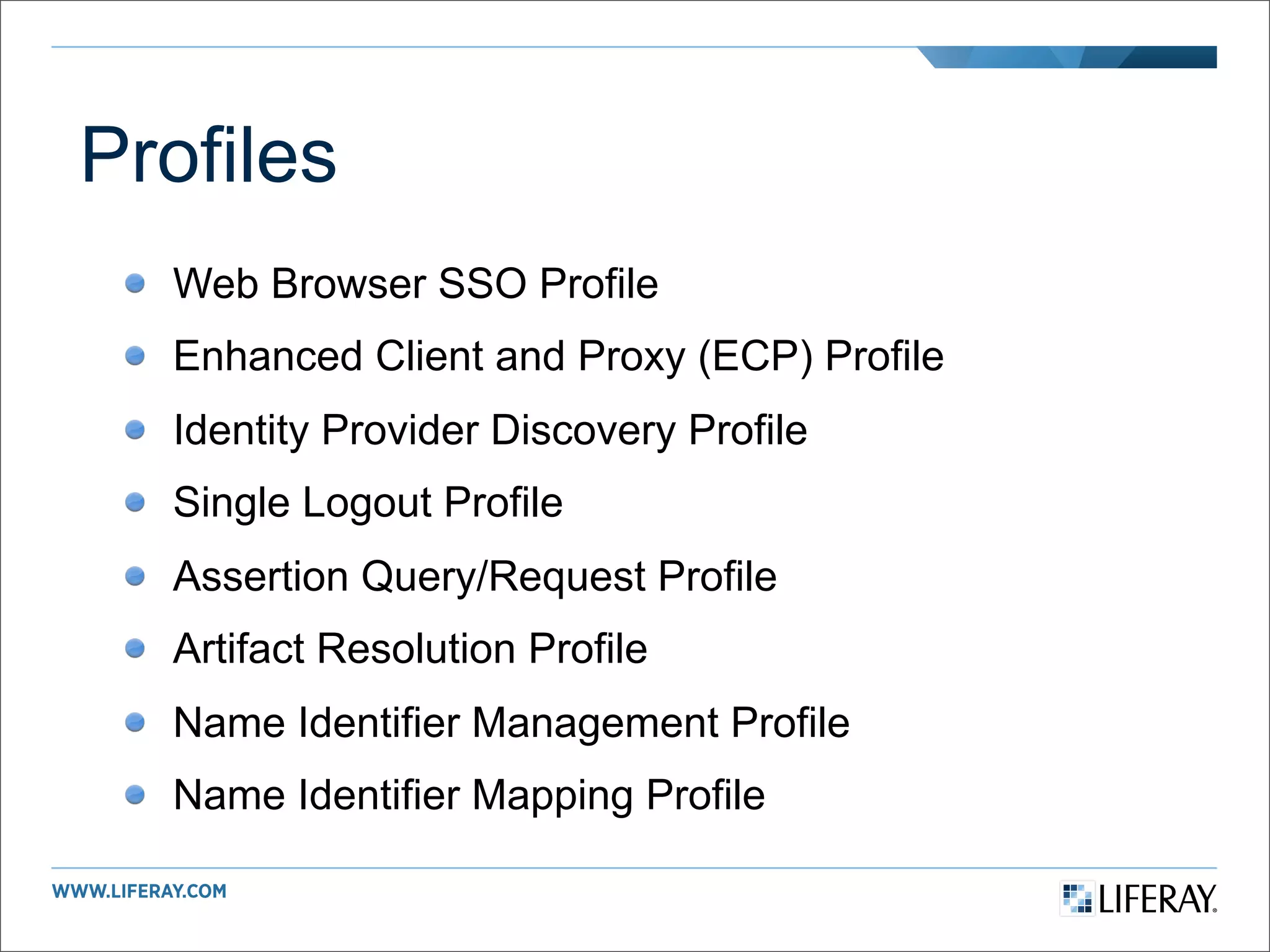
Detailed SAML concepts including protocols like Authentication Request and Assertion Query, bindings and profiles for SSO.
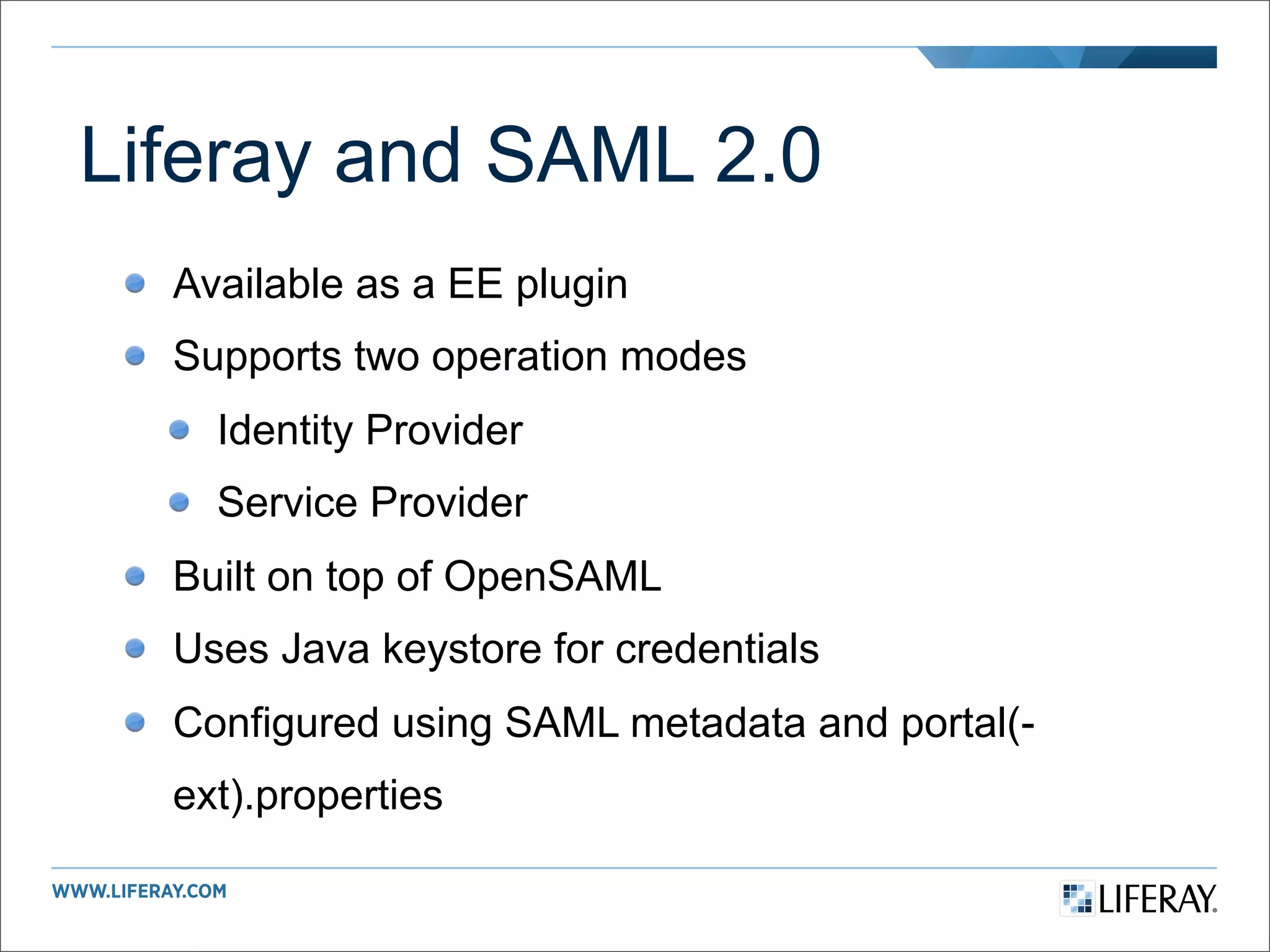
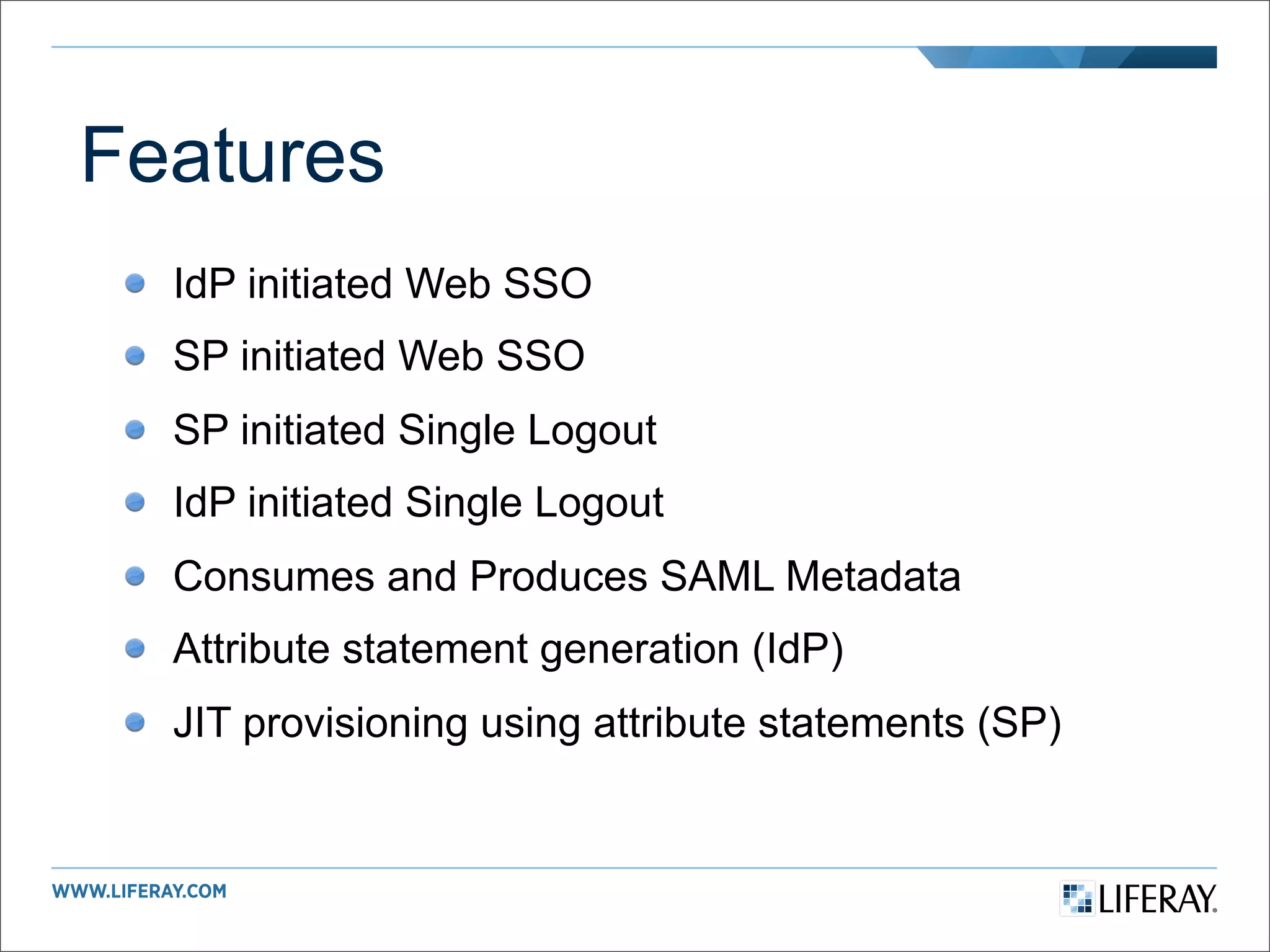
Liferay integration with SAML 2.0, supporting IdP and SP modes with features for single sign-on and single logout.
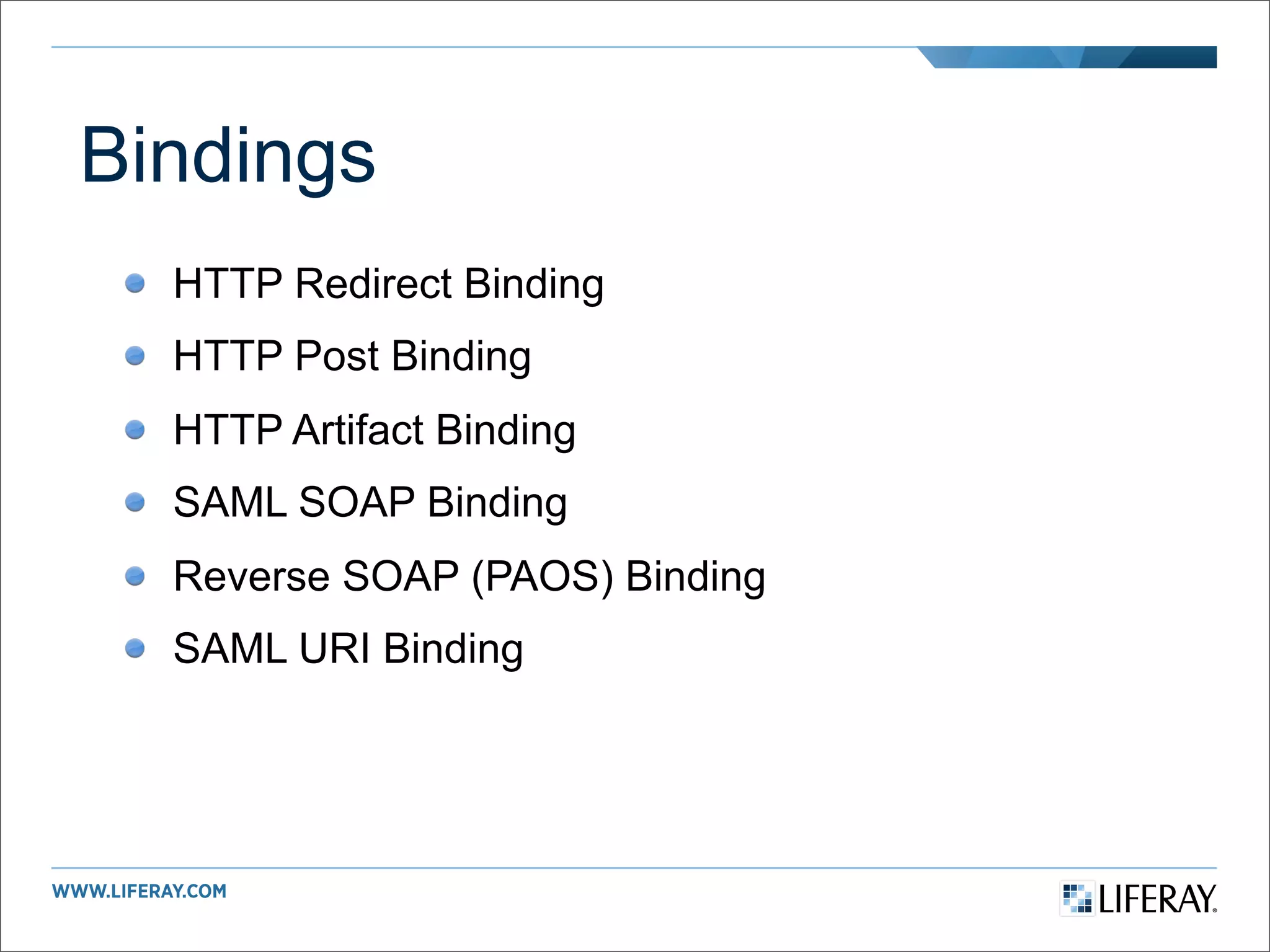
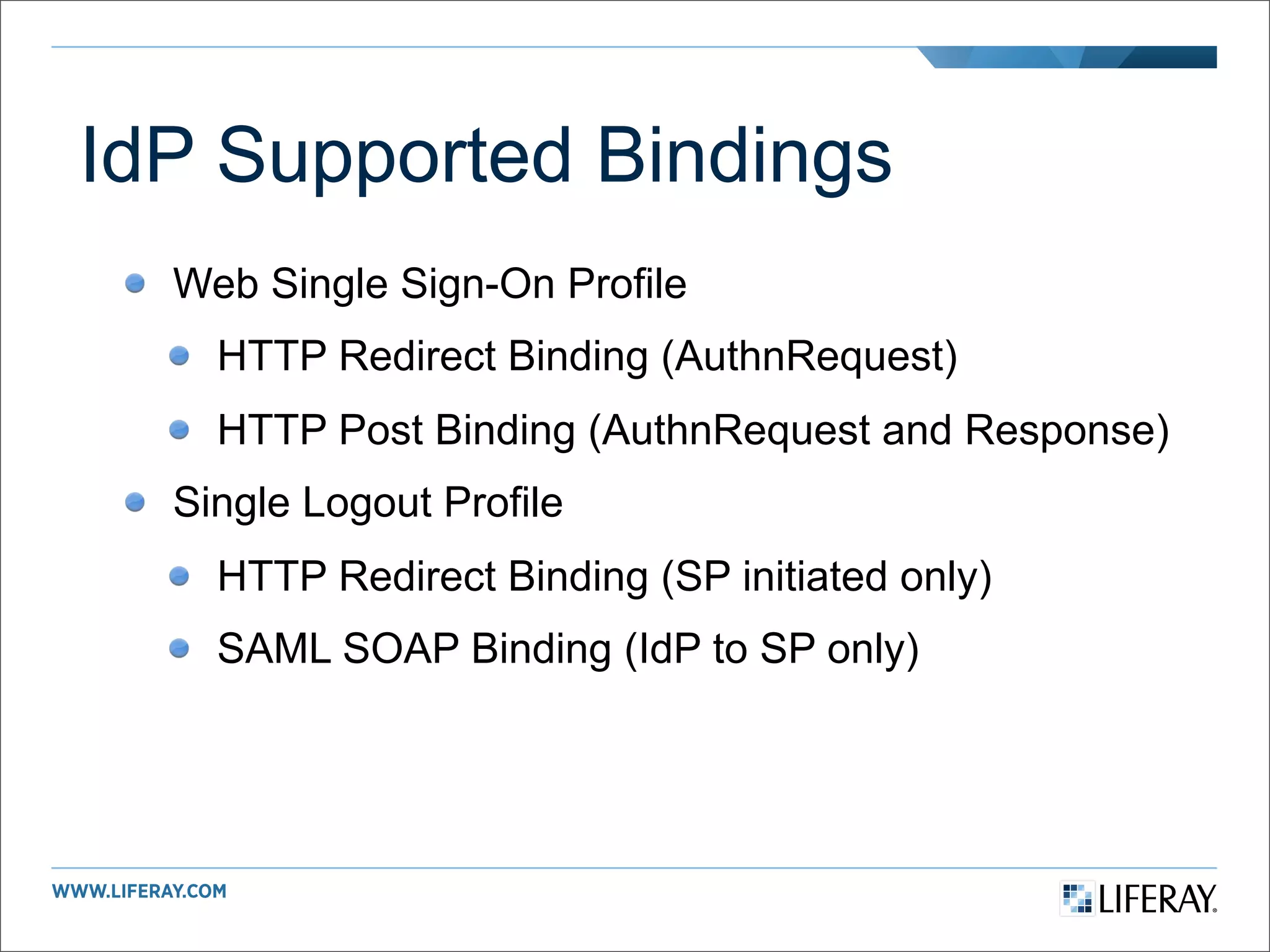
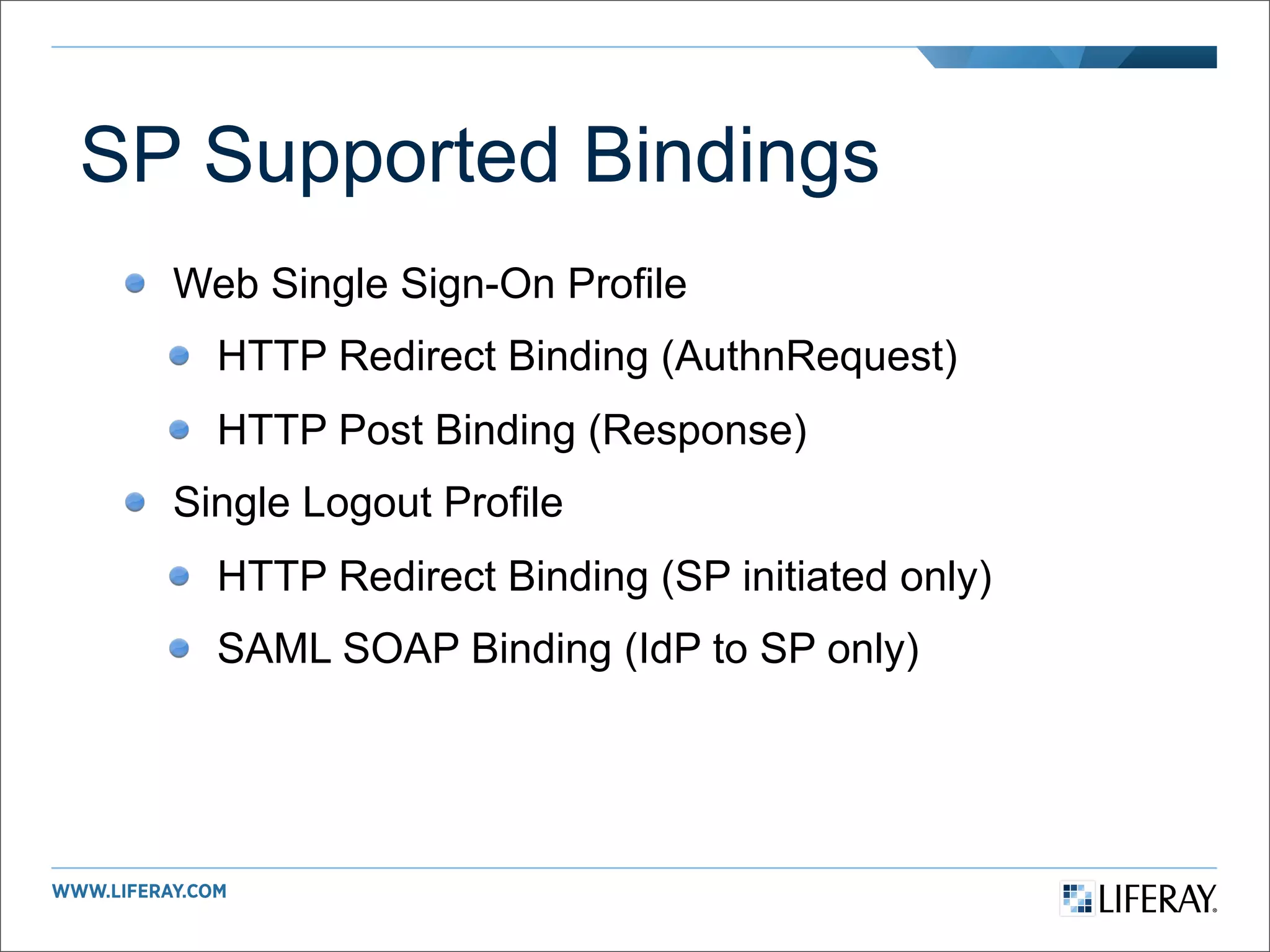
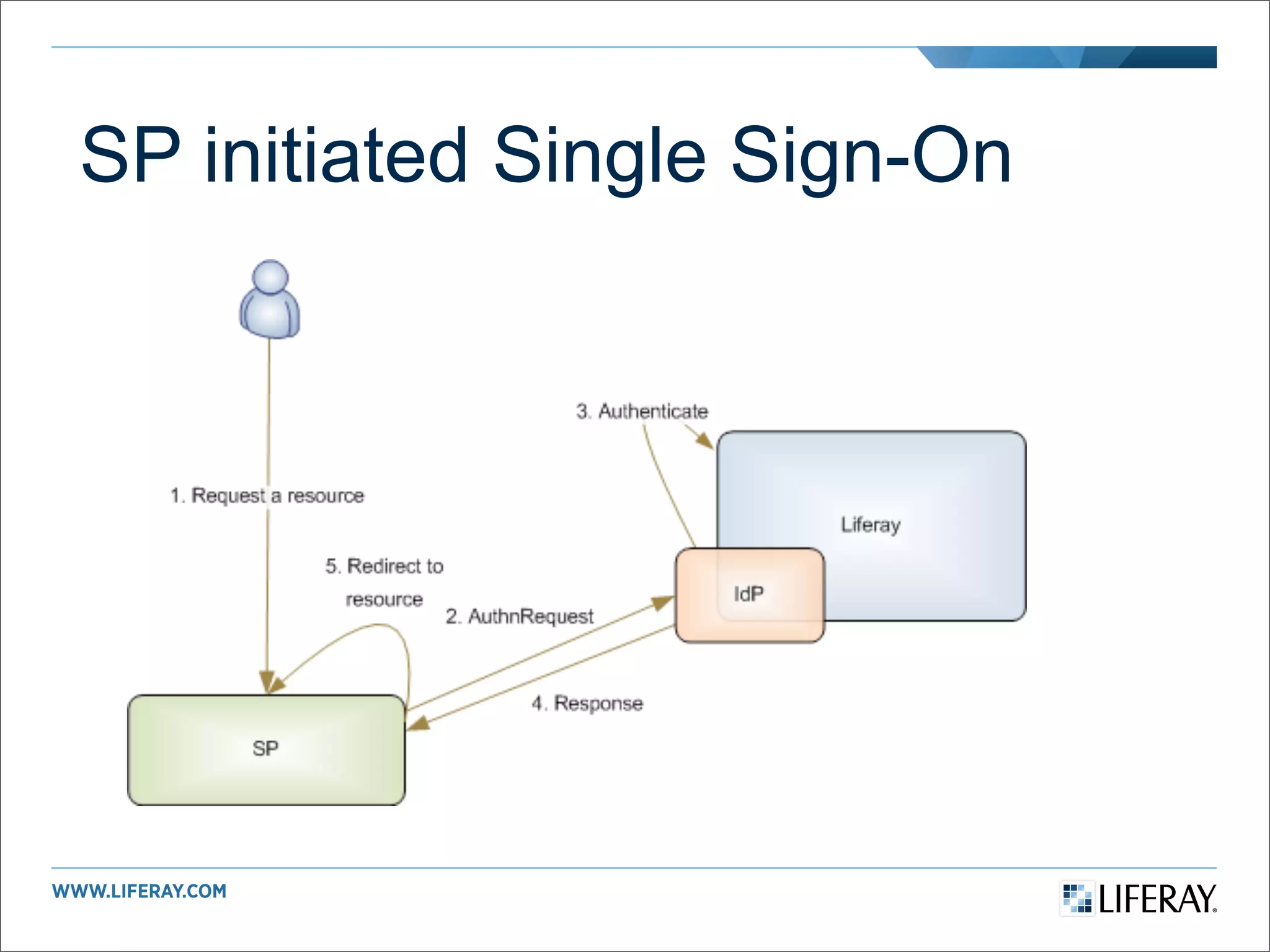
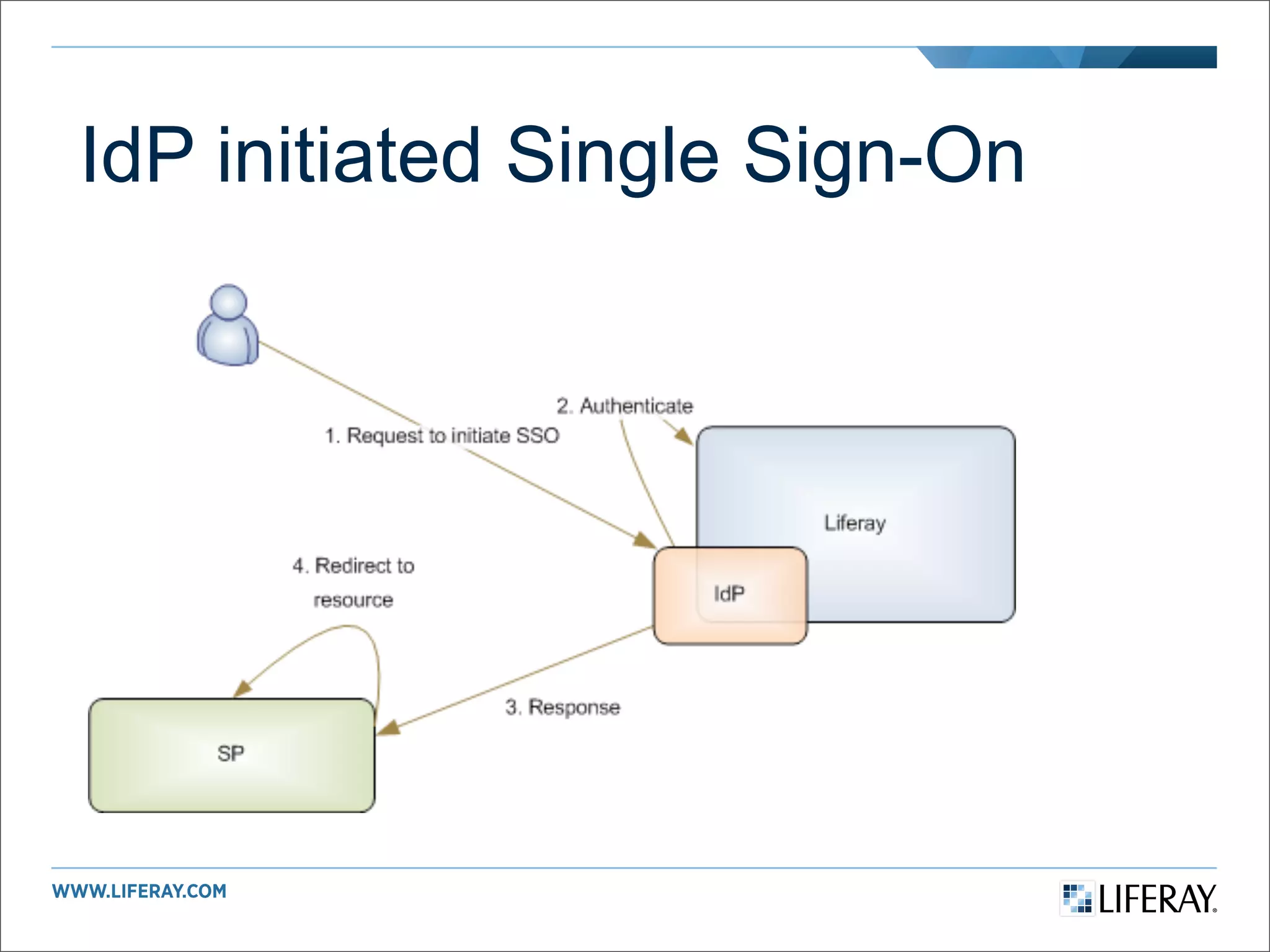
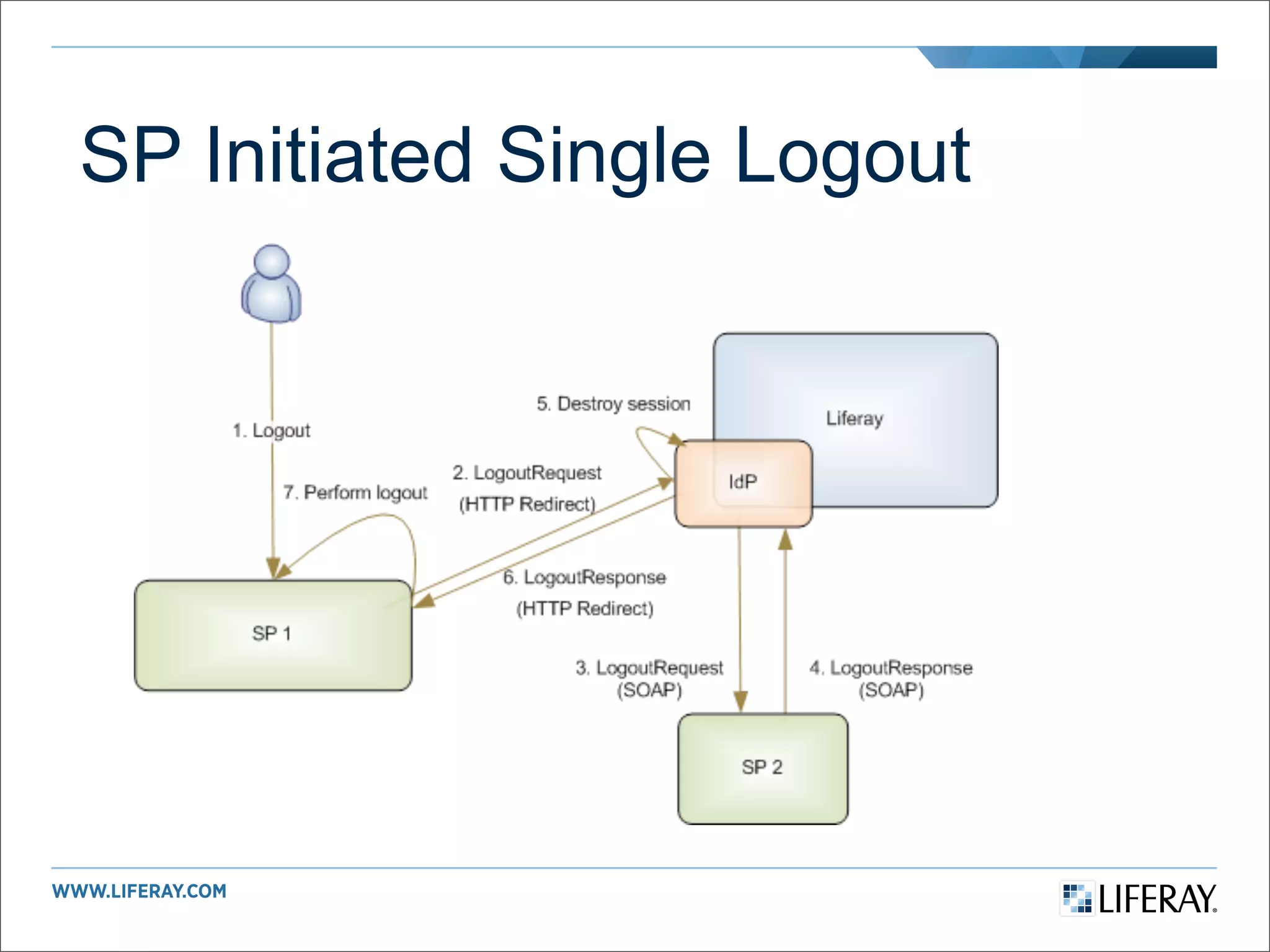
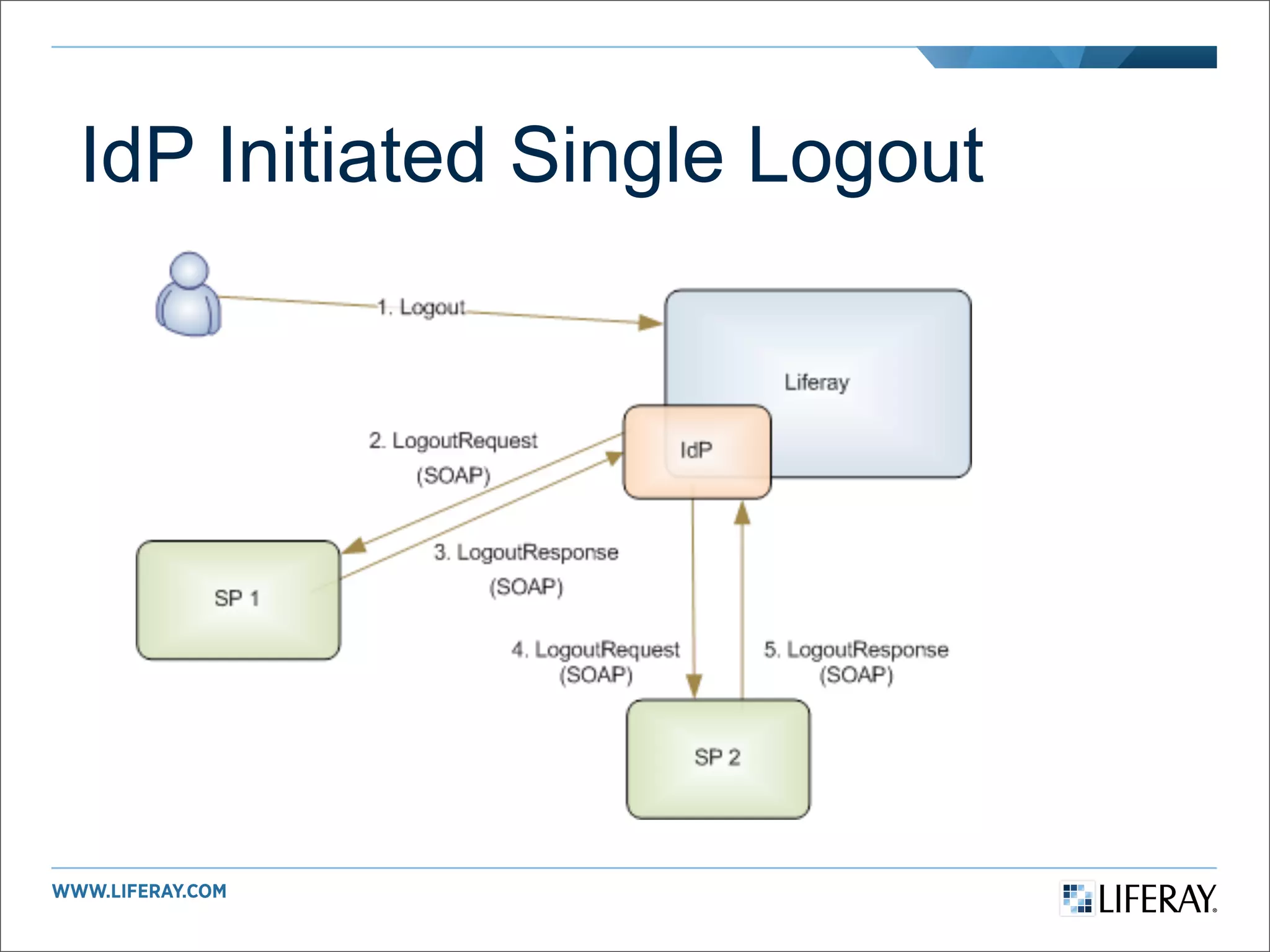
Various types of SAML initiated single sign-on and single logout for both IdP and SP, along with supported bindings.
Steps to configure IdP and SP in Liferay, including keystore creation and properties configurations.
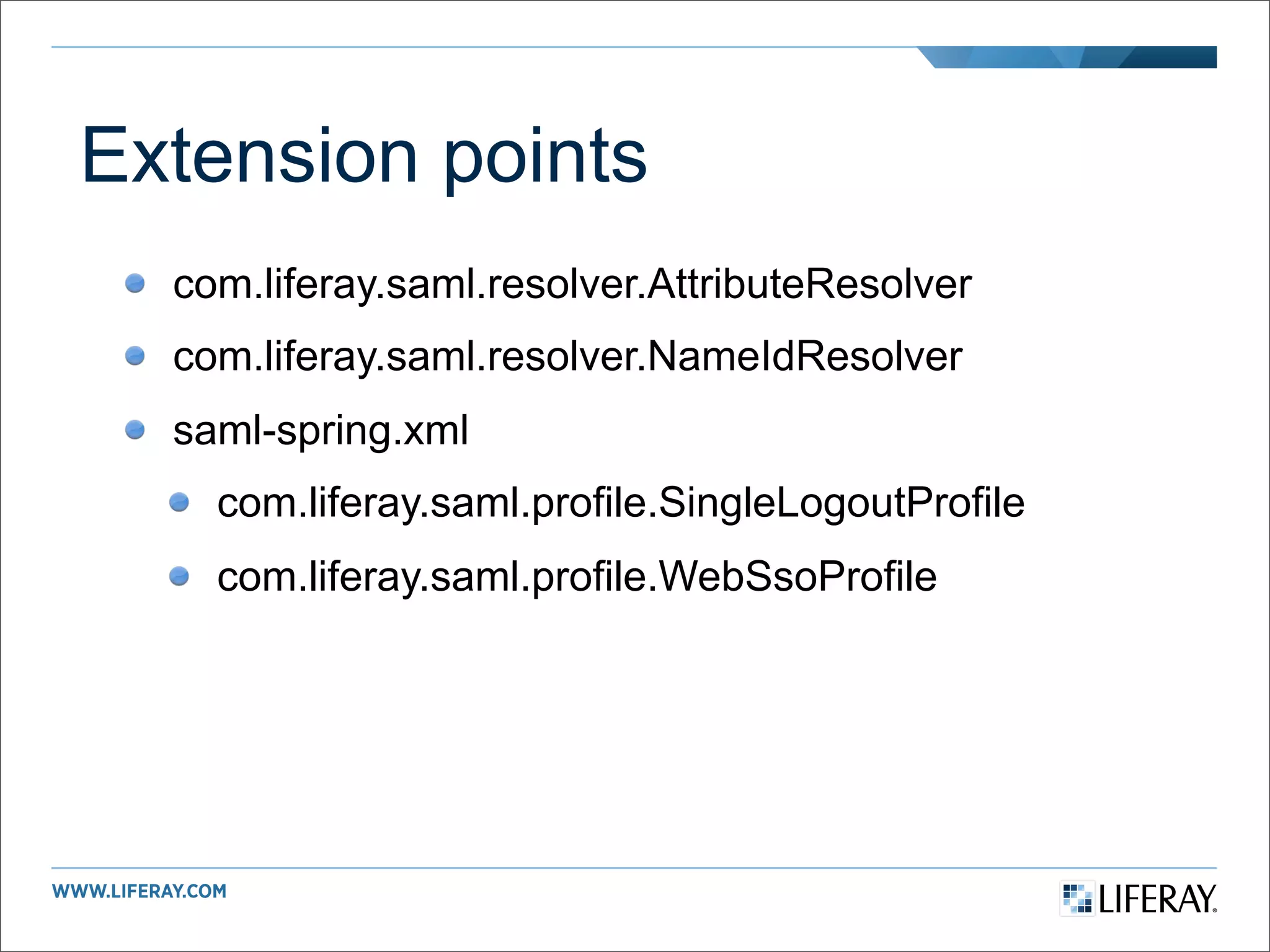
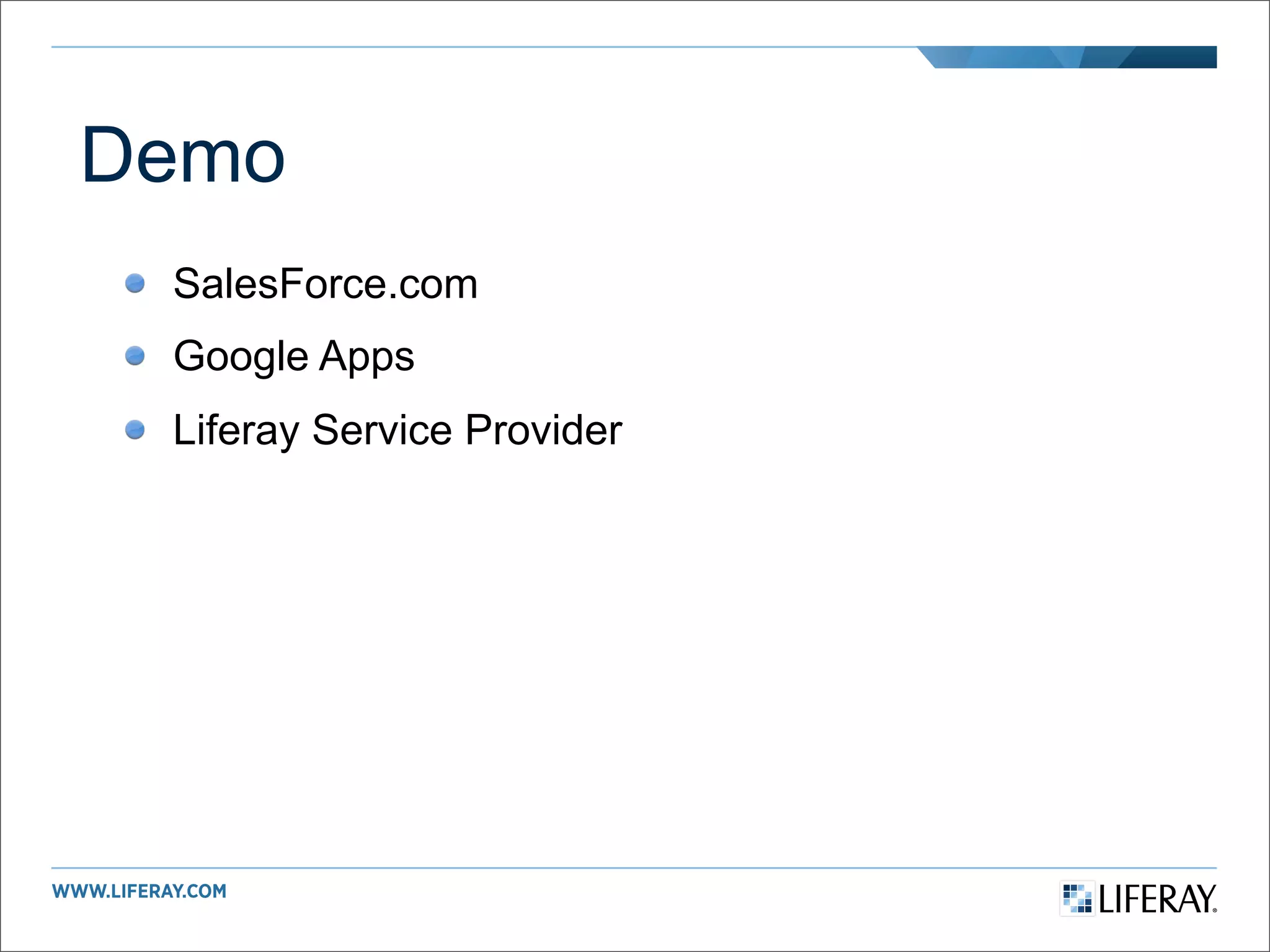
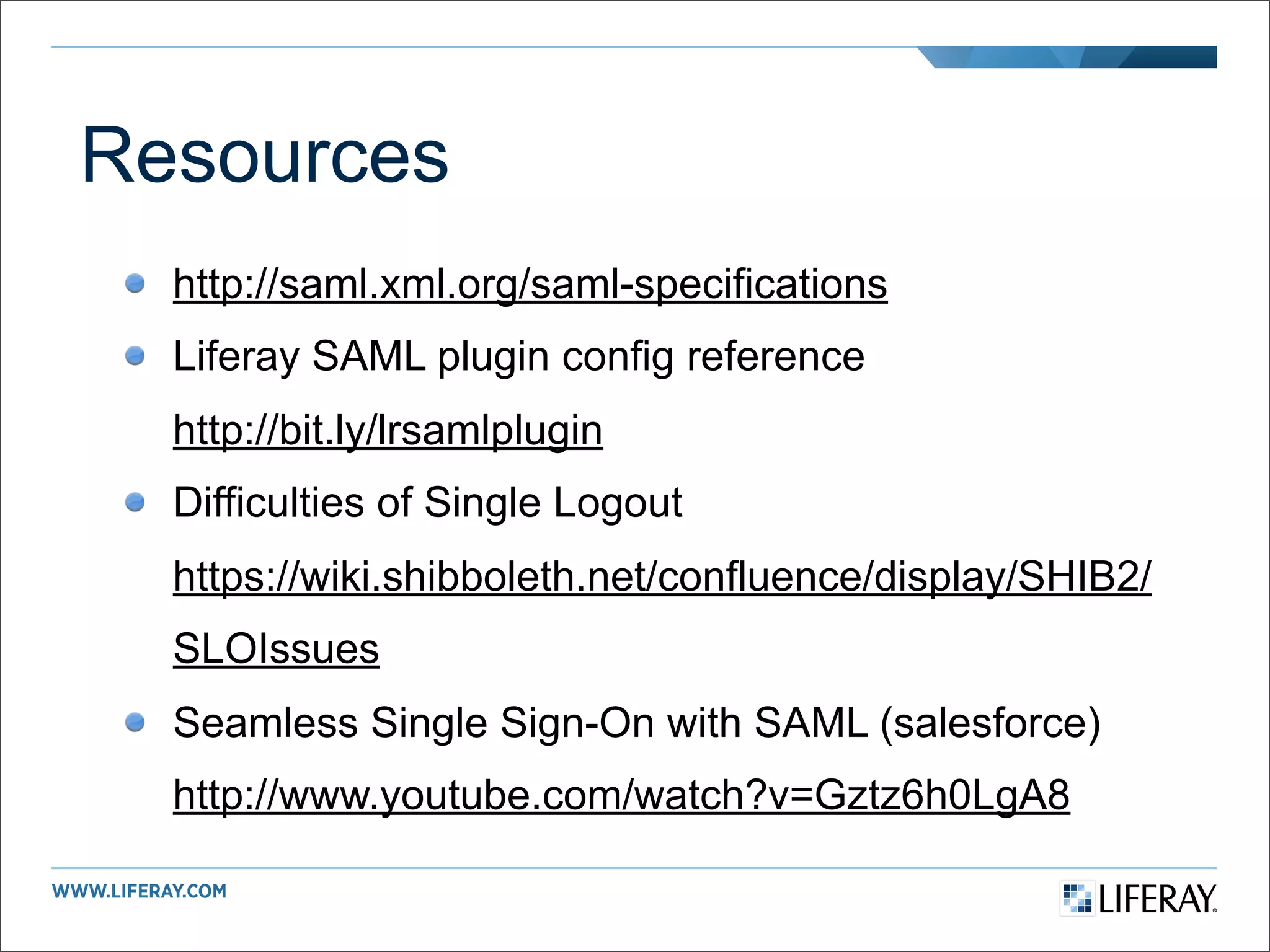
Extension points for custom SAML functionality; resources for further reading and a brief demo mention. Thank You!


![Vibe Coding vs. Spec-Driven Development [Free Meetup]](https://cdn.slidesharecdn.com/ss_thumbnails/vibecodingvsspecdrivendevelopment-251209105622-43f455e7-thumbnail.jpg?width=640&height=640&fit=bounds)


