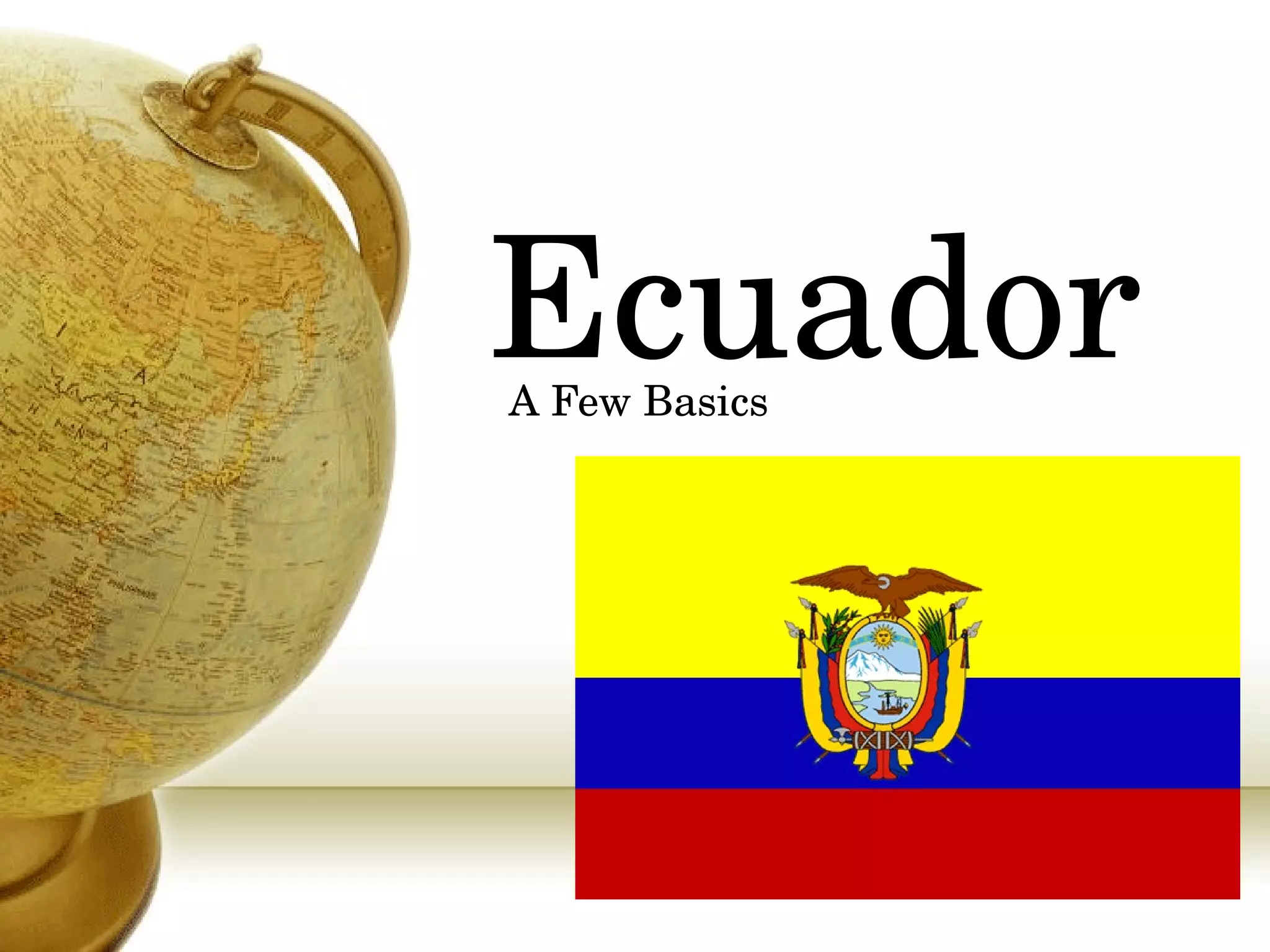
Ecuador A Few Basics
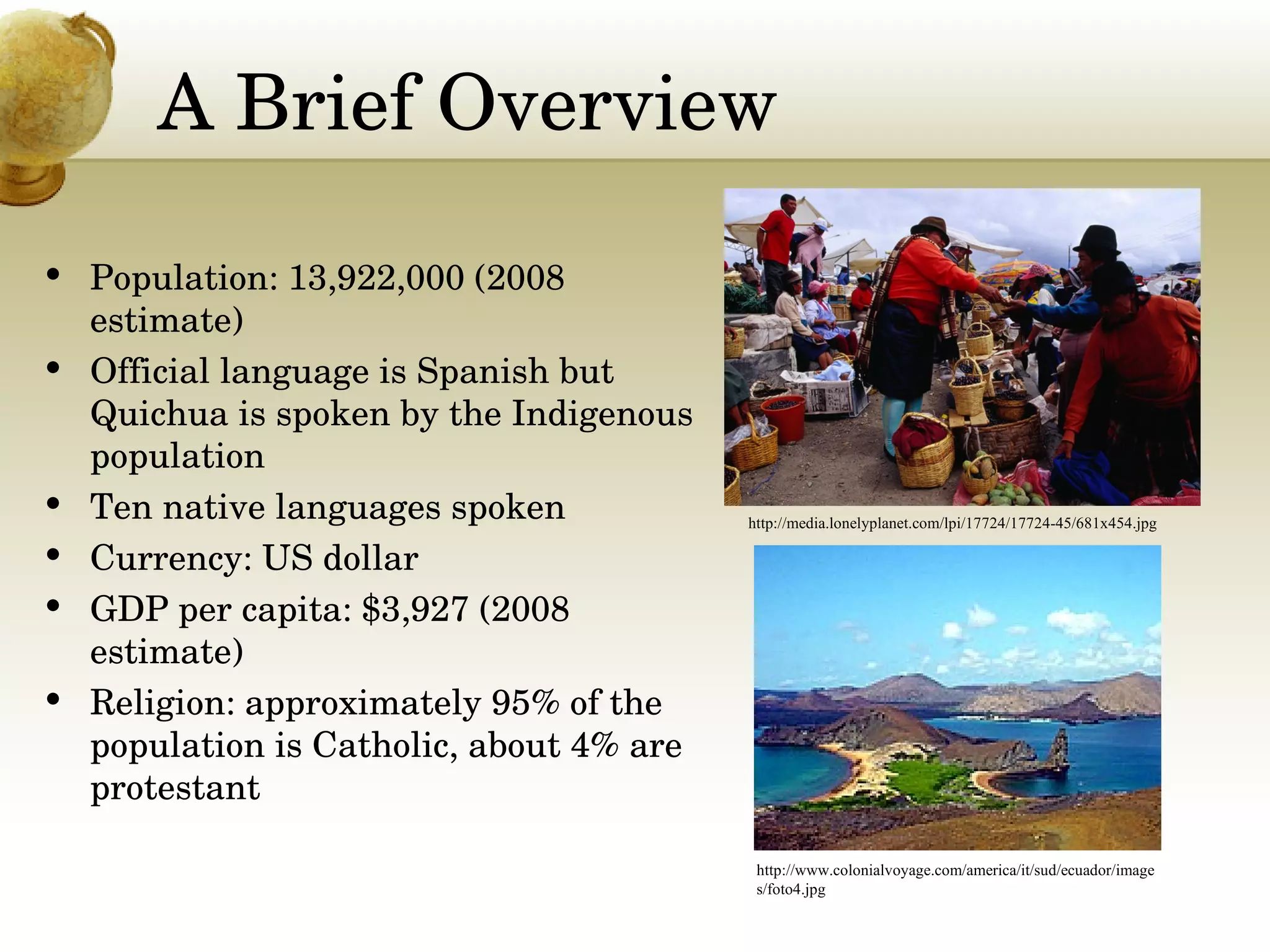
A Brief Overview Population: 13,922,000 (2008 estimate) Official language is Spanish but Quichua is spoken by the Indigenous population Ten native languages spoken Currency: US dollar GDP per capita: $3,927 (2008 estimate) Religion: approximately 95% of the population is Catholic, about 4% are protestant http://media.lonelyplanet.com/lpi/17724/17724-45/681x454.jpg http://www.colonialvoyage.com/america/it/sud/ecuador/images/foto4.jpg
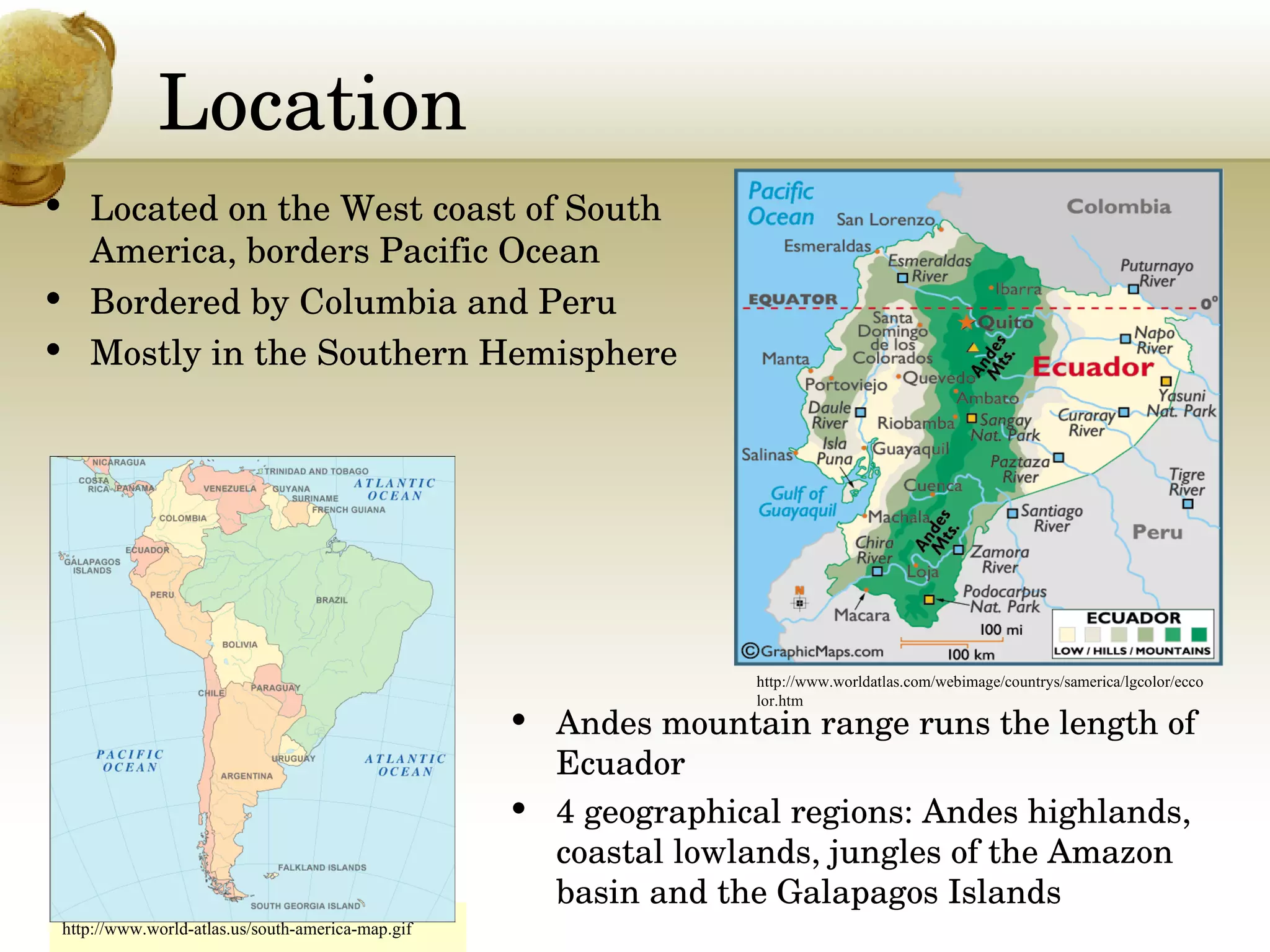
Location Located on the West coast of South America, borders Pacific Ocean Bordered by Columbia and Peru Mostly in the Southern Hemisphere http://www.world-atlas.us/south-america-map.gif Andes mountain range runs the length of Ecuador 4 geographical regions: Andes highlands, coastal lowlands, jungles of the Amazon basin and the Galapagos Islands http://www.worldatlas.com/webimage/countrys/samerica/lgcolor/eccolor.htm
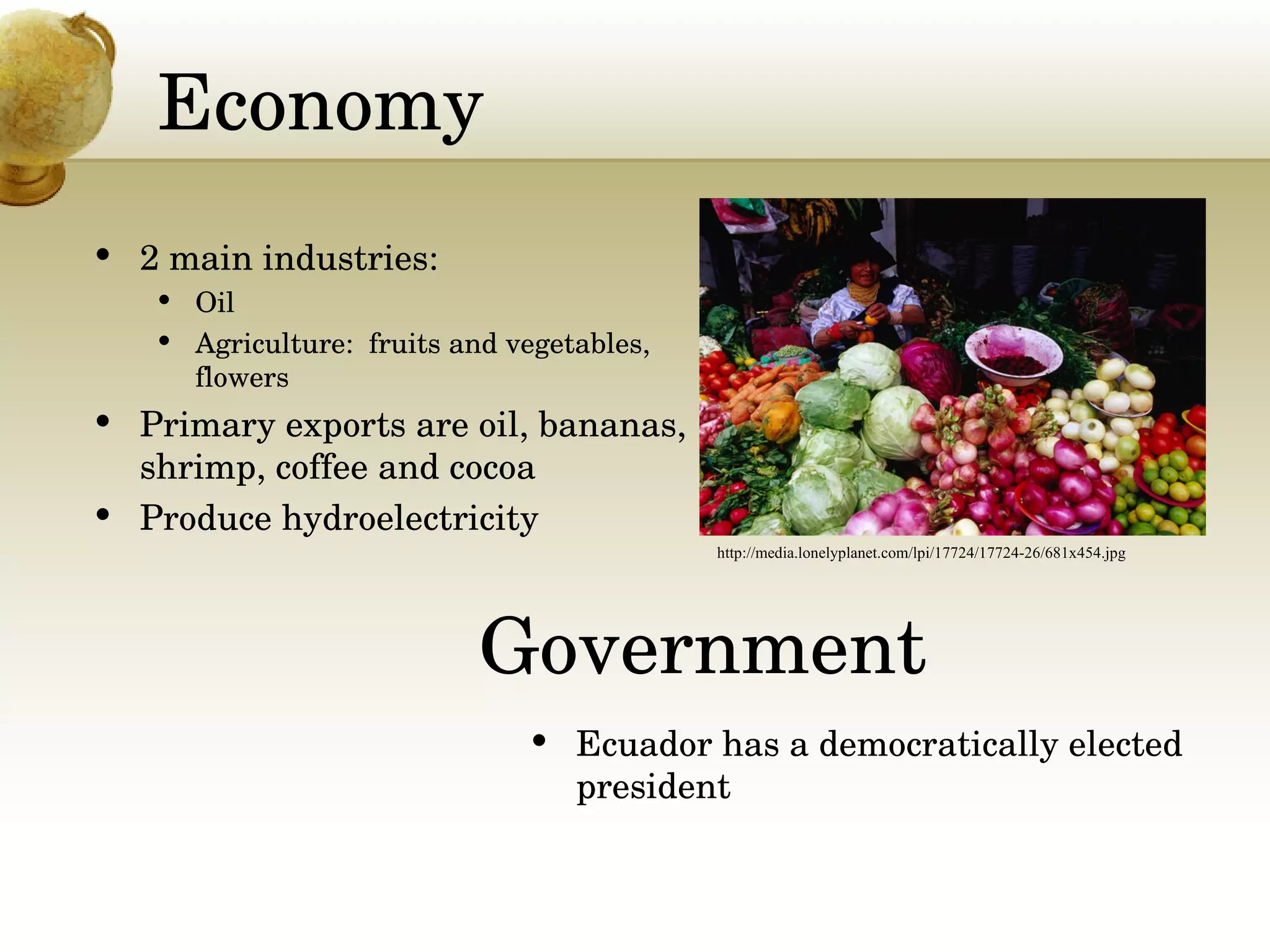
Economy 2 main industries: Oil  Agriculture:  fruits and vegetables, flowers Primary exports are oil, bananas, shrimp, coffee and cocoa Produce hydroelectricity http://media.lonelyplanet.com/lpi/17724/17724-26/681x454.jpg Ecuador has a democratically elected president  Government
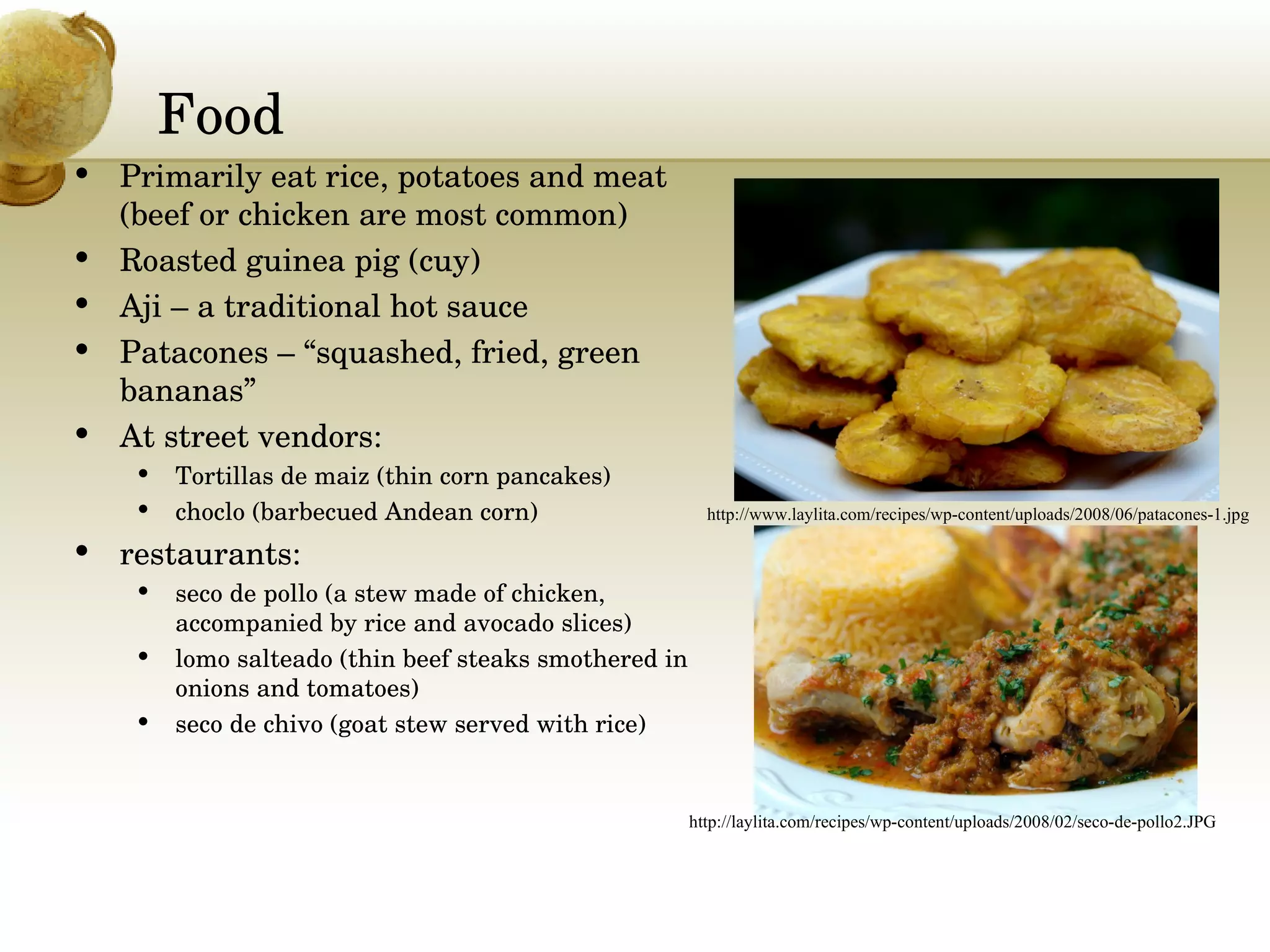
Food Primarily eat rice, potatoes and meat (beef or chicken are most common) Roasted guinea pig (cuy) Aji – a traditional hot sauce Patacones – “squashed, fried, green bananas” At street vendors:  Tortillas de maiz (thin corn pancakes)  choclo (barbecued Andean corn) restaurants:  seco de pollo (a stew made of chicken, accompanied by rice and avocado slices)  lomo salteado (thin beef steaks smothered in onions and tomatoes)  seco de chivo (goat stew served with rice) http://www.laylita.com/recipes/wp-content/uploads/2008/06/patacones-1.jpg http://laylita.com/recipes/wp-content/uploads/2008/02/seco-de-pollo2.JPG
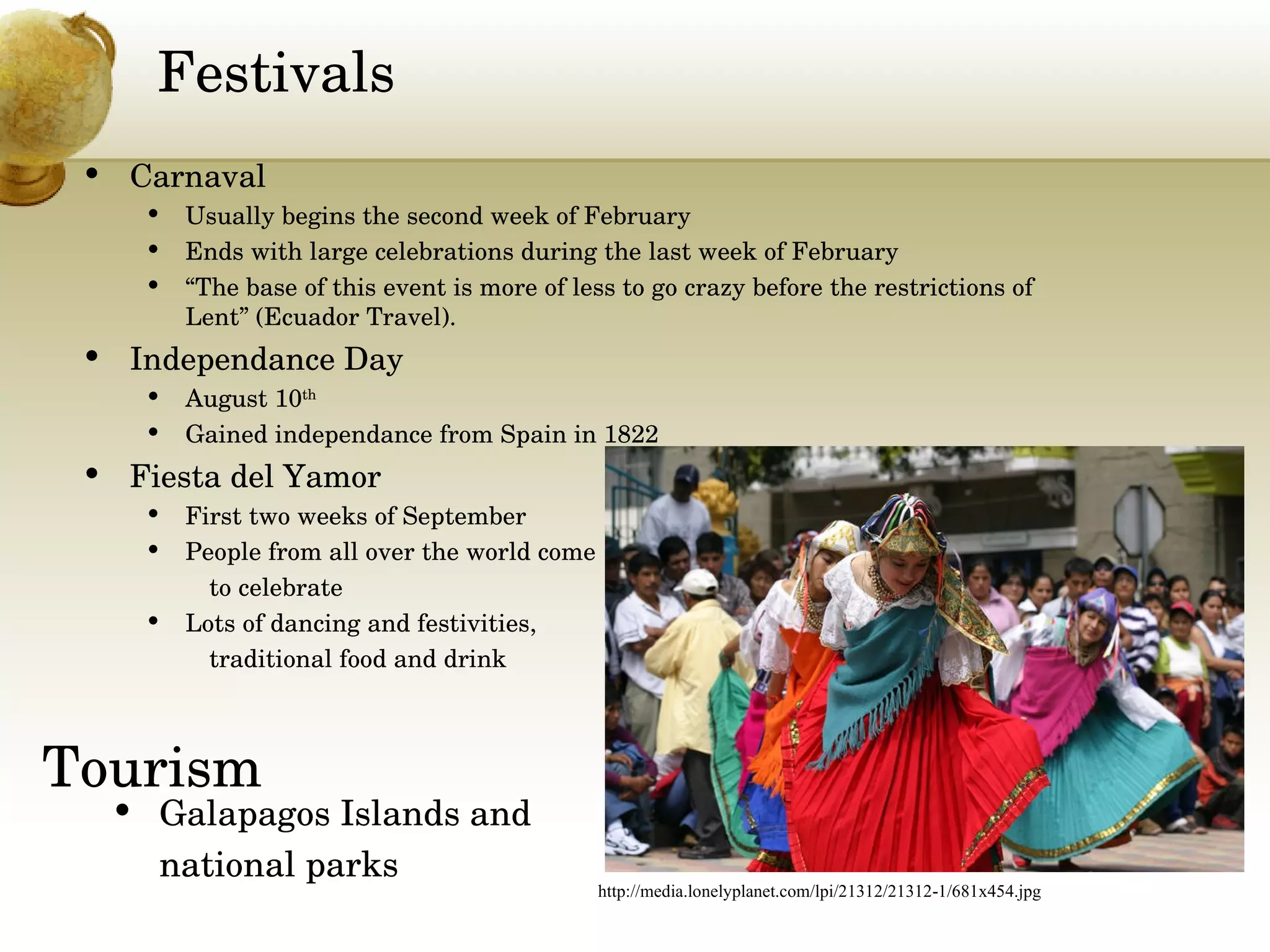
Festivals Carnaval  Usually begins the second week of February Ends with large celebrations during the last week of February “ The base of this event is more of less to go crazy before the restrictions of Lent” (Ecuador Travel). Independance Day August 10 th Gained independance from Spain in 1822 Fiesta del Yamor First two weeks of September People from all over the world come  to celebrate Lots of dancing and festivities,  traditional food and drink Tourism Galapagos Islands and  national parks http://media.lonelyplanet.com/lpi/21312/21312-1/681x454.jpg
References National Geographic website, travel and cultures:  http://travel.nationalgeographic.com/places/countries/country_ecuador.html InfoEcuador website:  http://www.hacienda-ecuador.com/Ecuador/Ecuador_3.html Encyclopedia of the Nations website:  http://www.nationsencyclopedia.com/economies/Americas/Ecuador-OVERVIEW-OF-ECONOMY.html Lonely Planet website:  http://www.lonelyplanet.com/ecuador Ecuador Travel.info website:  http://www.ecuador-travel-guide.org/ The Ecuador Channel:  http://www.ecuador.com/cuisine/ Wikipedia:  http://en.wikipedia.org/wiki/Ecuador

Ecuador - A Few Basics

  • 1.
  • 2.
    A Brief OverviewPopulation: 13,922,000 (2008 estimate) Official language is Spanish but Quichua is spoken by the Indigenous population Ten native languages spoken Currency: US dollar GDP per capita: $3,927 (2008 estimate) Religion: approximately 95% of the population is Catholic, about 4% are protestant http://media.lonelyplanet.com/lpi/17724/17724-45/681x454.jpg http://www.colonialvoyage.com/america/it/sud/ecuador/images/foto4.jpg
  • 3.
    Location Located onthe West coast of South America, borders Pacific Ocean Bordered by Columbia and Peru Mostly in the Southern Hemisphere http://www.world-atlas.us/south-america-map.gif Andes mountain range runs the length of Ecuador 4 geographical regions: Andes highlands, coastal lowlands, jungles of the Amazon basin and the Galapagos Islands http://www.worldatlas.com/webimage/countrys/samerica/lgcolor/eccolor.htm
  • 4.
    Economy 2 mainindustries: Oil Agriculture: fruits and vegetables, flowers Primary exports are oil, bananas, shrimp, coffee and cocoa Produce hydroelectricity http://media.lonelyplanet.com/lpi/17724/17724-26/681x454.jpg Ecuador has a democratically elected president Government
  • 5.
    Food Primarily eatrice, potatoes and meat (beef or chicken are most common) Roasted guinea pig (cuy) Aji – a traditional hot sauce Patacones – “squashed, fried, green bananas” At street vendors: Tortillas de maiz (thin corn pancakes) choclo (barbecued Andean corn) restaurants: seco de pollo (a stew made of chicken, accompanied by rice and avocado slices) lomo salteado (thin beef steaks smothered in onions and tomatoes) seco de chivo (goat stew served with rice) http://www.laylita.com/recipes/wp-content/uploads/2008/06/patacones-1.jpg http://laylita.com/recipes/wp-content/uploads/2008/02/seco-de-pollo2.JPG
  • 6.
    Festivals Carnaval Usually begins the second week of February Ends with large celebrations during the last week of February “ The base of this event is more of less to go crazy before the restrictions of Lent” (Ecuador Travel). Independance Day August 10 th Gained independance from Spain in 1822 Fiesta del Yamor First two weeks of September People from all over the world come to celebrate Lots of dancing and festivities, traditional food and drink Tourism Galapagos Islands and national parks http://media.lonelyplanet.com/lpi/21312/21312-1/681x454.jpg
  • 7.
    References National Geographicwebsite, travel and cultures: http://travel.nationalgeographic.com/places/countries/country_ecuador.html InfoEcuador website: http://www.hacienda-ecuador.com/Ecuador/Ecuador_3.html Encyclopedia of the Nations website: http://www.nationsencyclopedia.com/economies/Americas/Ecuador-OVERVIEW-OF-ECONOMY.html Lonely Planet website: http://www.lonelyplanet.com/ecuador Ecuador Travel.info website: http://www.ecuador-travel-guide.org/ The Ecuador Channel: http://www.ecuador.com/cuisine/ Wikipedia: http://en.wikipedia.org/wiki/Ecuador

Editor's Notes