Science and ICT 4 th  July 2008 http://www.slideshare.net/juko101/science-and-ict/   http://scienceandictlinks.blogspot.com/
Science Science  (from the Latin  scientia , meaning "knowledge") is the effort to discover, understand, or to understand better, how the physical world works, with observable physical evidence as the basis of that understanding. It is done through   observation  of existing phenomena, and/or  through experimentation  that tries to  simulate phenomena  under  controlled conditions . Knowledge in science is gained through research. http://en.wikipedia.org/wiki/Science
ICT ICT: Information and Communication Technology  The fusion of computers and telecommunications; a range of technologies for gathering, storing, retrieving, processing, analysing and transmitting information. http://www.futurelab.org.uk/glossary#ict
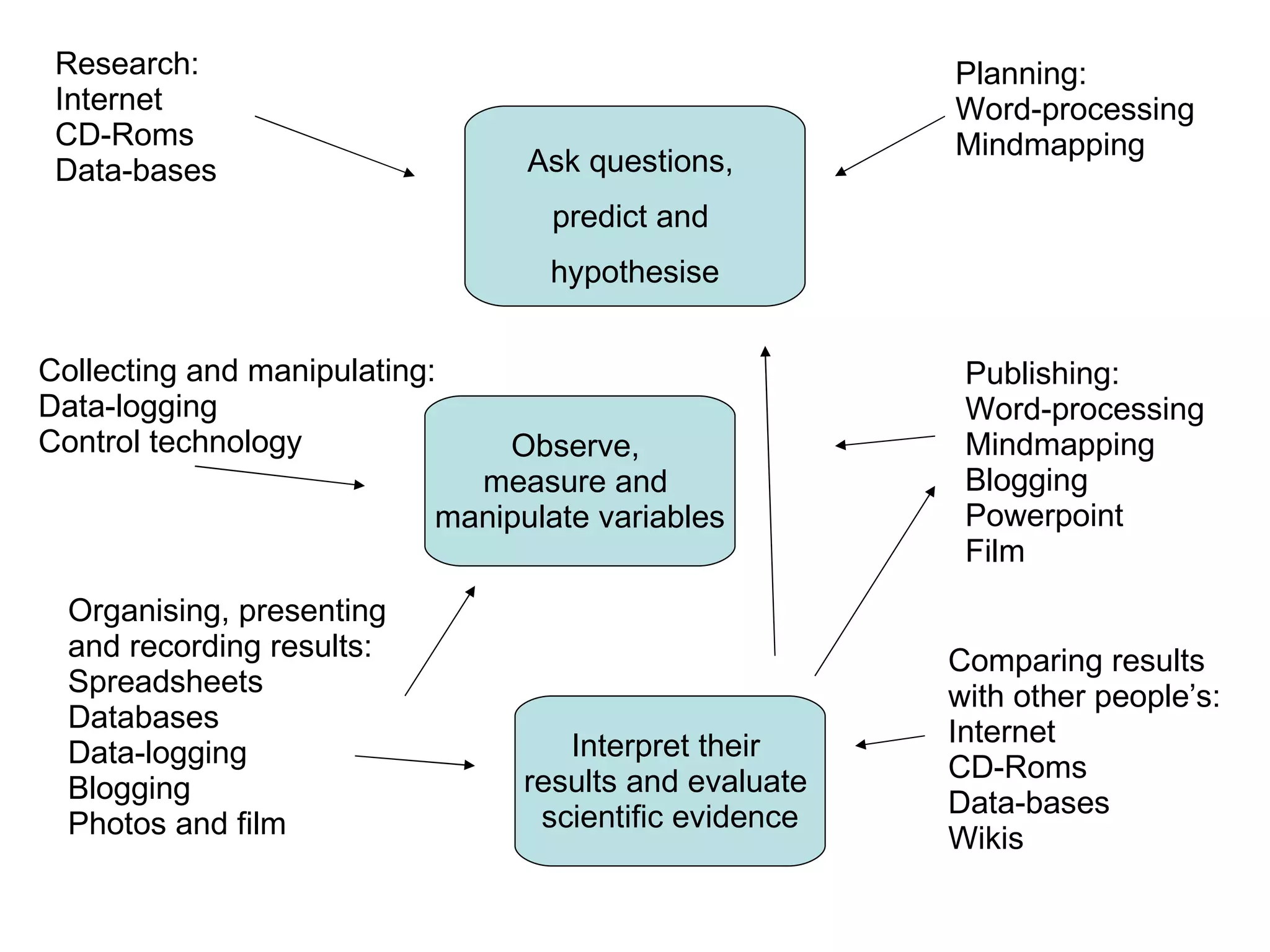
Ask questions,  predict and  hypothesise Observe,  measure and  manipulate variables Interpret their  results and evaluate  scientific evidence Planning: Word-processing Mindmapping Research: Internet CD-Roms Data-bases Collecting and manipulating: Data-logging Control technology Organising, presenting  and recording results: Spreadsheets Databases Data-logging Blogging Photos and film Publishing: Word-processing Mindmapping Blogging Powerpoint Film Comparing results  with other people’s: Internet CD-Roms Data-bases Wikis
Role of ICT ICT as a tool ICT as a reference source ICT as a means of communication  ICT as a means for exploring  Futurelab - Literature review in Primary Science and ICT  –  S. Ball (2003) ICT that Works (Primary Science Review)
Electronic Microscope Video-clip
Electronic Microscope Look at fingers, ears, nose and tongue  Investigate fingerprints - sellotape chalk black paper.  Look at seeds; take time lapse pictures of seedlings growing. Teacher’s TV prog. Forensics - compare soil samples from the treads of different people's trainers.  Evaporation of salty water using  time-lapse
More Microscope Ideas Time lapse pictures of ice melting or chocolate cooling. Take photos of a tooth that has been put in coca-cola, over several hours.  Observe mould and yeast growing  Elastic bands – at rest and stretched  http:// www.kented.org.uk/ngfl/subjects/science/intel/ideas.htm
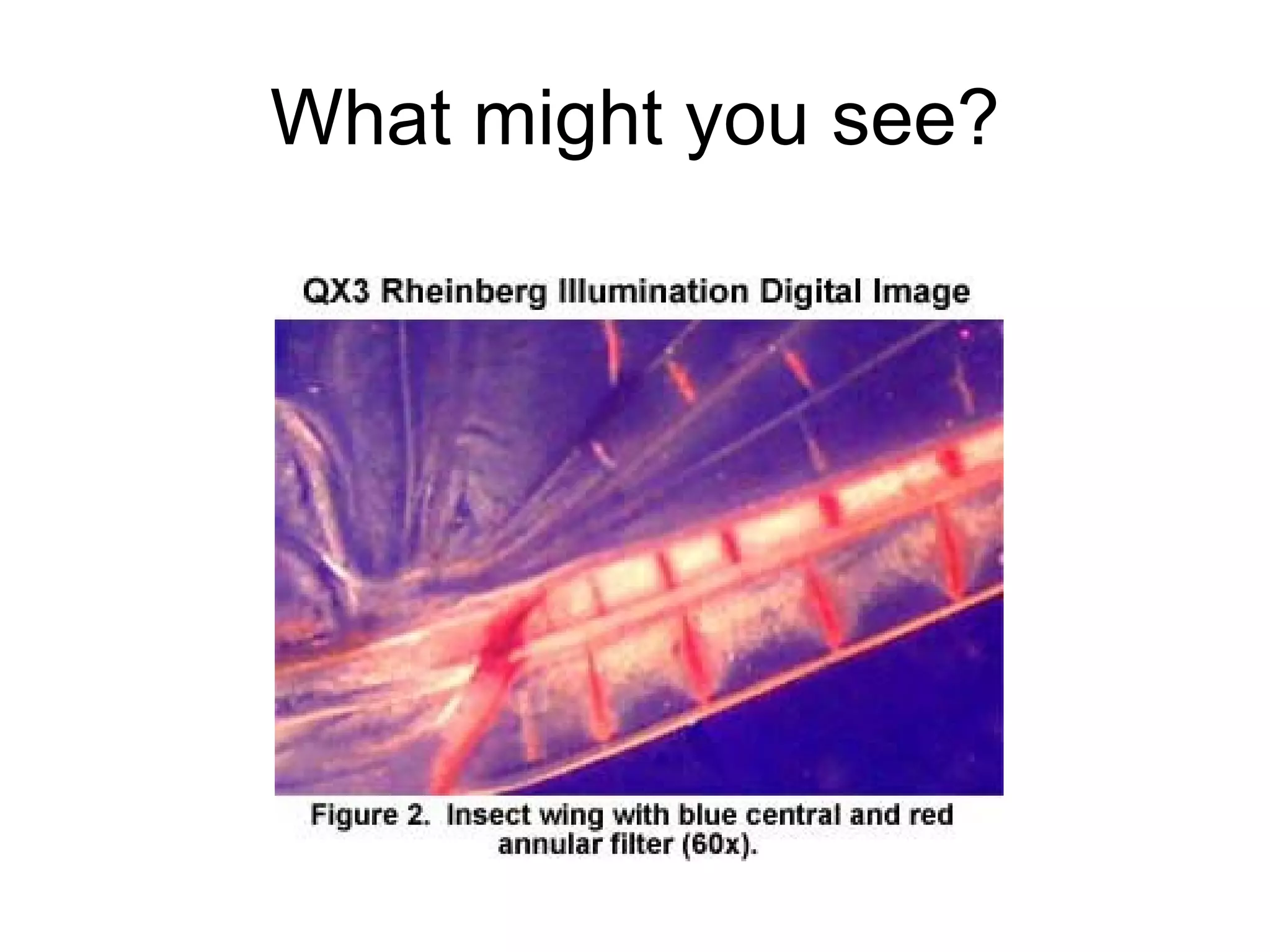
Rheinberg Illumination http://www.molecularexpressions.com/optics/intelplay/qx3rheinberg.html
What might you see?
Rheinberg illumination for schools
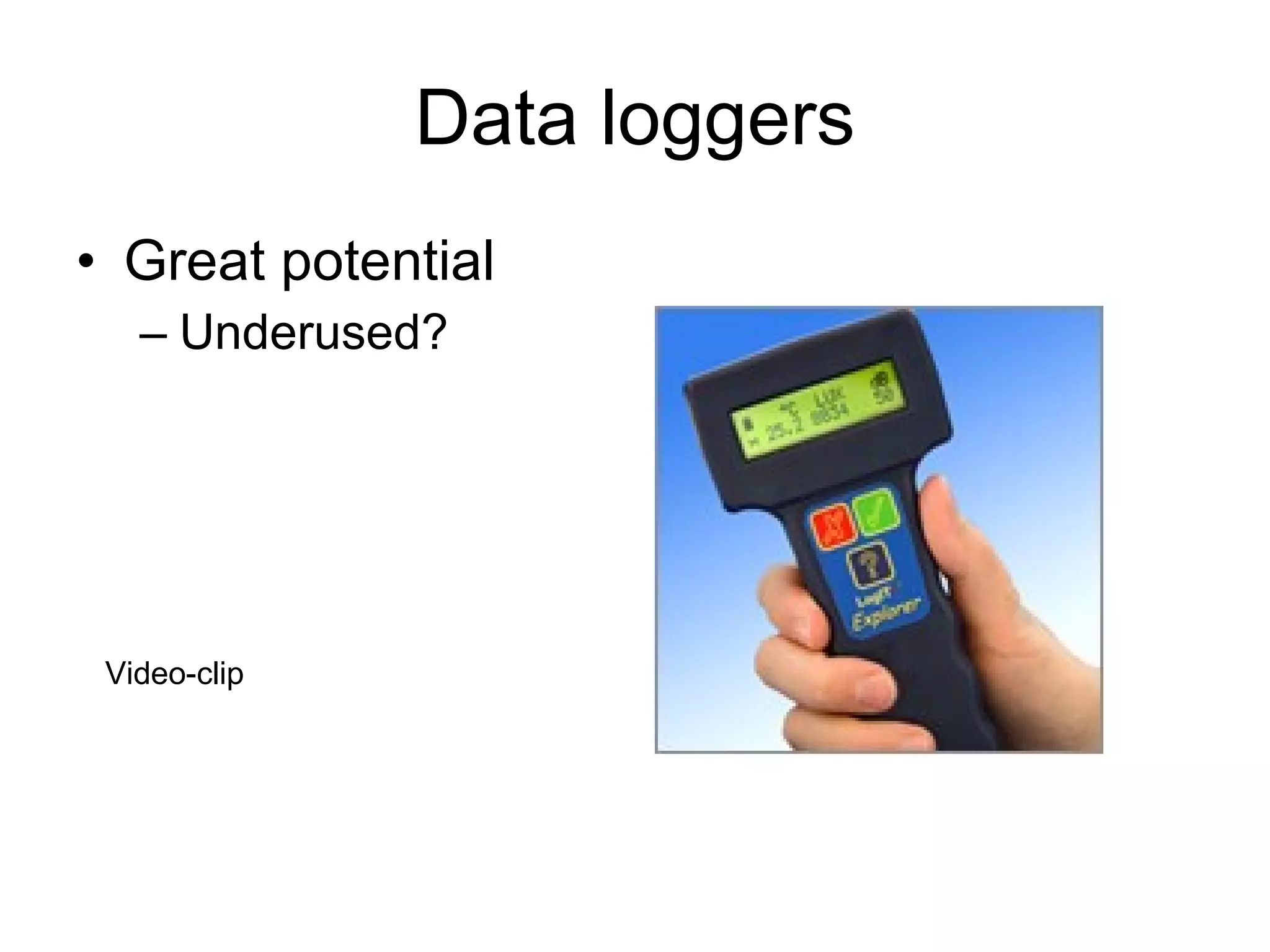
Data loggers Great potential Underused? Video-clip
 
How noisy http://www.data-harvest.co.uk/downloads2/Teaching%20Materials/D0127_Q3__Primary_Activities.pdf
Development of skills Observation Measurement Experimentation Space/time relationships Interpreting data Inference Prediction Controlling/manipulating variables
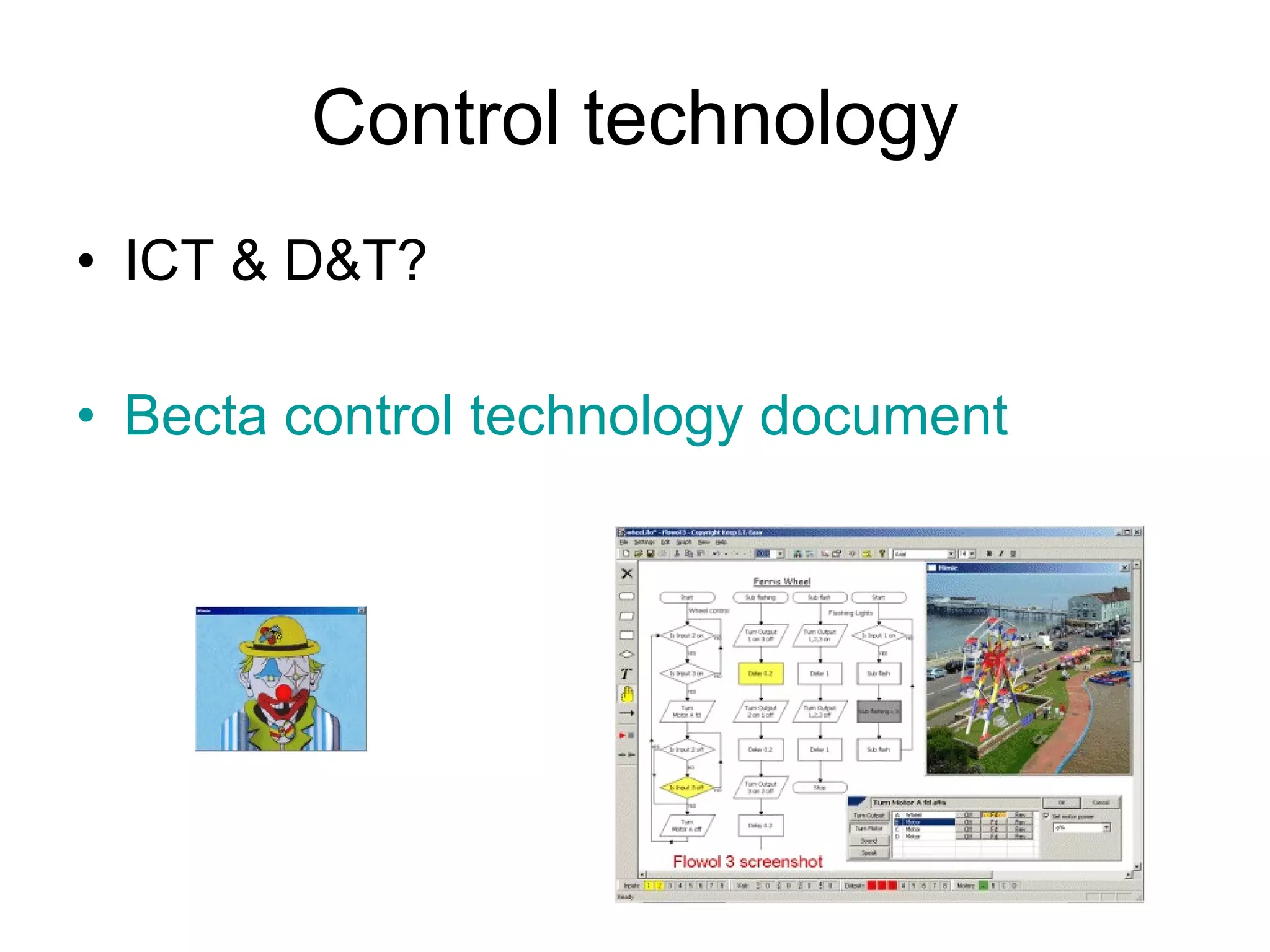
Control technology ICT & D&T? Becta  control technology document
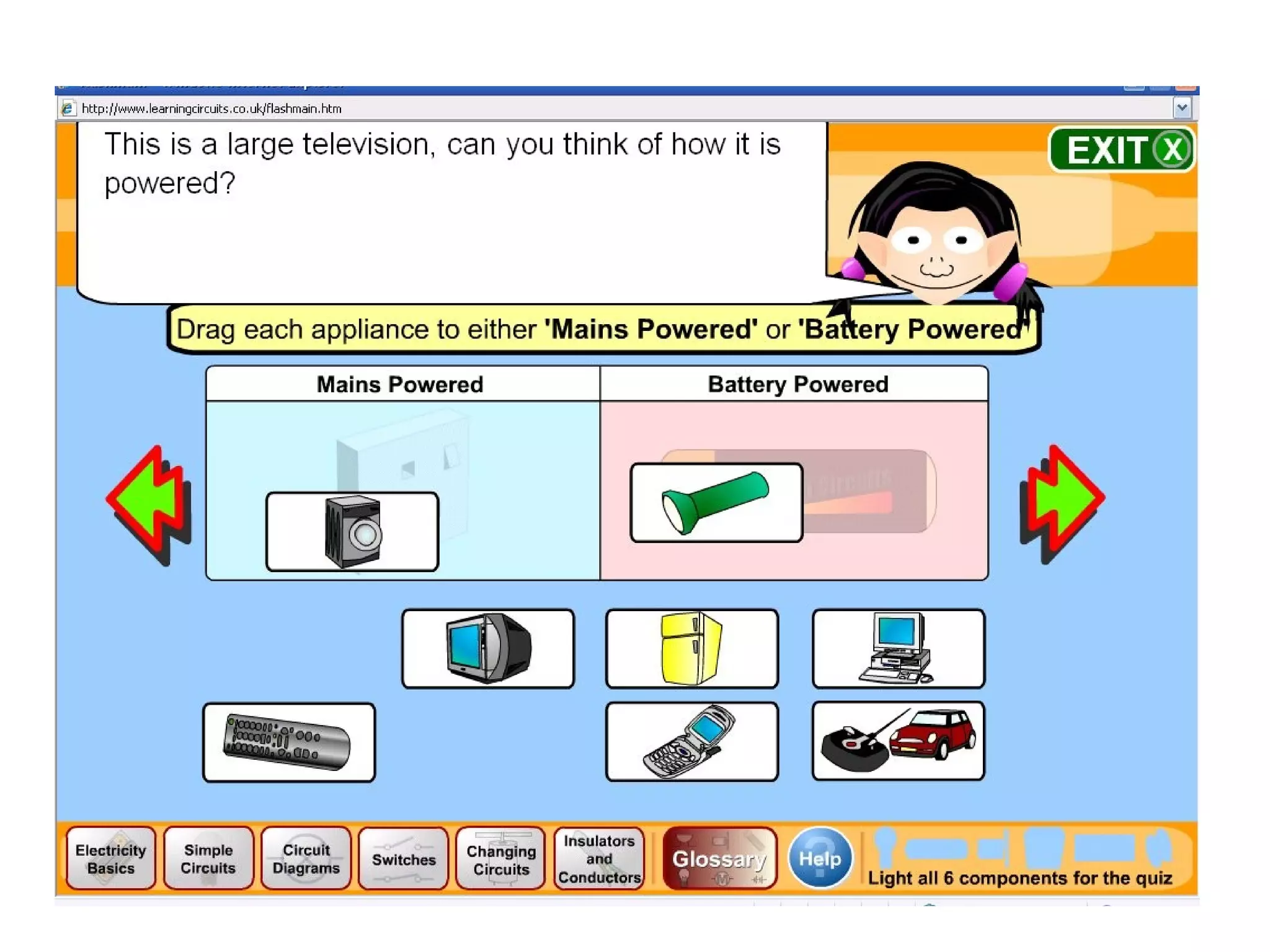
Electricity Years 2,4 and 6 Hands-on http://www.tts-group.co.uk/
http://www.bbc.co.uk/schools/scienceclips/ages/6_7/science_6_7.shtml


Control technology Hands-on  For a purpose Problem-solving
Can be complex
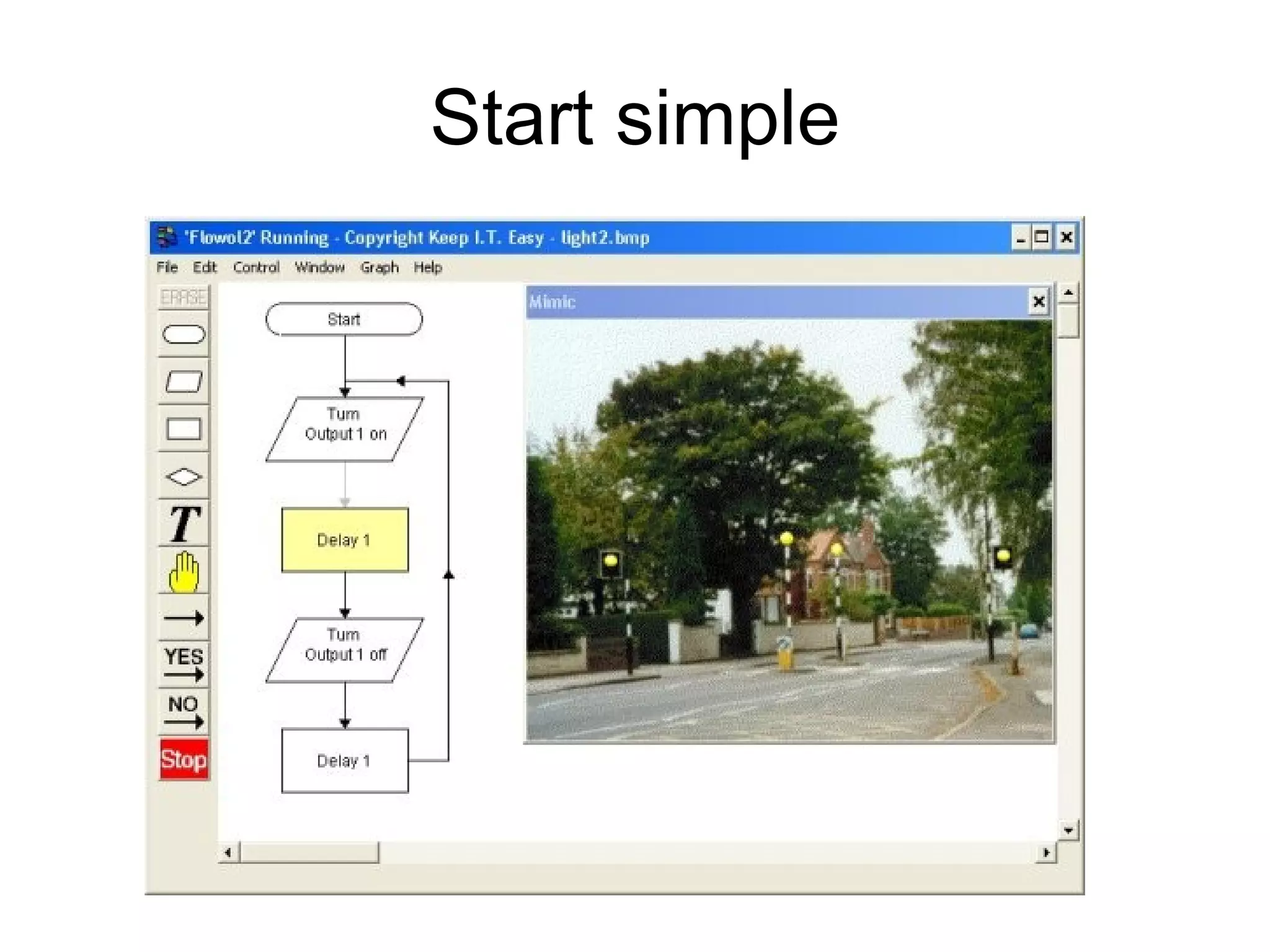
Start simple
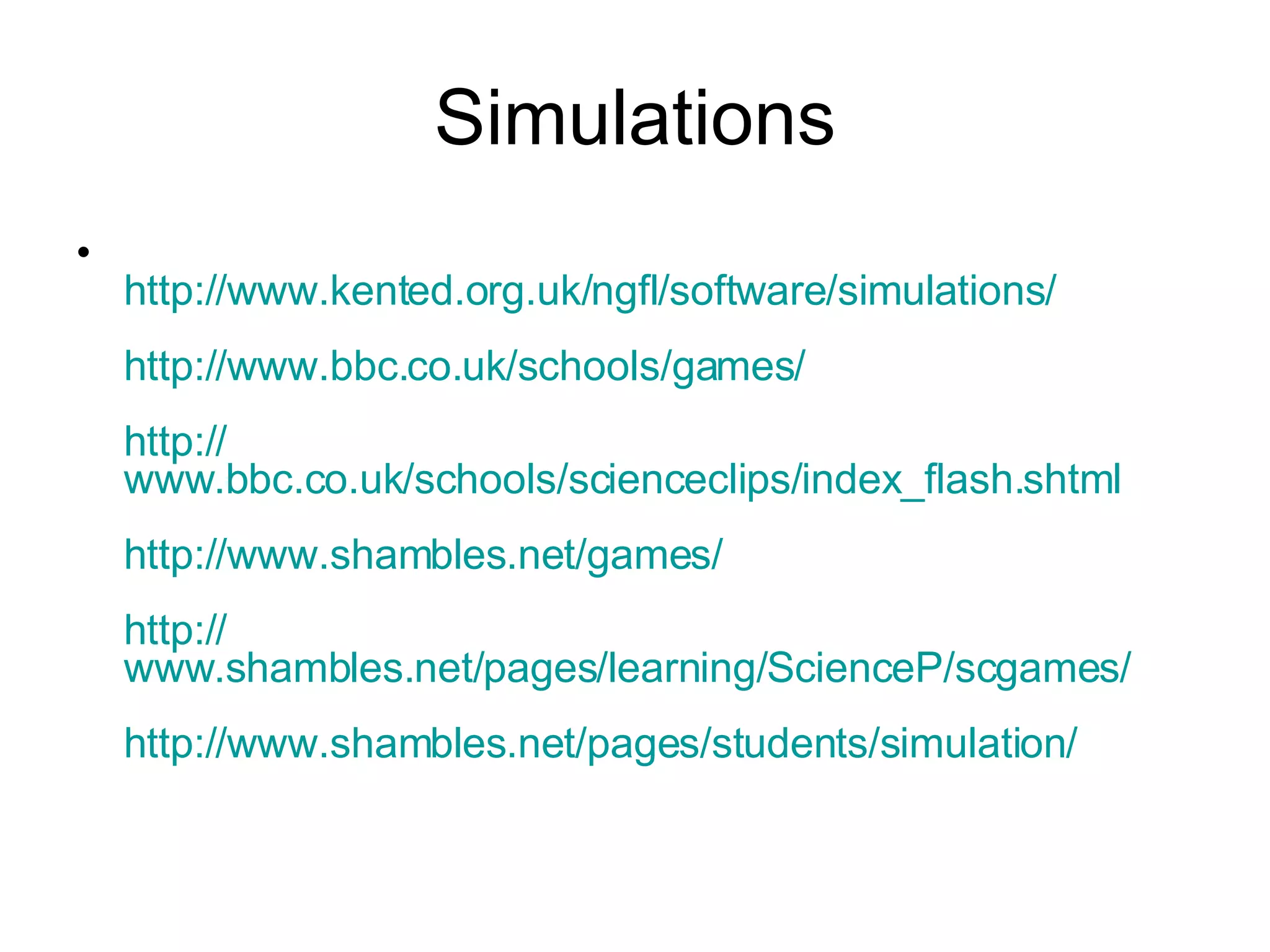
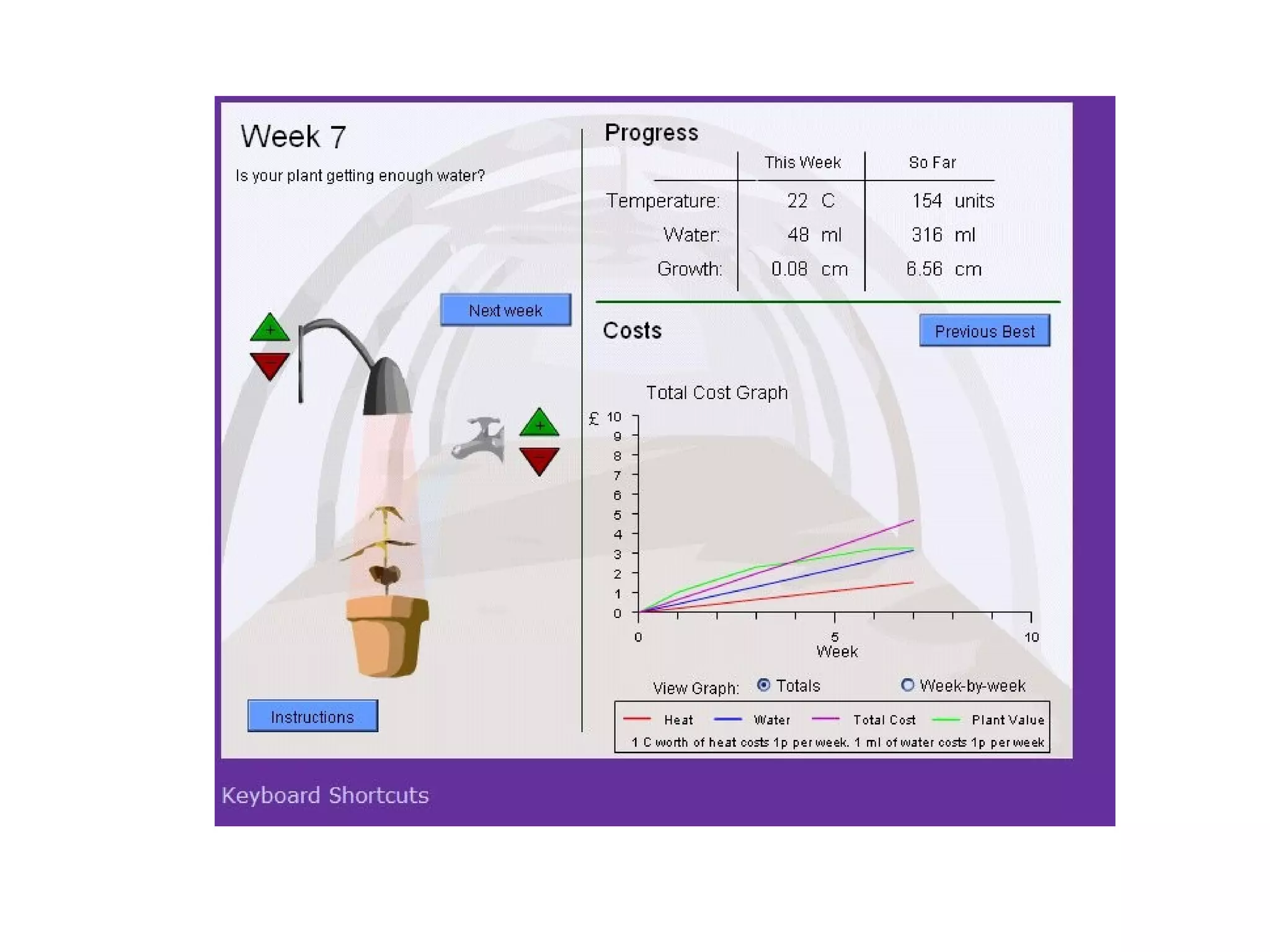
Simulations http:// www.kented.org.uk/ngfl/software/simulations / http:// www.bbc.co.uk /schools/games/ http:// www.bbc.co.uk/schools/scienceclips/index_flash.shtml http:// www.shambles.net /games/ http:// www.shambles.net/pages/learning/ScienceP/scgames / http:// www.shambles.net /pages/students/simulation/
 
 
Databases
Databases Maths, Science and ICT  &… Importance of interrogation Search and Sort Filtering Over-emphasis on compilation Unless through investigation Ideally start with hypothesis  I wonder if…
Databases 2investigate, Information Workshop Junior Viewpoint, Excel Branching databases Identify-IT, 2Question (part of Infant Video Toolkit 2 – as is 2Graph), Flexi-tree  Files available –  Junior Viewpoint
More ideas http://www.thegrid.org.uk/learning/science/ks1-2/resources/index.shtml   5e Earth, Sun and Moon
 

Science And ICT