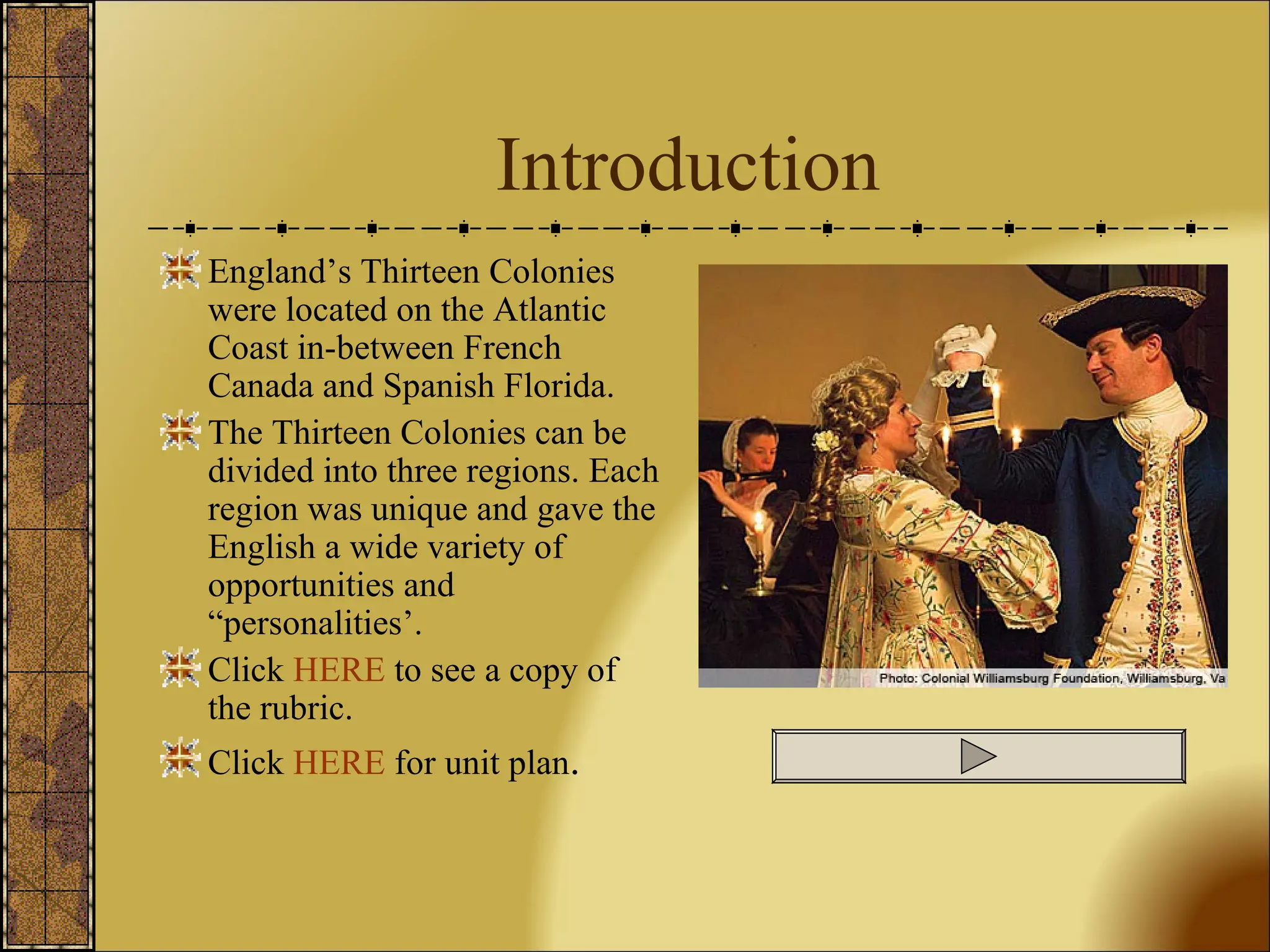
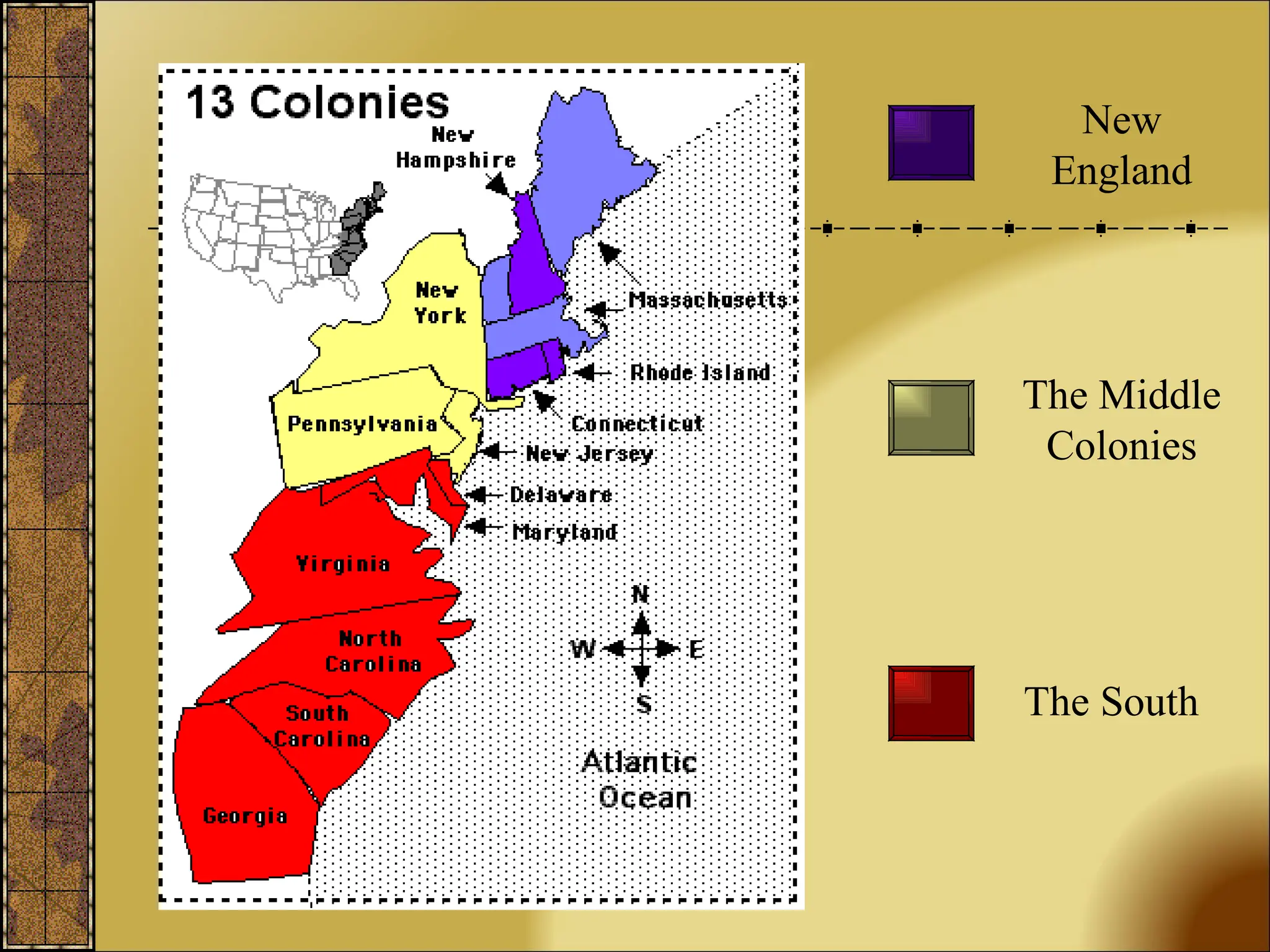
Introduction England’s ThirteenColonies were located on the Atlantic Coast in-between French Canada and Spanish Florida. The Thirteen Colonies can be divided into three regions. Each region was unique and gave the English a wide variety of opportunities and “personalities’. Click HERE to see a copy of the rubric. Click HERE for unit plan .
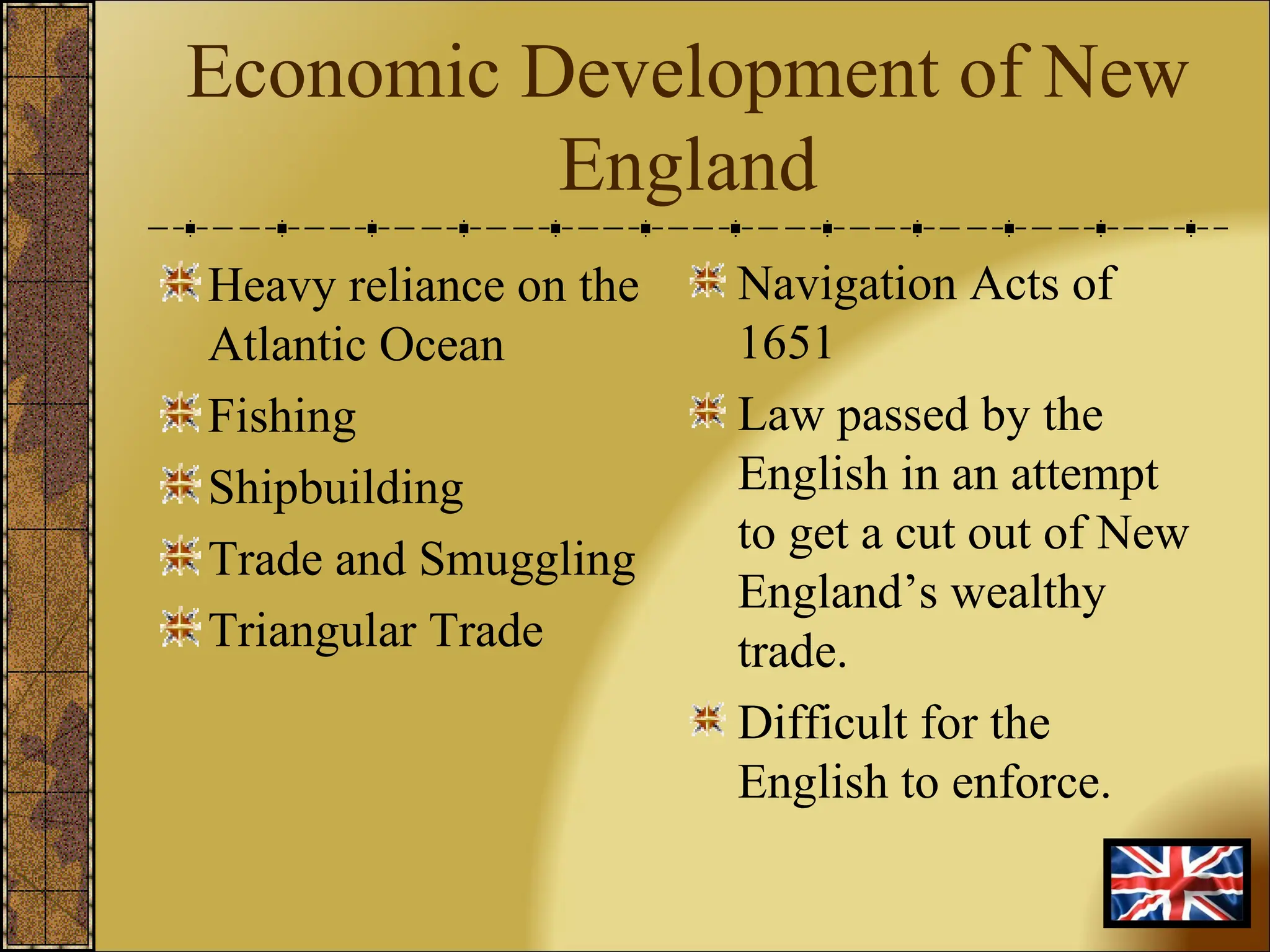
Economic Development ofNew England Heavy reliance on the Atlantic Ocean Fishing Shipbuilding Trade and Smuggling Triangular Trade Navigation Acts of 1651 Law passed by the English in an attempt to get a cut out of New England’s wealthy trade. Difficult for the English to enforce.
5.
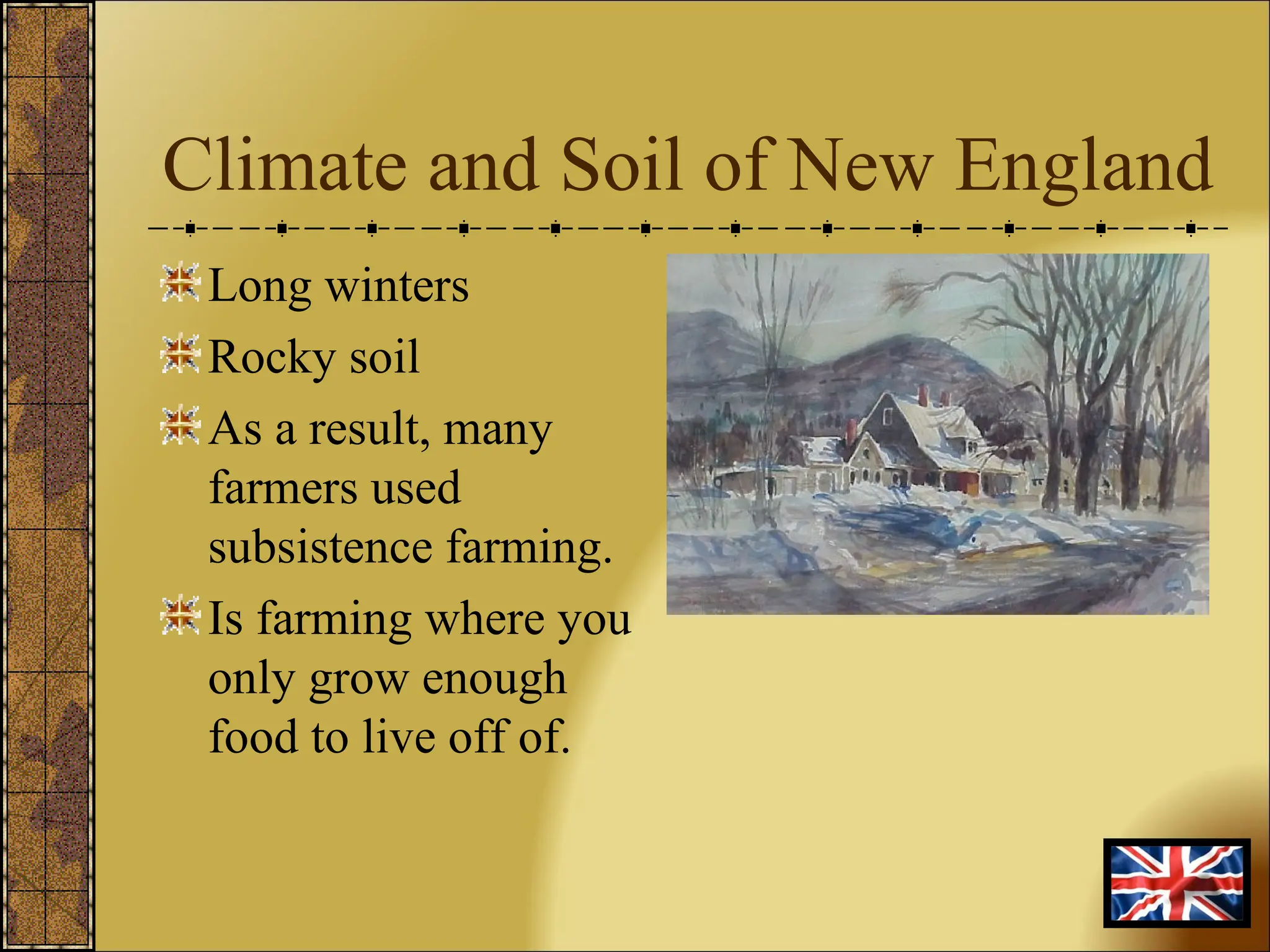
Climate and Soilof New England Long winters Rocky soil As a result, many farmers used subsistence farming. Is farming where you only grow enough food to live off of.
6.
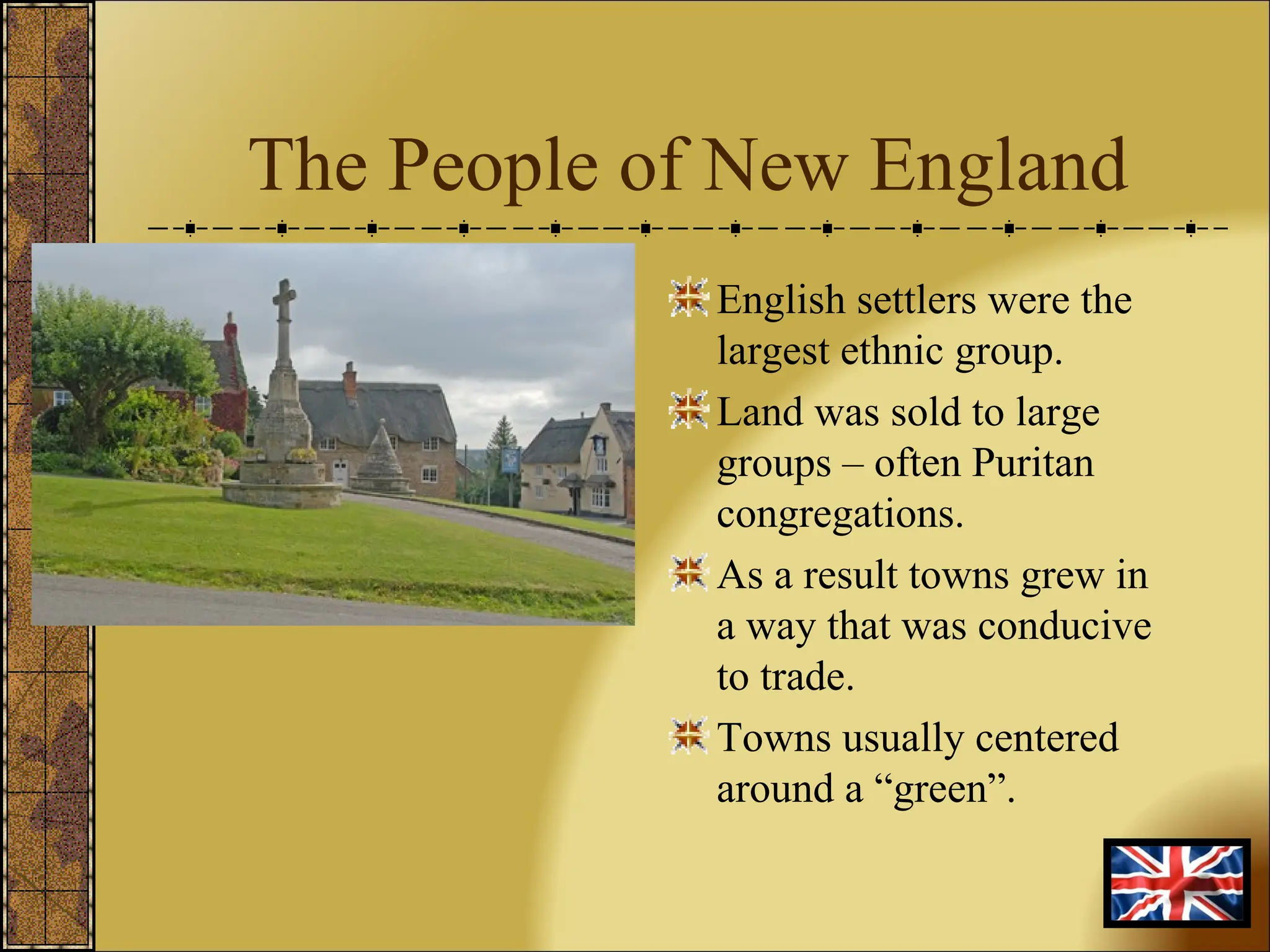
The People ofNew England English settlers were the largest ethnic group. Land was sold to large groups – often Puritan congregations. As a result towns grew in a way that was conducive to trade. Towns usually centered around a “green”.
7.
People continued …African Americans – slavery wasn’t economical in New England because they weren’t needed for farming. Many slaves worked in houses or were hired out for various jobs. Slaves could eventually save enough money to purchase their freedom. Puritans – their religion declined of competition with other groups and because their ideals didn’t go well with business.
Economy Continued MiddleColonies also had excellent ports and river systems. New York, NY on the Hudson Philadelphia, PA on the Delaware Exported grain, furs, and whale oil and imported manufactured goods Ship building New York and Philly developed and expanded quickly Rivaled the nicest cities of England.
10.
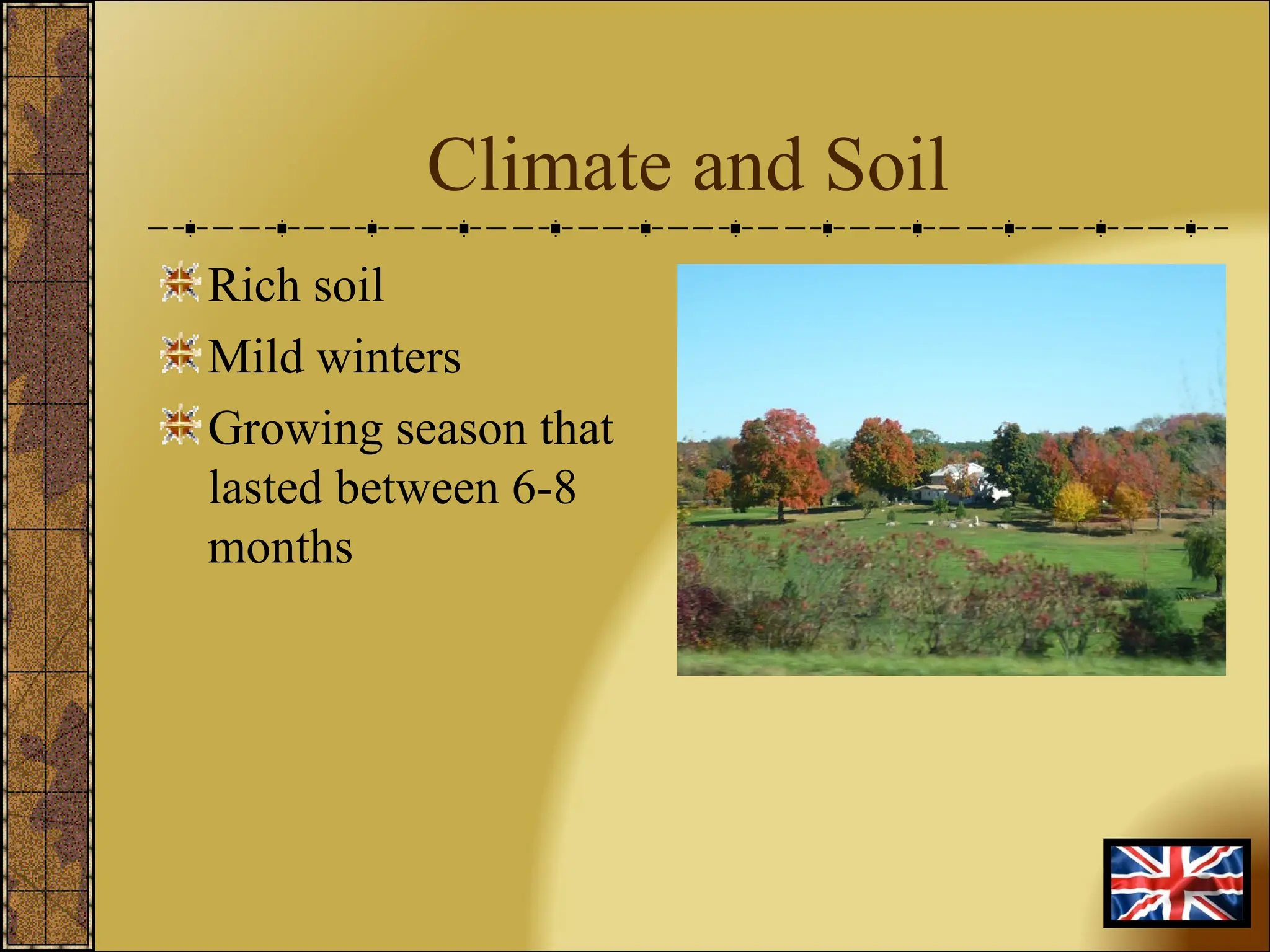
Climate and SoilRich soil Mild winters Growing season that lasted between 6-8 months
11.
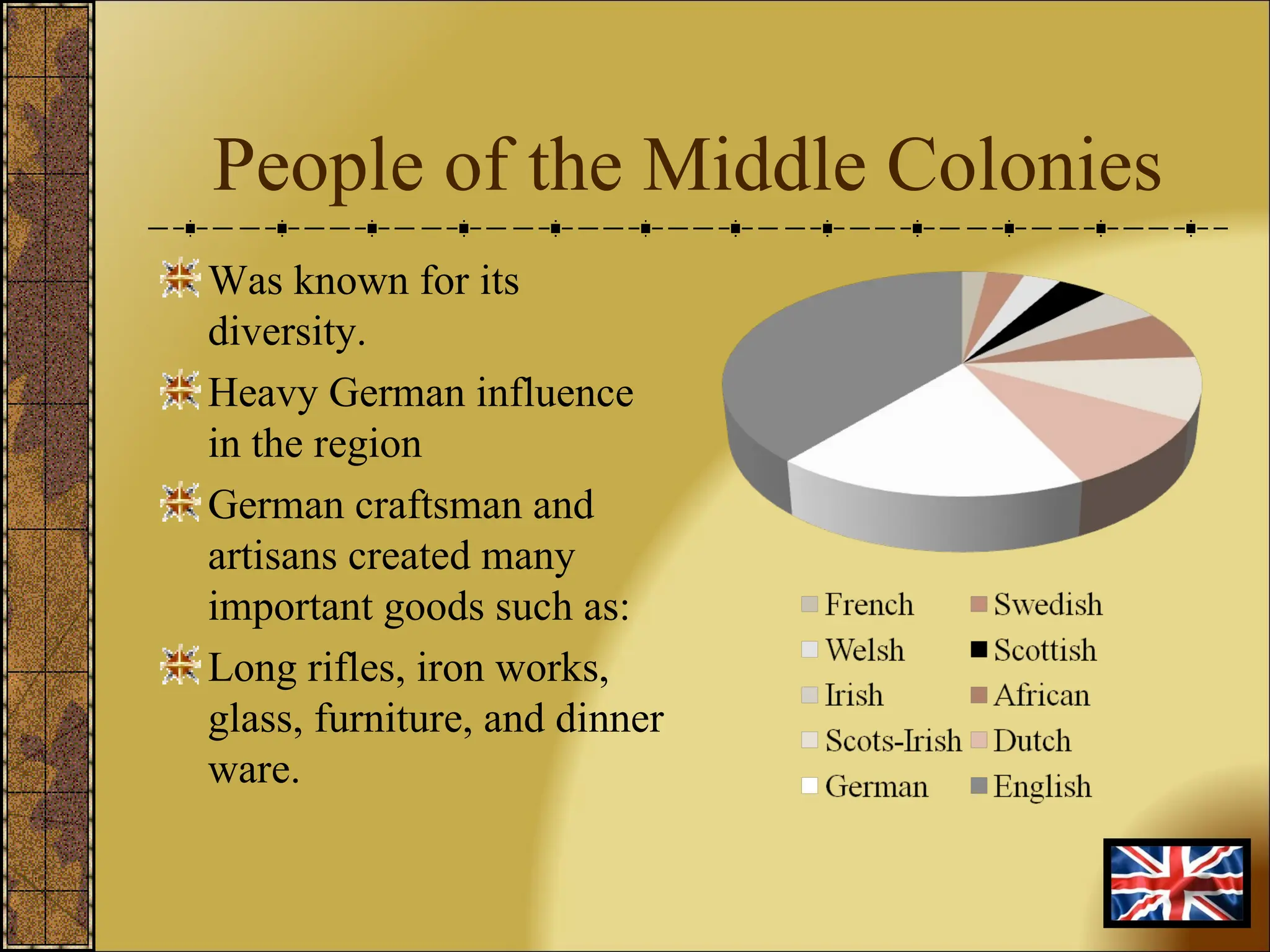
People of theMiddle Colonies Was known for its diversity. Heavy German influence in the region German craftsman and artisans created many important goods such as: Long rifles, iron works, glass, furniture, and dinner ware.
12.
Climate of ToleranceThe wide variety of groups made it difficult for one group to dominate any other As a result – there was a great deal of tolerance in the Middle Colonies. Some were slaves and some were free. Either way they worked as laborers, servants, drivers, sailors, and assistants Racial tensions did exist, especially in NYC. Violence was used by both sides – but African Americans were force into submission. African Americans
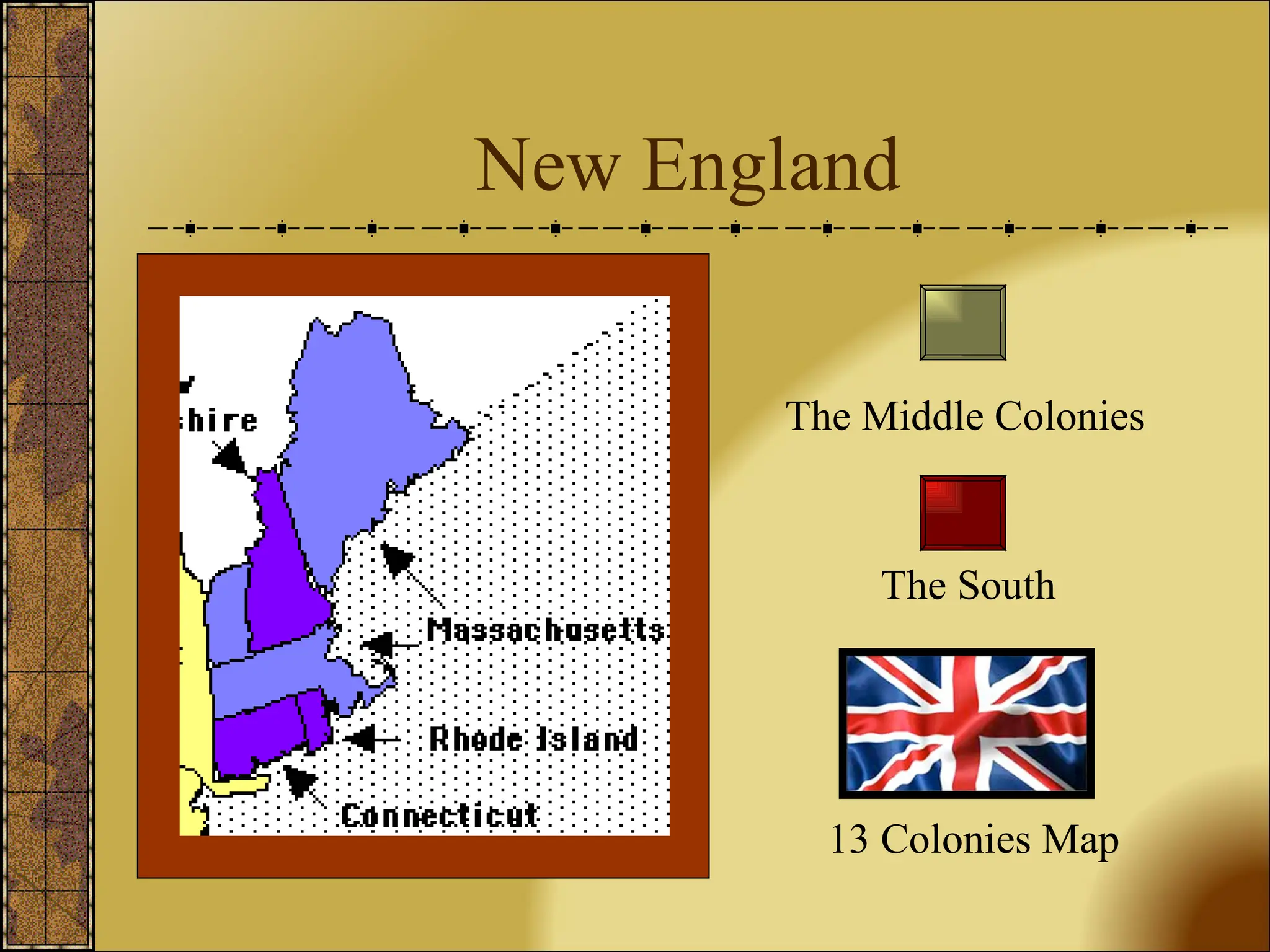
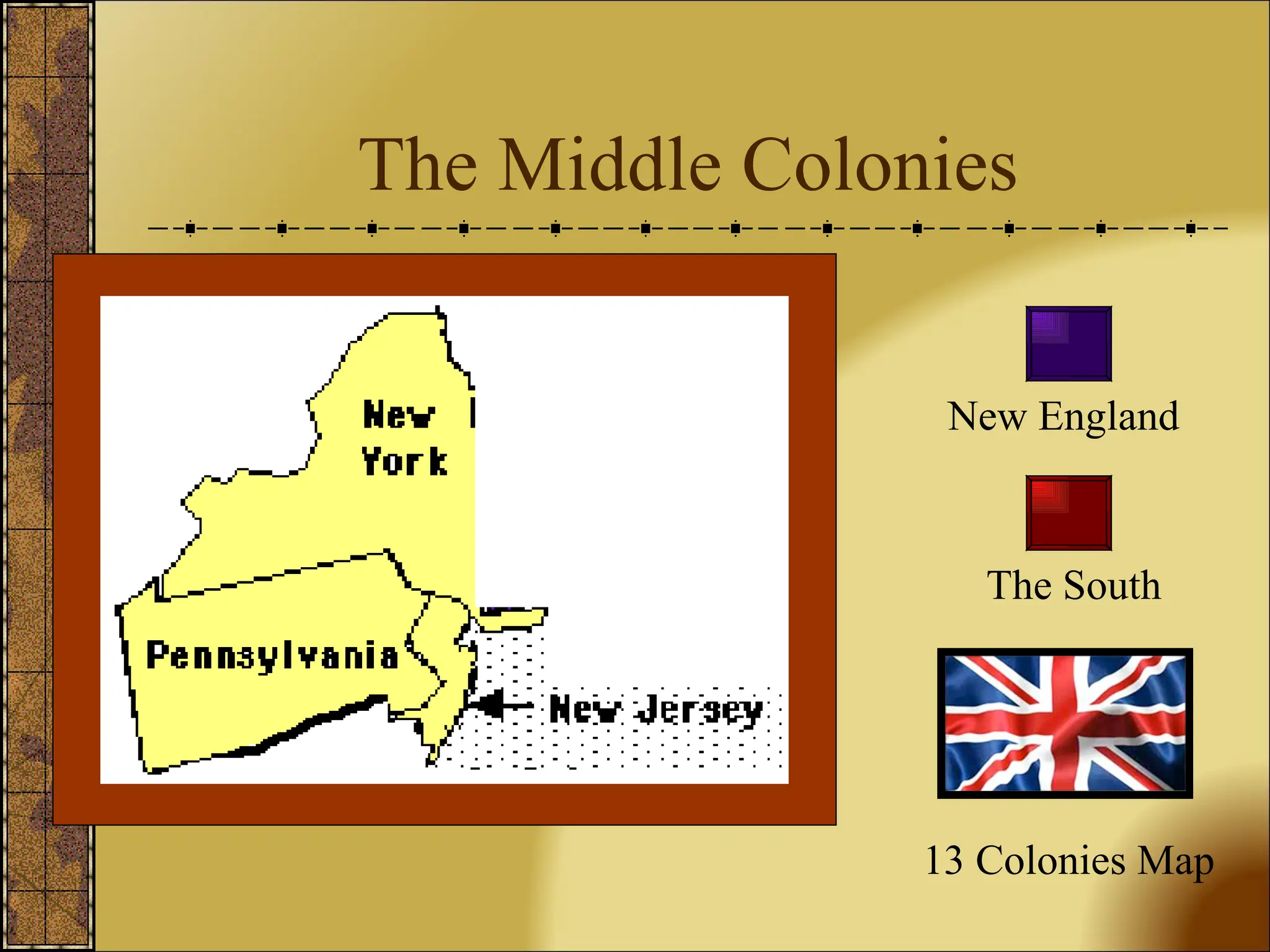
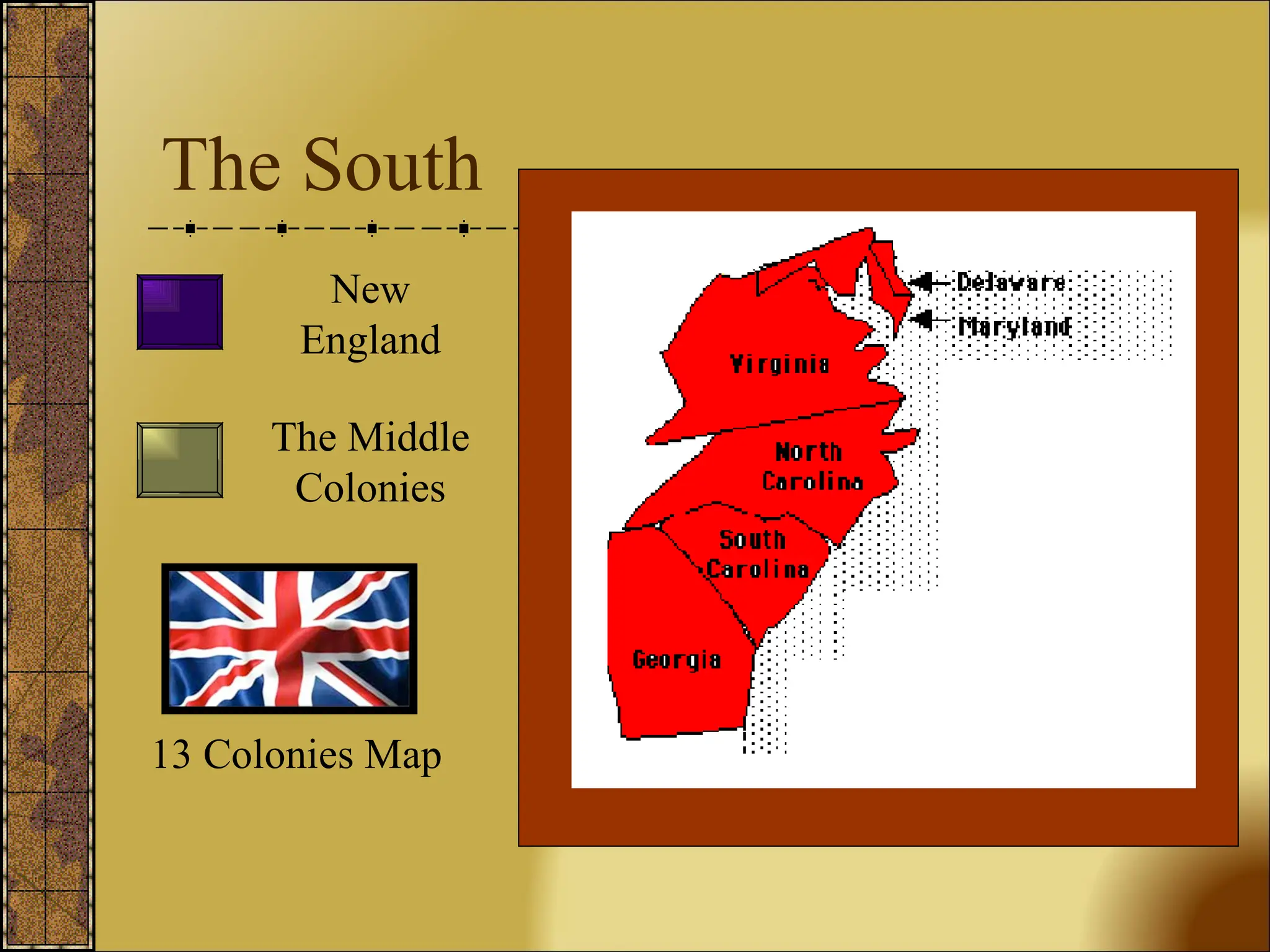
The South TheMiddle Colonies New England 13 Colonies Map
15.
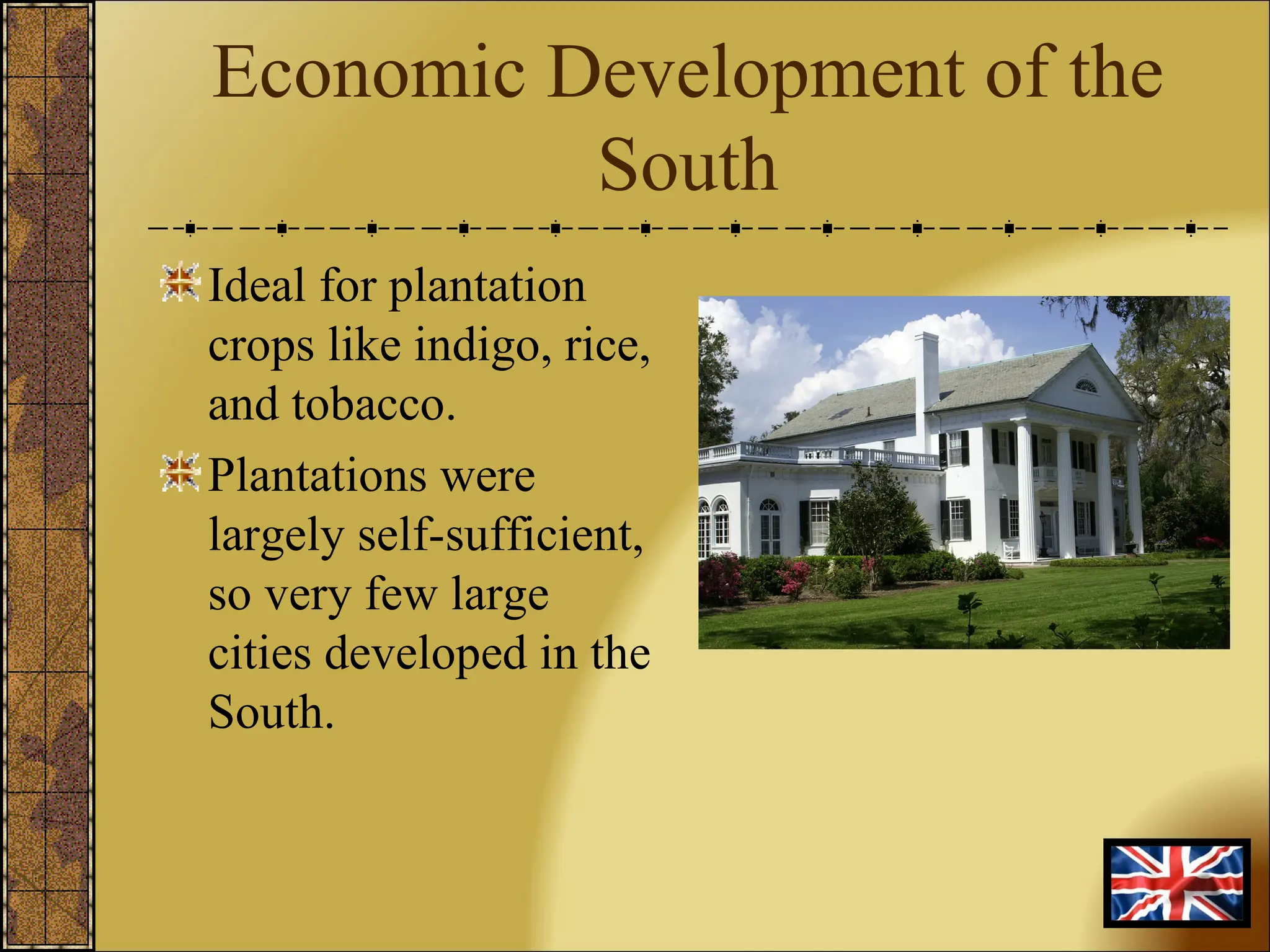
Economic Development ofthe South Ideal for plantation crops like indigo, rice, and tobacco. Plantations were largely self-sufficient, so very few large cities developed in the South.
16.
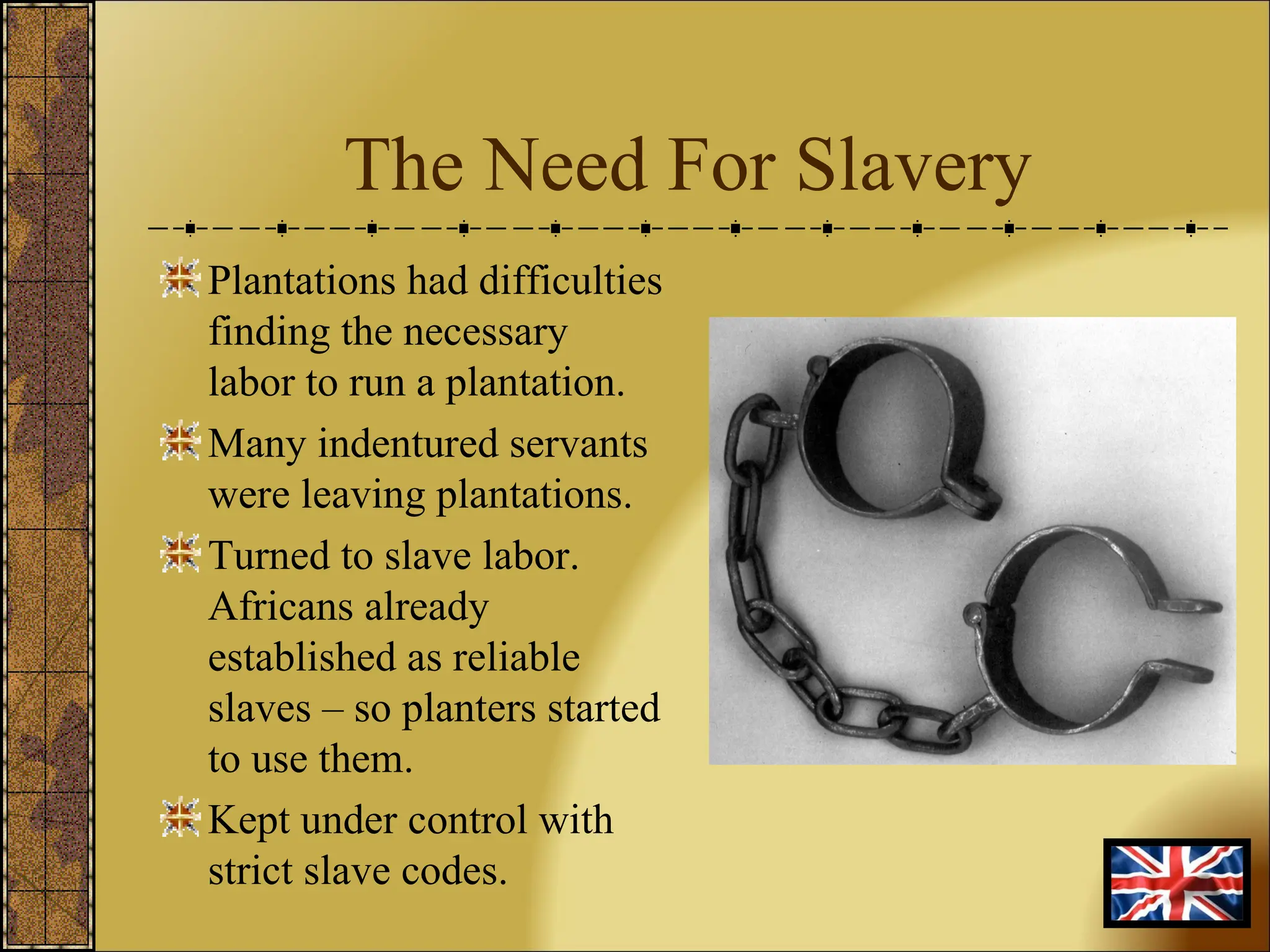
The Need ForSlavery Plantations had difficulties finding the necessary labor to run a plantation. Many indentured servants were leaving plantations. Turned to slave labor. Africans already established as reliable slaves – so planters started to use them. Kept under control with strict slave codes.
17.
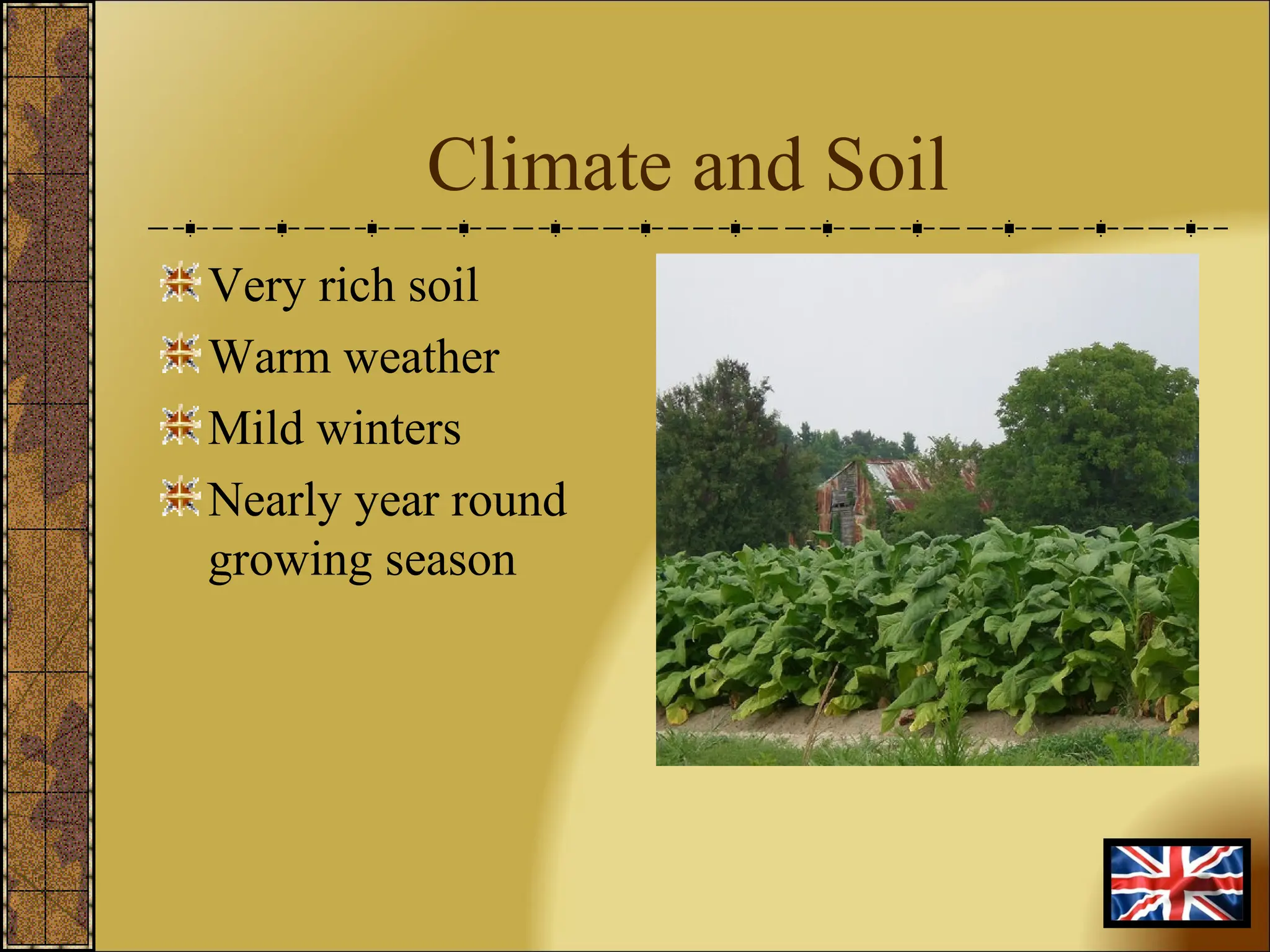
Climate and SoilVery rich soil Warm weather Mild winters Nearly year round growing season
18.
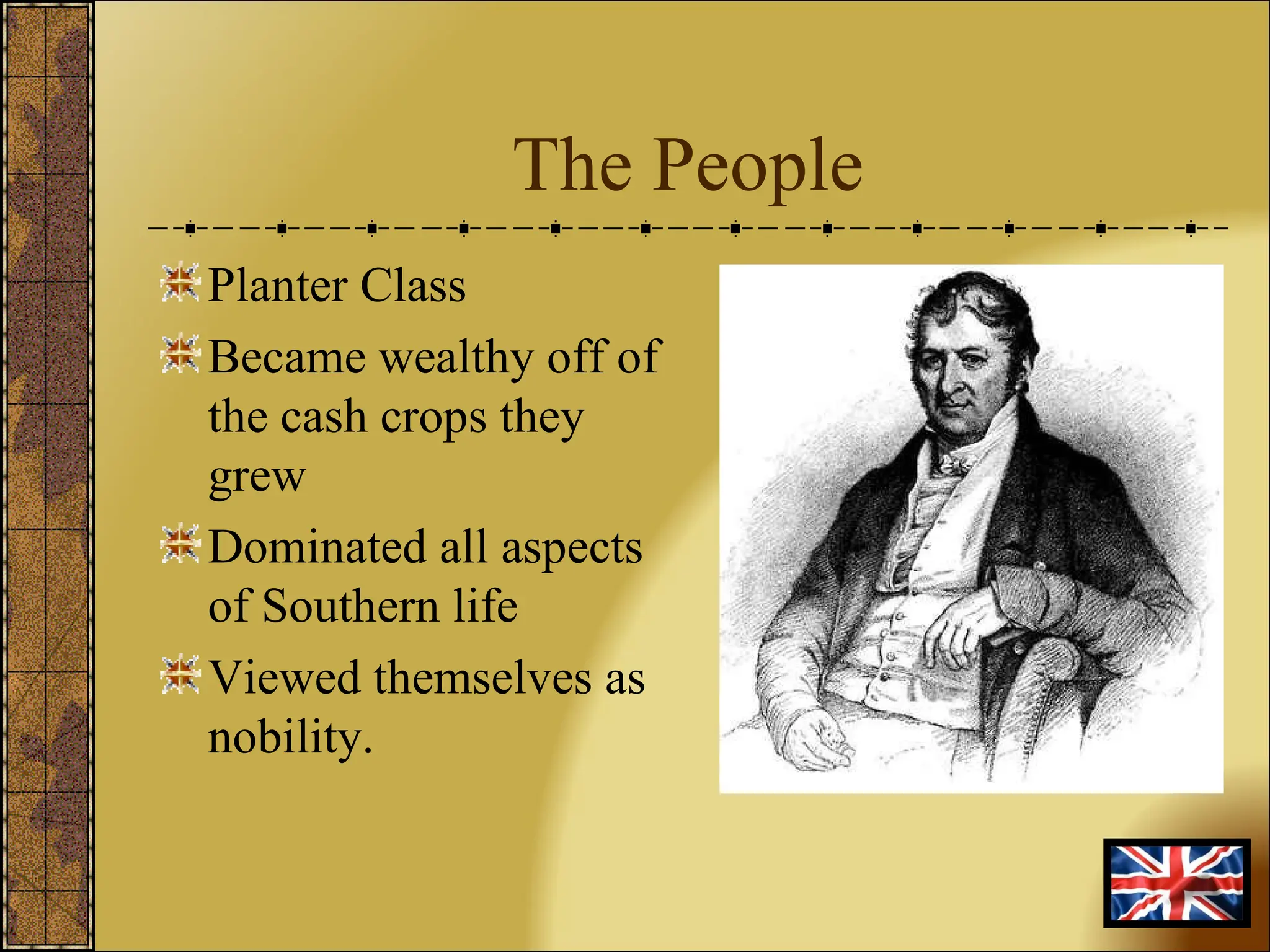
The People PlanterClass Became wealthy off of the cash crops they grew Dominated all aspects of Southern life Viewed themselves as nobility.
19.
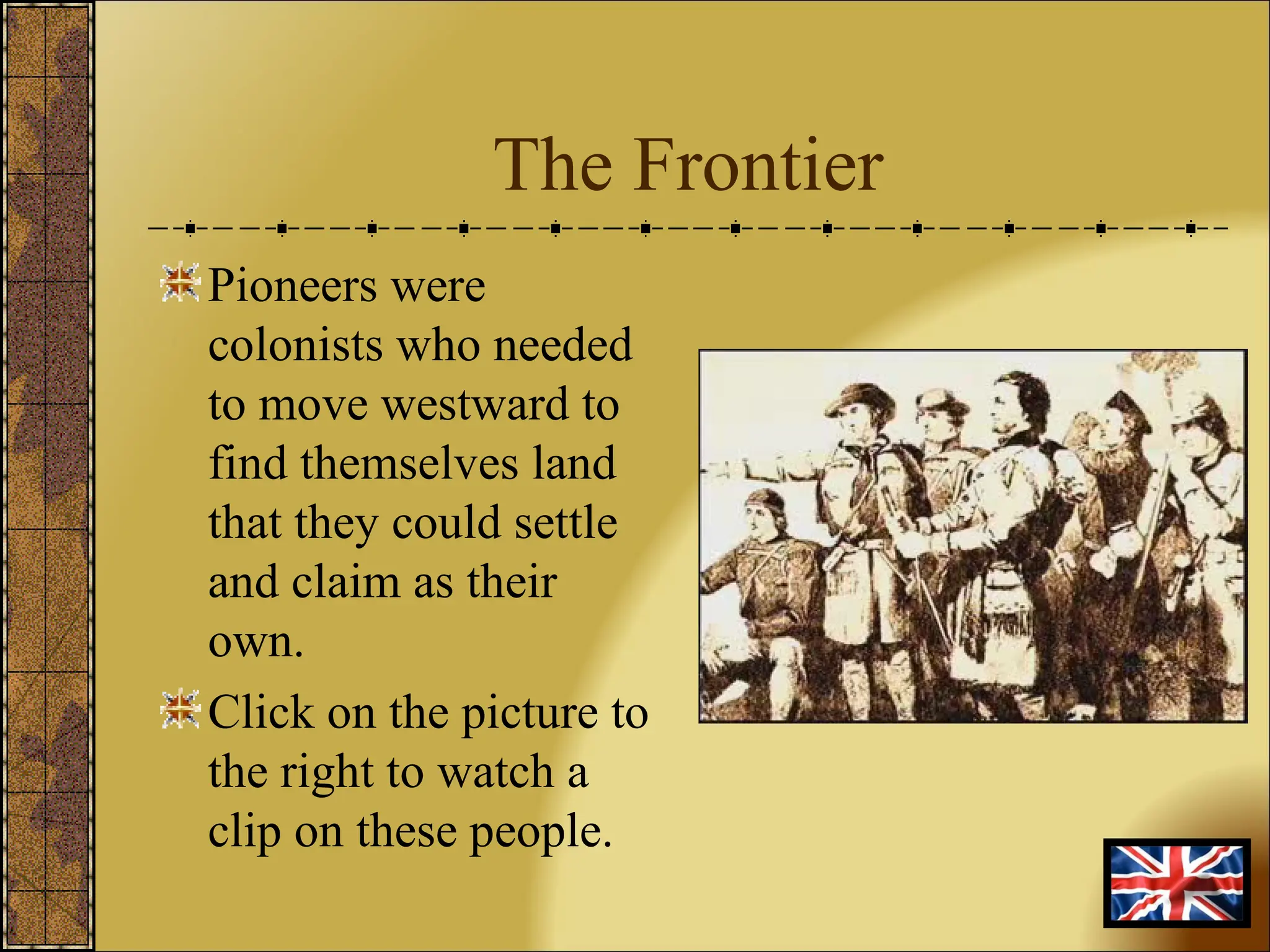
The Frontier Pioneerswere colonists who needed to move westward to find themselves land that they could settle and claim as their own. Click on the picture to the right to watch a clip on these people.
20.
Conclusion The diversityof the 13 colonies offered a great deal of economic possibilities to the British Empire. It would also give the 13 colonies the wealth needed to start becoming a country in the next chapter. Extension: Look at a colonial town – Colonial Williamsburg .
21.
Works Cited Imageshttp://www.natureslorephotography.com/scenics.html http:// www.pbase.com/ronhrl/colonial_philadelphia http://www.flickr.com/photos/jarofpineapple/1691419478/ www.east-tennessee-horse-property.com www.black-and-right.com /.../21/the-slave-card/ Remove frame www.flickr.com aphistorygoodhue.pbwiki.com/Chapter+16 Remove frame www.destination360.com www.burchardgalleries.com www.wwowens.com http:// player.discoveryeducation.com/index.cfm?guidAssetId =F660D435-7AAA-4C50-94DB-3DB2ACB5EA22&blnFromSearch=1&productcode=US Textbook: Creating America: Beginnings through Reconstruction McDougal Littell, 2001. Video: Review: The Diversity of Colonial Communities. Rainbow Educational Media (1999). Retrieved December 13, 2008, from Discovery Education: http://streaming.discoveryeducation.com/ Unit Plan Rubric